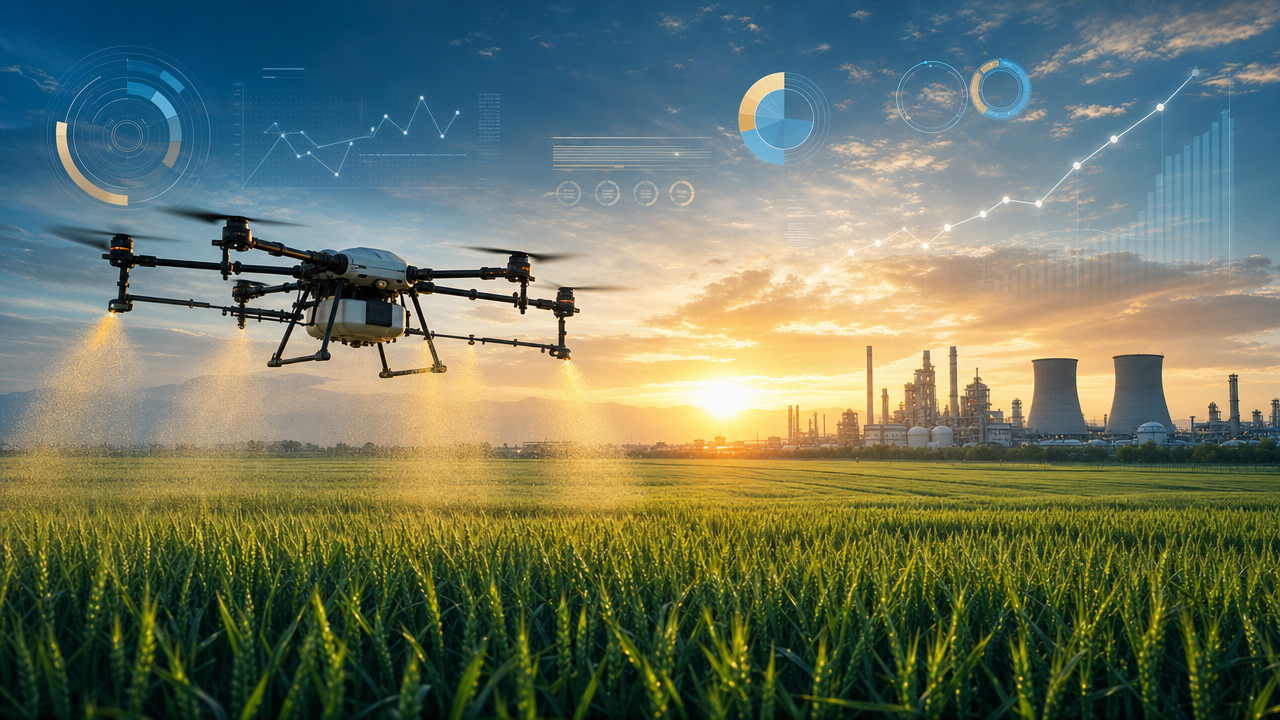

2026 China Agrochemical Industry (Herbicides + Insecticides + Fungicides + Biopesticides + Digital Plant Protection) Market Size and Competitive Landscape Deep Research Report
Abstract: China is the world's largest producer and exporter of agrochemicals. In 2025, the domestic agrochemical market was valued at approximately RMB 150–180 billion (expressed in terms of 100% active ingredient equivalent), accounting for over 35% of global production. The three major categories — herbicides, insecticides, and fungicides — follow a roughly 55:25:20 ratio. Glyphosate tops global active ingredient production at approximately 600,000 tonnes (a.i. equivalent) per year. Following a three-year destocking downcycle from 2022 through 2024, prices recovered significantly in 2025: glyphosate rebounded to RMB 26,000/tonne, glufosinate bounced 8.5% to RMB 25,500/tonne, and clethodim surged on supply disruptions from a safety incident. Simultaneously, 2025 marked the commercial debut of transgenic maize and soybean cultivation in China, with 37 approved transgenic maize varieties and 17 soybean varieties entering large-scale field planting, driving structural shifts in herbicide demand. On the trade front, China's agrochemical export volume rose 15.7% YoY in H1 2025, with export value up 13.3% YoY; full-year export value is expected to approach USD 10–10.5 billion, setting a new record. In digital plant protection, agricultural drone operation volume surpassed 2.6 billion mu (annual), with DJI Agriculture and XAG jointly holding over 76% of the global agricultural drone market; the plant protection services market reached RMB 13 billion, signaling a deep transition from "selling chemicals" to "selling services."
This report spans twelve chapters, comprehensively covering agrochemical definitions and classification, global competitive landscape and key multinational agrochemical giant FY2025 financial performance, PEST macro-environment analysis, China market size and concentration, six-layer value chain breakdown from raw materials through terminal services, in-depth analysis of key listed companies, major domestic and international industrial belt geography, six subsector deep dives, technology evolution from flow chemistry to RNA interference, a seven-factor risk matrix, and quantitative three-scenario projections for 2026–2030.
I Definitions, Classification and Full Industry Chain Landscape
1.1 Legal Definition and Regulatory Framework
Under the Pesticide Administration Regulations (revised 2017), pesticides are defined as chemical or natural substances or mixtures thereof — and their preparations — used to prevent, eliminate, or control pests, diseases, weeds, and other harmful organisms affecting agriculture and forestry, or to intentionally regulate plant and insect growth. The regulations establish a full-lifecycle regulatory system from R&D and registration through production, distribution, and use, administered by the Ministry of Agriculture and Rural Affairs (MARA) via the Institute for the Control of Agrochemicals (ICAMA). Provincial agricultural authorities handle regional supervision and enforcement.
New pesticide active ingredients require a three-stage process: field trial → provisional registration → formal registration, typically spanning five to eight years and costing over RMB 20 million for novel chemical compounds. Even generic registrations (same active ingredient, same formulation type) require one to three years and several million RMB. As of end-2025, over 45,000 valid pesticide product registrations were on file covering more than 700 active ingredients. Among newly registered products in 2023, biopesticides accounted for approximately 90%, reflecting a dramatic reorientation of innovation resources.
1.2 Classification System and Product Mix by Target Organism
I. Herbicides
Herbicides are China's largest agrochemical category, accounting for approximately 55% of chemical pesticide production (a.i. basis) in 2025, with market value of RMB 80–95 billion. Glyphosate, at approximately 600,000 tonnes a.i. per year, dwarfs all other herbicide active ingredients combined among the 19 products exceeding 10,000 tonnes a.i. output. The commercialization of transgenic glyphosate-tolerant and glufosinate-tolerant maize and soybean in 2025 is structurally reshaping the herbicide demand mix: traditional selective herbicides such as atrazine (corn pre-emergence) and nicosulfuron (corn post-emergence) are being displaced by glyphosate ammonium salt and glufosinate formulations — a transition expected to add RMB 3–5 billion in domestic glyphosate/glufosinate consumption by 2030.
Key herbicide chemistries include: amino acid class (glyphosate and glufosinate), sulfonylurea class (tribenuron-methyl, nicosulfuron), triazine class (atrazine, simazine), aryloxyphenoxypropionate class (quizalofop-p-ethyl, haloxyfop-r), imidazolinone class, cyclohexanedione class (clethodim, sethoxydim), and dinitroaniline class (trifluralin). Herbicide factories: approximately 318 nationwide.
II. Insecticides
Insecticides account for approximately 25% of chemical pesticide production in 2025, with market value of RMB 37.5–45 billion. Insecticide factories: approximately 990. China dominates global production in pyrethroids (>65% market share) and neonicotinoids (>50% market share). Key developments include:
- Pyrethroids: lambda-cyhalothrin, bifenthrin, deltamethrin, cypermethrin — Yangnong Chemical leads globally in high-end pyrethroid active ingredients, particularly lambda-cyhalothrin (Kung Fu), benefiting from long-term Syngenta technology agreements
- Neonicotinoids: imidacloprid (approximately 29 factories), thiamethoxam, clothianidin — the EU banned outdoor use of first-generation neonicotinoids in 2018, but demand in Asian, African, and Latin American markets remains robust
- Diamides: chlorantraniliprole (Rynaxypyr, Corteva) — patents expiring in 2024–2025 in China, with multiple domestic manufacturers (Lier Chemical, Haili'er Pesticide) having completed registrations, expected to commercialize at mass scale in 2026
- Pyrethroids (pyrethroid factory: approximately 2 highly specialized producers with many adjacent firms)
III. Fungicides
Fungicides account for approximately 20% of chemical pesticide production, with market value of RMB 30–36 billion. Fungicide factories: approximately 838. Key chemistry classes:
- Strobilurins (QoI): pyraclostrobin — Haili'er Pesticide is China's most important generic pyraclostrobin producer; the compound not only protects against disease but activates plant stress resistance, delivering measurable yield benefits in soybean, corn, and wheat
- Triazoles (DMI): triazole-class fungicides — difenoconazole, propiconazole, tebuconazole; prothioconazole post-patent entry in 2025–2026 expected to rapidly expand the Chinese generic triazole market
IV. Plant Growth Regulators (PGR)
PGR market in 2025 approximately RMB 8–10 billion. Key products: ethephon, gibberellins, brassinolide, forchlorfenuron (kiwifruit/grape cell enlargement), paclobutrazol.
V. Biopesticides
Biopesticide factories: approximately 1,688. Microbial pesticide enterprises approximately 700 (led by Bacillus thuringiensis and B. subtilis formulations); botanical pesticide enterprises approximately 300 (matrine, azadirachtin). Among newly registered pesticide products in 2023, biopesticides accounted for 90% — up from approximately 20% in 2015 — reflecting deep reallocation of innovation capital toward green categories.
1.3 Toxicity Classification and High-Toxicity Phase-Out
China classifies pesticides into five toxicity tiers by acute oral LD50: highly toxic (≤50 mg/kg), moderately toxic (50–500 mg/kg), low toxicity (500–5,000 mg/kg), and minimal toxicity (>5,000 mg/kg). Between 2017 and 2025, over 38 highly toxic pesticide products were deregistered or banned — including paraquat (banned 2020), carbofuran (banned on edible crops), and phorate (banned 2025) — opening an estimated RMB 5–10 billion addressable market for safer replacement products.
1.4 Full Industry Chain: Six-Layer Value Structure
The agrochemical value chain comprises six layers:
- Fine chemical raw materials: fine chemical factories (~2,639) — glyphosate precursors (glycine, trimethyl phosphite), pyrethroid raw materials; organic synthesis enterprises provide key building blocks
- Intermediates: agrochemical intermediate factories (~391) and chemical intermediates manufacturers — highest technical barriers, highest safety risk, includes phosgene chemistry, liquid chlorine chemistry
- Technical-grade active ingredients (technical): glyphosate factories (
49), glufosinate factories (14), pesticide factories total (~7,310) - Formulations: suspension concentrates, emulsifiable concentrates, water-dispersible granules, ULV drone formulations — agrochemical product factories (~180)
- Packaging and distribution: pesticide packaging factories (~2,103) — PET bottles, aluminum foil bags, water-soluble PVA sachets (drone applications rapidly growing); distributed via China's three-tier national→provincial→county/township channel network
- Terminal services: plant protection equipment factories (
309), sprayer manufacturers (500+) — drone-based unified spray services covering >45% of major grain-producing areas in 2025
1.5 Brief History of China's Pesticide Industry
China's pesticide industry has passed through five distinct phases: (1) 1949–1978: Soviet-modeled organochlorine era (hexachlorocyclohexane, DDT; both banned 1983); (2) 1978–2000: Reform-era organophosphate and pyrethroid buildup; (3) 2000–2010: Market liberalization and high-toxicity phase-out (5 highly toxic OPs banned 2007); (4) 2010–2020: Glyphosate supercycle and environmental consolidation (Water Ten and Soil Ten policies); (5) 2020–present: Green transformation and global market acceleration (biopesticide surge, transgenic commercialization, digital plant protection, export records).
II Global Landscape and Multinational Giant FY2025 Performance
2.1 Global Agrochemical Market Overview
The global agrochemical (crop protection) market in 2025 is estimated at USD 65–70 billion. The top six agrochemical companies (Syngenta Group, Corteva, Bayer, BASF, FMC, Adama) together account for over 65% of market share. China controls 65%+ of glyphosate, leads globally in mancozeb (Rotam), and holds top-3 positions in lambda-cyhalothrin and imidacloprid — while multinational giants dominate the patented novel molecule segment.
2.2 Syngenta Group — World's Largest Agrochemical Group
Acquired by ChemChina in 2017 for approximately USD 43 billion, Syngenta operates three major platforms: Syngenta Crop Protection (Europe/Americas/Asia-Pacific), Sinochem Agriculture (China/MAP digital platform), and Adama (global generic distribution). FY2025 revenue: USD 28.4 billion; EBITDA USD 4.4 billion (+13% YoY), EBITDA margin 15.4%. Biopesticide business delivered double-digit growth. Hong Kong IPO process remains ongoing.
2.3 Corteva Agriscience (NYSE: CTVA)
Spun off from DowDuPont in 2019. FY2025 first-three-quarter crop protection net sales: USD 5.33 billion (+3.3% YoY). Enlist E3 soybean (three-way herbicide tolerance) continued to gain area share against Bayer's Xtend system in North America. Biologicals and next-generation chemistry (Isoclast, Reklemel) contributed double-digit volume growth.
2.4 Bayer Crop Science
Bayer completed its USD 66 billion Monsanto acquisition in 2018. FY2025 Crop Science sales approximately EUR 21.6 billion. Three persistent headwinds: (1) glyphosate cancer litigation (cumulative settlements exceeding USD 11 billion, thousands of cases still pending); (2) dicamba drift liability and regulatory tightening; (3) European re-review of core active ingredients. Innovation pipeline progressing: BioDirect RNAi platform, new FOF herbicide Vixeran, SDHI fungicide combinations.
2.5 BASF Agricultural Solutions
World's fourth-largest agrochemical company, renowned for prothioconazole (Proline) — dominant in European cereal fungicide markets. FY2025 Agricultural Solutions sales approximately EUR 9.587 billion (-2.2% YoY). SDHI class combination products (Sercadis series) represent the key growth vector for 2026–2030. BASF Plant Science Jiangsu (Nanjing Chemical Park, established 2013) serves as the China/Asia-Pacific local production platform.
2.6 FMC Corporation (NYSE: FMC)
The world's largest pure-play agrochemical company (no seeds). FY2025 annual report flagged a ~USD 422 million one-time write-down related to its India business divestiture. Chlorantraniliprole (Rynaxypyr) entering generic competition from 2025 onward is the defining strategic challenge. In February 2026, FMC's board authorized exploration of strategic alternatives including a full sale — highlighting the structural pressures facing mid-sized specialty agrochemical companies.
2.7 Adama Agricultural Solutions
The world's largest generic crop protection company, headquartered in Israel, operating in 110+ countries with 80+ manufacturing facilities across China, Israel, UK, Brazil, and India. Adama's business model — differentiated specialty formulations (microcapsules, soluble powders) and branded generic distribution to small/medium farms — delivered positive revenue growth in 2025, driven by L-glufosinate (pure enantiomer precision formulations) and specialty WDG products in Brazil and Eastern Europe.
2.8 Sumitomo Chemical and Japanese Agrochemical Companies
Sumitomo Chemical (TSE: 4005) is one of the largest pyrethroid producers globally, specializing in empenthrin and advanced diamide insecticide classes. Japanese agrochemical companies (Ishihara Sangyo, Nippon Soda, Mitsubishi Chemical Agriculture) primarily participate in China via technology licensing: Ishihara Sangyo licensed pyraclostrobin technology to Syngenta (Amistar brand, China's best-selling pyraclostrobin formulation). Following patent expiry, Chinese generic manufacturers rapidly entered these categories.
2.9 Global Agrochemical M&A Trends and Chinese Company Opportunities
The 2015–2018 mega-consolidation wave (DowDuPont→Corteva; ChemChina→Syngenta; Bayer→Monsanto; BASF buying divested Bayer assets) reduced the field to 4–5 core global giants. The next wave of M&A (2025–2030) centers on three themes: biopesticide startup acquisitions (big players acquiring biological control technology), generic crop protection consolidation (regional mid-cap mergers), and digital agriculture infrastructure. Chinese companies have genuine opportunities as buyers: Adama (ChemChina-backed) is already a proven acquirer, and leading Chinese biopesticide companies (Yingtai Bio, Da Bei Nong) may drive domestic consolidation.
III PEST Analysis: Policy, Economy, Society and Technology
3.1 Policy Environment
Registration Reform and High-Toxicity Phase-Out: New pesticide registration data requirements now align closely with CIPAC and OECD test guidelines, raising total registration costs for novel active ingredients to RMB 20–50 million. Between 2017 and 2025, over 300 high-toxicity or low-efficiency registrations were cancelled, including paraquat, carbofuran, phorate, and chlorsulfuron — creating approximately RMB 5–10 billion in substitution market space.
Transgenic Crop Commercialization: December 2023 saw approval of 37 transgenic maize varieties and 17 soybean varieties; September 2024 added 27 maize and 3 soybean varieties. 2025 is Year 1 of large-scale commercial planting across 10+ major provinces (Northeast, North China Plain, Huang-Huai-Hai, Yangtze Basin). Approved traits include Bt insect resistance, glyphosate tolerance, glufosinate tolerance, and stacked combinations — directly driving structural demand shifts in herbicide product mix.
Pesticide Reduction Policy: The 2021 MARA Action Plan targets continued negative growth in chemical pesticide use volumes via four pathways: green control (45% coverage target), unified professional services (45% coverage), precision application, and resistance management.
2025 Central No.1 Document: Agricultural science & technology innovation and seed industry revitalization listed as top priority; supporting policies include preferential industrial park entry terms for pesticide companies, "Green Pesticide and Biopesticide Innovation" national R&D program, China-ASEAN pesticide mutual recognition pilot, and inclusion of agricultural drones in agricultural machinery purchase subsidy catalogs (30–35% subsidy rate).
EU and US Regulatory Dynamics: EU Farm to Fork targets 50% reduction in chemical pesticide risk by 2030. EFSA renewed glyphosate EU use authorization to 2033 in 2024, eliminating short-term market exit risk. US EPA/dicamba tightening (pre-flowering application window only) continues. New MRL values for some grains under EU review may affect certain Chinese agricultural commodity exports.
3.2 Economic Environment
Price Supercycle and Destocking Recovery: The 2021–2022 supercycle peak (glyphosate: RMB 65,000/tonne peak; +160% from early-2021 levels) was followed by a 2022–2024 two-year deep destocking downcycle (glyphosate troughs: RMB 23,500–24,000/tonne; -65% from peak). From Q2 2024 onward, recovery progressed driven by channel destocking completion and improving demand. By 2025: glyphosate stabilized at ~RMB 26,000/tonne; glufosinate ~RMB 25,500/tonne; clethodim surged on supply disruption.
Export Strength: FY2024 full-year exports ~2.05 million tonnes (a.i. equivalent), USD ~9 billion (+11.4% YoY). H1 2025 exports ~1.81 million tonnes (+15.7% YoY), USD ~4.9 billion (+13.3% YoY). Full-year 2025 export value projected at USD 10–10.5 billion, a new record. Jiangsu Province leads with H1 2025 export value ~USD 1.3 billion (approximately 27% of national total).
Cost Pressures: Phosphate rock price elevated (Yichang mine exit price ~RMB 350–400/tonne, double pre-2020 levels), directly increasing production costs for glyphosate and glufosinate. Natural gas and electricity costs remain elevated post-2021 surge. Companies with phosphate mines (Xingfa Group), cheap hydropower (Lier Chemical — Leshan, Sichuan), or advantageous natural gas (Yibin base) maintain systematic cost advantages.
3.3 Social Environment
Food Safety Awareness: Urban consumer willingness-to-pay for organic and green-certified produce continues to grow; certified organic farmland expanded from ~1.7 million ha (2015) to ~3.2 million ha (2024), creating direct terminal demand for biopesticides.
Agricultural Labor Demographics: Rural agricultural workforce shrank to ~200 million in 2025 (down ~40 million from 2010), average age now ~53 years. Aging farmers' demand for "labor-saving" plant protection (long-duration formulations, full-season professional drone services) is the fundamental social driver behind the rapid growth of drone-based application services.
Food Security: 2025 China grain output hit a record ~700 million tonnes. Without pesticides, pest/disease/weed losses would exceed 30%, threatening strategic food security — permanently anchoring chemical pesticide demand.
3.4 Technology Environment
Continuous Flow Microreactor Chemistry: Transforming agrochemical intermediate synthesis from batch reactors (multi-tonne phosgene inventories, high accident risk) to millisecond-residence continuous flow (gram-scale inventory, near-zero accident risk). Guangxin Co. (603599) achieved industrial-scale continuous flow phosgene chemistry in 2024–2025, reducing wastewater by ~60% and raising conversion rates from ~90% to ~98%.
AI-Assisted Molecular Design: Generative chemistry (VAE/GAN molecular design), virtual screening (molecular docking against target enzymes), and multi-property prediction (deep learning GNNs simultaneously predicting activity, solubility, environmental fate, and mammalian toxicity) are reshaping how novel crop protection molecules are discovered. Syngenta's China R&D Center (Zhangjiang, Shanghai) is among the most active users of AI tools in the Chinese agrochemical innovation community.
RNAi and Synthetic Biology: Bayer's BioDirect dsRNA platform received US EPA experimental use permit in 2023 — the first regulatory approval for an RNAi pesticide globally. Three Chinese companies submitted provisional registration applications in 2025 targeting cotton bollworm and brown planthopper. Synthetic biology routes to biopesticide active ingredients (Red Sun Group, 000525, collaborative research with HUST) are expected to enter pilot-scale by 2027–2028.
Precision Agriculture: DJI Agras T50 equipped with dual-channel lidar, multispectral imaging, and RTK positioning; satellite remote sensing (GF-1/2/6, 16m/8m/2m resolution) enabling "satellite survey + drone precision measurement + ground verification" integrated monitoring; AI disease/pest identification (ResNet/EfficientNet, >95% accuracy at field level).
IV China Market Size and Competitive Landscape
4.1 Total Market and Subcategory Size
2025 China agrochemical market (technical-grade + formulation, ex-factory basis, a.i. equivalent): approximately RMB 150–180 billion. By category:
- Herbicides: RMB 80–95 billion (55%)
- Insecticides: RMB 37.5–45 billion (25%)
- Fungicides: RMB 30–36 billion (20%)
- Biopesticides: RMB 40–50 billion (including microbial, botanical, and biochemical pesticides)
- Plant Growth Regulators: RMB 8–10 billion
4.2 Production Volume and Concentration
2024 China agrochemical technical production: ~1.82 million tonnes (a.i. equivalent) — the world's largest, representing 33–35% of global output. 2025 estimated 1.85–1.90 million tonnes. 39 products exceed 10,000 tonnes/year production, collectively accounting for ~77.5% of total a.i. production.
Market concentration highlights: glyphosate technical CR5 >60%; glufosinate CR1 (Lier Chemical) >50%; lambda-cyhalothrin CR1 (Yangnong) ~35%; mancozeb CR1 (Rotam) >30% global share. Formulation market is highly fragmented: CR10 approximately 15–20%.
4.3 Competitive Landscape Evolution
Environmental compliance costs, safety regulation upgrades (mandatory chemical industrial park entry), and digital transformation are accelerating consolidation. CR10 in technical-grade production expected to rise from ~50–60% (2025) to ~70%+ by 2030. Total number of active technical-grade producers projected to fall from ~1,500 to ~800–1,000.
3.5 G20 Divergence on Pesticide Reduction Policy
EU Farm to Fork's aggressive pesticide reduction targets face headwinds from G20 members including Brazil, India, Argentina, and Indonesia — all of which explicitly oppose policies seen as threatening food security. China's official position emphasizes pesticide reduction conditional on food security maintenance, diverging from EU's unconditional reduction targets. This geopolitical divergence extends the viable market lifecycle for Chinese agrochemicals in Asia, Africa, and Latin America, providing medium-term trade resilience.
V Value Chain Deep Dive
5.1 Fine Chemical Raw Material Layer — Cost Moat Foundation
Glyphosate's two primary synthesis routes — IDA route (Xingfa Group model) and glycine route (XinAn/Jiangshan model) — differ in environmental performance and cost structure. IDA route offers >95% glyphosate yield and minimal phosphorus-containing wastewater; glycine route generates larger volumes of phosphorus mother liquor requiring treatment. IDA route has become the industry standard for all new capacity builds globally.
Phosphate chemical factories: the phosphate rock price surge from RMB 150/tonne (pre-2020) to ~RMB 350–400/tonne (2022–2025) widened the cost gap between glyphosate producers with integrated phosphate mines (Xingfa Group) and those purchasing on spot markets (XinAn). Fine chemical factories (2,639) supply both agrochemical and pharmaceutical downstream markets. Organic synthesis enterprises provide the essential building-block chemistry underpinning the entire value chain.
5.2 Intermediate Layer — Technical Barriers and Safety Controls
The 2025 clethodim safety incident underscored ongoing risks in agrochemical intermediate synthesis involving highly toxic chemicals (sodium methyl mercaptide, etc.). Post-incident safety rectification triggered a sector-wide inspection by China's State Administration for Emergency Management, accelerating exit of undersized or underequipped intermediate producers.
Continuous flow chemistry is the safety revolution's core mechanism: chemical intermediate producers adopting flow routes reduce in-process phosgene/chlorine inventories from tonne-scale (batch) to kilogram-scale (flow), reducing accident risk by orders of magnitude. Agrochemical intermediate factories (~391) primarily cluster in northern Jiangsu, southern Jiangsu, and northern Zhejiang coastal industrial parks.
5.3 Technical-Grade Active Ingredient Layer — Profit Core
Technical-grade is the highest-margin, highest-barrier segment of the value chain. The oligopolistic structure: glyphosate factories (49); glufosinate factories (14); herbicide factories (318); insecticide factories (990); fungicide factories (838); imidacloprid factories (29); triazole fungicide factories (~2 specialized).
5.4 Formulation Layer — Green Innovation Frontier
Formulation competition pivots on registration breadth (50+ product registrations), proprietary formulation chemistry, and channel depth. Green formulation transition: emulsifiable concentrates (EC, solvent-heavy) rapidly displaced by suspension concentrates (SC, water-based), water-emulsion (EW), and water-dispersible granules (WG). Drone-specific ULD (ultra-low dosage) formulations — concentrated 5–10× vs. conventional, low-foam, high-spreading — represent the most technically demanding and fastest-growing formulation segment.
5.5 Channel Layer — Digital Transformation of Three-Tier Distribution
Agrochemical product factories (~180) and approximately 7,310 pesticide factories feed into China's three-tier distribution structure. Zhongnong Lihua (603970) is the largest channel integrator, with 2,000+ regional partners on a unified digital platform. Syngenta MAP platform bypasses traditional multi-tier channels to serve large-scale farmers (300–1,000+ mu) with one-stop services. DJI AgriCloud integrates drone operator networks, chemical mixing, operation scheduling, and effect monitoring.
5.6 Specialized Export Value Chain
Beyond the six core layers, a specialized export value chain adds RMB 15–25 billion in annual services: overseas pesticide registration consulting (multi-year, multi-country), third-party testing and certification (SGS/Eurofins agrochemical laboratories), multilingual label translation and compliance, and in-country warehousing and distribution. AI tools are being deployed to compress overseas registration preparation from 6–12 months to 2–3 months, reducing entry time costs for small/mid-size exporters.
VI Key Company In-Depth Analysis
6.1 Yangnong Chemical (600486) — Pyrethroid King and Dicamba Export Leader
Yangnong Chemical is China's largest high-end pyrethroid technical manufacturer, with unique competitive moat from long-term Syngenta technology agreements covering specific high-end pyrethroid active ingredients. Product portfolio: 50+ pyrethroid products for agricultural and public health (mosquito coil) applications, plus non-pyrethroid herbicides (dicamba, glyphosate, clethodim, mesotrione).
FY2025 H1 key financials:
- Revenue: RMB 6.234 billion (+9.38% YoY)
- Net profit attributable to parent: RMB 806 million (+5.60% YoY)
- Technical product revenue: RMB 3.655 billion, volume 56,700 tonnes (+13.43% YoY)
Clethodim's supply disruption and glyphosate price recovery were major H1 tailwinds. Medium-term strategic drivers: dicamba growth tracking Bayer's Xtend transgenic seed expansion in North America and Brazil; continued pyrethroid portfolio extension.
6.2 Lier Chemical (002258) — Global Glufosinate Pricing Center
Lier Chemical controls >50% of China's glufosinate domestic capacity and ~30% of global market share, operating seven production bases in Sichuan (Leshan, Yibin) and Jiangsu (Binhai), integrated from key intermediates through glufosinate technical and refined L-glufosinate (pure enantiomer).
L-glufosinate (≥99% L-enantiomer purity): effective dose approximately half of racemic DL-glufosinate, delivering the same weed control at half the product volume. Farmer perspective: lower per-acre cost, less soil residue. Manufacturer perspective: 30–50% price premium over racemic product. With transgenic glufosinate-tolerant crop planting accelerating through 2025–2030, Lier occupies the most strategically advantaged position of any Chinese agrochemical company.
FY2025 full-year key financials:
- Total revenue: RMB 9.008 billion (+23.21% YoY)
- Net profit attributable to parent: RMB 479 million (+122.33% YoY)
- Technical product revenue: +37% YoY (volume + price both up)
6.3 Red Sun Group (000525) — Export-Oriented Recovery
Red Sun's core businesses include pyridine-based insecticides (cartap/thiocyclam class) and organophosphate exports. FY2025 revenue RMB 3.08 billion (+2.42% YoY), non-recurring net loss of RMB 473 million (loss narrowed 56.37% YoY). Technical sales volume +15.39% YoY. Overseas revenue ~47.18% of total. Company entered synthetic biology-based agrochemical R&D in collaboration with HUST, targeting novel biological herbicidal compounds for registration application by 2027–2028.
6.4 Haili'er Pesticide (603639) — Multi-Product Integrated Specialty Leader
Haili'er's Qingdao High-Tech Zone base integrates production from key intermediates through technical-grade and finished formulations. New capacity commencing in 2024–2025: 2,000-tonne/year tolfenpyrad technical (August 2024); 1,500-tonne/year dinotefuran technical (December 2024). Prothioconazole technical capacity expansion complete, positioning the company at the forefront of the post-patent prothioconazole opportunity in Chinese cereal markets.
6.5 Rotam Group (002734) — Global Mancozeb Champion
Rotam is the world's largest mancozeb producer by volume, with annual output exceeding 50,000 tonnes (a.i.), serving Europe, Latin America, Southeast Asia, and Africa. As EU tightens mancozeb use norms in certain applications, Rotam is expanding in African markets (Nigeria, Kenya, Ethiopia) and developing mancozeb + triazole combination products (mancozeb + difenoconazole) to extend brand value into higher-value co-formulations.
6.6 Guangxin Co. (603599) — Phosgene Chemistry Pioneer
Guangxin's core competitive advantage is its phosgene-based intermediate synthesis platform, which is a prerequisite for manufacturing several key agrochemical active ingredients (imidacloprid precursor CCMP, clethodim, etc.) at competitive cost and scale. Multiple industrial-scale continuous flow phosgene chemistry systems commissioned in 2024–2025 achieved >98% conversion rates and ~60% wastewater reduction vs. batch processes.
6.7 Zhongnong Lihua (603970) — China's Largest Agrochemical Distributor
Listed on Shanghai Stock Exchange in 2021; the only A-share listed agrochemical distribution company. Business model: procurement aggregator + logistics network + agrochemical technical services, connecting 2,000+ regional partners via digital platform. FY2025 first three quarters revenue RMB 8.95 billion (+5.11% YoY), net profit RMB 151 million (-13.63% YoY). Medium-term value: farmland consolidation accelerating (2025 family farmland transfer rate projected to exceed 40%), increasing demand for large-scale centralized procurement and professional plant protection services.
6.8 Xingfa Group (600141) — Phosphate Rock Moat + Glyphosate Integration
Xingfa's Yichang, Hubei core base integrates phosphate mining → yellow phosphorus smelting → phosphoric acid → TMP/glycine → glyphosate technical, giving it unmatched raw material cost advantages. H1 2025 group revenue: RMB 14.62 billion (+9.07% YoY). Glyphosate segment benefiting from ongoing price recovery (intra-year high refreshed in 2025). Company pursuing phosphate resource consolidation strategy via M&A within Hubei province.
6.9 XinAn Co. (600596) — Glyphosate + Silicone Dual-Core Elasticity
XinAn's two pillars — glyphosate technical (80,000-tonne capacity) and organosilicone monomers (~500,000-tonne equity capacity/year) — provide natural cycle diversification. FY2025 full-year revenue: RMB 14.625 billion; net profit attributable to parent RMB 147 million (+185.67% YoY). The non-linear profit recovery from glyphosate price improvement (fixed-cost leverage effect) makes XinAn the highest-earnings-leverage pure chemical pesticide play in a price recovery scenario.
6.10 Jiangshan Co. (600389) — Nantong Agrochemical Corridor Pillar
Nantong Jiangshan Agrochemical (600389) produces glyphosate, chlorothalonil, clethodim, and quizalofop-ethyl. Clethodim's 2025 price surge on safety-incident supply disruption provided a meaningful positive contribution to full-year performance.
6.11 Changging Co. (002391) — Triazole Fungicide and Herbicide Export Expert
Changging holds comprehensive pesticide registrations in EU, US, and Brazil across triazoles (difenoconazole, triadimefon, propiconazole) and aryloxyphenoxypropionates (quizalofop-p-ethyl). Exports exceed 50% of total revenue. Stable product quality and on-time delivery have built multi-year trust with European mid-size distributors.
6.12 Yingtai Bio (603716) — Biopesticide + International Formulation Dual Strategy
Yingtai Bio holds 500+ product registrations and pursues two parallel strategies: serving as a contract formulation manufacturer for large agrochemical companies, and developing a proprietary biopesticide formulation brand for EU organic agriculture markets. The company is actively registering precision glufosinate formulations and chlorantraniliprole generic formulations, positioning for the high-value generic wave of 2026–2028. African market registration accelerating (Nigeria, Ethiopia, South Africa).
6.13 Jiangsu Sword Agrochemicals (836215) — Unlisted Carbamate Export Leader
Jiangsu Sword (Jianhu County, Yancheng) produces carbamate insecticides (carbaryl/Sevin, metolcarb) and pyrethroid formulations, with exports exceeding 70% of revenue. Direct sales teams in Brazil, Argentina, and Vietnam represent one of the deepest Latin American channel investments among mid-size Chinese agrochemical companies. Public health insecticide (mosquito coil, aerosols) capacity expansion completed in 2025, with Brazilian dengue fever prevention driving strong export growth.
6.14 Summary: Chinese Agrochemical Dragon Company Moat Matrix
Three types of competitive moat dominate the sector:
- Technology License + Scale Barrier (Yangnong): Syngenta technology agreement + 50+ years of precision manufacturing capability = dual IP and scale protection
- Integrated Raw Material Cost (Xingfa, Lier): Phosphate mine control (Xingfa) and L-glufosinate enantiomer separation (Lier) = unReplicable cost structures
- Registration Portfolio + Export Channel (Haili'er, Changging): 10+ year investment in multi-country multi-crop registrations + deep distributor relationships = steady export annuity with cycle diversification
VII Industrial Belts: From Nantong to Yichang, From Shangyu to Brazil
天下工厂 database records pesticide factories totaling 7,310 and agrochemical intermediate factories approximately 391, distributed across China's key production clusters.
Jiangsu Nantong–Taizhou–Yangzhou–Yancheng Corridor (China's #1 Agrochemical Cluster): Anchored by Jiangshan Co. (Nantong), Yangnong Chemical (Yangzhou), Changging Co. (Yangzhou Jiangdu), and Jiangsu Sword (Yancheng Jianhu), plus dozens of mid-scale technical and formulation companies. The Nantong Chemical Industrial Park (Hutong Port Bay Chemical Industrial Park) is a national-level key chemical industrial park. The corridor hosts approximately 30% of China's agrochemical technical production capacity and is the largest origin for Chinese agrochemical exports.
Zhejiang Shaoxing Shangyu and Hangzhou Bay New District (Fungicide + Fluorinated Specialty Center): Rotam (mancozeb), Zhejiang Silver Mining (triazole fungicides), and several fluorinated specialty agrochemical intermediate companies cluster here. Zhejiang Chemical Research Institute (national southern agrochemical innovation center base) conducts creation research on novel fluorinated herbicides and nitrogen-containing heterocyclic compounds.
Hubei Yichang–Xingshan (World's Largest Glyphosate Origin): Xingfa Group's core base along the Xiangxi River draws on Yichang Xingshan phosphate deposits and cascade hydroelectric resources. Yichang's elevated environmental standards (Three Gorges Dam protection zone) drive green process adoption, creating globally unique cost-environment-quality integration.
Sichuan Leshan–Yibin (Glufosinate Core Production Region): Lier Chemical's Leshan base benefits from low-cost electricity (~RMB 0.35/kWh industrial rate, significantly below national average), natural gas advantage, and mature dangerous chemical logistics infrastructure. Leshan's municipal government provides comprehensive hazardous waste treatment infrastructure.
Shandong Weifang–Qingdao–Zibo (Neonicotinoid Core Region): Haili'er Pesticide (Qingdao) anchors this cluster. Imidacloprid factories (~29) are heavily weighted toward Shandong province, with Zibo's organic and chloro chemistry heritage providing key intermediate (2-chloro-5-chloromethylpyridine/CCMP) supply.
Hunan Zhuzhou–Shaoyang (Biopesticide and Public Health Insecticide Specialty): Biopesticide factories in Hunan specialize in Bt formulations, matrine, and mosquito coil active ingredients (pyrethroids for public health applications), serving domestic consumption and Southeast Asia/Africa export.
Anhui Chuzhou–Lai'an (Guangxin Co. Base): Guangxin's Lai'an Economic Development Zone production base, with phosgene-dedicated chemical park infrastructure, serves as Anhui province's benchmark agrochemical technical facility, leveraging proximity to Nanjing R&D talent and logistics.
India — Both Customer and Emerging Competitor: Gujarat state (Vapi, Dahej, Ankleshwar) hosts India's leading agrochemical industrial parks. PLI (Production-Linked Incentive) policy subsidizes Indian agrochemical manufacturers by 10–15% of investment. India's target: reduce Chinese agrochemical import dependency (currently ~50%) to below 30% by 2030. However, India's technical capability gap, environmental enforcement differential, and scale limitations in large-volume actives (glyphosate, glufosinate) mean it cannot substantially replace Chinese supply before 2030.
VIII Subsector Deep Dives
8.1 Herbicides: Glyphosate Cycle Recovery
Glyphosate factories (~49), top-5 control ~60% of a.i. production. 2025 price recovery "supply-demand resonance": demand-side — North American herbicide season (May–July) + Chinese transgenic crop marginal demand increment; supply-side — domestic safety inspections and environmental enforcement produced episodic capacity reductions (average utilization ~85%); inventory side — channel inventories normalized after two years of destocking. Stable-state price range: RMB 25,000–32,000/tonne; current ~RMB 26,000/tonne is at the lower bound, with ~20–25% upside potential.
Glufosinate factories (~14): stable-state racemic glufosinate at RMB 25,000–35,000/tonne; L-glufosinate (precision grade) at RMB 35,000–50,000/tonne. Transgenic crop tailwinds are strongest for glufosinate vs. glyphosate given higher protein expression safety in soybean.
8.2 Insecticides: Neonicotinoid Regulation and Diamide Replacement
EU neonicotinoid bans (2018 onward) have diverted Chinese neonicotinoid exports toward Asia-Pacific and Africa while maintaining European volume via permitted uses (seed treatment, greenhouse). The major 2025–2030 structural change: chlorantraniliprole patent expiry enabling Chinese generic manufacturers (Lier, Haili'er) to commercialize at scale in 2026 at dramatically lower prices (from RMB 500–800/litre to ~RMB 150–300/litre), expanding the market from ~RMB 4 billion to ~RMB 10–15 billion — primarily by bringing first-time diamide users (small-to-medium farmers who found innovator pricing prohibitive) into the segment.
8.3 Fungicides: Triazoles Dominant, SDHI Rising
China is the world's largest producer of organic sulfur fungicides (mancozeb) and benzimidazole fungicides (carbendazim), and a major supplier of generic strobilurin (pyraclostrobin) and triazole (difenoconazole) actives.
Prothioconazole post-patent generic entry (Haili'er, Guangxin registrations complete) is the biggest structural opportunity in the 2025–2026 Chinese fungicide market: optimal efficacy against wheat scab (Fusarium head blight), powdery mildew, rust, and net blotch; priced at 4–5× carbendazim at innovator pricing; expected to capture RMB 50 billion+ market value at generic pricing by 2027–2028.
Pyraclostrobin factories: demand for plant health-enhancing fungicides remains robust despite generic competition; yield benefit claims supported by 5–8% yield lift data in soybeans.
8.4 Biopesticides: Policy Dividends and Technology Breakthroughs
Biopesticide factories 1,688, with microbial pesticide enterprises ~700 and botanical pesticide enterprises ~300. Bacillus thuringiensis (Bt) remains the highest-volume microbial insecticide globally. Pesticide adjuvant suppliers (300+) provide critical surfactant and stabilizer support for biopesticide formulation performance.
Key challenges: product quality inconsistency (Bt efficacy and shelf-life), low brand recognition, and slow visible efficacy (3–7 days vs. chemical pesticide hours–3 days). Key solutions: microencapsulation, resistance-managed co-formulations with low-dose chemicals, and standardized professional drone-based application.
8.5 Digital Plant Protection and Drone Economics
Plant protection equipment factories (309) and sprayer manufacturers (500+) supply the hardware foundation for the RMB 19.5 billion drone market and RMB 13 billion drone spray services market in 2025. DJI Agriculture's 2025 price cut strategy (T20P price reduced ~30%) aims to accelerate drone operator network expansion to capture ecosystem revenue from software subscriptions and recommended agrochemical formulations. Drone-specific formulations are growing 40–50% annually, projected to exceed RMB 5 billion by 2030.
8.6 Exports: Volume + Value Both Rising and Brand Breakthrough
H1 2025: export volume +15.7% YoY, export value +13.3% YoY. High-value formulation export share rose from 30% (2022) to ~38% (2025). Key destination markets: Asia-Pacific/India (35–38%), Latin America/Brazil (20–25%), Europe (15–18%), North America (8–10%), Africa/Middle East (8–10%). The Brazil market (USD 12 billion total, 30–35% China-origin penetration) is the single largest and fastest-growing destination. China-Brazil agrochemical trade remained robust in 2025 supported by zero to low tariff rates and stable BRL exchange.
8.7 Public Health Insecticides: Mosquito Coil Economy and Africa Market
Sanitary/public health insecticide market ~RMB 4–5 billion in 2025. Africa (Nigeria, Kenya, Tanzania) is the fastest-growing export destination, driven by vector-borne disease (malaria, dengue, chikungunya) control demand and WHO/US PMI-funded public health programs. High-end evolution: low-allergy, odorless formulations and microencapsulated (ME) formulations providing 3+ month residual for professional pest control operators.
8.8 Soil Fumigation and Soil Health Management Crossover
Soil fumigant nematicide applications in protected horticulture (greenhouses: vegetables, strawberries) represent a fast-growing niche (national protected agriculture area >80 million mu in 2025). Biological soil amendments (Bacillus subtilis, Trichoderma harzianum, fluorescent Pseudomonas) growing ~15–20% annually, with rapid commercialization of microbiome-based soil health products from CAAS (Chinese Academy of Agricultural Sciences) and CAU (China Agricultural University) research.
8.9 Agrochemical Packaging Recycling and Circular Economy
The 2020 Agrochemical Packaging Waste Recovery and Disposal Management Regulations mandate recovery obligations for agrochemical distributors. Water-soluble PVA packaging (for drone spray applications) has grown 5× from ~300 tonnes (2022) to ~1,500–2,000 tonnes (2025), eliminating direct contact with agrochemical liquids and solving collection challenges for small-volume containers. Pesticide packaging factories (2,103) are adapting product mix toward recyclable materials and water-soluble formats.
IX Technology Evolution Frontiers
9.1 Continuous Flow Microreactors — Overturning Traditional Batch Synthesis
Continuous flow chemistry's advantages over batch: near-perfect temperature control (±0.1–0.5°C vs. ±2–5°C batch), millisecond-to-minute residence times, orders-of-magnitude reduction in hazardous inventory (ml–litre vs. tonne-scale), and continuous production eliminating batch-to-batch startup/shutdown losses. Operating capacity utilization rises from ~75% (batch) to ~90%+ (flow).
Industrial-scale achievements (by 2025): Guangxin Co. — multiple 10,000-tonne/year phosgene continuous flow production systems commissioned; Suzhou agrochemical intermediates — neonicotinoid intermediate continuous flow using liquid chlorine; Ningxia fine chemical — glyphosate intermediate TMP continuous flow retrofit.
9.2 Synthetic Biology and Microbial Fermentation Pesticides
Avermectin fermentation (Streptomyces strain improvement) represents the most successful early synthetic biology case in agrochemicals — modern high-yield strains achieve ~20,000–30,000 units/mL, far exceeding wild-type. Frontier directions: metabolic engineering for biosynthesis of natural herbicidal compounds (phosphinothricin/glufosinate natural origin, blasticidin fungicidal natural products); yeast/E. coli expression of insect-specific toxin proteins; microbial expression of botanical insecticidal compounds (azadirachtin) for quality-controlled fermentation production.
9.3 RNAi Pesticides — Dawn of the Fourth Generation
dsRNA-based pest control exploits the RNA interference pathway: exogenous dsRNA is cleaved by Dicer to siRNA, loaded into the RISC complex, and guides sequence-specific mRNA degradation — achieving gene-specific silencing that is exquisitely species-selective (matching only insects sharing >90% sequence homology to the target gene).
Global commercial milestones (as of 2025): Bayer BioDirect (dsRNA targeting Tribolium castaneum Sec23 gene) — 2023 US EPA EUP (first regulatory approval globally); Corteva SIGA platform for Colorado potato beetle; three Chinese companies submitting provisional registration applications targeting Helicoverpa armigera and Nilaparvata lugens.
Key technical challenges: dsRNA field half-life 1–3 days (UV degradation, soil RNase activity) — nanoparticle encapsulation (lipid NPs, PEI particles, carbon nanotubes extending to 7–14 days) and microencapsulation are primary stabilization strategies. Production cost still ~USD 1–5/gram (target: <USD 0.5/gram for broad-acre economics).
9.4 Nano-Pesticides: Next Chapter of Formulation Revolution
Nanoparticle delivery systems (100–1,000 nm): solid lipid nanoparticles (SLN, biodegradable triglyceride matrices), polymer nanoparticles (PLGA, PLA — controlled release via polymer degradation), nanoemulsions (AI in nanodroplet form, exceptional solubilization), mesoporous silica nanoparticles (high surface area, high drug loading). Benefits: improved solubility of poorly water-soluble AIs, extended residual (21–40 days vs. 7–14 days standard), reduced leaching, reduced non-target exposure. Syngenta China R&D Center (Zhangjiang) and CAAS Plant Protection Institute (Beijing) lead nano-pesticide formulation research in China. Two nano-formulation products received MARA new-formulation review approval in 2025 — a commercial milestone.
9.5 Artificial Intelligence Accelerating Pesticide R&D
AI tools are reshaping agrochemical discovery: (1) Generative chemistry (VAE/GAN) generates novel molecular scaffolds with predicted bioactivity; (2) Virtual screening (molecular docking against EPSPS, nAChR targets) compresses wet-lab candidate sets from thousands to dozens; (3) Multi-property prediction (GNNs simultaneously predicting efficacy, solubility, LogP, soil half-life, acute mammalian toxicity, fish LC50, bee acute toxicity) enables multi-objective optimization in silico. Syngenta China R&D + CAS molecular dynamics groups are in active collaboration applying AI tools to SDHI fungicide lead optimization.
X Risk Matrix
10.1 Agrochemical Price Cycle Volatility
Three-to-five-year price cycles with 2–3× peak-to-trough ratios are intrinsic to large-volume active ingredients. Price cycles are driven by correlated planting intention changes (global grain prices), extreme weather events, new capacity commissioning timing (capital investment peaks during high cycles, new capacity arrives during downturns), and channel inventory oscillations.
10.2 Environmental Compliance and Safety Incident Risk
Environmental compliance costs include COD discharge standards (<50 mg/L wastewater at park level), phosphorus comprehensive utilization rate (>98%), organic waste gas treatment (thermal oxidizer standards), and carbon emission allowances under the evolving ETS system. A 10,000-tonne/year glyphosate plant requires RMB 10–20 million upfront environmental facility investment and RMB 5–10 million annual operating cost. Safety incidents cause episodic supply disruptions, price spikes for affected products, and systemic safety inspection waves affecting all similar producers.
10.3 Pesticide Reduction Policy Constraints
Reduction policies create structural demand headwinds for high-volume low-activity compounds but tailwinds for high-activity low-volume alternatives (diamides, precision L-glufosinate, SDHIs) and biopesticides. The net effect on industry production value is positive: higher-value-per-tonne products replacing lower-value-per-tonne products at lower absolute volumes.
10.4 Overseas Registration Barriers and Trade Frictions
Brazil MAPA registration cycle: 5–8 years, USD 100,000–300,000 per product. EU EFSA review: 5–8 years. US-China tariff tensions and potential anti-dumping investigations (in glyphosate, glufosinate) represent episodic trade friction risks. India anti-dumping measures on multiple Chinese active ingredients (imidacloprid, pyrimethanil) already imposed.
10.5 International Competitive Landscape and Geopolitics
India's PLI agrochemical program (10–15% investment subsidy) targets domestic glyphosate and organophosphate production scale-up. By 2030, India's technical production capacity will grow meaningfully but will not achieve replaceable scale vs. China in volume actives (glyphosate: China 600,000+ tonnes vs. India 50,000–80,000 tonnes target). Brazilian and Argentine domestic chemical industry development ambitions could compete for market share in formulation rather than technicals.
10.6 Transgenic Crop Promotion Uncertainty
Consumer acceptance of transgenic food remains divided in China. If adoption proceeds below expectations (regulatory pace slowdown or social resistance), incremental glyphosate/glufosinate domestic demand projections would be trimmed, affecting near-term earnings recovery for Lier Chemical, Xingfa Group, and XinAn Co.
10.7 Long-Term Biopesticide and Technology Disruption
Progressive biopesticide penetration (8% → 15% by 2030) creates gradual but not disruptive substitution pressure on chemical insecticides. Long-term (2030–2040) risk scenarios: if RNAi agricultural production costs decline to parity with chemical insecticides (target: <USD 1/acre) via fermentation scale-up, direct genetic editing (CRISPR-Cas) of plant genomes for built-in pest resistance, or synthetic biology biopesticide mass production, the addressable chemical insecticide and fungicide market could face structural disruption. Time horizon: 10–20 years; capital allocation implication for long-term investors.
10.8 Climate Change and Extreme Weather Bidirectional Impact
Global warming (2025: ~1.3°C above pre-industrial) creates contradictory effects: expanding geographic range of tropical pests (fall armyworm, brown planthopper) increases demand for chemical pesticides in newly affected regions; elevated temperature/humidity increases fungal disease incidence and severity; extreme drought reduces herbicide solubility and crop uptake efficiency; extreme rainfall increases pesticide runoff to water bodies. Net effect on pesticide demand: broadly positive for pest/disease control, moderately negative for herbicide efficacy. Demand for heat-stable, rain-fastness-optimized formulations increases.
10.9 Supply Chain Concentration Risk and Raw Material Security
Phosphate rock: China's export quota system (since 2021) ensures domestic priority and raises global supply chain risk awareness for non-Chinese glyphosate producers. Long-term Yichang phosphate resource depletion (30-year horizon) remains a structural constraint. Natural gas supply security: Sichuan Basin gas resources provide sustained cost advantage for energy-intensive glufosinate synthesis steps, but national gas price reforms may narrow differentials over time. Dangerous chemical supply chain risks include phosgene, liquid chlorine, and methyl isocyanate, which are controlled substances requiring specialized logistics networks.
XI 2026–2030 Outlook and Forecast
11.1 Market Size Three-Scenario Forecast
Scenario 1 — Base Case (60% probability): China agrochemical market CAGR ~4–6% (2025–2030); 2030 total market ~RMB 190–230 billion. Key drivers: transgenic crop planting area expanding (glyphosate/glufosinate domestic demand +5–8%/year), exports surpassing 3 million tonnes a.i. equivalent (CAGR ~6%), biopesticide penetration rising from 8% to 15% (market size doubling to ~RMB 80 billion), high-activity products (SDHIs, diamide generics, L-glufosinate) contributing structural value premiums.
Scenario 2 — Optimistic (25% probability): CAGR ~8–10%; 2030 total ~RMB 240–280 billion. Requires: glyphosate/glufosinate prices holding above RMB 30,000/tonne sustained; transgenic maize area surpassing 50 million mu by 2027 (40% above base forecast); EU biopesticide regulatory tightening driving premium biological formulation exports (contributing ~USD 5 billion additional export value).
Scenario 3 — Conservative (15% probability): CAGR ~2–3%; 2030 total ~RMB 160–180 billion. Triggers: global grain price collapse (corn futures below USD 3.50/bushel); EU 2026–2027 MRL standards fully enacted, blocking China-origin grain exports (-15–20% EU-destined exports); domestic pesticide use reduction exceeding 10% per unit area.
11.2 Glyphosate/Glufosinate Stable-State Price Range
- Glyphosate stable-state mean: RMB 25,000–32,000/tonne (current ~RMB 26,000/tonne at lower bound; upper bound reflects capacity expansion trigger threshold historically ~RMB 35,000/tonne); mid-range RMB 27,000–29,000/tonne corresponds to leading producer net margins of ~8–12%.
- Racemic glufosinate stable-state: RMB 25,000–35,000/tonne; L-glufosinate premium 30–50% above racemic; mid-range L-glufosinate ~RMB 35,000–50,000/tonne. Glufosinate has higher expected price appreciation vs. glyphosate given transgenic tailwind and tighter competitive structure (Lier CR1 ~50% domestic).
11.3 Exports Approaching USD 15 Billion by 2030
China's 2030 agrochemical export value target: approaching or exceeding USD 15 billion (~RMB 100 billion) — approximately 50% growth from 2025's estimated USD 10 billion. Pathway: (1) export volume from ~2.1 million tonnes (2025) to ~3.0–3.2 million tonnes by 2030 (CAGR ~7–8%), driven primarily by Southeast Asia, Latin America, and Africa expansion; (2) export structure upgrading — formulation share rising from ~38% to ~50%, with average unit export price uplift of ~15–20% (formulations priced at 2–4× technicals per tonne a.i. equivalent); (3) brand export — 5+ Chinese companies establishing self-registered brand formulation systems in 3+ major destination countries.
11.4 Industry Consolidation: CR10 Moving to 70%
Three acceleration drivers for 2025–2030: (1) environmental compliance costs forcing closure of 500–800 small technical-grade producers failing ultra-low emission upgrade requirements; (2) chemical industrial park mandatory entry (2025–2027 nationwide completion) forcing relocation or closure of off-park operators; (3) horizontal M&A by large companies acquiring registrations, production assets, and distribution channels from mid-size peers at below-greenfield cost. Technical-grade producer count from ~1,500 to ~800–1,000; CR10 from ~50–60% to ~70%+. Formulation enterprises from ~7,000 to ~4,000; CR10 from ~15–20% to ~30–35%.
11.5 Biopesticide Pathway to Mainstream
Four bottlenecks to reaching 30%+ penetration by 2033–2037: (1) Effect stability — microencapsulation, heat-tolerant strain improvement, AI-guided optimal application timing; (2) Speed of action — low-dose chemical co-formulations provide fast knockdown, biological component provides residual protection; (3) Cost-competitiveness — biopesticide production costs projected to decline 20–30% by 2030 through scale-up fermentation and improved formulation shelf-life; (4) Regulatory pathway — MARA "green channel" for internationally registered biopesticides shortening review cycles to below 18 months. Research Institute judgment: 30% penetration milestone most likely 2033–2037 (optimistic: 2032), with market value exceeding RMB 100 billion.
11.6 Digital Plant Protection: Toward the Precision Agriculture Ecosystem
2025 annual drone operation volume: 2.6 billion mu; 2030 projected: 5–7 billion mu. Full precision agriculture ecosystem integration requires five modular components: satellite remote sensing (growth monitoring, early pest/disease warning), drone multispectral survey (precise outbreak localization), AI prescription generation, variable-rate application (per-meter rate adjustment based on prescription map), and effect feedback loop (post-application multispectral re-survey). This complete technology loop can lift agrochemical utilization efficiency from ~35–40% (current large-crop average) to ~70%+ (precision application theoretical), reducing application volume per unit area by 40–50% while maintaining or improving crop protection performance.
11.7 Chinese Agrochemical Company Globalization Pathways
Three primary globalization models in Chinese agrochemical exports: (1) Technical export model (70% of exporters): commodity technicals sold to overseas formulators — low value-add, low risk, low capital requirement; (2) Branded formulation export model (15–20% of exporters, led by Adama, Yangnong, Rotam): decade+ investment in destination-country registrations and channel relationships yields 3–5× unit value premium vs. technicals; (3) Platform export model (single successful case: ChemChina/Adama): acquisition of overseas agrochemical platforms and distribution networks enabling one-stop multi-product country management. Gap between model 1 and model 2 is closing as more Chinese companies invest in overseas registrations and brand-building.
11.8 Policy and Regulatory Evolution Outlook (2026–2030)
Key regulatory developments expected: China–ASEAN and China–EU partial registration data mutual recognition (target: 2027–2028 implementation, significantly reducing registration cost per product); carbon emission trading extension to agrochemical industry (high-energy-consumption technical manufacturers face carbon quota costs, incentivizing green synthesis transition); Chinese national MRL standard revision (aligned with international highest standards by 2027, potentially tightening certain actives); strengthened patent protection (revised Patent Law application to novel agrochemical active ingredients improves R&D ROI expectations for innovators).
XII Conclusion
Looking back at 2025, China's agrochemical industry stands at a multidimensional historical inflection point. On the supply side: the three-year destocking supercycle ended, major technical-grade prices entering a moderate recovery corridor. On the demand side: Year 1 of transgenic maize and soybean commercialization is driving deep structural reconstruction of herbicide demand. On the trade side: export volume and value both setting new records, branded export strategy gaining early traction. On the technology front: RNAi pesticides advanced from proof-of-concept toward pre-regulatory evaluation; continuous-flow green synthesis scaled from demonstration to mass production; nano-formulations achieved their first provisional registration approvals. On the services side: agricultural drone annual operation volume surpassed 2.6 billion mu, with drone-based application services establishing a standalone commercial ecosystem.
These six concurrent transformations collectively paint a picture of an industry in deep transition — from "scale expansion" to "value enhancement": the dosage per unit of active ingredient is declining while the value created per unit is increasing. Scale-up leaders post-consolidation have thicker moats; small-scale-scattered enterprises are accelerating exit.
Yangnong Chemical, anchored by Syngenta technology agreements; Lier Chemical, executing the L-glufosinate premium upgrading strategy; and Xingfa Group, with its phosphate mine-integrated glyphosate cost moat — all three have built competitive positions that are difficult to disrupt in the near term. Haili'er Pesticide's multi-product portfolio + new product commercialization trajectory, Guangxin Co.'s differentiated phosgene-chemistry intermediate moat, Zhongnong Lihua's largest nationwide distribution network, DJI Agriculture and XAG's global digital plant protection leadership — together these define the competitive structure of China's agrochemical value chain going into the 2030 decade.
Looking ahead, four structural axes will profoundly reshape the value distribution: biopesticide penetration rate inflection (2025–2030 CAGR 12–15%), RNAi and nano-formulation commercial breakthroughs, export brand premium upgrades, and universal deployment of continuous-flow green synthesis. 天下工厂 database records 7,310 pesticide factories, 990 insecticide factories, 318 herbicide factories, 838 fungicide factories, and 1,688 biopesticide factories across China, backed by verified profiles of 4.8 million active manufacturers — providing upstream sales professionals targeting the agrochemical supply chain with intelligent factory discovery across the full chain from agrochemical intermediates to pesticide packaging, from fine chemicals to plant protection equipment.
Appendix Core Data Summary
Table A-1: China Agrochemical Key Bulk Active Ingredients — Production Volume and Price (2025)
| Product | Category | 2025 a.i. Production (10,000 t) | 2025 Average Price (RMB 10,000/t) | Global Rank |
|---|---|---|---|---|
| Glyphosate | Herbicide | ~60 | 2.55–2.62 | #1 (China >65% global) |
| Atrazine | Herbicide | ~15 | 0.40–0.55 | #1 (China major producer) |
| Glufosinate | Herbicide | ~7 | 2.35–2.55 | #1 (Lier ~50%+ domestic) |
| Acetochlor | Herbicide | ~6 | 0.75–0.85 | #1 |
| Dicamba | Herbicide | ~4 | 2.0–2.5 | #1 |
| Imidacloprid | Insecticide | ~3.5 | 4.5–5.5 | #1 (China >60% global) |
| Lambda-cyhalothrin | Insecticide | ~2.5 | 8–11 | #1 (Yangnong top-3 globally) |
| Bifenthrin | Insecticide | ~1.5 | 12–16 | #1 |
| Mancozeb | Fungicide | ~5 | 1.3–1.6 | #1 (Rotam world's largest) |
| Carbendazim | Fungicide | ~3.5 | 0.85–1.05 | #1 |
| Pyraclostrobin | Fungicide | ~2 | 18–25 | #2 (Haili'er major generic) |
a.i. = active ingredient at 100% purity. Prices are ex-factory range; contract specifications vary.
Table A-2: Key Listed Agrochemical Company FY2025 Core Financial Metrics
| Company (Code) | Total Revenue | Net Profit (attr. parent) | YoY Net Profit | Core Products | Market Cap Range (RMB B) |
|---|---|---|---|---|---|
| Yangnong Chemical (600486) | H1 RMB 6.234B | H1 RMB 806M | +5.6% | Lambda-cyhalothrin / Dicamba | 30–40 |
| Lier Chemical (002258) | FY RMB 9.008B | FY RMB 479M | +122.3% | Glufosinate / L-glufosinate | 10–16 |
| XinAn Co. (600596) | FY RMB 14.625B | FY RMB 147M | +185.7% | Glyphosate / Organosilicone | 8–13 |
| Xingfa Group (600141) | H1 RMB 14.62B | — | — | Glyphosate / Phosphate chemicals | 15–22 |
| Haili'er Pesticide (603639) | — | — | — | Imidacloprid / Pyraclostrobin | 5–9 |
| Guangxin Co. (603599) | — | — | — | Phosgene-based intermediates | 4–7 |
| Rotam (002734) | — | — | — | Mancozeb | 4–7 |
| Zhongnong Lihua (603970) | Q1-3 RMB 8.95B | Q1-3 RMB 151M | -13.6% | Agrochemical distribution | 5–8 |
| Red Sun Group (000525) | FY RMB 3.08B | Non-recurring loss RMB 473M | Loss narrowed 56% | Cartap / Export | 2–4 |
Financial data sourced from public annual reports, semi-annual reports, and quarterly reports. "—" indicates data not publicly disclosed for the period shown.
Table A-3: China Agrochemical Export Destination Distribution and Category Mix (2025 Estimate)
| Destination Region/Country | Share of Export Volume | Key Demand Categories | Growth Rate |
|---|---|---|---|
| Asia-Pacific (India/SE Asia/Australia) | ~35–38% | Glyphosate, insecticide formulations | +12–15% |
| Latin America (Brazil/Argentina) | ~20–25% | Glyphosate/Glufosinate/Fungicide formulations | +10–14% |
| Europe | ~15–18% | Mancozeb/Triazole fungicides/Pyrethroid formulations | +3–5% |
| North America | ~8–10% | Glyphosate/Dicamba | +6–8% |
| Africa/Middle East | ~8–10% | Multi-functional insecticide/herbicide formulations | +18–22% |
Table A-4: Biopesticide and Digital Plant Protection Core Metrics (2025)
| Metric | Value | YoY Change |
|---|---|---|
| Biopesticide factory count | ~1,688 | +5–8% (policy-driven new capacity) |
| Biopesticide market size | RMB 40–50 billion | +12–15% |
| Biopesticide share of new pesticide registrations | ~90% | +20ppt (from ~20% in 2015) |
| Agricultural drone annual operation volume | 2.6 billion mu | +28% |
| Drone spray service market size | ~RMB 13 billion | +25% |
| DJI + XAG combined global agricultural drone market share | ~76% | — |
| Drone-specific formulation market size | ~RMB 1.0–1.5 billion | +40–50% |
Data Sources
This report draws on the following publicly available sources, all data cross-verified:
- Yangnong Chemical (600486) 2025 Semi-Annual Report (August 22, 2025)
- Lier Chemical (002258) FY2025 Annual Operating Data (via East Money and sell-side research summaries)
- Red Sun Group (000525) FY2025 Annual Report and H1 Performance Pre-announcement (Xinhua)
- XinAn Co. (600596) 2025 Semi-Annual Report and Full-Year Net Profit Announcement
- Xingfa Group (600141) 2025 Semi-Annual Report (August 26, 2025)
- Haili'er Pesticide (603639) 2025 Semi-Annual Report (August 29, 2025)
- Guangxin Co. (603599) 2025 Semi-Annual Report (August 20, 2025)
- Zhongnong Lihua (603970) 2025 Third-Quarter Report (Tonghuashun)
- Syngenta Group 2025 Full Year Results (syngentagroup.com, March 2026)
- Bayer Annual Report 2025, Crop Science Division (reports.bayer.com)
- BASF Group Full-Year 2025 Report, Agricultural Solutions (basf.com)
- Corteva Q3 2025 Earnings Release (SEC Form 8-K)
- FMC Corporation 2025 Annual Report (fmc.com, March 2026)
- China Agrochemical Industry Association (CCPIA) Export Data Statistical Research Notice (May 2025)
- Guanyan Report Network Q1 2025 China Agrochemical Export Volume Data
- Chemical Consulting 2024–2025 China Agrochemical Market Analysis (chemconsulting.com.cn)
- ChinaPesticideNews 2024 Market Overview and 2025 Trend Forecast (pesticidenews.cn)
- Zhiyan Consulting 2025 China Agrochemical Industry Chain and Competitive Landscape Analysis
- Agricultural Drone Industry White Paper (2024/2025) (Securities Times, 2025)
- Frost & Sullivan Global Agricultural Drone Market Data (2025)
- MARA Institute for the Control of Agrochemicals (ICAMA) Registration Information Notices (chinapesticide.org.cn)
- Sina Finance, Tonghuashun, East Money Public Company Announcements and Sell-side Research
- 天下工厂 (Tianxia Gongchang) Manufacturing Big Data Platform (tianxiagongchang.com) Verified Factory Data (June 2026): 7,310 pesticide factories, 990 insecticide factories, 318 herbicide factories, 838 fungicide factories, 1,688 biopesticide factories, 391 agrochemical intermediate factories, 49 glyphosate factories, 14 glufosinate factories, 29 imidacloprid factories