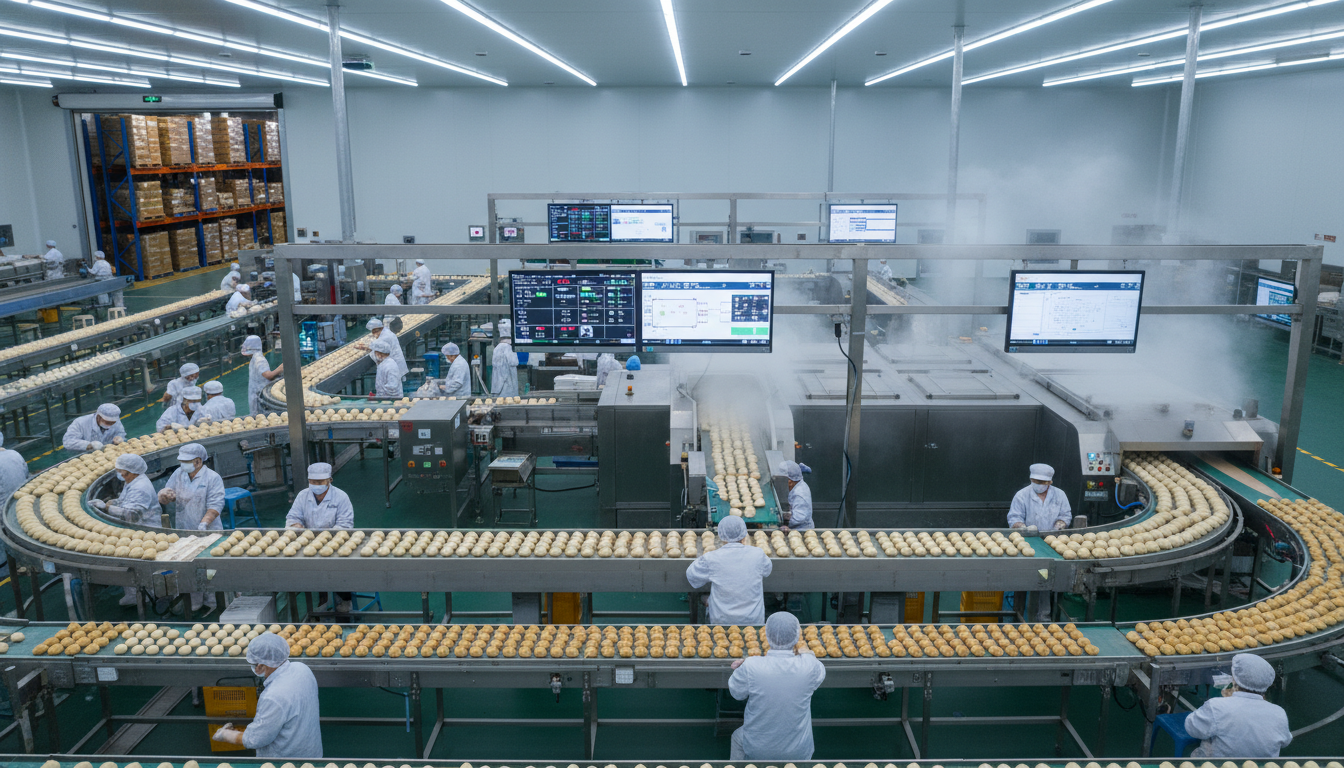

Introduction: From Sanquan Tang Yuan to a CNY 600 Billion Prepared Meal Industry — Thirty Years of China's Food Industrialization
Frozen food represents the most tangible report card China's food industry has produced over the past three decades.
In 1992, a surgeon from Zhengzhou named Chen Zemin left his medical career to start a business, using a secondhand ice cream machine to make China's first quick-frozen tang yuan (glutinous rice balls). The tiny workshop on Xinliu Road in Huiji District, Zhengzhou, was named Sanquan Foods. Business was slow — Chen had to push a flat cart through the streets to sell his tang yuan. Nobody could have imagined that this single rice ball was the beginning of China's frozen food industry, and the seed of what would become a CNY 200 billion sector.
Thirty years later, the industry's boundaries have expanded far beyond what anyone could have imagined then. Quick-frozen tang yuan and dumplings are merely the tip of the iceberg. Hot pot ingredients, frozen fish paste products, prepared meal dishes, frozen bakery dough, and B2B central kitchen custom products — each niche product category conceals hundreds of factories, thousands of SKUs, and an industry undergoing profound structural transformation.
This report focuses on the larger picture. On the historical coordinates of China's food industrialization, we aim to comprehensively trace two intertwined main threads: frozen food (frozen food represented by flour-based products and hot pot ingredients, with a 2025 market size of approximately CNY 213 billion) and prepared meals (prepared meals represented by standardized semi-finished dishes, with a 2025 market size exceeding CNY 600 billion). These two threads deeply intersect on the supply chain and reinforce each other's commercial logic, forming the core vehicle of China's food industry's "industrial substitution" historical proposition.
This report attempts to answer several genuine questions: How large are China's frozen food and prepared meal markets? Who dominates these markets and how? What are the essential differences in competitive logic between B2B central kitchens and C2C retail? What does the rise of instant delivery mean for the industry's competitive landscape? Where will the industry head as food safety controversies and national standards emerge? What will these markets look like in five years?
This report covers the complete supply chain from slaughter processing to the end consumer's table, from major listed companies including Anwell, Sanquan, Qianwei Central Kitchen, Yihai International, and Shuanghui Development, from the Fujian Zhangzhou frozen food industrial belt to core industrial clusters in Henan Zhengzhou, and from Tyson Foods and Conagra Brands to Japan's Nichirei as global reference points. Foundational data comes from corporate annual reports, industry association statistics, and public research institution reports.
This report is divided into twelve chapters, covering definitions and classifications, global landscape, macroeconomic policies, market size, supply chains, key companies, geographic distribution, segment analysis, technology evolution, and risk maps, through to 2026–2030 outlooks and conclusions. Cited data draws on public financial reports, National Bureau of Statistics data, industry association annual reports, and mainstream research institutions, with a core reference period centered on the full year 2025 and the first half of 2026.
The core judgment can be summarized in two sentences: In frozen food, Anwell firmly holds the leading position, B2B central kitchen divergence intensifies, and short-term price wars are inevitable; in the prepared meal industry, national standard implementation brings a standardization opportunity, health upgrades and instant delivery form a dual-driver, and the CNY trillion market will materialize around 2027.
Chapter 1 Definitions and Classifications: The Landscape of Frozen Food and Prepared Meals and a Full Industry Chain Overview
1.1 Definition and Category Boundaries of Frozen Food
The legal definition of frozen food (速冻食品, Frozen Food) is based on China's national standard GB/T 20977: using grains, meat, vegetables, fruits, and other agricultural products as raw materials, after preprocessing, shaping, or seasoning processing, treated with rapid freezing technology (emergency freezing below -30°C, reducing the core temperature of food to below -18°C within 30 minutes), and stored, transported, and sold at temperatures below -18°C. The essential difference from ordinary frozen food lies in the "quick-freezing" process — ultra-low temperature emergency freezing causes the water inside the food to form extremely fine ice crystals, avoiding the damage large ice crystals cause to cell structures, and preserving the food's texture, nutrition, and appearance to the maximum extent.
In China's market, the category boundaries of frozen food have been significantly expanded. The six major categories now include: frozen flour-based products (dumplings, tang yuan, buns, noodles, wontons); frozen hot pot ingredients (fish balls, shrimp balls, meat balls, crab sticks); frozen prepared meal dishes (RTC to RTH semi-finished dishes); frozen snacks and casual foods (french fries, fried chicken, spring rolls); frozen bakery products (pie crusts, croissants, pizza dough); and frozen vegetables and fruits (edamame, corn, peas — mainly industrial and export).
1.2 Legal Definition of Prepared Meals and the Historical Significance of 2024 National Standards
China's legal definition of prepared meals (预制菜, Prepared Meals/Ready Meal) was officially established at the national level in March 2024, when the State Administration for Market Regulation jointly issued a notice with five other ministries (Education, Industry and Information Technology, Agriculture, Commerce, and Health Commission). This notice marks the historic milestone of China's prepared meal industry transitioning from "wild growth" to "standardized competition."
Official definition (2024 edition): Prepared meals use one or more edible agricultural products and their products as raw materials, with or without seasonings and other auxiliary ingredients, with no preservatives added, processed through industrial pre-processing (such as stirring, marinating, tumbling, shaping, stir-frying, deep-frying, baking, boiling, steaming, etc.), packaged with or without seasoning packets, meeting the storage, transportation, and sales conditions specified on the label, and requiring heating or cooking before consumption. Explicitly excluded are: quick-frozen flour products, convenience foods, lunch boxes, rice dishes, steamed buns, pastries, bread, hamburgers, sandwiches, pizza, and other staple food products.
By processing depth, prepared meals can be classified into four levels:
- Ready to Eat (RTE): Open and eat, no heating required
- Ready to Heat (RTH): Heat and eat, fully cooked at the factory
- Ready to Cook (RTC): Processing required, such as marinated raw meat
- Ready to Prepare (RTP): Requires the most processing (like pre-cut ingredient sets)
1.3 B2B vs. C2C Logic: Two Completely Different Business Models
The prepared meal/frozen food market is structurally divided into two parallel supply chains: B2B (Business-to-Business, serving restaurants, group catering, and central kitchens) and C2C (Consumer-to-Consumer, for household consumption through retail channels).
B2B supply chain core logic: The core value delivered by B2B prepared meal supply is "reducing the labor cost of restaurants." A restaurant preparing 100 servings of braised pork daily either needs dedicated staff to cook from scratch (3+ hours, skilled chef required) or purchases RTH prepared meals and simply reheats on site (15 minutes, any kitchen assistant can handle). The time savings, labor cost savings, and standardized output quality are the three core values of B2B prepared meals.
C2C supply chain core logic: The core value delivered by C2C frozen food is "providing home cooking convenience." The core target consumer is the urban double-income family that "doesn't know how to cook but wants to eat well." The purchase decision logic is: convenience > taste > price > brand.
1.4 The Complete 5-Layer Supply Chain Structure
The frozen food/prepared meal supply chain can be deconstructed into five key layers: upstream agricultural raw materials (live pigs, broiler chickens, aquatic products, vegetables, wheat/starch) → initial processing (slaughter, fish paste, cleaned vegetables) → seasoning and food ingredients (sauces, base materials, spices) → frozen/prepared processing (forming, cooking, freezing, packaging) → cold chain logistics and distribution (full cold chain transportation and storage) → channels and terminals (B2B food service/group catering, C2C supermarkets/e-commerce/instant retail).
1.5 Three Consumer Personas: Understanding End Demand
The Lazy Kitchen Urban Youth: 22–35-year-olds in tier-1/2 cities, living alone or in couples. Core demand: "Don't want to cook, don't want to spend a lot." Uses frozen food 3–4 times per week, with instant delivery platforms (Meituan, Dingdong) as primary procurement channels. Price sensitivity is moderate, with strong interest in novelty and internet-famous products.
The Rational Middle-Class: 30–45-year-olds, family with children. Core demand: "Convenient, but must ensure food safety and nutritional balance." Highly concerned about ingredient quality and additive presence; willing to pay a 20%–30% premium for quality-certified products; primary procurement channel is premium community supermarkets (Hema/Freshippo, Yonghui).
The B2B Restaurant Chef (Central Kitchen Buyer): Professional procurement decision-makers for chain restaurants (Haidilao, Xibei, KFC). Core demand: price-performance ratio, batch consistency (same taste at all national outlets), supply stability (cannot be out of stock). Not concerned with C2C brand recognition, only B2B service capability and price competitiveness.
1.6 Industry Cost Structure: Who Profits the Most?
The cost structure of frozen food/prepared meals can be summarized as: raw materials 50%–55%, processing 20%–25%, cold chain 15%–20%, branding and marketing 8%–12%, and net profit approximately 3%–8%. Raw materials account for the largest share, making upstream agricultural price cycles a major cost volatility factor. The pork cycle (approximately 3–4 years), broiler chicken cycle, and fish paste import prices (subject to Peru fishery quotas) are the three core cost variables.
Chapter 2 Global Landscape: Tyson, Conagra, Nichirei and International Frozen Food Competitive Dynamics
2.1 Global Frozen Food Market Overview
The global frozen food market reached approximately USD 320–340 billion in 2025, having maintained a compound annual growth rate of approximately 5%–7% over the past decade. North America and Europe together account for approximately 55%–60% of the global market; Asia-Pacific (primarily China, Japan, and South Korea) accounts for approximately 25%–28% and is the fastest-growing region.
The global market structure is characterized by a "bipolar" format: North American/European markets dominated by a few giant corporations (Tyson, Conagra, Nestlé, McCain Foods) with high market concentration (CR5 > 40%); Asia-Pacific markets are relatively fragmented, with many local brands and intense regional competition (CR5 < 25% in China).
2.2 Tyson Foods: FY2025 Results and Diversified Protein Strategy
Tyson Foods (NYSE: TSN), as the world's largest meat and protein processing company, had annual revenue of approximately USD 54 billion in its fiscal year 2025 (ending September 2025), of which the prepared food segment (Prepared Foods) contributed approximately USD 8.2 billion. Tyson's core competitive advantage lies in its fully vertically integrated supply chain from breeding, slaughtering, processing to sales, and its strong brand presence in North American retail channels (including Jimmy Dean, Hillshire Farm, and the Tyson brand itself).
2.3 Conagra Brands: Frozen Food Giant's Recovery Path
Conagra Brands (NYSE: CAG), the United States' second-largest consumer frozen food company, achieved revenues of approximately USD 11.5 billion in its fiscal year 2025 (ending May 2025). Its frozen food brands (Bird's Eye, Healthy Choice, Banquet, Marie Callender's) command significant share in North American retail frozen food. Conagra's prepared food segment revenue decreased by approximately 2%–3% due to consumer "value-consciousness" trends (consumers shifting to cheaper private label products).
2.4 Hormel Foods and Nichirei: Specialty Positioning
Hormel Foods (NYSE: HRL) achieved revenues of approximately USD 12.1 billion in FY2025, with key brands including SPAM, Jennie-O Turkey, and Hormel Natural Choice. Nichirei Corporation (Japan, listed as 2871.TK) recorded revenues of approximately JPY 695 billion (approximately CNY 33 billion) in FY2025, with its frozen foods segment (including processed foods and logistics cold-chain services) being its core business, maintaining approximately 20%–22% market share in Japan's retail frozen food market.
2.5 European Market and Emerging Markets
European frozen food leaders include Findus Group (Sweden/Italy, now owned by Nomad Foods), McCain Foods (Canada, global leader in frozen potato products), and Iglo Group (fish and vegetable frozen food). The European market's distinguishing feature is that consumers' acceptance of frozen food health and convenience narratives is higher than in China, with penetration rates of approximately 65%–75% in UK/Germany/France (compared to China's approximately 40%–50%).
Southeast Asian markets (Vietnam, Indonesia, Thailand, Malaysia) represent the fastest-growing emerging markets for global frozen food companies. As urbanization accelerates and cold chain infrastructure improves, Southeast Asian frozen food consumption is expected to achieve approximately 12%–15% compound annual growth from 2025–2030.
Chapter 3 PEST Analysis: A Four-Dimensional Assessment of China's Frozen Food and Prepared Meal Industry Environment
3.1 Political: National Standard Implementation and Regulatory Strengthening
The March 2024 joint notice by six ministries on prepared meals was the most important policy document for the industry in 2023–2025. Its core contents include: official definition of prepared meals (excluding staple foods and convenience foods); requirement that all prepared meals do not add preservatives; requirement that restaurant operators disclose when using prepared meals when consumers ask (the "right to know" principle); and requirement to strengthen school canteen food safety management (school prepared meal usage must comply with stricter nutritional standards).
3.2 Economic: Catering Chain Industrialization and Price War Pressures
China's catering industry chain rate has risen from approximately 28% in 2019 to approximately 42% in 2025. This means more restaurants need standardized supply from central kitchens; more chain brands need to achieve "same taste at all outlets" goals through prepared meal supply chains. This structural shift is the most powerful economic driver of prepared meal demand.
However, the 2023–2025 macroeconomic environment has also placed pressure on consumer restaurant spending. Consumer downgrading trends (more DIY meals, fewer dining out) have, to some extent, suppressed B2B prepared meal demand growth. Meanwhile, the price war in the e-commerce channel (618/Double 11 large promotions, livestream e-commerce lowest price competition) is dragging down the average selling price of frozen food.
3.3 Social: Instant Delivery + Health Awareness + Single Economy
Three social-level trend changes are reshaping the frozen food/prepared meal consumption pattern:
Instant delivery penetration: The rise of platforms like Meituan Xiaoxiang Supermarket and Dingdong Maicai (Dingdong Shopping) is enabling consumers to receive frozen food at home within 30 minutes. This "new cold chain last mile" capability is fundamentally changing consumer purchase frequency (from weekly supermarket stockpiling to on-demand purchasing as needed).
Health consciousness upgrade: Post-COVID consumers are significantly more concerned about food safety and nutritional components. The market for frozen food with "reduced salt, no preservatives, and traceable source" positioning is growing rapidly (approximately 25%–30% YoY).
Single economy: China's single-person living population has exceeded 92 million (2025). The consumer demand for small-package (1–2 servings), convenient, and diversified frozen food is far higher than that of traditional family consumers.
3.4 Technology: Liquid Nitrogen Freezing + Digital Central Kitchens + Cold Chain IoT
Liquid nitrogen ultra-rapid freezing: Liquid nitrogen freezing technology (-196°C, 1–5 minutes to complete freezing) can produce frozen food with smaller ice crystals and better texture preservation than conventional mechanical refrigeration (-30°C, 30+ minutes). The penetration rate of liquid nitrogen freezing equipment is increasing in high-end fish paste and raw meat products segments.
Digital central kitchens: ERP integration with restaurant POS systems enables real-time demand forecasting; HACCP IoT systems enable real-time monitoring of temperature and time key control points during the production process; machine vision quality inspection systems replace manual sampling inspection.
Cold chain IoT: GPS + temperature dual-recording cold chain monitoring systems have been deployed in leading cold chain logistics enterprises. Blockchain traceability technology is beginning to be applied to high-end seafood and health frozen food supply chains.
3.5 PEST综合研判: Assessment Summary
Political, economic, social, and technological forces are pointing in the same direction: the frozen food/prepared meal industry will continue to grow, but at an increasingly competitive pace. The national standards create structural opportunities for quality-focused enterprises; the pork/fish paste cost cycle will continue to bring quarterly profit volatility; health trends and instant delivery will redefine the channel structure; and cold chain and digital technology gaps will become the new dimensions of competitive differentiation.
3.6 National Standard Timeline and Industry Impact
The 2024 prepared meal standards represent Phase 1 of standard implementation. The subsequent standard roadmap is expected to proceed in phases: Phase 2 (2025–2026) focuses on specific product quality standards (microbiological limits, food additive lists, labeling requirements); Phase 3 (2027) may introduce a prepared meal certification system (similar to the existing green food certification). Companies that align their production systems with these upcoming standards in advance will gain a significant first-mover advantage in the market normalization process.
3.7 Belt and Road Initiative and Cross-Border Food Export Policy
China's Belt and Road Initiative creates policy dividends for frozen food exports. Under RCEP framework, tariffs on Chinese frozen seafood, poultry, and prepared meals exported to ASEAN, Japan, South Korea, and Australia will gradually be reduced to zero. Vietnam's EVFTA agreement with the EU additionally provides factories in Vietnam with preferential tariffs for exporting to Europe — this is the core policy logic behind Chinese frozen food companies setting up factories in Vietnam.
3.8 Consumer Behavior: Deep Analysis of Demand Patterns
China's frozen food consumption frequency is approximately 2–3 times per week among urban consumers in 2025 — significantly higher than the approximately 0.8 times per week in 2015. Cooking frequency has declined sharply (average cooking time of urban residents under 35 years old has decreased from 52 minutes per day in 2015 to approximately 29 minutes per day in 2025), creating a structural demand gap that frozen/prepared food fills.
3.9 Digital Traceability Policy: Blockchain in Food Safety
China's Ministry of Agriculture has issued guidelines requiring major food categories to implement digital traceability systems. Frozen prepared meals sold through major e-commerce platforms (Alibaba, JD.com, Pinduoduo) are being progressively required to provide traceable information from the production batch, raw material source, and cold chain temperature records. This regulatory direction is creating new technological moats for companies with comprehensive traceability systems, while increasing compliance costs for smaller enterprises.
3.10 B2B Foreign Trade Policy: New Export Opportunities Under RCEP
Under the RCEP framework, China's exports of frozen food to ASEAN, Japan, South Korea, and Australia benefit from progressive tariff reductions to near-zero levels over 10–20 years. Categories directly benefiting include frozen seafood products and frozen chicken products. Vietnam's factories additionally benefit from EVFTA preferential tariffs for EU exports. In contrast, US-China trade tensions remain a headwind for frozen seafood exports to the American market.
3.11 Food Tech Investment Boom: Plant Protein and Cultivated Meat Prospects
China's Ministry of Agriculture has designated plant protein and cultivated meat as key R&D priorities. The domestic plant protein frozen food market stands at approximately CNY 20–30 billion (2025), growing at approximately 15–20% annually. Cultivated meat regulation remains in an early framework stage in China, with commercial scale expected post-2030.
3.12 The Social Background of the School Prepared Meal Controversy
The 2023–2025 controversy around "prepared meals entering schools" was triggered by social media exposure of poor-quality school canteen prepared meals in Guangdong, and deeply reflects urban middle-class parental anxiety about children's food safety — an anxiety rooted in collective memories of major food safety incidents (2008 melamine milk, 2012 "fast-growing chickens"). Policy responses have diverged: coastal provinces favor quality standards and disclosure requirements; some inland provinces issued guidance to "reduce prepared meal use," creating direct business headwinds for companies like Huifa Foods that depend on school catering.
Chapter 4 China Market Size: Frozen Food CNY 213 Billion + Prepared Meals CNY 600 Billion+ — Dual-Track Full Picture
4.1 Frozen Food Market: 2025 Size Approximately CNY 213 Billion, Growing ~7% YoY
China's frozen food market (broad definition, including flour-based, hot pot ingredients, frozen prepared dishes, frozen snacks, frozen bakery) reached approximately CNY 213 billion in 2025, growing approximately 7% year-over-year. Within this breakdown:
- Frozen flour-based products (dumplings, tang yuan, buns, noodles): ~CNY 810 billion, accounting for approximately 38%
- Frozen hot pot ingredients (fish balls, meat balls, crab sticks): ~CNY 511 billion, accounting for approximately 24%
- Frozen prepared dishes (RTH/RTC): approximately CNY 500–600 billion, accounting for approximately 20–25%
- Frozen snacks/bakery (french fries, fried chicken, frozen bakery): approximately CNY 150–180 billion, accounting for approximately 7–8%
The geographic distribution is: Eastern China 40%, Northern China 20%, Southern China 18%, Central-Western China 22%.
4.2 Frozen Flour-Based Products: Approximately CNY 81 Billion, Three-Year Slowdown
Frozen flour-based products (primarily dumplings, tang yuan, buns, noodles) represent the most mature segment of China's frozen food market, with a 2025 market size of approximately CNY 81 billion. This segment is growing approximately 3%–5% annually — close to GDP consumption growth. Sanquan Foods and Sinian Foods together control approximately 30%–35% of the retail dumpling/tang yuan market.
4.3 Hot Pot Ingredients: Approximately CNY 51 Billion, Synchronizing with CNY 650 Billion Hot Pot Market
Frozen hot pot ingredients reached approximately CNY 51 billion in 2025. Fish paste products (fish balls, shrimp balls, crab sticks) account for approximately 45%–50% of the market. Anwell Foods and Haixin Foods together hold approximately 18%–20% market share. The market is co-evolving with China's CNY 650 billion hot pot restaurant market.
4.4 Prepared Meals: 2025 Size CNY 600–620 Billion, B2B Accounts for 60%–65%
China's prepared meal market (broad definition, including B2B central kitchen + C2C retail + instant delivery) reached approximately CNY 600–620 billion in 2025, growing approximately 10%–13% year-over-year. B2B demand (restaurant chains, group catering, central kitchens) accounts for approximately 60%–65%; C2C demand (household retail) accounts for approximately 35%–40%.
Key data points:
- The CNY 1.5 trillion group catering market (enterprise/school/hospital canteens) drives approximately CNY 250–300 billion in prepared meal demand
- Restaurant chain prepared meal penetration rate (the proportion of restaurant dish ingredients sourced from prepared meal suppliers) has risen from approximately 35% in 2020 to approximately 55%–60% in 2025
- Instant delivery channel prepared meal sales reached approximately CNY 50 billion in 2025, growing 35%–40% YoY, making it the fastest-growing sub-channel
4.5 Group Catering: CNY 1.5 Trillion Base, Prepared Meal Penetration Continues
China's group catering market (enterprise/government/school/hospital cafeterias) reached approximately CNY 1.5 trillion in 2025. The prepared meal penetration rate has risen from approximately 30% in 2020 to approximately 45%–50% in 2025. The long-term penetration ceiling is expected at approximately 65%–70%.
4.6 Instant Delivery Frozen Food: ~CNY 50 Billion in 2025, Growing 35%–40%
The major instant delivery platforms (Meituan Xiaoxiang Supermarket, Dingdong Maicai, Hema Flash Delivery) are generating frozen/prepared food sales of approximately CNY 50 billion combined in 2025. This channel is growing at approximately 35%–40% YoY — approximately 5× the overall market growth rate.
4.7 Regional Markets: Structural Differences in Demand and Supply
Eastern China (30%–33% of market): Highest penetration, premium products dominant, mature cold chain coverage. Northern China (15%): Strong frozen dumpling tradition, Henan cluster serving demand. Southern China/Guangdong (18%–20%): B2B supply chain most developed, Cantonese prepared food most active. Central-Western (remaining): Lower penetration, growth driven by cold chain infrastructure expansion.
4.8 Competitive Concentration: CR5 Rising from 22% to 30%–35%
The top-5 players' combined market share in frozen food has risen from approximately 22% in 2020 to approximately 30%–35% in 2025, and is forecast to reach approximately 45%–50% by 2030. Anwell Foods is the only company with significant presence in all three major segments (flour-based, hot pot ingredients, and prepared dishes), giving it a platform-player advantage that pure specialists cannot match.
4.9 Consumer Profiles: Five Primary Demand Personas
Group 1: Urban Dual-Income Small Families (25–40, tier-1/2 cities): The core C2C demographic; approximately 150–200 million people. High frequency (3–4 times/week), moderate price sensitivity, channel preference for instant retail and e-commerce.
Group 2: Single Young Adults (22–30, major cities): 92 million single-person households. Strong demand for small-pack, convenient options; high interest in "net-famous" and novel products; primary channel: instant delivery and livestream e-commerce.
Group 3: Lower-Tier City Families (35–55, tier 3–4 cities): High frequency, large-pack, extremely price-sensitive. Strong brand loyalty once established. Sanquan and Sinian have high brand recognition here.
Group 4: Chain Restaurant Procurement (B2B Professional Buyers): Focus on price (must have quantity discounts), quality consistency (batch variance must be controlled), supply reliability, and cold chain traceability.
Group 5: Group Catering Canteen Managers: Budget-constrained at approximately CNY 10–20/person/meal, with food ingredients at 40%–50% of that. Frozen prepared meals serve the function of "feeding the maximum number of people within a limited budget."
4.10 Market Size Measurement Logic and Key Disagreements
Different data sources on market size diverge mainly because of definitional scope: does "prepared meals" include frozen flour products? If yes, the market can reach CNY 600–800 billion; if no (only standardized dish preparations), it's CNY 300–400 billion. This report uses the broad definition. A further complication is the difficulty of measuring B2B data (factory shipment data vs. final consumption data). Despite definitional differences, there is broad consensus on the core data points.
Chapter 5 Supply Chain Deep Dive: The Complete Chain from Slaughter Processing to Final Consumption
5.0 Supply Chain Structure Overview: The Intersection of Agricultural Industrialization and Catering Industrialization
The frozen food/prepared meal supply chain is fundamentally an industrial bridge between agriculture (raw material supply) and catering (food consumption). It converts "unstable agricultural supply" into "stable industrial food supply" and concentrates "highly fragmented cooking demand" into factory-scale production.
The chain decomposes into seven core links: upstream agricultural raw materials → slaughter/initial processing → seasoning and food ingredients → midstream frozen/prepared processing → cold chain logistics → channel and terminal → final consumption.
5.1 Upstream Layer 1: Agricultural Raw Materials
Live Pigs: China's annual pig production is approximately 700 million heads (2025), with pork output of approximately 56 million tons. Shuanghui Development, China's largest hog slaughter company, had revenues of approximately CNY 59.27 billion in 2025 (-0.48% YoY).
White-Feathered Broiler Chickens: Annual production of approximately 7 billion birds. Chunxue Foods (605567) achieved export volume of 26,800 tons in 2025, growing 15.52%, with export revenue breaking through USD 100 million for the first time.
Aquatic Products: Aquatic product processing raw materials include imported fish paste (Peruvian anchoveta, Argentine squid), Vietnamese grass carp, and Chinese domestic fish. Peru fishery quotas and El Niño weather patterns are major supply volatility factors.
Wheat and Starch: China's annual wheat production is approximately 140 million tons, self-sufficient. Corn starch and potato starch are widely used auxiliary materials for water retention.
5.2 Upstream Layer 2: Food Ingredient Processing
Slaughter processing companies (represented by Shuanghui Development) are actively extending into downstream frozen prepared foods. Shuanghui's 2025 net profit was CNY 5.105 billion (+2.32%), with prepared meal business progressing but not yet making a significant independent revenue contribution.
5.3 Middle Supporting Layer: Seasonings and Packaging Materials
Seasoning supply: Yihai International (HK 1579) — Haidilao's core supplier — achieved revenues of CNY 6.613 billion in 2025 (+1.1%), net profit CNY 904 million (+13%). Its third-party business (non-Haidilao) reached CNY 4.782 billion (+4.7%).
Food packaging materials: High-barrier composite bags (PA/PE), oil-resistant cardboard boxes, and aluminum foil packaging are primary formats. Biodegradable packaging (PLA, PBAT composites) is gradually increasing market share.
5.4 Core Midstream: Frozen Processing and Central Kitchen Competitive Logic
Scale economies: Frozen food is a classic scale economy industry. Anwell's 12 domestic production bases give it a cost leadership position unmatched by smaller competitors.
B2B central kitchen's special competitive logic: Customer stickiness is extremely high (supplier certification cycles are long, switching costs high); products are highly customized; gross margins are lower but stable. Qianwei Central Kitchen (001215) 2025 revenues: CNY 1.899 billion (+1.6%), net profit CNY 63.57 million (-24.04%), net margin approximately 3.3%.
5.5 Downstream Channel Layer: Structural Transformation of Multi-Channel Distribution
Traditional supermarkets (hypermarkets): ~45%–50% of C2C sales, declining. E-commerce platforms: ~25%–28%, growing 12%–15% YoY. Instant retail (Meituan/JD Daojia/Dingdong): ~15%–18%, growing 35%–40%. B2B direct sales/distributors: Qianwei Central Kitchen's direct sales revenue was CNY 898 million in 2025 (+11.08%).
5.6 Cold Chain Logistics: China's Rapid Growth and Remaining Gaps
China's cold storage total capacity reached approximately 90–100 million cubic meters in 2025 (3× the 2015 level). Refrigerated vehicles: approximately 450,000–500,000 units (5× 2015 level). Major players include SF Cold (顺丰冷运), Rongqing Logistics, and Sinochem Cold Chain. Regional imbalance persists — cold chain coverage in Western China and rural areas remains insufficient, creating "cold chain break" risks.
5.7 Consumption Scenarios: Five Major Demand Scenarios
Family stockpile, instant delivery, hot pot social, group catering, and restaurant takeaway — these five scenarios each have distinct purchasing behaviors, frequency, package size preferences, and price sensitivity levels that drive different product requirements across the supply chain.
Chapter 6 Key Companies: One by One — The Financial Reality of China's Frozen Food/Prepared Meal Giants
6.1 Anwell Foods (603345.SH / 2648.HK): Industry Leader with CNY 16.2 Billion Revenue, Dual A+H Listing Completed
Anwell Foods (安井食品) achieved revenues of approximately CNY 16.193 billion in 2025 (+7.05%), with net profit of approximately CNY 1.359 billion (-8.46%). Its prepared meal business ("Anwell Little Kitchen" series) contributed approximately CNY 4.8 billion (+9%), representing 30% of total revenue. Anwell completed its Hong Kong H-share listing (2648.HK) in 2025, raising approximately HKD 2.3 billion. It now operates 12 production bases across China (Xiamen, Wuxi, Taizhou, Liaoning, Sichuan, Hubei, Henan, Guangdong, Shandong, Honghu, etc.).
Anwell's competitive moats: scale (largest production capacity in the industry), full-category coverage (flour-based + hot pot ingredients + prepared dishes + bakery), and now overseas expansion via Hong Kong capital markets.
6.2 Sanquan Foods (002216.SZ): The C2C Dumpling/Tang Yuan Giant
Sanquan Foods achieved revenues of approximately CNY 6.541 billion in 2025 (-1.38%), with net profit of approximately CNY 553 million (+0.47%). Its competitive strength lies in commanding brand recognition in the flour-based frozen food segment, with high market share in dumplings and tang yuan. Sanquan's strategic challenge is that the mature flour-based market has limited growth, requiring brand repositioning towards higher-value products.
6.3 Qianwei Central Kitchen (001215.SZ): B2B Central Kitchen's Representative Enterprise
Revenues of CNY 1.899 billion (+1.6%), net profit CNY 63.57 million (-24.04%). As a key supplier to Yum China (KFC/Pizza Hut) and Haidilao, Qianwei's value proposition is deep customization and food safety management. The severe profit decline reflects the pricing pressure inherent in serving mega-clients.
6.4 Weizhixiang (605089.SH): C2C Semi-Finished Meal Pioneer
H1 2025 revenues CNY 343 million (+4.7%), net profit declining 24.46%. Supermarket channel revenue surged +155.55%. Weizhixiang pioneered the direct-store retail model for fresh/chilled semi-prepared meals in Jiangsu/Shanghai, targeting the premium C2C market.
6.5 Guolian Aquatic Products (300094.SZ): Seafood Prepared Meal Specialist
Revenue target approximately CNY 2.5 billion for 2025. As China's largest aquatic product export enterprise, Guolian has pivoted heavily into seafood prepared meals (shrimp, crayfish, fish), facing margin pressure as crayfish demand normalizes.
6.6–6.10 Other Key Listed Companies
- Haixin Foods (002702.SZ): ~CNY 1.3–1.5 billion revenue; Q3 reported net loss, facing industry headwinds
- Huifa Foods (603536.SH): CNY 1.41 billion revenue (-26.78%), net loss CNY 69.55 million; severely impacted by school canteen policy uncertainty
- Longda Meishi (002726.SZ): CNY 10.019 billion revenue (-8.83%), net loss CNY 736 million; debt of CNY 3.2 billion poses financial risk
- Yihai International (HK 1579): CNY 6.613 billion revenue (+1.1%), net profit CNY 904 million (+13%); hot pot seasoning leader
- Shuanghui Development (000895.SZ): CNY 59.274 billion revenue (-0.48%), net profit CNY 5.105 billion (+2.32%); meat processing giant extending into prepared meals
6.11 Three-Dimension Analysis of Industry Profitability
Scale-profit paradox: Longda (CNY 10 billion revenue) recorded a loss, while Yihai (CNY 6.6 billion revenue) achieved CNY 904 million net profit. Scale alone does not guarantee profitability — differentiation and pricing power matter more.
Profitability ranking: Yihai International (net margin 13.7%) > Sanquan (net margin ~8.5%) > Anwell (8.4%) > Qianwei (~3.3%) > Longda (loss).
M&A logic: The industry's consolidation phase is beginning. Anwell's acquisition strategy (acquiring Jiangsu Dingmeitai and Dingyifeng for bakery capability) represents the consolidation pattern for category expansion by scale leaders.
6.12 Industry at Consolidation Tipping Point: Three Signals
Signal 1: Loss-making scale players (Longda, Huifa) under debt and market share pressure. Signal 2: Anwell's aggressive cross-category M&A. Signal 3: Yihai's asset-light royalty model demonstrating superior capital efficiency vs. heavy manufacturing assets.
6.13 Financial Summary Table (2025)
| Company | Revenue (CNY bn) | YoY | Net Profit (CNY mn) | Net Margin |
|---|---|---|---|---|
| Anwell | 16.19 | +7.1% | 1,359 | 8.4% |
| Sanquan | 6.54 | -1.4% | 553 | 8.5% |
| Shuanghui | 59.27 | -0.5% | 5,105 | 8.6% |
| Yihai | 6.61 | +1.1% | 904 | 13.7% |
| Qianwei | 1.90 | +1.6% | 64 | 3.3% |
| Longda | 10.02 | -8.8% | -736 | -7.3% |
| Huifa | 1.41 | -26.8% | -70 | -4.9% |
6.14 Non-Listed Companies: Sinian, Shuhai, Zhengda
- Sinian Foods: Second-largest dumpling/tang yuan C2C brand after Sanquan, estimated revenues approximately CNY 40–50 billion. IPO expected within 3–5 years.
- Shuhai Supply Chain: Haidilao's central kitchen subsidiary; extends services to third-party restaurants; major IPO candidate.
- Zhengda Foods: Thailand CP Group subsidiary; diversified product mix from frozen chicken to prepared meals.
6.15 H-Share Market and Capital Operations: Anwell A+H's Pioneering Significance
Anwell's completion of A+H dual listing in 2025 is a landmark capital markets event for the frozen food industry. The Hong Kong listing serves to (1) access international investors who value the overseas expansion growth story, and (2) provide a more flexible financing vehicle for overseas M&A and factory construction in Southeast Asia.
6.16 ESG and Sustainability in Key Companies
Carbon footprint (cold chain refrigeration and refrigerated transport are significant emitters), food waste reduction (frozen food's 6–18 month shelf life is a sustainability advantage over fresh food), and animal welfare (increasingly relevant for EU export qualification) are the three main ESG dimensions gaining investor attention in this industry.
Chapter 7 Mid-Stream Industrial Belts: Geographic Map from Fujian to Central Plains, from Eastern China to Overseas Factories
7.1 Fujian-Xiamen Cluster: Anwell's Home Base, National-Level Hub for Fish Paste and Frozen Prepared Foods
Fujian province (Xiamen and Zhangzhou in particular) is one of China's most important frozen food production bases. Anwell's foundational factory is in Xiamen, covering fish paste and frozen prepared dish core product lines. The coastal location provides convenient access to aquatic raw materials; historical technology exchange with Japan/Taiwan gave Fujian enterprises early advantages in fish paste processing. Tianxia Gongchang data shows that Fujian's frozen food-related factories cover the complete supply chain from fish paste extraction to finished product packaging.
7.2 Henan-Zhengzhou Cluster: Birthplace of China's Frozen Flour Products
Sanquan Foods (founded 1992 in Zhengzhou) and Sinian Foods (founded 1997 in Zhengzhou) together built the "dual-leader" Zhengzhou frozen food model. Scale-above enterprises in Zhengzhou's cold-chain food sector exceed 30, with revenues over CNY 30 billion and market share over 60% (flour-based products category). Zhengzhou's frozen food industrial belt benefits from China's geographic center location, nearby wheat resources (Henan produces 28% of national wheat), and thirty years of accumulated talent and technology.
7.3 Shandong Cluster: Emerging Prepared Meal Hub
Shandong has explicitly targeted "China's Prepared Meal Capital" status, with plans to develop 10+ CNY 10 billion-level prepared meal leaders by 2025. Vegetable processing in Shouguang (450 million tons annual output), deep-sea aquatic products from Qingdao/Weihai/Rongcheng, and companies like Chunxue Foods and Longda Meishi form the Shandong cluster's backbone.
7.4 Jiangsu Cluster: Weizhixiang's Home Field
Jiangsu (particularly Changshu and Suzhou) is the birthplace of Weizhixiang's retail semi-prepared meal model. The food processing industry here benefits from proximity to the Yangtze River Delta's high-consumption market and abundant agricultural resources.
7.5 Guangdong Cluster: B2B Stronghold, Overseas Pioneer
Guangdong's food production cluster, particularly the Pearl River Delta (Guangzhou, Foshan, Zhongshan), has the highest density of frozen prepared food supply chain enterprises. Guangdong enterprises lead nationally in overseas expansion, pioneering "shared factory" models in Vietnam. The food additives and cold chain equipment supply chain is highly mature here.
7.6 Overseas Factory Layout: Vietnam and Indonesia "Going Global" Strategy
Vietnam (population ~100 million, food habits similar to China, labor costs 60%–70% of China's) is the primary overseas destination. RCEP framework and Vietnam's EVFTA with the EU provide dual preferential trade arrangements. Indonesia (280 million population) targets local ethnic Chinese restaurant communities. Europe and North America markets are primarily served through distributor channels to Asian food supermarkets.
7.6.1 Vietnam Shared Factory Model Deep Dive
The "shared factory" model reduces single-company initial investment from CNY 50–200 million to CNY 5–20 million, dramatically lowering the overseas expansion capital threshold. Shared Vietnamese food production facilities comply with VFA certification and GMP certification collectively, with participating companies avoiding individual regulatory filing costs. Product exports from Vietnam to the broader ASEAN market benefit from intra-ASEAN zero tariffs under the RCEP framework.
7.7 Industrial Belt Geographic Summary Table
| Cluster | Core Region | Main Categories | Representative Companies |
|---|---|---|---|
| Southern Fujian | Xiamen/Zhangzhou | Fish paste/frozen prepared | Anwell Foods |
| Central Plains | Zhengzhou, Henan | Frozen flour-based | Sanquan/Sinian |
| Shandong | Qingdao/Weifang/Linyi | Chicken/vegetable prepared | Chunxue/Longda |
| Eastern China | Changshu/Shanghai | C2C semi-finished | Weizhixiang |
| Guangdong | Guangzhou/Foshan | B2B prepared/overseas | Yihai/multiple |
| Overseas | Vietnam/Indonesia/Europe | Export frozen | Anwell/Chunxue |
7.8 Structural Significance of Industrial Belts
Four forces shaped China's frozen food geography: (1) resource-driven clustering (wheat → Zhengzhou; seafood → Fujian); (2) market-driven clustering (premium C2C demand → Jiangsu); (3) policy-driven development (Shandong's "prepared meal capital" initiative); and (4) overseas first-mover advantages already materializing for companies with early Vietnam/Indonesia footprints.
7.9 Overseas Chinese Community Market: An Underestimated Export Blue Ocean
Approximately 60 million overseas Chinese globally (34 million in Southeast Asia, 6 million in North America, 2 million in Europe, 1.3 million in Australia) represent a culturally aligned demand base for Chinese-flavor frozen foods. Current penetration is low due to insufficient brand recognition outside China, high cold chain export costs (retail price 2–3× domestic), and local competition from Southeast Asian Chinese food manufacturers. The solution path is "brand direct + local production" combined: establish cold chain distribution networks in overseas Chinese communities while building local factories to reduce logistics costs.
7.10 Digital Transformation of Domestic Industrial Belts
Production automation is relatively mature in leading factories (Anwell, Sanquan core facilities). Supply chain digitalization (upstream procurement integration, downstream inventory monitoring) still has significant gaps in SME factories. E-commerce platform supply chain finance and digital procurement tools are progressively penetrating the sector.
Chapter 8 Segment Analysis: Deep Dissection of Eight Major Tracks
8.1 Frozen Flour Products (Dumplings/Tang Yuan): Precision Cultivation in a Mature Market
~CNY 81 billion market, growing 3%–5% annually. Sanquan + Sinian hold ~30%–35% combined retail market share in dumplings and tang yuan. Innovation direction: health (reduced salt, high-protein fillings), small packaging (1–2 servings), premiumization (black pig pork, fresh shrimp fillings), and gifting (holiday gift boxes).
8.2 Hot Pot Ingredients and Fish Paste: Synchronized with CNY 650 Billion Hot Pot Market
Hot pot ingredient market ~CNY 51 billion. Fish paste products (fish balls, shrimp balls, crab sticks) account for 45%–50%, mainly from imported fish paste (Peru, Argentina) and domestic grass carp. Anwell + Haixin hold ~18%–20% combined. "Hand-made" high-meat-content products (zero starch, hand-beaten beef balls, shrimp paste) represent the premiumization trend with significantly higher gross margins.
8.3 Prepared Meal Dishes: Largest Segment, Fragmented Competition
Eight major Chinese cuisine systems (Sichuan, Cantonese, Shandong, Jiangsu, Zhejiang, Hunan, Fujian, Anhui) generate thousands of specific SKUs. The biggest barrier to B2B penetration remains the "restaurants use prepared meals but don't like to admit it" perception issue.
8.4 B2B Central Kitchen for Chain Restaurants: Dual Moat of Scale and Customer Stickiness
Core competitive logic: scale production + customized recipes + supply chain stability. Qianwei Central Kitchen's KPI for Yum China demonstrates how sustained deep customization over years creates switching costs that effectively make the relationship quasi-permanent.
8.5 C2C Supermarkets and Community Group Purchase: Channel Transformation
Traditional hypermarkets declining; community supermarkets (Hema, Yonghui) rising as premium channels; Douyin livestream commerce emerging as a volume driver (though with risk of price dilution); Duoduo Maicai penetrating tier-3/4 cities.
8.6 Group Catering (Institutions and Schools): Large Scale, Policy Uncertainty
The CNY 1.5 trillion group catering market remains a core demand source for prepared meals. However, the school canteen controversy creates policy risk for companies (like Huifa Foods) with high exposure to this sub-segment.
8.7 Instant Delivery: Frozen Food's Third Major Channel
~CNY 50 billion in 2025, growing 35%–40% YoY. Meituan Xiaoxiang Supermarket, Dingdong Maicai, and Hema Flash Delivery are the three leading platforms. The algorithmic flow preference for top brands creates an accelerating advantage for Anwell and Sanquan relative to smaller players.
8.8 Frozen Bakery Dough and Cake: The Fastest-Growing New Niche
~CNY 10–12 billion market in 2025, growing 20%–25% YoY (3× the overall market rate). Key drivers: China's rapid coffee/bakery culture growth; chain coffee brands (Starbucks, Luckin, Tims) and tea/bakery brands (Heytea, Nayuki) with large frozen bakery ingredient procurement needs; convenience store hot food counters. Délifrance (frozen croissant dough specialist) serves as the global B2B model to emulate. Anwell entered this space via acquisitions.
8.9 Eight-Segment Comparative Assessment
Fastest growing (2025–2030 CAGR): Frozen bakery (20–25%) > Instant delivery frozen (30–35% channel growth) > Aquatic prepared meals (~15–18%).
Most profitable: B2B seasoning add-ons (Yihai, GM 35%–40%) > C2C premium semi-finished (Weizhixiang, GM ~20%–22%) > Frozen bakery (25%–30%).
Most competitive: Frozen flour-based (oligopoly) > Frozen hot pot (Anwell/Haixin dual oligopoly, but many tier-2/3 competitors) > B2B ordinary prepared dishes (low barriers, massive competition).
Highest policy risk: School group catering prepared meals.
Chapter 9 Technology Evolution: Quick-Freeze Liquid Nitrogen, Sterilization, Digital Central Kitchens, Cold Chain IoT, Health Innovation, AI Food R&D — Four-Dimensional Assessment
9.1 Freezing Technology: From Mechanical Tunnels to Liquid Nitrogen
Mechanical tunnel freezing: -30°C to -40°C, 30–60 minutes, adequate for most products. Liquid nitrogen ultra-rapid freezing: -196°C, 1–5 minutes, produces smaller ice crystals and dramatically better texture for premium fish paste and raw meat products. Ultrasonic-assisted freezing: Reduces ice crystal size through ultrasonic vibration + mechanical refrigeration. CAS magnetic resonance freezing: Japanese technology that uses magnetic fields to keep water molecules vibrating during freezing, reducing ice crystal formation.
9.2 Sterilization Technologies
High-temperature steam sterilization: Standard method for RTH prepared meals. Vacuum packaging + MAP (Modified Atmosphere Packaging): Extends refrigerated shelf life. HPP (High-Pressure Processing): 400–600 MPa ultra-high pressure, preserves fresh taste, applicable to some RTE products.
9.3 Digital Central Kitchens: ERP-POS Integration and HACCP IoT
Central kitchen ERP linked to downstream restaurant POS data enables "door outlet sales forecast → automatic production trigger." HACCP IoT systems monitor all critical control points in real time. Machine vision systems enable 24/7 automated quality inspection.
9.4 Cold Chain IoT: Full Process Monitoring
GPS + temperature dual-recording cold chain monitoring is deployed across leading cold chain logistics companies. Blockchain traceability is beginning to be applied in high-end product supply chains, enabling full data transparency from farm to table.
9.5 Health Technology: Reduced Salt, Phosphate-Free, AI Formulation
Salt reduction: KCl replacing NaCl (20%–30% sodium reduction). Phosphate-free: Carageenan, konjac gum replacing phosphates as water retention agents. Plant protein applications: Soy/pea protein in frozen food growing approximately 15%–20% annually. AI formulation: Machine learning on consumer taste data + nutrition databases to accelerate new product development (from 6–12 months to 2–4 months).
9.6 Packaging Technology: High-Barrier, Biodegradable, Microwave-Compatible
High-barrier composite packaging (PA/PE multilayer films) for extended shelf life; biodegradable packaging (PLA/PBAT) gaining share under carbon neutrality policy pressure; microwave-compatible packaging enabling direct heating in package — eliminating the need for consumers to transfer food to separate containers.
9.7 Technology Roadmap 2025–2030
Short-term (2025–2026): Liquid nitrogen penetration > 30% of premium products; digital central kitchens in all top-10 companies. Medium-term (2027–2028): AI recipe optimization mainstream; first commercial cultivated meat products in China. Long-term (2029–2030): Ambient-stable (room temperature, 12+ months) prepared meals using combination preservation technologies; plant-based protein accounts for 5%–8% of overall market.
9.8 Central Kitchen 2.0: Automation-Digitalization Fusion
The second generation of central kitchens (2023 onwards) integrates robotics (stir-fry robots replicating chef techniques), AI visual quality inspection, ERP-POS real-time closed loops, and full-process digital traceability. Investment for a 3,000-ton/year mid-size central kitchen: CNY 20–30 million. Annual labor cost savings: CNY 5–8 million (replacing ~100–150 workers), plus quality defect rate improvement from 5% to 1%. Payback period: approximately 4–5 years.
9.9 Health Innovation Technology: Salt Reduction, De-Phosphorization, Nutritional Fortification
Salt reduction: KCl partial substitution, ultrasonic-assisted impregnation for more uniform salt distribution. De-phosphorization: Sodium carbonate or polysaccharide-based water retention alternatives. Nutritional fortification: Dietary fiber (inulin, resistant starch), ω-3 algal oil, and high-protein variants (black pig pork). AI-assisted formulation optimization: Analyzes historical recipe data and consumer review text to propose optimized formulations, compressing R&D cycle from 6–12 months to 2–4 months.
Chapter 10 Risk Analysis: Food Safety, Standard Changes, Catering Cycles, Price Wars, Health Controversies, International Competition Pressures
10.1 Food Safety: The Industry's Ultimate Red Line
Microbial contamination (Listeria, Salmonella), additive compliance (phosphates, preservatives), raw material sourcing (imported fish paste traceability, pork origin), and social media amplification of food safety events are the four core food safety risk dimensions.
10.2 Policy and Standards: Regulatory Tightening
2025–2027 national standard implementation timeline creates compliance upgrade costs for all players. School canteen policy uncertainty directly impacts companies (Huifa) with high group catering exposure. Restaurant disclosure requirements may cause short-term consumer perception backlash.
10.3 B2B Demand: Restaurant Sector Pressure
China's restaurant industry posted negative growth in some periods in 2023–2024, with over 600,000 restaurant closures. If the recovery is slower than expected, B2B prepared meal demand growth could be materially below forecast.
10.4 Price War: E-Commerce Channel Destructive Competition
E-commerce platform algorithm promotion rules and livestream e-commerce "lowest price" commitments are dragging down average selling prices for frozen food. Sustained price wars can force companies to compromise on ingredient quality (cheaper raw materials, reduced high-cost ingredient ratios) in a negative spiral.
10.5 Health Controversy: Anti-Additive Perception and Fresh-Made Alternatives
Consumer distrust of prepared meal additives remains elevated. The proliferation of "chef on call" O2O platforms (fresh-cooked restaurant food delivered in 15 minutes) represents an alternative that could compete with RTH prepared meals in urban markets.
10.6 Supply Chain: Peru/Argentina Import Dependency and US-China Tariff Risk
Peru fishery quotas are a major volatility driver for fish paste costs. US-China trade tensions have pushed tariffs on frozen seafood exports to the US above 30%–40%, reducing price competitiveness for direct China-US exports.
10.7 Risk Matrix
High probability, high impact: Price war (e-commerce channel), cold chain gap in Western/rural China, school canteen policy uncertainty. High impact, lower probability: Major food safety scandal involving top-brand companies; US-China tariff escalation above 50%. Lower impact: Plant protein substitution (at current scale); ambient packaging technological failure.
10.8 Mitigation Strategies
Raw material hedging (financial instruments for pork and fish paste cost exposure); triple food safety validation (factory self-inspection + third-party audit + digital traceability); channel diversification (reducing e-commerce exposure to <30%; growing B2B and instant delivery channels); overseas production spread (Vietnam/Indonesia factories to mitigate US-China tariff risk).
10.9 Consumer Trust Rebuilding: The Long-Term Brand Crisis Management Task
Brand crises in prepared meals often affect the entire category rather than individual companies. Trust rebuilding paths: (1) transparent production (open factory visits, QR code traceability, documentary co-productions with media); (2) third-party certification (SGS, BRC, SQF international food safety certifications); (3) KOL and community marketing (building positive prepared meal narratives through health, kitchen, and parenting influencers).
10.10 Irrational Industry Competition Risks: The Systemic Harm of Price Wars
Price wars are triggered by: (1) excess capacity from the 2022–2024 concentrated investment cycle; (2) e-commerce platform large-promotion competition; (3) livestream e-commerce "lowest price" demands. Long-term effects: compressed margins → quality compromises → consumer experience degradation → demand contraction → further price cutting. Anwell counters this through product premiumization (Anwell Little Kitchen) and channel diversification. Sanquan counters through premium holiday gift box products for seasonal pricing power.
Chapter 11 2026–2030 Outlook: Prepared Meals, Stable Frozen Food, and Instant Delivery Growth Projections
11.1 Core Assumptions for 2030 Forecasts
Five assumptions underpin the 2030 outlook: (1) China's GDP grows approximately 4%–5% annually; (2) catering chain rate rises from 42% to approximately 55%; (3) instant delivery platform penetration of cold-chain frozen food reaches 30%–35%; (4) prepared meal national standards take full effect; (5) overseas factory layout matures (Vietnam base operational; Indonesian market entry).
11.2 Frozen Food 2025–2030 Forecast: Stable Growth Toward CNY 280–300 Billion
Frozen food (flour-based + hot pot ingredients + frozen prepared) is expected to reach CNY 280–300 billion by 2030. Growth drivers: premiumization (value per unit increasing), instant delivery channel expansion, and overseas export growth. Limiting factors: mature market in urban core areas, price war risk.
11.3 Prepared Meal 2025–2030 Forecast: CNY 900 Billion–1.1 Trillion Potential
The CNY 1 trillion market threshold for prepared meals is expected to be reached approximately 2027–2028 (base case) or 2026 (optimistic case, if policy support accelerates and consumption recovery is stronger than expected). By 2030, the prepared meal market is projected at CNY 900 billion–1.1 trillion. Key milestones: B2B restaurant chain penetration exceeds 70%; instant delivery channel contributes >20% of total prepared meal sales; overseas exports exceed 8%–10% of production.
11.4 Instant Delivery 2025–2030 Forecast: CNY 150 Billion by 2030
Instant delivery frozen/prepared food is projected to reach approximately CNY 150 billion by 2030, from approximately CNY 50 billion in 2025 (3× growth in 5 years). The growth driver is platform expansion (Meituan, JD.com, and new entrants expanding cold-chain last-mile coverage), enabling frozen food "as-needed purchasing" to replace "weekly supermarket stockpiling."
11.5 Overseas Market 2025–2030 Forecast: 8%–10% of Production Exported
China's frozen food/prepared meal exports are currently approximately 3%–4% of production. By 2030, overseas revenue is expected to reach 8%–10% of total production, driven by: Southeast Asian Vietnamese/Indonesian factory output; North American and European ethnic Chinese market expansion; and RCEP preferential tariff benefits.
11.6 Technology Outlook: AI R&D, Plant Protein, Ambient Packaging
By 2030: AI-assisted formulation will be industry-standard in all top-20 companies; plant protein products will account for approximately 5%–8% of total frozen food market; ambient-stable (room temperature, 12+ months shelf life) RTH prepared meals using combined preservation (HPP + MAP + antimicrobial packaging) will emerge as a new category.
11.7 2030 Competitive Forecast Per Company
By 2030: Anwell likely reaches CNY 25–30 billion (completing multi-category platform position); Sanquan remains core in flour-based but faces need for category diversification; Qianwei Central Kitchen likely reaches CNY 30–35 billion revenue as B2B food service industrialization matures; Yihai International likely sustains 10%+ growth via third-party business expansion; Shuanghui Development likely sees prepared meals contribute 15%+ of revenue.
11.8 Investor Perspective on Industry Selection
Industry-level opportunities: Instant delivery frozen food supply (CNY 150 billion by 2030); overseas B2B prepared meal manufacturing (RCEP and EVFTA beneficiaries); digital traceability and cold chain technology services.
Company-level selection: Platform-type scale leaders (Anwell) with multi-category diversification vs. specialist deep-moat players (Yihai in seasoning, Qianwei in B2B central kitchen); avoid "neither big nor specialized" middle-ground companies.
Risk management: Concentrate positions in companies with overseas revenue > 10% of total (natural hedge against domestic price war), or with confirmed new national standard compliance capability.
11.9 2026 Key Events to Watch
(1) National standard detailed rules consultation expected in Q3–Q4 2026; (2) Anwell's first overseas factory (Vietnam) operational; (3) Instant delivery channel hitting 20% of total frozen food sales threshold; (4) China's restaurant industry recovery sustainability test; (5) RCEP second-round tariff reduction schedule for frozen food categories.
11.10 "CNY Trillion Prepared Meal Market" Timing: Three Scenarios
- Base case (2027–2028): 10%–13% annual growth sustained; CNY 1 trillion reached by 2027–2028
- Optimistic case (2026 end): Policy stimulus (prepared meal into school subsidies) + post-COVID dining rebound stronger than expected
- Pessimistic case (2030): School canteen controversy persists; consumer health resistance slows C2C growth to 5%–7%; B2B recovery delayed
11.11 Historical Significance of China's Frozen Food Industry
China's frozen food and prepared meal industry will be remembered as: (1) a labor liberation tool that freed tens of millions of kitchen workers from repetitive food prep; (2) an urbanization support system that allowed 900 million urban residents to maintain adequate nutrition in a fast-paced lifestyle; (3) a food safety improvement mechanism (industrial production with standardized HACCP controls is measurably safer than uncontrolled small-scale cooking); and (4) an agricultural value-addition engine (CNY 1 billion of raw agricultural products becomes CNY 2.5–3 billion of processed food, adding 2.5–3× value through processing).
Chapter 12 Conclusion: The Standardization Era's Starting Line
12.1 Core Judgment Summary
In 2025, China's frozen food and prepared meal industry stands at a critical inflection point. The two growth curves have sharply divergent trajectories: frozen food (flour-based + hot pot + prepared frozen) is in mature-market stable growth at approximately 6%–7% annually, heading toward CNY 300 billion; prepared meals are in the mid-acceleration phase, at approximately 12%–15% annually, approaching the CNY 1 trillion historical milestone around 2027–2028.
Behind both curves is the same irreversible structural force: China's catering industrialization. The chain rate rising from 28% to 42% means more restaurants need standardized supply; more families entering the "don't know how to cook but want to eat well" scenario means more consumers need prepared solutions. This trend will not reverse due to a single public controversy, nor will it fundamentally change due to a single policy.
12.2 Three Key Changes in 2025
First: National standards take effect — prepared meals enter the "standardization era." The "no preservatives" requirement blocks low-quality competitors and protects quality-committed enterprises.
Second: Anwell's A+H dual listing — China's frozen food internationalization moves from slogan to action. HKD 2.3 billion raised for Southeast Asian factory construction and global expansion.
Third: Instant delivery channel's rapid rise — reconfiguring the channel logic of frozen prepared meals. The concept of "refrigerator stockpiling" is being upended by "on-demand purchasing," redefining packaging (small packs), SKU strategy (hero SKUs), and brand operations (platform traffic optimization capability).
12.3 A Manufacturing Database Covering 4.8 Million Active Factories
Behind the grand industrial landscape of frozen prepared meals, tens of thousands of factories form the manufacturing foundation: frozen food production factories, seasoning supply factories, food packaging material factories, refrigeration equipment manufacturers, cold chain logistics service providers...
The industry database covering 4.8 million active factories provides complete supply chain coverage in the frozen prepared meal sector — from upstream food processing equipment suppliers, to midstream frozen food production enterprises, to downstream food quality inspection agencies. Tianxia Gongchang, with its systematic factory identification capability, is the most practical factory-finding tool for B2B buyers and sales teams in the frozen prepared meal supply chain.
12.4 Deep Industry Judgment: Winners Are Not Just Bigger, But Faster and More Specialized
Recent industry observation shows the most successful participants fall into two models:
Large, Full-Category Platform Players (Anwell): Building moats through horizontal category expansion and vertical channel extension. Core competitiveness: "recipe library + production scale + national cold chain" trinity.
Small, Specialized Expert Players (Qianwei Central Kitchen in B2B, Weizhixiang in C2C): Building professional moats in specific customer segments or regions that large enterprises cannot easily replicate at low cost.
The middle-ground companies ("neither big enough nor specialized enough") face escalating survival pressure between scale compression from Anwell and specialist competition from Qianwei/Weizhixiang.
12.5 Key Action Recommendations
B2B enterprises: Accelerate digitalization (ERP-POS real-time integration); build food safety traceability systems; preemptively align production with national standard requirements.
C2C brands: Small packaging and premiumization are the product strategy core in the instant delivery era. Build health narrative moats (specific, quantifiable differentiators: "30% salt reduction," "black pig pork + 20% more protein").
Industrial belt factories: Overseas layout sooner rather than later — Vietnam/Indonesia entry windows are open now; first-mover advantage will compound significantly by 2027–2030.
Investors and supply chain participants: The frozen prepared meal supply chain extends beyond production companies — refrigeration equipment manufacturers, food packaging material companies, cold chain logistics service providers, food additive suppliers, and food inspection agencies all benefit from the industry's growth.
12.6 China's Strategic Positioning in the Global Food System
China's ideal strategic positioning for the frozen prepared meal industry by 2030 is "the world's largest and most competitive frozen prepared meal production and export base" — supplying high-quality Chinese-flavor prepared foods to the global 60 million overseas Chinese community and the broader Asian consumer market, leveraging China's manufacturing cost advantages, ingredient diversity, and process innovation capability.
Three critical conditions: (1) International recognition of national standards; (2) Overseas brand building (currently near-zero consumer recognition outside China, requiring 5–10 years of systematic investment); (3) Cold chain export infrastructure (container cold-chain shipping capacity, port cold chain handling, destination market cold chain distribution networks).
12.7 A Memo for Research Institute Readers
Three core judgments worth remembering:
One: Prepared meals are not "lazy food" — they are "an inevitable product of industrial civilization." Agricultural industrialization inevitably leads to food processing industrialization; food processing industrialization inevitably leads to convenient dietary consumption. Frozen food and prepared meals are the concentrated embodiment of this historical process. This trend is irreversible and should not be obscured by negative media narratives.
Two: Quality standards are the industry's most important "moat supplier." The national standard implementation blocks low-quality competitors and creates a competitive moat for quality-committed companies. Companies that preemptively achieve standard compliance will gain significant competitive advantages over the next three years.
Three: Going global is the biggest growth variable for Chinese frozen food in the next decade. The domestic market will continue to grow through structural upgrades, but growth rates will eventually stabilize. Southeast Asia, North America, and Europe represent the next wave's blue ocean. Whoever establishes brand recognition and channel networks overseas first will hold decisive advantages in the 2030–2040 competitive landscape.
Data Sources
This report synthesizes data from the following sources:
Listed Company Annual Reports (2025 Annual/Semi-annual/Quarterly Reports): Anwell Foods (603345.SH / 2648.HK), Sanquan Foods (002216.SZ), Qianwei Central Kitchen (001215.SZ), Weizhixiang (605089.SH), Yihai International (HK 1579), Haixin Foods (002702.SZ), Huifa Foods (603536.SH), Longda Meishi (002726.SZ), Guolian Aquatic Products (300094.SZ), Chunxue Foods (605567.SH), Shuanghui Development (000895.SZ); and Tyson Foods (TSN), Conagra Brands (CAG), Hormel Foods (HRL) SEC filings
Industry Associations and Government Reports: China Chain Store & Franchise Association; National Bureau of Statistics; China Food Industry Association; State Administration for Market Regulation (2024 Prepared Meal Notice)
Third-Party Research Institutions: Jiaworld MCR Consulting; IiMedia Research; Forward Intelligence; CIC
Media Investigations: 21st Century Business Herald, Beijing Business Today, Xinhua News Service Food Safety Channel
This report is prepared by Tianxia Gongchang Industrial Research Institute based on publicly available information synthesis and analysis. Data has been cross-verified, but due to differences in statistical calibers, individual figures may vary from other sources. When citing data from this report, please reference "Industrial Research Institute (2026) Frozen Food and Prepared Meal Deep Research."