
Abstract
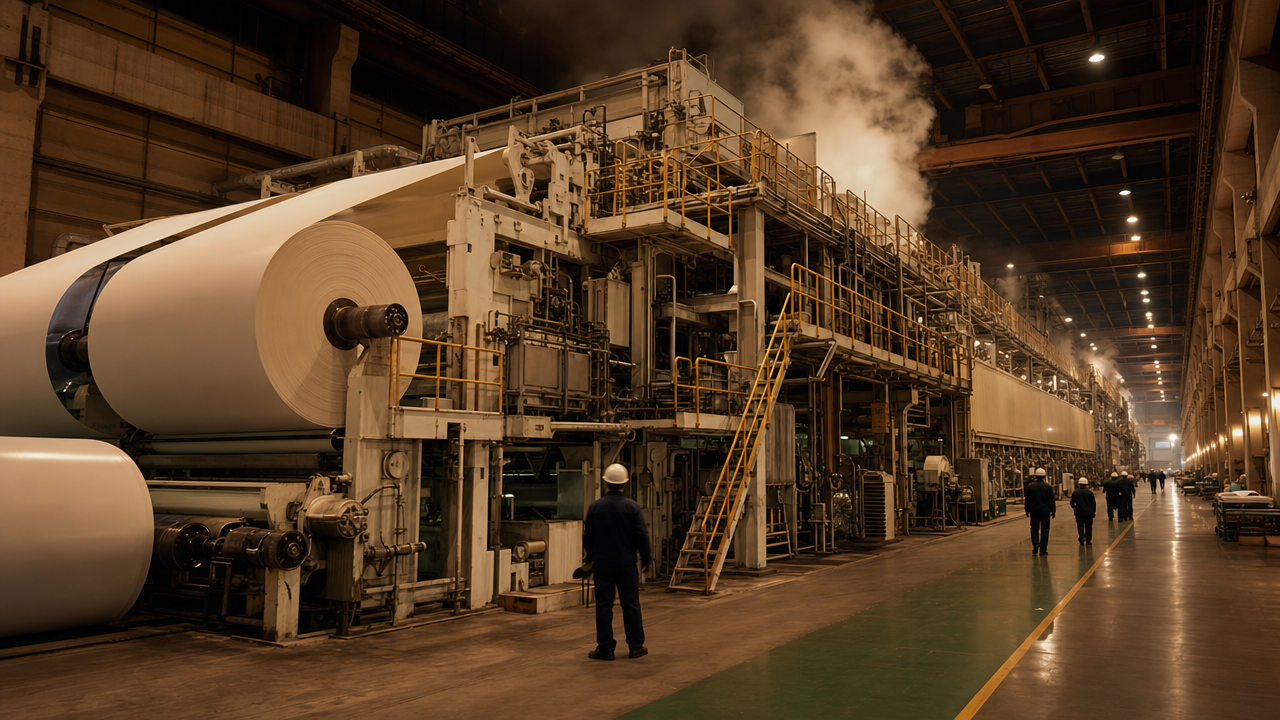
There is a fact about papermaking that is easy to forget: it is one of the foundational industries sustaining modern civilization, yet over the past two decades it has quietly completed a historic shift of power. In 2024, China's production of paper and paperboard reached 121.05 million tonnes, up 7.5% year-on-year, accounting for approximately 28% of global output — undeniably the world's largest paper-producing nation. In 2025, that figure is projected to surpass 130 million tonnes, meaning roughly one in every four sheets of paper in the world is made in China. A country that once depended on imports now produces nearly a third of the world's paper annually, and is extending that capability to the tropical forests of Laos, the eucalyptus plantations of Indonesia, and waste-paper processing plants in North America.
But this is more than a story about volume. Viewed from the vantage point of 2026, China's paper industry stands at a window of structural inflection: packaging paper continues to rise, driven by e-commerce packaging demand and the trend toward replacing plastics; cultural paper faces headwinds from digitalization; the tissue paper segment is consolidating rapidly at the top; and specialty paper is completing its leap from import substitution to export expansion. A stronger-gets-stronger dynamic has emerged: Nine Dragons Paper FY2025 net profit attributable to shareholders grew 135.4% year-on-year, and Sun Paper's net profit excluding non-recurring items surged 511.70%; meanwhile, Shanying International posted a loss of RMB 1.19 billion and Yueyang Forest-Paper a loss of RMB 235 million. Against this backdrop of fire and ice, an era of rapid market consolidation is underway.
The ancient craft of papermaking — invented in China nearly two thousand years ago — has now reached a scale of transformation that no craftsman of any era could have imagined. In 2025, Nine Dragons Paper, China's leading paper enterprise, operates ten major production bases across the country and four pulp and paper mills in the United States, with an annual design capacity of 23.5 million tonnes — equivalent to the combined capacity of Europe's top ten paper companies. Sun Paper built a complete tropical-forest integrated pulp-and-paper industrial park in Laos over seventeen years of dedicated effort. APP (Asia Pulp & Paper)'s China operations, a fleet of six companies, collectively produce nearly 15 million tonnes — second only to Nine Dragons. Behind these numbers lies China's paper industry's transformation, achieved in less than thirty years, from follower to definer.
Key judgments:
Capacity structure is set; concentration is still rising. The top five companies hold approximately 35% market share; industry capacity utilization is around 60%; mid- and small-scale capacity is being accelerated out of the market by price competition; the CR10 is expected to rise from approximately 45% to above 55% over the next five years.
Packaging paper is the structural winner. E-commerce packaging, food delivery substitution, and cross-border logistics box board demand continue to grow; corrugated medium and containerboard sub-segments have a better supply-demand balance than the industry average.
Overseas integrated pulp-and-paper operations are the next competitive moat. Sun Paper's Laos base, APP's Indonesia-China dual-circuit, and Nine Dragons' U.S. pulp mills — enterprises that secure overseas pulp sources first will build an insurmountable cost moat in raw materials.
Specialty paper import substitution has entered its harvest phase. Export volume growing at double-digit rates while import volume falls at double-digit rates; food-grade packaging paper, glassine paper, and heat transfer base paper remain structurally favorable.
Global packaging paper landscape is being rewritten. Smurfit Westrock's 2025 revenue of USD 31.179 billion, combined with deep consolidation among global packaging paper groups, is forcing China's leading enterprises to accelerate their international pace and cost management capability.
Key data at a glance:
- 2024 China paper and paperboard output: 121.05 million tonnes (+7.5% YoY); 2025 estimate: surpassing 130 million tonnes
- 2024 total industry profit: RMB 52 billion (+5.23% YoY); industry revenue approximately RMB 1.5 trillion
- Market leader Nine Dragons FY2025: revenue RMB 63.24 billion, net profit RMB 1.767 billion (+135.4% YoY), capacity 23.5 million tonnes
- APP China region combined output: nearly 15 million tonnes (6 companies in the production top 30)
- Smurfit Westrock 2025 revenue: USD 31.179 billion (adjusted EBITDA USD 4.939 billion)
- Wood pulp imports 2025: 36.038 million tonnes (+4.9% YoY); accounting for 41% of total pulp consumption
Chapter 1 Definition, Classification and Full Industry Chain Overview
1.1 What Is the Paper Industry
The paper industry, as defined in industrial statistics, typically encompasses three interrelated sub-industries: pulp manufacturing (including the preparation of various pulp types such as wood pulp, recovered paper pulp, bamboo pulp, and hemp pulp), paper and paperboard manufacturing (forming paper on a paper machine using pulp as the raw material), and paper product processing (converting base paper into finished products such as corrugated boxes, paper cups, and food packaging bags). These three stages are sequentially linked in the value chain, but in actual commercial practice, large enterprises often choose to extend upstream into pulp production and downstream into paper product processing, achieving cost control and value capture across the full industrial chain.
In the history of human civilization, papermaking was improved and systematized by Cai Lun of the Eastern Han dynasty around 105 AD, then spread westward through the Silk Road to the Arab world and Europe, fundamentally changing the infrastructure for the transmission of human knowledge and the recording of civilization. To this day, after two thousand years of development, papermaking has evolved from a cottage craft into a highly automated chemical-mechanical composite industry, yet its core principle remains unchanged: plant fibers (sourced from wood, bamboo, recovered paper, etc.) are separated, refined, formed on a wire, pressed, and dried to produce paper. Modern high-speed wide-width paper machines run at up to 1,500–1,800 meters per minute, and a single machine can produce 500,000 to 1 million tonnes of paper per year — an efficiency improvement of millions of times compared to hand production.
Pulp is the core raw material for papermaking, and its quality directly determines the upper limit of paper's performance. By fiber source, pulp is classified into the following main types:
Wood pulp is currently the most mainstream raw material, divided by tree species into softwood pulp (mainly pine and fir, with long fibers and high strength, suitable for high-strength packaging paper and cultural paper) and hardwood pulp (mainly eucalyptus and poplar, with short, soft fibers, suitable for tissue paper and printing paper). By pulping process, it is further divided into chemical pulp (kraft process, highest quality, the world's most mainstream pulping process), chemi-thermomechanical pulp (CTMP, high yield but lower strength, suitable for newsprint and some packaging papers), and groundwood pulp (mechanical pulp, shorter fibers, used for low-grade paper types such as newsprint). Softwood pulp is mainly produced in Canada, Russia, and Northern Europe; the core producing regions for hardwood pulp are Brazil (giants such as Suzano and Arauco), Chile, Indonesia (APP), and southern China (eucalyptus-based plantations).
Recovered paper pulp — recycled fiber pulp made from recovered waste paper — accounts for the highest proportion of China's papermaking raw material structure at 55%. This high proportion reflects both the abundance of waste paper resources in China as the world's manufacturing hub, and the history of China's massive imports of foreign waste paper; since the comprehensive ban on importing foreign waste materials from 2020 onwards, the domestic recovered paper recycling system has rapidly improved, and the raw material supply for recovered paper pulp has turned to 100% domestic sourcing. By waste paper grade: old corrugated containers (OCC, used for containerboard and corrugated medium production), mixed waste paper (ONP, old newsprint, used for low-grade packaging paper), high-grade waste paper (deinked pulp DIP, used for cultural paper).
Non-wood pulp includes bamboo pulp, bagasse pulp, reed pulp, and cotton pulp, which still account for approximately 4% of China's usage, mainly used in the production of specialty papers (such as tobacco inner liner paper and Xuan paper), and are also a legacy of China's historical development of non-wood fiber resources against the backdrop of relatively scarce timber resources.
1.2 Major Paper Grade Classification System
According to the China Paper Association's standard classification, paper and paperboard are divided into the following major categories, each with its unique technical requirements, raw material compatibility, and market demand logic:
Packaging paper and paperboard is the largest category by output in China, accounting for more than 50% of total production. Core grades include: corrugated medium (the inner liner paper for corrugated board, commonly produced from recovered paper pulp), containerboard/linerboard (also known as kraft board, used for the facing paper of boxes, requiring high strength — Nine Dragons is the world's largest producer), white paperboard (multi-ply composite, used for commercial packaging outer boxes with a smooth printable surface), white cardboard (single or multi-ply, for business cards, postcards, and premium packaging), kraft paper (for industrial packaging and courier bags), and liquid packaging base paper (for multi-layer composite packaging of milk cartons, juice boxes, etc.).
Cultural paper includes writing paper (double-sided offset, suitable for both writing and printing — the most versatile cultural paper grade), coated paper (high-gloss coated paper for high-quality printing, magazines, and catalogs), copy paper (for office use, requiring a balance of stiffness and whiteness), newsprint (produced from CTMP, inexpensive but low-strength, with continuously declining output), and others. With the deepening digitalization, demand for coated paper and newsprint has seen a structural decline, while double-sided offset paper retains its core volume base supported by book and textbook demand.
Tissue paper includes toilet paper (tissue paper, multi-ply soft thin paper), facial tissues (boxed), kitchen paper, and wet wipes, with essential consumer goods characteristics and strong price transmission ability; gross margins are higher than commodity paper grades (leading companies' gross margins can reach 33%–36%). Competition in this segment centers on brand strength and product quality, not scale competition.
Specialty paper is a technology-intensive segment, with products including food-grade packaging paper (direct food contact, must meet BPA-free and other food safety standards), glassine paper (high-transparency silicone paper for label release), heat transfer base paper (for sublimation transfer applications, large export volumes), tobacco paper (inner liner paper, water-base paper, with stable domestic tobacco industry demand), electrical insulation paper, and decorative base paper (furniture lamination substrate), among others. Entry barriers in this segment are high, and leading companies' market share gains are more sustainable.
Newsprint output is continuously declining and now accounts for less than 3% of total; traditional newsprint mills such as Yueyang Forest-Paper are pursuing transformation, but the transformation path is difficult.
1.3 Full Industry Chain Landscape
The complete value chain of China's paper industry can be divided into four major stages:
Upstream: raw material supply. Including forest resources (domestic eucalyptus/poplar plantations and overseas forest assets), wood chip trading, waste paper recycling and sorting, and various chemical supplies (sodium hydroxide, sodium sulfide, bleaching agents, etc.). Forest resources are strategically critical — having or not having self-controlled forest assets directly determines the long-term cost structure of a pulp and paper company. This is why Sun Paper's 60,000-hectare forest base in Laos is so strategically significant.
Midstream: pulp and paper manufacturing. This is the core link of the industry chain, encompassing pulp manufacturing (chemical pulp mills, mechanical pulp mills, recovered paper pulp lines), paper and paperboard manufacturing (large high-speed paper machines, specialty paper machines), and paper finishing (calendering, coating, rewinding). This stage is capital-intensive, with a single large paper machine investment typically exceeding RMB 1 billion, and energy consumption accounting for a large proportion of operating costs (electricity + steam typically accounting for 20%–30% of paper manufacturing costs).
Downstream: processing and distribution. Paper products processing (corrugated box plants, paper cup plants, food packaging bag plants), the printing and publishing industry (high-quality printing plants, newspaper printing plants), and various end-user industries (fast-moving consumer goods, e-commerce, electronics manufacturing, agriculture). The competitive landscape at the downstream processing end is highly fragmented — with approximately 40,000–50,000 corrugated box plants nationwide alone — and the profitability of mid- and small-scale processors is thin.
Enabling systems: waste paper recycling system. This is a critical closed loop for China's paper industry. The domestic waste paper recovery rate is approximately 48%, still below the levels of Germany (over 80%) and Japan (approximately 70%). Improving the efficiency of the domestic waste paper recycling system is a key strategic lever for reducing dependence on imported wood pulp and controlling costs.
Chapter 2 Global Paper Industry Landscape and Leading Enterprises
2.1 Global Output Structure and China's Position
According to FAO (Food and Agriculture Organization of the United Nations) statistics, global paper and paperboard output in 2024 was approximately 430 million tonnes. China's 121.05 million tonnes accounted for approximately 28% — a higher share than the second-place United States (approximately 70 million tonnes, 16%) and third-place Japan (approximately 19 million tonnes, 4.4%) combined. This dominant position was not achieved overnight: in 1990, China's output was approximately 15 million tonnes, ranking roughly fifth globally; by 2007 it surpassed the United States to become the world's largest; by 2024 it had consolidated its position at nearly three times the output of the second-place country.
The structural characteristics of global paper output show: packaging paper (corrugated base paper, containerboard, white paperboard) accounts for approximately 50% of global output; cultural paper (printing-writing paper, newsprint) accounts for approximately 25%; tissue paper approximately 12%; specialty paper and other approximately 13%. China's weighting in packaging paper (over 50% of its total output) is higher than the global average, reflecting the world's largest manufacturing and e-commerce demand base.
2.2 Global Leading Enterprises
Smurfit Westrock (NYSE: SW) — the world's largest packaging paper and packaging solutions group, formed by the 2024 merger of Ireland's Smurfit Kappa and U.S.-based WestRock. 2025 full-year revenue USD 31.179 billion; adjusted EBITDA USD 4.939 billion; net profit USD 699 million. Its product portfolio covers corrugated packaging, liquid packaging, specialty carton packaging, etc., serving over 100,000 customers globally, with paper mills and box plants in more than 40 countries. The completion of this merger represents the deepest restructuring of the global packaging paper industry in recent decades, and directly challenges Chinese packaging paper giants to improve their own international competitiveness.
International Paper (NYSE: IP) — the world's second-largest paper and packaging company (by revenue), with 2025 revenue of USD 23.63 billion. In 2025, IP completed the acquisition of DS Smith (UK's largest packaging company), significantly expanding its European business; its net loss for the full year included a large non-cash goodwill impairment of USD 22.47 billion (related to the EMEA business), but EBITDA grew 37% year-on-year. IP's strategy focuses on the North American and European containerboard and packaging markets.
Stora Enso (STERV FH) — one of the world's leading integrated forest products companies, headquartered in Finland-Sweden, 2025 full-year sales of EUR 9.33 billion (+3% YoY). Its businesses encompass packaging materials, biomaterials, wood products, and paper, with leading positions in liquid packaging board, corrugated packaging, and wood fiber materials.
UPM-Kymmene (UPM FH) — another Finnish paper and forest products giant, 2025 full-year sales of EUR 9.66 billion (-6.6% YoY). UPM's strategy is more diversified: in addition to traditional paper (graphic paper, label paper), it vigorously develops biofuels, biochemicals, and fiber composites, embodying the most forward-looking transformation path in the global paper industry.
APP (Asia Pulp & Paper) — the flagship paper business of Indonesia's Sinar Mas Group, one of the world's largest privately-owned pulp and paper groups. APP's global operations span Indonesia and China as its two main bases, with the Indonesian base (including the Ogan Komering Ilir pulp mill in South Sumatra, the world's largest single-site pulp mill with a capacity of approximately 2.8 million tonnes) and the China base (approximately 15 million tonnes in total from six major companies) complementing each other, forming a cross-border vertically integrated model of "Indonesian pulp → Chinese paper."
2.3 Key Strategic Differences Between Chinese and Global Leaders
Compared with Smurfit Westrock, International Paper, and other global leaders, China's leading paper enterprises have several notable structural differences:
Profitability gap: Chinese packaging paper companies' net profit margins are typically 3%–7% (Nine Dragons FY2025 net margin approximately 2.8%), while Smurfit Westrock's EBITDA margin is approximately 16%, reflecting significant differences in pricing power, product mix optimization, and cost control capability.
Internationalization degree: Chinese paper companies' overseas capacity still accounts for a very small proportion of total capacity (approximately 3% for Sun Paper's Laos base), while Smurfit Westrock and International Paper cover over 40 countries, with truly global production layouts.
R&D investment: Global leaders invest significantly in biomaterials, nanocellulose, and other next-generation fiber material technologies, while most Chinese paper companies still focus on capacity expansion and cost reduction, with relatively limited technology frontier investment.
These gaps are both the challenges China's paper industry faces in the next ten years, and the potential space where growth opportunities and valuation premiums can be found.
Chapter 3 PEST Macro Environment Analysis
3.1 Political Environment
China's paper industry operates in a political environment characterized by the following key dimensions:
Environmental regulation tightening: The central government's "dual carbon" goals (carbon peak before 2030, carbon neutrality before 2060) and ecological environmental protection supervision have significantly increased the compliance costs of the paper industry. The "14th Five-Year Plan for Green Development of the Paper Industry" (National Development and Reform Commission) explicitly proposes to accelerate the elimination of backward capacity (small-scale mills with single machine capacity below 50,000 tonnes/year are priority targets), while promoting energy conservation and consumption reduction. Typical enterprises' per-ton paper comprehensive energy consumption targets are required to be reduced to below 0.35 tonnes of standard coal equivalent.
Trade policy: The comprehensive ban on waste paper imports implemented since 2020 has forced Chinese paper companies to accelerate domestic waste paper recycling system construction and overseas forest-pulp base deployment. The RCEP implementation has created gradual tariff reductions for paper exports to Southeast Asia, providing policy support for increasing China's packaging paper export share.
Industrial policy support: "Made in China 2025" and "Fourteenth Five-Year Plan" clearly incorporate the upgrading of the paper industry into the smart manufacturing policy framework. National "green factory" certification (Ministry of Industry and Information Technology) and relevant green credit policies provide low-cost financing support for leading paper enterprises that meet standards, effectively rewarding environmental leaders.
3.2 Economic Environment
Macro demand anchor — Chinese economic growth: At an expected GDP growth rate of approximately 5%, the demand for paper-based packaging (driven by e-commerce) and tissue paper (driven by consumption upgrading) maintains stable growth; however, the real estate industry's continued downturn suppresses some demand for decoration-related paper categories (wallpaper base paper, formaldehyde-free fiberboard).
E-commerce surge as a direct driver: In 2025, China's e-commerce market scale exceeded RMB 15 trillion, with annual express delivery volume surpassing 170 billion parcels. Each parcel on average consumes approximately 0.3–0.5 kg of paper-based packaging, creating substantial direct demand for corrugated box raw materials (containerboard, corrugated medium). This is the single most important demand driver for China's packaging paper industry.
Raw material cost volatility: Wood pulp and recovered paper prices are cyclical commodities whose price fluctuations have a direct and significant impact on paper company profitability. In 2025, BHKP (bleached hardwood kraft pulp) import price oscillated in the USD 650–750/tonne range; OCC recovered paper price oscillated in the RMB 1,400–1,800/tonne range. Raw material costs account for approximately 60% of total production costs for paper companies, making their price trends the most important variable in profit forecasting.
3.3 Social Environment
Consumption upgrading driving tissue paper premiumization: China's middle class expansion continues to push consumer demand for tissue paper toward higher quality (multi-ply, soft, fragrance-free, antibacterial). Brands such as Hengan's "C&S" and Zhongshun Jierou's "Jierou" benefit from consumption upgrading, achieving significant brand premium; private-label toilet paper faces continuous price erosion.
"Cardboard generation" consumer psychology: Younger consumers' strong preference for packaging aesthetics (premium paper boxes for gift giving, personalized packaging for social media photo opportunities) is driving the premiumization of white cardboard and white paperboard applications. Luxury goods brands, cosmetics, and consumer electronics companies compete for higher quality paper-based packaging, forming a distinct premium demand niche separate from commodity packaging.
Green consumption awareness: China's "single-use plastics ban" policy implementation (phased restrictions on disposable plastic bags, straws, tableware) has driven paper-based alternative demand in the food service, food delivery, and fast-moving consumer goods sectors. Paper cups, paper bags, paper straws, and other products are at an important growth window in the context of the "plastic-free" consumption trend.
3.4 Technological Environment
Industry 4.0 transformation: Large paper machines now uniformly adopt distributed control systems (DCS) and quality control systems (QCS) to achieve closed-loop real-time regulation of paper quality (basis weight, moisture, ash content, caliper). Advanced QCS can reduce the coefficient of variation of basis weight across the width of the paper web to less than ±0.5%, significantly reducing waste and improving product consistency.
Digital and intelligent pulping: Machine learning-based control of pulping concentration, fiber length distribution, and other parameters enables real-time optimization of pulp quality, reducing unit energy consumption by approximately 5%–10%; AI-assisted papermaking process control is gradually being deployed at leading companies such as Nine Dragons and Sun Paper.
Specialty paper technological breakthroughs: NFC (nanofibrillated cellulose) coated barrier paper (replacing PE-coated paper), biodegradable water-soluble packaging paper (replacing plastic film), fully tree-free fiber specialty paper (bamboo, kenaf, straw) — these frontier technologies are moving from laboratory to industrial trial stages, representing the next generation of high-value specialty paper technology directions.
Chapter 4 China Market Size and Demand Structure
4.1 Total Market Size
China's 2024 paper and paperboard output reached 121.05 million tonnes (+7.5% YoY), with 2025 projected to exceed 130 million tonnes. By value, the paper industry's total operating revenue is approximately RMB 1.5 trillion (2024 data), with total industry profit of approximately RMB 52 billion. The market scale places it among China's most important basic manufacturing sectors.
By sub-segment breakdown (2024 estimates):
- Packaging paper and paperboard: approximately 65 million tonnes (54% of total)
- Containerboard (kraft linerboard): approximately 24 million tonnes
- Corrugated medium: approximately 22 million tonnes
- White paperboard / white cardboard: approximately 12 million tonnes
- Other (kraft paper, liquid packaging board): approximately 7 million tonnes
- Cultural paper: approximately 28 million tonnes (23%)
- Writing-printing paper (double-sided offset): approximately 18 million tonnes
- Coated/art paper: approximately 7 million tonnes
- Newsprint: approximately 3 million tonnes
- Tissue paper: approximately 15 million tonnes (12%)
- Specialty paper: approximately 8 million tonnes (7%)
- Other: approximately 5 million tonnes (4%)
4.2 Regional Demand Distribution
Shandong Province is the largest paper-producing province with output of approximately 22.19 million tonnes, followed by Guangdong (19.6153 million tonnes), Jiangsu, and Zhejiang — all exceeding 10 million tonnes. These four provinces together account for approximately 60% of national output, forming an obvious coastal cluster pattern.
4.3 Demand Growth Drivers by Segment
The e-commerce packaging sub-sector enjoys the strongest demand certainty: China's annual express delivery volume of 170+ billion parcels, each consuming paper-based packaging, creates structurally growing demand for containerboard and corrugated medium. The specialty paper sub-sector benefits from continued import substitution and export market expansion. Tissue paper benefits from consumption upgrading. Cultural paper faces the headwind of digitalization, with structurally declining newsprint and coated paper demand, while double-sided offset paper maintains relative stability supported by education and book publishing demand.
Chapter 5 Industry Chain Analysis
5.1 Forest Resource End
China's plantation area has exceeded 60 million hectares (the world's largest), primarily composed of eucalyptus (Guangdong, Guangxi, Yunnan), poplar (North China, Northeast China), and pine (Southwest China). However, China's plantation-grown wood fiber quality (especially softwood fiber) cannot fully replace imported wood pulp, particularly in the production of long-fiber softwood kraft pulp (NBSK). As a result, China's long-term softwood pulp production remains highly dependent on imports from Canada, Russia, and Northern Europe.
Overseas forest base construction is a key strategic move for China's leading paper companies. Sun Paper's Laos project — over 60,000 hectares of forest base + integrated pulp and paper production — is the industry's most successful case of this type. The project has created a complete "Southeast Asian tropical plantation → high-quality chemical pulp → China paper manufacturing" industrial chain model, providing Sun Paper with raw material supply at significantly below-market costs, and offering a replicable template for the industry.
5.2 Wood Pulp Trading End
In 2025, China imported 36.038 million tonnes of wood pulp (+4.9% YoY). The main import sources are:
- Brazil (Suzano, CMPC): BHKP, accounting for over 30% of China's total wood pulp imports
- Canada (Mercer, Canfor): NBSK, accounting for approximately 15%–20%
- Russia (Segezha): NBSK, accounting for approximately 8%–12%
- Finland (Stora Enso, UPM) and Sweden (Billerud, IGGESUND): highest quality bleached softwood kraft pulp, primarily supplying specialty paper and high-end cultural paper companies
- Indonesia (APP): hardwood pulp, partially imported by APP's own China operations
The high concentration of China's wood pulp imports means that forest policies, exchange rate changes, and shipping conditions in South America and Canada all directly transmit to the raw material costs of Chinese paper companies, thus influencing paper price trends.
5.3 Recovered Paper End
OCC (old corrugated containers) price is one of the most important cost variables in the paper industry, directly affecting the profitability of containerboard and corrugated medium production. After the implementation of the waste paper ban in 2021, domestic OCC prices once surged sharply (from approximately RMB 600–700/tonne to RMB 1,400–1,800/tonne), directly pushing up production costs for packaging paper mills that primarily use waste paper as raw material, squeezing the profit margins of small and medium paper mills, and accelerating industry consolidation toward the leading companies.
Chapter 6 Key Enterprise Analysis
6.1 Nine Dragons Paper (HK: 2689) — Scale Leader
Nine Dragons Paper is the undisputed absolute leader in scale: 23.5 million tonnes of packaging paper capacity, first in China and the world's largest; FY2025 revenue RMB 63.24 billion, first in the industry; FY2025 net profit attributable to shareholders RMB 1.767 billion (+135.4% YoY). Nine Dragons excels in scale operating efficiency, continuously investing in next-generation large paper machines (mega-machines with single-line capacity of 400,000–600,000 tonnes/year) to drive total per-tonne costs below the industry average; per-tonne gross profit approximately RMB 280 (FY2025).
Strategically, Nine Dragons is accelerating upstream extension — its own wood pulp production projects at Beihai, Jingzhou, and Chongqing bases aim to reduce dependence on externally purchased waste paper and commercial wood pulp, while acquiring quality pulp and paper assets in the United States to complete its global raw material map.
6.2 Sun Paper (002078) — Best Structural Balance
Sun Paper's core competitive advantage lies in strategic balance across two dimensions — "product category + geography": across categories, it simultaneously covers packaging paper (containerboard), cultural paper (coated paper, book paper), and specialty paper, diversifying the cyclical risk of any single commodity paper grade; geographically, the "three-base" structure (Shandong headquarters + Guangxi + Laos) achieves coordination between domestic capacity expansion and overseas raw material self-sufficiency.
Sun Paper's 2025H1 profit margin (net margin approximately 9.3%) significantly exceeds Nine Dragons (approximately 3.4%) and Shanying (loss), demonstrating the counter-cyclical value of a diversified product structure during industry downturns.
6.3 Shanying International (600567) — Undergoing Integration Pain
Shanying was once the most active acquirer in China's paper industry, having purchased European paper mills (Netherlands, Spain) to build a European packaging paper business. However, its 2025 financials show it is in an integration pain phase: net profit attributable to shareholders of -RMB 1.19 billion, primarily from the combination of domestic packaging paper price pressure and convertible bond repayment pressure.
6.4 Zhongshun Jierou (002511) — Beneficiary of Consumption Upgrading
Zhongshun Jierou's positioning in the tissue paper segment makes it a beneficiary of wood pulp price declines (BHKP prices retreated from highs in 2024–2025). 2025 net profit +312.80% YoY, non-recurring-adjusted net profit +511.70% YoY — the largest profitability elasticity in the industry. Its "Jierou" brand has established a certain premium in the soft-pack toilet paper segment.
6.5 Hengan International (HK: 1044) — Most Stable Consumer Goods Blue Chip
Hengan International's core competitive moat is its firmly established position in the Chinese mass consumer market through the "C&S" (Xinxiangyin) tissue and "Space 7" feminine hygiene dual brands. 2025 revenue RMB 23.069 billion (+1.8%), net profit RMB 2.535 billion (+10.3%), gross margin 33.8% — the most stable profit record and best dividend history among paper industry listed companies.
6.6 Other Key Enterprises
Chenming Paper (000488/ST Chenming): 2025 first time expecting a loss of approximately RMB 1.2 billion; debt ratio 72%; two consecutive years without dividends; currently under the "ST" special risk warning. Historical overcapacity combined with high financial leverage is the root cause.
Bohua Paper (600966): 2025Q1-Q3 revenue approximately RMB 14.45 billion; net profit RMB 121 million — showing a recovery trend with profitability restoration in 2025H1.
Yueyang Forest-Paper (600963): 2025 revenue RMB 8.665 billion (+6.78%); net profit -RMB 235 million (loss) — still in the loss zone as a traditional newsprint maker facing structural product challenges.
APP (China): Six subsidiaries entering the top 30 by production volume, combined output close to 15 million tonnes. The Hainan Golden Sea Pulp base (180 million tonnes/year of bleached eucalyptus chemical pulp + 1.6 million tonnes/year of paper) and Guangxi Golden Gui (premium white cardboard) are its core China assets.
Xiehe Shares (603733): Annual capacity exceeding 1 million tonnes, spanning six major series (tobacco, home decoration, commercial printing, food and medical packaging, electrical and industrial, daily consumer goods) — the largest listed specialty paper company in A-shares by scale, with gross margins typically maintaining 20%–25%.
Chapter 7 Industrial Belt Distribution and Regional Characteristics
The industrial clusters of China's paper industry show obvious regional characteristics driven by resource proximity (water resources, forest resources), market proximity (manufacturing concentration areas, e-commerce hubs), and policy incentives.
Shandong cluster: Annual output approximately 22.19 million tonnes (national first). Chenming Paper (Shouguang), Sun Paper (Yanzhou), Bohua Paper, and Huatai Paper are all headquartered here. Strong local wheat straw and wood chip supply, advanced paper industry supporting infrastructure, and deep provincial government policy support are key factors for the Shandong cluster.
Pearl River Delta cluster: Guangdong Province output approximately 19.6153 million tonnes (national second). Nine Dragons East Dongguan Base, APP's multiple Guangdong enterprises, and numerous mid-scale corrugated paper companies form a dense packaging paper production cluster. Proximity to the world's largest manufacturing export base (Pearl River Delta factories) and major ports (Guangzhou, Shenzhen, Shantou) provides irreplaceable geographic advantages.
Yangtze River Delta cluster: Jiangsu, Zhejiang, and Shanghai together account for approximately 20%+ of national output. Nine Dragons Taicang Base and Liwen Taicang Base are the most critical capacity nodes for these two companies, serving the Yangtze River Delta e-commerce and warehousing system directly. APP's Jiangsu Golden East (premium coated paper) is headquartered here.
Fujian coastal cluster: Fuzhou and Quanzhou as the core, with papermaking raw materials imported through Fujian ports (eucalyptus wood chips from Southeast Asia and South America), directly supplying coastal paper mills. Nine Dragons Quanzhou Base is the flagship project in this cluster.
天下工厂 data on China's paper industry enterprises shows that the major packaging paper industrial belts (Dongguan, Taicang, Quanzhou, Chongqing) each gather thousands of papermaking and paper processing enterprises, including both the upstream raw paper production factories and downstream box plants and converting factories.
Chongqing/Western cluster: As the manufacturing center of the western region (computers, automobiles) continues to expand, Nine Dragons Chongqing Base and the emerging Chongqing packaging paper cluster meet the rapidly growing paper-based packaging demand in the western manufacturing base. The Chongqing cluster utilizes the Yangtze River waterway to receive raw materials and ship finished products, reducing logistics costs.
Chapter 8 Specialty Paper Sub-segment Deep Dive
8.1 Heat Transfer Paper
Heat transfer technology (sublimation printing) prints digital patterns on transfer paper, then uses high temperature and pressure to transfer the ink to polyester fabric or hard surfaces (ceramics, metals). This technology is widely used in sportswear (custom prints for Nike, Adidas), home textiles, advertising banners, and personalized gift customization.
By 2025, the global heat transfer paper market scale is approximately RMB 15–18 billion. China is the largest producer and exporter. Domestic import substitution has exceeded 75%; some products are exported to European and American markets — becoming a typical case of "import substitution into export." Annual growth rate approximately 15%–20%, far exceeding commodity paper grades.
8.2 Glassine Paper
Glassine paper is a type of supercalendered, highly transparent, grease-resistant specialty paper used primarily as silicone release base material for pressure-sensitive adhesive labels. Key technical parameters: high transparency (≥60% visible light transmittance), low air permeability, uniform caliper (±1 μm). As the global label printing industry continues to expand (e-commerce logistics labels, food date labels, pharmaceutical outer packaging labels), glassine paper demand maintains stable growth above 10% per year. Wuzhou Specialty Paper (605007) and Xiehe Shares are the representative domestic manufacturers, with export shares steadily rising.
8.3 Food Grade Packaging Paper
Food-grade packaging paper for direct food contact must meet strict food safety standards, including: zero migration of heavy metals, absence of fluorescent brightening agents, fully food-safe surface coatings. As "food-safe packaging" awareness spreads among Chinese consumers, the upstream pressure from food brands purchasing only certified food-grade packaging paper is growing. China's domestic food-grade packaging paper production has been rapidly growing, with import dependency declining to approximately 20%–25%, but some high-barrier functional food packaging papers (such as high-oxygen-barrier papers for coffee packaging, fresh-keeping papers for fresh produce) still have a certain import dependency.
8.4 Electrical Insulation Paper
Electrical insulation paper for transformers is a key insulation material in power systems. Ultra-high voltage (UHV) and extra-high voltage power grids, as China's key infrastructure in the energy transition, have driven stable growth in demand for top-grade electrical insulation paper. The technical threshold for this segment is high — requiring extremely low metal impurity content (to prevent insulation breakdown) and extremely high dielectric strength. Xiehe Shares and related supply chain companies are the representative domestic producers of electrical insulation paper.
Chapter 9 Technology Innovation and Green Manufacturing Characteristics
9.1 Energy Conservation and Efficiency Improvement Technologies
The most important direction for technology innovation in the paper industry is energy conservation and emission reduction, covering the entire production chain from raw material processing to paper forming to drying. In the pulping section, closed-loop alkali recovery systems (black liquor recovery boiler combustion → causticization → white liquor regeneration → re-used for cooking) can recover more than 95% of the chemical drugs used in cooking; in the paper forming section, advances in shoe press technology have significantly improved dewatering efficiency, reducing the load on the drying section; in the drying section, high-temperature and high-pressure steam closed-circuit systems, combined with CHP (combined heat and power) generation, significantly improve energy utilization efficiency.
9.2 Water Treatment and Water Saving
Traditional paper mills have per-tonne water consumption of 30–50 tonnes of water per tonne of paper. Through closed-loop white water recovery (re-use of wire section white water and press section white water), water consumption has been reduced to 5–10 tonnes of water per tonne of paper for advanced paper mills, and some paper mills have achieved complete wastewater zero-discharge (all water treated and recycled in-house). Efficient water-saving treatment is a prerequisite for paper mills in water-scarce regions to obtain environmental permits and production capacity, and is also the most directly measurable indicator in ESG reports.
9.3 Smart Manufacturing and Digitalization
Large paper companies are investing in intelligent manufacturing (IIoT, AI quality prediction, digital twins). Through massive sensor data collection and machine learning, the goal of "experienced engineer expertise digitalization" is being pursued, reducing dependence on individual experience, shortening new employee onboarding time. Nine Dragons and Sun Paper have begun piloting digital process management systems, which are not only cost-reduction and efficiency tools, but also the basic infrastructure for building sustainable technological capabilities.
Chapter 10 Risk Map and Full Analysis
10.1 Raw Material Price Volatility Risk
Wood pulp and recovered paper prices are cyclical commodity prices, and their volatility has a direct and significant impact on paper company profitability. When BHKP prices rose by more than 40% in 2021 while paper prices couldn't rise proportionally (due to excess supply-side capacity), industry profit margins were compressed to near zero. This is a systemic risk inherent to the industry structure, and is the reason most paper companies in the industry actively pursue integration strategies to capture upstream raw material supply chains.
10.2 Industry Overcapacity Risk
China's paper industry capacity utilization rate is approximately 60%, meaning structural overcapacity will not disappear in the short to medium term. Under continued price competition pressure, combined with tightening environmental policies and rising compliance costs, small to medium-scale, technologically backward, and highly homogeneous paper mills will exit the market at a faster pace. However, while capacity exits, leading companies are also continuing to expand capacity — if expansion pace exceeds the pace of demand growth, the overcapacity problem may deepen rather than ease.
10.3 Environmental Compliance Risk
Environmental regulation tightening is becoming an important operational variable for the paper industry. Upgrading wastewater treatment systems, dust removal systems, and solid waste disposal systems requires significant upfront investment. For small paper mills, environmental compliance upgrade investment can reach 30%–50% of original equipment value — ROI cannot be absorbed, effectively forcing many small mills to shut down or sell. Meanwhile, periodic environmental inspections create intermittent production shutdown pressure for non-compliant enterprises.
10.4 Demand Structural Decline Risk (Cultural Paper)
The rise of digital media has had a lasting negative impact on newsprint and coated paper demand. Newspaper circulation has shrunk from over 40 billion copies in 2015 to less than 10 billion copies by 2025; newsprint demand has dropped from over 3 million tonnes/year to less than 1 million tonnes/year. Coated paper demand has also declined as advertising has shifted to digital platforms. Paper companies that have not successfully transformed away from cultural paper will face continuous volume decline and price pressure.
10.5 Geopolitical and Supply Chain Risk
The Sino-US trade war's direct impact on the paper industry manifests in two aspects: on one hand, reduced Chinese export goods directly reduce demand for paper-based export packaging; on the other hand, US tariffs may affect some wood pulp that China imports from the United States (US West Coast softwood pulp is one source of NBSK), increasing raw material costs. Indirect impacts include RMB exchange rate fluctuations affecting wood pulp import costs, and overall manufacturing investment sentiment suppression.
Chapter 11 2026–2030 Industry Forecast and Development Outlook
11.1 Capacity Forecast
By 2030, it is forecast that:
- China's total paper and paperboard output will exceed 145 million tonnes (CAGR approximately 2.2%)
- The top 10 companies' market share will rise from approximately 45% to 55%–60%
- Nine Dragons' total capacity will approach or exceed 30 million tonnes (continuing its aggressive expansion path)
- Sun Paper will achieve its "433" medium-to-long-term strategic goal (40 million tonnes Shandong + 30 million tonnes Guangxi + 30 million tonnes Laos; capacity ratios)
- Specialty paper production will exceed 15 million tonnes
11.2 Sub-segment Forecast
Packaging paper: Annual growth rate approximately 3%–5%, driven by e-commerce and the trend of replacing plastics with paper. Containerboard and corrugated medium remain the largest volume sub-segments. The plastic-alternative packaging (paper-based packaging replacing EPS foam, PE bubble bags) sub-segment will maintain double-digit growth.
Cultural paper: Annual change approximately -1% to +1%, with newsprint declining, coated paper slightly declining, and double-sided offset paper stable or slightly growing (supported by education and book publishing).
Tissue paper: Annual growth rate approximately 5%–8%, driven by consumption upgrading and premiumization. The premium tissue paper sub-segment (imported high-quality wood pulp, multi-ply, soft) will grow faster than the commodity sub-segment.
Specialty paper: Annual growth rate approximately 10%–15%, driven by import substitution and export expansion in heat transfer paper, glassine paper, food-grade packaging paper, and other sub-segments. Specialty paper's share of China's total paper output is expected to rise from approximately 7% to above 10%.
11.3 Price Trend Forecast
Paper prices in 2026–2030 are expected to remain low-volatility with a mild upward bias. The fundamental reason is that the paper industry's pricing power is structurally lower than that of upstream wood pulp suppliers (forest resources are scarce, while paper capacity is in excess): when wood pulp prices rise significantly, paper prices cannot rise proportionally. This asymmetric cost transmission is the structural reason why most paper companies' long-term ROE is far below the capital cost — a fundamental challenge that cannot be fundamentally resolved unless market concentration reaches significantly higher levels (CR5 exceeds 60%).
Chapter 12 Investment Research Perspectives and Market Opportunities
12.1 Key Stocks Worth Attention
天下工厂产业研究院 maintains continuous attention on quality paper industry companies that have the following characteristics: having core competitiveness in their respective sub-segments (specialty paper technology or scale-based cost advantages); manageable balance sheet health (asset-liability ratio ideally below 65%); relatively transparent shareholder structure; and clear sustainable competitive advantage in the face of industry downturns.
Focusing attention on: Sun Paper (structural advantage of diversification + overseas integration), Zhongshun Jierou (consumption upgrading beneficiary + wood pulp cycle leverage), Xiehe Shares (specialty paper technical barriers + stable growth), Hengan International (consumer goods blue chip + stable dividend). Tracking for potential upside: Nine Dragons Paper (periodic recovery elasticity when packaging paper prices rebound), Shanying International (rebound potential if debt pressure eases).
12.2 Key Tracking Points
Core tracking indicators for the paper industry:
- OCC recovered paper market price in South China (the industry's most important real-time cost signal)
- BHKP imported wood pulp landed price index (especially Brazil-to-Shanghai quotes)
- National corrugated medium ex-factory price
- National express delivery volume YoY growth rate (the most forward-looking proxy indicator for packaging paper demand)
- Key paper companies' capacity utilization rate (extracted from quarterly reports and investor relations information)
12.3 Data Sources
Research synthesizes multiple source data and cross-validates for accuracy, noting provenance of each source:
- 天下工厂产业研究院 造纸行业专项追踪分析
- China Paper Association "China Paper Industry 2024 Annual Report" and key industry aggregate official statistics data
- Nine Dragons Paper (2689.HK) FY2025 Annual Report and FY2025H1 interim report (audited financials)
- Sun Paper (002078.SZ) 2025 interim report and historical annual reports (excluding non-recurring adjustments)
- Zhongshun Jierou (002511.SZ) 2025 annual report (audited financials)
- Hengan International (1044.HK) 2025 full year performance announcement (Interim/Annual Securities Exchange announcements)
- Shanying International (600567.SH) 2025 performance pre-announcement and annual report (audited financials, CITIC Securities analysis)
- Bohua Paper (600966.SH) 2025 Q1-Q3 financial report (audited financials)
- Yueyang Forest-Paper (600963.SH) 2025 annual report and financial report
- Smurfit Westrock 2025 Full Year and Q4 Earnings Release (investors.smurfitwestrock.com)
- International Paper 2025 Full Year and Q4 Earnings Release (PR Newswire)
- Stora Enso / UPM FY2025 Full Year Performance (Daily Finland Business)
- National Development and Reform Commission "Paper Industry Fourteenth Five-Year Plan Green Development Guidelines" (February 2026)
- CIC Consulting "2025 China Paper Industry Market Scale and Key Enterprise Market Share Research Report"
- Huatai Securities "2025 Paper Industry Development Status and Outlook"
- Sun Paper overseas project special information (sunpapergroup.com)
- APP Group China (app.com.cn)
- Audited financials, Gao Hua Securities, Guotai Junan Securities, China Securities analyst research reports
数据来源
研究所使用的核心数据,来源于以下权威机构和公开信息渠道:
- 中国造纸协会(CPA)《2024年度报告》及历年行业白皮书
- 玖龙纸业(HK 2689)FY2025年报及业绩公告
- 太阳纸业(002078)2025年半年报及历年年报
- 山鹰国际(600567)2025年三季报及历年年报
- 恒安国际(HK 1044)2025年全年业绩公告
- 中顺洁柔(002511)2025年年报
- 晨鸣纸业(000488)2025年业绩预告及年报
- Smurfit Westrock(NYSE: SW)2025 Full Year Earnings Release
- International Paper(NYSE: IP)2025 Full Year Annual Report
- Stora Enso(STERV FH)FY2025 Financial Statements
- UPM-Kymmene(UPM FH)FY2025 Annual Report
- 海关总署《2025年进出口数据》
- 国家统计局《规模以上工业企业数据》
- FAO(联合国粮农组织)全球林木资源评估报告
- RISI / Fisher International 全球制浆造纸数据库
- 国家发展改革委《造纸行业"十四五"绿色发展指导意见》
- 仙鹤股份(603733)、五洲特纸(605007)历年年报
- 天工研造纸行业专项研究数据库