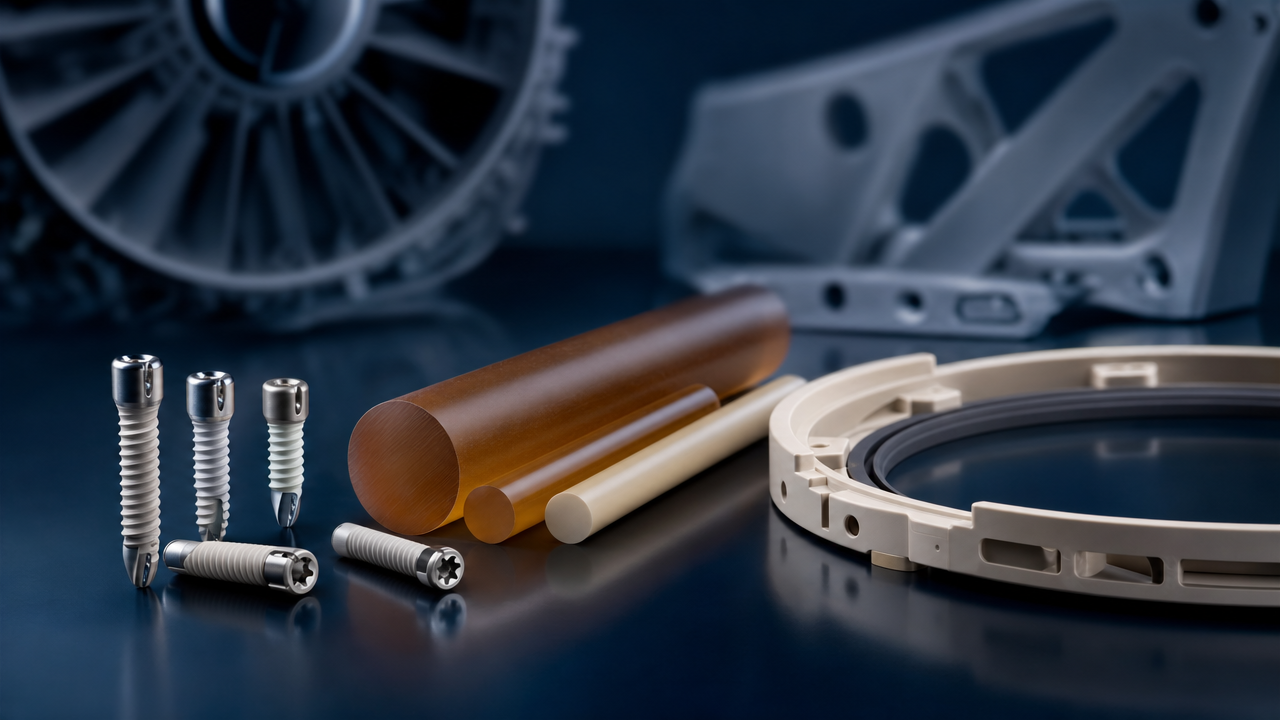

China PEEK & High-Performance Engineering Plastics 2026 — From Victrex Dominance to a Three-Pillar Domestic Breakthrough
Research Institute | June 18, 2026
Chapter 1 Industry Overview and the Definition of High-Performance Engineering Plastics
I. The Historical Leap from "Ordinary Plastic" to "Super Engineering Material"
In the history of materials science, plastics long played the role of cheap substitutes — lightweight, easy to process, low cost, yet falling conspicuously short of metals and ceramics in load-bearing capacity, thermal resistance, and dimensional precision. That perception was upended over the past half-century by a family of materials known as specialty or high-performance engineering plastics.
The starting point of this transformation was a seemingly routine synthesis experiment conducted in the 1970s at the laboratories of British Imperial Chemical Industries (ICI). In 1978, ICI chemists Jacqueline Rose and Gareth Rose (unrelated) were searching for a high-stiffness polymer capable of replacing metals when they synthesized an aromatic semi-crystalline polymer whose backbone alternated ether and ketone linkages. They named it polyether ether ketone — PEEK. This macromolecule, chemically straightforward on paper, turned out to exhibit a 250°C continuous-use temperature, a 343°C melting point, a specific strength approaching aluminium alloy, extraordinary chemical inertness, and — crucially — X-ray transparency, which would later become its key entry ticket into the orthopaedic implant market.
From ICI to Victrex (the company formed when ICI spun off its PEEK business and listed independently), and on to today's global PEEK market worth tens of billions, the story spans nearly half a century. Over the same period, polyimide (PI), polyphenylene sulphide (PPS), liquid crystal polymer (LCP), and polyetherimide (PEI) also graduated from the laboratory to aircraft, semiconductor cleanrooms, hospital operating theatres, and the electric-drive systems of new-energy vehicles.
When we speak of "high-performance engineering plastics" today, we mean a family of materials that simultaneously surpass ordinary engineering plastics (PA66, POM, PC, etc.) across multiple critical dimensions: thermal resistance, mechanical performance, chemical inertness, and biocompatibility. They represent the highest engineering achievement of polymer science and occupy a rare place on the "bottleneck" list — materials whose fate is determined by inherent material properties rather than manufacturing process alone.
The industry's working definition of High-Performance Engineering Plastics (HPEP) generally requires meeting several thresholds: continuous-use temperature above 150°C (with PEEK, PI, and PPS benchmarks reaching 200–400°C); tensile strength above 100 MPa at room temperature and above 50 MPa at elevated temperature; chemical resistance to strong acids, alkalis, and organic solvents under elevated temperature; and meeting relevant biocompatibility or radiation stability certifications for medical/semiconductor applications. Materials that satisfy all these criteria in combination — rather than excelling in just one dimension — are classified as HPEP.
II. The Six Core Material Families
PEEK (Polyether Ether Ketone): The flagship of HPEP, Tg ≈ 143°C, Tm ≈ 343°C, crystallinity 30–35%, continuous-use temperature 250°C. Its defining combination — exceptional heat resistance, chemical inertness, excellent biocompatibility, X-ray transparency, and metal-like strength-to-weight — has earned it the nickname "the king of plastics." It is the only thermoplastic polymer to have achieved large-scale use across four demanding verticals simultaneously: aerospace, semiconductors, medical implants, and high-voltage new-energy applications.
PI (Polyimide): The most heat-resistant of all organic polymer materials, film grades capable of continuous use above 400°C (DuPont Kapton HN: 300°C+; Upilex: up to 400°C). PI films are indispensable in flexible printed circuits (FPC), satellite thermal control blankets, and motor slot insulation. The newer photosensitive polyimide (PSPI) used in advanced packaging has become a critical battleground as semiconductor localisation accelerates in China.
PPS (Polyphenylene Sulphide): 220°C continuous-use temperature; excellent resistance to chemicals, flame, and humidity. Its high flowability and dimensional stability make it the dominant thermoplastic in automotive connectors, water pumps, and sensor housings. The automotive sector accounts for roughly 45% of global PPS demand; Chinese producer Sinovel (新和成) has become a meaningful global player.
LCP (Liquid Crystal Polymer): Exhibits liquid-crystal ordering in the melt, delivering ultra-low melt viscosity (ideal for thin-wall precision injection), outstanding dimensional stability, and superior high-frequency dielectric performance (εr 2.9–3.5, tan δ < 0.002). It is the material of choice for 5G/6G millimetre-wave antenna substrates and Antenna-in-Package (AiP) modules.
PEI (Polyetherimide): SABIC's ULTEM series is the leading commercial brand, rated to ≈170°C continuous use, prized for low-smoke flame retardancy and FAA aircraft interior certification. Also the dominant high-temperature FDM 3D-printing filament.
PSU/PPSU (Polysulphone/Polyphenylsulphone): Among the best thermoplastics for steam-hydrolysis resistance; PPSU withstands high-pressure steam sterilisation (134°C, 3,000+ autoclave cycles without degradation) — the material of choice for hospital sterilisation trays, high-grade baby feeding bottles, and dialysis membranes.
These six families, though chemically distinct (ketone-based, imide-based, sulphide-based, sulphone-based), share a common engineering logic: under extreme combined conditions — elevated temperature, corrosive media, mechanical load, and tight dimensional tolerance — they replace metals, ceramics, or ordinary polymers to achieve the goal of "weight reduction without performance penalty" or even "outperforming metals."
III. Market Size and Boundaries
Measured at the specialty engineering plastics level, the global market in 2025 is approximately USD 18–22 billion, covering PEEK, PI, PPS, LCP, PEI, PSU, and related grades. Key sub-categories:
PEEK alone: approximately USD 1.5–2.14 billion in 2025; consensus CAGR forecasts from Mordor Intelligence, MarketsandMarkets, and Stratview Research for 2025–2030 cluster around 7.5–9%, pointing to a USD 2.5 billion+ market by 2030.
PI: global volume approximately 54,210 tonnes in 2025, market value above USD 5 billion; PI film accounts for 61.55% of PI; CAGR 2026–2031 approximately 4.31%.
PPS: global value approximately USD 6.5–7.5 billion in 2025; automotive is the largest end-market at ≈45%.
LCP: global value approximately USD 1.6–1.8 billion in 2025; Asia-Pacific accounts for over 72%, driven by 5G electronics.
PEI (ULTEM): predominantly aerospace, medical, and 3D printing; SABIC dominant; global market approximately USD 1.0–1.5 billion.
Chinese consumption in all categories is growing faster than the global average, propelled by three high-growth downstream themes: new-energy vehicles (LCP/PPS connectors, PEEK insulation), semiconductor equipment localisation (high-purity PEEK/PI parts), and 5G/6G infrastructure build-out (LCP antenna substrates). China's overall engineering plastics market is approximately 21.57 million tonnes in 2025, projected to reach 28.88 million tonnes by 2031 at a CAGR of 4.98%.
IV. The Strategic Significance: Why HPEP Is a "Must-Win" for China
The "bottleneck" attribute of high-performance engineering plastics does not derive primarily from manufacturing complexity, but from a more subtle combination: the depth of application know-how accumulated over decades, the closed quality system formed by materials–process–certification linkage, and the tacit knowledge embedded in material–application co-development relationships. This makes HPEP a classic example of a technology moat that is difficult to reverse-engineer through simple capital investment.
For China's advanced manufacturing ambitions — aerospace, semiconductors, medical devices, new-energy vehicles — dependency on imported HPEP is not merely a cost issue. It is a strategic vulnerability. Victrex, Syensqo, and Toray hold the ability to disrupt Chinese semiconductor equipment or aircraft programmes through supply disruptions, exactly as ASML's EUV restricts lithography. This is why HPEP localisation appears explicitly in "the 14th Five-Year Plan for New Materials" and why the forthcoming 15th Five-Year Plan is expected to further accelerate support.
V. The Competitive Ecosystem of Substitute Materials
High-performance engineering plastics do not compete only among themselves; they also face competition from adjacent material families for many applications. The main competitive interfaces are:
Metal lightweighting competition: PEEK and fibre-reinforced PEEK composites (30CF-PEEK) compete with titanium alloy, aluminium alloy, and 316L stainless steel in aerospace structural components, orthopaedic implants, and semiconductor fixtures. PEEK's advantages are lighter weight (specific gravity ≈1.30 vs titanium 4.51), X-ray transparency, and MRI compatibility; its limitations are lower stiffness and higher cost compared to standard metals.
Ceramic substitute competition: In semiconductor wafer-handling components and high-purity chemical environments, PEEK competes with sintered silicon carbide (SiC) and alumina ceramics. PEEK is more machinable and less brittle; ceramics have superior hardness and scratch resistance. The choice depends on exact process requirements.
Ordinary engineering plastic upgrade competition: PA66, POM, and PC remain the first choice for a wide range of mid-temperature applications. HPEP enters only when those materials reach their thermal, chemical, or load limits; the decision to "upgrade" material grade is typically triggered by a specific failure mode rather than a proactive preference.
The competitive logic across all these interfaces underscores that HPEP is not a market that grows through price reduction — it grows through failure mode replacement and application boundary expansion. This fundamentally distinguishes it from commodity polymers, and explains why the competitive moat of HPEP suppliers is so durable.
Chapter 2 Global Landscape and China's Position
I. The Victrex Era: How a Single British Company Defined the PEEK Market for 40 Years
Victrex's dominance was not accidental — it was the product of a specific historical window, a series of consistent strategic choices, and the inherent characteristics of the PEEK market itself.
When ICI first commercialised PEEK in 1981 under the brand name VICTREX PEEK, it faced a market that was almost entirely uncharted. The key early customers were aerospace engineers who needed lightweight, high-temperature polymer alternatives for metal parts in engines and airframes. Victrex's strategy was to position PEEK not as a commodity material with a price per kilogram, but as an "application solution" — working directly with engineers at Boeing, Airbus, Rolls-Royce, and others to qualify PEEK for specific part numbers. Each qualified application created a durable, difficult-to-replace revenue stream; the aerospace industry's "if it's not broke, don't touch it" qualification culture meant that once PEEK was designed into a part, it stayed there for the aircraft's operational lifetime.
This application-engineering business model, combined with patent protection on both the core PEEK synthesis and key processing innovations, allowed Victrex to maintain gross margins above 50% for decades — extraordinary for a materials company. Even as basic PEEK synthesis patents expired in the 2000s, Victrex had already built a second moat through its application database, its global technical support network, and its downstream product brands: APTIV film, Ajedium tubes and sheets, and the critical Invibio PEEK-Optima medical biomaterial range.
By FY2025 (year ending September 2025), Victrex reported total revenue of £414 million and total volume of 1,797 tonnes. Revenue from the Medical business unit (primarily Invibio PEEK-Optima) represents approximately 28% of total; the average selling price of £70/kg (approximately RMB 600,000/tonne) implies a blended figure across all product grades. Medical-grade PEEK-Optima commands USD 400–700/kg, while standard industrial 450G is closer to USD 80–100/kg.
II. China's PEEK: A 15-Year Journey from Blank Page to Thousand-Tonne Production
China's PEEK localisation story is a compressed version of what took Western companies four decades, accelerated by national policy, capital availability, and the prior existence of detailed technical literature on PEEK synthesis.
Phase 1 — Laboratory Breakthrough (2005–2012): Jilin University (JLU) served as the primary research origin. The JLU specialty engineering plastics team published systematically on PEEK synthesis, establishing China's academic foundation; its industrialisation vehicle, Changchun Jida Special Plastic (JUSEP, founded in 2002 as a joint venture of JLU and Jida High-Tech), became one of China's earliest PEEK producers. Independently of the JLU lineage, Zhongyan Shares (中研股份) was founded in Changchun in 2006 and later grew into the leading domestic producer.
Phase 2 — Engineering Scale-up (2012–2018): The first pilot-scale PEEK production lines (tens of tonnes/year) were established. Products were primarily used in domestic industrial applications where performance standards were less stringent and price competitiveness was the primary selection criterion. During this period, domestic PEEK was priced at a 15–30% discount to imports just to win trial orders.
Phase 3 — Certification and Market Penetration (2018–2023): Zhongyan Shares obtained key certifications including ISO 10993 biocompatibility; Wote Shares (沃特股份) developed ultra-high-purity PEEK grades targeting semiconductor equipment. The discount to imports narrowed to 5–15%; in specific custom-modified grades, price parity was approached.
Phase 4 — Strategic Industrial Build-out (2023–present): National "new materials" policy support intensified; multiple new entrants announced large-scale PEEK production investments. Victrex's Panjin joint venture (Panjin Weiyingxing, established in 2020 with Victrex holding 75%) added a new dimension: bringing Victrex's process knowhow into China while simultaneously building a China-accessible supply base. Separately, the independent local producer Panjin Zhongrun has operated a CoPEEK line in Panjin since 2009.
By end-2025, China's total nameplate PEEK production capacity is estimated at approximately 3,000–4,000 tonnes/year, with actual production running at 30–60% utilisation rates depending on company and product grade. The gap versus global demand (≈18,000 tonnes/year) remains large, but the growth trajectory is steep.
III. The Three-Pole Structure: Victrex / Syensqo / China National Players
The global PEEK competitive structure has evolved from Victrex's near-monopoly toward a three-pole configuration:
Pole 1 — Victrex: Still the global volume and revenue leader; brand trust and the Invibio medical sub-brand remain its deepest moats. FY2025 financial performance reflects a transitional year: volume recovery from FY2024 lows, but ongoing pressure from Chinese competition in industrial grades.
Pole 2 — Syensqo (formerly Solvay PEEK): Syensqo was carved out of Solvay Group in late 2023 and listed as an independent specialty materials company. Its KetaSpire PEEK and AvaSpire PAEK brands compete directly with Victrex. Syensqo's advantage is its breadth of specialty polymer portfolio (it also produces PPS, PPSU, PSU), enabling bundled sales to customers who require multiple HPEP grades.
Pole 3 — China National Players (Zhongyan, Wote, the Evonik JV, and Victrex's Panjin JV): The domestic ecosystem, while still below Victrex in absolute volume, is growing faster and poses an increasingly credible challenge to the standard industrial market segment. Victrex's Panjin JV (Panjin Weiyingxing) is a particularly strategic asset: it brings Victrex technology into a China-based supply chain, hedging against supply-chain disruption risk for both parties.
IV. Global PEEK Demand by Geography (2025 Estimate)
Asia-Pacific, led by China, Japan, and South Korea, now represents approximately 45–50% of global PEEK demand by volume (up from ≈35% a decade ago). North America accounts for ≈30%; Europe ≈20%. The shift is driven by Asia's dominance in semiconductor manufacturing, electronics assembly, and new-energy vehicle production.
Within Asia, China's share of Asia-Pacific PEEK demand has risen from ≈30% to ≈45% over the past five years, driven by semiconductor equipment localisation (National Equipment Fund Phase III commitments) and the explosive growth of the domestic NEV market.
V. The History of PEEK Global Pricing and Its Relationship to China's Industrial Rise
The global PEEK price trajectory directly mirrors the evolution of competitive dynamics. In the 2000s, with Victrex effectively the sole supplier and production costs opaque, PEEK 450G commanded USD 150–200/kg globally. Chinese laboratory-scale PEEK was unavailable, and the few Chinese customers who needed PEEK paid whatever Victrex's distributors asked.
The first meaningful domestic price competition emerged around 2015–2016, as Zhongyan Shares began producing commercial-volume PEEK and targeting Chinese industrial buyers with 15–25% price discounts. Victrex did not respond with immediate price cuts; instead, it accelerated its application engineering and certification-building strategy to widen its moat in high-value applications.
By 2020, domestic PEEK prices in China had settled at RMB 500,000–700,000/tonne for standard industrial grades, compared to RMB 700,000–900,000/tonne for equivalent imported grades — a 20–25% domestic discount. This discount reflects both the lower certification coverage of domestic PEEK and the residual brand trust premium commanded by Victrex.
Looking ahead to 2026–2028, as new domestic capacity comes online, the standard industrial price floor is expected to descend further toward RMB 450,000–600,000/tonne — approaching but not reaching the raw-material-plus-manufacturing cost floor of approximately RMB 300,000–320,000/tonne (based on DFBP monomer cost of RMB 80,000–120,000/tonne plus polymerisation processing cost of approximately RMB 150,000–200,000/tonne).
Chapter 3 Core Synthesis Routes (PEEK Fluoroketone Route vs. Sulphonylketone Route)
I. The Fluoroketone Route (Nucleophilic Aromatic Substitution)
The fluoroketone route — also called the DFBP route or the Victrex route — is the dominant commercial process. The reaction couples 4,4'-difluorobenzophenone (DFBP) with hydroquinone (HQ) in the presence of diphenyl sulphone (DPSO₂) as high-temperature solvent and potassium carbonate (K₂CO₃) as base, at temperatures of 280–320°C.
The core reaction is a nucleophilic aromatic substitution (S_NAr): the fluorine leaving groups on DFBP are displaced by the phenoxide anions formed from hydroquinone and potassium carbonate, forming C–O–C ether linkages. The alternating ether-ketone-ether-ketone backbone of PEEK is built up by repetition of this unit process.
Key process control parameters include: reaction temperature profile (ramp rate and hold temperature critically affect molecular weight distribution); residence time; monomer molar ratio (precise stoichiometric balance is essential — excess DFBP or HQ both cap chain growth and lower molecular weight); water content (must be rigorously excluded from DPSO₂ solvent); and post-reaction precipitation and washing to remove sulphone solvent and salt by-products.
China controls approximately 70–75% of global DFBP production capacity, concentrated among Hubei Xingfu Chemical, Dalian Kangtai Petrochemical, and Zhongyan Shares (which has integrated backwards into DFBP for internal use). This strategic position gives China a structural cost advantage and upstream leverage over the global PEEK supply chain.
II. The Sulphonylketone Route and Alternative Synthesis Approaches
The sulphonylketone route uses 4,4'-dichlorodiphenyl sulphone (DCDPS) combined with 4-hydroxybenzophenone (4-HBP) or related monomers. Compared with the fluoroketone route, it tends to produce a softer PAEK variant (polyaryl ether ketone rather than pure PEEK), with a slightly different balance of ether and ketone groups in the backbone. This route is used by some producers to access different property profiles or to work around patent claims.
Alternative experimental approaches include electrophilic Friedel-Crafts polycondensation (challenges: difficult to control regiochemistry and avoid crosslinking) and solid-state polymerisation (lower processing temperatures but limited molecular weight ceiling). These remain largely at the research stage.
III. Molecular Weight Control and Its Impact on Processing and Properties
PEEK's molecular weight distribution (polydispersity index, PDI) and weight-average molecular weight (Mw) are among the most critical quality parameters. Lower Mw products (e.g., viscosity grade 90G) flow more easily in injection moulding; higher Mw products (450G, 150G, 90G naming refers to melt viscosity in Pa·s at 400°C) are used for demanding structural parts.
Achieving tight lot-to-lot consistency in molecular weight is a significant manufacturing challenge — one that Victrex has mastered over four decades of production but that domestic Chinese producers are still working to optimise. The molecular weight variability between batches directly affects part-to-part property consistency, which is a primary reason why critical-application buyers (aerospace, medical device manufacturers) remain cautious about switching to domestic supply.
IV. Certification and Impurity Control in High-Purity PEEK
Medical-grade PEEK (PEEK-Optima equivalent) requires not only appropriate molecular weight but also: residual solvent (DPSO₂) content below sub-ppm levels; heavy metal impurities (measured by ICP-MS) below FDA guidance values; particle size distribution control for powder grades; and demonstrated biocompatibility per ISO 10993 test battery.
Semiconductor-grade ultra-high-purity PEEK additionally requires: total metallic impurity below single-digit ppb; extractable ionic content in deionised water contact below SEMI F57 guidance; and particulate generation characterisation during machining. These specifications require a manufacturing and quality control infrastructure that goes well beyond what is needed for standard industrial PEEK, and currently very few Chinese domestic producers have completed the full certification package.
V. PEEK Additive Manufacture (3D Printing) Frontier
PEEK's high Tg and Tm create significant challenges for additive manufacturing: FDM requires build chamber temperatures above 150°C (to prevent warping) and nozzle temperatures above 380°C (to prevent clogging). Only high-specification industrial FDM systems (Apium, Intamsys, Roboze) can reliably process unfilled PEEK. CF-PEEK FDM is even more demanding.
PEEK SLS (selective laser sintering) is at an advanced R&D stage at several European and Chinese universities. The PEEK powder bed fusion process requires tight particle size distribution (D50 approximately 60–80 µm) and carefully controlled laser parameters to achieve adequate density (>97% theoretical) without thermal degradation.
The 3D-printed PEEK market is growing at approximately 20–25% CAGR for speciality applications (custom orthopaedic implants, aerospace bracket prototyping, semiconductor fixture rapid prototyping). While current volumes are small relative to injection-moulded PEEK, the technology is strategically important as it enables mass customisation of complex geometries that are prohibitively expensive to machine from stock shapes.
VI. Crystallinity Control and Forming Process Deep Dive
PEEK's semi-crystalline nature is one of its most important — and most controllable — performance variables. At 30–35% crystallinity (for standard grades), PEEK strikes its characteristic balance of stiffness, toughness, and chemical resistance. Higher crystallinity (achievable through slow cooling or annealing) increases modulus and chemical resistance at the cost of impact toughness; lower crystallinity (rapid quench) produces a tougher but more permeable, less chemical-resistant product.
For injection-moulded PEEK parts: mould temperature critically determines crystallinity — a mould temperature of 160–180°C produces substantially higher crystallinity than a room-temperature mould. Post-moulding annealing (typically 200°C for 2–4 hours) can relieve residual stress and increase crystallinity uniformly. The thermal history of the part — from material drying (typically 150°C / 3 hours minimum) through melt temperature (370–400°C) through mould temperature and cooling rate — must be tightly controlled and documented for critical applications.
VII. PEEK Additive Manufacturing (3D Printing) in the Medical Context
For patient-specific orthopaedic implants — an application that uniquely leverages both PEEK's biocompatibility and 3D printing's geometric freedom — the regulatory pathway is complex. In China, a custom orthopaedic PEEK implant produced by 3D printing would need to navigate NMPA Class III medical device registration, meeting the quality system requirements of YY/T 0287 (ISO 13485 equivalent) plus specific implant safety testing. As of 2025, no Chinese company has completed this pathway for 3D-printed PEEK implants at commercial scale, though several clinical trials are ongoing.
Chapter 4 The Industrial Chain: Monomer → Polymerisation → Compounding → Moulding/Extrusion → End Use
I. The DFBP Monomer Segment: China's Structural Advantage
4,4'-Difluorobenzophenone (DFBP) is the rate-limiting input for PEEK synthesis. Global DFBP capacity is approximately 5,000–7,000 tonnes/year, with China accounting for 70–75% of that total. The principal Chinese DFBP producers — Hubei Xingfu Chemical (湖北星汉), Dalian Kangtai Petrochemical (大连康泰石化), and the captive capacity of Zhongyan Shares — effectively have a structural veto power over global PEEK supply chain economics.
This creates a counterintuitive dynamic: Chinese PEEK producers benefit from domestic DFBP availability and competitive pricing, but non-Chinese PEEK producers (Victrex, Syensqo) and their customers must depend on Chinese DFBP supply — creating a supply-chain risk that some western industrial policy circles have flagged as requiring mitigation, though no concrete de-risking measures have been publicly announced as of mid-2026.
II. The Polymerisation Segment: Capital-Intensive, Technology-Intensive
Commercial PEEK polymerisation requires: specialised high-temperature reaction vessels (capable of sustained 300°C+ operation with inert atmosphere); extensive solvent recovery and purification infrastructure (DPSO₂ recycling is economically essential); rigorous product testing at each production lot; and quality management systems that can support downstream certification requirements.
Economies of scale in polymerisation are significant: a plant producing 500 tonnes/year has substantially higher unit costs than one producing 2,000–3,000 tonnes/year due to fixed cost absorption. This dynamic is driving the current round of capacity expansions by Chinese players — all targeting nameplate capacities of 1,000–5,000 tonnes/year — but also creating the risk of near-term overcapacity in standard industrial grades.
III. The Compounding Segment: The Value-Add Layer
Compounding — blending base PEEK resin with reinforcements (carbon fibre, glass fibre, PTFE, graphite, MoS₂) and functional additives to create custom grades — represents the highest-margin, most differentiated segment of the domestic PEEK value chain.
Key compounded grades and their performance enhancements:
- 30CF-PEEK (30% carbon fibre): tensile strength up to 200 MPa (vs. 100 MPa unfilled), stiffness 16–18 GPa (vs. 3.6 GPa unfilled); primary application: aerospace structural brackets, semiconductor wafer-handling rings
- PTFE/graphite-filled PEEK: dry lubrication coefficient of friction reduced to 0.1–0.2; primary application: bearing cages, piston rings, rotary seal faces
- Carbon black-filled PEEK: volume resistivity reduced to 10²–10⁵ Ω·cm; primary application: electrostatic-dissipative semiconductor fixtures
- Hydroxyapatite (HA)-coated PEEK: surface bioactivity for bone ingrowth; primary application: orthopaedic implants requiring biological fixation
IV. The Processing/Fabrication Segment: Precision as Differentiator
Converting PEEK resin (or compounded granules) into finished parts requires specialised equipment and expertise that represents a distinct competitive tier. Key processing methods:
Injection moulding: The primary route for complex geometry parts; requires nozzle temperature 370–400°C, mould temperature 160–200°C (for crystallised parts), extended barrel residence time minimum. Tight knit-line and warpage control is challenging and requires mould design expertise specific to PEEK.
Extrusion: Rods, tubes, plates, and profiles; requires precise temperature profiling and die design to maintain molecular orientation and surface quality. Large-diameter PEEK rods (used for semiconductor CMP retaining rings and structural components) require careful void-free consolidation.
PEEK film formation: Thin films (APTIV equivalents) require cast film extrusion with precise thickness and surface quality control. Film-grade PEEK has very different molecular weight requirements from injection-moulding grade.
Machining: CNC machining of PEEK stock shapes (rods, plates) is the standard route for low-volume precision parts (wafer-handling components, custom implants). PEEK machines relatively cleanly but is susceptible to cracking under excess localised heat; water-cooled cutting or specialised tooling is required for tight-tolerance parts.
V. Supply Chain Resilience: Systemic Vulnerabilities of Single-Point Dependencies
The PEEK supply chain harbours several single-point-of-failure risks that merit explicit attention:
DFBP geographic concentration: With 70–75% of global DFBP capacity in China, any disruption to Chinese chemical production (natural disaster, regulatory shutdown, environmental enforcement action) would immediately constrain global PEEK supply. Western PEEK producers maintain modest DFBP inventory buffers but not multi-year stockpiles.
Diphenyl sulphone (DPSO₂) supply: Less discussed but equally important; DPSO₂ is the reaction solvent and is recycled in-process, but losses require continuous make-up. Global DPSO₂ production is also concentrated in a limited number of speciality chemical producers.
Specialised polymerisation equipment: The high-temperature stainless-steel reactors and heat-transfer systems required for PEEK synthesis are manufactured by a limited number of speciality equipment companies. Long lead times for new reactor orders (12–18 months) create a bottleneck on capacity expansion speed.
Intellectual property concentration: Key processing IP remains concentrated with Victrex (APTIV film process) and Syensqo. While basic PEEK synthesis patents have expired, downstream product IP remains active and creates potential litigation exposure for Chinese producers seeking to export into western markets.
VI. Gross Margin Distribution and Value Capture Across the Chain
A rough mapping of value capture across the PEEK value chain (based on estimated selling prices and cost structures):
| Chain Node | Selling Price (RMB/tonne) | Estimated Gross Margin |
|---|---|---|
| DFBP monomer | 80,000–120,000 | 20–30% |
| PEEK polymerisation (industrial grade) | 500,000–700,000 | 25–40% |
| PEEK compounding (CF-PEEK 30%) | 800,000–1,200,000 | 35–50% |
| Precision-machined PEEK parts | 5,000,000–50,000,000/tonne equivalent | 40–60% |
| Medical-grade PEEK-Optima | 4,000,000–7,000,000/tonne equiv. | 50–70% |
The clear implication is that the overwhelming majority of value in the PEEK chain is captured in the downstream processing, application certification, and customer integration steps — not in the commodity polymerisation step. Chinese producers who remain focused on polymerisation capacity expansion are participating in the lowest-value-per-tonne segment of the chain and face commoditisation risk. Those who invest in compounding formulation IP, precision part fabrication, and application certifications are building genuine, defensible moats.
Chapter 5 Downstream Application Structure (Aerospace / Semiconductor / Medical / Automotive / 5G / General Industry)
I. Aerospace: The Blue-Chip Application, Long Qualification Cycles but Enduring Loyalty
Aerospace is PEEK's prestige market — the application that built Victrex's brand and still commands the highest pricing for structural-grade and fluid-handling grades. PEEK is used in: aircraft structural brackets and clips (replacing aluminium and steel, reducing weight by 40–60%); hydraulic and fuel system seals and manifolds; electrical connector housings (FAR 25.853 flammability certified); and, increasingly, interior panels and components requiring UL94 V-0 flame rating.
The critical constraint for Chinese domestic PEEK in aerospace is the qualification ecosystem: major aircraft OEMs (Airbus, Boeing, Comac for domestic programmes) maintain approved materials lists (AMLs) that require extensive qualification testing. A new PEEK supplier seeking to get on Boeing's AML for a structural application faces a process measured in years, not months, and costing millions of dollars in testing. This is why, even as Chinese industrial PEEK becomes competitive on price, the aerospace conversion rate remains slow.
The one near-term Chinese aerospace opportunity is the COMAC C919 domestic supply chain: the C919 programme has explicit directives to use domestic materials wherever certified alternatives exist, creating a policy-supported window for Chinese PEEK and CF-PEEK producers to qualify into the programme's supply chain.
II. Semiconductor: The Fastest-Growing and Most Technically Demanding Segment
China's semiconductor equipment localisation drive — accelerated by US export controls on advanced equipment — has created an urgent, policy-backed demand pull for domestic PEEK in semiconductor applications. Key uses:
CMP (Chemical Mechanical Planarisation) retaining rings: PEEK rings hold the wafer during the polishing step; they must resist aggressive slurry chemistry (highly acidic or alkaline), maintain dimensional precision to ±10 µm tolerances, and be manufacturable to ultra-high cleanliness. A single advanced-node CMP system requires 3–5 retaining rings per polishing head, with replacement cycles of approximately 2,000 wafer passes.
Wafer-handling components (end-effectors, boat fingers, edge-grip fixtures): Must meet SEMI-standard cleanliness levels (particle generation, metallic contamination) while providing precise, non-marking contact with wafer edges.
Valve bodies and fittings in high-purity chemical distribution systems: PEEK's chemical inertness to HF, H₂SO₄, H₂O₂ and other semiconductor process chemicals makes it preferable to most metals and many other polymers for ultra-high-purity fluid handling.
Photoresist spin-coating bowls and developer trays: PEEK's combination of chemical resistance and surface smoothness is superior to many alternatives for wet etch and develop equipment.
III. Medical: The Highest-Value, Highest-Barrier Market
Medical PEEK — specifically orthopaedic implant-grade PEEK (Invibio PEEK-Optima equivalent) — is the highest per-kilogram value segment of the global PEEK market (USD 400–700/kg retail, with implant system pricing 10–100x higher at the device level). China's medical PEEK market is large and growing, driven by ageing demographics and expanding healthcare reimbursement coverage, but domestic production of implant-grade PEEK remains minimal.
The barrier is multi-layered: materials qualification under ISO 10993 biocompatibility testing; device-level clinical evaluation required by NMPA Class III registration; post-market surveillance obligations; and the conservative adoption culture of orthopaedic surgeons who trust brand names (Invibio, Johnson & Johnson DePuy, Stryker) built over decades.
Global Orthopaedic PEEK Market Competitive Analysis: The global orthopaedic PEEK implant market is dominated by Invibio's PEEK-Optima, which is the raw material supplier to virtually all major orthopaedic device makers. Key competitive dynamics:
Invibio maintains exclusivity for implant-grade raw material supply through long-term supply agreements with major OEMs. Customisation (surface texturing for osseointegration, HA coating, CF-PEEK structural variants) is an area where OEMs differentiate at the device level, using Invibio material as the substrate.
Chinese medical device makers (Weigao Group, MicroPort, Zhengli) have been expanding into PEEK-based spinal fusion cage and cranial reconstruction products. A small but growing fraction uses domestically sourced PEEK (from Zhongyan Shares' medical-grade programme); the majority still sources Invibio material either directly or through distribution.
The 10-year outlook for Chinese medical PEEK: China's NMPA registration environment is evolving toward more openness to domestic material substitution; the "domestic medical device preference" procurement policy in public hospitals (issued 2021, reinforced 2024) creates a structural tailwind for domestic PEEK implants once certification is achieved.
IV. Automotive: Dual Tracks of Electrification-Driven Demand
Traditional ICE automotive applications of PEEK (transmission bearing cages, coolant pump impellers, throttle bodies) are growing slowly; the real growth driver is electrification. Key NEV applications:
High-voltage connector housings and bus bar insulation: PPS and LCP dominate the connector insulation space; PEEK enters for the most demanding high-temperature (>180°C) and high-voltage (>800V platform) requirements, commanding a significant price premium.
Motor slot liner (PEEK-based insulation film): In high-power density traction motors, PEEK film used as motor slot liner and phase insulation enables higher operating temperatures and higher winding fill factors than conventional PI or PPS alternatives, directly contributing to power density and efficiency improvements.
Battery structural components: PEEK's flame retardancy and dimensional stability at elevated temperature make it suitable for battery module structural inserts and inter-cell separator frameworks in cylindrical cell packs.
EV Motor Slot Liner Application Scale Estimation: Based on an average NEV traction motor consuming approximately 200–500g of PEEK film per vehicle, and China's 2025 NEV production of approximately 12 million vehicles, the addressable domestic PEEK motor film market is approximately 2,400–6,000 tonnes/year — a significant portion of total Chinese PEEK demand, and almost entirely unserved by domestic PEEK film producers as of 2025.
The potential disruption of solid-state batteries: If solid-state batteries achieve mass production in the 2028–2032 timeframe, the motor insulation requirements will not change significantly (the motor is independent of battery chemistry), but thermal runaway risk profile changes could affect battery structural material choices. Overall, this is a neutral-to-positive scenario for PEEK demand in NEV applications.
V. 5G/6G: LCP as the Primary Material, PEEK as Secondary
In 5G and the forthcoming 6G infrastructure, LCP (not PEEK) is the primary new-materials opportunity because of its superior millimetre-wave dielectric properties. However, PEEK plays a supporting role in base station structural components, fibre optic cable termination housings (which must withstand temperature extremes), and high-frequency circuit board substrates in certain configurations.
The LCP opportunity for Chinese producers is substantial but faces its own localisation challenge: Polyplastics (Japan), Sumitomo Chemical, and Toray dominate LCP supply globally, with Chinese domestic LCP production still limited. The 5G base station build-out and the anticipated 6G development phase are key demand drivers that Chinese LCP producers (Kingfa Sci-Tech, PRET Composites) are positioned to serve.
VI. General Industry: The Volume Base
Across general industry — oil & gas (seals, valve seats, pump components), automotive (non-powertrain applications), semiconductor (non-wafer-contact fixtures), food processing, and chemical processing — PEEK competes primarily on its combination of chemical resistance and thermal stability at price points where titanium or stainless steel would otherwise be the only option.
This segment is the current primary market for Chinese domestic PEEK producers, as the qualification barriers are lower and the price sensitivity makes domestic supply more competitive. Gross margins are lower than in medical or semiconductor, but volume is higher and customer acquisition cost is lower.
VII. Cross-Segment Comparison of Domestic Substitution Progress
| Application Segment | Domestic PEEK Market Share (2025E) | Barrier Level | 3-Year Outlook |
|---|---|---|---|
| General Industry | 35–45% | Low | 60%+ by 2028 |
| Semiconductor (equipment-grade) | 20–30% | Medium-High | 40–50% by 2028 |
| Automotive (NEV) | 15–25% | Medium | 35–45% by 2028 |
| 5G/Infrastructure | 10–20% (via LCP) | High | 25–35% by 2028 |
| Medical Implants | <5% | Very High | 10–15% by 2028 |
| Aerospace | <3% | Extremely High | 5–8% by 2028 |
The divergence between general industry (rapidly substituting) and medical/aerospace (essentially non-substituted) reflects the certification barrier structure of the PEEK market. Closing the gap in the high-value segments requires not just production capacity but a decade-long investment in certification, application co-development, and brand trust.
Chapter 6 Key Player Profiles (Domestic + International, by PEEK/PI/PPS/LCP/PEI)
I. PEEK Segment: The Four-Pole Domestic Structure
Zhongyan Shares (中研股份): The leading domestic PEEK producer by revenue and volume; headquarters in Changchun, Jilin. Background: an independent Changchun-based producer founded in 2006 (brand ZYPEEK); it has no equity or lineage relationship with the JLU-affiliated pioneer JUSEP (Changchun Jida Special Plastic). FY2025 revenue: approximately RMB 309 million (+11.6% YoY); net profit approximately RMB 11.87 million (down ≈69.8% YoY due to product mix pressure and capacity expansion costs). Current capacity: ≈1,000 tonnes/year (Phase 1); Phase 2 (5,000 tonnes target) under construction. Certifications: ISO 10993 biocompatibility, multiple medical device material approvals. Key competitive advantage: deepest regulatory certification file of any Chinese PEEK producer; broadest grade portfolio; established industrial customer base.
Wote Shares (沃特股份): A broader specialty polymer group with PEEK as one of its key materials; headquartered in Hangzhou. Revenue from PEEK and specialty polymers growing; developing ultra-high-purity grades targeting semiconductor applications. Competitive advantage: diversified portfolio (also produces PPSU, PSU) enabling bundled sales; Hangzhou location facilitates access to semiconductor equipment cluster (Huichuan, AMEC, NAURA are all proximity customers or potential customers).
Evonik-JDC JV (赢创吉大赢创): A joint venture between Evonik Industries (Germany) and JLU-affiliated entities; produces VESTAKEEP PEEK (Evonik's brand) in Changchun. Competitive advantage: direct access to Evonik's global grade portfolio and technical support; ability to market VESTAKEEP (a recognised international brand) through Chinese production.
Panjin Weiyingxing (盘锦伟英兴, Victrex JV): Victrex's Panjin joint venture (Victrex 75%, with Xingfu Chemical), building a 1,500-tonne/year PEEK line in Panjin, Liaoning — Victrex's first polymerisation base outside the UK. Competitive advantage: Chinese-sited production with Victrex process IP and grade certification coverage. Limitation: joint-venture governance may constrain strategic flexibility. (A separate local company, Panjin Zhongrun, has produced CoPEEK in Panjin since 2009 and is unrelated to Victrex.)
China PEEK Technology Route Comparison:
| Company | Synthesis Route | Grade Coverage | Medical Cert. | Semiconductor Grade | Strategic Emphasis |
|---|---|---|---|---|---|
| Zhongyan Shares | Fluoroketone (DFBP) | Wide (industrial to medical) | Advanced | In development | Medical/Volume |
| Wote Shares | Fluoroketone (DFBP) | Medium | Basic | Advanced | Semiconductor |
| JDC JV | Evonik route (DFBP) | Evonik equivalent | Evonik-level | Via Evonik | International brand |
| Panjin Weiyingxing (Victrex JV) | Victrex licensed | Victrex equivalent | Victrex-level | Via Victrex | Supply-chain hedge |
II. PI Segment: Domestic Rise, Top Still Dominated by Japan and US
Ruihuatai (瑞华泰, Guangdong): China's largest PI film producer; focuses on electronic-grade PI film (FPC, FCCL). Revenue approximately RMB 350 million in 2024; capacity approximately 1,500–2,000 tonnes/year PI film. Key challenge: high-end PI film (Kapton HN equivalent, space-grade) still depends on DuPont/Ube for ultra-demanding applications.
Dinglong Shares (鼎龙股份, Hubei): Broader specialty chemical company with PSPI (photosensitive polyimide) as a key growth product; targeting the advanced packaging market (fan-out WLP, HBM). PSPI is a critical bottleneck material — currently dominated by Sumitomo Bakelite and Toray — with Chinese PSPI still in the qualification pipeline at major OSAT customers.
Guilin Electrical Equipment Scientific Research Institute (桂电科研院): China's legacy PI producer for space/defence applications; produces Kapton-equivalent PI films for domestic aerospace and military programmes. Not publicly listed; state-owned enterprise character.
III. PPS Segment: New Harmony (新和成) and the Domestic Leaders
Sinovel Shares (新和成, Shaoxing): One of China's largest specialty chemical groups; PPS is a core product alongside Vitamin E, menthol, and other fine chemicals. PPS revenue approximately RMB 1.5–2 billion; production capacity approximately 30,000–50,000 tonnes/year (making it competitive with global tier-2 PPS producers). Key advantage: backward integration into key raw materials; lower cost structure than Japanese producers for mid-grade PPS.
IV. LCP Segment: Domestic Localisation Still in Early Innings
Domestic Chinese LCP production remains nascent relative to the scale of the opportunity. Kingfa Sci-Tech (金发科技) and PRET Composites (普立泰科) have LCP grades in commercial production, but the most demanding 5G connector and thin-film LCP for antenna substrates is still predominantly sourced from Polyplastics (Hostaform/LCP), Sumitomo, and Toray.
V. PEI Segment: Near-Zero Domestic Presence
SABIC ULTEM essentially has no meaningful domestic Chinese competition as of 2025. The synthesis of PEI requires specific dianhydride and diamine monomers not widely available from Chinese chemical producers, and the absence of a comparable certification history makes PEI one of the most stubbornly import-dependent HPEP products.
VI. Comprehensive Financial Comparison of Major Players (2022–2025)
Victrex (LSE: VCT) multi-year trajectory: FY2022 revenue £336m, FY2023 £328m, FY2024 £374m, FY2025 £414m. Volume: FY2022 2,991t, FY2023 2,616t, FY2024 1,651t, FY2025 1,797t. The FY2024 volume trough reflects destocking across semiconductor and industrial channels; FY2025 shows early recovery. Victrex's EBITDA margin (FY2025) approximately 34%, reflecting enduring pricing power in high-certification segments despite lower volumes.
Zhongyan Shares multi-year trajectory: Revenue FY2022 approximately RMB 214m, FY2023 approximately RMB 277m, FY2024 approximately RMB 308m, FY2025 approximately RMB 309m (+11.6%). Net profit FY2023 approximately RMB 39m, FY2024 approximately RMB 49m, FY2025 approximately RMB 11.87m (down 69.8%). The FY2025 net profit compression reflects: rapid capacity expansion depreciation load; increased R&D spending on Phase 2 and medical certifications; and competitive pricing pressure on industrial grades. The divergence between stable revenue (+11.6%) and collapsed net profit (-69.8%) is a classic "investment trough" pattern — characteristic of a company building for scale while current-period earnings are suppressed.
Chapter 7 Domestic Substitution Progress and Tianxia Gongchang Database Insights
I. The Substitution Progress Assessment Framework
Assessing domestic substitution in PEEK and HPEP requires distinguishing three levels: (1) technical feasibility — can the domestic product physically perform the function?; (2) qualification coverage — has the domestic product been certified by key customers for that function?; and (3) actual penetration — what percentage of real purchasing decisions are won by domestic supply?
Level 1 (technical feasibility) has largely been achieved for standard industrial PEEK across most non-certification-critical applications. Level 2 (qualification) is in active progress for semiconductor and selected medical applications, but remains far from complete for aerospace and implant-grade medical. Level 3 (actual penetration) data is difficult to obtain but estimated ranges are given in Chapter 5.
II. Monomer Advantage as the Foundation of Long-Term Competitiveness
China's 70–75% share of global DFBP capacity gives domestic PEEK producers a structural input cost advantage of approximately RMB 20,000–50,000/tonne relative to western competitors who must source DFBP from China (incurring export logistics, currency conversion, and supply risk premium). This advantage is durable as long as China maintains its chemistry production base for DFBP precursors.
III. The Technology Competence Gap at the Frontier
Despite monomer advantage and growing production scale, Chinese PEEK producers trail in several frontier capabilities: ultra-high-molecular-weight PEEK synthesis; PEEK fibre and thin-film production; PEEK composite prepreg (equivalent to Victrex APC-2); and the full application-co-development capability (the ability to sit down with an aerospace engineer and co-design a novel part in PEEK). Closing these gaps requires sustained R&D investment that is only beginning.
IV. Supply Chain Map of Domestic PEEK
Key domestic procurement hotspots based on factory-level data analysis: Changchun (Jilin) for PEEK raw material; Suzhou and Shenzhen for PEEK precision parts fabrication; Nanjing and Chengdu for semiconductor PEEK fixtures; and coastal cities (Shanghai, Guangzhou) for medical-grade PEEK implant qualification work.
V. Full-Chain Review of China's PEEK Domestic Substitution
A candid full-chain review of where China's PEEK substitution genuinely stands in mid-2026:
Raw material and polymerisation: Strong. DFBP advantage structural; polymerisation technology largely proven for industrial grades. Current bottleneck is consistent molecular weight control for demanding applications.
Compounding and modification: Moderate. Carbon-fibre-filled PEEK, PTFE-filled PEEK, and many standard compounded grades are available domestically; ultra-high-performance composites (APC-2 prepreg equivalent) are not.
Precision parts fabrication: Strong in volume, weak in ultra-precision. Machining and injection moulding of standard PEEK parts is well-established; parts requiring sub-5 µm tolerances or special surface treatments for semiconductor/medical remain a gap.
Certifications and application approvals: Weak for high-value applications. No domestic PEEK producer has achieved full Victrex/Invibio-equivalent approval coverage across aerospace, medical implant, and advanced semiconductor simultaneously. Each segment requires separate, multi-year qualification campaigns.
Brand and customer trust: Building but nascent. Two or three years of successful supply experience is beginning to establish domestic PEEK brands in the semiconductor equipment sector; medical and aerospace will take longer.
Chapter 8 Price Bands and Business Models (Volume vs. Compounding vs. Terminal Customisation)
I. The Price Architecture of the PEEK Market
PEEK's price architecture spans approximately a 100:1 range from standard industrial powder to patient-specific implant devices. Key price bands by application:
| Grade/Application | Price Range | Primary Buyers |
|---|---|---|
| Standard industrial PEEK 450G | RMB 500,000–700,000/tonne | Industrial machinery, general manufacturing |
| Carbon-fibre filled CF-PEEK (30%) | RMB 800,000–1,200,000/tonne | Aerospace, semiconductor |
| Semiconductor ultra-pure PEEK | RMB 1,500,000–3,000,000/tonne | Semiconductor equipment manufacturers |
| Medical-grade PEEK (PEEK-Optima equivalent) | RMB 4,000,000–7,000,000/tonne material equivalent | Medical device manufacturers |
| Patient-specific orthopaedic PEEK implant (device) | RMB 20,000–100,000/piece | Hospitals, surgeons |
II. Volume Business Model: Scale to Drive Cost Down
The volume business model — maximised in polymerisation and standard compounding — competes on cost per kilogram, production consistency, and delivery reliability. This is the current battleground for Chinese domestic producers, who have achieved cost competitiveness on industrial-grade PEEK but face pressure as new entrants drive prices lower.
The volume model's primary strategic risk is commoditisation: as more domestic producers achieve technical parity on standard grades, and as capacity expands faster than demand, price convergence will compress margins to levels where only the most cost-efficient (or backward-integrated) producers remain economically viable. The DFBP backward-integration advantage of Zhongyan Shares is particularly important in this context.
III. Compounding Business Model: Formula as the Moat
The compounding model achieves margin by creating proprietary formulations (specific fibre loadings, lubricant packages, functional additive combinations) that cannot be easily reverse-engineered and that are optimised for specific application performance requirements. Key characteristics of the compounding moat:
Formula development is application-specific: a carbon-fibre filled PEEK optimised for CMP retaining ring wear resistance has a different carbon-fibre type, length, and loading than one optimised for aircraft bracket stiffness. Each formula requires extensive application testing to validate.
Customer qualification creates lock-in: once a buyer has qualified a specific compound for a specific part, they rarely switch suppliers without a compelling reason, because requalification is costly. This gives compounders a recurring revenue base that is more stable than pure commodity polymerisation.
IV. Terminal Customisation Business Model: The Service Wrap
At the top of the value chain sits the terminal customisation model: taking a customer's engineering requirement (a specific part with defined performance, dimensional, and certification requirements) and delivering not just a material but a fully validated, ready-to-assemble component. This model effectively packages materials knowledge, precision fabrication, certification documentation, and application engineering into a single SKU at a significantly higher total value than the material content alone.
Invibio's PEEK-Optima supply chain model is the archetype: it provides not just raw PEEK pellets to device makers, but an integrated package of material certification data, application guidelines, regulatory submission support, and a biocompatibility file that has been accepted by FDA and over 30 other regulatory agencies worldwide. This service wrap is the true source of Invibio's pricing power.
V. China PEEK and HPEP Global Market Development Strategy
Export competitiveness analysis for Chinese PEEK producers as of mid-2026:
Geographies where Chinese PEEK can already compete: South-East Asia (Vietnam, Thailand, Malaysia — primarily industrial machinery and electronics), Middle East (oil & gas fixtures and seals where certification requirements are lower), India (industrial sector, price-sensitive buyers).
Geographies where Chinese PEEK faces structural barriers: United States, Europe, Japan for aerospace and medical applications (full AML/regulatory qualification required); advanced semiconductor equipment makers in Japan and South Korea (Victrex and Evonik/Syensqo relationships deeply entrenched).
Export challenge summary: Certification barriers (FAA/FDA/TSMC QML); export control risk (potential EAR/ITAR scope expansion to semiconductor-grade PEEK materials); and brand recognition deficit in markets where Victrex has 40+ years of application engineering relationships.
The long-term influence on global competitive structure follows China's historical pattern in photovoltaics and lithium batteries: price-led entry into accessible segments, followed by progressive certification accumulation, ultimately reshaping the competitive structure of the industry. Whether PEEK follows this pattern exactly remains to be seen, but DFBP monomer position, production scale trajectory, and policy support provide the three foundational enablers.
VI. PEEK and HPEP Pricing Power Contest: From Price Taker to Price Setter
The evolution of pricing power in HPEP directly mirrors competitive dynamics. In the 2005–2015 decade, Chinese buyers were pure price takers — Victrex/Syensqo/Toray priced through distributors, charging 10–25% China premiums justified by "small-lot freight" and "technical support." The real reason was the absence of domestic alternatives.
China's path to pricing power has unfolded in phases: Phase 1 (2012–2018) "existence proof" — domestic PEEK works for industrial uses, but must price 15–30% below imports to win any trial order. Phase 2 (2018–2023) "equivalent substitute" — qualifying for specific segments, discount narrowing to 5–15%, isolated parity achievements. Phase 3 (2023–present) "conditional leadership" — in semiconductor equipment localisation, some domestic OEMs now require domestic PEEK as a qualification prerequisite; suppliers no longer need to proactively discount.
The cost structure divergence between Victrex (raw materials ≈25–30% of cost; high gross margin funded by certification amortisation and brand trust premium) and Chinese PEEK producers (raw materials ≈40–50% of cost; lower R&D/certification investment) defines the current competitive dynamic: Chinese producers have better variable-cost economics and more scale-up potential, but lack the fixed-cost IP moat that sustains Victrex's margins.
The PEEK market is evolving toward a two-track pricing system: standard commodity grades where domestic supply increasingly sets the global price floor; and high-certification premium grades where pricing power remains with established incumbents. The key breakthrough moment for domestic players is systematic accumulation of high-tier certifications — a function of both time and R&D investment intensity.
Chapter 9 Typical Customer Cases (Semiconductor Wafer Handling / Aerospace Structure / Orthopaedic Implants)
I. Case One: A Chinese Semiconductor Equipment Maker's PEEK Localisation Journey
A leading Chinese semiconductor equipment company (wafer-level packaging systems) initiated a PEEK localisation programme in 2021, driven by US export control concerns about the security of its materials supply chain. The programme followed a four-stage process: specification equivalence audit (confirming domestic PEEK met all dimensional and chemical resistance specs on paper); non-critical part trials (using domestic PEEK for fixtures and brackets with no wafer contact); critical part trials (domestic PEEK for edge-grip end-effectors, with 2,000-wafer test runs); and full qualification (domestic PEEK approved for all parts except the most demanding ion-implantation-environment components where imported ultra-pure PEEK remained specified).
The total programme duration was 27 months. The primary technical challenges encountered were: batch-to-batch molecular weight variability in domestic PEEK (directly affecting the dimensional consistency of machined parts); metallic contamination at the sub-ppm level in one early lot (traced to a reactor vessel surface imperfection in the domestic producer's line, subsequently corrected); and a six-month delay in SEMI-standard documentation delivery from the domestic supplier (compared to Victrex's established documentation package).
Key outcome: approximately 60% of the company's PEEK procurement by volume shifted to domestic supply; estimated annual procurement cost saving of RMB 4–7 million; supply chain resilience significantly improved.
II. Case Two: PEEK in Aerospace Structural Brackets — The Comac C919 Pathway
A Chinese composite-materials supplier engaged in the C919 domestic supply chain development programme undertook a PEEK bracket localisation study in 2022–2023. The target component was a hydraulic line support bracket in the wing leading-edge area, previously sourced from a Victrex-certified European moulder.
The study concluded that domestic CF-PEEK (30% carbon fibre) met the mechanical and thermal requirements, but a full COMAC Material Qualification Package (MQP) would require: baseline mechanical testing (tensile, flexural, impact, fatigue at -55°C, +125°C, and ambient); environmental conditioning tests (85% RH / 85°C for 1,000 hours); fluid resistance tests (Skydrol hydraulic fluid); and a 5,000-hour accelerated ageing study. Total estimated cost and time: RMB 8–15 million and 3.5–5 years.
The study was paused in 2024 pending COMAC's updated materials qualification policy announcement, which is expected to clarify the "domestic first" preference policy and potentially provide an expedited qualification pathway for materials from domestic producers with existing HPEP certification history.
III. Case Three: Orthopaedic PEEK Implant — From Material to Class III Medical Device
A Shanghai medical device company specialising in minimally invasive spinal surgery sought to develop a PEEK spinal fusion cage using domestically sourced PEEK. The development programme (initiated 2020) went through:
Material qualification: Working with Zhongyan Shares' medical-grade programme to qualify their PEEK against ISO 10993 cytotoxicity, genotoxicity, systemic toxicity, haemocompatibility, and implantation tests. This phase took 18 months and cost approximately RMB 3 million.
Implant design and manufacturing process development: 12 months for CNC machining parameter development, surface finish optimisation, and ETO sterilisation validation.
Pre-clinical study (implantation in sheep lumbar model): 6 months, 24-animal study; histological outcomes non-inferior to Invibio PEEK-Optima control.
NMPA Class III registration submission and review: Pending as of mid-2026; review timeline estimated 18–24 months from submission.
Anticipated commercial launch: 2027–2028 if regulatory review proceeds on schedule.
Total programme investment to commercialisation: approximately RMB 25–35 million and 7 years from material selection to first commercial sale — illustrating why the medical PEEK segment remains so capital- and time-intensive for domestic entrants.
IV. Case Four: PEEK Slot Liner Insulation in New-Energy Vehicle High-Power Traction Motors
A mid-sized NEV traction motor maker (annual capacity 500,000 units) evaluated PEEK film for slot liner application in its new 400 kW peak power motor platform for premium passenger vehicles. The programme compared PEEK film (domestic, from a speciality film conversion company sourcing Wote Shares PEEK) against the incumbent PI/Nomex composite liner.
Key performance advantage of PEEK slot liner: 15°C higher motor operating temperature capability; estimated 3–5% improvement in slot fill factor (due to PEEK film's thinner gauge for equivalent dielectric strength); improved thermal conductivity through slot (PEEK's thermal conductivity ≈0.25 W/m·K vs PI film ≈0.12 W/m·K).
Commercial outcome: PEEK slot liner approved for series production use in the premium motor platform; initial annual consumption approximately 8–12 tonnes PEEK film; unit motor cost increase approximately RMB 180–350 versus PI/Nomex liner. The motor company's engineering team noted that PEEK's higher dimensional stability during winding also reduced manufacturing reject rate by approximately 0.8%, partially offsetting the material cost premium.
Chapter 10 Investment, Financing, and M&A
I. The Equity Capital Market Landscape for Domestic PEEK Players
Zhongyan Shares is the only pure-play PEEK producer listed in China (SHSE STAR Market). Its market capitalisation trajectory reflects investor sentiment toward the domestic PEEK substitution thesis: multiple expansion during the 2020–2021 advanced materials boom, compression during 2023–2024 as net profits came under pressure from capacity expansion costs and industrial grade price competition.
Wote Shares is listed as a broader specialty polymer group (SZSE Main Board); PEEK is one of its growing business segments rather than the primary product.
Evonik-JDC and Panjin Weiyingxing are unlisted joint ventures; their financial performance is not publicly disclosed.
II. Recent Financing Rounds and Capacity Investments
Key domestic PEEK capacity investments announced or in progress as of mid-2026:
Zhongyan Shares Phase 2: approximately RMB 800 million capital expenditure for 5,000 tonnes/year additional PEEK capacity in Changchun; funded primarily through equity offering on STAR Market and bank credit facilities.
New entrant investments: At least three additional projects (names withheld as not yet publicly announced) have passed preliminary environmental impact assessment in Liaoning, Jiangsu, and Guangdong, with combined announced capacity of approximately 3,000–5,000 tonnes/year.
III. M&A Activity and Strategic Investment Patterns
The global HPEP sector has seen notable M&A activity:
Syensqo separation from Solvay (2023): The strategic logic was to allow the specialty materials business (including PEEK and other HPEP) to pursue a more focused growth strategy without being constrained by Solvay's commodity chemicals portfolio. Post-separation, Syensqo has aggressively positioned KetaSpire PEEK and AvaSpire PAEK as Victrex alternatives, with particular emphasis on the semiconductor and EV segments.
Potential future M&A scenarios: An acquisition of a Chinese PEEK producer by a western strategic buyer (Syensqo or Evonik) to secure Chinese capacity and DFBP supply access; or a consolidation among Chinese domestic producers as the market matures and weaker players face margin pressure. Either scenario would accelerate technology transfer and certification convergence.
IV. The Primary Market Financing Ecosystem for HPEP
Beyond listed companies, the PE/VC ecosystem for Chinese HPEP has several active participants. Government-backed industrial funds (新材料专项基金, Guoxin Guotou) have made direct investments in PEEK and PI producers, typically at Series B through Pre-IPO stages. Market valuations for pre-IPO PEEK producers have ranged from 15–30x revenue, reflecting the market's expectation of continued growth and margin recovery as certifications accumulate.
Key investor risk factors cited by practitioners: certification timeline uncertainty (the biggest earnings risk is a delayed or failed medical device registration that postpones the shift to high-margin medical-grade sales); overcapacity risk in standard industrial grades (multiple simultaneous capacity expansions could compress industrial PEEK margins to levels that challenge the profitability of all but the most efficient producers); and technology risk (if a breakthrough alternative synthesis route significantly reduced the role of DFBP, China's upstream advantage could be diminished).
Chapter 11 Policy and Standards (New Materials + "15th Five-Year Plan")
I. The Multi-Layer National Policy Support System
China's HPEP policy support framework operates at multiple levels:
National level: PEEK and key HPEP grades appear explicitly in the "14th Five-Year Plan for New Materials" priority list; they also appear in the "Key Areas for Domestic Substitution" list maintained by the Ministry of Industry and Information Technology (MIIT). The forthcoming "15th Five-Year Plan" (2026–2030) for new materials is expected to maintain or strengthen this designation, with particular emphasis on PEEK for semiconductor and aerospace applications.
Procurement policy: The "Domestic Medical Device Preference Procurement" policy (2021, reinforced 2024) creates a structural tailwind for domestic medical-grade PEEK once regulatory qualifications are achieved. The semiconductor equipment localisation drive (supported by the National Equipment Fund, Phase III commitments exceed RMB 300 billion) creates demand pull for domestic PEEK in semiconductor applications.
Financial incentives: PEEK producers in qualifying regions can access: high-tech enterprise designation (15% CIT rate vs standard 25%); R&D expense super-deduction (200% for qualified R&D spending); government-sponsored industry fund co-investment; and provincial/municipal subsidies for plant construction and certification costs.
II. Technical Standards: The Gaps and the Catch-Up Pathway
China has published GB/T standards covering basic PEEK material properties and test methods. However, gaps remain relative to international standards:
ISO/ASTM alignment gaps in test methodology for specific precision parameters; incomplete YY-series medical device material standards for implant-specific performance requirements; absence of domestic semiconductor-grade ultra-pure PEEK industry standards (SEMI-equivalent); and limited participation in international standards committees (ISO, ASTM technical subcommittees) to shape the evolution of global standards.
Three pathways to close the standards gap:
Path 1 — Adopt international standards directly: Chinese producers obtain SGS/TÜV/Intertek certifications against ISO/ASTM/SEMI standards. Fastest pathway, cost approximately RMB 1–3 million per certification item. Already pursued by Zhongyan Shares and Wote Shares for key certifications.
Path 2 — Participate in international standards formation: Chinese producers and the China Engineering Plastics Industry Association engage as participating members in ASTM and ISO technical committees, contributing to standard evolution and gaining early knowledge of new requirements. A 5–10 year strategic initiative.
Path 3 — Standards-driven by downstream policy: MIIT and NMPA coordinate "domestic materials preference" policy with simultaneous "domestic standards development" initiatives, so that the semiconductor and medical device localisation programmes pull along the standards infrastructure. The 15th Five-Year Plan process appears to include discussion of this approach.
III. National and Local Government Incentive Programs
At the local level, Changchun (where Zhongyan Shares is headquartered) has specific new materials industrial policy supporting the local PEEK ecosystem. Panjin (home of Victrex's China JV) has positioned itself as a specialty polymer production cluster. Suzhou and Shanghai have specialty materials parks with preferential land, utility, and tax treatment for HPEP producers.
The overall picture is one of substantial policy tailwind — the question is whether the policy support translates into sustainable commercial competitiveness, or whether it creates overcapacity and a wave of price competition that undermines long-term industry health. The latter risk is non-trivial, as multiple simultaneous capacity expansions have historically produced exactly this dynamic in other government-supported Chinese materials sectors (solar glass, lithium iron phosphate cathode, some polyester intermediates).
IV. Comparative Analysis of China and International Industrial Policies
A comparison of government industrial policy approaches to HPEP across major producing nations reveals instructive contrasts:
United States: No direct equivalent of China's national HPEP priority list; supply chain resilience funding through the CHIPS Act and IRA creates indirect demand pull for advanced materials including HPEP, but the US government's approach is primarily demand-side incentive (subsidising the customer industry that uses advanced materials) rather than direct supply-side support for the materials producer.
European Union: The European Critical Raw Materials Act (2024) and Strategic Technologies for Europe Platform (STEP) create a policy framework emphasising supply chain resilience and strategic technology localisation — including advanced polymers. However, given that the leading HPEP producers (Victrex, Syensqo) are already European, EU policy focuses more on maintaining and expanding existing leadership than on domestic substitution.
Japan and South Korea: These countries have well-established HPEP industries (Toray, Sumitomo, Kureha for PPS; Polyplastics for LCP; SABIC has manufacturing in Japan). Government support emphasises R&D collaboration between industry and academia, application development partnerships, and maintaining upstream chemical competitiveness.
China's differential approach: China is unique in combining direct supply-side support (new materials funds, subsidies for capacity expansion) with demand-side pull (procurement preference, semiconductor equipment localisation mandates) in a mutually reinforcing policy package. This dual-lever approach is structurally more powerful than either lever alone, but requires careful calibration to avoid the overcapacity-then-deflationary cycle seen in other strategic materials sectors.
V. China's Regional Competitive Landscape for HPEP
Northeast China Cluster (Changchun, Panjin): The research and polymerisation origin. JLU's PEEK synthesis IP has seeded the Changchun cluster; Panjin hosts the Victrex-JLU JV. Challenge: talent retention (top graduates move to Yangtze River Delta), capital market access is weaker than coastal cities.
Yangtze River Delta (Suzhou–Changzhou–Shanghai): The compounding and precision fabrication hub. Suzhou's semiconductor equipment ecosystem creates natural demand pull for local PEEK parts suppliers. Challenge: commodity compounding margins are thin; competitive advantage requires moving up to proprietary formulations and deep customer integration.
Pearl River Delta (Shenzhen–Dongguan–Guangzhou): Primarily an application-demand centre for PI film (FPC), LCP (5G antennas), and medical device PEEK. Ruihuatai's Shenzhen R&D centre is a localisation attempt.
Southwest China (Chengdu–Chongqing): Emerging as a demand centre for humanoid robot components, NEV (BYD Chengdu, Geely Sichuan), and OLED display (BOE Chengdu B7). Local HPEP production capacity must be imported from other regions.
Cross-regional coordination: The geographic dispersion of the Chinese PEEK chain (polymerisation in NE/E China, compounding in YRD, parts fabrication in YRD/PRD, OEM customers nationwide) creates both logistics/coordination challenges and opportunities for local integration plays.
VI. Gaps in China's HPEP Standards and Certification Infrastructure
The standards ecosystem for HPEP is a hidden competitive battleground. Current gaps:
Test methodology alignment: ISO/ASTM differences in specific precision parameters (through-plane thermal conductivity, long-term creep life prediction) mean that domestic test reports are not directly accepted by some western buyers, requiring third-party cross-certification.
Medical PEEK implant standards: ISO 13779 and ASTM F2026 govern implant-grade PEEK globally; China's YY-series equivalent is still incomplete for implant-specific performance sub-requirements.
Semiconductor ultra-pure PEEK: No domestic industry standard equivalent to SEMI specifications for cleanliness, metallic ion dissolution, or particle generation. Procurement currently governed by bilateral specifications — which provide near-term supplier lock-in but hinder industry-wide scaling.
The three-path roadmap to close these gaps (adopt, participate, policy-driven) is described in the main policy section above. Head companies should operate simultaneously on all three paths, prioritising near-term third-party certification adoption while investing in longer-term standards participation capability.
Chapter 12 Trends and Tianxia Gongchang Research Institute Judgements
I. Key Trend Forecasts for 2026–2030
Trend 1: PEEK prices continue declining toward RMB 450,000–650,000/tonne, but with a hard floor
New domestic capacity (Zhongyan Phase 2, Wote expansion, new entrants) will push standard industrial PEEK prices down over 2026–2028. However, a durable cost floor exists at approximately RMB 450,000–550,000/tonne based on DFBP monomer cost plus polymerisation operating costs plus reasonable margin. Below this level, producers will be operating at or below breakeven, rationally constraining supply.
Trend 2: Semiconductor-grade PEEK becomes domestic China's highest-growth segment
The semiconductor equipment localisation drive is accelerating and broadening. PEEK demand from domestic semiconductor equipment makers is growing at 25–35% annually. Ultra-high-purity PEEK, currently the preserve of Victrex and Syensqo in this segment, will see meaningful domestic penetration as Wote Shares and at least one other domestic producer completes semiconductor-grade qualification campaigns.
Trend 3: Medical PEEK certifications begin to deliver revenue impact post-2027
The multi-year certification investments made by Zhongyan Shares (and potentially others) will begin translating into commercial revenues in the 2027–2029 timeframe. The combination of NMPA Class III approvals and domestic medical device procurement policy creates a structural catch-up dynamic. Medical-grade PEEK pricing (RMB 4–7 million/tonne material equivalent) will significantly improve the revenue-per-tonne and gross-margin profile of domestic producers.
Trend 4: LCP becomes China's highest-strategic-urgency HPEP localisation target
The 5G/6G infrastructure programme and the explosion of AiP (antenna-in-package) modules create urgent demand for domestically produced LCP thin film. Unlike PEEK (where domestic production exists and is growing), LCP thin film localisation is at an earlier stage and arguably represents a larger strategic gap. Policy and capital attention are expected to pivot toward LCP over 2026–2028.
Trend 5: The PAEK family (including PEEK, PEK, PEKK, PEKEKK) broadens commercially
Victrex has been developing PAEK variants beyond standard PEEK for specific applications (PEKEKK for aerospace composites, PEKK for SLS 3D printing). The Chinese domestic market equivalent is just beginning to emerge. As PEKK powders for 3D printing and PEKEKK for aerospace composites become commercially significant globally, Chinese producers will need to develop these PAEK variants or risk being limited to the commoditising standard PEEK market.
II. Research Institute's Industrial Judgements
The Research Institute offers four structured judgements:
Judgement 1: The three-pole structure (Victrex / Syensqo / China domestic) is now structurally stable and will persist through 2030. Victrex will not be "displaced" from high-value segments; instead, the competitive dynamic will be one of market segmentation — with Chinese domestic supply progressively dominating standard industrial and selected semiconductor applications, while Victrex/Syensqo maintain their hold on aerospace, medical implants, and frontier certification-heavy applications.
Judgement 2: The DFBP monomer position is China's most durable structural advantage in HPEP. It provides a cost cushion and supply security that no other single factor provides. Maintaining and expanding this advantage (both in capacity and in technical quality of DFBP) is a strategic priority for the industry as a whole.
Judgement 3: The medical PEEK opportunity is under-valued by the market. The combination of implant-grade PEEK certification value, the size of China's orthopaedic market, and the domestic procurement preference policy creates a scenario where the first Chinese producer to complete the full medical PEEK certification package could generate disproportionate value. Zhongyan Shares is the current frontrunner.
Judgement 4: Overcapacity risk in standard industrial PEEK is real but manageable. Unlike sectors with near-zero variable cost (such as renewable electricity), PEEK production has substantial variable input costs (DFBP, DPSO₂, energy) that create a natural floor. Rational market participants will reduce utilisation rather than selling indefinitely below variable cost.
III. Research Institute's Investment Observation and Recommendations
For industrial users (customers) of PEEK:
Parallel qualification of domestic and imported supply is the recommended strategy. Domestic PEEK can safely account for 30–60% of procurement in non-certification-critical applications, providing a meaningful cost saving while maintaining supply chain resilience through diversification.
NEV and robotics applications represent the most accessible domestic substitution opportunities — lower qualification barriers, relatively controlled switching costs.
For new strategic investors evaluating the HPEP sector:
Standard industrial-grade polymerisation capacity expansion is a "red ocean" entry at this point. Better entry strategies are: (1) acquisition of a qualified compounder with specialty formulation IP and existing customer certifications; (2) investment in a medical-grade PEEK producer that has completed the ISO 10993 pathway but not yet achieved NMPA registration (capturing value from the certification completion); (3) the upstream DFBP and related specialty chemical intermediates segment, which remains strategically scarce despite the PEEK capacity build-out.
Medical PEEK's certification asset value is structurally undervalued by the current market. Producers holding CFDA Class III material certifications represent a moat asset whose replacement cost (years of testing, regulatory engagement, clinical data) is not reflected in market valuations.
DFBP capacity remains a strategic long-term opportunity for chemical producers with existing process capabilities in related fluorinated intermediates or ketone chemistry.
Chapter 13 Risks (Patent Litigation / Price Wars / Compounding Formula Barriers / Fluoroketone Monomer Supply)
I. Patent Litigation Risk: IP Has Become the New Competitive Battleground
Victrex's active patent portfolio — focused on specific compounding formulations, APTIV film processing, medical application innovations, and high-MW PEEK synthesis improvements — represents the primary IP litigation risk for Chinese PEEK producers seeking to export to western markets or to enter high-value application segments that are covered by active patent claims.
Key risk areas: CF-PEEK composite formulation patents (especially multi-axis APC-2 equivalent); medical implant surface treatment and coating patents (HA-PEEK osseointegration); film manufacture uniformity process patents. Chinese producers should conduct Freedom-to-Operate (FTO) analyses before entering export markets or developing products in these specific areas.
II. Price War Risk: The Overcapacity Scenario
The most immediate near-term risk is a price war in standard industrial PEEK, triggered by simultaneous capacity expansions. Scenario: if 3,000+ tonnes of new Chinese capacity comes online in 2025–2027, and demand does not absorb the incremental supply at current prices, utilisation rates could fall to 40–50% industry-wide, triggering defensive price cuts by all parties.
Historical analogies (solar panel polysilicon 2011, lithium iron phosphate cathode 2022–2023) suggest this pattern of "overcapacity → price collapse → survival of lowest-cost producers → eventual consolidation" is a real possibility. Mitigation: focus on certified, higher-margin applications; develop downstream processing capabilities; build customer-specific qualified supply relationships that reduce price-switching behaviour.
III. Compounding Formula Barrier Risk: Proprietary Recipes as Hidden Moats
For new entrants to the PEEK compounding space, the risk is underestimating the depth of application-specific formulation knowledge required. A competitor can replicate the basic CF-PEEK formula but cannot replicate the years of application testing data, the customer-qualification documentation package, and the fine-tuned processing know-how embedded in the incumbent's grade.
This creates a path-dependency risk for new entrants: they may produce a product that is technically equivalent on paper but cannot win customer qualification because the customer's engineering team has built years of design rules and experience around the incumbent supplier's specific grade behaviour.
IV. Fluoroketone Monomer Supply Concentration Risk
Paradoxically, China's dominant position in DFBP supply also creates a domestic supply chain concentration risk. The PEEK industry's dependence on a small number of DFBP producers creates a single point of failure: any regulatory action (environmental shutdown), natural disaster, or industrial accident affecting the concentrated DFBP production cluster would immediately constrain all domestic PEEK producers simultaneously.
Mitigation: PEEK producers should maintain 3–6 months' DFBP inventory strategic buffer; encourage geographic diversification of DFBP production through supply chain development investments; develop relationships with backup overseas DFBP sources (even at higher cost).
V. ESG and Sustainability Risk: The "Green Paradox" of High-Performance Engineering Plastics
PEEK and HPEP in general face an emerging ESG risk that is not yet broadly discussed in the industry but will become increasingly material over the next five years.
The sustainability challenge has three dimensions: (1) Production energy intensity: PEEK polymerisation at 300°C+, with extensive DPSO₂ solvent recovery, is energy-intensive; as carbon pricing and green manufacturing standards tighten (especially for exports to EU under CBAM framework), the energy footprint of PEEK production will face scrutiny; (2) End-of-life recyclability: PEEK's outstanding thermal and chemical stability, while functionally desirable, makes it extremely difficult to chemically or thermally recycle — most end-of-life PEEK is landfilled or incinerated; (3) Fluorinated chemistry in the supply chain: DFBP synthesis involves fluorinated intermediates; the growing regulatory scrutiny on per- and poly-fluoroalkyl substances (PFAS) in the EU and US, while not directly applicable to DFBP (which is a non-polymeric fluorinated aromatic ketone, not a PFAS per se), creates reputational risk and potential future regulatory scope expansion.
On the positive side, PEEK's lifecycle benefit argument is strong: because PEEK parts are lighter, longer-lasting, and enable higher efficiency in the systems they are used in (aircraft fuel savings from weight reduction, EV motor efficiency from optimised insulation), a full lifecycle analysis (LCA) almost always shows a net positive environmental impact versus the metals or conventional plastics they replace. Building and publicising this LCA data is an under-exploited competitive positioning tool for PEEK producers.
Data Sources
This report draws on the following primary and secondary sources. Factory-level distribution data, production and procurement activity patterns, and enterprise geographic concentration data are derived from Tianxia Gongchang's database of 4.8 million verified manufacturing enterprises in China.
International corporate filings: Victrex plc Annual Report FY2025 (October 2025, London Stock Exchange); Syensqo Annual Report 2024; Evonik Industries Annual Report 2024.
Chinese listed company filings: Zhongyan Shares (中研股份) 2025 Annual Report; Wote Shares (沃特股份) 2025 Annual Report; Ruihuatai (瑞华泰) 2024 Annual Report; Dinglong Shares (鼎龙股份) 2024 Annual Report; Sinovel (新和成) 2025 Annual Report.
Industry research reports: Mordor Intelligence "PEEK Market Global Forecast 2025–2030"; MarketsandMarkets "High-Performance Engineering Plastics Market 2025"; Stratview Research "PAEK Market Forecast 2024–2029"; IHS Markit Specialty Polymers Analysis (2024 edition).
Academic literature: Rose JB et al., "Polyether Ether Ketone: synthesis and crystallisation," Polymer 1978; ASTM F2026-17 Standard Specification for Polyetheretherketone (PEEK) Polymers for Surgical Implant Applications; ISO 13779:2018 Implants for surgery — Hydroxyapatite; SEMI F57 specification for bulk chemical distribution components.
Policy documents: MIIT "14th Five-Year Plan for New Materials" (2021); NDRC "Critical Materials Supply Chain Security White Paper" (2024); State Council "Guidelines for Accelerating the Development of the New Materials Industry" (2025 draft); National Medical Products Administration (NMPA) "Domestic Medical Device Procurement Priority List" (2024 update).
Industry association data: China Engineering Plastics Industry Association (CEPIA) Annual Data Report 2025; China Petroleum and Chemical Industry Federation (CPCIF) Specialty Chemicals Yearbook 2025.
Correction (August 13, 2026): An earlier version of this article contained company-attribution errors, corrected after reader feedback and verification: (1) Zhongyan Shares (688716.SH) and Changchun Jida Special Plastic (JUSEP) are two independent companies; Zhongyan was founded in 2006 and is not a JLU spin-out; (2) the ZYPEEK brand belongs to Zhongyan Shares; (3) the implant-grade brand AKSOPEEK belongs to Changzhou Junhua Medical, a subsidiary of Jiangsu Junhua, and is unrelated to Zhongyan or Panjin; (4) Victrex's Panjin joint venture is Panjin Weiyingxing, while Panjin Zhongrun is a separate independent local producer.