
Abstract
In 2025, China's power battery installation reached 769.7 GWh (YoY +40.4%), the world's largest single market. Global power battery installations exceeded 1,187 GWh, with Chinese firms holding over 70.4% of global share — a historic first. LFP (lithium iron phosphate) is now the definitive dominant chemistry: domestic LFP share reached 81.2%, while globally LFP installations surpassed NCM for the first time.
CATL and BYD form the industry's twin poles. CATL held a 39.2% global share in 2025 (9th consecutive year as #1), with net profit of RMB 72.2 billion; BYD Fudi Battery secured 16.4% global share (#2). Together they hold ~59% of global share. The Korean trio's combined share declined to 16.8%.
The technology frontier is simultaneously evolving: semi-solid-state batteries reached 22% adoption in 2025 flagship vehicles; sodium-ion batteries completed first commercial deliveries; 4680 large-format cylindrical and CTC/CTB chassis-integrated solutions are accelerating to mass production; all-solid-state battery timelines converge toward 2027–2030.
Overseas manufacturing is the defining theme of the next decade. CATL's European dual-factory layout (Germany + Hungary, combined 110 GWh) is firmly established. US IRA FEOC provisions and EU Battery Passport regulations (2027) are forcing Chinese companies to accelerate "local manufacturing" strategies.
This report systematically covers: definitions and classification, global competitive landscape, PEST analysis, market scale, supply chain, key companies, industrial clusters, frontier technology topics, risk matrix, and 2026–2030 forecasts with complete data sources.
I. Definitions and Classification: The Power Battery Coordinate System
Power batteries are rechargeable lithium-ion battery systems providing traction power for electric vehicles and mobile transport—distinct from consumer lithium batteries and stationary energy storage.
This report focuses on the power battery body: the complete value chain from Cell to Module to Pack/System, covering passenger BEV/PHEV, commercial vehicles, and low-speed EVs. Upper stream cathode/anode/separator/electrolyte analysis is in companion report #977. Stationary energy storage is covered in #1007.
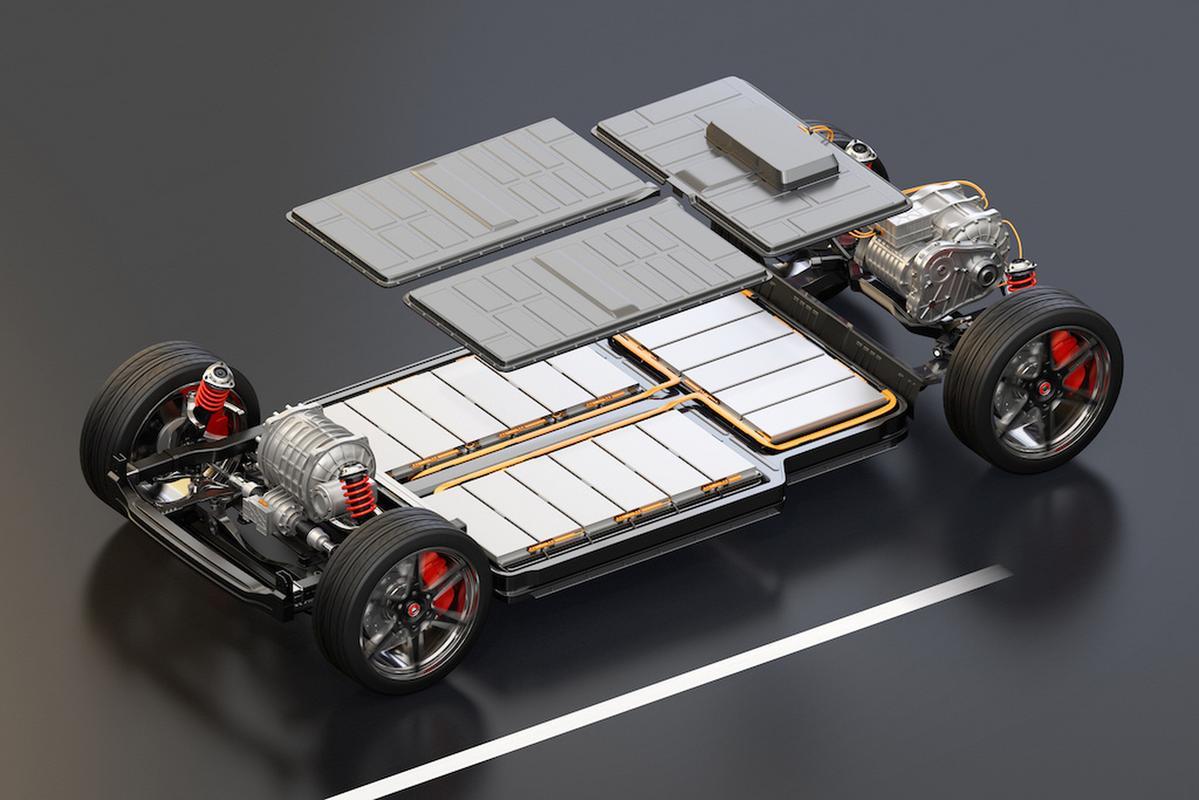
Cell form factors: Prismatic (China's dominant format, e.g. 280Ah LFP); cylindrical (18650/21700/4680); pouch. Chemistry routes: LFP (dominant, 81.2%), NCM ternary, LFMP (emerging), sodium-ion, semi-solid, all-solid-state. Structural integration: CTP (no module layer), CTC (cell-to-chassis), CTB (cell-to-body).
Battery costs represent 35–45% of EV manufacturing cost. Average LFP cell prices fell from ~RMB 1.0/Wh (2022 peak) to ~RMB 0.38–0.45/Wh (2025), enabling aggressive downstream pricing. The "ultimate market" when all 1.5B vehicles electrify at ~50 kWh average implies ~7,500 GWh annual demand — 6× the 2025 installed base.
II. Global Competitive Landscape: China 70%, Japan/Korea Declining
2025 global EV battery installations: 1,187 GWh (+31.7% YoY). Six Chinese firms combined: 70.4% (first time >70%). Korean trio combined: ~15.3% (declining). Samsung SDI: only top-10 company with negative growth (-6.9% YoY).
Global Top 10 (2025):
| Rank | Company | Country | GWh | Share |
|---|---|---|---|---|
| 1 | CATL | China | 464.7 | 39.2% |
| 2 | BYD | China | 194.8 | 16.4% |
| 3 | LG Energy Solution | Korea | 108.8 | 9.2% |
| 4 | CALB | China | 62.8 | 5.3% |
| 5 | Gotion High-Tech | China | 53.5 | 4.5% |
| 6 | SK On | Korea | 44.5 | 3.7% |
| 7 | Panasonic | Japan | 44.2 | 3.7% |
| 8 | EVE Energy | China | 41.6 | 3.5% |
| 9 | Samsung SDI | Korea | 28.9 | 2.4% |
| 10 | SVOLT | China | 22.1 | 1.9% |
CATL 2025 financials: Revenue RMB 423.7B (+17%), Net profit RMB 72.2B (+42%), battery sales 661 GWh (+39%), end-of-year cash + financial assets: RMB 392.5B. The only enterprise in global battery history to exceed 300 GWh in a single year.
Northvolt (Sweden) declared bankruptcy in late 2024 after burning ~USD 15B — the most significant single validation of China's manufacturing moat. Europe's "battery independence" attempt via domestic greenfield build-out suffered a major setback.
LG Energy Solution (LGES) defends #3 via deep US partnerships (GM Ultium, Honda, Hyundai/Kia). Panasonic focuses on cylindrical expertise and Tesla 4680 supply chain. SK On remains in losses, relying on parent company funding; its US Georgia factories (Ford BlueOval SK) are the strategic lifeline. Samsung SDI's Hungary factory (2026 production start) is a key bet on European premium EV recovery.
III. PEST Analysis: Multi-Dimensional Policy Chessboard
Political: China's dual-carbon goals and dual-credit NEV ratio requirements (28% in 2025, 32% in 2026) guarantee structural demand. US IRA FEOC (effective 2025) excludes Chinese batteries from USD 7,500 consumer credits — CATL's US market share is near-zero as a direct result. EU Battery Regulation carbon footprint declaration (required Feb 2025), battery passport (2027), maximum carbon limits (2028).
Economic: Lithium carbonate prices in 2025: V-shaped — from ~RMB 58,000/tonne (H1 low) recovering to ~RMB 100,000–120,000/tonne (year-end). Full-year average ~RMB 70,000–90,000/tonne. Price war: LFP cell prices down >50% since 2022 peak. CATL maintained ~26% gross margin via scale; tier-2 players at 12–18%. Anti-involution policy (2025) targets orderly industry stabilization.
Social: Consumer range anxiety dropped from #1 to #3 barrier. Safety at #2 — validating LFP/blade battery safety marketing. NEV market penetration exceeded 50% in China. "New energy rural" program drove micro-EV (A00-class) adoption in county-level markets, providing natural sodium-ion entry point.
Technology: 5C supercharging standard for 2025 flagship BEV. 800V+ platform in >60% of A-class+ BEV. AI-BMS cloud platforms (CATL "Panshi," BYD "Yunle") predict thermal runaway weeks in advance. Composite current collectors entering volume production (self-fusing safety mechanism + 54% weight reduction).
EU Battery Regulation dynamics: China coal-grid manufacturing (80–100 kgCO₂e/kWh) vs. EU local (45–60 kgCO₂e/kWh) vs. Yibin hydro-powered (~20–30 kgCO₂e/kWh). The 2027 mandatory battery passport with full lifecycle carbon traceability is the primary structural driver for European local manufacturing by Chinese firms.
IV. China Market Scale: 769.7 GWh and the LFP Era
2025 domestic power battery installations: 769.7 GWh (+40.4% YoY). LFP: 625.3 GWh (81.2%) (+52.9%). NCM: 144.1 GWh (18.7%) (+3.7%). CR2: CATL 43.42% + BYD 21.58% = ~65%.
LFP's rise from 44% (2018) to 81.2% (2025) is driven by: cost advantage (no cobalt/nickel), structural innovation (CTP/blade), Tesla's 2021 global LFP endorsement, LFMP further extending energy density headroom, and energy storage market synergy.
Industry overcapacity: planned capacity ~4,800 GWh vs. ~1,000 GWh demand; utilization ~50–55%. Anti-involution policy and low-end capacity exit targeting utilization >60% in 2026. 2026 forecast: 850–900 GWh domestic; ~1,480–1,550 GWh global.
PHEV is the fastest-growing sub-segment (+45% YoY in 2025, 37% of NEV sales). EV exports (~2.5M units) implicitly carry ~125–175 GWh of battery demand. Electric heavy trucks (18M units, ~18% penetration, ~55–65 GWh) are an accelerating commercial vehicle segment.
V. Supply Chain Analysis: Value Distribution from Lithium to EV
China controls all four key battery materials: cathode 89.4%, anode 93.5%, electrolyte 87.4% (broke 90%), separator 85% (global shares). This simultaneity is extraordinary in industrial history — even if non-Chinese cell makers wanted to bypass China, they cannot.
China's lithium reserve share jumped from 6% to 16.5% (rank 6→2) following a 2025 geological survey. Jiangxi Yichun ("Asian Lithium Capital") produces ~34.5% of domestic lithium carbonate.
The pack integration value chain is being transformed: CTP reduces module overhead, CTC eliminates pack enclosure, CTB fuses battery cover with vehicle floor. Structural integration transforms battery companies from "parts supplier" to "body structure supplier," dramatically raising switching barriers.
BMS is evolving from dedicated hardware to software modules in centralized domain controllers. CATL's Panshi AI cloud platform uses data from tens of millions of in-service cells to predict failures weeks ahead — a data moat tier-2 players cannot replicate.
Battery recycling: ~400,000 tonnes retired in 2025, market >RMB 48B; projected RMB 140B by 2030. EU recycled-content mandates from 2031 (Li 6%, Co 16%, Ni 6%) add compliance imperative. CATL's Brunp recycling creates a closed-loop "produce → use → cascade → recycle" system.
VI. Key Company Deep-Dives: Financial and Technology Full Scan
CATL (300750.SZ): The dominant global player. 2025: Revenue RMB 423.7B, Net profit RMB 72.2B (+42%). Products: Shenxing 4C supercharge LFP, Kirin CTP 3.0 (72% volumetric), Tianxing 4695 large-cylindrical for BMW, Condensed Matter semi-solid (in production), Panshi AI-BMS cloud. Germany 14 GWh (zero-carbon certified) + Hungary 100 GWh (2026 start). Clients: Tesla Shanghai, BMW, VW, Stellantis, Mercedes, Hyundai, XPeng, Xiaomi, Li Auto, Seres. 天下工厂 directory
BYD Fudi (002594.SZ / 1211.HK): Only company simultaneously global NEV #1 (4.6M units) and global power battery #2 (194.8 GWh). Blade Battery Gen 2 (LFMP, 155–160 Wh/kg, 3.5C). External supply >10% (Xiaomi, Toyota, Mercedes). 天下工厂 directory
EVE Energy (300014.SZ): Revenue RMB 61.5B (+26%), energy storage #2 globally (71 GWh, +41%). Pioneer of 4695 large-cylindrical supply to BMW Hungary. 天下工厂 directory
CALB (3931.HK): Revenue RMB 44.4B (+60%), global #4 (62.8 GWh, +52.6%) — fastest-growing major player. Main clients: GAC Aion, Changan, Li Auto. Stacked-electrode process differentiator. 天下工厂 directory
Gotion High-Tech (002074.SZ): Volkswagen-backed (26.47% stake). Global #5 (53.5 GWh, +82.5% — highest YoY growth in top-10). Net profit +107–149%. US Illinois factory targeting 2026 production. 天下工厂 directory
SVOLT (Honeycomb Energy): Global #10, ~22.1 GWh (+64%). Great Wall Motor spinoff; "flying stack" stacking process patent. 天下工厂 directory
Farasis (688567.SS): Pouch NCM for Mercedes-Benz, expanding into prismatic LFP. 天下工厂 search
Rept Battero (0666.HK): Qingshan Holdings-backed (nickel resource advantage for NCM). ~15 GWh, ~2% domestic share. 天下工厂 directory
Sunwoda (300207.SZ): ~20 GWh, primary client Li Auto. Hungary factory targeting 2026 H2. 天下工厂 directory
VII. Industrial Clusters: From Ningde to Hungary
Ningde, Fujian — CATL HQ; 330 GWh installed+under construction; 80+ upstream suppliers; RMB 294.8B cluster output (2023). Model for "single anchor drives city" industrial cluster formation.
Yibin, Sichuan — "Power Battery Capital": RMB 101.3B output (2023), 180 GWh capacity, 90+ supply chain firms. Hydro-power advantage (~RMB 0.35/kWh electricity) delivers low-carbon production and EU carbon footprint competitiveness. CATL Phase 8 (2024 start, 30 GWh, RMB 6B).
Changzhou, Jiangsu — "NEV Capital": RMB 850B+ NEV output (2024), ~1/5 national power battery sales, 97% supply chain completeness (31/32 key steps). CALB HQ, SVOLT HQ, CATL Liyang base (126 GWh planned, RMB 30B+ invested), BYD Liyang base, Li Auto Changzhou factory.
Hefei, Anhui — Gotion HQ, CALB Hefei base, NIO center, BYD Hefei.
Huizhou/Shenzhen, Guangdong — BYD Fudi manufacturing core, EVE Energy HQ, Sunwoda HQ.
Overseas hubs: Hungary (Debrecen) is China's European battery manufacturing epicenter: CATL 100 GWh (2026 start), EVE Energy 30 GWh (2027), Sunwoda 7.5 GWh (2026 H2), BYD Szeged EV factory (trial production 2025 Q4). CATL Germany Thuringia (14 GWh operational, zero-carbon certified, VW's first cell-level global certification).
天下工厂 identifies power battery manufacturers and component suppliers across all these clusters in its database of 4.8M verified factories — search "动力电池" or "电芯生产" for targeted sourcing.
VIII. Frontier Technology Topics: Six Leading-Edge Tracks
4680 Large-Format Cylindrical: CATL Tianxing (46105/4695) supplying BMW Neue Klasse from 2025; EVE Energy 4695 (30Ah, 300+ Wh/kg) to BMW Hungary. Tabless laser-welded design reduces internal resistance 15%+. Silicon anode enables 300+ Wh/kg. Challenges: thermal management complexity, high cell count per pack.
CTP/CTC/CTB: CTP (Kirin 3.0: 72% volumetric utilization) is now the industry standard. CTC entered mass production in 2025 (CATL × Seres M9, Tesla Cybertruck). CTB deployed across BYD Seal/Ocean family. Structural integration converts battery firms from "parts suppliers" to "structural body suppliers," creating profound switching barriers.
Semi-solid state (2025 mass-production year): Q1 2025 flagship vehicle adoption 22%. Key mass-production vehicles: Lantu Chase-Light (160 kWh, ~1,000 km WLTP), Zhiji L6 Max (133 kWh, CATL), NIO ET7 150 kWh (450 Wh/kg). CATL CEO warned against "misleading marketing" conflating semi-solid with all-solid-state.
Sodium-ion (2025 commercialization year): JAC Yiwei Huaxianzi (first mass commercial delivery, CATL/HiNa supply). Chery QQ Ice Cream (CATL NaIon). BYD Xuzhou 30 GWh sodium-ion factory under construction (2026 capacity). Energy density ceiling ~180 Wh/kg limits broad EV applicability; primary target: A00-class micro EVs and energy storage.
LFMP (LiMnFePO4): 15–25% higher energy density vs. standard LFP (160–200 Wh/kg system level), same safety, no cobalt/nickel. CATL Shenxing 2nd-gen, BYD 2nd-gen Blade, EVE Energy Ø280 LFMP all in production. Manganese dissolution challenge managed via surface coating and electrolyte optimization; 2025 mass versions achieve 2,000+ cycles.
5C/6C ultrafast charging: 800V+ platforms in >60% A-class+ BEV. CATL Shenxing latest: 5C (80% in 10 min). SiC power semiconductors are enabling devices. Infrastructure gap: only ~5% of chargers deliver 480 kW+ needed — hardware deployment pacing lags battery capability.
IX. Technology Roadmap: The Countdown to All-Solid-State
All-solid-state battery global patent distribution: Japan 36% (Toyota >1,400 patents), China 27% (fastest growth), Korea 14%. Three electrolyte routes: sulfide (highest conductivity, toughest manufacturing), oxide (stable, lower conductivity), halide (new entrant with promise).
Target timelines: Toyota, CATL, BYD, Samsung SDI all target 2027 small-batch production; full commercialization consensus ~2030. Note: all "2027 mass production" claims are planning statements pending independent validation.
Silicon-carbon anode: 5–25% silicon blends in commercial production for 4680 and Kirin NCM premium. Pre-lithiation improving first-cycle efficiency from ~85% to ~97%, enabling silicon to move toward mainstream by 2027. Key suppliers: BTR (Betray), Shanshan, Sinuo Technology.
AI + BMS cloud: CATL Panshi platform uses data from tens of millions of cells to predict thermal runaway 2 weeks in advance (claimed 99.2%+ accuracy). BYD Yunle integrates BMS with active suspension for regenerative optimization. "Software-defined battery" is the early-stage transition from hardware to service value.
Composite current collectors: Copper foil with polymer core (sandwich structure) provides self-fusing at short circuit, reducing weight ~54%. CATL Kirin premium and some BYD Gen-2 Blade products use composite copper foil. Volume suppliers: Yinglian New Materials, Jiayuan Technology.
Battery recycling technology: Wet metallurgy (hydrometallurgy) recovers Li, Co, Ni, Mn; cascade utilization (60–80% remaining capacity → stationary storage) extends value. EU 2031 recycled-content mandates (Li 6%, Co 16%, Ni 6%) make closed-loop recycling a compliance imperative for export-oriented producers.
X. Risk Matrix: Five Structural Risks
1. Price war: Cell prices down >50% since 2022. CATL's scale maintains 26% gross margin; tier-2 players at 12–18%. Anti-involution policy + low-end capacity exit to restore equilibrium ~2026.
2. US FEOC: Near-zero US market access for Chinese batteries. Three paths: license-to-operate (CATL-Ford Michigan, progress limited by congressional scrutiny), third-country routing (narrowing legal space), or market abandonment. Trump administration IRA reform adds uncertainty.
3. EU carbon footprint compliance: 2027 Battery Passport. China coal-grid manufacturing 80–100 kgCO₂e/kWh vs. EU local ~45–60 kgCO₂e/kWh. Local European manufacturing directly resolves this; Yibin hydro-powered production (20–30 kgCO₂e/kWh) is a domestic alternative for pre-2027 compliance.
4. Safety incidents: Any high-profile thermal runaway creates systemic consumer confidence damage. 2024 Incheon EV parking lot fire (100+ vehicles) demonstrated cross-border brand reputation spillover. LFP's superior safety record (vs. NCM) is a structural advantage in managing this risk.
5. Overseas factory economics: EU demand growth slower than expected; Hungary full profitability ~2028–2029. Labor 5–10× China; FDI review tightening; EUR/CNY exchange risk; customer EV schedule revisions (VW, BMW both adjusted timelines in 2025).
Additional risks: Supply chain concentration (China's 85–94% material share creates single-country fragility); IP litigation risk (Toyota's >1,400 solid-state patents, LG NE vs. SK On precedent); consumer SOH transparency pressure (digital battery passport forcing accurate degradation disclosure).
XI. 2026–2030 Forecast: Four Key Variables
| Year | Global GWh | China GWh | Chinese Firms Global Share |
|---|---|---|---|
| 2024 (actual) | 905 | 548 | 67.1% |
| 2025 (actual) | 1,187 | 770 | 70.4% |
| 2026 (forecast) | 1,480–1,550 | 850–900 | 68–72% |
| 2027 (forecast) | 1,700–1,800 | 950–1,050 | 67–71% |
| 2028 (forecast) | 1,900–2,100 | 1,050–1,200 | 65–70% |
| 2030 (forecast) | 2,400–2,800 | 1,200–1,500 | 60–68% |
Technology transition: LFP/LFMP dominant through 2030. Semi-solid scaling to ~5–10 GWh by 2027, ~50+ GWh by 2030. Sodium-ion ~20–30 GWh power side by 2030. All-solid-state ~10–20 GWh (premium only) by 2030.
Overseas manufacturing share of Chinese firms: from ~15–20% of total installations in 2025 to 25–35% by 2030 as European factories ramp.
LFP prismatic cell price floor: ~RMB 0.38/Wh. Stabilization 2026; gradual recovery to ~RMB 0.40–0.44/Wh by 2028 as utilization rates recover and technology premiums (5C, LFMP) raise ASPs.
CR2 domestic outlook 2030: CATL 38–40% + BYD 23–25% = 61–65%. CALB and Gotion each reaching 6–8% via overseas-driven growth.
XII. Conclusion: Dual-Oligopoly Established; Overseas Manufacturing and Technology Define the Next Decade
Three established facts: (1) LFP's dominance is irreversible — 81.2% domestic, global majority. Technology judgments by the entire market have converged. (2) China's 70%+ global share rests on unmatched vertical integration — 85–94% control of each key material creates a moat no single country can quickly replicate. (3) CATL + BYD dual-oligopoly will not be disrupted in the medium term — both are simultaneously expanding technology, scale, and customer lock-in advantages.
Two ongoing transitions: "export products" → "local overseas manufacturing" (trade barriers forcing structural change); "cell supplier" → "system solution provider" (CTC/CTB integration + AI-BMS cloud = early signals of manufacturing-to-service evolution).
The terminal market when all ~1.5B vehicles electrify at ~50 kWh average: ~7,500 GWh/year annual demand — 6× the 2025 base. Current overcapacity is a short-term clearing mechanism, not a structural demand ceiling.
天下工厂's database of 4.8M verified active Chinese manufacturers provides ground-level mapping of the entire power battery ecosystem — from cathode material producers to cell makers to pack structural component manufacturers. It supports targeted supply chain sourcing and B2B customer development across all major industrial clusters described in this report.
factory data platforms (天下工厂) Industrial Research Institute, June 2026. Data baseline: FY2025 full year + 2026 Q1. Forecast content represents research analysis and does not constitute investment advice.
Data Sources
- CABIA 2025 full-year power battery installation data — Sina Finance
- SNE Research 2025 full-year global rankings — Sina Finance
- CATL 2025 Annual Report — official PDF
- BYD 2025 Annual Report Summary — CNINFO
- China enterprises dominate 70%+ global share — CNR
- CATL net profit RMB 72.2B — Sina Tech
- Matec Research China four-material global share Sep 2024 — Sina Finance
- IRA FEOC rules — Thepaper
- EU Battery Regulation carbon footprint requirements
- EU anti-dumping tariff finalized — MOFCOM
- Yibin power battery cluster RMB 101.3B — Yibin government
- Changzhou NEV total output RMB 850B+ — Thepaper
- Semi-solid battery mass-production vehicles — NBD
- Sodium-ion commercialization — CLS
- All-solid-state battery 2025 research report
- CATL Hungary factory progress — 21Jingji
- China battery overseas expansion 400 GWh planned
- OFweek battery overseas expansion series
- Gotion/EVE earnings comparison — Tencent Finance
- CATL nine consecutive years global #1 — Chnfund