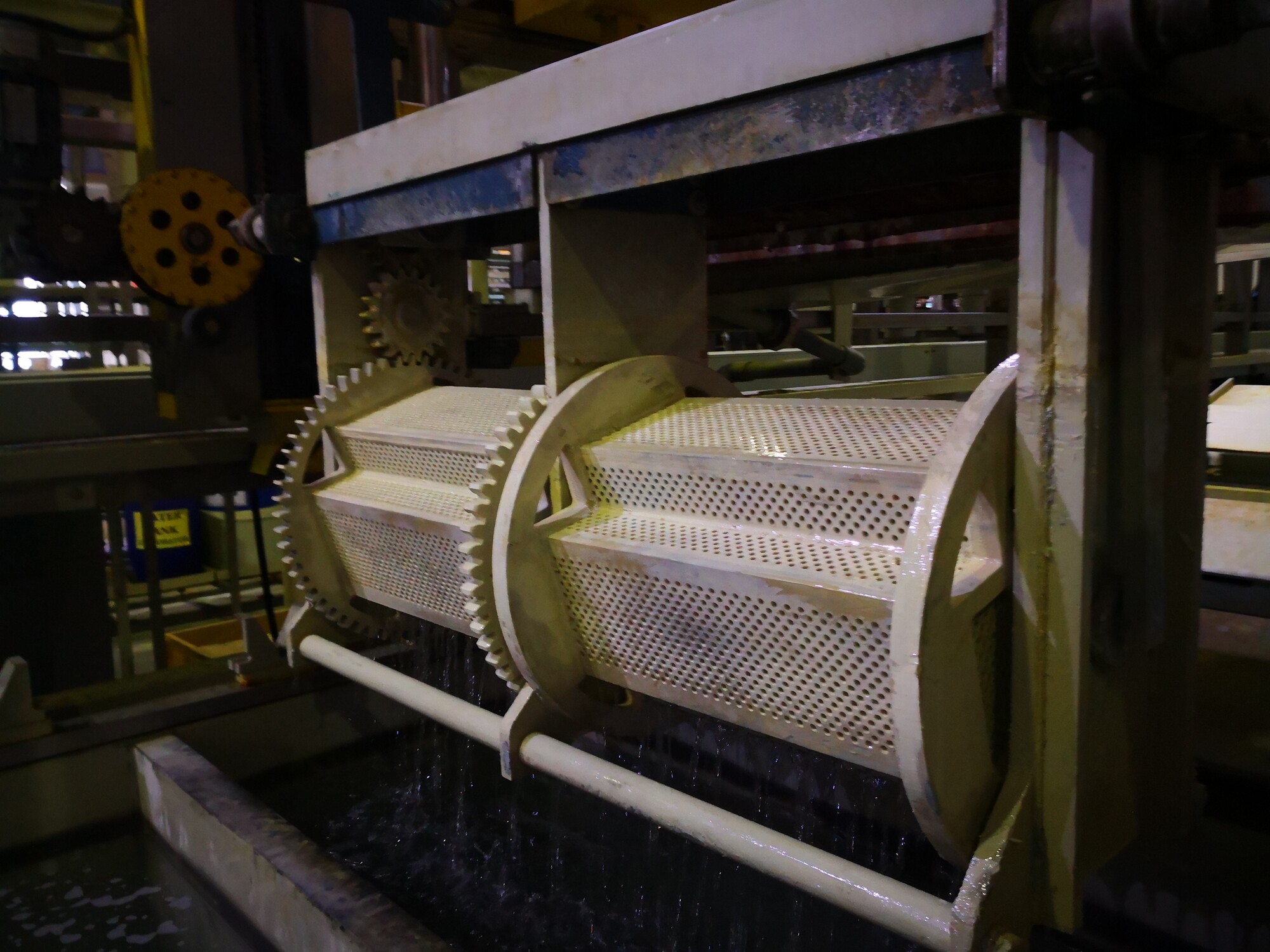

Part One: Processes and Boundaries
Chapter 1 Why the Three Surface Treatment Processes Are Grouped Together
The national standard, the Industrial Classification for National Economic Activities (GB/T 4754-2017), assigns "metal surface treatment and heat treatment processing" the code C3360, placed under "C33 manufacture of metal products". The category definition reads "refers to specialised processing operations carried out on the surface of externally supplied metal objects, such as electroplating, coating, polishing, spray painting, colouring and heat treatment", and the activities listed include "electroplating, polishing, anodising and anti-corrosion treatment", "colouring, engraving, printing and spraying, etc." and "quenching, buffing, deburring, grinding and welding" (category definition).
Two words in the definition are worth noting: "external" and "specialised processing operations" indicate that the entities in this industry are contractors, and that what they sell is a process step. An electroplating plant does not own the parts it processes, nor does it bear design responsibility, and this determines its commercial characteristics: toll processing, pricing by processing volume, monthly settlement, and quality responsibility divided along process boundaries.
The title of this Part lists three processes—electroplating, anodising and heat treatment—while the basis of the industry classification is broader than the title, with spraying and colouring also included. The reasons for placing these categories under one four-digit code are not the same at the material level.
Electroplating is electrochemical deposition: the workpiece is immersed in an electrolyte containing metal salts and connected as the cathode; after current is applied, metal ions at the workpiece surface gain electrons, are reduced to metal atoms and build up layer by layer. The coating comes from an external source and has a clear interface with the substrate. In anodising, the aluminium workpiece is connected as the anode and aluminium oxide grows in situ on the surface; the film is converted from the base material itself and passes continuously into it. Heat treatment introduces no new substance: it heats the workpiece, holds it at temperature and then cools it at a controlled rate, changing grain structure and residual stress through solid-state phase transformation. The first two add a layer outside the substrate; heat treatment changes the structure of the substrate itself.
Statistically they are grouped in one place because the three are isomorphic in industrial organisation: all are completed outside the customer's own workshop, all are intermediate steps before final assembly, none produces a product that can be sold independently, and all are quoted by processing volume. The surface treatment cost of a stamped part accounts for only a small part of its cost, yet it determines whether the part will rust three months later.
In regulation, the three are not fully isomorphic. GB 21900-2008, the Emission Standard of Pollutants for Electroplating, states explicitly that "this standard also applies to anodising surface treatment process facilities" (full text of the standard from the Ningxia Department of Ecology and Environment). The scope of the Normative Conditions for the Electroplating Industry (《电镀行业规范条件》) is drawn more broadly, covering enterprises (workshops) engaged in electroplating, electroforming, electrochemical machining, brush plating, electroless plating and hot-dip plating (solvent method), as well as metal pickling, polishing, oxidising, phosphating and passivation, and electroplating clusters (full text from the Jiangsu Department of Ecology and Environment). Heat treatment is not on this list.
The classification of pollutant discharge permits shows the difference most clearly. Item 81 of the Classified Management Catalogue of Pollutant Discharge Permits for Stationary Pollution Sources (《固定污染源排污许可分类管理名录》) corresponds to "metal surface treatment and heat treatment processing 336": key management applies to specialised electroplating enterprises and to those with chromium-containing passivation processes; simplified management applies to pickling, polishing, hot-dip plating, quenching or chromium-free passivation; the remainder fall under registration management (catalogue text from the Ma'anshan Municipal Bureau of Ecology and Environment). A heat treatment plant that only performs quenching and tempering and an electroplating plant with a chromium plating bath fall at the two ends of the same catalogue.
For a buyer, the words "surface treatment" do not constitute technical information. A "surface treatment fee" on the same quotation may refer to barrel plating on an automatic zinc plating line, or to hardening and tempering outsourced to a heat treatment workshop dozens of kilometres away; the two differ in acceptance method, failure mode and compliance risk. Requiring the supplier to specify the plating type and coating thickness grade is the lowest-cost way to complete the information.
Chapter 2 Electroplating: The Division of Labour among Zinc, Nickel, Chromium, Copper and Tin
An electroplating setup consists of four things: a bath holding the electrolyte, the workpiece connected as the cathode, the anode and a direct-current power supply. After current is applied, metal ions at the workpiece surface gain electrons, are reduced to metal atoms and crystallise into a layer. Locations the liquid cannot reach cannot be plated—deep inside blind holes and in the gaps of stacked parts, for example—so plated parts generally require drainage holes and a sensible clamping orientation.
According to the basis of an industry research report, nickel plating accounts for more than 20%, zinc plating, chromium plating and copper plating each for more than 10%, and tin plating for 9.4% (industry research report). This is a breakdown from a commercial report, not an industry-code statistic from a statistical agency, and should not be cited as an output-value structure.
Zinc plating
Zinc plating is the highest-volume plating type, serving mainly steel substrates, with downstream users in fasteners, stamped parts and builders' hardware. The current standard, GB/T 9799-2024, Metallic and Other Inorganic Coatings: Zinc Electroplated Coatings on Iron or Steel, took effect on 1 January 2025, replacing GB/T 9799-2011 in full, and adopts ISO 2081:2018 with modifications (National Standards Full-Text Public System).
The reading of the grade designation directly affects acceptance: the number after Fe/Zn is the minimum local thickness, in micrometres, and the common grades are Fe/Zn 5, 8, 12 and 25. A drawing that says only "zinc plated" without a grade effectively specifies no coating thickness.
Salt spray time varies widely with the type of conversion coating and with whether the coating is sealed; the grades calculated for an 8 to 10 micrometre coating are as follows (compilation of industry data from the era of GB/T 9799-2011 and GB/T 9800; not Table 1 of GB/T 9799-2024).
| Conversion coating type | White rust appears (hours) | Red rust appears (hours) |
|---|---|---|
| B white | 24 | 72 |
| C iridescent | 72 | 144 |
| D green | 96 | 168 |
| E black | 120 | 192 |
| CF trivalent chromium iridescent | 72 | 144 |
| DF trivalent chromium green | 96 | 168 |
| EF trivalent chromium black | 144 | 216 |
| BFS white with sealing | 48 | 120 |
| CFS iridescent with sealing | 120 | 192 |
| DFS and EFS with sealing | 192 | 264 |
The table is a compilation of industry data from the era of GB/T 9799-2011 and GB/T 9800, not Table 1 of GB/T 9799-2024. On this industry table, for the same 8 to 10 micrometre zinc layer, changing only the conversion coating and adding sealing can raise the time to red rust from 72 hours to 264 hours; the criterion in Table 1 of GB/T 9799-2024 is a single NSS time limit requiring that neither white rust nor red rust appear, and it cannot be matched cell by cell with this table. Coating thickness is not the only variable in salt spray time; post-treatment can raise the corrosion-resistance grade by two or three steps without any change in thickness. When a supplier quotes "zinc plated 8 micrometres, salt spray 96 hours" without stating the conversion coating type or whether the coating is sealed, the commitment cannot be accepted.
Hot-dip galvanising
Hot-dip galvanising and zinc electroplating are two different classes of process. After pickling and fluxing, the workpiece is dipped into molten zinc, where zinc reacts with iron to form an alloy layer. The current standard, GB/T 13912-2020, sets grades by substrate thickness and specifies them separately for non-centrifuged and centrifuged parts. The values in the table below come from the thickness grading table of that standard; the text seen for this table is the 2002 edition, and the 2020 edition retains the same grades, so formal acceptance should be checked against the current edition (standard text).
| Workpiece type | Substrate thickness or thread diameter | Minimum local thickness (μm) | Minimum average thickness (μm) |
|---|---|---|---|
| Non-centrifuged parts | Steel thickness t ≥ 6 mm | 70 | 85 |
| Non-centrifuged parts | 3 ≤ t < 6 mm | 55 | 70 |
| Non-centrifuged parts | 1.5 ≤ t < 3 mm | 45 | 55 |
| Non-centrifuged parts | t < 1.5 mm | 35 | 45 |
| Centrifuged parts | d ≥ 20 mm | 45 | 55 |
| Centrifuged parts | 6 ≤ d < 20 mm | 35 | 45 |
| Centrifuged parts | d < 6 mm | 20 | 25 |
The table is a compilation of the GB/T 13912 thickness grades. The conversion basis is a zinc density of 7.2 g/cm³, that is, 1 micrometre corresponds to about 7.2 g/m².
The coating of hot-dip galvanising is several times that of zinc electroplating, at the cost of precision. The zinc solidifies freely, and zinc accumulates at edges, threads and hole openings to form zinc lumps; threaded parts must be centrifuged to throw off the excess zinc, and the coating thickness then falls again. Its applications are therefore concentrated where longevity gives way to precision: transmission towers, photovoltaic mounting structures, bridge steel structures, scaffolding and fasteners. It is not suitable for precision mating surfaces, fine threads or cosmetic surfaces.
Nickel and electroless nickel plating
Nickel electroplating plays two roles: the intermediate layer of a decorative coating, and a functional corrosion- and wear-resistant layer. GB/T 24560-2009 gives an assessed value for the average bath voltage of nickel electroplating of 5.0 volts and a current efficiency of 90% to 97% (the public original text of this standard was not obtained; these two figures are second-hand citations).
Electroless nickel plating does not rely on an external current; it deposits nickel by autocatalytic reduction of hypophosphite on a catalytic surface. The standard is GB/T 13913-2008, which is identical to ISO 4527:2003. There is no electric-field distribution problem, so thickness uniformity in deep holes, blind holes, internal cavities and complex parts is better than with nickel electroplating. Types are classified by phosphorus content: low phosphorus 1% to 3% is solderable and 2% to 4% is wear resistant; medium phosphorus 5% to 9%; high phosphorus above 10% is corrosion resistant and non-magnetic. Hardness in the as-plated condition is 500 to 900 HV, about 700 HV for low phosphorus, rising to about 1000 HV after heat treatment. Common thickness is 5 to 50 micrometres, and not less than 25 micrometres where hardness requirements are high; heat treatment to improve adhesion is 180 to 200 degrees Celsius for 2 to 4 hours, and steel parts with a tensile strength not lower than 1000 MPa must receive hydrogen relief (testing body's citation of the standard, data on electroless nickel performance). Applicable substrates include steel, aluminium alloy, stainless steel and activated plastics.
Chromium
Hard chromium coatings have a hardness of 800 to 1000 HV, with some reports reaching 1100 HV. The thicknesses commonly chosen in the industry are not less than 0.03 mm for ordinary industrial parts, not less than 0.05 mm for marine environments and not less than 0.08 mm for heavy-duty conditions; industry data give empirical values of about 96 hours for 0.03 mm, about 240 hours for 0.05 mm and more than 500 hours for 0.08 mm before red rust appears; GB/T 11379-2008 itself does not specify a salt spray acceptance time limit, so if a contract requires these durations it should also state the test method, GB/T 10125, and the rating method, GB/T 6461 (hard chromium process data, Science Popularisation China entry). Downstream applications are hydraulic piston rods, mould repair, cylinder bores and rollers. The value of hard chromium lies in its reparability: a shaft that has failed through wear can be chromium plated and ground back to size at a cost far below that of a new part.
Decorative chromium is applied over copper and nickel to form a three-layer copper-nickel-chromium coating: the copper layer levels defects in the substrate, the nickel layer provides corrosion resistance and lustre, and the chromium layer provides hardness and resistance to tarnishing. The copper-nickel-chromium composite coating is the mainstay of decorative coatings, accounting on the same report's basis for about 20% to 30% of the plating-type structure. This is an aggregate for the three plating types of copper, nickel and chromium, and is not to be added to the individual plating-type shares given above.
Hexavalent chromium plating has a current efficiency of only 8% to 16%, with a typical bath voltage of 6 to 10 volts and an assessed value of 7.0 volts (GB/T 24560-2009, second-hand citation). Low efficiency means that most of the electrical energy goes into hydrogen evolution, which both raises power consumption and brings the risk of hydrogen embrittlement into the process; Chapter 26 discusses the consequences.
Copper and tin
The assessed bath voltage for copper electroplating is 3.0 volts in acid systems and 4.0 volts in alkaline systems. Copper serves as the base layer in decorative coatings, as the conductive layer in printed circuit boards, and as a masking layer on heat-treated parts that are to be protected against local carburising. Tin plating accounts for about 9.4% of the plating-type structure; its downstream uses are tinplate, connectors, terminals and food cans, chosen for solderability and food-contact safety.
Application boundaries of the plating types
| Plating type | Main substrates | Common coating thickness | Typical downstream | Situations in which it should not be used |
|---|---|---|---|---|
| Zinc electroplating | Steel | 5 to 25 micrometres, by Fe/Zn grade | Fasteners, stamped parts, builders' hardware | Long-life outdoor exposure; high-strength steel parts sensitive to hydrogen embrittlement |
| Hot-dip galvanising | Steel | 20 to 85 micrometres, graded by substrate thickness | Towers, photovoltaic mounting structures, bridges, scaffolding | Precision mating surfaces, fine threads, cosmetic surfaces |
| Nickel electroplating | Steel, copper, zinc alloy | As specified on the drawing | Intermediate layer for decorative plating, hardware, electrical parts | Deep holes and internal cavities requiring uniform thickness |
| Electroless nickel plating | Steel, aluminium, stainless steel, activated plastics | 5 to 50 micrometres, industry practice | Hydraulic parts, moulds, chemical pumps and valves, electronic parts | Ordinary protective parts where cost is extremely sensitive |
| Hard chromium | Steel | Not less than three grades: 30, 50 and 80 micrometres | Piston rods, moulds, cylinders, rollers | Complex curved surfaces requiring uniform thickness |
| Decorative chromium | Copper-nickel underlayer on zinc alloy, steel or plastic | Top layer, far thinner than hard chromium | Sanitary ware, hardware, automotive and motorcycle trim | High-wear or high-load conditions |
| Tin electroplating | Steel, copper | As specified for the application | Tinplate, connectors, terminals, food cans | High-temperature conditions |
The table was compiled by the Institute from the standards and industry data cited above. Apart from zinc electroplating and hot-dip galvanising, the coating thicknesses are industry ranges, and acceptance is governed by the drawing or agreement.
Chapter 3 Anodising and Chemical Conversion Coatings
Anodising immerses an aluminium or aluminium alloy workpiece in an electrolyte and connects it as the anode; after current is applied, a layer of aluminium oxide grows in situ on the surface. Its most fundamental difference from electroplating lies in the origin of the film: an electroplated film is deposited from an external electrolyte, whereas an anodic film is converted from the aluminium of the base material itself and passes continuously into it, with no interface that can be peeled off as a whole sheet. The film consists of a dense barrier layer and an outer porous layer; the porous layer can absorb dyes before sealing, and the colouring step takes place after anodising and before sealing.
The substrate boundary is clear: steel dissolves under anodising conditions, so this process is essentially limited to aluminium and aluminium alloys. To give a steel part a similar appearance, only electroplating or coating will serve.
The current standard is GB/T 8013.1; the version seen for this table is the 2018 edition (the previous edition was 2007). The standard denotes coating thickness grades by AA plus a number, where the number is the average thickness in micrometres and the parentheses give the corresponding average and local values: AA5 is 5 and 4, AA10 is 10 and 8, AA15 is 15 and 12, AA20 is 20 and 16, and AA25 is 25 and 20 (standard text). Where no grade is stated, AA10 is supplied. The industry convention for architectural profiles is AA10 for window and door profiles and AA15 for curtain wall profiles.
Corrosion resistance is measured by the copper-accelerated acetic acid salt spray test: 16 hours for AA10, 24 hours for AA15, and 48 hours for AA20 and AA25. Wear resistance is measured by the falling sand test, with an abrasion coefficient required to be greater than 300 g/μm (GB/T 5237.2-2017, cited from the same source). Hard anodising is a strengthened version of the same process, with a coating thickness usually of 40 to 60 micrometres and above 100 micrometres for special requirements.
Typical downstream applications include architectural aluminium profiles, namely windows, doors and curtain walls, consumer electronics housings, heat sinks, automotive trim and photovoltaic frames. In 2023, domestic aluminium profile output was 21.8 million tonnes (2180 万吨), of which architectural profiles accounted for 56% and industrial profiles for 44%; Guangdong province alone produced 4.3 million tonnes, which a commercial report puts at more than 20% of the national total, while recalculation from the two absolute figures gives 19.7% (cited from the China Commercial Industry Research Institute). This is the basis of a commercial research body and is for reference only.
There are four boundaries to choosing anodising: the substrate must be aluminium, and there is no solution for steel parts; the anodic film is an insulator, so any area that must conduct electricity has to be machined away or masked after anodising; a hard anodic film of more than 40 micrometres changes mating dimensions, so allowance must be left on precision mating surfaces; and anodising provides surface hardness and corrosion resistance, not substrate strength.
Chemical conversion coatings apply no external voltage; a chemical reaction forms a compound film from nanometres to micrometres thick directly on the metal surface, the common types being phosphating and chromate or trivalent chromium passivation. The film is very thin and its protective capability is limited; it is used mainly as a coating base to improve adhesion, or as a post-treatment on zinc plating to suppress white rust.
Zinc is an active metal, and zinc-plated parts first show white rust in humid environments; passivation converts the surface of the zinc layer into a dense chromate film that delays the appearance of white rust. The differences among B, C, D and E and among CF, DF and EF in the salt spray table in Chapter 2 are essentially differences in passivation system and film colour.
Hexavalent chromium passivation is being phased out. The Normative Conditions for the Electroplating Industry list "processes in which the coating is passivated in a passivation bath with a chromic anhydride concentration above 150 g/L" as obsolete (full text from the Jiangsu Department of Ecology and Environment). The alternative routes are trivalent chromium and chromium-free passivation. Trivalent chromium and hexavalent chromium are essentially level in salt spray grade: CF and C are both 72/144, DF and D are both 96/168, and EF at 144/216 is even slightly above E at 120/192. The advantage of trivalent chromium lies in its environmental profile, not in its corrosion-resistance grade. Chromium-free passivation is explicitly required in the admission conditions of some parks; the conditions for Yongnian in Hebei state both "zinc plating only" and "chromium-free passivation" (Yongnian District announcement).
Situations in which chemical conversion coatings should not be chosen: where long-term outdoor corrosion resistance is required, the film is too thin; where surface hardness is required, it provides none; where decorative appearance is required, the colour options are very narrow.
Chapter 4 Coating: Electrophoretic Coating and Powder Coating
Coating forms an organic polymer film, which marks the boundary with the inorganic films of electroplating, anodising and chemical conversion coating. The advantages of an organic film are colour, gloss and weather resistance; its disadvantages are a low upper temperature limit and a film hardness far below that of the metal phase.
Electrophoretic coating immerses the workpiece in an electrocoat bath and applies direct current; the resin particles in the paint carry a charge and migrate to the workpiece under the electric field, depositing as a film. By workpiece polarity it is divided into anodic electrophoresis and cathodic electrophoresis, with cathodic electrophoresis dominant in the automotive industry. Film formation is driven by the electric field, and electrophoretic coating covers internal cavities, interlayers and edges better than spraying; the indicator of this capability is throwing power, tested by the Ford box method (HG/T 3952-2007, 250 volts, 3 minutes; the 2026 edition of this standard has been published, so check the new edition before citing) and the four-box method (electrophoretic coating process data).
On coating thickness, the ranges given by industry convention are 18 to 22 micrometres on the outer surface of automotive bodies and not less than 10 micrometres in internal cavities, 15 to 20 micrometres for appliance parts, and 20 to 22 micrometres on outer panels and 13 to 16 micrometres on inner panels with sixth-generation cathodic electrocoat. These values are industry convention; national standards do not specify electrophoretic coating thickness, and acceptance should be governed by the drawing or technical agreement. A separate lower limit is given for internal cavities because of the Faraday cage effect: the electric field cannot reach deep inside the cavity, so deposition there is necessarily lower than on the outer surface.
The process parameter window is: solids 18% to 22%, pH 5.5 to 6.5, bath temperature 28 to 32 degrees Celsius, voltage 150 to 350 volts, electrophoretic time 1.5 to 3 minutes, and curing at 160 to 180 degrees Celsius for 20 to 30 minutes (same source). Typical downstream uses are automotive bodies and frames, appliance housings, electrophoretic coating of aluminium profiles and primer for hardware parts; aluminium profiles can be electrophoretically coated matt or gloss, which is another appearance route for architectural profiles besides anodising.
Electrophoretic coating has three boundaries: the workpiece must conduct electricity, so plastic parts cannot be coated electrophoretically directly; the colour choice is narrow, with the great majority of lines offering only black or grey, and multiple colours require a bath change; and the threshold for equipment and bath maintenance is higher than for spray painting, while the minimum economic batch is not small.
Powder coating uses an electrostatic spray gun to charge the powder coating material, which is attracted to the surface of the earthed workpiece under the electrostatic field and air flow, and then enters an oven to melt, level and cure. It requires no solvent and its volatile organic compound emissions are low, which is the main reason for its rapid expansion after environmental constraints tightened.
On coating thickness, most sources give an industry convention of 60 to 80 micrometres, with an actual range of 40 to 120 micrometres and a recommended control range of 50 to 80 micrometres (powder coating testing data). It should be stressed that GB/T 21776-2008, Guide for Testing Coating Powders and Coatings, is a guidance standard for test methods and does not specify coating thickness; describing 60 to 80 micrometres as a value specified by the national standard is a common misstatement in the industry.
Adhesion is assessed by the cross-cut method, standard GB/T 9286-2021, graded 0 to 5, with grades 0 to 1 acceptable. The cross-cut parameters are a cut spacing of 1 to 2 mm, six cuts and a tape width of 25 mm. Application parameters are usually 60 to 80 kilovolts, an air pressure of 0.2 MPa and a spray distance of 150 to 300 mm; curing conditions for epoxy and polyester systems are 180 to 200 degrees Celsius for 10 to 15 minutes. Typical downstream uses are aluminium profile curtain walls, distribution cabinets, shelving, fitness equipment, appliance sheet metal and agricultural machinery.
The boundaries of powder coating are equally clear: its film is about three times thicker than electrophoretic coating, so precision mating surfaces and threaded holes are consumed by it; changing colour requires cleaning the spray gun, powder booth and recovery system, so small batches in multiple colours are uneconomic; and curing temperatures above 180 degrees Celsius make it unsuitable for heat-sensitive substrates. The weakness of electrophoretic coating is precisely the strength of powder: electrophoretic coating cannot achieve multiple colours and thick films, and powder cannot achieve thin, uniform coverage of internal cavities. The two processes are often combined on the same product, with electrophoretic coating as the primer providing corrosion protection and throwing power, and powder as the topcoat providing colour and weather resistance.
Chapter 5 Heat Treatment: Quenching, Carburising and Nitriding
Heat treatment involves no film-forming action. It heats the workpiece to a set temperature, holds it for a sufficient time and then cools it at a controlled rate, changing grain size, phase composition and residual stress distribution through solid-state phase transformation. The external dimensions of the workpiece do not change, and in most processes the chemical composition does not change either. The applicable substrates are mainly steels, including carbon steel, alloy steel and tool steel; aluminium alloy and titanium alloy follow solution treatment and ageing, which is another route. The indicator corresponding to coating thickness in the three preceding process categories is the hardened case depth, in millimetres, measured by limit hardness.
By purpose they fall into four categories. Through quenching plus tempering is commonly called hardening and tempering: quenching produces high-hardness martensite, and tempering adjusts hardness and toughness to the requirements of use; surface quenching heats only the surface layer, leaving the core at its original toughness; carburising heats the part for a long time in a carbon-bearing atmosphere so that carbon diffuses into the surface layer, which is then quenched; nitriding heats the part in a nitrogen-bearing atmosphere so that nitrogen diffuses into the surface layer. Carburising and nitriding are thermochemical treatments, in which the chemical composition of the surface layer genuinely changes, and this is the fundamental difference between them and quenching and tempering.
The acceptance indicator for carburising and hardening is the effective case depth, defined as the distance from the surface to the point where hardness falls to 550 HV1 (GB/T 9450-2005). That standard was replaced in full on 29 August 2025 by GB/T 9450-2025, Determination of the Depth of the Carburised and Hardened Case of Steel Parts, which took effect on 1 March 2026 (National Standards Full-Text Public System). The 2005 edition also carried a limitation on its scope of application: the method applies to parts whose hardness at three times the case depth from the surface is below 450 HV, and conditions beyond this require agreement between the two parties, or a switch to a limit greater than 550 HV (interpretation of the standard). This limitation is often overlooked in acceptance, and thin-walled parts and materials with high core hardness most easily reach it.
Measurement of nitrided case depth cites GB/T 11354 (updated on 29 August 2025); the product standard for plasma nitriding is GB/T 34883-2017, issued on 1 November 2017 and implemented on 1 May 2018. The permissible deviation of nitrided case depth is graded by depth: ±0.1 mm for less than 0.3 mm, ±0.15 mm for 0.3 to 0.6 mm, and ±0.2 mm for more than 0.6 mm (nitriding process data, cited from a company website). Inspection of the hardened case from induction hardening and flame hardening cites GB/T 5617. Typical downstream uses cover almost all parts subject to alternating loads and friction: gears, bearings, moulds, fasteners, crankshafts, machine tool guideways, wind turbine ring gears and automotive driveline parts (industry analysis, commercial research basis).
According to a press release for an exhibition hosted by the China Heat Treatment Association, as cited, industry output value exceeded RMB 150 billion (1500 亿元) in 2024, with more than 3000 enterprises above designated size and more than 500,000 persons employed (50 万人), of which processing services accounted for about RMB 125 billion, over 80%, and equipment about RMB 25 billion (press release as cited, as cited in a listed company's annual report). Another basis from the same association gives a market size of RMB 113.7 billion in 2023, of which processing services were RMB 93.5 billion and equipment and process materials RMB 20.2 billion (another citation). The two bases differ in statistical scope and year and should not be compared directly; the 3000 figure is the 2024 industry basis and the 1500 figure the 2023 basis for specialised heat treatment enterprises, and with different statistical scopes they cannot be converted into one another. On concentration, there are about 10,000 specialised enterprises, of which about 1500 are above designated size; the leading company holds 0.65% of the market and the top three together 1.35% (industry data). Historical regional data show East China at 55.4% and South China at 18.7%, together 74.1%, with Jiangsu and Guangdong together at 37.9%, for the data year 2015.
The process boundaries of heat treatment are decided by three things.
The first is distortion. Quenching brings cooling contraction and transformation stress: slender parts bend, thin-walled parts warp and complex parts distort. The control measures are grinding allowance, press quenching, martempering and straightening, all of which must be counted in cost. Quenching a part that has already been finish-machined to final size means staking all the preceding machining cost.
The second is cycle time. Carburising diffusion times are measured in hours, and the deeper the case, the longer the time; nitriding cycles are longer still, with tens of hours being normal. Outsourced lead times therefore have very little flexibility, and inserting a rush order is difficult.
The third is irreversibility. Once a workpiece has been quenched, the original state of the substrate is reset; if hardness is later found to be non-conforming, re-quenching brings a greater risk of distortion and decarburisation.
Situations in which heat treatment should not be chosen include: where surface decoration or corrosion resistance is required, since it provides neither; extremely asymmetric thin-walled parts, where the risk of distortion may exceed the benefit; and low-value standard parts whose cost has already been pressed to the limit, where heat treatment accounts for too high a share. Conversely, for any part subject to alternating loads that requires a wear-resistant surface and a tough core, heat treatment is almost the only solution, and neither coatings nor plated layers can substitute for structural control of the core.
Chapter 6 Constraints on Process Selection: Substrate, Coating Thickness, Adhesion and Hydrogen Embrittlement
The preceding four chapters discussed the processes one by one; this chapter cuts across them by constraint. The four constraints hold each other in check, and changing one often overturns the choices made for the other three.
Substrate
The substrate is the first screen. Steel has the widest range of options, except that it cannot be anodised; aluminium can take anodising, chemical conversion coating, electrophoretic coating and powder, while electroplating requires special pre-treatment such as zinc immersion; plastics can only take electroplating (after activation) and coating; stainless steel can take electroless nickel plating and passivation; zinc alloy die castings take copper-nickel-chromium decorative plating.
| Substrate | Available processes | Processes not available or requiring special treatment |
|---|---|---|
| Steel | Zinc electroplating, hot-dip galvanising, nickel electroplating, electroless nickel plating, hard chromium, electrophoretic coating, powder, heat treatment | Anodising |
| Aluminium and aluminium alloy | Anodising, chemical conversion coating, electrophoretic coating, powder | Electroplating requires special pre-treatment such as zinc immersion |
| Plastics | Electroplating (after activation), coating | Heat treatment, anodising |
| Stainless steel | Electroless nickel plating, passivation, electrophoretic coating, powder | Electroplating requires special pre-treatment for adhesion |
| Zinc alloy die castings | Copper-nickel-chromium decorative plating, coating | High-temperature heat treatment |
The table was compiled by the Institute from the standards and process data cited above.
Coating thickness
Coating thickness is at once a functional indicator and a dimensional one: it determines corrosion and wear life and also enters the tolerance chain directly. A plated layer grows outward, so shafts become thicker, holes smaller and thread pitch diameters change. A fine-thread M6 thread plated with 20 micrometres of zinc will very likely not accept a go gauge. This is why fasteners must be centrifuged after hot-dip galvanising and why drawings must state "dimensions after plating" or "dimensions before plating".
The order of magnitude of coating thickness differs by more than one order between processes: Dacromet 2.0 to 8.6 micrometres, electrophoretic coating 18 to 25 micrometres (industry convention), zinc electroplating 5 to 25 micrometres, anodising 5 to 25 micrometres, hot-dip galvanising 20 to 85 micrometres, and powder coating 60 to 80 micrometres (industry convention). When choosing a process, first see whether this order of magnitude can be fitted into the tolerance, then look at the corrosion protection requirement; reversing the order produces parts that cannot be assembled. Coating thickness is approximately linear with cost but not with corrosion life: as the salt spray table in Chapter 2 has shown, at the same thickness a change of post-treatment can spread the time to red rust threefold.
Adhesion
Adhesion refers to the strength of attachment between the film and the substrate. Test methods for metallic coatings are given in GB/T 5270; the cross-cut method for organic coatings is given in GB/T 9286-2021, with grades 0 to 1 acceptable; coatings of the Dacromet type use the tape method, which requires no flaking and no exposure of the substrate (standard data).
The root cause of adhesion failure is mostly not the plating bath but the pre-treatment. Incomplete degreasing leaves a separating layer under the film, over-pickling leaves smut, and insufficient activation leaves the deposited layer without a metallurgical bond to the substrate. These defects cannot be seen in factory inspection and only appear after assembly, bending or high and low temperature cycling. When a buyer audits a supplier, the length of the pre-treatment line and its bath management say more about the matter than the plating bath does.
Hydrogen embrittlement
Hydrogen embrittlement is the only one of the four constraints that causes delayed fracture. Pickling and electroplating evolve hydrogen, some hydrogen atoms diffuse into the steel substrate and gather at stress concentrations, and a sudden crack occurs hours to days later, with no obvious plastic deformation at the fracture surface. The danger is that inspection often cannot detect it, and the part fails only after it is assembled into a finished machine.
There are three sets of threshold values, drawn from strength, hardness and process respectively. On strength, it is generally considered that hydrogen embrittlement fracture readily occurs only when tensile strength reaches 1050 MPa or above (core journal paper). On hardness, the current GB/T 5267.1-2023 divides parts into three grades by hardness: no supplementary process verification or baking is required at or below 360 HV; between 360 HV and 390 HV the manufacturer chooses between supplementary verification and baking; above 390 HV baking is required. High-strength fasteners of property class 12.9 and above should still preferably use acid-free pre-treatment. The 320/365/385 HV of the 2002 edition lapsed with the old version and is no longer to be cited as the current threshold (standard data).
The determination test is carried out in accordance with GB/T 3098.17, applying a preload at room temperature and holding it for 48 hours (testing data). The duration of the test is itself information: hydrogen embrittlement failure is delayed, and a short sampling inspection has no determining power.
Hydrogen relief must be carried out as soon as possible after electroplating, with typical conditions of 190 degrees Celsius plus or minus 10 degrees Celsius for 4 hours; after hard chromium plating, 200 degrees Celsius for 4 hours is commonly used (process data). If the part is left for several days before hydrogen relief, the hydrogen has already diffused to stress concentrations and caused microcracks, and baking can only stop further propagation without repairing the damage already done.
The avoidance route is to switch to a coating that introduces no hydrogen. Dacromet, that is, zinc-chromium coating, is the option most often mentioned; the industry generally asserts that this process introduces no hydrogen, but no direct provision to that effect appears in the text of GB/T 18684, so any citation should present it as an industry assertion. That standard divides coatings into four grades by coating weight, with arbitration values of 70, 160, 200 and 300 mg/dm², corresponding to reference thicknesses of 2.0, 4.6, 5.8 and 8.6 micrometres and to times to red rust in salt spray of 120, 240, 480 and 1000 hours (GB/T 18684-2002 standard text). GB/T 26110-2025, Zinc-Aluminium Flake Coatings: Technical Conditions, took effect on 1 July 2026 (testing body's citation of standard information). Process details and acceptance grades for the coating are given in Chapter 34.
The coupling of the four constraints can be illustrated with one scenario. A part is required not to rust outdoors for five years; the designer chooses zinc electroplating and raises the coating thickness to 25 micrometres; the thickness puts the mating hole out of tolerance, so the hole has to be reamed after plating, the coating on the bore wall is removed, and corrosion protection is back to square one. The correct approach is to calculate the tolerance first and then choose the process, or to switch to a coating that is a few micrometres thick but can reach 1000 hours in salt spray, decoupling dimensions from corrosion protection. The first step in process selection is to confirm the four groups of inputs—substrate, tolerance, load and environment—clearly, and only then to see which process can satisfy them all at once; choosing the process first and adding the constraints afterwards makes rework almost unavoidable.
Chapter 7 The Economics of Toll Processing: Pricing by Area, by Weight or by Piece
The dominant model in the surface treatment industry is toll processing: the customer supplies the blanks, the processor charges only a processing fee, ownership of the material does not transfer, and settlement is mainly monthly (sample processing agreement). The pricing unit is therefore the processing volume, and is unrelated to the number of product pieces.
Three pricing methods coexist in the industry: by area, in yuan per square decimetre; by weight, in yuan per kilogram; and by piece, in yuan per piece (data on pricing methods). Which one is chosen depends on the shape and batch size of the part. Small parts in barrel plating are priced by weight: the parts go into a barrel, contact each other to conduct current and tumble, and the coating covers them evenly as they tumble; measuring the area of each part is impractical, and weight approximately reflects the load. Large parts in rack plating are priced by area: the plated area is directly related to the rack load. Parts of irregular shape, very large parts and very small parts are priced by piece: area is hard to measure and racking is special, so the two parties negotiate a per-piece price that bundles the complexity in one go.
The area basis has a further ambiguity: developed area is accurate but troublesome to calculate, while projected area is simple but unfair to complex parts. For a stamped part with flanges and reinforcing ribs, the projected area may be only half the developed area; pricing by projected area favours the processor and pricing by developed area favours the buyer, so the agreement must state which one is used (same source).
Publicly available actual prices fall into two tiers. The processing unit prices disclosed in a listed company's related-party transaction announcement are: for rack plating priced by area, RMB 0.1566 per square decimetre for the 72-hour salt spray grade and RMB 0.5531 per square decimetre for the 196-hour salt spray grade; cleaning and passivation at RMB 0.20 to 0.40 per square decimetre; for barrel plating priced by weight, barrel zinc plating at RMB 1.2169 per kilogram and electroless nickel at RMB 26 to 28 per kilogram including tax (listed company announcement). Market reference prices circulating online (unverified) are: barrel zinc plating RMB 8 to 15 per kilogram, barrel nickel plating RMB 25 to 50 per kilogram, rack zinc plating RMB 0.5 to 1.5 per square decimetre, and rack nickel plating RMB 2 to 5 per square decimetre (market quotation data).
The announced price for barrel zinc plating and the market reference price differ by a factor of six to twelve. Possible factors include product mix, coating thickness grade, batch size, tax burden and whether pre-treatment is included; the public materials give no complete basis, and the two sets of figures cannot be compared directly on price.
Industry rules of thumb for the effect of batch size on unit price are: surcharges of 30% to 100% for complex curved surfaces and parts with deep holes, and reductions of 15% to 25% once the batch reaches 1000 pieces or more (same source). A public offering document from the Beijing Stock Exchange confirms the distribution of pricing units: the company prices mainly by kilogram, at more than 98%, with some pricing by piece (reprint of a Beijing Stock Exchange disclosure).
Beyond the processing fee, one further cost has been entering quotations continuously over the past decade, namely hazardous waste disposal. Surface treatment sludge is managed as HW17 surface treatment waste, with codes ranging from 336-050-17 to 336-069-17, and its hazardous characteristic is mostly toxicity (hazardous waste catalogue). Prices diverge enormously:
| Waste type and code | Disposal price | Notes |
|---|---|---|
| Surface treatment sludge 336-064-17 | RMB 1800 per tonne | Landfill category; collection fee RMB 750 per tonne and transport fee RMB 200 per tonne charged separately |
| Mixed sludge 336-063-17 | RMB 900 per tonne | Unit price ceiling in a tender |
| Zinc-bearing sludge 336-052-17 | RMB 600 per tonne | 2026 contract price |
| Copper-bearing sludge | -RMB 1500 per tonne | Negative price, priced on 4% copper on a wet basis, resource recovery revenue |
| Small batch, cross-province | RMB 5660 per tonne | Price ceiling excluding tax, 5-tonne batch |
The table was compiled by the Institute from public contracts and tender announcements of 2024 to 2026 (sludge contract, cross-province price ceiling, mixed sludge tender). The range is RMB 900 to 1800 per tonne for the landfill category, and small batches or cross-province shipments can be as high as more than RMB 5000.
The most noteworthy row is the one with the negative price. Copper-bearing sludge is priced on copper content on a wet basis, and above a certain grade the disposal party instead pays the waste generator. The same "hazardous waste disposal fee" line can be either an expense or an income depending on the sludge, a spread of more than RMB 7000 per tonne. Sludge from copper plating lines has resource-recovery value; sludge from zinc plating lines is pure cost.
Exceeding the limits also triggers surcharge clauses: a contract in one locality provides for an extra RMB 300 per tonne for every 0.1 percentage point by which total phosphorus exceeds the limit, and an extra RMB 200 per tonne for every unit by which pH falls (contract clause). Water quality management in pre-treatment and rinsing is thereby converted into money.
Beyond the pricing method, processing agreements also allocate several kinds of risk. The penalty for late delivery is commonly three ten-thousandths of the value of the goods per day (reply to a listed company inquiry); when the delivery achievement rate falls short, the customer may reduce the following month's order share by 10%; the batch qualification rate threshold is commonly set at 85% (on the basis of the sample agreement), with key defects including blistering, darkening, exposed copper, coating detachment and burrs (sample processing agreement). Causes attributable to material or design are borne by the customer, causes attributable to process by the subcontractor, and subcontracting is not permitted without written consent. Single-source risk also has a concrete instance: one supplier stopped production because of an accident in 2019, and the buyer was forced to switch and bear the lead time and verification costs.
Centralised effluent treatment shared within a park has demonstrable effect in holding down unit prices. The Hengchuang Shared Surface Treatment Industrial Park in Yongnian, Hebei, brings together more than 500 electroplating businesses and more than 80 hot-dip plating businesses, processes 2.8 million tonnes of fasteners and 600,000 tonnes of pickling and phosphating raw materials a year, and has built 277 production lines; the park's own cost-reduction figures are RMB 8.7 million (870 万元) a year in water charges saved, RMB 45 million in hazardous waste disposal costs saved, and a 10% overall reduction in production cost (Handan Daily report). These figures follow the park's basis as reported in a local Party newspaper; the allocation method is not public, but the direction is clear: when dispersed wastewater and hazardous waste are concentrated, unit costs fall, and the environmental line in quotations falls with them.
For the buyer, the conclusion comes down to three actions: establish the pricing unit and the area basis and write them into the technical agreement; write the coating thickness grade, the conversion coating type and whether the coating is sealed into the drawing; and set out the boundary of responsibility for hazardous waste disposal, including who bears it, under which code, and how surcharges apply when limits are exceeded. Only when these three are done can price comparisons be meaningful.
Part Two: Scale and Geography
Chapter 8: The 58,000 Surface Treatment Entities in This Database
The Tianxia Gongchang enterprise database holds about 4.8 million manufacturing entities, with fields including enterprise name, business scope, main product summary, registered address, insured persons and enterprise status. Surface treatment has no ready-made industry code in this database: the industry field only goes down to the major category of the Industrial Classification for National Economic Activities (31 manufacturing major categories in total, GB/T 4754-2017, C13 to C43). Surface treatment belongs to medium category C3360, "Metal Surface Treatment and Heat Treatment Processing", under C33, metal products, and its official definition is "professional processing operations such as electroplating, plating, polishing, painting, colouring and heat treatment carried out on the surface of metal objects supplied from outside" (industry classification definition). To take figures at medium-category granularity, the only option is keyword matching on the two text fields company_service (main product summary) and business_scope (business scope).
The match terms cover the various electroplating types (zinc plating, nickel plating, chromium plating, copper plating, tin plating), anodising, chemical conversion coatings (phosphating, passivation, black oxide finishing), heat treatment (quenching, carburising, nitriding, quenching and tempering), coating (electrophoretic coating, plastic spraying, powder coating) and Dacromet. An entity that hits any term in any field is counted, with de-duplication by unique enterprise identifier. The result is 58,408 entities.
The nature of this figure must be stated clearly: it is the result of text matching, and the statistical object is "enterprise legal persons whose business scope or main product summary mentions a surface treatment process", which belongs to a different system from the stock registered by industry code. Wherever this article uses the term "this database", it refers to this basis. All shares, multiples and averages below use these 58,408 entities as the denominator and cannot be exchanged with the industry statistics of the National Bureau of Statistics.
Total insured persons are 2,511,636, of which 37,903 entities report more than zero, or 64.9%. The average is 43.0 persons per entity across all entities and 66.3 persons per entity across entities with an insurance record. Insured persons are taken from the items disclosed in enterprise annual reports; a zero value does not mean the enterprise has no employees — it may mean the entity did not file that year, did not participate in insurance, or used labour dispatch. The 64.9% share therefore describes reporting coverage only and cannot be read as an employment coverage rate.
The table below is compiled from the provincial statistics of surface-treatment-related entities in this database (keyword-match basis, October 2026). Only the eight provinces with the largest number of entities are listed.
| Province | Entities | Share of this database |
|---|---|---|
| Guangdong Province | 15,993 | 27.4% |
| Zhejiang Province | 8,155 | 14.0% |
| Jiangsu Province | 6,778 | 11.6% |
| Shandong Province | 5,981 | 10.2% |
| Hebei Province | 2,794 | 4.8% |
| Fujian Province | 2,619 | 4.5% |
| Anhui Province | 1,768 | 3.0% |
| Liaoning Province | 1,703 | 2.9% |
| Total of the eight provinces | 45,791 | 78.4% |
Guangdong, Zhejiang and Jiangsu together have 30,926 entities, or 52.9%. Adding Shandong gives 36,907, or 63.2%. The top eight provinces total 78.4%, and the remaining 23 provincial-level units share 12,617 entities. The centre of gravity of the distribution lies on the eastern coast, consistent with the geography of downstream manufacturing: surface treatment is a process step, and its plants follow the workpieces that need treating.
Concentration is higher at county level. The table below lists the eight county-level units with the largest number of surface-treatment-related entities in this database (including prefecture-level cities without districts, whose statistical level is the same as a county).
| County-level unit | Province | Entities | Share of the province | Share of this database |
|---|---|---|---|---|
| Zhongshan | Guangdong | 4,179 | 26.1% | 7.2% |
| Dongguan | Guangdong | 2,414 | 15.1% | 4.1% |
| Yiwu | Zhejiang | 1,601 | 19.6% | 2.7% |
| Boluo County | Guangdong | 1,118 | 7.0% | 1.9% |
| Jinjiang | Fujian | 952 | 36.3% | 1.6% |
| Jimo District | Shandong | 629 | 10.5% | 1.1% |
| Dongyang | Zhejiang | 608 | 7.5% | 1.0% |
| Shunde District | Guangdong | 598 | 3.7% | 1.0% |
| Total of the eight places | — | 12,099 | — | 20.7% |
Eight county-level units total 12,099 entities, or 20.7% of this database. The four Guangdong places (Zhongshan, Dongguan, Boluo and Shunde) total 8,309, or 52.0% of Guangdong; Zhongshan and Dongguan alone account for 41.2% of Guangdong. Zhongshan's 4,179 entities equal 51.2% of Zhejiang's provincial 8,155 and exceed 60% of Jiangsu's provincial 6,778. Fujian is even more concentrated: Jinjiang's 952 entities account for 36.3% of the province's 2,619.
These figures cannot be read directly as capacity. The keyword basis mixes in at least six types of entity: first, manufacturers of electroplating and anodising equipment, industrial furnaces and coating lines, whose business scope reads "production of electroplating equipment" or "anodising equipment"; second, traders in chemicals and metal materials such as plating additives, nickel salts and zinc ingots, whose scope reads "sales of electroplating materials"; third, environmental engineering companies and hazardous waste disposal units undertaking electroplating wastewater treatment, whose scope reads "electroplating wastewater treatment engineering"; fourth, hardware plants whose business scope uses a negative formulation, for example "hardware processing (excluding electroplating)", where the text still hits the two characters "electroplating"; fifth, finished-product and assembly enterprises that only outsource and have no plating bath of their own, whose scope reads "surface treatment outsourcing"; sixth, coating and powder-spraying enterprises, which are technically part of surface treatment but dilute the electroplating basis. If the database retains entities that have ceased production or been deregistered, those with "electroplating" in their names are also counted.
Under-counting runs in the opposite direction as well. Entities that use only colloquial names are not identified, for example "boiling black", "blueing", "blue-white zinc" and "colour zinc"; entities that write only the generic term "metal surface treatment" without naming a specific process match unreliably; and the most important category is in-house workshops performing an intermediate step — plating baths or anodising lines built by fastener plants, aluminium profile plants and mould plants are not registered separately, their legal person is the parent plant, and the process name may not appear in its business scope. This capacity is understated on the keyword basis and treated differently under the regulatory basis; Chapter 13 expands on this point.
Placed against official statistics, the Institute's figure can serve only as an order-of-magnitude reference. The Fifth National Economic Census (end-2023) reports 4.236 million industrial enterprise legal entities nationwide, of which metal products (C33) account for 455,000, or 10.7% of industrial major categories, ranking first; persons employed in metal products are 7.651 million and operating revenue is RMB 6,236.51 billion (62,365.1 亿元) (Fifth National Economic Census communiqué). The census communiqué goes only to the major category and does not disclose the number of enterprises or persons employed in medium category C3360. The Institute's 58,408 entities equal 12.8% of the C33 legal-entity count, and their insured persons equal 32.8% of C33 persons employed; both ratios cross statistical objects (insured persons versus persons employed) and industry boundaries (the Institute's set includes entities outside C33), so they indicate order of magnitude only, not coverage.
Third-party counts of electroplating enterprises are even less suitable as a denominator. Public materials contain two statements, "more than 30,000" and "more than 40,000", differing by more than 10,000, with no indication whether workshop-type sites are included; a commercial report gives 1,989 industrial enterprises above designated size in the surface treatment and heat treatment processing industry (end-2020). These three figures and the Institute's 58,408 belong to different boundaries, and this article does not place them side by side in one table. The figures in this database describe the relative structure of entity distribution and are not used to assert the total size of the industry. This rule runs through Part Two.
Chapter 9: Guangdong: Zhongshan, Dongguan, Shenzhen
Guangdong has 15,993 entities, 27.4% of the Institute's surface treatment entities, ranking first among provinces. This is 7,838 more than second-placed Zhejiang and 2.36 times third-placed Jiangsu. Distribution within the province is highly uneven: Zhongshan 4,179, Dongguan 2,414, Boluo 1,118 and Shunde 598, the four places totalling 8,309, or 52.0% of the province; the remaining 7,684 are dispersed across Shenzhen, Guangzhou, the other districts of Foshan, the other counties and districts of Huizhou, Jiangmen, Zhaoqing, Qingyuan and elsewhere. No district of Shenzhen enters the top eight county-level units of this database, the threshold for which is 598 entities; none of Shenzhen's administrative districts or new districts reaches that threshold. Shenzhen's surface treatment entities are therefore dispersed across several districts and form no county-level single-point concentration, unlike the pattern in Zhongshan and Dongguan, each of which has one place above 2,400 entities. This only shows that no single Shenzhen district enters the top eight of this database; it cannot rule out that the actual number in a given district is close to the threshold.
At provincial level, Guangdong's park layout is two lists laid one over the other. One is the designated electroplating bases fixed around 2010: Zhongshan has two city-wide, Xiaolan Longshan and Sanjiao Gaoping, of which Xiaolan Longshan covers about 50.86 hectares, equivalent to 762.9 mu; Shenzhen has three, the Eastern Electroplating Industrial Base, the Pingshan Kengzi Yangjiang Electroplating Park and the Shajing Electroplating Park (related documents of Yuehuan Shen [2010] No. 457; public link not obtained). The other is the eight provincial key upgrading and reconstruction bases: Shunde, Zhongshan Sanjiao Gaoping, Sihui Longnan, Dongguan Chang'an, Dongguan Shatian, Dongguan Machong, Yangjiang Lüdi and Qingyuan Longwan (provincial wastewater treatment engineering documents; public link not obtained). The two lists overlap: Zhongshan Sanjiao Gaoping and Dongguan's Chang'an, Shatian and Machong appear in both documents.
Dongguan's park system consists of seven specialised environmental protection bases: Changping, Dalang, Chang'an, Humen, Shatian, Zhongtang and Machong (Dongguan municipal government document; the original link has expired and no public link was obtained). Dongguan's formulation is "unified planning, unified siting" and "centralised construction, centralised effluent treatment, centralised management". The effect of this approach is to gather dispersed plating baths into fixed land parcels and manage wastewater through a single outlet per park. Dongguan's electronics, hardware, mould and connector industries generate steady demand for surface treatment, and the scale of 2,414 entities is consistent with this structure; this article has no entity-by-entity data on downstream affiliation, so this can only serve as background.
Zhongshan's 4,179 entities rank first in Guangdong in this database and first among county-level units. The two designated bases in Zhongshan perform a siting function and are not on the same scale as the 4,179 entities: under the regulatory boundary explained in Chapter 13, the parties required to enter a park are "specialised electroplating enterprises", whereas the 4,179 in this database include large numbers of hardware, lighting and lock factories with their own plating baths. Zhongshan's hardware and lighting chains are long and highly internalised in process, and surface treatment exists mostly as a workshop. This judgement is consistent with the data, but this article does not have entity-by-entity process affiliation and can only present it as a caveat on the basis.
Guangdong has another industrial line directly related to anodising. In 2023 Guangdong produced 4.3 million tonnes of aluminium profiles (430 万吨) (AskCI Consulting), while national output of aluminium profiles that year was 21.8 million tonnes, of which architectural profiles accounted for 56% and industrial profiles 44%, equivalent to 12.208 million tonnes and 9.592 million tonnes. Dividing absolute quantities, Guangdong accounts for 19.7% of the national total, slightly different from the same source's statement of "more than 20% of the country". This article takes only the two absolute quantities and does not adopt that share. Aluminium profiles are the largest downstream of anodising; window and door stock for architectural profiles commonly uses class AA10 and curtain wall stock class AA15 (see Chapter 3), and the distribution of this capacity in Guangdong overlaps closely with aluminium extrusion plants.
Environmental constraints moved earlier in Guangdong. Guangdong local standard DB44/1597-2015 applies tiered limits in the Pearl River Delta, with total chromium at 0.5 mg/L and hexavalent chromium at 0.1 mg/L among heavy metals, and conventional indicators of COD 50 mg/L, ammonia nitrogen 8 mg/L, total nitrogen 15 mg/L, total phosphorus 0.5 mg/L and suspended solids 30 mg/L (Zhuhai Ecology and Environment Bureau, Enping). Some projects are tightened further on this basis to total chromium 0.1 mg/L and hexavalent chromium 0.05 mg/L. The heavy-metal and conventional limits in this set are identical to Table 3 of the national standard GB 21900 and markedly stricter than Table 2, which created a direct push towards park-based organisation in Guangdong. The structure of the limits and their scope of application are left to Chapters 16 and 17.
Guangdong's park-entry target is set by the "Work Plan for the Prevention and Control of Heavy Metal Pollution in Guangdong Province during the 14th Five-Year Plan Period" (《广东省「十四五」重金属污染防治工作方案》, Yuehuan [2022] No. 11): "strive for a park-entry rate of 75% among specialised electroplating enterprises in the province by the end of 2025" (public link not obtained). This is a target value; no completion value appears in public materials, and Chapter 14 deals with this specifically.
Chapter 10: Zhejiang: Wenzhou, Jinhua, Ningbo
Zhejiang has 8,155 entities, 14.0% of this database and second within it. County distribution within the province concentrates in central and eastern Zhejiang: Yiwu 1,601 entities, 19.6% of the province, and Dongyang 608, 7.5%, the two totalling 2,209, or 27.1%. Yiwu's small-commodity structure, dominated by consumer goods and fashion accessories, corresponds to demand for small parts, many plating types and fragmented batches; such orders demand more flexibility in switching plating baths than a high degree of automation. This article has no entity-by-entity product affiliation data, and this is a structural description. Public information on parks in this area is the thinnest in the evidence: the number of parks in Jinhua as a whole was not obtained, and only one, Hengdian in Dongyang, is visible — a centralised park built in 2013 with a supporting wastewater treatment capacity of 2,500 cubic metres per day, applying the special emission limits of GB 21900 Table 3.
Ningbo is the most complete block of public data in Zhejiang. Ningbo has 10 electroplating parks with a total area of about 2,700 mu; more than 180 electroplating enterprises and more than 2,000 production lines (Ningbo Municipal SASAC). The parks are distributed as three in Yuyao, two in Beilun, and one each in Zhenhai, Yinzhou, Ninghai, Xiangshan and Qianwan; Fenghua and Cixi have none. On these figures the averages are 270 mu, 18 enterprises and 200 production lines per park, and 11.1 lines per enterprise. 2,700 mu is equivalent to about 1.8 million square metres; divided by 2,000 lines, each line is allocated about 900 square metres of park land, which includes roads, wastewater treatment, hazardous waste storage and other shared facilities and cannot be read as workshop floor area.
Three parks in Ningbo show the investment structure clearly. Beilun Surface Treatment Centre covers 221.2 mu, with an investment of about RMB 1.4 billion; it integrates 10 enterprises and is equipped with a 2,800 tonnes/day wastewater treatment station and a 1,400 tonnes/day reclaimed water system, with a designed reclaimed water ratio of 50%. The Yinzhou park covered 523 mu and 51 enterprises before upgrading, and was reduced to 97 mu and 17 enterprises after, a land reduction of 81.5% and an enterprise reduction of 66.7%. Xiangshan Metal Surface Treatment Centre covers 311 mu, with a second phase of about 174 mu (Xiangshan County). The Yinzhou figures show one form of park-based organisation: no new land, existing dispersed plants closed, merged or transferred, and fewer, larger entities carried on less land.
Wenzhou's sample is in Yueqing. The Yueqing Environmental Protection Industrial Park covers 501 mu, with a designed plating bath capacity of 4 million litres, 25 enterprises in the park and an automation rate of 92.47%, supported by a 12,000 cubic metres/day wastewater treatment centre (environmental impact assessment for the expansion of the Yueqing Environmental Protection Industrial Park; public link in the disclosure system of the Wenzhou Ecology and Environment Bureau). Divided among 25 enterprises, this is 20.0 mu, 160,000 litres of bath capacity and 480 cubic metres/day of wastewater treatment per enterprise. 160,000 litres is 160 cubic metres, 5.3 times the 30,000-litre scale threshold in the Normative Conditions for the Electroplating Industry (《电镀行业规范条件》); the threshold text is given in Chapter 15. The automation rate of 92.47% is a notch above Jiangsu's 80% for fully automatic lines in parks in 2018, but the statistical objects differ — one is the overall equipment level of a park, the other the share of production lines classified by degree of automation — so the two should not be subtracted directly.
Wenzhou's access documents have already made park entry a hard constraint. The "Implementation Opinions on Environmental Access for the Electroplating and Related Surface Treatment Industry in Wenzhou" (《温州市电镀及相关表面处理产业环境准入实施意见》, Wenhuan Fa [2026] No. 1) provides that "new (relocated) or expanded specialised electroplating projects must enter a park" (public link not obtained). At provincial level there is also the "Guiding Opinions on Environmental Access for the Electroplating Industry in Zhejiang Province" (《浙江省电镀产业环境准入指导意见》, Zhehuan Fa [2025] No. 6; public link not obtained). This article has not checked the specific provisions of the provincial and municipal documents one by one and can confirm only that access documents exist at both levels.
Placing Ningbo and Jiangsu side by side reveals a phenomenon contrary to intuition. Ningbo's 10 parks carry more than 180 enterprises and more than 2,000 lines; Jiangsu's 15 parks carry 286 enterprises and 1,286 lines. Ningbo averages 11.1 lines per enterprise and Jiangsu 4.5, a difference of 2.5 times; the averages per park are 200 lines and 85.7 lines, a difference of 2.3 times. The two data sets are six years apart (Ningbo 2024, Jiangsu June 2018), and the Ningbo figures come from a municipal state-owned asset basis and may cover only parks operated by state capital. With three differences — time, basis and region — stacked together, this article does not infer a regional pattern of park scale from it and records the comparison only.
Chapter 11: Jiangsu and Shandong
Jiangsu has 6,778 entities, 11.6%; Shandong 5,981, 10.2%. The two provinces total 12,759, or 21.8%, close to the level of Guangdong alone. The two differ by only 797 entities, yet the availability of park information differs enormously.
Jiangsu's park ledger comes from a journal study, "Research on the Standardised Environmental Management of Electroplating Parks in Jiangsu Province" (Tian Tao), with data as of June 2018: 15 electroplating parks in the province, nine in southern Jiangsu; 286 enterprises in the parks, about 70% of the province, of which 234 are specialised electroplating; 1,286 electroplating lines in the parks, 80% fully automatic, 17% semi-automatic and 3% manual (public link not obtained). This is the only provincial-level material this article could find that lists the three levels — park, enterprise and production line — at the same time, at the cost of data seven years old.
The nine parks listed in that paper total 243 enterprises, or 85.0% of the 286 in-park enterprises. The table is compiled from the public study; data as of June 2018.
| Park | City | Enterprises in the park |
|---|---|---|
| Wuxi Metal Surface Treatment Science and Technology Industrial Park (Huishan) | Wuxi | 32 |
| Jiangyin Electroplating Centre | Wuxi | 5 |
| Kunshan Economic Development Zone Electroplating Cluster Area | Suzhou | 36 |
| Xiangcheng Huangqiao Electroplating Cluster Area | Suzhou | 27 |
| Taicang Shuangfeng Hardware and Electrical (Electroplating) Centralised Operation Area | Suzhou | 8 |
| Wujiang Yuandong Comprehensive Metal Surface Processing Area | Suzhou | 12 |
| Nanjing Surface Treatment Centre (Luhe) | Nanjing | 22 |
| Zhenjiang Huake Electroplating Park | Zhenjiang | 48 |
| Danyang Yanjiang Park | Zhenjiang | 53 |
| Total of the nine parks | — | 243 |
The nine parks are distributed across the four cities of Wuxi, Suzhou, Nanjing and Zhenjiang; both the number and the geography match "nine in southern Jiangsu", though the paper does not state explicitly that the two are the same set. The nine parks are themselves uneven: Zhenjiang's two parks total 101 enterprises, 41.6% of the nine; Suzhou's four total 83, or 34.2%; Wuxi's two have 37 and Nanjing's one 22. Danyang Yanjiang with 53 and Zhenjiang Huake with 48 are the two largest single parks, together exceeding the total of Suzhou's four. Working back from the provincial total of 286, the remaining six parks come to 43, averaging 7.2; if the nine parks are the nine of southern Jiangsu, these six would be in northern and central Jiangsu and their individual size is clearly small.
Working back from 286 being about 70% of the province, Jiangsu had about 409 specialised electroplating enterprises in 2018. This back-calculated value serves only to understand the denominator and cannot be treated as a statistical figure: the paper does not disclose the composition of the denominator, nor whether "about 70% of the province" includes enterprises' own workshops. 1,286 lines divided by 286 enterprises gives 4.5 lines per enterprise; divided by 15 parks it gives 85.7 lines per park.
Park management in Jiangsu has entered a standardisation phase. "Technical Specification for Environmental Management of Electroplating Parks" DB32/T 4860-2024 is a provincial local standard (public link not obtained). For fugitive air emissions there is DB32/4041-2021, with fence-line limits of hydrogen chloride 0.05 mg/m³, chromic acid mist 0.002 mg/m³ and sulphuric acid mist 0.3 mg/m³. The provincial statement implementing the 75% park-entry target appears in a paraphrase in an environmental impact assessment document of November 2025: "accelerate the entry of specialised electroplating enterprises into parks, and strive for a park-entry rate of 75% among specialised electroplating enterprises in the province by the end of 2025" (Suzhou Ecology and Environment Bureau; the body of this PDF was not parsed word by word, and only the search snippet was taken).
Shandong is the opposite case. The province has 5,981 entities, fourth in this database, but no park ledger can be found in public materials. The policy statements verified are the "Action Plan for Deepening the Battle for Clean Water in Shandong Province (2021–2025)" (《山东省深入打好碧水保卫战行动计划(2021—2025 年)》), which proposes "advance the relocation of the chemical, non-ferrous metals, electroplating, leather and other industries from cities into parks and raise the level of park agglomeration" (public link not obtained), and the fact that Shandong is included at national level in the scope of the 75% target. Neither the number of parks nor the actual park-entry rate in Shandong was obtained.
The only county-level sample in Shandong is Jimo. Jimo has 629 entities, 10.5% of the province, and is the only county-level unit in Shandong to enter the national top eight in this database. Qingdao's supporting system for automobiles, home appliances and rail transit generates steady demand for surface treatment, and Jimo's 629 entities are consistent with this structure, but this article has no entity-by-entity downstream affiliation data. The prefecture-level distribution of Shandong's remaining 5,352 entities was not taken for this part.
The comparison between Jiangsu and Shandong shows one thing: for two provinces with similar numbers of entities, the public availability of park information can differ by an order of magnitude. Jiangsu has a study listing all three levels — park, enterprise and production line — although its reference point is 2018; Shandong has only policy documents and no ledger. When Chapter 14 discusses park-entry rates, this information gap will directly determine which provinces can be assessed and which cannot.
Chapter 12: Hebei: Nanpi and Yongnian
Hebei has 2,794 entities, 4.8%, fifth in this database. This is the smallest of the top five provinces, but Hebei's two clusters provide the most complete set of park operating data within the evidence gathered for this article, and they are also where the "centralised effluent treatment" system has been implemented most thoroughly.
The Fuyuan Metal Surface Treatment Industrial Park in Nanpi, Cangzhou, has an annual metal surface treatment capacity of 3 million square metres; more than 95% of the county's electroplating enterprises have moved into the park, and the removal rate of pollutants in wastewater reaches more than 99% (Hebei Communist Party Member Network). The park can accommodate 117 electroplating lines (Cangzhou Daily / Hebei News Network). Dividing the annual capacity of 3 million square metres by 117 lines gives an average of about 25,600 square metres per line per year. This average expresses only an arithmetic allocation of design capacity; actual load is affected by the seasonality of orders and cannot be read as the output of a single line.
Nanpi's 95% is the only county-level actual park-entry rate within the evidence gathered for this article. It answers the question "what does it take for a county to gather its electroplating enterprises into a park": a park with 117 lines, a pollutant removal rate of 99%, and a level of enforcement sufficient to keep the remaining 5% under control as well. This proportion cannot be extrapolated to a province. Nanpi's electroplating base is small and the absolute number gathered is small; Guangdong and Jiangsu have bases in the tens of thousands, and reaching the same proportion would require a completely different number of park positions and closures. This article has no data on the unit cost of gathering, so no direct comparison is possible.
The Hengchuang Environmental Protection Surface Treatment Shared Industrial Park in Yongnian, Handan, is another form. With a total investment of RMB 2 billion, an area of 700 mu, 277 production lines built, an annual treatment of 2.8 million tonnes of fasteners and 600,000 tonnes of pickling and phosphating raw materials, it integrates more than 500 electroplating merchants and more than 80 hot-dip merchants; each year it can save enterprises RMB 8.7 million in water charges and RMB 45 million in hazardous waste disposal costs, reducing enterprises' overall production costs by 10% (Handan Daily).
Several ratios can be extracted from these figures. 700 mu is equivalent to about 467,000 square metres; divided by 277 lines, each line is allocated 1,684 square metres. 2.8 million tonnes divided by 277 lines gives about 10,100 tonnes per line per year; this figure mixes galvanising with pickling and phosphating and cannot be treated as the capacity of a single process. More than 580 merchants (more than 500 electroplating plus more than 80 hot-dip) correspond to 277 lines, an average of 2.1 original merchants' capacity per line. Integration here has a concrete meaning: more than 580 dispersed plating-bath sites are merged into 277 lines sharing one wastewater station, one hazardous waste storage facility and one acid regeneration system.
Yongnian's access constraint is written in a public notice issued locally in August 2025: "apart from the centralised surface treatment centre, no new electroplating or hot-dip galvanising shall be built within the park", with limits on plating types and processes — "zinc plating only" and "cyanide plating prohibited" (Yongnian District, Handan). Yongnian is a fastener cluster where zinc plating dominates, so this restriction is consistent with the local industrial structure; for comprehensive plants with multiple plating types, such access conditions would shut new capacity out.
Two cost-reduction figures deserve separate attention. Water charges saved are RMB 8.7 million a year and hazardous waste disposal costs RMB 45 million a year, the latter 5.2 times the former. Hazardous waste is not usually the largest item in surface treatment costs, but at cluster level dispersed entities lack scale in collection, transfer and price negotiation alike; after centralisation, bargaining power and transfer efficiency change at the same time. Chapter 18 will expand on the price structure of hazardous waste, including the phenomenon of negative prices for copper-bearing sludge.
There is a basis gap between Hebei's 2,794 entities and Yongnian's more than 580 merchants. This database records enterprise legal persons; if some of the more than 500 electroplating merchants integrated in Yongnian are sole proprietorships, they do not enter the legal-person database. If all more than 580 were legal persons, Yongnian alone would account for 20.8% of Hebei; this proportion is clearly too high, and the more likely situation is that a considerable share of the merchants are not in this database. Hebei's entity count is therefore lower than its actual number of operating units, and the scale of the Nanpi and Yongnian clusters cannot be measured by the number of enterprises. Entity statistics thus have three boundaries: the keyword basis, the legal-person registration basis and the operating-unit basis, which cannot be substituted for one another.
Chapter 13: Park-Based Organisation: Origins and Institutional Design of Centralised Effluent Treatment
The pollution profile of surface treatment deeply shapes its spatial organisation. Wastewater from electroplating and anodising contains pollutants including chromium, nickel, copper, zinc, cadmium and cyanide; total chromium, hexavalent chromium, total nickel, total cadmium, total silver, total lead and total mercury are Class I pollutants, and GB 21900-2008 requires such pollutants to meet limits at the workshop or facility discharge outlet, and even centralised treatment in a park cannot dilute them away (Ningxia Hui Autonomous Region Department of Ecology and Environment). The whole set of facilities — segregated streams, emergency tanks, online monitoring and sludge filter pressing — is a fixed cost for a small plant with a bath volume of tens of thousands of litres and a shareable cost for a park. The economics of park-based organisation come mainly from this, with land a secondary factor.
The first institutional layer is the Normative Conditions for the Electroplating Industry (Ministry of Industry and Information Technology Announcement No. 64 of 2015), effective 1 November 2015. The key sentence in this document is: "in cities that already have centralised electroplating zones, newly built specialised electroplating enterprises should in principle all enter the centralised electroplating zone" (full text published by the Jiangsu Ecology and Environment Department). This sentence has three scope limits: it binds only "newly built" enterprises, only "specialised electroplating enterprises", and only in "cities that already have centralised electroplating zones". Existing enterprises, enterprises' own workshops and cities without parks all fall outside it.
The same document sets scale thresholds, any one of three sufficing: bath volume of not less than 30,000 litres, or annual output value above RMB 20 million (2,000 万元), or output value per unit operating area of not less than RMB 15,000 per square metre. The document also grants an exemption: "enterprises' own workshops serving as an intermediate step are not subject to the scale limit". Together with the park-entry clause, this creates a dual track: specialised electroplating enterprises are bound by both the scale threshold and the park-entry requirement, while enterprises' own workshops are bound by neither. The denominator of the park-entry rate therefore includes only the former.
The specification conditions also set process indicators: automatic and semi-automatic production lines to reach 70% or more (limited to enterprises producing a single product variety continuously), water withdrawal per cleaning per unit product not exceeding 0.04 tonnes per square metre, and a water reuse rate of 30% or more; new and expansion projects should meet Grade II or above of the cleaner production standard for the electroplating industry. Hot-dip galvanising has separate items: production capacity of not less than 10,000 tonnes a year or output value of not less than RMB 10 million a year, energy consumption below 35 kilograms of standard coal per tonne of product, fresh water consumption below 0.2 tonnes per tonne for existing plants and below 0.1 tonnes per tonne for new plants, and zinc utilisation above 70% for existing plants and above 75% for new plants. Elimination items include amalgamation treatment, cyanide zinc immersion, cyanide galvanising processes, brick-concrete bath structures and passivation in a passivation bath with chromic anhydride concentration above 150 g/L. These provisions turn the park's access thresholds into checkable values; Chapter 15 takes them up item by item.
The second layer is the classified management of pollutant discharge permits. Item 81 of the Classified Management List of Pollutant Discharge Permits for Stationary Pollution Sources (《固定污染源排污许可分类管理名录》) corresponds to "metal surface treatment and heat treatment processing 336" and places specialised electroplating enterprises (including electroplating enterprises in electroplating parks) and "those with electroplating processes" under key management, those with pickling, polishing, hot-dip plating (solvent method), quenching or chromium-free passivation processes under simplified management, and the rest under registration management (Ma'anshan Ecology and Environment Bureau). The boundary here differs from the specification conditions: the discharge permit includes "those with electroplating processes" in key management, so enterprises' own workshops are visible at this layer; the park-entry clause, however, does not bind them. The same workshop-type plating bath is a key-management unit under the discharge permit basis but is not counted in the denominator under the park-entry basis.
The third layer is planning and environmental impact assessment. In 2020, Huan Shui Ti [2020] No. 71 proposed that newly built metallurgical, electroplating and other enterprises be "in principle located in parks consistent with the industrial positioning" (public link not obtained). The Opinions on Further Strengthening the Prevention and Control of Heavy Metal Pollution (《关于进一步加强重金属污染防控的意见》) of 7 March 2022 wrote the park-entry rate as a quantified target and at the same time established the list of key heavy metals (lead, mercury, cadmium, chromium, arsenic, thallium and antimony), imposed total emission control on lead, mercury, cadmium, chromium and arsenic, with a reduction-substitution ratio of not less than 1.2:1 in key areas and equal-quantity substitution in other areas, and provided that by 2025 national emissions of key heavy metal pollutants in key industries should fall by 5% from 2020 (Ministry of Ecology and Environment). A departmental statement of 29 June 2024 again made clear: "newly built electroplating enterprises shall in principle be located in parks consistent with the industrial positioning, and the wastewater they discharge shall be treated centrally by the park's wastewater treatment plant" (Ministry of Ecology and Environment).
The public facilities provided by parks can be seen clearly from three samples. Ningbo Beilun Surface Treatment Centre: 221.2 mu, an investment of about RMB 1.4 billion, 10 enterprises integrated, supported by a 2,800 tonnes/day wastewater station and a 1,400 tonnes/day reclaimed water system. Wenzhou Yueqing: 501 mu, 25 enterprises, a 12,000 cubic metres/day wastewater treatment centre, an automation rate of 92.47%. Dongyang Hengdian: a centralised park built in 2013, wastewater treatment of 2,500 cubic metres/day, applying GB 21900 Table 3. All three configure wastewater treatment capacity at park level, with enterprises in the park sharing one set of facilities.
Hazardous waste is another public function of parks. Surface treatment waste is listed as HW17 in the National Catalogue of Hazardous Wastes (2025 Edition; 《国家危险废物名录(2025 年版)》), with the industry source being metal surface treatment and heat treatment processing and the code range 336-050-17 to 336-069-17; the most common is 336-063-17, "spent bath solutions, bath residues and wastewater treatment sludge generated by other electroplating processes" (Ministry of Ecology and Environment; the code range and specific entries are corroborated by several environmental impact assessment documents). Hazardous waste transfer must use a transfer manifest and be handled by a licensed unit, and cross-provincial transfer requires approval. A park collects dispersed sludge centrally and commissions disposal in a unified way, so both the frequency of transfer and the size of each shipment change, and bargaining power changes with them; the savings of RMB 45 million a year in hazardous waste disposal costs in Yongnian are a measured result of this mechanism.
There is no authoritative figure for the total number of parks nationwide. Public materials give three mutually incompatible bases: 148 in 2021 (92 in 2013, projected 161 in 2023); 126 in 2017; and "nearly 200" in 2015, with a statistical scope covering completed, under-construction, planned and contemplated parks. The years, statistical scopes and publishing bodies all differ, so the three cannot be added together or a median taken. This article makes no judgement on the national total number of parks and records only the value and year of each of the three bases. The same material also gives the share of park enterprises' revenue in the industry: 21.4% in 2013 (RMB 50.3 billion), 49.5% in 2018 (RMB 174.7 billion) and a projected 72.4% in 2023 (RMB 353.8 billion); this set of figures comes from a prospectus cited by a commercial institution, the public link was not obtained, and it can serve only as a trend reference, not as the actual value for those years.
Chapter 14: The Real Progress of Park-Entry Rates
The figure of 75% has a definite source. The Opinions on Further Strengthening the Prevention and Control of Heavy Metal Pollution of 7 March 2022 state: "Guangdong, Jiangsu, Liaoning, Shandong, Hebei and other provinces shall accelerate the entry of specialised electroplating enterprises into parks and strive for a park-entry rate of 75% among specialised electroplating enterprises by the end of 2025" (Ministry of Ecology and Environment). Every component of this sentence needs attention: the object is "specialised electroplating enterprises", the time point is "the end of 2025", the verb is "strive", and the scope of application is the five provinces named.
Three provincial and municipal restatements were found within the evidence gathered. Guangdong's "Work Plan for the Prevention and Control of Heavy Metal Pollution during the 14th Five-Year Plan Period" (Yuehuan [2022] No. 11): "strive for a park-entry rate of 75% among specialised electroplating enterprises in the province by the end of 2025". A paraphrase in a Jiangsu environmental impact assessment document of November 2025: "accelerate the entry of specialised electroplating enterprises into parks, and strive for a park-entry rate of 75% among specialised electroplating enterprises in the province by the end of 2025". Hebei's Cangzhou "Cangzhou Municipal Ecological Environment Zoning Control Document" (《沧州市生态环境分区管控文件》, Cang Zheng Zi [2021] No. 10) and a subsequent document (Cang Sheng Tai Huan Bao Ban [2024] No. 89): "by 2025 the park-entry rate of specialised electroplating enterprises in each county (city, district) shall reach 75% or more". Of the three, the Guangdong and Cangzhou links were not obtained publicly; the Jiangsu link points to an environmental impact assessment document whose body was not parsed word by word. They can serve only as evidence that the policy exists, not as evidence of completion.
No provincial implementation document was found for Shandong or Liaoning within the evidence gathered. Shandong has only the "relocation from cities into parks" wording of the "Action Plan for Deepening the Battle for Clean Water in Shandong Province (2021–2025)", and Liaoning only its listing in the national document.
Actual progress can be verified in only three places. The first is Jiangsu's 286 in-park enterprises in June 2018 being "about 70% of the province", from a journal study, with data seven years old and the denominator undisclosed. The second is Hebei's Nanpi, where "more than 95% of the county's electroplating enterprises have moved into the industrial park", reported by a Party newspaper in November 2025, a county-level value on a small electroplating base. The third is Ningbo's more than 180 enterprises distributed across 10 parks, but the total number of specialised electroplating enterprises in Ningbo as a whole was not obtained, so no proportion can be calculated. The current actual park-entry rates of Guangdong, Jiangsu, Suzhou and Wuxi, the number of parks and the park-entry rate of Shandong as a whole, and the number of parks in Jinhua as a whole were all not obtained.
As of the verification date of this article, 18 October 2026, about nine and a half months have passed since the target time point of the end of 2025, and no public completion value has appeared for any of the five provinces. The silence of public materials on this matter can prove neither that the target was missed nor that it was met; it shows only that there is no completion value to verify.
The denominator is the core of this discussion. This database has 58,408 surface treatment entities; at 75%, 43,806 of them would need to be in parks. Adding up all the verifiable park enterprise counts within the evidence gathered — Ningbo's more than 180, Jiangsu's 286 and Yueqing's 25, plus the more than 580 merchants integrated in Yongnian — gives a total of around 1,100, about 40 times short of 43,806. This gap cannot be explained by "not enough parks have been built"; the two denominators do not point to the same set of entities: the denominator of the 75% is "specialised electroplating enterprises", while most of this database's 58,408 are hardware, profile, fastener and mould manufacturing enterprises with their own plating baths, as well as equipment, materials and engineering entities.
Jiangsu's example quantifies this gap more clearly. The 286 in-park enterprises of 2018 are 4.2% of this database's 6,778 Jiangsu entities; even if all 286 are treated as independent legal persons, they still account for only 4.2%. Conversely, this database's 6,778 Jiangsu entities are 16.6 times the back-calculated 409 specialised electroplating enterprises in the province. Both directions point to the same conclusion: the denominator of the park-entry rate is specialised electroplating enterprises, and the number of entities in this database differs from it by more than an order of magnitude; the two cannot be substituted for each other. This also explains why calculating a "park-entry rate" from this database's data produces absurd results.
The 75% indicator itself has a further limitation. Both its numerator and denominator are enterprise counts and do not include capacity. Jiangsu's 286 enterprises correspond to 1,286 lines, 4.5 per enterprise on average; the number of enterprises corresponding to Nanpi's 117 lines is not disclosed; Yongnian's 277 lines carry more than 580 merchants. If a few large plants hold most of the production lines, an enterprise-count park-entry rate will understate capacity concentration; if parks absorb many small plants while a few large plants remain outside, the enterprise-count basis will overstate it. This article has no capacity-basis denominator and cannot judge the direction; it can only point out that this indicator does not measure capacity.
The weight of the five provinces in this database deserves mention. Guangdong 15,993, Jiangsu 6,778, Shandong 5,981, Hebei 2,794 and Liaoning 1,703 total 33,249, or 56.9% of this database. These five provinces are both the object of the 75% target and the areas where entities are most densely concentrated under the Institute's keyword basis. What the target binds is only the specialised electroplating enterprises among these 33,249, which, under the denominator analysis of the previous paragraph, is a very small subset.
The only progress that can be confirmed is direction. Jiangsu had 15 parks, 286 enterprises and 1,286 lines in June 2018, with fully automatic lines at 80%; Ningbo had 10 parks, more than 180 enterprises and more than 2,000 lines in 2024, and Fenghua and Cixi still have none; Nanpi reached 95% in 2025; Yongnian's park has built 277 lines and integrated more than 580 merchants (reported March 2026). The advance of park-based organisation is real, and so are the interprovincial differences in speed and coverage. To summarise this with one sentence — "the five provinces have reached 75%" — would mistake the target for the result and a part for the whole.
Part Three: Compliance
Chapter 15 The Normative Conditions for the Electroplating Industry: Scale Thresholds and Automatic Line Requirements
The Normative Conditions for the Electroplating Industry (《电镀行业规范条件》), issued by the Ministry of Industry and Information Technology in Announcement No. 64 of 2015, was announced on 19 October 2015 and took effect on 1 November 2015 (reprint of the announcement by the National Materials Corrosion and Protection Data Center). As at the verification date of this article, 18 October 2026, no revised version or repeal notice has been seen, and the version in force remains this one.
Its legal nature comes first. The normative conditions are neither a pollutant emission standard nor an administrative licensing matter. They are issued by the Ministry of Industry and Information Technology in the form of an announcement; enterprises apply voluntarily, local industry and information technology authorities conduct a preliminary review, and the ministry announces the list of qualifying enterprises after re-examination. The direct consequence of this drafting is that the conditions themselves contain no penalty provisions and do not directly produce the effect of prohibiting production.
Their weight on the shop floor comes from three other channels. The first is direct citation in local market-entry documents. The market-entry document for the surface treatment industrial park in Yongnian District, Handan, Hebei, states that, apart from the centralised surface treatment centre, no new electroplating or hot-dip galvanising facilities will be built in the park (Yongnian District public notice). In Zhejiang, the Implementation Opinions of Wenzhou Municipality on Environmental Market Entry for the Electroplating and Related Surface Treatment Industry (《温州市电镀及相关表面处理产业环境准入实施意见》, Wen Huan Fa [2026] No. 1) requires new, relocated or expanded specialised electroplating projects to enter a park. The second is the entry review carried out by parks and bases: park operators generally write "compliance with the normative conditions" into lease and park-entry agreements. The third is customer audit: the supplier entry forms of some large manufacturing enterprises ask "whether the company is on the list announced by the Ministry of Industry and Information Technology under the normative conditions for the electroplating industry".
The scope of application is drawn broadly: enterprises (workshops) engaged in electroplating of various materials, electroforming, electrochemical machining, brush plating, electroless plating and hot-dip coating (flux method), as well as metal pickling, polishing, oxidation, phosphating and passivation, together with centralised electroplating zones (full text of the conditions published by the Jiangsu Provincial Department of Ecology and Environment). This list places anodising under "oxidation" and also draws in chemical conversion coatings such as phosphating and passivation. Heat treatment is not on the list; it is governed by pollutant discharge permits and local industrial policy, as discussed in Chapter 19.
The scale conditions offer three alternative thresholds, any one of which is sufficient, plus one exemption: a total plating bath volume in the electroplating process, including rinse tanks, of not less than 30,000 litres; annual output value of electroplating production of RMB 20 million (2,000 万元) or more; output value per unit of operating floor area of not less than RMB 15,000 per square metre (1.5 万元/平方米); and workshops owned by an enterprise as an intermediate process are not subject to the scale limit.
The three thresholds each address a different kind of plant. The bath volume threshold catches workshops with too few tanks and an incomplete process sequence. On a complete rack plating line, pre-treatment, plating tanks, recovery and rinsing together give a total tank volume that is usually several tens of cubic metres; 30,000 litres is roughly the lower bound for a complete line, and a workshop with only a few tanks cannot reach it. The annual output value threshold catches plants that have tanks but no steady orders. The output value per unit of operating floor area catches extensive lines that occupy a large area and produce little: in a factory building of the same area, gold plating of electronic connectors or hard chromium repair of hydraulic rods passes the threshold easily, while low-value barrel zinc plating finds it difficult.
The fourth, the exemption, deserves separate comment. A workshop owned by an enterprise as an intermediate process means that electroplating is merely one step in the plant's own product flow and does not take in outside work. Such workshops are not subject to the scale limit and do not fall within the definition of a "specialised electroplating enterprise". This has a structural consequence: as large manufacturing enterprises internalise electroplating, the subcontracting market shrinks accordingly. Chapter 21 returns to this point.
The automation requirement carries three qualifiers: "electroplating enterprises with a single product variety and continuous production are required to reach 70% or more for automatic and semi-automatic production lines." A single product variety, continuous production and 70% are all indispensable. Rack plating plants with many varieties and small batches, and lines for repairing large parts, do not fall within the reach of this clause. The definition itself is also ambiguous: the text does not state whether the 70% is calculated by the number of production lines or by capacity, and inspections in practice mostly read it as a count, so that splitting one manual line into two is effective in the ledger but not on the shop floor.
The two water indicators are harder. Water intake per rinse per unit product must not exceed 0.04 tonnes/m², and the water reuse rate must be above 30%. 0.04 tonnes/m² is equivalent to 40 litres of water per square metre of plated work per rinse. Single-tank once-through rinsing cannot meet this figure; three-stage counter-current rinsing with spray is what brings a line into the range. A reuse rate above 30% means that at least 30% of rinse water must be reused, and the conventional approach is to add membrane concentration or ion exchange at the end of counter-current rinsing, returning the concentrate to the bath and the permeate to the rinsing stage.
Hot-dip coating (flux method) has a separate set of thresholds, with most indicators divided into two tiers for existing and new enterprises.
The table is compiled from the hot-dip coating provisions of the Normative Conditions for the Electroplating Industry.
| Indicator | Existing enterprises | New enterprises |
|---|---|---|
| Scale | Production capacity ≥10,000 tonnes/year or output value ≥RMB 10 million/year (1,000 万元/年) | Same as left |
| Comprehensive energy consumption | <35 kg of standard coal per tonne of product | Same as left |
| Fresh water consumption | <0.2 tonnes per tonne of product | <0.1 tonnes per tonne of product |
| Zinc utilisation rate | >70% | >75% |
| Hydrochloric acid consumption | <30 kg per tonne of product | <25 kg per tonne of product |
The heating energy of the zinc kettle is restricted to clean energy sources such as electricity, natural gas and cold coal gas. For coal-fired zinc kettles this clause is a direct retrofit order, with the cost falling on the furnace body and the combustion system, not merely on replacing a burner.
The most important sentence in the whole document sits in the clause on centralised zones: "in cities that already have a centralised electroplating zone, new specialised electroplating enterprises should in principle all enter the centralised electroplating zone." The sentence has three scope qualifiers plus a discretionary opening in the words "in principle", and each one decides whether it falls on a particular enterprise. "Cities that already have a centralised electroplating zone" — cities without a park are not covered; "new" — existing enterprises are not caught retroactively; "specialised electroplating enterprises" — workshops owned by an enterprise as an intermediate process do not count; "in principle" — an opening is left. With these qualifiers stacked together, the practical function of the clause is to move the siting decision from the enterprise to the municipal government: whether a city has a park, and whether the park has spare capacity, directly determines whether a new plant can be built. The normative conditions define a "centralised electroplating zone" as "an industrial park advocated by government or industry planning, in which electroplating and related service enterprises gather and pollutants are treated centrally and comprehensively utilised", with the emphasis on centralised treatment rather than on geographic enclosure.
The eliminated items are listed specifically: amalgamation treatment, cyanide zinc immersion, cyanide zinc plating processes, brick-and-concrete tank structures, processes in which the coating is passivated in a passivation bath with a chromic anhydride concentration of 150 g/L or more, a single ordinary rinse tank without spray and without bath recovery measures, and cadmium-plated products for civil use (excluding ships and elastic parts). The item on brick-and-concrete tank structures strikes the in-ground tanks of a large number of old plants: brick-built tanks with anti-corrosion linings must be replaced by PP, PVC or FRP tanks. The item on the single rinse tank amounts to compulsory rinsing in two or more stages, and forms a set with the 0.04 tonnes/m² water intake indicator above.
The consequences of non-compliance fall into three layers. The first is failure to obtain park entry, so that capacity cannot be added. The second is failure in customer audits, with loss of orders. The third is that local policies on environmental protection, energy consumption and credit no longer treat the enterprise as a supported subject. The normative conditions impose no fine; they determine whether an enterprise can remain in this industry at all.
Chapter 16 The Limit Structure of GB 21900: Tables 2, 3, 5 and 6
GB 21900-2008, the Emission Standard of Pollutants for Electroplating (《电镀污染物排放标准》), took effect on 1 August 2008 and was the first issue of that standard. From the date of effect, the electroplating-related content of GB 8978-1996, the Integrated Wastewater Discharge Standard (《污水综合排放标准》), and of GB 16297-1996, the Integrated Emission Standard of Air Pollutants (《大气污染物综合排放标准》), ceased to apply (full text of the standard published by the Department of Ecology and Environment of the Ningxia Hui Autonomous Region). The scope of application contains a sentence that is often overlooked: "This standard also applies to anodising surface treatment process facilities." This sentence brings the anodising of aluminium profiles and hard anodising under the jurisdiction of the electroplating emission standard, so that anodising enterprises cannot plead non-applicability on the ground that "this plant does not do electroplating".
The body of the standard is arranged by table, with water and air each forming a set. Water pollutants are covered by Table 1 (existing enterprises), Table 2 (new enterprises) and Table 3 (special emission limits); air pollutants by Table 4 (existing enterprises), Table 5 (new enterprises) and Table 6 (benchmark exhaust gas volume per unit product). Understanding this structure matters more than remembering any single figure, because compliance determination requires converting "concentration × water or gas volume ÷ benchmark volume", and the instrument reading is only one of the inputs.
The heavy metal indicators in Tables 2 and 3 are as follows.
The table is compiled from selected indicators in Tables 2 and 3 of GB 21900-2008 (unit: mg/L).
| Pollutant | Table 2 New enterprises | Table 3 Special emission limits |
|---|---|---|
| Total chromium | 1.0 | 0.5 |
| Hexavalent chromium | 0.2 | 0.1 |
| Total nickel | 0.5 | 0.1 |
| Total cadmium | 0.05 | 0.01 |
| Total silver | 0.3 | 0.1 |
| Total lead | 0.2 | 0.1 |
| Total mercury | 0.01 | 0.005 |
| Total copper | 0.5 | 0.3 |
| Total zinc | 1.5 | 1.0 |
| Total iron | 3.0 | 2.0 |
| Total cyanide | 0.3 | 0.2 |
| Benchmark wastewater volume | 500 L/m² | 250 L/m² |
Tables 2 and 3 each consist of the same set of 20 items, corresponding one to one. The Class II pollutants and conventional indicators are: pH 6 to 9, suspended solids 50, COD 80, ammonia nitrogen 15, total nitrogen 20, total phosphorus 1.0, petroleum 3.0 and fluoride 10, all in mg/L except pH.
One rule runs through the whole standard: total chromium, hexavalent chromium, total nickel, total cadmium, total silver, total lead and total mercury are Class I pollutants and must be monitored at the workshop or production facility outlet; this holds even where an enterprise discharges wastewater to a park sewage treatment plant and the discharge is indirect. Only Class II pollutants are assessed at the final discharge outlet. On the shop floor this rule means that nickel-bearing and chromium-bearing wastewater must be segregated by quality and routed to their own pre-treatment facilities, coming into compliance at the workshop outlet first, and only then may they be mixed with other wastewater. Once mixed and then treated, the Class I sampling point at the workshop outlet no longer exists, which amounts to abandoning the position from which compliance can be demonstrated.
The benchmark wastewater volume is a figure easily mistaken for a supporting player. Table 2 sets 500 litres/m² for multilayer plating, and Table 3 tightens this to 250 litres/m². The compliance calculation multiplies the measured concentration by the actual wastewater volume and divides by the benchmark wastewater volume to obtain the converted concentration. If an enterprise uses 800 litres of water per square metre of plated work, then even where the measured concentration is compliant, the converted figure is amplified by 60% and exceeds the limit. Conversely, holding water use below the benchmark makes the converted concentration lower than the measured value, which leaves a margin. This rule writes water saving directly into the compliance determination; end-of-pipe chemical dosing cannot solve an excess over the benchmark wastewater volume.
The air side has the same structure. The limits for new enterprises in Table 5 are: hydrogen chloride 30, chromic acid mist 0.05, sulfuric acid mist 30, nitrogen oxides 200, hydrogen cyanide 0.5 and fluoride 9.0, in mg/m³. The benchmark exhaust gas volumes per unit product in Table 6 are: zinc plating 18.6, chromium plating 74.4, other plating types 37.3, anodising 18.6 and pickling 55.8, in m³/m² (standard text published on the Xuancheng municipal government website). The measured concentration must likewise be converted into a concentration at the benchmark gas volume, and the denominator of the conversion is exactly these figures.
The practical function of Table 6 is to prohibit dilution. When an enterprise increases the extraction volume at the tank, the measured concentration at the stack outlet falls, but the exhaust volume rises in step, and the concentration is unchanged once converted back to the benchmark gas volume. Extracting more air to "thin" the concentration does not hold mathematically. This matters especially for chromic acid mist: the suppression of mist from a chromium plating tank depends on mist suppressants and tank surface covers, and relying on more extraction both wastes electricity and fails to comply.
Stacks are subject to a geometric constraint as well: the height must be not less than 15 metres; a stack discharging hydrogen cyanide must be not less than 25 metres high and at least 5 metres above buildings within a radius of 200 metres; where this height is not reached, the limits in Table 5 are applied at 50%. In other words, for a stack that falls short by a section, the permitted concentration is simply halved. For old lines built on the roofs of multi-storey factory buildings this is a hard constraint, and many plants discover only when upgrading that their stacks are not tall enough.
A claim circulating in EIA circles needs correcting: Tables 5 and 6 are described as "special emission limits for air pollutants". In GB 21900-2008 only Table 3 constitutes special emission limits, and those are confined to water pollutants; Table 5 sets emission limits for air pollutants from new enterprises and Table 6 sets benchmark exhaust gas volumes per unit product, and neither has anything to do with the category of "special emission limits". The misquotation is widely distributed, appearing in EIA reports, acceptance monitoring plans and even some pollutant discharge permit applications.
The consequences of the misquotation fall into three layers. The first is at the document level: the permitted emission concentration column of a pollutant discharge permit records a limit category that does not exist in the text of the standard, and later variations, enforcement comparisons and total-quantity accounting all run into inconsistent definitions. The second is at the level of judgement: an enterprise believes that it is already applying the strictest tier and therefore ignores local standards. Guangdong DB44/1597-2015 sets stricter water pollutant limits for the Pearl River Delta region — total chromium 0.5 and hexavalent chromium 0.1, with conventional indicators of COD 50, ammonia nitrogen 8, total nitrogen 15, total phosphorus 0.5 and suspended solids 30 (local standard text published by the Zhuhai Municipal Ecology and Environment Bureau); Jiangsu DB32/4041-2021 sets limits for the fugitive plant boundary of hydrogen chloride 0.05, chromic acid mist 0.002 and sulfuric acid mist 0.3 mg/m³. These are local standards and have nothing to do with the category of "special emission limits"; an enterprise that looks for them under the misquoted category will miss them. The third runs the other way: a locality has in fact designated an area in which the special emission limits for water pollutants apply, but the enterprise designs to Table 2 and exceeds the limit as soon as production begins.
The revision status needs to be stated clearly. In June 2024, in a reply to a proposal, the Ministry of Ecology and Environment stated that "revision of the Emission Standard of Pollutants for Electroplating has been initiated" (text of the reply). As at the verification date of this article, no new version has been seen published. Writing, EIA work and contracting should all proceed under the 2008 version in force, and the version under revision must not be cited as a standard already effective; in the technical agreement for a new project it is worth adding an open clause providing for review against the new standard once the standard is replaced.
Chapter 17 The Scope of Application of the Special Emission Limits
The special emission limits are a regime triggered by geography: the trigger lies in where the discharge occurs, and is unrelated to what is discharged or who discharges it. The wording of GB 21900-2008 is that, in areas where land development density is relatively high and the environmental carrying capacity has begun to weaken, or where water environmental capacity is small, the ecological environment is fragile and serious water pollution problems are likely to arise so that special protection measures are required, enterprises shall apply Table 3; the specific geographical scope and the time of implementation are prescribed by the competent department of environmental protection under the State Council or by the provincial people's government.
This design has a practical feature: an enterprise cannot infer from its own process, scale or industry code whether Table 3 applies, and can only check whether its site lies within a designated area. Once an area is designated, existing and new enterprises within it are subject to the limits together, with a separate treatment period allowed for existing enterprises.
There are three sources of tightening in actual enforcement, independent of one another and possibly cumulative.
The first is the key control areas designated and announced by provincial people's governments. Such designations are usually tied to river basins, drinking water sources and key areas for heavy metal pollution control, and after the announcement enterprises in the area must apply Table 3 within a specified period. The response for an enterprise is to check the announcements of the provincial ecology and environment department over the years and confirm whether its site is on the list.
The second is local standards. A local standard does not depend on the designation procedure for special emission limits and takes effect routinely within the jurisdiction as soon as it is issued; this is its greatest difference from Table 3. Guangdong DB44/1597-2015 is a typical case: the heavy metal limits for the Pearl River Delta are the same as those in Table 3 of the national standard (total chromium 0.5, hexavalent chromium 0.1), and the conventional indicators also equal those in Table 3, with COD 50 against 80 in Table 2, ammonia nitrogen 8 against 15, total nitrogen 15 against 20, total phosphorus 0.5 against 1.0 and suspended solids 30 against 50. These conventional indicators equal those in Table 3 and are not an additional local tightening; what the locality tightens additionally is total chromium at 0.1 and hexavalent chromium at 0.05 for some items. The actual constraint facing electroplating plants in the Pearl River Delta is a whole set of indicators at the same level as the special emission limits.
The third is separate tightening in a project's EIA approval. Approvals for some projects in Guangdong write total chromium at 0.1 and hexavalent chromium at 0.05, one notch tighter than Table 3. Such tightening applies only to the individual project; once written into the approval it becomes the basis for the project's completion acceptance and pollutant discharge permit, and the national standard cannot be invoked in defence.
Above the three sources there is a layer of arithmetic that is easily overlooked. Table 3 presses the benchmark wastewater volume from 500 litres/m² down to 250 litres/m²: while the concentration limits are tightened, the denominator of the conversion is also halved. The two together make the reduction requirement for the same process multiplicative. If an enterprise watches only the concentration and installs new membrane treatment equipment to bring its effluent into compliance while water use goes on as before, the converted figure will still exceed the limit. What Table 3 usually forces into existence in actual engineering is a water reuse system. The tightening from Table 2 to Table 3 falls into three tiers: total nickel and total cadmium to one fifth, total silver to one third, total chromium, hexavalent chromium, total lead and total mercury to one half, and total copper, total zinc, total iron and total cyanide to about two thirds. The largest tightening is in total nickel and total cadmium, not in total nickel alone.
Centralised treatment in a park changes the chain of responsibility but does not remove the enterprise's responsibility. Where an enterprise discharges into a park sewage treatment plant, the discharge is indirect, and Class I pollutants must still meet the limits at the workshop or production facility outlet; this holds equally in areas subject to Table 3. The standards applying to the effluent of the park sewage treatment plant are determined by the park's EIA and pollutant discharge permit, usually Table 2 or Table 3 of GB 21900, and possibly a local standard; the concentration limits for an enterprise's discharge into the plant are set by the park connection agreement and are often stricter than the national standard, because the park must leave itself a margin for the stable compliance of its own effluent.
This gives rise to a common misunderstanding: an enterprise believes that "I have connected to the park, so compliance is the park's business". Enforcement compares against the outlets, pollutant items and limits recorded in the pollutant discharge permit. Responsibility for the sampling point at the workshop outlet always rests with the enterprise. When a park is found to be exceeding limits, the trace leads back to the workshop outlets of a few enterprises.
Determining which tier applies can follow three steps. Check the announcements of the provincial people's government or the provincial ecology and environment department on the areas in which the special emission limits apply; check whether the province in which the site is located has issued a local standard stricter than the national standard, and whether the scope of the standard covers the locality; check the limits recorded in the project's EIA approval and pollutant discharge permit. Take the strictest of the three tiers and write the result into the self-monitoring plan.
The consequence of failing to do so is treated as excess discharge. The ecology and environment department may order correction, restrict production, suspend production for rectification and impose a fine; where correction is refused, it may impose a daily continuous penalty at the original fine amount from the day following the date of the correction order. For a purchaser these consequences appear in another form: the supplier is subject to production restriction or suspension, delivery is interrupted outright, and because surface treatment sits in the middle of the process chain, one day of stoppage brings an entire assembly line to a halt.
Chapter 18 Hazardous Waste: HW17 and Disposal Prices
The catalogue in force is the National Catalogue of Hazardous Wastes (2025 Edition) (《国家危险废物名录(2025 年版)》), Order No. 36 of the five departments, promulgated on 26 November 2024 and effective on 1 January 2025, repealing the 2021 edition (Order No. 15 of the five departments) (text of the catalogue published by the Ministry of Ecology and Environment).
The waste code consists of eight digits, structured as follows: digits 1 to 3 are the industry code, digits 4 to 6 the sequence code and digits 7 to 8 the category code. Surface treatment waste belongs to the HW17 category, with an industry source of metal surface treatment and heat treatment processing, industry code 336 and category code 17. The codes run from 336-050-17 to 336-069-17, corroborated by several EIA documents; the original table in the annex to the catalogue could not be obtained at the time of verification for this article, so the individual codes rest on EIA citations, as shown in the table below.
The table compiles the common codes for surface treatment waste HW17 (relayed from several EIA documents).
| Code | Corresponding waste |
|---|---|
| 336-054-17 | Waste arising from nickel plating with nickel and electroplating chemicals |
| 336-055-17 | Waste arising from nickel plating with a nickel plating bath |
| 336-062-17 | Wastewater treatment sludge arising from the copper plating process |
| 336-063-17 | Spent bath solution, tank residue and wastewater treatment sludge arising from other electroplating processes (catch-all code) |
| 336-064-17 | Waste liquid, tank residue and wastewater treatment sludge arising from acid (alkali) washing, degreasing, derusting (excluding abrasive blasting derusting), washing, phosphating, brightening and chemical polishing of metal or plastic surfaces |
| 336-068-17 | Waste residue and wastewater treatment sludge arising from the chemical hardening of anti-corrosion layers with chromium compounds |
| 336-069-17 | Waste arising from electroplating with chromic acid |
The hazardous characteristic of electroplating sludge is mostly marked T, that is, toxicity. This marking determines its disposal path: it must be handed to a unit holding a hazardous waste operating licence, transfers must be covered by a hazardous waste transfer manifest, and inter-provincial transfers require approval.
The hazardous waste generated by an electroplating workshop divides into three streams by material flow. The first is spent bath solution, poured out whole when a bath is changed: highest in concentration and smallest in quantity, but highest in unit disposal cost. The second is tank residue, the sludge-like matter deposited at the bottom of tanks, removed when tanks are cleaned. The third is wastewater treatment sludge, arising from neutralisation, flocculation and sedimentation: largest in quantity, usually accounting for the great majority of the three streams. The three streams may carry different codes and different disposal prices, and once mixed they can only be disposed of under the strictest or the catch-all code.
Segregation by quality has a direct economic consequence here. Where nickel-bearing, copper-bearing and chromium-bearing wastewater are pre-treated separately, the output is nickel-bearing, copper-bearing and chromium-bearing sludge, and material of sufficient grade can go to resource recovery; where they are mixed, the output is combined sludge, in which copper and nickel are diluted beyond economic recovery while other heavy metals leave landfill as the only option. In the same workshop, a few more pipes and reaction tanks at the front end turn the sludge at the back end from something that can be sold into something that must be paid for.
Disposal prices are widely spread. The table below lists several price levels appearing in public contracts and tender documents between 2024 and 2026.
The table compiles surface treatment hazardous waste disposal prices from public contracts and tender documents.
| Category | Code | Price (RMB/tonne) | Basis |
|---|---|---|---|
| Combined sludge | 336-063-17 | 900 | Unit price ceiling in a tender |
| Surface treatment sludge (landfill type) | 336-064-17 | 1,800 | Government-published contract, plus collection fee 750 and transport fee 200 |
| Zinc-bearing sludge | 336-052-17 | 600 | Government-published contract |
| Copper-bearing sludge (priced at 4% copper on a wet basis) | — | −1,500 | Government-published contract, resource recovery revenue |
| Small batch, inter-provincial (5 tonnes) | — | 5,660 | Tender by a central state-owned enterprise, ceiling excluding tax |
Within the positive range, the highest price of RMB 5,660/tonne and the lowest of RMB 600/tonne differ by about 9.4 times; counting the negative price of RMB −1,500/tonne, the spread is about RMB 7,160/tonne. This multiple contains three variables: waste category, batch size and transport distance. Small inter-provincial batches are expensive because a quantity of 5 tonnes cannot spread the transport and approval costs; the landfill type sits in the middle because it occupies landfill capacity; and zinc-bearing sludge is low because zinc can be recovered.
The negative price for copper-bearing sludge needs separate explanation. A price of RMB −1,500/tonne means that the disposal unit pays the waste generator RMB 1,500 to take the sludge away. The conditions under which it holds are specific: a copper content of 4% on a wet basis, segregated waste with a stable moisture content, and a copper smelting route downstream. When the copper price is high, the copper sold in the sludge is worth more than the disposal cost, and the price turns negative; when the copper price falls back, the minus sign can disappear at any time. Writing the negative price into a cost model as a normal condition mistakes a commodity price for a fixed parameter.
For a purchaser these prices carry a transmission implication. Within the quotation for subcontracted electroplating, industry environmental accounting material from the United States Environmental Protection Agency gives wastewater and waste management as 5% to 15% of production cost; this is a United States figure and excludes waste gas treatment, and this article has no reliable data on the share of complete environmental costs in China's electroplating industry. Hazardous waste disposal is the most variable part of it. For the same plating type in the same region, two plants may differ by 20% in their quotations, and the difference quite possibly lies in where the sludge goes and in segregation by quality. When price pressure leaves the other party able to economise only on hazardous waste, the ultimate risk returns to product quality and the compliance record.
The consequences of violation are graded by severity. Engaging in the collection, storage or disposal of hazardous waste without an operating licence leads to an order to correct, confiscation of unlawful gains and a fine; providing hazardous waste to, or entrusting it to, an unlicensed unit carries the same penalty; the illegal discharge, dumping or disposal of three tonnes or more of hazardous waste constitutes "serious pollution of the environment" under the judicial interpretation of the Supreme People's Court and the Supreme People's Procuratorate on criminal cases of environmental pollution, and may give rise to criminal liability. The threshold of three tonnes is not remote for an electroplating plant operating normally.
Chapter 19 Pollutant Discharge Permits and Self-monitoring
The technical basis for pollutant discharge permitting in the electroplating industry is HJ 855-2017, the Technical Specification for Application and Issuance of Pollutant Discharge Permits: Electroplating Industry (《排污许可证申请与核发技术规范 电镀工业》), published and effective on 12 September 2017 under Announcement No. 46 of 2017 of the Ministry of Environmental Protection (entry on the National Standards Information Platform).
A common misunderstanding should be corrected first: there is no pollutant discharge permitting technical specification entitled "metal surface treatment and heat treatment processing industry". No standard with that title was found in the search; the title of HJ 1124-2020 is "manufacture of railway, ship, aerospace and other transport equipment", and its Annexes A.6 (waste gas) and A.7 (wastewater) set out the feasible technologies for surface treatment (coating), to which heat treatment and coating projects often refer. Electroplating uses HJ 855, while heat treatment and coating follow the general process provisions or refer to the annexes of HJ 1124. Assuming that a dedicated specification covers all surface treatment leads to the wrong document.
Management categories are assigned under item 81, "metal surface treatment and heat treatment processing 336", of the Classified Administration Catalogue of Pollutant Discharge Permits for Stationary Pollution Sources (2019 Edition) (《固定污染源排污许可分类管理名录(2019 年版)》), in three tiers: key management, simplified management and registration management. Key management covers specialised electroplating enterprises (including electroplating enterprises in electroplating parks), enterprises with an electroplating process, and enterprises with a chromium-containing passivation process. Simplified management covers enterprises with processes such as pickling, polishing (electrolytic or chemical polishing), hot-dip coating (flux method), quenching or chromium-free passivation. Other situations fall under registration management.
This enumeration deserves reading word by word. Quenching is expressly listed under simplified management, which means that a heat treatment plant that does only quenching must still apply for a pollutant discharge permit and cannot decline on the ground that "we have no wastewater or waste gas". Tempering, annealing and normalising are not listed and fall, under the catch-all rule of the catalogue, into the "other" tier and registration management. In the same heat treatment plant, installing a quenching line and performing only stress-relief annealing give different management categories.
The Regulation on the Administration of Pollutant Discharge Permits (《排污许可管理条例》, State Council Decree No. 736, effective 1 March 2021) fixes four obligations: discharging under a permit, keeping an environmental management ledger, self-monitoring in accordance with the permit, and submitting execution reports on time. The most underestimated of the four is the ledger.
The role of the ledger is clearest in the conversion formula. As Chapter 16 explains, compliance determination multiplies the measured concentration by the actual wastewater or exhaust gas volume and divides by the benchmark volume. The calculation of actual wastewater and exhaust gas volumes in turn rests on output or plated surface area. Without output records and plated area records, an enterprise cannot state what its benchmark volume is for the period, and therefore cannot demonstrate that the converted concentration is compliant. In enforcement inspections, enterprises lacking ledgers often find it difficult to prove compliance themselves.
There are four high-frequency error points, ordered by how often they occur on site.
The first is a mismatch between outlets and reality. Adding a plating type, adding tanks or converting a manual line to an automatic line may add or change discharge outlets, while the outlet numbers on the pollutant discharge permit remain unchanged. Such problems cluster after expansion: environmental acceptance is passed, but the matters recorded in the permit are not changed in step.
The second is missing monitoring frequency. The pollutant discharge permit records the monitoring frequency for each outlet and each pollutant, and reports produced by commissioned testing bodies must cover those frequencies. Enterprises often test to customer requirements and omit the frequencies required by the permit, especially for fugitive waste gas and plant boundary indicators.
The third is an incomplete ledger. Chemical dosing, electricity consumption, water consumption, output, plated surface area and hazardous waste transferred — these books must reconcile with one another. If water consumption and wastewater volume do not agree, the conversion loses its basis.
The fourth is failure to process a variation. New construction, reconstruction and expansion require a fresh application; changes in the types of pollutant, the location and number of outlets, or the emission limits require an application for variation. The trigger for a variation is often understood as a change in capacity, whereas the actual triggers also include a change of plating type and a change of treatment process.
The technical basis for self-monitoring is the Technical Guideline for Self-monitoring by Pollutant Discharging Units: Electroplating Industry (《排污单位自行监测技术指南 电镀工业》), used together with HJ 855. The monitoring plan must state the points, factors, frequency, methods and quality control, and the plan itself is also subject to enforcement inspection.
The consequences of non-compliance differ by situation. Discharging without a permit leads to an order to correct, restriction of production or suspension for rectification, and a fine; discharging above the permitted concentration is treated as excess discharge and may attract a daily continuous penalty; failure to monitor in accordance with the permit, failure to keep a ledger or failure to submit execution reports leads to an order to correct and a fine, with a daily continuous penalty where correction is refused. For a purchaser these penalty records appear in supplier audits, and the line on the audit form asking "does the company hold a pollutant discharge permit" is often turned to before any test report.
Chapter 20 The Practical Effect of Performance Grading for Heavy Pollution Weather on Capacity
Suspension and restriction of production during heavy pollution weather is applied differentially according to performance grade. The skeleton of the regime is this: the ecology and environment authorities issue technical guides for emergency emission reduction measures by industry; localities compile emergency emission reduction lists on that basis; and once an alert is activated, different suspension and restriction measures are taken according to the enterprise's grade. The higher the grade, the greater the latitude.
The national Technical Guide for Formulating Emergency Emission Reduction Measures for Key Industries during Heavy Pollution Weather (2020 Revised Edition) (《重污染天气重点行业应急减排措施制定技术指南(2020 年修订版)》) covers 39 key industries and does not include C336 metal surface treatment and heat treatment processing; this industry is covered by provincial extended guides. The table below is compiled from section 9, "metal surface treatment and heat treatment processing", of Henan Province's Technical Guide for Formulating Emergency Emission Reduction Measures for Key Industries during Heavy Pollution Weather (2024 Revised Edition) (《重污染天气重点行业应急减排措施制定技术指南(2024 年修订版)》, Yu Huan Ban [2024] No. 72); other provinces have different grade divisions and suspension and restriction ratios, and the latest version for the province in which the project is located must be checked when citing (industry media summary of the key points of the provincial guide). The specific provisions are set out in the table below.
The table compiles the performance-graded emission reduction measures for the metal surface treatment and heat treatment processing industry.
| Grade | Alert | Emission reduction requirements |
|---|---|---|
| Grade A | All levels | Encouraged to take emission reduction measures on their own initiative in the light of actual conditions, ensuring that pollutant emissions during the alert period only fall and do not rise |
| Grade B | Orange | Other processes involving air emissions suspended by 50%, calculated by equipment count; water-cooled quenching and tempering using electricity as the energy source and medium-free vacuum heat treatment furnaces may reduce emissions at their own discretion |
| Grade B | Red | Water-cooled quenching and tempering using electricity as the energy source and medium-free vacuum heat treatment furnaces suspended by 50%, calculated by equipment count; other processes involving air emissions suspended |
| Grade C | Yellow | Other processes involving air emissions suspended by 50%, calculated by equipment count; water-cooled quenching and tempering using electricity as the energy source and medium-free vacuum heat treatment furnaces may reduce emissions at their own discretion |
| Grade C | Orange, red | Other processes involving air emissions suspended |
| Grade A | All levels | Stop using heavy goods vehicles meeting China V and below (including gas-fuelled) for transport; stop using non-road mobile machinery meeting China III and below |
| Grades B and C | All levels | Stop using heavy diesel trucks meeting China IV and below and heavy gas-fuelled trucks meeting China V and below for transport; stop using non-road mobile machinery below China III |
Three details in this table determine its practical force on the shop floor.
The first is "calculated by equipment count". A 50% suspension is counted by the number of equipment units, not by capacity. Enterprises will naturally stop low-output, old and auxiliary equipment first and keep high-capacity equipment running, so that the actual loss of output is smaller than the nominal proportion. This definition leaves room for manoeuvre and also pushes the focus of supervision onto electricity monitoring: whether equipment has stopped is shown more reliably by the current curve than by the ledger.
The second is the degree of specificity in the row for Grade B under a red alert. It names "water-cooled quenching and tempering using electricity as the energy source" and "medium-free vacuum heat treatment furnaces", two types of equipment that are the mainstay of heat treatment workshops, while gas-heated continuous furnaces and pit furnaces are not named in the same way. The guide's indicators are arranged by process and equipment type, and within one production line different furnace types carry different control requirements. When selecting equipment, an enterprise would do well to read this row in advance.
The third is the threshold for Grade C. A yellow alert alone triggers a 50% suspension, and orange or red alerts trigger a full suspension. Yellow alerts may occur several times during the heating season in North China; the specific number and the number of days of suspension and restriction vary by year and city, this article has no statistical data, and no estimate of the magnitude of loss is made.
The position of Grade A is not what intuition suggests. It does not obtain an exemption from suspension; the guide's wording is to encourage emission reduction on the enterprise's own initiative and to ensure that emissions only fall and do not rise. Its practical value lies in certainty: Grade A enterprises do not need to suspend lines proportionally during an alert, delivery dates can be promised, and customers need not move their orders elsewhere. For a surface treatment plant doing subcontract work, certainty is itself part of the quotation.
Because surface treatment sits in the middle of the process chain, the loss from suspension and restriction is amplified. For a single product, pre-treatment, electroplating and post-treatment are distributed across different plants, and a stoppage of a few days at any one link leaves the downstream assembly line waiting. Delivery dates for subcontract orders are usually counted in days; a customer that moves an order elsewhere during an alert may not move it back once the alert is lifted. This transmission chain is a premise for the discussion of the geography of capacity in Chapter 21.
Stopping and restarting also carries a cost that is not written in the ledger. Heating energy consumption after a bath has cooled and is reheated is higher than in continuous production; in hexavalent chromium baths and electroless nickel baths, impurities accumulate and additives decompose while the line is idle, so the bath must be treated after production resumes; and the first-piece scrap rate is markedly higher on the day production restarts. These costs are not part of the emission reduction measures themselves, yet they count towards the total loss of every alert.
The data boundary needs to be stated. Emergency emission reduction lists in each province are compiled by enterprise, and the public versions usually extend only to the city and industry level, not to enterprises; no public statistics have been seen on the capacity loss of the national electroplating industry from suspension and restriction during heavy pollution weather. The mechanisms and provisions given in this section come from public guides, and this article makes no estimate of the magnitude of loss.
Chapter 21 How Compliance Costs Reshape the Geography of Capacity
The compliance cost of surface treatment has a structural feature: capital expenditure accounts for a high share and does not move in step with capacity. A wastewater treatment station, a set of exhaust gas scrubbers, a hazardous waste storage facility meeting the standard, a set of online monitoring equipment and an emergency accident pool — the scale of these facilities is determined by emission standards and the EIA approval, and the minimum configuration for one line and for ten lines differs little. Once fixed costs are divided by output, unit cost falls with scale.
Around 2015 this curve was made steeper still. Emission standards were tightened and the unit cost of end-of-pipe facilities rose; pollutant discharge permitting turned monitoring, ledgers and execution reports into routine expenditure; and hazardous waste disposal prices moved from "as long as someone takes it" to a cost that must be negotiated. With the three combined, the gap in unit compliance cost between small and large plants widened.
Entering a park changes the form of the cost. An enterprise no longer builds its own treatment station: it pays the park a treatment fee by water volume, the park disposes of sludge centrally and the park carries out monitoring centrally. Fixed investment moves off the enterprise's balance sheet and becomes a service fee that varies with output. This is especially favourable to small plants, because it turns a capital outlay that must be committed all at once into a cash expense priced by the tonne.
The cost reduction from entering a park has public evidence. The Hengchuang Environmental Protection Surface Treatment Shared Industrial Park in Yongnian, Handan, Hebei, consolidates more than 500 electroplating businesses and more than 80 hot-dip coating businesses, and public reports give figures of RMB 8.7 million (870 万元) saved in water charges each year, RMB 45 million (4,500 万元) saved in hazardous waste disposal costs, and a 10% overall reduction in enterprise production costs (Handan Daily report). Of the three figures, the reduction in hazardous waste disposal fees is the largest, for the reason given above: centralised disposal pools scattered small batches of sludge into large orders, improving both bargaining power and access to resource recovery channels.
Entering a park has thresholds as well. Parks look at scale, at plating type, at pollutant discharge right quotas, and at whether an enterprise is willing to accept uniform pre-treatment requirements. Enterprises that fail to obtain park entry commonly choose to exit or to merge into an enterprise with park capacity; this article has no statistics on the exit rate. The 75% park-entry target for five provinces discussed in Chapter 14 turns park entry from a guiding policy into a task that must be accounted for, and when compiling park plans and approving new projects, localities must first calculate how much spare capacity the park has. The park clean-up in Yinzhou District, Ningbo, provides a cross-section: before the clean-up, 523 mu (1 mu = 1/15 hectare) and 51 enterprises; after it, 97 mu and 17 enterprises (Ningbo Municipal State-owned Assets Supervision and Administration Commission website). The area fell to less than one fifth of the original, and the number of enterprises to one third.
The geographic shift of capacity proceeds along three paths.
The first is from inside the city to outside it. According to local public materials, Zhongshan has two designated electroplating bases (Xiaolan Longshan and Sanjiao Gaoping), and Dongguan has seven environmental protection specialised bases at Changping, Dalang, Chang'an, Humen, Shatian, Zhongtang and Mayong. Enterprises move from scattered sites in urban or town areas into the bases; the customers do not change, the location does. This path was taken earliest and most completely in the Pearl River Delta.
The second is from key areas to non-key areas. For construction projects involving the discharge of heavy metal pollutants, key areas apply reduction substitution of not less than 1.2:1, while other areas apply equal-quantity substitution (Ministry of Ecology and Environment, Opinions on Further Strengthening the Prevention and Control of Heavy Metal Pollution (《关于进一步加强重金属污染防控的意见》, Huan Gu Ti [2022] No. 17)). Reduction substitution means that new emissions must be exchanged for reductions from the existing stock, and the reduction must be 1.2 times the new emissions. In a city with limited room for reducing the existing stock, this ratio directly blocks new projects; the same project in an area applying equal-quantity substitution faces a threshold one notch lower. The location of new capacity is thus pulled by the substitution ratio.
The third is from independent electroplating plants to workshops owned by enterprises as an intermediate process. As Chapter 15 explains, workshops owned by an enterprise as an intermediate process are not subject to the scale conditions. Large manufacturing enterprises can internalise electroplating and bypass the scale threshold, but they cannot bypass pollutant discharge permits, emission standards and hazardous waste management. The result of this path is a structural change in the subcontracting market: the number of specialised electroplating plants remaining in the market falls, the size of individual plants grows, and customers concentrate on a few.
The distribution recorded in the Tianxia Gongchang enterprise database offers circumstantial support. On a keyword-match basis (the industry field in the database extends only to the division level and does not contain the group-level industry codes), there are 58,408 surface treatment-related entities nationwide, with a combined 2.512 million insured persons; of these, Zhongshan has 4,179, Dongguan 2,414 and Yiwu 1,601. These three figures are consistent in direction with the park-formation process of the two clusters in the Pearl River Delta and central Zhejiang, but a keyword basis cannot distinguish specialised electroplating plants from workshops operating an intermediate process, and the park-entry rate cannot be calculated from it.
This reshaping has a boundary. Centralisation advances fastest in plating types with a high degree of standardisation: barrel zinc plating, rack zinc plating, decorative chromium and anodising of aluminium profiles involve small parts, large volumes and convenient transport, and concentrating them in a park adds limited logistics cost. Rack plating of large parts is the exception: the transport cost of long shafts, rollers and large structural components rises non-linearly with size, and manual or semi-automatic lines serving nearby customers still have room to survive. Chapter 24 returns to this constraint when discussing the capacity difference between automatic and manual lines.
The effect of compliance costs on capacity lies in the shape of the cost curve: fixed investment is raised, marginal cost is pressed down, and scale therefore becomes more important. The choices facing an enterprise contract to three — enter a park, merge into an enterprise with park capacity, or exit. The pace of the three options depends on the park supply where the enterprise is located, not on the enterprise's own wishes.
Part Four: Cost and Equipment
Chapter 22 Cost Structure: Chemicals, Electricity, Water, Steam, Labour and Environmental Protection
The cost of electroplating can be broken down into six categories: process chemicals, electricity, water, steam, labour and environmental protection. Process chemicals include the main salt, the anode, complexing agents, brighteners and levelling agents, as well as the degreasers and pickling solutions used in pre-treatment and the neutralising and passivating chemicals used in post-treatment. Environmental protection includes the chemicals and electricity consumed in wastewater treatment, exhaust gas purification and hazardous waste disposal. Only four complete percentage breakdowns can be found in public material, and each covers a different object; none of them can be used directly as a general industry structure.
Table 1 Comparison of the bases of four public cost breakdowns (table compiled from public material)
| Source of the breakdown | Object covered | Proportions given | Note on basis |
|---|---|---|---|
| Website of a plastics electroplating company | Plating of plastic parts | Pre-treatment 15–20%, plating and build-up 40–50%, environmental treatment 10–15% | Single-company website; no third-party verification found |
| Online column article | Plating type not stated | Process chemicals 30–40%, electricity 20–30%, environmental fees 5–10% | Individually authored; no data period or sample size |
| Industry environmental accounting material of the US Environmental Protection Agency | Metal surface treatment | Wastewater and waste management account for 5–15% of production cost | English-language material; not a Chinese basis |
| Material from an electronic substrate company | Plating of electronic substrates | Raw material cost accounts for 30–50% | Single-company basis; product mix is atypical |
The breakdown in the first row is the most frequently cited, and also the easiest to misuse. A plastic part is itself non-conductive, so pre-treatment must include degreasing, etching, sensitising and activation, followed by electroless nickel or electroless copper plating to form a conductive base layer, before the part can enter the plating bath; the pre-treatment of a metal part consists of degreasing, derusting and activation, with a different number of steps and a different chemical system. The plating stage of plastics plating must also take account of the temperature resistance and internal stress of the plastic substrate, and parts with thick coatings require a plating time far longer than metal parts. "Pre-treatment 15–20%" therefore cannot be carried over to metal plating, and "plating and build-up 40–50%" holds only for plastic parts that require a thick coating. This article cites the breakdown only to indicate the rough internal structure of plastics plating.
Chemicals consumption consists of three parts: the metal deposited on the workpiece, the loss of bath solution dragged out by the workpiece and the jig, and the chemicals consumed by leaks and spills and by wastewater treatment. The deposited part is determined by coating thickness and area and can be calculated by Faraday's law; the drag-out part depends on workpiece shape, jig design, rinsing method and drainage time. Automatic lines provide drip stations between tanks, whereas manual lines are often lifted and moved straight away, and over a long period the difference in drag-out shows directly on the chemicals bill. The cascade arrangement of rinse water also affects drag-out: multi-stage counter-current rinsing uses less water than single-stage rinsing, but the number of tanks increases, raising floor space and investment. In engineering practice, additives are usually replenished on the basis of ampere-hours passed; the consumption of brighteners and levelling agents is related to current density and agitation intensity, not to the number of workpieces.
The position of electricity in total cost depends on the ratio of rectifier load to auxiliary equipment load. The DC output of the rectifier is only part of the electricity used in the workshop; circulating water pumps, filters, exhaust fans, chillers and compressed air also count towards the electricity bill, and summer cooling and winter heating of the bath bring seasonal fluctuations. Current efficiency differs greatly between plating types: a hexavalent chromium bath achieves only 8–16% and a nickel plating bath 90–97%, so of the same charge passed only about one-sixth to one-twelfth is used to deposit metal in a chromium bath. A detailed breakdown of where the electricity goes is given in Chapter 23.
Water cost has two ends: intake volume and discharge volume. The Normative Conditions for the Electroplating Industry (《电镀行业规范条件》) stipulate that water intake per cleaning per unit product shall not exceed 0.04 tonnes per square metre and that the water reuse rate shall be 30% or more. The benchmark wastewater volume given in GB 21900-2008 is 500 litres per square metre for multilayer plating (GB 21900 Table 2), falling to 250 litres per square metre where special emission limits apply (GB 21900 Table 3). The benchmark wastewater volume is used to convert discharge concentrations and cannot be treated as a water-use quota: where the measured discharge volume is higher than the benchmark, the measured concentration must be converted to the concentration at the benchmark volume before compliance is judged. Water prices and wastewater treatment fees vary with region, industry and water-use plan; this article gives no uniform unit price, and the reader can obtain an order of magnitude by multiplying the local water price by the benchmark wastewater volume.
Steam is used to heat degreasing tanks, for hot-water rinsing, for drying and for maintaining the temperature of phosphating solution. The zinc kettle in hot-dip galvanising is required to be heated with clean energy such as electricity, natural gas or cold coal gas; this item is expressly stated in the normative conditions, and the corresponding comprehensive energy consumption indicator is given in Chapter 23. No public quota exists for the specific steam consumption of a plating line; when it is estimated from tank surface area and temperature difference, the heat carried away by evaporation and by exhaust ventilation dominates, and the estimation error can reach several times, so this article gives only the structure and no values.
Labour cost has no public share data. Its relationship with the degree of automation is the most direct: statistics from a Jiangsu park in 2018 show that of 1,286 plating lines, 80% were fully automatic, 17% semi-automatic and 3% manual. This is a park-level basis, and enterprises in the park are larger than the social average, so it cannot represent the whole country; it does show, however, that within the same region the automation structure of production lines can differ widely, and the labour cost share differs accordingly. On a manual line, the worker's movements determine both cycle time and yield; on an automatic line, labour shifts to loading and unloading, jig maintenance and bath analysis, hours per unit of output fall, and the skill requirement for operators shifts towards equipment and process parameters.
Environmental cost has three parts: chemicals and electricity for wastewater treatment, exhaust gas purification, and hazardous waste disposal. The codes, disposal prices and negative-price phenomenon of hazardous waste are covered in Chapter 18 and are not repeated here. Public data exist on the cost reduction achieved by shared pollution control in parks: after the Hengchuang Environmental Protection Surface Treatment Shared Industrial Park in Yongnian, Hebei, integrated more than 500 electroplating merchants and more than 80 hot-dip galvanising merchants, it saved enterprises RMB 8.7 million (870 万元) a year in water charges and RMB 45 million in hazardous waste disposal costs, reducing enterprise production costs by 10% overall. This is a park-wide basis that cannot be applied directly to a single plant's accounts, and the base to which the 10% applies is not disclosed.
Placing the four sources side by side, only two conclusions hold. First, the share of environmental treatment in production cost is of the order of 5–15%, and Chinese and English sources are close to each other. Second, raw materials can account for 30–50% in products such as electronic substrates, and this proportion cannot be applied to ordinary electroplated parts. Only one source gives the relative weight of chemicals and electricity, and it does not state the plating type, so it cannot serve as a general rule.
Public material supports orders of magnitude only, not a universal cost-structure table. The cost structure of any specific project must be recalculated according to plating type, substrate, coating-thickness requirement, degree of automation and the park in which the plant is located.
Chapter 23 Energy Consumption: Rectifier Efficiency and Bath Voltage
The electricity in an electroplating workshop flows along a fixed path: grid supply, transformer, rectifier, DC busbar, jig, bath, cathode and anode. Every segment has losses.
A rectifier converts alternating current into direct current. A thyristor (SCR) rectifier regulates voltage by phase control; it is simple in structure and tolerant of overload, but at a small conduction angle the power factor falls and harmonics increase. A high-frequency switching power supply first rectifies the alternating current and then inverts it at high frequency; the transformer and filter components are small, and efficiency at light load is better than that of a phase-controlled supply. The choice between the two depends on the plating type, the current waveform requirement and the investment budget; no measured data comparing the efficiency of the two appears in public material, and this article gives no efficiency figures.
The DC transmission loss from the power supply output to the jig is about 10–20% of the input electrical energy, an order of magnitude taken from "Energy Consumption Assessment of DC Power Supplies in the Electroplating Industry" in Plating and Finishing, 2017. The loss arises from busbar resistance, contact resistance and the jig. Oxidised contact points, an undersized hook cross-section and loose bolts on the copper busbar all push this loss higher. In routine maintenance, the contact surface between jig and electrode bar is the most easily overlooked point of electricity consumption.
GB/T 24560-2009 gives the assessed bath-voltage values for the main plating types.
Table 2 Bath-voltage assessment values in GB/T 24560-2009 (table compiled from public standard material)
| Plating type | Bath voltage (V) |
|---|---|
| Acid copper plating | 3.0 |
| Alkaline copper plating | 4.0 |
| Nickel electroplating | 5.0 |
| Chromium electroplating | 7.0 |
| Acid zinc plating | 3.0 |
| Alkaline zinc plating | 5.0 |
Table note: the original text of this standard was not obtained; the values in the table are restated from secondary sources and should be checked against the original standard before citation.
Bath voltage consists of three parts: the electrode potential difference between anode and cathode, the ohmic drop caused by bath resistance, and the overpotential caused by anodic and concentration polarisation. The assessment value is a benchmark line. If the actual bath voltage stays persistently above the assessment value, it usually means one of the following: insufficient anode area or passivated anodes, reduced bath conductivity, excessive anode-cathode spacing, poor jig contact, low temperature, or insufficient agitation. Item-by-item checking is more effective than a general tightening of management.
The difference in current efficiency determines how much metal the same quantity of electricity can deposit. Industry material gives: nickel plating bath 90–97%, commonly estimated at 95.5%; hexavalent chromium bath 8–16%. The low efficiency of hexavalent chromium comes from the hydrogen-evolution side reaction at the cathode; most of the charge is used to reduce hydrogen ions and only a small part to reduce chromate ions. Low efficiency has three consequences: wasted electricity, a large volume of hydrogen evolution, and high internal stress in the coating. The large volume of hydrogen evolution also raises the exhaust ventilation load and the risk of hydrogen embrittlement at the same time; the latter is covered in Chapter 26.
Electricity consumption per unit area (kWh/m²) is the parameter the industry most wants and most struggles to obtain. No quota value published by an official body or an association appears in public material. Only the conversion method can be given:
E = U × j × t ÷ η
where E is the electrical energy per unit area (Wh/dm²), U is the bath voltage (V), j is the current density (A/dm²), t is the plating time (h) and η is the current efficiency. To convert to kWh/m², multiply by 100 and divide by 1000. This formula yields the DC electrical energy consumed at the cathode; it cannot yield the total electricity consumption of the workshop, because the electricity used by pumps, fans, filters, chillers and lighting is not on this path.
The current density of the same plating type can differ several-fold between factories, and plating time also changes with the coating-thickness requirement. Writing one company's measured value as an industry quota would mislead the reader. This article gives only the conversion method, not a value in kWh/m².
Temperature control of the bath is another block of electricity consumption. Degreasing, pickling, chromium plating and some other plating types require heating, while other plating types require cooling or must be kept close to room temperature. Heating is provided by electric immersion heaters, steam coils and heat pumps; cooling relies on chillers or cooling towers. In summer the workshop temperature is high and the chiller load rises; in winter the bath loses heat quickly and the heating load rises. The difference in electricity bills between north and south comes not only from the tariff but also from the seasonal distribution of these two loads.
The output ripple of the rectifier has a real effect on the coating. A phase-controlled supply has a large ripple at a low conduction angle, and the coating tends to be rough with raised internal stress; a high-frequency switching supply has a high ripple frequency and a smooth waveform after filtering. Decorative coatings and chromium plating are more sensitive to the smoothness of the waveform, and the hardness and internal stress distribution of functional coatings are also affected. When choosing a power supply, the rated current should be determined by the maximum load area and the maximum current density; long-term operation at full load shortens service life and reduces efficiency.
The energy consumption of hot-dip galvanising is subject to explicit normative conditions: comprehensive energy consumption below 35 kilograms of standard coal equivalent per tonne of product; fresh water consumption below 0.2 tonnes per tonne for existing enterprises and below 0.1 tonnes per tonne for new ones; zinc utilisation above 70% for existing enterprises and above 75% for new ones; and hydrochloric acid consumption below 30 kilograms per tonne for existing enterprises and below 25 kilograms per tonne for new ones. These are among the few energy and material consumption indicators in the Normative Conditions for the Electroplating Industry that are given as absolute values, and they can serve as the benchmark for a hot-dip galvanising project. The wet electroplating part has no corresponding absolute-value indicators, only the bath-voltage assessment values.
Energy management comes down to three tables: a record of bath voltage and current for each tank, the monthly ratio of rectifier electricity to total workshop electricity, and the comprehensive energy consumption per tonne or per square metre of product. The first table is used to detect abnormal bath conditions, the second to judge whether the electricity use of auxiliary equipment is out of control, and the third for year-on-year comparison. None of the three requires high-precision instruments; a clamp meter and a kWh meter are sufficient.
Chapter 24 The Capacity Gap between Automatic and Manual Lines
Plating production lines fall into three categories by the way material is conveyed. On a manual line the worker lifts and places the jigs and passes them from tank to tank by hand; on a semi-automatic line the hoist moves between fixed tank positions according to a programme, while loading and unloading are still done manually; on a fully automatic line, loading and unloading, pre-treatment, plating, post-treatment and drying are linked by a programme, and the worker is responsible only for loading the jigs and monitoring parameters.
The automation requirement of the Normative Conditions for the Electroplating Industry is that "automatic production lines and semi-automatic production lines shall reach 70% or more", and its scope is limited to "enterprises producing a single product variety in continuous production". The same document also sets scale conditions: a bath volume of not less than 30,000 litres, an annual output value of above RMB 20 million, or an output value per unit of operating floor area of not less than RMB 15,000 per square metre, any one of which suffices; hot-dip galvanising has a separate requirement of a production capacity of not less than 10,000 tonnes per year or an output value of not less than RMB 10 million per year. In-house workshops of enterprises that treat surface treatment as an intermediate process are not subject to the scale limit.
Putting the two together makes the meaning for small plants clear. The normative conditions do not state whether the 70% is calculated by number of lines or by capacity; in practice inspections mostly understand it by number of production lines. This chapter gives an example by number of lines. Take a small plant with five manual lines: at least four must be converted to cross 70%. The content of the conversion is more than replacing hoists: tanks must be re-laid out to the cycle time of an automatic line, jigs must be standardised (hook positions on an automatic line are fixed, whereas manual jigs often vary from part to part), hoist rails and drip positions must be added, rectifiers must be able to accept programme control, and wastewater piping must be rerouted to follow the tank positions. The investment and the production loss of these conversions are a hard threshold for a small plant.
The qualifier "enterprises producing a single product variety in continuous production" leaves room for interpretation. Enterprises with many varieties and small batches can use it to argue that they fall outside this sentence and are therefore not subject to the 70%. If local enforcement and park admission assess automation uniformly by rate, this qualifier is bypassed, and the outcome depends on the local basis. When negotiating entry to a park or undergoing a check against the normative conditions, an enterprise needs to ask clearly about this sentence on scope, because it directly determines the length of the conversion list.
The other two scale conditions offer an alternative path: an annual output value above RMB 20 million, or an output value per unit of operating floor area of not less than RMB 15,000 per square metre. The latter is more realistic for small plants: making high-value-added small parts (connectors, precision hardware, medical device components) with modest tank volumes but high output value per unit area. If, however, there are many varieties and small batches, the changeover time of an automatic line becomes a burden. An automatic line suits long-cycle continuous production; the time taken to change jigs, bath and programme cannot be spread thin when batches are small.
The main equipment of a plating line includes tanks, hoists, rectifiers, filters, temperature control systems, exhaust ventilation and wastewater piping. Tank materials range from PVC and PP to stainless steel lining; brick-concrete tanks have been listed as obsolete in the normative conditions. Hoists are divided into single-girder and double-girder types; programme-controlled hoists use variable-frequency speed control, and positioning accuracy determines whether the jig enters the tank correctly; positioning deviation causes jig collisions, poor electrode-bar contact and local coating defects. Filters are divided into continuous and intermittent filtration; filter-cartridge accuracy ranges from 1 micrometre to 10 micrometres, and continuous filtration gives the most direct improvement in coating pitting and roughness. The temperature control system includes immersion heaters, steam coils, plate heat exchangers and chillers; temperature fluctuation affects current efficiency, coating internal stress and levelling ability.
The normative conditions also phase out a set of equipment and processes: an ordinary rinse tank that is the only one and has no spray rinsing or plating-solution recovery measures; brick-concrete tanks; cyanide zinc immersion and cyanide zinc plating processes; amalgamation treatment; and passivation in a passivation solution with a chromic anhydride concentration above 150 grams per litre. Together with the automation requirements, these clauses form the conversion list for small plants.
The capacity gap between automatic and manual lines can be seen in four respects. The first is cycle time: the hoist cycle on an automatic line is fixed by the programme, and the occupation time of a tank position can be accurate to the second; the cycle on a manual line is determined by human movement and fluctuates widely within a day. The second is continuity: an automatic line can run continuously for 24 hours, while a manual line is limited by shifts and fatigue. The third is yield: on an automatic line the amount of bath dragged out is stable and the rinsing effect consistent; on a manual line the drag-out and rinsing time vary from person to person, and the coating thickness distribution and appearance consistency are poorer. The fourth is labour: hours per unit of output fall on an automatic line, but the demand for equipment maintenance and process analysis rises.
No direct comparison of unit capacity between automatic and manual lines exists in public data; the four points above are mechanistic judgements and are not yet supported by measured data. What can be found is the automation structure: of the 1,286 lines in the Jiangsu park in 2018, 80% were fully automatic, 17% semi-automatic and 3% manual; the automation rate of the Yueqing park in Wenzhou is 92.47%. Both figures are park-level bases; enterprises entering a park have gone through a round of rectification and scale screening, and their automation level is higher than the average outside the park, so the figures cannot be taken directly as the automation rate of China's electroplating industry.
Manual lines have not disappeared. For very large parts (long shafts, rollers, large structural components), single-piece and small-batch trial production, hard chromium repair and local plating of irregular parts, automatic lines are not economic. Hard chromium repair often concerns a hydraulic piston rod or a mould worth tens of thousands of RMB, in a batch of one, and the flexibility of a manual tank is irreplaceable. Such capacity is distributed outside parks or in separate workshops within parks; it is small in scale but indispensable in the supply chain.
The impact of the 70% normative condition on these enterprises depends on whether they are recognised as specialised electroplating enterprises. In-house workshops that treat surface treatment as an intermediate process are not subject to the scale limit; the 70% automation requirement is written in the technical indicators of the normative conditions, and the extent to which it applies to such workshops must be confirmed on the local basis. Specialised electroplating enterprises that take in outside work face this threshold directly. This boundary determines a structural feature of the distribution of China's electroplating capacity: a large amount of capacity remains inside finished-product plants or component plants, existing in the form of workshops, and appears neither in the statistics of electroplating enterprises nor in the numerator of the park entry rate. This article has no statistics on workshop-type capacity and cannot give a proportion; this judgement rests on the exemption clauses of the normative conditions and on an analysis of the denominator of the park entry rate.
In practice the 70% is mostly understood by number of production lines, which means the conversion must cover most lines at once and cannot be piloted line by line. For a small plant with only three or five lines, this requirement is close to a complete rebuild.
Chapter 25 Testing: Coating Thickness, Salt Spray and Adhesion
Coating thickness is the parameter most often measured in surface treatment, and also the one most easily measured wrongly. Four methods are commonly used, each with a different scope.
The magnetic method is specified in GB/T 4956-2025, Non-magnetic coatings on magnetic substrates — Measurement of coating thickness — Magnetic method, which adopts ISO 2178:2016 with modifications, and applies to electroplated coatings, enamel, plastic coatings and powder coatings on iron and steel substrates. The eddy-current method is specified in GB/T 4957-2025, Non-conductive coatings on non-magnetic electrically conductive base metals — Measurement of coating thickness — Amplitude-sensitive eddy-current method, and applies to anodic oxide films and paint films on non-magnetic metal substrates such as aluminium and copper; the standard explicitly excludes conversion coatings that are too thin. The coulometric method (anodic dissolution method) dissolves the coating layer by layer in an electrolyte and converts the charge consumed into thickness; it applies to layer-by-layer measurement of multilayer coatings and to small areas. For arbitration, the metallographic method is used, specified in GB/T 6462, Metallic and oxide coatings — Measurement of coating thickness — Microscopical method: the specimen is mounted, ground and polished, etched, and the cross-section measured directly under a microscope.
Table 3 Applicability and limits of four coating-thickness measurement methods (table compiled from public standard material)
| Method | Standard | Applicable substrate and coating | Limitation |
|---|---|---|---|
| Magnetic method | GB/T 4956-2025 | Non-magnetic coating on an iron or steel substrate | Error increases when substrate magnetism is uneven or the surface is rough |
| Eddy-current method | GB/T 4957-2025 | Non-conductive coating on a non-magnetic conductive substrate | Not applicable to conversion coatings that are too thin |
| Coulometric method (anodic dissolution) | — | Layer-by-layer measurement of multilayer coatings; small areas | Destructive; electrolyte must be selected according to the coating system |
| Metallographic method | GB/T 6462 | Arbitration; cross-sectional observation | Destructive; specimen preparation is time-consuming |
The form of the coating-thickness criterion varies with the process. Zinc electroplating is judged by minimum local thickness; the number after the Fe/Zn grade designation in GB/T 9799-2024 is the minimum local thickness, commonly Fe/Zn 5, 8, 12 and 25. Hot-dip galvanising is judged by two indicators, minimum local thickness and minimum average thickness, and GB/T 13912 gives two columns of values for steel parts of different thickness. For non-centrifuged parts with a steel thickness of not less than 6 millimetres: local minimum 70 micrometres (505 grams per square metre), average minimum 85 micrometres (610 grams per square metre); 3 to 6 millimetres: local 55 micrometres (395 grams per square metre), average 70 micrometres (505 grams per square metre); 1.5 to 3 millimetres: local 45 micrometres (325 grams per square metre), average 55 micrometres (395 grams per square metre); less than 1.5 millimetres: local 35 micrometres (250 grams per square metre), average 45 micrometres (325 grams per square metre). Centrifuged parts (fasteners) are graded by diameter: 45 / 55 micrometres for diameters not less than 20 millimetres, 35 / 45 for 6 to 20 millimetres, and 20 / 25 for less than 6 millimetres. The density of zinc is taken as 7.2 grams per cubic centimetre, so 1 micrometre corresponds to about 7.2 grams per square metre. This set of thickness values is taken from the 2002 PDF of GB/T 13912; the 2020 edition retains the same grades, and the values should be checked against the original text of the 2020 edition before citation.
Anodising is controlled on both average and local film thickness; the grades in GB/T 8013.1 are AA5 (5 / 4), AA10 (10 / 8), AA15 (15 / 12), AA20 (20 / 16) and AA25 (25 / 20), the figures in brackets being the average and local values in micrometres; where no grade is stated, AA10 is supplied, window and door profiles commonly use AA10, and curtain wall profiles commonly use AA15.
The salt spray test is specified in GB/T 10125-2021, Corrosion tests in artificial atmospheres — Salt spray tests, which wholly replaces the 2012 edition and adopts ISO 9227:2017 with modifications. There are three methods: neutral salt spray (NSS, 5% sodium chloride, pH 6.5–7.2, 35 °C), acetic acid salt spray (AASS) and copper-accelerated acetic acid salt spray (CASS). NSS applies to metals and alloys, anodic or cathodic metal coatings, conversion coatings, anodic oxide films and organic coatings on metal substrates.
The acceptance grade depends on plating type and coating thickness, and different plating types cannot be converted into one another.
Table 4 Salt-spray acceptance grades for common processes (table compiled from public standards and industry material)
| Process | Test conditions | Acceptance time | Source |
|---|---|---|---|
| Zinc electroplating, 8–10 μm, type B passivation | NSS | White rust 24 h, red rust 72 h | Industry material of the GB/T 9799-2011 and GB/T 9800 era |
| Zinc electroplating, 8–10 μm, type C iridescent passivation | NSS | White rust 72 h, red rust 144 h | Same as above |
| Zinc electroplating, 8–10 μm, type D green passivation | NSS | White rust 96 h, red rust 168 h | Same as above |
| Zinc electroplating, 8–10 μm, type E black passivation | NSS | White rust 120 h, red rust 192 h | Same as above |
| Zinc electroplating, 8–10 μm, type C with sealing | NSS | White rust 120 h, red rust 192 h | Same as above |
| Zinc electroplating, 8–10 μm, types D and E with sealing | NSS | White rust 192 h, red rust 264 h | Same as above |
| Dacromet, grades 1–4 | Salt spray | Red rust 120 / 240 / 480 / 1000 h | GB/T 18684-2002 Table 2 |
| Hard chromium, 0.03 / 0.05 / 0.08 mm | Salt spray | Red rust 96 / 240 / >500 h | Industry material relating to GB/T 11379 |
| Anodising AA10 / AA15 / AA20 / AA25 | CASS | 16 / 24 / 48 / 48 h | GB/T 5237.2-2017 |
The corresponding grades for trivalent chromium conversion coatings are CF 72 / 144, DF 96 / 168 and EF 144 / 216, also timed by white rust and red rust. The zinc electroplating grades in the table come from industry material of the GB/T 9799-2011 and GB/T 9800 era, not from Table 1 of GB/T 9799-2024; the latter gives a single NSS time limit according to the coating designation and cannot be matched cell by cell with this table.
Salt spray time is not the same as service life. The salt spray test is an accelerated test at constant temperature, constant salt concentration and continuous spraying, and its corrosion mechanism differs from that of the real atmosphere, industrial atmosphere and marine atmosphere; the same plating type will also give different results in different laboratories. When a purchase contract states "no red rust after 96 hours of salt spray", it must also state the test method (NSS, AASS or CASS), the acceptance criterion (red rust area proportion or onset time) and the sampling position; otherwise a dispute cannot be adjudicated.
Adhesion falls into two categories: coatings (paint film, powder, electrophoretic) use the cross-cut method, and metal coatings use bond strength tests. The cross-cut method is specified in GB/T 9286-2021, Paints and varnishes — Cross-cut test; a cutting tool is used to cut a grid in the coating with a spacing of 1–2 millimetres and 6 cuts, a 25-millimetre-wide adhesive tape with an adhesive strength of (10±1) N is applied and then pulled off quickly, and the result is graded 0–5 by the area detached, grade 0 being the best. The common acceptance criterion is grade 0–1, and some purchase specifications require grade 0. The adhesion of metal coatings is tested under GB/T 5270, Metallic coatings on metallic substrates — Electrodeposited and chemically deposited coatings — Review of methods available for testing adhesion, whose methods include bending, thermal shock, pull-off and filing. Dacromet coatings commonly use the tape method, which requires no peeling and no exposure of the substrate.
The pull-off method applies to thick coatings and powder coatings: a cylindrical dolly is bonded to the coating surface with adhesive, and after curing it is pulled at a constant rate, the stress at failure and the failure location being recorded. Thick coatings are easily undercut with the cross-cut method, and the pull-off method better reflects true adhesion.
Acceptance of powder coatings is usually a group of tests: adhesion GB/T 9286, impact GB/T 1732 (not less than 50 cm·kg), bending GB/T 6742 (not more than 2 millimetres), and salt spray resistance GB/T 1771. The acceptance combination for electrophoretic coatings is coating thickness, throwing power (Ford box method, HG/T 3952-2007, 250 volts / 3 minutes; the 2026 edition has been published and should be checked before citation) and 240 hours of neutral salt spray.
The division of testing capability determines one thing: a small plant can test coating thickness and appearance in-house, but cannot test salt spray and adhesion in-house; these two depend on third-party reports or customer sampling. The coating thickness gauge is the most basic item of equipment, and a combined magnetic/eddy-current model can cover steel and aluminium substrates; the cross-cut tool and tape are low in cost and allow in-house testing; the salt spray chamber requires large investment and floor space and has a test cycle of 24 to 1000 hours, so small plants usually send samples out; a metallographic microscope is used for arbitration and failure analysis and is generally found only at larger enterprises or third-party laboratories.
Of the three items — coating thickness, salt spray and adhesion — the supplier can usually test only coating thickness and appearance in-house. If the buyer looks only at the supplier's in-house test report, the actual coverage is these two items alone.
Chapter 26 Hydrogen Embrittlement: The Hidden Risk in Electroplating High-Strength Steel
Hydrogen embrittlement is one of the main causes of delayed fracture of electroplated parts after delivery. The process can be divided into four steps: hydrogen atoms are evolved by the cathodic reaction in pickling and plating, some of the hydrogen atoms are adsorbed on the steel surface and diffuse into the matrix, hydrogen accumulates at stress concentrations (grain boundaries, inclusions, dislocation pile-ups), and when the local hydrogen concentration and the tensile stress simultaneously reach a critical condition, a crack initiates and propagates, and the part fractures at a load far below the design load.
It occurs only when three conditions are present at the same time: a susceptible material (high-strength steel), a hydrogen source (pickling, electroplating, phosphating, strong-acid cleaning) and sustained tensile stress (assembly preload, residual stress, working load). Remove any one of the three and hydrogen embrittlement does not occur. What the surface treatment plant can control is the hydrogen source; the material is determined by the customer's drawing, and the stress by design and assembly. This division of responsibility means that hydrogen embrittlement must be specified by the buyer in the drawing and the agreement, and that the supplier cannot eliminate it unilaterally.
The threshold is based mainly on hardness. The current edition of GB/T 5267.1, Fasteners — Electroplated coatings, is the 2023 edition, which divides hardness into three bands: not above 360 HV requires no supplementary process validation or baking; from 360 HV to 390 HV the manufacturer chooses between supplementary validation and baking; above 390 HV baking is required. For high-strength fasteners of property class 12.9 and above, acid-free pre-treatment should still be preferred. By way of history, the 2002 edition once specified that a core or surface hardness above 320 HV should be tested for hydrogen embrittlement and subjected to hydrogen removal, that above 365 HV the risk should be clarified by agreement, and that 385 HV or above, or property class 12.9 and above, was not suitable for pickling; that edition was withdrawn on 1 December 2023, and 320/365/385 HV can no longer be cited as current thresholds. Hardness thresholds and strength thresholds can be cross-referenced: a study in a core materials journal gives that only steels with a tensile strength of 1050 MPa or above are prone to hydrogen embrittlement fracture. The conversion between hardness and strength changes with material and heat treatment state; in engineering practice, the strength class marked on the drawing or the measured hardness governs.
Parts requiring close attention are judged by the threshold, not by the category of part. Those that occur more often in actual production are: high-strength bolts of property class 12.9 and above, spring washers and retaining rings, springs that are cold-coiled and not stress-relieved afterwards, high-strength steel stampings (seat-belt anchorages, seat frames, sill reinforcement plates), moulds and cutting tools with high surface hardness, and reworked parts that have undergone multiple pickling operations. What these parts have in common is high strength or hardness, sustained tensile stress, and pickling before plating.
Hydrogen removal should be carried out as soon as possible after plating. The diffusion rate of hydrogen in steel rises with temperature, and the longer the post-plating hold, the deeper the hydrogen diffuses into the interior and the harder it is to remove; microcracks that have already initiated cannot be eliminated by baking. The typical process given in the technical material relating to GB/T 5267.1 is 190 °C ± 10 °C for 4 hours; the hydrogen removal process for hard chromium coatings is 200 °C for 4 hours. GB/T 13913 gives a heat treatment of 180–200 °C for 2–4 hours to improve adhesion for electroless nickel plated parts, and states explicitly that steel parts with a tensile strength not less than 1000 MPa must be subjected to hydrogen removal.
The upper temperature limit is constrained by the tempering temperature of the substrate. The hydrogen removal temperature must be lower than the tempering temperature of the part; otherwise the hardness and strength of the matrix are reduced, and the hydrogen embrittlement problem is exchanged for non-conforming mechanical properties. For some high-strength steels the tempering temperature and the hydrogen removal temperature are close, leaving a narrow usable window, in which case the available temperature range must be confirmed with the material supplier. The holding time is determined by section thickness and furnace load; 4 hours is a typical value for thin parts, and thick parts and large furnace loads require longer. The interval between leaving the plating bath and entering the hydrogen removal furnace should be as short as possible; the national standard says only "as soon as possible" and gives no number of hours, so the specific time limit is set by the customer specification.
The acceptance test is specified in GB/T 3098.17, Mechanical properties of fasteners — Preloading test for the detection of hydrogen embrittlement — Parallel bearing surface method. The method is to apply a preload to the fastener at room temperature, simulating the assembled preloaded state, hold for 48 hours and observe whether fracture or cracking occurs. The design intent of the 48 hours is to cover the high-incidence period of hydrogen embrittlement delayed fracture; if no fracture occurs beyond 48 hours, the risk falls substantially, but this does not prove it is zero. The test is a sampling test, and hydrogen embrittlement is unevenly distributed within a batch, so a passing sample does not prove that the whole batch is safe.
The effect of rework on hydrogen embrittlement is cumulative. Stripping is divided into chemical stripping and electrolytic stripping; both bring the substrate into contact with hydrogen again, and the surface roughness after stripping increases, so the true current density during re-plating rises and the amount of hydrogen evolved increases. For a part that undergoes two or more plating, stripping and plating cycles, the risk of hydrogen embrittlement is higher than for one completed in a single pass. In principle high-strength steel parts are not permitted to be reworked; where rework is genuinely necessary, hydrogen removal must be repeated afterwards and the preload test performed again.
There are three routes to avoiding hydrogen embrittlement. The first is to change the process: replace electroplating with mechanical zinc plating, Dacromet (zinc-chromium coating), zinc-aluminium flake coating or physical vapour deposition; these processes do not undergo cathodic hydrogen evolution. That Dacromet introduces no hydrogen is a widely held industry claim, but that statement was not verified in the original text of GB/T 18684, and citation should note that it is an industry statement. The second is to change the pre-treatment: use sand blasting or shot blasting instead of pickling, and acid-free activation instead of strong-acid etching, reducing the entry of hydrogen at source. The third is to change the design: lower the strength class, increase the safety factor, and avoid stress concentration. A comparison of substitute processes is given in Chapter 34.
The buying side must write the requirements into the drawing and the agreement, not merely "zinc electroplated". The items to be stated include: substrate strength class or hardness range, whether pickling is permitted before plating, whether hydrogen removal is required, the temperature and holding time of hydrogen removal, the hydrogen embrittlement test method and sampling proportion, and whether rework is permitted. If one item is missing, the supplier has room for interpretation.
Hydrogen embrittlement occurs after assembly, and the point of factory inspection cannot see it. Insufficient coating thickness can be re-measured, poor adhesion can be redone, but a hydrogen embrittlement fracture has no second chance.
Chapter 27 Yield, Rework and Batch Consistency
The yield of electroplating is usually assessed by batch pass rate. A common threshold in processing agreements is not less than 85% (on the basis of an agreement template), and the key defects include blistering, darkening, exposed copper, coating flaking and burrs. What these five defects have in common is that they are visually identifiable and cannot be repaired; the part can only be stripped and reworked, or scrapped. The 85% threshold counts batches: if more than 15 per cent of the parts in a batch are non-conforming, the whole batch must be dealt with.
The jig is the physical entry point for current into the workpiece, and also the first variable in yield. Jigs are commonly made of copper, copper alloy, titanium and stainless steel; copper conducts well but corrodes easily, and titanium resists corrosion well but costs more. The cross-sectional area of the hook must be calculated according to the current passed; an undersized section heats up and oxidises, contact resistance rises, the actual current density on the workpiece falls, and the coating is thin or dark. The number of contact points between hook and workpiece determines the uniformity of current distribution: on a flat part with single-point contact, the coating on the side away from the contact point is markedly thinner.
The use of insulating lacquer also affects yield. Parts of the jig that do not need to conduct must be coated with insulating lacquer to prevent coating from depositing on the jig; damage to the lacquer lets current leak from the damaged point into the bath, reducing the current on the workpiece, while the jig becomes progressively thicker with plating until it can no longer be used. Periodic stripping of jigs and repair of the insulating lacquer are work that many small plants have not included in their routine. Jig management also involves numbering and service life: once a jig has been used until its contact points wear, its conductivity falls and the coating thickness shifts overall, yet the operator often judges only by the ammeter reading and cannot see this change.
The distribution of current over the workpiece surface is determined by geometry. Current density at sharp corners and edges is higher than on flat surfaces, the coating is thicker there and easily burnt or nodular; current density in deep holes and internal cavities is low, and the coating is thin or even fails to cover. Means of improving the distribution include adjusting anode-cathode spacing, adding auxiliary anodes (inserting an anode into the cavity), adding dummy cathodes (absorbing excess current near sharp corners) and adjusting the racking orientation. These means must be designed for the part; there is no universal solution.
Loading density is another variable. If parts are hung too densely on the same jig, they shield one another and the coating on the middle parts is thin; if too sparsely, capacity is wasted. Loading density is determined jointly by workpiece shape, bath agitation and current density, and is usually established by a first-article trial plating. The purpose of first-article confirmation is not only to check appearance but also to measure coating thickness and examine its distribution, so that batch production starts only after the jig design is confirmed to be workable.
Bath maintenance determines consistency between batches. The parameters to be monitored include main-salt concentration, pH, temperature, additive content and impurity content. Main salt and pH can be handled by titration and a pH meter; additive content is difficult to measure directly, and in engineering practice a Hull cell test is used for semi-quantitative judgement: a test panel is plated under standard conditions, the appearance of different current-density zones on the panel is observed, and it is inferred whether brightener and levelling agent are in excess or deficient. The Hull cell test is low in cost and fast in feedback, and is the most practical daily tool in a plating workshop.
Impurities are the main form of bath ageing. Metal impurities such as iron, copper and zinc come from dissolution of workpieces, corrosion of jigs and impure anodes; organic impurities come from decomposition of additives and carry-in of oil and grease. Metal impurities are removed by electrolysis at low current density, and organic impurities by activated carbon adsorption. The frequency of treatment depends on bath volume and output; there is no uniform interval.
Filtration gives the most direct improvement in coating appearance. Cartridge accuracy ranges from 1 micrometre to 10 micrometres; the higher the accuracy, the smaller the filtration throughput, requiring a larger filter or a longer circulation time. Continuous filtration is more effective than intermittent filtration; small plants more commonly filter for some hours per shift or per day, which still improves pitting and roughness, though the instantaneous cleanliness of the bath is inferior to continuous filtration.
Rework is the other half of yield. Stripping methods are divided into chemical stripping and electrolytic stripping: chemical stripping dissolves the coating in a stripping solution and is fast, but it corrodes the substrate and reduces dimensions; electrolytic stripping makes the workpiece the anode and dissolves the coating, with lower risk to the substrate, but for parts of complex shape uneven current distribution causes local over-etching. Surface roughness increases after stripping, the true current density during re-plating rises, and both coating internal stress and the amount of hydrogen evolved increase.
Rework affects the substrate in three directions: reduced dimensions, roughened surface and accumulated hydrogen embrittlement risk. A precision part (tolerance in the hundredth-of-a-millimetre range) may go out of tolerance after a single stripping; for the hydrogen embrittlement risk of high-strength steel parts after stripping, see Chapter 26. The number of reworks should be capped, and parts exceeding the cap scrapped. This rule is often overlooked in agreements, and in practice depends on the supplier's own discipline.
Batch consistency comes from reproducible parameters. The elements of reproducibility include: the same jig or a jig of the same design, the same bath condition, the same current and time programme, the same water temperature and agitation, and the same drying conditions. Any change in one of these leaves a trace in coating thickness distribution, appearance or adhesion.
Traceable records should include at least four items: the jig number for each batch, the current and time, the bath analysis results and the operator. These four items allow a dispute to be traced to a specific step. Many small plants record only the date, the quantity and the customer, so when a problem arises the whole batch must be reworked, and rework in turn brings substrate loss and hydrogen embrittlement risk.
The difficulty of consistency differs between small batches of many varieties and large batches of a single variety. The former involves frequent changeovers, and bath and jig conditions vary greatly between batches; the latter has stable parameters, and problems tend to arise from long-term drift (anode passivation, additive imbalance, jig wear), while batch-to-batch fluctuation is smaller. Quality management for the two types of production should focus on different things; using one sampling proportion for both types of order has limited effect.
Consistency comes from reproducible parameters; inspection can only detect deviation. Fixing the four variables — jig, bath, current and temperature — improves the batch pass rate more than raising the sampling proportion.
Part Five: Procurement and Outsourcing
Chapter 28 On-Site Verification at a Surface Treatment Plant: Ten Checks
On-site verification must answer three questions: whether the plant has stable process capability, whether it has verifiable quality records, and whether it has lawful environmental formalities. In half a day to a day of factory auditing, walking once along the route arranged by the plant makes problems hard to find; only by checking the ten items below one by one, each with a pass line and follow-up points, can the conclusions be compared across plants.
Two things should be done before entering the plant: check the business licence, the pollutant discharge licence and the park admission documents; and designate at random a batch in production, requiring that it be traced from the production release order to the inspection records. The tour route usually avoids problem areas; only when the sampled batch is designated by the auditing party are the conclusions reliable.
- Number and volume of tanks
Pass line: tanks are made of corrosion-resistant materials such as polypropylene, polyvinyl chloride or stainless steel lining; the number of tanks matches the plating type and capacity; the total plating bath volume can be calculated; a single tank can accommodate the buyer's largest part, and the depth of rack plating tanks matches the crane travel. The Electroplating Industry Normative Conditions (《电镀行业规范条件》) list a plating bath volume of not less than 30,000 litres as one of the scale conditions; the other conditions include annual output value of more than RMB 20 million (2,000 万元) and output value per unit operating area of not less than RMB 15,000 per square metre. The number of tanks sets the capacity ceiling, and temporary rental cannot make up for it.
Follow-up: whether brick-and-concrete tanks still exist, this being an elimination item explicitly listed in the Normative Conditions; whether the bath volume counts only main tanks and not recovery and rinse tanks; whether idle tanks are included; tanks left empty for long periods indicate insufficient capacity utilisation. The Normative Conditions set no scale limit for an enterprise's own workshop that treats plating as an intermediate process; a subcontracting plant does not qualify for this exemption, and if the plant uses it to explain its small scale, it should be asked whether a process-ownership relationship exists between it and the buyer.
- Share of automatic lines
Pass line: automatic and semi-automatic lines account for 70% or more, which is the requirement of the Normative Conditions for enterprises with a single product variety and continuous production; automatic lines are controlled by programmable logic controllers, with crane positioning, tank positions and dwell times settable; processes handled by manual lines are limited to loading and unloading of jigs, pre-treatment assistance and packaging. According to statistics as of June 2018 from a study of environmental normative management of electroplating parks in Jiangsu Province, fully automatic lines in the parks were 80%, semi-automatic lines 17% and manual lines 3%; the automation rate disclosed in the environmental impact assessment (EIA) for the expansion of the Yueqing park was 92.47%. Both figures are at park level; an individual plant may fall below them, but a plant where the main plating process is done by hand cannot readily guarantee batch consistency.
Follow-up: whether the manual lines perform the main plating or auxiliary processes; whether the so-called semi-automatic line is a manual crane plus a timer; the actual operating rate of automatic lines, and whether they stop when jigs, tanks or chemicals are changed; who modifies the control programs and whether modification records exist.
- Rectifiers
Pass line: an independent rectifier for each tank, with nameplate parameters matching the tank and the current density; output current and voltage adjustable and metered; high-frequency switching power supplies or thyristor power supplies; copper busbars and hook contact surfaces clean and treated against oxidation; rectifiers cooled and dust-protected; backup power for critical tanks. GB/T 24560-2009 gives assessment values for average tank voltage: 3.0 V for acid zinc plating, 5.0 V for alkaline zinc plating, 3.0 V for acid copper plating, 4.0 V for alkaline copper plating, 5.0 V for nickel plating and 7.0 V for chromium plating, against which on-site readings can be checked.
Follow-up: whether one rectifier serves several tanks; whether meters are calibrated; when the tank voltage stays markedly above the assessment value, whether the cause is busbar contact resistance, bath conductivity or electrode spacing; the current efficiency of hexavalent chromium plating is only 8% to 16%, so whether rectifier capacity is sized to the actual current density. The effect of rectifier efficiency on power consumption is described in Chapter 23.
- Wastewater station and online monitoring
Pass line: cyanide-bearing, chromium-bearing, nickel-bearing and copper-bearing wastewater and pre-treatment acid-alkali wastewater are segregated by stream; sampling points are set at workshop or production-facility discharge outlets, and Class I pollutants meet limits at the workshop outlet; the final discharge outlet complies with Table 2 of GB 21900-2008 or a stricter local standard; online monitoring covers pH, flow and key factors; an emergency tank and emergency valves are present. Table 2 of GB 21900-2008 (new enterprises) sets total chromium 1.0 mg/L, hexavalent chromium 0.2 mg/L and total nickel 0.5 mg/L at the workshop discharge outlet, and pH 6 to 9, chemical oxygen demand 80 mg/L and ammonia nitrogen 15 mg/L at the final outlet; Table 3 sets stricter special emission limits: total chromium 0.5 mg/L, hexavalent chromium 0.1 mg/L and total nickel 0.1 mg/L. The structure of the limits is described in Chapter 16; on site it is only necessary to check the sampling point locations, the monitoring factors and the historical data.
Follow-up: whether online monitoring is networked and historical curves can be retrieved; whether dosing and filter-press records are continuous; whether electroplating wastewater enters stormwater outlets; whether samples are taken after dilution with tap water; whether wastewater station capacity matches bath volume and discharge volume — the benchmark wastewater volume for multilayer plating in Table 2 is 500 L/m², and in Table 3 it is 250 L/m².
- Hazardous waste storage room and transfer manifests
Pass line: a separate temporary storage room with an impermeable floor, a containment bund and leachate collection; classified and zoned by code, with complete signage; a stock-in and stock-out ledger; complete transfer manifests, with the receiving unit's hazardous waste operating licence covering HW17; approval for cross-province transfers. HW17 surface treatment waste covers codes 336-050-17 to 336-069-17 (corroborated by several EIA documents), and common codes include 336-063-17 (waste bath liquid, tank residue and wastewater treatment sludge generated by other electroplating processes), 336-054-17 and 336-055-17 (nickel plating), 336-062-17 (copper plating), 336-064-17 (waste liquid and sludge from acid pickling, degreasing, phosphating and similar operations on metal or plastic surfaces), 336-068-17 (waste residue and sludge from chemical hardening of chromium compound anti-corrosion layers) and 336-069-17 (chromium plating sludge).
Follow-up: whether manifest weights match output — a material balance can be drawn from bath volume, discharge volume and sludge moisture content; whether the disposal unit price is markedly below publicly disclosed contract prices, which for landfill disposal are 900 to 1,800 yuan/tonne and can exceed 5,000 yuan/tonne for small batches or cross-province transfers; copper-bearing sludge carries a negative price in some regions and is priced by copper content, so the destination behind a low-price commitment needs to be clarified; whether nickel-bearing sludge is mixed into mixed sludge. The price structure of hazardous waste disposal is described in Chapter 18.
- Laboratory
Pass line: a separate laboratory with a fume hood; analytical balance, pH meter, spectrophotometer, titration equipment and standard solutions; a bath analysis schedule and original records; a retained-sample cabinet; a coating thickness gauge (magnetic or eddy-current method), a salt spray chamber (where the customer requires salt spray) and a cross-cut knife; the external testing body holds the corresponding accreditation.
Follow-up: whether analysis is done by dedicated staff or by operators holding the job concurrently; whether analysis frequency matches the shift pattern; whether the main salts and additives of the plating bath can be measured, or only pH; whether standard solutions are within their validity period; whether retained samples correspond to batches; whether the salt spray chamber and thickness gauge have calibration records.
- Jig management
Pass line: jigs have numbers and drawings; dedicated storage racks, zoned by plating type; periodic stripping and cleaning, with no heavy coating on contact points; maintenance of contact surfaces on busbars, hooks and bolts; the conductive cross-section and number of hooks of a jig meet the current requirement of the maximum load, with records of spot-checked contact resistance; the number of jigs matches capacity.
Follow-up: who funds the jigs and who owns them; whether contact points fall on non-appearance surfaces permitted by the buyer; whether jigs are shared across plating types, which brings cross-contamination; the scrapping criteria for jigs; whether jig costs are priced separately. The contractual arrangements for jig ownership are described in Chapter 31.
- Rework area
Pass line: a separate rework and stripping area, isolated from the new-product area; rework parts are labelled and classified by cause; stripping solution is collected separately and managed as waste bath liquid; reworked parts are pre-treated again and have inspection records.
Follow-up: the maximum number of stripping cycles; whether substrate dimensions and surface condition are affected after stripping; whether coating thickness and adhesion are re-inspected after rework; whether the rework rate can be retrieved; whether rework is charged separately; whether reworked parts are mixed into new-product batches.
- Batch records
Pass line: each batch has a production release order, process card, inspection records and exception records; the process card states the plating type, bath, temperature, current density and time; records can be traced to the tank, shift and operator; a randomly drawn finished part can be traced to its batch and process parameters.
Follow-up: whether records are filled in after the fact; the retention period of records; whether automatic lines have controller data export and storage; how batches correspond to customer orders; whether rework batches are identifiable; whether retained samples are kept by batch.
- Pollutant discharge licence and compliance reports
Pass line: the plant holds a pollutant discharge licence, its management category matches its processes, and the classification follows Item 81 of the Classified Management Catalogue of Pollutant Discharge Permits for Stationary Pollution Sources (2019 edition); specialised electroplating, processes containing electroplating and processes containing chromium passivation fall under key management; acid pickling, polishing, hot-dip coating (solvent method), quenching and chromium-free passivation fall under simplified management; others fall under registration management; the outlets, limits and permitted discharge volumes stated in the licence match the site; a self-monitoring plan and compliance reports are in place; the documents are prepared in accordance with HJ 855-2017, the Technical Specification for Application and Issuance of Pollutant Discharge Permits — Electroplating Industry. Anodising is managed as an electroplating process in EIA and pollutant discharge permit classification, and the management category may not be lowered on the grounds that it "is not electroplating". The technical requirements of the pollutant discharge permit are described in Chapter 19.
Follow-up: whether the licence is within its validity period; whether the number of tanks in the drawings attached to the copy matches the site; whether changes have been filed for new plating types or tanks; whether compliance reports are submitted on schedule; whether there are records of exceedance or administrative penalties; where the park provides centralised treatment, whether in-plant pre-treatment meets the acceptance requirements of the receiving system.
Of the ten items, the first five determine whether the plant can keep operating, and the last five determine whether problems can be clarified when they arise. Only when both groups hold does a comparison of quotations mean anything.
Chapter 29 Choosing Acceptance Standards: National Standards, Industry Standards and Customer Drawings
Acceptance disputes in surface treatment mostly arise from the choice of standard. For the same product, three conclusions can all hold: conforming under the national standard, non-conforming under the industry standard, and conforming again under the drawing. If the contract does not state clearly which prevails, each party can find a basis favourable to itself.
- The nature of the three sources
National standards are divided into mandatory and recommended: GB is mandatory and GB/T is recommended. Zinc electroplating corresponds to GB/T 9799-2024, Metallic and Other Inorganic Coatings — Electroplated Zinc Coatings on Iron and Steel, tin electroplating to GB/T 12599 (tin electroplated coatings), anodising to GB/T 8013.1, Anodic Oxide Coatings and Organic Polymer Films on Aluminium and Aluminium Alloys — Part 1: Anodic Oxide Films, and hot-dip galvanising to GB/T 13912-2020, Metallic Coatings — Hot Dip Galvanised Coatings on Fabricated Iron and Steel Articles — Technical Requirements and Test Methods. These recommended standards are not binding unless cited in the contract. The same applies to industry standards (QC/T, DL/T, JB and others). Customer drawings and technical agreements are part of the contract; which standard, which version and which criterion are cited is governed by the wording of the contract.
In practice the order is: the contract and drawings take precedence; where the drawings are silent, the standard cited in the contract applies; where the contract cites no standard, the current national or industry standard applies. This order does not mean that drawings may fall below mandatory requirements; mandatory clauses on environmental emissions and safety still apply. Where a drawing requirement is lower than the recommended value in a national standard, the buyer should confirm the service environment in the contract, and the supplier should also flag the risk in writing, so that after a batch is delivered the two sides do not shift responsibility onto each other on the grounds of "construction to drawing".
- The version problem
Standard revisions are a common source of acceptance disputes. GB/T 9799-2024 wholly replaces GB/T 9799-2011 and takes effect on 1 January 2025; GB/T 9450-2025, Determination of Case Depth of Carburised and Hardened Steel Parts, wholly replaces GB/T 9450-2005 and takes effect on 1 March 2026; the current version of GB/T 5267.1 is the 2023 edition, the 2002 edition having been withdrawn on 1 December 2023; GB/T 4956-2025, Non-magnetic Coatings on Magnetic Substrates — Measurement of Coating Thickness — Magnetic Method, takes effect on 1 May 2026; GB/T 10125-2021, Corrosion Tests in Artificial Atmospheres — Salt Spray Tests, wholly replaces GB/T 10125-2012.
If a drawing states "GB/T 9799-2011", the contract locks in the old version; if it states "GB/T 9799" without a year, the current version applies. Both forms of wording are valid, with different risks. After an old version is replaced, a testing body may still test to the old version, but where the version number on the report does not match the contract, the accepting party may refuse acceptance.
A more concealed case is the citation of second-hand material. Most hot-dip galvanising thickness tables circulating online are files of the GB/T 13912-2002 edition; the 2020 edition is already in force, the thickness classes carry over the same values, and boundary specifications should still be rechecked against the original text of the 2020 edition. Where drawings or acceptance documents cite thickness values, the basis version should be stated.
- Form of criterion
The same "8 microns" means different things in different standards. In GB/T 9799-2024, the number after the designation Fe/Zn is the minimum local thickness: Fe/Zn 8 means the local thickness at any measuring point on the plated surface is not less than 8 microns. GB/T 13912-2020 applies a dual criterion of minimum local and minimum average thickness to hot-dip galvanising: for uncentrifuged articles with a steel thickness of not less than 6 mm, the minimum local thickness is 70 microns and the minimum average 85 microns, corresponding to coating masses of 505 and 610 g/m². GB/T 8013.1 applies dual average and local control to anodising: AA15 means an average of 15 microns and a local 12 microns; where no grade is stated, AA10 is supplied; AA10 is commonly used for architectural door and window profiles and AA15 for curtain wall profiles.
If a drawing states only "galvanised 8 microns" without saying whether this is minimum local or average, disagreement at acceptance is inevitable. Anodising specified only as "anodised 15 microns", with neither grade nor average and local values, is equally incomplete. Coating thickness is mostly given as an industry range: powder coatings commonly 60 to 80 microns, e-coat 18 to 22 microns on exterior body surfaces and not less than 10 microns in cavities; GB/T 21776-2008 is a guide to test standards for powder coatings and their films and does not specify film thickness, and a contract cannot cite an industry convention as a mandatory national standard value.
- Test methods and end points
The salt spray test is the easiest to get wrong. GB/T 10125-2021 specifies three methods — neutral salt spray (NSS, 5% sodium chloride, pH 6.5 to 7.2, 35 °C), acetic acid salt spray (AASS) and copper-accelerated acetic acid salt spray (CASS) — with different conditions and non-interchangeable results. According to industry material from the era of GB/T 9799-2011 and GB/T 9800, zinc coatings of 8 to 10 microns give white-rust and red-rust times according to conversion coating type: 24/72 hours for white passivation, 72/144 hours for coloured passivation, 96/168 hours for green passivation and 120/192 hours for black passivation; with sealing, the times are extended, to 48/120 hours for white sealing, 120/192 hours for coloured sealing and 192/264 hours for green and black sealing. A contract stating only "salt spray 96 hours", without the method, whether the criterion is white rust or red rust, the sample source and the edge-sealing method, cannot be executed.
Adhesion suffers from method mismatch. GB/T 9286-2021, Paints and Varnishes — Cross-cut Test, applies to paint films, with grades 0 to 5, grades 0 to 1 being acceptable; the adhesion strength of metal electroplated coatings is assessed under GB/T 5270, Metallic Coatings on Metallic Substrates — Review of Methods of Measurement of Adhesion of Electrodeposited and Chemically Deposited Coatings. Judging the adhesion of an electroplated coating by the cross-cut method is outside the scope of the method itself.
Coating thickness measurement is chosen by substrate: magnetic method GB/T 4956-2025 for steel substrates, eddy-current method GB/T 4957 for non-magnetic conductive substrates such as aluminium and copper, and metallographic method GB/T 6462 for arbitration. The eddy-current method does not apply to very thin conversion coatings. The gauge range must match the substrate material, and measuring points should be marked on a drawing in the contract. The principles of the test methods are described in Chapter 25.
- Industry standards may be stricter than national standards
In the industry material, the longest red-rust time for zinc coatings of 8 to 10 microns is 264 hours, corresponding to black passivation plus sealing; this set of values is not from Table 1 of GB/T 9799-2024. DL/T 768.7 (as relayed by a testing body), commonly used for power transmission towers, requires more than 1,000 hours, and QC/T 1027, commonly used for automotive engine bolts, requires more than 1,200 hours — approximately 3.8 and 4.5 times 264 hours respectively. These two requirements exceed the highest class in the industry material, 264 hours, so the process must change accordingly to hot-dip galvanising or zinc-chromium coating, and the acceptance standard changes with it. The grade 4 coating mass in GB/T 18684-2002, Zinc-Chromium Coatings — Technical Specification, is 300 mg/dm², corresponding to 1,000 hours of red rust. A national standard gives the general minimum consensus; industry standards and customer drawings may be stricter, and the requirement of the service environment ultimately governs.
- An executable acceptance clause
A complete acceptance clause should include: the standard number and version; the form of criterion (minimum local, average or dual); the measuring-point drawing and the number of measuring points; the sampling plan and conformity decision; the test method and end point; the retest and arbitration method; the retained-sample arrangement and retention period; and the third-party testing body for disputes. The choice of standard should be completed at the sampling stage, when the cost of amending the clause is lowest; adding a clause when a batch is being returned leaves both parties without room to manoeuvre.
Chapter 30 Common Forms of Quality Disputes in Subcontracting
Quality defects in surface treatment share one characteristic: they pass on appearance at delivery and only surface in use. The failure periods of coating thickness, adhesion, salt spray and hydrogen embrittlement range from hours to months, so the attribution of responsibility depends on two things: criteria written clearly in the contract, and retained samples and records that can be matched to batches.
- Insufficient coating thickness
It appears as flat surfaces meeting the specification while deep holes and cavities are thin, edges thick and centres thin, and shielded areas between barrel-plated parts thin. Disputes centre on measuring-point locations: the buyer measures the bottom of deep holes and cavities, the supplier measures large flat surfaces, and on the same part — for example, 12 microns on a flat surface and 4 microns in a deep hole — both readings may be true; where the contract states only an average thickness, each side can prove its own case. Whether coating removed by post-plating tapping, reaming or bending is counted, whether the thickness gauge is calibrated, and the effect of substrate roughness on readings are also common disagreements.
Preventive measures: state the minimum local thickness and the measuring-point drawing in the contract; run test coupons with the parts in the same tank, on the same jig and in the same batch, and give them to the buyer for re-measurement; agree the thickness measurement method and the arbitration method; at first-article approval, measure the points jointly and sign; keep retained samples until the end of the warranty period.
- Poor adhesion
It appears as blistering, peeling, coating detachment, cracking at bends, and flaking in sheets after cross-cutting. The dispute centres on the test method: the cross-cut method applies to paint films, and metal coatings should be assessed by the method of GB/T 5270; whether the pass grade is 0 to 1 or 0; whether the specimen has been aged; whether cracking at an assembly bend is an adhesion problem or an assembly-stress problem; and who is responsible for oil, rust and mill scale on the incoming surface.
Preventive measures: perform a bend or thermal-shock test on the first article; record the incoming surface condition on the delivery note and have both parties confirm it; include pre-treatment chemical concentration, temperature and time in batch records; state the test method and pass grade in the contract; retain samples.
- Colour difference
It appears as dyed anodised parts in the same batch showing different colour depths at different jig positions, blue-white, coloured and black passivation films mixed within a single batch, and obvious colour differences after assembly across batches. The dispute centres on the light source and angle used for visual colour matching, whether the sealed sample has faded, base-colour differences caused by different aluminium alloy grades and heat treatment conditions, drift in dye bath concentration, temperature and time, and the dye batch.
Preventive measures: triple-party sealed samples, with one piece each held by the buyer, the supplier and a third party, stored away from light; agree the observation light source and angle; keep anodising within one batch and one tank; record dye batches and bath parameters; when a colorimeter is used, agree the colour space and tolerance; approve the first article under complete-unit assembly conditions.
- Hydrogen embrittlement fracture
It appears as delayed fracture of high-strength fasteners, springs and clamps hours to days after assembly, with no obvious plastic deformation at the fracture surface. The dispute centres on whether the substrate strength and hardness exceed the threshold, whether hydrogen is evolved during pickling and electroplating, whether hydrogen removal is carried out as soon as possible after plating and whether the temperature and time are sufficient, and whether responsibility lies with the material, the design or the process. It is generally considered that only steel parts with a tensile strength above 1,050 MPa are prone to hydrogen embrittlement. The hydrogen embrittlement threshold is determined under Article 4.4 of the current GB/T 5267.1-2023: no supplementary process verification or baking is required at not more than 360 HV; between 360 HV and 390 HV the manufacturer chooses supplementary verification or baking; above 390 HV baking is required; for high-strength fasteners of property class 12.9 and above, acid-free pre-treatment should still be preferred. The 320/365/385 HV of the 2002 edition were withdrawn with the old edition on 1 December 2023 and must not be cited as the current threshold.
Preventive measures: state substrate strength, hardness and heat treatment condition in the contract; specify hydrogen embrittlement inspection requirements; for parts above the threshold, switch to acid-free pre-treatment or low-hydrogen processes such as zinc-chromium coating; carry out hydrogen removal as soon as possible after plating — the common industry practice is holding at about 190 °C for 4 hours, and 200 °C for 4 hours after hard chromium plating; conduct the preload test under GB/T 3098.17, Mechanical Properties of Fasteners — Preload Test for the Detection of Hydrogen Embrittlement (Parallel Bearing Surface Method), held at room temperature for 48 hours; retain samples and record the hydrogen removal furnace run. The mechanism of hydrogen embrittlement is described in Chapter 26.
- Salt spray non-conformance
It appears as red rust at the agreed test duration, rust starting at edges, corners and hole positions, and scattered results among specimens from the same batch. The dispute centres on the test method (NSS, AASS or CASS), the criterion (white rust or red rust), whether the specimens represent the batch, the edge-sealing method, chamber calibration and the settling time before testing.
Preventive measures: state in the contract the method category of GB/T 10125-2021, the sodium chloride concentration, pH, temperature, test duration and end point; draw specimens at random from the batch and have both parties mark them; unify the edge-sealing method; agree a third-party laboratory for retesting; retain samples.
- Delivery delays and rework responsibility
It appears as late arrival of blanks, insufficient supplier capacity, production stoppages under environmental controls and accumulated rework cycles, leading to delay of the whole batch. The dispute centres on the starting point for the delivery date — order placement or arrival of conforming blanks; how the cause of delay is determined; who bears rework costs (stripping, re-plating, logistics, line stoppage); whether expediting fees are reasonable; and whether work was subcontracted without authorisation.
Preventive measures: state the starting point and a daily penalty in the contract — publicly disclosed processing agreements commonly set three ten-thousandths of the order value per day — while also agreeing a cap on penalties and exemption circumstances, with environmental controls, power cuts and force majeure listed and evidenced; the effect of the heavy-pollution weather performance classification is described in Chapter 20; assess the delivery achievement rate monthly, and publicly disclosed practice includes reducing the next month's order share when the target is missed; agree the rework cost list in advance; allocate responsibility to the buyer for material and design causes and to the supplier for process causes; no subcontracting without written consent; set a threshold for batch conformity rate — publicly disclosed processing agreements commonly set 85% — with blistering, blackening, exposed copper, coating detachment and burrs listed as critical defects.
| Dispute form | Key criterion | First-article and retained-sample points |
|---|---|---|
| Insufficient coating thickness | Minimum local thickness and measuring-point drawing | Test coupons from the same tank and jig, with points measured jointly |
| Poor adhesion | GB/T 5270 method and pass grade | Bend or thermal-shock test on the first article; incoming surface condition confirmed |
| Colour difference | Sealed sample, light source and observation angle | Triple-party sealed samples, stored away from light |
| Hydrogen embrittlement fracture | Hardness threshold, hydrogen removal records, preload test | Retained samples with recorded hydrogen removal furnace runs |
| Salt spray non-conformance | GB/T 10125-2021 method and end point | Randomly drawn specimens, unified edge sealing |
| Delivery delay | Starting point, daily penalty, rework cost list | Batches matched to orders, rework identifiable |
The table is compiled from the terms of publicly disclosed processing agreements and current standards.
- First-article approval and retained samples
First-article approval is completed before mass production begins, with the buyer and supplier both present, confirming appearance, thickness measuring points and measured values, adhesion tests, colour sealed samples and assembly fit dimensions. Once the first article passes, both parties sign, and one copy each of the first article and the test coupons is retained. The number of retained samples is determined by process and batch, at least ensuring that retesting is possible in a dispute; the retention period matches the warranty period and is written into the contract. A third-party testing body is agreed in the contract in advance, so that in a dispute samples can be sent directly for testing and no last-minute search is needed for a body acceptable to both sides. After a dispute arises, first seal the retained samples of the same batch, the delivery notes and the inspection records, then retest by the method agreed in the contract; if the retest still disagrees, send the samples to the third party. Before retesting, do not return or rework the remaining parts — once the samples are lost, responsibility cannot be determined.
- Checklist of contract clauses
Acceptance standard and version; form of criterion; measuring-point drawing; sampling and conformity decision; test method and end point; rework responsibility and cost list; delivery starting point and penalties; prohibition of subcontracting; environmental compliance commitments; retained samples and third-party testing. What the six types of dispute have in common is that any missing piece of criterion or record turns a technical problem into a question of responsibility.
Chapter 31 Pricing, Moulds and Delivery Risk
A surface treatment quotation usually has only one line of unit price, at most with the sentence "tax included, freight excluded". Behind this line lie three pricing bases, a number of unlisted charges and a set of discount rules tied to batch size. Without itemisation, quotations cannot be compared. The division of labour among the three pricing bases is described in Chapter 7; this chapter discusses quotation comparability and contractual arrangements.
- The three pricing bases
Pricing by area, in yuan per square decimetre, applies to large and flat rack-plated parts; pricing by weight, in yuan per kilogram, applies to small and standard barrel-plated parts; pricing by piece applies to irregular, very large and very small parts. The choice is determined by the racking method: barrel-plated parts touch each other inside the barrel, so billing by weight approximates the actual quantity processed; for rack-plated parts, billing by plated area approximates chemicals and power consumption; for irregular parts, billing by piece avoids disputes over area calculation. In publicly disclosed Beijing Stock Exchange filings, a surface treatment enterprise used per-kilogram pricing as its main model, accounting for more than 98%, with per-piece pricing also used.
- Price differences within the same plating type
| Item | Unit price | Source and basis |
|---|---|---|
| Rack zinc plating, 72-hour salt spray | 0.1566 yuan/dm² | Listed-company related-party transaction announcement, 2021 |
| Rack zinc plating, 196-hour salt spray | 0.5531 yuan/dm² | Same as above |
| Cleaning and passivation | 0.20 to 0.40 yuan/dm² | Same as above |
| Barrel zinc plating | 1.2169 yuan/kg | Same as above |
| Electroless nickel | 26 to 28 yuan/kg, tax included | Same as above |
| Barrel zinc plating, market reference | 8 to 15 yuan/kg | Industry public quotation material |
| Barrel nickel plating, market reference | 25 to 50 yuan/kg | Same as above |
| Rack zinc plating, market reference | 0.5 to 1.5 yuan/dm² | Same as above |
| Rack nickel plating, market reference | 2 to 5 yuan/dm² | Same as above |
The table is compiled from public data; the listed-company data come from a related-party transaction announcement, and market reference prices from industry public quotation material.
Both written as "barrel zinc plating, yuan per kilogram", the listed-company related-party transaction announcement gives 1.2169 yuan while the industry public quotation gives 8 to 15 yuan, a difference of six to twelve times. Both written as "rack zinc plating, yuan per square decimetre", the announcement gives 0.1566 yuan while the public quotation gives 0.5 to 1.5 yuan, a difference of three to ten times. Sources of difference include whether material (zinc anodes, nickel anodes) is included, whether tax is included, whether freight is included, batch size, salt spray requirements, and the settlement nature of related-party transactions. Neither source can serve as a market benchmark price; they only show that a unit price must be read together with its basis.
The effect of salt spray requirements on price can be read directly from the announcement: for the same rack zinc plating, raising salt spray from 72 hours to 196 hours multiplies the time by 2.7, while the unit price rises from 0.1566 yuan to 0.5531 yuan, a factor of 3.5.
- Area basis
Area can be calculated as developed area or projected area. Developed area is calculated by unfolding the sheet, which is accurate but cumbersome; projected area is calculated from the top-view outline, which is simple but unfair to complex parts. The actual plated area of parts with complex curved surfaces, deep holes or blind holes may be far larger than the projected area. The contract should attach an area calculation sheet, the first article should be rechecked by unfolding according to the drawing, and pricing by developed area should be agreed; the area unit should be unified as the square decimetre, with the conversion relationship to drawing units stated clearly.
- Weight basis
Whether the billing weight is the blank weight, the post-plating weight or the weighed gross weight; whether jig weight is deducted; whether the "tonne" of barrel plating includes packaging. The consumption of zinc and nickel anodes is linked to metal prices, so whether quotations adjust with metal prices, and the adjustment cycle and benchmark, should be agreed in the contract, with the benchmark taken as a metal spot price acceptable to both parties. Without such an agreement, a large swing in metal prices leads one party to demand a price adjustment, with no basis for either side.
- Per-piece pricing and surcharges
Per-piece pricing must itemise jig fabrication, hole plugging and masking, packaging, stripping, freight and taxes. Industry public quotation material gives surcharges and discounts as follows: 30% to 100% surcharge for parts with complex curved surfaces and deep holes, and a 15% to 25% reduction for batches above 1,000 pieces. These percentages vary by plant and can only serve as a reference in negotiation. Quotations should separately list the processing fee, jig fee, masking labour, packaging, transport, taxes and hazardous waste disposal surcharge. A quotation that can be compared across suppliers must at least state: the pricing basis and unit, the unit price, the minimum billing quantity, included and excluded items, the tax rate, the party bearing freight, and the validity period of the quotation.
- Ownership of moulds and jigs
Jigs are dedicated tooling for surface treatment, usually made to the part. There are three ownership arrangements: funded and owned by the buyer; made by the supplier with the cost amortised into the unit price; owned by the supplier and dedicated to the buyer. The three arrangements correspond to different clauses: ownership of title and drawings; custody and maintenance responsibility; compensation for damage and loss; handover after discontinuation; jig modifications requiring the buyer's confirmation, because contact point locations affect appearance; and whether jig costs are refundable. Jig contact points leave unplated marks on the part, and their positions must be marked on the drawing and fall on non-appearance surfaces.
Moulds are generally not used directly in surface treatment. When hard chromium is used to repair moulds, rollers and piston rods, the coating thickness changes the fit dimensions, so the contract should specify the pre-plating dimensions, the coating thickness, the post-plating grinding allowance and the final dimensions, as well as the treatment of out-of-tolerance parts. For tooling, fixtures and gauges supplied by the buyer, custody responsibility and compensation for damage should also be written into the contract.
- Minimum order quantity
The minimum order quantity arises from fixed costs: heating the bath, analysis, trial plating, jig fabrication and wastewater treatment batch. There are three ways to agree it: by piece, by weight, or by tank — a minimum of one tank. When the quantity falls below the minimum, the common practice is to charge a set-up fee or settle at the minimum billing quantity. Samples and small-batch trial production are priced separately, and whether the sample fee is credited against the mass order should be stated.
Shared-tank processing is an easily overlooked risk. Processing different customers' parts in the same tank raises bath utilisation, but coating thickness, colour and passivation results are affected by the other parts in the tank. Whether shared-tank processing is permitted, and any restrictions on the kinds of parts that may share a tank, should be agreed in the contract.
- Settlement and reconciliation
Toll processing is mainly settled on monthly terms. The basis for reconciliation includes delivery notes, weighbridge tickets, area calculation sheets, inspection records and rework deduction notes. The contract should specify the reconciliation cycle, invoice type and payment term, and the supplier should provide a billing breakdown for each batch. Without a billing breakdown, unit price comparison cannot be carried out and rework deductions lack a basis.
Chapter 32 The Position of Surface Treatment in the Supply Chain: How the Black Box Arises
Surface treatment is a peculiar link in the supply chain: it changes the surface properties of a part without forming part of the part's substance; it is charged by processed area or weight, yet has no corresponding entry in the bill of materials of the complete machine. This position makes it easy to overlook in all three links — design, procurement and quality.
- Toll processing and the bill of materials
Surface treatment is toll processing: the buyer supplies blanks and the supplier charges only a processing fee. The result creates no new material code and only changes the state of an existing material. Most enterprises' bills of materials record part number, material, quantity and supplier, while surface treatment is written in the technical requirements column of the drawing or on a separate process card. It is invisible in the bill of materials; in the procurement system it is a subcontract processing fee account; in cost accounting it is merged into manufacturing overhead. In none of the three systems does it have an independent place.
- Four consequences of invisibility
At the design stage, "surface treatment to the national standard" on a drawing lacks binding force, and the choice of process is effectively handed to the subcontractor. For the same part, zinc electroplating, hot-dip galvanising and zinc-chromium coating can all be written as "galvanised", while their salt spray resistance differs several-fold.
In cost accounting, the surface treatment fee is merged into subcontract processing fees or manufacturing overhead; price comparisons look only at the total and cannot judge whether the unit price is reasonable.
In supply risk, a single supplier's capacity, environmental compliance status and changes in park policy lie outside the buyer's routine monitoring. In public disclosures, one enterprise's outsourced electroplating supplier stopped production after an accident in 2019, forcing a switch of supplier; such risks give no warning anywhere on the bill of materials.
In quality responsibility, defects surface after assembly, and traceability depends on the supplier's batch records, while the buyer usually has not kept test coupons from the same batch.
- Four mechanisms of delayed quality exposure
The salt spray test is an accelerated test: a few hours to a few hundred hours correspond to months to years in actual service. Passing the test does not mean the actual service life is adequate, and a failure is known only when the test ends.
Hydrogen embrittlement is delayed fracture: it occurs hours to days after plating, only after assembly load is applied, and the fracture surface shows no obvious plastic deformation, so it is easily misjudged as a material problem.
Adhesion is exposed during bending, stamping or assembly; before that, the appearance is entirely acceptable.
Colour difference becomes obvious only when the complete machines are assembled and cannot be seen in piece-by-piece inspection.
- Three levels of information asymmetry
Process parameters are held by the supplier — bath composition, current density, temperature and time — and the buyer cannot stand watch throughout.
Testing capability is asymmetric: small plants lack salt spray chambers and thickness gauges and rely on external testing; the buyer's sampling ratio is limited and the samples are not sufficiently representative.
The pricing basis is opaque: the three bases of area, weight and piece coexist, quotations are not itemised, and unit prices cannot be compared across suppliers.
- Industry structure amplifies opacity
Heat treatment is a branch of surface treatment; its concentration data can describe only the heat treatment segment. Public material shows that the leading enterprise in the heat treatment industry has a market share of about 0.65%, the top three together about 1.35%, and there are more than ten thousand specialised heat treatment enterprises, of which about one thousand five hundred are above designated size. This article has no data on the concentration of electroplating, anodising or coating, and cannot conclude from this that the concentration of the entire surface treatment industry is extremely low. With many enterprises and small individual scale, the buyer must build a separate profile for every supplier, and management costs are high. There is still no unified register of the total number of enterprises and parks in the industry, and figures from different sources are incompatible; the specific differences are described in Chapters 8 and 13.
- The black-boxing of compliance costs
The costs of pollutant discharge permits, self-monitoring and hazardous waste disposal enter the processing unit price and are usually not itemised in quotations. Publicly disclosed contract prices for hazardous waste disposal run from 900 yuan/tonne to 1,800 yuan/tonne, can exceed 5,000 yuan/tonne for small batches or cross-province transfers, and copper-bearing sludge carries a negative price in some regions. These costs vary with region, park and sludge characteristics, cannot be seen from the unit price, and give the buyer no way to judge whether a low-price supplier is disposing of waste in compliance. Environmental responsibility is transmitted along the supply chain, and the buyer's brand and customer audits will ultimately ask about the subcontractor's licences and manifests. The composition of compliance costs is described in Chapters 18 and 19.
- Three actions to open the black box
Write surface treatment into the process requirement fields of drawings and bills of materials, specifying the standard number and version, the form of criterion, the measuring points and the test method.
Bring first-article approval, retained samples and batch records into supplier management, so that a randomly drawn batch can be traced. A supplier profile should record at least the plating type, tank scale, share of automatic lines, licence category, hazardous waste destination and testing capability, corresponding to the ten checks in Chapter 28.
Bring compliance evidence into admission, including the pollutant discharge licence, self-monitoring reports, hazardous waste transfer manifests and the park's acceptance agreement.
Surface treatment is priced by area or weight, the amount per piece is small, and management investment is easily judged not worth it. A single batch return or a single fracture after assembly costs far more than the difference in processing fees. The cost of the black box falls mainly outside the unit price.
Part Six: Outlook and Boundaries
Chapter 33 Capacity Concentration under Environmental Constraints
Surface treatment has three outlets for its environmental costs: heavy metals in wastewater, acid mist in exhaust gas, and sludge that must be sent off site for disposal. Wastewater is assessed on concentration and discharge volume, exhaust gas is converted on a benchmark exhaust volume, and sludge is priced by weight and metal content; all three vary with output. Alongside the variable costs there is a fixed expenditure — treatment facilities, online monitoring, pollutant discharge permits and hazardous waste contracts — which has little to do with output. The larger the output, the thinner this expenditure is spread over each square metre of plated parts. The first driver of capacity concentration comes from the cost structure.
The first thread is entry into parks, which takes institutional form as access conditions. The Electroplating Industry Norm Conditions (《电镀行业规范条件》), in force since 1 November 2015, provides that "in cities and prefectures that already have centralised electroplating zones, new professional electroplating enterprises should in principle all enter the centralised electroplating zones" full text, Jiangsu Provincial Department of Ecology and Environment, 2015. The same document sets thresholds on scale: a plating bath volume of not less than 30,000 litres, annual output value of RMB 20 million (2,000 万元) or more, and output value per unit of operating area of not less than RMB 15,000 per square metre; it also requires automatic and semi-automatic production lines to account for 70% or more (restricted to enterprises producing a single product type continuously). With the three conditions of scale, equipment and location superimposed, a new small plant loses its institutional footing.
In 2020, in a document on centralised wastewater treatment in industrial parks, the Ministry of Ecology and Environment required that new metallurgical, electroplating and similar enterprises be "in principle located in parks that match the industrial positioning" (环水体〔2020〕71 号). In March 2022, a document on heavy metal pollution control translated the requirement into provinces and a deadline: "Guangdong, Jiangsu, Liaoning, Shandong, Hebei and other provinces shall accelerate the entry of professional electroplating enterprises into parks, striving to reach a park entry rate of 75% for professional electroplating enterprises by the end of 2025" Ministry of Ecology and Environment document, March 2022. In June 2024, the ministry's formulation was set out again as "new electroplating enterprises shall in principle be located in parks that match the industrial positioning, and the wastewater they discharge shall be treated centrally by the park's wastewater treatment plant" Ministry of Ecology and Environment formulation, June 2024.
Local governments move the requirement forward to project admission. Wenzhou's 2026 implementation opinion on environmental admission provides that new, relocated or expanded professional electroplating projects must enter a park (温环发〔2026〕1 号); the admission document of Yongnian district in Handan, Hebei, provides that, apart from centralised surface treatment centres, no new electroplating or hot-dip galvanising may be built in the park, that only zinc plating is permitted, that cyanide plating is prohibited and that chromium-free passivation is required Yongnian district admission document; Zhejiang issued the Guiding Opinions on Environmental Admission for the Electroplating Industry of Zhejiang Province (《浙江省电镀产业环境准入指导意见》) in 2025 (浙环发〔2025〕6 号), a separate provincial-level admission document.
The 75% figure is the end-2025 target set in 2022. Actual park entry rates by province at the end of 2025 have not been published in public materials. The completion samples that can be found are individual cases only. In Nanpi county, Hebei, "more than 95% of the county's electroplating enterprises have moved into the industrial park"; the park can accommodate 117 electroplating lines and has an annual metal surface treatment capacity of 3 million square metres Hebei Communist Party Members Network, November 2025, Hebei News Network, Cangzhou channel, August 2024. A study of Jiangsu in June 2018 counted 15 parks and 286 enterprises in those parks across the province, about 70% of the provincial total; the data are more than 7 years old and were published on a journal-article basis. Ningbo disclosed in 2024 that it has 10 electroplating parks, roughly 180 or more electroplating enterprises and more than 2,000 production lines Ningbo Municipal SASAC, January 2024, without giving a park entry rate.
Park entry changes the object of regulation. Discharge outlets scattered across many plant sites become a single final outlet at the park's wastewater treatment plant; online monitoring, record-keeping and hazardous waste storage rooms go from one set per enterprise to one set per park plus pre-treatment at each enterprise. For the regulator this change is an efficiency gain; for the enterprise it is the externalisation of fixed costs. The Ningbo Beilun Surface Treatment Centre covers 221.2 mu, represents an investment of about RMB 1.4 billion (14 亿元) and consolidates 10 enterprises into the park, with a 2,800 tonnes/day wastewater station and a 1,400 tonnes/day reclaimed water system Ningbo Municipal SASAC; the Yueqing Environmental Protection Industrial Park covers 501 mu, has a designed plating tank capacity of 4 million litres and hosts 25 enterprises, with a 12,000 cubic metres/day wastewater treatment centre (according to the EIA document for the expansion of the Yueqing Environmental Protection Industrial Park). Facilities of this scale are borne by the park as a whole; individual enterprises no longer build their own.
Entering a park does not exempt the workshop from outlet responsibility. For indirect discharge, GB 21900-2008 still requires that Class I pollutants meet the limits at the workshop or production facility outlet, including total chromium, hexavalent chromium, total nickel, total cadmium, total silver, total lead and total mercury full text of GB 21900-2008. After an enterprise enters a park, the pre-treatment facilities and the workshop outlet remain within its own responsibility; the park only takes over centralised treatment downstream of the final outlet. The cost of pollution control therefore falls into two stages, "enterprise pre-treatment plus park centralised treatment", and what is saved is the diseconomy of small scale in the second stage.
Parks also change the shape of capacity. After restructuring, the Yinzhou park shrank from 523 mu to 97 mu, and the number of enterprises fell from 51 to 17 Ningbo Municipal SASAC. The Hengchuang Environmental Protection Surface Treatment Shared Industrial Park in Yongnian, Hebei, represents a total investment of RMB 2 billion (20 亿元), covers 700 mu and has 277 production lines built, consolidating more than 500 electroplating businesses and more than 80 hot-dip galvanising businesses; it handles 2.8 million tonnes (280 万吨) of fasteners and 600,000 tonnes of raw materials for acid pickling and phosphating a year. The park states that it saves enterprises RMB 8.7 million in water charges, RMB 45 million in hazardous waste disposal costs and 10% in overall production costs each year Handan Daily, 30 March 2026. This set of cost-reduction figures is supplied by the park operator and reported by the Party newspaper; no third-party verification or statement of the base year is available, so it can only be cited as the park's own account.
Park entry and automation happen together. Of the 1,286 production lines in Jiangsu parks in 2018, fully automatic lines accounted for 80%, semi-automatic for 17% and manual for 3%; the automation rate of the Yueqing park is 92.47% (from the same EIA document for the park's expansion cited above). The ratio requirement for automatic and semi-automatic lines in the Electroplating Industry Norm Conditions is easier to meet under the conditions of park buildings, a unified wastewater pipe network and centralised effluent treatment. When manual lines leave the park, they also leave the statistics.
The second thread is total-quantity substitution. The 2022 heavy metal document applies total emission control to key heavy metals, with five substances — lead, mercury, cadmium, chromium and arsenic — brought under total control; new emissions in key regions must meet a "reduction substitution ratio of not less than 1.2:1", while other regions apply equal-quantity substitution; and by 2025, emissions of key heavy metal pollutants in key industries nationwide are to fall by 5% compared with 2020 Ministry of Ecology and Environment document, March 2022.
A ratio of 1.2:1 means that for each new unit of emissions, 1.2 units must first be reduced. The reductions come from closures, relocation, upgrading to tighter standards and higher removal efficiency from centralised effluent treatment in parks. These quantities are held by two kinds of actors: incumbent enterprises that have existing capacity and can free up allowances through technical upgrading, and platforms that operate parks as a single entity. New entrants have no existing capacity to reduce and can only apply to a park for allowances or buy them. The rule does not target enterprise size, yet the distribution of existing allowances favours incumbents. The total must also fall by a net 5% against 2020, so the distributable space keeps narrowing.
The third thread is the price of hazardous waste. Surface treatment waste is classified as HW17 in the National Catalogue of Hazardous Wastes (2025 Edition) (《国家危险废物名录(2025 年版)》), with the industry source given as metal surface treatment and heat treatment processing Ministry of Ecology and Environment, 26 November 2024. The appendix table to the catalogue is not embedded in the publication page; the codes cited here are corroborated across several EIA documents: the catch-all code 336-063-17 covers "spent plating baths, tank residues and wastewater treatment sludge generated by other electroplating processes"; nickel plating is 336-054-17 and 336-055-17, copper plating is 336-062-17, surface acid pickling, degreasing and phosphating is 336-064-17, waste residue from the chemical hardening of chromium compound anti-corrosion layers is 336-068-17, and chromium plating is 336-069-17. The code determines which disposal channel the sludge takes, and therefore the price.
The spread of prices is wide. A government-disclosed disposal contract from 2024 shows landfill-type surface treatment sludge (336-064-17) at RMB 1,800 per tonne, plus a collection fee of RMB 750 per tonne and a transport fee of RMB 200 per tonne government-disclosed contract. In a 2026 tender notice, the unit price ceiling for mixed sludge (336-063-17) is RMB 900 per tonne tender notice. A contract of a metal surface treatment enterprise in Pinghu in the same year shows zinc-bearing sludge (336-052-17) at RMB 600 per tonne and copper-bearing sludge at RMB -1,500 per tonne, priced on 4% wet-basis copper, the negative price arising from the recovery value of copper (Lianxiang Metal Surface Treatment, Pinghu, 2026 contract, government-disclosed). Small-lot out-of-province disposal is the other extreme: an exempt-from-tax ceiling price in a July 2026 tender by a central state-owned enterprise was RMB 5,660 per tonne for a 5-tonne lot tender notice. Prices also rise with impurities: each additional 0.1% of total phosphorus adds RMB 300 per tonne, and each unit decrease in pH adds RMB 200 per tonne disposal contract.
The same sludge, labelled hazardous waste, can appear in the accounts as an expense or as income. What determines the sign is the metal content and whether a resource recovery channel exists. For sludge with 4% wet-basis copper, the recovery value of the copper exceeds the disposal cost, and the waste generator can receive money; zinc-bearing sludge has a lower zinc value and still requires a payment of RMB 600 per tonne; mixed sludge with no recovery value goes to landfill at RMB 1,800 per tonne; and where a full truckload cannot be assembled and only small-lot out-of-province transfer is possible, the price rises to RMB 5,660 per tonne.
For small plants, hazardous waste is the cost hardest to compress. Output is small, a full truckload cannot be assembled, bargaining power is weak, and testing and record-keeping costs cannot be spread. For parks and large plants, sludge can be sorted by metal content, stored centrally and covered by long-term agreements, and copper-bearing sludge turns into an income item. The price of hazardous waste thus becomes a screening device, and the criteria it screens on are output volume and sorting capability.
One further institutional condition must be written in: the classified management of pollutant discharge permits. Under the Classified Management Catalogue of Pollutant Discharge Permits for Fixed Pollution Sources (《固定污染源排污许可分类管理名录》;the 2019 edition is used here), "professional electroplating enterprises (including electroplating enterprises within electroplating parks) and those with electroplating processes" and those "with chromium-containing passivation processes" are placed under key management; those with processes such as acid pickling, polishing (electrolytic or chemical polishing), hot-dip plating (solvent method), quenching or chromium-free passivation are placed under simplified management; the rest are subject to registration management classified management catalogue. Key management corresponds to a full step up in self-monitoring, record-keeping, compliance reports and inspection frequency. For the same galvanised part, changing the passivation method from chromium-containing to chromium-free can move the management category from key to simplified. This rule converts a change of chemicals into a reduction in the compliance tier, and it is the institutional background to the discussion of chromium-free passivation in Chapter 34.
Putting these threads together, the mechanism is clear. Park entry turns pollution control facilities into a service provided uniformly by the park, lowering the fixed costs of an individual enterprise and at the same time making "whether a park slot is available" a precondition for operating; reduction substitution locks the right to add capacity to existing allowances, which are concentrated among incumbent enterprises and park platforms; the price of hazardous waste is set by metal content, and small volumes cannot obtain resource-recovery prices; and the classification of pollutant discharge permits converts the choice of process into a regulatory burden. The four act in the same direction: what exits will be plants with small output, a mixed plating portfolio, no resource recovery channel and no total-quantity allowance, while expansion occurs at enterprises with allowances, park slots and long-term hazardous waste contracts.
Two reverse paths must be written in. First, the Electroplating Industry Norm Conditions provides that "an enterprise's own workshop serving as an intermediate process is not subject to the scale limit" full text, Jiangsu Provincial Department of Ecology and Environment, 2015. When a downstream enterprise changes electroplating from outsourced work to an in-house workshop, it can bypass the scale threshold for professional electroplating enterprises and does not enter park statistics either. Such capacity has not disappeared; it has merely exited the "professional electroplating enterprise" basis, and the denominator of the park entry rate therefore becomes smaller. Second, park entry solves the centralisation of pollution control, not the scarcity of total quantity. If the total-quantity allowance for the region where a park is located has already been used up, an enterprise entering the park still cannot obtain new emission volume. Park entry and capacity expansion are two separate gates.
This report does not give capacity figures for specific years. The stock of enterprises and the revenue of industrial enterprises above designated size in the C3360 medium category are not available (see Chapter 35), so any statement of the form "concentrated to a given number of enterprises by a given year" lacks a denominator. What can be confirmed is the direction of the mechanism: the institutions push fixed costs towards parks, new emission rights towards existing allowances, and hazardous waste pricing towards metal content. All three reward scale and sorting capability.
The speed of capacity concentration depends on how tight the total-quantity allowances are and where hazardous waste prices are heading; whether a process is advanced does not directly determine who remains.
Chapter 34 Alternative Processes: Dacromet, PVD, Powder Coating and Chromium-Free Passivation
Discussion of alternative processes easily turns into technical salesmanship. To judge whether a process can replace electroplating, one must first establish which performance attribute is decisive when the part fails: corrosion, wear, electrical conductivity, dimensions or appearance. The requirements these five attributes place on the coating are not the same, and that is where the boundary of substitution is drawn. Dacromet, PVD, powder coating and chromium-free passivation are discussed one by one below; the first two replace zinc plating and decorative chromium respectively, the third divides work with electrophoretic coating within the coating category and replaces part of the electroplating whose purpose is protection, and the fourth replaces the post-treatment of the zinc layer.
First, Dacromet. The formal name of Dacromet is zinc-chromium coating, and the current standard is GB/T 18684-2002, Zinc-Chromium Coatings — Technical Conditions scanned copy of the standard. The standard divides coatings into four grades by coating weight: 70, 160, 200 and 300 mg/dm², corresponding to reference thicknesses of 2.0, 4.6, 5.8 and 8.6 micrometres (μm) converted at a density of 3.5 g/cm³; the corresponding salt spray times to red rust are 120, 240, 480 and 1,000 hours. Process combinations include one coat and one bake, two coats and two bakes, three coats and two bakes, and three coats and three bakes.
Setting this group of figures alongside zinc plating makes the corrosion-resistance advantage of the substitution apparent; economics must be calculated separately on coating weight, pre-treatment and line investment, and this report has no cost data. According to industry material from the era of GB/T 9799-2011 and GB/T 9800, an 8 to 10 micrometre zinc coating gives red rust at 72 hours with a Type B conversion coating, 144 hours with Type C, 168 hours with Type D and 192 hours with Type E, and up to 264 hours after sealing industry material. Dacromet grade 2 (4.6 micrometres) already reaches 240 hours, and grade 3 (5.8 micrometres) reaches 480 hours.
| Process | Reference coating thickness (μm) | Salt spray to red rust (h) | Basis |
|---|---|---|---|
| Zinc plating, Type B conversion coating | 8–10 | 72 | Industry material (not Table 1 of GB/T 9799-2024) |
| Zinc plating, Type E conversion coating with sealing | 8–10 | 264 | Industry material (not Table 1 of GB/T 9799-2024) |
| Dacromet grade 2 | 4.6 | 240 | GB/T 18684-2002 |
| Dacromet grade 3 | 5.8 | 480 | GB/T 18684-2002 |
| Dacromet grade 4 | 8.6 | 1,000 | GB/T 18684-2002 |
The table is compiled from industry material and data tabulated in the standard; test conditions are as given in each source.
The Dacromet coating consists of flake metal powder and an inorganic binder; its electrical conductivity and solderability are lower than those of zinc plating; although the coating is thin, its uniformity and dimensional tolerance are inferior to electroplating; and its appearance ranges from silver-grey to dark grey, lacking the bright white and coloured passivation tints of zinc plating. What it replaces is zinc plating on steel parts where corrosion resistance is the main purpose and the coating is not required to conduct electricity after assembly. Fasteners are typical of such parts: large batches, small individual pieces, high salt spray requirements, and usually no requirement after assembly for the coating itself to conduct.
High-strength steel is the clearest scenario for Dacromet. Steel parts with a tensile strength above 1,050 MPa are considered prone to hydrogen embrittlement fracture paper in Materials Engineering; clause 4.4 of GB/T 5267.1-2023 divides hardness into three bands: no supplementary process verification or baking is required at or below 360 HV, the manufacturer may choose supplementary verification or baking from 360 HV to 390 HV, and baking is required above 390 HV; high-strength fasteners of property class 12.9 and above should still use acid-free pre-treatment first Gongbiao standards site text. Dacromet involves no acid pickling or electroplating, and the industry widely asserts that it introduces no hydrogen; this report has not verified a direct statement to that effect in the original text of GB/T 18684. What can be confirmed is that some research recommends replacing electroplating with hydrogen-embrittlement-free coatings such as Dacromet paper in Materials Engineering. On customer specifications, QC/T 1027 (automotive; engine bolts not less than 1,200 hours) and DL/T 768.7 (power transmission towers not less than 1,000 hours) are often cited Baijian testing platform material; both are industry and customer specifications and sit at a different level from national standards.
At the standards level there is a separate, parallel system. GB/T 26110-2025, Zinc-Aluminium Coatings — Technical Conditions, is a revision of the standard of the same name, GB/T 26110-2010; it was issued on 2025-12-02 and takes effect on 2026-07-01 testing body's summary of standard information. It and GB/T 18684-2002, Zinc-Chromium Coatings — Technical Conditions, are two parallel coating systems; there is no renaming or substitution relationship between them. The industry trend is to replace chromium-containing zinc-chromium coatings with chromium-free zinc-aluminium coatings, but at the standards level both remain in force.
What Dacromet cannot replace is equally clear. A hard chromium layer has a hardness of 800 to 1,000 HV (some sources give 1,100 HV) Kepu China, a thickness of 0.03 to 0.08 millimetres, and, according to empirical values given in industry material, red rust resistance of 96 hours to more than 500 hours; it is used for hydraulic piston rods, mould repair, cylinder bores and rollers engineering chromium material. This thickness carries dimensional restoration and wear-bearing duty, which Dacromet's thin film cannot do. The mirror-like metallic appearance of decorative chromium, and the conductivity and solderability needed for electronic connectors and terminals, likewise lie beyond Dacromet's capability.
Second, PVD. PVD (physical vapour deposition) deposits a metal or compound onto a substrate surface under vacuum; the common routes are evaporation and sputtering. Its place in surface treatment is as a replacement for decorative chromium plating: bathroom hardware, locks, consumer electronics housings, watches and jewellery require a metallic feel, a choice of colours and wear resistance, and these are what PVD can provide.
PVD's boundary is set by three constraints. The first is throwing power: deposition within a vacuum chamber is strongly directional, and the backs of deep holes, blind holes and complex internal cavities are difficult to coat; the more complex the shape, the higher the masking and tooling costs. The second is size: limited by the dimensions of the vacuum chamber, individual part size and batch cycle time are constrained by the equipment. The third is pre-treatment: the coating is very thin, so polishing marks, sand holes and inclusions on the substrate surface show through directly, and pre-treatment requirements are higher than for electroplating. In addition, corrosion resistance usually requires a base layer or top layer, and cannot be built up by thickness as with electroplating.
Replacing engineering chromium is not within PVD's capabilities. Hard chromium provides dimensional restoration and wear-bearing duty, working through thickness and hardness; PVD's thin film neither provides that thickness nor bears wear under heavy-load conditions. PVD replaces the appearance function of decorative chromium, not the mechanical function of engineering chromium.
The evidence in this section is the thinnest. The research file has not obtained PVD data on coating thickness, adhesion, salt spray or equipment investment; the judgement in this section comes from the correspondence between process principles and substitution scenarios, and gives no figures. This point is explained together with the data boundaries in Chapter 35.
Third, powder coating. The test standard for powder coating is GB/T 21776-2008, Standard Guide for Testing Powder Coatings and Their Coatings, which specifies test methods but not coating thickness testing material. The industry-standard coating thickness is 60 to 80 micrometres, with a range of 40 to 120 micrometres; curing conditions are 180 to 200 °C for 10 to 15 minutes; application voltage is 60 to 80 kV, air pressure 0.2 MPa and spray distance 150 to 300 millimetres. These figures come from industry practice; no national standard specifying coating thickness has been found. The acceptance test set is usually cross-cut adhesion to GB/T 9286-2021 (grade 0 to 1 passes), impact to GB/T 1732 (not less than 50 cm·kg), bending to GB/T 6742 (not more than 2 millimetres) and salt spray resistance to GB/T 1771 testing material.
Powder coating's substitution scenarios are aluminium profile curtain walls, distribution cabinets, shelving, fitness equipment, home appliance sheet metal and agricultural machinery. The common requirements are a thick film, weather resistance, many colour options and the absence of heavy-metal wastewater.
There are three boundaries. First, a coating thickness of 60 to 80 micrometres is 6 to 10 times that of a zinc plating layer; wherever fits, thread engagement or precision assembly are involved, this thickness must be allowed for or masked. Second, the coating does not conduct, so it cannot be used for earthing, electromagnetic shielding or electrical connection points. Third, the curing temperature of 180 to 200 °C constrains the substrate and the sequence of operations; materials that cannot withstand that temperature and already-assembled parts are not suitable. In appearance, the texture of a coating and the lustre of a metal plating belong to two different kinds of surface, and interchanging them changes the visual positioning of the product.
The division of work between powder and electrophoretic coating can be set out in passing. Cathodic electrophoretic coating on automotive bodies has a film thickness of 18 to 22 micrometres on exterior surfaces and not less than 10 micrometres in internal cavities, curing at 160 to 180 °C for 20 to 30 minutes electrophoretic process material; electrophoretic coating reaches internal cavities through throwing power, and the Ford box method is a commonly used test of throwing power (HG/T 3952-2007; a 2026 edition has been issued, check before citing). Powder relies on electrostatic attraction and the reach of the spray gun, and internal cavities and masked surfaces are difficult to cover. Where internal cavities must be covered, the throwing power of electrophoretic coating is something powder does not have; for flat parts and parts with open geometry, the film thickness and weather resistance of powder are more suitable.
Fourth, chromium-free passivation. The regulatory background of passivation precedes the technical one. Chromium is on the list of key heavy metals and is one of the five substances under total emission control; the classified management catalogue places "those with chromium-containing passivation processes" under key management and "chromium-free passivation" under simplified management classified management catalogue. Between the two categories lies a full step of difference in self-monitoring, record-keeping, compliance reports and inspection frequency. The choice of passivation method is therefore not merely a question of chemical costs.
Trivalent chromium and chromium-free are two routes. Trivalent chromium passivation still contains chromium; it merely replaces hexavalent chromium with trivalent chromium. According to the table in the industry material cited above, the salt spray results for trivalent chromium conversion coatings are 72 hours to white rust and 144 hours to red rust for type CF, 96/168 for type DF and 144/216 for type EF, which are at the same level as, or slightly higher than, the 72/144 of hexavalent chromium type C, the 96/168 of type D and the 120/192 of type E industry material. As far as salt spray alone is concerned, the first step of removing hexavalent chromium does not sacrifice corrosion resistance.
For chromium-free passivation (such as silane and titanium-zirconium systems), the research file contains only the regulatory formulation, with no performance data. What can be confirmed is that it moves a chromium-containing process out of key management under the permit, which is a certain institutional gain; comparison of performance must be made item by item according to the specific system and the specific acceptance standard, and cannot be generalised. The Yongnian admission document requires "chromium-free passivation" Yongnian district admission document, which shows that local government has already written the passivation system into the park entry threshold.
The functional boundary of passivation needs to be set out clearly: passivation is a chemical conversion coating on the surface of the zinc layer, nanometre-scale in thickness, which does not change the dimensions of the substrate and does not carry mechanical load. What it replaces is the post-treatment after zinc plating, not zinc plating itself.
The substitution achieved by all four processes occurs at the layer of corrosion protection and decoration. The irreplaceable part of electroplating is concentrated in three places: conductivity and solderability (connectors, terminals, tin plating on tinplate), hardness and dimensional restoration (hard chromium), and thin-layer precision decoration (decorative chromium and precious metal plating). To judge whether a part can be substituted, one can first ask about the failure mode: if failure comes from corrosion, there is ample room for substitution; if failure comes from wear, conductivity or dimensions, there is little.
The boundary of substitution is drawn by the failure mode; as long as a process can still address one of the three — wear, conductivity or dimensions — electroplating will not withdraw from that part.
Chapter 35 The Data Boundaries of This Report
All proprietary data used in this report come from the Tianxia Gongchang enterprise database. On the surface treatment basis, the number of entities is 58,408 and the total number of insured persons is 2.512 million (251.2 万人); the top eight provinces are Guangdong 15,993, Zhejiang 8,155, Jiangsu 6,778, Shandong 5,981, Hebei 2,794, Fujian 2,619, Anhui 1,768 and Liaoning 1,703; the top eight districts and counties are Zhongshan 4,179, Dongguan 2,414, Yiwu 1,601, Boluo county 1,118, Jinjiang 952, Jimo district 629, Dongyang 608 and Shunde district 598.
The basis must be stated explicitly: the industry field in the database only goes down to the broad category (C33, manufacture of metal products), with no C3360 medium-category flag, and the 58,408 entities were obtained by matching process keywords, without filtering by industry code. Keyword matching introduces two kinds of error at once: downstream in-house workshops whose names and business scope contain process words such as electroplating, anodising, heat treatment, spray coating, phosphating and passivation are counted in; and enterprises whose names contain no process word but which in fact take on outsourced processing are missed. This number can be treated neither as the total number of enterprises in C3360 nor as the number of professional electroplating plants.
The geographic distribution of this list can be read; its capacity distribution cannot. The top eight provinces total 45,791 entities, 78.4% of the 58,408; Guangdong alone has 15,993, or 27.4%; Zhongshan and Dongguan together have 6,593, or 41.2% of Guangdong and 11.3% of the Tianxia Gongchang enterprise database. These proportions reflect the density of keyword hits: the same process words will hit large numbers of traders, downstream workshops and supporting plants in industrial clusters such as Zhongshan, Dongguan and Yiwu, while in other regions they may hit only a few specialised plants. Treating them as capacity shares would systematically overstate the actual processing capacity of industrial clusters and understate that of non-cluster regions.
The keyword set covers electroplating, anodising, heat treatment, spray coating, phosphating and passivation. An enterprise that hits several process words at once is counted only once, so the 58,408 cannot be broken down by process. This report does not give proprietary data on "how many electroplating enterprises there are"; it can only cite published, loose definitions and flag their conflicts.
The figure of 2.512 million insured persons is on a reporting basis and cannot be compared directly with persons employed on the statistical basis. Insured persons in enterprise annual reports are affected by reporting quality; the figure may be used to observe relative distribution but not to calculate output value per person.
Among public statistics, the bulletin of the Fifth National Economic Census goes only to the broad category: 455,000 legal entities in the manufacture of metal products (C33), 7.651 million persons employed and operating revenue of RMB 6,236.51 billion. National Bureau of Statistics, bulletin of the Fifth National Economic Census The number of enterprises and persons employed in medium category 336 are not listed separately in the bulletin. The items that this report confirms cannot be obtained, and their impact, are as follows.
| Gap | Status | Impact on this report |
|---|---|---|
| Number of enterprise legal entities and persons employed in the C3360 medium category | Not available | The bulletin goes only to broad category C33; medium-category data require the China Economic Census Yearbook 2023 |
| Operating revenue of industrial enterprises above designated size in C3360 | Not available | The only figure on public web pages is RMB 415.239 billion (2023), reproduced in a single commercial report; this report does not use it as a definite value |
| Total number of electroplating (surface treatment) parks nationwide | Not available | Three mutually exclusive definitions: 148 (2021), 126 (2017) and nearly 200 (2015, including those under construction and planned) |
| Number of electroplating enterprises nationwide | Not available | "More than 30,000" and "more than 40,000" differ by more than 10,000, and the statistical boundary is unclear |
| Actual park entry rate by province | Not available | Public material gives only the 75% target and individual cases: Nanpi 95%, Jiangsu about 70% in 2018 |
| Electricity consumption quota per unit area of electroplating | Not available | Only the cell voltage assessment values of GB/T 24560-2009, which can be converted but are not an official quota |
| Revised edition of GB 21900 | Not seen published | The official formulation in June 2024 was that revision "has been initiated"; as of the verification date no new edition has been seen, and the full text is cited according to the 2008 edition |
The table is compiled from the results of a review of public materials; review date 2026-10-18.
Items that the research file marks as "least reliable" have been down-weighted in this report. The heat treatment output value of RMB 150 billion for 2024 comes from a press release for an exhibition hosted by the China Heat Treatment Association reproduction of the exhibition press release, while a separate figure of RMB 113.7 billion (2023) circulates on another basis cited by industry media; the two differ in date and statistical scope, cannot be added or compared directly, and this report uses them only as a range. The electroplating market size of RMB 184.9 billion is on a commercial-report basis commercial report and cannot be converted to the C3360 statistical basis. The figures of 15 parks, 286 enterprises and 1,286 production lines in Jiangsu are paper data from June 2018, more than 7 years old, and can only describe the structure at that time. The figures of 10 parks, 2,700 mu and more than 180 enterprises in Ningbo come from the municipal SASAC website and may cover only parks operated by municipal state-owned capital. Electrophoretic coating at 18 to 22 micrometres and powder at 60 to 80 micrometres are industry practice; GB/T 21776 specifies only test methods, not coating thickness. The "no hydrogen embrittlement" claim for Dacromet is a widespread industry assertion; no direct statement in the original text of GB/T 18684 has been verified.
The time boundary for policy and standards is 2026-10-18. Most park entry targets set the end of 2025 as the deadline, and completion values have not been published; this report can describe progress only through target values and individual cases. On standards, several were revised between 2025 and 2026: GB/T 9450-2025 took effect on 2026-03-01 standard information, GB/T 4956-2025 on 2026-05-01 standard information, and GB/T 26110-2025 on 2026-07-01 standard information. This report cites the versions in force; readers verifying the figures should note the version dates.
The conclusions of this report are usable in direction but cannot be cited as absolute values: any judgement involving industry totals, concentration or park entry completion rates requires the gaps listed in the table above to be filled first.
Chapter 36 Questions This Report Has Not Resolved
The seven items below are questions that this report confirmed it could not answer during writing. Each states what data are missing and which kind of conclusion the absence makes untenable.
The first item is industry stock and the distribution of enterprise size. Missing are the number of enterprise legal entities, persons employed and operating revenue of industrial enterprises above designated size in the C3360 medium category (metal surface treatment and heat treatment processing), together with the enterprise size distribution (banded by revenue or by plating tank capacity). Without these data, neither the average size of a single plant nor concentration can be calculated, and the net effect of "small plants exiting, large plants expanding" cannot be quantified. This report can give only mechanisms and park cases, not industry-wide changes in stock. It is equally impossible to judge whether the 58,408 entities in the Tianxia Gongchang enterprise database are high or low relative to C3360, because the denominator itself has no authoritative value.
The second item is the denominator of the park entry rate. Missing are the provincial lists of professional electroplating enterprises, the lists of park enterprises, the actual park entry rate at the end of 2025, and the number of "in-house workshops serving as an intermediate process". Without these data, whether the 75% target has been met cannot be judged, and differences in implementation between provinces cannot be compared. More critically, the denominator drifts: the Electroplating Industry Norm Conditions provides that "an enterprise's own workshop serving as an intermediate process is not subject to the scale limit", and once a downstream enterprise changes electroplating from outsourced work to an in-house workshop, it enters neither the statistics of professional electroplating enterprises nor a park. With numerator and denominator changing at the same time, year-on-year comparison of the park entry rate loses its meaning. Without enterprise-level lists, this drift cannot be measured.
The third item is the quantity of hazardous waste generated and the distribution of prices. Missing are the national generation quantities, disposal destinations and resource recovery proportions for each HW17 code, and hazardous waste disposal contract prices with a sufficient sample size. Without these data, the prevalence of the negative-price phenomenon for copper-bearing sludge cannot be judged. The negative price cited in this report comes from a single 2026 contract, priced on 4% wet-basis copper; it is a price under a specific metal content and a specific disposal channel and cannot be extrapolated as an industry average. It is also impossible to calculate the true share of hazardous waste costs in total costs, or to verify the causal claim that "park entry lowers hazardous waste costs", because the RMB 45 million figure for Yongnian is the park's own account, with no base year and no control group.
The fourth item is energy consumption and carbon cost. Missing are the electricity consumption quota per unit area, line-level measurements of current efficiency, and the structure of electricity tariffs (peak and off-peak, demand, capacity). Without these data, electroplating cannot be ranked by energy intensity, and the effect of electricity price changes on conversion fees cannot be answered. Current efficiency differs widely between plating types: nickel plating is 90% to 97%, while hexavalent chromium plating is only 8% to 16% (according to a second-hand account; the original standard text was not obtained). Without a quota, these differences cannot be aggregated into industry energy consumption, and carbon cost estimation likewise lacks a denominator.
The fifth item is the penetration of alternative processes. Missing are the output, capacity and number of enterprises for Dacromet, PVD, powder coating and chromium-free passivation, and the specific stages at which substitution occurs. Without these data, the impact of substitution on electroplating capacity cannot be quantified. This report can give only boundary judgements — which parts will be substituted and which will not — not a substitution rate; nor can it answer whether substitution has already changed the mix of plating types. The plating mix is currently available only on a commercial-report basis: nickel plating above 20%, zinc plating, chromium plating and copper plating each above 10%, and tin plating 9.4% commercial report; it cannot be used for year-on-year comparison.
The sixth item is the direction of standard revision. Missing are the text and publication date of the revised GB 21900, any conclusion on whether the Electroplating Industry Norm Conditions will be revised, and information on new or tightened local limits. Without these data, any forecast of future compliance costs and further capacity concentration lacks its premise. If the revised edition tightens the limits in Table 2 and Table 3 or adds characteristic pollutants, existing parks' wastewater stations will need upgrading and the economics of park entry will change; if the current limits are maintained, concentration will be driven mainly by total-quantity substitution and hazardous waste prices. The conclusions differ between the two scenarios, which is why this report gives no figures for years or capacity.
The seventh item is the internal structural breakdown of C3360. Missing are the output value and capacity of electroplating, anodising, coating and heat treatment respectively. Without these data, structural change within surface treatment cannot be judged. The conflict between the RMB 150 billion and RMB 113.7 billion heat treatment figures cannot be settled with official data; anodising depends on aluminium profile output, which stood at 21.8 million tonnes nationwide in 2023, with architectural profiles accounting for 56% and industrial profiles for 44% industry data; and coating depends on downstream finished-product output. None of the three can be accounted for independently. When this report mentions heat treatment, it can only label the figure as an association or media basis.
Most of these gaps arise from the layering of the public statistical system: statistical bulletins reach only the broad category, industry administration reaches only the process, and park records reach only the local level. The paths to filling them are also clear: medium-category data from the yearbook, park entry rates from provincial records, hazardous waste from aggregated transfer manifests, energy consumption from line-level measurement, and alternative processes from output statistics. Until these data are made public, discussion of capacity concentration in China's surface treatment industry can only remain at the level of mechanisms and individual cases, and any judgement precise to a year or a number of enterprises lacks a verifiable basis.
Data Sources and References
The data in this report fall into three categories. The first is the supply-side statistics of the Tianxia Gongchang enterprise database, which are compiled by matching keywords against company names, products and business scope rather than by taking figures by industry code under the Industrial Classification for National Economic Activities; the basis is explained in each chapter, and these data are used only for distribution and structural comparison, not as national totals. The second is government documents, national standards, association statistics and census bulletins. The third is public company disclosures and industry reporting, whose nature is indicated in the text where they are cited. The last verification date for all links is 18 October 2026.
- Tianxia Gongchang industrial platform. The counts of manufacturing entities, insured persons and regional distribution referred to in this report are all taken from the Tianxia Gongchang enterprise database.
The other sources cited in the text are as follows.
- Explanation of industry classification
- Full text of the standard, Ningxia Department of Ecology and Environment
- Full text, Jiangsu Provincial Department of Ecology and Environment
- Catalogue text, Ma'anshan Municipal Ecology and Environment Bureau
- Industry research report
- National standards full-text public system
- Compilation of industry material from the era of GB/T 9799-2011 and GB/T 9800
- Standard text
- Testing body's summary of the standard
- Material on electroless nickel performance
- Hard chromium process material
- Kepu China entry
- Standard text
- Cited by China Commercial Industry Research Institute
- Yongnian district notice
- Electrophoretic process material
- Powder coating testing material
- National standards full-text public system
- Standard interpretation
- Nitriding process material, cited on a company website
- Industry analysis, commercial research basis
- Exhibition press release, cited
- Listed company annual report, cited
- Another citation
- Industry material
- Standard material
- Core journal paper
- Standard material
- Testing material
- Process material
- Testing body's summary of standard information
- Sample processing agreement
- Material on pricing methods
- Listed company announcement
- Beijing Stock Exchange disclosure document, reproduced
- Hazardous waste catalogue
- Sludge contract
- Out-of-province price ceiling
- Mixed sludge tender
- Contract terms
- Listed company response to an inquiry
- Handan Daily report
- Bulletin of the Fifth National Economic Census
- Zhuhai Municipal Ecology and Environment Bureau
- enping.gov.cn: Enping city
- Ningbo Municipal SASAC
- zjjcmspublic.oss-cn-hangzhou-zwynet-d01-a.internet.cloud.zj.gov.cn: Xiangshan county
- Suzhou Municipal Ecology and Environment Bureau
- Hebei Communist Party Members Network
- Cangzhou Daily / Hebei News Network
- Ministry of Ecology and Environment
- Ministry of Ecology and Environment
- Notice reproduced by the National Materials Corrosion and Protection Scientific Data Center
- Standard text published on the Xuancheng municipal government website
- Entry in the national standards information platform
- Industry media summary of the key points of the provincial guideline
- GB 21900-2008 Table 2 (new enterprises)
- jurong.gov.cn: Table 3
- Anodising managed as an electroplating process in EIA and pollutant discharge permit classification
- GB/T 4956-2025
- GB/T 10125-2021
- DL/T 768.7 (testing body's summary)
Cover image: Encik Tekateki / CC BY-SA 4.0 / original file page. Used under the original licence without alteration to the content; only resized proportionally to 2,000 px wide and stripped of metadata.