
Introduction: Two Near-Simultaneous Turns
In December 1978, the Third Plenary Session of the Eleventh Central Committee of the Chinese Communist Party resolved to shift the Party's central work toward economic development — and with that, reform and opening-up began. Just a few days earlier, on December 15, China and the United States had simultaneously issued the Joint Communiqué on the Establishment of Diplomatic Relations; on January 1, 1979, the two countries formally normalized ties.
Place these two events side by side on the same calendar and you notice they nearly coincide. This was no accident. One country had decided to open its doors and bring in the capital and technology it most desperately lacked; the other happened to hold the world's most formidable reserves of industrial capital and technology at that moment. China's opening to the outside world and the normalization of China–US relations were, from the very beginning, two sides of the same coin — and the heavier side of that coin was industry.
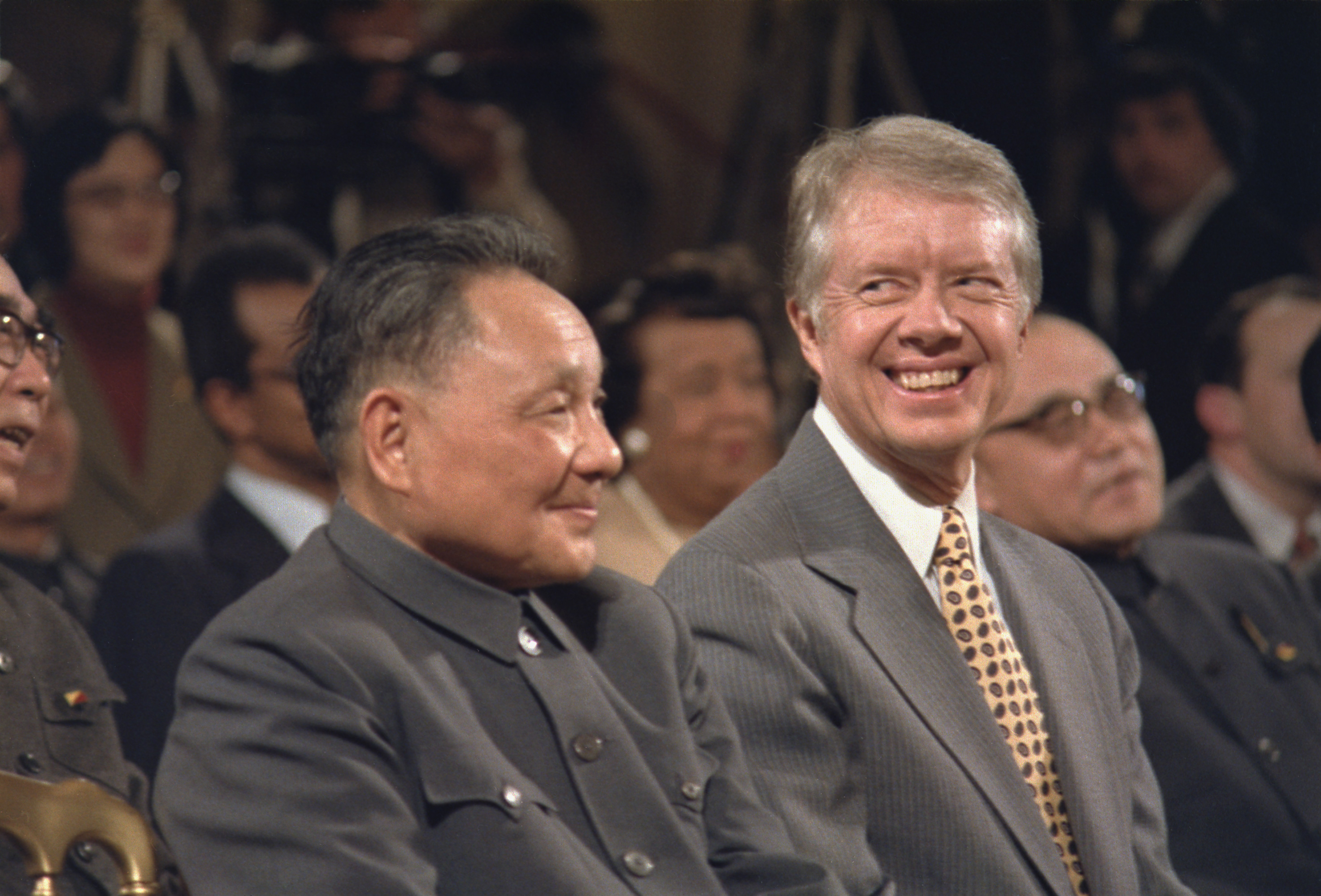
From late January to early February 1979, Deng Xiaoping visited the United States — the first official state visit to America by a Chinese leader since the normalization of relations. One detail in those nine days is worth noting: he made a point of going to see factories. In Atlanta, he toured a Ford automobile assembly plant, received at the factory gates by Ford executives, riding an electric cart along the entire assembly line. In Seattle, he walked through Boeing's final-assembly hall, where wide-body jets capable of carrying hundreds of passengers were taking shape. He also visited Coca-Cola's headquarters and the space center in Houston. That a national leader would devote a considerable portion of a state visit to touring other countries' factories and production lines speaks for itself about the direction of that particular "turn." That year, China–US bilateral trade stood at about US$2.45 billion — a figure that looks trivially small today.
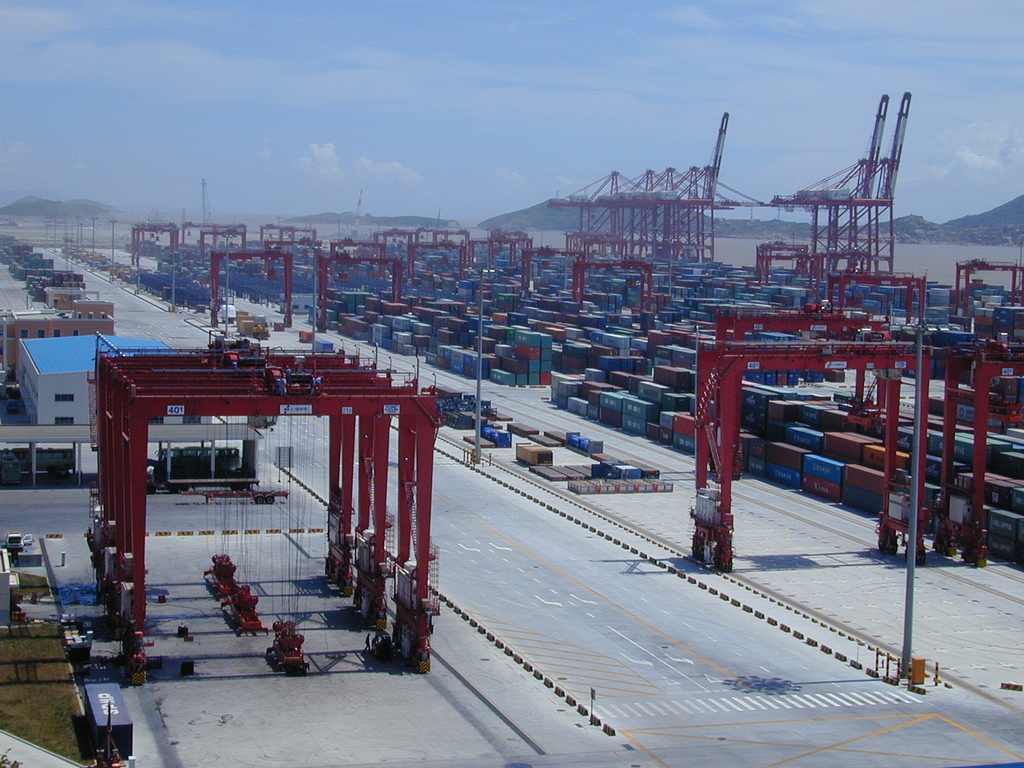
Now pull the lens back forty-eight years. In 2024, total China–US goods and services trade approached US$660 billion. China's manufacturing value-added accounted for roughly thirty percent of the global total, holding the world's top position uninterrupted for more than a decade. China is the only country in the world that possesses industrial capacity across every single category in the United Nations' industrial classification system. From US$2.45 billion to US$660 billion; from a country that needed to make a special trip to Boeing's assembly hall just to see how a large airliner was built, to a country that has forced global supply chains everywhere to recalculate their degree of dependence on it — the distance between those two points is precisely these forty-eight years.
Over those forty-eight years, the industrial relationship between China and the United States moved through a succession of stages: breaking the ice, joint-venture technology transfer, the spread of processing trade, deep integration into global supply chains, a trade war, and a technology war. If the arc of this story can be captured in a single sentence, it is: from "complementary symbiosis" to "competitive rebalancing."
By symbiosis I mean the relationship that prevailed from the 1980s and 1990s through the first decade of this century — the United States supplying capital, technology, orders, and markets; China supplying land, labor, production capacity, and speed. Both sides were getting from the other exactly what they most wanted and most lacked at that moment. This was not a matter of one side "getting the better deal"; it was a structural complementarity in which each party obtained what it needed. At that stage, expecting the United States to perform cheap mass assembly, or expecting China to conjure up chip design capabilities and global brands out of thin air, would have been unrealistic for either.
By rebalancing I mean what happened after 2010 — and especially after 2018 — when the premises on which this division of labor rested began to loosen. China was no longer content to remain an order-taker at the bottom of supply chains; it was moving toward higher value-added segments. The United States was no longer willing to continue ceding manufacturing capacity; it began deploying tariffs, export controls, and industrial subsidies in an effort to pull manufacturing back to its own soil and that of its allies. The complementary dimension was contracting; the competitive dimension was expanding.
But one judgment must be stated clearly upfront, and this article will return to it repeatedly: rebalancing is not the same as decoupling. Precisely in the years when "decoupling" was being proclaimed most loudly in the political and media sphere, China–US bilateral trade was in fact reaching new historical highs. An industrial division of labor built over nearly half a century — interlocked through countless orders and components — is far harder to actually dismantle than it is to announce in a declaration. Understanding this is the key to understanding the entire rebalancing process.
A word is needed about the frame of reference this article adopts. China–US relations is an enormous subject, touching on politics, diplomacy, military affairs, and ideology. This article does not pursue those dimensions; it focuses on one concrete thing: how, over forty-eight years, machines, orders, technology, and capital flowed back and forth across the Pacific — and how those flows were repeatedly redistributed. This is a history about factories. The choice of the factory as a vantage point is not only because it is concrete, but because beneath all grand narratives the things that best withstand scrutiny tend to be the most specific — which year, which company, where, what kind of factory was built, how many people it employed, what it made, and who it sold to.
The article unfolds across six eras: the ice-breaking and probing of 1979 to 1991; the eve of WTO accession, 1992 to 2001; the consolidation of "the world's factory," 2001 to 2008; the crisis and the beginnings of rebalancing, 2008 to 2017; the trade war and technology war, 2018 to 2022; and competitive rebalancing, 2023 to 2026. In every one of these eras, interaction, cooperation, mutual gain, and conflict all coexisted simultaneously; what varied was only the dominant note of each particular period.
One more preliminary clarification is needed: how this article uses four terms that are frequently conflated. "Interaction" refers to the mutual flow of machines, orders, people, technology, and capital — it is neutral, the medium through which everything else moves. "Cooperation" refers to a deliberate effort by both sides to build something together — a joint-venture factory, a supply chain, a trade agreement. "Mutual gain" is a phrase that requires care: it does not imply equal shares — in fact, what China and the United States each extracted from the relationship was never equal across these forty-eight years — but it does mean that for a long stretch both sides genuinely obtained positive returns of the kind each needed. "Conflict" refers to the various corrective actions taken by one side when it concluded that the costs of the arrangement had begun to outweigh the benefits — from anti-dumping investigations to tariff hikes to export controls. Keeping these four terms distinct is a way of guarding against a common misreading: the temptation to narrate forty-eight years as a simple story of "honeymoon turned sour." Reality was far more complex. Interaction never ceased; cooperation never fell to zero; the underlying logic of mutual gain still carries residual force today; and conflict, in fact, was present from the very first day, embedded in that annual review of Most-Favored-Nation (MFN) status. What changed over these forty-eight years was never whether these four things existed, but the proportions in which they were mixed.
Phase One (1979–1991): Breaking the Ice
A Joint-Venture Law of Just Fifteen Articles
For China in 1979, the first obstacle to attracting foreign capital was not money — it was a more fundamental question: once foreign capital entered China, what was it, legally? Who had jurisdiction over it? Could profits be repatriated, and if so how? What rules governed disputes? Before this moment, the People's Republic had never prepared any law for such a situation. Without an answer to these questions, no amount of goodwill could be turned into anything concrete — no serious multinational corporation would build a factory in a place where even "what this entity is in law" could not be clearly stated.
The answer came on July 1, 1979, when the Second Session of the Fifth National People's Congress passed the Law on Chinese-Foreign Equity Joint Ventures. The law ran to just fifteen articles — reading it today, it feels almost bare-bones — yet it accomplished something that had never been done before: it gave foreign capital a legal identity for entering China, one explicitly protected under Chinese law. It could not resolve every problem, but it conveyed a signal that admitted no misreading: this door had been opened in earnest, not as a feint.
The next thing to be resolved was space. In August 1980, the Standing Committee of the National People's Congress approved the Guangdong Special Economic Zone Regulations, giving formal legal authorization to four Special Economic Zones (SEZs): Shenzhen, Zhuhai, Shantou, and Xiamen. The significance of the SEZs lay in their function as "experimental fields" — policies that could not, or should not, be rolled out nationally all at once could first be tested within a designated, controllable area; if they worked, they could be extended; if they failed, the damage would be contained. A large share of the first wave of manufacturing capacity that China absorbed from the global shift in production would later settle precisely on these experimental fields; the story of Shenzhen's transformation from a border town into a manufacturing city begins here.
Then there was the channel. On July 7, 1979, China and the United States signed the Agreement on Trade Relations in Beijing; after completing their respective domestic procedures, the agreement entered into force in 1980. It granted China Most-Favored-Nation (MFN) status for exports to the United States — the prerequisite for Chinese goods to enter the American market at normal, non-discriminatory tariff rates. Without it, Chinese-made products would have been priced too high to sell in the United States.
But this MFN status came with a thorn embedded in it from the very first day. Under the Jackson-Vanik amendment to the United States Trade Act of 1974, MFN status for China was not a one-time grant of indefinite duration; it had to be proposed each year by the President and then reviewed by Congress for renewal. In other words, it was subject to annual review — each year carrying the possibility of being loaded with conditions or even revoked altogether. This thorn of annual review would repeatedly irritate the China–US economic relationship for the next twenty years. It was the earliest structural land mine buried inside the symbiotic relationship. The second phase of this article will examine in detail how it flared up year after year through the 1990s, and how it was finally defused around the year 2000.
The First Generation of Model Factories
With the legal framework, the physical space, and the market channel all in place, what remained was to actually build factories.
Throughout the 1980s, a series of China–US joint ventures and American-invested projects took root in China, most of which would go on to become the "first of their kind in China" within their respective industries.
The most closely watched was automobiles. In May 1983, Beijing Automobile Works signed a joint-venture contract with American Motors Corporation (AMC); in January 1984, Beijing Jeep Corporation, Ltd. formally opened for business, with registered capital of US$51.03 million and equity split roughly seventy-thirty between the Chinese and American sides. This was China's first complete-vehicle joint venture. An American automaker and a Chinese automaker manufacturing cars in the same factory under the same set of rules — for the Chinese automotive industry at the time, this was itself an instruction-dense course: the curriculum covered not only blueprints and equipment but also quality standards, supplier management, cost accounting, and an entire way of thinking about how modern mass production is organized. The joint-venture process was not without friction — there were numerous disagreements and back-and-forth negotiations over vehicle model selection, the pace of parts localization, and foreign-exchange balance — but it was precisely through this friction that China got its first close look at how a modern automobile plant actually operates.
In pharmaceuticals, in 1982 a Chinese pharmaceutical foreign-trade enterprise and Bristol-Myers Squibb of the United States formed the China–US Shanghai Squibb pharmaceutical joint venture — the first China–US pharmaceutical joint venture — establishing a modern factory in Shanghai that operated to international standards. In electronics and precision instruments, China Hewlett-Packard signed its joint-venture agreement in 1984 and was formally established in 1985, representing one of China's early flagship projects for introducing high-technology manufacturing and precision measurement instruments. The landmark in consumer goods was Coca-Cola: in December 1978, Coca-Cola signed an agreement with China's COFCO, becoming the first foreign consumer goods company to officially re-enter China after the opening of reform; in April 1981, a bottling plant in Beijing commenced production, installing China's first fully automated Coca-Cola filling line.
Then there was aviation. Even before the China–US relationship began to thaw in 1972, China had been purchasing Boeing aircraft; entering the 1980s, such procurement became routine — across the entire decade, China's civil aviation acquired more than one hundred Boeing aircraft, including the 737, 757, and 767. But the more interesting development ran in the other direction: in 1980, the Xi'an Aircraft Industrial Corporation began manufacturing machined components for the Boeing 747, marking the first time a Chinese aviation enterprise had supplied parts to Boeing. Simultaneously a major customer and a minor supplier — this dual role of "buying their complete aircraft while also making parts for them" would become a recurrent pattern in China–US industrial relations: the two countries' industries, very early on, were not in a simple buyer-seller relationship but were embedded in each other's production chains.
These projects varied widely in form — automobiles, pharmaceuticals, electronics, beverages, aviation components — but the logic behind all of them was identical: technology in exchange for market access, market access in exchange for technology. The Chinese side provided land, factory space, abundant and disciplined low-cost labor, and a potential market of one billion people; the American side provided brands, equipment, process standards, and modern management experience. Each party contributed what it had in order to obtain what it lacked. This is symbiosis in its most original, most elemental form.
And it is precisely here that a thread running beneath the surface of the entire article must be identified: at this stage, the role of the Chinese factory was that of an order-taker. What it took orders for were products already designed by others, standards already defined by others, orders and technical specifications given by others. There is no shame in this starting point — nearly every late-industrializing country begins the same way; postwar Japan and South Korea similarly began with imitation and contract manufacturing. But keeping this starting point in mind matters, because the other main thread of this forty-eight-year story is precisely how Chinese factories spent the following decades moving, step by step, out and upward from the position of order-taker.
Beyond these joint-venture model factories, these "visible star projects," something else was quietly unfolding in 1980s Guangdong — a far less conspicuous experiment that would prove far more consequential. From the very beginning of reform and opening-up, places like Dongguan began taking on the "three forms of processing plus compensation trade" model brought in by Hong Kong manufacturers — consigned processing, sample-based processing, assembly of supplied components, and compensation trade. The arrangement was strikingly plain: the Hong Kong manufacturer (and behind many of these Hong Kong manufacturers stood orders ultimately sourced for overseas markets such as the United States) provided raw materials, equipment, and samples; the mainland provided factory space and labor; and payment was settled by the piece as a processing fee. There was no formal legal standing of the kind conferred by the joint-venture law, no halo of a multinational corporation — only rented factory buildings, rows of sewing machines and stamping presses, and a workforce that had recently put down its farm tools. But it was precisely this model's extremely low entry barrier and extreme ease of replication that gave the Pearl River Delta townships their first large-scale, hands-on exposure to the business of "producing for distant overseas markets." It was the true origin of the vast processing-trade system that China would later build, and the earliest, still-rough embryo of "the world's factory."
The Exploratory Period: Fast Growth, but Everything Still Very Small
To summarize this phase: its defining keyword is "exploration."
In July 1986, China formally submitted its application to the General Agreement on Tariffs and Trade (GATT), requesting the resumption of its GATT contracting-party status — launching the long-distance race that would later be called "resuming China's GATT contracting-party status," and still later metamorphose into "WTO accession." The following year, China submitted a memorandum to GATT on its foreign trade regime, and a working party was duly established. At the time, probably no one foresaw that this race would take a full fifteen years to complete.
Trade volumes were growing rapidly, but the starting base must be kept in perspective: China–US bilateral trade was about US$2.45 billion in 1979, rising to about US$8.26 billion in 1988, and breaking the US$12 billion mark in 1989. Growth of several multiples over a decade, with a respectable average annual rate — yet the absolute scale remained small, and the structure was extremely narrow. China's exports to the United States in this period were dominated by textiles, garments, and various light industrial products: classic low value-added goods competing on the basis of labor cost. China was nothing remotely like "the world's factory"; it was merely a new participant that had just opened its door, still offering only rudimentary products.
This "rudimentary" character was also expressed in a profound asymmetry. China–US industrial interaction in the 1980s was unequal in nearly every dimension: the American side brought capital, technology, brands, and mature market channels; the Chinese side brought land, labor, and policy incentives. The Americans sent engineers and managers; the Chinese side provided learners and operators. Pricing power, the power to set standards, and the power to choose technical directions all rested almost entirely on the American side. This asymmetry was reasonable at the time, and accepted by both parties — it was simply the reality of a late-developing country at the outset of industrialization. But the reason this article returns to it repeatedly is that the most fundamental tension driving the entire forty-eight-year story flows precisely from the "gradual loosening" of this asymmetry: every step a Chinese factory moved up the value chain rewrote that asymmetry by a measure, and every rewriting provoked a corresponding reaction on the other side. Understanding the asymmetry at the starting point is the only way to understand the true origins of every conflict that follows.
The most essential characteristic of this phase was that both sides were proceeding cautiously, probing each other: how far would this door really open? How far could this cooperation actually go? Was the other side trustworthy — could their policies change without warning? To probe, rather than to commit fully. In the late 1980s and early 1990s, the China–US relationship went through a difficult period; some official exchanges and technology-cooperation programs were curtailed, and the annual renewal of MFN status became the subject of heated debate in the United States Congress.
Yet one detail deserves to be set down here: even during those most strained moments, the joint-venture factories already established were mostly continuing to operate, and bilateral trade volumes continued to grow. The track of industrial cooperation demonstrated, against the backdrop of severe political turbulence, a remarkably tenacious capacity for self-sustaining momentum — a factory already built would not shut down because of a news story; an order already signed would not be cancelled because of a diplomatic incident. This characteristic — the inertia of commerce, which often outweighs the friction of politics — would recur throughout the forty-eight years ahead; it is a form of inherent resilience within the symbiotic relationship. And it is precisely why, when this article reaches the final era and this resilience faces its first truly serious test, we will recognize how extraordinary that turning point was.
Phase Two (1992–2001): On the Eve of WTO Accession
After the Southern Tour Speeches: A Second Round of Opening-Up, at Far Greater Scale
The opening-up of the 1980s was an act of "exploration"; the opening-up of the 1990s was one of "acceleration." The turning point that separates these two periods is Deng Xiaoping's Southern Tour speeches of early 1992.
From January to February 1992, Deng Xiaoping successively visited Wuchang, Shenzhen, Zhuhai, and Shanghai, delivering a series of speeches along the way. Those speeches answered a question that had been fiercely debated at the time — and that had left many foreign investors on the sidelines feeling deeply uncertain: did running a market economy and operating special economic zones belong to "socialism" or to "capitalism"? Deng Xiaoping's answer was unambiguous — a market economy does not equal capitalism, the path taken by the special economic zones is correct, and it should continue and indeed accelerate. For the outside world, and especially for the multinational corporations still hesitating at the door, this was an unmistakable signal: China's opening-up would not reverse course, and it was about to pick up speed.
Foreign capital that entered China after the Southern Tour speeches differed from that of the 1980s in three immediately visible ways: the scale was larger, the technological content was higher, and wholly foreign-owned enterprises began to appear.
Motorola's Tianjin factory is emblematic of this shift. In 1992, Motorola completed its investment registration in the Tianjin Economic-Technological Development Area with State Council approval, with an initial investment of US$120 million — it is widely regarded as the first large high-technology multinational to enter China as a wholly foreign-owned enterprise. Those two words — "wholly foreign-owned" — carry enormous weight. In the 1980s, foreign capital entering China did so primarily through joint ventures, with the foreign party required to find a Chinese partner and share its technology and management openly. Motorola's Tianjin factory set a precedent for wholly foreign-owned manufacturing: the foreign party could call all the shots. By the end of 1995, Motorola had invested a further nearly US$1 billion to build a semiconductor factory in Tianjin. Throughout the 1990s, Motorola's Tianjin base served as a benchmark for China's electronics industry — many Chinese electronics engineers, production-line supervisors, and quality managers received their first systematic training in "modern manufacturing" there, and they later carried those methods and standards to other enterprises.
The automotive sector's representative is Shanghai GM. In June 1997, Shanghai Automotive Industry Corporation and General Motors each took a 50% stake to establish Shanghai General Motors Co., Ltd.; in December 1998, the first Buick sedan rolled off the line in Jinqiao, Pudong. From breaking ground to the first car — only twenty-three months. That speed set a record in China's automotive industry at the time, and it spoke for itself: after the joint-venture apprenticeships of the 1980s, typified by Beijing Jeep, China had accumulated considerable engineering and organizational capacity and was now able to build and commission a modern integrated vehicle factory at a remarkably fast pace. The apprentice was becoming a journeyman.
American capital entering China during this period covered a far wider range of sectors than in the 1980s. Beyond industrial projects such as Motorola and Shanghai GM, a large number of American consumer brands completed their China establishment and plant construction during these ten years — personal-care products, food, and restaurant chains moved production and operations into China. What they brought was not only products but an entire suite of things previously unfamiliar in China: modern brand management, standardized chain operations, regulated supplier systems, and systematic market and consumer research. A frequently overlooked fact is that many of the professional managers who later underpinned China's domestic manufacturing and consumer industries completed their professional "first schooling" at these foreign-invested enterprises in the 1990s, before taking that methodology into Chinese companies of their own. The inflow of capital was visible; the "software" that flowed in alongside it — management methods, operating standards — left a far more lasting imprint.
Processing Trade: Connecting China's Factories, One by One, to the Global System
If joint-venture projects were "the visible stars" of China–US industrial interaction in the 1990s, what truly reshaped Chinese manufacturing in terms of sheer numbers was a humbler and less conspicuous model — processing trade.
Processing trade takes two forms. The first is consigned processing: an overseas principal ships raw materials, components, or even equipment into China; the Chinese factory handles only the manufacturing; the finished goods are shipped entirely back to the overseas principal; and the factory earns a processing fee. The second is import-and-process trade: the factory uses its own foreign exchange to import raw materials and intermediate goods, processes them into finished products, and then exports them — retaining the right to sell to any buyer it chooses, with greater flexibility. Taken together, both forms share a defining characteristic: the raw materials and the market are both "outside," and China contributes only the middle step of production.
The pace at which this model expanded in the 1990s was striking. Processing trade's share of China's total foreign trade volume climbed from 6.0% in 1981 all the way up, reaching a peak of 53.4% in 1998 — meaning that in that year, more than half of China's entire foreign trade consisted of processing trade.
To appreciate the weight of that figure, one must first understand what processing trade meant to an ordinary Chinese factory. It lowered the threshold for entering the global manufacturing network to an extreme minimum: a factory needed no brand of its own, no product design capability, no overseas sales channel, and did not even need to understand international market conditions — it only needed to do one thing well: take in someone else's work and do it fast, cheaply, consistently, and on time. These requirements were demanding, but they were clear, learnable, and had unambiguous standards. And so, in China's coastal regions — especially the Pearl River Delta and the Yangtze River Delta — tens of thousands of such factories emerged over a decade: electronics and toy factories in Dongguan, home-appliance factories in Shunde, small-commodities factories in Wenzhou and Taizhou, textile and component factories in southern Jiangsu.
One phenomenon deserves particular emphasis here, because its influence on Chinese manufacturing has been extraordinarily far-reaching: the formation of industrial belts. The factories engaged in processing trade were never spread evenly across the country; from the very beginning they clustered with extraordinary density in certain specific townships and counties. A single township might concentrate hundreds or thousands of factories all making the same category of product — sweater townships, sock townships, lighter townships, hardware townships, lighting-fixture townships. This clustering began simply as a way to share ports, skilled workers, and merchant networks, but once it reached a certain critical mass, a qualitative change occurred: upstream suppliers of raw materials, dies, and components were drawn in; downstream logistics, testing, and foreign-trade services grew up around them; and a highly specialized, extremely short-cycle, fast-responding local industrial ecosystem took shape. Within a mature industrial belt, a single order could often find all its required inputs within a radius of just a few kilometers. This "industrial belt" mode of organization is one of the deep secrets behind China's manufacturing efficiency, and one of the fundamental reasons why the outside world later found it "very difficult to relocate supply chains wholesale" — because what would have to be moved was never just a single factory, but an entire network that had been growing for decades.
This township-scale, highly specialized industrial belt is the truest unit of granularity for observing Chinese manufacturing. Tianxia Gongchang Industry Research conducts its industry studies precisely at the level of the industrial belt — not starting from the abstract phrase "Chinese manufacturing," but descending to specific specialized townships: what each one makes, how many factories it has drawn together, whether its chain is complete. Even today, China still has thousands of such specialized townships, each of them a compressed history of an industry.
This was the embryonic form of "the world's factory." It was also the ultimate expression of the order-taker role — Chinese factories sitting at the very bottom of the smile curve of the value chain, earning processing fees. On a finished electronic product destined for export, the share of its final retail price that truly belonged to China might have been only a single-digit percentage, with the remainder accruing to design, chips, brand, and distribution.
But this deserves an honest assessment. For China at the time, what processing trade yielded was far more than those processing fees. It yielded several things invisible in customs statistics yet far more valuable than the fees themselves: tens of millions of industrial jobs; a whole generation of factory workers and frontline managers trained through live experience; familiarity with global quality standards and delivery discipline; and — most crucially — a domestic supply-chain network that was quietly being woven ever denser. As countless small factories doing subcontracting work clustered together geographically, they also began supplying and contracting with one another, and a local industrial ecosystem of components, tooling, raw materials, and logistics grew up from within. That network was the foundation that later allowed Chinese manufacturing to "catch itself" — to no longer depend on imports for everything. Processing fees could be spent; the network could not.
On the American side, the processing-trade model was equally advantageous. American companies outsourced the lowest-margin, most laborious, and most labor-intensive manufacturing steps, retaining design, brand, marketing, and finance — the high-value-added segments — for themselves, producing cleaner financial results. American consumers, meanwhile, received everyday goods whose prices kept falling. At this stage, it was genuinely a transaction both sides were satisfied with — it was the most typical manifestation of the symbiotic relationship.
Most-Favored-Nation Status: An Annual Battle That Went On for Ten Years
But beneath the surface of symbiosis, the thorn planted in the first phase was still there.
Throughout the 1990s, the annual review of China's Most-Favored-Nation (MFN) status in the United States was a hard fight in Congress every single year. Those opposed to renewal would invoke any number of grounds to demand conditions, to demand linkage, or simply to call for outright revocation. This meant that every factory in China dependent on exports to the United States, and every American company that had moved its manufacturing to China, was compelled year after year to endure a suspense that reset on an annual cycle: would this year's shipments still be able to get through next year? That uncertainty hung over the entire processing-trade system like a sword.
The turning point came in the mid-1990s. For a year or two before that, the United States had at one point formally "linked" MFN status to a set of conditions; but in 1994, the U.S. government announced that it would "delink" the two — continuing to grant China MFN status without the prior conditions attached. The logic behind that decision was entirely pragmatic: by the mid-1990s, American business's dependence on the Chinese market and on Chinese manufacturing had grown heavy enough to influence the direction of U.S. China policy. Severing trade would hurt not only China but directly harm American companies and consumers as well. This was the first moment the symbiotic relationship clearly demonstrated that the mutual dependence it had generated was itself a stabilizing force — both parties were bound by the same set of interests, and neither could easily or willingly overturn the table unilaterally.
But "delinking" only meant removing the conditions; the annual review procedure itself remained, and the underlying uncertainty had not truly been eliminated. To pull out this thorn once and for all required a permanent institutional arrangement — and that was Permanent Normal Trade Relations (PNTR). In 2000, the U.S. Congress completed the relevant legislation: in May, the House of Representatives passed it 237 to 197 — a margin that was not comfortable; opponents were close to half, indicating how fierce the political contest had been; in September, the Senate passed it 83 to 15; in October, the President signed it into law.
But PNTR carried one condition: it would only take effect after China formally joined the World Trade Organization (WTO). And so all eyes turned to the accession negotiations that had already been running for more than a decade.
From GATT Contracting-Party Status to WTO Accession: The Final Lap of a Fifteen-Year Race
Counted from the 1986 application for resuming China's GATT contracting-party status through to formal WTO accession in 2001, this race ran for fifteen years. Its most arduous and most decisive final lap was the China–US bilateral negotiations from 1999 to 2001.
In April 1999, then–Premier Zhu Rongji visited the United States. The WTO accession negotiations during that visit hit an impasse at one point and no agreement was reached on the spot; the process involved considerable turbulence, and the atmosphere in the talks grew quite tense at times. In May of the same year, the Chinese Embassy in the Federal Republic of Yugoslavia was bombed by the U.S. side, and under the impact of that event the negotiations were suspended for several months. It was not until November of that year that the Chinese and U.S. delegations resumed and concluded the final round of negotiations in Beijing — on November 15, 1999, the two sides formally signed the Bilateral Agreement between China and the United States on China's Accession to the World Trade Organization.
This was the most critical and most difficult threshold on China's road to WTO accession. The United States was the world's largest economy; once the China–US bilateral agreement was concluded, China's negotiations with the other major members followed in succession. On November 10, 2001, the Fourth WTO Ministerial Conference in Doha, Qatar, approved China's accession to the WTO; on December 11, 2001, China formally became the 143rd member of the World Trade Organization (WTO).
This phase ended at the close of 2001.
It is worth pausing to consider the true significance of that moment. Over the preceding twenty years — from the joint-venture model factories of the 1980s to the tens of thousands of processing-trade factories and the flood of foreign-invested projects that spread through the 1990s — China had in fact accumulated enormous manufacturing capacity that was ready to scale at any time. Yet that capacity had always been overshadowed by a layer of institutional uncertainty: exports to the United States depended on MFN status renewed year by year, market access lacked stable expectations, and trade disputes had no rule-based resolution channel. The productive capacity was real; the institutional environment was virtual, unstable, prone to shift.
WTO accession did one thing: it swept away that layer of uncertainty in a single stroke. It gave Chinese manufacturing a stable, predictable global market with clear rule-based guarantees. For a factory owner, this meant that he could finally, with confidence, go borrow money, buy land, add equipment, and take on orders running three or five years out — because the rules of the game would no longer change every year. A door was about to open. The capacity that had been accumulating for twenty years, waiting on the other side of that door, was about to be released in an explosion of an entirely different order of magnitude. And that is the story of the next era.
Phase Three (2001–2008): The World's Factory Takes Shape
The WTO Dividend: Export Growth Goes Exponential
What happened after December 11, 2001 can be summed up in a single word: amplification.
What WTO accession cleared away was primarily institutional barriers. China gained at a stroke stable market access, predictable tariff levels, and a rule-based dispute-resolution mechanism. For a factory owner deliberating "should I expand capacity, dare I take long-term orders, is it worth adding another production line," this very "predictability" was itself the most important investment condition — it removed the fear of sudden policy reversals that had been lodged in every entrepreneur's mind.
And so exports began growing exponentially. From 2001 to 2008, China's nominal export growth averaged close to 27% per year — nearly twice the rate of the 1990s; from 2000 to 2008, China's total export volume roughly quadrupled.
Looking at this growth sector by sector makes it more concrete and tangible. From 2001 to 2007, China's textile, apparel, and furniture exports grew by about 220%; metal-products exports grew by about 630%; in the "telephone equipment" category alone, U.S. imports from China rose from about US$12 billion in 2001 to about US$55 billion in 2007. Behind these numbers lay factories expanding, production lines running additional shifts, and successive cohorts of rural laborers moving to cities and becoming industrial workers.
If one pulls the lens back from statistics to the ground level, "the world's factory" in this era had a very concrete appearance. It was cities like Dongguan, Kunshan, and Suzhou doubling in size within a decade; it was row upon row of standardized factory buildings rising in industrial parks; it was the hundreds of millions of migrants who crowded train stations during the Spring Festival travel rush; it was one formerly obscure county after another becoming a "global leader" in a specific product — a significant share of the world's supply of some small commodity, some home appliance, some component came from one particular place in China. This density and concentration of productive capacity had no precedent in the history of human industry. Its costs were real — long working hours, thin profit margins, considerable environmental pressure — but its achievements were equally real: within the span of a single generation, it brought hundreds of millions of people out of an agrarian society and into an industrial one. This is the full weight of the order-taker role at the height of its power.
Two milestone figures — though they fell just after 2008 — were the direct result of the high-speed accumulation of this period: in 2009, China overtook Germany to become the world's largest merchandise exporter; in 2010, China's manufacturing value-added surpassed that of the United States, making China the world's largest manufacturing nation, accounting for approximately 18% of global manufacturing value-added in that year.
A comparison is instructive. In 1979, Deng Xiaoping had to make a special trip to visit Boeing's factory floor to "see for himself" how aircraft were made; a mere thirty years later, in 2010, China had become the planet's largest manufacturing economy by output. In between lay precisely this post-accession round of explosive amplification. That speed is rare in the history of world industry.
Special Focus: Inside a Mobile Phone, the Division of Labor of an Entire Era
To truly understand the nature of China–US industrial division of labor in this era, the best specimen is a mobile phone.
On January 9, 2007, Apple unveiled the first-generation iPhone; at the end of June of the same year, the iPhone went on sale. On the back of that phone, a line of small text would later read: Designed by Apple in California, Assembled in China.
That line of text can serve almost as the motto of China–US industrial relations in this era.
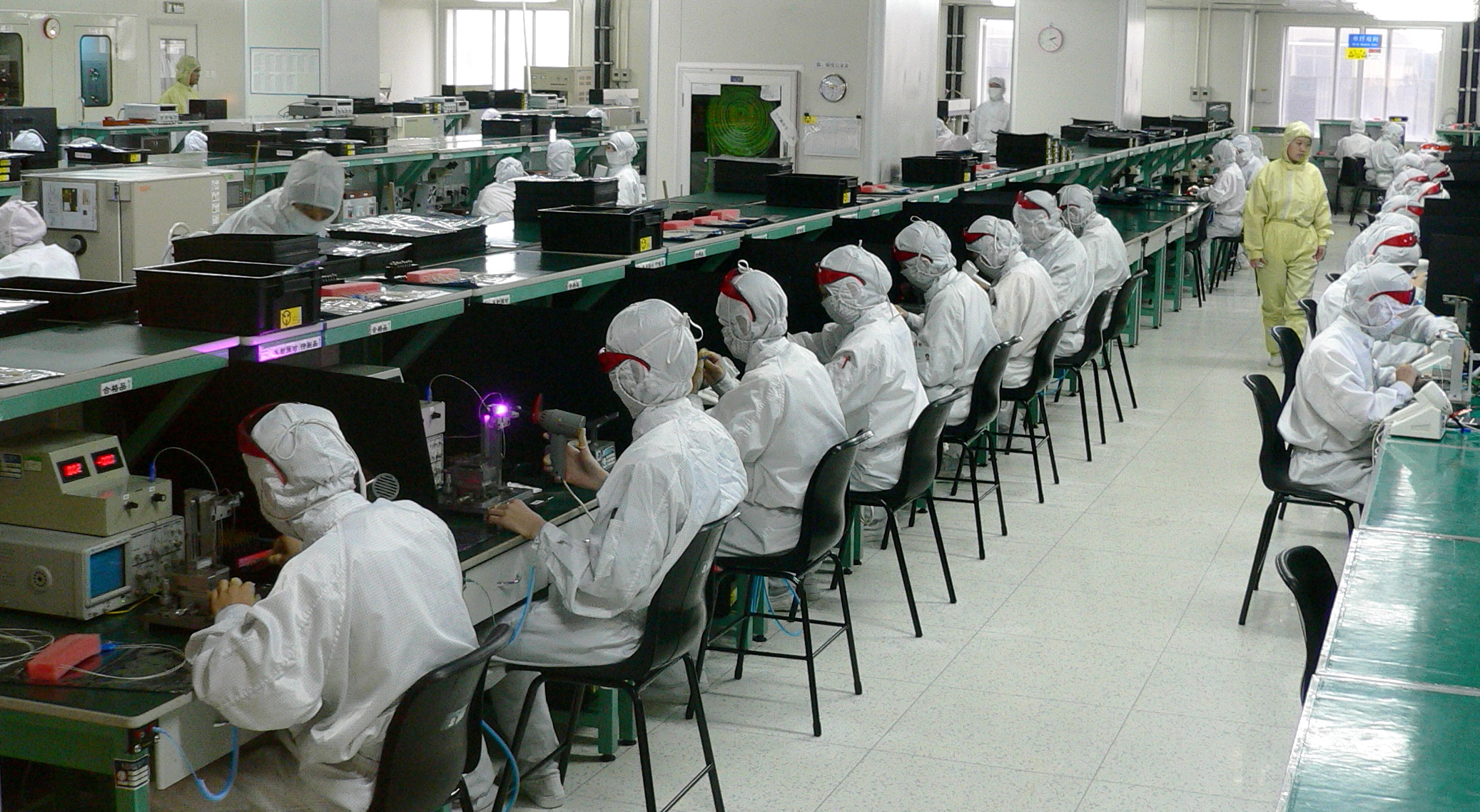
The "Assembled in China" end of it happened primarily at Foxconn's Longhua campus in Shenzhen — an enclosed, near-self-contained walled complex, with dormitories, canteens, a hospital, and a full range of living facilities, with a workforce numbering in the hundreds of thousands at peak. A frequently cited anecdote captures the character of this productive capacity: on one occasion when Apple changed a design shortly before launch and urgently pressed for delivery, Foxconn summoned more than a thousand workers who had already gone off-shift back from their dormitories in the middle of the night, issued each a simple meal, and set them to work in shifts around the clock; within just a few days, the factory's daily output had climbed to more than 10,000 units. That scale, that speed, that near-military organizational discipline — there were very few other places in the world at the time that could replicate it. It was the sharpest competitive edge of Chinese manufacturing at that stage.
But when this division of labor is disaggregated to examine the distribution of profit, the picture is deeply asymmetric. On the American side: chip architecture, operating system, industrial design, brand, retail channel — these captured the overwhelming share of profit. On the Chinese side: assembly, capacity, scale, speed, discipline — what it captured was the processing fee. Multiple studies into the value composition of the iPhone point to the same conclusion: of a handset assembled in China and ultimately priced at several hundred dollars, the share that remained in China as "assembly value-added" was typically only a very small slice, often a single-digit percentage.
This is the complete portrait of the order-taker role in this era: what Chinese factories took on was the thinnest-margin, most arduous, yet simultaneously the most scale- and organization-intensive segment of the entire value chain. It was not glamorous — but it was real, and — this point matters — it was also useful: it was precisely through repeatedly executing these high-intensity, high-standard orders that Chinese factories trained "making things at large scale, at high tempo, under strict quality control" into muscle memory.
A comparable division of labor appeared not only in mobile phones. Walmart is another specimen. The American retail giant sourced approximately US$15 billion in goods from China in 2002, rising to approximately US$22 billion by 2005. A widely circulated observation holds that if Walmart were treated as an economy in its own right, its purchasing volume alone would make it one of China's top trading partners. Walmart's famous "Everyday Low Prices" had as their physical foundation the productive capacity of tens of thousands of Chinese factories and their ruthlessly compressed costs.
Chimerica: The Apex of the Symbiotic Relationship
Around 2007, two scholars — historian Niall Ferguson and economist Moritz Schularick — coined a new word to describe this relationship, which had grown so deep as to be nearly inseparable: Chimerica, formed by combining "China" and "America."
What they described was a highly complementary, gear-and-cog symbiotic economy: China produced, saved, and exported, channeling the large foreign-exchange reserves it earned through exports into purchasing U.S. Treasuries and other dollar-denominated assets; the United States consumed, borrowed, and imported, enjoying low interest rates and low inflation as a result. One side's excess savings precisely filled the other side's excess consumption; one side's endless stream of cheap productive capacity precisely met the other side's vigorous demand. The two economies were locked tightly together by a great circular flow of capital and goods spanning the Pacific.
This is the peak description of the symbiotic relationship. At this stage, on the surface, almost everyone was a winner: American consumers received cheap goods and persistently suppressed inflation; American companies outsourced manufacturing and focused on higher-margin segments, generating impressive financial results and rising stock prices; China, meanwhile, gained hundreds of millions of industrial jobs, massive foreign-exchange reserves, a continuous flow of technology spillovers and managerial experience, and — most importantly — a set of industrial organizational capabilities hammered into shape through real orders.
It is worth rendering this "mutual gain" more concretely, because it is too often simplified or even dismissed entirely in retrospective debates. For an ordinary American family, the era of symbiosis meant that over a span of twenty years, the prices of televisions, clothing, furniture, toys, and tools kept falling relative to their income — they may not have been aware that Chinese factories were behind this, but it genuinely and tangibly improved their lives. For a young person from a rural inland province in China, the era of symbiosis meant that he could board a green train to the Pearl River Delta or the Yangtze River Delta, enter a factory, and earn a wage that was simply unattainable back home — and the fates of many, many families were thereby rewritten. For a coastal county in China, the era of symbiosis meant that over twenty years it grew from a stretch of farmland into an industrial township with industries, tax revenue, schools, and hospitals. Mutual gain was never an abstract conclusion to be mouthed; it was assembled, point by point, from the concrete lives of hundreds of millions of people over decades. And precisely because it was so concrete, so deeply embedded in the everyday fabric of ordinary people's lives in both countries, those who later genuinely sought "rebalancing" or even "decoupling" would find that the practical resistance was immense — what they were trying to change was not a contract on paper, but a way of life that hundreds of millions of people had grown accustomed to.
But one detail here deserves attention. The reason Ferguson and his collaborator chose the word "Chimerica" is that it conceals another word — chimera, the creature of Greek mythology assembled from the body parts of a lion, a goat, and a serpent. That choice of word was itself a sober reminder: a symbiotic entity assembled from "one side's excess savings" and "the other side's excess consumption" may appear powerful, but it is not necessarily stable and may not be able to sustain itself indefinitely. A peak, more often than not, also signals that what comes next is a descent.
Beneath the Apex, Three Mines Already Laid
The very apex of symbiosis was also exactly where tensions began to accumulate in quantity. In this era of outward prosperity, at least three mines had been quietly laid.
The first mine was the trade deficit. By U.S. measurement, the U.S. goods trade deficit with China expanded from about US$83.1 billion in 2001 all the way to about US$268 billion in 2008 — more than tripling in seven years. Whether a trade deficit truly equates to "getting the short end of the stick" is a question economists have long debated: to a considerable degree it is simply a reflection of the global division of labor and of the United States' own low-saving, high-consumption structure. But at the level of politics and public opinion, a deficit that was large in absolute terms and grew larger every year was almost inevitably bound to become a topic invoked repeatedly — a ready-made "target."
The second mine was manufacturing employment. A series of studies later conducted by economists Autor, Dorn, and Hanson — known as "the China Shock" — provided quantitative estimates of the damage. Their 2013 paper estimated that between 2000 and 2007, import competition from China caused U.S. manufacturing employment to fall by about 980,000 jobs; their 2016 follow-up study broadened the scope further, estimating that between 1999 and 2011, once the cascading and spillover effects on local economies were included, total associated job losses reached about 2.4 million. It should be noted that these studies were published in 2013 and 2016, but what they described and traced was precisely the era of peak symbiosis. The loss of American manufacturing jobs was a real phenomenon — however much debate persists among economists over how much of it should be attributed to trade with China versus automation and technological change itself — but the simple and powerful narrative that "China stole the jobs of American workers" was accumulating, during these very years, the energy that would later prove sufficient to reshape American politics.
The third mine was the exchange rate. In July 2005, China launched a reform of the renminbi exchange-rate formation mechanism, abandoning the long-standing peg to the U.S. dollar fixed at 8.28, allowing a one-time appreciation of 2.1% to 8.11, and shifting to a managed float with reference to a basket of currencies. Even so, "whether the renminbi exchange rate was artificially undervalued, thereby effectively subsidizing Chinese exports" remained a point of contention repeatedly raised in U.S. political circles for years afterward.
Beyond these three mines, one further phenomenon deserves a dedicated note. In 2001, the mid-air collision over the South China Sea occurred, representing a moment of considerable tension in bilateral relations at the time. Yet, strikingly, it barely disturbed the economic and trade track — in that same year, China proceeded as normal to complete its WTO accession, and China–US bilateral trade continued to expand as normal. In this era, trade and economics on one hand, and politics and military affairs on the other, ran as two tracks that operated almost entirely independently of each other: political tensions could escalate to the point of drawing swords, and business would still be transacted, deal by deal.
This characteristic of "the two parallel tracks" was an unspoken premise of the entire era of symbiosis. Remember it — because one of the most profound changes in the rebalancing that this article will go on to describe is precisely that these two tracks, which had once run without interfering with each other, began to intersect, and ultimately became tightly intertwined.
Phase Four (2008–2017): Crisis and the Onset of Rebalancing
The Financial Crisis: The First Stress Test of the Symbiotic Relationship
If "Chimerica" represented the apex of the symbiotic relationship, it was the financial crisis of 2008 that pushed it off that peak.
On September 15, 2008, the major American investment bank Lehman Brothers filed for bankruptcy protection. The crisis spread rapidly from the US financial system to the global real economy: credit tightened, demand contracted, and external demand collapsed without warning. For a Chinese manufacturing sector in which more than half of all foreign trade was processing trade and whose exports were heavily dependent on European and American markets, this was the first genuine cold blast since WTO accession. From late 2008 through early 2009, export-oriented factories along China's coast suffered steep drops in orders; the Pearl River Delta saw waves of factory shutdowns and workers returning to their home provinces. "The world's factory" tasted for the first time what it meant to "catch a fever when the world catches a cold" — concentrating productive capacity on someone else's market was itself a form of risk exposure.
China's response was the four-trillion-yuan stimulus package launched in November 2008. The funds were directed primarily toward infrastructure construction, post-earthquake reconstruction, and affordable housing; complementing it was a massive expansion of new bank lending in 2009, with the volume of new loans almost doubling from the previous year. The result was a pronounced V-shaped recovery: China's GDP grew 9.2% in 2009. In those years, China not only stabilized itself but became one of the principal engines pulling the global economy out of recession, while simultaneously absorbing a substantial share of its own industrial capacity — capacity originally oriented toward exports — through large-scale domestic infrastructure investment. Steel, cement, and construction machinery all found new destinations.
Yet the four-trillion-yuan stimulus also left a legacy that had to be confronted honestly. The production capacity generated by a large-scale stimulus does not simply vanish once the crisis passes. In steel, cement, flat glass, electrolytic aluminum, and later other sectors, "overcapacity" became a recurring keyword in China's economy for years afterward. This problem, which originally belonged to China's domestic macroeconomic management, would eventually be grafted onto the external narrative of China–US relations in a way that no one at the time anticipated. When China, in order to absorb that excess capacity and find new demand outlets for it, turned increasingly toward overseas markets, the phrase "overcapacity" was picked up by the other side and converted into a ready-made pretext for trade friction. This subplot would not fully surface until the sixth phase of this article, but its seeds were planted in the great stimulus of the post-2008 years.
The truly far-reaching impact of the financial crisis, however, lay not in any of these headline numbers but in the way it changed how both China and the United States viewed manufacturing itself.
In the aftermath of the crisis, US unemployment remained elevated for a prolonged period, and manufacturing accounted for a conspicuously large share of the jobs that had been lost. A question that had been widely ignored during the peak of the symbiotic era was put squarely back on the table by the crisis: when a country offshores its manufacturing capacity on a massive scale, does it simultaneously forfeit, in times of economic downturn, an important reservoir of employment and a stabilizing ballast for society? The costs of "manufacturing hollowing-out" were discussed seriously, broadly, and with a sense of felt pain for the first time.
And it was from this point that the process of rebalancing entered the stage — occurring on both the China side and the US side at nearly the same time, but in precisely opposite directions.
The United States Wants to Bring Manufacturing Back
The rebalancing on the American side was an effort to bring manufacturing back.
After 2009, the US government rolled out a series of policies aimed at revitalizing manufacturing. In 2011 it launched the Advanced Manufacturing Partnership, bringing together government, business, and universities to focus on capital-intensive advanced manufacturing sectors such as artificial intelligence, semiconductors, and new materials; in 2012 it announced the National Network for Manufacturing Innovation, planning to establish a network of manufacturing innovation institutes across the country, a framework that was later codified in dedicated legislation. During this period the United States also released a succession of strategic documents, including "Ensuring American Leadership in Advanced Manufacturing." "Reindustrialization" became a high-frequency word in US economic policy for those years.
This round of effort produced some results: US manufacturing value-added recovered to about US$1.91 trillion around 2016, returning to its pre-financial-crisis level. But one detail carries a pointed significance — the output came back, yet employment did not recover in step. The American manufacturing sector that grew again was a more automated sector, more dependent on capital and technology inputs, employing fewer workers per unit of output. This in fact foreshadowed a deep structural tension that would recur repeatedly: bringing "manufacturing output" back to the United States and bringing "manufacturing jobs" back to the United States are two tasks of entirely different orders of difficulty — and it is the latter that carries genuine political energy.
Whatever the precise results of this particular round of effort, its true significance was this: for the first time, the United States systematically deployed the instruments of national policy to take seriously the proposition of "getting manufacturing back." The comfortable mind-set of the symbiotic era — content to offshore production and focus on design and finance at home — began to loosen from this point forward.
China Wants to Move Up the Smile Curve
The rebalancing on China's side pointed in exactly the opposite direction: China was no longer content to sit at the very bottom of the smile curve.
After a full three decades as an order-taker, China's manufacturing sector had accumulated scale, supply-chain depth, engineering capability, and a growing sense of dissatisfaction — an unwillingness to earn only the thin margin of processing fees while leaving design, brand, and profit, the most lucrative segments of the chain, entirely to others. "Industrial upgrading" thus became the most central concept in Chinese industrial policy during this period.
In 2010 China issued its decision on accelerating the cultivation and development of strategic emerging industries, designating seven sectors: energy-conservation and environmental protection, next-generation information technology, biotechnology, high-end equipment manufacturing, new energy, new materials, and new-energy vehicles, with the goal of raising the share of strategic emerging industries in GDP to 15% by 2020. This list deserves particular attention — new energy, new-energy vehicles, and new materials appear prominently in it. The industries that would put Chinese manufacturing in the global spotlight more than a decade later have their policy origins written clearly in that 2010 document.
In May 2015, Made in China 2025 was issued. The document designated ten priority sectors: next-generation information technology; high-end numerically controlled machine tools and robotics; aerospace equipment; marine engineering equipment and high-technology vessels; advanced rail transportation equipment; energy-conservation and new-energy vehicles; power equipment; agricultural machinery equipment; new materials; and biopharmaceuticals and high-performance medical devices. It proposed a "three-step" strategic goal, the first step being to join the ranks of "manufacturing powers" by 2025.
Made in China 2025 was a characteristic industrial-policy document, and the core message it sought to convey was in fact a single one: China no longer wished to be only an order-taker; it intended to possess its own core technologies, its own brands, and its own position in the upstream of the value chain.
It is worth noting that the reaction this document later provoked in the United States was itself a signal. By 2018, when the United States initiated trade action against China and drew up lists of goods subject to additional tariffs, it explicitly targeted the technology sectors associated with Made in China 2025; some American officials publicly described this industrial plan as a "threat" to the United States. The fact that one country's industrial-upgrading plan was taken so seriously — even regarded as a threat — by another great power is itself a telling confirmation that China's ambition to move upstream was genuine, and was assessed as carrying real weight and a real prospect of success.
This drive to climb toward the upstream was also visible at the enterprise level. Chinese companies began attempting to "go out" in the reverse direction — acquiring overseas brands and technologies and establishing research-and-development and sales networks abroad — in order to fill the gaps in design, brand, and distribution that they lacked most acutely. During this period, the number of Chinese brands appearing on major global brand-value rankings increased noticeably; the share of overseas revenue in total revenue rose rapidly for a cohort of Chinese manufacturing enterprises. China's share of global manufacturing value-added also climbed steadily upward from roughly 18% in 2010.
The order-taker was becoming a challenger. This transformation was in itself neutral — any industrial nation, upon reaching a certain stage, will naturally seek to move up — but it carried one unavoidable consequence: as China began to enter industries that the United States also wanted, and also regarded as the direction of the future, the relationship between the two countries was no longer one of pure complementarity but had acquired, simultaneously, an additional layer of competition. Complementarity and competition now coexisted: this was the substance of rebalancing.
And the first industry to make that layer of competition visible to the naked eye was solar energy.
Case Study: Photovoltaics — The First Industry-Level Frontal Collision
Before this point, China–US trade friction was not absent. But the friction of earlier years had mostly been of a "traditional" type — disputes over textile quotas, for instance, whose essence was: "Your cheap, low-end goods are undercutting my equivalent traditional industry."
Photovoltaics were different. Photovoltaics were the first industry-level frontal collision centered on a strategic emerging industry.
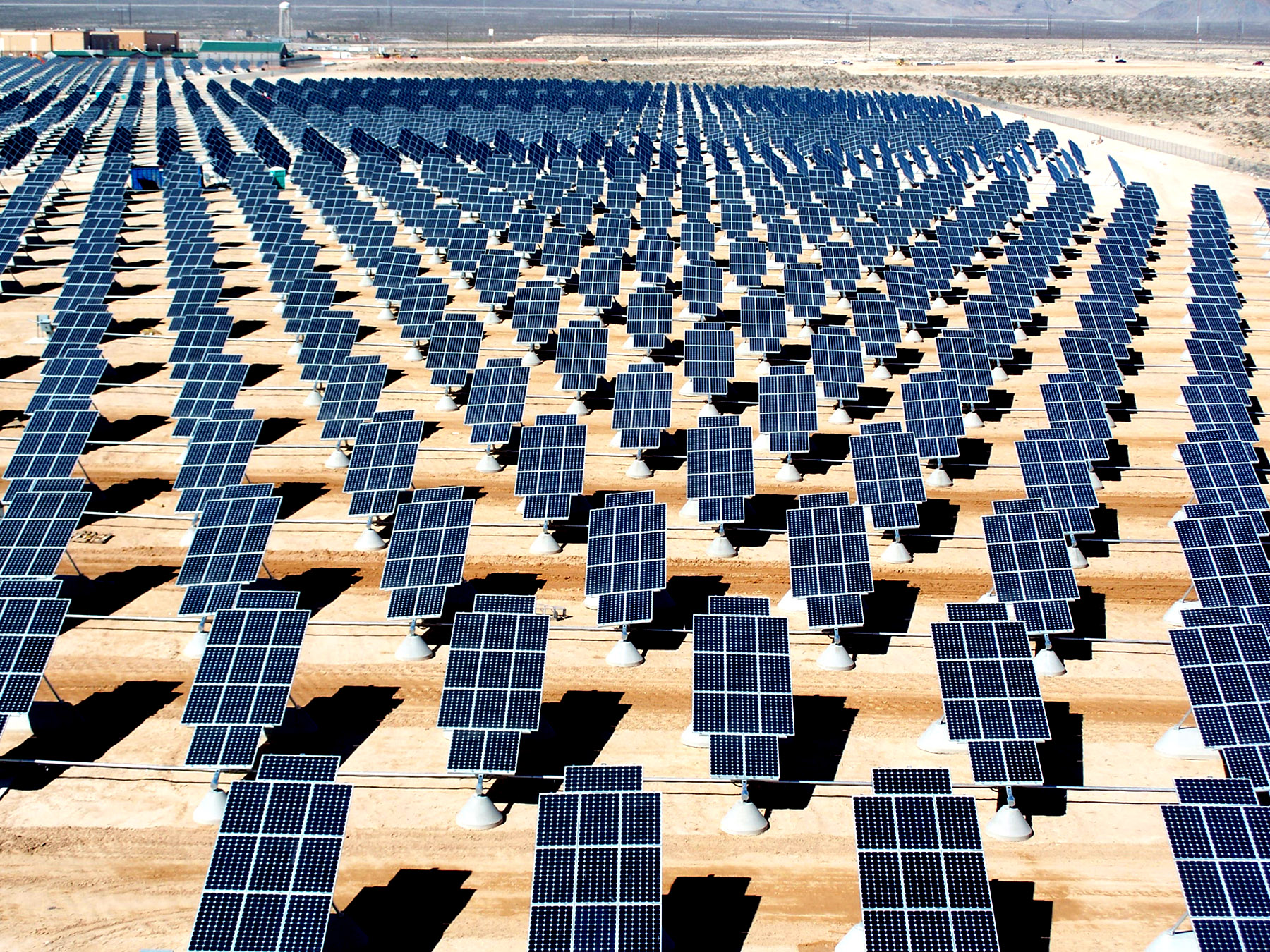
In November 2011, the US Department of Commerce launched anti-dumping and countervailing ("double-remedy") investigations against solar cells imported from China — the first such double-remedy action the United States had brought against Chinese clean-energy products. The investigation proceeded swiftly: the countervailing-duty investigation issued a preliminary determination in March 2012; the anti-dumping investigation issued its preliminary determination in May 2012; and by October 2012, the investigation reached its final determination — imposing countervailing duties of approximately 14.78% to 15.97%, and anti-dumping duties ranging from approximately 18.32% to as high as approximately 249.96%, on solar cells imported from China. For companies that had not participated in the proceedings, the rates were set at the highest tier.
The impact was immediate and severe. China's exports of photovoltaic products fell from approximately US$27.9 billion in 2011 to approximately US$17.5 billion in 2012 in a single year — a drop of roughly 37%. During this period many Chinese photovoltaic companies fell into serious difficulty, and the entire industry went through a painful round of consolidation.
But the photovoltaic story later acquired a second half that carries its own pointed significance. After absorbing the severe blow of the double-remedy duties and enduring a round of industry shakeout, China's photovoltaic industry did not decline — it went on, over the following decade-plus, through continuous technological iteration, capacity expansion, and cost reduction, to establish an overwhelming production advantage at virtually every link of global photovoltaic manufacturing, from polysilicon and silicon wafers to cells and modules. A double-remedy action that was originally intended as a check ultimately did not change the global structure of that industry. This second half matters because it demonstrated for the first time a pattern that would recur repeatedly: trade barriers directed against a Chinese emerging industry can often cause severe short-term disruption, but they rarely succeed in reversing the trajectory of industrial competitiveness over the long term — as long as the cost advantage of that industry is genuinely founded on a complete supply chain and real scale. This pattern would be validated again, a decade later, in the era of China's "new three" exports.
Yet the true significance of the photovoltaic conflict extended far beyond photovoltaics as a single industry. It made clearly visible for the first time: when Chinese factories moved from "taking on low-end assembly that the United States no longer wanted" to "forming real, substantial production advantages in a strategic industry that the United States itself wanted and viewed as the direction of the future," the character of the friction changed completely. It was no longer the traditional trade friction of earlier years; it had escalated into a confrontation between industrial policy and industrial policy — both sides deploying subsidies, tariffs, and anti-dumping and countervailing investigations to contest dominance over the same future industry.
At almost the same time, another thread surfaced. In October 2012, the House Permanent Select Committee on Intelligence released a fifty-two-page investigative report identifying the Chinese communications companies Huawei and ZTE as potential threats to US national security — even though the report itself acknowledged that it had not produced substantive evidence of specific conduct by either company.
That report was an early signal of the "securitization of technology" narrative. It meant that the enhancement of China's industrial capabilities was beginning to be examined and discussed within the framework of "national security." Recall the "two parallel tracks" that characterized the previous era — trade and economics on one track, politics and the military on another, the two never crossing. The double-remedy action on photovoltaics, combined with this security report, together presaged exactly that: the two tracks beginning to intersect, as trade issues were securitized and technology issues were politicized.
The ten years from 2008 to 2017 were, on the whole, a period of transition. The symbiotic relationship continued — bilateral trade kept growing; by China's own statistics, China–US goods trade reached approximately US$583.7 billion in 2017, more than two hundred times the US$2.45 billion recorded at the time of normalization. But the premises on which the symbiosis rested were changing — quietly, yet unmistakably. In the next era, that change would erupt in a form no one could any longer ignore.
Phase Five (2018–2022): Trade War and Tech War
The Tariff War: 2018 as a Watershed
If only one watershed moment can be chosen from across these forty-eight years, it is 2018.
The story begins with an investigation. In August 2017, the Office of the US Trade Representative formally launched the Section 301 investigation against China, focusing on technology transfer, intellectual property, and innovation policies. In March 2018, the findings were released, and the US government immediately set in motion the process of imposing additional tariffs on China.
What followed was more than a year of escalating tariffs, imposed in successive tranches. US tariffs on China fell in waves: in July 2018, additional 25% tariffs were imposed on approximately US$34 billion worth of Chinese goods entering the United States; in August, an additional 25% was imposed on approximately US$16 billion more; in September, a 10% tariff was imposed on a much larger tranche of approximately US$200 billion worth of goods — and this tranche's rate was further raised to 25% in May 2019; in September 2019, yet another tranche of goods was subjected to additional tariffs. Accumulated across several rounds, the Chinese goods subject to additional US tariffs came to cover approximately US$370 billion in total. Meanwhile, China imposed reciprocal retaliatory tariffs on American goods, targeting soybeans, automobiles, energy products, and others as priority subjects.
The tariff war of 2018 continued on and off for nearly two years, until January 2020, when China and the United States signed the Phase One economic and trade agreement as a stage-by-stage ceasefire. Under this agreement, China committed that over the two years 2020 and 2021, it would purchase at least US$200 billion of additional American goods and services above the 2017 baseline. This US$200 billion was roughly distributed across four baskets — approximately US$77.7 billion in manufactured goods, approximately US$52.4 billion in energy products, approximately US$32 billion in agricultural products, and approximately US$37.9 billion in services trade — while the agreement also included provisions on intellectual property protection, technology transfer, financial market opening, and dispute-resolution mechanisms. One point deserves particular notice: this agreement did not remove most of the tariffs that had already been imposed; they were left fully in place, becoming a "baseline tax burden" that China–US trade would carry from that point forward.
The true significance of the tariff war lay not in any specific tariff rate but in this: for the first time in forty-eight years, the United States deployed "additional tariffs" as a primary instrument of industrial competition with China — deploying them on a large scale and in a systematic manner. The tacit understanding of the symbiotic era — "politics is politics, business is business" — was formally broken. The two tracks began to converge.
If, however, the story of this era had stopped at tariffs, it would not have been the most profound chapter. Tariffs, after all, raise only the cost of transactions — they make Chinese goods more expensive in the American market, but Chinese factories can still produce and still sell, with margins merely compressed. What truly changed the rules of the game was a second front opened simultaneously: the tech war.
The Tech War: From ZTE to Huawei
The tech war and the tariff war share a fundamental distinction: tariffs target the flow of goods, while technology controls target the formation of capabilities. The former makes you sell more expensively; the latter means you simply cannot produce at all. The latter is far more severe in its intensity.
In April 2018, the US Department of Commerce issued an export-denial order against the Chinese telecommunications company ZTE, prohibiting US suppliers from selling components and technology to ZTE. The consequences were immediate — ZTE was heavily dependent on American chips and other critical components, and within weeks of the order taking effect, its main production lines ground to a halt. In June of the same year, the two sides reached a settlement: ZTE was to pay total penalties of approximately US$1.4 billion, replace its entire management team, and accept the on-site monitoring of US-appointed compliance personnel for a period of ten years, after which the order was lifted.
The ZTE episode was a severe and sobering warning. It placed before everyone, without any concealment, a fact that had long been obscured by high-speed growth: a Chinese electronics company with annual revenues of over 100 billion yuan, one that appeared already quite formidable, could be brought to a standstill within a matter of weeks simply by being cut off from the supply of critical American components. It forced everyone to confront directly the question: how deep, in the most critical and most upstream segments, was Chinese industry's dependence on American technology?
In May 2019, the United States placed Huawei on the Entity List of export controls. The scope of the controls was subsequently expanded in successive steps, with one critical measure being the application of the Foreign Direct Product Rule — extending the reach of controls from "products made in the United States" to "products not made in the United States but whose production process used American technology or American equipment." The destructive power of this move was enormous: it effectively severed the path by which overseas contract manufacturers could produce advanced chips for Huawei. Intertwined with Huawei was the Meng Wanzhou case, which lasted nearly three years: in December 2018, Huawei executive Meng Wanzhou was detained in Canada at the request of the United States, and she did not conclude the relevant legal proceedings and return home until September 2021.
The ZTE and Huawei cases together fixed the intensity and character of the tech war. What it was contesting was no longer the tariff rate applicable to a given shipment of goods, but the very act of a country "building capacity and forming capabilities" in high-technology sectors. Its aim was the chokepoints of the industrial chain.
Just as the tech war was reaching a white heat, the COVID-19 pandemic that erupted in early 2020 delivered, from an entirely different angle, a lesson of its own. The pandemic first produced a simultaneous global stoppage of both demand and supply, then, in the uneven recovery that followed, triggered a cascade of consequences — port congestion, container shortages, the disruption of critical component supplies. A question that had previously been considered wholly unworthy of concern was thrust squarely into the foreground: how vulnerable, when struck by a sudden shock, was a global supply chain that had been organized for extreme efficiency, with extreme concentration and virtually no redundancy? For the United States, the pandemic elevated "supply chain security" from an economics textbook topic directly into the core of national strategy. The subsequent spread of terms such as reshoring, nearshoring, and friend-shoring, along with the rhetorical shift from decoupling to de-risking, all carry the deep psychological imprint left by the pandemic. The pandemic was not itself a conflict between China and the United States, but it objectively and greatly accelerated the urgency felt on the American side to press ahead with rebalancing — it transformed the old adage "don't put all your eggs in one basket" from a proverb into a felt, personal wound.
Case Study: October 7, 2022 — A Wall Built at the Upstream of an Industry
If one day in this era must be singled out as the most emblematic, it should be October 7, 2022.

On that day, the Bureau of Industry and Security, an agency within the US Department of Commerce, published a comprehensive set of new export-control regulations targeting China's advanced computing and semiconductor manufacturing. Their scope far exceeded the previous approach of "targeting a specific individual company," representing instead a systematic, industry-tier-wide set of controls. They encompassed four principal dimensions.
The first was advanced chips themselves — restricting the export to China of high-end integrated circuits meeting specified thresholds of computational performance. The second was semiconductor manufacturing equipment — exports to China of equipment used to produce advanced-process chips (broadly, more advanced logic chips and memory chips above a certain density) would require prior authorization. The third, and the most unprecedented, was a restriction on US persons: without a license, US citizens and US permanent residents would be prohibited from supporting certain advanced semiconductor production activities in China. The fourth was a further extraterritorial extension of the Foreign Direct Product Rule.
Setting these rules alongside the earlier tariffs in direct comparison makes clear precisely what is new about them. The logic of tariffs is: "To bring your goods through my door, you pay an additional toll." The logic of controls is: "I simply will not allow you to obtain the equipment and technology needed to make it, and will not even allow relevant persons to assist you." Tariffs address a succession of specific shipments of goods in motion; controls address a country's very capacity to "build production capability from the ground up" in a given technological tier. If tariffs are the installation of a toll booth, this set of controls is an attempt to erect, at the upstream of the industry itself, a direct and permanent wall.
The counterpart to the "controlling" hand was the "subsidizing" hand. In August 2022, the United States enacted two important pieces of legislation in quick succession. One was the CHIPS and Science Act, which allocated approximately US$52.7 billion in direct grants to subsidize semiconductor manufacturing on American soil, while attaching a "guardrail" provision: any company receiving these funds would be prohibited from materially expanding advanced-chip production capacity in China for the following ten years. The other was the Inflation Reduction Act (IRA), which provided large-scale subsidies for clean energy but whose electric-vehicle tax credit carried exclusionary provisions: vehicles containing battery components or critical minerals sourced from a "foreign entity of concern" — a category that includes Chinese entities — would be disqualified from subsidy eligibility.
By this point, America's industrial policy toward China in this period had taken the shape of a quite clear and quite determined combined offensive: one hand "controlling" — using export controls to deny China access to the most advanced technologies and equipment; one hand "subsidizing" — using massive industrial subsidies to attract advanced production capacity back to American soil and to politically reliable allies. This combined offensive was the most complete, most coherent expression of rebalancing on the American side to date.
"Decoupling," and an Inescapable Contradiction
During these years, "decoupling" became an ultra-high-frequency term in global public discourse. Subsequently, official Western rhetoric gradually adjusted this somewhat jarring term to the softer, more calibrated "de-risking." Arising in tandem with it was an entire vocabulary of companion terms — reshoring, nearshoring, and friend-shoring. The concept of friend-shoring received a fairly systematic articulation from US Treasury Secretary Janet Yellen in a public address in 2022; its central argument was that supply chains should be concentrated as far as possible in the hands of allied nations that trust one another politically. All of these terms collectively described the same effort: attempting to move supply chains away from China — toward the domestic market, or toward countries deemed more "reliable."
There is, however, a contradiction here that deserves to be firmly held in mind by everyone who speaks of "decoupling."
In 2022 — the very year in which tariff wars were compounded by semiconductor technology controls, and "decoupling" was being proclaimed at deafening volume in public discourse — China–US bilateral goods trade reached approximately US$690.6 billion, setting a new all-time record and surpassing even the level that had prevailed in 2018, just before the trade war began.
How is this enormous contradiction to be explained?
On the one hand, China's share of total US imports was indeed declining — from approximately 21.6% in 2017 to approximately 16.3% in 2022. These are real traces left by rebalancing. On the other hand, the total size of the American import market was itself expanding; and a large volume of trade "rerouting" was taking place: goods that had previously been exported directly from China to the United States were instead shipped first to Vietnam, Mexico, or other third countries, where they underwent a process that was often not particularly complex, and then entered the United States under new identities — "Made in Vietnam," "Made in Mexico" — while the transshipped goods in question frequently still contained large quantities of Chinese components and Chinese intermediate goods.
In other words, China's measured share was declining on paper, but the real dependence of the industrial chain on China had not simultaneously disappeared — it had simply taken a different route and changed its label.
This contradiction is the most powerful evidence for the judgment of "rebalancing, not decoupling." It makes clear what this article stated at the outset: political will can quite effectively alter the pathways of trade and change the "country of origin" recorded in customs statistics — but to genuinely disaggregate, at the real level of manufacturing, an industrial division of labor forged over nearly half a century through the deep interlocking of countless orders and components: the difficulty of that undertaking far exceeds what any policy announcement, or any slogan, can achieve.
Phase Six (2023–2026): Competitive Rebalancing
The "New Three" Exports: China's Factories Change Their Business Card
Entering 2023, a new term appeared in China's export mix — the "new three" exports — electric vehicles, lithium-ion batteries and solar products.
In 2023, combined exports of the "new three" reached approximately RMB 1.06 trillion, breaking the trillion-yuan mark for the first time, up roughly 29.9% year-on-year. Breaking that figure down: China exported approximately 1.77 million electric passenger vehicles that year, an increase of more than 60% year-on-year; lithium-ion battery exports set a new all-time record; and solar module exports continued at a high level. Also in 2023, China's total vehicle exports surpassed Japan's, making China the world's largest vehicle exporter for the first time — depending on which methodology is used, full-year vehicle exports came to between 4.91 million and 5.22 million units, of which approximately 1.2 million were new-energy vehicles.
Comparing this new business card against the several older ones China has carried into the world over these 48 years is highly instructive.
In the 1980s, China's export calling card to the United States was textiles and various light-industrial goods. In the decade-plus after WTO accession, the card changed to assembled electronics, furniture and toys — designed elsewhere, assembled in China to specification. By 2023, the card had changed again: electric vehicles, traction batteries and solar products.
These three categories share one feature: they are all high-technology, high-value-added products, and all are universally recognized as strategic industries. But the more critical point is this: the "new three" are not contract manufacturing for someone else. They are China's own industries, China's own brands, technology paths that China itself controls, products that China itself defines. From the cell chemistry of traction batteries, to the vehicle-platform architecture of electric cars, to the technology-roadmap iterations of solar cells — the initiative rests in the hands of Chinese companies themselves.
This is the most vivid and weighty evidence yet for the thread that has run beneath the surface of this article — the journey from "order-taker" to "self-directed player." The country that 48 years ago had to make a special trip to a Boeing assembly floor just to "have a look" at how an aircraft was built has now, on the entirely new track of new-energy vehicles, itself become the subject that others study, benchmark themselves against and race to catch up with. The positions have reversed.
Yet the real foundation of the "new three" lies not in the handful of leading companies that make the headlines, but in what stands behind them. What Tianxia Gongchang Industry Research sees when it traces this supply chain is this: behind a single electric vehicle, a single traction battery, stand tens of thousands of small and medium-sized factories making cathode materials, separators, cell structural components, electronic controls and inverters — an almost fully self-contained supply chain grown within China's borders. The leading firms are the part visible above the waterline; this web woven from countless small and medium factories is the true mass beneath the surface.
The Battle Over Capacity: Even the "Grounds" for Friction Have Changed
Yet precisely because the "new three" are strategic industries, the friction surrounding them has also escalated.
In April 2024, United States Treasury Secretary Janet Yellen visited China, raising the term "overcapacity" repeatedly in multiple settings in Guangzhou and Beijing. Her concern was that Chinese policy support for the electric-vehicle, lithium-ion battery and solar industries had suppressed the prices of those products, flooding global markets and damaging comparable industries in the United States and elsewhere.
In May 2024, the United States government invoked Section 301 to announce the imposition or substantial increase of tariffs on a range of Chinese products: tariffs on electric vehicles were raised in one step from 25% to 100%; on solar cells from 25% to 50%; on lithium-ion batteries for electric vehicles from 7.5% to 25%; and tariffs on semiconductor-related products were raised to 50%. These adjustments were phased in over the months that followed.
There is one particular change here that deserves careful attention — what has happened to the stated "grounds" for this round of friction.
In the 1980s, and for some time afterward, the grounds for China–US trade friction were: "China's cheap, low-end goods are undercutting our traditional light industries." Today, the grounds have become: "China's capacity in forward-looking industries like new energy is too strong, too competitive, prices are too low." The target of the conflict has shifted from "low-end, surplus capacity" in the past to "advanced, advantaged capacity" today.
This shift in the stated "grounds" is itself an unmistakably clear footnote to the transformation of China's industrial standing. When what a country is accused of changes from "what you make is too low-end, too cheap, too undignified" to "what you make is too advanced, too competitive" — those two accusations sit at entirely opposite ends of the industrial-capability spectrum. Between being dismissed as low-end and being feared as advanced lies exactly these 48 years.
On the substance of the "overcapacity" debate itself, this article will not render a verdict for either side, but it is possible to point to the caution that any honest researcher should bring to it. Judging whether an industry is genuinely "overcapacity" depends heavily on which market one places in the denominator — the domestic market alone, or the entire global market. It equally depends on how much of the scale advantage originates in policy subsidies versus how much reflects genuine cost reductions produced by a complete supply chain, economies of scale and ferociously intense domestic competition. For China's new-energy industries, "scale" itself is one of the central mechanisms through which costs are driven down, and scale and cost cannot be cleanly separated for independent evaluation. The reason this debate has resisted resolution for so long is precisely that it looks on the surface like a technical question about "how much is too much," but at its core it is a structural question about "who should hold the commanding heights of future industries" — and that question has no standard answer.
2025–2026: Fighting and Talking at the Same Time, and a Visit Across the Pacific
Entering 2025, the tariff contest between China and the United States entered a new phase of extreme volatility.
After the new US administration took office, tariffs on China were raised further. In early 2025, the United States used issues including fentanyl as the basis for imposing additional tariffs on Chinese goods, and soon raised those rates again; in April of the same year, the United States announced "reciprocal tariffs" directed at virtually all trading partners, sharply raising tariffs on China once more on top of existing rates. After multiple rounds of retaliatory escalation by both sides, the overall effective US tariff rate on Chinese goods was at one point pushed to an extremely high level, and China's counter-tariffs on American goods were raised in parallel to a correspondingly high level. By May 2025, the two sides held trade talks in Geneva and agreed to substantially roll back the tariffs each had imposed on the other since that April.
In the second half of 2025, clear signs of de-escalation appeared. After several rounds of contact, the two sides reached an economic and trade agreement: China made arrangements on controlling fentanyl precursors, easing export controls on rare earths and other critical minerals, and substantially purchasing US soybeans; the United States, in turn, lowered some tariffs, and the overall effective tariff rate on Chinese goods fell noticeably from its high point — though most of the tariffs imposed since the 2018 trade war remained in place. The words "rare earths" deserve particular attention here: when the United States used semiconductor export controls to grip one of China's upstream chokepoints, China found that it, too, held a card — rare earths and critical minerals. This is precisely what most distinguishes "rebalancing" from the "symbiosis" of earlier years: the contest is no longer one-directional; both sides of the table have found a link by which they can grip the other.
The whole of 2025 can be summed up in a single phrase: fighting and talking at the same time. Tariff rates could surge from two digits to three within a matter of days, and fall sharply again after a single round of talks. This extreme, high-frequency volatility is itself telling: both sides are still probing each other's red lines and tolerance thresholds, still engaged in repeated maneuvering toward a new equilibrium that has not yet stabilized.
What rendered this "fighting and talking" most concrete, before the eyes of the world, was a scene in May 2026. From May 13 to 15, 2026, the US president made a state visit to China — the first visit by a sitting US president in nearly a decade. More noteworthy to a researcher than the visit itself was the composition of the accompanying delegation: more than a dozen chief executives of major American corporations flew in together, heavily concentrated in two sectors — technology and finance — makers of chips, of phones, of electric vehicles, of asset-management and payment networks. Set this roster against the picture of American companies coming to China in the 1980s — one dominated by automobiles, telecommunications equipment, and consumer-goods manufacturing — and it is plainly no longer the same thing.
That roster is itself one of the most powerful endorsements of this article's central judgment. After "decoupling" had been proclaimed loudly for eight full years, it was precisely the American technology companies that have staked their supply chains, their revenues, and their future growth most deeply on China whose top executives personally flew to Beijing — this is not the picture "decoupling" is supposed to produce. One concrete outcome announced during the visit was an order for approximately 200 Boeing aircraft.
Allow this article, at this point, to pull the lens back to its very beginning. In 1979, Deng Xiaoping stood on the floor of Boeing's final-assembly hall and said that China, too, wanted to build its own large aircraft. Across the 48 years that followed, China both purchased Boeing aircraft in large numbers and manufactured components for Boeing. And this order for roughly 200 aircraft in 2026 places Boeing once again at the very center of China–US industrial relations — except that this time, China, the buyer, already has a domestically built large passenger aircraft of its own in commercial service. From 1979 to 2026, Boeing is like a thread running through this entire 48-year history from end to end.
A researcher must, of course, remain measured. The visit was widely assessed as "limited in concrete deliverables, but with the relationship growing more stable" — semiconductor controls, rare earths, and deeper structural disagreements did not vanish because of a single visit; it is far from the end of this contest. But it did clearly mark out one fact: regardless of how tariff numbers rise and fall, and however loudly the slogan of "decoupling" is shouted, that industrial division of labor — embedded deeply between the two countries, interlocked by nearly half a century of orders and components — will not disappear because of a single week's tariff rate or a single list. It will become more expensive, more circuitous and more painful; it will be renegotiated again and again — but it will still be there. That is precisely the judgment this article has returned to, again and again, from beginning to end.
China's Manufacturing Response: From "Bringing In" to "Going Out"
Confronted with one tariff barrier after another, the Chinese manufacturing sector's response has not been merely passive absorption. It has also taken a decidedly proactive step — building factories overseas.
During this period, cases of Chinese manufacturers establishing overseas production appeared in dense succession. In the traction-battery sector, CATL's German factory entered production in 2023, and the large battery plant it is building in Debrecen, Hungary — with substantial planned capacity — represents a key step in its European footprint. In the passenger-vehicle sector, BYD announced construction of its European vehicle assembly plant in Hungary and a plant in Brazil, with vehicles already rolling off the Brazilian production line by 2025. More broadly, Southeast Asian countries — Vietnam, Thailand, Indonesia and others — and Mexico have become significant hosts for relocated Chinese manufacturing capacity, with the product mix upgrading from the early years' textiles and garments to solar products, electronics and automotive components. Looking at the broader numbers, China's outbound non-financial direct investment maintained a high level in both 2023 and 2024.
This wave of overseas factory-building is fundamentally different in nature from the earlier model of simple "product export." Exporting sells goods; building factories overseas exports capacity, technology, standards and an entire methodology for organizing production — it means Chinese companies have begun playing, on foreign soil, the role that American companies once played in China. This is not easy: building overseas means confronting unfamiliar labor laws, union cultures, insufficient supporting industries and currency and political risks; many projects have not proceeded smoothly — some delayed, some restructured, some shelved. But the direction is clear. For Chinese manufacturing, building factories overseas is both a way to circumvent tariff barriers and access end markets directly, and a forced — yet necessary — upgrade in capability: it compels Chinese companies to learn how to become genuinely multinational corporations, not merely exporters. In this sense, tariff barriers have objectively accelerated the transformation of Chinese manufacturing from "selling to the world" toward "making in the world, for the world."
Placed within the long lens of 48 years, the significance of "building factories overseas" becomes particularly clear.
At the beginning of the story — the 1980s — it was American companies coming to China to build factories: General Motors, Motorola, Hewlett-Packard, Coca-Cola, deploying their capital and capacity into China. At this chapter of the story — the 2020s — it is Chinese companies going to Europe, Southeast Asia and Latin America to build factories, deploying their own capital, capacity and technology across the world. The direction in which capital and capacity flow has undergone a reversal that was entirely unimaginable 48 years ago.
This reversal is one of the core dimensions of "competitive rebalancing." The map of global manufacturing is evolving from the single axis of "American design — Chinese production" that defined the past, into a more dispersed, more multipolar and more resilient network. And China's manufacturing enterprises, in this emerging new network, are no longer the node passively waiting for others to come invest and place orders — they have themselves become a "pole" that actively goes abroad, actively shapes its own global position, and actively defines its own place in the world.
The order-taker has at last stepped into the position of the self-directed player. This is not a slogan; it is a conclusion written by a succession of concrete facts — the change of the export business card, the change in the stated "grounds" for friction, the reversal of the direction of capital flows — one after another.
Conclusion: A 48-Year Balance Sheet
As the 48-year story reaches this point, let us draw up a balance sheet for this history of China–US industrial interaction.
Begin with the asset side — what, across these 48 years, has been deposited in the soil of China?
The first asset is an industrial system of rare completeness. China is currently the only country in the world that possesses every single industrial category in the United Nations' industrial classification — 41 major industrial categories, 207 subcategories and 666 sub-subcategories, all present and accounted for. From a single screw to a large commercial aircraft, from the most basic chemical raw materials to the most downstream consumer goods, almost every link in the chain can be found within China's borders in scaled, systematic productive capacity. China's manufacturing value-added accounts for roughly 30% of the global total, and has held the world's top position for more than ten consecutive years. The "completeness" of this system was itself assembled over 48 years, one industry at a time, one process step at a time — it was not built in a day; behind every category lies a specific history of introduction, then order-taking, then digestion, then doing it yourself.
The second asset is a manufacturing population of staggering numbers. Today, the number of identifiable, genuine manufacturing enterprises in China stands at a level of about 4.8 million. They are not an abstract figure in a statistical yearbook, but specific factories, each with a name, an address and a product: the electronics and hardware plants of the Pearl River Delta, the precision-manufacturing and advanced-equipment enterprises of the Yangtze River Delta, and the industrial belts of central and western China that absorbed industrial transfers and then grew their own distinctive character. This map, laid down by several million factories working in concert, was built brick by brick over 48 years — and behind each brick lies a story of introduction, order-taking, digestion and innovation.
The third asset is the hardest to see, yet very likely the most valuable — it is a capability forged through repeated tempering. Looking back at the through-line of this entire article: China's factories, from apprentices in the joint-venture era, to contract manufacturers in the processing-trade era, to companies today capable of independently developing the "new three" — the things they learned in those early years by "order-taking" and "contract manufacturing" for others (modern process discipline, quality discipline, the organizational logic of supply chains, an understanding of and respect for global markets) did not disappear when each batch of orders ended. They accumulated, layer by layer, and ultimately became the confidence behind today's indigenous innovation. Order-taking was itself a form of learning; contract manufacturing was itself a school. This is the deepest-buried and hardest-to-take-away asset left behind by these 48 years.
Yet an honest balance sheet must also faithfully record the liability side — the risk side.
The first liability is the dependence that has not yet been truly resolved at certain critical junctures. The experiences of ZTE and Huawei have made this perfectly clear: in the areas of high-end chips, certain core manufacturing equipment and some foundational industrial software — the most upstream, most cutting-edge links — China's industry still has significant gaps. These 48 years have filled in the vast majority of industrial categories, but the most advanced ground at the very top has not yet been fully taken. Filling this gap remains an ongoing and far-from-easy process — the time it will require may be measured in decades.
The second liability is the friction that has become normalized. Tariffs, export controls, the debate over "overcapacity" — these will in all likelihood remain a kind of background noise for quite some time to come, rather than a temporary condition that can simply be waited out. The thread this article has traced throughout — how "economic and trade" relations and "political and security" considerations, once two tracks running independently, gradually intersected and ultimately became entangled — has one direct consequence: Chinese manufacturing must learn to operate amid sustained, normalized external friction; it must treat "managing external uncertainty" as an everyday, standing capability to be built, not as a passing squall to be waited out.
Taking the asset and liability sides together, the main thread of this article can now be drawn to a close in a single sentence: over these 48 years, China–US industrial interaction moved, step by step, from "symbiotic complementarity" to "competitive rebalancing."
Symbiosis gave birth to this vast factory system — and this must be honestly acknowledged: without the capital, technology, orders and markets that the United States provided in those early years, Chinese manufacturing could not have grown, at that speed, into the scale and form it has today. This is a historical fact; evading it makes this history unreadable. And rebalancing is now redefining the role of that system — it is no longer content to be merely one link in someone else's supply chain, one node that can be swapped out at will, but seeks instead to define its own position within an emerging, multipolar global manufacturing network.
Finally, a return to the judgment put forward at the very opening of this article and reaffirmed throughout: decoupling is proclaimed deafeningly loudly in the arena of public opinion; in the workshops of actual factories, it is extraordinarily difficult. An industrial division of labor woven over nearly half a century by countless orders and interlocking components will not come apart because of a single announcement. It will be restructured, rerouted, made more expensive and more dispersed — but the essence of "rebalancing" is structural adjustment, not structural disappearance. Keeping those two things distinct is the prerequisite for understanding China–US industrial relations over the many years to come.
What, then, does this "era of rebalancing" mean concretely for China's factories today? It means at least three quite specific things. First, markets must be diversified once more — the practice of concentrating export exposure heavily on a single market has had its risks proven repeatedly, and developing diversified markets is no longer a matter of choice but a matter of survival. Second, capabilities must move up another rung — in the logic of competitive rebalancing, the further downstream in the value chain a segment sits, and the more easily replaceable it is, the more likely it is to be sacrificed as a bargaining chip in the contest; only by genuinely holding technology, brand and irreplaceability in one's own hands does one have the standing at the negotiating table not to be arbitrarily disposed of. Third, companies must learn to operate while carrying uncertainty — tariffs will change, rules will change, lists will change; treating these changes as a constant of the operating environment rather than a variable that can be waited out is the new demand this era places on every Chinese factory with export exposure. None of these three things is easy, but together they define what the role of "self-directed player" truly weighs — being self-directed has never been only an honor; it is at the same time a heavy responsibility and a real cost.
Reading these 48 years ultimately comes down to one very concrete question: what does the map of Chinese manufacturing today — composed of about 4.8 million factories — actually look like? What industries, what industrial belts, what specific enterprises did the interaction, cooperation, mutual gain and conflict of these 48 years ultimately deposit? Which factories are continuations of the joint ventures and technology imports of that early era; which grew up through processing trade; and which are the new faces that emerged in the age of the "new three"?
This is precisely what Tianxia Gongchang Industry Research does on a continuing basis — using factory-identification data to restore the abstract, blanket "Chinese manufacturing" of the macro narrative into specific, verifiable factories, one at a time. Because the story of these 48 years is, in the end, not written on the rising and falling curve of a trade-volume chart; it is written on the bodies of these several million factories — on their workshops, their production lines, their orders and their workers.
Sources and Key References
This article was compiled and analyzed by the Tianxia Gongchang Industrial Research Institute, drawing on factory data from the Tianxia Gongchang platform together with publicly available information, official sources, and authoritative media reporting. Its principal data and factual sources include:
- The factory database and industry-chain data of the Tianxia Gongchang platform (www.tianxiagongchang.com)
- Trade-policy documents on China released by the Office of the United States Trade Representative (USTR)
- Industrial and trade materials published by the U.S. Department of Commerce and the U.S. Congress
- China-US trade data released by the Ministry of Commerce and the General Administration of Customs of the People's Republic of China
- Reporting from authoritative media including Xinhua News Agency, the People's Daily, and China News Service
- Research papers in Strategic Study of CAE, the journal of the Chinese Academy of Engineering
- Industrial materials released through the Chinese government portal and the State-owned Assets Supervision and Administration Commission
- Reporting by international media including CNBC and CNN