
Introduction: Capability Determines Position
On May 19, 2026, Russian President Putin will arrive in Beijing for a two-day state visit. For both countries, the meeting carries a weight of deliberate symbolism: it falls on the 25th anniversary of the Treaty of Good-Neighborliness and Friendly Cooperation Between China and Russia, and on the 30th anniversary of the two countries establishing a strategic cooperative partnership. According to arrangements announced beforehand, the two heads of state will jointly attend the opening ceremony of the "China-Russia Year of Education," and the summit will conclude with the signing of a highest-level joint statement along with more than 20 cooperation documents spanning energy, aerospace, artificial intelligence, and agriculture. Just days earlier, the President of the United States had wrapped up his own visit to China. Within the span of a single week, Beijing received the leaders of two major powers — a moment worth recording in its own right.
Yet if we pull the lens back, the true coordinates of this meeting lie not in this particular week in May 2026, but 77 years prior.
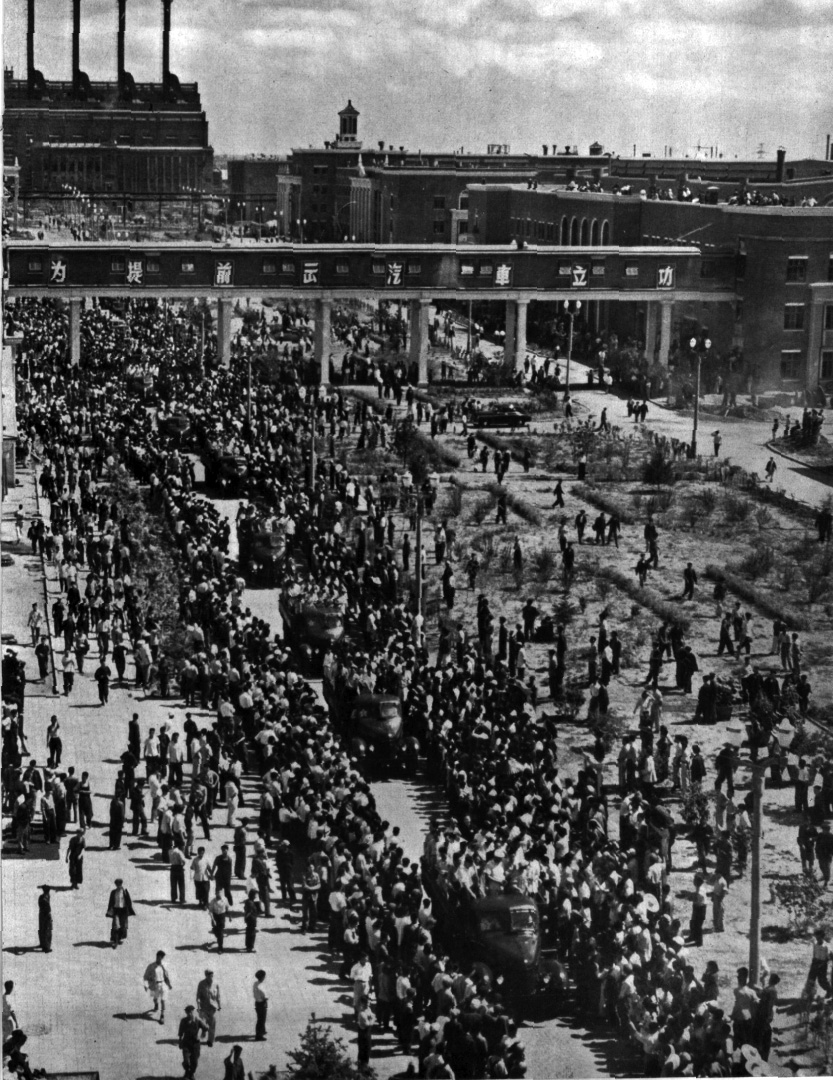
In December 1949, two months after the founding of the People's Republic, Mao Zedong boarded a train bound for Moscow. It was his first trip abroad. The two months he spent there involved difficult and protracted negotiations, culminating in the signing of the Sino-Soviet Treaty of Friendship, Alliance and Mutual Assistance at the Kremlin on February 14, 1950. Along with the treaty came a US$300 million low-interest loan and a sweeping list that would later become known as the 156 Projects. Over the next decade, what the Soviet Union transferred to China was not a handful of factories but the skeleton of an entire modern industrial system — steel, electricity, coal, machinery, chemicals, and defense. A largely agrarian country with almost no modern heavy industry acquired, through this system, an industrial backbone of its own for the first time.
The positions then were unmistakable: the Soviet Union was the teacher, China the student.
77 years later, those positions have reversed.
In 2026, one out of every two new cars sold in Russia carries a Chinese brand; Chinese brands account for more than 70% of its smartphone market, and roughly 80% of its small appliance supply comes from China. As the external trade environment shifted dramatically and many Western brands withdrew from Russia, it was Chinese automobiles, machinery, electronics, and consumer goods that filled the sudden vacuum in Russia's industrial supply chains and consumer market. A judgment repeatedly cited by international research institutions holds that Chinese exports have displaced the European Union to become the "lifeline" of the Russian economy.
From "teacher" to relied-upon "lifeline" — 77 years separate those two positions, 77 years of honeymoon, rupture, deep freeze, misalignment, and reconnection. This is the story this article sets out to tell: a history of a relationship rewritten, step by step, by industrial capability. Its through-line can be stated in a single sentence: between great powers, the position a country holds in a relationship is ultimately determined by its industrial capability. Whoever can manufacture holds the leverage; that position is not fixed by goodwill, nor made permanent by any treaty — it moves with industrial capability, slowly but irreversibly.
A word upfront on the perspective and scope of this piece. This is an industry analysis, not a geopolitical commentary. Our concern is with factories, equipment, technology, trade, and industrial supply chains — with these measurable things, and how they have shifted the relative positions of two countries over 77 years. The complex political and security dimensions of this history are addressed only where they directly bear on industrial trajectories, and then only briefly and neutrally. We believe that following the single thread of "industrial capability" is sufficient to illuminate the most essential contours of this relationship.
Over these 77 years, industrial interaction between China and Russia (including the earlier Sino-Soviet period) passed through roughly six phases: the laying of foundations under Soviet assistance; rupture after the withdrawal of aid; two decades of deep freeze and strategic pivot; a decade of misalignment dominated by arms trade; the formation of an energy and strategic partnership; and the final deepening of an asymmetric structure. We move through them in order.
I. Foundations: The Wholesale Transplant of an Industrial System (1949–1957)
A Treaty and a List
What was China's industrial base in 1949? Numbers tell the story most clearly. In 1952 — the year before large-scale construction formally got underway — China's steel output was 1.35 million tons, raw coal output over 63 million tons, electricity generation 7.3 billion kilowatt-hours, and annual production of metal-cutting machine tools 13,700 units. This was the entire modern industrial output of a country with a population of over 400 million. In terms of steel output, China ranked roughly 18th in the world at the time; in electricity generation, it did not make the top 15. More telling still was the structural void: automobiles, tractors, fertilizers, synthetic fibers, jet aircraft, precision instruments, semiconductors — the categories that constitute a modern industrial system were virtually nonexistent in China.
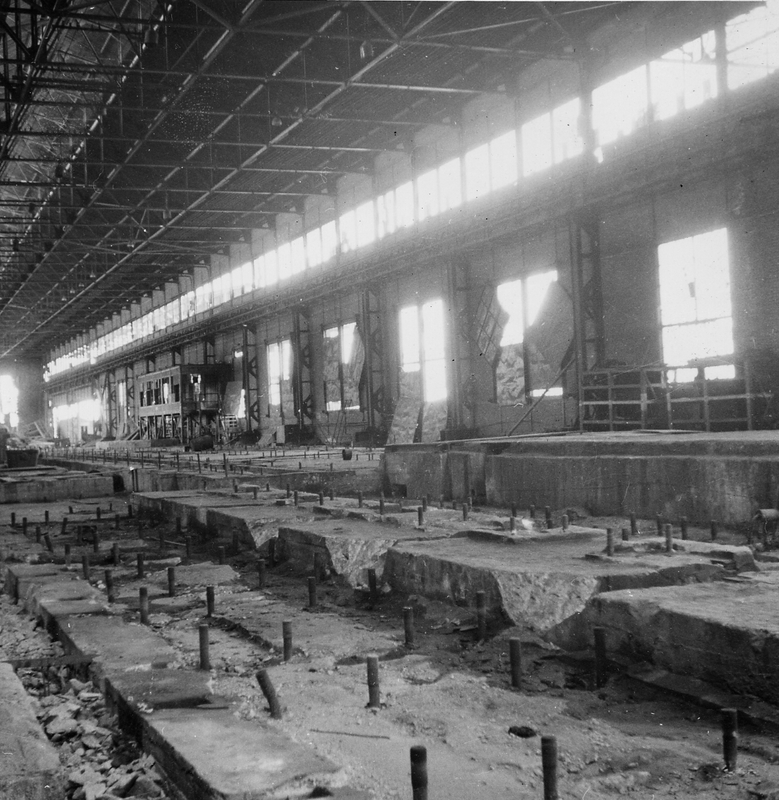
On the same day the Sino-Soviet Treaty of Friendship, Alliance and Mutual Assistance was signed, the two countries also concluded the Agreement on the Loan to the People's Republic of China. The Soviet Union committed to extending China a US$300 million loan over the five years from 1950 to 1954, at an annual interest rate of only 1%, with a repayment period of ten years. The funds were to be used to pay for machinery and equipment sold by the Soviet Union to China. The loan itself was not particularly large; what gave it its real weight was what it leveraged.
The 156 Projects were not negotiated in a single round. They were finalized in three batches: 50 projects in the first batch in 1950, 91 in the second batch in 1953, and 15 in the third batch in 1954 — 156 in total. Because some projects were subsequently adjusted, merged, or cancelled, 150 were actually built. The list covered virtually every foundational industrial category a modern nation requires. By end use, roughly 106 projects were civilian and 44 were for the defense industry; by sector, coal and electricity each accounted for approximately 25 projects, mechanical manufacturing for 24, with steel, non-ferrous metals, and chemicals each receiving significant allocations. Steel alone consumed roughly 45% of total investment.
Rescaling the magnitude of this list makes the impact more visceral. Economic historians have estimated, in 2020 US dollar terms, that the total investment in the 156 Projects and their ancillary works amounted to approximately US$80 billion — a figure equivalent to nearly half of China's GDP in 1949, and more than 1.4 times its total industrial output that year. Put differently, the industrial system the Soviet Union helped China build was, by itself, larger than the entirety of China's existing industry at the time aid began. One country effectively doubling another country's industrial output and then building further on top of it — that is the true weight of the word "foundations." This was not embellishment added to something already standing; it was a skyline raised from near-nothing.
Not Just Factories, but Capability in Full
The key to understanding the 156 Projects is grasping what the Soviet Union actually transferred to China. This was not a transaction in equipment; it was the transfer of a complete set of capabilities — the ability to design, build, and operate a modern factory.
A typical recipient enterprise illustrates the scope: Soviet counterparts handled approximately 70–80% of its design work and 50–70% of its equipment manufacturing; the remaining design and equipment was completed jointly by Soviet experts working alongside Chinese staff. Crossing the border alongside the machinery were enormous volumes of technical documentation: in 1953, the Soviet Union handed China technical blueprints and documents weighing 23 metric tons; in 1954, that figure was 55 metric tons. The Soviet side charged only for the cost of paper and reproduction; manufacturing licenses were provided free of charge.
This mode of transfer was exceptionally rare even in the history of industrialization. In ordinary technology trade, the selling party guards its blueprints, process parameters, and patents closely, ensuring the buyer acquires the product but not the capability to produce it. What the 156 Projects transferred was precisely capability itself: how to design the plant, how to install the equipment, how to get the process running, how to train the workers — delivered as a complete package. In fact, between 1950 and 1959, China imported 415 complete-equipment projects from the Soviet Union and Eastern European countries combined, of which 304 came from the Soviet Union alone — the "156" was the most central and emblematic part of a much larger network.
Economic history research provides an illuminating footnote on the value of this approach. A 2021 study by two economists compared two categories of factories: those that received both Soviet machinery and a systematic knowledge transfer — resident experts, personnel training — and those that received only the machinery. The results showed that the former significantly outperformed the latter over the long term, and that equipment transfer alone produced only short-lived effects. In other words, what determines how far a factory can go is not the steel and machine tools themselves, but the human capital and process knowledge embedded in them. The importance of the 156 Projects lies precisely in the transfer of the latter.
This distinction is critical for understanding the next seven decades. If the Soviet Union had transferred only equipment, the effect of that assistance would have faded as the machines aged and the technology became obsolete — China would have reverted to a country that needed to import everything. But because capabilities were transferred — the ability to design, to manufacture, to train the next generation of workers — the system carried within it the potential for self-renewal and self-replication. This is exactly what happened: the engineers who had studied in the Soviet Union in the 1950s became the core team that drove indigenous development in the 1960s; the experience of self-reliance forced upon China by the withdrawal of Soviet aid in the 1960s became the foundation of confidence from which China absorbed Western technology in the 1970s and 1980s. Once capability takes root in a country's people, it propagates across generations — this is the most enduring, and most easily underestimated, dimension of this founding act.
The Transfer of People: Experts, Blueprints, and Students
Industrial capability ultimately resides in people.
When the People's Republic was barely established, more than 600 Soviet experts were already working in China. The scale expanded rapidly; the peak years for Soviet experts coming to China were 1954 to 1956. Over the entire 1950s, the cumulative number of Soviet experts and technical personnel who came to China is estimated, depending on the source, at between 18,000 and 20,000 person-visits. They were deployed across factory floors, design institutes, mines, construction sites, and universities, translating blueprints into workshops and workshops into production lines.
The flow of people ran in both directions. Between 1950 and 1965, China sent 8,414 state-sponsored students to the Soviet Union — accounting for nearly 80% of all state-sponsored students sent abroad in the same period; in 1956 alone, 2,085 students were dispatched. In addition, some 7,800 technical trainees were sent to Soviet factories during the First Five-Year Plan period to learn operations and management in real production environments. These individuals went on to form the first generation of China's industrial technical talent. In virtually every factory under the 156 Projects, the factory director, chief engineer, and core technical staff had trained in the Soviet Union; among those who had studied there, more than 200 later became members of the Chinese Academy of Sciences or the Chinese Academy of Engineering.
Equipment ages; blueprints become obsolete; but people who have been trained do not. This was the most durable component of the entire transfer.
The Birth of an Industrial Geography
The 156 Projects were not distributed evenly across the map. Their placement logic balanced resources, transportation, and security considerations simultaneously. The Northeast, owing to its proximity to the Soviet Union and the industrial foundation left by Japanese occupation, absorbed the greatest number of projects — 56 fell across Liaoning, Heilongjiang, and Jilin; substantial allocations were made in central and western regions as well, with Shaanxi province alone receiving 24 projects; the eastern coastal regions were deliberately spared, for security reasons.
Wherever these projects landed, they frequently caused an industrial city to grow from an empty field.
Changchun. On July 15, 1953, the First Automobile Works (FAW) broke ground at Menjiatun in Changchun. Three years later, on July 13, 1956, the first batch of Jiefang heavy trucks — designed with reference to the ZIS-150 — rolled off the production line. They were the first automobiles manufactured by the Chinese themselves. Around this factory, Changchun grew into an "automobile city."
Anshan. The "Three Great Projects" at Anshan Iron and Steel — the seamless steel tube plant, the large-section rolling mill, and No. 7 blast furnace — went into production in rapid succession at the close of 1953: No. 7 blast furnace tapped iron on December 19; the large-section rolling mill entered production at the end of November; the seamless steel tube plant rolled China's first seamless steel tube on December 26.
And many more: the Wuhan Iron and Steel Works came on stream in 1958, with a designed annual steel capacity of 1.5 million tons; the No. 1 blast furnace at the Baotou Iron and Steel Works tapped its first iron in September 1959; the Luoyang First Tractor Factory produced the "Dongfanghong" crawler tractor in 1959; the First Heavy Machinery Plant in Fularji, Qiqihar, manufactured a 1,150 mm blooming mill and a 10,000-ton hydraulic press for Baotou Steel; and Harbin's three great power plants — boiler, steam turbine, and electric motor — began construction in succession from 1951, giving Harbin a monopoly on roughly one-tenth of the nation's capital construction investment throughout the entire 1950s, earning it the title of "Power Capital of the Republic."
The density and pace of these projects remains astonishing even today. Anshan's Three Great Projects entered production in the same December of 1953; factory after factory rose from the ground simultaneously across thousands of kilometers of territory. They were not isolated structures but arrived with complete supporting infrastructure — a steel plant required its own coking, power, and transport; a machinery plant required its own foundry, heat treatment, and tooling workshops. At Fularji, the First Heavy Machinery Plant was built from open ground, and the blooming mills and hydraulic presses it produced then became the mother machines that armed other steel plants. This chain capacity — using factories to build factories — is the fundamental distinction between a complete industrial system and a collection of isolated equipment.
One further dimension deserves to be remembered. When these factories were completed, many of the Chinese workers and engineers who operated them had never before encountered large-scale modern industry. It was the Soviet experts stationed on the shop floor, and the technical specialists who had returned from training in the Soviet Union, who taught the first generation of Chinese industrial workers — lesson by lesson, in the workshops — how to make this vast and complex system run in concert. A factory building can be erected in two or three years; teaching a population shaped by an agrarian society to think and work in the rhythms of industrial civilization takes far longer. Yet that hardest, slowest task also began during these years.
Steel city, automobile city, power city, machinery city — the industrial geography of China for the following decades was drafted on this map.
The Report Card of the First Five-Year Plan
In 1957, the First Five-Year Plan came to a close. Placed beside the starting point of 1952, the results are stark.
Steel output grew from 1.35 million tons to 5.35 million tons, roughly four times the level five years earlier; raw coal output rose from over 63 million tons to 131 million tons, doubling in volume; electricity generation climbed from 7.3 billion to 19.3 billion kilowatt-hours; annual production of metal-cutting machine tools grew from 13,700 to 28,000 units. For the first time, China could manufacture its own automobiles, aircraft, tractors, power generation equipment, and heavy machinery. The skeleton of an independent, relatively complete industrial system had been erected within these five years.
Placing this record in global context sharpens the contrast further. In 1949, China ranked below 20th in the world in steel output — an industrial nonentity for all practical purposes. By 1957, on the foundation laid by the 156 Projects, China's steel output had broken into the front ranks globally, and China appeared on the map of the world economy as an industrial nation for the first time. More significant still was the structural transformation: before this period, China could not manufacture automobiles, aircraft, tractors, power-generating units, or heavy machine tools; five years later, it could produce all of these. The passage from "must import everything" to "capable of basic self-sufficiency in industrial goods" typically spans the lifetimes of several generations; under the comprehensive Soviet assistance, China compressed it into less than a decade.
The other face of this system deserves acknowledgment too. It was built on the Soviet model — heavy industry first, emphasizing scale and centralization, with relatively weak linkages to light industry and household consumption. This model was highly efficient in the foundation-laying phase, capable of giving a country "industry" in the shortest possible time; but some of its structural biases left China's industrial development with imbalances that would require decades to work through. That is a story for later — but its seeds were sown in these five years of headlong advance.
It should be stated plainly that this assistance was not pure largesse. Most equipment was delivered through commercial arrangements; loans had to be repaid; the Soviet Union also had strategic calculations of its own, seeking to integrate China into the socialist camp's industrial division of labor and consolidate the bloc. After the relationship ruptured in 1960, the Soviet side also reinterpreted the assistance in terms of those strategic motivations. None of this, however, negates a basic fact: in the 1950s, one great power transferred an entire modern industrial system to another — through complete sets of equipment, comprehensive blueprints, fully organized contingents of experts, and systematic training. A transfer of this kind stands as genuinely rare in the history of human industrialization. It gave the metaphor of "teacher and student" its most solid grounding.
China's position at this point was that of the student, beyond any dispute. Virtually every unit of industrial capability it possessed had come from this teacher to the north. That starting point matters — because it is precisely from this position of deep dependency that the full weight of the next 77 years of history becomes visible.
II. Rupture: 1,390 Experts and the Half-Finished Projects (1958–1969)
The Rift: From Honeymoon to Divergence
The honeymoon ended sooner than most people imagine.
In October 1957, China and the Soviet Union signed the Agreement on New Technology for National Defense, under which the USSR pledged to assist China in rocketry, aviation, and atomic energy — an extension of the partnership into its most advanced frontiers. Yet within only a few months, cracks appeared. In 1958 the Soviet side floated two proposals: the construction of a long-wave radio station on China's coast and the formation of a joint Sino-Soviet submarine fleet. Both proposals touched on questions of sovereignty and were firmly rejected by China. That same year, the Soviet Union maintained a conspicuous public silence on certain domestic campaigns then under way in China. Divergences in ideology and national interest began to accumulate, and their effects quickly propagated through the chain of industrial and technological cooperation.
In June 1959, citing ongoing negotiations with Western powers over nuclear testing, the Soviet Union unilaterally abrogated the Agreement on New Technology for National Defense and halted the supply to China of atomic-bomb prototypes and related technical documentation. China's first atomic bomb was assigned the project codename "596" — taken from June 1959 — as a standing reminder that mastery of cutting-edge technology would ultimately have to be won by China itself.
Once the rift appeared, it widened at a startling pace.
The Summer of 1960: 1,390 Experts Depart
On July 16, 1960, the Soviet government delivered a note to China announcing the unilateral decision to recall all Soviet experts then working in the country. Between July 28 and September 1, 1,390 Soviet experts departed China in successive groups.
What left with them was more than people. Under the terms governing their departure, the experts were required to take all technical documentation with them; experimental data and equipment-calibration parameters that could not be transported were either packed and shipped back to the USSR or destroyed on the spot. At the same time, the Soviet Union unilaterally terminated nearly all of its cooperation contracts with China: 343 expert contracts and supplementary agreements were cancelled, and 257 science-and-technology cooperation projects were suspended — 600 in total.
For a country still building its industrial system on imported blueprints and imported expertise, this was a blow close to pulling the foundation from under the entire edifice. It struck at a moment when China's domestic economy was already facing severe difficulties, compounding two layers of pressure at once.
The Half-Finished Projects
The cost of the Soviet withdrawal was most plainly visible in the factories that were still under construction.
The hardest-hit sector was the nuclear industry. The first cohort of nuclear industrial plants and installations that China had begun to develop from 1958 onward were at varying stages of completion when the withdrawal struck: the uranium-enrichment plant at Lanzhou was the furthest along and had largely been completed; construction of the nuclear-fuel-element factory at Baotou was interrupted; at the Jiuquan Atomic Energy Complex, the military production reactor had only just had its foundation concrete poured; and the nuclear-weapons research and development base in the northwest had nothing beyond preliminary design documentation. When the Soviet experts departed, they took with them the critical technical materials for the nuclear-industrial system.
The civilian sector fared no better. One concrete example was a radio factory in Sichuan — one that would later grow into a well-known television manufacturer. Construction began in 1958, and by August 1960, when the Soviet experts withdrew, the equipment and instruments actually delivered by the Soviet side amounted to only about 40 percent of the original plan. The factory was forced to scale back its product range and output, and did not formally commence production until September 1965, years behind schedule. Half-finished projects of this kind were far from uncommon in those two years. To appreciate the full pressure borne by the industrial sector taken together: according to Chinese statistics, in the first half of 1961, state-owned factories fulfilled only a little more than 10 percent of their weapons-production plans.
This disruption was systemic precisely because China's industrial system had itself been designed on the assumption that the Soviet Union would always be present. Many factories' production processes depended on a continuous Soviet supply of some critical raw material or component. Many design drawings had been left only half-finished, awaiting Soviet experts to come to China and complete them. The calibration parameters for much of the equipment had never been committed to documents that could be consulted independently; they existed only in the expertise and memory of the experts themselves. When those experts departed collectively in the course of a single summer, what was stripped away was not any single component but the layer of tacit knowledge on which the entire system depended for its operation. It was the first time China's industrial sector felt this truth with acute pain: dependence on a single external source of technology means surrendering a portion of one's vital lifeline to another's hands. The price paid for that lesson was enormous — but the lesson was never forgotten.
Overnight, China found itself holding a collection of factories with no blueprints, no experts, and in many cases incomplete equipment. There was only one path forward: to finish building them, and to make them run, on its own.
A Self-Reliance Forged Under Duress
It was precisely under this extreme pressure that Chinese industry completed its first genuine internalization of capability.
One emblematic example is the 10,000-ton hydraulic press. Large forgings are the common foundation of heavy machinery, power equipment, and the defense industry, and forging them requires a large free-forging hydraulic press of 10,000-ton-class — equipment that had previously been sourced entirely from abroad. In 1958, a vice-minister of the First Ministry of Machine Building proposed that China develop such a press independently, drawing on Shanghai's technical resources. After four years of concentrated effort, a 12,000-ton free-forging hydraulic press completed its trial run in Shanghai in June 1962. During that effort, engineers used electroslag welding to join enormous components into a single integrated structure, circumventing the impossibility of casting such oversized forgings in one piece. In 1963, the First Heavy Machinery Plant in Qiqihar also completed a 12,500-ton hydraulic press. China thereby acquired the capability to forge heavy components for itself.
Still more symbolically significant was the nuclear weapon. After the Soviet Union cut off its nuclear assistance, China set its policy as self-reliance. On October 16, 1964, China's first atomic bomb was successfully detonated at Lop Nur, with a yield of approximately 22,000 tons. From the moment the prototypes were taken away to the moment China produced its own, five years had elapsed.
Synthetic ammonia, precision machine tools, certain categories of heavy equipment — across a series of key sectors, the Soviet withdrawal forced the breakthrough to domestic production. It was a period of heavy cost: it disrupted the rhythm of China's industrialization and delayed numerous projects by years. But it also left behind a legacy impossible to measure in money — for the first time, Chinese industry learned that, without a teacher, it could take a complex thing and build it from scratch. That experience of "we can do it ourselves" would be called upon repeatedly across the decades that followed.
The Third Front: Moving Industry Into the Mountains
If the Soviet withdrawal forced self-reliance at the enterprise level, the Third Front construction elevated the same logic to the level of national strategy.
In 1964, driven by war preparedness considerations, China decided to build a relatively independent and complete industrial system in the deep interior of central and western China — this was the Third Front construction. The concept was formally proposed in May of that year; in August, a large-scale industrial development plan for the southwest was approved, with the Panzhihua Iron and Steel Works, the Liupanshui coal mines, and the Chengdu–Kunming Railway designated as the highest priorities.
It was an industrial relocation and new construction effort of immense scale. From 1964 to 1980, cumulative investment in the Third Front construction totaled 205.26 billion yuan, accounting for approximately 39% of total national capital construction investment over the same period. More than 1,100 large and medium-sized industrial and mining enterprises, research institutions, and infrastructure projects were completed. At the peak of construction, the labor force mobilized exceeded 4 million people. In the period from 1964 to 1977 alone, some 380 projects, 145,000 workers, and 38,000 pieces of equipment were relocated from coastal areas to the interior.
On the banks of the Jinsha River in southwestern Sichuan, an iron and steel base was built from scratch on what had been barren hills. On July 1, 1970, Blast Furnace No. 1 of the Panzhihua Iron and Steel Works tapped its first iron — on the same day, the Chengdu–Kunming Railway, connecting Chengdu and Kunming through terrain of extreme geological difficulty, opened to traffic. In western Guizhou, Liupanshui established three large mining bureaus, becoming an energy base for the southwest. In Shiyan, Hubei, the Second Automobile Works broke ground.
The Third Front inventory extended far beyond steel and coal. It systematically moved defense industries, machinery, electronics, aerospace, and rail infrastructure into the mountains of the southwest and northwest — beyond Panzhihua, there were conventional-armaments bases in Chongqing, aviation and electronics bases in Guizhou and Shaanxi, and aerospace and nuclear-industry facilities in Sichuan. The Chengdu–Kunming Railway itself was an industrial marvel: it cut through the Hengduan Mountains, a zone that foreign experts had once declared "off-limits for railway construction," and connected the resource heartland of the southwest to the outside world through more than a thousand bridges and tunnels.
Evaluating the Third Front today requires holding two perspectives simultaneously. One sees the costs: the siting criteria placed excessive emphasis on "backing up to mountains, dispersal, and concealment," leaving many factories buried in remote mountains with extremely poor transport access. After the reform and opening-up, these facilities fell into prolonged difficulty because of their distance from markets and supply chains, and a substantial number ultimately had to relocate or restructure. The other perspective sees the legacy: deep in China's interior, it built an entire industrial depth that depended neither on the coastal regions nor on any external assistance. Many of the important industrial cities and industrial clusters of western China today trace their roots to that great migration which mobilized 4 million people. The true value of that depth lay not in whether it was economically efficient at the time, but in the way it reaffirmed the conviction wrested from the experience of the Soviet withdrawal — that a great nation's industry must ultimately be capable of standing on its own feet.
In March 1969, Chinese and Soviet forces clashed in an armed confrontation at Zhenbao Island on the border. This marked the moment when relations between the two countries hit their lowest point. From teacher and student working hand-in-hand in the 1950s to armed border confrontation at the end of the 1960s — in just ten years, the industrial and technological cooperation between China and the Soviet Union had been reduced to nothing. But it was precisely on the ruins of that nullity that China confirmed something for the first time: industrial capability can come from others, but it can also be grown from within. That conviction was the true starting point from which it would move into the next seventy years.
III. The Freeze and the Turn: Two Decades of Industrial Estrangement (1969–1991)
Twenty Years at Low Ebb
From 1969 to 1989, industrial relations between China and the Soviet Union were locked in a freeze that lasted two decades. Trade figures offer the most direct measure of that freeze.
In the 1950s, the Soviet Union had accounted for roughly half of China's foreign trade. By 1970, that share had fallen to 1%. Bilateral Sino-Soviet trade that year collapsed to under US$50 million — equivalent to roughly 2% of the 1959 peak, 1% of China's total foreign trade for that year, and just 0.2% of the Soviet Union's. This was the lowest point for bilateral trade in forty years of relations. There were modest recoveries thereafter, but throughout the 1970s, no new complete-plant contracts were signed between China and the Soviet Union, no new technical assistance was extended, and industrial and technological cooperation was almost entirely at a standstill.
For Chinese industry, this meant that what had once been its sole source of technology had closed its door.
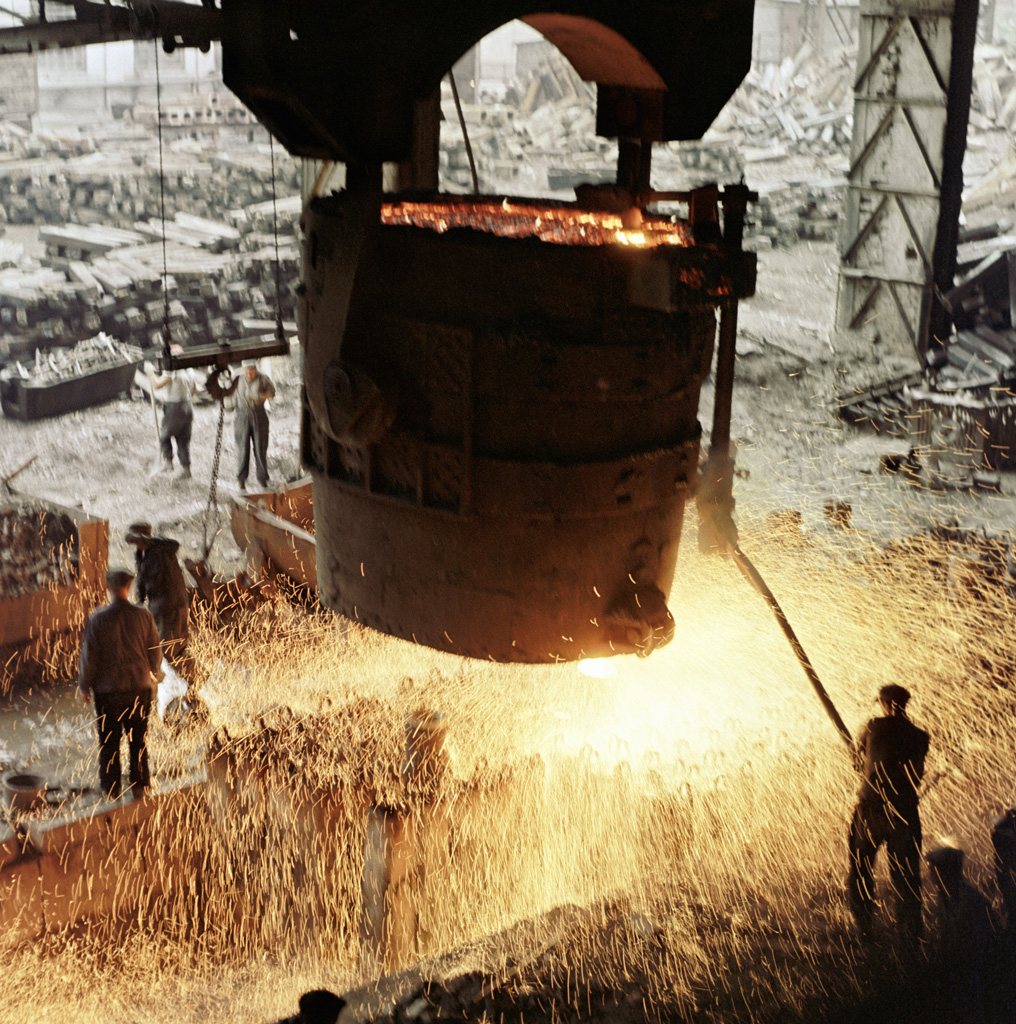
Technology Sources Change Direction
But Chinese industry did not stop moving. What it did was give itself a new source of technology — shifting from the Soviet Union to the West and Japan.
The first major shift came in the 1970s. In early 1973, the State Planning Commission formally put forward a proposal: to spend three to five years importing complete-plant technology and equipment worth US$4.3 billion from Western countries. This became known as the "4-3 Program" — a plan to import US$4.3 billion of complete plant and equipment. With subsequent additions, the total reached approximately US$5.18 billion. The import list was extensive: 13 large-scale fertilizer production lines, 4 large-scale chemical-fiber production lines, the Wuhan Iron and Steel Company's 1.7-metre rolling mill, comprehensive coal-mining equipment sets, power-generation equipment, and the well-known Spey aero-engine project. The source countries were the United States, West Germany, France, Japan, the Netherlands, and Italy. By 1982, all 26 major industrial projects in this batch had been completed and brought into production, becoming an important industrial underpinning of China's economy throughout the 1980s.
The weightiest component of this import program was those 13 large-scale fertilizer production lines. They were distributed across Heilongjiang, Sichuan, Hubei, Hunan, Guangdong, Shandong, and other provinces, each capable of producing hundreds of thousands of tonnes of synthetic ammonia and urea per year. The significance of this becomes legible only when placed in China's circumstances at the time: a country of nearly one billion people still struggling to be adequately fed had chosen to direct its scarce foreign exchange first and foremost toward fertilizer — because fertilizer meant grain. When these 13 installations began successive commissioning in the late 1970s, they significantly increased China's fertilizer supply, becoming one of the important pillars supporting agricultural output growth in the years that followed. The logic behind the 4 large-scale chemical-fiber production lines was identical: they addressed the clothing needs of one billion people.
The "4-3 Program" also carries a coordinate significance that is frequently overlooked: it was launched in the period around 1972, just as Sino-American relations were thawing. That timing speaks for itself: China's industrial technology imports had always followed the technology markets within its reach — wherever the most suitable technology was available, wherever the door was open, that was where China turned. From the exclusive dependence on the Soviet Union as a sole source in the 1950s, to the turn toward the West and Japan in the 1970s, China spent twenty years gradually freeing itself from the passive position of having "only one supplier." That diversification of sources was itself an industrial security consciousness purchased at the price of the withdrawal's pain.
The second, and more emblematic, turn was the Baoshan Iron and Steel Works (Baosteel). In December 1978, the China National Technical Import Corporation and Japan's Nippon Steel signed a general agreement in Shanghai for Baosteel's complete plant and equipment, with a total contract value of approximately 390 billion yen, or about US$2 billion; construction formally broke ground the following day. For this single project, over more than a year of negotiations from initial inquiry to contract signing, the Chinese side hosted delegations from seven countries — some 4,500 people in total came to China for discussions, and at the most intensive moments, 108 negotiating tables were operating simultaneously.
From 1979 onward, Japan also provided financing to China through Japanese ODA yen loans. By 2005, Japanese yen loans accounted for nearly 70% of all foreign government loan assistance received by China.
The significance of this turn cannot be overstated. It meant that by the 1970s and 1980s, Chinese industry's source of technology had made a complete transition from the Soviet model to the West and Japan. China was no longer a student with only one teacher — it had learned to shop around in the global technology market, comparing options and selecting the most suitable. And throughout those full two decades, the Soviet Union's contribution to the technological development of Chinese industry was a complete blank.
The Thaw: Twelve Rounds of Consultations and a Handshake
The other face of the freeze was a slow thaw.
As the 1980s progressed, China and the Soviet Union began trying to break the impasse. China put forward the "three obstacles" that would need to be cleared for the normalization of relations — the Soviet support for Vietnam's invasion of Cambodia, the Soviet military buildup along the Sino-Soviet and Sino-Mongolian borders, and the Soviet armed occupation of Afghanistan. Beginning in October 1982, special envoys from both governments entered into consultations, conducting twelve rounds over six years. In 1986, the Soviet leader spoke at Vladivostok, signaling an intention to withdraw forces from some directions — a turning point in the normalization process. In fact, as early as 1984, the two countries had already signed an agreement on economic and scientific-technological cooperation and established a joint cooperation commission — the channel for industrial and technological cooperation had quietly been reopened before the political relationship formally broke the ice.
In May 1989, Soviet leader Gorbachev visited China. This was the first time a supreme Soviet leader had set foot on Chinese soil since Khrushchev's visit to China in 1959 — a gap of thirty years. Deng Xiaoping summarized the meeting in eight characters: "close the past, open the future." Sino-Soviet relations had, at this point, achieved the normalization of relations.
But this thaw was fundamentally different from the honeymoon of the 1950s. China no longer needed the Soviet Union to serve as its industrial teacher. Through projects such as the "4-3 Program" and Baosteel, Chinese industry had upgraded and transformed itself; its technological appetite had turned toward more advanced Western equipment. What was reconnected between China and the Soviet Union was more in the nature of routine commercial exchange based on complementarity, rather than the all-in mentoring relationship of earlier years.
Small-Scale Trade Along the Border
The economic and trade recovery that normalization brought was felt first along the border.
In 1983, Sino-Soviet border trade, which had been suspended for many years, was officially resumed, conducted primarily along the Heilongjiang frontier in the northeast and the Xinjiang frontier in the northwest. The initial scale was small — border trade on the Heilongjiang side in 1983 amounted to only about 6.3 million rubles. But it grew quickly. By 1988, Heilongjiang Province's border trade with the Soviet Union had approached 200 million Swiss francs, nearly five times that of the previous year, equivalent to the cumulative total of many preceding years combined. In the same year, border trade with the Soviet Union via Inner Mongolia reached 126 million Swiss francs.
In 1988, China devolved authority over border trade to the border provinces and autonomous regions and successively opened a batch of border ports of entry, including Manzhouli, Erenhot, and Suifenhe. A form of trade highly characteristic of its era then took hold: the Soviet Union exported to China outdated equipment and raw materials that it was unable to sell in Western markets; China exported to the Soviet Union light industrial consumer goods and everyday commodities; and both sides made extensive use of barter trade to conserve scarce hard currency.
This small-scale border trade was not technologically intensive, yet it presaged a new structure — the Soviet Union (and later Russia) began supplying China with its surplus resource-based products, while China began supplying the other side with its increasingly abundant manufactured goods. This structure would continue to expand over the following thirty-plus years.
The Collapse of an Industrial Giant
Just as Sino-Soviet relations were beginning to warm again and a new economic and trade structure had barely taken root, one side of the story suddenly ceased to exist.
The scale of Soviet industry must first be stated before the meaning of its collapse can be grasped. In the 1980s, Soviet industrial output was approximately 80% that of the United States; Soviet crude steel production held the global top position for many years, surpassing 160 million tonnes in 1988 — roughly twice the American figure for the same year. The Soviet Union possessed a military-industrial system of staggering size: defense enterprises were concentrated under nine major industrial ministries, comprising approximately 1,770 enterprises; the direct military-industrial workforce exceeded 10 million, and with associated civilian support industries, the total population employed in defense-related sectors was over 12 million. This was an industrial giant in every sense of the term.
But within this giant's body lay a structural weakness. Soviet industrial resources were allocated with extreme bias toward the military sector — by Western estimates, military industry and its associated sectors consumed a substantial share of Soviet machine-building output and also absorbed the finest tier of the country's scientific and technical talent. This system excelled at producing tanks, rockets, and submarines, yet was chronically unable to supply its own population with adequate, decent consumer goods. Its steel output was the highest in the world; its civilian industry was inefficient and stagnant with innovation. When international oil prices collapsed in 1986 and drained away the foreign exchange on which the Soviet Union relied for support, this top-heavy industrial system lost its last buffer.
This juxtaposition carries deep significance. What China had learned from the Soviet Union in the 1950s was precisely the heavy-industry-first path of industrialization; yet by the 1970s and 1980s, through projects such as the "4-3 Program," China had actively directed its precious resources toward fertilizer and chemical fibers — sectors directly connected to the people's basic welfare. In answering the question of "what industry is ultimately for," the two countries had gradually arrived at different answers. The tragic end of the Soviet industrial system is a reminder: if industrial capability cannot continuously translate into improvements in ordinary people's lives, the sheer scale of that capability is not, by itself, sufficient to keep a system alive for long.
In December 1991, that giant collapsed. A single country fractured into fifteen. Even before and during the dissolution, the economy had already fallen into severe contraction; and for Russia — which inherited the bulk of the Soviet Union's industrial legacy along with the bulk of its military-industrial apparatus — the real shock was still to come. From 1991 to 1998, Russia's GDP contracted by an estimated 40%.
A country that had once taught China to build its industry, hand by hand, had in the blink of an eye found its own industrial system plunged into an unprecedented crisis. History here completed one of its most characteristic and least expected reversals: when the next chapter of the China-Russia industrial relationship opened, the one in need of a lifeline would be the former teacher.
IV. A Window of Mismatch: The Arms-Trade Decade (1991–2000)
Industry in Freefall
To understand the industrial relationship between China and Russia in the 1990s, one must first see clearly the true condition of Russian industry at the time — a condition of free-fall collapse.
From 1989 to 1998, Russia's economy contracted by a cumulative approximately 45%, a decline exceeding that of the United States during the Great Depression. The ruble crisis of 1998 marked the lowest point of this recession. Industry — above all the military-industrial complex that had once been Russia's greatest source of pride — suffered the most lethal blow: from 1991 to 1997, the output of Russia's defense industry fell to less than 9% of its 1991 level, meaning it shrank by more than 90% in six years. By 1997, average capacity utilization at military-industrial facilities stood at only about 20%; more than 200 defense enterprises had been declared insolvent; the Defense Ministry's arrears to the defense industry ran into the tens of billions of rubles, a substantial portion of which consisted of unpaid wages. Attempts to convert military production lines to civilian goods had already been declared a failure by 1993.
People were leaving too. In the first half of the 1990s alone, approximately 80,000 scientists emigrated abroad. An industrial and scientific system built over decades through the resources of an entire nation was rapidly hemorrhaging.
For such a system, the most pressing need was not development but survival. And what could keep it alive was orders — especially hard-currency orders from abroad.
A Lifeline of Orders
It was precisely at this moment that China became the most important customer of Russia's military-industrial complex.
In the 1990s, although China's industry had completed its basic upgrade, it still lagged noticeably behind the world's leading edge in the most advanced domains — aviation, naval forces, and air defense. Russia, for its part, held exactly the high-end equipment that China could not yet manufacture and was eager to sell for cash. Supply and demand thus found each other.
In 1991, China signed a contract with the Soviet Union (subsequently assumed by Russia after its dissolution) to purchase 24 Su-27 heavy fighter jets at a contract price of about US$1 billion; the aircraft were delivered in 1992. This was the first genuinely modern heavy fighter China had ever acquired. China subsequently placed two additional orders, bringing the total number of Su-27-series aircraft introduced — including the initial batch — to approximately 46. In 1996, Sukhoi signed an agreement with the Shenyang Aircraft Corporation authorizing the latter to assemble 200 Su-27s from knock-down kits and to progressively raise the domestically produced content. In 1999, China signed a contract to procure the Su-30 multi-role fighter. On the naval front, in 1996 China ordered the Sovremenny-class destroyer, equipped with supersonic anti-ship missiles, and successively acquired four Kilo-class conventional submarines.
Behind each order lay a concrete effort to fill a specific capability gap. The Sovremenny-class destroyers China acquired carried supersonic anti-ship missiles that navies around the world regarded with considerable wariness at the time; they addressed the gap in China's long-range naval air defense and anti-ship capabilities. The Kilo-class submarines, renowned for their quietness, addressed the gap in underwater forces. The S-300 air-defense system acquired from Russia provided an important technical reference for China's subsequent development of long-range surface-to-air missiles. These acquisitions shared a common thread — China was never buying merely the piece of equipment itself, but rather the technology and manufacturing know-how behind it that China could not yet produce on its own.
The rhythm of the arms trade is also telling. In 1996, China and Russia elevated their bilateral relationship to the strategic partnership of coordination — it is on record that the weightier formulation "strategic coordination" was proposed on the spot by the Russian foreign minister while en route to China, as a replacement for a weaker original phrase. The political elevation was promptly translated into an expansion of arms trade: also around 1996, the contracts for the Sovremenny-class destroyers and for license production of the Su-27 in China were concluded in succession. Political relations paved the way for industrial cooperation, and industrial cooperation in turn added substance to the political relationship — a pattern of interaction that would recur over the following decades.
Viewed together, these orders add up to a considerable sum: from 1990 to 2005, China acquired some 270 Su-27 and Su-30 series aircraft at a total price exceeding US$10 billion. From the 1990s through the mid-2000s, more than 80% of China's arms imports came from Russia; and from Russia's perspective, China was its largest arms-export customer during those years, at times accounting for 30 to 60% of Russia's total arms exports.
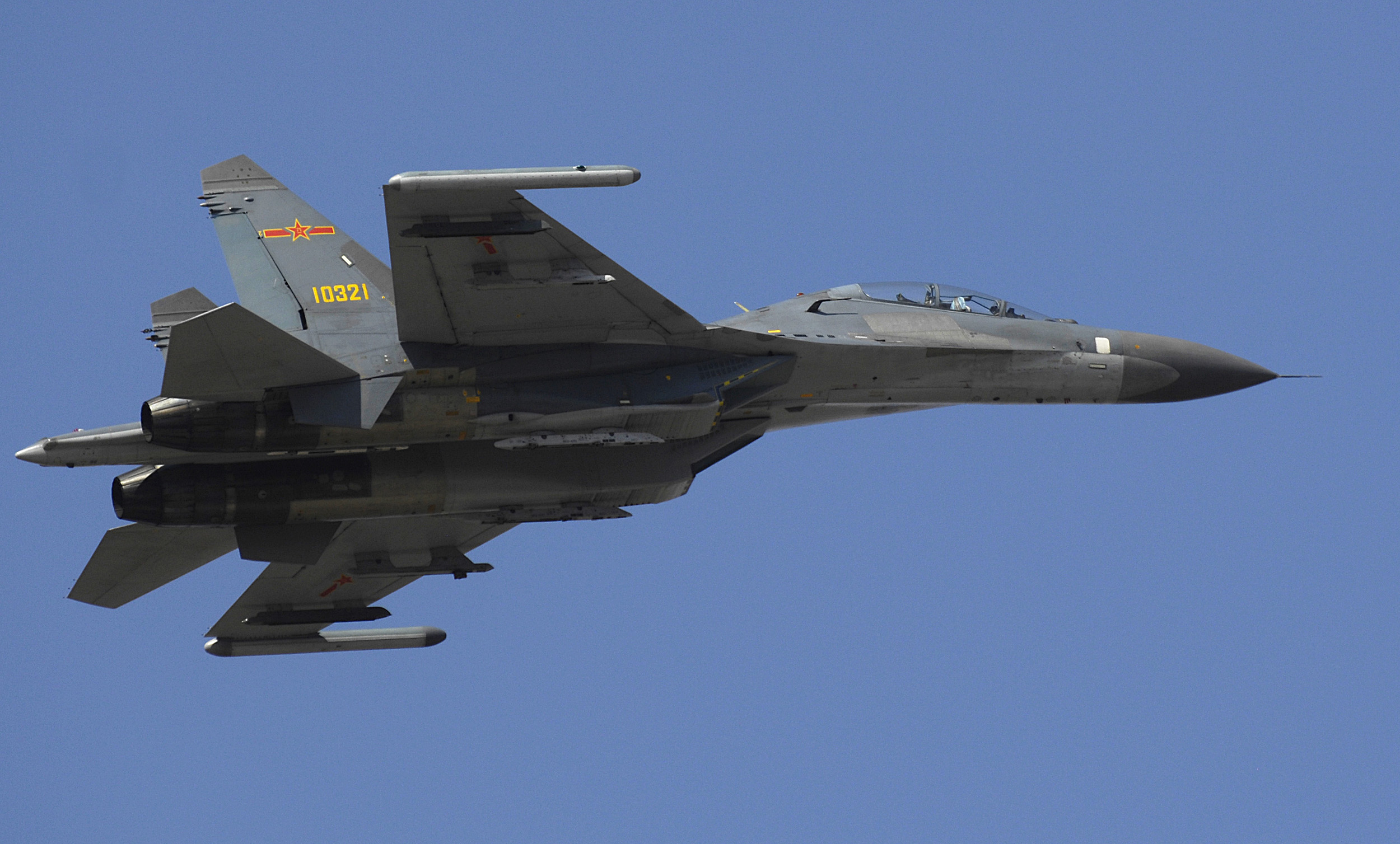
For Russia's defense enterprises, these orders were a genuine lifeline. The aircraft factory at Komsomolsk-on-Amur is the most telling example — in early 1995, it had been forced to shut down for six months due to a complete lack of work; yet sustained by China's continuing orders, it weathered the shocks of the 1990s noticeably better than other Russian military-industrial facilities. Another detail that speaks volumes: in those years, the number of Su-27s ordered by China exceeded the number ordered by the Russian Air Force itself. By 1996, Russia's defense industry was exporting more than it was selling domestically — that a nation's military-industrial complex had to rely on exports to keep running was itself an eloquent statement of its predicament.
Not Just Buying — Learning
What China did during this decade was not simply "buy equipment." It did something far deeper — it turned acquired capability into its own capability.
The introduction of the Su-27 gave China's aviation industry its first opportunity to study a modern heavy fighter at close range: its aerodynamic configuration, its high-thrust turbofan engines, its fire-control radar. Around this aircraft, China launched a systematic process of introduction, assimilation, and re-innovation. By around 2007, a domestically developed fighter known as the J-11B made its public appearance: it retained the aerodynamic layout of the Su-27, but its radar, avionics, weapons systems, and even its engine had all been replaced with Chinese-made products. Chinese sources stated its domestically produced content had reached about 90%. It is worth noting that the contract to assemble 200 Su-27s was terminated by China early, after approximately 100 had been assembled, as China turned its resources toward indigenous development — because it had already learned what it needed to learn.
The process was by no means easy. The hardest bone to gnaw was the engine. The domestically developed Taihang turbofan engine had an elevated early failure rate, with reports of requiring a major overhaul every 30 hours of flight time, while the Russian engine it was benchmarked against had an overhaul interval of approximately 400 hours at the time. China spent many more years closing that gap. It illustrated a simple truth: the most core and least transferable part of industrial capability never arrives automatically just because one has obtained a sample aircraft — it can only be accumulated through long, painstaking, trial-and-error effort.
There was also a dimension of "learning" that took place at the level of industrial organization. To absorb the Su-27, China did not simply task a single aircraft factory with replicating a single aircraft; it activated an entire supporting supply chain — engine factories, radar manufacturers, avionics plants, materials research institutes, and airborne-weapons manufacturers were all drawn into a concentrated effort organized around a single airframe. The domesticization of one fighter aircraft ultimately drove capability upgrades across hundreds of supplier enterprises. This was the genuine value of the introduction, assimilation, and re-innovation pathway: it transformed a one-time procurement into a broad-based advance across an entire industrial network.
By contrast, what Russia was able to do in the same period was to monetize the designs and production lines left behind by the Soviet Union. It held world-class legacy technology, but lacked sufficient capital and markets to continuously push that technology forward. The two countries' activities in the 1990s, though seemingly revolving around the same handful of weapons systems, pointed in diametrically opposite directions: one side was liquidating the savings of an old system, while the other was accumulating the capital for a new one. Ten or twenty years on, those two directions were bound to carry them to entirely different positions.
In the view of the Tianxia Gongchang Industrial Research Institute, the Sino-Russian arms trade of the 1990s offers an exceptional case study for observing how industrial capability determines relational position. On the surface, this was a rare window in this 77-year history during which Russia briefly regained the technological upper hand — in those categories of high-end equipment, Russia was the seller, the holder of the technology. But this "upper hand" was partial and fragile: it rested on an economy that was undergoing wholesale deindustrialization. What Russia could sell to China was the legacy technology in its inventory; what China did after acquiring it was to convert that stock into its own sustainably growing capability. Between the side selling stock and the side buying the means to grow incrementally, time would deliver its verdict on which position was the more durable.
Arms Trade Running Hot, Overall Trade Running Cold
A necessary counterpoint: the heat of the arms trade did not represent the full picture of Sino-Russian commerce across the 1990s.
The civilian trade figures were in fact quite erratic. Sino-Russian bilateral trade stood at approximately US$3.9 billion in 1991, grew to about US$5.8 billion in 1992, surged to a cyclical peak of about US$7.7 billion in 1993 — then plunged by about one-third in 1994, as Russia tightened border controls and cracked down on the informal "gray trade" that had previously flourished. Throughout the 1990s, civilian Sino-Russian trade languished at low levels, recovering to only about US$8 billion by 2000. The trade structure was equally rudimentary: Russia exported weapons, machinery, fertilizers, timber, and non-ferrous metals, while China exported textiles, clothing, and light consumer goods — the other end of what was colloquially known in Russian markets as the cross-border "border goods" trade.
That cross-border "border goods" trade carries, in retrospect, a peculiarly vivid period quality. Throughout the 1990s, large numbers of Chinese individual traders, laden with bulging bags, poured across border crossings such as Manzhouli and Suifenhe into Russia, exchanging Chinese down jackets, sneakers, and thermos flasks for Russian steel, fertilizer, and even secondhand equipment. It was a rough-and-ready trade, with thin margins but full of vitality. Its statistics swung up and down, and it generated no small number of quality and order-related problems — the sharp drop in trade volume in 1994 was directly related to Russia's crackdown on this freewheeling commerce.
Yet even this most unremarkable form of trade was already sketching the outline of a structure that would later become unmistakably clear: China sending manufactured goods northward, Russia sending raw materials southward. In the 1990s, this manifested as border-town barter of down jackets for steel; some 30 years later, it would manifest as trainloads of Chinese automobiles exchanged for pipelines full of Russian crude oil — the form of the transactions utterly transformed, yet the direction invariably the same. Once a structure takes shape, it tends to prove more stubborn than anyone's intentions.
Diplomatic relations, for their part, warmed steadily. In late 1991, China and Russia formally established diplomatic relations; in 1992, Yeltsin made his first visit to China and the two sides declared each other friendly states; in 1996, the two countries established the strategic partnership of coordination. This political framework provided a foundation for the expansion of arms trade and laid the groundwork for even larger-scale cooperation in the next phase.
Ultimately, however, the 1990s were a decade of mismatch. Two countries — one liquidating its inheritance in the midst of collapse, the other stockpiling capability in the midst of catch-up. They traded with high intensity through the narrow window of arms sales, while outside that window, Russia's industry contracted across the board. This mismatch could not persist indefinitely. When Russia caught its breath on the back of recovering commodity prices, and when Chinese manufacturing entered its true period of takeoff, the scales of the two countries' industrial relationship would tilt in a direction that could not have been clearer.
V. Energy and the Balance: The Making of Strategic Coordination (2000–2014)
A New Treaty
In 2000, Putin assumed the Russian presidency. The following July, the heads of state of China and Russia signed the Treaty of Good-Neighborliness and Friendly Cooperation in Moscow.
The weight of this treaty merits specific mention. It gave the two countries' strategic partnership of coordination a legally binding form, with a validity of 20 years (in 2021, the two countries announced a renewal). It explicitly listed both parties' obligations to pursue cooperation in trade, energy resources, transportation, nuclear energy, finance, space, information technology, and other fields. Notably, the treaty contained no clause for a military alliance — it defined the relationship as close but deliberately open-ended coordination. From this point on, Sino-Russian economic and trade cooperation had a stable top-level framework.
And within this framework, the most important story of Sino-Russian industrial and commercial relations in the 2000s was written in a single word: energy.
Oil from the North
Russia had oil; China needed oil. The two facts, in combination, should have made for an obvious match — yet actually forging them into a steel pipeline took many years.
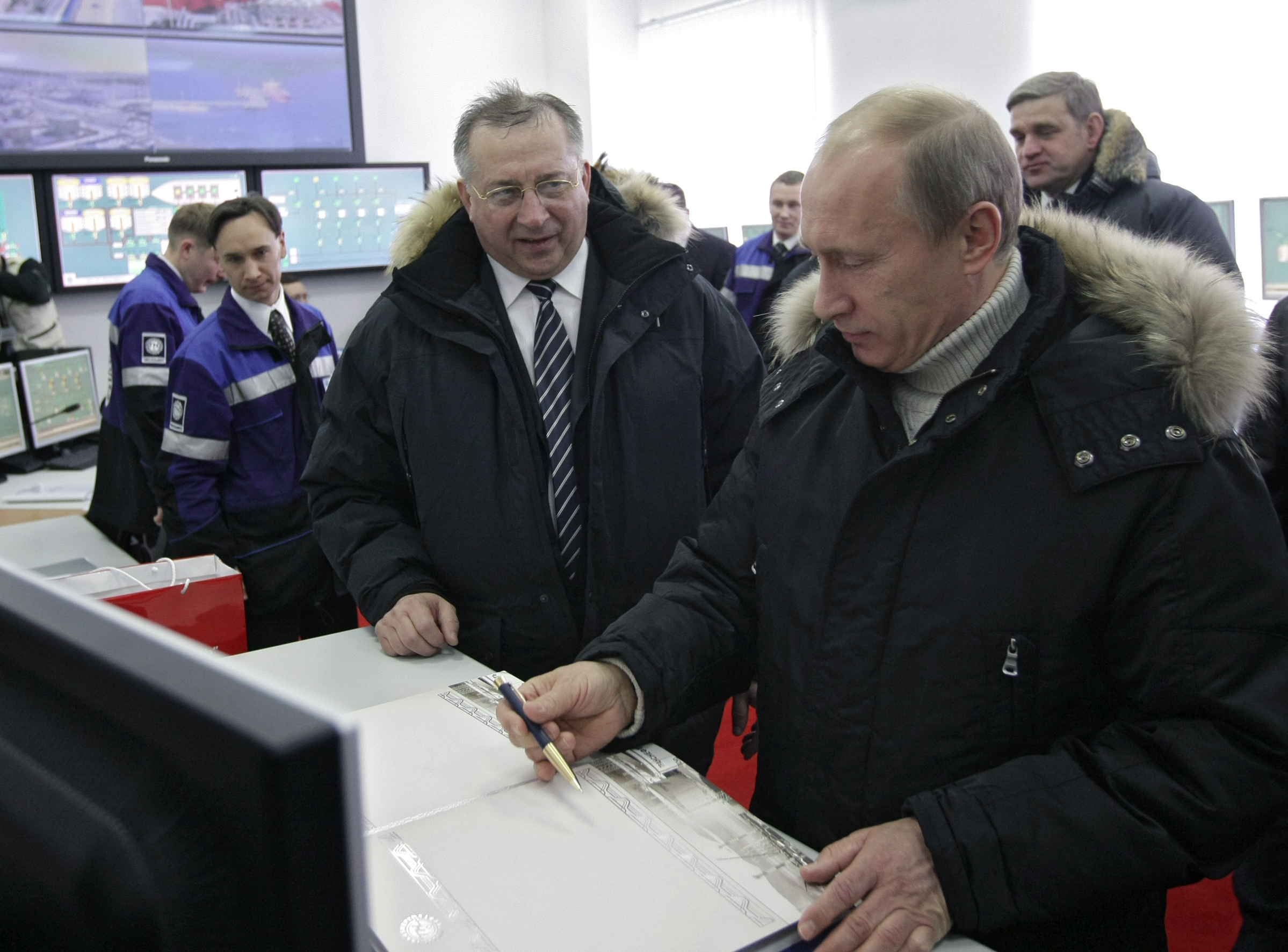
In 2006, Russia launched a large-scale trunk pipeline — the Eastern Siberia–Pacific Ocean (ESPO) oil pipeline, often referred to in Chinese by the transliteration of its Russian acronym. This trunk line was built with the goal of routing Russian oil toward the Asia-Pacific. On its basis, a dedicated branch line to China was placed on the agenda: running from Skovorodino in Russia, through Mohe in China, all the way to Daqing. The Chinese section of this branch was approximately 992 kilometers long; construction began in May 2009, and the pipeline began delivering oil to China in January 2011, with a designed annual capacity of 15 million tonnes. By 2018, a parallel pipeline had been completed, doubling the annual oil-delivery capacity to China.
The difficulty with which this pipeline was realized deserves a brief elaboration. The ESPO trunk line itself was a project of enormous scale — thousands of kilometers in total length, routing crude oil from the depths of Siberia all the way to the Pacific coast, with total investment running into the tens of billions of dollars. Years of negotiations surrounded the trunk line's routing, and the question of how and when the branch to China should be built. What ultimately pushed the project from blueprints to construction was the global financial crisis of 2009 — the crisis left Russia's energy companies in urgent need of cash, and for the first time gave the branch line to China sufficient momentum to break through the negotiating impasse.
A pattern appears here that would recur repeatedly: the most significant energy projects between China and Russia were rarely concluded when bilateral relations were at their warmest, but rather when Russia's external circumstances had become more difficult — and when Russia therefore needed China as a buyer more urgently. Energy pipelines are long-term commitments forged in steel, and what often brought those commitments into being was a relative decline in the seller's bargaining power. This pattern would repeat itself five years later, with the natural gas pipeline.
For the first time, China had an energy artery connected directly overland to Russian oil fields — bypassing maritime shipping, bypassing any third party entirely. For a major industrial nation with a steadily rising dependence on oil imports, the strategic value of this pipeline extended far beyond the crude oil it transported.
"Loans for Oil"
Behind this pipeline lay a transaction that speaks volumes about the two countries' relative positions.
In 2009, amid the international financial crisis, Russia's oil and pipeline companies urgently needed capital. In February of that year, China and Russia agreed on an arrangement whereby China Development Bank would extend a total of US$25 billion in loans to Rosneft and Transneft at an annual interest rate of 6%; in return, Russia committed to supplying China with approximately 15 million tonnes of crude oil annually over 20 years.
This transaction came to be summarized as "loans for oil." Its structure was itself a snapshot of the two countries' relative positions: the side providing the capital was China; the side providing the resource was Russia. In the 1950s, it had been the Soviet Union that used loans to leverage the transfer of an industrial system to China; by 2009, it was China that used loans to lock in a long-term resource supply from Russia. The same "loans for ——" structure, but the subject and object had quietly traded places.
The Scales Tip Decisively
To see this shift in positions clearly, the hardest data point is economic output.
In 2000, China's gross domestic product (GDP) was already several times that of Russia. Under Putin's leadership, Russia used the sustained rise in oil and gas prices over the following decade-plus to rebuild its economy and narrow part of the gap — but it could not reverse the overall picture. By 2014, China's GDP stood at approximately US$10.4 trillion against Russia's approximately US$2.1 trillion, with China's economy roughly five times the size of Russia's. In 2009, the year of the financial crisis, the two countries' economic trajectories formed a glaring contrast: Russia's economy contracted by nearly 8%, while China's still grew by more than 8%.
The trade figures tell the same story. Sino-Russian bilateral trade grew from approximately US$8 billion in 2000 to approximately US$95.8 billion in 2014 — a roughly twelvefold increase over 14 years. In 2010, China surpassed Germany to become Russia's largest single trading partner.
The 14 years of trade growth did not trace a smooth straight line; its fluctuations themselves record the differing resilience of the two economies. In 2008, bilateral trade volume surged to a high of approximately US$56.8 billion; then the financial crisis struck, and in 2009 it fell by approximately one-third, retreating to approximately US$38.8 billion; it then rebounded strongly, growing by approximately 40% in 2011 to break through US$79 billion. Plotting this curve against each country's own economic trajectory reveals that in every crisis, fluctuations on Russia's side were more violent — because its exports were heavily dependent on commodity prices, and commodity prices were precisely what swung most violently in a crisis.
A resource-export-oriented economy and a manufacturing-and-finished-goods-export-oriented economy do not bear the same burden when facing the same global shock. The seller of raw materials has its prices dictated by others; the seller of finished goods retains at least partial control over pricing and upgrading. This difference was already dimly visible in 2009; after 2014 it would become even more stark.
But more interesting than the aggregate figures is the trade structure. By this period, mineral fuels — primarily crude oil and petroleum products — accounted for more than 60% of Russia's exports to China; add in timber and non-ferrous metals, and resource-type products constituted the overwhelming majority. China's exports to Russia, by contrast, consisted of machinery and electrical equipment, transportation equipment, and various categories of manufactured goods. One country selling resources, the other selling manufactures — Western think tanks later described this structure in blunt terms, calling it a relationship of "economic unequal partners."
This is precisely the core evidence for the reversal of teacher and student. In the 1950s, the Soviet Union exported industrial capability to China — equipment, blueprints, and technology; by the 2010s, the dominant content of Russia's exports to China had become unprocessed or minimally processed resources. The party providing finished goods and technology, and the party providing raw materials, occupy different positions in the international division of labor — and over 60 years, the two countries had traded places in those two positions.
This reversal should not be understood simply as one party's "victory" or the other's "defeat." Resource exports represent a reasonable monetization of Russia's factor endowments; its oil, gas, mineral deposits, and timber are genuine wealth. The issue lies in what accompanies each position: in a "resources for manufactures" structure, the party producing finished goods controls the direction of technological iteration and commands the ability to continuously add new value to its products and price accordingly; the party producing resources has its income tied more closely to international commodity prices that it cannot itself determine. An economy that manufactures — and manufactures ever more complex things — and an economy that derives its income primarily by selling what lies beneath the ground, do not face the future with equal equanimity. This is why the reversal of teacher and student, though a description of position, is simultaneously a description of trajectory.
A Natural Gas Deal That Could Not Be Closed
Yet Sino-Russian energy cooperation in this period was by no means plain sailing. The most telling example was natural gas.
As early as 2006, Russia had proposed a scheme to supply gas to western China — routing a pipeline through the Altai region, with a planned annual delivery capacity of 30 billion cubic meters. But this project went through round after round of negotiations without ever reaching agreement. Two issues blocked it: first, the route. Russia preferred the western alignment, which was closer to existing gas fields and lower-cost for Russian purposes; China considered the western route too far from its main gas-consuming markets and preferred an eastern alignment. Second, price. At one point the gap between the two sides' figures reached as much as US$100 per thousand cubic meters; China demanded pricing referenced to the relatively low prices it paid for Central Asian gas, while Russia sought prices approaching what it charged European customers.
These negotiations dragged on for nearly 10 years. They illustrated a simple reality: in a structural relationship of this kind between China and Russia, the seller of resources does not always get its way — when the buyer has multiple gas sources available and ample bargaining power, it has every reason not to be in a hurry. The conditions under which this natural gas pipeline would ultimately be signed, and at what price, belong to the story of the next phase. And what would bring it about would not be concessions at the negotiating table, but a sudden and dramatic change in Russia's external circumstances beyond the negotiating table.
VI. Lifeline: The Deepening of Asymmetry (2014–2026)
The Pivot to the East
2014 was a turning point. After that March, Russia's relations with the West deteriorated sharply, and Western sanctions were imposed on Russia. Russia promptly enshrined "the pivot to the East" as a formal national strategy.
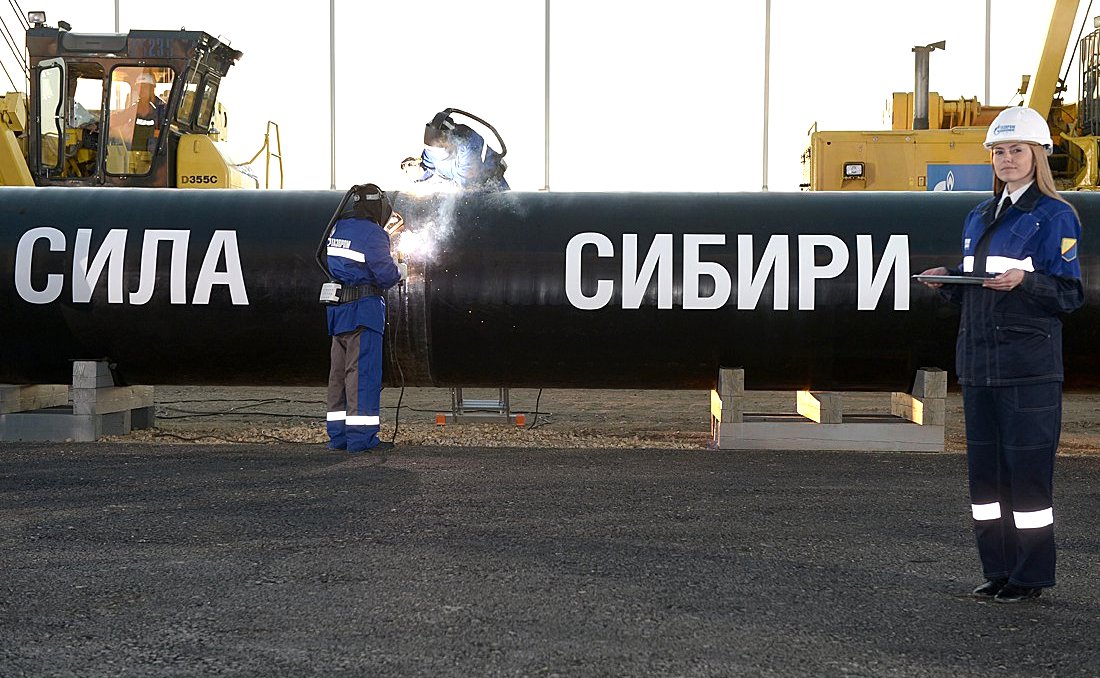
In May 2014, Putin visited Shanghai and signed dozens of economic cooperation agreements with the Chinese side. It was also during that visit that the natural gas pipeline known as Power of Siberia — a project that had been under negotiation for nearly a decade without resolution — was finally signed. The contract ran for thirty years, reportedly valued at about US$400 billion at the time, with a designed annual gas-delivery capacity of 38 billion cubic meters.
Worth noting is the timing of the signing. Power of Siberia was concluded in May 2014 not because of any breakthrough in negotiating skill, but because Russia's external circumstances had changed — as the door to the West narrowed, Russia needed to lock in an Eastern buyer without delay. In other words, it was a shift in the external environment that redistributed leverage at the negotiating table. This dynamic would repeat itself again and again in the story that followed.
The effects of "the pivot to the East" were not immediately apparent in its first few years. China-Russia trade grew 6.8% in 2014, reaching about US$95.3 billion, but then fell sharply by nearly 30% in 2015. The genuine redirection of trade — the moment when the pivot transformed from a political declaration into commercial reality — would have to wait until after 2022.
A Pipeline Running Gas
The Power of Siberia pipeline broke ground in September 2014 and began supplying gas to China in December 2019. The gas-delivery volumes that followed tell a revealing story of incremental ramp-up.
In 2020, the pipeline delivered approximately 4.1 billion cubic meters over the full year. That figure rose to 8.2 billion in 2021, 15.4 billion in 2022, 22.7 billion in 2023, and reached 31.1 billion cubic meters in 2024. In December 2024, daily deliveries through the pipeline reached the contractually agreed maximum for the first time — equivalent to an annual rate of 38 billion cubic meters — approximately one month ahead of the originally scheduled full-capacity date.
Adding seaborne liquefied natural gas (LNG), Russia's total gas supply to China in 2024 reached approximately 42 billion cubic meters, making Russia China's largest source of natural gas imports. For context: in 2020, Russian gas accounted for roughly 3% of China's natural gas consumption; by 2024, that share had risen to approximately 10%.
A pipeline running gas has welded the two countries' energy relationship more firmly together. But a pipeline locks both parties in — it both secures China's gas supply and binds a substantial share of Russia's natural gas exports to a single buyer: China. The meaning of this mutual lock-in is not the same for buyer and seller.
More Than Natural Gas
Natural gas is only one corner of the China-Russia energy landscape. After 2022, as Russia's traditional energy export markets contracted, China's share of Russia's energy exports rose across the board.
In crude oil, China imported approximately 108 million tonnes from Russia in 2024 — equivalent to more than 2.1 million barrels per day — a record high. Russia became China's largest crude oil supplier for two consecutive years, displacing the Middle Eastern producers that had long held that position. In coal, Russia also held steady as China's second-largest import source. Taken together — pipeline gas, seaborne LNG, crude oil, and coal — Russia has become a genuinely major energy supplier to China.
Yet this energy interdependence is itself an asymmetric interdependence. For China, Russia is a highly important member of its diversified energy supply base, but not the only one: its crude comes from multiple sources across the Middle East, Africa, and the Americas, and its natural gas arrives through pipelines as well as LNG terminals spanning the globe. For Russia, by contrast, as traditional markets have narrowed, China is becoming an increasingly irreplaceable destination for its energy exports. The same channel carrying energy means something different at each end: for one end, it is "one item in a portfolio"; for the other, it is "a single basket whose dominant egg keeps growing." That difference in weight is one of the keys to understanding the China-Russia relationship today.
2022: Vacancies and Their Filling
In 2022, the external trade environment for Russia underwent a profound transformation. Large numbers of Western companies withdrew from the Russian market. According to Yale University's tracking, by March 2022 more than 1,000 multinational corporations had announced varying degrees of reduction or exit from their Russian operations, with more than 150 explicitly declaring a full withdrawal.
The departure of the automotive sector attracted particular attention: multiple European and Japanese automakers announced their exit; Volkswagen's plant in Kaluga and Nissan's plant in St. Petersburg successively halted production. In consumer and retail, McDonald's sold its more than 800 Russian locations to a local businessman; IKEA closed its factories and stores. Across Russia's industrial supply chains and consumer markets, a large number of positions suddenly stood vacant.
To address the disruption in supply, Russia legalized "parallel imports" in 2022 — the importation of genuine goods through third-party channels without authorization from the brand owner — a mechanism whose validity was subsequently extended through 2026. But parallel imports could only address immediate needs. To truly fill the vacated positions required a different solution: another major industrial nation with full manufacturing capability and willingness to supply.
That country was China.
One in Every Two New Cars: A Chinese Brand
The process of filling those vacancies played out most dramatically in the automotive market.
In 2021, Chinese automotive brands held less than 10% of the Russian market — a marginal presence. When European, Japanese, and South Korean brands collectively withdrew in 2022, Chinese brands moved rapidly to fill the gap. By 2023, Chinese brands' share of Russia's new-car market had jumped to approximately 47%, with six of Russia's top-ten-selling brands originating from China. By 2024, that share had risen further to roughly 60%, approaching 70% in individual months. In just three years, the Russian automotive market had undergone a complete transfusion — from dominance by European, Japanese, and Korean brands to dominance by Chinese brands.
Behind this lay an explosion in export volume. In 2023 alone, the value of Chinese automobile exports to Russia surged from a prior level of roughly US$1.7 billion to approximately US$11.6 billion.
The Tianxia Gongchang Industrial Research Institute wishes to highlight a dimension that is easy to overlook. Chinese brands were able to capture the majority of the Russian market in three years not solely because of the fortuitous departure of rivals — the vacancies left by those rivals could only be absorbed by a country that itself possessed full industrial depth. Stably supplying hundreds of thousands of vehicles per year to a major national market requires, as its foundation, a complete vehicle manufacturing capability, an enormous components and supply network, and the organizational efficiency to translate that capability into exports at speed. The positions that suddenly opened up in the Russian market served, in this sense, as a mirror — one that revealed a plain fact: the capacity to fill a vacancy is itself a form of industrial capability.
The other side of the coin must also be recorded honestly. In 2025, the Russian automotive market cooled overall, with full-year sales declining approximately 16%; Russia raised import tariffs on automobiles substantially while the domestic benchmark interest rate climbed to very high levels, creating a dual dampening effect on vehicle consumption. Chinese brands' market share retreated from its peak to around 60%, and China's automobile exports to Russia fell by nearly 60% year-on-year in 2025. This demonstrates that market share won through a competitor's departure is not inherently durable — it rises and falls with tariffs, interest rates, and market cycles. The real contest had shifted from filling the vacancy to holding the ground.
From Finished Vehicles to Factory Floors
The deeper shift was Chinese automotive manufacturers moving in Russia from "selling complete vehicles" to "localization production."
The most representative case is the Haval brand under Great Wall Motor. Its factory in Tula Oblast is to date the only facility established by a Chinese automaker in Russia as a wholly owned operation with a full production cycle. In 2024, this factory reached an output of approximately 130,000 vehicles, a record high; in March of that year, its dedicated engine plant also commenced production. Other cases are equally instructive: the former Volkswagen plant in Kaluga now assembles Chinese-brand models; former Nissan and BMW facilities in Russia have similarly been repurposed to produce Chinese-brand products; even the revived Russian domestic heritage brand — the Moskvich brand — is assembled primarily on platforms supplied by Chinese automakers.
The picture carries unmistakable resonance: the factories that Western automakers once built in Russia are being taken over or replaced, one by one, by Chinese brands. China's involvement in Russia's industrial landscape has moved down from the product level to the capacity level.
That said, the depth of localization production remains limited. The Haval factory in Tula Oblast, for example, has established a companion engine plant, but the overall localization rate of its vehicles remained at roughly 30% through the mid-2020s, with a large proportion of critical components still shipped from China. This means that the Russian factories taken over by Chinese brands function, to a considerable degree, more as assembly bases than as complete supply chains — their upstream still runs deep roots into China's components network. Viewed from a different angle, this once again confirms the main thread of this account: what is truly difficult to transfer, and difficult to replace, has never been the final assembly step at the end of a line, but rather the vast, densely woven industrial network — composed of tens of thousands of factories — that stands behind that assembly step. Russia was able to acquire "factories assembling Chinese-brand vehicles" with relative speed, but it cannot acquire "the network that keeps those factories running" in the short term.
And it is not only automobiles. Chinese machinery, electronics, household appliances, and consumer goods have filled Russia's supply gaps across the board. Some research indicates that Chinese small home appliances account for approximately 80% of the Russian market supply; in smartphones, Chinese brands collectively hold a share of roughly 70%. One widely cited study summed up this transformation with a pointed metric: among a category of "high-priority" industrial imports, China's share in Russia's sourcing rose from approximately 30% in 2021 to approximately 90% in 2023.
From the largest buyer of crude oil, natural gas, and coal, to the largest supplier of automobiles, machinery, electronics, and consumer goods — by the mid-2020s, China's share of Russia's total imports had risen from roughly 20% in 2021 to roughly 60% in 2024. The characterization of China as "Russia's industrial lifeline" is no longer a rhetorical flourish; it is a structural fact supported by industrial data.
Siberia: Deepening the Cooperation
If the developments described above occurred at the level of "trade," recent years have also produced a deeper thread operating at the level of "development" — the joint development of Russia's Siberia and the Russian Far East.
A clarification is in order: there is no single document called a "Siberia Development Plan." What exists is a layered set of overlapping frameworks. At its foundation lies the regional cooperation blueprint for the Northeast China and Russian Far East, signed in earlier years. Its institutional anchors are the Advanced Special Economic Zones established by Russia from 2014 onward and the Free Port of Vladivostok — special economic zones in which Chinese enterprises are the largest source of foreign investment. From January 1, 2026, Russia launched a new category of International Advanced Special Economic Zones, with five such zones arrayed entirely along the China-Russia border, offering foreign investors — primarily Chinese — incentives including corporate income tax exemptions lasting up to ten years.
This institutional architecture has already attracted substantial Chinese investment. According to publicly aggregated information, dozens of Chinese enterprises have entered the Advanced Special Economic Zones and the Free Port of Vladivostok in the Russian Far East, with total committed investment running into hundreds of billions of rubles, and a cohort of projects already in operation. Two bridges spanning the border river stand as the most tangible physical evidence of this "development" thread: since the highway bridge linking Heihe and Blagoveshchensk opened, cumulative import-export cargo had surpassed 1.2 million tonnes by the second half of 2024; after the Tongjiang railway bridge opened, port freight volumes quickly exceeded several million tonnes.
From the activity levels at these border crossings and industrial parks, a trend is legible: the connection between China and Russia is evolving from the shallow form of trade that once characterized the border — a hand-to-hand exchange of goods and payment — toward a deeper form of cooperation in which Chinese capital, equipment, and industrial organizational capability participate directly in resource development and industrial construction deep within Russian territory. This constitutes a form of binding more intimate than mere commerce, and far less easily reversed.
The landmark physical projects on this thread are the two bridges spanning the border river: the highway bridge from Heihe to Blagoveshchensk and the railway bridge from Tongjiang to Nizhneleninskoye, both inaugurated in 2022. Beyond physical connectivity, a series of specific linkages have been established: an energy cooperation roadmap signed between the two countries in 2025 further increases pipeline crude oil supply volumes; a memorandum deepening agricultural investment cooperation was signed, extending collaboration from resource extraction to the full chain of cultivation, processing, and storage; and China's Northeast Revitalization strategy has been formally aligned with Russia's Far East development strategy.
The essential nature of this thread remains the same story. Siberia and the Russian Far East are vast, sparsely populated, resource-rich territories that have long lacked the capital, labor, equipment, and industrial organizational capacity required for development — and these are precisely what China is positioned to provide. Russia contributes land and resources; China contributes capital and industrial capability. The logic of this division of labor is the mirror image of the division of labor in the aid program of the 1950s.
The Pipeline That Has Not Yet Been Signed
As cooperation pushes toward greater depth, there are also matters that remain unresolved. The most closely watched is the Power of Siberia 2 pipeline.
This planned new pipeline would run through Mongolia to China, with a designed annual gas-delivery capacity of approximately 50 billion cubic meters and a contract term of thirty years. In September 2025, Russia, China, and Mongolia signed a legally binding memorandum — the trilateral memorandum on Power of Siberia 2 — confirming the route through Mongolia. Some media described it as one of the "most ambitious" energy agreements between the two countries.
Yet as of May 2026, no substantive construction work on this pipeline has begun. The reason mirrors the natural gas negotiations of earlier decades: the talks are deadlocked on price. The Chinese side wishes the gas price to approach Russia's domestic level; the Russian side wishes to benchmark it against the already-operating Power of Siberia pipeline. Between a legally binding memorandum and a complete commercial contract on which construction can begin lie the hardest details: take-or-pay clauses, annual purchase volumes, and default penalties. Some analysts believe that even if the pipeline is ultimately launched, it may take more than another decade to reach full operation.
This unresolved deadlock is itself a window for observing the positional relationship between the two countries. In a natural gas transaction, Russia is the seller eager to export, while China is a buyer with multiple gas supply options who is in no hurry — it holds pipeline gas from Central Asia and seaborne LNG from multiple global sources as alternatives. Which way the balance of bargaining power tilts is made entirely clear by this protracted, unresolved standoff. Whether a pipeline can be signed at all, and at what price, ultimately depends on how much room for maneuver each side's industrial depth affords it.
Beijing in May
The moment where we paused at the opening of this article can now be rejoined.
From May 13 to 15, 2026, the President of the United States visited China, accompanied by a delegation of business leaders. A few days later, on May 19, Putin was to arrive in Beijing for a two-day state visit. Within the space of one week, Beijing received the heads of state of both the United States and Russia.
Putin's visit to China, viewed against the rhythm of his recent overseas travel, is not an isolated event. In May 2024, following his reelection, he chose China as his first destination abroad; in October of that year, the two countries' leaders met at the BRICS summit in Kazan; in May 2025, China's leader visited Moscow; from late August to early September 2025, Putin came to China again — first attending the Shanghai Cooperation Organization summit in Tianjin, then traveling to Beijing for commemorative events, and on that visit witnessing the signing of the trilateral memorandum on Power of Siberia 2. Within just two years, the two heads of state exchanged high-frequency visits — a density that itself speaks to how prominently each side regards the relationship.
Putin's visit was invested with multiple commemorative significances: it coincides with the twenty-fifth anniversary of the signing of the Treaty of Good-Neighborliness and Friendly Cooperation between China and Russia, and the thirtieth anniversary of the establishment of the strategic partnership of coordination between the two countries. According to published arrangements, the two heads of state were to attend the opening ceremony of the China-Russia Year of Education; following their talks, a joint statement and more than twenty cooperation documents covering energy, aerospace, artificial intelligence, and agriculture were to be signed. Putin stated ahead of the visit that the two sides would take "a serious and substantive step" in oil and gas cooperation — a phrase widely linked by observers to Power of Siberia 2, though whether the full commercial contract could be finalized during the visit remained to be seen.
To grasp the full meaning of this one week, it must be placed against the scale of 77 years. Seventy-seven years ago, it was China's leader who spent more than two weeks on a train to Moscow, to negotiate a list of industrial assistance that would allow China to build an industry. Seventy-seven years later, it is Russia's leader who travels to Beijing, with energy exports, industrial cooperation, and the sustenance of Russia's industrial supply chains among the agenda items. The protocols of these meetings have not changed; what has changed is the silent coordinate that underlies them — the coordinate of industrial capability. Over 77 years it moved slowly and steadily, carrying the two countries to the positions where each stands today.
Conclusion: Teacher, Student, and the Weight of Position
Seventy-seven years. Six phases. One main thread.
Looking back at this history, what deserves to be remembered most is perhaps not any single specific project or any particular transaction, but rather the plain logic that runs through all of it: between major powers, the position a country occupies in a relationship is determined, in the final analysis, by industrial capability.
In the 1950s, the Soviet Union was the teacher and China was the student. This was not because of ideological affinity, but because the Soviet Union then possessed an entire system of modern industrial capability that China lacked — it could produce steel, machine tools, automobiles, and power generation equipment, and it was willing to transfer that system of capability comprehensively. China's position at that negotiating table was determined by its near-zero industrial base at the time.
In the 2020s, China has become Russia's industrial lifeline. This, too, is not a matter of friendship, but because today's China possesses an entire system of manufacturing capability that Russia cannot readily replace — it can produce vehicles, machinery, electronics, and consumer goods, and it can rapidly fill a sudden vacuum when a major national market finds itself stripped bare. Russia's position in the bilateral economic relationship today is equally determined by the state of its industrial base.
The ruptures, the deep freeze, the misalignments, and the reconnections in between have each, without exception, served to reconfirm this logic. When the Soviet Union withdrew its experts in 1960, China was thrown back to the starting point of "figuring it out alone" — yet it was precisely from that moment that China first confirmed industrial capability can be grown by one's own efforts. When China shifted its source of technology from the Soviet Union to the West and Japan in the 1970s, it did so because it had already acquired the means to choose its own teachers. When Russia's defense industry treated its exports to China in the 1990s as "lifeline orders," it was because Russia's industry was collapsing — while China held cash and an appetite to learn. Behind every shift in position lay a shift in the balance of industrial capability: treaties expire, ties run hot and cold, but the ebb and flow of productive capacity is the most stable, and the most honest, line running through this history.
The lesson this thread carries for today is not complicated. A country's position in the international division of labor and in international relations is ultimately sustained not by rhetoric at the negotiating table, but by the productive capacity of its factory floors, the number of its engineers, and the completeness of its supply chains. Industrial capability is a slow variable: it takes decades to accumulate and decades to dissipate — but precisely because it moves slowly, it is real, and it cannot be easily shaken by a momentary shift in the wind. The Tianxia Gongchang Industrial Research Institute tracks the evolution of Chinese manufacturing continuously, guided by exactly this kind of perspective: rather than chasing the noise of short-term signals, to measure honestly and patiently the industrial foundations that determine long-term position — how many genuine factories a country possesses, what they are making, and how far their capabilities extend. This 77-year history of China and Russia lays bare that plain truth with unusual clarity.
One must also state honestly the parts of this relationship that should not be obscured by optimism. The China-Russia industrial relationship today is a highly asymmetric one. Asymmetry is not necessarily fragile, but it invariably means the two sides inhabit different circumstances: the party that is depended upon has more choices and greater room for maneuver; the dependent party has less. The Power of Siberia 2 pipeline that remains unresolved after all this time, the steep decline in China's automobile exports to Russia in 2025 — these are reminders that every number within an asymmetric relationship is simultaneously subject to market cycles, tariff policy, and each side's own strategic calculus, and will not continue moving linearly in any single direction. Understanding the true texture of this relationship clearly is more important than either celebrating or lamenting any of its stage-by-stage numbers.
There is one further layer worth recording. What has been genuinely stable across 77 years was never any particular form the relationship took — teacher and student, allies, adversaries, partners: these labels have cycled through more than once. What remained stable was something else: two countries, each in its own way, working to answer the same question — how does a major power build, and then hold, its own industrial capability? China's answer was to start from dependency, to pass through the wrenching pain of the Soviet withdrawal, and ultimately to make industrial capability something that had grown into the body of the nation — something that could not be taken away. The Soviet Union's and Russia's answer has been far more tortuous, and has exacted a far heavier price. Seen from this angle, this history is less a chronicle of a bilateral relationship than it is two great powers' separate histories of industrial self-strengthening — whose trajectories happened, repeatedly, to become entwined with each other.
Seventy-seven years ago, China was the student who boarded a train to petition for an industrial supply list. Seventy-seven years later, it has become the supplier capable of sustaining another great power's industrial supply chains. Not a single step of this journey happened out of thin air — it was built, slowly and over an extraordinarily long time, factory by factory, production line by production line, generation of engineers by generation of engineers. The positions of teacher and student may change; what builds those positions, always and only, is capability itself.
That is the weight of industry.
Sources and Key References
This article was compiled and analyzed by the Tianxia Gongchang Industrial Research Institute, drawing on factory data from the Tianxia Gongchang platform together with publicly available information, official sources, and authoritative media reporting. Its principal data and factual sources include:
- The factory database and industry-chain data of the Tianxia Gongchang platform (www.tianxiagongchang.com)
- Public materials on China-Russia relations and economic cooperation released by the Ministry of Foreign Affairs of the People's Republic of China
- Reporting and historical materials from Xinhua News Agency, the People's Daily, and the Party-history sections of People's Daily Online
- Industrial and corporate materials released through the Chinese government portal and the State-owned Assets Supervision and Administration Commission
- Academic materials on Eurasian studies from the Chinese Academy of Social Sciences
- Research papers in Strategic Study of CAE, the journal of the Chinese Academy of Engineering
- Public historical records of Sino-Soviet industrial cooperation, including the 156 Projects
- Publicly available information on China-Russia energy and trade cooperation and related corporate materials
- Reporting by authoritative media including The Paper, China News Service, and CNBC