

Editor
The turning points of history often arrive on a seemingly ordinary morning. As Silicon Valley’s night breeze chilled the outer walls of NVIDIA’s headquarters, Jensen Huang—the older Chinese man who had worn a black leather jacket for thirty years and single-handedly drawn the global technology industry into the AI frenzy—dejectedly relinquished the scepter of the computing empire he had built. The plunge in the premarket share price was merely capital’s instinctive spasm. What truly made the global technology industry hold its breath was the enormous question that others had tried so hard to conceal, now exposed by the tearing of this “computing iron curtain”: after leaving NVIDIA, where will Jensen Huang go next?
This article is a condensed summary of the Tianxia Gongchang Industry Research Institute’s macro-level industrial analysis report, a work of 20,000 Chinese characters. We reject overpackaged internet jargon and empty strategic terminology. We seek only to return to first principles and explore the essence of the matter. Through the lenses of macro-level geopolitics, semiconductor supply-chain cycles, and the vast foundations of manufacturing, we will cut through the fog surrounding this seismic leadership upheaval to examine a possibility that is audacious yet deeply logical: Jensen crossing the Pacific to begin the second half of his career in China.
Introduction: Silicon Valley’s “Deicide” and Jensen’s Departing Figure
The script of technological history is always full of startling similarities and cruel cycles.
Jensen Huang has stepped down, with Chief Financial Officer Colette Kress taking over on an interim basis. This is no gentle, courteous, and deferential transfer of power. It looks more like a “rejection response” under the combined pressure of compliance investigations, capital maneuvering, and geopolitics. For thirty years, Huang was far more than NVIDIA’s CEO: he was its chief architect, its number-one salesman, and even its spiritual totem. Through a flat management structure with more than sixty direct reports, he could maneuver a vast computing fleet as naturally as moving his own limbs. He dared to place wild bets in uncharted territory, dragging the GPU from the margins of gaming graphics into a position of “computing hegemony” in the age of artificial general intelligence.
But today, Wall Street and Washington have made their choice together. They have chosen stability, profit margins in financial statements, compliance, and control. This is a classic case of “grasping the small and letting go of the big”: for the sake of short-term certainty and the reassurance of rules, they have discarded the madman who could lead humanity across the next technological singularity.
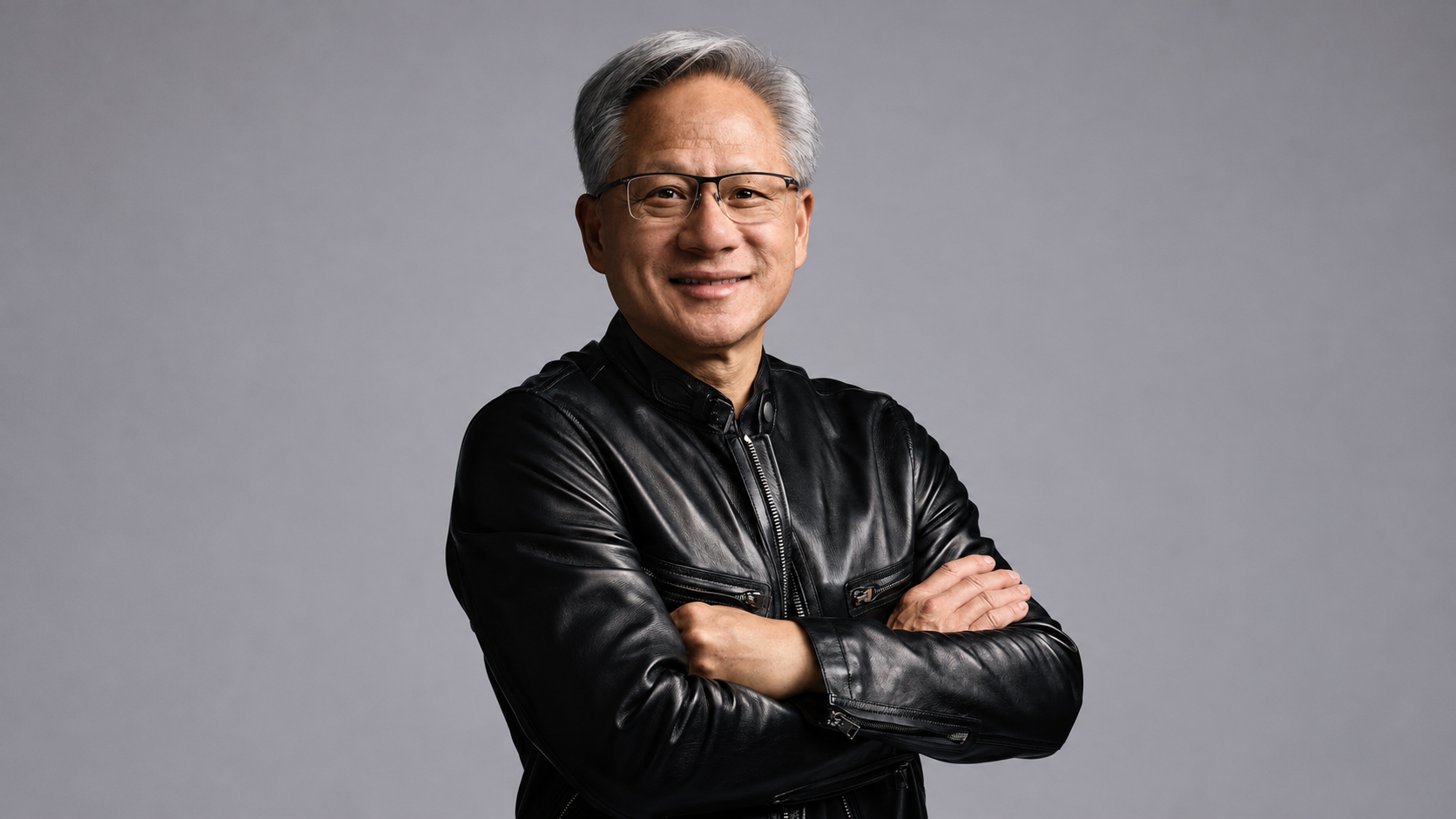
As Jensen takes off his iconic black leather jacket and walks out of the headquarters building in Santa Clara, what he leaves behind is an enormous company stripped of its maverick soul and placed in the hands of accountants. What he takes with him is the deepest understanding of the computing matrix of the future—and an ambition wounded by capital and prejudice, yet utterly unwilling to fall silent.
Chapter One: Cracks in the Computing Iron Curtain—The Defensive Dilemma Under a Finance Chief
To see the far-reaching implications of this event, we must first understand what makes NVIDIA so formidable.
NVIDIA’s moat has never been merely its chip-fabrication process. It is the “matrix” formed by the deep integration of the CUDA ecosystem and hardware. Building such a matrix requires an almost fanatical faith in technology and strategic experimentation regardless of cost. History has demonstrated countless times that when a rapidly expanding technology giant hands its supreme command to the CFO—the chief financial officer—it often signals a shift in strategic emphasis from “offense” to “defense.”
A CFO’s calling is to keep the accounts, balance competing demands, and avoid risk. Over the next one to two years, NVIDIA may still reap every benefit from the momentum of its existing H200 and Blackwell architectures, and cost controls may even make its financial statements look more impressive. But AI’s evolution is unforgiving. It demands a leader willing to close their eyes and press the accelerator amid the fog. Without a “tyrant” like Huang, driven by intuition and an uncompromising engineering culture, NVIDIA will inevitably fall half a beat behind in its positioning for future multimodal large AI models, on-device AI, and new computing architectures.
That half-beat delay is the make-or-break window for reshaping the global computing landscape. The old god’s abdication means that an era of rival contenders has truly arrived. And through this crack, an extraordinarily precious ray of light reaches China’s computing industry across the ocean.
Chapter Two: Returning to First Principles—Why Must the Next Stop Be China?
Now let us propose the boldest, most stirring scenario of all: could Jensen Huang come to China?
From a conventional Silicon Valley perspective, the idea sounds like pure fantasy. But if we return to first principles, explore the essence, and analyze the fundamental needs of a 63-year-old elite entrepreneur forced from the table at the peak of his powers, the answer becomes clear.
What does Jensen need? He no longer needs money, nor does he need to build another “NVIDIA.” What he needs is a vast vessel capable of carrying his ultimate AI vision: an entirely new land of opportunity, free from the grip of Wall Street’s shortsighted capital and from suppression by a single hegemonic power.
Across the world, only China has these conditions:
The hungriest soil for boundless computing demand: China has the world’s largest array of internet application scenarios. From Qwen and DeepSeek to Kimi, behind the battle of a hundred models lies an intensely fervent hunger for foundational computing power.
The fullest engineering talent dividend and capacity to execute: the “iteration at the speed of light” in which Jensen once took pride is increasingly weighed down by big-company dysfunction in Silicon Valley, while China retains the world’s most efficient ability to turn code into practical applications and its ranks of algorithm engineers.
The potential for a breakthrough under macro-level geopolitical pressures: China’s semiconductor supply chain is deep in the difficult phase of breaking out. It urgently needs a “leading figure” who truly understands strategy, ecosystems, and underlying hardware architecture to integrate the ecosystem.
Deep in Huang’s bones is the Chinese gambler’s instinct expressed in the question, “Are kings, nobles, generals, and ministers born to their station?” As rules constrain him across the ocean, China offers not only a vast market but a stage of historic proportions. If he comes to China as an investor, chief adviser, or even the architect of a new open-source AI ecosystem, his task will be to reshape an eastern “computing matrix” within the independent semiconductor ecosystem forced into existence by external pressures.
Chapter Three: When an AI Maverick Meets “Tianxia Gongchang”—The Ultimate Vision for Physical Manufacturing
Across a hundred installments of research for Tianxia Gongchang, we have visited countless pillars of national industrial strength, from ZPMC to Jinan No. 2 Machine Tool, and from Wanhua Chemical to Baoji Titanium. We have seen the most formidable foundations of Chinese manufacturing, but we have also seen the pain of “lacking chips and a software soul” in industry’s digital transformation.
True AI should not remain confined to a virtual world of generating a few lines of code or writing a few pieces of escapist fiction. AI’s ultimate battlefield is in roaring factory halls, in complex precision machine tools, and in vast supply-chain logistics-dispatch networks.
Imagine that Huang’s next major strategic move is made in China. His keenest instincts would surely point toward the deep integration of B2B industry and physical manufacturing. He knows all too well that simply piling up computing power has reached a bottleneck. The next ten-trillion-scale market lies in using AI to awaken the industrial data sleeping on factory floors.
He could bring not only world-class chip-definition capabilities but, more importantly, the foundational logic for building an ecosystem that connects algorithms, computing power, and industrial equipment. This aligns perfectly with the direction of industrial upgrading that we at Tianxia Gongchang have long advocated: grasp the big and let go of the small. Seize the “big” opportunity of AI reshaping industrial processes, and relinquish the fixation on the “small” profits of low-end contract manufacturing.
China’s ultra-high-voltage power grids, alongside vast energy infrastructure such as Panshan Power Plant, provide the world’s most formidable energy support for computing. China’s high-speed railways and ports provide the strongest hardware network for logistics. Here are all the pieces needed to build “artificial intelligence for the physical world” perfectly. What is missing is a “god” who can weld these modules together completely through code and chips.
Jensen is precisely the best person for that role.
Conclusion: History Does Not Happen Only in Silicon Valley
For a true fighter, 63 is far too young to retreat into a courtyard, quietly listen to an acoustic guitar, and spend the rest of his days in peace.
Having shed his black leather jacket, Jensen Huang is no longer NVIDIA’s CEO, but he remains the person on this planet who understands computing power best. Wall Street believes it has locked up a wild beast with rules, unaware that it may just have released a super-variable capable of reshaping the global technological order.
A hidden frost has settled on the old throne, and the map of a new world is being redrawn. The winds of the Pacific await the return of an old acquaintance. This is more than the second half of one man’s career. It may be the “singularity moment” in which China’s entire technology industry contests its destiny.
The age is turning a page.
Cover: based on the supplied portrait photograph, with the background extended using AI.