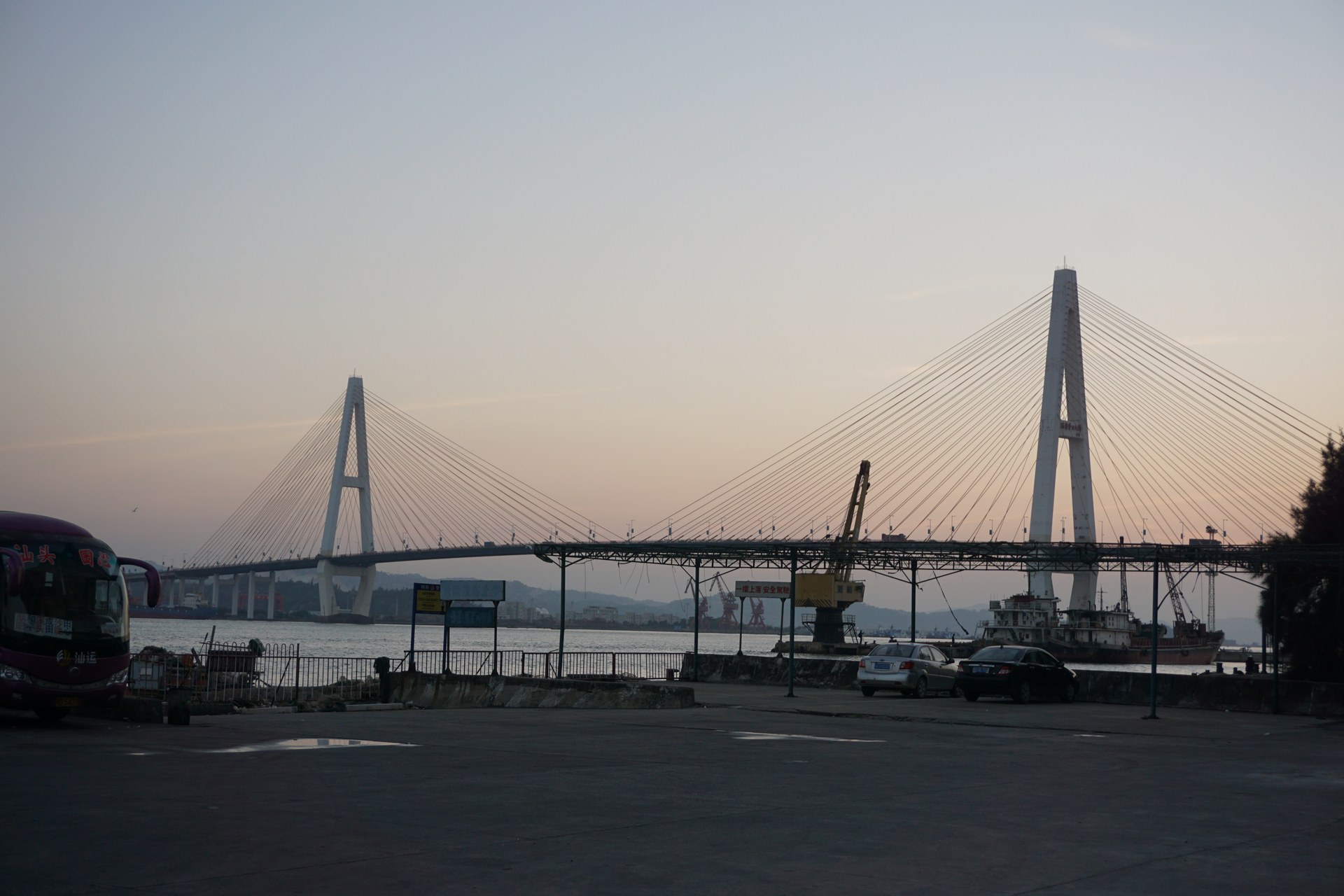

1. Introduction: A Special Economic Zone That Started at the Top and Now Lags Behind
In 1980, when China decided to establish four Special Economic Zones (SEZs) — Shenzhen, Zhuhai, Shantou, and Xiamen — anyone asked to bet on which of these four cities had the brightest future would have found Shantou a popular pick. That year, Shantou's gross regional product was 1.08 billion yuan, ranking first among the four SEZs — ahead of Xiamen's 640 million yuan, and far ahead of Shenzhen's 276 million yuan and Zhuhai's 261 million yuan. Shantou had a port, the heritage of a century-old trading port, a vast network of overseas Chinese kin spread across Southeast Asia, Hong Kong, and Macau, and the Chaoshan people, famed for their commercial acumen. At the starting line of the four SEZs, Shantou stood out in front.
More than four decades later, the outcome is a source of dismay. In 2024, Shantou's gross regional product was 316.797 billion yuan, growing by just 0.02% year-on-year at constant prices — virtually zero growth, a rate that ranked dead last among Guangdong Province's 21 prefecture-level cities. Meanwhile Shenzhen, which had started far below Shantou, reached a GDP of 3.68 trillion yuan in 2024, holding firmly at third in the nation — roughly 11.6 times that of Shantou. Xiamen (859 billion yuan) was about 2.7 times Shantou's size, and Zhuhai (447.9 billion yuan) about 1.4 times. Of the four original SEZs, Shenzhen soared to become a super-first-tier city, Xiamen and Zhuhai each developed in their own way, and only Shantou — which had started at the top — now ranked last among the four. From "the highest starting point" to "lagging at the bottom" — this is the most lamentable reversal in Shantou's four decades.
This reversal has made "Shantou" an unavoidable case study in China's regional economics. The media and research community describe it with phrases like "a special zone that is no longer special" and "an early riser who arrived late to market"; some call it "China's least noticeable Special Economic Zone," and others ask, "How did Shantou, one of the first Special Economic Zones, end up as a third-tier city?" The four SEZs were dealt the same policy hand — so why did Shantou play it out this way? This is not a simple question, and it cannot be dismissed with a glib "the Chaoshan people just aren't up to it" — quite the opposite: Chaoshan produced top-tier entrepreneurs such as Li Ka-shing, Ma Huateng, and Huang Guangyu, along with countless magnates. Why would a place that breeds commercial geniuses see its own SEZ fall behind? This paradox is the most intriguing part of Shantou's story.
To understand Shantou's decline, this article begins around 1992 and runs through to 2026 — these thirty-odd years were precisely the golden age of China's high-speed economic growth and the meteoric rise of SEZs like Shenzhen, and also precisely the era in which Shantou fell behind step by step and then struggled to find a way to restart. Within this history are several pivotal turning points: the 1991 three-way administrative split of Chaoshan, which carved up Shantou's hinterland; the nationally shocking tax-fraud and smuggling case of the late 1990s to 2001, which all but collapsed Shantou's credibility, triggered boycotts from 18 to 19 provinces and cities, and drove roughly 1,200 enterprises to relocate away; and the more-than-a-decade stagnation of "a special zone that is no longer special" that followed. Only by grasping these turning points can one understand why Shantou went from the highest starting point to lagging at the bottom.
Yet Shantou's story is not merely an elegy of decline; it is also a parable of restart. Beneath the surface of its lag, Shantou has always held its trump cards — the Chaoshan merchant and overseas Chinese networks spread across the globe (overseas Chinese of Chaoshan descent number in the tens of millions, and are called "the Jews of the East"), solid industrial clusters such as Chenghai's toys, Gurao's underwear, and Chaonan's textiles, and Shantou University, funded by Li Ka-shing's donations. And over the past decade, Shantou has been striving to find a path to restart — the Overseas Chinese Economic and Cultural Cooperation Experimental Zone established in 2014 (the only national-level platform in the country themed on "overseas Chinese"), an industrial transformation betting on offshore wind power and fine chemicals, and transportation bottlenecks broken open by high-speed rail and a bay tunnel. Shantou is attempting a "second entrepreneurship" to revive the SEZ's former vigor. Decline and restart are the two central threads running through Shantou over these thirty-odd years.
Shantou's significance also extends beyond Shantou itself — it is a highly instructive sample in China's regional economic development. Why did the same SEZ policy make Shenzhen a miracle while Shantou fell behind? Behind this lies the combined effect of a whole series of factors: location, hinterland, industry, credibility, talent, and business environment. Shantou's decline tells us that policy preferences are not a cure-all — without a sound business environment, healthy credibility, sustainable industry, and talent that stays, even the best policy hand can be played into a loss. And Shantou's restart efforts show how a city that has fallen behind can revitalize its unique resources (overseas Chinese, industrial clusters), seek new growth points (wind power, chemicals), and attempt a comeback. Shantou's decline and restart are a microcosm of the countless cities and regions in China that "got an early start but fell behind," and its experience and lessons hold profound reference value for the balanced development of China's regional economy.
This article will use fifty thousand words, beginning with a comparison of the fates of the four SEZs, then tracing the evolution of the Shantou SEZ, the fragmentation caused by the Chaoshan split, and the credibility collapse and long reconstruction that followed the tax-fraud case; moving through the legend of the Chaoshan merchants and the paradox of "blooming outside the wall while planted within it," the resources of the qiaoxiang (hometown of overseas Chinese) and Shantou University; through the rise, fall, and transformation of industrial clusters such as Chenghai toys, Gurao underwear, and Chaonan textiles; through the new bets on offshore wind power, fine chemicals, and the digital economy, and the transportation breakthroughs of high-speed rail and the bay tunnel; and finally returning to that core proposition — whether a Special Economic Zone that started at the top and now lags behind can truly restart and revive its former vigor. This is not just the story of a city, but a parable about policy, credibility, industry, talent, and how a place seeks rebirth amid setbacks. And all of it must begin with that curve of destiny in which the four SEZs started out close together yet ended up 11 times apart.
2. Four Special Economic Zones, Four Fates
On August 26, 1980, the Standing Committee of the Fifth National People's Congress approved the establishment of Special Economic Zones in Shenzhen, Zhuhai, Shantou, and Xiamen. These four cities were dealt the same policy hand — the same SEZ status, the same authorization to pioneer and experiment, and the same opportunity of standing at the forefront of reform and opening-up. More than four decades later, these four SEZs have walked four utterly different paths of destiny. The best way to understand Shantou's decline is to view it within the comparison of the four SEZs — the same starting point, the same policy, so why did the endpoints differ by a factor of 11?
Consider the starting point first. In 1980, the economic sizes of the four SEZs were in fact quite close, and Shantou's was the highest. According to figures compiled by the media, Shantou's GDP in 1980 was about 1.08 billion yuan, ranking first among the four SEZs; Xiamen was about 640 million yuan, Shenzhen only about 276 million yuan, and Zhuhai about 261 million yuan. In other words, at the starting line Shantou was the frontrunner among the four SEZs — it had the foundation of a century-old trading port, a harbor, and overseas Chinese kin spread across the South Seas (Nanyang). Had anyone at the time predicted which of the four SEZs had the brightest future, Shantou would surely have been the favorite. This "highest starting point" makes Shantou's later decline all the more lamentable.
Now consider the endpoint. In 2024, the GDPs of the four SEZs were as follows: Shenzhen about 3.68 trillion yuan, holding firmly at third in the nation, behind only Shanghai and Beijing; Xiamen about 859 billion yuan; Zhuhai about 447.9 billion yuan; and Shantou about 316.8 billion yuan — ranking last among the four SEZs. In multiples, Shenzhen was about 11.6 times Shantou, Xiamen about 2.7 times, and Zhuhai about 1.4 times. Over more than four decades, Shenzhen soared from the lowest starting point (276 million yuan) to become a super-first-tier city, growing more than ten-thousandfold; while Shantou, which had the highest starting point (1.08 billion yuan), grew the slowest and fell to last. Four SEZs, four fates — Shenzhen's miracle, the steady progress of Xiamen and Zhuhai, and Shantou's decline form a stark contrast.
Even more telling is the timeline of Shantou being overtaken. Shenzhen surpassed Shantou as early as 1984 — only about four years after the SEZs were established, Shenzhen's GDP (about 2.34 billion yuan) exceeded Shantou's (about 1.74 billion yuan). Xiamen surpassed Shantou sometime between 1997 and 2000. Zhuhai surpassed Shantou in 2006. One after another, Shantou was overtaken by the other three SEZs in turn, ultimately falling to last. And it was not only overtaken by the SEZs — Shantou was also left behind by numerous non-SEZ cities. After Shantou was split in 1991, its national ranking once fell out of the top 50, and in 2011 it dropped off the list of the top 100. The onetime frontrunner among the SEZs slid down step by step over four decades.
The most intuitive explanation for the four SEZs' differing fates is the presence or absence of a "driving city." Shenzhen relied on Hong Kong — Hong Kong's capital, technology, orders, and management experience poured continuously into Shenzhen, allowing Shenzhen to absorb Hong Kong's industrial transfer and soar. Zhuhai relied on Macau; although Macau was small in scale, it still provided a boost. Xiamen relied on Taiwanese businessmen and cross-strait trade. Shantou, though a qiaoxiang with a port, lacked a powerful, adjacent driving economy — it sat in a corner of eastern Guangdong, far from the core of the Pearl River Delta and the main transportation network, with no "engine" like Hong Kong nearby. Differences in location and driving city are an important starting point for the divergence in the four SEZs' fates.
But location cannot explain everything — because Shantou's decline also involved its own distinctive turning points and setbacks. Shenzhen relied on Hong Kong, but Shenzhen also seized its own opportunities, cultivated its environment, and developed its industries. Shantou, beyond its inherent locational disadvantage, also went through several distinctive and fatal turning points: the 1991 three-way administrative split of Chaoshan, which carved up Shantou's hinterland; the nationally shocking tax-fraud and smuggling case of the late 1990s to 2001, which all but collapsed Shantou's credibility; and the more-than-a-decade stagnation of "a special zone that is no longer special" that followed. These distinctive turning points, layered on top of the inherent locational disadvantage, together produced Shantou's decline. The divergence in the four SEZs' fates stems from both inherent locational differences (the driving city) and Shantou's own distinctive setbacks.
Four SEZs, four fates — this comparison is the best coordinate system for understanding Shantou's decline. With the same policy hand, Shenzhen played it into a miracle, Xiamen and Zhuhai developed steadily, and Shantou fell behind. This tells us that SEZ policy is not a cure-all — with the policy, a city still needs location (a driving city), environment (business climate and credibility), industry, and talent to convert the policy dividend into reality. Shantou's decline is a textbook case of a policy dividend that failed to materialize — it had the highest starting point and the best policy, yet because of its inherent locational disadvantage and its own distinctive setbacks, it ended up at the bottom. Understanding the divergence in the four SEZs' fates provides the coordinate and background for understanding Shantou's decline. And to truly grasp the gap of Shantou's decline, one must first understand the origins of its "highest starting point" — which traces back to its deep heritage as a century-old trading port. That is the subject of the next chapter.
3. A Century-Old Trading Port: The Historical Root of the Highest Starting Point
That Shantou could become the SEZ with the highest starting point in 1980 (leading with a GDP of 1.08 billion yuan) was no accident — it had deep historical roots. Shantou was a century-old trading port, an important treaty port and commercial metropolis of modern China, once dubbed "Little Shanghai." Only by understanding Shantou's heritage as a century-old trading port can one understand the origins of its "highest starting point," and thereby grasp more deeply the gap and regret of its later decline.
Consider first the history of Shantou's opening as a port. Shantou sits at the estuary of three rivers — the Han, Rong, and Lian — a natural fine harbor. In modern times, with the opening of foreign trade, Shantou was formally opened as a port around 1860, becoming a treaty port for foreign commerce. Thanks to its superior geographic position (connecting the inland Chaoshan Plain with the overseas South Seas) and the Chaoshan people's tradition of commercial skill, Shantou rapidly grew into an important commercial metropolis and port city in South China. In modern times, Shantou's commerce flourished — merchant ships gathered, goods were distributed, and foreign trading houses (hongs) lined the streets — making it an important gateway for foreign trade in eastern Guangdong and even all of South China. Shantou's heritage as a century-old trading port was accumulated from this modern history of port opening.
Shantou's commercial prosperity was also closely tied to the history of the "red-head boats" and the qiaoxiang. As mentioned earlier, during the Ming and Qing dynasties the Chaoshan people often set out for the South Seas aboard "red-head boats" from Zhanglin Port in Chenghai. After Shantou opened as a port, it became an even more important hub for the Chaoshan people heading to the South Seas and for overseas Chinese kin to stay in touch with their homeland — kin embarked overseas from Shantou, qiaopi (remittance letters combining money and message) flowed in and out through Shantou, and overseas capital flowed back through Shantou. Shantou was the hub port linking Chaoshan with the South Seas, linking home with abroad. This position as a hub for "overseas Chinese" made Shantou's commerce even more prosperous and its outlook broader — it was a trading port facing the ocean and the world. The imprint of "overseas Chinese" is deeply stamped into Shantou's heritage as a trading port.
The prosperity of Shantou as a trading port reached a peak during the Republican era — it was once dubbed "Little Shanghai." In the 1920s and 1930s, Shantou was one of the most commercially prosperous cities in South China, with developed trade, active finance, and a bustling market. Shantou's Little Park district (a cluster of arcade, or qilou, buildings) still preserves the imprint of that era's commercial prosperity — those exquisite arcade buildings, time-honored shops, and storefronts bear witness to Shantou's former glory as a commercial metropolis of South China. The nickname "Little Shanghai" is the most vivid depiction of Shantou's heritage as a century-old trading port — it was once a prosperous, world-facing commercial metropolis in South China. This historical glory is the historical root of Shantou's ability to become an SEZ in 1980, and to have the highest starting point.
It was precisely this heritage as a century-old trading port that led Shantou to be chosen as a Special Economic Zone in 1980 and to become the one with the highest starting point among the four SEZs. Shantou had a port (a natural fine harbor), a commercial tradition (a century-old trading port, and the commercially skilled Chaoshan people), and qiaoxiang resources (a hub linking the South Seas, and a vast network of overseas Chinese kin) — all of which were reasons it was chosen as an SEZ and had a relatively strong economic base. That Shantou's GDP led the four SEZs in 1980 was precisely a reflection of its heritage as a century-old trading port — compared with Shenzhen, still a small fishing village at the time, Shantou had a far deeper commercial and economic foundation. Shantou's "highest starting point" was the result of the historical accumulation of its century-old trading port.
But it was precisely this deep heritage that made Shantou's later decline all the more lamentable. A city with the heritage of a century-old trading port, once called "Little Shanghai," and with the highest starting point, ultimately fell to the bottom among the four SEZs — this gap is more dismaying than the decline of a city that started from scratch. Shantou's decline was not merely a failure to seize the SEZ opportunity, but a squandering of its deep heritage as a century-old trading port. Shenzhen's rise from a small fishing village to a super-first-tier city was a miracle of "creating something from nothing"; Shantou's fall from a century-old trading port with the highest starting point to the bottom was the regret of "having much yet not cherishing it." This contrast adds a layer of historical weight to Shantou's decline — it once possessed glory but failed to sustain it.
The century-old trading port is the historical root of Shantou's "highest starting point," and also the historical backdrop of its decline gap. Shantou opened as a port in modern times (around 1860), grew into a commercial metropolis of South China on the strength of the fine harbor at the estuary of three rivers and the commercially skilled Chaoshan people, served as a qiaoxiang hub linking the South Seas, and was once dubbed "Little Shanghai" during the Republican era — this deep heritage as a century-old trading port is the origin of its becoming an SEZ in 1980 with the highest starting point. But it was precisely this heritage that made its later decline all the more lamentable — a once-glorious century-old trading port with the highest starting point ultimately fell to the bottom of the four SEZs, the regret of "having much yet not cherishing it." Understanding Shantou's heritage as a century-old trading port allows a deeper understanding of the origins of its "highest starting point" and the gap of its "lagging at the bottom." And how this gap formed step by step must be told beginning with the evolution of Shantou's SEZ status — a story that began from 1.6 square kilometers.
4. From 1.6 Square Kilometers to the Whole City: The Evolution of the SEZ
The story of the Shantou Special Economic Zone contains an easily overlooked yet deeply meaningful detail — when it started, its area was only 1.6 square km, the smallest of the four SEZs. This "smallest start" is a key to understanding the inherent cramping of the Shantou SEZ. From 1.6 square km to its eventual expansion across the whole city, the evolution of the Shantou SEZ is itself a history of going from cramped to unfolding — yet always half a beat behind.
Consider the start first. In 1981, with State Council approval, a plot was carved out in the Longhu district of Shantou's urban area to establish a Special Economic Zone, with an initial area of only 1.6 square km. Just how small is that area? By comparison, the Shenzhen SEZ had 327.5 square km from the outset. At 1.6 square km, barely the size of a single block, the Shantou SEZ started with the smallest plot of land among the four SEZs. This "smallest start" reflected, on the one hand, the relatively cautious positioning of Shantou at the time, and on the other hand, left the Shantou SEZ with extremely limited room to maneuver in its early stage. The 1.6-square-km starting point is a microcosm of the Shantou SEZ's inherent cramping.
Now consider its expansion. Afterward, the scope of the Shantou SEZ underwent several enlargements. In 1984 (some say 1985), the State Council approved adjusting and expanding the Shantou SEZ to about 52.6 square km (divided into two sections, of which the Longhu section was 22.6 square km). In April 1991, the State Council approved expanding the Shantou SEZ to cover the entire urban area of Shantou, reaching an area of about 234 square km. In 2011, with State Council approval, the Shantou SEZ was expanded to the whole city, covering "six districts and one county" — the six districts of Longhu, Jinping, Haojiang, Chaoyang, Chaonan, and Chenghai, plus Nan'ao County. From 1.6 square km, to 52.6 square km, to 234 square km, to the whole city — the area of the Shantou SEZ expanded step by step, ultimately covering the entire city of Shantou.
But the expansion of the Shantou SEZ had one telling characteristic — it always came half a beat behind, and passively. SEZs like Shenzhen gained relatively large room to maneuver early on and developed rapidly; the expansion of the Shantou SEZ, by contrast, often came only after development hit a bottleneck, as a passive enlargement of scope. This was especially true of the 2011 expansion of the SEZ to the whole city — by that point, thirty years had passed since the SEZ was established, and Shantou had long since fallen behind. The 2011 expansion was, in a sense, "mending the fold after the sheep are lost" — folding in areas previously split off from or never included in the SEZ, such as Chaoyang, Chaonan, and Chenghai, in an attempt to reactivate development with greater space. But by then the policy dividend of the SEZ had long been diluted and Shantou had long fallen behind, so the expansion's effect was limited. The "half a beat behind" of the Shantou SEZ's expansion is a portrayal of it missing opportunities and responding passively.
Another backdrop to the evolution of the Shantou SEZ is the gradual dilution of the SEZ policy advantage. In 1980, the four SEZs held a unique policy advantage — they were the only places in the country permitted to pioneer and experiment. But as reform and opening-up advanced, this uniqueness was gradually diluted. In 1984, China opened 14 coastal cities — the SEZs were no longer the sole frontier of opening. Thereafter, all manner of development zones, new districts, and free trade zones emerged in an endless stream — the policy uniqueness of the SEZs declined further. For Shenzhen, it seized the opportunity and established a first-mover advantage in the early period when the policy advantage was strongest, and could continue to lead on the momentum of its own development even after the policy was later diluted. Shantou, however, failed to fully exploit the early period when the policy advantage was strongest (a cramped start and slow development), and by the time it wanted to push forward, the policy advantage had already been diluted — which made Shantou's catch-up all the harder. The dilution of the policy advantage is an unfavorable overarching backdrop in the evolution of the Shantou SEZ.
The evolution of the Shantou SEZ was also compounded by a relative decline in political rank. In 1988, Shenzhen and Xiamen were successively upgraded to sub-provincial cities with separate planning status (jihua danlie) — gaining higher political and economic status, greater autonomy, and more resources. Shantou, however, remained an ordinary prefecture-level city. The difference in political rank meant differences in resources, authority, and status — sub-provincial Shenzhen and Xiamen could obtain more policy support, resources, and development autonomy, while prefecture-level Shantou was relatively constrained. The relative decline in political rank is one manifestation of Shantou's marginalization among the four SEZs — it fell behind not only economically but also in political rank.
The evolution of the Shantou SEZ, from 1.6 square km to the whole city, is a history of going from cramped to unfolding — yet always half a beat behind. The smallest start (1.6 square km), passive expansion (always half a beat behind, mending the fold after the sheep are lost), dilution of the policy advantage (the SEZs' uniqueness declining after the 14 cities opened), and relative decline in political rank (never upgraded to sub-provincial) — these unfavorable factors in its evolution, layered together, constitute the backdrop of the Shantou SEZ's inherent cramping and difficult catch-up. The evolution of the Shantou SEZ tells us that SEZ status alone is not enough to guarantee success — the room to start, the timing of expansion, the policy dividend, and the political rank all shape the fate of an SEZ. And beyond these unfavorable factors in its evolution, Shantou also suffered an even more fatal, self-inflicted blow — the 1991 administrative split that carved its hinterland into fragments. That is the subject of the next chapter.
5. 1991: The Three-Way Split of Chaoshan
On December 7, 1991, the State Council issued the "Reply Concerning the Adjustment of the Administrative Divisions of Shantou and Chaozhou Cities in Guangdong Province," splitting the former Greater Shantou region into three. The former Shantou City was divided into three prefecture-level cities: Shantou, Chaozhou, and Jieyang. This administrative-division adjustment has since been called by many commentators one of "the most failed division adjustments," and is widely regarded as an important starting point of the relative decline of Shantou (and indeed all of Chaoshan). The three-way split of Chaoshan is an unavoidable turning point in understanding Shantou's decline.
Consider first the content of this split. The 1991 adjustment carved the former Shantou region into three prefecture-level cities: Shantou City retained its SEZ status and administered the adjusted urban area and Nan'ao County; Chaozhou City was upgraded to a prefecture-level city, administering the former Chaozhou urban area and Raoping County, among others; and Jieyang City was newly established as a prefecture-level city, administering Jieyang, Puning, Jiexi, and Huilai. Shantou, originally the economic and administrative center of the entire Chaoshan region, went in one stroke from "Greater Shantou" to "Lesser Shantou" — its administrative scope, hinterland, population, and resources were all substantially carved up. Moreover, as early as 1988, Shanwei (the former Huiyang / Hailufeng region) had already been split off from Shantou and made a separate prefecture-level city — the fragmentation of Chaoshan's administrative divisions had begun even before 1991.
Why did this split have such a far-reaching impact on Shantou? The key lies in the "hinterland." The development of a central city is inseparable from its hinterland — the hinterland provides market, labor, resources, and space for radiation. Before the split, Shantou was the economic and administrative center of the entire Chaoshan region (Chaozhou, Jieyang, Shanwei, and others), with a hinterland of the whole Chaoshan Plain and its population of more than ten million. After the split, Shantou's hinterland was substantially carved up — Chaozhou and Jieyang each became independent, equal-ranking prefecture-level cities, no longer Shantou's hinterland. Shantou went from a central city radiating across all of Chaoshan to a prefecture-level city with a narrow hinterland. The fragmentation of the hinterland severely weakened Shantou's radiating and driving power as a "central city" — this was the deepest harm the split did to Shantou.
The consequence of hinterland fragmentation was the predicament of "a small horse pulling a large cart," or even "no cart to pull at all." After the split, Shantou, the "small horse," lost the "large cart" (the entire Chaoshan region) it was originally meant to pull. Its economic size, population, and resources were all carved up, making it hard to form a central city of sufficient scale and radiating power. And although Chaozhou and Jieyang became independent, each was small in scale and hard-pressed to develop into a strong city on its own. The result was that the Chaoshan region, which could have concentrated its strength to form one strong center (Greater Shantou), was split into three prefecture-level cities none of which was strong enough, none able to drive the others, and the central-city function of the entire Chaoshan region was weakened by fragmentation. This is why, even today, there is still discussion of "merging the three cities of Chaozhou, Shantou, and Jieyang" — people have realized that fragmented administrative divisions have weakened the Chaoshan region's ability to form a strong center and develop in coordination.
The three-way split of Chaoshan also forms a stark contrast with the four SEZs. Shenzhen was not only not split, but was continually enlarged, upgraded (to sub-provincial rank), and expanded, concentrating resources to develop into a super-first-tier city. Shantou, by contrast, was split and had its hinterland carved up during a critical development period — this one advance and one retreat widened the gap between Shantou and Shenzhen. While Shenzhen was concentrating its strength to grow larger and stronger, Shantou was being dismembered and weakened. The splitting apart or coming together of administrative divisions, in a sense, shaped the cities' fates — Shenzhen's "coming together" (concentrating to grow larger) and Shantou's "splitting apart" (fragmentation) were one factor in the divergence of their fates.
That said, the role of the split should also be viewed objectively — it is one of the important factors in Shantou's decline, but not the only cause. To attribute Shantou's decline entirely to the 1991 split is an oversimplification. The split weakened Shantou's hinterland and central-city function — that is a fact; but Shantou's decline also involved the compounding of multiple factors: location (lacking a driving city), industry (skewed toward the light, small, and scattered), credibility (the tax-fraud case), talent (outflow), and business environment. The split is an important, structural factor among these, but not the whole. To see the split as "one of the important starting points" of Shantou's decline, rather than "the sole cause," is the objective judgment. This also reminds us that the rise and fall of a city is often the result of multiple factors compounding, and can rarely be attributed to a single event.
The three-way split of Chaoshan is an unavoidable structural turning point in understanding Shantou's decline. The 1991 administrative-division adjustment carved the former Shantou region into three prefecture-level cities — Shantou, Chaozhou, and Jieyang — turning Shantou from a central city radiating across all of Chaoshan into a prefecture-level city with a narrow hinterland. The fragmentation of the hinterland severely weakened Shantou's radiating and driving power as a "central city," producing the predicament of "a small horse pulling a large cart," or even "no cart to pull at all." The split forms a stark contrast with Shenzhen's "concentrating to grow larger," and it deepened Shantou's decline. Although the split is not the sole cause of Shantou's decline, it is an important, structural factor. And after the split weakened its hinterland, Shantou suffered an even more fatal, more direct blow — the nationally shocking tax-fraud case of the late 1990s, which all but collapsed Shantou's credibility. This crisis of credibility is the subject of the next two chapters.
6. The 807 Special Case: The Republic's Number-One Tax Case
Of all the turning points in Shantou's decline, the nationally shocking tax-fraud case of the late 1990s to 2001 was the most fatal and most direct blow. This case, known as "the Republic's number-one tax case," all but collapsed Shantou's credibility and became a key node in Shantou's turn from prosperity to decline. This is a heavy chapter of history, but to understand Shantou's decline, it cannot be avoided. This article takes the facts as officially investigated and adjudicated as its basis, and states them objectively — neither evading nor exaggerating, and above all not stigmatizing an entire region on the basis of individual cases.
Consider first the nature of the case. At its core was "falsely issuing special value-added tax (VAT) invoices plus fraudulently obtaining state export tax rebates" — lawbreakers first issued false special VAT invoices, then used them to fraudulently obtain export tax rebates from the state. The case occurred mainly in what were then Chaoyang City and Puning City (note: Puning now belongs to Jieyang City, and Chaoyang now belongs to Shantou City). The central authorities' investigation of the problem began in 1998 — the special task force of the Central Commission for Discipline Inspection had been stationed in Shantou since 1998, investigating smuggling and tax fraud; but because of the deeply entrenched web of local connections, the case progressed slowly. This was a major economic-crime case that had been long latent and was difficult to investigate.
The acceleration of the investigation was tied to one event — in the early hours of July 15, 2000, a fire broke out in Building 2 of the Shantou Yingbin Guesthouse, where the Central Commission for Discipline Inspection's task force had long been stationed to handle the case, causing 5 deaths and 3 injuries, with the dead including discipline-inspection officials working the case. The official investigation team concluded that this fire was accidental (attributing it to an overheating electric thermos in a room that ignited plastic components and spread into a blaze, and ruling out the possibility of arson). Although there was for a time public speculation about "burning the imperial envoys," that was an unverified rumor, while the official conclusion was an electrical accident — the two must be clearly distinguished, and this article adopts the official conclusion. In any case, this fire became a catalyst for the central authorities' resolve to accelerate the investigation. Twenty-two days after the fire, on August 7, 2000, an executive meeting of the State Council premier decided to establish a "Leading Group to Combat Export Tax Fraud," namely the "807" task force (from which the case's code name derives).
The scale and actions of the "807" task force reflected the severity of the case. The task force was composed of officials from 13 departments including the State Administration of Taxation, the Ministry of Public Security, the Ministry of Supervision, and the Ministry of Finance, and traveled to eastern Guangdong in the name of the State Council, accompanied by armed-police protection. On September 4, 2000, the task force dispatched 64 groups to inspect the several hundred enterprises preliminarily identified — the task-force officials and local public-security police mobilized that day numbered more than 1,200. This was an unprecedented-in-scale special investigation that mobilized the strength of multiple central departments, testifying to the gravity of the case and the resolve of the investigation.
Now consider the scale of the case — these figures are staggering. According to official and authoritative-media accounts, this case involved falsely issued special VAT invoices amounting to about 32.3 billion yuan, fraudulently obtained state export tax rebates of about 4.2 billion yuan, roughly 172,000 falsely issued invoices, and about 150 tax-related criminal gangs. The "807" task force inspected about 1,142 enterprises in all, of which about 827 were sham enterprises, and the proportion with false-invoicing and tax-fraud problems reached as high as 98%. This scale was, at the time, the tax-related case with "the largest amount involved, the most frenzied criminal conduct, and the most people implicated since the founding of New China" — the false-invoicing amount was about 6 times that of the earlier "Republic's number-one tax case," the Jinhua tax case. This is why this case is called "the Republic's number-one tax case" and "the tax case of the century."
The handling of the case was also extremely severe. According to official and authoritative-media accounts, in this case 19 people were sentenced to death and 30 people were sentenced to life imprisonment or heavier; by May 2001 a first batch of 4 criminals had already been executed. In addition, a number of implicated public officials were investigated and dealt with (including personnel in the taxation and customs systems, among others, who participated in the malfeasance). Such severe handling reflects the state's zero-tolerance attitude toward this major economic crime, and also the egregious nature of the case. The investigation and prosecution of this case was a major action by the state to rectify market order and combat economic crime.
But it must be especially emphasized that this case was an unlawful, criminal phenomenon of a specific historical period and a specific group of people, and can by no means represent the Chaoshan region or the Chaoshan people as a whole. The Chaoshan merchant guild is one of China's three great traditional merchant guilds, renowned for commercial skill, honoring contracts with integrity, and mutual aid grounded in native-place ties; the community of Chaoshan-descended entrepreneurs at home and abroad is vast and its contributions outstanding (as will be detailed later). The tax-fraud case is a heavy historical event that must be faced squarely, but it was an isolated and phase-specific unlawful phenomenon, not the defining character of the Chaoshan merchant community. This article recounts this case in order to objectively understand the causes of Shantou's decline, and by no means to stigmatize a region or an ethnic group. Facing history squarely, addressing the matter on its own terms, and not generalizing from the particular — this is the stance from which this article recounts this history.
The "807" special case, this "Republic's number-one tax case," was the most fatal and most direct blow in Shantou's decline. Falsely issued VAT invoices of about 32.3 billion yuan, fraudulently obtained export tax rebates of about 4.2 billion yuan, more than a thousand enterprises implicated, and 19 people sentenced to death — this nationally shocking tax-fraud case reflected the serious problems in the market order of Shantou (and indeed parts of Chaoshan) at the time, and became a key node in Shantou's turn from prosperity to decline. The state, with the strength of multiple central departments and on an unprecedented scale, resolutely investigated and prosecuted the case, severely punished the criminals, and rectified the market order. But the harm this case did to Shantou went far beyond the case itself — the collapse of credibility it triggered cost Shantou a heavy price lasting more than a decade. This collapse of credibility is the subject of the next chapter.
7. The Collapse of Trust: 1,200 Enterprises Relocate Away
The deepest and most lasting damage the major tax-fraud case inflicted on Shantou was not the case itself, but the collapse of trust it triggered. The investigation and prosecution of an economic crime should have purified the market; but for Shantou, it set off an avalanche of lost credibility—enterprises from elsewhere "turned pale at the mention of Shantou," roughly 1,200 enterprises relocated away, and 18 to 19 regions and departments announced they would no longer do business with Shantou enterprises. This collapse of trust was the heaviest price Shantou paid in its decline from prosperity, and the most painful footnote to what the word "trust" means for a regional economy.
Consider first how the collapse of trust manifested. According to Xinhua News Agency reports, after the tax-fraud case some 18 regions and departments nationwide issued notices to their local enterprises stating that they would no longer do business with enterprises from Shantou or Jieyang. What did this mean? It meant that Shantou enterprises—whether or not they operated lawfully—were collectively rejected by outside partners; the two characters "Shantou" became a byword for distrust. Many enterprises that had planned to invest in Shantou relocated overnight; investment attraction all but ground to a halt. According to reports, roughly 1,200 enterprises relocated away from Shantou within two years. For a region's credibility to collapse to this degree—outsiders collectively refusing to do business with it, enterprises fleeing one after another—is rare in the history of China's urban economies. The collapse of trust plunged Shantou into unprecedented difficulty.
The chain reactions set off by the collapse of trust were profound and comprehensive. First, transactions were forced back to a primitive state—because enterprises no longer trusted one another, transactions between them reverted to cash-on-delivery, "money in one hand, goods in the other," and normal commercial credit (credit sales, promissory notes) could barely function. Second, banks called in loans—banks withdrew and recalled loans from industries connected to tax fraud and bribery, aggravating the breakdown of enterprises' capital chains. Third, foreign trade suffered—Shantou's export trade fell sharply for a time. Fourth, legitimate enterprises were dragged down—those that operated lawfully were also implicated by the overall collapse of "Shantou's" credibility, and a wave of bankruptcies ensued. The collapse of trust, like falling dominoes, set off a comprehensive chain reaction across transactions, finance, foreign trade, and enterprises—the entire Shantou economy stalled because trust had collapsed.
The collapse of trust was directly reflected in the economic data. According to media retrospectives, in 2001 national GDP grew by about 7.3%, while Shantou, hit by the tax-fraud case, briefly registered negative growth of about −2%—in an era of rapid national economic growth, Shantou was contracting. This contrast is the most direct illustration of how the collapse of trust struck the Shantou economy. While the whole country was developing at high speed and special zones such as Shenzhen were soaring, Shantou fell into negative growth and stagnation because trust had collapsed. The economic contraction caused by the collapse of trust was a turning point in Shantou's decline from prosperity and its ultimate falling behind—it caused Shantou to move backward rather than forward during the most critical phase of its development.
This collapse of trust left Shantou (and Chaoshan more broadly) with a long-term, hidden cost—the external perception captured by "turning pale at the mention of Shantou." For a long time after the tax-fraud case, outsiders generally regarded partners from Shantou and Chaoshan with wariness and avoidance. Even though the case had long since been investigated and prosecuted, the market had long since been rectified, and the vast majority of enterprises operated lawfully, once the negative perception that "Shantou/Chaoshan has a trust problem" had formed, it was hard to dispel in the short term. This negative perception became a long-term, hidden cost for Shantou's business environment and investment attraction—it forced Shantou to make extra effort to allay doubts and rebuild trust when attracting outside investment and pursuing external cooperation. The damage from the collapse of trust was therefore far more lasting than the case itself—it left a scar in people's perceptions that was slow to heal for years.
The collapse of trust taught Shantou (and every region) a hard lesson about "trust." A market economy is not only an economy governed by law but, even more, an economy built on trust—trust is the cornerstone of the market economy. Once a region's trust collapses, its economy stalls (transactions cannot proceed, investment flees, cooperation is collectively refused). And the collapse of trust is often triggered by the conduct of a small number of lawbreakers, yet the price is borne by the entire region (including the law-abiding majority). Shantou's collapse of trust painfully proved the extreme importance of trust to a regional economy—the price of a collapse of trust can be more than a decade of a region falling behind. This lesson carries a profound warning for every region pursuing economic development: building and safeguarding a sound climate of trust is more fundamental and more important than any preferential policy.
The collapse of trust was the heaviest price Shantou paid in its decline from prosperity. The avalanche of lost credibility set off by the major tax-fraud case—18 to 19 regions refusing to do business with Shantou enterprises, roughly 1,200 enterprises relocating away, transactions reverting to cash-on-delivery, a period of economic contraction, and the lasting negative perception of "turning pale at the mention of Shantou"—caused Shantou to move backward rather than forward during its most critical phase of development, and to fall behind completely. This collapse of trust painfully proved the extreme importance of trust to a regional economy—a market economy is an economy built on trust, and the price of its collapse is a region's long-term falling behind. This hard lesson was a warning Shantou earned at the cost of more than a decade of falling behind. But Shantou did not sink into oblivion amid the collapse of trust—it launched a difficult and lengthy rebuilding of trust. That rebuilding is the subject of the next chapter.
8. Rebuilding Trust: A Long "Lifeline Project"
After the collapse of trust, Shantou faced a question of life and death—how to rebuild trust and reshape its image. This was not a matter of choice but a top priority bearing on the very survival of the city. Shantou called the rebuilding of trust a "lifeline project"—because for a city whose trust had collapsed, rebuilding trust meant rebuilding life itself. This rebuilding of trust was a difficult and lengthy campaign, and the beginning of Shantou's arduous climb out of the trough.
Consider first how the rebuilding of trust was framed. After the tax-fraud case, the Guangdong provincial Party committee and government put forward a resonant slogan—"How well Guangdong rectifies itself is judged by eastern Guangdong; how well eastern Guangdong rectifies itself is judged by Shantou." This placed the rectification of Shantou's market order at the center of the whole province's priorities. Shantou itself launched a project to "rebuild trust and reshape its image," treating it as a "lifeline project" bearing on the city's survival. This framing reflected Shantou's profound recognition of what rebuilding trust required—it realized that a market economy is both an economy governed by law and, even more, an economy built on trust; without trust, Shantou would have no future. Treating the rebuilding of trust as a "lifeline project" reflected Shantou's resolve, learning painful lessons and finding new life in the face of ruin.
The first step in rebuilding trust was resolute rectification and standardization. Shantou used thunderous measures to rectify market order, crack down on illegal and criminal activity, and standardize enterprise operations. The effectiveness of this rectification can be seen indirectly from one figure—after the tax case was rectified, tax revenue collected by Shantou Customs grew by about 500%. This astonishing growth came not from a sudden economic boom but from the return of the normal tax base after the market was standardized (previously, rampant tax fraud and smuggling had drained normal tax revenue, and after rectification, normal tax revenue returned). The sharp growth in customs revenue showed that Shantou's market order had moved toward standardization after rectification—this was the first and most critical step in rebuilding trust: clearing out the illegal and gray economy and returning the market to standard practice.
The results of rebuilding trust were gradually reflected in the economy's stabilization and recovery. According to media retrospectives, in 2002 Shantou's GDP recovered to growth of about 5.6%, ending the earlier contraction and stagnation; in the first half of 2003, GDP growth rebounded to about 8.6%, surpassing the national average for the first time in many years, while fixed-asset investment, actual utilized foreign capital, and fiscal revenue each grew by double digits or close to it. The economy's stabilization and recovery showed that Shantou's rebuilding of trust was beginning to bear fruit—market order had been standardized, enterprise confidence had returned, and investment and foreign trade began to warm up. From the collapse of trust and negative growth in 2000 to the stabilization and recovery of 2002 and 2003, it took Shantou about two to three years merely to begin "stopping the bleeding."
But rebuilding trust is a lengthy process—stopping the bleeding is easy, but fully restoring vitality is hard. Although Shantou stopped the bleeding and stabilized its economy in 2002 and 2003, a substantive recovery of its "special-zone halo" and its standing within the province took far longer. The negative perception of "turning pale at the mention of Shantou" caused by the collapse of trust would take many years to gradually dispel; the gap with other cities created by falling behind was even harder to close in the short term. As late as the 2020s, Shantou's GDP still ranked in the lower tier of Guangdong Province. Rebuilding trust allowed Shantou to arrest its decline and climb out of the deepest trough, but to truly restore its vitality and revive its former strength, Shantou still had a long way to go. Rebuilding trust is a lengthy process that requires sustained effort—it cannot be accomplished overnight.
Rebuilding trust also gave rise to a lasting trust-building mechanism in Shantou. Having emerged from the shadow of the tax-fraud case, Shantou continued to advance the building of a "Trustworthy Shantou"—establishing joint incentive mechanisms for the trustworthy and joint disciplinary mechanisms for the untrustworthy, publishing "red and black lists" of integrity, and compressing the processing time for normal export tax rebates to within 5 working days. These lasting mechanisms were Shantou's effort to institutionalize and normalize "trust"—to make sound credibility a stable and predictable foundation of Shantou's business environment. From a passive, post-crisis rebuilding of trust to an active, normalized building of trust—on the matter of trust, Shantou went through a complete progression from collapse to rebuilding to institutionalization. This progression was hard-won experience that Shantou gained at a painful price.
It is worth noting that prominent overseas figures of Chaoshan origin also supported Shantou's rebuilding of trust. Prominent people of Chaoshan origin such as Zhuang Shiping, Li Ka-shing, and Dhanin Chearavanont affirmed and supported Shantou's measures to "rebuild trust and reshape its image." This reflects another side of the Chaoshan community—it consists not only of the lawbreakers in the tax-fraud case but, even more, of outstanding representatives renowned for integrity and public spirit, such as Li Ka-shing and Zhuang Shiping. The support of overseas figures of Chaoshan origin for the rebuilding of trust reflects the positive force within the Chaoshan community—it reminds us that the tax-fraud case was an isolated and phase-specific phenomenon, while integrity, public spirit, and love of one's homeland form the more mainstream and enduring character of the Chaoshan community.
Rebuilding trust was a difficult and lengthy "lifeline project." After the tax-fraud case, Shantou treated the rebuilding of trust as a top priority bearing on the city's survival—resolute rectification and standardization (customs revenue grew 500%), economic stabilization and recovery (5.6% growth restored in 2002), and the establishment of lasting trust mechanisms (Trustworthy Shantou, red and black lists). This rebuilding allowed Shantou to arrest its decline and climb out of the deepest trough, but fully restoring its vitality and reviving its former strength remained a lengthy process (its GDP still ranked in the lower tier of Guangdong into the 2020s). Rebuilding trust was hard-won experience gained at a painful price—it proved the extreme importance of trust to a region and showed how a city can arduously rebuild after a collapse of trust. Having recounted these key turning points in Shantou's falling behind (the administrative split-off, the tax-fraud case, the collapse of trust), we now need to bring these causes together and analyze them systematically—why exactly did Shantou fall behind? That is the subject of the next chapter.
9. Six Causes of Falling Behind: A Decline of Compounding Factors
Shantou's falling behind was caused not by any single factor but by a decline in which multiple factors compounded. To attribute Shantou's decline entirely to any one cause (such as the tax-fraud case, or the administrative split-off) is an oversimplification. To truly understand why Shantou went from the highest starting point to last place, one must bring the various causes together systematically and see how they compounded and worked in combination. Drawing on analyses from the media and academia, Shantou's falling behind had at least six interwoven causes.
The first cause was the absence of location advantages and a driving city. This was Shantou's most innate deficiency. Shenzhen relied on Hong Kong, Zhuhai on Macau, and Xiamen on Taiwanese businesspeople—each had beside it a driving economy that could take on transferred industries and supply capital and orders. Shantou, though a qiaoxiang and a port city, lacked a powerful neighboring driving economy; moreover, it sat in a corner of eastern Guangdong, far from the core of the Pearl River Delta and its main transport network. Without an engine like "Hong Kong," Shantou struggled to fully realize its special-zone dividend. The absence of location advantages and a driving city was the most innate and structural cause of Shantou's falling behind.
The second cause was the fragmentation of its hinterland (the administrative split-off). Shanwei split off in 1988, and Chaozhou and Jieyang in 1991—Shantou went from a central city radiating across all of Chaoshan to a prefecture-level city with a small hinterland. The fragmentation of its hinterland severely weakened Shantou's radiating and driving power as a "central city," leaving it in the predicament of "a small horse pulling a large cart"—or even having no cart to pull. While Shenzhen was concentrating and growing larger, Shantou was being split apart and weakened—this divergence, one advancing and one retreating, aggravated its falling behind. The fragmentation of its hinterland was an important structural cause of Shantou's falling behind.
The third cause was the dilution of policy advantages and the decline in political rank. After the opening of 14 coastal cities in 1984, the policy distinctiveness of the three non-Shenzhen special zones diminished; in 1988, Shenzhen and Xiamen were elevated to sub-provincial status / cities with independent planning status, while Shantou remained an ordinary prefecture-level city. The dilution of policy advantages meant that Shantou failed to fully capitalize during the early period when the policy dividend was strongest (its start was cramped), and by the time it wanted to make a push, the dividend had already been diluted; the decline in political rank left Shantou behind in resources, authority, and standing. The relative decline in policy and political standing was an institutional cause of Shantou's falling behind.
The fourth cause was the trust crisis (the tax-fraud case). The major tax-fraud case from the late 1990s to 2001 triggered a collapse of trust in Shantou—18 to 19 regions refused to do business with Shantou enterprises, roughly 1,200 enterprises relocated away, the economy briefly contracted, and the lasting negative perception of "turning pale at the mention of Shantou" set in. The trust crisis was the most fatal and direct blow in Shantou's falling behind—it caused Shantou to move backward rather than forward during its most critical phase of development, and it left a hidden cost lasting more than a decade. The trust crisis was the most painful and pivotal of the many causes of Shantou's falling behind.
The fifth cause was the predicament of industry and talent. Shantou's industry was dominated by small and medium-sized private enterprises and family workshops (light industries such as toys, textiles, underwear, printing and packaging, and cosmetics), with pronounced "low-end, small-scale, and scattered" characteristics and a lack of large enterprises and high-end industries; meanwhile, high-end talent and capital flowed out in large numbers—Teochew merchants mostly grew and thrived elsewhere and overseas rather than returning to Shantou. The low-end nature of the industry and the outflow of talent formed a vicious cycle: a local lack of quality industries and enterprises → a lack of high-paying jobs and room for advancement → the outflow of highly educated young people → a lack of talent for industrial upgrading. The predicament of industry and talent was an endogenous cause of Shantou's falling behind, and to this day one of the hardest to break.
The sixth cause was the business environment and the culture of trust. Shantou's business environment improved relatively slowly, compounded by the coloring of clan and local protectionism and the shadow over trust left by the tax-fraud case—these made Shantou's market-oriented reform and business-environment building a long-standing, hard-to-crack challenge. The business environment and the culture of trust were a soft cause, but one that profoundly affected long-term development. That said, this is an analytical view involving regional culture, and it must be viewed objectively and cautiously—one cannot simply attach a regional label, but must recognize that a business environment can be improved through reform and effort.
These six causes interwove and compounded, together producing Shantou's falling behind. They were not isolated but formed a complex web of cause and effect—the location deficiency made the special-zone dividend hard to realize, the administrative split-off weakened the hinterland, the dilution of policy weakened the advantage, the trust crisis dealt a fatal blow, the predicament of industry and talent formed a vicious cycle, and the lagging business environment aggravated it all. Shantou's falling behind was the combined result of these six causes—it is hard to say which was the sole, decisive cause; together they formed the complete picture of Shantou's falling behind. Only by understanding this "compounding of factors" can one avoid simplistically attributing Shantou's falling behind to any single cause (such as the sweeping judgment that "Chaoshan people are no good").
The six causes of Shantou's falling behind—the absence of location advantages and a driving city, the fragmentation of the hinterland, the decline in policy and political standing, the trust crisis, the predicament of industry and talent, and the lagging business environment—reveal a profound truth: a city's rise and fall is the combined result of multiple factors. Special-zone policy is not a cure-all—with policy in hand, one still needs the alignment of location, hinterland, industry, trust, talent, and business environment to realize the policy dividend. Shantou's falling behind was the result of these factors failing to align, and even dragging one another down. This "compounding of factors" analysis is the most comprehensive and objective framework for understanding Shantou's falling behind. And among these causes lies a particularly intriguing paradox—Chaoshan clearly produces top-tier entrepreneurs and immense wealth, so why did its local economy fall behind? This paradox begins with the story of the Teochew merchants, that legendary merchant guild.
10. Teochew Merchants: The Jews of the East
To understand the most intriguing paradox of Shantou's falling behind, one must first understand the Teochew merchants—the legendary merchant guild hailed as "the Jews of the East." For the paradox of Shantou's falling behind lies precisely in this: the land of Chaoshan produces some of the world's top ethnic-Chinese entrepreneurs and immense fortunes, yet its own economy has fallen behind. To understand this paradox, one must first understand how legendary and powerful the Teochew merchants are.
Teochew merchants—the merchants of Chaoshan—are hailed as "the Jews of the East," renowned for their business acumen and shrewd capability. Together with the Shanxi merchants and the Anhui merchants, they are counted among China's three great traditional merchant guilds, and are even called "the foremost of China's merchant guilds." The legend of the Teochew merchants extends not only across China but around the globe—especially in Southeast Asia, where Teochew merchants are one of the most important forces in the ethnic-Chinese economy. Chaoshan people are often described as split into three roughly equal parts—"at home, elsewhere within China, and overseas"; overseas Teochew people number about 15 million, one of the largest groups among overseas Chinese. From this not-large land of Chaoshan emerged a business community spread across the globe and vast in influence.
The legend of the Teochew merchants has deep historical roots. During the Ming and Qing dynasties, many Chaoshan people set sail for Southeast Asia aboard "red-headed boats" from Zhanglin Port in Chenghai—their destinations were Thailand, Malaysia, Singapore, Vietnam, and Indonesia. In foreign lands, Chaoshan people carved out commercial territory through shrewdness, striving, and sticking together. By the mid-Qing, a vast Teochew community engaged in overseas trade had already taken shape in Southeast Asia. The history of "going down to Southeast Asia" forged the guild character of the Teochew merchants—adept at business, bold in venturing out, and bound together in mutual aid. The red-headed boat was the starting point of the Teochew merchants' journey to the world, and a symbol of the commerce-oriented tradition of this land of Chaoshan.
The influence of the Teochew merchants in Southeast Asia is astonishing. In Thailand, media estimate there are more than about 4 million Teochew people (Thailand's total population is about 60 million), and Teochew merchants wield immense influence in the Thai economy—Thailand has had several richest men of Teochew origin. In Singapore, estimates put the number of Teochew people at more than about 400,000. In Malaysia and Indonesia, Teochew merchants also occupy important positions in the economy. It can be said that the Teochew merchants are a dominant force in the ethnic-Chinese economy of Southeast Asia—from finance, trade, and agriculture to industry, Teochew merchants are everywhere. This Teochew merchant network, spread across Southeast Asia and vast in influence, is one of the most distinctive and valuable resources of this land of Chaoshan.
The strength of the Teochew merchants is also reflected in the top-tier entrepreneurs they have nurtured. The roster of prominent entrepreneurs of Chaoshan origin is a star-studded list—Li Ka-shing (long the richest ethnic Chinese, ancestral home Chao'an, Chaozhou), Pony Ma (founder of Tencent, ancestral home Chaonan, Shantou), Huang Guangyu (founder of Gome, born in Chaoyang, Shantou), Dhanin Chearavanont (Charoen Pokphand Group of Thailand, ancestral home Chenghai, Shantou), Lim Por-yen (Lai Sun Group of Hong Kong, ancestral home Chaoyang, Shantou), Chin Sophonpanich (Bangkok Bank of Thailand, ancestral home Chaoyang, Shantou)... this list covers nearly all the top figures of the ethnic-Chinese business world. According to media tallies, the 2015 Forbes global list of ethnic-Chinese billionaires included 34 tycoons of Chaoshan origin. That this land of Chaoshan has nurtured so many top-tier entrepreneurs and immense fortunes is rare among China's regions.
The character of the Teochew merchants is the key to understanding their success. Teochew merchants emphasize independence and self-reliance, opening up markets by their own strength; they take "righteousness" as their code of conduct, widely worship Lord Guan, and value loyalty and righteousness, keep faith, and bind together in mutual aid. The clan culture of the Teochew merchants—weaving a high-density network of "our own people" through ties of blood and geography—is the root of their cohesion and mutual aid. Teochew merchants also hold a business philosophy of "sooner sleep on the floor than not be your own boss," daring to start ventures and unwilling to work for others. Shrewd, striving, tightly knit, valuing righteousness and keeping faith, and daring to be their own bosses—these traits of character are the inner reasons Teochew merchants have been able to carve out a place in the global business world. The success of the Teochew merchants is the success of these guild traits.
The Teochew merchants are a legendary merchant guild in the business history of China and indeed the world—the title "the Jews of the East," the 15 million Teochew people overseas, their dominance of the Southeast Asian economy, top-tier entrepreneurs such as Li Ka-shing, Pony Ma, and Huang Guangyu, the history of going down to Southeast Asia aboard red-headed boats, and the guild character of shrewdness, striving, togetherness, and keeping faith—together these make up the legend of the Teochew merchants. This land of Chaoshan is a veritable "hometown of the immensely wealthy" and "cradle of entrepreneurs." But it is precisely this legend that makes Shantou's falling behind seem so contradictory and so intriguing—why did a place that nurtured so many top-tier entrepreneurs and possessed such a powerful merchant network see its own local economy fall behind? This central paradox of "blossoming inside the wall but fragrant outside" is the subject of the next chapter.
11. Blossoming Inside the Wall but Fragrant Outside: A Glaring Paradox
This is the most glaring and intriguing paradox in Shantou's story: Chaoshan produces some of the world's top ethnic-Chinese entrepreneurs and immense fortunes, yet almost none of them succeeded in Chaoshan itself—Li Ka-shing in Hong Kong, Pony Ma in Shenzhen, Huang Guangyu in Beijing, Dhanin Chearavanont in Bangkok. This land of Chaoshan is like a vast incubator of entrepreneurs, continually exporting business prodigies; yet these prodigies all blossomed and bore fruit elsewhere, not in their hometown. "Blossoming inside the wall but fragrant outside"—this paradox is the most profound key to understanding Shantou's falling behind.
Consider first how stark this paradox is. Li Ka-shing—long the richest ethnic Chinese, ancestral home Chao'an, Chaozhou—built his business empire in Hong Kong. Pony Ma—founder of Tencent, ancestral home Chaonan, Shantou (he himself was born in Hainan and moved to Shenzhen as a youth)—founded Tencent in Shenzhen. Huang Guangyu—founder of Gome, born in Chaoyang, Shantou—built Gome into a giant in Beijing. Dhanin Chearavanont—Charoen Pokphand Group of Thailand, ancestral home Chenghai, Shantou—grew Charoen Pokphand in Bangkok. Without exception, these top-tier entrepreneurs of Chaoshan origin succeeded in their ventures and built their empires outside Chaoshan (in Hong Kong, Shenzhen, Beijing, Bangkok). Their roots are in Chaoshan, but their flowers and fruits are all elsewhere. This stark contrast constitutes the most glaring paradox in Shantou's story.
Why "blossoming inside the wall but fragrant outside"? According to analyses in the financial press, there are several deep structural reasons. The first reason is intriguing—the clan culture and acquaintance-based togetherness that Chaoshan takes pride in were both the key to Teochew merchants' success abroad and a shackle on local development. Abroad, Teochew merchants relied on clan and acquaintance networks to bind together in mutual aid and open up new territory; but at home, those same clan and acquaintance networks could form closed circles, local protectionism, and an atmosphere that excluded outsiders—unfavorable to the development of an open, standardized, rule-of-law modern market economy. Clan togetherness is a boost abroad but may be an obstacle at home—this is a profound paradox of "blossoming inside the wall but fragrant outside."
The second reason is that Teochew merchants' giving back to their hometown took the form of charity rather than industrial investment. After the great Teochew tycoons achieved fame and success, they did indeed give back to their hometown—but their giving back was mostly charitable donations (building schools, hospitals, ancestral halls, and roads) and rarely substantive industrial investment. Why? According to the analysis, in the eyes of these tycoons the hometown was not an ideal place for investment returns—the local business environment, industrial supporting facilities, and market space were all inferior to Hong Kong, Shenzhen, and Beijing, where they had already deeply cultivated their businesses. So their love for their hometown was expressed more as charity and public good (repaying homeland ties) than as investing industry and capital back home (that is a business decision, judged by returns). Giving back chiefly through charity rather than industrial investment meant that the Teochew merchants' wealth and industries mostly stayed elsewhere and did not flow back home—an important reason Shantou's local economy lacked large enterprises and capital.
The third reason is the vicious cycle of talent outflow. A local lack of quality enterprises and industries → a lack of high-paying jobs and room for advancement → advancement depending on personal connections and low ceilings → highly educated young people flocking after graduation to Guangzhou, Shenzhen, and Dongguan → no one available when local industry needs to upgrade. This is a vicious cycle—if the locality cannot retain talent, its industry struggles to upgrade; if industry does not upgrade, it becomes even less able to retain talent. Many young people of Chaoshan hold the mindset of "not wanting to work for others—everyone goes to Shenzhen to be their own boss"—they would rather leave their hometown to strive and start ventures in Guangzhou and Shenzhen than stay at home. The continual outflow of talent drained the vitality of Shantou's local development—this is the talent-level manifestation of "blossoming inside the wall but fragrant outside," and the hardest link to break in Shantou's falling behind.
The paradox of "blossoming inside the wall but fragrant outside" holds profound lessons for Shantou. It tells us that a place's ability to nurture top-tier entrepreneurs does not mean its economy will develop well—because entrepreneurs vote with their feet, choosing the places most favorable to entrepreneurship and development (Hong Kong, Shenzhen), not necessarily their hometown. And to make entrepreneurs, capital, and talent stay and invest at home, what matters is not homeland ties (homeland ties can only bring charitable donations) but the local business environment, industrial supporting facilities, market space, and talent mechanisms. In other words, if Shantou is to revive, it cannot rely solely on "homeland-tie investment attraction" (getting Teochew merchants to return and invest)—more fundamentally, it must improve its local business environment and development conditions, so that entrepreneurs and talent feel that "one can succeed at home too," in order to truly retain and attract them. This is the most profound lesson that the paradox of "blossoming inside the wall but fragrant outside" holds for Shantou.
"Blossoming inside the wall but fragrant outside" is the most glaring and profound paradox in Shantou's story. Chaoshan produces top-tier entrepreneurs and immense fortunes (Li Ka-shing, Pony Ma, Huang Guangyu), yet they all succeeded outside Chaoshan (in Hong Kong, Shenzhen, Beijing, Bangkok)—clan togetherness being a boost abroad but an obstacle at home, giving back chiefly through charity rather than industrial investment, and the vicious cycle of talent outflow are the deep reasons for this paradox. This paradox tells us that a place's ability to nurture entrepreneurs does not mean its local economy will develop well; to retain and attract entrepreneurs, capital, and talent, what matters is the business environment and development conditions, not homeland ties alone. "Blossoming inside the wall but fragrant outside" is the most profound footnote to Shantou's falling behind, and a problem it must crack in order to restart. And to crack this problem, one must understand the clan culture that is both a boost and an obstacle, and the talent predicament behind it. That is the subject of the next chapter.
12. Clan and Talent: The Two Edges of a Double-Edged Sword
Behind the paradox of "blossoming inside the wall but fragrant outside" lies something that is at once Chaoshan's greatest distinguishing feature and its deepest contradiction—clan culture. The clan is the root of Teochew merchants' success in banding together abroad, yet it may also be a fetter on local modern development; it is a double-edged sword, and both edges are sharp. To understand the two edges of this double-edged sword, and the talent predicament behind it, is to understand the deepest cultural and social roots of Shantou's local development.
Consider first the origins and characteristics of clan culture. The clan culture of Chaoshan, weaving a high-density network of "our own people" through ties of blood and geography, was reportedly first organized in the 16th century to resist pirates, later took deep root in people's hearts, and stirred an interest in commerce. Chaoshan clans stress solidarity, mutual aid, and togetherness—"our own people" trust one another deeply and support one another. This clan culture nurtured the Teochew merchants' "binding cohesion" and the business philosophy of "sooner sleep on the floor than not be your own boss." The clan is the most basic and deep-rooted form of organization in Chaoshan society, and the cultural source of the Teochew merchants' character.
Consider one "edge" of clan culture—it is a sharp instrument of Teochew merchants' success abroad. In foreign lands and unfamiliar markets, Teochew merchants relied on networks of clan and native-place ties to band together in mutual aid, support one another, and share information and resources. A Chaoshan person arriving in a new place could often obtain help from local Chaoshan fellow-natives (a place to stay, business introductions, loans of capital); through native-place ties and trust, Teochew merchants formed a powerful, mutually supportive business network. This banding together based on clan and native-place ties was an important reason Teochew merchants could carve out a place around the world (especially in Southeast Asia)—it allowed them to gain a foothold and grow strong even in unfamiliar places through the network of "our own people." The cohesion and mutual aid of clan culture were a cultural instrument of the Teochew merchants' success.
But the "other edge" of clan culture—it may become a fetter on local modern development. The same clan and acquaintance networks may, at home, form closed circles, local protectionism, and an atmosphere that excludes outsiders. A modern market economy requires openness (welcoming outside capital, enterprises, and talent), standardization (transparent rules, equal treatment), and the rule of law (a spirit of contract, fair competition). But closed clan circles may conflict with these requirements of a modern market economy—they may make it hard for outsiders to integrate, let personal connections override rules, and subject market competition to local and clan relationships. This side of clan culture at home may be unfavorable to building an open, standardized, rule-of-law modern business environment. This is the sharpness of the "other edge" of the clan's double-edged sword—it is a boost abroad but may be an obstacle at home.
The double edge of clan culture is also closely tied to the talent predicament. In an environment heavily colored by clan and personal connections, advancement and opportunity often depend more on relationships and connections than on ability and contribution—which makes highly educated young people who want to advance on their abilities feel that the ceiling is low and the room for development limited. So they choose to leave—to strive in more open, more standardized, more ability-focused places such as Guangzhou and Shenzhen. This forms the vicious cycle of talent outflow described earlier. On one hand, clan culture nurtured venturesome, striving Chaoshan people (many of whom left their hometown to start ventures); on the other, it may leave the local employment mechanism insufficiently open and market-oriented (unable to retain talent that wants to advance on ability). The predicaments of clan and talent are interwoven—the closed side of clan culture aggravates the outflow of talent.
So, can this double-edged sword of the clan be wielded to draw on its strengths and avoid its weaknesses? This is a deep question that Shantou's local development must answer. The answer may lie in "inheriting the cohesion and mutual-aid spirit of clan culture while building an open, standardized, rule-of-law modern business environment." The solidarity, mutual aid, integrity, and striving within clan culture are precious spiritual assets and should be inherited; but the possible closedness, personal favoritism, and local protectionism within clan culture must be dissolved through open, standardized, rule-of-law modern institutions. Letting the cohesion of the clan serve modern development rather than fetter it—this is a transformation that Shantou (and Chaoshan more broadly) must complete at the cultural and social levels. This transformation is hard (cultural transformation is often the hardest of all), but it is the deep key to Shantou's local development, to retaining talent, and to cracking the paradox of "blossoming inside the wall but fragrant outside."
Clan culture is Chaoshan's greatest distinguishing feature and its deepest contradiction—it is a double-edged sword. It is a sharp instrument of Teochew merchants' success in banding together abroad (cohesion, mutual aid), yet may be a fetter on local modern development (closedness, personal favoritism, exclusion of outsiders); it nurtured venturesome Chaoshan people, yet may aggravate the local outflow of talent. To understand the two edges of this double-edged sword is to understand the deepest cultural and social roots of Shantou's local development. For Shantou to restart, it must complete a transformation at the cultural and social levels—inheriting the cohesion and mutual-aid spirit of the clan while building an open, standardized, rule-of-law modern business environment, so that the clan's strength serves rather than fetters modernization. This is a hard but unavoidable problem. And despite all these predicaments, this land of Chaoshan still has its most precious resource—overseas compatriots spread across the globe, and the emotional bond that has connected them to their homeland for a century, sustained by "qiaopi" remittance letters. That is the subject of the next chapter.
13. The Qiaoxiang: Fifteen Million Overseas Chinese and the Qiaopi
Shantou's most distinctive and most precious resource is "qiao"—the overseas connection. As one of China's most famous qiaoxiang (hometowns of overseas Chinese), Shantou—and the whole of Chaoshan—shares a deep, blood-tied bond with the 15 million people of Chaoshan descent scattered across the globe. And what has sustained that bond is a unique thing, stretching back a century: the qiaopi. The resource of the qiaoxiang and the emotion carried by the qiaopi are the keys to understanding Shantou's distinctive endowment—and to understanding the trump card it can play in its restart.
Consider first the scale of the overseas connection. Shantou is one of China's most famous qiaoxiang. Overseas ethnic Chinese number more than 60 million worldwide, distributed across 198 countries and regions; of these, more than 15 million trace their ancestry to Chaoshan, spread across more than 100 countries and regions—roughly a quarter of the world's total overseas Chinese population. The figure is staggering: from this not-very-large patch of Chaoshan land, 15 million overseas Chinese have emerged, spread across the globe and especially concentrated in Southeast Asian countries such as Thailand, Singapore, Malaysia, and Indonesia. These 15 million overseas Chinese of Chaoshan descent are Shantou's (and Chaoshan's) most distinctive and precious resource—they are both the carriers of the Chaoshan merchant network and the bridge connecting Shantou to the world, and more than that, a potential source of investment, talent, and markets for Shantou.
What has sustained the bond between Shantou and its overseas kin is a unique historical legacy: the qiaopi. What is a qiaopi? "Qiao" refers to overseas Chinese; "pi" means "letter" in the Fujian-Guangdong dialects. A qiaopi is a "money-and-letter combined" family letter that overseas Chinese sent back home through folk or financial-postal channels—it is at once a family letter (carrying longing and instructions for loved ones back home) and a remittance (with money attached to be sent home). In an era with no modern bank transfers, the Chaoshan people who went south to Nanyang (Southeast Asia) to make a living relied on the qiaopi to send, letter by letter, their hard-earned money and their longing for family back to their hometown. The qiaopi was the carrier of the economic support and emotional attachment that overseas Chaoshan people gave to their kin at home—it sustained a blood-tied bond between overseas kin and hometown that has endured for a century.
The value of the qiaopi has been recognized by the world. In June 2013, at the UNESCO Memory of the World Programme meeting held in Gwangju, South Korea, "Qiaopi Archives—Correspondence and Remittances from Overseas Chinese," jointly recommended by Fujian and Guangdong provinces and submitted by the State Archives Administration, was successfully inscribed on the Memory of the World Register. The qiaopi archives total roughly 170,000 documents, of which the three great qiaoxiang of Guangdong account for 160,000 items—and Chaoshan's qiaopi alone number more than 100,000, the largest quantity. The qiaopi has been hailed as a "world memory that transcends time and space"—what it records is not only the remittances and family letters that overseas Chinese sent to their kin, but also a physical testament to the qiaoxiang's culture of trust and its devotion to family and country. That Chaoshan holds the largest number of qiaopi speaks to the depth of the Chaoshan qiaoxiang—this land's bond with its overseas kin is among the closest in all of China.
The qiaopi also carries a profound culture: trust. In an era with no modern financial system, the transmission of the qiaopi depended on the integrity of the "shuike" (people who traveled back and forth between Nanyang and the hometown, specializing in delivering qiaopi) and the qiaopi offices—they had to carry the overseas kin's hard-won money across mountains and seas and deliver it safely into the hands of family back home. That entire process was sustained by trust alone—without trust, the qiaopi system could not function. The qiaopi culture is therefore a physical testament to Chaoshan's culture of trust—it proves that trust is the deep foundational color of Chaoshan's commercial culture. This stands in profound tension with the negative image of the tax-fraud case: the trust of the qiaopi is the more mainstream, more enduring foundational color of Chaoshan culture, while the tax-fraud case was an isolated and phase-specific phenomenon. The qiaopi is a powerful witness that vindicates Chaoshan's culture of trust.
The resource of the qiaoxiang and the emotion of the qiaopi are the most distinctive trump card in Shantou's restart. Amid the predicament of Shantou's falling behind, "qiao" is its most distinctive and precious resource—the 15 million overseas Chinese of Chaoshan descent scattered across the globe are a potential source of investment, talent, and markets, and a bridge to the world; while the culture of trust and devotion to family and country carried by the qiaopi is a precious asset for sustaining the bond between overseas kin and hometown and for reshaping Shantou's image. How to activate the "qiao" resource—bringing the capital, talent, and markets of overseas kin back home, and carrying forward the qiaopi's culture of trust—is a distinctive path for Shantou's restart. It was precisely on the basis of this distinctive qiao resource that in 2014 Shantou established the country's only national-level platform themed on "qiao"—the Overseas Chinese Economic and Cultural Cooperation Pilot Zone (detailed later). Qiao is, amid the predicament of Shantou's falling behind, the most distinctive and hopeful trump card.
The 15 million overseas Chinese of the qiaoxiang and the qiaopi are Shantou's most distinctive and precious resource and endowment. The 15 million overseas Chinese of Chaoshan descent scattered across the globe (roughly a quarter of the world's overseas Chinese) are Shantou's bridge to the world and a potential source of investment, talent, and markets; while the qiaopi inscribed on the Memory of the World Register (Chaoshan's more than 100,000 items being the largest quantity) carries a century-long blood-tied bond between overseas kin and hometown and Chaoshan's deep culture of trust. The resource of the qiaoxiang and the emotion of the qiaopi are the most hopeful trump card amid the predicament of Shantou's falling behind—how to activate "qiao" is Shantou's distinctive path for a restart. And among the many overseas kin who have given back to their hometown, one man's contribution is especially far-reaching and especially distinctive—Li Ka-shing, and the Shantou University he donated. That is the subject of the next chapter.
14. Shantou University: Li Ka-shing's Gift
Among all the Chaoshan-descended overseas kin who have given back to their hometown, Li Ka-shing's contribution is especially far-reaching and especially distinctive. And where this contribution is most concentrated is Shantou University—a university that the Li Ka-shing Foundation has continuously funded for more than forty years. Shantou University is the most precious gift Li Ka-shing has given to his hometown of Chaoshan, and it is the most important higher-education resource and talent carrier for Shantou (and for all of eastern Guangdong). The story of Shantou University is one of the most moving and most far-sighted examples of a Chaoshan merchant giving back to his hometown.
Consider first the origin of Shantou University. In 1981, Li Ka-shing donated funds to found Shantou University. This university has a distinctive identity—it is the only public university in Guangdong Province, and the only one in China, that is continuously funded by a private foundation, jointly built by three parties: the Ministry of Education, the Guangdong provincial government, and the Li Ka-shing Foundation. (A geographic detail should be noted here: Li Ka-shing's ancestral home is Chao'an, Chaozhou, now part of Chaozhou City; but the Shantou University he donated is located in Shantou City—he gave this gift to Shantou, the core city of the entire Chaoshan region.) In eastern Guangdong, a region long weak in higher-education resources, the significance of Li Ka-shing donating a high-caliber university can hardly be overstated—it provided a crucial carrier for eastern Guangdong to cultivate talent, retain talent, and attract talent.
Li Ka-shing's investment in Shantou University has been sustained and immense. According to data from the Shantou Municipal Bureau of Foreign Affairs and Overseas Chinese Affairs, from the start of Reform and Opening to the end of 2014, Li Ka-shing donated roughly 4.59 billion HKD to Shantou University; the Foundation's total support for the university was projected to exceed 8 billion HKD by 2018. In 2017, the Li Ka-shing Foundation further announced that it would donate another 2 billion HKD to the university over the next 8 years (with 800 million yuan in matching funds from the provincial government). Li Ka-shing's investment in the university was not a one-time donation, but a sustained, deep investment over more than forty years—he ran Shantou University as a lifelong endeavor. Li Ka-shing once said that his support for the university would "transcend the limits of my own life," and he regarded the Foundation as his "third son." This sustained, life-transcending investment over more than forty years is Li Ka-shing's deepest love for his hometown.
One distinctive feature of Li Ka-shing's relationship with the university is "no naming rights." In his donations across mainland China, Li Ka-shing has never named anything after himself—Shantou University is not called "Li Ka-shing University." This "no naming" reflects a certain state of mind in Li Ka-shing—he donated the university not to leave a name behind, but out of genuine care for his hometown's education and talent. This state of mind—seeking no fame, only doing the work—makes Li Ka-shing's contribution to the university especially pure and noble. Li Ka-shing's "no naming" is an expression of his character and his state of mind, and it makes the gift of Shantou University all the more precious.
Shantou University also gave rise to an even more cutting-edge education project—the Guangdong Technion-Israel Institute of Technology (GTIIT). In September 2013, the Li Ka-shing Foundation donated 130 million USD, enabling the Technion-Israel Institute of Technology and Shantou University to jointly establish the independently incorporated Guangdong Technion-Israel Institute of Technology. The Technion is a world-leading science and engineering institution (Israel's "MIT"), and bringing it to Shantou was another act of foresight by Li Ka-shing in introducing world-leading education resources to his hometown. The GTIIT gave Shantou (eastern Guangdong) a world-class science and engineering institution—which carries far-reaching significance for raising the level of higher education in eastern Guangdong, cultivating high-end talent, and even driving industrial upgrading. Li Ka-shing not only donated Shantou University; he also introduced world-leading education resources to his hometown.
The significance of Shantou University (and the GTIIT) for Shantou is especially evident in talent. As discussed earlier, the hardest knot to untie in Shantou's falling behind is the outflow of talent—the local area lacks quality education and industry, and so cannot retain or attract high-quality talent. And Shantou University is precisely a key carrier for easing this talent predicament. As the most important high-caliber university in eastern Guangdong, the university provides a platform for cultivating and attracting talent locally—it is a fulcrum for Shantou (eastern Guangdong) to counter the talent outflow and store up strength. Although a single university is not enough to fully reverse the broad trend of talent outflow (many of the university's graduates still go to Guangzhou and Shenzhen to develop), the existence of Shantou University gives Shantou a precious, high-caliber carrier for cultivating and attracting talent. In donating the university, Li Ka-shing in a sense planted a seed for solving his hometown's talent predicament.
Shantou University is the most precious and most far-sighted gift Li Ka-shing has given to his hometown of Chaoshan. A sustained, life-transcending investment over more than forty years (billions of HKD donated), the fame-shunning state of mind of "no naming," and the introduction of the world-leading GTIIT—with Shantou University, Li Ka-shing left eastern Guangdong, a region weak in higher education, its most precious talent carrier and educational asset. Shantou University is the most moving and most far-sighted example of a Chaoshan merchant giving back to his hometown—what it gives back is not one-time funding, but long-term education and talent. Although a single university is not enough to reverse the broad trend of Shantou's falling behind, it is a precious fulcrum for Shantou to store up strength and counter the outflow at the level of talent. And beyond the individual giving-back of overseas kin like Li Ka-shing, Shantou also built, at the institutional level, a national-level platform to activate the "qiao" resource—the Overseas Chinese Economic and Cultural Cooperation Pilot Zone established in 2014. This attempt to "break the deadlock through qiao" is the subject of the next chapter.
15. The Overseas Chinese Pilot Zone: Breaking the Deadlock Through Qiao
Facing the predicament of falling behind, Shantou has kept searching for a path to break the deadlock. Its most distinctive and most targeted attempt was the Overseas Chinese Economic and Cultural Cooperation Pilot Zone established in 2014—a national-level platform set up specifically to activate the distinctive "qiao" resource. The Overseas Chinese Pilot Zone is Shantou's strategic move to "break the deadlock through qiao," and it is an effort to convert its most distinctive endowment (15 million overseas kin) into development momentum.
Consider first the origin and positioning of the Pilot Zone. On September 15, 2014, the State Council approved the establishment of the Overseas Chinese Economic and Cultural Cooperation Pilot Zone (the "Overseas Chinese Pilot Zone") within the Shantou Special Economic Zone; it was formally inaugurated on December 8 of the same year. The Pilot Zone has a distinctive identity—it is the country's first and only national-level development strategy platform with "overseas Chinese" and "culture" as its core concepts. Its planned area is roughly 480 square kilometers. Its positioning is "one platform, two bases, three centers"—an innovation platform for the clustered development of overseas ethnic Chinese; a base for overseas Chinese cultural exchange and a base for external communication; a cross-border financial services center, an international procurement and commercial-logistics center, and a tourism and leisure center. The Overseas Chinese Pilot Zone is a platform the state tailored specifically for Shantou (Chaoshan) to activate the "qiao" resource.
The strategic logic of the Pilot Zone is "using qiao to attract capital, using qiao to attract intelligence." Shantou's most distinctive resource is "qiao"—the 15 million overseas Chinese of Chaoshan descent scattered across the globe. These overseas kin have capital, talent, markets, and a network connecting them to the world. The logic of the Pilot Zone is to build a platform that brings the capital (qiao capital), talent (qiao intelligence), and markets of overseas kin back to Shantou, converting them into momentum for Shantou's development. This is a well-targeted strategy tailored to Shantou's distinctive endowment—it does not copy the development models of other places, but stands on Shantou's most distinctive "qiao" resource and takes a path of "breaking the deadlock through qiao." The Overseas Chinese Pilot Zone is an attempt to convert Shantou's most distinctive endowment (qiao) into its most distinctive development platform.
The Pilot Zone also carried out some institutional innovations. In September 2015, the Pilot Zone established the country's first regional equity trading board centered on overseas Chinese—the "Overseas Chinese Board"—to provide a financing and trading platform for qiao-capital enterprises; by January 2018, the "Overseas Chinese Board" had cumulatively listed roughly 486 to 492 enterprises. In addition, the Pilot Zone built new urban spaces such as East Coast New Town and Zhugang New Town, seeking to create a modern new city that attracts overseas kin and connects to the world. These institutional innovations and urban construction are the Pilot Zone's efforts to put the "break the deadlock through qiao" strategy into practice. The Overseas Chinese Pilot Zone is not merely a concept, but comes with a series of concrete institutional innovations and construction.
But the effect of the Pilot Zone also needs to be viewed objectively—it is a hopeful attempt that nonetheless faces challenges. On one hand, the Pilot Zone seized Shantou's most distinctive resource (qiao) and built a well-targeted platform, which is the right direction. On the other hand, "breaking the deadlock through qiao" also faces real challenges—as discussed earlier regarding the paradox of "blooming inside the wall but smelling sweet outside," overseas Chaoshan merchants' giving-back to their hometown is dominated by philanthropy rather than industrial investment, because the hometown's business environment and development conditions are still not ideal enough. For the Pilot Zone to truly activate the "qiao" resource, a platform alone is not enough; it must also improve the local business environment and development conditions, so that overseas kin feel that "investing in the hometown yields returns"—only then can qiao capital and qiao intelligence truly be brought back. The challenge of the Pilot Zone is precisely the key to whether "breaking the deadlock through qiao" can succeed—it depends on whether Shantou can combine the "qiao" resource with "local development conditions."
The Pilot Zone also echoes Shantou's larger effort to "bring the Chaoshan merchants back." In recent years, Shantou has been striving to attract Chaoshan merchants to invest back home—in November 2024, Shantou hosted the 22nd International Federation of Teochew Associations Convention and the 10th World Teochew Business Conference (detailed later), with roughly 2,800 guests from 32 countries and regions attending, and "Gathering of Chaoshan, Turning Toward Shantou" became the policy slogan for attracting Chaoshan merchants back home. The Overseas Chinese Pilot Zone (institutional platform) plus the International Federation of Teochew Associations / World Teochew Business Conference (hometown-ties liaison) together constitute the core levers of Shantou's "using qiao to attract capital, using qiao to attract intelligence." Shantou is using platforms and hometown ties to strive to bring the Chaoshan merchant resources of overseas and of other places back home. This is Shantou's overall effort to break the paradox of "blooming inside the wall but smelling sweet outside" and to activate the "qiao" resource.
The Overseas Chinese Pilot Zone is Shantou's most distinctive and most targeted strategic move to "break the deadlock through qiao." As the country's only national-level platform centered on "overseas Chinese" and "culture" (established in 2014, with a planned 480 square kilometers), it seized Shantou's most distinctive resource (15 million overseas kin), sought to bring qiao capital and qiao intelligence back home through "using qiao to attract capital, using qiao to attract intelligence," and carried out institutional innovations such as the Overseas Chinese Board. The Pilot Zone is the right direction, but its success depends on whether Shantou can combine the "qiao" resource with local development conditions—a platform alone is not enough; it must also improve the business environment so that overseas kin feel that investing in the hometown yields returns. The Overseas Chinese Pilot Zone is a hopeful yet challenge-filled attempt by Shantou to convert its most distinctive endowment into development momentum. And beyond activating the "qiao" resource, Shantou's true economic foundation is its solid cluster-economy industrial belts—Chenghai's toys, Gurao's underwear, Chaonan's textiles. The stories of these industrial belts are the subject of the coming chapters. And the most dazzling among them is Chenghai toys.
16. Chenghai Toys: China's Capital of Toys and Gifts
Beneath the grand narrative of Shantou's falling behind, there is a small place that holds a staggering position in one global industry—Shantou's Chenghai District. This place, less than 400 square kilometers in area, is the "Capital of Toys and Gifts," producing more than half of the country's and roughly one-third of the world's plastic toys. Chenghai toys are the most successful and most dazzling example of Shantou's cluster economy and specialized-town model—they prove that even in a city that has fallen behind, a globally leading industrial belt can grow.
Consider first the global position of Chenghai toys. Chenghai produces more than 50% of the country's and roughly one-third of the world's plastic-toy capacity—a small place less than 400 square kilometers in area supplies a third of the world's plastic toys. Of these, building-block products account for roughly one-third of the global market share. Chenghai's toy industry has the most complete supporting chain, the largest scale, and the highest market share—it is the foremost production and trade base of the domestic toy industry. In 2003, Chenghai became the country's only "China Toy and Gift City"; "Chenghai toys" has become an independent entry and a collective trademark. Chenghai toys are the most dazzling example of Shantou holding a leading position in one global industry.
The scale of Chenghai toys is staggering. Chenghai has more than 50,000 toy production and business units—a small district with more than 50,000 toy-related enterprises and workshops clustered within it; of these, there are 227 above-scale creative-toy enterprises, accounting for more than half of the district's total number of above-scale industrial enterprises. In 2024, Chenghai's full-scope creative-toy industry output value exceeded 50 billion yuan, and it is sprinting toward the goal of a "hundred-billion-yuan industry." Moreover, Chenghai toys have staggering innovation capacity—on average more than 1,000 new products are launched each day, and the number of toy brands, IP, and patent authorizations all rank first in the country. More than 50,000 enterprises, more than 50 billion yuan in output value, more than a thousand new products each day—Chenghai toys are a large-scale, innovation-active industrial cluster.
Chenghai toys have also gone global with impressive results. In 2024, the export value of Chenghai toys (including new business forms) reached 10.24 billion yuan, with products already exported to more than 120 countries and regions worldwide, going global through various channels such as general trade, cross-border e-commerce, and market-procurement trade. In March 2025, the Chenghai toy creative industrial belt was selected for Guangdong Province's first batch of "cross-border e-commerce + industrial belt" pilots. Chenghai toys have also formed a "toy CP" with Yiwu—the production end in Chenghai (making toys) and the distribution end in Yiwu (selling small commodities). The going-global of Chenghai toys demonstrates the ability of Shantou's industrial belts to reach the world—it sells the toys made in Chenghai to the entire world.
Chenghai toys have also given rise to a cluster of listed companies—the "Chenghai bloc." More than half of the A-share toy listed companies are in Shantou/Chenghai. There are several established toy listed companies here—Alpha Group (formerly Alpha Animation), Huawei Culture (formerly Huawei Co.), Qunxing Toys, and Xinghui Entertainment (formerly Xinghui Vehicle Models). Among them, Alpha Group is especially worth mentioning—it started out in Chenghai toys and later successfully transformed into an animation IP enterprise (creating well-known IP such as Pleasant Goat and Super Wings). These listed companies that emerged from Chenghai toys are a reflection of the strength of the Chenghai toy industry, and they also demonstrate Chenghai toys' efforts to transform from "manufacturing" toward "IP, animation, and brand." The Chenghai bloc is a distinctive sight in Shantou's capital markets.
The success of Chenghai toys reveals the deep advantage of Shantou's cluster economy. The reason Chenghai toys can achieve global leadership is the "cluster economy, specialized town" model—within a small area, a complete industrial chain is clustered, running from finished machines to components, from manufacturing to design, from large enterprises to countless supporting small workshops. This highly clustered industrial cluster gives Chenghai toys low manufacturing costs, complete supporting facilities, fast iteration (more than a thousand new products each day), and flexible response. This clustering advantage of the cluster economy is the fundamental reason Chenghai toys (and indeed Shantou's many industrial belts) can hold a place in global competition. It proves that even in a city that has fallen behind, a cluster-economy industrial belt can grow globally leading competitiveness.
But Chenghai toys also face the pressure of transformation and upgrading. Although Chenghai toys are large in scale and globally leading, they also have the common ailment of traditional industrial belts—dominated by small and medium enterprises and OEM manufacturing, with relatively weak brands and relatively low added value. To upgrade from a "capital of toy manufacturing" to a "capital of toy creativity," Chenghai needs to work on IP, brand, creativity, and digitalization (Alpha's IP transformation is one such direction). In recent years, Chenghai toys have been driving toward new growth points such as AI and going global, planning to invest more than 20 billion yuan to sprint toward a hundred-billion-yuan industry. The transformation and upgrading of Chenghai toys is a microcosm of Shantou's traditional industrial belts upgrading toward the high-end, toward branding, and toward digitalization—it has both the scale advantage of the cluster economy and the upgrading pressure of weak brands and low added value.
Chenghai toys are the most dazzling example of Shantou's cluster economy and specialized-town model. A small district less than 400 square kilometers in area produces more than half of the country's and roughly one-third of the world's plastic toys, has clustered more than 50,000 enterprises, has an output value exceeding 50 billion yuan, launches more than a thousand new products each day, exports to more than 120 countries, and has given rise to listed companies such as Alpha Group—Chenghai toys prove that even in a city that has fallen behind, a cluster-economy industrial belt can grow globally leading competitiveness. It demonstrates both the solid foundation of Shantou's industry and the transformation-and-upgrading pressure of weak brands and low added value. Chenghai toys are a key example for understanding Shantou's economy of "falling behind but with a foundation." And beyond Chenghai toys, Shantou has another equally staggering industrial belt—the textiles and underwear of Chaonan and Chaoyang, home to Gurao, which produces "300 million bras a year." That is the subject of the next chapter.
17. Gurao Underwear and Chaonan Textiles: The Big Industries of Small Towns
If Chenghai toys are one calling card of Shantou's cluster economy, then the textiles and underwear of Chaonan and Chaoyang are another—and larger in scale. In the towns of Gurao and Liangying in Chaonan District, and some towns in Chaoyang District, a staggering industrial belt is clustered: it produces roughly 45% of the country's bras and loungewear, and Gurao town alone produces more than 2 billion pieces of underwear a year. These big industries of small towns are the core of Shantou's hundred-billion-yuan pillar industry of textiles and garments, and the ultimate embodiment of the cluster economy's "one town, one product" model.
Consider first Gurao—the "China Famous Town of Knitted Underwear." Gurao town in Chaonan District is one of the country's largest famous towns for underwear production; in 2004 it won the title of "China Famous Town of Knitted Underwear." Gurao's industrial chain covers the complete process from twisting, weaving, and dyeing and finishing to finished-product manufacturing. How large is Gurao's scale? According to data from recent years, Gurao town produces more than 2 billion pieces of underwear and roughly 1.7 billion pieces of underpants a year, the town's GDP exceeds 10 billion yuan, and it has ranked among the country's top-1,000 towns four times in a row; the town has more than 3,500 textile enterprises, of which 183 are above-scale. One town, producing 2 billion pieces of underwear a year, with more than 3,500 textile enterprises—this is the ultimate cluster economy of "one town, one product." Gurao is the most dazzling specialized town in Shantou's textile-and-underwear industrial belt.
Consider next Liangying—the "China Famous Town of Knitwear." Liangying town in Chaonan District is the geometric center of Chaonan District and is known as the "hometown of Chinese knitwear, an industrial heavyweight town of Shantou." Liangying is led by knitwear and garment manufacturing, supported by weaving machines, spinning, weaving, dyeing and finishing, and accessories, forming a complete industrial cluster. Gurao (underwear), Liangying (knitwear), Chendian (underwear)—these specialized towns of Chaonan District each have their own signature products, together forming a vast textile-and-underwear industrial belt. Chaonan District's overall capacity share is staggering—it produces roughly 40% of the country's women's underwear, 80% of its loungewear, and 35% of its fabrics and accessories. Chaonan is one of the country's and even the world's most important production areas for underwear and loungewear.
Add together the textiles and garments of Chaonan, Chaoyang, and Chenghai, and Shantou has a hundred-billion-yuan industrial cluster. In 2023, Shantou's above-scale textile-and-garment enterprises reached 797 (36.7% of the city's total), and above-scale industrial output value reached 112.8 billion yuan (31.9% of the city's industrial output value)—already a hundred-billion-yuan industrial cluster, aiming to sprint toward a "two-hundred-billion-yuan class." Shantou's output of bras and loungewear accounts for roughly 45% of the country's. The Shantou International Textile City is located at the junction of the three towns of Gurao, Guiyu, and Tongyu in Chaoyang District, with a complete industrial chain—from spinning, weaving, fabrics, dyeing and finishing, and finished products to sales—and is called "one of the core bases with the most complete textile-and-garment industrial chain and the most advanced supply chain in the world." Textiles and garments are Shantou's largest pillar industry and the most solid foundation of its cluster economy.
This textile-and-garment industrial belt has a distinctive feature—the "50-kilometer closed loop." Shantou's textile-and-garment industrial cluster is highly concentrated in the area centered on Chaoyang and Chaonan—the entire chain from raw material to finished garment is clustered within a radius of 50 kilometers. This highly concentrated "50-kilometer closed loop" gives Shantou's textiles and garments complete supporting facilities, low costs, and fast response—a single piece of underwear can complete every stage from raw material to finished product within 50 kilometers. This ultimate industrial clustering is the deepest competitiveness of Shantou's textiles and garments (and indeed of its cluster economy)—it lets Shantou, in the fully competitive textile-and-garment industry, hold 45% of the country's share on the strength of a complete industrial chain and cost advantages. The "50-kilometer closed loop" is the ultimate example of industrial clustering in the cluster economy.
But Gurao underwear and Chaonan textiles also have a glaring shortcoming—the weakness of brand. Gurao "produces 300 million bras a year, yet not a single listed company"—this saying, widely circulated, painfully reveals the shortcoming of Shantou's textile-and-underwear industry: enormous in scale, but weak in brand, mostly OEM contract manufacturing, lacking its own brands and channel bargaining power. Gurao makes a huge quantity of the country's and even the world's underwear, but most of this underwear bears others' brands, or is unbranded white-label goods—Shantou's underwear enterprises earn the hard money of manufacturing rather than the premium of the brand. This shortcoming of "having output but no brand" is the greatest pain point of Shantou's textiles and underwear (and indeed of many industrial belts), and it is where its transformation and upgrading most needs a breakthrough.
Gurao underwear and Chaonan textiles are the most extreme example of Shantou's cluster economy of "small towns, big industries." Gurao town alone produces more than 2 billion pieces of underwear a year, with more than 3,500 textile enterprises; Chaonan produces 40% of the country's women's underwear and 80% of its loungewear; Shantou's textiles and garments are a hundred-billion-yuan pillar industry, accounting for 45% of the country's bras and loungewear, highly concentrated within a "50-kilometer closed loop." These big industries of small towns are Shantou's most solid economic foundation, and the ultimate embodiment of the cluster economy's "one town, one product" model. But they also have a glaring shortcoming—"300 million bras a year, not a single listed company," enormous in scale but weak in brand, mostly contract manufacturing. The weakness of brand is the pain point that Shantou's industrial belts most need to break through in their transformation and upgrading. And this vast textile-and-underwear industrial belt also went through a profound, painful transformation—because of environmental protection, because of the Lianjiang River. The Lianjiang River pollution cleanup and industrial transformation are the subject of the next chapter.
18. The Lianjiang River Cleanup: A Transformation Forced by a Black River
The prosperity of Shantou's textile-and-garment industrial belt once came at a heavy cost—environmental pollution. The vast dyeing-and-printing industry of Chaonan and Chaoyang dyed the local mother river, the Lianjiang, into a "black dragon." And the ensuing Lianjiang River pollution cleanup forced this vast industrial belt through a profound, painful, but ultimately reborn transformation. The story of the Lianjiang River cleanup is the most typical example of "environmental protection forcing transformation" in Shantou's traditional industrial belts.
Consider first the severity of the pollution. The Lianjiang is the mother river of Chaonan and Chaoyang. But as the local dyeing-and-printing industry prospered, large amounts of untreated dyeing wastewater were discharged into the Lianjiang—dyeing and finishing is a highly polluting industry, and dyeing wastewater contains large amounts of chemicals. As a result, the Lianjiang was polluted into a "black dragon"—its water quality deteriorated to a shocking degree, making it one of the most polluted rivers in Guangdong and even in the country. The dyeing-and-printing industry brought prosperity and jobs to Chaonan and Chaoyang, but it also brought severe pollution to the Lianjiang. The blackness and stench of the Lianjiang was a heavy price for "polluting first" in Shantou's traditional industrial belts.
Consider next the intensity of the cleanup. To govern the Lianjiang, Shantou carried out an unprecedented rectification of the dyeing-and-printing industry—lawfully shutting down 183 dyeing enterprises located outside the parks. This rectification at one point brought Shantou's Chaonan dyeing-and-printing industry to a complete halt—Chaonan is one of the world's largest production areas for loungewear and underwear, and its dyeing-and-printing industry came to a complete halt because of the Lianjiang rectification. One can imagine how great a shock this was to the local industry and employment—a pillar industry coming to a complete halt because of environmental rectification. The Lianjiang cleanup was an unprecedented, hugely costly environmental rectification—with the resolve of a warrior cutting off his own wrist, it took the knife to a polluting industrial model.
But the Lianjiang cleanup was not just "shutting down," but "transforming"—it forced the dyeing-and-printing industry toward a new model that is concentrated, standardized, and green. The core of the rectification was to push dyeing enterprises to "enter parks for concentrated production, unified steam supply, and centralized pollution treatment"—to concentrate the scattered, polluting dyeing enterprises into dedicated dyeing parks, with unified steam supply and centralized pollution treatment. Shantou built two dyeing parks in Chaoyang District and Chaonan District, into which 174 enterprises have moved and 144 have gone into production. The Chaonan Textile Dyeing Environmental Comprehensive Treatment Center is even a "six-in-one" circular-economy industrial chain integrating textile dyeing, water supply, wastewater treatment, reclaimed water, combined heat and power, and solid-waste treatment, aiming to build an industrial cluster exceeding a hundred billion yuan. The Lianjiang cleanup forced the dyeing-and-printing industry from "scattered pollution" toward a new model of "centralized pollution treatment, circular economy"—a painful but profound industrial upgrade.
The results of the Lianjiang cleanup are remarkable. After governance, by the end of 2021, the water quality of all 15 first-level tributaries of the Lianjiang reached Class V or above of surface water; the Lianjiang was also named one of "Guangdong Province's Top Ten Beautiful Rivers and Lakes." The former "black dragon" turned into a "white silk ribbon"—the Lianjiang achieved a transformation from black and stinking to clear. This result proves the value of environmental rectification—although it made the industry pay a short-term price (halted production, shutdowns), it bought environmental improvement and industrial upgrading. The Lianjiang's turn from "black dragon" to "white silk ribbon" is the most direct result of Shantou's "environmental protection forcing transformation," and a vivid practice of the concept that "clear waters and green mountains are as valuable as mountains of gold and silver."
The Lianjiang cleanup taught Shantou (and all traditional industrial belts) a profound lesson about "development and environmental protection." The traditional model of industrial development—pursuing short-term scale and profit at the cost of sacrificing the environment—is unsustainable. The Lianjiang polluted into a "black dragon" was the bitter fruit of this model. And the Lianjiang cleanup forced Shantou's dyeing-and-printing industry from "pollute first, treat later" toward a new model of "centralized pollution treatment, circular economy, green development." Although this transformation was painful (complete halt of production, 183 enterprises shut down), it is the only path for the industry toward sustainable development. The experience of the Lianjiang cleanup tells us that environmental protection is not the opposite of development, but a force that forces industrial upgrading and drives toward high-quality development—a development model that sacrifices the environment will eventually be eliminated, while a green and sustainable model is the future.
The Lianjiang cleanup is the most typical example of "environmental protection forcing transformation" in Shantou's traditional industrial belts. The vast dyeing-and-printing industry of Chaonan and Chaoyang once dyed the Lianjiang into a "black dragon," and the unprecedented Lianjiang cleanup (shutting down 183 dyeing enterprises outside the parks, with production at one point completely halted) forced this industrial belt toward a new model of "entering parks for concentration, unified pollution treatment, circular economy," ultimately turning the Lianjiang from "black dragon" to "white silk ribbon" (water quality up to standard, named a beautiful river and lake). Although the Lianjiang cleanup made the industry pay a short-term price, it bought environmental improvement and green industrial upgrading, a vivid practice of "clear waters and green mountains are as valuable as mountains of gold and silver." The Lianjiang cleanup is a painful but profound transformation of Shantou's traditional industrial belts. And beyond environmental protection, these cluster-economy industrial belts of Shantou also share a common model and a common predicament—the "one town, one product" of specialized towns is both their advantage and their limitation. The gains and losses of this cluster economy are the subject of the next chapter.
19. Cluster Economy: The Gains and Losses of the Specialized-Town Model
Shantou's industries share one striking common feature—a cluster economy, specialized towns, "one town, one product." Chenghai's toys, Gurao's lingerie, Liangying's knitwear, Guiyu's (former) electronics dismantling—each town has its signature product, forming highly concentrated industrial clusters. This model of "cluster economy, specialized towns" is the greatest defining feature of Shantou's industry, bringing both unique advantages and profound limitations. Understanding the gains and losses of the cluster economy means understanding both the foundation of Shantou's industry and the key to its transformation.
Consider first the "gains" of the cluster economy—the competitiveness of concentration. The core advantage of the cluster economy and specialized towns is the high degree of industrial concentration. Within a single small town, a complete industrial chain gathers—from raw materials to finished goods, from manufacturing to sales, from large enterprises to countless small supporting workshops. This high concentration brings several prominent advantages: complete supporting facilities (every stage of a product can be completed locally, such as textile's "50-kilometer closed loop"), low costs (concentration reduces transaction and logistics costs), fast response (Chenghai's toy makers turn out thousands of new products daily), and flexibility (countless small enterprises and workshops can flexibly take on all kinds of orders). This competitiveness of concentration is what has allowed Shantou's industrial belts (Chenghai toys, Gurao lingerie) to secure a place in national and even global competition. The cluster economy is the deepest source of Shantou's industrial competitiveness.
The "gains" of the cluster economy also lie in its grassroots character and vitality. Shantou's cluster economy grew from household workshops and is made up of countless private small and medium-sized enterprises—it is grassroots, private, and full of vitality. The Chaoshan business philosophy of "better to sleep on the floor than not be your own boss" finds full expression in the cluster economy—countless Chaoshan people, in their own hometowns, run their own small factories and workshops, making toys, lingerie, and knitwear. This grassroots, universal-entrepreneurship vitality is the most vivid hallmark of Shantou's cluster economy. It has kept the grassroots economy alive and resilient even amid the difficulties of falling behind. The grassroots vitality of the cluster economy is one expression of Shantou's developed private economy.
But the cluster economy also has profound "losses"—being low-end, small, and scattered, with weak branding and low value-added. The cluster economy is made up of countless small and medium-sized enterprises and household workshops, which brings the problem of being "low-end, small, and scattered"—enterprises are small in scale, low in tier, and fragmented in operation, lacking large enterprises and leading firms. Moreover, most of these small and medium-sized enterprises are contract manufacturers doing OEM production, lacking their own brands and channel bargaining power—"Gurao produces 300 million bras a year yet has not a single listed company" is the most glaring illustration. The products of the cluster economy are mostly low-end and low value-added—it earns the hard-won money of manufacturing, not the premium of brand, design, and channels. Being low-end, small, and scattered, with weak branding and low value-added, is the deepest limitation of the cluster economy—it leaves Shantou's industry "with scale but no height."
The "losses" of the cluster economy also lie in the difficulty of its transformation and upgrading. The cluster economy is made up of countless scattered small and medium-sized enterprises, which makes its transformation and upgrading especially difficult. To upgrade (build brands, pursue innovation, go digital, move upmarket) requires substantial investment, talent, and coordination—yet scattered small and medium-sized enterprises often lack such capacity and willingness (they are more accustomed to contract manufacturing and quick money). Furthermore, the cluster economy has a strong path dependence—accustomed to the low-end OEM model, it lacks both the motivation and the ability to transform. The difficulty of transforming and upgrading the cluster economy is the greatest challenge in upgrading Shantou's industry—it is not about upgrading one or two large enterprises, but about driving the overall upgrade of countless scattered small and medium-sized enterprises, which is enormously difficult.
So how can the cluster economy build on its strengths and offset its weaknesses to transform and upgrade? This is the core question that Shantou's industrial development must answer. The direction, perhaps, lies in "preserving the concentration advantages and grassroots vitality of the cluster economy while making up for the shortcomings in branding, innovation, digitalization, and moving upmarket." Specific paths include: nurturing leading enterprises and brands (such as Chenghai toys' Alpha Group IP transformation), driving digital and intelligent upgrading (such as textiles and apparel partnering with Huawei Cloud to build a digital-empowerment center), developing cross-border e-commerce and livestream e-commerce (opening up brands and channels, detailed later), and extending industry upstream toward the materials end and high-end stages. Upgrading the cluster economy from "low-end, small, scattered, and OEM manufacturing" into a modern industrial cluster "with leading firms, brands, innovation, and digitalization"—this is the key to transforming and upgrading Shantou's industry, and also the hardest part.
The "one town, one product" model of the cluster economy and specialized towns is the greatest defining feature of Shantou's industry—it possesses both the competitiveness of concentration (complete supporting facilities, low costs, fast response) and grassroots vitality (private enterprise, universal entrepreneurship), as well as profound limitations (low-end, small, scattered, weak branding, low value-added, difficult to transform). This cluster economy is the economic foundation of a Shantou that has "fallen behind but retains a foundation"—it keeps the grassroots economy alive and resilient, yet is also trapped at the low end and lacking height. The key to transforming and upgrading Shantou's industry is precisely to let the cluster economy build on its strengths and offset its weaknesses—preserving its concentration advantages and grassroots vitality while making up for the shortcomings in branding, innovation, digitalization, and moving upmarket. This is the most central, and also the most difficult, question in restarting Shantou's economy. And among its many industrial belts, beyond toys and textiles, Shantou has several industries that once shone brilliantly and now each have their own ups and downs—cosmetics and beef balls. The stories of these industries are the theme of the next chapter.
20. Cosmetics and Beef Balls: Glory and Everyday Fare
On Shantou's industrial map, beyond the two flagship industrial belts of toys and textiles, there are two more industries each with its own story—cosmetics and beef balls. One was once a national high point and is now relatively quiet; the other is down-to-earth everyday fare that has grown into a 10-billion-yuan industry. The rise and fall of cosmetics and the ascent of beef balls display, from two different angles, the history, present state, and character of Shantou's industry.
Consider first cosmetics—Shantou's former glory. Few people know that Shantou was once one of the "birthplaces of China's cosmetics industry." In the 1980s, Shantou's cosmetics led the nation—it produced the first batch of domestic cosmetics brands, from the early Yaqian, Yajia, and Xuefu to the later Lafang, Difa Zhixiu, Piaoying, BOB, Qiji, and others. At its peak, Shantou accounted for 37.5% of the nation's cosmetics and beauty brands, with sales making up more than half of the national total—"Made in Shantou" was once a calling card of Chinese cosmetics. Lafang and Mingchen Health were also among the earliest private cosmetics enterprises to list on the A-share market (both Shantou companies). This glorious chapter of Shantou cosmetics is proof that it once led the nation in a consumer-goods industry.
But the glory of cosmetics has now relatively dimmed. As the industry developed, the center of gravity of China's cosmetics shifted to places such as Guangzhou's Huadu ("China's Beauty Capital," accounting for about 15% of the national total) and Baiyun. Although Shantou's daily-chemical industry still carries on brands like Lafang, Mingchen, Yaqian, and Piaoying, its industrial standing has relatively declined—it has gone from being the former "national number one" to the "birthplace that once led the way." The rise and fall of Shantou cosmetics is a thought-provoking case—it once led the nation yet failed to maintain its lead, overtaken by latecomers (Guangzhou's Huadu). In a sense, this is also a microcosm of Shantou falling behind—a former lead that, for various reasons (talent, capital, brands, industrial environment), could not be maintained and was surpassed by other places. The glory and dimming of cosmetics is yet another footnote to Shantou's pattern of "getting up early but arriving late to the market."
Now consider beef balls—Shantou's down-to-earth everyday fare. If cosmetics were the former glory, then beef balls are the everyday fare of the present. Chaoshan beef balls are a calling card of Chaoshan cuisine—hand-pounded beef balls, springy and delicious, are the soul of the Chaoshan beef hotpot. And this down-to-earth delicacy has now grown into a 10-billion-yuan industry. In 2025, the annual output value of Shantou's beef-ball industry surpassed 10 billion yuan; and its partner, the Chaoshan beef hotpot, reached a market size of 48.18 billion yuan in 2024 and surpassed 50 billion yuan in 2025. The total number of Chaoshan beef hotpot outlets nationwide exceeds 100,000, and the full-chain workforce surpasses 1 million people. A tiny beef ball has grown into a 10-billion-yuan industry and driven a million jobs—this is a vivid sample of the down-to-earth, everyday character of Shantou's industry.
The beef-ball industry also has a thought-provoking feature—"Shantou, which produces no beef, has become the capital of beef hotpot." Shantou itself does not produce beef (the Chaoshan region brings in nearly 2,000 cattle from elsewhere each day), yet by virtue of its distinctive hand-pounded beef-ball craft, the ultimate handling of fresh beef, and the appeal of Chaoshan food culture, it has become the "capital of beef hotpot." This shows that an industry's competitiveness does not necessarily come from resource endowment (whether beef is produced locally), but rather from craft, culture, and brand (Chaoshan's hand-pounding craft and food culture). The rise of the beef-ball industry demonstrates the distinctive competitiveness of Shantou (Chaoshan) in food culture and craft—it has turned a down-to-earth delicacy into a 10-billion-yuan industry reaching across the nation and even the world.
The rise of the beef-ball industry also demonstrates one possibility for Shantou's industry in "standardization, branding, and going global." In 2016, Guangdong Province formulated the "Local Food Safety Standard for Shantou Beef Balls," stipulating that only products with a beef content exceeding 90% may be called "Shantou beef balls"—this is an effort at standardization and branding for the beef-ball industry. Shantou beef balls are also going nationwide and global—with about 40 tons exported daily and over 10,000 tons a year, and even "gracing New Year's Eve dinners around the world" (exported overseas). Representative enterprises such as Chaoting Foods have turned beef balls, braised food, and Chaoshan snacks into a branded, standardized industry, and are also a designated protection unit for the intangible cultural heritage of the "Shantou beef-ball making craft." The standardization, branding, and going global of the beef-ball industry is a successful sample of Shantou's industry upgrading from "snack" to "branded industry"—it proves that even down-to-earth cuisine can, through standardization, branding, and cultural empowerment, be built into a competitive modern industry.
Cosmetics and beef balls display, from two different angles, the history, present state, and character of Shantou's industry. Cosmetics—the former glory (accounting for 37.5% of the national total in the 1980s), now relatively dimmed (its center of gravity shifted to Guangzhou's Huadu)—is yet another footnote to Shantou's pattern of "getting up early but arriving late to the market." Beef balls—down-to-earth everyday fare that has grown into a 10-billion-yuan industry (output value surpassing 10 billion yuan in 2025, driving a million jobs)—embody the distinctive competitiveness of Shantou's food culture and craft, and demonstrate the upgrade possibility of "standardization, branding, and going global." These two industries, one rising and falling, the other ascending, together enrich our understanding of Shantou's industry—Shantou has both the regret of once leading yet failing to maintain it (cosmetics) and the success of building down-to-earth fare into a 10-billion-yuan industry (beef balls). And whether it is the once-glorious cosmetics or the vast textiles and lingerie, Shantou's industries share one common, greatest pain point—the weakness in branding. This pain point, and the new hope for solving it (livestream e-commerce), are the themes of the next two chapters.
21. Weakness in Branding: The Hidden Ache of 300 Million Bras
Of all the pain points in Shantou's industry, there is one that is the most glaring, the most pervasive, and the most profound—the weakness in branding. "Gurao produces 300 million bras a year, yet has not a single listed company"—this widely circulated line painfully sums up the greatest hidden ache of Shantou's industry. Huge output, but no resounding brands; earning the hard-won money of manufacturing, not the premium of brand. Weakness in branding is the most concentrated expression of Shantou's industry being "with scale but no height," and also where its transformation and upgrading most needs a breakthrough.
Consider first how pervasive this hidden ache is. Nearly all of Shantou's major industrial belts have the problem of weak branding. Textiles and lingerie—Gurao produces 300 million bras a year, yet has not a single listed company, most being OEM. Toys—although Chenghai leads the world in output and also has listed companies such as Alpha Group, a great many small and medium-sized toy enterprises are still OEM and unbranded. Cosmetics—it once led the nation, but its brand influence has now declined. What these industries have in common is—huge output, OEM-dominated, weak brands, low value-added. Shantou makes a great many of the nation's and even the world's toys, lingerie, and loungewear, but the brands that stand on the shelf and are remembered by consumers are mostly not from Shantou. Weakness in branding is the pervasive, profound hidden ache of Shantou's industry.
The consequence of weak branding is the loss of value-added and profit. In a product's value chain, the manufacturing stage has the lowest value-added, while the brand, design, and channel stages have the highest. Shantou's industries mostly remain at the manufacturing stage—they earn the hard-won money of manufacturing (meager processing fees), while the high value-added of brand, design, and channels is taken by the brand-owning enterprises (often elsewhere or overseas). This is why Shantou has huge output, yet its economic returns (GDP, profit, tax revenue) are not high—because the bulk of the value-added flows away with the brand. Weakness in branding leaves Shantou's industry "large but not strong, large but not wealthy"—it has scale, but not the corresponding returns and height.
The roots of weak branding are multifaceted. First, it is dominated by small and medium-sized enterprises of the cluster economy—scattered small and medium-sized enterprises lack the capital, talent, and coordination capacity to build brands (building a brand requires long-term, substantial investment). Second, there is path dependence—enterprises accustomed to the OEM model (taking orders, making products, earning processing fees) lack both the motivation and the ability to build brands (OEM, though thin in margin, is simple and stable). Third, there is a shortage of talent—building brands requires talent in design, marketing, channels, and so on, and it is precisely this talent that has drained away from Shantou most severely. Fourth, there is the business environment and industrial support—building brands requires supporting elements such as a good business environment, financial support, and professional services, and these too are relatively weak in Shantou. Weakness in branding is the result of multiple factors: the cluster economy, path dependence, talent shortage, and weak supporting facilities.
Weakness in branding also echoes the paradox of "flowers blooming inside the wall but scenting the air outside." Chaoshan has produced so many top masters at building brands and enterprises (Li Ka-shing, Ma Huateng, Huang Guangyu), yet they all built their brands and enterprises elsewhere; while those who stayed on home soil are mostly small and medium-sized enterprises doing OEM and manufacturing. This is a thought-provoking contrast—Chaoshan people can build world-class brands and enterprises outside, yet at home they mostly remain at the level of OEM manufacturing with weak brands. This contrast once again confirms the paradox of "flowers blooming inside the wall but scenting the air outside"—the top-tier brand capabilities and entrepreneurs have all flowed elsewhere, while what remains at home is weak-brand OEM manufacturing. In a sense, weakness in branding is the industrial-level manifestation of the outflow of talent and entrepreneurs ("flowers blooming inside the wall but scenting the air outside").
So how can Shantou solve its weakness in branding? This is the most central question in transforming and upgrading its industry. The direction lies in an upgrade "from manufacturing to brand, from OEM to independent, from low-end to high-end." Specific paths include: nurturing and bringing in brands (such as Chenghai toys' Alpha Group IP, and the branding and standardization of beef balls), developing cross-border e-commerce and livestream e-commerce (opening up brands and channels, bypassing the traditional OEM model, detailed later), driving digitalization and design innovation (raising the design and value-added of products), and improving the business environment and talent environment (attracting and retaining brand-building talent). Solving weakness in branding is a systematic project—it requires the joint effort of enterprises, government, talent, and environment. And in recent years, a new opportunity has been opening the door to brands and channels for Shantou's industry—livestream e-commerce.
Weakness in branding is the most glaring, most profound hidden ache of Shantou's industry. "Gurao produces 300 million bras a year yet has not a single listed company"—huge output but no resounding brand, earning the hard-won money of manufacturing rather than the brand premium, is the concentrated expression of Shantou's industry being "with scale but no height, large but not wealthy." The roots of weak branding lie in multiple factors—the dominance of small and medium-sized enterprises in the cluster economy, path dependence, talent shortage, and weak supporting facilities—and it also echoes the talent outflow of "flowers blooming inside the wall but scenting the air outside." Solving weakness in branding is the most central question in transforming and upgrading Shantou's industry—it requires a systematic upgrade from manufacturing to brand, from OEM to independent, from low-end to high-end. And in this upgrade, a new opportunity is opening the door to brands and channels—livestream e-commerce. This "new traffic for the industrial belts" is the theme of the next chapter.
22. Livestream E-commerce: New Traffic for the Industrial Belts
Among the many efforts to solve weakness in branding and open up channels, there is a new opportunity bringing fresh life to Shantou's traditional industrial belts—livestream e-commerce. Cross-border e-commerce and livestream e-commerce are seen as a new path for upgrading Shantou's traditional industrial belts—they allow Shantou's industrial belts to bypass the traditional OEM model and directly connect with consumers, open up channels, and even build brands. Livestream e-commerce is Shantou's "new traffic for the industrial belts," and also a new hope for transforming its traditional industries.
Consider first why livestream e-commerce suits Shantou. Shantou has vast industrial belts (toys, lingerie, textiles, cosmetics), with an enormous volume of products and production capacity, but what it lacks are brands and channels (the weakness in branding). And livestream e-commerce can precisely make up for this shortcoming—through livestreaming and content commerce, Shantou's industrial belts can sell products directly to consumers (bypassing the traditional OEM and wholesale stages), opening up channels, building brands, and raising value-added. Shantou has "supply capacity" (vast industrial belts and production capacity), and livestream e-commerce can provide "expressive capacity" (content, traffic, direct reach to consumers)—the combination of the two can upgrade Shantou's industrial belts from "making products" to "selling brands." Livestream e-commerce is a well-fitting path for Shantou's industrial belts to build on their strengths (supply capacity) and offset their weaknesses (brands and channels).
Shantou's industrial belts are actively embracing livestream e-commerce. Take Gurao as an example—this famous town, which produces 2 billion pieces of lingerie a year, is developing livestream e-commerce, giving rise to specialized sections such as maker livestream bases, and shifting lingerie sales from traditional wholesale toward livestream selling. Take Chenghai toys as an example—it was selected for Guangdong Province's first batch of "cross-border e-commerce + industrial belt" pilots, selling toys worldwide through cross-border e-commerce. Shantou's traditional industrial belts are leaping from "industrial heights" toward "brand heights"—and livestream e-commerce and cross-border e-commerce are important levers for this leap. The lingerie, toys, and loungewear that Shantou makes are increasingly sold, through livestream rooms and cross-border e-commerce platforms, directly to consumers across the nation and even the world.
Shantou's development of livestream e-commerce also has its distinctive advantage—the Chaoshan people's talent for business and their striving spirit. Chaoshan people are skilled at business and dare to venture and strive—this merchant-clan character happens to suit livestream e-commerce, an industry that demands sharpness, diligence, and sales ability. Many young Chaoshan people have found entrepreneurial opportunities in livestream e-commerce—relying on the Chaoshan business talent, they have taken up livestream selling and cross-border e-commerce. This gives livestream e-commerce a distinctive vitality in Shantou (Chaoshan)—it combines the Chaoshan business gene with the new format of livestream e-commerce. The Chaoshan people's business talent plus the new format of livestream e-commerce is a distinctive advantage in Shantou's development of livestream e-commerce.
But livestream e-commerce is no cure-all either—it offers opportunities as well as challenges. The opportunity lies in this—it can help Shantou's industrial belts open up channels, build brands, and raise value-added, being a new path for upgrading traditional industries. The challenge lies in this—livestream e-commerce is a composite competition of "supply capacity + expressive capacity"; having products (supply) alone is not enough, one must also have content, traffic, and brand (expression), and this is precisely the capacity Shantou needs to make up (content, brand, talent). Moreover, livestream e-commerce is fiercely competitive, fast-changing, and prone to falling into low-price involution—it can help some enterprises open up channels and build brands, but it may also drag others into even fiercer price wars. Livestream e-commerce is an opportunity, but to seize it, Shantou's industrial belts must still make up for their shortcomings in content, brand, and talent. Livestream e-commerce is hope, but not a shortcut to an easy win.
Livestream e-commerce also echoes Shantou's larger strategy of the "digital-economy special zone." Shantou has proposed building a "digital-economy special zone," putting "trade" first and guiding traditional industries to open up growth models with the help of cross-border e-commerce. To this end, Shantou has built a comprehensive cross-border e-commerce pilot zone (multiple parks such as a bonded logistics center and Chenghai's Bao'ao City), put into operation a regional international communications gateway office (allowing international communications to bypass Guangzhou and shortening transmission distance by about 1,200 kilometers), and launched Guangdong's first cross-border digital-economy industrial park. Livestream e-commerce and cross-border e-commerce are important components of Shantou's "digital-economy special zone" strategy—Shantou is trying to use the digital economy and cross-border e-commerce to give new wings to its traditional industrial belts, and to find a new growth point for its economy. Livestream e-commerce is a highlight where Shantou's digital economy and traditional-industry upgrading converge.
Livestream e-commerce is Shantou's "new traffic for the industrial belts," and also a new hope for transforming its traditional industries and solving weakness in branding. Shantou has vast industrial belts (supply capacity) but lacks brands and channels, and livestream e-commerce can precisely make up for this shortcoming (expressive capacity)—letting the industrial belts bypass OEM, connect directly with consumers, open up channels, and build brands. Shantou's industrial belts (Gurao lingerie, Chenghai toys) are actively embracing livestream e-commerce and cross-border e-commerce, leaping from "industrial heights" toward "brand heights"; the Chaoshan people's business talent is, moreover, a distinctive advantage in developing livestream e-commerce. Although livestream e-commerce is a composite competition of "supply + expression" and no shortcut to an easy win, it is a highlight where Shantou's traditional-industry upgrading and digital-economy strategy converge. And beyond the transformation and upgrading of traditional industries, Shantou is playing an even bigger game—betting on entirely new industries to find new growth poles for its economy. The biggest bet of all is offshore wind power. This is the theme of the next chapter.
23. Offshore Wind Power: Shantou's New Bet
Among all of Shantou's efforts to find a restart, the biggest and most imaginative bet is offshore wind power. Shantou is betting on offshore wind power as its future pillar industry and new growth pole—it aims to turn Shantou's sea into an "offshore oil field," turning wind into electricity and into industry. Offshore wind power is the biggest bet of Shantou's "second venture," and a key gamble in its attempt to transform from traditional light industry toward new energy and find a new growth pole.
Consider first why Shantou is betting on offshore wind power—it has exceptionally favorable wind resources. Shantou lies on the coast of eastern Guangdong, and its waters reach wind speeds of 9 to 10 meters per second, with over 3,800 effective annual utilization hours—making it one of the offshore wind sites with the lowest per-kilowatt-hour cost and best economics in the country. This high-quality wind resource is the greatest inborn advantage for Shantou's development of offshore wind power. Shantou is the main battlefield of Guangdong's (eastern Guangdong's) ten-million-kilowatt-class offshore wind power base—according to the "Guangdong Province Offshore Wind Power Development Plan," Shantou's planned offshore wind installed capacity is about 35.35 million kilowatts (accounting for more than half of the province's total); with large-capacity units and deep-sea development, it may reach 60 million kilowatts in the long term—equivalent to the installed capacity of "three Three Gorges." Shantou's sea holds a vast treasury of clean energy.
But Shantou's ambition is not just to "generate electricity," but even more to "build an industry." Merely building wind farms to generate electricity would be just an energy project; what Shantou aims to do is build a "full industrial chain" for offshore wind power—a complete industrial cluster spanning R&D and design, production and manufacturing, development and construction, through to operations and maintenance. To this end, Shantou launched construction of the "Shantou International Wind Power Innovation Port" in 2023, using a "vertical integration" approach to build a full offshore-wind-power industrial-chain cluster covering the "four integrations" of R&D, manufacturing, construction, and operations and maintenance. Its goal is to build a "national offshore wind power industry base" and an "international offshore wind power innovation source," gathering manufacturers of 20-megawatt-class complete units as well as bearings, gearboxes, generators, blades, and other core supply-chain components. What Shantou wants is not just wind farms, but a complete offshore-wind-power industrial cluster capable of creating substantial output value and employment.
Shantou's offshore-wind-power industrial cluster is already taking initial shape. Shanghai Electric, the chain-leader complete-unit enterprise, was brought into Shantou as early as 2017—its Shantou smart manufacturing base rolled out its first 8-megawatt unit in 2019, Asia's first 11-megawatt unit in 2021, and launched a new generation of "Poseidon Platform" units of 16 megawatts and above in June 2023. This ever-rising unit power (from 8 megawatts to over 16 megawatts) demonstrates the strength of Shantou's offshore-wind-power equipment manufacturing. In February 2024, 15 leading enterprises from the global offshore-wind-power industrial chain formed the "Shantou International Wind Power Innovation Port Construction Alliance," signing a batch of projects. With Shanghai Electric as the chain leader and core supply-chain manufacturers gathering—Shantou is building a complete offshore-wind-power equipment-manufacturing industrial cluster.
Shantou's offshore-wind-power projects are also landing one after another. The first project, the "Datang Nan'ao Lemen No. 1" offshore wind farm, reached full-capacity operation at the end of 2021 (installing 35 wind turbines); projects under construction or in reserve, such as Huaneng Lemen (Phase II), Huaneng Haimen, and Three Gorges Haimen, total about 3.65 gigawatts. These landed projects are both a supply of clean energy (power generation) and a driver of industry (driving equipment manufacturing, construction, and operations and maintenance). As more projects land and the industrial chain is refined, offshore wind power is expected to become a new, vast pillar industry for Shantou—some media even anticipate that offshore wind power could help Shantou give rise to its "next trillion-yuan industrial cluster." Offshore wind power is Shantou's most imaginative new growth pole.
But this bet on offshore wind power also carries its own risks and challenges. First, it requires large investment over a long cycle—building an offshore-wind-power industrial cluster requires enormous investment and a fairly long cycle, making results hard to achieve in the short term. Second, competition is fierce—offshore wind power is a hot industry that regions are racing to develop, and Shantou faces intense competition from other coastal areas (such as Guangdong's Yangjiang, Jiangsu, and Shandong). Third, whether the industrial chain can truly land—Shantou wants a "full industrial chain," but whether it can truly gather a complete industrial chain, retain core supply-chain manufacturers, and form a competitive industrial cluster remains to be seen (the amounts of signed projects also need to be confirmed by official implementation). Offshore wind power is a bet with enormous potential, but whether it can truly become Shantou's pillar industry and deliver on the vision of a "trillion-yuan cluster" still needs the test of time and effort.
Offshore wind power is the biggest and most imaginative bet of Shantou's "second venture." By virtue of its exceptionally favorable wind resources (planned installed capacity of 35.35 million kilowatts, 60 million kilowatts in the long term, equivalent to "three Three Gorges"), Shantou aims not only to generate electricity but even more to build a "full industrial chain" for offshore wind power (the Shantou International Wind Power Innovation Port, Shanghai Electric's 16-megawatt Poseidon Platform, an alliance of 15 leading enterprises)—it aims to cultivate offshore wind power into a new, vast pillar industry and growth pole. Although this bet carries risks of large investment, fierce competition, and uncertainty over whether the industrial chain can land, it is Shantou's most hopeful gamble in transforming from traditional light industry toward new energy and finding a new growth pole. Offshore wind power is a big card Shantou is playing on the future. And beyond this new-energy bet on offshore wind power, Shantou is also laying out several other new industrial directions—fine chemicals, the digital economy, and the intelligent upgrading of traditional industries. These new layouts are the themes of the next several chapters.
24. Fine Chemicals and the Digital Economy: Two New Directions
Beyond offshore wind power—its largest bet—Shantou is laying out several other new industrial directions, trying to find additional growth engines for its economy. Two of the most important are fine chemicals (new materials) and the digital economy. One builds upward from Shantou's existing industrial base; the other targets the frontier of the new economy—together they represent two new pathways for the city's industrial transformation.
Consider fine chemicals and new materials first. Shantou's "new materials" segment is centered on fine chemicals, with the goal of building a new-materials industrial cluster worth more than 100 billion yuan in output value. This direction rests on Shantou's industrial foundation: the city has vast textile-and-apparel, toy-and-creative, and printing-and-packaging industries, all of which require large volumes of chemical materials (dyeing-and-printing auxiliaries, plastics feedstock, chemical reagents, and so on). Fine chemicals means extending toward the upstream (the materials end) of these downstream industries—producing chemical reagents, dyeing-and-printing auxiliaries, household chemicals, synthetic resins (plastics), and even lithium-battery materials. This is a "complete-the-chain, strengthen-the-chain" direction: by developing fine chemicals, Shantou fills in the upstream-materials gap in its industrial chains while creating new industrial value-added.
Shantou's fine-chemicals layout is advancing. Haojiang District has planned five industrial parks—Nanshan Bay, Dasanlian, Hepu, Qinglan, and Guang'ao Port—with fine chemicals as one of their core industrial clusters. As textiles trace back to the upstream materials end, chemical firms expand capacity, and offshore wind power lands (wind power also requires materials), Shantou is planning intensive, high-end, and specialized chemical parks. A key pillar is the "Chemistry and Fine Chemical Engineering Guangdong Provincial Laboratory"—a provincial laboratory sited in Shantou High-Tech Zone that has built a comprehensive research platform for "new chemicals." It has acquired large-scale instruments, including an ultra-high spatiotemporal-resolution double-aberration-corrected electron microscope that is among the most advanced in Asia, and it is open and shared, serving eastern Guangdong and indeed the whole country. The provincial laboratory provides research support for the high-end, innovation-driven upgrading of Shantou's fine chemicals. Fine chemicals is a direction in which Shantou builds on its industrial base and extends toward the upstream materials end.
Now consider the digital economy. Shantou has proposed building a "digital economy special zone," treating the digital economy as a new industrial direction and growth engine. As discussed earlier, live-streaming e-commerce and cross-border e-commerce are one lever by which Shantou's digital economy serves its traditional industries. At a broader level, Shantou is also laying out a new-generation electronic-information industry—it has issued an "Action Plan for the New-Generation Electronic-Information Strategic Industrial Cluster," advancing the construction of the Guangdong Mobile South China AI Laboratory, the Guangdong Unicom 5G Innovation Center, and a provincial-level artificial-intelligence industrial park. One striking figure: in the first half of 2025, the value-added of Shantou's manufacturing of computers, communications, and other electronic equipment grew 17.8% year on year (bucking the trend amid an overall decline in above-scale industry). The digital economy and new-generation electronic information are one direction in which Shantou is targeting the frontier of the new economy.
The digital economy also requires infrastructure support, and here Shantou has a distinctive asset—a regional international-communications gateway office. In 2022, Shantou's regional international-communications gateway office went into operation—meaning Shantou's international communications no longer need to route through Guangzhou, shortening the transmission distance by about 1,200 kilometers. This is a milestone for Shantou's digital-economy infrastructure—it gives Shantou a distinctive advantage in international communications, cross-border data, and digital trade. In 2025, Shantou also launched Guangdong's first cross-border digital-economy industrial park. The international-communications gateway office and the cross-border digital-economy industrial park—infrastructure and platforms like these—support Shantou's construction of a "digital economy special zone," and are part of its effort to find a distinctive position in the digital-economy era.
The two new directions of fine chemicals and the digital economy reflect two lines of thinking in Shantou's industrial transformation. Fine chemicals follows the logic of "build on the base, extend upward"—based on Shantou's vast traditional industries (textiles, toys, printing), extending toward the upstream materials end to complete and strengthen the chain. The digital economy follows the logic of "target the frontier, seek new growth"—aiming at the frontiers of the new economy, such as the digital economy and new-generation electronic information, in search of new growth engines. One is pragmatic (upgrading existing industries), the other enterprising (opening up entirely new industries); together they constitute Shantou's exploration of industrial transformation. Along with offshore wind power (another brand-new industry), they demonstrate Shantou's multi-pronged effort to find new growth poles beyond traditional light industry.
But these two new directions, like offshore wind power, face real-world challenges. Fine chemicals faces environmental constraints (chemicals is a high-pollution industry, and Shantou has just lived through the hard lessons of cleaning up the Lianjiang River), as well as competition from other chemical bases. The digital economy faces challenges of talent, technology, and ecosystem (the digital economy requires high-end talent and an innovation ecosystem—precisely Shantou's weak points). These new directions are the hope of Shantou's transformation, but whether they can truly grow into pillar industries that create large amounts of output value and employment still needs to be tested by time and effort. Shantou's industrial transformation is a multi-directional exploration—offshore wind power, fine chemicals, and the digital economy are all new growth poles it is trying to find, but each is still being cultivated and faces challenges.
Fine chemicals and the digital economy are two new industrial directions Shantou is laying out beyond offshore wind power. Fine chemicals (new materials)—building on Shantou's vast traditional industrial base, extending toward the upstream materials end to complete and strengthen the chain, with the goal of building a 100-billion-yuan-scale new-materials cluster (the Haojiang chemical parks, the provincial fine-chemicals laboratory). The digital economy—targeting the frontier of the new economy, building a "digital economy special zone," developing new-generation electronic information (electronic-equipment manufacturing grew 17.8% in the first half of 2025), and laying out an international-communications gateway office and a cross-border digital-economy industrial park. These two new directions—one pragmatic, one enterprising—together with offshore wind power constitute Shantou's multi-pronged search for new growth poles. Although both face real-world challenges, they are the hope of Shantou's transformation from traditional light industry to new industries. And beyond opening up new industries, Shantou has not abandoned its most solid asset—the traditional textile-and-apparel industry is undergoing an intelligent upgrade. That is the theme of the next chapter.
25. The Intelligent Upgrade of Textiles and Apparel: A Revolution in the Fifty-Kilometer Closed Loop
While opening up new industries such as offshore wind power, fine chemicals, and the digital economy, Shantou has not abandoned its most solid and most massive asset—textiles and apparel. On the contrary, Shantou is driving this 100-billion-yuan-scale traditional pillar industry through an intelligent, digital upgrade. This upgrade is Shantou's effort to "hold its baseline and upgrade its traditional industries," and it is also a key sample of block economies transforming from "low, small, and scattered" to "high-end, intelligent, and new."
Consider first the weight of this industry. As discussed earlier, Shantou's textiles and apparel form a 100-billion-yuan-scale industrial cluster—in 2023 its above-scale output value reached 111.8 billion yuan (some say 112.8 billion yuan), making it Shantou's first 100-billion-yuan-scale pillar industry, now sprinting toward the "200-billion-yuan scale." It is highly concentrated within a "50-kilometer closed loop" centered on Chaoyang and Chaonan (Gurao Town, Chendian Town, and others)—the entire chain from raw materials to finished garments is clustered within a 50-kilometer radius. This vast, concentrated industry is the most solid baseline of Shantou's economy. Holding and upgrading this baseline is crucial for Shantou—it cannot rely solely on distant new industries (wind power, the digital economy); it must also upgrade the largest industry right in front of it (textiles and apparel).
Consider next the measures for the intelligent upgrade. In March 2024, Shantou's Longhu and Chaoyang districts joined hands with Huawei Cloud to sign an agreement launching the "Huawei (Chaoyang) Textile-and-Apparel Industry Digital Empowerment Center"—Shantou's first provincial-level "Hundred-Thousand-Ten-Thousand Project" industry digital-empowerment center. Huawei Cloud's participation injects top-tier technological strength into the digital and intelligent upgrade of Shantou's textiles and apparel. Through digital and intelligent transformation, Shantou's textile-and-apparel industry is trying to upgrade from a traditional, labor-intensive, low-efficiency model to a modern model of intelligent manufacturing and digital drive—raising efficiency, quality, and value-added. The cooperation with Huawei Cloud is a landmark measure in the intelligent upgrade of Shantou's textiles and apparel.
Beyond the intelligent upgrade, Shantou is also building a more complete functional ecosystem for its textile-and-apparel industry. Shantou has planned "four major projects" for the industry—a global textile procurement center, a smart textile industrial park, an international convention-and-exhibition center, and a textile headquarters tower. These four projects aim to build a full-chain functional ecosystem of "production–trade–exhibition–headquarters"—not just production (the smart textile industrial park), but also trade (the global procurement center), exhibition (the international convention-and-exhibition center), and headquarters (the headquarters tower). This full-chain functional ecosystem is meant to upgrade Shantou from a "production base for textiles and apparel" to an "industrial hub for textiles and apparel"—integrating production, trade, exhibition, and headquarters functions. This is Shantou's effort to raise the tier of its textile-and-apparel industry and compete for a stronger voice in the sector.
The upgrade of Shantou's textiles and apparel has another important direction—extending toward the upstream materials end. Shantou is pushing its textile-and-apparel industry to extend toward upstream materials such as functional nylon-polymer new materials and differentiated nylon filament—this is both "completing and strengthening the chain" (filling the gap at the materials end) and upgrading toward high-value-added links (materials carry higher value-added than garment manufacturing). This upstream direction echoes the fine chemicals (new materials) discussed earlier—Shantou is trying to extend textiles and apparel from "garment manufacturing" upward to "functional materials," raising the value-added of the entire industrial chain. Extending toward the upstream materials end is an important pathway for Shantou's textiles and apparel to upgrade from low-end to high-end.
The intelligent upgrade of textiles and apparel also echoes the weakness in branding and the live-streaming e-commerce discussed earlier, together forming a complete picture of traditional-industry upgrading. The intelligent upgrade (Huawei Cloud's digital empowerment) raises the efficiency and quality of production. The functional ecosystem (the four major projects) raises the tier of the industry and its voice in the sector. The upstream extension (functional materials) raises the value-added of the industrial chain. Branding (cracking the weakness in branding) raises the premium of products. Live-streaming e-commerce (new traffic) opens up channels and connects consumers. Together, these measures form a complete picture of Shantou's textiles and apparel (and indeed its block economy) upgrading from "low, small, and scattered, contract manufacturing" to "high-end, intelligent, new, and independently branded." Shantou is upgrading its most massive traditional industry through a multi-pronged approach.
The intelligent upgrade of textiles and apparel is Shantou's key effort to "hold its baseline and upgrade its traditional industries." As Shantou's first 100-billion-yuan-scale pillar industry, highly concentrated within the "50-kilometer closed loop," textiles and apparel is undergoing an intelligent, digital upgrade—building a digital-empowerment center with Huawei Cloud, planning a functional ecosystem of "production–trade–exhibition–headquarters" four major projects, and extending upstream toward functional materials. Together with branding and live-streaming e-commerce, this upgrade forms a complete picture of Shantou's traditional industries transforming from "low, small, and scattered" to "high-end, intelligent, and new." Holding and upgrading textiles and apparel—the largest baseline—is crucial to Shantou's restart. And whether upgrading traditional industries or opening up new ones, Shantou needs a basic support—transportation. And transportation happens to be one of Shantou's long-standing major weaknesses. How Shantou breaks through on transportation is the theme of the next chapter.
26. A Transportation Breakthrough: High-Speed Rail and the Bay Tunnel
Among the many reasons for Shantou's decline, the transportation weakness is an important and long-standing factor—located in a corner of eastern Guangdong, far from the core of the Pearl River Delta and the main transportation network, Shantou has long been hampered by inconvenient transportation. In recent years, however, Shantou is achieving a breakthrough on transportation—the opening of high-speed rail and the completion of the bay tunnel are breaking Shantou's long-standing transportation bottleneck, providing hard support for its restart. The transportation breakthrough is a tangible advance in Shantou's "second venture."
Consider first the most important breakthrough—high-speed rail. For a long time, Shantou had an awkward weakness—no high-speed rail (or inconvenient high-speed rail). As a special economic zone and the central city of eastern Guangdong, Shantou long lacked convenient high-speed-rail connections, which severely constrained its links with the Pearl River Delta and with the country as a whole. That weakness is now being addressed. In December 2023, the Shantou South–Shanwei section of the Shanwei–Shantou High-Speed Railway (Shantou to Shanwei) opened; on December 22, 2025, the Shantou–Shantou South section opened, putting the entire Shanwei–Shantou High-Speed Railway into operation—Shantou officially joined the "coastal corridor" of the national "eight vertical, eight horizontal" high-speed-rail network. With the line fully open, the fastest travel time from Guangzhou East to Shantou is 1 hour 52 minutes, and from Shenzhen to Shantou 1 hour 39 minutes—the time from Shantou to the core cities of the Pearl River Delta has been greatly shortened. Together with the Guangzhou–Shanwei High-Speed Railway (Guangzhou to Shanwei), which opened earlier in September 2023, the high-speed-rail connection between Shantou and the Pearl River Delta has been thoroughly opened up. The opening of high-speed rail is the most important step in Shantou's addressing of its transportation weakness and its integration into the regional economic network.
Consider next another landmark transportation project—the Shantou Bay Tunnel. On September 28, 2022, the Shantou Bay Tunnel was completed and opened to traffic. This is an undersea tunnel crossing Shantou Bay and connecting the north bank with the new town on the south bank. Its technical difficulty is extremely high—using a domestically made large-diameter slurry-balance shield machine (the "Tuodao"), it is the country's first ultra-large-diameter shield tunnel located in an intensity-8 seismic zone and crossing complex undersea geology, and it has been called a "world-class challenging project." After the bay tunnel opened, the travel time from the north bank to the new town on the south bank was cut from 40 minutes to less than 10 minutes (a drive through the tunnel takes only 6 to 8 minutes). The bay tunnel is not just a transportation corridor but also a key support for the expansion of Shantou's urban space (expanding toward the south-bank new town and the East Coast new town)—it connects the two banks of Shantou Bay, opening up new space for the city's development.
Besides the road-based bay tunnel, Shantou also has a rail-based bay crossing—the Shantou Bay Undersea Tunnel. This is part of the Shanwei–Shantou High-Speed Railway; its undersea shield section was holed through in March 2025, forming the bay-crossing corridor by which the high-speed rail passes beneath Shantou Bay (distinct from the road-based bay tunnel). The road-based bay tunnel plus the rail-based undersea tunnel have turned Shantou Bay's natural barrier into a thoroughfare—breakthroughs have been achieved both in the city's internal traffic and in the high-speed rail's bay crossing. The construction of these cross-bay corridors demonstrates Shantou's determination and capability in transportation infrastructure, and provides hard support for the city's development and regional connectivity.
The transportation breakthrough also includes the upgrading of the port. Shantou Port (the Guang'ao Port Area) is positioned as eastern Guangdong's cargo-consolidation port and major transshipment port, as well as the heavy-cargo mother port for offshore wind power and marine engineering equipment. In 2022, the container throughput of the Guang'ao Port Area was about 1.63 million TEU, ranking about 22nd among China's coastal ports, with 16 international container liner routes; the goal is to reach 2 million TEU by 2025, enter the top 20 among China's coastal ports, and open 30 international routes. The port is an important support for Shantou as a coastal port city developing an export-oriented economy and offshore wind power. High-speed rail (the land connection) plus the port (the sea gateway)—Shantou's status as a transportation hub is being reshaped.
The transportation breakthrough has profound significance for Shantou. Transportation is the foundation and forerunner of economic development—"to get rich, first build roads." In Shantou's long decline, inconvenient transportation was an important constraint; and now the opening of high-speed rail, the completion of the bay tunnel, and the upgrading of the port are breaking that constraint. The transportation breakthrough can bring changes in several respects: first, it lets Shantou better integrate into the economic networks of the Pearl River Delta and the country (the high-speed-rail connection), taking on industrial transfers and attracting investment and talent; second, it expands Shantou's urban development space (the bay tunnel connecting the new towns on both banks); third, it supports Shantou's export-oriented economy and offshore wind power (the port). The transportation breakthrough provides tangible hard support for Shantou's "second venture"—it is among the most solid and most visible of Shantou's many restart efforts.
The transportation breakthrough is a tangible advance in Shantou's "second venture." The opening of high-speed rail (the Shanwei–Shantou High-Speed Railway fully opened at the end of 2025, integrating into the national high-speed-rail network, with Shenzhen to Shantou at 1 hour 39 minutes), the completion of the bay tunnel (opened in 2022, an ultra-large-diameter shield tunnel in an intensity-8 seismic zone, connecting the new towns on both banks in 10 minutes), the holing-through of the rail-based undersea tunnel, and the upgrading of the port (the Guang'ao Port Area) are breaking Shantou's long-standing transportation bottleneck—letting it better integrate into the regional economic network, expand its urban space, and support its export-oriented economy. Transportation was an important constraint on Shantou's decline, and it is also a solid breakthrough point for its restart. The transportation breakthrough provides visible hard support for Shantou's restart. And speaking of Shantou's restart efforts, there is one event that was once placed with high hopes but ultimately left a regret—an Asian Youth Games that could not be held. That regret, and the reflections it left behind, are the theme of the next chapter.
27. The Asian Youth Games: A Games That Was Never Held
Among Shantou's efforts to make a "second venture" and revive its former glory, there is one event that was once placed with high hopes but ultimately left a regret—the Third Asian Youth Games. Shantou once won the right to host this Asian Youth Games, hoping to use "events to upgrade the city" and raise the city's tier and image; but in the end, for various reasons, Shantou was unable to hold the Games. This unheld Games is an intriguing regret on Shantou's restart journey, and it left behind things worth reflecting on.
Consider first how it unfolded. In March 2019, the Olympic Council of Asia and the Shantou municipal government signed a memorandum for the right to host the Third Asian Youth Games in 2021—this Asian Youth Games was originally scheduled for November 2021 in Shantou. For Shantou, this was a major opportunity—hosting an international sports event could greatly raise the city's profile, image, and infrastructure. Shantou invested heavily in construction for it—building venues, hotels, and municipal facilities, trying to drive the city's renewal and upgrading through "using events to upgrade the city." Shantou once placed high hopes on this Asian Youth Games, treating it as an opportunity to restart and raise the city's tier.
But the way things developed was unexpected. In September 2021, because of the pandemic, this Asian Youth Games was announced to be postponed to December 2022. And on May 6, 2022, the Executive Committee of the Olympic Council of Asia decided to cancel the Third Asian Youth Games originally scheduled for December 2022 in Shantou. Shantou ultimately failed to host this Games. Afterward, this Asian Youth Games was for a time set for Tashkent, Uzbekistan, and later moved for various reasons to Bahrain—the Third Asian Youth Games was ultimately held in Bahrain in October 2025 (not in Shantou, and not the rumored "Shantou hosting in 2025"). The Asian Youth Games, which Shantou had prepared for over many years and invested heavily in, thus passed it by. This was a regrettable outcome.
What did this unheld Games leave for Shantou? First, the venues and infrastructure that had already been built. To prepare for the Asian Youth Games, Shantou built a batch of venues, hotels, and municipal facilities—although the Games was not held, this infrastructure remained as assets for the city (though how to fully utilize these venues built for the event is a new challenge). Second, the urban renewal driven by "using events to upgrade the city"—the process of preparing for the Asian Youth Games also drove Shantou's urban construction and renewal. From this angle, even though the Games was not held, the preparation process did to some extent drive the city's upgrading. Of course, the Games not being held also meant that Shantou failed to gain the boost in profile and international exposure that hosting would have brought—a real loss.
This regret also left behind things worth reflecting on. "Using events to upgrade the city"—raising a city by hosting major events—is a line of thinking followed by many cities in their development. But the regret of Shantou's Asian Youth Games reminds us that this line of thinking also has its risks and limits. On the one hand, the hosting of major events is subject to many external factors (such as the pandemic and the organizer's decisions) and carries uncertainty; on the other hand, the large amount of infrastructure built for an event (venues and the like), if the event is not held or is underutilized after it ends, may cause idle and wasted resources. A city's development must ultimately rely on endogenous drivers (industry, innovation, the business environment, talent) rather than over-relying on a single event or occasion. The regret of Shantou's Asian Youth Games is a reminder about this line of "using events to upgrade the city"—external events and games can be a boost, but they cannot be the fundamental reliance for development.
That said, one should also view it objectively—the regret of the Asian Youth Games does not change Shantou's overall restart efforts. Shantou's restart relies on industrial transformation (offshore wind power, fine chemicals, the digital economy, the upgrading of traditional industries), a transportation breakthrough (high-speed rail, the bay tunnel), revitalizing overseas-Chinese resources (the Overseas Chinese Pilot Zone), and improving the business environment—these endogenous, solid efforts are the fundamentals of Shantou's restart. The Asian Youth Games was just one (and ultimately failed) event; its regret is not enough to negate the overall direction and effort of Shantou's restart. Shantou's restart hinges not on a single sports event but on these more fundamental and more enduring efforts. Placing the regret of the Asian Youth Games within the overall picture of Shantou's restart, it is merely an episode, not a decisive factor.
The Asian Youth Games is an intriguing regret on the journey of Shantou's "second venture"—Shantou once won the right to host the Third Asian Youth Games, invested heavily in preparations, and hoped to "use events to upgrade the city," but ultimately could not hold it because of the pandemic and the organizer's decision (the Games was finally held in Bahrain in 2025). This unheld Games left behind the venues and urban renewal that had been built, as well as the loss of a profile boost, and, more importantly, things worth reflecting on—"using events to upgrade the city" carries risks and limits, and a city's development must ultimately rely on endogenous drivers rather than external events. But the regret of the Asian Youth Games does not change Shantou's overall restart efforts—industrial transformation, the transportation breakthrough, revitalizing overseas-Chinese resources, and improving the business environment are the fundamentals of Shantou's restart. And among these efforts, one is the core lever for Shantou to revitalize its most distinctive resource (overseas Chinese and Teochew merchants)—"bringing Teochew merchants home." That is the theme of the next chapter.
28. Bringing Teochew Merchants Home: Can Hometown Sentiment Become Investment?
The core lever for Shantou to revitalize its most distinctive resource (overseas Chinese and Teochew merchants) is "bringing Teochew merchants home." Since the Chaoshan region produces top-tier entrepreneurs and billionaires (albeit ones who all succeeded elsewhere), and since there are 15 million people of Chaoshan origin among the overseas Chinese spread across the globe, Shantou naturally thinks of one thing—can it draw the capital, talent, and markets of these Teochew merchants and overseas Chinese back to their hometown? "Bringing Teochew merchants home" is a strategy Shantou builds on its most distinctive endowment, but it also faces a fundamental question—can hometown sentiment truly become investment?
Consider first the efforts to "bring Teochew merchants home." Shantou has been using various methods to attract Teochew merchants to invest in their hometown. From November 18 to 19, 2024, Shantou hosted the 22nd International Federation of Teochew Associations convention and the 10th World Teochew Entrepreneurs Convention—the largest, longest, and most broadly representative international gathering Shantou has held in recent years. Some 2,800 guests from 266 associations, chambers of commerce, and organizations across 32 countries and regions attended, under the theme "Teochew Gathering, Toward Shantou." This gathering was a major effort by Shantou to rally Teochew merchants worldwide and attract them to invest in their hometown—it brought together Teochew merchants scattered across the globe in Shantou, using hometown sentiment and opportunity to solicit their investment back home. The International Federation of Teochew Associations convention plus the Overseas Chinese Pilot Zone (the institutional platform) constitute Shantou's core lever for "attracting investment and intellect through overseas Chinese."
The investment attraction of "bringing Teochew merchants home" has also produced tangible results. According to reports, during the 2024 convention, 63 projects were signed with a total investment of 62.2 billion yuan; in addition, 88 projects under the "six batches" with total investment exceeding 120 billion yuan began or completed construction. These signings and projects are the fruits of investment attraction under "bringing Teochew merchants home"—they show Shantou's capacity to rally Teochew merchants and attract investment. A hometown-sentiment platform like the Teochew Entrepreneurs Convention can indeed bring in some investment and projects, injecting momentum into Shantou's development. "Teochew Gathering, Toward Shantou" is drawing a portion of Teochew merchants' resources back to Shantou.
But "bringing Teochew merchants home" also faces a fundamental question—can hometown sentiment truly and sustainably become investment? The paradox of "blooming within the walls but fragrant beyond them," discussed earlier, has already suggested half the answer: historically, Teochew merchants' giving back to their hometown has been mainly charity (building schools and hospitals) rather than industrial investment—because in their eyes, the hometown is not yet an ideal place for a return on investment. Hometown sentiment can bring charitable donations and a moment of investment-attraction signings, but making Teochew merchants truly and sustainably invest industry and capital back home relies not on sentiment but on the return on investment—on the hometown's business environment, industrial supporting facilities, market space, and factor costs. Hometown sentiment is the knock on the door, but the investment decision ultimately looks at returns. This is the most fundamental challenge of "bringing Teochew merchants home."
Moreover, the "total investment amount" of investment-attraction signings and the investment that actually lands are two different things. The 2024 Teochew Entrepreneurs Convention's 62.2 billion yuan in signings mentioned above—most of these are intentions or framework signings, and what can truly land and convert into actual investment is another matter. The investment-attraction signing amount is often an "intention" figure, while the landing conversion rate is the true standard for testing the effectiveness of investment attraction. "Bringing Teochew merchants home" cannot look only at the excitement of signings but must look at the real effect of landing—how many of the signed projects truly land, go into production, and create output value and employment in Shantou. This landing conversion depends on whether Shantou can provide a good business environment and returns for Teochew merchants' investment—which brings us back to that fundamental question.
So what is the correct path for "bringing Teochew merchants home"? The answer, perhaps, is "hometown sentiment sets the stage, and the business environment performs the play." Hometown sentiment (the Teochew Entrepreneurs Convention, the Overseas Chinese Pilot Zone) can set the stage—rallying Teochew merchants, conveying opportunities, and soliciting investment. But what truly brings Teochew merchants home and lands their investment is the "play" of the business environment—only by getting the local business environment, industrial supporting facilities, market space, and factor costs right, so that Teochew merchants feel that "investing in the hometown pays off," can the stage of hometown sentiment perform the play of investment. Thus the fundamentals of "bringing Teochew merchants home" lie not in how many Teochew Entrepreneurs Conventions are held or how many letters of intent are signed, but in solidly improving the business environment and raising the conditions for development. Hometown sentiment is the enticement, the environment is the fundamental—this is the key to whether "bringing Teochew merchants home" can succeed. Shantou has also recognized this, in recent years making improving the business environment a priority (convening a business-environment construction conference, adhering to "no disturbance when there's nothing, a response to every request").
"Bringing Teochew merchants home" is the core lever for Shantou to revitalize its most distinctive resource (overseas Chinese and Teochew merchants), and it is a strategy built on its most distinctive endowment. The International Federation of Teochew Associations convention, the World Teochew Entrepreneurs Convention (the 2024 Shantou gathering, with 62.2 billion yuan in signings), and the Overseas Chinese Pilot Zone constitute Shantou's effort to "attract investment and intellect through overseas Chinese," bringing in some investment and projects. But "bringing Teochew merchants home" faces a fundamental question—can hometown sentiment truly and sustainably become investment? The paradox of "blooming within the walls but fragrant beyond them" reminds us that Teochew merchants' giving back has historically been mainly charity rather than industrial investment, and that the investment-attraction signing amount and landed investment are two different things. The correct path for "bringing Teochew merchants home" is "hometown sentiment sets the stage, and the business environment performs the play"—sentiment can solicit, but what truly retains investment is the business environment and returns. For Shantou to revitalize its Teochew-merchant resource, the fundamentals still lie in improving local development conditions. And the business environment, along with the closely related talent and private-sector economy, is precisely the deepest and most fundamental issue in Shantou's restart. That is the theme of the next chapter.
29. Talent, the Private Sector, and the Business Environment: The Deepest Issue
Among all the issues in Shantou's restart, there is one that is the deepest, most fundamental, and hardest—the business environment, along with the closely related talent and private-sector economy. Whether upgrading traditional industries, opening up new industries, bringing Teochew merchants home, or revitalizing overseas-Chinese resources, everything ultimately comes down to the fundamental of the business environment. The business environment, talent, and the private-sector economy are the deepest issue in Shantou's restart, and the key to whether it can truly revive its former glory.
Consider first the issue of talent. Talent outflow is the hardest link to break in Shantou's decline, and it is also a direct reflection of the business environment and development conditions. Shantou is a city of net population outflow—its registered (hukou) population (about 5.8 million) exceeds its resident population (about 5.57 million), indicating that large numbers of people (especially the young and highly skilled) have left Shantou to develop in Guangzhou, Shenzhen, Dongguan, and elsewhere. As discussed earlier, this is a vicious cycle—the local lack of quality industries and jobs → talent outflow → industrial upgrading lacking talent. Talent outflow has drained the vitality of Shantou's local development. And retaining and attracting talent relies on development opportunities, a good business environment, and an open employment mechanism—precisely the weaknesses Shantou must address. Talent is the deepest and hardest issue in Shantou's restart.
Consider next the issue of the private-sector economy. Shantou is a region with a developed private-sector economy—its block economy, specialized towns, and countless private small and medium-sized enterprises constitute the main body of its economy. The Chaoshan people's business gene—"I'd rather sleep on the floor than not be my own boss"—gives Shantou a vigorous vitality for private entrepreneurship. But Shantou's private-sector economy also has the characteristics of "low, small, and scattered"—small enterprise scale, low tier, dispersed operations, and weak brands. To activate the vitality of the private-sector economy, and to push private enterprises to grow bigger and stronger and to transform and upgrade, requires a good business environment (fair competition, convenient services, financial support) and market-oriented reform. The private-sector economy is where Shantou's economic vitality lies; activating and upgrading it is a key to Shantou's restart.
And talent and the private-sector economy ultimately both point to the fundamental of the business environment. The business environment is the most basic and fundamental soft environment for a region's economic development—it includes the convenience of government services, the fairness of market competition, the guarantee of the rule of law, the cost of factors, and the overall business atmosphere. A good business environment can retain and attract talent, activate the private-sector economy, and attract outside investment (including the return of Teochew merchants); a weak business environment constrains all of this. The many reasons for Shantou's decline discussed earlier (the credit crisis, clan overtones, the lag in market-oriented reform), in the final analysis, largely point to weaknesses in the business environment. The business environment is the deepest and most fundamental issue in Shantou's restart—it is the common foundation for retaining talent, activating the private sector, and attracting investment.
Shantou has also recognized the fundamental nature of the business environment, in recent years making it a priority for concerted effort. Shantou convened a business-environment construction conference, benchmarking against advanced regions, adhering to the service philosophy of "no disturbance when there's nothing, a response to every request," and promoting the direct and rapid delivery of policies. Shantou has also built a "Credit Shantou" (a long-term credit mechanism after emerging from the shadow of the tax-fraud case), making good credit the foundation of the business environment. In addition, Guangdong Province supports Shantou in carrying out a comprehensive business-environment reform pilot. These efforts reflect Shantou's determination to improve its business environment. Improving the business environment is a long-term, systematic undertaking that cannot be accomplished overnight; but it is the most fundamental and most critical of Shantou's restart efforts—only by getting the fundamental of the business environment right can talent, the private sector, and investment truly be activated.
The improvement of Shantou's business environment also faces an unavoidable weakness—the insufficient tier of its open platforms. Shantou officials themselves admit that "the lack of a free-trade zone is a weakness." In the new round of opening up, high-tier open platforms such as free-trade zones are important vehicles for attracting investment and carrying out institutional innovation; and Shantou lacks a free-trade zone, so the tier of its open platforms (mainly the Overseas Chinese Pilot Zone and the special zone) is relatively insufficient, and it may fall behind in the new round of opening up. Addressing the weakness of open platforms—striving for higher-tier open platforms and more institutional-innovation authority—is one direction for Shantou to improve its business environment and raise its level of openness. The tier of open platforms is a weakness in Shantou's business environment and openness, and one it must work to address.
Talent, the private-sector economy, and the business environment are the deepest, most fundamental, and hardest issue in Shantou's restart. Talent outflow (registered population exceeding resident population, the young flowing to Guangzhou and Shenzhen) has drained local vitality; the private-sector economy (the block economy, countless small and medium-sized enterprises), though vigorous, is "low, small, and scattered"; and all of this ultimately points to the fundamental of the business environment—the common foundation for retaining talent, activating the private sector, and attracting investment (including the return of Teochew merchants). Many of the reasons for Shantou's decline point to weaknesses in the business environment; and the fundamental of Shantou's restart lies in improving the business environment (the business-environment construction conference, Credit Shantou, the comprehensive reform pilot) and addressing the weakness of open platforms (the lack of a free-trade zone). The business environment is the most fundamental, most critical, and hardest question in Shantou's restart—it determines whether Shantou can truly retain talent, activate the private sector, and attract investment, and thereby achieve its restart. And after sorting through the reasons for Shantou's decline, the efforts of its restart, and the deepest issue, we need to place Shantou in a larger frame, comparing it against cities that likewise have a developed private-sector economy but have developed better, to see what Shantou can learn from them. That comparison group is the theme of the next chapter.
30. A Comparison Group: Shantou versus Wenzhou and Quanzhou
To understand Shantou's decline and restart, one illuminating approach is to set it against cities that are likewise known for their private economies and cluster-based ("block") economies, yet have developed far better — above all Wenzhou and Quanzhou. These two cities share a great deal with Shantou (thriving private enterprise, cluster economies, merchant-guild cultures, roots as hometowns of overseas Chinese), but their development trajectories have been far healthier than Shantou's. Comparing Shantou with Wenzhou and Quanzhou lets us see more clearly what Shantou lacks and what it can learn.
Consider Wenzhou first. Wenzhou and Shantou are strikingly alike — both are places where the private economy is extraordinarily developed, both have famous merchant guilds (the Wenzhou merchants and the Chaoshan merchants), both are cluster economies with specialized towns (Wenzhou's shoes, lighters, eyeglasses, and low-voltage electrical equipment, much like Shantou's toys and underwear), and Wenzhou natives, like the Chaoshan people, are skilled in commerce and spread across the whole country and indeed the globe. But Wenzhou has developed better than Shantou — although it too has weathered episodes such as its private-lending crisis, on the whole Wenzhou's private economy is more vibrant, its firms stronger, and its brands more prominent (such as Chint and De Lixi in low-voltage electrical equipment, or Aokang and Red Dragonfly in shoes). A key difference between Wenzhou and Shantou may lie precisely here — Wenzhou's private firms built brands and scaled up earlier and more successfully, whereas Shantou's cluster economy has largely remained stuck at the level of contract manufacturing with weak brands. Wenzhou's experience tells Shantou that a private economy must move from being "low-end, small, and scattered" toward "branded and anchored by leading firms."
Now consider Quanzhou. Quanzhou and Shantou also share much — both are famous hometowns of overseas Chinese (the Minnan diaspora and the Chaoshan diaspora), both have highly developed private economies and cluster economies (Quanzhou's footwear and apparel, such as Jinjiang's sports shoes, like Shantou's textiles and underwear), and both have deep merchant-guild and maritime cultures. But Quanzhou has developed markedly better than Shantou — Quanzhou has long been one of Fujian's largest economies by total output, its GDP having passed the trillion-yuan mark years ago. What Quanzhou has to teach Shantou above all is its brand-building — Jinjiang's sports shoes (Anta, Xtep, 361 Degrees, Hongxing Erke and others) started out as contract manufacturers and successfully built a cohort of homegrown brands famous nationwide and even worldwide (the "Jinjiang model," the "City of Brands"). Anta has even become a globally leading sporting-goods group. Quanzhou (Jinjiang) proves that a place that is likewise a hometown of overseas Chinese, likewise a cluster economy, and likewise starting from contract manufacturing can nonetheless succeed in building its own brands and achieving industrial upgrading. Quanzhou's experience is the most direct mirror for brand-weak Shantou.
The comparison of Wenzhou, Quanzhou, and Shantou reveals one crucial difference — the upgrading of brands and firms. All three cities have developed private economies, cluster economies, and diaspora-and-merchant-guild traditions; their starting points and endowments are similar. But Wenzhou and Quanzhou more successfully drove their private economies to upgrade from "low-end, small, scattered contract manufacturing" toward being "branded, anchored by leading firms, and at scale" (Wenzhou's low-voltage electrical equipment and shoes; Quanzhou's Jinjiang sports shoes), whereas Shantou's cluster economy largely remained stuck at the level of contract manufacturing with weak brands. This difference in "brand and firm upgrading" is a key to the development gap between Shantou and the other two. It confirms what has been said repeatedly above — the greatest pain point of Shantou's industry is the weakness of its brands, and cracking that weakness while driving industrial upgrading is the most important lesson Shantou can learn from Wenzhou and Quanzhou.
Of course, Shantou's decline also had causes peculiar to it, which Wenzhou and Quanzhou did not share — above all the credit crisis (the tax-fraud case). Wenzhou and Quanzhou had their own setbacks, but neither underwent a collapse of credit like Shantou's, one that triggered a nationwide boycott and drove firms to relocate. The credit crisis was a distinctive and fatal blow to Shantou, a special factor that set its trajectory apart from Wenzhou's and Quanzhou's. This also reminds us to be objective in comparison — Shantou shares common challenges with Wenzhou and Quanzhou (brand upgrading, business environment), but also carries a wound unique to itself (the credit crisis). Shantou's restart must both learn the brand upgrading of Wenzhou and Quanzhou and fully escape its own distinctive shadow of broken credit.
Comparing itself with Wenzhou and Quanzhou also reveals that Shantou has some distinctive advantages — it is not without assets. Shantou possesses things that even Wenzhou and Quanzhou might envy — it is one of the four original Special Economic Zones (its SEZ status and policies), it hosts the country's only Overseas Chinese Pilot Zone (a platform for the diaspora), it has uniquely favorable offshore wind power resources, and it has Shantou University, endowed by Li Ka-shing. These distinctive resources and platforms are Shantou's trump cards for a restart, cards Wenzhou and Quanzhou do not hold. So Shantou's restart is not simply about imitating Wenzhou and Quanzhou, but even more about leveraging its own distinctive advantages (the SEZ, the diaspora, wind power, Shantou University) — combining the lessons learned from others (brand upgrading, business environment) with the deployment of its own strengths (the SEZ, the diaspora, wind power). This is the right posture for Shantou's restart.
Comparing itself with Wenzhou and Quanzhou lets us see Shantou's gap and opportunity more clearly. The three cities have similar endowments (private economies, cluster economies, diaspora-and-merchant-guild traditions), but Wenzhou and Quanzhou more successfully drove the brand and firm upgrading of their private economies (Wenzhou's low-voltage electrical equipment and shoes; Quanzhou's Jinjiang sports shoes and Anta), whereas Shantou largely remained stuck at contract manufacturing with weak brands — this is the most important lesson Shantou can learn. At the same time, Shantou has a distinctive wound (the credit crisis) and also distinctive advantages (the SEZ, the Overseas Chinese Pilot Zone, offshore wind power, Shantou University). Shantou's restart must combine learning from others (brand upgrading, business environment) with the deployment of its own strengths. The comparison group makes Shantou's road to restart clearer. And having laid out everything about Shantou, we need to soberly list the risks along its road to restart, and then bring this story of falling behind and restarting to a close. The risk checklist is the subject of the next chapter.
31. Second Entrepreneurship: "Three New, Two Special, One Big" and the Sub-Provincial Center
Despite years of decline, Shantou has never given up its effort to restart. In recent years, Shantou has explicitly framed this restart as a "second entrepreneurship" — it aims to use a new industrial blueprint and a new urban positioning to revive the vigor of the Special Economic Zone. The "Three New, Two Special, One Big" industrial blueprint and the "sub-provincial-center city" new positioning are the two core pillars of Shantou's "second entrepreneurship." In this chapter, we set out the overall blueprint of Shantou's restart.
Consider first the industrial blueprint — "Three New, Two Special, One Big." This is the industrial system Shantou conceived and put forward in 2021, and also the industrial spine of its "second entrepreneurship." Specifically: the "Three New" are three strategic emerging industries — new energy, new materials, and new-generation electronic information (corresponding to new industries such as offshore wind power, fine chemicals, and the digital economy); the "Two Special" are two distinctive traditional industries — textiles and apparel, and toys and creative products (corresponding to the upgrading of Shantou's two most solid industrial belts); and the "One Big" is one big health industry (in the direction of the broad health sector and biomedicine). This "Three New, Two Special, One Big" divides Shantou's industrial development into three lines — "cultivating new industries (Three New) + upgrading traditional industries (Two Special) + laying out the big health sector (One Big)." In 2024, the "Three New, Two Special, One Big" together accounted for 64.7% of the city's total above-scale industrial added value — it has already become the main framework of Shantou's industry.
Behind "Three New, Two Special, One Big" lies the strategy of "building the city through industry, strengthening the city through industry." Shantou has explicitly proposed "building the city through industry, strengthening the city through industry," with manufacturing as the mainstay, striving over five years to build the "Three New, Two Special, One Big" industrial clusters and to push gross industrial output past 700 billion yuan. This strategy addresses a key crux of Shantou's decline — industrial weakness (the secondary sector shrank 6.8% in 2024, and above-scale industry fell nearly 10% in the first half of 2025). Shantou has recognized that to restart it must revive industry and strengthen its industries — it cannot rely on services and real estate alone, but must build on manufacturing as its foundation. "Building the city through industry, strengthening the city through industry" is Shantou's targeted remedy — it seeks to shore up the foundations of its economy by reviving and upgrading its industries.
Now consider the urban positioning — the "sub-provincial-center city." In 2021, Guangdong explicitly designated Zhanjiang and Shantou as sub-provincial-center cities (with Shantou serving as the sub-center for eastern Guangdong). This positioning gave Shantou a new strategic standing — it is not merely a Special Economic Zone, but the central city of eastern Guangdong and the engine driving the region's development. In Guangdong's "one core, one belt, one zone" regional development pattern, Shantou sits on the eastern wing of the coastal economic belt; it is also the core leading city of the "Shantou-Chaozhou-Jieyang metropolitan area" (encompassing the three cities of Shantou, Chaozhou, and Jieyang). The positioning as a "sub-provincial-center city" and the "core of the Shantou-Chaozhou-Jieyang metropolitan area" attempts to make up for the central-city functions that Shantou lost when it was carved up back then — through the coordination of the metropolitan area (the integration of Shantou, Chaozhou, and Jieyang), reassembling the combined developmental force of the Chaoshan region. This positioning is a new opportunity for Shantou to reshape its status as a central city and drive regional development.
The blueprint of "second entrepreneurship" also has several important supports. Transport support — the Shanwei-Shantou HSR, fully opened by the end of 2025, has integrated Shantou into the national high-speed rail network, which, together with the bay tunnel and the Guang'ao port area, has reshaped Shantou's role as a hub. Platform support — the Overseas Chinese Pilot Zone activates diaspora resources, while the regional international communications gateway station and the cross-border digital economy industrial park strengthen outward channels. Business-environment support — a conference on building the business environment has been convened to improve the soft environment for development. These supports (transport, platforms, business environment) provide the hardware and software foundations for the "Three New, Two Special, One Big" industrial blueprint and the "sub-provincial center" urban positioning. Shantou's "second entrepreneurship" is an integrated undertaking advancing in coordination across industry, the city, transport, platforms, and the business environment.
But however fine the blueprint of "second entrepreneurship," implementation is hard — a fact Shantou must face clearly. By the data, Shantou's economy remains in difficulty today — GDP growth of 0.02% in 2024 (last among all Guangdong cities), nominal growth of minus 4.5% in 2025 (still among the lowest in the province), and persistent industrial weakness. The "Three New, Two Special, One Big," the "700 billion yuan in industrial output," and the "sub-provincial center" on the blueprint stand in stark contrast to the reality of "bottom-ranked growth and declining industry." This gap reminds us that a fine blueprint does not equal a realized one — the success of "second entrepreneurship" depends on whether the blueprint can truly be implemented, on whether industry can truly upgrade, whether new industries can truly grow strong, whether the business environment can truly improve, and whether talent can truly be retained. Shantou's "second entrepreneurship" is still on the road, and the way ahead remains hard.
"Second entrepreneurship" is the overall blueprint of Shantou's restart — with the industrial spine of "Three New, Two Special, One Big" (cultivating new industries, upgrading traditional industries, laying out big health), the strategy of "building the city through industry, strengthening the city through industry" (reviving industry, striving for 700 billion yuan in industrial output), the new positioning as a "sub-provincial-center city" (driving the Shantou-Chaozhou-Jieyang metropolitan area, reshaping its central-city status), and the supports of transport, platforms, and the business environment, Shantou seeks to revive the vigor of the Special Economic Zone. This blueprint grasps the crux of Shantou's decline (industrial weakness, weak central-city functions) and points the direction for restart. But the fineness of the blueprint stands in contrast to the difficulty of reality (bottom-ranked growth, declining industry) — the success of "second entrepreneurship" depends on whether the blueprint can truly be implemented. Shantou's restart is still on a hard road. And after this outlook, let us soberly list the risks along Shantou's road to restart, giving this story a clear-eyed examination. The risk checklist is the subject of the next chapter.
32. The Risk Checklist: Six Hurdles for Shantou's Restart
Having laid out Shantou's falling behind and restarting, a responsible study must also soberly list the risks and challenges along its road to restart. Shantou's "second entrepreneurship" has a fine blueprint, but the way ahead remains hard — it faces at least six hurdles that must be confronted clearly.
The first hurdle is persistent industrial weakness and bottom-ranked economic growth. This is Shantou's most pressing predicament today. In 2024 Shantou's GDP grew 0.02% (last in the province), with the secondary sector shrinking 6.8%; in 2025 nominal growth was minus 4.5% (still among the lowest in the province), with above-scale industry falling nearly 10% in the first half. Industry is the foundation of Shantou's "building the city through industry" strategy, yet industry has been in continuous decline — this is the most direct and most pressing predicament facing Shantou's restart. If industry cannot halt its slide, turn around, and grow again, "second entrepreneurship" loses its foundation. Industrial weakness is the first, and most pressing, hurdle for Shantou's restart.
The second hurdle is whether new industries can truly grow strong. Shantou has bet on offshore wind power, fine chemicals, and the digital economy as its new growth poles, but these new industries are still being cultivated, and whether they can truly grow strong and become pillar industries remains highly uncertain. Offshore wind power requires large investment, has long cycles, and faces fierce competition; fine chemicals face environmental constraints and competition; the digital economy faces shortfalls in talent and ecosystem. Cultivating new industries is a long-term, uncertainty-filled process — whether they can deliver on the imagined "trillion-yuan cluster" still needs to be tested by time. Whether new industries can grow strong is the second hurdle for Shantou's restart.
The third hurdle is the difficulty of upgrading traditional industries. Textiles and apparel, and toys and creative products, are Shantou's most solid assets, but the difficulty of upgrading them out of being "low-end, small, scattered, brand-weak, and low value-added" is a long-term challenge. Driving countless dispersed small and medium enterprises to upgrade as a whole (building brands, pursuing innovation, going digital) is enormously difficult. If traditional industries cannot upgrade successfully, they will remain stuck at the low end and lack profitability. The difficulty of upgrading traditional industries is the third hurdle for Shantou's restart.
The fourth hurdle is the vicious cycle of talent outflow. Talent outflow is the hardest knot to untie in Shantou's decline — the locality lacks high-quality industries and jobs, talent keeps flowing to Guangzhou and Shenzhen, and industrial upgrading in turn lacks talent. This vicious cycle has drained the vitality of Shantou's local development. Breaking it requires developmental opportunities, a good business environment, and open hiring mechanisms — none of which can be achieved overnight. The vicious cycle of talent outflow is the deepest and hardest hurdle for Shantou's restart.
The fifth hurdle is improving the business environment and the culture of credit. The business environment is the most fundamental issue for Shantou's restart — it is the common foundation for retaining talent, energizing private enterprise, and attracting investment. And Shantou's business environment, shaped by history (the credit crisis, clan overtones, lagging market-oriented reform), can only be improved through a long-term, systematic undertaking. Coupled with the inadequate tier of its open platforms (it lacks a free trade zone), Shantou still has shortfalls in its business environment and level of openness. Improving the business environment and the culture of credit is the most fundamental hurdle for Shantou's restart, and also the one least amenable to a quick fix.
The sixth hurdle is whether "hometown-tie investment promotion" can become "actual investment." Shantou pins its hopes on "bringing the Chaoshan merchants back," but whether hometown ties can truly and sustainably become industrial investment is a fundamental question. The paradox of "blossoming inside the wall, fragrant outside" reminds us that historically the Chaoshan merchants' contributions to their homeland were mainly charitable rather than industrial investment; and the value of investment-promotion agreements is another matter entirely from actual investment on the ground. If "bringing the Chaoshan merchants back" amounts only to holding grand conferences and signing letters of intent, without actual and sustained industrial investment materializing, then the effort to activate diaspora resources will come to nothing. Whether hometown ties can become investment is the sixth hurdle for Shantou's restart.
These six hurdles — industrial weakness, cultivating new industries, upgrading traditional industries, talent outflow, the business environment, and turning hometown ties into investment — constitute the risk checklist behind Shantou's "second entrepreneurship." They remind us that although Shantou's restart has a fine blueprint, the way ahead remains hard and full of uncertainty.
But we must also see the confidence and hope with which Shantou can clear these hurdles. It has distinctive advantages — its status as one of the four original SEZs, the country's only Overseas Chinese Pilot Zone, uniquely favorable offshore wind power resources, Shantou University endowed by Li Ka-shing, 15 million people of Chaoshan descent overseas, and solid industrial belts (toys, textiles). It also has the right direction — the "Three New, Two Special, One Big" industrial blueprint, the "building the city through industry" strategy, the "sub-provincial center" positioning, the breakthrough in transport, and the improvement of the business environment. These advantages and directions are the confidence with which Shantou can clear the six hurdles. Soberly listing the risks is not to talk Shantou down, but to make its restart steadier and more solid — only by facing these six hurdles squarely can Shantou truly achieve its "second entrepreneurship" and revive the vigor of the Special Economic Zone.
The risk checklist is the most responsible examination of Shantou's "second entrepreneurship." It lets us see both the effort and hope of Shantou's restart (the industrial blueprint, the distinctive advantages) and the six hurdles along its road ahead (industrial weakness, cultivating new industries, upgrading traditional industries, talent outflow, the business environment, turning hometown ties into investment). Facing these risks squarely is the precondition for Shantou's restart to proceed steadily and far. Shantou's restart is a hard, uncertainty-filled climb — there is no shortcut; it can only rely on solid effort to clear these hurdles one step at a time. And having listed the risks, let us return to the proposition running through this whole essay, and bring the story of Shantou's "falling behind and restarting" to a close. This is what the conclusion must answer.
33. Conclusion: A Special Economic Zone's Falling Behind and Restarting
We began with an SEZ that started highest and has now fallen behind, and have traveled through the divergence in the fates of the four SEZs, the evolution of the Shantou SEZ, the fragmentation of Chaoshan's three-way split, and the collapse of credit in the great tax-fraud case followed by a long reconstruction; through the legend of the Chaoshan merchants and the paradox of "blossoming inside the wall, fragrant outside," the resources of the diaspora hometown and Shantou University; through the rise, fall, and transformation of industrial belts such as Chenghai's toys, Gurao's underwear, and Chaonan's textiles; and through the new bets on offshore wind power, fine chemicals, and the digital economy, the transport breakthroughs of high-speed rail and the sea tunnel, and the effort to bring the Chaoshan merchants back. Now it is time to return to the proposition running through this whole essay — a Special Economic Zone's falling behind and restarting — and to bring Shantou's story to a close.
Consider first Shantou's decline — a heavy story of many overlapping causes. In 1980, Shantou started highest among the four SEZs (GDP of 1.08 billion yuan, ranking first); by 2024, it had fallen to last (GDP of 316.8 billion yuan, growth ranking last in the province, less than one-eleventh of Shenzhen's). From starting highest to falling to last, Shantou went through inherent locational disadvantages (lacking a driving city), the fragmentation of its hinterland (the 1991 split), a decline in its policy and political standing, the collapse of credit (the great tax-fraud case), predicaments of industry and talent, and a lagging business environment — these causes overlapped and together produced Shantou's decline. Shantou's decline is a profound warning — SEZ policy is not omnipotent; without the support of location, hinterland, credit, industry, talent, and business environment, even the finest policy hand can be played and lost.
Within Shantou's decline also lies its most glaring paradox — "blossoming inside the wall, fragrant outside." Chaoshan produces some of the world's top Chinese entrepreneurs and richest tycoons (Li Ka-shing, Pony Ma, Huang Guangyu), has 15 million diaspora members spread across the globe, and is truly a "land of tycoons"; yet these entrepreneurs all succeeded outside Chaoshan, while the local economy fell behind. This paradox reveals a profound truth — that a place can nurture entrepreneurs does not mean its local economy will develop well; retaining and attracting entrepreneurs, capital, and talent depends on the business environment and conditions for development, not merely on hometown sentiment. Shantou's paradox is a reminder to every locality — talent and capital vote with their feet, choosing the place most conducive to development, and the business environment is what fundamentally retains them.
But Shantou's story is not merely an elegy of decline; it is also a book of revelation about restarting. Amid the predicament of decline, Shantou has never given up — it has its trump cards (its SEZ status, the Overseas Chinese Pilot Zone, offshore wind power, Shantou University, 15 million diaspora members, and solid industrial belts), and it is striving at "second entrepreneurship" (the "Three New, Two Special, One Big" industrial blueprint, the "building the city through industry" strategy, the "sub-provincial center" positioning, the transport breakthrough, and the improvement of the business environment). Shantou is working hard to activate its most distinctive resources (the diaspora, the Chaoshan merchants), upgrade its most solid assets (toys, textiles), and open up its most imaginative new industries (offshore wind power). These restart efforts, though facing a hard and uncertainty-filled road ahead, show how a city that has fallen behind can seek the possibility of rebirth amid setbacks.
Can Shantou's restart succeed? This essay cannot give a definitive answer — because Shantou's "second entrepreneurship" is still on a hard road. It has hope (distinctive advantages, the right direction) and it has risks (the six hurdles of industrial weakness, cultivating new industries, upgrading traditional industries, talent outflow, the business environment, and turning hometown ties into investment). Whether Shantou can restart depends on whether it can clear these hurdles — whether it can revive industry, grow new industries strong, upgrade traditional industries, retain talent, improve the business environment, and turn hometown ties into actual investment. This requires long-term, solid effort, with no shortcuts. Shantou's restart is a hard climb — how it turns out depends on its future efforts.
Shantou's significance goes beyond Shantou itself — it is a highly instructive sample in China's regional economic development. Why, under the same SEZ policy, did Shenzhen become a miracle while Shantou fell behind? Shantou's decline tells us that policy preferences are not omnipotent — the business environment, credit, industry, and talent are more fundamental than policy. And Shantou's restart efforts show how a city that has fallen behind can activate distinctive resources, seek new growth points, and attempt a comeback. Shantou's falling behind and restarting is a microcosm of the countless Chinese cities and regions that "got an early start but arrived late to the fair" — its lessons (the importance of the business environment, credit, brands, and talent) and its explorations (activating distinctive resources, second entrepreneurship) hold profound reference value for the balanced development of China's regional economy. Shantou's story is a mirror, reflecting the laws of local development.
A Special Economic Zone's falling behind and restarting — this is Shantou's story from 1992 to 2026. From starting highest to falling to last, Shantou went through a decline of many overlapping causes (location, the split, the credit crisis, industry and talent, the business environment), and harbors the glaring paradox of "blossoming inside the wall, fragrant outside"; yet it has never given up on restarting, and is striving at "second entrepreneurship" with its distinctive trump cards (the SEZ, the diaspora, wind power, Shantou University) and the right direction (Three New, Two Special, One Big; building the city through industry; the sub-provincial center). Whether Shantou can restart is still on a hard road, depending on whether it can clear the six hurdles of industry, new industries, traditional industries, talent, the business environment, and turning hometown ties into investment. Shantou's falling behind and restarting is a book of revelation about policy, credit, industry, talent, and the business environment, and also a portrait of a city's tenacity in seeking rebirth amid setbacks. When we gaze upon these four decades of Shantou's twists and turns, what we see is not merely the rise and fall of one SEZ, but the profound laws — about success and failure, falling behind and restarting — within China's regional economic development. And these laws are worth taking seriously by every city and region that seeks to develop. This is the revelation Shantou leaves to this era.
Chronicle: Shantou 1980–2026
To give Shantou's story of "falling behind and restarting" a more concrete set of time coordinates, we lay out the key milestones in chronological order, from the establishment of the Special Economic Zone in 1980 to 2026. This chronicle strings together the key episodes of Shantou from the establishment of the SEZ, the split, and the credit crisis, to second entrepreneurship.
August 26, 1980, the Standing Committee of the Fifth National People's Congress approved the establishment of Special Economic Zones in Shenzhen, Zhuhai, Shantou, and Xiamen. That year, Shantou's GDP was about 1.08 billion yuan, ranking first among the four SEZs — it stood at the very front of the four SEZs' starting line.
1981, the Shantou SEZ was established in the Longhu district of the city, with an initial area of just 1.6 square kilometers — the smallest starting area among the four SEZs.
1984, Shenzhen's GDP (about 2.34 billion yuan) overtook Shantou's (about 1.74 billion yuan) — just about four years after the SEZs were established, Shantou was already overtaken by Shenzhen. In the same year, the Shantou SEZ was adjusted and expanded to about 52.6 square kilometers.
1988, Shanwei (the former Huiyang / Hailufeng area) was carved out of Shantou and made a separate prefecture-level city — the fragmentation of the Chaoshan region's administrative divisions began. In the same year, Shenzhen and Xiamen were elevated to sub-provincial / separately-listed cities, while Shantou remained an ordinary prefecture-level city.
April 1991, the State Council approved expanding the Shantou SEZ to the entire Shantou urban area (about 234 square kilometers). On December 7 of the same year, the State Council approved the adjustment of the administrative divisions of Shantou and Chaozhou — the former Shantou region was "split three ways" into the three prefecture-level cities of Shantou, Chaozhou, and Jieyang. Shantou went from being the central city radiating across all of Chaoshan to a prefecture-level city with a narrow hinterland.
1998, a special task force of the Central Commission for Discipline Inspection began to be stationed in Shantou, investigating smuggling and tax fraud — the prelude to the investigation of the "Republic's No. 1 tax case" began.
July 15, 2000, a fire broke out in Building No. 2 of Shantou's Yingbin Guesthouse (the task force's quarters), killing 5 and injuring 3 (officially classified as an accidental electrical fire). On August 7 of the same year, the State Council decided to establish the "807" task force to combat export tax fraud, accelerating the investigation of the great Chaoshan tax-fraud case. On September 4, the task force dispatched 64 teams and mobilized more than 1,200 people to inspect several hundred enterprises.
2000–2001, the investigation of the great tax-fraud case — involving the fraudulent issuance of about 32.3 billion yuan in special VAT invoices, about 4.2 billion yuan in fraudulently obtained export tax rebates, and about 150 tax-crime rings; 19 people were sentenced to death and 30 to life imprisonment or heavier. The case triggered a collapse of credit — about 18 to 19 regions declared they would no longer do business with Shantou enterprises, about 1,200 enterprises relocated, and the economy briefly experienced negative growth. It was the pivotal turning point in Shantou's decline from prosperity.
2002–2003, Shantou's credit reconstruction began to show results — GDP recovered to about 5.6% growth in 2002, and growth rebounded to about 8.6% in the first half of 2003, surpassing the national average for the first time in years. But the substantive recovery of the "SEZ halo" and of its standing within the province took far longer.
2011, the Shantou SEZ was expanded to the whole city (six districts and one county). In the same year, Shantou dropped out of the national top-100 list.
June 2013, "Qiaopi Archives — Correspondence and Remittances of Overseas Chinese" was inscribed on UNESCO's Memory of the World Register (with over 100,000 Chaoshan qiaopi, the largest in number). In September of the same year, the Li Ka-shing Foundation donated 130 million U.S. dollars to help establish the Guangdong Technion-Israel Institute of Technology (co-run with Shantou University).
Approved by the State Council on September 15, 2014, and unveiled on December 8, Shantou established the Overseas Chinese Economic and Cultural Cooperation Pilot Zone — the country's only national-level platform centered on "overseas Chinese" and "culture" (with a planned area of about 480 square kilometers).
March 2019, the Olympic Council of Asia and Shantou signed a memorandum granting Shantou the right to host the Third Asian Youth Games in 2021. On May 6, 2022, the Olympic Council of Asia decided to cancel the Asian Youth Games originally scheduled for Shantou in December 2022 — Shantou ultimately did not host it (the event was finally held in Bahrain in October 2025).
2021, Guangdong explicitly designated Shantou as a sub-provincial-center city (serving as the sub-center for eastern Guangdong); in the same year Shantou conceived and put forward the "Three New, Two Special, One Big" industrial system.
September 28, 2022, the Shantou Bay Tunnel was completed and opened to traffic — a super-large-diameter shield subsea tunnel in an 8-degree seismic belt, cutting travel between the new towns on the two shores from 40 minutes to within 10 minutes.
2023, construction of the Shantou International Wind Power Innovation Port began, building an offshore wind power full-industry-chain cluster; in June 2023 Shanghai Electric launched its "Poseidon Platform" unit of 16 megawatts and above. In December of the same year, the Shantou South to Shanwei section of the Shanwei-Shantou HSR opened.
2024, Shantou's GDP was 316.797 billion yuan, up only 0.02% year on year (last among Guangdong's 21 cities), with the secondary sector shrinking 6.8%. In November of the same year, the 22nd International Association of Chaozhou Fellowship Annual Convention and the 10th World Chaoshan Merchants Conference were held in Shantou (2,800 guests from around the world, with agreements signed worth 62.2 billion yuan).
December 22, 2025, the Shanwei-Shantou HSR opened along its full length — Shantou was formally integrated into the national "eight vertical and eight horizontal" high-speed rail network, with the fastest Shenzhen-to-Shantou time of 1 hour and 39 minutes. In the same year, Shantou's nominal GDP growth was about minus 4.5% (still among the lowest in the province), the economy remaining in difficulty; Shantou launched Guangdong's first cross-border digital economy industrial park, advancing "Three New, Two Special, One Big" and "second entrepreneurship."
This chronicle strings together the key episodes of Shantou from starting highest in 1980 to a hard restart in 2026 — from the establishment of the SEZ, the fragmentation of the split, and the collapse of credit in the tax-fraud case, to the Overseas Chinese Pilot Zone, offshore wind power, the opening of high-speed rail, and second entrepreneurship. Together, these episodes sketch out the winding trajectory of "a Special Economic Zone's falling behind and restarting" that is Shantou.
Data Sources and Key References
The data and facts on which this essay relies come from the following public channels. To help readers verify them, we list the main sources by category, and note certain data that have multiple measurement standards or require secondary verification. In its statements concerning historically sensitive events (such as the tax-fraud case), this essay follows official investigation conclusions and authoritative media reports, remaining objective and neutral, addressing matters on their own terms, and never stigmatizing a region or ethnic group on the basis of individual cases.
This essay's foremost data source is the Tianxia Gongchang Industry Platform (www.tianxiagongchang.com) — a Chinese factory database and industry-chain data platform, which provided the underlying support for this report's analysis of industrial belts and enterprises. The remaining sources are as follows:
SEZ evolution and economic data
- Xinhuanet, People's Daily Online — the establishment of the four SEZs in 1980.
- Shantou Municipal People's Government, Shantou Municipal Bureau of Statistics, "Historical Evolution" and "2024 Statistical Communiqué on National Economic and Social Development" — official data on the SEZ's evolution, 2024 GDP of 316.797 billion yuan (up 0.02%), and so on.
- Statistical communiqués of various cities and Nanfang+, Xiamen Bureau of Statistics, Southcn.com, and others — comparative 2024 GDP data for Shenzhen, Xiamen, and Zhuhai.
- Securities Times, The Paper, China News Weekly — analyses of Shantou's economic-growth difficulties and its province-last growth rate.
- Note: The starting GDP of the four SEZs in 1980 and the years of successive overtakings are partly drawn from compilations by financial self-media (Maimai, Zhihu); this essay labels them "per media compilation" and cites them cautiously. Official communiqués for full-year 2025 GDP had not been released as of the anchoring point of this essay; the timeline uses confirmed 2024 figures as the baseline, and does not fabricate specific 2025/2026 numbers.
Administrative divisions
- Guangdong Provincial Government portal — the State Council's 1991 approval adjusting the administrative divisions of Shantou and Chaozhou (Chaoshan's three-way split).
- NetEase, Zhihu, China News Weekly — analyses of the split's impact on Shantou's hinterland and central-city functions (analytical viewpoints, presented in this essay with phrasing such as "it is widely held / one mainstream interpretation").
The tax-fraud case and the credit crisis
- Sina / Xinhua News Agency, "Tax Evasion and Fraud Erode Credit, Shantou's Economic Development Severely Hindered"; Sina, "4.2 Billion in Tax Fraud, 19 Sentenced to Death, Guangdong's Case of the Century Comes to Light" — the scale of the case (about 32.3 billion yuan fraudulently issued, about 4.2 billion yuan in tax fraud), the verdicts (19 death sentences, 30 life sentences), and the collapse of credit (18 to 19 regions boycotting, about 1,200 enterprises relocating).
- Wikipedia, "2000 Shantou Yingbin Guesthouse Fire"; CCTV.com — the official classification of the guesthouse fire (accidental electrical).
- The Paper, "Looking Back at the Road: Several Narratives About Shantou" — the "807" task force and a review of the case.
- Guangdong Provincial Tax Bureau, Shuiwu (Tax House) — credit reconstruction (the "Life Project," customs tax revenue growth of about 500%).
- Note: The case code name is "807" (not the other code names mistakenly circulated among the public); the 1,142 enterprises involved (inspected) and the 231 enterprises (in the batch already sentenced) are at different levels, and this essay distinguishes them; for the extreme figures from single sources (such as the percentage decline in foreign trade), this essay uses qualitative phrasing. This essay stresses: the tax-fraud case was an illegal phenomenon of a specific historical period and a specific group of people, and does not represent the Chaoshan region or the Chaoshan people as a whole.
The Chaoshan merchants and the diaspora hometown
- JRJ.com, NetEase, the Chinese Social Sciences Net, the All-China Federation of Returned Overseas Chinese — the Chaoshan merchants (the "Jews of the East"), the roughly 15 million overseas Chaoshan people, and clan culture.
- Baidu Baike, Wikipedia, Sina Finance — the native places of Chaoshan-descended entrepreneurs (Li Ka-shing's ancestral home in Chao'an, Chaozhou; Pony Ma's ancestral home in Chaonan, Shantou, though born in Hainan; Huang Guangyu born in Chaoyang, Shantou; Dhanin Chearavanont's ancestral home in Chenghai, Shantou, etc.; this essay has verified each and distinguished "ancestral home" from "birthplace," as well as "now belonging to Shantou" from "now belonging to Chaozhou/Jieyang").
- Sina Finance, NetEase — the paradox of "blossoming inside the wall, fragrant outside" and analyses of its structural causes.
- Guangdong Provincial Overseas Chinese Affairs Office, China Qiaowang, People's Daily Online, the Renmin Family-Letter Museum — the 15 million people of Chaoshan descent overseas, and the qiaopi archives (inscribed on the Memory of the World Register in 2013, with over 100,000 items from Chaoshan).
- Li Ka-shing Foundation official website, Sohu, Phoenix Television, Jiemian — Shantou University (endowed by Li Ka-shing since 1981, with donations of billions of HKD, without naming rights) and the Guangdong Technion-Israel Institute of Technology.
- China Government Net, CNR.cn, the State Council Overseas Chinese Affairs Office — the Overseas Chinese Economic and Cultural Cooperation Pilot Zone (established 2014, about 480 square kilometers, the Overseas Chinese Board).
- Chinanews.com, Guangdong Provincial Government — the 2024 International Association of Chaozhou Fellowship Annual Convention and World Chaoshan Merchants Conference (Shantou, with agreements signed worth 62.2 billion yuan).
Industrial belts
- Southcn.com, 21jingji.com, Economic Daily, Sina Finance, Cailianshe — Chenghai's toys (over 50% of the nation's and about one-third of the world's plastic-toy capacity, output value over 50 billion yuan, listed companies such as Alpha Group).
- NBD.com.cn, Nanfang Daily, NetEase, the Guangdong Provincial Conditions Net — Gurao's underwear (annual output of over 2 billion pieces, 3,500 textile enterprises), Chaonan's textiles (40% of the nation's women's underwear, 80% of homewear), and Shantou's hundred-billion-yuan textile-and-apparel industry.
- Textile Net, Sina Finance, People's Daily, Yangcheng Evening News — the Lianjiang pollution treatment (shutting down 183 printing-and-dyeing enterprises, turning it from a "black dragon" into a "white silk").
- Shenzhen News Net, Southern Metropolis Daily, CBNData — Chaoshan beef balls (output value surpassing 10 billion yuan in 2025); Xinhua News Agency / Guangdong Provincial Medical Products Administration — the historical heyday of Shantou's cosmetics.
- Note: The beef-balls and cosmetics figures are on a "Chaoshan region / historical heyday" basis, which this essay distinguishes from "Shantou's single-city present"; where individual industries' output-value data lack an authoritative standard, this essay uses qualitative phrasing.
The new round of transformation
- Guangdong Tax, Southcn.com, Economic Daily, Nanfang Magazine, 21 Finance, Southern Metropolis Daily — the "Three New, Two Special, One Big" industrial system, and offshore wind power (the Shantou International Wind Power Innovation Port, planned installed capacity of 35.35 million kilowatts, Shanghai Electric's 16-megawatt Poseidon Platform).
- Nanfang Daily, the Chemistry and Fine Chemicals Guangdong Provincial Laboratory — fine chemicals / new materials.
- Xinhuanet, Nanfang Daily, Sina Finance — the digital economy SEZ, cross-border e-commerce, new-generation electronic information.
- Xinhuanet, Gmw.cn, Wikipedia, the Ministry of Transport, 21jingji.com — the Shanwei-Shantou HSR (fully opened in December 2025), the Shantou Bay Tunnel (opened in 2022), and the Guang'ao port area.
- Tencent News, Guangdong Provincial Government, Southcn.com — the sub-provincial-center city and the Shantou-Chaozhou-Jieyang metropolitan area.
- Baidu Baike, Zhuhai SEZ Daily, Wikipedia — the Third Asian Youth Games (Shantou's hosting rights canceled in 2022, the event finally held in Bahrain in 2025; this essay has corrected the common misreport of "held in Shantou in 2025").
Note: The writing of this essay uses data current as of July 2026. Shantou's economy involves multiple sources such as official statistical communiqués, government portals, industry media, and financial self-media; some data (such as the historical GDP of the four SEZs, certain individual industries' output values, investment-promotion agreements versus actual investment on the ground, and offshore wind power project amounts) have differences in measurement standards or require secondary verification, which this essay has noted where relevant, striving to adopt official standards and to present figures side by side. Statements about historically sensitive events all follow official conclusions, remaining objective and neutral and never generalizing from partial cases. This essay aims to provide an overall analytical framework for "a Special Economic Zone's falling behind and restarting" that is Shantou, rather than precise assertions of each individual datum.
— Tianxia Gongchang Industry Research Institute