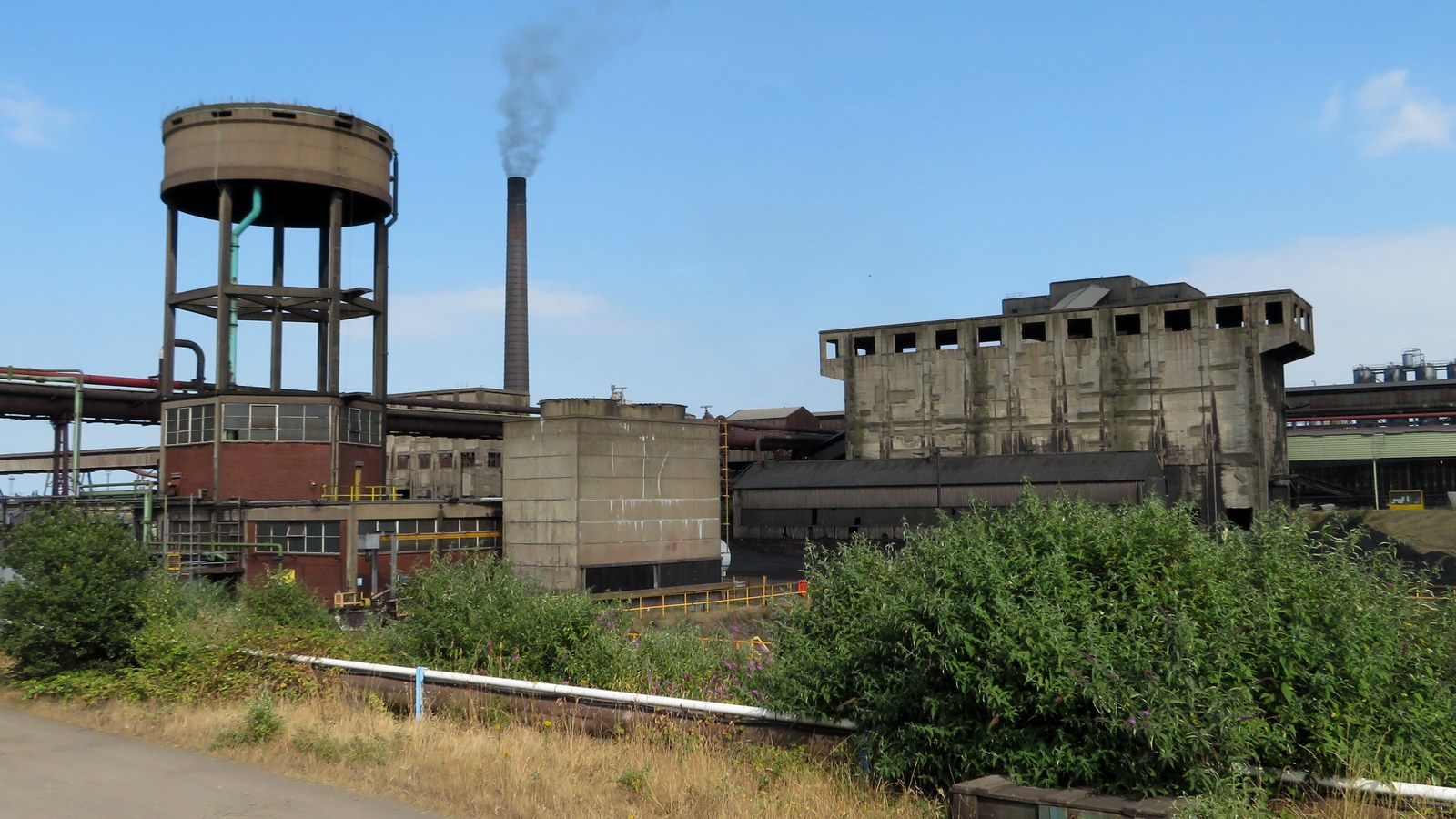

On 16 July 2026, the shares of British Steel passed into the ownership of the British government.
The day before, on 15 July, the Steel Industry (Nationalisation) Act 2026 received Royal Assent; on the same day the industry minister signed the transfer order; it took effect the next day. In the whole process there was no negotiating table, no transaction price and no completion ceremony. Jingye Group, of Hebei in China, had bought the company in March 2020; six years later, it lost it in a manner it could not refuse.
The Department for Business and Trade's answer on the question of compensation was this: an independent assessment will determine whether compensation is paid, and how much. Jingye, for its part, has said it has initiated consultation proceedings under the bilateral investment treaty and reserves all rights, including international arbitration. The Chinese Ministry of Foreign Affairs was more direct: how the British side handles this matter will directly affect the confidence of Chinese investors in the British investment environment.
It makes a sufficiently arresting headline. But to read it only as a political move aimed at Chinese capital is to miss what it actually weighs. The reason those blast furnaces at Scunthorpe reached the point of having to be disposed of by a dedicated piece of legislation is that, long before Jingye took over, British industry had been falling for a very long time — long enough that one has to pull the timeline back to the steam engine and the spinning jenny to see the full shape of the curve.
One common misconception needs correcting first: Britain produced 28.3 million tonnes of steel in 1970 and the steel industry employed 300,000 people, which sounds like a figure from a golden age, but it was in fact already the residue left after seventy years of relative decline. The peak of British industry lies not in the twentieth century but around 1860 to 1880; it was caught by the United States and Germany in the final decade of the nineteenth century. By the time Britain nationalised its steel industry in 1967, the country had long ceased to be the workshop of the world, and nationalisation itself was a surgical attempt to stop the bleeding, not an act of expansion.
So this article proceeds in four movements: how Britain invented the thing called "the factory"; why it was the first to lose speed at the end of the nineteenth century; how the curve slid all the way down to that transfer order of July 2026; and what a manufacturing power of today ought to read out of these 290 years.
I. A Transfer Without a Price
First, the timeline, set out clearly.
The core asset of British Steel is the Scunthorpe works in Lincolnshire — four blast furnaces, a coke oven plant and a set of long-products rolling mills, the last site in Britain still operating primary (virgin) steelmaking. Primary steelmaking means reducing iron ore with coke in a blast furnace to produce hot metal, then converting it into steel, as opposed to the secondary route of remelting scrap in an electric arc furnace. This distinction will recur repeatedly below, because it determines why the crisis of 2025 had to be resolved within a matter of days.
- In November 2019, Jingye Group signed with British Steel's insolvency administrators; the transaction completed on 9 March 2020. Publicly reported consideration was between £50 million and £70 million, and Jingye simultaneously committed to invest £1.2 billion over ten years to modernise capacity at Scunthorpe and Teesside.
- Over the following five years, Scunthorpe made continuous losses. By 2025, the publicly disclosed rate of loss was around £700,000 a day.
- In March 2025, Jingye reached its conclusion: under prevailing electricity prices, carbon costs and market conditions, the two blast furnaces could not be operated sustainably, and it began to cut back raw material purchases.
- In April 2025, Parliament passed the Steel Industry (Special Measures) Act 2025 in a single day, and the government took over day-to-day operational control of Scunthorpe — note that what was taken over was operations, not ownership. For more than a year thereafter, the plant was run by government-appointed management while Jingye remained, nominally, the shareholder.
- Between June and July 2026, the Steel Industry (Nationalisation) Act 2026 completed its passage through both Houses; Royal Assent came on 15 July, and the share transfer took effect on 16 July.
The reason given by the British side was national security and critical infrastructure: some of the long products made by British Steel — railway rails, heavy sections — are indispensable to the rail network and the construction system; if the company went bankrupt, that capacity would disappear permanently. The government's judgement was that without a takeover, the company would in all likelihood collapse.
Scunthorpe currently employs about 2,700 people, with several thousand more along the supply chain. That number carries considerable weight in the British political context, particularly in a country that has already lost too many steel towns.
There is one further fact easily overlooked: from April 2025 to July 2026, Scunthorpe had in practice been run by the government for more than a year. During that period, the plant's raw material purchases, wage payments and loss-covering were borne directly or indirectly by the public finances, while the equity still stood in Jingye's name. In other words, nationalisation was completed in law in July 2026 and in fact in April 2025 — the legislation merely supplied the title paperwork for an accomplished fact. This sequence of "take over first, establish title later" will become a key variable in the valuation dispute that follows.
The controversy centres on compensation. The nationalisation legislation confers on the minister the power to transfer the shares or property of a steel undertaking into public ownership; compensation does not follow automatically but is left to an independent assessment procedure to determine. Jingye's position is that what it took on in 2019 was a company already in administration that no other buyer was willing to touch; that it then put in hard cash over six years and absorbed the losses; and that in the end the assets were taken away without payment. The British position is that the company was already close to failure, so the value at the moment of takeover itself requires re-estimation.
Each side's narrative holds up on its own terms; what is in conflict is the basis of valuation — and that is precisely the hardest part of any expropriation dispute. What is the fair value of an enterprise losing £700,000 a day before takeover? If a large part of that loss stems from the host country's own energy price structure and carbon cost arrangements, who should bear that portion? The bilateral investment treaty signed between China and the United Kingdom in 1986 contains expropriation-compensation provisions and a dispute settlement mechanism, and Jingye has already commenced proceedings under it. Arbitration of this kind is usually measured in years — three to five at the shortest.
II. The Invention of the Factory: From the Flying Shuttle to the Crystal Palace
Britain's most important industrial legacy is not any single machine, but the organisational form called "the factory" itself.
Before the eighteenth century, textiles were a handicraft dispersed among rural households: merchants handed out raw cotton to farming families, who worked it on their own looms, and the merchants collected the finished goods. This system was known as the putting-out system, and its output ceiling was set by the number of pairs of hands. What changed that ceiling was a string of mechanical inventions appearing in succession over less than seventy years:
- In 1733, John Kay invented the flying shuttle; weavers no longer had to pass the shuttle back and forth by hand, weaving productivity multiplied, and spinning immediately became the bottleneck.
- Around 1764, James Hargreaves invented the spinning jenny, allowing one person to drive several spindles at once and pulling up the output of spinning.
- In 1769, Richard Arkwright's water frame took spinning off human power for the first time, and for the first time required machines to be gathered together beside running water — a step whose significance far exceeds the machine itself, because from then on workers had to leave home, go to a fixed place, and start work by a uniform clock. The factory in the modern sense was born at this step.
- In 1779, Samuel Crompton's spinning mule combined the merits of the two previous machines, giving British cotton yarn both fineness and strength, and it began to displace Indian hand-spun yarn in international markets.
What truly liberated this system from the riverbank was the steam engine. Newcomen's atmospheric engine of 1712 had originally been used only to pump water out of mines; Watt's separate condenser patent of 1769 sharply reduced fuel consumption, and after commercialisation in partnership with Matthew Boulton, steam power began to drive rotating machinery. By the 1780s steam-powered cotton mills had appeared, and the siting of factories was no longer constrained by river head; they could be built directly next to coalfields — and this is the underlying logic of Britain's industrial geography: wherever there is coal, there can be factories.
Running in parallel was iron and steel. In 1709, Abraham Darby at Coalbrookdale used coke in place of charcoal to smelt iron, freeing ironmaking from the constraints of forest resources; in 1784, Henry Cort's puddling process and rolling techniques allowed wrought iron to be mass-produced into shaped sections. Coal, iron and steam were mutually causal: steam engines had to be built from coal and iron, coal mines needed steam engines to pump them out, railways needed iron rails and steam locomotives, and railways in turn carried coal and iron further afield. The Stockton and Darlington Railway opened in 1825, the Liverpool and Manchester Railway began scheduled passenger services in 1830, and a self-accelerating industrial system had closed the loop.
The results of this system, expressed numerically, look like this: in 1750, British industrial output amounted to roughly two per cent of the world's; by about 1860, that share was close to twenty per cent. An island nation holding only a very small fraction of the world's population produced a fifth of its manufactures. Pig iron output rose from 1.3 million tonnes in 1840 to 6.7 million tonnes in 1870. When the Great Exhibition opened at the Crystal Palace in London in 1851, the machines Britain displayed occupied the most central position in the hall, and the title "workshop of the world" was made concrete in that year.
It is worth remembering that none of this was institutionally tidy: child labour, the sixteen-hour working day, the wretched workers' housing of Manchester, the Luddite movement smashing machines in 1811 — all belong to the other face of the same history. Industrialisation has never been a smooth curve, and it was not one in Britain either.
III. Peak and Turning Point: 1870–1913
If one has to fix a date for "the peak of British industry", the closest answer is around 1870. Britain's absolute output continued to grow after that, but its share of the world began to fall — and in industrial competition, share is what decides the contest.
The emblematic turning point occurred in steel, and it carries a heavy irony.
In 1856, Henry Bessemer announced his converter steelmaking process in Britain, and steel went from an expensive speciality material to a structural material capable of mass production. Britain produced about 49,000 tonnes of steel in 1860, rising to 240,000 tonnes in 1870. This was a materials revolution led by Britain.
But the Bessemer converter had a fatal limitation: it could not handle phosphoric iron ore, and a great many of the ore deposits of continental Europe and North America were precisely phosphoric. In 1878–1879, two Britons, Sidney Gilchrist Thomas and his cousin Percy Gilchrist, invented the basic lining process, solving the dephosphorisation problem. The greatest beneficiary of this technology, invented in Britain, was Germany — the phosphoric iron ores around Lorraine and the Ruhr thereby became high-grade feedstock, and over the following twenty years the German steel industry expanded at a pace Britain could not approach.
The result: by around 1890, American steel output had overtaken Britain's; by the early twentieth century, Germany had overtaken it too. Britain went from front-runner to third place in under thirty years.
Why was the first industrial nation the first to lose speed? Economic historians have argued about it for a century, but a few mechanisms are relatively uncontested:
- The disadvantage of going first. Britain's factories, mines and railways were built earliest, and their equipment and layouts had already set hard by the mid-nineteenth century. When the United States and Germany built from scratch decades later, they went straight to larger blast furnaces, more continuous rolling lines and more concentrated sites. The book value of existing assets turned out to be an obstacle to renewal.
- The gap in organisational form. British steel and textiles long remained dominated by family firms — small in scale, scattered, weakly integrated vertically; Germany took the route of large konzerns with long-term bank finance, and the United States that of trusts and standardised mass production. When competition shifted from "who invented it first" to "who is organised at scale", Britain's dispersed structure was not advantaged.
- The gap in technical education. In the second half of the nineteenth century Germany built a systematic network of higher technical schools and corporate laboratories, turning chemistry and metallurgy into professional capabilities that could be trained in volume; Britain's engineering tradition relied more on apprenticeship and individual genius.
- Where the capital went. Britain accumulated enormous capital in the late nineteenth century, but a considerable proportion of it flowed into overseas bonds, colonial infrastructure and the London financial markets rather than into technical upgrading of domestic factories. The existence of imperial markets also allowed British manufacturers to sustain volumes without improving efficiency — a comfortable, slowly fatal form of protection.
Of these four mechanisms, the third is the one most worth expanding on its own, because it has a case almost perfectly symmetrical with the Thomas process.
In 1856, the eighteen-year-old Briton William Perkin tried in his laboratory to synthesise quinine, failed, and instead obtained the world's first synthetic dye — mauveine. This was the beginning of the organic chemical industry, and it happened in London. But it was Germany that turned dyes into an industry: over the following thirty years, Bayer, BASF and Hoechst built in-house research laboratories, turning "hire a batch of chemistry doctorates and experiment systematically" into a replicable factor of production, and combined with patent strategy and the scaling-up of chemical plant, by the early twentieth century they had taken the overwhelming majority of the world synthetic dye market. In Britain over the same period, the dye industry remained largely a matter of small and medium workshops.
Invented in Britain, industrialised in Germany: this sentence pattern repeats far too often at the end of the nineteenth century — so it was with synthetic dyes, so with the steel dephosphorisation process, and broadly so with electrical equipment and precision optics later on. The difference lay not in who was cleverer, but in the fact that Germany institutionalised the channel "from laboratory to factory", while Britain still left it to the luck of particular geniuses and particular entrepreneurs.
On the American side, the problem was of another dimension. Andrew Carnegie integrated coking, ore, transport, steelmaking and rolling vertically into a single system, using scale to spread costs, cost to push down prices, and price to buy still greater scale; when U.S. Steel was formed in 1901, the capacity of that single enterprise exceeded that of the whole of Britain. Britain's steel firms at the time were still dozens of medium-sized producers fighting their own corners, many of them still family-tinged. When the deciding factor in competition shifted from process innovation to capital organisation and scale efficiency, that structural difference was fatal.
It needs saying clearly that Britain in 1913 was still an enormous industrial nation: coal output reached its historic peak of 292 million tonnes that year, from more than three thousand pits worked by 1.09 million miners, of which some 96 million tonnes went for export; pig iron output was 10.4 million tonnes; in the 1890s British yards delivered about eighty per cent of world shipping tonnage, still around sixty per cent on the eve of the First World War. In absolute terms, this was a summit. The problem is that this summit was held up by four nineteenth-century industries — coal, cotton, steel and ships — while leadership in the dominant industries of the next era, electrical engineering, chemicals, motor cars and precision machinery, was by then already in German and American hands.
IV. The Collapse of Three Pillars: 1914–1967
In the first half of the twentieth century, Britain's traditional pillar industries lost their markets one after another.
Cotton was the first. The mills of Lancashire rested on a premise: that Britain would spin and weave by machine and sell to the whole world, India included. During the First World War Britain had no capacity to spare for exports, and the textile industries of India and Japan took the chance to build their own capacity; when Britain tried after the war to return to its former markets, what it faced were localised competitors and lower costs. Lancashire's spindle count fell continuously through the 1920s and 1930s, and the industrial base of an entire county was drained within two generations.
Coal was the second. The 292 million tonnes of 1913 was the absolute peak of British coal, never regained. Seams were worked ever deeper and costs rose ever higher, oil began to substitute for coal, and export markets were squeezed by Polish and German coal. The nine-day General Strike of 1926, with the miners at its centre, was precisely the eruption of the contradiction between industrial decline and wage compression.
Shipbuilding was the third. With global shipping in surplus between the wars, orders at British yards collapsed; after the Second World War, Japan remade the industry with bigger docks and more standardised block construction, while Britain's yards remained scattered across the old slipways on the banks of the Clyde and the Tyne. By the 1960s, British shipbuilding had fallen from first in the world to a state requiring government-sponsored mergers and rescue.
Against this background, the wave of British nationalisations after 1945 takes on another reading: coal in 1947, railways in 1948, steel in 1951 — these were not ambitious plans for expansion but the government's assumption of control over a set of basic industries that could no longer sustain themselves. Steel was the most changeable of them: nationalised in 1951, privatised again in 1953, nationalised once more in 1967. Ownership changed three times in twenty years, and the curve of industrial competitiveness did not change direction because of it.
That was the real situation when the British Steel Corporation was created in 1967. It was not an empire's steel division but the last consolidation of an industry already losing ground.
V. From 28.3 Million Tonnes to 2.5 Million Tonnes
Once that history is understood, the story after 1970 is no longer surprising; it is only a question of speed.
In 1970, the British steel industry produced 28.3 million tonnes a year and directly employed more than 300,000 people. This was the absolute output peak of British steel, but by then its share of world steel production was already small, and its cost structure was comprehensively behind the new large plants of Japan and West Germany.
In 2025, the figure was 2.5 million tonnes.
The path in between is a textbook history of industrial decline, and every one of its turning points was accompanied by a change of ownership:
- 1967, nationalisation. The Iron and Steel Act took about 90% of national steel capacity into public ownership and merged fourteen major steel companies into the British Steel Corporation (BSC). The intent of the merger was scale and modernisation, but under public ownership the geography of capacity became deeply bound up with political commitments, and closing plants became extremely difficult.
- The 1980s, contraction. Global steel overcapacity, shifts in the structure of demand and industrial conflict compounded one another, and BSC went through mass redundancies and closures. The thirteen-week national steel strike of 1980 was the watershed of this contraction: after it ended, the pace of closures visibly accelerated, and output and employment were compressed together over the following decade. The social cost of this period still lingers in the memories of towns in northern England and Wales — when a steelworks closes, what it takes away is not only several thousand jobs but the machining, haulage, refractories and equipment maintenance networks that had grown up around it.
- 1988, privatisation. BSC was reorganised as British Steel plc and listed on the London Stock Exchange on 5 December of that year.
- 1999, cross-border merger. It merged with Koninklijke Hoogovens of the Netherlands to form the Corus Group.
- 2007, acquired by India. Tata Steel won Corus in a bidding contest, and Britain's largest steel asset passed into Indian hands.
- 2016, one pound. Tata sold its long products division — including the Scunthorpe works — to Greybull Capital for a consideration of £1, and the name "British Steel" was revived. In the same period, the SSI works at Redcar had already closed in 2015.
- May 2019, insolvency. British Steel entered administration, with some 5,000 jobs and many more supply chain jobs left hanging, and the government-appointed administrators kept it running for ten months while waiting for a buyer.
- March 2020, Chinese capital takes over. Jingye Group completed the transaction. It was the only buyer at the time willing to take on the mess.
- 30 September 2024, Port Talbot goes cold. Tata Steel closed the last blast furnace at Port Talbot (No. 5 had already stopped in July of that year), ending more than a century of primary steelmaking in the town. The replacement is an electric arc furnace costing £1.25 billion with a £500 million government subsidy, planned to start up in 2027–2028.
- July 2026, nationalisation. Sixty years having come full circle, Scunthorpe returned to its ownership status of 1967.
Laying this chain out, two details are worth pausing over.
First, ownership changed hands six times and the output curve never once turned upward. State, private, Dutch joint venture, Indian control, private equity fund, Chinese private enterprise, then state again — nearly every possible ownership arrangement has been exhausted, and output went from 28.3 million tonnes all the way down to 2.5 million tonnes. This shows that the problem does not lie in ownership. Reducing British Steel's predicament to "Chinese mismanagement" is, like reducing it in the 1990s to "state-owned inefficiency", a matter of swapping in a new scapegoat rather than explaining the cost structure.
Second, at every transfer the strength of the incoming owner declined and the terms grew worse. When Tata took over, Corus was still a mainstream European steelmaker; by 2016 the long products business was priced at £1; by 2019 the company was bankrupt; by 2020 the only buyer came from Hebei. The asset was depreciating, but the plant was still there, the workers were still there, and someone still had to roll the rails — that this gap was ultimately filled by the public finances was all but inevitable.
The macro backdrop over the same period is consistent. British manufacturing value added as a share of GDP fell from 14.8% in 2000 to 9.1% in 2023; its share of global manufacturing value added fell from 3.1% to 1.9%. Steel is simply the most visible segment of that curve.
VI. Electricity Prices: How a Country Pushed Its Own Industrial Costs to the World's Highest
If only one variable could be used to explain the last decade of British steel, it would be electricity prices.
Steel is a classic energy-intensive industry, and the electric arc furnace route especially so — it is in essence the use of electricity to remelt scrap. The direction of British industrial policy has been precisely to move steelmaking from blast furnaces to electric arc furnaces in order to decarbonise. The problem is that Britain's industrial electricity prices are in the highest bracket among developed countries.
Several sets of public figures:
- Among the member countries covered by International Energy Agency statistics, Britain's industrial electricity prices are higher than those of any other member.
- In 2025–2026, British steel producers paid electricity prices around 40% higher than their French and German counterparts, and that item alone added roughly £41 million to British steelmakers' electricity bills.
- Accumulated from 2016–2017 onwards, British steelmakers paid about £845 million more than their French counterparts and about £721 million more than their German counterparts.
- In the first half of 2025, British wholesale electricity prices rose about 40% year on year, averaging close to US$115 per megawatt hour; France over the same period was around US$73 per megawatt hour.
These numbers weigh heavily within the cost structure of steel. Electricity consumption per tonne of steel in an electric arc furnace is measured in hundreds of kilowatt hours, and every ten per cent rise in the price of electricity eats directly into an already thin gross margin per tonne. When French and German competitors in the same market are supplying on cheaper power, and imported steel can enter Britain at a lower landed cost besides, the price competitiveness of domestic capacity is no longer a gap that managerial ability can close.
The source of the price differential is not tax but the generation mix. Britain's marginal electricity price has long been set by gas-fired plant, while France relies chiefly on nuclear and Germany's share of gas generation is far below Britain's. With European gas prices staying high after 2022, Britain has in effect wired its entire industrial system to the most expensive generator on the system. Add carbon costs, and both routes — blast furnace and electric arc furnace — lost their economics in Britain at the same time: the blast furnace because of carbon, the electric arc furnace because of electricity.
Carbon cost is the other face of the same coin. Carbon emissions per tonne of steel on the blast furnace route are far higher than on the electric arc furnace route, and under a carbon pricing mechanism, continuing to run blast furnaces means continuously rising compliance costs; but switching to electric arc furnaces means facing the world's highest bracket of industrial electricity prices, and although British scrap is plentiful, some of the higher-grade steels required for long products are not undemanding as to scrap quality and alloying elements. And so a situation arises that is very hard to justify in policy design: the decarbonisation pathway sentenced the blast furnace to death, while the electricity price structure made the electric arc furnace meant to replace it hard to run profitably, with no transitional band left in between. The three-year gap at Port Talbot between the furnace going cold and the electric arc furnace starting up is exactly what that void looks like in the physical world.
This is the arithmetic underlying the conclusion Jingye reached in March 2025. It was not a negotiating posture: in an operating state losing £700,000 a day, any owner would reach the same conclusion. The only difference is that when Jingye, a foreign private enterprise, said it, it held no political chips at all.
Meanwhile, Britain's share of imported steel rose from 55% in 2022 to around 70% in 2024. Domestic demand is about 7.6 million tonnes, of which domestic capacity can cover only a small part. From 1 July 2026, Britain sharply tightened steel import quotas and imposed a 50% tariff on volumes above them — domestic capacity collapsing on one side, trade barriers rising on the other, and the fact that these two things happen simultaneously is itself an indication of the policy impasse: when a country can no longer keep capacity through cost competition, it is left with only one option, keeping it through law. Nationalisation is the terminus of this logic; tariffs are its other face.
VII. A Blast Furnace Does Not Do Politics
There is one technical detail that explains why Parliament had to work overtime on a Saturday in April 2025 to pass a law.
A blast furnace is not a piece of equipment that can be shut down at will. It sustains a continuous smelting state of over a thousand degrees Celsius inside; once the blast stops and the furnace temperature falls, the hot metal and slag inside solidify and fuse with the refractory brick into a single mass — known in the trade as a frozen hearth. A blast furnace that has frozen is essentially scrap; rebuilding requires hundreds of millions of pounds and a construction period measured in years. So the operation of a blast furnace is a line that cannot be interrupted: coke, iron ore and injection coal must arrive continuously, and running out of feed is the same as destroying the furnace.
In March and April 2025, when Jingye began cutting back raw material purchases and gaps appeared in downstream feedstock orders, what the British government faced was not a commercial dispute that could be negotiated at leisure but a countdown measured in weeks: if coke did not reach port by a certain date, Scunthorpe's blast furnaces would die permanently, and Britain would become the only member of the G7 without primary steelmaking capability. The emergency legislation, the scramble to buy raw materials and the government's direct assumption of operations all took place inside that window.
This detail deserves to be remembered by everyone doing heavy-asset investment overseas: in continuous process plant of the metallurgy, chemicals, glass and cement type, technical irreversibility will instantly escalate a commercial problem into a political one. When a light manufacturing plant stops, that is an idle asset; when a blast furnace stops, that is a permanent loss of national capability. Once the host country realises this, the boundaries of property rights begin to move.
VIII. How "National Security" Became a Way of Pricing
Over the past decade, the logic by which major economies screen foreign investment has undergone a systematic change.
Early foreign investment screening was aimed mainly at overtly sensitive fields such as defence, nuclear power and aerospace; the scope then gradually expanded to telecommunications, energy, ports and data; and later still to a set of traditional industries redefined as "critical infrastructure" or "supply chain resilience" — steel, fertilisers, shipbuilding, rare earth processing, battery materials. The National Security and Investment Act, which took effect in Britain in 2021, extended the scope of review to seventeen sectors and carries the power to review completed transactions retrospectively.
What is distinctive about the British Steel case is that it has run the full course of this logic:
- Step one, 2020: the transaction was permitted. There were no other buyers at the time, and a Chinese takeover was seen as a rescue of jobs.
- Step two, 2025: operational control was taken over. The reason given was to prevent an irreversible loss of capacity; ownership was left untouched for the time being.
- Step three, 2026: ownership was transferred. The reason was escalated to national security and the public interest, with compensation to be handled separately.
Six years separate the three steps. For an investor, the real risk is not the screening regime itself — screening is foreseeable — but that the definition of "critical" shifts over time, and shifts in one direction only. An asset is an ordinary industrial asset when bought, is reclassified as strategic during the holding period, and may have no bargaining power whatsoever on exit. This risk cannot be eliminated by due diligence on the transaction date, because on the transaction date it does not yet exist.
Equally worth noting is that the core of the compensation dispute is not "whether to pay" but the valuation date and the valuation basis. Which day governs: the signing date in 2019, the takeover date in 2025, or the transfer date in 2026? During the year and more under government management, whose account do that period's operating results belong to? Is the more than a billion pounds of upgrading expenditure Jingye put in counted into asset value, or treated as sunk cost? Each of the answers to these questions can move the compensation figure by an order of magnitude.
This is also why the value of writing exit provisions, valuation mechanisms and dispute resolution venues into the transaction documents of overseas heavy-asset projects often only becomes apparent ten years after signing.
IX. What These 290 Years Mean for Chinese Manufacturing
The Tianxia Gongchang Industrial Research Institute has long tracked the supply chain structure of Chinese manufacturing and the outbound paths of Chinese enterprises. Viewing Britain's 290 years from the flying shuttle to the blast furnace from a Chinese perspective, five inferences are worth writing down.
Point zero, and the most fundamental: leadership does not in itself constitute a moat.
Britain did not lose its lead because someone stole its technology. The flying shuttle, the spinning jenny, the steam engine, coke smelting, the Bessemer converter, the Thomas basic process — all were born in Britain; even the dephosphorisation process that lifted German steelmaking bears the names of two Britons on its patent. What it lost was the ability to convert invention into scale and scale into cost advantage — and that ability is attached to organisational form, the education system, the direction of capital flows and energy prices, all four of which drift over time. A country can lose all of its production capacity while retaining all of its patents. This is the first warning Britain leaves to every industrial power that came after, and the one most easily ignored during a boom.
First, output is not industrial capability, but once industrial capability disappears it will not come back on its own.
Global crude steel output in 2025 was about 1.849 billion tonnes, of which China accounted for more than half; Britain's 2.5 million tonnes is all but invisible in that total. But the real comparison is not in the aggregate, it is in the structure: what Britain lost was not only tonnage but the associated refractories, rolls, spare parts manufacturing, metallurgical engineering design and — most critically — three generations of accumulated shop-floor process experience. Port Talbot's blast furnaces went cold in 2024 and the electric arc furnace will not come on stream until after 2027; in the intervening years, those operators will not be waiting in place. The capacity replacement and process upgrading China is currently carrying out needs to face the same issue squarely: equipment can be switched on schedule, but people and supporting systems cannot be allowed to break.
Second, energy prices are long-cycle industrial policy, not a short-term operating cost.
The British steel industry was not crushed by Chinese capacity — it had already lost two-thirds of its output before large-scale Chinese steel exports began. It was slowly squeezed out by its own generation mix and cost arrangements. Any country that wants to keep energy-intensive industry at home must ultimately answer the question of where the electricity price comes from. The significance of this for China is positive: stable and relatively cheap industrial electricity is one of the most underrated structural advantages of Chinese manufacturing today, and the one most in need of long-term protection.
Third, the political risk of going abroad should be priced in tiers according to how heavy the industry's assets are.
For the same overseas investment, a clothing production line, a home appliance assembly plant and a blast furnace face entirely different risks:
- Projects that are asset-light, relocatable and small in employment carry little motive for host country intervention;
- Projects that are asset-heavy, immovable and large in single-site employment will, once operations deteriorate, trigger both the employment nerve and the industrial security nerve at once;
- For projects placed on a critical infrastructure list, property protection will in extreme circumstances give way to the public interest — and the power to define "extreme circumstances" does not lie with the investor.
This tiering carries a further corollary: the standard for judging how high the risk is is not the host country's current attitude to Chinese capital, but whether "losing this asset would make headlines" in host country politics. Scunthorpe's 2,700 jobs, Britain's last primary steelmaking capability, and a product category like railway rails for which there is no temporary substitute — stack those three together and it was never going to be allowed to fail quietly. For any asset with those three attributes, an investor should assume from the day of entry that, in the worst case, property rights are not the ultimate protection.
For projects of the third type, the sensible structure is not to pursue one hundred per cent control but to bring in host country capital, financial institutions or industrial partners as co-shareholders, binding local interests to the project; and at the same time to arrange political risk insurance, the applicability of bilateral investment treaties and the choice of arbitral seat at the transaction structuring stage. The point most worth reviewing in the Jingye case is this: when the only buyer bore the only risk, it simultaneously lost the only bargaining chip.
Fourth, bottom-fishing for obsolete assets in mature industrial countries requires a harder reason than "cheap".
British Steel in 2020 looked financially like a low-priced asset: 150 years of history, 4.5 million tonnes of capacity, a consideration of a few tens of millions of pounds. But its cost curve was already fixed on the day of acquisition — electricity prices, carbon costs, wholly imported raw materials, a market being eroded by imported steel; not one of these was something a new shareholder could change. Chinese capital has repeatedly run into similar choices in this wave of going abroad: Europe's old factories look cheap, but the reason they are cheap is usually written into the host country's energy bills and industrial policy, not into the company's own operating accounts. In judging whether an overseas asset is worth taking on, the first step is not to look at its balance sheet but at its country's electricity price curve, carbon price trajectory and the direction of trade protection.
The alternative path to "bottom-fishing for old plants" is to build new capacity in regions with growing demand, cheap energy and lower trade barriers — most of what Chinese steelmakers have done in Southeast Asia and the Middle East over the past decade has followed this line. The difference between the two paths is not the scale of capital but this: with a new project you draw your own cost curve, while with an acquired old plant the cost curve has been drawn by someone else. The risk of the former lies in the market judgement, that of the latter in the host country's structural conditions — and the latter kind of risk is precisely what an outside shareholder finds hardest to change.
Jingye Group is not in itself a reckless enterprise. Founded in 1990 and headquartered in Pingshan County, Hebei, it had sales revenue of about 369.1 billion yuan in 2025, has appeared in the Fortune Global 500 for several consecutive years, and has pushed its core steel business to the 20-million-tonne scale through a series of acquisitions. Its six years in Britain were the first time a Chinese private steelmaker had genuinely operated a mainstream European steelworks — and that experience, whatever the outcome, should not be reduced to a failed investment.
X. The Last Blast Furnace
Back to Scunthorpe.
After 16 July 2026, the owner of those four blast furnaces is the British government. They still need coke, they still consume electricity every day, and they still lose money. Nationalisation solves the ownership problem, not the cost problem. Unless the structure of British industrial electricity prices changes fundamentally, or the Treasury is willing to bear subsidies over the long term, Scunthorpe's economics will not improve of their own accord over the next five years.
What is different is that, from 16 July, the bill is settled by the British taxpayer.
A country will in the end pay for what it believes it cannot afford to lose. The problem is that Britain took a very long time to confirm that primary steelmaking capability belongs in that category — the Bessemer converter came into the world here in 1856, the dephosphorisation process was invented here in 1879, and the most advanced machines in the world at the time were displayed here in the Crystal Palace in 1851. Between the Crystal Palace and that transfer order of 2026 lie one hundred and seventy-five years, and a share curve that has almost never reversed.
The cost can be itemised: coal from 292 million tonnes to essentially zero, shipbuilding from eighty per cent of the world to negligible, cotton from the mainstay of Lancashire to complete withdrawal, steel from 28.3 million tonnes to 2.5 million tonnes. Behind each item lie the golden years of dozens of industrial towns, and a descent that could have been faced up to far earlier.
For Chinese manufacturing as it moves outward, the value of this bill lies not in passing judgement on Britain but in three reminders: do not underestimate a host country's ability to rewrite the rules at the last moment; do not underestimate the cost of a complete industrial system that, once loosened, is nearly impossible to rebuild; and do not assume that inventing early and leading long can in itself guarantee anything.
The first concerns how to go out; the other two concern how to hold the foundations at home.
Sources and Principal References
The facts and data in this article are all drawn from public sources and cited after cross-checking; where compensation amounts and arbitration proceedings have not been finally determined, they are described throughout as "in dispute", without speculation.
- Tianxia Gongchang Industrial Platform — Chinese factory database and supply chain structure data
- House of Commons Library: research briefing on the Steel Industry (Nationalisation) Bill 2026-27, the briefing on British Steel and government special measures, and the briefing on the UK steel industry: statistics and policy
- UK Parliament: the legislative passage of the Steel Industry (Nationalisation) Act 2026 and the ministerial written statement of 16 July 2026
- World Steel Association (worldsteel): annual crude steel production statistics
- UK Steel: special reports on international comparison of industrial electricity prices
- International Energy Agency (IEA): Electricity Market Report — Mid-2025 Update
- Office for National Statistics (ONS): long-run statistics on the UK steel industry
- Cambridge University Press, The Journal of Economic History: international competition in the steel industry 1850–1913; cost comparisons of British and world shipbuilding 1890–1914
- Gregory Clark's world economic history lecture notes, University of California, Davis: the diffusion of the Industrial Revolution and national shares of industrial output
- Historical series of British coal output (ONS and UK energy statistics), and source materials on British mining and shipbuilding history
- World Bank: manufacturing value added as a share of GDP (United Kingdom)
- Official announcements of Tata Steel and British Steel
- Reporting by Al Jazeera, Reuters, the Financial Times and others on the July 2026 nationalisation and the statements of the parties
- Cover image: Scunthorpe Steelworks, photographed by Gareth James, from geograph.org.uk, CC BY-SA 2.0