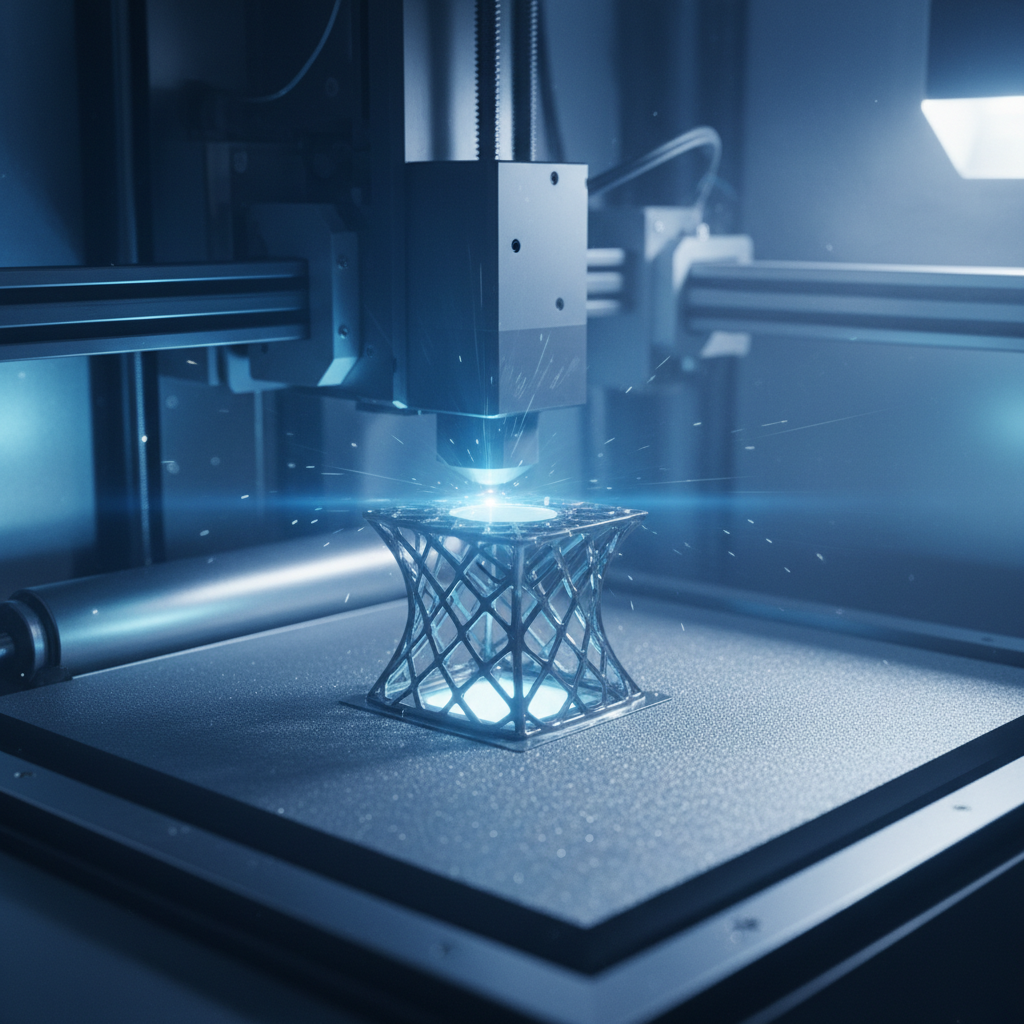

2026 China Additive Manufacturing and 3D Printing Industry Market Scale and Competitive Landscape: In-Depth Research Report
Published: June 14, 2026
Author: Industry Research Team
Report Period: FY2025 Data / 2026–2030 Outlook
Executive Summary
Additive Manufacturing (AM) is accelerating its transformation from a prototyping aid tool into a platform for end-use part batch production — at a speed that has surpassed most industry observers' expectations. In 2025, the global additive manufacturing market is estimated at USD 250–330 billion, with Grand View Research providing a median estimate of USD 30.55 billion, Precedence Research estimating USD 25.92 billion, and Wohlers Associates' 2024 report showing a 2023 base of USD 21.9 billion with a forecast of USD 115 billion by 2034 at approximately 18% CAGR. The metal additive manufacturing hardware sub-segment reached approximately USD 4.7 billion in 2024, with hardware shipments surpassing USD 2.4 billion for the first time (up 28% YoY), targeting USD 60 billion by 2034.
China represents the most closely watched incremental source in global additive manufacturing. The domestic AM market reached approximately RMB 500–550 billion in 2025 at a CAGR above 25%. The Ministry of Industry and Information Technology's Electronics Information Division (MIIT-EIDC) confirmed that industry output grew from RMB 20.8 billion to RMB 70 billion during the 14th Five-Year Plan period. The draft 15th Five-Year Plan locks the domestic market target at RMB 147.9–150 billion by 2030, implying a 24%+ CAGR from 2025 to 2030. China has established a complete industrial chain from "equipment — powder materials — software — services — applications": three major sectors — aerospace, medical orthopedics, and automotive lightweighting — have formed large-scale demand; the C919 large commercial aircraft has been fitted with 23 3D-printed titanium alloy structural components certified by China's Civil Aviation Administration (CAAC); and in January 2026, the Institute of Mechanics of the Chinese Academy of Sciences successfully completed orbital metal 3D printing verification aboard the Chinese Space Station, placing China among the first tier of space AM technology.
In the corporate landscape, VoxelMatters' 2024 Global Metal AM Revenue TOP10 includes three Chinese companies: BLT (Bright Laser Technologies) at #2, Farsoon Technologies at #7, and EPlus3D at #9 — fully demonstrating China's competitive magnitude in metal additive manufacturing. In FY2025, BLT (688333) recorded revenue of RMB 1.852 billion (+39.69%) with net profit attributable to shareholders of RMB 204 million (+95.14%); Farsoon Technologies (688433) recorded revenue of RMB 715 million (+45.43%). Among major overseas listed companies, 3D Systems reported full-year revenue of USD 386.9 million (-12%), Stratasys reported USD 551.1 million (-3.7%) but with improved EBITDA and cash flow, and Renishaw achieved record revenue of GBP 713 million (+3.1%). The most significant negative event was Desktop Metal filing for Chapter 11 bankruptcy protection on July 29, 2025, just 88 days after being acquired by Nano Dimension — reflecting systemic difficulties in commercializing binder jetting technology.
On the risk side, China's AM industry still faces structural challenges: incomplete domestic substitution of core components (metal powder import dependency approximately 34%, concentrated in high-temperature nickel-based superalloys), intensifying equipment commoditization and price wars, and the "prototype to mass production" closed loop in AM services not yet universally established. On the policy front, the national key R&D program "Additive Manufacturing and Laser Manufacturing" officially launched in January 2026; the six-ministry joint "Machinery Industry Steady Growth 2025–2026 Action Plan" explicitly lists industrial 3D printing as a priority digital transformation tool; and on the medical device regulatory side, the total NMPA registrations for additive manufacturing medical devices reached 199 as of November 2024, a 10-fold increase since 2020.
This report conducts an in-depth analysis of China and global additive manufacturing industries in FY2025 across twelve dimensions: technology classification, global landscape, policy environment, Chinese market structure, industrial chain, key enterprises, industrial geography, vertical application topics, technology frontiers, risks and challenges, and five-year outlook.
Chapter 1: Definitions, Classification, and Industrial Chain Overview
1.1 The Core Logic of Additive Manufacturing
The essence of additive manufacturing is "driving the layer-by-layer accumulation of matter using digital files." Compared to the two traditional manufacturing paradigms — subtractive manufacturing (milling, turning, grinding: removing excess material from blanks) and formative manufacturing (casting, forging, stamping: forming materials in closed dies) — AM's fundamental differentiated advantages lie in three points.
First, die-free freeform fabrication. Any geometry described through CAD modeling can theoretically be printed directly without designing and manufacturing molds. This feature is highly valuable in: (1) rapid prototype validation in the early stages of product development, typically 24–72 hours from design file to physical sample; (2) small-batch customized part production (batch sizes of 1–5,000 pieces), avoiding upfront fixed costs of tooling; and (3) materialization of topology-optimized designs — inward-concave cage structures, porous lattice structures generated by topology optimization algorithms are almost impossible to achieve with traditional machining but can be printed directly with AM.
Second, high material utilization. SLM and similar powder bed processes achieve material utilization rates of 95–98% (unmelted powder can be recovered and reused), compared to the typical 10–20% utilization rate of CNC milling on titanium alloys. For titanium alloy priced at RMB 600–1,200 per kilogram, the utilization rate difference directly affects manufacturing cost.
Third, part consolidation capability. Assemblies that would require multiple parts to be joined or welded in traditional manufacturing can be consolidated into a single AM-printed part, eliminating fatigue cracking risks at connection interfaces while reducing assembly labor. GE Additive's (now Colibrium Additive) classic case of consolidating CFM LEAP engine nozzles from 20 welded components to 1 AM-printed part has become a textbook example of aerospace additive manufacturing.
1.2 Mainstream Process Technology Systems
By raw material form and energy source, current mainstream additive manufacturing processes can be divided into seven major technology routes, each differing significantly in precision, speed, material system, and cost structure.
Metal Additive Manufacturing Processes
(1) Selective Laser Melting (SLM / PBF-LB): The dominant metal AM process with over 60% market share. A laser beam (typically 200–1,000 W fiber laser) melts metal powder on a powder bed (layer thickness 20–80 μm) along sliced paths point by point, cooling and solidifying before spreading the next layer. Typical materials: Ti-6Al-4V, 316L stainless steel, AlSi10Mg, IN718, CoCrMo. Forming precision ±0.05–0.1 mm (after post-processing), porosity controllable below 0.1%.
(2) Electron Beam Melting (EBM / PBF-EB): Uses focused high-energy electron beams (up to 6 kW) to melt metal powder in a vacuum chamber (<10⁻⁴ mbar). Due to the high-temperature vacuum processing environment, EBM parts have extremely low residual stress and good mechanical properties without subsequent heat treatment. Typical materials: Ti-6Al-4V (orthopedic implants), TiAl (gamma titanium aluminide, for aviation turbine blades), IN718.
(3) Directed Energy Deposition (DED): Divided into Laser Metal Deposition (LMD) and Wire Arc Additive Manufacturing (WAAM). LMD uses a nozzle to simultaneously deliver metal powder while melting it with a laser, with deposition rates of 50–1,000 cm³/h. WAAM uses arc as heat source and wire as feedstock, with deposition rates up to 1–10 kg/h, enabling fabrication of ultra-large metal structures at 3–10 m scale.
Polymer Additive Manufacturing Processes
(4) Selective Laser Sintering (SLS / PBF-LB for polymers): CO₂ lasers sinter nylon 12 (PA12), nylon 11 (PA11), and other polymer powders. Automotive intake ducts, medical orthotics, and consumer electronics structural components are primary markets.
(5) Photopolymerization (SLA / DLP / MSLA-LCD): Photosensitive resin cures under ultraviolet light through free radical polymerization. SLA (laser scanning) achieves highest precision (±25 μm, surface roughness Ra ≤1 μm); DLP (digital light projection) uses area exposure instead of laser point scanning, approximately 5–10 times faster.
(6) Fused Deposition Modeling (FDM / FFF): Thermoplastic filaments are heated to molten state and extruded layer by layer. Material system is broadest (PLA, ABS, PETG, TPU, PEEK, Ultem), with equipment prices ranging from a few hundred yuan for desktop units to millions for industrial machines.
1.3 Industrial Chain Vertical Deconstruction
The additive manufacturing industrial chain consists of three tiers (upstream, midstream, downstream) plus a software layer that runs throughout the entire process.
Upstream: Raw Materials and Core Components
Metal powders require sphericity ≥95%, precise control of particle size distribution D10/D50/D90 (SLM typically 15–45 μm), flowability Hall Flow ≤25 s/50 g, oxygen content ≤200 ppm (≤100 ppm for premium aerospace parts). Core components include fiber lasers, galvanometer/scanning mirror systems, beam collimation and expansion optics, precision powder spreading rollers/doctors, and atmospheric protection systems.
Midstream: Equipment Manufacturing and Software
Equipment manufacturers are divided into three tiers by forming volume and price. Industrial-grade metal printers (forming dimensions 200×200×200 mm to 1,250×1,250×1,250 mm, unit price RMB 0.5–30 million) represent the highest value segment. Software is the most nationally underdeveloped link in the industrial chain, divided into design layer (CAD + topology optimization), slicing and process layer, and simulation layer — with Materialise Magics holding over 50% global market share.
Downstream: Services and End-User Applications
AM services divide into "printing service outsourcing" (AM Bureau) and "AM-enabled applications" (customers self-purchase equipment). Leading Chinese AM companies like BLT and Farsoon have both equipment sales and printing services, with more robust business model stability than pure equipment vendors.
Chapter 2: Global Competitive Landscape and Major Enterprise FY2025 Financials
2.1 Global Market Scale and Structural Evolution
The 2025 global additive manufacturing market stands at approximately USD 30.55 billion (Grand View Research estimate), with metal additive manufacturing accounting for approximately 15.3% (approximately USD 4.68 billion). The 2025–2034 global CAGR forecast is 14–18%, with metal AM at approximately 20%. The structural shift in the 2025 global AM industry is from "who sells more equipment" to "whose consumables + service ecosystem has greater stickiness."
From a geographic perspective, the United States holds approximately 30% market share, the EU approximately 25% (Germany/UK/France as core), and China approximately 20% (rapidly catching up). In terms of growth rate, China is the fastest-growing major market globally.
2.2 3D Systems (DDD) FY2025 Deep Dive
3D Systems was founded in 1986 by Chuck Hull, who simultaneously invented stereolithography (SLA) and the STL file format. FY2025 full-year financial performance: Revenue USD 386.9 million, down approximately 12% YoY; GAAP operating loss USD 96.1 million; net income USD 29.9 million (including one-time gains from asset divestitures); Q4 single-quarter revenue USD 106.3 million (highest of the year); year-end cash balance USD 97.1 million. The healthcare segment was the only bright spot, with Q4 revenue up 25% YoY.
2.3 Stratasys (SSYS) FY2025 Deep Dive
Stratasys is the world's largest polymer additive manufacturing equipment supplier. FY2025 full-year financial performance: Revenue USD 551.1 million, down 3.7%; GAAP net loss USD 104.3 million; Non-GAAP net profit turned positive to USD 12.7 million; adjusted EBITDA increased 9.6% YoY to USD 28.5 million; year-end cash balance USD 244.5 million, zero interest-bearing debt. The structural improvement was driven by a 15% headcount reduction in late 2024, achieving annualized savings of USD 40 million. Stratasys acquired Markforged for USD 42.5 million (a 63% discount from Nano Dimension's purchase price of USD 116 million), supplementing high-strength carbon fiber composite continuous fiber printing capability.
2.4 EOS GmbH (Private) — Global Metal AM Revenue #1
EOS was founded in Munich in 1989 by Hans Langer and is the inventor of the SLS polymer printing process. Estimated 2024 revenue approximately USD 500 million. EOS maintains private operations and consistently ranks first in global metal AM equipment revenue. In 2025, EOS invested USD 3 million in building a US domestic manufacturing service park in Pflugerville, Texas.
2.5 Nikon SLM Solutions (Formerly SLM Solutions)
After Nikon completed a full acquisition of SLM Solutions in 2023 for approximately EUR 617 million, the company was renamed Nikon SLM Solutions. Core product NXG XII 600 features 12 × 1 kW laser heads, forming size 600×600×600 mm, scanning speed 1,000 m/s, theoretical deposition rate 8–10 times that of single-laser systems. In 2025 global metal AM revenue rankings, the company rose to #3, demonstrating channel synergies from the Nikon integration.
2.6 Desktop Metal / Nano Dimension Acquisition and Bankruptcy
This is the most significant negative event in the global AM industry in 2025. On April 2, 2025, Nano Dimension completed the acquisition of Desktop Metal for USD 179.3 million. Just 88 days later, Desktop Metal filed for Chapter 11 bankruptcy protection on July 29, 2025. Liabilities were approximately USD 236 million and assets approximately USD 187 million. The bankruptcy reveals a deep predicament: BJT technology's theoretical advantages (speed, material diversity, no laser requirement) were completely negated by post-processing complexity in practice, with mass production reject rates 2–5 times higher than expected. Overseas operations (ExOne GmbH Germany, EnvisionTEC GmbH Germany, AIDRO S.r.l. Italy) were acquired by Anzu Partners entities for approximately USD 10 million total.
2.7 Markforged (MKFG) from Acquisition to Resale
Markforged reported FY2024 revenue of USD 85.1 million (-9.3%), gross margin 48.3%, operating loss USD 40.5 million. After being acquired by Nano Dimension for USD 116 million, it was subsequently sold to Stratasys for USD 42.5 million — a 63% discount. The resale process exemplifies Nano Dimension's failed aggressive acquisition strategy while providing Stratasys an opportunity to acquire high-strength composite printing capability at a very low price.
2.8 Colibrium Additive (Formerly GE Additive)
In April 2024, GE Aerospace renamed its AM subsidiary to Colibrium Additive. Two major new products debuted in 2025: the M Line Series (4×1 kW quad-laser) and Spectra M (DED-based). Colibrium received a USD 31 million contract from the US Naval Air Systems Command (NAVAIR) for AM parts supply for F-35 and F/A-18 aircraft.
2.9 HP Inc. (Multi Jet Fusion System)
HP's MJF technology (commercially launched in 2016) achieves selective fusion approximately 10 times faster than traditional SLS. In 2025, HP introduced the compact MJF 1200 system at approximately USD 170,000 (far below the flagship HP 5210 at approximately USD 500,000), targeting small and medium-sized manufacturing service providers.
2.10 Renishaw (RSW.L) FY2025 Record
FY2025 (July 2024 – June 2025): Record revenue of GBP 713 million (approximately USD 962.5 million), up 3.1%; manufacturing technology division revenue GBP 671.5 million, up 3.6%; AM system (RenAM 500 Ultra, RenAM 500Q quad-laser) shipments increased approximately 20% YoY.
Chapter 3: Policy Environment and Regulation (PEST Policy Dimension)
3.1 National Top-Level Planning: 14th Five-Year Plan Results and 15th Blueprint
MIIT-EIDC officially confirmed "14th Five-Year Plan" data: starting from RMB 20.8 billion in 2020 to RMB 70 billion in 2025, a five-year CAGR of approximately 27.5%. The "15th Five-Year Plan" draft (2026–2030) includes two quantitative targets: (1) industry scale reaching RMB 147.9–150 billion by 2030; (2) core component (lasers, galvanometers, optical systems) complete domestic self-sufficiency, with export share exceeding 25% of global total.
3.2 National Key R&D Program "Additive and Laser Manufacturing" Initiative
Officially launched in January 2026, with budget of hundreds of millions of yuan, covering: high-performance metal powder preparation, multi-laser synchronous control algorithms, process simulation software, and laser manufacturing linkage.
3.3 Industry Steady Growth Policy: Six-Ministry Machinery Industry Plan
The joint action plan issued by six ministries (MIIT, NDRC, MoF, MOST, SASAC, MOFCOM) includes: listing industrial-grade 3D printing equipment in priority procurement directories for digital transformation; supporting establishment of additive manufacturing innovation application demonstration centers; providing tax credits of 8–10% for enterprises purchasing industrial-grade metal AM equipment over RMB 5 million.
3.4 Medical Device Regulation: NMPA Additive Manufacturing Special Review System
The NMPA has established a special regulatory framework for AM medical devices, the world's most complete national-level AM medical device approval system after the FDA (QSR certification system) and EU (MDR). Registration count: approximately 20 items at end of 2020 → 199 items as of November 2024, approximately 10-fold growth in 4 years. A fast-track "green channel" for personalized AM implants was added in 2024, expected to shorten personalized AM implant time-to-market from 2–3 years to 6–9 months.
3.5 Dual Carbon Policy Driving AM Application Expansion
MIIT's green manufacturing system construction plan lists additive manufacturing as a preferred green process route to replace high energy consumption casting (sand casting, investment casting). The logic: SLM energy consumption is approximately 20–40 kWh/kg, but with material utilization rate 95%+, comprehensive energy consumption and waste disposal costs per kg of finished product can be 20–40% lower than traditional processes.
3.6 Belt and Road Going-Global Policy Support
The Ministry of Commerce and MIIT jointly listed metal 3D printers and industrial-grade printers in the "high-tech industrial goods" export support directory, with benefits including: VAT refund rate increase to 16%; China Export & Credit Insurance Corporation priority underwriting; Commerce Ministry overseas missions organizing AM technology exhibitions in Southeast Asia and the Middle East. Both BLT and Farsoon have received substantive orders in Saudi Arabia and Vietnam.
Chapter 4: China Market Scale and Structure
4.1 Market Scale Data System and Caliber Differences
China's AM market data has historically had caliber differences across four statistical methods: (1) MIIT-EIDC caliber (policy reference baseline): approximately RMB 70 billion for the final year of the 14th Five-Year Plan; (2) Consulting firm caliber: median estimate approximately RMB 457–520 billion in 2025; (3) Listed company revenue total (most conservative): approximately RMB 6–8 billion; (4) Narrow hardware caliber.
Annual data: 2020 RMB 20.8 billion → 2022 approximately RMB 31 billion → 2024 approximately RMB 42.3 billion → 2025 approximately RMB 50–55 billion (estimated midpoint). China's share of the global market rose from approximately 18% to approximately 22%.
4.2 Segmentation Structure and Growth Rate Analysis
By product type (2025 estimates): Equipment 53.2% (industrial-grade metal AM shipments approximately 1,800 units YoY +22%); Services 26.0% (approximately RMB 13–14.3 billion); Parts/Components 12.4%; Materials 5.9%.
By application industry: Industrial machinery 20.0%; Aerospace 16.6%; Automotive 13.8%; Consumer electronics 13.1%; Healthcare 12.2%; Others 24.3%. Notable trend: consumer electronics (titanium alloy foldable-screen hinges, phone frames) rose from approximately 8% in 2022 to 13.1% in 2025, driven by Huawei Mate X series and OPPO Find N series.
4.3 Domestic vs. Import Market Landscape
2025 China metal AM equipment market: domestic brands approximately 62% share, imported brands approximately 38%. By tier: imported brands still dominate the high-end market (>RMB 5 million per unit) at approximately 70%; domestic brands lead the mid-range market (RMB 0.5–5 million) at approximately 65%; domestic brands near-monopolize the low-end (below RMB 0.5 million) at >90%.
Core component domestic substitution progress (2025 estimates): mid-low power fiber lasers (≤1 kW) approximately 85%; high-power lasers (>2 kW) approximately 45%; galvanometer/scanning systems approximately 55%; high-temperature nickel-based alloy powder approximately 55%; titanium alloy powder (Ti64) approximately 75%; SLM process simulation software approximately 10%.
4.4 Dental Additive Manufacturing: A High-CAGR Sub-Track
China's dental AM market reached approximately RMB 1.97 billion (USD 271.5 million) in 2024, expected to reach RMB 7.35 billion (USD 1.013 billion) by 2035 at CAGR 12.72%. Main product categories: resin temporary crowns (DLP photopolymerization, unit cost <RMB 5); zirconia crown-bridge blanks; implant surgical guides; full-mouth denture bases.
Chapter 5: Key Industrial Chain Link Analysis
5.1 Metal Powder: The Core Bottleneck of Raw Materials
Metal powder quality and supply stability is the most critical upstream link in the metal AM industrial chain. Metal powder cost typically accounts for 30–50% of SLM printing part total cost (even higher for aerospace titanium parts). Key quality indicators: sphericity ≥95%; particle size distribution (PSD) 15–53 μm (fine powder) or 45–106 μm (coarse powder); flowability Hall Flow ≤25 s/50g; oxygen content ≤200 ppm (≤100 ppm for aerospace-grade titanium alloys).
Titanium alloy powder (Ti-6Al-4V, ELI medical grade): Largest volume, highest added value AM powder category. Domestic major suppliers: Xi'an Sailong (plasma spheroidization, annual capacity 300+ tons), Western Superconducting Materials (high-quality titanium alloy rods + PREP powder). ELI medical-grade titanium powder has strict oxygen/nitrogen/carbon content requirements (O ≤0.13%), with domestic batch-to-batch stability still lagging behind US AP&C and German TLS Technik.
Nickel-based superalloys (IN718, IN625, GH4169, IN738LC): Lowest domestic substitution rate (approximately 55%), hardest category to crack. The domestic substitution rate of approximately 34% of overall metal powder imports is concentrated here.
5.2 Equipment Technology Routes and Key Performance Parameters
China's domestic metal SLM equipment market has formed a three-tier competitive structure. Tier 1 (flagship grade, >RMB 3 million, forming >400×400 mm, 4+ lasers): BLT-S1000, EPlus3D EP-M1250, Farsoon HQ611M. Tier 2 (mainstream production grade, RMB 0.5–3 million): BLT-S300/S400, Farsoon FS300M/FS350M. Tier 3 (economy entry, <RMB 0.5 million): intense competition with 30+ brands; average selling price dropped from approximately RMB 800,000 in 2021 to RMB 500,000–600,000, with gross margins compressed to 20–25%.
5.3 Lasers, Galvanometers, and Optics: Domestic Substitution Progress
Fiber lasers are the most core light source in metal AM equipment. Domestic Raycus and Chuangxin lasers (300W–1kW single-mode products) have achieved coverage of mainstream AM equipment configurations at approximately 85% domestic substitution for ≤1 kW. Above 2 kW, domestic substitution is approximately 45%. German Scanlab's intelliSCAN III series remains the global standard for industrial AM galvanometers; domestic Jin Haichuang and Cie Die Optics products have landed in mid-range systems with approximately 30% remaining performance gap in high-speed multi-laser scenarios.
5.4 Industrial Software: The Industry Chain's Biggest Weakness
AM software is the highest value density, lowest domestically substituted, and deepest technical barrier link in the entire chain. Materialise Magics holds over 50% global market share in slicing software. The topology optimization and process simulation software layers are almost entirely import-dependent — Ansys Additive Manufacturing and Simufact Additive for simulation are the global standard, with no comparable domestic commercial products. This is a strategic bottleneck constraining the speed of AM scaling in China.
5.5 Post-Processing Services: The Cost Black Hole and Optimization Space
Metal AM post-processing chain includes: stress relief annealing; support removal; Hot Isostatic Pressing (HIP); CNC precision finishing; surface treatment; and non-destructive testing (NDT). Comprehensive post-processing costs account for approximately 20–40% of total AM part lifecycle costs. HIP furnace domestic commercial capacity is severely insufficient — there are an estimated fewer than 100 HIP furnaces domestically (compared to approximately 400 in Europe/US), highly concentrated in large state-owned enterprises. BLT is building its own HIP equipment (180 MPa×800°C grade), planned for production in 2026.
Chapter 6: Key Enterprise In-Depth Analysis
6.1 BLT (688333) — China's Metal AM Full Industrial Chain Leader
BLT (Xi'an Bright Laser Technologies Co., Ltd.) was founded in 2011, incubated from the team of Academician Lu Bingheng of Xi'an Jiaotong University, listed on the STAR Market in July 2019 (688333), and is China's metal AM industry's first A-share listed company and currently the highest market-cap pure AM target.
FY2025 financial performance: Revenue RMB 1.852 billion (+39.69%), net profit RMB 204 million (+95.14%), non-GAAP net profit RMB 150 million (+319.37%). Revenue growth driven by 3C (consumer electronics) titanium alloy parts (Huawei foldable screen hinges, OPPO structural parts) and commercial aerospace (commercial rocket engine parts), contributing approximately RMB 300–400 million in new incremental revenue. Net profit growth nearly 2.4x revenue growth, verifying scale effect release.
Technology milestones: five-laser SLM system mass production delivery; self-developed galvanometer laser module first batch installation on BLT-S400; cumulative laser installations exceeding 4,600 units; multi-laser array systems progressing to 8/12/16 laser head configurations with near-hundred-laser ultra-multi-laser platform R&D underway.
C919 deeper integration: BLT manufactures the C919 central wing root chord rib (3,070 mm × 196 kg titanium alloy part), compressing manufacturing cycle from 6 months (traditional casting) to 25 days.
6.2 Farsoon Technologies (688433) — Polymer + Metal Dual-Track International Leader
Farsoon Technologies, founded in 2009 and headquartered in Changsha, Hunan, is one of the few companies globally with both SLS polymer printing and SLM metal printing, and is among the front-tier globally in both. FY2025: Revenue RMB 715 million (+45.43%), net profit RMB 69.01 million (+2.68%). European business revenue approximately RMB 80 million (approximately 11% of total). Global metal AM revenue ranked #7 (up from #10 in 2023).
6.3 Shining3D (688767) — Digital Workflow Platform Provider
Shining3D (Hangzhou Shining3D Technology Co., Ltd.), founded in 2004, is among the global top five 3D scanner suppliers by shipments. The 3D scanning business and dental digitization workflow are the two engines. The dental AM business (DLP printers + intraoral scanners) is the fastest-growing segment at approximately +35%/year.
6.4 EPlus3D — Ultra-Large Scale Metal AM Expert
EPlus3D (Beijing EPlus3D Technology Co., Ltd.), founded in 2014, focuses on ultra-large forming-size metal SLM equipment. Core product EP-M1250: forming size 1,250×1,250×1,250 mm, configurable with 9 or 16 laser heads (each 500W), maximum single print weight approximately 1,000 kg, global cumulative deliveries 100+ units (as of end of 2025). Global metal AM revenue ranked #9.
6.5 UnionTech — Industrial SLA Leader
UnionTech (Shanghai UnionTech Co., Ltd.) is China's largest industrial-grade SLA photopolymerization 3D printing supplier, known for large build areas and high precision SLA systems. The UnionTech Lite series low-cost SLA equipment (RMB 100,000–300,000) targets SME markets.
6.6 Mlight Addio — 2025 Financing Highlight
Mlight Addio (Beijing) focuses on the mid-range metal AM market. Its near-thousand-unit equipment deliveries and nearly RMB 100 million in single-round financing in the first half of 2025 are notable in the domestic AM hardware industry.
6.7 SEHO Additive — Green Laser Metal Printing Technology Differentiation
Copper alloy absorbs only approximately 5% of 1,064 nm infrared laser. SEHO Additive uses 532 nm green lasers with approximately 40% copper absorption rate (8x infrared), achieving high-quality SLM printing of high-conductivity pure copper (≥95% IACS) and copper alloys (CuCrZr). The flagship product has forming dimensions of 660×660×1,300 mm, currently the world's largest forming-height green laser metal AM system.
Chapter 7: Industrial Geography and China Manufacturing Belts
7.1 China's Core Industrial Clusters
Shaanxi Xi'an: National Innovation Center and Aerospace AM Hub — BLT headquarters, National AM Innovation Center (Academician Lu Bingheng's team, 221 patents, 1 international standard), driven by AVIC and AECC Xi'an base aerospace demand.
Zhejiang Hangzhou: Scanning + Dental Digitization Innovation Highland — Shining3D headquarters, complete "scan→design→print" digital chain.
Hunan Changsha: National High-Polymer SLS Manufacturing Center — Farsoon headquarters, most complete domestic high-polymer SLS equipment and powder material integrated R&D manufacturing platform.
Shanghai: Foreign HQ + Premium Services + Bioprinting Center — Global major AM companies' China headquarters (EOS China, 3D Systems China, Stratasys China, HP Industrial China); comprehensive medical AM transformation centers.
Guangdong Shenzhen/Dongguan: Consumer and Desktop AM Global Manufacturing Center — Bambu Lab (Bambu Lab) headquarters in Shenzhen, 2025 export revenue exceeding RMB 2 billion; Creality in Dongguan, FDM annual shipments exceeding 3 million units, approximately RMB 4 billion in exports.
Jiangsu Suzhou/Nanjing: New Energy Vehicle AM Application Cluster — Around Suzhou Industrial Park, forming automotive structural and thermal management AM application cluster.
In the factory data platform, domestic industrial 3D printing enterprises are forming supporting relationships with an increasing number of overseas manufacturing customers, with direct keyword searches available for finding target industrial chain factory resources.
7.2 International Industrial Belt Landscape
Germany Bavaria/Lübeck: Global densest metal AM R&D area — EOS (Krailling near Munich), Nikon SLM Solutions (Lübeck), Trumpf Laser (Ditzingen), with Fraunhofer ILT (Aachen) providing basic research output.
US Midwest/Southeast: World's largest AM commercial market (approximately 30% share) with 3D Systems (Rock Hill SC), Stratasys (Eden Prairie MN), Colibrium Additive (Cincinnati OH), EOS US (Pflugerville TX).
UK Midlands Corridor: Renishaw (Gloucestershire), Rolls-Royce (Derby AM Center), BAE Systems (Lancashire AM facilities) forming dense aerospace AM application cluster.
India Bangalore: Asia-Pacific (ex-China) fastest-growing AM market, approximately USD 300–400 million in 2025.
Chapter 8: Vertical Application Topics
8.1 Aerospace: AM's Highest-Value Application Scenario
Aerospace is additive manufacturing's highest commercial value density and most stringent quality requirement application. Global aerospace AM market is approximately USD 19.85 billion in 2025, forecast to reach USD 54.02 billion by 2032 (CAGR 15.6%).
C919 airworthiness certification: China's COMAC C919 contains 23 AM titanium alloy structural components, all with full CAAC airworthiness certification. The central wing root chord rib (3,070 mm × 196 kg) has compressed manufacturing cycle from 6 months to 25 days, reducing cost by approximately 30%.
Commercial aerospace engines: Landspace "Tianque" TQ-12 methane engine's thrust chamber and injector use SLM manufacturing, 95% of hot-end parts formed with metal printing, reducing development cycle from 18 to 6 months.
Aerospace AM's competitive logic: winning aerospace customers requires not price but accumulated historical data (material grade × process parameters × part configuration combinations), enabling certification authorities to trust the supplier's process repeatability — typically requiring 3–7 years of continuous investment.
8.2 Medical: Three Parallel Tracks
Orthopedic Implants: AM's core competitive advantage is porous bionic structures (porosity 50–80%, pore diameter 300–800 μm), enabling press-fit fixation without bone cement. China's orthopedic AM implant market approximately RMB 870 million in 2023, estimated to exceed RMB 1.2 billion in 2025. Unit pricing for custom AM orthopedic implants approximately RMB 8,000–30,000, gross margin approximately 60–70%.
Dental Digitization AM: China's 2025 dental AM market approximately RMB 2.2–2.4 billion, maintaining approximately 12.7% CAGR over the next decade. Main product categories and process choices: temporary crowns (DLP), full-mouth dentures, implant surgical guides.
Cardiovascular and Soft Tissue (Cutting-Edge Research): Bioprinting cardiac and cardiovascular applications remain in laboratory and pre-clinical stages; organ-on-a-chip has commercial products; biodegradable vascular stents are in vitro validation stage.
8.3 Automotive: The Critical Leap from Prototype to Mass Production
The automotive industry is China's third-largest AM application sector (13.8%). New energy vehicle competition has compressed vehicle development cycles from 36–48 months to 18–24 months, greatly amplifying AM value in rapid prototyping.
Design Validation: AM embedded in Chinese OEM design processes; SLA and SLS prototypes help design teams complete 3–5 rapid iterations before design freeze, compressing each iteration from 4–8 weeks (traditional tooling) to 3–5 days.
Tooling Inserts (Core Mass Production Application): Conformal Cooling Channel (CCC) injection mold inserts have scaled up in automotive and consumer electronics injection molds, shortening injection molding cycle by 30–60%, reducing warpage by 20–40%.
Lightweighting Structural Parts: Topology-optimized SLM aluminum alloy brackets in luxury vehicles and race cars (GTLM, DTM) at small-batch quantities (typically below 500 units). BYD Yangwang U9 supercar uses 3D-printed aluminum alloy chassis parts.
8.4 Industrial Tooling: The Silent Large Market
China has over 80,000 mold enterprises with annual output value exceeding RMB 300 billion. AM applications: Layer 1 — conformal cooling inserts (scaled up, estimated 2025 market RMB 500–800 million, growing approximately 30%); Layer 2 — rapid tooling (still in promotion stage, suitable for <1,000 part short-run, quick-launch mold requirements).
8.5 Space Manufacturing: China's Orbital Metal Printing Milestone
January 2026: The "microgravity additive manufacturing" experimental device led by the Institute of Mechanics, CAS, was launched into the Chinese Space Station and successfully completed stainless steel structural SLM printing validation experiments in microgravity — the world's first true orbital altitude real microgravity metal 3D printing. China's lunar exploration "Chang'e-7" mission (planned 2026–2028) includes in-situ AM material preparation technology verification payload as the next milestone.
8.6 Construction 3D Printing: From Exhibition to Commercial Engineering
Concrete 3D printing (Construction Concrete 3D Printing) is the main landing form of AM in construction. 2025 domestic progress: Suzhou completed China's first batch of commercial building structures fully built by robotic AM processes, reducing construction period by 40% and labor costs by 60%. Challenges: layer-to-layer bond strength approximately 65% of horizontal direction; current building load specifications don't fully cover AM structural calculations.
8.7 Energy Equipment and Nuclear Power: From Spare Parts Assurance to Strategic Components
Energy equipment is one of the sub-sectors where AM penetration speed is fastest in high-value heavy machinery. AECC and Guodian Investment completed the "Heavy-Duty Gas Turbine AM Repair Demonstration Project" in 2025, completing batch laser cladding repair of 600 IN738LC nozzle guide vanes, saving approximately 70–80% vs. purchasing new vanes. The National Energy Administration's "Three-Year Action Plan for Energy Equipment Domestication" lists AM as a key domestication pathway. BLT's "AM Parts Bank" model with major state-owned energy groups aims to compress spare parts waiting cycles from 6–18 months to 4–8 weeks.
New energy sector thermal management: AM-manufactured aluminum alloy liquid cooling plates (complex internal flow channels, area power density up to 40 W/cm²) have passed small-batch testing at leading energy storage converter companies (Sungrow, Huawei Digital Energy), expected to enter mass production introduction phase in 2026–2027.
8.8 Rail Transit: The Lightweighting Revolution in Large Metal Structural Parts
China's HSR network exceeds 46,000 km (approximately 70% of global total) with urban rail exceeding 10,000 km, providing continuous order base for AM spare part manufacturing. Beijing Jiaotong University and CRRC Qingdao Sifang Research Institute published a joint research report in 2025 validating DED-manufactured S355 structural steel bogie frame samples meeting EN 13749 requirements after 2 million fatigue cycles. China Railway (601766.SH) has signed a bogie aluminum alloy part pre-research agreement with BLT for CR450, with potential annual AM component procurement of approximately RMB 300–800 million.
Chapter 9: Technology Evolution and Frontier Directions
9.1 Multi-Laser Arrays: Speed Competition from Quad-Laser to Near-Hundred-Laser
SLM productivity improvement's main technical path is increasing parallel laser count. Evolution: single laser (before 2015) → dual laser (2016–2018) → quad laser (2019–2022) → 8/12/16 laser (2023–2025 domestic flagships) → near-hundred-laser ultra-large systems (BLT R&D stage). Key challenges: cross-domain heat interference; global powder spreading uniformity at >1 m scale; multi-laser simultaneous control algorithms.
9.2 Green Laser and Blue Laser: New Keys to Breaking Through High-Reflectance Metals
When wavelength is shortened to visible range (405–532 nm), copper, gold, silver and other high-reflectance metals' absorption rate sharply rises from 5% (infrared) to 40–60%, enabling high-quality SLM printing. Green laser (532 nm): SEHO Additive and German TRUMPF TruPrint 1000 Green are commercial pioneers. Blue laser (405–450 nm): Semiconductor direct diode lasers, Fraunhofer ILT verified blue laser printed pure copper density >99.5%.
9.3 High-Speed Polymer SLS: Key Driver for Cost Reduction
High-Speed Sintering (HSS) as represented by HP Multi Jet Fusion uses area exposure instead of laser point scanning, with production rate approximately 10–15 times traditional SLS. Multiple domestic companies are developing HSS-type systems using LED or DLP area light sources.
9.4 4D Printing: Giving Materials the Dimension of Time
4D printing was proposed by MIT's Skylar Tibbits in 2013. Implementation paths include: (1) shape memory polymer (SMP) printing; (2) water-responsive hydrogel printing; (3) multi-material composite 4D printing. Medical stents, deployable space structures, and soft robot actuators are main research directions.
9.5 AI-Assisted Process Closed Loop: From Experience Dependence to Data-Driven
Deep integration of AM with AI includes: topology optimization acceleration (deep learning surrogate models 100–500x speed improvement); melt pool real-time monitoring and quality control (high-speed CMOS camera 1,000 fps identifying defects); automatic process parameter optimization (reducing new material parameter development from hundreds to 20–30 experiments); smart slicing path optimization (reducing support volume by 20–40%).
9.6 Bioprinting: The Long Journey from Tissue to Organ
Bioprinting faces the "precision-viability-vascularization" core trilemma. The Institute of Advanced Technology, CAS Shenzhen's dynamic bioink (Dynamic Bioink) research published in Progress in Materials Science in June 2025 simultaneously achieves high resolution (±50 μm) and high cell viability (>95% 72h survival), representing China's entry into the international top tier of bioprinting basic research.
9.7 In-Situ Alloying and Gradient Composition Printing: Rewriting Material Design Logic
DED in-situ powder mixing enables continuous composition gradients from IN718 to Hastelloy X within a single print, theoretically satisfying both ends' performance requirements simultaneously. The Beijing Institute of Aeronautical Materials (BIAM) published Acta Materialia results in 2025 validating DED-prepared IN718/IN738LC gradient alloy samples with high-temperature durability strength and oxidation resistance, improving 20% and 35% at respective ends vs. single-material parts.
9.8 Continuous Liquid Interface Production (CLIP): Photopolymerization Speed Breakthrough
CLIP eliminates inter-layer pauses by maintaining a continuous "dead zone" at the transparent resin tank bottom (O₂ inhibits free radical polymerization), achieving 25–100x speed improvement over traditional DLP. Printing speed 50–500 mm/h (traditional DLP approximately 5–30 mm/h), with near-isotropic mechanical properties (X/Y/Z direction differences <5%).
9.9 Ultrasonic Additive Manufacturing (UAM): Heterogeneous Material Path via Solid-State Welded Lamination
UAM uses ultrasonic vibration (approximately 20 kHz, 10–30 μm amplitude) in metal foil interfaces to create solid-state metallurgical bonding without melting. Advantages: (1) dissimilar metal bonding (copper foil + aluminum foil gradient structures impossible with powder bed fusion); (2) low-temperature solid-state process (temperature-sensitive electronics embedded in situ); (3) no thermal residual stress. Fabrisonic (US) is the main commercial promoter; Chinese academic institutions have lab results but no commercial products yet.
9.10 Multi-Material Multi-Functional Composite Printing: The Next Manufacturing Paradigm Leap
Multi-material AM can integrate conductive, thermally insulating, elastic, and rigid characteristics within a single part. Commercially available systems include Stratasys PolyJet (8 materials simultaneously). Applications: (1) embedded electronics printing; (2) soft-rigid composite robot end-effectors; (3) gradient refractive index optical elements. A Shanghai startup (2025 Series A approximately RMB 80 million) has launched the first domestic dual-material PolyJet prototype targeting prosthetic lifelike covers and consumer electronics high-fidelity prototypes.
9.11 Process Standardization and Digital Thread
The digital thread — from product digital design file (CAD/FEA) to process specifications, to quality records and service data — consists of seven nodes for aerospace AM parts. ISO/ASTM 52920 (AM quality management system requirements, planned 2026) will establish unified minimum quality thresholds. China SAC/TC 562 has joined the drafting working group, with BLT contributing IN718/Ti-6Al-4V dual-material MPS verification datasets — China's first substantive technical contribution to core ISO/ASTM standard drafting.
Chapter 10: Risks and Challenges
10.1 Core Material Import Dependence — Supply Chain Vulnerability
34% of metal powder is import-dependent, with high-temperature nickel-based superalloy powder at approximately 45% import dependence. The fundamental reason: IN718 composition precision requirements (Nb 5.0–5.5%, Mo 2.8–3.3%, deviation <0.1%), vacuum induction melting (VIM) + vacuum arc remelting (VAR) double-melt process requirements that most domestic metallurgical companies cannot meet in the short term. Trade risk scenario: if Sino-US trade friction escalates further, domestic high-temperature nickel-based alloy AM part manufacturing capacity may face significant gaps.
10.2 Equipment Commoditization and Price War Dual Pressure
Mid-range SLM equipment (250–350 mm forming size, dual-laser 500W) competition has intensified from fewer than 10 manufacturers in 2019 to 30+ commercially operating companies in 2025. Typical quoted prices dropped from approximately RMB 1.5 million in 2021 to RMB 700,000–900,000, with gross margins compressed from 35–40% to 20–25%. Structural exit: companies with full-chain capabilities (BLT, Farsoon) use service revenue (high-margin printing services) to hedge equipment price decline; pure hardware vendors without this capability will gradually exit. An industry consolidation round is expected in 2026–2028, potentially reducing 30+ mid-range equipment vendors to about 10.
10.3 Desktop Metal Bankruptcy Warning to the Global AM Industry
The bankruptcy proves three AM commercial logic assumptions false: (1) "low-price high-speed binder jetting will replace SLM" — BJT post-processing chain (debinding sintering, 15–20% volumetric shrinkage) is far more complex than lab data; (2) "AM equipment vendors can use SPAC light-asset valuations" — P/S ratio approximately 86x at listing when annual revenue was less than USD 30 million; (3) "acquisition-driven technology stack integration" — 6 acquisitions in 2 years with completely isolated technology architectures.
10.4 Domestic Substitution Process Technical Ceiling
High-power laser (>2 kW) beam quality: Raycus 2 kW M² approximately 1.5–2.0 vs. IPG Photonics 2 kW M² ≤1.1. Process simulation software precision: Ansys Additive AM predicts IN718 SLM deformation with ±5–10% accuracy; no comparable domestic commercial product. HIP furnace capacity: estimated fewer than 100 domestically (vs. approximately 400 in Europe/US), highly concentrated in state-owned enterprises.
10.5 "Mass Production" Closed Loop Not Yet Universally Established
Domestic AM industry revenue is still primarily "prototype + custom services" (approximately 65% of total revenue). AM service companies with automotive or consumer electronics mass production certification are very few (mainly BLT, Farsoon, and a few joint-venture background service bureaus). Establishing the complete quality system (IATF 16949 or AS9100D certification + PPAP 5-level submission documents + full-process traceability + SPC) requires at least 1–2 years of systematic investment.
10.6 Customer Concentration and Order Instability Risk
BLT's aerospace clients (COMAC, AVIC, AECC, CASC large state-owned groups) are project-driven rather than batch-driven, leading to dramatic quarter-to-quarter performance fluctuations (Q1/Q2 2025 net profit RMB 156 million, +234% YoY, but individual quarters can have very low net profit). This is a sub-market characteristic, not a company operation anomaly signal.
Chapter 11: 2026–2030 Forecast and Investment Outlook
11.1 Market Scale Neutral Forecast (Base Case Assumptions)
Under neutral assumptions, China's AM market grows at CAGR 23–25% annually, reaching approximately RMB 150 billion by 2030 (aligned with 15th Five-Year Plan target); global market at 15% CAGR, approximately USD 62 billion by 2030.
| Year | China AM (RMB bn) | YoY | Global AM (USD bn) |
|---|---|---|---|
| 2024 Actual | 42.3 | +22% | ≈29.8 |
| 2025 Est. | 52 | +23% | ≈30.5 |
| 2026 Forecast | 64 | +23% | ≈35.1 |
| 2027 Forecast | 80 | +25% | ≈40.4 |
| 2028 Forecast | 100 | +25% | ≈46.5 |
| 2029 Forecast | 122 | +22% | ≈53.5 |
| 2030 Target | 150 | +23% | ≈61.6 |
Optimistic (BLT 3C boom + commercial aerospace outperformance + NEV mass production acceleration): China 2030 may exceed RMB 180 billion, global may reach USD 70 billion.
Pessimistic (trade friction intensifies powder supply + price war drags profitability + mass production pace slower than expected): China 2030 approximately RMB 110–120 billion, global approximately USD 50 billion.
11.2 Five Major Predictions for Structural Change
Prediction 1: Metal AM share rises from approximately 15% in 2025 to approximately 22% in 2030, driven by C919 production deepening, commercial aerospace scaling, 3C foldable flagship expansion, and NEV topology aluminum alloy structural part production breakthrough.
Prediction 2: Domestic substitution rate targets ≥70% (including core components) by 2030. Key breakthrough nodes: 2026–2027 high-power lasers; 2027–2028 galvanometer high-end dynamics; 2027–2030 nickel-based alloy powder batch consistency; 2026–2028 SLM process simulation software initial commercial launch.
Prediction 3: CR10 concentration rises to 75% before 2028, with BLT revenue exceeding RMB 3 billion and Farsoon exceeding RMB 1.5 billion by 2027–2028, forming a domestic AM dual-leader structure.
Prediction 4: Overseas expansion becomes the second growth curve for leading companies, with European service printing unit prices typically 2–4x domestic.
Prediction 5: Commercial aerospace + AM dual helix acceleration through 2030, with annual engine AM metal part demand growing from approximately 5,000–8,000 pieces in 2025 to 50,000–80,000 by 2030 (10x growth).
11.3 Investment Risk Matrix and Scenario Analysis
Three main risks for 5-year investment logic:
Risk 1: Trade controls escalation (probability: medium, impact: high). If high-end SLM equipment and high-temperature alloy powder export controls extend to China, domestic high-end metal AM capacity utilization could fall from approximately 78% to 55–60%, with BLT CAGR potentially dropping from neutral forecast 35% to approximately 20%.
Risk 2: Accelerated price war (probability: high, impact: medium). If mid-range equipment prices fall below RMB 500,000, some small manufacturers' gross margins will fall below 15%, triggering survival crisis.
Risk 3: Mass production underperformance (probability: medium, impact: high). If automotive AM mass production PPAP certification extends due to quality issues, overall AM industry revenue growth may slow from 25% to 15%.
| Scenario | Probability | China AM 2030 | BLT 2028 Revenue | Core Assumptions |
|---|---|---|---|---|
| Optimistic | 25% | RMB 180bn | RMB 45–50bn | Trade stable + NEV AM mass production 2026 on schedule |
| Neutral | 50% | RMB 150bn | RMB 30–35bn | Partial trade disruption + mass production 2027–2028 |
| Pessimistic | 25% | RMB 110bn | RMB 20–25bn | Trade sanctions escalation + mass production progress delayed |
11.4 "Second Curve" Company Groups: New Track Participants Potentially Breaking Out 2026–2030
Four key second-curve opportunities: (1) AM software national substitution pioneers — process simulation software at only 10% domestically substituted, with AnSySun Asia Pacific developing SLM process simulation targeting 2026 Beta launch; (2) HIP service domestication — severe shortage of commercial HIP furnaces (approximately 30 open to commercial AM), potential 5–10 billion new service market; (3) AM inspection and certification services — third-party NDT inspection market estimated RMB 800 million to 1.2 billion in 2025, projected to exceed RMB 5 billion by 2030; (4) AM consumable (resin + nylon powder) domestic high-end — high-performance photosensitive resin and engineering nylon powder import substitution offers highest-margin AM materials opportunity.
11.5 2026 Short-Term Key Observation Points
- BLT 3C revenue proportion: Q1/Q2 2026 data validates whether Huawei foldable screen hinge orders continue
- Stratasys-Markforged integration completion: planned for 2026H2, determining new landscape for high-strength composite printing
- Desktop Metal legacy BJT patent trajectory: whether Arc Impact commercializes BJT technology
- BLT ultra-multi-laser system prototype public reveal: near-hundred-laser system prototype verification would be global AM milestone
- National Key R&D Initiative mid-stage progress: powder preparation, process simulation, multi-laser control projects' phase progress reports by end 2026
- Dental AM NMPA registrations exceeding 300: expected within 2026 at current growth rate
- China lunar regolith AM verification experiment approval: Chang'e-7 mission planning disclosure
Chapter 12: Conclusion — Industrial Leap from Supporting Role to Leading Role
In 2025, China's AM industry completed a landmark qualitative leap: it no longer needs grand narratives and policy boosts to prove its value, but instead self-validates through real revenue growth (BLT +39.69%, Farsoon +45.43%), global ranking advancement (BLT entering global metal AM #2), and milestone applications (C919 airworthiness-certified parts mass production, orbital metal printing first achieved).
The commercial logic has been proven. With BLT as representative, FY2025 net profit nearly doubling YoY, non-GAAP profit growth exceeding 319%, confirming scale effects are beginning to significantly release. The full-chain layout (powder—equipment—services—post-processing) business model robustness significantly outperforms overseas peers relying solely on equipment sales.
Global competitive position established. Three Chinese companies entering the global metal AM revenue TOP10 was unimaginable three years ago. Chinese companies have established substantive competitive advantages in high-polymer AM (Farsoon SLS global TOP5), large-scale metal AM (EPlus3D EP-M1250 global mass production deliveries 100+ units), and consumer desktop AM (Bambu Lab global premium FDM #1 brand).
Technology application height has entered the global first tier. From C919's airworthiness-level AM titanium alloy parts to commercial rocket engine full-AM hot ends, from NMPA's 199 medical device registrations to the January 2026 orbital metal printing — China's AM technology deployment breadth and application height ranks second globally only to the US, leading globally in some sub-directions (ultra-large-scale metal AM, high-laser-count systems).
Remaining gaps are focused and solvable. The three unresolved challenges — high-temperature nickel-based alloy powder batch consistency, high-power laser beam quality, AM process simulation software — are engineering problems with clear technical pathways and investment scales, not fundamental obstacles. The national key R&D initiative has already targeted these with directional funding.
The factory data platform covering 4.8 million real in-production factories is an efficient entry point for manufacturing B2B sales finding 3D printing, metal printing, and additive manufacturing service industrial chain suppliers. Data comes directly from business registrations, environmental permits, and on-site verification, distinguishing it from traditional corporate query platforms that only collect registration information.
The ultimate destination of additive manufacturing is not to replace traditional manufacturing, but to rewrite the boundary of manufacturing possibilities — completely unleashing design freedom, dramatically compressing supply chain response time, and continuously rewriting the cost curves of personalization and mass production. In this rewriting, China has shifted from a passive learner in a supporting role to an active rule-definer as a protagonist. From 2026 to 2030, this protagonist's role will continue to expand.
Data Sources
- Wohlers Report 2024 (Wohlers Associates) — Global AM market baseline data, Metal AM TOP10 revenue rankings; wohlers.com
- Grand View Research — Global AM market USD 30.55 billion (2025 estimate) and USD 115 billion 2034 forecast; grandviewresearch.com
- Precedence Research — Global AM market USD 25.92 billion (2025 estimate); precedenceresearch.com
- 3D Systems Official Press Release (FY2025 Q4 and Full-Year Results) — Revenue USD 386.9 million, GAAP operating loss USD 96.1 million; investor.3dsystems.com
- Stratasys Official Press Release (FY2025 Q4 and Full-Year Results) — Revenue USD 551.1 million, Non-GAAP net profit USD 12.7 million; investors.stratasys.com
- BLT (688333) 2025 Annual Report (April 2026 disclosure via CNINFO) — Revenue RMB 1.852 billion (+39.69%), net profit RMB 204 million (+95.14%); cninfo.com.cn
- Farsoon Technologies (688433) 2025 Annual Report (March 2026 disclosure via CNINFO) — Revenue RMB 715 million (+45.43%), net profit RMB 69.01 million (+2.68%); cninfo.com.cn
- Nano Dimension Financial Reports (Q2 2025, Q3 2025) — Desktop Metal impairment USD 181.1 million (Q2), Markforged integration progress; investors.nano-di.com
- Schnitger Corporation — Desktop Metal Chapter 11 filing timeline (2025-07-29); schnitgercorp.com
- VoxelMatters 2024 Global Metal AM Revenue Rankings — EOS #1, BLT #2, Nikon SLM #3, full TOP10 list; voxelmatters.com
- Ministry of Industry and Information Technology Electronics Information Division (MIIT-EIDC) — "14th Five-Year Plan" AM industry data (RMB 20.8B → RMB 70B); "15th Five-Year Plan" target RMB 150B
- National Medical Products Administration (NMPA) — AM medical device registrations as of November 2024: 199 items; nmpa.gov.cn
- Commercial Aircraft Corporation of China (COMAC) — C919 AM component airworthiness certification information; comac.cc
- Institute of Mechanics, Chinese Academy of Sciences — January 2026 orbital metal 3D printing microgravity experiment success announcement; imech.ac.cn
- Shenzhen Institute of Advanced Technology, CAS; Progress in Materials Science — Dynamic bioink research findings (published June 2025); siat.ac.cn
- Renishaw FY2025 Annual Report (as of June 30, 2025) — Revenue GBP 713 million (+3.1%); renishaw.com/investors
- Tianxia Gongchang Industry Research Team — Cross-validated and analyzed above data sources combined with 4.8 million real in-production factory platform actual supply-demand data