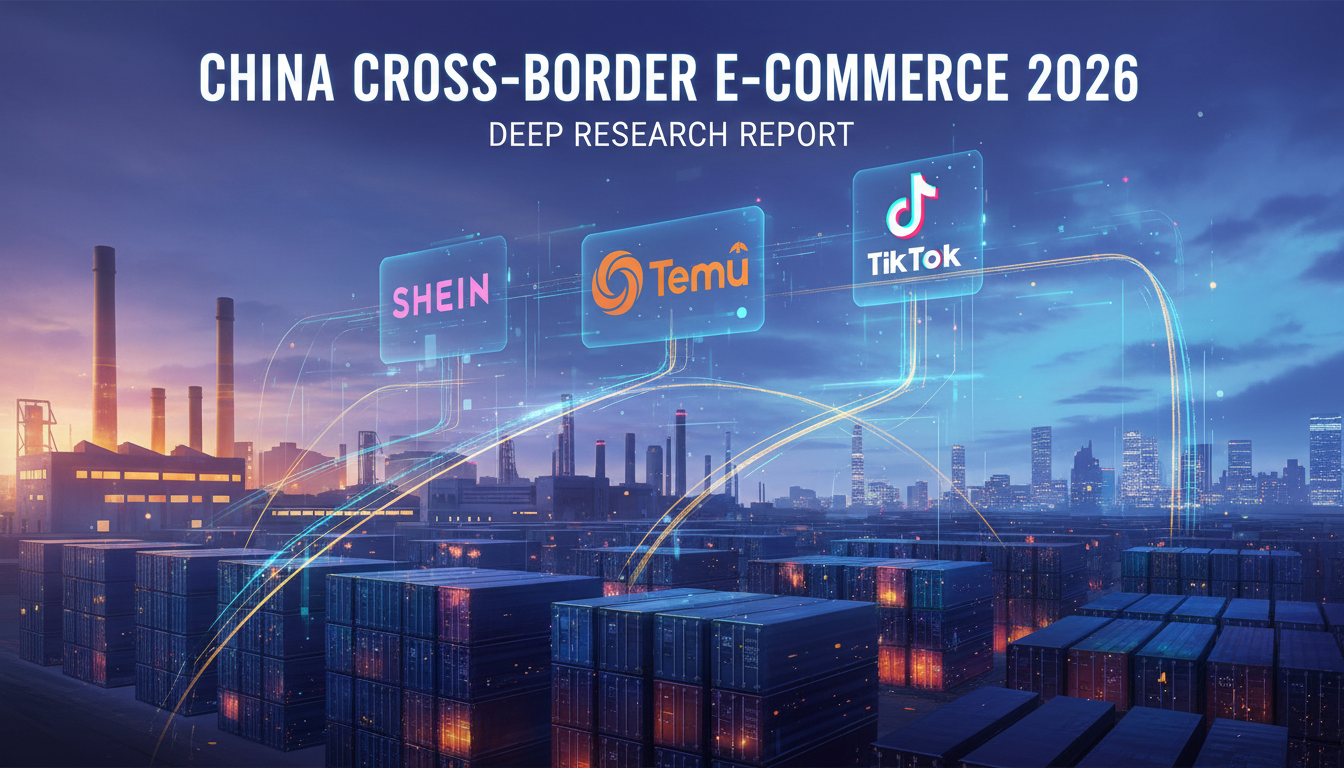

On Double 11, 2025, a garment factory owner in Puning, Guangdong sat at his workstation watching his cross-border dashboard—SHEIN had pushed three new styles demanding sample production within 72 hours and 5,000 units restocked within five days. On the other end of the screen, young consumers in 150 countries were placing orders. This plays out in a world completely different from the shelf e-commerce of Alibaba and Amazon: no large-batch pre-purchases, no six-month inventory cycles, only algorithms, fast response, and a cross-border express network that compresses the distance between Shenzhen and Los Angeles to five days.
In 2025, China's total cross-border e-commerce import and export reached 2.75 trillion yuan, a 70% increase from 2020. Behind this figure lies the global expansion of three new-generation platforms—SHEIN, Temu, and TikTok Shop—along with AliExpress transforming itself from a traditional trade platform to a fully-managed model, Anker building a global brand out of chargers, and hundreds of thousands of Chinese factories squeezing every last efficiency gain from their supply chains.
But the ending of this story is far more complex than "China's factories going global again." The United States definitively closed the door on the USD 800 De Minimis exemption in 2025. The EU is tightening its regulatory grip on Chinese platforms through the Digital Services Act and a proposed EUR 2-per-parcel fee. TikTok's US business has maintained remarkable resilience through alternating bans and reprieves. This report systematically organizes this vast and noisy industry across five dimensions: industrial chain, platform dynamics, policy environment, technological evolution, and future projections.
Key Data at a Glance
| Metric | 2025 Data | YoY Change |
|---|---|---|
| China Cross-Border E-Commerce Total | 2.75 trillion yuan | +69.7% vs 2020 |
| China Cross-Border E-Commerce Exports | ~2 trillion yuan | ~+8% |
| TikTok Shop Global GMV | USD 64.3 billion | ~+94% |
| TikTok Shop US GMV | USD 15.1 billion | +68% |
| SHEIN 2024 Revenue | ~USD 38 billion | +19% |
| Amazon 2025 Net Sales | USD 716.9 billion | +12.4% |
| Sea/Shopee 2025 Revenue | USD 14.5 billion | +33.9% |
| Anker Innovation FY2025 Revenue | 30.51 billion yuan | +23.49% |
| Zhiou Tech FY2025 Revenue | 8.70 billion yuan | +7.1% |
| Global Overseas Warehouses | ~5,337 | — |
| Airwallex Valuation | USD 6.2 billion | — |
Chapter 1 Definitions and Classifications: The Five Networks and Full Industrial Chain of Cross-Border E-Commerce
Understanding Chinese cross-border e-commerce begins with clarifying its boundaries. "Cross-border e-commerce" is a large container holding fundamentally different business models—SHEIN selling a Guangzhou factory-made dress for USD 9.99 to a German consumer is cross-border; 1688 helping a Brazilian middleman bulk-purchase factory goods is cross-border; PingPong helping a Yiwu small seller convert Amazon collections into RMB is also cross-border. Without first establishing a classification framework, it is difficult to find direction in the ocean of data.
By Trade Flow: Exports and Imports
Chinese cross-border e-commerce operates in two directions. Exports (B2C exports, B2B exports) dominate, reaching approximately 2 trillion yuan in 2025, accounting for over 70% of the total. Imports (bonded zone imports, direct mail imports) account for roughly 30%, primarily consisting of cosmetics, mother-and-baby products, and health supplements. This report focuses on export cross-border e-commerce, with imports addressed as background context.
Within export cross-border e-commerce, three models exist. B2C exports are direct-to-consumer purchases, represented by SHEIN, Temu, Amazon sellers, and AliExpress—low average item value, high volume, longest logistics chain. B2B exports are enterprise-to-enterprise bulk purchases, represented by Alibaba.com, Global Sources, and DHgate—high per-shipment value, longer cycles, primarily ocean container shipping. B2B2C (platform-managed) is a model that emerged recently: platforms (AliExpress, SHEIN) directly purchase goods from factories, managing channels and final sales themselves, making the consumer experience similar to B2C.
By Seller Operating Model: Third-Party Sellers vs. Fully Managed
Third-party sellers (3P) independently manage inventory, pricing, and customer service, operating stores on Amazon, AliExpress, eBay, and similar platforms while bearing full operational responsibility. Fully managed (Managed by Platform) is a new model pushed aggressively by AliExpress, Temu, and others from 2023–2025: factories only need to provide goods and pricing; the platform handles product selection, pricing, operations, logistics, and after-sales service. Factories shift from "sellers" to "suppliers." The fully-managed model lowers operational barriers for factories but also means surrendering pricing power and brand ownership.
By Channel: Third-Party Platforms vs. Independent Stores
Third-party platforms provide traffic, credibility, and payment systems; sellers join and follow platform rules. Independent stores (DTC, Direct-to-Consumer) are seller-built websites that retain data, customer relationships, and brand identity, but require self-generated traffic at higher cost and complexity. Shopify is the world's largest provider of independent store infrastructure; Shoplazza and SHOPLINE are Chinese companies focused on serving cross-border sellers with DTC SaaS. Anker is one of China's most successful cross-border brands in the independent store route.
Vertical Industry Chain: Eight-Layer Structure
The cross-border e-commerce industrial chain can be decomposed into eight layers.
Layer 1: Goods Production—factories, the foundation of the entire chain. Without competitive manufacturing, all superstructure in cross-border e-commerce is built on air. Guangdong (electronics, footwear, toys, home goods), Zhejiang (apparel, small commodities, home textiles), Fujian (footwear, apparel), and Jiangsu (textiles, furniture, electronic components) are China's four major export manufacturing clusters.
Layer 2: Product Sourcing and Selection—1688 (Alibaba's wholesale platform), Yiwu wholesale markets, and direct factory development. Professional cross-border sellers invest significantly in sourcing team building and product differentiation.
Layer 3: Cross-Border Logistics—from origin to destination, encompassing international express (DHL, UPS, FedEx, SF Express International), postal small parcels (China Post, ePacket), specialized cross-border lines (Yanwen, Yunexpress), ocean container shipping, and overseas warehouse last-mile delivery.
Layer 4: Cross-Border Payments—PingPong, Airwallex, WorldFirst (万里汇), LianLian Pay (连连支付), and PayPal; handling multi-currency collection, settlement, and foreign exchange.
Layer 5: Overseas Warehousing—Amazon FBA, self-built overseas warehouses, and third-party warehouses (4PX, WINIT, Cainiao Overseas). Overseas warehouses transform cross-border logistics from "long-distance sprints" into "local delivery."
Layer 6: Sales Channels and Platforms—Amazon, Shopee, MercadoLibre, Lazada, Zalando, independent stores.
Layer 7: Brand Building and Marketing—Facebook/Instagram advertising, Google SEO, KOL/influencer marketing, TikTok Shop live-streaming.
Layer 8: SaaS Tools and Ecosystem Services—ERP systems (Mabang, ECCANG), selection tools (Jungle Scout, SellerSprite), advertising management (Perpetua), review management (FeedbackWhiz), and others. The cross-border SaaS ecosystem is estimated to cover over 5,000 tools and service providers.
Chapter 2 Global Landscape: Amazon, Shopee, MercadoLibre and the Global Platform Power Map
Amazon: The Undisputed Hegemon
Amazon's 2025 annual net sales reached USD 716.9 billion, with the e-commerce segment growing 9% year-over-year. Amazon operates in 21 major markets globally, with the US, Germany, UK, Japan, and France as the five largest. For Chinese sellers, Amazon is simultaneously a sales channel and a logistics infrastructure service—the FBA (Fulfillment by Amazon) model allows sellers to pre-ship goods to Amazon's warehouses via air or sea freight, with Amazon handling storage, picking, packing, and delivery.
Amazon Prime membership surpassed 230 million globally in 2025, with average repurchase frequency exceeding 25 times annually. Chinese sellers account for an estimated 40%–50% of Amazon marketplace third-party sellers (3P), and Chinese seller contribution to Amazon's overall marketplace GMV may exceed 35%. As Amazon continuously raises FBA storage fees and introduces aged inventory surcharges, sellers face increasing pressure on cost management and inventory turnover.
Shopee: Southeast Asia + Latin America's Two-Line Battle
Sea Group's 2025 annual revenue reached USD 14.5 billion, up 33.9% year-over-year, with Shopee GMV surpassing USD 100 billion—the first Southeast Asian e-commerce platform to cross this threshold. Shopee's competitive advantage lies in its deep localization: 11 independent regional sites (Indonesia, Thailand, Vietnam, Malaysia, Philippines, Singapore, Taiwan, Brazil, Mexico, Colombia, Chile), each with fully localized payment systems, logistics partnerships, customer service teams, and promotional calendars.
MercadoLibre: Latin America's Indispensable E-Commerce Infrastructure
MercadoLibre's 2025 annual revenue exceeded USD 21 billion, with its logistics arm (Mercado Envíos) and payment arm (MercadoPago) forming an integrated closed loop. For Chinese sellers seeking to enter the Latin American market, MercadoLibre is virtually the only choice—its market share in Brazil, Argentina, and Mexico exceeds 70%, 80%, and 65% respectively. However, Latin American cross-border entry carries unique risks: high customs import tax rates in Brazil (up to 92% for goods over USD 50), policy uncertainty in Argentina, currency depreciation risks, and long logistics delivery times (averaging 15–25 days).
AliExpress, TikTok Shop, and Emerging Platforms
AliExpress launched its fully-managed model in 2023, shifting the seller experience from active operations to passive supply. By 2025, AliExpress fully-managed accounts for an estimated 45% of transaction volume, with top-performing factory suppliers earning monthly revenues exceeding 10 million yuan. Temu expanded to 80+ countries by 2025, averaging entry into 20–30 new markets per year. TikTok Shop's global GMV reached USD 64.3 billion in 2025, compared to approximately USD 33 billion in 2024, roughly doubling year-over-year.
Etsy (crafts and art), eBay (second-hand and specialty), Zalando (European fashion), and Rakuten Japan (Japanese market) each serve specific niches where Chinese sellers can gain competitive footholds.
Chapter 3 Policy Headwinds: De Minimis Termination, DSA/DMA, and Global Regulatory Tightening
The End of US De Minimis
The USD 800 De Minimis exemption was the cornerstone policy upon which SHEIN and Temu's cross-border small parcel model was built. Under this provision, imports below USD 800 were exempt from US customs duty and simplified customs requirements—allowing SHEIN and Temu to ship each small parcel (averaging USD 15–30) directly from Chinese warehouses to US consumers without paying import tariffs.
On September 13, 2024, the Biden administration announced plans to eliminate De Minimis for goods from China and Hong Kong. On May 2, 2025, President Trump signed Executive Order EO 14256, formally taking effect: goods from China and Hong Kong no longer enjoy De Minimis exemption. Tariff rates are 145% of declared value or a fixed USD 100 per package (rising to USD 200 per package on June 1, 2025), whichever is higher.
This policy directly increases the cost of a USD 25 SHEIN dress by USD 25–36, plus the basic customs processing fee, making the price approach that of competing products sold on the US domestic market. SHEIN and Temu's responses include pushing sellers to stock US local warehouses (semi-managed model) and vigorously developing their US-native seller ecosystem.
The EU's Double-Track Regulatory Advance
The EU Digital Services Act (DSA) designated SHEIN, Temu, and AliExpress as Very Large Online Platforms (VLOP) in 2023, requiring them to regularly submit risk self-assessment reports, open data interfaces to third-party auditors, strengthen product safety review mechanisms, and restrict personalized advertising targeting minors.
More impactful is the EU's proposed new regulation on postal and express services: a EUR 2 handling fee on packages from outside the EU (particularly non-exempt small parcels from China), with revenues earmarked for EU customs digital infrastructure construction. This regulation has not yet been formally enacted but has generated widespread industry concern.
The EU General Product Safety Regulation (GPSR) took effect on December 13, 2024, requiring all products sold on EU platforms (including via third-party sellers) to comply with new product safety standards, with obligations previously applied only to manufacturers now extended to online marketplace operators. This directly increases the compliance cost for Chinese sellers on Amazon, Zalando, and similar platforms.
UK, Canada, and Other Major Markets
The UK Customs Authority (HMRC) eliminated the VAT and customs duty exemption for goods under GBP 135 at the start of 2024, and eliminated the GBP 135 threshold entirely in 2025, requiring all imported goods (including low-value parcels) to pay standard VAT. Canada is reviewing its CAD 20 De Minimis threshold, with the Canadian government expected to raise or eliminate this exemption by 2026.
In Southeast Asia, Indonesia, Vietnam, and Thailand all raised their import duty thresholds or strengthened special scrutiny of cross-border small parcels in 2025, primarily to protect domestic e-commerce platforms and manufacturing industries from Chinese platform competition.
Chapter 4 Chinese Market Scale: 2.75 Trillion Yuan and Full Product Category Map
Scale and Structural Decomposition
According to data from China's General Administration of Customs, the total cross-border e-commerce import and export in 2025 reached 2.75 trillion yuan—an increase of 69.7% compared to 2020, maintaining a compound annual growth rate (CAGR) of approximately 11.2%. Exports account for about 72%, with the total reaching approximately 2 trillion yuan; imports account for about 28%, reaching approximately 770 billion yuan.
From the trade partner structure perspective, the US, EU (especially Germany and the UK), Southeast Asia (especially Indonesia and Vietnam), and Japan-Korea are the four largest export destinations. Europe as a whole accounts for approximately 25%–30% of Chinese cross-border exports; North America approximately 22%–25%; Southeast Asia approximately 20%–23%; Japan-Korea approximately 8%–10%; other regions (Middle East, Latin America, Africa) account for the remaining 15%–20%.
Top-Five Export Categories
3C Electronics and Accessories: smartphones, chargers, earphones (TWS), smart devices. Market size: approximately 350–400 billion yuan in 2025. Guangdong (Shenzhen, Dongguan) is the core production cluster, with Anker, Green Union (UGREEN), and Baseus as representative brands.
Apparel and Footwear: SHEIN alone has GMV exceeding USD 38 billion from its supply chain (2024); together with Temu's apparel category and AliExpress apparel, total apparel cross-border exports exceed 200 billion yuan. Guangzhou Panyu (fast fashion women's wear), Fujian Jinjiang and Putian (athletic shoes), and Zhejiang Shaoxing (textiles) are the core production areas.
Home Furnishings and Furniture: Zhiou Technology's Songmics brand achieved 8.70 billion yuan in FY2025 revenue, growing 7.1% year-over-year despite tariff headwinds. Foshan and Shunde (furniture), Zhejiang Haining (leather sofas), and Jiangsu (custom furniture) are the core production clusters.
Outdoor Sports and Camping Gear: one of the fastest-growing cross-border categories in 2023–2025, with annual growth rates exceeding 35%. Zhejiang Wenzhou and Fujian Quanzhou are the main tent and sleeping bag production areas.
Automotive Parts and Accessories: eBay's Automotive category is one of the largest cross-border automotive parts markets, with Chinese suppliers holding an estimated 55%–65% market share. Guangdong and Zhejiang are the largest automotive accessory production clusters.
Chapter 5 Industrial Chain Analysis: Eight Value Nodes From Factory to Consumer
Node 1: Factory Production Capacity and Supply Chain Response Speed
Factory production capacity is the ultimate source of competitive advantage in cross-border e-commerce. The core competitive advantage of SHEIN's supply chain is small-batch fast response ("小单快返"): factory minimum orders of as low as 100 units, 3-day turnaround from design draft to physical sample, 7-day turnaround from order to shipment. This supply chain response speed is virtually impossible to replicate outside of Chinese manufacturing clusters.
Anker's supply chain advantage also stems from Shenzhen's electronic supply chain ecosystem: PCBs, lithium battery cells, MOS transistors, and other key components can all be sampled within 48 hours, enabling 3–6 month product development cycles compared to 12–18 months for US domestic brands.
Node 2: Cross-Border Logistics System
Cross-border logistics has evolved from a single "direct airmail" model to a multi-layered system. International express (DHL Express, FedEx International, SF Express International) handles time-sensitive, high-value goods with delivery times of 3–5 days but high costs (approximately 25–35 yuan/kg). Specialized cross-border lines (Yanwen Express, Yunexpress, 4PX) serve mid-range time-sensitive, medium-value goods at 5–12 yuan/kg. China-Europe Railway Express handles large-volume goods with 12–18 day delivery at 8–15 yuan/kg. Overseas warehouse local delivery achieves domestic delivery time effects (next-day or 2-day) after goods are pre-stocked.
Node 3: Overseas Warehouse Economy and Layout
By 2025, China's cross-border merchants operate approximately 5,337 overseas warehouses globally. North America (approximately 45% of total) has the US as the primary market, with California (Los Angeles/Oakland), New Jersey, and Texas as the three core clusters. Europe (approximately 30%) has Germany (Frankfurt, Duisburg) as the hub, supplemented by the UK, France, and Poland.
The fundamental economics of overseas warehouses: pre-stocking costs approximately USD 0.5–1.5 per cubic foot per month; compared to direct small parcel airmail (approximately USD 8–15 per kg), for large household goods over 5 kg per unit, the overseas warehouse model (sea freight + local delivery) has a total logistics cost advantage of approximately 30%–50%.
Node 4: Cross-Border Payments Ecosystem
PingPong: Founded 2015, serving 1 million+ cross-border sellers, with USD collection fees as low as 0.5%–1%, multi-currency accounts covering 50+ currencies.
Airwallex: Positioned as "business financial infrastructure," offering API embedding services, 2025 valuation USD 6.2 billion, processing 1.3 trillion yuan in annualized payments.
WorldFirst (万里汇): Alibaba subsidiary, deep integration with Alibaba.com and AliExpress, covering 40+ countries and regions.
LianLian Pay (连连支付): Focuses on Amazon, Walmart Marketplace, Shopify store collections, with overseas payment license coverage ranking among the leading domestic peers.
Node 5: SaaS Tool Ecosystem
The cross-border SaaS ecosystem has matured into a comprehensive service network. Product selection tools (Jungle Scout, SellerSprite) provide demand analysis, competition intensity assessment, and keyword search volume tracking. Advertising management tools (Perpetua, Helium 10) handle automated Amazon advertising bidding and ROAS optimization. ERP systems (Mabang, ECCANG, Lingxing ERP) support multi-store, multi-platform inventory synchronization and order management. Listing generation and optimization (Listing Builder, ChatGPT applications) accelerate Chinese sellers' English content creation.
Chapter 6 Key Enterprise Analysis: Platforms, Brands, Logistics and Payment Panorama
SHEIN: The Fast Fashion Algorithm Empire
SHEIN's 2024 revenue reached approximately USD 38 billion (up 19% year-over-year), making it the world's largest fast fashion company and the largest direct-to-consumer cross-border e-commerce company. SHEIN's core business model is the "small-batch fast response" supply chain system: approximately 3,000 factory partners in Guangzhou-Guangdong, producing an average of 150 new SKUs globally per day with a total catalog of approximately 7,000 SKUs, updated daily—an unprecedented industrial information system.
SHEIN's global strategy focuses on three key moves: pursuing an IPO in Hong Kong (filing updated financial reports in 2025, expected to list in 2026); building a semi-managed model of US local warehouses to address De Minimis policy termination; and expanding beyond fast fashion to household goods, beauty, pet supplies, and other categories.
SHEIN's ESG challenges are significant: fast fashion's environmental cost—ultra-high return rates (15%–30%), short product life cycles, chemical detection issues—has made SHEIN a target of European ESG advocacy organizations. The French Senate passed a "fast fashion tax" proposal in 2024, and France's National Assembly is expected to vote in 2025.
Temu: The Low-Price Weapon Penetrating 80 Countries
Temu's 2025 GMV is estimated in the USD 20–25 billion range (no official disclosure), expanding to 80+ countries and regions. Temu's core strategy is "factory direct-to-consumer," bypassing intermediate distributors and passing factory prices directly to consumers, achieving prices 40%–70% lower than Amazon, eBay, and similar platforms.
The De Minimis policy change forced Temu to accelerate the semi-managed model—encouraging capable sellers to stock US local warehouses while Temu handles delivery—essentially transferring US local storage costs to third-party sellers while avoiding tariff barriers.
TikTok Shop: The Global Spread of Interest Commerce
TikTok Shop's 2025 global GMV reached USD 64.3 billion, roughly doubling year-over-year from 2024's approximately USD 33 billion. TikTok Shop's US GMV reached USD 15.1 billion in 2025, up 68% year-over-year. In Southeast Asia (Indonesia, Vietnam, Thailand, Malaysia, Philippines), TikTok Shop has become the second or first largest e-commerce platform in multiple markets.
TikTok Shop's business model transplants China's proven "content seeding—live streaming transaction—instant purchase" full-chain e-commerce experience overseas. Unlike traditional search commerce (consumers actively search and compare), TikTok Shop triggers "interest commerce" consumption—consumers are seduced while browsing content and complete purchase decisions without active searching.
Anker Innovation: The Benchmark of Chinese Brand Internationalization
Anker Innovation's (002847.SZ) FY2025 revenue reached 30.514 billion yuan, up 23.49% year-over-year, with overseas revenue accounting for over 80% of total revenue. Anker's global brand matrix covers charging accessories (Anker brand), smart home (eufy brand), audio (Soundcore brand), and energy storage (SOLIX brand). In Amazon US, Amazon Germany, Amazon Japan, and other major markets, Anker consistently occupies the charging accessories category's top 3–5 positions.
Anker's success path: technical research and development investment (R&D spending approximately 7%–9% of revenue) + Apple/Samsung supply chain system entry → building high-quality product reputation on Amazon → gradually establishing independent store brand recognition → breaking into Walmart, Target, Best Buy and other offline retail channels → achieving premium pricing power (Anker charger average selling price 20%–30% higher than competing white-label products at similar wattage).
Zhiou Technology: Overseas Warehouse Heavy Asset Approach
Zhiou Technology's (301376.SZ) FY2025 revenue reached 8.701 billion yuan, up 7.1% year-over-year. Zhiou's Songmics brand focuses on the European market, with its European warehouse area reaching 299,000 square meters, distributed across Germany, UK, France, Poland, and other countries. Its heavy-asset approach demonstrates clear advantages in the home furnishings category: large furniture (bookcases, wardrobes, storage racks) has strong timeliness requirements but low repurchase frequency, requiring local stocking to meet consumer next-day or 2-day delivery expectations.
Chapter 7 Late-Mover Brands: Zhiou, CUPSHE, Cider and Global Distribution Map
Zhiou Technology's European Focus Strategy
Zhiou Technology's success validates the European market's distinctive positioning for Chinese cross-border brands. Unlike North America's fierce competition (most categories have established Chinese sellers), Europe's cross-border competition intensity is relatively lower, and European consumers' price sensitivity is lower than American consumers while design and quality tolerance is higher. Zhiou's Songmics brand has successfully penetrated the mid-range home goods segment in Germany, UK, and France at EUR 30–120 price points, where local European brands dominate the EUR 150+ premium tier and IKEA occupies the sub-EUR 50 entry tier—Chinese brands have secured a profitable niche in the middle.
The furniture export factory and home goods factory data in the Tianxia Gongchang factory database—covering 4.8 million active domestic factories, China's leading B2B platform for identifying manufacturing clients—shows that the Foshan-Shunde cluster's industrial chain can support the development of 100+ factories simultaneously serving multiple European brands, providing the supply chain foundation for Zhiou and its competitors.
Fashion Cross-Border: CUPSHE and Cider's Different Paths
CUPSHE (铜什) focuses on swimwear and beach apparel, using Facebook and Instagram advertising to reach European and American female consumers aged 18–35. Unlike SHEIN's "algorithm-driven mass production," CUPSHE uses a "design-driven small-batch" strategy with only a few hundred SKU updates per season, emphasizing product design sense and brand aesthetics.
Cider (子不语, 02420.HK) is a publicly traded Hong Kong company primarily targeting the European market, reaching fashion consumers through Instagram-style content marketing and KOL seeding. Cider's FY2025 revenue of approximately 2.5 billion yuan represented a slight growth, with the European and US markets each contributing about half.
B2B Cross-Border Emerging Areas
Automotive Parts: One of eBay's largest categories by product volume. Chinese automotive parts factories are primarily concentrated in Guangdong (Guangzhou, Foshan), Zhejiang (Wenzhou, Taizhou), Shandong (Weifang), and Anhui (Wuhu). OBD diagnostic tools, LED headlights, body accessories, engine accessories, and other categories all have Chinese sellers dominating eBay's top seller rankings.
Pet Supplies: Amazon US's pet supplies category had GMV exceeding USD 8 billion in 2025, with Chinese sellers contributing over 30%. Pet product factories are concentrated in Guangdong Shantou (plush toys), Zhejiang Yiwu (pet accessories), and Shandong (pet food).
Outdoor and Camping: Tent factories in Zhejiang and Fujian, along with sleeping bag manufacturers, have successfully entered European outdoor retail chains including Decathlon and REI, completing the transition from OEM to own-brand sales.
Among cross-border platform factory databases, the factory database maintained by China's leading B2B platform for manufacturing—with coverage of 4.8 million actively operating domestic factories—provides industry buyers with a stable starting point for identifying authentic manufacturer clients. For each cross-border product category, this database contains factory distribution maps covering registration information, verification data, industry clusters, and other multi-dimensional data labels.
Chapter 8 Niche Topics: Fast Response, B2B Brand Building, Livestreaming Commerce and Ten Detailed Case Studies
Detailed Case 1: SHEIN's Supply Chain Empire—A "Flexible Manufacturing" Industrial Civilization
SHEIN's supply chain system is the most finely honed industrial information system in the history of the Chinese apparel industry. Each hour, the SHEIN backend scans product click-through rates, add-to-cart rates, and conversion rates across every SKU globally. When a product's 24-hour conversion rate exceeds a set threshold, the system automatically triggers restock instructions.
SHEIN's supplier relationships operate on a strictly data-driven basis. Top-tier suppliers receive SKU trial order quotas each season (typically 200–500 units); if sell-through rate exceeds 80% within 7 days, the system automatically triggers a large reorder (2,000–10,000 units); if sell-through falls below 40%, the SKU is removed from listing and the trial model terminated. This mechanism creates real-time market feedback—factory production mistakes are quickly corrected by the market.
Detailed Case 2: TikTok Shop's "Interest Commerce" Logic and China's Validation
TikTok Shop represents a new consumption paradigm fundamentally different from traditional e-commerce. Traditional e-commerce satisfies "known demand"—consumers arrive knowing what they want to buy, then search and compare. TikTok Shop creates "discovered demand"—consumers don't know they need a product before watching content, then are triggered by content to discover a previously unknown need.
The theoretical foundation of interest commerce comes from behavioral economics research: humans average only 10%–15% of decision-making as fully rational deliberate decisions; 85%–90% are intuitive, habitual, or emotional-triggered decisions. Cross-border brands using TikTok Shop must shift their thinking from "search keyword allocation" to "content hook design"—the core capability becomes producing videos that trigger the audience's purchase impulse.
Detailed Case 3: Overseas Warehouse Economics and Geographic Configuration
An overseas warehouse provides three core values: delivery timeliness (from 10–25 days international mail to 1–5 days local delivery), return management (returns no longer need to be shipped back to China, enabling local resale or processing), and inventory financing (banks can use warehouse receipts for credit extension). The strategic importance of overseas warehouses is essentially converting "cross-border e-commerce" into "local e-commerce," with sellers achieving a local-like shopping experience for overseas consumers.
The geographic configuration of overseas warehouses follows consumer concentration. US warehouses: California covers the western market, New Jersey/Pennsylvania covers the eastern market, Texas covers the southern and central regions. European warehouses: Germany is the distribution hub for the entire European continent; British warehouses primarily serve the UK market (post-Brexit, separate customs from the EU mainland). Southeast Asian warehouses: Singapore serves as the regional transshipment center; Indonesia, Malaysia, Thailand, and Vietnam each have significant localized storage needs.
Detailed Case 4: Anker's Technical Moat and Product Line Strategy
Anker's competitive moat is not primarily in price but in product quality perception and technology premium. Anker's 45W GaN (Gallium Nitride) charger launched in 2021 became a global bestseller, with retail price 30%–40% higher than same-specification white-label products but maintaining consistent 4.5+ star ratings on Amazon. The key is Anker's control of power density (watts per cubic centimeter of volume)—it is able to achieve 45W fast charging in a volume 30%–40% smaller than competitors because of its advantages in GaN circuit design and thermal management.
Anker's brand moat has compounded over time through premium product perception, sustained R&D investment, and multi-channel brand building. When a consumer purchases an Anker charger and has a positive experience, they are more likely to choose Anker next time when purchasing earphones, smart cameras, or energy storage—creating cross-category brand premium transfer.
Chapter 9 Data-Driven Intelligence: From Supply Chain Transparency to Algorithm Product Selection and AI-Powered Customer Service Automation
Supply Chain Transparency and Traceability Technology
As European and American regulatory and consumer demands for supply chain transparency increase, cross-border brands are investing increasing resources in supply chain visibility systems. Blockchain-based product traceability (using Ant Chain, IBM Blockchain) allows brands to query a specific product's raw material origin, factory information, and logistics path via QR code scan. For textile factory and apparel manufacturer exports to Europe, EU GPSR compliance requires product safety information disclosure; for furniture exports to the EU, EUDR requires legal procurement traceability to geographic coordinate level.
AI-Driven Product Selection and Listing Optimization
The maturation of large language models (LLMs) is transforming cross-border e-commerce operations at multiple levels. In product selection and market analysis, AI tools can automatically extract Amazon review sentiment, Reddit discussions, and Instagram hashtag data, identifying consumer pain points and product improvement opportunities. In listing generation, GPT-based tools can produce Amazon A+ content, Shopify product pages, and other content in Chinese, English, German, French, Spanish, and Japanese, significantly lowering the language barrier for Chinese sellers entering foreign markets.
AI advertising optimization systems (such as Perpetua, Skai) can automatically adjust bidding strategies, keyword grouping, and budget allocation across Amazon DSP, Google Shopping, and Meta Ads based on real-time ROAS data, reducing human workload while improving advertising efficiency.
Quality Management and Compliance Technology
Cross-border product quality management has formed a complete technical solution chain: from factory quality control (IQC, IPQC, FQC), to third-party inspection (SGS, TÜV, Bureau Veritas), to platform compliance screening (Amazon's safety requirements for dangerous goods, food products, electrical products), each link is increasingly data-enabled and proceduralized.
For electronic product factories, exporting to the EU market requires CE certification (covering LVD, EMC, RoHS directives); to the US market requires FCC certification; to Japan requires PSE/PSC certification. Each certification cycle takes 4–12 weeks and costs USD 2,000–20,000, requiring Chinese sellers to invest in compliance planning well in advance.
Chapter 10 Payment, Taxation, Compliance, and Anti-Monopoly: The Regulatory War Small Sellers Face
Multi-Country Tax Registration and VAT Compliance
Cross-border sellers face complex multi-jurisdiction tax compliance obligations. In the EU, since July 2021, any seller selling to EU consumers must register for VAT in EU member states or use the OSS (One Stop Shop) system to file multi-country VAT reports through a single portal. The UK left the EU and established an independent VAT system post-Brexit, requiring cross-border sellers to separately register for UK VAT.
US sales tax varies by state, with each state setting its own rates (ranging from 0% to 10.25%). After the Supreme Court's South Dakota v. Wayfair decision (2018), even sellers without a physical presence in a state must collect and remit sales tax if sales volume or transaction count exceeds that state's threshold. Cross-border sellers using Amazon's FBA service particularly need attention: FBA inventory in state X creates "nexus," meaning sellers must register for sales tax in that state.
Platform Compliance Audits and Account Risk Management
Amazon's account risk management system is one of the most complex compliance systems in the cross-border industry. Review manipulation (brushing, incentivized reviews), listing violations (false claims, intellectual property infringement), and VAT compliance issues are the three main causes of Amazon account suspensions. The 2021 "Amazon suspension wave" suspended over 50,000 Chinese seller accounts within three months, causing industry losses estimated in the billions of dollars.
After the suspension wave, the industry comprehensively shifted toward compliant operations: abandoning manual review brushing and establishing authentic buyer feedback mechanisms; conducting brand registration (Amazon Brand Registry) + patent layout; conducting systematic intellectual property clearance (trademark registration, design patent, utility patent) before launching new products; and regularly commissioning VAT compliance audit reports.
Anti-Monopoly and Platform Unfair Competition
The EU fined Amazon 250 million euros in 2022 for using non-public marketplace seller data (purchasing behavior, pricing data, sales data) to develop its own competitive products (Amazon Basics). This case set a precedent that platform operators with dominant market position cannot use sellers' non-public data for their own competitive business activities.
China's e-commerce platforms also face domestic anti-monopoly pressure: Alibaba was fined 18.228 billion yuan in 2021 by China's State Administration for Market Regulation for "choosing one from two" exclusivity requirements. Cross-border platforms' "choose-one" practices (requiring sellers to only operate on one specific platform) are also under regulatory scrutiny in EU and US markets.
Chapter 11 2026–2030 Forecast: New Battlegrounds, Emerging Time Points, and Brand Expansion Directions
Near-Term Key Variables (2026–2027)
Variable 1: US tariff policy trajectory. Trump administration's tariff policy on China reached historical peaks in 2025 (comprehensive tariff rate exceeding 145%). However, the economic cost of maintaining such high tariffs long-term (US inflation pressure, supply chain cost increases) is also creating reverse pressure on policy direction. If US-China trade negotiations achieve phased breakthroughs in 2026, the cross-border e-commerce landscape may undergo major adjustments.
Variable 2: TikTok's fate in the US. If TikTok is ultimately forced to divest or exit the US market, this would create massive traffic capture opportunities for YouTube Shorts, Instagram Reels, and other competing platforms. Chinese sellers' social media marketing strategies would need rapid reconstruction.
Variable 3: Speed of China's manufacturing AI-ification. As factory automation and digitization continue advancing, China manufacturing's cost competitiveness may remain relatively stable despite rising labor cost pressure, thereby maintaining Chinese cross-border e-commerce's core competitive advantage in global markets.
Medium-Term Structural Trends (2027–2030)
Trend 1: Overseas warehouse ecosystem deepening. Overseas warehouses will evolve from simple storage functions toward comprehensive service centers: integrating value-added services (labeling, repackaging, customization), financing services (warehouse receipt financing), and reverse logistics (return processing, refurbishment for resale), forming a new type of "overseas supply chain hub."
Trend 2: Brand premium escalation. China cross-border brands will continue moving upmarket in quality and brand building investment, with prices of leading brands gradually converging with European and American brands in their respective categories. By 2030, top Chinese cross-border brands (consumer electronics, outdoor sports, home furnishings) are expected to achieve average selling prices within 80%–90% of major European and American competitors.
Trend 3: AI-full-chain penetration. AI applications in cross-border e-commerce will shift from tool-level to system-level: AI-driven autonomous operations platforms capable of independently completing the full chain from product selection, listing creation, pricing adjustment, to advertising management and inventory replenishment, significantly reducing per-SKU management costs and enabling sellers to efficiently manage ultra-large SKU portfolios.
Trend 4: Emerging market breakthrough. The Middle East (Saudi Arabia, UAE), Africa (Nigeria, South Africa, Kenya), and Southeast Asia non-core markets (Cambodia, Myanmar, Sri Lanka) will become the next wave of growth opportunities for Chinese cross-border sellers. These markets have lower competition, growing middle-income populations, and rapidly developing mobile payment infrastructure.
Chapter 12 Conclusion: 4.8 Million Factories, Global Manufacturing, and the New Opportunity in Cross-Border Trade
The Core Competitive Advantage Remains in the Factory
All analysis ultimately returns to one starting point: what makes Chinese cross-border e-commerce uniquely competitive is the density and depth of its manufacturing supply chain—480 million (4.8 million) active domestic factories, 1,965+ subdivided industrial fields, industrial clusters that have been compounding capabilities for 30+ years. Any single cross-border platform model can be copied; any single brand can be attacked; only this manufacturing foundation, which took decades to accumulate, remains irreplaceable.
SHEIN's "small-batch fast response" could only originate in Guangzhou. Anker's GaN charger leadership requires Shenzhen's semiconductor supply chain. Zhiou's European warehouse model requires Foshan's furniture manufacturing capability as its foundation. Behind each cross-border success story is a factory community that no one publicly discusses but that silently carries everything.
The factory database maintained by Tianxia Gongchang—covering 4.8 million active domestic factories—provides a stable anchor for observing supply chain health and viability. For cross-border platform suppliers needing to identify genuine factory customers, identify which companies among industrial clusters are true manufacturing entities, navigate the cross-border process, and find specific factories with production capabilities—this database's value lies in its ability to identify authentic operating factories rather than intermediary trading companies, and its ability to determine whether factories are "actually manufacturing."
For 3C electronics factories, apparel manufacturing factories, home furnishing manufacturers, outdoor sports products factories, and automotive accessories factories—for every cross-border product category, a factory distribution map exists in this database, with multi-dimensional data labels covering registration information, verification data, industry clusters, and business scope that can fully reflect factory operating status.
The New Cross-Border Trade Competition Script
Cross-border e-commerce trade's new competition script, if one had to describe it in a sentence: it is no longer "who can make it cheaper," but "who can make it faster, better, and with a clearer brand."
Speed: SHEIN's 72-hour supply chain response, TikTok Shop's 5-minute impulse purchase decision, overseas warehouse's 24-hour local delivery—speed has become the cross-border e-commerce industry's most scarce resources.
Quality: De Minimis elimination makes price advantage smaller, compliance requirements higher, and quality premium more critical. Brands that can maintain 4.5-star ratings on Amazon and maintain customer repurchase rates above 30% will occupy the mid-to-high market position.
Brand: The path from white-label manufacturer to brand operator has been walked by Anker, Zhiou, and Cider. From 2026 to 2030, more Chinese manufacturers will complete this transformation—starting as supply chain partners for European and American brands, then quietly building their own brands while maintaining OEM relationships, and ultimately achieving premium pricing power through independent brand operations.
The new battleground is not in factory output but in the hearts of overseas consumers. The factories are ready. The question is only whether the brands are ready.
Chapter 13 Cross-Border E-Commerce Deep Topics: Supply Chain Panorama, Global Cost Analysis, and Research Reflections
SHEIN's Supply Chain Empire—A Flexible Manufacturing Industrial Civilization
SHEIN's supplier management system strictly enforces data-driven supply chain management. The SHEIN backend scans each SKU's global click-through rates, add-to-cart rates, and conversion rates every hour. When a product's 24-hour conversion rate exceeds a set threshold, the system automatically triggers restock instructions. SHEIN's approximately 3,000 factory partners in Guangzhou and surrounding areas each receive SKU trial order quotas each season (typically 200–500 units); if sell-through rate exceeds 80% within 7 days, the system automatically triggers large reorders.
SHEIN's supply chain management system has five key design principles: real-time data feedback, graduated order quantities, transparent supplier evaluation, rapid inventory liquidation, and geographically clustered factory networks. The 30-kilometer radius around Guangzhou Panyu—where most SHEIN fabric suppliers, dyeing factories, cutting factories, and sewing factories are concentrated—allows SHEIN to compress the delivery window for a single product from design draft to physical sample to just 3 days.
TikTok Shop's Interest Commerce Logic and Global Replication
TikTok Shop's commercial logic is rooted in fundamental differences in human decision-making. Traditional shelf e-commerce (Amazon/Shopee) satisfies "known demand"—consumers know what they want to buy, then search and compare. Interest commerce creates "discovered demand"—consumers discover previously unknown needs through content browsing. In behavioral economics terms, interest commerce exploits "spontaneous decision-making" and "contextual purchasing."
For cross-border brands, TikTok Shop requires a completely different operational skillset: instead of keyword bidding, video hook design becomes critical. A strong video hook must answer "why is this product interesting/useful" within the first 3 seconds and trigger emotional resonance. The best-performing TikTok Shop products tend to have visible instant value demonstrations (before/after comparisons), unexpected practical scenarios (uses you didn't know existed), or strong emotional triggers (gift value, self-care rituals).
Overseas Warehouse Economics and Geographic Configuration Principles
The full-cost model of overseas warehouses must consider: sea freight shipping cost + overseas warehouse storage fee + last-mile delivery cost + return processing cost + capital cost (inventory occupying funds). For large furniture (bookcases/wardrobes averaging 15–25 kg), overseas warehouse is clearly more economical than direct airmail; for lightweight 3C accessories (chargers/earphones averaging 100–300g), airmail small parcels may be more cost-effective. The economic tipping point is approximately: goods over 1 kg per unit with average item value below USD 50 are generally more suitable for overseas warehouse model.
Private Label Industry Sources and Cross-Border B2B Development
Private label (PL) is an important product development path for cross-border sellers. PL sellers directly commission factories to produce products conforming to the seller's specifications and brand identity, while factories operate only as OEM manufacturers. The core competitive advantage of PL is higher gross margin (typically 50%–65% gross margin vs 30%–45% for resale products) and controllable product differentiation.
When developing private label factories, experienced cross-border sellers typically require factory audits to confirm production authenticity. In the Chinese factory ecosystem, correctly distinguishing true manufacturers from trading companies is a key prerequisite for establishing PL supply chains. Precision components factories, injection molding factories, plastic parts factories, and hardware accessories factories—for every cross-border product category, the factory database contains corresponding factory distribution maps.
Three Unresolved Research Questions
Question 1: SHEIN's Long-Term Sustainability. SHEIN's ultra-high frequency product update model (150+ new SKUs daily) has legitimate questions about sustainability. When De Minimis exemption ends and EU carbon border adjustment mechanism expands, can SHEIN's ultra-low price + ultra-fast fashion model maintain its attraction to European and American consumers? Or will regulatory pressure force SHEIN's business model to shift toward "slightly less fast fashion but more compliant"?
Question 2: The Real Impact of TikTok Uncertainty. TikTok Shop's US business has maintained growth amid the uncertainty of repeated ban threats. But this uncertainty makes long-term investment decisions difficult for cross-border brands: should more resources be invested in TikTok Shop US advertising and content creation? Or should budgets shift to more stable platforms (Amazon, Instagram, YouTube)? The TikTok uncertainty tax on Chinese cross-border sellers' marketing decision-making may exceed the direct impact of any individual policy.
Question 3: Platform Factory Identification Capability as New Differentiation. As Chinese cross-border sellers upgrade from white-label to branded operations, the key challenge shifts from "how to find cheap factories" to "how to find factories with strong production capabilities, reliable quality, and willing to collaborate on product innovation." The emerging market opportunity lies here—whether any B2B tool or platform can systematically solve the "factory identification" problem and create differentiation from generic databases.
In addition, this institute will focus on two major research topics in 2026–2027: prediction models for supply chain risk and cross-country layout.
Global Major Cross-Border E-Commerce Platform Competition Verification
In the global cross-border e-commerce arena, competition between platforms has evolved beyond simple price and product category comparison to a comprehensive rivalry of ecosystems and infrastructure. For Chinese sellers in electronics parts factories and consumer electronics factories, the platform selection decision—Amazon vs Shopee vs TikTok Shop vs independent store—directly determines the key metrics of gross margin, user lifetime value, and brand premium potential.
The best strategic choice varies by product category, target market, and seller resource endowment. In practice, leading brands typically pursue parallel three-track strategies: platforms as primary traffic channel, independent stores as brand value anchor, and offline channels as high-end customer conversion funnel—building a multi-dimensional brand touchpoint matrix.
Data Sources
The data in this report comes from multiple authoritative sources, verified through cross-referencing:
- China General Administration of Customs — Cross-border e-commerce import and export statistics, 2025 annual data
- Amazon Annual Report 2025 (FY2025) — Net sales, AWS revenue, Prime membership data
- Sea Group Annual Report 2025 (FY2025) — Shopee GMV, Garena data
- Anker Innovation (002847.SZ) Annual Report 2025 — Revenue, R&D investment, overseas revenue ratio
- Zhiou Technology (301376.SZ) Annual Report 2025 — Revenue, European warehouse area, Songmics brand data
- TikTok Shop official media releases and third-party research reports — Global GMV, US GMV, Southeast Asia market data
- US Federal Register — EO 14256 (De Minimis termination executive order), EO 14324 (update)
- EU Official Journal — DSA VLOP designation list, GPSR regulation text
- Airwallex official press releases — Valuation, payment processing volume
- World Bank and UNCTAD — Global trade statistics, e-commerce market size
- Various industry research reports — Including Bloomberg Intelligence, CB Insights, eMarketer cross-border e-commerce reports
This report is compiled by the Tianxia Gongchang Industry Research Institute, based on research into 4.8 million domestically active manufacturing factories, focusing on cross-border trade industry chain analysis and effective product identification methodologies. Data sources include the above-cited research reports, public corporate financial statements, and publicly available industry reference figures.