
I. From Commission to Value: The Industry Definition and Classification Framework of CXO
In the pharmaceutical value chain, a molecular target travels a long and complex journey from discovery to a finished drug on a pharmacy shelf. Target validation, lead compound screening, in-vitro and in-vivo efficacy assessment, toxicological safety testing, ADME studies, Phase I–IV clinical trials, process development, pilot-scale manufacturing, commercial GMP production, and regulatory filing—every step demands substantial specialized resources and capital. On average, a new drug takes 10–15 years and USD 1–2.5 billion to progress from target identification to FDA approval.
Most pharmaceutical companies—whether global giants like Pfizer or Merck, Chinese innovative-drug firms like BeiGene or Junshi Biosciences, or early-stage Biotech startups—cannot build all capabilities in-house. Maintaining a fully integrated internal infrastructure from target discovery to commercial manufacturing is prohibitively expensive, and fixed organizational structures lack the flexibility demanded by a rapidly evolving scientific frontier. "Outsourcing" has therefore become the foundational operating logic of the pharmaceutical industry.
CXO is the umbrella term for this outsourcing ecosystem. It encompasses at least three core service types, with multiple hybrid and integrated forms emerging over time.
CRO (Contract Research Organization) handles research-stage outsourcing. Preclinical CROs cover everything from target screening to the point of first human dosing—cell-based assays, animal efficacy models, GLP toxicology, ADME, and bioanalytical testing. Clinical CROs manage Phase I through Phase IV human studies, including protocol design, investigator and site management, patient recruitment, data management (EDC/CTMS), statistical analysis, and clinical study reports. Clinical CRO is the most technically demanding, most heavily regulated, and most operationally intensive sub-segment—a Phase III pivotal trial may span 3–5 years and track thousands of patients.
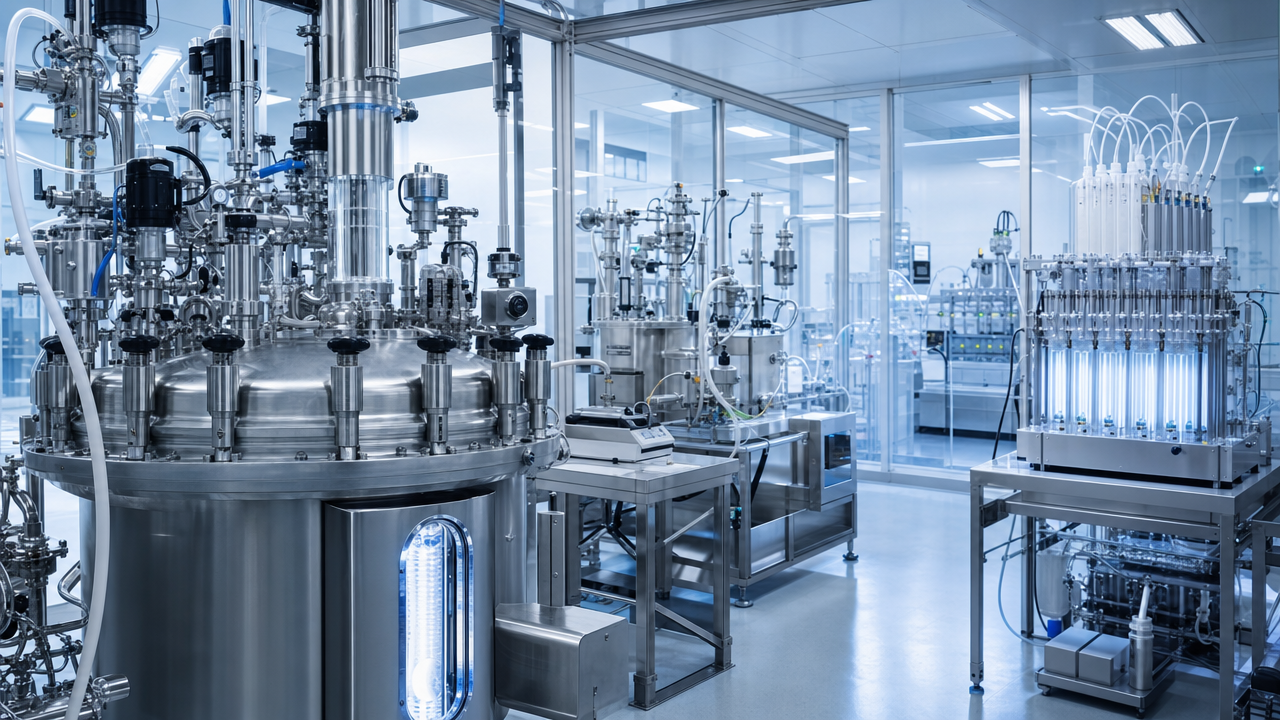
CDMO (Contract Development and Manufacturing Organization) covers the full chain from process development to commercial-scale manufacturing. The "D" in CDMO distinguishes it from pure-play CMO: a CDMO doesn't just make the drug—it helps the client establish the synthetic route, complete scale-up from milligrams through kilograms to metric-ton commercial batches, lock down the manufacturing process, and support FDA/NMPA regulatory filings (CMC module). Sub-segments include small-molecule chemical CDMO, large-molecule biologics CDMO, peptide CDMO (propelled by the GLP-1 boom), ADC conjugate CDMO, cell and gene therapy (CGT) CDMO, and oligonucleotide CDMO.
CRDMO (combined CRO + CDMO under one roof) is the most important evolved form, representing outsourcing that moves from "segment by segment" to "end-to-end partnership." WuXi AppTec is the archetypal global CRDMO.
The fundamental economic drivers of the CXO model: (1) converting fixed R&D costs to variable costs; (2) the rise of asset-light "virtual pharma" that have projects but no factories; (3) escalating GMP compliance costs making self-built capacity ever more expensive; and (4) specialist CXOs accumulate methodology advantages across hundreds of projects, making them faster and cheaper than in-house efforts.
II. The Global Competitive Landscape: From IQVIA to Samsung Biologics
The global CXO market in 2025 is approximately USD 150–170 billion, with CRO at roughly USD 80 billion and CDMO at roughly USD 80 billion.
IQVIA (NYSE: IQV, USA) is the world's largest CRO by revenue. Formed by the 2016 merger of Quintiles and IMS Health, it combines clinical research (R&D Solutions), real-world medical data and analytics (TAS), and commercial services. FY2025 full-year revenue: USD 16.31 billion (R&DS USD 8.90 bn +4.3%; TAS USD 6.63 bn +7.6%). R&DS contracted backlog: USD 32.7 billion (+5.3% YoY)—roughly 3.5 years of forward coverage. IQVIA's core moat: a global clinical operations network in 110+ countries with 80,000 FTEs, plus the world's largest de-identified real-world medical database (1 billion patients). IQVIA's digital strategy—DCT (Decentralized Clinical Trials) platform, AI-assisted recruitment, ePRO/eCOA—positions it ahead of peers in the shift to patient-centric trial design.
Labcorp Drug Development (NYSE: LH, USA) (formerly Covance, acquired for USD 6.1 bn in 2015) offers end-to-end CRO services. FY2025 Drug Development revenue ~USD 4.0 bn. Strengths: central laboratory network in 100+ countries, deep bioanalytical and toxicology capabilities.
Charles River Laboratories (NYSE: CRL, USA) focuses on preclinical CRO—the global leader in non-clinical safety assessment and the world's largest supplier of research-model animals (Sprague-Dawley rats, C57BL/6 mice). FY2025 revenue ~USD 3.5 bn. Under the BIOSECURE Act landscape, Charles River is the primary U.S.-based beneficiary as a domestic alternative to Chinese preclinical CROs.
ICON plc (NASDAQ: ICLR, Ireland) is the third-largest multinational clinical CRO (~USD 9 bn FY2025 revenue post-PRA Health Sciences acquisition). Specializes in oncology, immunology, and rare-disease trials across 55+ countries.
Parexel (USA, private) is the fourth-largest clinical CRO (~USD 2.4 bn FY2024). Privately held by EQT and Goldman Sachs since 2021.
Lonza (SIX: LONN, Switzerland) is the world's most important large-molecule biologics CDMO. FY2025H1 sales CHF 3.6 bn (USD 4.5 bn for the half year); full-year CDMO estimated at CHF 6.2 bn (USD 7.7 bn). Core moat: complete bioreactor scale ladder from 2 L to 25,000 L, and the "IBEX Dedicate" long-term exclusive capacity model that creates near-unbreakable customer bonds.
Samsung Biologics (KRX: 207940) is the fastest-rising CDMO. FY2025 revenue USD 3.1 bn, net margin >45%—extraordinary for a capital-intensive manufacturer. Samsung has four biologics factories at Songdo, Incheon, with total capacity >600,000 L; Plant 5 (180,000 L) is due online in late 2025. Its "speed culture" compresses a factory's build-to-GMP-approval timeline to 3.5–4 years versus the global average of 6–7 years. Under the BIOSECURE Act, Samsung Biologics is the most frequently cited alternative to WuXi Biologics.
Boehringer Ingelheim Biopharmaceuticals (Germany, private) is a leading European biologics CDMO with GMP sites in Bingen (Germany) and Fremont (USA); known for absolute client confidentiality.
Fujifilm Diosynth Biotechnologies (Japan, FUJIFILM) has expanded via acquisitions in the UK and the Netherlands; a growing mid-tier biologics CDMO that has captured some order transfers post-BIOSECURE.
Catalent (USA, taken private) was acquired by Novo Holdings for ~USD 16.5 bn in late 2024. Its biologics manufacturing capacity (Bristol, Bloomington) is now dedicated substantially to Novo Nordisk's GLP-1 commercial supply expansion.
Global CDMO restructuring—three structural forces: (1) BIOSECURE Act legislation driving selective "de-China" diversification toward Korea, India, and Europe; (2) the GLP-1 mega-cycle locking Novo Nordisk and Eli Lilly capacity into proprietary pipelines; (3) the ADC boom creating insatiable demand for specialized conjugation CDMOs where WuXi XDC/WuXi Biologics is uniquely positioned. The result is not a uniform recovery but a highly structured divergence across sub-segments.
III. External Environment: The BIOSECURE Act, the GLP-1 Revolution, and China's Drug-Policy Shift
Line 1: The BIOSECURE Act moves from bill to law
The BIOSECURE Act's initial draft (2024) named five Chinese entities—WuXi AppTec, WuXi Biologics, BGI Group, MGI Tech, and Complete Genomics—barring federal-contract recipients from using their services. The news triggered a WuXi stock meltdown in early 2024.
The legislative path was tortuous. The House passed a version in September 2024, but the Senate stalled. Markets held their breath into 2025. The pivotal moment came in October 2025: the Senate adopted Amendment 3841 incorporating a revised BIOSECURE provision (Section 881) into the FY2026 NDAA. The key change: the final law does not statically name WuXi AppTec or WuXi Biologics—instead it references the Defense Department's dynamic entity list, allowing DoD to add or remove names over time.
December 18, 2025: President signed the FY2026 NDAA—the BIOSECURE Act became federal law.
The practical implication: the law is real, but WuXi's immediate exposure depends on whether DoD updates its list. As of enactment, the WuXi companies are not on the DoD list, preserving their business window. Yet "compliance anxiety" is permeating Big Pharma procurement teams: even where the law does not directly restrict a contract, risk-averse compliance officers are pushing to dual-source or multi-source. This soft exclusion pressure may ultimately be more damaging than the statute's text—it operates invisibly and is difficult to reverse.
Line 2: The GLP-1 revolution reshapes peptide CDMO
GLP-1 receptor agonists—semaglutide (Ozempic/Wegovy, Novo Nordisk) and tirzepatide (Mounjaro/Zepbound, Eli Lilly)—have exploded into a "pharma super-cycle." Their combined 2024 global sales surpassed USD 35 billion; by 2030 they may exceed USD 100 billion. Manufacturing GLP-1 (31–39-amino-acid long-chain peptides via SPPS or liquid-phase synthesis) requires specialized peptide CDMO capacity. Chinese peptide CDMOs were the biggest beneficiaries: Asymchem's TIDES business surged 121.1% YoY in Q1–Q3 2025; Kellect's peptide solid-phase synthesis capacity reached 30,000 L in H1 2025 (target 44,000 L by year-end).
The risk: multiple companies are simultaneously adding peptide capacity in 2025–2026, raising the specter of a 2026 capacity glut if GLP-1 demand growth decelerates (oral GLP-1 pipeline, Novo Holdings' Catalent internalization, and patient adherence issues are the key downside variables).
Line 3: China's innovative-drug new-policy cycle and License-out boom
Chinese Biotech recorded a historic wave of cross-border License-out deals in 2024–2025—multiple USD 1 billion+ transactions (ADC pipelines to AstraZeneca, BMS; oral GEP-NETs to Takeda, etc.). This signals robust Chinese innovation output and feeds CRO/CDMO demand: in-licensing transactions typically require the manufacturing to remain with the CXO that already knows the process, while international multi-center trials (MRCT) drive clinical CRO demand for Asia-Pacific networks. NMPA's accelerated approval reforms (breakthrough therapy designation, priority review) have also compressed IND-to-trial timelines, expanding the CRO market's addressable base. VBP (volume-based procurement) is paradoxically a CXO tailwind: by crushing generic drug margins, it compels traditional pharma companies to innovate, boosting their outsourced R&D spend.
IV. China Market Size: Deconstructing and Rebuilding the Numbers
China's CXO market in 2025 is approximately CNY 2,400–2,500 billion in aggregate—comprising CRO (CNY 1,629 bn, +7.5% YoY) and CDMO (CNY 1,436 bn, +15.3% YoY), with ~20–30% overlap for integrated CRDMO players. Frost & Sullivan projects China CDMO specifically at CNY 2,084 bn by 2026E (from CNY 859 bn in 2023), implying a 2023–2026 CAGR of 19.4%.
Sub-segment breakdown (2025E):
- Preclinical CRO: ~CNY 420–450 bn; growth ~8–12%
- Clinical CRO (Phase I–IV): ~CNY 500–550 bn; growth ~10–15%
- Small-molecule CDMO: ~CNY 620–680 bn; growth ~12–15%
- Large-molecule biologics CDMO: ~CNY 330–380 bn; growth ~15–20%
- Peptide/ADC/CGT new-wave CDMO: ~CNY 150–250 bn; growth ~60–100%+
A critical structural fact: ~65–75% of Chinese CXO revenues come from overseas clients (WuXi AppTec ~85% offshore; WuXi Biologics ~90%; Asymchem ~82%). China CXO is fundamentally an offshore-outsourcing industry based in China—not primarily a domestic-market business. This export orientation makes BIOSECURE Act impacts far more direct than domestic CXO market figures alone would suggest.
The "outsourcing rate" (the proportion of pharma R&D/manufacturing that is externalized) continues to rise globally: preclinical CRO outsourcing rate from ~25% (2010) to ~45–50% (2025); clinical CRO from ~35% to ~60–65%; CDMO from ~20% to ~40%. This structural increase in outsourcing—not just underlying pharma R&D growth—is why CXO grows at 10–15% CAGR while global pharma revenue grows at only 6–8%.
V. Supply-Chain Anatomy: The Outsourcing Puzzle from Target to Shelf
The CXO supply chain requires analysis across three dimensions: the vertical R&D-manufacturing-filing workflow, the horizontal customer-provider-upstream-supplier value chain, and the deep technical-regulatory-commercial substrate.
Upstream: the hidden dependencies on lab consumables and instruments
CXO companies are heavy users of specialized consumables and instruments. On the CRO side: cell culture consumables, GLP-grade research animals (Charles River is the world's largest supplier; Chinese domestic suppliers include Vital River and SBFBS), immunoassay kits (ELISA, cell-viability CTG), biochemical reagents, HPLC, LC-MS/MS, flow cytometers, and automated liquid handlers (Hamilton, Tecan). On the CDMO side: solid-phase synthesis resin (Rink amide MBHA, Wang resin) and Boc/Fmoc-protected amino acid monomers (which became temporarily constrained during the GLP-1 boom); single-use bioreactor bags (Sartorius BIOSTAT STR, Pall Allegro); cell culture media (Merck EX-CELL, Thermo Scientific CD CHO); protein A affinity resin (Cytiva MabSelect PrismA, ~70% global share held by Cytiva/GE and Repligen); and OEB4/OEB5-rated closed synthesis systems for ADC Payloads.
Chinese consumables localization is accelerating (cell culture media, some chromatography resins, flow chemistry equipment), but key categories—protein A resin, precision mass spectrometers—remain heavily import-dependent, constituting a supply-chain vulnerability.
Client layer: three types with different outsourcing economics
Big Pharma (Pfizer, J&J, Roche, Novartis, Bayer, AstraZeneca, Eli Lilly, BMS): large single-contract values (USD tens of millions to hundreds of millions), very high standards, long payment cycles, tendency to establish multi-year "preferred provider" relationships with a short list of top CXOs. BIOSECURE Act compliance reviews are reshaping these preferred-provider lists. Chinese Biotech (BeiGene, Junshi, Innovent, Akeso, and hundreds of unlisted early-stage Biotechs): mid-size contracts, milestone-based, price-sensitive; the 2022–2023 funding winter caused major contract pullbacks; 2025 is seeing recovery. CDMO sub-contracting: some CDMOs purchase intermediates, APIs, or sub-services from other CXOs—a multi-tiered supply structure (e.g., Haoyuan Pharmaceutical provides high-purity intermediates to downstream CDMOs).
CRO service layer: from test tube to clinical ward
Preclinical CRO core assets: GLP-certified animal facilities (SPF-grade vivaria, including NHP suites for biologics toxicology), pathology analysis teams (H&E sectioning, IHC), ADME platforms, and HTS robotics. Clinical CRO core assets: Phase I unit beds (scarce, regulatory-licensed), national/global hospital network and SMO infrastructure, EDC/CTMS systems, biostatistics teams (SAS programmers), and regulatory strategy teams fluent in both NMPA and FDA filing pathways.
CDMO manufacturing layer: the scale-up logic
CDMO value is captured at three nodes: process route development (3–18 months, CNY millions to tens of millions), pilot scale-up (from grams to kilograms, validating stability and scalability), and commercial GMP production (highest capex, highest regulatory sensitivity, highest per-batch value). Large-molecule biologics CDMOs require bioreactor ladders from 50 L (process development) to 25,000 L (commercial). WuXi Biologics' Wuxi facility now houses over 10 × 15,000 L bioreactors. ADC CDMOs require OEB4/OEB5-grade Payload synthesis lines, coupled to antibody production, conjugation reactors, and highly specialized analytical methods (HIC, SEC-HPLC, mass spec for DAR characterization).
VI. Key Company Profiles: Each Fighting Its Own War in Its Own Trench
WuXi AppTec (603259 / HK 2359)—the global CRDMO scale benchmark
FY2025 full-year revenue estimated at ~CNY 45.46 bn (+15.84% YoY); net profit ~CNY 14.96 bn (nearly doubling YoY). Q1–Q3 2025: revenue CNY 32.86 bn (+18.61%), net profit CNY 12.08 bn (+84.84%), operating cash flow CNY 10.87 bn (+35%). Revenue guidance raised twice in 2025; final guidance CNY 435–440 bn. Contracted backlog: ~CNY 59.8 bn at Q3 end.
Key structural highlight: TIDES business (peptides + oligonucleotides) in Q1–Q3 2025: CNY 7.84 bn (+121.1%)—the single biggest growth driver. TIDES has become ~30% of the chemistry segment and will continue to expand as GLP-1 demand persists alongside accelerating oligonucleotide drug pipeline.
BIOSECURE strategy: dual-track—active lobbying to demonstrate independence from the Chinese government, plus building U.S. (Texas), Singapore, and European commercial manufacturing capacity to distribute compliance risk.
WuXi Biologics (HK 2269)—the world's #2 large-molecule biologics CDMO
FY2025H1 revenue CNY 9.95 bn (+16.1%); net profit CNY 2.76 bn (+54.8%). Full-year guidance raised to +14–16%. Contracted backlog: USD 20.34 bn (including USD 9.0 bn in potential milestones); 3-year near-term backlog grew from USD 3.65 bn to USD 4.21 bn. H1 new integrated projects: 86; total: 864. Core technology moat: WuXi UNIque high-expression cell-line platform (typically >10 g/L titers), plus Wuxi/Suzhou bioreactor complex (>230,000 L installed). Overseas production: Germany (Wuxi Biologics Germany GmbH, Mannheim), U.S. Delaware.
WuXi XDC (HK 2268)—the global ADC CDMO leader without peer
FY2025H1 revenue CNY 2.70 bn (+62.19%); net profit CNY 0.75 bn (+52.7%). Backlog: USD 1.329 bn (+57.9% YoY). H1 new iCMC projects: 37 (record). Offshore revenue: ~82%. FY2024 full-year: CNY 4.05 bn (+90.8%), net profit CNY 1.07 bn (+277%). Moat: vertically integrated iCMC platform (antibody production from WuXi Bio + Payload/Linker synthesis from WuXi AppTec + conjugation + analytics + U.S. fill-finish/QA via Cytovance). No comparable single-vendor full-chain ADC CDMO exists globally.
Asymchem (300759 / HK 3759)—the stable second-tier comprehensive CRO
FY2025 full-year revenue CNY 14.09 bn (+14.82%); net profit CNY 1.66 bn (-7.22% from higher amortization and FX). North America: 64%, Europe: +23.18%. Asymchem deploys a balanced lab services + CMC + clinical CRO three-pillar model without trying to match WuXi's scale.
Kellect (002821 / HK 6821)—small-molecule CDMO + GLP-1 peptide dual-track pioneer
FY2025 Q1–Q3 revenue CNY 4.63 bn (+11.82%). Small-molecule CDMO: roughly flat. Peptide/oligo/ADC new businesses: +72%; chemical large-molecule (mostly peptide): +150%+. H1 emerging businesses: CNY 0.756 bn (+51.22%), now 23.71% of revenue. Peptide SPPS capacity: 30,000 L (H1), expanding to 44,000 L by year-end. U.S. site established in Encinitas, San Diego (CA), providing domestic U.S. CDMO services. Kellect also holds 50+ continuous-flow chemistry patents—the deepest flow-chemistry portfolio in China.
Tigermed (300347 / HK 3347)—China's clinical CRO internationalization flagship
FY2025 full-year revenue CNY 6.83 bn (+3.48%); net profit CNY 0.89 bn (+119.15%). Net new orders: CNY 10.16 bn (+20.7%)—the key leading indicator. Tigermed has established clinical operations in Japan (through multiple local CRO acquisitions), South Korea, Australia, Singapore, and Malaysia, capable of executing true MRCT without sub-contracting. Target: top-5 global clinical CRO by 2030 (vs. IQVIA, Labcorp, ICON, Parexel).
Pharmaron (300363)—the CDMO recovery archetype
H1 2025 revenue CNY 1.55–1.62 bn (+15–20%); net profit ~CNY 30 mn (back to positive). Q2 2025: revenue CNY 0.82 bn (+21.56%), net profit CNY 0.031 bn (+141.7%). Pharmaron is pivoting toward Finished Dosage Form (FDF) CDMO from its API base, with an FDA-cleared facility in Chongqing and a UK formulation plant.
Haoyuan Pharmaceutical (688131)—life-science reagents + CXO intermediates dual-engine
FY2025 full-year revenue CNY 2.877 bn (+26.73%); non-GAAP net profit +40.82%. Front-end life-science reagents (reference standards, analytical reagents, synthesis intermediates): H1 CNY 1.45 bn (+31%). AI drug-discovery platforms drive reagent demand higher (Xtalpi's robotic labs are a large user).
NovaBay Biologics (688076)—long-chain peptide CDMO specialist
FY2025 Q1–Q3 revenue CNY 1.527 bn (+22%); net profit +27%. Proprietary liquid-phase segmental synthesis route for long-chain GLP-1 peptides (semaglutide single-batch output >10 kg, industry-leading). ZHAOYAN New Drug (昭衍新药, 603127): largest preclinical safety evaluation CRO in China, with the country's most extensive NHP toxicology resources. MediciNova (美迪西, 688202): early-phase integrated CRO (chemistry + biology + ADME + tox), primary clientele among Chinese Biotechs.
Xtalpi (06061.HK)—FY2025 marks the first profitable year for AI+CRO
FY2025 revenue CNY 0.803 bn (+201.2%), first-ever annual profit. Core technology: AI crystal form prediction (CSP) + robotic automated wet labs (24/7 high-throughput synthesis/screening). Insilico Medicine (01530.HK): listed on HKEx December 30, 2025, first-day surge +45.53%; FY2025 revenue USD 56.24 mn, still loss-making at USD 43.8 mn adjusted; core asset is AI-discovered INS018_055 (IPF candidate, Phase II).
VII. Regional Geography: From Shanghai Zhangjiang to Overseas Dual-Track Production
China's CXO geography is driven by talent clusters, capital concentration, and policy incentives—not raw-material proximity as in conventional manufacturing.
Shanghai—the uncontested core hub
Zhangjiang High-Tech Park (Pudong) hosts the densest biopharma ecosystem in China: 400+ companies including R&D centers of GSK, Novartis, Bayer, Roche/Genentech; Fudan, SJTU, Tongji medical schools supplying talent; Shanghai as China's financial capital providing superior Biotech funding. WuXi AppTec's global HQ and core chemistry/preclinical labs are in Zhangjiang; Haoyuan Pharmaceutical HQ in Fengxian; Medicinovax (美迪西) in Minhang. Lingang Special Area (SHFTZ) is attracting large-molecule/CGT CDMO greenfield investment with preferential land pricing and streamlined chemical/biological production permits.
Suzhou SIP/BioBAY—the second biologics CDMO pole
Suzhou BioBAY (500+ companies, FY2024 output ~CNY 140 bn) hosts WuXi Biologics' largest bioreactor complex (20,000 L+ Suzhou plant, >90% utilization in FY2025), Kellect API lines, Pharmaron CDMO capacity. SIP's combination of science ecosystem (Suzhou Research Institute of CAS, IMEC Suzhou) and ~40–60% lower land cost than Zhangjiang has made it the preferred site for large-volume manufacturing CDMO investment. The "30-minute high-speed-rail, 90-minute highway" linkage to Shanghai creates a practical "SuHu dual-city industrial circle."
Jiangsu Nanjing, Changzhou, Lianyungang
Nanjing: Tigermed HQ; Nanjing Drum Tower Hospital and SEMC Hospital provide Phase I–III trial sites. Changzhou: small-molecule API and intermediates base feeding CDMO upstream supply. Lianyungang: anchored by Hengrui Medicine and Haosen Pharmaceutical, a local CRO/small-molecule CDMO ecosystem.
Beijing
China's premier clinical trial site resource: PLA General Hospital (301 Hospital), Peking Union Medical College Hospital, Beijing Cancer Hospital. Zhaoyan New Drug has preclinical NHP and rodent GLP labs in Beijing's Daxing/Yanqing districts.
Hangzhou and Zhejiang
Hangzhou is home to NovaBay Biologics (peptide CDMO). Taizhou and its chemical API industrial cluster provide strong upstream raw-material supply, giving nearby CDMOs cost advantages in synthetic intermediates.
Chongqing—Pharmaron's anchor
Pharmaron's large API+FDF GMP complex in Changshou, Chongqing, benefits from lower land and labor costs.
Overseas: the BIOSECURE-driven "dual-track" production strategy
WuXi XDC: commercial ADC conjugation site in Delaware (USA) and European capacity via Cytovance. WuXi Biologics: Germany (Mannheim) bioreactor facility, U.S. Delaware GMP plant. Kellect: Encinitas (San Diego) R&D/small-scale CDMO. WuXi AppTec: Texas (USA) and Singapore commercial chemistry synthesis capacity. These overseas sites are not market-expansion plays—they are compliance-driven necessities, providing "China research + overseas production" dual-track capability. The cost: U.S./EU GMP CDMO operational costs run 3–5× China, with long ramp-up periods (2026–2028 will show peak capex drain on these overseas investments).
Tianxiagongchang, which tracks the manufacturing supply chains of 4.8 million verified Chinese factories, observes this geographic restructuring as a manufacturing-industry version of the broader global compliance-driven reshoring trend—one that will leave deep and durable marks on the world's pharmaceutical supply-chain map.
VIII. Sub-Segment Deep-Dives: Eight Tracks of Diverging Competition
(Zero) The "anti-cyclical" nature of CXO: why pharma outsourcing is more resilient than other manufacturing
Even in economic downturns, healthcare demand is largely inelastic. More importantly, CXO benefits from a counter-intuitive buffer: when pharma companies face revenue pressure, they increase outsourcing ratios (converting fixed in-house costs to variable external spend)—partially offsetting the impact of reduced total R&D budgets. Historical evidence: in the 2009 global financial crisis, pharma R&D spend fell ~5% yet CRO/CDMO markets still grew ~3–5%.
(I) Small-molecule CDMO: scale wins, continuous flow is the next-gen moat
China's small-molecule CDMO leadership rests on three historical pillars: chemistry talent density (graduates in organic and medicinal chemistry far exceed U.S./EU combined), raw-material supply chain depth (China is the world's largest chemical intermediate producer), and accumulated GMP compliance track record. But all three advantages are narrowing: chemist wages have nearly doubled in 5 years; India (Divi's, Sun Pharma) is raising its GMP game; complex molecules (MACROCYCLEs, PROTACs, multi-chiral-center APIs) demand proprietary process IP beyond talent and cost arbitrage. The next-gen moat is continuous flow chemistry: Kellect (50+ flow patents, 50+ flow production lines) and WuXi AppTec are the clear leaders.
The "complex molecule" (PROTAC, macrocyclic, high-chiral-center) shift is expanding the addressable market of technical chemistry CDMO. Complex molecules will grow from ~20% of small-molecule CDMO revenues today to ~30–40% by 2030, rewarding technology-platform leaders over commodity capacity providers.
(II) Large-molecule biologics CDMO: WuXi Bio leads, Samsung presses from the flank
Large-molecule biologics now ~40% of global drug sales (from ~17% in 2010). WuXi Biologics dominates Chinese biologics CDMO; Samsung Biologics is the primary credible alternative globally. Beyond conventional mAbs, bispecific antibody (BsAb) CDMO is the fastest-growing sub-niche: 200+ BsAbs in clinical development globally; WuXi Biologics' WuXi UNIque BsAb platform (KIH, Crossmab, Fc engineering) is a key differentiating asset.
(III) ADC conjugate CDMO: one player dominates
The ADC market (2024: USD 14.1 bn → 2030E: USD 68.5 bn, CAGR 30.1%) is spawning insatiable CDMO demand. Each ADC molecule requires custom conjugation chemistry; OEB4/OEB5 high-containment facilities for toxic Payloads; and highly specialized analytics (HIC, SEC-HPLC, mass spec for DAR characterization). WuXi XDC's iCMC platform—vertically integrating antibody production, Payload synthesis, conjugation, and analytics—is globally without peer for scale and completeness. New-generation site-specific conjugation (precise DAR 2 or DAR 4 vs. stochastic DAR 0–8 mixtures) is the key technological frontier WuXi XDC is investing in. Chinese ADC pipelines (KLUS Pharma, Bravura Biosciences, etc.) also fuel domestic iCMC demand.
(IV) Peptide GLP-1 CDMO: boom, then potential 2026 glut, then re-acceleration
China holds ~60% of global peptide CDMO capacity (Kellect, NovaBay, Changshu Institute, Novolac, etc.). The risk: simultaneous 2025–2026 capacity additions by multiple players may outpace GLP-1 demand if oral GLP-1 drugs (Eli Lilly's orforglipron, Phase III) accelerate or if Novo Holdings fully internalizes supply via Catalent. The long-cycle logic remains intact (3.5 billion GLP-1 users by 2030E), but 2026–2027 may be a margin-compression shakeout year.
(V) Oligonucleotide CDMO—the next "peptide-class" super-cycle
siRNA (Alnylam's Inclisiran) and ASO (Ionis' multiple products) are expanding into heart disease, rare disease, and neurology. Global oligonucleotide CDMO market: ~USD 2–3 bn (2025) → ~USD 8–12 bn (2030E, CAGR 30%+). WuXi AppTec's TIDES platform (peptide + oligonucleotide) is already capturing this upside—the 121.1% growth in TIDES is partly GLP-1 peptides but also siRNA/ASO commercial-stage supply growth.
(VI) Preclinical CRO: Zhaoyan + Medicinovax, bottoming out
Preclinical CRO demand correlates tightly with early-stage Biotech funding. 2022–2023 funding winter caused revenue declines at Zhaoyan and Medicinovax. 2025 recovery indicators: improving Biotech funding + new molecule classes (ADC, CGT, new oncology targets) driving NHP toxicology demand. Zhaoyan's NHP resource (the largest captive in China) is a rare defensible moat as ADC and CGT pipelines expand.
(VII) AI-CRO new wave: Xtalpi's first profit year and Insilico's HKEx debut
Xtalpi (crystal form prediction + robotic wet labs) achieved its first-ever annual profit in FY2025 (revenue CNY 0.803 bn, +201.2%). This is a commercial milestone for AI+CRO. Insilico Medicine's HKEx IPO (December 30, 2025, +45.53% on day one, HKD 2.28 bn raised) is the largest Hong Kong biopharma IPO of 2025 by proceeds. AI drug discovery's ultimate validation test: whether AI-discovered candidates (e.g. INS018_055, Phase II) can demonstrate superior Phase II/III success rates vs. traditional development. That proof will emerge 2026–2028.
(VIII) CGT CDMO: highest barriers, earliest stage
Cell and gene therapy CDMO (CAR-T, gene-editing, oncolytic viruses, AAV gene therapy) is the most technically demanding, most regulated, and earliest-stage CDMO sub-segment. China's players (Houyuan Gene, GenEditBio, etc.) are 3–5 years behind U.S./European leaders on FDA/EMA dual-certification, ultracentrifugation capacity, and commercial references. But Legend Biotech's Carvykti (cilta-cel) commercial success—the most commercially successful cell therapy from China—is spurring replication. 2026–2030: China CGT CDMO will grow at CAGR 25–35% but still hold <20% of global market share by 2030.
IX. Technology Evolution: From "Human Scale" to "Technical Moat"
Thread 1: Continuous flow chemistry—the small-molecule CDMO process revolution
Flow chemistry (reaction in micro- to milli-second residence time in precision tubular reactors) offers superior heat/mass transfer (critical for exothermic reactions), enhanced safety for hazardous reagents, and green chemistry advantages (60–70% waste reduction). Kellect's 50+ commercial flow lines and WuXi AppTec's large-scale flow deployment represent China's frontier. The next evolution—Integrated Continuous Manufacturing (ICM), linking raw-material feed, flow reaction, inline PAT, and continuous crystallization into a closed automated pipeline—is already in pilot at Kellect.
Thread 2: Process Analytical Technology (PAT) and real-time release
PAT (FDA-endorsed since 2004): inline NIR, Raman, HPLC, and ultrasound sensors monitor CQA/CPP in real time, enabling QbD-compliant "quality by design" manufacturing and replacing end-of-batch testing with continuous monitoring. Top CDMOs (WuXi AppTec, Kellect) are deploying PAT on commercial lines, elevating their FDA inspection ratings.
Thread 3: AI-assisted process development
ML models predict catalyst selection, solvent systems, and temperature for synthetic routes (smart DoE), reducing experimental cycles. Crystal form prediction (Xtalpi's CSP) is the commercially mature AI application. NLP literature mining for process conditions is emerging. "AI assisting chemists" is where the industry is now; "AI replacing chemists" is still years away.
Thread 4: ADC conjugation—from stochastic to site-specific
Site-specific conjugation (precise DAR 2 or 4 via engineered cysteine mutations, non-natural amino acids, or sugar-chain conjugation) is the next-gen improvement over stochastic DAR 0–8 mixtures. WuXi XDC's iCMC platform supports multiple site-specific technologies. This expanding technical frontier continues to raise the bar for ADC CDMO entry.
Thread 5: Peptide industrialization—liquid-phase vs. SPPS divergence
For long-chain peptides (31–39 aa), liquid-phase segmental synthesis offers better atom economy vs. SPPS's higher resin consumption. NovaBay employs its proprietary liquid-phase route for semaglutide (single-batch >10 kg), competing on cost against Kellect's SPPS approach. The industrial-scale competition between the two routes will define cost leadership in GLP-1 peptide supply.
Thread 6: CGT GMP manufacturing technology
AAV vector production (HEK293 transient transfection or Sf9/baculovirus), downstream ultracentrifugation purification, closed automated CAR-T cell expansion systems (CliniMACS Prodigy, G-Rex), ultra-low-temperature logistics (−80°C LN2)—all rapidly evolving, with Chinese CGT CDMOs in active catch-up mode.
The Matthew Effect: advanced technologies (flow chemistry, PAT, AI DoE, ADC site-specific conjugation) require tens of millions of CNY in capital and specialized talent to implement. They are widening the technology gap between top-tier CDMOs (WuXi AppTec, Kellect) and mid-tier competitors, accelerating "silent consolidation" through natural market-share attrition rather than M&A.
X. Risk Matrix: Hazards Beyond the Five Lines of Defense
China's CXO industry faces risks across policy/geopolitics, industry cycle, market structure, operations, and finance.
Risk 1: BIOSECURE Act list expansion—the sword hanging over WuXi's head. Even absent a name-specific listing, "compliance anxiety culture" in Big Pharma procurement is causing soft exclusions that are difficult to reverse. Worst case (DoD list update naming WuXi AppTec/Biologics, ~20% probability): direct federal-contract revenue hit (estimated 5–10% of WuXi revenue), followed by broader Big Pharma contract-migration waves.
Risk 2: Biotech funding cycle volatility. CRO demand is derived demand from pharma R&D spend, which tracks Biotech funding, which tracks U.S. interest rates. The 2021 funding boom → 2022–2023 bust → 2025 recovery cycle will recur; CROs have limited ability to insulate against macro swings.
Risk 3: Peptide CDMO capacity glut. 2026 is likely a "pressure year" with simultaneous capacity releases by Kellect, Changshu Institute, Novolac, and others potentially outpacing GLP-1 demand. Price competition, margin compression, and industry shakeout are probable for smaller, higher-cost players.
Risk 4: Customer concentration and single-point failure. For second-tier CDMOs (Pharmaron, NovaBay), top 1–3 customers or products may account for 30–50%+ of revenue; any single GLP-1 contract reallocation could cause 20–30% revenue swings.
Risk 5: Overseas factory cost and ramp-up drag. U.S./EU GMP operations cost 3–5× China. 2026–2028 will be the peak capex and ramp-up period for WuXi AppTec (Texas/Singapore), WuXi Biologics (Germany), WuXi XDC (Delaware/Europe), and Kellect (Encinitas). Profit margin headwind is inevitable.
Risk 6: RMB appreciation and USD/EUR revenue translation risk. With 65–75% of CXO revenues denominated in USD/EUR, RMB appreciation compresses reported CNY profits. FX hedging is partial mitigation.
Risk 7: Upstream consumables export controls. A low-probability, high-impact risk: if U.S./EU governments were to restrict exports of critical biologics consumables (e.g., specific bioreactor bags, protein A resin) to China, it would directly impact CDMO operations. Chinese consumable localization is the long-term hedge.
Risk 8: New drug failure rate and CDMO conversion risk. Clinical failure rates mean most CDMO process-development projects never reach commercial manufacturing. Managing the "preclinical/clinical batch → commercial batch conversion funnel" is critical for CDMO revenue quality—the ratio of commercial-stage products vs. clinical-stage projects is the ultimate quality-of-backlog metric.
The "real decoupling cost" estimate: Global pharma spends USD 15–20 bn/yr with Chinese CXOs. A 20% transfer to non-Chinese alternatives (USD 3–4 bn/yr) would require adding equivalent capacity at Samsung Biologics (3-year waitlist), Lonza (2–3 years to expand), or Indian CDMOs (3–5 years to build competence)—simultaneously, in 2026–2028, which is physically impossible. This "capacity gap window" is China CXO's most durable near-term protection against BIOSECURE-driven decoupling.
XI. 2026–2030 Outlook: Advancing Through Divergence
Market size forecasts (Tianxiagongchang Industrial Research Institute central scenario):
| Segment | 2025E (CNY bn) | 2030E (CNY bn) | CAGR |
|---|---|---|---|
| Preclinical CRO | 420–450 | 650–750 | 8–11% |
| Clinical CRO (Phase I–IV) | 500–550 | 900–1,100 | 11–15% |
| Small-molecule CDMO | 620–680 | 1,100–1,300 | 10–13% |
| Large-molecule biologics CDMO | 330–380 | 750–1,000 | 15–20% |
| Peptide CDMO | 160–220 | 500–700 | 20–28% |
| ADC CDMO | 80–120 | 400–600 | 30–40% |
| CGT CDMO | 25–40 | 100–160 | 25–35% |
| AI+CRO services | 8–15 | 100–200 | 50–100% |
Global CXO: 2030E USD 240–250 bn (CAGR 8–10%). China's global market share: 23–30% (range depends on BIOSECURE scenario).
GLP-1 peptide CDMO: 2026–2027 = digestion/shakeout; 2028+ = re-acceleration. The next GLP-1 generation (triple GIP+GLP-1+Glucagon agonists like retatrutide, oral formulations) will reopen demand by 2028–2030.
ADC CDMO: WuXi XDC on track for CNY 20+ bn revenue by 2030 (CAGR ~35%), maintaining global leadership. ADC BIOSECURE risk is structurally limited—no comparable single-vendor alternative exists.
BIOSECURE scenarios: Optimistic (35%, DoD list does not expand, China CXO market share ~28–32% in 2030); Neutral (45%, gradual dual-sourcing by Big Pharma, market share drifts to 23–25%); Pessimistic (20%, DoD list names WuXi, large contract transfers, market share falls to 18–22%).
AI drug discovery: 2027–2030 clinical validation window. If Xtalpi, Insilico, and global peers show superior Phase II/III success rates for AI-discovered molecules, AI+CRO will receive a second major re-rating. Even in the base case, AI-assisted process development (intelligent DoE, CSP prediction) will be standard industry practice by 2028.
Clinical CRO internationalization: Tigermed entering global top-5 by 2030 is achievable. Offshore revenue rising from ~20% to 30–40% of total; Asia-Pacific (Japan, Korea, SEA) share growing from ~10–15% to ~20–30%.
China domestic CXO "flywheel": Chinese Biotech funding (CNY 700 bn/2025 → CNY 1,500–2,000 bn/2030E), continued License-out wave, biosimilar launch volumes, and unique Chinese patient population epidemiology (HBV, NAFLD/NASH, specific oncology subtypes) will increasingly diversify CXO demand away from pure export dependency.
Four structural forces shaping global CXO geography 2026–2030: (1) Technology gravity—complex molecules cluster where talent, IP, and supply chains are deepest (China for ADC, peptide, small-molecule); (2) Compliance gravity—BIOSECURE and analogues push select contracts to Korea, India, Europe; (3) Capital gravity—venture capital geography determines Biotech birthplaces and domestic CXO demand (Boston/SF Bay/Shanghai); (4) Institutional gravity—accumulated FDA/EMA compliance track records remain sticky, giving established Chinese CDMOs continued advantage over Indian alternatives in Big Pharma supplier audits.
XII. Conclusion: From "Service Arbitrage" to "Technology Pricing"
In the year 2000, a rented lab bench in Shanghai's Zhangjiang district was the starting point for China's CXO story. The first orders were for compound synthesis—billed by engineer-months. The advantage was simple: Chinese PhD chemists at one-quarter to one-fifth the cost of their American counterparts.
Twenty-five years on, the picture is fundamentally transformed. WuXi AppTec's FY2025 revenue approaches CNY 45.5 billion, its backlog nearly CNY 60 billion, its service scope spanning from synthetic chemistry to cell and gene therapy. WuXi Biologics' contracted backlog exceeds USD 20 billion. WuXi XDC in ADC CDMO has no global peer for iCMC full-chain integration—you cannot find another vendor that simultaneously supplies antibody production, high-containment Payload synthesis, conjugation technology, and U.S.-local GMP at comparable quality and scale. This is no longer "cheap labor arbitrage." This is "technology-barrier pricing."
The road was anything but linear. The 2022–2023 Biotech funding winter crashed stock prices 60–80%. The 2024 BIOSECURE draft triggered an extreme panic about "WuXi going to zero." Yet when the BIOSECURE Act finally passed in December 2025, it did not statically name the WuXi companies—a revealing signal that twenty-five years of technical capability and supply-chain embedding cannot be legislated away in a single statute.
China CXO's next challenge is not expulsion by legislation—it is whether the industry can sustain technical leadership in an accelerating race: deeper flow chemistry than U.S./EU competitors; building the ADC iCMC platform's complexity into an impenetrable moat; using the 2026–2027 peptide-glut pressure to eliminate inefficient capacity and concentrate cost leadership; and converting AI platform advantages into clinical success-rate data.
This is no longer a cost competition. It is a fight for technical pricing power.
Tianxiagongchang Industrial Research Institute, which tracks the competitive evolution of Chinese manufacturing across hundreds of sub-sectors—with a database of 4.8 million verified in-production factories—observes the same rule recurring: when an industry's foundational competition shifts from "cheap" to "technology," the industry's genuine moat is only just beginning to be built. From hourly-billed organic chemistry synthesis to ADC conjugation global leadership—in twenty-five years, China CXO transformed "service arbitrage" into "technology pricing." The next five years will decide where China CXO stands in the global pharmaceutical-industrial system. And that story, in the year 2026, is at its most compelling chapter.
XIII. Capital Markets and Financing Landscape: CXO Valuation Logic and Sector Rotation
The Chinese CXO sector's A-share and H-share valuations have traced a complete arc from "high-growth premium" to "policy discount" to "differentiated recovery." In 2019–2021, the triple tailwind of China's Biotech IPO boom (STAR Market, HK 18A rules), global Biotech funding surge, and COVID-19-driven pharma outsourcing demand drove CXO to peak multiples: WuXi AppTec's P/E exceeded 100×; the sector's total market cap briefly topped CNY 1.2 trillion. From early 2022 to early 2024, three compressive forces struck simultaneously (Fed rate hikes, BIOSECURE draft anxiety, China medical-policy systemic discount), cutting the sector 60–70%. WuXi AppTec A-shares fell from ~CNY 168 to ~CNY 54. In 2024–2025, Biosecure final law not naming WuXi + GLP-1/ADC order recovery + earnings consistently beating restored sector PE to 30–40× (still well below 2021 highs, reflecting residual policy discount).
Post-BIOSECURE listing, the sector's valuation is driven by "growth rate minus policy risk coefficient." Bull case: DoD list does not expand + overseas capacity completes ramp-up + ADC/peptide beats estimates → PE recovery to 40–60×. Bear case: DoD list names WuXi → single-day shock, followed eventually by restructured compliance entities and gradual recovery.
Valuation frameworks by company type: integrated CRDMO (WuXi AppTec): EV/backlog and EV/contracted-revenue are more predictive than trailing P/E given 3–5 year contract visibility. Clinical CRO (Tigermed): EV/new-order growth is a 6–18 month leading indicator for revenue. AI drug discovery (Xtalpi): transitioning from EV/Revenue to EV/EBITDA after first-profit in FY2025—a commercial maturity milestone.
The "MSCI passive selling + active de-risking" dynamic amplifies BIOSECURE-related news impact on stock prices far beyond fundamental impact, but also creates "overshoot-then-recover" buying opportunities (WuXi's peak-to-trough during 2024 BIOSECURE panic was clearly excessive relative to subsequent earnings).
XIV. Regulatory Compliance: From FDA to NMPA Dual-Track Certification
GMP compliance is the fundamental entry barrier for serving global pharma clients. FDA (21 CFR Part 211), EMA (GMP Certificates via national agencies), and NMPA are three intersecting regulatory frameworks Chinese CDMOs must navigate. FDA's Form 483 observations and Warning Letters are the most public signal of GMP compliance quality—China's top CDMOs (WuXi AppTec, Kellect, WuXi Biologics) have maintained clean FDA inspection records (no Warning Letters on core facilities), which is a foundational client-trust asset and a major competitive advantage over some Indian CDMO peers (which have accumulated higher Warning Letter rates).
China joined ICH as a full member in 2017, committing to implement ICH Q8 (QbD), Q9 (risk management), Q10 (pharmaceutical quality system), Q11 (API development/manufacturing), and Q12 (lifecycle management). This provides the policy basis for Chinese CDMOs to build ICH-standard quality systems. NMPA's accelerated review reforms (breakthrough therapy, priority review, conditional approval, bioequivalence pathways) have compressed IND-to-trial timelines, expanded the addressable CRO market, and made China among the world's fastest major markets for IND approval (60-day review clock).
China's PIPL (Personal Information Protection Law) and Data Security Law impose compliance burdens on cross-border transfer of patient clinical data (MRCT data aggregation), creating both challenges for international CRO operations and defensive moats for domestic CROs. GLP (Good Laboratory Practice) certification is the prerequisite for FDA/EMA/NMPA acceptance of preclinical safety data. China now has ~80 GLP-certified facilities, with Zhaoyan New Drug owning the country's largest NHP GLP resources—a rare defensible asset as biologics/ADC/CGT pipelines requiring NHP tox studies expand.
The "GMP arms race": as FDA/EMA inspection frequency rises and Big Pharma supplier audits intensify (especially post-BIOSECURE), CDMO compliance maintenance costs (~10–20% of facility operating costs annually) represent a fixed overhead that large-scale operators can spread far more efficiently than mid-tier competitors—creating "compliance economies of scale" that accelerate sector concentration.
The BIOSECURE Act's "genomic data sovereignty" angle (targeting BGI/MGI/Complete Genomics for access to human genomic databases) signals that data rights and bioinformatic sovereignty will be a growing dimension of biopharma geopolitical competition. Any CXO service touching human genomic data requires heightened data security compliance investment going forward.