
Glass is a strange material.
Hard enough to cut skin, yet brittle enough to shatter with a single drop. It transmits visible light while blocking ultraviolet. At thousands of degrees it is a flowing liquid; at room temperature it behaves like a solid — strictly speaking, it is a "supercooled liquid," its molecular arrangement lacking the orderly structure of a crystal, yet behaving at room temperature exactly like a solid. Physicists still debate whether glass qualifies as a true solid. This physically unclassifiable substance has been used by humanity for a full five thousand years.
The earliest glass emerged by accident. Around 3,500 BCE, craftsmen in Mesopotamia discovered that certain sands and wood ash, when melted at high temperatures and cooled, formed a transparent gemstone-like substance. Those were the first glass vessels. For millennia afterward, glass remained a luxury — Roman emperors had glass windows in their palaces while common people lived in darkness. Not until the seventeenth century did glass begin the transition from aristocratic privilege to ordinary building material; not until the nineteenth-century Industrial Revolution did it truly enter everyday homes.
Today, that strange material underpins an industry worth approximately RMB 600 billion in China.
China is the world's largest flat glass producer, holding the top global position for many consecutive years. In 2025, total flat glass output was approximately 950 million to 1 billion weight cases, representing roughly half of global production. From the curtain walls of skyscrapers to solar farms filling desert valleys; from every automobile windshield to the smartphone screen in your hand; from beer bottles to medical ampoules, from optical fiber to laboratory dishes — glass is everywhere.
But behind the word "glass" in today's Chinese industry lie four completely different stories.
Solar glass: a self-destructive price war. In 2025, the average ex-tax price of 2.0mm solar glass fell to approximately RMB 12.59 per square meter, touching a historic low of 11.5 yuan. This price fell below most producers' cost of production. Almost the entire industry was loss-making, with only two oligarchs — Xinyi Solar (HK 0968) and Flat Glass (601865) — barely maintaining breakeven thanks to scale and cost advantages. Overall industry capacity utilization was only about 78%. Hundreds of billions of yuan in investment sat idle, workers drawing base wages while waiting for prices to recover. Goldman Sachs, the world's leading investment bank, reaffirmed its "sell" rating, arguing that production cuts were far more difficult than the market expected.
Float glass: a slow descent alongside real estate. In the first half of 2025, average ex-tax prices for float glass fell about 28% year-on-year, with natural gas-route producers losing approximately RMB 160 per tonne. More than 30 float glass production lines nationwide initiated cold repair. This was not a disease of the industry itself, but the bill for the systematic contraction of real estate, transferred to glass. In the first nine months of 2025, housing completion area fell more than 15% year-on-year — a number that directly determined how much glass could be sold, and how many factories could keep operating.
Automotive glass: a completely different species. While the entire glass industry sank into a trough, Fuyao Glass (600660) in Fuqing, Fujian posted full-year 2025 revenue of RMB 45.787 billion, net profit of RMB 9.312 billion, up more than 24% year-on-year, both setting all-time records. Its global automotive glass market share was approximately 34%, with approximately 68% of the Chinese market. When asked in 2026 about Trump tariffs on the US factory, founder Cao Dewang calmly said: "At worst, we close the American factory."
Electronic glass: a slow but certain domestic breakthrough. For years, the world's display panel glass substrates had been locked up by two foreign companies: Corning (USA) and AGC (Japan). In 2025, China's domestic content rate for display substrate glass remained around 11% — an eye-watering figure for the world's largest LCD producer, where Chinese-made panels account for 70%+ of global output. But in Xianyang, Shaanxi, Rainbow Displays (600707) has become one of the world's top three high-generation substrate glass suppliers, inch by inch prying open the last iron curtain in Chinese glass manufacturing.
Four faces, four fates. The same material, written by the market into four completely different stories.
I. What Is Glass: Definitions, Processes, Applications, and Industrial Chain
The Basic Chemistry: Unchanged for Five Thousand Years
The raw materials for glass are simple — primarily silicon dioxide (SiO₂), ordinary sand. Mix silica sand, soda ash (Na₂CO₃), limestone (CaCO₃), and dolomite (CaMg(CO₃)₂) in proper proportions, melt in a furnace at 1,400–1,600°C, then cool through different forming processes to produce glass. This basic chemistry has not changed for five thousand years.
But that "unchanged" is only on the surface. The real changes lie in the details — extreme requirements for raw material purity, precise control of forming processes, and functional transformation through post-processing — have created performance differences between modern and ancient glass that are worlds apart.
Process Routes: Three Main Paths Defining Glass's Fate
Modern industrial glass manufacturing uses three main forming process routes, which determine the use and competitive dynamics of glass:
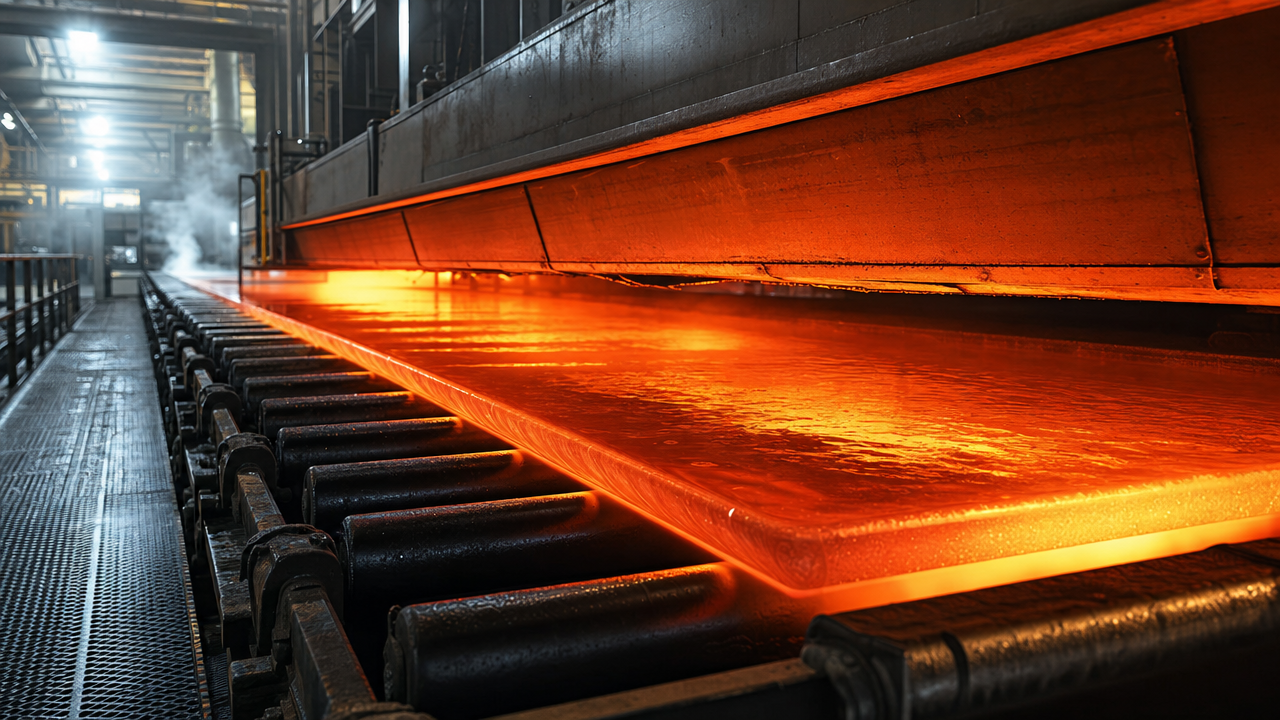
The first is the Float Process. Invented in 1959 by Alastair Pilkington of Pilkington plc, UK: molten glass is poured onto a molten tin bath and "floats" to spread naturally flat. Because the tin surface is extremely level, both surfaces of the glass ribbon achieve near-optical quality flatness. After passing through an annealing oven for gradual cooling, the ribbon is cut into flat sheets. Float glass has uniform thickness (0.4mm to 25mm), parallel surfaces, and excellent optical quality. It is the mainstream production method for today's architectural and automotive glass, and is the base material for the vast majority of glass processing.
The second is the Rolling (Calendering) Process. Molten glass flows out from the furnace through a feed channel, then is pressed between rotating roller pairs to form a continuous sheet. Rolled glass surface flatness is inferior to float, but it can be made very thin (down to 0.03mm) and can have special surface textures imparted by roller patterns. Ultra-white rolled glass is the mainstream choice for photovoltaic module cover glass — PV modules require not "mirror-like flatness" but "extremely high light transmittance + thinness + ultra-low iron content," which rolling provides.
The third is the Overflow Downdraw (Fusion) Process. Corning's core proprietary process: glass melt flows simultaneously down both sides of a V-shaped trough, the two streams joining at the bottom and being drawn downward into a thin sheet. Because both surfaces never contact any mold — only air — surface cleanliness is extremely high, and thickness can be below 0.1mm. This is the mainstream process for LCD and OLED substrate glass. Corning's patents and decades of accumulated expertise have built a nearly impossible-to-replicate moat in high-end display substrate glass.
Application Classification: Six Major Categories
By downstream application, industrial glass divides into six main categories:
Solar glass: Ultra-white, low-iron rolled glass covering solar cells. Technical requirements: visible light transmittance ≥91.5% (reducing Fe₂O₃ content below 0.015%), strong weatherability (passing IEC 61215), and high mechanical strength. In 2025, approximately 95% of global solar glass capacity was concentrated in China, with Xinyi Solar and Flat Glass the two largest players, their combined capacity exceeding 60%+ of the global total.
Float glass: Transparent or translucent flat glass for skyscraper curtain walls, windows, and home use, plus value-added products (Low-E glass, tempered glass, laminated glass). This is the largest-volume glass category, driven directly by real estate and infrastructure investment.
Automotive glass: Windshield (laminated safety glass, two layers heat-pressed with PVB or SGP interlayer) + side windows (tempered) + rear window (tempered, usually with heating wires) + sunroof/panoramic roof (composite functional glass). Automotive glass commands the highest added value among glass categories, with complex processing steps and stringent certification requirements forming high barriers.
Electronic display glass: Glass substrates for LCD and OLED panels (0.1–0.7mm thick, nanometer-level surface roughness, extremely low and uniform thermal expansion coefficient), and phone screen cover glass (Gorilla Glass, etc.). This is the glass subcategory with the highest technical barriers and deepest competitive moat.
Glass containers: Beer bottles, liquor bottles, pharmaceutical vials (ampoules, infusion bottles), cosmetic bottles, etc. Glass container manufacturing is a sector deeply intertwined with food, pharmaceutical, and chemical industries.
Glass fiber: Glass drawn into extremely fine fibers (5–24 μm diameter) used as reinforcing base materials for fiberglass (GRP) and epoxy composites, widely used in wind turbine blades, automotive lightweighting parts, and construction insulation materials. China accounts for approximately 70% of global glass fiber output; Jushi Group (600176) is the world's largest glass fiber manufacturer.
Industrial Chain Position: Squeezed in the Middle
Glass manufacturing occupies the typical "squeezed middle" position in the industrial chain. Upstream: silica sand (main raw material), soda ash (Na₂CO₃, accounting for about 15–25% of raw material costs, closely correlated with chemical materials industry price cycles), dolomite, limestone, and fuel (natural gas or coal gas); plus key equipment like float furnaces, tin baths, and rolling equipment. Downstream: construction, automotive, solar, electronics, and packaging. Glass industry profits are squeezed between upstream energy and raw material price volatility and downstream demand cycles.
II. Global Coordinates: Corning, Saint-Gobain, AGC, and China's Position
Before entering the four Chinese sub-industry stories, it is worth establishing a global coordinate system.
In the global comparison, six major players represent distinct competitive archetypes:
Saint-Gobain (France) is the "diversified empire" type — its 360-year history has evolved it into a giant doing everything at a professional level, with an annual revenue of approximately $56.47 billion and operations in 75 countries. It dominates European architectural glass markets; its Sekurit brand is a major automotive glass supplier in direct competition with Fuyao — though the scale gap has been widening. Low-E building glass and high-performance materials are its growth engines.
AGC (Japan, formerly Asahi Glass) is the "technology diversification" type — building global top-three positions in architectural, automotive safety glass, and electronic glass through universal mastery of glass materials science. Annual revenue approximately $15.28 billion.
Corning (USA) is the "technology focus" type — achieving absolute technical leadership in a small number of niches (display substrates, optical fiber, smartphone cover glass), with annual revenue of approximately $16 billion (2025 projected). Corning's Q3 2025 core sales grew about 14% year-on-year, driven by AI data center fiber demand explosion and the Springboard growth plan.
Pilkington/NSG — the inventor of the float process (1959), acquired by Japan's NSG Group in 2006. Approximately 15–18% global automotive glass market share; a major supplier to global automakers.
Fuyao Glass — the "subcategory extremist" type, achieving global dominance in automotive glass alone. Global share approximately 34%, China approximately 68%. The business clarity visible in this specialization is rare among global industrial goods manufacturers.
Rainbow Displays (Caihong) — the "technology siege" type, using patient capital and state support to achieve the sole domestic mass-production capability in a sector with extreme technical barriers.
Understanding these six archetypes enables more accurate prediction of each company's behavior logic under different market environments — the empire type hedges through diversification when any single market declines; the focused type, with no hedge, survives on cost and technology alone; the siege type, as long as funding continues, keeps boring through technical barriers regardless of how slowly commercialization progresses.
III. PEST: Four Dimensions of External Forces
Political & Policy
China's "dual carbon" goals (peak carbon by 2030, carbon neutrality by 2060) continue driving photovoltaic installation demand. The 14th and 15th Five-Year Plans explicitly support renewable energy, providing a policy floor for solar glass demand.
"Stop the decline and stabilize" real estate policies continued to exert effort in 2025: reduced down payment requirements, relaxed purchase restrictions, lower mortgage rates. But actual completion data continued falling — in January–September 2025, housing completions fell 15.3% year-on-year. Policy intent is clear, but transmission to the completion stage has a 12–24 month lag.
US tariffs are the largest external political variable of 2025–2026. Trump's second administration significantly raised tariffs on Chinese goods. Although Fuyao's US-manufactured automotive glass avoids direct tariff impact, raw material import costs, supply chain restructuring pressures, and political uncertainty all affect Fuyao's US operations. Cao Dewang's April 2026 "at worst close the American factory" statement reflected the deep pressure on Chinese manufacturers' overseas strategies from the US-China trade confrontation.
The "Key Basic Materials" breakthrough program under the Ministry of Industry and Information Technology explicitly lists high-generation display substrate glass, keeping policy support stable for Rainbow Displays' R&D.
Economic
China's structural economic transition has profound impacts on each glass subcategory. The systematic contraction of real estate investment is float glass's largest structural demand drag. China's new housing starts — once approaching 2 billion square meters per year — have permanently settled at a new platform around 1–1.2 billion square meters per year. Corresponding float glass long-run demand has also shifted structurally downward.
The rapid expansion of photovoltaics is the other side of the coin. China's 2024 new PV installations were approximately 277 GW; 2025 projections remain high. But the supply expansion for solar glass was faster than demand growth, catalyzing the current overcapacity.
New energy vehicle penetration (approximately 50% in China in 2025) is both opportunity and challenge for automotive glass. Smart cockpit trends are raising per-vehicle glass value; BEV penetration will likely push it higher still.
Social
The green building wave is one of the few certain structural demand increments for float glass. Energy-saving retrofits drive Low-E glass penetration from ~60% toward 75%+ by 2030. Housing quality improvements drive demand for better insulation and acoustic glazing.
Automotive intelligence is fundamentally changing glass's role. Panoramic sunroofs, smart dimming glass, HUD windshields, privacy glass — these are transitioning from flagship-car exclusives to mainstream-car standards.
Electronic display consumption upgrades tie directly to smartphone and tablet global penetration. With approximately 1.2–1.3 billion smartphone units shipped globally in 2025, every phone needs both cover glass and a substrate.
Technological
The key technological developments include: ultra-thin solar cover glass (1.6mm and below) batch manufacturing; OLED Gen 8.6 substrate glass domestic production; automotive smart dimming glass (HUD-interlayer windshields, smart dimming panoramic roofs); Building-Integrated Photovoltaics (BIPV) combining photovoltaic and building glass; and digitalization + machine vision quality control in glass manufacturing.
IV. China Market Scale: Four Segments Within 600 Billion Yuan
In 2025, China's glass industry total output value was approximately RMB 600 billion, distributed across four major sub-industries:
Solar glass: approximately RMB 150–180 billion, accounting for 25–30% of the total. China overwhelmingly dominates global solar glass capacity (95%). Market structure: two oligarchs — Xinyi Solar (23,200 t/d, global #1) + Flat Glass (16,400 t/d, global #2) — with combined capacity exceeding 60%+ of the global total, alongside a fragmented and loss-making second tier.
Float (architectural) glass: approximately RMB 180–210 billion, the largest sub-industry at 30–35% of total. 2025 production approximately 950 million–1 billion weight cases, down ~4.5% year-on-year. Competitive structure is dispersed, with the Shahe cluster (Hebei) accounting for about one-third of national capacity. Qibin Group (601636) + Xinyi Glass (HK 0868) are the leading listed companies, but combined market share is only ~25–30%.
Automotive glass: approximately RMB 90–120 billion, 15–20% of total. Extremely concentrated: Fuyao Glass (600660) alone holds ~68% domestic market share and ~34% global share.
Electronic glass (including display substrates): approximately RMB 30–50 billion, 5–8% of total. Strategic importance is highest despite smaller scale. Global market dominated by Corning + AGC (~75–80% combined). China domestic content rate only ~11% in 2025, with Rainbow Displays accounting for ~70% of that domestic supply.
Concentration Summary:
| Sub-industry | ~2025 Output Value | Top Tier CR2/CR1 | Competition Character |
|---|---|---|---|
| Solar glass | ~RMB 150–180bn | Xinyi+Flat CR2≈60%+ | Duopoly; small players largely loss-making |
| Float glass | ~RMB 180–210bn | Qibin+Xinyi CR2≈25–30% | Fragmented; Shahe cluster sets prices |
| Automotive glass | ~RMB 90–120bn | Fuyao CR1≈68% | Near-monopoly; counter-cyclical growth |
| Electronic substrate | ~RMB 30–50bn | Corning+AGC CR2≈75–80% | Foreign-dominated; domestic substitution underway |
| Other (fiber+containers) | ~RMB 120–150bn | Jushi+others | Niche leaders |
V. Industrial Chain: From Sand to Glass — Where the Profits Hide
Upstream Layer 1: Mineral Raw Materials
Silica sand (main raw material, SiO₂ ≥95%): Ultra-white solar glass requires Fe₂O₃ content below 0.015%, because iron is the source of glass's greenish tint — lower iron means higher light transmittance. High-purity silica sand deposits are globally unevenly distributed; major sources include Australia, the US, Southeast Asia, and China's Guangxi, Sichuan, and Hubei provinces.
Soda ash (Na₂CO₃): Second only to silica sand in volume, accounting for ~15–25% of raw material cost for float glass. China is the world's largest soda ash producer (annual output exceeding 30 million tonnes), closely correlated with chemical materials industry dynamics.
Dolomite (MgO source), limestone (CaO source): Provide chemical stability and mechanical strength. Relatively price-stable commodity minerals.
Upstream Layer 2: Energy
Fuel is the other major cost component. In the 2025 price environment, fuel choice has been decisive:
- Natural gas (preferred, clean): In 2025, natural gas-route float glass production costs exceeded market prices by approximately RMB 160/tonne — losing 160 yuan on every tonne sold.
- Petroleum coke: ~87 yuan/tonne loss in 2025, slightly better than gas.
- Coal gas: Still ~84 yuan/tonne profit in 2025 — the only profitable fuel route. This explains why inland Chinese factories using coal gas could continue operating while coastal natural gas factories faced greater pressure.
Equipment: Float furnaces + tin baths + annealing ovens + cold-end cutting systems. A 1,000 t/d float line requires RMB 500 million–1.5 billion investment; furnace design life ~10–15 years; cold repair cost ~100 million–500 million RMB per event. This high fixed-cost nature creates the "reluctance to stop" behavioral logic of glass industry — at current loss levels, many factories prefer continued loss-making to the even larger expense of cold repair.
Midstream: The Processing Watershed
Float process core steps: melting → fining (eliminating bubbles, ~1,500°C+) → forming (glass ribbon floats on tin bath, ~1,050°C) → annealing (slow cooling, ~600°C to room temperature) → cold-end processing (cutting, inspection, packaging).
Calendering process (solar glass): Glass melt is continuously pressed between upper and lower rollers. For ultra-thin glass (below 1.6mm), roller gap control precision and roller surface temperature uniformity requirements are extreme.
Downstream: Deep Processing Is Where the Value Is
After leaving the furnace, raw flat glass usually undergoes deep processing before use:
- Tempering: Heating to ~600–700°C then rapid air-cooling creates a surface compressive stress layer, increasing strength ~5× over ordinary glass. Automotive side windows and architectural safety glass standard.
- Laminating: Sandwiching PVB or SGP film between two (or more) glass sheets and heat-pressing to create an integral composite. Broken pieces stay adhered to the film rather than scattering. Used for automotive windshields and building safety partitions.
- Coating: Depositing nanometer-scale metallic (silver) or metal oxide thin films on glass surfaces for Low-E (low-emissivity) insulation, anti-reflection, and self-cleaning functions.
- Bending: Heating flat glass to soften it, then bending to fit vehicle body or building design curves.
Profit Distribution: From commodity to precision to branded specialty — the value curve rises steeply. Commodity float sheet: <10% gross margin. Functional deep-processed products (Low-E, tempered, laminated): 20–35% gross margin. Brand automotive glass (Fuyao): 40%+ gross margin. Patent-protected precision glass (Corning display substrate, Gorilla Glass): 50%+ gross margin.
VI. Key Companies: From Fuqing to Dayton, From Xianyang to Corning
A Framework for Evaluating Glass Companies
factory data platforms Industrial Research Institute evaluates industrial goods manufacturers on four dimensions: market position (market share, customer mix, competitive dynamics), profit quality (gross margin, net margin, ROE stability), technical moat (proprietary processes, products, or customer certifications difficult to replicate), and growth sustainability (clarity of future growth drivers).
Fuyao Glass (600660 / HK 3606): The Absolute Automotive Glass Champion
If only one Chinese glass company story can be told, it must be Fuyao.
Fuyao was founded by Cao Dewang in Fuqing, Fujian in 1987, starting as a township glass plant worth a few hundred million yuan. Today it is the undisputed world #1 in the global automotive glass market, with approximately 34% global market share and approximately 68% of China's market.
In 2025, Fuyao's full-year revenue was RMB 45.787 billion, up 16.65% year-on-year; net profit attributable to parent RMB 9.312 billion, up 24.20%, both all-time records. In the same year when float glass and solar glass were both drowning in losses, Fuyao delivered this result — the contrast itself is the most powerful evidence for the depth of the automotive glass subcategory moat.
Fuyao's overseas revenue in 2025 reached RMB 20.857 billion, up 18.81%, accounting for about 46% of total revenue. Its production network spans China (Fuqing, Hefei, etc.), the USA (Dayton Ohio — the world's largest single automotive glass plant), USA (Illinois — 2025 additional investment of $400 million to build automotive-grade float glass line), Russia, Germany, Slovakia, Hungary, UK, Mexico, and more. Its customer list includes BMW, Mercedes-Benz, Audi, VW, Toyota, Tesla, GM, and Ford.
The 2019 Netflix documentary American Factory, co-produced by the Obamas and winner of the Academy Award for Best Documentary Feature, documented Fuyao's Ohio factory. In 2026, in the context of Trump tariffs, Cao Dewang's "at worst close the American factory" — while sounding casual — was backed by the reality that this company had already made automotive glass its sole lifelong pursuit, and had achieved something that no amount of money could quickly replicate.
Fuyao's 2025 dividend payout ratio was approximately 58.85% — a company that distributes ~60% of a record RMB 9.3 billion net profit back to shareholders, year after year. This kind of confident dividend policy only comes from a business with high certainty and sustainable profitability.
Xinyi Solar (HK 0968): Solar Glass Global #1
Xinyi Solar is the solar glass subsidiary of the Xinyi Group (founded by the Lü Zhihe family), listed in Hong Kong in 2013, headquartered in Dongguan, Guangdong. In 2025, Xinyi Solar's solar glass daily melting capacity was approximately 23,200 t/d, the world's largest solar glass manufacturer.
In 2025, Xinyi Solar's solar glass revenue was approximately RMB 17.8 billion, down ~5.3% year-on-year; net profit attributable to parent approximately RMB 810 million (excluding approximately RMB 1.55 billion in asset impairments, recurring operating profit approximately RMB 2.2–2.3 billion). Full-year gross margin 14.1%, significantly improved from 2024's 9.7%, with H2 gross margin recovering to 17.1%.
A key highlight: overseas sales accounted for approximately one-third of total sales, with overseas sales up approximately 36% year-on-year, mainly from US and Indian market local module capacity growth. At a time when domestic solar glass prices scraped historical floors, overseas markets served as the critical buffer pad.
Flat Glass Group (601865 / HK 6865): Solar Glass Global #2, Enduring the Darkest Hour
Flat Glass, headquartered in Hangzhou, Zhejiang, is A+H dual-listed and China's largest listed domestic solar glass company by capacity. In 2025, its in-production capacity was approximately 16,400 t/d (after active contraction from the peak).
In the first three quarters of 2025, Flat Glass revenue was RMB 12.464 billion, down ~14.7%; net profit RMB 638 million, down ~50.8%. Q3 showed sequential improvement: quarterly revenue up 21% YoY and 29% QoQ; net profit turned positive YoY and up 143% QoQ — aligning with the moderate recovery of solar glass prices from their lows.
In August 2025, Flat Glass proactively announced reducing solar glass supply by approximately 30%. This costly decision — forgoing significant orders — was the necessary sacrifice to push for industry price recovery. Flat Glass's growth logic rests on a triangle: global #2 scale + continuously declining costs + overseas market hedging. It is among the biggest beneficiaries once industry clearing completes.
Qibin Group (601636): Float Glass National Champion, "Volume Up, Price Down" Dilemma
Qibin, headquartered in Zhuzhou, Hunan, is China's largest float glass A-share listed company, with additional solar glass exposure. Q3 2025 revenue of RMB 11.78 billion ranked #1 among seven A-share glass companies; net profit of RMB 893 million also #1.
Qibin's 2025 was a classic "volume up, price down" dilemma. H1 float glass revenue was RMB 2.8 billion, down 24% year-on-year — despite volume growing ~7% (52.21 million weight cases), average prices fell ~29%. The volume growth was completely wiped out by price collapse. Solar glass revenue was RMB 3.22 billion with only 8% gross margin, barely above breakeven. The relatively stable energy-saving building glass (Low-E) business maintained ~20.4% gross margin, contributing Qibin's most important profit support.
Xinyi Glass (HK 0868): Float + Automotive "Dual-Engine" Business
Xinyi Glass is the float + automotive + engineering glass listed flagship of Xinyi Group, listed in Hong Kong, headquartered in Dongguan. Its "three-horse carriage" businesses: float glass (ordinary architectural sheets), automotive glass (OEM + aftermarket), and engineering glass (Low-E and other functional building glass).
In H1 2025, Xinyi Glass revenue was approximately HK$9.821 billion (approximately RMB 9.1 billion), down 9.7% year-on-year. Float glass gross margin dropped sharply from 28.4% in H1 2024 to 17.8%. But automotive glass was a clear bright spot: revenue HK$3.322 billion, up 10.6%; gross margin reached 54.5% versus 49.5% in H1 2024 — further confirming automotive glass's "high value, counter-cyclical" character.
Rainbow Displays (600707): The Vanguard of Electronic Glass Substitution
Rainbow Displays, headquartered in Xianyang, Shaanxi, is China's leading display substrate glass enterprise — the only Chinese company achieving stable mass production of Gen 8.5+ high-generation substrate glass.
Rainbow's technology base traces back to the color CRT (cathode ray tube) era of the 1980s–90s, when Xianyang Rainbow was China's largest CRT manufacturer, accumulating vast glass precision manufacturing expertise. With the replacement of CRT by flat panel displays, Rainbow transitioned its technical focus from "display tube glass shells" to "TFT-LCD glass substrates," mastering the core overflow downdraw technology.
In 2025, Rainbow's substrate glass revenue was RMB 1.677 billion, up approximately 11%, supplying BOE, TCL CSOT, HKC, and other leading panel makers. Rainbow accounts for ~70% of domestic substrate glass supply — meaning China's approximately 11% domestic content rate is almost entirely carried by Rainbow alone.
Future growth space is unambiguous: the global substrate glass market exceeds RMB 50 billion; the domestic content rate target may reach 40% by 2026. The acceleration driver is not just cost, but a national security imperative to reduce external dependency — Rainbow is the most direct beneficiary of this logic.
Rainbow's OLED positioning: The world's first Gen 8.6 OLED substrate glass has been successfully made in China, representing a critical milestone. OLED Gen 8.6 is the most advanced size currently in use globally. From "successfully produced" to "stably mass-produced" there remains a long road of engineering, customer qualification, and yield improvement — but the direction is clear.
Yymdon (002623): The "Hidden Champion" of Ultra-Thin Solar Glass
Yymdon, headquartered in Hefei, Anhui, is China's representative enterprise in ultra-thin solar cover glass, with technology originating from Bengbu, Anhui — China's center for ultra-thin glass technology. Yymdon's core competitiveness lies in 1.6mm and thinner solar glass; the process precision required far exceeds conventional 3.2mm and 2.0mm products.
In the industry-wide solar glass winter of 2025, ultra-thin glass's differentiated positioning maintained relatively higher margins for Yymdon — a classic case of technical differentiation protecting profitability. Thinner means lighter weight (critical for rooftop distributed PV), lower material cost per unit area, and enabling "double-glass" module structures that improve power output and reliability. The premium Yymdon commands for ultra-thin glass more than offsets its higher production cost.
South Glass A (000012): Multi-Business "Three-Sport" Player
South Glass, headquartered in Shenzhen, Guangdong, is a "three-sport" glass enterprise spanning float glass, solar glass, and electronic glass (Yichang South Glass Optoelectronics). This diversification provides cross-industry risk hedging but means South Glass cannot reach the depth of a single-focused enterprise in any category. In 2025, South Glass was one of a few companies still profitable in solar glass (alongside Qibin), though under overall pressure.
Global Three Giants: Corning, AGC, Saint-Gobain
Corning (projected 2025 full-year revenue ~$16 billion): The unique glass company that focuses exclusively on technically extreme niches — display substrates, optical fiber, smartphone cover glass. Q3 2025 core sales up ~14% YoY, driven by AI infrastructure fiber demand explosion and the Springboard growth plan.
AGC (annual revenue ~$15.28 billion): Most globally diversified glass company, with top-three positions in architectural, automotive, and electronic glass. Faces domestic substitution pressure in electronic glass; benefits from European building energy retrofit demand in architectural glass.
Saint-Gobain (annual revenue ~$56.47 billion): The 360-year-old building materials empire. Automotive glass market share continues to be squeezed by Fuyao; building materials and high-performance materials are growth engines.
VII. Industrial Belt Map: From Shahe to Fuqing, From Xianyang to Dayton
China's glass industry geography is a map drawn by three forces: raw materials, energy, and downstream markets.
Hebei Shahe: The world's single largest float glass production cluster, once accounting for more than one-third of national float glass output. "Shahe pricing" is the industry's price barometer and typically represents the market's floor. The cluster's strength is a complete supply chain; its weakness is small enterprise scale, uneven technical levels, and collective vulnerability in industry downturns.
Hunan Zhuzhou: Qibin Group's home base, a major float glass regional hub.
Guangdong Dongguan: Xinyi Glass and Xinyi Solar dual headquarters, the Pearl River Delta's glass manufacturing center.
Fujian Fuqing: Fuyao Glass's founding base and core R&D/production hub. From here, Fuyao expanded to Hefei, Qinghai, Wuhan domestically, and most importantly, built a path to the global stage.
Anhui Bengbu: China's center for ultra-thin float glass technology. Yymdon's ultra-thin solar glass technology originated here.
Shaanxi Xianyang: Rainbow Displays' substrate glass production lines. The industrial park's history traces to the 1970s Third Front Construction era as a national CRT strategic production base — its historical technology accumulation underpins Rainbow's modern substrate glass leadership.
US Dayton, Ohio: Fuyao Glass America — the world's largest single automotive glass plant, employing ~2,500 American workers, and the filming location of the Oscar-winning documentary American Factory.
The geographic distribution of the Chinese glass industry reflects a natural selection of industrial clusters: a raw-material-driven cluster in Shahe, an energy-driven cluster in inland provinces, a market-proximity cluster in Dongguan, a technology-heritage cluster in Xianyang, and a globalization pioneer in Dayton. None of these was planned on paper; each emerged from market logic and resource endowments working together over decades.
factory data platforms Industrial Research Institute, in mapping China's glass industrial geography, sees a network of factories densely laid across this land — from the small flat glass shops of Shahe to the world-leading automotive glass factory in Fuqing; from ultra-thin solar glass research bases in Bengbu to the substrate glass enterprise in Xianyang inching through Corning's moat. Among the 4.8 million verified active factories on the factory data platforms platform, glass and related material industry factories are distributed across every corner of this land, supplying each other and together underpinning that RMB 600 billion number.
VIII. Four Subcategory Deep Dives: Overcapacity, Bottom, Oligopoly, and Breakthrough
Before the Four Stories: A Market Structure Comparison
Solar glass is a "commodity market" — products are highly homogeneous (ultra-white rolled glass, similar specs), competition is primarily on cost and capacity, and technology innovation windows are short (ultra-thin is the direction but gets quickly imitated). Price collapse in overcapacity is fiercer and harder to repair than in differentiated markets.
Float glass is a "standard industrial goods market" — basic float sheet has almost no differentiation, but value-added products (Low-E, tempered, etc.) offer some differentiation potential. Competition in downturns is about cost control and endurance; in upturns, about product upgrading and deep processing capability.
Automotive glass is a "certification moat market" — products are highly customized, each vehicle model requiring dedicated certification, customer relationships extremely sticky. This market logic is closer to semiconductor equipment or precision instruments than to traditional bulk manufacturing — technology, service, and certification matter far more than price.
Electronic glass (substrate) is a "technology patent market" — products are technology-patent-led (Corning's overflow process), top players have absolute pricing power, competition is a contest of R&D capability and process accumulation. Price wars only happen in the second tier; they never reach the technology monopolist (Corning's display glass has never competed on price).
Understanding these four different market structures explains why the same macroeconomic backdrop produces completely different industry fates for the four subcategories.
Solar Glass: A Self-Destructive Price War
In 2025, if asked where the most brutal competition in the entire Chinese glass industry lies, the answer is unquestionably solar glass.
This overcapacity began with the "capacity frenzy" around 2022. At that time, global PV installations were growing at 30–40% per year, Chinese solar glass was in short supply, Xinyi Solar's gross margin once exceeded 30%, and capital rushed in. Qibin, South Glass, Luoyang Glass... every glass enterprise with float experience scrambled to build calendering lines. This collective sprint planted the seeds of the 2023–2025 overcapacity collapse.
2.0mm solar glass average ex-tax price in 2025 was approximately RMB 12.59/m², with a low touching 11.5 yuan — below most companies' production costs, and far below the "equilibrium price" of approximately 18–22 yuan/m² that the industry had previously considered reasonable. Price was at half the equilibrium level.
How deep is this overcapacity? To reach supply-demand balance, the industry would need to cut output by approximately 5,000–20,000 t/d — equivalent to closing 5–20 major production lines. But cold repair means enormous fixed losses; no one wants to be the first to jump.
The key structural observation: even at this price floor, Xinyi Solar maintained a 14.1% gross margin in 2025. In an industry where most companies lose money on every square meter they sell, the leading oligarch still generated positive gross profit. This "scale isolation" — when 23,200 t/d of daily melting capacity has amortized fixed costs to a level that second-tier players cannot approach — is the oligarch's most solid moat in an overcapacity cycle.
History offers a clear reference: China's polysilicon industry (2012–2015 overcapacity), PV cell industry (2018–2021 overcapacity), and lithium battery materials (2022–2024 overcapacity) all followed a similar path: price collapse → losses spread → capital chains break → weaker players exit → oligarchs emerge stronger. Solar glass will walk this same path. The only questions are how cold the winter will be, and how long it will last.
Float Glass: The Real Estate Debt Has Come Due
Float glass's story is a slow-motion suffocation — no single crash moment, just month after month of numbers coming in slightly worse than before.
China's housing new starts peaked around 2021 at nearly 2 billion square meters per year. From that year onward, new starts have fallen double-digits annually. From groundbreaking to completion is typically 2–3 years — so the glass demand crunch hit hardest in 2023–2024, with 2025 still in the descent. Housing completions in January–September 2025 fell 15.3% year-on-year — paying back the "debt" from 2022's already-declining starts.
H1 2025 float glass average ex-tax price was approximately RMB 1,329/tonne, down 28% year-on-year. Natural gas route: ~RMB 160/tonne loss per tonne. Petroleum coke route: ~87 yuan/tonne loss. Coal gas route: still about 84 yuan/tonne profit — the only breakeven fuel route in 2025. This explains why coal gas factories (typically inland, central/western China) could keep operating while coastal natural gas factories faced greater pressure.
More than 30 float glass production lines across the country initiated cold repair — but the pace of capacity reduction could not keep up with demand decline. Result: production overcapacity and demand weakness persisted together throughout 2025.
Float glass recovery depends on two conditions: real estate completion bottoming and real capacity elimination. The market's consensus expectation is that these conditions begin materializing in H2 2026 to 2027. But the timeline itself is the largest uncertainty variable.
An important parallel: the current float glass bear cycle is highly similar to China's steel industry during the 2015–2018 supply-side reform period. After two to three years of forced capacity reduction and market-based clearing, Baowu and other leaders completed large-scale mergers, industry concentration rose sharply, and surviving enterprise profitability improved significantly. Float glass's future will likely follow a similar path — only more slowly, more painfully, without administrative shutdown mandates, relying instead on market mechanisms (sustained losses breaking capital chains) to achieve the same result.
Automotive Glass: An Anomaly Running the Heat in Winter
When solar and float were both sinking, automotive glass was an island — not just holding steady but rising against the current.
In 2025, Fuyao's net profit was RMB 9.312 billion, up 24.2%, an all-time record. In the same year, many glass-sector listed companies saw net profits fall 50%+, or fall into losses.
Why can automotive glass "survive winter"? Several reasons.
Demand rigidity — two-sided and stable. Automotive glass demand comes from new vehicle OEM (following automaker production rhythms) and aftermarket replacement (collision and breakage). The former is tied to global vehicle production of ~90 million units annually — a stable large number; the latter is driven by the vehicle fleet (China's vehicle fleet exceeding 350 million in 2025), which is less correlated with near-term new car sales. This "OEM + aftermarket" dual-channel structure makes automotive glass demand far more stable than architectural glass.
Certification moat is higher than price moat. Automaker certification of glass suppliers is a rigorous 12–24 month process. Once certified, a glass supplier typically supplies throughout that model's lifecycle (5–8 years), with extremely high switching costs. This stickiness means Fuyao's market share, once established, is extraordinarily stable.
New energy vehicles are value-uplifting, not value-destroying. An important misconception: that NEVs "kill" traditional automotive glass business. In reality, NEVs are value elevators for automotive glass. NEV flagship models (Tesla Model S, Li Auto Mega, NIO ET9) command 1.5–2× the per-vehicle glass value of equivalent traditional vehicles, due to panoramic sunroofs, smart dimming glass, and HUD windshields. Fuyao's 2025 record results were substantially driven by NEV high-end trends elevating per-unit glass prices — structural demand upgrade, not simple volume growth.
Global production capacity as the deepest moat. When automakers require local production (for supply chain risk reduction and "local content" compliance), Fuyao's factories in the US, Europe, and Russia are barriers that competitors cannot quickly replicate.
Electronic Glass: The Last "Corning Territory," Being Pried Open
This is the slowest-moving, most strategically important, and least externally noticed of the four stories.
In 2025, China produced approximately 70% of the world's LCD panels — but 89% of those panels used glass substrates imported from Corning or AGC. Chinese panels won; Chinese glass substrate lost. This asymmetry is the most important structural gap in the Chinese display supply chain.
Corning's moat was built on the overflow downdraw patent plus 60+ years of process accumulation. A Gen 8.5 glass substrate (approximately 2.2m × 2.5m, 0.5mm or 0.7mm thick) must achieve: surface roughness Ra <0.5nm; bow <0.3mm across a 2.2m × 2.5m sheet; thermal expansion coefficient <4 ppm/°C; zero bubbles or inclusions. Corning's overflow process ensures surfaces never touch a mold, fundamentally guaranteeing surface cleanliness.
Rainbow Displays spent more than 10 years reaching "the only domestic company capable of stably mass-producing Gen 8.5+ substrate glass." Its 2025 substrate glass revenue was RMB 1.677 billion, up ~11%, with BOE, TCL CSOT, and HKC as customers.
But the strategic context for acceleration is now more powerful than ever. The US-China tech confrontation has transformed Chinese panel companies' demand for domestic substrate glass from "willing to try" to "strategically necessary." A supply chain where foreign substrate glass could theoretically be sanctioned is now unacceptable for China's most critical panel industry.
The likely path to 40% domestic content rate: not linear gradual penetration, but a jump — one major panel maker (most likely BOE or TCL CSOT) decides to designate 50–70% of a newly-built production line (say, a new Gen 8.6 OLED line or Gen 10.5 LCD line) to Rainbow supply. That single decision could boost the national domestic content rate by 10–15 percentage points within a year.
The Gen 8.6 OLED substrate glass milestone — the world's first successfully produced in China — confirms that domestic glass capability has crossed the "can produce" threshold. The next goal is "can stably mass-produce," which requires additional engineering time, customer qualification cycles, and yield ramp. The direction is set.
IX. Technology Evolution: From Calendering to Overflow, From Tempering to Smart Dimming
Modern glass has been evolving from "transparent silicate material" to "functionalized advanced material," with the pace accelerating in the past two decades. The twin drivers: downstream applications pushing performance to limits, and companies actively pursuing differentiation.
Ultra-thin solar glass: Thinner = More Valuable
Solar glass thickness roadmap: 4mm → 3.2mm → 2.0mm (current mainstream) → 1.6mm (next generation) → 1.4mm and below (R&D stage). Each thinning step requires advances in process precision and raw material purity.
Why ultra-thin matters: lighter weight (critical for rooftop PV), lower material cost (same raw material yields more area), enabling "double-glass" module structures that improve power density and long-term reliability. Even though ultra-thin production costs are ~15–20% higher than 2.0mm glass, module makers pay the premium because total system BOS (Balance of System) cost savings outweigh the glass premium.
Yymdon is the domestic standard-setter in this space: through proprietary roller materials and improved temperature control, they achieved stable 1.6mm batch production. Ultra-thin glass's "replaceability" is far lower than standard 2.0mm glass — the number of global competitors capable of stable ultra-thin production is below three, versus dozens for standard grades. Fewer competitors means more pricing power.
Low-E glass: The "Invisible Contributor" to Building Energy Conservation
Low-E glass has a ~100–150nm silver-based multi-layer functional film (e.g., ZnO/Ag/ZnO) deposited on its surface. This film has almost no effect on visible light transmittance (400–700nm), but reflects 90%+ of near-infrared and far-infrared radiation (700–2,500nm), dramatically reducing summer heat ingress (and winter heat loss in cold climates). Buildings using Low-E double-glazed windows reduce HVAC energy consumption by 20–30%.
Under "dual carbon" policy, Low-E glass is transitioning from "premium option" to "building standard." Many municipalities have already mandated triple-glazed or Low-E double-glazed windows in new buildings. Qibin's Low-E glass business maintained a ~20.4% gross margin in 2025 — the most stable profit source in its pressured portfolio.
Automotive Smart Dimming Glass: Fuyao's High-Value Bet
Smart dimming glass (PDLC liquid crystal type: powered = transparent; unpowered = frosted; EC electrochromic type: voltage-applied = darkened) can be switched between transparent and opaque states on demand. Smart dimming sunroofs are now in mass production on BMW 7-Series, Mercedes S-Class, Li Auto L9, and similar flagship models, with Fuyao as a core supplier. Dimming sunroof unit prices are 5–10× ordinary panoramic glass. As panoramic sunroof penetration in NEV flagship models surpassed 70% in 2025, smart dimming glass market scale is expanding rapidly.
OLED Gen 8.6 Substrate Glass: The Generational Leap
LCD to OLED is the display industry's most important generational migration of the past decade. OLED panels' per-pixel brightness control (true black, infinite contrast) require glass substrates with thermal expansion coefficients lower than LCD's requirements, and thickness uniformity requirements one order of magnitude stricter. Corning developed the Lotus NXT glass series specifically for OLED; China's successfully produced Gen 8.6 OLED substrate represents domestic substitution crossing the highest technical barrier.
HUD Windshield Technology
Automotive HUD (Head-Up Display) glass requires a wedge-shaped refractive layer embedded in the PVB interlayer (wedge angle ~0.03–0.05 degrees) to compensate for the optical wedge angle of the windshield, preventing "double imaging." Fuyao is one of very few domestic companies capable of large-scale supply of HUD wedge-PVB windshields, a product increasingly specified by NEV models with AR-HUD systems.
Digitalization and Smart Manufacturing
Machine vision systems (AI + high-speed cameras) deployed on major float and PV glass lines now achieve 98%+ automatic online defect detection, substantially reducing manual inspection requirements and improving yield. AI parameter optimization for hot-bending process and glass furnace scheduling is migrating the "craftsman's tacit knowledge" from human brains to algorithms, elevating precision and efficiency across the board.
Glass's carbon footprint management is becoming a new competitive dimension. The EU's Carbon Border Adjustment Mechanism (CBAM) will formally tax glass imports into the EU from 2026 onward based on their embedded carbon content. Companies with lower carbon manufacturing (electric furnace technology, green power, carbon sequestration) will enjoy compliance cost advantages in export competition. Xinyi Solar is already exploring "PV self-powering" — installing solar panels on the factory roof to power its own solar glass production, creating a coherent green loop.
X. Risk Map: Price War, Real Estate, Tariffs, and a Chip-Level Technology Contest
Risk 1: Solar Glass Capacity Clearing Uncertainty — Single Largest Risk
Industry self-discipline production cuts are proving far harder to enforce than announced. Goldman Sachs explicitly stated in its August 2025 report that "actual cuts may be far smaller than the headline numbers." The "prisoner's dilemma" logic — when every company's cold repair cost exceeds its ongoing loss-making operating cost — means collective self-discipline is a slogan without an enforcement mechanism.
Prolonged price floor could extend industry-wide losses through 2026 and potentially 2027. The exit pace of second-tier players is the critical variable: SOE-background enterprises (Luoyang Glass, with SINOMACH ties) have the lowest exit willingness; purely financial capital entrants have the highest. This heterogeneity makes coordinated reduction extremely difficult.
Risk 2: Float Glass Real Estate Overshoot — Slow Persistent Pain
If housing completions continue declining at 15%+ through 2026, float glass's profitability recovery timeline pushes further out. The fuel cost (natural gas) and product price squeeze cannot be resolved by management actions alone; it awaits macro-level housing cycle recovery and additional capacity cold repair.
A structural observation: China's housing new starts will not return to the 2 billion m²/year peak. The "normal" level going forward is probably 1–1.2 billion m²/year. Float glass long-term demand base has permanently shifted lower; the industry's return to health, when it comes, will be at a lower total volume baseline than 2019–2021.
Risk 3: US Tariffs and Fuyao's Political Risk — The Mirror of US-China Competition
Fuyao's US presence — ~3,000 US employees, >$2 billion in fixed assets — is both a moat (local production avoids tariffs) and a political exposure (sanction risk, labor relation risk, "forced labor" allegation risk from US political actors). Cao Dewang's "at worst close the American factory" conveys strategic resolve, but execution of that "worst case" would be costly: >$400 million in under-construction Illinois investment, thousands of employees, and competitive positioning with North American automakers.
Risk 4: Electronic Glass Customer Qualification Slower Than Expected — Technical Achievement ≠ Commercial Success
Even if Rainbow's substrate glass meets technical specifications, panel makers' certification process requires 6+ months of stable mass production at target yield before approval. Any batch stability problem — bubble rate exceedance, thickness non-uniformity, inter-batch thermal expansion variance — can cause certification failure. This unpredictability makes the domestic content rate path more "jump-shaped" (a single large customer decision moves the needle by 10–15pp) and more "twisting" (a batch quality issue can pause procurement temporarily).
Risk 5: Fuel Cost and Raw Material Price Volatility
~40–50% of float glass production cost is energy. If natural gas prices rise further (geopolitics, LNG import prices, domestic pipeline pricing), the second-stage cost impact compounds an already fragile pricing environment. Soda ash prices — somewhat of a relief factor in 2024–2025 after new capacity investments reduced prices — could rebound if chemical downstream demand recovers, creating cross-industry cost pressure.
Risk 6: Asset Impairment Pressure — Ongoing Balance Sheet Impact
Xinyi Solar's 2025 RMB 1.55 billion asset impairment officially acknowledges that expansion-era capacity must be revalued at "current economic value" below historical cost. Similar impairment pressure is likely for Qibin's solar lines, South Glass's PV assets, and others. Such impairments don't affect cash flows but squeeze book net assets, ROE, and market valuation.
Counterintuitively, large-scale impairments are often a bottom signal. In China's steel cycle (2015–2016), the largest impairments and losses coincided with the cycle's lowest point — subsequent recovery was grounded in "de-fantasized" balance sheets. Glass will likely follow the same pattern.
EU CBAM Risk — A New Export Dimension
The EU CBAM from 2026 requires Chinese glass exporters to purchase carbon certificates covering their embedded CO₂ per unit (~€40–50/t CO₂ in 2026). For glass exported to Europe, this meaningfully raises costs for high-carbon producers (coal-gas route) versus lower-carbon ones. Companies proactively deploying electric furnace technology or green power will gain export competitiveness advantages in the medium term.
XI. 2026–2030 Forecasts: Divergent Fates of Four Lines
Solar Glass: Clearing in 2026–2027, Duopoly Confirmed
- 2026 H2–2027: More second/third-tier capacity permanently exits or undergoes long-term cold repair; Xinyi Solar + Flat Glass combined share rises from ~60% toward 70%+.
- Post-clearing equilibrium price recovers to approximately RMB 14–16/m² — below historical "fair price" of 18–22, but out of the loss zone. Xinyi Solar annual net profit recoverable to RMB 4–6 billion; Flat Glass to RMB 2.5–4 billion range.
- Ultra-thin glass (1.6mm and below) penetration rises from ~15% in 2025 to 40%+ by 2028, pushing average solar glass price premium.
- Global PV installations projected to exceed 500 GW/year by 2030, expanding absolute demand. Post-clearing oligarchs will harvest the long-term demand growth dividend.
Float Glass: 2026–2027 Bottom, Low-E Leading Value Upgrade
- H2 2026: Real estate completion turns positive at the margin, float demand stabilizes. Full-year 2027 average price may recover to RMB 1,600–1,800/tonne; natural gas route returns to marginal profitability.
- Low-E glass penetration rises from ~60% to 75%+ by 2030, with per-unit value uplift (Low-E double-glazed average price ~2.5–3× ordinary float) supporting total industry value growth even as volume recovery remains modest.
- Industry concentration continues rising: small scattered capacity (especially smaller Shahe factories) exits under competition; Qibin, Xinyi Glass combined market share likely grows from ~25–30% to 35–40%.
Automotive Glass: Fuyao Toward 40%+ Global Share
- 2030 target: Fuyao global market share likely surpasses 40% (from
34% in 2025), driven by: NEV penetration raising per-vehicle glass value (30% increase by 2030), Illinois factory boosting North American local supply, and competitors (Saint-Gobain, NSG) widening cost gap with Fuyao. - Smart dimming glass penetration rises from ~8% in 2025 to ~35% by 2030 in mid-to-high-end NEVs, driving per-unit price uplift of ~20–25%.
- Risk caveat: US political risk could cause staged business adjustments; even in an extreme scenario (closing US factory), Fuyao's global #1 position would only see slower expansion, not structural reversal.
Electronic Glass: Domestic Content Rate from 11% Toward 60%
- 2026: Domestic content rate likely rises from ~11% to approximately 40%, driven by: US-China tech competition accelerating substitution willingness; Rainbow's capacity expansion and maturing technology; panel makers dedicating new production lines to domestic glass qualification.
- 2028–2030: Domestic content rate breaks through 60%; global substrate glass market structure evolves from "Corning + AGC duopoly" to "Corning + AGC + Rainbow three-way."
- Key 2026–2028 milestone: Gen 8.6 OLED substrate glass domestic stable mass production and qualification by Samsung/BOE flagship clients — this would trigger a leap in domestic content rate.
Total Industry Value Forecast:
| Year | Total Output Value Forecast | Main Drivers |
|---|---|---|
| 2026 | ~RMB 580–620 billion | Solar still under pressure; float near bottom; automotive steady |
| 2027 | ~RMB 650–720 billion | Solar post-clearing recovery; float marginal improvement |
| 2028 | ~RMB 720–800 billion | Solar demand growth; electronic glass domestic substitution accelerating |
| 2030 | ~RMB 850–1,000 billion | Structural upgrade across all subcategories; functional glass rising share |
XII. Conclusion: Four Faces of Glass, Four Sources of Strength
The answer lies not in the material itself, but in market structure.
Solar glass overcapacity is the latest example of "policy-induced oversupply" — a cycle familiar in Chinese manufacturing. 2012–2015 solar cells, 2018–2021 lithium battery materials, now 2023–2025 solar glass: every overcapacity cycle ends the same way — clearing, concentration, upgrading. Xinyi Solar and Flat Glass are the two companies destined to survive this elimination round. The question is only how cold and how long this winter will be.
Float glass bottoming is a cross-section of China's economic structural transformation pain. Not a disease of the industry itself, but the bill from a real estate engine that once accounted for 25%+ of GDP systematically contracting. Float glass will recover with the housing completion cycle, but the era of "1.5 billion m² annual completions" is most likely gone for good. Future float glass is a lower-volume, higher-value-added (Low-E, energy-saving coating, BIPV) market — suited for consolidation, not expansion.
Automotive glass's counter-cycle performance reflects the penetrating-cycle capability that extreme concentration brings. Fuyao spent 30+ years in what is theoretically a "replicable" industry building a market share that competitors cannot approach. China domestic 68%, global 34% — this concentration is extraordinarily rare among bulk industrial goods in Chinese manufacturing. The lesson: focus beats diversification; depth beats breadth. Doing one thing to the global extreme generates far more resilience than doing five things decently.
Electronic glass breakthrough is the clearest example of China's manufacturing technology upgrading logic. Its trajectory is nearly identical to what China walked through in display panels (from zero to 70%+), solar cells (from importing to exporting), and power batteries (from chasing to leading): late start, low share, ugly domestic content rate — then a decade of grinding, one inch at a time tearing down that wall. Rainbow Displays' accumulation in substrate glass is another specimen of Chinese manufacturing "long-termism" — working quietly in a corner for ten years where no policy spotlight shines, no capital market excitement exists, and no consumer awareness forms — until the external environment (US-China tech confrontation, domestic panel giant rise) suddenly pushes it into the spotlight, and the world realizes the piece was placed there long ago.
factory data platforms Industrial Research Institute, in long-term tracking of Chinese manufacturing, has consistently held one belief: the real thickness of Chinese industrial capability lies not in its most glamorous product, but in how many factories are supplying each other behind that product. Among the 4.8 million verified active factories on the factory data platforms platform, the factory network supporting this RMB 600 billion glass industry — from the small flat glass shops of Shahe to the world-leading automotive glass plant in Fuqing, from the ultra-thin solar glass R&D base in Bengbu to the substrate glass enterprise in Xianyang inching through Corning's moat — is laid densely across this land, each doing one thing to the extreme.
Glass, ultimately, is a material about seeing and not seeing — it lets light pass through, lets you see the other side, but itself is transparent, taking up no space. China's best glass factories are like that too: the glass they make makes cars safer, solar cheaper, and screens clearer — but the factories themselves sit quietly in some corner of some industrial belt, without fanfare, doing one thing to the global best.
Four faces of glass. Four sources of strength. Solar glass's strength: after surviving the overcapacity. Float glass's strength: after bottoming out. Automotive glass's strength: after 30 years of unbroken focus. Electronic glass's strength: in the process of writing domestic content rate from zero to 11%, then to 40%, then to 60%.
That is the real strength of Chinese manufacturing.
XIII. Historical Context and Cross-Industry Connections
China's Glass Industry History: From Imitating Imports to Global Exporter
China's modern flat glass industry has a clear starting point: 1971, when Luoyang Glass Works introduced Pilkington's float technology, establishing China's first float glass production line. Before that, China used the Colburn process — slower and lower quality. Luoyang's float line marked the industry's entry into the modern era.
Through the 1980s, China's flat glass capacity expanded at 10–20% annually, driven by the construction boom of the Reform and Opening era. By 1993, China had become the world's largest flat glass producer. The "Shahe phenomenon" emerged in the 2000s: hundreds of small factories in Hebei's Shahe City, leveraging abundant coal and low land costs, formed a uniquely Chinese dispersed production cluster. Qibin's rise represented a different path: building ever-larger, more modern furnaces to achieve scale economies that crushed smaller competitors.
For solar glass, Xinyi Solar and Flat Glass drove the expansion from 2009 onward, leveraging Xinyi Group's existing float glass production and procurement experience to rapidly cut costs and displace European competitors. The 2019–2022 "golden age" saw prices above breakeven and capital flooding in — sowing the seeds of today's overcapacity crisis.
Fuyao's history is essentially China's automotive glass industry's rise. From 70 million yuan startup capital in 1987, through fighting off the US anti-dumping investigation in 2002–2003 (which paradoxically catalyzed its US factory strategy), to the 2016 Ohio factory launch documented in American Factory, to the 2025 record profits despite geopolitical headwinds — Fuyao is China's clearest manufacturing global champion story.
Chinese Glass Industry Competitive Philosophy: Focus, Scale, and Time
factory data platforms Industrial Research Institute's observation across dozens of manufacturing sub-sectors reveals a common pattern: Chinese manufacturing achieves "global best" in subcategories that satisfy a triple condition — large downstream market (sufficient scale) + sustained focus (companies committing long enough) + pursuable technology (clear technical path, no insuperable patent barriers).
Fuyao exemplifies "focus + time." Saint-Gobain cannot match a "only automotive glass" company in automotive glass because Saint-Gobain's internal resources are spread across 75 countries and many product lines. Qibin and Xinyi Glass exemplify "scale + efficiency" — the classic large-batch winner-takes-more model. Xinyi Solar and Flat Glass exemplify "duopoly harvesting after overcapacity clearing." Rainbow Displays exemplifies "technology siege + state strategic commitment."
Cross-Industry Connections
With photovoltaics: Solar glass is approximately 6–9% of a module's cost. Module price compression directly squeezes the "willing price" for solar glass, amplifying the price war. Module efficiency competition eventually shifts to system-level optimization where thinner glass provides BOS savings — structurally beneficial for ultra-thin glass specialists.
With chemical materials: Soda ash (Na₂CO₃) is glass's critical upstream chemical, with production closely tied to the soda-chlor-alkali chain. Soda ash price cycles create glass cost structure volatility — a key cross-industry risk variable.
With display panels: The panel domestic content achievement (~70% of global LCD capacity) exists alongside 89% substrate glass import dependency — the last major structural gap in China's display supply chain. National security imperatives make Rainbow Displays' substitution mission time-bound rather than optional.
With automotive industry: NEV penetration at 50% in China in 2025 is structurally elevating per-vehicle glass value by 35–45% versus ICE vehicles. Autonomous driving (L3+) will further increase per-vehicle glass value through sensor-compatible optical requirements and expanding in-cabin display surfaces.
Data Sources and Key References
This report was compiled and analyzed by the Tianxia Gongchang Industrial Research Institute based on factory and industrial chain data from the Tianxia Gongchang industrial platform, combined with public domestic and international information, authoritative institutional reports, and corporate annual reports. Key data and fact sources include:
- factory data platforms industrial platform factory database and industrial belt data (www.tianxiagongchang.com)
- Fuyao Glass Industry Group Co., Ltd. 2025 Annual Report (A-share code: 600660; H-share code: HK 3606)
- Flat Glass Group Co., Ltd. 2025 Semi-Annual Report and 2025 Annual Credit Tracking Report (A-share: 601865; H-share: HK 6865)
- Xinyi Solar Holdings Limited (HK 0968) 2025 Annual Results Announcement and Semi-Annual Report
- Xinyi Glass Holdings Limited (HK 0868) 2025 Semi-Annual Report
- Qibin Group Co., Ltd. (A-share: 601636) 2025 Semi-Annual and Third-Quarter Reports
- Rainbow Displays (A-share: 600707) 2025 Annual Report and Research Reports (Tianfeng Securities, Western Securities, etc.)
- Yymdon (A-share: 002623), South Glass A (A-share: 000012) public materials
- Corning Inc. FY2025 Quarterly Earnings Press Releases (SEC Form 8-K)
- AGC Group, Saint-Gobain SA public annual report materials
- China Building and Industrial Glass Association (CNGIA) annual industry statistics
- National Bureau of Statistics flat glass monthly output statistics (2025)
- Xinhua News Agency, Jiemian News, Economic Observer, The Paper, Securities Times, and other authoritative media reports
- Goldman Sachs, Nomura, CICC, Guolian Minsheng and other institutional research reports on solar glass and automotive glass
- Glassglobal, PV Magazine and other industry media data
- Pilkington (NSG/Pilkington) technical materials and industry history documents