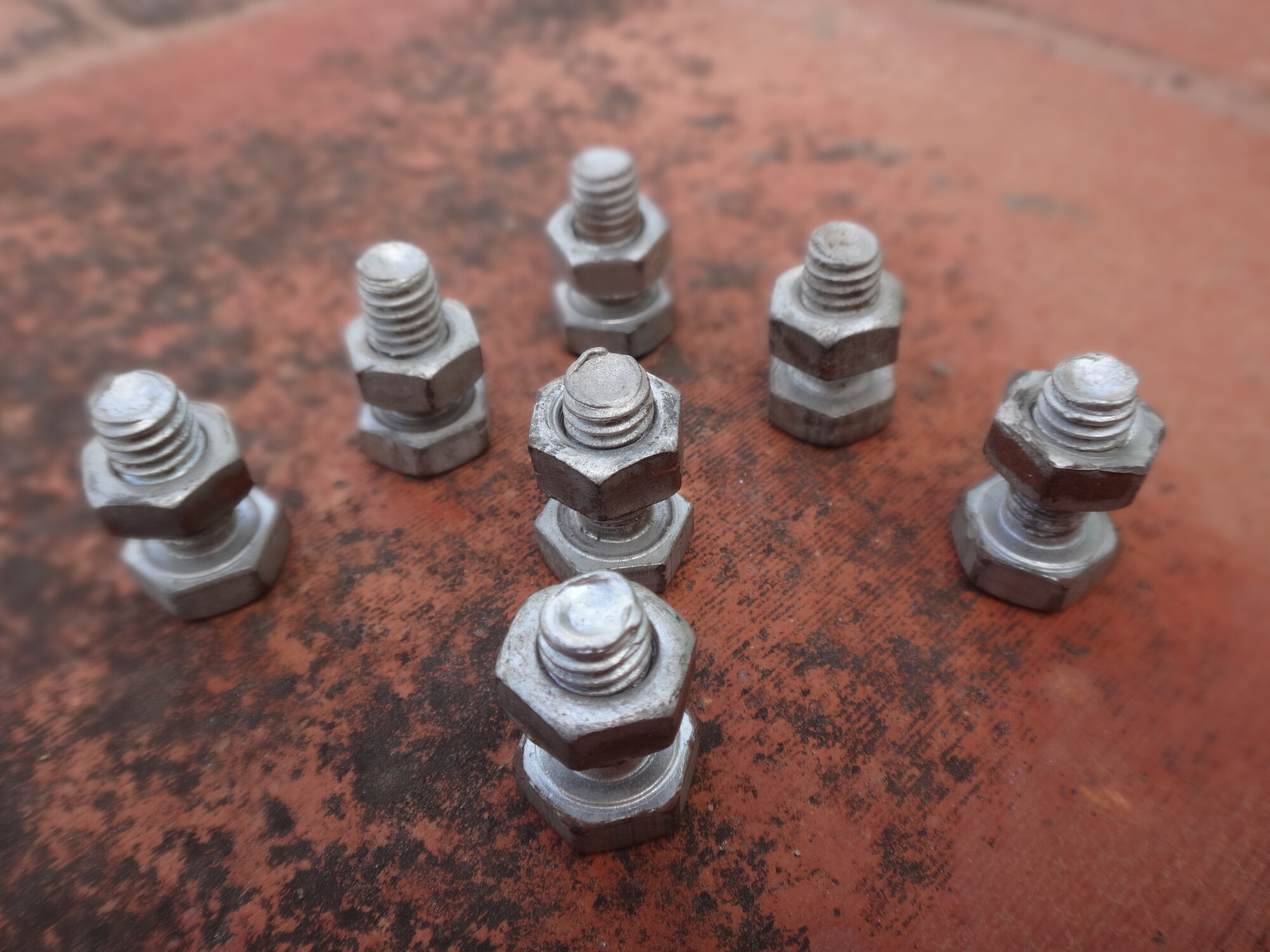

Part One: Products and Property Classes
Chapter 1 Product Classification and Boundaries of Fasteners
Fasteners are basic mechanical components used for joining and fastening. On the industry definition they are divided into twelve major categories: bolts, studs, screws, nuts, washers, wood screws, self-tapping screws, pins, rivets, retaining rings, assemblies and connecting sets, and weld studs (the industry classification). The list is ordered by product form and method of connection, not by material, strength or end-use industry. The same bolt can be made of stainless steel or of alloy steel; it can be used in automobiles or in steel structures. Material and application do not change its position in the list.
Outside the twelve categories there is one product type often mixed into the statistics: nails. Nails, drawing pins and staples under customs HS 7317 are adjacent to fasteners by use, but by product classification they fall outside the twelve categories. When export statistics merge the two, both value and volume show a marked discrepancy; this point is developed in Chapter 6. A reader citing export figures should first confirm whether the statistics include nails.
Below the twelve categories there are two further levels, sub-categories and specifications. The Hebei Provincial Department of Industry and Information Technology describes Yongnian as able to produce all twelve major categories, 289 sub-categories and more than 30,000 specifications and models in the Catalogue of National Standards for Fasteners (Hebei Provincial Department of Industry and Information Technology). This describes the production capacity of one county-level cluster, not a nationwide count of the catalogue. It shows how fine-grained the end of the classification system is: sub-categories are divided by head shape, thread type, bearing surface and locking method, and specifications by the combination of diameter, length, pitch, material and surface treatment. One line on a purchase order corresponds to one point on this chain of subdivision.
By connection mechanism, the twelve categories can be grouped into four. The first group transmits force through the thread and includes bolts, studs, screws, wood screws and self-tapping screws; the second mates with threaded parts and includes nuts and washers; the third relies on plastic deformation or elastic retention and includes rivets, pins and retaining rings; the fourth is a supply form in complete sets, including assemblies, connecting sets and weld studs. The four groups are an auxiliary line drawn in this article to make sense of product boundaries; they do not replace the text of the standards.
| Group | Categories included | Connection mechanism |
|---|---|---|
| Thread transmission | Bolts, studs, screws, wood screws, self-tapping screws | The thread pair transmits axial clamping force |
| Mating parts | Nuts, washers | Paired with threaded parts to distribute pressure or prevent loosening |
| Deformation and retention | Rivets, pins, retaining rings | Plastic deformation, positioning, axial location |
| Supply in sets | Assemblies, connecting sets, weld studs | Delivered as a set, or fixed by welding |
Table compiled from public data; for the classification see the industry definition cited above.
Ambiguities concentrate in three places. The boundary between bolts and screws lies in the assembly method: a bolt passes through a clearance hole and mates with a nut, while a screw is driven directly into a tapped thread in the joined part. The same product may be named in opposite ways in different industries; in procurement, the drawing and the standard number govern. The boundary between self-tapping screws and wood screws lies in the substrate: self-tapping screws are used on thin metal sheet and plastics, wood screws on timber; both form their own thread, and the thread forms differ. The boundary between assemblies and connecting sets on the one hand and individual parts on the other lies in the supply form: the former are priced and accepted by the set, and selling them separately voids the guarantee of torque coefficient and clamping force.
The stud is a category easily overlooked. It has no head; it is threaded at both ends or at one end, with one end screwed into a tapped hole in the joined part and the other mating with a nut. A stud usually fails at the screwed-in end; assembly requires a specified hole depth and driving torque, and if the purchase order states only the overall length and not the length of the screwed-in end, the stud will bottom out in the hole during assembly. Washers fall into two types, flat washers and spring washers: flat washers distribute pressure and protect the surface of the joined part, while spring washers prevent loosening through elastic deformation. Retaining rings sit in a groove on a shaft or in a bore, provide axial location and carry no connecting load. Pins are divided into cylindrical pins and taper pins, used for positioning and articulation. What the three types share is that dimensional accuracy determines function, and strength grade is not a primary acceptance item.
Regulation draws another line. The current Catalogue for the Administration of Industrial Product Production Licences (《工业产品生产许可证管理目录》; Guofa [2024] No. 11, 14 categories and 27 product types) does not include fasteners; in 2019 Zhejiang Province listed standard fasteners among the targets of special sampling inspection for products whose production licensing had been cancelled (Zhejiang Provincial Administration for Market Regulation). Market entry requires no licence; quality is constrained through three channels: standards, sampling inspection and customer certification. National supervision sampling inspection lists "high-strength fasteners" as a separate product category; the standards on which the 2018 round was based include GB/T 1231-2006, GB/T 3098.1-2010, GB/T 3098.2-2015, GB/T 3632-2008 and GB/T 16939-2016 (China Quality News). Five standards listed side by side show that, for regulatory purposes, "high-strength fasteners" is a collection of products, not a single property class. The 2018 national sampling cited the 2006/2015 editions in force at the time; the current editions have since been updated to GB/T 1231-2024 and GB/T 3098.2-2025 respectively.
Application-specific parts have their own standards branches. Automotive fasteners follow the IATF 16949 system and OEM standards, wind power and steel structures follow EN 14399 and ISO 898, and rail transit follows the standards for railway fastening systems (TÜV Rheinland). These branches do not change the twelve-category assignment, but they determine the acceptance items for the same product at different customers. A plant able to make property class 8.8 bolts is not necessarily able to enter an OEM's supplier list; the difference lies in systems and certification, not in product classification.
Classification answers what a product is called; acceptance answers which standard, which property class and which test. If the procurement document states only the product name, the supplier quotes on its own understanding, and when the two sides disagree there is no common basis.
Chapter 2 Threads: Metric, Inch and Self-Tapping
The thread is the functional interface of a fastener. Rotary motion is converted into axial clamping force through the thread pair, and the thread profile, pitch and tolerance determine whether the part can be tightened, whether it will loosen and how much load it can carry. Product classification separates bolts from screws; the thread system then divides them anew into three branches: metric, inch and self-tapping. The three branches differ in designation, gauges and inspection methods.
Metric threads are measured in millimetres and designated by the letter M followed by the nominal diameter; coarse pitch is the default, and a fine pitch adds a multiplication sign and the pitch after the diameter. Coarse threads are used for general connections, fine threads for thin-walled parts, applications requiring resistance to loosening, or fine adjustment. One nominal diameter can have several pitches; where the designation omits the pitch, coarse pitch is understood. Right-hand is the default direction; left-hand must be marked separately. If the procurement drawing says only "M10 bolt" without pitch, tolerance band and hand, the supplier delivers to the defaults, and a requirement for fine pitch or left-hand thread will not be met.
The clamping force of a threaded connection comes from preload. When tightened, the bolt is in tension and the joined parts in compression; the magnitude of preload is determined jointly by torque, friction coefficient and thread geometry. At the same torque, a part with high friction receives low preload, while a part with low friction may be over-tightened. Lead angle and pitch affect self-locking: a thread with a small lead angle and fine pitch self-locks well, which is why fine threads are used where loosening must be prevented; a coarse thread has larger thread dimensions and greater resistance to stripping, and is used for general connections. Each choice has its cost; the pitch on a drawing rests on a definite basis for selection.
Inch threads are measured in inches; the Unified National thread has UNC (coarse) and UNF (fine) series, designated as "diameter—threads per inch". The early British Whitworth thread has a different thread angle from the Unified thread; both are still encountered in the repair of old equipment. Metric and inch threads are not interchangeable: two sizes with close nominal dimensions differ in both pitch and profile, and forcing them together damages the thread. Spare parts for imported equipment often go wrong at this step, with fractional inches on the drawing taken as millimetres, or the reverse.
Self-tapping screws take the third path. They do not rely on a pre-formed internal thread; on being driven in, they cut or form their own thread in thin steel sheet, plastics or timber. The pitch is coarser than that of machine screws, the profile is sharper, and the point is either tapered or slotted. Wood screws and self-tapping screws both belong to this class. The product scope of the European Commission's 2022 measures on fasteners from China lists both wood screws and self-tapping screws (Commission Implementing Regulation (EU) 2022/191), and China's anti-dumping measures against the EU and the United Kingdom also cover both types (Ministry of Commerce Announcement No. 17 of 2022). The EU measure's scope does not include nuts, and the Chinese measure explicitly excludes them, which shows that trade classification of threaded parts is split by product form, not by whether a part is threaded.
Self-tapping screws are further divided into two types, ordinary self-tapping and self-drilling. An ordinary self-tapping screw needs a pre-drilled pilot hole; a self-drilling screw has a drill point at its tip and can drill and tap in thin sheet in one operation. Both are used in large quantities in building envelopes, household appliances and automotive interiors; the purchase order must state whether a drill point is required, the pilot hole size and the substrate thickness before the supplier can choose the thread form.
The way the thread is formed affects performance. Rolling (flat-die and cylindrical-die thread rolling) makes the metal fibres flow continuously along the thread profile, whereas cutting severs them. Roll-formed threads have higher fatigue strength and higher material utilisation and are the mainstream process for bolts and screws; cutting is used for large sizes, special thread forms and one-off repair. The two processes differ in equipment, dies and labour time, and so the quotation differs. The process details are taken up in Chapter 17.
Threads are inspected with go and no-go gauges. The go gauge must screw through and the no-go gauge must not, together termed go/no-go thread performance. National supervision sampling inspection treats this as a routine item: the 2019 high-strength fastener sampling covered 19 items including the thread, and the non-conforming items included bolt threads, nut threads and go/no-go thread performance (reprinted by China Economic Net); all 3 non-conforming batches in the 2018 round fell on the thread and go/no-go performance (China Quality News); the non-conforming items in Zhejiang's 2019 special sampling of standard fasteners were likewise dominated by go/no-go thread performance, width across flats, width across corners and nut height (Zhejiang Provincial Administration for Market Regulation). The thread is the most basic pass line and the place where sampling inspection most often finds non-conformity.
Coatings change thread dimensions. Both electroplating and hot-dip galvanising add a layer of metal to the thread flanks: the pitch diameter of an external thread increases and that of an internal thread decreases, so the pre-plating dimensions must allow a margin. Hot-dip galvanising gives a thicker layer, and mating nuts often need to be tapped oversize; electroplating gives a thinner layer, but the passage of go and no-go gauges must still be checked. If the procurement document says only "zinc plated" without the coating route and thickness, the supplier allows a margin according to its own habit, and assembly then produces either a thread that will not go on or a loose joint. The choice of surface treatment is taken up in Chapter 4.
The thread system is the first field in a procurement document that cannot be omitted. Metric or inch, coarse or fine, tolerance band and coating allowance — if any one is missing, quotation and acceptance will land on different products.
Chapter 3 Property Classes and Material Grades
Property classes for carbon steel and alloy steel fasteners are designated by two figures separated by a point, such as 8.8, 10.9 and 12.9. The figure before the point is one hundredth of the nominal tensile strength in MPa; the figure after the point is ten times the yield ratio, the ratio of nominal yield strength to nominal tensile strength (standard interpretation). For class 8.8, the left 8 denotes a nominal tensile strength of 800 MPa and the right 8 a nominal yield ratio of 0.8. 10.9 and 12.9 follow the same pattern.
The nominal value is the definition of the designation; the minimum value is what the standard table specifies; the two are not exactly equal. The tables of GB/T 3098.1 give, for each class and size, the minimum tensile strength Rm and the minimum specified proof strength at 0.2% plastic extension Rp0.2: class 8.8 at d≤16 mm is 800 MPa and 640 MPa, and at d>16 mm 830 MPa and 660 MPa; class 10.9 is 1040 MPa and 940 MPa; class 12.9 is 1220 MPa and 1100 MPa (standard interpretation). The requirement for coarse-size class 8.8 is higher than for the fine size, which runs counter to the intuition that a larger diameter has lower strength; such are the values in the standard table.
| Property class | Size | Minimum tensile strength Rm (MPa) | Minimum Rp0.2 (MPa) |
|---|---|---|---|
| 8.8 | d≤16 mm | 800 | 640 |
| 8.8 | d>16 mm | 830 | 660 |
| 10.9 | Standard table value | 1040 | 940 |
| 12.9 | Standard table value | 1220 | 1100 |
Table compiled from public data; for the values see the standard interpretation cited above. The rows for 10.9 and 12.9 give the values as listed in the source and are not broken down by size.
The figure after the point and the ratio in the table are not exactly equal. For fine-size class 8.8, 640 over 800 is exactly 0.80; for coarse-size, 660 over 830 is about 0.795; for class 10.9, 940 over 1040 is about 0.904; for class 12.9, 1100 over 1220 is about 0.902. The figure after the point is ten times the nominal yield ratio; the minimum value in the standard table is a different number. Treating the two as the same number will lead to a conforming product being judged non-conforming at acceptance, or the reverse.
A property class has to be verified by test. Tensile strength is obtained by dividing the ultimate tensile force by the nominal stress area; the wedge tensile test on finished fasteners measures both tensile strength and the soundness of the head-to-shank junction, fracture must not occur in the head, and a bolt with a head must not fracture at the head-shank junction (standard interpretation). For nuts the core acceptance item is proof load; hardness covers core hardness and washer hardness, and decarburisation depth is a separate item (2019 national sampling items). These items correspond one-to-one with the property class table; if items are missing from the acceptance checklist, the class is no more than a number on the head. The class marking is usually stamped on the top of the bolt head; a part without the marking cannot be confirmed as to class and batch and should be treated as non-conforming at acceptance.
Fasteners whose loadability has been reduced carry a 0 before the class, written 08.8, 010.9, 012.9 (standard interpretation). Such a marking indicates that the batch may not be used at the proof loads of 8.8, 10.9 or 12.9. If a purchase order shows a class with a leading 0, the reason for the reduction and the usable load must first be clarified; the original class must not be substituted. The reason for the reduction and the usable load should be stated in the inspection report or the technical agreement.
The applicable temperatures are written into the standard: test environment 10—35 ℃, service temperature -50—+150 ℃ (standard interpretation). Outside this range the mechanical properties in the standard table are no longer guaranteed and must be agreed separately between supplier and purchaser. Fasteners in high-temperature service also require consideration of softening and relaxation of the material at temperature, and those in low-temperature service of toughness; none of these is covered by the room-temperature property class table. Low-temperature impact and high-temperature creep are not assessment items of the property class table; the relevant requirements should be written into the technical agreement.
Stainless steel fasteners use another designation: a group followed by a property class. A2 is austenitic stainless steel, equivalent to the 304 family; A4 is molybdenum-bearing austenitic stainless steel, equivalent to the 316 family; the 70 and 80 that follow denote one hundredth of the lower tensile strength limit (standard interpretation). A2-70 must not be read as class 7.0 on the carbon steel table; the two designation systems are not convertible. Corrosion resistance in stainless steel comes from the alloying elements and strength from cold working and solution treatment; its class system is drawn up separately from that for carbon steel, and the acceptance standard is GB/T 3098.6-2023 (National Standards Full-Text Public System). There is no numerical correspondence between A2-70 and 8.8; comparing the two systems by the size of the numbers leads to wrong conclusions.
Property class and material grade are two different things. SWRCH35K is a medium-carbon cold-heading steel, and the steelmaker's literature states that it is mainly used to produce property class 8.8 fasteners (Xingtai Steel product description); SCM435 is a chromium-molybdenum alloy cold-heading steel, and a journal record associates it with property class 12.9 high-strength fasteners (VIP search page). These two entries show a common correspondence between material and class; they do not show that class 8.8 equals SWRCH35K or class 12.9 equals SCM435. The same material can reach different classes through different heat treatment, and the same class can be achieved with different materials. If a class is written on the purchase order as if it were a grade, the supplier supplies by grade and the strength may fall short; if a grade is written as if it were a class, acceptance has no criterion to judge by. Heat treatment and materials are developed in Chapters 14 and 18.
Annealing-free cold-heading steel is another material route. Steels of the SWRCH35KM type meet cold-heading requirements in the as-rolled condition, saving one annealing step, and a commercial materials database lists it as a common material for property class 8.8 to 10.9 hexagon socket head cap screws and flange bolts (materials database). Annealing-free steel has tighter control of carbon content and microstructure and costs more than ordinary cold-heading steel; what it saves is the energy and process time of annealing. Material selection has to consider the product class, forming difficulty and batch size, not the unit price alone.
"High-strength fasteners" is a sampling category for regulatory purposes, not a property class. The standards on which the 2018 national sampling was based list GB/T 1231-2006, GB/T 3098.1-2010, GB/T 3098.2-2015, GB/T 3632-2008 and GB/T 16939-2016 side by side (China Quality News). The five standards cover bolts, nuts, structural steel connecting sets and space-frame joints, each with its own classes and test items. The 2018 national sampling cited the 2006/2015 editions in force at the time; the current editions have since been updated to GB/T 1231-2024 and GB/T 3098.2-2025 respectively. A contract that says only "high strength" points to no table at all.
The class is an acceptance criterion; the grade is a raw-material specification. The procurement document must state class, standard number and size together; only when all three are present does the supplier know which table to make to and which table to inspect against.
Chapter 4 Surface Treatment and Corrosion Protection Requirements
Carbon steel fasteners corrode in moist air. Surface treatment places a barrier between the substrate and the environment, or lets the coating act as a sacrificial anode that corrodes before the substrate. The type, thickness and adhesion of the coating determine the years of protection, and also the thread fit, electrical conductivity and hydrogen embrittlement risk. A procurement document that says only "zinc plated" does not cover these differences.
Zinc electroplating is the most common type. The workpiece serves as the cathode in an electrolyte, and zinc ions deposit on its surface as a layer. The coating is uniform in thickness and bright in appearance, costs relatively little, and suits indoor and mildly corrosive environments. Pickling to remove rust precedes plating, and both pickling and plating introduce hydrogen into the steel substrate; the higher the property class and the higher the hardness, the greater the hydrogen embrittlement risk. Post-plating hydrogen baking (de-embrittlement) is a routine operation whose temperature and time are set by the process; the test method is given at the end of this chapter.
Hot-dip galvanising immerses the workpiece in molten zinc; the coating consists of a zinc-iron alloy layer and a pure zinc layer, and is markedly thicker than electroplating. It suits outdoor, construction and power engineering applications and lasts many years in corrosion service. The thick coating has the side effect of tightening the thread fit: after coating, the pitch diameter of an external thread increases and that of an internal thread decreases, so mating parts need clearance provided before plating, and nuts often have to be tapped oversize. A connecting set specified as hot-dip galvanised must be supplied as a complete set under one coating scheme; replacing a single part breaks the fit.
Zinc-aluminium flake coating (Dacromet) is another route. It mixes zinc and aluminium flakes with an inorganic binder into a slurry, which is applied and baked into a film; no plating bath is involved, so hydrogen introduction from plating is reduced, making it suitable for high-strength parts. The film is relatively thin, and its conductivity and appearance differ from those of plated parts. The name Dacromet comes from an early trademark; current standards and industry usage call it zinc-aluminium flake coating, and stating the coating system is more reliable in procurement than stating a trade name.
Black oxide finishing and phosphating are two further types. Black oxide finishing forms an oxide film on the steel surface; the film is very thin and has limited rust prevention, usually requiring an oil seal, and is mostly used for tools, gauges and indoor parts. Phosphating forms a phosphate conversion coating on the surface, often used as a base for painting or as a friction-reducing layer for cold heading and wire drawing. These two treatments change the surface state; their protective capability is lower than that of zinc plating and zinc-aluminium flake coating.
| Route | Film characteristics | Applications | Main risk |
|---|---|---|---|
| Zinc electroplating | Thin and uniform, bright appearance | Indoor, mild corrosion | Hydrogen introduced by pickling and plating |
| Hot-dip galvanising | Thick, with a zinc-iron alloy layer | Outdoor, construction, power | Thread fit tightens |
| Zinc-aluminium flake coating | Thin, inorganic binder film | High-strength parts, automotive | Different conductivity and appearance |
| Black oxide finishing | Very thin oxide film | Tools, indoor parts | Limited rust prevention |
| Phosphating | Conversion coating | Paint base, friction reduction | Weak protection on its own |
Table compiled from public data; the film characteristics are general process knowledge, and thickness and corrosion-resistance values are governed by the product standard.
Stainless steel fasteners are usually not zinc plated. Austenitic stainless steel relies on its passive film for corrosion resistance, and a coating may instead damage that film; in contact with carbon steel parts, the stainless steel is the cathode and the carbon steel the anode, and galvanic corrosion occurs at the contact face, so insulating washers and mating with parts of the same material are common practice. Pitting and stress corrosion cracking of stainless parts in chloride-containing environments are another risk; material selection must look at the medium, not just at the word "stainless".
The range of surface treatment routes is still expanding. In 2025 Yongnian added 16 high-end surface treatment lines, filling gaps in gold plating, silver plating and chromium plating, and the shared technologies along the same chain include zinc-aluminium co-diffusion and titanium-chromium nitride coating, 30 items in total (Hebei Provincial Department of Industry and Information Technology). Gold and silver plating are used for electronic and communication parts, chromium plating for decoration and wear resistance, and zinc-aluminium co-diffusion and nitride coating for wear and corrosion resistance. The more routes there are, the more precisely the procurement document must state the system; the single word "surface treatment" will not serve.
Hydrogen embrittlement is the risk where surface treatment meets high-strength parts. Hydrogen introduced by pickling and plating accumulates under stress and can cause delayed fracture. Testing follows GB/T 3098.17-2000, Mechanical Properties of Fasteners — Preloading Test for the Detection of Hydrogen Embrittlement — Parallel Bearing Surface Method; the test lasts at least 48 h, with re-tightening to the initial test torque or load every 24 h (National Standards Full-Text Public System). An interpretation of the standard's clauses notes that the test is intended only for process control and is not suitable as an acceptance test; an application article recommends performing it within 24 hours after the final manufacturing operation, beyond which the detection rate falls (interpretation of the standard's clauses). Both points are second-hand accounts; procurement should go back to the original standard when citing them.
Corrosion protection requirements ultimately come down to four items: coating system, coating thickness, test method and acceptance value. Salt spray test duration is a common clause in procurement documents; the specific figure is set by the product standard or the customer standard, and this article gives no universal value. Beyond the four, the pre-plating dimensional allowance and the post-plating go/no-go thread requirement must also be stated; otherwise the coating passes and the assembly does not. Process details and environmental constraints of surface treatment are taken up in Chapters 19 and 8.
A surface treatment specification must state the system, thickness, test and acceptance value; "zinc plated" alone cannot be accepted. Zinc electroplating, hot-dip galvanising and zinc-aluminium flake coating differ widely in thickness and corrosion performance; the same name covers different systems, with different quotations and different service lives.
Chapter 5 Standards Systems: GB, ISO, DIN, ANSI
Fastener standards fall into three layers. The first governs dimensions and threads, specifying diameter, length, pitch, tolerance and designation; the second governs mechanical properties, specifying classes, materials, tests and acceptance; the third governs application and systems, specifying additional requirements for a particular industry or a particular engineering condition. If the procurement contract names the wrong layer, acceptance falls through: a dimensional standard cannot judge strength, and a property standard cannot judge go/no-go thread performance.
Dimensional standards and property standards have to be used as a pair. GB/T 3098.1 governs mechanical properties only; head dimensions, thread length, bearing surface and marking position of a bolt are specified by dimensional standards. If the contract names only GB/T 3098.1, a supplier can deliver parts that pass on properties but are out of tolerance on width across flats, and they still will not assemble. The editions of the dimensional standard and of the property standard must be stated separately; their replacement histories are not in step. GB/T 3098.1-2010 replaced the 2000 edition and was confirmed as still valid on review in 2022; GB/T 3098.6-2023 replaced the 2014 edition and adopts ISO 3506-1:2020 with modifications (GB/T 3098.1-2010, GB/T 3098.6-2023). A procurement document that says "latest edition" leaves room for dispute: standards are revised, and what "latest" points to changes with time; only a clear standard number and year give acceptance a fixed basis.
The GB/T 3098 series is the backbone of the mechanical property layer. GB/T 3098.1-2010, Mechanical Properties of Fasteners — Bolts, Screws and Studs, was issued on 10 January 2011 and came into force on 1 October 2011; it adopts ISO 898-1:2009 with modifications and replaces GB/T 3098.1-2000 in full, and a review on 10 January 2022 concluded that it remains valid (National Standards Full-Text Public System). "Modified adoption" means the technical content is based on the international standard with permitted differences; "identical adoption" means the content is the same. GB/T 3098.17-2000 is an identical adoption of ISO 15330:1999 (National Standards Full-Text Public System), and the two can be compared clause by clause; a standard adopted with modifications cannot be compared directly, and the differences must be found in its introduction and annexes.
Stainless steel has its own set. GB/T 3098.6-2023, Mechanical Properties of Fasteners — Stainless Steel Bolts, Screws and Studs, was issued on 23 May 2023 and came into force on 1 December 2023, adopting ISO 3506-1:2020 with modifications (National Standards Full-Text Public System). The 8.8, 10.9 and 12.9 of carbon steel and the A2-70 and A4-80 of stainless steel belong to two sets of standards and cannot be applied interchangeably at acceptance.
Fasteners for steel structures have separate product standards. Those cited in national and provincial sampling include GB/T 1231-2006, GB/T 3098.2-2015, GB/T 3632-2008 and GB/T 16939-2016 (Yunnan provincial sampling document, China Quality News). Among them, the standard for structural steel connecting sets treats bolt, nut and washer as a whole and specifies the torque coefficient and clamping axial force. The 2018 national sampling and the 2024 Yunnan sampling cited the 2006/2015 editions in force at the time; the current editions have since been updated to GB/T 1231-2024 and GB/T 3098.2-2025 respectively. Structural steel fasteners exported to the EU must also obtain a factory production control (FPC) certificate under System 2+ of CPR 305/2011, with EN 14399-1:2015 and others as harmonised standards (TÜV Rheinland); EN 14399-3:2015 specifies the HR system, that is, a complete connecting set of a large hexagon head bolt, a nut and two quenched-and-tempered washers (standard information). Beyond product conformity there is a factory audit, an additional layer of the EU Construction Products Regulation.
DIN and ANSI are two national systems. The German Institute for Standardization (DIN) issues German standards, and European standards adopted in Germany carry the prefix DIN EN; the American National Standards Institute (ANSI) issues American National Standards, while fastener dimensions and threads are mostly specified in the ASME system and materials in the ASTM system. The two systems differ from GB in designation and units of measure, and are still encountered in old drawings, imported equipment and foreign-invested projects. The standards cited in this article are mainly GB and ISO; DIN and ANSI serve only as system-level comparisons, their specific standard numbers have not been checked item by item, and they are not listed in the text.
Different editions of a standard may have different test items and acceptance values. If a drawing cites GB/T 3098.1-2000 while the supplier produces to the 2010 edition, which edition governs acceptance will become a dispute unless the contract says so clearly. Export business also faces the difference between identical and modified adoption: an identically adopted standard can be compared clause by clause, whereas a modified one requires checking the differing clauses; a customer comparing an ISO 898-1 report against GB/T 3098.1 may not reach exactly the same conclusion. Stating the standard number and year on a quotation is the supplier's confirmation of the acceptance basis, not a formality.
Trade measures run on another coding system. List 3 of the US Section 301 measures covers HTSUS 7318.11.00 through 7318.15.80, 7318.19.00 and 7318.21.00 through 7318.29.00 (US Federal Register 2018-20610), while nuts under 7318.16.00 appear separately on List 4A (US Federal Register 2019-17865). The same product is classified by GB in China and by a ten-digit tariff number in the United States; the two codes do not correspond. Customs declaration, origin determination and the applicable anti-dumping duty rate follow the code, not the product name.
The US Section 232 measures levy duty on listed steel articles on the full customs value of the entry, which is a different line from Section 301, levied by origin. From 12 March 2025, HS 7318 was added to the list of steel derivative products by Proclamation 10896; from 4 June 2025, the Section 232 steel tariff rose from 25% to 50% (US Federal Register 2025-10524). The same shipment of fasteners may bear both Section 301 and Section 232 duties; both take the full customs value of the entry as the base and can be stacked on the same base. This point is developed in Chapter 23.
Market access has a further layer of system certification. In the automotive industry, IATF 16949:2016 is based on ISO 9001 and replaced ISO/TS 16949:2009 (China Quality Certification Centre); it is not a legal requirement but a supply-chain access condition set by vehicle manufacturers and tier-one suppliers (certification body interpretation). The current Catalogue for the Administration of Industrial Product Production Licences (Guofa [2024] No. 11, 14 categories and 27 product types) does not include fasteners; in 2019 Zhejiang Province listed standard fasteners among the targets of special sampling inspection for products whose production licensing had been cancelled (Zhejiang Provincial Administration for Market Regulation). Market access rests on three channels — standards, sampling inspection and customer certification — and automotive parts require system certification in addition.
The standards system determines what to make to and what to inspect against; the trade code determines what duty applies. A contract that says only "meets the national standard" points to no specific standard number and no specific property class; procurement should require the supplier to provide a conformity inspection report for the corresponding batch and size (Zhejiang Provincial Administration for Market Regulation).
Chapter 6 Three Statistical Traps: Output, Output Value and Exports
Three aggregate figures for fasteners are often put in the same paragraph: annual output of about 7 million to 8 million tonnes (700 万至 800 万吨), annual output value above RMB 150 billion (1,500 亿元), and annual exports of USD 9.564 billion or USD 11.45 billion (95.64 亿美元 or 114.5 亿美元). The three appear to describe the same industry, but they measure at different points, on different boundaries and at different pricing stages. Converting one into another yields derived figures that all lack a basis.
The first is the two definitions of exports. Under customs HS 7318, exports in 2024 were USD 9.564 billion, up 4.65% year on year; imports were USD 2.477 billion, up 1.28%; the surplus was USD 7.087 billion (General Administration of Customs data republished by the Zhejiang quality infrastructure platform). Another set often cited in the industry is 2024 exports of 5.8515 million tonnes and USD 11.454 billion (Huajing Industry Research Institute). The statistical boundaries of the two sets differ: HS 7318 alone had 2024 export volume of 4.6593 million tonnes (UN Comtrade); adding the 1.1611 million tonnes and USD 1.530 billion of HS 7317 nails gives a total of about 5.8204 million tonnes and USD 11.094 billion, which compared with the broad-basis 5.8515 million tonnes and USD 11.454 billion shows a volume difference of about 0.5% and a value difference of about 3.1%. The difference comes from nails: HS 7317 covers nails, drawing pins, staples and similar products, which are not among the twelve categories. Calculated from the two sets above, our estimate shows that using the broad definition as "fastener exports" makes the value about 19.8% higher than HS 7318 and the volume about 25.6% higher.
The second is output. The industry estimate puts annual output at about 7 million to 8 million tonnes, more than half the world total, annual output value above RMB 150 billion and more than 10,000 enterprises (the association's figures as relayed by the exhibition organiser). The source of this set is an exhibition organiser's relay; the association's original publication has not been obtained. There are also secondary citations of 9.289 million tonnes for 2022 and about 9.78 million tonnes for 2023 (another article by the exhibition organiser), and a Wind figure of 15.2917 million tonnes for 2024 (East Money Caifuhao). The statistical boundary of the 15.2917 million tonnes is unclear and may include metal parts that are not fasteners; there are also two figures of doubtful definition, 10.5 million tonnes and 9.29 million tonnes (a Docin research-report resale page, Report Hall), which this article does not use. The only verifiable official output figures are at county level: Yongnian produced 7.1 million tonnes in 2024 and 7.8 million tonnes in 2025 (Hebei Provincial Department of Industry and Information Technology, China News Service).
The county figure and the national estimate do not agree. Yongnian's output and sales account for about 58% of the national total (Hebei Provincial Department of Industry and Information Technology); back-calculating roughly from 7.1 million and 7.8 million tonnes, our estimate puts the national total at about 12.24 million and 13.45 million tonnes respectively. Both back-calculated values are more than half again as high as the 7 million to 8 million tonne estimate. The three cannot all hold: either the national estimate is too low, or the 58% share is not real, or Yongnian's output and the national output are not measured on the same statistical boundary. This article's approach is to cite them side by side without reconciling them.
The third is output value. The RMB 150 billion estimate likewise comes from a relay of the association's figures. Yongnian's 2024 output value was RMB 50 billion (Hebei Provincial Department of Industry and Information Technology); back-calculating roughly from a 58% share, our estimate puts the national total at about RMB 86.2 billion, about 42.5% below RMB 150 billion. Consider the price per tonne: RMB 50 billion divided by 7.1 million tonnes is about RMB 7,042 per tonne; RMB 150 billion divided by 7 million to 8 million tonnes is about RMB 18,750 to 21,429 per tonne. The national price per tonne is about 2.7 to 3.0 times the county figure. Output value is in RMB at ex-works prices, export value in US dollars at FOB prices; between the two lie two conversions, exchange rate and pricing stage, and this article does not convert.
The export price per tonne provides another reference. In 2024 the HS 7318 export price was about USD 2,053 per tonne and the import price about USD 12,741 per tonne, the import unit price being 6.2 times the export price (UN Comtrade). Under the same tariff heading, the product mix of imported and exported goods differs enormously. Deriving output value by multiplying the export price per tonne by national output amounts to assuming that every tonne produced in the country sells at the average export price, which does not hold; dividing output value by export value to obtain an export share amounts to ignoring the differences of exchange rate, ex-works price and FOB price, which likewise does not hold.
The scale of imports is often overlooked. In 2024, HS 7318 imports were USD 2.477 billion and 194,400 tonnes (UN Comtrade); the sources were Japan USD 520 million, Germany USD 501 million, the United States USD 383 million and Taiwan, China USD 254 million (UN Comtrade). On the basis of these data, our estimate is that import volume is only about 4.2% of export volume, while import value equals about 25.9% of export value. This contrast shows that the heading "fasteners" accommodates both standard fasteners and high-value special-purpose parts, and that judging competitiveness by aggregate volume distorts the picture.
The time basis must also be aligned. In 2025, HS 7318 exports were 5.0001 million tonnes and USD 10.050 billion (UN Comtrade), up about 7.3% in volume and about 5.1% in value on 2024, with the price per tonne falling from about USD 2,053 to about USD 2,010, a decline of about 2.1%. Volume up and price down indicate that the export mix is tilting towards lower-priced-per-tonne products, or that price competition is intensifying. This judgment uses only two years of figures on the same basis, without mixing in output or output value.
The year-on-year swings in export value likewise show why the basis matters. HS 7318 export value was USD 9.090 billion in 2021, rose to USD 11.179 billion in 2022, fell back to USD 9.140 billion in 2023, and was USD 9.564 billion in 2024 and USD 10.050 billion in 2025 (UN Comtrade). Over five years there were three rises and one fall; looking at a single year yields the opposite conclusion. The market structure is also changing: in 2025 the top three export markets were the United States at USD 1.264 billion, Vietnam at USD 680 million and Russia at USD 534 million (UN Comtrade); in 2024 the United States was USD 1.357 billion, Russia USD 567 million and Vietnam USD 518 million (UN Comtrade). The United States remains first but its value has fallen; Vietnam has risen and Russia has fallen. A single total figure does not reveal these changes.
Each of the three figures holds on its own; together they do not. When citing, state the source, period and basis; put only same-basis figures in one paragraph; use cross-basis comparisons only to judge direction, never to convert quantities. Write output as "an industry estimate on an association basis, with no unified official statistics", write exports as HS 7318, and state the currency and pricing stage for output value; keep the three statements separate, and the reader will not take the three figures for three facets of one industry. The basis comes before the number.
Part Two: Scale and Geography
Chapter 7: The 40,200 Fastener Entities in This Database
The Tianxia Gongchang enterprise database contains about 4.8 million manufacturing entities, and its fields include enterprise name, main-product summary, business scope, registered address, insured persons and enterprise status. Fasteners have no usable industry code in this database: fasteners belong to small class C3482 "Fastener Manufacturing", above which sit, in order, medium class C348 "General Parts and Components Manufacturing" and major category C34 "General Equipment Manufacturing"; the industry field in the database goes only down to the major category (31 major categories in manufacturing) and has no C348 or C3482 level. Small-class granularity can only be approached through keyword matching on three text fields: company_service (summary of main products), business_scope (business scope) and title (enterprise name).
The match terms are mainly product names: fastener, bolt, screw, nut, screw (the colloquial term), stud, washer, gasket, self-tapping, rivet, retaining ring, weld stud and pin, plus the industry's customary "standard fastener" and "non-standard fastener". An entity is counted if any term hits in any field, deduplicated by unique entity identifier, with externally supplemented entities excluded. This yields 40,155 entities.
The nature of this figure is "enterprise legal persons whose name or text mentions a fastener-type term", and it cannot be read as the industry stock registered under C3482. The basis does not distinguish production, sales and processing, nor material and property class. Wherever this article uses the term "this database", it refers to this keyword-match basis; every share, multiple and average that follows uses these 40,155 entities as the denominator and is not interchangeable with the industry statistics of statistical departments.
Insured persons total 1,183,364, or 1.1834 million. Of these, 24,541 entities report more than zero, or 61.1%; 15,614 entities report zero or do not disclose, or 38.9%.
The table below compiles statistics on fastener-related entities in this database (keyword-match basis, October 2026).
| Indicator | Value |
|---|---|
| Entities matched by keyword | 40,155 |
| Total insured persons | 1,183,364 |
| Entities with insured persons greater than zero | 24,541 |
| Share with insured persons greater than zero | 61.1% |
| Entities with zero or undisclosed insured persons | 15,614 |
| Average insured persons per entity (all entities) | 29.5 |
| Average insured persons per entity (entities above zero) | 48.2 |
The two per-entity averages differ by 18.7 persons, and the whole difference falls on the 15,614 entities with no insurance record. At 29.5 persons, the average corresponds to a processing shop with a dozen or so workers; at 48.2 persons, to a medium-sized plant with two or three cold-heading lines and outsourced heat treatment and surface treatment. The 38.9% of zero values cannot all be read as shell companies: newly established entities have not yet hired and fill zero in the social insurance item of their annual report; entities relying mainly on labour dispatch or temporary workers have their social insurance relationship outside the entity; trading entities hire by order and their staff are insured elsewhere.
Missed recall runs in four directions. Entities that write only "hardware parts", "special-shaped parts", "stamped parts" or "turned parts" do not enter the term list; processing shops that take on only individual processes write "cold heading", "flat-die thread rolling" or "heat treatment" without product names; entities registered as "metal products" or "mechanical parts" do not have the word fastener anywhere in their text; and self-employed businesses and household workshops are not in the database. These four types are precisely the base of the industry pyramid, and 40,155 should be read as "enterprise legal persons with an explicit fastener business label", below the total number of actual production sites.
False recall likewise runs in four directions. Fastener equipment manufacturers (cold headers, thread rolling machines, heading machines) and die shops carry both product terms and equipment terms in their names and business scope; traders in steel for fasteners, wire rod and wire write "steel for fasteners" in their summaries; testing institutions and foreign trade companies write "fastener testing" or "fastener export"; sealing gaskets belong to C3481 metal seal manufacturing and share the word "gasket" with fastener washers. None of the four types produces fasteners, yet all hit the term list. The net effect cannot be verified within the database and can only be examined county by county, one deviation direction at a time.
Comparison with external bases can only provide an order-of-magnitude reference. An industry figure relayed by an exhibition organiser states that there are more than 10,000 fastener enterprises nationwide (International Fastener Exhibition), without specifying the statistical object; the 40,155 entities counted here are four times that, and the two numbers cannot validate each other. Yongnian is more meaningful: local officials state that as of the end of February 2025 there were 7,079 production and sales enterprises, while this database counts 3,018, or 42.6% of the official figure. The difference falls on self-employed businesses, shops and distribution outlets; the official basis includes the sales side, whereas this database counts only enterprise legal persons and requires a keyword hit.
The centre of gravity of the provincial distribution lies on the coast, with three provinces alone accounting for three fifths.
The table below compiles fastener-related entities in this database by province (keyword-match basis, October 2026). Only the eight provinces with the largest number of entities are listed.
| Province | Entities | Share of national total | Cumulative share |
|---|---|---|---|
| Zhejiang Province | 10,550 | 26.3% | 26.3% |
| Hebei Province | 7,781 | 19.4% | 45.7% |
| Jiangsu Province | 6,680 | 16.6% | 62.3% |
| Guangdong Province | 2,633 | 6.6% | 68.9% |
| Shandong Province | 2,385 | 5.9% | 74.8% |
| Henan Province | 1,059 | 2.6% | 77.4% |
| Anhui Province | 1,020 | 2.5% | 80.0% |
| Liaoning Province | 822 | 2.0% | 82.0% |
Zhejiang, Hebei and Jiangsu together total 25,011 entities, or 62.3%; the top five provinces total 30,029, or 74.8%; the top eight total 32,930, or 82.0%, and the remaining 23 provincial-level units divide 7,225 entities among them.
Concentration is higher at county level, where eight county-level units account for a quarter of the national total.
The table below compiles the eight county-level units with the largest number of fastener-related entities in this database (including prefecture-level cities without districts, whose statistical level is the same as that of counties).
| County-level unit | Located in | Entities | Share of province | Share of national total |
|---|---|---|---|---|
| Yongnian District | Handan, Hebei | 3,018 | 38.8% | 7.5% |
| Yuhuan | Taizhou, Zhejiang | 2,824 | 26.8% | 7.0% |
| Longwan District | Wenzhou, Zhejiang | 1,120 | 10.6% | 2.8% |
| Rui'an | Wenzhou, Zhejiang | 1,112 | 10.5% | 2.8% |
| Jingjiang | Taizhou, Jiangsu | 848 | 12.7% | 2.1% |
| Xinghua | Taizhou, Jiangsu | 738 | 11.0% | 1.8% |
| Haiyan County | Jiaxing, Zhejiang | 522 | 4.9% | 1.3% |
| Yueqing | Wenzhou, Zhejiang | 489 | 4.6% | 1.2% |
The eight county-level units total 10,671 entities, or 26.6% of the national total. Yongnian and Yuhuan together total 5,842, or 14.6%, 5.2 times third-placed Longwan. The three Wenzhou places (Longwan, Rui'an and Yueqing) total 2,721, or 25.8% of Zhejiang; Jingjiang and Xinghua total 1,586, or 23.7% of Jiangsu. Haiyan's 522 accounts for only 4.9% of Zhejiang and ranks seventh among the eight, which does not match its position in exports; this is taken up in Chapter 9.
This set of figures is used to describe the relative structure of entity distribution, not to assert the total size of the industry. The provincial and county rankings within this chapter can corroborate each other; when compared with external bases, only the order of magnitude and the direction of deviation can be read.
Chapter 8: Yongnian, Handan, Hebei
Yongnian is the single county with the largest fastener output in the country, and the officially released figures cover four items: output, output value, tax revenue and share. Material from the Hebei Provincial Department of Industry and Information Technology shows that in 2024 Yongnian produced 7.1 million tonnes (710 ten thousand tonnes) of fasteners, with an output value of RMB 50 billion (500 hundred million yuan) and tax revenue of RMB 678 million (6.78 hundred million yuan); production and sales accounted for about 58% of the national total, and products were exported to more than 110 countries and regions.
The relationship between this set of figures and the national basis was back-calculated in Chapter 6: 7.1 million tonnes at 58% implies a national total of 12.24 million tonnes, which cannot hold at the same time as the industry estimate of 7 million to 8 million tonnes. There are three possible differences in basis: Yongnian's tonnage includes semi-finished products or non-fastener metal parts, the national estimate is too narrow, or the denominator of the 58% includes trade turnover. Public materials give no explanation; this chapter does not repeat the derivation and records only the figures on the Yongnian side.
Enterprise-level figures come from the same material. As of the end of February 2025, Yongnian had 7,079 production and sales enterprises, more than 340,000 persons employed, and 25,000 distribution outlets nationwide; 222 enterprises above designated size, 3 national-level specialised, refined, distinctive and innovative (SRDI) "little giant" enterprises, 83 provincial-level SRDI enterprises, and 168 national-level high-tech enterprises. On the basis of 7,079 enterprises, the above-designated-size rate is 3.1%, that is, one in every 32 enterprises reaches above designated size.
Employment allows a per-capita calculation. More than 340,000 persons share RMB 50 billion in output value, about RMB 147,000 (14.7 ten thousand yuan) per person; the 340,000 persons are divided among 7,079 enterprises, about 48 per enterprise (the Institute's calculation from the two figures above).
This database counts 3,018 entities in Yongnian, 38.8% of Hebei's total and 42.6% of the official 7,079. The difference between the two figures comes from the statistical object, not from growth. The official basis is "production and sales enterprises", including self-employed businesses, shops and locally registered entities among the 25,000 distribution outlets; this database counts only enterprise legal persons and requires a fastener-type term in the name or business scope. Yongnian has as many as 15,533 sales-type entities (market-entity basis as of 2023), and most of them do not enter this database.
Product breadth is what distinguishes Yongnian from other clusters. The locality can produce all 12 major categories, 289 small classes and more than 30,000 specifications and models in the Catalogue of National Standards for Fasteners, forming a complete chain from raw material supply to cold heading, hot heading, forging, surface treatment, packaging and logistics. In 2021 Yongnian was designated a national base for foreign trade transformation and upgrading (fasteners) by the Ministry of Commerce; in 2023 the fastener industrial cluster was designated an annual characteristic industrial cluster of small and medium-sized enterprises by the Ministry of Industry and Information Technology. The district government's page calls the locality the "Capital of Chinese Fasteners" (Yongnian District Government), but gives neither the conferring body nor the year of conferment; this article records the expression only and does not write it as a verifiable title.
Output and output value have risen for three consecutive years. In 2022, 5.6 million tonnes and RMB 38.5 billion (385 hundred million yuan) (Yongnian District Government); in 2024, 7.1 million tonnes and RMB 50 billion (Hebei Provincial Department of Industry and Information Technology); in 2025, 7.8 million tonnes and RMB 55.16 billion (551.6 hundred million yuan) (China News Service). Dividing output value by output, the tonne prices at the three points are RMB 6,875, RMB 7,042 and RMB 7,072 respectively, a rise of 2.9% over three years. The tonne price is almost unchanged, which indicates that growth comes from tonnage rather than unit price. Yongnian's scale rests on tonnage competition in standard fasteners; output value follows output, not product grade.
The structure of market entities explains the origin of this tonnage competition. Yongnian has 31,909 market entities (Yongnian District Government), of which 16,376 are production-type and 15,533 sales-type, the two almost one to one; there are 200 enterprises above designated size (2022–2023 basis). An even split between production and sales means that the locality has not only workshops but also a distribution network covering the whole country. Fasteners have low unit value and a long transport radius, so the consolidation and distribution function of a specialised market matters as much as production, and Yongnian's 25,000 distribution outlets are precisely the product of this link.
Environmental remediation reshaped the number on the supply side. During the remediation period Yongnian closed and eliminated 5,017 entities, standardised production at 1,523, rectified and upgraded 2,558, and consolidated and reorganised more than 1,800 (Yongnian District Government). The four items total about 10,900, equivalent to 1.5 times the current 7,079; of these, closures and consolidations together number 6,817, close to the current total number of enterprises. This is the direct reason the number of enterprises in Yongnian converged from tens of thousands to 7,079, and it also explains why the locality has only 222 enterprises above designated size yet still ranks at the front nationally in output: capacity concentrated in the enterprises that were retained and completed rectification.
Public export data go only to the level of Handan City. According to customs statistics relayed by the media, in the first eight months of 2025 Handan exported 2.2 million tonnes of fasteners worth RMB 1.4 billion (14 hundred million yuan), with export value up 22.7% year on year and export volume up 31.8%, growing for 32 consecutive months (media report). Calculated from these two figures, the export tonne price is about RMB 6,364, 9.6% lower than the 2024 Yongnian gross industrial output value of RMB 7,042 per tonne. The two tonne prices belong to two different bases, export value and gross industrial output value, and cannot be equated, but they can serve as a directional reference: the export portion consists mainly of mid- and low-grade standard fasteners, with unit prices below the domestic average.
Chapter 9: Haiyan, Zhejiang
Haiyan is a county that public materials explicitly call one of the country's three largest fastener production bases, with the industry dating from the early 1970s (Haiyan County Government). Unlike Yongnian, which relies on output and distribution, Haiyan's figures stand out for enterprise structure and export share.
At the end of 2023 Haiyan had 356 fastener industry enterprises, of which 180 were above designated size in the high-end fastener industrial chain, accounting for 23.56% of the county's industrial enterprises above designated size; annual gross industrial output value was RMB 14.61 billion (146.1 hundred million yuan), 10.5% of the county's gross industrial output value above designated size (Haiyan County Government). The 180 enterprises above designated size generated RMB 14.61 billion in total, an average of RMB 81.17 million (8,117 ten thousand yuan) per enterprise.
The above-designated-size rate is the most direct difference between Haiyan and Yongnian. 180÷356 in Haiyan gives 50.6%, and 222÷7,079 in Yongnian gives 3.1%, a sixteen-fold difference. The two sets belong to the end of 2023 and the beginning of 2025, a year and a half apart, but the structural difference is large enough to be unaffected by the timing: Haiyan's industrial structure is dominated by enterprises above designated size, Yongnian's by small and micro enterprises. Calculated on all enterprises, the average output value per entity is RMB 41.04 million (4,104 ten thousand yuan) in Haiyan and RMB 7.06 million (706 ten thousand yuan) in Yongnian, a 5.8-fold difference; but calculated on enterprises above designated size, Haiyan averages RMB 81.17 million and Yongnian RMB 225 million (2.25 hundred million yuan), reversing the direction; both are upper-bound bases, total output value divided by the number of enterprises above designated size, with the output value of below-designated-size enterprises not removed. The two sets together show that Haiyan's enterprise size distribution is concentrated in the medium range, while Yongnian has a polarised structure of a few large plants plus many small and micro enterprises.
Exports are Haiyan's second characteristic. In 2023 Haiyan exported RMB 5.38 billion (538 hundred million yuan) of fasteners, 19.4% of the county's total exports and about 8.4% of the national total fastener exports. With output value as the denominator, exports account for 36.8%, more than one third. This ratio can be independently checked: at about 7.1 yuan to the dollar, RMB 5.38 billion is about USD 758 million (7.58 hundred million USD); China's HS 7318 exports in 2023 were USD 9.14 billion (91.40 hundred million USD) (UN Comtrade), and dividing the two gives 8.3%, consistent with the official statement of 8.4%. The fact that one basis reconciles with the customs series indicates that the denominator of the 8.4% is national export value, not national output value.
These three ratios allow the county totals to be back-calculated. On the 10.5%, the county's gross industrial output value above designated size is about RMB 139.1 billion (1,391 hundred million yuan); on the 19.4%, the county's total exports are about RMB 27.7 billion (277 hundred million yuan); on the 23.56%, the county has about 764 enterprises above designated size (the Institute's back-calculation from the ratios). Placed together, these four figures make clear the position of fasteners in Haiyan: nearly a quarter of the county's above-designated-size enterprises, one tenth of output value, and nearly one fifth of exports. On the county's above-designated-size basis, fastener enterprises average RMB 81.17 million in output value, and the county's above-designated-size enterprises average about RMB 182 million (1.82 hundred million yuan), the former being 45% of the latter. Fasteners are the numerical pillar of Haiyan, but the scale of individual plants is below the county industrial average.
The structure of enterprise quality also differs from Yongnian. Haiyan has 2 listed fastener enterprises, 4 SRDI "little giant" enterprises, 2 provincial-level hidden champions and 39 provincial-level SRDI enterprises (Haiyan County Government). The 39 provincial-level SRDI enterprises account for 21.7% of the 180 enterprises above designated size, that is, one in every five. The corresponding figures for Yongnian are 3 national-level "little giant" enterprises and 83 provincial-level SRDI enterprises, 1.2% of the 7,079 enterprises. Both places have a group of certified high-quality enterprises, but their density differs by an order of magnitude.
This database counts 522 entities in Haiyan, 4.9% of Zhejiang and 46.6% higher than the official 356. The direction of the overcount is opposite to Yongnian. The reason lies in the boundary of the two bases: Haiyan's official figure counts only fastener industry enterprises, while this database's keywords also capture trading, die-making and surface treatment supporting entities with "screw" or "fastener" in their names; Haiyan has a relatively complete supporting system, and such entities are numerous. The same term list running high in one county and low in another indicates that the keyword basis is neither the full set of production enterprises nor a subset of it, and must be cited alongside local bases.
The official wording itself deserves attention. Haiyan uses "180 enterprises above designated size in the high-end fastener industrial chain", Yongnian uses "7,079 production and sales enterprises". The former restricts the statistical object with two conditions, industrial chain and above designated size; the latter includes the sales side. The two wordings determine that the two figures cannot be compared. Haiyan's 356 and Yongnian's 7,079 do not constitute enterprise counts at the same level, and any concentration ratio obtained by dividing one by the other is invalid.
In terms of product positioning, Haiyan's public statements centre on the word "high-end". This is mutually supported by its export share, number of listed enterprises and SRDI density, but the evidence gathered contains no data on Haiyan's product structure, strength grades or material distribution, so this article does not infer from it which type of fasteners Haiyan specifically produces. Only the structural features can be established: predominantly above designated size, exports at one third, and a high density of high-quality enterprises.
Chapter 10: Zhejiang: Three Clusters in Wenzhou and Yuhuan in Taizhou
Wenzhou is called the "City of Chinese Fasteners" and has formed three characteristic clusters: non-standard fasteners in Longwan, electrical-appliance supporting parts in Yueqing and automotive and motorcycle parts in Rui'an. The city gathers more than 3,000 production enterprises with an annual output value of about RMB 30 billion (300 hundred million yuan) (Wenzhou Municipal Bureau of Commerce). Another set of figures for 2024 gives an output value of RMB 28.254 billion (282.54 hundred million yuan), of which exports were about RMB 1.426 billion (14.26 hundred million yuan) (Wenzhou Finance). The two figures belong to different years and different sources; the RMB 30 billion carries "about" and cannot be subtracted from RMB 28.254 billion to derive a growth rate.
Export share is the sharpest contrast between Wenzhou and Haiyan. 14.26÷282.54 gives 5.0%, against 36.8% in Haiyan, a seven-fold difference. At about 7.1 yuan to the dollar, Wenzhou's 2024 fastener exports of about USD 201 million (2.01 hundred million USD) equal 2.1% of the national HS 7318 exports of USD 9.564 billion (95.64 hundred million USD). Wenzhou's products are mainly for domestic sale and Haiyan's mainly for export; the two clusters face two sets of customers and two sets of settlement methods.
This database's count is close to Wenzhou's official basis. Longwan has 1,120, Rui'an 1,112 and Yueqing 489, totalling 2,721, or 25.8% of Zhejiang; this is 9.3% lower than the city's more than 3,000. This is the closest match in this part between this database's basis and a local basis, and the difference falls on other Wenzhou districts and counties outside the top eight, and on enterprises that write only product models or use the generic term "hardware parts". Wenzhou's more than 3,000 is limited to production enterprises, whereas this database's basis includes trading and supporting entities, yet this database's count is still below the local basis; the difference may come from rounding in the official figure, the statistical year and missed recall by the term list, and the existing data cannot separate them. Within the three places, Longwan and Rui'an are almost equal, 8 entities apart, and Yueqing is less than half of either.
Yuhuan is the county-level unit with the largest number of fastener entities in Zhejiang; this database counts 2,824, or 26.8% of Zhejiang, more than any district or county in Wenzhou. On the same basis, Yuhuan alone has 103 more than the 2,721 of the three Wenzhou places combined; both figures belong to the keyword basis and can be compared directly. Administratively Yuhuan belongs to Taizhou and is not within Wenzhou's basis of more than 3,000, so it and Wenzhou's official figure belong to different levels and can be neither subtracted nor added. The public evidence gathered contains no enterprise count, output value or export data for the Yuhuan fastener cluster; this article records only this database's count and makes no inference about Yuhuan's industrial scale, which is why the division-of-work table in Chapter 13 does not include Yuhuan.
Taken together, the three Wenzhou places plus Yuhuan total 5,545 entities, or 13.8% of the national total. This density explains why Zhejiang alone accounts for 26.3% nationally: the province's fastener entities are distributed across four county-level units on the Ou River estuary and the coast of Taizhou Bay, not concentrated in a single county, and are less than one hundred kilometres apart. Geographical proximity brings two things: shared supporting services for dies and surface treatment, and rapid price comparison of similar orders between clusters. There is no unified administrative coordinating body among the four places; the division of work forms naturally through orders and supporting relationships.
Enterprise scale can be seen from average output value per entity. Wenzhou's RMB 28.254 billion divided by more than 3,000 gives about RMB 9.42 million (942 ten thousand yuan) per entity, below the RMB 20 million operating revenue threshold for industrial enterprises above designated size, which indicates that most enterprises are small and micro. Haiyan's per-entity average is RMB 41.04 million, 4.4 times Wenzhou's. Yuhuan's average output value cannot be calculated, as the evidence gathered contains no corresponding output value.
The division of work among the three clusters is written in their names. Longwan makes non-standard fasteners, organising production by drawing or sample, with small batches, many varieties and frequent die changes; its competitiveness lies in dies and process response speed, not in unit price. Yueqing makes electrical-appliance supporting parts, with orders tied to the production schedules of local low-voltage electrical apparatus finished-goods plants, and the supporting relationship suggests products are mainly small parts. Rui'an makes automotive and motorcycle parts, supplying parts and component enterprises for cars and motorcycles, with requirements for batch consistency, traceability and test reports higher than in the first two types. The three models differ in equipment requirements: non-standard fasteners value the specification coverage of multi-station cold headers and die-making capability, electrical-appliance supporting parts value the efficiency of high-speed small-specification equipment, and automotive and motorcycle parts value heat treatment and testing.
Wenzhou's industrial structure thus forms two shapes with Yongnian. Yongnian is a single-category, high-volume consolidation and distribution centre that wins on tonnage and complete specifications, with 7,079 production and sales enterprises sharing RMB 50 billion in output value, an average of RMB 7.06 million per entity; Wenzhou is a multi-category supporting cluster that wins on response speed and customer relationships, with more than 3,000 production enterprises sharing RMB 28.254 billion, an average of RMB 9.42 million per entity, one third higher than Yongnian. Part of the difference in per-entity averages comes from the statistical object: Yongnian's denominator includes sales-type enterprises, Wenzhou's counts only production enterprises. The per-entity output values of the two places are of the same order of magnitude, but the composition of output value differs: Yongnian relies on the tonnage of standard fasteners, Wenzhou on multi-variety, small-batch supporting orders.
Chapter 11: Jiangsu: Jingjiang and Xinghua
Jiangsu has 6,680 fastener entities in this database, 16.6% of the national total, ranking third and equal to 63.3% of Zhejiang's 10,550, a difference of 3,870 between the two provinces. Within the province, concentration is lower than in Hebei and Zhejiang: Jingjiang has 848 and Xinghua 738, the two together 1,586, only 23.7% of the province, with the remaining 5,094 scattered across 13 prefecture-level cities, an average of 392 each. No single county in Jiangsu reaches the scale of Yongnian or Yuhuan. Jingjiang and Xinghua both belong to Taizhou, which alone totals 1,586, 4.0 times the 13-city average of 392, so Jiangsu's concentration lies in Taizhou, not in southern Jiangsu. Taizhou's economic aggregate is mid-table among Jiangsu's 13 cities, yet its number of fastener entities is far above the 13-city average; the distribution of this industry is not consistent with the ranking of cities by economic aggregate. Among the top eight counties nationally, Zhejiang holds five seats, Jiangsu two and Hebei one.
The gap in Jiangsu's official statistics needs to be stated first. The public evidence gathered contains no unified enterprise count, output or output value basis for Jiangsu's fastener clusters, nor provincial cluster data at the same level as Yongnian or Haiyan; fastener entities around Suzhou, Wuxi and Kunshan mainly serve the supporting demand of local automotive and high-end equipment industries and constitute nearby supply on the demand side, and they likewise have no separate statistics. This article therefore gives only this database's entity count and not Jiangsu's output or output value.
Xinghua's industrial clue lies in stainless steel. The cluster centred on Dainan Town in Xinghua is called the "Home of Chinese Stainless Steel" and forms a complete chain from smelting and wire rod to fasteners (China Business News Network). The value of this clue lies at the raw material end: Dainan's stainless steel smelting and wire rod capacity allows local fastener enterprises to obtain stainless steel wire rod directly, without drawing billets from other provinces; the two grades most commonly used for fasteners, 304 and 316, fall precisely within the supply range of this link. The report gives no enterprise count, output or output value, and this article uses it only as a clue to the structure of the industrial chain, not as a data citation. Dainan is a town under Xinghua; this database's county-level statistics do not break down to the town level, so the 738 covers all of Xinghua and cannot be read as the count for Dainan alone.
Stainless steel and carbon steel are two parallel material lines. Carbon steel is classified by property class, with classes 8.8, 10.9 and 12.9 corresponding to different tensile strengths and yield ratios; stainless steel is marked by group and property class, with A2 corresponding to the 304 austenitic series and A4 to the molybdenum-bearing 316 series, under GB/T 3098.6-2023 (National Standards Full-Text Public System), and the material mechanism is covered in Chapter 14. The two lines can share equipment but differ in surface treatment: stainless steel parts are mainly passivated and generally not electroplated, which makes the geographical relationship between stainless steel clusters and electroplating support weaker than that of carbon steel clusters. This database's keywords cannot distinguish material, and the existing fields cannot answer how many of the entities in Xinghua and Jingjiang are stainless steel and how many carbon steel; this is the data boundary of this chapter.
Jingjiang's count is 110 higher than Xinghua's, 1.15 times the latter. Jingjiang lies on the north bank of the Yangtze, facing Jiangyin across the river, and its riverside shoreline is a concentrated belt of heavy equipment and shipbuilding; the fastener demand from such downstream sectors is mainly for large specifications and high strength, a different category from the small-specification parts required by electronics and automotive supporting industries in southern Jiangsu. This judgment rests on location and downstream structure; this database has no product specification field to verify it, and no public data on the specific category distribution in Xinghua and Jingjiang was obtained.
Jiangsu's form can be summarised as multi-point supporting. The province's 6,680 entities are distributed across 13 prefecture-level cities, and no single place exceeds 1,000; Jingjiang and Xinghua together account for less than a quarter, with the remaining nearly four fifths scattered along the Yangtze and in the southern Jiangsu city group. This distribution is consistent with that of downstream industry: Jiangsu's equipment manufacturing, automotive parts and electronic information industries are themselves laid out at multiple points, and fasteners, as general-purpose parts, follow finished-goods plants and tier-one suppliers in setting up factories and do not form single-point clusters on their own.
The cost of multi-point supporting is a weak cluster effect. Yongnian's 25,000 distribution outlets and Haiyan's industrial-chain support have no single-point carrier of comparable scale in Jiangsu; Jiangsu enterprises obtain die, heat treatment and testing services more from socialised third parties than from a shared system within the town. Jiangsu's 6,680 entities show that this industry can grow without a single-point cluster, provided that downstream industry is dense enough.
Chapter 12: Guangdong and Shandong
Guangdong and Shandong have 2,633 and 2,385 fastener entities respectively in this database, 6.6% and 5.9% of the national total, a difference of 248. The two provinces together total 5,018, or 12.5%, less than half of Zhejiang's 10,550 alone.
The two provinces are more dispersed at county level than the previous three. The threshold for this database's top eight counties is 489 (Yueqing), and no county-level unit from Guangdong or Shandong enters the top eight, which means that every county in the two provinces counts below this threshold. Guangdong's 2,633 entities are therefore dispersed across several prefecture-level cities without forming a single-point cluster; Shandong's 2,385 likewise have no single point. Averaged by prefecture-level city, Guangdong's 21 cities have about 125 each and Shandong's 16 cities about 149 each.
Dongguan is the only city in Guangdong with a public counting clue. According to an incomplete count by an industry media outlet, Dongguan has about 300 to 400 fastener and related enterprises, mainly precision screws and electronic screws, with no official output value statistics (Luosi.com). This figure corroborates this database's county threshold: 300 to 400 is below 489, so Dongguan does not appear among the top eight counties. Calculated at 300 to 400, Dongguan accounts for 11.4% to 15.2% of Guangdong. The count for Dongguan alone exceeds one tenth of the province, with the rest dispersed across Shenzhen, Guangzhou, Foshan, Zhongshan and elsewhere, none of which enters this database's top eight counties. The count comes from media outside the industry association, and neither its coverage nor its method is stated, so it can be read only as an order of magnitude.
Guangdong's downstream structure is out of proportion to its entity count. Guangdong is a major producer of electronic information products, home appliances and finished vehicles, and its fastener consumption ranks at the front nationally, yet this database counts only 6.6% of entities there, ranking fourth nationally, below Zhejiang, Hebei and Jiangsu. The reason is that supply and demand need not be in the same place: fasteners have low unit value and a high degree of standardisation, so finished-goods plants can purchase from Zhejiang, Jiangsu and Hebei through distributors and traders, retaining locally only a small number of supporting plants and precision-part suppliers. Dongguan's 300 to 400, mainly precision screws and electronic screws, precisely illustrates that what is retained locally is the part with the highest requirements for delivery time and precision, which is hard to purchase over long distances, while general standard fasteners are brought in from other provinces.
Shandong's situation lacks public material even more. The public evidence gathered contains no enterprise count, output, output value or export data for Shandong's fastener clusters, and no cluster designation information has been released at provincial level. This database can provide only two facts: 2,385 entities province-wide, fifth nationally; and every county-level unit below 489. Shandong's downstream industry is dominated by heavy equipment, construction machinery, commercial vehicles and home appliances, and demand from such industries leans towards large specifications and high strength, but this judgment comes from downstream structure, with no corresponding supply data to verify it. This article makes no estimate of either province's industrial scale; the entity count indicates the number of supply entities and cannot be converted into output or output value.
Both provinces are demand-type provinces, a different form from the origin-type provinces of Zhejiang and Hebei. Origin-type provinces are characterised by entities highly concentrated in a few counties, output far exceeding local consumption, and a high share of exports or outbound sales; demand-type provinces are characterised by dispersed entities, small single-point scale, and products mainly supporting local finished-goods plants. A small entity count does not mean small consumption; the general-purpose nature of fasteners allows supply to flow across provinces, and inferring a province's market size from its entity count systematically understates demand-type provinces.
Fasteners have low unit value and high weight, and transport cost accounts for a larger share of the landed price than for electronic components, with the exact proportion varying by mode of transport and distance; the purchasing radius for standard fasteners is clearly constrained by logistics. Finished-goods plants commonly tender general-purpose parts centrally and source special-purpose parts nearby, and this division makes origin-type provinces responsible for nationwide distribution of general-purpose parts while demand-type provinces retain only special-purpose parts and urgent orders.
The difference between the two provinces lies in exports. Guangdong's fastener entities mainly support electronics and home appliances, with small specifications and high precision; Shandong's mainly support heavy equipment, with large specifications and small batches. Chapter 6 has listed the changes in the top three export markets for 2024 and 2025: the United States down, Vietnam up, Russia down. This line of change corresponds to the structure of the two provinces: consumer electronics and home appliance capacity is shifting to Vietnam, and Guangdong's electronic screw supporting parts sit upstream in that chain; construction machinery supporting parts are exported with the host machines to Russia and the Middle East. The divergence of the two paths cannot be seen in provincial data and can only be inferred from downstream structure.
Chapter 13: The Division of Work among Clusters: Standard, Non-standard and High-end Fasteners
Placing the clusters of the previous six chapters side by side reveals a three-layer structure. The first indicator of the layering is tonne price, the second the above-designated-size rate, and the third export dependence. All three point to the same thing: under the same name of fasteners, different clusters are in different businesses.
The gap in tonne prices can be illustrated with three figures. Yongnian's 2024 output value was RMB 50 billion and output 7.1 million tonnes, giving a tonne price of RMB 7,042 (Hebei Provincial Department of Industry and Information Technology); in the same year national HS 7318 exports were USD 9.564 billion and 4.6593 million tonnes, a tonne price of USD 2,053, equivalent to about RMB 14,576 at 7.1 yuan to the dollar (UN Comtrade); imports were USD 2.477 billion and 194,400 tonnes, a tonne price of USD 12,741, equivalent to about RMB 90,461 (UN Comtrade). The three figures belong to three bases, gross industrial output value, export value and import value, and cannot be read as price differences for the same product, but the order of magnitude is clear: Yongnian's average tonne price is only half the national export tonne price and only one twelfth of the import tonne price.
The table below compiles public data; tonne price is value divided by volume, converted at about 7.1 yuan to the dollar (the Institute's calculation).
| Basis | Year | Tonne price |
|---|---|---|
| Yongnian gross industrial output value ÷ output | 2024 | about RMB 7,042 per tonne |
| National export value ÷ export volume | 2024 | about RMB 14,576 per tonne |
| National import value ÷ import volume | 2024 | about RMB 90,461 per tonne |
The layering is equally clear in enterprise structure. Yongnian's above-designated-size rate is 3.1%, Haiyan's 50.6%, and Wenzhou's more than 3,000 enterprises share RMB 28.254 billion in output value at about RMB 9.42 million per entity, below the above-designated-size threshold. The three figures correspond to three modes of organisation: Yongnian is many small and micro enterprises plus a few large plants, concentrating capacity through a specialised market; Haiyan is dominated by enterprises above designated size, relying on the completeness of processes within the factory; Wenzhou is mainly small and micro enterprises, relying on the division of processes within the cluster and rapid order switching.
Export dependence separates the three once more. Haiyan's exports account for 36.8% of output value, Wenzhou's 5.0%, and Yongnian has no direct export share, only the statement that products are exported to more than 110 countries and regions and the export data at Handan city level. In clusters with high export dependence, customer standards and certification requirements follow overseas markets; in clusters mainly serving the domestic market, customer requirements follow domestic finished-goods plants and distributors. The two types of customers weight batch consistency, test reports and delivery time differently, which leaves traces in product structure.
The product division of work can be laid out in a table according to public positioning.
The table below compiles public materials and this database. Entity counts are on this database's keyword basis; positioning is the official or industry wording of each locality.
| Cluster | Public positioning | Entities in this database |
|---|---|---|
| Yongnian | 12 major categories, 289 small classes, more than 30,000 specifications | 3,018 |
| Haiyan | High-end fastener industrial chain | 522 |
| Longwan | Non-standard fasteners | 1,120 |
| Yueqing | Electrical-appliance supporting parts | 489 |
| Rui'an | Automotive and motorcycle parts | 1,112 |
| Xinghua (Dainan) | Chain from stainless steel smelting to fasteners | 738 |
There are no sharp boundaries between the three layers. Yongnian also makes non-standard fasteners, Haiyan also makes standard fasteners, and the three Wenzhou places likewise take standard fastener orders. The layering describes the centre of gravity, not exclusivity. What truly separates the three layers is three sets of thresholds: equipment tonnage and die capability determine whether non-standard parts can be made; heat treatment and testing capability determine whether high-strength parts can be made; and system certification and batch traceability determine whether a company can enter the supply chains of automotive, wind power and steel structures.
Certification is the highest threshold. Automotive supply chains usually require IATF 16949, a standard based on ISO 9001 with automotive industry requirements added (China Quality Certification Centre); fasteners for steel structures exported to the European Union must obtain a factory production control certificate under System 2+ of the Construction Products Regulation 305/2011, with the harmonised standard being the EN 14399 series (TÜV). The former is a customer requirement, the latter a regulatory requirement. How many of Yongnian's 7,079 enterprises can satisfy both at once has no corresponding statistic in the evidence gathered, and this article does not estimate it.
The import structure is another mirror of the division of work. Chapter 6 has listed the top four import sources for 2024; together they total USD 1.658 billion (16.58 hundred million USD), 66.9% of the USD 2.477 billion total imports (the Institute's calculation from the same data set). Exports are 3.86 times imports, a surplus of USD 7.087 billion (70.87 hundred million USD), yet the import tonne price is 6.2 times the export tonne price. This set of figures indicates that the supply of high-end parts is concentrated in a few industrial countries, and that China's clusters lead on tonnage but remain downstream on unit price.
The stability of the division of work comes from switching costs. A multi-station cold header requires prolonged running-in of dies and process from installation to stable shipment; an automotive certification typically takes years from system establishment to customer audit; a set of heat treatment and testing capabilities requires accumulation of equipment, personnel and batch records. None of the three can be obtained immediately by adding orders. This explains why the layering among clusters can persist for years: tonnage can be expanded, but grade comes only with time.
The path of upgrading is already visible in three directions. On the material side, the move is from carbon steel to stainless steel and alloy steel, and the smelting and wire rod chain in Dainan, Xinghua is a sample of this direction; on the certification side, the move is from general standards to industry-specific systems, and Haiyan's listed enterprises and SRDI density are a sample of this direction; on the supporting side, the move is from supplying individual parts to supplying complete connection assemblies, with steel structure and wind power orders requiring bolts, nuts and washers to be supplied in the same batch and subjected to torque coefficient tests. All three directions point to the same thing: from selling tonnage to selling verifiable performance. Part Four will set out how these performance requirements are further raised by trade measures and carbon data.
Part Three: Materials, Processes and Equipment
Chapter 14 Materials: Carbon Steel, Alloy Steel, Stainless Steel and Non-ferrous Metals
The choice of material for a fastener is constrained by three conditions at once: whether the blank can withstand cold-heading deformation without cracking, whether heat treatment can reliably reach the target property class, and whether the service environment demands corrosion resistance or temperature resistance. Property class and material grade belong to two separate vocabularies; the full definition of the classes is given in Chapter 3. The same grade can yield different property classes under different heat treatments, and the same property class can be achieved from different grades. Equating property class 12.9 directly with a particular steel will produce misjudgements in substitution and procurement.
Carbon steel is the base material with the largest output. Low-carbon steel is used for low-strength classes and for self-tapping screws, with strength obtained through work hardening and subsequent heat treatment. SWRCH35K is a representative medium-carbon cold-heading steel; the material supplier's product description states that this grade is mainly used to produce property class 8.8 fasteners, that its microstructure is ferrite plus pearlite, and that its cold-heading performance meets the 1/2 cold-upsetting requirement. 1/2 cold upsetting means compressing a specimen to half its original height without cracking, which is the basic threshold that the cold-heading process sets for wire rod ductility.
The difference between the hot-rolled and annealed states directly determines the process sequence. Process documentation notes that the cold-heading performance of SWRCH35K in the hot-rolled state normally reaches only the 1/2 cold-upsetting pass level, and that parts with larger deformation such as nuts require spheroidise annealing first. Spheroidise annealing turns the cementite in the lamellar pearlite into spheroids, lowering hardness and raising ductility at the cost of an additional heat-treatment step and the associated energy consumption. Annealing-free cold-heading steel therefore holds a certain market share; an entry in a commercial materials database lists SWRCH35KM for property class 8.8 to 10.9 hexagon socket head cap screws and flange head bolts. What annealing-free steel eliminates is the softening treatment before cold heading; quenching and tempering remain indispensable.
Alloy steel is used for property classes 10.9 and 12.9. The property class table gives the figures: the minimum tensile strength of class 12.9 is 1,220 MPa and the minimum specified proof strength is 1,100 MPa, while class 10.9 gives 1,040 MPa and 940 MPa. The chromium-molybdenum cold-heading steel SCM435 is a common choice for class 12.9: chromium raises hardenability and molybdenum suppresses temper embrittlement, so that larger sections obtain a more uniform martensitic structure after quenching. A journal title listing shows that domestic product development of hot-rolled wire rod in SCM435 for class 12.9 already exists. The final class of a given heat of steel is determined by the quenching and tempering temperature schedule; the role of the alloying elements is to ensure through-hardening of the section.
Stainless steel fasteners are designated by group and property class. A2 corresponds to type 304 austenitic stainless steel and A4 to the molybdenum-bearing type 316, which has greater resistance to chloride corrosion; a standards interpretation of stainless steel designations sets out the correspondence between the two groups. The same interpretation explains that the two-digit number in the designation is 1/100 of the lower tensile strength limit, so that the 70 in A2-70 denotes the 700 MPa level. Austenitic stainless steel cannot be strengthened by quenching; its strength comes from cold work hardening, solution treatment and alloy composition, while its corrosion resistance comes from the passive film on the surface, which must be restored by passivation after being disrupted by cutting or friction. The current standard is GB/T 3098.6-2023, a modified adoption of ISO 3506-1:2020, implemented on 1 December 2023, and the standard information page allows the version and supersession relationships to be checked.
Non-ferrous metal fasteners account for a very small share of the total, yet occupy positions that cannot be substituted. Aluminium alloy is used where weight reduction is required and galvanic corrosion must be avoided, copper alloy for conductive connections and electrical cabinets, and titanium alloy for highly corrosive environments and weight-saving structures. The tensile strength of these materials is generally lower than that of steel; thread profiles wear readily under repeated assembly and disassembly, and assembly torque must be set separately according to the allowable stress of the material. Fastener clusters in China are dominated by steel parts; non-ferrous parts are concentrated mainly in electronic, electrical and medical device applications, where production is organised more like precision machining and follows a different rhythm from high-volume cold heading.
Incoming material control determines the yield of cold heading. Scratches, laps and scabs on the surface of wire rod propagate into cracks during cold heading; segregation and inclusions form crack initiation sites in the heavily deformed head; a decarburised layer already present before heat treatment cannot be restored by subsequent quenching. The Yongnian industrial chain extends from raw material supply to cold heading, hot heading, forging, surface treatment, packaging and logistics, as the cluster documentation of the Hebei Provincial Department of Industry and Information Technology describes in full. Material markets and processing plants are densely distributed within the same area; the advantage is a short procurement radius, the disadvantage is mixed sources and difficult batch traceability. The material grade determines whether a part can be made at all; the heat-treatment schedule determines what class it can reach. The two cannot substitute for each other.
Chapter 15 Cold Heading: Multi-station Forming and Dies
Cold heading is bulk forming at room temperature. Wire rod is first pickled to remove scale, then phosphated to form a porous phosphate film and soaped to form a lubricating layer, after which it is drawn to the specified blank diameter and fed into the cold header. The phosphate film and the soap layer separate the die from the blank, reducing friction and preventing sticking and galling. When lubrication fails, the blank surface is scratched by the die, and the scratches are amplified in the subsequent flat-die thread rolling and heat treatment, finally appearing as cracks at the thread root or blistering of the coating.
A single-station cold header performs only one upsetting operation and is suited to parts with simple head shapes and small deformation. A multi-station cold header distributes cutting, sizing, pre-upsetting, final upsetting, punching and diameter reduction across separate stations, with the blank transferred between stations by grippers. Common configurations are two dies and three punches, three dies and three punches, and four dies and four punches. The more stations there are, the more finely the deformation can be distributed, the shorter the cycle time per piece, and the more complex the head shapes that can be formed, while the number of die sets and the set-up time increase accordingly.
Feeding and cutting determine the consistency of the blank. The wire rod is fed by feed rolls to a set length, and the clearance between the cutting blade and the shear bushing is adjusted according to the wire diameter. When the clearance is too large, burrs and an oblique cut appear on the end face; the oblique end face creates an eccentric load during upsetting, so that the head shifts to one side and the shank bends. When the clearance is too small, the cutting blade wears faster, the end face is work-hardened by compression, and cracking readily occurs during upsetting. Length error in the blank translates directly into head height error, and scatter in head height in volume production often appears before die wear does.
The core of station allocation is the amount of deformation. If the deformation in a single upsetting exceeds the allowable value for the material, a longitudinal lap appears in the head; the gap of the lap cannot close in subsequent operations and becomes a fatigue crack initiation site. Standard engineering practice is to split the total deformation into pre-upsetting and final upsetting, with the pre-upset forming a tapered transition and the final upset filling the die cavity. Diameter reduction of the shank is forward extrusion: the blank diameter decreases and its length increases, and the die entry angle and lubrication conditions determine whether central cracks appear. Nut-type parts are first upset into a spherical blank, then punched and sized; the degree of work hardening of the bore wall affects subsequent tapping.
Dies are the core of cold heading. Punches are subjected to cyclic compressive stress and bending, and their failure modes are mostly fatigue fracture and end upsetting; dies are subjected to radial expansion force and are preloaded by a prestressed shrink ring, so that the die remains under compressive stress during operation. Small-size, high-volume parts mostly use cemented carbide dies, which have good wear resistance but low bending strength; stations with complex shapes or heavier impact use high-speed steel. Die cost is calculated per set, and the smaller the batch, the higher the cost allocated to each piece, which is one of the reasons why small batches of non-standard fasteners cost far more than standard fasteners.
The metal flow lines of a cold-headed part follow the die cavity continuously. The head is formed by local upsetting of the blank, so the fibres run continuously from the shank into the fillet under the head, without a cut surface created by machining; diameter reduction of the shank elongates the fibres axially and densifies the surface structure. The continuity of the flow lines gives the head-to-shank transition better fatigue resistance than a machined part, which is also why transverse machining marks are not permitted on the bolt head. The flow lines are interrupted at lap defects, and the gap of the lap becomes a crack initiation site; closed laps are difficult to detect by visual inspection or magnetic particle testing.
Cold-heading failure modes can be distinguished by location. Annular cracks on the top face of the head are mostly related to surface defects in the blank or insufficient lubrication; cracking at the head-to-shank transition is mostly related to too small a die fillet radius and concentrated deformation; longitudinal cracking of the shank is mostly related to insufficient material ductility or excessive diameter reduction; tearing of the bore wall during nut punching is related to punch clearance and blank hardness. Die wear manifests as a slow drift in across-flats width, head height and shank diameter; this is gradual out-of-tolerance that is difficult to find by first-piece inspection and requires sampling inspection by shift.
The economics of cold heading come from forming with little or no machining. The shank, head and chamfer of a bolt are formed in a single set-up with almost no chips, giving higher material utilisation than turning and cycle times measured in seconds. The price is high investment in dies and equipment, long die-change times and sensitivity to material batch. Yongnian can produce 12 major categories, 289 subcategories and more than 30,000 specifications; this set of figures, given in the cluster documentation, depends on a large number of die and equipment combinations for different specifications, and also explains the fine division of labour within the cluster.
The boundary between cold heading and machining is set by batch size and shape. Where the batch is large, the shape is rotationally symmetrical and the head deformation is within the allowable range of the material, cold heading has the advantage; where the batch is small, the shape is asymmetrical, or the part has internal cavities or transverse holes, machining and forging are more suitable. The competitiveness of cold heading resides in the dies: press tonnage only determines how large a part can be made, while the dies determine how accurate and how economical it can be.
Chapter 16 Hot Heading and Warm Heading
The economic range of cold heading is limited by three factors: size, head deformation and material ductility. As size increases, blank volume and deformation resistance rise together, and the required press tonnage and die stress increase rapidly; for parts with large head deformation, one or two cold-heading blows cannot fill the die cavity; stainless steel, heat-resistant steel and titanium alloy have insufficient ductility at room temperature and tend to crack during cold heading. Beyond these boundaries the process shifts to hot heading or warm heading.
Hot heading forms the blank after heating it into the austenitic range. Heating is usually by medium-frequency induction, which concentrates heat in the section to be deformed and reduces oxidation of the whole bar. After heating, the deformation resistance of the material drops markedly and its ductility increases, making it possible to form large-size hexagon heads, flange faces and special-shaped heads, or to complete die forging on a friction press or an electric screw press. The dies are made of hot-work die steel and require cooling and lubrication during operation; die life is shorter than that of cold-heading dies.
The heating method affects the degree of oxidation and decarburisation. Induction heating is short, so the surface of the blank stays at high temperature for seconds only, giving thin scale and a shallow decarburised layer; gas-fired and coal-fired furnaces involve longer heating times and greater fluctuation in furnace atmosphere, so both oxidation and decarburisation are more severe, although equipment investment and operating costs are lower. The number of turns, the frequency and the power of the induction coil determine the heating depth: at high frequency the heat is concentrated at the surface, while at low frequency it penetrates more deeply, so larger blanks require lower frequency and a longer heating section.
The cost of hot heading appears at three points. During heating, surface oxidation produces scale, and scale pressed into the surface forms pits that must later be removed or allowed for as machining allowance; at high temperature the surface carbon is burnt away, forming a decarburised layer whose depth increases with heating temperature and time; grains grow during the high-temperature dwell and, unless refined by subsequent normalising or quenching, impact toughness falls. The dimensional accuracy of hot-headed parts is lower than that of cold-headed parts, and the shank diameter and head height usually require subsequent machining to meet fit requirements.
Warm heading is carried out below the recrystallisation temperature, with the blank heated to a range lower than that used for hot heading. Oxidation is lighter than in hot heading, dimensional accuracy and surface quality approach those of cold heading, and deformation resistance is lower than in cold heading, making the process suitable for medium-size parts in stainless steel and alloy steel. The difficulty of warm heading is the narrow temperature window: at the low end the deformation resistance remains high and dies wear quickly; at the high end grain growth and oxidation reappear. The uniformity of blank heating and the stability of the production cycle directly determine batch consistency.
The equipment combination for warm heading is similar to that for hot heading, but temperature control must be more precise. After the blank is heated in an induction furnace, its temperature continues to fall during transfer, and the time from leaving the furnace to entering the die directly determines the actual forming temperature; when the cycle is unstable, the forming temperature of parts in the same batch scatters noticeably, and die wear and dimensional variation increase accordingly. Lubricants for warm heading must combine high-temperature adhesion with release performance: graphite-based lubricants maintain a lubricating film at moderate temperatures, while water-based lubricants have strong cooling capacity but poor adhesion.
The three processes coexist within the cluster. The Yongnian industrial chain includes cold heading, hot heading and forging at the same time, and the cluster documentation of the Hebei Provincial Department of Industry and Information Technology lists these three operations alongside surface treatment, packaging and logistics. Cold heading handles standard fasteners and small-to-medium-size parts, hot heading handles large-size and special-shaped parts, and forging handles more complex head and shank shapes. Process specialisation corresponds to product specialisation, and a single factory may operate both cold headers and hot-heading furnaces, switching according to order specifications.
Large-size high-strength bolts are the main destination of hot and warm heading. High-strength large hexagon head bolt assemblies for steel structures are organised in the European Union under the EN 14399 series, in which EN 14399-3 specifies the HR system, consisting of a large hexagon head bolt, a nut and two quenched and tempered washers; the current version is the 2015 edition, and an entry on a standards information site records the version history. To be exported to the European Union, such assemblies must also obtain a factory production control certificate under System 2+ of the Construction Products Regulation (《建筑产品法规》) CPR 305/2011, and a certification body's explanation sets out the applicable standards and audit requirements. Assemblies are supplied and inspected as sets, and the interchangeability requirement for individual parts is higher than that for ordinary bolts.
The interface between hot heading and heat treatment is often overlooked. The as-hot-headed microstructure consists of coarse austenitic grains or Widmanstätten structure; direct quenching produces coarse-grained martensite with insufficient toughness, whereas normalising first to refine the grains and then quenching adds an operation but gives stable properties. If the decarburised layer formed during hot-heading heating is not removed within the machining allowance, it persists after quenching and becomes a soft layer at the thread and at the head-to-shank transition. Hot heading extends the size boundary of what can be formed; the price is paid in oxidation, decarburisation and accuracy.
Chapter 17 Thread Production: Flat-die Thread Rolling, Cylindrical-die Thread Rolling and Thread Turning
The method by which a thread is formed determines the metal flow lines at the thread root. Cutting severs the fibres and leaves tool marks at the root; rolling causes the material to flow along the thread profile, so the fibres run continuously around the root and a work-hardened layer with residual compressive stress forms at the surface. Threads produced by the two methods may both pass go/no-go gauge inspection, yet differ markedly in fatigue life. The types and dimensional systems of threads are covered in Chapter 2; this chapter deals only with the forming processes.
Flat-die thread rolling uses two flat dies, one fixed and one reciprocating; the workpiece rolls between them while the thread profile is pressed in progressively from shallow to deep. Flat-die rolling is efficient and suits short, high-volume bolts and screws whose heads have already been formed. The dies are flat thread-rolling dies; as the profile wears, the pitch diameter of the thread gradually increases and the no-go gauge fails first. Flat-die rolling is sensitive to blank diameter: if the blank is too large the thread crest is not fully filled, and if it is too small the profile is incomplete.
Cylindrical-die thread rolling uses two or three thread-rolling rollers. With two rollers the workpiece is fed axially between them; with three rollers, the three rotate in the same direction and feed radially, giving better centring and suiting long shanks, large sizes and thin-walled hollow parts. The rollers are annular dies that can be reground and reused, so the die cost per piece is lower than with flat dies, but equipment adjustment is more complex and changeover between specifications takes longer. Planetary thread-rolling machines are used for extra-long threaded rods: the workpiece does not rotate while the rollers orbit, avoiding the whipping of a long rod as it turns.
The adjustment parameters differ among the three types of equipment. On a flat-die machine, the stroke length and the spacing of the dies determine the depth to which the profile is pressed in: too small a spacing causes over-pressing and splitting of the crest, while too large a spacing leaves the profile incomplete. On a cylindrical-die machine, the centre distance between the two rollers and the feed rate determine the radial pressure, and machines with hydraulic feed can control the feed according to a pressure curve to avoid momentary overload. On a lathe, adjustment lies in the program and the tool: the profile angle and the mounting height of the thread turning tool directly affect profile error, and the pitch diameter gradually increases as the tool wears.
Thread turning cuts the profile with a single-point tool on a CNC lathe, and suits one-off parts, non-standard parts, large sizes and parts with restricted internal space. Turning offers the greatest flexibility, since changing specification requires only a program change and no dies; its drawbacks are low efficiency, low material utilisation and severed flow lines at the thread root. Large-size non-standard bolts, special-shaped fittings and repair parts are mostly produced by turning.
Internal threads are formed either by cutting taps or by forming taps. Cutting taps have flutes along which chips are evacuated, and suit through holes and materials of lower ductility; forming taps rely on plastic flow, produce no chips, leave continuous fibres at the thread root and give higher strength, but require good material ductility and an accurately sized pilot hole. High-volume nut production uses multi-spindle tapping machines; the hole is punched or drilled before tapping, and the quality of the bore wall directly affects tap life and thread accuracy.
The process sequence affects final performance. Rolling before heat treatment causes less die wear and is more efficient, but the quenching heat oxidises the thread profile, removes residual compressive stress and may leave a decarburised layer at the thread root; rolling after heat treatment gives high profile accuracy and preserves residual compressive stress, but the material is harder, dies wear faster and the requirements on blank diameter and lubrication are stricter. High-strength bolts mostly use rolling after heat treatment, while both sequences are used for lower strength classes. The choice depends on the balance between thread-root quality and die cost.
The geometry of the thread root has a strong influence on stress concentration. In rolled threads the root radius is determined by the die profile and is smooth and free of tool marks, and the material at the radius is strengthened by work hardening; in turned threads the root radius is determined by the tool nose radius, and the tool marks run perpendicular to the direction of principal stress, becoming crack initiation sites. Errors in profile angle, pitch and pitch diameter appear during assembly as resistance to screwing and scatter in preload; go/no-go gauges can only determine whether the parts screw together, not the stress state at the thread root.
Thread inspection relies mainly on go/no-go gauges. The go gauge should screw through freely, and the no-go gauge should not enter beyond the specified number of threads. Among the 6 non-conforming batches in Zhejiang Province's 2019 special sampling inspection of standard fasteners, the non-conforming items were concentrated in thread go/no-go performance, across-flats width, across-corners width and nut height, and the notice from the Zhejiang provincial market regulation authority lists the full set; among the 3 non-conforming batches in the 2018 national supervision sampling inspection, the non-conforming items were nut thread, nut thread go/no-go performance and bolt thread go/no-go performance, as a report on China Economic Net records the results. The source of these problems lies in forming and in the dies. The fatigue life of a thread is determined at its root, and the flow lines and residual stress at the root are determined by the forming method.
Chapter 18 Heat Treatment: Quenching, Tempering and Decarburisation Control
Property classes are realised through heat treatment. Industry technical material gives the order of magnitude: for the same material, the tensile strength with and without quenching and tempering can differ by more than a factor of two, and a technical article on heat treatment describes the mechanism. This gap explains why classes 8.8 and 12.9 can use similar carbon contents yet serve completely different load applications. Quenching produces martensite, and tempering adjusts the hardness and toughness of the martensite to the target range; the two operations together determine the final class.
The quenching temperature is set according to the material and the section of the part. Industry technical material gives 850—880 ℃ as the usual range for carbon steel, and the same technical article explains this range. If the temperature is too low, austenitisation is incomplete and soft spots of ferrite or pearlite appear after quenching; if it is too high, grains grow and the risk of quench distortion and cracking rises. The quenching medium is chosen according to hardenability: water-based quenchants or brine for carbon steel, oil for alloy steel, and martempering or austempering for parts with complex shapes and large section changes. If the cooling rate is insufficient, non-martensitic structures appear in the core and hardness falls in a gradient across the section.
The tempering temperature determines the balance between strength and toughness. The minimum tensile strength of class 12.9 is 1,220 MPa and the minimum specified proof strength is 1,100 MPa; the property class table also lists 1,040 MPa and 940 MPa for class 10.9, and the difference between classes is created mainly by the tempering temperature. The tempering temperature must be significantly above the service temperature, otherwise prolonged heating in service causes further softening. GB/T 3098.1 specifies an applicable service temperature range of -50 ℃ to +150 ℃, and the standards interpretation notes that this range constrains the tempering schedule: under long service at temperatures close to the upper limit, preload falls as a result of slow softening.
The cooling method after tempering affects residual stress. Carbon steel and low-alloy steel can be air-cooled after tempering, and oil cooling of large-section parts suppresses temper embrittlement; uneven cooling leaves new residual stress at section changes, which superimposes on quenching stress and is released in service, causing dimensional change. Stress-relief tempering is carried out after finish machining at a temperature below the final tempering temperature, its purpose being to stabilise dimensions without reducing strength.
Decarburisation is the loss of surface carbon to the furnace atmosphere during heating. In the fully decarburised layer the carbon content falls very low and the structure is ferrite; in the partially decarburised layer the carbon content recovers progressively from the surface inwards and hardness follows a gradient. The decarburised layer is most damaging at the thread root and at the head-to-shank transition, which are already stress concentration locations with a small load-bearing section and a steep stress gradient. The soft ferrite layer at the surface yields first, preload is consequently lost, and under alternating load cracks initiate at the boundary between the soft and hard layers.
High-strength fasteners are particularly sensitive to decarburisation. Class 12.9 has little strength margin, and its design relies on surface hardness together with the residual compressive stress left by rolling to resist fatigue; decarburisation lowers both the surface hardness and the residual compressive stress, so both beneficial factors disappear together. When the depth of the decarburised layer is of the same order as the thread height, the effective load-bearing section is further reduced and the wedge tensile test is the first to expose the problem. This is also why the national supervision sampling inspection lists the decarburised layer as a separate test item; the 2019 national supervision sampling inspection report lists the bolt decarburised layer test, with the carburisation test and the decarburisation test included in the same set of items.
Decarburisation is controlled through the furnace atmosphere and time. Controlled-atmosphere furnaces prepare an atmosphere from nitrogen with methanol or propane, and carbon potential control keeps the atmosphere in equilibrium with the carbon content at the steel surface; a poorly sealed furnace admits air, the carbon potential runs out of control, and decarburisation becomes difficult to avoid. Excessive furnace load or too densely packed charge impedes atmosphere circulation and worsens local decarburisation. Shortening the high-temperature dwell, increasing the heating rate and avoiding prolonged holding before quenching all reduce the thickness of the decarburised layer. Vacuum furnaces and salt-bath furnaces can largely avoid oxidation and decarburisation, but the former requires high equipment investment and the latter faces environmental constraints.
Carburisation is the opposite defect. When the carbon potential of the furnace atmosphere is too high, the surface carbon content exceeds that of the base metal, forming a high-carbon brittle layer that cracks readily during rolling or grinding and also tends to form surface cracks during quenching. Controlling carbon potential requires online monitoring and periodic carbon determination; setting flow rates by experience alone is difficult to keep stable. Detection uses metallography: a longitudinal specimen is cut from the threaded section, etched, and the depths of the fully and partially decarburised layers are measured under a microscope, with a microhardness gradient used to locate the transition zone. GB/T 3098.1-2010 specifies the decarburisation test, and the national standards information page allows the version and the correspondence with the adopted international standard to be checked; the national supervision sampling inspection applies the same method. The softening that a decarburised layer causes at the thread root cannot be compensated for by coating, oiling or increasing preload.
Chapter 19 Surface Treatment: Zinc Plating, Dacromet, Black Oxide Finishing and Zinc-Aluminium Flake Coatings
Surface treatment performs three functions at once: isolating the part from the corrosive medium, providing the friction coefficient required for assembly, and meeting appearance and environmental requirements. The four common routes differ in forming mechanism and in the boundaries of their applicability. Zinc electroplating relies on cathodic electrodeposition; Dacromet and zinc-aluminium flake coatings rely on flake metal powders and a binder to form a film; black oxide finishing relies on alkaline oxidation to produce a conversion coating; zinc-aluminium diffusion relies on heating to diffuse zinc and aluminium into the steel substrate. These differences in mechanism determine the level of hydrogen embrittlement risk. Corrosion protection classes and acceptance requirements are covered in Chapter 4; this chapter describes the process routes and the hydrogen embrittlement boundary.
Zinc electroplating is low in cost, uniform in appearance and controllable in thickness, and is the main process for indoor parts and mildly corrosive environments. Both pickling and electroplating evolve hydrogen; hydrogen atoms diffuse into the steel substrate and accumulate at stress concentration sites, so delayed fracture may occur from several hours to several days after assembly. The higher the strength class, the more sensitive the part is to hydrogen, and the risk for plated class 10.9 and 12.9 parts is significantly higher than for class 8.8, as the difference in tensile strength given in the property class table illustrates the gradient. Control measures include shortening the pickling time, using weak acids or mechanical descaling, controlling current density, and baking promptly after plating. Baking heats the parts and holds them so that hydrogen diffuses out of the substrate, with temperature and time determined by strength class and coating thickness.
Dacromet is a trade name for zinc-aluminium flake coatings; the coating consists of flake zinc powder, aluminium powder and a binder, applied by dip or spray and then cured. The film-forming process involves no electrolytic hydrogen evolution, so the hydrogen embrittlement risk is very low, and resistance to neutral salt spray is higher than that of zinc electroplating, making the coating suitable for automotive underbodies, wind power and outdoor steel structures. Early formulations used hexavalent chromium as the binder; most have now changed to trivalent chromium or chromium-free systems. The weaknesses of the coating are low hardness, poor scratch resistance and poor electrical conductivity; thread fits must allow for the coating thickness, and because the friction coefficient during assembly differs from that of plated parts, the torque coefficient must be recalibrated.
Black oxide finishing is alkaline oxidation, in which steel forms a black oxide film in a strongly oxidising salt bath. The film is very thin and its rust-prevention ability is limited, so oil immersion or wax sealing is usually required; it suits tools, internal machine tool parts and optical instruments in dry environments. Black oxide finishing has little effect on dimensions, is low in cost and gives a uniform black appearance. The pickling before blackening still allows slight hydrogen entry, a risk lower than that of electroplating but not one to be ignored entirely; black oxide finishing is not suitable on its own in humid or outdoor environments.
Zinc-aluminium flake coating and zinc-aluminium diffusion are two similar but distinct routes. Zinc-aluminium flake coating forms a film from flake powders, whereas zinc-aluminium diffusion buries the parts in zinc-aluminium powder and heats them so that zinc and aluminium diffuse into the surface layer, forming a metallurgically bonded alloy layer. The latter has better heat resistance and adhesion and suits high-temperature or heavily wearing applications. Yongnian's list of common technologies includes 30 items such as zinc-aluminium diffusion and titanium chromium nitride coating, and the cluster documentation of the Hebei Provincial Department of Industry and Information Technology also records 16 new high-end surface treatment lines added in 2025, filling gaps in gold plating, silver plating and chromium plating.
Hot-dip galvanising is used for steel structure parts, giving a thick zinc layer and long corrosion protection life. The hot-dip temperature alters the hardness and preload of high-strength bolts, and the pickling step likewise carries hydrogen risk, so when this process is used the process must be agreed with the galvanising plant and the mechanical properties re-tested. Mechanical zinc plating cold-welds zinc powder to the surface by glass-bead impact; the whole process involves neither electrolysis nor high temperature and carries low hydrogen embrittlement risk. Both processes are used for steel structures and automotive parts, and the choice depends on the required corrosion protection life and the strength of the substrate.
There are dedicated standards for verifying hydrogen embrittlement. GB/T 3098.17-2000 specifies the parallel bearing surface method of the preload test: the test lasts at least 48 h, with re-tightening to the initial test torque or load every 24 h, and the National Standards Full-Text Public System provides the text of the standard. The test is intended only for process control and is not suitable as an acceptance test, as an application note on the provisions of the standard states explicitly; if a purchase contract makes it the sole acceptance clause, the supplier can pass it by selecting specimens while the batch risk remains. The same application note recommends that the test be carried out within 24 h of the final manufacturing operation, because beyond that window part of the hydrogen has already escaped and the detection rate falls. A reliable procurement practice is to review the plating bath system, pickling time, baking records and batch traceability, and then add sampling inspection. In choosing a surface treatment for high-strength fasteners, hydrogen embrittlement risk comes first and corrosion protection life second.
Chapter 20 Testing: Hardness, Tensile, Torque and Hydrogen Embrittlement
Acceptance testing of fasteners revolves around four items: hardness, tensile strength, torque and hydrogen embrittlement. The four correspond respectively to material, heat treatment, joint performance and surface treatment, and any one of them missing leaves a blind spot. The basis for judgement is selected according to product category: steel bolts, screws and studs use GB/T 3098.1-2010, whose issue and implementation dates are recorded on the national standards information page; nuts use GB/T 3098.2-2025 (implemented on 1 February 2026, a modified adoption of ISO 898-2:2022, replacing GB/T 3098.2-2015); high-strength large hexagon head bolt assemblies for steel structures use GB/T 1231-2024 (implemented on 1 April 2025, replacing GB/T 1231-2006 and GB/T 1228/1229/1230-2006); the 2024 circulation-sector sampling inspection document of Yunnan Province lists the 2015/2006 editions in force at the time; stainless steel parts use GB/T 3098.6-2023, and the standard information page notes that it is a modified adoption of ISO 3506-1:2020; hydrogen embrittlement uses GB/T 3098.17-2000, whose test method is available on the standard full-text page.
Hardness is the fastest criterion for heat treatment. Bolts are tested for core hardness, washers for hardness, and nuts for core or surface hardness, and the 2019 national supervision sampling inspection report lists these items separately. Hardness corresponds to tensile strength: low hardness indicates insufficient quenching rate, too high a tempering temperature or mixed material, while high hardness indicates insufficient tempering, with reduced toughness and increased sensitivity to hydrogen embrittlement. The limitation of hardness testing is that it reflects only a local region; decarburised layers, carburised layers and surface defects require metallography and microhardness testing to supplement it.
The tensile test gives the tensile strength. Tensile strength is obtained by dividing the ultimate tensile load by the nominal stress area, that is, Rm = Fm/As; the standards interpretation gives this formula together with 800 MPa and 640 MPa for class 8.8 at d≤16 mm and 830 MPa and 660 MPa at d>16 mm. Class 10.9 gives 1,040 MPa and 940 MPa, and class 12.9 gives 1,220 MPa and 1,100 MPa, as the same standards interpretation lists the three sets of values together. Finished bolts are tested by the wedge tensile test, in which a wedge washer makes the tensile load eccentric and thereby tests both the tensile strength and the soundness of the head-to-shank junction; the wedge angle is graded by size and class, with 6° or 10° for class 8.8 at d≤20 mm and 4° for class 12.9; fracture must not occur in the head, and for bolts with a formed head and shank the fracture must not occur at the head-shank junction, and the standards interpretation explains all three requirements.
The core test item for nuts is proof load. The test applies a specified axial load to the nut and, after holding, checks whether the thread strips, the nut cracks or permanent deformation occurs, and the national supervision sampling inspection item list lists nut proof load separately. Proof load is jointly related to nut height, thread accuracy and material strength; the 2019 national supervision sampling inspection listed failure of the proof load test as one of the non-conforming items, and the report on the same national sampling inspection lists this non-conforming item. Washers are accepted mainly on hardness and dimensions, and steel structure assemblies also require the number and orientation of washers to be checked.
The torque coefficient applies to high-strength bolt assemblies for steel structures. The torque coefficient K reflects the friction state of the thread and the bearing surface, and the clamping force is the preload in the bolt after assembly; together they determine the load-bearing capacity of the assembly, and the national supervision sampling inspection item list lists the assembly torque coefficient test and the clamping force test side by side. The torque coefficient is affected by the type of coating, the lubricant, thread accuracy and surface roughness, and may drift between batches even for the same parts, so inspection is carried out per batch. In the 2023 national supervision sampling inspection there was 1 non-conforming batch, and the non-conforming items were precisely the bolt wedge tensile test and the assembly torque coefficient test, as the notice of the State Administration for Market Regulation records this result; both are assembly performance items, showing that dimensional conformity does not equal a reliable joint.
Decarburised layers are detected by metallography. A longitudinal specimen is cut from the threaded section, polished and etched, and the depths of the fully and partially decarburised layers are measured, with a microhardness gradient used where necessary to confirm the transition zone; the 2019 national supervision sampling inspection report lists the bolt decarburised layer test as an independent item, with the carburisation test alongside it. An excessive decarburised layer will not necessarily be exposed by hardness sampling inspection, because the core hardness may be entirely satisfactory; only metallography or microhardness measurement at the thread root can reveal the problem.
Hydrogen embrittlement testing is carried out as a preload test. Specimens are loaded to the specified load in a parallel bearing surface fixture for at least 48 h, with re-tightening to the initial torque or load every 24 h; specimens that lose more than 50% of the torque must be retested, and the final judgement is based on whether fracture occurs, with the test procedure given by the National Standards Full-Text Public System. The test should begin within 24 h after the final manufacturing operation, and the application note explains why the result is over-optimistic beyond that window, when hydrogen has already escaped; the same note makes clear that the test is for process control and is not suitable as an acceptance test. Purchase contracts should therefore require baking process records, plating bath maintenance records and batch traceability as delivery documents, with hydrogen embrittlement sampling inspection serving only as corroboration of process stability.
Dimensions and threads are checked with go/no-go gauges, and coatings are tested for thickness, adhesion and neutral salt spray; these items stand alongside mechanical properties in the acceptance checklist. Procurement should require the supplier to provide a conformity inspection report for the corresponding batch and specification, a requirement raised in the purchasing advice of the notice from the Zhejiang provincial market regulation authority. The report must state the standard number, property class, test items, sampling proportion and measured values. A report that says only "meets the national standard" cannot be judged, because under the same standard the acceptance values differ between classes and between sizes. The specific sampling plans are given in Chapter 30.
Part Four: Trade Friction and Compliance
Chapter 21 EU Anti-Dumping against Chinese Fasteners: From Initiation to Measures in Force
The current EU anti-dumping measures on Chinese fasteners take the legal form of Commission Implementing Regulation (EU) 2022/191 (《委员会实施条例(EU)2022/191》). The regulation was adopted on 16 February 2022, published on 17 February 2022 in the Official Journal of the European Union, L 36, page 1, and entered into force pursuant to Article 4 on the day following publication, namely 18 February 2022 (EUR-Lex, CELEX 32022R0191, 2022-02-17).
The product scope is defined jointly by description and code. Covered by the measures are wood screws, self-tapping screws, screws with heads and bolts, and washers, all in steel other than stainless steel; bolts for fixing railway track are expressly excluded. The corresponding CN codes (Combined Nomenclature, the EU combined tariff nomenclature) are 7318 12 90, 7318 14 91, 7318 14 99, 7318 15 58, 7318 15 68, 7318 15 82, 7318 15 88, ex 15 95, ex 21 00 and ex 22 00. For the three codes prefixed with "ex", only part of the products falls within scope; the code alone is not sufficient to determine whether a consignment is liable to duty, and the product description must be consulted as well.
At the level of the six-digit HS subheadings, the measures cover five subheadings: 7318.12, 7318.14, 7318.15, 7318.21 and 7318.22; 7318.11 square-head screws, 7318.13 screw hooks, 7318.16 nuts, 7318.19 other (residual), 7318.23 rivets, 7318.24 pins and 7318.29 other are all outside scope. The scope is narrower than the whole of heading 7318, and this boundary is used again in the classification table of Chapter 26. Within 7318.15, only the headed eight-digit CN codes (15 58/68/82/88/ex 95) are in scope; the unheaded 15 35/42/48 are not.
Duty rates are stated by company name, in five tiers: Jiangsu Yongyi 22.1%, Ningbo Jinding 46.1%, Wenzhou Junhao 48.8%, other cooperating companies 39.6%, and all other companies 86.5% (Article 1(2) of the same regulation). The lowest tier and the highest differ by 64.4 percentage points. The gap comes from the design of the regime: whether a company cooperated with the investigation and whether it obtained an individual rate directly determines which tier applies. The five rates apply according to the identity of the producer. A change of customs broker or trading entity by the exporter does not change the rate; a change of producer does. The regulation lists companies by name, and producers outside the list fall into 86.5% without exception.
Table 1 Timeline of the EU anti-dumping measures on Chinese fasteners (compiled from the original regulation and public reproductions)
| Date | Event | Regulation or document |
|---|---|---|
| 2009-01-26 | First imposition of a definitive anti-dumping duty | Regulation No 91/2009 |
| 2012 | Amendment of the original measures | Regulation No 924/2012 |
| 2016-02-26 | Repeal of the definitive anti-dumping duty | Regulation No 2016/278 |
| 2019-07-01 to 2020-06-30 | Investigation period | Article 2 of Regulation 2022/191 |
| 2020-11-06 | Complaint lodged by the European Industrial Fasteners Institute | — |
| 2020-12-21 | Investigation initiated under Article 5 of the basic Regulation | — |
| 2022-02-16 | Definitive determination adopted | Regulation No 2022/191 |
| 2022-02-17 | Published in OJ L 36/1 | Regulation No 2022/191 |
| 2022-02-18 | Measures enter into force | Article 4 of Regulation No 2022/191 |
| 2023-11-22 | Amendment on new exporting producer treatment | Regulation No 2023/2602 |
| 2024-05-31 | Corrigendum | Regulation No 2024/1513 |
| 2027-02-18 | Measures expire; renewal depends on whether an expiry review is initiated before expiry | Commission notice C/2026/2827 (2026-05-29) |
No provisional anti-dumping duty was imposed in this case. Commission Regulation (EU) 2021/970 of 16 June 2021 provided only for the registration of imports (from 18 June 2021) and imposed no provisional duty; Article 3 of Regulation 2022/191 repealed the registration regulation and did not impose duty retroactively. The case therefore went from initiation directly to a definitive determination, and the question of settling provisional duty against definitive duty does not arise.
The timeline contains a six-year gap in the middle. The 2009 measures were repealed in 2016, and the case was opened again in 2020. Between 2016 and 2022 the EU market imposed no anti-dumping duty on Chinese fasteners, and the import growth recorded by the Commission occurred precisely within that gap: about 135,000 tonnes (13.5 万吨) in 2017, and about 209,000 tonnes in the investigation period. This history is the immediate background to the reopening of the case in 2022.
Chinese-language reports often describe the 2022 measures as an expiry review of the 2009 measures. According to the text of the regulation, the 2022 measures arose from an entirely new investigation: the Commission initiated the investigation on 21 December 2020 under Article 5 of the basic Regulation, the complainant was the European Industrial Fasteners Institute (EIFI), and the producers supporting the complaint accounted for more than 58% of total EU production (Recitals 1 and 2 of the same regulation). The new investigation gathered evidence afresh and recalculated the dumping margin and the injury margin; the rates do not constitute a continuation of those of the 2009 round.
The injury facts recorded by the Commission in the regulation are as follows: Chinese imports rose from about 135,000 tonnes in 2017 to about 209,000 tonnes in the investigation period, an increase of about 55%; market share rose from 6% to 12%; over the same period EU apparent consumption fell from 2.1348 million tonnes to 1.7480 million tonnes, a decline of 18%; and the capacity utilisation of the EU industry fell from 61% in 2017 to 46% in the investigation period. On price, Chinese imports were found to undercut EU industry prices by 28% to 46%, with a weighted average of 37% (same source). This set of figures is the factual basis of the 2022 measures.
The measures have been amended several times since entering into force. The Commission has successively amended Regulation 2022/191 on new exporting producer treatment: 2023/2159, 2023/2602, 2024/2392, 2025/1501, 2026/701, 2026/1785, 2026/1926 and 2026/2089 (the most recent on 18 September 2026, Suzhou Carrey, 39.6%); 2022/807, 2024/1513 and 2026/1788 are corrigenda, of which 2026/1788 removed two Malaysian TARIC codes (7318 22 00 31, 7318 22 00 95) with retroactive effect to 18 February 2022 and refunded the duty over-collected (for the list of amendments see the consolidated EUR-Lex version 02022R0191; 2023/2602, 2023-11-22; 2024/1513, 2024-05-31).
The 2023 amendments concern new exporting producers. New exporting producer treatment normally requires that the applicant did not export to the European Union during the investigation period and has no links with companies already subject to duty; once granted, an individual rate applies, and if it is not granted the rate falls back to 86.5%. This channel has practical significance for companies that built capacity after the measures entered into force.
The measures in force have applied since 18 February 2022. Commission notice C/2026/2827 of 29 May 2026 states that the measures expire on 18 February 2027; whether they are renewed depends on whether the Commission initiates an expiry review (sunset review) before expiry, and the deadline for an expiry review request is approximately 18 November 2026. The review around expiry is the next procedural step. A review may maintain, adjust or repeal the measures; if the Commission finds that injury is likely to continue or recur, the measures are usually extended for another five years. Companies planning exports to the European Union need to treat the outcome of the review as a variable. The measures apply to goods originating in China and are tied to the determination of origin; whether transhipment changes the duty burden depends on whether origin changes (see Chapter 25).
There are two practical implications for exporting companies. The rate follows the producer: companies not named on the list are subject to the "all other companies" rate of 86.5% without exception. The product scope follows the description: where the same company exports products under different subheadings, only those falling within scope are subject to duty, and those outside scope are imported at the normal tariff.
Chapter 22 China's Anti-Dumping Measures against Carbon Steel Fasteners from the European Union and the United Kingdom
China levies an anti-dumping duty on imports of carbon steel fasteners originating in the European Union and the United Kingdom; the current basis is Ministry of Commerce Announcement No. 17 of 2022 (《商务部 2022 年第 17 号公告》). The announcement was issued on 28 June 2022, collection has continued since 29 June 2022, and the implementation period is 5 years (Ministry of Commerce Announcement No. 17 of 2022, 2022-06-28). Calculated on the 5-year period, the current measures expire on 28 June 2027.
The rates fall into four tiers: Kamax GmbH & Co. KG 6.1%; Royal Nedschroef and 6 related companies 5.5%; other EU companies 26.0%; all UK companies 26.0% (same announcement). The lowest tier of 5.5% and the highest of 26.0% differ by 20.5 percentage points. UK companies are placed in a separate tier, and not one of them obtained an individual rate; all are subject to the residual rate of 26.0%. This structure reflects the treatment of the United Kingdom as a separate origin after 2020: when the original measures were established in 2010, the United Kingdom was still within the EU customs union.
The product scope includes wood screws, self-tapping screws, screws and bolts, and washers; nuts are outside scope, and fasteners for the maintenance and repair of civil aircraft are likewise excluded; the tariff lines involved include 73181200 and others (same announcement). The tariff line and the product description must both be checked at customs declaration: where the tariff line falls within the list but the product description does not match, the goods may still be excluded or included, as determined by customs. The exclusion of nuts is consistent with the EU measures of 2022 (see Chapter 21). Neither market imposes anti-dumping duty on the nut subheading, and the difference lies in the other subheadings.
The measures date back to 2010. On 28 June 2010 the Ministry of Commerce imposed an anti-dumping duty on imports of carbon steel fasteners originating in the European Union by Announcement No. 40, at rates of 6.1% to 26.0%, the original measures; in 2016, Announcement No. 24 extended them for 5 years after an expiry review; in 2017, Announcement No. 50 reduced the Nedschroef rate from 26.0% to 5.5%; in 2021, Announcement No. 3 clarified application after Brexit; in 2021, Announcement No. 14 initiated an expiry review; and in 2022, Announcement No. 17 issued the review determination and continued the duty for 5 years (same announcement).
Setting the sequence out in time shows the order of the two sets of measures. The European Union imposed a definitive duty on Chinese fasteners in January 2009, and China imposed an anti-dumping duty on EU fasteners in June 2010, about a year and a half apart. The two actions in 2022 belonged to separate procedures: the European Union completed in February the definitive determination following a new investigation, and China completed in June an expiry review; the two share no common procedural step, and the proximity in time does not amount to a round of mutual escalation.
Customs tariff line 73181200 is an eight-digit code, of which the first six digits correspond to HS 7318.12 wood screws. The tariff line and the product description together constitute the scope of duty, and looking at the tariff line alone would miss the limitations in the description. The duty applies to goods originating in the European Union and the United Kingdom; goods transhipped through a third country whose origin remains unchanged stay within scope.
Placing the two sets of China-EU measures side by side yields three points. First, the product scope overlaps heavily: wood screws, self-tapping screws, screws and bolts, and washers are all on both lists, and nuts are on neither. Second, the rate structures differ: the EU measures on China range from 22.1% at the lowest to 86.5% at the highest, while China's measures on the European Union range from 5.5% at the lowest to 26.0% at the highest. Anti-dumping duties are calculated on the respective dumping margin and injury margin; the two sets of figures cannot be converted into each other, nor can the rate of one side be used to infer the rate of the other. Third, both have a term of 5 years; the EU measures in force took effect in February 2022 and the Chinese measures in force in June 2022, so the next expiry falls in the first half of 2027 for both.
The difference in rates originates in each company's dumping margin. Kamax at 6.1% and Royal Nedschroef at 5.5% are companies that cooperated with the investigation and had lower margins; companies that did not respond or did not obtain an individual rate are subject to 26.0%. The rate structure for EU companies and for Chinese companies is the same, with tiers by company and a residual rate for companies not named. After Brexit the United Kingdom is a separate origin, and goods originating in the United Kingdom must be given a separate rate; the announcement places "all UK companies" in a separate tier, which in effect puts the United Kingdom as a whole in the residual tier.
For Chinese importers, the actual cost is calculated at the rate corresponding to the supplier. Importing products of small and medium-sized EU steel mills at the residual rate of 26.0%, and importing products of Kamax and Royal Nedschroef at the named rates of 5.5% or 6.1%, differ in cost by more than 20 percentage points. When purchasing European high-strength fasteners, whether the supplier is on the named list affects landed cost more than the quotation itself. In wind power, rail transit, automotive and other sectors that use European-brand anchor bolts and connection assemblies, for products of the same specification the difference in duty can exceed the difference in quoted price.
These measures contain one technical detail that is easily overlooked: the product scope excludes parts for civil aircraft maintenance. Aviation maintenance parts come in small batches, with special specifications and high traceability requirements, and the exclusion clause preserves an import channel for this niche market. Where a fastener company makes both aviation parts and industrial parts, the two categories must be declared separately at customs; a combined declaration would bring goods that could have been excluded into the scope of duty.
The measures run until 28 June 2027. An expiry review is usually initiated before expiry, and the duty arrangements during the review are governed by the announcement. Where a purchase contract crosses this date, it should stipulate how the price is adjusted if the rate changes.
Chapter 23 The Impact of the US Section 301 and Section 232 Measures
This chapter discusses only the Section 301 and Section 232 measures; it does not cover US anti-dumping and countervailing duties on China or other additional tariffs. Section 301 tariffs are levied on China by origin, and Section 232 tariffs on the steel articles placed on the list. The two sets of measures rest on different legal bases and cover different goods, and importers must calculate them separately at customs declaration.
On Section 301, fasteners mainly fall under List 3. On 21 September 2018 the Office of the United States Trade Representative published List 3 at 83 FR 47974, covering 7318.11.00 to 7318.15.80, 7318.19.00 and 7318.21.00 to 7318.29.00 (83 FR 47974, 2018-09-21). The additional duty was initially 10%, and the notice originally provided for an increase to 25% on 1 January 2019 (same source). Nuts are not in List 3: 7318.16.00 is in List 4A, published at 84 FR 43304 on 20 August 2019 (84 FR 43304, 2019-08-20); the additional duty under List 4A was reduced from 15% to 7.5%, effective from 14 February 2020 (85 FR 3741, 2020-01-22).
List 3 covers 11 of the 12 six-digit subheadings, with only nuts listed separately in List 4A. Products under the same heading therefore fall into two duty tiers: bolts, screws and washers in List 3, nuts in List 4A.
List 3 is set out by ten-digit HTSUS (Harmonized Tariff Schedule of the United States) code. 7318.11.00 to 7318.15.80 is one continuous range, 7318.19.00 stands alone, and 7318.21.00 to 7318.29.00 is another continuous range. Ten-digit codes within the ranges are on the list; 7318.16.00, outside the ranges, is not. Judging by ten-digit code at customs declaration is more precise than judging by six-digit subheading.
On Section 232, the steel tariff has been levied at 25% on a global basis since 23 March 2018; from 8 February 2020 it was extended to steel derivatives; from 12 March 2025, fasteners (HS 7318) were added to the steel derivatives list with Proclamation No. 10896 (90 FR 11249), and the 25% rate was restored; on 4 June 2025 the rate was raised from 25% to 50% (Hong Kong Trade and Industry Department circular, 2026-04-08; 90 FR 24199, 2025-06-09). On 2 April 2026, Proclamation No. 11021 (91 FR 18201) amended the Section 232 measures on steel, aluminium and copper, effective 6 April, changing the dutiable basis from metal content to the full customs value of the entry: steel articles in Annex I-A (including fasteners) are assessed at 50%, and derivatives in Annex I-B at 25%; on 1 June, Proclamation No. 11032 made further adjustments, effective 8 June. The copper Section 232 measure took effect on 1 August 2025 (Proclamation No. 10962), and April 2026 was an amendment rather than a first inclusion (Hong Kong Trade and Industry Department circular, 2026-06-02).
Application of Section 232 depends on whether the goods are listed in Annex I-A or I-B, not on the percentage of steel content. Fasteners are in Annex I-A and are assessed at the ad valorem rate of 50%, on a dutiable basis of the full customs value of the entry. The coverage of Section 232 has been adjusted several times: in 2018 it covered only steel and aluminium, in 2020 it was extended to derivatives, in March 2025 fasteners were added to the list, and in April 2026 the basis changed to the full customs value of the entry. Each adjustment changes the list and the rate, and companies that stock goods against the previous year's list are prone to error.
The Section 232 rate is 50%, higher than the 25% under Section 301; after 6 April 2026 both use the full customs value of the entry as the tax base, so they can be stacked on the same base. In chronological order, Section 301 landed first and Section 232 was widened afterwards: List 3 was published in September 2018, nuts were added to List 4A in August 2019, and the reduction of the List 4A rate was announced in January 2020; Section 232 was launched in March 2018 and extended to derivatives in February 2020. The two sets of measures were adjusted in succession between 2019 and 2020, and the landed cost of fasteners in the United States completed its first increase in those two years.
Fasteners are already on the Section 232 steel derivatives list. Proclamation No. 10896 (effective 12 March 2025, 90 FR 11249) added HS 7318 to the steel derivatives list, and Proclamation No. 11021 then placed fasteners in Annex I-A, assessed at 50%. Importers can check the specific code against the current lists and rulings of US Customs and Border Protection.
After 6 April 2026, both sets of measures use the full customs value of the entry as the tax base, and this is the key to understanding the combined effect. Section 301 applies only to goods originating in China; Section 232 taxes listed steel articles regardless of origin. Under Section 301 the current additional duty is 25% for bolts, screws and similar subheadings and 7.5% for nuts (Mysteel analysis, 2026-04-03). Where a consignment of Chinese bolts is caught by both sets of measures at once, the 25% under Section 301 and the 50% under Section 232 are stacked on the same tax base. Goods transhipped through a third country can leave the origin scope of Section 301, but as long as the goods remain on the Section 232 list, the Section 232 layer still applies (on the determination of origin see Chapter 25).
Section 301 and Section 232 differ in their declaration requirements. Section 301 is judged by ten-digit HTSUS code as to whether the goods are on the list; Section 232 is judged by the scope of the list and duty is calculated on the full customs value of the entry; the importer must declare separately, and an error in either place will lead to recovery of duty. When both measures apply at once, two separate duty items appear on the duty bill. The two measures act on capacity location in different directions: Section 301 is sensitive to origin, Section 232 to whether the goods are on the list (see Chapter 25).
Export data show part of the result. In 2024 China exported USD 1.357 billion of HS 7318 products to the United States, and in 2025 USD 1.264 billion, a decline of about 6.9% (the Institute's compilation of the data reported by China to UN Comtrade, 2024, 2025). The Section 232 rate rose to 50% from June 2025, so the effect of that measure on the full-year 2025 data covers only the second half; the full-year decline of 6.9% cannot be attributed entirely to tariffs, since order cycles, inventories and prices also played a part.
The US market remains the largest single market for Chinese fastener exports, at USD 1.264 billion in 2025, above Vietnam at USD 680 million and Russia at USD 534 million (same source). Section 301 has been in place for more than seven years (through the 2025 data), and the ranking of markets has not changed; the amount fell 6.9%, occurring at the same time as the rise in tariff costs. Ranking and amount are two different signals: the former reflects demand structure, the latter reflects cost pass-through. For companies whose main market is the United States, the quotation model needs to list Section 301 and Section 232 as two separate cost items, each with its tax base stated; merging the two into a single "US tariff" line will lose explanatory power when customers negotiate. Calculated on 2025 export value, the US market accounts for 12.6% of China's HS 7318 exports, Vietnam for 6.8% and Russia for 5.3%, and the three together account for about a quarter.
Chapter 24 CBAM and the Transmission of Carbon Data
The EU Carbon Border Adjustment Mechanism (CBAM) entered its definitive period on 1 January 2026, and the transitional period from 2023 to 2025 ended at the same time (European Commission Directorate-General for Taxation and Customs Union, page accessed 2026-10-18). The reporting obligation in the definitive period rests with the EU importer, and what Chinese exporting companies face is the data requirement raised by the importer.
The transitional period required only the reporting of embedded emissions of imported goods (the emissions generated in the production process). Under Regulation (EU) 2025/2083, purchases of certificates begin on 1 January 2027; importers with annual import volumes below 50 tonnes are exempt from the reporting and certificate obligations, but about 99% of covered emissions remain with large importers. Carbon data thus turns from a reporting matter into a cost matter, and data quality directly affects certificate expenditure.
Fasteners are within the scope. Annex I to the EU implementing regulation on default values, Regulation (EU) 2025/2621, sets out default emission values by product category and country of origin. Taking the India row as an example, the default value for direct emissions of 7318 11 00 is 4.270 tonnes of CO2 equivalent per tonne, 7318 12 90 is also 4.270 tonnes, and 7318 12 10 (stainless steel) is 5.770 tonnes (text of the default values regulation, applicable from 2026-01-01). The values in the China row differ; for example, 7318 15 is 6.3750 tonnes (according to SGS's reading of the 2026 China default values), and export quotations should use the values in the China row. The same text marks indirect emissions for 7318 as "not applicable".
Putting these three India-row values together yields two layers of information. The first layer is that product form has limited influence: 7318 11 00 is square-head screws and 7318 12 90 is non-stainless wood screws, and their default values are the same, 4.270 tonnes in both cases. The second layer is that material has a clear influence: 5.770 tonnes for stainless steel is 1.500 tonnes higher than 4.270 tonnes for non-stainless, or 35.1% higher. Stainless steel requires more energy for melting and processing, and the default value reflects this difference. This ratio is the ratio in the India row; the gap between stainless and non-stainless also exists in the China row, with a different magnitude.
Default values are conservative values set by product category and do not distinguish between companies. Using default values does not require facility data, at the cost of being usually higher than the actual emissions of better-managed companies. Declaring actual values requires complete metering and accounting records, including the identifier of the production facility, the product specification and output, the production route, total direct emissions, and the quantities of precursors input and their emissions. Where the same company exports under different subheadings, different default values apply; calculating separately by subheading at quotation comes closer to reality than calculating on an average company emission.
The marking of indirect emissions as "not applicable" means that, for the fastener heading under CBAM, only direct emissions are counted and emissions from purchased electricity and heat do not enter the obligation. For fastener plants whose main processes are cold heading, thread rolling and heat treatment, electricity is the main energy source, and this provision directly determines the accounting boundary. If indirect emissions were counted, electricity costs would be amplified through the carbon cost; with the current marking of not applicable, the carbon cost of electricity does not enter the CBAM obligation. Companies should nonetheless retain electricity data in case the rules are adjusted.
Stainless steel parts receive opposite treatment under the two sets of rules: no anti-dumping duty, and a higher CBAM default value. The effect of this combination on product mix is discussed in Chapter 27.
Carbon data travels up the supply chain. CBAM embedded emissions include the emissions of precursors; the precursors of fasteners are wire rod and steel wire, and the precursors of wire rod are billet and hot metal. The EU importer requires the Chinese fastener plant to provide direct emission data aggregated by production facility, and the fastener plant in turn requires the steel mill to provide emission data for wire rod. If any link in the chain lacks data, the whole consignment can only fall back to default values. This is the practical meaning of carbon data transmission: it is an accounting exercise aligned by facility, by product and by batch, not the same thing as issuing an environmental statement.
The steel mill's data are the starting point of the whole chain. Most Chinese steel mills have established carbon emission accounting systems, but their ability to provide data on the CBAM basis varies. Before accepting an EU order, a fastener plant should first confirm whether the steel mill can issue data that meets the requirements, and then discuss price.
Annex I to Regulation (EU) 2025/2621 provides that default values for steel and other goods are marked up by 10%, 20% and 30% in 2026, 2027, 2028 and thereafter respectively.
The expansion of CBAM is in the legislative process and has not yet entered into force. On 15 September 2026, the European Parliament adopted its negotiating position, supporting an extension of CBAM to more downstream steel and aluminium products; categories listed in media reports include fasteners, wire and springs, among which 7318 fasteners have already been within the current CBAM scope since 1 January 2026, so the expansion targets products further downstream. The final list is still subject to trilogue negotiations among the EU institutions, and the extension is intended to take effect for downstream products from 1 January 2028 (reproduction by the Nanjing Council for the Promotion of International Trade, 2026-10-09; related report, accessed 2026-10-18). This passage is a record of the legislative process and does not constitute a rule in force; before the final regulation takes effect, the CBAM obligation for fasteners follows the provisions for the 7318 subheadings currently in force.
CBAM and anti-dumping are two independent regimes. Anti-dumping is levied by origin and by producer, CBAM by embedded emissions; a consignment may bear both costs at once. The reporting entity also differs: anti-dumping duty is declared and paid by the importer at customs, whereas CBAM is settled by the importer in an annual declaration. Merging the two into "EU compliance cost" at quotation would obscure their respective trigger conditions.
For exporting companies, three tasks can be done now: establish a direct-emissions ledger by production facility and allocate it to the tonne by product specification; obtain embedded emission data for wire rod from upstream steel mills and retain the calculation process; and stipulate in contracts the timing and responsibility for providing data, so that goods are not declared by the importer on default values after arrival because of missing data. None of the three tasks depends on the outcome of the expansion; they are already required under the current rules.
Chapter 25 Rules of Origin and Transhipment Risk
Anti-dumping duty is levied by origin. The place of shipment determines only the transport route, while rate attribution follows origin. If a consignment is loaded in Vietnam but its origin remains China, EU customs still levies the Chinese rate; if a consignment is loaded in China but its origin is Vietnam, the measures against China do not apply. Whether transhipment can change the duty burden depends on whether origin changes, and has nothing to do with the port of loading on the bill of lading.
The criterion for non-preferential origin is the last substantial processing. Where goods are processed in a country and the customs classification changes as a result, or the processing constitutes an important stage in the manufacture of the product, that country is the origin; simple repacking, labelling, deburring and mixing do not constitute substantial processing. Take fasteners: cold heading, thread rolling and heat treating wire rod into bolts changes the classification from Chapter 72 to Chapter 73 and usually constitutes a substantial transformation; shipping finished Chinese screws to a third country for repacking and sorting by specification before export leaves the classification unchanged and the origin unchanged. The tariff consequences of the two approaches are entirely different.
The determination of substantial processing usually looks at three things: whether the customs classification of the product changes after processing; whether the processing constitutes a key stage of production; and whether the value added by processing reaches a certain proportion. The three are not required to be met simultaneously, and customs judges case by case according to the specific goods. For fasteners, cold heading, thread rolling and heat treatment are forming operations and are usually closer to substantial processing than plating or packaging.
Preferential origin and non-preferential origin are two sets of rules. Preferential origin is used for tariff preferences under free trade agreements, while non-preferential origin is used for anti-dumping, countervailing, origin marking and government procurement. The two cannot be substituted for each other: a consignment may hold a certificate of origin under a free trade agreement and still be found to be of Chinese origin in an anti-dumping investigation. An ordinary certificate of origin is issued by the China Council for the Promotion of International Trade or by customs, and the origin criterion stated on the certificate must be consistent with the actual processing; the certificate is only a declaration and cannot replace production records.
This determination logic takes different forms in the European Union and the United States. The EU measures on Chinese fasteners set rates by named producer, and the five rate tiers of Regulation 2022/191 correspond to specific companies (see Chapter 21). The rate follows the producer, not the exporter or the declaration header. Where a trader exports goods of a named company, that company's rate applies; where it exports goods of a company not named, the "all other companies" rate of 86.5% applies. Application of the company-specific rate presupposes that the producer is stated on the invoice, and the producer name and address on the commercial invoice must match the listing in the regulation; where invoice information and customs declaration information are inconsistent, the importer may be subject to recovery of duty at 86.5%.
Since then, the Commission has amended Regulation 2022/191 several times on new exporting producer treatment (2023/2159, 2023/2602, 2024/2392, 2025/1501, 2026/701, 2026/1785, 2026/1926, 2026/2089), providing a separate rate determination channel for companies newly built or that had not previously exported (2023/2602, 2023-11-22). New exporting producer treatment normally requires that the applicant is a producer that did not export to the European Union during the investigation period and is not related to companies already subject to duty. The existence of this channel shows that the European Union treats "who produces" as the core of rate attribution.
Determination in the United States has two layers. Section 301 is levied by origin and applies only to China; Section 232 taxes listed steel articles regardless of origin and is assessed on the full customs value of the entry. Where origin changes after processing in a third country, the Section 301 layer can be left behind; as long as the product remains on the Section 232 list, the Section 232 layer still applies. Placing the last process step in Vietnam therefore works for Section 301 but not for Section 232. This difference matters more than the rate itself when planning capacity location.
Where the last process step is placed in a third country but the value-added proportion is low and the core processes remain in China, customs may find that origin has not changed. The determination looks at whether the processing constitutes a substantial transformation, not at where the process is located. Only when equipment, dies and technical personnel move together with the process is there a greater likelihood of changing the origin determination.
Export data show direction but not cause. In 2024 China exported USD 518 million of HS 7318 products to Vietnam, and in 2025 USD 680 million, an increase of 31.3%; over the same period exports to the United States fell from USD 1.357 billion to USD 1.264 billion, a decline of 6.9% (the Institute's compilation of the data reported by China to UN Comtrade, 2024, 2025). Growth in exports to Vietnam can arise from three situations: rising demand from Vietnam's local manufacturing industry, Chinese companies setting up plants in Vietnam and thereby driving exports of raw materials and semi-finished goods, and transhipment through Vietnam. All three are recorded in customs statistics as exports to Vietnam, and public data cannot distinguish them. Reading the growth directly as transhipment mistakes correlation for causation.
The actual risk lies in the consistency of documents. The origin declaration, commercial invoice, bill of lading and production records must correspond to one another; the producer name on the invoice must match the listing in the anti-dumping regulation; and the declared origin must match the place where the goods were actually processed. Inconsistency results in recovery of duty and administrative penalties, and an explanatory note cannot replace the documents themselves. EU customs may conduct post-clearance audits of importers, and every entry within the retrospective period may be re-assessed. In July 2026, Regulation (EU) 2026/1788 removed two Malaysian TARIC codes (7318 22 00 31, 7318 22 00 95) that had been retained in error in Regulation 2022/191, with retroactive effect to 18 February 2022 and refund of the duty over-collected; the attribution of third-country codes is likewise something to be checked in the transhipment process.
A practicable approach for companies is to move the origin determination forward to the order-taking stage. When the customer places an order, confirm three things — destination country, origin and producer — and then decide which entity declares and which transport route to use. Adjusting after the order is taken means the cost has already been incurred.
Chapter 26 Export Tax Rebate and Customs Classification (HS 7318)
HS 7318 is the heading for screws, bolts, nuts, washers, rivets and pins. It is divided into twelve six-digit subheadings by product form: 7318.11 square-head screws, 7318.12 wood screws, 7318.13 screw hooks and screw rings, 7318.14 self-tapping screws, 7318.15 other screws and bolts (including headed and unheaded), 7318.16 nuts, 7318.19 other (residual), 7318.21 spring washers and other lock washers, 7318.22 other washers, 7318.23 rivets, 7318.24 cotter pins and pins, and 7318.29 other. The tariff schedule of US List 3 sets out the sequence from 7318.11.00 to 7318.15.80, 7318.19.00 and 7318.21.00 to 7318.29.00 (83 FR 47974, 2018-09-21).
Group 7318.1 covers screws, bolts, nuts and square-head screws, and group 7318.2 covers washers, rivets and pins. The regulatory conditions for the two groups differ, so at customs declaration the group is determined first and the subheading chosen second. Material is separated at some eight-digit codes; for example, stainless and non-stainless wood screws are listed separately as 7318 12 10 and 7318 12 90.
Below the six-digit subheading there are two further levels of subdivision. The European Union uses the eight-digit CN code, and the United States uses the ten-digit HTSUS code. The same consignment is classified at eight digits in the European Union and at ten digits in the United States, falls into different tariff schedule lines, and is subject to different trade remedies. Classification is the common entry point for three things: how much tax is rebated, how much anti-dumping duty is paid, and whether the goods fall on the Section 301 list.
Table 2 Coverage of fastener subheadings under the EU and US measures (compiled from Regulation (EU) 2022/191 and US 83 FR 47974 and 84 FR 43304)
| HS six-digit subheading | Main products | EU anti-dumping, 2022/191 | US Section 301 |
|---|---|---|---|
| 7318.11 | Square-head screws | Not in scope | List 3 |
| 7318.12 | Wood screws | Non-stainless in scope (7318 12 90) | List 3 |
| 7318.13 | Screw hooks, screw rings | Not in scope | List 3 |
| 7318.14 | Self-tapping screws | Non-stainless in scope (7318 14 91, 14 99) | List 3 |
| 7318.15 | Other screws and bolts (headed and unheaded) | Partly in scope (only headed 15 58/68/82/88/ex 15 95; unheaded 15 35/42/48 not in scope) | List 3 |
| 7318.16 | Nuts | Not in scope | List 4A |
| 7318.19 | Other (residual) | Not in scope | List 3 |
| 7318.21 | Spring washers and other lock washers | Partly in scope (ex 21 00) | List 3 |
| 7318.22 | Other washers | Partly in scope (ex 22 00) | List 3 |
| 7318.23 | Rivets | Not in scope | List 3 |
| 7318.24 | Cotter pins, pins | Not in scope | List 3 |
| 7318.29 | Other | Not in scope | List 3 |
Table compiled from public documents. The EU column is aggregated to the six-digit HS subheading by eight-digit CN code; the Section 301 column is aggregated by ten-digit HTSUS code, and rates are set out separately in the text and exclude most-favoured-nation rates.
Material is the key variable in the EU measures. A stainless steel wood screw has HS six-digit code 7318.12 and EU eight-digit code 7318 12 10, and is outside the anti-dumping scope; a non-stainless wood screw has code 7318 12 90 and is within scope. A material difference within the same subheading determines whether duty is levied.
The most direct point in this table is nuts. Nuts fall in List 4A in the United States, with an additional duty of 7.5%, while the remaining subheadings are in List 3, with a current additional duty of 25%, a difference of 17.5 percentage points (the List 3 rate is taken from industry analysis, 2026-04-03; for the List 4A rate see 85 FR 3741, 2020-01-22). Nuts are again outside the anti-dumping scope in the European Union. For the same nut, exports to the European Union pay zero anti-dumping duty, and the Section 301 additional duty on exports to the United States is only three-tenths of that on bolts.
The second point is the boundary of the product description in the EU scope. Stainless steel fasteners are excluded from Regulation 2022/191 as a whole; square-head screws, screw hooks, rivets and pins are also outside scope; unheaded bolts fall under 7318.15 codes 15 35/42/48 and are likewise outside scope. The scope is defined by the product description, and the CN code is only a reference for classification. HS 7318.15 does not distinguish headed from unheaded, and only the EU eight-digit CN code does; goods declared as unheaded studs that fall under 15 35/42/48 are outside the anti-dumping scope. Whether a consignment is declared as headed bolts or as unheaded studs can mean a difference in EU duty burden of 86.5% versus zero; in the United States both are in List 3, and the difference is zero. The economic value of classification varies with the target market.
The third point is the treatment of "ex" codes. The three codes 7318 15 95, 7318 21 00 and 7318 22 00 carry the "ex" prefix, and only part of the products is within the scope of the measures. Filling in only the eight-digit code at declaration is not sufficient to determine whether duty applies; the product description must be checked at the same time, and where necessary an advance classification ruling should be applied for from customs. Once a classification dispute arises, recovery of duty and late payment charges are calculated over the retrospective period. Where the same company declares at different ports, the classification basis should be consistent; where determinations differ between ports, the advance classification ruling or the interpretation of the General Administration of Customs prevails.
Spring washers and flat washers are listed separately under 7318.21 and 7318.22. Both carry "ex" in the EU measures, with only part of the products in scope; in the United States both are in List 3. At classification, the subheading is chosen by product function, not by material.
The export tax rebate is calculated at the rebate rate corresponding to the commodity code. Production enterprises use the "exempt, credit, refund" method (exemption, offset and refund), and foreign trade enterprises use the "exempt, refund" method (exemption and refund); the calculation paths differ, but the entry point in both cases is the commodity code of the exported goods. The difference between the levy rate and the rebate rate is borne by the exporting enterprise and enters its cost. For fasteners the rebate rate is determined by commodity code, and once the classification changes, the rebate rate, the regulatory documents and the application of trade remedies all change at the same time. The specific rebate rate is governed by the current rebate rate library of the State Taxation Administration; this article does not list specific values.
The tax base for the export rebate is the VAT taxable value of the exported goods, and the rebate rate is determined by commodity code. Under the same six-digit HS subheading, different eight-digit or ten-digit codes may carry different rebate rates; a classification error causes both over-rebate or under-rebate and the wrong application of trade remedies.
The value of classification work lies in eliminating uncertainty in advance. If the code, origin and producer of a consignment are fixed before shipment, then once the three are settled the rebate, the anti-dumping duty and the Section 301 additional duty can be calculated as definite figures. Calculating at the quotation stage under the single broad category of "fasteners" will get all three accounts wrong. An advance classification ruling is issued by customs and is binding. For borderline products — headed versus unheaded, wood screws versus self-tapping screws, spring washers versus flat washers — obtaining a classification ruling before shipment costs less than arguing afterwards.
Chapter 27 Changes in Capacity Location under Anti-Dumping
More than four years after the anti-dumping measures took effect, the adjustment visible in public data is concentrated in two directions: the export market mix is shifting, and capacity in the domestic clusters continues to expand. Systematic evidence of overseas plant construction was not obtained for this study, and this chapter makes no judgement on the relocation of capacity abroad.
The two clusters, coastal and inland, differ greatly in export dependence. Haiyan's total gross industrial output value of fasteners in 2023 was RMB 14.61 billion (146.1 亿元), of which exports were RMB 5.38 billion, or 36.8% of output value, accounting for about 8.4% of national fastener exports (Haiyan County Government, 2024-07-30). Wenzhou's fastener output value in 2024 was RMB 28.254 billion, with exports of about RMB 1.426 billion, or 5.0% of output value (Wenzhou News Network, 2025-04-11). The former is more than seven times the latter. The direct impact of the same round of EU or US measures on enterprises in the two places therefore differs: in Haiyan, more than one yuan in every three of output value directly faces overseas markets, while Wenzhou's output is mainly absorbed domestically.
Wenzhou's three clusters are Longwan non-standard fasteners, Yueqing electrical accessories and Ruian auto and motorcycle parts (Wenzhou Municipal Bureau of Commerce, 2025-09-30). The three clusters produce mainly for domestic supporting industries, and the low export share is related both to the product mix and to the customer structure.
Domestic capacity is still expanding. Yongnian produced 7.10 million tonnes of fasteners in 2024 with an output value of RMB 50 billion, and 7.80 million tonnes in 2025 with RMB 55.16 billion, growth of 9.9% in volume and 10.3% in value (Hebei Provincial Department of Industry and Information Technology, 2025-06-19; China News Service, 2026-04-29). Yongnian's basis cannot be compared directly with the national estimation basis (see Chapter 6), so only the year-on-year change within the same cluster is used here. During the period when the European Union and the United States raised tariffs at the same time, neither the volume nor the value of this cluster turned to contraction.
Yongnian accounts for about 58% of national output and sales, and its products are exported to more than 110 countries and regions (same source). With export destinations spread widely, the overall impact of measures in any single market on this cluster is diluted; the customer structure of individual companies differs, and the impact of the measures on a single company may still be concentrated. The growth rate of output value is close to the growth rate of output, which shows that growth came almost entirely from volume. Calculated on average price per tonne, this was RMB 7,072 per tonne in 2025 and RMB 7,042 per tonne in 2024, an increase of only 0.4%. This set of figures is consistent with the direction of volume growth in the export data; the average export price per tonne fell 2.1% over the same period, so the price trend differs from the cluster's domestic average price.
The change in export market mix can be read from customs data. From 2024 to 2025, China's exports of HS 7318 products to the United States fell from USD 1.357 billion to USD 1.264 billion, a decline of 6.9%; exports to Vietnam rose from USD 518 million to USD 680 million, an increase of 31.3%; exports to Russia fell from USD 567 million to USD 534 million, a decline of 5.8% (the Institute's compilation of the data reported by China to UN Comtrade, 2024, 2025). The three directions are not synchronised. In 2025 the three largest export markets were the United States at USD 1.264 billion, Vietnam at USD 680 million and Russia at USD 534 million, with the United States still first.
Total export volume also grew over the same period. In 2024, HS 7318 exports were 4.6593 million tonnes and USD 9.564 billion; in 2025, 5.0001 million tonnes and USD 10.050 billion, growth of 7.3% in volume and 5.1% in value, with the average price per tonne falling from USD 2,053 to USD 2,010, a decline of 2.1% (the Institute's compilation of the data reported by China to UN Comtrade, 2025, data retrieved 2026-10-18). The combination of volume growth and price decline shows that export growth was driven mainly by quantity.
Vietnam's growth may have three sources, which public data cannot separate: rising fastener demand from Vietnam's domestic manufacturing industry; Chinese companies setting up plants in Vietnam, driving exports of equipment, semi-finished goods and raw materials; and transhipment through Vietnam. The first is market growth, the second is a change in capacity location, and the third is a change in trade route. The three affect domestic clusters differently: market growth and transhipment both retain domestic production, whereas plant construction moves part of the process abroad. Distinguishing the three requires Vietnam's customs import data, China's outward foreign direct investment data and company-level investment announcements, none of which were obtained for this study.
Both plant construction and transhipment show up as growth in exports to Vietnam, but the former takes processes away, while the latter changes only the route. The simultaneous growth of output and total exports in the domestic clusters at least shows that relocation has not yet turned total domestic output into decline.
On product structure there is another, less conspicuous channel. The product scope of Regulation (EU) 2022/191 is limited to non-stainless steel, and stainless steel fasteners are outside the scope of the anti-dumping duty (see Chapter 21). At the same time, the CBAM default values are higher for stainless steel parts: taking the India row as an example, 7318 12 10 is 5.770 tonnes of CO2 equivalent per tonne, and non-stainless 7318 12 90 is 4.270 tonnes (see Chapter 24). The two rules point in opposite directions: one lets stainless steel parts out, the other tightens the treatment of stainless steel parts. The choice companies make between the two depends on the duty structure of the target market and their own emission levels, and public materials contain no company-level record of such choices.
The rate structure at company level also affects location. The European Union lists by producer, and companies not named are subject to 86.5% (see Chapter 21); new exporting producer treatment provides a channel for separate determination (see Chapter 25). This structure means that newly established entities and existing entities may fall into different rate tiers. Public information contains no record of companies adjusting their entities in order to use that channel, and this chapter makes no inference on the point.
Public data support only two conclusions: the output and output value of domestic clusters continued to grow during the period of the measures, and the export market mix shifted from the United States towards Vietnam. Whether capacity has migrated across borders, and by how much, cannot be answered with the available public statistics. Writing the change in export destinations directly as an exodus of capacity, or writing continued cluster growth directly as the measures being ineffective, both exceed what the data can support.
Part Five: Quality, Sampling Inspection and Procurement Acceptance
Chapter 28 Common Non-Conformities in Market-Regulation Sampling Inspection
The current Catalogue for the Administration of Industrial Product Production Licences (《工业产品生产许可证管理目录》, Guofa [2024] No. 11, 14 categories and 27 varieties) does not include fasteners. A company entering the market does not go through licence review, and quality constraints come from three lines: standards, customer audits, and supervision sampling inspection by market regulation authorities. In 2019 Zhejiang Province listed standard fasteners as a target of a special supervision sampling inspection for "products removed from production-licence administration" (Zhejiang Provincial Administration for Market Regulation); this classification shows the institutional position of this product category: sampling inspection is the main publicly verifiable quality signal. The test methods and the mechanism of each indicator are covered in Chapter 20; this chapter deals only with the sampling results themselves.
- The samples from three national supervision sampling inspections of high-strength fasteners
High-strength fasteners form a separate category in national sampling inspection. The three most recent inspections for which public notices or reports can be verified have the following sample structure and results.
| Year and batch | Sampling scope | Number of batches | Non-conforming batches | Non-conformity rate | Main non-conformities |
|---|---|---|---|---|---|
| 2018, batch 3 | 6 provinces, 33 production entities | 33 | 3 | 9.09% | Nut thread, nut thread go/no-go performance, bolt thread go/no-go performance |
| 2019 | 11 provinces and municipalities, 90 production entities | 90 | 5 | 5.56% | Bolt thread, nut thread, thread go/no-go performance, tensile test, proof load test |
| 2023 | 7 provinces, 69 production entities | 69 | 1 | 1.45% | Bolt wedge tensile test, assembly torque coefficient test |
The table is compiled from public data; the non-conformity rate is the number of non-conforming batches divided by the number of batches. The sources are the notice for batch 3 of the 2018 national inspection, the report on the 2019 national inspection results, and the notice of the 2023 national inspection. The provinces sampled, the inspection items and the basis for judgement were not exactly the same across the three inspections, so the rates cannot be compared directly.
- Non-conformities cluster into two families
Set beside one provincial special inspection, the results of the three national inspections place the non-conformities into two families.
The first family is thread and dimensions. All three non-conforming batches in 2018 concerned thread and go/no-go performance: nut thread, nut thread go/no-go performance and bolt thread go/no-go performance (notice). Zhejiang Province's 2019 special sampling inspection of standard fasteners covered 129 factories and 129 batches, of which 6 batches were non-conforming, a non-conformity rate of 4.65%; the non-conformities were thread go/no-go performance, width across flats, width across corners and nut height (Zhejiang Provincial Administration for Market Regulation). This family corresponds to four sources — cold-heading die wear, wear of the flat die or cylindrical die, heat-treatment distortion and coating thickness — and falls within the scope of manufacturing process control.
The second family is mechanical properties and assemblies. The 2019 inspection involved the tensile test and the proof load test; the 2023 inspection involved the bolt wedge tensile test and the assembly torque coefficient test (2023 notice). The wedge tensile test checks tensile strength and the security of the head-to-shank junction at the same time; the proof load test checks the permanent deformation of the nut under a specified load; the torque coefficient determines the actual preload produced by a given torque. All three point to the material, the heat treatment and the friction condition of the surface treatment, and belong to a different process segment from the dimensional family.
The thread go/no-go item itself has two possible causes. Wear of the flat die or cylindrical die makes the thread profile thin, with the result that the no-go gauge passes; an excessively thick coating increases the effective pitch diameter of the thread, with the result that the go gauge does not enter. Both can be present on the same part, and they must be recorded separately when a judgement is made; otherwise the corrective action will be aimed in the wrong direction.
- Composition of the inspection item list
The 2018 inspection tested 22 items, including wedge tensile, core hardness, decarburisation layer, proof load, torque coefficient, tightening axial force, and carbon pick-up and decarburisation (notice). The 2019 inspection tested 19 items, covering thread, wedge tensile, core hardness, decarburisation layer, proof load, torque coefficient and tightening axial force (report). The decarburisation layer and carbon pick-up are listed side by side, which shows that both directions of furnace-atmosphere control are within the regulator's field of view: carbon burned away lowers surface hardness, and carbon enriched at the surface raises surface brittleness. Neither can be found by appearance or dimensions; only metallographic examination or a hardness-gradient test will reveal them. The difference in the number of items between the two inspections may come from items being merged or from differences in product category; any item-by-item comparison should follow the annex tables of the respective notices.
- What these figures show
The sample sizes of the three national inspections were 33, 90 and 69 batches respectively, all below one hundred batches, and the provinces sampled and the product specifications were not fixed. It is not valid to assert the overall quality level of the industry on this basis, and it is equally invalid to subtract the 1.45% of 2023 from the 5.56% of 2019 and conclude that quality improved, because the two sampling frames differ. Only one reading holds: the distribution of non-conformity types is stable, and the two families — thread and dimensions, mechanical properties and assemblies — cover all the non-conforming items in the three inspections.
The 2023 notice also gives the aggregate result for 36 products: 6348 batches inspected, 522 non-conforming batches found, a non-conformity rate of 8.22% (calculated as 522 divided by 6348), of which high-strength fasteners accounted for 1 batch (notice). In that same inspection, the non-conformity rate for fasteners was lower than the aggregate level for the batch of products; this comparison describes only how fasteners performed in that particular sampling and cannot be extrapolated.
Provincial-level data offer another angle. A 2024 sampling inspection of fasteners in the circulation sector in Yunnan Province covered 30 batches and found no non-conformity (inspection results). The sample is only 30 batches, and inspection in the circulation sector targets dealer inventory, so it cannot serve as counter-evidence on the quality level of the production stage. In 2024 the State Administration for Market Regulation inspected 25250 batches of 147 products over the year, with a non-conformity rate of 14.3%; the text of the notice does not list fasteners separately (Administration notice). The notices of the Administration's special fastener inspections for 2025 and 2026 were not obtained for this report, so the time series that can be drawn has only three points: 2018, 2019 and 2023.
- How buyers can use this
The value of sampling inspection notices to buyers lies not in the rates but in the list of items. The items tested across the three national inspections together form a minimum inspection set endorsed by the regulator: thread go/no-go, width across flats and across corners, nut height, core hardness, wedge tensile, proof load, decarburisation layer, torque coefficient and tightening axial force. Writing these nine items into the technical agreement is more reliable than drafting an inspection table from scratch, because regulatory practice has repeatedly verified that they are judgeable and reproducible.
One point to note: the unit of judgement in national inspection is "one batch", and a single non-conformity in a notice corresponds to a specific batch of a specific production entity. When buyers cite these items, they must also give the corresponding batch definition and decision rules; otherwise the item list degenerates into the single sentence "conforms to the national standard".
Chapter 29 How to Verify a Fastener Factory (Ten Things to Look at on Site)
The appearance of a fastener can be copied from a sample; the equipment, the records and the way staff answer questions cannot. In half a day to a day at the plant, a buyer goes through ten items in the order from material receipt to finished-goods shipment, and each item sets out what to look at, how to check it, what counts as passing and what to pursue. For the great majority of the steps the criterion rests on records; the equipment is only the entry point.
- Raw material and material certificate
What to look at: the wire-rod producer, the material grade and the heat number, and how the material certificate corresponds to this batch's incoming ledger, material requisitions and finished-goods shipment batch numbers. How to check: pick a recent shipment batch number at random and ask the plant to trace it back from finished goods to the wire-rod heat number. Pass line: the heat numbers on the documents match all the way through, and the heat number on the material certificate matches the label on the physical material. Follow-up: whether process adjustments and first-article verification are carried out when the material grade is changed; and how hardenability variation between heats of the same grade is handled. Material grade and property class are two different concepts: the same grade can reach different classes through different heat treatment, see Chapter 3.
- Cold-heading equipment and die records
What to look at: the number of stations on the multi-station cold header, the die store, and die life and replacement records. How to check: pull the die replacement records for one specification over the past three months and compare them with output of that specification. Pass line: there is a replacement threshold based on strokes or on output, and the records are continuous. Follow-up: whether dies are reground in-house or subcontracted; which dimension goes out of tolerance first as the die wears, usually the width across flats; and whether the first article after a die change receives a full dimensional inspection.
- Thread-forming method and in-station self-inspection
What to look at: the number and models of flat-die and cylindrical-die thread-rolling machines, the records of flat dies and cylindrical dies, and the go and no-go gauges at the station. How to check: ask an operator to run a go gauge and a no-go gauge on a product from the current shift in front of you, and pull the self-inspection record for that station. Pass line: the go gauge passes and the no-go gauge does not, and the self-inspection records are filled in by shift and correspond to the product batch number. Follow-up: whether flat-die life is counted by pieces or by shift; whether the pitch diameter of the first article is measured after a die change; and how products through which the no-go gauge passes are segregated.
- Heat-treatment furnace and furnace-charge records
What to look at: the mesh-belt furnace or continuous heat-treatment furnace, the method of atmosphere control, and records of quenching medium and temperature. How to check: pick a heat-treatment furnace charge at random and trace it to the product batch numbers charged into that furnace and to the sampled hardness data. Pass line: every furnace charge has a temperature curve, a record of atmosphere or carbon potential, and measured hardness values from sampling. Follow-up: how the first charge after a shutdown and overhaul is judged; and the list of external suppliers for subcontracted heat treatment and the inspection items applied when the parts return.
- On-site criteria for the decarburisation layer
What to look at: the decarburisation inspection report by furnace charge, and the protective-atmosphere measures used during heat treatment. How to check: look for three things in the report — the measured depth value, the acceptance limit, and the sampling location and test method; a report that says only "pass" with no numerical value is treated as having no inspection. Pass line: every furnace charge has a specimen, a measured value and a stated basis for judgement, and the test method is given as either metallographic or hardness. Follow-up: how decarburisation at the thread crest is assessed; whether the disposition after an exceedance is rework, downgrading or scrapping; and whether carbon pick-up is tested on the same batch.
Decarburisation originates in the heating step: at the austenitising temperature, oxygen, water vapour and carbon dioxide in the furnace atmosphere react with carbon at the steel surface; surface carbon is burned away, surface carbon content falls, and after quenching the surface hardness is lower than the core. It has two possible sources: surface decarburisation already present when the wire rod was rolled, and decarburisation newly generated when the part is heated for quenching. The two are distinguished by checking the surface condition of the raw material before cold heading and by comparing specimens taken before and after heat treatment. Both the 2018 and the 2019 national inspections included the decarburisation layer and carbon pick-up among the test items (2018 notice); the public record of this test is sufficient for a buyer to write it into the agreement.
- On-site criteria for surface treatment and hydrogen de-embrittlement
What to look at: whether the plating line is in-house or subcontracted, whether there is a de-embrittlement step after plating, and whether the de-embrittlement equipment is an oven or a continuous line. How to check: pull the plating line-off records and the de-embrittlement furnace-entry records for the past three months and compare the two time points batch by batch. Pass line: every plated batch has a corresponding de-embrittlement record, batch and quantity match, and the time gap from plating line-off to furnace entry can be stated in specific hours rather than as "done very quickly". Follow-up: the de-embrittlement temperature, duration and furnace load; who performs de-embrittlement for subcontracted plating and where; and whether plated parts of property class 10.9 and above are identified separately and handled separately.
The criterion for hydrogen embrittlement comes from the standard. The preload test specified in GB/T 3098.17 lasts at least 48 hours, with re-tightening to the initial torque every 24 hours (standard information). The test should begin within 24 hours after the final manufacturing operation; beyond this time window the detection rate falls markedly (test application note). This time window is why on-site verification focuses on process records.
- Testing capability and equipment calibration
What to look at: the tensile testing machine, the hardness tester, the wedge tensile fixture, the torque coefficient test rig and the coating thickness gauge. How to check: check the validity period and range coverage of the calibration certificates, and ask an inspector to set up a wedge tensile test in front of you. Pass line: the equipment is within its calibration validity period, the range covers the specifications of this batch, and the wedge angle of the fixture is marked. Follow-up: how the wedge angle is selected according to specification and property class; and how the fracture location is judged — a headed bolt must not break at the head-to-shank junction.
- Batch traceability chain
What to look at: how five identifiers are linked — heat number, cold-heading batch number, heat-treatment furnace charge, coating batch and shipment batch number. How to check: pick a shipment batch number and walk it forward once, then pick a heat number and walk it backward once. Pass line: both directions can be walked through without a break, and reworked parts have rules for re-identification. Follow-up: how batch mixing is prevented; and whether the same furnace charge can be specified when one order is produced in several batches.
- Management of subcontracted operations
What to look at: the list of external suppliers for heat treatment, electroplating and black oxide finishing, the technical agreements, and the inspection records when parts return. How to check: see whether returned subcontract work is sampled batch by batch, and whether the inspection items are appearance only or include hardness and coating thickness. Pass line: returned subcontract work has its own inspection record, it enters packaging only after passing inspection, and the record can be matched to the subcontract batch. Follow-up: whether the subcontractor notifies the plant when it changes process or plating bath; and how consistency is guaranteed when one batch of products is split between two subcontractors.
- Outgoing inspection and retained samples
What to look at: the outgoing inspection records and the retained-sample cabinet. How to check: pick a batch that has already shipped and retrieve the retained sample, the inspection record and the shipping documents at the same time. Pass line: the retained sample carries a batch identifier and a retention period, the inspection record carries measured values, and the three can be matched against one another. Follow-up: how long retained samples are kept; and whether the retained sample of the same batch can be retrieved for third-party retesting when a dispute arises.
Once the ten items have been checked, the judgement can be anchored to specific steps. The two most easily skipped are items five and six, which require the original records by furnace charge and by batch; they correspond precisely to two failure modes that cannot be seen at acceptance and only appear in service.
Chapter 30 Acceptance Items and Sampling Plans
Acceptance inspection has to settle two questions: what to inspect, and how much to sample. The first is decided by the standard and the conditions of use; the second by lot size and risk. Neither question should be settled ad hoc by buyer and supplier on the day the goods arrive.
- The three levels of acceptance inspection
The first level is documentation. The material certificate must give the heat number; the heat-treatment record must give the furnace charge and the process parameters; the coating report must give the coating thickness and the test results; and batch traceability must connect the finished-goods batch number to all three. The material certificate must also allow three checks: the heat number matches the physical material of this batch, the chemical composition falls within the range of the grade, and the mechanical properties correspond to the stated property class. The sampling notice of the Zhejiang Provincial Administration for Market Regulation states in its procurement advice that a conformity inspection report for the corresponding batch and specification should be required at purchase (Zhejiang Provincial Administration for Market Regulation). That sentence is the bottom line of the documentation level: the report must correspond to the current batch and the current specification; a generic report covering the same model does not constitute a basis for acceptance.
The second level is dimensions and thread. The items include thread go/no-go, width across flats, width across corners, nut height, thread length and head dimensions. The criterion is that the go gauge should pass and the no-go gauge should not. These items appeared in all three non-conforming batches of the 2018 national inspection and also clustered in the six non-conforming batches of the 2019 Zhejiang special inspection (2018 notice, Zhejiang inspection). Their weight comes from assemblability: a go gauge that does not enter means the part cannot be screwed on, and a no-go gauge that passes means the thread profile is thin and the contact area insufficient. Dimensional inspection also depends on the condition of the gauges themselves; go and no-go gauges are measuring instruments, requiring periodic calibration and rules for judging wear; once a gauge is worn, inspection results become systematically lenient.
The third level is mechanics and performance. Tensile strength is calculated as the ultimate tensile load divided by the nominal stress area (standard interpretation). Finished bolts are tested by the wedge tensile test: the wedge makes the tensile load eccentric and determines the tensile strength and the security of the head-to-shank junction at the same time; the wedge angle is graded by specification and property class, and the fracture must not occur in the head. The core item for nuts is the proof load: a specified load is held for a specified time and the permanent deformation is then measured. Hardness is divided into core hardness and washer hardness; core hardness corresponds to the strength class, and surface hardness to decarburisation and carbon pick-up. High-strength bolted assemblies for steel structures must also undergo torque coefficient and tightening axial force tests (2019 national inspection items).
- Standards basis
The mechanical properties of carbon steel and alloy steel fasteners follow GB/T 3098.1-2010, which is a modified adoption of ISO 898-1:2009, took effect on 1 October 2011, and was confirmed as continuing in force by the review of 2022 (standard information). Stainless steel fasteners follow GB/T 3098.6-2023, a modified adoption of ISO 3506-1:2020 that took effect on 1 December 2023 (standard information); an acceptance table carried over from the 2014 edition will not agree with the current version.
Hydrogen embrittlement is tested by the preload test of GB/T 3098.17-2000, which lasts at least 48 hours with re-tightening to the initial torque every 24 hours; if the torque loss exceeds 50%, the test must be repeated (standard information). There is a limitation here that is easily overlooked: the test is intended only for process control and is not suitable as an acceptance test (clause interpretation). The implication is that a contract cannot make this clause the sole acceptance requirement; acceptance should look at the batch records of de-embrittlement after plating, and treat the preload test as a means of verifying process capability. The test should also begin within 24 hours after the final manufacturing operation, otherwise the detection rate falls.
- Writing the sampling plan in three columns
This report does not give a numerical sampling table, because a table of numbers divorced from lot size and risk level misleads. The workable approach is to write three columns into the technical agreement: lot size, sample size and acceptance number array.
The definition of a lot must be specific to four conditions: the same heat of material, the same specification, the same heat-treatment furnace charge and the same coating batch. Only when all four conditions are satisfied at once does it count as one lot; if one is missing, the material should be split into separate lots. The sampling unit of national inspection can serve as a reference: in all three inspections one production entity corresponded to one batch — 33 entities to 33 batches in 2018, 90 to 90 in 2019, and 69 to 69 in 2023 (2018, 2023).
The sample size and acceptance number array are given by the sampling standard cited in the contract; the two parties state the standard number and the acceptance quality limit in the agreement, and do not write formulations that cannot be judged, such as "draw a number in proportion". The sampling proportion falls as lot size rises — this is the basic structure of a sampling plan; fixing a percentage on small lots produces too few samples, and fixing a percentage on large lots sends inspection costs out of control.
Non-conformity must be handled by category. Mechanical properties and thread go/no-go are items for which no non-conformity is permitted: any occurrence means rejection of the whole lot or full inspection and sorting; appearance, marking and packaging may have a separate acceptance level. The point of the classification is to avoid handling two classes of risk with one yardstick: the consequences of a bolt with insufficient tensile strength and a bolt with unclear marking are not of the same order. Full inspection is justified in only two situations: the lot is very small, or the item is a critical one.
- Point of judgement and retained samples
Acceptance must also specify two time limits: the objection period and the retained-sample period. It must be stated clearly within how many days after arrival objections to dimensions and appearance are valid, and whether a failure that occurs after the period can still be traced back. Re-inspection in a dispute should be carried out with both parties taking samples together and submitting them together; the choice of testing body and the sharing of costs are agreed in the contract, and a report submitted by one party alone has limited force in determining responsibility. The retained sample is the only physical evidence in a dispute that can link the arriving lot to the production lot; it need only be large enough for one complete mechanical test and one metallographic examination, and its storage conditions and batch identification must agree with the shipment records.
The basis of judgement cannot be written as "conforms to the national standard". An executable formulation is standard number plus item plus limit plus method plus acceptance number array: for example, tensile strength according to the property class in GB/T 3098.1-2010; wedge tensile according to the wedge angle and fracture location requirements of the same standard; the decarburisation layer stated with the metallographic or hardness method and the limit; hydrogen embrittlement handled as process control under GB/T 3098.17. A clause into which sample size and acceptance number array cannot be written is unusable in a dispute.
Chapter 31 Common Quality Disputes: Hydrogen Embrittlement, Decarburisation and Dimensional Deviation
The three common disputes over fasteners share one structure: the goods may pass at acceptance and only be exposed in use. Hydrogen embrittlement is delayed, decarburisation is gradual, and dimensional deviation appears only at assembly. The causes, mechanisms and verifiable evidence of the three differ, and so do the ways of handling them.
- Hydrogen embrittlement: delayed fracture
Cause. During pickling and electroplating of high-strength fasteners, hydrogen atoms evolved at the surface of the steel matrix diffuse into the interior. The higher the strength class, the more sensitive the steel is to hydrogen; class 10.9 and above is usually listed as a priority surveillance category. Wet electrodeposition processes such as zinc plating are the main source; zinc-aluminium flake coatings are not electrodeposited, so the route by which hydrogen enters is different.
Mechanism. Hydrogen collects in stress concentration zones, most typically at the head-to-shank junction and the thread root. The accumulated hydrogen reduces local ductility, so that under a static load far below the tensile strength the material fractures suddenly after several hours to several days — what engineering calls delayed fracture. The fracture surface is flat with no obvious necking, unlike the appearance of an overload fracture. This explains why it is hard to find at acceptance: factory testing, assembly and initial operation may all be normal, and fracture occurs only after the combined action of stress and hydrogen reaches a critical point.
Verifiable evidence. The preload test of GB/T 3098.17 lasts at least 48 hours, with re-tightening to the initial torque every 24 hours; when the torque loss exceeds 50%, the test should be restarted on fasteners from the same batch, and whether fracture occurs is the failure criterion (standard information). The test should begin within 24 hours after the final manufacturing operation; beyond that the detection rate falls (test application note). Together these two points show that sampling carried out after arrival has limited power to detect hydrogen embrittlement; what is genuinely probative is the batch record of de-embrittlement after plating and the time gap it documents.
Where responsibility lies. Disputes usually involve three parties: the buyer, the fastener factory and the subcontract plating shop. The fastener factory holds that de-embrittlement is part of the plating operation; the plating shop holds that the drawings and the order did not require it. An executable agreement is to define de-embrittlement as a separate operation, naming the responsible party, the place of execution, the temperature and duration, and the form of the record, and to list that record among the delivery documents. Without such an agreement, a hydrogen embrittlement dispute can only fall back on the general rule that the party who asserts must prove — and proof in hydrogen embrittlement cases is precisely what process records supply.
- Decarburisation: loss of surface strength
Cause. During heating for quenching, oxygen, water vapour and carbon dioxide in the furnace atmosphere react with carbon at the steel surface, and surface carbon is burned away. Insufficient protective atmosphere, poor furnace sealing and excessive furnace load causing uneven atmosphere inside the furnace all aggravate decarburisation. Carbon pick-up in the opposite direction also occurs; both are listed side by side among the test items in national inspection (2018 notice).
Mechanism. Once surface carbon content falls, the same quenching process cannot produce martensite with enough carbon at the surface; surface hardness is lower than the core, forming a hardness gradient opposite to that of a correctly quenched part. The thread portion is the load-bearing surface; the surface at the thread crest and flanks is soft, so plastic deformation and wear begin there under contact stress and the preload falls accordingly; under alternating load the soft surface layer becomes a crack initiation site. The consequences of decarburisation are gradual, appearing as early loosening, thread wear and shortened fatigue life, not as the single fracture of hydrogen embrittlement.
The two sources must be separated. Surface decarburisation may already exist from wire-rod rolling, or may be newly generated when the part is heated for quenching. The way to distinguish them is to check the surface condition of the raw material before cold heading and to compare specimens before and after heat treatment. Attributing decarburisation always to the heat-treatment step, or always to the material, may produce a wrong judgement.
Verifiable evidence. The metallographic method measures the depth of the complete and partial decarburisation layers; the hardness method measures the hardness gradient across the section; the two methods give different quantities. The contract must state which one is used, what the limit is and where the sample is taken. Disputes commonly arise in two places: the supplier gives only a conclusion of "pass" without measured values; and the two parties cite different editions of the limit.
Where responsibility lies. Decarburisation mostly occurs in the heat-treatment step, so responsibility falls first on the party that performs this step; whether it is done in-house or subcontracted determines who is pursued. If the raw material itself carries a decarburised layer, responsibility moves upstream to the material supplier. If the supplier performs both heat treatment and cold heading, responsibility is divided internally, and the interface responsibility towards the buyer is unchanged.
- Dimensional deviation: assembly consequences
Three types of deviation. Thread go/no-go, width across flats and across corners, and nut height. All three were major non-conformities in the 2018 national inspection and in the 2019 Zhejiang special inspection (2018, Zhejiang).
Division among operations. Wear of the cold-heading die increases the width across flats or drifts the head dimensions; wear of the flat die and cylindrical die makes the thread profile thin, so that the no-go gauge passes; heat-treatment distortion affects nut height and thread pitch diameter; electroplating thickness directly consumes the clearance at the thread pitch diameter, and a go gauge that will not enter after plating is a common phenomenon. The dimensions of the same product are not identical at the three points of as-cold-headed, after heat treatment and after plating; any judgement must specify the point in time.
Assembly consequences. Forcing a part on when the go gauge does not enter damages the thread; on the line this is often misjudged as insufficient torque when in fact the thread has already been destroyed. A no-go gauge that passes means the thread contact area is insufficient, so preload at the same torque is low and loosening is easy under vibration. A width across flats that is too small makes the wrench slip and the torque never reaches the design value; a width across corners that is too large stops the socket from fitting; an insufficient nut height reduces the number of load-bearing threads and lowers the proof load. On the assembly line these consequences appear as lost efficiency and rework, and at the customer as loosening and failure, and they are rarely traced back to dimensions.
Where responsibility lies. There are three sources: dies, heat-treatment distortion and coating thickness. When incoming goods are out of tolerance while the supplier insists that they passed at the factory, the two most common explanations are coating thickness and transport damage; they are distinguished by measuring the coating thickness and by seeing whether the impact marks are concentrated on one side or in one area.
- A common handling structure for the three disputes
Hydrogen embrittlement is delayed, decarburisation is gradual, and dimensions only surface at assembly. Between the point of acceptance and the point of failure lie time, assembly and load conditions; that time gap determines how hard it is to gather evidence after the fact. A contract can do three things: state the point of judgement and the objection period clearly, agree the rules for retained samples and re-inspection, and list process records (furnace charge, de-embrittlement, coating) as delivery documents. In all three kinds of dispute, the party that can produce complete process records is in a stronger position when responsibility is divided.
Chapter 32 Minimum Batch Size, Tooling and Lead Time in Procurement
Minimum batch size, tooling and lead time are three faces of one set of constraints. The lower limit of batch size is set by the furnace and the dies, the number of dies is set by the number of specifications, and the variance of lead time is set by the subcontracted steps. If procurement negotiation does not break the problem down to this level, all three numbers can only be accepted passively.
- Two logics: standard fasteners and non-standard fasteners
Yongnian's products cover 12 major categories, 289 minor categories and more than 30,000 specifications of the national standards for fasteners (Hebei Provincial Department of Industry and Information Technology), and the cluster contains 7079 production and sales enterprises (Hebei Provincial Department of Industry and Information Technology). This density means that conventional standard fasteners within the cluster are mostly ex-stock or scheduled on short cycles, while non-standard fasteners require a new die and are scheduled around that die. The first step in procurement negotiation is to determine which kind is being bought; a lead-time commitment obtained by enquiring about a non-standard part as if it were standard is usually not credible.
- The four-stage constraint on minimum batch size
The first stage is raw material. Cold-heading steel is supplied as wire rod and sold by weight. A small purchase must either combine orders in the material market or buy stock from a trader; both the price and the completeness of the material certificate suffer, and the traceability of the heat number falls with them.
The second stage is the die change in cold heading. Changing a set of dies on a multi-station cold header requires dismantling, alignment and trial heading, and the trial pieces are usually scrapped. The smaller the batch, the higher the share of trial-heading loss in the total, and this loss necessarily enters the unit price.
The third stage is firing the heat-treatment furnace. A continuous mesh-belt furnace runs by load; the energy cost and the cost of establishing the atmosphere for one firing are relatively fixed, and a furnace that is not full is still charged as a whole furnace. This is the most rigid of the stages in minimum batch size, because it is determined by the thermal inertia of the equipment and has nothing to do with management level.
The fourth stage is surface treatment and testing. Barrel plating is charged by barrel load, and laboratory tests are charged by batch. The more batches there are, the lower the test cost allocated to each batch.
The four stages add up to the minimum batch size a supplier quotes. What the buyer should do is not to press this number down but to ask clearly which stage determines it, because the stages differ in scale and in the way they can be compressed: the material stage can be met by combining orders, the die-change stage by merging specifications of the same family, the furnace stage only by building up a full load, and the testing stage by consolidating batches into one submission.
- Five clauses on tooling
Tooling for non-standard parts includes the cold-heading die and punch, the flat die or cylindrical die, and the necessary fixtures. A tooling clause must cover five things.
Calculation and attribution of the tooling cost: paid as a lump sum, amortised into the unit price, or refunded once an agreed batch size is reached. The three methods affect the unit price differently, and affect the buyer's cash flow differently.
Ownership and custody of the tooling: who owns it, where it is stored, and how it is transferred when supply stops. The usual consequence of unclear ownership is that the tooling cannot be recovered when the supplier is changed, which amounts to being locked in.
Tooling life and responsibility for replacement: whether it is counted by strokes or by output, how normal wear is distinguished from damage caused by the user, and who bears the replacement cost.
Disposition of tooling when drawings change: who bears the cost of scrapping the old tooling after a change, and whether the development time for the new tooling is counted in the lead time.
Commonality: products of the same thread specification in different lengths can share a flat die, and specifications of the same family can share part of the cold-heading tooling. Reducing the number of specifications at the design stage directly reduces the number of tooling sets; this is cost control the buyer can exercise at the product-definition stage.
- What lead time consists of, and its variance
The process chain is material purchase, cold heading, stress relief or annealing, heat treatment, surface treatment, inspection and packaging. Cold heading is usually completed in-house; heat treatment and surface treatment are mostly independent operations within the cluster, and the proportion subcontracted is high. The average lead time is determined by production scheduling; the variance of lead time is determined by subcontractor queues and rework. One supplier's lead-time commitments for different orders can differ widely, and the reason is often not its own capacity but its position in the subcontractor's queue.
The way to negotiate lead time is to split the total number of days into commitments by operation: how many days for material to arrive, how many for cold heading, how many for heat treatment, how many for surface treatment, how many for inspection. Whichever stage cannot be given a number of days is the risk point. A supplier that gives only a total and will not break it down usually does not itself have a grip on the scheduling rhythm of its subcontractors.
Delivery in instalments is a way to reduce risk. The first small batch verifies dimensions, mechanical properties, coating and a trial assembly; once it passes, goods are collected weekly. It is worth the buyer bearing part of the inspection cost of the first batch, because it converts whole-batch risk into small-batch risk. Delivery in instalments must also be accompanied by an agreed deadline for collecting the remaining quantity, otherwise the supplier may resell the part already scheduled.
- Expediting and changes
The cost of expediting usually falls on slotting into a subcontractor's schedule. Slotting in affects the subcontractor's scheduling of other orders, so the real amount of an expediting fee is related to the supplier's capacity utilisation at the time; the fixed expediting rate on a quotation is often only a starting price. A buyer who expedites frequently is in effect paying for the supplier's subcontracting relationships.
Changes require a freeze period. How many days before scheduling a change to drawings, material, coating or packaging is valid, and how the cost of a change after scheduling is calculated, must be written into the agreement. Whether a change requires a new first article and a new type test must also be stated clearly. A change in fasteners often involves only a coating or a thread tolerance, with appearance and packaging unchanged; if it is not re-verified, the earlier reports become disconnected from what is actually shipped.
- Where the contract clauses land
An executable procurement contract must land six items around batch size, tooling and lead time: the minimum batch size and an explanation of what makes it up; tooling cost and ownership; the breakdown of lead time and liability for breach; delivery in instalments and first-batch verification; the change freeze period; and the list of delivery documents. Delivery documents include the material certificate, heat-treatment records, the coating report, batch traceability, and a conformity inspection report for the corresponding batch and specification; the last of these is stated explicitly in the procurement advice accompanying the sampling inspection of the Zhejiang Provincial Administration for Market Regulation (Zhejiang Provincial Administration for Market Regulation).
What the buyer can compress is the number of specifications and the number of subcontracting tiers; what cannot be compressed is the physical lower limit of the furnace and the dies. Put that sentence on the negotiating table, and it will buy a more executable lead time than repeated demands for a lower price.
Part Six: Outlook and Boundaries
Chapter 33 Progress in Import Substitution for High-End Fasteners
In 2024, China exported 4.6593 million tonnes (465.93 万吨) under HS 7318, worth USD 9.564 billion (95.64 亿美元), and imported 194,400 tonnes worth USD 2.477 billion (customs data, republished by the Zhejiang quality infrastructure platform; UN Comtrade exports; UN Comtrade imports). Dividing value by volume gives an export price of about USD 2,053 per tonne and an import price of about USD 12,741 per tonne, the latter 6.2 times the former (our calculation from the same data set). Among public data this is the most direct indicator that can be compared across years, and it is the figure that must be dealt with first when discussing import substitution.
The 2025 figures make the direction clearer still. Exports were 5.0001 million tonnes, worth USD 10.050 billion, and imports were 165,200 tonnes, worth USD 2.356 billion (UN Comtrade, 2025). Export volume rose 7.3% year on year and export value 5.1%; import volume fell 15.0% and import value 4.9%; the import price per tonne rose to about USD 14,261, and the ratio to the export price per tonne widened to 7.1 times. Import volume equals 3.3% of export volume, and import value equals 23.4% of export value (our calculation from the two data sets above). The two ratios, one by tonnage and one by value, differ by an order of magnitude, which indicates that the product mix on the two sides is different.
What the price gap can show needs to be delimited. The six-digit HS 7318 code groups products by form and carries no information on property class, material grade, tolerance grade or batch certification; a single subheading can contain both ordinary carbon steel parts and alloy steel parts. The price gap is therefore the combined result of product mix, size mix and brand and batch service. It can show that the average baskets of goods on the two sides differ; it cannot show how much of any one product has been substituted. This report does not use it to estimate the market size of high-end fasteners, nor the localisation rate, and this is the reason.
The concentration of import sources adds a layer of information. Of the 2024 import value, Japan accounted for USD 520 million, Germany USD 501 million, the United States USD 383 million and Taiwan, China USD 254 million, together USD 1.658 billion, or 66.9% of total imports (our calculation from the same data set; UN Comtrade). These four sources are also suppliers of machine tools, automobiles and equipment; viewed through the source structure, part of the imported fasteners may enter together with equipment, complete vehicles and production lines, bound to the technical systems of the end products; customs data cannot separate out the specific proportion. This layer of attachment is not in customs data, and only its outline can be seen from the source structure.
Among the categories with public evidence, the first is high-strength bolted assemblies for steel structures. National supervision sampling inspection lists "high-strength fasteners" as a separate category: in 2018 it sampled 33 batches from 33 companies in 6 provinces, 3 of which failed; in 2019, 90 batches from 90 companies in 11 provinces and municipalities, 5 of which failed, a non-conformity detection rate of 5.6%; in 2023, 69 batches from 69 companies in 7 provinces, 1 of which failed (2018 national sampling; 2019 national sampling; 2023 national sampling). The inspection items repeatedly include three: the wedge tensile test, the torque coefficient of the assembly and the tightening axial force (2019 national sampling items), and these three are precisely the items that determine safety when the assembly is loaded in service. Passing at batch level shows that domestic companies have the capability to produce to standard; a sample of only a few dozen batches is not enough to support a judgement about the overall level of the industry.
At the export end the threshold is a layer higher. The EU Construction Products Regulation (《建筑产品法规》, CPR, 305/2011) requires fasteners for steel structures to obtain a factory production control (FPC) certificate under System 2+, with the harmonised standard EN 14399-1:2015 (TÜV Rheinland). The HR system of EN 14399-3 consists of large hexagon head bolts, nuts and two quenched and tempered washers, and the current version is the 2015 edition (standard information). This set of requirements writes the "complete assembly" into the product definition: bolts, nuts and washers are manufactured separately, tested as a set and supplied as a set. There is no public statistic on the number of companies that have passed FPC audits; public material can only show that this channel exists.
The second category is automotive parts. IATF 16949:2016 builds on ISO 9001 and adds automotive industry requirements, replacing ISO/TS 16949:2009 (China Quality Certification Centre). This certificate is stipulated by vehicle manufacturers and tier-one suppliers in purchase contracts and is a condition of supply-chain admission. The auto and motorcycle parts cluster in Rui'an, Wenzhou, is a concentration of this kind of demand (Wenzhou Municipal Bureau of Commerce); among the fastener companies in Haiyan there are 2 listed companies and 4 national-level specialised, refined, distinctive and innovative "little giant" enterprises (Haiyan County Government). These are qualifications at the enterprise level, not installation ratios. How many domestic fasteners go into one complete vehicle is not publicly available.
The third category is stainless steel parts. GB/T 3098.6-2023 is a modified adoption of ISO 3506-1:2020 and took effect on 1 December 2023 (National Standards Full-Text Public System). Stainless steel fasteners are marked by group and property class: A2 corresponds to austenitic steel and A4 to molybdenum-bearing austenitic steel (industry interpretation). Adoption of a standard settles the basis for judgement; whether a product can consistently reach a given group depends on the consistency of the raw material, cold heading and heat treatment. Standard and capacity are two different things.
The fourth category is surface treatment capability. The surface treatment segment in Yongnian has added 16 high-end surface treatment lines, filling the gaps in gold plating, silver plating and chromium plating; the list of generic technologies published by Yongnian includes 30 items such as zinc-aluminium co-diffusion and titanium chromium nitride coating (Hebei Provincial Department of Industry and Information Technology). This is evidence at the level of equipment and process, showing that the range of surface treatments the cluster can perform is expanding. A process entering production is not the same as orders materialising; public material does not give the utilisation rates of these lines or the customers they serve.
Testing capability is another verifiable condition. The hydrogen embrittlement preload test is carried out under GB/T 3098.17-2000, lasting at least 48 hours, with re-tightening to the initial test torque or load every 24 hours (National Standards Full-Text Public System). A published interpretation of the standard clause states that the test is only for process control and is not suitable as an acceptance test (standard clause interpretation). Electroplated parts must undergo hydrogen bake-out after pickling and plating; whether the bake-out is complete cannot be seen from appearance or hardness and can only be checked by sampling with tests of this kind. Testing capability therefore has two tiers: having the test equipment reduces batch risk; writing a process-control test into acceptance clauses creates judgements in contracts that go beyond the standard. There is no public statistic on how many domestic companies have the first tier of capability.
The public standard texts for wind power and rail transit parts were not obtained for this report, so only their application characteristics are described: large sizes, high strength, supply as complete assemblies, and inspection items that vary with the equipment manufacturer and line conditions. What the two categories share is high value per piece, small batch sizes and long certification cycles, the opposite of how standard fasteners are run as a business.
The pace at which the standards system is updated can serve as an indirect observation. GB/T 3098.1-2010 is a modified adoption of ISO 898-1:2009 and was confirmed as continuing in force in the 2022 review (National Standards Full-Text Public System); the new edition of the stainless steel standard adopted ISO 3506-1:2020 in 2023, an interval of three years. ISO 898-1:2009 has been replaced by ISO 898-1:2013, while GB/T 3098.1-2010 remains current, so the international version adopted by the Chinese standard is one generation behind the current ISO edition. The standards for steel structure assemblies and nuts were just revised in 2024–2025 (GB/T 1231-2024, GB/T 3098.2-2025), and the pace of updating is not uniform across the different branches. A standard is not the same as a product, and the year of a standard cannot be used to infer the level of a product directly.
There is a further point that cannot be compared directly. National sampling inspection draws its samples from the production field, the objects sampled are domestic manufacturers, and imported fasteners are outside the sampling frame. There are no comparable data between the domestic batch pass rate and the actual quality of imported parts, and the price gap per tonne cannot be taken as evidence of poorer quality. National sampling inspection is cited in this report only to show the capability of domestic companies to produce to standard, not to compare quality with imported parts.
Returning to the import series: in 2025 import volume fell 15.0%, import value fell 4.9% and the price per tonne rose 11.9%. The three changes appeared at the same time and are compatible with two situations: lower-priced import categories being substituted by domestic products, or domestic demand shifting towards higher-priced categories so that low-end imports fall first. Six-digit customs data cannot distinguish between the two. What can be confirmed is that imports are contracting towards lower tonnage and higher unit value; what cannot be confirmed is how much of that contraction comes from substitution. The progress of substitution can therefore only be verified category by category, not summarised by a single ratio.
Chapter 34 Upgrading and Differentiation of Clusters
The annual series of national exports provides the background. From 2021 to 2025, exports under HS 7318 were worth USD 9.090 billion, USD 11.179 billion, USD 9.140 billion, USD 9.564 billion and USD 10.050 billion respectively (UN Comtrade). 2022 was the peak; 2023 fell back 18.2%, and the two following years recovered. In 2025 export volume rose 7.3% and export value 5.1%, while the price per tonne fell from USD 2,053 to USD 2,010, down 2.1% (our calculation from the series above). At the aggregate level the unit price did not move upwards.
Aggregate indicators cannot show differentiation, so the analysis needs to move to the cluster level. Three groups of indicators are observable: equipment and process configuration, seen through new production lines and the implementation of generic technologies; certification and enterprise qualifications, seen through specialised, refined, distinctive and innovative enterprises, little giants, high-tech enterprises and listed companies; and customer structure, seen through the share of exports in output value and the customers served. Annual changes in the number of industrial enterprises above designated size and in output value provide the output background. Complete data on equipment and certification are not public, and only individual projects can be examined.
The Yongnian series is the most complete. In 2022 output was 5.6 million tonnes and output value RMB 38.5 billion (385 亿元) (Yongnian District Government); in 2024, 7.1 million tonnes, RMB 50 billion and tax revenue RMB 678 million (Hebei Provincial Department of Industry and Information Technology); in 2025, 7.8 million tonnes and RMB 55.16 billion (China News Service). Over the three years output rose 39.3% and output value 43.3%, and output value per tonne rose from RMB 6,875 to RMB 7,072, up 2.9% (our calculation from the three data sets above). The growth in nominal output value came almost entirely from tonnage.
The structure of enterprises changed over the same period. As of the end of February 2025, Yongnian had 7,079 production and sales enterprises, more than 340,000 persons employed and 25,000 distribution outlets nationwide; 222 industrial enterprises above designated size, 3 national-level specialised, refined, distinctive and innovative "little giant" enterprises, 83 provincial-level specialised, refined, distinctive and innovative enterprises and 168 national high-tech enterprises (Hebei Provincial Department of Industry and Information Technology). The cluster can produce 12 major categories, 289 subcategories and more than 30,000 specifications (same source). Another basis for counting enterprises is the 31,909 market entities recorded for 2022–2023, of which 16,376 were production-type and 15,533 sales-type (Yongnian District Government). The two sets of figures have different statistical objects and cannot be subtracted directly to arrive at a number of enterprises lost.
The 25,000 distribution outlets are one indicator of customer structure: products reach small and medium-sized users through a distribution network spread across the country, with small individual orders, many varieties and a high proportion of cash-on-delivery transactions. This channel shape places higher demands on lead time and inventory than on certification by a single large customer, the opposite of the export-order-dominated shape in Haiyan.
Rectification is the most direct variable in Yongnian over these three years. 5,017 enterprises were shut down and eliminated, 1,523 were brought into regulated production, 2,558 were rectified and upgraded, and more than 1,800 were consolidated and reorganised (Yongnian District Government). Between 2022 and 2025 output rose from 5.6 million tonnes to 7.8 million tonnes. The rectification ledger shows large numbers of enterprises shut down, rectified or consolidated, while output continued to grow over the same period. If the number of enterprises and output moved in opposite directions on the same basis, the corresponding situation is that output concentrated in the surviving enterprises; the two existing counts of enterprises have different statistical objects, so this inference can only remain at the level of direction. This report does not calculate the change in output per plant.
Equipment upgrading has one verifiable anchor. The surface treatment segment in Yongnian added 16 high-end surface treatment lines, filling the gaps in gold plating, silver plating and chromium plating; the 30 generic technologies published by the cluster include zinc-aluminium co-diffusion and titanium chromium nitride coating (Hebei Provincial Department of Industry and Information Technology). Surface treatment is the decisive process for the corrosion resistance and appearance of fasteners and is also one of the processes with relatively high environmental management requirements in fastener production. Locating this process inside the cluster reduces the transport and lead time of cross-regional subcontracting and also makes centralised effluent treatment possible. This is a change in process configuration; the output effect has not yet been published.
Haiyan takes another path. At the end of 2023, Haiyan had 356 fastener enterprises, of which 180 were industrial enterprises above designated size in the high-end fastener industry chain, accounting for 23.56% of the county's industrial enterprises above designated size; gross industrial output of the sector was RMB 14.61 billion, 10.5% of the county's above-scale industry; exports were RMB 5.38 billion, 19.4% of the county's exports and about 8.4% of national fastener exports (Haiyan County Government). Calculated on output value and export value, exports account for 36.8% (our calculation). The county has 2 listed fastener companies, 4 national-level specialised, refined, distinctive and innovative "little giant" enterprises, 2 provincial-level hidden champions and 39 provincial-level specialised, refined, distinctive and innovative enterprises (same source). The industry began in the early 1970s (same source).
Haiyan's "180 industrial enterprises above designated size in the high-end fastener industry chain" is a county-level statistical basis whose scope is defined by the county, and is not the same thing as the national-level definition of "high-end". Nor can the two sets of labels for enterprise structure be interchanged: specialised, refined, distinctive and innovative enterprises and little giants are designated annually by industry and information technology departments, high-tech enterprises are designated by science and technology departments, and listed companies are determined by admission to the capital market; the three sets of labels differ in the assessing body, the cycle and the threshold. Haiyan's 2 listed companies and 4 little giants, and Yongnian's 3 little giants and 168 high-tech enterprises, can each only show that a number of local enterprises meet the corresponding designation criteria; they cannot be combined into a ranking of "degree of high-end development".
Wenzhou has a different structure. The city has more than 3,000 fastener manufacturers and annual output value of about RMB 30 billion, forming three clusters: non-standard parts in Longwan, electrical equipment supporting supply in Yueqing and auto and motorcycle parts in Rui'an (Wenzhou Municipal Bureau of Commerce). In 2024 output value was RMB 28.254 billion, of which exports were about RMB 1.426 billion (Wenzhou Finance). Exports account for 5.0% of output value (our calculation). Haiyan's 36.8% and Wenzhou's 5.0% are not for the same year, but the difference in order of magnitude is still clear: one is export-oriented, the other is oriented to domestic supporting supply. In the two clusters in Yueqing and Rui'an, the customers are local low-voltage electrical equipment and auto and motorcycle parts companies, and orders follow the production rhythm of the equipment manufacturers; non-standard parts in Longwan face many varieties in small batches, where lead time and die capability matter more than tonnage.
The structure of export markets is also shifting. In 2024 the three largest markets were the United States with USD 1.357 billion, Russia with USD 567 million and Vietnam with USD 518 million; in 2025 they were the United States with USD 1.264 billion, Vietnam with USD 680 million and Russia with USD 534 million (UN Comtrade, 2024; UN Comtrade, 2025). The United States remained first, with value down 6.9%; Vietnam rose 31.3% to second place (our calculation from the two data sets above). Changes in the order of markets travel down the supply chain to the clusters: lines making parts to US standards and lines filling ASEAN orders differ in standards, packaging and lead time.
Public data for Jiangsu and Guangdong are the weakest. This database contains 6,680 entities in Jiangsu and 2,633 in Guangdong (keyword basis, see Chapter 35). Neither province has a provincial cluster statistic that lists fasteners separately. Dongguan has about 300 to 400 fastener and related enterprises, mainly precision screws and electronic screws; this figure comes from media outside the industry association and is an incomplete count (industry media). For the stainless steel chain in Dainan, Xinghua, there is only a description in industry media of low authority, which this report treats only as a lead (industry media).
The complete picture of equipment and certification is still missing half. Public material does not give the installed base of multi-station cold headers by cluster, their tonnage distribution, the number of heat treatment lines or the number of surface treatment lines; the 16 lines in Yongnian are the only verifiable project count. On certification, specialised, refined, distinctive and innovative enterprises, little giants and high-tech enterprises can be counted from lists, but the number of certificate holders for IATF 16949 and CPR FPC is not compiled by cluster. In this report equipment and certification can only serve as point evidence, not as a basis for ranking clusters against one another.
Putting the three groups of indicators together, differentiation appears in customer structure and certification qualifications, and has not yet appeared in output value per tonne. In Yongnian, output value per tonne rose 2.9% over three years while output rose 39.3%; in Haiyan exports account for 36.8% of output value and in Wenzhou 5.0%. Upgrading and expansion of scale occurred at the same time, and public data cannot yet show how much the former contributed to the latter. What can be judged is that the paths differ: Yongnian expands through tonnage and process supporting capacity, Haiyan positions itself through exports and the high-end industry chain, and Wenzhou through supporting local equipment manufacturers and the division of labour in non-standard parts. Existing data do not support a ranking of the three paths.
Chapter 35 Data Boundaries of This Report
The figures cited in this report fall into three categories: first, public documents from government departments and standards bodies; second, trade statistics from customs and the United Nations Comtrade database; third, second-hand compilations from industry media, association citations and commercial databases. The three categories differ in reliability, and the method is to set them side by side, label them and use them according to grade, without merging them or averaging them.
This database contains 40,155 fastener entities, with 1,183,400 insured persons in total; 24,541 of these entities have an insured-person count greater than zero, accounting for 61.1%, and the average for this group is 48.2 insured persons (our calculation from data in the database). The entity count rests on a keyword-match basis: in the Industrial Classification for National Economic Activities, fastener manufacturing is a subcategory under general equipment manufacturing, and the industry field in the database only goes down to the major category, so figures cannot be taken directly by subcategory; company names, main products and business scope are therefore matched by keyword. The entity count includes trading, supporting and diversified businesses and is not the same denominator as "manufacturing enterprises"; the insured-person count is a proxy for size and is not the same indicator as operating revenue or output.
By province the distribution is Zhejiang 10,550, Hebei 7,781, Jiangsu 6,680, Guangdong 2,633, Shandong 2,385, Henan 1,059, Anhui 1,020 and Liaoning 822, with the remainder totalling 7,225; the top five provinces together account for 74.8% (our calculation). By county the distribution is Yongnian 3,018, Yuhuan 2,824, Longwan 1,120, Rui'an 1,112, Jingjiang 848, Xinghua 738, Haiyan 522 and Yueqing 489. These figures cannot be compared directly with the enterprise counts published by local governments: the latter are mostly counted as production and sales enterprises or industrial enterprises above designated size, while the former are counted as legal entities matched by keyword.
The published summary of the Fifth National Economic Census goes down only to the major category of the Industrial Classification for National Economic Activities, and the subcategory containing fasteners is not listed separately. There is therefore no official census figure for the number of fastener legal entities or persons employed nationwide; the 40,155 in this database cannot be checked against census data and can only be compared in order of magnitude with cluster figures published by local governments. This limitation means that every statement in this report about "how many fastener enterprises there are nationwide" carries the keyword basis and cannot be written as an industry statistic.
The three definitional traps in output, output value and exports are set out in Chapter 6. This chapter records the figures this report actually uses, the grade of each source and the way they are handled. Five definitions of output coexist, and this report treats none of them as an official figure.
| Basis | Output | Output value | Source and nature |
|---|---|---|---|
| Association basis, cited by the exhibition organiser | About 7–8 million tonnes | More than RMB 150 billion | Cited by the exhibition organiser, original association text not obtained |
| Association data, second-hand citation | 9.289 million tonnes in 2022, about 9.78 million tonnes in 2023 | Not given | Second-hand citation, low reliability |
| Wind basis | 15.2917 million tonnes in 2024 | Not given | Compiled by financial media, statistical boundary unclear |
| Research report basis | About 10.5 million tonnes in 2024 | RMB 186 billion | Research report resale page, source unknown, unusable |
| Chinabgao | About 9.29 million tonnes in 2024 | Not given | Report page, year marking doubtful, unusable |
The table is compiled from public data. The five definitions have different statistical boundaries and cannot be added together or averaged.
The divergence is not only in the figures. The 7–8 million tonnes corresponds to the statement "more than 50% of the world total"; if 15.2917 million tonnes were valid, the global share would fall in a different order of magnitude; the statistical boundaries of the two are plainly different, and the latter may include metal parts that are not fasteners. The figures under the research report basis and Chinabgao have no verifiable original source; this report mentions them only when recording the conflict and uses them in no calculation. The only verifiable official regional figures are Yongnian's 7.1 million tonnes (2024) and 7.8 million tonnes (2025) (Hebei Provincial Department of Industry and Information Technology; China News Service).
Between Yongnian's figure and the national basis there is one point at which both cannot hold. Yongnian produced 7.1 million tonnes in 2024, and an official statement in the same year said its output and sales accounted for about 58% of the national total (Hebei Provincial Department of Industry and Information Technology). Back-calculating from 58%, the national total would be about 12.24 million tonnes; the association basis puts national output at 7–8 million tonnes. Taking the midpoint of that range, 7.5 million tonnes, Yongnian alone would account for 94.7% (our calculation), which contradicts 58%. The two sets of figures have different denominators; public material does not say whether the statistical scope of Yongnian's 7.1 million tonnes includes local trading and contract-manufactured products, nor what range of enterprises the national basis covers. This report therefore uses the Yongnian figure as a regional statistic, does not divide it by national figures, and does not calculate Yongnian's share of the national total.
The output value basis is likewise in conflict. The annual output value cited from the association exceeds RMB 150 billion (cited by the exhibition organiser), and the RMB 186 billion under the research report basis has an unknown source (research report resale page). Yongnian's 2024 output value of RMB 50 billion is a district and county official figure and is not comparable with national figures. This report cites RMB 150 billion only when indicating order of magnitude, with the association basis noted, and does not use output value to calculate export dependence, profit margin or output value per person.
Two bases are commonly used for exports. The single customs line HS 7318 recorded exports of USD 9.564 billion and 4.6593 million tonnes in 2024; the broad basis commonly used in the industry gives USD 11.454 billion and 5.8515 million tonnes (Huajing Industry Research Institute). The difference between the two bases comes mainly from HS 7317 nails: in 2024 HS 7317 exports were USD 1.530 billion and 1.1611 million tonnes. Adding 7318 and 7317 gives USD 11.094 billion and 5.8204 million tonnes, a difference of 3.1% and 0.5% from the broad basis (our calculation from Comtrade data). The direction and magnitude of the difference both match, indicating that the broad basis is roughly the sum of the two categories; the reverse does not hold, and USD 11.454 billion cannot be taken as the export value of HS 7318.
| Basis | 2024 export value | 2024 export volume | Note |
|---|---|---|---|
| HS 7318 | USD 9.564 billion | 4.6593 million tonnes | Single customs line |
| HS 7317 | USD 1.530 billion | 1.1611 million tonnes | Nails |
| The two items added | USD 11.094 billion | 5.8204 million tonnes | Added by this report |
| Industry broad basis | USD 11.454 billion | 5.8515 million tonnes | Differs from the sum by 3.1% and 0.5% |
The table is compiled from public data. The broad basis and HS 7318 are not the same statistical object.
Export dependence depends on which output figure is used as the denominator. With HS 7318 export volume of 4.6593 million tonnes, dividing by 7–8 million tonnes gives 58%–67%; dividing by 15.2917 million tonnes gives 30.5%; dividing by 10.5 million tonnes gives 44.4% (our calculation). For the same export volume, changing the denominator turns the conclusion from "more than half exported" into "three-tenths exported". This report therefore does not state a single export-dependence figure, but only the correspondence between export volume and the originating clusters.
The denominator for a share must also be aligned to the year. Haiyan's fastener exports in 2023 were RMB 5.38 billion, about 8.4% of national fastener exports (Haiyan County Government). Using national HS 7318 exports of USD 9.140 billion in 2023 and an exchange rate of about 7.0 RMB to the dollar for that year, national exports come to about RMB 64 billion, and 53.8 divided by 640 equals 8.4%, consistent with the original statement. If the 2024 figure of USD 9.564 billion were used as the denominator instead, the exchange rate implied by the same share would be about 6.70, which does not match the 2024 rate (our check). This cross-check shows that the "share of the national total" published by a locality uses the national figure for the same year, and that a locality's year must not be set against a different national year when the figure is cited.
The citation levels are explained item by item. Handan's fastener exports in the first eight months of 2025 were RMB 1.4 billion and 220,000 tonnes, growing for 32 consecutive months; the source is a Toutiao citation of "customs statistics", the original customs table was not obtained, and this report adds "according to media reports" when citing it, using the absolute values only as a reference while the trend can be stated (media report). Exports under HS 7318 in January–August 2026 were USD 7.127 billion, up 6.18% year on year; the source is a compilation by industry media, and the original customs table was not obtained (industry media). The US Section 232 measures cover HS 7318: the tariff line has been on the steel derivatives list since 12 March 2025, and from April 2026 duty is levied on the customs value of the entire shipment. The annual mark-up rate for CBAM default values is given in the mark-up column of Annex I cited in Chapter 24 and is not repeated here.
Items explicitly not obtained also include: the original 2024 and 2025 publications of output, output value and exports by the Fastener Branch of the China General Machine Components Industry Association; the 2025 and 2026 special national supervision sampling inspection notifications for fasteners from the State Administration for Market Regulation; official enterprise counts, output and output value for the fastener clusters of Jiangsu and Guangdong; the final legal text extending the EU CBAM to downstream products; the CEN originals of the EN 14399 series; the standard table pages of GB/T 3098.6-2023; and the dedicated standard texts for wind turbine tower bolts and rail transit fastening systems. These items are either omitted in the text or marked "not obtained", and are not filled in with conjecture.
This report handles conflicting figures with three fixed rules: where an indicator has several definitions, set them side by side rather than averaging; label the citation level of second-hand figures; and do not use figures that cannot be verified. Where this report has made a calculation, the inputs and formula are noted, and the result is not written as an official figure. These three rules lose some information, but they preserve the traceability of every figure.
Chapter 36 Questions This Report Has Not Resolved
The questions this report has not resolved are ordered by impact. Each item states what data are missing and which type of conclusion cannot hold without them. The order follows the degree of impact on the conclusions above, not the difficulty of obtaining the data.
First, import volume and value by product category and by property class. What is missing is volume and value at the eight- and ten-digit levels of HS 7318, the breakdown by material (stainless steel and carbon steel), and sample surveys by property class. The six-digit code carries no property class, and customs statistics are not classified by class either. Without it, Chapter 33 can only stop at price per tonne and source country: it can establish that the import price per tonne is 6.2 times the export price, but cannot answer how much of the 194,400 tonnes imported in 2024 consisted of high-strength bolts and how much of ordinary screws (see Chapter 33). The progress of import substitution therefore cannot be attached to categories, only to direction.
Second, output by product type. What is missing is output for each of the twelve major categories, including bolts, studs, screws, nuts, washers, self-tapping screws and wood screws. The existing national figures are all totals, and their bases are inconsistent with one another. Without it, the 7–8 million tonnes cannot be allocated to categories (see Chapter 35), and the cluster division of labour described in Chapter 13 for "standard fasteners, non-standard fasteners and high-end parts" can only be qualitative, with no proportion of the three in output or output value. Judging which type of product a cluster specialises in requires output value by product type, which existing data cannot provide.
Third, capacity utilisation and equipment operating rates. What is missing is the series of capacity, output and operating rates by cluster and by process. Without it, the fall in the export price per tonne in 2025 recorded in Chapter 34 admits two explanations: capacity exceeding demand, which pushes prices down, or a shift of export categories towards the low-price end. The two explanations correspond to entirely different judgements, the first pointing to surplus and the second to structure. This report can record the direction of the price per tonne but cannot give the reason.
Fourth, the size distribution of enterprises within clusters. This database has insured-person counts, which can serve as a proxy for size, but has no bands for operating revenue, assets or output. Without it, cluster concentration cannot be calculated, nor can the share of output produced by Yongnian's 222 industrial enterprises above designated size among its 7,079 production and sales enterprises be answered (see Chapter 34). The statement in Chapter 34 that "output concentrated in the surviving enterprises" rests on the opposite movement of enterprise counts and output; it is a directional inference, not a measurement.
Fifth, the net capacity effect of environmental rectification. What is missing is the annual series of capacity, enterprise counts and output by process (cold heading, heat treatment, surface treatment) before and after rectification. Yongnian's rectification ledger is cumulative: 5,017 shut down, 1,523 brought into regulated production, 2,558 rectified and more than 1,800 consolidated (Yongnian District Government), and it cannot be aligned year by year with the output series from 2022 to 2025. Without it, the growth in output from 5.6 million tonnes to 7.8 million tonnes (see Chapter 34) cannot be broken down into the part from capacity expansion at surviving enterprises and the part from changes in statistical scope. This bears directly on the judgement of the cluster's upgrading effect.
Sixth, the decomposition of the export unit price. What is missing is the volume and value series by eight-digit code, by material and by export market. The export price per tonne in 2025 was USD 2,010, 2.1% lower than in 2024; over the same period export volume rose 7.3% and export value 5.1% (UN Comtrade, 2024; UN Comtrade, 2025). The change in price per tonne can be caused by four factors: product mix, market mix, exchange rates and unit price; existing data show only the total. Without it, it cannot be determined how much is due to low-price competition and how much to a downward shift in categories, nor whether the 6.9% fall in export value to the United States reflects a change in demand or a shift in share (see Chapter 34).
Seventh, the progress of customer certification for high-end parts. What is missing are the approved supplier lists, localisation ratios and substitution timetables of vehicle manufacturers, equipment manufacturers and engineering projects. Such data are held by purchasers and are not published. Without them, Chapter 33 can only describe "categories with public evidence", cannot give substitution rates, and cannot judge which stage of certification a given category has reached. Certification progress also determines the time order of substitution: within the same category, enterprises that enter the list first obtain orders, while those that enter later, even with identical equipment, can only wait for the next certification round. This is the most important gap in this report on high-end fasteners, and one that further searching cannot close.
Eighth, the final text of the EU CBAM expansion. What is missing is the final EU regulation. Without it, the carbon cost of fastener exports to Europe after the expansion cannot be calculated in full, and Chapter 24 can only go as far as the rules already published and the provisions already in force.
Ninth, the national supervision sampling inspection notifications for 2025 and 2026. What is missing are the results of the special fastener sampling inspections for those two years. The verifiable time series ends in 2023: the non-conformity rates were 9.09% in 2018, 5.6% in 2019 and 1.45% in 2023, on sample sizes of 33, 90 and 69 batches respectively (2018 national sampling; 2019 national sampling; 2023 national sampling). Without it, Chapter 28 cannot determine whether the change in the non-conformity rate reflects quality improvement or sampling fluctuation, nor whether the 1.45% of 2023 represents the current level.
Tenth, employment and output per person in the clusters. What is missing is the annual series of persons employed, total wages and output value per person by cluster. Yongnian publishes a figure of more than 340,000 persons employed (Hebei Provincial Department of Industry and Information Technology), while the 1,183,400 insured persons in this database rest on a keyword basis; the two have different statistical objects and cannot be divided. Without it, it cannot be determined whether output growth came from more employment or from equipment and process efficiency, nor whether output per person rose while output value per tonne stayed almost unchanged. The employment effect of cluster upgrading therefore cannot be assessed.
Of these ten, the first to the third affect judgements of volume and price at the national level, the fourth and fifth affect cluster and regional judgements, the sixth the judgement of export prices, the seventh the judgement of high-end substitution, the eighth the judgement of trade compliance, the ninth the judgement of quality and the tenth the judgement of employment. The feasibility of filling the gaps differs: trade data by category can be requested from customs at eight-digit level, output by product type requires the association's member statistics, and customer certification lists will not be made public. Once the first two are supplied, the conclusions of Chapters 33 and 34 can move from direction to proportion; the third will not appear even if searching continues. The boundaries of this report are set by the granularity of public data, not by the thoroughness of the search.
Data Sources and References
The data in this report fall into three categories. The first is the supply-side statistics of the Tianxia Gongchang enterprise database, which are compiled by matching keywords against company names, products and business scope rather than by taking figures by industry code under the Industrial Classification for National Economic Activities; the basis is explained in each chapter, and these data are used only for distribution and structural comparison, not as national totals. The second is government documents, national standards, association statistics and census bulletins. The third is public company disclosures and industry reporting, whose nature is indicated in the text where they are cited. The last verification date for all links is 18 October 2026.
- Tianxia Gongchang industrial platform. The counts of manufacturing entities, insured persons and regional distribution in this report are all taken from the Tianxia Gongchang enterprise database.
The other sources cited in the text are as follows.
- Breakdown by industry basis
- Hebei Provincial Department of Industry and Information Technology
- Zhejiang Provincial Administration for Market Regulation
- China Quality News
- TÜV Rheinland
- European Commission Implementing Regulation (EU) 2022/191
- Ministry of Commerce Announcement No. 17 of 2022
- Republished by China Economic Net
- Standard interpretation
- Standard interpretation
- National Standards Full-Text Public System
- Xingtai Steel product description
- VIP search page
- caishuku.com: material library
- National Standards Full-Text Public System
- Standard clause interpretation
- GB/T 3098.1-2010
- Yunnan provincial sampling inspection document
- Standard information
- US Federal Register 2018-20610
- US Federal Register 2019-17865
- US Federal Register 2025-10524
- China Quality Certification Centre
- Certification body interpretation
- Zhejiang quality infrastructure platform, citing General Administration of Customs data
- Huajing Industry Research Institute
- UN Comtrade
- Exhibition organiser citing the association basis
- Another article by the exhibition organiser
- Docin research report resale page
- Chinabgao
- chinanews.com.cn: China News Service
- UN Comtrade
- UN Comtrade
- UN Comtrade
- Yongnian District Government
- Yongnian District Government
- Media report
- Haiyan County Government
- Wenzhou Municipal Bureau of Commerce
- Wenzhou Finance
- China Business Network
- news.luosi.com: Luosi.com
- Process material
- Heat treatment technical article
- State Administration for Market Regulation notification
- 2023/2602
- 2024/1513
- 85 FR 3741
- Hong Kong Trade and Industry Department circular
- Hong Kong Trade and Industry Department circular
- Mysteel analysis
- European Commission Directorate-General for Taxation and Customs Union
- Default values regulation text
- Republished by the Nanjing Council for the Promotion of International Trade
- Related report
- Administration notification
- Industry media
Cover image: Gausanchennai / CC BY-SA 4.0 / original file page. Used under the original licence without alteration to the content; only resized proportionally to 2,000 px wide and stripped of metadata.