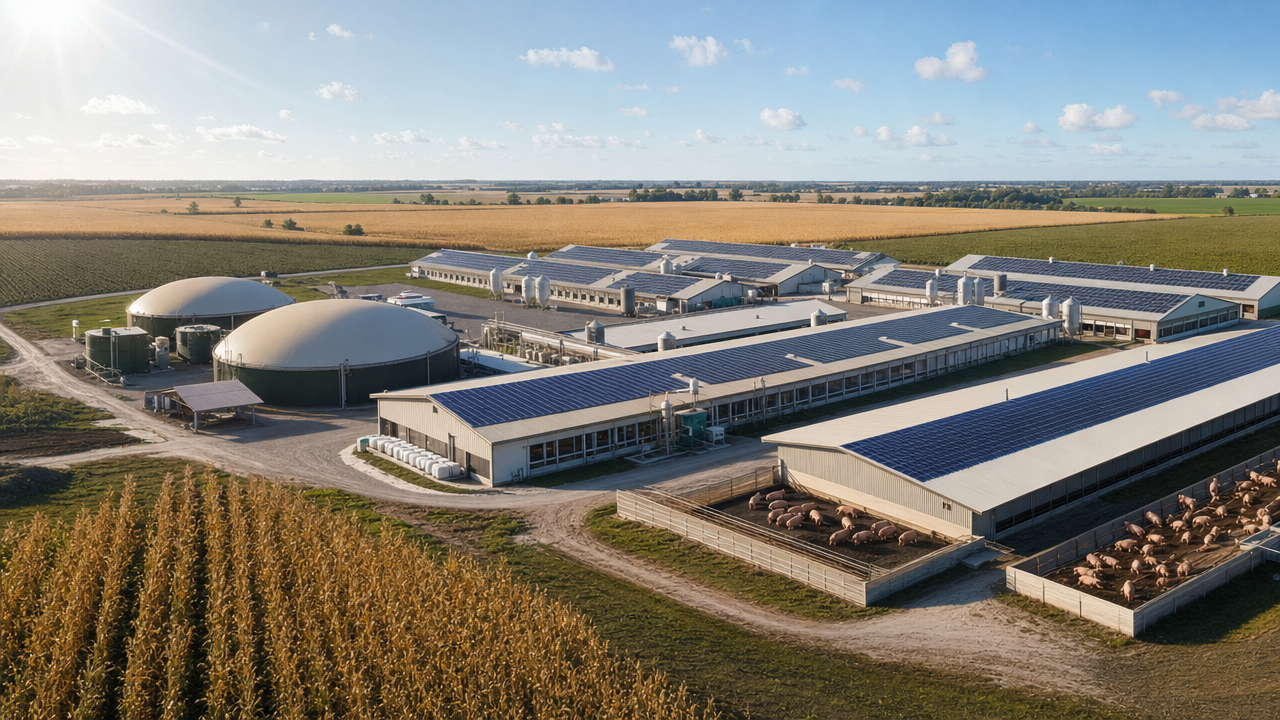

Executive Summary China's Feed and Livestock Industry: 342 Million Tonnes, 4 Trillion RMB
Three hundred forty-two million tonnes of industrial feed, producing four trillion RMB in livestock value.
China's annual industrial feed consumption has surpassed 342 million tonnes — more than any other country, accounting for roughly 24% of global industrial feed output. The livestock sector supported by this feed reached a combined output value of approximately 4 trillion RMB in 2025: pig farming around 1.5 trillion, poultry around 1.4 trillion, aquaculture around 700 billion, and ruminants around 400 billion. From pig pens to fish ponds, from slaughterhouses to supermarket shelves, this value chain feeds 1.4 billion people and has nurtured a cohort of listed companies with market capitalizations in the hundreds of billions of RMB.
But this chain has never lacked for drama.
The pig cycle is China's most famous agricultural pendulum. It turns roughly every four years: when prices rise, farmers rush to add capacity; when losses mount, they liquidate herds. In 2024, the current cycle bottomed out — national live pig prices briefly fell below 13 RMB/kg, with large-scale farms losing over 100 RMB per head. In the first half of 2025, the industry staged a mid-cycle recovery, prices recovering toward breakeven. Entering 2026, the market shows a "low-front, high-back" pattern, with signs of a price floor in Q2 as breeding sow destocking gradually takes effect.
Meanwhile, the industry's structure is undergoing deep transformation: Muyuan Foods slaughtered 77.98 million pigs in 2025, approximately 11% of national output — a scale surpassing the entire industry of any single other country; Haid Group's feed sales exceeded 32.08 million tonnes, with international revenue share rising rapidly and its overseas subsidiary Haid International having filed for a Hong Kong IPO; WH Group/Shuanghui, backed by the world's largest pork enterprise Smithfield, bridges Iowa's curing lines to Henan's slaughterhouses.
This report focuses on the entire "feed + livestock" value chain — from soybeans and corn as raw materials, through industrial production of compound feed, concentrate feed, and premixes, to large-scale farming of pigs, poultry, aquatic species, and ruminants, through slaughter, processed meat products, and cold-chain distribution. Twelve chapters anatomize the scale, competitive landscape, technological evolution, and risks of this value chain, providing domestic and international readers a comprehensive analysis based on full-year 2025 data and 2026 first-half dynamics.
The report aims to clarify several core questions:
First, true industry scale. China's 2025 industrial feed output reached 342.25 million tonnes, up 8.6% year-on-year; total industry output value was approximately 1.29 trillion RMB. Atop this 1.29 trillion RMB in feed output value, livestock output value was approximately 4 trillion RMB — their combined total exceeds 5.3 trillion RMB, roughly half of total agricultural output value. This scale means China converts nearly half its grain into animal protein, approaching the limit of what major agricultural nations can achieve.
Second, the fracture line in competitive dynamics. This is not an industry controlled by one or two giants, but one in the midst of a transition from extreme fragmentation (some 9,000 feed companies, over 4 million pig farms) toward oligopolistic concentration (feed CR5 currently 22–25%, pig CR5 approximately 20%). The speed of this transition accelerates sharply in adverse winds: every price trough is a structural opportunity for the leaders to absorb share. The 2025 trough will serve as the prelude to a CR concentration jump in 2026–2030.
Third, repositioning on the global stage. JBS (Brazil) posted FY2025 revenue of $86 billion, the world's absolute meat industry king; Tyson Foods (US) $54.4 billion; WH Group (Hong Kong, controlling Smithfield and Shuanghui) $28 billion. Chinese meat enterprises still trail the global first tier, but their overseas pace has far exceeded market expectations — Haid Group's Vietnam feed footprint, New Hope's Indonesia positioning, and Saint Farmer's domestic consolidation via acquisition of Cargill China's white-feather broiler business are all real moves in the global competitive landscape.
Fourth, the widening technology gap. Muyuan's fully loaded cost per kg of pork is 12 RMB, Wens' approximately 12.2–12.4 RMB. These numbers don't reflect management skill differences — they reflect a technological platform gap: whole-genome breeding with compressed generation intervals, AI-vision-based precision feeding, biogas energy recovery. Each technological advance widens the cost chasm between industry leaders and small-scale operators, until the latter entirely lose the economic viability to compete.
Fifth, risks are real and nonlinear. African Swine Fever (ASF) still appeared sporadically in 2025; South American drought caused soybean prices to spike 8% in a single month in April; the US H5N1 avian influenza epidemic in 2024–2025 culled 150 million birds and indirectly lifted Chinese white-feather broiler prices temporarily. These events confirm: in an industry characterized by heavy import dependence for raw materials, endemic animal disease challenges, and compounding overseas geopolitical risk, every strategy must be stress-tested under adverse scenarios, not just appraised under base-case assumptions.
Chapter 1 Definitions, Classification, and Full Industry Chain Panorama
I. Three Core Industrial Feed Categories
Industrial feed falls into three levels based on nutritional completeness and how it is used on the farm:
Compound feed (配合饲料) is the most nutritionally complete type, containing grain, protein meals, vitamins, minerals, and additives blended to precise ratios. Farmers pour it directly into feed lines or troughs with no mixing required. Compound feed dominates volume (approximately 80% of industrial feed output), primarily supplied in bulk form to large-scale farms directly.
Concentrate feed (浓缩饲料) omits the primary energy ingredients (corn, wheat). Farms blend it themselves with locally sourced grains. Typically priced at 4,000–6,000 RMB/tonne, it is mainly suited to small and medium farms that can source cheap local grain but lack the ability to formulate full recipes. With the accelerating withdrawal of small farms, concentrate feed's share is gradually declining.
Premix feed (预混料) contains only the micronutrient fraction — vitamins, trace minerals, amino acids, and functional additives. Farms add it to their own grain-plus-protein blend. Priced at 6,000–15,000 RMB/tonne depending on species and function, premix has the highest unit value among the three levels and the highest technical barrier to formulation.
II. Four Livestock Categories
Pigs account for approximately 50% of China's total meat consumption and approximately 39% of industrial feed demand. The pig cycle — a roughly 3.5–4.5-year supply-demand oscillation — makes this the most volatile segment.
Poultry (white-feather broilers, yellow-feather chickens, laying hens, ducks, geese) accounts for approximately 26% of meat feed demand and provides eggs for approximately 15% (layer feed). With a 42-day slaughter cycle for broilers, the poultry segment adjusts supply-demand imbalances in 2–3 months, making it far less cyclically volatile than pigs.
Aquaculture encompasses over 60 major farmed species (grass carp, crucian carp, tilapia, shrimp, crab). China's aquaculture output is approximately 64 million tonnes, accounting for over 60% of global farmed aquatic product production. Special aquatic feeds (membraned pellets for shrimp, extruded pellets for sea bass and grouper) command the industry's highest unit prices and margins.
Ruminants include dairy cattle (producing 38 million tonnes of raw milk annually), beef cattle (780 thousand tonnes of beef), and sheep/goats (525 thousand tonnes of mutton). Feed demand is approximately 4.4% of total, but the per-unit profit profile differs sharply from pigs and poultry.
III. Seven-Layer Value Chain Architecture
Layer 1: Raw materials — corn, soybeans (import-dependent at approximately 105 million tonnes/year), fish meal, amino acids, vitamins. Raw material costs account for 75–85% of compound feed cost.
Layer 2: Feed production — compound feed, concentrate, and premix factories. Approximately 9,000–10,000 enterprises competing intensely, with concentration rising fast.
Layer 3: Breeding/genetics — nucleus breeding herds, grandparent flocks, parent flocks, aquatic seed farms. The highest technical barrier layer; core germplasm (white-feather broiler great-grandparent lines, top-tier pig genomic selections) is the industry's strategic high ground.
Layer 4: Large-scale farming — standardized farms encompassing self-farrow-to-finish models (Muyuan) and company-plus-farmer contract models (Wens), plus pond aquaculture and recirculating aquaculture systems.
Layer 5: Slaughter processing — converting live animals into chilled, frozen, or further-processed products.
Layer 6: Cold-chain logistics — refrigerated trucks, cold storage, hub facilities delivering chilled or frozen products nationwide.
Layer 7: Brand consumption — supermarkets, wet markets, food service, and e-commerce as the final consumer interface. Shuanghui's Wangzhongwang, Saint Farmer's white-feather chicken, and Wens' free-range chicken are among the few agricultural products with genuine consumer brand equity.
Chapter 2 Global Competitive Landscape: Footprints and Logic of Meat Giants
I. Four Global Poles — China Dominates Pigs
Global annual meat output (pigs, cattle, poultry, sheep combined) is approximately 340 million tonnes. The US, Brazil, China, and the EU are the four major production poles, together exceeding 70% of global output.
China leads in pork and aquaculture: approximately 58 million tonnes of pork (≈50% of global output) and approximately 52 million tonnes of farmed aquatic products (>60% of global farmed aquaculture). The US leads in beef (approximately 13.5 million tonnes) and chicken (tied with Brazil). Brazil dominates meat exports — JBS, Marfrig, and BRF together form the "Brazilian Meat Triad," with beef and chicken export volumes ranking first or second globally. The EU competes on quality and animal welfare standards.
In feed, China's 342.25 million tonnes in 2025 represents approximately 24.4% of the global total of approximately 1.4 billion tonnes — more than the US (approximately 300 million tonnes) and EU (approximately 140 million tonnes) combined.
II. JBS SA: $86 Billion — The World's Largest Meat Empire
JBS SA (NYSE: JBS) achieved FY2025 net revenue of $86.0 billion (+12% YoY); net income $2.02 billion; adjusted EBITDA $6.8 billion (7.9% margin) — its first year above $86 billion and the second consecutive year with net income over $2 billion. Key business units: Seara (Brazilian poultry) posted 16.9% EBITDA margin, a record high despite temporary import restrictions from China and Europe. JBS USA Beef was squeezed by elevated live cattle procurement costs (US cattle inventory cycle low). Pilgrim's Pride (NASDAQ: PPC) benefited from tight US chicken supply following avian influenza cullings.
III. Tyson Foods: Structural Recovery in FY2025
FY2025 (October 2024–September 2025) revenue approximately $54.4 billion (+2.1% YoY); non-GAAP EPS $4.12 (+33% YoY), beating expectations. Chicken was the top performer, benefiting from over 150 million poultry culled in the US H5N1 outbreak plus declining corn/soybean costs. Beef remained a drag — negative margins from elevated live cattle procurement. Management guided FY2026 adjusted operating income to improve 15–20% on sustained chicken price strength.
IV. WH Group and Smithfield: The Sino-American Pig Pivot
WH Group (HK 0288) acquired US-based Smithfield Foods for $7.1 billion in 2013 — still the largest-ever Chinese corporate acquisition in the US. FY2025 total revenue $28.0 billion (+8.0%); net profit attributable to shareholders $1.57 billion (−2.8%). The small profit decline reflected: China's sluggish consumer market (processed meat volumes −3.8%) and narrowing North American pork margins. WH Group's strategic asset is the "Sino-US pork arbitrage conduit" — when Chinese pork prices are high, Smithfield supplies imports; when US prices are favourable, WH exports back to China. No other Chinese or US pork enterprise possesses this bilateral capability.
V–VIII. BRF, Marfrig, Cargill, ADM,丸紅, Sumitomo and the Global Framework
BRF SA (BRFS) and Marfrig (parent of National Beef) represent the Brazilian second tier, together covering chicken, pork, and beef exports to China, the Middle East, and Southeast Asia. Private agricultural giants Cargill ($170+ billion estimated revenue) and ADM control grain origination, crushing, and amino acid production at global scale. Japanese trading houses Marubeni and Sumitomo are accelerating direct investment in Southeast Asian aquaculture and poultry feeds — direct competition with Haid and New Hope.
Key comparison table:
| Company | Country | Core Business | FY2025 Revenue | Character |
|---|---|---|---|---|
| JBS | Brazil | Beef + Poultry + Pork | $86B | World's largest, multi-species, multi-geography |
| Tyson Foods | US | Chicken + Pork + Beef | $54.4B | N. America leader, QSR supply chain core |
| WH Group/Smithfield | China/US | Pork | $28B | World's largest pork enterprise |
| BRF | Brazil | Poultry | ~$12B | World's largest chicken exporter |
| Haid Group | China | Feed | RMB 128.5B | Feed volume leader, overseas accelerating |
| New Hope Liuhe | China | Feed + Livestock | RMB 106.9B | China's #2 feed, Vietnam/Indonesia footprint |
| Muyuan Foods | China | Pig farming | RMB 144.1B | World's largest single-entity pork producer |
Chapter 3 PEST Analysis: Four-Dimensional Forces Driving the Industry
I. Policy (P): From Feed Antibiotic Ban to Twin Carbon
Feed antibiotic ban (July 1, 2020): China banned all growth-promoting antibiotics from compound, concentrate, and premix feeds, with no transitional grace period. This was the most sweeping policy transformation in the Chinese feed industry since the country's feed regulations were first enacted. The immediate effect was a nationwide wave of formula upgrades — enzyme complexes, organic acids, probiotics, Chinese herbal additives replacing the removed antibiotics. Companies that had invested in replacement additive R&D ahead of the mandate gained 12–24 months' first-mover advantage.
Dual carbon + manure resource utilization: Under the carbon peak (2030) and carbon neutrality (2060) targets, livestock methane and nitrous oxide emissions are now in regulatory scope. Large-scale farms with biogas engineering systems are advantaged: Muyuan's biogas power generation exceeded 600 million kWh in 2025, equivalent to approximately 300 million RMB in avoided electricity costs.
Grain security and low-protein diets: The government's "soybean import reduction" target mandates deploying synthetic amino acids (lysine, threonine, tryptophan) to replace high-soybean-meal diets, targeting soybean meal usage reduction from approximately 155 million tonnes (2025) to approximately 130 million tonnes (2030).
II. Economic (E): Pig Cycle, Grain Prices, Consumer Spending
2025 pig cycle phase: Live pig prices averaged approximately 14–15 RMB/kg nationwide in 2025, near the low-end of the cost range for leading firms (Muyuan: 12 RMB/kg) but well below marginal producers' costs (16+ RMB/kg). Breeding sow inventory (39.61 million head at year-end) remained at the upper end of the normal range, suggesting no dramatic supply contraction — meaning the price recovery in 2026 will likely be modest rather than explosive.
Corn and soybean prices declined: Domestic corn averaged approximately 2,200–2,350 RMB/tonne in 2025 (down 150–200 RMB vs. 2024); domestic soybean meal averaged approximately 3,300–3,500 RMB/tonne (down 200–300 RMB). Combined, this lowered raw material costs by approximately 120–180 RMB/tonne of compound feed — the primary driver of industry-wide margin improvement in 2025.
III. Social (S): Food Safety Escalation, Consumption Upgrade, Pet Economy
Consumer awareness of food safety reached a structural inflection point after a series of scandals (Shuanghui's "clenbuterol incident" 2011; various aquaculture chemical-residue issues). Today, large-scale farms with traceable supply chains command premium pricing from B-channel buyers (supermarket chains, QSR groups), while unbranded, untraceable product increasingly struggles for shelf space.
Per-capita beef consumption (approximately 6 kg/year) remains far below US levels (26 kg), while rising income levels create a steady demand upgrade toward beef, premium seafood, and processed meat products.
China's pet population exceeded 240 million cats and dogs in 2025 (+15% YoY), driving pet food demand growth of approximately 18% — the fastest-growing feed sub-segment by percentage.
IV. Technology (T): AI, Genomics, Precision Nutrition
AI-vision body weight estimation (±2 kg accuracy, real-time updates), automated environmental control systems maintaining ±0.5°C temperature precision, whole-genome selection (GS) technology compressing generation intervals from 2 years to 1 year for pigs — these are no longer pilot demonstrations but production-scale deployments in leading company farms in 2025.
Haid Group's 2025 R&D expenditure was RMB 971 million. Muyuan's genomic breeding center has accumulated over 150,000 genotyped pigs — the world's largest commercial pig genomic database.
Chapter 4 China Market Size: Structural Logic Behind the Numbers
I. 2025 Feed Output: 342.25 Million Tonnes
Industrial feed total output reached 342.25 million tonnes (+8.6% YoY), the second consecutive year of 8%+ growth. Bulk compound feed surpassed 50% of total (53.4%), marking the structural completion of the shift from "bagged feed through distributors to small farms" to "bulk direct supply to large farms."
By species: Pig feed approximately 133 million tonnes (+15.6%); poultry meat feed approximately 88 million tonnes; layer feed approximately 50 million tonnes; aquafeed approximately 22 million tonnes (+2.7%); ruminant feed approximately 15 million tonnes; pet feed approximately 2.8 million tonnes (+17.9%).
Total industry output value: 1.291 trillion RMB (+2.3%) with revenue at 1.235 trillion RMB (+2.9%). Output value grew slower than volume — reflecting raw material cost decreases being partially passed through to customers under competitive pressure.
II. Livestock Total Output Value: ~4 Trillion RMB
Pig farming: approximately 1.5 trillion RMB (71 billion pigs × approximately 58 million tonnes of pork). Poultry: approximately 1.4 trillion RMB (55 billion broilers + 40 billion yellow-feather chickens + egg production). Aquaculture: approximately 700 billion RMB (72 million tonnes total production). Ruminants: approximately 400 billion RMB (dairy + beef + mutton). Combined livestock output value approximately 4 trillion RMB.
III. Concentration: CR5 from Fragmented Toward Oligopoly
Feed CR5 approximately 22–25% (Haid, New Hope, Tongwei feed, Tangrenshen, DBN Group). Compared with US (approximately 55%) and Europe (approximately 50%) this is low, but rising: each year 500+ small feed factories close, and the top firms absorb the freed-up market share. By 2028–2030, feed CR5 is forecast to reach 35–40%.
Pig farming CR5 approximately 20–21%: Muyuan 77.98M, Wens 40.48M, New Hope 17.55M, Justar, Tiankang Bio top five combined approximately 146 million head = approximately 20% of national output. The top 30 enterprises have approximately 39% share, up 6 percentage points from 2024 — the largest single-year gain in five years.
IV. Three-Tier Price Lag Mechanism: The Physical Root of the Pig Cycle
Tier 1 (1–2 months): Feed raw material price changes → feed ex-factory price adjustment.
Tier 2 (6–12 months): Feed cost change → farmer capacity decision (expand/contract) → live pig slaughter change → pig price change. From sow breeding to commercial pig slaughter is approximately 6–7 months — hence this lag.
Tier 3 (1–2 months): Live pig slaughter change → pork market price → CPI data.
Three tiers stacked: minimum cycle oscillation period approximately 14–18 months; observed full cycle (peak to peak) typically 3.5–4.5 years.
Chapter 5 Value Chain Dissection: Seven Layers of Value Transfer from Cornfield to Supermarket
I. Raw Materials: The Global Supply Chain
Soybeans: China imported approximately 105 million tonnes in 2025, approximately 65% from Brazil. Soybean → crushing → soybean meal (protein source) + soybean oil. Soybean meal is the primary protein ingredient in compound feed, accounting for approximately 20% of standard pig feed formulas.
Corn: China is approximately 95% self-sufficient in corn (~290 million tonnes annual output). At approximately 55% of pig compound feed, corn is the largest single feed ingredient.
Fish meal: China imports approximately 130–140 thousand tonnes/year (mainly from Peru, Chile). At approximately 3–5% inclusion in premium aquafeeds and high-protein shrimp feeds, it commands 12,000–15,000 RMB/tonne — 3–5× the price of corn and soybean meal.
Key additives: Lysine (Fufeng Biotechnology #1 globally with approximately 1 million tonnes/year capacity), Vitamin E (Newhope approximately 30–35% global share), Vitamin A (Zhejiang Medicine). China's dominance in amino acids and vitamins gives Chinese feed formulators a strategic cost advantage that foreign feed companies cannot easily replicate.
II–IV. Feed Manufacturing, Genetics/Breeding, Scale Farming
Feed manufacturing quality system: ISO 9001 + HACCP are standard at leading firms. Near-infrared (NIR) spectrometers test each incoming raw material batch within 3–5 minutes, enabling "batch-dynamic formulation" — adjusting recipes to actual nutrient content rather than average database values.
Whole-genome selection: Muyuan's breeding center (150,000+ genotyped pigs) achieves genetic progress speed comparable to Danish and US top-tier breeding companies. "Saint Ze 901" — China's first self-developed white-feather broiler line certified in 2025 — is still approximately 8–10% behind Cobb 500 and Ross 308 in performance but represents a strategic breakthrough against import dependency.
Two farm models: Self-farrow-to-finish (Muyuan model — full biological security control, consistent management, higher capital intensity) vs. Company-plus-farmer (Wens model — asset-light, but biological security relies on contracted farmers, performance variance higher).
V–VII. Slaughter, Cold Chain, Value Distribution
Shuanghui Development operates China's largest single-site meat processing complex in Luohe, Henan: 20,000+ heads/day slaughter capacity, full cold chain distribution covering 400 cities. Shuanghui's Wangzhongwang pork sausage, in production since 1995, commands 50%+ market share in the Chinese cooked sausage market — one of the deepest consumer brand moats in Chinese food.
Value distribution (normal year gross margins): Feed raw material processing 3–6%; compound feed 6–10%; pig farming at cycle peak 20%+, at cycle trough negative; slaughter 2–5%; branded cooked products (sausage) 20–30%; cold chain logistics 8–15%. The closer to the consumer and the higher the brand premium, the higher and more stable the margin.
Upstream monopolies: China produces >60% of the world's lysine and >70% of threonine; Newhope and Zhejiang Medicine together control approximately 30–35% of global Vitamin E and significant Vitamin A supply. This means global feed formulators' micronutrient costs are substantially influenced by Chinese producer pricing decisions.
Chapter 6 Key Enterprise Deep Dives: Fifteen Companies' 2025 Report Cards
I. Haid Group (002311): Global Feed Volume Leader
FY2025 highlights: Revenue RMB 128.47 billion; feed sales 32.08 million tonnes (+6.3%); overseas feed external sales 3.46 million tonnes (+47%); filed for HK listing of Haid International. Aquafeed remains core: shrimp feed, sea bass feed, and grouper feed at 2–3× standard fish feed unit price.
Vietnam feed production >6 million tonnes/year. Estimated overseas feed EBITDA margin 10–12% vs. domestic 8–9%: overseas margin premium reflects technology pricing power in less competitive markets plus lower Vietnamese labor costs.
II. New Hope Liuhe (000876): China's #2 Feed, Overseas at Scale
FY2025 revenue RMB 106.9 billion; feed volume 20+ million tonnes; overseas feed production (Vietnam, Indonesia, Philippines, Bangladesh) over 10 million tonnes (including locally processed volume). Vietnam remains core overseas market; pig farming full-cost approximately 14 RMB/kg, improvement ongoing. New Hope acquired Zhengbang Technology through judicial restructuring in 2023, substantially expanding its pig capacity.
III. Tongwei (600438): Feed + Solar — A Conglomerate in Crisis
FY2025 revenue RMB 84.1 billion; aquafeed 6.53 million tonnes; net profit attributable to shareholders −RMB 9.553 billion — polysilicon price collapse drove massive solar-segment losses. Feed business earned approximately 2 billion RMB profit; solar losses completely overwhelmed it. A cautionary tale of cross-industry diversification with zero synergies between feed and photovoltaic manufacturing.
IV. Muyuan Foods (002714): The World's Largest Single-Entity Pork Producer
FY2025 slaughters: 77.98 million pigs; net profit RMB 15.8 billion; fully loaded cost approximately 12 RMB/kg — industry's lowest. Biogas power generation exceeded 600 million kWh. Whole-genome breeding center with 150,000+ genotyped pigs is the foundation of its cost and performance advantage. With a national presence across 17 provinces, Henan remains the core base (35%+ of total output).
V. Wens Foodstuff (300498): Pig + Poultry Double Buffer
FY2025: 40.48 million pigs slaughtered; net profit RMB 5.266 billion (−43.3% YoY); farming cost 12.2–12.4 RMB/kg. The pig segment dragged results, but poultry (Wens Poultry) stabilized performance as chicken margins held up during the corn/soybean cost tailwind. The dual-business model is not a diversification decision — it's a structural hedge.
VI. Saint Farmer (002299): White-Feather Broiler's "Guangze Model"
FY2025 revenue RMB 20.094 billion (+8.1%); net profit RMB 1.38 billion (+90.6%). Deep-processed products (precooked meals, chicken patties, fried chicken semi-finished) grew 40%+ in volume. Export to Japan and US QSR chains +40%. The "Guangze county closed-loop model" — from great-grandparent flocks through slaughter through deep-processing all within one county — creates a logistics-cost and biosecurity moat that cannot be replicated by competitors elsewhere.
VII. Shuanghui / WH Group: Brand Meat's Deepest Moat
Shuanghui Development (000895): H1 2025 revenue RMB 28.4 billion; annual net profit approximately 49–50 billion RMB; dividend payout ratio 96.94%. Net margin 8–9%, ROE consistently >20%. Wangzhongwang at 50%+ cooked sausage market share is structurally unthreatened: 30 years of channel depth and consumer habit inertia outweigh capital or quality advantages of any new entrant.
WH Group (HK 0288): FY2025 revenue $28.0 billion; net profit $1.57 billion (−2.8%). Smithfield (US) contributes >50% of WH Group's operating profit, offsetting China's consumer softness. The "Sino-US pork arbitrage" mechanism provides a market-access capability unavailable to any purely domestic or purely foreign competitor.
Chapter 7 Industrial Clusters: From Guangdong Pig Farms to Henan Slaughterhouses, from Vietnam to Brazil
China's feed and livestock industry is geographically concentrated, not uniformly distributed. Cluster formation is the product of raw material proximity, consumer market access, policy incentives, and anchor enterprise footprints.
Guangdong: China's aquafeed center; Pearl River Delta shrimp and yellow-feather chicken demand is the foundation. Haid HQ in Guangzhou, with access to South China Sea fishing for fishmeal and proximity to Southeast Asian export ports (3–5 days to Vietnam/Indonesia by container).
Henan: China's undisputed pork province — Muyuan (Nanyang), Shuanghui/WH Group (Luohe), and Vanke International's Henan roots all converge here. Henan's pig slaughter capacity accounts for 15–20% of the national total. The "Luohe model" — concentrated slaughter + branded processing + 400-city cold chain distribution — is the gold standard of Chinese meat industry integration.
Sichuan + Chongqing + Yunnan-Guizhou: New Hope's home base. Rich in traditional Chinese herbal feed additive raw materials (astragalus, isatis). Gateway to beef cattle in the Tibet plateau (Liangshan, Tibetan yak).
Jiangsu + Shandong + Fujian: White-feather broiler slaughter and export clusters. Xiangtan (Zhucheng) "Shandong model" for Japan-Korea chicken exports. Saint Farmer's Fujian Guangze closed-loop complex.
Northeast: Corn and soybean origin. Concentrated dairy cattle farming (Inner Mongolia — Yili, Mengniu; Heilongjiang — Bright, Wandashan).
Overseas clusters: Haid's Vietnam network (20+ factories across Ho Chi Minh, Hanoi, Da Nang) has begun forming the nucleus of a regional Southeast Asian aquafeed industry cluster, with local packaging, equipment maintenance, and technical training services now available locally — a cross-border cluster replication model.
Tianxia Gongchang's database of 4.8 million verified in-production Chinese factories covers the full breadth of this industry map — from compound feed and aquafeed manufacturers, to pig slaughter and poultry slaughter plants, making it the most granular geographic data layer available for supply-chain and cluster analysis.
Chapter 8 Sub-Sector Deep Dives: Nine Competitive Racetracks
1. Pigs — Scale Farms + Smart Technology: The "smart pig farm" — AI body-weight estimation, automated feeding, automated environmental control, whole-genome tracking — is production-scale standard at large farms in 2025. Full system cost approximately 100–200 RMB/head capacity; payback 5–8 years through labor savings and FCR improvement.
2. White-feather broilers: "Saint Ze 901" domestic breed approved 2025 — still 8–10% below Cobb 500/Ross 308 in performance but a strategic reserve. CR is high (>80% of slaughter in top 5 firms). 42-day cycle = fast supply-demand correction.
3. Yellow-feather chickens: Hyper-fragmented, region-locked breeds with geographical-indication protection. Livi Poultry (300761) is the only sizable listed player. Premium over white-feather 30–60%.
4. Laying hens: 16,000+ farms nationwide, CR5 <20%. Short transport radius for fresh eggs keeps regional fragmentation structural.
5. Shrimp (Litopenaeus vannamei): High risk/high reward. FCR can be 1.4 in good ponds; a single disease outbreak can wipe out the entire batch. US tariff hike of approximately 15% on Chinese shrimp pressuring exports; Vietnam and Ecuador gaining market share.
6. Tilapia + Salmon: Tilapia — China exports approximately 40–50% to the US (boneless fillets); Tongwei and Haid are key feed suppliers. Salmon — 90%+ of China's consumption imported; domestic RAS attempts at sea bass and Atlantic salmon ongoing but electricity cost limits economics.
7. Ruminants: Dairy destocking (−5–8% YoY 2025) sets up price recovery in H2 2026. Beef cattle: 18–24 month cycle vs. pig's 6-month cycle, making large-scale integration economically harder. Domestic beef still short approximately 120–150 thousand tonnes filled by imports (Brazil, Australia, Argentina).
8. Antibiotic replacement: Enzyme complexes + organic acids + probiotics = the standard replacement package. Chinese herbal additives benefit from policy carve-out, forming a unique ~30 billion RMB domestic market. Key companies: Fufeng (enzymes), Zhengda (organic acids), Kaipu (probiotics).
9. Overseas manufacturing: Haid Vietnam's estimated gross margin 10–12% (above domestic 8–9%) because technology premium pricing is possible in under-competitive markets, plus lower local labor costs.
10. Pet food — the #10 growth engine: 240 million pets; RMB 1.5 trillion pet food market; pet feed gross margins 25–40% vs. 5–8% for livestock feeds. Domestic brands (Myfoodie, Flagship) eroding imported brands (Royal Canin, Hill's) market share via e-commerce. Export OEM to US and Europe already >RMB 10 billion/year.
Chapter 9 Technology Roadmap: From AI Pig Recognition to Genome Breeding
AI precision farming: Body weight AI (±2 kg), anomaly behavior detection (disease pre-warning 24–48 hours before clinical onset), precision feeding (FCR improvement approximately 0.15–0.20 for pigs, saving 8–15 kg feed/head), automated HVAC control (reduce heat stress loss 5–8% annually). Investment approximately 100–200 RMB/head capacity, payback 5–8 years.
5G industrial IoT: Enabling real-time 4K multi-camera feeds from pens, AGV manure removal in fully-enclosed multistory pig buildings, remote expert surgical guidance for remote farm staff. Muyuan, Wens have completed core-farm 5G private network rollout.
Feed formulation — LP → AI: Linear programming (LP) has been the industry standard since the 1960s: minimize cost subject to meeting nutrient constraints. Adding NIR real-time raw material testing (batch-dynamic formulation) and machine-learning nonlinear models improves accuracy of LP. Multi-phase precision nutrition (6–10 feeding phases for pigs vs. traditional 3) reduces nitrogen excretion 15–20% and amino acid additive cost approximately 50–80 RMB/head. At 70+ million heads, Muyuan's annual savings potential exceeds 3–6 billion RMB.
Whole-genome selection (GS): Reduces generation interval from 2 years to ~1 year; 40–60% faster genetic progress. China's National Pig Genomic Breeding Center (Muyuan + CAU) with 150,000+ genotyped pigs is the world's largest commercial pig genomic database. For dairy cattle, China Dairy Association's unified database (800,000+ lactation records, 150,000+ genotyped cows) is closing the gap with North American evaluation accuracy.
Biogas engineering: One 10,000-head pig farm generates approximately 2,000–3,000 m³ biogas/day → approximately 3,000–4,500 kWh electricity/day → approximately 540,000–820,000 RMB/year avoided electricity cost. Muyuan: 600M kWh/year biogas power generation in 2025 (≈300M RMB avoided electricity cost). Future carbon trading market credit for methane-capture biogas projects could provide additional non-farming revenue.
Slaughter automation: White-feather broiler lines: >90% automated. Pig lines: approximately 70% automated (jaw opening, backbone sawing, leg-removing — machine-assisted). Dual benefit: 75% labor cost reduction + food safety improvement through minimized cross-contamination.
Veterinary biologics: PCV2 vaccine (Porcine Circovirus type 2 — Pulansco's "Circle Power" brand) is the industry's top-selling single commercial pig vaccine, reducing weaning pig mortality 3–5%. The ASF vaccine remains the holy grail — China's HVRI candidate strain in Phase 3 trials but safety concerns around virulence reversion continue to delay approval. If a safe, effective ASF vaccine reaches market, it would be an epoch-defining breakthrough for the entire global pig industry.
Chapter 10 Risk Map: Beyond the Pig Cycle, What Other "Black Swans" Exist?
1. Pig cycle tail risk: 2026 price rebound may trigger new capacity build — setting up the next downturn by 2027–2028. Breeding sow inventory at year-end 2025 (39.61M head) remains at upper end of normal range, limiting the magnitude of the coming rebound.
2. Raw material price risk: South American drought → soybean +20–40% in 1–3 months (2012, 2021–22 precedents). US-China tariff escalation on US soybeans → Brazil/Argentina substitution adds 5–10 USD/tonne logistic premium. Domestic corn: self-sufficiency ~95%, but extreme weather (2021 multi-region drought) can reduce a single-season crop 8%+.
3. African Swine Fever (ASF): Still appearing sporadically in 2025. No commercially approved vaccine globally. Biological security investment (disinfection tunnels, closed farms, vehicle controls) substantially reduces but cannot eliminate risk. A single large-scale farm outbreak can cause hundreds of millions of RMB in losses not fully covered by insurance limits.
4. Avian Influenza H5N1: US H5N1 outbreak 2024–2025 culled 150M+ birds; China's risk primarily from migratory waterfowl during spring/autumn migrations. Closed-system white-feather broiler houses significantly reduce risk; open yellow-feather chicken farms remain exposed.
5. Overseas political risk: Vietnam/Indonesia local protectionism (ownership caps, procurement preferences), currency controls (VND/IDR long-term depreciation vs. RMB), ASF cross-border spread in Vietnam/Philippines.
6. Consumer confidence and downgrade: Consumption downgrade → shift from fresh pork + beef + shrimp toward frozen chicken + eggs + tofu. B-channel restaurant softness → reduced pork/chicken procurement. Structural hedge: multi-species product mix + exports.
7. Food safety scandal: Shuanghui's 2011 "clenbuterol event" — stock price −40% in 3 trading days. Current risk points: illegal antibiotic residues in small feed factories; cold chain breaks; unofficial slaughter bypass. Large enterprises' traceability systems partially hedge this but small-scale downstream nodes remain blind spots.
8–12. Credit risk, currency risk, climate risk, alternative protein, macro slowdown: High leverage (Muyuan 60–62%, New Hope 62–65% debt-to-assets) constrains strategic flexibility in troughs. RMB appreciation reduces overseas revenue in RMB terms; local currency depreciation erodes purchasing power of overseas earnings. Climate change: increasing frequency of South American drought (soybean) and domestic heat waves (livestock heat stress). Cell-cultured meat: cost still $200–300/kg — no threat before 2030 at minimum. GDP slowdown reduces per-capita premium protein consumption growth rate.
Chapter 11 Forecast 2026–2030: From 3.4 Billion Tonnes Toward 3.5 Billion, From Concentration to Oligopoly
Feed: 350–380 million tonnes by 2030 (CAGR 3–4%). Aquafeed rising from 6% to 8–10% of total; pet feed approaching 5 million tonnes (+17% CAGR continuation); bulk/direct supply further rising to 65%+ of total.
CR5 → 35–40% by 2030: Haid feed sales potentially >40 million tonnes; New Hope >30 million tonnes; two firms together 20%+ share. Each cycle trough accelerates this consolidation.
Pig farming CR5 → 30–35%: Muyuan potentially exceeding 100 million heads; TOP30 share rising from 39% (2025) toward 50% (2030). Total number of pig farms falling from 4+ million to perhaps 2–3 million as small-scale exits continue.
Smart farm penetration → near 100% in large farms: 10,000-head+ farms by 2030. 5,000–10,000 head farms >80%.
Overseas revenue → 20%+ of leading firms: Haid overseas feed potentially 6–8 million tonnes; Haid International HK listing unlocking capital for Africa/South America expansion. Southeast Asian combined Chinese company market share >30%.
Pet food → strategic sub-segment: 500 million tonnes by 2030; 30–40% gross margins compared to feed's 5–8% attracting traditional feed giants via M&A.
ESG compliance → structural requirement from 2026: Mandatory ESG disclosure for A-share companies with market cap >50 billion RMB from 2026. GHG accounting for enteric methane + manure N₂O; water usage reporting; EU EUDR compliance for soy raw material traceability needed for Europe-destined products.
Outlook: From "Big" to "Strong": China's feed and livestock industry is uncontestably the world's largest by volume. The 2026–2030 question is whether it can become globally strong: international brand recognition for Chinese meat products; self-reliant core germplasm (broiler great-grandparent lines); global food safety certifications (EU Organic, US FDA, Japan JAS); ESG ratings supporting international capital access.
Chapter 12 Conclusion: After 342 Million Tonnes of Feed, a Restructuring Industrial Empire
Core judgment: This report answers a single question: what is happening to China's feed and livestock industry?
The answer: a profound structural restructuring, reshaping the industry's map at a visible pace.
Concentration is the dominant theme. Muyuan at 77.98 million head, Wens at 40.48 million, Saint Farmer net profit +91%, Haid feed exceeding 32.08 million tonnes. The shared implication: the larger the scale, the lower the cost, the stronger the cycle-crossing capacity, the higher the capital market valuation premium. Each cycle trough accelerates the withdrawal of smaller operators. This mechanism will not change — only accelerate.
Overseas expansion is the second growth curve. Haid overseas feed sales 3.46 million tonnes in 2025, +47% YoY. New Hope overseas production >10 million tonnes. Not an adventurous gamble but a dual-directional imperative: domestic market approaching saturation, Southeast Asia still at 30–40% farm-scale penetration (2026 Haid International HK listing — a historic marker for Chinese feed industry internationalization).
Technology is the cost moat. AI pig-face recognition, whole-genome breeding, multi-phase precision nutrition — all ultimately expressed in one number: 12 RMB/kg fully loaded pig production cost (Muyuan 2025). This is the integrated output of the industry's technological stack, and the unbridgeable gap keeping small-scale operators permanently behind.
Risks are real. Pig cycle downturn, soybean import dependency, endemic ASF, geopolitical headwinds for overseas business — these are not abstract risk-factor boilerplate, but events actually occurring in 2025: Wens net profit −43% is the direct cost of the pig price trough; Shuanghui China meat volumes −3.8% directly reflects consumer softness; Tyson beef losses are evidence of global supply chain volatility.
This industrial empire's restructuring is far from complete.
Sources and Data
Compiled by the industrial research department. All data cross-verified across multiple sources. Data cutoff: June 2026.
Platform Data (primary): Tianxia Gongchang (www.tianxiagongchang.com): China's B2B database of 4.8 million verified in-production factories, covering feed manufacturing, livestock farms, slaughter processing, and meat products.
Listed company annual reports (2025–2026): Haid Group 2025 Annual Report; Muyuan Foods 2025 Annual Report (77.98M head, RMB 15.8B net profit, RMB 12/kg); Wens Foodstuff 2025 Annual Report (40.48M head, RMB 5.27B net profit); New Hope Liuhe 2025 Annual Report (RMB 106.9B revenue); Tongwei 2025 Annual Report (RMB 84.1B revenue, RMB −9.55B net profit); Saint Farmer 2025 Annual Report (RMB 20.09B revenue, +90.6% net profit); Shuanghui Development H1 2025 Report; WH Group 2025 Annual Results (HK 0288).
Government and industry institutions: China Feed Industry Association (chinafeed.org.cn): 2025 National Feed Industry Development Overview; Ministry of Agriculture and Rural Affairs: monthly pig production statistics, feed antibiotic ban guidance; National Bureau of Statistics: agricultural output value data; National Animal Husbandry Station: monthly breeding sow inventory, seed pig import/export statistics; China Dairy Association: monthly raw milk price tracking; China Fishery Statistical Yearbook.
International sources: JBS SA FY2025 Annual Report; Tyson Foods FY2025 Annual Report (TSN); WH Group HKEx filings; BRF and Marfrig quarterly reports; USDA FAS global trade statistics.
Research reports: China International Capital Corporation "China Agribusiness Grand Navigation Era"; Pacific Securities, Kaiyuan Securities, Shanzheng Securities agricultural sector research 2025–2026.