
On the two-yuan note of China's third series of renminbi, the front face carries an image of a machine tool.
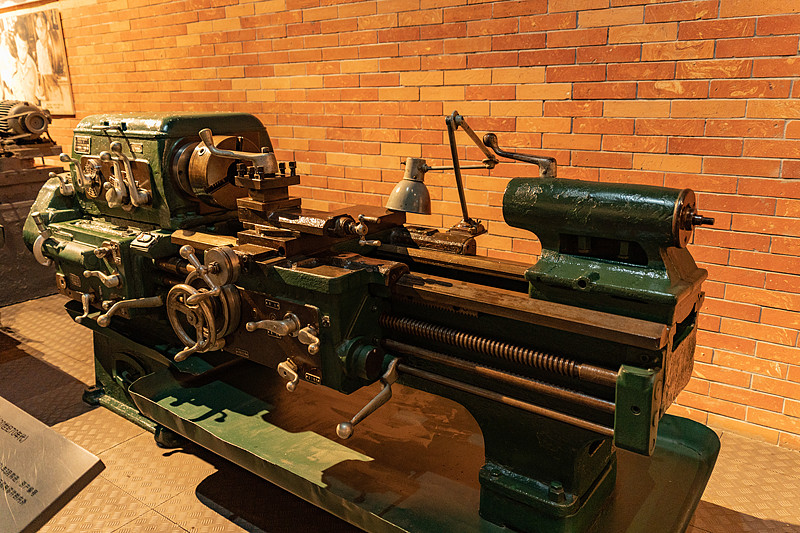
It is an ordinary lathe, model C620-1. In August 1955, workers at the Shenyang No.1 Machine Tool Factory, following drawings supplied by the Soviet Union, brought it into being in a poorly equipped workshop. Before that, most factories in China could do little more than repair worn-out foreign machines; the C620-1 marked the point where the country's machine tool industry truly began. From the next year on, its annual output climbed past two hundred units. Later, it was printed onto the nation's currency. A machine appearing on a country's banknote was, in that era, the highest tribute China could pay to those two words — "machine tool".
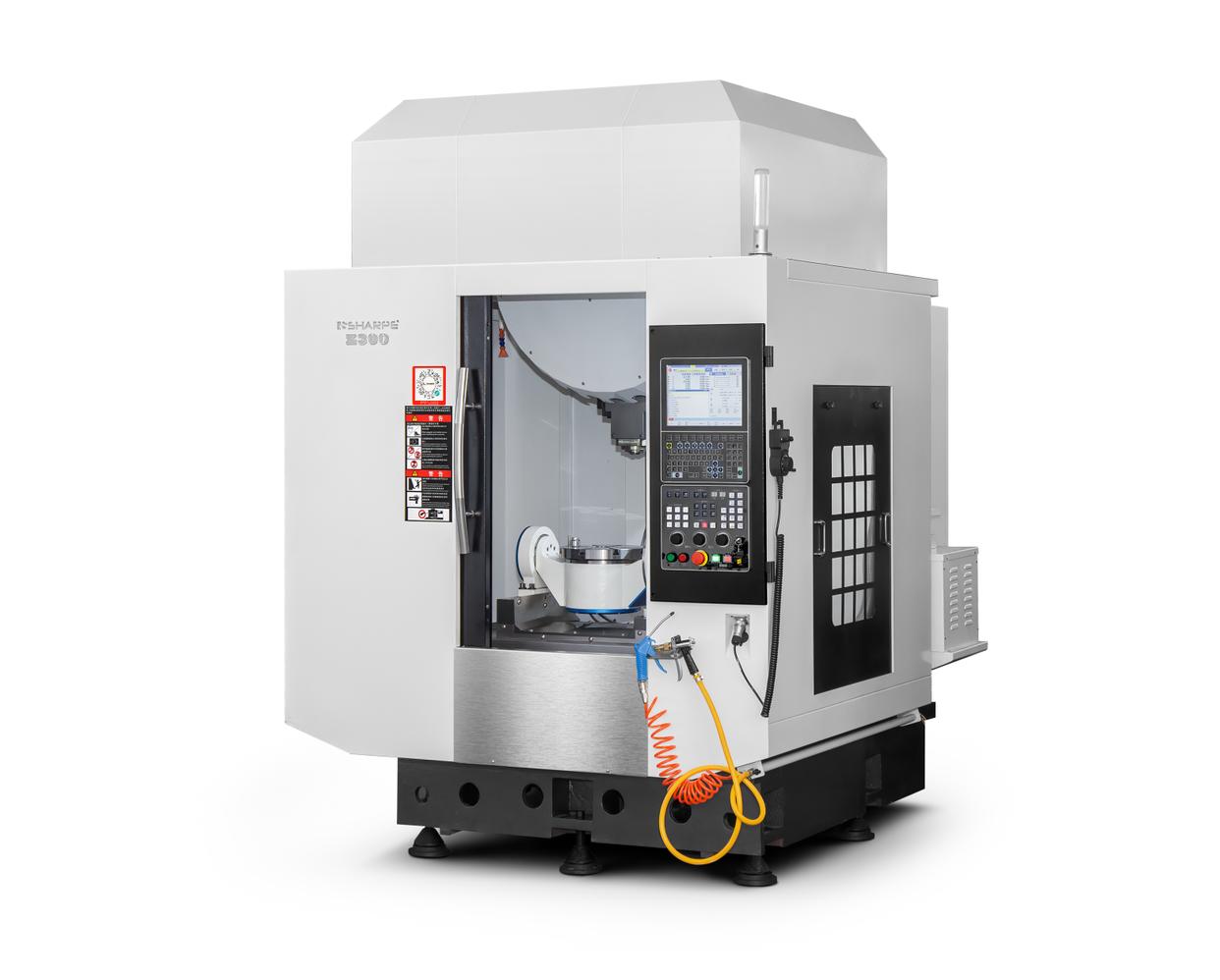
Seventy years later, in 2024, China built one third of all the machine tools in the world. That year, China accounted for roughly 32% of the world's machine tool output and about 33% of its consumption — first in the world on both counts. One in every three machine tools is made in China; one in every three is also used in China. In Dalian, a company called KEDE CNC uses five-axis machining centres of its own making to machine the critical parts of the engine for the C919 airliner — machines that, in the past, could only be imported from Germany or Japan, and that were subject to export controls.
A country that once could barely produce a single conventional lathe — only by copying someone else's drawings, in a backward workshop — took seventy years to reach the point where "one in every three machine tools in the world is made in China". What happened in between?
A machine tool, sitting on a factory floor, is an unremarkable thing — it does not run like a car, fly like an aircraft, or loom large like a ship. But it has another name: the "mother machine of industry". "Mother machine" means it is the machine that makes machines. The crankshaft of a car engine, the blades of an aero-engine, the metal mid-frame of a smartphone, the precision chamber inside a semiconductor tool — all of them, in the end, must pass under the cutting edge of a machine tool and be cut to shape, pass by pass. However high the precision a machine tool can reach, that is the precision ceiling for every factory in the country. The machine tool is the ceiling on the precision of an entire industrial system — you cannot make anything more precise than your own machine tools.
So this is not, in fact, a history of machine tools. It is a history of how the ceiling on China's industrial capability was pushed up, inch by inch.
The starting point of this thread was destitution.
I. The Mother Machine: Why Every Factory Begins Here
Let us first make the matter of the "industrial mother machine" clear; only then will the story that follows stand on solid ground.
What a machine tool does is, in plain terms, simple: it takes a piece of metal stock and, by turning, milling, planing, grinding, boring and drilling, cuts it into a part of precise dimensions and shape. A machine is assembled from a pile of parts; and the great majority of those parts must be machined by machine tools. In ordinary machine building, the share of work done by machine tools accounts for 40% to 60% of the total work of building a machine.
More important still is the transmission of precision. A machine tool is itself assembled from parts; and making those parts, in turn, requires machine tools. Machine tools make machine tools; the mother machine gives birth to the mother machine — that is where the word "mother" comes from. If a country wishes to build more precise machines, it must first have more precise machine tools; and to build more precise machine tools, it must first have mother machines capable of machining high-precision parts. Capability is stacked up one generation at a time, and no one can skip the steps in between.
This also determines a defining trait of the machine tool industry: it accumulates extremely slowly. The technical level of high-end CNC machine tools is regarded as a yardstick of a nation's core manufacturing capability, and each generational advance takes a cycle of roughly twenty years. It is not an industry you can catch up with in three or five years simply by spending money; it tests whether a country is willing to spend decades pushing forward — patiently, even clumsily — in a field that draws little attention.
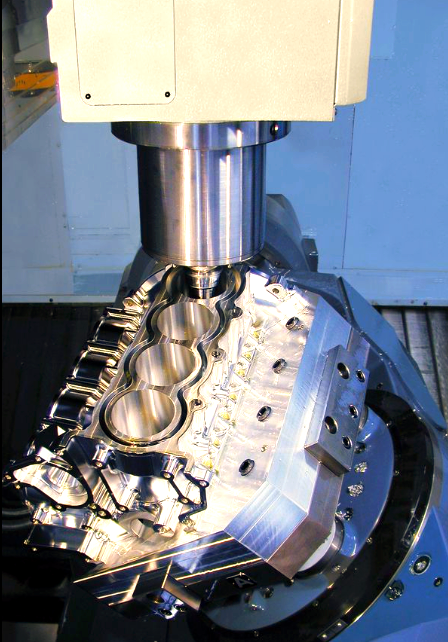
One example shows just how real this "ceiling" is. In an aero-engine, the part that runs hottest and bears the harshest loads is the turbine blade; its surface is a set of twisted free-form curves. Machining it requires keeping the cutter constantly aligned to the angle of the surface while holding the profile error to within tens of micrometres — a fraction of the diameter of a human hair. Only a five-axis machining centre can do this work. Without machines of that class, you cannot machine a qualified blade; without a qualified blade, you cannot build an advanced aero-engine. From a machine tool to an aircraft runs an unbroken, interlocking chain. Wherever the machine tool is stuck, the country's manufacturing is locked at that same level.
Keep this in mind, and then look back at the China of 1949, and you understand how hard its situation was.
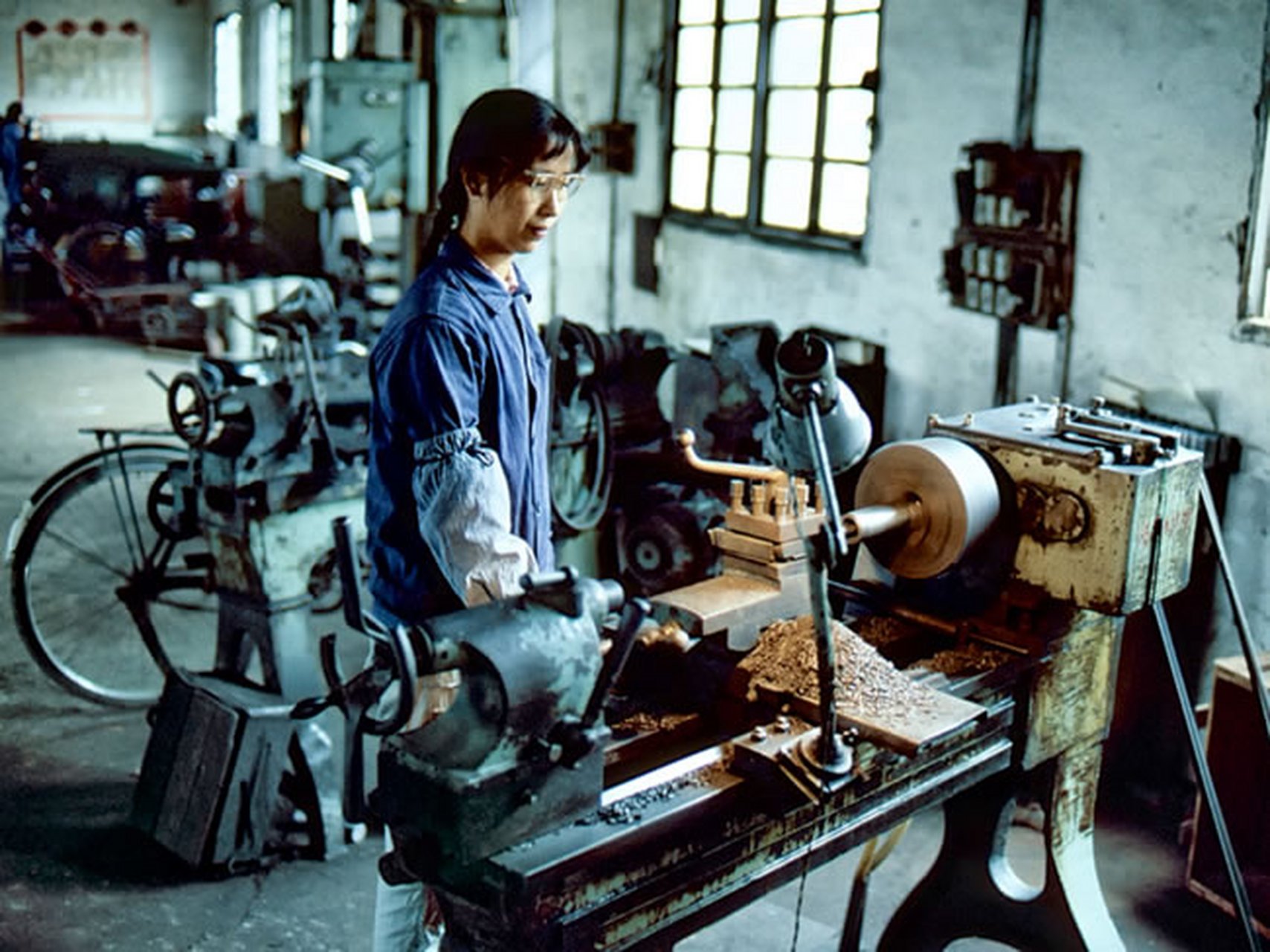
In the year the People's Republic was founded, the country's total annual output of metal-cutting machine tools was just 1,582 units, in fewer than ten varieties, and most of them were old belt-driven machines. 1,582 units — that was the starting point of an entire nation's manufacturing capability. China at that time did not have a single factory that could truly design a machine tool independently; everyday production was sustained, barely, mostly by repairing worn-out foreign machines.
However low the ceiling of the industrial mother machine, that is how low the ceiling is for every factory in the country. To push the ceiling up, you have to begin with making the mother machine itself. That work formally began in 1953.
II. The Eighteen Arhats: Soviet Drawings, China's First Lathe
On 15 May 1953, China and the Soviet Union signed an agreement on Soviet assistance to China's development of its national economy. Under it, the Soviet Union pledged to help China with a batch of key projects — later commonly known as the 156 key projects of the First Five-Year Plan. Several of these belonged to the machine tool industry: the rebuilding and expansion of the Shenyang No.1 and No.2 Machine Tool Factories were both on the Soviet-aided list.
But more important than any single factory was the top-level blueprint. In 1953, the authority in charge of the machinery industry, acting on the advice of Soviet experts and following the principle of "the whole country as one chessboard", set out the division of labour and the direction of development for eighteen backbone machine tool factories. These eighteen plants later came to be known within the industry as the "Eighteen Arhats".
That blueprint of the division of labour is still impressive today. It did not have the eighteen plants each repeat the same lathe; it broke the entire category of machine tools apart, with one plant specialising in one type:
- Shenyang No.1 Machine Tool Factory — horizontal lathes
- Shenyang No.2 Machine Tool Factory (later the Sino-Czech Friendship Factory) — drilling and boring machines
- Shenyang No.3 Machine Tool Factory — turret and automatic lathes
- Dalian Machine Tool Factory — horizontal lathes and transfer machines
- Qiqihar No.1 Machine Tool Factory — vertical lathes
- Qiqihar No.2 Machine Tool Factory — milling machines
- Beijing No.1 Machine Tool Factory — milling machines
- Beijing No.2 Machine Tool Factory — grinding machines
- Shanghai Machine Tool Factory — cylindrical and surface grinders
- Wuxi Machine Tool Factory — internal and centreless grinders
- Jinan No.1 Machine Tool Factory — horizontal lathes
- Jinan No.2 Machine Tool Factory — gantry planers and large forging-and-pressing machines
- Tianjin No.1 Machine Tool Factory — gear shapers
- Chongqing Machine Tool Factory — gear hobbing machines
- Nanjing Machine Tool Factory — turret and automatic lathes
- Changsha Machine Tool Factory — slotting and broaching machines
- Wuhan Heavy Machine Tool Factory — floor-type boring machines and heavy boring-milling machines
- Kunming Machine Tool Factory — boring and milling machines
For a country, at a time when it could barely build a decent machine tool of its own, to first think clearly about "having a complete set of machine tool categories in the future" and then lay out its factories according to that set — this, in itself, is a kind of systemic vision.
The Soviet assistance came as a complete package. It gave drawings, equipment, resident experts, and training. Take the Wuhan Heavy Machine Tool Factory: to teach its workers to operate Soviet machines, the plant sent 2,100 employees in successive groups for training in Qiqihar, Shenyang, Nanjing, Wuxi and elsewhere, and selected 80 cadres and technical staff to study in the Soviet Union. A factory not yet even built, scattering more than two thousand workers across the country to "fetch the scriptures" — this was a scene peculiar to that era. From breaking ground to completion, the Wuhan Heavy Machine Tool Factory came in a year and a half ahead of schedule and saved 19 million yuan in investment.
Learning from the drawings, results came quickly. In August 1955, the Shenyang No.1 Machine Tool Factory produced that C620-1 horizontal lathe. It was not a simple copy — the engineers improved on the Soviet prototype to suit China's needs, bringing its precision up to the world's advanced level of the time. The output of this lathe was 202 units in 1955, rising to more than 4,500 by 1960. Later, it was printed onto the two-yuan note.
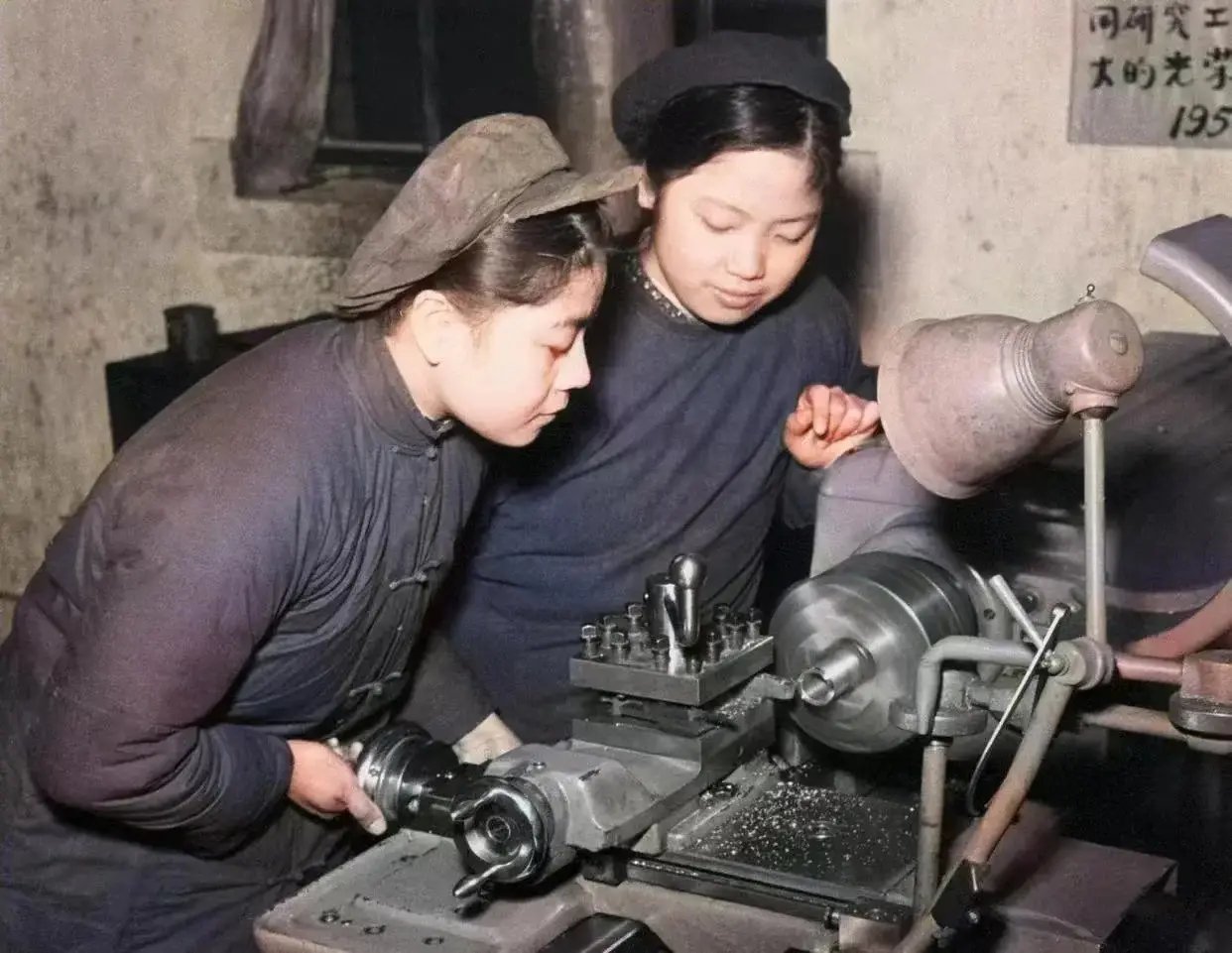
Even more worth recording is 1958: the Beijing No.1 Machine Tool Factory developed China's first CNC milling machine, model X53K1. It was also the first CNC machine tool in all of Asia. The world's first CNC machine tool was born in the United States in 1952; China's came just six years later. For a country that in 1949 could not build even a handful of ordinary machine tools, that "only six years behind" carried great weight.
By the end of 1957, the country was able to produce 204 types of general-purpose machine tools in all, with annual output reaching about 28,000 units. Compared with the 1,582 units of 1949, that was a roughly seventeen-fold increase in eight years. For the first time, China had a respectable base in the matter of "making mother machines" — and by then, the self-sufficiency rate for major machine tool products had reached about 80%.
There is one more episode from this period worth a mention. In 1960, relations between China and the Soviet Union broke down; the Soviet Union withdrew all its experts in China, more than 1,300 of them leaving in batches, and a number of factories still within their technology-transfer period fell into difficulty. Just then, Czechoslovakia stepped into the gap: a Czechoslovak machine tool factory took the initiative to form a "friendship factory" tie with the Shenyang No.2 Machine Tool Factory. On 4 May 1960, the naming ceremony was held in Shenyang, with Vice-Premier Xi Zhongxun attending and announcing the formal naming; the earlier instruction designating the pairing came from Vice-Premier Chen Yi. The name "Sino-Czech Friendship Factory" has been used ever since.
The Soviet teacher, in the end, left. He took away the drawings and the follow-up technical support. But there was one thing he could not take away — the fact that China's machine tool industry had now "seen" what a complete system was supposed to look like. The Eighteen Arhats blueprint, the annual capacity of 28,000 units, that earliest CNC milling machine in Asia — all of it stayed, and grew into China's own industry.
III. Eighteen Years Without a Teacher
In July 1960, the Soviet Union notified China that within six weeks it would withdraw every one of its experts in the country. The 1,390 experts left in batches, taking with them, as they went, the complete set of design drawings and technical materials. In the machinery industry system alone, more than 250 large and medium-sized enterprises were thrown into a halt or a partial halt.
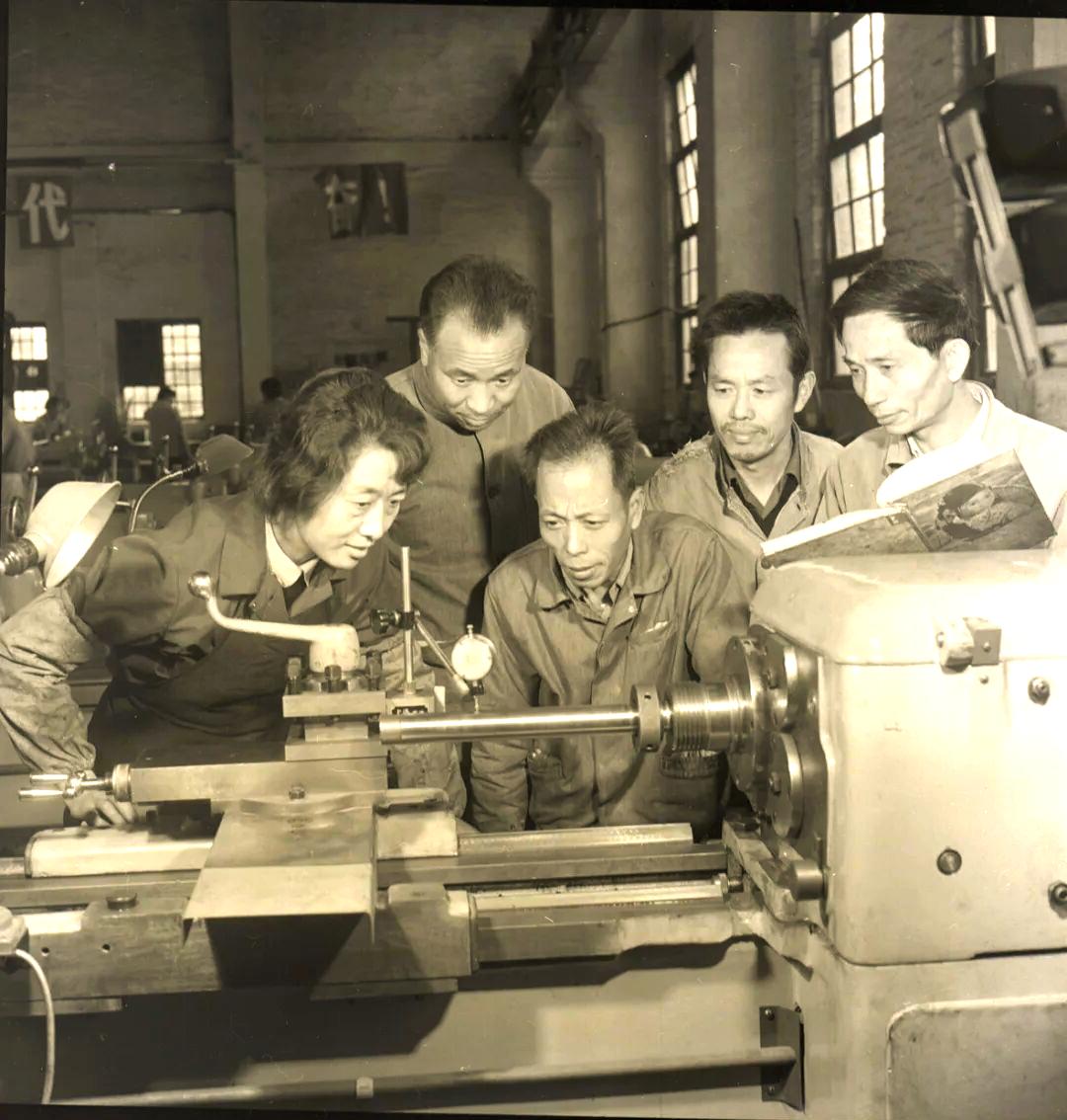
The next leg of the road for China's machine tool industry thus began from a position with no way back: for the eighteen years to come, it would have to be its own teacher.
The first thing taken up was high-precision machine tools — the "top students" of the machine tool family. Gear grinders, jig boring machines, thread grinders and the like, with precision measured in micrometres, had all been imported in the past. Around 1960, under the leadership of Vice-Premier Li Fuchun, the state organised a cross-ministry force to tackle precision machine tools specifically, and set a ten-year plan: to develop 56 varieties, at an annual output of seven to eight hundred units.
The work was done more solidly than one might expect. By 1965, China could build 26 types of high-precision machine tools in five major categories, with an annual capacity of about 500 units; by 1970, the varieties had grown to 35, and annual output to more than 1,200. The Shanghai Machine Tool Factory produced the Y7131 gear grinder and the Y7520 thread grinder, and the Kunming Machine Tool Factory the T42100 jig boring machine — machines recorded as "approaching or reaching the world level of the time". In an era when even the drawings had been carried off, the Chinese, on their own, gnawed off a piece of the hardest tier of machine tools.
At the same time, the map of the machine tool industry was redrawn by a large-scale inland relocation.
From 1964, out of considerations of war preparedness, the state pushed forward the "Third Front" construction, moving a batch of coastal backbone factories, as whole units, into the interior. The machine tool industry's method was "splitting in two": an old coastal plant would split off half — people, equipment and drawings together — and move inland to build a new plant. In the decade from 1964 to 1974, the machine tool industry built 33 new factories in Sichuan, Shaanxi, Gansu and elsewhere, and the backbone machine tool enterprises in the interior grew from three to nineteen.
Within this, there is one scene worth pausing on. At the end of 1964, an order "split the Shanghai Machine Tool Factory in two", moving half its forces to Baoji in Shaanxi to form Qinchuan Machine Tool. In August 1965, Qinchuan went into production, and its first batch of products was the Y7131 gear grinder. But the workshop was not yet built — and so, for the constant-temperature environment that precision assembly demanded, the workers partitioned the crude, cavernous workshop into small compartments with plastic sheeting, improvising constant-temperature rooms, assembling grinders accurate to the micrometre inside walls of rammed earth. Over the following decade, the Shanghai Machine Tool Factory sent another 1,100 workers into the mountains of Hanzhong, Shaanxi. The seeds of machine tool factories, one after another, were scattered into China's west — seeds that would take decades to grow into today's industrial clusters.
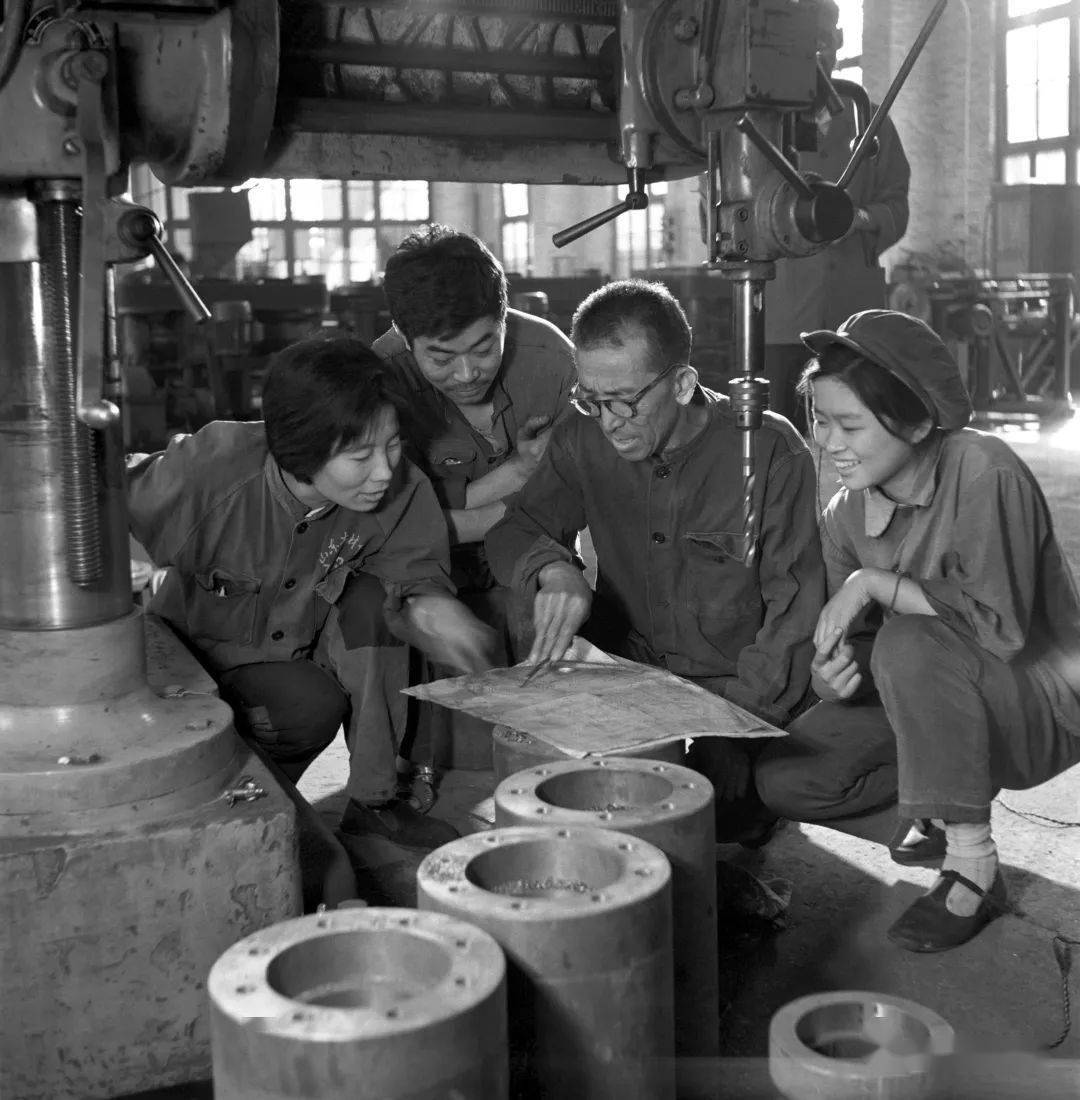
But these eighteen years were far from a straight line.
In the Great Leap Forward years, localities everywhere rushed to set up machine tool production, treating output as the only measure, and shoddy work became the fashion for a time — and the after-effects dragged on. Of the more than 1.6 million machine tools produced between 1961 and 1978, only 60% met the standard — meaning some 600,000 of them were near scrap iron the moment they were built. Then came the ten years of the Cultural Revolution, a heavier blow still. Of the 250 backbone enterprises in the First Ministry of Machine Building system, 59 had severely abnormal production, 25 of them paralysed for long stretches; the Chongqing Machine Tool Factory halted production three times in four years, each time for more than ten months. Research institutes were disbanded, engineers were denounced — and for an industry that can only move forward on steady accumulation, a stoppage is a step backward. It was in these ten years, too, that China missed an entire generation of the rapid rise of CNC machine tools in the West and Japan.
Even amid the turmoil, the nationwide system could still get certain things done. To fully equip the Second Automobile Works in Shiyan, Hubei, the First Ministry of Machine Building organised a campaign in 1966, gathering 138 machine tool research and production units together. By 1975, this campaign had delivered to the Second Automobile Works more than 7,600 machine tools and 35 transfer-machine production lines, meeting, by count, 96% of the works' equipment needs. The equipment of an entire automobile city was pieced together by the combined effort of more than a hundred machine tool factories — this was the force the planned economy's nationwide system could unleash.
Eighteen years on, the figures on the books looked handsome: in 1977, the country's annual output of metal-cutting machine tools reached about 198,000 units, nearly seven times that of 1957, and China's machine tool holdings already ranked among the world's largest.
But the clear-eyed in the industry knew this account had another side. Quantity had risen; quality had not kept pace — of all the machine tools held in the country's stock in 1977, those genuinely usable were, by the analysis of the time, fewer than a third. "Large in quantity, low in quality" — those words were the bittersweet answer sheet that these eighteen years of self-reliance handed in.
And this account would only truly be opened, and have its depth measured by the world outside, after 1978.
IV. Hesitation and Shock: After the Door Opened
The first thing reform and opening-up did was open the door, and let China's machine tools face the outside world directly — face rivals that were more precise, and far more demanding.
In 1979, the Jinan No.1 Machine Tool Factory signed a cooperative-production agreement with Japan's Mazak — one of the earliest pieces of foreign technical cooperation in the machine tool industry after reform and opening-up, and it set off a wave of technology imports across the whole of the 1980s. From 1980 to the late 1990s, China's machine tool industry imported some 150 technologies from abroad.
Importing was meant to be "trading the market for technology". But the market was given away, and not much technology was really traded in. A great deal of the imported foreign technology stayed at the level of "assembly" — fitting imported core components into a domestically made shell. The true brain of the machine tool, the CNC system, remained firmly in the hands of companies such as Japan's FANUC and Germany's Siemens.
In the early 1990s, China sharply cut tariffs and lifted import restrictions, and technologically advanced foreign machine tools poured in. The shock was immediate: in 1990, domestically made machine tools still held about 70% of the home market; by 1993, that figure had slid sharply to 44%. In three years, the market share of domestic machine tools was very nearly halved.
The "Eighteen Arhats" — born in the First Five-Year Plan and built up on Soviet drawings — mostly could not withstand this round of shock. Their technical accumulation was still stuck in the era of ordinary machine tools, and in the face of the high-precision CNC machine tools flooding in, they went one after another through restructuring, mergers and reorganisation. The shape of the machine tool industry contracted, from eighteen backbone plants, gradually into a few large groups represented by Shenyang Machine Tool, Dalian Machine Tool, Qinchuan Machine Tool and Kunming Machine Tool.
In tracing the growth path of Chinese manufacturing, the Tianxia Gongchang Industrial Research Institute has repeatedly observed the same pattern: an industrial system cannot be built by "construction" alone. In a closed environment, you can build factories one by one according to plan; but to make those factories truly competitive, you must put them into a real, brutal market and have them tested, weeded out and iterated, round after round. The shock of the 1990s hurt, but it was also the first time China's machine tool industry was seriously "sounded" for its depth by the world market.
What the sounding revealed was this: quantity, China had; quality, the gap was still wide. Above all in the very highest tier — the capability to build high-precision CNC machine tools was essentially a blank.
That gap would have to be filled by the next generation. And the process of filling it first passed through the most turbulent chapter of all.
V. The Price of Being World No.1: The Rise and Fall of Shenyang and Dalian Machine Tool
As the twenty-first century began, two companies charged hardest within China's machine tool industry — Shenyang Machine Tool and Dalian Machine Tool. Both reached, for a time, astonishing scale; and both, in turn, fell into the same pit. This chapter is a steep slope that cannot be skirted on China's machine tool "climb".
Take Shenyang Machine Tool first. The Shenyang Machine Tool Group was formed in 1993; entering the 2000s, on the strength of scale and price advantages, its output and sales surged. In 2011, it achieved machine tool sales revenue of more than 2.78 billion US dollars, equivalent to about 18 billion yuan. According to a global machine tool industry ranking published by an American institution, Shenyang Machine Tool, with that sales figure, ranked first in the world. It was the first time a Chinese machine tool company had topped the global ranking by output and sales scale.
But behind the halo of the top spot was a glaring figure: that year, the profit of the entire Shenyang Machine Tool Group was only about 100 million yuan. Sales of 18 billion, profit of 100 million — a profit margin of less than 1%. "Output first in the world, profit for the whole year just 100 million" — that sentence is the plainest footnote to the four words "large but not strong".
Shenyang Machine Tool had not failed to try to move toward "strong". As early as 2004, it acquired the German firm Schiess — an old-line German heavy machine tool maker with more than 140 years of history. It was the first large-scale acquisition completed by a Chinese company in Germany, and through Schiess's channels, Shenyang Machine Tool's products entered the European market.
A bigger gamble was the i5 CNC system. In 2007, then-chairman Guan Xiyou led the launch of a project to develop a CNC system in-house — the brain of the machine tool. The development ran for about five years, with investment on the order of a billion yuan. In 2012, the i5 system was successfully developed; in 2014, smart machine tools carrying the system were formally brought to market. Shenyang Machine Tool also paired it with a financial-leasing model; at the peak, more than 16,000 i5 machines were running in the field. From selling machine tools to providing "smart machining services", Shenyang Machine Tool tried to leap, in one stride, into the industrial internet.
That stride was taken too wide. Low-priced leasing brought heavy advance-funding and bad-debt pressure; of the more than twenty "smart manufacturing valley" projects it contracted across the country, only three actually had the conditions to operate. Guan Xiyou later reflected: "We did it too far ahead of its time, and too hastily." The technical breakthrough of the i5 system was real — it did conquer a batch of underlying core technologies of the CNC system; but the pace of commercialisation, and the supporting ecosystem, could not keep up with the technology's pace.
The financial hole grew larger. From 2012 to 2018, Shenyang Machine Tool's net profit after deducting non-recurring items showed cumulative losses of more than 5 billion yuan. By March 2019, the group's debt had reached 37.5 billion yuan. In July 2019, Shenyang Machine Tool entered bankruptcy-reorganisation proceedings.
Dalian Machine Tool's story took a different wrong turn, but the ending was similar. The Dalian Machine Tool Group was formed in 1995; from 2000 to 2006, its sales revenue ranked first in China's machine tool industry for seven straight years, and in the world machine tool company ranking it once stood eighth. But a state-enterprise restructuring in 2004 cut its state-owned shareholding sharply, down to just 20%, and actual control passed to a private shareholder. Dalian Machine Tool's operations gradually went sour after that: at the end of 2016, the first of its bonds to mature could not be redeemed; nine bonds defaulted in succession after that, involving about 4.8 billion yuan. More serious still, it was found to have obtained loans by fraud — through forged contracts and fabricated accounts receivable. In November 2017, Dalian Machine Tool entered bankruptcy reorganisation, with claims declared totalling as much as about 22.4 billion yuan; in 2018, its chairman was caught after being placed on a public-security wanted list.
Two "world-class" machine tool companies fell almost at the same time. Many reasons can be listed — the paradox of scale and profit, the hollowing-out of the CNC system, the financial risk amplified by an aggressive business model, the distorted governance left by restructuring — but in the end it comes down to one thing: the machine tool industry has a temperament of its own. It is a highly fragmented industry that prizes the specialised and the fine; the optimal company size is often not large, and what it relies on is grinding away at one type of machine tool, year after year. To make machine tools by the "large and all-encompassing" approach, to run a machine tool business by chasing sales revenue, runs against the very logic of this industry.
In its long-term tracking of the machine tool industry, the Tianxia Gongchang Industrial Research Institute holds one judgement: the rise and fall of Shenyang and Dalian Machine Tool was less the failure of two companies than the curtain falling on an "old model" — the old road of relying on scale expansion, on volume, on acquisitions to keep up appearances, proved to be a dead end. The place it vacated would have to be taken by another kind of company, with another way of playing.
And at the foot of this steep slope was not a cliff. In 2019, under the state's coordination, the China General Technology Group, as the strategic restructuring party, injected 1.8 billion yuan to reorganise Shenyang Machine Tool; Dalian Machine Tool was likewise reorganised by the General Technology Group the same year. After the reorganisation, these two old factories began a "second venture": Shenyang Machine Tool's sales revenue in 2022 recovered to 3.4 billion yuan, more than doubling year on year and achieving its first profit in many years; in 2023, profit exceeded 100 million yuan. The "eldest son of the Republic's industry" was getting back on its feet.
More important still: in the very years that the old leaders fell, a batch of brand-new machine tool companies had quietly grown up, in other parts of China.
VI. The New Forces: How a New Generation of Machine Tool Companies Grew Up
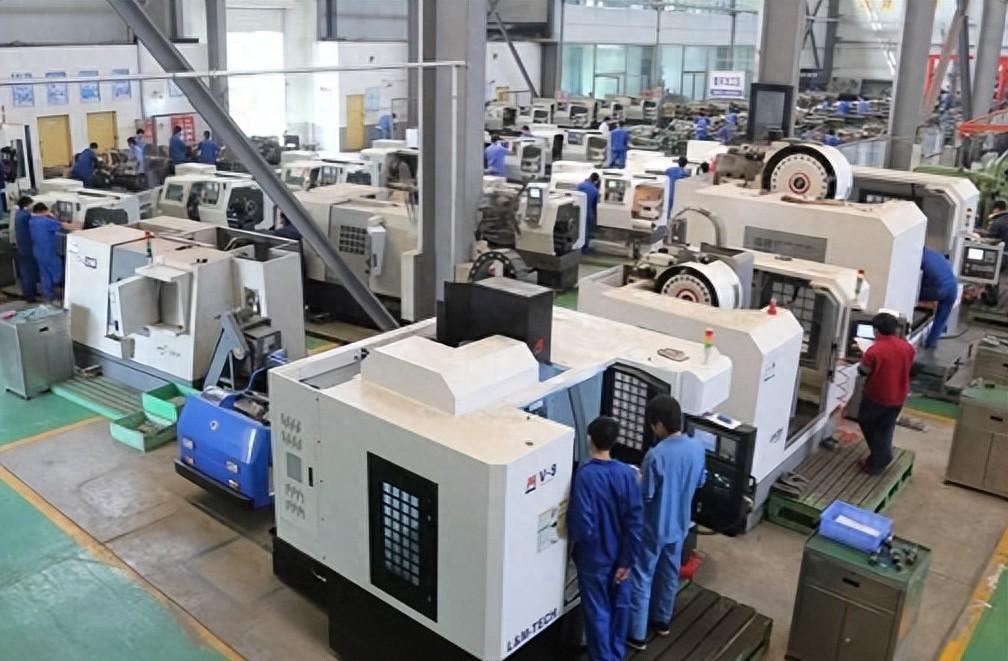
If the "Eighteen Arhats" were laid out from a blueprint by the planned economy, then this generation of machine tool companies grew up out of the market itself. Most of them are private enterprises, rooted in one specialised niche, not chasing the large and all-encompassing, but doing one thing to the extreme.
Chuangshiji, in Shenzhen, Guangdong, makes 3C drilling-and-tapping centres — high-speed machining centres used specifically to machine the metal casings of mobile phones and laptops. This is a niche track called into being by consumer electronics. In 2024, Chuangshiji's operating revenue was about 4.6 billion yuan, of which 3C drilling-and-tapping machines brought in over 1.9 billion yuan, having grown by nearly 200% within a single year. Its customers are the global consumer-electronics contract giants — Foxconn, Luxshare, BYD Electronics. In China's 3C drilling-and-tapping machine market, domestic brands already hold about 70% of the share, and Chuangshiji is the leader among them — its head-on rivals are Japan's Brother and FANUC. The metal mid-frame of the phone in your hand was, very likely, machined by a Chinese machine tool.
Haitian Precision, in Ningbo, Zhejiang, makes large gantry machining centres — machine tools for machining large, heavy workpieces. In 2024, its operating revenue was about 3.3 billion yuan; it is the leader in domestic gantry machining centre shipments and has also entered the front ranks of the domestic five-axis machine tool listing. More important still, it has brought the swivel head, the direct-drive rotary table and the electric spindle — the core functional components of a five-axis machine tool — into in-house research and production. This means it does not merely "know how to assemble a machine tool"; from the inside out, it holds the machine in its own hands.
Neway CNC, in Suzhou, Jiangsu, makes mid-to-high-end horizontal and vertical machining centres, in more than 200 models. Its operating revenue was about 2.5 billion yuan in 2024 and grew to about 2.9 billion yuan in 2025. Its products are exported to more than 60 countries, including the United States, Germany and the United Kingdom — precisely the countries strongest in the machine tool industry. Chinese machine tools are no longer sold only to the low-price markets of Southeast Asia; German factories are buying China's mid-to-high-end machine tools.
And in the very highest tier — five-axis CNC machine tools — KEDE CNC, in Dalian, Liaoning, has blazed a path. The five-axis machine tool is high-end equipment used to machine complex curved parts such as aero-engine blades and aircraft structural components; it was long monopolised by Germany and Japan and subject to export controls toward China. KEDE CNC is one of the very few companies in China that command both the "high-end CNC system" and "high-end five-axis machine tool" research systems at once — it builds not only the machine tool but also the machine tool's brain. In 2024, KEDE CNC's operating revenue was over 600 million yuan, up about 34% year on year, with five-axis machine tools accounting for about 85% of that revenue. The domestic-content rate of its complete machines reaches 95%. Its five-axis machine tools already provide batch machining for the engine fan disc of the C919 airliner and parts of the Long March rockets. One detail says it best: the repurchase rate among KEDE CNC's five-axis customers is close to half — customers did not just "try it once" but genuinely replaced their imported machines. From annual revenue of about 200 million yuan when it listed in 2021 to over 600 million in 2024, KEDE CNC tripled its scale in three years — and not by running on low prices: its average machine sells for more than 2 million yuan, competing head-to-head with Germany and Japan in the high-end price band.
The brain of the machine tool — the CNC system — used to be the most hollow part of China's machine tools. Huazhong CNC, in Wuhan, Hubei, is gnawing at this hardest bone. In 2021, it released the "Huazhong Type 9", the world's first CNC system carrying an AI chip — it brings machine learning into the machine tool's thermal-error compensation and process optimisation, letting the machine "sense" its own state and "fine-tune" its own movements. For this system, Huazhong CNC has, year in and year out, put about 20% of its operating revenue into R&D — in 2023, its R&D spending reached about 400 million yuan, while that year's net profit was far below that figure. This amounts to "putting many times the profit into R&D" — a near-stubborn long-termism.
There is also Qinchuan Machine Tool, in Baoji, Shaanxi, which in the niche of gear grinding machines holds a domestic market share of over 60%. Its high-precision gear grinders have entered the reducer production lines of FAW, BYD and Tesla, partly replacing the German and Japanese equivalents.
This batch of companies shares one more common backdrop: most of them have, over the past decade or so, gone public. On today's STAR Market and ChiNext board are gathered a cluster of companies whose main business is machine tools and functional components. That capital is willing to bet on them is itself proof that the market has seen clearly — in the game of Chinese machine tools, the players placing the stones have changed to a new generation.
Set these companies side by side and you find one thing in common: they no longer chase "the world's largest sales", but each, within one specialised niche, becomes the one that "understands this best". In observing this generation of machine tool companies, the Tianxia Gongchang Industrial Research Institute has noticed that the true thickness of China's machine tool industry lies not in any single giant, but in just such a batch of factories — rooted in specialised niches, each with its own expertise — spread densely across the land. Whether a country's machine tool industry is strong is measured not by whether it has a single "world's largest", but by how many "niche No.1s" it has.
This change has produced a landmark result. In 2024, the market size of China's five-axis CNC machine tools surpassed 10 billion yuan for the first time; in the same year, the share of domestically made five-axis machine tools in the home market, by sales value, exceeded half for the first time. Ten years ago, that figure was under 10%. In the very highest tier of machine tools, China has at last gained a foothold.
The reason the new generation of companies could grow up is also that, standing behind them, is a mature industrial cluster.
VII. Industrial Clusters and World No.1: The Network of Chinese Factories Behind a Single Machine Tool
2009 is a year worth remembering. That year, China's machine tool industry completed a total industrial output value of 401.4 billion yuan, becoming the world's largest machine tool maker for the first time. Since then, China has held that "world No.1" continuously — for more than fifteen years now.
By 2024, China's machine tool production accounted for roughly 32% of the world's, and its consumption for about 33% — first in the world on both. Of every three machine tools in the world, one is made in China; of every three, one is used in China.
But the real weight of those words, "world No.1", lies not in the national statistics, but in the machine tool industrial clusters spread, patch by patch, across the land of China.
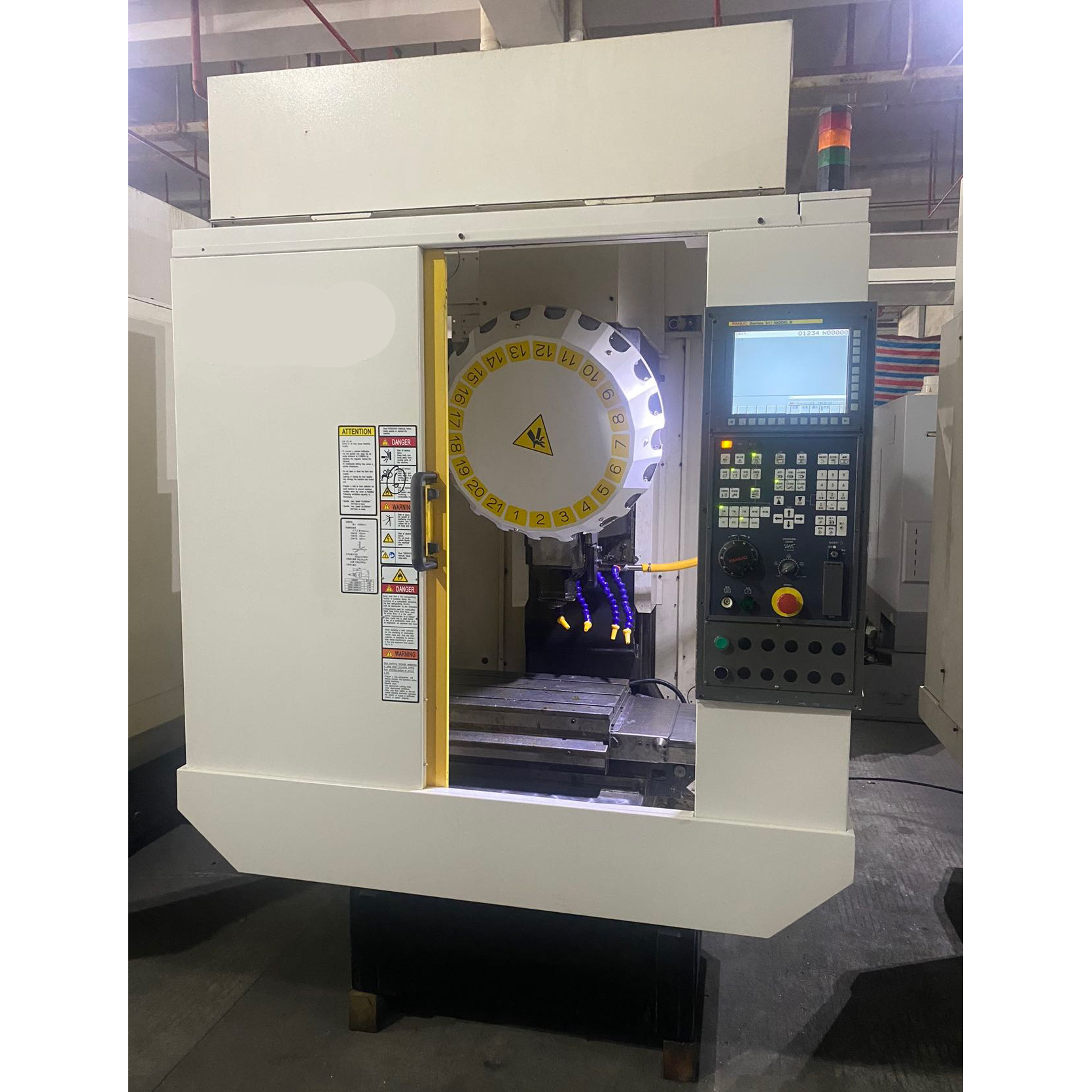
The most typical is eastern Zhejiang. In the area of Yuhuan and Wenling, in Taizhou, Zhejiang, more than 2,000 machine tool enterprises above designated size are gathered. The output value of this cluster in 2023 was close to 280 billion yuan, about one fifth of the country's total machine tool output value. Put another way, it is more vivid: of every three metal-cutting machine tools in the country, one is produced in this patch of eastern Zhejiang. Yuhuan, a single county-level city, produces small and medium-sized CNC lathes that account for more than a quarter of the national market share — it is known as "China's capital of economical CNC lathes". In November 2024, eastern Zhejiang's industrial mother machine cluster was selected as a national advanced manufacturing cluster.
Tengzhou, in Shandong, is another kind of model. This county-level city's machine tool industry began in the 1950s, has more than seventy years of history by now, gathers nearly 400 machine tool and supporting enterprises, produces more than 100,000 machine tools of all kinds a year, and the cluster's operating revenue exceeds 20 billion yuan. The drilling-and-milling machines it is most skilled at account for 80% of national output.
Shenzhen and Dongguan, in Guangdong, drawing on the world's largest consumer-electronics manufacturing base, have grown a machine tool cluster centred on high-speed drilling-and-tapping machines — Chuangshiji, mentioned earlier, was born here. Baoji, in Shaanxi, carries on the Third Front lineage told earlier — Qinchuan Machine Tool, which began with workers partitioning off constant-temperature rooms with plastic sheeting after moving inland from Shanghai, has grown, sixty years on, into a listed group whose operating revenue ranks among the industry's highest.
Why are these industrial clusters, one after another, so important? Because a machine tool has never been something a single factory can build on its own.
The machine tool industry chain divides, vertically, into several layers: at the very top are castings — the bed, columns and crossbeams of a machine tool, cast from grey cast iron and ductile iron, a layer in which China long ago became basically self-sufficient; above that are functional components — ball screws, linear guides, electric spindles, high-end bearings, which determine a machine tool's precision and dynamic performance; above that is the CNC system, the machine tool's brain; and finally the assembly of the complete machine. A high-precision machine tool is the product of this whole chain working in concert; if any link in the chain breaks, the complete machine cannot move up a tier.
And it is precisely in the layer of functional components that China's pace of catching up, in these years, is the most heartening. Functional components were once one of the parts of China's machine tools most dependent on imports — how accurate a machine tool is, how stable, depends to a large degree on these parts hidden inside it. Take the ball screw: it is responsible for turning the rotation of the motor precisely into the linear travel of the worktable, and directly determines a machine tool's positioning accuracy. In Nanjing, Jiangsu, there is a company making ball screws and linear guides whose products not only supply domestic high-end machine tool plants but have successfully entered the supply chain of a top-tier Swiss machine tool company, achieving batch supply — going from "domestic substitution for imports" to "domestic supply for export", a step whose gold content far outweighs selling a few more sets of parts. In Hanzhong, Shaanxi, the ball screws of Hanjiang Machine Tool have steadily reached the highest few precision grades in the industry, and rank first in domestic market share. The machine tool's brain — the CNC system — is also catching up: at a domestic machine tool exhibition in 2024, among the domestically made CNC systems fitted to five-axis machine tools, Huazhong CNC's share reached about 22%, second only to Germany's Siemens.
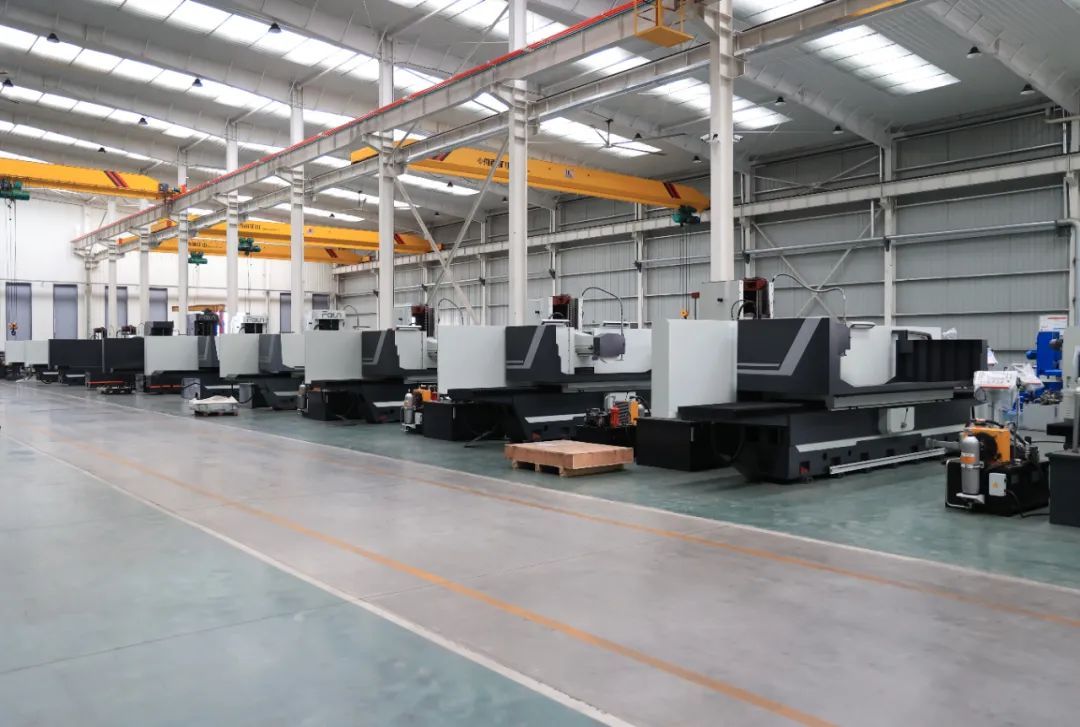
In drawing the map of China's machine tool industry, what the Tianxia Gongchang Industrial Research Institute sees is exactly such a network: behind a single five-axis machining centre stand casting plants, ball-screw plants, guide-rail plants, spindle plants, bearing plants, CNC-system plants — hundreds upon hundreds of factories, distributed across the various industrial clusters, supplying blood in concert. That China's machine tools can reach "one in every three made in China" has never relied on a few star companies, but on this densely woven network of factories. This, too, is what is hardest for others to replicate about this industry: you can buy a machine tool away, but you cannot buy away an industrial network laid down over seventy years.
To be fair, this network still has places not yet filled in. The very highest-end CNC systems, the highest-precision five-axis machine tools and certain top-tier functional components still have a stretch of road to go — but that stretch is being caught up at a pace visible to the naked eye. The "industrial mother machine" has been clearly listed as a key direction of the nation's push: in 2021, it was placed at the head of the list for tackling key core technologies; in 2023, the state issued fiscal and tax policy specifically, granting machine tool, functional-component and CNC-system enterprises a value-added-tax super-deduction, and that same year the National Industrial Mother Machine Innovation Research Institute was unveiled; and in the recommendations for the "15th Five-Year Plan", the industrial mother machine was written in as a key field in which to achieve a "decisive breakthrough".
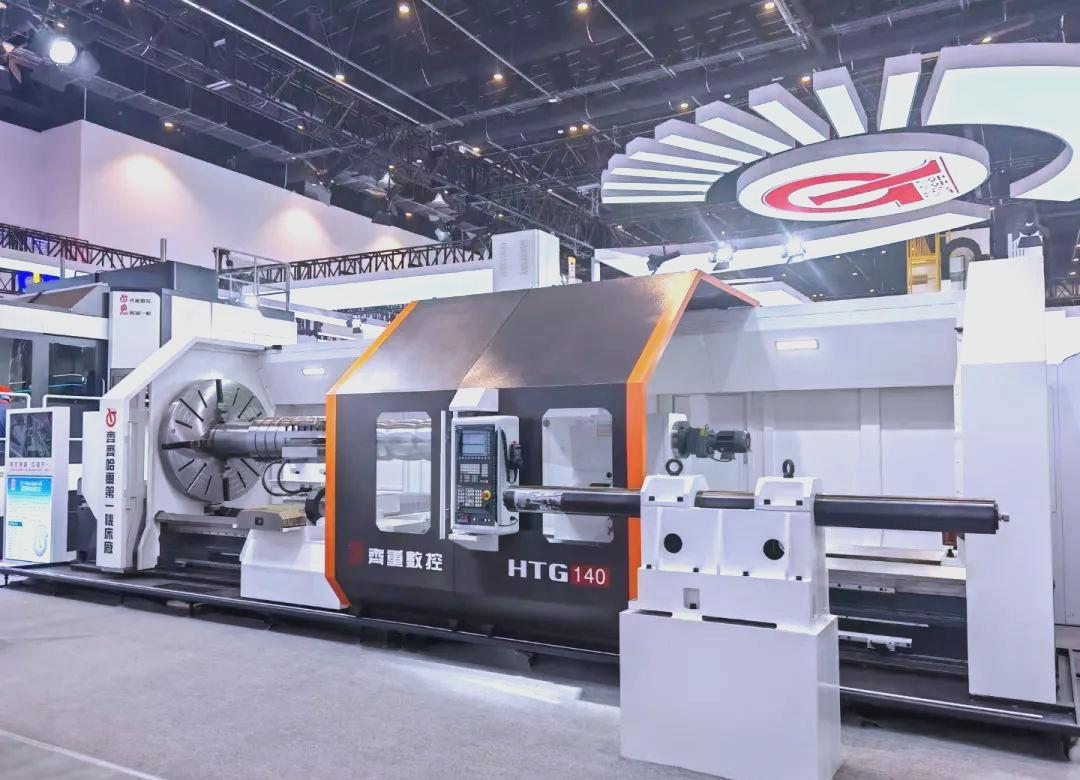
In the spring of 2025, the 19th China International Machine Tool Show was held in Beijing. This exhibition, founded in 1989, ranks with the three great machine tool shows of Europe, the United States and Japan as one of the four great machine tool shows of the world. This edition's exhibition area reached 310,000 square metres, with more than 2,800 enterprises from 30 countries and regions taking part — the largest of any edition. Thirty-six years ago, China held this show mostly to "bring the world in to be seen"; thirty-six years on, the world comes to Beijing to see China's machine tools.
Conclusion: Mastery of the Mother Machine Is an Industrial Nation's Confidence
Now we can return to the question at the start: how did a country that once could not build even a conventional lathe except by copying someone else's drawings come, in seventy years, to "one in every three machine tools in the world made in China"?
The answer is hidden in every step of these seventy years.
It is the Eighteen Arhats blueprint of the First Five-Year Plan — thinking through, while it could still barely build a machine tool, what a complete set of machine tool categories ought to look like. It is the output curve of the C620-1 lathe, from two hundred units to four thousand, and that CNC milling machine of 1958, only six years behind the United States. It is the batch of precision machine tools China ground out by its own hand — in constant-temperature rooms partitioned off with plastic sheeting — after the Soviet experts withdrew; it is the decade of the Third Front construction that scattered the seeds of machine tool plants into the mountains of the west. It is the sounding of the depths by the world market after reform and opening-up; it is the lesson Shenyang and Dalian Machine Tool bought with a chapter of rise and fall — that the old "large and all-encompassing" road does not work, that the matter of machine tools depends on the specialised, the fine, and grinding away year after year. It is KEDE CNC's five-axis machine tool machining parts for the C919, Huazhong CNC's stubbornness in pouring a fifth of its revenue into R&D, the new forces — Chuangshiji, Haitian Precision, Neway, Qinchuan — rooted in specialised niches. It is the hundreds upon hundreds of factories, in the industrial clusters of eastern Zhejiang, Tengzhou and Baoji, supplying blood in concert.
However high a machine tool can build, that is how high every factory in a country can build. Mastery of the mother machine means the country's industry has a ceiling of its own — one it can keep pushing upward — rather than handing the key to that ceiling into someone else's hands. This is the deepest meaning of those four words, "industrial mother machine", for a country: it is the ground to stand on, the confidence.
Across seventy years, China's machine tools did not have smooth sailing all the way. They passed through the hesitation of "large in quantity, low in quality", through the rise and fall of "large but not strong", and were, for a long time, left behind in the very highest tier. But every detour was turned by those who came after into a step. The Eighteen Arhats left behind a skeleton of machine tool categories; the Third Front construction laid the bases of the machine tool industry into the west; the rise and fall of Shenyang Machine Tool left the lesson of "the specialised and the fine"; a batch of new forces took that lesson up, and patch after patch of industrial clusters held them up, one by one. The detours were not walked in vain — in the end, they all grew into the country's industry.
In its long-term tracking of Chinese manufacturing, the Tianxia Gongchang Industrial Research Institute has always held one judgement: the true thickness of a nation's industry lies not in its single brightest product, but in how many factories, behind that product, are supplying blood in concert. China today is a country made up of factories numbered in the millions — among the real factories identified and confirmed on Tianxia Gongchang alone, there are 4.8 million. That a five-axis machining centre can run, that a machine tool can come off the line, has never relied on a single company, but on the industrial-chain coordination of tens of thousands among those 4.8 million factories.
From 1,582 units, to one in every three machine tools in the world. In seventy years, this country has written those four words, "industrial mother machine", from a dependence on others' drawings into a confidence of its own.
With the mother machine in hand, the ceiling on every factory in this country is, at last, truly held in its own hands. And that is the starting point of all the manufacturing to come.
Data Sources and Principal References
This article was compiled and analysed by the Tianxia Gongchang Industrial Research Institute, drawing on the factory and industrial-chain data of the Tianxia Gongchang industrial platform together with public materials, official information and reports from authoritative media. The principal data and factual sources include:
- The China factory database and industrial-cluster data of the Tianxia Gongchang industrial platform (www.tianxiagongchang.com)
- The China Machine Tool & Tool Builders' Association (CMTBA), for industry economic-performance statistics and import-export data over the years
- The General Administration of Customs of the People's Republic of China, for machine tool import-export statistics
- Public policy information on the "industrial mother machine" from the State-owned Assets Supervision and Administration Commission of the State Council and the Ministry of Industry and Information Technology
- Public annual reports and official materials of Shenyang Machine Tool, Dalian Machine Tool, Chuangshiji, Haitian Precision, Neway CNC, KEDE CNC, Huazhong CNC, Qinchuan Machine Tool and other enterprises
- Relevant reports from authoritative media including Xinhua News Agency, People's Daily, Economic Information Daily and The Paper
- Public exhibition materials from the organiser of the China International Machine Tool Show (CIMT)