
"Marine equipment is the weak link" — this has been said about China's shipbuilding industry for many years. It appears in government action plans, in industry association reports, in nearly every article about China's shipbuilding being large but not strong. Repeated so often, the phrase has lost its informational content: everyone nods, yet no one walks away with a clearer picture of where the problem actually lies.
This article sets out to take that phrase apart.
Because the "marine-equipment gap" is not a single gap. It is four gaps of fundamentally different character, layered on top of each other: one rooted in design patents, one in the limits of manufacturing precision, one in marine electronics and software, and one — the hardest and least examined of all — in the fact that equipment gets built but no one dares be the first to use it. The first three are capability problems that will gradually yield to accumulated technology and capital; the fourth is a structural problem that lives not on the shop floor, but in the shipowner's risk ledger.
Separating these four layers is the only way to explain an otherwise puzzling phenomenon: why China, already the world's undisputed largest shipbuilder, has seen its marine-equipment localization rate climb so painfully slowly.
I. First, Locating the Gap
Before discussing gaps, some coordinates.
China's shipbuilding scale is beyond dispute. In 2024, China's completed tonnage accounted for more than half of global output, its new-order intake for roughly 70%, and all three headline metrics have held the top position worldwide for 16 consecutive years. One foreign maritime research institution noted that China's delivered tonnage in 2024 reached 54.6% of the global total — a historic high.
Marine equipment is another matter entirely. The term refers to everything beyond the steel hull — every piece of equipment and system installed aboard a vessel: main engines, generators, propulsion systems, deck machinery, accommodation fittings, electrical systems, navigation and communications equipment, piping and valves, and, on cruise ships, the enormous interior-outfitting package. This layer accounts for 40% to 60% of a vessel's total cost. In other words, the larger share of the money in shipbuilding sits not on the slipway, but inside the marine-equipment tier. An OECD peer review of Germany's shipbuilding sector offered a sharper figure: the value of products that equipment suppliers deliver to shipyards amounts to roughly 70% of shipbuilding output; a separate OECD study of the global shipbuilding value chain estimated that 70% to 80% of a finished vessel's value is created by upstream suppliers.
China is weakest in precisely this most valuable layer.
By vessel type: in conventional segments — bulk carriers, tankers, small-to-medium container ships — localization rates are not low; for bulk carriers, the figure exceeds 80%. But as vessel complexity rises, localization rates fall sharply. China's Ministry of Industry and Information Technology has acknowledged that the localization rate for high-technology vessels and offshore engineering equipment is below 30%; Korea's comparable figure is around 85%, Japan's around 90%. On China's first domestically built large cruise ship, the localization rate measured by component count was roughly 10%. A widely cited external estimate puts China's overall marine-equipment localization rate across all vessel types at somewhere between 55% and 60%.
The cruise-ship case is worth examining closely, because it lays bare the problem most fully. That approximately 10% figure is measured by component count; measured by contract value, the share flowing to Chinese firms rises to around 30%. Yet whether the figure is 10% or 30%, the ship's propulsion system, navigation equipment, automation and control systems, and hotel and interior-outfitting package came almost entirely from foreign suppliers — what the Chinese shipyard contributed was primarily final assembly. China has drawn up an upward trajectory for its cruise ships: the second vessel is to achieve roughly five percentage points more localization than the first; the third (planned for around 2030) targets a localization rate above 50%, with 80% targeted by 2035. That schedule itself makes two things plain: first, the gap is real and large; second, closing it is measured in decades, not years.
Mapping localization rates across high-technology vessel types reveals a steep downward curve: conventional bulk carriers above 80%, large LNG carriers below 40%, and the most complex categories — luxury cruise ships, polar vessels, offshore engineering equipment — at only 10% to 30%. The more sophisticated and valuable the vessel, the less Chinese the marine equipment inside it. And high-end vessel types are precisely where China's shipbuilding industry has been straining to move.
The picture is sharper still when viewed through the lens of design capability. One foreign research institution surveyed marine diesel engines built in China since 1999 and found that for medium-speed and high-speed four-stroke engines, only about 11% were of Chinese independent design; for the low-speed two-stroke marine diesel engines used in virtually all large commercial vessels — the "heart" of a ship — the share was below 1%.
There is also a blunter indicator. In 2017, China's imports of marine equipment products totalled roughly USD 1.45 billion, while exports reached only about USD 970 million — a deficit. A country that exports vessels in large volumes, with foreign deliveries accounting for nearly 90% of completions, is a net importer of the equipment that goes inside them.
Chinese domestic research frequently uses a single ratio to capture this imbalance: "China's marine-equipment industry is roughly 1:6 in scale relative to its shipbuilding industry; Japan's is roughly 1:2.5." This ratio does not map directly onto any single source in international literature — it is more a construct of Chinese policy research — but the underlying structure it describes is supported by international data. The same OECD peer review of Germany found that employment in the German marine-equipment sector was three to four times that of the shipyards themselves. Whichever measure is used, the conclusion is the same: China is a shipbuilding nation with a large assembly tier and a small equipment tier.
A set of repeatedly deferred targets further calibrates how deep the gap runs. China once planned to bring its marine-equipment localization rate to 60% around 2010 — it did not happen on schedule. "Made in China 2025" set targets of 80% localization for high-end vessel equipment and a 40% share of the international marine-equipment market — as of today, these remain targets, not reality. One deadline revised after another, one target year pushed forward after another, says more than any adjective could: this is not a gap that will close with a little extra effort.
What this section has done is exchange a slogan — "marine equipment is the weak link" — for a map on which the gap can actually be located: spread across four layers — design, craftsmanship, electronics, and trust. The following sections take each layer in turn.
II. The First Gap — Design: Able to Build, Unable to Design
Start with the single most valuable piece of marine equipment: the main engine.
A large low-speed marine diesel engine stands more than ten metres tall, weighs over a thousand tonnes, and is the most expensive individual item on any ship. The design patents for low-speed main engines worldwide have long been controlled by two companies: Germany's MAN (whose energy business was renamed Everllence in 2025, though the engines continue to carry the MAN B&W name) and Switzerland's WinGD. Together they hold roughly 90% of the market; add Japan's J-ENG and the structure becomes a three-player field. Earlier industry data suggested the top two alone covered 99% of the global low-speed engine market.
The critical point is this: neither of these two giants actually manufactures engines. Their business is design and research; they license their patents to approved manufacturers around the world, who then build to their drawings. The main engines installed in Chinese shipyards are overwhelmingly produced this way — built in Chinese factories under foreign designs, with licence fees paid for the privilege. MAN alone has more than twenty licensed manufacturers globally, ten of which are in China.
Looking at the full picture of this licence network reveals a telling distribution. Within the MAN B&W two-stroke system, of the more than twenty licensed manufacturers worldwide, ten are in China, nine in Japan, and four in Korea. China has the largest number of licensees — but that number is, paradoxically, part of the problem: it shows how crowded the manufacturing end has become. The licence model has persisted since the 1980s, with the patent holder handling R&D and design while subcontracting production to licensees worldwide. The structure is efficient and mature. What matters is not whether China uses licences, but where China stands within that structure — on the manufacturing end, paying fees and supplying capacity, or on the design end, collecting fees and setting standards. No matter how many shipyards China has or how high its output climbs, as long as the drawings belong to someone else, there remains a layer of separation.
China's manufacturing scale for low-speed engines is substantial — roughly 30% of global output by volume. But building and designing are entirely different things. A significant portion of the profit margin on each engine flows abroad in the form of licence fees: one major listed Chinese marine-power company reported annual expenditure on low-speed engine licence fees of roughly 700 million yuan in a single year.
That same company has projected that as the degree of independent development increases for new-generation dual-fuel engines and the like, annual licence fees will fall gradually from around 700 million yuan toward 500 million yuan, and in the longer run toward around 200 million yuan. This declining curve of licence payments is, in a sense, a ruler measuring the pace of China's progress toward independent main-engine design: the fact that it is falling shows genuine growth in the self-developed portion; the fact that it remains far from zero shows that the design-layer transition is nowhere near complete.
Inside this patent ledger lies a fact that is frequently misread.
WinGD, the world's second-largest main-engine design brand, is today a subsidiary of China State Shipbuilding Corporation (CSSC). In 2015, CSSC and Finland's Wärtsilä entered a 70:30 joint venture to take over the company's two-stroke engine business; in 2016, Wärtsilä sold its remaining 30% stake in full, and WinGD became wholly owned by a Chinese enterprise. Chinese-language coverage often presents this as meaning that "China has now mastered world-class main-engine technology."
Reading the English-language material alongside produces a more sober account. WinGD's headquarters remain in Winterthur, Switzerland to this day, and so does its core R&D capability; English-language sources consistently refer to it as "a Swiss company," with little emphasis on the Chinese parent. When Wärtsilä sold that 30% stake, it booked an impairment charge in its accounts — this was not a transaction being competed over at a premium. What China acquired was ownership of the company. Genuinely absorbing a design capability into one's own engineers and industrial system is a different matter. Owning a company and mastering its design capability are separated by a real distance.
One detail illustrates the gap between ownership and capability. After WinGD passed into full CSSC ownership, its global after-sales service continued for years to rely on the original parent Wärtsilä's service network — the two parties renewed their service-cooperation agreement all the way to 2028. In other words, the design technology belongs to the Chinese side, but the network for servicing customers around the world still has to be borrowed. Acquiring a company's equity is straightforward; turning the web of engineers, test data, service points, and customer trust that lies behind it into something genuinely one's own is a generation's work. The former is a transaction; the latter is a long accumulation.
One more thing deserves to be said plainly: starting with licences is nothing to be ashamed of. Hyundai Heavy Industries (HHI) has held a Wärtsilä engine licence since 1975; Japan's Mitsui E&S has held a B&W licence for close to a hundred years — neither arrived at independence from nothing. The difference lies in the depth of absorption: HHI used the licence as a springboard and became the world's largest marine main-engine manufacturer, with cumulative output exceeding 200 million horsepower and a leading global market share maintained for more than thirty consecutive years; Japanese firms chewed through the technology in their licences for the better part of a century.
The design-layer gap is therefore not, at its core, about China using someone else's drawings. It is about the absorption process being far from complete. Starting with licences is the right path; staying on licences too long is the problem.

III. The Second Gap — Craftsmanship: Reaching the Limits of Precision
The second gap is about hands — about whether materials and processes can be pushed to the very limits of precision. The defining test for this tier is Invar steel on LNG carriers.
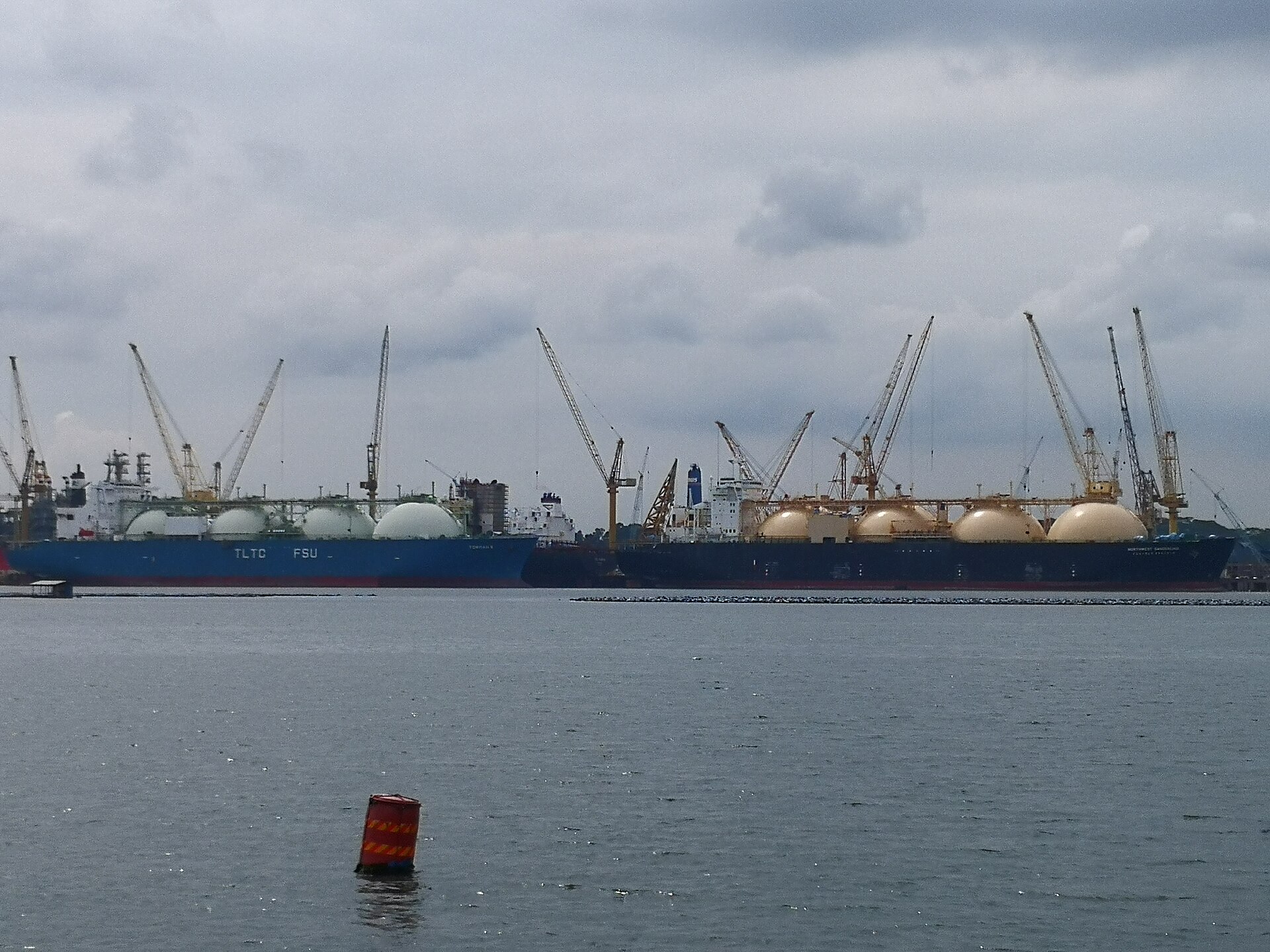
Invar steel is the thin alloy membrane lining the inside of an LNG carrier's cargo tanks — the surface in direct contact with liquefied natural gas at −163°C. At its thinnest, it is just 0.7 mm, no thicker than a credit card. The total length of Invar welds across a single vessel runs to roughly 130 km; once complete, the welds must pass multiple leak-tightness inspections with a 100% pass rate — not a pinhole defect is permissible. The material itself, along with the patents for the membrane containment systems that use it, has long been monopolised by France's GTT.
The difficulty, however, lies not only in the material but in the people capable of working with it. Welding Invar steel is considered one of the most demanding welding disciplines in the world. Each welder must first pass a rigorous GTT qualification process and obtain a dedicated certification; the cost of training a single qualified welder runs to two or three hundred thousand renminbi, and the process takes years. A single weld pass may require continuous, uninterrupted work for several hours. Whether a large LNG carrier is delivered on schedule depends not just on the steel plates, but on the small pool of people qualified to weld them. Breakthroughs in the craftsmanship tier have therefore always required advancing materials, tooling, process engineering, and workforce capability in parallel — which is why progress takes time, yet can ultimately be resolved by time.
And it is precisely in this tier that China has moved fastest and most steadily. Beginning in 2013, China Baowu's specialty-steel subsidiaries worked jointly with shipyards and classification societies to master the industrial production of Invar steel; the yield rate climbed from an initial 32% to over 95%. In 2017, China obtained GTT certification, becoming the second country in the world capable of producing marine-grade Invar steel. By late 2024, a complete set of Invar components made from domestically produced Invar steel and domestic welding wire had cleared formal qualification testing.
The Invar story is not an isolated one. The localization rate for duplex stainless steel used in chemical tanker cargo tanks has risen from below 50% in earlier years to over 90%. For the high-grade crack-arrest steel plates used in large container ship hulls, Ansteel now holds more than 80% of the domestic market share; in 2023, China Baowu broke the exclusive supply hold that Japanese steelmakers had maintained over crack-arrest steel for very large vessels. The overall localization rate for shipbuilding and marine engineering steel has surpassed 90%. The more demanding craftsmanship challenges on large cruise ships — where 4–8 mm thin plates account for 70% of the entire structural weight, cabin noise must be kept below 42 dB, and close to 90% of shipboard systems must carry redundancy to ensure "safe return to port" capability — are being solved, one vessel at a time.
The craftsmanship tier's gap is a textbook case of a capability problem: it is genuinely hard, but the path to solving it is well defined. Sustained investment, iterative testing, and the methodical accumulation of certifications drive yield rates upward. The sheer depth of China's metallurgical and manufacturing base is sufficient to support progress at this tier. Of the four gaps, this is where China's trajectory is most assured.
One boundary must be drawn clearly, however: producing a material is not the same as deploying it at scale. Hudong-Zhonghua's domestically developed Type B self-supporting containment system achieved a localization rate of over 80% — but the vessel in question was a 14,000-cubic-metre LNG bunkering ship. The large oceangoing LNG carriers that represent the industry's mainstream displace 170,000 to 270,000 cubic metres; the membrane containment systems they use remain GTT-licensed technology. Between "we made it" and "it is the standard choice on the world's most important vessels," a substantial distance remains.
This boundary — between initial production and large-scale deployment — applies to virtually every breakthrough in the craftsmanship tier. Invar steel cleared certification; that does not mean domestically produced Invar steel is now being installed in bulk across the cargo tanks of oceangoing vessels. Domestic Invar components passed first-article qualification; before the industry treats them as the default option, several more years of track-record accumulation lie ahead. The genuinely good news about this tier is that the path is clear and the destination certain — put in the work and you will get there. The caution it warrants is this: between "first article success" and "industry default adoption," there is always a stretch of road that optimism tends to skip over. Why that stretch is so long is precisely what the next two sections address.
IV. The Third Gap — Electronics: The Shadow of Another Industry Chain
The third gap lies in marine electronics and software — and its nature is different again from the two tiers before it.
Marine electronics encompasses navigation radar, ECDIS, communications equipment, ship automation systems, and integrated bridge systems, taken as a whole. This market is firmly held by foreign brands: Japan's Furuno and JRC, Norway's Kongsberg, Germany's Raytheon Anschütz. Japan alone accounts for roughly 40% of the global marine radar market. On Chinese oceangoing merchant vessels, Japanese products make up over 90% of navigation and communications equipment; domestically produced equipment accounts for less than 5%.
Domestic progress is not entirely absent. Chinese manufacturers have developed fully solid-state navigation radar and completed the first installed operational run aboard a maritime government vessel. But between "first installation on a government vessel" and "standard fitment on oceangoing merchant ships" stands what might be called a track-record wall — the nature of which Section V will address directly. In the large, unforgiving market that oceangoing commercial shipping represents, the competitive landscape for marine electronics has barely shifted.
Less visible than hardware is software. Before the first steel plate is cut, a ship must be designed, modelled, simulated, and optimised inside industrial software environments. In China's shipbuilding and marine engineering sector, the dependency on foreign industrial software exceeds 90%, with the market divided among Dassault, AVEVA, NAPA, SENER, ANSYS, and a handful of other overseas vendors. Industrial software occupies no physical space aboard a vessel, yet it is embedded in every link of the production chain.
What makes this dependency insidious is precisely its invisibility. Unlike a missing main engine, it cannot be seen with the naked eye — yet it quietly governs design efficiency, data ownership, and even whether a shipyard has the confidence to attempt an entirely new design. It is the piece of the marine-equipment gap that least resembles a "marine equipment" problem, and the one least amenable to resolution by any single shipyard or equipment supplier acting alone.
The root of the electronics tier's gap is structurally different from that of the previous two. At its core, it is the projection of an entirely different industry chain — the electronics and information technology chain — onto the ship. The difficulty with marine electronics is not primarily technical; it is the logic of "specialised + low volume." The global market for a single model of marine radar is orders of magnitude smaller than that for a consumer electronics product. At such volumes, the steep costs of development and certification cannot be spread broadly enough to justify large-scale investment — so no company invests heavily, and the incumbents retain their hold.
Looked at from the other direction, however, this tier conceals the most optimistic opportunity in this entire analysis. The depth of industrial capability that China has built in consumer electronics, telecommunications, artificial intelligence, and the industrial internet is precisely the kind of structural advantage that marine electronics and smart shipping can draw upon. That point is reserved for Section VII.
V. The Fourth Gap — Trust: Built, But No One Dares Be the First to Use It
The first three gaps are, at their root, problems of capability — and capability can be closed with time and investment.
The fourth is not.
Many domestically made marine equipment products face a problem that is not technical: the equipment exists, but it cannot enter the supply chain. This gap does not live on the shop floor; it lives in the decision logic of shipowners and shipyards. It is the gap this article most wants to explain.
The first gate is type approval. For a piece of equipment to be installed on a vessel classed by a classification society, it must first obtain a type approval certificate — the society evaluates the product's design and prototype for regulatory compliance, and only upon passing does that model become eligible for installation. China Classification Society (CCS) typically takes four to six months for type approval, at a cost ranging from tens of thousands to hundreds of thousands of renminbi; the three major international classification societies — DNV, Lloyd's Register, and ABS — charge more and take longer. An industry research report from Zhejiang found that domestic equipment suppliers routinely pay certification fees to three to five foreign classification societies, and this expenditure alone accounts for twelve to fifteen percent of total company costs.
Within the gate of certification lies a threshold that is frequently confused. Classification societies issue a form of approval known as Approval in Principle (AiP), which confirms only that a concept has no fundamental flaws and is worth developing further — it does not mean the product has obtained a type approval certificate authorizing commercial installation. A new piece of equipment typically must complete three stages — AiP, detailed design review, and type approval — before it earns genuine market eligibility. Yet in domestic reporting, obtaining an AiP is routinely described as having "achieved certification" or a "breakthrough," making a technology still at the conceptual stage sound as though it is already ready for ships. This ambiguity in language causes the outside world to systematically overestimate how far marine equipment localization has actually advanced — which is part of why the phrase "marine equipment remains a gap" is repeated constantly while somehow never feeling urgent.
But type approval is only the first gate, and relative to what follows, it is the easier one. The real wall comes after certification.
The second gate — and the truly formidable one — is the installed track record. Even with a type approval certificate in hand, shipowners still ask: on how many vessels has this equipment been installed? How many years has it been at sea? Has it ever had problems?
Why are shipowners this conservative? Because a vessel is an asset that must serve for more than twenty years. Its resale value, its insurance premium, its charterability, and the rates it can command all depend on whether it carries equipment that the market recognizes as proven and mature. Installing an unfamiliar brand with no track record makes the ship harder to sell and harder to charter in the future, and may push insurance costs higher. So shipowners gravitate toward established brands — not out of any lack of patriotism (domestic shipowners habitually specify imported equipment too) — but as the result of a carefully calculated, rational assessment of risk.
Breaking that calculation down makes the logic clearer. When a new vessel is delivered, the shipowner must already be thinking about its fate over the next twenty-plus years: it may be resold mid-life, and buyers will scrutinize what equipment it carries; it must be insured, and insurers will price premiums according to the reliability record of that equipment; it will be placed on long-term charter, and charterers will write equipment brands into the contract terms. The "pedigree" of every critical piece of equipment on board ultimately gets translated into that vessel's resale value, insurance premium, and rental income. Against such an accounting, a new brand with no track record — even one that quotes a lower price and posts better specifications — is a variable that will depreciate the vessel as a whole. Choosing an established brand is not conservatism; it is rationality. And it is precisely the accumulation of countless such rational individual decisions that builds the wall that is hardest to scale. A senior executive at a Korean shipbuilding company put the psychology bluntly: shipowners and charterers "do not want their vessels to become test beds for new products."
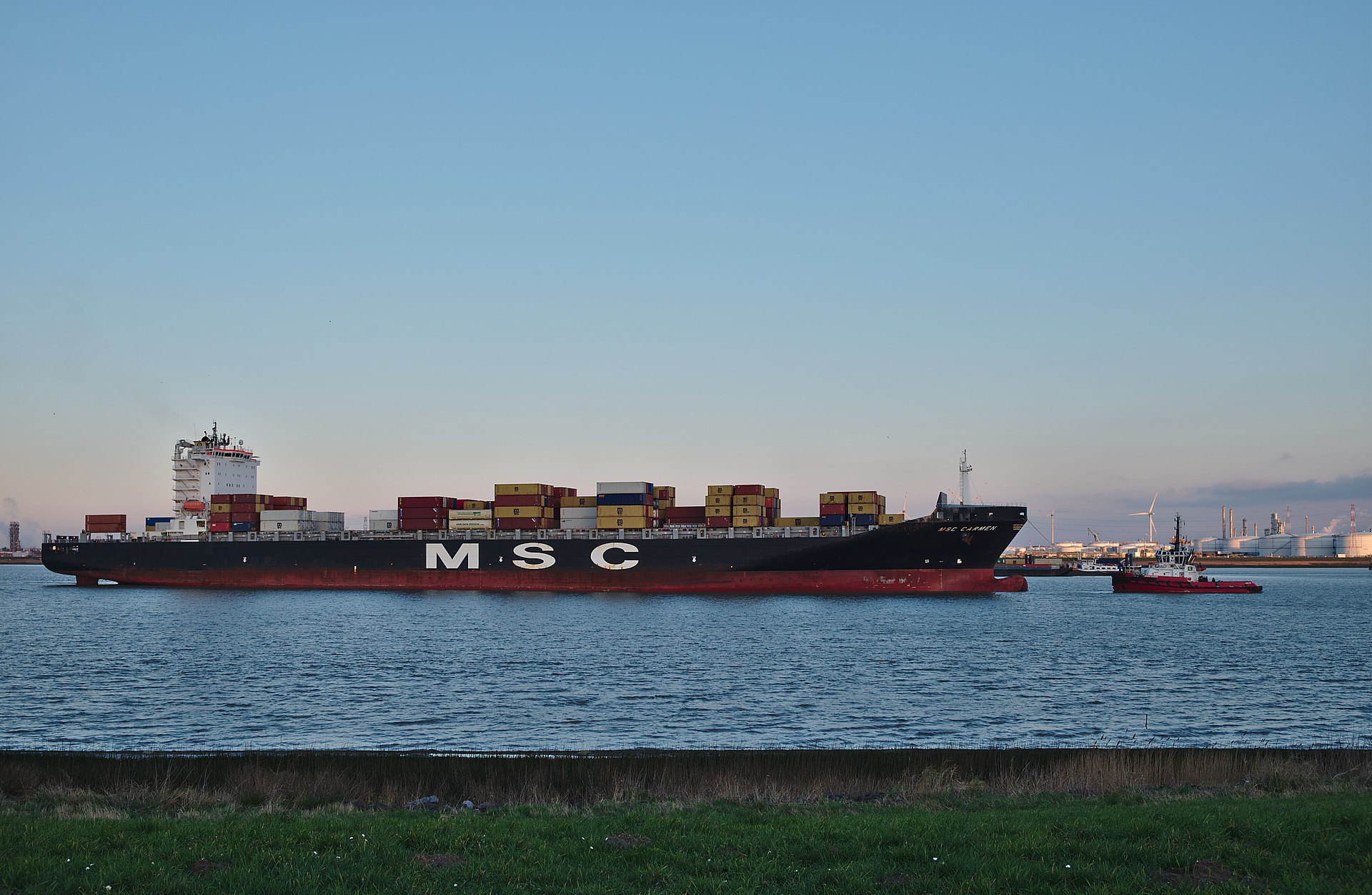
A deadlock then forms: new equipment has no track record, so shipowners will not use it; without a single shipowner willing to try, a track record can never be built. This is the chicken-and-egg problem — what the industry calls the first-unit dilemma.
The most compelling evidence for this dilemma does not come from China. It comes from Korea.
Korea is among the world's top shipbuilding nations, and it has long sought to break its dependence on the LNG containment system patents held by France's GTT. Each of the three major Korean shipyards developed its own containment system — Samsung's KCS (2011), Hyundai's system (2013), and Daewoo's Solidus (2017). These systems were technically competitive with GTT and all received classification society approval. The outcome? According to industry media reports, the number of operating vessels actually fitted with any of these three systems stood at zero, zero, and zero. GTT's market share remained firmly above ninety percent. The head of Daewoo's development division summed up the situation with undisguised frustration: the technology exists — what they lack is a track record.
The case of KC-1 was more damaging still. Developed by a Korean national team — KOGAS in partnership with the three major shipyards — KC-1 saw its first commercial application in 2018, but defects appeared after installation and one vessel was taken out of service. That single failure collapsed international shipowners' confidence in Korean domestically developed containment systems, and the push toward Korean localization stalled for several years.
The Korean experience establishes an important point: the trust gap cannot be resolved simply by meeting the technical specification. A mature market built on decades of installed track records and industry trust repels all late entrants without exception — even if you are Korea, even if your technology is already up to standard, even if all you want is a first order from your own domestic shipowners. And once that wall is reinforced by a single failure, the price that later entrants must pay grows even higher.
A more precise statement is necessary here. The trust gap differs from the first three in a fundamental way. The first three — design, craftsmanship, electronics — are continuous: push the technology one step forward and the gap narrows by one step; effort and reward trace a smooth curve. The trust gap is not like this. Before a piece of marine equipment secures its first significant commercial order, its track record is a clean zero; only after crossing that threshold does the count begin to rise from one vessel to two and beyond. Until that inflection point is reached, no matter how good the product, it occupies the same column in a shipowner's risk ledger as "unproven." This is not a slope that can be climbed incrementally through effort — it is a threshold that can only be crossed by way of a first order. Capability gaps can be purchased with money and time; this threshold cannot. What it demands is that someone be willing to hand over a vessel worth hundreds of millions and let a supplier have its "first time." And the rational shipowner is precisely the last person who will do that.
Beyond this wall there is, in fact, a third layer: the global after-sales service network. Wärtsilä operates more than 230 service locations across 77 countries with over 18,000 service personnel, and its service business accounts for more than half of the company's net sales. When a main engine fails in the middle of the Pacific Ocean, a shipowner needs someone who can board the vessel within hours. New domestic equipment brands have no such global service network, and shipowners factor this in the moment they place an order — which is why some foreign analysts have noted that Japanese equipment makers can command roughly a thirty-percent after-sales price premium on the strength of their service network alone.
The service network also creates a form of additional lock-in. Once a shipowner has committed to a particular brand of main engine, the entire ecosystem built around it — predictive maintenance protocols, spare-parts inventory, technician certification requirements, and the data architecture of the vessel's digital-twin system — is configured around that brand. Switching suppliers is nearly equivalent to dismantling and rebuilding that entire supporting infrastructure from scratch. The competition in marine equipment, at this level, has long since ceased to be a contest of which product is better, and become a contest of whether a shipowner can afford to switch. The real moat of an established brand is half technology and half this stickiness — the kind that makes leaving feel both wasteful and, in practice, impossible.
Does this mean the wall can never be scaled? Not necessarily. A Chinese success story can be told here — but the key point is precisely how it was scaled: Qingdao Sunrui's ballast water treatment system.
The path it followed amounts to a standard playbook. Step one: clear the certification gate first — Sunrui obtained International Maritime Organization (IMO) and U.S. Coast Guard type approval relatively early. Step two, and the critical one: rather than targeting the most impenetrable customers, it went first to where it could get in, accumulating its track record at second-tier Japanese shipyards — Namura, Oshima, and Tsuneishi — where it won orders, got equipment installed, and put vessels into service. Step three: in 2018, carrying both a U.S. Coast Guard certificate and a demonstrated track record from those Japanese second-tier yards, it knocked on the door of Japan's premier shipbuilder, Imabari Shipbuilding, passed a comprehensive audit, and secured its first order for three VLCCs. Today, Qingdao Sunrui's ballast water treatment systems have accumulated cumulative orders exceeding 4,000 ship sets, and it holds the top global market share for medium and large vessels.
There was only one path: earning trust with a track record — squeezing in through whatever opening was available, one vessel at a time, slowly building the confidence that no one is willing to grant freely. No shortcuts exist.
Sunrui's path is close to a methodology that can be replicated: lead with certification, then enter through the lowest-barrier customers to accumulate the first handful of installed vessels, then carry "certificates plus track record" to the next tier of customers — climbing rung by rung. The path works, but it also lays bare the cruelty of the trust tier: it took many years. No policy instrument and no amount of capital can meaningfully compress the time it takes to "build trust one vessel at a time."
The trust tier is the hardest layer of the marine equipment gap. It explains the paradox introduced at the beginning of this article: why, even as China has become the world's largest shipbuilding nation by output, its marine equipment localization rate remains stubbornly low. The final assembly stage of shipbuilding competes on capacity, cost, and delivery schedule — areas where China can move fast. Marine equipment competes on decades of installed track records and industry trust. That is something that cannot be rushed.
VI. Why the Equipment Gap Closes So Slowly
Beyond the trust tier, three structural forces explain why the marine-equipment gap is so unusually stubborn.
First, the industry is fragmented — small, scattered, and weak. China has over a thousand shipbuilding enterprises above the designated scale, the large majority of them equipment suppliers, and most of those are small or medium-sized. China has yet to produce a single large independent marine-equipment conglomerate comparable in stature to MAN, Wärtsilä, or Kongsberg. Meanwhile, these global leaders keep merging and consolidating, raising concentration further — the benchmarks that latecomers are trying to reach keep getting larger and stronger. R&D investment must be spread across a sufficiently wide revenue base; a landscape of isolated small firms simply cannot spread it.
The contrast with Japan and Korea is instructive. Korea has roughly 2,700 equipment suppliers, but they are coordinated by KOMEA, the Korea Marine Equipment Association, which has even established a dedicated global after-sales service centre so that smaller suppliers can share a common service network. Japan operates as a tightly integrated maritime cluster — shipbuilding, marine equipment, shipping, research institutions, and financial institutions bound into a single organism. Neither country's equipment sector is fragmented.
That word "cluster" is not a metaphor. Japan's maritime industry — shipbuilding, marine equipment, shipping, research, and finance — functions as a coherent whole measured in trillions of yen in annual revenue. Korea's equipment suppliers are densely concentrated around Busan and South Gyeongsang Province, immediately adjacent to the three major shipyards, forming a geographically compact cluster. Geographic density and organisational coordination allow individually modest firms to share R&D costs, share certification experience, and share a global service network. China's equipment sector is not small in headcount; what it lacks is precisely this structure of mutual reinforcement. More than a thousand suppliers are less a supply chain than a thousand isolated nodes, each fighting alone. With no scale, R&D cannot be amortised, and brands cannot be built — that is how "small, scattered, and weak" truly interlock.
When the Tianxia Gongchang Industrial Research Institute maps manufacturing supply chains in China, it repeatedly encounters the same phenomenon: the hardest tier to make visible is always the middle — the thousands of dispersed, invisible small factories. The marine-equipment sector is an extreme case: more than a thousand suppliers scattered across cities and county towns in Jiangsu, Liaoning, Shandong, and Guangdong, each unremarkable on its own, constituting an industry only in the aggregate. Identifying these real factories one by one, cataloguing them, and connecting them — so that assembly shipyards looking for suppliers and suppliers looking for customers can actually find each other — is itself indispensable groundwork for closing the gap.
Second, the economics: who pays for long-cycle R&D. Shipbuilding final assembly is a thin-margin business: between 2022 and 2023, Chinese shipbuilders' operating margins on their core business ran at only 3% to 4%. High-end marine equipment suppliers, by contrast, routinely achieve gross margins above 40%. This disparity points in two directions simultaneously: marine equipment is an attractive business — and its R&D threshold is correspondingly high, demanding long lead times, heavy capital commitment, and slow payback. The problem is that in an industry where margins are single digits, shipyards have neither the financial room nor sufficient incentive to subsidise the long-term R&D that equipment development requires.
The result is an awkward closed loop: marine equipment is a high-margin business that demands long-cycle, capital-intensive R&D; yet the assembly shipyards — the players in the supply chain with the strongest motivation and the most directly relevant use cases — are precisely the ones with the thinnest margins. Where the money for R&D is supposed to come from is a question the market has not answered on its own.
Third, sequencing mismatch: "the ship moves first; the equipment cannot keep up." When an assembly shipyard books an order for a sophisticated new vessel type, the delivery date is written into the contract — it is fixed and non-negotiable. When the time comes to select equipment, if the domestic option is not yet mature and lacks an installed track record, the shipyard has no choice but to go with proven imported components. No shipyard is going to gamble a ship worth hundreds of millions of dollars on an unproven domestic first-unit. Ship designs evolve rapidly, orders press forward, and domestic equipment is therefore perpetually a half-step behind. In the first half of 2023, Chinese shipyards even suffered delays in vessel construction schedules because imported main engines were delivered late — an episode that illustrated, from the other side, just how deep the dependence on imported equipment runs.
The sequencing mismatch carries a further, less obvious consequence: it denies domestic equipment the opportunity to "debut on the best ships." The most advanced new vessel types are precisely the ones shipyards are least willing to use as test beds; and without a first installation on a high-end vessel, domestic equipment cannot demonstrate that it belongs at the high end — which loops back once more to the trust deadlock described in Chapter V. All three structural forces — fragmentation, thin margins, and sequencing mismatch — ultimately converge on the same barrier: the wall built from installed track records.
These three factors, together with the trust tier discussed in Chapter V, constitute the full explanation for why the equipment gap closes so slowly. The problem is not a lack of will. It is that "building up the equipment tier" carries an inherently longer time constant than "building up final-assembly capacity."
VII. Solutions, Tier by Tier
Because the marine-equipment gap comprises four qualitatively distinct shortfalls, the solutions must be tiered as well — a single remedy cannot treat four different conditions.
At the design tier, two paths are available. One is to buy or circumvent: acquiring a design brand outright, as was done with WinGD — though as noted earlier, acquiring ownership is only the beginning; the real work is absorbing design capability into an organisation's own engineering talent, and that cannot be rushed. The other path is to secure original design ownership from the outset on new engine types — and green fuels offer precisely that opportunity.
At the craftsmanship tier, China has already validated the playbook. Invar steel is the proof of concept: identify the target, commit the investment, iterate relentlessly, clear the certifications one by one, and yield rates will climb. Following that rhythm, the craftsmanship tier is likely to be the first of the four gaps to close.
At the electronics tier, the key is bridging in from "the other supply chain." The gaps in marine electronics and industrial software should not be addressed solely from within the shipbuilding industry. The capabilities China has accumulated in consumer electronics, communications, artificial intelligence, and industrial software are resources that marine electronics and smart ships can draw upon. Smart ships in particular represent a genuine "reshuffling of the deck": they compete on sensors, algorithms, and data-processing capability rather than on decades of accumulated mechanical installation experience — and the former happens to be one of the strongest parts of China's industrial ecosystem. In other words, marine electronics and smart ships offer China a chance to compensate for a weakness with a strength: rather than grinding away inside the shipbuilding sector, the play is to route in supply chains in consumer electronics, communications, and AI that are already formidable. Of the four tiers, this is the one where China has the best prospect of changing lanes entirely.
The trust tier is the hardest. Its deadlock must be broken from outside; individual firms cannot vault over it alone. Two mechanisms are at work.
The first is the first-unit policy. Since 2015, China has operated a first-unit insurance-compensation scheme for major technical equipment — the government subsidises up to 80% of the insurance premium, allowing shipowners who deploy domestic first-unit equipment to transfer the risk of malfunction to insurers. The 2024 edition of the first-unit promotion catalogue extended coverage to high-technology vessels and marine engineering equipment; high-value core components such as marine engines are supported on a per-unit basis. In essence, the state has stepped in to absorb the "first-mover" risk that the market would not absorb on its own.
Industrial action plans in major shipbuilding centres like Shanghai and Jiangsu explicitly include provisions to promote first-unit demonstration projects and to give procurement preference to shipyards that buy domestic equipment. The very fact that procurement lists need to be "tilted" by policy is itself telling: left to its own devices, the market would not naturally favour domestic first-unit equipment. Policy can defray the risk for the early adopters and prise open the deadlock — but once the gap is opened, whether the equipment can hold its position depends entirely on the reliability record it accumulates, ship by ship.
The second mechanism is the "reshuffling" window created by green transition — a larger opportunity still. Under mounting decarbonisation pressure, global newbuild orders are shifting rapidly toward LNG, methanol, ammonia, and other alternative fuels. In 2024, vessels capable of running on alternative fuels already accounted for half of global newbuild tonnage contracted, with over 800 alternative-fuel ships ordered that year — a share that set a new historical record. LNG dual-fuel leads the way today; methanol is close behind; ammonia fuel is just getting started. Which fuel ultimately prevails remains an open question. For the equipment supply chain, however, the final winner matters less than this: whichever route the industry eventually takes, every ship will need a complete set of new equipment fundamentally different from what a conventional diesel vessel requires — new main engines, new fuel-gas supply systems, new fuel tanks, new safety monitoring. While multiple fuel pathways compete in parallel and standards have yet to solidify, this is precisely the window when domestic equipment suppliers can place bets across several options and stake out early positions. On a dual-fuel ship, an entirely new equipment suite is needed: new dual-fuel main engines, new fuel-gas supply systems, new fuel tanks, and new safety systems. On these new standards, everyone — including MAN, WinGD, and GTT — has yet to accumulate decades of installed track record. The wall of "performance" that once separated followers from leaders has been measurably lowered.
China has moved in exactly this way: Chinese marine-power companies co-developed with WinGD the world's highest-power methanol dual-fuel main engine, winning joint type approval from eight international classification societies in a single certification process; domestically developed low-speed ammonia-fuel engines have completed full-cycle testing; and the localization rate for LNG carrier equipment has risen from roughly one-quarter to over 80% over the past decade or so, while the number of domestic equipment suppliers has grown from around twenty to more than 130. Every time green transition rewrites an equipment standard, it opens a new door for domestic suppliers.
Clarity is still required, though: green transition has lowered the track-record wall; it has not torn it down. WinGD's ammonia-fuel main engine will not complete its first global type approval until early 2026 — everyone is back near the starting line together, but past that line, the record still has to be built, one ship at a time.
Viewing the four-tier solutions together, their time constants differ sharply: the craftsmanship tier could see major results within three to five years; the design and electronics tiers require a decade or more; the trust tier is the slowest of all — there are no patents to buy, no shortcuts through sheer force of effort, only the slow accumulation of installed track records, one vessel at a time.
Acknowledging this — acknowledging that some gaps simply cannot close fast — is itself the first step toward closing them.
Conclusion
"Marine equipment is a gap." The statement is not wrong. What is wrong is how smoothly it is said — so smoothly that it sounds like a single gap, one that a focused push and an action plan will fill.
Break it apart, and four gaps emerge: design, craftsmanship, electronics, and trust. The first three are capability problems, and China is visibly closing them — Invar steel has been conquered, main-engine design is being absorbed, and electronics and software can draw on a stronger adjacent supply chain. The fourth, the trust tier, is a structural problem. It does not live in the workshop; it lives in a shipowner's risk ledger, inside a mature market built inch by inch from decades of installed track records.
Korea's KC-1 is the reminder: even a major shipbuilding nation, even when the technology is ready, can be turned away at that wall of performance — and a single failure can set a programme back by years.
The real difficulty of closing the equipment gap, therefore, has never been "can we build it?" The difficulty is this: how does a latecomer break into a mature market whose barriers are made of track records and trust, accumulated one contract at a time? There are no patents to acquire, no shortcuts to take. The only way is to do what Qingdao Sunrui did — find the cracks that will let you in, board by board, and win back that "first time" that no one else was willing to give you, one ship at a time.
That is precisely why this cycle of green-transition reshuffling matters as much as it does. It has not demolished the track-record wall, but it has temporarily lowered it: on dual-fuel, methanol, and ammonia standards that are genuinely new, even century-old giants have not yet had time to accumulate decades of performance. For the first time, the distance between followers and leaders has closed this far. That window will not stay open — it will rise again as new standards mature. Whether China's marine-equipment sector can get through before it closes will, to a considerable degree, determine where the industry stands over the next decade.
And seeing the supply chain clearly — identifying, one by one, the real equipment factories it comprises, knowing who can make what and how much installed track record each of them already holds — is where all of this begins. It is also where the Tianxia Gongchang Industrial Research Institute stands, in its observation of every supply chain in Chinese manufacturing.
China's shipbuilding industry spent decades proving it could scale up. Filling in the marine-equipment gap — making this industry genuinely deep, not just large — may take another generation. That is not pessimism. It is simply the honest timeline for what this work requires.
Sources and Key References
This article was compiled and analyzed by the Tianxia Gongchang Industrial Research Institute, drawing on factory data from the Tianxia Gongchang platform together with publicly available information, official sources, and authoritative media reporting. Its principal data and factual sources include:
- The factory database and industry-chain data of the Tianxia Gongchang platform (www.tianxiagongchang.com)
- Annual reviews of shipbuilding-industry economic performance by the China Association of the National Shipbuilding Industry (CANSI)
- Research papers on the marine-equipment industry chain and marine equipment in Strategic Study of CAE, the journal of the Chinese Academy of Engineering
- Action plans and statistics on the marine-equipment industry released by China's Ministry of Industry and Information Technology
- Research by the OECD Working Party on Shipbuilding on marine equipment and the global shipbuilding value chain
- Statistics on alternative-fuelled newbuilding orders from Clarksons Research, Lloyd's Register, and DNV
- Rules and materials on the type approval of marine products from the China Classification Society (CCS) and international classification societies
- Documents from the International Maritime Organization (IMO), and public materials from the Korea Marine Equipment Association (KOMEA)
- Official public materials from MAN Energy Solutions, WinGD, Wärtsilä, GTT, and other companies
- Reporting by international maritime trade media (Lloyd's List, Riviera Maritime Media, Marine Log, and others) and Chinese shipbuilding-industry media