
Abstract
China's medical device industry is undergoing a historic structural transformation: the shift from being the "world's low-value consumables factory" to a "global high-end medical device competitor" is happening at visible speed.
In 2024, China's medical device market reached approximately RMB 1.3 trillion, making it the world's second-largest market behind the United States. The five-year compound annual growth rate of approximately 12–15% leads the world. Yet beneath this headline number lies a fundamental structural tension: domestically-made products account for close to 100% of low-value consumables (gloves, syringes, bandages), while domestic penetration of high-end medical imaging equipment (CT, MRI, PET-CT) has long hovered between 25–35%, and cardiac pacemakers remain only about 10% domestically produced. China ranks second in scale, yet the battle for the value high ground continues.
This report uses 2026 as its analytical vantage point, systematically reviewing the market structure, supply chain, competitive dynamics of key companies, segment deep-dives, and a 2026–2030 forecast for China's medical device industry. The central narrative thread is: domestic substitution + global expansion — United Imaging Healthcare (UIH) breaking the GPS high-end monopoly; volume-based procurement pressure forcing manufacturers to expand overseas; leading enterprises entering a historic leap from scale competition to value competition.
Key conclusions:
The GPS monopoly has been broken, but not across the board. UIH spent ten years taking domestically made CT/MRI/PET-CT from grassroots hospitals into top-tier hospitals, ranking first in China's new imaging device market share in 2024. But in DSA (vascular angiography), pacemakers, and advanced electrophysiology, foreign players still dominate absolutely — the domestic gap is measured in years, not months.
Centralized procurement is a double-edged sword. Volume-based procurement, with price cuts of 60–93%, has reshaped coronary stents, orthopedic joints, and chemiluminescence IVD markets — foreign players lost both volume and price while domestic brands compensated with volume. By 2024, domestic coronary stents exceed 80% market share, and domestic orthopedic joints exceed 50%. But procurement has also systematically compressed industry-wide profit margins, forcing companies to seek a second growth curve through global expansion.
Global expansion is industry consensus; Mindray sets the benchmark. Mindray generated RMB 17.65 billion in international revenue in FY2025 (+7.4%), now accounting for 53% of total revenue — the first time international revenue has exceeded domestic; Europe grew 17% in 2025 and emerging markets grew nearly 30%. Mindray ships more patient monitors globally than any other company, and ranks in the top three globally for five-part differential hematology analyzers.
Domestic substitution in IVD is a slow war. Chemiluminescence (market size ~RMB 100 billion) stands at roughly 30% domestic share; inter-provincial procurement alliances are opening hospital access barriers, and AnTu Biological's, New Industry's, and Mindray's luminescence platforms are ramping rapidly; domestic chemiluminescence market share is projected to surpass 50% by 2030.
Surgical robots: a ten-year window has opened. Da Vinci patents expiring, domestic policy support, and the commercialization of domestic Tumai / Jingfeng / Tianzhi platforms mean 2025–2030 is the critical window for China's surgical robots to scale from near-zero to hundreds of installed units. CAGR is expected to exceed 25%.
Key data snapshot (FY2025):
- 2025 China medical device market: ~RMB 1.4–1.5 trillion (global #2, composite estimate)
- 2030E China market: ~RMB 2.32 trillion (CAGR ~9.8%)
- Mindray FY2025 revenue: RMB 33.28 billion (-9.3%), international RMB 17.65 billion (+7.4%, 53% of total); net profit RMB 8.14 billion (-30.3%)
- UIH FY2025 revenue: RMB 13.82 billion (+34.2%), net profit RMB 1.89 billion (+49.6%), non-GAAP core profit +77%
- MicroPort FY2025: turned profitable, shareholders' profit ~USD 48.5 million (prior year: USD -269 million)
- Medical equipment renewal special program: 2026 first batch to drive ~RMB 60 billion in healthcare device purchases
- Coronary stent procurement: domestic share rose from ~25% pre-procurement to over 80%
- Chemiluminescence IVD: domestic share ~32% (2025), target 50% (2030)
- Top-10 global device companies FY2025 combined revenue: ~USD 170 billion (Stryker USD 25.1B, BSX USD 20.1B, GE HC USD 20.6B, Siemens Healthineers EUR 23.4B)
This report unfolds across fourteen chapters: Chapter 1 clarifies definitions and supply chain structure; Chapter 2 examines global giant strategies and competitive landscape; Chapter 3 applies a PEST framework to the policy, economic, social, and technological environment; Chapter 4 explores China's market scale and segment structure; Chapter 5 unpacks the upstream, midstream, and downstream supply chain; Chapter 6 profiles key listed companies individually; Chapter 7 maps China's medical device industrial belt geography; Chapter 8 presents deep-dives into major segments (imaging, IVD, orthopedics, cardiovascular, ophthalmology, home devices); Chapter 9 tracks the technology frontier; Chapter 10 assesses key risks; Chapter 11 offers quantitative 2030 forecasts; and Chapter 12 presents comprehensive conclusions and strategic recommendations.
Data note: This report is benchmarked to FY2025 annual reports (Mindray, UIH, MicroPort, AnTu, and other major A-share and H-share listed companies have published FY2025 results; overseas giants GE HealthCare, Philips, Siemens Healthineers, Abbott, Danaher, J&J, Stryker, and Boston Scientific have all published FY2025 results; Medtronic FY2026 full-year results are due June 3, 2026 — this report references Q1–Q3 FY2026 data and management guidance). Market size data is synthesized across multiple institutional sources with differences noted. Forecast figures are based on trend extrapolation and do not constitute investment advice. Industry research institute proprietary report; copyright held by Beijing Inequality Technology Co., Ltd. (brand: Yinhe / In-Equal).
Three core conclusions:
- China's medical device market represents the world's largest domestic substitution opportunity; UIH and Mindray have already proven the path viable;
- Procurement-driven price compression forces global expansion — overseas expansion is a mandatory strategic choice for the entire industry, not just individual companies;
- By 2030, China's medical device industry will redefine "Made in China" in high-technology manufacturing with greater technological competitiveness and broader global market coverage.
Chapter 1 Definitions, Classification, and Supply Chain Overview
1.1 The Essence and Scope of Medical Devices
Medical devices are the material foundation of modern medicine. Whether imaging equipment that lets physicians "see" inside the human body, diagnostic reagents that detect trace molecules in blood samples taken outside the body, or implants that are physically inserted into the body to provide mechanical support or electrical signal conduction — all belong to the vast category of medical devices. Together with pharmaceuticals, they form the two material pillars of clinical medicine. The distinction is that drugs produce therapeutic effects inside the body through chemical or biological action, while devices achieve diagnostic, therapeutic, or replacement functions primarily through physical, mechanical, or electromagnetic means.
According to the definition of China's National Medical Products Administration (NMPA), medical devices include instruments, equipment, tools, in-vitro diagnostic (IVD) reagents and calibrators, materials, and other similar or related items used directly or indirectly on the human body, with intended purposes including: diagnosis, prevention, monitoring, treatment, or alleviation of disease; diagnosis, monitoring, treatment, alleviation, or functional compensation of injury; examination, replacement, adjustment, or regulation of physiological structures or processes; and pregnancy control. This definition spans a wide technological spectrum from disposable syringes to MRI scanners and from cardiac pacemakers to gene sequencing instruments, resulting in the sector's high internal heterogeneity.
The defining characteristic of medical devices is regulation-driven entry. Any device product entering the market must undergo a rigorous registration and approval process. In China, this responsibility is held by the NMPA, with three risk classes mapping to different approval pathways. Class III devices (such as cardiac pacemakers, artificial joints, and in-body implants) face the strictest regulation requiring national-level approval; Class II products (such as medical ultrasound equipment and in-vitro diagnostic reagents) are approved by provincial drug regulators; Class I products (low-risk items such as stethoscopes and bandages) operate under a filing system. This tiered regulatory structure directly shapes the sector's barrier architecture: the higher-risk and more technically intensive the Class III device, the higher the entry barrier, the stronger the pricing power, and the more concentrated the market structure.
1.2 Classification: Five Major Functional Segments
This report categorizes medical devices into five major segments by functional application — the standard analytical framework used by Chinese regulatory authorities, capital markets, and research institutions.
1.2.1 Medical Imaging Equipment
Medical imaging equipment is a hospital's core diagnostic infrastructure, using different physical principles to let physicians "see" the internal structures, functions, and metabolic states of the human body.
Computed Tomography (CT): X-rays penetrate the body and are captured by detector arrays at multiple angles; the attenuated data is reconstructed by algorithms into cross-sectional images. CT is renowned for high resolution and fast scanning speed and is the workhorse for emergency, oncology diagnosis, and cardiovascular examination. Key components include X-ray tubes (core for lifetime and cost), detectors (cesium iodide / gadolinium oxysulfide scintillator crystal arrays), and high-voltage generators.
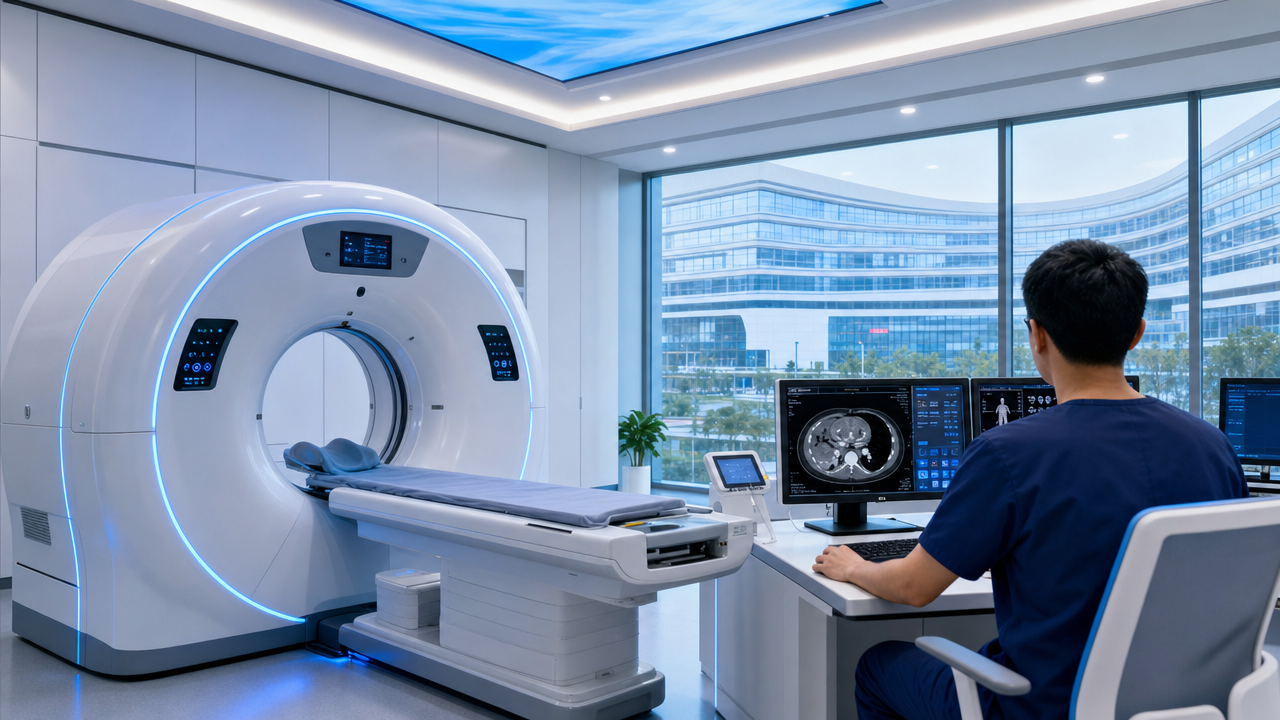
Magnetic Resonance Imaging (MRI): Uses strong magnetic fields and radiofrequency pulses to excite hydrogen nuclei (protons) in the body, receiving relaxation signals to reconstruct images. MRI has far superior soft-tissue resolution compared to CT, with no ionizing radiation, making it the preferred modality for neurological, joint soft tissue, and pelvic examinations. The core component is the superconducting magnet (1.5T and 3T field strengths are mainstream; 7T is for research-grade). China long depended on imported superconducting magnets; UIH is one of the very few domestic manufacturers that has self-developed superconducting magnets.
Positron Emission Tomography-CT (PET-CT): Fuses PET (detecting radiotracer metabolic distribution) with CT (providing anatomical localization) to simultaneously acquire functional and structural information; it is the gold standard for precise tumor diagnosis and treatment efficacy assessment. Per-unit price exceeds approximately RMB 20 million, and the market is highly concentrated in top-tier hospitals. UIH's PET-CT China market share reached 35% in 2024, breaking the near-twenty-year monopoly of GE, Siemens, and Philips (the "GPS" trio).
Ultrasound: Uses reflected ultrasound echoes for imaging; it is portable, real-time, and radiation-free, making it the routine tool for obstetrics, abdominal, and vascular examinations. High-end ultrasound (color Doppler, 4D, cardiac ultrasound) remains a stronghold of Philips, GE, and Hitachi, but Mindray exceeded 30% market share in the domestic ultrasound market in 2024, becoming the largest domestic player.
Digital X-ray (DR) and DSA: DR replaces traditional film with digital flat-panel detectors and is the basic imaging infrastructure for grassroots healthcare institutions. DSA (digital subtraction angiography) is the essential real-time imaging device for cardiovascular interventional surgery and still has relatively low domestic penetration.
1.2.2 In-Vitro Diagnostics (IVD)
In-vitro diagnostics refers to medical devices that test samples taken from the human body (blood, urine, tissue) outside the body to obtain information for disease diagnosis, health status assessment, or medical decision support. The defining characteristic of the IVD industry is its "consumable-driven" business model: diagnostic instruments are often placed at low cost or even free-of-charge at hospitals, while the real profit comes from the continuous consumption of matching reagent consumables — the classic "razor + blade" structure.
IVD sub-segments by testing principle:
- Biochemistry diagnostics: Enzyme reactions and colorimetric methods for blood glucose, liver function, kidney function, electrolytes, and other routine indicators; the most mature technology, most competitive, and highest domestication rate.
- Immunodiagnostics (chemiluminescence): Antigen-antibody reactions detect tumor markers, infectious disease antibodies, thyroid hormones, etc. Chemiluminescence immunoassay (CLIA) has high sensitivity and is the largest IVD sub-segment by market size, and also the most concentrated area of procurement pressure.
- Molecular diagnostics: PCR amplification, gene sequencing, and other methods detect nucleic acid sequences for infectious diseases (COVID, tuberculosis), genetic disease screening, and tumor liquid biopsy. BGI Genomics and Shengxiang Bio are domestic representatives.
- POCT (Point-of-Care Testing): Bedside rapid testing without requiring samples to be sent to a central lab; lateral flow (colloidal gold) is the primary method, with fluorescence quantitative POCT technology rapidly gaining ground; J&J, Abbott, and Roche's rapid diagnostic platforms compete with domestic Wondfo, Mindray Bio, and others.
- Hematology analysis: Fully automated blood cell analyzers; Mindray's five-part differential hematology analyzers have entered top-tier European and American hospitals, ranking top three globally in shipments.
China's IVD market size in 2024 was approximately RMB 280 billion, with chemiluminescence accounting for ~35%, biochemistry ~20%, molecular diagnostics ~18%, and hematology analysis ~10%. After procurement rollout, average chemiluminescence reagent price cuts have exceeded 60%, forcing domestic manufacturers to accelerate international expansion.
1.2.3 Patient Monitoring, Anesthesia, and Respiratory Equipment
This category is the core equipment for hospital ICUs, operating rooms, and emergency settings:
- Patient monitors: Continuously acquire ECG, blood pressure, oxygen saturation, temperature, and other vital sign signals. Mindray is the world's top-shipping patient monitor manufacturer, with approximately 14% global market share; its BeneVision series covers over 190 countries worldwide.
- Anesthesia machines: Provide precise anesthetic gas dosage control and vital sign monitoring for surgical patients; technically demanding, with Mindray competing against Germany's Dräger and GE Healthcare.
- Ventilators: Post-COVID, the strategic importance of ventilators has greatly increased; Mindray, Yuwell, and PuBoKe have all expanded their product lines.
1.2.4 Therapeutic Devices (Orthopedic, Cardiovascular, Ophthalmic Implants, etc.)
Therapeutic devices are the segment with the highest technical barriers and richest gross margins:
- Orthopedic implants: Trauma devices (plates, screws, intramedullary nails), joint replacements (artificial hip and knee joints), and spine systems (interbody fusion cages, pedicle screws). Post-procurement major price cuts saw domestic players DaBoMedical, ChunliMedical, and AK Medical accelerate market share gains.
- Cardiovascular intervention: Drug-eluting coronary stents (DES), cardiac rhythm management devices (pacemakers, ICD, CRT), and electrophysiology catheters. Post-procurement, domestic coronary stent share exceeds 80%; pacemakers are still dominated by Medtronic, St. Jude (Abbott), and Biotronik, though domestic Crealflex (MicroPort platform) has begun to break through.
- Ophthalmic devices: Intraocular lenses (for cataract surgery implantation) and orthokeratology lenses (OK lenses). AiboMedical and OuPuKangShi compete fiercely in domestic orthokeratology, while Zeiss, Alcon, and Bausch+Lomb still dominate the high end.
- Neurological intervention and electrophysiology: Cerebrovascular intervention stents and radiofrequency ablation catheters. J&J's Biosense Webster holds ~60% of the Chinese electrophysiology catheter market; domestic MicroPort EP is making inroads.
1.2.5 Home Medical Devices
With aging demographics and rising chronic disease management needs, home medical devices are one of the fastest-growing segments: blood pressure monitors, glucose meters, oxygen concentrators, thermometers, medical masks, and wheelchairs. Yuwell Medical (002223) is the domestic home device leader with the broadest product portfolio; Nine Junlong Medical (002432) grew rapidly through overseas blood pressure monitor and glucose meter markets.
1.3 Supply Chain Overview: From Upstream Raw Materials to Terminal Hospitals
The medical device supply chain has four layers:
Upstream (core components and raw materials):
- Detectors (CT tubes, DR flat-panel detectors, PET scintillator crystals) — highly concentrated among a handful of suppliers such as Varex (US) and Canon Electronics (Japan), with very low domestic penetration
- Superconducting magnets (MRI core) — UIH and OT Medical have broken through, but gaps remain for high-field-strength domestic magnets
- Chemiluminescence reagent raw materials (antibodies, enzyme labels) — European and American suppliers dominate upstream raw materials
- Cardiac pacemaker batteries and electrodes — specialty lithium batteries are foreign-monopolized
- Orthopedic implant raw materials (medical titanium alloy, PE liner, high-crosslinked polyethylene) — medical titanium can be domestically supplied; high-performance UHMWPE has gaps
Midstream (device and consumable manufacturing):
- Large medical imaging equipment: UIH, Mindray, NeuSoft Medical (domestic); GE, Philips, Siemens (foreign)
- IVD instruments and reagents: Mindray, AnTu, Maccura, New Industry (domestic); Roche, Abbott, Beckman (foreign)
- Orthopedic implants: DaBo, Chunli, AK Medical (domestic); J&J DePuy Synthes, Stryker, Zimmer Biomet (foreign)
- Cardiovascular consumables: LePu Medical, Sino Medical (stents); MicroPort Rhythm (pacemakers)
- Low-value consumables: Weigao, Zhende Medical (domestic) — nearly 100% domestically produced
Downstream distribution (sales channels):
- National distributors (Sinopharm Devices, CR Medical, Yingke Medical, etc.)
- Regional distributors — still mainstream
- Direct sales teams (self-built by large enterprises such as Mindray and UIH at key hospitals)
- Centralized procurement platforms (provincial medical insurance volume-based procurement, GPO)
End users:
- Tier-3 hospitals (the main battlefield for listed company products)
- Tier-2 hospitals (the primary incremental market for mid-range domestic devices)
- Grassroots healthcare institutions (township health centers, clinics)
- Household consumers
1.4 Position in the Global Supply Chain
In the global medical device supply chain, China's role is evolving from "world factory" to "full-value-chain participant." Historically, China was the primary exporter of low-value consumables (gloves, masks, syringes, infusion sets) and mid-to-low-end electronic components. Since the 21st century, domestic medical device enterprises have rapidly broken through in imaging equipment, IVD, and patient monitors, gradually penetrating global markets. China's 2024 medical device export total was approximately USD 50 billion, with low-value consumables dominating by volume, but high-end device exports (Mindray, UIH) growing significantly faster.
At the same time, China still relies heavily on imports in key components for high-end imaging equipment (CT tubes, MRI superconducting magnets), cardiac pacemaker electrodes, and high-end surgical robots (da Vinci). In high-end medical devices, domestic substitution is the dominant theme; in low-end consumables, China is the unchallengeable global supply center. This dual structure of "catching up at the high end, dominating at the low end" is the fundamental coordinate for understanding China's medical device industry.
1.5 Medical Device Product Lifecycle Management
Managing the lifecycle of a medical device product is far more complex than for ordinary industrial goods, with regulatory requirements governing the entire process. A medical device product lifecycle encompasses:
Concept and R&D Phase (5–10 years): Market needs analysis → design and development → animal testing (if applicable) → early human feasibility studies. In this phase, companies must establish a complete Design History File (DHF), recording every design change and its scientific rationale.
Clinical Trial Phase (2–5 years): High-risk (Class III) medical devices require rigorously designed randomized controlled trials (RCTs), conducted by NMPA-approved clinical trial institutions, with mid-term and final data reported to regulators.
Registration and Approval Phase (0.5–3 years): Submit a registration application to NMPA including product technical requirements, clinical trial reports, and production quality management system documentation. Innovative medical devices use the green channel; standard Class III devices follow the conventional review process.
Post-market Surveillance (full lifecycle): Continuous post-market adverse event monitoring (MDR), periodic safety update reports (PSUR), and recall management. Any active design changes must be re-submitted as change applications and approved; unapproved product specification changes are not permitted.
This full-cycle regulatory requirement means product management workloads for medical device enterprises are far greater than for ordinary manufacturing, explaining why the management complexity of the medical device industry is no less than its technical R&D challenge itself — regulatory compliance capability is a key component of core competitiveness, not a simple administrative threshold.
1.6 Commercial Model Diversity in Medical Devices
Medical device business models are highly diverse by product type, with no one-size-fits-all standard:
Direct Sales Model (Capex Model): The hospital makes a one-time equipment purchase, with ownership transferred. Large imaging equipment (CT, MRI) typically uses this model; hospitals depreciate assets over their useful life (typically 8–15 years). The advantage for device companies is one-time revenue recognition and fast capital turnover, but market entry requires significant sales team investment.
Reagent/Consumable Bundling Model (Razor + Blades): Instruments are placed at low cost (or even free-of-charge), with stable income derived from the continuous consumption of matching reagents and consumables. Chemiluminescence IVD is the typical example — IVD companies typically place instruments under "contract terms" (with committed reagent purchase volumes during the contract period), and may reclaim instruments if hospitals don't renew. The advantage of this model for companies is "revenue-side continuity and predictability," but requires upfront capital tied up in instruments.
Service Contract Model (SaaS-ification): Especially in the imaging equipment space, GE, Siemens, and other foreign companies have pushed the "Equipment as a Service" (EaaS) model — hospitals don't buy equipment but pay monthly or annual service fees, with the manufacturer responsible for maintenance, upgrades, training, and performance guarantees. This converts Capex to Opex for hospitals and creates stable recurring revenue for companies. China's market currently centers on direct sales and reagent bundling; EaaS is germinating in the mid-to-high-end imaging space.
Revenue Share Model: In emerging segments (such as gene sequencing services, AI imaging diagnostic software), companies can sign per-test or per-report fee-sharing arrangements with hospitals. BGI's gene testing services and Keya Medical's CT-FFR AI software both have per-use pricing, reflecting software and service-based business model innovation.
1.7 Core Competitive Dimensions Summary
In China's medical device industry, competition primarily occurs across five dimensions:
Technology R&D capability: The most fundamental competitive foundation in high-end medical devices. From CT detectors to MRI superconducting magnets, from chemiluminescence core antibodies to surgical robot mechanical arms, technological innovation is the ultimate source of long-term competitiveness. R&D expense ratio (R&D/Revenue) is the key metric for technology-oriented enterprise investment; leading industry enterprises typically fall in the 10–22% range.
Regulatory and registration capability: In an industry where "get approval first, then sell," regulatory registration capability directly determines market access speed. Companies with multi-country registrations (Mindray, UIH) have far larger market addressable space than those with only domestic registrations — this is a form of "invisible competitiveness."
Clinical data accumulation: Competition in high-end devices ultimately comes down to clinical data — companies with more high-quality RCT data are more likely to enter clinical guidelines, and more likely to win the trust of conservative top-tier hospital procurement decision-makers.
Sales and service networks: In the B2B medical device market, building relationships at the department director level in hospitals (especially top-tier Tier-3 hospitals) is the core asset of the sales team. These relationship networks require years of sustained investment and cannot be quickly replicated.
Supply chain efficiency and cost control: With procurement driving price competition toward marginal cost, whoever has lower manufacturing costs and more efficient supply chains can win more volume from procurement while maintaining reasonable margins. Vertical integration (Mindray's and UIH's self-developed key components) is an important means of reducing supply chain costs and improving reliability.
Chapter 2 Global Landscape and Overseas Leaders
2.1 Global Medical Device Market Overview
The global medical device market was approximately USD 633 billion in 2024, expected to exceed USD 900 billion by 2030, with a compound annual growth rate of approximately 7–8%. Two fundamental drivers of this market have never changed: first, aging populations increasing demand for chronic disease and surgical care; second, technological advances (AI-assisted diagnostics, minimally invasive surgery, molecular diagnostics) continuously opening new clinical needs.
By region, North America remains the largest single market at approximately 37–40% of global share; Europe approximately 26%; Asia-Pacific approximately 29%, with China contributing the majority of Asia-Pacific incremental growth. China has surpassed Japan and Germany to become the world's second-largest medical device market after the United States.
By enterprise, US companies hold overwhelming advantages in high-end therapeutic devices (pacemakers, orthopedics, electrophysiology) and diagnostic instruments; European companies (Germany's Siemens Healthineers, Switzerland's Roche Diagnostics) are global leaders in imaging equipment and IVD; Japanese companies (Olympus, Canon Medical, Shimadzu) hold positions in endoscopy and imaging.
The top-10 global medical device companies' combined revenue accounts for approximately 30% of the global market — industry concentration is significantly lower than semiconductors or automobiles, with numerous segments each potentially having independent leaders.
2.2 Global Leaders: Company-by-Company Analysis
2.2.1 Medtronic — Absolute Ruler in Cardiovascular and Neurology
Medtronic is the world's largest medical device company by revenue (headquartered in Dublin, Ireland for tax purposes; operational headquarters in Minneapolis, Minnesota). FY2025 (to April 2025) revenue ~USD 33.3 billion; FY2026 (to April 2026, full results due June 3, 2026) Q1–Q3 performance: Q1 revenue USD 8.6B (+8.4%); Q3 revenue USD 9.0B (+8.7% reported, +6.0% organic) — highest organic growth in ten quarters. Full FY2026 revenue is expected to exceed USD 34.5 billion; non-GAAP EPS guidance: USD 5.50–5.54. Spanning four major segments: Cardiovascular, Neuroscience, Surgical, and Diabetes.
In China, Medtronic has long held over 40% of the cardiac pacemaker market; its Micra leadless pacemaker is the world's smallest implantable pacemaker with extremely high technical barriers. As China's volume-based procurement extends to more consumable categories, Medtronic faces sustained price pressure in China; but it retains pricing power in premium products (CRT-D defibrillators, Mazor spine surgery robots). Medtronic's China revenue accounts for approximately 7–9% of global revenue, its third-largest market.
Medtronic's most important recent strategic move is AI empowerment: through AI-assisted endoscopy (GI Genius) and AI surgical navigation, it aims to build a "device + data + platform" new moat.
2.2.2 J&J / DePuy Synthes / Ethicon — The Benchmark in Orthopedics and Surgery
J&J MedTech (2023 split from original J&J, but MedTech division remains in the main entity) generated approximately USD 21.4 billion in medical device revenue in 2025 (+6.1%), the highest-growth segment at J&J; full company FY2025 reported sales USD 94.2 billion (+6.0% operational). Main segments: orthopedics (DePuy Synthes), surgical instruments (Ethicon), electrophysiology (Biosense Webster), and ophthalmology (J&J Vision Care).
DePuy Synthes is one of the global leaders in orthopedic implants with comprehensive hip, knee, and spine system coverage, long dominant in trauma and joint replacement surgery at China's Tier-3 hospitals. Before procurement, a complete set of imported artificial knee joint products cost over RMB 30,000; after procurement, prices fell to RMB 4,700–7,000. DePuy maintains higher prices in mid-to-high-end products, but mid-to-low-end market share has shifted substantially to domestic brands.
Biosense Webster holds global leadership in three-dimensional cardiac mapping systems (CARTO system), with approximately 60% share in China's electrophysiology catheter market. Domestic MicroPort EP is developing comparable competitive products, but the gap remains significant.
Ethicon is the world's leading surgical stapler and suture brand; laparoscopic instruments are its core. With the rise of domestic laparoscopic stapler companies (Hexin Medical, Kangji Medical), Ethicon is already feeling domestic substitution pressure in low-value surgical instruments.
2.2.3 Abbott — A Versatile Powerhouse Combining IVD and Cardiovascular
Abbott's FY2025 total revenue was approximately USD 44.3 billion (+6.7% organic growth), with Medical Devices segment revenue USD 21.4 billion, approximately 48% of total revenue — the 12th consecutive quarter of double-digit organic growth (Q4 2025: +10.4%). Core businesses: FreeStyle Libre CGM, cardiac rhythm management (pacemakers, ICD), vascular intervention (FFR systems, coronary balloons), and rapid diagnostics (ID NOW).
FreeStyle Libre continuous glucose monitoring is Abbott's most important growth engine, with FY2025 global growth of 17% (Q4: +12%); electrophysiology +13.5%, heart failure +13.2%, rhythm management +13.1%. The 1.4 billion diabetes patient base in China and insurance inclusion continue to support domestic growth. Domestic Sinocare (glucose meters) and Yihe Jiaye benchmark against Abbott's mid-to-low-end POCT series, but LibreLink still has a smart experience advantage.
Abbott also operates the world's second-largest IVD diagnostic platform (ARCHITECT, Alinity series chemiluminescence analyzers), occupying important positions in automated labs at China's Tier-3 hospitals.
2.2.4 Danaher — Platform Integrator for IVD and Life Science Instruments
Danaher's FY2025 total revenue was USD 24.6 billion (+3.0%, non-GAAP core revenue +2.0%), with annual net earnings of USD 3.6 billion and operating cash flow of USD 6.4 billion. Diagnostics business highlights in 2025: Beckman Coulter's DxI 9000 immunoassay platform expanded its neurodegenerative disease assay menu; Cepheid received FDA clearance for Xpert GI Panel (rapid multiplex PCR for 11 GI pathogens).
Beckman Coulter's chemiluminescence immunoassay platform (Access series) is one of the world's most powerful open platforms, with approximately 15% share in China's Tier-3 hospital chemiluminescence market, but faces strong domestic competition from AnTu Bio, New Industry, and Mindray as procurement policies expand. Danaher's moat is its Danaher Business System (DBS) — a methodology culture of continuous improvement in production and management efficiency that significantly enhances the operational efficiency of acquired companies.
Danaher spun off its environmental and applied solutions business (Veralto) in 2023, focusing on medical diagnostics and life sciences.
2.2.5 GE HealthCare — Dual Champion in Imaging and AI
GE HealthCare was spun off from General Electric and listed on Nasdaq (GEHC) in early 2023, headquartered in Chicago. FY2025 full-year revenue was USD 20.6 billion (+4.8% organic growth), driven by Pharmaceutical Diagnostics (PDx), Imaging, and Advanced Visualization Solutions (AVS); Q4 2025 revenue USD 5.7 billion (+7.1%). Covering imaging (CT, MRI, X-ray, ultrasound), patient care solutions (monitors), and pharmaceutical diagnostics (contrast agents).
GE HealthCare has deeply rooted history in China, with a local manufacturing footprint dating to the 1990s, with key production bases in Wuxi (ultrasound), Tianjin (MRI), and Shanghai (healthcare IT). Even with UIH's strong rise, GE HealthCare maintains important share in high-end CT (Revolution Apex series, 256-slice+) and high-end MRI (SIGNA Premier, 3T) at China's large Tier-3A hospitals. GE has embedded AI (Edison platform) into imaging devices, with AI-assisted diagnostics becoming standard.
2.2.6 Philips — From Consumer Electronics to Healthcare Focus
Philips (PHG.AS) underwent a strategic transformation from consumer electronics diversification to healthcare focus, completing the consumer lifestyle and personal care (PS) spinoff in 2021 but immediately facing the massive Respironics sleep respiratory device recall crisis. FY2025 full-year revenue EUR 17.8 billion (comparable sales growth +2%), operating income EUR 1,424 million; 64,817 employees at year-end; acquired SpectraWAVE (coronary interventional platform) in December 2025/January 2026; filed 700 new patents focused on health technology services and solutions; announced 2026–2028 capital markets day targets. Focused on imaging systems (CT, MRI, ultrasound, DR), patient monitoring, and personal health.
Philips' position in China's imaging market was affected by the recall event, though its Allura series DSA remains one of the mainstream selections for domestic cardiac catheterization labs. Philips will increasingly direct resources toward healthcare IT integration (hospital intraoperability solutions) and personalized health management platforms.
2.2.7 Siemens Healthineers — Dual Core of Diagnostics and Imaging
Siemens Healthineers (SHL.DE), the healthcare spinoff of Siemens AG (IPO 2018). FY2025 (ended September 2025) full-year revenue approximately EUR 23.4 billion (~USD 25.8 billion); adjusted EBIT margin 16.5% (+0.8 pp YoY despite tariff headwinds); adjusted EBIT nearly EUR 3.9 billion. Imaging segment FY2025 revenue EUR 13.18 billion (+8.5%); Varian oncology segment EUR 4.08 billion (+6.9%); Q4 FY2025 revenue EUR 6.32 billion (+3.7%). FY2026 Q1 delivered strong margins despite tariff and currency pressure. Covers diagnostics (Atellica chemiluminescence platform, Varian cancer radiotherapy) and imaging systems (SOMATOM CT, MAGNETOM MRI, ACUSON ultrasound).
Its acquisition of Varian Medical (radiation oncology treatment equipment) made Siemens Healthineers the global leader in cancer radiotherapy, accelerating its penetration of China's oncology equipment market. SOMATOM go CT and MAGNETOM Altea MRI launched low-cost versions targeting grassroots hospitals, competing against UIH in China's county-level market.
2.2.8 Boston Scientific — Precision Cultivator in Minimally Invasive Intervention
Boston Scientific (BSX) generated USD 20.07 billion in FY2025 (+19.9% reported, +15.8% organic), joining the global top-five medical device companies by revenue; growth led by electrophysiology (PFA pulse field ablation driving strong gains), structural heart disease, and endoscopy. Specializing in cardiovascular intervention (stents, balloons, structural heart disease), electrophysiology (ablation catheters), endoscopy (GI endoscopy accessories), and urology.
In China, Boston Scientific's SYNERGY coronary stent had the highest market share among imported stents before procurement. Post-procurement, imported stents experienced volume and price declines together; Boston Scientific strategically retreated to premium products and increased investment in electrophysiology and structural heart disease (WATCHMAN left atrial appendage closure), where procurement has not yet rolled out broadly.
2.2.9 Stryker — Leader in Orthopedics and Surgical Robotics
Stryker (SYK) generated USD 25.1 billion in FY2025 (+11.2% reported, +10.3% organic), the strongest organic growth rate among major global orthopedic leaders, with full-year 2026 guidance also published. Three core businesses: orthopedics (trauma implants, joint replacement), endoscopy and surgical robotics (Mako surgical robot), and neuroscience (craniomaxillofacial implants, neuromonitoring).
Stryker's Mako surgical robot (focused on hip and knee joint replacement) is currently the world's largest-installed orthopedic surgical robot, with global cumulative installations exceeding 3,000 units by end-2024. Domestic Chinese orthopedic robot players (Tianzhi, MicroPort Robotics) are rapidly catching up, but still lag in technology maturity and clinical case accumulation.
2.2.10 Zimmer Biomet — Focused Player in Joint Replacement
Zimmer Biomet (ZBH) generated approximately USD 7.5 billion in 2024, with a product line highly concentrated in knee and hip joint replacement systems — one of the world's purest orthopedic joint companies. China's volume-based procurement has created massive price pressure on its mid-to-low-end joint product lines; it is strategically shifting toward robot-assisted surgery (ROSA platform) and high-end customized joints to seek differentiated pricing space.
2.3 Structural Characteristics of the Global Competitive Landscape
Several structural characteristics of the global landscape are noteworthy:
High segment specialization: Unlike the winner-takes-all logic of consumer electronics, each medical device segment has a highly specialized leader. Pacemakers, joint replacement, endoscopy, chemiluminescence, radiotherapy — leaders in each field are typically specialist companies with decades of deep focus; diversified giants (like J&J) more often accumulate segment advantages through acquisitions.
Regulatory and certification barriers as natural moats: From R&D to FDA 510(k) or PMA approval, a Class III medical device averages 5–10 years; EU MDR certification has grown more stringent since 2021. This regulatory cycle gives first movers persistent advantages and shifts the primary bottleneck for Chinese companies going overseas from product technology to registration and certification capability.
Procurement-driven domestic substitution window: Volume-based procurement policies systematically impact foreign players — volume and price both fall in procured categories, forcing retreat to high-end products and top-tier hospital channels. Domestic players, with volume certainty, achieve scale-based cost compression, winning more share at lower prices and accelerating the flywheel of rising domestic penetration rates.
AI and digitalization as new differentiation dimensions: Medtronic, GE HealthCare, and Siemens Healthineers have all embedded AI into devices, supplementing hardware revenue with "software subscriptions + data analytics services" to create sustained platform stickiness. This poses a new challenge for domestic Chinese enterprises: Mindray and UIH are developing AI-assisted imaging diagnostic platforms, but in clinical data accumulation and AI model training dataset scale, they cannot yet match Western giants in the short term.
2.4 Sysmex and Beckman Coulter: Segment Giants in Blood Diagnostics
Beyond Roche, Abbott, and Beckman in the IVD field, two companies focused on specific segments deserve dedicated analysis:
Sysmex (Japan) is the global leader in hematology analyzers, with FY2024 revenue of approximately USD 4.1 billion and approximately 30–35% global market share in five-part differential hematology analyzers. Sysmex's technical core is fluorescence flow cytometry combined with impedance technology, providing high analytical precision and stability. In China, Sysmex's hematology analyzer market share is approximately 35%, forming a duopoly with Mindray (~40%). Sysmex's China strategy is to maintain the technical advantage of its high-end models (XN-9100 automated hematology analysis pipeline) to defend against Mindray's mid-to-low-end competition through pricing and service.
Beckman Coulter (under Danaher) is one of the world's largest biochemical analysis and chemiluminescence immunoassay platform suppliers, with approximately 15–18% share in chemiluminescence at China's Tier-3A hospitals (forming the foreign "Big Three" alongside Roche's 25–30% and Abbott's 15–20%). Beckman's challenge in China is that its traditional strength is high-throughput central lab equipment, while post-procurement Chinese hospitals increasingly prioritize "reagent system openness" (allowing different brands' reagents to run on the same platform) rather than Beckman's "closed system" approach.
2.5 Global M&A Landscape: Business Logic of the Consolidation Era
Since 2020, the global medical device M&A market has experienced significant cooling: rising interest rates have greatly increased financing costs, while antitrust agencies (FTC, EU Competition) have tightened scrutiny of large mergers, and post-integration results of several mega-deals (Medtronic's Mazor robotics, J&J's Abiomed) have drawn investor skepticism.
Against this backdrop, global top medical device companies have shifted M&A strategy from "large strategic acquisitions" to "precision technology or market gap-filling":
- Stryker acquired spine surgery robot company OrthoSoft (Canada) for approximately USD 1 billion; acquired INVACARE's vessel sealing business for approximately USD 4.7 billion
- Boston Scientific acquired electrophysiology platform Farapulse (pulsed field ablation) for USD 3.2 billion, expanding into PFA technology
- GE HealthCare acquired AI medical company Verdictum, accelerating digital health transformation
The common logic: acquiring specific technological capabilities (surgical robots, PFA ablation, AI algorithms) at precise cost rather than simply pursuing scale. For domestic Chinese enterprises, this trend represents both an imitation path — quickly acquiring specific technology through acquisition of small overseas innovators — and a competitive warning, as M&A competition will increasingly encounter foreign players in more segments as Chinese enterprises deepen their global footprint.
MicroPort Medical (0853.HK) exemplifies China's overseas M&A approach: over the past decade, through acquisitions and partnerships in orthopedics (acquiring US orthopedic company LDR Holding), cardiac rhythm management (acquiring UK CRM technology team), and surgical robotics (adopting Israeli robot technology), it rapidly built a technology portfolio — but asset-intensive multi-line acquisitions have also brought significant capital consumption and financial pressure.
2.6 China's Positioning Evolution in the Global Medical Device Landscape
From 2010 to 2025, Chinese medical device companies' positioning in the global landscape evolved through three stages:
Stage 1 (pre-2010): Global low-end manufacturer. Chinese companies primarily played the role of low-value consumables exporters and global OEM manufacturers — low technology content, low margins, but large scale. Export products were mainly gloves, syringes, infusion sets, bandages, and gauze.
Stage 2 (2010–2020): Catch-up domestic substitution. Companies represented by UIH, Mindray, and NeuSoft began challenging foreign players in mid-range technical segments, but were primarily focused on domestic market substitution, with overseas revenue still relatively low. In this stage, "domestic substitution" primarily meant "Chinese hospitals that previously bought imports beginning to use domestic brands," rather than "domestic brands beginning to export overseas."
Stage 3 (2020–present): Value-creating global competitors. Mindray's top-three global hematology analyzers, UIH's first-in-the-world 5T clinical MRI, MGI's sequencer deployment across Europe and Africa — these mark Chinese companies beginning to make their voice heard at the technology frontier. Global expansion is no longer low-price dumping, but beginning to compete for global hospital procurement attention through technological competition.
A fourth stage direction is already dimly visible: building on China's domestic clinical innovation data (such as large Chinese cohort studies on atrial fibrillation, the world's largest clinical experience accumulation in orthopedic surgery) to participate in formulating global clinical guidelines and establish truly "Chinese standards" that go global — this would represent the highest dimension of competition beyond catch-up, and is the ultimate goal of China's medical device industry.
2.7 Emerging Opportunities in Global Medical Devices: India, Southeast Asia, and Africa
The core battlefields of Western giants such as Medtronic, J&J, and Stryker have long focused on North America and Western Europe, with deep coverage of emerging markets being a persistent strategic gap. This gap is precisely the strategic opportunity for Chinese medical device companies.
India: The world's fifth-largest medical device market at approximately USD 11.5 billion in 2024 with ~15% growth; the government strongly promotes "Make in India for Medical Devices." Chinese medical device companies (Mindray monitors, UIH CT, AnTu chemiluminescence) have initial India footholds, but India's policy restrictions on Chinese investment (scrutiny imposed on Chinese-background enterprises since 2020) mean market entry is more often through local distributors than direct investment.
Southeast Asia (Indonesia, Vietnam, Philippines, Thailand): A combined medical device market of approximately USD 5 billion; large quantities of mid-to-low-end Chinese medical equipment (ultrasound, monitors, IVD instruments) are rapidly penetrating. Mindray has established local service teams in Indonesia and the Philippines, winning markets through fast response and low total cost of ownership (TCO).
Africa: Small but fast-growing (approximately USD 6 billion, 10–12% growth); government and UN institutional procurement are the primary channels. BGI's sequencing service laboratory partnerships in Ethiopia and Kenya, and Mindray's monitors and ultrasound deployment in South Africa and Nigeria's public health facilities, are representative cases.
These emerging markets share: relatively relaxed regulation (short registration cycles), high price sensitivity (domestic brand cost-effectiveness advantage prominent), and low direct competition intensity with Western giants. For Chinese mid-sized medical device companies with limited capital and channel resources, first building brand awareness in emerging markets, accumulating overseas experience and revenue, then gradually extending to higher-requirement European and American markets, represents a relatively viable global expansion path.
Chapter 3 Macro-Environmental Analysis (PEST)
3.1 Political: Regulatory Upgrading, Procurement Deepening, Domestic Priority
3.1.1 Continuous Improvement of the Tiered Regulatory System
Since China's Medical Device Supervision and Administration Regulations were revised in 2017, the Chinese medical device regulatory system has undergone a historic transformation from "registration-centric" to "registration + post-market surveillance combined." The 2021 revised Regulations further strengthened traceability requirements for high-risk devices, adverse event reporting obligations, and recall systems, aligning regulatory standards with international norms.
NMPA has accelerated building innovation approval pathways: the Innovative Medical Device Special Review Procedure (green channel), established in 2014, had approved a cumulative 158 innovative medical devices by end-2023; 61 were approved in 2023 alone, approximately 40% growth over 2022. UIH's uCT series and Mindray's ML-C30 ultrasound imaging both benefited from this pathway. Accelerated approvals mean domestic enterprises can shorten the cycle from R&D to market launch, accelerating technology iteration and domestic substitution pace.
On the other hand, the EU formally implemented MDR (Medical Device Regulation 2017/745) in 2021, replacing the legacy MDD with stricter clinical evidence requirements and post-market monitoring obligations; many historically-registered imported products face recertification pressure, and some foreign companies are exiting certain EU market categories — paradoxically opening EU market space in some mid-to-low-end segments for Chinese export companies.
3.1.2 Volume-Based Procurement: Now a Normalized "Third Gate"
National centralized volume-based procurement ("national procurement") launched with coronary stents in 2019, rapidly expanding across high-value medical consumables and devices:
- 2020: First national procurement of coronary drug-eluting stents, average price falling from RMB 13,000 to approximately RMB 700, a 93% cut; primary beneficiaries were domestic LePu Medical and Sino Medical.
- 2021: National procurement of orthopedic artificial joints, average artificial hip joint price falling from approximately RMB 35,000 to approximately RMB 7,000, a cut exceeding 80%; domestic Chunli Medical and AK Medical significantly increased market share.
- 2023: Sports medicine (arthroscopic surgery consumables) and intraocular lenses included in national procurement.
- 2024: Orthopedic trauma (bone plates, screws) alliance procurement achieved national coverage; chemiluminescence reagent inter-provincial alliances (Jiangxi for biochemistry, Anhui for tumor markers) launched with cuts exceeding 60% in some categories; artificial joint follow-on procurement with moderate cuts (averaging 6%).
- Outlook: Vascular intervention consumables (peripheral stents, balloons), neuro-intervention, and electrophysiology catheters entering procurement is the established direction; imaging equipment (CT, MRI) pilot "device procurement" in several provinces is expected to expand to more categories in 2025–2027.
Procurement's reshaping of industry structure is systemic: foreign enterprises' volume and price drops force them to retreat to high-end product lines and top-tier hospital channels; domestic enterprises, with volume certainty, compress costs through scale effects, winning more market share at lower prices, creating a flywheel of rapidly rising domestic penetration rates. On the other hand, procurement also compressed profit margins across the industry, forcing the entire industry to accelerate toward R&D innovation and overseas expansion for second growth curves.
3.1.3 Domestic Priority Policy: Government Procurement and Large Public Hospital Orientation
The 2021 "14th Five-Year Plan for Building a High-Quality and Efficient Medical and Healthcare Service System" and the 2022 "Opinions on Deepening Healthcare Reform" both explicitly call for prioritizing domestic products in government procurement and large medical equipment configuration at public healthcare institutions where conditions are equal.
The "Regulations on the Configuration and Use of Large Medical Equipment" implemented from 2023 regulate the number and approval processes for Class A (PET-CT, PET-MRI, proton therapy systems, etc.) and Class B (CT, MRI, linear accelerators, etc.) equipment, incorporating "improving domestic penetration rate" as a policy objective in configuration planning. Under this policy backdrop, UIH Medical has received systematic scoring advantages in tenders at large public hospitals, with many local government procurement projects explicitly requiring "domestic brand priority."
3.2 Economic: DRG/DIP Reshaping Payment Logic, Compressing Device Premiums
3.2.1 Deep Impact of DRG/DIP Payment Reform
China has rolled out DRG (Diagnosis-Related Groups) and DIP (Disease Point-Value Payment) reform across 300 cities nationwide since 2022, transforming fee-for-service (the more procedures and more expensive = more income) to fixed payment per discharge diagnosis. The direct result: hospitals now actively compress material costs in each diagnosis-related group, with both volume and unit price of high-value consumables constrained.
For the medical device industry, DRG/DIP reform fundamentally changes hospital procurement logic: the old commercial logic of "imported brand = higher charges = higher profit" is broken; hospital management now evaluates "how much can we save by choosing a lower-priced domestic brand when clinical outcomes are equivalent?" This is one of the deep drivers of domestic orthopedic implants and IVD reagents accelerating volume uptake following recent procurements.
In the medium-to-long term, DRG/DIP reform will further compress the premium space of high-value consumables in hospital revenue, though impact on categories already fully price-competitive (low-value consumables, biochemistry IVD) is relatively limited — their prices are already close to or below international levels.
3.2.2 Sustained Expansion of Healthcare Infrastructure Investment
Despite procurement price cuts, the demand side of the medical device industry has not contracted. China's "14th Five-Year Plan" targets raising hospital beds per 1,000 population from 6.46 (2020) to 7.4–7.5 (2025), equivalent to adding approximately 1 million beds, with enormous demand for supporting medical equipment. In 2023, the "Special Refinancing Bonds" and "Equipment Renewal" special action channels directed over RMB 300 billion in state fiscal support to public hospital equipment procurement and renewal — this "equipment replacement wave" was an important backdrop for UIH and Mindray maintaining relatively high revenue growth in 2023–2024.
3.3 Social: Aging, Chronic Diseases, and Health Consumption Upgrading
As of end-2023, approximately 297 million Chinese were aged 60+, representing approximately 21.1% of the population — entering deep aging. In 2024, this proportion is expected to rise further to approximately 22%. The disease spectrum changes brought by aging are directly reflected in medical device demand structure:
- Cardiovascular disease: Approximately 330 million cardiovascular disease patients in China (2023 Cardiovascular Disease Report); large groups of coronary heart disease, heart failure, and atrial fibrillation patients are the largest demand source for cardiovascular intervention consumables (stents, pacemakers, electrophysiology) and patient monitors.
- Orthopedic disease: Approximately 90 million osteoporosis patients in China; knee arthritis prevalence is approximately 50% among those 60+. Joint replacement surgery volumes grow continuously; China performed approximately 1.5 million joint replacement surgeries in 2023, with 2030 projections exceeding 3 million.
- Diabetes: Approximately 140 million diabetic patients in China; blood glucose monitoring needs (glucose meters, CGM) and insulin injection accessories continue to expand.
- Ophthalmic disease: Large patient populations for myopia, cataracts, and presbyopia; ophthalmic devices (intraocular lenses, orthokeratology lenses) are among the fastest-growing segments; approximately 4 million cataract surgeries per year in China.
- Oncology: Approximately 4.5 million new cancer cases per year in China; radiotherapy equipment (linear accelerators, proton therapy systems), PET-CT diagnostics, and targeted drug companion diagnostics (IVD molecular diagnostics) grow continuously.
Health consumption upgrading drives home medical devices: blood pressure monitors, pulse oximeters, home ventilators, and other products are moving from healthcare institutions into ordinary homes; Yuwell and Nine Junlong benefited from this trend. The home medical device market reached approximately RMB 120 billion in 2024, with approximately 15% CAGR.
3.4 Technological: Three Frontiers — AI Diagnostics, Gene Sequencing, and Surgical Robots
3.4.1 AI-Assisted Diagnostics: Imaging AI Entering Clinical Deployment
AI applications in medical imaging diagnostics have moved from concept to clinical practice. Domestically, dozens of companies (Keya Medical, Infervision, DeepWise, etc.) have obtained NMPA Class III registration certificates for AI medical device products, covering CT lung nodule detection, bone density measurement, fundus pathology screening, and other scenarios. Large imaging equipment manufacturers (GE HealthCare, Siemens, UIH) embed AI directly into devices, forming "device + embedded AI" integrated solutions.
AI is also advancing rapidly in IVD: digital pathology (AI-assisted cell morphology analysis) can improve slide reading efficiency 10-fold or more; domestic companies such as Motic and Shengke have products deployed in practice.
3.4.2 Gene Sequencing and Molecular Diagnostics: Infrastructure for Precision Medicine
Next-generation sequencing (NGS) technology is widely applied in China for oncology companion diagnostics, non-invasive prenatal testing (NIPT), and genetic disease screening. BGI Genomics (300676) is the world's largest gene sequencing service company; its subsidiary MGI Tech (HK 2160), with its self-developed DNBSEQ sequencing instruments, has entered markets in over 80 countries, the world's second-largest sequencing instrument platform after Illumina (US).
Third-generation sequencing (long-read sequencing, represented by PacBio and Oxford Nanopore) shows potential in RNA research, microbiomics, and rare disease diagnosis, and is the focus of the next round of competition.
3.4.3 Surgical Robots: Rapid Domestic Catch-up from Da Vinci
Intuitive Surgical's da Vinci Surgical System is the absolute global standard for surgical robots, with China installations of approximately 400 units (as of 2024, mainly in Tier-3 hospitals with 300+ beds). As da Vinci patents continue to expire, domestic surgical robot companies see an opportunity window: MicroPort Robotics (HK 2252), Tianzhi Hang (688277, orthopedic robots), Jingfeng Medical, and others have products approved; MicroPort's Toumai laparoscopic robot has completed multiple minimally invasive surgeries clinically, with conditions to enter more provincial DRG pricing systems.
Surgical robots' strategic value lies in their high unit price (each system RMB 10–20 million) and sustained consumables + service contract revenue — one of the highest-margin segments in medical devices, attracting substantial capital investment.
3.4.4 FDA and CE Overseas Certification: Institutional Barriers to Going Global
The primary certification barriers for Chinese medical devices going overseas are US FDA and EU CE:
- FDA 510(k) (premarket notification): for medium-to-low-risk products "substantially equivalent" to legally marketed devices; cycle ~6–12 months; Mindray and UIH have multiple products with 510(k) clearances.
- FDA PMA (premarket approval): for high-risk implants; cycle 2–5 years; requires large clinical studies; Chinese orthopedic and cardiovascular implant companies' PMA applications are still in progress.
- EU CE MDR (2021 new rules): strengthened clinical evidence and post-market monitoring requirements, creating relatively high barriers for some Chinese companies.
- NMPA Internationalization: China's NMPA has joined IMDRF (International Medical Device Regulators Forum), exploring mutual recognition with certain countries, but substantive mutual recognition with FDA/CE remains on a long-term path.
Overseas certification capability has become an important component of core competitiveness for high-end medical device enterprises. Mindray holds dozens of FDA 510(k) and EU CE certifications; UIH has accelerated registration in North America and Europe in recent years, directly supporting its international business revenue's 35% high growth rate in 2024.
3.5 International Regulatory Coordination Trend: IMDRF and Bilateral Cooperation
The International Medical Device Regulators Forum (IMDRF) is the coordination platform for major global regulatory agencies (FDA, EU EC, China's NMPA, Japan's PMDA, Australia's TGA, Canada's HC, etc.), dedicated to promoting international harmonization of medical device regulatory standards and reducing duplicative registration review.
China's NMPA became a formal IMDRF member in 2022, advancing substantive progress in several areas:
- Clinical data mutual recognition exploration: Bilateral agreement pilots with a small number of countries, allowing clinical data from one country to support registration review submissions in the other
- Certification body capacity building: NMPA-recognized quality system audit bodies beginning to participate in multilateral mutual recognition framework discussions for international standard ISO 13485
- Post-market adverse event data sharing: IMDRF established a post-market safety signal database; China's adverse event report data feeds into this system, helping global rapid response to safety issues
For Chinese companies, this trend means: in the future, after completing registration in one country (such as NMPA or CE), the registration cycle for other IMDRF member countries may gradually shorten. Mindray's global operations strategy is built precisely on expectations of this regulatory trend.
3.6 DTC (Direct-to-Consumer) Trend: Partial Shift from B2B to B2C
The traditional medical device industry is a typical B2B model: device companies sell equipment and consumables to hospitals, and hospitals provide services to patients. But with rising health consciousness and mature home medical technology, certain medical device categories are showing distinct "B2C-ization" trends:
- Continuous Glucose Monitoring (CGM): Abbott's FreeStyle Libre is sold directly to diabetic patients through medical device retail channels (pharmacies, online e-commerce) in many countries without requiring a doctor's prescription. Domestic similar products (Sibio Biosensors, Sannuo Biology) are also exploring direct e-commerce sales.
- Home cardiac monitoring: Apple Watch ECG function receiving NMPA approval (for medical purposes) has given hundreds of millions of everyday wearers cardiac rhythm monitoring capability; Yuwell Medical and other companies have launched ECG monitoring products for home users.
- Home-use POCT: Home antigen testing (lateral flow) popularized during COVID changed patients' acceptance of home instant testing; future home POCT products for tumor markers and cardiac markers are being explored.
This trend poses new challenges to traditional medical device companies' channel models and brand building: in B2C markets, brand awareness, user experience, and online word-of-mouth are far more important than the B2B market's "hospital director relationships" and "academic promotion." Yuwell's home device sales on Tmall and JD.com have already exceeded certain hospital direct-sales revenue — a direct manifestation of rising B2C channel importance.
3.7 Deep Logic of China's Healthcare System Reform
To understand China's medical device industry policy environment, one must first understand the deep logic of healthcare system reform. The core contradiction of China's healthcare system is: medical resources are extremely concentrated in Tier-3A hospitals, grassroots medical capacity is weak, leading to unreasonably high medical costs and low efficiency in medical resource utilization.
To address this structural problem, the government has launched several systematic reforms:
Hierarchical medical system: Goal of "minor illnesses at grassroots, major illnesses at hospitals, rehabilitation back to community," promoting rational patient triage. From a device industry perspective, deeper implementation of hierarchical medical care will greatly expand grassroots medical device (POCT, ultrasound, DR, remote monitoring) market demand — a strategic opportunity for mid-to-low-end domestic medical devices.
Medical consortium (yilian-ti) construction: Integrating large Tier-3A hospitals with grassroots healthcare institutions into healthcare consortiums, with senior doctors from large hospitals periodically visiting grassroots sites, remote imaging reading, and shared medical resources. For the medical device industry, the impact is: remote diagnostics (UIH AI imaging cloud) and remote ICU monitoring (Mindray MView remote monitoring system) are directly policy-driven.
Internet hospitals: Online consultations surged during COVID, accelerating the legalization of internet hospitals; approximately 3,000 internet hospitals nationwide in 2024 with approximately 500 million annual online consultations. The combination of internet hospitals with wearable medical devices and home monitoring devices is building a closed-loop "online diagnosis + home monitoring" healthcare service model, opening new sales and usage scenarios for home medical devices.
Healthy China Strategy: The 2030 targets explicitly set the "health industry" scale target at approximately RMB 16 trillion (including medical devices, pharmaceuticals, and health services); medical devices as approximately 15% of this receive full policy support.
3.8 Regional Development Disparities in Medical Devices: Policy Compensatory Investment
Regional imbalance in China's medical development is a long-standing structural problem; per-capita bed numbers, imaging equipment configuration rates, and laboratory capability in western provinces (Tibet, Guizhou, Yunnan) and central provinces (Anhui, Hunan, Jiangxi) are significantly below the eastern coast.
Central government subsidies for underdeveloped regions are important sources of medical device procurement in these provinces:
- Healthcare institution capacity building projects: Central transfer payments subsidize township health centers to purchase DR, ultrasound, POCT, and other basic equipment
- Wanli Health Engineering: Medical equipment donation and low-price supply projects for western regions
- Remote medical service system construction: National Health Commission promotes county hospitals establishing remote imaging, remote ECG, and remote pathology consultation systems with higher-level hospitals, driving demand for related basic equipment
These compensatory investments are characterized by: high government procurement proportions, extreme price sensitivity, and high acceptance of domestic brands (domestic priority + price priority) — they are important market channels for UIH uCT economy CT, Mindray mid-to-low-end ultrasound, and Wandong DR products.
Chapter 4 China Market Scale and Structure
4.1 Total Volume and Growth Rate: Global Second, Growth Leader
China's medical device market size in 2025 was approximately RMB 1.4–1.5 trillion (approximately USD 190–210 billion), ranking second globally, behind the US at approximately USD 370 billion. Over the past five years (2020–2025), China's CAGR of approximately 10–13% continues to lead the world's major markets.
Different research institutions and statistical scopes show slightly varying 2025 market size figures:
- China Federation of Logistics & Purchasing medical supply chain branch (Nov 2025): approximately RMB 1.22 trillion (NMPA registration scope, excluding certain distribution)
- Industry association / production enterprise revenue scope: approximately RMB 1.45 trillion (estimated)
- Market comprehensive scope (including service contracts, consumables): approximately RMB 1.4–1.5 trillion
This report uses a composite scope of approximately RMB 1.45 trillion (~USD 200 billion) as the analysis benchmark.
Medical Equipment Renewal Special Program (2024–2026): The National Development and Reform Commission in late 2025 released the first batch of 2026 ultra-long-term special treasury bond funds supporting equipment renewal — estimated to drive approximately RMB 60 billion in healthcare device purchases, with MRI ~RMB 15.8B (18%), CT ~RMB 12.2B (14%), and ultrasound ~RMB 8.2B (9%) leading demand. County-level medical communities account for ~30% of purchases. The national target: medical equipment investment grows 25%+ above 2023 levels by 2027.
4.2 Segment Structure: Volume and Growth Rates Across Five Major Segments
4.2.1 High-Value Medical Consumables
Approximately 38.6% of China's medical device market, with market size of approximately RMB 500 billion, is the largest single segment. High-value consumables refer to medical consumables implanted in the body or used in important organs and tissues, including: coronary stents, orthopedic implants (joints, trauma, spine), intraocular lenses, cardiac rhythm management devices (pacemakers, ICD), electrophysiology catheters, sports medicine consumables, and more.
High-value consumables is the most concentrated area for national centralized procurement and the fiercest battlefield between foreign and domestic competition. Procurement reshaping of this segment's market structure has been greatest: after coronary stent procurement, import brand market share fell from approximately 75% to below approximately 20%; LePu and Sino Medical benefited greatly. After joint procurement, foreign brand volume and price both fell, while domestic Chunli and AK Medical quickly rose.
4.2.2 Medical Equipment (Including Imaging)
Approximately 32.4% of China's medical device market, with market size of approximately RMB 420 billion. This segment includes large imaging equipment (CT, MRI, PET-CT, ultrasound, DR/DSA), patient monitors, anesthesia machines, surgical tables, ventilators, radiotherapy equipment (linear accelerators, proton therapy), and more.
Domestic penetration rates in large medical equipment sub-markets are highly differentiated:
- Ultrasound: Mindray's share exceeds 30%; domestic brands overall approximately 45%, among the most domestically penetrated categories
- CT (all tiers): UIH, NeuSoft, and Minfound account for approximately 30–35% of the domestic market (by units); by revenue, foreign high-end share is higher, domestic approximately 25%
- MRI: UIH approximately 20% of domestic market (by units); total domestic approximately 20–25%
- PET-CT: UIH approximately 35% of China market (2024); total domestic approximately 35–40%
- Digital DR X-ray: Domestic penetration approximately 70%; UIH, Wandong Medical, and Anke all have coverage
- DSA (vascular angiography): Foreign-dominated (Philips Allura, GE, Siemens); domestic penetration only approximately 10–15%
- Radiotherapy equipment: Foreign-dominated (Varian, Elekta); domestic approximately 15–20%; domestic breakthroughs in progress from Elettra Medical and CAS heavy ion accelerators
4.2.3 In-Vitro Diagnostics (IVD)
Approximately 21.5% of China's medical device market, approximately RMB 280 billion, the high-growth segment with CAGR of approximately 15% (second only to home devices).
IVD domestic penetration (by revenue) approximately 40%, with large sub-segment variations:
- Biochemistry: Domestic approximately 75%; Mindray, Kehua, etc. compete fully in mid-range instruments; foreign (Beckman, Sysmex, Abbott) hold the high-end Tier-3A hospital positions
- Chemiluminescence immunodiagnostics: Domestic approximately 30%; Roche (Cobas), Abbott (Alinity), and Beckman (Access) combined approximately 60% of market; but domestic AnTu Bio, New Industry, Mindray, and DiRui rapidly penetrate provincial-capital and prefectural-level Tier-3 hospitals through procurement; post-2024 inter-provincial alliance procurement, domestic rate expected to rise to 40–45% by 2025–2027
- Molecular diagnostics: Post-pandemic, PCR demand reverts to baseline, but NGS sequencing continues expanding in oncology and genetics; MGI sequencing instruments opening the market and driving reagent demand
- POCT: Market size approximately RMB 40 billion, growth 20%+; home use and out-of-hospital scenarios (clinics, community health centers) are primary incremental markets; HuaTi Technology, Wondfo, and MingDe Bio expand rapidly
- Hematology: Mindray five-part differential analyzers approximately 40% domestic share; Sysmex (Japan) approximately 35%; domestic penetration near 50%
4.2.4 Others and Home Devices
Approximately 7.5% of China's medical device market, approximately RMB 100 billion. Home medical devices is the fastest-growing sub-segment, approximately RMB 120 billion in 2024 (by wider-scope), with CAGR approximately 15%. Yuwell Medical (002223) is the domestic home device leader with the broadest product portfolio; Ninestar Medical (002432) primarily targets exports and is one of the world's largest medical thermometer and OTC blood pressure monitor exporters.
4.3 Domestic Penetration Rate Matrix by Segment
| Segment | Market Size (2024E) | Domestic Rate (2024E) | Key Domestic Players | Key Foreign Competitors |
|---|---|---|---|---|
| Coronary stents | ~RMB 20B | ~80% | LePu Medical, Sino Medical | Boston Scientific, Abbott |
| Orthopedic joints | ~RMB 35B | ~50% | Chunli, AK, Weigao | J&J DePuy, Stryker, Zimmer Biomet |
| Orthopedic trauma | ~RMB 30B | ~65% | DaBo Medical, Tianjin Weman | J&J DePuy Synthes |
| Cardiac pacemakers | ~RMB 10B | ~10% | MicroPort Rhythm, Pioneer | Medtronic, Abbott, Biotronik |
| Chemiluminescence IVD | ~RMB 100B | ~30% | AnTu Bio, New Industry, Mindray | Roche, Abbott, Beckman |
| Hematology analysis | ~RMB 28B | ~50% | Mindray Medical | Sysmex, Beckman |
| Molecular diagnostics | ~RMB 50B | ~55% | BGI Genomics, Shengxiang Bio | Roche, ThermoFisher |
| CT | ~RMB 60B | ~30% | UIH, NeuSoft | GE, Siemens, Philips |
| MRI | ~RMB 45B | ~25% | UIH | GE, Siemens, Philips |
| PET-CT | ~RMB 15B | ~40% | UIH | GE, Siemens |
| Ultrasound | ~RMB 30B | ~45% | Mindray Medical | GE, Philips, Hitachi |
| Patient monitoring | ~RMB 28B | ~60% | Mindray Medical | GE, Philips |
| Ophthalmology (IOL) | ~RMB 8B | ~25% | AiboMedical, Punomin | Alcon, Zeiss, B&L |
| Orthokeratology | ~RMB 6B | ~35% | OuPuKangShi, MengDaiWei | Euclid, Menicon |
| Home devices | ~RMB 120B | ~90% | Yuwell, Ninestar | Omron (niche high end) |
4.4 Growth Drivers
Driver 1: Structural rigidity of demand from demographic aging
China's 65+ population was approximately 218 million in 2024, approximately 15.4% of total. By 2030, the 65+ population is expected to grow to approximately 250 million; demand for age-related disease diagnostics and treatment (cardiovascular, orthopedic, ophthalmic, oncology) will continue to grow rigidly. Annual joint replacement surgery volumes are expected to grow from approximately 1.5 million in 2023 to approximately 3 million by 2030, doubling related consumables demand. Cardiovascular disease patients number approximately 330 million; approximately 1 million coronary interventions per year — the world's largest single cardiovascular intervention market.
Driver 2: Healthcare infrastructure expansion and equipment replacement cycles
The "14th Five-Year Plan" added approximately 1 million hospital beds nationwide; government special support since 2023 for public hospital equipment procurement and renewal created a short-term investment demand peak. Large imaging equipment (CT, MRI) has a useful life of approximately 8–12 years; this replacement cycle will be concentrated in 2025–2030. In 2023, the government arranged over RMB 300 billion in special funds through "special refinancing bonds" and "equipment renewal special actions" to support public hospital equipment procurement, providing notable support to UIH and Mindray's domestic revenues in 2023–2024.
Driver 3: Accelerated commercialization of innovative technologies
AI imaging diagnosis, NGS gene sequencing, surgical robots, and other emerging technologies entering the product commercialization stage create new market demand rather than merely competing for existing volume. Surgical robot system unit prices of approximately RMB 10–20 million are 10–20 times traditional laparoscopic instruments; PET-MRI integrated imaging equipment is penetrating from top hospitals into large Tier-3A hospitals in provincial capitals. The innovative medical device green channel accelerated technology commercialization, with 61 approvals in 2023 alone, approximately 40% growth over 2022.
Driver 4: Grassroots healthcare institution capacity building
The national "strengthen grassroots" policy promotes township health centers and community health service centers to configure basic diagnostic equipment; DR digital X-ray, POCT rapid diagnostics, remote ultrasound, and other grassroots-applicable products continue growing. Mindray's mid-to-low-end ultrasound and POCT equipment, UIH's "integrated" CT, are making notable inroads in grassroots markets. Only approximately 60% of China's roughly 16,000 township health centers have imaging equipment — the most important incremental market for the next five years.
Driver 5: Accelerating exports
China's 2024 medical device exports totaled approximately USD 50 billion (including low-value consumables); high-end enterprises' (Mindray, UIH, MicroPort) overseas revenue growth exceeded domestic market growth; exports become the second growth curve for the entire industry under domestic procurement pricing pressure.
4.5 Competitive Landscape Overview: Dynamic Competition Between Foreign and Domestic
4.5.1 Foreign Players' Strategic Contraction and Defense
Facing dual pressure from procurement price cuts and domestic substitution, multinational medical device companies' China strategies show clear divergence:
First, contracting mid-to-low-end, defending high-end. J&J DePuy Synthes has notably reduced sales team scale in grassroots and county hospitals post-trauma procurement, concentrating resources on premium implants (orthopedic robots, complex fractures) and high-difficulty surgeries at Tier-3 hospitals.
Second, local manufacturing to reduce costs. GE HealthCare maintains significant local manufacturing bases in Wuxi and Tianjin; Siemens Healthineers maintains manufacturing capability in Shanghai — local manufacturing is both risk mitigation against tariffs and policy, and a strategy to participate in the "domestic priority" policy game.
Third, service-side transformation. Service contracts (maintenance, upgrades, training) are growing proportionally in foreign enterprises' China revenue; GE's GENIUS AI platform and Philips' HealthSuite digital health platform attempt to maintain customer stickiness through data services even as hardware market share erodes.
4.5.2 Domestic Enterprises' Attack Paths
Domestic medical device companies, with foreign companies strategically contracting, display diverse attack paths:
Technology catch-up type (UIH, Keya Medical, MicroPort Robotics): Build full-value-chain technology capabilities through sustained high R&D investment (UIH R&D ratio ~22%), targeting direct competition with foreign players at the highest end.
Platform integration type (Mindray): Build comprehensive strategic partnerships with hospital customers through multi-product-line bundled sales (monitors + ultrasound + IVD one-stop supply), transitioning from single-device supplier to "solution provider," enhancing customer stickiness and cross-selling.
Procurement beneficiary type (DaBo Medical, Chunli Medical, LePu Medical): Trade price for volume under procurement framework, rapidly accumulating installed base and physician usage habits, building foundation for subsequent high-end product penetration.
Overseas-first type (Ninestar Medical, MGI): Intense competition and thin margins domestically, but with competitive advantages in specific overseas markets; strategic focus on exports with domestic revenue as secondary.
4.6 "Volume-Price Divergence" Trend in the Medical Device Industry
In 2024, China's medical device industry displayed a key structural characteristic: volume (surgical cases, testing instances) continues growing sharply, while price (unit price) has systematically declined due to procurement — volume-price divergence is the new normal.
Volume is driven by demographic aging and chronic disease burden — an irreversible demographic trend; price pressure comes from procurement policy — the policy's deliberate choice for healthcare spending control. The combined result: the medical device industry's revenue growth will slow from the historical 12–15% to 9–11%, while actual patient service volume (surgical volumes, testing volumes) growth rates may be even higher.
This trend affects different enterprise types differently: innovative enterprises with high R&D barriers who can continuously launch new products can break through procurement pricing through new product substitution, maintaining relatively high unit prices; enterprises competing only in mature categories already under procurement face sustained pressure of volume growth with thin margins, making overseas expansion a mandatory path to finding profit.
4.7 China's Regional Medical Device Market Structure
4.7.1 Eastern Coastal Cities: Core Consumption Area for Premium Devices
China's medical device consumption is highly unevenly distributed, highly correlated with economic development levels. Tier-3A hospitals in eastern first-tier cities (Beijing, Shanghai, Guangzhou, Shenzhen, Hangzhou) are the primary consumption markets for premium medical devices (high-end CT, PET-CT, surgical robots, high-value implants).
Shanghai alone had approximately RMB 65 billion in medical device market consumption in 2024, with imported high-end equipment accounting for approximately 45% — far above the national average of approximately 25% (imaging equipment scope). This is mainly because Shanghai's comprehensive Tier-3A hospitals (Fudan Zhongshan, Huashan, Renji, etc.) have strong appetite for frontier technology acquisition.
4.7.2 Central and Western Provincial Capitals: Main Battlefield for Domestic Devices
Chengdu, Wuhan, Xi'an, Zhengzhou, Nanjing, and other central-western provincial capital cities are key battlegrounds for domestic medical devices' penetration into the premium (Tier-3A hospital) market. These cities' Tier-3A hospitals, influenced by domestic priority policy and cost-effectiveness orientation during equipment replacement cycles, increasingly choose UIH (CT/MRI) and Mindray (monitors/ultrasound) mid-to-high-end products.
UIH's CT market share in central provincial capital Tier-3A hospitals has risen from below 10% in 2018 to approximately 30–35% in 2024, surpassing any single foreign brand. Central-western regions are core platforms for UIH and Mindray to rapidly accumulate installations and build reputation.
4.7.3 County-Level Markets: Untapped Blue Ocean for Grassroots Devices
China has approximately 1,500 counties (including county-level cities); county hospitals (approximately 15,000–20,000) are the lowest medical device penetration sub-market to date. Since 2020, the national "strengthen county-level" healthcare policy has promoted county hospital construction, enhancing county-level medical service capability and driving large demand for DR, basic ultrasound, POCT, and basic monitors.
UIH has specifically launched economy CT for county hospitals (uCT 310, 64-slice, unit price approximately RMB 1.5–2 million, approximately 30–40% below international brands for comparable products); Mindray's ME-POCT platform and mid-to-low-end ultrasound are quickly spreading in county markets.
4.8 Industrial Economics of Medical Devices: Concentration and Scale Effects
4.8.1 Current Industry Concentration
China's medical device industry has generally low concentration: top-five enterprises combined market share approximately 15–20% (compared to 40%+ in the US), reflecting the numerous sub-segments each with independent competitive structures. But within single sub-segments, concentration varies significantly:
- Patient monitors: Mindray domestic share approximately 40%, highly concentrated
- CT: UIH approximately 20–25% (by units), moderately concentrated; foreign combined approximately 65%
- Chemiluminescence: foreign Big Three (Roche, Abbott, Beckman) combined approximately 60%, highly concentrated (but rapidly declining post-procurement)
- Low-value consumables: top-five combined not exceeding 20%, highly fragmented
4.8.2 Scale Effects and the Positive Feedback of R&D Scale
In the medical device industry, scale effects on R&D investment amplification are particularly important: larger enterprises can support larger absolute R&D amounts, covering more categories of R&D and maintaining faster technology iteration speed. Mindray's estimated 2024 R&D expenditure of approximately RMB 4 billion allows simultaneously advancing next-generation product R&D in four product lines: monitors, hematology analyzers, chemiluminescence, and ultrasound.
This scale-to-R&D positive feedback is the core mechanism driving "strong getting stronger" among industry leaders — not winner-takes-all, but scale advantage translating into technology advantage through R&D investment, then technology advantage maintaining price advantage through virtuous cycle.
4.9 2025 Market Outlook: Short-term Turbulence and Long-term Structure
2024 saw structural divergence: domestic demand below expectations (healthcare anti-corruption + unstable hospital equipment procurement pace) vs. overseas high growth (Mindray +21%, UIH +35%). For 2025, the market broadly expects:
Domestic market: H2 2024 government stimulus for medical equipment renewal (including adding medical devices to "large-scale equipment renewal" subsidy scope) is expected to drive domestic hospital procurement pace recovery in 2025, with Mindray and UIH domestic business growth returning positive to 5–10%. With full DRG/DIP rollout, hospitals' acceptance of cost-effective domestic devices increases further, accelerating domestic substitution.
Overseas market: Mindray, AnTu, and other enterprises' overseas growth expected to maintain 15–20%; Southeast Asia, Middle East, and Latin America market penetration is still early-stage with high growth elasticity. UIH's US market penetration expected to make substantive breakthroughs in 2025 (estimated 2–3 large US teaching hospitals installing UIH CT or MRI).
Procurement pace: 2025 expected to add vascular intervention consumable alliance procurement (peripheral stents, balloons) and some CT provincial procurement pilots; overall expected cuts below past rounds (market has fully priced in expectations), with limited short-term impact on enterprise profits.
Regulatory changes: NMPA expected to further refine AI medical software approval rules in 2025, with 100+ second-batch AI Class III medical device registrations expected before year-end; surgical robot DRG inclusion negotiations expected to advance, helping resolve surgical robot consumable reimbursement issues.
Medium-to-long term (2025–2030), China's medical device market is entering a "structural transition period": from high-speed growth (12%+) to moderate-high growth (9–11%), but with significantly improved industry quality — more innovative products, higher domestic penetration, broader overseas coverage, and stronger profitability.
Chapter 5 Supply Chain Analysis
5.1 Upstream Core Components: Bottlenecks and Breakthroughs Coexist
China's medical device upstream barriers concentrate in a small number of precision core components that determine the performance ceiling of complete devices and represent the greatest technical challenges for domestic substitution.
5.1.1 CT Detector Systems: China's Largest Imaging "Bottleneck"
The technical soul of a CT machine is its detector system, including scintillator crystals (cesium iodide, gadolinium oxysulfide), photodiode arrays, and high-speed data acquisition systems. The global CT detector market is highly concentrated, primarily supplied by Varex Imaging (US) and Canon Electronics (Japan). Chinese medical device companies previously relied heavily on Varex's X-ray tubes and detector modules. UIH began independently developing "scintillator + photodiode" detectors in 2013, achieving self-developed rates for key complete device components exceeding 80% by around 2020 — the only domestic enterprise to self-develop key CT detectors. NeuSoft Medical maintains international supplier relationships and still has some dependence.
X-ray tubes are CT's other core consumable, with approximately 1 million exposure lifespan, unit price approximately RMB 600,000–1,000,000, requiring periodic replacement. Tube rotating anode manufacturing involves precision machining of refractory high-temperature metals (molybdenum, rhenium-tungsten alloys); global major suppliers include Varian (acquired by Siemens Healthineers), Varex, and Toshiba (under Canon). Domestic companies (Wanrui Vision Imaging, Shenzhen BYD Medical) are attempting breakthroughs, but batch production at scale remains at an early stage.
5.1.2 MRI Superconducting Magnets: Core Barrier of Field Strength and Stability
MRI's magnetic field strength (1.5T, 3T) is determined by the superconducting magnet. Superconducting magnets use superconducting coils (primarily niobium-titanium alloy NbTi; niobium-tin Nb₃Sn for higher field strengths) immersed in liquid helium to reduce resistance to zero maintaining stable magnetic fields. Manufacturing superconducting magnets involves superconducting wire (US AMSC, Germany Bruker), liquid helium cooling (helium supply is a global strategic resource), and cryogenic containers.
Global superconducting magnet major suppliers include Bruker BioSpin (Germany), Siemens MRI (internal), GE Healthcare (internal, produced in Florence, US), and Philips (internal). UIH is China's only enterprise to independently develop and mass-produce MRI superconducting magnets; its 3T MRI superconducting magnet achieved domestic production in 2018, greatly reducing dependence on imported magnets. OT Medical (Chengdu) has a strong position in permanent-magnet open MRI, but remains behind UIH in superconducting magnets.
Helium resource strategy risk is a unique challenge for the MRI industry: global liquid helium comes primarily from natural gas-associated resources in the US, Qatar, and Algeria; China's domestic helium self-sufficiency is below 2%, highly import-dependent. Recent years' liquid helium price volatility has pushed MRI manufacturers to accelerate "zero-helium-consumption" MRI technology (using cryo-coolers for helium internal cycling); UIH and GE have both launched related products.
5.1.3 Chemiluminescence Reagent Raw Materials: Import Dependence on Core Antibodies
The core consumable of chemiluminescence immunodiagnostics is matching reagents, whose core raw materials are monoclonal antibodies, polyclonal antibodies (bio-recognition molecules specifically binding target antigens), and chemiluminescence labels such as acridinium esters. Global monoclonal antibody major suppliers are concentrated in Europe and America: Fitzgerald Industries (Germany), Meridian Life Science (UK), Hytest (US), Medix Biochemica (Denmark), and others.
Chinese IVD companies (AnTu Bio, New Industry, Mindray) have persistently invested in core antibody R&D, but batch-producing high-specificity monoclonal antibodies remains technically demanding, particularly high-affinity antibodies for tumor markers (AFP, CEA, PSA) and hormones (TH, TSH); domestic self-production remains insufficient. Some companies have chosen to strategically build antibody factories internally or acquire European/American antibody companies to solve raw material dependency — this path has become a core strategic action for top IVD enterprises.
5.1.4 Cardiac Pacemaker Electrodes and Specialty Lithium Batteries
The two core components of implantable cardiac pacemakers are stimulation electrodes (leads) and lithium thionyl chloride batteries (specialty medical-grade lithium) in the sealed housing. Both are high-barrier precision components:
- Pacing leads require extreme flexibility, biocompatibility, and over 10-year implant stability; major suppliers are vertically integrated enterprises such as Medtronic, Abbott, and Biotronik; China currently has no independent pacing lead supplier reaching Tier-3 hospital batch implantation standards.
- Medical-grade lithium thionyl chloride batteries require extremely low self-discharge for 10+ years (annual self-discharge rate < 0.5%) and a precisely predictable capacity decline curve; global major suppliers are EaglePicher (US), Ultralife (US), and Saft (France, under Total). Domestic Dongguan Magley and Suzhou Remefo are in development, but clinical validation for batch implantation still requires years.
5.1.5 Medical Metal Materials and High-Performance Polymers
Orthopedic implant main materials are medical titanium alloy (Ti-6Al-4V ELI, ASTM F136 standard), cobalt-chromium alloy (CoCrMo, for joint bearing surfaces), and ultra-high molecular weight polyethylene (UHMWPE, for artificial joint liners):
- Medical titanium alloy: Baoti Group (Shaanxi) is China's largest medical titanium supplier, with products meeting ASTM/ISO international standards, essentially meeting domestic orthopedic enterprise needs
- CoCrMo alloy: Cast-grade CoCrMo is domestically supplied adequately, but high-performance forged CoCrMo (for high-end joint bearing surfaces) still primarily relies on imports (Carpenter Technology, Haynes International, etc.)
- High-crosslinked UHMWPE: The most critical engineering material for artificial knee/hip joint bearing surfaces, requiring special radiation crosslinking to improve wear resistance; global major suppliers are GUR (German Celanese) and DSM; domestic companies have begun trials, but GMP-grade high-crosslinked UHMWPE supply for joint replacement still has gaps
5.2 Midstream Manufacturing: Domestic Equipment Manufacturer Capability Map
China's medical device midstream manufacturing shows highly fragmented yet concentrated patterns: high-end imaging and IVD analytical instruments are highly concentrated (top-five companies combined share exceeding 70%), while low-value consumables are highly dispersed (approximately 20,000 producers nationwide).
5.2.1 Medical Imaging Equipment Manufacturing
Large medical imaging equipment manufacturing is capital-intensive and technology-intensive with extremely high entry barriers. Domestically, a "UIH + NeuSoft + Minfound" three-way balance (CT/MRI/PET-CT main battlefield) plus Mindray (ultrasound) has formed:
- UIH: The world's only domestic brand achieving full CT, MRI, PET-CT, PET-MRI, DR, and ultrasound coverage; self-developed rate of core components (magnets, detectors, tubes, RF coils) leads the domestic field. Top-ranked in China's comprehensive new imaging device market share (excluding ultrasound and DSA) in 2024.
- NeuSoft Medical: Comprehensive CT and MRI coverage, focused on grassroots and county hospital markets with low-price rapid expansion strategy; subsidiary Zhiyun Health focuses on chronic disease management digitalization.
- Minfound Medical: Ningbo Minfound is China's third-largest CT manufacturer; its ultra-high-end 256-slice CT has entered multiple Tier-3A hospitals.
- Wandong Medical (600055): Focused on digital DR X-ray and mobile DR with strong grassroots healthcare market coverage.
5.2.2 IVD Instrument and Reagent Manufacturing
IVD is one of the most domestically produced major medical device categories in China, but shows structural divergence:
- AnTu Biological (603658): China's largest specialized chemiluminescence manufacturer; LUMO fully automated chemiluminescence instrument series has entered provincial-capital and prefectural-level Tier-3 hospitals; 2024 chemiluminescence revenue RMB 2.556 billion, overseas growth 36%.
- Mindray Medical: Rapidly expanded IVD portfolio through self-development and acquisition (acquiring US DeepVision Ultrasound); chemiluminescence, biochemistry, and hematology all covered; the most comprehensive domestic IVD platform enterprise.
- New Industry Bio (300832): Chemiluminescence-focused; rapidly penetrating second- and third-tier city hospitals with high-sensitivity reagents and lower instrument prices.
5.2.3 Orthopedic Implant Manufacturing
China's orthopedic implant industry has rapidly matured, catalyzed by procurement policies:
- DaBo Medical (002901): Domestic orthopedic trauma (plates, screws, nails) leader; 2024 revenue approximately RMB 2 billion. Post-procurement major price declines offset by large volume growth; accelerating spine and joint product line development.
- Chunli Medical (688561): China's largest artificial joint manufacturer with comprehensive hip and knee systems; domestic market share significantly increased post-procurement.
- AK Medical (1660.HK): Focused on artificial joints; 3D-printed bone trabecular structure technology is a differentiation advantage; products have entered multiple overseas markets.
5.3 Downstream Channels: Evolution from Multi-tier Distribution to Direct Sales
Medical device distribution has long been dominated by multi-tier dealership systems, with provincial agents managing prefecture-level dealers then terminal hospitals; profit was diluted at each distribution level. Volume-based procurement changed distribution structure: procurement directly connects manufacturers with hospital procurement platforms, compressing the existence space of middleman channels, but also creating challenges in distribution logistics and warehouse management.
Leading enterprises (Mindray, UIH) use direct sales + service team models at key large Tier-3A hospitals, still relying on agents for second- and third-tier city coverage. Post-procurement channel transformation in high-value consumables: the gray space previously relying on information asymmetry to extract large price spreads has narrowed; distributor functions are transitioning to service-oriented roles in delivery, training, and equipment maintenance.
5.4 Terminal Hospitals: Tiered Diagnosis and Procurement Layering
China's medical institutions follow a three-tier system, with significantly different medical device procurement needs and price sensitivity:
- Tier-3 hospitals (approximately 3,000 nationwide): The primary consumers of imported high-end equipment; the core customers that all medical device companies must compete for strategically. Tier-3A hospitals have relatively large autonomy in imaging equipment procurement decisions, but domestic priority policies are beginning to influence them toward domestic products when technical levels are comparable.
- Tier-2 hospitals (approximately 10,000 nationwide): The main battlefield for domestic mid-range devices (UIH mid-range CT, Mindray patient monitors); cost-effectiveness is the most important procurement criterion.
- Grassroots healthcare institutions (over 1 million nationwide): Primary needs are DR, POCT, basic monitoring; most price-sensitive end market; domestic penetration near 100%.
Public hospitals dominate medical device procurement; private hospitals (including chains like Aier Eye Hospital, Meinian Health) form important incremental demand in ophthalmology, health screening, and rehabilitation.
5.5 Technical Breakthrough Status of Key Upstream Components
Technical breakthroughs for key domestic upstream components are at critical inflection points:
5.5.1 CT Tube Domestication Progress
CT tubes are CT's core components; rotating anode technology involves precision machining of refractory metals and precision bearing systems (liquid metal bearings). Domestic companies including Shanghai Irays Photoelectron Technology, Shenzhen BYD Medical Electronics, and CAS New Life Medical (Beijing) are pushing CT tube R&D. Current domestic tubes haven't achieved batch commercial applications in Tier-3A CT machines yet; earliest 2026–2028 for equipment integration with NeuSoft and Minfound.
5.5.2 Chemiluminescence Core Antibody Localization R&D
AnTu Bio has self-production capability for approximately 200+ core diagnostic antibodies; New Industry focuses on cardiac markers (cTnI, BNP/NT-proBNP) and thyroid hormone antibodies; Mindray continuously improves chemiluminescence reagent self-supply rates through acquisition and internal development. Antibody self-sufficiency strategic value: not just cost reduction (imported antibodies often 30–50% of reagent total cost) but supply chain security.
5.5.3 High-Performance Polymers and Biomaterials
Medical-grade PEEK (polyether ether ketone) for spinal interbody fusion cages is manufactured primarily by UK Victrex and German Evonik globally; domestic Jilin Zhongyan (Zhongyan Polymer) and Shandong Kaisheng have broken through medical-grade PEEK synthesis. Medical-grade TPU for catheters, balloons, and sheaths are dominated by US Lubrizol and BASF joint venture factories for high-end medical-grade products.
5.6 Supply Chain Efficiency Improvement: Rise of Digital Supply Chains
As competition intensifies and procurement advances, supply chain efficiency improvement becomes key to cost control and profit maintenance. Leading enterprise digital supply chain investments are rapidly increasing:
- Mindray's global supply chain management system achieved full-chain visibility, successfully scaling ventilator capacity 10-fold+ during COVID demand surges, validating supply chain resilience
- UIH's Jiading manufacturing base implements digital factory (MES manufacturing execution system) for real-time data acquisition at every CT and MRI assembly step, significantly reducing errors
- DaBo Medical and other orthopedic enterprises advance automated production (welding, surface treatment, testing) to reduce labor costs, offsetting procurement-driven pricing pressure
5.7 Medical Device Quality System Architecture
ISO 13485 (medical device quality management systems) is the globally recognized standard for medical device manufacturers, analogous to IATF 16949 in automotive — covering the full chain from raw material procurement to manufacturing, finished product inspection, and post-market monitoring. Over 5,000 Chinese medical device companies hold ISO 13485 certification (as of 2024), concentrated in Guangdong, Jiangsu, Shanghai, and Beijing.
Cleanroom (GMP clean environment) is another key production infrastructure requirement. Different cleanroom grades (ISO Class 7/8) are required for orthopedic implants, cardiovascular consumables, and IVD reagent production. Post-procurement orthopedic volume increases have made cleanroom expansion a major capital expenditure item for multiple enterprises.
5.8 Value Distribution Along the Supply Chain: Gross Margin Comparison
| Supply Chain Segment | Representative Business | Typical Gross Margin | Characteristics |
|---|---|---|---|
| Core components (CT tubes, magnets) | Varex, UIH self-developed | 60–70% | Extreme technical barriers, global few suppliers |
| IVD matching reagents | Roche, AnTu Bio | 70–85% | Consumable model, high stickiness |
| Premium implants (pacemakers, joints) | Medtronic, DePuy | 65–80% | Clinical evidence + brand barriers |
| Imaging equipment (high-end) | GE, UIH high-end | 45–60% | Technical barriers + service contracts |
| Patient monitors | Mindray | 50–60% | Scale + platform-based, IVD consumables attached |
| Low-value consumables (production) | Weigao, Zhende | 20–35% | Scale economies, intense competition |
| Distribution channels (distributors) | Regional agents | 15–30% | Procurement compression, shifting to service |
The supply chain's high added value concentrates in core technical components, premium branded implants, and IVD matching reagents — exactly the areas domestic enterprises are striving to break into.
5.9 Maintenance and Service Market: An Underestimated Supply Chain Segment
Large medical equipment maintenance service is an underestimated supply chain sub-segment. China's aftermarket service size is approximately RMB 30–50 billion, growing approximately 10% annually.
Traditionally, large imaging equipment maintenance was controlled by OEM manufacturers' official service teams (GE, Siemens, Philips), with high maintenance fees (annual CT maintenance approximately RMB 500,000–1,500,000 depending on contract scope). Third-party service companies (TSM) have recently risen, rapidly capturing market share with service prices approximately 40–60% of OEM. UIH Medical treats service contract revenue as an important strategic direction: service revenue in 2024 was approximately RMB 1.356 billion (+26.80%), approximately 13% of total revenue — evolving from "selling equipment" to "selling equipment + services" high-value combination model.
Chapter 6 Key Company Competitive Landscape
6.1 Integrated Leader: Mindray Medical
6.1.1 Company Overview
Mindray Medical (Shenzhen Stock Exchange: 300760) is China's largest medical device company by revenue and one of the most influential domestic medical device enterprises globally. Headquartered in Shenzhen, founded in 1991 by Xu Hang and others, listed on NYSE in 2006, privatized in 2016, relisted on A-share ChiNext in 2018.
Mindray's three major business segments — Life Information & Support (monitors, anesthesia machines, ventilators), In-Vitro Diagnostics (hematology, chemiluminescence, biochemistry), and Medical Imaging (ultrasound, digital X-ray) — constitute China's most complete integrated medical device platform. This full-product-line positioning's strategic value: meeting hospitals' IT integration and "one-stop supplier" requirements, providing a complete value chain of hardware bundling + sustained consumable recovery.
6.1.2 FY2025 Financial and Business Performance
- Total revenue: RMB 33.28 billion (-9.3%); domestic RMB 15.63 billion (-23.0%), international RMB 17.65 billion (+7.4%); international share crosses 53% for the first time, surpassing domestic revenue
- Net profit attributable to shareholders: RMB 8.14 billion (-30.3%), net margin ~24.4%; profit decline mainly due to continued domestic medical anti-corruption follow-through and hospital spending controls
- R&D investment: RMB 3.93 billion (11.8% of revenue), no reduction in R&D intensity
- IVD business: Remains largest segment; international IVD growth significantly outpaces domestic; international IVD exceeds 50% of total IVD revenue
- Life Information & Support (monitors): International revenue ~74% of this segment; Europe grew 17% in 2025; global shipment leader maintained
- Medical Imaging (ultrasound): International revenue ~65% of imaging segment
- International emerging markets (Southeast Asia, Africa, Middle East): grew nearly 30% YoY; fastest-growing regional division
Domestic revenue under pressure from healthcare-wide cost control; management expects domestic business to return to positive growth in 2026; international high-growth trajectory continues.
6.1.3 Global Competitive Position
In the global medical device industry, Mindray has entered the candidate list for the global top-20 enterprises:
- Patient monitors: World's top-shipping brand, approximately 14% global market share; BeneVision N series has entered US and European ICUs, directly competing with Philips and GE
- Five-part differential hematology analyzers: Global top three (alongside Sysmex and Beckman); approximately 40% China market share; rapidly penetrating US cellular analysis market
- Ultrasound: Over 30% domestic market share (2024); approximately 7–10% global imaging ultrasound share
- Chemiluminescence: 2023 launch of CL-2000i fully automated chemiluminescence analyzer with 2,000 tests/hour throughput, directly competing with imported premium equipment
Mindray's moat: vertically integrated R&D and manufacturing (Shenzhen headquarters + Wuhan base), sustained R&D investment (R&D expense ratio ~10–12%), and a global 190+ country sales/service network and registration certification system.
6.2 Imaging Leader: UIH Medical
6.2.1 Company Overview
United Imaging Healthcare (Shanghai Stock Exchange STAR Market: 688271), established in 2011, is China's first enterprise to fully cover CT, MRI, PET-CT, PET-MRI, DR, ultrasound, and other complete medical imaging modalities. Founded by Min Xue and entrepreneurial team with local state capital collaboration, listed on STAR Market in 2022 with market cap once exceeding RMB 100 billion.
UIH's core strategy is "full self-development, all modalities, full value chain": self-developing key components (magnets, detectors, tubes) through software (AI-assisted diagnostics), breaking through the near-monopoly that previously held by the "GPS trio" (GE + Philips + Siemens) over China's high-end imaging market.
6.2.2 FY2025 Financial and Market Performance
- Total operating revenue: RMB 13.82 billion (+34.18%); nearly doubled vs. FY2023 (~RMB 8.3 billion)
- Net profit attributable to shareholders: RMB 1.888 billion (+49.6%); non-GAAP core net profit RMB 1.788 billion (+77.0%), best-quality earnings year since founding
- Overseas revenue: H1 2025 overseas +22.48% YoY; full year estimated ~RMB 3 billion (>21% of total); present in 85+ countries and regions; installed in 70%+ of U.S. states; commercial footprint in all five major Western European economies
- R&D investment: maintained at ~22% of revenue in expense ratio; absolute value continues rising
- 2025 China imaging market: Maintained first in domestic market share (units); MRI/CT/PET-CT penetration into large public hospitals accelerating
- PET-CT: UIH China market share ~35%; over 150 PET-CT units installed globally across US, Europe, and Asia
6.2.3 Product Line Technical Highlights
- Ultra-high-end CT: uCT 960+ 320-slice ultra-high-end CT fills the domestic gap previously left by GE Revolution and Siemens SOMATOM Force
- High-field MRI: uMR Omega 5T MRI, the world's first clinical 5T MRI approved by multiple national regulatory bodies, has entered high-end academic medical centers in China, Italy, and other markets
- PET-CT: uMI Nebula PET-CT achieves highest PET sensitivity among domestic products, with AI automated analysis report systems
6.2.4 Internationalization Strategy
UIH's overseas strategy follows three steps: first, obtaining EU CE and FDA registration approvals, entering European and North American markets with premium products; second, building local sales teams (sales offices established in the US, Germany, and Italy); third, participating in major hospital equipment tenders. In 2024, UIH has completed CT and MRI installations in multiple European, Southeast Asian, and Middle Eastern markets.
6.3 MicroPort Medical: Diversified Explorer in Cardiovascular and Orthopedics
MicroPort Medical (HK: 0853.HK) is China's most diversified high-value consumables enterprise, forming multiple sub-platforms through incubation + spin-off listings across orthopedics (MicroPort Orthopedics 6846.HK), cardiac rhythm (MicroPort EP), surgical robotics (MicroPort Robotics 2252.HK), and neurointerventional (MicroPort NeuroTech 2172.HK).
FY2025 milestone: MicroPort turned profitable, with shareholders' equity profit approximately USD 48.5 million (vs. USD -269 million loss in 2024). Full-year overseas revenue grew ~70% YoY; gross margin improved 2–3 percentage points; operating expenses decreased ~10–11%:
- Orthopedics (MicroPort Orthopedics): FY2024 ~USD 252 million; FY2025 international orthopedics accelerating
- Coronary intervention: Saivanova stents continue benefiting from domestic substitution
- Cardiac rhythm management: Domestic pacemaker commercialization advancing, installed in multiple Tier-3 hospitals
- Surgical robotics (Toumai laparoscopic robot): FY2025 commercial installs expanded further; DRG consumable reimbursement negotiations progressing in multiple provinces
MicroPort completed its three-year performance pledge core targets in 2025; FY2026 target: net profit not less than USD 90 million. The capital-intensive multi-line model is improving in profitability, marking a profitability inflection.
6.4 Weigao Group: Platform Integrator in Orthopedics and Consumables
Weigao Group (HK: 1066.HK), headquartered in Weihai, Shandong, is China's largest comprehensive enterprise in medical consumables (infusion sets, syringes, low-value consumables) and orthopedic implants.
2024 Weigao revenue approximately RMB 13.2 billion, net profit approximately RMB 2.062 billion. Orthopedic business (Weigao Orthopedics 688161 independently listed) focuses on spine, trauma, and joint three major categories. Low-value consumables faces procurement and healthcare spending control pressure on margins; transformation direction is "high-value-ization + internationalization."
6.5 IVD Company Matrix
6.5.1 AnTu Biological (603658)
AnTu Bio is the representative specialized chemiluminescence immunoassay company in China. 2024 revenue RMB 4.471 billion (+0.62%), net profit RMB 1.194 billion (-1.89%). Domestic chemiluminescence business slowed due to procurement pricing; overseas revenue RMB 286 million (+36.57%) became bright incremental growth.
6.5.2 DiRui Medical (300396)
DiRui is China's largest urinalysis device manufacturer; full-auto urine formed element analyzers approximately 35% domestic share. Expanding into chemiluminescence and hematology; 2024 revenue approximately RMB 1.4 billion; overseas growth exceeding 20%.
6.5.3 Nine Strong Bio (300406)
Nine Strong Bio specializes in biochemistry reagents with "free instrument + reagent lock" model; deeply penetrating Tier-2 hospitals and township health centers nationwide in biochemistry diagnostics. 2024 revenue approximately RMB 1.4 billion.
6.5.4 Maccura Biotechnology (300463)
Maccura, headquartered in Chengdu, covers biochemistry + chemiluminescence dual platforms; products cover routine biochemistry to special proteins and hormone testing. 2024 revenue approximately RMB 2.2 billion; accelerating overseas expansion into Southeast Asia, Middle East, and Africa.
6.5.5 BGI Genomics (300676) / MGI Tech (2160.HK)
BGI Genomics is China's representative genomics enterprise; MGI's DNBSEQ series sequencing instruments have entered 80+ countries globally. 2024 BGI revenue approximately RMB 3.3 billion (year-on-year decline mainly due to COVID testing demand fading). MGI's 2024 revenue approximately RMB 2.3 billion; global sequencing instrument deployment advancing steadily.
6.6 Specialist Orthopedic Companies
6.6.1 DaBo Medical (002901)
DaBo Medical is a leading domestic orthopedic trauma enterprise; 2024 revenue approximately RMB 2 billion. Post-procurement price declines offset by large volume increases; accelerating spine and joint product line development.
6.6.2 AiboMedical (688050)
AiboMedical is an emerging ophthalmic device enterprise specializing in intraocular lenses and LASIK-related instruments. 2024 revenue approximately RMB 1.2 billion; product quality has entered leading ophthalmology hospital supply chains, continuously improving market share.
6.6.3 OuPuKangShi (300595)
OuPuKangShi focuses on orthokeratology lens (OK lens) market, China's top-ranked domestic OK lens brand. 2024 revenue approximately RMB 1.5 billion. China's highest myopia rate globally; OK lenses as an effective myopia control tool means rapid market growth.
6.7 Other Representative Companies
- Haier Bio (688139): Biological sample ultra-low temperature storage refrigerators and medical cold chain equipment domestic leader; 2024 revenue approximately RMB 2.5 billion; vaccine cold chain and biobank cold chain are core markets
- Xinhua Medical (600587): Medical equipment distribution and sterilization equipment dual main business; sterilizer (high-pressure steam disinfection) domestic share first
- Yuwell Medical (002223): Home medical device leader; 2024 revenue approximately RMB 6 billion; oxygen concentrators, blood pressure monitors, glucose meters, ventilators cover major home diagnostic/therapeutic scenarios; top brand awareness in home market
6.8 Mindray's Global Strategy Deep Analysis
Mindray's globalization journey is the most complete example of a Chinese medical device company going global. From exporting pulse oximeters in the early 2000s to today's complete sales and service networks in 190+ countries, Mindray completed in twenty years what most Chinese manufacturers considered a "fifty-year" brand overseas journey.
Regional market deep analysis:
- Emerging markets (Southeast Asia + Africa + Middle East + South Asia): Approximately 66% of Mindray's international revenue (2024), the absolute majority. These markets are characterized by: healthcare infrastructure construction cycles (new hospitals need substantial equipment), more transparent government procurement decisions (no complex academic promotion processes), price sensitivity with fewer pre-existing brand loyalties — domestic brands can compete directly on cost-effectiveness. Mindray already ranks top-three in ultrasound in India, monitors in Philippines, and hematology analyzers in Kenya.
- European market: Approximately 15–20% of international revenue. European public hospital systems emphasize product certification (CE MDR) and clinical evidence; Mindray's European market focuses on Tier-2 hospitals and non-Tier-3 hospitals, with mid-to-high-end monitors and portable ultrasound as core products. Germany, France, and Italy are core European markets.
- North American market: Approximately 8–12% of international revenue; the slowest-growing region, constrained by political sensitivity, FDA registration cycles, and US hospital foreign preference. Mindray's North America strategy combines OEM cooperation and direct marketing.
Financial model analysis: Mindray's high profit margin (~31% net margin, in the highest-level range among global medical device top-30 companies) stems from: vertically integrated manufacturing with lower production costs; revenue structure combining developing-country markets (low price premium but high volume) with European mid-range markets (medium price premium); continuously rising IVD consumables revenue proportion providing "razor + blade" sustained income effects.
6.9 Competitive Landscape Summary: Four-Tier Structure and Typical Strategy Paths
China's medical device industry is forming a clear four-tier competitive structure:
First tier: Global integrated leaders (Mindray, UIH) Mindray and UIH represent China's highest-end competitors, each establishing true global competitiveness in different segments. Common characteristics: high R&D rates (10–22%), continuously rising international revenue proportions, sales capabilities covering top-tier hospitals.
Second tier: High-end segment specialists (MicroPort, Weigao, AnTu Bio, BGI) These enterprises have strong technology accumulation and market positions in their respective segments (orthopedics, IVD, cardiovascular, sequencing), but full product line coverage and global capability are not yet comparable to the first tier.
Third tier: Procurement-beneficiary volume-growth enterprises (DaBo, Chunli, AK Medical, LePu) Procurement shifted these companies from dependence on sales push to product volume supply, achieving rapid market share gains, but margins are under significant pressure.
Fourth tier: Emerging innovators (surgical robots, AI medical, novel intervention devices) MicroPort Robotics, Jingfeng Medical, Tianzhi Hang (surgical robots), Keya Medical, Infervision (AI imaging), QingMing Medical (TAVI) represent the industry's most frontier innovation directions; most are currently at or near breakeven.
6.10 Domestic IVD Competitive Map: From Product to Platform
China's IVD industry over the past five years evolved along two parallel paths: single-product/platform enterprises (like AnTu Bio focused on chemiluminescence, DiRui on urinalysis) rapidly expanding into adjacent areas post-procurement benefits; and comprehensive enterprises (Mindray) systematically building multi-platform coverage through continued acquisition and self-development.
One underestimated IVD sub-segment is microbiology diagnostics (bacterial identification + antibiotic susceptibility testing). China has approximately 7 million hospital-acquired infection patients annually; MALDI-TOF mass spectrometry identification systems are core diagnostic devices in ICUs. Currently dominated by bioMérieux (France) and BD (US), with domestic companies such as Ruiford and TianMingHengYu developing domestic alternatives.
6.11 Deep Competitive Analysis of Patient Monitor Market: Mindray's Moat
Monitors are Mindray's fundamental business and original growth engine, establishing true global competitiveness. Key dimensions of the moat:
- Multi-parameter integration and algorithm precision: Mindray's BeneVision N series supports 15+ physiological parameters simultaneously, with embedded clinical algorithms for ST-segment analysis and arrhythmia auto-alarms; false alarm rate control leads the industry
- ICU complete solution: Mindray's BeneVision CMS (central monitoring station) aggregates all bedside monitor data in an ICU to the nurses' station and connects to HIS systems
- Global service network: Coverage of 190+ countries means Mindray has local spare parts supply and technical engineers, which is as important to hospital procurement decisions as product technology itself
Mindray's global shipping leadership in monitors stems from deep emerging-market penetration: price approximately 40–60% of Western brands while matching or exceeding technical specifications, plus local service support — an unshakeable market position.
6.12 Foreign Enterprise China Strategy Evolution: From Offense to Defense
In China's medical device market, foreign enterprises' overall strategic emphasis has shifted from "actively attacking, competing for incremental share" to "consolidating existing share, focusing on premium, gradually contracting mid-to-low-end":
- Medtronic: Significantly reduced China sales teams (approximately 20% reduction in 2023–2024), exiting some mid-range consumables, focusing on pacemakers, spine systems, and surgical navigation
- J&J MedTech: DePuy Synthes post-trauma procurement is shifting focus from volume to value — more focus on complex fracture reconstruction and orthopedic robots, surrendering basic trauma consumables volume competition; Biosense Webster electrophysiology continues active expansion since that segment hasn't been fully procured yet
- Philips: Recalled Respironics financial impact has caused some China strategy contraction; ultrasound and DSA businesses maintained but overall China investment below GE and Siemens
- Siemens Healthineers: Relatively active China strategy through Shanghai Zhangjiang local production and strategic partnerships with multiple Tier-3A hospitals; SOMATOM go series mid-range CT launched China-localized version for Tier-2 hospitals, competing with UIH mid-range products
Foreign players' gradual contraction in China is opening market space for domestic brands — very evident in procured categories, with hints appearing even in not-yet-procured high-end segments.
Chapter 7 Industrial Belt Geographic Distribution
7.1 Industrial Belt Overview: Three-Pole Clustering, Local Specialization
China's medical device industrial belt formation is the result of both market forces and policy guidance. Market forces drive industrial clustering toward regions rich in manufacturing support resources (Shenzhen's electronics components, Suzhou's precision machining); policy forces guide clustering direction through industrial park construction, tax incentives, and R&D resource investment.
It's worth noting that medical device industrial belt clustering is lower than chip manufacturing or automotive assembly, because "extreme segment fragmentation" characterizes medical devices: CT and glucose meters, orthopedic implants and medical masks — completely different technical domains and supply chain configurations that cannot form synergies in the same industrial park. Therefore, different segments' industrial belts are often distributed in different regions, with an overall "multi-center, each specialized" layout rather than a single super-center structure.
7.2 Jiangsu: Suzhou-Taizhou Medical Device Twin Cities
7.2.1 Suzhou: Emerging Capital of Premium Medical Devices
Suzhou Industrial Park is one of the highest-density single urban areas for China's medical device industry, clustering many foreign medical device R&D centers and domestic innovative companies. Well-known foreign companies (J&J Vision Care R&D Center, Philips Medical Innovation Center, Boston Scientific Asia-Pacific Innovation Center) have all landed in Suzhou; domestic companies like cardiac electrophysiology leader MicroPort EP have key R&D bases in Suzhou.
Suzhou's premium medical device cluster is centered on high-value implants and precision medical devices, relying on Suzhou Industrial Park's precision manufacturing supply chain (precision machining, special materials, cleanroom equipment) for support.
7.2.2 Taizhou: Medical City with Drug-Device Collaborative Development
Taizhou China Pharmaceutical City (national-level pharmaceutical high-tech zone) is one of China's largest pharmaceutical industry clusters; devices and pharmaceuticals develop synergistically. As an important chemiluminescence IVD production base, Taizhou clusters multiple mid-range IVD production enterprises, providing matching diagnostic reagent raw materials (antibody production, labeling) and filling/packaging services.
Jiangsu's overall medical device industry scale is approximately RMB 180 billion (2023), ranking third among provinces (behind Guangdong and the Beijing-scope); orthopedic consumables, cardiovascular consumables, and IVD are three advantage segments.
7.3 Guangdong Shenzhen: Core Hub of the Greater Bay Area
Shenzhen is the core city of the province (Guangdong medical device industry scale approximately RMB 185 billion, nationally first) that also houses Mindray's headquarters and its major R&D and production centers in Shenzhen. UIH has established an important South China R&D and business center in Shenzhen.
Shenzhen medical device industry advantages:
- Strong electronics components and precision manufacturing support: Shenzhen is the heart of global electronics manufacturing; local support supply chains for semiconductor chips, PCBs, precision sensors, and other key components are extremely rich
- Software and AI spillover effects: Tencent, Huawei, Ping An, and other Shenzhen tech giants' AI technology is spilling into medical health; Shenzhen clusters large numbers of AI medical startups
- Comprehensive medical services market: High-density Tier-3A hospitals in Shenzhen (PKU Shenzhen Hospital, HKU Shenzhen Hospital) provide natural clinical validation and sales scenarios for device companies
The Pearl River Delta (Shenzhen + Guangzhou + Dongguan + Foshan) is also China's most important production base for low-value consumable exports (disposable syringes, infusion sets, medical gloves), with export volumes approximately 40% of national low-value consumable exports.
7.4 Beijing: R&D Highlands and Premium Imaging Equipment Cluster
Beijing has the nation's most Tier-3A hospitals (approximately 200) and top medical schools (Peking Union Medical College, Peking University Health Science Center), forming the richest medical resources and making Beijing the strategic hub for medical device R&D and clinical validation.
- UIH Beijing R&D Center: Core R&D team for imaging AI and information solutions
- BGI Beijing Research Institute: Gene sequencing and precision medicine research
- Avita Medical (CASC Medical): Early domestic military-civil medical device enterprise; historical accumulation in DR and specialized medical devices
- Wandong Medical: Headquartered in Beijing; DR digital X-ray and mobile DR are its strengths
7.5 Shanghai: UIH Headquarters and Important Medical IT Base
Shanghai is UIH's headquarters and one of China's most important comprehensive medical device centers. UIH has a large manufacturing base in Shanghai's Jiading district, handling CT, MRI, and PET-CT complete device final assembly and factory testing.
Shanghai medical device industry features:
- Healthcare IT and digital health: Keya Medical (AI imaging), DHC (hospital information systems), Winning Health (medical IT), ChuangYe HuiKang, and other companies have important operations in Shanghai
- Minimally invasive surgery equipment: Endoscopes (Olympus Shanghai manufacturing base), laparoscopic staplers (Tianchen Medical), etc.
- Orthopedics and cardiovascular consumable R&D: MicroPort Medical headquartered in Shanghai
Shanghai hosts the world's largest single medical device exhibition — China International Medical Equipment Fair (CMEF) — annually attracting thousands of global companies and hundreds of thousands of professional visitors, a key trendsetter for the global medical device industry.
7.6 Shandong: Weigao-Dominated Low-Value Consumables and Orthopedics Cluster
Shandong (Weihai, Zibo, Weifang) is China's largest low-value consumables (medical gloves, infusion sets, syringes) production base, with export volumes approximately 25% of national low-value consumable exports.
Weigao Group (HK 1066), headquartered in Weihai, is Shandong's core medical device dragon head, with low-value consumables, orthopedic implants, hemodialysis, and other product lines all produced in Shandong. Zibo district forms important national medical disposable consumables (cotton swabs, bandages, medical masks) industrial clusters for export to Southeast Asia and Africa.
7.7 Zhejiang: Home Device and Medical Ultrasound Professional Clusters
Zhejiang (Ningbo, Hangzhou) is Yuwell Medical's (002223) headquarters and one of China's most concentrated home medical device production provinces. Ningbo clusters large numbers of home blood pressure monitor, glucose meter, and oxygen concentrator OEM/ODM factories for Omron, Yuwell, Ninestar, and other brands' low-end product lines.
Zhejiang also has important medical IT presence: Hangzhou medical digitalization companies (Winning Health, Chuangye Huikang) undertake hospital HIS and LIS information construction nationwide.
7.8 Factory Identification and Supply Chain Matching in Industrial Belts
The medical device supply chain spans precision machinery, electronic components, specialty materials, biological reagents, and multiple dimensions; upstream supporting suppliers are scattered across industrial belts nationwide — precision machining factories in Suzhou, sensor factories in Shenzhen, low-value consumable OEM factories in Shandong, home device OEM factories in Zhejiang. The challenge for device OEMs and consumable brand companies to find qualified supporting suppliers is distinctive compared to other high-end manufacturing: medical device raw materials and semi-finished products require GMP or corresponding quality system certification, and ordinary factory databases often cannot distinguish "whether factories are truly in production and have appropriate quality certifications."
Tianxia Gongchang (www.tianxiagongchang.com), through identification and multi-dimensional data annotation of 4.8 million in-production real factories, helps medical device procurement and supply chain teams quickly locate target suppliers for scenarios such as "which Suzhou factories have medical precision machining capabilities" or "what are the actual capacities and quality certifications of Shandong low-value consumable OEM factories" — in an industry with extremely high quality thresholds, accurate factory identification is itself an indispensable first step in the procurement chain.
7.9 Competitive Landscape of Industrial Belts: Emerging Stars Beyond the Three Poles
The Chengdu-Chongqing Economic Circle is an important observation point for recent medical device industrial layout. Chengdu and Chongqing's medical device coverage features biomaterials and implantable devices; the Chengdu Xinjin Modern Medical Industry Park clusters orthopedic implant and cardiovascular consumable production enterprises; Chongqing Liangjiang New Area's medical device cluster centers on monitoring equipment, ultrasound, and dental equipment. The Chengdu-Chongqing area's 2024 medical device industry output was approximately RMB 60 billion, with approximately 15% growth — one of the fastest-growing regions.
7.10 Industrial Belt Collaborative Division of Labor: From Competition to Synergy
Medical device industrial belt development patterns differ from other manufacturing industries: inter-industrial-belt division of labor cooperation is more prevalent than pure competition. An orthopedic implant enterprise (like Weigao Orthopedics, Shandong) can procure titanium alloy machined parts from Suzhou precision machining enterprises, procure medical polymer materials from Zhejiang chemical enterprises, and complete assembly, testing, and packaging in Shandong. This cross-industrial-belt cooperation is even more pronounced in low-value consumables — an infusion tube may be extruded in Guangdong, assembled and packaged in Shandong, and exported through Shanghai's logistics hub.
The deepening of industrial belt division of labor has brought overall professionalization improvement to the medical device industry supply chain, as each segment's factories gradually accumulate specific medical device supporting quality system certifications (ISO 13485, GMP compliance) and process experience. This improvement is an important backdrop for leading enterprises like Mindray and UIH to continuously scale capacity while maintaining high quality standards.
7.11 Key Data by Industrial Belt
| Industrial Belt | Representative City/Region | Core Segment | Representative Companies | Industry Scale Estimate (2024) |
|---|---|---|---|---|
| Greater Bay Area (Guangdong) | Shenzhen, Guangzhou | Monitors, imaging, low-value consumables | Mindray Medical | ~RMB 185B |
| Yangtze River Delta (Shanghai/Jiangsu) | Shanghai, Suzhou, Taizhou | Imaging (UIH), IVD, high-value orthopedics | UIH, MicroPort | ~RMB 180B |
| Beijing | Beijing Haidian, Changping | R&D, imaging AI, orthopedic robots | Tianzhi Hang, Wandong | ~RMB 60B |
| Shandong Peninsula | Weihai, Zibo | Low-value consumables, orthopedics | Weigao Group | ~RMB 80B |
| Zhejiang | Ningbo, Hangzhou | Home devices, medical IT | Yuwell Medical | ~RMB 50B |
| Chengdu-Chongqing | Chengdu, Chongqing | Biomaterials, monitoring | Maccura Bio | ~RMB 60B |
| Northeast | Changchun, Shenyang | Mid-to-low-end equipment, IVD | DiRui Medical | ~RMB 20B |
7.12 Future Evolution Direction of China's Medical Device Industrial Belts
Under the dual backdrop of procurement price cuts and domestic substitution, China's medical device industrial belt landscape will undergo the following evolution in 2025–2030:
First, strengthened premium innovation clustering effect. Shanghai (UIH headquarters), Shenzhen (Mindray headquarters), and Beijing (R&D highlands) will further strengthen their attraction of premium R&D, top clinical resources, and international talent, forming a "brain city" effect — high-end R&D in first-tier cities, production manufacturing in surrounding cities or regional factories.
Second, industrial belts extending to lower-tier cities. Post-procurement intensified cost competition will cause OEMs to outsource more mid-to-low-end manufacturing to lower-cost second and third-tier city factories. Jiangxi (Ganzhou, Jiujiang), Anhui (Hefei, Maanshan), and Hunan (Changsha) are already showing medical device industrial clustering signs — potential new regional industrial belts within five years.
Third, strengthened export processing function. Low-value consumable export bases (Guangdong, Shandong, Zhejiang) will further raise production standards (ISO 13485, FDA-registered factory certification), elevating quality of the entire export industrial belt driven by high-standard export requirements for entering more country markets.
Fourth, industrial service ecosystem maturation. As industrial belt scale expands, specialized service institutions around medical device manufacturing — specialized law firms (medical device registration regulatory consulting), third-party testing institutions (National Medical Device Quality Supervision Testing Centers), medical device trade shows (Shenzhen CMEF, Shanghai CMEF) — will cluster in major industrial belts, further reducing entry costs and regulatory compliance costs for startups and SMEs, helping form a more vibrant innovation ecosystem.
Chapter 8 Segment Market Deep Dives
8.1 Medical Imaging: From GPS Monopoly to UIH Breakthrough
8.1.1 Historical Review: Twenty Years of GPS Rule
Before the 2010s, China's high-end medical imaging equipment market was almost entirely controlled by GE Medical Systems, Philips Healthcare, and Siemens Healthineers — collectively called "GPS" — holding approximately 85%+ of China's Tier-3 hospital market in CT, MRI, and PET-CT. High-end domestic penetration for 128-slice+ CT was essentially zero.
GPS monopoly barriers were multi-dimensional: not just complete device technology, but more critically upstream core component supply chain control (CT tubes, MRI superconducting magnets), and physician operating habits and brand trust accumulated through decades of clinical use. In top Tier-3A hospitals, "domestic CT is inferior to imported" was nearly universal among senior department directors — even if domestic technology approached foreign levels, it would take five to ten years to rapidly open top hospital markets.
8.1.2 UIH's Breakthrough Path
UIH, established in 2011, chose the "full-chain self-development, leapfrog catch-up" technical path. Unlike early domestic CT companies like NeuSoft Medical (mainly assembling with imported core components), UIH from the start listed superconducting magnets, detectors, and tube self-development as core strategies, accepting a longer R&D cycle and higher R&D investment (approximately RMB 2.26 billion R&D fees in 2024, approximately 22% of revenue).
Key technical breakthrough timeline:
- 2011: Company founded, same year launched China's first domestically-made 3T MRI, breaking GPS monopoly in 3T high-end MRI
- 2013: Launched 64-slice CT, formally entering CT market
- 2015: Launched PET-CT, China's first domestic PET-CT entering clinical use, breaking GPS monopoly in molecular imaging
- 2018: Superconducting magnets fully domesticated; 160-slice ultra-high-end CT launched
- 2020: uCT 960+ 320-slice ultra-high-end CT launched, filling domestic gap
- 2022: uMR Omega 5T clinical MRI launched, world's first multi-country-approved clinical 5T MRI
- 2024: Domestic imaging device comprehensive market share ranked first nationally (by units)
UIH's inflection point in Tier-3A hospital penetration appeared in 2018–2020: policy-driven domestic priority, equipment replacement cycle overlap, with many hospitals beginning to trial UIH equipment through "360-degree domestic experience" programs; clinical use feedback gradually built reputation, breaking down brand barriers.
8.1.3 2024 Market Structure and Outlook
China's imaging equipment market structure has fundamentally changed by 2024:
- CT market (all tiers): UIH + NeuSoft + Minfound approximately 35–40% of domestic unit market; in high-end CT (64-slice+), GPS still dominant but UIH has penetrated multiple Tier-3A hospitals' flagship products; NeuSoft's mid-to-low-end strategy has clearly penetrated county hospitals and grassroots
- MRI market: UIH market share exceeds 20%, the fastest-growing brand; 1.5T MRI domestic penetration significantly higher than 3T
- PET-CT market: UIH market share approximately 35%, the only domestic manufacturer able to challenge GPS head-on in this segment
- DSA market: Lowest domestic penetration imaging segment (~10–15%); NeuSoft recently entering, but Philips Allura and GE Innova still have absolute advantage in cardiac catheterization labs; domestic DSA penetration at grassroots and county-level hospitals is the next phase's strategic focus
8.2 IVD: Procurement Accelerates Domestication, Global Expansion Opens New Blue Ocean
8.2.1 Chemiluminescence: Procurement Game in the Largest Segment
Chemiluminescence immunoassay is the largest IVD market segment; China approximately RMB 100 billion, global approximately USD 20 billion. The chemiluminescence business model is a classic "instrument + reagent" closed system: instruments placed at low cost, reagents as continuously consumed profit source. Due to high instrument-reagent matching (specific monoclonal antibodies, reaction parameters), switching instruments means switching all reagents; the user switching cost after entry creates persistent customer stickiness.
Before procurement, Roche (Cobas), Abbott (Alinity), Beckman (Access) three foreign companies combined approximately 60% of China's chemiluminescence market. Starting 2024, inter-provincial alliance procurement brings chemiluminescence reagents into procurement scope; cuts of approximately 60–70% lower the "tube switching cost" — a historic opportunity window for domestic players: AnTu Bio, New Industry, and Mindray can accelerate replacing foreign equipment with much lower reagent prices (lower hospital entry costs).
By 2026, this report projects China's chemiluminescence domestic penetration rising from approximately 30% to approximately 40%, with potential to exceed 50% by 2030.
8.2.2 Molecular Diagnostics and Gene Sequencing: Rapid NGS Commercialization
COVID accelerated China's molecular diagnostics overall capacity and testing capability building, but with the pandemic winding down, the industry returns to baseline. Structurally, PCR and gene sequencing (NGS) are the two fastest-growth directions:
- Tumor liquid biopsy: NGS-based gene mutation detection (ctDNA from blood) for targeted therapy selection and efficacy monitoring; rapidly growing given China's 4.5 million new cancer patients annually; Burning Rock, ZenonBio, Simcere are commercially deploying
- NIPT non-invasive prenatal genetic testing: BGI leads globally; highly mature technology, low cost, essentially standard in Chinese maternal and child healthcare market
8.2.3 POCT: Rising Track of Out-of-Hospital Diagnostics
POCT (rapid testing near the patient, not requiring samples sent to central labs) is a rapidly growing segment. China's 2024 POCT market approximately RMB 40–50 billion, growing approximately 20% annually. Key drivers: hierarchical diagnosis promoting grassroots diagnostic demand, and home self-testing scenarios (blood glucose, blood pressure, COVID antigens) becoming mainstream.
Domestic POCT representatives: Wondfo (300482, colloidal gold and fluorescence POCT), MingDe Bio (POCT infection markers, such as CRP + CBC combined testing), HuaTi Technology (cardiac markers POCT for rapid AMI diagnosis).
POCT's important development direction is "integrated sample pre-processing": new-generation POCT devices (Mindray ME-POCT, BePure Diagnostics beye series) integrate fully automatic sample loading, reducing skill requirements to minimum — better suited for deployment in township health centers and community health service centers.
8.2.4 IVD Industry's Automated Pipeline Trend
Tier-3A hospital lab operating modes are undergoing a profound transformation from "dispersed single-machine testing" to "fully automated pipelines." Total Lab Automation (TLA) connects biochemistry analyzers, chemiluminescence analyzers, and hematology analyzers via conveyor belts and automatic sample sorting systems, enabling fully automated processing from sample input to report output, greatly improving throughput and reducing errors.
Pipeline market size approximately RMB 20–30 billion (China, 2024); foreign players (Roche cobas Connection, Beckman DxA5000) dominate approximately 70% of large Tier-3A hospital premium market. Domestic Mindray (medical-testing interconnection solution) and AnTu Bio are developing domestic pipeline systems.
8.2.5 IVD Overseas Differentiated Path Analysis
AnTu Bio's overseas model: Chemiluminescence platform (LUMO series instruments + self-produced reagents) as core; prioritizing entry into Middle East (Saudi Arabia, UAE, Iran), Africa (Egypt, South Africa, Nigeria), and Southeast Asia (Vietnam, Indonesia) — relatively open to Chinese brands. Registration cycles 3–12 months, far shorter than Western countries. 2024 AnTu overseas revenue approximately RMB 286 million (+36.57%) validates initial path effectiveness.
MGI's overseas model: Technology export type, selling sequencing instruments directly to global genomics research institutions and high-end labs in Europe (UK NIHR Genomics Center, Hamburg University Hospital) and North America; completely different from consumer market export, with platform technology rather than price as the core.
Maccura's overseas model: Distributor-driven, entering markets primarily through local distributors without directly building local teams — suitable for markets too small to justify independent subsidiaries, but long-term customer relationship control is weaker.
8.3 Orthopedics: Procurement Reshapes Landscape, Domestic Accelerates
8.3.1 Market Map Reconstruction Before and After Procurement
The 2021 orthopedic joint national procurement is the historic watershed in China's orthopedic device market. Pre-procurement, J&J DePuy, Stryker, and Zimmer Biomet combined approximately 70% of China's joint market. Post-procurement, imported joint prices fell from approximately RMB 30,000–50,000 to approximately RMB 4,700–7,000; foreign volume and price both fell; domestic Chunli, AK, and Weigao rapidly increased share, with domestic joint share exceeding 50% by 2023.
Orthopedic trauma procurement (bone plates, nails, screws) through provincial alliance rollout: DaBo Medical and other domestic trauma leaders with lower prices secured guaranteed hospital procurement volumes; similar imported products (J&J DePuy Synthes) continued shrinking.
8.3.2 Orthopedic Robots: Domestic Catch-up in New Track
Stryker Mako holds approximately 40% of global joint replacement robot market. Domestic orthopedic robot representatives:
- Tianzhi Hang (688277): China's first approved orthopedic surgical robot, focused on spine and joints, installed in over 100 domestic Tier-3A hospitals
- MicroPort Robotics (2252.HK): Honghe orthopedic surgical robot focused on knee replacement, currently the closest domestic competitor to Mako's functionality
Orthopedic robot domestic substitution is still early; domestic combined installations currently below 100 units (vs. Stryker Mako 3,000+ globally), but 2025–2030 expected rapid expansion under domestic policy encouragement.
8.4 Cardiovascular Devices: Post-Procurement Premium Pivot
8.4.1 Coronary Stents: Procurement Complete, Structure Stabilized
China performs approximately 1 million coronary stent implantation surgeries annually — the world's largest single cardiovascular intervention market. Post-2020 first-round national procurement (93% cut), foreign stents exited mid-to-low-end; LePu Medical, Sino Medical, and MicroPort Cardiac Vascular formed a stable structure in the mid-range market.
2024 coronary stent second-round follow-on procurement with moderate cuts (approximately 5–10% for certain products); market structure essentially stable with limited further significant cut space.
8.4.2 Pacemakers: Foreign Still Dominant, Domestic Accelerating
Medtronic, Abbott (St. Jude), and Biotronik three foreign companies combined approximately 90% of China's pacemaker market. Domestic Crealflex (MicroPort platform) launched China's first domestic MRI-compatible pacemaker in 2023, entering some Tier-3A hospitals in trials. Pioneer Medical (1302.HK) has global competitiveness in cardiac occluders (congenital heart disease intervention), though pacemaker core technology still lags foreign.
8.4.3 Electrophysiology: High-Potential Track with Intensifying Competition
With global atrial fibrillation (AF) prevalence rising, catheter ablation (radiofrequency / cryo-balloon) for arrhythmia treatment is the fastest-growing cardiovascular intervention sub-track. China's annual AF ablation surgeries approximately 180,000, projected to reach approximately 500,000 by 2030.
J&J Biosense Webster (CARTO three-dimensional mapping system + ThermoCool ablation catheter) approximately 60% of China's electrophysiology market; Abbott and BSX also have strong products. Domestic MicroPort EP (STAR Market 688016) has launched domestic 3D mapping system Columbus and cryo-balloon, ongoing commercial deployment at multiple cardiac centers.
8.5 Ophthalmic Devices: Myopia Control and Aging as Dual Drivers
China has the world's highest myopia rate, with over 600 million myopic patients; ophthalmic medical devices have the largest market base globally.
Orthokeratology lenses (OK lenses): The only NMPA-approved non-surgical device for myopia control in adolescents; China market approximately RMB 6 billion, CAGR approximately 20%. OuPuKangShi (300595) is the largest domestic OK lens brand; AiboMedical's orthokeratology products rapidly increasing share in 2024.
Intraocular lenses (IOL): Approximately 4 million cataract surgeries annually in China. Imported IOLs (Zeiss, Alcon, B&L) still approximately 75% of China's premium market, but AiboMedical's aspherical monofocal IOL and other domestic brands rapidly penetrating mid-range market. Post-procurement (IOLs included in 3rd batch high-value national procurement), some imported lenses cut 50%, accelerating domestic substitution.
8.6 Home Medical Devices: Dual Dividends from Aging and Health Consumption Upgrading
Home medical devices grew approximately 15% in 2024, with market size approximately RMB 120 billion. Key categories:
- Blood pressure monitors: Yuwell (002223) and Omron (Japan, through domestic JVs) form a duopoly; Ninestar Medical (002432) focuses on exports
- Glucose meters and CGM: Abbott FreeStyle Libre competing with Yuwell domestically; Sibio Biosensors (silicon-based sensor technology) is a rising Chinese CGM company
- Oxygen concentrators: Large COPD patient home oxygen demand; Yuwell and Yadu (Beijing) are leading brands
- Home ventilators (CPAP): Treating sleep apnea (OSA); globally ResMed and Philips are leaders; domestic Yihe Jiaye is the largest domestic brand
8.6.1 Deep Analysis of Home Device Exports
China's home medical device export structural advantages come from three dimensions: first, cost advantage — unit prices approximately 40–60% of European/American brands; second, supply chain resilience — extremely strong rapid response and scalable capacity; third, brand building capability improvement — Yuwell establishing its own brand in European pharmacies, Ninestar iHealth building high-rating DTC channels on Amazon US.
Future home medical device export incremental directions: remote patient monitoring devices (cloud-connected blood pressure meters, weight scales, ECG monitors), CGM continuous blood glucose monitoring (domestic companies developing lower-cost versions), and home ultrasound (portable handheld ultrasound for home or grassroots clinic use).
8.6.2 Rise of Sleep Health Devices
Sleep medicine is an emerging growth area in home medical devices since the 2020s. China has approximately 100 million OSAS (obstructive sleep apnea syndrome) patients with under 3% diagnosis rate; large numbers of patients remain untreated. ResMed (Australia) and Philips Respiratory Health (affected by recall) dominate global CPAP; domestic Yihe Jiaye (YUWELL subsidiary) is the largest domestic CPAP brand. Post-Philips Respironics recall, Yihe Jiaye's overseas market share notably benefited; export growth exceeding 30%.
8.7 Hospital IT and Digital Healthcare: Software Entering High-Speed Growth Phase
Hospital IT (HIS, LIS, PACS, EMR, mobile nursing systems, etc.) is a special segment; NMPA has incorporated software medical devices into registration regulation, with many AI imaging diagnostic products requiring Class III medical device registration certificates.
Key IT vendors:
- Winning Health (300253): China's largest medical IT listed company; HIS, LIS, EMR full coverage; 2024 revenue approximately RMB 2 billion
- DHC Software (002065): Large hospital HIS primary supplier; high binding with Tier-3A comprehensive hospitals
- UniUnion Health (Huawei + Sinopharm + Ping An consortium): Big data health platform providing city-level medical data analytics services
AI medical software: Keya Medical's coronary CT fractional flow reserve (CT-FFR) software is commercially deployed at multiple Tier-3A hospitals; Infervision's lung nodule AI screening software rapidly penetrating grassroots healthcare; Airdoc (fundus AI screening) and other vertical AI companies growing rapidly.
8.7.1 "Domestic" Opportunity in Hospital IT
Hospital IT domestication has different logic from hardware device domestication: foreign IT systems (Epic, Cerner, Allscripts) have not largely penetrated China's market due to language, insurance rules, and system specificity — China's hospital IT systems were essentially "domestic-dominated" from the start.
Winning Health, DHC, Chuangli Huikang (301036), and Jiahe Meikang (688246) compete primarily among domestic companies, with minimal foreign threat. This is fundamentally different from hardware devices (foreign monopoly + domestic substitution).
Future five-year hospital IT biggest opportunity: "connectivity + AI empowerment" — with national push for hospital data standard unification and AI large models in clinical decision support and research analytics, medical IT enterprises need to transition from "selling system installations" to "selling data services."
Chapter 9 Technology Evolution Trends
9.1 AI-Assisted Diagnostics: From Auxiliary Tool to Clinical Infrastructure
AI applications in medical imaging have moved from laboratory to clinical workflow — standard accompaniment for large quantities of medical imaging. This transition speed has exceeded many industry expectations.
9.1.1 Technical Architecture: Deep Learning-Driven Image Analysis
Current mainstream AI imaging diagnostic systems are based on deep CNN or Transformer architectures, trained on large quantities of annotated medical images (CT, MRI, X-ray, pathology slides, fundus images). Technical progress primarily in:
- Sensitivity and specificity improvement: For CT lung nodule detection, mainstream AI sensitivity exceeds 90% with false positive rates approximately 0.1–0.3 per scan — comparable to experienced radiologists at 10–50× speed
- Multi-modal fusion: Multi-modal AI models fusing CT, PET, clinical records entering clinical research stage; precision superior to single-modal models
- Generative AI and report automation: LLMs combined with imaging AI automatically generate structured diagnostic reports, compressing radiologist report time from ~30 minutes to under 5 minutes
NMPA has established special AI medical device review channels; approximately 60 Class III AI medical device registration certificates approved by end-2024, covering lung nodules, fundus, musculoskeletal, and CT-FFR.
9.1.2 Key Technology Company Landscape
Domestic independent AI medical companies:
- Keya Medical: World's first AI coronary CT fractional flow reserve product; NMPA Class III certificate and CE certification
- Infervision: Most widely installed domestic AI lung nodule detection; installed at over 1,000 hospitals nationwide
- DeepWise: Multi-category AI imaging diagnostics; fracture AI detection as differentiated product
- Shukun Technology: AI cardiovascular imaging analysis; focused on coronary CT automated analysis
9.2 Molecular Diagnostics Technology Evolution: From PCR to Third-Generation Sequencing
9.2.1 Large-Scale Commercialization of NGS
Key NGS clinical application scenarios in China:
- NIPT: Over 5 million annual tests in China; MGI sequencers and NIPT reagents are globally important suppliers
- Oncology companion diagnostics: NGS-based mutation detection for targeted therapy selection; multiple NGS companion diagnostic products approved by NMPA; Burning Rock's BRCA1/2 testing approved for ovarian cancer targeted therapy selection
- mNGS metagenomics: Rapid pathogen identification in infected patient samples; BGI and Jinchi Medical are domestic representatives
Sequencing cost continues declining: full genome sequencing from ~USD 1M in 2007 to ~USD 200 in 2024; some NIPT packages now as low as ~RMB 500 through BGI/MGI scale economies.
9.2.2 Third-Generation Sequencing (Long-Read): New Round of Technology Competition
Long-read sequencing technology solves short-read limitations for repeat sequences and structural variant detection. Primary technologies:
- PacBio SMRT sequencing: Longest reads, high accuracy, suitable for genome assembly and structural variant detection
- Oxford Nanopore nanopore sequencing: Portable sequencer (MinION, thumb-sized) for rapid field-based detection; real-time sequence reading suits infectious disease outbreak rapid response
Chinese third-generation sequencing players: MGI developing DNBSEQ-T series long-read sequencing instruments; BGI Genomics and Peiking University spinoffs also positioning in this space.
9.3 Robot-Assisted Surgery: Dual Evolution toward Minimally Invasive and Precision
9.3.1 Laparoscopic Robots: From Da Vinci to Multi-Player Competition
Intuitive Surgical's da Vinci holds a near-monopoly in global laparoscopic robot surgery. Globally approximately 9,000 da Vinci installations; China approximately 400 units (mainly at 300-bed+ Tier-3 hospitals). Da Vinci's core patent expiry has triggered global entry by many enterprises. Domestic representatives:
- MicroPort Robotics (2252.HK): Toumai laparoscopic robot commercially deployed domestically with 2,000+ cases by end-2024; first overseas surgery completed in Europe in 2024, entering European market
- Jingfeng Medical (2527.HK): Four-arm laparoscopic robot NMPA-approved; focused on gynecological and urological scenarios
Domestic robots vs. da Vinci: main gap is clinical data accumulation and force-feedback technology (next-gen da Vinci 5 uses haptic feedback).
9.3.2 Orthopedic Robots: From Total Knee to Spinal Disc
Stryker Mako has approximately 40% global joint replacement robot market share. Tianzhi Hang's TianJi orthopedic robot focused on spine and joints; installed in over 100 domestic hospitals; combined with orthopedic imaging data's AI planning tools, improving surgical precision.
9.4 Interventional Device Technology Innovation: Miniaturization and Intelligence
9.4.1 Cardiac Electrophysiology: Cryoballoon and Pulsed Field Ablation (PFA)
Traditional radiofrequency ablation (RF) is the main surgical approach for arrhythmia treatment, but its single-point ablation is complex and time-consuming. Cryoballoon and pulsed field ablation (PFA) are recent important technical breakthroughs:
- Cryoballoon: Medtronic Arctic Front Advance is global market leader; domestic MicroPort EP developing cryoballoon products
- Pulsed field ablation (PFA): Boston Scientific FARAPULSE system received FDA approval in 2023; Medtronic (Affera), J&J (VARIPULSE) all have positioning
PFA poses fundamental challenges to traditional radiofrequency ablation; global electrophysiology catheter market expected to undergo structural reshaping in 2025–2030.
9.4.2 Structural Heart Disease: TAVI and Left Atrial Appendage Closure
- TAVI: Edwards Lifesciences and Medtronic are global leaders; China's Jiming Medical (HK 2500) is the domestic TAVI leader, with NMPA approval and pursuing overseas registration
- Left Atrial Appendage Closure (LAAC): BSX WATCHMAN is globally first; LePu Medical's LAmbre occluder is the domestic representative
9.5 Regenerative Medicine and Biomaterials: Next-Generation Implants
3D printing in orthopedic implants has moved from concept to clinical-scale production: AK Medical's (1660.HK) 3D-printed bone trabecular (Trifit series) hip joints have biomimetic porous structures promoting bone tissue ingrowth, superior bioactivity vs. traditional sandblasted surfaces. Porous titanium alloy vertebral fusion cages have become standard for premium spine surgery.
Biodegradable orthopedic internal fixation (biocompatible biodegradable polymer PLLA, Mg-Zn alloy) can degrade after fracture healing without requiring second surgery for removal; multiple domestic and foreign enterprises pursuing clinical registration.
9.6 Digital Twins and Virtual Patients: Intelligent Surgical Planning
Digital twin technology in medical devices converts patient imaging data (CT/MRI) into accurate 3D anatomical models for pre-operative virtual surgical simulation:
- Orthopedic joint replacement pre-planning: CT data generates 3D bone models; pre-operatively precisely measures prosthesis sizes, formulates personalized osteotomy plans; Stryker Mako's core value is built on this digital twin planning
- Cardiovascular CTA pre-planning: Coronary CT angiography 3D reconstruction for pre-procedural stent selection simulation
- Neurosurgery path planning: Brain tumor resection, deep brain stimulation (DBS) electrode implantation navigation
UIH Intelligent Medicine and Keya Medical are developing surgical planning software products; commercial progress fastest in orthopedic surgical planning.
9.7 Novel Material Technology Frontiers: Nano-Surfaces, Organoids, and Brain-Computer Interfaces
9.7.1 Ultra-Nano Structured Surfaces and Osseointegration Materials
Next-generation micro-nano hybrid surfaces (mimicking bone's natural multi-level structure) significantly improve bone-implant interface bonding strength. AK Medical's Trifit bone trabecular series is the most commercially mature domestic osseointegration-optimized technology.
9.7.2 Organoids and Drug Development Synergy
Organ-on-a-chip technology can simulate human tissue's biological response to medical devices, with potential to replace some animal experiments and shorten medical device preclinical research cycles. Domestic commercialization companies (Creatron International, Daicon Technology) are advancing organ-chip applications in drug testing and biomaterial evaluation.
9.7.3 Brain-Computer Interface: The Ultimate Frontier of Medical Devices
Brain-computer interface (BCI) technology records brain neural electrical signals in real-time, decoding them as external device control commands for motor function restoration in spinal cord injury, ALS, and Parkinson's patients. Neuralink (US) completed its first human implantation in early 2024. China's BCI research: Tianjin University (Wang Mingyi team), HUST, Peking University are representatives; China's first invasive BCI implant system entering clinical trial phase (developed by CAS Semiconductor Institute consortium) was a 2024 domestic milestone.
BCI commercial medical device path is beyond 5–10 years, but as the deepest exploration of "device augmenting human life capability," it represents the ultimate frontier of neuroscience, microelectronics, biomaterials, and AI convergence.
9.8 Technology Commercialization Timeline
| Technology Direction | Maturity (2025) | Estimated China Scale Commercialization | Key Segment Impact |
|---|---|---|---|
| AI imaging assistance (lung nodules, fractures) | Mature | Already commercialized (2022–2025) | CT, X-ray |
| Laparoscopic surgical robots | Early commercial | 2025–2028 | General surgery, gynecology |
| Orthopedic surgical robots | Early commercial | 2025–2028 | Joint replacement, spine |
| Pulsed field ablation (PFA) | Mid commercialization | 2025–2027 | Electrophysiology/AF |
| NGS oncology companion diagnostics | Mature | Commercially expanding | IVD/molecular diagnostics |
| 3D-printed orthopedic implants (batch) | Mature | Commercialized (AK Medical, etc.) | Orthopedics |
| Zero-helium MRI (all-dry) | Early commercial | 2024–2027 | MRI imaging |
| Continuous glucose monitoring (CGM) | Mature | Rapidly expanding | Home/chronic disease |
| Biodegradable orthopedic fixation | Mid-early stage | 2026–2030 | Orthopedic trauma |
| Brain-computer interface (invasive) | Basic research | Post-2030 | Neuroscience |
9.9 Technology Evolution Challenges to the Regulatory Framework
AI software medical devices feature code that can change device functions through software updates without changing hardware — the traditional "pre-market approval + fixed product specifications" regulatory logic faces fundamental adjustment needs.
FDA issued "AI/ML-based Software as Medical Device (SaMD)" regulatory framework drafts in 2019, proposing "Predetermined Change Control Plan (PCCP)" — allowing companies to pre-submit AI algorithm update plans at market approval for specific approved changes without re-approval. NMPA also issued "AI Medical Software Product Classification Guidance" in 2022.
Regulatory challenges remain globally unresolved:
- AI device black-box interpretability: if an AI system recommends a diagnosis, how do hospitals and patients know the reasoning is sound?
- Data drift monitoring: AI systems performing well on training datasets may experience performance degradation in real clinical environments due to patient population characteristic changes
- Cross-border regulatory standard differences: a system NMPA-approved in China likely cannot apply for FDA approval without retraining with US patient data
9.10 Investment Logic of Technology Evolution: From Technical Readiness to Commercial Certainty
A common pitfall in medical device investment: high technical readiness ≠ high commercial certainty. Biodegradable coronary stents were technically feasible in labs, but clinical data showed higher 5-year MI rates than metal stents; Abbott withdrew the Absorb stent from market in 2017.
This report's judgment for highest 2025–2030 investment returns: technologies with clinical evidence support, entering scale commercialization phase, encouraged by policy, and still having low domestic penetration — specifically surgical robots (laparoscopic + orthopedic), domestic chemiluminescence platforms, continuous glucose monitoring CGM, and premium electrophysiology products (PFA ablation catheters).
Chapter 10 Risks and Challenges
10.1 Sustained Procurement Price Pressure: Margin Erosion and Business Model Challenges
Volume-based procurement is the most sustained and profound structural pressure on China's medical device industry. Since the 2020 coronary stent first-round procurement, procurement has systematically covered cardiovascular high-value consumables, orthopedic implants, and IVD reagents, with trends extending toward imaging equipment and surgical robots.
10.1.1 Procurement Margin Erosion Chain Effect
- Direct price cuts: Coronary stent average price from RMB 13,000 to ~RMB 700 (93% cut); artificial joint from ~RMB 35,000 to ~RMB 7,000 (80%+ cut); chemiluminescence reagent alliance procurement ~60% cuts
- Channel fee compression: Procurement directly connects manufacturers to hospitals; traditional multi-layer agent system's margin space greatly compressed
- R&D investment tension: Per-unit prices fall significantly; maintaining original profit totals requires large volume increases, theoretically achievable through procurement volume certainty, but this pressures absolute R&D investment levels
Procurement's average gross margin impact on domestic medical device enterprises approximately 10–20 percentage points (correlated to procured category original margins and domestic penetration rates). Orthopedic implants (original gross margin ~65–80%) post-procurement ~40–55%; still profitable. Some already competitively price-compressed products (basic biochemistry reagents) have extremely thin margins after secondary cuts.
10.1.2 Imaging Equipment Procurement: Last Major Battleground
Large imaging equipment (CT, MRI) is the largest category where procurement hasn't fully deployed. Some provinces (Anhui, Guangdong) have conducted CT provincial procurement pilots, but the technical complexity of large equipment (each device's specifications vary greatly) makes standardized unified procurement harder than consumables.
This report judges imaging equipment procurement will gradually advance in 2025–2028 (starting with more technically mature categories like CT), but scale and cuts will be far less drastic than consumables — device differentiation is high, hospitals have relatively greater professional autonomy in equipment selection decisions.
10.2 Structural Pressure from Healthcare Payment Reform
DRG/DIP reform across 300 cities will, long-term, systematically reduce hospital motivation for consumable usage: in fee-for-service times, using expensive imported consumables meant additional charges; in DRG/DIP fixed payment times, using expensive consumables means hospitals directly bear the cost above the fixed amount. This logic forces hospital procurement decisions toward "cost-effectiveness priority" — a medium-to-long-term driver of domestic substitution.
Medical insurance fund sustainability pressure is another deep risk: China's medical insurance fund surplus rate is declining year by year, with some provinces experiencing annual surplus shortfalls. Under growing medical insurance payment pressure, progressive DRG payment standard compression (annually lowering payment standards per disease group) is the industry's systemic price pressure.
10.3 Technology Substitution Risks
10.3.1 Treatment Technology Changes Impacting Consumable Demand
- Drug balloons (DCB) vs. drug-eluting stents (DES): Drug balloons don't require permanent metal stent implantation; may substitute stents in some lesion types, gradually eroding coronary stent markets
- Cell therapy and gene therapy vs. traditional implants: If CAR-T achieves broader blood tumor breakthroughs, or gene therapy advances in heart failure, demand for certain cardiovascular devices may decrease in specific indications (long-term, low-probability but high-impact)
- Immunotherapy universality vs. radiotherapy equipment: PD-1/PD-L1 immunotherapy universality may substitute radiotherapy in some tumor types, affecting linear accelerator usage frequency and equipment demand growth
10.3.2 AI-Assisted Diagnostics Impacting Radiology Department Work Patterns
Rapid AI imaging diagnostics deployment is reshaping radiology department staffing structure: AI automatic interpretation of large numbers of routine images will reduce demand for junior radiologists but increase demand for senior imaging specialists who can interpret AI suggestions and judge complex cases.
10.4 Overseas Approval Risks: Rising FDA and CE MDR Thresholds
10.4.1 FDA Approval Uncertainty
- Class III device (PMA) approval cycles have extended from ~3 years to 5+ years; high-value implants (cardiac valves, orthopedic robots) require large US-based randomized controlled trials costing USD 100–500 million
- FDA has intensified audits of Chinese companies, with stricter data integrity (GMP + clinical data reliability) standards
- US-China trade relations uncertainty creates potential Section 301 tariff and supply chain compliance review pressures for some Chinese medical device companies
10.4.2 EU MDR Transition Period Compliance Challenges
EU MDR (2017/745) new rules required for Class IIb and III from 2021, expanding to Class I higher-risk products in 2024. Chinese companies broadly face:
- Notified body resource shortage: Global MDR NB count is less than 40% of former MDD NBs; approval backlogs of 2–4 years
- European clinical data challenge: Some NBs require clinical data from European patient populations; Chinese-only clinical data is insufficient
10.5 Operations Management and Corporate Governance Risks
10.5.1 Commercial Bribery and Healthcare Anti-Corruption Compliance Risks
2023–2024 China's large-scale healthcare anti-corruption campaign ("Qingfeng Action") investigated multiple health authorities and hospital managements; medical device industry commercial behavior is under unprecedented scrutiny. The gray space of influencing physician prescriptions or procurement decisions through "academic promotion" and "commission-based sales" is being systematically compressed. Short-term direct sales impact is real (Mindray's domestic business growth rate notably slowed in H2 2023), but long-term this promotes healthy competition centered on product quality and clinical evidence.
10.5.2 Premium Talent Competition and Core Technology Leakage
Medical device core competitiveness is largely concentrated in a small number of engineers and clinical scientists holding key technologies. With rapid industry development, competition for top talent intensifies; high-salary poaching and departures to start new companies represent core technology leakage risks — a universal challenge for leading enterprises in high-speed growth periods.
10.6 Geopolitics and Trade Policy Risks
10.6.1 Potential Friction in US-China Medical Device Trade
Unlike semiconductors, medical devices haven't become a core US-China trade friction battlefield yet, but potential risks are non-negligible:
- Some IVD products already face Section 301 tariffs (25%), primarily affecting Chinese exports to the US of chemiluminescence reagents and ultrasound probes
- BIOSECURE Act legislative discussions: the draft targeting Chinese gene technology companies (BGI Genomics, MGI) could limit US federal agencies' procurement of their gene sequencing instruments and sequencing services
- US hospital procurement policies' "China product exclusion": some US state governments have discussed excluding "suspect Chinese suppliers" in healthcare procurement
Mindray's US market positioning mainly through acquiring domestic US brands or OEM cooperation, reducing Chinese brand label exposure, and thereby reducing political risk exposure to some degree.
10.6.2 Supply Chain Geopolitical Vulnerabilities in Raw Materials
- Liquid helium: MRI superconducting magnet depends on liquid helium cooling; China's domestic helium self-sufficiency is below 2%, highly US/Qatar import-dependent. A geopolitical supply disruption would substantially raise MRI manufacturing costs — the direct driver for UIH and GE accelerating "zero-helium-consumption" (all-dry) MRI technology.
- Specialty rare earth materials: Some medical device permanent magnet materials (neodymium iron boron for permanent-magnet MRI magnets) are Chinese exports — asymmetric vulnerabilities exist in the global supply chain.
- Imported precision components: Varex tubes (CT), Canon Electronics detectors, etc., if subject to export controls, would directly impact domestic imaging device companies (NeuSoft Medical) that haven't yet completed domestic substitution from completing production capacity.
10.7 Market Acceptance and Long-Term Brand Trust Challenges
Despite obvious advantages in cost-effectiveness and policy support, brand trust in hospital clinical departments remains an asset that requires years or even longer to build.
In Tier-3A hospitals, experienced physicians' prescription habits are a strong moat for imported devices. A senior interventional cardiologist who has used Medtronic pacemakers for twenty years — even if domestic pacemakers have functionally matched imports — may need five to ten years to first-choose domestic products for high-risk patients. This "usage habit lock-in" effect is especially pronounced in technology-intensive fields like orthopedic implants, electrophysiology catheters, and endoscopic equipment.
Effective paths to building clinical trust: providing high-quality clinical data, conducting physician education programs at top hospitals, providing competitive technical training and post-procedure follow-up support. Mindray in monitors through 10+ years of large-scale installations, nationwide technical support teams, and sponsored clinical research at top medical schools has systematically built Tier-3A hospital brand recognition; UIH in imaging equipment through equipment installation + clinical research collaboration (with Peking Union Medical College, Huashan Hospital high-end MRI research) accelerated brand building at top academic hospitals.
10.8 Medical Device Innovation Risk: From Technical Failure to Commercialization Failure
Medical device innovation has two distinct types of failure risk:
Technical failure: Product fails to achieve expected technical performance in R&D, or safety issues appear in clinical trials. Abbott's Absorb biodegradable scaffold showed higher 5-year MI rates than metal stents in clinical research, withdrawn from market in 2017 — letting this technical direction's commercialization prospects be severely impaired.
Commercialization failure: Product technically succeeds but market entry fails or market size projections prove wrong. Surgical robot enterprises with technically qualified products but unit prices too high (20–30% above comparable da Vinci models), overly long training curves (physicians need 50+ case learning curves), or misaligned indication positioning have failed to achieve adequate market volumes.
For domestic surgical robot enterprises, both risk types are real: technical risk in system reliability in complex surgical scenarios (e.g., high-bleeding-risk total gastrectomy); commercialization risk in whether total cost of ownership (TCO) can be accepted by hospital financial models.
10.9 Major Consequences of Regulatory Compliance Failures: Lessons from the Philips Recall
Philips' 2021 announcement of a massive recall of its Respironics sleep and respiratory devices (approximately 5.7 million units) — due to polyurethane foam degradation potentially releasing toxic particles and chemicals with carcinogenic risk — was one of the largest medical device recalls in recent years. The financial impact exceeded EUR 6 billion (including recall costs, legal settlement costs), severely damaged brand reputation, and directly accelerated Philips' strategic contraction across multiple business lines.
This event's lessons for Chinese medical device companies: post-market surveillance systems are not routine administrative work but a strategic capability directly related to enterprise survival. Chinese medical device enterprises in rapid expansion phases often concentrate resources on R&D and sales while investing insufficiently in post-market customer usage data analysis and adverse event early warning systems; as installation bases rapidly scale, this shortcoming's risk grows exponentially.
The recall also warns of another risk: M&A integration risk. Philips acquired Respironics in 2001 but had insufficient oversight of their production processes and raw material quality. For Chinese enterprises like MicroPort and Mindray rapidly expanding product lines through acquisition, quality system integration of acquired companies is a non-negligible potential risk point. The recall's lesson: fast financial integration (consolidated statements, cross-selling) often outpaces deep quality system integration — and deep quality system integration, responsible to patient safety, is the only effective means of preventing future large-scale recalls.
Chapter 11 2026–2030 Forecasts
11.1 Market Size Forecast: Growth Slowing But Volume Continuing to Expand
11.1.1 China Medical Device Total Market Forecast
Based on FY2025 actual performance and three major drivers — demographic aging, chronic disease base, healthcare infrastructure expansion (2026 equipment renewal special program) and technology innovation commercialization — combined with procurement policy price pressure, this report updates the 2026–2030 forecast model with 2025 actuals as the base:
| Year | Market Size (RMB billion) | YoY Growth |
|---|---|---|
| 2025A | ~1,450 | ~11.5% |
| 2026E | ~1,600 | ~10.5% (equipment renewal boost) |
| 2027E | ~1,770 | ~10.5% |
| 2028E | ~1,940 | ~10% |
| 2029E | ~2,120 | ~9.5% |
| 2030E | ~2,320 | ~9% |
China's medical device market size is expected to reach approximately RMB 2.32 trillion by 2030, approximately 1.6× the 2025 level. At current exchange rates approximately USD 320 billion, which will further narrow the gap with the US market (estimated approximately USD 400–450 billion by 2030).
CAGR (2025–2030) approximately 9.8%; growth slowdown primarily due to continued procurement price pressure, but demand volume (surgical cases, testing instances) growing 12%+ — volume-price divergence is the dominant theme. 2026 is a key inflection year: the equipment renewal special program drives a demand pulse, expected to produce above-trend growth that year.
11.1.2 Global Market vs. China Market Structure Outlook
Global medical device market 2030E approximately USD 1 trillion (CAGR approximately 7%). China's proportion of the global market is expected to rise from approximately 7% in 2024 to approximately 10% by 2030 (USD terms). Emerging markets (India, Southeast Asia, Africa) will be the globally fastest-growing regions; Chinese domestic medical device enterprises' (Mindray, UIH, MicroPort) early positioning in these emerging markets may capture excess growth share.
11.2 Domestic Penetration Rate Forecast: Significant Differentiation Across Segments
| Segment | 2025A Domestic Rate | 2030E Forecast | Key Driver |
|---|---|---|---|
| Coronary stents | ~80% | ~85% | Follow-on procurement; domestic technology solidified |
| Orthopedic joints | ~52% | ~65% | Follow-on procurement + robot domestication |
| Orthopedic trauma | ~67% | ~80% | National procurement expansion |
| Cardiac pacemakers | ~10% | ~20% | Domestic brand commercialization acceleration |
| Chemiluminescence IVD | ~32% | ~50% | Inter-provincial alliance procurement continues |
| Hematology analysis | ~52% | ~65% | Mindray continues expanding |
| Molecular diagnostics | ~55% | ~65% | Domestic NGS platform promotion |
| CT | ~32% | ~45% | UIH + NeuSoft + equipment renewal |
| MRI | ~26% | ~40% | UIH + equipment renewal policy |
| PET-CT | ~38% | ~55% | UIH overseas expansion drives technology upgrade |
| Ultrasound (all tiers) | ~47% | ~62% | Mindray sustained gains + procurement |
| Patient monitoring | ~62% | ~72% | Mindray global share growth |
| Surgical robots | ~6% | ~18% | Domestic robot early-stage commercialization |
| Home devices | ~90% | ~93% | Mature sector, incremental substitution |
Fastest-rising domestic penetration segments: chemiluminescence IVD (32% to 50%, procurement-driven), CT (32% to 45%, UIH + equipment renewal), orthopedic joints (52% to 65%, volume guarantees + robotic surgery).
Segments where domestic penetration remains low and difficult to raise: cardiac pacemakers (large core technology gap), surgical robots (clinical data accumulation cycle long), DSA (catheterization lab structure stable).
11.3 Overseas Revenue Proportion Forecast: Second Growth Curve Will Continue Expanding
Mindray Medical international revenue proportion already crossed 53% in FY2025 (RMB 17.65 billion), expected to reach approximately 60–65% by 2030; international revenue absolute value expected to grow from RMB 17.65 billion (2025) to approximately RMB 30–35 billion (2030). Europe grew 17% in 2025; emerging markets grew ~30%. Entry into the global top-20 medical device companies list expected in 2026–2027.
UIH Medical international revenue proportion expected to rise from approximately 22% (2025) to approximately 35–40% by 2030; the US (PET-CT in 70%+ of states, FDA approvals expanding) and Europe (commercial footprint in all five major Western European markets) are primary targets; domestic equipment renewal program pulse plus international acceleration expected to sustain 25%+ revenue CAGR through 2028.
Orthopedic enterprises (DaBo, Chunli, AK Medical) overseas market (Southeast Asia, Latin America, Middle East) development is accelerating; but entering European and American Tier-3 hospitals requires clinical registration cycles of 5–8 years, limiting near-term scale.
IVD enterprises (AnTu Bio, New Industry) overseas revenue growth exceeded 30% in 2024; developing countries (Southeast Asia, Africa, Middle East) are primary targets; European entry cycles approximately 3–5 years.
11.4 Segment Concentration Outlook: Domestic Leaders' Advantage Entrenching
By 2030, concentration in China's medical device segments will further increase:
- Imaging equipment: UIH's domestic imaging device unit market share expected to reach approximately 45–50% (CT+MRI+PET-CT combined); GPS three combined possibly declining to approximately 35%
- IVD (chemiluminescence): Domestic top-three (AnTu, New Industry, Mindray) combined market share expected to rise from approximately 30% to 45–50%; foreign (Roche, Abbott, Beckman) from 60% to 40%
- Patient monitors: Mindray's global market share expected to rise from 14% to approximately 20%, further consolidating in China
- Orthopedics (joints): Domestic top-three (Chunli, AK, Weigao Orthopedics) combined market share expected to exceed 65%; Stryker Mako still has advantages in robot-assisted joints
11.5 CAGR by Segment Outlook (2024–2030)
| Segment | CAGR (2024–2030E) | Key Growth Drivers |
|---|---|---|
| Surgical robots | ~25–30% | Early commercialization, rapid proliferation |
| AI medical software | ~25–30% | Emerging track, regulatory approval acceleration |
| Continuous glucose monitoring (CGM) | ~25% | 140 million diabetes patients + insurance inclusion |
| PET-CT/PET-MRI | ~20% | Oncology precision diagnostics proliferation |
| Molecular diagnostics (NGS) | ~20% | Oncology companion diagnostics, NIPT |
| Electrophysiology (ablation) | ~18% | AF surgery volume rapidly growing |
| Structural heart disease | ~18% | TAVI, LAAC promotion |
| Home medical devices | ~15% | Aging + chronic disease self-management |
| IVD (all tiers) | ~12% | Post-procurement volume growth + new items |
| Orthopedic implants | ~10% | Surgery volume growth but price pressure |
| Large imaging equipment | ~9% | Equipment renewal + grassroots penetration |
11.6 Overseas Concentration Structure Evolution
By 2030, China's medical device export structure is expected to change:
- Low-value consumables (gloves, masks, syringes) export proportion declining from approximately 60% in 2024 to approximately 45%; absolute values still growing but high-end product proportion rising faster
- Premium equipment and diagnostic instruments export proportion rising from approximately 15% to approximately 25% (absolute from approximately USD 7.5 billion to approximately USD 20 billion)
2030E China medical device export total approximately USD 75–80 billion (50%+ growth from 2024's ~USD 50 billion), with significantly rising high-added-value product proportion — one of the most representative paths of China's manufacturing "overseas upgrading."
11.7 Policy Bonus and Risk Hedging Forecasts
Procurement expansion pace and impact:
- Imaging equipment (CT, MRI first batch): 2026–2028 landing; initial cuts expected approximately 20–35% (far below consumables); device differentiation high
- Peripheral vascular stents and balloons: Provincial alliance procurement already started; cuts approximately 40–60%; Boston Scientific and Medtronic face direct pressure
- Electrophysiology catheters (RF ablation): Expected to initiate alliance procurement around 2027; cuts approximately 50–70%; domestic MicroPort EP benefits
- Surgical robot consumables: da Vinci's approximately RMB 8,000–15,000 per surgery consumable costs are potential procurement targets; but regulators are cautious about procuring surgical robot platforms themselves
Domestic priority policy deepening forecast: "15th Five-Year Plan" (2026–2030) expected to further strengthen domestic procurement priority rules, including expanding "Class A domestic priority configuration" equipment list and setting domestic device procurement proportion targets for government-supported hospital equipment renewal projects.
11.8 Technology Innovation's Potential Industry Disruption
LLMs in medical diagnostics: ChatGPT-type LLMs showing capabilities to understand and generate medical text; combined with imaging AI for "end-to-end intelligent diagnostic report auto-generation." UIH Intelligent Medicine, Keya Medical, and Infervision are all exploring integrating LLMs into imaging report generation workflows; mature commercial products expected in clinical trial in 2026.
Wearable medical devices: monitoring moving from hospitals to daily life: Apple Watch ECG, Samsung Galaxy Watch blood pressure, Huawei Watch SpO2 are embedding partial medical diagnostic functions into consumer electronics. For device enterprises: a contradiction — wearables' large amount of health data provide new entry points for chronic disease management potentially driving subsequent hospital diagnostics/treatment demand, but also potentially impacting traditional home devices (blood pressure meters, glucose meters) already facing substitute pressure.
Quantum sensing and next-generation imaging technologies: SQUID-based and diamond NV-center-based quantum magnetic field sensing technology shows potential in neuroimaging and cardiac magnetography. Photoacoustic imaging in breast cancer early screening and skin microvascular imaging has initial clinical applications.
11.9 Overseas Territory Regional Distribution Forecast
By 2030, Chinese medical device enterprises' overseas footprint will form clearer regional stratification:
North America: Mindray and UIH will become representative Chinese brands with influence in North American Tier-3 hospitals; but political sensitivity and registration barriers will primarily mean mid-range products (basic monitors, ultrasound). Mindray 2030E North America revenue approximately RMB 4–6 billion (approximately 10–15% of international revenue).
Europe: UIH's most important overseas strategy target; Italy, Germany, Netherlands already have installations. European public hospital systems more price-sensitive; domestic imaging equipment cost-effectiveness advantage stronger in European Tier-2 and Tier-3 hospitals. Mindray + UIH 2030E European combined revenue approximately RMB 20 billion (significantly increased vs. 2024).
Southeast Asia: Currently Chinese high-end medical device overseas penetration's fastest market; private healthcare rapidly expanding in Vietnam, Thailand, Indonesia, Philippines, Malaysia; procurement of Chinese brands (Mindray monitors, UIH CT, BGI NGS) growing rapidly.
Middle East + Africa: Rapid healthcare infrastructure construction phase; Chinese enterprises entering with low prices and high cost-effectiveness; Mindray monitors, AnTu chemiluminescence in Saudi Arabia, UAE, Egypt, Kenya with existing volume; future potential continues releasing with local economic development.
Latin America: Brazil is the most important Latin American market; Mindray has established Brazil sales team; Mexico, Colombia in active development.
11.10 Chinese Medical Device Enterprise Global Capability Building Path
Registration certification system: FDA 510(k), CE MDR, Brazil ANVISA, Japan PMDA, Australia TGA and other major market registrations are basic entry tickets. Mindray holds over 100 product registrations in major markets by 2024; UIH rapidly catching up with approximately 30+ country product registrations.
Overseas sales and service networks: Establishing local sales teams (local sales directors + technical support engineers) in markets of meaningful scale rather than relying on single import agents. Mindray has wholly-owned subsidiaries in over 30 countries; UIH has offices in the US, Germany, Italy, and Singapore.
Overseas clinical data accumulation: Conducting clinical research at local hospitals and publishing peer-reviewed papers to build localized clinical evidence — the key to ultimately winning confidence of top-tier hospital procurement decision-makers, and the slowest, most long-term investment-requiring process.
Brand and localization: Localizing device operating interfaces, service documents, training materials into local languages, and participating in local medical academic conference showcases are the infrastructure for building brand awareness. Mindray has operations in 190+ countries globally; its global brand building has spanned over twenty years — an accumulation that cannot be quickly replicated.
11.11 Key Enterprise 2030 Target Scenarios
| Enterprise | 2025 Revenue (A) | 2030 Revenue Target (E) | Key Growth Drivers |
|---|---|---|---|
| Mindray Medical | RMB 33.28B | ~RMB 50–60B | Domestic 2026 recovery; IVD international; AI platformization |
| UIH Medical | RMB 13.82B | ~RMB 30–35B | Overseas (US/EU) accelerating; AI imaging; equipment renewal pulse |
| MicroPort Medical Group | ~USD 1.14B (est.) | ~RMB 15–20B | Surgical robot commercialization; profitability inflection; rhythm management |
| Weigao Group | ~RMB 13.5B (est.) | ~RMB 18–20B | Orthopedic high-value; overseas Southeast Asia; low-value consumables stable |
| AnTu Bio | ~RMB 4.6B (est.) | ~RMB 9–11B | Chemiluminescence procurement ramp; overseas (Middle East/Africa); instrument upgrade |
| DaBo Medical | ~RMB 2.1B (est.) | ~RMB 4–5B | Orthopedic trauma volume growth; spine/joint expansion; overseas |
| MGI Tech | ~RMB 2.5B (est.) | ~RMB 5–6B | NGS instrument globalization; multi-omics platform expansion |
| Yuwell Medical | ~RMB 6.2B (est.) | ~RMB 8–10B | CGM new category; aging home demand; exports maintained |
Note: Above forecasts are trend extrapolations based on public information with significant uncertainty; for reference only and not investment advice. Actual growth will be jointly influenced by procurement policy pace, overseas market development progress, technology breakthrough timelines, macro-economic environment, and other factors; actual results may deviate significantly from forecasts.
Chapter 12 Conclusions
12.1 Core Judgments and Narrative Thread
Summarizing the whole report in one sentence: China's medical device industry's fundamental proposition is how to sharpen the blade of value from "low-value consumables dominance" toward high-end imaging equipment, high-value implants, precision diagnostics, and surgical robots — the value high ground.
This is an industry without shortcuts. Unlike the internet or consumer goods, medical device competitive barriers are multi-dimensional — not just technology R&D, but 10+ years of clinical data accumulation, establishing global registration certification systems, overcoming physician usage habit transitions, and rebuilding hospital procurement system trust. UIH spent thirteen years from its first domestic 3T MRI (2011) to today's top domestic imaging device market share (2024); Mindray spent thirty years from a Shenzhen pulse oximeter startup to a global top-20 candidate medical device giant. These two companies' paths represent two models of Chinese high-end medical device domestication: UIH's "full-chain self-developed, from key components to complete devices" and Mindray's "life information + IVD platform-based layout, global self-built sales network." Both models are products of long-termism; neither skipped the long period of technology accumulation and market education.
12.2 Procurement: Short-Term Pressure, Long-Term Catalyst
Volume-based procurement is the biggest exogenous shock variable in this industry over the past five years. 93% cut in coronary stents, 80% in orthopedic joints, 60% in chemiluminescence reagents — these numbers shocked the entire industry and many foreign companies' China strategies. But viewed from a long-term industry development perspective, procurement's effect is dual: it compressed short-term profits, yet also systematically opened market space for domestic substitution; it compressed prices to reasonable ranges, yet also forced the entire industry to transition from dependence on "commission-based sales" channel models toward healthy competition centered on product quality and clinical evidence.
After procurement, competition axis shifts from price to technology, service, and global competitiveness. For enterprises with R&D accumulation, this is positive; for small-and-medium distributors relying on price spreads, it's systemic pressure. The entire industry is transitioning from extensive expansion to high-quality development.
12.3 Global Expansion: Mandatory Strategic Choice Forced by Procurement Pressure
The result of domestic procurement compressing profitability is forcing every enterprise with meaningful scale to seriously think about overseas expansion as a mandatory strategic choice. Without going global, one must endure continued price pressure in a domestic market where procurement continuously expands; going global means re-proving oneself in environments with higher regulatory barriers and greater cultural distances.
Mindray chose the most aggressive global path: self-building global sales networks, persistently investing in FDA/CE certifications, entering European and American community hospitals at mid-range prices, then gradually climbing toward top hospitals through product quality iteration. The 21% international revenue growth rate in 2024 is a signal that this path is working. UIH started overseas expansion relatively later, but 35% overseas revenue growth shows equally strong momentum.
For remaining domestic medical device enterprises, overseas paths differ by company scale and product characteristics: orthopedic trauma enterprises (DaBo Medical, etc.) prioritize Southeast Asia and Latin America's grassroots healthcare; chemiluminescence IVD enterprises (AnTu Bio) primarily target Middle East and Africa; surgical robot enterprises entering European and North American markets are hardest. But regardless of path, overseas expansion is industry consensus — no longer optional.
12.4 Factory Network: Foundational Support of Domestic Production Capacity
UIH breaking the GPS monopoly, Mindray selling patient monitors globally — these are not solo acts. Behind them is the coordinated support of China's entire manufacturing ecosystem: Shenzhen's high-density electronics component supply chain for Mindray's medical electronic equipment; Suzhou's precision machining industrial belt for orthopedic implant companies; Zhejiang's chemicals and medical polymer materials for IVD reagent manufacturers; Shandong's large-scale low-value consumable production base providing endless basic medical supplies.
The depth of this factory network is China's medical device industry's hardest-to-replicate competitive advantage. When a company needs to scale capacity, China's supply chain can respond within six months; when a company needs new upstream components, industrial belts across the country have factories capable of developing them.
Tianxia Gongchang (www.tianxiagongchang.com), through its identification and data coverage of 4.8 million in-production real factories, makes this factory network "visible and findable" — in an industry where quality thresholds are extremely high and supplier qualifications critically important, precisely finding factories that are "truly in production and capable of meeting requirements" is the key prerequisite for medical device industry supply chain collaboration efficiency. From orthopedic titanium alloy machined components to IVD reagent raw materials, from low-value disposable consumables to precision electronic sensors, the accurate identification of each type of supporting factory is a direct embodiment of device enterprise supply chain competitiveness.
12.5 Looking Forward: From World's Second-Largest Market to Second-Largest Innovation Hub
China's medical device industry is already positioned as the world's second-largest market, but market scale ranking second doesn't mean innovation capability ranking second. The core challenge of the next phase: how to establish genuine technology leadership positions on the global medical device technology frontier (surgical robots, AI-assisted diagnostics, third-generation sequencing, regenerative medicine materials, novel catheter ablation technologies), rather than merely doing domestic substitution on already-mature technologies.
UIH's 5T MRI (world's first multi-country-approved clinical 5T MRI) is a milestone of Chinese medical devices truly standing at the global technology frontier; MicroPort Robotics completing the first laparoscopic surgery in Europe is a historic moment of Chinese premium surgical instruments entering Western markets; MGI DNBSEQ series penetrating 80+ country markets globally is the first time a Chinese sequencing platform truly entered the world's top genomics research institutions' systems.
These breakthroughs are still few; significant distance remains from the "global medical device innovation center" positioning. But the direction is clear, and the path has precedents: from following-and-imitating to technology catch-up, from technology catch-up to partial leadership, from partial leadership to comprehensive competition — this is the path China's industries are taking one by one, from automotive to semiconductors to medical devices. On the medical device path, China has walked nearly thirty years and is approaching the true value high ground.
This report believes that by 2030, China's medical device industry will present this picture: Mindray enters the global top-10 medical device enterprise list; UIH's CT/MRI series batch installed in Europe and Southeast Asia's Tier-3A hospitals; domestic chemiluminescence IVD market share nationally surpasses foreign; orthopedic surgical robots beginning batch deployment in county hospitals; China's medical device export total approaches USD 80 billion with premium products exceeding one-quarter. By then, the connotation of "Made in China" in medical devices will be fundamentally different from today.
12.6 Strategic Recommendations for Industry Participants
For domestic leading enterprises: R&D investment is the core requirement for maintaining long-term competitiveness — UIH's ~22% and Mindray's ~11% R&D expense ratios are necessary (not luxury) conditions for maintaining leading positions in an industry of continuous technology iteration. Global expansion is an unavoidable strategic proposition; distinguish between "going global to sell goods" and "going global to build genuine brands and clinical data systems" — the former is short-term revenue, the latter is the true meaning of globalization. Meanwhile, talent competition will become the most scarce strategic resource in the next decade; accumulating top medical engineers, clinical data scientists, and international regulatory affairs specialists is the direct constraint on maintaining global growth speed.
For procurement-pressured mid-range enterprises: Procurement has become the industry's new normal; mid-range enterprises face an "upward or outward" binary choice: upward means technical iteration on existing product lines, launching innovative product lines (surgical robot consumables, AI diagnostic software) to compete for not-yet-procured premium categories; outward means pioneer positioning in Southeast Asia, Africa, and Latin America's not-yet-fully-competitive markets, building brand awareness with "Chinese prices + Chinese quality." Both paths are more promising than defending existing volume in procurement red oceans.
For foreign enterprises: Complete China exit is not the optimal solution, but strategic focus is necessary. Concentrating product lines on truly difficult-to-domestically-substitute premium categories (pacemaker frontier technology, complex electrophysiology catheters, proton therapy systems, da Vinci-grade surgical robots), with clinical evidence systems and specialist physician education as core competitive tools, maintaining technology leads over domestic equivalents of 5–10 generational gaps, is the only viable path to maintaining foreign premium brand premiums.
For early investors: Medical device investment cycles are far longer than software — average 7–10 years from R&D initiation to market launch; another 3–5 years from launch to true scale commercialization. Patient capital (long-term holding) and genuine industry experts (able to judge technical feasibility and clinical evidence quality) are the effective investment framework for this industry. Surgical robots, AI medical software, and continuous monitoring (CGM, ECG) are the three most worth long-term attention growth directions in 2025–2030.
12.7 Limitations of This Report
This report's analysis is based on publicly available information before June 1, 2026:
- Domestic listed company FY2025 annual reports (Mindray, UIH, AnTu Bio, MicroPort, etc.) have been incorporated; overseas giant FY2025 results (GE HealthCare, Philips, Siemens Healthineers, Abbott, Danaher, J&J, Stryker, Boston Scientific) have been incorporated; Medtronic FY2026 full-year results are due June 3, 2026 — this report uses Q1–Q3 FY2026 data and management guidance as the basis
- Market size and domestic penetration rate forecasts are trend extrapolations without major policy disruptions or technological disruptive events
- Procurement policy specific implementation timelines have uncertainty; related forecasts have significant policy dependence
- Overseas market (US, Europe) specific installation and market share data are constrained by limited public information; some use industry estimates
Readers are advised to use this report as a strategic analysis reference framework, combining the latest announcements and primary data for prudent actual decision-making.
12.8 Ten Keywords of China's Medical Device Industry
Reviewing the full report, ten keywords sketch the core profile of China's medical device industry in 2026:
1. Domestic substitution — From comprehensive dominance in low-value consumables to high-end imaging (UIH breaking GPS monopoly), IVD (procurement-accelerated), and orthopedics (volume-driven share gains), domestic substitution's frontier has advanced to high-end technology domains, though not yet concluded.
2. Procurement — Has become a normalized industry mechanism, not a one-time shock. Procurement boundaries are expanding (from high-value consumables toward equipment); procurement management is becoming more refined (moderation in cuts, follow-on procurement mechanisms established); procurement's forced result is the industry accelerating transition from price competition to technology competition.
3. Global expansion — From "selling low-value consumable exports" to "global competition value creator," Mindray and UIH have set benchmarks; but the "barrier" to global expansion has shifted from product technology to registration certification systems, clinical data, and brand building capability — all three require time, with no shortcuts.
4. Aging — 297 million 60+ population in 2024 is the industry's most stable demand driver, unaffected by policy cycles; aging-driven structural demand growth in cardiovascular, orthopedic, ophthalmic, and oncology will persist through 2040+.
5. AI — Has moved from concept to clinical practice; NMPA Class III AI medical device registrations exceed 60; device-embedded AI (UIH imaging AI, Mindray BeneVision AI) is the mainstream implementation path; independent AI imaging companies' (Keya, Infervision) commercialization models are still being explored.
6. Surgical robots — Ten-year window opened: da Vinci patent expiry + domestic commercialization starting + policy support triple overlap; 2025–2030 is the critical transition period from "few Tier-3A trials" to "scaled installations"; CAGR expected to exceed 25%.
7. DRG/DIP — Healthcare payment reform is profoundly changing hospital procurement logic from "more expensive is better" to "most cost-effective is best"; this logic reconstruction is a long-term domestic substitution catalyst and the underlying driver of the entire industry's profit model evolution.
8. Chemiluminescence — China's largest IVD segment (~RMB 100 billion); currently approximately 30% domestic penetration; the most certain domestic penetration rise direction following procurement; expected to exceed 50% by 2030; AnTu Bio, New Industry, Mindray are primary beneficiaries.
9. UIH — Not just one company's success, but a sample of China's high-end manufacturing "technology self-reliance" path: thirteen years, high R&D rate (~22%), full-chain self-development (magnets + detectors + tubes) — UIH's path proves that in domains with extreme high-end technology barriers, Chinese enterprises can also trade time for space without relying on technology purchases.
10. Factory network — China's medical device industry competitiveness comes not just from a few star enterprises but from the densely woven industrial belt factory network behind them: precision machining in Suzhou, low-value consumables in Shandong, electronics supporting in Guangdong, home device OEM in Zhejiang. This network's depth is China's medical device industry's hardest-to-replicate strategic moat.
In this factory network, whoever can accurately identify "which factories are truly in production, capable, and with appropriate medical device quality certifications" occupies a key advantage in supply chain efficiency. This is both the prerequisite for upstream-downstream supply chain collaboration across the entire industrial chain, and one of the key infrastructure elements for China's medical device industry's sustained cost reduction and efficiency improvement, maintaining manufacturing advantages in global competition. From orthopedic titanium alloy machined components to IVD reagent raw materials, from low-value disposable consumables to precision electronic sensors, accurate identification of each type of supporting factory is a direct embodiment of device enterprise supply chain competitiveness.
Data Sources
The factory entity identification and in-production verification in this report is based on the factory database of Tianxia Gongchang (www.tianxiagongchang.com); industry data is synthesized from the following public sources and cross-verified:
- Industry research institutions and associations: Qianzhan Research Institute (Medical Device Panorama 2025), Frost & Sullivan, DeNovoCo Research, Fortune Business Insights, Precedence Research, Zhiyan Consulting, Huajing Industrial Research Institute, iMedia Research, Toubu Research Institute
- Listed company annual reports and announcements: Mindray Medical (300760), UIH Medical (688271), MicroPort Medical (0853.HK), Weigao Group (1066.HK), Yuwell Medical (002223), AnTu Bio (603658), Maccura Bio (300463), DiRui Medical (300396), Nine Strong Bio (300406), DaBo Medical (002901), AiboMedical (688050), OuPuKangShi (300595), Haier Bio (688139), Xinhua Medical (600587), BGI Genomics (300676), MGI Tech (2160.HK), Tianzhi Hang (688277), MicroPort Robotics (2252.HK), AK Medical (1660.HK), Chunli Medical (688561), Weigao Orthopedics (688161)
- Overseas listed company financial reports and SEC filings: Medtronic (MDT), Johnson & Johnson (JNJ), Abbott Laboratories (ABT), Danaher (DHR), GE HealthCare (GEHC), Siemens Healthineers (SHL.DE), Stryker (SYK), Boston Scientific (BSX), Zimmer Biomet (ZBH), Intuitive Surgical (ISRG), Edwards Lifesciences (EW)
- Policy documents: "14th Five-Year Plan for Building a High-Quality and Efficient Medical and Healthcare Service System," NMPA Medical Device Supervision and Administration Regulations (2021 revision), MIIT Medical Equipment Industry Development Plan (2021–2025), NHSA volume-based procurement-related announcements, NMPA innovative medical device special review procedure announcements
- Industry media and public reports: 21st Century Economic Herald, Shanghai Stock Exchange public materials, Sina Finance medical device section, Health World, Medical Device Innovation Network (CACLP), Southern Finance, Securities Times, TMTPost, Jiemian News; and multiple broker deep-dive reports (GTJA, Huatai, Huachuang, DWEC, CITIC, Xingye, Shenwan Hongyuan)
- International academic and industry sources: New England Journal of Medicine (TAVI-related), Journal of American College of Cardiology (electrophysiology-related), FDA MAUDE database (adverse events), EU EUDAMED database
Note: Different institutions show scope differences for China's medical device market size (RMB 1.11 trillion vs. 1.27 trillion vs. 1.4 trillion); this report adopts the comprehensive scope of approximately RMB 1.3 trillion and explains each scope's source in relevant chapters. Numbers involving future forecasts are based on extrapolation from currently available public information, are uncertain, for research reference only, and do not constitute investment advice.
This report was independently researched and written by the Industrial Research Institute, completed June 2026. Copyright held by Beijing Inequality Technology Co., Ltd. (brand: Yinhe / In-Equal). Unauthorized reproduction is prohibited without written permission. Please cite the source with original link when quoting. Public URL: faxiangongchang.com/reports/china-medical-device-2026.