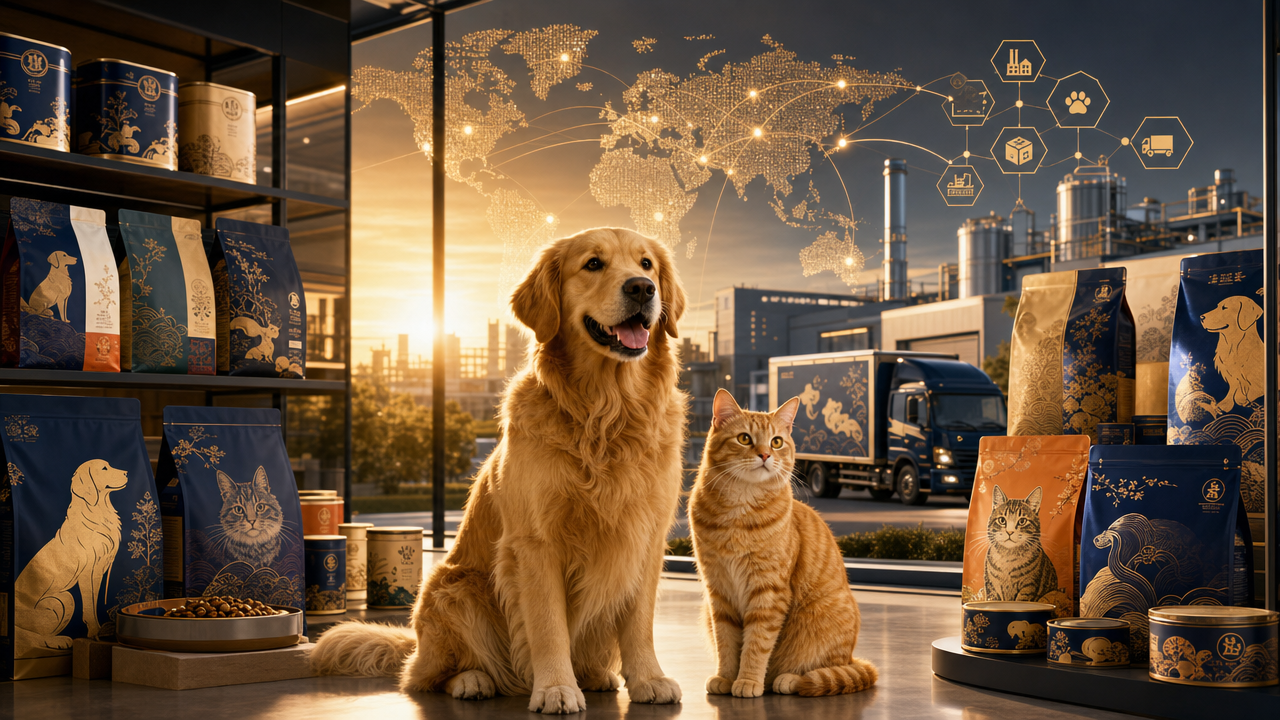

China's pet economy hit a turning point on what looked like an ordinary Double 11 night.
In the four hours after midnight on November 11, 2024, the top two spots on Tmall's pet food sales chart were both held by domestic brands — Fregate in second place, Myfoodie (Maifudi) in fifth. That pushed Royal Canin and Pedigree — imports that had dominated the Chinese pet food market for over a decade — off the top positions. Screenshots of that ranking circulated for days across pet owner communities. Not because the numbers were staggering, but because the chart looked like a complete inversion of the picture five years ago.
Five years prior, in 2019, roughly 70% of China's pet food e-commerce GMV came from imported brands. Domestic brands played the role of "value alternatives," competing primarily on price with noticeably less brand equity, R&D capability, and channel influence. A widely circulated saying in the pet community at the time: "More expensive means better; imported means superior."
That logic was completely overturned in the five years that followed.
This wasn't an overnight change. It was a massive structural shift unfolding over five years, crystallized in a late-night e-commerce screenshot. Behind it: formulation upgrades, patient brand investment, livestream commerce giving domestic brands a path to reach consumers without traditional channel gatekeepers, and a generation of pet manufacturing factories in Shandong, Zhejiang, Jiangsu, and Guangdong that spent fifteen years accumulating their craft.
Looking forward from that night: China's urban dog and cat consumer market surpassed RMB 350 billion in 2025, projected to exceed RMB 400 billion by 2027 and approach RMB 500 billion by 2030. Pet economy is becoming one of the few large consumer sectors in China still capable of sustaining double-digit growth.
This is a panoramic study of that reversal — how domestic brands came to overtake imports, how fresh food and freeze-dried changed the value distribution of the pet food industry, how listed companies like ZooFestive (Zhongchong), Petty (Peidi), Goodwell (Guaibao), Yiyi, and Yuanfei staked their claims in the global pet manufacturing supply chain, and which trajectories deserve the most conviction over the next five years.
Executive Summary Key Findings and Metrics
Market Scale and Growth
China's urban dog and cat consumer market reached RMB 300.2 billion in 2024 (first time breaking the RMB 300 billion threshold), with 2025 projected at approximately RMB 350 billion, making China the world's second-largest pet economy behind the United States. Pet food (RMB 158.5 billion), pet healthcare (RMB 84.1 billion), and pet supplies (approximately RMB 39 billion) form the three main pillars. The twelve most critical research findings from this report:
Finding 1: Domestic Pet Food Brands Overtook Imports on E-Commerce GMV for the First Time
In the 2024 Double 11 shopping festival, domestic brands occupied three of the top five positions on Tmall's pet food GMV ranking (Fregate and Myfoodie both appeared). Euromonitor data shows Myfoodie (Goodwell Pet) domestic market share rose from 2.4% in 2015 to 6.2% in 2024, making it the top domestic brand. The entire pet food e-commerce market saw domestic GMV share rise from approximately 30% in 2019 to roughly 50% in 2024.
Finding 2: Fresh Food and Main-Meal Freeze-Dried Are the Highest-Margin Categories
Fresh food (led by Fregate and Manzoo) and main-meal freeze-dried products command 50–150% premium pricing over ordinary expanded dry food, with gross margins at the top of all pet food categories (estimated 45–60%, versus approximately 30–45% for dry food). Both categories saw over 100% sales growth in the 2024 Double 11 — they are the core engines driving value growth in the pet food sector.
Finding 3: ZooFestive Revenue Surpassed RMB 5.2 Billion in 2025
ZooFestive (Zhongchong) revenue reached RMB 5.22 billion in 2025, up approximately 17% YoY. Main meal revenue hit RMB 1.553 billion (up 40.4% YoY) — a fivefold faster growth rate than treats — validating the self-brand transformation strategy. Overseas revenue accounted for 64.1%, with Vietnam factory development as the core strategy to counter U.S. tariffs.
Finding 4: Goodwell Pet Revenue Growth Hit 29% in First Three Quarters
Goodwell Pet (Guaibao) reported RMB 4.737 billion in revenue for the first three quarters of 2025, up 29.0% YoY. Myfoodie GMV grew 65% YoY; Fregate ranked second in Tmall's first four hours of Double 11 — making Goodwell the A-share pet food company with the highest own-brand penetration.
Finding 5: Petty's Plant-Based Chews Become Core of Structural Adjustment
Petty (Peidi) achieved over RMB 600 million in plant-based chew revenue in 2024 (up 44% YoY), which both aligns with healthy-natural consumer trends and carries relative advantages in the U.S. tariff classification system (non-animal-source products face different tariff categories). Its own brand Jiuyan (Jioyen) grew 33% domestically.
Finding 6: High-Speed Export Growth at Yiyi and Yuanfei
Yiyi (pet hygiene products export leader) grew revenue 34.4% in 2024; Yuanfei Pet (leashes, toys, cages) grew 32.2%. Both have already established Vietnam production bases — representative samples of China's pet supplies export enterprises managing U.S. tariff pressure.
Finding 7: Nestlé Purina Reached Approximately USD 22 Billion in Net Sales in 2025
Nestlé Purina PetCare is Nestlé's largest business unit, with 2025 net sales of approximately USD 22–25 billion, or roughly one-fifth of Nestlé's total revenue — and the second-largest pet food enterprise by scale globally (after Mars Petcare). Together the two account for over 35–40% of the global market.
Finding 8: Freshpet Surpassed USD 1.1 Billion in Net Sales in 2025 for the First Time
Freshpet's full-year 2025 net sales reached approximately USD 1.1 billion (up ~13% YoY), with net income of approximately USD 139 million (nearly triple YoY). Its fresh food model's validation in the U.S. provides the clearest global success reference for China's fresh pet food brands like Fregate and Manzoo.
Finding 9: PETKIT Smart Litter Box Entered Amazon U.S. Top 3
PETKIT PURA MAX automated litter box entered the top 3 in Amazon U.S. smart litter box category sales, with an overseas retail price of approximately USD 300–400. This is the most powerful evidence of Chinese smart pet products moving from "Made in China" to "Brand from China."
Finding 10: China Has Tens of Thousands of Active Pet Food and Supply Factories
From freeze-dried food factories in Yantai, Shandong to toy and apparel manufacturers in Yiwu, Zhejiang; from pet hygiene pad factories in Rugao, Jiangsu to smart products R&D centers in Shenzhen, Guangdong — China's pet manufacturing factory network is vast in scale and fine in specialization, forming the core infrastructure supporting global supply chains.
Finding 11: Pet Healthcare Chains Are the Largest Sector But the Hardest to Make Profitable
Rui Peng (Xin Ruipeng) accumulated over RMB 3.7 billion in losses over three years, exposing the core contradiction in the pet healthcare chain model: high expansion costs (vet salaries, medical equipment, store rent) paired with long single-store payback periods. Fewer than 20,000 small-animal clinical licensed veterinarians in China is the biggest structural bottleneck constraining the sector's development.
Finding 12: De Minimis and High Tariffs Are the Largest External Risks for Cross-Border Exports
U.S. Section 301 tariffs push comprehensive rates for Chinese pet supplies entering the U.S. to 35–45%. Modifications to the De Minimis exemption policy will further impact China's cross-border small-parcel pet product sellers. Vietnam capacity transfer is the common strategy among leading enterprises, but the transfer cycle is approximately 12–18 months, insufficient to fully offset tariff risk in the near term.
Chapter 1 Category Definitions, Full Industry Chain Overview and Classification Framework
What Is the Pet Economy, and Where Are Its Boundaries
The pet economy is the full-industry-chain ecosystem formed around companion animal care consumption. In its broad sense, it encompasses five major sectors: food, healthcare, supplies, services, and insurance. The narrower definition — China's urban dog and cat consumer market — accounts for approximately 95% of total consumption and carries absolute statistical significance.
China's industry standards classify pets into six major types: dogs, cats, ornamental fish, reptiles, small mammals (rabbits, guinea pigs, hamsters), and birds. Dogs and cats together account for approximately 95% of urban pet consumer expenditure and form the absolute majority of the market. Exotic pets (reptiles, birds, ornamental fish) represent a smaller market but are growing fastest among all sub-segments, attracting attention as the next window of opportunity.
Food Segment: The Core Pillar of the Market
Pet food is the largest single category in the entire pet economy, reaching RMB 158.5 billion in market size in 2024, accounting for approximately 53% of the urban dog and cat consumer market. Breaking down product formats, pet food can be categorized into several tiers:
First, dry food (expanded kibble, air-dried food): the largest market segment with the most mature technology and lowest costs — the primary competitive arena for domestic brands. Dog food and cat food dry food combined exceeds RMB 80 billion in China.
Second, wet food (canned food, pouches): represented by pet canned food, with high moisture content and palatability, typically used as a complement to dry food or as a "food topper."
Third, fresh food: prepared from chilled or frozen ingredients, with a shelf life of 7–14 days (refrigerated) or longer (frozen). It is the fastest-growing category in recent years, with price premiums of approximately 80–150% over regular dry food. Fregate and MANZOO are representative domestic fresh pet food brands.
Fourth, freeze-dried food: using a low-temperature sublimation drying process on whole meat raw materials, maximizing nutritional retention. Pet freeze-dried is currently the highest-margin category, with three-year average annual growth exceeding 50%.
Fifth, functional main meals (a pet staple food sub-segment): including senior formulas, puppy/kitten formulas, neutered pet formulas, and sensitive stomach formulas. This sub-segment is becoming an important entry point for domestic brands to challenge imported prescription diets.
Sixth, treats: pet treats include meat jerky, dental chews and chew toys for oral health, freeze-dried treats, and nutritional paste. Pet treats are the single largest export category and the absolute core of Petty and ZooFestive's contract manufacturing business.
Healthcare Segment: From Clinics to Chain Hospitals
The pet healthcare market reached RMB 84.1 billion in 2024, the second-fastest growing sector after fresh food. Key components include routine diagnostics (vaccines, parasite control, health exams), surgery (sterilization is most frequent), specialist medicine, inpatient care, and prescription food sales.
The pet healthcare channel plays an important role in premium pet food sales — particularly prescription diets, where Hill's and Royal Canin are the dominant recommendations, as purchasing decisions are primarily made by licensed veterinarians rather than consumers.
Supplies Segment: From Basic Consumables to Design Objects
The range of pet supplies is extremely broad. Basic consumables: cat litter, pet hygiene pads (Yiyi's main product), pet cleaning supplies. Travel and activity: pet leashes (Yuanfei's main export), pet backpacks, pet collars. Home goods: pet mattresses, scratching boards, pet cages. Entertainment: pet toys. Apparel: pet clothing.
Smart Products Segment: IoT Enters the Pet Home
Smart pet products are the fastest-growing sub-segment in recent years. Core product lines: pet water fountains (circulating filtered water, addressing low water intake in cats), automatic feeders (timed dispensing, remote control), smart litter boxes (auto-cleaning, health data recording), GPS trackers (lost pet prevention), and pet cameras (remote viewing). Chinese brands (PETKIT, Catlink) are the core global suppliers of smart pet products for export.
Chapter 2 Global Landscape: Pressure from the Import Big Three and Emerging Challengers
The Global Pet Food Market: Over USD 100 Billion Annually
The global pet food market is one of the most consistently growing consumer segments of the past decade, having never experienced a true cyclical downturn. The 2024 global pet food market size was approximately USD 120–130 billion, with the combined pet supplies and services market exceeding USD 270 billion.
Geographically, the U.S. is the world's largest pet economy at approximately USD 150 billion annually (per APPA data); China ranks second at approximately USD 48 billion; Europe's major markets (Germany, UK, France) total approximately USD 40 billion.
A defining structural characteristic: high concentration. The top five companies (Mars Petcare, Nestlé Purina, Hill's, General Mills Blue Buffalo, J.M. Smucker) hold more than 55% of the global market — still far from China's CR10 of approximately 35–40%.
Mars Petcare: Private Empire, Global Leader
Mars Petcare is the world's largest pet food group, a unit of family-owned Mars, Incorporated. Its brand matrix spans the full value range: Royal Canin (global's largest single pet food brand by sales); Pedigree (mass-market dog food, global bestseller); Whiskas (mass-market cat food); Sheba (premium cat wet food); Iams (premium dry food); Cesar (adult dog wet food in small servings); Nutro (natural food positioning).
Mars Petcare estimated 2025 global revenue in the USD 23–25 billion range (private company, no detailed public disclosures). Its investment reach also extends into pet healthcare via Banfield Pet Hospital (approximately 1,100 locations embedded in PetSmart stores).
Nestlé Purina PetCare: Nestlé's Largest Profit Engine
Nestlé's Purina PetCare division achieved approximately CHF 22 billion in 2025 net sales (approximately USD 24–25 billion), making it Nestlé's largest single category. Key brands: Pro Plan (high-end scientific formula dry food, vet-recommended positioning); Fancy Feast (premium cat wet food); Friskies (mass cat wet food); Dog Chow (mass dog dry food in North America); Beneful (natural formula dog food).
Nestlé Purina continues increasing local R&D investment in China, launching dedicated products formulated specifically for "Chinese cats" (based on Chinese domestic cat genetic characteristics), aiming to counter domestic brand growth with a "knows China's cats and dogs better" scientific positioning.
Hill's Pet Nutrition: King of the Prescription Diet Niche
Colgate-Palmolive's Hill's focuses on prescription diets and vet channels, holding approximately 30–35% of the global prescription diet market with its Science Diet and Prescription Diet product lines. In China, Hill's growth primarily relies on the pet hospital vet channel — the most impenetrable stronghold for imported brands, since purchasing decisions are primarily made by veterinarians rather than consumers.
Chewy (NYSE: CHWY): America's Top Pet E-Commerce Platform
Chewy's core commercial highlight is its "Autoship" automatic subscription model — approximately 73% of sales come from auto-subscription users. FY2025 (ending February 1, 2025) full-year net sales approximately USD 11.8 billion, approximately 19.6 million active users. Chewy is also one of the most important U.S. retail partners for Chinese pet food exporters including ZooFestive and Petty.
Freshpet (NASDAQ: FRPT): The Global Benchmark for Fresh Pet Food
Freshpet is the pioneer and leader of the global fresh pet food segment, stocked in over 60,000+ refrigerated coolers in U.S. grocery and pet stores. 2025 full-year net sales first surpassed USD 1.1 billion (up ~13% YoY), net income approximately USD 139 million (nearly triple YoY). Freshpet's success offers the clearest global commercial validation for the premium fresh food segment: pet owners will pay significantly more for fresh pet food, and this consumption is highly sticky.
Global M&A History and Strategic Reference for Chinese Companies
The global pet food industry's history is a history of consolidation through M&A. Mars acquired Royal Canin (2001, ~EUR 900 million); Nestlé acquired Ralston Purina (2001, ~USD 11.5 billion); General Mills acquired Blue Buffalo (2018, USD 8 billion — the largest single pet food M&A transaction in history). This pattern points to three implications for Chinese companies: (1) consolidation among domestic Chinese pet food companies will follow a similar trajectory; (2) combining pet food brands with vet channel presence (the Mars + Banfield + Royal Canin logic) has strategic merit in China; (3) Chinese companies acquiring overseas mid-sized pet food brands within 5–10 years is plausible.
Chapter 3 Policy Environment: Full PEST Analysis
The Historical Coordinates of Pet Industry Policy Evolution
If one had to identify a watershed moment for China's pet industry policy history, 2022 is the most apt candidate. Before that year, pet food production operated without unified licensing, inconsistent labeling standards, and unverifiable raw material sourcing. The Ministry of Agriculture and Rural Affairs' "Pet Feed Management Regulations," which took effect starting in 2022, pushed China's pet food regulatory framework into a stage comparable to that of most developed nations.
Regulatory tightening had far-reaching effects on the industry structure: on one hand, rising compliance costs eliminated large numbers of cottage-scale small producers, accelerating market concentration toward leading brands; on the other, leading brands (Goodwell, ZooFestive, Petty) with more complete compliance systems actually saw their competitive advantages strengthened as regulation tightened.
International Trade Rules and Pet Food Export Compliance
Entering the pet food export market means simultaneously meeting Chinese export inspection standards, target country import quarantine regulations, and private standards (food safety certifications required by retailers). The U.S. FDA's FSMA requirements; EU's TRACES system for animal-sourced foods; Japan's stringent standards that closely mirror EU requirements — each layer adds compliance investment that creates competitive moats for leading exporters.
Section 301 tariffs (added cumulatively from 2018 onward, covering most Chinese pet food and supply categories) have made the combined tariff rate for Chinese pet supplies entering the U.S. reach 35–45%, directly driving ZooFestive, Petty, and Yuanfei to accelerate production transfers to Vietnam, Cambodia, and other Southeast Asian countries.
Regulatory Economics: Compliance Costs as Competitive Moats
Regulatory tightening doesn't only increase costs — it reshapes competitive structure. Large numbers of small pet food enterprises (particularly those with under RMB 10 million in annual revenue) unable to bear compliance costs are forced out or absorbed into larger contract manufacturing systems. This exit process directly reduces the number of competing brands in the market, benefiting surviving compliant enterprises through reduced competitive pressure and improved margins.
Chapter 4 China Market Scale: RMB 350 Billion and Domestic Brand Share
The Macroeconomic Significance of the Pet Economy in China
Pet economy spending has proven to have greater resilience than other discretionary categories. Three structural supports: (1) pets once adopted cannot be un-adopted — a cat or dog requiring daily feeding creates near-mandatory spending; (2) pet spending is highly correlated with demographic structure changes — rising single-person households provide a continuously expanding user base; (3) pet healthcare has genuine clinical necessity — expenses for ill pets cannot be easily reduced.
Market Scale: From RMB 300 Billion to the Next Threshold
According to the China Animal Agriculture Association Pet Industry Subsection's "2025 China Pet Industry White Paper," the 2024 urban dog and cat consumer market reached RMB 300.2 billion, first crossing RMB 300 billion. Category breakdown: pet food RMB 158.5 billion (52.8%); pet healthcare RMB 84.1 billion (28.0%); pet supplies approximately RMB 39 billion; pet services approximately RMB 18.5 billion.
2025 market scale is projected to break RMB 350 billion (approximately 17% YoY). Industry consensus projections: over RMB 400 billion by 2027, approaching RMB 500 billion around 2030.
Pet Population: Cats Outnumber Dogs for the First Time
China's total urban dog and cat population exceeded 120 million in 2024, with approximately 73 million cats and approximately 51 million dogs — the first time statistically documented that cats outnumber dogs. This structural shift reflects urbanization trends and the rising appeal of cats among young single-person households.
Pet-owning households account for approximately 21% of urban households, with first-tier cities exceeding 30%. Per capita pet consumer expenditure was approximately RMB 2,800. Compared to the U.S. average of approximately USD 1,300 per year (approximately RMB 9,300), the gap is 3–3.5x — indicating significant room for per capita consumption growth.
Five Consumer Type Deep Profiles
Understanding China's pet market structure requires understanding demand-side stratification. Chinese pet owners fall into at least five consumer profiles with significantly different purchasing logic: (1) "New pet owners" (approximately 30–35% of pet-owning population) — young first-time owners, brand-followers with low loyalty; (2) "Experienced pet owners" (approximately 20–25%) — three or more years with pets, deep nutritional knowledge, early adopters of premium fresh food and freeze-dried; (3) "Function-oriented pet owners" (approximately 15–20%) — core users of prescription imports (Royal Canin, Hill's), highest brand loyalty; (4) "Emotional spenders" (approximately 15–20%) — highest emotional weight in purchasing decisions, primary driver of pet clothing and seasonal gift boxes; (5) "Rational value pet owners" (approximately 10–15%) — price as primary decision variable, core users of mass-market staple pet food and basic supplies like cat litter and hygiene pads.
Chapter 5 Deep Industry Chain Analysis
Strategic Significance of the Industry Chain Perspective
A company's competitive advantage location within the industry chain — upstream raw material control, mid-stream manufacturing scale efficiency, or downstream brand premium — determines its business model and valuation logic. ZooFestive's core advantage lies primarily in mid-stream manufacturing (contract manufacturing + overseas warehouse logistics), while Goodwell's advantage is more downstream (Myfoodie's brand assets + Fregate's premium market breakthrough).
Currently, the highest value-capture positions in the entire chain are "brand + channel" (brand premium adding 15–25 percentage points to gross margin) and "high-technology-barrier products" (the technical moats in fresh food cold chains, freeze-dried technology, and IoT smart products).
Upstream Raw Material Layer: Meat, Grains, and Functional Additives
Meat raw materials are the core of pet food, primarily sourced from domestic poultry processing by-products and imported premium materials (New Zealand lamb and salmon, Norwegian salmon, tuna). Chinese pet food enterprises with large-scale procurement capabilities have price negotiation advantages with slaughterhouses — allowing direct annual contracts that lock in price ranges, a cost advantage of approximately 10–20% versus small enterprises buying from intermediaries.
Pet probiotics (lactic acid bacteria, bifidobacteria, Bacillus subtilis), Omega-3 (EPA/DHA from deep-sea fish oil or algal oil), taurine (mandatory in cat food — cats cannot synthesize it), and Coenzyme Q10 (Kindarui 002626 is a major global supplier expanding into pet nutrition) are high-value-added functional additives in premium formulations.
Pet Packaging: From Functional to Design-Driven
Pet food packaging has evolved significantly. pidan (彼诞) led a "design-forward domestic brand" wave with minimalist packaging for its cat litter and water fountains. Fregate's real-ingredient food photography (fresh chicken breast, whole vegetables, salmon) established a "visible fresh food" visual language on Xiaohongshu. The systemic packaging upgrade is one of the important pillars in domestic brands' comprehensive trust rebuilding with consumers.
Pet Food Value Chain: Cost Structure Breakdown
For a domestic mid-tier cat dry food retailing at RMB 80/kg, the approximate cost structure is: raw material costs approximately 16–20% of retail price; manufacturing costs approximately 12–16%; logistics and warehousing approximately 6–8%; e-commerce platform fees approximately 5–7%; marketing and promotion approximately 15–20%; brand net profit approximately 8–14%; retailer/distributor margin approximately 10–15%.
This cost structure means brand margins are not wide — particularly as marketing costs continue to rise with livestream commerce competition. This economically drives brands to continuously push into higher price tiers (fresh food, freeze-dried) to capture higher absolute profit margins per unit.
Pet Healthcare Supply Chain: Import-Dominated Special Stronghold
Pet healthcare supply chains represent the lowest degree of domestic brand penetration in the entire industry chain. Prescription diets (Royal Canin, Hill's dominating), deworming products (Bravecto, Nextgard, Revolution, Advocate from multinationals), and vaccines are all primarily controlled by multinational veterinary pharmaceutical companies. National brand Mindray Medical has introduced dedicated veterinary diagnostic equipment series — but in premium hospital markets, imported brands still dominate.
Chapter 6 Deep Analysis of Key Companies
Analytical Framework
This chapter analyzes key enterprises across five dimensions: market positioning (primary track and customer group), financial health (revenue scale, margin, growth sustainability), brand moat (own-brand penetration, consumer recognition), external risk exposure (tariff sensitivity, key customer concentration), and strategic options (growth paths and primary challenges).
Note that in China's pet industry, "largest by revenue" ≠ "highest profit margin" ≠ "strongest brand moat." ZooFestive is the largest by revenue and export scale; Goodwell has the strongest brand moat (Myfoodie + Fregate consumer recognition); PETKIT has the deepest smart product moat (App ecosystem + health data stickiness).
ZooFestive (Zhongchong, 002891): Global Treat Contract Manufacturer Transforming to Own Brand
ZooFestive headquartered in Yantai, Shandong, founded by Hao Zhongli in 1997, listed on Shenzhen Stock Exchange in 2018. 2025 figures: revenue RMB 5.221 billion (up ~17% YoY, all-time high); net profit attributable to parent RMB 365 million (down ~7.3% YoY — reflecting high-investment period from global capacity expansion and marketing scale-up). Overseas revenue RMB 3.349 billion (64.1% of total).
Contract customer system: ZooFestive is the core pet food contract manufacturer for Walmart, Costco, and Petco. Own brand matrix: Wanpy (顽皮, flagship covering dry food, treats, wet food across categories), Pure & Natural (natural food positioning), Zeal (high-end New Zealand-origin ingredients series).
Petty (Peidi, 300673): Global Pet Chew Leader
Petty headquartered in Wenzhou, Zhejiang — one of the world's largest pet chew (dental chews and rawhide chews) contract manufacturers. 2024 figures: revenue RMB 1.659 billion (up ~17.6% YoY); net profit RMB 182 million (returned to profitability). Plant-based chews (Vegetable Chews using pea starch and rice as primary ingredients) achieved over RMB 600 million in 2024 revenue (up ~44% YoY) — the core growth engine. Own brand Jiuyan's domestic revenue grew 33% YoY.
Goodwell Pet (Guaibao, 301498): China's No. 1 Domestic Pet Food Brand
Goodwell Pet, headquartered in Zibo, Shandong (main production in Dalian), is the largest own-brand-led Chinese pet food company and the highest-market-cap pet food stock on A-share markets. First three quarters of 2025: revenue RMB 4.737 billion (up 29.0% YoY), net profit RMB 513 million (up 9.1% YoY).
Brand matrix: Myfoodie (麦富迪) is the core brand — covering basic staple, natural series, and premium BARF "Wilderness Recipe" across three price tiers. Euromonitor: Myfoodie domestic pet food market share 6.2%, top domestic brand. Fregate (弗列加特) is the high-end breakthrough brand — fresh meat + freeze-dried + fresh food series, targeting premium first- and second-tier city cat owners.
Yiyi (001206) and Yuanfei (001222): Export Specialists in Pet Hygiene and Supplies
Yiyi (Rugao, Jiangsu) is China's largest exporter of pet hygiene products (pet hygiene pads, sanitary mats, care wipes). 2024 revenue approximately RMB 1.798 billion (up 34.4% YoY). Yuanfei Pet (Zhongshan, Guangdong) specializes in pet leashes, toys, cages, and pet treats. 2024 revenue approximately RMB 1.31 billion (up 32.2% YoY). Both have established Vietnam production bases to manage U.S. tariff pressure.
PETKIT (Private): The No. 1 Smart Pet Products Brand
PETKIT founded in 2013, headquartered in Shanghai, China's largest smart pet product brand, post-Series D valuation exceeding RMB 3 billion. Core products: automatic feeders, water fountains, PURA series smart litter boxes (flagship product, one of the world's highest-selling smart litter boxes). PETKIT PURA MAX entered top 3 in Amazon U.S. smart litter box category, retailing at approximately USD 300–400 overseas. Approximately 20 million App users nationwide, with approximately 1,700 pet chain store coverage locations.
Chapter 7 Mid-stream Production Clusters: The Geographic Map of Domestic Factories
China's pet manufacturing industry has formed a highly specialized production cluster geography — six major clusters form the skeleton of this map. Tianxia Gongchang, in tracking China's manufacturing industry clusters, has identified a densely concentrated factory network in the pet food and supplies sector — the density of these factories, completeness of their supply chain ecosystems, and the industrial ecology accumulated over twenty-plus years create a competitive advantage that no single enterprise or brand can independently replicate.
Yantai, Shandong: China's Top Pet Food Export Hub
Yantai (including Weihai and Qingdao) is the absolute core region for China's pet food exports. ZooFestive headquarters is here — Yantai's thriving seafood processing (tuna, salmon, mackerel — core ingredients for pet treats) and poultry processing supply chains provide high-quality, proximity-sourced raw materials, substantially reducing logistics costs and freshness losses. Shandong pet food and treat export accounts for approximately 35–40% of China's total pet food exports.
Wenzhou and Yiwu and Ningbo, Zhejiang: Pet Supplies Export Hub
Zhejiang is the most important single province for China's pet supply exports. Wenzhou is Petty's home base — pet chew capacity is globally leading. Yiwu is the world's most important hub for pet toys and pet clothing — Yiwu factories typically complete design-to-sample-to-small-batch delivery in 7–14 days, an agility foreign competitors cannot match. Ningbo relies on its port logistics and complete pet cage and leash manufacturing chains.
Rugao and Nantong, Jiangsu: Pet Hygiene Products Export Hub
Rugao (including Nantong) is the absolute core region for China's pet hygiene product exports — home to Yiyi and Tianyuan Pet. Non-woven fabric raw material supply is locally clustered (Nantong is one of China's most concentrated non-woven fabric production bases, providing the core raw material for pet hygiene pads and cleaning supplies at near-zero logistics cost). Pet mattresses, hygiene pads, and cleaning supplies each see Rugao accounting for over 30% of China's export share.
Shenzhen and Guangdong: Cross-Border Export and Smart Product R&D Hub
Shenzhen (including Dongguan, Foshan) is the core region for pet supply cross-border exports and smart pet product R&D. Yuanfei Pet headquartered in Zhongshan. Catlink, IMOU (pet cameras), and other smart pet brands leverage Shenzhen's consumer electronics supply chain. Pet bathing supplies, oral care, nutritional supplements, pet backpacks, and pet clothing cross-border sellers are heavily concentrated here.
Vietnam: The Second Production Base for Tariff Response
ZooFestive, Petty, and Yuanfei have all established production bases in northern Vietnam (Bac Ninh, Hanoi, Thai Nguyen area industrial parks). Vietnam's core advantages: labor costs approximately 60–70% of China's; benefits from certain tariff reductions under the U.S.-Vietnam trade framework (no Section 301 additional tariffs). Key drawbacks: supply chain maturity and product quality consistency far below domestic levels; raw materials primarily imported from China (adding transportation cost and time); skilled worker proficiency requires Chinese management teams to station on-site long term.
Chapter 8 Specialty Sub-Segments: The Explosive Logic of Upgrade Tracks
Fresh Pet Food and Main-Meal Freeze-Dried: Core Engines of Premiumization
Main-meal freeze-dried and fresh food are the two fastest-growing, highest-margin categories in pet food over the past three years, and the most differentiated tracks for domestic brands.
Main-meal freeze-dried retains nutrition at 90%+ compared to approximately 65–75% for expanded kibble — a credible, universally understood data point that challenged the "nutritional authority" narrative of imported premium dry food. Pet freeze-dried treats have also expanded from a "nutritional supplement" function to an everyday "let my pet eat better" emotional consumption scenario.
Fresh food's core value proposition: no preservatives, no additives, ingredient visibility. Fregate's product photography directly presenting chicken breast pieces, vegetables, and salmon creates a powerful contrast to conventional kibble packaging on visual social platforms like Xiaohongshu.
Pet Clothing and Pet Backpacks: Fashion Tracks Driven by Emotional Consumption
Pet clothing and pet backpacks are the most emotionally-driven pet supply categories. Strong seasonality (Chinese New Year pet outfits peak 3–5x normal monthly volume), high SKU turnover (consumers buy new outfits as ritual, not just for function), and complex sizing (each dog breed's body shape varies widely) characterize the clothing segment. Pet backpacks — particularly the "space capsule" style (semi-transparent spherical window + backpack body) — became viral on Xiaohongshu and are one of Amazon's fastest-growing pet supply items, retailing at USD 50–120 for premium versions.
Pet Health Supplements: A Blue Ocean Five Years Out
Pet health supplements are the lowest-penetration but highest-potential-growth sub-category. U.S. pet supplement penetration rate approximately 35%; China approximately 8–10% — the gap represents the opportunity. Main categories: joint protection (glucosamine + chondroitin + MSM), digestive health (probiotics, digestive enzymes), skin and coat (Omega-3 fish oil), immune support, and oral care products.
Kindarui (002626) in this segment has the clearest A-share profile — its global Coenzyme Q10 raw material supply dominance (top 3 globally) extends into pet nutrition products (CoQ10 pet nutritional supplements), creating a distinctive upstream raw material self-supply cost advantage.
Smart Pet Products: The Camera-Feeder-Litter Box Triangle
Smart pet products' commercial viability depends on three conditions simultaneously: sufficient technology acceptance (willingness to use App-controlled devices); sufficient economic motivation (solving real pet owner pain points); and sufficiently low prices (as sensor and module costs fall, smart litter boxes have dropped from the initial RMB 2,000–3,000 to the RMB 600–1,500 mass market range).
PETKIT PURA MAX integrates dToF laser ranging, precision weight sensors, negative ion deodorization, WiFi connectivity, and optional cameras. Materials costs for this sensor and module set fell from approximately RMB 200–300 in 2019 to approximately RMB 60–100 in 2025 — a major driver of the product's democratization.
Cat Litter: Material Upgrade from Mineral Sand to Tofu Sand
Cat litter is the highest-frequency purchase in pet supplies (monthly repurchase). Material upgrade path: first generation mineral (bentonite) sand → second generation tofu sand (made from pea or soy pulp, flushable, near-zero dust, fastest-growing) → third generation mixed sand (tofu + mineral combination) → silica crystal sand (superior odor control, long lifespan, but non-biodegradable). Domestic brands (pidan, Aichong Aimao, Oscar, Mini) dominate the tofu sand segment at over 70% share — virtually defining this entire product category.
Chapter 9 Technology Evolution: Three Driving Forces of Process, IoT, and AI
The Full Spectrum of Pet Food Production Processes
Extrusion (Expanded Kibble): most mature, highest volume, lowest cost. 120–150°C high-temperature high-pressure extrusion. Accounts for approximately 80–85% of global dry pet food production. Baking: 150–200°C slow baking, less protein structure damage than extrusion, ~10–15 percentage points better nutrition retention but 30–50% higher cost. Air-drying: 40–70°C natural warm airflow over dozens to hundreds of hours, near-freeze-dried nutritional retention, 15–25% moisture content — New Zealand brand Ziwi Peak is the global leader. Freeze-drying: lowest temperature, highest nutrient retention, highest cost, highest margin. Fresh food: chilled or frozen raw materials, pasteurized or HPP (High Pressure Processing) sterilized, 70–85% moisture, no preservatives, most flavor and nutrition authentic — requires complete cold chain infrastructure. Retort Canning: high-pressure steam sterilization (115–120°C, 15–30 minutes), ambient-shelf stable for years, 70–85% moisture — pet canned food is still the largest single sub-format in global cat wet food.
Freeze-Dried Technology: From Lab to Production Line
China's freeze-drying equipment industry has made significant progress — domestic manufacturers have reduced freeze-drying production line equipment costs by approximately 30–40% versus a decade ago, enabling even small to mid-size pet food factories to afford complete freeze-drying lines. This equipment cost decline drove freeze-dried pet food from a niche premium item to a rapidly transitioning mass-market product.
Fresh Food Cold Chain: China's Freshpet in Practice
HPP (High Pressure Processing) is the most advanced sterilization method for fresh pet food: over 60,000 atmospheres of pressure at ambient temperature can eliminate pathogens while better preserving nutrition than high-temperature sterilization. China's cold chain infrastructure underwent a qualitative leap in the past five years — SF Express cold chain, JD cold chain, and Cainiao cold chain now cover refrigerated last-mile delivery in prefecture-level cities and above.
IoT Smart Pet Products: The Industry Logic of Falling 4G Module Prices
The pet smart products industry exploded over the past five years because of the sustained decline in 4G/WiFi communication module prices (from approximately RMB 30–50/unit in 2018 to approximately RMB 8–15/unit in 2025), alongside simultaneous declines in sensors and camera module prices.
Pet AI Recognition and Health Management: The Next Generation Competitive Dimension
Multi-cat recognition AI: distinguishing multiple cats through cameras or weight sensors (approximately 100g body weight difference is detectable), recording individual defecation health profiles per cat, early detection of abnormalities (urinary tract infections, early kidney disease indicators). PETKIT has commercially implemented this in its flagship smart litter box — one of the most commercially mature pet AI applications.
Formula Innovation Frontiers
The most active formula innovation directions currently: (1) Microbiome-targeted nutrition (next-gen premium food specifically optimizing for dog/cat gut microbiome health); (2) Low-glycemic main meal formulas (high-protein, low-carb for cats who cannot metabolize carbohydrates well); (3) Single-protein-source formulas (for food-allergic pets — approximately 3–7% of cats and dogs); (4) Cognitive health + senior formulas (DHA-enriched, antioxidant combinations for aging pets, as lifespan extends with better veterinary care). Formula innovation's competitive advantage window is typically 12–30 months before fast-followers replicate it — creating a continuous R&D investment imperative for leading brands.
Chapter 10 Risks and Challenges: Five Systemic Risks
Risk Stratification: Systemic vs. Sectoral vs. Company-Specific
Three levels of risk need to be distinguished: (1) Systemic risk (affecting all market participants): China macroeconomic slowdown, major public health events, sharp exchange rate movements; (2) Industry-specific risk: pet food quality safety incidents, veterinary licensing tightening, U.S. tariff persistence; (3) Company-specific risk: Goodwell's dependence on Fregate cold chain reliability, Petty's raw material supplier concentration, ZooFestive's Vietnam factory construction timeline risk.
Domestic Brand Homogenization: The Price War Trap
The influx of domestic pet food brands over the past five years has created severe homogenization in the competitive landscape. In the mass price band (RMB 35–55/kg dry food), dozens of domestic brands compete with near-identical formulations, packaging styles, and marketing language. Weaker brands are forced into continuous price-cutting and e-commerce platform rebates, creating a vicious cycle of declining margins. The deeper problem: some third-tier brands engage in malicious competition through falsified protein content claims or inferior raw materials, triggering food safety incidents that damage the collective trust in all domestic pet food brands — including market leaders.
U.S. High Tariffs: De Minimis + Section 301 Dual Pressure
Section 301 tariffs push China pet supply comprehensive U.S. tariff rates to approximately 35–45%. De Minimis exemption modifications would particularly harm small cross-border pet supply sellers using Temu and SHEIN as their primary channels. The tariff impact is layered: highest pressure on small white-label sellers (no brand assets, no overseas warehouses); medium pressure on mid-sized Amazon brand exporters; most manageable for listed exporters (ZooFestive, Petty, Yiyi, Yuanfei) with stable large U.S. retail customers, owned overseas warehouses, and Vietnam factory construction underway.
Pet Economy Demand Resilience Under Downside Pressure
Pet food has near-mandatory spending characteristics, pet emotional value strengthens during economic stress periods, and China's pet market penetration (approximately 21% of urban households, vs. approximately 66% in the U.S.) still has significant expansion room — all supporting resilience against macroeconomic downturns, with market dynamics showing "category downgrade" (switching from imported to domestic, from fresh food to dry food) rather than "market exit."
The Deep Mechanism and Resolution of China Pet Food Price Wars
Price war genesis has three layers: supply-side capacity excess (pet food production line investment barriers are not high, capacity expanded faster than demand); channel-side price transparency (Tmall/JD make price comparison trivially easy for consumers, pushing brands into continuous promotions); demand-side brand differentiation cognition immaturity (most consumers cannot effectively perceive quality differences justifying a 30% price premium). Resolution requires: raising consumer quality perception capability, building price moats through irreplaceable product experience (once pets develop fresh food preferences, owners rarely switch back to cheap dry food), and establishing brand emotional connection (brand fan communities provide a price war buffer).
Chapter 11 Trend Forecasts: Five Major Directions for 2026–2030
Forecast Premise Assumptions
This chapter's projections are based on baseline assumptions: China GDP growth averaging approximately 4–5%; pet penetration rate rising naturally; U.S. tariff policy remaining broadly stable; domestic pet food safety regulation continuing to tighten; licensed small-animal veterinarian supply bottleneck persisting 3–5 more years without fundamental relief.
Scenario 1 (More Optimistic): dedicated policy support for the pet economy or significant U.S. tariff reductions → export enterprises outperform baseline projections; Scenario 2 (More Pessimistic): escalating U.S.-China trade friction completely excluding Chinese pet food from the U.S. market → enterprises with >70% export dependency face extreme operational difficulty.
Direction 1: Market Scale Steadily Marching Toward RMB 500 Billion
Baseline forecast (maintaining current trend): market scale grows from approximately RMB 350 billion in 2025 to approximately RMB 500–520 billion by 2030, CAGR approximately 7–8%. Optimistic forecast: RMB 550–600 billion, CAGR approximately 9–10%. Pessimistic forecast: RMB 430–450 billion, CAGR approximately 4–5%.
Direction 2: Domestic Brand Share Moving Toward 70%
Domestic pet food brands on China's e-commerce platforms (Tmall + JD + Douyin) are projected to exceed 65% GMV share by 2030. Imported brands' last strongholds: prescription diets (Hill's + Royal Canin will maintain 70%+ through vet channels), premium premium wet food, and functional prescription health supplements. National prescription diet emergence is the biggest uncertain variable.
Direction 3: Cross-Border Exports — Scale Doubling and Market Diversification
China's combined pet food and supply export value (including cross-border e-commerce) will grow from approximately USD 4 billion in 2024 to approximately USD 7–8 billion by 2030. U.S. market share will decline from approximately 55–60% to approximately 40–45%, with Southeast Asia (Japan, Korea, Thailand, Vietnam, Indonesia), the Middle East (Saudi Arabia, UAE), and Europe collectively rising to approximately 50–55%.
Direction 4: Smart Products — From Niche to Mainstream
Smart pet product penetration in Chinese cat/dog-owning households is projected to rise from approximately 8–10% in 2025 to approximately 25–30% by 2030. Two core drivers: maturation of AI health monitoring (from "feels interesting" to "genuinely useful health management tool"); and continued module cost decline (approximately 40% further by 2027), driving terminal prices further down.
Direction 5: AI-Driven Pet Health Management Ecosystem
The full ecosystem of "pet food + smart devices + AI health management + medical appointment booking" is projected to enter commercial scale-up between 2027 and 2030. The commercial logic: smart devices collect behavioral and physiological data → AI detects anomalies → AI recommends food formula adjustments or suggests vet visits → connects to pet hospitals for remote initial consultations → creating a closed-loop from smart devices to food to healthcare.
Chapter 12 Conclusion: China's Moment in the Pet Economy
The Deep Logic of Domestic Brand Overturn: The Process + Livestream + Value Triangle
Domestic pet food's rise looks like a brand victory on the surface. But at a deeper level, this is the result of supply-side capability accumulation intersecting with channel structural change.
Supply side: China's pet food companies spent the past fifteen years transforming from "low-price contract manufacturers" to "own brands + formula upgrades." ZooFestive's Yantai factories, through twenty-plus years of contract manufacturing for the world's largest retailers, accumulated production craftsmanship and quality management capabilities on par with global leaders — then applied them to their own Wanpy brand.
Channel structure: Livestream commerce (Douyin self-streaming, KOL partnerships) completely rewrote pet food channel logic. On Douyin, content, interaction, and trust-building capabilities determine conversion — domestic brand founders going live to tell their story outperform imported brands' traditional advertising in connecting with young pet owners.
Value: Domestic brands, at equivalent formula quality, can typically achieve 60–70% of imported product prices — a highly effective market entry point among new pet-owning households in third-tier and lower cities.
International Competitors' Re-Examination of the China Market
Mars Petcare has designated China as a "growth priority market," established a Greater China strategic committee, and is investing to expand Royal Canin's China local R&D facilities (adding a Nanjing R&D center, collaborating with Chinese agricultural universities on Chinese breed cat and dog nutritional needs research). Nestlé Purina's strategy is more aggressive: large-scale local marketing (dedicated Douyin + Xiaohongshu content teams), leveraging Nestlé's extensive Chinese distribution network to push Pro Plan into lower-tier cities. Japanese pet food brands see opportunity in Southeast Asia, where Chinese pet food exports to the region will increasingly overlap with their market positions.
The Pet Economy's Safety Crisis — Historical Warning and Industry Collective Memory
The 2007 Chinese pet food safety crisis (melamine-contaminated pet food ingredients exported to the U.S. causing mass dog and cat deaths) was the most consequential event in this industry's history — it drove U.S. FSMA legislation, left a lasting "Made in China" caution in American consumers' minds, and directly shaped the compliance culture of Chinese pet exporters for the next fifteen years. ZooFestive and Petty's current market leadership reflects in part that they were among the companies that sustained compliance investment during the 2007–2012 downturn and earned long-term trust from Walmart, Petco, and Chewy.
The Conclusion: The Factory Network Is the Deepest Moat
China's true competitiveness in pet economy comes from its dense factory network. Behind every staple pet food pellet: compressors, packaging machines, and freeze-dryer assembly lines. Behind every pet toy: woven fabric and injection-molded parts from Yiwu factories. Behind every smart pet device: PCB boards from Shenzhen solution companies and precision injection-molded parts. Behind every hygiene pad: high-speed non-woven production lines in Rugao factories. Behind every bottle of pet nutritional supplement: probiotic fermentation tanks in R&D factories.
Tianxia Gongchang continuously tracks China's manufacturing industry chains precisely because we see: what truly supports China's pet economy's international competitiveness is these tens of thousands of factories and the industrial ecosystem they've accumulated over twenty-plus years.
The pet economy's "China moment" is not just the story of a few brands overtaking imports — it's a vivid image from a larger transformation picture of China's entire manufacturing sector moving from "contract manufacturing for others" to "building our own brands."
Data Sources and Key References
Research Methodology
This report's data source system applies a triple cross-validation principle: official data (industry association white papers, listed company announcements) as the baseline; third-party institution data (Euromonitor, Nielsen IQ) as corroboration; and direct market observation (e-commerce platform data, production cluster field research) as supplementary evidence.
All company financial data cited in this report comes from publicly disclosed annual reports, semi-annual reports, and quarterly performance announcements. Industry forecast data is based on public projection models and historical growth extrapolation, and does not constitute investment advice.
This report is compiled and analyzed by the Tianxia Gongchang Industry Research Institute based on industry platform factory data and public sources. Principal data and factual sources include:
- Industry platform factory database (www.tianxiagongchang.com)
- China Animal Agriculture Association Pet Industry Subsection "2025 China Pet Industry White Paper"
- ZooFestive (002891), Goodwell Pet (301498), Petty (300673), Yiyi (001206), Yuanfei Pet (001222) 2025 annual reports and announcements
- Kindarui (002626) pet business-related announcements
- Euromonitor International Pet Care Industry Reports (2024–2025)
- Nielsen IQ Pet Food Retail Monitoring Data (2024)
- Nestlé Group 2025 Full-Year Annual Report (Purina PetCare divisional data)
- Freshpet Inc. 2025 Full-Year Financial Report (NASDAQ: FRPT)
- Chewy Inc. FY2025 and CY2025 quarterly financial reports (NYSE: CHWY, SEC EDGAR)
- PetfoodIndustry.com Industry Reports (2025–2026)
- Qianzhan Industry Research Institute "2024 China Pet Industry Leading Enterprise Analysis Report"
- American Pet Products Association (APPA) 2025 Pet Owners Survey (National Pet Owners Survey)
- Xinhua News, Interface News, Daily Economic News, The Paper — pet economy related coverage (2025–2026)
- Tencent Industry Research Institute "2025 China Pet Products Industry Report"