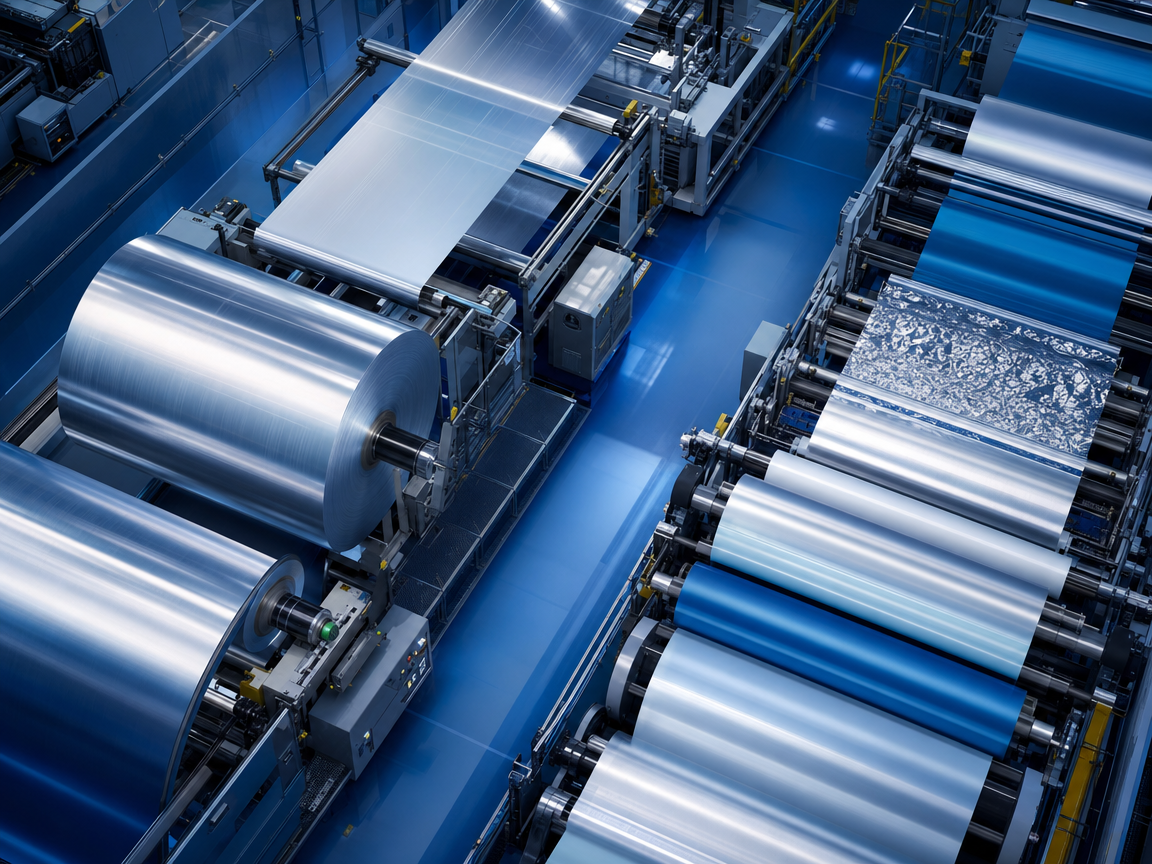

2026 China Flexible Packaging Materials (BOPET + BOPP + Laminated Film + Food-Grade Aluminum Foil + Lithium Battery Aluminum-Plastic Film): Market Size and Competitive Landscape Deep Research Report
Abstract: China is the world's largest producer and consumer of flexible packaging materials. In 2025, domestic flexible packaging market size is approximately RMB 500–550 billion, encompassing BOPET film, BOPP film, laminated film, food-grade aluminum foil, and lithium battery aluminum-plastic film, with downstream coverage spanning food and beverage, pharmaceuticals, electronics, new energy, photovoltaics, and other key sectors of the national economy.
Abstract
China's flexible packaging materials industry has reached a structural inflection point in 2025: macro-level scale continues to expand (market size approximately RMB 500–550 billion), but micro-level profits are universally compressed. Total capacity has reached the world's highest level, yet capacity utilization has fallen to its lowest point in nearly a decade. The domestic production rate of lithium battery aluminum-plastic film has broken through the key 60% threshold, marking a historic milestone in China's flexible packaging industry transitioning from the "catching-up stage" to the "competitive parity stage."
Over the past decade, China's flexible packaging industry experienced three distinct phases: the "high-speed catch-up" phase from 2000 to 2015 (driven by WTO accession, consumer goods boom, and smartphone penetration); the "product upgrade" phase from 2015 to 2021 (optical films, photovoltaic backsheets, and aluminum-plastic film all achieving breakthroughs); and the "painful adjustment" phase from 2022 to 2025 (structural overcapacity after excessive capacity expansion leading to industrywide price wars and profit collapse). The current industry's core contradiction is that the supply side (enormous capacity base from previous overinvestment) far exceeds the demand side (constrained by slowing macroeconomic consumption growth), leading to industry average profit margins falling to historic lows.
The research institute's judgment is: BOPET leader (Shuangxing New Material) and aluminum foil leader (Dingsheng New Material) will see profit recovery lead the industry bottom clearance in 2025–2026; lithium battery aluminum-plastic film (Zijang Enterprise) will enter its best performance window in 2027–2029 before solid-state battery commercialization; sustainable packaging (BOPE/full-PP, water-based inks) will enter a rapid growth zone after 2027 as European order demand transmits.
I Definitions, Classifications, and Full Industry Chain Overview
1.1 Conceptual Boundaries and Material Systems of Flexible Packaging
Flexible packaging refers to packaging formed from films, foils, paper, or composite materials of these, processed through printing, laminating, coating, bag-making, and other processes. Its core characteristic is high flexibility in sealed form. Compared to rigid packaging, flexible packaging's competitive advantages include: lower material usage per unit volume (raw material costs typically 30–50% lower), lighter transport weight, high design flexibility, and the ability to achieve barrier performance close to metal cans through composite structures.
China's flexible packaging materials are typically divided into five main material systems:
I. Biaxially Oriented Polyethylene Terephthalate (BOPET)
BOPET uses PET chips as raw material and is produced through extrusion, casting, machine-direction stretching (MD, typically 3.0–3.5×) and transverse-direction stretching (TD, typically 3.5–4.0×), and heat-setting processes. Typical thickness range is 4–350 microns, density approximately 1.39 g/cm³. 2024 China BOPET industry total capacity was approximately 6.9496 million tons, with an estimated output of approximately 4.2 million tons and capacity utilization of approximately 60.4%.
II. Biaxially Oriented Polypropylene (BOPP)
BOPP uses homopolymer or copolymer polypropylene (PP) as main raw material, with lower density (approximately 0.91 g/cm³), manufacturing cost typically 20–30% lower than BOPET. BOPP is the world's largest-volume plastic packaging film. China's 2024 BOPP annual production was approximately 4.53 million tons, making China the world's largest BOPP producer with capacity accounting for approximately 60% globally.
III. Laminated Film (Composite Film)
Composite packaging film is not a single substrate but a multilayer structure bonding two or more films (BOPET/BOPP/PE/PA/aluminum foil, etc.) through dry lamination, solventless lamination, or extrusion lamination processes. Laminated film has the highest unit added value in the flexible packaging supply chain, but is also the most fragmented competitive layer (approximately 3,000–4,000 laminated film companies nationwide).
IV. Food-Grade Aluminum Foil
Food-grade aluminum foil requires aluminum purity typically above 99% (commonly 1060, 1070, 8011 series aluminum alloys), thickness 7–15 microns, and must pass China's GB 4806.10 standard and international food contact regulations. China's 2024 aluminum foil total production was approximately 1.5 million tons, with food packaging aluminum foil accounting for approximately 35–40%, approximately 530,000–600,000 tons.
V. Lithium Battery Aluminum-Plastic Film
Lithium battery aluminum-plastic film is the key material for the outer shell of pouch-cell lithium batteries, typically using an ON (nylon/polyamide, outer layer)/aluminum foil (middle barrier layer)/CPP (cast polypropylene, inner heat-seal layer) sandwich structure, with total thickness typically 100–160 microns. The 2024 global lithium battery aluminum-plastic film market size was approximately RMB 12.16 billion, with the Chinese domestic market approximately RMB 7–8 billion.
II Global Competitive Landscape and Multinational Giant Performance
2.1 Global Flexible Packaging Market Size and Competitive Hierarchy
The 2025 global flexible packaging market is approximately USD 200–210 billion (including substrate films, foils, and processing). The global flexible packaging competitive hierarchy has three tiers: The first tier is global comprehensive giants (Amcor after merging Berry Global), with an annual revenue of approximately USD 24 billion after merger; the second tier is regional powerhouses or specialist leaders (Sealed Air's Cryovac, Sonoco, Mondi, ProAmpac); the third tier is domestic companies in emerging markets like China, India, and Vietnam.
2.2 Amcor (NYSE: AMCR) — Global Flexible Packaging Leader After Merger Completion
Amcor completed the full-stock merger of Berry Global's flexible packaging division in 2025. The combined entity annual revenue is approximately USD 24 billion, employs over 70,000 people globally, with approximately 220 factories in approximately 40 countries, and is the undisputed scale leader in global flexible packaging. Amcor's 2025 "AmLite" series monomaterial recyclable flexible packaging has received Recoup's High Recyclability certification in Europe.
2.3 Sealed Air (NYSE: SEE) — High-Barrier Food Preservation Expert
Sealed Air is the global absolute leader in fresh meat preservation packaging through its Cryovac brand. FY2024 net sales approximately USD 5.42 billion, EBITDA approximately USD 960 million, EBITDA margin approximately 17.7%. Chinese companies currently have no ability to replicate its product system in this sub-market niche.
2.4 Toray Industries (Japan 3402.T) — BOPET and High-Function Film Authority
Toray's Lumirror-branded BOPET enjoys the world's highest quality reputation. FY2025 film and high-function resin division contributed approximately USD 3.5 billion. Toray's domestic production (Nantong Toray) continuously exerts import substitution pressure on domestic high-end optical-grade BOPET companies.
2.5 DNP (Dai Nippon Printing, Japan 7912.T) — Absolute Technology Leader in Lithium Battery Aluminum-Plastic Film
DNP holds over 500 registered patents covering core intellectual property in aluminum-plastic film. Its 80μm ultra-thin aluminum-plastic film product is the world's most commercially advanced ultra-thin specification. In 2025, DNP's global aluminum-plastic film market share is approximately 30–35% (estimated), with domestic production rate gradually being eroded but its technological moat in the highest-end segments remaining difficult to breach short-term.
III Macro Environment Analysis (PEST)
3.1 Policy Environment — Dual Carbon Targets, Food Regulations, and Domestic Substitution Support
China's "3060" dual carbon targets require the packaging and printing industry to reduce energy consumption per unit industrial added value by 13.5% by 2025 compared to 2020. The VOC governance campaign requires all gravure printing companies to complete clean ink substitution by end of 2025. The "plastic pollution control" program requires establishing a preliminary soft plastic classification and recycling system in key urban clusters by 2025. The combined policy force is driving the systematic green transformation of the flexible packaging industry.
3.2 Economic Environment — Raw Material Price Cycles, Downstream Structural Divergence, and New Energy Pull
2024 PET chip annual average price approximately RMB 6,800/ton (down approximately 25% from 2022 peak), PP chip approximately RMB 7,800/ton (down approximately 18%). China's 2025 new energy vehicle full-year production approximately 12.8–13.5 million units; lithium battery aluminum-plastic film demand for power batteries approximately 150–200 million m²; China's 2025 photovoltaic new installed capacity approximately 280GW, photovoltaic backsheet BOPET demand approximately 420,000–560,000 tons.
3.3 Social Environment — Consumer Awareness, Labor Costs, and Cross-Border Trade
Leading food brands (Yili, Mengniu, Three Squirrels) are voluntarily introducing stricter internal standards surpassing national mandatory standards. E-commerce platforms (JD.com, Tmall) have introduced "green packaging rating" systems. China's food contact material exports in 2025 are approximately USD 30 billion, with certified products commanded by 15–30% price premium over domestic sales.
3.4 Technology Environment — Key Technology Trends and Industrial Impact
BOPE's Rise and Monomaterial Recyclability: Biaxially Oriented Polyethylene (BOPE) is the fastest-growing new base film of the 2020s. Global BOPE capacity in 2025 is approximately 200,000–250,000 tons, expected to exceed 1.2 million tons by 2030, the fastest-growing base film sub-track globally.
Digital Printing Penetration: HP Indigo's high-resolution digital printing and Epson's UV inkjet technology are rapidly penetrating the flexible packaging sector. Digital printing's penetration rate in Chinese flexible packaging in 2025 is approximately 5–7% (Europe approximately 20–25%), expected to rise to 15–20% by 2030.
IV China Market Size and Concentration
4.1 Total Market Size and Historical Growth
China's flexible packaging market total size in 2025 is approximately RMB 500–550 billion, representing approximately 22–25% of the global flexible packaging market (USD 200–210 billion). Historical growth rate shows a clear "accelerate then decelerate" trajectory: 2015–2020 annual CAGR approximately 6–8%; 2021 showing 12–15% high growth; 2022–2024 falling back to 3–5% due to overcapacity, macro consumption slowdown, and inventory destocking.
4.2 Sub-Track Sizes and Structural Characteristics
| Sub-Track | 2025 Size (RMB Billion) | Growth Rate | Representative Leaders | CR5 |
|---|---|---|---|---|
| BOPET Base Film | 85–95 | -1% to +3% | Shuangxing New Material, Yuxing | ~35% |
| BOPP Base Film | 70–78 | 0% to +3% | Yongxin Shares, Dadongnan | ~28% |
| Laminated Film Processing | 120–140 | +3% to +5% | Yongxin Shares | ~15% |
| Food Flexible Packaging Bags | 90–105 | +4% to +6% | Xianggang Tech, Regional Leaders | <10% |
| Aluminum Foil Packaging | 60–70 | +5% to +8% | Dingsheng, Wanshun, Huafeng | ~55% |
| Lithium Battery Aluminum-Plastic Film | 12–15 | +5% to +10% | Zijang Enterprise | ~70% |
4.3 Industry Profitability Analysis
2024 was the worst year for Chinese flexible packaging industry profitability in nearly a decade: the BOPET industry estimates over 50% of capacity operating at a loss; only lithium battery aluminum-plastic film (Zijang Enterprise gross margin approximately 21.46%) and high-end composite printing packaging (Yongxin Shares net margin approximately 13.3%) maintained relatively healthy profitability, highlighting the value of differentiated competition.
V Industry Chain Breakdown
5.1 Upstream: PET/PP Chip and Aluminum Ingot Supply
China is the world's largest PET resin producer, with 2025 total PET capacity approximately 90 million tons. Film-grade PET special capacity approximately 3–3.6 million tons. Domestic film-grade PET chips are basically fully self-sufficient, with costs approximately 20–30% lower than Korean (SKC) and Japanese imports, which is one of the most important cost competitive advantages of Chinese BOPET companies compared to Japanese and Korean competitors. Polyester film and polypropylene film factories throughout the Yangtze River Delta supply chain form a tightly integrated ecosystem.
5.2 Midstream: Double-Stretch Equipment, Coating, and Film Production Key Processes
Top biaxial stretching equipment suppliers are Germany's Brückner (dominant in BOPP) and DMT (dominant in BOPET), with domestic equipment suppliers (Shaanxi Beiren, Wuxi Xishan Sanli) achieving import substitution. German Brückner line maximum speed up to 500–600m/min vs. domestic 400–450m/min; maximum film width 8.7–10.4m vs. domestic 7.5–8.0m. Functional film coating technology (anti-fog coatings, heat-seal coatings, release coatings) is a key differentiator between premium and standard film products.
5.3 Downstream Printing and Post-Processing Competitive Landscape
Gravure printing is China's dominant flexible packaging printing process (approximately 75% share). Over 10,000 printing packaging factories and approximately 3,000–4,000 composite packaging material companies nationwide. Solventless lamination is the mainstream direction for green transformation, with domestic solventless lamination line share approximately 43% in 2025. Retort packaging film and vacuum packaging bags are key product categories driving downstream food processing growth. Food packaging bags manufacturers account for the largest portion of the 10,000+ printing/packaging entity base in Jiangsu, Zhejiang, and Guangdong.
VI Key Enterprise Analysis
6.1 Shuangxing New Material (002585.SZ) — BOPET Capacity Absolute Leader at Cycle Bottom
Shuangxing New Material (Jiangsu Shuangxing Color Plastic New Material Co., Ltd.) is the largest BOPET capacity listed company both in China and globally. FY2024 revenue RMB 5.908 billion (+11.70%); net profit approximately RMB -398 million (net loss); BOPET film sales volume 658,300 tons (+16.58%). Q1 2026 net profit YoY +109.49% is a strong signal of industry trough recovery.
The loss core logic: 2024 industry new BOPET capacity 805,000 tons (historical single-year record), cumulative capacity approaching 6.95 million tons, far exceeding actual demand of approximately 4.2 million tons. BOPET per-ton average selling price fell from approximately RMB 10,000–12,000/ton in 2021 to approximately RMB 7,500–8,500/ton in 2024, while raw material PET chip cost remained at approximately RMB 6,800/ton, completely eliminating per-ton net margin.
6.2 Yongxin Shares (002014.SZ) — Flexible Packaging Value Target Through the Cycle
Yongxin Shares (Huangshan Yongxin Shares Co., Ltd.) is one of the most consistently profitable listed companies in China's plastic flexible packaging industry. FY2024 total revenue RMB 3.525 billion (+4.34%); net profit RMB 468 million (+14.63%); net margin approximately 13.3%; gross margin 23.78%; ROE 18.07%. Exceptional profitability amid industry-wide losses is the core highlight.
6.3 Dingsheng New Material (603876.SH) — Aluminum Foil Scale King's Profit Dilemma
Dingsheng New Material (Jiangsu Dingsheng New Energy Material Co., Ltd.) is the world's largest aluminum foil producer. FY2024 total revenue RMB 24.022 billion (+26.01%); net profit RMB 301 million (-43.70%); aluminum foil product sales volume 816,100 tons (+29.00%); overseas revenue RMB 8.85 billion (+55.35%).
6.4 Zijang Enterprise (600210.SH) — Domestic First in Aluminum-Plastic Film, Strategic Card for Solid-State Battery Era
Zijang Enterprise (Shanghai Zijang Enterprise Group Co., Ltd.) has the largest output and highest market share of domestic lithium battery aluminum-plastic film in China, and is the world's second-largest aluminum-plastic film supplier (second only to DNP). Key FY2024 data: aluminum-plastic film gross margin approximately 21.46%; domestic market share approximately 22.2%; global market share approximately 14.6%; planned new capacity 94 million m².
VII Midstream Industrial Belt Geographic Map
7.1 Anhui — Composite Flexible Packaging and Huangshan Industrial Cluster
Anhui Province is an important base for Chinese composite flexible packaging. Tianxia Factory's industrial database shows the number of composite packaging factory entities in Anhui ranks in the national top three, with medium and above scale (annual capacity above 3,000 tons) as the main body. Flexible packaging companies looking to identify soft packaging material suppliers across the Anhui cluster can leverage industry-specific factory databases for targeted discovery.
7.2 Zhejiang — Cigarette Film, Specialty Film, and Wenzhou Cangnan Printing Cluster
Wenzhou Cangnan County is one of China's most important cigarette packaging (cigarette labels, pull-tab film, pearlescent film) production areas globally, with over 3,000 printing packaging factories, with export orders approximately 35–40%.
7.3 Jiangsu — Aluminum Foil, Aluminum-Plastic Film, and Suzhou Optical Film Cluster
Jiangsu Province is China's core aluminum foil industrial cluster. Dingsheng New Material (Changzhou) and Wanshun New Material (multiple Jiangsu locations) together form the "Southern Jiangsu Axis" of national aluminum foil capacity. Xinlun New Material aluminum-plastic film (Changzhou) and Zijang Enterprise aluminum-plastic film capacity are highly concentrated in the Suzhou-Shanghai border area. Buyers searching for aluminum foil packaging factory suppliers will find high density of verified production facilities in this region, as well as lithium battery aluminum-plastic film factory options for pouch-cell battery applications.
7.4 Guangdong — Electronic Flexible Packaging and Metallized Film Cluster
Guangdong is the province with the most flexible packaging companies nationwide (over 20,000), serving consumer electronics, FMCG, and medical devices. Shenzhen and Dongguan have large concentrations of electronic flexible packaging companies and metallized film companies.
7.5 Vietnam and India — Challenges from Emerging Production Regions
Vietnam's flexible packaging capacity in 2025 is estimated at approximately 800,000–1.2 million tons, accounting for approximately 40% of Asian regional production capacity migrating from China. India's Uflex annual revenue approximately USD 2.5–3 billion, competing head-on with Chinese BOPET/BOPP companies in South Asian, Middle Eastern, and African markets.
VIII Sub-Track Special Research
8.1 BOPET Optical Film — Core Profit Source for Premium Development
BOPET optical film is Shuangxing New Material's most important profit moat. Main product series include: backlight brightening film (BEF) substrate (brightness enhancement ratio approximately 60–80%, requiring haze <0.5%); diffuser film substrate (haze 20–85%); OLED thin film encapsulation (TFE) substrate (requiring WVTR <10⁻⁶ g/m²·day). AI server demand for high-end optical film in 2025 exceeded market expectations, becoming an important catalyst for Shuangxing New Material's Q1 2026 performance recovery.
8.2 BOPET Solar Backsheet — Volume Growth Opportunities from High Photovoltaic Prosperity
China's 2025 new photovoltaic installed capacity is approximately 280GW, corresponding backsheet demand approximately 420–560 million m². Nationwide solar backsheet producers are approximately 50+ companies, with Changshu (Shuangxing New Material, Saive Technology) and Suzhou as core production areas, with Shuangxing New Material's backsheet substrate holding approximately 35% of total industry share.
8.3 BOPP Cigarette Film and Food Packaging Film
Pull-tab film unit price is approximately 3–5× ordinary BOPP, global market size approximately RMB 3–4 billion, with Wenzhou Cangnan producing over 60% of global cigarette pull-tab film. Snack food packaging is BOPP's largest application scenario, with convenient noodle bags (approximately 18%), snack bags (approximately 22%), and condiment packaging (approximately 10%) as three major uses.
8.4 Food-Grade Aluminum Foil — Dual Growth Drivers of Takeaway Containers and Medical Blister
China's takeaway aluminum foil container demand in 2025 is approximately 80–100 billion pieces, corresponding aluminum foil consumption approximately 150,000–200,000 tons, the fastest-growing aluminum foil packaging sub-track (annual growth approximately 20%). Medical blister aluminum foil (PTP/PVDC blister aluminum foil) maintains stable growth approximately 6–8% annually, with gross margin approximately 20–25%. Medical packaging materials suppliers in Shandong and Jiangsu serve over 1,500 pharmaceutical companies, while medical aluminum foil manufacturers face the strictest quality certification requirements in the entire flexible packaging value chain. Aluminum-plastic composite film is increasingly used in both pharmaceutical and food high-barrier applications.
8.5 Lithium Battery Aluminum-Plastic Film — Historic Turning Point of Domestic Substitution
2025 is the historic turning point year for China's lithium battery aluminum-plastic film domestic substitution process: domestic brand shipments' share of the domestic market reached approximately 60.3% for the first time under market conditions, surpassing imported brands' combined share (DNP + Showa Denko KCC + Arakawa Chemical), a milestone in industrial technology catch-up. This ratio was only approximately 35% in 2020, rising by approximately 25 percentage points in five years.
8.5b Pouch Food and Ready-Meal Packaging — High-Growth New Market
China's ready-meal market in 2025 is approximately RMB 600 billion (YoY growth approximately 18%). Frozen ready-meal products use PA/PE multilayer coextruded bags requiring resistance to -18°C; ambient ready-meal products (retort rice, braised meat) use aluminum foil/CPP or BOPET/aluminum foil/CPP high-temperature retort bags requiring sterilization resistance at 121°C. Ready-meal packaging bags is another high-growth sub-segment, with China's pet food market reaching approximately RMB 80–90 billion in 2025 at 15–18% annual growth rate.
8.6 Monomaterial Recyclable Flexible Packaging — Major Industrial Transformation Before 2030
Monomaterial recyclable flexible packaging is the most important structural transformation trend in the global flexible packaging industry during 2025–2035. Three major barriers face the promotion of monomaterial recyclable films in the Chinese market: currently lacking regulatory enforcement; full-PE film heat resistance (maximum approximately 90–100°C, unable to meet 121°C high-temperature retort requirements); full-PE film print gloss not as good as BOPET substrate. However, through supply chain (European and American brand manufacturer requirements) transmission, recyclability requirements are being transmitted to Chinese export-oriented flexible packaging companies. Yongxin Shares' BOPE production line is currently the domestic strategic layout closest to this technological direction.
IX Technology Evolution Roadmap
9.1 Monomaterial PE/PP Multilayer Structure
The technical core of full-PE recyclable packaging is the industrialization of BOPE (Biaxially Oriented Polyethylene) film. New-generation metallocene linear low-density polyethylene (mLLDPE) makes biaxial stretching feasible, with tensile strength improved approximately 60% and barrier performance improved approximately 30% compared to ordinary PE. Global BOPE capacity in 2025 is approximately 200,000–250,000 tons, expected to exceed 1.2 million tons by 2030.
9.2 High-Barrier System Evolution: SiOₓ Transparent Vacuum Coating Replacing Aluminum Layer
Transparent high-barrier coatings based on silicon dioxide (SiOₓ) or aluminum oxide (AlOₓ) vacuum deposition are gradually challenging traditional aluminum metallization. Advantages include microwave compatibility, visual transparency, and compatibility with monomaterial recyclable requirements. Representative commercial products include Toray's Barrier Lumirror (SiOₓ-coated BOPET, OTR approximately 0.5cc/m²·day) and Toppan's GL-Film (AlOₓ transparent-deposited BOPET, OTR approximately 0.3cc/m²·day). China currently has no supply chain capable of large-scale production of transparent vapor-deposited barrier film, but several Guangdong coating companies are conducting pilot trials and are expected to produce first commercial products in 2027–2028.
9.3 Lithium Battery Aluminum-Plastic Film Thinning Route: From 152μm Toward 123μm
Mainstream specification thinning route: standard mainstream specification 152μm → medium specification 123μm → ultra-thin specification 80μm (mainly for ultra-thin laptops and foldable phones). Domestic companies have basically caught up with DNP's 2022 level in 152→123μm thinning technology, but DNP still maintains approximately 2–3 years of process accumulation advantage in sub-123μm ultra-thin specifications.
9.4 Antimicrobial Packaging and Smart Temperature-Change Technology
Antimicrobial flexible packaging is primarily used in fresh meat/seafood (domestic market approximately RMB 5 billion), medical dressing outer packaging, and premium pet food in 2025. Time-Temperature Indicator (TTI) labels in the Chinese market (high-end imported beef, Japanese-style seafood) are at an early promotion stage, with market size approximately RMB 500–800 million and annual growth approximately 25–30%.
9.5 Water-Based Inks and UV Curing — Accelerated Green Upgrade of Packaging Printing
Water-based gravure ink VOC content has dropped below 5%. China's domestic water-based gravure ink penetration in 2025 is approximately 18–22% (Europe approximately 55–60%). UV flexographic printing's share in flexible packaging printing is approximately 8–12% (mainly concentrated in pharmaceuticals, high-end food, and e-commerce custom packaging), expected to reach 25% by 2030.
9.6 Bio-Based Films and Compostable Packaging
PLA film's current penetration rate in Chinese flexible packaging is estimated at no more than 1.5%. As PLA capacity expands (domestic enterprises under construction PLA capacity totaling approximately 1.5 million tons) bringing cost reduction, PLA film penetration rate may rise to 3–5% by 2030.
9.7 Digital Printing and Short-Run Customization Technology
China's digital printing application in flexible packaging is concentrated in high-end food (mooncake gift boxes, premium tea packaging), pharmaceuticals (multi-version pharmaceutical packaging design testing), and e-commerce custom packaging (gift bag personalized printing), with market size approximately RMB 3.5–5 billion. Expected to grow to RMB 15–20 billion by 2030 as brand "SKU fragmentation" trend intensifies.
X Risk Matrix
10.1 Resin and Aluminum Ingot Price Volatility Risk (High Probability, High Impact)
Historical volatility amplitude approximately ±25–30% for PET chips and PP chips, and approximately ±15–25% for aluminum ingots. Pure film processing companies (without upstream resin self-supply) face profit erosion risk from sharp short-term cost increases while product price increases lag. Response strategies include forward contract price locking, moderate inventory build-up, and signing raw material price linkage clauses with downstream customers.
10.2 Overcapacity and Continued Price War Risk (High Probability, Medium-High Impact)
China's BOPET industry structural overcapacity is expected to persist until 2026. Industry association "involution termination" declarations have potential antitrust risks under China's competition law framework and limited actual binding force. The exit period for capital (forming actual impairment losses and liquidating disposals) typically requires 3–5 years rather than 1–2 years.
10.3 Environmental Compliance Cost Increase and SME Exit Risk (Medium-High Probability, Medium Impact)
Systematic costs of VOC emission reduction, solventless lamination transformation, and non-toxic adhesive switching during the 2025–2027 tightening regulatory enforcement cycle are expected to cause approximately 10–15% of small and medium-sized flexible packaging companies to be forced to shut down or consolidate, releasing market share to compliant large enterprises.
10.4 Lithium Battery Aluminum-Plastic Film Technology Catch-Up Risk (Medium-Low Probability, High Impact)
DNP maintains competitive advantage through continuous patent layout (500+ aluminum-plastic film related patents) and advance R&D investment for future battery technology needs. If domestic companies (Zijang, ST Xinlun) fail to obtain technical cooperation invitations from mainstream battery customers during the 2025–2027 solid-state battery R&D stage, they may again face a passive "technology follower" situation in the solid-state battery commercialization stage.
10.5 Global Packaging Giant Consolidation Risk (Medium Probability, Medium Impact)
After Amcor merges Berry Global, multinational food, beverage, and daily chemical brand owners will tend to concentrate more global flexible packaging procurement with the merged Amcor. This will create pressure on some standardized products (transparent food bags, general retort bags) exported by Chinese companies, with orders concentrating in Amcor's global factory network.
10.6 Exchange Rate Volatility Risk (Medium Probability, Medium Impact)
Dingsheng New Material's 2024 overseas revenue was approximately RMB 8.85 billion (approximately 37% of total), and Shuangxing New Material's overseas optical film sales accounting for approximately 18–20% of revenue. Every 1% appreciation of RMB against USD has a negative impact of approximately RMB 150–200 million on Dingsheng New Material's annual net profit.
10.7 Solid-State Battery Disruptive Substitution Risk for Pouch Cell (Low Probability, High Impact)
If solid-state batteries achieve unexpected technological breakthroughs and cost reductions in 2027–2030 and enter large-scale production in full-solid-state hard-shell form (not requiring aluminum-plastic film outer shells), the pouch cell market share will rapidly shrink, directly impacting lithium battery aluminum-plastic film demand outlook. Currently classified as "low probability but high impact."
10.8 Trade Friction and Tariff Barrier Risk (Medium-High Probability, Medium Impact)
The US has imposed 25% additional tariffs on Chinese aluminum products (including aluminum foil), and the EU is pushing forward anti-dumping investigations on Chinese aluminum foil (expected to be finalized 2025–2026). For aluminum foil companies with high export dependence (Dingsheng New Material overseas revenue ratio approximately 37%), trade barrier increases will directly compress export profit margins, forcing accelerated overseas factory layout (Dingsheng's Malaysian factory being pre-positioned defensive strategy).
10.9 Sustainable Packaging Technology Route Divergence Risk (Medium Probability, Medium Impact)
Two competing mainstream technology routes currently exist globally: Amcor's "monomaterial recyclable plastic film (all-PE/all-PP)" route and Mondi/Smurfit Kappa's "paper-based flexible packaging" route. These two routes have completely different product migration directions for materials companies. Before the technology route becomes clear, companies need to maintain flexibility in both routes, avoiding over-betting on a single technology direction.
XI 2026–2030 Outlook and Three-Scenario Forecast
11.1 Key Driver Variable Analysis
Demand-side variables: FMCG consumption upgrade speed; ready-meal and short shelf-life food penetration rate improvement (CAGR approximately 15–18%); new energy vehicle production scale and pouch cell ratio changes; photovoltaic new installed capacity speed and backsheet material demand.
Supply-side variables: BOPET and BOPP industry ineffective capacity exit speed; BOPE commercialization pace; domestic substitution depth for optical film, ultra-thin aluminum-plastic film, and transparent deposited barrier film.
Policy variables: Recyclable packaging mandatory regulation implementation timeline; EPR levy standards; VOC emission reduction enforcement intensity.
Technology variables: Solid-state battery commercialization timeline; BOPE mass production cost reduction speed; AI and industrial vision penetration speed in packaging printing quality control.
11.2 Base Case Scenario (Annual CAGR approximately 4–5%)
In the base case scenario, China's flexible packaging market grows moderately at annual 4–5% from 2025 to 2030, with 2030 market size approximately RMB 650–700 billion. BOPET industry capacity clearance basically completes in 2026–2027, capacity utilization recovers to approximately 70–75%, leading companies' profits enter recovery channel from 2026. Lithium battery aluminum-plastic film domestic production rate steadily rises to approximately 75–80% by 2030.
11.3 Optimistic Scenario (Annual CAGR approximately 6–7%)
In the optimistic scenario: China's version of recyclable packaging regulations formally takes effect in 2027, driving BOPE and full-PP film demand annual growth exceeding 30%; solid-state battery commercialization timeline advances to 2027–2028; Chinese food and daily chemical brand internationalization accelerates, driving additional growth of 15–20% in export flexible packaging demand. 2030 Chinese flexible packaging market size approximately RMB 800–850 billion.
11.4 Pessimistic Scenario (Annual CAGR approximately 2–3%)
In the pessimistic scenario, overcapacity continues until 2028; solid-state batteries are commercialized mainly in hard-shell form, eroding the pouch cell market; Vietnam flexible packaging capacity rises significantly, continuously eroding China's export competitiveness. 2030 Chinese flexible packaging market size approximately RMB 560–600 billion.
11.5 Three-Scenario CAGR Comparison for Sub-Tracks
| Sub-Track | Pessimistic CAGR | Base CAGR | Optimistic CAGR | Key Variable |
|---|---|---|---|---|
| BOPET General Packaging Film | -1% to 0% | +2% to +3% | +4% to +5% | Capacity clearance speed |
| BOPET Optical Functional Film | +3% to +5% | +8% to +10% | +12% to +15% | AI/AR demand |
| BOPP General Food Packaging | +1% to +2% | +2% to +4% | +4% to +6% | FMCG consumption |
| BOPP Capacitor Film | +5% to +8% | +10% to +12% | +15% to +18% | Photovoltaic/New Energy |
| Laminated Film Processing | +2% to +3% | +4% to +6% | +6% to +8% | Ready-meal penetration |
| Food-Grade Aluminum Foil | +3% to +4% | +5% to +7% | +8% to +10% | Takeaway/Pharmaceutical demand |
| Lithium Battery Aluminum-Plastic Film | +3% to +5% | +8% to +10% | +12% to +18% | Solid-state battery progress |
| Monomaterial Recyclable Film | +10% to +15% | +20% to +30% | +40% to +60% | PPWR transmission |
XII Research Conclusions and Industry Outlook
The research institute's six core judgments through deep research:
Judgment I: The BOPET industry has entered the accelerated bottom clearance phase; 2026–2027 will be the leading recovery window. Industry absolute loss pressure (Shuangxing net loss RMB 398 million, Yuxing net loss RMB 357 million) has triggered the acceleration mechanism for capacity clearance. Shuangxing New Material's Q1 2026 net profit YoY +109.49% inflection point signal indicates the industry has passed the most difficult moment.
Judgment II: Lithium battery aluminum-plastic film domestic substitution has crossed the most difficult technical hurdle; the solid-state battery era is the next major window. The milestone significance of domestic aluminum-plastic film production rate exceeding 60% in 2025 lies in the fact that it is a market-verified result, not a policy number. The next key competitive window is the 2025–2027 solid-state battery R&D period.
Judgment III: Sustainable flexible packaging is not short-term compliance response but a structural long-term strategic proposition. The combined force of EU PPWR, US EPR legislation, and China's recyclable packaging policy will push global flexible packaging from "function first" to "function + sustainability dual-track paradigm" during 2025–2030. Companies pre-positioned in BOPE production (Yongxin Shares), solventless lamination, and transparent barrier vapor-deposited film will reap first-mover advantages in 2028–2030.
Judgment IV: Global giant consolidation will reshape procurement ecology; Chinese companies need to be wary of "single supplier" procurement loss risk. After Amcor completes merging Berry Global, multinational brand owners will tend to further concentrate global flexible packaging procurement with the merged Amcor. However, during the transition period of post-merger integration, competitive Chinese suppliers have a time window to compete for global procurement orders.
Judgment V: Product quality and food safety certification will become the core threshold determining export competitiveness. As EU EC 10/2011 revised version (planned 2026–2027) further tightens limits on photoinitiators, mineral oil hydrocarbons (MOH), and primary aromatic amines (PAA), suppliers able to systematically complete "green formulation switching + complete migration test records + third-party certification" will obtain continuous access passes to European and American markets.
Judgment VI: Digitalization and intelligence will accelerate reshaping industry competitive landscape in 2026–2030. Tianxia Factory's industrial database includes flexible packaging factories, aluminum foil deep processing factories, composite packaging factories, and printing packaging enterprises covering multiple types, and is a key industrial area the research institute continuously tracks.
The competition pattern of the flexible packaging industry has never been merely a competition of materials, but a comprehensive competition of supply chain responsiveness, technological innovation speed, and organizational execution efficiency — this is precisely why Yongxin Shares can achieve a net profit margin three times higher than peers at the same market scale with continuous operation, and also the inevitable path for the entire industry to forge a new competitive order through painful adjustment.
Data Sources
- Shuangxing New Material (002585.SZ) 2024 Annual Report (Shenzhen Stock Exchange listed company A-share announcement, disclosed April 2025)
- Shuangxing New Material Q1 2026 Quarterly Report (Shenzhen Stock Exchange announcement, April 2026)
- Yongxin Shares (002014.SZ) 2024 Annual Report (Shenzhen Stock Exchange announcement, March 2025)
- Dingsheng New Material (603876.SH) 2024 Annual Report (Shanghai Stock Exchange announcement, April 2025)
- Yuxing Shares (300305.SZ) 2024 Annual Report (Shenzhen Stock Exchange announcement, April 2025)
- Dadongnan (002263.SZ) 2024 Annual Report (Shenzhen Stock Exchange announcement, April 2025)
- Zijang Enterprise (600210.SH) 2024 Annual Report Summary (Shanghai Stock Exchange announcement, March 2025)
- Amcor plc Q4 and FY2025 Earnings Announcement (SEC Form 8-K, amcor4q2025ex991, June/July 2025)
- Sealed Air Corporation FY2024 Annual Report (SEE 10-K, February 2025)
- Toray Industries FY2025 Annual Results (IR release, Toray official website, May 2025)
- "2025 Global Lithium Battery Aluminum-Plastic Film Shipments 470 Million m², Domestic Substitution Trend Accelerates" (Battery Network itdcw.com, April 2026)
- "2024 BOPET Industry New Capacity 805,000 Tons" (Zhuochuang Information, fxbaogao.com, 2025)
- EU Packaging and Packaging Waste Regulation PPWR (Regulation (EU) 2025/XXX, European Parliament, 2025)
- Brückner Group BOPET/BOPP Production Technology White Paper (bruckner.com, 2024)
- Tianxia Factory Industrial Database (4.8 million active factories, continuously updated in real-time, 2025)