
Abstract
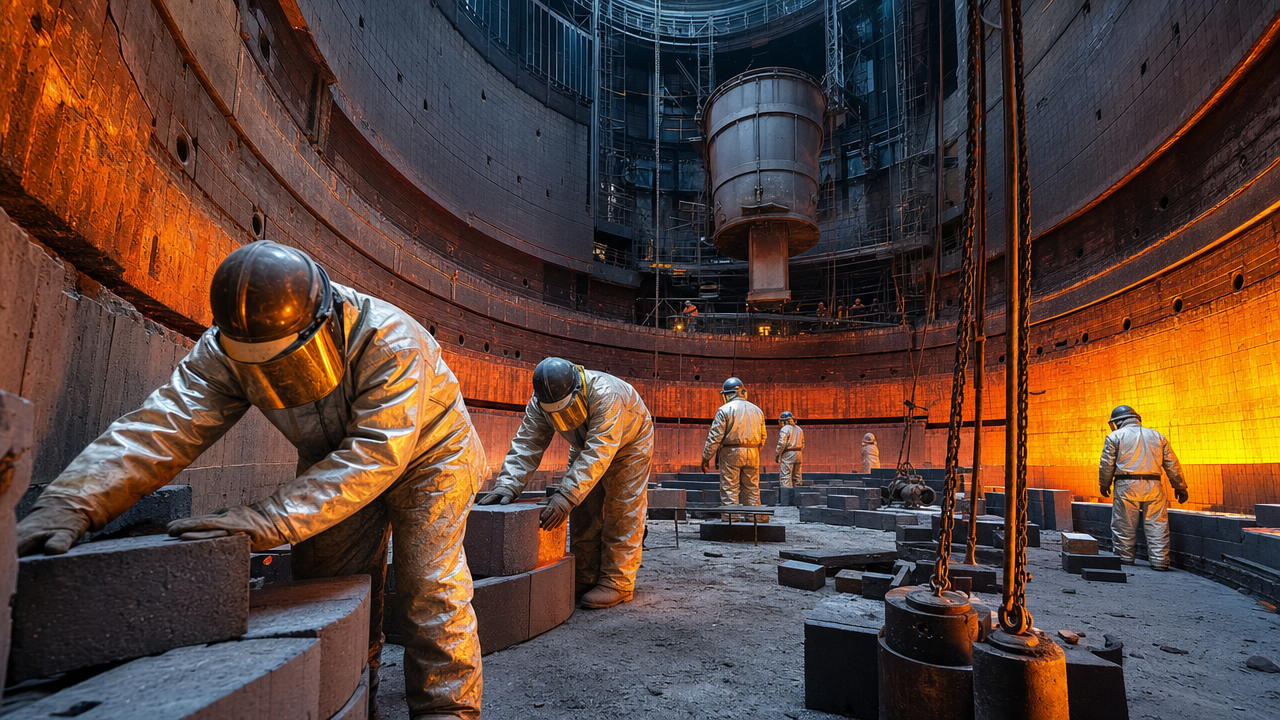
Refractory materials are the "behind-the-scenes cornerstone" that sustains the operation of all high-temperature industries, including steel, cement, glass, and non-ferrous smelting — any industrial kiln operating continuously above 1,500 degrees Celsius cannot do without them as lining material. This report uses the latest data from FY2025 (full year) and the first half of 2026 (2026H1) as the benchmark to systematically assess the market scale, competitive landscape, industrial chain structure, technological evolution, and global dynamics of China's refractory materials industry. In FY2025, China's refractory materials industry continued the downward trajectory deeply tied to the steel cycle: full-year output is estimated at 21 million to 22 million tons, a further slight decline from 22.09 million tons in 2024; revenue on the finished-products side was approximately 56.3 billion yuan, and total industrial chain revenue was approximately 97.8 billion yuan. Beneath the surface pressure on total volume, the industry is undergoing a profound structural transformation, the core feature of which can be summarized as "servicization upgrade" — the integrated "product + construction + maintenance" service model represented by Integrated Contract Management (ICM) is accelerating its penetration from top-tier steel mills to medium-sized steel mills, reshaping the way refractory enterprises create value and build competitive barriers. Within the downstream consumption structure, the steel industry firmly holds the position of the largest application sector, accounting for approximately 65% to 70% of total industry consumption. This proportion both determines the high degree of synchronization between the refractory materials industry and the steel cycle, and means that the low-carbon transformation of steel will directly drive the evolution of the refractory demand structure. Looking ahead to 2026–2030, we identify three major structural opportunities: first, the expansion of electric arc furnace (EAF) short-process steelmaking brings incremental EAF refractory demand, offsetting the decline in traditional blast furnace refractory demand; second, the expansion of photovoltaic glass capacity drives demand for glass kiln refractories such as AZS bricks; third, the global layout upgrade from "product export" to "capacity going overseas" under the Belt and Road Initiative framework. At the enterprise level, performance among leading companies has diverged markedly: those leading the servicization transformation are growing against the trend, while those remaining in traditional heavy-duty products are under double pressure from declining volume and prices. This report concludes that the keyword for the refractory materials industry in the next five years is not "growth" but "divergence" — value is migrating from "selling products" to "selling capabilities," and those who can ride this value migration will prevail against the trend in an industry where total volume has peaked.
Key Data at a Glance
Output and Market Scale
| Indicator | Value | Note |
|---|---|---|
| 2023 Output | 23.01 million tons | Recent high |
| 2024 Output | 22.09 million tons | -4.0% YoY |
| Jan–Sep 2025 Output | 16.08 million tons | -2.84% YoY |
| 2025 Full-Year Output Forecast | 21–22 million tons | Trend extrapolation |
| Total Industrial Chain Revenue | ~97.8 billion yuan | Including raw materials, products, services |
| Finished Products Revenue | ~56.3 billion yuan | -4.8% YoY |
| Industry Average Price | ~2,550 yuan/ton | Calculated on finished products side |
Key Domestic Companies (FY2025)
| Company | Revenue | YoY | Net Profit | YoY |
|---|---|---|---|---|
| Beijing LiEr (002392) | 6.97 billion yuan | +10.17% | 401 million yuan | +25.86% |
| Punaisi (002225) | 5.488 billion yuan | +5.69% | 87 million yuan | -35.89% |
| RuiTai Technology (002066) | 3.872 billion yuan | -11.02% | -58 million yuan | Loss |
| Luyang Energy-Saving (002088) | 2.481 billion yuan | -29.75% | ~43 million yuan | Marginal profit |
| CERI Luoyang Refractories (688119) | ~1.5 billion yuan (first 3 quarters) | — | Forecast net loss 120–190 million yuan | Loss |
Global Leaders (FY2025)
| Company | Revenue | YoY | Profit Metric |
|---|---|---|---|
| RHI Magnesita | 3.4 billion euros | -3% | EBITA 373 million euros |
| Vesuvius | 1.810 billion GBP | +0.7% | Trading profit 151 million GBP (-17%) |
| Imerys | — | — | EBITDA 546 million euros (-19%), net loss 409 million euros |
| Krosaki Harima | 177.9 billion yen | +0.5% | Solid |
Key Raw Material Prices
| Raw Material | Price | Notes |
|---|---|---|
| Fused Magnesia FM97% | 3,850 yuan/ton | Domestic |
| Large-Crystal Fused Magnesia | $660–715/ton | Export |
| Dead-Burned Magnesia DBM95% | $345–365/ton | Export |
| Zircon Sand | 9,000–9,300 yuan/ton | Domestic (import ~12,300 yuan/ton) |
Policy and Trade Milestones
| Event | Date | Content |
|---|---|---|
| MIIT Document [2026] No.97 | Effective April 29, 2026 | Steel capacity replacement ratio 1.5:1 |
| Liaoning electricity price convergence | March 2025 | FM production cost +$84–113/ton |
| EU anti-dumping investigation filed | January 16, 2026 | Targeting Chinese fused alumina |
Chapter 1 Definitions, Classification, and Full Industrial Chain Overview
Section 1 What Are Refractory Materials
Refractory materials refer to inorganic non-metallic materials and products with a refractoriness of not less than 1,580 degrees Celsius. As defined by national standard GB/T 14617.1, "refractoriness" is the core indicator measuring a material's ability to resist high-temperature softening and melting, and the threshold of 1,580 degrees Celsius is the dividing line that distinguishes refractory materials from ordinary high-temperature resistant materials. However, understanding refractory materials solely in terms of refractoriness is far from sufficient. In the actual service environment of industrial kilns, refractory materials must not only withstand extreme high temperatures but simultaneously resist chemical attack from high-temperature melts, thermal stress shock from violent temperature changes, mechanical loads, and gas flow erosion — all at once. Therefore, a qualified refractory material must achieve a comprehensive balance across five performance dimensions: first, high-temperature resistance — maintaining structural stability without softening or deformation at high temperatures; second, thermal shock resistance — enduring sudden temperature changes without cracking or spalling; third, corrosion resistance — resisting chemical attack and penetration from high-temperature slag, metal melts, glass melt, and other chemical media; fourth, mechanical strength — maintaining sufficient structural load-bearing capacity under high temperature and load; and fifth, thermal insulation — effectively blocking heat loss and achieving energy-saving insulation. These five properties often constrain one another — for example, increasing density helps corrosion resistance but hurts insulation and thermal shock resistance — and how to achieve the optimal balance for a specific application scenario is the core challenge of refractory formulation design and variety development.
Precisely because refractory materials are "consumable linings" for high-temperature industries, their fate is deeply tied to the rise and fall of downstream high-temperature industries. The blast furnaces and converters of steel mills, the rotary kilns of cement plants, the melting furnaces of glass plants, and the smelting furnaces of non-ferrous metals — all are stages for the application of refractory materials. It can be said that without refractory materials there is no modern high-temperature industry; and the technological level of refractory materials also largely determines the operating efficiency, equipment lifespan, and energy consumption of high-temperature industries.
Section 2 Three Major Categories and Product Spectrum
By form and method of use, refractory materials can be divided into three major categories: shaped products, unshaped products, and thermal insulation refractory products.
Shaped products are what are commonly known as refractory bricks — block products with fixed geometric shapes manufactured through shaping and firing (or unfired) processes. From January to September 2025, shaped products accounted for approximately 51.2% of total refractory output, still the largest category by volume. The variety of shaped products is extremely rich: magnesia-carbon bricks are the dominant type for steelmaking refractories, using fused or sintered magnesia as the main raw material combined with graphite and binders, widely used in converters, ladles, and similar positions; high-alumina bricks use high-grade bauxite as raw material with high alumina content and are general-purpose materials for blast furnaces, hot blast stoves, and heating furnaces; zirconia-corundum bricks (AZS bricks) contain three phases — zirconia, alumina, and silica — and are an irreplaceable key material for glass kilns at positions in direct contact with molten glass; silica bricks with silica as the main component have high load-softening temperatures and are mainly used in coke ovens, glass kiln regenerators, and hot blast stoves; alumina-magnesia bricks combine the advantages of high-alumina and magnesia qualities and are often used in ladles and similar positions; pure magnesia bricks with periclase as the main crystal phase have strong resistance to alkaline slag attack; mullite products combine high-temperature strength and thermal shock resistance and are premium materials for various industrial kilns; corundum bricks with high-purity alumina as the main component offer high purity and excellent performance for high-end applications with stringent material requirements; silicon carbide products, with their outstanding thermal conductivity, wear resistance, and thermal shock resistance, find wide application in metallurgy, chemicals, new energy, and other fields. These varieties together with various types of high-temperature ceramics constitute the rich product spectrum of shaped refractories.
Unshaped products are refractory materials supplied in loose or paste form without fixed shape, shaped on-site during construction, mainly including refractory castables, plastic masses, ramming mixes, gunning mixes, and refractory mortars. From January to September 2025, unshaped refractory products accounted for approximately 45% of total output, a proportion that has risen year by year, reflecting the industry's development direction of "less firing, monolithic, convenient construction." Among the various unshaped refractory products, castables have the widest application — from ladle working linings to cement kiln preheaters, from heating furnaces to petrochemical units, castables are increasingly replacing traditionally laid refractory bricks in more and more situations, thanks to their good integrity, construction flexibility, and ease of application in irregular shapes.
Thermal insulation refractory products feature low thermal conductivity and lightweight as core characteristics, accounting for approximately 3.8% of total output from January to September 2025. This category includes lightweight bricks and other insulation materials, as well as the most rapidly growing ceramic fiber product lines. Although thermal insulation products account for a small share of output, their strategic value as core materials for energy-saving insulation in high-temperature industries is increasingly prominent under the "dual carbon" targets, making them the fastest-growing subdivision in the refractory materials industry.
Section 3 Downstream Consumption Structure and Refractory Consumption per Ton of Steel
Refractory materials are a typical "application-bound" industry, and their consumption structure clearly maps the landscape of downstream high-temperature industries. Looking at downstream consumption distribution, the steel industry is the absolute largest application sector, accounting for approximately 65% to 70% of total industry refractory consumption; cement industry ranks second at approximately 10% to 12%; glass industry approximately 5% to 8%; non-ferrous metal smelting approximately 5% to 8%; and the remaining 8% to 12% is distributed across emerging sectors such as chemicals, ceramics, and new energy. This consumption structure determines the high degree of synchronization between the refractory materials industry and the steel cycle — every fluctuation in steel output is transmitted to refractory demand in nearly proportional fashion. From the broader perspective of metallurgical materials and casting materials, refractory materials are indispensable functional consumables in the metallurgical process.
A long-term trend that deserves close attention is the continuous decline in refractory consumption per ton of steel. With technological progress in refractory materials and optimization of downstream smelting processes, refractory consumption per ton of steel has fallen from approximately 20 kilograms in the past to 12 to 15 kilograms today. This decline stems partly from the extension of refractory lining lifespan — longer-lasting furnace linings mean lower refractory consumption per unit of steel output — and partly from advances in smelting processes and refined management of refractory use. The decline in refractory consumption per ton of steel means that even if steel output remains stable, total refractory demand will face structural downward pressure. This is an important technical background for understanding the total volume pressure on the refractory industry.
Section 4 Full Industrial Chain Overview and Profit Distribution
The refractory materials industrial chain can be clearly divided into four segments: upstream raw materials, midstream products, downstream services, and spent brick recovery, presenting a distinctive "dumbbell-shaped" profit distribution.
The upstream raw materials segment includes the mining and processing of key refractory raw materials such as magnesia, high-alumina bauxite, zircon sand, and graphite. The value of this segment is concentrated in the ability to supply high-purity, high-grade raw materials. High-purity large-crystal magnesia, premium alumina-silicate bauxite, high-purity alumina, and other high-end raw materials command higher profit margins due to their resource scarcity and processing technology barriers; while ordinary mid-to-low-end raw materials have thin margins. Control over raw material resources is becoming an important watershed in refractory enterprise competitiveness.
The midstream products segment involves the manufacturing of various shaped, unshaped, and thermal insulation refractory products. This segment is the most fiercely competitive and most profit-squeezed part of the industrial chain. Due to low industry concentration and numerous enterprises, combined with the dual squeeze of rising upstream raw material prices and downstream steel mills pressing prices down, the profit margin of the pure midstream manufacturing segment has been under long-term pressure, especially for standardized products.
The downstream services segment is the refractory service model represented by ICM. In this segment, refractory enterprises no longer simply sell products but provide integrated "product + construction + maintenance" services, priced per ton of steel and signed under long-term contracts. The services segment, by virtue of its high customer stickiness and comprehensive solution capability, enjoys relatively higher profit margins, and is the key direction for value leapfrogging in the refractory industrial chain.
The spent brick recovery segment is an extension of the green cycle of refractory materials. Retired refractories can be partially reused after sorting and reprocessing, reducing costs while meeting environmental and sustainable development requirements, forming an important link in the closed loop of the industrial chain.
Looking at the entire industrial chain, profits show a "dumbbell-shaped" distribution with higher values at both ends and lower in the middle: the upstream high-purity raw materials and downstream ICM services both enjoy higher profits, while the pure manufacturing segment in the middle is squeezed. This profit structure profoundly reveals the direction of value migration in the refractory industry — value is concentrating from midstream manufacturing toward the two ends of upstream raw material control and downstream service capabilities. Understanding this profit distribution is the fundamental starting point for grasping the competitive logic and corporate strategic choices in the refractory materials industry.
Section 5 Historical Evolution and Industrial Position of Refractory Materials
The history of refractory materials is almost as long as the history of humanity's use of high temperatures. From the early firing of pottery and bronze, to the rise of the modern steel industry, refractory materials have always been the material prerequisite for achieving high-temperature processes. Entering modern industrial society, with the large-scale development of high-temperature industries such as steel, cement, glass, and non-ferrous smelting, refractory materials gradually evolved from handicraft workshop production into an independent industrial sector with complete categories, technology intensity, and large scale. Refractory materials can be said to be the "invisible cornerstone" supporting modern industrial civilization — they do not appear directly in end products, yet are indispensable functional materials for almost all high-temperature industrial processes.
In the national economy, the industrial position of refractory materials has the dual characteristics of "foundational" and "ancillary." The "foundational" character means they occupy the bottom layer of the industrial system, providing support for basic raw material industries such as steel, construction materials, and non-ferrous metals. The "ancillary" character means their demand is not independently generated but derived from the operation of downstream high-temperature industries — they are typical "intermediate inputs." These dual characteristics determine that the fate of the refractory materials industry is closely connected with downstream high-temperature industries, and also determine that it must continuously evolve following the technological progress and structural adjustment of downstream industries.
From a global perspective, the center of gravity of the refractory materials industry has shifted along with the migration of high-temperature industries such as steel. As China became the world's largest producer of steel, cement, and glass, it naturally also became the world's largest producer and consumer of refractory materials. This industrial position derives both from China's enormous downstream demand and from its abundant refractory raw material resources such as magnesia and bauxite. Understanding the historical evolution and industrial position of refractory materials is an important prerequisite for grasping the current state and future of this industry.
Section 6 Standard System and Quality Control of Refractory Materials
Refractory materials are an industry that relies heavily on standards and testing. Due to their harsh service environments and multi-dimensional performance requirements, the production and application of refractory materials cannot be separated from a complete standard system and strict quality control.
In terms of the standard system, China has established a refractory materials standard system covering multiple levels including terminology, classification, test methods, and product specifications. From the determination of refractoriness to the testing of key properties such as load-softening temperature, thermal shock resistance, and slag corrosion resistance, each performance indicator has a corresponding standardized test method. This standard system serves as both a guarantee of refractory product quality and a common language for technical exchange and market competition among enterprises.
In terms of quality control, the production of refractory materials involves multiple links — raw material selection, batching, mixing, shaping, firing (or curing), and inspection — and quality fluctuations at any link may affect the final product's performance. High-level quality control requires enterprises to establish strict management systems for raw material purity and consistency, precise control of process parameters, and comprehensive inspection of finished products. Especially for service models such as integrated contracting, the stability of product quality is directly related to the lifespan and service safety of refractory linings, making quality control capability an important dimension for assessing the overall strength of refractory enterprises. The level of completeness of the standard system and quality control largely determines the overall technical level and international competitiveness of a country's refractory materials industry.
Section 9 Detailed Performance Characteristics of Major Refractory Varieties
To understand more deeply the technical connotations of refractory materials, it is necessary to further detail the performance characteristics of major refractory varieties. Different varieties, due to differences in their chemical composition and microstructure, have distinct characteristics in refractoriness, slag resistance, thermal shock resistance, and other aspects, which determine the operating conditions for which they are each suited.
Magnesia-carbon bricks use periclase and graphite as the main components, combining the excellent alkali slag corrosion resistance of periclase with the good thermal shock resistance and anti-penetration properties of graphite. Their outstanding features are strong slag corrosion resistance, relatively high thermal conductivity, and good thermal shock resistance, making them the preferred material for converters, ladles, and other positions subject to intense erosion. However, the oxidation and thermal conductivity problems brought by carbon content make low-carbonization an important direction of technical evolution.
High-alumina bricks use mullite and corundum phases as the main crystal phases, and their performance improves with increasing alumina content. High-alumina bricks have relatively high refractoriness, good high-temperature strength, and moderate corrosion resistance. Combined with their relatively wide raw material sources and moderate cost, they have become general-purpose materials for various kilns including blast furnaces, hot blast stoves, and heating furnaces, with an extremely wide range of applications.
AZS bricks (zirconia-corundum bricks) have excellent resistance to glass melt corrosion due to their zirconia content, and cause little contamination of glass quality, making them an irreplaceable key material for glass melt furnaces at positions in direct contact with molten glass. Their low contamination and long service life characteristics make them an important guarantee for float glass melt furnaces to achieve more than ten years of continuous operation. However, the high cost of zircon sand raw materials means value and cost constraints coexist.
Silica bricks, with tridymite and cristobalite as the main crystal phases, are most notably characterized by high load-softening temperatures and high-temperature volume stability. This makes them particularly suitable for positions in coke ovens, glass kiln regenerators, and hot blast stoves that need to bear loads for extended periods at high temperatures. However, silica bricks have poor thermal shock resistance and are not suitable for conditions with frequent temperature fluctuations.
Silicon carbide products use silicon carbide as the main component, combining high hardness, high thermal conductivity, excellent wear resistance and thermal shock resistance, along with good chemical stability, making them widely used in metallurgy, chemicals, new energy, and many other fields. They are a high-end refractory material with comprehensive performance.
Ceramic fiber, as a representative of the insulation category, with its extremely low thermal conductivity and lightweight advantage, has become a key material for energy-saving insulation in high-temperature industries. From alumino-silicate fibers for medium-to-low temperatures, to polycrystalline alumina fibers for high temperatures, ceramic fibers cover a broad temperature range, serving as an important carrier for the development of refractory materials toward energy-saving and lightweight directions.
Through the detailed description of the performance characteristics of major refractory varieties, it can be seen that each refractory material is a product of precise matching between chemical composition, microstructure, and service conditions. It is precisely this fine correspondence of "one variety, one operating condition" that constitutes the rich technical connotations of the refractory materials system, and also determines that refractory enterprises must possess the technical capability to provide differentiated product solutions for different operating conditions. This technical capability based on precise matching of varieties and operating conditions is an important measure of the technical strength of refractory enterprises.
Chapter 2 Global Landscape and Overseas Leaders
Section 1 The Global Map Dominated by China
In the global refractory materials industry landscape, China occupies an unquestionable dominant position. In terms of output, China's refractory materials output accounts for approximately 65% of total global output, making it undisputedly the world's largest producer and exporter. The foundation of this dominant position lies in China's uniquely advantageous raw material resource endowment in magnesia, bauxite, and other refractory raw materials, as well as the world's largest and most complete high-temperature industrial system for steel, cement, glass, and more. China not only possesses a complete variety spectrum from raw materials to finished products, from heavy-duty to lightweight, but also has global competitive advantages in industrial scale, cost control, and supply chain completeness.
However, being the scale leader does not equate to being the technology leader across the board. In frontier areas such as high-end polycrystalline fibers and certain specialty functional refractories, China still lags behind leading enterprises from Japan, Europe, and the United States. Global competition in the refractory materials industry is shifting from pure scale and cost competition to comprehensive competition in technology, service, and global layout. Against this backdrop, an in-depth analysis of the strategic moves of overseas leading enterprises has important reference value for judging the future direction of China's refractory materials industry.
Section 2 RHI Magnesita: Global Number One with Mine-to-Product Integration
RHI Magnesita is the world's largest refractory materials enterprise, formed by the merger of Austria's RHI and Brazil's Magnesita in 2017. In FY2025, the company's revenue was approximately 3.4 billion euros, down approximately 3% year-on-year; adjusted earnings before interest, taxes, and amortization (EBITA) was approximately 373 million euros, corresponding to an EBITA margin of approximately 11.1%, maintaining strong profitability against the backdrop of widespread industry pressure. The company's business spans 36 countries with production capacity in Europe, the Americas, and Asia, making it a truly global refractory giant.
RHI Magnesita's core competitive advantage lies in the vertical integration of its mine resources. The company owns its own magnesia mines, forming a complete vertical chain from magnesite mining and magnesia processing to refractory product manufacturing. This autonomous control over raw materials gives it significant advantages in raw material cost and supply stability, serving as the fundamental guarantee for navigating raw material price cycle fluctuations. In FY2025, the company's performance showed a trend of "weak first half, improving second half," reflecting the gradual stabilization of global high-temperature industrial demand within the year. In terms of strategic positioning, the company is actively planning for the low-carbon transformation of steel, focusing on developing refractory products for direct reduction iron (DRI) and other green steel processes to capture future low-carbon steel refractory markets. RHI Magnesita's development path demonstrates that raw material integration and forward-looking low-carbon layout are the two strategic pillars for global refractory leaders to navigate cycles and lead the future.
Section 3 Vesuvius: Hidden Champion of Slide Gate Technology
Vesuvius is a global leader in steel process control and refractory services, headquartered in the UK. In FY2025, the company's revenue was approximately 1.810 billion GBP (1.8095 billion GBP), up slightly 0.7% year-on-year; trading profit was approximately 151 million GBP (1.511 billion GBP), down 17% year-on-year, with a corresponding trading profit margin of approximately 8.3%. The company's performance came under pressure mainly due to weak steel demand in the Europe, Middle East and Africa (EMEA) region.
Vesuvius's core competitiveness is concentrated in its high-end technology in continuous casting process control, especially the Slide Gate (SN) system — a key functional refractory that controls molten steel flow during continuous casting, with high technical barriers and strong customer stickiness. This technology gives Vesuvius a leading position in the global steel continuous casting refractory market. On regional growth, the company regards India as an important growth engine — with the rapid expansion of India's steel industry, Vesuvius's business in India has continued to grow, partially offsetting the weakness of the European market. The Vesuvius case demonstrates that mastering high-end functional refractory technology in process control is an effective path for refractory enterprises to build deep competitive moats and resist cyclical fluctuations.
Section 4 Imerys: The Mineral Giant in Transformation Pains
Imerys is a global leader in industrial minerals with businesses covering refractories, ceramics, filtration, and other fields. In FY2025, the company's refractory-related business came under significant pressure, with adjusted earnings before interest, taxes, depreciation, and amortization (EBITDA) of approximately 546 million euros, down 19% year-on-year. More seriously, the company recorded a net loss of approximately 409 million euros, mainly stemming from goodwill impairment of approximately 467 million euros. The massive goodwill impairment reflects the shrinkage in value of assets accumulated from prior acquisitions in the current market environment, and is a concentrated manifestation of its business pressure.
Facing operational pressure, Imerys launched a business restructuring plan named "Project Horizon," aimed at reshaping the company's profitability and competitive landscape through asset optimization, business focus, and cost reduction and efficiency improvement. Imerys's transformation pains are a microcosm of the pressure faced by global refractory and mineral industries in the downward cycle, and also suggest that even international mineral giants face profound transformation challenges under the dual pressure of industry downturn and digestion of prior expansion.
Section 5 Krosaki Harima and Other Overseas Leaders
Krosaki Harima is a leading Japanese refractory materials enterprise belonging to the Nippon Steel system. In FY2025, the company's revenue was approximately 177.9 billion yen, up slightly 0.5% year-on-year, with solid operations. Backed by Nippon Steel as a stable major customer, Krosaki Harima holds a stable position in the Japanese domestic steel refractory market. In global layout, the company cooperates with ArcelorMittal in the European market to expand its overseas business. The synergistic effect of the Nippon Steel system provides Krosaki Harima with a stable demand base and a platform for technical collaboration, serving as an important support for navigating cycles.
Beyond the above four companies, there are several important players in the global refractory landscape. Morgan Advanced Materials is a leading company in the global advanced materials field, with FY2025 revenue of approximately 1.030 billion GBP (1.0303 billion GBP), down 6.4% year-on-year; the company has production bases in Yixing and Dalian in China, and has technological advantages in high-end ceramic fibers, specialty insulation materials, and other frontier areas. France's Saint-Gobain subsidiary SEPR is a global leader in high-end glass kiln refractories such as AZS bricks, with deep technical accumulation. Germany's Refratechnik has expertise in cement kiln and glass kiln refractories, serving as an important refractory supplier for the global cement and glass high-temperature industries. Japan's Shinagawa Refractories is also an important enterprise in the Japanese refractory industry, with technical and market accumulation across multiple subdivisions.
Looking at the strategic moves of global overseas leaders, one common theme is clearly discernible: against the backdrop of total industry growth peaking, not a single global leading refractory enterprise is failing to migrate toward "high technology, high service, high stickiness." Whether it is RHI Magnesita's mine integration and low-carbon layout, Vesuvius's high-end slide gate technology, or each enterprise's transformation toward servicization and globalization — all point to the same judgment: the future competition in the refractory materials industry will no longer be a simple comparison of capacity and price, but a comprehensive competition of technical depth, service capability, and global layout. This global trend of value migration echoes the structural transformation of China's refractory industry, forming the macro coordinates for understanding the future direction of the entire industry.
Section 6 Re-examining China's Position in Global Competition
Placing China's refractory materials industry within the coordinate system of global competition allows for a clearer understanding of its strengths and weaknesses. On the strengths side, China possesses the world's most complete refractory materials industry system — covering magnesia, high-alumina, silica, silicon carbide, zirconia, and almost all major varieties; it has the world's largest downstream high-temperature industrial demand hinterland; it has premium raw material resources such as Haicheng magnesite and Yangquan bauxite; and it has taken the lead globally in service model innovation such as integrated contracting. Beijing LiEr's integrated contracting business accounts for more than 80% of its business — this degree of servicization is also leading globally in the refractory materials industry, reflecting the vitality of Chinese refractory enterprises in business model innovation.
However, on the weaknesses side, China's refractory materials industry also faces challenges that cannot be ignored. First, in the field of high-end polycrystalline fibers, China still lags behind Japan and the United States, and autonomous control of high-end insulation materials has not yet been achieved. Second, in terms of raw material integration, compared to the degree of vertical integration of RHI Magnesita with its own mines, most Chinese refractory enterprises still primarily purchase raw materials externally, with relatively weak control over the raw materials side. Third, in the field of high-end functional refractories, such as slide gates for continuous casting process control, there is still a gap in technical accumulation and brand influence compared to international hidden champions like Vesuvius.
This pattern of "scale leadership, high-end to be filled in" determines the direction of upgrading for China's refractory materials industry — not continuing to expand in scale, but climbing up the value chain in raw material control, high-end technology, and service capability. From the perspective of global competition, China's refractory materials industry is at a critical stage of transformation from "large" to "strong." Whether it can fill the high-end gaps, whether it can achieve raw material integration, whether it can continue to lead in servicization and globalization — these will determine whether China's refractory materials industry can truly leap from the world's largest producer to the world's strongest refractory industry. This leap from "large" to "strong" is the fundamental challenge facing China's refractory materials industry in global competition.
Section 7 Evolving Trends in Global Demand Landscape
From the perspective of global demand landscape, the demand center of gravity for refractory materials is undergoing profound changes as high-temperature industries geographically migrate. Traditionally, developed economies such as Europe, the United States, and Japan were important markets for refractory demand; but as the high-temperature industries such as steel in these economies mature or even contract, their refractory demand tends to stabilize or even decline. Meanwhile, emerging economies represented by India are becoming the fastest-growing regions for global refractory demand.
The rapid expansion of India's steel industry is the core force driving the eastward shift of global refractory demand. As India advances large-scale steel capacity construction, its domestic refractory demand is growing rapidly, attracting both domestic refractory capacity expansion and providing opportunities for Chinese, European, and American refractory enterprises to export and localize. Vesuvius's view of India as an important growth engine reflects this trend. Southeast Asia, the Middle East, and other regions are becoming emerging demand zones due to steel, cement, and petrochemical projects under the Belt and Road Initiative framework.
This evolution in the global demand landscape has dual significance for China's refractory materials industry. On one hand, it provides vast market space for Chinese refractories going overseas — as Chinese high-temperature industrial enterprises expand globally, refractory enterprises as supporting suppliers gain the opportunity to "follow customers overseas." On the other hand, it intensifies competition in the global refractory market — in emerging markets such as India, Chinese refractory enterprises must compete not only with local enterprises but also with international leaders such as RHI and Vesuvius. The evolution of the global demand landscape is profoundly reshaping the competitive map of the global refractory industry and is a macro background that cannot be ignored in assessing the future global prospects of China's refractory materials industry.
Chapter 3 PEST Macro Environment Analysis
The development of the refractory materials industry is deeply shaped by four macro environmental factors: political, economic, social, and technological. This chapter applies the PEST analytical framework to systematically analyze the macro environment affecting China's refractory materials industry, providing macro coordinates for subsequent market assessment.
Section 1 Political and Policy Environment
Steel capacity policy is the primary political variable affecting the refractory materials industry. On April 29, 2026, the Ministry of Industry and Information Technology's Document [2026] No. 97 formally took effect, further tightening the steel capacity replacement policy by raising the replacement ratio to 1.5:1. This means that for every new ton of steel capacity added, 1.5 tons of old capacity must be retired, further strengthening the total volume constraint on steel capacity. The tightening of the capacity replacement policy directly restrains the expansion of steel output, which then transmits to the refractory materials demand side that is deeply tied to steel, constituting the policy-based root cause of the total volume pressure on the refractory materials industry.
EAF promotion policy is another important policy orientation. Against the backdrop of low-carbon transformation, the state has been continuously promoting the steel industry's transition from blast furnace long-process to EAF short-process, proposing a target of raising EAF steel's share to 15% to 20% by 2030. While the EAF policy suppresses demand for traditional blast furnace refractories, it also drives growth in EAF refractory demand, profoundly reshaping the internal structure of steel refractories.
The Belt and Road Initiative provides a broad policy stage for refractory materials going overseas. To date, the Belt and Road Initiative has covered 147 countries, and China's outward direct investment stock reached 1.4 trillion US dollars in 2024. As Chinese steel, cement, and petrochemical high-temperature industrial enterprises expand globally, refractory enterprises as their supporting suppliers have gained broad opportunities to "follow customers overseas."
At the same time, the international trade policy environment is becoming increasingly severe. On January 16, 2026, the EU launched an anti-dumping investigation into Chinese fused alumina — this trade measure targeting an important refractory raw material adds uncertainty to the prospects for Chinese refractory and raw material exports, a trade policy signal that deserves close attention.
Section 2 Economic Environment
The health of the steel industry is the most direct economic environment variable for the refractory materials industry. Currently, China's crude steel output is maintained at approximately 1.1 billion tons, but the steel industry's profit margins continue to narrow, and steel mills are increasingly pressing upstream refractories on price during periods of low prosperity, directly impacting the profitability of refractory enterprises.
Rising energy costs constitute an important cost pressure on the refractory materials industrial chain. In March 2025, Liaoning implemented electricity price convergence, adding approximately $84 to $113 per ton to the production cost of fused magnesia, an energy-intensive product. As magnesia is the core raw material for magnesia-based refractories, the cost increase propagates layer by layer up the industrial chain, pushing up the overall cost of magnesia-based refractories.
Changes in the international trade environment also constitute disturbances at the economic level. The US's 25% tariff on steel products suppresses Chinese steel product exports to the US, indirectly reducing refractory demand in that direction.
Beyond the pressures, the rise of the new energy industry has opened new incremental space for the refractory materials industry. Emerging areas including direct reduction iron (DRI) green steel processes, carbon capture utilization and storage (CCUS), photovoltaic glass capacity expansion, and silicon carbide sagger demand are becoming new growth poles for refractory demand. Particularly noteworthy is the expansion of photovoltaic glass capacity — the construction of a single new 1,000-ton-per-day kiln often requires thousands of tons of AZS bricks, bringing considerable incremental demand for glass kiln refractories. Demand for specialty refractories from new energy metal smelting also injects structural growth impetus into the refractory industry.
Section 3 Social Environment
The "dual carbon" targets are the core force shaping the social environment of the refractory materials industry. In June 2024, the "Steel Industry Energy Conservation and Consumption Reduction Action Plan" was released, setting higher requirements for energy efficiency in the steel industry, providing strong social driving force for the energy-saving and long-life upgrading of refractory materials. Under the framework of the "dual carbon" targets, all high-temperature industries are required to reduce energy intensity, providing a sustained social demand basis for the promotion and application of energy-saving refractory materials, especially ceramic fibers.
The "chrome-free" trend driven by environmental considerations is another important social environment characteristic. Due to environmental concerns about hexavalent chromium pollution, the replacement of chrome-containing refractories with chrome-free refractories has become an irreversible trend, profoundly affecting the material evolution in non-ferrous smelting, cement kilns, and other fields.
The industry's own "small, scattered, numerous" landscape constitutes an important social structural background for the refractory materials industry. Currently, China's refractory materials industry still has approximately 4,000 to 5,000 enterprises, with the market concentration of the top ten enterprises (CR10) only approximately 25%, relatively dispersed. This low-concentration landscape both reflects the industry's historical development path and implies vast space for improving concentration through mergers and acquisitions in the future.
Section 4 Technological Environment
Technological progress is the fundamental driving force for the upgrading of the refractory materials industry. At the service model level, the technical content of ICM is increasingly rich — it is no longer a simple business model but a comprehensive technical capability system integrating material technology, construction technology, maintenance technology, and digital monitoring technology. For a refractory enterprise to achieve per-ton-of-steel pricing in integrated contracting, it must have precise grasp of the refractory consumption patterns, lifespan prediction, and maintenance timing at each process step, backed by the integration and output of comprehensive technical capabilities.
Digital technology is profoundly changing the operating mode of the refractory materials industry. The application of technologies such as AI batching, digital construction, and real-time monitoring of lining thickness and temperature are transforming refractory maintenance from "passive replacement" to "proactive management," providing the technical foundation for high-level operation of the integrated contracting model.
At the product technology level, long-life blast furnaces are the most representative technical direction. The industry is working to extend blast furnace first-campaign lifespan from 15 years to over 25 years, a long-life target that makes higher demands on the material and structure of hearth carbon blocks and furnace body refractories, embodying the concentrated advances in refractory technology.
In the energy-saving materials field, polycrystalline alumina fibers represent the frontier of high-temperature insulation technology. This high-end material capable of continuous service above 1,400 degrees Celsius is a technical high ground that China's refractory materials industry urgently needs to break through. Ceramic fiber as a whole is growing rapidly at an annual compound growth rate of approximately 11%, becoming the most growth-oriented subdivision driven by technology. The continuous evolution of the technological environment is constantly reshaping the product structure, competitive landscape, and value distribution of the refractory materials industry, and is a fundamental variable that cannot be ignored in judging the future direction of the industry.
Section 5 Interactive Effects of the Four PEST Dimensions
The four dimensions of PEST analysis do not exist in isolation but are intertwined and mutually reinforcing, jointly shaping the development environment of the refractory materials industry. A deeper understanding of these interactive effects helps provide a more comprehensive grasp of the macro landscape of the industry.
The interaction of politics and economics is concentrated in the linkage between capacity policy and steel prosperity. The MIIT's Document [2026] No.97 tightening capacity replacement constrains the expansion of steel output at the political level, and this constraint is then directly transmitted to the economic level of refractory demand through steel prosperity. The dual effect of policy and market gives the total volume pressure on the refractory materials industry the combined characteristics of institutional and cyclical overlay.
The interaction of social and technological dimensions is prominently reflected in the synergy between the "dual carbon" targets and energy-saving technology. The "dual carbon" targets, as a social consensus and policy orientation, impose hard requirements for energy conservation and consumption reduction on high-temperature industries; and this social requirement drives the rapid development of energy-saving technologies such as ceramic fibers and polycrystalline fibers. The positive interaction between social demand and technological supply makes energy-saving refractories the most growth-oriented track in the industry.
The interaction of politics and technology is particularly evident in the low-carbon direction. EAF promotion policy as a political orientation promotes the transformation of the steel industry from blast furnaces to EAFs; and this transformation drives the advancement of EAF refractory technology and demand growth. The two-way shaping of policy and technology is profoundly restructuring the internal structure of steel refractories.
The interaction of economics and society is reflected in the tension between cost pressure and the chrome-free trend. On one hand, cost pressure from downstream steel mills creates cost constraints for refractory enterprises in material upgrading; on the other hand, the environmental-driven chrome-free social requirement forces enterprises to innovate in material development. The contest between economic pressure and social requirements forms the complex background for material upgrading by refractory enterprises.
Looking at the interactive effects of all four PEST dimensions, it is clear that the macro environment of the refractory materials industry is a complex system in which multiple forces of policy constraints, market cycles, social requirements, and technological progress are intertwined. Total volume pressure is mainly from political capacity constraints and economic prosperity downturns, while structural upgrading is mainly driven by social energy-saving requirements and technological progress. This macro landscape of "total volume under pressure, structural upgrading" is the combined result of the interactive effects of all four PEST dimensions, and is also the macro foundation for understanding the evolutionary logic of the entire industry.
Section 6 Industry Structure Reshaping Driven by Policy
Among the four PEST dimensions, the reshaping effect of policy factors on the refractory materials industry structure is particularly profound and direct. A series of current industrial policies are systematically reshaping the development landscape of the refractory materials industry from multiple dimensions including capacity, low carbon, environment, and overseas expansion, and deserve special attention.
Capacity replacement policy is reshaping the total demand for steel refractories. MIIT Document [2026] No.97 raising the replacement ratio to 1.5:1 strengthens the total constraint on steel capacity, and this constraint is directly transmitted to the refractory demand side through steel output, constituting the policy root cause of total volume pressure on the refractory industry. However, while the capacity replacement policy suppresses total volume, it also promotes the optimization of steel capacity in a more efficient and cleaner direction, thereby guiding refractory demand toward high-end and green upgrading.
Low-carbon policy is reshaping the internal structure of steel refractories. Driven by the "dual carbon" targets and EAF promotion policy, the steel industry is transforming from blast furnace long-process to EAF short-process, which profoundly changes the variety structure of steel refractories — traditional blast furnace refractory demand declines while EAF refractory demand rises. The reshaping of the refractory structure by low-carbon policy is a key policy variable for judging the future direction of steel refractories.
Environmental policy is reshaping the material direction and raw material supply of refractories. On one hand, chrome-free requirements driven by environmental considerations push chrome-containing refractories toward chrome-free material evolution; on the other hand, environmental control of mineral extraction tightens the supply of key raw materials such as magnesia. Environmental policy, from both the material and raw material ends, profoundly affects the technology roadmap and supply landscape of the refractory materials industry.
Overseas expansion policy is reshaping the global layout of the refractory materials industry. The Belt and Road Initiative provides a broad stage for refractories going overseas, promoting China's refractory materials industry to upgrade from "product export" to "capacity going overseas." The reshaping of the global layout of the refractory materials industry by overseas expansion policy is an important policy support for the refractory industry to break through domestic growth bottlenecks and participate in global competition.
Looking at the reshaping effects of various policies on industry structure, it is clear that policy factors are systematically shaping the development direction of the refractory materials industry from multiple dimensions of total volume, structure, materials, and layout. Understanding this structural reshaping driven by policies is the policy foundation for grasping the evolutionary logic of the refractory materials industry and judging its future direction. The policy baton is guiding the refractory materials industry toward profound transformation in a green, high-end, and global direction.
Chapter 4 China Market Scale and Competitive Landscape
Section 1 Output and Market Scale
From the output dimension, China's refractory materials industry has shown a sustained downward trend in recent years. In 2023, national refractory materials output was approximately 23.01 million tons; in 2024 it fell to approximately 22.09 million tons, down 4% year-on-year; from January to September 2025, output was approximately 16.08 million tons, down 2.84% year-on-year. Based on trend extrapolation, we estimate that full-year 2025 output will fall in the range of 21 million to 22 million tons. The continued decline in output fundamentally reflects the dual effect of the downturn in downstream steel industry prosperity and the decline in refractories per ton of steel.
From the market scale dimension, refractory product end revenue in 2024 was approximately 56.3 billion yuan, down 4.8% year-on-year; total industrial chain revenue (including raw materials, products, and services) was approximately 97.8 billion yuan; and the industry average price calculated from output and product revenue was approximately 2,550 yuan per ton. This situation of declining volume and prices reflects the industry being at the bottom of the prosperity cycle — dragged down both by declining output and by the pressure of downstream steel mills pressing prices.
Section 2 Refined Picture of Consumption Structure
China's refractory materials consumption structure clearly maps the landscape of downstream high-temperature industries, with the internal structure of steel industry particularly worth detailed analysis. Within steel refractories, demand is further subdivided by process: in the ironmaking segment, mainly carbon blocks, silicon carbide bricks, etc. are consumed; in the converter steelmaking segment, magnesia-carbon bricks dominate; the refining segment has relatively high requirements for functional refractories; and ladle, tundish, and other casting segments are sources of frequent consumption and "recurring revenue." Notably, the internal structure of steel refractories is undergoing a profound EAF transformation — with the expansion of EAF short-process steelmaking capacity, EAF refractory demand continues to grow, offsetting the decline in traditional blast furnace refractories, which is a key variable for judging the structural evolution of steel refractories.
The cement industry is the second largest application sector. China has approximately 4,000 rotary kilns with major maintenance needs, theoretically constituting a huge refractory replacement market. However, against the backdrop of both real estate and infrastructure demand under pressure and low operating rates in the cement industry, actual demand for cement kiln refractories has been significantly suppressed, making it one of the most pressured subdivision tracks.
The glass industry shows structural highlights due to the expansion of photovoltaic glass production. With the development of the photovoltaic industry, photovoltaic glass capacity continues to expand, driving growth in glass kiln refractory demand. A new photovoltaic glass kiln of the 1,000 tons/day scale often requires thousands of tons of AZS bricks, opening considerable incremental space for glass kiln refractories.
In the non-ferrous metal smelting sector, the expansion of new energy metal (lithium, cobalt, etc.) smelting and processing capacity has spawned new incremental refractory demand, providing new growth momentum for this relatively mature subdivision market.
Section 3 Three-Tier Competitive Landscape
China's refractory materials industry competitive landscape can be roughly divided into three tiers.
The first tier consists of industry leading enterprises, represented by Beijing LiEr, Punaisi, and RuiTai Technology. Beijing LiEr's FY2025 revenue of approximately 7 billion yuan places it in a leading position based on its integrated contracting model; Punaisi's revenue of approximately 5.5 billion yuan is noted for its overseas layout; RuiTai Technology's revenue of approximately 3.9 billion yuan has expertise in glass kiln refractories. These three enterprises each have their own characteristics, forming the industry's first tier.
The second tier consists of backbone enterprises with a certain scale and technical accumulation, represented by Luyang Energy-Saving and CERI Luoyang Refractories. Luyang Energy-Saving's FY2025 revenue of approximately 2.5 billion yuan makes it the leader in the ceramic fiber field; CERI Luoyang Refractories' first three quarters revenue of approximately 1.5 billion yuan is backed by a national-level research institute with deep technical accumulation.
The third tier consists of numerous small and medium-sized regional enterprises. These enterprises often focus on specific varieties and specific regions, competing in the low-end segments of standardized products, lacking integrated contracting service capabilities and high-end technology layout, and are the group most pressured in the industry's downward cycle and most easily integrated or eliminated.
In terms of industry concentration, the current CR10 for the refractory materials industry is approximately 25%, relatively dispersed, with enormous room for consolidation. Compared with some mature manufacturing industries, the concentration of the refractory materials industry is still at a relatively low level, reflecting both the industry's historical "small, scattered, numerous" pattern and signaling vast space for concentration improvement in the future. We judge that under the dual drive of industry decline's survival of the fittest and deepening of the integrated contracting model, industry concentration will accelerate its improvement.
Section 4 Performance Divergence in First Half of 2025
The corporate performance in the first half of FY2025 (2025H1) vividly reflects the profound divergence within the industry.
Beijing LiEr performed brilliantly, with 2025H1 revenue up approximately 9.31% year-on-year and net profit growing significantly, fully demonstrating the strong resilience of the integrated contracting servicization model — growing against the trend by relying on high-stickiness service revenue against the backdrop of overall industry pressure.
Punaisi's 2025H1 revenue was approximately 2.794 billion yuan, up approximately 3.57% year-on-year, but net profit came under pressure, mainly because the Serbian overseas factory is in the capacity ramp-up phase with heavy depreciation burden, dragging on net profit.
RuiTai Technology's 2025H1 revenue fell approximately 12.43% year-on-year, continuing to run at a loss, mainly squeezed by the dual weakness of glass kiln and cement kiln demand and high zircon sand costs, reflecting the plight of enterprises lacking servicization transformation and high-end layout in a downward cycle.
This picture of performance divergence profoundly confirms the core judgment of this report: the refractory materials industry is at a turning point of "total volume under pressure, structural upgrading," and value is migrating from traditional manufacturing to servicization and high-end. Enterprises that have caught the direction of value migration are growing against the trend, while those remaining in traditional heavy-duty products are under double pressure from declining volume and prices. Divergence, not growth, is becoming the most certain theme of this industry.
Section 5 Regional Market Landscape and Demand Geography
China's refractory materials demand is highly consistent with the distribution of downstream high-temperature industries in geographic distribution, showing distinct regional characteristics. From the demand side, regions with concentrated steel capacity are often also those with the strongest refractory demand. Hebei, Jiangsu, Liaoning, Shandong, and other major steel provinces constitute the core hinterland of refractory demand; while regions with concentrated cement, glass, and non-ferrous smelting form refractory demand distributions with their own characteristics.
The spatial relationship between demand geography and supply geography profoundly affects the competitive strategies of refractory enterprises. On one hand, refractories as "consumable linings" for high-temperature industries naturally tend in their manufacturing and service segments toward proximity to downstream smelting bases, to reduce transportation costs and improve service response speed; on the other hand, the geographic distribution of raw material deposits determines the location of upstream product capacity. The overlay of supply and demand geographic forces makes China's refractory materials industry form a spatial pattern of dual anchoring at "resource belts" and "consumption belts."
Looking at the competitive dynamics of regional markets, refractory enterprises close to downstream steel bases have natural advantages in service response and customer relationships, especially under the integrated contracting model where geographic proximity becomes an important factor in winning customers. This also explains why refractory enterprises in Liaoning's Anshan, Henan's Puyang, and other places are able to form stable market positions based on local steel bases. The evolution of the regional market landscape is an important spatial dimension for understanding competition in the refractory materials industry.
Section 6 Import and Export Trade and International Competition
China's refractory materials import and export trade is an important window for observing the international competitiveness of the industry. On the export side, China is the world's largest refractory materials exporter, with products exported to more than 150 countries, with a considerable degree of globalization. However, export volumes also show obvious volatility — taking exports to the US as an example, they once reached a peak of approximately 979,800 tons in 2022, fell sharply by 35.6% in 2023, and then partially recovered to approximately 773,600 tons in 2024. Such fluctuations are heavily influenced by international trade policies, downstream steel exports, exchange rate changes, and other factors.
On the import side, China's refractory materials imports are mainly concentrated in high-end raw materials scarce domestically, with zircon sand imports being the most representative — China is almost 100% dependent on imports for zircon sand, mainly from a few producing countries such as Australia and South Africa. This high import dependence on key raw materials constitutes a supply chain weakness for China's refractory materials industry.
At the international competition level, China's refractory materials industry dominates the mid-to-low-end product market by virtue of scale, cost, and supply chain completeness; but in high-end polycrystalline fibers and certain specialty functional refractories, it still lags behind leading enterprises from Japan, Europe, and the United States. At the same time, with the rise of international trade protectionism and increasing tariff barriers and anti-dumping measures, the international competition environment for Chinese refractory exports is becoming increasingly severe. The EU's anti-dumping investigation into Chinese fused alumina in January 2026 is a concentrated manifestation of this severe situation. The pattern and changes in import and export trade profoundly reflect China's position in the global value chain for refractory materials and its direction of upgrading.
Section 7 Industry Supply-Demand Balance and Inventory Cycles
The supply-demand balance of the refractory materials industry is deeply influenced by the dual impact of the downstream high-temperature industry prosperity cycle and its own capacity cycle, showing obvious cyclical fluctuations. On the supply side, refractory materials industry capacity is relatively abundant, and with low industry concentration and numerous enterprises, supply elasticity is large; on the demand side, it is highly dependent on the operating status of downstream high-temperature industries such as steel, cement, and glass. The overlay of supply and demand characteristics makes the refractory materials industry prone to oversupply and price pressure when downstream prosperity is low.
Currently, the refractory materials industry is in a phase of supply-demand imbalance and price pressure. Weak downstream steel and cement demand has contracted refractory demand; while industry capacity has not been simultaneously cleared, leaving supply relatively excessive. The oversupply situation intensifies price competition among enterprises and compresses the industry's profit margins. This supply-demand imbalance is a direct manifestation of the industry's bottom of prosperity, and is also the internal dynamic driving industry reshuffling and concentration improvement.
From the perspective of inventory cycles, changes in refractory materials inventory are often leading or synchronous indicators of downstream prosperity. When downstream demand warms up, inventory gradually destocks and prices stabilize and recover; when downstream demand weakens, inventory accumulates and prices come under pressure. Understanding the supply-demand balance and inventory cycles of the refractory materials industry helps grasp the rhythm and turning points of industry prosperity, and is an important perspective for judging short-term industry trends. We judge that, as backward capacity is gradually cleared in the downward cycle and structural demand for EAF transition and energy saving is released, the supply-demand balance of the refractory materials industry is expected to gradually improve over the medium term, but this improvement will be structural and moderate, rather than a significant expansion in total volume.
Section 8 Incremental Space in Emerging Demand Areas
Against the backdrop of traditional downstream demand under pressure, emerging demand areas have opened up valuable incremental space for the refractory materials industry, becoming an important force to offset the decline in traditional demand.
The new energy vehicle industry chain is an important source of emerging demand. The sintering of power battery cathode materials requires dedicated saggars and other refractory products; and the manufacture of silicon carbide power devices poses demand for high-purity silicon carbide refractories. With the rapid development of new energy vehicles, related refractory demand continues to grow, injecting new growth momentum into the refractory industry.
The photovoltaic industry is another important incremental area. The expansion of photovoltaic glass production drives demand for glass kiln refractories, especially AZS bricks; and the production of polysilicon poses demand for related high-temperature equipment refractories. The high-speed development of the photovoltaic industry makes it one of the most certain directions in emerging refractory demand.
Energy storage, hydrogen energy, and other emerging industries also bring potential incremental demand for refractories. These emerging industries often involve high-temperature process steps in their manufacturing processes, thereby generating demand for refractory materials. Although the demand scale of individual emerging sectors is currently still less than that of traditional steel and cement, their high growth and high value-added characteristics make them directions worth prioritizing in the refractory materials industry.
The rise of emerging demand areas is profoundly changing the demand structure of the refractory materials industry. It means that the sources of demand for the refractory materials industry are expanding from single reliance on traditional high-temperature industries toward diversification, high-end, and emerging directions. Enterprises that can acutely capture emerging demand and take the lead in laying out related high-end refractory products will gain first-mover advantages in the growth of emerging demand. The incremental space in emerging demand areas is one of the most anticipated growth highlights for the refractory materials industry against the backdrop of traditional demand pressure, and is also an important dimension for judging the future growth prospects of enterprises.
Chapter 5 In-Depth Breakdown of the Industrial Chain
The competitive logic of the refractory materials industrial chain is deeply rooted in the resource constraints of upstream raw materials, the technological evolution of midstream processes, and the model innovation of downstream services. This chapter provides an in-depth breakdown of each segment of the industrial chain, revealing the inherent value distribution and risk structure.
Section 1 Upstream Raw Materials: Resource Constraints and Supply Risks
Magnesia is the most core raw material for magnesia-based refractories, divided into two types: dead-burned magnesia (DBM) and fused magnesia (FM). China's magnesia resources are highly concentrated in the Yingkou and Haicheng areas of Liaoning, which concentrate more than 60% of the national fused magnesia and sintered magnesia capacity. In terms of price, the domestic price of FM97% fused magnesia is approximately 3,850 yuan per ton, the export price of large-crystal fused magnesia is approximately $660 to $715 per ton, and the export price of DBM95% sintered magnesia is approximately $345 to $365 per ton. After Liaoning implemented electricity price convergence in March 2025, the production cost of fused magnesia increased by approximately $84 to $113 per ton, and combined with increasingly strict magnesia resource management, magnesia supply faces the dual pressure of rising costs and resource constraints.
High-alumina bauxite is the key raw material for high-alumina refractories. Yangquan in Shanxi is an important production area for high-quality bauxite, with special-grade bauxite having alumina content of not less than 85%. However, high-grade bauxite resources are becoming increasingly scarce, and with stricter export controls, supply constraints on high-quality bauxite are gradually becoming apparent, constituting raw material risks for high-alumina refractories.
Zircon sand (ZrSiO₄) is the irreplaceable core raw material for AZS bricks, and also the refractory raw material with the highest China dependence on foreign sources. Global zircon sand supply is highly concentrated in Australia (approximately 55%) and South Africa (approximately 25%), with very scarce domestic resources in China and almost 100% dependence on imports. In terms of price, domestic zircon sand prices are approximately 9,000 to 9,300 yuan per ton, and imported zircon sand prices are even higher at approximately 12,300 yuan per ton. From January to February 2025, zircon sand imports grew 15.23% and 12.64% respectively year-on-year, reflecting the resilience of downstream demand. The high import dependence on zircon sand is the "bottleneck" of the glass kiln refractory and even the entire zirconia refractory industrial chain.
Graphite is an important raw material for magnesia-carbon bricks. China's graphite resources are mainly distributed in Jixian and Luobei in Heilongjiang. Previously affected by intense competition from the lithium battery industry, graphite prices were once high; with the decline in lithium battery demand, current graphite prices have somewhat fallen, with supply pressure relatively eased.
Binders are important auxiliary materials for unshaped refractories and carbon-containing refractories, mainly including phenolic resins, calcium aluminate cement (CA70, CA80), and others. Although these binders are used in small quantities, they have an important influence on the shaping and performance of refractories.
Combining the supply risks of various raw materials, the following supply chain risk matrix can be constructed:
| Raw Material | Supply Risk Level | Risk Source |
|---|---|---|
| Zircon Sand | Extremely High | ~100% imports, highly concentrated in Australia and South Africa |
| Fused Magnesia | High | Stricter resource controls + rising electricity cost |
| High-Alumina Bauxite | Medium | High-grade resource scarcity + export controls |
| Graphite | Currently Low | Lithium battery demand decline has eased prices |
| Phenolic Resin | Low-Medium | Small usage volume, relatively sufficient supply |
Section 2 Midstream Process Evolution
Magnesia-carbon bricks are the dominant variety for steelmaking refractories, with high-pressure molding as the core of their production process. During production, magnesia, graphite, and binders are mixed and molded under high pressure of 800 to 2,000 tons, then cured at 150 to 250 degrees Celsius to make unfired bricks. The most important technical evolution direction for magnesia-carbon bricks is low-carbonization — reducing the traditional carbon content of 15% to 20% down to 5% to 10%. This carbon reduction process must simultaneously lower carbon content to reduce carbon emissions and thermal conduction losses while maintaining the product's slag corrosion resistance and thermal shock performance, making high demands on formulation design and anti-oxidation technology.
The production of high-alumina bricks centers on bauxite calcination and tunnel kiln firing. High-alumina bauxite raw materials are calcined, then batched and shaped, and fired at 1,450 to 1,500 degrees Celsius in tunnel kilns to produce dense high-alumina products.
The process evolution of unshaped refractories is concentrated in advances in castable bonding technology. From early ordinary castables to low cement castables (LCC, cement content 8% to 15%), then to ultra-low cement castables (ULCC, cement content 1% to 4%), and then to no-cement castables (NCC, cement content below 1% or even zero), the cement content of castables has been continuously declining. Reducing cement content can reduce the low-melting-point phases in castables, improving their high-temperature properties, and is an important mark of technical progress in unshaped refractories.
Ceramic fiber production has two main process routes. One is the spinning method, used to produce alumino-silicate ceramic fibers with a service temperature of approximately 800 to 1,260 degrees Celsius, which is currently the most widely used medium-to-low temperature ceramic fiber production process. The other is the sol-gel method, used to produce polycrystalline alumina fibers with service temperatures up to 1,400 to 1,700 degrees Celsius, which is the core production process for high-end, high-temperature insulation fibers. The sol-gel method has complex processes and high technical barriers, making it the high-end technical direction that China's ceramic fiber industry urgently needs to break through.
Section 3 Downstream ICM Service Model
The Integrated Contract Management (ICM) model is the most important service model innovation in the downstream of the refractory materials industrial chain. Under this model, refractory enterprises no longer simply sell products but provide integrated "product + construction + maintenance" services. Its core features include: pricing per ton of steel, charging comprehensive service fees based on the steel mill's steel output; signing long-term contracts of three to five years, establishing high-stickiness cooperative relationships with steel mills; managing the full lifecycle of refractory linings, taking full responsibility from provision and bricklaying to maintenance and replacement. In addition, the recovery of spent bricks from retired refractories is increasingly becoming an extended link in the ICM service loop — through sorting and reprocessing of spent bricks, costs are reduced while meeting the requirements of green circulation.
The value of the ICM model lies in the fact that per-ton-of-steel pricing obscures unit product prices, long-term contracts lock in customer relationships, and integrated services build competitive barriers. This model of deep binding of "product + service" is reshaping the value distribution in the downstream of the refractory materials industrial chain, and is the key path for refractory enterprises to make the value leap from "selling products" to "selling capabilities," as well as the core dimension for judging the long-term competitiveness of refractory enterprises.
Section 7 In-Depth Observation of Value Migration in the Industrial Chain
To truly understand the evolution of the refractory materials industrial chain, one must go beyond static segment division and examine it from the perspective of dynamic value migration. Over the past few decades, the center of gravity of value in the refractory materials industry has followed a clear migration trajectory: from the early product era centered on "selling bricks," to the service era characterized by "selling integrated solutions," to the current capability era marked by the trinity of "raw material control + service capability + high-end technology." This value migration has profoundly changed the rules of competition and the profit logic of enterprises in the industry.
In the product era, the core of competition for refractory enterprises was product quality and price — whoever could produce qualified refractory bricks at lower cost could win the market. However, with industry capacity overbuilding and intensifying homogeneous competition, pure product competition gradually fell into the red ocean of price wars, and the profit margin of the manufacturing segment was continuously compressed. It was precisely in this context that the ICM model emerged — it shifted competition from the simple price comparison of single products to a comprehensive competition of integrated service capabilities. In the service era, refractory enterprises were no longer merely product suppliers but collaborative partners in steel mills' refractory management, building barriers difficult for purely product-selling enterprises to overcome by providing value-added services such as construction, maintenance, and monitoring.
And in the current capability era, the dimensions of competition have further expanded. On one hand, resource control over raw materials is increasingly becoming a key element of competition — against the backdrop of tightening magnesia supply and high import dependence for zircon sand, those who can lock in high-quality raw material resources and improve raw material utilization efficiency through technology will gain advantages in cost and supply stability. On the other hand, high-end technical capabilities — whether it is high-purity large-crystal magnesia, low-carbon magnesia-carbon bricks, or polycrystalline alumina fibers — are becoming the core of differentiated competition. The deepening evolution of value migration means that future competition in the refractory materials industry will be a comprehensive capability competition encompassing raw materials, technology, service, and globalization, and single-dimensional advantages are no longer sufficient to support an enterprise's long-term success.
Section 8 Structural Analysis of Industry Profitability
The profitability of the refractory materials industry shows distinctive structural divergence characteristics. Looking at the overall picture, the industry average gross margin has long been at a medium-to-low level, and is further under pressure in downward cycles. This profitability situation is rooted in the relatively weak position of refractory enterprises in the industrial chain — upstream raw materials are constrained by resource controls and import dependence, downstream customers have strong bargaining power, and refractory enterprises are sandwiched in between, with profitability easily squeezed from both upstream and downstream.
However, beneath the surface of overall profitability pressure, the profitability divergence between enterprises is extremely significant. Service-oriented enterprises dominated by integrated contracting are able to achieve relatively stable and higher profitability by virtue of high customer stickiness and comprehensive service capabilities; while traditional manufacturing enterprises primarily selling standardized products have thin or even negative profits in price wars and cost squeezes. This divergence is the manifestation at the profitability level of the industry's "total volume under pressure, structural upgrading."
From the product dimension, profitability also shows "dumbbell-shaped" characteristics: higher at both ends of high-purity raw materials and high-end services, lower in the middle of standardized manufacturing. High-value-added businesses such as high-purity large-crystal magnesia, high-end specialty products, and integrated contracting services enjoy relatively generous profit margins; while standardized products such as ordinary refractory bricks and low-end castables have thin margins. This profitability structure profoundly reveals the direction of enterprise strategic choices — only by migrating toward high-end raw materials, high-end products, and high-end services can enterprises escape from the low-profitability predicament and obtain excess returns in the value migration. Understanding this structural analysis of profitability is the fundamental basis for evaluating the investment value and competitive prospects of refractory enterprises.
Section 4 Raw Material Supply Security Strategy
Supply security of key raw materials is the deepest strategic challenge in the refractory materials industrial chain. Key raw materials such as magnesia, high-alumina bauxite, and zircon sand are either highly concentrated in specific regions or highly dependent on imports, constituting supply vulnerabilities in the industrial chain. How to ensure the supply security of these key raw materials is a strategic issue that refractory enterprises must address over the long term.
For magnesia, the key to supply security lies in resource control and utilization efficiency. With magnesia resources highly concentrated in Liaoning's Yingkou and increasingly strict resource management and rising electricity costs, extending upstream and locking in high-quality magnesia resources has become an important path for leading enterprises to enhance supply resilience. At the same time, improving raw material utilization efficiency through technologies such as high-purity large-crystal processing is also an effective means to address the tightening of magnesia supply. Enterprises that have control over magnesia resources or technology will have greater resilience in supply fluctuations.
For zircon sand, the challenge to supply security is even more severe. As it is almost 100% dependent on imports and supply is highly concentrated in Australia and South Africa, the supply security of zircon sand is largely in the hands of a few overseas supplying countries. To address this risk, enterprises need on one hand to stabilize price fluctuations through long-term procurement agreements and inventory management, and on the other hand to explore technical paths to reduce zircon sand usage in formulations and processes. Zircon sand supply security is a structural constraint that glass kiln refractory enterprises must face over the long term.
For high-alumina bauxite, as high-grade resources become increasingly scarce and export controls tighten, supply constraints on high-quality bauxite are gradually becoming apparent. Laying out resources upstream and improving the comprehensive utilization of raw materials is the direction for high-alumina refractory enterprises to address bauxite supply constraints.
Looking at the supply security strategies for various key raw materials, one common logic is clear: control over the raw material side is becoming an important watershed in refractory enterprise competitiveness. Against the backdrop of increasingly tight raw material supply, those who can build resource guarantees and technological advantages at the raw material end will gain competitive advantages in cost and supply stability. Competition on the raw material side may seem less prominent than service model innovation and technological innovation, but it is a fundamental factor determining whether enterprises can navigate raw material fluctuation cycles. Future competition in the refractory materials industry will be not only competition in products and services, but also competition in raw material security capabilities. This is the far-reaching impact of the upstream industrial chain on the competitive landscape of the entire industry.
Section 5 Economic Analysis of the ICM Service Model
The reason the ICM model has been able to rapidly penetrate and reshape the industry landscape is backed by profound economic logic. From the perspective of transaction costs, the essence of the ICM model is to consolidate the steel mill's scattered refractory procurement, construction, maintenance, and other multiple transactions into a single long-term comprehensive service contract, thereby greatly reducing the transaction costs of search, negotiation, and supervision. For steel mills, outsourcing the complex refractory management to specialized enterprises not only reduces the unit refractory cost but also eliminates the tedium of internal management, achieving savings in transaction costs.
From the perspective of information asymmetry, the ICM model effectively alleviates information asymmetry between steel mills and refractory enterprises. Under the traditional product procurement model, steel mills find it difficult to accurately assess the true performance and lifespan of different refractory products, easily falling into the adverse selection dilemma of low price and low quality. Under the ICM model, refractory enterprises price per ton of steel and take full responsibility for the entire lifecycle of the lining, with their revenue directly linked to the actual service performance of the refractories, thereby creating internal incentives to provide high-quality products and services, alleviating market failures caused by information asymmetry.
From the perspective of asset specificity, the ICM model creates a high degree of asset specificity between steel mills and refractory enterprises through long-term contracts and deep service. The furnace campaign data accumulated by refractory enterprises for specific steel mills, the customized material solutions, and the dedicated construction teams all constitute specific assets that are difficult to transfer to other customers. This asset specificity, on one hand, improves the stickiness and stability of cooperation between the two parties, and on the other hand, builds entry barriers difficult for competitors to dislodge.
It is precisely these economic logics that determine the ICM model naturally favors large leading enterprises with comprehensive strength. Only enterprises with sufficient capital, a complete service network, and strong technical capabilities can undertake per-ton-of-steel integrated contracting contracts and bear the corresponding construction, maintenance, and financing responsibilities. Small and medium-sized enterprises, lacking these capabilities, can often only compete in the low-end segments of single-product supply. As the penetration rate of the ICM model rises, the advantages of large enterprises will further expand and industry concentration will accelerate. The economic analysis of the ICM model profoundly reveals why it has become the key variable reshaping the competitive landscape of the refractory materials industry.
Chapter 6 In-Depth Analysis of Key Enterprises
This chapter selects five representative domestic listed enterprises and four global leaders for in-depth analysis, using a micro perspective to reveal the divergence logic and competitive strategies of enterprises against the backdrop of "total volume under pressure, structural upgrading" in the refractory materials industry.
Section 1 Beijing LiEr (002392): Pioneer of the Integrated Contracting Model
Beijing LiEr is the pioneer and greatest beneficiary of the ICM model in China. In FY2025, the company's revenue was approximately 6.97 billion yuan, up 10.17% year-on-year; net profit was approximately 401 million yuan, up sharply 25.86% year-on-year; R&D investment was approximately 269 million yuan, accounting for approximately 3.9% of revenue. Against the backdrop of overall industry pressure, Beijing LiEr achieved a reversal with double-digit revenue and net profit growth, fully demonstrating the strong resilience of the servicization model.
Beijing LiEr's core competitiveness lies in its integrated contracting business accounting for more than 80% of its total. Around this model, the company has built three competitive barriers: first, large customer binding, establishing deep cooperative relationships with leading steel mills through long-term contracts; second, furnace campaign data assets, accumulating massive data on refractory consumption, lifespan, and maintenance during long-term service, forming a data barrier that is difficult to replicate; and third, mechanized construction barriers, where high-level construction and maintenance capabilities constitute service barriers that competitors find difficult to surpass. In terms of core products, the company specializes in aluminum-magnesium-carbon system refining furnace materials, torpedo ladle integrated contracting, and unshaped castables.
Looking ahead to 2026, Beijing LiEr's growth momentum mainly comes from two directions: first, the downward penetration of the integrated contracting model to medium-sized steel mills, as the model diffuses from leading to medium-sized steel mills, continuing to expand the service market space; and second, expansion into aluminum, polysilicon, and other new fields, extending the integrated contracting service capability beyond steel to other high-temperature industries. Beijing LiEr's successful path demonstrates that servicization transformation is the key for refractory enterprises to navigate cycles and achieve value leapfrogging.
Section 2 Punaisi (002225): Pioneer of Overseas Layout
Punaisi is the pioneer of overseas layout among Chinese refractory enterprises. In FY2025, the company's revenue was approximately 5.488 billion yuan, up 5.69% year-on-year; net profit was approximately 87 million yuan, down 35.89% year-on-year; 2025H1 revenue was approximately 2.794 billion yuan, up 3.57% year-on-year. The divergence between revenue growth and profit decline is the key to understanding Punaisi's current situation.
Punaisi's most strategically significant layout is its Serbian factory, which began operations in January 2024 as the most automated refractory production facility in the Balkan region. The completion of this overseas factory marks Punaisi's leap from "product export" to "capacity going overseas," while also effectively circumventing EU trade barriers and opening up a localized channel to the European market. However, the factory is in the capacity ramp-up phase, and the heavy depreciation burden is dragging on the company's net profit — this is the core reason for Punaisi's revenue growth but profit decline. On the raw material side, Punaisi is actively exploring upstream integration for active magnesia and other raw materials to strengthen control over the raw materials side.
The core challenge Punaisi currently faces is promoting integrated contracting price increases in the domestic market while accelerating overseas capacity ramp-up. Once the Serbian factory has passed the ramp-up phase and achieved full production profitability, the company's profitability is expected to improve significantly. Punaisi's practice demonstrates that "capacity going overseas," while having broad prospects, tests an enterprise's comprehensive operational capabilities and financial strength far more than "product export."
Section 3 RuiTai Technology (002066): Struggling Player in Glass Kiln Refractories
RuiTai Technology has expertise in glass kiln refractories but faced significant operational pressure in FY2025. The company's revenue was approximately 3.872 billion yuan, down 11.02% year-on-year; net profit was approximately negative 58 million yuan, falling into losses; gross margin was approximately 12.76%; operating cash flow fell approximately 74.67% year-on-year, reflecting the full emergence of operational pressure.
RuiTai's pressure comes from multiple sources: first, dual weakness in its two main markets of glass kilns and cement kilns; second, high zircon sand costs as the core raw material for AZS bricks squeezing glass kiln refractory profit margins; and third, relatively weak integrated contracting (ICM) service capabilities, lacking servicization transformation hedging means and being at a disadvantage in the industry's value migration.
However, RuiTai also has potential turnaround opportunities. With the expansion of photovoltaic glass production, demand for glass kiln refractories, especially AZS bricks, is expected to see incremental growth in 2026 to 2027. A new photovoltaic glass kiln of the 1,000 tons/day scale requires thousands of tons of AZS bricks, and if photovoltaic glass expansion proceeds as planned, RuiTai, as a specialist enterprise in glass kiln refractories, is expected to benefit. RuiTai's situation typically reflects the predicament and turnaround opportunities of traditional specialist enterprises lacking servicization transformation and high-end layout during an industry downward cycle.
Section 4 Luyang Energy-Saving (002088): Leader in Ceramic Fiber
Luyang Energy-Saving is the leading enterprise in China's ceramic fiber field. In FY2025, the company's revenue was approximately 2.481 billion yuan, down 29.75% year-on-year; net profit was approximately 43 million yuan, maintaining marginal profitability. The significant decline in revenue reflects the phased fluctuations of the ceramic fiber market within the year, but the company still maintained profitability, demonstrating the resilience of a leading enterprise. Luyang Energy-Saving's global capacity is approximately 350,000 tons/year, with products exported to more than 60 countries, occupying leading positions in both domestic and international markets.
Looking at industry prospects, ceramic fiber is the track with the highest certainty of high growth in the refractory materials industry. The ceramic fiber market scale was approximately 7.6 billion yuan in 2024, with an annual compound growth rate of approximately 11.1%, expected to exceed 10 billion yuan in 2029. This growth is rooted in the rigid demand for energy conservation and consumption reduction in high-temperature industries driven by the "dual carbon" policy, relatively decoupled from the downstream cycle of traditional refractories.
In the new energy field, Luyang Energy-Saving is actively expanding application boundaries, extending ceramic fiber to LNG carrier insulation, photovoltaic silicon material equipment, and other high-end scenarios. In the long term, the domestication breakthrough in polycrystalline alumina fibers is the most anticipated long-term catalyst for Luyang Energy-Saving and even China's ceramic fiber industry as a whole — if it can break the technology monopoly of Japan and the United States in this high-end variety, the company will not only enjoy the overall growth of the ceramic fiber market but also gain the excess value brought by high-end products. The growth logic of Luyang Energy-Saving represents the most imaginative direction in the refractory materials industry — decoupled from the steel cycle.
Section 5 CERI Luoyang Refractories (688119): State Enterprise with Deep Technical Accumulation
CERI Luoyang Refractories is a state-owned refractory enterprise with deep technical accumulation, whose predecessor is a historically important national-level research institute in China's refractory materials field. In FY2025, the company's first three quarters revenue was approximately 1.5 billion yuan, with a forecast full-year net loss of approximately 120 to 190 million yuan, under significant operational pressure.
CERI Luoyang's greatest advantage lies in its national-level research institute background and its deep technical accumulation in silica bricks and specialty products. As an important force in industry fundamental research, standard setting, and high-end product development, the company has technical reserves that private enterprises find difficult to match. However, the company also faces multiple issues: first, its product structure is biased toward traditional mid-to-low-end, with its specialty silica bricks mainly for coke ovens and glass kilns, both of which currently have relatively weak demand; second, its integrated contracting (ICM) service capabilities are thin, relatively lagging in the industry's servicization transformation; and third, as a state-owned enterprise, it has some institutional mechanism efficiency issues in terms of operational flexibility and market response speed.
Despite short-term pressure, CERI Luoyang's potential value should not be overlooked. Its deep technical assets, combined with the possibility of becoming a restructuring subject or target as a central enterprise in the wave of industry consolidation, give it special strategic value in the future reshaping of the industry landscape. CERI Luoyang's situation is a microcosm of the common characteristics of state-owned refractory enterprises — "deep technology but mechanism needs optimization" — and whether it can combine technological resources with more flexible mechanisms through restructuring is a long-term focus point.
Section 6 Global Leader Comparison
Placing domestic enterprises in a global coordinate system for comparison helps to more clearly understand the position and gaps of Chinese refractory enterprises.
RHI Magnesita as the global number one, with FY2025 revenue of approximately 3.4 billion euros and EBITA margin of approximately 11.1%, its core advantage lies in mine integration and forward-looking layout for DRI green steel, representing the global benchmark for raw material control and low-carbon layout.
Vesuvius as the hidden champion in process control, with FY2025 revenue of approximately 1.810 billion GBP, locking in steel customers through high-end functional refractory technologies such as slide gates (SN), and using India market growth to offset European weakness, demonstrating the power of high-end technology in building competitive moats.
Imerys as a mineral giant, falling into net loss in FY2025 due to approximately 467 million euros in goodwill impairment, restructuring its business through the "Project Horizon" plan, its transformation pains reminding us that even international giants cannot escape the impact of industry downturns.
Krosaki Harima as a Nippon Steel system enterprise, with FY2025 revenue of approximately 177.9 billion yen, operating solidly, backed by the stable demand from Nippon Steel and cooperating with ArcelorMittal in Europe, demonstrating the value of industrial chain synergy.
The comparison shows that China's leading refractory enterprises already have global competitiveness in scale, and Beijing LiEr's servicization model even leads the industry direction in some respects; but in raw material integration (like RHI's own mines), high-end functional technology (like Vesuvius's slide gates), and high-end fibers (like Japan and the US polycrystalline fibers), Chinese enterprises still have room for improvement. The common revelation from global leaders is clear: in an industry where total volume has peaked, only by migrating toward high technology, high service, and high stickiness, building raw material control, technical barriers, and service capabilities, can one navigate steadily in the wave of value migration. This revelation is fully consistent with the direction of structural transformation in China's refractory materials industry.
Section 7 Deep Logic of Enterprise Divergence
Looking at the operational pictures of five representative domestic enterprises, a clear picture of enterprise divergence emerges. Beijing LiEr achieves counter-cyclical growth with the servicization model, Punaisi exchanges long-term space for short-term net profit pressure through overseas layout, RuiTai Technology falls into losses due to lack of servicization transformation, Luyang Energy-Saving maintains resilience by relying on the energy-saving track, and CERI Luoyang Refractories wanders between deep technical accumulation and mechanism optimization. The different fates of these five enterprises are not accidental but profoundly reflect differences in strategic choices against the backdrop of industry value migration.
The first logic of enterprise divergence is the presence or absence of servicization capability. Beijing LiEr's counter-cyclical growth fundamentally benefits from its more than 80% integrated contracting business ratio — the servicization model endows it with high customer stickiness and stable income, enabling it to maintain growth during industry downturns. RuiTai Technology's losses are partly due to its weak integrated contracting capability and lack of servicization hedging means. The difference in servicization capability is becoming the primary watershed determining enterprise fate.
The second logic of enterprise divergence is the difference in track selection. Luyang Energy-Saving's ability to maintain resilience is key because it chose the ceramic fiber energy-saving track relatively decoupled from the steel cycle — this track is driven by the "dual carbon" policy and new energy demand, with growth characteristics independent of the traditional refractory cycle. RuiTai Technology's glass kiln and cement kiln tracks, however, are under pressure due to weak downstream demand. Differences in track selection profoundly affect enterprise growth prospects.
The third logic of enterprise divergence is the depth of global layout. Punaisi was the first to achieve "capacity going overseas" through its Serbian factory, although bearing the depreciation pressure during the ramp-up phase in the short term, it has opened overseas market space in the long term. This strategic choice of "exchanging short-term pain for long-term space" embodies a forward-looking grasp of global opportunities.
The fourth logic of enterprise divergence is the flexibility of institutional mechanisms. CERI Luoyang Refractories has deep technical accumulation but is constrained by insufficient institutional flexibility as a state-owned enterprise, lagging relatively in market response and service transformation. Differences in institutional mechanisms prevent technological advantages from being fully converted into market advantages.
These four logics are intertwined, jointly shaping the divergence landscape of refractory enterprises. Their deep revelation is clear: against the backdrop of total industry volume peaking, the fate of enterprises no longer depends on the size of their scale but on whether they can ride the direction of value migration — whether they can build servicization capabilities, select growth tracks, deepen global layout, and have flexible institutional mechanisms. Those who can seize the initiative in these four dimensions will prevail against the trend in industry reshuffling; conversely, they may be marginalized in value migration. This is the fundamental logic for understanding the divergence of refractory enterprises, and is also the core conclusion drawn from the key enterprise research of this report.
Section 8 Enterprise Assessment Framework from an Investment Perspective
From the perspective of investment research, a multi-dimensional assessment framework can be extracted for comprehensively evaluating refractory enterprises. The first dimension is the degree of servicization — the proportion of integrated contracting business in enterprise revenue, which directly reflects the progress of the enterprise's migration from "selling products" to "selling capabilities," and is the primary dimension for judging long-term competitiveness. The second dimension is track growth — the correlation of the enterprise's subdivision track with the steel cycle — tracks such as energy-saving fibers relatively decoupled from the steel cycle have higher growth certainty. The third dimension is raw material control — the enterprise's resource guarantees and technological advantages for key raw materials such as magnesia and zircon sand, which is the fundamental guarantee for the enterprise to navigate raw material fluctuation cycles. The fourth dimension is global layout — the proportion of overseas revenue and the depth of capacity going overseas, reflecting the enterprise's ability to break through domestic growth bottlenecks. The fifth dimension is technical reserves — the enterprise's accumulation in frontier technologies such as high-purity raw materials, low-carbon products, and high-end fibers, determining the enterprise's position in the wave of product upgrading. Using this five-dimensional framework to systematically evaluate refractory enterprises helps to penetrate the financial surface, grasp the true competitiveness and growth prospects of enterprises, and serves as an effective tool for investment research in the refractory materials industry.
Chapter 7 Midstream Industrial Belt Distribution Landscape
Refractory materials belong to a typical industry that combines resource dependence and ancillary dependence. On one hand, it is highly dependent on high-temperature refractory raw materials such as magnesia, high-alumina bauxite, graphite, and zircon sand, with the geographic distribution of raw material deposits largely determining the location of upstream product capacity; on the other hand, refractory materials as "consumable linings" for high-temperature industries such as steel, cement, glass, and non-ferrous smelting naturally cluster their manufacturing and service segments close to downstream smelting bases. The overlay of these two forces makes China's refractory materials industry form a spatial clustering pattern of dual anchoring at "resource belts" and "consumption belts." This chapter expands on the distribution characteristics, product structure, and competitive positioning of major domestic industrial belts, and conducts forward-looking analysis on the evolution direction of overseas emerging capacity zones.
Section 1 Liaoning: Resource Core and Manufacturing Center of Magnesia-Based Refractories
Liaoning is the most strategically significant province in China's refractory materials industry, whose position is first established on the resource endowment of magnesia raw materials. Yingkou city in Liaoning and its subordinate Haicheng area is the world's largest magnesia production base. Haicheng magnesite reserves are in an absolute leading position both nationally and globally, and based on this mineral deposit, the Yingkou area concentrates more than 60% of national fused magnesia and sintered magnesia capacity. In other words, a considerable part of the raw material supply chain for magnesia-based refractory materials nationally and even globally originates from this small geographic area of Yingkou, Liaoning. This resource concentration is both the foundation for China's magnesia-based refractories to have pricing power in international markets, and a hidden concern about the high concentration of industrial chain risks, which will be separately expanded upon in subsequent chapters.
Yingkou's industrial belt product structure centers on magnesia raw materials and their initial processing products. Fused magnesia, sintered magnesia, high-purity magnesia, large-crystal magnesia, and other series of products are both directly supplied to domestic converter, ladle, and EAF steelmaking processes requiring magnesia-carbon bricks and magnesia-calcium bricks, and exported overseas to refractory manufacturers. Yingkou's industrial form shows an obvious "raw material to products" vertical gradient: magnesite mining, magnesite calcination, electric fusion processing, pressure molding, and unshaped refractory production form an interlocking chain, with the region having both large integrated enterprises and numerous small-scale processing factories. This "large cluster, small unit" structure gives Yingkou great flexibility in raw material supply, but also brings long-term challenges in environmental management, mineral controls, and production order.
Unlike Yingkou's "resource-based" positioning, Anshan is Liaoning's "manufacturing-based" center of refractory materials. Anshan is one of China's traditional refractory manufacturing centers, long noted for the production of high-alumina and magnesia products, with a cluster of historically established refractory enterprises in the region. The formation of the Anshan industrial belt is inseparable from Anshan Iron & Steel Group as an anchoring customer. As one of the birthplaces of China's iron and steel industry, Anshan Iron & Steel's large and stable refractory demand has provided local refractory enterprises with a natural application scenario and technical collaboration platform. Carbon blocks and silicon carbide bricks for blast furnaces, magnesia-carbon bricks for converters and ladles, and various high-alumina products have all formed mature production supporting facilities in Anshan. The "near neighbor" geographic relationship gives Anshan refractory enterprises significant advantages in product customization, on-site service, and rapid response, making Anshan an important origin of magnesia and high-alumina refractory technology and processes.
It should be further noted that the formation of Liaoning's magnesia-based refractory industry belt is not a coincidental geographic happenstance, but the result of the long-term overlay of three logics: "resource-process-market." From the resource perspective, Haicheng magnesite has not only enormous reserves but also high ore grade and few impurities, making it a high-quality raw material for producing high-purity magnesia — this innate endowment is nearly irreplaceable; from the process perspective, the Yingkou area has accumulated decades of process experience and skilled workers in key links such as magnesite calcination, electric fusion purification, light burning, and heavy burning, forming an industrial know-how that cannot be replicated in the short term; from the market perspective, Liaoning itself is a traditional iron and steel industrial center in China, with large steel bases such as Anshan Iron & Steel and Benxi Steel forming a stable and vast refractory demand hinterland nearby. The three logics mutually reinforce each other, making Liaoning's leading position in magnesia-based refractories long-term stable.
At the same time, the Liaoning industrial belt vividly reflects the inherent fragility of "resource-based industrial belts." Magnesia as a non-renewable mineral resource is inevitably subject to multiple constraints of resource reserves, extraction order, and environmental carrying capacity. In recent years, environmental-driven mineral extraction control has been continuously tightening, combined with the rise in energy costs such as electricity prices, putting the Yingkou magnesia industry belt in a difficult balance between "ensuring supply" and "controlling environment." The high resource concentration, on one hand, endows Liaoning and even China's magnesia-based refractories with global pricing power, and on the other hand, makes the raw material supply security for national steelmaking refractories largely dependent on the policy and resource variables of this narrow geographic space. This structural characteristic of "succeeding by concentration, worrying by concentration" is the dialectical relationship that must be grasped when understanding the strategic position of the Liaoning industrial belt.
Comprehensively, Liaoning plays the dual role of "raw material core + manufacturing center" in the refractory materials industrial chain. Yingkou controls the lifeline of magnesia raw materials, Anshan relies on steel bases to form manufacturing and service capabilities — one resource-based and one manufacturing-based, together constituting the most critical spatial support points for China's magnesia-based refractory materials system. Whether this landscape is stable or not directly relates to the supply security of national steelmaking refractories, making Liaoning the primary window for observing China's refractory raw material security and industrial policy direction.
Section 2 Henan: Dual-Core Driving Strong Province with Puyang and Luoyang
If Liaoning is the resource core of magnesia-based refractories, then Henan is the other pole of comprehensive refractory capacity and technology. Henan Province has formed an industrial landscape of "dual-core driving" with Puyang and Luoyang, the two having different focuses in product positioning and industrial roles, while jointly supporting Henan's overall position as a strong refractory province.
Puyang is one of the most important refractory materials industrial clusters in Henan, and also the headquarters of industry leader Punaisi. Puyang's industrial belt product structure has broad coverage, with steel refractories and cement kiln refractories as its two main pillars. In terms of steel refractories, Puyang enterprises' product lines extend to the full steelmaking process including blast furnace, converter, ladle, and tundish; in terms of cement kiln refractories, magnesia-alumina spinel bricks, high-alumina bricks, and other hot-end products have formed stable supply capabilities. Relying on the R&D and brand drive of leading enterprises, the Puyang industrial belt is at the forefront of the industry in promoting unshaped refractory materials, functional refractories, and the integrated contracting service model, with a relatively high level of regional industrial chain synergy. Puyang's rise embodies the typical path of private refractory enterprises growing from regional supporting to national and even global layout through technological upgrading and service model innovation.
Luoyang represents another type of industrial temperament for Henan's refractory materials — "scientific research + engineering." Luoyang is where CERI Luoyang Refractories is located, and CERI Luoyang's predecessor was the historically important national-level research institute in China's refractory materials field, long undertaking the crucial tasks of industry fundamental research, standard setting, and high-end product development. The Luoyang industrial belt therefore has a distinct "engineering refractories" and "research institute" character, with deep accumulation in silica bricks, engineering-use refractories, and various special, high-end refractory products. Compared to Puyang's market-oriented, large-scale route, Luoyang is more biased toward technology-intensive and high-value-added products, serving as an important R&D and industrialization base for China's frontier refractory processes and high-end varieties. This "research institute gene" gives Luoyang unique advantages in fields such as coke ovens, glass kilns, and specialty industrial kilns with stringent refractory performance requirements.
The deeper significance of Henan's "dual-core" pattern is that it presents the coexistence and complementarity of two different development paths in China's refractory materials industry. The Puyang path is a "market-driven" path centered on private enterprises, guided by market demand, with scale expansion and service innovation as the means. The growth of Punaisi from a regional refractory enterprise to an industry leader relied precisely on the keen capture of market demand, early layout of service models such as integrated contracting, and active development of overseas markets. The characteristic of this path is flexible mechanisms, fast response, strong commercial capability, and the ability to quickly grow stronger through fierce market competition. The Luoyang path is a "technology-driven" path based on state-owned research institutes, centered on technical accumulation, with high-end products and engineering capabilities as specialties. CERI Luoyang inherits the deep background of research institutes, with technical reserves in fundamental research, standard setting, and specialty products that private enterprises find difficult to match. The characteristic of this path is heavy technology, high-end varieties, strong engineering capabilities, and the ability to occupy a place in fields with the most stringent performance requirements.
The two paths are not mutually exclusive but form a benign complementarity and synergy within the provincial space of Henan. Market-driven enterprises inject vitality and scale into the industry, while technology-driven research institutes provide high-end support and technology spillovers for the industry. This "private + state-owned" and "market + technology" dual-wheel structure gives Henan's refractory materials industry both breadth and depth, enabling it to participate in global competition in large-scale, standardized products and also to break through technical barriers in high-end, specialty products. From the perspective of industrial evolution, what Henan's "dual-core" pattern represents is precisely the overall path that China's refractory materials industry needs to follow in the future — both the vitality and scale of market orientation, and the depth and high-end nature of technology orientation.
The "dual-core" structure of Puyang and Luoyang gives Henan complete capabilities in the refractory materials industrial chain ranging from fundamental research and high-end products to large-scale manufacturing and service output. One is biased toward market and scale, the other toward scientific research and high-end, the two complementing each other, jointly laying Henan's core position in China's refractory materials map. Henan has thus become the best sample province for observing the upgrading of China's refractory materials from "manufacturing" to "manufacturing + service + technology."
Section 3 Zibo in Shandong and Yangquan in Shanxi: Specialty Varieties and Raw Material Supporting
Beyond the two core provinces of Liaoning and Henan, Zibo in Shandong and Yangquan in Shanxi form important supplements to China's refractory materials industrial belt with their respective specialty products and resource endowments.
Zibo in Shandong is an important domestic industrial agglomeration area for silica and specialty refractory materials and technical ceramics. Zibo's industrial belt product characteristics focus on silica bricks, silicon carbide products, and technical ceramics. Silica bricks are widely used in positions such as coke ovens, glass kilns, and hot blast stoves that require high load-softening temperatures; silicon carbide products find wide application in metallurgy, chemicals, new energy, and multiple other fields by virtue of their excellent wear resistance, thermal shock resistance, and thermal conductivity; and the development of technical ceramics gives the Zibo industrial belt room for expansion in high-value-added directions such as structural ceramics and functional ceramics. Zibo's deep ceramic industry tradition and fine ceramics industrial base provide unique industrial soil for the coordinated development of its refractories and technical ceramics, enabling it to form a distinct regional label in the relatively specialized subdivision track of silica and silicon carbide.
Yangquan in Shanxi is a high-alumina product industrial belt formed by relying on mineral resources. Yangquan is located in a high-quality bauxite resource belt, with abundant high-alumina bauxite raw materials providing ideal conditions for high-alumina brick production. Yangquan's industrial belt specializes in high-alumina brick manufacturing, with products widely supplied to various high-temperature industrial kilns including blast furnaces, hot blast stoves, heating furnaces, and rotary kilns. Yangquan's industrial logic is similar to Liaoning's Yingkou — both are typical models of "resource driving manufacturing" — in-situ conversion of mineral resources constitutes the original driving force for the formation of industrial belts. As the most important natural raw material for high-alumina refractories, the distribution of high-alumina bauxite resources largely determines the location of high-alumina product capacity, and Yangquan is one of the representative industrial belts of this logic.
From a more macro perspective, the existence of Zibo and Yangquan reveals an important pattern in the distribution of China's refractory materials industrial belts: different refractory varieties often form their own specialized industrial belts according to the resource distribution of their core raw materials. Magnesia-based refractories cluster in Liaoning based on magnesite, high-alumina refractories cluster in Yangquan in Shanxi and parts of Henan based on bauxite, and silica refractories cluster in Zibo in Shandong based on silica stone resources and ceramic industry traditions. This specialized clustering "by raw material distribution" gives China's refractory materials map the distinct characteristic of "one variety, one base." Each specialty industrial belt is a key node in the supply chain for its corresponding variety nationally and even globally.
This pattern also brings the characteristic of "variety-differentiated concentration" of industrial risk. Just as the supply security of magnesia-based refractories highly depends on Liaoning, the raw material supply of high-alumina refractories also depends on the stable mining of high-quality bauxite resources. High-quality bauxite is also a non-renewable mineral resource, and its mining is subject to the constraints of resource reserves and environmental controls. Therefore, the high-alumina industrial belt represented by Yangquan, like the magnesia industrial belt represented by Yingkou, both face the long-term challenge of increasingly tight resource constraints. Understanding this point has important significance for assessing the supply security of various refractory varieties in China — the resource dependence of industrial belts is both the foundation of their formation and the root of their risks.
Zibo's silica and silicon carbide specialty characteristics and Yangquan's high-alumina resource supporting reflect the spatial characteristic of China's refractory materials industry of "main body concentrated, specialty dispersed." Beyond the two cores of Liaoning magnesia and Henan comprehensive, it is precisely these distinctive industrial belts that together constitute the complete, full-variety Chinese refractory materials industry system, enabling China to cover production capabilities for almost all major refractory varieties from magnesia, high-alumina to silica, silicon carbide, and zirconia. This full-variety, complete-supporting industrial system is the industrial foundation for China to become the world's largest refractory materials producer and exporter.
Section 4 Yixing in Jiangsu: High Ground of Fine Ceramics and Energy-Saving Insulation Industry
Yixing in Jiangsu stands out uniquely in China's refractory materials industrial belt landscape, representing the high-end form of the industry's extension in the direction of fine, lightweight, and energy-saving. Unlike the northern industrial belts dominated by magnesia and high-alumina heavy-duty products, the Yixing industrial belt focuses on fine ceramics, insulation refractory bricks, and ceramic fibers and other lightweight, energy-saving refractories, making it an important high ground for China's refractory materials "energy-saving insulation" track.
Yixing's deep ceramic culture and fine ceramics industrial foundation laid the groundwork for its development in insulation refractory materials and ceramic fiber fields. Insulation refractory bricks with low thermal conductivity and lightweight as core characteristics are widely used in insulation layers of various industrial kilns, and are important materials for high-temperature industries to achieve energy conservation and consumption reduction. Ceramic fiber is the most representative high-growth variety in the Yixing industrial belt. Ceramic fiber industry leader Luyang Energy-Saving has a production base in Yixing, further strengthening the industrial clustering effect of Yixing in this track. Ceramic fiber, with its excellent insulation performance and lightweight advantage, is finding increasingly widespread application in industrial furnace linings, metallurgical heat treatment, and insulation in high-temperature industries such as cement, glass, and ceramics, making it one of the most prominent high-growth refractory material subdivisions driven by the "dual carbon" policy.
Another prominent feature of the Yixing industrial belt is its international and high-end industrial ecosystem. Global advanced materials leader Morgan Advanced Materials has established and continues to expand capacity in Yixing, making Yixing one of the rare industrial belts in China that has gathered international high-end refractory and ceramic fiber capacity. The entry of international enterprises has not only brought advanced processes and product standards but also given Yixing industrial energy levels aligned with international standards in high-end ceramic fibers, specialty insulation materials, and other frontier fields. This format of "domestic leaders + international giants" competing on the same stage makes the Yixing industrial belt significantly ahead in terms of technical level and product high-end degree, becoming a landmark region for China's refractory materials industry upgrading from heavy-duty to lightweight, from manufacturing to high-end energy-saving.
The rise of Yixing has important directional significance. It demonstrates that against the backdrop of growth pressure on traditional heavy-duty refractories, energy-saving refractories represented by ceramic fiber and insulation materials are becoming a new fulcrum for value leapfrogging in industrial belts. What the Yixing industrial belt represents is precisely one of the most noteworthy directions for incremental growth in the refractory materials industry in the future.
Section 5 Industrial Belt Data Perspective and Overseas Emerging Capacity Zones
Looking at the overall national distribution, China's refractory materials industrial belt shows distinct provincial concentration characteristics. Tianxia Gongchang platform data shows that searching with "refractory materials" as the keyword in the national factory database, the three provinces of Liaoning, Henan, and Shandong account for approximately 60% of the total number of refractory materials factories nationally. This data, from the micro level of factory distribution, confirms the judgment on the industrial belt landscape in the preceding text: Liaoning's magnesia resources and manufacturing, Henan's comprehensive capacity and technology, and Shandong's silica and specialty varieties — the three provinces jointly constitute the main backbone of China's refractory materials industry. Shanxi, Jiangsu, and other provinces serve as important supplements with their respective specialty varieties and high-end forms. This highly concentrated spatial distribution both reflects the decisive influence of resource endowments and downstream bases on the location of industry, and means that once external factors such as industrial policy, environmental management, and raw material supply change in these core provinces, amplified effects on national refractory materials supply will occur.
While the domestic industrial belt landscape is relatively stable, the rise of overseas emerging capacity zones is injecting new variables into the evolution of China's refractory materials industrial belt. The core driving force for this trend is the overseas layout of China's high-temperature industrial capacity such as steel, cement, and petrochemicals under the Belt and Road Initiative framework, and the corresponding "going overseas" of refractory materials supply chains driven by this.
India is currently the most noteworthy overseas emerging refractory materials capacity zone. With the rapid expansion of India's steel industry, its domestic refractory materials industry is in a period of high-speed growth. India's massive steel capacity expansion plan creates huge incremental demand for refractory materials, both attracting domestic refractory capacity expansion and providing opportunities for Chinese refractory enterprises to export and localize. The growth of the Indian refractory materials market makes it expected to become a new important pole in the global refractory materials demand map.
Southeast Asia is one of the most active areas for refractories going overseas along the Belt and Road Initiative. As Chinese steel and cement enterprises lay out capacity in Southeast Asia, the trend of refractory materials suppliers "following customers overseas" is increasingly evident. Southeast Asia is not only an important export destination for Chinese refractory products but also a key area for Chinese refractory enterprises to build overseas factories and provide localized services. Leading enterprises such as Luyang Energy-Saving have explicitly identified Southeast Asia, South Korea, and Japan as key overseas markets, reflecting Chinese refractory enterprises' strategic importance for this region.
The Middle East is becoming a new demand zone due to major steel, cement, and petrochemical projects under the Belt and Road Initiative. Gulf countries such as the UAE and Saudi Arabia continue to invest in high-temperature industries such as steel, cement, and petrochemicals as part of their industrial diversification strategies, creating new market space for refractory materials. Middle Eastern projects tend to be large-scale and high-standard, making high demands on the performance and service of refractory materials, serving as important test beds for Chinese high-end refractory products and integrated contracting service models going international.
The rise of overseas emerging capacity zones has multi-dimensional impacts on the landscape of China's refractory materials industrial belt. First, it changes the structure of demand sources for China's refractory materials industry. In the past, the main demand subjects for China's refractory materials industry were domestic high-temperature industries such as steel, cement, and glass; now, with India's steel expansion and the industrialization advance of Southeast Asia and the Middle East, overseas demand is becoming a new incremental source for the growth of China's refractory materials industry. Against the backdrop of domestic total demand under pressure, the pulling effect of overseas demand is becoming increasingly prominent. Second, it is driving China's refractory materials industry to upgrade from "product output" to "capacity output." Early refractory materials going overseas was mainly product exports; while Punaisi's Serbian factory as a representative of overseas factory building marks the beginning of Chinese refractory enterprises laying out local, automated capacity overseas, achieving the leap from simply selling products to exporting manufacturing capabilities. Third, it makes the "enclave" characteristics of China's refractory materials industrial belt increasingly evident. Although overseas factories are geographically far from domestic industrial belts, they remain closely connected to domestic parent bodies in technology, management, and supply chains, constituting extended nodes of China's refractory materials industrial belt on a global scale.
However, the expansion of overseas capacity zones is not without obstacles. Overseas emerging markets often have challenges such as weak infrastructure, imperfect supporting industrial chains, shortage of skilled workers, and volatile policy environments. Building factories or exporting to India, Southeast Asia, and other places, enterprises must not only address market competition but also adapt to local legal, tax, labor, and environmental requirements. Large-scale projects in the Middle East and other places, while considerable in scale, make high demands on enterprises' engineering capabilities, financial strength, and risk management. Therefore, the development of overseas capacity zones is both an opportunity and a test, and those who can establish a foothold overseas are often the leading enterprises with strong comprehensive capabilities and high risk management abilities. The specific risks in this process will be further analyzed in Chapter 10 on the Risk Map.
Looking at both domestic and overseas, China's refractory materials industrial belt is in a dual-track evolution of "stable domestic landscape, expanding overseas territory." The pattern of three provinces dominating with specialty supplements domestically is unlikely to fundamentally change in the short term, while overseas emerging capacity and demand zones represented by India, Southeast Asia, and the Middle East represent the extension direction of industrial belts in the global dimension. This spatial evolution logic of "stable internally, expanding externally" will largely shape the growth structure and competitive landscape of China's refractory materials industry in the future. For researchers and practitioners concerned with the layout of the refractory materials industrial chain, grasping the resource logic of domestic industrial belts and the expansion logic of overseas capacity zones are the two keys to understanding the spatial evolution of this industry.
Chapter 8 Specialty Market Topic Research
Refractory materials is a highly "application-bound" industry — almost every type of high-temperature industrial kiln, and even every steelmaking process step, corresponds to specific refractory material varieties, performance requirements, and service models. Therefore, analyzing the refractory materials market in isolation from downstream application scenarios often fails to grasp its true competitive logic. This chapter conducts topic research on the main subdivision markets of steel, cement, glass, non-ferrous smelting, ceramic fiber energy-saving, chemical and titanium dioxide sectors by downstream application dimension, and separately analyzes the structural trend of refractories going overseas under the Belt and Road Initiative framework that spans across subdivisions.
Section 1 Steel Refractories: Process-Level Applications and Integrated Contracting Model
The steel industry is the largest downstream application sector for refractory materials, consuming a considerable proportion of total industry refractory output. The outstanding characteristic of steel refractories is the refined structure of "process-level applications" — from blast furnace ironmaking to converter and EAF steelmaking, and then to ladles, tundishes, and other casting segment containers, each process step is in a different temperature, atmosphere, slag system, and mechanical stress environment, corresponding to different refractory varieties and performance requirements.
In the ironmaking segment, blast furnaces are the core equipment of steel production, with refractory linings mainly composed of carbon blocks, silicon carbide bricks, and aluminum-carbon composite products. The carbon blocks in the blast furnace hearth and bottom endure intense erosion and penetration from high-temperature molten iron, making them the critical position determining blast furnace lifespan; the furnace body uses more silicon carbide bricks and other products with thermal shock and alkali erosion resistance. The most important current technical trend for blast furnace refractories is "long-life" — by optimizing the lining structure and materials, continuously extending the blast furnace's first-campaign lifespan, with ultra-long-life blast furnaces becoming an industry goal. At the same time, the trend toward large blast furnaces also makes higher demands on the comprehensive performance and construction quality of refractory materials.
In the steelmaking segment, the basic oxygen furnace (BOF) is the mainstream oxygen top-blowing steelmaking equipment, with its lining dominated by magnesia-carbon bricks supplemented by dolomite bricks. BOF steelmaking temperatures are high and chemical attack is intense, with magnesia-carbon bricks preferred for their excellent slag corrosion resistance and thermal shock performance. The technical focus of BOF refractories is on optimizing lining lifespan and heat balance — minimizing refractory consumption and heat loss while ensuring furnace campaign. Ladles as containers for holding and refining molten steel use refractories mainly consisting of magnesia-carbon bricks and alumina-magnesia castables, with high demands on resistance to attack from molten steel and refining slag, making them the most typical positions for integrated contracting model (ICM) application. Tundishes perform the function of distributing molten steel and buffering for continuous casting, with their working linings mainly consisting of magnesia coatings and castables; due to frequent consumption and short replacement cycles, tundish refractories have a clear "consumable" attribute, able to provide continuous recurring revenue for refractory enterprises.
EAF refractories are the direction with the most outstanding growth in steel refractories. EAFs use scrap steel as the main raw material and are the core equipment for short-process steelmaking. Their furnace walls, furnace covers, and other positions mainly use magnesia-carbon bricks and corresponding refractory products. With the expansion of China's EAF short-process steelmaking capacity, EAF refractory demand continues to grow, becoming an important force offsetting the declining demand for blast furnace long-process refractories. This trend is highly consistent with the low-carbon and EAF direction of China's steel industry, and is a key variable for judging the structural evolution of steel refractories.
The most industry-significant business model innovation in the steel refractories field is the rise and popularization of the integrated contracting (ICM) model. This model was first promoted domestically by Beijing LiEr, and its integrated contracting business now accounts for more than 80% of the company's revenue, becoming the core engine driving the company's growth. The essence of the integrated contracting model is to integrate the supply, construction and installation, and maintenance services of refractory materials into a single contract priced per "ton of steel." Under this model, refractory enterprises no longer simply sell products but charge comprehensive service fees based on the steel mill's steel output, taking full responsibility for the provision, bricklaying, maintenance, and replacement of refractory linings throughout the process.
The reason the integrated contracting model has been able to rapidly penetrate is the multiple values it provides to both supply and demand parties. For steel mills, integrated contracting replaces scattered refractory procurement with "ton of steel cost," outsourcing complex refractory management to specialized enterprises, not only reducing unit refractory costs but also eliminating the tedium of internal management; and since the price is packaged into the comprehensive ton of steel fee, the price transparency of single refractory products is weakened, with steel mills more focused on total cost rather than unit product price. For refractory enterprises, integrated contracting establishes highly sticky cooperative relationships with steel mills through two to five year long-term contracts, transforming one-time product sales into ongoing service income, significantly improving customer stickiness and income stability. This model of deep binding of "product + service" is reshaping the competitive landscape of steel refractories, and is also one of the key dimensions for judging the long-term competitiveness of refractory enterprises.
Section 2 Cement Kiln Refractories: Pressured Track Under Overcapacity
The cement industry is the second largest downstream application sector for refractory materials. The product system of cement kiln refractories mainly revolves around the different temperature zones of rotary kilns. In high-temperature zones such as the burning zone, magnesia-alumina spinel bricks and high-alumina bricks are the main products; the former, with its excellent thermal shock resistance and kiln coating adhesion performance, has largely replaced traditional chrome-containing products as the mainstream material for cement kiln burning zones; in positions such as the preheating zone, various high-alumina and alkaline products are more commonly used. Improving the service life of cement kiln refractories is the long-term technical pursuit of this subdivision market, with the industry generally setting the first-campaign lining lifespan target at 12 to 18 months and continuously working toward longer service life.
The product evolution of cement kiln refractories also reflects the green and environmental trend. Traditional cement kiln burning zones once widely used chrome-containing refractory materials, but for environmental reasons, chrome-free products such as magnesia-alumina spinel bricks have largely replaced chrome-containing products, becoming the mainstream material for the burning zone. Magnesia-alumina spinel bricks are not only environmentally friendly but also have excellent thermal shock resistance and kiln coating adhesion ability, maintaining longer service life in the intense temperature fluctuations and chemical attack environment of cement kilns. This chrome-free material evolution, echoing the chrome-free trend in non-ferrous smelting, together constitutes an important content of the green transformation of refractory materials.
However, the biggest challenge currently facing cement kiln refractories is not at the technical level but comes from the structural weakness of downstream demand. China's cement industry has long had excess capacity, and against the backdrop of both real estate and infrastructure demand under pressure, cement output and operating rates continue to decline, directly transmitting to cement kiln refractory demand, making this subdivision the most pressured track. Capacity overcapacity has led to insufficient operating rates and scarce new capacity in the cement industry, and demand for new construction and replacement of cement kiln refractories has accordingly contracted. In the foreseeable period, the cement kiln refractory market is unlikely to see significant incremental growth, with enterprises more needing to compete in the stock replacement market through product life and price performance.
This landscape of stock competition makes new demands on cement kiln refractory enterprises. On one hand, with weak new demand, extending product life and lengthening lining service cycles becomes the core of product competition. Longer lining life means lower replacement frequency and lower comprehensive cost, making longer-life products more preferred by cement enterprises. On the other hand, with cement enterprises under their own operational pressure and significant cost pressures, cement enterprises are more price-sensitive for refractories, making cost-effectiveness an important factor in procurement decisions. For enterprises with product structures heavily weighted toward cement kiln refractories, the weakness of downstream demand constitutes real operational pressure, forcing them to seek breakthroughs in product upgrading, cost control, and market diversification. From an industry trend perspective, enterprises that can extend cement kiln refractory technology to overseas markets or expand to other high-temperature industrial fields will have greater ability to offset the impact of weak domestic cement demand.
Section 3 Glass Kiln Refractories: Ultra-Long Service Life and Zircon Sand Dependence
Glass kiln refractories are a subdivision market with relatively high technical barriers and value content in refractory materials. Glass furnaces have extremely strict requirements for refractory materials — they must withstand intense erosion from high-temperature molten glass, avoid contaminating glass quality, and support continuous operation for over a decade. At positions in direct contact with molten glass, AZS bricks hold a dominant position. AZS bricks have become the irreplaceable key material for float glass furnace glass contact positions by virtue of their excellent resistance to glass melt attack and low contamination characteristics.
Another outstanding feature of glass kiln refractories is their "ultra-long service life" requirements. Float glass furnaces, once ignited and put into production, often need to run continuously for 15 to 20 or more years without cold repairs. This ultra-long service cycle makes extremely high demands on the stability and reliability of refractory materials, also making glass kiln refractories one of the categories with the highest technical content and strongest customer stickiness in refractory materials. RuiTai Technology has expertise in glass kiln refractories and is a representative enterprise in this domestic subdivision.
Highly worthy of close attention is the fact that zircon sand, the core raw material for AZS bricks, is a strategic raw material with extremely high Chinese external dependence. Zircon sand mainly comes from a few overseas producing areas such as Australia and South Africa, with very limited domestic supply in China, nearly 100% dependent on imports. This high import dependence makes zircon sand price a key variable in glass kiln refractory costs, and constitutes a significant supply chain risk. In terms of price levels, zircon sand prices have long been at high levels, with domestic prices approximately 9,000 to 9,300 yuan per ton, and Australian imported zircon sand prices even higher at approximately 12,300 yuan per ton. The high zircon sand prices and volatility, as well as the high concentration of supply, are structural constraints that glass kiln refractories and even the entire zirconia refractory industrial chain must face directly. Related risks will be further expanded upon in Chapter 10 on the Risk Map.
Section 4 Non-Ferrous Smelting Refractories: Chrome-Free Trend and New Energy Metal Pull
Non-ferrous metal smelting is an important application area for refractory materials, and due to the wide variety of metals and diverse smelting processes, demand for refractory materials shows highly specialized characteristics.
In the copper smelting field, refractory materials mainly use chrome-free magnesia bricks and high-alumina castables. Notably, "chrome-free" has become an important trend for copper smelting refractories — for environmental reasons, traditional chrome-containing refractories are being gradually replaced by chrome-free products, with chrome-free magnesia bricks becoming increasingly popular in copper smelting furnaces. In the aluminum smelting field, low-iron castables and calcium aluminate bonded refractories are more commonly used to adapt to the special chemical environment of aluminum liquid smelting. In the nickel smelting field, high-magnesia refractories are widely used for their resistance to nickel slag attack.
The specialized characteristics of non-ferrous smelting refractories make high demands on the technical capabilities of refractory enterprises. Unlike the relatively standardized and large-scale characteristics of steel refractories, non-ferrous smelting, due to its wide variety of metals and diverse smelting processes, has highly customized refractory demand. The temperature, slag system, and atmosphere environments for smelting different metals such as copper, aluminum, and nickel vary greatly, and the corresponding refractory varieties, formulations, and performance requirements also differ significantly. This requires refractory enterprises to provide differentiated product solutions for different metals, different furnace types, and different process steps. Enterprises that can provide mature products in multiple non-ferrous smelting fields often possess strong material R&D and engineering customization capabilities, which also constitutes the technical barrier in the non-ferrous smelting refractories field.
The most notable growth driver for non-ferrous smelting refractories comes from the rapid expansion of new energy metal processing. With the expansion of lithium, cobalt, and other new energy metal smelting and processing capacity, demand for refractory materials from related high-temperature smelting equipment increases accordingly. The strong demand from the new energy industrial chain for lithium, cobalt, and other key metals is opening up new growth space for non-ferrous smelting refractories, giving this relatively mature subdivision market new growth impetus from the new energy wave. The smelting and processing of new energy metals often involves special chemical environments and process conditions, making new and higher demands on the corrosion resistance of refractory materials, also driving non-ferrous smelting refractories toward higher performance and more specialized directions. The chrome-free environmental trend and new energy metal demand pull together constitute the two main themes of future evolution in non-ferrous smelting refractories.
Section 5 Ceramic Fiber and Energy-Saving Insulation: High-Growth Policy Beneficiary Track
Among the various subdivision markets of refractory materials, ceramic fiber and energy-saving insulation materials are the track with the most outstanding growth. According to market data, the ceramic fiber market had a scale of approximately 7.6 billion yuan in 2024, with an annual compound growth rate of 11.1%, expected to reach approximately 10 billion yuan in scale in 2029. Against the backdrop of universal pressure in traditional heavy-duty refractories, this double-digit growth rate for ceramic fiber is particularly noteworthy.
The leading enterprise in the ceramic fiber industry is Luyang Energy-Saving. The company's annual ceramic fiber capacity exceeds 350,000 tons, with products exported to more than 60 countries, occupying leading positions in both domestic and international markets. Ceramic fiber products have very rich forms, including loose wool, blankets, boards, modules, and vacuum-formed products, capable of meeting the insulation needs of different industrial kilns and different application positions. In application areas, ceramic fiber is widely used in industrial furnace linings, insulation in high-temperature industries such as cement, glass, and ceramics, as well as in steel heat treatment and other segments.
The fundamental reason for ceramic fiber's outstanding growth is its excellent energy-saving and lightweight performance, and the policy drive that is highly consistent with it. Compared with traditional heavy-duty refractory materials, ceramic fiber can achieve 20% to 40% energy consumption reduction and 60% to 80% weight reduction. This significant energy-saving effect makes it a key material for high-temperature industries to achieve energy conservation and consumption reduction. Under the policy framework of the "dual carbon" targets, all high-temperature industries are required to reduce energy intensity, providing strong policy support for the promotion and application of ceramic fiber. It can be said that the "dual carbon" policy is the most important and most enduring growth engine for the ceramic fiber industry.
More noteworthy is the fact that the application boundaries of ceramic fiber are expanding toward new energy and other high-end fields. In frontier applications such as thermal management for new energy vehicle power batteries and heat absorbers for concentrated solar power, ceramic fiber has gained new application space by virtue of its excellent insulation and thermal management performance. These new energy applications not only open up new markets but also drive the upgrading of ceramic fiber toward high-end and high-value-added directions. Against the industry background of overall pressure on traditional heavy-duty refractories, ceramic fiber, with its energy-saving attributes, policy dividends, and new energy drive, has become the most imaginative high-growth subdivision track in the refractory materials industry.
Section 6 Chemical and Titanium Dioxide Refractories: Growth Niche Market in Expansion
With the continued expansion of China's chemical industry, demand for refractory materials in the chemical field is becoming a continuously growing niche market. The application scenarios of chemical refractories have distinct "high purity, corrosion resistance" characteristics, making special demands on refractory materials performance that differ from metallurgy and building materials.
In the titanium dioxide production field, reactors using the chloride process require high-purity alumina and chrome-corundum refractory materials. The chloride process is an advanced process route for titanium dioxide production, with the reaction environment making extremely high demands on the purity and corrosion resistance of refractory materials, making high-purity alumina and chrome-corundum products key materials in this field. As China's titanium dioxide industry upgrades to chloride process technology, demand for related high-end refractory materials increases accordingly.
In the petrochemical field, ethylene cracking and other units mainly use silicon carbide and high-alumina castables. Petrochemical cracking units run continuously under high temperature and strong corrosion environments, making strict demands on the thermal shock resistance, corrosion resistance, and high-temperature stability of refractory materials. Silicon carbide products and high-alumina castables, with their excellent comprehensive performance, have become important lining materials for petrochemical high-temperature units. With the continued expansion of China's petrochemical industry, especially the construction of large-scale integrated refining and chemical projects, demand in this subdivision market is also showing a growth trend.
The value of chemical and titanium dioxide refractories lies not only in the growth of their market scale but also in their driving role for high-end and specialized refractory capabilities. The requirements of the chemical field for refractory materials are often concentrated in aspects such as high purity, resistance to special corrosion, and high stability, which are significantly different from metallurgy and building materials fields. High-purity alumina and chrome-corundum products for chloride titanium dioxide reactors, silicon carbide and high-alumina castables for petrochemical cracking units — all belong to specialized products with relatively high technical content. Refractory enterprises capable of meeting the stringent requirements of the chemical field often possess strong technical capabilities in material purity control and specialty product development. Although chemical and titanium dioxide refractories account for a small proportion of the overall refractory market, they are becoming a niche market with growth potential, driven by the expansion of China's chemical industry and the high-end demand from process upgrading. For refractory enterprises with high-end product development capabilities, the chemical field is a subdivision direction worth cultivating deeply that can demonstrate technical value-added.
Section 7 Belt and Road Refractories Going Overseas: Global Layout Following Customers
Beyond the various subdivision markets, the overseas expansion of refractories under the Belt and Road Initiative framework is a cross-subdivision structural trend that runs through multiple application areas including steel, cement, and petrochemicals, profoundly affecting the growth structure and global layout of China's refractory materials industry.
The core logic of refractories going overseas is "following customers to go overseas." As Chinese steel, cement, and petrochemical high-temperature industrial enterprises build factories overseas, refractory materials enterprises as their consumable lining suppliers naturally follow customers abroad. This logic of "wherever the customer is, refractory supply follows" makes the global layout of Chinese refractory enterprises highly synchronized with the overseas expansion of China's high-temperature industries.
Punaisi's Serbian factory is a landmark case of this trend. Operating from January 2024, it is the most advanced automated refractory materials production facility in the Balkan region. The completion of this factory marks not only the export of products to overseas markets by Chinese refractory enterprises but also the beginning of establishing localized, automated production bases overseas, achieving the leap from "product going overseas" to "capacity going overseas." Luyang Energy-Saving has explicitly identified Southeast Asia, South Korea, Japan, and the Middle East as key overseas markets, reflecting the clear global strategy of energy-saving refractory enterprises.
Looking at export data, China's refractory materials exports are large-scale but show obvious volatility. Taking exports to the US as an example, Chinese refractory materials exports to the US once reached a peak of approximately 979,800 tons in 2022, fell sharply by 35.6% in 2023, and then partially recovered to approximately 773,600 tons in 2024. China's refractory materials export destinations span more than 150 countries globally, with a considerable degree of globalization. At the broader macro level, the Belt and Road Initiative has covered 147 countries, with China's outward direct investment stock reaching 1.4 trillion US dollars in 2024, providing a broad stage and continuous demand basis for refractory materials "following customers overseas."
Overall, Belt and Road refractories going overseas is evolving from pure product exports toward the deeper direction of capacity output and localized services. It is both an important path for Chinese refractory enterprises to break through domestic market growth bottlenecks and also connects the fate of China's refractory materials industry more closely with changes in the global high-temperature industrial landscape. The opportunities and risks of this globalization process will be further examined in subsequent chapters.
Chapter 9 Technology Evolution Roadmap
Refractory materials are often viewed as a "traditional industry," but the evolution of their technical content has never stopped. Driven by the green, low-carbon, and intelligent transformation of downstream industries such as steel and building materials, refractory materials are undergoing systematic technological upgrades from materials and processes to service models. This chapter, following multiple main themes of raw materials, products, services, greening, and intelligentization, organizes and assesses the most directional technology evolution paths currently in the refractory materials industry.
Section 1 Raw Material Upgrading: High-Purity Large-Crystal Magnesia
Raw materials are the foundation of refractory material performance, and the purity and microstructure of raw materials largely determine the performance ceiling of the final products. In the magnesia-based refractory field, the development and application of high-purity large-crystal magnesia is the most important current direction for raw material upgrading.
Magnesia-carbon bricks are the dominant variety for steelmaking refractories, and their performance largely depends on the quality of the magnesia used. The current industry is working to raise the magnesia oxide purity of magnesia to above 97.5%, while raising the crystal size to above 3 millimeters. Higher purity means fewer impurity phases and better slag corrosion resistance; larger crystal size means lower specific surface area and better resistance to hydration and attack. The application of high-purity large-crystal magnesia in magnesia-carbon bricks can significantly improve the service life and reliability of products, making it the key technical lever for improving magnesia-based refractory performance.
The technical significance of high-purity large-crystal magnesia needs to be understood from the failure mechanism of magnesia-carbon bricks. During steelmaking, magnesia-carbon bricks mainly face chemical attack from high-temperature slag, mechanical erosion from molten steel and slag, and thermal shock damage from violent temperature changes. The impurity phases in magnesia are often the weak links in slag corrosion resistance — impurity phases have lower melting points and easily react with slag at high temperatures to be corroded, becoming the starting points for magnesia-carbon brick damage. Improving magnesia purity and reducing impurity phases can directly enhance the slag corrosion resistance of magnesia-carbon bricks. And the crystal size of magnesia affects its specific surface area and reactivity — the larger and denser the crystals, the smaller the specific surface area and the less reactive surface in contact with slag and moisture, resulting in greater resistance to attack and hydration. Therefore, the two directions of high purity and large crystal size respectively improve the comprehensive performance of magnesia and magnesia-carbon bricks from the two dimensions of chemical purity and microstructure.
This raw material upgrading direction is closely related to the resource advantages of the Yingkou magnesia industrial belt in Liaoning. Relying on high-quality Haicheng magnesite resources, through refined control of processes such as electric fusion and calcination, producing high-purity, large-crystal premium magnesia is an important technical support for China's magnesia-based refractories to maintain competitiveness in the global market. It is worth emphasizing that the high-end development of raw materials is not a simple purity improvement but a systematic upgrade involving a series of technical links such as ore selection, calcination system optimization, and electric fusion process control. Enterprises that can stably produce high-purity large-crystal magnesia have often built technical and resource barriers at the raw material end that are difficult to replicate. The high-end development of raw materials is the starting point for the refractory materials industry to extend upstream in the value chain and improve the overall technical level, and is also an important dimension for judging the core competitiveness of magnesia-based refractory enterprises.
Section 2 Product Long-Life: Ultra-Long Life Blast Furnaces and Carbon Content Optimization
Product long-life is one of the core main themes of technological evolution in refractory materials. For downstream high-temperature industries, the lifespan of refractory linings is directly related to the inspection cycle, production continuity, and comprehensive cost of equipment, so extending refractory lifespan has significant economic value.
Ultra-long-life blast furnaces are the most representative direction of product long-life. Currently, the industry is working to extend blast furnace first-campaign lifespan from 15 years to over 25 years. The key to achieving this goal lies in better quality blast furnace hearth carbon blocks and furnace body refractory materials. Hearth carbon blocks directly bear erosion and penetration from high-temperature molten iron, making them the bottleneck position limiting blast furnace lifespan, with the optimization of their material and structure being the core technology for extending blast furnace life; furnace body refractories need continuous improvement in thermal shock resistance and alkali erosion resistance. The technological progress of ultra-long-life blast furnaces not only greatly extends the service cycle of blast furnaces but also makes higher demands on the material R&D and engineering capabilities of refractory enterprises.
The economic value of ultra-long-life blast furnace technology can be understood from the perspective of blast furnace maintenance costs. Once a blast furnace is taken offline for major maintenance, it means not only massive maintenance costs but also prolonged production losses. A major maintenance of a large blast furnace typically involves comprehensive replacement of the lining, with long construction periods, high costs, and immeasurable capacity losses during shutdown. Therefore, extending blast furnace first-campaign lifespan from 15 years to over 25 years means significantly fewer major maintenances throughout the blast furnace's entire life cycle, with the resulting maintenance cost savings and capacity gains being considerable. It is precisely this enormous economic value that drives steel enterprises and refractory enterprises to continuously invest resources in tackling blast furnace long-life technology. For refractory enterprises, being able to provide high-quality carbon blocks and furnace body refractories supporting ultra-long-life blast furnaces is a concentrated embodiment of their technical strength and a key to winning high-end customers.
Accompanying long-life development is the evolution of carbon reduction technology for carbon-containing refractories. Although the carbon in magnesia-carbon bricks and other carbon-containing refractories helps improve slag corrosion resistance and thermal shock performance, it also brings problems such as increased thermal conduction and carbon emissions. Under sustainable development requirements, the industry is working to reduce the carbon content of magnesia-carbon bricks from traditional 15% to 20% down to 5% to 10%. The technical difficulty of this carbon reduction process lies in how to maintain or even improve product service performance while lowering carbon content. Carbon plays a dual role in magnesia-carbon bricks: on one hand, the presence of carbon can inhibit wetting and penetration of magnesia by slag, improving slag corrosion resistance; on the other hand, the high thermal conductivity of carbon also helps improve the thermal shock resistance of magnesia-carbon bricks. Therefore, reducing carbon content inevitably weakens performance in these two areas, and how to compensate is the core difficulty of carbon reduction technology.
To solve this problem, the industry has developed multiple technical paths, including using high-purity large-crystal magnesia to enhance matrix corrosion resistance, introducing antioxidants to protect the remaining carbon, and optimizing microstructure to improve density. The combined use of these technologies enables low-carbon magnesia-carbon bricks to maintain close to or even surpass the service performance of traditional magnesia-carbon bricks despite a significant reduction in carbon content. Low-carbon magnesia-carbon bricks must maintain sufficient corrosion resistance while taking into account the green requirements of low thermal conduction and low carbon emissions, making high demands on formulation design, anti-oxidation technology, and microstructure control. The carbon reduction of carbon-containing refractories is both an inevitable choice for refractory materials to respond to green low-carbon requirements and an important direction for continuous innovation in material technology, as well as an important measure of the material R&D strength of refractory enterprises.
Section 3 Service Model Technologization: Diffusion of the Integrated Contracting Model
If the technological evolution mentioned above mainly occurs at the materials and product levels, then the diffusion of the integrated contracting (ICM/TRM) model represents a profound transformation of "service model technologization" in refractory materials.
The integrated contracting model was initially mainly applied to top-tier steel mills and is now diffusing from top-tier to medium-sized steel mills, with continuously expanding coverage of both steel mills and process steps. This diffusion process is essentially the promotion of a "technology-embedded service" model — refractory enterprises no longer just provide products but integrate material technology, construction technology, maintenance technology, and monitoring technology into a one-stop service capability, providing integrated solutions to steel mills on a per-ton-of-steel basis.
The reason the integrated contracting model is regarded as a technological evolution rather than purely a business model is that behind it is the integration and output of the comprehensive technical capabilities of refractory enterprises. To achieve per-ton-of-steel pricing in integrated contracting, enterprises must have a precise grasp of refractory consumption patterns, lifespan prediction, and maintenance timing at each process step, must possess high-level construction and maintenance capabilities, and often need digital monitoring support. This means that the integrated contracting model expands the capability requirements of refractory enterprises from pure "product manufacturing" to the comprehensive capability system of "product + data + service." Enterprises not only need to understand materials but also processes, data, and service — this is a far more complex comprehensive technical capability than simply selling products.
The diffusion of the integrated contracting model from leading to medium-sized steel mills means that this technical integration capability is reshaping the supply and demand relationships of steel refractories on a larger scale, and also means that refractory enterprises with comprehensive technical service capabilities will increasingly occupy advantageous positions in competition. This diffusion process is essentially a reshuffling of industry capabilities — enterprises with comprehensive technical service capabilities will continue to erode the market space of enterprises that only sell products. For small and medium-sized enterprises lacking service capabilities, the popularization of the integrated contracting model is a structural competitive pressure; while for leading enterprises that have laid out early with complete capabilities, it is a strategic opportunity to expand share and improve stickiness. The technologization of service models is an important sign of the refractory materials industry's evolution from "selling products" to "selling capabilities," and is also one of the core dimensions for judging the future competitiveness of refractory enterprises.
Section 4 High-End Fiber Breakthrough: Polycrystalline Alumina Fiber
In the energy-saving refractory field, the development of polycrystalline alumina fibers is a high-end technical direction that China's refractory materials urgently needs to break through. Although ceramic fiber has been widely used in medium-to-low-temperature energy-saving fields, in higher-temperature application scenarios, ordinary ceramic fiber cannot meet requirements and must rely on higher-performance polycrystalline fibers.
Polycrystalline alumina fiber can achieve continuous service above 1,400 degrees Celsius, far exceeding the maximum service temperature of ordinary ceramic fiber, making it a key high-end material in the high-temperature insulation field. Ordinary ceramic fibers (such as alumino-silicate fibers), while widely used in medium-to-low temperature insulation, develop crystallization, shrinkage, and strength degradation problems at higher temperatures, making them unable to meet the insulation needs of ultra-high-temperature industrial kilns. Polycrystalline alumina fiber, by virtue of its high-purity alumina crystal phase structure, can maintain stable insulation performance and mechanical strength at higher temperatures, making it an irreplaceable high-end material in the high-temperature insulation field.
However, in the field of advanced polycrystalline fibers, China currently still lags behind Japan and the United States. The preparation process for high-end polycrystalline alumina fibers is complex with high technical barriers, with precise process control and deep technical accumulation involved at every link from precursor synthesis, fiber formation, to high-temperature heat treatment. Enterprises in developed countries have long held leading positions in technology and market, with obvious advantages in the performance, quality, and application experience of high-end polycrystalline fibers. This technical gap is both a shortcoming of China's refractory materials industry in the high-end energy-saving field and one of the most valuable directions for future technological breakthroughs.
From the perspective of industrial strategy, the domestication breakthrough of polycrystalline fibers has dual significance. First, it relates to the autonomous control of energy-saving upgrades in China's high-temperature industry — if high-end insulation materials are long dependent on imports, China's high-temperature industry's energy conservation renovation will be subject to external constraints. Second, it represents a key leap for China's refractory materials industry from scale leadership to technology leadership — whether it can overcome the high-end barrier of polycrystalline fibers is a test of the technical depth of China's refractory materials industry. Whether China can achieve autonomous breakthroughs in high-end fibers such as polycrystalline alumina fibers will largely determine whether China's energy-saving refractories can leap from mid-to-low-end to high-end, serving as an important measure of the technical level of China's refractory materials.
Section 5 Intelligentization and Digitalization: AI Batching and Digital Construction
Intelligentization and digitalization are the frontier directions for the refractory materials industry, a traditional industry, to embrace next-generation information technology, bringing profound changes to multiple links such as batching, construction, and monitoring.
In the batching link, AI batching technology is emerging. The performance of refractory materials largely depends on the optimization of raw material ratios, and traditional batching relies more on experience. By using artificial intelligence technologies such as machine learning, enterprises can conduct more refined and optimized design of raw material ratios to obtain better product performance. AI batching represents the transformation of refractory materials formulation design from "experience-driven" to "data-driven," serving as an important technical means for improving product performance and stability.
In the construction and monitoring links, digital construction technology is becoming increasingly important. During the first service campaign of key equipment such as blast furnaces, real-time monitoring of lining thickness and temperature can help enterprises accurately grasp the wear state of refractories, provide timely warnings and maintenance, thus extending equipment life and avoiding sudden accidents. The combination of digital construction and real-time monitoring transforms refractory maintenance from "passive replacement" to "proactive management," serving as an important technical support for the high-level operation of the integrated contracting model.
The value of digital construction and monitoring technology is highly consistent with the integrated contracting model. Under the integrated contracting model, refractory enterprises need to have precise grasp of the lining wear state and remaining lifespan to reasonably schedule maintenance and replacement and optimize ton-of-steel costs. The real-time data provided by digital monitoring technology is the key to supporting this refined management. Digital technology is the technical foundation for the high-level operation of the integrated contracting model — without data support, integrated contracting would have difficulty shedding experience-driven rough management and achieving true refinement and optimization. Therefore, the level of digital capability largely determines the level and profitability of an enterprise's integrated contracting business.
Digital technology is also deeply integrating with energy-saving technology. In terms of waste heat recovery, refractory lining design is increasingly being integrated with waste heat recovery systems. By coordinating the design of refractory linings with waste heat recovery systems, it becomes possible to more efficiently recover and utilize waste heat from high-temperature industries while ensuring normal equipment operation, achieving the dual goals of energy saving and consumption reduction. This integrated combination of refractory design and waste heat recovery reflects the technical potential of refractory materials to participate in the green transformation and systemic optimization of high-temperature industries. It indicates that refractory materials are no longer merely passive consumable linings but are becoming active participants in system optimization, energy saving, and carbon reduction in high-temperature industries. This transformation of role opens up new technical imagination space for the refractory materials industry and provides a technical path for refractory enterprises to upgrade from product suppliers to system solution providers.
Section 6 Green Transformation: Replacement by Chrome-Free Refractories
Greening and environmental protection are an important main theme running through the technological evolution of refractory materials, with the replacement of chrome-containing refractories by chrome-free refractories being the most representative environmental technology direction.
Traditional chromium oxide (Cr2O3) refractory materials were once widely used in fields such as non-ferrous smelting, but chrome-containing refractories pose environmental risks of hexavalent chromium pollution during use and disposal. Under increasingly strict environmental regulation, replacing chrome-containing refractories with chrome-free products has become an irreversible trend. In the non-ferrous metal smelting field, chrome-free products are gradually replacing traditional chrome-containing refractory materials, with chrome-free magnesia bricks and other products becoming increasingly popular in copper smelting and other scenarios.
The technical challenge of chrome-free replacement lies in how to maintain the key performance of the original refractory materials in corrosion resistance, thermal shock resistance, and other areas while removing the chromium component. The reason chrome-containing refractory materials were once widely used is precisely because chromium oxide has high melting points, excellent slag corrosion resistance, and other characteristics that perform outstandingly in some harsh smelting environments. After removing the chromium component, how to compensate for the performance loss through other material components and structural design is the core technical challenge that chrome-free replacement must solve. This requires systematic innovation in material design, raw material selection, and process control, for example, by optimizing the ratio and microstructure of components such as magnesia and spinel to achieve service performance close to that of chrome-containing products.
The development of chrome-free refractories both responds to hard environmental regulatory requirements and represents the technical orientation of the refractory materials industry actively adapting to the green development trend. From a broader perspective, chrome-free development is a microcosm of the green transformation of the refractory materials industry — it embodies the tension and balance between environmental constraints and performance requirements in the technological evolution of refractory materials. Against the backdrop of increasingly strict environmental regulation, whether enterprises can take the lead in breaking through chrome-free technology and provide reliable chrome-free products has become an important embodiment of refractory enterprise green competitiveness. The material evolution from chrome-containing to chrome-free is one of the most emblematic technological paths in the green transformation of refractory materials, and also signals that the future development of refractory material technology will increasingly be guided by environmental and sustainable development requirements.
Section 7 Overall Assessment of Technology Evolution
Looking at all the above technological main themes, the overall logic of China's refractory materials industry technology evolution can be clearly seen: with raw material high-purity as the foundation, product long-life and low-carbonization as the core, service model technologization as the driver, intelligentization and digitalization as support, and greening and chrome-free as constraints — multiple lines advance simultaneously in a systematic upgrade.
This technology evolution roadmap profoundly reflects the essence of refractory materials as "ancillary consumables" for high-temperature industries — their technological direction always serves the core demands of downstream industries for cost reduction, efficiency improvement, energy saving, and emission reduction. High-purity large-crystal magnesia improves product performance, ultra-long-life technology extends equipment cycles, integrated contracting model reconstructs supply and demand relationships, polycrystalline fibers target high-end energy-saving, AI batching and digital construction inject intelligent genes, and chrome-free development responds to environmental requirements. These technological evolutions are both responses to changes in downstream demand and are reshaping the competitive barriers of the refractory materials industry itself.
It is worth emphasizing that among these technological directions, the technologization of service models and the breakthrough in high-end fibers are of the greatest strategic significance. The former determines whether refractory enterprises can upgrade from product suppliers to comprehensive service providers, thereby obtaining higher customer stickiness and profitability; the latter determines whether China's refractory materials industry can fill high-end gaps and achieve the leap from scale leadership to technology leadership. The deep significance of technological evolution lies precisely in its potential to redefine the value distribution and competitive landscape of the refractory materials industry.
Chapter 10 Industry Risk Map
Any judgment on the prospects of the refractory materials industry must be built on a clear understanding of its risk structure. The risks of the refractory materials industry come from the demand side, deeply tied to cyclical industries such as steel; from the supply side, where key raw materials are highly concentrated in specific resources and imports; and from the political, trade, and exchange rate risks faced by global layout. This chapter systematically sorts out the main risk factors of the refractory materials industry to construct a complete industry risk map.
Section 1 Downstream Cycle Risk: Deeply Tied to the Steel Industry
The most fundamental risk in the refractory materials industry stems from its deep ties to the steel industry. The steel industry is the largest downstream application sector for refractory materials, and fluctuations in steel output are transmitted to refractory materials demand in nearly proportional fashion. This tight demand binding makes it difficult for the refractory materials industry to escape the impact of steel industry cyclical fluctuations.
Against the policy background of China promoting steel industry capacity replacement and controlling crude steel output, this risk is particularly prominent. Once China reduces steel output according to capacity replacement rules, refractory materials demand will decline proportionally. This transmission logic has already been clearly demonstrated recently: in 2024 the refractory materials industry revenue fell 4.8% year-on-year, reflecting precisely the weakness of the steel industry. The decline in refractory materials industry revenue is highly synchronized with the downturn in steel industry prosperity, confirming the close relationship between the two.
The special nature of downstream cycle risk lies in its difficulty of being fundamentally avoided through enterprise's own efforts. The rise and fall of steel output depends on factors beyond enterprise control such as macroeconomic conditions, industrial policy direction, and downstream demand changes. When the steel industry enters a downward cycle, the entire refractory materials industry will face demand contraction pressure, and individual enterprises, however well operated, find it difficult to completely escape this systemic impact. What refractory enterprises can do is more to reduce dependence on a single downstream sector and single customers through product structure adjustment, customer structure optimization, and market diversification, thereby hedging cyclical risks to some extent. For example, developing energy-saving tracks such as ceramic fiber with lower correlation to the steel cycle, or opening up overseas markets to diversify domestic demand fluctuations, are feasible paths for enterprises to address downstream cycle risks.
As China's steel industry enters the stage of stock competition and structural adjustment, the total demand for the refractory materials industry will face long-term downward pressure, and downstream cycle risk is the fundamental constraint hanging over the entire industry. Notably, the structural adjustment of the steel industry is not a simple total volume reduction but is accompanied by the structural transformation from long-process to short-process, and from blast furnace to EAF. This transformation, while suppressing traditional blast furnace refractory demand, also drives growth in EAF refractory demand, giving downstream cycle risk the complex characteristic of "total volume under pressure, structural divergence." Whether refractory enterprises can grasp the structural opportunities in steel structural adjustment is the key to addressing downstream cycle risks.
Section 2 Magnesia Supply Risk: Resource Controls and Rising Costs
Magnesia as the most core raw material for magnesia-based refractories, the stability of its supply is directly related to the supply security of steelmaking refractories. However, China's magnesia supply is facing dual pressure from increasingly strict resource controls and rising production costs, constituting a significant supply-side risk.
On one hand, for environmental reasons, Liaoning has implemented increasingly strict controls on magnesite mining. As previously noted, Liaoning's Yingkou concentrates more than 60% of national fused and sintered magnesia capacity, with magnesia resources highly concentrated in this region. Environmental-driven mineral extraction controls may limit magnesia mining and supply, further tightening the already highly concentrated magnesia supply. On the other hand, electricity price adjustments have significantly raised magnesia production costs. New electricity price policies have added approximately $84 to $113 per ton to fused magnesia production costs. This cost increase first impacts the profits of magnesia production enterprises; subsequently, as the core raw material for magnesia-carbon bricks and other magnesia-based refractories, magnesia price increases push up the production costs of magnesia-based refractories; ultimately, against the backdrop of strong downstream steel mill bargaining power and continued price squeezing, refractory enterprises often find it difficult to fully pass on rising raw material costs to steel mills, facing compressed profit margins.
The overlay of tightening resource controls and rising production costs means magnesia supply may further tighten in the future. As the irreplaceable core raw material for magnesia-based refractories, the uncertainty in magnesia supply is a risk point that the magnesia-based refractory industrial chain must be highly vigilant about. For refractory enterprises, the main ways to address magnesia supply risks include extending upstream to lock in magnesia mine resources, improving raw material utilization efficiency through technologies such as high-purity large-crystal processing, and strengthening raw material procurement and inventory management. Enterprises with resource control or technological leadership at the raw material end will have greater resilience in an environment of tightening magnesia supply. The high geographic concentration of magnesia resources is both the advantage of China's magnesia-based refractories and makes supply risks highly concentrated in Liaoning, where any policy and resource variable changes regarding this region may have amplified effects on national magnesia-based refractory supply. This high geographic concentration of risk is the outstanding characteristic that distinguishes magnesia supply risk from general raw material risks.
Section 3 Zircon Sand Import Dependence: Supply Concentration and Price Volatility
Unlike the domestic resource control risk of magnesia, zircon sand faces a more typical import dependence risk. Zircon sand is the core raw material for AZS bricks, and AZS bricks are the irreplaceable key material for glass kiln refractories. However, zircon sand supply is almost entirely dependent on imports.
Global zircon sand supply is highly concentrated in Australia, South Africa, and a few other producing countries, which control zircon sand supply. China's domestic zircon sand resources are scarce with extremely high import dependence, nearly 100% reliant on imports. This high concentration of supply and high dependence on imports expose zircon sand to dual risks: first, geopolitical risk — policy changes and trade relationship changes in major supplying countries may all affect the stable supply of zircon sand; second, price volatility risk — supply concentration is often accompanied by high price levels and intense volatility. Looking at price data, zircon sand prices have long been at high levels, with domestic prices approximately 9,000 to 9,300 yuan per ton, and Australian imported zircon sand prices even higher at approximately 12,300 yuan per ton.
The market logic of glass kiln refractories differs significantly from steel refractories. Steel refractories are high-frequency consumables, with frequent replacement of refractories in converters, ladles, tundishes, and other positions, making demand continuous and repetitive; while glass kiln refractories are low-frequency high-value products, with float glass furnaces undergoing cold repairs only once every more than ten years, with large single demand volumes, high technical content, high value content, but low demand occurrence frequency. This "low-frequency, high-value" characteristic makes competition in the glass kiln refractory market centered more around technical strength, product reliability, and brand reputation rather than pure price competition. Once enterprises win the trust of glass enterprises with high-quality products, they can often continue to receive orders for multiple kiln projects from that customer, forming stable cooperative relationships. This is precisely why enterprises such as RuiTai Technology can build competitive advantages in the specialized glass kiln refractories track.
Zircon sand import dependence risk is the "bottleneck" of glass kiln refractories and even the entire zirconia refractory industrial chain. In the absence of domestic substitute resources, the supply security and price stability of zircon sand always depend on the hands of a few overseas supplying countries. This structural constraint is difficult to fundamentally change in the short term, and is a supply chain risk that related enterprises must face over the long term. Notably, since zircon sand costs account for a relatively high proportion of AZS bricks, zircon sand price fluctuations will be directly transmitted to glass kiln refractory costs and pricing. When zircon sand prices are high, the cost pressure on glass kiln refractory enterprises rises and profit margins narrow; this also prompts enterprises to focus on long-term agreements and inventory management in raw material procurement to smooth price fluctuation impacts.
Section 4 Overseas Political Risk: Uncertainties in the Going-Overseas Process
As Belt and Road refractory materials going overseas advances, overseas political risks are increasingly becoming a risk dimension that refractory enterprises cannot ignore. As previously mentioned, Chinese refractory enterprises are following customers overseas, building factories and laying out capacity abroad. However, the political, policy, and exchange rate environments faced by overseas operations are far more complex than domestically.
Some projects under the Belt and Road Initiative framework are located in regions with relatively unstable political situations and relatively high political risks. Political changes and policy adjustments in host countries may all impact refractory enterprises operating there. Foreign exchange controls are another important risk — foreign exchange controls in some countries may affect enterprises' cross-border fund flows and profit repatriation. In addition, uncertainties in the regulatory environment, including policy changes in environmental protection, labor, and taxes, also increase the complexity and unpredictability of overseas operations.
The special nature of overseas political risks lies in the fact that they often exceed the control range of enterprises themselves. Unlike operational risks that can be addressed through technology and management optimization, political risks more depend on the host country's internal and external environment, with relatively limited hedging measures that enterprises can take. When the host country experiences political changes, policy reversals, or geopolitical conflicts, overseas assets may face risks of value depreciation, freezing, or even losses, and overseas business may be forced to suspend or adjust. This uncontrollability and potential severity of consequences makes it one of the most difficult risks to manage in refractory materials going overseas.
More noteworthy is that overseas political risk is positively correlated with the scale of overseas investment. As Chinese refractory enterprises go from product export to capacity going overseas, capital investment overseas is increasingly large, and the exposure to political risk is also increasingly large. The political risk of product export is relatively limited — even if one market is blocked, enterprises can turn to other markets; while building factories overseas deposits large amounts of capital in a specific country, and once the country's political environment deteriorates, enterprises will bear enormous asset risks. Therefore, while capacity going overseas brings a deeper global layout, it also makes enterprises more sensitive to overseas political risks. Against the increasingly deep backdrop of refractory materials going overseas, how to effectively identify, assess, and manage overseas political risks while grasping global opportunities — including carefully selecting investment locations, reasonably controlling investment scales, and utilizing various risk guarantee tools — is a major challenge that Chinese refractory enterprises must face directly in their globalization process.
Section 5 Customer Concentration Risk: The Double-Edged Sword of Large Customer Dependence
Customer concentration is a prominent risk characteristic in the refractory materials industry, especially in the steel refractories field. As China's steel capacity concentrates toward leading enterprises, the customer structure of refractory enterprises also shows an obvious concentration tendency. It is estimated that for most listed refractory enterprises, the top five steel mill customers likely account for 30% to 40% of their revenue.
Customer concentration is a double-edged sword. On one hand, stable cooperation with leading steel mills, especially long-term binding relationships established through the integrated contracting model, provides refractory enterprises with relatively stable revenue sources; on the other hand, high dependence on a few large customers also exposes refractory enterprises to significant customer concentration risk. Once major customers' operating conditions deteriorate, production scales contract, or procurement strategies change, it will have a major impact on the revenue of refractory enterprises. Against the backdrop of low steel industry prosperity and top-tier steel mills under their own operational pressure, customer concentration risk is particularly worth being vigilant about. Large customers have strong bargaining power and pricing influence, making refractory enterprises often in a relatively passive position in price negotiations, which is closely related to the price transmission risk to be discussed below.
Section 6 Price Transmission Risk: Steel Mill Squeezing and Profit Compression
Price transmission risk is the direct extension at the profit level of customer concentration risk. In the supply and demand relationship between refractory enterprises and steel mills, due to the strong position of steel mills, especially leading steel mills, price squeezing has become a common operational pressure for refractory enterprises.
Steel mills often put price pressure on refractory suppliers, transmitting their own cost pressure to upstream refractory links. Under the integrated contracting model, this pressure manifests specifically as a decline in per-ton-of-steel contracting prices — integrated contracting ton-of-steel prices fell during 2024 to 2025, reflecting steel mill squeezing of refractory costs during periods of low prosperity. The decline in ton-of-steel contracting prices, combined with the previously mentioned rising costs of magnesia, zircon sand, and other raw materials, creates a "two-way squeeze" pattern of "upstream cost rising, downstream price falling," causing profit margins to compress across the industry.
It is worth noting that the integrated contracting model has a certain buffering effect in reducing price transmission risk, but cannot completely eliminate it. On one hand, per-ton-of-steel pricing in integrated contracting obscures unit product prices, enabling refractory enterprises to somewhat escape direct comparison of unit product prices and obtain relatively stable income through comprehensive service capabilities; on the other hand, ton-of-steel contracting prices themselves are also subject to steel mill bargaining power, and also face downward pressure when steel prosperity is low. The decline in ton-of-steel contracting prices during 2024 to 2025 demonstrates that even the integrated contracting model finds it difficult to fully resist downstream price squeezing. Therefore, the integrated contracting model more alleviates risks by improving customer stickiness and stabilizing revenue sources, rather than fundamentally changing the relative position of refractory enterprises in the industrial chain.
The essence of price transmission risk is the embodiment of the relatively weak position of the refractory materials industry in the industrial chain. Upstream raw materials are constrained by resource controls and import dependence, downstream customers have strong bargaining power, and refractory enterprises are sandwiched in the middle, with profitability easily subjected to dual squeezes from both upstream and downstream. This industrial chain position determines that the profitability of refractory enterprises is highly sensitive to upstream and downstream price changes. During periods of industry prosperity decline and weak demand, this profit compression risk is particularly prominent and is a factor that must be heavily considered when judging the profit prospects of refractory enterprises. Whether enterprises can improve their bargaining power and irreplaceability in the industrial chain through technological upgrading, service innovation, and market diversification is the fundamental way out for refractory enterprises to break through the price transmission dilemma.
Section 7 Trade Barrier Risk: Overlapping Impact of Tariffs and Anti-Dumping
With the globalization of Chinese refractory materials exports, international trade barrier risks are increasingly prominent, mainly manifested as the overlapping impact of tariff barriers and anti-dumping measures.
In terms of tariffs, in March 2025, the US imposed 25% tariffs on steel and aluminum products and 10% tariffs on Chinese goods. These tariff measures have reduced Chinese steel product exports to the US, which then transmits to refractory materials — as Chinese steel exports decrease, refractory materials demand in the US direction decreases accordingly. Trade barriers impact Chinese refractory overseas markets through two paths: suppressing downstream steel exports and directly raising refractory export costs.
In terms of anti-dumping, in January 2026, the EU launched an anti-dumping investigation into Chinese fused alumina — this signal is particularly worth attention. Fused alumina is an important refractory raw material, and the EU's anti-dumping measures against it signal that refractory materials exports may face broader trade barrier risks. Once anti-dumping measures expand their scope of application, they will form substantive obstacles to Chinese refractory exports. From the industrial chain perspective, trade barriers have a dual impact on Chinese refractories: on one hand, tariffs and anti-dumping measures directly targeting refractory materials and their raw materials will directly raise the export costs of Chinese refractory products and weaken their price competitiveness; on the other hand, trade barriers targeting Chinese steel, aluminum, and other downstream products will suppress the exports of these products, thereby indirectly reducing overseas demand for Chinese refractories. This "direct + indirect" dual impact amplifies the effect of trade barriers on Chinese refractory exports.
Worth being vigilant about is that trade barriers often have chain and diffusion effects. Anti-dumping launched by one country against a certain type of product may trigger imitation by other countries; trade measures targeting a certain refractory raw material may gradually expand to more refractory varieties. The EU's anti-dumping investigation against Chinese fused alumina in January 2026 is precisely such a signal worthy of close attention — it may portend the risk of trade barriers against Chinese refractory materials and raw materials expanding further. The overlay of tariffs and anti-dumping reflects that against the backdrop of rising global trade protectionism, the export environment for Chinese refractory materials is becoming increasingly severe. Trade barrier risks both impact current export volumes and add uncertainty to the long-term prospects of refractory materials going overseas, and are external constraints that refractory enterprises must fully consider in formulating global strategies.
Section 8 Overall Assessment of the Risk Map
Combining the various risks discussed above, a complete risk map for the refractory materials industry can be sketched. From the demand side, the downstream cycle risk from deep ties to the steel industry is the most fundamental total volume constraint on the industry; from the supply side, the resource controls and cost increases of magnesia and the import dependence of zircon sand constitute supply security risks for key raw materials; at the profit level, customer concentration and price transmission create a dual squeeze on industry profits; from the globalization dimension, overseas political risks and trade barrier risks cast a shadow of uncertainty over refractory materials going overseas.
These risks do not exist in isolation but are intertwined and mutually amplifying. The weakness of downstream steel exacerbates the price transmission squeeze, rising raw material costs further compress profit margins, and trade barriers weaken the important growth avenue of going overseas. The overlay of multiple risks means that the refractory materials industry is in a complex environment where opportunities and pressures coexist — but pressures are relatively prominent — in the current and near-future period. Clearly understanding and effectively managing these risks is the prerequisite for refractory enterprises to navigate the industry's downward cycle and grasp structural opportunities.
Chapter 11 Market Outlook 2026–2030
Based on the systematic analysis in preceding chapters of industrial belt landscape, subdivision markets, technology evolution, and risk map, this chapter provides an outlook on the development prospects of China's refractory materials industry from 2026 to 2030. It should be particularly noted that, limited by the availability of industry data, many of the judgments in this chapter belong to trend extrapolations and scenario estimates based on existing facts, rather than precise predictions. We will try to clearly distinguish between what is fact supported by data and what is extrapolation and estimation based on logic, to maintain the objectivity and caution of the assessment.
Section 1 Output Outlook: Bottoming Out and Gentle Recovery
From the output dimension, we judge that China's refractory materials output will show an overall trend of "bottoming out and gentle recovery." Based on extrapolation from the industry's current state and downstream trends, refractory materials output is expected to bottom out in the range of approximately 20 million to 22 million tons, and then gently recover to approximately 21 million to 23 million tons by 2030 as EAF capacity grows.
The logic behind this judgment lies in the offsetting of two forces. On one hand, the structural adjustment of China's steel industry, especially the reduction of blast furnace long-process capacity, will continue to suppress traditional steel refractory total demand; on the other hand, the expansion of EAF short-process steelmaking capacity will drive growth in EAF refractory demand, offsetting part of the decline in blast furnace refractory demand. The interplay of these two forces determines that refractory materials output is unlikely to recapture its historical peak of approximately 23 million tons — the structural reduction of blast furnace capacity constitutes a ceiling on output recovery.
It should be further clarified that the EAF refractory substitution for blast furnace refractories is not a simple equal-volume offset in output terms. The intensity of refractory consumption per unit of EAF steelmaking differs from blast furnace long-process, and the pace of EAF progress is constrained by multiple factors such as scrap supply, electricity prices, and technology maturity, with significant uncertainty. Therefore, whether EAF refractory demand growth can fully offset the decline in blast furnace refractory demand remains to be observed. But in terms of the big direction, EAF is the inevitable trend of low-carbon transformation of China's steel industry, and the growth of EAF refractory demand is certain — only the pace and magnitude of growth need to be judged in conjunction with actual progress.
In other words, the future output recovery is moderate and capped, with industry total volume unlikely to return to historical highs. This output trend should be understood as a trend extrapolation and estimate based on structural trends rather than a precise prediction; actual values will depend on the evolution of multiple variables such as steel industrial policy, EAF progress, and overseas market expansion. Readers should understand the range of approximately 20 million to 23 million tons as a reference range reflecting the "bottoming out, gentle recovery" trend, rather than a definitive numerical conclusion.
Section 2 Market Scale Outlook: Recovering from the 56.3 Billion Yuan Trough
From the market scale dimension, we judge that China's refractory materials market revenue will gradually recover from the trough of 56.3 billion yuan. On the premise of price stabilization, market revenue is expected to reach 65 billion to 75 billion yuan by 2030.
This market scale recovery is built on two assumptions: first, moderate output recovery, and second, gradual price stabilization. As previously noted, in 2024 the refractory materials industry revenue fell 4.8% year-on-year, with the industry at the bottom of the prosperity cycle. The revenue trough of 56.3 billion yuan reflects the dilemma of simultaneous volume and price declines — both from the drag of declining output and the impact of price squeezing. Looking ahead, if output modestly recovers as described above, and key variables such as integrated contracting ton-of-steel prices and raw material prices tend to stabilize, industry revenue is expected to recover to the 65 billion to 75 billion yuan range.
It should be pointed out that market scale recovery depends not only on output and prices but is also closely related to product structure upgrading. If in the future the proportion of high-end, high-value-added products increases — for example, if energy-saving ceramic fibers, high-end specialty products, integrated contracting services, and other high-value businesses increase in proportion — then even with limited output growth, industry revenue may achieve good recovery through product structure optimization. In other words, the recovery of industry revenue will increasingly rely on "structural upgrading" rather than "total volume expansion." This is the reflection at the market scale level of the industry's big trend of "total volume under pressure, structural upgrading."
It should be emphasized that this market scale forecast is a scenario estimate based on the assumption of recovery from the trough, and its realization highly depends on whether prices can stabilize and structure can upgrade. If steel mill squeezing of refractory prices continues, or rising raw material costs further cause volume increase but price decline, the magnitude of revenue recovery may be limited. Therefore, price stabilization and structural upgrading are the two key premises for market scale to recover as expected. Readers should understand the range of 65 billion to 75 billion yuan as a scenario estimate based on specific assumptions, rather than a definitive forecast value.
Section 3 Industry Concentration Outlook: Rising Amid Reshuffling
Industry concentration improvement is one of our most certain judgments about the refractory materials industry from 2026 to 2030. Based on qualitative data estimates, the current market concentration of the top ten enterprises (CR10) in the refractory materials industry is approximately 25%, and we judge this indicator is expected to rise to above 40% by 2030.
The core driving force for concentration improvement is the survival of the fittest in the industry's downward cycle. In an industry environment of weak demand and profit pressure, small and medium-sized enterprises lacking technology, scale, and service capabilities will face greater survival pressure, with some enterprises exiting the market during reshuffling. While leading enterprises with comprehensive strength will be able to expand market share during downturns by virtue of their advantages in raw materials, technology, and service models. This "concentration amid crisis" is a general pattern that manufacturing industries show in downturns.
Specific to the refractory materials industry, the mechanism of concentration improvement is also reinforced by the integrated contracting model. The integrated contracting model naturally favors large leading enterprises — only enterprises with sufficient capital, complete service networks, and strong technical capabilities can undertake per-ton-of-steel integrated contracting contracts and bear corresponding construction, maintenance, and financing responsibilities. Small and medium-sized enterprises, lacking these capabilities, can often only compete in the low-end segments of single product supply and find it difficult to participate in the higher-value service model of integrated contracting. As the penetration rate of the integrated contracting model rises, the advantages of large enterprises will further expand and the survival space of small and medium-sized enterprises will further compress, thereby accelerating industry concentration.
The current CR10 level of approximately 25% means China's refractory materials industry is still relatively dispersed, with significant room for consolidation. Compared with some mature manufacturing industries, the concentration of the refractory materials industry is still at a relatively low level, reflecting both the industry's historical "small, scattered, numerous" pattern and signaling vast space for concentration improvement in the future. We judge that the pressure of industry decline will precisely become the force promoting concentration improvement, with CR10 rising to above 40% by 2030 being a high-probability event. It should be noted that the current 25% concentration figure is a qualitative data estimate rather than a precise statistic, but the directional judgment of concentration improvement has relatively strong certainty. This is one of our most certain judgments about the evolution of the refractory materials industry landscape over the next five years.
Section 4 Integrated Contracting Model Penetration Rate Outlook
The improvement in integrated contracting model penetration rate is the most noteworthy structural trend in the steel refractories field. Based on estimates of current industry conditions, approximately 60% to 65% of large steel mills currently use the integrated contracting model for some processes, and we judge this penetration rate is expected to reach 75% to 80% by 2030.
The improvement in integrated contracting model penetration rate has been thoroughly discussed in preceding sections. This model diffuses from leading to medium-sized steel mills, extending from some processes to the full process, and penetration rate improvement is a natural continuation of its inherent logic. For steel mills, integrated contracting reduces ton-of-steel refractory costs and simplifies management; for refractory enterprises, integrated contracting improves customer stickiness and stabilizes income. The common interests of both supply and demand parties drive the continuous penetration of the integrated contracting model.
Looking at the penetration path, the diffusion of the integrated contracting model will unfold along two dimensions. First is the downward extension of the customer dimension — from leading large steel mills to medium-sized steel mills. Leading steel mills, due to their large scale, standardized management, and high requirements for cost optimization, are the earliest adopters of the integrated contracting model; as the model matures and demonstration effects become apparent, medium-sized steel mills will also increasingly adopt integrated contracting — this customer downward extension is an important source of penetration rate improvement. Second is the expansion of the process dimension — from ladles, tundishes, and other partial processes, to blast furnaces, converters, EAFs, and more processes. Integrated contracting often initially cuts in from frequently consumed, easily priced processes, then gradually expands to more processes, ultimately covering the full steelmaking process — this process expansion also drives penetration rate improvement.
We judge that by 2030, integrated contracting will become the mainstream model for large steel mill refractory procurement, with a penetration rate of 75% to 80%. The current 60% to 65% penetration rate is an estimate based on industry conditions, but the trend of penetration rate rising is clear and certain. The deepening of the integrated contracting model will further strengthen the competitive advantages of leading enterprises with comprehensive service capabilities, accelerating industry concentration and divergence. It can be foreseen that the improvement in integrated contracting penetration rate and the improvement in industry concentration will be a mutually reinforcing, mutually promoting process — integrated contracting makes leading enterprises stronger, stronger leading enterprises further promote integrated contracting, and together they shape the competitive landscape of future steel refractories.
Section 5 Overseas Revenue Proportion Outlook
The improvement in overseas revenue proportion is an important direction for refractory materials enterprises to break through domestic growth bottlenecks. Currently, for most domestic enterprises, overseas revenue accounts for less than 10%, and we judge this proportion is expected to rise to 15% to 25% by 2030.
The driving force for overseas revenue proportion improvement comes from the opportunities of going overseas under the Belt and Road Initiative framework and the logic of "following Chinese manufacturing enterprises overseas." As previously noted, Punaisi's Serbian factory and Luyang Energy-Saving's Southeast Asian and Middle Eastern layout are vivid examples of refractories going overseas. With the deepening of overseas layout by Chinese steel, cement, and petrochemical enterprises, overseas business of refractory enterprises as their supporting suppliers is expected to continue growing. Against the backdrop of domestic market demand under pressure and limited growth space, overseas markets are becoming an important direction for refractory enterprises seeking incremental growth, which will also drive enterprises to more actively promote global layout, thereby driving up overseas revenue proportion. We judge that by 2030, the overseas revenue proportion of leading refractory enterprises is expected to rise to 15% to 25%. It should be noted that this outlook also faces the constraints of overseas political risks and trade barrier risks discussed earlier. Tariffs and anti-dumping and other trade barriers may suppress export growth to some extent; overseas political risks may affect the progress of overseas capacity layout. Therefore, the improvement in overseas revenue proportion is the general trend, but its realization pace will be affected by the global trade and political environment, with certain uncertainty.
Section 6 Ceramic Fiber Market Outlook
The high growth of the ceramic fiber market is a subdivision track with relatively high certainty and most outstanding growth in the refractory materials industry. Data presented earlier shows that the ceramic fiber market will grow from 7.6 billion yuan in 2024 to approximately 10 billion yuan in 2029, with an annual compound growth rate of approximately 11%. This growth rate is particularly striking in the overall pressured refractory materials industry.
The sustained high growth of the ceramic fiber market is rooted in the rigid demand for energy conservation and consumption reduction in high-temperature industries driven by the "dual carbon" policy. Unlike the demand for traditional heavy-duty refractories constrained by the cycles of downstream industries such as steel and cement, ceramic fiber demand mainly comes from the energy-saving transformation of high-temperature industries, and energy-saving transformation is rigid demand mandatorily driven by the "dual carbon" policy that spans all high-temperature industries. This demand logic makes ceramic fiber largely decoupled from the downstream cycles of traditional refractories — even if steel and cement output declines, as long as the policy requirements for energy conservation and consumption reduction exist, there is a basis for sustained demand growth for ceramic fiber. This is precisely the fundamental reason why ceramic fiber can maintain high growth in the overall pressured refractory materials industry.
More importantly, the emergence of high-end niche markets in new energy and aerospace is driving ceramic fiber toward high-end and high-value-added directions. New energy vehicle battery thermal management, concentrated solar energy, and other emerging applications not only open new market space but also drive the demand growth of high-end ceramic fiber products. We judge that under the dual drive of policy-driven and new energy pulling, the ceramic fiber market will continue its double-digit high growth, and achieve structural value upgrading driven by high-end niche markets. Ceramic fiber is expected to become the most growth-oriented subdivision track in the refractory materials industry in the next five years, a rare high-growth highlight in the industry. For leading enterprises that have laid out this track, ceramic fiber is not only a shelter from the steel cycle but also an important engine for value leapfrogging.
Section 7 Technical Structure Evolution Outlook
From the perspective of technical structure evolution, the refractory materials industry will show a pattern of multiple technological main themes advancing simultaneously in the next five years. The carbon content of magnesia-carbon bricks will continue to decline, evolving from the traditional 15% to 20% toward 5% to 10%, with the carbon reduction trend in carbon-containing refractories running throughout the entire forecast period; chrome-free refractories will continue to replace chrome-containing refractories, with chrome-free trends irreversible under environmental regulation drive; polycrystalline fiber demand will continue to grow, with the market space for high-end fibers such as polycrystalline alumina fibers gradually opening up as high-temperature energy-saving demand increases.
These technical structure evolutions reflect the overall direction of green and high-end development in the refractory materials industry. Carbon reduction and chrome-free development respond to environmental and sustainable development requirements, while the growth of polycrystalline fibers embodies the drive of high-end energy-saving demand. Notably, these technical structure evolutions echo and reinforce the market structure evolutions described earlier. Technical green and high-end development is precisely the product-level manifestation of "structural upgrading" in the market; and market demand for high-end, energy-saving, and green products in turn drives technology to evolve in these directions. The two-way interaction between technology and market jointly promotes the overall upgrading of the refractory materials industry.
From the perspective of competitive landscape, the evolution of technical structure will also reshape the competitive advantages between enterprises. Enterprises that take the lead in mastering advanced technologies such as low-carbon magnesia-carbon bricks, chrome-free products, and high-end polycrystalline fibers will gain the initiative in the wave of product upgrading; while enterprises with insufficient technical reserves remaining in traditional products may gradually lose competitiveness in technical evolution. The evolution of technical structure will continue to reshape the product structure and value distribution of refractory materials, pushing the industry to upgrade from traditional heavy-duty products toward green, high-end, and energy-saving directions. This technical evolution trend has relatively strong certainty, is an important main theme for judging industry structural changes, and is also a dimension that cannot be ignored in evaluating the long-term competitiveness of refractory enterprises.
Section 8 Industry Consolidation Outlook
Industry consolidation is an important highlight of the refractory materials industry from 2026 to 2030. Against the backdrop of industry decline and rising concentration, we judge that mergers and acquisitions waves will appear during this period.
The logic of industry consolidation is consistent with the logic of concentration improvement discussed earlier. In downward cycles, enterprises lacking competitiveness face exit pressure, providing opportunities for capable enterprises to merge and integrate. From historical experience, manufacturing industry consolidation often accelerates in downward cycles — the low business climate depresses valuations of acquired enterprises, providing better acquisition timing for capable acquirers; at the same time, operational difficulties also make some enterprises more willing to accept being acquired. The refractory materials industry is currently in such a downward cycle, with the conditions for industry consolidation maturing.
Particularly worth noting is that some state-owned enterprises, such as CERI Luoyang Refractories, may become potential acquisition targets or subjects of restructuring. State-owned refractory enterprises often have deep technical accumulation and brand resources, but may have certain shortfalls in operational flexibility and market response speed. In the wave of industry consolidation, the optimization and restructuring of state-owned refractory resources — whether consolidation between state-owned enterprises or mixed restructuring of state-owned and private — has important highlights. Through restructuring, the technological resources of state-owned refractory enterprises are expected to be combined with more flexible mechanisms, releasing greater value. We judge that from 2026 to 2030, the refractory materials industry will achieve reallocation of resources through mergers and acquisitions, and the industry landscape will tend to optimize in consolidation. The specific process of mergers and acquisitions is difficult to precisely predict, but the directional judgment that the industry will move toward consolidation in the downward cycle is clear. For advantaged enterprises in the industry, grasping this consolidation window period and expanding capabilities through acquisitions and scale will be an important strategic opportunity to navigate cycles and grow stronger.
Section 9 Overall Assessment of Market Outlook
Combining the outlook from the above dimensions, our overall judgment on China's refractory materials industry from 2026 to 2030 is: total volume bottoms out and stabilizes with gentle recovery, but unlikely to return to high points; structure accelerates divergence with rising concentration; model deepens integrated contracting with servicization upgrading; technology advances green and high-end in parallel; region raises overseas proportion with deeper globalization; highlight has energy-saving tracks such as ceramic fiber at high speed growth.
This is a development picture of "total volume under pressure, structural upgrading." Total volume growth space is limited, but structural opportunities are quite abundant. For enterprises that can seize opportunities in structural directions such as integrated contracting, energy-saving fibers, technology upgrading, and global layout, the next five years harbor the possibility of navigating cycles and achieving leaps; while for enterprises that stick to tradition and lack transformation capabilities, they may be eliminated in industry reshuffling and consolidation. This "era of divergence" is our most core judgment about the refractory materials industry in the next five years. It should be emphasized again that many specific figures in this chapter belong to trend extrapolations and scenario estimates based on existing facts, with their realization depending on the evolution of multiple variables such as steel industrial policy, raw material supply, price trends, and global trade environment. Readers should take them as directional assessments rather than precise predictions.
Chapter 12 Research Conclusions and Research Institute Judgments
After systematic research on industrial belt landscape, subdivision markets, technology evolution, risk map, and market outlook of China's refractory materials industry, this chapter summarizes the core findings of the full report (Chapters 7 to 12) and on this basis proposes independent judgments from this Research Institute.
Section 1 Summary of Core Findings
Integrating the research from the midstream section of this report, we extract the following core findings:
First, China's refractory materials industrial belt shows highly provincial concentration characteristics. Liaoning, Henan, and Shandong three provinces constitute the main backbone of the industry, with Liaoning forming a "resource + manufacturing" dual support point through Yingkou magnesia resources and Anshan manufacturing capabilities, Henan forming a "scale + technology" landscape through Puyang and Luoyang "dual cores," and Shandong, Shanxi, and Jiangsu serving as supplements with their respective silica, high-alumina, and energy-saving specialty varieties. This spatial concentration is both determined by resource endowment and downstream bases, and means that policy changes in core provinces will have amplified effects on national supply.
Second, the integrated contracting (ICM) model for steel refractories is the key variable reshaping the industry's competitive landscape. Integrated contracting prices per ton of steel, packaging product supply, construction, and maintenance into an integrated service, significantly improving customer stickiness and income stability. Beijing LiEr's integrated contracting business already accounts for more than 80%, and this model is diffusing from leading to medium-sized steel mills, becoming a core dimension for measuring the long-term competitiveness of refractory enterprises. The deeper significance of the integrated contracting model is that it shifts competition from the simple price comparison of single products to comprehensive competition of integrated service capabilities, thereby building competitive barriers difficult for purely product-selling enterprises to overcome. Enterprises that master integrated contracting capabilities will increasingly occupy advantageous positions in industry competition.
Third, energy-saving refractories such as ceramic fiber are the highest-certainty high-growth track in the industry. Against the backdrop of universal pressure in traditional heavy-duty refractories, ceramic fiber, by virtue of "dual carbon" policy dividends, significant energy-saving effects, and new energy application pull, maintains double-digit growth rates, a rare growth highlight in the industry.
Fourth, supply security of key raw materials is a structural weakness in the industry. Magnesia faces the pressure of increasingly strict resource controls in Liaoning and rising electricity costs, while zircon sand is nearly 100% dependent on imports from Australia and South Africa, the two respectively constituting supply risks for magnesia-based and glass kiln refractories, constraints that the industry must address over the long term.
Fifth, the industry as a whole is at a turning point of "total volume under pressure, structural upgrading." Refractory demand is deeply tied to the steel industry, with revenue falling 4.8% year-on-year in 2024, the industry experiencing a prosperity trough; but structural opportunities such as EAF development, integrated contracting, energy-saving fibers, and globalization are nurturing transformation and upgrade dynamics. This pattern of coexisting "pressure" and "upgrade" means the industry's prospects cannot be simply evaluated with optimism or pessimism — there is real pressure at the total volume level, but structural opportunities are nurtured at the structural level, and industry divergence will be far more important than total volume changes.
Sixth, Belt and Road refractory materials going overseas is an important path to break through domestic growth bottlenecks, but also accompanied by risks. Cases such as Punaisi's Serbian factory and Luyang Energy-Saving's Southeast Asian layout mark the transition of refractories from product export to capacity going overseas; but tariffs, anti-dumping, and other trade barriers, as well as overseas political risks, add uncertainty to the going-overseas prospects.
Seventh, industry concentration improvement and mergers and acquisitions are certain trends. With current CR10 at approximately 25% and the industry relatively dispersed, the survival of the fittest in the downward cycle will drive concentration to rise toward above 40%, with waves of mergers and acquisitions including state-owned enterprises worth watching. State-owned refractory enterprises such as CERI Luoyang Refractories, due to their deep technical accumulation and brand resources, may become important targets or restructuring subjects in industry consolidation.
The above seven core findings sketch the overall picture of China's refractory materials industry: this is a traditional industry with highly concentrated resources, deeply tied to steel, experiencing the turning point of "total volume under pressure, structural upgrading." Its industrial belt distribution is jointly determined by resource endowments and downstream bases, its competitive landscape is being reshaped by the integrated contracting model and the trend toward energy-saving and high-end, its supply security is constrained by key raw materials such as magnesia and zircon sand, and its growth path depends on structural opportunities such as EAF development, energy-saving fibers, and globalization. Understanding the inherent connections between these seven findings is the foundation for grasping the evolutionary logic of the refractory materials industry.
Section 2 Research Institute Judgments
Based on the above core findings, this Research Institute proposes the following independent judgments.
We believe that in understanding China's refractory materials industry over the next five years, the most important thing is to avoid "total volume anxiety" and focus on "value migration." Refractory materials' total demand is deeply tied to steel, and in the context of China's steel peaking and structural adjustment, obsessing over whether output can recover and whether revenue can grow will only lead to pessimistic and one-sided conclusions. In fact, simply viewing refractory materials as a cyclical industry that "rises and falls with steel" is an overly superficial understanding. This understanding only sees total volume and cycles but ignores the profound structural changes occurring within the industry.
What truly determines enterprise fate is not the increase or decrease of industry total volume, but how value is redistributed in the industrial chain — value is migrating from "selling bricks" to "selling capabilities," from "selling products" to "selling services," and from "heavy-duty manufacturing" to "energy-saving high-end." These three value migrations are quietly reshaping the value distribution and competitive landscape of the refractory materials industry. Against the backdrop of total volume peaking, industry value has not stopped growing but is concentrating toward enterprises that master service capabilities, energy-saving technology, and high-end products. This means that even if the industry's total volume is under pressure, enterprises that have caught the direction of value migration can still achieve growth exceeding the industry average. Those who can ride this value migration will prevail against the trend in an industry under total volume pressure; conversely, enterprises that stick to tradition and remain competing in low-end products may be marginalized in value migration. This is precisely our most core analytical perspective for viewing the future of the refractory materials industry.
Based on this judgment, we give clear rather than ambiguous views on "who can win."
We believe the biggest winners will be comprehensive service-oriented enterprises that master the integrated contracting model. The ingenuity of the integrated contracting model lies in per-ton-of-steel pricing obscuring unit product prices, long-term contracts locking in customer relationships, and integrated services building competitive barriers. Once this model takes root in a steel mill, competitors find it extremely difficult to dislodge. Beijing LiEr's more than 80% revenue from integrated contracting is precisely the proof of this model's power. As steel mills increasingly tend to outsource refractory management, enterprises with integrated contracting capabilities will continue to erode the market share of enterprises that only sell products. This is the highest-certainty main theme in our judgment.
We are equally bullish on leaders in the energy-saving fiber track. Ceramic fiber is one of the few tracks that can navigate the steel cycle — its demand comes not from the rise and fall of steel output but from the "dual carbon" policy's mandatory energy conservation requirements for all high-temperature industries, and from new energy pulling for high-end insulation materials. This is a growth track driven by both policy and industry upgrading, decoupled from the traditional refractory cycle. Against the backdrop of universal pressure and weak growth in traditional heavy-duty refractories, ceramic fiber maintains double-digit growth and becomes a rare highlight in the industry, with growth logic fundamentally different from traditional refractories, giving it unique allocation value. Enterprises represented by Luyang Energy-Saving that have scale and export capabilities in the ceramic fiber field are expected to obtain returns exceeding the industry average in this high-growth track. We especially favor fiber enterprises that can achieve high-end breakthroughs — if they can achieve autonomous breakthroughs in high-end varieties such as polycrystalline alumina fibers, breaking the technology monopoly of developed countries, they will not only enjoy the overall growth of the ceramic fiber market but also gain the excess value brought by high-end products. The domestication breakthrough of high-end fibers is the most anticipated value growth point in the energy-saving fiber track.
In contrast, we take a cautious stance on purely traditional heavy-duty refractory manufacturers. Enterprises with a single product structure, overly dependent on cement kiln refractories or simple sales of standardized products, with neither integrated contracting service capabilities nor energy-saving and high-end layout, will bear the greatest pressure in downward cycles. The overcapacity in the cement industry, the reduction in steel output, and the price squeezing from upstream and downstream will all layer by layer transmit to such enterprises, and they may well become the targets to be integrated or eliminated in industry reshuffling. The predicament of such enterprises lies in the fact that their business models remain in the "downstream" of value migration — they have neither upgraded to "selling services" nor transformed toward "energy-saving and high-end," and can only compete in the lowest-value, most easily substituted and squeezed low-end segments. Under the megatrend of rising industry concentration and deepening integrated contracting, the survival space for such enterprises will continue to narrow. Their exit is precisely the flip side of advantaged enterprises expanding — the clearing of backward capacity is the prerequisite for the expansion of advantaged enterprises.
It should be added that enterprise fate is not entirely determined by its current positioning but depends more on its willingness and ability to transform. Even enterprises currently dominated by traditional heavy-duty refractories may still be able to find new growth space in value migration if they can actively transform toward integrated contracting, energy-saving fibers, and overseas markets. Therefore, our judgment on enterprises is essentially a judgment on whether they "can ride the value migration," rather than a simple evaluation of their historical positioning. This value migration is both a challenge and an opportunity for all enterprises.
Regarding raw material security, we propose a judgment that may differ from the mainstream: the high concentration of magnesia resources is a strategic advantage for China as a whole, but for individual enterprises it may be a risk rather than a moat. Liaoning's control of quality Haicheng magnesia gives China's magnesia-based refractories global competitiveness; but for specific enterprises, increasingly strict resource controls and rising costs mean that uncertainty at the raw material end is rising. We believe that in the future, enterprises that lay out upstream integration, lock in high-quality magnesia resources, and simultaneously improve raw material utilization efficiency through technologies such as high-purity large-crystal processing will have greater resilience than enterprises that simply rely on purchasing raw materials externally.
Regarding globalization, our judgment is cautiously optimistic. Refractory materials going overseas is an inevitable trend, but "capacity going overseas" tests enterprise comprehensive capabilities far more than "product export." In an environment of rising trade barriers and increasing overseas political risks, the space for simple export arbitrage is narrowing, and only enterprises like Punaisi that truly establish localized, automated capacity overseas with deep customer binding can remain stable in globalization. Going overseas is not a shelter to avoid domestic difficulties but another stringent test of enterprise strength.
Finally, regarding industry consolidation, we believe the next five years will be a critical window for reshaping China's refractory materials industry landscape. The downward cycle is both pressure and opportunity — it will accelerate the exit of backward capacity, making space for the expansion of advantaged enterprises. We expect this period's consolidation will unfold along two paths: first, market-oriented mergers and acquisitions, with advantaged enterprises expanding scale and supplementing capabilities through acquisitions and mergers; second, optimization and restructuring of state-owned refractory resources, including state-owned enterprises such as CERI Luoyang Refractories, which may achieve better resource allocation through restructuring. Regardless of which path, the result of consolidation will be the improvement of industry concentration and the optimization of the competitive landscape. For enterprises aspiring to prevail in industry reshuffling, grasping consolidation opportunities and proactively making strategic layouts will be more important than passively coping with cycles.
It should be emphasized that the above judgments of this Research Institute are assessments derived from analysis of the industry's current state, trends, and logic, rather than definitive predictions. The actual evolution of the refractory materials industry will be affected by multiple variables such as steel industrial policy, raw material supply conditions, price trends, and global trade and political environments, with considerable uncertainty. We propose these judgments to provide a logical analytical framework and thinking reference for researchers, practitioners, and decision-makers concerned with the refractory materials industry, rather than to give standard answers. In a turning period full of variables, maintaining keen insight into trends and clear understanding of risks is far more important than pursuing precise predictions.
Further thinking on raw material security is that control over the raw material end is becoming an important watershed in the competitiveness of refractory enterprises. Against the backdrop of tightening magnesia supply and high import dependence for zircon sand, those who can build resource guarantees and technological advantages at the raw material end will gain competitive advantages in cost and supply stability. Competition at the raw material end may seem less prominent than service models and technological innovation, but it is the fundamental factor determining whether enterprises can navigate raw material fluctuation cycles. We believe that future competition in the refractory materials industry will not only be competition in products and services but also competition in raw material security capabilities.
In summary, this Research Institute's core judgment can be condensed into one sentence: the future of the refractory materials industry does not belong to the largest manufacturers but to the "value migration" frontrunners with the strongest service capabilities, earliest energy-saving layout, most stable raw material control, and deepest globalization. In an industry where total volume has peaked, divergence will replace growth to become the most certain theme of the next five years. We remind all researchers and practitioners concerned with this industry: do not be misled by the decline in total volume, but see clearly the direction of value migration; do not get tangled up in industry cyclical fluctuations, but seize the opportunities of structural upgrading. This is a profound transformation of a traditional industry at a turning point, and only by seeing the essence of the transformation and catching the rhythm of change can one win the future in this industry reshuffling.
Section 3 Factory Resource Matching
The refractory materials industrial chain has numerous upstream and downstream participants — from magnesia, high-alumina bauxite, and other raw material suppliers, to various refractory product manufacturers, to downstream application enterprises in steel, cement, glass, and non-ferrous metals — constituting a large and complex industrial network. In this network, accurately identifying and locating refractory manufacturers of specific varieties in specific regions has important practical significance for supply-demand matching, customer development, and market research across the industrial chain. However, refractory enterprises are numerous and dispersed, and different enterprises have different emphases in variety, capacity, and region, making traditional information retrieval methods often difficult to efficiently and accurately locate target enterprises.
For enterprises and institutions concerned with the refractory materials industrial chain and seeking upstream-downstream cooperation and customer development, accurately identifying and locating refractory manufacturers is an important foundation for grasping industrial opportunities. Tianxia Gongchang platform covers more than 4.8 million factories nationwide, and factory screening can accurately locate refractory manufacturers across industries and provinces, providing valuable factory data support for supply-demand matching, customer development, and industrial research in the refractory materials industrial chain. Whether looking for refractory manufacturers of specific varieties or studying the regional distribution of refractory materials industrial belts, the platform's factory retrieval and screening capabilities can provide effective data assistance for related research and commercial practice. Part of the analysis in this report on refractory materials industrial belt distribution also drew on search results from this factory database, providing data confirmation at the micro level of factory distribution for the assessment of the industrial belt landscape.
Section 4 Data Sources
The research in this report (Chapters 7 to 12) is built on systematic organization and cross-verification of publicly available authoritative industry information. To ensure objectivity and reliability, this Research Institute emphasized multi-source verification in the data collection process — referencing both domestic industry association operational reports and key enterprise annual reports, and citing financial data from international peer enterprises and market analyses from third-party research institutions, striving to arrive at research conclusions that can withstand scrutiny through cross-comparison of Chinese and foreign materials. Main data sources are as follows:
Tianxia Gongchang (www.tianxiagongchang.com) — a B2B factory database covering 4.8 million nationally active factories; the refractory materials industrial belt distribution data in this report partially referenced platform search results.
Industry Operational Data:
- China Steel News / China Refractory Industry Association 2024 Operational Report: http://www.csteelnews.com/xwzx/ylnc/202503/t20250331_98510.html
Key Domestic Enterprise Annual Reports and Performance:
- Beijing LiEr 2025 Annual Report (Sina Finance): https://finance.sina.com.cn/stock/bxjj/2026-04-09/doc-inhtxcuy0893078.shtml
- RuiTai Technology 2025 Annual Report: https://finance.sina.com.cn/stock/aiassist/yjbg/2026-04-09/doc-inhtxkar8627311.shtml
- Punaisi 2025 Annual Report: https://www.cfi.net.cn/p20260424003176.html
- Luyang Energy-Saving 2025 Annual Report: https://stock.stockstar.com/notice/SN2026042900014710.shtml
- CERI Luoyang Refractories 2025 Performance Forecast: https://www.nbd.com.cn/articles/2026-01-29/4240932.html
International Peer Enterprise Annual Reports:
- RHI Magnesita 2025 Annual Report: https://businesswire.com/news/home/20260302341332/en/RHI-Magnesita-2025-Full-Year-Results
- Vesuvius 2025 Annual Report: https://www.investing.com/news/company-news/vesuvius-full-year-2025-slides-profit-falls-17-as-emea-weakness-bites-93CH-4556578
- Imerys 2025 Annual Report: https://ca.finance.yahoo.com/news/imerys-imysf-full-2025-earnings-150040336.html
- Krosaki Harima 2025 Annual Report: https://uk.marketscreener.com/quote/stock/KROSAKI-HARIMA-CORPORATIO-6493577/news/Krosaki-Harima-Summary-of-Consolidated-Financial-Statements-for-the-Fiscal-Year-Ended-March-2025-50045622/
- Morgan Advanced Materials 2025 Annual Report: https://www.morganadvancedmaterials.com/en-gb/news-and-events/news/news-archive/full-year-2025-financial-results/
Raw Material Prices and Import Data:
- Magnesia Price Data (Asian Metal / Baichuan Yingfu): https://www.asianmetal.com/Magnesia/ and https://www.baiinfo.com/naihuocailiao/meisha
- Zircon Sand Import Data (Shanghai Metals Market SMM): https://www.smm.cn/mkds/5007_info
Subdivision Markets and Competitive Landscape:
- Luyang Energy-Saving Overseas Markets (NBD): https://www.nbd.com.cn/articles/2025-02-07/3743823.html
- Ceramic Fiber Market (Huaon Intelligence): https://www.huaon.com/channel/trend/1093903.html
- Zhiyan Consulting Competitive Landscape: https://www.chyxx.com/industry/1258907.html
- Grand View Research Refractory Materials Market Report: https://www.grandviewresearch.com/industry-analysis/refractories-market-report
The market scale, price, enterprise operational, and other data cited in this report all come from the above public sources. In using data, this Research Institute follows the principles of objectivity and prudence: for factual data with clear source support, such as industry revenue, product prices, and enterprise operating conditions, they are directly cited with source noted; for parts involving future forecasts, such as output ranges, market scales, concentration, penetration rates, and overseas proportions, these have been explicitly noted in corresponding chapters as trend extrapolations and scenario estimates based on existing facts, rather than precise forecast conclusions. Readers citing data from this report should note the distinction between factual data and predictive judgments, and treat scenario estimates involving the future with caution.
This report (Chapters 7 to 12) takes midstream industrial belt, subdivision markets, technology evolution, risk map, and market outlook of China's refractory materials industry as the research object, striving to provide an industry research report with inherent logic and analytical depth based on objective facts. Limited by the availability of public information, some data are reasonable inferences based on industry conditions, and research conclusions inevitably contain a certain degree of subjective judgment. This Research Institute presents observations and thinking on this traditional and important industry with a rigorous and realistic attitude, for reference by all parties concerned with the refractory materials industry. A note to this effect is hereby stated.