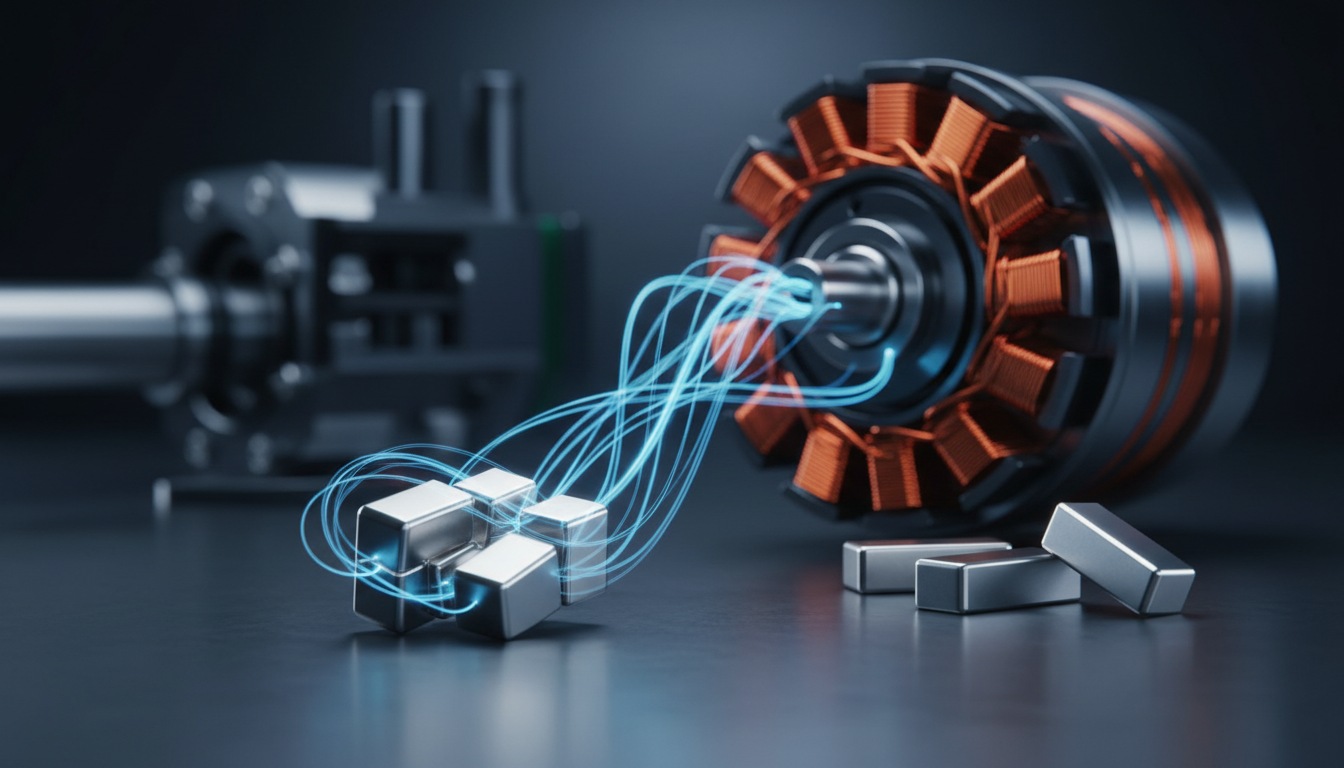

On 4 April 2025, China's Ministry of Commerce and General Administration of Customs issued Joint Announcement No. 18, placing seven heavy rare earth elements — samarium, gadolinium, terbium, dysprosium, lutetium, scandium, and yttrium — under export controls, together with terbium- and dysprosium-containing NdFeB magnets and samarium-cobalt permanent-magnet motor magnets. Within twenty-four hours of the announcement, out-of-hours indicative prices for terbium oxide on the London Metal Exchange jumped more than twenty percent; Lynas Rare Earths closed up eleven percent on the ASX; MP Materials surged more than fifteen percent on the NYSE.
This was not a surprise policy. It is a vertical supply chain stretching from mine to motor, from rare earth resources to the heart of modern industry, that — after nearly three years of price depression — announced to the world in the most direct possible way: the control of this chain remains firmly in China's hands.
This report focuses on the full "rare earth → NdFeB magnet → permanent magnet synchronous motor → application" value chain, with FY2025 annual report data as its core, covering five downstream sectors — new energy vehicles, direct-drive wind power, industrial servo motors, inverter-driven appliances, and humanoid robots — and chapter by chapter unpacks market size, competitive landscape, technology evolution, and risk factors, providing a view on the industry trajectory from 2026 to 2030.
Executive Summary and Key Conclusions
I. Scope and Boundaries
This report covers the full "rare earth permanent magnets and permanent magnet motors" chain, including light and heavy rare earth resources, NdFeB and SmCo permanent magnet materials, permanent magnet synchronous motors (PMSM) and brushless DC motors (BLDC), and five application areas: new energy vehicles, wind power, industrial servo, appliance inverter drives, and robots. Ferrite permanent magnets (non-rare earth), hard magnetic alloys, and base metals are excluded.
Data cutoff: 12 June 2026. Core financial data are from listed-company FY2025 annual reports (fiscal year 1 January–31 December 2025); overseas companies with non-calendar fiscal years (e.g. Lynas, fiscal year ending 30 June 2025) are based on their most recent complete fiscal year.
II. Nine Core Conclusions
Conclusion 1: Export Controls Achieve a Dual Lock on Items and Technology
Two rounds of export controls in 2025 (Announcement No. 18 in April and Announcement No. 62 in October) brought seven heavy rare earth elements and downstream magnet semi-finished goods under item controls, and simultaneously placed strip casting, sintering, and grain boundary diffusion technologies under technology export controls. This dual lock means that even if competitor countries can locate sufficient rare earth deposits domestically, they cannot obtain China's complete magnet manufacturing process from China, rendering China's structural advantage in the global rare earth permanent magnet chain effectively irreversible.
Conclusion 2: Prices Bottomed and Recovered; Magnet Company Profit Leverage Is Pronounced
PrNd oxide prices rose from a September 2024 low of approximately RMB 410,000/tonne to approximately RMB 580,000–620,000/tonne at year-end 2025, a gain of roughly 40–50%. Leveraged by scale expansion and product mix improvement (rising proportion of GBD products), net profits at magnet companies generally more than doubled: Jl-Mag +142%, Zhenghai Magnetic Material +233%, Ningbo Yunsheng +248%, Zhongke Sanhuan +661%, Northern Rare Earth +124%.
Conclusion 3: JL MAG Solidifies Its Position as China's High-Performance Magnet Leader
In 2025 JL MAG reported revenue of RMB 7.718 billion and net profit of RMB 706 million; magnet blank output reached 34,400 tonnes, making it China's largest high-performance NdFeB producer. The GBD process accounted for more than 75% of NEV magnet shipments; small-batch delivery of humanoid robot motor magnet assemblies was achieved; planned capacity expansion targets 60,000 tonnes by 2027.
Conclusion 4: INOVANCE Technology Reaches a New Scale with Industrial + New Energy Twin Engines
In 2025 INOVANCE reported revenue of RMB 45.1 billion (+21.8%) and net profit of RMB 5.05 billion (+17.8%); NEV powertrain revenue was approximately RMB 20.3 billion; multi-in-one powertrain deliveries exceeded 1 million units; general-purpose servo motors reached approximately RMB 6.9 billion — making it China's comprehensive flagship in both industrial and new energy motor sectors.
Conclusion 5: Humanoid Robots Enter Volume Production of 10,000+ Units in 2026, Opening a New NdFeB Demand Narrative
2026 is widely regarded as the genuine "ten-thousand-unit volume production year" for humanoid robots, with Tesla Optimus, Unitree H1/G1, and Zhiyuan AgiBot entering scale delivery. Each robot contains 2–4 kg of high-performance NdFeB — 1.5–2× an NEV — with higher quality requirements (miniaturisation, high coercivity, high consistency). By 2030, humanoid robot NdFeB demand is projected to reach 5,000+ tonnes, roughly one hundred times the 2025 level.
Conclusion 6: Offshore Wind Penetration Is Set to Continue Rising; NdFeB Per Unit Grows Larger
China added approximately 175–180 GW of wind capacity in 2025; direct-drive and semi-direct-drive accounted for roughly 45–50%. As 10+ MW offshore turbines become prevalent from 2026 to 2030, per-unit NdFeB content rises continuously, and annual wind-sector NdFeB demand is projected to grow from approximately 15,000 tonnes in 2025 to approximately 30,000 tonnes in 2030.
Conclusion 7: Overseas Substitute Capacity Build-Out Is a Long Road
Lynas FY2025 NdPr output of 6,558 tonnes (a record) and MP Materials' approximately 6,000 tonne NdPr equivalent together total roughly 12,000 tonnes — less than 5% of China's annual output. The technology lockout of the export controls further extends the timeline for establishing a complete magnet manufacturing chain outside China; a realistic substitute before 2030 is not expected.
Conclusion 8: Export Controls Give Chinese Magnet Companies a Pricing Window, but Long-Run Decoupling Risk Warrants Caution
In the short run, export controls strengthen China's global pricing power for magnets; simultaneously they accelerate US, Japanese, and European "de-China" supply chain investment. If overseas investment forms effective capacity in 2028–2032, it will create partial substitution in high-end, small-volume niches (aerospace, defence, precision medical), compressing Chinese companies' overseas market space.
Conclusion 9: CR5 Concentration Rises Continuously; Industry Consolidation Accelerates
China's NdFeB CR5 rose from approximately 35% in 2020 to approximately 50% in 2025; it is expected to exceed 60% by 2030. Leading enterprises (JL MAG, Zhenghai, Yunsheng, Sanhuan) continue to crowd out smaller players through technology barriers (GBD, HRE-free processes) and scale advantages; consolidation logic is clear.
III. Report Structure Guide
This report comprises twelve chapters structured from macro to micro, global to China, upstream to downstream: Chapters 1–2 establish definitions and global perspective; Chapters 3–4 analyse policy and market size; Chapters 5–6 go deep into supply chain and enterprises; Chapter 7 focuses on industrial geography; Chapters 8–10 develop thematic analyses; Chapters 11–12 offer forward-looking judgements and conclusions.
Chapter 1 Definitions, Classification, and Supply Chain Overview
I. Rare Earth Elements: From the Periodic Table to the Industrial Map
The seventeen rare earth elements — the fifteen lanthanides plus scandium and yttrium — are industrially divided into light rare earths (La, Ce, Pr, Nd, Sm), primarily from Inner Mongolia's Bayan Obo deposit and Sichuan's Maoniuping deposit, and heavy rare earths (Tb, Dy, Ho, Er, Tm, Yb, Lu), concentrated in southern China's ion-adsorption clay deposits, particularly Jiangxi's Ganzhou and surrounding areas.
Among all rare earth elements, Pr and Nd are the core raw materials for high-performance NdFeB magnets. Neodymium accounts for roughly 27–33% by mass in the Nd₂Fe₁₄B main phase; praseodymium can partially substitute neodymium without significantly affecting performance. Tb and Dy are added to dramatically increase coercivity (HcJ), especially at elevated temperatures (above 120°C), without significantly reducing remanence — precisely why the 2025 export controls targeted Tb/Dy-containing magnets for high-temperature applications.
Rare earths are special for two reasons: first, "rare" does not mean truly scarce — global reserves of approximately 108 million tonnes (REO) mean crustal abundance actually exceeds copper and zinc; second, separation is extraordinarily difficult, requiring complex solvent extraction processes. China's self-developed cascade solvent extraction process, developed in the 1970s–80s, allows China — with 41% of global reserves — to control more than 90% of global separation and processing capacity.
II. The Four Families of Permanent Magnets
Sintered NdFeB: BHmax up to 55–60 MGOe (theoretical limit ~64 MGOe); operating temperature −40°C to 200°C (230°C for high-temperature grades); the largest by volume, accounting for roughly 60% of magnetic materials market value. Grades range from N/M/H/SH/UH/EH/AH (ascending coercivity). Bonded NdFeB offers lower BHmax (5–15 MGOe) but high shape freedom, used for precision small motors.
Samarium Cobalt (SmCo): SmCo₅ and Sm₂Co₁₇ systems; BHmax 15–34 MGOe; outstanding high-temperature stability to 300°C (Sm₂Co₁₇); essential for aerospace, missile actuation, MRI gradient coils; 3–5× the price of NdFeB. The 2025 export controls included samarium metal, directly constraining Western defence industries relying on SmCo.
Ferrite: Iron-based, extremely low cost (5–10% of NdFeB), good corrosion resistance; BHmax only 1–5 MGOe — unsuitable for NEV, wind, or high-performance applications. China is the world's largest ferrite producer; Hengdian Earth Magnetics is the largest single manufacturer.
Alnico: Earliest artificial permanent magnet material; extremely low temperature coefficient; mainly for precision sensors and meters. Market volume shrinking; global annual output approximately 1–20,000 tonnes.
The market structure is clear: sintered NdFeB accounts for ~94% of rare earth magnet output and is the sole driver of growth. The 2020–2025 expansion of NEVs and wind power was almost entirely absorbed by sintered NdFeB.
III. Permanent Magnet Motor Types, Principles, and Application Distribution
Permanent magnet motors replace field-excitation windings with permanent magnets, offering zero field excitation losses, higher power density, and higher efficiency across the full speed range. Key types include:
PMSM (Permanent Magnet Synchronous Motor): The dominant choice for NEV drive motors (>85% penetration in 2025), CNC machine tool servos, and direct-drive wind generators. Interior permanent magnet (IPM) configurations exploit reluctance torque for added power density.
BLDC (Brushless DC Motor): Square-wave driven PMSM variant; simpler control, lower cost; used in appliance compressors, drones, power tools.
Axial Flux Motor (AFM): Disc-format design; 20–40% higher power density than radial flux; extremely short axial length; used in Unitree robot hip joints and high-performance EV hub motors.
Linear PMSM: Used for semiconductor lithography stages and maglev; small magnet volume but extremely high precision.
IV. Full Supply Chain Overview
The rare earth permanent magnet supply chain consists of five levels from upstream to downstream:
Level 1 — Mining and Beneficiation: Bayan Obo (Northern Rare Earth), southern China ion-adsorption mines (China Rare Earth Group), Sichuan Liangshan (Xiamen Tungsten), Mt Weld Australia (Lynas), Mountain Pass US (MP Materials).
Level 2 — Separation and Smelting: Ore → single rare earth oxides (99%–99.99% purity) via cascade solvent extraction → metal or alloy (PrNd alloy). Northern Rare Earth holds ~35% of light REE separation quota; China Rare Earth Group controls heavy REE separation quota across southern provinces.
Level 3 — Magnet Manufacturing: Strip casting → hydrogen decrepitation → jet milling → magnetic field alignment pressing → sintering → aging → machining → grain boundary diffusion (optional) → surface treatment. JL MAG, Zhongke Sanhuan, Zhenghai, Yunsheng are the leaders, with combined capacity exceeding 150,000 tonnes.
Level 4 — Permanent Magnet Motor Manufacturing: Integration of stator core (silicon steel laminations), rotor assembly (with magnets), windings (hairpin/round), housing, bearings, sensors. INOVANCE (industrial servo + NEV drive), Wolong Electric (industrial general), DAYANG ELECTRIC (NEV + appliance).
Level 5 — End Applications: NEV (BYD, Tesla, AITO), wind turbines (Goldwind, Mingyang, SANY), industrial robots (FANUC, Yaskawa, INOVANCE, Estun), home appliances (Gree, Midea, Haier), humanoid robots (Tesla Optimus, Unitree, Zhiyuan).
Value chain profit concentration lies at Levels 3–4: magnet manufacturing (technology moat × scale) and motor manufacturing (system integration × brand premium), not at the resource layer (high cyclicality) or end-product layer (large revenue, thin margins).
V. Global Supply-Demand Snapshot
China's three-tier monopoly is the core geopolitical fact of the global rare earth permanent magnet industry: resource level 41% of reserves, 69% of production; separation/processing level 90%+; magnet manufacturing level 92%. The 2025 export controls institutionally protected this three-tier monopoly: item controls blocked intermediate product outflows; technology controls blocked process know-how leakage.
VI. History: Forty Years from Laboratory to Global Dominance
1960–1980s (SmCo era): K.J. Strnat and G. Hoffer of the US Air Force Materials Laboratory developed SmCo₅ in 1966; Japan (Shin-Etsu, TDK, Sumitomo Special Metals) quickly commercialised it; China was primarily a raw material exporter.
1982–2000 (NdFeB invention and patent wars): In 1982, Masato Sagawa of Sumitomo Special Metals and John Croat of General Motors independently invented Nd₂Fe₁₄B magnets. Japan's Sagawa patents and GM's melt-spun patents formed the foundational NdFeB IP system, with royalties collected from global (including Chinese) manufacturers until core patents expired in 2014–2016. China's Academy of Sciences labs absorbed the technology in the 1980s–90s; by the late 1990s China had overtaken Japan as the world's largest NdFeB producer.
2000–2015 (Scale expansion and price competition): China's NdFeB output grew from ~30,000 tonnes (2000) to ~150,000 tonnes (2015), driven by cost advantages. The 2011 "rare earth nationalisation" restructured six major state enterprise groups; prices briefly spiked 10× in 2010–2012, then retreated.
2016–present (Premiumisation, consolidation, strategic resource designation): After Sagawa patent expiry, Chinese producers became independent innovators. GBD, HRE-free, and high-abundance substitution processes entered commercialisation. NEV demand exploded (EV sales <500,000 in 2016 → 13.8 million in 2025). Policy progressively upgraded rare earths from "industrial commodity" to "strategically controlled resource."
Chapter 2 Global Competitive Landscape and Major Overseas Players FY2025
I. Global Rare Earth Reserves and Production
Global proven REE reserves approximately 108 million tonnes (REO, USGS 2025): China 44 million (41%), Vietnam 22 million (20%), Russia 21 million (19%), Brazil 21 million (19%). Global 2025 mining approximately 390,000 tonnes REO; China ~270,000 tonnes (69%); US ~43,000 tonnes (Mountain Pass); Australia ~17,000 tonnes (Mt Weld); Myanmar ~38,000 tonnes (informal channels to China). China controls >90% of global separation/processing and >92% of NdFeB output.
II. Lynas Rare Earths: The Only Non-Chinese Scale REE Producer
Lynas (ASX: LYC) owns Mt Weld (REO grade ~8%, reserves ~5.9 million tonnes REO, mine life >35 years), Malaysia's LAMP (full separation), and the newly commissioned WA Kalgoorlie processing facility (pre-processing and primary separation, reducing Malaysia dependence).
FY2025 (year ending 30 June 2025): Revenue AUD 556.5 million (+20.1%); NdPr output 6,558 tonnes (record high, first time breaking 2,000 tonnes in a single quarter); total REO sales fell 10% to 10,970 tonnes (deliberately concentrating on high-value NdPr); net profit only AUD 8 million (-90% y/y), mainly due to accelerated depreciation from major capex; market cap briefly exceeded AUD 20 billion post export-control announcement. Lynas reaffirmed its mid-term target of 10,500 tonnes NdPr capacity by end-FY2026. The Lynas dual-node system's strategic value lies in geographic diversification and political risk hedging — Mt Weld's ore grade far exceeds the global average; LAMP leverages Malaysia's cost base. Backed by US DoD contracts, Lynas is positioned as the Western world's primary strategic rare earth security provider.
III. MP Materials: The US Domestic Rebuild Experiment
MP Materials (NYSE: MP) holds Mountain Pass, the only operating US rare earth mine. 2025 full-year revenue USD 275.5 million (+35.1%); magnetics segment revenue USD 66.9 million, with volume shipments to General Motors. The gap versus China remains enormous: MP's ~6,000 tonnes NdPr equivalent is ~2.2% of China's annual output; magnetics revenue of ~USD 67 million compares with JL MAG's RMB 7.7 billion — roughly a 15× difference. MP is the most important symbolic node in the US "end-to-end" REE chain rebuilding narrative, but far from forming genuine competitive capacity before 2030.
IV. Japanese Magnet Companies: Defending the High-Tech Fortress
Proterial (formerly Hitachi Metals): NEOMAX-brand NdFeB products have outstanding reputations in Japanese automotive and precision motors; previously collected royalties on Sagawa patents (now largely expired). Taken private by Bain Capital in 2023; estimated annual NdFeB output ~15,000–20,000 tonnes, primarily high-grade automotive and precision applications.
Shin-Etsu Chemical (4063.T): Core businesses are silicones and semiconductor wafers; rare earth permanent magnets are an important diversification; one of the few Japanese companies mastering HRE-free NdFeB technology; key supplier to Honda and Toyota hybrid systems.
TDK Corporation (6762.T): Largest Japanese magnetic component company; ferrite components and magnetic sensors are its core; NdFeB permanent magnet business relatively small; FY2025 magnetic application products revenue approximately JPY 250–350 billion.
V. Global Permanent Magnet Motor Players
Nidec (6594.T): World's largest PMSM group; continuing operations revenue FY2025 JPY 2.607 trillion (+11.1%). "Conversion 2027" targets restructuring non-core businesses, consolidating plants from ~40 to ~25, and lifting operating margins above 15%.
ABB: Global industrial motor leader; Motion division 2024 revenue ~USD 4.5 billion; expanding IE5 ultra-high-efficiency PMSM product lines.
Siemens / Mitsubishi Electric / Yaskawa: The three major Euro-Japanese industrial servo players collectively held ~40–50% of the global industrial servo market; domestic Chinese substitution (INOVANCE, Delta, Estun) drove their share from ~65% in 2020 to ~40% in 2025.
Global permanent magnet motor market 2025 approximately USD 58.6 billion; expected to reach ~USD 93.8 billion by 2030 at a 9.8% CAGR. Chinese companies are rapidly expanding global share in both NEV drive and industrial motors.
Chapter 3 PEST: Four-Dimensional Coordinates of Policy, Economy, Society, and Technology
I. Political: Stepwise Export Control Tightening
August 2023: Gallium and germanium placed under export controls, establishing the legal framework template for later REE controls.
October 2024: Antimony and superhard materials added.
4 April 2025: MOFCOM/GACC Announcement No. 18 — seven heavy rare earths (Sm, Gd, Tb, Dy, Lu, Sc, Y) and related items including Tb/Dy-containing NdFeB semi-finished magnets placed under export controls. Critically: finished electronic products containing magnets (motors, speakers, HDDs) are NOT covered — the control targets magnet semi-finished goods and base materials, blocking offshore motor makers from directly procuring magnets to assemble motors without going through the Chinese motor industry.
October 2025: Announcement No. 62 — rare earth separation technology (solvent extraction, electrolytic reduction) and core magnet manufacturing technologies (strip casting, hydrogen decrepitation, sintering, grain boundary diffusion) placed under technology export controls, preventing overseas factories from acquiring the process knowledge even if they have the raw materials.
The combination constitutes a dual lock: item controls (blocking intermediate product outflow) + technology controls (blocking process know-how leakage).
Annual mining and smelting quotas from MIIT provide a second control dimension. 2025 combined quota approximately 265,000 tonnes REO (+6% y/y), reflecting a measured supply increase in the price recovery environment. Strategic reserve mechanisms (North REE and China Rare Earth Group each holding 1–2 months of domestic consumption equivalent) enable price stabilisation interventions.
II. Economic: Price Cycles and Profit Elasticity
PrNd oxide fell from a peak of ~RMB 1.03 million/tonne (April 2022) to a trough of ~RMB 410,000/tonne (September 2024), a 60% decline driven by quota over-expansion vs. slowing NEV growth. Recovery began in early 2025, accelerated after the April export control announcement, and reached approximately RMB 580,000–620,000/tonne by year-end 2025 (+40–50% from the low).
Price pass-through varies by company: JL MAG's long-term contracts include REE price linkage clauses (~60–70% of revenue), so its FY2025 profit leverage (net profit +142% vs revenue +14%) mainly came from inventory revaluation gains, GBD product-mix premiums, and volume-driven cost absorption. Zhongke Sanhuan's foreign-currency USD/EUR contracts have a ~1 quarter price lag, explaining why its +661% profit improvement was concentrated in H2.
The absence of a PrNd futures market forces magnet companies to manage price risk through inventory strategy alone — low-price inventory build → high-price destocking. JL MAG's strategic inventory build in Q3–Q4 2024 (estimated at 2–3 months of consumption) generated substantial revaluation income in 2025.
CITIC Securities' early-2026 research report "2026: The Era of Rare Earth Prosperity, Spring for Permanent Magnets" forecasts a 2026 PrNd average price of RMB 650,000–700,000/tonne, supported by quota growth restraint, ongoing NEV demand expansion, and reduced intermediate product flow under export controls.
III. Social: Critical Mineral Geopoliticisation and Supply Chain Restructuring
US: IRA tax credits incentivise domestic or allied-country rare earth supply chains; 25% tariff surcharge on Chinese NdFeB magnets; DoD Title III funding supports MP Materials and USA Rare Earth to build domestic magnet chains. Key constraint: 10–15 years from greenfield mine to full-scale production; 7–10 years from zero to 10,000 tonne/year magnet plant.
EU: Critical Raw Materials Act (CRMA, effective May 2024) requires domestic mining capacity ≥10% of annual consumption and processing capacity ≥40% of consumption by 2030. VAC and Less Common Metals combined capacity ~5,000–8,000 tonnes/year sintered NdFeB versus estimated European automotive demand of 20,000–30,000 tonnes/year.
Japan: METI continues investing in Australian, Canadian, and Kazakh REE projects; Japanese automakers (Toyota, Honda) exploring REE recycling from spent HEV/EV motors, but commercial scale remains distant; Japan's dependence on Chinese rare earth magnets estimated at 60–70%.
Export controls' asymmetric effect on product forms: Most constrained — Tb/Dy-containing NdFeB semi-finished magnets (UH/EH grades); unconstrained — HRE-free base-grade NdFeB (N35–N45M); most advantaged form — finished motors containing high-performance magnets (servo motors, NEV drivetrains, wind generators), which remain fully free to export, creating an uneven competitive playing field favouring Chinese motor assemblers over foreign motor assemblers who must now obtain licences to import the magnets.
IV. Technology: Process Innovation and Performance Leaps
Grain Boundary Diffusion (GBD): Concentrates Tb/Dy at grain boundaries rather than homogeneously throughout the grain bulk — achieves equivalent coercivity enhancement with 30–50% less heavy rare earth. Reduces exposure to export-controlled Tb/Dy while increasing profit margins. Detailed in Chapter 9.
HRE-free magnets: Zhongke Sanhuan's Dy/Tb-free NdFeB process (small-batch production achieved) eliminates dependence on export-controlled heavy rare earths entirely for applications below 120°C, covering >90% of standard passenger car scenarios.
Hairpin winding: Rectangular cross-section copper conductors; slot fill factor 70–75% vs 40–50% for round wire; power density improvement 10–15%; now standard in Chinese NEV drive motors.
800V high-voltage platform: Requires motors at 18,000–22,000 rpm; demands 0.2 mm ultra-thin silicon steel and precision rotor magnet retention; oil-cooling is now standard.
SiC MOSFET synergy: SiC devices enable high-frequency (50–100 kHz) switching with low losses, allowing efficient 800V system operation. China's SiC MOSFET domestic adoption rate exceeded 30% in 2025.
AI-assisted motor design: Reinforcement learning and generative topology optimisation can reduce design cycle from 6–12 months to days; JL MAG's platform deployment reduces design iteration time by ~40%; reduces magnet usage per unit by 5–10% through precise field optimisation.
Chapter 4 China Market Size: Three-Layer Calculation for Rare Earths, Magnets, and Motors
I. Rare Earth Mining and Separation Market
2025 combined quota 265,000 tonnes REO, distributed among the Six Major Groups led by Northern Rare Earth (30–35%) and China Rare Earth Group (~30–35%). Using Northern Rare Earth's FY2025 revenue of RMB 42.563 billion as a reference, the full upstream (mining + separation) market for 2025 is estimated at approximately RMB 120–150 billion — highly price-sensitive (RMB 200+ billion at 2022 peak, ~90–100 billion at 2024 trough).
II. NdFeB Magnet Market: Output, Value, and Competitive Landscape
2025 global sintered NdFeB output approximately 370,000–380,000 tonnes; China's share ~340,000–350,000 tonnes (>92%). China's four competitive advantages sustaining this share: (1) raw material cost (Bayan Obo ore at USD 20–30/kg REO vs Lynas at USD 30–40/kg); (2) cluster-based process engineering talent (3,000–5,000 experienced magnet engineers within the Ningbo Zhenhai cluster alone); (3) domestically manufactured capital equipment at 30–50% of imported equipment cost; (4) fully integrated ancillary supply chains within magnet clusters.
At an average blended price of approximately RMB 400/kg (2025 average), China's sintered NdFeB blank output value is approximately RMB 136–140 billion. Global NdFeB market 2025 approximately USD 7.3–7.5 billion, projected to reach ~USD 9.2 billion by 2032 (CAGR ~3.3% by Morgan Stanley). Global CR5 approximately 34% (Zhongke Sanhuan ~9%, Proterial ~8%, Zhenghai ~6%, JL MAG ~6%, Yunsheng ~5%); China domestic CR5 exceeds 50%.
High-grade products (SH and above) share rose from ~25% in 2020 to ~45% in 2025, driving average selling price (ASP) upward; projected to reach ~60% by 2030.
III. Permanent Magnet Motor Market: Sector-by-Sector
| Application | 2025 China Market Size (RMB bn) | PMSM Penetration | Key Notes |
|---|---|---|---|
| NEV drive motors | 620–650 | >85% | 13.8M NEV sales; ~15–16M motor units |
| Wind power generators | 150–200 | ~45–50% of new adds | Direct/semi-direct drive; ~80–90 GW |
| Industrial servo & VFD | 600–700 | Rising | 58–62% domestic share |
| Home appliance inverter | 150–200 | Mature | Policy stimulus tailwind |
| Robotics (industrial + humanoid) | 80–120 | High | 30–40% CAGR projected |
| Total China PM Motor | 1,450–1,650 | — | ~35–40% of global market |
Global permanent magnet motor market 2025 approximately USD 58.6 billion (~RMB 427 billion); China at 35–40%, growing faster than global average (15–18% vs ~10%).
IV. NdFeB Demand Structure Evolution 2020–2030
In 2020 consumer electronics led (~30%); by 2025 NEVs surpassed at ~12–15% and rising, consumer electronics declining to ~25% in relative share. By 2030 NEVs projected at 20–25%, wind ~7–9%, industrial servo/robots ~15%, home appliances ~12%, consumer electronics ~18%, humanoid robots ~1–2%.
The key structural shift: high-value applications (NEV GBD magnets, large wind turbine magnets, robot joint magnets) rising rapidly, pushing industry-wide ASP continuously higher. By 2030 China NdFeB output ~500,000 tonnes (volume CAGR ~6–8%), but value CAGR ~10–15% — the differential reflects premiumisation.
Chapter 5 Deep Supply Chain Analysis: From Mine to Motor
I. Mining and Beneficiation
Bayan Obo: World's largest known REE deposit; rare earths co-mined as a by-product of iron ore (annual ore throughput hundreds of millions of tonnes), making REE extraction cost extremely low. Grade ~3–6% REO, mainly monazite and bastnäsite.
Southern China ion-adsorption deposits: REO grade ~0.05–0.2%; extracted via in-situ leaching (injecting ammonium sulphate or carbonate solution to exchange REE cations from clay minerals). Ecological impact substantial; China Rare Earth Group's green mining push is the primary governance context.
Sichuan Maoniuping: China's second most important light REE base; grade ~3–5% REO; Xiamen Tungsten and China Rare Earth Group have operations here.
Australia Mt Weld: REO grade ~8%; reserves ~5.9M tonnes REO; primary minerals are monazite; logistical path to LAMP is approximately 30–45 days longer than China-sourced magnets — a persistent structural disadvantage for Lynas.
II. Separation and Smelting: Process Moat
Core technology: cascade solvent extraction — dissolving rare earth concentrates in acid, then progressively separating adjacent rare earth elements using organic extractants (P204, P507, C272) across 100–500+ extraction stages at precisely controlled temperature/pH/phase ratios. China's 1970s–80s programme led by Academician Xu Guangxian industrialised this at global-leading scale and cost. Northern Rare Earth's Baotou separation base has capacity >80,000 tonnes REO/year — the world's largest single-site facility.
Separation technology barriers include: (1) extractant selectivity between adjacent elements requires hundreds of stages with tight control; (2) closed-loop waste treatment (ammonia-nitrogen, fluoride, spent organics) requiring major infrastructure investment; (3) quality control to 99.99%+ purity requires ICP-MS and neutron activation analysis.
Metal production: PrNd oxide → fluorination → molten-salt electrolytic reduction → PrNd alloy (~20–25% Pr, 75–80% Nd). Heavy rare earths Tb, Dy require calcium thermal reduction.
III. Magnet Manufacturing Process Chain
The complete sintered NdFeB manufacturing chain traverses approximately 15–20 major steps:
Strip Casting (SC): PrNd alloy + iron + boron-iron + microalloy elements melted at ~1,450°C; solidified on high-speed rotating copper chill roller at 10⁴–10⁵ K/s cooling rate into 0.2–0.4 mm flakes. Controls the performance "ceiling" of the final magnet.
Hydrogen Decrepitation (HD): Alloy absorbs H₂ preferentially at Nd-rich phases, expands ~20%, fractures along grain boundaries; then vacuum-dehydrogenated to yield 200–500 µm irregular particles. Preserves more anisotropy than mechanical crushing.
Jet Milling (JM): High-pressure N₂ jet reduces particles to ~3–5 µm (D50) under <100 ppm O₂. Tighter particle size distribution → higher performance.
Magnetic Field Alignment and Pressing: 1.5–2.5 T pulsed field aligns each single-crystal particle's c-axis; then uniaxial or isostatic (CIP) pressing under maintained field. Alignment degree determines magnet performance.
Vacuum Sintering and Aging: 1,050–1,080°C sintering; liquid Nd-rich phase fills interstices. Two-stage aging at 900°C/2h then 600°C/1h optimises grain boundary phase.
Grain Boundary Diffusion (GBD): Post-sintering Tb/Dy enrichment at grain boundaries. Detailed in Chapter 9.
Machining and Surface Treatment: Wire cutting and grinding to ±0.05–0.1 mm tolerances; then electroplating (Ni-Cu-Ni triple layer standard) or epoxy/aluminium coating.
The three-tier process complexity framework: Tier 1 (highest barrier — strip casting parameters, sintering curves, GBD settings) determines performance ceiling; Tier 2 (scaling barriers — JM particle distribution, field alignment parameters) amplifies Tier 1 results; Tier 3 (quality assurance — machining tolerance, plating quality) can be replicated by purchasing precision equipment. The 2025 technology export controls precisely targeted Tier 1 process knowledge.
IV. Motor Manufacturing: Value-Addition from Material to System
A typical 150 kW NEV drive motor contains approximately RMB 3,300–4,400 in raw materials (NdFeB ~1,600–2,000, silicon steel ~500–700, copper winding ~600–800, aluminium housing ~200–300, misc ~400–600). The three-in-one integrated powertrain (Motor+Gearbox+Inverter) exits at approximately RMB 12,000–15,000 — a 3–4× value multiplier. Six-in-one integration (adding OBC+DCDC+PDU) reaches RMB 18,000–22,000, a 4–5× multiplier. Each added integrated module expands the value multiplier.
The domestic motor supply chain achieved 48% cost reduction from ~RMB 25,000/unit (three-in-one, 2020) to ~RMB 13,000/unit (2025) through three dimensions of localisation: materials (NdFeB, silicon steel, insulation 100% domestic), equipment (hairpin winding machines ~40% domestic), and process (800V motor rotor dynamics fully mastered domestically).
Chapter 6 Key Enterprises: FY2025 Deep Dive
I. Rare Earth Upstream: The National Team
Northern Rare Earth (600111): World's largest rare earth company; sole mining rights over Bayan Obo's light REEs. FY2025 revenue RMB 42.563 billion (+29.11%); net profit RMB 2.251 billion (+124.17%). Controls China's ~30–35% of light REE mining quota; sets the benchmark price for PrNd oxide globally. 2025–2027 strategy: expand rare earth new materials (magnets + phosphors + hydrogen storage) from ~30% to 50% of revenue; raise overseas direct sales coverage; initiate Bayan Obo tailings comprehensive utilisation project to recover an additional 10,000–15,000 tonnes REO/year.
China Rare Earth Group (HK 0769): Established December 2021 integrating five southern-province rare earth assets; controls >60% of China's Tb/Dy-bearing ion-adsorption deposits; the indispensable node for global heavy rare earth supply after the 2025 export controls.
Xiamen Tungsten (600549): Multi-metal group spanning tungsten (#1 globally), rare earths (Sichuan + Fujian), and lithium battery cathode materials. FY2024 rare earth magnet output 7,620 tonnes; 51/49 JV formed with China Rare Earth Group for mining/separation.
II. NdFeB Magnet Mid-Stream: Four Leading Enterprises
JL MAG (300748): China's absolute leader in high-performance NdFeB. Founded 2008; headquarters in Jiangxi Ganzhou (registered) and Ningbo (main production). Core supplier to Tesla and BYD.
FY2025 detailed financials: Total revenue RMB 7.718 billion (+14.11%, record); core magnet revenue RMB 7.028 billion (+19.00%); net profit RMB 706 million (+142.44%, record); blank output 34,400 tonnes (+17.31%, record); product sales 25,300 tonnes (+21.25%, record). Revenue by segment: NEV and automotive components RMB 3.941 billion (+30.31%, 51% of revenue; supports ~6.5M NEV units); wind power RMB 488 million (+3.57%; supports ~12 GW direct/semi-direct wind capacity). GBD products >75% of NEV magnet shipments; humanoid robot motor magnet assemblies in small-batch delivery; 2027 capacity target 60,000 tonnes.
Zhenghai Magnetic Material (300224): Based in Yantai, Shandong; founded 2000. FY2025: revenue RMB 7.031 billion (+26.93%); net profit RMB 307 million (+232.85%). Motor shipments exceeded 8 million units (+40%+ y/y), reflecting deep penetration of automotive and appliance motor sectors. Yantai's port proximity gives short-haul logistics advantages to Japan and Korea customers.
Zhongke Sanhuan (000970): Beijing-headquartered; founded 1985, CAS-incubated; China's oldest rare earth permanent magnet company. FY2025: revenue RMB 6.641 billion (+~15%); net profit RMB 91.32 million (+660.50%; prior year base near zero). Overseas revenue ~57% of total — the highest international exposure among Chinese magnet makers, giving it the strongest bargaining position under export controls. Facilities in Beijing (R&D), Ganzhou (heavy REE magnets), and Ningbo (export). Leads industry in HRE-free NdFeB and SmCo production.
Ningbo Yunsheng (600366): Based in Ningbo; founded 1993; serves Japanese precision motors (Nidec, TDK), European industrial (Bosch, Hella), and domestic NEV customers. FY2025: revenue RMB 5.464 billion (+8.39%); net profit RMB 331 million (+247.95% — highest rate among the four major players). Filed for A+H dual listing; initial supply intentions established with Unitree for humanoid robot magnet assemblies.
III. Other Magnet Companies and Specialty Rare Earth Magnets
Yingluohua (000795): Focuses on automotive sensors and small precision magnets; precision machining to ±0.005 mm; serving Bosch and Continental. 2025 revenue ~RMB 600–700 million.
Dadibear (688077, STAR Market): High-coercivity high-end export magnets; "dual low" strategy (5–8% less PrNd + >40% green electricity); 2025 revenue ~RMB 500–600 million; among the earliest domestic firms systemically pursuing "low-carbon rare earth magnets."
SmCo market: Global annual volume only ~500–800 tonnes; China (primarily Zhongke Sanhuan, Antai Technology, Xi'an Meici) controls >70–80% of global samarium resources; indispensable for aerospace and defence high-temperature applications (200–350°C); 2025 export controls on samarium directly affect Western defence industrial customers.
IV. Permanent Magnet Motor Downstream: Three Flagship Companies
INOVANCE Technology (300124): Founded 2003 in Shenzhen; started with variable-frequency drives; now China's industrial automation + NEV flagship. FY2025: revenue RMB 45.105 billion (+21.77%, record); net profit RMB 5.050 billion (+17.84%, record); gross margin 28.95%. Segments: NEV powertrains ~RMB 20.3 billion (+26%, 1M+ multi-in-one units delivered); general automation (servo + VFD + PLC) ~RMB 16.9 billion (+23%); servo ~RMB 6.9 billion; robotics + rail transport ~RMB 2.7 billion. H-share listing plan filed for international expansion.
Wolong Electric Drive (600580): Through acquisitions (ATB Austria, Brook Crompton UK, Electric Motors and Coils US) became the world's largest industrial motor capacity group. 2025 revenue approximately RMB 19.4 billion; net profit ~RMB 900M–1B (+36.76% H1 y/y). Core strategy: IE5 ultra-high-efficiency permanent magnet motors across global markets leveraging European plants to avoid trade barriers.
DAYANG ELECTRIC (002249): Founded 1997 in Zhongshan, Guangdong; largest micromotor manufacturer in China; three segments: NEV drive motor assemblies, home appliance motors, industrial motors. FY2025: revenue RMB 12.221 billion (+0.89%); net profit RMB 1.083 billion (+21.99%, record). Six-in-one multi-integration driving margin expansion. IPO process delayed by Nidec patent infringement claim in a niche technology area.
V. Overseas Reference Companies
Nidec (6594.T) FY2025: Continuing operations revenue JPY 2.607 trillion (+11.1%); "Conversion 2027" plan targets business restructuring, plant consolidation (~40 → ~25 sites), and margins above 15%.
Lynas (LYC.AX) FY2025: Revenue AUD 556.5 million (+20.1%); NdPr output 6,558 tonnes (record); net profit only AUD 8 million (capex depreciation impact); market cap briefly exceeded AUD 20 billion.
MP Materials (NYSE: MP) 2025: Full-year revenue USD 275.5 million (+35.1%); magnetics segment USD 66.9 million; extending from mining + separation toward magnet manufacturing; most important listed symbol of US critical minerals self-sufficiency.
Chapter 7 Industrial Geography: From Baotou to Yantai, From Ganzhou to the Foothills
Rare earth permanent magnet and motor industrial geography is a multi-layer overlay map from resource occurrence to processing clusters to manufacturing agglomerations, exhibiting high spatial concentration. The Tianxia Gongchang database covers more than 32,000 rare earth material and permanent magnet motor related factories nationwide.
I. Inner Mongolia Baotou — World's Largest Light REE Base: The global centre for light REE industry; Northern Rare Earth's heartland. Baotou REE Hi-Tech Zone clusters Northern Rare Earth, Baotou Tianjiao Qingmei, Chinalco Baotou, and dozens of other firms; annual rare earth concentrate processing capacity >150,000 tonnes — the world's largest single-site REE processing cluster. 2025: Baotou's rare earth new materials industry scale exceeded RMB 80 billion; JL MAG and Zhenghai have Baotou magnet lines (JL MAG Baotou base ~5,000 tonnes/year).
II. Jiangxi Ganzhou — Strategic Core for Heavy REEs and Magnet Commercialisation: China's most important heavy REE producing region; Tb/Dy reserves >80% national share. Full chain from ion-adsorption mining → separation → metal → magnet. China Rare Earth Group's Ganzhou asset consolidation makes Ganzhou the global heavy REE pricing hub. Export licence approvals for Tb/Dy originating from Ganzhou will be one of the most watched data points for global automotive and wind supply chains 2026–2030.
III. Shandong Yantai — Zhenghai's NdFeB Kingdom: Zhenghai Magnetic Material is the core anchor; estimated cluster output >25,000 tonnes/year. Yantai Port's proximity to Japanese and Korean customers is a natural logistics advantage for export customers.
IV. Zhejiang Ningbo — Yunsheng's International Base: Highly dense manufacturing city; Ningbo Yunsheng leverages Ningbo-Zhoushan Port for exports to Nidec, TDK, Minebea (Japan) and Bosch, Hella (Germany). Cluster (Yunsheng, Dongci, Lianchuang) output ~15,000–20,000 tonnes/year NdFeB.
V. Beijing — Zhongke Sanhuan's Technology Hub: Zhongke Sanhuan HQ + R&D; backed by CAS Institute of Physics. Multi-site: Beijing (primary R&D/production), Ganzhou (heavy REE magnets near supply), Ningbo (export customers). Beijing R&D centre is one of the most important platforms for REE permanent magnet basic research-to-commercialisation translation.
VI. Guangdong Shenzhen and Suzhou — DAYANG and INOVANCE: DAYANG has core manufacturing in Zhongshan/Guangdong (micromotor tradition) and Shenzhen; INOVANCE HQ in Shenzhen Nanshan, with Suzhou (Industrial Park) as its industrial automation manufacturing centre.
VII. California and Texas, US — Mountain Pass and Magnet Manufacturing Pilot: Mountain Pass near Los Angeles is the only operating US rare earth mine; Corpus Christi, Texas hosts MP Materials' magnet manufacturing pilot (supplying GM) and planned separation facility, both with DoD contract/loan support.
VIII. Australia Mt Weld and Malaysia Kuantan — Lynas Two-Node System: Lynas' "Australian ore + Malaysian processing" system is the only non-China scale REE processing chain. Mt Weld ore grade ~8.1% REO (far above global average ~2–4%); LAMP in Kuantan leverages Malaysia's cost base and port logistics. Post-2025 export controls, the Malaysian government actively facilitated LAMP operations to reinforce its "Western REE supply chain alternative hub" positioning. Lynas has obtained multiple US DoD contracts for testing US domestic processing feasibility — potentially extending to a "Australia mine → Malaysia separation → US magnet manufacturing" three-node chain.
IX. Competitive Moat Framework for Chinese Magnet Companies
Comparing the four leading companies (JL MAG, Zhenghai, Yunsheng, Sanhuan) across five dimensions:
Dimension 1 — GBD Process Maturity (High→Low): JL MAG > Sanhuan ≈ Zhenghai > Yunsheng. JL MAG leads decisively with >75% GBD proportion.
Dimension 2 — Customer Internationalisation (High→Low): Sanhuan (overseas 57%) > Yunsheng (Japan/EU ~40%) > Zhenghai (overseas ~35%) > JL MAG (domestic NEV focused, overseas ~15–20%). Sanhuan has strongest bargaining power under export controls.
Dimension 3 — Capex Expansion Aggressiveness (High→Low): JL MAG (2027 target 60,000t) > Zhenghai (30,000t) > Yunsheng (+5,000t) > Sanhuan (conservative ~20,000–25,000t).
Dimension 4 — New Application Scene Depth (Deep→Shallow): JL MAG (robot magnet assemblies already in small-batch delivery, 2026 scale-up) > Yunsheng (Unitree initial intent) > Zhenghai (robot magnet certification in progress) > Sanhuan (unique tech advantages, commercialisation timeline unclear).
Dimension 5 — Green/ESG Certification Completeness (High→Low): Dadibear (highest green electricity share) > Sanhuan (EU customers drove most comprehensive compliance) > Yunsheng (H-share IPO driving ESG disclosure) > JL MAG ≈ Zhenghai (primarily domestic NEV customers, relatively lower ESG requirements).
Investment angle summary: "Stable high profit, low cyclicality" → prefer Sanhuan (overseas high-end customer lock-in) and Yunsheng (quality premium + H-share re-rating); "Growth and humanoid robot optionality" → prefer JL MAG (robot first-mover + strongest GBD moat); "NEV volume beta" → Zhenghai most correlated with auto sales.
Chapter 8 Sector Deep Dives: Structural Opportunities in Five Downstream Markets
I. New Energy Vehicles: The Largest Volume-and-Increment Engine
NEV drive motor market is the single most important downstream for rare earth permanent magnet motors. 2025: China NEV sales ~13.8 million units; ~15–16 million drive motors (some dual-motor vehicles); drive motor market ~RMB 62–65 billion; PMSM penetration >85%. Top-5 drive motor suppliers (UAES, BYD in-house, INOVANCE, DAYANG, Fangzheng) hold ~70–75% combined share.
Per-vehicle rare earth content: 2–5 kg high-performance sintered NdFeB per drive motor (single motor, IPM); at ~3–3.5 kg/vehicle average, automotive consumption ~40,000–50,000 tonnes NdFeB/year (12–15% of national output). Per vehicle heavy REE (Tb+Dy) with GBD: ~30–100 g.
The 800V high-voltage migration accelerates: platforms like Huawei Qiankun, XPENG X9, and ZEEKR 007 are standardising 800V; this requires motors at 18,000–22,000 rpm (vs 14,000–16,000 rpm for 400V systems), pushing demand for higher-coercivity GBD magnets and 0.2 mm ultra-thin silicon steel.
Technical evolution trends: oil cooling migrated from luxury-only to mainstream (below RMB 250,000 vehicles) as oil cooling module cost fell from ~RMB 2,000/unit (2020) to ~RMB 500–800/unit (2025); rotor topology evolved from single-layer V-groove to multi-layer composite (double-V, V+C hybrids); drivetrain architecture bifurcating into "centralised multi-in-one" for mainstream cars and "in-wheel motor distributed" for high-end supercars (still experimental).
Huawei's TZ200 "Super E-Drive" (with AITO M9 Plus): dual-pole flux topology exceeding 97% overall efficiency (battery to wheel); peak torque density ~43 N·m/L — setting a Chinese mass-production benchmark.
II. Wind Power: The Highest Per-Unit Content Scenario
Single-turbine NdFeB content: onshore 5 MW direct-drive ~800–1,200 kg; offshore 8 MW ~1,500–2,000 kg; 10 MW+ ~2,000–3,000 kg (300–1,000× an NEV). 2025 wind NdFeB demand ~15,000–20,000 tonnes. By 2030: projected ~30,000–40,000 tonnes, CAGR ~10–15%.
Goldwind (direct drive, full product line, ~22.6% cumulative domestic share) and Mingyang Smart Energy (semi-direct drive, rapidly growing offshore share) are the two largest Chinese offshore wind leaders with high magnetic content machines.
Offshore wind turbine supersizing is irreversible: offshore turbine ratings grew from 4–5 MW (2015) → 8–10 MW (2020) → 12–16 MW (2025) → planned 18–25 MW (2026–2030), each generation adding linearly more NdFeB per unit. Offshore wind turbines require N50UH or N52UH grade magnets (highest commercial grade), priced 3–5× basic grade N42M. China's 2025 offshore wind additions ~25–30 GW (globally largest), mostly direct/semi-direct drive, representing ~3,000–5,000 tonnes NdFeB from offshore alone.
III. Industrial Servo Motors: Domestic Substitution in Full Swing
2025 China industrial servo market ~RMB 22–25 billion; domestic substitution rate from ~35% (2020) to ~58–62% (2025); INOVANCE ~25–30% share (domestic #1, overall #1). Key technical barrier for substitution was high-resolution encoders (23-bit domestic now stable at mass production); control algorithm (online load adaptive, MTPA) advances are now closing gaps with Yaskawa Sigma-7 series.
Next evolution: servo motors becoming "intelligent actuators" — embedded multi-dimensional magnetic field sensors, vibration accelerometers, and temperature sensor arrays enabling predictive maintenance (warning of bearing failure 500–1,000 hours in advance, reducing unplanned downtime by 60–70%); real-time load-adaptive control for humanoid and collaborative robot joint applications; functional safety certification (IEC 62061 SILCL3 / ISO 13849 PLe) for human-robot collaboration scenarios.
IV. Home Appliance Inverter Motors: Lean Competition in a Mature Market
Appliance motor market ~RMB 15–20 billion, growing ~5–8%/year. China's 2024–2025 "trade-in" consumption stimulus lifted inverter air conditioner and washing machine sales ~10–15% above trend. Technical evolution focuses on noise reduction (fractional-slot concentrated winding + non-uniform pole-arc magnet geometry reducing harmonic noise from 40–50 dB(A) to 32–38 dB(A)), direct-drive washing machines (high-pole-count multi-polar motors), and heat pump system motors (requiring enhanced corrosion resistance for refrigerant environment). Heat pump home market ~RMB 120–150 billion in 2025; HVAC motor demand growing ~20–25%/year.
V. Humanoid Robots: NdFeB Dividend as 2026 Enters 10,000-Unit Volume Production
2025 global humanoid robot shipments ~5,000–10,000 units (Tesla Optimus ~1,000, Unitree H1/G1 ~2,000–3,000, Zhiyuan AgiBot ~5,000, others ~2,000); consuming ~10–30 tonnes high-performance NdFeB — under 0.1% of national output. However the structural demand outlook is transformative.
Robot joint servo motors (power ~50–300 W, length 30–80 mm, diameter 30–60 mm) operate at far higher energy density than auto motors, requiring BHmax and dimensional consistency (micron-level precision) far exceeding automotive standards. Joint continuous high-frequency commutation demands higher anti-eddy-current demagnetisation resistance (HcJ) and mechanical shock resistance. Robot magnet selling price per kg: ~2–4× automotive.
2030 projection: 80–150 million global humanoid robot units (base case); NdFeB demand ~2,400–4,500 tonnes at 3 kg/unit, plus collaborative/industrial robot expansion ~3,000–5,000 tonnes; robot NdFeB total ~5,000–10,000 tonnes by 2030 at ~50–60% CAGR.
JL MAG has already disclosed small-batch humanoid robot magnet assembly deliveries; Ningbo Yunsheng has initial supply intent with Unitree; Sanhuan has product certifications with multiple robot manufacturers. 2026 is the critical certification-to-batch-order conversion year.
Chapter 9 Technology Evolution: GBD, Hairpin Winding, and Magnet Structure Revolution
I. Grain Boundary Diffusion (GBD): The Heavy Rare Earth Efficiency Strategy
GBD is the highest-commercial-value process innovation in sintered NdFeB today. In Nd₂Fe₁₄B polycrystalline sintered bodies, coercivity (HcJ) is governed by reverse magnetisation nucleation, which occurs preferentially at grain boundary layers (~2–5 nm). By concentrating Tb or Dy only at grain boundaries — forming high-coercivity (Nd,Tb)₂Fe₁₄B boundary phases — GBD blocks reverse-domain nucleation without adding heavy rare earths throughout the bulk grain.
Primary commercial implementation: slurry coating (Tb₄O₇ or DyF₃ slurry painted on sintered surface, vacuum-annealed at 800–950°C for 2–8 hours, diffusing 3–10 mm into magnet). Also PVD evaporation and electrodeposition methods exist.
Measured performance: replacing 2 wt% uniform Dy addition (BHmax 45 MGOe, HcJ ~2,200 kA/m) with GBD of only 0.5 wt% Tb achieves the same coercivity with 60–70% less total heavy rare earth. At 2025 terbium oxide price (RMB 6,000–7,000/kg), each tonne of magnet saves RMB 30,000–80,000 in heavy REE cost; gross margin improvement ~3–8 percentage points.
JL MAG's GBD products >75% of NEV shipments in 2025; GBD magnets' gross margins approximately 1.5–2× standard magnet margins — the core reason JL MAG's 2025 net profit grew 10× faster than revenue.
II. High-Abundance Rare Earth Substitution
La and Ce — massively over-produced relative to demand from Bayan Obo, priced at only RMB 2,000–2,500/tonne vs PrNd at ~RMB 580,000/tonne (a 250–300× differential) — can partially substitute Pr/Nd in Ce₂Fe₁₄B mixed-phase systems, though Ce reduces BHmax by 15–25% per 30 mol% Ce substitution, limiting application to mid-low grade magnets (N30–N40). Northern Rare Earth's 2025 "high-abundance magnet" demonstration line (1,000 tonnes/year) targets 5–8% cerium in the alloy; eventual 20–30% substitution would meaningfully consume the La/Ce excess. Full commercial solution for the "rare earth balance problem" likely requires 5–10 years of further development.
III. Strip Casting and Jet Milling: The Performance Foundation
Strip casting (SC) establishes the performance "ceiling" of the final magnet at the alloy solidification stage; no downstream process can exceed the performance potential set by SC quality. Jet milling under <100 ppm O₂ determines grain-size uniformity. The 2025 technology export controls precisely targeted SC equipment and JM parameters — without these, even with raw materials, no one outside China can yet manufacture competitive high-performance magnets.
IV. Hairpin Winding and High-Voltage Platform: The Stator Revolution
Hairpin (rectangular cross-section copper) winding raises slot fill factor from 40–50% (round wire) to 70–75%, improving power density 10–15% and reducing copper losses ~1–2% across the full speed range. Thermal conduction to the stator core is also improved.
Manufacturing challenge: precision bending of rectangular wire to ±0.1 mm accuracy; precision hairpin insertion (100–300 pins simultaneously); laser welding 200–400 joints per stator. Equipment was primarily from Germany (Grob) and Italy (Atop) until 2023–2025, when domestic Chinese suppliers (Qianghua Intelligent, Bozhong Precision) achieved ~40% domestic market share at ~30–40% lower cost.
V. Robot Joint Motors: Frameless Torque Motors and Axial Flux
Frameless torque motors: Remove housing and bearings; retain only stator winding and rotor magnet ring; robot structure provides support; weight reduction ~30–50%, volume reduction ~30–40%; torque density dramatically improved. Chinese manufacturers (Jiangsu Leili, Bucher Servo, DAYANG micromotor division) have achieved some volume capability in 2025 for Unitree and Zhiyuan.
Axial Flux Motor (AFM): Disc-format; 20–40% higher power density than radial flux; extremely short axial dimension suited for flat robot joint modules. Unitree G1/B2 hip joint motors use AFM; Sanhuan's Unitree collaboration includes multi-pole ring AFM magnets requiring exceptional charging uniformity and dimensional precision.
3D-printed magnets: Still laboratory stage; potential for complex geometry near-net-shape magnets; projected small-batch industrial application 2027–2028.
VI. New Magnet Material Research Frontiers
Fe₁₆N₂: Theoretical BHmax >130 MGOe, zero rare earth content; stability problem (decomposes above ~200°C) prevents bulk sintered manufacturing; only thin-film demonstrations to date.
Mn-Bi: Unique negative temperature coefficient coercivity (HcJ increases with temperature, opposite of NdFeB); useful for high-temperature applications 100–300°C; BHmax ~10–15 MGOe; complex fabrication; small-batch trial stage.
Nano-composite exchange-coupled magnets: Hard phase Nd₂Fe₁₄B + soft phase Fe₃B or Fe nanocrystals; theoretical BHmax >100 MGOe; grain uniformity manufacturing challenge unsolved.
Assessment: No material will realistically surpass sintered NdFeB in combined performance (BHmax + HcJ + working temperature + manufacturability + cost) before 2030. NdFeB's competitive threats come from process improvements (GBD reducing REE usage, HRE-free expanding applicability) and alternative motor types (EESM in limited scenarios), not from material substitution.
Chapter 10 Risk Matrix: Export Controls, Price Volatility, and Alternative Technologies
I. Dual-Sided Effects of Export Controls
Short-term positive for Chinese exporters: Tb/Dy-containing NdFeB semi-finished (UH/EH grades) licence friction created 2–3 month supply tightness in Japan and Europe in Q2 2025; some stockpiling occurred; premium pricing 8–12% above averages realised. Paradoxical upside: some customers asked suppliers to ship magnets already embedded in motor rotor assemblies (classified as "finished products" not in control scope), accelerating Chinese magnet companies' downstream integration.
Medium-term consolidation: Export controls reinforce Chinese supply chain dominance through 2028–2030.
Long-term risk: Controls accelerate US/Japan/EU "de-China" supply chain investment; if effective capacity of 3,000–5,000 tonnes/year emerges before 2030 in Western countries, it will erode Sanhuan and Yunsheng's high-end overseas order books.
Differentiated product impact: Most constrained (per-licence approval) — Tb/Dy NdFeB semi-finished magnets; unconstrained — HRE-free base-grade NdFeB and all finished motor products; most advantaged — Chinese finished motor exporters who can freely export assembled motors containing high-performance magnets while foreign motor makers face import licence delays.
II. Cyclical Price Risk
The RMB 1.03 million/tonne → RMB 410,000/tonne → ~RMB 580,000–620,000/tonne price trajectory 2022–2025 illustrates extreme PrNd volatility. Three key price drivers:
MIIT quota policy: 2025 quota +6% growth, below demand growth (~12–15%); supports price recovery. Rapid quota expansion in 2026–2027 would create downside price risk.
Myanmar informal supply: Myanmar informal heavy REE exports (mainly Shan State ion-adsorption deposits) peaked at ~30–50% of China's heavy REE raw material intake in 2020–2023. The 2023–2024 Myanmar conflict disrupted these flows — a key supply contraction behind the 2025 price recovery. Myanmar mine restarts if conflict stabilises would suppress heavy REE prices.
Downstream demand: NEV sales seasonality and policy changes are the largest short-term disturbance; 2025–2030 trend is clearly upward.
III. Customer Concentration and Trade Friction
JL MAG's top-3 customers (Tesla, BYD, major wind turbine OEMs) account for ~50% of revenue; high concentration means single-customer procurement strategy shifts create large revenue risk. US 25% tariff surcharge on Chinese NdFeB magnets (HTS 8505.11) maintained in 2025; EU CBAM expansion to magnet semi-finished goods in 2026–2028 would add ~3–5% cost for European-market exporters.
IV. Alternative Technologies
EESM/WRSM (wound-rotor synchronous motor): LIXIAN L8/L9 and some Renault EVs now use field-winding rotors (no rare earth permanent magnet); efficiency slightly below PMSM at high speed but competitive in low-speed heavy-load applications. 2025 EESM penetration in China NEV passenger cars ~3–5%; may rise to 10–15% by 2027–2028 if REE prices stay high.
Induction motors: Tesla Model S/X front axle still uses IM; Chinese commercial truck segment 20–30% IM; overall IM share in passenger cars declining from ~20% (2020) to ~10% (2025), trend irreversible.
REE recycling: Global ~1,000–2,000 tonnes/year REE recovered from spent motors, wind turbines, HDDs (0.5–1% of annual ore consumption); Greenway (GEM), TDK actively invested; limited by complex processing, inconsistent feed composition, and price-sensitivity economics. Near-term impact minimal.
Comprehensive Risk Matrix (probability/impact assessment): Price re-collapse (>-30%) — medium-low probability (25%), high impact; export control escalation (new categories) — medium probability (40%), high impact; Myanmar mine restart — medium probability (35%), medium impact; premature overseas capacity — low probability (15%), medium impact; faster EESM adoption — low-medium probability (20%), medium impact; humanoid robot delay — medium-high probability (45%), low short-term impact. Overall matrix: neutral-to-positive, supporting stable growth at leading companies 2026–2028.
Chapter 11 2026–2030 Outlook: Five Major Trend Lines
Trend Line 1: NdFeB Capacity Expanding to 500,000 Tonnes; Top-Tier Concentration Deepening
JL MAG targets 60,000 tonnes by 2027; Zhenghai 30,000 tonnes by 2027; Yunsheng +5,000 tonnes in 2026; Sanhuan conservative 20,000–25,000 tonnes. Combined top-4 capacity ~130,000–140,000 tonnes by 2027 out of total national ~450,000 tonnes (30%). National capacity 2025: ~380,000 tonnes → 2027: ~450,000 tonnes → 2030: ~500,000–550,000 tonnes. China domestic CR5: ~50% (2025) → ~55% (2027) → ~60%+ (2030).
Industry consolidation driven by: (1) technology moat's Matthew effect (GBD line ~RMB 50–80M capex investment, unreachable for sub-RMB 1B revenue firms); (2) OEM customer supplier rationalisation (reducing to 2–3 per category); (3) rising ESG and safety compliance fixed cost burdens; (4) H-share listing proceeds providing RMB 2–5B ammunition for expansion and M&A at JL MAG, Yunsheng, and Wolong.
Trend Line 2: Export Controls Normalised; "China Pricing Power" Deepens
Licence system implementation details (approval timelines, exemption clauses, product boundary definitions) will be clarified 2025–2026; controls will be enforced routinely rather than merely announced. Mechanism: finished motor/product exports unrestricted (preserving motor industry competitiveness) + magnet semi-finished and base material controlled (blocking offshore bypass of Chinese motor industry) + technology export controls (protecting process know-how advantage).
PrNd price consensus forecast: CITIC Securities 2026–2030 midpoint ~RMB 650,000–800,000/tonne. Even recovering only to RMB 600,000–700,000/tonne from the RMB 410,000/tonne trough is sufficient to lift magnet company net margins from a 2–3% floor back to 8–12%.
Trend Line 3: NEV Drive Integration Deepening
High-end (>RMB 500,000 vehicles): full-domain perception + multi-motor + hyper-integrated drive; six-in-one and higher integration as flagship standard; overall efficiency (battery to wheel) ≥97%. Economy end (RMB 100,000–200,000): standardised 80–120 kW motor + hairpin winding + oil cooling as commodity; projected 2030 economy drive cost: RMB 5,000–7,000 for three-in-one. EESM share projected to reach only ~10% by 2030; PMSM maintains 75–85% dominance.
Trend Line 4: Humanoid Robots as Incremental Super-Driver
Base scenario (2028: 300,000 global units, 2030: 1M units):
| Year | Global Humanoid Robots (units) | NdFeB Use (tonnes, ~3 kg/unit) | Price Premium vs Auto |
|---|---|---|---|
| 2025 | 5,000–10,000 | 15–30 | 2–3× |
| 2026 | 30,000–50,000 | 90–150 | 2–3× |
| 2027 | 100,000–200,000 | 300–600 | 2–3× |
| 2028 | 250,000–400,000 | 750–1,200 | 2–4× |
| 2030 | 800,000–1.5M | 2,400–4,500 | 3–5× |
Robot magnets' high unit price premium (2–5× auto) makes them a structural gross margin support. If JL MAG's robot magnet sales reach 5% of volume (~3,000 tonnes) by 2030, the profit contribution could match today's entire company net profit.
Trend Line 5: Green Manufacturing and Carbon Premium
EU CBAM fully operational from 2026, with 2027–2030 expansion potentially including rare earth magnets and precision components. Estimated impact: RMB 1,200–1,700/tonne additional cost per tonne NdFeB exported to Europe (3–4% of selling price). Response strategies: green electricity PPA (JL MAG 3 MW rooftop solar at new Ningbo plant covering ~10–12% of consumption); process decarbonisation (waste heat recovery in vacuum sintering furnaces, -10–15% unit energy consumption); supply chain carbon data transparency (ISO 14040/44, GHG Protocol, EPD certification).
Key Forecast Numbers 2026–2030:
| Metric | 2025E | 2027E | 2030E |
|---|---|---|---|
| China NdFeB output (10,000 t) | 34–35 | 42–45 | 50–55 |
| Global NdFeB market size (USD bn) | 7.4 | 8.5–9.0 | 10.0–11.0 |
| China NEV sales (10,000 units) | 1,380 | 1,700+ | 2,200+ |
| NEV PMSM penetration (passenger) | 85%+ | 82–86% | 75–85% |
| Global humanoid robots per year (10,000 units) | 0.5–1 | 10–20 | 80–150 |
| Robot NdFeB demand (tonnes) | 15–30 | 300–600 | 2,400–4,500 |
| China NdFeB CR5 (domestic) | ~50% | ~55% | ~60%+ |
| PrNd oxide average price midpoint (RMB 10,000/t) | 55–65 | 65–75 | 65–80 |
| Lynas NdPr annual output (tonnes) | 6,558 | ~8,000 | ~10,500 |
Chapter 12 Conclusions: The Chain Is Power; Manufacturing Is the Moat
I. 2025: The Complete Portrait of a Watershed Year
2025 reminded the world of a fundamental fact about the chain from mine to motor: China's control is not merely about resource endowments — it is about accumulated process know-how and systemic coordination. The export controls were the explicit announcement of this systemic control. They set a clear strategic boundary: magnet semi-finished goods can be controlled, process technology can be controlled, but finished motor products flow freely — China holds pricing power at the top and middle of the chain while maintaining competitive advantage at the bottom (motors, NEVs, wind power).
Five compound benefits materialised simultaneously in 2025 — rare in any single year:
(1) Price recovered from the trough: PrNd +40–50% from September 2024 low, generating pronounced net profit leverage (JL MAG revenue +14%, net profit +142%; 10× multiplier).
(2) Export controls tightened global magnet supply: High-coercivity UH/EH export prices +8–12%; Q2–Q3 Japan and Europe stockpiling created above-trend demand (+20–30%).
(3) NEV sales exceeded 13.8 million units: JL MAG's 25,300 tonne product sales supported approximately 6.5 million NEV units — perfectly aligned with the company's own disclosure.
(4) Wind capacity maintained record highs: ~175–180 GW additions; long-term supply agreements with Goldwind and Mingyang provide stable order visibility.
(5) Humanoid robots entered small-batch production: The first explicit confirmation by a Chinese magnet company (JL MAG) of robot magnet assembly delivery — a small number (tens to ~100 tonnes) but an inflection point.
II. Competitive Landscape: Top-Tier Moats and Small-Firm Paths
The five compound benefits are not shared equally — they are the moat for the top tier and the forcing function for smaller firms. All four major magnet leaders reported net profit increases exceeding 100%, while mid-tier companies lacking GBD premium and scale lacked the same amplification. This divergence will deepen 2026–2030: GBD process rollout (JL MAG at 75%+ already), capital expansion, export compliance systems, and H-share listing proceeds all structurally advantage the top 4.
Paths for smaller firms: specialise in niche verticals (aerospace SmCo, precision bonded NdFeB for HDDs, domestic industrial sensors); or be acquired by top-tier players accelerating scale consolidation.
In the motor space, INOVANCE has already surpassed the "motor supplier" positioning to become "industrial automation stack integrator" — covering from raw materials (via partners) to final system integration. Specialised niche motor makers (high-end CNC machine tool servos, special gearmotor combinations) retain viability but must accept INOVANCE's dominance of general industrial servo.
III. Key Insights for Manufacturing Industry Practitioners
For procurement teams at OEMs and motor makers: Post-export controls, plan 1–2 years ahead for high-coercivity magnet (UH/EH) procurement; include "licence assurance clauses" in long-term contracts; explicitly specify increasing GBD product ratios to reduce heavy REE per unit.
For magnet suppliers: Begin humanoid robot certification now — 12–18 month lead time to batch orders in 2027; diversify customer base away from top-3 customers above 50%.
For motor companies: The 400V → 800V platform transition window (2025–2027) reshuffles order books; technical readiness for 800V (high-speed rotor dynamics, 0.2 mm silicon steel, hairpin process) will determine who captures market share reallocation.
For investment institutions: Robot magnets are the highest-valuation-premium sub-segment in rare earth chains 2026–2030; GBD-capable + robot-certified magnet companies will see PE expansion as robot shipments ramp. Pure automotive magnet suppliers face more traditional components-style valuation logic.
IV. Strategic Synthesis: Rare Earth Permanent Magnets and Manufacturing Resilience
China's rare earth permanent magnet chain's moat comprises four layers (descending defensibility): (1) generational accumulation in REE separation technology — 50 years of cascade extraction process engineering, target of the 2025 technology export controls, requires 5–10 years to replicate; (2) industrial cluster synergy — Baotou, Ningbo Zhenhai, Ganzhou clusters' complete ancillary ecosystems cannot be replicated quickly in Singapore, Australia, or the US; (3) capital equipment cost advantage — Chinese magnet equipment at 30–50% of imported cost; (4) customer qualification accumulation — Tesla, BYD, Nidec PPAP certifications took years to build, but being gradually challenged as more Western competitors emerge.
Historical analogies for export control longevity: OPEC's 1973 oil embargo (+270% price short-term) ultimately stimulated North Sea and Gulf of Mexico development, weakening OPEC pricing power after 1986. China's 2010–2011 quota cuts (prices +500–700%) stimulated Lynas expansion and MP Materials restart, contributing to 2014–2016 oversupply. Both point to the same conclusion: purely quantity-based controls are not durable (high prices induce substitute supply). China's 2025 design adds technology lockout — even if overseas actors find raw materials, they cannot quickly replicate China's manufacturing process — breaking the historical "high price → substitute supply → price collapse" cycle. How long the technology lockout remains effective (until Western parties independently develop competitive process know-how) is the core variable for judging how many years this structural industry advantage persists.
V. Conclusion: A Chain's Forty Years and the Next Five
The NdFeB story has never been only about materials — it is the story of a chain, and the reflection of a nation's manufacturing depth. Rare earths are the entry point; motors are the output; every process step in between represents forty years of accumulated craft.
From China's first industrial rare earth permanent magnet enterprise (Zhongke Sanhuan's predecessor) established in Beijing in 1985, to JL MAG shipping 25,300 tonnes of high-performance magnets in 2025; from Bayan Obo's rare earths discarded as "waste" into tailings, to today where one-third of the world's new energy vehicles and nearly every direct-drive wind generator depend on Chinese magnets to operate — this four-decade industrial accumulation is one of China's manufacturing achievements least often discussed, yet most profoundly changing the global industrial supply chain.
Looking forward, the core question for this chain in 2026–2030, in a context of normalised export controls and rising price floors, is whether it can transition through technology innovation (GBD, HRE-free, axial flux motors) and application expansion (humanoid robots, industrial servo upgrades, offshore wind supersizing) from quantitative expansion to qualitative leap. Current signals are positive: JL MAG's 2025 net profit grew 10× faster than revenue; Zhenghai's shipments exceeded 8 million motor units; Sanhuan maintains leading overseas market share; Yunsheng positions for A+H dual capital platform. The leading firms are each in their own way answering the question: "Volume is already large enough — can quality rise in step?"
Every link in this chain connects a genuine narrative about China's manufacturing capability and strategic resources. In 2026, that narrative continues to be written.
Data Sources
All data in this report are drawn from publicly verifiable authoritative sources; data as of 12 June 2026:
Chinese Listed Company FY2025 Annual Reports
- JL MAG (300748) 2025 Annual Report (Shenzhen Stock Exchange, March–April 2026)
- Zhenghai Magnetic Material (300224) 2025 Annual Report (January–March 2026)
- Ningbo Yunsheng (600366) 2025 Annual Report (Shanghai Stock Exchange, April 2026)
- Zhongke Sanhuan (000970) 2025 Annual Report and quarterly performance announcements
- Northern Rare Earth (600111) 2025 Annual Report (Shanghai Stock Exchange, April 2026)
- INOVANCE Technology (300124) 2025 Annual Report and February 2026 performance forecast
- DAYANG ELECTRIC (002249) 2025 Annual Report (Shenzhen Stock Exchange, March 2026)
- Wolong Electric Drive (600580) 2025 Annual Report Summary (Shanghai Stock Exchange, March 2026)
Overseas Listed Company Financial Reports
- Lynas Rare Earths (ASX: LYC) FY2025 Appendix 4E (ASX, August 2025, including Results Announcement)
- MP Materials (NYSE: MP) Full Year 2025 Earnings Release (SEC Form 8-K, Q1 2026)
- Nidec Corporation (TSE: 6594) FY2025 (ending March 2025) Financial Statements Summary (May 2025)
Industry Data and Policy Documents
- MOFCOM/GACC Announcement No. 18 (4 April 2025)
- MOFCOM Announcement No. 62 (October 2025, REE-related technology export controls)
- MIIT 2025 Rare Earth Mining/Smelting-Separation Quota Announcements (two batches combined)
- USGS Mineral Commodity Summaries 2025 (REE reserves, production, country data)
- CITIC Securities Research "2026: The Era of REE Prosperity, Spring for Permanent Magnets" (January 2026)
- Qianzhan Industry Research Institute "2024 China NdFeB Market Demand and Outlook"
- MarketsandMarkets Rare Earth Magnets Market Report 2025 (global market size and competitive landscape)
- MarketsandMarkets Permanent Magnet Motor Market Report 2025 (global USD 58.6 billion projection)
- SMM Shanghai Metals Market (NdFeB prices, PrNd oxide spot prices, real-time data)
- Gelonghui, Securities Times, and other media real-time company earnings coverage and secondary data
This report was compiled by the Tianxia Gongchang Industrial Research Institute in June 2026 based on the above public sources; data cutoff 12 June 2026. Forecast figures represent a synthesised range from multiple market research institutions, for reference only and do not constitute investment advice.