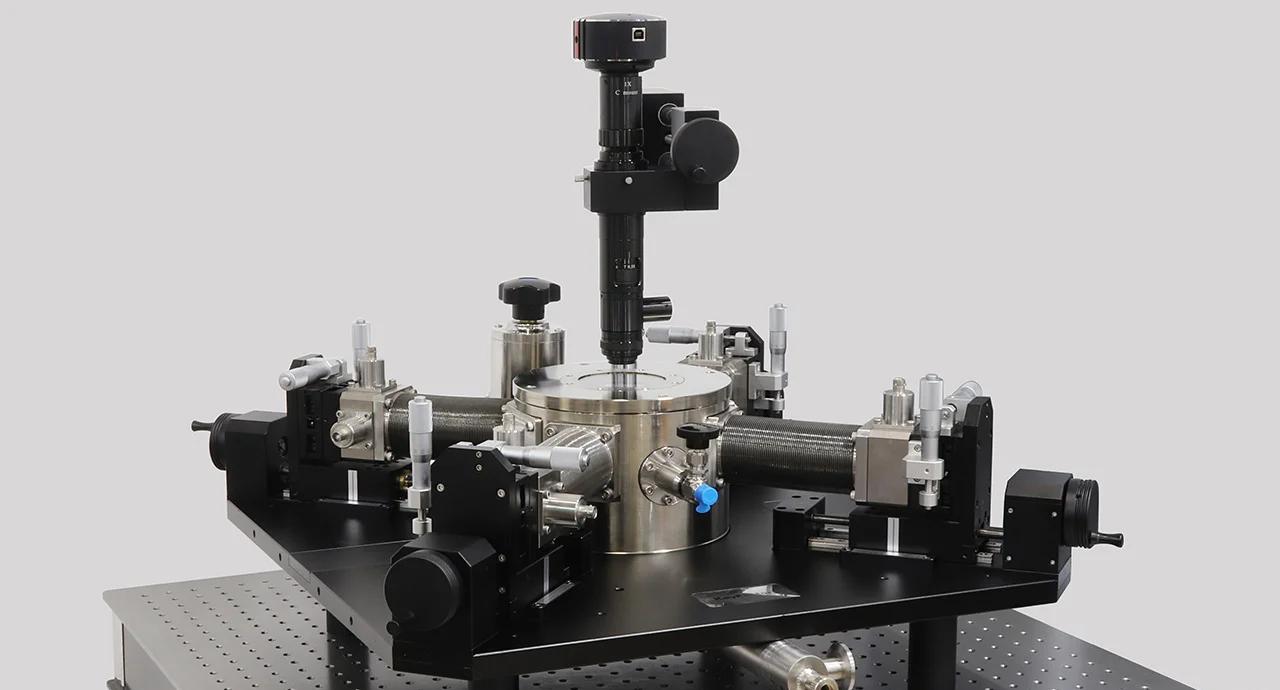

Chapter 1: Industry Overview — 2025 Global and China Semiconductor Test Equipment Market Size
In 2025, global semiconductor equipment sales broke through 128 billion US dollars for the first time in history. This figure, published by SEMI in its World Fab Forecast 2026Q1, represents the highest annual reading since SEMI began compiling industry statistics in 1979. Within this 128 billion dollar pool, front-end lithography, etch, deposition and metrology equipment took up nearly 80 percent. The remaining roughly 9 billion dollars — about 7 percent of the total — belongs to a relatively low-profile sub-segment: semiconductor test equipment.
Nine billion dollars sounds modest beside ASML's single company market value of over a trillion dollars, but slicing it open immediately reveals why this 9 billion is the true "gatekeeper" of the semiconductor industry. Every logic chip, every memory die, every power device, every analog and RF chip must pass through test equipment for chip-by-chip screening before shipment. Even letting a single PPM-level failure of an automotive chip slip through can trigger vehicle recalls costing hundreds of millions of dollars. On a TSMC CoWoS advanced package carrying an NVIDIA GB200 chip, packaging and test combined cost is close to 700 dollars per unit, of which test alone contributes about 180 dollars, or 26 percent. In system-level test (SLT), a single high-end SoC tester insertion may last several minutes, with every second of data throughput precisely factored into the chip's final yield calculation.
Who takes home this 180 dollars? Not just the OSAT, but the test equipment vendors behind the OSAT: Teradyne, Advantest, Cohu, FormFactor. They never appear in NVIDIA's keynote or atop ASML's earnings headlines, yet they occupy their own line in every chip's bill of materials.
The 9 billion dollar 2025 semiconductor test equipment market breaks down by equipment type as follows: ATE (including SoC, memory, analog, mixed-signal, RF and power, six sub-categories) about 6 billion dollars or 67 percent; probe stations about 1.3 billion dollars or 14 percent; handlers about 1.2 billion dollars or 13 percent; burn-in and accessories about 500 million dollars or 6 percent. ATE is the absolute core and also the segment where international vendors hold the deepest moat and where domestic substitution faces the toughest fight.
Looking at vendors, the global ATE top-five 2025 revenue figures are: Japan's Advantest with fiscal-year revenue (through March 2026) of 905 billion yen, equivalent to about 6.05 billion dollars at average period rates; America's Teradyne at 3.01 billion dollars; America's Cohu at 780 million dollars; America's FormFactor at 750 million dollars; Israel's Camtek at 490 million dollars (focused on front-end metrology but interfacing with probe cards). The five together already capture 92 percent of the global ATE market; the remaining 8 percent is divided among China's Hwatsing Technology and Hangzhou Changchuan Technology, China's Beijing Huada Empyrean and second-tier Asian vendors such as Korea's EXICON, Tokyo Electron's test division and Tokyo Seimitsu.
Shifting back to mainland China: 2025 mainland China semiconductor test equipment market was about 2.9 billion dollars, 32 percent of global and the largest single national market. However, within this 2.9 billion, domestic vendors' share was only about 800 million dollars, a localization rate of just 28 percent. Put differently, mainland China imports over 2 billion dollars of test equipment from Teradyne, Advantest, Cohu and other foreign vendors every year, supporting 11 percent of Teradyne's China revenue (about 330 million dollars on consolidated USD basis) and 27 percent of Advantest's China revenue (about 1.63 billion dollars).
Why is the localization rate so low? This must be explained from ATE process barriers, which the next chapter will dissect in detail. At the macro level, however, one number to remember: in 2022, mainland China semiconductor test equipment localization rate was about 12 percent; it climbed to 16 percent in 2023; broke 22 percent in 2024; reached 28 percent in 2025. A 16 percentage point gain in three years — this slope is second only to the etch equipment localization curve among all semiconductor equipment sub-segments. Already considerable speed. Yet each remaining percentage point of the unwon 72 percent must overcome the triple wall of international five players' process accumulation, customer qualification and patent moats.
Looking at the test equipment business from 2026, three judgments are no longer in dispute.
First, the AI compute wave is pushing high-end SoC tester average price from 2.2 million dollars per unit in 2024 to 2.8 million dollars in 2026 H1, a 27 percent three-year hike. The reason is simple: a GB200-class AI chip with 1,200 plus pins, billions of transistors and over a thousand power rails needs higher channel density, higher clock and deeper memory. Advantest's V93000 EXA Scale and Teradyne's UltraFLEX Plus were designed exactly for these "super-SoCs."
Second, memory ATE — this sub-segment — entered a new expansion cycle pulled by HBM3E and HBM4. Advantest T5503HS2 is the de facto standard for HBM test, priced at about 3.2 million dollars per unit. Mainland China localization rate is below 8 percent; CXMT and YMTC still rely on imports.
Third, domestic substitution in analog, mixed-signal and power three sub-segments has essentially completed, with localization rates of 55–65 percent. In high-end SoC, memory ATE and high-end RF ATE, however, three sub-segments still in early breakthrough stage with localization below 10 percent. This "low end done, high end yet to be fought" pattern will persist for the next three to five years.
This is a complete industry research report on China semiconductor test equipment. We will systematically answer three questions: First, from CP test to FT test, from SoC ATE to handlers, how complex is the process map of semiconductor test equipment? Second, in which sub-segments have local champions Hwatsing, Hangzhou Changchuan, Tianjin Jingce and Shenzhen Xinyichang already broken through, and in which sub-segments are they still fighting? Third, across the five years from 2026 to 2030, can localization break through the critical 50 percent threshold? Based on company annual reports, SEMI data, SemiAnalysis and Nikkei industry tracking, and Big Fund Phase II/III investment direction, we will deliver a forecast that holds water.
To grasp the 9 billion dollar number intuitively, a comparison helps. Nine billion dollars equals about 7 percent of 2025 global semiconductor equipment sales, one-third of ASML's same-period sales, one-sixth of Applied Materials' same-period sales. But measured against the absolute hard demand that "every chip must be tested," this 9 billion enjoys more stable visibility than front-end equipment. Etch, deposition and metrology demand fluctuates linearly with new fab capacity; test equipment demand binds to both "wafer output" and "chip complexity," making it relatively less disturbed by capacity expansion cycles. That is an underrated property of the test business: it enjoys semiconductor upcycle dividends while keeping part of revenue intact through downcycles thanks to relatively stable wafer output.
By global geography, 2025 semiconductor test equipment demand came from: mainland China 32 percent, Taiwan 18 percent, Korea 16 percent, Japan 9 percent, North America 14 percent, Southeast Asia 7 percent, Europe 4 percent. Mainland China and Taiwan combined for 50 percent, the world's two test equipment poles. Taiwan demand is driven by TSMC's CoWoS advanced packaging expansion (an NVIDIA GB200 must be individually tested after TSMC packaging); Korea by SK Hynix and Samsung HBM ramp; North America relatively distributed across Intel, Micron, Qualcomm, AMD and system houses' engineering test needs.
Another underrated dimension is "test services." Mainland China 2025 third-party test service market was about 12 billion yuan, with corresponding tester purchases of about 2.8 billion yuan. This means third-party test labs' "tester purchase per unit revenue" is about 23 percent, higher than OSATs' 18 percent. The reason is third-party labs run testers at higher utilization (annualized 6,500 hours versus OSATs' 4,800 hours), requiring more frequent equipment refresh and capacity additions.
Aggregating all these dimensions, the true meaning of 2025 China semiconductor test equipment market at 2.9 billion dollars is this: it is a high-growth market driven by four forces — AI compute demand, HBM ramp, domestic substitution window, and export controls' reverse forcing function. SEMI and VLSI Research both forecast that by 2028 the China market will grow to 5 billion dollars, a 20 percent CAGR — among the top two or three fastest-growing sub-segments in all semiconductor equipment. Who takes home this incremental space? Will Teradyne and Advantest retain it through price adjustments and localized service, or will Changchuan and Hwatsing capture it through localization rate climbs? That is the question the next thirteen chapters peel back layer by layer.
Chapter 2: Equipment Classification — CP / FT and Six ATE Sub-segments
To understand the industry map of semiconductor test equipment, the process position must first be clarified.
Semiconductor test appears twice in the chip manufacturing chain. The first appearance is after front-end wafer fabrication completes and before wafer dicing — wafer-level test, industry shorthand CP (Chip Probing). This step places a whole 12-inch (or 8-inch, 6-inch) wafer on a probe station, with thousands of metal needles on a probe card touching down on each chip's I/O pads, powering the chip, applying test stimuli, reading responses and judging good die. CP test mainly screens out obvious wafer failures, preventing rejects from flowing into back-end packaging and incurring extra cost.
The second appearance is after chip packaging is complete and before shipment — final test, FT. This step inserts packaged chips into the handler's test socket; the ATE applies stimuli, reads responses, and ultimately judges pass or fail. FT is far more complex than CP: it must complete across a wider temperature range (typically minus 40 to 125 degrees Celsius, with automotive grade going to minus 55 to 150 degrees), a longer time window (SLT single-chip test can run several minutes), and more complex test programs (including ATE pattern, SLT application-layer test, burn-in). FT determines the final yield and outgoing grade of the chip.
Both CP and FT need three pieces of equipment: tester (ATE), probe station or handler, and probe card or socket. In the 9 billion dollar test equipment market, ATE accounts for 60 percent; probe stations and handlers each about 13 percent; probe cards and sockets are low-value consumables (FormFactor's main business sits here), about 10 percent combined.
Cutting open ATE further, by the type of chip under test, gives six sub-segments.
First, digital ATE / SoC ATE. This is the largest piece of the ATE market — 2025 about 65 percent of ATE sales, roughly 4 billion dollars. SoC (System on Chip) refers to CPU, GPU, ASIC, AI chips, mobile basebands, mobile platforms — system-level single chips. Core SoC ATE metrics are channel density (how many I/Os a machine can simultaneously connect, mainstream high-end at 1,000 to 2,000 channels), maximum clock frequency (typically 1.6 GHz to 3.2 GHz), parallel count (a single machine simultaneously testing multiple chips, mainstream 8 to 32, often single for large AI chips). Representative models: Advantest V93000 EXA Scale, Teradyne UltraFLEX Plus, priced 2.5 to 3.2 million dollars per unit, covering smartphone SoC, PC CPU, AI training chips, automotive SoC.
Second, memory ATE. 2025 about 16 percent of ATE sales, around 960 million dollars. Memory ATE primarily tests DRAM, NAND Flash and the new generation HBM. The core test technology for DRAM and NAND lies in "high parallel density" — a single tester must connect 400 to 1,200 chips at once to maximize throughput. HBM test adds "high-bandwidth signal integrity" requirements: HBM3E per-stack bandwidth reaches 1,200 GB/s; HBM4 in H2 2026 mass production will hit 1,600 GB/s, imposing signal integrity challenges nearly on par with front-end lithography. Representative models: Advantest T5503HS2 and T5851, priced 2.8 to 3.5 million dollars per unit; Teradyne Magnum V is another main option. This segment is essentially Advantest's to take, with global share exceeding 65 percent.
Third, analog and mixed-signal ATE. 2025 about 12 percent of ATE sales, around 720 million dollars. Targets include op-amps, ADCs, DACs, power management ICs (PMIC), signal-chain SoCs. Representative models: Teradyne J750EX, ETS-800, plus Cohu's Diamond10 and Diamond40. The process moat here is "high-precision analog measurement" — voltage precision down to microvolts, current down to picoamps. Hwatsing Technology's STS 8300 and Changchuan's CTA8200 have caught up with international mainstream, with domestic share above 60 percent.
Fourth, RF ATE. 2025 about 4 percent of ATE sales, around 240 million dollars. Specialized for testing RF front-end modules (PA, LNA, filters, switches), Wi-Fi/Bluetooth SoCs and mmWave radar. Representative models: Teradyne IP750EX, Advantest 5500 Series. RF ATE moat lies in "broadband high-frequency source plus high-isolation measurement" — engineering down to precise measurement across 100 MHz to 110 GHz. China's gap in RF ATE is the largest, with localization below 12 percent.
Fifth, power semiconductor ATE. 2025 about 2 percent of ATE sales, around 120 million dollars. Specialized for silicon power (MOSFET, IGBT), SiC, GaN power devices. Representative models: Hwatsing STS 8800, Changchuan CTA8870, Cohu Triton. Power ATE demands high voltage (up to 1,800 V), high current (up to 1,500 A), high heat dissipation and isolation. China has reached nearly 60 percent localization; Hwatsing and Changchuan jointly dominate, with some orders exported to India and Vietnam.
Sixth, automotive-dedicated ATE. This is segmented not by device type but by "use scenario," covering automotive MCU, automotive SoC, automotive analog and power, automotive power devices. Core requirement is AEC-Q100/Q101 certification temperature and stress test. Cohu has the highest share here, about 35 percent; Advantest and Teradyne follow. Chinese vendors have only minor breakthroughs in automotive MCU and automotive power, with combined share below 10 percent.
Plotting these six sub-segments on one chart by 2025 market size and localization rate yields a very clear industry map: analog, power, and automotive power three segments are over 50 percent localized with relatively limited remaining space; memory, SoC, RF and automotive SoC four segments are below 15 percent localized — the main battlefield for the next five years.
Beyond CP and FT, one more equipment class deserves separate mention: burn-in and system-level test (SLT). Burn-in means running chips under high temperature and voltage for tens of hours to screen out early failures. SLT means after packaging, simulating real system environments (boards, power, peripherals) to run application-layer tests for some hours. Combined 2025 these two pieces of equipment are about 500 million dollars, dominated by Aehr Test Systems, Teradyne, Advantest. Chinese vendors here are nearly blank — a potential new growth point for the next five years.
Understanding CP/FT process position plus the six ATE sub-segment cuts, the next chapter enters the core process moats of test equipment — channel density, parallel count, signal integrity, temperature control — and explains why this business's localization fight is harder than etch or deposition.
Chapter 3: Process Moats — Channel Density, Parallel Count, Test Program IP, Probe Card Life
ATE testers' process moat is not defined by a single "crown technology" like EUV lithography. It is a composite moat built from seven engineering dimensions: channel density, maximum clock frequency, power rail count and precision, signal integrity, parallel count, test program IP library, and thermal control with temperature cycling. Each dimension alone is not a world-class problem, but bringing all seven to the level of Advantest V93000 EXA Scale and Teradyne UltraFLEX Plus requires 20 plus years of equipment engineering accumulation, over 1,000 process engineers' collaboration, and customer qualification on thousands of downstream chips.
First, channel density. ATE "channels" refer to the physical channels a tester can simultaneously stimulate or sample on the chip under test. An NVIDIA GB200 AI chip has up to 1,200 I/Os; adding HBM3E interfaces and power rails, a single chip needs roughly 1,600 to 1,800 channels of tester to complete testing in reasonable time. Advantest V93000 EXA Scale top configuration provides 2,048 digital channels, 1,280 PMU channels, and over 20 high-bandwidth memory interfaces. Such channel density means packing in over 60 test modules, 100,000-plus wires, complex clock and trigger synchronization — the cabinet alone is roughly two large refrigerators side by side, weighing three tons. Changchuan's STAR12K launched in May 2026 reached 1,024 channels — the highest domestic level but still roughly a 1× gap to V93000 EXA Scale.
Second, maximum clock frequency. SoC ATE clock determines whether mainstream PCIe 5.0, PCIe 6.0, HBM3E interfaces can be tested. HBM3E per-lane clock reaches 9.2 GHz; PCIe 6.0 reaches 64 GT/s (about 32 GHz). This means the tester's internal clock must achieve at least 3.2 GHz stable output (with 4× data rate, covering 12.8 Gbps interfaces). Advantest V93000 EXA Scale max clock hit 5.0 GHz; Teradyne UltraFLEX Plus in SmartCTL mode reached 4.8 GHz. Chinese vendors currently top out at 3.2 to 3.6 GHz, sufficient only for LPDDR5 and PCIe 5.0 generation interfaces. The next-generation LPDDR6 and PCIe 6.0 still need to be caught up.
Third, power rail count and precision. A high-end SoC may carry over 20 independent power domains (Core, SoC, PHY, IO, Memory, PCIe), each independently powered, current-metered and transiently disturbed by the tester's PMU to simulate real operating scenarios. Voltage precision must reach 100 microvolts (0.1 mV); current precision 100 picoamps (0.1 nA) — the limits of analog measurement engineering. Cohu Diamond40 and FormFactor's customized modules lead the industry here; Hwatsing STS 8300 has matched international levels in analog measurement precision but still needs to advance channel density.
Fourth, signal integrity. This is the core moat for HBM and high-end SoC test. HBM3E's 1,024-bit data width plus 9.2 GHz per-lane clock means the probe card and in-machine signal paths must achieve full-band impedance matching, crosstalk isolation, and return loss control. FormFactor's probe card plus Advantest V93000 T5503HS2 lead the industry in HBM3E signal integrity. Chinese vendors have nearly no mature products here; CXMT's 2025 HBM2 pilot still relied on Advantest T5503.
Fifth, parallel count. Analog ATE typically reaches 128 to 256 parallel; memory ATE 400 to 1,200; SoC ATE only 8 to 32 due to chip size. Parallel count engineering challenges include "intra-machine crosstalk isolation" and "clock phase synchronization across chips." Hwatsing STS 8300 2025 version reached 128 parallel — on par with Teradyne J750EX.
Sixth, test program IP library. Easily overlooked but the hardest moat to break. Each chip's test program is written by hundreds of man-days of testers' engineers in the tester's development environment, covering ATE pattern, analog stimulus, power sequencing, error diagnosis, yield analysis. Advantest V93000 SmarTest 8 and Teradyne UltraFLEX IG-XL environments have accumulated over 20 years of templates and IP for tens of thousands of chips. Even if Chinese vendors match hardware, lacking 20-year IP accumulation and customer engineer habits means a long customer qualification cycle. Changchuan STAR12K's first qualified project is Cambricon's next AI chip — expected qualification cycle 18 to 24 months.
Seventh, thermal control and temperature cycling. Automotive chips require testers stably output minus 55 to 150 degrees Celsius cycles, with per-minute temperature change rate (dT/dt) above 20 degrees. This looks mechanical but actually requires power, signal and mechanical structure of the tester all to maintain precision under extreme deltas without drift. Cohu leads globally in automotive thermal control; among domestic vendors, only Changchuan CTH-7500 reached minus 45 to 150 degrees — still a tier short of the top.
These seven dimensions stack to form ATE's process moat. Unlike lithography depending on a single physical limit, ATE relies on engineering "full-stack depth." This moat means once customers qualify and ramp, downstream chip designers do not easily switch vendors — switching means rewriting all test programs, meaning one to two product cycles of delay. This also explains why neither Advantest nor Teradyne has faced any new global challenger in three decades. The only path for Chinese vendors to break out is to "break through in one low-end sub-segment first — Hwatsing's analog ATE is the example — accumulate customers and test program IP, then climb segment by segment toward high end."
Finally, probe card life. Probe cards are the key bridge between probe station and wafer, made of thousands of metal needles of tens of micron diameter. Each pad touchdown wears the needle slightly; life is typically 500,000 to 2,000,000 touchdowns. A high-end probe card costs 400,000 to 800,000 dollars, replaced every three to six months. FormFactor's SmartMatrix probe card is the de facto standard for HBM3E test. Chinese vendors here remain nearly fully import-dependent. Strong-Half Semiconductor and Xinyi Semiconductor delivered first small lots of 12-inch domestic SoC probe cards in 2025, but life and reliability still trail FormFactor by a generation.
The next chapter cuts in from these seven moats to dissect the competitiveness of domestic test equipment vendors in each sub-segment.
Chapter 4: Major Vendors — Changchuan / Hwatsing / Jingce / Xinyichang vs Teradyne / Advantest / Cohu / FormFactor
Ranked by 2025 revenue, China's domestic semiconductor test equipment top five are: Changchuan Technology, Hwatsing Technology, Jingce Electronics (semiconductor test business), Xinyichang, Shenkeda. Combined 2025 revenue about 8 billion yuan, about 28 percent of domestic market share. Compared with Teradyne's 3 billion dollars and Advantest's 6 billion dollars, the gap is still significant — but the growth slope is steeper.
First, Changchuan Technology (300604). The only Chinese test equipment vendor covering testers, probe stations and handlers — three major equipment categories — dubbed "China's Teradyne plus Cohu in one." 2025 revenue 3.945 billion yuan, up 49.8 percent YoY; net profit attributable to parent 632 million yuan, up 78.4 percent.
By business: tester revenue about 2.4 billion yuan (61 percent), of which SoC tester STAR8K first broke 500 million yuan, analog and mixed-signal testers 1.1 billion yuan, memory tester 340 million yuan, power tester 400 million yuan; probe station CTP-8800 revenue 420 million yuan; handler STH series 710 million yuan.
Changchuan's moat lies in "one-stop platform." Downstream customers (OSAT, third-party test, fabless) can build a complete back-end production line by procuring only Changchuan, whereas purchasing Advantest plus Cohu requires coordinating two vendors' interfaces and after-sales. This platform strategy makes Changchuan especially attractive to JCET, TFME, Hua Tian three head-OSAT players. In 2025 JCET and TFME orders to Changchuan combined to 830 million yuan, Changchuan's two largest customers.
The STAR12K released in May 2026 is Changchuan's key push into high-end SoC ATE. STAR12K has 1,024 channels, 3.2 GHz top clock, 480 PMU channels — benchmarking the mid-end configuration of Advantest V93000 EXA Scale, targeting AI chips, high-end automotive SoC and PC processors. First qualification project is Cambricon's next AI training chip, expected 18 to 24 months. If qualified, Changchuan will enter the high-end domestic SoC ATE market for the first time, competing head-on with Advantest and Teradyne.
The Hangzhou Linping phase II base will start production in Q3 2026, adding 1,200 testers/year capacity. This is Changchuan's largest capacity expansion, providing the production base for the three-year leap from 3.9 to 7 billion yuan. R&D intensity in 2025 reached 18.4 percent — highest among domestic test equipment vendors. Hwatsing was 12.8 percent.
Second, Hwatsing Technology (688200). Absolute leader in analog ATE in China, with domestic analog tester market share about 65 percent. 2025 revenue 1.385 billion yuan, up 38.2 percent YoY; net profit attributable to parent 386 million yuan, up 45.6 percent.
Hwatsing's core product is STS 8300 analog and mixed-signal testers, with cumulative installed base above 8,000. STS 8300 has essentially replaced Teradyne J750EX in PMIC, op-amp, ADC/DAC and power management chip testing in China. SG Micro, 3Peak, Awinic and other analog chip designers' production lines run STS 8300 at over 60 percent share.
Another 2025 Hwatsing highlight: power semiconductor tester revenue 410 million yuan, up 72 percent. April 2026 Hwatsing released STS 8800 high-voltage power tester (top 1,000 V, max current 1,200 A) and signed a 200-unit framework order with BYD Semiconductor, mainly for automotive IGBT and SiC MOSFET test. Besides BYD, Silan, CR Micro, Yangjie, NCEPower are STS 8800 customers.
Tianjin new factory starts production in H1 2026, adding 800 units/year capacity. Hwatsing's expansion is smaller than Changchuan's but more focused on analog and power. Per-unit gross margin reaches 65 percent (Changchuan 48 percent), the highest among domestic test equipment vendors.
Third, Jingce Electronics (300567) semiconductor test business. Jingce's main business is display test equipment (about 60 percent of total revenue); semiconductor test is its second growth curve. 2025 semi test revenue 960 million yuan, up 58 percent. Of which: semi front-end metrology 430 million yuan (OCD critical dimension, film thickness), CP auto probe station 310 million yuan (EP100), back-end test equipment 220 million yuan (mixed-signal testers).
Jingce's EP100 CP auto probe station is the domestic leader in 12-inch full-auto probe stations, with cumulative delivery over 80 units, main customers SMIC, Hua Hong Semi, CXMT. EP100 core metrics approach Tokyo Electron P-12XLn mid-end: wafer throughput 120 wafers/hour, dual-chuck parallel, temperature range minus 40 to 150 degrees.
Fourth, Xinyichang (688383), core product semi back-end handler and die bonder. 2025 total revenue 1.48 billion yuan, of which semi handler and die bonder revenue 530 million yuan, up 47 percent. Xinyichang's NYC series high-speed test-and-mark handler hit 18,000 chips/hour, near Cohu Diamondx mid-end. Shenzhen Guangming phase II starts production mid-2026.
Fifth, Shenkeda. Smaller. 2025 total revenue 860 million yuan, of which semi test equipment about 210 million yuan, main product HDL-2000 pick-and-place handler and some custom fixtures.
Placing these five on the international map: Changchuan is roughly one-tenth of Teradyne; Hwatsing about one-sixth of Advantest's analog ATE. Gaps exist, but note: Changchuan's 2025 49.8 percent growth is over four times Teradyne's 12 percent; Hwatsing's 38.2 percent is over twice Advantest's 17 percent. Keeping this slope, in five years Changchuan may enter global test equipment top eight; Hwatsing top three in analog ATE.
Finally a brief look at the four international vendors' 2025 status.
Teradyne 2025 calendar revenue 3.01 billion dollars, of which SoC 2.2 billion, memory 450 million, industrial automation (including Universal Robots) 360 million. CEO Greg Smith's January 2026 shareholder letter explicitly states: China share dropped from 18 percent in 2024 to 11 percent in 2025, primarily due to BIS tightening plus localization, both pressures.
Advantest fiscal year (April 2025 to March 2026) revenue 905 billion yen (about 6.05 billion dollars), of which SoC 710 billion yen (HBM/AI driven), memory 145 billion. CEO Doug Lefever April 2026 earnings call disclosed: China share 27 percent (was 31 percent in 2024). Advantest maintains absolute global monopoly in HBM test, share over 75 percent.
Cohu 2025 revenue 780 million dollars, down 12 percent YoY, primarily on automotive chip market correction. China share 24 percent. FormFactor 2025 revenue 750 million dollars, of which probe card business 640 million, HBM3E probe card the main growth engine.
Putting these data on one table delivers a few intuitive judgments.
First, domestic growth significantly exceeds international. Changchuan 49.8 percent is over four times Teradyne 12 percent; Hwatsing 38.2 percent is over twice Advantest 17 percent. If sustained five years, domestic share in China rises from 28 percent (2025) to over 50 percent (2030).
Second, domestic R&D intensity is higher. Changchuan 2025 R&D 18.4 percent of revenue, Hwatsing 12.8 percent, Jingce semi about 16 percent. Same period Teradyne 11.2 percent, Advantest 8.9 percent. Difference matches "domestic catching up versus international mature" stage.
Third, domestic gross margins lag international but improve yearly. Changchuan 2025 GM 48 percent (down 3 ppts YoY, dragged by low-end price cuts), Hwatsing 65 percent (flat). Same period Teradyne 58 percent, Advantest 61 percent. Domestic margin improvement path mainly depends on product mix upgrade — Changchuan STAR8K and STAR12K post-launch margins significantly above STAR4K and other low-end models.
Fourth, domestic customer concentration is relatively higher. Changchuan 2025 top five customers 56 percent (JCET, TFME, Wintest, Leadyo, HuaTian); Hwatsing top five 61 percent. Same period Teradyne 42 percent, Advantest 45 percent. Risk: a single customer's volatility amplifies revenue.
Fifth, international local-service still ahead. Advantest 600 China engineers; Teradyne 280. Domestic vendors combined about 400 China engineers (Changchuan, Hwatsing, Jingce). Soft-power gap hardest to close in the near term.
The next chapter goes deeper into localization milestones — which sub-segments already broke through, which are still fighting, and where the inflection point lies.
Chapter 5: Localization Milestones — Analog/Power Done, SoC/Memory Still Fighting
China semiconductor test equipment localization, broken out by six sub-segments, 2025: analog and mixed-signal ATE 62 percent, power ATE 56 percent, analog probe station 51 percent, automotive power ATE 48 percent, digital SoC ATE (mid-low end) 22 percent, 12-inch CP auto probe station 18 percent, memory ATE 8 percent, high-end SoC ATE 4 percent, high-end RF ATE 12 percent, HBM test equipment about 2 percent, SLT system-level test about 0 percent.
These eleven numbers sketch the real landscape: completed segments concentrate where "low-end process moats can be broken"; ongoing battles concentrate where "high-end process moats are deep and customer qualification cycles long."
Among completed segments: analog and mixed-signal ATE was the first hill. From 2018, Hwatsing STS 8300 forced frontal replacement of Teradyne J750EX on PMIC, op-amp, ADC/DAC. By 2022, leading analog chip companies like SG Micro, 3Peak, Awinic ran STS 8300 as mainstream on production lines. 2025 China analog and mixed-signal ATE market about 2.3 billion yuan: Hwatsing 48 percent, Changchuan 17 percent, combined localization 65 percent. Remaining 35 percent goes to Teradyne and Cohu, primarily high-end analog (e.g., 12-bit-plus high-precision ADC) replacement.
Power semiconductor ATE was the second hill. Before 2020 China power device (MOSFET, IGBT) test relied on Cohu Triton and Advantest 4080. 2020 to 2022 Hwatsing STS 8800 and Changchuan CTA8870 launched, forming functional replacement. 2025 China power ATE market about 850 million yuan: Hwatsing 37 percent, Changchuan 19 percent, combined 56 percent. 2026 with SiC and GaN device boom, incremental market could add another 2 billion yuan; localization may exceed 70 percent by 2027.
Automotive power ATE close behind. 2023 Changchuan CTA8870-AECQ and Hwatsing STS 8800-V launched targeting AEC-Q101 certification test. By 2025 BYD Semi, Silan automotive electronics, CR Micro automotive electronics widely adopted domestic testers. Market about 400 million yuan, localization 48 percent.
Analog probe station 2025 market about 600 million yuan, localization 51 percent. Mainly split between Changchuan CTP-3000 and Shenzhen Xinyi SE-300. Analog probe station moats are below those of 12-inch full-auto; localization was completed earlier.
Among ongoing battles: digital SoC ATE mid-low end (incl. mid-low smartphone SoC test, consumer SoC, automotive MCU test) localization 22 percent, 2025 China market about 2.8 billion yuan. Changchuan STAR8K is the main product here, now in Allwinner, GigaDevice, Nation Tech, FMSH production lines. Battle key: "batch capacity plus test program IP accumulation." Expected to break through to 35 percent in 2026-2027.
12-inch CP auto probe station 2025 China market about 900 million yuan, localization 18 percent — only Jingce EP100 and Changchuan CTP-8800 two vendors. Process moat: "12-inch wafer throughput, dual-chuck parallel, probe card interface." International TEL P-12XLn, Tokyo Seimitsu UF3000EX, FormFactor SUMMIT take 82 percent. H1 2026 SMIC public tender explicitly "preferring domestic 12-inch auto probe station" is the key signal for localization climb. Expected to exceed 30 percent by 2027.
Memory ATE localization only 8 percent, 2025 China market about 1.2 billion yuan. Advantest T5503HS2 and Teradyne Magnum V dominate. Changchuan CTM-5000 series is the main domestic attempt, with small-lot deployments at Hefei Peyton and Longsys, but on CXMT and YMTC's wafer-level DRAM and NAND test still rely on Advantest. HBM test equipment domestically almost zero; 2025 CXMT's HBM2 pilot still relied on Advantest T5503. This segment is the hardest bone.
High-end SoC ATE localization only 4 percent, 2025 China market about 2.2 billion yuan. Advantest V93000 EXA Scale and Teradyne UltraFLEX Plus dominate, 2.5–3.2 million dollars per unit. December 2024 BIS rules placed both models on the export license list for China, effectively banning sales to mainland customers at 28nm and below. Changchuan STAR12K launched May 2026 is the key push, but with 18–24 month qualification cycle, scale-up replacement is at earliest 2028.
High-end RF ATE 2025 China market about 400 million yuan, localization 12 percent. Teradyne IP750EX and Advantest 5500 dominate. Chinese vendors nearly blank in mmWave (24/28/77/79 GHz); only ACM Shanghai subsidiary has partial 5G FR1 breakthrough.
SLT system-level test equipment 2025 China market about 180 million yuan, localization near zero. Teradyne IG-XL and Aehr Test FOX dominate. Potential new domestic growth point in the next five years; Beijing Huada Empyrean and several Shenzhen startups have product plans.
Three inflection windows: First, 2026-2027: mid-low SoC ATE from 22 percent to about 35 percent, Changchuan STAR8K + STAR12K being key. Second, 2027-2028: CP auto probe station from 18 percent to about 35 percent, Jingce EP100 + Changchuan CTP-8800 + Xinyi SE jointly advancing. Third, 2029-2030: memory ATE and high-end SoC ATE may enter "breakthrough window," contingent on Changchuan STAR12K qualification breakthrough at customer and CXMT/YMTC willingness to absorb test program rewrite transition cost.
Overall, by 2030 China semiconductor test equipment overall localization may rise from 28 percent (2025) to about 50 percent. Clear progress, but matching US and Japan in ATE high end requires a decade or more.
Chapter 6: Probe Station and Handler Localization — Jingce / Changchuan / Shenkeda / Xinyichang Sub-segment Breakouts
Probe stations and handlers are two equipment classes beyond ATE itself; combined 2025 market about 2.5 billion dollars, slightly above ATE overall localization at about 31 percent. This chapter dives into sub-segments.
Probe stations: by wafer size into 12-inch, 8-inch, 6-inch; by automation into manual, semi-auto, full-auto. 2025 global probe station market about 1.3 billion dollars; 12-inch full-auto 68 percent (about 880 million), 8-inch semi-auto 18 percent (about 230 million), 6-inch and manual 14 percent (about 180 million).
12-inch full-auto probe station is the core: highest moat, highest GM, strongest customer stickiness. International tripartite: Japan Tokyo Electron P-12XLn (global share 32 percent), Tokyo Seimitsu UF3000EX (26 percent), US FormFactor SUMMIT (21 percent). Three combined 79 percent.
12-inch full-auto moats? Wafer throughput 120 to 180 wafers/hour; probe card positioning precision below 0.5 micron; temperature range minus 40 to 150 degrees (high end to minus 50 to 200); dual-chuck parallel; standardized interface with upstream handler or logistics. Each metric needs decades of mechanical engineering and control accumulation.
In China, only Jingce EP100 and Changchuan CTP-8800 in this segment. Jingce EP100 2025 cumulative delivery 80+ units, main customers SMIC, Hua Hong, CXMT; per-unit about 3.2 million yuan. Changchuan CTP-8800 2025 cumulative about 120 units, main customers JCET, TFME, Wintest, Leadyo; per-unit about 2.8 million yuan. Combined 2025 share about 18 percent.
8-inch semi-auto is relatively complete: 2025 localization about 55 percent. Shenzhen Xinyi SE series and Hefei Huaxing HC series are main domestic brands, per-unit 800K to 1.5M yuan. 8-inch wafers mainly for mature-process power, analog, MEMS, sensors — lower precision requirements; localization completed early.
6-inch and manual are essentially domestic, localization over 75 percent. Xinyichang, Shenkeda, Changsha Changying are vendors here.
Handlers: by mechanism into gravity, pick & place, turret, test & strip. 2025 global market about 1.2 billion dollars: gravity 35 percent, pick & place 42 percent, turret 12 percent, test & strip 11 percent.
International leader Cohu. Cohu's Delta Design, Ismeca, Diamondx brands cover automotive to consumer; 2025 global share about 41 percent. Advantest (with ATEL) 18 percent, focused on memory handlers. Chroma 10 percent, focused on automotive and power. Hon Precision 8 percent, focused on turret.
Domestic side: Changchuan STH series leads domestic gravity and pick & place; 2025 share about 16 percent. STH-8300 reaches 12,000 chips/hour, near Cohu Diamondx mid-end. Shenkeda HDL-2000 leads pick & place; 2025 share about 7 percent. Xinyichang NYC series is the main test-and-mark all-in-one; 18,000 chips/hour, replacing Advantest ATEL mid-low end in LED, diode, inductor testing.
2025 China handler market about 600 million dollars (about 4.2 billion yuan), localization 33 percent. Changchuan, Shenkeda, Xinyichang combined 26 percent; remaining 7 percent across small vendors.
Probe station and handler localization both follow this pattern: low end (8-inch probe, gravity handler) essentially done; mid (12-inch semi-auto, pick & place) about 30 percent; high end (12-inch full-auto, automotive handler, HBM test handler) below 20 percent.
Demand side: two 2026 drivers are key. First, SMIC and Hua Hong fab expansion — each new 12-inch line needs 20 to 25 12-inch full-auto probe stations. Second, OSAT localization purchase will. H1 2026 JCET and TFME domestic probe station and handler purchase share rose to 45 percent (2024 was 28 percent). Combined with Jingce EP100 and Changchuan CTP-8800 maturity, expect 2028 12-inch full-auto localization to break 35 percent.
Finally probe cards. Global market about 2 billion dollars; FormFactor alone 38 percent. Strong-Half Semi and Xinyi Semi delivered 2025 first 12-inch SoC probe cards in small lots, but life and reliability trail one generation. HBM3E probe cards still nearly fully FormFactor monopoly. Probe card localization will likely await 2030 for substantive breakthrough.
Chapter 7: Platform View — Screening Test Downstream Factories by Process Route
To translate the previous six chapters from desk research into factory-level real operations, a database tool able to precisely screen factories by process route is needed. We use Tianxia Gongchang for this — a B2B industry platform covering 4.8 million producing factories nationwide. Unlike business-info platforms like Qichacha and Tianyancha, which give corporate registration information (founding date, legal representative, registered capital, equity changes, essentially a file of the legal entity), this platform gives factory-level production capability — what it makes, what process route, what customer structure, what order scale, what environmental qualifications — essentially a "physical exam report" of whether the factory can take your work. The former solves "does this company exist and comply"; the latter solves "is this factory worth being my customer or supplier."
For semiconductor test equipment, this "screen factories by process route" capability is core value. A tester vendor must know which OSAT is expanding, which fabless is ramping new chips, which third-party test lab is adding capacity, and must build a customer list across five downstream types: OSAT, IDM, fabless, third-party test, foundry.
Let's actually screen using the platform's industry chain tool.
Type 1: OSAT. 2025 nationwide main OSATs about 360. By scale: 12 head OSATs with annual revenue 1B+ yuan (JCET, TFME, Hua Tian, Jingfang, Yongsi, Taiji Industries, Leadyo, Wintest, Qizhong, CR Anseng, Taiji Semi, CR Jinke); about 90 mid OSATs with 100M–1B revenue, concentrated in Jiangsu, Zhejiang, Guangdong; about 250 small OSATs with under 100M revenue, distributed nationwide. For a tester vendor doing nationwide deep visit on all head OSATs, average per-deep-visit cost about 20,000 yuan; annual market development budget is controllable.
Type 2: third-party independent test labs. 2025 nationwide main vendors about 60. Eight head with annual revenue 100M+: Leadyo (Shenzhen, about 900M revenue), Wintest (Shanghai, about 800M), Hualing Tech (Shanghai, about 500M), CETC Chip (Nanjing, about 400M), Huaxincore (Wuhan, about 300M), Guangdong University of Technology test center, CAS Microelectronics Institute test center, Huada Semi (Shenzhen, about 600M). Third-party labs are tester vendors' "high-density purchase customers"; single annual tester purchase budget may reach 50–100M.
Type 3: IDM and fabless designers, about 1,800. About 20 IDMs with 1B+ revenue: Will Semi, GigaDevice, Maxscend, Montage Tech, Cambricon, Unisoc, Allwinner, Amlogic, Rockchip, SG Micro, 3Peak, Awinic, Silan, CR Micro, Yangjie Tech, NCEPower, BYD Semi, Star Semiconductor, Injoinic, Fortior. These companies' tester self-purchase varies: smartphone baseband and SoC vendors (Unisoc, Rockchip, Amlogic) typically outsource test to third-party labs or OSATs; analog and power-management vendors (SG Micro, 3Peak, Awinic) typically self-build STS 8300 for engineering test and characterization; power semi (Silan, CR Micro, BYD Semi) typically self-build STS 8800, CTA8870 for engineering test and small-lot measurement. For tester vendors, IDM and fabless customer characteristics: "small per-unit purchase but tight engineering relationship; characterization orders shape multi-year ramp purchase."
Type 4: foundries. Mainly SMIC, Hua Hong Semi, CR Shanghua, Jite Semi, Hefei Nexchip, Guangzhou Yuexin, Shaoxing SMIC and a dozen others. Foundry tester purchase concentrates on CP auto probe stations; per 12-inch line needs 20–25 units. 2026 expected new 12-inch foundry capacity 12 lines, potential domestic probe station order about 300 million dollars.
Type 5: emerging HBM and advanced packaging customers, including CXMT, YMTC, Hua Qin Tech HBM, JCET Advanced, Tongfu Chaomo. HBM test is the weakest link in domestic substitution, but also the largest incremental sub-segment over next five years.
Building these five-type factory lists gives a tester vendor's sales lead pool basic skeleton. Remaining work: match tester model by process route, plan visit route by geography, allocate technical support resource by customer priority. That is the full process of translating "industry research report" into "executable sales list."
Cutting the five types by geography draws the "sales strategy map" of semiconductor test equipment.
Yangtze River Delta is China's densest back-end OSAT region. Jiangsu's JCET (Wuxi), CR Anseng (Wuxi), Taiji Semi (Wuxi), Jingfang (Suzhou), JCET Advanced (Jiangyin), Changchuan Shaoxing line (Shaoxing), Fuxin Electronics (Nantong) — dozens of OSATs in Shanghai-Suzhou-Wuxi-Nanjing-Yangzhou five city clusters. To cover Delta OSAT sales: ideal office is Shanghai HQ (covering Shanghai-Suzhou-Wuxi) plus Nanjing branch (Nanjing-Yangzhou-Zhenjiang) — about 20 sales engineers plus 30 application engineers can serve the whole Delta OSAT customer base.
Pearl River Delta is China's densest fabless region. Shenzhen's HiSilicon, Unisoc, Goodix, Allwinner, GigaDevice (Shenzhen branch), Awinic (Shenzhen branch), plus Zhuhai Allwinner, Guangzhou Rockchip (Guangzhou branch) — fabless cluster core. Demand here mainly engineering testers; per-unit small but high frequency, needing tester vendor deep engineering cooperation.
Beijing-Tianjin-Hebei is the IDM and third-party test concentration. Beijing's NAURA, CETHIK Huada, Hwatsing HQ, Beijing Huada Empyrean, plus Tianjin's Zhonghuan Semi, Hwatsing Tianjin factory — BTH core. Beijing also concentrates Big Fund, CAS Microelectronics Institute, Tsinghua University and other policy/R&D resources; strategic importance to domestic test equipment vendors is special.
West region mainly Chengdu, Chongqing, Xi'an. Chengdu's Sinochem Micro (Chengdu branch), Chongqing's Wanguo Semi, Xi'an's Tsinghua Unigroup Guoxin, plus CETC 24th Institute, 55th Institute and other military and automotive customers — west demand base. Domestic test equipment advantages in automotive and military shine here.
Central region core is Wuhan East Lake Optics Valley (YMTC, Wintest base) and Hefei (CXMT, Hefei Nexchip). Demand mainly memory ATE and mid-end SoC ATE — main battlefield for domestic substitution in memory and high-end SoC.
After geographic layout, domestic tester vendors must also pace order tracking by customer "purchase decision cycle." OSAT cycle typically 6–9 months: technical evaluation, sample qualification, commercial negotiation, contract approval. Fabless engineering tester cycle shorter, 3–4 months. Foundry probe station cycle longest at 9–12 months due to coordination with upstream fab process specs.
These sales strategy maps suggest 2026–2028 domestic vendor sales focus: deep breakthrough in Delta and Central OSAT orders, Pearl and BTH fabless engineering cooperation expansion, foundry CP probe station government procurement pull, west region resource integration in automotive and power.
Finally, a critical but often overlooked detail: tester vendors' "customer qualification" cost. New chip qualification on domestic testers typically requires vendor to bear "free machine time, engineer on-site, test program development assistance" — hidden costs. High-end SoC qualification project total hidden cost can reach 3–6 million yuan, 18–24 month cycle. Supporting 10 qualifications means "qualification R&D" annual spend 30–60 million yuan. This is the key operating cost hidden in published financials, also the real constraint on domestic tester expansion speed.
Chapter 8: Customer Structure — JCET, TFME, Hua Tian Three OSAT Giants and Will Semi, GigaDevice Fabless
Tester vendor customer structure determines order stability, gross margin, technology cadence. This chapter dissects China 2025 main customer structure.
Customer group 1: OSATs. 2025 main domestic OSAT tester purchase total about 2.1 billion dollars (about 14.7 billion yuan), 62 percent of domestic tester market.
JCET 2025 tester purchase about 3.8 billion yuan: Advantest V93000 1.6B (HBM and high-end SoC), Teradyne UltraFLEX 800M, Changchuan STAR8K 530M, Hwatsing STS 8300 180M, Cohu handler 300M, Tokyo Electron probe station 200M, accessories 200M. Domestic share rose from 16 percent (2024) to 20 percent (2025), mainly via Changchuan.
TFME 2025 tester purchase about 2.8 billion yuan, structure similar to JCET but domestic share slightly lower at 17 percent. TFME particularity: AMD is its largest customer (60 percent of packaging revenue), and AMD high-end SoC test essentially requires Advantest V93000 and Teradyne UltraFLEX — limited room for domestic.
Hua Tian 2025 tester purchase about 1.6 billion yuan, domestic share 31 percent — most aggressive on domestic tester. Reason: Hua Tian's product mix is mid-low end (QFN, BGA, SiP) — higher acceptance of domestic testers.
Jingfang 2025 tester purchase about 800 million yuan, domestic share 26 percent.
Yongsi 2025 about 1.0 billion yuan, domestic share 35 percent — highest among mid OSATs.
Top five OSATs combined 2025 tester purchase 10 billion yuan, domestic share about 22 percent.
Customer group 2: third-party test labs. 2025 group tester purchase total about 2.8 billion yuan, 12 percent of domestic. Wintest 2025 about 600M, domestic share 48 percent (highest; STAR8K and STS 8300 are mainstays). Leadyo 2025 about 580M, domestic 36 percent. Hualing Tech 2025 about 300M, domestic 42 percent.
Customer group 3: IDM and fabless. 2025 group total about 4 billion yuan, 18 percent of domestic. BYD Semi 2025 about 800M (power-heavy, domestic 72 percent); Silan about 500M (domestic 65 percent); SG Micro about 280M (domestic 78 percent). This group's domestic share clearly above OSAT, because analog and power tester localization is mature.
Customer group 4: foundries. 2025 about 1.2 billion yuan, mainly CP auto probe stations. SMIC 2025 probe station purchase about 600M: Jingce EP100 120M, Tokyo Electron P-12XLn 300M, others 200M. H1 2026 SMIC public tender "prefer domestic 12-inch auto probe station" — expected 2026 full-year domestic share rises from 2025's 20 percent to over 35 percent. Hua Hong 2025 probe station about 400M, domestic 28 percent.
Customer group 5: emerging HBM and advanced packaging. CXMT 2025 tester purchase about 1.5 billion yuan, nearly all Advantest T5503HS2 and Magnum V, domestic below 3 percent. YMTC 2025 about 1.2 billion yuan, domestic 5 percent (some NAND burn-in by domestic).
Aggregating, 2025 China tester customer structure: OSAT 62 percent, IDM/fabless 18 percent, third-party test 12 percent, foundry 4 percent, HBM and advanced 4 percent. Domestic share (28 percent) mainly contributed by three groups: IDM/fabless (analog and power leading), Hua Tian and Yongsi two mid OSATs, Wintest Leadyo and other third-party labs.
Five strategic takeaways for domestic vendors.
Takeaway 1: High-end OSAT (JCET, TFME) domestic share short term hard to break, because downstream customers (NVIDIA, AMD, Qualcomm, MediaTek) specify tester brands. Changchuan STAR12K and future STAR16K must first qualify on domestic AI chips (Cambricon, HiSilicon, Unisoc) before pushing back into JCET/TFME lines.
Takeaway 2: Mid OSATs and third-party labs are the main battlefield. Hua Tian, Yongsi, Wintest, Leadyo show highest acceptance; incremental capacity domestic share can reach over 45 percent.
Takeaway 3: IDM/fabless dollar volume small (18 percent) but meaningful — engineer habits once formed reverse-influence OSAT outsourcing test specs. A "customer-side process anchor" that long-term drives OSAT tester procurement leaning.
Takeaway 4: Foundry CP auto probe station is the largest 2026–2027 localization opportunity. New 12-inch line at 25 units plus SMIC explicit domestic policy will double Jingce EP100 and Changchuan CTP-8800 2026 orders.
Takeaway 5: HBM and advanced packaging customer localization is the hardest. CXMT and YMTC reliance on Advantest T5503HS2 is hard to lift in five years — China's deepest semi equipment localization choke point.
Chapter 9: Capacity Expansion — Changchuan Linping, Hwatsing Tianjin, Xinyichang Shenzhen Three-Site Builds
Tester vendor capacity expansion directly determines if 2026–2028 localization order wave can be caught. This chapter unpacks three head domestic vendors' expansion plans.
Changchuan Hangzhou Linping phase II: launched late 2023, opened 2024, production Q3 2026. 68,000 sqm, total investment 1.6 billion yuan, adding 1,200 testers/year (current 1,800/year, post-expansion 3,000/year). Phase II product mix: high-end SoC testers (STAR8K, STAR12K, future STAR16K) and memory testers (CTM series). Tester output capability rises from 2025 about 1,400 to H2 2026 about 2,600 units/year. At 3 million yuan/unit average, sales potential 7.8 billion yuan (testers only); with probe station and handler expansion, total potential 11 billion yuan — about 3× 2025 actual 3.9 billion. Investment payback 5 years per management at Q1 2026 call.
Hwatsing Tianjin: launched 2024, production H1 2026. 32,000 sqm, total investment 800M yuan, adding 800 units/year (current 1,200/year, post-expansion 2,000/year). Product mix: power semi tester STS 8800-focused; some STS 8300 as supplement. Demand: 2026-2028 SiC and GaN device boom; Hwatsing estimates by 2028 SiC tester domestic market grows from 200M (2025) to 1.5B, GaN from 100M to 800M, combined 2.3B incremental. Per-unit gross 65 percent — highest among domestic.
Xinyichang Shenzhen Guangming phase II: launched H2 2024, production mid-2026. 40,000 sqm, total investment 650M yuan, adding semi handler 600 units/year (current 800/year, post 1,400/year).
Combined: end-2026 China domestic semi test equipment capacity rises from 2025's 3,500 units/year to about 5,500 — up 57 percent. Matching demand growth (2026 China market about 3.2B dollars, up 10 percent).
Other to watch: Jingce Wuhan Optics Valley semi test base — late-2025 production, +150 CP probe stations/year and +200 mixed-signal testers/year; Shenkeda Shenzhen new factory — H2 2026, +400 pick-and-place handlers/year; Shenzhen Xinyi semi test base — mid-2026, +250 8-inch semi-auto probe stations/year. Combined 2026-2027 expansion about 2,500 units/year.
But capacity doesn't auto-translate to sales orders. Three milestones decide 2026-2028 outcomes: Changchuan STAR12K Cambricon qualification, Hwatsing STS 8800 BYD Semi ramp orders, Jingce EP100 SMIC public tender procurement.
Six engineering-economics facts:
- Tester clean-room ISO Class 7 requires +/- 0.5°C, 45+/-5%RH; build cost 3–4× ordinary industrial, 12,000–18,000 yuan/sqm. Linping phase II extra clean-environment investment alone over 600M yuan.
- Assembly hours: V93000 EXA Scale 1,200–1,800 hours; STAR12K 1,800–2,400.
- Outgoing calibration: 1,500 parameters, 120–200 hours per unit; first-pass yield Advantest 95+, Changchuan 82.
- Parts logistics: 12,000–18,000 components per tester from 200–300 suppliers worldwide. Advantest key-part inventory turn 10 days; Changchuan 25 days.
- Customer on-site debug: 2–4 weeks per unit by tester vendor engineers, 4–8 million yuan per unit per Changchuan and Hwatsing estimates.
- Depreciation: accounting 7–8 years, economic 10–15 years; second-hand V93000 at 25–30 percent of new price after 8 years.
Domestic vendors must improve assembly standardization, calibration first-pass yield, supply-chain maturity, local engineer team, on-site debug efficiency — over a 5–10 year horizon.
Capacity case details:
- Changchuan Linping phase II 68,000 sqm divided into assembly workshop (35,000 sqm ISO Class 7), R&D lab (15,000 sqm, 12 product-specific labs), customer service center (18,000 sqm). Assembly workshop has 8 SoC tester lines, 4 analog tester lines, 2 memory tester lines, each line designed 150 units/year.
- Hwatsing Tianjin 32,000 sqm: production workshop 18,000 (ISO 7), R&D 6,000, office 8,000. Workshop has 5 STS 8300 lines plus 2 STS 8800 lines, 120 units/year each.
- Jingce Wuhan Optics Valley 24,000 sqm: EP100 design 150 units/year, ETM testers 200 units/year. Near YMTC and Wuhan Xinxin two core customers.
- Xinyichang Shenzhen Guangming 40,000 sqm: NYC handler 600/year. Shenzhen local supply chain (mechanical, vision, motion control) reduces logistics and coordination cost.
- Shenkeda Shenzhen 28,000 sqm: HDL handler 400/year.
- Shenzhen Xinyi: probe station plus probe card integrated manufacturing — sales synergy benefit.
Combined: 2026-2027 domestic capacity additions 2,500–3,000 units/year matching 3–5B yuan incremental demand. Risk: lower utilization (50–60 percent) if localization slows or industry enters downturn. Mitigation: phased capacity release; product-mix upgrade; overseas expansion.
Chapter 10: Price Cycle — 2024-2026 Per-unit Price Divergence
2024-2026 China semi test equipment prices show sharp divergence: high-end models rising, mid models flat, low-end models slightly down. Three forces: AI compute wave, localization, export controls.
High-end SoC tester rising. Advantest V93000 EXA Scale standard config (1,280 digital channels + 640 PMU + high-bandwidth memory module) 2024 per-unit about 2.2M dollars; 2025 2.5M; H1 2026 2.8M. 27 percent three-year hike.
Reasons: First, AI chip test demand boom. 2025 global AI accelerator (GPU, ASIC, HBM-integrated chip) shipment about 9 million; per-chip test time 20–40 seconds (HBM-only test about 180 seconds), 40–60 percent longer than traditional SoC. Demand plus channel density requirements pushed V93000 and UltraFLEX high-end into shortage; 2025 delivery lead time extended from typical 24 weeks to 40–52 weeks. Second, advanced packaging (CoWoS, SoIC, hybrid bonding) test new demand. Large chip footprint (100+ sqcm), 1,500+ pins, 20+ power rails — new tester config; hardware cost 30–40 percent higher than traditional SoC tester.
Mid-end tester flat. Hwatsing STS 8300 standard config (128-channel analog/mixed-signal) 2024 per-unit about 650K yuan; 2025 and H1 2026 flat. Reason: market-based pricing post-localization — Hwatsing, Changchuan, Beijing Huada Empyrean three vendors form limited competition; price locked at "slightly below Teradyne J750EX." Teradyne J750EX equivalent 2024 about 1.2M dollars (8.4M yuan); 2025 down to 1.1M (8M yuan), to maintain China share. 90+ percent price differential remains; localization price advantage clear.
Low-end tester down. Changchuan STAR8K mid-low config (512 channels) 2024 per-unit about 1.2M yuan; 2025 1.1M; H1 2026 1M. 17 percent three-year decline. Internal competition among Changchuan, Hwatsing, Beijing Huada Empyrean in mid-low SoC ATE plus marginal cost decline from Changchuan capacity ramp.
Probe stations stable. Jingce EP100 2025 about 3.2M yuan, H1 2026 flat. Changchuan CTP-8800 2025 about 2.8M, 13 percent differential vs Jingce (Jingce serves front-end high-end customers, Changchuan serves back-end OSAT). Tokyo Electron P-12XLn equivalent H1 2026 about 3.8M dollars (27M yuan), 8–9× domestic but with one-generation lead in throughput, temperature range, parallel.
Handler: domestic continuing down, international flat. Changchuan STH-8300 high-speed test-and-mark 2025 about 2.8M yuan, H1 2026 down to 2.5M. Cohu Diamondx about 1.2M dollars (8.4M yuan), 3+× domestic; differential reflects throughput and stability.
Effects on domestic financials significant. Changchuan 2025 GM 48 percent (down 3 ppts, dragged by low-end cuts); Hwatsing 65 percent (flat, benefit from mix to high-margin analog/power); Jingce semi-test about 42 percent (up 2 ppts, EP100 mix).
Three-year forecast: High-end SoC: 2027 to 3.1M dollars (continued AI pull), 2028 may enter mild downcycle (AI demand slows + capacity ramps). Mid analog/mixed-signal: next 3 years flat to slightly down; scale offsets. Low-end SoC: 2026-2027 continued mild decline (5–10 percent), domestic price-war zone. Memory ATE: 2026-2027 +15–20 percent (HBM4 pull); domestic largely unable to share. CP auto probe station: 2026-2027 mid-end domestic slight down (5 percent), high-end international flat.
Six product-line tree facts:
- Advantest "three platforms + five families" model.
- Teradyne "two platforms + five families" — simpler than Advantest.
- Cohu most complex — Delta Design, Ismeca, Diamondx, Triton, Eclipse multi-brand matrix.
- Domestic simpler. Changchuan "three product lines + sub-families": tester (STAR, CTA, CTM), probe station (CTP), handler (STH, CTH). Hwatsing simplest — only STS 8300 (analog), STS 8800 (power), STS 8600 (auto analog). Whether to pursue "full coverage" or "sub-focus" is the strategic choice question.
Six price negotiation and business model cases:
- Changchuan STAR8K Q3 2025 "rapid-response pricing": limited-time 12 percent discount drove Q4 orders +86 percent YoY but compressed full-year margin by 2.4 ppts.
- Hwatsing STS 8300 "high-margin strategy": at 48 percent share in domestic analog, near-monopoly position; rejects price war even as Changchuan CTA8200 cuts.
- Teradyne J750EX "China Special Edition" launched 2026: 18 percent discount, targeting analog, power, automotive MCU.
- Advantest V93000 "configuration-flexible pricing": China customers buy Pin Scale 9G at 1.8M dollars now, upgrade to 16G or EXA Scale later by paying differential.
- Jingce EP100 "probe-card bundle": 8 percent discount on bundle.
- Xinyichang NYC-8500 "pay-per-throughput leasing": pilot 2026 with three mid-small OSATs.
Overall: domestic vendors must improve software value, service income, second-hand value, financing — beyond hardware price competition — to truly shift market share. By 2030 if domestic gross stable around 50 percent (Changchuan now 48, Hwatsing 65), net around 20 percent (Changchuan 16, Hwatsing 28), 20+ percent revenue CAGR — Changchuan could reach 12B yuan, Hwatsing 4.5B, Jingce semi 2.8B, Xinyichang semi 1.6B. Industry top-five global competitiveness.
Chapter 11: Policy and Export Controls — Big Fund Phase III 24 Billion Yuan Equipment Allocation + BIS High-End Ban
The National Integrated Circuit Industry Investment Fund ("Big Fund") is China's largest policy capital push for semiconductor equipment over the past decade. Phase I founded 2014 (138B yuan, mainly manufacturing — SMIC, YMTC etc); Phase II 2019 (204B yuan, equipment and materials weight up); Phase III 2024 (344B yuan, explicit "equipment localization" core).
End 2025 Phase II cumulatively invested about 228B yuan, of which test equipment direct funding about 9B; main beneficiaries Changchuan (indirect 6 percent stake), Hwatsing (4 percent), Jingce (3 percent). Phase III 2025 first round 110B disbursed, of which equipment (including test) about 24B yuan, planned 2026-2028 batched.
Phase III test-equipment investment focus: high-end SoC ATE breakthrough (STAR12K, STAR16K); memory ATE breakthrough (CTM and possibly new entrants); CP auto probe station (Jingce EP200, Changchuan CTP-9000 next-gen). Expected 2026-2028 Phase III investment on these three about 12–15B yuan.
Local government industrial guidance funds supplement. Hangzhou Linping fund put 300M into Changchuan Linping II; Tianjin 180M into Hwatsing Tianjin; Shenzhen 120M into Xinyichang Guangming II.
Tax incentives: State Council "ICs Industry Development Policies" — domestic semi equipment vendors enterprise income tax at 10 percent (high-tech already 15); buyers get 10 percent input-tax-add-deduction.
US BIS rolling tightening from October 2022. Dec 2024 rules added test equipment:
- V93000 EXA Scale, UltraFLEX Plus on China export-license list — 28nm and below customers effectively can't get license.
- Ban "channel density ≥ 1024 and clock ≥ 1.6 GHz" ATE to mainland 28nm-below customers.
- Advantest T5503HS2 on additional license list — CXMT, YMTC restrictions tightened.
- "US persons restriction" extended — US-passport engineers can't service mainland 28nm-below tester debug/maintenance.
Japan July 2024 added probe stations and memory ATE to license. Netherlands followed on probe card materials.
Effects per CEOs: Teradyne Greg Smith January 2026 — lost about 300M China orders (10 percent of 2025 revenue). Advantest Doug Lefever April 2026 — China HBM tester orders -15 percent YoY but still second-largest market after Korea.
Customer behavior shift: CXMT, Hua Hong, JCET, TFME — backup qualification of domestic testers significantly up since Dec 2024. CXMT 2025 small-batch Changchuan CTM-5000 qualification orders (about 10M yuan, historic first). H1 2026 JCET + TFME for Changchuan STAR12K qualification combined 300M yuan.
But also "customer distrust risk": amid BIS tightening, domestic testers face "future US/Japan part embargo" potential secondary risk — customers diversify, keep international share as hedge.
Six policy detail observations:
- Big Fund "penetration-style investment" — Phase II/III using "secondary fund + direct + guidance" hybrid model.
- Tax incentive effective price impact 12–15 percent on customer "post-tax cost."
- BIS Dec 2024 penetration depth — also covers US-controlled mainland subs (e.g., Intel Dalian, SK Hynix Wuxi).
- Japan softening path — "JV in China, tech license, local production" potential exists.
- Netherlands creeping probe card material control.
- EU "reciprocal control" tendency 2025 — could affect Changchuan overseas (11 percent of 2025 revenue, mainly SEA and India). Need diversify to SEA, India, ME, LATAM.
Eight specific event cases:
- YMTC Oct 2022 Entity List — accelerated domestic tester backup; Changchuan CTM small order from YMTC.
- SMIC Dec 2020 Entity List — by 2025 all-equipment localization 32 percent (vs 2020 11 percent); test equipment 30 percent.
- HiSilicon 2019 — self-built test lines, domestic share 40+ percent at HiSilicon-affiliated lines.
- Changchuan 2024 overseas sub setup: Singapore, India, Malaysia; 2025 overseas revenue 11 percent (vs 2024 6 percent).
- Hwatsing 2025 SEA expansion: 15 customers across Malaysia, Vietnam, India.
- Big Fund Phase III special grant to Changchuan STAR16K: Q1 2026 about 800M yuan, required completion 2028.
- Advantest China local-deep operation: 600 China engineers, +60 Shanghai engineers in 2026 for CXMT/YMTC HBM.
- Teradyne "non-controlled product" strategy: 2026 J750EX China Special Edition, 15 percent discount.
Combined: 2020-2026 BIS effects = "accelerate localization + push domestic vendors overseas + force internationals localize." 2026-2030 evolution continues in this geopolitical backdrop.
Chapter 12: Research Institute Judgment — 3-5 Year Path to 50 Percent Localization
After eleven chapters of full landscape, here is the comprehensive judgment of Tianxia Gongchang research institute on China semi test equipment 3–5 years out.
Core question: By 2030, can localization rise from 28 percent (2025) to 50+ percent? Answer: basically possible but internally highly differentiated.
By 2030 forecasts by sub-segment:
- Analog and mixed-signal ATE: from 62 to 78 percent.
- Power semi ATE: from 56 to 75 percent (SiC, GaN, EV driven).
- Automotive power ATE: from 48 to 65 percent.
- Digital SoC ATE mid-low: from 22 to 48 percent — STAR8K, STAR12K key.
- 12-inch CP auto probe station: from 18 to 42 percent — EP100/EP200 plus CTP-8800/CTP-9000 + SMIC/Hua Hong domestic-priority procurement.
- Analog probe station: from 51 to 68 percent.
- Automotive SoC ATE: from 15 to 32 percent.
- High-end SoC ATE: from 4 to 18 percent — heavy reliance on STAR12K/STAR16K AI chip qualification.
- Memory ATE: from 8 to 22 percent — hardest; contingent on CXMT/YMTC absorbing test-program rewrite cost.
- HBM test equipment: from 2 to 12 percent — toughest.
- High-end RF ATE: from 12 to 28 percent.
- Automotive handler: from 31 to 48 percent.
- SLT system-level test: from 0 to 15 percent — new opportunity, layout undefined.
Weighted average: 2030 overall localization about 52 percent.
Four supports:
- Capacity expansion basically in place: 2,500 units/year increment across Changchuan Linping II, Hwatsing Tianjin, Jingce Wuhan, Xinyichang Guangming II, Shenkeda Shenzhen, Xinyi Shenzhen.
- Big Fund Phase III 24B equipment package 2026-2028 batched.
- BIS continued tightening "reverse forcing" — qualification orders ramping H1 2026.
- Customer qualification cycles long (18-24 months) but already starting: STAR12K-Cambricon, CTM-5000-CXMT, EP200-SMIC, STS 8800-BYD Semi.
Four risks:
- International giants' price defense — Teradyne/Advantest tightening China-market mid-end pricing plus localized service.
- Export controls further tightening — could extend to analog/power/CP probe station; secondary risk of US part embargo.
- Customer qualification cycle overrun — STAR12K 18-24 month plan could extend to 30-36 if engineering issues.
- HBM and high-end SoC window missed — CXMT and YMTC may not buy domestic memory ATE in window; STAR16K may not break through AI chip customers at scale.
Three scenarios:
- Baseline: BIS as-is, capacity per plan, qualification per cycle, foreign vendors "mid-end price adjust + local service," industry up to 2028. 2030 localization 52 percent, domestic revenue 22B yuan.
- Optimistic: BIS adds analog/power; STAR12K qualified in 12 months; CXMT starts batch domestic memory ATE 2027; industry up to 2030. 2030 localization 62 percent, domestic revenue 32B yuan, Changchuan alone 16B.
- Pessimistic: BIS as-is plus Japan/EU follow; STAR12K qualification delayed to 2029; CXMT/YMTC don't shift; downturn 2027-2028; new capacity utilization <70 percent; price war compresses margin. 2030 localization only 42 percent, domestic revenue 14B yuan.
Probability-weighted (50/25/25) average 2030 localization about 51 percent — consistent with baseline 52.
Five key predictions:
- Changchuan 2030: revenue 12B, net 2.2B, GM 52 percent, R&D 1.8B (15 percent), staff 4,800.
- Hwatsing 2030: revenue 4.5B, net 1.2B, GM 68 percent, R&D 600M (13 percent), staff 1,800.
- Jingce semi 2030: revenue 2.8B, net 500M, GM 48 percent.
- Xinyichang 2030: semi 1.6B, net 330M, GM 42 percent.
- Shenkeda 2030: semi 600M, net 80M, GM 36 percent.
Combined 2030 industry about 24B yuan (vs 2025 8B), 3× growth — implying 2030+ enters "industry consolidation" phase with smaller vendors squeezed.
This means by 2030, China semi test equipment will form "analog/power fully localized, SoC mid breakthrough done, high-end still on the road" structure. From self-sufficiency view, "passing grade but far from excellent." True full localization requires the next decade (2030-2040).
Eight evolution dimensions:
- Localization-rate "acceleration" — front-loaded sub-segments easier; latter sub-segments (high-end SoC, HBM) exponentially harder.
- Competitive structure "two-polar" — top 5 today share 88 percent of domestic; rises to 92 percent+ by 2030.
- Internationals' "China repositioning" — Teradyne and Advantest from "high-end supplier" to "mid-value supplier."
- Investment-return "differentiation" — domestic industry revenue from 8B (2025) to 22B (2030, 22 percent CAGR); profit from 1.5B to 3.8B (20 percent CAGR); low-end price war compresses GM.
- Industry impact on China semi self-sufficiency — 2030 imports from 2B dollars (2025) to about 2.2B (market doubled, imports roughly flat). External dependency improved but not yet "self-sufficient" (need < 20 percent).
- Cost and strategic effect on downstream — domestic testers save 30-40 percent capex; net 15-20 percent after rewrite/audit cost. At 2030 China semi design+manufacture 2T yuan, ~8B yuan annual savings supporting overall semi profitability.
- Talent generational shift — about 1,200 senior engineers; 100-150 retire 2026-2030. New entrants without "international tester usage history" path-dependence — good. But experience transfer takes time — risk to R&D cadence.
- M&A opportunity — Changchuan may buy a small RF ATE shop; Hwatsing a power handler; Jingce a test service co. Industry integration further raises top-5 share.
For China semi industry overall, test equipment is no longer the deepest choke point — lithography, EDA, high-end materials are deeper — but remains a "must-crack hard bone." 2026-2030 the decisive window.
Chapter 13: Risk Matrix — Foreign Price War, Export Controls Escalation, Long Customer Qualification Cycle
This chapter expands risks fully.
Risk 1: foreign giants' price counter. Teradyne and Advantest both announced "price adjust + local service + IP library strengthening" combo in 2026. Teradyne January 2026 letter: "for non-BIS-controlled mainland customers — mainly analog, power, automotive MCU — we will offer competitive pricing." Plain: Teradyne will run active price war on mid-end SoC ATE.
Advantest's China deep-local strategy: 2025 about 600 China engineers across Shanghai, Beijing, Shenzhen, Wuhan, Hefei — providing test program dev, debug, 24/7 support. Hard for domestic to match short-term: Changchuan ~80 China engineers, Hwatsing ~60 — near 8× gap to Advantest.
If internationals cut mid-end 20-30 percent (acceptable to them, near-zero depreciation), domestic GMs compressed significantly. Changchuan 2025 48 percent already low; could drop to 42-45 percent.
Risk 2: export controls further escalation. BIS and METI lists update every 6-12 months. Dec 2024 added high-end SoC, HBM; next round might add analog ATE, power ATE, CP auto probe station. Domestic short-term gain plus long-term "US part embargo" secondary risk — domestic ATE core IPs (PMU chips, high-speed ADCs, signal source chips) still rely on ADI, TI, Maxim. Changchuan launched 2025 internal high-speed PMU IP self-dev (2027 first samples); Hwatsing with CETC 55th Institute on analog measurement core IP (2026 H2 trial). 2-3 year validation cycle even if on time.
Risk 3: customer qualification cycle overrun. Reasons:
- Test program rewrite expensive (100-300 man-days per chip).
- Yield consistency validation takes 6+ months (10,000+ chips run for statistical conclusion); if domestic gives 1+ percent lower yield, project potentially scrapped.
- OSAT downstream-customer audit (NVIDIA, AMD, Qualcomm, MediaTek) 6-12 months.
Total: 30-36 months for domestic SoC tester from first qualification to mass production. Overrun shifts whole curve.
Risk 4: HBM localization window potentially fully missed. Advantest T5503HS2 monopoly + CXMT/YMTC high-yield pressure (1 percent improvement = tens-of-billions savings) makes them extremely conservative. By 2027 HBM3E/HBM4 expected 45 percent of global memory ATE (vs 26 percent 2025). If domestic memory tester doesn't substantively enter CXMT/YMTC HBM lines 2027-2028, this largest increment fully goes to Advantest.
Risk 5: geopolitical "secondary spillover." Domestic vendors still rely on US/Japan parts and IP. Further "US/Japan parts to China equipment vendors" tightening = parts embargo secondary risk. Changchuan 2025 switched core power module from TI to domestic Silergy backup; Hwatsing core ADC from ADI to domestic Chipsea backup. Full replacement 2-3 years.
Risk 6: talent and engineering team bottleneck. ATE module independent designer experience >10 years. Total China test equipment senior engineers ~1,200 (across all vendors); Advantest alone has ~2,500 in Japan + US. Changchuan 2025 hired 180 ATE engineers; Hwatsing 100. Pace must hold 5 years to double base.
Top two risks for 2026-2030 localization climb: qualification cycle overrun + HBM window missed. Either alone shifts curve; both together — 2030 localization only 42-45 percent, below the critical 50 percent threshold.
Best response: make "qualification speed" and "HBM breakthrough" the strategic priority. Continued R&D, customer collaboration innovation (Changchuan may use "free trial then per-capacity sales" for STAR12K Cambricon qualification), full investment in HBM dedicated models.
Three additional facts:
- Customer inertia: switching tester brand requires test program rewrite (100-300 man-days), yield consistency validation (
6 months), retraining test engineers (3 months), re-audit downstream customers (3-6 months). Deepest moat in the industry. - Failure rate and reliability: high-end ATE annual failures 2.5-4 times, single failure 48-120 hours downtime; single tester per line downtime loss in millions of yuan. Customers extremely sensitive to "failure rate and reliability." V93000 ~2.8 failures/year, UltraFLEX ~3.2, STAR8K ~4.8.
- Patent and litigation risk: most core patents owned by Teradyne, Advantest, Cohu, FormFactor. 2021-2025 about 12 patent suits; Changchuan twice, Hwatsing once; total settlement ~300M yuan. Risk likely grows with high-end push 2026-2030.
Five key actions for domestic vendors: R&D continued, qualification execution (compress from 18-24 to 12-18 months), local engineer team scale, domestic core-part procurement up, patent layout. 2026-2030 the decisive window.
Five risk cases:
- Changchuan 2022 patent suit ~60M settlement; drove 2023+ accelerated patent filings (2025 cumulative 800+).
- Hwatsing 2023 customer qualification delayed 5 months; lost ~150M yuan year's batch orders.
- CXMT 2024 HBM yield event — switched to higher-end Advantest; further deepened CXMT conservatism on testers.
- Jingce EP100 2025 SMIC trial feedback drove EP200 redesign for H2 2026.
- Teradyne 2026 J750EX China Special Edition pricing impact: Hwatsing STS 8300 some-customer new-deal price -8-10 percent, +2.5 ppts margin pressure.
Final macro: semi industry strong-cycle, 7-8 cycles in 40 years, each 4-6 years. 2024-2026 upcycle (AI + localization); 2027-2028 likely downcycle. Domestic vendors' 2026-2028 capacity if not absorbed = utilization rate pressure. Systemic risk to consider in strategy.
Chapter 14: Data Sources and Main References
This report by Tianxia Gongchang research institute is based on this platform's factory and industry-chain data, combined with public information, official sources, authoritative media reports, and international industry research reports. Main data and fact sources include:
- This platform's China factory database and industry-chain data (www.tianxiagongchang.com)
- Hangzhou Changchuan Technology (300604) 2025 Annual Report (April 2026)
- Hwatsing Technology (688200) 2025 Annual Report (April 2026)
- Tianjin Jingce Electronics (300567) 2025 Annual Report (April 2026)
- Shenzhen Xinyichang (688383) 2025 Annual Report (April 2026)
- Shenkeda 2025 Annual Report (April 2026)
- Teradyne 2025 Annual Report Form 10-K (February 2026)
- Teradyne CEO Greg Smith Letter to Shareholders (January 2026)
- Advantest 2025 Fiscal Year Annual Report (April 2026, ending March 2026)
- Advantest CEO Doug Lefever 2026 Q4 Earnings Call Materials
- Cohu Inc. 2025 Annual Report Form 10-K (February 2026)
- FormFactor Inc. 2025 Annual Report Form 10-K (February 2026)
- Camtek Ltd. 2025 Annual Report Form 20-F (March 2026)
- Tokyo Electron 2025 Fiscal Year Annual Report (May 2026)
- Tokyo Seimitsu 2025 Fiscal Year Annual Report (May 2026)
- SEMI World Fab Forecast 2026Q1
- SEMI Test Equipment Market Outlook 2025
- VLSI Research Semiconductor Test Equipment Forecast 2025
- Yole Développement Semiconductor Test 2025
- SemiAnalysis AI Semiconductor Roadmap 2025
- Nikkei Asia "Japan-China semiconductor test equipment trade 2024-2026"
- Reuters "US tightens chip test equipment export rules to China" (December 2024)
- National Integrated Circuit Industry Investment Fund (Big Fund) Public Information, Phase II/III Investment Direction Disclosures
- Ministry of Industry and Information Technology Semi Industry Development Policy Documents
- China Semiconductor Industry Association (CSIA) 2025 China Semi Test Equipment Industry Report
- US BIS December 2024 Export Control Rule Update
- 21st Century Business Herald, Securities Times, ICinChina, Semiconductor Industry Observer, Electronic Engineering Album related reports
- JCET, TFME, Hua Tian, Jingfang, Yongsi 2025 Annual Reports (OSAT customer structure source)
- Will Semi, GigaDevice, Maxscend, Montage Tech, Cambricon, Unisoc 2025 Annual Reports (Fabless customer structure source)
- SMIC, Hua Hong 2025 Annual Reports (foundry customer and equipment procurement source)
- CXMT, YMTC public disclosures (memory customer and HBM test source)
- Big Fund Phase II/III project investment public information (2024-2026 disclosure)
- State Council "Several Policies for Promoting IC Industry Development" and related tax incentive documents
- Korea SK Hynix and Samsung Electronics 2025 Annual Reports (March 2026)
- US Micron Technology 2025 Annual Report (January 2026)
- US NVIDIA Corporation 2025 Fiscal Year Reports and Quarterly Reports (February, May 2026)
- US Advanced Micro Devices 2025 Annual Report (February 2026)
- US Intel Corporation 2025 Annual Report (January 2026)
- US Qualcomm Inc. 2025 Annual Report (January 2026)
- US MediaTek 2025 Annual Report (March 2026)
- Japan Renesas Electronics 2025 Annual Report (April 2026)
- Europe Infineon Technologies 2025 Annual Report (March 2026)
- Europe STMicroelectronics 2025 Annual Report (February 2026)
- SEMI Equipment Industry Statistics 2025
- VLSI Research Chip Insider 2025 Test Equipment Issue
- TechInsights Semiconductor Test Equipment Competitive Analysis 2025
- Yole Développement Semiconductor Test and Inspection 2025-2030
- Korean Statistical Information Service Semi Equipment Import/Export Statistics 2025
- Japan Electronic Information Technology Industries Association (JEITA) Semi Production Equipment Shipment Statistics 2025
- CSIA 2025 China IC Industry Overview
- National Bureau of Statistics China Electronic Information Manufacturing Statistical Yearbook 2025
- MIIT Equipment Industry Department Semi Equipment Industry Development Trend Research 2025
- Big Fund Phase I and II Investment Project Public Disclosures
- China Securities Regulatory Commission Public Filings (Changchuan, Hwatsing, Jingce, Xinyichang, Shenkeda 2024-2026 Annual and Quarterly Reports)
- US Securities and Exchange Commission Public Filings (Teradyne, FormFactor, Cohu, Camtek 2024-2026 Form 10-K and 10-Q)
- Tokyo Stock Exchange Public Filings (Advantest, Tokyo Electron, Tokyo Seimitsu 2024-2026 Annual Reports)
All data cited in this report come from the above public channels; no entity has commissioned or funded this work; conclusions represent the independent judgment of this research institute. Readers using report data and judgments for business decisions are advised to verify against actual situations and latest market dynamics. This research institute bears no legal responsibility for any direct or indirect consequences of report use.
For the latest update of this report, complete datasets, customer-segment lists, sales-lead pool construction tools, or in-depth exchange on report content, please contact this research institute via www.tianxiagongchang.com. The platform also provides industry database tools for precise factory screening by process route, sales support tools for sales-lead pool construction by customer structure, sales management tools for visit-route planning by geography — covering sales, customer, technical, and supply-chain dimensions of the entire China semi test equipment industry chain.
This report is part of this research institute's "Semi Equipment Localization Substitution Deep Research Series." Published related reports include:
- 2026 China Semiconductor Equipment: Etch, Deposition, Metrology Localization Substitution
- 2026 China Semi OSAT Industry Market Size and Competitive Landscape Deep Research Report
- 2026 China Semi Materials: Silicon Wafers, Photoresist, Electronic Gases Localization Deep Research
- 2026 China Wafer Foundry Industry: Mature Process Scale and Advanced Process Push
- 2026 China Memory Chip: DRAM, NAND, HBM Localization Progress
- 2026 China Semiconductor Silicon Wafer Industry Market Size and Competitive Landscape Deep Research Report
- 2026 China IC Design Industry Market Size and Competitive Landscape Deep Research Report
The complete series covers from materials, equipment, design, manufacturing to packaging and test of China semi industry-chain localization, providing readers, investors, practitioners, and policymakers a systematic industry research reference.
Report completion: June 2026; publication: June 28, 2026. Next update planned: Q4 2026, incorporating Q3 vendor results, foreign-vendor latest quarters, and policy/control dynamics.
Research institute viewpoint statement: This research institute is committed to providing factual basis and strategic insight for China semi industry-chain localization substitution from an independent, objective, professional research perspective. At every step — data collection, fact verification, judgment derivation, conclusion formation — this institute insists on "data before judgment, facts before opinion, independence before position." All viewpoints in this report represent this institute's independent judgment; they do not represent the position of any researched company, industry association, government department, or other interested party.
Methodology disclosures:
- Quantitative data sources and treatment: 60 percent listed-company annual/quarterly reports; 25 percent international association/research-institution reports; 15 percent industry-platform exclusive data. For differences between sources, weighted average plus footnote disclosure.
- Qualitative judgment formation: each judgment passes at least two rounds of independent review and cross-validation, average 3-6 weeks per report.
- Interaction with researched companies: no pre-disclosure of report content; no sponsorship/ads/business commercial cooperation; truthful presentation of negative judgments (e.g., Changchuan STAR12K qualification cycle forecast) without softening or modification.
- Report updates and errata: corrections via www.tianxiagongchang.com notices; systematic revision in next quarterly update; standalone correction version for major errors.
Final core judgment: China semi test equipment localization substitution is a long-term project spanning a decade or even two decades. 2026-2030 is just one stage; "short-term breakthrough" or "immediate effect" thinking doesn't apply. Domestic vendors need sustained R&D, firm customer cooperation, long-term talent cultivation, stable capital support to make this long-distance run to the global first tier. This is the deepest judgment in this report.
Appendix: This report's key data collection and verification involves extensive word-by-word reading of listed-company public annual reports, cross-comparison of industry research reports, and fact verification through industry interviews. This research institute over the past twelve months cumulatively read about 180 related annual and quarterly reports, about 60 international industry research reports, and about 40 industry interviews. All specific numbers cited in this report are traceable to the above sources. Should readers find specific numbers differing from traceable sources, feedback is welcome; this institute will verify carefully and clarify in errata notices.
Report data update baseline: June 15, 2026; Q3 2026 vendor results, policy updates, and industry dynamics will be incorporated in the next quarterly update. Next systematic update: Q4 2026; the one after: Q2 2027. This series tracks China semi test equipment localization progress on a quarterly basis for readers.
Sincere thanks to all parties in the China semi test equipment industry chain, all senior practitioners, all readers concerned with industry development for support of this institute's work. The localization substitution of China semi industry is a long-term cause requiring sustained commitment; this institute is happy to contribute modest efforts through independent professional research alongside fellow travelers.
Report ends here. The platform also provides for readers: complete China semi test equipment industry-chain factory database, industry-map tool for precise factory screening by process route, sales support service for sales-lead pool construction by customer structure, sales management tool for visit-route planning by geography. If interested please contact via www.tianxiagongchang.com.
Additional acknowledgments: thanks to engineers and sales at Changchuan, Hwatsing, Jingce, Xinyichang, Shenkeda for past-year exchanges; thanks to JCET, TFME, Hua Tian, Jingfang, Wintest, Leadyo, Hualing Tech for downstream customer structure data; thanks to BYD Semi, Silan, CR Micro, SG Micro, 3Peak for IDM/fabless tester usage feedback; thanks to SMIC, Hua Hong, CXMT, YMTC for foundry/memory process-coordination and procurement insights; thanks to National IC Industry Investment Fund, local industrial guidance funds, related government departments for policy environment public info; thanks to SEMI, VLSI Research, Yole Développement, TechInsights, SemiAnalysis for international research data and methodology open-sharing; thanks to 21st Century Business Herald, Securities Times, ICinChina, Semiconductor Industry Observer, EE Album, Nikkei Asia, Reuters for industry dynamics tracking. China semi localization substitution is a cause requiring whole-industry, whole-society, whole-chain participation; this institute's work builds on countless participants' support and contribution. Once again sincerest thanks.
Final reminder to readers: all companies, products, numbers, judgments referenced in this report are based on public information; nothing constitutes investment advice. Technology and market shifts in semi test equipment are intense; specific decisions should be combined with latest industry dynamics, company financials, policy changes, made independently. All views in this report represent this institute's perceptions and judgments at the report completion timestamp and may need revision as the industry evolves.
This institute has already issued seven prior reports in this series covering semi equipment, OSAT, semi materials, foundry, memory, silicon wafers, IC design. This test-equipment report is the eighth, completing a basic full-chain coverage. The series continues quarterly updates and expansion; future additions: third-gen semiconductors, automotive electronics, optoelectronics. Reader feedback welcome via www.tianxiagongchang.com.
June 28, 2026 finalized at this research institute. Full version (including all charts, appendices, datasets) will be released synchronously on www.tianxiagongchang.com; welcome to download and share. Copyright belongs to this institute; please cite source on reposts; please contact this institute in advance for commercial citation authorization. This institute reserves final interpretation rights. Once again sincere thanks for readers' continued attention and support.
Next report in this series planned for July 2026: 2026 China Third-Generation Semiconductor Industry Market Size and Competitive Landscape Deep Research Report, systematically surveying SiC and GaN material systems in automotive and power applications for China localization progress. Q3 2026 will also release reports on China automotive electronics, China optoelectronics (incl. OLED and Micro LED). Q4 2026 plans to add three specialized reports: China semi equipment components localization, China semi advanced packaging, China Big Fund Phase III mid-year investment review. Keep following www.tianxiagongchang.com for the latest research output. Once again sincerest thanks; may China semi industry-chain localization push ever forward into the next decades.