
In April 1954, Bell Labs in the United States announced that it had built the first usable silicon solar cell. It could turn sunlight directly into electricity, at a conversion efficiency of about 6%. The New York Times wrote that this might be "the beginning of a new era" — that humankind had at last reached the threshold of an ancient dream: to wire the sun's all but inexhaustible energy into its own circuits.
But for many years afterward, that dream stayed absurdly expensive. To generate one unit of electricity from a solar cell cost tens, even hundreds of times what it cost to burn coal. It belonged only in a place where cost did not matter — space. In 1958, the American satellite Vanguard 1, powered by six silicon cells, became the first solar-powered satellite; for decades after, photovoltaics remained a luxury aboard spacecraft, with nothing to do with an ordinary person's electricity bill.
Seventy years later, the situation has completely reversed. Today, solar power is among the cheapest electricity in human history — in most of the world, the power from a newly built solar plant is cheaper than burning coal or gas. And the country that drove the price of sunlight down this far is, above all, one: China. In 2024, between 85% and 97% of the world's polysilicon, wafers, cells and solar modules came from China.
How did a country that two decades ago had to import even a single decent kilogram of polysilicon from the United States and Germany come, in just over twenty years, to make sunlight the cheapest electricity in the world?
Photovoltaics, in the end, is an arithmetic problem. A solar module turns sunlight into electricity; whether it is worth using comes down to one number — how much each unit of electricity it generates costs. And how low that number can be pushed has never depended on any single cell factory; it depends on how deep the chain behind that module runs: from industrial silicon, to polysilicon, monocrystalline wafers, cells and modules, and on to glass, encapsulant film, silver paste and inverters.
So this is not, in fact, a history of solar power. It is a history of how China grew an entire industry chain, segment by segment, into its own industrial clusters.
The starting point of this thread was a latecomer that had to watch others' faces even for its raw material.
I. The Price of Sunlight: The Solar Contest Comes Down to One Number
Let us first make the matter of photovoltaics clear; only then will the story that follows stand on solid ground.
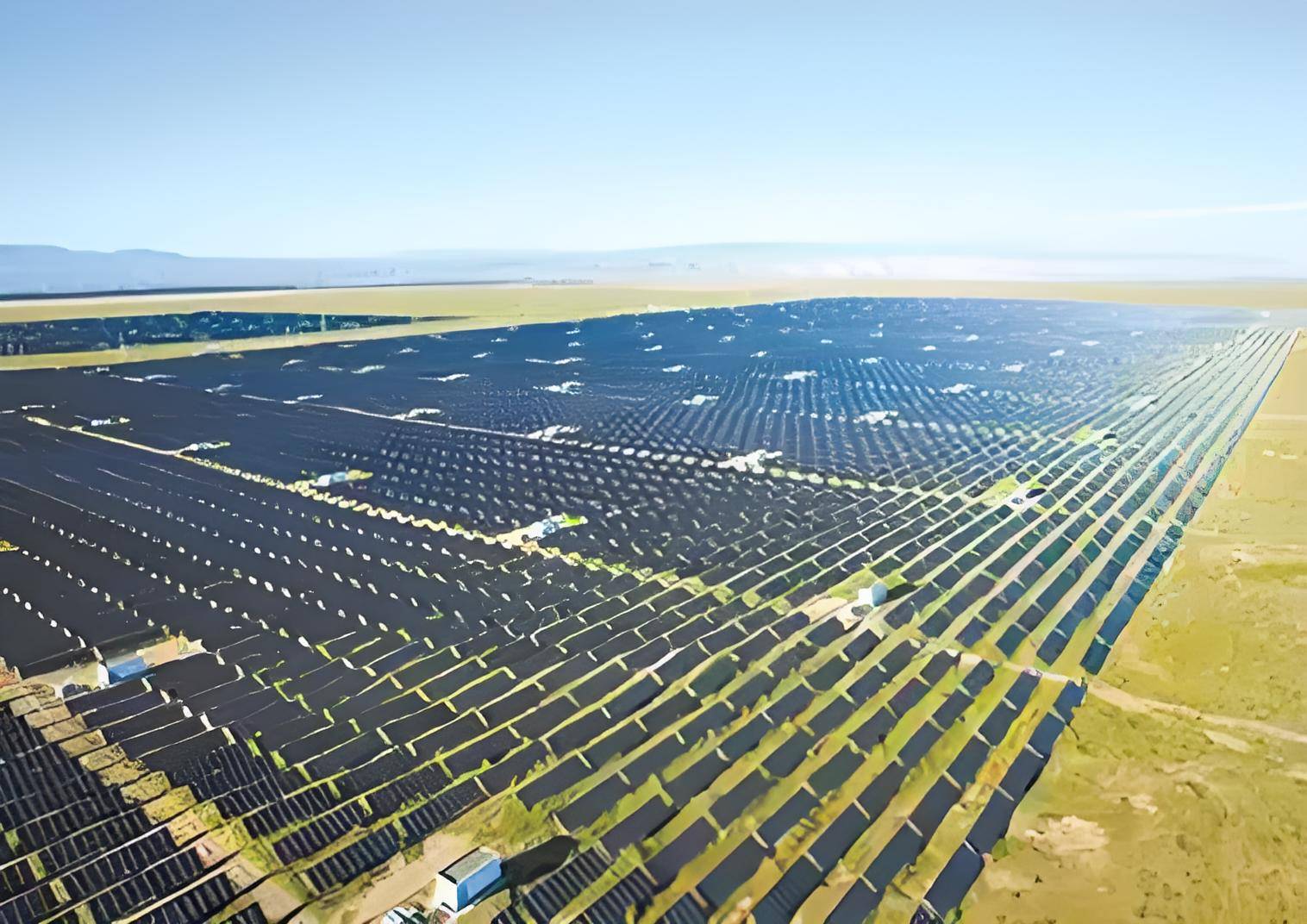
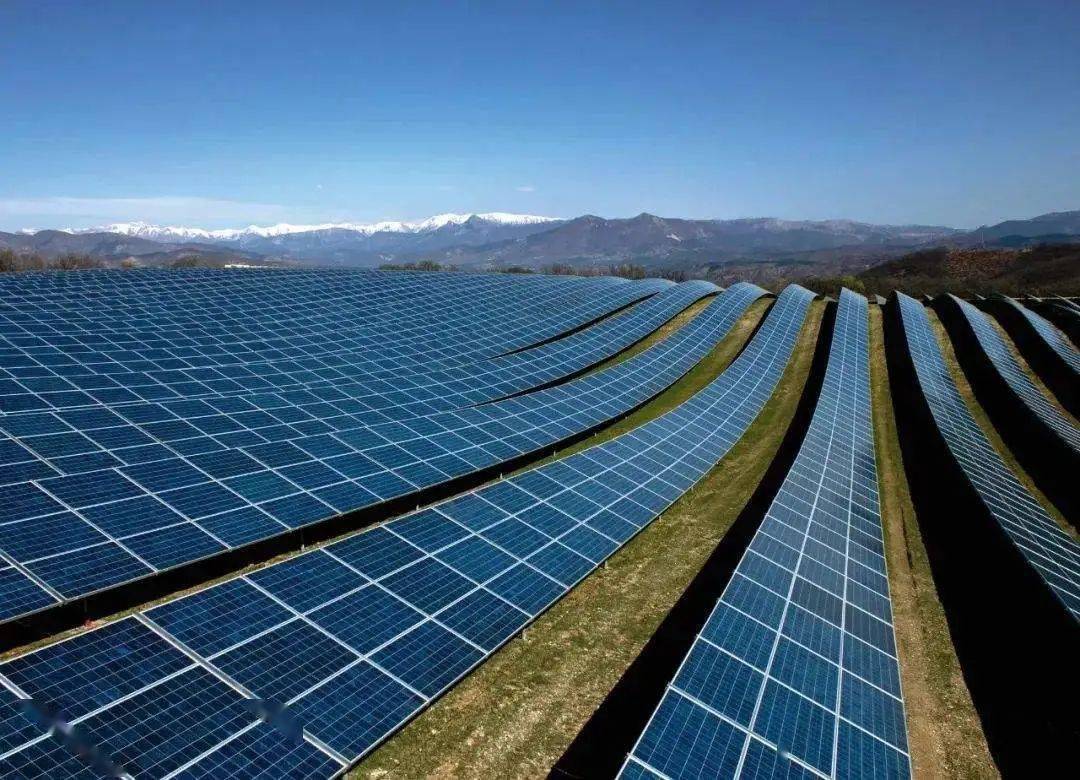
The principle of solar power can be told in a sentence: sunlight strikes a semiconductor material and knocks its electrons loose, forming a current. A cell the size of a palm, dozens strung together and sealed with glass and encapsulant film, is a solar module; thousands of modules laid out on a rooftop or wasteland make a solar power plant. It has no moving parts, burns no fuel, and generates power whenever the sun is out.
It sounds wonderful. But for seventy years, photovoltaics was stuck in the same place: too expensive. How much electricity a cell can generate, how high its conversion efficiency is — that is a technical question; whether the electricity it generates is cheap is another question — a manufacturing question. The cost of building a solar plant — the modules themselves, plus mounting, inverters, cabling, land and construction — every item costs money; spread all of it over the total electricity the plant will generate across its twenty or thirty years, and the number you get is called the "levelised cost of electricity". Whether solar can replace coal power has never depended on a world efficiency record in a laboratory, but on whether this cost per unit can be pushed below the cost of burning coal.
This turns the contest of photovoltaics into a long march of cost.
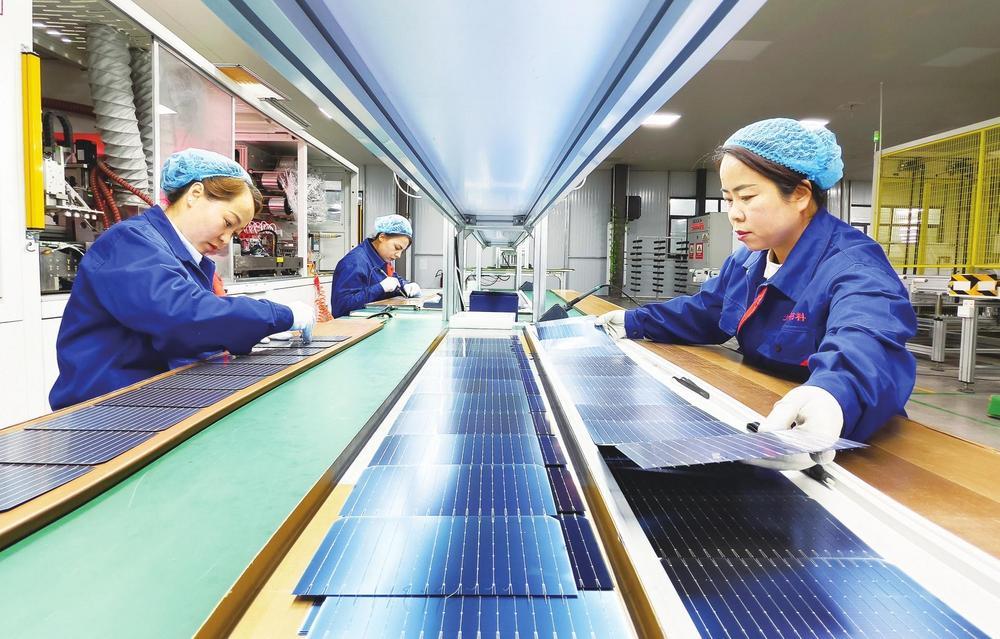
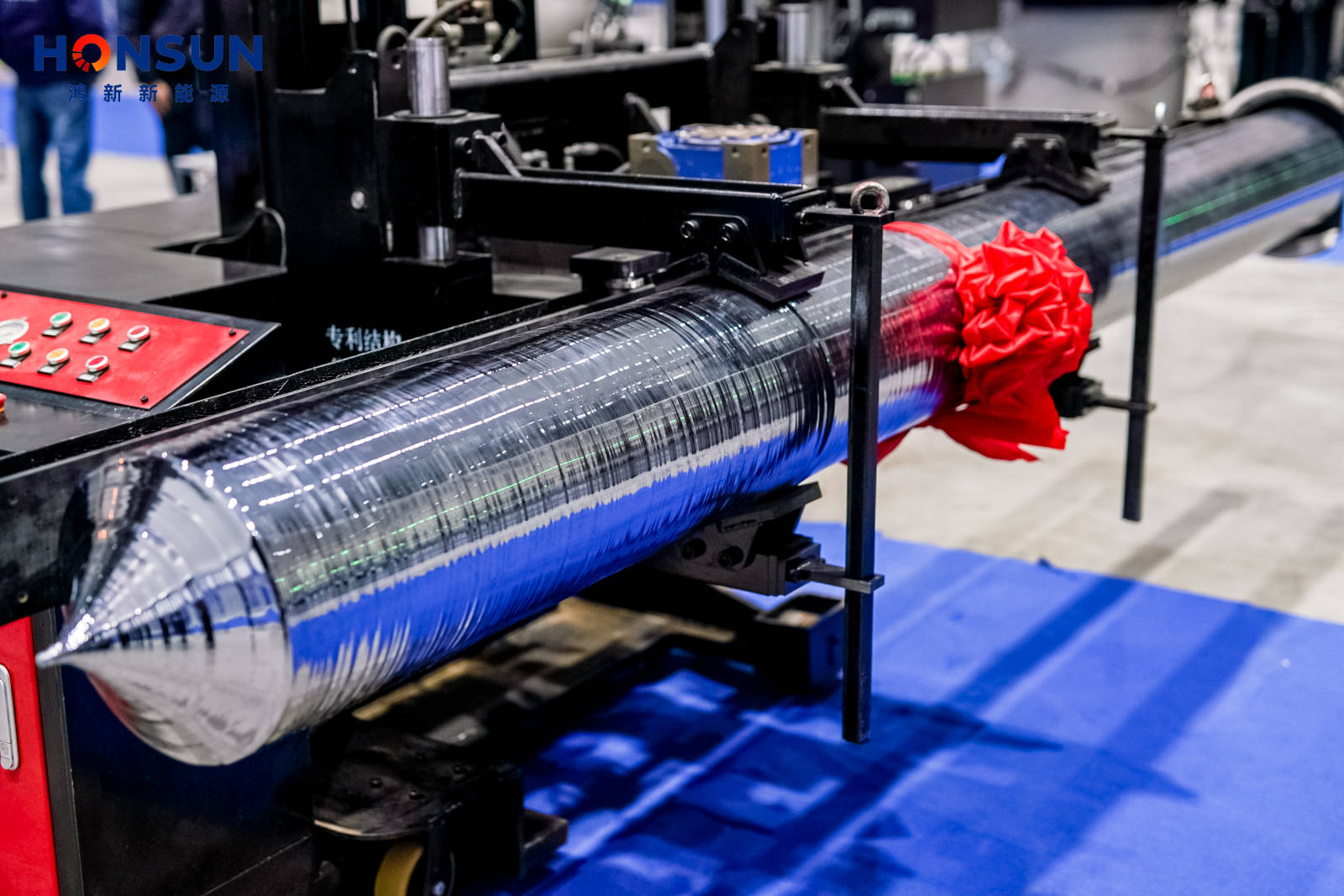
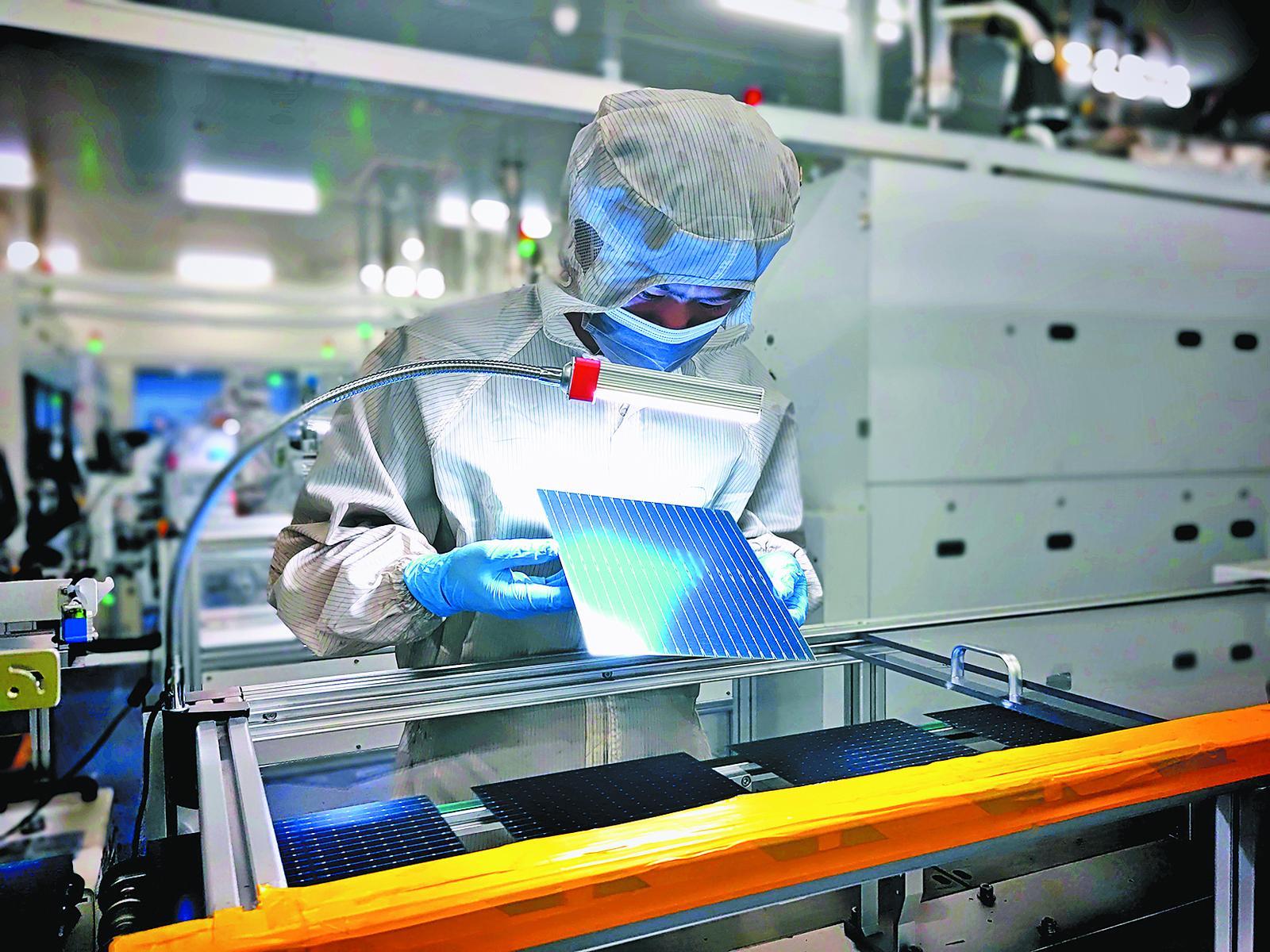
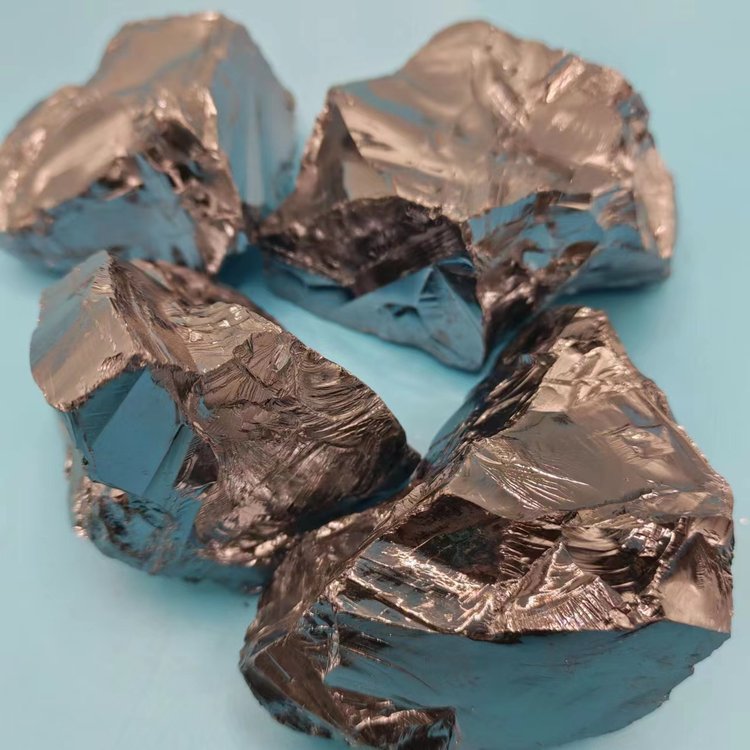
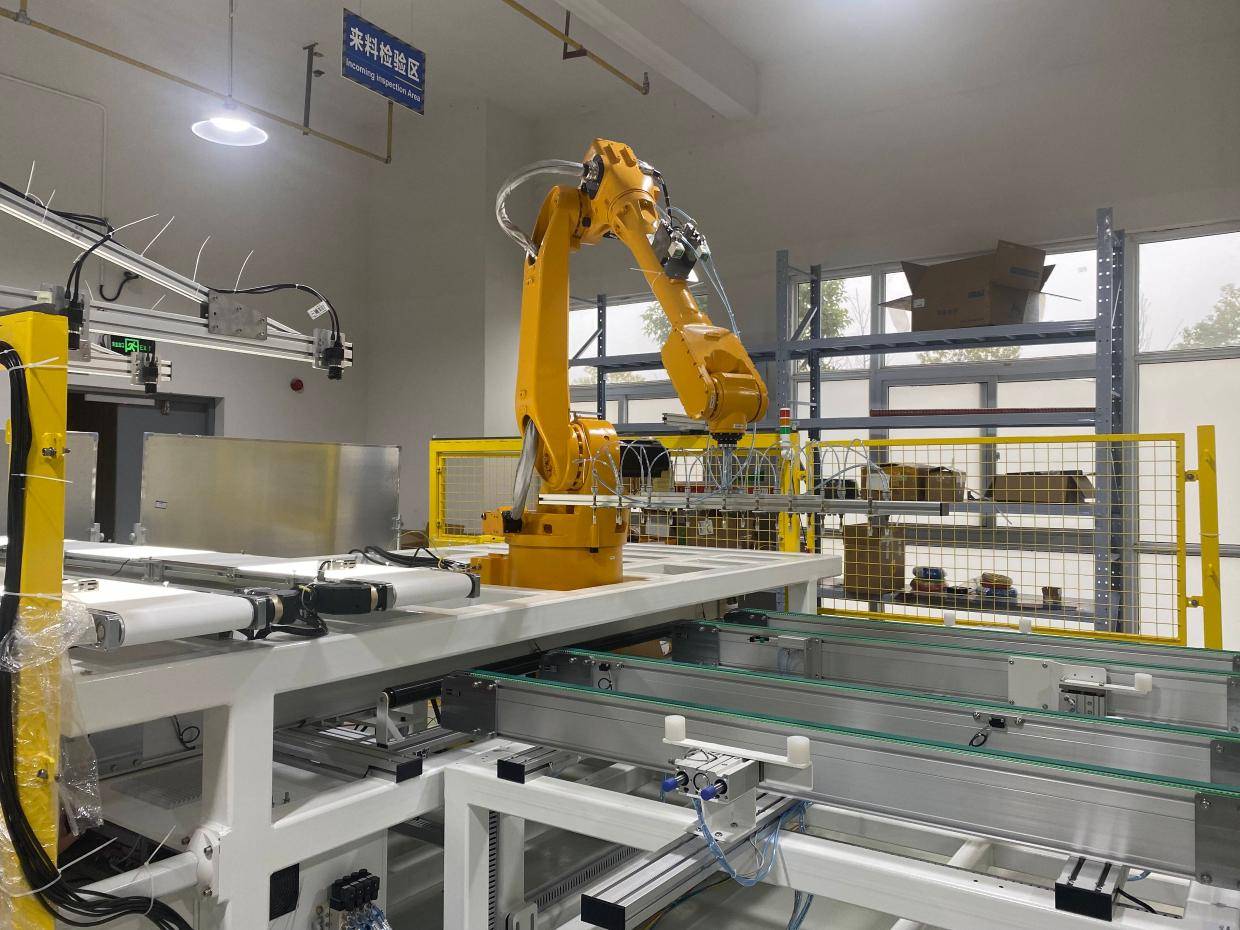
And a long march of cost tests not a single point of technology, but a whole industry chain. Behind a single module: at the very top, quartz sand must be smelted in an electric furnace into industrial silicon, then purified into polysilicon at a purity of 99.9999999% — a step that devours electricity and tests a country's chemical-engineering depth; below that, polysilicon must be pulled into monocrystalline silicon rods and sliced into thin wafers; wafers become cells; cells are soldered into strings, stacked with solar glass and encapsulant film, and laminated into modules. And that is only the main chain — alongside it are glass, encapsulant film, silver paste, frames, backsheets, and the inverter that turns direct current into alternating current and feeds it into the grid. This chain calls upon chemicals, materials, precision manufacturing, power electronics — the better half of an industrial system.
Each link shaving off a little cost, lifting efficiency a little, multiplied together, is one more drop in the levelised cost. The solar manufacturing industry has a famous "experience curve": for every doubling of cumulative output, the module price falls on average by about a quarter. Driving the price of sunlight down has never relied on a single flash of inspiration, but on grinding this whole chain down, one percentage point at a time, over more than twenty years. It is a dull, drawn-out kind of effort — unglamorous, and the hardest of all to replace.
And it is precisely because of this that photovoltaics, which looks low-threshold — simple in principle, with equipment you can buy — is in fact difficult exactly in this long march of cost. Many countries can make a solar module; the countries that can run every segment of this chain at the world's lowest cost are very few. Whether a country can win in photovoltaics is tested not by a single breakthrough, but by the overall depth and coordination of its industry chain.
This is just as true of shipbuilding, of machine tools, of power batteries: on the surface the contest is over a single module, but in reality it is over how complete the industrial system behind that module is. Photovoltaics was invented in the United States in 1954; afterward, the centre of the industry lay first in the United States, then in Japan, and was carried for a stretch by Germany's subsidy policy. But the long march that truly drove the cost of solar down — its main character is China.
And China's starting position was so low it scarcely looked like a main character.
II. Three Ends Abroad: China's First Lap in Solar
Photovoltaics was not invented by China — this must be said clearly first.
The silicon solar cell that turns sunlight into electricity was born in 1954 at Bell Labs in the United States. For decades afterward, the technology and the industry were led first by the United States, then taken up by Japan — Japan launched its "Sunshine Project" as early as 1974, and by 2004 Japanese firms such as Sharp, Sanyo and Kyocera made more than half of the world's solar cells. The one that truly lit the first large-scale civilian market was Germany: in 2000, Germany passed its Renewable Energy Sources Act, which required the grid to give priority to renewable electricity and to pay for it at a price far above the market rate, locked in for twenty years. This "feed-in tariff" made installing solar a reliably profitable thing for the first time, and Germany's market caught fire; a few years later it was Spain's turn. A huge market — though one located in Europe — had appeared out of nowhere.
China was a latecomer. But China's entry was earlier than many remember, and more dramatic.
The protagonist of the story is Shi Zhengrong. A native of Zhenjiang, Jiangsu, he went to Australia to study in the late 1980s, under Martin Green at the University of New South Wales — the scientist called "the father of modern photovoltaics", who set a string of world records for silicon cell efficiency, and whose PERC cell technology would later go into more than 90% of the world's solar modules. Shi Zhengrong was Green's twelfth doctoral student, finishing his degree in the shortest term allowed, then spending years on solar research in Australia. In 2001, he returned to China with more than a dozen solar patents, and with the backing of the Wuxi municipal government founded Suntech. Eight local state-owned enterprises put up six million US dollars between them, and Shi contributed technology valued at two million — eight million dollars, a 10-megawatt production line, twenty people: China's first solar company of any scale opened its doors like this.
The years that followed happened to catch the global solar boom. The subsidies of Germany and Spain conjured up enormous demand, and China's low-cost manufacturing caught it exactly. Suntech shot up: in December 2005, it listed on the New York Stock Exchange, becoming the first private Chinese company to do so, raising about 400 million dollars; barely a month after listing, Shi Zhengrong's personal worth passed two billion dollars, making him China's richest man in 2006. It was a signal with great force: a scientist who studied photovoltaics had, on the strength of a clean-energy technology, become the richest person in a country. At almost the same time, Yingli in Baoding, Trina in Changzhou and LDK in Xinyu, Jiangxi all charged out, each heading for an overseas listing. A third-tier Jiangxi city called Xinyu was pushed onto the stage of international capital by a single solar company.
The speed of the growth was astonishing. In 2003, the solar modules China made still accounted for less than 2% of the global market; by 2007, that share had leapt to about 27% — in just four years, China went from a near-negligible role to the world's largest solar manufacturer. An industry grew, on all but blank ground, at a pace visible to the naked eye.
In those years, Chinese solar looked unrivalled. But the prosperity of this first lap was hollow underneath. There was a phrase, current in the industry at the time, that pinned its weakness exactly — "three ends abroad".
The first end, the raw material, was abroad. The source of a solar module is polysilicon, and around 2005 the polysilicon China made itself was not even 1% of global demand; more than 95% was imported, mainly bought from two or three companies in the United States and Germany. The second end, the market, was abroad. More than 95% of the modules China made were sold overseas — by 2007, Chinese modules already held half the global market, but about 98% of them went to Europe. The third end, the equipment, was abroad. To build a cell production line, the core equipment — the furnaces that pull monocrystalline silicon, from Germany; the coating machines, from the United States — was almost entirely imported.
Raw material, market, equipment — the three most vital things were all held in others' hands. It meant that this machine called Chinese solar, however loudly it roared, did not have a single switch in its own grip. Let polysilicon rise in price, let the overseas market change its face, let the equipment be cut off — and it could stop at any time. As dazzling as the prosperity was, that was how dangerous this structural fragility was.
This was no idle worry. In just two or three years, all three ends tightened at once.
III. The Darkest Hour: A Near-Fatal Crisis
The crisis began at the raw-material end.
From 2004, the world was severely short of polysilicon. Solar demand surged, but polysilicon capacity — a plant takes several years to build — simply could not keep up. So the price went mad: by the spring of 2008, the spot price of polysilicon had climbed to a historic peak of about 475 US dollars per kilogram — in renminbi, more than 3,000 yuan a kilogram. In those years a phrase ran through the industry: "he who holds the silicon is king". To lock in supply, Chinese solar companies signed long-term contracts of up to ten years with overseas silicon makers, at sky-high prices.
Then the bubble burst.
In the autumn of 2008, the global financial crisis erupted; financing for solar plants in Europe abruptly tightened, and demand collapsed. The price of polysilicon plunged straight down from over 400 dollars a kilogram, shedding nearly 90% in a single year. Those sky-high long-term contracts that were supposed to have locked in the "king" became, overnight, a noose around the neck — Suntech paid more than 200 million dollars in penalties to escape one such contract.
Then came two heavier blows.
The first: the overseas-market end closed its door. At the end of 2011, led by an American company, several US solar manufacturers jointly petitioned the US government, accusing Chinese solar of "dumping" on the US market and of receiving government "subsidies". In 2012, the United States issued a final ruling of anti-dumping and countervailing duties — the "double remedy" — on Chinese solar products, imposing steep tariffs; the anti-dumping rate ruled against Suntech was above 31%. At almost the same time, the European Union opened a case of its own. The case involved more than 20 billion euros of Chinese exports to Europe — the largest anti-dumping investigation in EU history; the EU at one point threatened tariffs of more than 47%, and in the end the two sides settled with a "price undertaking" — Chinese firms pledging an export price no lower than a set floor, and a yearly quota. Whatever the outcome, that European market, which had once carried 95% of Chinese solar's sales, was no longer wide open.
The second blow was domestic capacity. From 2011, polysilicon prices crashed a second time; and amid the "he who holds the silicon is king" frenzy of the preceding years, the silicon plants and module plants that China had rushed to build all at once were now in severe oversupply. Raw-material collapse, the overseas market shut, capacity glut — three things came down at once. The price of Chinese solar modules fell from about 3 euros per watt in 2008 to 0.4 euros per watt within a few years, a drop of more than 85%. The whole industry fell from the sky to the ground.
The most emblematic scene happened to Suntech. This once-largest solar company in the world, the first banner of Chinese solar, in March 2013 was unable to redeem a maturing convertible bond worth more than 500 million dollars — it became the first large Chinese company to default on an overseas bond. Days later, creditor banks petitioned the court to put Wuxi Suntech into bankruptcy reorganisation. Shi Zhengrong left in disgrace. From listing on the New York Stock Exchange and topping the list of China's richest, to the company's bankruptcy and his own exit, was no more than seven or eight years.
The rise and fall of Suntech was almost a miniature of Chinese solar's first lap: on the strength of overseas markets and overseas capital, it charged to first in the world at an astonishing speed; and because its foundations were all in others' hands, when the external environment changed its face it had almost no power to strike back. The fall of an industry's first banner forced everyone still standing to think a question over again — how, exactly, should this solar contest be fought?
The one to fall was not only Suntech. The former "polysilicon king", LDK of Xinyu, Jiangxi, also collapsed under its debts. LDK had thrown itself headlong into polysilicon and wafers, and the price crash was almost a direct hit. Xinyu — a small Jiangxi city that had once shone because of LDK — even drew on its local public finances to repay maturing loans for the company, and still could not pull it out of the mire. In the end LDK's three main subsidiaries went into bankruptcy reorganisation, with combined debts of more than 40 billion yuan, and creditors recovered only about 20%.
Widen the view to the whole industry, and the scene is more sobering still. By the end of 2012, China's ten largest solar companies owed, in total, close to 28 billion US dollars, with an average debt-to-asset ratio above 75%; banks later disclosed that 21% of their solar loans had turned bad. An industry once held in high hopes had very nearly dragged itself, and part of the financial system, over the cliff together.
In tracing the growth history of Chinese manufacturing, the Tianxia Gongchang Industrial Research Institute has repeatedly seen a moment like this: an industry that has charged too fast, on foundations too hollow, struck to the brink of death by a single heavy external blow. Such a moment is both a disaster and a brutal physical examination — it exposed, thoroughly, the root illness that high growth had been covering up: the "three ends abroad".
After the crisis, those who survived understood one thing: if this contest was to be fought again, the switches of raw material, market and equipment could no longer be left in others' hands. Those three ends had to be brought home.
IV. Bringing the Three Ends Home: Rebuilding and the Comeback
The first end brought home was the raw material.
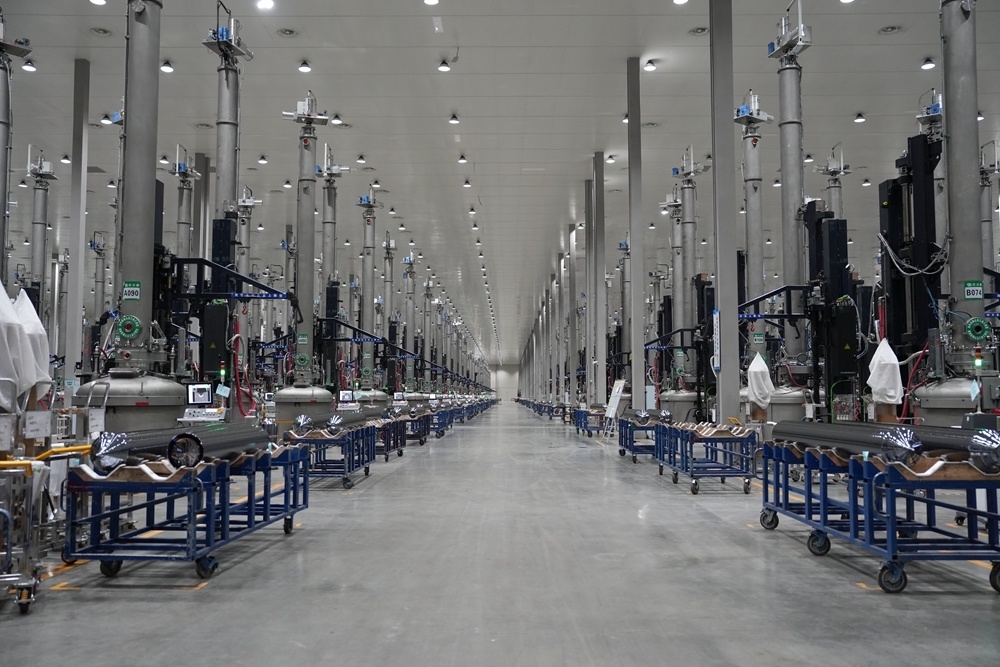
Polysilicon looks like a chemical product, but its threshold is high — purifying silicon to 99.9999999% takes both technology and an enormous amount of electricity. Chinese companies used two hands. One was technology: gnawing through the mainstream "modified Siemens process" and localising it step by step; later, GCL opened another path, "granular silicon", pushing energy use and cost down a further notch. The other hand was location: building polysilicon plants in Inner Mongolia, Xinjiang, Sichuan and Yunnan — where the electricity is the cheapest in the country, and electricity is the single largest item in the cost of polysilicon. With both hands at work, China's polysilicon output reached first in the world as early as 2012; today, more than 90% of the world's polysilicon is made in China. The end that had once gripped China by the throat was, in reverse, now gripped by China.
But what truly transformed Chinese solar was another thing: a technological wager made almost against the consensus of the whole industry.
At that time, there were two routes for making wafers: polycrystalline and monocrystalline. The polycrystalline wafer was cheap, and the absolute mainstream; the monocrystalline wafer had higher conversion efficiency, but cost more, and was treated as a "high-end niche". Around 2012, almost everyone in the industry bet on polycrystalline.
Only one company did not follow — LONGi, of Xi'an.
LONGi's founder, Li Zhenguo, had been making monocrystalline silicon in Xi'an since 2000, and was set on this road. His judgement was: the efficiency ceiling of monocrystalline is higher, and what makes it expensive is mainly the manufacturing; bring the cost of crystal pulling and slicing down, and monocrystalline would sooner or later be the better deal. Around 2013, he went almost door to door, calling on downstream cell and module makers, telling them the future of monocrystalline — and almost no one believed him. In 2014, while most of the industry was still watching, LONGi switched all of its slicing machines to diamond-wire saws. This way of cutting was four or five times faster than traditional slurry sawing; the wafers could be cut thinner, with less loss, and the cost fell at once.
The facts came down on Li Zhenguo's side. In 2017, diamond-wire cutting spread across the whole industry — this single technology, whose adoption LONGi drove, was later estimated to save the entire industry about 12 billion yuan a year; and it was in that very year that monocrystalline module shipments surpassed polycrystalline for the first time. In just four years, the share of monocrystalline in the Chinese market climbed from under 20% to 90%. A contrarian wager once mocked by peers became, in the end, the moat of LONGi — and of Chinese solar. This scene is exactly like the Chinese companies' bet on lithium iron phosphate in power batteries — when everyone was walking one way, someone chose another road, and walked it through.
The efficiency of the cell itself also climbed, notch by notch, in Chinese companies' hands. From the early aluminium back-surface-field cell, to PERC, to today's TOPCon and heterojunction — each generation of technology made the same wafer generate more electricity. The pace of this iteration has visibly quickened in recent years: PERC had barely settled in as the mainstream when the more efficient TOPCon took the baton, and by 2024 TOPCon already accounted for about 60% of the world's cell technology, knocking PERC off the top spot. Each changeover means the same plant, the same number of modules, generates a slice more power. And the records, too, were rewritten again and again in Chinese companies' hands. In 2019, LONGi's bifacial PERC cell broke 24% efficiency; at the end of 2022, it pushed the conversion-efficiency record for silicon cells to 26.81%, breaking a world record held for years by a Japanese company — and Martin Green, "the father of modern photovoltaics", publicly acknowledged it as the highest in the world at the time. A country that once had to import even its equipment was now beginning to define the efficiency ceiling of the industry.
Bringing the market end home relied on opening up domestic demand. China used policies such as the "Top Runner programme" to turn the market's purchasing power into a lever forcing technological upgrade — demonstration projects had to use higher-efficiency modules, or be left out. And it used the roll-back of subsidies to wean companies off: a single new policy in 2018 abruptly tightened subsidies, weeding out the firms that survived on them and forcing the survivors to compete on real strength. By 2021, China's newly built utility-scale solar plants received no more central subsidy, and formally entered "grid parity" — solar electricity, with no subsidy, was now cheaper than coal power on its own. An industry that had once been able to live only on a policy transfusion had, at last, learned to make its own blood.
Raw material, market, equipment — the three ends were brought home one by one. And in this process, the number that had always weighed on solar — the levelised cost of electricity — dived. The price of a module fell from about 4 US dollars per watt around 2007 to roughly 0.10 dollar per watt today; the silicon needed to make one watt of module dropped by nearly 90% over twenty years. Every iteration of technology, every round of scale expansion, stamped down once more on this cost curve.
Rebuilt, Chinese solar was no longer the same industry it had been before the crisis. Before the crisis it was an "assembly workshop" pieced together from overseas markets, overseas raw material and overseas equipment — large in scale, shallow in foundation; rebuilt, it grew this industry chain, from end to end, segment by segment, under its own feet. The same "first in the world" — but this time, the first had roots beneath it.
The price of sunlight was driven down, inch by inch, exactly like this.
V. The Network of Chinese Factories Behind a Single Module
Here, we can return to the judgement made at the start: the outcome of the solar contest has never lain in a single cell, but in the industry chain behind that cell.
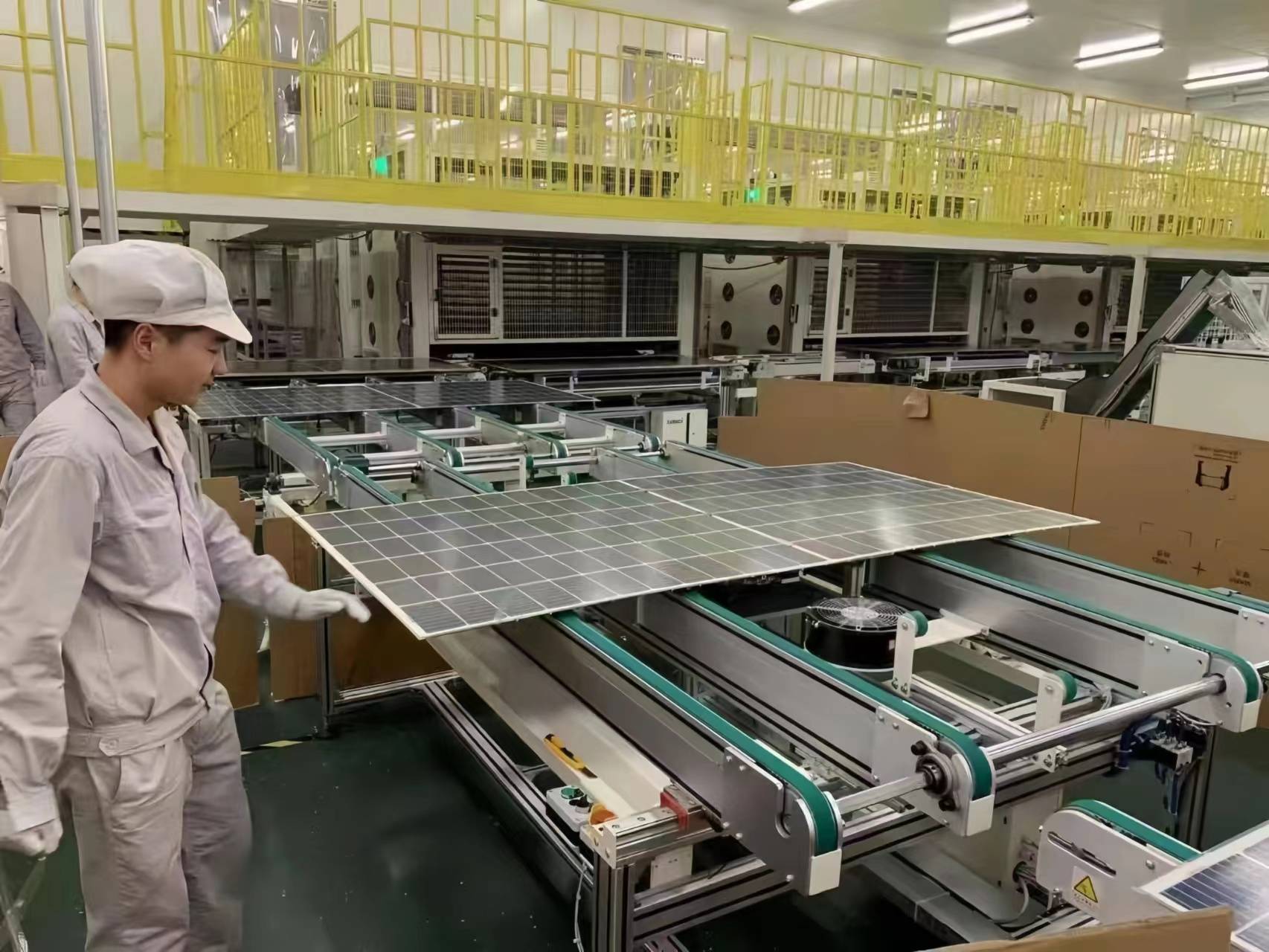
Spread this industry chain out, and the main chain is clear — four segments: polysilicon → wafer → cell → module. But the main chain alone is far from enough. To make a module, there must also be solar glass for the face, encapsulant film to bond and seal the cells, silver paste for the conductive electrodes, an aluminium frame and a backsheet for protection; for a plant to connect to the grid, there must be an inverter to turn the direct current the modules generate into the alternating current the grid uses. This is a network far wider than the four-segment main chain.
Where China is formidable is this: this network — almost every node of it — China has taken.
For the four main segments, China's share of global output in 2024 was: polysilicon about 93%, wafers about 97%, cells about 92%, modules about 86%. In other words, of every hundred wafers in the world, ninety-seven were sliced in Chinese factories. Look at the auxiliary materials: solar glass — China holds about 90% of global capacity; encapsulant film — a single company from Hangzhou supplies about half the world; silver paste — China's output is more than 90% of the global total. The inverter is the same — Sungrow of Hefei, started by a university teacher who went into business in 1997, had shipments in 2024 of about a quarter of the world's, first in the world for ten years running. From a grain of quartz sand to a grid-connected power plant, almost every part along this chain China can make itself, and make most cheaply.
In drawing the map of China's solar industry, what the Tianxia Gongchang Industrial Research Institute sees is exactly such a network, woven densely across several industrial clusters. Jiangsu is the most complete patch of it: from the start of Wuxi Suntech, Yancheng, Changzhou, Suqian and Huai'an now link into a solar cluster with an output value of more than 370 billion yuan in 2023 — over one-fifth of the national total; Changzhou, a single city, gathers more than ninety companies along the solar chain, covering nearly everything from glass and encapsulant film to cells and modules, and is called the "new-energy capital". The most electricity-hungry segments — polysilicon and wafers — gathered in Inner Mongolia, Xinjiang, Sichuan and Yunnan, where the electricity is cheapest. LONGi's headquarters are in Xi'an, the leader in inverters is in Hefei.
The origins of these industrial belts differ, yet they all tell the same thing. Xinjiang, on the strength of abundant and cheap electricity, gathered about half of the world's polysilicon capacity; Tongwei, originally a Sichuan company that made animal feed, followed this chain all the way down and is today one of the world's largest polysilicon makers, having also strung silicon, cells and modules into one line. Wherever a segment of the chain lands, there it grows a fresh batch of factories, a fresh industrial face for a city. Not one of these industrial belts was planned out of thin air on a drawing board; each grew of itself, on real soil, one factory leading another.
Behind a single solar module stand industrial-silicon plants, polysilicon plants, crystal-pulling and slicing plants, cell plants, glass plants, encapsulant plants, silver-paste plants, frame plants, inverter plants — hundreds upon hundreds of factories, distributed across these industrial belts, coordinating and supplying blood to one another. That China's solar can make sunlight the cheapest electricity in the world has never relied on any single star company, but on this densely woven network of factories. This, too, is what is hardest for others to replicate about this industry: you can buy a module away, you can poach a cell factory away, but you cannot buy away, nor move away, an industrial network spread across an entire country.
To be fair, this network still has stitches not yet filled in — the high-purity silver powder used to make silver paste, for instance, China still imports a considerable share of. But on the scale of the whole network, gaps like this are now few. It is precisely the coordination of this network — every segment running at the world's largest scale and lowest cost — that has pushed the levelised cost down to a place others can hardly reach. Whether a module is cheap has never been one factory's affair; it is the answer this whole network works out, together.
VI. The Cheapest Electricity
Seventy years on, the report card photovoltaics has handed in can now be spread out and read.
The hardest single number is cost. According to the International Renewable Energy Agency, the global average levelised cost of solar power was about 0.4 US dollars per kilowatt-hour in 2010; by 2024, it had fallen to about 0.04 dollars — in fourteen years, a fall of 90%. In 2024, more than 90% of the world's newly commissioned renewable projects already generated power more cheaply than the cheapest new fossil fuel; and a newly built solar plant generated power, on average, about 40% cheaper than the cheapest fossil fuel. The luxury that once belonged only in space has become one of the cheapest forms of electricity in human history. The one that drove this cost curve all the way down is China's solar industry chain — the world's largest in scale, and the most complete.
The weight of this shift is worth pausing to take in. Humankind took more than a century to bring electricity into every household; but generating electricity has always meant first burning something — coal, oil, gas. Photovoltaics, for the first time, lets "generating power" rely only on sunlight falling on open ground, burning not a gram of fuel, giving off not a wisp of smoke. And once its cost is pushed below the cost of burning coal, it is no longer merely an "environmental choice", but a deal that adds up plainly on the books. A cleaner electricity has, at the same time, become a cheaper electricity — this is one of the most important changes in energy of the past seventy years. And a key link in bringing that change about is China's industry chain, the one that drove the cost all the way to the floor.
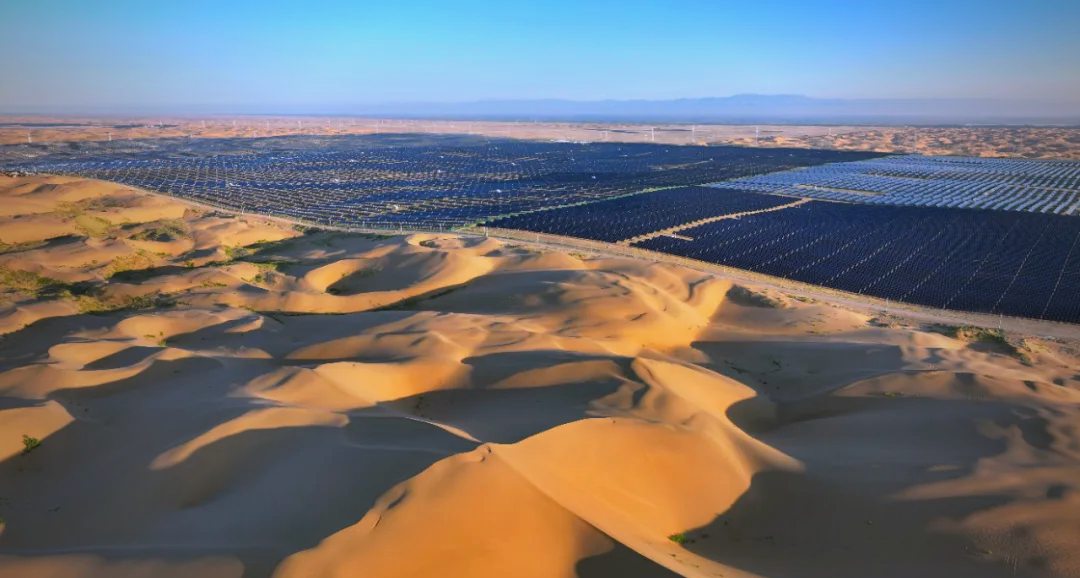
The other number is scale. In 2024, the solar modules China produced were exported in a volume of more than 230 gigawatts, about 80% of the global market; China's solar module output, from a single country, far exceeded the entire world's newly added installed capacity that year. Modules made in China have been laid out on land from Europe to the Middle East, from Pakistan to Latin America — in many developing regions, sunny yet long short of power, it is precisely these cheap Chinese modules that, for the first time, make "electricity one can afford" possible. A module that comes off the line in Jiangsu or Inner Mongolia may end up laid out in a Middle Eastern desert, turning sunlight that has shone there for millions of years into power that hospitals and schools can afford — this is the part of China's industry chain that spills over to the world.
To be fair, this road is no level highway. At present, China's solar capacity has expanded too fast, and a severe overcapacity has appeared; module prices have fallen to a point where the whole industry runs at a broad loss — in the first half of 2025, several leading module companies lost, in total, well over a billion US dollars. Overseas trade barriers are rising too: the United States has sharply raised tariffs on Chinese solar products and is tightening the door on imports ever further, and the European Union is using new rules to leave room for local manufacturing. These are real difficulties. But they are difficulties only a "front-runner" meets — slopes to climb on the road ahead, not reasons to turn back. The answer Chinese solar companies have given is to take this industry chain abroad — building, one after another, new factories in the Middle East, Southeast Asia and Europe.
And the fact that solar has become cheap means far more than the success or failure of one Chinese industry. In many sunny regions that have long lacked power, expensive electricity was once the ceiling on development; when the price of a module falls to today's level, these places have, for the first time, the chance to use sunlight to light up hospitals, schools and factories. In driving the cost of solar down, China has also, along the way, pushed clean, cheap electricity within reach of more people.
Looking back over these twenty-odd years, one thread is especially clear. The real ground Chinese solar stands on has never been the efficiency record of some single cell, but the thickness of the factory network behind it. In its long-term tracking of Chinese manufacturing, the Tianxia Gongchang Industrial Research Institute has always held one judgement: to measure a country's industrial strength, one should not fix only on its single brightest product, but look at how many factories, behind that product, are supplying blood to one another. That solar can make sunlight the cheapest electricity relies not on one company's laboratory, but on the meshing of tens of thousands of factories, from industrial silicon to inverters, along one and the same chain.
Conclusion: The Price of Sunlight Has Been Driven Down by One Country
Now we can return to the question at the start: how did a country that had to import even a kilogram of polysilicon come, in just over twenty years, to make sunlight the cheapest electricity in the world?
The answer is hidden in every segment of the chain across these twenty-odd years.
It is the technology Shi Zhengrong brought back from Australia in 2001, and that first production line in Wuxi that started on eight million dollars. It is the weakness of "three ends abroad", struck clean through by the polysilicon crash of 2008 and the US and EU "double remedy" — Suntech bankrupt, LDK collapsed, the darkest hour of Chinese solar. It is the rebuilding after the crisis, that brought the three ends — raw material, market, equipment — home, one by one. It is the judgement LONGi made when almost everyone was betting on polycrystalline — to bet on monocrystalline, and to wager on diamond-wire cutting. It is Chinese companies rewriting the efficiency record for silicon cells, from the laboratory all the way to the highest in the world. It is the hundreds upon hundreds of factories, in the industrial belts of Jiangsu, Inner Mongolia and Xi'an, supplying blood to one another from industrial silicon to inverters.
How low the price of sunlight can be pushed depends on how deep runs the industry chain that turns sunlight into electricity. China made solar the cheapest electricity in the world — and what it won was not a single cell, but the whole chain of polysilicon, wafers, cells, modules, glass, encapsulant film and inverters, grown segment by segment into its own industrial clusters — grown into a factory network that others can neither buy away nor move away.
In its long-term tracking of Chinese manufacturing, the Tianxia Gongchang Industrial Research Institute has seen, again and again, one plain rule: whether a product can have its cost driven down, its scale built up, depends not on any single flagship company, but on the thickness of the factory network behind it. China today — among the real factories identified and confirmed on Tianxia Gongchang alone, there are 4.8 million. That a module comes off the line and is laid out on a desert on the other side of the world, turning the sunlight there into electricity people can afford, relies on the coordination, all along one chain from industrial silicon to inverters, of tens of thousands among those 4.8 million factories.
Seventy years ago, solar electricity was so expensive it belonged only in space; today, it is among the cheapest electricity on Earth. In the twenty-odd years that drove this cost curve all the way down, what this country did was to write "photovoltaics", from a latecomer that could not even control its own raw material, into a card now firmly held in its own hand.
Sunlight knows no borders; but its price has been driven down by one country — and that is the gift China's manufacturing has left for the world.
Data Sources and Principal References
This article was compiled and analysed by the Tianxia Gongchang Industrial Research Institute, drawing on the factory and industrial-chain data of the Tianxia Gongchang industrial platform together with Chinese and international public materials, official information and reports from authoritative institutions. The principal data and factual sources include:
- The China factory database and industrial-cluster data of the Tianxia Gongchang industrial platform (www.tianxiagongchang.com)
- The International Energy Agency (IEA), including its Solar PV Global Supply Chains report
- The International Renewable Energy Agency (IRENA), including its Renewable Power Generation Costs reports over the years
- The China Photovoltaic Industry Association (CPIA), for industry roadmaps and output-and-sales statistics
- Bernreuter Research, for polysilicon price and capacity data; the Fraunhofer ISE Photovoltaics Report; the ITRPV technology roadmap
- Official rulings of the US Department of Commerce and the European Commission on the anti-dumping and countervailing cases against Chinese solar products
- Relevant reports from authoritative Chinese and international media including Xinhua News Agency, People's Daily, Bloomberg, Reuters and PV Magazine
- Public annual reports and official materials of LONGi, Tongwei, GCL, Sungrow and other enterprises