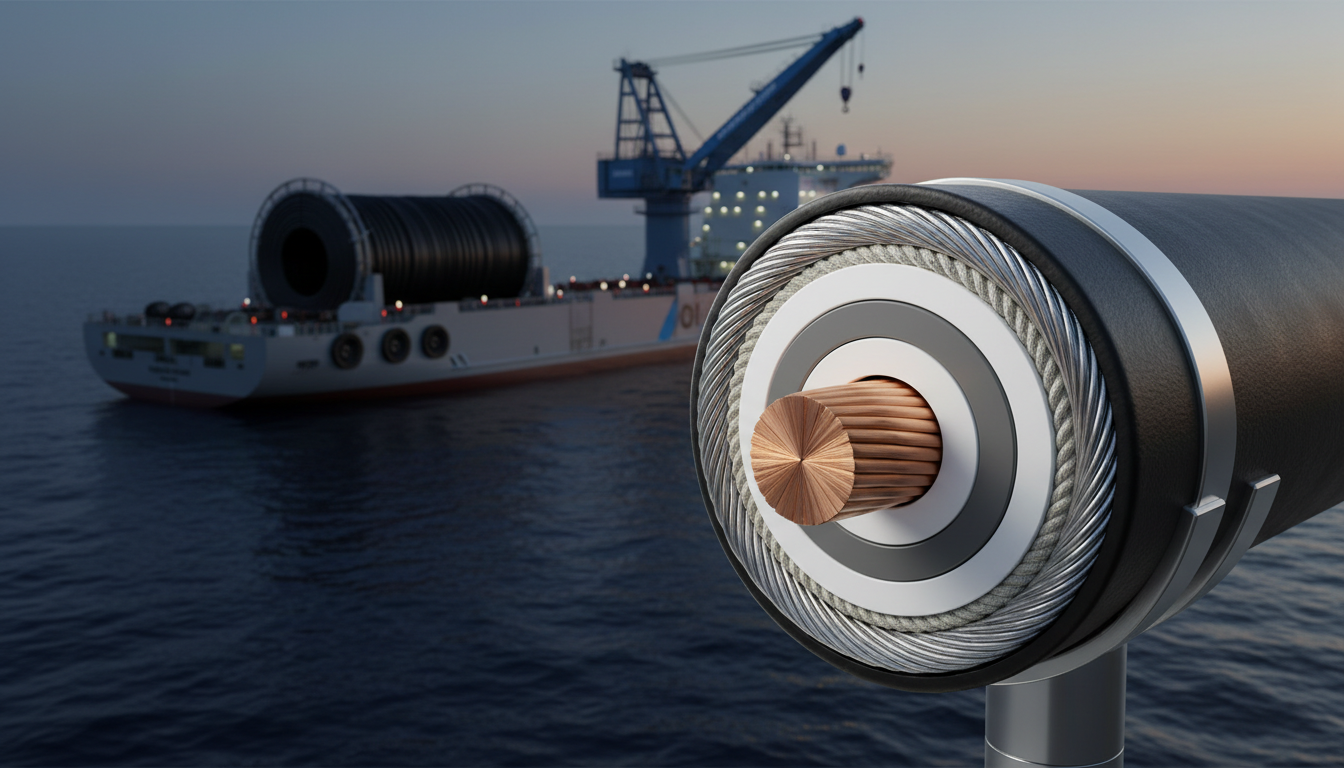

China Submarine Cable 2026: Dual Drivers from Offshore Wind and Cross-Sea Interconnection
Published: June 2026 Author: Industrial Research Institute
Executive Summary
In 2025, global submarine cable orders broke historic highs. In the European North Sea alone, more than 20 HVDC cross-sea interconnection projects are simultaneously under construction; Dutch grid operator TenneT alone signed contracts totaling approximately EUR 23 billion for North Sea offshore grid connections in the Dutch and German North Sea. Meanwhile, China's offshore wind sector entered the simultaneous construction peak of four 1 GW-class clusters — Qingzhou (Yangjiang), Fanshi (Yangjiang), Dafeng (Jiangsu), and Donggang (Dandong). In 2025, China added approximately 14–18 GW of grid-connected offshore wind capacity, with cumulative capacity exceeding 44.2 GW, ranking first globally for the fifth consecutive year.
Submarine cables sit at the most sensitive node of the value chain in this high-cycle. On one end they connect 14–20 MW offshore wind turbines via 66 kV array cables; on the other end they step up via offshore substations to 220/330/500 kV AC or ±320/±525 kV DC for cross-sea transmission. They also serve as the physical channel for cross-province, cross-sea, and cross-border grid interconnection, anchoring large-scale renewable integration, regional power balancing, and energy security. From a manufacturing perspective, 500 kV+ XLPE-insulated cables, ±525 kV extruded VSC-HVDC cables, and dynamic cables for floating offshore wind all entered commercial validation or first engineering delivery between 2024 and 2026 — the "crown jewel" category of high-end manufacturing.
This report dissects China's submarine cable industry chain across seven dimensions: voltage tiers and product categorization, manufacturing barriers and joint engineering thresholds, FY2025 financial and order-book benchmarks for five domestic and four international leaders, downstream offshore wind demand modeling, cross-sea interconnection and overseas order patterns, the impact of copper/steel/raw-material prices on margins, policy drivers under the 14th and 15th Five-Year Plans, localization trajectories, and a 3–5 year competitive landscape outlook. Drawing on FY2025 annual reports and Q1 2026 operating data from Orient Cable, ZTT, Hengtong Optic-Electric, Hanhe Cable, and Baosheng Group, and benchmarked against Prysmian, Nexans, NKT, and Sumitomo Electric, the report forms a comprehensive industrial assessment of China's submarine cable sector.
Chapter 1: Industry Overview — A Dual-Engine High-Cycle
In 2025, global submarine cable market reached approximately USD 22–26 billion; including installation services, the full-chain scale reached approximately USD 35 billion, nearly 4 times the 2020 level. Two independent demand curves are erupting simultaneously: European offshore wind "Mega Rounds" (10+ GW per tender wave under North Sea Wind Power Hub, Energiewende 2.0) and cross-region grid interconnection projects (Eastern Green Link, LionLink, Sea Link, Hai Long, Hainan Interconnection-3, etc.).
Order backlog visibility is exceptional: the four global leaders (Prysmian, Nexans, NKT, Sumitomo Electric) collectively held approximately EUR 61–65 billion in Transmission backlog at end-2025, locking in 3–4 years of capacity. China's CR3 (Orient Cable, ZTT, Hengtong) held a combined order backlog of approximately CNY 51–56 billion, of which the high-voltage submarine cable segment was approximately CNY 27–31 billion, equivalent to 45–55% of total industry orders.
China's submarine cable market in 2025 reached approximately CNY 32–38 billion (mid-point CNY 35 billion), comprising 220/330/500 kV AC export cables (CNY 14–16 billion), ±320/±525 kV DC export cables (CNY 4.5–6 billion), 66 kV array cables (CNY 5.5–7 billion), dynamic and umbilical cables (CNY 2.5–3.5 billion), and installation services (CNY 5.5–6.5 billion). Offshore wind export cabling accounts for approximately 70–75% of total submarine cable demand.
Unit cost varies dramatically by category. AC export cables range from CNY 12–18 million per kilometer (220 kV), CNY 28–34 million per kilometer (500 kV), to CNY 35–42 million per kilometer (±525 kV DC). Single contract values frequently reach tens of billions: the Yangjiang Qingzhou cluster's submarine cable procurement alone exceeded CNY 7 billion across cumulative procurement rounds.
Two demand curves complement each other in product mix: offshore wind drives 66 kV array cables (75–95 km per GW) plus 220/330/500 kV export cables (60–80 km per GW), while cross-sea interconnection drives single super-long (tens to hundreds of kilometers), single-piece HVAC 500 kV or HVDC 525 kV cables. Single project cross-sea interconnection contracts often reach tens of billions to over a hundred billion CNY, with order frequency 10–20 per year — a "fewer but heavier" pattern.
The industry sits at the late-growth-to-early-maturity transition: unit prices continue to climb (voltage upgrade), margins are robustly defended (high-end category mix), technology generation is rapidly advancing (500 kV AC and ±525 kV DC), and export ratios are accelerating (5–8% in 2020 to 15–22% in 2025 for CR3). This rare combination of "rising prices + stable margins + generational upgrade + export acceleration" makes it one of the few high-quality high-cycle subsectors in manufacturing.
Chapter 2: Voltage Tiers and Product Categories
Submarine cables are categorized by voltage tier and current type. AC cables span 35/66 kV array cables, 110–220 kV high voltage, and 330/400/500 kV ultra-high voltage. Each upgrade involves quantum jumps in insulation, armor, and installation processes.
66 kV array cables progressively replaced 35 kV starting in 2022, achieving over 90% penetration in new offshore wind projects by 2025. The upgrade increases per-line transmission capacity from 15–25 MVA to 50–80 MVA, saving 30–40% of cable length per GW and reducing offshore substation count by 30–50%.
220 kV export cables are China's mature mainstream product, with single manufactured length reaching 80–120 km — limited by factory turntable and laying vessel turntable diameters.
330 kV export cables became the mainstream upgrade direction for medium-distance offshore projects in 2024–2026, providing roughly 50–60% greater transmission capacity than 220 kV.
500 kV ultra-high voltage AC submarine cables mark the highest AC technology level globally. The Hainan Interconnection Phase 2 project commissioned in 2019 delivered four 500 kV cables, each with a 140 mm diameter and 32 km length without joints — at the time the world's longest single 500 kV AC submarine cable, delivered by ZTT and marking China's mastery of 500 kV manufacturing.
DC submarine cables are classified by insulation type (MI, paper-impregnated, extruded) and voltage tier (±200–320 kV first generation, ±400–±525 kV second generation, ±640–±800 kV third generation). Extruded XLPE-insulated cables are the global mainstream for VSC-HVDC.
±320 kV extruded VSC-HVDC submarine cables are China's first mature batch DC product. ±525 kV extruded VSC-HVDC submarine cables represent the current global ceiling. Globally, only seven manufacturers can mass-produce ±525 kV XLPE VSC-HVDC submarine cables: Prysmian, Nexans, NKT, Sumitomo Electric (international), and Orient Cable, ZTT, Hengtong Optic-Electric (China). ZTT completed type testing in 2025 with large-cross-section non-equal-diameter transition technology.
The generational leap from ±320 kV to ±525 kV roughly doubles single-line transmission capacity from 1.0–1.5 GW to 2.0–3.0 GW, reduces submarine cable length by ~40% for equivalent power transfer, and improves overall economics for deepwater projects by 10–15%.
Dynamic submarine cables serve floating wind platforms, FPSOs, and ocean observatories. China's first floating offshore wind demonstration projects (CRRC TMT 20 MW Qihang, Three Gorges Leading, Mingyang Qingzhou) all use dynamic submarine cables from Orient Cable, ZTT, and Hengtong, ending dependence on imports from Prysmian and Nexans.
Umbilical cables are the most complex and expensive submarine cable category (typical unit price >CNY 100 million per kilometer), historically dominated by TechnipFMC, Aker Solutions, and Prysmian. Chinese players have made shallow-water umbilical breakthroughs in recent years.
Chapter 3: Manufacturing Barriers — From Conductor Stranding to Factory Joints
The submarine cable manufacturing chain spans six processes: conductor stranding, three-layer co-extruded XLPE insulation, cross-linking and degassing, lead sheath extrusion, armor and outer jacket, and joint engineering.
Milliken segmented copper conductor: For 500 kV+ submarine cables, the conductor is divided into 4–5 equal segmented sectors, reducing skin and proximity effects to enable 5–8% higher effective transmission capacity than traditional compressed round conductors.
Three-layer co-extruded XLPE insulation: The core technology barrier. Three extruders simultaneously deliver inner semicon, XLPE main insulation, and outer semicon in a single co-extrusion, eliminating interfacial defects as partial discharge initiators. Process requirements: extruder temperature (inner semicon ~145°C, XLPE ~140°C, outer semicon ~150°C), screw speed precision, vertical extrusion tower height (160 m for 500 kV+), and clean-room class (particle size <25 microns). The 500 kV XLPE insulation thickness is approximately 25–30 mm; ±525 kV DC XLPE insulation is approximately 25–32 mm.
Cross-linking and degassing: After extrusion, XLPE is cross-linked in a high-temperature high-pressure tube (150–200 m, 280–320°C, 10–15 bar), then degassed for tens of hours at 60–90°C to remove cross-linking byproducts to <200 ppm. Insufficient degassing significantly degrades high-field reliability — a critical quality control point for ±525 kV-class DC submarine cables.
Lead sheath: A Pb-Ca-Sb or Pb-Sb-Sn alloy lead sheath (2.5–4 mm thick) provides water barrier, fault current discharge, and mechanical protection. Lead extrusion at 360–380°C must yield void-free, crack-free sheaths with tight bonding to outer semicon.
Armor: Galvanized steel wire armor (90–150 wires per cable, each spanning the full cable length without joints) provides tensile, bending, and impact protection. Zinc-aluminum (Galfan) coatings increasingly replace traditional galvanized coatings for corrosion resistance.
Factory joints (FJ): Have the highest manufacturing barrier in the entire chain. For 500 kV+ submarine cables, factory joints require success rates >99.5%, 48–96-hour processing time, and prequalification (PQ) testing of 12+ months continuous operation. Only seven manufacturers globally have passed ±525 kV factory joint PQ testing. Chinese CR3 have all passed 500 kV factory joint PQ testing; ZTT has completed ±525 kV.
Field joints (Field Joint) are performed on laying vessel deck in temporary clean rooms, with 24–72 hour processing time. Field joint reliability is lower than factory joints (failure rate approximately 0.5–1 per 100 joints per 40 years vs <0.1 per 100 for factory joints).
Localization progress: ultra-clean XLPE insulation resin localization at 25–40% for 110–220 kV cables but minimal for ±525 kV DC (Borealis, Dow, LyondellBasell remain dominant); large-cross-section copper conductor stranding machines at 80% localization; vertical extrusion towers at 70% localization for sub-160 m, with 160+ m towers still dominated by international suppliers (Maillefer, Troester).
Chapter 4: National Market Size and Downstream Demand
China's submarine cable + installation market in 2025 reached approximately CNY 32–38 billion. By 2026 the market is projected at approximately CNY 50 billion, by 2027 approximately CNY 70 billion, by 2028 approximately CNY 90 billion, and by 2030 exceeding CNY 120 billion — a CAGR of approximately 30%.
By category in 2025: 66 kV array cables CNY 6 billion, 220 kV export cables CNY 7.5 billion, 330 kV export cables CNY 3.5 billion, 500 kV AC submarine cables CNY 2.5 billion, ±320–±525 kV DC submarine cables CNY 5.5 billion, dynamic cables CNY 1.2 billion, umbilical cables CNY 800 million, installation services CNY 6 billion, other specialty cables CNY 2 billion.
By geography in 2025: Guangdong CNY 10 billion (Yangjiang cluster, Shanwei/Shantou, Zhanjiang Xuwen), Jiangsu CNY 8.5 billion (Dafeng, Rudong, Yancheng), Fujian CNY 5 billion (Changle, Putian, Zhangpu), Shandong CNY 4.5 billion (Peninsula South/North, Yantai), Zhejiang CNY 3 billion (Wenzhou, Zhoushan, Shengsi), Liaoning CNY 2.5 billion (Donggang Dandong, Yingkou), Guangxi+Hainan CNY 1 billion, others CNY 500 million.
For each typical offshore wind GW project, total cable spend ranges from CNY 1.2–2.2 billion (nearshore AC) to CNY 3.0–6.0 billion (deepwater DC). Including installation, the figure for offshore wind GW is CNY 1.2–2.2 billion (nearshore) to CNY 3.0–6.0 billion (deepwater).
By 2030, China's cumulative offshore wind capacity will exceed 100 GW (vs 44.2 GW at end-2025), with the 14th-to-15th Five-Year Plan period (2026–2030) adding 56 GW (annual 11–13 GW baseline, 15–18 GW in aggressive scenarios). Combined with 30+ km offshore deepwater natural resource policy (December 2024), and approved offshore wind project approval timelines compressed to 12 months (effective September 2025), the 2026–2028 offshore wind construction peak is set.
Cross-sea interconnection demand will grow at 35–40% CAGR. Project highlights: Hainan Interconnection-3 (likely ±500 kV DC, 2 GW, 2026–2028 construction); Yangtze River Delta cross-sea interconnection (multi-province); Guangdong-Hong Kong-Macao bay area interconnection; Zhoushan multi-terminal VSC-HVDC; Guangxi Weizhou Island interconnection (won by Hengtong in 2025).
Chapter 5: Five Domestic Leaders — FY2025 and Q1 2026 Benchmarks
Orient Cable (603606.SH) is China's leading submarine cable manufacturer by market share. FY2025 revenue reached CNY 10.84 billion (+19.3%) with net profit of CNY 1.29 billion (+18.1%). Submarine cable + HV business revenue was CNY 5.36 billion (+65.9%), gross margin 33.4% (+5.6pp). Q1 2026 revenue was CNY 2.88 billion (+34.28%). Total backlog as of April 21, 2026 was CNY 18.41 billion. FY2025 overseas revenue was CNY 1.25 billion (+70.8%, 11.6% of revenue) — the highest among Chinese CR3. The company operates three bases (Ningbo Beilun, Guangdong Yangjiang from H2 2025, and a planned Shandong base) with a 2030 overseas revenue target of 30–40%.
ZTT (600522.SH) is one of China's largest submarine cable manufacturers with vertically integrated marine engineering. FY2025 "Marine Series" revenue was CNY 6.35 billion (+74.25%); marine engineering completed 162 turbine positions, ranking second nationally. Won projects include CSG Yangjiang Sanshan Island ±500 kV DC project, Zhejiang Offshore Wind ±500 kV VSC-HVDC, and CGN Yangjiang Fanshi-2 500 kV AC project. ZTT completed ±525 kV large-cross-section transition technology research with products passing type testing in 2025. Bases are in Qidong, Changshu (Jiangsu) and Shanwei, Yangjiang (Guangdong).
Hengtong Optic-Electric (600487.SH) has FY2025 revenue of CNY 66.86 billion (+11.45%) with net profit of CNY 2.68 billion. By end-Q3 2025, energy interconnection backlog (submarine + marine engineering + land cable) exceeded CNY 20 billion; marine communication backlog approximately CNY 7 billion. The company won Liaoning Donggang Dandong 1,000 MW offshore wind project (±500 kV DC + 66 kV aluminum branch cables, contract value >CNY 3 billion), Middle East cable projects, Guangxi Weizhou Island interconnection, and Guangxi Qinzhou offshore wind demonstration. The company's unique advantage is "Marine Energy + Marine Communication" dual business architecture, with submarine optoelectronic composite cables as the natural connector.
Hanhe Cable (002498.SZ) FY2025 revenue was CNY 10.41 billion (+12.39%) with net profit of CNY 592 million (-15.52%). Submarine cable gross margin was 24.94%. The company's capacity is in Qingdao Jiaonan, primarily serving Shandong Peninsula offshore wind bases.
Baosheng Group (600973.SH) Q1–Q3 2025 revenue of CNY 37.65 billion ranks first in China's cable industry. Submarine cable is an emerging growth segment, progressing from 35–220 kV into ultra-high voltage. The company is based in Yangzhou, Jiangsu.
CR3 (Orient + ZTT + Hengtong) holds approximately 80–85% of China's high-voltage submarine cable market by 2025 revenue. For ±320 kV+ VSC-HVDC submarine cables, CR3 share exceeds 95%.
Chapter 6: Global Landscape — Four International Leaders
Prysmian (Italy, PRY.MI) is the world's largest cable manufacturer, with FY2024 revenue exceeding EUR 18 billion after the Encore Wire acquisition. As of Q3 2025, Transmission backlog approached EUR 17–18 billion. Eastern Green Link 4 contract worth approximately EUR 2.3 billion connects Fife, Scotland with Norfolk, England (500 km ±525 kV DC). The Monna Lisa laying vessel (10,000-ton turntable, DP3, 2024 launch) and Finland Pikkala factory expansion (EUR 600 million, commissioning 2026–2027) are flagship investments.
Nexans (France, NEX.PA) PWR-Transmission adjusted backlog reached EUR 8.1 billion in Q1 2025 (+9.7%). Nexans set the world record for 525 kV MI HVDC subsea cable installation at 2,150 m depth on Tyrrhenian Link in December 2024, and surpassed it with a 3,000 m record in early 2026. Norway Halden factory Phase 2 expansion doubled 525 kV HVDC + 420 kV HVAC subsea cable capacity, adding over 100 highly skilled jobs.
NKT (Denmark, NKT.CO) secured approximately EUR 3.8 billion from TenneT in 2025 to install offshore electricity transmission cable network connecting 10 GW Dutch projects. NKT's FY2025 backlog exceeded EUR 11 billion for the first time. Sweden Karlskrona factory Phase 3 expansion commissions Q3 2026, with 525 kV HVDC subsea cable extrusion annual capacity exceeding 3,000 km.
Sumitomo Electric (Japan, 5802.T) was selected as preferred bidder for the UK Sea Link project (140 km ±525 kV HVDC connecting Suffolk and Kent) in July 2025, with single-contract value of approximately GBP 1.4 billion. Scotland Nigg port new submarine cable factory (Investment GBP 350 million, 200+ direct jobs) commences operation mid-2026 — the first UK transmission cable factory in approximately 20 years. The factory will exclusively produce ±525 kV HVDC extruded insulation submarine cables for UK domestic HVDC projects.
International CR3 combined backlog of EUR 37–38 billion is approximately 5–6× China's CR3 combined backlog of CNY 51–56 billion, reflecting Europe's larger cross-sea interconnection demand and overseas project complexity premium.
In core technology benchmarks, Chinese CR3 are essentially at the same generation as international leaders for mainstream products (220–500 kV AC, ±320–±525 kV DC), but lag 1–2 generations in deepwater laying (>3,000 m), complex factory joint engineering, and cross-border EPC general contracting.
Chapter 7: Why a Concentrated Downstream Meets a Fragmented Upstream
China's submarine cable industry exhibits a classic "concentrated downstream + fragmented upstream" structure:
Highly concentrated downstream buyers: Domestic submarine cable orders are dominated by the "Big Five + Six Smaller" power generation groups (China Energy Group, Huaneng, Huadian, Datang, SPIC, Three Gorges, CGN, China Resources, China Investment, China Energy Saving) plus CNOOC and State Grid/China Southern Grid. Buyers with annual orders exceeding CNY 10 billion number fewer than 15.
Highly concentrated core manufacturers: CR3 (Orient Cable + ZTT + Hengtong) controls 80–85% of China's high-voltage submarine cable market; the four international leaders (Prysmian + Nexans + NKT + Sumitomo) control approximately 75–85% of the international market.
Highly fragmented supply chain: From ultra-clean XLPE insulation resin, electrolytic copper rod, Milliken conductor stranding machine components, lead alloy sheaths, galvanized steel wire, PP protective rope, joint molds, laying vessel components, ROV underwater robots, to support vessel components — thousands of companies span coastal and inland manufacturing provinces.
This contrast structure is precisely the highest-value scenario for B2B factory leads platforms. Tianxia Gongchang, a B2B leads platform for 4.8 million verified operating factories in China, differs from corporate-info platforms by ensuring every database entry is a "real operating factory" — verified through pollution permits, EIA approvals, industrial electricity consumption, and production-zoned land. The platform filters out trading or shell companies that merely contain "manufacturing", "technology", or "industrial" in their names but lack actual production sites.
For submarine cable supply chain scenarios, the platform can precisely locate qualified suppliers across multiple dimensions:
- By process capability: XLPE insulation resin synthesis/processing, large-cross-section copper conductor stranding, Φ4–Φ8 mm galvanized steel wire precision manufacturing, etc.
- By customer certification: Vestas/GE Vernova supplier system, State Grid/CSG grid acceptance certification, CR3 qualified supplier lists
- By production capacity: 5,000-ton/20,000-ton/50,000-ton annual capacity tiers, equipment configuration profiles
- By geographic radius: 300/500/1,000 km radius supplier selection around Ningbo, Changshu, Shanwei, or Yangjiang submarine cable bases
- By management systems: ISO 9001, IATF 16949, API Q1 industry certifications
In high-cycle subsectors with average annual order volume exceeding CNY 50 billion over five years, submarine cable manufacturers face continuous needs to expand qualified supplier pools, manage short-cycle high-peak deliveries, balance pricing with stability, and advance localization. Quickly finding suppliers matching "does X, can do Y, within Z km" is a core operational need.
Chapter 8: Localization Milestones — 500 kV Breakthrough, ±525 kV Leap, Dynamic Cable Mass Production
China's 500 kV ultra-high voltage AC submarine cable localization journey began in the late 2010s. The Hainan Interconnection Phase 2 (2019) saw four 500 kV cables (140 mm diameter, 32 km each, no joints) delivered fully autonomously by ZTT — marking China's mastery of 500 kV manufacturing.
In 2024–2026, CGN Yangjiang Fanshi-2 500 kV AC submarine cable bid (won by ZTT) and Orient Cable batch deliveries for Yangjiang Qingzhou-5/6/7 projects mark 500 kV moving from a "single-project event" to a "batch-order phase". By 2026–2030, 500 kV submarine cables are expected to become the mainstream for new nearshore offshore wind and cross-sea interconnection projects, with market scale rising from CNY 2.5 billion (2025) to CNY 8 billion (2027).
±525 kV extruded VSC-HVDC submarine cables represent the global technology ceiling. International players (Prysmian, Nexans, NKT) achieved commercial delivery in 2023–2024. Chinese CR3 are catching up: ZTT completed ±525 kV type testing in 2025; Orient Cable and Hengtong are advancing prequalification testing. By 2026 H2 to 2027, domestic ±525 kV submarine cable will enter first engineering delivery, opening incremental order space of CNY 15–25 billion per year.
Dynamic submarine cable localization matched the floating offshore wind demonstration timeline. The CRRC TMT 20 MW Qihang, Three Gorges Leading, and Mingyang Qingzhou floating wind projects all use China-made dynamic submarine cables, ending dependence on small-quantity imports from Prysmian and Nexans.
Localization drivers include scale effect (>CNY 30 billion single-category market enables 3–5 leading manufacturers to complete type testing and prequalification independently), national-level demonstration projects (Hainan Interconnection, Zhoushan multi-terminal VSC, Yangjiang Qingzhou, Donggang Dandong), and complete upstream industrial chain support (copper smelting + copper rod + stranding/extrusion equipment + galvanized steel wire + petrochemical XLPE base resin). Only ultra-clean XLPE insulation resin and certain large extrusion equipment segments still require imports.
Chapter 9: Capacity Expansion — The Yangjiang-Lin'gang-Rudong-Shanwei Quadrant
Orient Cable's Guangdong Yangjiang ultra-high voltage submarine cable base launched in 2020, expanded to 600 km per year of various-spec submarine cables in 2022, and commercially commissioned in H2 2025 with annual revenue of approximately CNY 3 billion. Strategic significance: proximity to Guangdong offshore wind battlefield; coastal port (Yangjiang Port) facilitating coil shipment and laying vessel access; complementing Beilun headquarters in north-south balance; serving as gateway for Southeast Asia and Middle East exports.
ZTT's main bases are in Qidong (Jiangsu) and Changshu (Jiangsu, where Hengtong also operates). The company is expanding to Shanwei and Yangjiang in Guangdong, with a 2026 target of "Jiangsu + Guangdong" dual centers totaling 2,000–2,500 km of various-spec submarine cables annually.
Hengtong Marine (Hengtong's marine subsidiary) operates at Changshu (one of the world's largest submarine cable factories with 6 production lines, generating CNY 5.5–7 billion annual revenue). The company is building a new Jieyang base in Guangdong for 2027 commissioning.
Hanhe Cable's capacity concentrates in Qingdao Jiaonan; Baosheng's via Yangzhou Jiangsu + Shanghai Pan-Ocean Engineering. Wanda Submarine Cable, Shanghai Pan-Ocean, Qingdao Antai, and others have varied scale capacity in Zhoushan, Yancheng, and Qingdao. China's submarine cable manufacturing capacity totals approximately 15,000–18,000 km per year in 2025 (high-voltage segment), expected to expand to 25,000–28,000 km per year by 2027.
International leaders are expanding in parallel: Prysmian's Finland Pikkala (~EUR 600M); Nexans' Norway Halden Phase 2 (525 kV capacity doubled); NKT's Sweden Karlskrona Phase 3 (525 kV annual capacity 3,000+ km, Q3 2026 commissioning); Sumitomo's UK Nigg (first UK transmission cable factory in ~20 years, mid-2026 commissioning). The expansion driver is Europe's North Sea Mega Rounds, foreshadowing direct competition with Chinese leaders in European, Middle Eastern, and Southeast Asian markets.
Chapter 10: Raw Materials and Margin Analysis — Copper, Steel, Insulation Resin
Copper is the most sensitive raw material for submarine cables. A 220 kV submarine cable per kilometer requires 8–15 tons of copper conductor; 500 kV requires 15–22 tons; ±525 kV DC requires 16–28 tons. Copper accounts for 25–38% of total submarine cable manufacturing cost — the largest single raw material item.
LME copper averaged USD 9,200–9,800 per ton in 2024, rising to USD 9,500–10,200 per ton in 2025. Goldman Sachs forecasts 2026 average at USD 10,710–11,400 per ton; Citi forecasts 2026 average at USD 10,500 per ton with year-end peaks exceeding USD 12,000 per ton, with aggressive analysts projecting USD 15,000 per ton scenarios. Key drivers: AI data centers + grid investment, copper mine disruptions, US tariffs, and storage/EV/offshore wind multi-line resonance.
The core mitigation strategy is contract pricing copper linkage (approximately 70–80% of CR3 high-voltage submarine cable contracts use copper-price-linked clauses, with prices above contract baseline borne by buyers). Approximately 20–30% of contracts (often awarded at locked-price bids) use fixed total prices, with margins pressured in unexpected copper rallies.
Steel (hot-rolled wide plate, galvanized steel wire) is the second-largest raw material at 8–12% of total cost. 2024–2025 hot-rolled wide plate prices were at multi-year lows (CNY 3,500–4,200/ton), supporting margins. Lead sheath alloys account for 5–8% of cost, currently stable. PE/PP jacket materials are widely available.
Ultra-clean XLPE insulation resin is China's most acute "chokepoint" in submarine cable supply chains. Domestic substitution: 25–40% in 110–220 kV cables; 10–15% in 330–500 kV; essentially 0% in ±525 kV DC (Borealis, Dow, LyondellBasell remain dominant). Localization barriers include feedstock polyethylene cleanliness (metal impurities <10 ppm, organic contaminants <5 ppm), pelletizing cleanroom class, additive formulation precision, and 2–3 year prequalification cycles.
Submarine cable margins exhibit a clear premium hierarchy: umbilical and specialty cables 40–55%, ±525 kV VSC-HVDC 35–45%, dynamic submarine cables 32–42%, 500 kV AC submarine cables 30–38%, ±320–±400 kV VSC-HVDC 28–35%, 330 kV export 25–32%, 220 kV export 22–28%, 66 kV array 18–22%, 35 kV array 12–16% (declining). High-end categories command 15–25 percentage points more than mid-tier categories.
CR3 are strategically reallocating capacity to high-end orders, structurally improving 2025–2027 profitability. Eastern Cable's FY2025 gross margin of 22.11% (vs FY2024) and submarine cable margin of 33.4% (+5.6 pp) exemplify this strategy.
Chapter 11: Policy Drivers — Carbon Neutrality, Deepwater Expansion, Cross-Sea Interconnection
China's 2030 carbon peak and 2060 carbon neutrality goals anchor the offshore wind and submarine cable sectors. The 15th Five-Year Plan (2026–2030) targets cumulative offshore wind capacity exceeding 100 GW by 2030 — implying 11–13 GW annual baseline (aggressive scenarios reach 15–18 GW). Targeted bases include Shandong Peninsula, Yangtze Delta, Southern Fujian, Eastern Guangdong, and Beibu Gulf as five 10 GW-class clusters.
Key policy adjustments include: Natural Resources Ministry's December 2024 mandate that new offshore wind projects must be ≥30 km offshore or in ≥30 m water depth, accelerating deepwater development; Energy Bureau's September 2025 management measures compressing approval cycles from approximately 24 months to approximately 12 months; CNY 0.1–0.2/kWh subsidy for deepwater offshore wind for 5 years.
State Grid and CSG cross-sea interconnection plans include: State Grid's Yangtze Delta cross-sea interconnection, multi-island coastal interconnections; CSG's Hainan Interconnection-3 (~CNY 8–12 billion total, ±500 kV DC, 2 GW); Guangdong-Hong Kong-Macao Bay Area interconnection; Beibu Gulf cross-sea interconnection (Zhanjiang-Haikou-Weizhou). Total CSG 15th Five-Year Plan cross-sea interconnection submarine cable procurement is estimated at CNY 15–25 billion.
International risks include EU Foreign Subsidies Regulation (FSR) investigations, UK national security review (March 2026 Ming Yang Smart Energy Ardersier project ban), and US tariffs (50%+ direct integrated machine tariffs). CR3 export strategy targets the "Southeast Asia + Middle East + North Africa + Latin America" combination, while Europe is approached via local-partner joint bids.
Chapter 12: Research Institute View — 3–5 Year Outlook
Combining offshore wind deepwater expansion, batch cross-sea interconnection deployment, and overseas acceleration, the projections are: 2026 China submarine cable + installation market at approximately CNY 50 billion (offshore wind CNY 35 billion + cross-sea interconnection CNY 8 billion + overseas + other CNY 7 billion); 2027 CNY 70 billion; 2028 CNY 90 billion; 2030 exceeding CNY 120 billion, with approximately 30% CAGR.
CR3 market share expected to remain stable at 80–85% over 2026–2030; differentiated competition continues: Orient Cable as "all-category + globalization" composite leader, ZTT as "manufacturing + engineering + O&M" full-chain integrator, Hengtong as "energy + communication" dual-business pioneer. Internal CR3 differentiation will further deepen.
Localization rates are projected to rise from 70–80% (2025) to 85–92% (2030). Specific milestones: ultra-clean XLPE resin from 25–40% to 50–70%; large extrusion equipment from 30–40% to 50–60%; deepwater umbilical cables from 15–25% to 40–55%; ±525 kV DC submarine cables from current 0% (in first delivery) to 40–60%.
CR3 overseas revenue is projected to rise from CNY 2.5–3.5 billion (2025, 15–20% of cable + marine business revenue) to CNY 5–7 billion (2026), CNY 12–18 billion (2028), and CNY 25–38 billion (2030, 35–45% of revenue). Export progression: Southeast Asia (Vietnam, Indonesia, Malaysia, Philippines, Singapore) first; Middle East (Saudi Arabia, UAE) second; North Africa (Egypt, Morocco) third; Europe (selective markets) fourth; Latin America (Brazil, Chile) fifth.
Technology evolution priorities: ±640–±800 kV HVDC submarine cables (next-generation ceiling; international leaders launching prequalification, Chinese CR3 following); deepwater laying capability (1,500 m to 2,000 m to 3,000 m breakthroughs); intelligent submarine cables (integrated DTS+DAS+DSS sensing); green low-carbon submarine cables (aluminum alloy sheaths replacing lead, recyclable PE jackets).
Tianxia Gongchang serves the entire submarine cable industry chain as a B2B factory leads platform connecting upstream suppliers (XLPE, copper rod, steel wire, lead alloy, equipment, components), CR3 manufacturers, downstream owners (power generation groups, CNOOC, grid companies), and EPC general contractors. The platform's role expands as the industry advances localization and globalizes overseas business.
Key risks remain controllable: project delays (managed via diversified orders), copper price surges (managed via contract linkage and hedging), EU FSR / UK national security review (managed via local partnerships and overseas factories), capacity over-expansion (CR3 dominance largely preserves order discipline), and technological generational acceleration (CR3 R&D investment aligns with global progression).
Chapter 13: Risk Factors — Project Delays, Anti-Circumvention, Technology Generation
Project delay risk is the most significant near-term risk. Causes include approval delays for cross-province projects, marine survey variations for deepwater, construction window limitations (typhoons in East/South China Sea June–September; ice season in Yellow/Bohai Sea December–February), and 15+ MW first-of-type validation. Delays do not cancel orders but push revenue recognition timing.
EU Foreign Subsidies Regulation (FSR) is in active enforcement, having investigated multiple Chinese new-energy companies in 2025 (solar, EV, with wind in focus). Submarine cables have not yet been directly impacted but are on the watchlist. Response: CR3 will pursue joint bids with European partners and overseas factories (mirroring Sumitomo's UK Nigg model).
UK national security review and Chinese-capital risk: The March 2026 UK ban on Ming Yang Smart Energy's Ardersier offshore wind project signals long-term political risk for Chinese new-energy infrastructure exports.
Copper price upside risk: If LME copper sustains above USD 12,000–15,000 per ton, fixed-price contracts will see 5–10 pp margin compression. Hedging plus contract linkage plus inventory management plus mix optimization maintain industry margins within ±2–3 pp.
Capacity over-expansion risk: If 2026–2028 capacity additions exceed needs, mid-tier categories (66 kV, 220 kV) may face pricing wars, with CR3 share rising to 88–92%.
Technology generational risk: If Prysmian/Nexans accelerate ±640 kV/±800 kV commercial deployment by 2027–2028, Chinese CR3 ±525 kV capacity may face accelerated depreciation, but Chinese ±640 kV R&D is advancing in parallel (ZTT, Orient Cable have begun prequalification testing).
Marine equipment supply chain risk: Ultra-clean XLPE insulation resin and some large extrusion equipment remain partially import-dependent. Domestic substitution acceleration is the most strategic supply chain priority for the next 3–5 years.
Taiwan Strait geopolitics: Long-term political stability is a precondition for Taiwan Strait cross-sea interconnection projects. CR3 diversification mitigates concentration risk.
Chapter 14: Data Sources and Methodology
This report follows a four-tier data verification principle: corporate annual reports + industry association data + authoritative media + third-party research.
Tier 1 — Corporate Annual Reports and Filings:
- Orient Cable (603606.SH): 2025 Annual Report, Q1 2026 Quarterly Report
- ZTT (600522.SH): 2025 Annual Report, 2025 Semi-Annual Report
- Hengtong Optic-Electric (600487.SH): 2025 Annual Report, 2025 Semi-Annual Report
- Hanhe Cable (002498.SZ): 2025 Annual Report
- Baosheng Group (600973.SH): 2025 Q3 Report, Annual Report
- Prysmian (PRY.MI): 2025 Q3 Financial Report, 2024 Annual Report, Press Releases
- Nexans (NEX.PA): First-quarter 2025 financial information, 2024 Annual Report
- NKT (NKT.CO): 2025 Annual Report, Press Releases
- Sumitomo Electric (5802.T): Press Releases on Sea Link and Nigg Port
Tier 2 — Industry Associations and Official Agencies:
- Chinese Renewable Energy Industries Association Wind Energy Committee (CWEA) statistics
- Energy Bureau "Offshore Wind Development and Construction Management Measures"
- NDRC, Natural Resources Ministry policy documents
- State Grid Corporation and CSG public information
- China Electricity Council statistics
Tier 3 — Authoritative Media and Research:
- BJX Power News, China Cable Network, Power Media (Chinese)
- 21st Century Business Herald, First Financial, Sina Finance (Chinese)
- WindEurope, Offshore Wind, Offshore Magazine (international)
- Reuters, Nikkei, Financial Times (international)
- IEA offshore wind annual reports
- BloombergNEF (BNEF) offshore wind and grid investment data
- Sell-side research from Zhongtai Securities, Soochow Securities, Huatai Securities, Guosheng Securities
Methodology:
Market sizing uses dual verification (demand-side top-down: capacity × per-GW value; supply-side bottom-up: corporate revenue aggregation). Margin analysis verifies disclosed segment margins against typical cost structure (copper + steel + insulation + equipment + labor). Forecasts use baseline/optimistic/pessimistic scenarios to anchor 3–5 year ranges. FX conversion: 1 EUR ≈ 8.0 CNY, 1 GBP ≈ 9.2 CNY, 1 USD ≈ 7.2 CNY (June 2026 rates).
This report's industry chain analysis, supplier mapping, and supply chain scenarios draw on Tianxia Gongchang's factory database of 4.8 million verified operating factories in China, structured along process capability, customer certification, capacity, geography, and ISO/TS management systems. Counts cited in this report (e.g., XLPE supplier ~200–350, copper conductor stranding suppliers ~500–800) draw on the database's real-time statistics and sample verification.
For further research on China's submarine cable industry chain, customized factory leads, or industry research services, please contact us via www.tianxiagongchang.com. The industrial research team will continue tracking submarine cable, offshore wind, and cross-sea interconnection industry chains with periodic updates.
Report End.