
1. A Province Defined by Its Resources, Now Seeking to Be Redefined by Green
When people discuss China's manufacturing, their gaze usually falls on the Yangtze River Delta and the Pearl River Delta — on electronics in Suzhou, moulds in Ningbo, appliances in Foshan, contract assembly in Dongguan. Few would ever place the word "manufacturing" alongside Yunnan. In most people's minds, Yunnan is a tourism powerhouse of scenic beauty and romance, a producer of Pu'er tea and fresh-cut flowers, a border province that opens onto South and Southeast Asia — anything but an industrial province. That impression is both right and wrong.
It is right insofar as Yunnan's industry has indeed long trailed the rest of the country. In 2024, Yunnan's gross regional product was 3.15 trillion yuan, ranking 18th among the 31 provincial-level administrative regions, with per-capita GDP of only 67,612 yuan — far below the national average of roughly 95,700 yuan. Its secondary-industry value-added of 1.03 trillion yuan accounted for 32.8% of the economy, below that of manufacturing-strong provinces. Yunnan's industry has long been defined by three things: a cigarette, a heap of nonferrous metals, and a block of phosphate rock. It is a textbook resource-based industrial province — living off its mountains, its mines, and its tobacco.
But the impression is also wrong, because it is already being rewritten. Over the past decade Yunnan has gained a card that others envy — green electricity. This province, among the national leaders in installed hydropower capacity, generated 86.3% of its electricity from clean energy in 2024, and has used the country's cheapest and cleanest power to attract, one by one, high-energy-consuming yet high-demand industries such as electrolytic aluminium, industrial silicon, and polysilicon. Green aluminium, green silicon, photovoltaics, and new-energy batteries are now linking Qujing, Zhaotong, Yuxi, and Baoshan in central Yunnan into a new industrial corridor. A province that made its start on resources is now trying to use a new kind of resource — green power — to complete the leap from "mining and selling ore" to "green manufacturing."
An often-overlooked fact is that Yunnan is a populous province — with a resident population of roughly 47 million, more than many coastal provinces. Yet for so large a population there has long been a shortage of modern industrial jobs to absorb it, leaving vast numbers of workers with no option but to migrate for work or remain tied to the land. Weak industry bears directly on the employment, incomes, and urbanization of these 47 million people. For Yunnan, therefore, strengthening manufacturing has never been an optional "nice-to-have"; it is a mandatory question that goes to the heart of people's livelihoods. Unlike developed provinces, Yunnan cannot comfortably shift back and forth between services and manufacturing — it must first make up the lesson of industrialization before it can truly resolve the deeper problems of development and livelihood. This sense of urgency is a foundational backdrop for understanding Yunnan's industrial transformation.
Viewed against the national map, Yunnan is a representative case of the "resource-based province" type. China has a cluster of such provinces — Shanxi, Inner Mongolia, Guizhou, Guangxi, Yunnan — that share a similar profile: abundant in natural resources, but with an industrial structure that is heavy and skewed toward primary processing, and with relatively low economic aggregates and per-capita levels. They are all sitting the same difficult examination: how to escape path dependence on resources and upgrade the endowments buried underground into sustainable industrial competitiveness. Among these provinces, Yunnan's answer sheet is especially worth watching because it carries one distinctive variable — green power. Can a resource-rich province that commands nationally leading clean electricity forge a transformation path different from other resource-based provinces? That is precisely the question this report most wants to answer.
This, then, is the story this report tells: Yunnan's manufacturing — a province defined by resources for decades and now seeking to be redefined by green. It has China's strongest tobacco industry, the most complete tin industrial chain, and phosphate reserves of considerable weight; it also has an enviable green-power endowment and a photovoltaic and lithium-battery cluster only just getting started. Its old pillars are steady but slow; its new momentum is fast but still small. It faces the question common to all resource-based provinces: how to grow a genuinely competitive manufacturing sector beyond the comfort zone of resources. The report will begin with the foundation of Yunnan's industry, then unpack in turn its three traditional pillars, the second monetization of green energy, its diversified explorations in biomedicine and highland-specialty agricultural processing, and the geographic restructuring brought by border opening — presenting in full a resource-rich province's green breakout. And all of this must begin with the industrial foundation itself.
2. The Industrial Foundation: Coordinates Within a Three-Trillion Economy
To understand Yunnan's manufacturing, one first needs to fix its coordinates precisely. In 2024, Yunnan's GDP was 3.15 trillion yuan, up 3.3% year on year. Where does that scale place it nationally? It ranks 18th, behind Liaoning (3.26 trillion yuan) and Chongqing (3.22 trillion yuan) — Yunnan trailing Chongqing by roughly 65.9 billion yuan and Liaoning by roughly 107.8 billion yuan, the three provinces locked in a close contest at the three-trillion tier. Below it, Yunnan clearly leads provinces such as Guizhou and Shanxi. In other words, Yunnan sits firmly in the "lower-middle" of China's economy: neither a strong coastal province nor a bottom-ranked small frontier province, but a sizeable inland province whose per-capita and quality metrics remain weak.
Now consider its structure. In 2024, Yunnan's three sectors stood in a ratio of 13.3 : 32.8 : 53.9. Primary-industry value-added was 419.29 billion yuan, secondary 1.03 trillion yuan, and tertiary 1.70 trillion yuan. The primary industry's 13.3% share is markedly above the national average — a sign that agriculture still carries substantial weight in Yunnan, with highland-specialty agriculture being one of its cards. The secondary industry's 32.8% share is lower-middle nationally, indicating that the degree of industrialization is not high. These figures sketch an economy in which "agriculture weighs heavily and industrialization is not yet fully complete" — its manufacturing still has a long road ahead.
The contrast between hot and cold within industry is more telling still. In 2024, Yunnan's industrial value-added above designated size grew 3.3% — seemingly steady, but on closer inspection a tale of two worlds: "the old steady, the new fast." The three traditional pillars performed flatly or even declined: the tobacco-products industry grew only 1.9%, nonferrous-metal smelting and rolling actually fell 0.8%, and the manufacture of chemical raw materials and chemical products grew 7.1%. Meanwhile the segments representing new momentum sprinted ahead: equipment manufacturing grew 19.0%, high-technology manufacturing 17.7%, and the electronics sector 22.0% — together contributing roughly 60.3% of the growth in industry above designated size. On one side, the old pillars that hold up the base are running out of steam; on the other, the new momentum that drives the growth rate is advancing at full tilt, only its absolute scale is still small. This is the most authentic picture of Yunnan's industry today: transformation is under way, but not yet complete.
Placing Yunnan's industrial aggregate in per-capita terms makes the problem clearer still. In 2024 Yunnan's per-capita GDP was only 67,612 yuan, far below the national average of roughly 95,700 yuan and clearly below that of some fellow western provinces. This means that although Yunnan's economic aggregate has entered the "three-trillion club," spread across each person it remains thin. The contrast between a "large" aggregate and a "weak" per-capita figure is rooted precisely in industry — a province with low per-capita industrial output can hardly sustain high per-capita incomes. This also explains why Yunnan must both "keep growth steady" to preserve the aggregate and "adjust the structure" to raise quality; the two pressures stacked together make transformation harder than merely enlarging the pie.
Another easily overlooked divergence within industry is that "heavy industry is over-weighted while light industry is under-weighted." Yunnan's pillars — nonferrous metals, phosphorus chemicals, energy — mostly belong to resource-based heavy and chemical industry, whereas consumer-facing light manufacturing (branded production of appliances, textiles and apparel, food and beverages, electronic end-products, and the like) is relatively weak. This structure leaves Yunnan's industry only loosely connected to ordinary people's everyday consumption, and makes it hard, as coastal regions do, to absorb large-scale employment and nurture homegrown brands through consumer-goods manufacturing. Tobacco and green food are rare exceptions. Making up the light-industry shortfall and developing manufacturing aimed at end consumption is a long-standing weak link in optimizing Yunnan's industrial structure — and a lesson it must learn to move beyond the crude "having mines is enough" mindset toward genuinely balanced industrialization.
More noteworthy still is the energy base plate. In 2024, Yunnan's total society-wide electricity generation was 464.63 billion kilowatt-hours, up 11.9%, of which clean energy accounted for as much as 86.3% — hydropower grew 6.9%, wind power 32.6%, and photovoltaics surged 151.0%, while thermal power fell 6.5%. This set of energy figures is the key to understanding the future of Yunnan's manufacturing. A province holding the nation's cleanest and most surplus green power is turning that energy endowment into the core competitiveness for attracting high-energy-consuming green manufacturing. Half of Yunnan's industrial foundation is the tobacco and minerals of the past; the other half is the green power and green manufacturing of the future. And the heaviest, loudest piece of that foundation is a single cigarette.
3. One-Tobacco-Dominant: The Pillar That Holds Up Half the Sky
In every story of Yunnan's industry, tobacco is the unavoidable leading character. Yunnan is China's largest tobacco province — not only the largest grower of tobacco leaf, but also the largest maker of cigarettes. It is the world's largest producing area of premium flue-cured tobacco, and the province with the largest cigarette production and sales in the country. Behind this title lies a string of numbers that make its weight plain.
Consider growing first. Yunnan's tobacco-leaf planting scale has long ranked first nationally. In 2021, Yunnan's tobacco-leaf planted area was about 409,000 hectares, or 40.4% of the national total; by output, Yunnan's tobacco leaf accounts for roughly 40% to 45% of the country. In other words, for every ten leaves of tobacco grown nationwide, about four come from Yunnan's highland fields. The flue-cured tobacco of Qujing, Zhaotong, Yuxi, Honghe, Dali, and other prefectures — thanks to high altitude, ample sunshine, and large day-night temperature swings — has developed a distinctive quality, making it the most important raw-material base for China's cigarette industry.
Now consider making. Yunnan's cigarette output ranks firmly first nationally — and by a decisive margin. In 2021, Yunnan's cigarette output was about 353.43 billion sticks, while second-ranked Hunan had only 164.41 billion sticks, less than half of Yunnan's. Yunnan-made cigarettes account for roughly 20% of the national cigarette market — meaning that for every five packs smoked nationwide, about one is made in Yunnan. From growing to making, Yunnan holds an indisputable top position on China's tobacco map.
Tobacco's standing in Yunnan's industry can be summed up as "one-tobacco-dominant." It has long been Yunnan's largest industrial sector, the mainstay of fiscal revenue, and a major driver of employment and urbanization. The prosperity of cities such as Yuxi, Qujing, and Kunming has, to a large extent, been lifted up by tobacco. It is fair to say that without tobacco there would be no basic base of Yunnan's industry today — it is the steadiest, thickest ballast of Yunnan's industry over the decades.
Tobacco's weight in Yunnan is also reflected in how it drives an entire industrial chain. Behind a single cigarette lies a fairly long chain: upstream are the millions of mu of tobacco fields and hundreds of thousands of tobacco farmers spread across Qujing, Zhaotong, Yuxi, and Honghe; midstream is cigarette manufacturing and the supporting tobacco materials (filter rods, cigarette labels, tobacco machinery, flavors and fragrances); downstream is a nationwide logistics and sales network. This chain has created for Yunnan a great deal of agricultural income, industrial employment, and tax revenue. Tobacco-leaf cultivation in particular, as a form of "contract farming," has long been one of the most stable sources of cash income for farmers in many of Yunnan's mountainous counties, playing an irreplaceable role in stabilizing rural areas and consolidating poverty-alleviation gains. Tobacco, for Yunnan, long ago transcended the category of a single industrial sector — it is deeply embedded in the province's agricultural, fiscal, and social structures.
For this very reason, Yunnan's attitude toward tobacco has always been prudent and complex. On one hand, as a pillar industry under the state monopoly system, tobacco's scale and tax-and-profit contributions are an important guarantee of Yunnan's development and must be safeguarded; on the other hand, as a health-sensitive industry whose demand will eventually peak, over-reliance on it harbors long-term risk. The recurring phrase in Yunnan's successive development strategies — "keep tobacco steady, strengthen the non-tobacco" — is precisely an expression of this prudence: neither lightly destabilizing the basic base of tobacco, nor slackening in the effort to cultivate new growth points beyond it. How to calibrate the balance between "holding" and "shifting" has been the consistent core proposition of Yunnan's industry for decades.
But the phrase "one-tobacco-dominant" itself is double-edged. The "dominant" is strength — the confidence that lets this mountainous province claim a place in national industry; the "one," however, is a hidden worry — a structural over-reliance. If a province's industry is excessively tied to one sector and one product, then its risk resilience, its room for industrial upgrading, and its imaginative scope will all be bounded by that single pillar. Only by grasping tobacco's weight can one understand the source of Yunnan's "steadiness," and only then can one understand the urgency of its "shift." To truly see this pillar clearly, one must first see clearly the two giants that hold it up — Hongta and Hongyun Honghe.
4. Hongta and Hongyun Honghe: A Two-Titan Tobacco Map Within One Province
Yunnan's tobacco map is held up chiefly by two giants, both belonging to the unified provincial platform of China Tobacco Yunnan Industrial Co., Ltd. One is Hongta Group, the other Hongyun Honghe Group. To understand this "two titans in one province" arrangement is to understand the skeleton of Yunnan's cigarette industry.
Hongta Group's home base is in Yuxi; its predecessor was the Yuxi Cigarette Factory. This is an enterprise of considerable weight in the history of Chinese tobacco — in the 1980s and 1990s, it was precisely the Yuxi Cigarette Factory that made "Hongtashan" a household name, at one point among the most resonant cigarette brands in China, with the three characters "Hongtashan" all but synonymous with premium cigarettes. Hongta Group owns leading brands such as Hongtashan and Yuxi, and has long been one of the largest modern cigarette enterprises in China and even Asia. It is fair to say that the modern industrial history of the city of Yuxi has unfolded almost entirely around this cigarette factory.
The other is Hongyun Honghe Group, which leads with brands such as "Yunyan" and "Honghe" while also owning product lines including Little Panda and Shilin. Hongyun Honghe's formation was itself a product of the consolidation of Yunnan's tobacco industry — restructured from enterprises including the Kunming Cigarette Factory, with its headquarters in Kunming. Both Yunyan and Honghe are highly recognized brands in the national market. Hongta and Hongyun Honghe, one south and one north — one rooted in Yuxi, one headquartered in Kunming — together form the dual core of Yunnan's cigarette industry.
Behind this "two titans in one province" arrangement lies the system peculiar to China's tobacco industry — under a nationwide unified monopoly, each province's cigarette industry is consolidated into a provincial China Tobacco company, and Yunnan is consolidated into China Tobacco Yunnan Industrial Co., Ltd., with both Hongta and Hongyun Honghe under its command. This system guarantees Yunnan tobacco's scale advantage and brand concentration, and makes tobacco a highly stable, richly tax- and profit-generating industry. Yunnan's long-standing hold on first place in national cigarette output rests precisely on the scale and brands of these two groups.
The brands of these two groups together thread through a chapter in the memory history of Chinese cigarette consumption. In the 1980s and 1990s, "Hongtashan" was a symbol of status and respectability — expensive yet hard to obtain — and the Yuxi Cigarette Factory thereby accumulated astonishing tax and profit, laying the groundwork for the later consolidation and expansion of Yunnan tobacco. Entering the new century, brands such as "Yunyan" and "Yuxi" firmly held the mid- to high-end market through sustained product upgrading and brand management. It is fair to say that Yunnan tobacco's competitiveness lies not only in output scale but even more in its command of a set of strong brands with national resonance — and under the monopoly system, brand means market share, means pricing power, means tax and profit. This is Yunnan's thickest moat relative to other tobacco-producing provinces.
From the standpoint of industrial organization, Yunnan's coexistence of "two titans in one province" is also full of significance. Hongta and Hongyun Honghe both belong to China Tobacco Yunnan, yet each maintains its own brand system and management team, forming a relationship of "moderate competition within the system." This arrangement avoids the internal drain of excessive competition while retaining a degree of vitality and comparison, so that Yunnan tobacco overall has maintained relatively high operating efficiency and brand quality. Compared with the situation in some provinces where the cigarette industry is overly fragmented or incompletely consolidated, Yunnan's consolidation is considered relatively successful — an important institutional reason it has been able to hold first place in national cigarette output and lead in tax and profit for so long.
But raise the vantage point and one sees that the strength of these two giants is itself the concrete embodiment of Yunnan's "one-tobacco-dominant" industry. They contribute enormous output value, tax and profit, and employment, and are among Yunnan's most reliable fiscal sources; yet their strength also ties Yunnan's industrial structure lastingly to the single pillar of tobacco. When a province's finest industrial enterprises, best brands, and strongest management teams are all concentrated in the tobacco sector, the resources, talent, and attention that other sectors can obtain become correspondingly limited. The stronger Hongta and Hongyun Honghe grow, the deeper Yunnan's reliance on tobacco. This raises a deeper question: is the pillar of tobacco a blessing to Yunnan's industry, or its structural predicament?
5. A Double-Edged Sword: Fiscal Reliance From 70% to 30%
What does tobacco mean for Yunnan? The most direct answer is written in the fiscal ledger. For a long time, tobacco has been Yunnan's single most important source of fiscal revenue, and the depth of this reliance can be read from a set of share figures that shift with the decades.
In the 1990s, the taxes and profits remitted by the tobacco industry-and-commerce system at one point accounted for about 75% of Yunnan's provincial fiscal revenue — meaning that of every four yuan Yunnan took in back then, three came from tobacco. This was an extreme reliance: a province's purse strings tied almost entirely to a single industry. Entering the "12th Five-Year Plan" period (2011–2015), this share fell to around 50%. By around 2020–2021, the tobacco industry-and-commerce system's remittances had further retreated to about 30% of total provincial fiscal revenue. It should be noted that the popularly circulated claim that "tobacco makes up 60% of Yunnan's finances" is in fact an outdated figure; the true share in recent years has clearly declined.
The continued decline in the share is itself a matter worth pondering. On one hand, it shows that Yunnan's finances are gradually "de-tobacco-izing" — other parts of the economy are growing, and tobacco's relative weight is being diluted, a positive signal of structural optimization. On the other hand, even at 30%, tobacco's standing in Yunnan's finances and industry remains decisive. By the industrial measure, the reliance is more striking still: in 2020, tobacco manufacturing's tax revenue accounted for 71.1% of Yunnan's manufacturing tax revenue. In other words, setting tobacco aside, the tax revenue Yunnan's manufacturing can contribute is in fact quite limited. This is the true portrait of "one-tobacco-dominant" at the fiscal level.
The pillar of tobacco is a textbook double-edged sword. Its positive face is stability and abundance — tobacco demand is rigid, its tax and profit extremely high, its operations steady — providing this mountainous province a rare, reliable base of revenue and employment that supports public services, infrastructure, and livelihoods. In many years when finances were far from ample, it was tobacco's taxes and profits that shored up Yunnan's floor. This contribution should not be underestimated.
The other face of fiscal reliance is the deep way "tobacco finance" has shaped local governance. In the eras when tobacco's contribution was extremely high, the operation of some of Yunnan's local governments, their public investment, and even the performance evaluation of officials were to a considerable degree tied to tobacco production and sales. This "living off tobacco" fiscal structure has the merit of stable and predictable revenue, but the flaw of easily breeding path dependence on a single tax source — when one industry can effortlessly contribute the bulk of finances, the intrinsic motivation for local authorities to push industrial diversification, improve the business environment, and support small and medium-sized private enterprises is weakened. This is the micro-mechanism of the "resource curse" at the fiscal level, and one aspect where Yunnan must reform itself as it drives economic transformation.
It deserves recognition that the process of tobacco's share falling from 70% to 30% is itself a process of Yunnan's economic "body" gradually growing healthier. Behind it lies the sustained growth of non-tobacco industries — energy, nonferrous metals, pharmaceuticals, tourism, logistics, and others — which have diluted tobacco's relative weight. That is, the share fell not because tobacco shrank, but because the "denominator" grew larger. This is a positive signal: it shows Yunnan's economy is growing ever more diversified supports, no longer putting all its eggs in one basket. But a 30% share is still not low, and the process of "de-reliance" is far from complete — for Yunnan to truly bid farewell to "tobacco finance," the new pillars must grow bigger and stronger still.
Its reverse face, however, is lock-in and dependence. When a province's finances and industry rely excessively on a single sector, risk resilience is discounted: should the tobacco industry face tightening tobacco-control policy, tax adjustments, or a market ceiling, Yunnan's finances would come under strain. The more far-reaching impact lies in structure — tobacco is too profitable and too steady, which objectively weakens the urgency and drive to develop other manufacturing, forming a kind of "comfort-zone dependence." For Yunnan to truly achieve industrial upgrading, it must, while holding on to tobacco as its ballast, cultivate new pillars that can stand shoulder to shoulder with it. And beyond tobacco, Yunnan's thickest other foundation lies deep in its great mountains — a veritable "Kingdom of Nonferrous Metals."
6. The Kingdom of Nonferrous Metals: A Province's Mineral Endowment
If tobacco is the first face of Yunnan's industry, then nonferrous metals are its second face — and an older, "harder" face at that. Yunnan has long enjoyed the reputation of the "Kingdom of Nonferrous Metals," a title that is no empty name but is determined by the mineral endowment deep within this land.
Yunnan's geological conditions have given it a rare concentration of nonferrous metals. Tin, indium, germanium, lead, zinc, copper, platinum-group metals — nearly the entire periodic table of nonferrous elements can be found in Yunnan's ranges. Tin and indium especially: Yunnan not only has astonishing reserves but has also built the world's first and most complete tin and indium industrial chains; its platinum-group-metals industrial chain ranks first nationally. This "abundant and complete" endowment has made Yunnan one of the strongholds of China's nonferrous-metals industry. From the tin ores of Gejiu, to the lead and zinc of Huize, to the copper of Dongchuan, Yunnan's mining history can be traced back hundreds and even thousands of years — it is one of China's oldest mining provinces.
This endowment has now been turned into a vast industry. In 2023, Yunnan's output of ten nonferrous metals reached 7.64 million tonnes. By 2025, the total output value of Yunnan's nonferrous-metals industry reached 497.5 billion yuan, of which green aluminium alone exceeded 200 billion yuan (about 200.284 billion yuan). This means nonferrous metals are already an industry approaching the half-trillion tier, another pillar of Yunnan's industry second only to tobacco and energy. It sustains the economic lifelines of a batch of industrial towns including Gejiu, Qujing, Wenshan, Honghe, and Zhaotong.
More crucially, nonferrous metals are becoming a hub in Yunnan's switch from old to new momentum. They are at once a traditional resource-based industry — mining, smelting, selling primary metals — and deeply bound to Yunnan's newest green-energy strategy. Green aluminium and green silicon are, in essence, "using Yunnan's green power to smelt ore from Yunnan or other provinces," solidifying cheap, clean electric energy into metal products. This old face of nonferrous metals is being made up anew by green power, growing fresh competitiveness. This point is a key to understanding Yunnan's industrial transformation, and the report will expand on it later.
Another salient feature of Yunnan's nonferrous metals is the "rare" and the "precious." Beyond bulk nonferrous metals such as tin, copper, lead, and zinc, Yunnan is also rich in a batch of rare, dispersed, and precious metals such as indium, germanium, gallium, and platinum-group metals. These metals are small in output yet are often indispensable key raw materials for high-technology and strategic industries — indium is used in liquid-crystal displays, germanium in optical fibers and infrared, and platinum-group metals in catalysis and fuel cells. Whoever masters these "industrial vitamins" holds a say in the relevant high-end industrial chains. Yunnan's globally leading position in categories such as indium and platinum-group metals means that within a seemingly traditional nonferrous-metals field it in fact harbors strategic value leading to high technology. This is the underestimated side of the "Kingdom of Nonferrous Metals."
Viewed with historical depth, Yunnan's nonferrous-metals industry also carries a weighty industrial memory. The tin of Gejiu, the copper of Dongchuan, the lead and zinc of Huize are all ancient mining districts worked for hundreds and even thousands of years, and the mining towns formed around them were among Yunnan's earliest footholds of industrialization. After the founding of the People's Republic, the state laid out a batch of large nonferrous-metals enterprises in Yunnan, establishing today's industrial pattern. It is fair to say that nonferrous metals were the "first bucket of gold" of Yunnan's industrialization — earlier and more "industrial" than tobacco's modern rise. Understanding this history is essential to understanding why Yunnan attaches an almost instinctive importance to nonferrous metals — it is not merely a business but part of the province's industrial identity.
Yet the title "Kingdom of Nonferrous Metals" likewise conceals the common ailment of resource-based provinces. For a long time, Yunnan's nonferrous-metals industry has leaned toward mining and primary smelting, with an insufficient share of deep processing, high-end materials, and end manufacturing — a large portion of the ore mined and the metal smelted is sold out of province in primary-product form, with the value-added retained elsewhere. This is also why, against a backdrop of growth in other sectors in 2024, the value-added of Yunnan's nonferrous-metal smelting and rolling actually fell 0.8%: an industry over-reliant on primary smelting and lacking deep processing rises and falls easily with metal prices and capacity cycles. To see clearly this "kingdom's" weight and shortfalls, the best sample is its oldest and most resonant signboard — the tin of Gejiu.
7. Yunnan Tin and Gejiu: The Weight of the World Tin Capital
Among all of Yunnan's nonferrous metals, tin is the most representative and the most globally significant. And Yunnan's tin is almost entirely condensed into a single place-name and a single enterprise — Gejiu and Yunnan Tin (Yunxi) Group. Gejiu is called the "World Tin Capital," and Yunnan Tin Group is the embodiment of this tin capital.
Gejiu lies in Honghe Prefecture in southern Yunnan and has an exceptionally long history of tin mining, being one of China's oldest tin-mining sites. This city was born of tin and thrived on tin; the fate of the entire city is deeply bound to the tin ore underground. Carrying this history and industry is Yunnan Tin Group — the world's largest tin production and deep-processing base. How lofty is its standing? Since 2005, Yunnan Tin's tin production and sales have ranked first in the world for many consecutive years. On the global map of the tin sub-sector, Yunnan Tin is the undisputed leading player.
Broken down by market share, Yunnan Tin's weight is plain to see. By the company's own account, in 2023 Yunnan Tin's tin market share was about 47.78% domestically and about 22.54% internationally — meaning that nearly half of the national and more than a fifth of the global tin market is controlled by this single Yunnan enterprise. In terms of resource endowment, Yunnan's tin resources account for roughly 10% of the global total; and for indium, a rare metal associated with tin, Yunnan's reserves account for roughly 30% of the world, ranking first globally. Indium is the key material for making the transparent conductive film (ITO) of liquid-crystal displays, which means Yunnan holds a global say over a key upstream metal of a high-technology display industry.
By operating scale, Yunnan Tin has also grown over these years. Its revenue rose from about 26.3 billion yuan in 2012 to about 66.2 billion yuan in 2022, more than doubling over the decade. As a large nonferrous group centered on tin while also handling multiple metals such as indium, copper, and zinc, Yunnan Tin does not merely mine and sell ore but is also extending into deep-processing fields such as tin chemicals, tin materials, and tin-based new materials — seeking to turn the resource advantage of the "World Tin Capital" into a higher-value-added materials advantage.
The metal tin is far more valuable today than people imagine. It is not merely a traditional solder and tinplate raw material — in the electronics industry, tin-based solder is a material indispensable to the connection of virtually all circuit boards, chip packaging, and electronic components; in the new-energy field, tin is also applied in photovoltaic ribbon, energy storage, and certain battery technologies. As global electronification and electrification deepen, demand for tin is favorable over the long term, while global tin-ore resources are relatively limited and concentrated in distribution. This gives Yunnan Tin, which controls more than a fifth of global tin supply, a strategic card of no small weight. Yunnan's advantage in tin is, in essence, an advantage in a key basic material of the electronics industry — with far more imaginative scope than the surface appearance of "mining and selling tin."
Yunnan Tin's explorations also represent the direction in which Yunnan's resource-based leading enterprises are striving to break through into deep processing. In recent years, Yunnan Tin is no longer content to sell ingots and primary metals, but has focused on developing tin chemicals, tin materials, and tin-based new materials, as well as deep processing around indium, seeking to convert the resource advantage of the "World Tin Capital" step by step into a materials and technology advantage. This road is not easy to walk — deep processing requires technological accumulation, R&D investment, and high-end talent, precisely the relatively weak links of resource-based enterprises. How far Yunnan Tin can go is, in a sense, a bellwether for whether Yunnan's entire nonferrous-metals industry can "break through upward." It carries both the glory of the World Tin Capital and all the anxiety and hope of a resource-based city's transformation.
The story of Yunnan Tin and Gejiu is a microcosm of Yunnan's nonferrous-metals industry, and also a metaphor. On one hand, it displays the world-class weight of Yunnan's resource endowment: a single metal, a single city, a single enterprise can occupy a top position in the global industrial chain. On the other hand, it also hints at the destiny of resource-based cities — Gejiu, as a textbook resource-exhausted city, is facing the pressures of resource succession and industrial transformation as easily mined ore veins dwindle. Behind the glory of the World Tin Capital lies the question every city built on a single mineral must answer: the mine will one day be dug out, so where does the city's future lie? And in the Kingdom of Nonferrous Metals, what truly links "resources" to "Yunnan's new future" is not tin but another, more common metal — aluminium.
8. Yunnan Aluminium and Hydropower Aluminium: The First Monetization of Green Electricity
Among the many categories of Yunnan's nonferrous metals, aluminium tells a story quite different from the others. Tin, indium, copper, and lead-zinc are all about "what ores lie beneath Yunnan's soil"; aluminium, by contrast, is about "what electricity hangs over Yunnan's head." The smelting of aluminium is, in essence, a "solidification of electricity"—electrolytic aluminium is a notoriously energy-intensive industry, and power costs account for a large share of the cost of every tonne of aluminium. Whoever has cheaper and cleaner electricity gains the upper hand in aluminium's competition. And this is precisely where Yunnan excels.
Yunnan is a major hydropower province, commanding clean electricity that ranks among the highest in the country. This green-electricity endowment enabled Yunnan to do something very shrewd: to draw the energy-intensive electrolytic aluminium industry away from regions dominated by thermal power and into Yunnan, where green electricity is abundant. Replacing expensive, high-carbon thermal-power smelting with cheap, clean hydropower not only lowered costs but also sharply cut carbon emissions. This is "hydropower aluminium integration"—using every kilowatt-hour of green electricity to convert Yunnan's energy advantage into a cost and green advantage for the metals industry. This is the "first monetization" of Yunnan's green electricity, and the first successful example of its resource-based industry transitioning toward green manufacturing.
The leading enterprise carrying this model is Yunnan Aluminium. As a core subsidiary of Chinalco, Yunnan Aluminium is China's largest supplier of green aluminium and the heart of the "China Green Aluminium Valley." Its capacity layout is considerable in scale: electrolytic aluminium (green aluminium) capacity of about 3.05 million tonnes, supported by roughly 1.4 million tonnes of alumina, about 1.6 million tonnes of aluminium processing, and about 820,000 tonnes of carbon products—forming a relatively complete chain from alumina to electrolytic aluminium and onward to aluminium processing. Thanks to Yunnan's green electricity, every tonne of aluminium Yunnan Aluminium produces carries a carbon footprint far lower than that of peers smelting with thermal power—an increasingly valuable card in a world that places ever greater weight on being "green and low-carbon."
Viewed at the provincial level, green aluminium's weight is still expanding rapidly. Yunnan's electrolytic aluminium capacity has reached about 6.33 million tonnes, forming six major bases including Wenshan, Honghe, and Zhaotong, with Wenshan alone accounting for nearly one-tenth of the national total. In 2023, Yunnan's electrolytic aluminium output was about 4.387 million tonnes. By 2025, the total output value of the green aluminium industry had surpassed 200 billion yuan, becoming the most eye-catching component of the Kingdom of Nonferrous Metals. Yunnan is striving to build a "Green Aluminium Valley" grounded in green electricity and oriented toward the entire country.
The competitiveness of hydropower aluminium is being continually amplified against a backdrop of tightening global carbon constraints. Aluminium is a classic "high-carbon metal"—smelting one tonne of electrolytic aluminium with thermal power emits large volumes of carbon dioxide, and the power stage accounts for the vast majority of the global aluminium industry's carbon emissions. Aluminium smelted with Yunnan's green electricity, by contrast, has an almost "zero-carbon" power stage, and its full life-cycle carbon footprint is far lower than that of thermal-power aluminium. As policies such as the EU's Carbon Border Adjustment Mechanism (CBAM) gradually build "carbon costs" into trade, and as more and more downstream firms (especially automotive and consumer-electronics brands) demand low-carbon supply chains, Yunnan's green aluminium is upgraded from "cheap aluminium" to "scarce low-carbon aluminium," poised to command a tangible green premium. This is a card that will grow more valuable over time.
That said, hydropower aluminium integration is not without its concerns. Electrolytic aluminium is an industry subject to national total-capacity controls, and much of the electrolytic aluminium capacity Yunnan has taken on was "transferred" from other provinces—essentially a "swapping of cages and birds" within the national capacity pool. This means the room for Yunnan's green aluminium to expand is constrained by national capacity policy and cannot grow without limit. At the same time, the wet-dry seasonal fluctuation in green electricity, to be detailed later, exposes energy-intensive electrolytic aluminium to the risk of production curtailment during the dry season. The hydropower aluminium story is therefore both a success story and a reminder of a constraint—the dividend from monetizing green electricity is real, but it must be realized prudently under the twin constraints of capacity policy and power stability. This clear-eyed view is important for understanding all of Yunnan's "energy-intensive green manufacturing."
The significance of hydropower aluminium extends far beyond aluminium itself. It validated a path of critical importance to Yunnan: green electricity can not only be transmitted outward (West-to-East Power Transmission) but can also be "realized locally in value"—keeping green electricity within the province to attract energy-intensive but high-value manufacturing, and turning an energy advantage into an industrial advantage and jobs. Once this path is proven, it can be replicated for silicon, for polysilicon, and for many more green-manufacturing fields. Hydropower aluminium is the first piece of the puzzle in Yunnan's "green breakout" strategy, and the starting point for understanding the entire new industrial corridor of "hydropower silicon," "photovoltaics," and "new-energy batteries" to come. Beyond aluminium, Yunnan's Kingdom of Nonferrous Metals also holds copper, lead-zinc, and a cluster of rare and precious metals, each with its own weight.
9. Copper, Lead-Zinc, and Rare and Precious Metals: The Kingdom's Remaining Territory
Beyond tin and aluminium, Yunnan's Kingdom of Nonferrous Metals holds several more important territories—copper, lead-zinc, and a cluster of "precious and rare" metals. Together they fill out the full measure of the title "Kingdom."
Consider copper first. Yunnan is one of China's important copper industrial bases, and places such as Dongchuan have an equally long history of copper mining. The leading enterprise carrying this industry is Yunnan Copper. Yunnan Copper is a large domestic copper producer whose business spans copper-ore mining and beneficiation, smelting, and processing. Copper is one of the most fundamental metals of modern industry—from power cables to electronic equipment, from home appliances to new-energy vehicles, copper is indispensable everywhere. Amid the waves of electrification, copper demand is favorable over the long term, giving Yunnan's copper industry a stable downstream anchor.
Next, lead-zinc and the rare metals that occur alongside it, represented by Chihong Zinc & Germanium. As its name suggests, this company produces both lead-zinc and germanium. Germanium is an important rare metal, widely used in high-technology fields such as optical fiber, infrared optics, semiconductors, and photovoltaics, and carries high strategic value. Chihong Zinc & Germanium combines lead-zinc smelting with the recovery and reuse of germanium, making it the in-system leader in this niche. The lead-zinc-plus-germanium combination embodies a hallmark of Yunnan's nonferrous metals—"primary metals carrying rare metals"—recovering associated rare and precious elements while smelting common metals, and extending toward the high-value end of the industrial chain.
What best embodies Yunnan's "precious and rare" weight is the platinum-group metals. Yunnan possesses the country's leading platinum-group-metals industrial chain, with its core strength being Sino-Platinum Metals, based in Kunming, and behind it the Kunming Institute of Precious Metals—the latter hailed as the "cradle" of China's platinum-group-metals research. Platinum, palladium, rhodium, and other platinum-group metals are irreplaceable key materials in fields such as automotive exhaust catalysis, petrochemical catalysis, electronics, and fuel cells—costly and highly strategic. Sino-Platinum Metals pursues integrated new-materials development around platinum-group metals and is the domestic leader in this high-end niche. This subject is closely tied to Kunming's industry, and this report will expand on it further in the Kunming chapter.
These metals may appear scattered, but they are in fact being restrung together by a single emerging industrial chain—new energy. Electric vehicles, photovoltaics, wind power, and energy storage are called "metal-intensive" industries: an electric vehicle uses several times as much copper as an internal-combustion vehicle; photovoltaic and wind installations require large quantities of copper, aluminium, and zinc; power batteries depend on lithium, nickel, and cobalt; and power devices and display panels use indium, germanium, and gallium. In other words, the world's electrification and energy transition is, in essence, a massive pull on demand for nonferrous metals. As the "Kingdom of Nonferrous Metals," Yunnan happens to hold many of the key metals this transformation requires—giving its ancient nonferrous industry the chance to ride the tailwind of new energy, turning from a "traditional resource" into a "strategic resource."
To truly seize this opportunity, the core challenge Yunnan faces remains "moving downstream." At present, the value of Yunnan's nonferrous metals still resides largely in mining and smelting, while the highest-value-added stages—deep processing, high-end alloys, precision components, and recycling and circular use—remain thinly developed in Yunnan. For example, Yunnan has leading copper capacity nationally, but local supporting capacity for deep-processed products such as high-end copper foil (used in lithium batteries and electronics) and magnet wire is not fully adequate; it has abundant lead-zinc and germanium, but downstream processing capacity for electronic-grade and photovoltaic-grade materials still needs improvement. Filling in these downstream stages—upgrading from "selling metals" to "selling materials and selling components"—is the key leap for Yunnan's Kingdom of Nonferrous Metals to move from "big" to "strong," and the necessary path to connecting with high-value industries such as new energy and electronics.
Viewing tin, aluminium, copper, lead-zinc, germanium, and platinum-group metals together brings the full picture of Yunnan's "Kingdom of Nonferrous Metals" into focus: it is a resource-based industrial cluster complete in categories, rich in reserves, holding both bulk metals and rare and precious metals. This is one of the deepest foundations of Yunnan's industry, and an endowment that sets it apart from most provinces. But it is equally clear that a large part of this kingdom's value chain still resides in mining and primary smelting—truly high-end materials, terminal manufacturing, and brands still require a longer period of cultivation. The abundance of resources is both Yunnan's fortune and a trap it must guard against. And this dual nature of being "resource-based" is displayed just as vividly in Yunnan's other great chemical pillar—phosphorus chemicals.
10. Phosphorus Chemicals and Yuntianhua: The Value Chain of a Block of Phosphate Rock
Beyond tobacco and nonferrous metals, Yunnan's industry has another weighty pillar hidden in yet another of its mineral resources—phosphorus. Yunnan is a major phosphate-rock province in China, and phosphorus chemicals is a resource-based industry of considerable importance to it. And in recent years the value chain of this industry has had its imagination rekindled by an unexpected downstream—new-energy batteries.
Consider the resource base first. Yunnan's phosphate-rock reserves rank among the highest in the country, though there are two sets of figures: one holds that Yunnan's phosphate-rock reserves are about 4.02 billion tonnes, or 18.6% of the national total, ranking second nationally (Hubei ranks first with 6.34 billion tonnes); the other holds that Yunnan's retained reserves rank first nationally, at about 35% of the total. Whichever set is used, Yunnan is one of China's most phosphate-rock-rich provinces. In terms of output, Yunnan's phosphate-ore output accounts for about a quarter of the national total, while its output of yellow phosphorus and calcium hydrogen phosphate each accounts for more than half of the national total. In 2023, the province had about 110 phosphorus-chemical enterprises above designated size, with total output value approaching 70 billion yuan—a sizable industrial cluster.
The leading enterprise carrying this industry is Yuntianhua. As a large chemical enterprise headquartered in Yunnan, Yuntianhua commands nearly 800 million tonnes of phosphate-rock reserves (about 20% of Yunnan's proven reserves, ranking among the top of A-share listed companies), with raw-ore capacity of 14.5 million tonnes per year. Its phosphate-fertilizer capacity is about 5.55 million tonnes per year, ranking second nationally and fourth globally, with its diammonium phosphate (DAP) holding the top domestic market share. In addition to phosphate fertilizer, Yuntianhua also produces chemical products such as yellow phosphorus and POM (polyoxymethylene), extending the value of a block of phosphate rock as far downstream as possible.
What truly gives phosphorus-chemical firms like Yuntianhua a new lease of life is new-energy batteries. Lithium iron phosphate (LFP) is one of the most mainstream cathode materials for today's power and energy-storage batteries, and its upstream is precisely phosphorus. A block of phosphate rock, which in the past led mainly to phosphate fertilizer (agriculture) and yellow phosphorus (chemicals), now has an additional new route to lithium iron phosphate (new energy). Even better, the associated fluorine resource that Yuntianhua recovers during phosphate-fertilizer production can be used to make lithium hexafluorophosphate—a key material in lithium-battery electrolyte. Thus the traditional "phosphate rock–phosphate fertilizer" chain is extending into a new "phosphate rock–lithium iron phosphate–lithium-battery materials" chain, plugging an ancient agricultural-chemical industry into the most cutting-edge new-energy track.
To grasp the value of this new chain, one must see phosphorus's strategic position in the new-energy era clearly. Because of its good safety, low cost, and long life, the lithium iron phosphate battery has become the absolute mainstream for China's power and energy-storage batteries, leading in installed share over the long term. And the core element of lithium iron phosphate—phosphorus—happens to be a resource whose distribution is highly concentrated and which China has designated as a strategic mineral. The world's high-quality phosphate rock is concentrated mainly in a few countries and regions, and China's phosphate rock is in turn concentrated mainly in the provinces of Yunnan, Guizhou, Sichuan, and Hubei. This means that controlling phosphate rock means, to a degree, controlling the upstream lifeline of the lithium iron phosphate battery. Yunnan's rich phosphate-rock reserves carry far higher strategic value in the new-energy era than in the "phosphate-fertilizer era."
That said, phosphorus chemicals is also a highly environmentally sensitive industry. Phosphate-rock mining, yellow-phosphorus production, and phosphate-fertilizer manufacturing all come with relatively high energy and water consumption and pollution-control pressure; in particular, the stockpiling and comprehensive utilization of "phosphogypsum," a by-product, is a challenge recognized industry-wide. While scaling up phosphorus chemicals and extending the lithium iron phosphate chain, Yunnan must simultaneously solve the problems of greening and circularity—otherwise the environmental cost will be paid before the resource's value is fully realized. Extracting every last bit of value from phosphorus, turning phosphogypsum from waste into treasure, and using green electricity to cut phosphorus chemicals' carbon emissions are the keys to whether Yunnan's phosphorus chemicals can achieve a high-quality upgrade. The deep processing of resources is never merely an economic question—it is also an environmental and sustainability question.
This "chain upgrade" in phosphorus chemicals is another vivid example of the transformation of Yunnan's resource-based industry. It shows that resources themselves are not original sin—the key lies in whether one can move up the value chain, from selling ore and primary chemical products toward selling high-value-added new materials. When phosphate rock meets new energy, this resource that has slept in Yunnan's hands for hundreds of millions of years takes on an entirely new valuation. This also foreshadows the theme of the second half of this report: Yunnan manufacturing's greatest opportunity lies precisely in weaving together the two threads of "resources" and "green new energy." But before looking ahead to the opportunity, we must first confront a more sobering question—why, sitting atop such abundant resources, has Yunnan's industry long remained "big but not strong"?
11. The Resource Curse: The Structural Disease of Being Big but Not Strong
Viewing Yunnan's three traditional pillars—tobacco, nonferrous metals, and phosphorus chemicals—together, a clear and awkward commonality emerges: they are all resource-based industries. Tobacco relies on plateau tobacco leaf, nonferrous metals rely on underground ore veins, and phosphorus chemicals rely on phosphate rock. The foundation of Yunnan's industry is built almost entirely on natural endowments "granted by the heavens." This is both its fortune and a disease it must guard against—economics has a specific term for it: the resource curse.
The so-called resource curse refers to the way a region blessed with resources too abundant and too easily monetized may, paradoxically, fall into a development trap. Because resources are so easy and so steadily profitable, they crowd out the space and impetus for other industries to grow: capital, talent, and policy attention all rush toward the resource sector, while manufacturing upgrades, technological innovation, and terminal brand cultivation are neglected. Over time, the economic structure ossifies at the low end of the industrial chain—mining, smelting, primary processing—while the highest-value-added deep processing, high-end manufacturing, brands, and services are left to others. This is the root of the structural disease of Yunnan's industry being "big but not strong."
This structural disease finds clear confirmation in the data. In 2024, all three of Yunnan's traditional pillars performed rather flatly: value-added in the tobacco-products industry grew only 1.9%, the nonferrous-metals smelting and rolling-processing industry actually fell 0.8%, and even the faster-growing chemical raw materials and products industry grew only 7.1%. These industries hold up the vast majority of Yunnan's industrial base, yet contribute little growth—they are "steady" but "heavy." In stark contrast is the surge of the new-momentum sectors: equipment manufacturing grew 19.0%, high-technology manufacturing grew 17.7%, and the electronics industry grew 22.0%. Unfortunately, the absolute scale of these high-growth new sectors is still too small to hold up all of Yunnan's industry. On one side are the "big but slow" old pillars, on the other the "fast but small" new momentum—this is the truest contradiction of Yunnan's industrial transition.
The other face of the structural disease is the absence of deep processing. Much of the tin Yunnan digs up, the aluminium it smelts, and the phosphorus it mines is sold outside the province in the form of primary products—the highest-value-added stages, such as tin-based new materials, high-end aluminium products, and fine phosphorus chemicals, often lie outside Yunnan. This means that in the very fields where it has the greatest resource advantage, Yunnan earns only the hard-won money of "selling raw materials," ceding the lion's share of profit to downstream players. A place bearing the titles of "Kingdom of Nonferrous Metals" and "major phosphate-rock province" yet holding limited say over high-end materials—this is precisely the classic predicament of a resource-based economy.
The resource curse has a more insidious manifestation as well: "industrial inertia." When a place can do quite well over the long term simply by selling resources and primary products, the entire economy's sense of innovation, market sensitivity, and entrepreneurial spirit is easily dulled. Firms grow accustomed to "guarding the mine and waiting for orders" rather than "watching the market for opportunities"; localities grow accustomed to "recruiting big mines and building big chemical plants" rather than "nurturing seedlings and supporting new shoots." This inertia is more terrifying than the depletion of the resources themselves—it leaves a place slow to react when the times change, missing the window for transformation. To break the resource curse, Yunnan must not only give its industrial structure a "transfusion of blood," but also give its development philosophy and business ecosystem a "change of mind," unleashing the vitality of market players and the drive for innovation.
Historically, regions that have successfully escaped the resource curse tend to share one trait: they cultivated new industries as a matter of foresight while the resource dividend was still flowing, completing the relay of "resources feeding back into transformation." Conversely, places that waited until resources were exhausted before being forced to transform often fell into prolonged pain. For Yunnan, the present is precisely a critical window—the tobacco dividend still flows, the foundation of nonferrous metals and phosphorus chemicals remains thick, and the green-electricity opportunity arrives just in time. Whether it can, while it "still has grain in hand," lift the new pillars of green manufacturing, biopharmaceuticals, and green food into the saddle and see them on their way, will determine whether Yunnan can complete a smooth industrial relay before the resource dividend peaks. The best time to transform is always the "not-yet-so-urgent" present.
But the resource curse is not without a solution. The key to breaking it lies in whether one can find a new path to upgrade "resources" into "industries" and convert "endowment" into "competitiveness." And Yunnan's fortune is that it happens to hold a problem-solving card that others lack—not another mineral, but a continuous, clean, and cheap form of energy: green electricity. When cheap and clean hydropower, wind power, and photovoltaics meet energy-intensive but high-value green manufacturing, the transformation of Yunnan's resource-based industry gains an entirely new fulcrum. This is the story the second half of this report will tell—from a major resource province to green manufacturing. And the starting point of that story is Yunnan's uniquely blessed green-energy endowment.
12. The Green-Energy Endowment: The Foundation of a Major Hydropower Province
All the hope for the transformation of Yunnan's manufacturing rests on a foundation others envy—green electricity. To understand the confidence behind Yunnan's "green breakout," one must first understand just how substantial its green-electricity resources are.
Consider the total first. By the end of 2024, Yunnan's total installed power capacity exceeded 150 million kilowatts, of which renewable-energy capacity exceeded 130 million kilowatts, ranking first in the country. This is a remarkable figure—among all provinces, Yunnan's renewable-energy installed scale is at the very top. In terms of generation structure, clean-energy generation accounted for nearly 85% of Yunnan's total in 2024, and its installed share was even higher, at about 90%. In other words, the vast majority of the electricity Yunnan uses is green electricity that burns no coal and emits no carbon. In a China dominated by thermal power, this is an exceedingly scarce endowment.
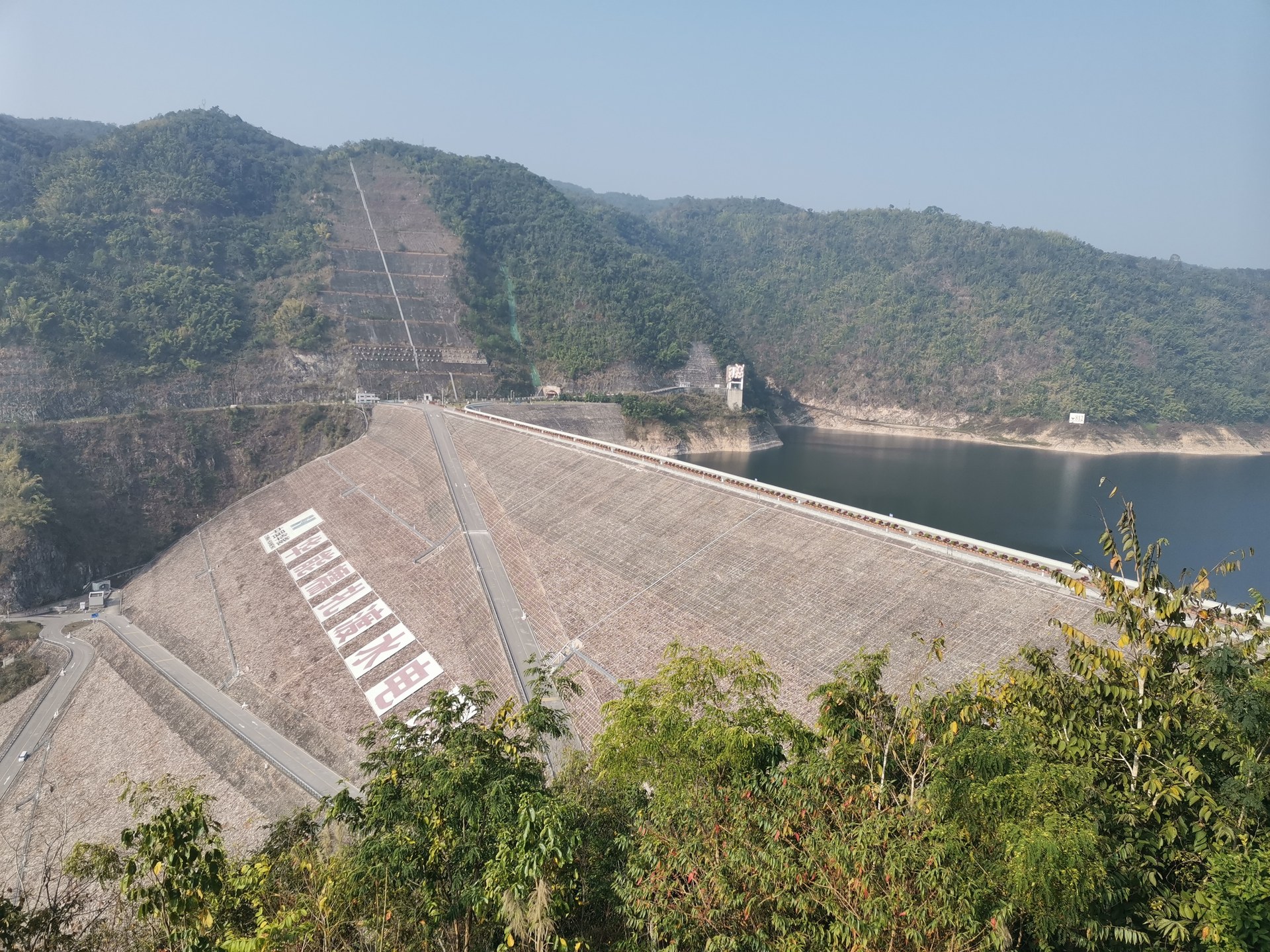
The foundation of green electricity is hydropower. Yunnan lies on the Yunnan-Guizhou Plateau, with the two major river systems of the Lancang River and the Jinsha River running through it—their great drops and abundant flows make it one of the provinces richest in hydropower resources in China. After decades of development, Yunnan has built a cohort of giant hydropower stations, including Xiaowan and Nuozhadu (Lancang River system) and Wudongde and Baihetan (Jinsha River system)—Baihetan among them being a world-class giant hydropower project. By the end of 2024, Yunnan's hydropower installed capacity reached about 83.6 million kilowatts, ranking second nationally. These rushing river waters, held back by dams and converted by turbines, become a continuous, low-cost stream of clean electricity, forming the sturdiest base plate for Yunnan's green manufacturing.
The growth trajectory of hydropower is itself a history of the evolution of Yunnan's energy. At the end of 2012, Yunnan's hydropower capacity was only about 34.99 million kilowatts; by the end of 2023 it had risen to about 82 million kilowatts—more than doubling in a little over a decade. Behind this lies the combined force of the national "West-to-East Power Transmission" strategy and Yunnan's large-scale hydropower development. Yunnan turned the drops of its great rivers into real installed capacity and electricity, and into its most important industrial card in a new era.
Yunnan's hydropower also has a chapter of national-engineering history worth remembering. The giant hydropower stations on the Jinsha and Lancang rivers—Xiaowan, Nuozhadu, Wudongde, and the world-class Baihetan—were all century projects built with the strength of the entire nation. They are not merely generating units but comprehensive hubs integrating flood control, irrigation, navigation, and ecological regulation, and landmark achievements of China's hydropower technology moving from "following" to "leading." The million-kilowatt hydro-generating units installed at Baihetan represent the highest level of hydropower equipment in the world. These projects, built on the soil of Yunnan (and the Sichuan-Yunnan border rivers), have let Yunnan bear witness to and carry the pinnacle of China's hydropower cause while transmitting clean energy for the nation. Behind the green-electricity foundation lies a construction history of generations laboring through hardship.
Of course, large-scale hydropower development also comes with costs and trade-offs that must be faced squarely. The construction of large reservoirs involves complex issues such as reservoir-area resettlement, ecological impact, and changes to river habitats, requiring prudent balance among energy benefits, ecological protection, and resettlement. In recent years, as the concept that "clear waters and green mountains are as valuable as gold and silver" has taken deeper hold, Yunnan's hydropower development has placed greater emphasis on ecological priority and green development, weighing factors such as fish migration, discharge flows, and reservoir-area ecology in its cascade development. Sustainable green electricity is not only about "generating a lot" but about "generating well"—fully harnessing water-energy resources while minimizing the impact on river ecology. This wisdom of balance is the prerequisite for Yunnan's green-electricity foundation to support green manufacturing over the long term and in good health.
The significance of this hydropower foundation can hardly be overstated. It gives Yunnan some of the cheapest and cleanest electricity in the country, and electricity is precisely the most central cost for energy-intensive manufacturing such as electrolytic aluminium, industrial silicon, and polysilicon. When the whole world is paying for being "green and low-carbon" and pursuing "zero-carbon products," the green electricity Yunnan generates from river after river of green water becomes a magnet drawing energy-intensive green manufacturing. One might say that hydropower is a second "mine" bestowed on Yunnan by the heavens—except that this mine never runs dry, and grows cleaner the more it is used. But this green-electricity foundation has long faced a fundamental choice: to send the electricity out, or to bring the industries in?
13. West-to-East Power Transmission and Local Value Realization: The Two Fates of Green Electricity
Yunnan holds vast amounts of green electricity, but one unavoidable reality is that Yunnan's own economic scale and power demand fall far short of absorbing all of it. And so this green electricity faces two fates—either to be sent out or to be kept at home. The choice between these two fates has profoundly shaped Yunnan's industry.
The first fate is "West-to-East Power Transmission." As an important link in the national energy strategy, Yunnan has for decades sent large quantities of green electricity via ultra-high-voltage transmission lines to major power-consuming provinces along the eastern coast, such as Guangdong, a thousand miles away. By statistics, in the more than thirty years of Yunnan's "West-to-East Power Transmission," cumulative electricity delivered has exceeded 1.5 trillion kilowatt-hours; in 2024 alone, it sent about 208.4 billion kilowatt-hours of clean electricity to Guangdong. This electricity lit up the factories and cities of the Pearl River Delta and provided green momentum for the economic development of the east. West-to-East Power Transmission is Yunnan's sense of responsibility as a "national battery," and it also brings Yunnan considerable electricity-sales revenue.
But "West-to-East Power Transmission" carries an inherent regret: the electricity is sent out, but the industry, jobs, tax revenue, and GDP driven by its use remain in the receiving east. Yunnan earns only the money from "selling electricity," without gaining the greater value that "using electricity" can create. For a province eager for industrial upgrading, simply selling electricity hands the most precious industrial opportunity to others. This leads to green electricity's second fate—realizing value locally.
The so-called realizing value locally means keeping green electricity within the province and using cheap, clean electricity to attract energy-intensive, high-value manufacturing to settle in Yunnan. It means green electricity no longer leaving the province in the form of "electricity," but in the form of products such as "green aluminium," "green silicon," "photovoltaic modules," and "lithium-battery materials"—solidifying the value of the energy into manufacturing and keeping it in Yunnan. In this way, Yunnan not only earns electricity fees but also earns industry, jobs, tax revenue, and industrial chains. The "hydropower aluminium integration" discussed earlier is precisely the first successful example of realizing value locally; and the "hydropower silicon," "photovoltaics," and "new-energy batteries" to be discussed later are the full unfolding of this idea.
The balance between "sending" and "using" is in fact a weighing of interests that affects the whole picture. For the nation, Yunnan's green electricity supporting the east and safeguarding energy security is a strategic necessity of the "nationwide chessboard"; for receiving provinces such as Guangdong, Yunnan's clean electricity is an important source for achieving "dual-carbon" targets and easing power shortages. But for Yunnan itself, pure external transmission means ceding the most precious industrial opportunity. For this reason, Yunnan has for years sought a more favorable allocation—keeping as much green electricity as possible within the province for developing green manufacturing while still fulfilling its transmission obligations. This "contest between sending and using" is, in essence, a deep game over how the value-added gains of green electricity are allocated between an underdeveloped energy-producing region and a developed energy-consuming region, and a real constraint Yunnan must face in pushing for local value realization.
From a more macro perspective, realizing green electricity's value locally also fits a new trend in global industrial layout—"where the green electricity is, that is where green manufacturing goes." In an era when carbon neutrality has become a global consensus, the location logic of energy-intensive industries is being rewritten: what once mattered was proximity to markets and ports, but increasingly what matters is "whether one can access cheap, stable, and traceable green electricity." This gives green-electricity-rich places like Yunnan a historic opportunity—so long as it can provide ample, stable green electricity and a sound business environment, Yunnan may well attract a cohort of green-manufacturing capacity that was originally coastal, or even overseas, to "come toward the green." This is a reconfiguration of industrial space driven by the energy revolution, and Yunnan happens to stand on the favorable side of this current.
From "West-to-East Power Transmission" to "realizing value locally" is a profound turn in Yunnan's energy strategy, and its most critical move in industrial upgrading. This is not about abandoning West-to-East Power Transmission—safeguarding the east's electricity use and fulfilling the national strategy are duties Yunnan cannot shirk; rather, it is about keeping as much green electricity as possible while still transmitting, converting it into green manufacturing within the province. This idea of "transmitting and using in tandem, with use as the priority" is, in essence, about upgrading Yunnan from a pure "energy base" into a "green manufacturing base." Whether this step can be taken steadily and well determines whether Yunnan's green-electricity foundation can truly be realized as industrial competitiveness. And realizing value locally has a prerequisite: enough green electricity that is abundant, stable, and cheap—which brings us to the other half of Yunnan's green electricity: the explosively growing wind power and photovoltaics.
14. The Wind-and-Solar Surge: The Second Expansion of the Green-Electricity Foundation
If hydropower is the "old foundation" of Yunnan's green electricity, then wind power and photovoltaics are the "new foundation" now growing explosively. Over the past decade, and especially in recent years, Yunnan's new-energy installed capacity has expanded at an astonishing pace, providing an ever more abundant power source for its green manufacturing.
The growth curve is exceedingly steep. At the end of 2012, Yunnan's new-energy (wind and photovoltaic) capacity was only about 1.53 million kilowatts; by the end of 2023, this figure had soared to about 34.68 million kilowatts—a 22.6-fold increase in eleven years. And the growth is still accelerating: by May 2025, Yunnan's new-energy capacity had further reached about 60.177 million kilowatts. This means that, on top of the vast base plate of hydropower, Yunnan has in a short time overlaid a sizable wind-and-solar new-energy system. The generation growth rates in 2024 best illustrate the momentum: photovoltaic generation surged 151.0% year-on-year, wind power grew 32.6%, while thermal power fell 6.5%—the substitution of green energy is truly taking place.
Even more important is the room for imagination. By assessment, Yunnan's long-term developable wind and solar resources together exceed 150 million kilowatts, of which wind is about 55 million kilowatts and solar about 83 million kilowatts. This means Yunnan's new-energy development is still far from its ceiling, with enormous incremental room ahead. Wind and solar resources also form a natural complement to hydropower—Yunnan's hydropower has wet and dry seasons, with abundant water and power in the rainy season and scarce water and tight power in the dry season; photovoltaics, meanwhile, produce most strongly on clear dry-season days, and wind power performs better in winter and spring. Multi-energy complementarity across hydropower, wind, and solar can smooth seasonal fluctuations, making Yunnan's green-electricity supply more stable and reliable.
The wind-and-solar surge carries direct and far-reaching significance for Yunnan's green manufacturing. First, it enlarges the total pool of green electricity, giving Yunnan more clean power to "realize value locally" and attracting more green manufacturing to settle. Second, it lowers the marginal cost of green electricity—the per-kilowatt-hour cost of wind and solar continues to fall, further reinforcing Yunnan's cost advantage as a "green-electricity lowland." Third, and most subtly, photovoltaics is itself a manufacturing industry Yunnan is focusing on developing—Yunnan makes polysilicon, silicon wafers, and battery modules, and these photovoltaic products in turn are installed on Yunnan's soil to generate electricity. "Using green electricity to make photovoltaics, and using photovoltaics to generate green electricity" forms a self-reinforcing industrial loop.
The wind-and-solar surge is also quietly changing Yunnan's energy geography. Hydropower resources are concentrated in the deep-cut valleys of the Lancang and Jinsha rivers, while wind and solar resources are more distributed across the plateaus, ridges, and basins of eastern, central, and northwestern Yunnan—Qujing, Zhaotong, Dali, and Chuxiong are especially rich in wind and solar resources. This means that new-energy development is expanding Yunnan's "energy map" from a few great rivers to the broader plateau land. And these wind-and-solar-rich regions are often precisely the key layout areas for emerging industries such as green aluminium, photovoltaics, and lithium batteries. The spatial proximity of "wind-and-solar power sources" and "power-using industries" provides natural conditions for "source-grid-load-storage integration" and "nearby absorption," with the prospect of reducing transmission losses and raising green-electricity utilization efficiency.
That said, large-scale wind-and-solar grid connection also brings new challenges to Yunnan's power system. Wind and photovoltaic power are intermittent "weather-dependent" sources, with large output fluctuations that are hard to forecast; large-scale wind-and-solar integration increases the pressure of peak-shaving and frequency regulation on the grid. This places higher demands on Yunnan's grid construction, energy-storage deployment, and dispatch capability. Fortunately, Yunnan possesses abundant hydropower—hydropower has excellent regulating performance and can, like a "battery," quickly step in or step back to dampen fluctuations when wind and solar output swings. "Multi-energy complementarity across hydropower, wind, and solar" is precisely one of Yunnan's unique advantages in developing new energy: using flexible hydropower to balance intermittent wind and solar, forming a more stable and greener power system. This complementary capability is something many regions lacking hydropower do not possess.
With hydropower as the base and wind and solar as the expansion, Yunnan's green-electricity foundation has completed two expansions. At this point, a key industrial fact surfaces: energy is no longer merely Yunnan's "infrastructure"—it is itself becoming Yunnan's largest pillar industry. It has been reported that as early as several years ago, the energy industry had already overtaken tobacco to become Yunnan's largest pillar industry. This shift, one waning as the other waxes, is a key to understanding the change in Yunnan's industrial structure.
15. Energy's Leap to the Top Pillar: A Quiet Structural Shift
Throughout the several decades of Yunnan's industrial history, the label of "top pillar" long belonged to tobacco. Tobacco was the undisputed leader—the largest output value, the most tax and profit, the steadiest contribution. Yet in recent years, something of far-reaching significance quietly occurred: the energy industry overtook tobacco to become Yunnan's largest pillar industry. According to reports, this historic switch took place around 2019. It was a quiet but weighty structural shift.
This transition is a key coordinate for understanding Yunnan's industrial transformation. It means that the leading force sustaining Yunnan's industry shifted from a consumer product (cigarettes) to a foundational energy sector (electricity and its related industries). Tobacco represents Yunnan industry's past—resource-based, consumption-oriented, and heavily dependent on a single product; energy represents Yunnan industry's future—green, low-carbon, and capable of leveraging an entire green-manufacturing industrial chain. In a sense, "energy overtaking tobacco" is a metaphor for "the future overtaking the past."
Driving this transition was massive, sustained investment over many years. During the 13th Five-Year Plan period alone, investment in Yunnan's energy sector exceeded 330 billion yuan; hydropower stations, wind farms, PV plants, and ultra-high-voltage transmission lines rose one after another, pushing Yunnan's green-electricity installed capacity to the front ranks of the nation. The energy industry is not merely about generating power itself; it also drives power equipment, grid construction, and—most crucially—a green manufacturing sector whose core competitiveness is green electricity. The rise of the energy industry leverages an entire industrial ecosystem.
To be objective, "energy becoming the top pillar" is a judgment that fluctuates with statistical definitions and years. Depending on how the scope of the energy industry is defined (whether it includes downstream green aluminium and green silicon), the ranking may differ slightly under different definitions; this report adopts the cautious phrasing "according to public reports," emphasizing the trend rather than a precise ranking for any single year. But whatever the exact position, one undeniable trend stands: energy and the green manufacturing it drives are becoming the new center of gravity of Yunnan's industry, and their growth momentum and scope for imagination have clearly surpassed those of traditional tobacco and non-ferrous metals.
The significance of "energy overtaking tobacco" also lies in how it changes the "driving source" of Yunnan's industrial growth. Tobacco is a highly mature, slow-growing industry; it can provide stable tax and profit, but it is hard-pressed to contribute high growth rates—the mere 1.9% increase in the value-added of the tobacco products industry in 2024 is proof enough. Energy and the green manufacturing it drives, by contrast, are in a phase of explosive growth: PV generation grew 151%, equipment manufacturing grew 19%, and the output values of green aluminium and PV are leaping upward by the hundreds of billions. When the top pillar of Yunnan's industry shifts from a "stable but stagnant" sector to a "rapidly expanding" one, the growth momentum and scope for imagination of the entire industrial base are unlocked. This is the fundamental reason Yunnan can maintain medium-to-high-speed industrial growth even as its traditional pillars run out of steam.
But one must also see clearly that the "gold content" of the energy industry itself requires a dialectical view. Simply generating and transmitting power, however large in scale, brings relatively limited profit margins and employment—it is more like "infrastructure" than "manufacturing." The true value of the energy industry lies in how large a downstream green-manufacturing sector it can leverage. If the electricity is merely generated and transmitted out, Yunnan still mainly reaps "power-selling" revenue; only when green electricity is realized locally at scale into industries such as green aluminium, PV, lithium batteries, and green computing power does the status of energy as top pillar truly acquire "gold content." Therefore, in establishing energy as its top pillar, Yunnan's focus must not rest solely on "generating power" but even more on "using power"—on the entire green-manufacturing industrial chain that energy leverages. This is the key to understanding Yunnan's energy strategy.
This quiet structural shift set the tone for the future of Yunnan's industry. Yunnan has explicitly made green energy its strategic core, planning around it an entire green-manufacturing industrial system. According to the vision of the 15th Five-Year Plan, by 2027 the green-aluminium industrial chain is targeted to reach 250 billion yuan, rare and precious metals 160 billion yuan, new materials 120 billion yuan, and new-energy batteries over 40 billion yuan—these industries, built on a foundation of green electricity, are precisely the new pillars in which Yunnan places high hopes. And the one among them with the most "turning-stone-into-gold" flavor is the path that combines Yunnan's green electricity with silicon—integrated hydropower-silicon. This is another major instance of realizing the value of Yunnan's green electricity, following hydropower-aluminium.
16. Integrated Hydropower-Silicon: The Second Monetization of Green Electricity
After aluminium, Yunnan's green electricity found a second, more imaginative object for realizing value—silicon. If hydropower-aluminium was the first piece of the puzzle in Yunnan's green manufacturing, then integrated hydropower-silicon is the second, and a heavier, longer piece that is closer to frontier industries.
To grasp the weight of hydropower-silicon, one must first understand silicon's place in modern industry. The silicon referred to here is metallurgical silicon (industrial silicon, also called metallic silicon) and the polysilicon further refined from it. Metallurgical silicon is the base feedstock for PV, silicones, and alloys; polysilicon is the core material for solar cells and chips. And the smelting and purification of metallurgical silicon and polysilicon is likewise an extremely power-intensive process—just as in aluminium electrolysis, electricity accounts for a large share of costs. This means that for any high-energy-consuming material that is "smelted with electricity," Yunnan enjoys a natural advantage in cost and green attributes. Silicon is precisely the next most fitting "monetization outlet" for Yunnan's green electricity after aluminium.
Yunnan's momentum in developing metallurgical silicon has been strong. By June 2023, Yunnan's metallurgical silicon capacity was about 1.15 million tonnes, roughly 18.3% of the national total (under different definitions, this share hovers around 20%). More emblematic is the landing of leading enterprises: on 27 December 2024, Hoshine Silicon's hydropower-silicon project in Zhaotong ignited and commissioned its Phase I 400,000-tonne metallurgical silicon line. Hoshine Silicon is the domestic leader in metallurgical silicon and silicones, with company-wide metallurgical silicon capacity exceeding one million tonnes and silicone capacity exceeding one million tonnes. It located such a large-scale hydropower-silicon project in Zhaotong, Yunnan, precisely because of the local green electricity and resources—smelting metallurgical silicon with Yunnan's green electricity, then extending downstream to silicones and polysilicon to form an integrated layout. This is a classic sample of "integrated hydropower-silicon."
The value of integrated hydropower-silicon lies in how it brings Yunnan into an industrial chain that is longer and more high-end than aluminium's. The downstream of aluminium is mainly aluminium materials and alloys; the downstream of silicon, by contrast, leads straight to PV and semiconductors—two golden tracks that represent the future. From metallurgical silicon, to polysilicon, to monocrystalline silicon ingots and silicon wafers, and then to solar cells and PV modules, the silicon industrial chain is interlocked link by link, with added value rising step by step. If Yunnan can extend all the way down this chain, it can upgrade from "selling metallurgical silicon" to "making PV modules," multiplying the value of its green electricity many times over. This is precisely the underlying logic behind the sudden rise of Yunnan's PV industry.
The arrival of hydropower-silicon in Yunnan also drives a batch of supporting industries and employment. A large integrated hydropower-silicon project routinely involves an investment of tens of billions of yuan, occupies thousands of mu of land, directly employs several thousand workers, and also pulls along upstream raw materials (silica, reductants), downstream processing (silicones, polysilicon, silicon wafers), and supporting logistics, power, and environmental protection. Hoshine Silicon's project in Zhaotong, for instance, brought tangible industry and jobs to this once state-designated impoverished region. For areas with weak industrial foundations such as northeastern and western Yunnan, the landing of a leading hydropower-silicon project often means the emergence of an entirely new industrial cluster from scratch. This is precisely the regional value of realizing green electricity locally—it can activate regions rich in green electricity but blank in industry into new poles of industrial growth.
Of course, integrated hydropower-silicon must also guard against the risk of a "rush to pile in." Metallurgical silicon and polysilicon have likewise been industries of rapid capacity expansion and violent price swings over the past couple of years. Seeing their green-electricity advantage, localities across Yunnan have rushed to launch silicon-material projects; without overall coordination, this can easily cause homogeneous competition and periodic overcapacity. In fact, since 2023, the sharp drop in polysilicon and metallurgical silicon prices has already put profitability under pressure at quite a few projects. In developing hydropower-silicon, Yunnan must both leverage its green-electricity advantage to seize the initiative and respect industrial laws to avoid blind expansion, maintaining rationality in project layout and capacity pacing. Green electricity is a good hand of cards, but even a good hand must be played with discipline—this is the lesson Yunnan must take to heart in silicon, in PV, and in lithium batteries alike.
Hydropower-aluminium proved the feasibility of realizing green electricity locally; hydropower-silicon pushes this path toward more frontier industries. Together they form the "twin-silicon, twin-aluminium" configuration of Yunnan's green manufacturing—using the same green-electricity endowment to leverage both the metals and the materials directions simultaneously. And the silicon chain ultimately points to an industry substantial enough to secure Yunnan a place on the national stage—the full PV industrial chain. This is the most dazzling piece in Yunnan's green breakthrough.
17. The Full PV Industrial Chain: The Arrival of LONGi, Tongwei, and Hoshine
The rise of Yunnan's PV industry is the most eye-catching chapter in this province's green-manufacturing story. In just a few years, on the strength of its green-electricity advantage, Yunnan has drawn almost the entire upstream and midstream of the PV industrial chain to central Yunnan, becoming a new pole on the national PV map that cannot be ignored.
Consider the scale first. As of June 2023, Yunnan had built monocrystalline silicon ingot capacity of about 133 GW, silicon wafer capacity of about 117 GW, solar cell capacity of about 10 GW, PV module capacity of about 6.25 GW, and polysilicon capacity of about 52,000 tonnes. The most striking of these are ingots and wafers—Yunnan's silicon wafer capacity accounts for about 17.7% of the national total. In terms of output value, Yunnan's full PV industrial chain generated about 107.3 billion yuan in 2022 and about 109.4 billion yuan in 2023, already a hundred-billion-scale industry. Even more competitively, thanks to green electricity, the carbon footprint of Yunnan's PV products is about 40% lower than the national average—in an era where the EU's carbon border tax and PV-product carbon-footprint certification grow ever more important, this is an increasingly valuable "green pass."
Underpinning this hundred-billion industry is the heavy-bet arrival of several PV giants. LONGi Green Energy—one of the world's largest producers of monocrystalline silicon wafers and PV modules—has made Yunnan its largest global production base for silicon ingots and wafers, laying out operations in Lijiang, Baoshan, Chuxiong, Qujing, and elsewhere, with an investment of about 12 billion yuan; the slicing technical upgrade in Lufeng alone raised capacity to the 80 GW level. Tongwei has laid out polysilicon in Baoshan, with Phase I of 50,000 tonnes and planned Phase II expansion. Xinyi has invested about 23 billion yuan to build a 200,000-tonne polysilicon project. And the aforementioned Hoshine Silicon extends all the way down from metallurgical silicon to an integrated layout of polysilicon, slicing, cells, and modules. LONGi, Tongwei, Hoshine, Xinyi—these top players in the PV industry compete on the same stage in Yunnan, together building Yunnan's PV industrial cluster.
Why do they all come to Yunnan? The answer, again, is green electricity. PV manufacturing is a high-energy-consuming industry, and PV products naturally carry a "green" attribute—only PV modules made with green electricity can truly achieve low carbon across the full lifecycle. Yunnan's green electricity happens to perfectly match the PV industry's dual demand for "both cheap power and a green label." Using green electricity generated from Yunnan's hydropower, wind, and solar to smelt metallurgical silicon, purify polysilicon, pull monocrystalline silicon ingots, cut silicon wafers, and encapsulate modules—this is an industrial chain that is green from head to tail. Yunnan PV sells not just modules, but the very premium of the words "green manufacturing" themselves.
Worth noting is the current characteristic of Yunnan's PV industry: "strong upstream and midstream, weak downstream." Yunnan has abundant capacity in the upstream and midstream links of metallurgical silicon, polysilicon, monocrystalline silicon ingots, and silicon wafers, with wafer capacity accounting for nearly one-fifth of the national total; but in the links closer to the terminal, such as solar cells and modules, capacity is relatively small (about 10 GW of cells and about 6.25 GW of modules, far below the 117 GW of wafers). This means much of the silicon wafers produced in Yunnan must still be shipped out of the province to be made into cells and modules, leaving part of the added value elsewhere. Filling in the downstream links—cells, modules, and even PV power stations and inverters—and upgrading "Yunnan silicon wafers" into "Yunnan PV modules" and even "Yunnan PV systems" is the direction for Yunnan's PV industry to grow stronger. For its green-electricity advantage to be truly realized, Yunnan cannot remain merely a "slicing workshop" but must extend toward both ends of the industrial chain.
From a broader perspective, Yunnan PV also faces fierce competition from producing regions outside the province. Inner Mongolia, Xinjiang, Qinghai, Sichuan, and others are likewise developing PV manufacturing on the strength of their respective energy advantages (coal power, wind and solar, hydropower), and national PV capacity already presents a picture of "blooming in many places with overall overcapacity." Yunnan's differentiated advantage lies in the purest "green-electricity base"—PV produced with nearly 90% clean energy has the lowest carbon footprint and the strongest green attributes. In an international market where the EU carbon tariff and PV-product carbon-footprint certification grow ever more important, this "greenest PV" is poised to become Yunnan's distinctive selling point for breaking out. Whether Yunnan can convert the carbon advantage of "green-electricity-made PV" into competitive advantage and premium in the international market is the key to Yunnan PV standing out from the red ocean of overcapacity.
From metallurgical silicon to modules, Yunnan has nearly completed the upstream and midstream links of PV manufacturing, and a PV industrial belt built on green electricity is taking shape in central Yunnan. And the most concentrated, most representative landing point of this industrial belt is a city being redefined by PV—Qujing. It has given itself a resounding title: the Green Crystalline-Silicon PV Capital.
18. The Green Crystalline-Silicon PV Capital: Qujing's Redefinition
On Yunnan's PV industrial belt, Qujing is the undisputed core. This city in eastern Yunnan, long known for coal and agriculture, is being redefined by PV and has set itself a resounding goal: to build the "Green Crystalline-Silicon PV Capital." Qujing's turnaround marks a transition of Yunnan's green manufacturing from "scattered landings" to "clustering into strength."
Qujing's PV layout follows a "1+4+4" approach—with Qujing as the core zone, coordinated development with other prefectures. As the core, Qujing has gathered a relatively complete chain from metallurgical silicon and polysilicon to monocrystalline silicon ingots, silicon wafers, cells, and modules. An important LONGi base has settled here, where LONGi lays out monocrystalline silicon ingot and wafer capacity; at the same time, a batch of PV supporting enterprises has been drawn in, forming industrial agglomeration. By estimates, Qujing's silicon ingot and slicing capacity accounts for roughly one-fifth of the national total—that an inland prefecture-level city holds one-fifth of the national share in a key link of the high-tech manufacturing sector that is PV would have been unimaginable a few years ago.
Why can Qujing do it? The fundamental reason is again green electricity plus location. Qujing can both conveniently obtain Yunnan's green electricity and possesses relatively flat basin land and industrial-park carrying space, along with the industrial foundation and industrial workforce accumulated during the coal era. When PV giants need to find a "green electricity + land + supporting facilities" three-in-one landing point for their high-energy-consuming silicon-material production, Qujing happens to be able to provide all three. And so this once "coal-and-power city" seized the historic opportunity of transitioning from black energy to green manufacturing, using PV to fit its industry with a new engine.
Even more noteworthy, Qujing is not content to do only PV. It is simultaneously playing another game of chess—new-energy batteries. PV and batteries—one responsible for "generating green electricity" and the other for "storing green electricity"—are the two most central pieces of the new-energy revolution. Qujing has grasped both chains at once, seeking to build two hundred-billion-scale industrial clusters, "PV + batteries." A single city betting on both the PV and lithium-battery windfalls at once—this ambition reflects the enterprising posture of a Yunnan prefecture-level city on the green track. Qujing's exploration also provides a transformation model that other resource-based cities in Yunnan (such as Zhaotong and Baoshan) can learn from.
Qujing's turnaround carries a further, special significance—it is the green rebirth of a "coal city." Qujing is an important coal-producing area and energy base in Yunnan, long characterized industrially by coal power and coal chemicals. Under the "dual-carbon" goals, the coal industry faces transformation pressure, and rather than clinging to coal as it declines, Qujing has actively embraced the two green emerging industries of PV and lithium batteries, injecting new momentum into the city's industry through green manufacturing. From "mining coal to generate power" to "making PV and making batteries," Qujing has completed an identity switch from black energy to green manufacturing. This model of an "old industrial city turning green" holds reference value for the many resource-based and energy-based cities across the nation—it proves that a coal city need not be trapped by coal and can fully find a new place in the energy revolution.
Qujing's experience also reveals the importance of "clustering" in Yunnan's green manufacturing. The landing of a single enterprise or single project is a "point," but only when upstream and downstream enterprises, supporting facilities, talent, and services agglomerate within one region to form a "chain" and a "cluster" does an industry truly acquire roots and competitiveness. Qujing became a PV capital not because of any single enterprise but because the entire industrial chain—from metallurgical silicon and polysilicon to silicon ingots, slicing, and even battery materials—agglomerated here, with supporting parks, power, logistics, and talent working in concert. This cluster effect can significantly lower enterprises' supporting costs and improve coordination efficiency, forming a snowball effect of "attract one, bring a string." To develop green manufacturing, Yunnan must, like Qujing, build competitive industrial clusters in key regions rather than scatter its layout like sprinkling pepper.
Qujing's redefinition is a microcosm of Yunnan's green breakthrough. It tells us that green manufacturing is not an abstract slogan but a tangible transformation that can land on a concrete city, a concrete park, a concrete industrial chain. From a coal-and-power city to a PV capital, Qujing completed a transformation of its industrial identity in just a few years. And the other chain it has bet on—new-energy batteries—links Yunnan's phosphate ore, green electricity, and the most cutting-edge energy-storage demand, and merits separate discussion.
19. New-Energy Batteries: The Closed Loop of Phosphate Ore and Green Electricity
Yunnan's development of new-energy batteries has a unique advantage that other provinces may not possess—it holds both upstream phosphate ore and cheap green electricity. The cathode material of lithium iron phosphate (LFP) batteries has phosphorus as its core raw material; and the production of cathode materials is highly power-intensive. Phosphate ore plus green electricity happens to complete the two most crucial pieces of the LFP puzzle. This gives Yunnan's new-energy battery industry a natural closed loop from resource to material.
The most concentrated landing point of this closed loop is, again, Qujing. Qujing has gathered a batch of new-energy battery material enterprises, of which the representative is Dynanonic. Since 2019, Dynanonic's cumulative investment in Qujing has approached 20 billion yuan, building phosphate-series cathode material capacity on the order of several hundred thousand tonnes. Around Dynanonic, Qujing has also gathered a batch of battery and material enterprises such as EVE Energy, Hunan Yuneng, and Zhongke Electric, forming the embryo of an industrial chain from cathode and anode to cells. By estimates, the LFP cathode material capacity of the Qujing Economic and Technological Development Zone once accounted for about 25.78% of the national total—that is, for every four tonnes of LFP cathode nationwide, about one tonne is produced in Qujing alone. In 2023, the output value of Yunnan's new-energy battery industry was about 33.3 billion yuan, of which Qujing accounted for about 48%.
The logic of this industrial closed loop is very clear. First, Yunnan's abundant local phosphate ore provides the phosphorus source; phosphate-chemical enterprises such as Yuntianhua process phosphate ore into intermediates like phosphoric acid and iron phosphate. Second, Yunnan's green electricity is used to synthesize LFP cathode material from raw materials such as iron phosphate and lithium carbonate. Third, the cathode material supplies battery enterprises such as EVE Energy, which make it into power batteries and energy-storage batteries. Fourth, these batteries can in turn be used to store the green electricity Yunnan itself generates (energy storage) or be fitted into new-energy vehicles. "Phosphate ore—cathode—cell—energy storage": a complete chain from underground ore to energy-storage station is thus closed on Yunnan's soil.
Worth mentioning is that Qujing's Qilin industrial park was selected among the nation's first batch of national-level zero-carbon industrial parks. This is a meaningful signal—a park that produces new-energy products with green electricity can itself achieve near-zero carbon emissions, forming a positive loop of "green electricity makes green-electricity equipment, and green-electricity equipment in turn produces green electricity." This model of "green producing green" is precisely the ideal form of Yunnan's green manufacturing, and its most core differentiated advantage over regions that produce similar products with thermal power.
Energy storage is a direction of Yunnan's new-energy battery industry that is especially worth valuing. Yunnan is a major hydropower province, with green electricity in surplus but subject to wet-dry-season fluctuations—and this is precisely where energy storage can be put to its greatest use. Using storage to bank the surplus green electricity of the wet season and of peak PV generation, and to release it in the dry season and at consumption peaks, can both smooth fluctuations and safeguard supply while raising the overall utilization rate of green electricity. In other words, Yunnan's development of energy-storage batteries is not merely "making a product to sell" but "equipping its own green-electricity system with a super power bank." This industrial logic of "local demand, local production" is more resilient than purely export-oriented manufacturing—Yunnan is both a producer of energy-storage batteries and potentially a vast application arena for energy storage. The potential of integrated production and consumption is Yunnan's new-energy battery industry's distinctive advantage over other producing regions.
Like PV, the new-energy battery industry is also amid violent industry fluctuations. Since 2023, the "roller-coaster" surges and plunges in lithium carbonate prices, along with overcapacity and price wars in the battery and material links, have placed enormous pressure on the entire lithium-battery industrial chain. As a "latecomer" to this round of layout, Yunnan's battery-material projects must likewise weather the industry's winter. Yunnan's confidence rests, first, on the cost and low-carbon advantages brought by green electricity, and second, on the upstream resource security brought by phosphate ore—these two moats can, to some extent, help Yunnan's lithium-battery enterprises traverse the cycle. But industrial laws cannot be defied; in developing new-energy batteries, Yunnan likewise needs to find a prudent balance between the ambition to expand and the rationality of the cycle.
New-energy batteries twist together Yunnan's traditional resource (phosphate ore), emerging energy (green electricity), and frontier industry (energy storage, electrification) into a single strand. It is not a new industry sprung from nowhere but a product deeply rooted in Yunnan's own endowments. This is precisely the healthiest model of Yunnan's green breakthrough—not abandoning resources to start anew, but connecting old resources to new tracks. And on this chain of new-energy materials, Yunnan also harbors a truly world-class hidden champion, one whose products you use indirectly every day but whose name is little known—Yunnan Energy New Material (Semcorp).
20. Yunnan Energy New Material (Semcorp): A World Champion in a Sheet of Film
Among all of Yunnan's manufacturing enterprises, one is especially distinctive. Its headquarters is in Yuxi, its product is thin as a cicada's wing, and though ordinary people have never seen it, it is a key material likely used in every electric vehicle and every mobile-phone battery in the world. It is Yunnan Energy New Material (Semcorp)—an enterprise that makes lithium-battery separators, and the world champion of this niche field.
First, what is a separator? A lithium battery consists of four major parts: cathode, anode, electrolyte, and separator. The separator is a porous polymer film sandwiched between the cathode and anode; it must both isolate the two electrodes to prevent short circuits and allow lithium ions to pass through—a key component ensuring the battery's safety and performance. The technical threshold of separators is extremely high, especially for wet-process separators, which have long been mastered by only a few enterprises. And Yunnan Energy New Material is precisely the world's largest supplier of wet-process lithium-battery separators—its separator products supply top global battery makers such as CATL, BYD, LG, and Panasonic. A single small sheet of film has placed this Yunnan enterprise at a key position in the global lithium-battery industrial chain.
Behind Yunnan Energy New Material (stock code 002812) is the Li Xiaoming family. This enterprise started in packaging and printing, and drawing on its technical accumulation in polymer film, cut into the high-barrier track of lithium-battery separators, seized the wave of global electrification, and leapt to become a world leader. As a listed company headquartered in Yuxi, Yunnan, it is a rare high-end materials enterprise in Yunnan's manufacturing sector that truly holds global say—it relies not on resources but on technology and scale to reach world number one in a precision-manufacturing niche. This is especially precious in Yunnan, where industry is dominated by resource-based sectors.
Yunnan Energy New Material also continues to increase its local capacity and frontier layout in Yunnan. It has invested about 4.5 billion yuan in Yuxi to build a separator project, planning 16 production lines, of which Phase I is already in production and subsequent lines are being connected one after another, making Yunnan one of its important separator production bases. Even more forward-looking, it has also laid out sulfide solid-state electrolyte (planned at about 1,000 tonnes/year)—solid-state batteries are seen as the direction of the next generation of battery technology, and by staking out a solid-state electrolyte position in advance, this Yunnan enterprise shows an ambition not content with existing advantages but seeking to lead the next generation of technology.
Yunnan Energy New Material's growth path holds particular inspiration for Yunnan's manufacturing sector. It did not build its business on Yunnan's ores or Yunnan's electricity, but on decades of deep technical cultivation in the niche field of polymer film, seizing the historic opportunity of global electrification to turn an "inconspicuous component" into a world champion. The core of this path is "technology + focus + catching the trend right," not "resources + scale." It proves that even in a resource-based province, an enterprise can still, on the strength of technology and vision, secure a place on the global high-end manufacturing value chain. For a Yunnan industry accustomed to "mining and smelting," Yunnan Energy New Material is a precious "outlier"—it demonstrates another possibility: relying not on gifted resources but on capabilities forged over time.
Of course, one must also view objectively the "isolated case" nature of enterprises like Yunnan Energy New Material within Yunnan. Its rise is largely the result of the entrepreneurs' and team's own efforts, rather than an inevitable product nurtured by Yunnan's local industrial ecosystem. For Yunnan to go from "having one Yunnan Energy New Material" to "having a batch of them," it still needs to make great efforts in the innovation environment, talent attraction, capital connection, and industrial-chain support—so that high-end manufacturing enterprises can not only be "born" in Yunnan but also "take root and grow strong" here, and even attract more peer enterprises to agglomerate. One such enterprise is happenstance; a batch of them is an ecosystem. How to convert an accidental success into replicable industrial capability is the lesson Yunnan should most learn from Yunnan Energy New Material.
The significance of Yunnan Energy New Material exceeds its own revenue and market value. It proves something of extreme importance to Yunnan: Yunnan is not confined to resource-based primary industry; it can also grow high-end materials enterprises that master core technologies and occupy the global top tier. Yunnan Energy New Material is a spiritual sample of Yunnan manufacturing's "breakthrough upward"—from a single sheet of film, a world champion grows. When Yunnan's resources—green electricity, phosphate ore, tin and indium—can be combined with high-end manufacturing capabilities like Yunnan Energy New Material's, this province's industry will truly have the possibility of going from "big" to "strong." At this point, the main thread of Yunnan's "green manufacturing" is already clear. But the foundation of Yunnan's industry extends beyond energy and materials—it also holds an unexpected card: biomedicine and big health.
21. Yunnan Baiyao and Sanqi: A Big-Health Sector Held Up by a Single Herb
Beyond green energy and non-ferrous metals, Yunnan holds a distinctive industrial card—biomedicine and big health. The confidence behind this card comes from Yunnan's uniquely endowed biological resources: it is one of China's most biodiverse provinces, long reputed as the "home of medicinal herbs" and the "kingdom of plants," with natural medicinal-herb resources that top the nation. And the flagship that turns this resource into industrial strength is a name almost universally known—Yunnan Baiyao.
Yunnan Baiyao is a gold-lettered signboard of China's pharmaceutical industry. Created in 1902 by the renowned physician Qu Huanzhang, its core formula remains a state-classified secret formula to this day—one of the very few drugs in China to enjoy such protection. Over more than a century of development, Yunnan Baiyao has long since grown from a traditional trauma remedy into a comprehensive big-health enterprise spanning pharmaceuticals, health products, and daily chemicals. In 2024, Yunnan Baiyao achieved operating revenue of 40.033 billion yuan, up 2.36% year-on-year; net profit attributable to the parent was 4.749 billion yuan, up 16.02% year-on-year. This is a pharmaceutical giant with revenue exceeding 40 billion yuan, firmly among the front ranks of China's listed pharmaceutical companies.
Especially worth mentioning is one of its successful "crossovers"—Yunnan Baiyao toothpaste. By grafting Yunnan Baiyao's hemostatic and gum-protecting efficacy onto toothpaste, a daily consumer product, Yunnan Baiyao carved out a bloody path in a toothpaste market long dominated by foreign brands, reaching first place in domestic all-channel market share. In 2024, its health-products business group (mainly toothpaste) generated revenue of 6.526 billion yuan. A tube of toothpaste became a classic case of the modernization and consumerization of traditional Chinese medicine, and truly brought the Yunnan Baiyao brand into the daily lives of countless households.
One of the core raw materials supporting Yunnan Baiyao is sanqi (notoginseng). Sanqi is a precious Chinese medicinal herb, and China's sanqi is almost entirely produced in Yunnan's Wenshan Prefecture—Wenshan sanqi's planting area and output account for over 90% of the national total. Around sanqi, Wenshan Prefecture has built a complete industrial chain from cultivation and primary processing to pharmaceutical manufacturing. In 2024, the comprehensive output value of Wenshan sanqi reached about 22.6 billion yuan (with another figure of over 20.6 billion yuan), and it has set a goal of building a full-industrial-chain worth 200 billion yuan by 2027. A single sanqi plant grows from Wenshan's red earth and ultimately becomes a raw material in the hands of pharmaceutical companies such as Yunnan Baiyao, holding up half of Yunnan's big-health industry.
The confidence behind Yunnan's development of the big-health industry comes from its unrivaled biodiversity. With about 4% of the nation's land area, Yunnan is home to more than half of the country's higher plant and vertebrate species—a veritable "gene bank of species" and "kingdom of plants." Of the nation's known Chinese medicinal-herb varieties, a considerable proportion is distributed in Yunnan; a great many authentic medicinal herbs—sanqi, gastrodia, paris, erigeron, dendrobium, Yunnan poria, and more—all have Yunnan as their main producing area. This resource endowment is a natural advantage that pharmaceutical powerhouses such as those in the Jiangsu-Zhejiang-Shanghai region cannot buy with money. If the coastal region is strong in the R&D and manufacturing of chemical and biological drugs, then Yunnan's unique value lies in the "botanical drugs + natural medicines" track that others find hard to replicate. Converting the "green treasure house" of biodiversity into a big-health industry is Yunnan's most distinctive card.
However, between sitting on medicinal-herb resources and building a strong pharmaceutical industry, there remains a considerable distance. For a long time, Yunnan's medicinal herbs have flowed to pharmaceutical enterprises outside the province more in the form of "selling raw materials," while local deep-processing, formulation, and innovative-drug R&D capabilities are relatively limited—this echoes the non-ferrous metals predicament of "selling ore." Aside from a few leaders such as Yunnan Baiyao, Yunnan lacks a batch of innovative pharmaceutical enterprises with national influence. To truly upgrade from the "home of medicinal herbs" to a "pharmaceutical powerhouse," Yunnan needs to invest continuously in the modernization of Chinese medicine, natural-medicine R&D, and big-health product development, converting resource advantages into industrial and brand advantages. This path is essentially the same in logic as the "from selling resources to selling products" thread of green manufacturing.
The combination of Yunnan Baiyao and sanqi demonstrates the distinctive logic of Yunnan's big-health industry—converting the natural resource endowment of the "kingdom of plants," through modern pharmaceutical manufacturing and brand operation, into high-value-added industrial products. This is a path different from green energy but likewise grounded in Yunnan's own endowments. It proves that Yunnan's resource advantage lies not only in the ore underground but also in the medicine above ground. And beyond the great tree of Yunnan Baiyao, Yunnan's biomedicine has also grown a batch of younger, more fashionable new forces.
22. Winona and Walvax: The New Forces of Yunnan Pharma
If Yunnan Baiyao represents the "time-honored" tradition of Yunnan pharma, then Winona and Walvax Biotechnology represent a younger, more frontier side of Yunnan pharma—one rising on the consumer track of efficacy skincare, the other breaking through at the biotech frontier of vaccines. They give Yunnan's biomedicine not just century-old drugs but also the flavor of the new economy.
First, Winona. Its parent company is Botanee (stock code 300957), headquartered in Kunming, focused on "specialized research for sensitive skin" efficacy skincare. In a Chinese cosmetics market long dominated by international majors such as L'Oréal and Estée Lauder, Botanee, on the strength of its deep cultivation of Chinese people's sensitive skin and its use of Yunnan's abundant plant ingredients, has walked a differentiated path. Winona has ranked among the top ten beauty brands on Tmall for many consecutive years and is one of the leading domestic efficacy-skincare brands. In 2024, Botanee's revenue was 5.736 billion yuan, up 3.9% year-on-year. That a company rooted in Kunming can reach the front ranks of domestic brands in the fiercely competitive cosmetics track is itself a bright spot of Yunnan's consumer manufacturing—it uses Yunnan's plant resources to do the most modern brand business.
Next, Walvax Biotechnology (stock code 300142), a Kunming vaccine enterprise that represents Yunnan's exploration at the biotech frontier. Walvax's 13-valent pneumococcal conjugate vaccine ranks first in domestic market share, breaking the previous foreign monopoly of this variety. Of even greater social significance is its HPV (cervical cancer) vaccine—through technological breakthroughs and scaled production, Walvax's bivalent HPV vaccine cut its price sharply from about 246 yuan per dose to 27.5 yuan within about two years, a drop of nearly 90%, greatly improving the accessibility of domestic HPV vaccines. In 2024, Walvax's overseas revenue was 534 million yuan, up about 96% year-on-year, with its products already exported to 21 countries—a Yunnan vaccine enterprise is going global.
In addition, Yunnan pharma also has a batch of forces such as Kunming Pharmaceutical Group (KPC). KPC mainly produces series of products such as artemisinin, sanqi, and gastrodia; since 2022, the central state-owned enterprise China Resources Sanjiu became its largest shareholder (holding about 28.05%), injecting new capital and channel resources into this time-honored pharmaceutical company. From Yunnan Baiyao to KPC, from Winona to Walvax, Yunnan's biomedicine industry is forming a multi-tiered structure of "traditional Chinese medicine + modern pharmaceutical manufacturing + efficacy skincare + biological vaccines."
The success of Winona and Walvax also shares a common code—"specialization and focus." Winona did not go head-to-head with international majors across all categories but stuck relentlessly to the niche demand of "sensitive skin," taking professionalism and reputation to the extreme; Walvax did not spread itself across all vaccines but concentrated on breaking through high-barrier varieties such as the 13-valent pneumococcal and HPV vaccines. Neither won by scale, but by focus and deep cultivation in a niche track, building advantages others find hard to shake. This is much like Yunnan Energy New Material discussed earlier (focused on separators)—in a province lacking resource and location advantages, "specialized, refined, distinctive, and novel" is often the most realistic and effective path for local enterprises to break out. Rather than pursuing "big and complete," Yunnan's emerging manufacturing would do better to cultivate more "small but sharp" hidden champions.
These new forces also share another common point: they have a loose relationship with Yunnan's resource endowment, relying more on market-driven brand and technical capabilities to establish themselves. Winona uses Yunnan plant ingredients, but its core competitiveness is brand and R&D; Walvax's vaccines are almost entirely products of biotech, with little relation to Yunnan's natural resources. This points to an important direction: the future of Yunnan's manufacturing cannot be merely "an extension of resources" but must also have "the growth of capabilities"—cultivating a batch of enterprises that do not fully depend on local resources but compete nationally on the strength of technology, brand, and market capabilities. Resource-based industries provide the base; capability-based enterprises provide the imagination; combining the two, Yunnan's industry can be both stable and new.
The significance of this batch of new forces lies in how they expand the boundaries of Yunnan pharma. They prove that Yunnan's biological resource endowment can not only make traditional Chinese medicine but also incubate high-value industries oriented toward modern consumption and the biotech frontier, such as cosmetics and vaccines. This is a value chain far more advanced than selling medicinal herbs or ore. If Yunnan's big-health industry can keep breaking through in this direction, it is poised to become, after green energy, another new pillar grounded in local endowments yet able to connect with modern markets. And within Yunnan's resource endowment there is another category of treasure of great weight, yet often overlooked in the industrial narrative—the agricultural products that grow from the plateau's fields.
23. Coffee and Tea: Processing Industries Grown in Plateau Fields
In most people's minds, coffee and tea are agricultural products, not industry. But for Yunnan, the deep processing built around these plateau-characteristic farm products is precisely a major component of its green-food manufacturing sector. What sets Yunnan apart is that its agricultural endowment has reached the scale of "first in the nation"—the planted area or output of tea, fresh-cut flowers, medicinal materials, walnuts, coffee, nuts, tobacco, and rubber all rank first nationwide. In 2024, the whole-industry-chain output value of Yunnan's 14 plateau-characteristic industries surpassed 2.7 trillion yuan. At that scale, "agricultural-product processing" is by no means a small business in Yunnan.
Take coffee first. Many people do not realize that almost all of China's coffee is grown in Yunnan. In 2024, Yunnan's coffee planting area was 1.1931 million mu, accounting for 97.85% of the national total; output was 150,200 tonnes, 98.65% of the national total; and its output value made up 98.61% of the country's. In other words, nearly every cup of domestically grown coffee that Chinese people drink comes from Yunnan—Pu'er, Baoshan, and Lincang are the main producing areas, with Pu'er alone accounting for more than half of the province's output. The more crucial change is happening downstream: Yunnan coffee is upgrading from "selling green beans" toward "selling premium products and deep-processed goods"—the specialty-grade rate has risen to roughly 31.6%, and the deep-processing rate to roughly 80%. International giants such as Nestlé and Starbucks have long sourced coffee beans in Yunnan, while local Yunnan players are also cultivating their own roasting, instant-coffee, and ready-to-drink processing capabilities. The value of a single coffee bean is being lifted, step by step, in Yunnan.
Now tea. Yunnan is one of the birthplaces of tea, and its Pu'er tea and Dianhong black tea are renowned nationwide. In 2023, Yunnan's tea-garden area was 8.0327 million mu and its output 556,800 tonnes, both first in the nation. Pu'er tea's distinctive post-fermentation craft and its quality of improving with age make it not merely a beverage but a commodity with both consumption and collection attributes, driving a complete industry chain that runs from cultivation, processing, and storage to branding and finance. Around tea processing—from primary processing of raw tea to refined blending, compression into cakes, and brand packaging—Yunnan has formed a tea-processing industry of enormous scale. From the ancient tea mountains along the Lancang River to the tea cake in a consumer's hands, a leaf of tea passes through an entire industrialized processing chain.
The examples of coffee and tea show that Yunnan's "Green Food card" is not simply about selling primary farm products, but about building processing industries around these distinctive plateau products. Such processing industries have several pronounced features. First, they depend heavily on Yunnan's unique geographic-and-climatic endowment, which cannot be replicated elsewhere. Second, they naturally carry a "green, healthy, authentic" brand attribute that fits consumption upgrading. Third, the industry chain can be continuously extended downstream, leaving ample room to raise added value. This is precisely where the strategic value of Yunnan's "Green Food card" lies.
The story of Yunnan coffee is also a microcosm of the arduous climb "from raw material to brand." For a long time, although Yunnan accounted for more than 90% of the nation's coffee output, most of it was sold as cheap green beans to international giants such as Nestlé and Starbucks, or used as low-priced raw material for instant coffee—prices fluctuating with international futures, profits thin: "growing the coffee earns less than selling it, and selling the beans earns less than selling the cup." In recent years, Yunnan has been striving hard to break out: developing specialty coffee, building local roasting and processing, cultivating the "Yunnan coffee" geographical indication and its own brands, and developing coffee-estate tourism. Behind the figures of a specialty rate rising to about 31.6% and a deep-processing rate rising to about 80% lies Yunnan coffee's climb up the value chain from "selling green beans" toward "selling brands and selling experience." This road is exactly the one that all of Yunnan's characteristic-agriculture processing must travel.
Pu'er tea, meanwhile, demonstrates another way of realizing value—the boost of cultural and financial attributes. Unlike ordinary consumer goods, high-quality Pu'er tea, by virtue of its "better with age" quality, carries the multiple attributes of drinking, collection, and investment, forming a distinctive "tea economy." This attribute pushes Pu'er tea's value far beyond that of a general farm product, and has given rise to a complex industrial ecology spanning single-mountain teas, old-tree teas, brand teas, and financialized teas. This, of course, comes with the risks of speculation and bubbles, and must be viewed rationally. But the example of Pu'er tea shows that realizing the value of characteristic farm products is not confined to a single path of "deep processing"—endowing a product with cultural meaning, brand premium, and emotional value can equally raise added value substantially. Yunnan's rich ethnic cultures and ecological stories are an inexhaustible source of this kind of "soft value."
From coffee to tea, Yunnan has turned "the agricultural endowment bestowed by nature" into a tangible processing industry. And among all its plateau-characteristic industries, there is one supreme example of turning an "agricultural product" into a "global business"—it is not something to eat, nor to drink, but to look at: flowers. Dounan in Kunming, Yunnan, is the best window through which to understand this.
24. Dounan: The Global Industry Chain of a Single Flower
In Chenggong, Kunming, there is a place called Dounan. This is Asia's largest fresh-cut-flower trading market, and the best window for understanding how Yunnan "turns agricultural products into a global business." Behind a single flower traded at Dounan lies a complete industry chain running from cultivation, auction, and cold chain to logistics and export—this is no longer traditional agriculture, but a highly organized modern industry.
Dounan's weight is best conveyed by the numbers. In 2024, the Dounan flower market's trading volume reached 14.176 billion stems and its turnover 11.574 billion yuan. It has ranked first in the nation for 25 consecutive years and is, in every sense, Asia's largest fresh-cut-flower market. From a provincewide perspective, of every 10 fresh-cut flowers in the country, roughly 7 are grown in Yunnan—Yunnan's national share of fresh-cut flowers is about 70%. The whole-industry-chain output value of the province's flower sector exceeds 140 billion yuan. A tiny flower has, in Yunnan, coalesced into a hundred-billion-yuan industry.
Why can Dounan do this? Climate is the foundation—Kunming's spring-like weather year-round provides uniquely favorable conditions for flower cultivation, allowing Yunnan flowers to be supplied all year at stable quality. But what truly makes Dounan "the first in Asia" is the complete set of industrial-organization capabilities it has built up: a modern auction-based trading mechanism (benchmarked against the Dutch flower-auction model), a nationwide cold-chain logistics network, and an efficient market system connecting the cultivation end with the consumption end. It is precisely this "market + logistics + organization" capability that links scattered flower farmers with consumers across the country and even the world, allowing a flower to be placed, fresh, on a dining table or in a florist a thousand miles away within an extremely short time after picking.
Dounan's value also lies in its radiating and driving effect. Around this market, Yunnan has formed a vast array of supporting industries—flower-cultivation bases, breeding and R&D, processing and packaging, logistics and express delivery, e-commerce and livestreaming—driving a great deal of employment. In recent years, with the rise of e-commerce and livestreaming, Yunnan flowers have boarded the fast lane of "direct shipment from the source," flying from Dounan straight into the hands of consumers nationwide, further amplifying the industry's value and influence. A single trading market has leveraged an entire industrial ecology.
The most remarkable thing about Dounan is that it has turned a "non-standard, perishable, delicate" product into an efficiently running modern industry. Unlike industrial goods, flowers have an extremely short shelf life, quality that is hard to standardize, and are highly prone to loss in transit—qualities that would ordinarily be enormous obstacles to industrialization. But by introducing auction trading (using market mechanisms for rapid pricing and distribution), building cold-chain logistics (using low temperatures to extend freshness and expand reach), and developing graded packaging (using standardization to raise quality and premium), Dounan has overcome these obstacles one by one, constructing an industrial system that lets flowers circulate "fresh, efficiently, and in an orderly way." The value of this system even exceeds that of the flowers themselves—it is an industrial-organization capability that can be replicated for other fresh farm products (fruits and vegetables, edible fungi, aquatic products). Dounan proves that the key to industrialization lies not in whether a product "sells well," but in whether a matching market and logistics system can be built.
Seen from a broader vantage point, the rise of Dounan and Yunnan's flowers is also a model of "industrializing climate resources." Kunming's "spring-like climate" was once merely a livability label, a line of tourism advertising copy; but the people of Yunnan have turned it into an industry with an annual output value exceeding a hundred billion yuan. This reminds us that a place's unique endowment—whether minerals, green power, climate, or ecology—does not automatically turn into wealth on its own; the key lies in whether there is the capability and the mechanism to "industrialize" the endowment. Yunnan holds green power, minerals, climate, and biodiversity—its endowments could hardly be called thin; what it truly needs to master is the capability to efficiently convert these endowments into industry and wealth. Dounan is one successful model of that conversion capability.
The story of Dounan is the most vivid stroke in Yunnan's Green Food card. It shows that even a seemingly "non-industrial" farm product like flowers can, once embedded in modern market organization, cold-chain logistics, and brand systems, be upgraded into a globally competitive industry. The logic behind this is of a piece with the deep processing of coffee and tea—transforming Yunnan's unique natural endowments, through industrialization, organization, and branding, into high-value-added modern industries. Beyond flowers, Yunnan's plateau fields also yield a batch of important industrial raw materials and processed goods—rubber, nuts, cane sugar—that together weave the complete map of Yunnan's "Green Food card."
25. Rubber, Nuts, and Cane Sugar: The Complete Map of the Green Food Card
The map of Yunnan's "Green Food card" extends far beyond coffee, tea, and flowers. In the tropical rainforests and dry-hot river valleys of southwestern Yunnan grow rubber, nuts, sugarcane, and a batch of other important industrial raw materials and processed goods. Most of them occupy a pivotal position nationwide and together weave the complete map of Yunnan's green-food and agricultural-processing industry.
Take natural rubber first. Yunnan is China's main natural-rubber producing area, with large-scale rubber forests in Xishuangbanna, Pu'er, and elsewhere. In 2023, Yunnan's natural-rubber output was 531,200 tonnes, 59.2% of the national total, first in the nation. Natural rubber is an important industrial raw material—widely used in tires, seals, medical supplies, and other fields—and is one of the nation's strategic materials. Yunnan's rubber industry, from tapping and primary processing to the production of latex and standard rubber, has formed an industrialized chain, and is an important economic pillar and livelihood industry in the borderland of southwestern Yunnan.
Next, nuts. Yunnan is a major producing area for macadamia (Hawaii nuts)—and a world-class one at that. In 2022, Yunnan's macadamia output accounted for 78.73% of the national total; in terms of planting area, Yunnan makes up about 54% of the world and about 88% of the country, making it the world's largest macadamia-growing region. Around nuts, Yunnan has developed a processing industry running from cultivation, shelling, and roasting to packaging, and nuts have become yet another green-food calling card for Yunnan in the national consumer market. In addition, walnuts are also a Yunnan strength, with planting area and output ranking among the highest in the country.
Then cane sugar. Sugarcane refining is another major traditional processing industry in southwestern Yunnan. In 2023, Yunnan's sugarcane output was 15.8689 million tonnes, second in the nation (about 15.18% of the national total). The sugar industry drives employment for a large number of cane farmers and is one of the pillar industries in Dehong, Lincang, Baoshan, and elsewhere. From sugarcane cultivation to pressing and refining, sugar-making is a typical agricultural-processing industrial chain.
These plateau-characteristic industries share another strategic value—they are "stabilizers" for Yunnan's borderland and ethnic-minority areas. Rubber for Xishuangbanna, cane sugar for Dehong and Lincang, nuts for western Yunnan, and coffee for Pu'er and Baoshan are often the most important source of cash income for local people of all ethnic groups—an industrial support for consolidating poverty-alleviation gains, promoting ethnic unity, and stabilizing the frontier. Compared with the heavy-chemical industry concentrated in central Yunnan, these characteristic agricultural-processing industries scattered across the border mountains bear a more direct function of enriching the people and securing the frontier. For this reason, Yunnan's development of the "Green Food card" is not merely an economic account, but also a livelihood account and a stability account. This is also why every generation of Yunnan's development strategy has placed it on a par with industry.
The next stage of the "Green Food card" hinges on the word "processing." At present, the shortcoming of Yunnan's characteristic farm products remains insufficient processing depth and limited brand influence—many products are still exported in the form of primary farm products or lightly processed goods, with the bulk of the added value retained in the circulation and terminal-brand links. Rubber is mostly primary standard rubber, coffee mostly green beans, nuts mostly raw kernels—Yunnan's share of the truly high-value-added deep processing and terminal consumer brands remains low. Closing the processing gap, making the "Yun-series" brands resound, and developing deep processing and industrial integration of farm products (agriculture + tourism + culture) are the keys to turning Yunnan's "green food" resource advantage into an industrial advantage. This converges, by a different route, with the transformation logic of "from selling resources to selling products" in the industrial sphere.
Placing these industries side by side, the complete logic of Yunnan's "Green Food card" becomes clear. The whole-industry-chain output value of Yunnan's 14 plateau-characteristic industries has surpassed 2.7 trillion yuan—an astonishing scale, showing that "green food" is by no means a supporting player in Yunnan but an economic pillar running abreast of industrial manufacturing. What these industries share is this: they are grounded in Yunnan's unique geographic-and-climatic endowment (plateau, tropical, and three-dimensional climate), occupy a leading share nationally and even globally, and, through processing manufacturing and branding, transform an agricultural endowment into industrial value. The "Green Food card" and the "Green Energy card"—one drawing resources from the sky (sunlight, rainfall, climate), the other drawing energy from water (green power)—together form the core of Yunnan's "Three Cards" strategy.
At this point, the three main threads of Yunnan's manufacturing—traditional resource-based industry, green energy and green manufacturing, and biopharmaceuticals and green food—have been presented in full. But truly understanding the situation and future of Yunnan's industry requires filling in several more three-dimensional pieces of the puzzle: from the new digital-computing track spawned by green power, to the investment-attraction pull that has drawn giants one after another; from the entity structure of state-owned capital and private enterprise, to the transformation sample of resource-depleted cities and Yunnan's century-long path of industrialization; and further to its old foundation in equipment manufacturing, its location reshaped by the China-Laos Railway, and the regional imbalance it cannot shake off. Together, these facets piece out a fuller, more three-dimensional picture of Yunnan's industry.
26. Green Computing Power: A New Digital Track for Monetizing Green Power On-Site
Beyond green aluminum, green silicon, photovoltaics, and lithium batteries, Yunnan's green power is also exploring a more cutting-edge path to monetization—green computing power. So-called green computing power means using clean electricity to drive data centers and artificial-intelligence computing, turning green power into "computing power," a new type of production factor for the digital age. If hydropower aluminum is "turning green power into metal," then green computing power is "turning green power into computation"—the latest interpretation of monetizing green power on-site in the age of the digital economy.
Yunnan has two natural advantages in developing green computing power. The first is green power—data centers are "power guzzlers," and a large data center can consume several hundred million kilowatt-hours a year, with electricity accounting for a very large share of operating costs, while clean, cheap, and stable green power is one of the scarcest resources for the computing industry. Yunnan's abundant green power fits this demand precisely, and especially now, when the training of large AI models has caused an explosion in computing demand, the combined value of "green power + computing power" grows ever more prominent. The second is climate—Kunming's "spring-like climate" year-round, with mild average temperatures and few extreme highs, means lower energy consumption for data-center heat dissipation and cooling, and a more favorable power-usage-effectiveness ratio (PUE). Green power plus a cool climate gives Yunnan considerable innate conditions for developing green data centers.
Yunnan is also drawing on its location to plan a digital hub oriented toward South and Southeast Asia. Kunming has been assigned the role of building a "regional international communications hub and information convergence center for South and Southeast Asia," seeking to extend its geographic advantage of connecting China with South and Southeast Asia into the digital realm—becoming a regional node for data convergence, exchange, and processing. Around this positioning, Yunnan is laying out digital infrastructure such as data centers, cloud computing, and software parks in Kunming and elsewhere, hoping to convert its combined advantages of green power, location, and climate into industrial opportunities in the digital economy.
It must be stated objectively that, for now, green computing power remains a "potential track" rather than a "mature pillar" for Yunnan. In the country's overall "East Data West Computing" layout, Yunnan is not one of the eight national computing-power hub nodes, and the scale and influence of its computing industry still lag behind regions such as Guizhou and Inner Mongolia that have already achieved momentum. Yunnan's development of green computing power is more a forward-looking exploration grounded in its own green-power and locational endowments, and it needs to keep making up ground in network bandwidth, industrial supporting facilities, application scenarios, and talent before it can turn "potential" into "strength." How far this road can go remains to be seen, but the direction is worth affirming.
The significance of green computing power lies in how it expands the imaginative space for monetizing Yunnan's green power. It reminds us that green power's value is not limited to smelting metals and producing materials—it can also drive computing power and support the digital economy. As long as there is abundant green power, Yunnan can seek opportunities in an ever-growing range of "power-using industries." From metals to materials, from materials to computing power, the paths for monetizing green power on-site are continually being extended and upgraded. This also bears out one of this report's core judgments: green power is the most precious and most versatile strategic resource of Yunnan's industry, and the ways to make good use of this card will keep growing richer as technology and industry evolve. And whether it is green manufacturing or green computing power, the reason these industries are willing to come to Yunnan conceals a set of "laws of gravity."
27. Laws of Gravity: The Investment-Attraction Code of a Green-Power Lowland
LONGi, Tongwei, Hoshine Silicon, Xinyi, Dynanonic... Why did these photovoltaic and lithium-battery giants, without prior agreement, all place heavy bets on Yunnan? Answering this question is tantamount to cracking the "laws of gravity" of Yunnan's green-manufacturing investment attraction. Only by understanding these laws of gravity can one grasp how Yunnan's green-industry clusters rose from nothing so rapidly in just a few years.
The first pole of gravity is the electricity price. For high-energy-consuming industries such as aluminum electrolysis, industrial silicon, and polysilicon, electricity is the largest cost item, and the price difference of a single kilowatt-hour can determine the life or death of a project. On the strength of its surplus green power, Yunnan can, through market-based power trading, offer competitive green-power prices to the high-energy-consuming enterprises that locate there. This "electricity-price lowland" exerts a powerful magnetic pull on high-energy-consuming industries—wherever green power is both cheap and clean, capacity flows. It can be said that the hardest card in Yunnan's investment-attraction hand is "green power + low electricity prices."
The second pole of gravity is the "green" label itself. In the "dual-carbon" era, products made with green power carry a built-in low-carbon attribute, meeting the demands of downstream customers and international markets for low-carbon supply chains and gaining green premiums and market-access advantages. For photovoltaic enterprises, making PV with green power means a lower carbon footprint and better alignment with the carbon-certification requirements of markets such as the EU; for lithium-battery and aluminum enterprises, green products are increasingly becoming a passport into the high-end market. Yunnan's green power is not merely cheap—it is "green," and this green label is what distinguishes it from other energy-producing regions.
The third pole of gravity is the combination of resources and factors. Yunnan has not only green power, but also supporting resources such as silica (raw material for industrial silicon) and phosphate ore (raw material for lithium iron phosphate), plus relatively low land and labor costs. The combined advantage of green power, resources, land, and labor allows Yunnan to offer green-manufacturing enterprises a "one-stop" package of factors. Add to this local governments' efforts in park construction, administrative approvals, and supporting services, and Yunnan's overall appeal to green industry is significantly enhanced. This combination punch of "green power + resources + factors + services" is what gives Yunnan the confidence to take on the transfer of green capacity from eastern China and even the world.
But the laws of gravity in investment attraction also conceal worries that warrant vigilance. First, the sustainability of attracting investment through low electricity prices is in doubt—as market-based power reform deepens and demand for green power rises, green power's price advantage may not hold in the long run, and once electricity prices climb, the high-energy-consuming projects drawn in by low prices may face cost pressure or even relocate. Second, most of what is attracted are the "high-energy-consuming, relatively low-value-added" links of the industry chain (such as smelting and slicing), while high-value-added links such as R&D, branding, and terminal products remain outside the province, leaving Yunnan at risk of becoming a "green contract factory." Third, over-reliance on preferential policies to attract investment tends to draw regions into a "policy race" that may not be sustainable. Truly vital gravity must ultimately be upgraded from a "policy lowland" to a "business-environment highland"—retaining enterprises through industrial ecology, supporting capabilities, and service levels, rather than merely through momentary cost concessions. This is the advance that Yunnan's investment attraction must complete.
28. State-Owned Capital and Private Enterprise: The Entity Structure of Yunnan's Industry
To observe a place's industry, one must look not only at "what it produces" but also at "who does the producing"—that is, the structure of market entities. Yunnan's industry has a pronounced feature: the state-owned economy weighs heavily, while the private economy is relatively weak. This entity structure profoundly shapes the stability, vitality, and transformation approach of Yunnan's industry.
The "basic base" of Yunnan's industry is held almost entirely in the hands of large state-owned enterprises. Tobacco is a state monopoly; Yunnan China Tobacco, along with Hongta and Hongyun Honghe, are state-owned enterprises. The nonferrous-metal leaders—Yunnan Tin, Yunnan Aluminum, Yunnan Copper, and Chihong Zinc & Germanium—are state-owned or state-controlled enterprises. In phosphorus chemicals, Yuntianhua, and in energy, platforms such as Yunnan Energy Investment, are likewise state-owned enterprises. It can be said that the "heavyweights" propping up Yunnan's industrial output value and tax-and-profit contributions are overwhelmingly state-owned enterprises. These SOEs are large in scale, strong in strength, and resilient against risk—the "ballast stone" and "load-bearing pillar" of Yunnan's industry, and the executors within Yunnan of national strategies (energy-supply security, resource assurance, and the monopoly system). State-owned capital taking the lead is the most prominent organizational feature of Yunnan's industry.
State-owned dominance has its advantages. In fields that require large-scale investment, the bearing of strategic responsibility, and the development of resource- and energy-based industries, SOEs have financial strength, resource-integration capability, and strategic-execution power that private enterprises can hardly match. Yunnan's large-scale hydropower development, the construction of the Green Aluminum Valley, and the upgrading of phosphorus chemicals are all inseparable from the leadership and support of SOEs. Green manufacturing—an industry that is asset-heavy, long-cycle, and strongly strategic—also requires the leadership and backstopping of state-owned capital. In this sense, state-owned dominance matches the "resource-based, energy-based" character of Yunnan's industry.
But the outsized dominance of state capital also brings a concern about vitality. Compared with provinces where the private economy is well-developed, such as Zhejiang and Guangdong, Yunnan lacks a large body of active private small and medium-sized enterprises and "specialized and innovative" little-giant firms. And the private economy is precisely the most important force for creating jobs, sparking innovation, and strengthening economic resilience. SOEs are good at "growing big," private firms at "staying nimble"; SOEs provide stability, private firms provide flexibility. If Yunnan's industry remains long "thick in one leg, thin in the other," it will easily lack market vitality and innovation momentum, and react slowly in the face of rapidly changing markets.
Gratifyingly, Yunnan has also produced a batch of competitive private enterprises—Yunnan Energy New Material (the global separator leader) headquartered in Yuxi, Botanee (Winona) in Kunming, Dynanonic in Qujing, and Walvax Biotechnology in Kunming—all private or highly market-oriented enterprises, and most of them concentrated in technology-intensive, market-driven emerging fields such as separators, skincare, lithium-battery materials, and vaccines. These private-enterprise bright spots point to a direction: the future vitality of Yunnan's industry depends, in large part, on cultivating more such private innovative enterprises. The ideal entity structure is "state-owned capital strengthening the bones, private enterprise enlivening the blood"—using SOEs to prop up the basic base of strategic, resource-based industries, and using private firms to activate new momentum in innovative, market-based industries. How to optimize this entity structure and lengthen the "short leg" of the private economy is a key issue for strengthening the endogenous drive of Yunnan's industry. And beyond SOEs and private firms, Yunnan also has a batch of cities that rose because of mining and were also trapped because of it; their fate is the heaviest and most authentic footnote to Yunnan's resource-based industry.
29. Gejiu and Dongchuan: Transformation Samples of Resource-Depleted Cities
To understand what the "resource curse" means for Yunnan, the most vivid way is to look at those cities born of mining, made prosperous by mining, and then trapped by mining. Gejiu and Dongchuan are Yunnan's two most typical resource-based cities—one the "Tin Capital of the World," the other the "Copper Capital of the Southern Sky." The rise and fall of their fortunes is the heaviest and most instructive footnote to Yunnan's resource-based industry.
Gejiu was born of tin. This city in Honghe Prefecture was built up around the mining and smelting of tin ore, and at its peak, the tin industry was the economic lifeblood of the entire city, with the Yunnan Tin Group virtually synonymous with Gejiu. Yet as high-quality, easily mined tin ore gradually dwindled, Gejiu faced the common fate of all resource-based cities—resource depletion. The mines were dug ever deeper and ever emptier, mining costs rose, and successor resources were insufficient; the city once made prosperous by tin had to confront the transformation pressure of "mine exhausted, city declining." Gejiu was successively placed on the national list of resource-depleted cities and began an arduous exploration of transformation.
Dongchuan's story is even more typical. This district under Kunming's jurisdiction was once the famous "Copper Capital of the Southern Sky," with a long history of copper mining that contributed a large amount of copper to the nation. But prolonged high-intensity mining not only exhausted the resource but also left severe ecological wounds—destroyed vegetation, soil erosion, and frequent geological disasters—and Dongchuan became for a time an ecologically fragile area plagued by serious geological hazards. Dongchuan was one of the earliest areas in China to be placed on the list of resource-depleted cities, and its transformation must both solve the problem of industrial succession and repair an ecology that has been overdrawn—a task of especially great difficulty.
The plight of Gejiu and Dongchuan turns the "resource curse" from an abstract concept into a visible, tangible reality. It warns Yunnan: any city that relies solely on a single resource may repeat the same course of "resource depletion, industrial decline, ecological overdraft." Resources are not perpetual, and living off the mountain will eventually empty the mountain—this is an iron law that all resource-based cities must face squarely. The today of Gejiu and Dongchuan is, in a sense, the tomorrow of any resource-based city that fails to transform.
Their explorations of transformation also offer valuable experience for Yunnan's resource-based industry. The directions of transformation fall roughly into several strands. First, developing successor and substitute industries to shed dependence on a single mineral—such as Gejiu's efforts in tin deep processing and tin-culture tourism, and Dongchuan's exploration of characteristic agriculture, eco-tourism, and clean energy. Second, ecological restoration—nursing the overdrawn green mountains and clear waters back to health to lay a foundation for long-term development. Third, taking on emerging industries—for instance, using green power and land to develop green manufacturing. These explorations have seen both successes and failures and are still under way, but the direction is clear: the way out for resource-based cities lies in "planning ahead and transforming early"—cultivating new industrial roots while the resource dividend still exists, rather than passively reacting only when the mine is exhausted and the city declines. The lessons of Gejiu and Dongchuan are a mirror for the transformation of Yunnan's entire resource-based industry. To understand them is to better understand why Yunnan must resolutely set out on the road of "green breakout."
30. Employment and Urbanization: What Industry Means for 47 Million People
When we discuss Yunnan's manufacturing sector, focusing solely on output value, growth rates, and leading enterprises risks overlooking a more fundamental dimension—what industry means for people. Yunnan is a populous province with a resident population of roughly 47 million, and for this province, strengthening manufacturing ultimately comes down to answering a plain question: can it provide more and better jobs, and higher incomes, for these 47 million people—especially the large numbers of rural residents and young workers among them? This is the deepest mission of Yunnan's industrialization.
For a long time, Yunnan has faced a mismatch of being "a populous province but an industrially small one." It has an abundant labor force yet lacks enough modern industrial jobs to absorb it. As a result, large numbers of Yunnan's young and able-bodied workers have had no choice but to migrate to coastal provinces such as Guangdong and Zhejiang for work, or remain tied to traditional agriculture with its limited returns. This pattern of "people leaving, industry lacking" has not only constrained Yunnan's own development but also produced a range of social problems—left-behind elderly and children, family separation, and more. Strengthening manufacturing to bring jobs "to people's doorsteps," enabling Yunnan's people to find work close to home and to return home to start businesses, is the fundamental way to resolve these problems.
This is precisely where green manufacturing and distinctive industries hold special value for Yunnan. Industries such as green aluminium, photovoltaics, and lithium batteries, laid out across central and eastern Yunnan, have created large numbers of industrial jobs locally; while highland specialty industries such as coffee, tea, fresh flowers, nuts, and rubber provide a stable source of income for millions of farming households across the vast frontier mountain regions. The development of industry and specialty agricultural processing is gradually reshaping Yunnan's employment landscape—allowing more and more of Yunnan's people to find decent work within their own province and to share in the dividends of industrial development. This is the most tangible livelihood outcome of industrial development.
Industrialization is also closely linked to Yunnan's urbanization. Wherever industry clusters, population and towns grow. The central Yunnan city cluster has become the province's economic core precisely because industry and manufacturing have clustered there, driving population movement into towns and cities and the expansion of urban scale. Conversely, regions with weak industry tend to have low levels of urbanization. Yunnan's urbanization rate has long lagged the national average, and the root cause still lies in insufficient industrialization. Advancing industrialization is therefore also the necessary path to advancing urbanization, upgrading urban capacity, and improving public services. Where industry is strong, cities thrive, population gathers, and services improve—this is an interlocking chain of development.
Placing "people" at the center of our view of Yunnan's manufacturing gives us a deeper understanding of, and expectation for, its transformation. Yunnan's pursuit of green manufacturing and stronger distinctive industries is not merely aimed at enlarging GDP and optimizing industrial structure—those macro indicators—but more fundamentally at giving 47 million Yunnan people a better life: more jobs, higher incomes, more time reunited with family, and a future worth striving for. In this sense, Yunnan industry's "green breakthrough" is essentially a livelihood breakthrough bound up with the wellbeing of tens of millions. This people-first original intent is the single most important yardstick for judging whether Yunnan's industrial transformation succeeds or fails. And it is precisely with this yearning for development that Yunnan works to find its own place amid competition and cooperation with neighboring provinces.
31. The Southwest Chessboard: Yunnan and Its Neighbors in Competition and Cooperation
Yunnan's industrial transformation is not taking place in a vacuum. It sits within China's southwest bloc, where it is at once partner and rival to neighboring provinces such as Guizhou, Guangxi, and Sichuan. Only by placing Yunnan on this "southwest chessboard" can we more clearly recognize its position, its advantages, and the competition it must confront head-on.
Consider first the comparison with Guizhou. Guizhou and Yunnan are "companions in adversity"—both underdeveloped southwestern provinces, both mountainous, both resource-based. But in recent years Guizhou has carved out differentiation in two directions: first, big data, where—drawing on its cool climate, low electricity prices, and first-mover positioning—Guizhou has built a national-level big data comprehensive pilot zone and attracted a cluster of data centers; and second, baijiu (Chinese liquor), where Moutai alone supports a whole swathe of Guizhou's industry. By comparison, Yunnan's green electricity and nonferrous metal endowments are stronger, but it started somewhat later in the digital economy. To develop green computing power, Yunnan will inevitably have to compete on the same stage with an already-established Guizhou—a reminder to Yunnan that neighboring provinces with similar endowments are often its most direct competitors.
Consider next the comparison with Guangxi. Guangxi, like Yunnan, is a frontier province oriented toward ASEAN, likewise developing an aluminium industry (Guangxi has abundant bauxite and alumina capacity) and likewise building an open economy oriented toward ASEAN. Guangxi's advantage lies in having a sea outlet (Beibu Gulf ports) and a superior position in bauxite resources and coastal location; Yunnan's advantage lies in cleaner green electricity, a more complete range of nonferrous metals, and the China-Laos Railway running directly into the Indochina Peninsula's interior. The competition and cooperation between Yunnan and Guangxi over "green aluminium" and "orientation toward ASEAN" form an important relationship within the southwest's open landscape—the two provinces must both pursue differentiated development and, unavoidably, compete head-on.
Sichuan, by contrast, is more like Yunnan's "big brother" and benchmark. Sichuan is the southwest's largest economy, with the strongest industry and the richest scientific and educational resources, and Chengdu is a super-city of the west. Sichuan leads comprehensively in fields such as electronic information, equipment manufacturing, clean energy, and baijiu, and it is extremely rich in hydropower resources (sharing the Jinsha River with Yunnan). Yunnan can learn from Sichuan in many respects, and at the same time the two provinces have ample room for both cooperation and competition in hydropower, lithium batteries (Sichuan has abundant lithium ore), green manufacturing, and other fields. Industrial collaboration between Sichuan and Yunnan is an important link in the Chengdu-Chongqing twin-city economic circle's radiating drive across the southwest.
The lesson this southwest chessboard holds for Yunnan is clear: in regional competition among provinces with similar endowments and similar directions, Yunnan must pinpoint its own differentiated position. Its greatest differentiation is the unique combination of "the cleanest green electricity + the most complete range of nonferrous metals + a location running directly into the Indochina Peninsula." Yunnan need not, and cannot, lead in every track, but it can fully deepen and perfect the "green manufacturing" direction where it is best endowed, forming core competitiveness that others lack and that Yunnan does better. Competition and cooperation with neighboring provinces also remind Yunnan that regional collaboration outweighs zero-sum competition—in green electricity transmission, cascade development of hydropower, opening toward ASEAN, and lithium-battery supply-chain collaboration, Yunnan can fully complement Sichuan, Guizhou, and Guangxi and grow together, jointly enlarging the southwest's economic map. Recognizing its own position on the southwest chessboard is an important coordinate for Yunnan in formulating its industrial strategy.
32. From "Three Cards" to an Industrially Strong Province: The Evolution of Strategy
Yunnan's industrial transformation is guided by a clear policy through-line. Tracing the evolution of this through-line helps us understand the top-level design logic behind Yunnan's green breakthrough, and also reveals how this province has, step by step, converted "resource endowments" into "strategic direction."
The most important starting point of this through-line is the "Three Cards." In early 2018, Yunnan explicitly proposed in its provincial government work report to "make every effort to build the world-class 'Three Cards' of 'green energy,' 'green food,' and 'health-and-wellness destination,' and form several new hundred-billion-yuan industries." The proposal of these "Three Cards" was a significant act of focus in Yunnan's development strategy—rather than blindly chasing the coastal industries of electronics and automobiles, it fastened tightly onto Yunnan's own most distinctive endowments: green electricity (green energy), highland produce (green food), and climate, ecology, and biological resources (health-and-wellness destination). Turning the most distinctive resources into the most competitive industries is the core wisdom of the "Three Cards" strategy.
Among the "Three Cards," the "green energy card" is most relevant to the theme of this report. It corresponds directly to the integrated logic of hydropower-aluminium and hydropower-silicon—converting an advantage in green energy into an advantage in green manufacturing. It was under the guidance of this card that Yunnan's green aluminium, green silicon, photovoltaic, and lithium-battery industries rose rapidly, and the path of monetizing green electricity on the spot was worked out step by step. One can say the "green energy card" provided clear strategic guidance and policy support for Yunnan's green manufacturing, and has been the most important growth engine of Yunnan industry in recent years. The "green food card," meanwhile, corresponds to the growth of specialty agricultural processing industries such as coffee, tea, fresh flowers, and nuts.
Building on the "Three Cards," Yunnan's strategy has further evolved toward an "industrially strong province." In recent years, Yunnan has explicitly proposed to build a "resource economy, port economy, and industrial-park economy," to drive the transformation and upgrading of traditional industries and cultivate and strengthen emerging industries, striving to lift total industrial output to a new level. The "resource economy" aims to convert resource advantages into industrial advantages; the "port economy" aims to convert a border location into an opening-up advantage; and the "industrial-park economy" aims to convert industrial clustering into cluster advantages. These "three economies" align closely with the three threads this report analyzes—"resource upgrading, border opening, and cluster development"—and represent the concretization and deepening of the "Three Cards" strategy in the industrial domain.
From the "Three Cards" to the "three economies," from "building hundred-billion-yuan industries" to "building an industrially strong province," the evolution of Yunnan's industrial strategy traces an increasingly clear and increasingly pragmatic path—always grounded in its own endowments (green electricity, resources, location, ecology), fastened tightly to the opportunities of the era (dual-carbon, opening-up, green transformation), and step by step upgrading "distinctive resources" into "competitive industries." What makes this strategy admirable is its "steadiness" and "distinctiveness"—it does not blindly follow trends or aim beyond its reach, but honestly does what it is best at and where it holds the greatest advantage. Of course, however fine the strategic blueprint, it must ultimately be delivered through step-by-step implementation, and the challenges and risks along the way will be laid out in detail later in this report. Understanding this policy through-line makes clear that Yunnan's green breakthrough is by no means a whim, but a long-term choice with top-level design and strategic steadiness. And underpinning the implementation of all this strategy, beyond the emerging industries, is Yunnan's industrial legacy accumulated over nearly a century.
33. Three Stages of the Road Traveled: The Historical Threads of Yunnan's Industrialization
To understand Yunnan industry today, one must also look back at the road it traveled. Yunnan's industrialization has broadly passed through three stages—each the joint product of two forces, "resources" and "policy." Understanding this history makes clear how the resource-based genes of Yunnan industry were formed step by step, and allows a deeper appreciation of the weight of today's transformation.
The first stage was the modern era's "tin and railways." The starting point of Yunnan's modern industry can be traced to tin mining in Gejiu in the modern period. Drawing on abundant tin resources, Gejiu had already formed a mining and smelting industry of considerable scale in the late Qing and early Republic, and tin became Yunnan's most important export commodity of the modern era. The Yunnan-Vietnam Railway (Kunming to Haiphong, Vietnam), which opened in 1910, provided a main artery for Yunnan's tin exports and modern industry and commerce—Gejiu's tin was shipped via this railway to Haiphong, out to sea, and on to markets worldwide. Tin and railways constituted the first driving force of Yunnan's modern industrialization. This stage laid down Yunnan industry's earliest genes: "starting from nonferrous metal mining and smelting, and oriented toward resource exports."
The second stage was the "layout and construction" of the planned-economy period. After the founding of the People's Republic of China, the state carried out a systematic layout of Yunnan's industry, focusing on developing nonferrous metals, machinery, chemicals, and other industries, and a batch of large backbone enterprises were established or strengthened in this period. By the Third Front construction period of the 1960s and 1970s, out of strategic-security considerations, the state placed a batch of industrial projects in the southwestern interior, and Yunnan also took on some military, machinery, and nonferrous metal projects. This stage laid a relatively complete heavy-industry foundation for Yunnan—the skeleton of its nonferrous metals, machinery and equipment, and chemical industries was largely built up in this period. The planned economy and Third Front construction were the crucial period in which Yunnan's industrial system took shape.
The third stage was "tobacco and diversification" since reform and opening-up. After reform and opening-up, Yunnan industry ushered in new opportunities, the most dazzling of which was the rise of tobacco. Led by the Yuxi Cigarette Factory, Yunnan's tobacco grew rapidly in the 1980s and 1990s—brands such as "Hongta Shan" swept the nation—and tobacco became the foremost pillar of Yunnan's industry and public finances. At the same time, industries such as nonferrous metals, phosphorus chemicals, biomedicine, and green food also grew and strengthened amid the tide of reform and opening-up, and Yunnan industry began to move from being single-track toward diversified. Entering the new century, and especially over the past decade or so, the rise of green energy and green manufacturing is opening yet another new stage in Yunnan's industrialization.
Looking back at these three stages, one clear through-line runs throughout: every step of Yunnan's industrialization has depended deeply on its resource endowments (tin, nonferrous metals, phosphorus, tobacco leaf, green electricity), and has also been deeply shaped by national policy and strategic layout (modern-era trade, the planned economy, Third Front construction, reform and opening-up, the dual-carbon strategy). Resources plus policy is a key to understanding a century of change in Yunnan industry. Today, as Yunnan stands at the new starting point of its "green breakthrough," what it relies on remains these same two forces—unique green electricity and resource endowments, plus the policy tailwind of the national dual-carbon strategy and border opening. History has not been severed; it is only being continually rewritten. And among the industrial legacy deposited over these three historical stages, one part deserves particular mention: equipment manufacturing—an old family estate that carries both glory and hard lessons.
34. The Old Foundation of Equipment Manufacturing: KSEC, Yunnei, and a Cautionary Tale
Beyond resource-based industry and new green industry, Yunnan has another legacy easily overlooked—equipment manufacturing. Although Yunnan's equipment manufacturing is smaller in scale than that of the coastal manufacturing powerhouses, it has its own historical accumulation and several respectable calling cards, as well as a cautionary tale worth remembering. Only by understanding this old foundation can one more completely assess the boundaries of Yunnan industry's capabilities.
The foundation of Yunnan's equipment manufacturing derives in part from the layout of New China's industrial construction. In the Third Front construction era, out of strategic-security considerations, the state placed a batch of military and machinery enterprises in the southwestern interior, and Yunnan also took on some military and mechanical-electrical projects. It must be stated objectively that authoritative studies of Third Front construction typically list Panzhihua, Mianyang, Deyang, Guiyang, and Hanzhong as key cities, and Yunnan was not a core focal region of Third Front construction; nevertheless, the projects placed during this period still left Yunnan a certain foundation of machinery and equipment industry and a workforce of skilled technical workers. This foundation was a starting point for the later development of Yunnan's equipment manufacturing.
One of the most impressive calling cards of Yunnan's equipment manufacturing is KSEC (Kunming Shipbuilding Equipment Group). KSEC's signature strength is tobacco machinery and logistics automation equipment—it was one of the earliest domestic enterprises to enter smart-logistics equipment such as automated guided vehicles (AGVs), and its tobacco production-line equipment and smart logistics systems are highly competitive nationwide. Its subsidiary KSEC Intelligence is already listed on the Shenzhen Stock Exchange. The existence of KSEC shows that Yunnan's equipment manufacturing is not without bright spots—in niche fields tightly integrated with a local pillar industry (tobacco), it has even been at the national forefront. In addition, enterprises such as Yunnei Power (diesel engines) are also representatives of Yunnan's equipment manufacturing.
But Yunnan's equipment manufacturing also has a painful cautionary tale: Kunming Machine Tool. Founded in 1936, Kunming Machine Tool was once one of the backbone enterprises of China's machine-tool industry, famed for boring machines, and was at one point listed in both Hong Kong and Shanghai. Yet this venerable enterprise was exposed for financial fraud around 2017 and was ultimately delisted from the Hong Kong Stock Exchange in 2019. The fall of Kunming Machine Tool is a regrettable case—an equipment-manufacturing enterprise with nearly a century of history and once-brilliant standing exited in disgrace because of failures of management and governance. It reminds us that industrial competitiveness rests not only on history and resources, but even more on sustained technological investment, disciplined operations, and honest governance.
One real shortcoming of Yunnan's equipment manufacturing is that it has long lacked a "flagship finished-machine industry." Coastal manufacturing powerhouses often have large-scale finished-machine manufacturing in automobiles, construction machinery, home appliances, and consumer electronics, which can drive tens of thousands of parts-and-components suppliers and form vast industrial clusters and employment. Yunnan's equipment manufacturing, by contrast, is relatively scattered and specialized, lacking such a lead finished-machine industry that can "move the whole by pulling one strand." This leaves the scale and driving power of Yunnan's equipment manufacturing relatively limited, and makes it difficult, as on the coast, to cluster a complete supply chain through finished-machine manufacturing. This is the common predicament of resource-based provinces—resource-based industry is "heavy," but the "assembly-type" manufacturing that drives employment and supporting industries is "light."
Still, the new-energy revolution has also opened a new window of opportunity for Yunnan's equipment manufacturing. The rise of green manufacturing has spawned demand for large quantities of specialized equipment—photovoltaic manufacturing needs single-crystal furnaces, wafer-slicing machines, and module equipment; lithium batteries need coating machines and winding machines; energy storage needs PCS and system integration; and hydropower and wind power need various kinds of electrical equipment. Since Yunnan is set to vigorously develop green manufacturing, it has the opportunity to seize the moment and cultivate high-end equipment industries that supply it, achieving a virtuous interaction between "manufacturing equipment" and "equipment manufacturing." In addition, Yunnan's location bordering Southeast Asia gives it the conditions to develop export-oriented equipment manufacturing—agricultural machinery, construction machinery, and electrical equipment—oriented toward Southeast Asian markets. Binding equipment manufacturing to Yunnan's two main threads of green manufacturing and border opening may be the most realistic breakthrough direction for this weak link.
KSEC's enterprising spirit and Kunming Machine Tool's cautionary tale form two sides of the same coin in Yunnan's equipment manufacturing. Together they show that Yunnan is not without capability in equipment manufacturing; the key is whether it can focus its limited strength on niche fields where it holds advantages (such as specialized equipment integrated with tobacco, logistics, and new energy), and hold to the bottom line of operating with integrity. Compared with the all-round equipment manufacturing of the coastal powerhouses, a more realistic path for Yunnan may be "specialized, refined, distinctive, and novel"—deepening and perfecting the niche fields where it has a foundation and where demand exists. And the imaginative space for the future of Yunnan's equipment manufacturing, and indeed its entire industry, depends to a great extent on a geographic transformation now underway—the border opening brought by the China-Laos Railway.
35. The China-Laos Railway and the China-Myanmar Pipeline: A Reshaped Geography
For a very long time, the greatest innate disadvantage Yunnan industry faced was geography—it lay on the southwestern frontier, hemmed in by mountains, far from the country's economic centers and major sea outlets, with high logistics costs and a small market hinterland. This "curse of geography" was one of the deep reasons Yunnan industry long struggled to grow large. But over the past decade or so, the opening of two major arteries is fundamentally reshaping Yunnan's geographic position—it is no longer merely "China's frontier" but is becoming "the front line facing South Asia and Southeast Asia."
The first artery is the China-Laos Railway. This 1,035-kilometer international railway, connecting Kunming with Vientiane, Laos, was officially opened on 3 December 2021. Its significance can hardly be overstated—it transformed Yunnan from a "railway dead-end" into China's "bridgehead" for the overland corridor toward Southeast Asia. Since its opening, the freight volume on the China-Laos Railway has climbed steadily; by early 2025, cumulative freight volume had exceeded 50 million tonnes, cross-border cargo covered more than ten countries and 31 provinces, autonomous regions, and municipalities within China, and cumulative passenger trips numbered in the tens of millions. For Yunnan industry, this means more convenient raw-material imports and smoother export of products to Southeast Asian markets—one railway connecting Southeast Asia's resources and markets with Yunnan's industry.
The second artery is the China-Myanmar oil and gas pipeline. This pipeline starts from Kyaukpyu Port in Myanmar and enters China at Ruili in Yunnan, capable of transporting roughly 22 million tonnes of crude oil and about 12 billion cubic metres of natural gas annually. Its strategic value is immense: it gives Yunnan—which itself produces no oil or gas—a stable overland source of imported oil and gas, and gives China an additional energy corridor bypassing the Strait of Malacca. More directly, around this pipeline Yunnan built the Yunnan Petrochemical refining base at Anning with a capacity of 10 million tonnes per year—refining imported crude oil into finished oil products and chemical feedstocks, filling a gap in Yunnan's petrochemical industry. One pipeline conjured a petrochemical industry into being for Yunnan out of nothing.
The value of the China-Laos Railway also lies in elevating Yunnan from a "transport dead-end" to a "corridor hub." Before this railway, Yunnan's rail network was relatively isolated, and access southward into Southeast Asia relied largely on roads, constrained in both capacity and efficiency. After the China-Laos Railway opened, a standard-gauge, high-capacity international railway directly connected Kunming with Vientiane, Laos, and further linked up with the rail networks of Thailand and other Indochina Peninsula countries. Cargo loaded in Kunming can readily reach the Southeast Asian interior directly, and Southeast Asian cargo can readily enter China's vast market. This railway makes Yunnan a genuine overland gateway on the Belt and Road connecting China with the Indochina Peninsula. The geographic location has not changed, but its "economic meaning" has been completely rewritten.
For Yunnan industry, this geographic reconstruction has directly spawned new industrial opportunities. Around the China-Laos Railway, Yunnan has laid out a batch of industrial parks for processing trade, cross-border logistics, and bonded processing at ports of entry such as Mohan, attracting enterprises to exploit the "both ends abroad" locational advantage—importing raw materials from Southeast Asia, adding value through processing in Yunnan, and then selling to China's interior or back to Southeast Asia. Yunnan Petrochemical, spawned by the China-Myanmar pipeline, is even more of a hundred-billion-yuan petrochemical industry created for Yunnan "out of nothing." All of this shows that a corridor is not merely for "passing through" but can "retain industry"—as long as it is well used, a transport artery can be converted into an industrial artery, precipitating the "flow" of logistics into the "retained volume" of industry. This is precisely the key to Yunnan converting locational advantage into industrial advantage.
The far-reaching impact of these two arteries lies in the way they have changed the "geoeconomics" of Yunnan industry. In the past, Yunnan's location was a pure liability—far from markets, far from resources, and expensive in logistics. Now, with the opening of the China-Laos Railway and the China-Myanmar pipeline, Yunnan's location is turning from "liability" into "asset": it is the frontmost front line for China to enter the Indochina Peninsula and radiate to South Asia and Southeast Asia, and an important node on the Belt and Road's overland corridor. The former frontier disadvantage is being reinterpreted as the advantage of an opening-up front line.
The reshaping of geography has opened entirely new imaginative space for Yunnan industry. When a province turns from an "endpoint" into a "corridor," from a "frontier" into a "front line," its industrial logic changes accordingly—processing imported raw materials, export manufacturing oriented toward Southeast Asia, and cross-border supply-chain collaboration all become possible. This is precisely the industrial content of Yunnan's national positioning as a "radiating center for South Asia and Southeast Asia." And the full weight of this positioning deserves to be examined on its own.
36. The Radiating Center: A Reconstructed Market Hinterland
In 2015, Yunnan was assigned an important national positioning—to build a "radiating center for South Asia and Southeast Asia." This positioning is a key to understanding the future of Yunnan industry. It means that Yunnan's industrial development is no longer fixed solely on the domestic market, but must cast its gaze toward the vast emerging markets of South Asia and Southeast Asia—where there is enormous demand from more than 2 billion people undergoing rapid industrialization and urbanization.
Yunnan possesses unique endowments to serve as a "radiating center." It has a border of roughly 4,060 kilometres, adjoining the three countries of Myanmar, Laos, and Vietnam, making it one of the provinces with the longest land border in China. It has a cluster of important national ports of entry, including Ruili (facing Myanmar), Mohan (facing Laos, and also the China-Laos Railway port), and Hekou (facing Vietnam). Together with the China-Laos Railway and the China-Myanmar oil and gas pipeline discussed earlier, Yunnan constitutes China's most complete and most convenient overland opening-up corridor toward the Indochina Peninsula. This combination of "border + ports of entry + railway + pipeline" is opening-up infrastructure unique among inland provinces.
Institutional dividends are also stacking up. On 1 January 2022, RCEP (the Regional Comprehensive Economic Partnership), the world's largest free-trade agreement, formally took effect, with all ten ASEAN countries included. This is a major boon for Yunnan, situated on the China-ASEAN front line—tariff reductions and trade facilitation make industrial collaboration, raw-material imports, and product exports between Yunnan and Southeast Asia all the smoother. Yunnan thereby gains a dual locational value of "raw-material imports + market hinterland": on the one hand, it can conveniently import minerals, agricultural products, energy, and other raw materials from Southeast Asia; on the other, it can conveniently sell Yunnan-made products into the rising large market of Southeast Asia.
This "radiating center" positioning is tangibly changing the logic of Yunnan industry. For example, Yunnan's green aluminium, green silicon, photovoltaic modules, and lithium-battery materials can supply both the domestic market and Southeast Asia's rapidly growing demand for electricity, infrastructure, and manufacturing; Yunnan's mechanical and electrical products, daily consumer goods, and processed agricultural products can reach Southeast Asian markets directly via the China-Laos Railway; while Southeast Asia's rubber, minerals, and tropical agricultural products can enter Yunnan for processing and value-adding. Yunnan is turning from a frontier province that "looks inland" into an open hub that "looks toward Southeast Asia."
To turn the potential of the "radiating center" into reality, Yunnan still needs to clear several hurdles. The first is the hurdle of industrial competitiveness—exporting to Southeast Asia ultimately relies on competitive products, and if Yunnan's own manufacturing is not strong enough, then however good the corridor, it will merely be "sewing wedding clothes for others," reduced to a transit corridor for coastal products exported to Southeast Asia rather than an outbound outlet for local products. The second is the hurdle of the soft environment—cross-border trade depends on efficient customs clearance, finance, legal services, and language services, and Yunnan still has considerable room for improvement in these "soft connections." The third is the hurdle of the external environment—border opening depends heavily on the political and economic stability of neighboring countries and the deepening of regional cooperation, and shifts in the situation in Myanmar and other countries directly affect whether the corridor stays open. Whether these hurdles can be cleared will determine whether the "radiating center" remains on the planning blueprint or is truly delivered as industrial results.
Despite these challenges, the strategic direction of "orientation toward South Asia and Southeast Asia" remains of immeasurable long-term significance for Yunnan industry. Southeast Asia and South Asia are among the most populous and fastest-growing emerging markets in the world, in an accelerating stage of industrialization and urbanization, with enormous demand for infrastructure, energy, consumer goods, and manufacturing. If Yunnan can, relying on the product advantages of green manufacturing and the corridor advantages of border opening, embed itself into the industrial and supply chains oriented toward this market, it stands to share in the dividends of this hotbed of growth. For a province long confined inland with a narrow market, incorporating the entire Indochina Peninsula into its hinterland is nothing short of opening a door to a broad new world. This is a historic opportunity for Yunnan industry to break out of its "small plot of land" and move toward a larger landscape.
The "radiating center" offers Yunnan industry a historic opportunity to escape the "curse of geography." If the predicament of Yunnan industry over the past several decades stemmed in large part from the closedness of its location and the narrowness of its market, then opening toward South Asia and Southeast Asia is precisely the key to breaking this predicament. It gives Yunnan the opportunity, relying on the product advantages of green manufacturing and the corridor advantages of border opening, to incorporate the entire Indochina Peninsula into its own market hinterland and industrial-collaboration circle. This is the largest external imaginative space for Yunnan industry. But to seize this opportunity, Yunnan must first resolve a long-standing internal problem—its own severe regional development imbalance.
37. One Dominant City in Central Yunnan: The Puzzle of Regional Imbalance
Yunnan's industry has one structural feature that cannot be avoided—a severe regional imbalance. The province's industry is highly concentrated in the central Yunnan region, with Kunming at its core, while the vast areas of western, southern, and northeastern Yunnan remain relatively weak. This pattern of "one dominant city, with a split between center and periphery" is an important part of understanding the overall picture of Yunnan's industry, and it is also a puzzle the province must solve.
Consider first the degree of concentration. As the provincial capital, Kunming holds an absolutely dominant position in Yunnan's industry. In 2024, Kunming's GDP reached 827.522 billion yuan, accounting for roughly a quarter (about 26%) of Yunnan's total. Add to this Yuxi, which borders Kunming (an industrial powerhouse with the highest per-capita output in the province), and Qujing in eastern Yunnan (a rising star in green energy and PV batteries), and the central Yunnan city cluster contributes well over half of the province's industry. It is fair to say that Yunnan's modern manufacturing—whether the tobacco headquarters economy, biopharmaceuticals, PV batteries, or equipment manufacturing—is almost entirely clustered along this central Yunnan corridor. Central Yunnan is, without question, the heart of Yunnan's industry.
Now consider the periphery. By contrast, industrial development in western Yunnan (Dali, Baoshan, Dehong, etc.), southern Yunnan (Honghe, Wenshan, Xishuangbanna, Pu'er, etc.), and northeastern Yunnan (Zhaotong, etc.) clearly lags behind. These areas are mostly dominated by agriculture, tourism, and the primary exploitation of resources, and lack manufacturing clusters of any scale. Although in recent years the green aluminum valley has extended toward Wenshan and Honghe, hydropower-silicon has been laid out in Zhaotong and Baoshan, and PV has expanded into Chuxiong and Lijiang—giving the border areas new growth points—the overall development gap between central Yunnan and the peripheral regions remains vast. Yunnan is a province with "a bright center and a dim periphery."
Regional imbalance brings problems on many fronts. First, it limits the further expansion of Yunnan's total industrial output—if only central Yunnan is exerting effort, the province's industrial base will struggle to break through. Second, it aggravates uneven development; the industrial hollowing-out of border and ethnic-minority areas is not conducive to common prosperity or border stability. Third, it also causes a misallocation of resources—some peripheral areas with surplus green electricity and abundant resources, lacking the capacity to host industry, can only export their green electricity and ship out their raw materials, unable to convert them locally into industrial value.
Behind this regional imbalance lie deep geographic and historical causes. Yunnan is a typical plateau-and-mountain province, with mountains and highlands making up the overwhelming majority of its area, and the basin areas (relatively flat land suitable for industry and urban construction) are scarce and scattered. Modern manufacturing depends heavily on contiguous flat land, convenient transport, and concentrated infrastructure—precisely the assets that central Yunnan's basin areas (where Kunming, Yuxi, and Qujing sit) relatively possess, but which the deep-mountain and gorge areas of western and southern Yunnan severely lack. Innate topographical constraints, combined with the long-term tilting of transport, education, and capital toward the center over history, together produced this pattern of "one dominant city in central Yunnan and a long-weak periphery." Once this is understood, it becomes clear that regional imbalance cannot be easily reversed by short-term policy; it requires long-term, systematic effort.
The integration of the central Yunnan city cluster is one important lever for cracking the problem. In recent years, Yunnan has worked to promote the "central Yunnan city cluster," centered on Kunming and linking Yuxi, Qujing, Chuxiong, and other areas, using transport connectivity, industrial coordination, and factor mobility to strengthen this core economic engine of the province. If Kunming's capital-city radiating power, Yuxi's industrial strength, and Qujing's green manufacturing can form an effective division of labor and coordination, central Yunnan can become a powerful growth pole driving the whole province and radiating to the surrounding areas. Of course, while strengthening central Yunnan, care must be taken to prevent a "siphoning effect" that further drains the periphery. The ideal pattern is "a strong core plus multiple nodes"—both a powerful central Yunnan core, and several new growth points cultivated in peripheral areas on the strength of green electricity, resources, and ports, such as Qujing PV, Zhaotong hydropower-silicon, Wenshan green aluminum, and Ruili border-trade processing, forming a multi-tiered, graduated industrial layout.
Cracking regional imbalance is a compulsory question in the upgrading of Yunnan's industry. Fortunately, green manufacturing offers a new line of thinking—because green aluminum, green silicon, PV, and lithium batteries depend heavily on green electricity and land, and green electricity and land happen to be the advantages of the peripheral areas, this provides an intrinsic driver for laying out industry toward the borders. Wenshan's green aluminum, Zhaotong's hydropower-silicon, and Baoshan's polysilicon are precisely embodiments of "industry following green electricity." If Yunnan can ride this trend and extend the layout of green manufacturing from central Yunnan toward the green-electricity-rich periphery, it may achieve two goals at once—both enlarging total industrial output and narrowing regional gaps. This is a hope-filled direction in Yunnan's industrial transformation. But to make this path work, Yunnan must also confront head-on a deep contradiction inherent in its own green-electricity model—the instability of green electricity.
38. The Green-Electricity Dilemma: Wet-Dry Fluctuation and the Difficulty of Guaranteeing Supply
Yunnan has bet on green electricity, but green electricity itself has an unavoidable weak spot—it is unstable. This weak spot constitutes a deep contradiction inherent in Yunnan's green-manufacturing model, and it is also a very real pain that Yunnan's industry has experienced over the past few years. Only by understanding this "green-electricity dilemma" can one hold a clear-eyed, not blindly optimistic, view of Yunnan's green breakout.
The root of the problem lies in hydropower's dependence on the weather. The foundation of Yunnan's green electricity is hydropower, and hydropower output depends heavily on inflow—in the rainy (wet) season, rivers run full, hydropower runs at capacity, and green electricity is in surplus; in the dry season, inflow falls, hydropower output is greatly reduced, and green electricity becomes tight. This "clearly divided wet and dry" seasonal fluctuation is an inherent characteristic of a hydropower-dominated electricity system. When a province's industry increasingly depends on green electricity—especially on the energy-intensive green aluminum and green silicon—this fluctuation is transmitted directly to industrial production.
This is not mere theory. In recent years, Yunnan has repeatedly imposed production curbs and staggered electricity use on its energy-intensive industries—especially electrolytic aluminum—because of insufficient dry-season inflow and tight power supply. For a Yunnan proud of its "integrated hydropower-aluminum," this is an awkward and very real dilemma: on the one hand, cheap green electricity has attracted large amounts of electrolytic aluminum and industrial silicon capacity to locate here; on the other, once a dry year strikes, this energy-intensive capacity may be forced to cut production for lack of power, hurting corporate returns and industrial stability. Green electricity is both the greatest advantage of Yunnan's green manufacturing and potentially its greatest variable.
The essence of this dilemma is the contradiction between "the stable electricity demand of energy-intensive industries" and "the fluctuating supply of green electricity." The paths to resolving it are mainly several. First, multi-energy complementarity—using wind and PV to make up for the shortfall of dry-season hydropower; as noted earlier, PV output is strongest precisely on clear dry-season days, and wind-PV-hydro complementarity can smooth the fluctuation. Second, strengthening energy storage—developing pumped-storage hydropower and new-energy battery storage to store surplus green electricity from the wet season for use in the dry season, which is also one intrinsic motive behind Yunnan's vigorous development of new-energy batteries. Third, improving the electricity market and inter-provincial adjustment mechanisms, using market means and purchased electricity to guarantee supply during tight periods. All these measures are being advanced, but thoroughly resolving the wet-dry contradiction still requires time and enormous investment.
This dilemma has also forced Yunnan to pioneer reforms in its electricity system and market mechanisms. Balancing "guaranteeing electricity for people's livelihoods," "guaranteeing outbound transmission tasks," and "guaranteeing industrial electricity" cannot be achieved by administrative means alone; it must rely on a more refined electricity market. In recent years, Yunnan has undertaken considerable exploration in market-based electricity trading, green-electricity and green-certificate trading, and demand-side response—for example, using market-based price signals to guide energy-intensive enterprises to use more electricity in the wet season and less in the dry season, achieving a "trade of time for space"; or developing green-electricity trading so that enterprises willing to pay for "green" can purchase and trace clean electricity, providing institutional support for green manufacturing. Though such mechanism-building is not as eye-catching as building power stations or launching projects, it is the "soft infrastructure" that determines whether Yunnan's green manufacturing can proceed steadily and far.
Looking further ahead, the ultimate solution to the green-electricity dilemma is to build a new type of power system in which "hydro, wind, PV, and storage" are highly coordinated. Using abundant hydropower as the base, complementary wind and PV to expand capacity, large-scale storage to shave peaks, and smart grids and electricity markets to optimize allocation—when these four work together efficiently, Yunnan can both fully exploit its green-electricity endowment and guarantee stable, reliable supply, thereby providing solid support for energy-intensive green manufacturing. This is an arduous, long-term systematic undertaking that requires sustained, massive investment and technological progress. But once built, the advantage of Yunnan's "green-electricity lowland" can truly translate into the strength of a "green-manufacturing highland." Though the green-electricity dilemma is real, it is also the force pushing Yunnan to accelerate the building of a new type of power system and stay at the forefront of the energy revolution.
The green-electricity dilemma reminds us that Yunnan's green breakout is no easy road. Green electricity is its most distinctive endowment and greatest opportunity, but the fluctuation of green electricity is also a challenge it must continually address. A province that bets its industrial future on green electricity must simultaneously treat "the stable supply of green electricity" as a top priority—developing storage, multi-energy complementarity, optimizing the grid, and improving the market. Otherwise, the cost advantage of the "green-electricity lowland" may be offset by the supply risk of "dry-season production curbs." This is a real constraint Yunnan must face clearly as it embraces green manufacturing. And the green-electricity dilemma is only one of the many structural challenges facing Yunnan's industry. To fully assess Yunnan's industrial situation, these challenges must be examined together, systematically.
39. The Three-Fold Challenge: The Structural Predicament of Yunnan's Industry
Gathering the preceding observations systematically, the structural challenges facing Yunnan's industry can be reduced to three. These three challenges are interwoven and together constitute the three mountains Yunnan must cross in its journey from "resource-rich province" to "manufacturing powerhouse." Seeing them clearly is the prerequisite for a pragmatic judgment about the future of Yunnan's industry.
The first is the value-chain predicament of "insufficient deep processing." Yunnan sits on rich resources—tobacco, nonferrous metals, phosphate ore—but its industrial chains are mostly short and low-end: mining, primary smelting, and primary processing are the main business, while high-end materials, precision manufacturing, and terminal brands—the high-value-added links—are relatively weak. In the very fields where it enjoys the greatest resource advantage, Yunnan often earns only the hard-won money of "selling raw materials and primary products." Apart from a few exceptions like tobacco and Yunnan Energy New Material, Yunnan lacks a cohort of leading manufacturers that control the high end of the industrial chain and hold global influence. A low position on the value chain is the most fundamental manifestation of Yunnan's industry being "large but not strong."
The second is the capability predicament of "innovation and talent." The core driving force of industrial upgrading is innovation, and innovation depends on scientific and educational resources, R&D investment, and the clustering of talent. As an underdeveloped western province, Yunnan clearly lags coastal manufacturing powerhouses in higher education, research institutions, and reserves of high-end talent. The phenomenon of talent "flying southeast like a peacock" has long persisted—outstanding talent and capital tend to flow toward the eastern coast. Lacking sufficient innovation capacity and talent support, Yunnan struggles to achieve independent breakthroughs in high-end manufacturing and frontier technology, and much of the time can only undertake industrial transfers and bring in outside leaders, while the foundation of local innovation remains weak.
The third is the structural predicament of "regionality and outward orientation." As noted earlier, Yunnan's industry is highly concentrated in central Yunnan, regional development is severely imbalanced, and the border areas suffer industrial hollowing-out. At the same time, despite the enormous potential of the China-Laos Railway and border-area opening-up, the outward orientation of Yunnan's industry, and the depth of its integration into global industrial chains, remain limited for now—the corridors of opening have been opened, but a scaled export-manufacturing sector oriented toward Southeast Asia and built on these corridors is still being cultivated. The potential is great; realizing it will take time.
Beyond these three structural challenges, Yunnan's industry also faces a lurking concern of "market-actor vitality"—the private economy and market actors are relatively weak. Yunnan's industry has long been dominated by large state-owned enterprises (tobacco, nonferrous, energy, chemicals); these "heavyweights" contribute the bulk of output and tax revenue, but they also, to some extent, squeeze the growth space of private small and medium-sized enterprises. Yet it is precisely a vibrant private economy and SMEs that are the important force for creating jobs, stimulating innovation, and strengthening economic resilience. Compared with provinces like Zhejiang and Guangdong, where the private economy is developed and market actors are active, Yunnan's private manufacturing is relatively weak and lacks a large cohort of "specialized, refined, distinctive, and innovative" private little-giant firms. Cultivating more vibrant market actors and improving the business environment for private enterprises is a lesson Yunnan's industry must make up to strengthen its endogenous dynamism.
Stacked together, these challenges ultimately point to one core proposition: the transformation of Yunnan's industry is essentially a profound revolution in "the mode of development." It must shift from relying on resources to relying on innovation and capability; from relying on a handful of large state-owned projects to cultivating diverse and vibrant market actors; from extensive scale expansion to high-quality value enhancement; from a closed inland mindset to an open hub mindset. This is not patchwork repair but a systematic reconstruction of the logic of development. The magnitude of the difficulty can be imagined, but the direction leaves no choice—because the old resource-based path is increasingly unable to sustain Yunnan's sustainable development. Only by recognizing the full picture of the challenges can one understand the weight and urgency of Yunnan's "green breakout" strategy.
These three challenges are, in essence, the typical growing pains of a "resource-based province" transforming into a "manufacturing province." They are not unique to Yunnan but a common proposition for many regions that grew from resources. Yunnan's particularity is that it has all the common ailments of a resource-based economy, yet is fortunate to hold a problem-cracking card that others do not have—green electricity. Whether it can play this card well, turning the endowment of green energy into a key that unlocks the three-fold challenge, will determine the future heights of Yunnan's industry. And this is precisely the core question that Yunnan's "green breakout" strategy must answer. Next, let us lay out Yunnan's transformation path in full.
40. The Transformation Path: From Resources to Green Manufacturing
Facing the three-fold structural challenge, the answer Yunnan offers can be summed up in one clear thread—from resources to green manufacturing. This path is not about abandoning resources to start anew, but about using green electricity as a lever to leverage Yunnan's resource endowment into upgraded industrial competitiveness in green manufacturing. Stringing together the preceding analysis, this transformation path comprises three progressively deepening links.
The first link is "realizing the value of green electricity locally." This is the starting point and the core of the entire path. Yunnan's most distinctive endowment is green electricity, and the most valuable use of green electricity is not simply exporting it, but converting it locally into energy-intensive, high-value green manufacturing. Hydropower-aluminum is the first successful example; hydropower-silicon, PV, and new-energy batteries are its full unfolding. By solidifying green electricity into products like aluminum, silicon, PV modules, and lithium-battery materials, Yunnan upgrades from "selling electricity" to "selling green products," both retaining industry and jobs and endowing products with a "low-carbon green" premium. This is the most central differentiating competitiveness of Yunnan's industry, and it is the industrial substance of the "green energy card" within the "Three Cards" strategy.
The second link is "connecting old resources to new tracks." Yunnan's transformation is not about discarding old pillars like tobacco, nonferrous metals, and phosphorus chemicals, but about extending them toward the high end of the value chain and grafting them onto emerging industries. Phosphate ore connecting to lithium iron phosphate is the most typical example—an ancient phosphate deposit has its value redefined by linking to new-energy batteries. Likewise, tin and indium can connect to electronic displays, platinum-group metals can connect to fuel cells and catalysis, and aluminum can connect to the lightweighting of new-energy vehicles. Connecting resource endowments to the demands of emerging industries is the key line of thinking for Yunnan to break the "resource curse" and achieve value-chain upgrading.
The third link is "expanding the hinterland through opening." Yunnan's industry has long been constrained by a small market and closed location, but the China-Laos Railway, the China-Myanmar pipeline, and border-area opening-up are reshaping its economic geography. Making the positioning of a "radiating center facing South Asia and Southeast Asia" concrete—relying on corridor advantages to develop imported-raw-material processing and export manufacturing oriented toward Southeast Asia, and bringing the entire Indochinese Peninsula into Yunnan's market hinterland and industrial-collaboration circle. Opening-up is the external engine for Yunnan's industry to jump out of the "geographic curse" and expand its growth space.
For this transformation path to work, two "hidden pillars" are also indispensable. The first is "infrastructure"—not only hard infrastructure such as roads, bridges, and electricity, but also the new-type infrastructure that supports green manufacturing and the open economy: building a new type of power system (hydro-wind-PV-storage coordination), developing green computing power, and improving cross-border logistics and ports. To develop green manufacturing, Yunnan must ensure that green electricity can be "sent out, kept stable, and used well"; to develop border-area opening-up, it must ensure that ports are "smoothly connected, quickly cleared, and well served." Infrastructure going first is the soil in which industry can grow. The second is "talent and innovation"—all transformation, in the final analysis, must be achieved by people. Yunnan must continually work to retain local talent, attract outside talent, strengthen industry-academia-research cooperation, and cultivate an innovation ecosystem; otherwise, even the finest industrial blueprint will come to nothing for lack of "anyone to employ and any technology to rely on."
More importantly, this path requires "staying power." Cultivating new pillars such as green manufacturing, biopharmaceuticals, and green food cannot show results in a year or two; PV and lithium batteries must also weather the deep cold of the industry cycle, and realizing the dividends of border-area opening-up takes time. This requires Yunnan to maintain strategic staying power, not wavering with short-term fluctuations, not retreating in the face of temporary difficulties, and pursuing the direction of "green breakout" with sustained, long-term effort. At the same time, it must stay rational—not blindly following trends, not duplicating construction, not pursuing vanity projects—respecting industrial laws and letting the market play the decisive role in resource allocation. Staying power plus rationality, direction plus pacing—this is the key to whether Yunnan can turn its transformation blueprint into reality. Transformation has never been a sprint achieved at one stroke, but a long-distance run that tests patience and wisdom.
Realizing the value of green electricity locally, connecting old resources to new tracks, and expanding the hinterland through opening—these three links support one another and constitute the complete logic of Yunnan's "green breakout." Adding the two cards of biopharmaceuticals and green food, both rooted in local endowments, Yunnan's industrial transformation blueprint becomes complete: with green energy as the core engine, green manufacturing as the main direction of attack, resource upgrading as the value lever, border-area opening-up as the space for growth, and biopharmaceuticals and green food as distinctive support. This is a transformation path different from that of coastal manufacturing powerhouses, one deeply rooted in Yunnan's own endowments. It may not enable Yunnan to join the ranks of industrial powerhouses in the short term, but it is enough to let this resource-rich province blaze a new road of green development that is high-quality, distinctive, and sustainable. Of course, a blueprint is a blueprint; Yunnan's green breakout still faces many real risks that must be faced clearly.
41. Risks and Uncertainties: The Hidden Reefs of the Green Breakout
No transformation is a smooth road, and Yunnan's green breakout also harbors risks and uncertainties that cannot be ignored. As an analysis striving for objectivity, these hidden reefs must be marked out one by one, so as to hold a clear-eyed judgment about the prospects of Yunnan's industry.
The first risk is "overcapacity and cut-throat competition" in the PV and lithium-battery industries. The PV and new-energy batteries that Yunnan has heavily invested in are precisely the industries with the most aggressive nationwide capacity expansion and the most brutal competition over the past two years. From polysilicon to wafers and modules, from cathode materials to cells, industry-wide overcapacity has already caused sharp price declines and broad pressure on enterprises. As a latecomer with heavy investment, whether Yunnan's PV and lithium-battery projects can gain a firm footing in this brutal industry shakeout carries great uncertainty. The cost advantage and low-carbon label brought by green electricity are pluses, but they may not fully hedge against the cyclical downturn of the whole industry. Betting on a hot trend also means enduring the violent fluctuations of that trend.
The second risk is the "green-electricity stability" problem detailed earlier. Wet-dry fluctuation and dry-season production curbs are the inherent weak spot of Yunnan's green-manufacturing model. If the pace of supporting measures—storage, multi-energy complementarity, the electricity market—cannot keep up with the expansion of energy-intensive industries, "power-shortage production curbs" may recur, shaking enterprises' confidence in Yunnan's green electricity. Green electricity is the foundation of Yunnan's standing; once supply stability falters, the entire logic of green manufacturing will be shaken.
The third risk is the long-term concern of the "tobacco ceiling." Although tobacco's share of Yunnan's fiscal revenue has fallen from 70% to 30%, it remains an extremely important pillar. In the long run, tobacco control is a global trend, and the tobacco industry faces the structural pressures of peaking demand and tightening policy. Once the contribution of this ballast stone of tobacco declines markedly, while emerging industries have not fully taken over, Yunnan's fiscal revenue and industry could face the pressure of a transitional gap. The time lag between cultivating new pillars and holding on to old ones is a risk that requires careful management.
In addition, several uncertainties deserve attention: emerging industries depend heavily on bringing in outside leaders, and the foundation of local innovation is weak—once external leaders retreat on investment due to their own cycles or strategic adjustments, the stability of Yunnan's related industrial clusters would be affected; if regional imbalance cannot be effectively eased, industrial hollowing-out of the border areas could pose challenges at the social and stability level; and realizing the dividends of border-area opening-up also depends heavily on the political and economic stability of neighboring countries and the deepening of regional cooperation, leaving variables in the external environment.
There is also a more macro category of uncertainty, coming from policy and the external environment. Yunnan's green manufacturing benefits to a great extent from the national "dual-carbon" strategy and support for green industries, as well as from global demand for low-carbon products; but these external conditions are not fixed. The pace of the global energy transition, the evolution of international trade rules (such as carbon tariffs), and the policy orientation of major economies toward new energy will all affect the market space and premium for Yunnan's green products. Likewise, the effectiveness of border-area opening-up depends heavily on the stability of neighboring countries and the deepening of regional cooperation. As a transitional economy highly dependent on external markets and policy dividends, the prospects of Yunnan's green breakout are destined to be tightly bound to the larger backdrop of the era and the external environment—this is both a source of opportunity and a source of risk.
Therefore, in advancing its green breakout, Yunnan especially needs the steadiness of "walking on two legs": on the one hand, actively embracing the opportunities of emerging industries such as green manufacturing and new energy; on the other, holding on to its base of tobacco, nonferrous metals, phosphorus chemicals, and green food, rather than betting all its hopes on a single, violently fluctuating hot trend. Diversified support and staggered succession are what allow Yunnan's industry to be more resilient in the face of various uncertainties. Truly healthy transformation is not about replacing an old "single dependence" (such as tobacco) with a new "single dependence" (such as PV), but about building a multi-pillar, elastic, risk-resistant modern industrial system. This clear-eyed sense of diversification is an important guarantee for Yunnan's green breakout to proceed steadily and far.
Putting these risks on the table is not to talk down Yunnan's green breakout, but to add the necessary clear-headedness to this optimism. Yunnan's direction of transformation is correct, its endowment is distinctive, and its opportunity is real—but the road is winding, and the reefs are there. Whether it can steer around these reefs depends on whether Yunnan, while embracing green manufacturing, can solidly make up the shortfalls in storage, innovation, talent, and regional coordination. The green breakout is a long-distance run that requires staying power and patience, not a sprint achieved at one stroke. Having reached this point, it is time to draw a general conclusion for this resource-rich province's green breakout.
42. Conclusion: The Second Half of the Green Breakout
Looking back over the full picture of Yunnan's manufacturing, what we see is a resource-rich province standing at a crossroads of profound transformation. Its past was defined by three things: a cigarette, a pile of nonferrous metals, and a block of phosphate ore. These three resource-based pillars won Yunnan a place on the national industrial map, but also long burdened it with the structural predicament of being "large but not strong." This was the first half of Yunnan's industry—the resource era of living off the mountains and the mines.
Its present and future are being redefined by one new thing: green electricity. With hydropower installed capacity among the highest in the nation, explosively growing wind and PV new energy, and a power mix in which clean energy accounts for nearly 90%, Yunnan holds a card that others envy. With this card, it has attracted energy-intensive but high-value green manufacturing to locate here one by one—hydropower-aluminum, hydropower-silicon, the full PV industry chain, new-energy batteries—and a green-manufacturing corridor centered on green electricity is joining up across Qujing, Zhaotong, Yuxi, and Baoshan in central Yunnan. This is the second half of Yunnan's industry—the new energy era of relying on green electricity and green manufacturing. From the quiet changing of places in which "the energy industry surpassed tobacco to become the number-one pillar," we can already sense the weight of this transformation.
The distinctive feature of Yunnan's green breakout is that it is not a razing-and-rebuilding but a layer-by-layer upgrade. It has not abandoned tobacco, but while holding on to this ballast stone, it has diluted its dependence on it; it has not discarded resources, but has let phosphate ore connect to lithium iron phosphate and let aluminum and silicon connect to PV and storage, letting old resources grow new value; it has not been confined to the inland, but has borrowed the China-Laos Railway and border-area opening-up to bring the Indochinese Peninsula into its own hinterland. Add to this the biopharmaceuticals represented by Yunnan Baiyao, Botanee, and Walvax, and the green food represented by coffee, tea, fresh flowers, and nuts, and a diversified industrial system—rooted in its own endowments yet able to connect to modern markets—is growing on this plateau.
Of course, we must also be clear-eyed: this breakout is far from successful. The industry winter of PV and lithium batteries, the wet-dry fluctuation of green-electricity supply, the long-term concern of the tobacco ceiling, the sustained shortage of innovation talent, and the severe imbalance in regional development—these hidden reefs could all make the voyage of transformation bumpy or even run it aground. For Yunnan's industry to go from "large" to "strong," from "resources" to "manufacturing," is destined to be a long-distance run requiring staying power, patience, and wisdom. It will not be achieved at one stroke, and there is no shortcut.
The significance of Yunnan's exploration extends beyond the single province of Yunnan. In China, there are still many resource- and energy-based provinces and regions like Yunnan, likewise facing the predicament of "sitting on resources yet being large but not strong," and likewise seeking a way out from resource dependence toward high-quality development. If Yunnan's breakout—using "green electricity" as the lever and "green manufacturing" as the direction—can succeed, it will offer these regions a valuable reference: it proves that the way out for resource-based regions lies not in squeezing out the last drop of resources, but in upgrading resources into industry, converting endowments into capability, and upgrading "living off the weather" into "striving for strength through the new." In this sense, Yunnan's green breakout is a key piece worth long-term observation in the grand chessboard of China's regional economic transformation.
Return to Yunnan itself. This plateau province on the southwestern frontier has never, historically, been a lead player in China's industry. It sits tucked in a corner, walled off by mountains, its resources rich yet large but not strong. Yet it is precisely such a province that, amid the great tide of the energy revolution and green transformation, has unexpectedly grasped a strong hand—the cleanest electricity, the most complete range of nonferrous metals, weighty phosphate ore, unique biodiversity and plateau produce, and a border location being redefined. These endowments may once have slept separately, unable to fully realize their value; today, Yunnan is trying to use the single thread of "green" to string them together, activate them, and upgrade them, weaving them into a modern industrial system rooted in itself and facing the future.
But the direction is clear, the endowment is distinctive, and the opportunity is real. In an era when the "dual-carbon" goal has become a global consensus and green and low-carbon has become a new track of industrial competition, the green electricity in Yunnan's hand may be its best historical opportunity in decades. A border province once "doubly cursed" by resources and location is now trying to use green to write itself a different industrial future. How far this green breakout can go concerns not only the industrial destiny of a single province, but also offers a sample worth long-term observation for the green transformation of all of China's resource-based regions. For those who follow China's manufacturing, Yunnan may not be the most dazzling name, but it is one of the samples most worth watching over the long term. Because embodied in it is the common proposition of China's many resource-based, underdeveloped regions: how, without possessing traditional locational and industrial advantages, to blaze a new road of high-quality, distinctive industrialization on the strength of one's own distinctive endowment. Yunnan's answer—using green electricity as the lever, leveraging green manufacturing, connecting old resources to new tracks, and expanding the hinterland through opening—may not be the only answer, but it is surely an illuminating one. Its successes and failures alike will become a footnote worth reading again and again in the great book of China's regional economic transformation.
The whistle for the second half has already blown, and Yunnan stands at the most crucial turn in its industrial history.
Data Sources and Key References
The data and facts on which this article is based come from the public sources listed below. To help readers verify them, we list the main sources by category, and we note where certain data exist across multiple statistical calibers or require secondary verification. This article strives to defer to official statistics and authoritative reporting, objectively presenting the achievements and shortcomings of Yunnan's manufacturing, without exaggeration or disparagement.
The foremost data source for this article is the Tianxia Gongchang Industrial Platform (www.tianxiagongchang.com)—a Chinese factory database and industrial-chain data platform that provided the underlying support for this report's industrial-belt and enterprise analysis. The remaining sources are as follows:
Macroeconomy and total industrial output
- Yunnan Provincial Bureau of Statistics and the People's Government of Yunnan Province, "Statistical Communiqué on the National Economic and Social Development of Yunnan Province in 2024"—official data including GDP of 3,153.410 billion yuan (up 3.3%), per-capita GDP of 67,612 yuan, a three-sector structure of 13.3 : 32.8 : 53.9, growth rates of above-scale industry by sub-industry, and a clean-energy generation share of 86.3%.
- Yicai and Sina Finance—the 2024 GDP ranking of 31 provinces (Yunnan ranked 18th, compared with Chongqing and Liaoning).
- Note: The revised final 2023 GDP figure, and Yunnan's industrial outward orientation / export share, were not obtained from authoritative sources for this article; corresponding passages are treated qualitatively.
Tobacco
- National Business Daily, "Tobacco Powerhouse: Where to Go?", and The Paper reprinting Yunnan Daily—cigarette output ranking first nationally (about 353.43 billion sticks in 2021), a tobacco-leaf planting area accounting for about 40% of the national total, and Yunnan-produced cigarettes accounting for about 20% of the national market.
- Note: Tobacco's contribution to Yunnan's fiscal revenue has varied greatly by year (about 75% in the 1990s, about 50% during the 12th Five-Year Plan, and about 30% in 2020–2021); the commonly cited "60%" is an outdated figure, which this article has noted while adopting recent data; the precise revenue and taxes-and-profits of Hongta Group, Hongyun Honghe Group, and China Tobacco Yunnan defer to company annual reports, and this article treats them directionally.
Nonferrous metals
- China Nonferrous Metals Industry Association, the Yunnan Department of Industry and Information Technology, and related reports—output of ten nonferrous metals of 7.64 million tonnes in 2023, and total industry output value of about 497.5 billion yuan in 2025 (green aluminum about 200.284 billion yuan).
- Yunnan Tin Group public materials—Gejiu as the "Tin Capital of the World," tin production and sales ranking first in the world since 2005, a tin market share of about 47.78% domestically / about 22.54% internationally (2023, company caliber), indium reserves accounting for about 30% of the global total, and revenue of about 26.3 billion yuan in 2012 rising to about 66.2 billion yuan in 2022.
- Yunnan Aluminium, Chihong Zn & Ge, and Yunnan Copper public materials—green aluminum capacity, lead-zinc-germanium, copper, etc. (some capacity units and time points defer to the latest annual reports).
Phosphorus chemicals
- Yuntianhua public materials and industry reports—phosphate ore reserves of nearly 800 million tonnes, raw-ore capacity of 14.5 million tonnes/year, phosphate-fertilizer capacity of about 5.55 million tonnes/year (second nationally, fourth globally), diammonium phosphate market share ranking first nationally, and the hexafluorophosphate–lithium iron phosphate linkage.
- Note: Yunnan's national ranking in phosphate-ore reserves exists in two versions (accounting for 18.6% of the national total, ranking second / ranking first with about 35%); this article presents both side by side.
Green energy, PV, and new-energy batteries
- Yunnan Provincial Energy Bureau, China Energy News Network, Sina Finance, and The Paper—renewable-energy installed capacity exceeding 130 million kilowatts, ranking first nationally, hydropower installed capacity of about 83.6 million kilowatts (end of 2024, ranking second nationally), growth in new-energy installed capacity, cumulative West-to-East power transmission exceeding 1.5 trillion kilowatt-hours, and about 208.4 billion kilowatt-hours transmitted to Guangdong in 2024.
- The SASAC website and related reports—the energy industry surpassing tobacco to become the number-one pillar industry around 2019 (the year requires first-hand verification; this article cautiously states it "according to reports").
- Announcements and reports from companies such as Hoshine Silicon, LONGi Green Energy, Tongwei, and Xinyi—industrial-silicon / polysilicon capacity, the ignition of Zhaotong hydropower-silicon's 400,000-tonne facility in December 2024, Yunnan's full-chain PV output value of about 109.4 billion yuan in 2023, wafers accounting for about 17.7% of the national total, and Qujing as the "Capital of Green Crystalline-Silicon PV."
- Announcements and reports from Dynanonic and Yunnan Energy New Material—Qujing's lithium iron phosphate cathode capacity accounting for about 25.78% of the national total, Yunnan's new-energy battery output value of about 33.3 billion yuan in 2023 (Qujing accounting for about 48%), and Yunnan Energy New Material (002812, headquartered in Yuxi, the Li Xiaoming family), the world's largest wet-process separator leader with a solid-state-electrolyte layout.
- Note: The capacities of various PV and lithium-battery links exist across planned/under-construction/in-production calibers, which this article has tried to distinguish; industrial silicon's share of the national total varies around 20% across sources, and this article takes an approximate figure.
Biopharmaceuticals and plateau-specialty agricultural products
- Annual reports and coverage of Yunnan Baiyao (000538), Botanee (300957), Walvax (300142), and Kunming Pharmaceutical (600422)—Yunnan Baiyao's 2024 revenue of 40.033 billion yuan / net profit of 4.749 billion yuan and its number-one domestic toothpaste share; Botanee's 2024 revenue of 5.736 billion yuan; Walvax's 13-valent pneumococcal and HPV vaccines; Wenshan Prefecture accounting for over 90% of national sanqi (notoginseng), with a comprehensive output value of about 22.6 billion yuan in 2024.
- The Yunnan Department of Agriculture and Rural Affairs and coverage—the full-chain output value of 14 plateau-specialty industries exceeding 2.7 trillion yuan in 2024; coffee accounting for 97.85% (by area) / 98.65% (by output) of the national total; tea gardens of 8.0327 million mu ranking first nationally; Dounan's 2024 trading volume of 14.176 billion stems and about 70% of the national fresh-cut-flower total; macadamia nuts accounting for about 88% of the national total and ranking first in the world by planted area; rubber accounting for 59.2% of the national total; and sugarcane ranking second nationally.
Border-area opening-up
- China Railway, Xinhua Net, Customs, and coverage—the China-Laos Railway of 1,035 kilometers, opened on December 3, 2021, with cumulative freight exceeding 50 million tonnes by early 2025; the China-Myanmar oil-and-gas pipeline with crude oil of 22 million tonnes/year, entering at Ruili, with a supporting Yunnan Petrochemical refinery of 10 million tonnes/year (in Anning); Yunnan's border line of about 4,060 kilometers; the Ruili / Mohan / Hekou ports; and the RCEP taking effect on January 1, 2022.
Policy
- Guangming Net and Yunnan Province's "Government Work Report" (January 25, 2018)—the "Three Cards" of "green energy, green food, and a health-and-lifestyle destination"; and the 15th Five-Year Plan targets of 250 billion yuan for green aluminum, 160 billion yuan for rare and precious metals, 120 billion yuan for new materials, and over 40 billion yuan for new-energy batteries.
Note: The data in this article are current as of July 2026. Yunnan's manufacturing involves multiple sources, including official statistical communiqués, government portals, industry media, and listed-company annual reports; some data (such as the capacities and market shares of various metals, the capacities of various PV and lithium-battery links, the specific year the energy industry became the number-one pillar, and the standalone output value of certain industries) exist across differing calibers or require secondary verification. This article has noted these where relevant and has tried to adopt official calibers and present them side by side. All statements referring to the "15th Five-Year Plan," "2027," and the like are planning-target values, not accomplished results. This article aims to provide an overall analytical framework for Yunnan manufacturing's "green breakout of a resource-rich province," rather than a precise assertion of every individual data point.
—— Tianxia Gongchang Industrial Research Institute