
China Baijiu Industry 2026: Market Scale and Competitive Landscape — Deep Research Report
Abstract
In 2024, China's baijiu sector generated approximately RMB 796 billion (USD ~110 billion) in output value from enterprises above the scale threshold of RMB 20 million annual revenue — making baijiu the world's largest single-category distilled spirits market by value. Yet total volume contracted to roughly 4.145 million kiloliters, down about 70% from the 2016 peak of 13.58 million kiloliters. This "volume-down, price-up" scissors dynamic has persisted for seven consecutive years, driven entirely by premiumization: the average realized price per liter has risen approximately 4.3-fold since 2016.
Concentration at the top is extreme. Nineteen listed baijiu companies posted combined 2024 revenues of roughly RMB 450 billion, accounting for ~56% of total industry output value. Within that cohort, Kweichow Moutai (600519) alone recorded revenue of RMB 174.1 billion and net profit of RMB 86.2 billion — a net margin near 50% and a gross margin of ~92%, numbers unmatched by any other global consumer goods company.
Yet the 2024–2025 environment is not peaceful. Three headwinds are converging: the post-sauce-aroma-craze inventory overhang (channel inventories at 6–12 months across the sub-premium tier); weakening commercial banquet demand amid macro uncertainty; and a generational consumption gap as Gen Z (born 1995–2010) shows structurally low affinity for baijiu. Yanghe (002304), the sub-premium leader, posted a revenue decline of –8.1% and net profit decline of –21.3% in 2024 — the only top-6 name to turn down. Jiugui Liquor (000799) suffered a near-total collapse: revenue –49.7%, net profit –97.7%.
Core forecast: The industry will follow a "stable volume, incremental value, structural bifurcation" trajectory through 2030. Total output value is projected at RMB 950–1,050 billion by 2030 (CAGR ~3–4%), with production volume declining to ~3.5–3.8 million kiloliters. The number of above-scale enterprises is expected to shrink from 869 to ~600–700.
Key Data Snapshot
| Metric | 2024 Value |
|---|---|
| Industry output value | ~RMB 796.3 billion |
| Production volume | ~4.145 million kiloliters |
| Number of above-scale enterprises | ~869 |
| Listed companies combined revenue | ~RMB 450 billion |
| Moutai revenue / net profit | RMB 174.1 bn / RMB 86.2 bn |
| Moutai gross margin | ~92% |
| Baijiu export value | ~USD 0.9 billion |
| Feitian Moutai ex-factory price | RMB 1,169 / 500ml |
| Feitian Moutai wholesale price | ~RMB 2,300–2,700 / 500ml |
| Value-tier light-bottle market | ~RMB 80–100 billion |
| 2030E industry output value | ~RMB 950–1,050 billion |
Report Overview
This report proceeds as follows: Chapter 1 reviews baijiu's definition, 12 aroma-type classification system, and complete industry chain; Chapter 2 positions baijiu within the global spirits landscape relative to Scotch whisky, French Cognac, and Japanese sake; Chapter 3 systematically analyzes the political, economic, social, and technological environment; Chapter 4 precisely interprets China's baijiu market scale and dynamics, focusing on the volume-price divergence and inventory cycles; Chapter 5 dissects value distribution and cost structure at every node of the industry chain; Chapter 6 provides enterprise-by-enterprise analysis of listed and key unlisted companies; Chapter 7 examines the geographic landscape of mid-stream industrial belts and upstream factory identification challenges; Chapter 8 covers specialized topics across price tiers, aroma types, e-commerce, internationalization, and aged baijiu; Chapter 9 tracks technological evolution trends; Chapter 10 maps the ten principal risks; Chapter 11 builds a 2026–2030 volume-and-value forecast; Chapter 12 presents the factory data platforms Industrial Research Institute's overall conclusions.
Research Disclaimer: All financial data in this report draws primarily from publicly listed companies' annual reports. Financial figures for unlisted companies (Xijiu, Langjiu, Jiannanchun, etc.) are reasonable estimates by the Institute based on public information and do not constitute investment advice. Forecast data rests on baseline scenario assumptions; actual outcomes may deviate due to macroeconomic shifts, policy changes, or industry black-swan events.
Target Readership:
- Industry analysts and institutional investors: Systematic review of 19 listed baijiu companies' 2024 financial comparisons, competitive strategy differences, and 2026–2030 landscape forecasts.
- Baijiu industry practitioners: Including distillery strategy and marketing teams, upstream suppliers (glass bottles / packaging / raw materials), and downstream channel operators (distributors / e-commerce platforms).
- Foreign and multinational companies: China-region strategic research for global spirits groups such as Diageo, and international consumer goods firms considering entry into China's baijiu sector.
- Policy researchers: Reference material for regional governments, industry associations, and consumer goods regulators in forming industry policy.
- Media and content creators: Background material for financial reporting and in-depth industry content.
All main-body content represents only the independent research judgment of the factory data platforms Industrial Research Institute and does not represent the official position of any listed company or government body.
Chapter 1: Definitions, Classification and Industry Chain
Baijiu is a distilled spirit fermented from grain — primarily sorghum — using qu (fermentation starter cultures) in a solid-state or semi-solid-state fermentation process. The Chinese national standard GB/T 15109 defines baijiu through three elements: grain feedstock, microbial starter, and distillation. What distinguishes baijiu from Western spirits is solid-state fermentation: the grain mash undergoes fermentation in its solid form, generating a flavor profile of extraordinary complexity — a single high-quality sauce-aroma (jiangxiang) baijiu contains over 1,700 detected trace flavor compounds, spanning organic acids, esters, alcohols, and aldehydes in a spectrum that neither Scotch whisky nor French Cognac can replicate.
In China, baijiu is far more than a beverage — it is the core medium of banquet etiquette, business interaction, and festive culture. Baijiu carries social functions that long exceed the drink itself: it is a gift, a symbol of trust, a lubricant for business relationships, and for high-net-worth individuals a distinctive asset class — the trading logic for Feitian Moutai on the secondary market resembles a highly liquid luxury futures contract more than a consumable beverage.
1.1 The 12 Aroma Types
China formally recognizes 12 aroma types (香型) as the most important product classification dimension in the industry:
- Sauce-aroma / jiangxiang — exemplified by Kweichow Moutai; the most complex process, summarized as "four high temperatures, two long periods": high-temperature qu-making (65°C), high-temperature stacking (55°C), high-temperature distillation, high-temperature cellaring; plus a one-year production cycle spanning nine cookings, eight fermentations, and seven distillations, and a minimum 3–5 years of aging. Represents ~8–12% of volume but ~30% of revenue.
- Strong-aroma / nongxiang — the highest-volume category; Wuliangye, Luzhou Laojiao, Yanghe, Gujing Gongjiu, Jiannanchun. Uses aged mud-pool fermentation (jiaochi); cellar age is a prized, non-renewable asset.
- Light-aroma / qingxiang — Shanxi Fenjiu, Red Star Erguotou; produced in clay jars (digang), clean-distillation double-pass (qingzheng qingshao); clean, pure taste profile more accessible to young and international consumers.
- Rice-aroma / mixiang — Guilin Sanhua; large-rice feedstock, small-qu fermentation, traditional in south China.
- Mixed-aroma / jianxiang — Baiyunbian, Kouzi Jiao; combines sauce-aroma and strong-aroma techniques.
- Feng-aroma / fengxiang — Xifeng (Shaanxi); aged in jiuhai (wicker-basket containers lined with pig-blood paste).
- Te-aroma — Siwu Liquor (Jiangxi); whole-grain rice fermentation.
- Sesame-aroma / zhimaxiang — Jingzhi (Shandong).
- Chi-aroma / chixiang — Yubing Shao (Guangdong); unique pork-maceration technique.
- Fuyu-aroma / fuyuxiang — Jiugui Liquor (Hunan); small-qu cultivation followed by large-qu fermentation.
- Dong-aroma / dongxiang (herbal) — Dong Liquor (Guizhou); over 130 herbal ingredients in the qu formula.
- Laobaigan-aroma — Hengshui Laobaigan (Hebei).
1.2 Classification by Alcohol Content and Price Tier
- High-proof (50–65% ABV): Feitian Moutai (53%), Puwu (52%), Guojiao 1573 (52%) — mainstream in the premium market.
- Mid-proof (38–50% ABV): Yanghe Dream Blue (42%); growing in the sub-premium segment.
- Low-proof (<38% ABV): Rice-aroma and chi-aroma types; limited market share.
| Price Tier | Retail Price | Key Products |
|---|---|---|
| Ultra-premium | >RMB 1,500/bottle | Feitian Moutai, aged vintages |
| Premium | RMB 600–1,500 | Puwu (Wuliangye), Guojiao 1573, Qinghua Fenjiu 30Y |
| Sub-premium | RMB 300–600 | Yanghe Dream Blue M6+, Gujing 16Y |
| Mid-tier | RMB 100–300 | Yanghe Sea Blue, Luzhou Laojiao Special |
| Value/light-bottle | <RMB 100 | Red Star, Niulanshan, Laoguancun |
1.3 The Full Industry Chain
Baijiu's industry chain runs from agricultural raw materials to cultural consumption across more than ten nodes:
Upstream raw materials: Brewing sorghum (~50% of total consumed is imported from Australia, USA, Canada); wheat (primary qu-making ingredient); glutinous rice/rice (rice-aroma and te-aroma types); water (Chishui River, Min River, Fen River systems).
Qu-making: High-temperature qu (sauce-aroma, peak 60–65°C), medium-temperature qu (strong-aroma, peak 50–60°C), low-temperature qu (light-aroma, peak <45°C).
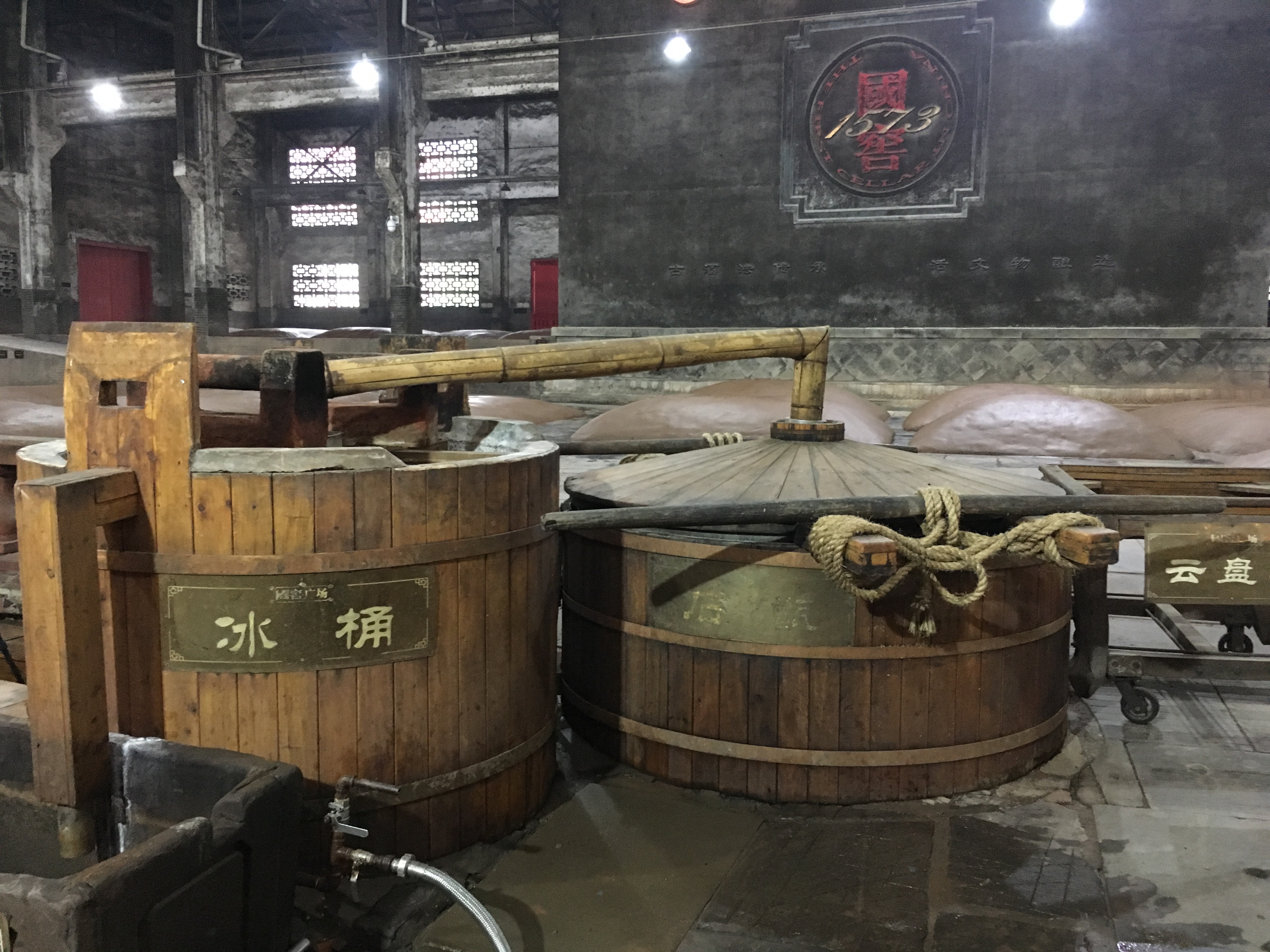
Fermentation: Sauce-aroma uses stone-slab pits; strong-aroma uses mud pits (jiaochi); light-aroma uses ceramic clay jars (digang); rice-aroma uses small ceramic vats. Cellar age directly affects quality and is a non-renewable competitive asset.
Distillation and cut selection: The cut sequence — head (high-ester/high-aldehyde), heart (best flavor, becomes base spirit), tail (low ABV) — is summarized as "discard head, discard tail, keep the heart."
Storage and maturation: Sauce-aroma standards call for ≥3–5 years in ceramic jars. The micro-permeability of ceramic jar walls drives esterification, oxidation, and molecular association reactions. Moutai holds >300,000 tonnes of ceramic-jar base-spirit storage.
Blending (tiao pei): Base spirits from different vintages, rounds, and batches are proportionally combined to achieve batch-to-batch flavor consistency.
Packaging: Glass bottles (Shandong Huapeng, 600716, largest supplier); aluminum screw caps (Zijiang Enterprise, 600210); paper gift boxes; anti-counterfeiting labels; ceramic bottles for select ultra-premium products.
Distribution: Traditional channels (tobacco-and-liquor shops 35–40%, food service ~20–25%, hypermarkets ~15%) + group purchasing (15%) + e-commerce (~15–20%, growing).
The chain's defining structural feature: extreme brand-end concentration (CR3 >70% in premium) coexists with extreme supply-chain fragmentation (1,500+ distilleries in Renhuai alone). This "dual-dispersion" structure is the central challenge for supply-chain identification and procurement.
1.4 Baijiu and Chinese Culture: An Inseparable History
Distilled baijiu technology likely matured in the Song–Yuan transition period (roughly the 11th–13th centuries). The solid-state fermentation distillation process known today developed fully during the Ming and Qing dynasties.
Kweichow Moutai won recognition at the 1915 Panama–Pacific International Exposition. After 1949, Moutai appeared regularly at state banquets, cementing its status as China's "national banquet spirit." In 1952, China's first National Spirits Evaluation Conference named Moutai, Fenjiu, Luzhou Daqu, and Xifeng as the "four great Chinese baijiu," establishing the aroma-type evaluation framework. Subsequent conferences (1963, 1979, 1984, 1989) produced today's 12-type system.
The post-reform-and-opening-up era (1978 onward) commercialized baijiu rapidly. By the 2000s, the gift-consumption and "social signaling" logic had fully crystallized: purchasing baijiu signals social standing and relationship depth, making Feitian Moutai a quasi-currency for business relations.
Chapter 2: Global Spirits Landscape and Baijiu's International Coordinates
The global spirits market is valued at roughly USD 1,050–1,200 billion (Euromonitor / IWSR, 2024 mid-estimate USD 1,150 billion). Key category benchmarks:
- Scotch Whisky: global market
USD 28.2 billion; SWA reports 2024 exports of ~GBP 5.4 billion (USD 7.3 billion). CAGR ~6.7%. - French Cognac: ~USD 45–50 billion market. China's October 2024 provisional anti-dumping levy (34.8%–39%) on EU brandy significantly disrupted Cognac exports to China.
- Japanese Whisky: ~USD 0.92 billion global market (2024); auction-market prices for aged expressions continue to set records.
- Japanese Sake: ~USD 3–4 billion exports (2024); twelve consecutive years of export records.
- Tequila/Mezcal: fastest-growing premium spirits category; ultra-premium Anejo growing >20%/year.
By value, baijiu is the world's largest single-category distilled spirit — at ~USD 110 billion, approaching the combined value of all other spirits categories. Yet exports at ~USD 0.9 billion represent less than 0.8% of global spirits trade. Export markets are heavily concentrated in Asia (81.7% of volume), primarily Hong Kong/Macau transit, South Korea, Japan, Singapore.
Structural barriers to internationalization: (1) Taste barrier — mainstream baijiu at 40–65% ABV with fermentation-forward flavor has low acceptance among non-Chinese consumers; (2) Cultural decoding difficulty — baijiu's drinking ritual (gan bei culture, banquet context) is deeply embedded in Chinese interpersonal culture; (3) Regulatory complexity — US TTB label certification, EU GI registration, mismatched plasticizer standards; (4) Absent retail shelf presence outside Chinese diaspora communities.
Brand Finance's annual spirits brand value ranking has placed Kweichow Moutai at #1 globally for several consecutive years (~USD 40–45 billion). Yet this brand value is almost entirely locked in the Chinese domestic and overseas-Chinese market — the world's highest-value spirits brand without a global consumer market.
Strategic lessons from other categories: Scotch's "regional terroir" strategy turned "Speyside fruity-sweet" and "Islay peaty-smoky" into globally recognized flavor shorthand — baijiu's 12-aroma-type classification is structurally identical "flavor taxonomy" with near-zero international recognition. Tequila's 1974 denomination-of-origin exclusivity became a powerful premium anchor. Sake's "Michelin dining-pairing" anchor offers a model for baijiu in high-end Chinese restaurants internationally.
2026–2030 export forecast: ~USD 1.5–2.0 billion by 2030 (CAGR ~10–15% from low base), still below 2% of global spirits trade. Genuine non-Chinese consumer penetration is a post-2035 story.
Chapter 3: PEST Analysis
Political: Baijiu carries a complex two-layer consumption tax (ad valorem 20% + ad quantum RMB 0.5/500ml at production stage; 10% ad valorem at wholesale stage). A "post-shift" reform — moving tax collection downstream to the retail stage — is under active discussion and could reshape supply-chain profit distribution. The 2012 "Eight-Point Regulation" eliminated most government banquet demand; 2024–2025 reinforcements maintain the structural shift away from government-driven consumption. Local government fiscal dependence on baijiu taxation is extreme: Renhuai City derives >80% of fiscal revenue from baijiu; Sichuan Province derives ~30% of fiscal revenue from the baijiu sector.
Economic: 2024 CPI at ~+0.2% (lowest in years), reflecting subdued domestic demand. Sub-premium baijiu (RMB 300–600) is most exposed to consumer confidence deterioration. Counterintuitively, ultra-premium (Feitian Moutai) shows relative price rigidity due to its quasi-financial asset characteristics. The "sauce-aroma bubble" (2021–2022) created excess channel inventory that has been unwinding through 2024–2025, with over 50% of distributors still reporting increasing inventory as of mid-2025 (per CAIA/KPMG report).
Social: Gen Z (born 1995–2010) shows structurally low baijiu affinity — surveys rank baijiu last among alcoholic beverages, with fewer than 30% willing to purchase voluntarily. Brand attempts at youth engagement (Moutai ice cream, Moutai coffee with Luckin) generate brand exposure but have not driven meaningful purchase conversion. "Guochao" (national culture trend) sentiment has provided some tailwind for traditional brand narratives, but the age-driven consumption handoff remains structurally uncertain for the post-2035 period.
Technological: Key vectors: (1) Intelligent brewing — sensor arrays in fermentation pits, AI-assisted blending, mechanized grain handling; Luzhou Laojiao's Huangyi smart distillery is the industry benchmark. (2) Microbiome science — metagenomics research by Jiangnan University and Guizhou University is decoding the "unreplicable terroir" of Maotai Town's microbial ecosystem, providing scientific evidence for GI protection. (3) Authenticity verification — carbon-14 isotope dating for vintage spirit authentication, NMR flavor fingerprinting, GC-MS full-spectrum analysis. (4) Blockchain traceability — Moutai and Wuliangye deploy NFC-chip anti-counterfeiting; effectiveness is partial as counterfeiters adapt.
Chapter 4: China Baijiu Market Scale and Dynamics
4.1 Total Market Scale
In 2024, China's above-scale baijiu enterprises numbered 869, generating sales revenue of approximately RMB 796.3 billion and total profit of approximately RMB 257.5 billion — a profit margin of ~32.3%, among the highest of any fast-moving consumer goods sector in China.
An alternative National Bureau of Statistics dataset shows above-scale baijiu enterprise revenues at ~RMB 603.3 billion, profit ~RMB 170.2 billion (+7.35% YoY). The two datasets are not contradictory — the CAIA figure covers a broader enterprise set. This report uses the CAIA figure as the primary reference.
4.2 Volume: Seven Years of Contraction
- 2016 peak: National baijiu production 13.584 million kiloliters — the all-time high.
- 2024: ~4.145 million kiloliters (YoY ~–1.8%), down ~70% from peak.
Volume contraction is not industry shrinkage — it is deep integration: the 2016 figure included large quantities of unbranded bulk spirit and low-end small-distillery output. As food safety and environmental regulation tightened, thousands of small distilleries closed or were absorbed. The vast majority of the volume decline came from low-quality exits; premium and above production has been broadly stable or slightly rising.
4.3 The Volume-Price Scissors: Ton-Price Drives Output Value
Volume down 70% yet output value rose from ~RMB 612.5 billion in 2016 to ~RMB 796.3 billion in 2024 — because average realized price per unit rose dramatically:
- 2016 ton-price: ~RMB 45,000/kiloliter
- 2024 ton-price: ~RMB 192,000/kiloliter
- Price increase multiple: ~4.3×
Core driver: product-mix premiumization. Feitian Moutai's ex-factory price rose from ~RMB 819/bottle in 2016 to RMB 1,169/bottle in 2024 (+43%). Simultaneously, the low-end bulk-spirit share collapsed, pulling the industry-wide average unit price sharply upward.
This "volume-down, price-up" dynamic has inherent stability as long as the core consumption cohort (ages 40–60, annual income ≥RMB 500,000) maintains purchasing power — but also inherent fragility: prolonged macroeconomic weakness that erodes middle-class confidence first hits the sub-premium tier (RMB 300–600).
4.4 Price-Tier Structure Shifts (2020–2024)
Ultra-premium / Premium (>RMB 600): Revenue share rose from ~35% of industry total in 2020 to ~48% by 2024. Moutai alone accounts for ~40% of all listed-company profits.
Sub-premium (RMB 300–600): The most troubled segment. Rapid expansion during the 2022 sauce-aroma craze; 2023–2024 price inversion (market wholesale price below ex-factory price) eroded distributor confidence. Inventory overhang is most severe here.
Mid-tier (RMB 100–300): Provincial-champion battleground. High competitive intensity, thin margins, large volume.
Value/light-bottle (<RMB 100): The fastest-growing price band in 2024. Consumer down-trading and quality-focused light-bottle brands (Guangliang, Handao) surge on e-commerce with "pure-grain solid-state, honest pricing" positioning.
4.5 Regional Distribution
- Sichuan Province: China's largest baijiu province; 2024 output
1 million kl (24% national); Wuliangye (Yibin), Luzhou Laojiao (Luzhou), Jiannanchun (Mianzhu), Langjiu (Gulin), Shede (Shehong). - Guizhou Province: Sauce-aroma core; ~85% of national sauce-aroma output. Kweichow Moutai, Xijiu, hundreds of distilleries along the Chishui River.
- Jiangsu Province: Yanghe (Suqian), Jinshiyuan (Huai'an), Shuanggou; soft/mellow strong-aroma with deep provincial premium-banquet moat.
- Anhui Province: Gujing Gongjiu (Bozhou), Kouzi Jiao (Huaibei), Yingjia Gongjiu (Luan), Jinsizi (Fuyang).
- Shanxi Province: Fenjiu (Fenyang Xingjie Village) dominates; national expansion underway; 2024 revenues of RMB 36 billion, fastest-growing top-tier name of the past five years.
4.6 Listed Companies Financial Overview (2024)
| Company | Code | 2024 Revenue (RMB bn) | YoY |
|---|---|---|---|
| Kweichow Moutai | 600519 | 174.1 | +15.7% |
| Wuliangye | 000858 | 89.1 | +6.4% |
| Shanxi Fenjiu | 600809 | 36.0 | +12.8% |
| Luzhou Laojiao | 000568 | 31.2 | +3.2% |
| Yanghe | 002304 | 28.9 | –8.1% |
| Gujing Gongjiu | 000596 | 23.6 | +16.4% |
Yanghe's revenue decline is notable — the only top-6 company to post negative revenue growth, reflecting the deepest inventory pressure on sub-premium Jiangsu spirits.
4.7 The Inventory Cycle: 2023–2025 Deep Adjustment
- 2020–2022: Pandemic-era premium resilience + sauce-aroma craze → rapid channel inventory accumulation.
- 2022–2023: Post-pandemic consumption recovery below expectations; distributors discover oversupply; buying stops.
- 2023–2024: Price inversion spreads through sub-premium; distributors sell at a loss. The CAIA/KPMG report shows >50% of distributors still reporting growing inventories in mid-2025.
- 2025–2026: Top distilleries adopt "pace-control and price-defense" strategy; partial inventory improvement signals have appeared but bottom confirmation remains pending.
This cycle exhibits classic FMCG "bullwhip effect": small demand fluctuations amplified through distribution layers into massive perceived swings.
4.8 Profitability Structure
Moutai's net profit of ~RMB 86.2 billion represents ~52% of all 19 listed companies' combined net profit; Wuliangye adds another ~19%; together the top two capture ~71% of listed-company profits. Overall gross margin: Moutai ~92%; Wuliangye ~78%; industry average ~60–65%.
Chapter 5: Industry Chain Analysis
5.1 Overview and Cost Structure
The baijiu industry chain spans four major segments — agricultural raw materials, brewing production, packaging, and distribution channels — with highly unequal value distribution.
A rough cost breakdown for one 500ml premium sauce-aroma bottle (ex-factory ~RMB 1,000):
- Brewing raw materials (sorghum, wheat): ~5–8%
- Energy and labor (distillation, fermentation): ~10–12%
- Base-spirit storage (ceramic jar depreciation): ~8–10%
- Packaging materials (glass bottle, cap, gift box, anti-counterfeiting): ~8–15%
- Consumption tax (production-stage): ~20–25%
- Marketing (advertising, channel costs): ~15–25%
- Brand profit: ~15–30% (Moutai gross margin ~92%; industry average ~60–65%)
Feitian Moutai's all-in production cost is estimated at RMB 150–250/bottle, against an ex-factory price of RMB 1,169. This ~70–80% net margin on manufacturing cost is pure brand premium.
5.2 Upstream Raw Materials
Sorghum: ~50% of total industry sorghum is imported (Australia, USA, Canada), priced at ~RMB 2,000–2,500/tonne vs domestic ~RMB 2,800–3,200/tonne. Moutai uses local Hongyingzi glutinous sorghum from dedicated bases; imported sorghum flows primarily to strong-aroma and value-tier products.
Geopolitical risk: 2018 US–China trade-war anti-dumping levies on US sorghum forced short-term source diversification. Similar disruptions occurred during 2021 China–Australia tension. Mid-to-low-end distillers dependent on imported sorghum bear this risk primarily.
Water: The "good water makes good baijiu" narrative partly romanticizes water's role — the true mechanism lies in mineral hardness and trace metal ions affecting fermentation microbiology. Microbial ecology and process, not water alone, determine quality.
5.3 Fermentation Vessels and Equipment
Fermentation Pits (jiaochi): Luzhou Laojiao's "1573 National Treasure Cellar Pit Cluster" (built 1573, national cultural heritage site) hosts 400+ years of accumulated microbial ecology — an irreplicable competitive asset.
Ceramic Jars (taotang): Sauce-aroma base spirits must be stored in Yixing purple-clay ceramic jars or Rongxian coarse ceramic jars. The micro-permeability of ceramic walls enables the slow oxygen exchange driving "aged maturation." Stainless-steel tanks cannot replicate this. Moutai holds >300,000 tonnes of ceramic-jar base-spirit storage — an insurmountable time-barrier for new entrants.
5.4 Packaging Supply Chain
Glass bottles: Annual market ~RMB 15–20 billion. Shandong Huapeng Glass (600716) — China's largest spirits glass bottle producer, capacity >200 million units/year. Yibin Global Glass (Sichuan) is Wuliangye's key supplier.
Aluminum caps: Zijiang Enterprise (600210) is the leading domestic producer of aluminum screw caps.
Outer gift boxes: Premium baijiu gift-box costs can reach 40–60% of total packaging cost. Yutong Technology and Hexing Packaging are major suppliers.
Ceramic bottles: Used for select ultra-premium products; National Porcelain Yongfeng is a key partner for Moutai, Wuliangye, Xijiu, and Luzhou Laojiao.
5.5 Distribution Channels
Traditional offline channels:
- Tobacco-and-liquor shops: ~35–40% of sales.
- Food service (restaurants and hotels): ~20–25%.
- Hypermarkets/supermarkets: ~15%.
- Group purchasing: ~15%.
E-commerce channels (~15–20%, growing):
- JD.com liquor category: "authentic product guarantee" positioning; Moutai official flagship store.
- i-Moutai App: Moutai's own direct-sales app (launched 2022); estimated direct-sales share now >40% of Moutai revenues; structurally compresses distributor markup.
- Douyin/Kuaishou live-commerce: cuts into sub-100 RMB and mid-tier segments.
The core disruption from e-commerce is increased price transparency and supply-chain compression: consumers can compare prices instantly, and the traditional multi-tier distribution chain is being squeezed at every level.
5.6 Cost Structure Differences by Aroma Type
Sauce-aroma (Moutai benchmark): Total cost ~RMB 150–250/bottle against ex-factory RMB 1,169 → implied net margin on production cost ~70–80%.
Strong-aroma (Wuliangye benchmark): Multi-grain recipe adds raw material cost; shorter storage cycle vs sauce-aroma. Eighth-generation Puwu estimated production cost ~RMB 200–300/bottle, ex-factory RMB 969, gross margin ~68–75%.
Light-aroma (Fenjiu benchmark): Shortest process cycle (~28-day large-qu fermentation), simplest cost structure. Overall gross margin ~55–65%.
5.7 The Base-Spirit Market: A Hidden Sub-Market
The base-spirit (yuanjiu / jijiu) market is largely invisible to outsiders. Estimates suggest ~RMB 20–30 billion/year by transaction value. Supply concentrates in Yibin/Luzhou (strong-aroma), Renhuai (sauce-aroma), and Bozhou (strong-aroma). A standard-quality strong-aroma base spirit traded at ~RMB 15,000–30,000/tonne in 2024; final retail prices can be RMB 100–300/bottle, implying a 10–30× brand markup.
This massive base-spirit-to-retail price gap is the structural incentive drawing hundreds of brand-development operators into the market, and is the primary regulatory focus of solid-state vs. liquid-state labeling enforcement.
5.8 Value Distribution: Concentrated at Brand End, Fragmented in Supply Chain
Moutai's 2024 net profit of RMB 86.2 billion alone exceeds the entire annual market size of the glass-bottle industry (~RMB 15–20 billion total). The central economic axiom: value density increases as you approach the brand end; value disperses as you approach raw materials.
5.9 Logistics, Storage, and Seasonality
Baijiu does not require cold-chain logistics, but premium baijiu storage is sensitive to temperature (15–25°C), humidity (50–70%), light exposure, and vibration. Aged baijiu storage is priced at 5–10× standard warehouse rates. Instant retail (Meituan Flash Delivery, JD Same-Hour Delivery) has reshaped tobacco-and-liquor shops into on-demand urban fulfilment nodes.
5.10 Consumption Tax Transmission Through the Supply Chain
Current tax structure: production stage — ad quantum RMB 0.5/500ml + ad valorem 20%; wholesale stage — ad valorem 10%. For Feitian Moutai, combined tax ~RMB 484/bottle, or ~19.4% of wholesale price. The proposed "post-shift" reform (moving collection to retail) would reduce distillery cash-flow burden while increasing costs for downstream distributors and retailers, likely partially passing through to retail prices.
Chapter 6: Competitive Landscape and Key Enterprises
Concentration: Top 19 listed companies account for ~56% of industry revenue. CR3 (Moutai + Wuliangye + Luzhou Laojiao) at premium (>RMB 600) exceeds 70%.
Kweichow Moutai (600519): 2024 revenue RMB 174.1 bn (+15.7%), net profit RMB 86.2 bn (+14.9%), gross margin ~92%. Feitian Moutai ex-factory price RMB 1,169/500ml; wholesale ~RMB 2,300–2,700. The moat rests on five pillars: unreplicable microbial terroir, ~300,000+ tonnes of aged base-spirit reserves, brand value ranked #1 globally in spirits (Brand Finance), artificial scarcity (quota allocation), and "national symbol" historical narrative (state banquets, 1949 founding). The i-Moutai direct-sales app (launched 2022) now accounts for >40% of revenues, compressing distributor margins.
Wuliangye (000858): Revenue RMB 89.1 bn (+6.4%), net profit RMB 31.9 bn. Eighth-generation Puwu (ex-factory RMB 969) is the leading premium strong-aroma product. Multi-brand matrix strategy covers all price tiers.
Luzhou Laojiao (000568): Revenue RMB 31.2 bn (+3.2%), net profit RMB 13.5 bn, net margin ~43%. Guojiao 1573 (ex-factory RMB 889) is anchored to the "world's oldest continuously used cellars" narrative (since 1573).
Shanxi Fenjiu (600809): Revenue RMB 36.0 bn (+12.8%), net profit RMB 12.2 bn — the fastest-growing top-tier name. National expansion from Shanxi base via Qinghua Fenjiu series. Outside-province revenue share now exceeds 50%.
Yanghe (002304): Revenue RMB 28.9 bn (–8.1%), net profit RMB 6.7 bn (–21.3%) — the only top-6 decliner. Sub-premium Dream Blue channels face the deepest inventory overhang. Management is deliberately throttling shipments ("shrink volume, defend price") aiming at channel health restoration.
Other listed companies (2024 highlights):
- Gujing Gongjiu (000596): Revenue RMB 23.6 bn (+16.4%), net profit RMB 5.5 bn (+20.2%). Anhui leader; ~40% provincial market share.
- Jinshiyuan (603369): Revenue RMB 11.5 bn (+14.3%), net profit RMB 3.4 bn (+8.8%). Jiangsu Huai'an; deeply embedded in provincial wedding banquet channels.
- Yingjia Gongjiu (603198): Revenue ~RMB 6.6 bn; sub-premium Dongsang series growing; strong Anhui provincial brand.
- Kouzi Jiao (603589): Revenue ~RMB 4.7 bn; Anhui mixed-aroma representative; deep provincial channel; minimal national expansion.
- Shuijingfang (600779): Revenue
RMB 5.2 bn (+5.3%), net profit ~RMB 1.3 bn. Backed by Diageo (60% stake) — the only international spirits giant controlling a listed Chinese baijiu company. - Jiugui Liquor (000799): Revenue RMB 1.42 bn (–49.7%), net profit ~RMB 12.5 million (–97.7%). The most severe listed-company collapse of 2024. A textbook case of "niche aroma + insufficient channel coverage + weak capital backing."
- Shede (600702): Revenue ~RMB 5.4 bn; net profit ~RMB 0.35 bn (–80.5%). Profit collapse reflects the cost of holding price amid weak demand.
Key unlisted enterprises:
- Xijiu (spun off from Moutai Group): Est. 2024 revenue ~RMB 22 bn; IPO pending. Scale already equals the 5th–6th largest listed baijiu company.
- Langjiu (Sichuan Gulin): Est. 2024 revenue ~RMB 16 bn. Tianbao Cave base-spirit cellar is a unique brand narrative asset.
- Jiannanchun (Sichuan Mianzhu): Est. 2024 revenue ~RMB 10–12 bn.
- Guotai (Guizhou Renhuai): Est. 2024 revenue ~RMB 3–4 bn.
Competitive strategy analysis:
- Moutai's "managed scarcity": Core strategy is not "how to sell more" but "how to manage scarcity." The dual-track system plus active price-intervention when wholesale prices rise too fast form a precision price management system.
- Wuliangye's "product matrix management": Build the most complete price-tier coverage below Moutai's ultra-premium ceiling; post-2022 tightened OEM brand quality reviews and price floors to protect flagship image.
- Fenjiu's "light-aroma differentiation + national expansion": Clean-and-easy flavor profile creates effective positioning; "value-tier Boliao drives brand recognition nationally, Qinghua Fenjiu converts to premium revenue."
- Yanghe's "channel repair": 2024's core mission — clear distributor inventory, slow shipments, strengthen price discipline. "Shrink volume rather than allow price chaos."
Chapter 7: Industrial Belt Geography and Factory Identification
Guizhou-North Sauce-Aroma Belt (Renhuai / Chishui River Valley): Moutai (~57,000 t/year Feitian capacity) anchors the belt. An estimated 1,500+ sauce-aroma distilleries operate in Renhuai municipality alone. Post-bubble inventory pressure (2023–2024) has shuttered many of the 2021–2022 entrants.
Sichuan-South Strong-Aroma Belt (Yibin / Luzhou): Wuliangye (Yibin) and Luzhou Laojiao (Luzhou) are the anchors; surrounding them are hundreds of contract distilleries producing standardized strong-aroma base spirit for national brands. The Sichuan belt is the world's single largest baijiu production cluster by volume (~1 million kl/year, ~24% of national output).
Jiangsu-Anhui Belt: Yanghe (Suqian), Gujing Gongjiu (Bozhou), Kouzi Jiao (Huaibei), Yingjia Gongjiu (Luan), Jinshiyuan (Huai'an). Soft/mellow strong-aroma style, deeply entrenched in provincial banquet channels.
Shanxi-Beijing Light-Aroma Belt: Fenjiu (Fenyang, Xingjie Village), Red Star Erguotou (Beijing), Niulanshan (Shunyi).
Northwest Regional Belts: Xifeng (Shaanxi Fengxiang); Jinhui Liquor (603919, Gansu, revenue ~RMB 2.2 bn); Yilite (600197, Xinjiang, revenue ~RMB 1.5 bn).
South China Rice/Chi-Aroma Belt: Guilin Sanhua (Guangxi, rice-aroma); Yubing Shao and Jiujiang Shuangzheng (Guangdong, chi-aroma).
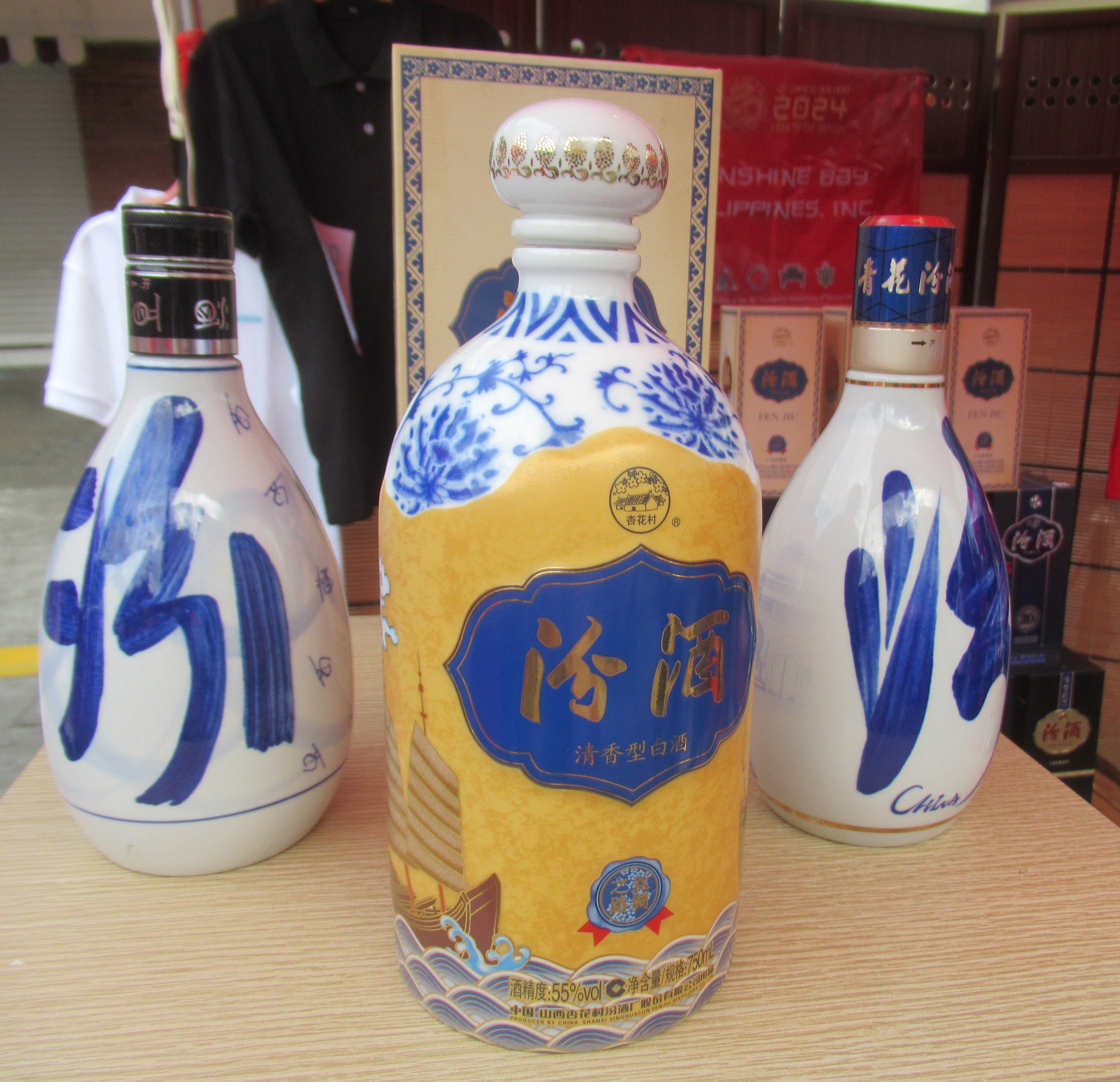
Supply chain identification challenge: The high brand-end concentration is inversely mirrored in supply-chain fragmentation. Baijiu's upstream — base-spirit producers, glass bottle manufacturers (Shandong Huapeng, 600716), ceramic jar workshops (Yixing ~200–300 factories), aluminum cap suppliers (Zijiang Enterprise, 600210), packaging companies — consists of thousands of micro and small enterprises with minimal public documentation. Identifying which base-spirit plant serves which brand, which ceramic jar supplier can handle high-volume orders, or which glass bottle factory specializes in custom high-end molds requires factory-level data that cannot be obtained through conventional searches. Tianxia Gongchang's factory identification capability — built on 4.8 million verified active factories — addresses precisely this identification challenge in the baijiu upstream supply chain, where brand transparency is zero but production activity is substantial.
Regional GI protection: Over 50 baijiu products have received national GI protection designations. "Kweichow Moutai Baijiu" GI protection (approved 2001) restricts use of the name to production within designated Renhuai zones. The "Moutai Town Sauce-Aroma Baijiu" collective trademark requires distilling within Renhuai city boundaries.
Wine-tourism integration: Post-2020, baijiu industrial belts have developed winery-estate-plus-cultural-tourism models. Langjiu's "Langjiu Manor" (Gulin, Sichuan) built around the Tianbao Cave natural cellar is the leading example — peak visitor traffic exceeded 2,000/day. Moutai's Maotai Town cultural tourism complex, Wuliangye's "Wuliangye Liquor Road," and Fenjiu's "Xingjie Village Scenic Area" follow the same logic.
Chapter 8: Segmented Market Topics
8.1 Price Tier Deep Dive: The High-Low Bifurcation
Ultra-premium (>RMB 1,500): Almost exclusively Kweichow Moutai's domain. Feitian Moutai's dual-price structure (ex-factory RMB 1,169 vs wholesale RMB 2,300–2,700) is among the world's most unusual consumer goods pricing systems. Wholesale price retreated from the 2022 peak (~RMB 3,000+) but remains well above ex-factory price. Vintage Moutai (15Y, 30Y, 50Y) is a confirmed collector asset class, with auction results at Hong Kong Sotheby's breaking records.
Premium (RMB 600–1,500): Principal battleground for Wuliangye, Luzhou Laojiao, Shanxi Fenjiu (Qinghua series), Xijiu, and Langjiu. Fenjiu's Qinghua 30Y (RMB 1,000) and Qinghua 20Y (RMB 380–450) precisely target the gap between Moutai price and strong-aroma premium.
Sub-premium (RMB 300–600): Inventory ground zero. Core drivers: 2021–2022 sauce-aroma craze flooded this tier; 2023 consumer recovery underwhelmed; e-commerce price transparency accelerated buyer-delay behavior.
Mid-tier (RMB 100–300): Regional-champion moat. Provincial leaders hold near-impenetrable positions in home markets.
Value/light-bottle (<RMB 100): The unexpected growth engine. Consumer down-trading plus quality-upgrade brands ("Guangliang 59" at RMB 59, "Handao" at RMB 60–80) attract a rational-consumer cohort hostile to packaging inflation.
8.2 Aroma-Type Divergence: Sauce Retreats, Light Rises, Strong Under Pressure
Sauce-aroma: 55–60 million kl production in 2024 (13–15% of total volume); revenue share ~30%. Post-craze shakeout is severe — second-tier sauce-aroma brands face price pressure and balance-sheet stress.
Strong-aroma: Still the highest-volume category (~70% of national volume) but squeezed from above by sauce-aroma in premium brand storytelling. Overall strong-aroma market growth trails industry average.
Light-aroma: Fenjiu's strong growth is the most compelling company story of 2020–2024. Revenue share rose from ~6% in 2019 to ~12% in 2024 — the fastest-growing aroma type.
8.3 Channel Restructuring: E-Commerce Impact
2024's biggest channel variable: e-commerce-driven restructuring. Traditional tobacco-and-liquor shop monthly throughput declined; instant retail (Meituan Flash Delivery, JD Same-Hour Delivery) changed buyer behavior; i-Moutai direct-sales share estimated >40% of Moutai revenue; Douyin/Kuaishou live-commerce cutting into RMB 100–200 range. Net effect: channel disruption favors strong brands (higher direct-sales margins) and disadvantages mid-tier brands and traditional distributors.
8.4 Internationalization: Early-Stage Reality Check
Key 2024 data: exports ~USD 0.9 billion (+13% YoY); 81.7% Asian Chinese diaspora; genuine non-Chinese consumer penetration near zero. Three debated internationalization paths: (A) deepen Chinese diaspora — current actual strategy; (B) luxury collectibles — Moutai vintage auctions at Hong Kong Sotheby's; (C) mixed-serve to lower the entry barrier — experimental, internally divisive.
8.5 The Inventory Cycle in Depth
| Cycle | Trigger | Duration | Recovery Driver |
|---|---|---|---|
| 2012–2016 | Three-public consumption restrictions | ~4 years | Private commerce/gift demand took over |
| 2018–2020 | Premiumization slowdown + trade war anxiety | ~2 years | Pre-pandemic consumption rebound |
| 2023–? | Post-sauce-aroma-craze hangover + consumer confidence | Estimated 2–3 years | Macro recovery + top-brand volume control |
This cycle's distinctiveness: pressure concentrated in sub-premium and second-tier sauce-aroma while ultra-premium (Moutai) is relatively unaffected — a structural correction, not a systemic collapse. Bottom estimated at H2 2026 to early 2027 for leading names.
8.6 Aged Baijiu: A Fast-Growing High-Net-Worth Niche
Aged baijiu (typically 10+ years old) has emerged as a distinct high-net-worth sub-market in the 2020s, with the core logic paralleling wine vintages or Scotch cask investment: time confers irreplaceable scarcity. A Moutai "special reserve" from the 1980s can fetch hundreds of thousands of RMB at auction in 2024.
Key market participants: auction platforms (China Guardian, Poly Auction, Hong Kong Sotheby's, Beijing Huachen); aged baijiu trading platforms (Huxian Aged Baijiu, Zhong Jiu Hui, AiJiu); brand direct-sale vintage lines (Moutai 15Y/30Y/50Y/80Y, Wuliangye vintage series).
Core challenge: authentication — faking aged baijiu costs little, detecting it is difficult. Market size estimated ~RMB 8–12 billion in 2024, projected to reach RMB 20–30 billion by 2030 as C-14 dating and NMR fingerprinting become industry-standard screening tools.
8.7 Baijiu and Health: Low-ABV and Functional Product Exploration
Under the "healthy drinking" trend, some distilleries explore sub-38% ABV and functional-infused products. Consumer acceptance of 38–42% ABV has grown; attempts at 29% and 25% products have seen limited response — core baijiu consumers find low-ABV "lacking structural backbone." Luzhou Laojiao "Taohua Zui" low-ABV fruit wine line and Wuliangye's low-ABV micro-buzz drinks target young consumer segments, but these compete more with beer and fruit wine than with baijiu itself.
8.8 Niche Aroma Types: Fuyu-Aroma and Dong-Aroma
Jiugui Liquor (000799) fuyu-aroma: Fuyu-aroma is Jiugui's proprietary style. Jiugui's 2024 collapse (revenue –49.7%, profit –97.7%) illustrates that flavor uniqueness alone cannot sustain commercial success without sufficient brand recognition and distribution scale. The crisis was compounded by COFCO's limited strategic support and 438 net distributor losses in 2024.
Dong Liquor (Guizhou Zunyi) dong-aroma/herbal: Over 130 herbal medicinal ingredients in the qu formula. GI-protected since 2012; estimated annual revenue ~RMB 2–3 billion; stable in health-oriented consumer niches. The Dong case shows: niche aroma types can sustain small-but-beautiful markets, but the marginal cost of national expansion is prohibitively high.
8.9 Holiday Economics and Seasonality
Baijiu is among the most seasonal products in Chinese consumer goods:
- Spring Festival (Q1): ~30–35% of annual revenue. Distilleries begin shipping 2–3 months before.
- National Day / Mid-Autumn (late Q3 to early Q4): Second gift-consumption window, ~15–20% of annual revenue.
- Slow season (Feb–Apr): Channels digest Spring Festival inventory. Price movements are the earliest signal of current-year market strength.
- Intermediate peak (May–Aug): Wedding banquet season (May–June, October) and Dragon Boat Festival gifts; most beneficial to mid-tier regional brands.
8.10 Pre-Mixed and Low-Degree Products' Impact on Baijiu
China's RTC/RTD and low-ABV market (~≤6% ABV): RTC market ~RMB 15–20 billion (2024); plum wine/fruit wine ~RMB 5–8 billion. These primarily substitute for women and 25–35 year olds in casual everyday drinking — most directly competing with value-tier baijiu. Limited impact on premium baijiu (banquet/gift occasions). White-spirit enterprises' low-ABV extensions (Luzhou Laojiao, Wuliangye, Yanghe) remain financially immaterial to core businesses but signal recognition that multi-occasion consumer behavior is an irreversible trend.
Chapter 9: Technology Evolution Trends
9.1 The Dual Nature of Baijiu Technology
Baijiu occupies a unique position between tradition and modernity: "ancient cellar mud," "traditional huisha technique," and "intangible cultural heritage" are core brand-premium narratives — distilleries deliberately retain manual operations and traditional process elements. Simultaneously, cost pressure, food-safety requirements, and quality consistency objectives drive modernization. The resulting technology trajectory is neither disruption nor wholesale replacement: it is using modern tools to make traditional processes more precise, controllable, and scientifically documented.
9.2 Intelligent Brewing: From Automation to Digitalization
Stage 1: Mechanization replaces manual labor. The most physically demanding steps — grain loading into the zengdong retort (shangzeng), mash turning, spreading and cooling — are being mechanized. Luzhou Laojiao's Huangyi Smart Distillery (fully operational 2024) is currently the industry benchmark for strong-aroma intelligent manufacturing: full automation of raw material conveyance, real-time fermentation-pit monitoring, mechanized mash handling, and programmatic distillation operation.
Stage 2: Digital fermentation pit management. Traditional practice relied on manual daily measurements. Modern retrofitting deploys sensor arrays (temperature, humidity, pH) in each pit, uploading real-time data to cloud platforms. Fenjiu's 2024 deep integration with Huawei Cloud — applying AI to qu-making temperature/humidity control and distillation parameter optimization — is the reference case for light-aroma intelligent distilling.
Stage 3: AI-assisted blending. AI-assisted blending systems (Moutai and Wuliangye both have internal R&D projects) work by GC-MS full-spectrum analysis of tens of thousands of base-spirit samples, building mapping models between chemical composition and sensory scores, then using machine learning to propose optimal blending ratios. Goal: systematize and transfer master blenders' expertise, not replace human tasters.
9.3 Microbiome Science: Decoding "Irreplicability"
Key 2020–2024 research progress:
- Metagenomics characterization of full microbial communities in Maotai Town fermentation pits and qu samples, mapping species dynamics across all seven distillate rounds.
- Identification of key functional species including Clostridium kluyveri (hexanoic acid bacteria) and Bacillus licheniformis — key contributors to ester compounds characteristic of sauce-aroma.
- Guotai–Jiangnan University joint project (2023–2024) integrating metagenomics, metatranscriptomics, and metabolomics to annotate the complete pathway from microbial gene function to flavor compound generation.
Industry significance: (1) Scientific evidence for GI protection (specific microbial ecology = specific geography's non-portability); (2) Theoretical foundation for directed microbiome management in newly established distilleries.
9.4 Vintage Authentication: The Technology Arms Race Against Fraud
Carbon-14 isotope dating: The 1950s nuclear testing "C-14 bomb peak" (1963–1964) left detectable historical markers in agricultural products. Precise C-14 measurement can identify whether spirit was fermented before or after 1963. Limitation: cannot pinpoint exact vintage; limited discrimination power for post-2000 spirits.
NMR flavor fingerprinting: Each distillery's spirit has a distinctive NMR spectral "chemical fingerprint." Leading distilleries have built multi-year product NMR databases for authentication.
GC-MS full-spectrum analysis: Quantitative analysis of 1,000+ trace compounds; different brands and vintages have statistically distinguishable profiles. Third-party verification models are now available.
Blockchain traceability: Moutai NFC anti-counterfeiting chips and Wuliangye's digital authentication system record each bottle on blockchain. Counterfeiters have developed counterfeit NFC chips and double-fill methods. The authentication arms race continues.
9.5 Green Brewing and Dual-Carbon Response
Baijiu distilling is energy-intensive. Under China's "dual-carbon" targets (carbon peak 2030, carbon neutrality 2060):
- Fuel substitution: Major distilleries replacing coal with natural gas; some new facilities incorporating solar power.
- Distillery-grain resource utilization: ~5–8 kg of grain residue per liter of baijiu produced. Main resource pathways: livestock feed, organic fertilizer, biomass combustion.
- Wastewater treatment: Updated Distillery Industry Water Pollution Discharge Standards reduce COD limits by ~30%.
- Carbon reduction roadmap: NDRC requires leading distilleries to publish carbon-neutrality roadmaps by 2026.
9.6 Packaging Technology Innovation
Three directions: Light-weighting (reducing glass mass while maintaining strength); integrated anti-counterfeiting (NFC chips, holographic labels, digital QR codes combined); sustainable packaging (recyclable-material gift boxes, reduced plastic use for premium brands with environmental brand narratives).
9.7 Digitalization Path Divergence: Large vs. Small Enterprises
Top-tier distilleries (revenue ≥RMB 10 billion): Full-stack digitalization — production (smart fermentation pits, digital process control), product (AI blending, NMR fingerprint database), marketing (i-Moutai App, big-data consumer insights), distribution (blockchain traceability, digital distributor management).
Mid-tier distilleries (RMB 1–10 billion): "Point" digitalization — focusing on highest near-term ROI nodes; generally adopting mature third-party solutions rather than proprietary development.
Small distilleries (<RMB 1 billion): Minimal digital investment; production management still experience-dependent; this tier concentrates the most food safety risk and is the primary target for regulatory attrition.
9.8 Technology R&D Investment
- Moutai: ~RMB 350–400 million R&D expenditure (2024), ~0.2% of revenue.
- Wuliangye: ~RMB 500–600 million, ~0.6% of revenue.
- Shanxi Fenjiu: ~RMB 300 million, ~0.8% of revenue.
- Small distilleries: typically <RMB 10 million.
Primary R&D focus: microbial ecology research (university collaborations); intelligent brewing systems (sensors, AI); new product development (low-ABV, functional innovation); authentication and traceability technology.
Projected trajectory: top-distillery R&D-to-revenue ratios rising from 0.2–0.8% to ~0.5–1.2% by 2030, still below global food and beverage average (1.5–2%) but representing meaningful progress for a traditional craft industry.
Chapter 10: Risks and Challenges
10.1 Consumer Confidence Decline
The most critical medium-to-long-term risk: declining consumption confidence among the core consumer cohort (ages 35–60, annual income ≥RMB 300,000). The 2023–2024 macro reversal has undercut key supports: residential property net worth erosion (prime urban markets down 15–30%); equity market weakness; slower GDP growth prompting enterprises to trim entertainment budgets. This risk differs from the 2012 administrative policy shock — it is a diffuse change in consumption expectations with a long forecast cycle and no single-company marketing remedy.
10.2 Persistent High Inventory Pressure
Mid-2025, the five major listed baijiu companies combined inventory: estimated ~RMB 25–30 billion. Distributor-level inventory: industry estimates put this at 3–5× on-book distillery inventory. Systematic risk: if macro weakness persists, prolonged demand softness could trigger a price war — first distributor discounting, then distillery forced price reductions, risking structural collapse of the sub-premium price system.
10.3 Youth Engagement Failure: The Most Intractable Structural Problem
Three layers of difficulty:
First: Product-occasion mismatch. Core baijiu occasions (banquets, business dinners) structurally require age and social roles — entry-level Gen Z workers have no host occasion and no social pressure to gift Moutai.
Second: Taste generation gap. Western spirits, craft beer, and fruit wine pre-shape young consumers' flavor preferences; high-ABV baijiu's "burn-on-entry" profile is a negative initial experience for many Gen Z consumers.
Third: Brand narrative misalignment. Core baijiu brand storytelling (history / vintage years / heritage / state banquet) speaks a language designed for middle-aged elite men, systematically misaligned with Gen Z values (authenticity, equality, sustainability, innovation).
Ceiling assessment: Even under the most optimistic scenario, when Gen Z reaches peak consumption age (~30–35) by 2030, their baijiu consumption frequency and spend will likely fall below comparable-age Millennials at the same life stage.
10.4 Food Safety Risks: Latent but Persistent
- Plasticizer risk: Plastic piping and containers (still used by smaller distilleries) continue to leach di-octyl phthalate (DOP) into spirit. Compliance among small distilleries is uneven.
- Labeling fraud: Liquid-method baijiu mis-labeled as solid-state baijiu persists despite repeated enforcement campaigns.
- Vintage fraud: The scale of fake "aged baijiu" in circulation is estimated as substantial.
- Storage contamination: Rural small distilleries with unsealed ceramic jars and unclean warehouse environments risk microbial contamination — a risk concentration zone with limited regulatory reach.
10.5 Policy Risks: Consumption Tax Reform and Drunk-Driving Enforcement
Consumption tax reform: Downstream-shift reform, if enacted, would alter supply-chain profit distribution. Reform timing and magnitude carry policy uncertainty. Drunk-driving enforcement tightening: 2023–2024 saw intensified DUI enforcement; stronger enforcement compresses per-capita drinking at dining occasions — a negative for mid-tier and value-tier baijiu.
10.6 E-Commerce Channel Disruption
Traditional distributor value depended on regional depth, relationship maintenance, and banquet-scene recommendation. E-commerce's core disruption: (1) destroys information asymmetry that supported pricing power; (2) compresses multi-tier distribution economics — the four-tier chain is being compressed from the top; (3) triggers cross-territory arbitrage (chuanhuo) that undermines regional price systems.
10.7 Overcapacity: Structural Shakeout in Low-to-Mid Tier
Low-end baijiu faces an accelerating shakeout: higher environmental compliance costs; food-safety labeling enforcement squeezes "no-certification" bulk spirit; consumer quality baseline rising even at value tier; branded options (Red Star, Niulanshan, Guangliang) take share from unbranded bulk. Collectively beneficial for the industry but a real employment shock for thousands of small distillery operators.
10.8 Geopolitical and Raw-Material Supply Chain Risk
~50% of industry sorghum demand is imported (Australia, USA, Canada), creating supply-chain exposure to geopolitical disruption. During the 2018 US–China trade war, anti-dumping levies on US sorghum forced short-term source diversification. Mid-to-low-end strong-aroma distillers dependent on imported sorghum bear this risk primarily.
10.9 Distributor Credit Risk: Channel Financing Stress
Distributors are the most financially vulnerable link in the supply chain: Huazhi Jiuhang (300755) inventory contracted from RMB 3.26 billion to RMB 2.36 billion in 2024, reflecting forced de-stocking. Some mid-size regional distributors with inventory-backed borrowing face collateral-value deterioration risk. The systemic risk: if Feitian Moutai wholesale price sustains a significant decline (below ~RMB 2,000), margin calls could trigger distress selling and accelerate a downward price spiral — currently low-probability but warranting monitoring.
10.10 Industry Cycle Bottom: Conditions for Recovery
Recovery-timing indicators to monitor:
- Channel inventory: Distributor holdings declining from 6–12 months toward 3–4 months.
- Price signals: Sub-premium wholesale prices recovering above ex-factory prices (price-inversion repair) are the leading indicator.
- Distillery behavior: Top distilleries shifting from "pace-control" back to "normal shipment pace."
- Macro signals: Five-star hotel F&B revenue trends and domestic business-travel volumes are useful leading proxies.
Institute assessment: The substantive cycle bottom will likely fall in H2 2026 to early 2027 for leading names; Yanghe/Gujing recovery timing may push to mid-2027.
Chapter 11: 2026–2030 Forecast
11.1 Baseline Scenario Assumptions
- China macro GDP growth ~4.5–5%/year; real household income growth ~3–4%/year.
- Consumption tax reform proceeds slowly; no large-scale policy shock before 2028.
- Core premium consumer cohort (ages 40–60) maintains scale; Gen Z contribution grows slowly.
- Inventory cycle substantially clears by mid-2026 to early 2027; industry enters mild recovery.
In this baseline, 2026–2030 baijiu follows a "stable aggregate, continued bifurcation, premium concentration, value expansion" trajectory.
11.2 Volume Forecast: Continued Decline, Bottom Approaching Stability
- 2025: ~4.00–4.10 million kl (YoY ~–1% to –2%)
- 2027: ~3.75–3.90 million kl
- 2030: ~3.50–3.80 million kl, CAGR ~–1.5% to –2%
Volume decline primarily from continued small-distillery shakeout and unbranded bulk-spirit contraction. Moutai may see modest production expansion (from ~57,000 t/year toward ~60,000–65,000 t/year over 2025–2028).
11.3 Output Value Forecast: Price-Mix Upgrade Sustains Mild Growth
- 2025: ~RMB 820–850 billion (YoY ~+3% to +5%)
- 2027: ~RMB 900–930 billion
- 2030: ~RMB 950–1,050 billion, CAGR ~3–4%
Feitian Moutai ex-factory price will see 1–2 increases during this period (typically ~3–5 year intervals, ~10–15% each), driving premium-tier average price upward.
11.4 Concentration Evolution: CR3 Keeps Rising, Shakeout Accelerates
- Moutai's revenue market share projected to rise from ~21% (2024) to ~25–28% by 2030.
- Wuliangye and Fenjiu maintain second/third position competition; Fenjiu's national expansion narrows the gap.
- Above-scale enterprise count: from 869 (2024) to ~600–700 by 2030 (reduction of ~20–30/year).
11.5 Regional Spirits Divergence: Provincial Moats vs. National Expansion Ceilings
Path 1: Deepen home province, build unreplicable channel moats (Jinshiyuan, Kouzi Jiao, Yingjia Gongjiu).
Path 2: National expansion — but only a few will succeed. Fenjiu is the most successful recent case; Gujing Gongjiu's outside-province buildout is progressing. Most historical regional national-expansion attempts have failed.
11.6 Light-Bottle Baijiu: The Long-Run Growth Segment
Projected: light-bottle market from ~RMB 80–100 billion (2024) to ~RMB 120–150 billion by 2030, CAGR ~4–6% — fastest-growing price segment in the entire industry. Drivers: quality-focused brand growth; community retail and instant retail penetration; consumer rationalization trend against packaging inflation.
11.7 Internationalization: Small Base, Fast Growth Rate
| Year | Export Forecast | YoY Growth |
|---|---|---|
| 2025 | ~USD 1.0–1.1 billion | +10–15% |
| 2027 | ~USD 1.2–1.4 billion | +8–12% |
| 2030 | ~USD 1.5–2.0 billion | +6–10% |
China outbound tourism generates incremental premium spirit airport duty-free purchases. But the fundamental non-Chinese consumer acceptance barrier will not fundamentally shift before 2030.
11.8 Technology Impact on Market Structure
Intelligent-brewing technology diffusion by 2026–2030: quality consistency improvement benefits larger enterprises more; cost reduction (mechanization) ~10–15% for major distilleries; food safety barrier elevation through NFC/blockchain diffusion; aged baijiu market formalization through broader C-14 and NMR authentication adoption.
11.9 Investment Logic and Risk Flags
High-conviction theses:
- Ultra-premium (Moutai): Supply-demand balance structurally tight; moat unassailable; highest long-run certainty in Chinese consumer goods.
- Light-aroma revival (Fenjiu): National expansion trajectory clear; outside-province share may exceed 60% by 2026–2028.
- Anhui spirits national expansion (Gujing Gongjiu): Vintage-series premiumization methodical; outside-province expansion documented.
Cyclical opportunity: Inventory cycle bottom (estimated H2 2026) is a tactical entry point for sub-premium names (Yanghe, Jinshiyuan). High-risk zone: Mid-size, positioning-unclear names; second-tier sauce-aroma brands; mid-tier brands overly dependent on gift channels with no differentiating narrative.
11.10 Upstream Supply Chain Evolution
Glass bottle consolidation: Top manufacturers will absorb smaller competitors as rising environmental compliance costs squeeze sub-scale glass furnace operators.
Ceramic jar structural tightness: As premium sauce-aroma capacity expands, demand for Yixing purple-clay and Rongxian coarse ceramic jars will grow; production is a traditional craft — expansion is slow. Structural supply tightness in 2027–2028 is plausible.
Base-spirit market formalization: Tighter enforcement of labeling rules will widen the price premium for pure-grain solid-state base spirit vs. food-grade ethanol.
11.11 Consumer Segmentation Evolution to 2030
Premium cohort (45–65): Core buyers remain; per-occasion quality keeps upgrading.
Core middle cohort (35–44, today's 25–34 Millennials): Most important incremental market by 2030; sub-premium (RMB 300–600) is their highest-potential tier.
Emerging cohort (25–34, today's Gen Z): Entry point more likely value/light-bottle (sub-RMB 100) or low-ABV formats rather than direct sub-premium entry.
Overall consumer trend: stable premium cohort, core cohort becomes the main incremental source, young cohort gradually penetrating value and low-ABV segments.
11.12 Top Enterprise Competitive Landscape Forecast (2030)
- Kweichow Moutai (600519): 2030 revenue ~RMB 250–300 billion; net profit ~RMB 120–150 billion. Direct-sales share target >60%.
- Wuliangye (000858): 2030 revenue ~RMB 110–130 billion; net profit ~RMB 40–50 billion.
- Shanxi Fenjiu (600809): 2030 revenue ~RMB 60–70 billion (most likely to become stable third); outside-province revenue >65%.
- Luzhou Laojiao (000568): 2030 revenue ~RMB 40–50 billion; competing with Fenjiu for third position.
- Yanghe (002304): 2030 revenue ~RMB 35–45 billion (conditional on channel repair by 2026–2027).
- Xijiu (post-IPO): 2030 revenue ~RMB 30–40 billion; de facto "sixth-tier leader."
Chapter 12: Conclusions and Industrial Research Institute Judgments
12.1 The Industry's Essence: A Cultural Monopoly in Commercial Form
Baijiu is the only major distilled spirits category globally built on a cultural monopoly. "Cultural monopoly" is a precise description, not a pejorative: Feitian Moutai's pricing power does not come from its brewing process (learnable) or its raw materials (procurable) — it comes from the role Chinese banquet-etiquette culture has conferred upon it over a century. This cultural monopoly is the true source of Moutai's ~92% gross margin and the reason CR3 can sustain >70% premium-tier market share.
12.2 The Industry Inflection: 2024–2026 Structural Shakeout
The Tianxia Gongchang Industrial Research Institute's assessment: 2024–2026 represents the first genuine structural shakeout since the 2016 volume peak. Previous downturns had external triggers and were relatively brief. The current correction has deeper internal logic — irrational sauce-aroma capacity expansion, excessive channel inventory loading, and a secular downward shift in consumer expectations. Duration will be longer; landscape reconfiguration will be more thorough.
Shakeout outcomes: above-scale enterprise count continues declining; second-tier sauce-aroma brand survival space narrows sharply; undifferentiated mid-tier regional distillers face viability stress; brands with genuine moats will emerge with greater market share and healthier channel economics.
12.3 Three Structural Judgments
Judgment 1: Moutai's moat will not be materially challenged before 2030. Feitian Moutai's cultural anchor, production capacity barriers, artificial scarcity mechanism, and brand associations do not face fundamental threats before Gen Z fully becomes the consumption mainstream. Moutai's genuine risk horizon is post-2035.
Judgment 2: The light-aroma revival is 2026–2030's most structurally certain opportunity. Fenjiu's light-aroma revival rests on a triple logic overlay: aroma-type differentiation (contrast to strong-aroma/sauce-aroma competitive convergence), craft narrative (oldest light-aroma heritage site), and accessible flavor (lower new-consumer acceptance threshold). By 2026–2030, Fenjiu's outside-province revenue share may breach 65%.
Judgment 3: Quality-focused light-bottle baijiu is the single most important product-structure variable in the industry's next decade.
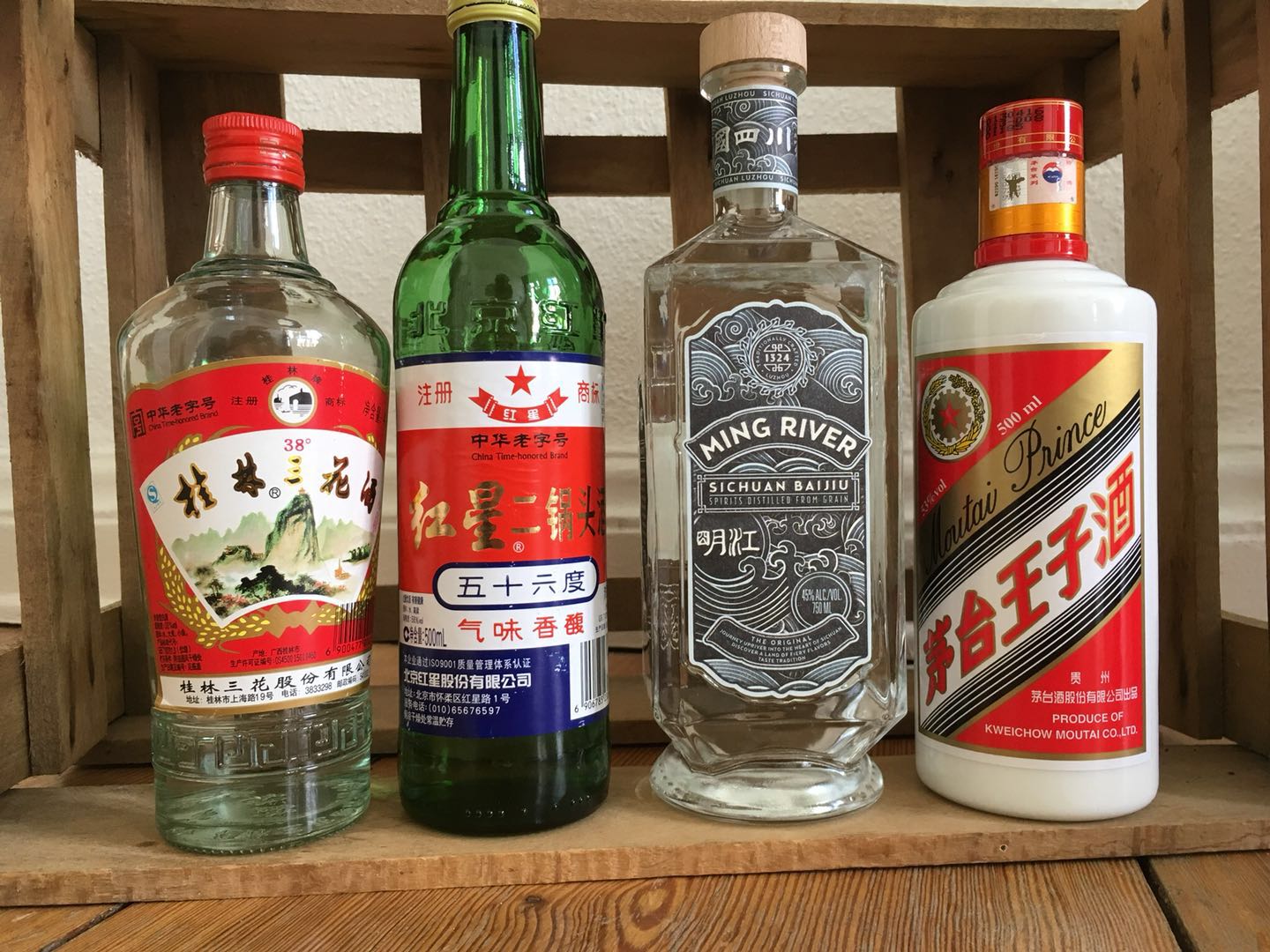
The cognitive shift from "light-bottle = cheap and low quality" to "light-bottle = de-inflated honest value" has taken root on the consumer side. Quality light-bottle baijiu (RMB 50–100, pure-grain solid-state fermentation) will grow rapidly through 2026–2030, forcing a reconstruction of traditional packaging-design logic and accelerating mid-to-low-tier market consolidation toward branded products with quality commitments — hastening the exit of small unbranded distilleries.
12.4 Industry Chain Perspective: Upstream Supplier Opportunities
From an industry-chain viewpoint, brand-side concentration is extreme (CR3 >70%) but upstream supply is its structural mirror image in fragmentation: nationally an estimated 1,500+ small base-spirit distilleries, 200–300 ceramic jar manufacturers, and hundreds of glass-bottle and packaging suppliers — the invisible infrastructure of the industry, yet long lacking systematic information documentation.
factory data platforms's data capability lies precisely here: identifying which base-spirit plants have reliable large-scale production capacity; which ceramic jar suppliers can consistently deliver large-capacity units; which packaging factories have differentiated capability in premium gift-box design. These questions — within the database of ~4.8 million verified active factories — can be answered with real, verifiable data rather than from single searches or sales-pitch quotations.
12.5 Conclusion
China's baijiu story is the most distinctive chapter in global FMCG history: a distilled spirits category anchored in highly specific cultural occasions, developing within a 1.4-billion-person market the most concentrated, highest-margin commercial ecosystem of any spirits product globally. Its premium concentration comes from cultural monopoly; its low internationalization rate from cultural specificity; its cyclical volatility from the commercial-banquet culture's high sensitivity to macroeconomic conditions.
The 2024–2025 adjustment is the industry's own course correction of its internal logic. The premium moat has not collapsed; the light-aroma revival is still advancing; light-bottle premiumization is happening. Industry bifurcation will deepen further: brands with narrative, barriers, and distribution will grow stronger through the shakeout; products floating between tiers with neither a value nor a premium anchor will face maximum pressure.
This is baijiu's essence: when global spirits giants are still working to compete for Chinese consumers, China's baijiu industry has already completed one round of self-refinement. The next five years belong to the brands that have truly built their moats in consumers' minds.
12.6 Long-Run Evolution: Structural High-Certainty Judgments
Judgment 1: Decline in total baijiu volume is irreversible, but industry output value can still grow moderately. Demographic aging, Gen Z consumer habits, and rising health awareness will drive total consumption volume lower through 2030. But structural upgrading (value-tier contraction, premium expansion) will more than offset volume decline — mirroring Japan's sake industry trajectory over the past twenty years.
Judgment 2: Guizhou Province's fiscal dependence on Moutai is a hidden constraint on Moutai's strategic decision-making. The local government's expansion incentive (more tax revenue) conflicts with Moutai's interest in maintaining scarcity-based pricing. The tension between these forces produces a "strategically deliberate pace" — Moutai will neither immediately cut price when wholesale prices dip, nor immediately massively expand production when demand surges, because either extreme would damage the carefully maintained scarcity ecosystem.
Judgment 3: Baijiu will enter an accelerating "M&A consolidation + brand shakeout" wave (2027–2032). Current ~869 above-scale enterprises may fall to 600–700 by 2030, primarily through organic attrition. But post-2027, as the inventory cycle ends and top-distillery cash flow strengthens, active M&A will emerge: regional champions acquiring weakened in-province brands; top-tier distilleries acquiring historically significant but operationally challenged legacy brand names. Xijiu's IPO will create baijiu's sixth 100-billion-revenue enterprise, accelerating top-tier reconfiguration.
Judgment 4: Baijiu internationalization will not achieve a fundamental breakthrough before 2040, but it will not stagnate either. True baijiu internationalization may come through two gradual paths: (1) as the overseas Chinese population grows globally, establishing stable retail networks in countries where Chinese diaspora exceeds 1% of population; (2) the luxury-collectibles path (vintage baijiu auction and collectible markets) breaking out of the Chinese diaspora circle into global ultra-high-net-worth investors' portfolios. Both paths are incremental evolution, not revolutionary breakthroughs.
factory data platforms Industrial Research Institute, May 2026.
This report references extensive publicly available market data, listed-company annual reports, industry association statistics, and authoritative media reporting; all cited figures have been cross-verified. Certain range-form data (especially estimates for unlisted companies) represent the Institute's reasonable judgments from multiple sources, with an uncertainty margin of approximately ±10–15%. For citation of this report's data, please attribute to "factory data platforms Industrial Research Institute, 2026 China Baijiu Industry Market Scale and Competitive Landscape Deep Research Report." The Institute reserves final interpretive rights. For revisions or data updates, the latest version on the factory data platforms official website supersedes.
Data Sources
This report was researched and compiled by the Tianxia Gongchang Industrial Research Institute based on public materials, authoritative institutional reports, and primary enterprise annual reports. Principal data and factual sources include:
- factory data platforms industrial platform's China factory database and industry-chain data (www.tianxiagongchang.com)
- China Alcoholic Drinks Association (CAIA) annual industry economic performance statistical reports
- CAIA and KPMG joint report: 2025 China Baijiu Market Mid-Term Research Report
- National Bureau of Statistics industrial enterprise financial statistical data
- General Administration of Customs of the People's Republic of China — baijiu export statistical data
- Kweichow Moutai Co., Ltd. (600519) 2024 Annual Report
- Wuliangye Yibin Co., Ltd. (000858) 2024 Annual Report
- Shanxi Xinghuacun Fenjiu Winery Co., Ltd. (600809) 2024 Annual Report
- Luzhou Laojiao Co., Ltd. (000568) 2024 Annual Report
- Jiangsu Yanghe Brewery Joint-Stock Co., Ltd. (002304) 2024 Annual Report
- Anhui Gujing Distillery Co., Ltd. (000596) 2024 Annual Report
- Jiangsu King's Luck Brewery Joint-Stock Co., Ltd. (603369) 2024 Annual Report
- Shuijingfang Co., Ltd. (600779) 2024 Annual Report
- Jiugui Liquor Co., Ltd. (000799) 2024 Annual Report
- Shede Spirits Co., Ltd. (600702) 2024 Annual Report
- Huazhi Jiuhang Chain Management Co., Ltd. (300755) 2024 Semi-Annual Report and related announcements
- Shandong Huapeng Glass Co., Ltd. (600716) related announcements
- Shanghai Zijiang Enterprise Group Co., Ltd. (600210) related announcements
- Scotch Whisky Association (SWA) 2024 Export Data Report
- IWSR Drinks Market Analysis: Status Spirits Report 2024
- Euromonitor International global spirits market data (2024)
- Euromonitor China beverage market reports
- Qianzhan Industry Research Institute: 2025 China Baijiu Industry Panoramic Atlas
- 36Kr Research Institute: 2024 China Baijiu Industry Digital Transformation Research Report
- Huajing Industry Research Institute: 2024 China Baijiu Industry Enterprise Insight Report
- Xinhua News Agency, Caijing, Yicai and other authoritative media — related news reporting
- Sichuan Province Alcoholic Drinks Association and Guizhou Province Distilling Industry Association industry data
Data Note: Financial figures for unlisted companies (Xijiu, Langjiu, Jiannanchun) are estimates based on public information, not officially disclosed data, and are provided for reference only. All forecast data represent the Institute's baseline scenario analysis and do not constitute investment advice.