
Executive Summary
China's home appliance industry is both a textbook illustration of manufacturing concentration and the most successful case study of Chinese manufacturing's global ascent. In 2024, domestic retail sales across all home appliance categories reached approximately RMB 907.1 billion — within striking distance of the trillion-yuan milestone — while export value hit a record USD 112.4 billion (+14.0% year-on-year). These two figures define an industry that sits simultaneously at the apex of domestic market concentration and the forefront of China's industrial globalisation.
The "Big Three" white goods manufacturers — Midea Group (000333), Gree Electric (000651), and Haier Smart Home (600690) — together hold a CR3 of approximately 70%+ in white goods; air conditioner CR3 is roughly 65%; refrigerator CR3 roughly 55%; washing machine CR3 roughly 60%. This degree of concentration is virtually unparalleled in Chinese manufacturing.
Five core conclusions emerge from this research:
- The 2024 trade-in subsidy program was the most important policy catalyst in years. Over 62 million units were sold under the scheme; Q4 2024 saw four consecutive months of 20%–39% year-on-year retail growth. The downside is demand pull-forward: a degree of 2025–2026 consumption has been moved into 2024, creating some overhang risk.
- Export growth is genuine, structural, and not yet near its ceiling. USD 112.4 billion in exports, with the fastest-growing destinations being ASEAN (+27.7%), Latin America, and the Middle East. Chinese TV brands (Hisense + TCL + Xiaomi) globally overtook Samsung + LG in combined TV shipment share for the first time in 2024.
- White goods Big Three are diverging. Midea's overseas revenues now account for 41.3% of the total, with OBM self-brand share of overseas revenue reaching 43%; Haier's overseas share tops 50.3%, backed by GE Appliances, Candy, and Fisher & Paykel. Gree saw revenues fall 7.3%, with overseas accounting for only 14.8% — its strategic lag in internationalisation is increasingly conspicuous.
- Robot vacuums are the single most dynamic growth category. Market size reached roughly RMB 21.7 billion (+21.9%). Roborock (688169) became the global #1 by unit shipments in Q1 2025. The AI-enabled, fully-automated base station segment is driving average selling price sharply higher.
- Property sector headwinds are the deepest structural constraint. New residential property sales are roughly 40%–45% below the 2021 peak, weighing on property-linked categories such as kitchen appliances (range hoods, gas hobs) and built-in appliances. Robam (老板电器, 002508) revenues fell roughly 6.8% in 2024; the kitchen appliance sector broadly is expected to remain under pressure until property markets stabilise.
Key data at a glance:
- All-category home appliance retail sales 2024: approximately RMB 907.1 billion (+6.4% YoY).
- Home appliance exports 2024: approximately USD 112.4 billion (+14.0% YoY), a new record.
- Industry total revenues 2024: approximately RMB 1.95 trillion (manufacturing basis); profit total approximately RMB 173.7 billion (+11.4%).
- White goods CR3: approximately 70%+; air conditioner CR3: ~65%; refrigerator CR3: ~55%; washing machine CR3: ~60%.
- Robot vacuum cleaner top-5 concentration: approximately 89.2% (Ecovacs 25.4% / Roborock 21.6% / Narwal 16.3% / Xiaomi 13.7% / Dreame 12.2%).
- LCD TV panel share (BOE + CSOT + HKC): approximately 70.6% of global TV panel shipments in H1 2025.
- Mini-LED TV shipments in China 2024: approximately 4.16 million units (+352% YoY).
- 2030 forecast: domestic retail CAGR ~3–5% (toward RMB 1.1 trillion); exports CAGR ~7–10%.
Chapter 1 Definitions, Classification, and the Full Supply-Chain Picture
1.1 What Is a "Home Appliance"?
The Chinese home appliance market spans five major sub-categories, each with distinct competitive dynamics:
White goods (白电) comprise air conditioners, refrigerators (and freezers), and washing machines (including dryers and washer-dryers). These are the largest-volume categories by retail value, and the battleground on which Midea, Gree, and Haier compete. White goods are characterised by high household penetration rates (approaching 100% in Chinese cities), long replacement cycles of 10–15 years, and strong linkage to the property market cycle.
Black goods (黑电) are centred on television sets, and include projectors and home cinema systems. The name derives from the black housings of early CRT televisions. China's TV market shipped approximately 35.96 million units domestically in 2024 at a retail value of roughly RMB 120.2 billion, with the domestic competitive landscape led by Hisense Visual Technology (22.5% share), Skyworth (17%), and TCL Technology (11%).
Kitchen appliances (厨电) cover range hoods, gas hobs, sterilising cabinets, dishwashers, steam-bake ovens, and the increasingly popular integrated cooking centres (集成烹饪中心). Kitchen appliances are the segment most exposed to the property cycle, as they are commonly specified by property developers for fully-fitted homes.
Small appliances (小家电) is a highly diverse cluster of categories: kitchen electrics (rice cookers, soy-milk makers, air fryers, coffee machines), cleaning appliances (robot vacuum cleaners, cordless vacuums, wet-dry floor washers), life appliances (fans, humidifiers, electric kettles), and personal care devices (hair dryers, shavers). Small appliances are fragmented overall, but some sub-categories — robot vacuums, in particular — have already consolidated to a small number of dominant players.
Personal care devices (个护电器) include electric shavers (Flyco, Braun, Philips), hair dryers (Dyson, Dreame, Roborock), facial massagers, and home beauty instruments. This is the fastest-premiumising sub-segment, with Dyson's entry into China creating a high-end benchmark that domestic brands are now systematically undercutting at 30%–50% of the price.
1.2 The Supply Chain: From Raw Materials to Consumer
The home appliance supply chain flows from upstream materials and components through midstream assembly to downstream channels and export. The key upstream inputs are:
- Copper: Used in heat exchangers (evaporator and condenser tubing) and motor windings. Copper accounts for approximately 15–20% of an air conditioner's material cost. China's dependence on imported copper (>70% of consumption) makes LME copper prices a direct driver of air conditioner cost. In 2024, LME copper averaged approximately USD 9,300/tonne, maintaining near-historic-high pressure on manufacturers.
- Cold-rolled steel (CRCC): Used in appliance housings and structural components. 2024 saw steel prices in a cyclical trough, providing partial cost relief.
- Compressors: The single most expensive component in white goods, representing 25–35% of an air conditioner's BOM cost. Highly (海立股份) (600619), Gree's Lingda, and Midea's Meizhi/Rechi are the three dominant domestic compressor producers. China's rotary compressor industry shipped approximately 297 million units in 2024 (+14.1%), led by Highly at approximately 37.34 million units (+23.7%).
- LCD panels: The dominant cost item in television manufacturing (approximately 60–70% of BOM). BOE Technology (000725), TCL CSOT, and HKC together held approximately 70.6% of global TV LCD panel shipments in H1 2025, having effectively displaced Samsung Display and LG Display from the LCD market.
- IGBT power modules: The key power semiconductor in inverter control boards for variable-frequency white goods. Infineon (Germany), Mitsubishi Electric, and Fuji Electric remain the primary suppliers of high-end IGBT modules for variable-frequency air conditioners; domestic producers (BYD Semiconductor, Starpower) are making inroads at the mid-range.
Chapter 2 Global Landscape and China's Overseas Success Story
2.1 The Global Home Appliance Market
The global home appliance market is estimated at approximately USD 650–800 billion (varying by scope of coverage). The Asia-Pacific region — led by China — accounts for the largest share of consumption; North America and Europe are large, mature markets with significant premium product demand; Southeast Asia, the Middle East, South Asia, and Africa represent the highest-growth emerging markets.
China's production dominance is striking: approximately 70%+ of global air conditioner output; approximately 55%+ of global refrigerators; approximately 65%+ of global televisions; approximately 80%+ of global small appliances. This is not merely low-cost manufacturing — it reflects a complete, vertically integrated supply chain ecosystem that rivals cannot quickly replicate.
2.2 The Overseas Acquisition Wave: Haier, Midea, TCL
China's home appliance internationalisation evolved through three phases: (1) OEM contract manufacturing (1990s–2010s); (2) overseas acquisition of established brands (2010s–present); (3) full-scale global manufacturing localisation (2020s–present).
The landmark acquisitions include:
- Haier's acquisition of GE Appliances (2016, ~USD 5.4 billion): The largest Chinese home appliance M&A, instantly providing Haier with a century-old American brand, deep North American distribution, and GEA's annual revenues of over USD 10 billion.
- Midea's acquisition of Toshiba Home Appliances (2016, ~JPY 53.7 billion): Giving Midea the Toshiba brand licence for 40 years and a technology/distribution foothold in Japan and Southeast Asia.
- Midea's acquisition of KUKA Robotics (2017, ~EUR 4.45 billion): Entering industrial robotics and deepening manufacturing automation capabilities.
- Haier's acquisition of Candy (Italy, 2018): Strengthening coverage of the European mass market.
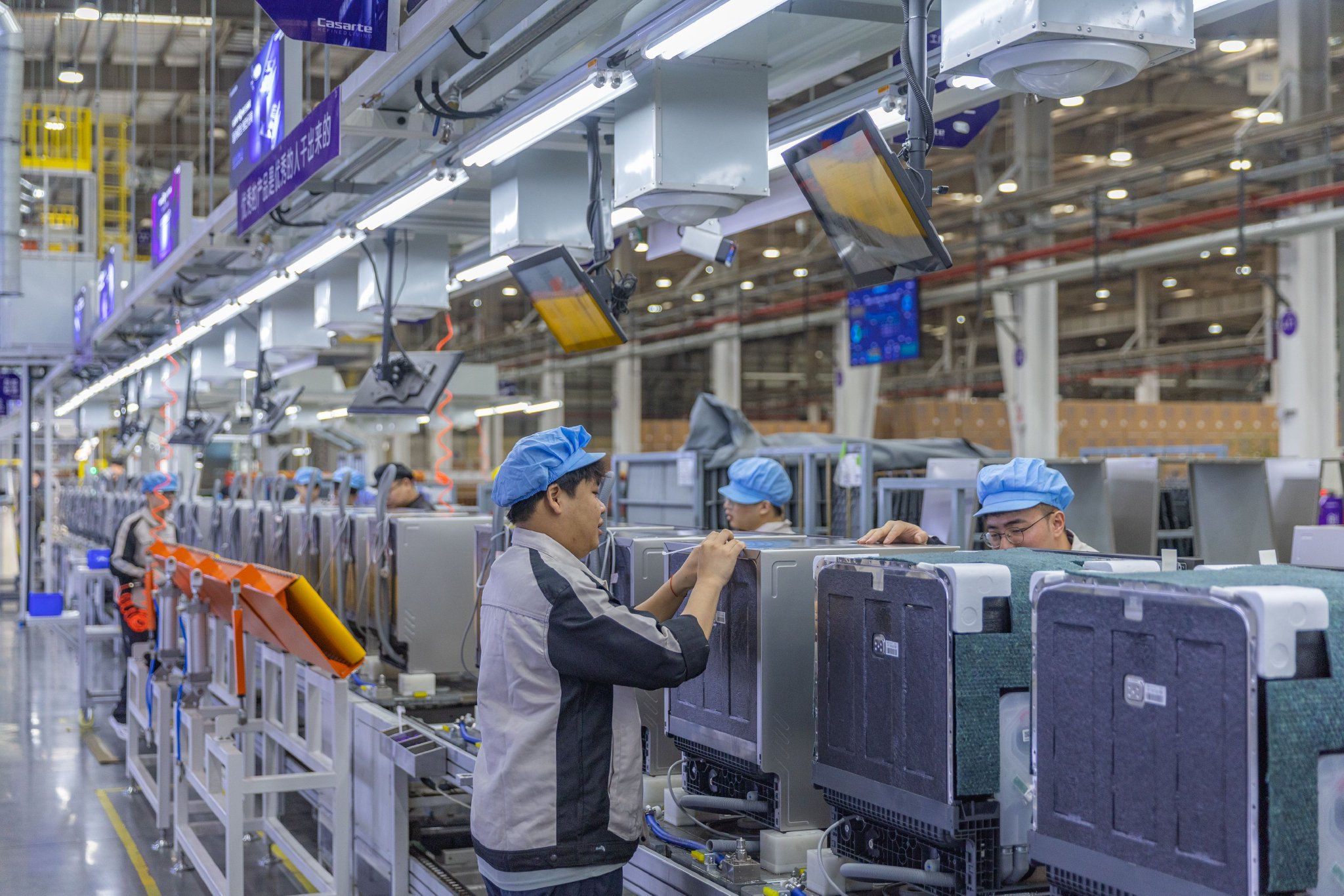
By 2024, Haier Smart Home's overseas revenues exceeded 50% of total revenues — the most internationalised major home appliance company in China. Haier's seven-brand global matrix (Haier, Casarte, Leader, GE Appliances, Fisher & Paykel, AQUA, Candy) spans from entry-level to ultra-premium across all major world markets.
2.3 The Global Television Inflection Point
In 2024, Chinese brands (Hisense + TCL + Xiaomi) achieved a combined global TV shipment share of approximately 31.3%, overtaking Samsung + LG's combined ~28.4% for the first time. This is a historically significant milestone — marking the moment China's TV brands surpassed Korea's decades-old leadership in one of the most visible consumer electronics categories.
Hisense's strategy of high-profile sports sponsorship (FIFA World Cup, UEFA European Championship) has significantly raised brand awareness in Europe and North America. TCL's vertical integration — owning TCL CSOT, the world's second-largest LCD TV panel maker by shipment — provides a structural cost advantage that few competitors can match.
Chapter 3 PEST Analysis
3.1 Policy: Trade-In Subsidy, Dual-Carbon, and Overseas Barriers
The 2024 trade-in subsidy programme (以旧换新) was the most significant domestic policy event for the home appliance sector in years. The programme provided RMB 150 billion in subsidies covering eight appliance categories. By December 19, 2024, over 33.3 million consumers had purchased approximately 52.1 million units; the full-year total under the scheme exceeded 62 million units, directly stimulating approximately RMB 270 billion in consumption. Q4 2024 retail growth of 20%–39% per month reflected the concentrated rollout effect.
Dual-carbon policy (carbon peak by 2030, carbon neutrality by 2060) is driving energy efficiency upgrades across all major white goods categories. China's air conditioner energy efficiency standards have been tightened to the point where Grade 1 inverter models (SEER ≥ 5.0) now account for approximately 40% of domestic air conditioner sales. The ongoing R410A-to-R32 refrigerant transition is complete in residential air conditioning; the next frontier is R290 (propane, GWP=3) for export to European markets subject to the revised EU F-Gas Regulation.
Overseas trade barriers — notably US Section 301 tariffs on Chinese appliances and the supplemental tariffs on Southeast Asian transshipment countries (Vietnam 46%, Thailand 36%) — are creating pressure on export margins and accelerating the build-out of local manufacturing capacity in target markets.
3.2 Economic Factors: Property Downturn and Consumption Premiumisation
The Chinese property market's persistent contraction — residential sales floor space in 2024 approximately 40%–45% below the 2021 peak — is the deepest structural constraint facing the home appliance industry. Kitchen appliances (range hoods, gas hobs) and built-in appliances are the categories most directly impacted, as they are typically installed during new residential fit-out.
Against this backdrop, consumption premiumisation is a countervailing force: high-end refrigerators (600L+ multi-door models), premium washing machines (direct-drive drum models, washer-dryers), and AI-enabled robot vacuum cleaners continue to grow at above-market rates, driven by rising incomes among urban professional households. The consumer demand pattern in 2024 was bifurcated: cautious on mid-range products but relatively resilient on both budget and premium extremes.
Chapter 4 China Market Scale
4.1 The Numbers and Their Context
China's home appliance sector uses three main measurement frameworks that must be distinguished:
- Retail value basis (消费端): approximately RMB 907.1 billion in 2024, covering all domestic final-consumer sales across all categories.
- Manufacturing revenue basis (生产端): approximately RMB 1.95 trillion in 2024, including both domestic sales and OEM/ODM export production revenues.
- Export value basis (出口端): approximately USD 112.4 billion in 2024 (customs declaration basis), representing all Chinese-origin home appliance exports to global markets.
These three figures measure different things and cannot be directly compared or substituted for each other.
4.2 White Goods by Category
Air conditioners: retail value approximately RMB 161.6 billion in 2024; domestic factory shipments approximately 201 million units (+17.8% YoY), significantly boosted by trade-in subsidies. Average unit prices are declining as competition intensifies, even as energy efficiency grades improve.
Refrigerators: retail value approximately RMB 97.2 billion; factory shipments approximately 95–97 million units. High-capacity (600L+) four-door models are the premium growth driver. Haier's Casarte brand holds approximately 25%+ of the 6,000-yuan+ refrigerator segment.
Washing machines: retail value approximately RMB 73.6 billion; drum washer penetration exceeded 50% for the first time. Washer-dryers are a structurally growing sub-category, with average selling prices 40%–60% above conventional washers.
4.3 Robot Vacuums: The Fastest-Growing Appliance Category
The robot vacuum market reached approximately RMB 21.7 billion (+21.9%) in 2024, with the top five brands (Ecovacs, Roborock, Narwal, Xiaomi, Dreame) holding approximately 89.2% of market share. The key technology evolution — from LDS-navigation-only designs to multi-sensor AI-enabled platforms with fully automated docking stations (auto-empty, auto-wash, auto-dry, auto-refill) — has consistently pushed average selling prices higher, with flagship systems at RMB 5,000–8,000. Roborock's overseas revenue in 2024 was approximately RMB 6.4 billion (+51%), rising to #1 globally in robot vacuum shipments in Q1 2025.
Chapter 5 Supply Chain Analysis
5.1 The Compressor Ecosystem
The compressor is the most strategically important single component in white goods manufacturing. China's rotary compressor industry — dominated by Highly (海立股份), Gree's Lingda, and Midea's Meizhi — shipped approximately 297 million units in 2024, with Highly's 37.34 million units representing approximately 12.6% of the market. The domestic compressor industry is now essentially self-sufficient in rotary compressors for residential air conditioning, having fully localised the variable-frequency (DC inverter) technology stack.
The remaining supply chain vulnerability is in high-end scroll compressors for VRF (Variable Refrigerant Flow) commercial air conditioning systems, where Daikin and Mitsubishi Electric maintain significant technological advantages. This is the most important compressor segment that domestic manufacturers have not yet fully captured.
5.2 LCD Display Panels: Chinese Dominance Completed
The ascent of Chinese LCD panel makers (BOE, TCL CSOT, HKC) from near-zero to approximately 70% global market share within roughly two decades represents one of the most complete examples of supply chain localisation in any technology industry. Samsung Display and LG Display have effectively exited the LCD TV panel market, concentrating instead on OLED (LGD) and QD-OLED (Samsung Display).
The residual supply chain exposure in display technology is large-size OLED: LG Display remains the sole large-scale producer of WOLED TV panels. A domestic Chinese breakthrough in large-size OLED TV panel production — which BOE is working towards, with tentative timelines of 2027–2028 for initial qualification — would be the most significant single supply chain development in the black goods sector during the forecast period.
Chapter 6 Competitive Landscape and Key Companies
The competitive landscape of China's home appliance market is the most concentrated in Chinese manufacturing: white goods CR3 approximately 70%+, robot vacuum top-5 approximately 89%. The following profiles the most important companies.
Midea Group (000333) — 2024 revenues approximately RMB 409.1 billion (+9.5%); net profit approximately RMB 38 billion. Overseas revenues approximately RMB 169 billion (41.3% of total). Midea's four business pillars (Smart Home appliances, Building Technologies/HVAC, Industrial Technology, and KUKA robotics) provide the most diversified revenue base in the sector. OBM self-brand overseas revenues have reached approximately 43% of total overseas revenues — the clearest sign of Midea's brand globalisation progress.
Gree Electric (000651) — 2024 revenues approximately RMB 190 billion (-7.3%); net profit approximately RMB 28 billion. Overseas revenues approximately RMB 28.2 billion (14.8% of total). Air conditioning accounts for approximately 78% of revenues — the most concentrated business model among the three, creating both a defensive moat (Gree's compressor and energy-efficiency technology leadership) and a strategic vulnerability (single-category exposure and weak international footprint).
Haier Smart Home (600690) — 2024 revenues approximately RMB 286 billion (+4.3%); net profit approximately RMB 18.7 billion (+12.9%). Overseas revenues approximately RMB 143.8 billion (50.3% of total) — the only one of the Big Three to earn more overseas than domestically. Haier's seven-brand global matrix (Haier, Casarte, Leader, GE Appliances, Fisher & Paykel, AQUA, Candy) represents the most sophisticated globalisation structure in Chinese home appliances. Casarte, the premium Chinese brand launched in 2007, holds approximately 25%+ of the 6,000-yuan+ washing machine segment and approximately 25%+ of the 8,000-yuan+ refrigerator segment.
Ecovacs (603486) — 2024 revenues approximately RMB 16.5 billion (+6.7%); net profit approximately RMB 800 million (+31.7%). China robot vacuum market share approximately 25.4% (#1).
Roborock (688169) — 2024 revenues approximately RMB 11.9 billion (+38%); overseas revenues approximately RMB 6.4 billion (+51%). Q1 2025: global #1 in robot vacuum shipments (~19.3% share).
Highly / 海立股份 (600619) — 2024 revenues approximately RMB 18.7 billion (+10%); compressor shipments approximately 37.34 million units (+23.7%).
Supor/苏泊尔 (002032) — 2024 revenues approximately RMB 22.4 billion (+5.3%); backed by French SEB Group (Tefal/Rowenta parent), which provides global product development resources and overseas OEM demand.
Joyoung/九阳股份 (002242) — 2024 revenues approximately RMB 8.85 billion (-7.9%); net profit approximately RMB 122 million (-69%). The most severe earnings decline among listed small appliance companies in 2024, reflecting saturation in its core soy-milk maker category and intensifying competition across kitchen small appliances.
Xinbao/新宝股份 (002705) — 2024 revenues approximately RMB 160 billion total; overseas OEM revenues approximately RMB 131.6 billion (+22%). The dominant Chinese small appliance OEM/ODM export company, supplying global brands across 120 countries and own-brand products under Morphy Richards and Donlim.
Chapter 7 Industrial Belts and Factory Identification
7.1 The Geography of China's Home Appliance Manufacturing
China's home appliance manufacturing is concentrated in five major industrial belt regions, each with a distinct character:
- Shunde, Guangdong (Midea HQ): annual output exceeding RMB 300 billion; more than 3,000 appliance-related companies; capable of sourcing approximately 85%–95% of all air conditioner and small appliance components within a 50 km radius. The Shunde cluster represents the world's most complete home appliance supply chain ecosystem.
- Zhuhai, Guangdong (Gree HQ): highly vertically integrated, anchored by Gree and its compressor subsidiary Lingda.
- Qingdao, Shandong (Haier HQ): multi-category white goods cluster including refrigerators, washing machines, water heaters, and central air conditioning; home to Haier's industrial internet platform COSMOPlat.
- Cixi, Zhejiang: global capital of small appliances, with over 2,000 appliance manufacturers and 10,000+ supply chain companies; produces approximately 60% of the world's small appliances by volume.
- Hefei, Anhui: rapidly growing white goods manufacturing base with Midea (Hualing), Haier, and other major brands.
7.2 Factory Identification: The Core Challenge
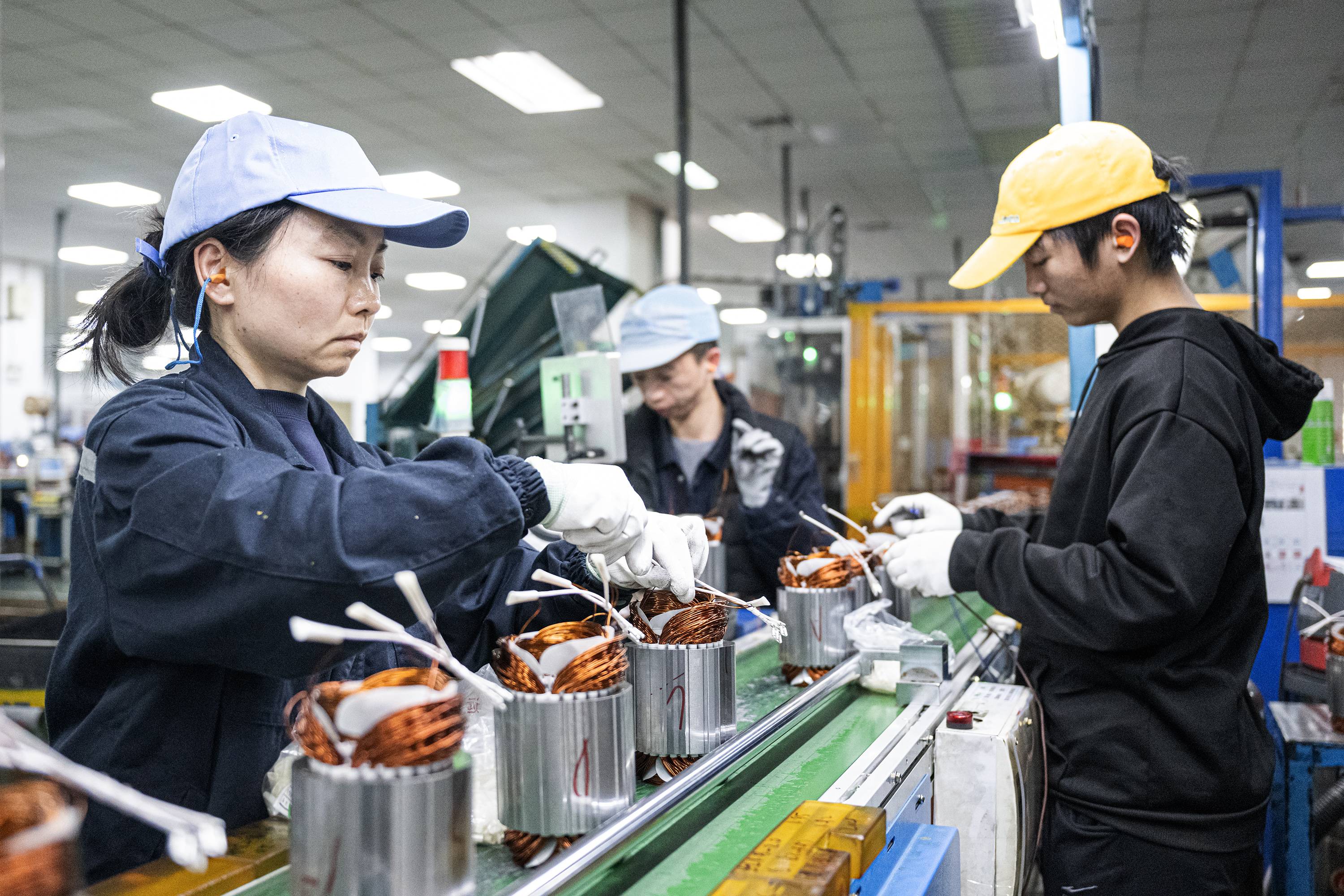
Behind every appliance brand is a network of hundreds of component suppliers — compressor casing foundries, heat exchanger fabricators, PCBA assemblers, wire harness manufacturers, injection-moulded housing makers, sheet metal pressers. In a typical home appliance industrial belt, the ratio of component suppliers to final assemblers is approximately 20:1 to 50:1. Cixi's 10,000+ supply chain companies outnumber its 2,000 assembler factories five-to-one.
Identifying precisely which factories are genuinely active, specialised suppliers to the home appliance value chain — rather than generic manufacturers or factories that have shifted to other industries — is a non-trivial analytical challenge. A factory registered as "电机制造" (motor manufacturing) may produce motors for home appliances, automotive components, or industrial equipment — radically different supply chain relevance depending on actual operations.
Tianxia Gongchang's core capability in this area is the ability to identify, from a database of approximately 4.8 million active, verified Chinese factories, those specifically and actively serving the home appliance supply chain. This precision identification — distinguishing the specialist home appliance compressor housing foundry from the generic metal foundry, or the home-appliance-specific PCBA assembler from the general-purpose electronics manufacturer — is the foundation of reliable supply chain intelligence for the home appliance sector.
Chapter 8 Sub-Market Deep Dives
8.1 Air Conditioners
CR3 (Gree + Midea + Haier): approximately 65%. Domestic factory shipments in 2024: approximately 201 million units (+17.8% YoY, driven by trade-in subsidies). The air conditioner category is experiencing simultaneous volume growth (driven by policy) and average price compression (driven by competition), resulting in a squeeze on manufacturer margins. New product categories driving premiumisation include fresh-air air conditioners (新风空调), self-cleaning units, and ultra-high-efficiency Grade 1 SEER >6.0 models.
The most important overseas market for Chinese air conditioners is Southeast Asia, where Chinese brands dominate the split air conditioner segment. Daikin (Japan) retains leadership in commercial VRF systems globally but is facing increasing price competition from Gree and Midea in Southeast Asia and the Middle East.
8.2 Robot Vacuums: Technology Convergence at the Frontier
The robot vacuum category has undergone the most rapid technology evolution of any appliance segment. The 2024 flagship configuration — 20,000 Pa suction + dual-arm oscillating mopping + fully automated dock (auto-empty + auto-wash + auto-dry + auto-refill) + multi-sensor fusion (LiDAR + RGB + ultrasonic) + AI obstacle recognition + large-language-model voice interface — represents a qualitatively different product from the basic LDS-navigation-only designs of 2020. The top-5 Chinese brands (Ecovacs, Roborock, Narwal, Xiaomi, Dreame) together accounted for approximately 74% of global shipments in 2025.
Roborock's 2024 overseas revenue of approximately RMB 6.4 billion (+51%) and its ascent to global #1 by shipment volume in Q1 2025 represents the most compelling single-company story in Chinese home appliance exports in 2024.
8.3 Dishwashers: The Most Certain Incremental Market
China's dishwasher household penetration rate is approximately 5% — compared to 70% in Germany, 75% in the United States, and 35% in Japan. The gap from current penetration to the eventual steady-state level represents one of the most clearly bounded incremental market opportunities in Chinese home appliances. The 2024 trade-in subsidy programme included dishwashers for the first time. Market size is estimated at approximately RMB 6–8 billion in 2024, with expected growth to approximately RMB 30 billion by 2030 (CAGR approximately 23%–25%).
8.4 Mini-LED Televisions
Mini-LED TV shipments in China in 2024 reached approximately 4.16 million units (+352% YoY), with Hisense's ULED X series, TCL's QD-Mini LED flagship range, and Samsung's Neo QLED as the primary drivers. Mini-LED technology — using thousands to tens of thousands of LEDs for local dimming — brings LCD panel contrast performance close to OLED levels at a significantly lower manufacturing cost than OLED. Mini-LED is expected to become the standard technology for premium televisions (RMB 6,000+) through the 2025–2030 period.
Chapter 9 Technology Trends
9.1 Inverter Technology: Complete Penetration of White Goods
Inverter variable-frequency technology is now standard across all premium white goods categories in China. Grade 1 (highest efficiency) inverter air conditioners account for approximately 40% of domestic sales; inverter drum washing machines exceed 60% of unit sales; inverter compressors in refrigerators are standard in the mid-range and above. The next frontier is ultra-high-efficiency (SEER >6.0) air conditioners and heat pump integration.
9.2 AI Integration: From Smart to Intelligent
The integration of on-device AI inference chips into home appliances is accelerating:
- Robot vacuums: Large-language-model voice interfaces, AI obstacle classification, reinforcement-learning cleaning path optimisation — 2024 flagship models have these capabilities at RMB 5,000–8,000 retail.
- Air conditioners: Millimetre-wave radar presence sensing, machine-learning-based personalised comfort optimisation, occupancy-aware energy saving.
- Refrigerators: In-door camera food recognition, recipe recommendation, expiry date tracking.
The Edge AI chip cost inflection — from approximately RMB 30–80 in 2020 to approximately RMB 10–25 in 2024 — makes mass-market AI appliance features economically viable at mid-range price points. By 2030, AI functionality is expected to be standard in appliances priced above RMB 1,500–2,000.
9.3 Mini-LED and the Path to OLED
Mini-LED represents the current technology frontier for LCD display improvement in televisions. The strategic prize beyond Mini-LED is large-size OLED: LG Display's monopoly on WOLED TV panel production creates a supply chain dependency for all global TV brands using OLED technology. BOE Technology is targeting large-size OLED panel production qualification circa 2027–2028. A successful domestic OLED breakthrough would be the single largest technology event in the home appliance sector during the forecast period, potentially driving significant disruptive price competition in premium televisions.
9.4 Heat Pump Technology: Appliances Meet the Energy Transition
Heat pump applications in home appliances are expanding beyond air conditioning into hot water heaters, heat pump dryers, and radiant floor heating. The Europe export opportunity in heat pump appliances is particularly significant: post-2022 European natural gas price increases drove urgent demand for heat pump water heaters and heat pump tumble dryers, where Chinese manufacturers (Midea, Haier) are now major suppliers growing at approximately 30%+ annually.
Chapter 10 Risks
The five principal risks for China's home appliance sector in 2026–2030:
- Property sector structural downturn: Kitchen appliance and built-in appliance categories face persistent headwinds as new residential construction remains well below its 2021 peak. Recovery is expected to be gradual.
- Overseas trade barriers: US Section 301 tariffs and additional tariffs on Southeast Asian transshipment countries create significant export margin pressure. EU Ecodesign and CBAM compliance requirements add cost burdens for European exports.
- Raw material cost volatility: High copper prices (LME copper averaging approximately USD 9,300/tonne in 2024) compress air conditioner manufacturer margins; the ongoing aluminium-for-copper substitution in heat exchangers is a partial mitigant.
- Price war intensity: Domestic appliance markets are exhibiting extreme price competition — Joyoung's net profit fell approximately 69% in 2024 partly due to competitive pricing pressure. Price wars compress industry margins but ultimately accelerate consolidation around the most efficient producers.
- Demand pull-forward risk: The 2024 trade-in subsidy programme pulled forward 2025–2026 demand into 2024, creating an overhang risk for the first half of 2025.
Chapter 11 2026–2030 Forecast
11.1 Domestic Market: CAGR Approximately 3–5%
China's all-category home appliance retail market is forecast to reach approximately RMB 1.1 trillion by 2030 (5-year CAGR approximately 3–5%). Key growth drivers: trade-in subsidy normalisation; premiumisation across all categories; and incremental penetration of new-category appliances (dishwashers, robot vacuums, heat pump water heaters).
| Category | 2024E | 2030E | CAGR |
|---|---|---|---|
| Air conditioners | ~RMB 161.6 bn | ~RMB 190 bn | ~2.7% |
| Refrigerators | ~RMB 97.2 bn | ~RMB 120 bn | ~3.6% |
| Washing machines | ~RMB 73.6 bn | ~RMB 95 bn | ~4.3% |
| Television sets | ~RMB 120.2 bn | ~RMB 150 bn | ~3.8% |
| Robot vacuums | ~RMB 21.7 bn | ~RMB 50–60 bn | ~15–18% |
| Dishwashers | ~RMB 7 bn (est.) | ~RMB 30 bn | ~23–25% |
11.2 Exports: CAGR Approximately 7–10%
Export value is forecast to reach approximately USD 170–200 billion by 2030 (CAGR approximately 7–10%), driven by: new market penetration in Southeast Asia, South Asia, and Africa; OBM brand development in Europe and North America; and heat pump export growth in Europe. Overseas revenues of the Big Three are expected to grow significantly faster than domestic revenues:
- Midea: projected 2030 overseas revenues approximately RMB 200–250 billion (roughly 45%–50% of total).
- Haier: projected 2030 overseas revenues approximately RMB 180–200 billion (roughly 55% of total).
- Gree: 2030 overseas revenues projected at approximately RMB 40–50 billion (approximately 20%–25% of total) — contingent on accelerated international expansion.
Chapter 12 Conclusions and Research Institute Judgements
China's home appliance industry has completed the transition from "world factory" to "world brand challenger" — though the brand equity gap versus Samsung, LG, and BSH in premium markets remains meaningful. The competitive moat is not labour cost advantage (which has been eroding) but rather the unmatched depth and density of the supply chain network: no competitor can quickly replicate a cluster like Shunde, where a new air conditioner model can be prototyped, iterated, and mass-produced within a 50-kilometre radius in a matter of weeks.
The five judgements from Tianxia Gongchang Industrial Research Institute for the period 2026–2030:
- Trade-in subsidies: The long-term value is accelerating the replacement of low-efficiency stock, not one-time demand stimulus. Normalising the programme creates a structural floor for white goods replacement demand.
- Overseas competition is entering the brand phase: Midea and Haier are shifting the competitive battleground from OEM volume to OBM brand equity. Who builds durable brand premium in Europe and North America over the next five years will determine the long-run winner.
- Robot vacuums are home appliances' next "upgrade category": AI-enabled, fully autonomous cleaning systems are evolving from appliances into early-stage domestic service robots. Ecovacs' move into embodied robotics foreshadows the next decade's competitive frontier.
- Dishwashers are the most certain incremental domestic market: From 5% penetration toward 20%+, this is a bounded, predictable opportunity driven by demographics and shifting domestic habits.
- The true competitive moat is the industrial network: China's home appliance dominance is built on a manufacturing ecosystem that took decades to construct and cannot be transplanted. Understanding that ecosystem — the 4.8 million verified active factories that constitute the supply chain — is the foundation for understanding this industry's competitive dynamics.