
Executive Summary
Machine tools carry a second name: the "mother machine" (工业母机, industrial mother machine). This is not a rhetorical flourish but an accurate description of the machine tool's place in the manufacturing ecosystem — a mother machine is the machine that makes machines. The crankshaft of an automobile engine, the blade of an aero-engine, the metal mid-frame of a smartphone, the precision chamber of a semiconductor equipment unit — all must ultimately pass beneath a machine tool's cutting edge, one pass at a time, to be machined into final form. The upper limit of precision a country's machine tools can achieve is, broadly speaking, the precision ceiling of every factory in that country. China is the world's largest machine tool producer and consumer: in 2024 its machine tool output value accounted for approximately 32% of the global total and its consumption approximately 33%, holding both top positions globally for multiple consecutive years, while the machine tool trade balance swung to a surplus for the first time in 2024. Yet the "crown jewels" of value — five-axis simultaneous machining centers, high-end turn-mill multi-tasking centers, CNC controllers at the tier of Heidenhain / Siemens / Fanuc / Mitsubishi, and ball screws and linear guides at the tier of THK / NSK — still rest largely in German and Japanese hands. On one side, China General Technology Group has taken over the bankrupt-restructured Shenyang Machine Tool and Dalian Machine Tool, while Haitian Precision and Chuangshiji have achieved global leadership in mid-range machine tools. On the other, the domestic localization rate for high-end five-axis simultaneous machining centers is only about 25%, and the domestic localization rate for high-end CNC controllers is a mere 6%. This report uses 2026 as its observation vantage point to systematically survey China's machine tool industry: market size, supply-chain structure, competitive landscape, sub-markets, technology evolution, risks, and the trajectory over the next five years.
Core conclusions are as follows:
- China's machine tool story is a tale of two ledgers. The scale ledger: top rank in both output and consumption, first-ever trade surplus in 2024. The structural ledger: domestic localization has exceeded 90% at the low end, stands at roughly 80% at the mid-range, at roughly 25% for high-end five-axis simultaneous machining centers, and only roughly 6% for high-end CNC controllers. The first ledger shows global leadership; the second is still being climbed.
- Domestic substitution is genuinely happening in five-axis simultaneous machining. KEDE Numerical Control's five-axis simultaneous machining centers are already directly supplying the C919 wide-body aircraft; by 2029, the domestic share in five-axis simultaneous is projected to rise to approximately 32.2%. However, moving from today's single-digit localization rates for top-tier five-axis plus high-end CNC controllers to global parity will still require 5 to 10 years.
- Bottlenecks are concentrated in five items: high-end CNC controllers (Fanuc + Siemens SINUMERIK + Mitsubishi + Heidenhain together account for 75%–80% globally), high-end ball screws (NSK / THK / HIWIN), high-end linear guides (THK / HIWIN / NSK), high-end motorized spindles (IBAG / Step-Tec), and class P4/P2 precision bearings (SKF / FAG / NSK).
- The geography of the industrial belt has shifted from north to south. The two former "Eighteen Arhats" (founding-era machine-tool plants) flagships in Shenyang and Dalian both went through bankruptcy restructuring and were taken over by China General Technology Group; Jiangsu, Zhejiang, and Guangdong have become the new battlegrounds of the machine tool industrial belt, with Haitian Precision, Chuangshiji, Beijing Jingdiao, and KEDE Numerical Control each carving out their respective domains across different sub-segments.
- Gigacasting and automotive electrification are structural variables. Tesla's 6,000-ton die-casting machines have reduced certain traditional machined components, yet at the same time have pushed up demand for extra-large five-axis machining. For China's machine tool industry, this is simultaneously a disruption and a new incremental opportunity.
Key data at a glance:
- Global machine tool market 2024: approximately USD 80 billion; 2030E range approximately USD 133–137 billion (CAGR approximately 5.9%).
- China machine tool output value 2024: approximately RMB 240 billion (≈ USD 27.2 billion, approximately 32% of global total); machine tool consumption approximately USD 24.6 billion (approximately 33% of global total); first-ever trade surplus in 2024.
- China CNC penetration rate approximately 51% (vs. global average 85.7%); domestic localization rate for high-end CNC controllers approximately 6%.
- Five-axis simultaneous machining: 2029E domestic share approximately 32.2%; 2026–2030 CAGR approximately 15.5%.
- Key companies to watch in 2024: Qinchuan Machine Tool (000837) — approximately 60% domestic market share in gear grinders; Haitian Precision (601882) — comprehensive leader with fast-growing exports; Chuangshiji (300083) — 3C drilling/tapping center revenue up +197% YoY; KEDE Numerical Control (688305) — five-axis machining supplying C919; Huazhong CNC (300161) — domestic CNC controller leader, breakthrough with the 9th-generation AI system; Inovance (300124) — servo motor domestic share of 27.6%, ranking first.
- Overseas benchmarks: DMG MORI FY2024 revenue EUR 2.228 billion (–11%); Trumpf FY24/25 approximately EUR 4.329 billion (including laser business).
Chapter 1 Definitions, Classification, and the Full Supply-Chain Picture
1.1 The "Mother Machine": The Essential Meaning of the Machine Tool
Machine tools carry a second name: the "mother machine" (工业母机, industrial mother machine). This designation is not rhetorical; it is an accurate description of the machine tool's place in manufacturing — a mother machine is the machine that makes machines. A crankshaft for an automobile engine must be turned and ground to shape by a machine tool; a blade for an aero-engine must be cut pass by pass from a titanium alloy or superalloy blank by a five-axis simultaneous machining center tracing complex spatial surfaces; the metal mid-frame of a mobile phone requires a CNC drilling/tapping center to perform precision hole-feature machining on an aluminum alloy or titanium alloy sheet; the stainless-steel chamber of a semiconductor deposition tool requires a high-precision vertical machining center to ensure the flatness and surface roughness of its interior cavity. Virtually every industry in the industrial system that requires precision metal components ultimately cannot do without the cutting edge of a machine tool.
The core significance of the "mother machine" lies in the transmissibility of precision. The positioning accuracy of a machine tool determines the upper limit of precision achievable in the parts it produces; those parts are then assembled into another machine, and that machine's precision ceiling is still constrained by the precision of the original machine tool. This precision-transmission chain constitutes the foundational ceiling of a nation's manufacturing capability — the upper limit of machining precision achievable in all of that nation's factories is broadly equal to the precision achievable by its machine tools. For this reason, high-precision machine tools have long been a strategic focal point in industrial competition among major powers, and an important object of international export controls.
At the engineering level, a machine tool is typically defined as a mechanical device that processes metal or other material workpieces — through cutting, grinding, electrical discharge machining, or other methods — to achieve the required geometric shape, dimensional accuracy, and surface quality. In the broadest sense, machine tools also include woodworking machines and stone-processing machines, but in industrial usage "machine tool" defaults to metal-cutting machine tools, which are the subject of this report. Metal-cutting machine tools are divided by processing principle into two major categories: metal-cutting machines and metal-forming machines. The former removes material using a cutting tool; the latter reshapes material through stamping, bending, forging, and related processes. The two categories differ substantially in supply chain, downstream market, and technology pathway. This report focuses primarily on metal-cutting machine tools while also covering forming machine tools.
1.1.1 Precision Specifications
A machine tool's technical capability is measured by a set of precision metrics. Positioning accuracy is the most fundamental metric: it refers to the actual arrival accuracy when a moving component travels from one position to a target position, expressed in micrometers (μm) or millimeters (mm). Repeatability measures the consistency of the same motion performed multiple times. Spindle runout accuracy reflects the radial runout of the spindle during rotation and directly affects the roundness of circular workpieces. Surface roughness Ra (in μm) measures the quality of a machined surface and, together with spindle speed, feed rate, and tool quality, determines the final surface finish.
Conventional machine tools typically achieve positioning accuracies in the 0.1 mm range; economy-grade CNC machine tools in the 0.01–0.05 mm range; mid-range CNC machine tools in the 0.005–0.01 mm range; high-end CNC machine tools can reach 0.001–0.003 mm (i.e., 1–3 μm); and top-tier precision and ultra-precision machine tools enter the nanometer range (0.001 μm class). This precision gradient maps directly onto the process requirements of the corresponding manufacturing domains.
1.2 Classification
Machine tools are classified along many dimensions; in industrial practice a machine tool's type is typically described by crossing four dimensions: processing method, CNC grade, structural form, and size class.
1.2.1 Classification by Processing Method
This is the most fundamental classification dimension, corresponding to different physical material-removal principles:
- Lathe: The workpiece rotates while the tool advances linearly or along a curve, machining rotational-symmetry parts (shafts, discs, sleeves). It is the most widely used type of metal-cutting machine tool, applied to the rough and semi-finish machining of crankshafts, engine pistons, bearing rings, and similar parts.
- Milling machine: The tool rotates while the workpiece is fed, machining planes, grooves, curved surfaces, and complex-profile parts. A machining center is essentially a milling machine equipped with an automatic tool changer and is the most widely used form of CNC machine tool in contemporary manufacturing.
- Grinder: Uses a grinding wheel as the abrasive tool to perform precision grinding of pre-roughed parts, achieving extremely high dimensional accuracy and surface roughness. Grinders are used for the surface finishing of bearing raceways, gear flanks, precision molds, and other surfaces requiring high precision and low roughness. Gear grinders are one of the sub-segments with the highest technical barriers within the grinder category, and the global market is highly concentrated.
- Boring machine: Uses a boring bar to precisely enlarge and finish existing holes, ensuring dimensional accuracy, roundness, and positional accuracy of hole patterns. Commonly used for hole-pattern machining in box-type parts such as engine blocks and gearbox housings.
- Drilling machine: Primarily used for drilling, reaming, honing, and tapping operations on workpieces. Structurally relatively simple, widely used in small and medium-sized manufacturing enterprises.
- Planer: The workpiece or tool moves in a linear reciprocating motion to machine planes and grooves; suitable for long flat-surface machining but less efficient than milling, and now rarely used independently in modern factories.
- Electrical discharge machine: Includes electrical discharge machines (EDM) and wire electrical discharge machines (WEDM). Not dependent on mechanical cutting forces, these machines erode workpiece material through pulsed electrical discharge, capable of machining any electrically conductive material and suited to complex internal cavities and micro-structured features; an important tool for mold manufacturing and aerospace precision part machining.
As machining technology has evolved, multi-tasking machining centers (turn-mill, mill-turn) integrate multiple machining modes in a single machine, reducing workpiece re-clamping cycles and improving both accuracy and efficiency for complex parts, and have become an important product form within high-end machine tools.
1.2.2 Classification by CNC Grade
The degree of CNC capability is the central dividing line for machine tool technical level and price band. The following comparison table shows five principal CNC grades across key dimensions:
| Grade | Positioning Accuracy | Typical Applications | Reference Unit Price | Localization Rate (2024) |
|---|---|---|---|---|
| Conventional (non-CNC) | 0.05–0.1 mm | Rough machining of simple parts, repair workshops | Tens of thousands of RMB | Approaching 100% |
| Economy-grade CNC (2–3 axis) | 0.02–0.05 mm | Small-to-medium batch standard parts, general components | RMB 100,000–500,000 | ~100% |
| Mid-range CNC (3–4 axis) | 0.005–0.02 mm | Automotive parts batch machining, 3C enclosures | RMB 500,000–2,000,000 | ~80% |
| High-end CNC (3–4 axis, high-precision) | 0.001–0.005 mm | Aerospace structural parts, precision molds, medical parts | RMB 2,000,000–5,000,000 | ~25% |
| Five-axis simultaneous machining center | ≤5 μm | Aero-engine blades, complex curved surfaces, C919 supply | RMB 5,000,000+ | ~25%, top tier < 10% |
Note: Localization rate refers to domestic machine tool sales as a share of the corresponding sub-segment of the Chinese market. Source: 2025 China Machine Tool White Paper and integrated industry research estimates.
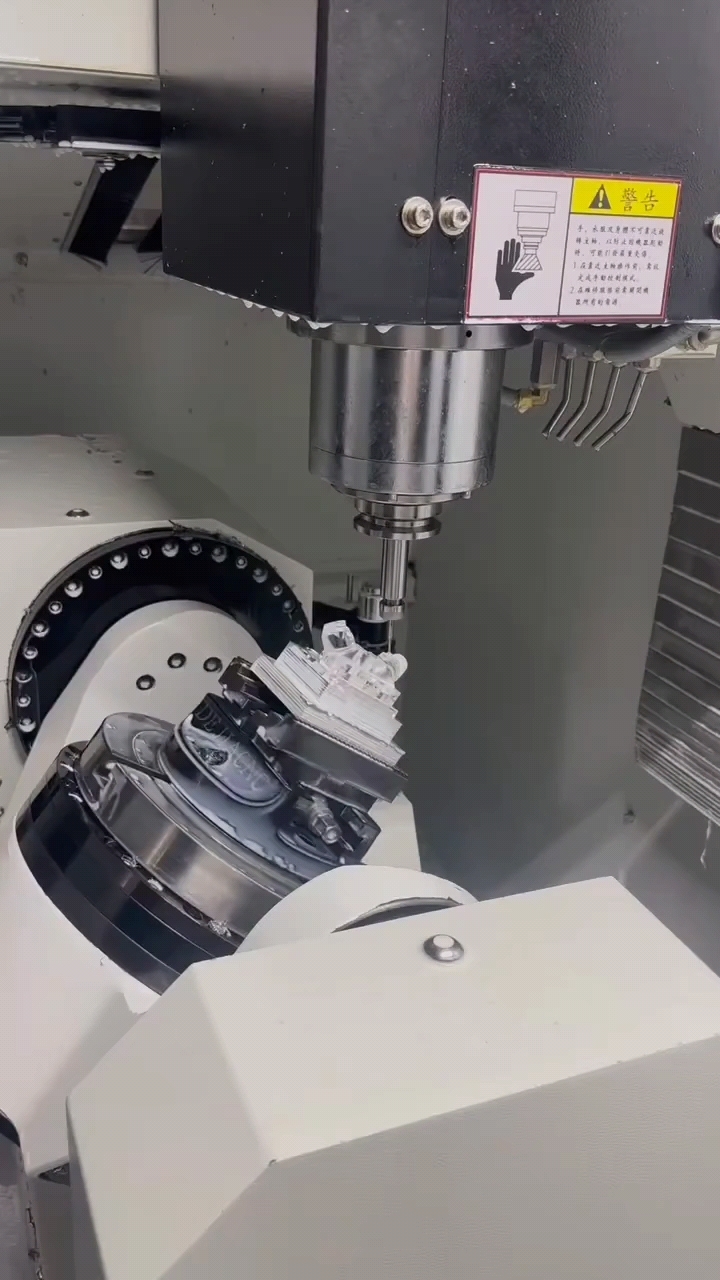
The five-axis simultaneous machining center is the crown of high-end CNC machine tools. Unlike three-axis machines that can only move along the X, Y, and Z linear axes, a five-axis simultaneous machine adds two rotational axes to the three linear axes (a common configuration is A/B swivel axes plus a C rotary table, or an A swivel axis plus a C rotary table), enabling the tool to contact the workpiece from any angle. This allows complex spatial curved-surface parts to be completed in a single clamping operation, dramatically reducing the cumulative error introduced by multiple re-clampings. Five-axis simultaneous operation requires the CNC controller to have real-time tool-center-point control (RTCP) and three-dimensional tool-compensation algorithms, placing extremely high demands on computational capability and interpolation precision; it is one of the most technically challenging sub-segments in the global CNC controller field.
Economy-grade CNC machine tools typically use two- or three-axis, open-loop or semi-closed-loop control with domestic Chinese or Taiwanese CNC controllers, at low cost, suitable for small and medium enterprises machining standard parts in batches. Mid-range CNC machine tools use three- to four-axis fully closed-loop control with CNC controllers from brands such as Fanuc, Siemens SINUMERIK, and Mitsubishi; they are the workhorse type for automotive parts and consumer electronics machining, and also the highest-volume sub-segment of China's machine tool output.
1.2.3 Classification by Structural Form
The structural form of a machine tool determines the workpiece clamping method, the machining envelope, and the geometric characteristics of the parts it can accommodate:
- Vertical machining center (VMC): The spindle is perpendicular to the worktable. Compact in structure, suited to top-face machining of disc-type, plate-type, and mold parts. The most widely applied machining center category and the type with the largest installed base in China.
- Horizontal machining center (HMC): Spindle is oriented horizontally; the workpiece is clamped on a rotary table, enabling multi-face machining; suited to box-type and housing-type parts (engine blocks, gearbox housings). Production efficiency is higher than for vertical machines, but price and floor area are greater.
- Gantry machining center: Two side columns support a crossbeam; the worktable moves longitudinally beneath the crossbeam; suited to machining large workpieces (aerospace structural parts, large molds, wind turbine hubs). The dominant structural form for large and heavy-duty machine tools.
- Multi-tasking machining center: Integrates turning and milling functions in a single machine tool. Typical forms are turn-mill (Turn-Mill) and mill-turn (Mill-Turn). High-precision machining of complex shaft-type parts in aerospace and defense is the core application scenario for multi-tasking machining centers.
1.2.4 Classification by Size
Machine tools are typically specified by worktable dimensions, spindle travel, or maximum workpiece weight:
- Small machine tools: Worktable dimensions typically below 500 mm × 500 mm; suited to precision small-part machining for watches, medical devices, and electronic components.
- Medium machine tools: Worktable dimensions approximately 500–1,000 mm; covering the most mainstream applications of automotive components, 3C enclosures, and general mechanical parts — the size segment with the largest unit-count share of the market.
- Large machine tools: Worktable dimensions 1,000–3,000 mm; used for large molds and heavy mechanical component machining. A representative domestic manufacturer is Haitian Precision (601882) with its gantry product line.
- Heavy-duty machine tools: Worktable dimensions exceeding 3,000 mm; maximum workpiece weight can reach tens to hundreds of tons. Primarily serving energy equipment (wind turbine main shafts, nuclear power pressure vessel flanges), marine main engines, and large defense structural parts. Manufacturing heavy-duty machine tools relies on specialized castings and heavy-duty structures; technical difficulty and manufacturing lead times are far greater than for small and medium machine tools.
1.3 Full Supply-Chain Picture
The machine tool supply chain is divided into three tiers: upstream core components, midstream complete-machine manufacturing, and downstream application markets. The chain is long and involves many specialized domains.
1.3.1 Upstream: Core Components
Upstream components are the technical and cost backbone of the complete machine tool, and the critical bottleneck in the domestic substitution process. In the raw material and component cost structure of a typical mid-to-high-end vertical machining center, CNC controllers (including drive units) account for 22%–40%, the single highest-cost item; spindles and spindle units account for 10%–15%; ball screws and linear guides together account for 10%–15%; precision bearings account for 5%–8%; servo motors and drives account for 5%–10%; and machine bed castings and structural parts account for 25%–35%.
The main upstream component sub-systems and their domestic/international landscape are as follows:
CNC Controller: The "brain" of the machine tool, responsible for motion control, interpolation computation, coordinate transformation, human-machine interface, and process monitoring. The global high-end CNC controller market is dominated by four players — Fanuc (Japan), Siemens SINUMERIK (Germany), Heidenhain (Germany), and Mitsubishi (Japan) — which together account for approximately 75%–80% of the global share and approach 100% in the high-end five-axis simultaneous sub-segment. On the domestic side, Huazhong CNC (300161) and GSK CNC have made inroads in the low-to-mid-end market; KEDE Numerical Control (688305) has developed its own five-axis simultaneous CNC controller and integrated it into its own machine tools, representing the leading example of high-end domestic substitution. However, the overall domestic localization rate remains only approximately 20%, and the domestic localization rate for high-end five-axis simultaneous CNC controllers is below 10%.
Ball Screw: Converts the motor's rotary motion into linear motion; precision and rigidity directly determine the machine tool's positioning accuracy. The global high-end ball screw market is dominated by Japan's NSK, THK, Taiwan's HIWIN, and Germany's Schaeffler; Japanese and European manufacturers together account for approximately 70% of the global market. The key barrier for high-end ball screws lies in precision grinding processes — the highest precision grade (ISO 3408 Grade 1, positioning accuracy approximately ±2 μm/300 mm) places extremely high demands on grinding machine precision, and high-precision domestic grinders themselves are an area still awaiting breakthrough. On the domestic side, Nanjing Process (002826) is the primary player; high-end domestic localization rate is only approximately 5%.
Precision Linear Guide: Provides high-precision, low-friction guidance for each machine axis movement; together with the ball screw, governs motion accuracy. The market structure is similar to that of ball screws: THK (Japan), NSK (Japan), and HIWIN (Taiwan) dominate the mid-to-high-end market. Domestic linear guides are competitive in low-to-mid-end grades; at high-precision grades (Class C, Class T), Taiwan and Japanese brands remain dominant.
Motorized Spindle: Integrates the motor and spindle into one unit, eliminating transmission mechanisms; capable of extremely high speeds (20,000–60,000 rpm, with top-tier products exceeding 100,000 rpm). The core power unit for high-speed machining centers and precision grinders. The high-end motorized spindle market is dominated by Germany's IBAG, Switzerland's Step-Tec (under the Hardinge Group), and Japan's NSK. Domestically, Haozhi (HZG) (300503) is the representative listed domestic motorized spindle enterprise; it can already supply more than 90% of domestic machine tool manufacturers and exports in small volumes, but retains a gap versus international top brands in high-speed precision and high-speed grinding applications.
Precision Bearings (Class P4/P2): Ultra-precision bearings required for machine tool spindle and ball screw support; the higher the precision grade, the greater the manufacturing difficulty and cost. The high-end market is dominated by Sweden's SKF, Germany's FAG (Schaeffler Group), Japan's NSK, and NTN; import dependency is approximately 50%, and the domestic localization rate for ultra-precision grades (P2 and above) is below 30%.
Servo Motor and Drive: The actuating elements driving each machine axis. The high-end market is dominated by Fanuc, Siemens, and Mitsubishi. Domestic servo is the upstream component sub-segment with the fastest localization progress: in 2024, the domestic localization rate for servo motors in China reached 51%, with Inovance (300124) holding approximately 27.6% of the domestic market share — first place. One reason domestic servo has broken through relatively quickly is that the combined scale effect of new-energy vehicles and industrial robots has driven R&D investment and yield improvement.
Cutting Tools (Tungsten Carbide): The direct execution end of machine tool operations; tool wear resistance, toughness, and coating quality determine machining efficiency and surface quality. The global cutting tool market is dominated by international brands including Sandvik Coromant (Sweden, approximately 14% global share), ISCAR (Israel, under IMC Group), Kennametal (USA), and Walter (Germany, under Sandvik). Domestically, Zhuzhou Cemented Carbide Cutting Tools (under Zhuzhou Cemented Carbide — China Tungsten Hi-Tech 000657) holds over 25% of the domestic market share for tungsten carbide inserts; OKE Precision (688308) and Huarui Precision (688059) have entered the aerospace supply chain; Worldia Diamond Tools (688028) specializes in superhard tools (PCBN/PCD). The overall domestic landscape is one in which low-to-mid-range grades are competitive while high-end complex-geometry tools remain predominantly imported.
Precision Castings (Machine Bed and Structural Parts): The machine bed is the physical foundation of the entire machine's rigidity and thermal stability. The mainstream material is gray cast iron HT250/HT300; top-tier ultra-precision machine tools are progressively adopting artificial granite (damping coefficient 6–10 times that of cast iron) and polymer concrete bases. Machine bed castings are approaching 100% domestic localization — a mature segment that does not constitute a bottleneck in the upstream supply chain. Domestic casting clusters are concentrated in Suzhou and Changzhou in Jiangsu, and Dezhou in Shandong.
1.3.2 Midstream: Complete-Machine Manufacturing
The midstream comprises complete-machine tool manufacturers that integrate upstream components into finished machine tool products, differentiating through accumulated R&D in structural design, thermal-error compensation, vibration control, and accuracy retention. The technical barriers in complete-machine manufacturing lie in: (1) rigidity and thermal-characteristic simulation capability in structural design; (2) precision assembly and geometric accuracy calibration processes; (3) co-optimization of CNC controller with mechanical structure; and (4) accuracy retention during extended operation.
The global complete-machine manufacturing landscape is dominated by Germany and Japan at the high end: DMG MORI (German-Japanese joint venture, FY2024 revenue approximately EUR 2.228 billion) is the world's top-ranked comprehensive machine tool enterprise; Yamazaki Mazak (Japan), Okuma (Japan), and Makino (Japan) follow closely; Trumpf (Germany, FY2024/25 revenue approximately EUR 4.329 billion, including laser business) leads globally in sheet metal laser machining equipment. China is the world's largest machine tool producer, with 2024 output value of approximately RMB 240 billion, approximately 32% of the global total; however, the domestic output composition still consists predominantly of low-to-mid-grade machines, with a low proportion attributable to high-end machine tools.
1.3.3 Downstream: Application Markets
The downstream covers nearly all important categories of manufacturing. Listed from largest to smallest by consumption volume, the principal segments include:
- Automotive and automotive components: China's largest downstream machine tool market, accounting for approximately 35%–40% of machine tool consumption. Engine crankshafts, cylinder blocks, gearbox gears, and driveshafts all rely heavily on machine tool processing. New-energy vehicle electric drivetrain systems (motor housings, reducer housings) and gigacast large structural parts also involve machine tools, albeit with a modified processing structure.
- Consumer electronics (3C): Represented by CNC machining of aluminum alloy and titanium alloy metal enclosures for smartphones, tablets, and laptops — the primary market for drilling/tapping centers. The scale of China's consumer electronics supply chain makes it the world's most concentrated 3C machine tool application base, accounting for approximately 15%–20% of machine tool consumption.
- Aerospace: Key components such as engine blades, casings, and structural frames are typically made from titanium alloy or nickel-based superalloys with poor machinability; they demand high rigidity, high spindle speed, and extreme five-axis simultaneous precision. This is the most important high-end application scenario for five-axis simultaneous machining centers.
- Molds: Automotive stamping dies, injection molds, and die-casting dies all require high-speed milling machines to machine cavity surfaces, accounting for approximately 10% of machine tool consumption.
- Energy equipment: Large, high-precision parts such as wind turbine gearbox internal ring gears, main-shaft journals, and nuclear power pressure vessel flanges are among the principal downstream applications for heavy-duty machine tools and large grinders.
- Semiconductor equipment components: Precision components such as chambers and fixtures for deposition, etch, and coating semiconductor equipment demand extremely high dimensional accuracy and surface roughness, representing an emerging high-end application direction for high-precision five-axis machining centers.
- Robot components: Housing and flexspline machining for industrial robot reducers (harmonic drives, RV reducers) creates incremental demand that grows in step with robot shipment volumes.
- Medical devices: Titanium alloy precision machining of orthopedic implants (artificial joints, spinal screws) and dental implants places stringent requirements on five-axis simultaneous precision and biomedical-material cutting processes.
- Rail transit: High-precision machining of core parts such as wheels, axles, and gearboxes for high-speed rail and metro is a stable demand source for heavy-duty machine tools and specialized grinders.
The three-tier supply chain structure can be summarized as follows:
Upstream (CNC controllers → ball screws → linear guides → motorized spindles → precision bearings → servo motors → tungsten carbide cutting tools → precision castings) → Midstream (complete machine tools: lathes / machining centers / grinders / EDM machines / forming machines) → Downstream (automotive / consumer electronics / aerospace / molds / energy equipment / semiconductor equipment / robots / medical devices / rail transit)
1.4 Chapter Summary
Machine tools process metal by removal or forming; their precision ceiling constitutes the precision ceiling of a nation's manufacturing system — this is the material basis for the designation "mother machine." In terms of classification, the CNC grade (conventional → economy-grade CNC → mid-range CNC → high-end CNC → five-axis simultaneous) is the single most important axis for understanding technical level and competitive landscape; processing method (turning / milling / grinding / boring / drilling / EDM) determines the domain of applicable part geometries and materials; structural form (vertical / horizontal / gantry / multi-tasking) and size class (small / medium / large / heavy-duty) further subdivide the market. In the supply chain, CNC controllers, ball screws, precision bearings, motorized spindles, linear scales, and other core components remain heavily dependent on Japanese and German imports — a sharp contrast to machine bed castings (nearly 100% domestic) and servo motors (rapidly advancing in domestic localization). This structural imbalance is the starting point for understanding the current state of China's machine tool industry, its technology development trajectory, and its policy priorities.
Chapter 2 Global Machine Tool Landscape and Leading Overseas Players
2.1 Global Market Size and Regional Distribution
In 2024, the global machine tool market totaled approximately USD 80 billion (including both metal-cutting and metal-forming machine tools, comprehensive industry definition). Trade statistics published by Gardner Intelligence corroborate this scale: total global machine tool imports in 2024 were approximately USD 41.8 billion (down approximately 3.2% YoY) and total exports approximately USD 45.2 billion (down approximately 2.4% YoY) — the two figures combined reflect a production and consumption market of approximately USD 80 billion in scale.
Behind this figure lies a market that has matured but whose structure is still undergoing deep adjustment. The ongoing war in Ukraine continued to suppress capital goods investment appetite among European manufacturers; the Federal Reserve's high-interest-rate cycle delayed equipment-replacement decisions among U.S. small and medium manufacturers; and China's fixed-asset investment in manufacturing also saw structural deceleration in 2024. A joint report by VDW (the German Machine Tool Builders' Association) and Oxford Economics identified these three factors as the core reasons for the contraction of the global machine tool market in 2024.
Looking at regional production geography, the leading machine tool producing nations ranked by output value in 2024 are as follows:
- China: approximately USD 27.3 billion, first in the world, approximately 32% of global output value;
- Germany: approximately USD 10.9 billion, second in the world;
- Japan: approximately USD 7.9 billion, third in the world;
- United States: approximately USD 7.1 billion, fourth in the world;
- Italy: approximately USD 6.6 billion, fifth in the world;
- South Korea and Taiwan ranked sixth and seventh, respectively.
On the consumption side, China also ranked first: in 2024, China's machine tool consumption was approximately USD 24.6 billion, approximately 33% of global consumption, holding both the production and consumption top positions globally for multiple consecutive years. Notably, in 2024, China's machine tool exports totaled approximately USD 8.2 billion, marginally surpassing Germany's USD 8.0 billion, making China the world's top exporter by volume for the first time — yet the scissors-gap structure, in which the export composition is predominantly low-to-mid-end while the import composition is predominantly high-end, has not fundamentally changed.
Viewed from a regional competitive perspective, the global machine tool landscape exhibits a clear "three-pole" structure: the German-Japanese axis continues to dominate high-value-added categories, centered on five-axis simultaneous machining centers, high-end precision grinders, multi-tasking machining centers, and horizontal machining centers; China leads globally in volume but its value center of gravity is concentrated in mid-to-low-end vertical machining centers and economy-grade CNC lathes; U.S. domestic brands, represented by Haas, focus on the mid-range market while retaining niche advantages in gear machining machines (Gleason); South Korea has built a relatively complete machine tool industrial system on the strength of its large automotive industry cluster; Italy maintains a distinctive "workshop-type" competitiveness in grinders, jig grinding, and high-speed milling; and Taiwan leverages its machine tool industrial belt in Taichung, Chiayi, and Tainan to offer strong cost-performance competitiveness in mid-range five-axis and precision machining center markets.
2.2 Global CNC Penetration Rate and China's Catch-Up Gap
CNC penetration is the most direct yardstick for measuring the modernity of a machine tool industry. In 2025, CNC machine tools account for approximately 85.7% of the global machine tool market (GM Insights, 2025), meaning that manually operated machine tools have essentially exited mainstream industrial production and survive mainly in small-batch specialty machining and low-cost retrofit demand.
By contrast, China's CNC penetration rate is approximately 51% — despite being the world's largest machine tool producer and consumer by volume, it still trails the global average by approximately 35 percentage points. Behind this gap are two layers of explanation: first, China has a vast number of small and medium machining shops in which large numbers of conventional lathes, drilling machines, and milling machines have not yet been upgraded to CNC; second, the domestic substitution rate for high-end CNC machine tools remains low, and the total volume of imports is constrained, depressing the overall CNC penetration rate in aggregate statistics.
More noteworthy is the internal stratification. When China's CNC machine tool localization rate is broken down by grade, the disparities are stark: the domestic localization rate for low-end CNC machine tools has already reached 100%; mid-range stands at approximately 80%; but for high-end five-axis simultaneous machining centers, the localization rate is only approximately 25%, and for the top-precision categories it is below 10%. The domestic localization rate for high-end CNC controllers (five-axis simultaneous controllers) is a mere approximately 6%. These numbers paint an internal portrait of China's machine tool industry as "strong in the middle, weak at the top," and the path of catching up in CNC penetration is, in essence, the path of improving the high-end CNC localization rate.
2.3 Individual Profiles of Major Overseas Machine Tool Manufacturers
2.3.1 DMG MORI (German-Japanese joint venture, global all-round leader)
DMG MORI was formed from the merger of Germany's Deckel Maho Gildemeister Group with Japan's Mori Seiki; it is the world's only pure machine tool enterprise with annual sales exceeding EUR 2 billion. Its product line spans CNC lathes, vertical/horizontal machining centers, five-axis simultaneous machining centers, turn-mill multi-tasking machines, and laser machining equipment; it has long maintained a global top position in high-end five-axis simultaneous (DMU / DMC series).
FY2024 financial results: revenue approximately EUR 2.228 billion (down 11% YoY; FY2023: EUR 2.499 billion); order intake approximately EUR 2.257 billion (down 13% YoY); earnings per share EUR 2.15 (marginally above the prior year); free cash flow approximately EUR 117 million (up 25% YoY). The dual decline in revenue and orders reflects the contraction of the global capital goods demand cycle, but profit quality and cash generation remained healthy — a characteristic trait of premium brands navigating an industry downturn.
In terms of global footprint, DMG MORI has sales and service operations in more than 130 countries, with production bases spanning Germany, Japan, the United States, China (Shanghai), and Poland; it was among the earliest German machine tool companies to establish localized production lines in China.
2.3.2 Trumpf (Germany)
Trumpf is a privately held enterprise controlled by the Leibinger family of Germany, the world's largest industrial laser equipment and sheet metal machining manufacturer, while also holding an important position in forming machine tools such as punching and bending machines. Trumpf is also the sole supplier of the laser source for ASML's EUV machines, giving it a unique strategic position in the semiconductor manufacturing supply chain.
FY2024/25 (ending June 30, 2025) financial results: revenue approximately EUR 4.329 billion (down 16% YoY; prior fiscal year: EUR 5.2 billion); order intake approximately EUR 4.2 billion (down 7% YoY); EBIT only approximately EUR 59 million; EBIT margin plunged to 1.4% (prior fiscal year: 9.7%). This was Trumpf's most pressured fiscal year for profitability in nearly a decade — with approximately 18,303 employees, the company simultaneously carried out structural reorganization.
It is worth noting that laser operations (TruLaser series, etc.) account for a significant proportion of Trumpf's revenue and are not directly comparable with pure machine tool manufacturers; however, its market position in sheet metal machining equipment for aerospace, automotive sheet metal, and precision electronic enclosure machining is irreplaceable.
2.3.3 Yamazaki Mazak (Japan)
Yamazaki Mazak is Japan's largest machine tool manufacturer — a family enterprise that has never gone public. Headquartered in Aichi Prefecture, its product range covers CNC lathes, machining centers, five-axis simultaneous machines, turn-mill multi-tasking centers, and laser cutting machines; its product line overlaps substantially with DMG MORI's, and the two companies have long competed for the title of "world's highest-volume producer."
Because it does not publicly disclose financial data, Yamazaki Mazak's annual revenue is typically estimated by industry analysts at approximately USD 4–5 billion; if accurate, this would place it above DMG MORI in overall scale and within the global top three. Its channel density in the Asia-Pacific market (especially Japan, China, and Southeast Asia) is extremely high; its Ningxia (Yinchuan) factory is its largest production base in China.
2.3.4 Okuma (Japan)
Okuma is a listed Japanese machine tool enterprise known for high-end CNC lathes and machining centers; its core differentiating competitive strength lies in its proprietary OSP CNC controller — globally, very few enterprises can simultaneously mass-produce both complete machine tools and high-end CNC controllers, and Okuma is one of them. The OSP system is optimized specifically for Okuma machines; its thermal-error compensation and spindle diagnostic capabilities are industry-leading.
Okuma continues to invest heavily in "Intelligent Technology" (IT series) machines and predictive maintenance, and was an early supporter of umati / OPC UA connectivity protocols. Among the global top-ten comprehensive machine tool enterprises, Okuma's vertically integrated model (machine + controller + software as one) has maintained a substantial per-unit gross margin.
2.3.5 Makino (Japan)
Makino is a global top-tier brand in high-precision machining centers, particularly noted for horizontal/vertical machining centers and wire EDM machines used in aerospace components, automotive molds, and precision molds; it is affiliated with the Toyota group. Compared with DMG MORI, Makino does not pursue a full-range global shipment scale, instead focusing on the market for difficult-to-machine materials (titanium alloy, superalloys, hardened die steels). Aerospace customers (Boeing, Airbus, GE Aviation) are its core buyers.
2.3.6 Haas (United States)
Haas Automation is the largest machine tool manufacturer in the United States — a family enterprise known for high-value vertical machining centers (VMC), horizontal machining centers (HMC), and CNC turning centers, targeting North American small and medium manufacturing enterprise customers. In the U.S. machine tool market, Haas has long led in shipment volume. Haas's competitive logic is "good enough, affordable, and backed by reliable local service" — a completely different path from the German and Japanese premium brands. Haas has approximately 200 authorized dealers (HFO network) globally with presence in Europe and Asia-Pacific, but its production center of gravity remains at a single super-factory in California.
2.3.7 DN Solutions / Doosan (South Korea)
DN Solutions was formerly Doosan Machine Tools and completed its rebranding in 2022. South Korea's largest machine tool enterprise, its product line covers machining centers, CNC lathes, and five-axis simultaneous machines; its overall strength ranks just below the leading German and Japanese players in the global machine tool top-ten. Leveraging robust domestic demand from South Korea's automotive industry (Hyundai-Kia) and semiconductor equipment manufacturing, DN Solutions has established a strong cost-performance advantage in lathes and horizontal machining centers, and is also an option for some Chinese users looking to substitute for high-priced Japanese machines.
2.3.8 Hyundai Wia (South Korea)
Hyundai Wia is part of the Hyundai Motor Group, and operates in both machine tools and automotive components, with group annual revenue of approximately USD 6.7 billion (including the automotive components business). The machine tool division focuses on multi-axis machining centers, turning centers, and smart factory solutions; it enjoys a natural advantage in South Korea's domestic automotive supply machining market. Compared with DN Solutions, Hyundai Wia's machine tool business more substantially serves the supply chain needs of the group's own businesses.
2.3.9 The Three Powers in Gear Machining: Gleason, Reishauer, Klingelnberg
High-end gear machining machine tools are the most concentrated sub-segment within the machine tool sector; three enterprises constitute a de facto oligopoly:
- Gleason (United States): The world's largest manufacturer of bevel gear and cylindrical gear machining machines, supplying gear inspection equipment as well; the standard supplier for gear machining of automotive differential gears, reducers, and other drivetrain system components.
- Reishauer (Switzerland): Global leader in high-precision external-mesh cylindrical gear grinding machines; primarily serving automotive automatic transmission gears, commercial vehicle drivetrain, and aerospace transmission systems.
- Klingelnberg (Germany): Comprehensive solution provider for bevel gears and cylindrical gears, also producing gear inspection instruments.
All three are unlisted private enterprises or family businesses, shielded from short-term capital market pressures and rarely disclosing financial data publicly. Although China has gear grinder manufacturers such as Qinchuan Machine Tool, the technology gap with Gleason and Reishauer in high-precision gear grinding remains considerable; import dependence is particularly pronounced for precision gear finishing of new-energy vehicle reducer gears.
2.4 The Global Four-Player CNC Controller Landscape
CNC controllers are the single link in the entire machine tool supply chain with the highest technical barriers and the most concentrated added value. The global CNC controller market is dominated by four international giants:
- Fanuc (Japan): Listed on the Tokyo Stock Exchange (6954.T); the 0i / 30i / 31i / 32i series has the highest cumulative global installed base; in five-axis simultaneous controllers and high-speed precision control it is co-leading with Siemens; it is also the world's largest industrial robot manufacturer, creating an industrial loop in which machine tool controllers and robots reinforce each other.
- Siemens SINUMERIK (Germany): SINUMERIK ONE is the industry's first CNC control system designed as a native digital twin; SINUMERIK 840D sl / 828D is the mainstream standard fitment of European high-end machine tools (DMG MORI, Grob, etc.) and leads in installed base among mid-to-high-end machine tools in China as well.
- Mitsubishi Electric (Japan): The MELDAS / M800 series CNC system has substantial penetration in Japan's domestic and Asia-Pacific mid-range machine tool markets; it is one of Mitsubishi Electric's most important factory automation product lines.
- Heidenhain (Germany): A German family private enterprise, renowned for high-precision linear encoders, rotary encoders, and the iTNC / TNC series CNC system; in mold machining and aerospace precision part machine tool markets it is the standard fitment of German and Japanese high-end five-axis machines, positioned in the ultra-high-precision sub-segment.
The four players together account for 75%–80% of the global CNC controller market; including affiliated brands and OEM business, some estimates put this above 90%. The CNC controller market is projected to grow to approximately USD 10.5 billion by 2032 (CAGR approximately 7.5%). The four players' market dominance will not be shaken in the near term — the technical barriers arise from multiple layers of accumulated advantage: servo drive algorithms, RTCP three-dimensional compensation algorithms, thermal-error closed-loop compensation models, decades-long accumulated customer process parameter libraries, and a deep-binding commissioning service ecosystem with complete-machine manufacturers.
From a competitive landscape perspective, Fanuc and Siemens form a duopoly in the high-end five-axis simultaneous controller sub-segment; Mitsubishi and Heidenhain each have respective emphases in Asia-Pacific mid-range and European ultra-high-precision sub-segments. The implication of this landscape for China's machine tool industry is: domestic complete-machine manufacturers that purchase large quantities of imported controllers are effectively ceding the most critical technology premium, while downstream Chinese end-users unknowingly build maintenance dependencies on the four major controller brands.
2.5 The Wassenaar Arrangement and U.S. Export Controls
High-end machine tools — particularly five-axis simultaneous machining centers — are not only infrastructure for advanced manufacturing but also a sensitive dual-use technology domain: aero-engine blades, missile body curved surfaces, submarine propeller blades, and other critical military components all require five-axis simultaneous machining. This attribute has kept high-end machine tools at the core of international export control lists.
The Wassenaar Arrangement is a multilateral export control mechanism with 42 participating states, which formally entered into force in 1996. It subjects high-end CNC machine tools — especially those with positioning accuracy better than certain thresholds and with five or more simultaneous axes — to export licensing controls. China is not a member of the Wassenaar Arrangement; exporting high-precision five-axis simultaneous machining centers to China requires approval from the exporting country's government and is frequently subject to a "presumption of denial" policy — i.e., unless there is ample evidence that the end use is purely civilian and traceable, approval is denied by default.
The U.S. Export Administration Regulations (EAR) add a further layer of stricter unilateral controls. Since 2020, the U.S. Department of Commerce has placed a number of Chinese machine tool enterprises on the Entity List and has expanded the restrictions on China-bound exports under ECCN 2B001 (encompassing high-precision CNC machine tools, multi-tasking machining centers, and related 3D printing / CNC combination equipment), requiring export licenses for multi-axis machine tools meeting ISO 230/2 precision standards when exported to China.
The practical effects are felt on three levels: first, leading machine tool exporting countries such as Germany, Japan, and Switzerland must file individual export license applications when selling five-axis simultaneous machining centers to China, lengthening approval timelines and raising uncertainty; second, technology transfer of high-end CNC systems (Fanuc and Siemens five-axis simultaneous versions) to China is restricted, leaving domestic complete-machine manufacturers able only to "buy the product without obtaining the core algorithms"; third, export controls have objectively compelled domestic substitution to accelerate, serving as an external source of pressure driving China's development of indigenous five-axis simultaneous machines and domestic CNC controllers.
Looking at historical context, the attitude of Western countries toward machine tool export controls vis-à-vis China has evolved from "limited openness" to "systematic tightening": in the 2000s, low-end five-axis equipment was permitted to enter; in the 2010s, precision standards were gradually tightened; and in the 2020s, Entity Listings and presumption-of-denial policies effectively closed the high-end machine tool import channel. This tightening trajectory is closely aligned with the overall direction of U.S.-China strategic competition and is not expected to reverse in the foreseeable future.
2.6 Overseas Manufacturers' China Market Strategies
Despite the continuous tightening of export controls, the major German and Japanese machine tool manufacturers still regard China as their most important single market and have established significant localized manufacturing and service operations in China — though most adopt a strategy of "manufacturing mid-range products locally in China, relying on imports for high-end products," in order to navigate regulatory constraints while maintaining technology barriers.
Major in-China footprints are as follows: DMG MORI has a production base in Shanghai primarily engaged in localizing mid-range machine types; Yamazaki Mazak has a sizeable factory in Yinchuan, Ningxia — one of the few fully independent manufacturing bases Mazak operates in a developing country within its global system; Trumpf has a factory in Taicang, Jiangsu, focused on laser machining equipment; Fanuc has a production and technical support center in Shanghai; Siemens' CNC controller operations have service teams in both Shanghai and Chengdu.
Korean manufacturers, leveraging geographic proximity and more flexible technology transfer strategies, enjoy shorter approval lead times for some mid-range products compared with their German and Japanese counterparts, but are similarly subject to Wassenaar Arrangement constraints in the high-end five-axis simultaneous category.
The China strategies of overseas manufacturers are fundamentally a delicate balancing game between regulatory arbitrage and market retention: abandoning China means losing the world's largest single demand source, while full technology transfer crosses export control lines and undermines their own core technology moat. This tension will not dissipate in the near term; and it therefore provides a structural window of opportunity for domestic Chinese machine tool enterprises' domestic substitution efforts — but the width of that window depends on the pace of breakthroughs in domestic CNC controllers, high-precision ball screws and linear guides, and motorized spindles.
2.7 Chapter Summary: Core Conclusions on the Global Landscape
In 2024, the global machine tool market exhibited structural divergence amid a cyclical contraction: volume gravitating toward China (32% of output, 33% of consumption), value gravitating toward Germany and Japan (high-end five-axis simultaneous, horizontal machining centers, high-end CNC controllers). The gap between the global CNC penetration rate of 85.7% and China's 51% is not merely a catch-up metric; it is the combined result of low domestic substitution rates for high-end products and export controls that have persistently suppressed the import channel.
The four CNC controller giants' 75%–80% market share means that any "domestic" high-end machine tool manufactured in China that uses imported controllers still cedes its most critical technology premium to Germany and Japan. This logic dictates that the true battleground for upgrading China's machine tool industry lies not only in the complete machine but even more in the self-sufficiency of the "four essentials": controllers, ball screws, linear guides, and motorized spindles. The Wassenaar Arrangement and EAR controls are, in the short term, an obstacle to the import channel; from a long-term perspective, they are objectively an indispensable external pressure accelerating domestic substitution.
Chapter 3 PEST Environmental Analysis
3.1 Political (P): Strategic Escalation from the "02 Special Project" to the 15th Five-Year Plan
3.1.1 Evolution of the National Strategic Positioning
The strategic status of the machine tool (industrial mother machine) in China was not established in a single leap; it has been a process of gradual escalation over two decades, with each policy update marking a deepening of the state's recognition of the severity of the "bottleneck" problem.
The starting point was 2006. In that year, the State Council established 16 National Major Science and Technology Projects; among them, the "02 Special Project" — the High-End CNC Machine Tools and Basic Manufacturing Equipment Special Project — was dedicated specifically to establishing a development framework for five-axis simultaneous machining centers, high-speed high-precision CNC systems, and precision functional components, spanning the 11th through 13th Five-Year Plans, with cumulative state funding exceeding RMB 12 billion and leveraging enterprise co-investment in R&D of approximately three times that amount. At that time, the policy narrative was still primarily one of "catching up," with the central question being "can we make it at all?"
By 2021, the narrative had shifted to "can we make it reliably enough to substitute?" SASAC included machine tools on the list of 35 "bottleneck technology" breakthrough items assigned to central enterprises, and China General Technology Group was designated as the central enterprise chain leader for the machine tool domain. In December of the same year, the Ministry of Industry and Information Technology together with seven other ministries jointly issued the 14th Five-Year Plan for Intelligent Manufacturing Development, setting the explicit target: by the end of the 14th Five-Year Plan, break through a set of core shortfalls in machine tools including smart CNC systems and high-precision CNC grinders, bringing high-end CNC machine tools to a domestically usable standard in key areas such as aerospace.
A landmark moment came in November 2025: the Fifth Plenary Session of the 20th Central Committee of the Communist Party passed the Proposals for Formulating the National 15th Five-Year Economic and Social Development Plan and the Long-Range Objectives Through the Year 2035, in which the industrial mother machine was written into the national five-year planning proposals document for the first time, alongside aero-engines and industrial software as core pillars of manufacturing power. This was a historic moment in which the "industrial mother machine" concept reached the highest planning tier, signaling that policy support will remain at an elevated level throughout the 15th Five-Year Plan period (2026–2030).
3.1.2 Industrial Fund: The Big Fund Phase III at RMB 344 Billion
On May 24, 2024, the National Integrated Circuit Industry Investment Fund Phase III was formally established with a registered capital of RMB 344 billion, spearheaded by the Ministry of Finance, with the five major state-owned banks (Industrial and Commercial Bank, Agricultural Bank, Bank of China, China Construction Bank, Bank of Communications) jointly contributing RMB 114 billion (approximately 33% of the total). The Big Fund Phase III's direct investment targets are semiconductor manufacturing equipment and materials; however, high-precision machine tools, as upstream equipment for semiconductor production lines, and their key component suppliers — precision bearings, ball screws, motorized spindles, and other sub-segments — all fall within the scope of bottleneck equipment and are indirect beneficiaries.
Extrapolating from the ratio of social co-investment leveraged by the first two phases of the Big Fund, Phase III is expected to catalyze approximately RMB 1.5 trillion in new industrial investment. It should be noted objectively that the Big Fund Phase III's capital does not flow directly to complete-machine manufacturers but creates demand pull for high-precision machine tool component suppliers through the transmission effect of semiconductor equipment domestic substitution.
3.1.3 China General Technology Group's Integration Play
The policy tools for the industrial mother machine are not limited to capital; they also include asset restructuring. Understanding China General Technology Group's integration requires first understanding the historical context of the "Eighteen Arhats."
After the founding of the People's Republic, the state established 18 backbone state-owned machine tool plants nationwide, historically known as the "Eighteen Arhats" (founding-era machine-tool plants) — including Shenyang First Machine Tool Works, Beijing First Machine Tool Works, Dalian Machine Tool Works, Jinan First Machine Tool Works, Qiqihar Second Machine Tool Works, Wuhan Heavy Machine Tool Works, Shanghai Machine Tool Works, and other key enterprises. During the planned economy era, these plants supported the machining capabilities of China's basic industries; following marketization, institutional inertia, slow technology adoption, and accumulated debt left many in difficulty. Dalian Machine Tool went through bankruptcy restructuring in 2017; Shenyang Machine Tool followed in 2019 — both were the price of this historical process.
In 2019, China General Technology Group acquired approximately 57% of Shenyang Machine Tool's equity for approximately RMB 3.5 billion, subsequently completed the strategic restructuring of Dalian Machine Tool, and successively incorporated Qiqihar Second Machine Tool, Jinan Second Machine Tool, Wuhan Heavy Machine Tool Works, Shanghai Machine Tool Works, and Beijing First Machine Tool Works. The integrated core enterprises from the "Eighteen Arhats" cumulatively reached seven. By 2025, the Shenyang Machine Tool entity under its umbrella had been rebuilt into China's largest R&D and production base for mid-to-high-end CNC machine tools, achieving a breakthrough at the 0.01 mm precision barrier.
The policy logic behind this integration is: high-end domestic machine tool capability is not only an innovation problem but also a problem of reactivating existing assets and restructuring the industrial organization. China General Technology Group plays the role of a platform for "absorbing bankrupt firms, integrating R&D, and concentrating breakthrough efforts" rather than a purely commercial acquisition vehicle.
3.1.4 Export Controls: The Wassenaar Arrangement and U.S. EAR
The policy environment does not derive solely from domestic sources; external constraints have equally profoundly shaped the development trajectory of China's machine tool industry.
The Wassenaar Arrangement entered into force in 1996; China is not a member. The Arrangement lists five-axis simultaneous machining centers as controlled items on the List of Dual-Use Goods and Technologies: under the ECCN 2B001 classification of the U.S. Export Administration Regulations (EAR), exporting multi-axis simultaneous CNC machine tools to China with precision better than the ISO 230/2 standard requires an export license, and the U.S. Department of Commerce's Bureau of Industry and Security (BIS) applies a "presumption of denial" principle to such applications. In October 2020, BIS further incorporated multi-axis CNC and additive manufacturing / CNC hybrid machines into new control rules arising from the Wassenaar Arrangement's 2019 meeting, tightening the scope.
In practice, top-tier brands including Germany's DMG MORI, Japan's Yamazaki Mazak, and Japan's Makino face scrutiny on China-bound exports; high-precision five-axis machines with positioning accuracy better than 3 μm are essentially in a state of supply cut-off. Notably, the pressure of export controls has to a degree produced a "forced substitution" effect — domestic end-users who cannot obtain imported high-end five-axis machines have been compelled to accelerate testing and procurement of domestic five-axis machines, providing enterprises such as KEDE Numerical Control with real-world validation opportunities.
3.1.5 First-Article Insurance and "Specialized, Sophisticated, and Novel" Enterprises: Dual-Direction Tools for Cultivating Users and the Supply Side
The major technical equipment first-article insurance compensation policy, jointly promoted by the Ministry of Industry and Information Technology and the Ministry of Finance, includes high-end CNC machine tools (including five-axis simultaneous machining centers and turn-mill multi-tasking centers) in its directory, with the central government providing premium subsidies to insured purchasing users — effectively reducing the trial-and-error cost for users adopting domestic machine tools. This mechanism opens up the "last mile" for domestic machine tools to enter key industries on the demand side.
On the supply side, as of the end of 2024, the Ministry of Industry and Information Technology had recognized more than 400 "specialized, sophisticated, novel, and distinctive" (精特新, "little giant") enterprises in the CNC machine tool and key functional components field, covering sub-segments including CNC tools, precision ball screws, linear guides, motorized spindles, and encoders. These 400 enterprises form a domestic localization ladder from complete machines to components — the number is substantial, but whether they can genuinely support the precision grades and reliability required by high-end machine tools still needs to be validated by the market one by one; overly optimistic interpretations are unwarranted.
3.2 Economic (E): Structural Drivers of Four Demand Engines
3.2.1 Automotive Electrification: Process Route Transition in the Largest Downstream Segment
Automotive is China's largest single downstream segment for machine tools, accounting for approximately 40% of demand (China Machine Tool and Tool Builders' Association definition), approximately 42% on a global basis (Fortune Business Insights).
In 2024, China's new-energy vehicle production exceeded 12.888 million units and sales reached 12.866 million units, with a market penetration rate of 40.9%. The impact of electrification on machine tool demand is not a simple increase or decrease but a structural transition in process routes.
The engine block and cylinder head, crankshaft, camshaft, and gearbox gears of a conventional gasoline vehicle have historically been the main drivers of machine tool consumption — machining a 1.5T engine involves 6–8 process passes on horizontal machining centers and 3–5 process passes on CNC turn-mill machines, with a large number of precision components. The "three electrics" (electric motor, power electronics, battery) of an electric vehicle create new machining demand: aluminum alloy reducer housings and motor housings require high-speed horizontal machining centers (spindle speeds of 4,000–12,000 rpm); battery trays are large aluminum alloy structural parts requiring gantry machining centers. The market for electric drive systems is projected to reach approximately RMB 119.5 billion by 2025 (CAGR 37%).
It cannot be avoided that a pure-electric vehicle generates approximately 400 fewer precision small-part machining requirements compared with a gasoline vehicle; however, the increase in milling machine hours for large aluminum alloy structural parts partially compensates at the aggregate level. Overall assessment: automotive electrification represents a structural upgrade in machine tool demand rather than a net contraction — the process route is shifting from conventional horizontal machining center production lines toward high-speed aluminum alloy machining centers plus turn-mill multi-tasking machines, driving mid-to-high-end machine tool demand upward.
3.2.2 3C Consumer Electronics: Drilling/Tapping Center Opportunities in a High-Intensity Cycle
3C consumer electronics accounts for approximately 15%–20% of China's downstream machine tool demand, but the segment is highly cyclical and has seen a technology-content step-up in recent years due to materials upgrades.
CNC machining of aluminum alloy or titanium alloy mid-frames for smartphones is the core demand scenario for 3C machine tools. The mid-frame of a flagship handset requires 60–100 CNC operations; per-piece machine time is approximately 30–60 minutes for aluminum alloy and extends to 3–4 times that for titanium alloy. In 2022–2023, global smartphone shipment volumes declined for two consecutive years, depressing 3C machine tool order intake. In 2024, with an AI-upgrade cycle and the large-scale adoption of titanium alloy mid-frames by Apple, Chuangshiji (300083) — the domestic leader in 3C drilling/tapping machining centers — reported 3C-type drilling/tapping machining center revenue up 197% YoY. The underlying logic: titanium alloy yield rates are only 30%–40% (compared with over 80% for aluminum alloy), machining difficulty is multiplied, and this directly drove both volume demand and average selling prices of high-end drilling/tapping machines upward simultaneously.
The significance of this case is that 3C is not only a volume cycle but also a technology-content cycle. Every time flagship handsets upgrade materials, a batch of mid-range drilling/tapping machines is displaced by high-end replacements.
3.2.3 Aerospace: The Sub-Segment with the Highest Unit Prices and Strongest Policy Drivers
Aerospace accounts for approximately 5%–8% of China's downstream machine tool demand — a modest share, but extremely high weighting in the five-axis simultaneous machining center sub-segment. Machining aero-engine blisks, blades, casings, and integrally bladed rotors requires five-axis simultaneous as the only viable solution: simultaneous multi-axis motion can complete complex curved surfaces in a single clamping, eliminating cumulative errors from multiple repositionings. Single-unit prices for aerospace five-axis machines are 3–5 times higher than for general-purpose machines, with stringent requirements for precision and reliability.
The ramp-up of C919 wide-body deliveries has opened a new window in domestic aerospace machine tool demand. KEDE Numerical Control (688305) has entered the trial production supply for C919 engine blisk components; in the first half of 2025, new orders for five-axis vertical machining centers accounted for more than 50% of order intake, with ongoing development of new customers in the aerospace system. COMAC's long-term target of delivering 1,000 C919 aircraft before 2035 represents a medium-to-long-term order backlog guarantee for domestic high-end five-axis machines from the corresponding blisk and blade superalloy and titanium alloy machining demand.
The Wassenaar Arrangement plays a dual role here: on the one hand, it restricts access to high-precision imported five-axis machines; on the other, it forces aerospace and defense end-users to accelerate testing of domestic substitutes, compressing the "adoption phase" for enterprises such as KEDE Numerical Control.
3.2.4 Robots: Incremental Niche Demand for Precision Grinders
The rapid expansion of industrial robots and humanoid robots is driving incremental demand in the precision grinder sub-segment. The cycloidal gear of an RV reducer and the flexspline and rigid gear of a harmonic drive require precision CNC grinders to control roundness to within 0.5 μm, at precision grades IT3–IT4. In 2024, China's precision reducer market was approximately RMB 9.1 billion in scale, up more than 10% YoY.
The mass-production expectations for humanoid robots further reinforce this demand — equipment demand for reducer component machining is highly correlated with robot production volumes. Grinders are among the machine tool categories with a relatively high degree of domestic localization (Qinchuan Machine Tool holds approximately 60% domestic market share in gear grinders), but imported equipment still dominates at the highest precision end of specialized precision internal grinding machines for reducers.
3.3 Social (S): Skilled Labor Shortage Generating Structural Pressure for Machine Substitution
3.3.1 Skilled Workforce Gap Exceeding 20 Million: The Structural Challenge of Blue-Collar Recruitment
China's manufacturing skilled workforce gap was estimated by the Ministry of Human Resources and Social Security in 2023 at more than 20 million people, and the gap is still widening. Behind this figure are two overlapping pressures: first, the manufacturing volume expanded massively in the 2000s, and the supply of effective skilled workers is disproportionate to that scale; second, the willingness of the new generation of workers to take on physical labor in manufacturing has declined — the trend of young people being unwilling to perform repetitive mechanical operations is irreversible.
The direct transmission effect on the machine tool industry is: faced with the difficulty of "recruiting and retaining people," enterprises are proactively delegating repetitive processes to CNC machining centers and turn-mill machines, with hardware and software capability replacing dependence on skilled operators. This trend is particularly pronounced in manufacturing clusters in Dongguan, Ningbo, Suzhou, and other cities — local governments in multiple areas have introduced equipment-upgrade subsidies, and raising the CNC penetration rate has become one of the core performance indicators for manufacturing industry transformation.
3.3.2 "Machine Substitution for Labor": From Policy Slogan to Voluntary Enterprise Investment
In the past, "machine substitution for labor" was primarily policy-driven; in recent years it has transformed into a voluntary commercial decision by enterprises. The driving factors are not only rising labor costs but also elevated requirements for product quality consistency.
In scenarios with extremely high dimensional consistency requirements — such as automotive component machining and 3C metal machining — the deviations inherent in skilled manual operation can no longer satisfy modern precision requirements. The repeat positioning accuracy of CNC machining centers can reach within ±0.005 mm, far beyond the limits of human operators. This quality-driven upgrade requirement, stacked on top of labor cost pressure, jointly drives the penetration of mid-to-high-end CNC machine tools down into small and medium manufacturing enterprises.
Worth noting is that machine substitution for labor is not as simple as just purchasing machine tools — it also drives integrated demand for gantry robots, automatic loading and unloading systems, and vision inspection modules, creating a diffusion effect of "cell-based automated production" centered on CNC machining centers. The trend toward machine tool integration into automated production lines will continue to deepen throughout the 15th Five-Year Plan period.
3.4 Technological (T): Five Key Directions for Domestic Substitution Breakthroughs
Detailed technology evolution is addressed in Chapter 9; this section identifies only the five directions of the greatest strategic significance in the current PEST analysis context, as a framework for understanding the technological drivers underlying the policy and economic forces.
3.4.1 Five-Axis Simultaneous Machining Centers: Domestic Share Breaks 50% for the First Time
Five-axis simultaneous is the most critical battlefield for domestic substitution in the machine tool sector. In 2024, domestic brands' share of the five-axis simultaneous machine tool market exceeded 50% for the first time (previously consistently below 30%), but in the high-end segment (aerospace-grade precision, positioning accuracy ≤ 3 μm) import dependence still exceeds 60%. This bifurcated pattern indicates: domestic five-axis machines have gained acceptance in terms of quantity; breakthroughs at the precision ceiling are the focus of the next phase of effort. The five-axis market was approximately RMB 4.26 billion in scale in 2024 and is projected to expand to approximately RMB 20.2 billion by 2027 (CAGR approximately 16.6%).
3.4.2 Turn-Mill Multi-Tasking Centers: The Efficiency Strategy of Process Integration
Turn-mill multi-tasking machines integrate turning and milling on a single platform; a single clamping completes multiple process steps, eliminating the precision loss and production takt time loss from inter-process transfers. Typical applications cover aero-engine shafts, wind turbine main shafts, and automotive differential housings — complex shaft-type parts. The current domestic localization rate for high-end turn-mill multi-tasking machines is still low; Japanese types such as Yamazaki Mazak INTEGREX and German types such as WFL dominate among high-end users. The domestic breakthrough space is large, and so is the difficulty.
3.4.3 Domestic CNC Controllers: The Breakthrough Phase from "Usable" to "Good to Use"
CNC controllers are both the single component with the highest share of machine tool cost structure (approximately 22%–40%) and the most deeply bottlenecked technology barrier. Huazhong CNC's (300161) 9th-generation AI CNC system integrates a domestic AI chip and has broken through core technologies including ultra-smooth surface interpolation, rapid automatic RTCP calibration, and five-axis spatial error compensation, approaching international advanced levels in high-end five-axis precision and efficiency. However, an honest assessment is required: including low-to-mid-end grades, domestic CNC controllers' overall installed-base market share is approximately 31.9%, while the domestic localization rate for high-end five-axis dedicated CNC controllers is below 10%. GSK CNC has a stable market share in three-axis economy-grade systems but has not yet established the capability to compete head-to-head with Fanuc or Siemens SINUMERIK in the high-end five-axis domain.
3.4.4 Digital Interconnectivity: The Standards Battle of OPC UA / umati / NC-Link
The standardization of machine tool networking and data acquisition is an infrastructure issue for the implementation of smart manufacturing factories. On the European side, OPC UA protocol serves as the foundation layer, with umati — promoted by VDW (the German Machine Tool Builders' Association) — serving as the machine-tool-specific semantic layer; Siemens and DMG MORI have both adopted it fully. China's corresponding response is the NC-Link standard, led by the China Machine Tool and Tool Builders' Association; it is compatible with OPC UA, was published in 2020, and entered the rollout and application phase in 2024–2025. The maturity of interoperability standards directly determines whether domestic machine tools can be incorporated into smart production line ecosystems; it is the soft infrastructure of industrial upgrading.
3.4.5 AI-Driven Predictive Maintenance: Lowering the Operational Barrier for High-End Machine Tools
Collecting real-time sensor data from critical components such as spindle bearings and ball screw-nut assemblies via OPC UA or MTConnect protocols, and combining this with deep learning models to predict remaining service life, is a practical path to reducing unplanned downtime losses and improving overall equipment effectiveness (OEE). Huazhong CNC's 9th-generation AI incorporates predictive maintenance as a core function; Shenyang Machine Tool (under China General Technology Group) and Haitian Precision (601882) have both launched machine tool digital twin products. At the current stage, the value of AI-driven predictive maintenance lies not only in extending machine tool service life but also in reducing the operational threshold for users — which has important commercial significance for overcoming the "user trust" barrier that domestic machine tools face in penetrating high-end users.
Chapter summary: Viewed across the four PEST dimensions, the policy vector is persistently positive — the 15th Five-Year Plan designation, the transmission effect of the Big Fund Phase III, and China General Technology Group's restructuring form a three-layer support framework operating simultaneously. Economic drivers are being pulled in parallel by four engines — automotive, 3C, aerospace, and robots — though the process route transition driven by automotive electrification requires suppliers to adapt proactively. On the social side, the structural pressure of skilled labor shortages is irreversible; machine substitution for labor has shifted from a policy narrative to an enterprise-driven cost decision. On the technology side, domestic five-axis simultaneous share has exceeded 50% for the first time, and the CNC controller breakthrough effort is entering deep water; external export control pressure is inversely accelerating domestic substitution, but the precision ceiling and the accumulation of reliability remain the core difficulties for high-end breakthroughs. Taken together across all four dimensions, the external environment for China's industrial mother machine industry is transitioning from a "policy support phase" into a "market validation phase." Policy leverage has already mobilized supply-side capability building; the critical variable going forward is whether high-end users can continue to provide domestic machine tools with real-world validation opportunities under genuine operating conditions.
Chapter 4 China's Market Scale and Dynamics
4.1 Aggregate Coordinates: The World's Largest Producer and Consumer
In 2024, China's machine-tool output value was approximately RMB 240 billion (roughly USD 27.2 billion), ranking first globally in the annual world machine-tool report published by Gardner Intelligence, accounting for approximately 32% of the global total. On the demand side, China also ranked first: domestic machine-tool consumption reached approximately USD 24.6 billion, or roughly 33% of the global total — a figure that mirrors the production-side data and establishes China's dual status as both the world's largest producer and the world's largest consumer.
Behind these two figures lies a deep structural reason: China is the economy with the most complete set of manufacturing categories and the highest density of operating factories in the world. The machining requirements of the automotive, consumer electronics (3C), aerospace, mold-making, and energy-equipment sectors all converge domestically, forming a massive and sustained demand base for machine tools. In other words, China's machine-tool consumption does not hinge on any single industry; it is a comprehensive expression of broad-based industrialization.
Yet being the world's number one in output value is not the same as being the world's number one in value structure. In 2024, the average export price of Chinese machine tools was approximately USD 22,000 per unit, while the average import price was approximately USD 103,000 per unit — a gap of 4.7 times. This precisely maps the industry's real contradiction: large in volume, low in average price, and deficient at the high end.
Taking a broad view of the entire sector, China's machine-tool and tooling industry (including gauges, cutting tools, abrasives, and machine-tool accessories) generated total revenue of approximately RMB 1.04 trillion in 2024. Within this, metal-cutting machine tools posted revenue of approximately RMB 168.7 billion, up 6.3% year-on-year; metal-forming machine tools came in at approximately RMB 93 billion, up 4.4%. The combined total of roughly RMB 261.7 billion and the "machine-tool output value of RMB 240 billion" figure differ due to varying statistical boundaries and should not be added together, but the order of magnitude is entirely consistent.
4.2 Product Structure: The Distribution Between Metal Cutting and Metal Forming
Machine-tool product structure can be divided by processing method into two broad categories: metal-cutting machine tools and metal-forming machine tools.
Metal-cutting machine tools account for the bulk of China's machine-tool output value, at approximately 60%–65%. Core product types include CNC lathes, vertical machining centers (VMCs), horizontal machining centers (HMCs), gantry machining centers, CNC grinders, five-axis simultaneous machining centers, and turn-mill multi-tasking centers. Among these, CNC lathes and VMCs have the highest shipment volumes, serving automotive components, consumer electronics, and general machining applications.
Metal-forming machine tools (including stamping, bending, hydraulic presses, and laser cutting) account for approximately 35%–40% of whole-machine output value and constitute the other major pillar. Yawei Machine Tool of Yangzhou, Jiangsu, is a listed representative in this segment, with a product portfolio spanning CNC punching and laser-cutting composite equipment serving new-energy manufacturing sectors such as lithium batteries and photovoltaics.
By CNC grade, China's machine-tool market can be divided into three tiers:
- Conventional and economy-grade CNC machines: up to three axes, low automation, competing on volume, mainly serving small and medium-sized machining shops, with unit prices in the RMB 30,000–100,000 range;
- Standard mid-range CNC machine tools: three to four axes, accuracy and reliability meeting mainstream industrial requirements, representing the largest tier by shipment volume, with unit prices of RMB 150,000–600,000;
- High-end CNC machine tools: five-axis simultaneous machining centers, turn-mill multi-tasking centers, and high-speed/high-precision machining centers, priced at the RMB 1 million level and above, serving precision manufacturing in aerospace, high-end molds, and semiconductor-equipment components.
The three tiers differ markedly in price, gross margin, and degree of domestic substitution, and they form the basic framework for the localization-rate analysis in this chapter.
4.3 CNC Penetration Rate: The Gap Between 51% and the Global Average of 85.7%
China's CNC penetration rate for metal-cutting machine tools has risen from approximately 30% in 2015 to approximately 51% in 2024, representing an important quantitative achievement of domestic-substitution progress over the past decade. The corresponding global average, however, is approximately 85.7% (GM Insights, 2025), leaving a considerable gap.
This 34-percentage-point gap means that China still has a large number of in-service machine tools that are conventional machines or early economy-grade CNC units, lacking the fundamental capabilities required for modern machining — complex surface processing, error compensation, and adaptive feed control. The technical ceiling of the manufacturing sector is, to a considerable extent, determined by the CNC penetration rate. The 51% figure is a historic milestone, but it is equally a reflection of the distance between China's manufacturing capabilities and advanced manufacturing standards.
Five-axis simultaneous machining centers are the representative indicator of the "qualitative dimension" of CNC penetration. In 2024, national sales of five-axis simultaneous CNC machine tools amounted to approximately 9,000-plus units, with a market size of approximately RMB 4.26 billion, growing roughly 6.2% year-on-year; the domestic-brand share exceeded 50% for the first time. This is a structural breakthrough, signaling that the five-axis segment has evolved from "virtually absent" to "domestically available," even though in the high-end aviation-grade-precision segment, import reliance still exceeds 60%.
4.4 Localization Rate by Tier: The Cliff from 100% at the Low End to 6% at the High End
The localization rate is the most important lens for understanding China's machine-tool market structure. Broad assertions such as "localization rate is high" or "dependent on imports" are both too imprecise; an accurate account must be stratified by grade.
4.4.1 Low-End and Mid-Range: Localization Essentially Complete
The localization rate for low-end economy-grade CNC machine tools is approximately 100%. There is no substantive foreign-brand presence in this tier. Private manufacturers in the Wenling, Taizhou (Zhejiang), Dongguan (Guangdong), and Zhucheng (Shandong) industrial belts satisfy the demands of large numbers of small and medium-sized domestic machining enterprises at extremely low cost, while also exporting heavily to Southeast Asia, Africa, and the Middle East. Price competition is the norm; unit factory prices for some VMCs have been compressed to the RMB 50,000–100,000 range, with gross margins below 15%.
The localization rate for standard mid-range CNC machine tools (three to four axes, serving mainstream applications such as automotive components and consumer electronics) is approximately 80%. Listed private enterprises — Haitian Precision, Neway CNC, Genertec Group's Chuangshiji, and Topstar — are the primary suppliers at this tier, now capable of competing directly with Japanese economy-grade machines. The challenge at the mid-range tier is not whether the products can be made, but rather precision stability and long-term reliability — two metrics that correspond to the core concern of "equipment-switching risk" on the customer side, and the main barrier to domestic mid-range machines breaking into higher-value territory.
4.4.2 High-End Five-Axis Simultaneous: Localization Rate of Approximately 25%
High-end five-axis simultaneous machining centers represent the technical summit of the machine-tool industry. Five-axis simultaneous machining requires five motion axes — three linear axes (X/Y/Z) plus two rotary axes — to move in coordinated synchrony, completing all machining steps for complex surfaces (aero-engine blades, blisks, automotive molds, and precision medical implants) in a single setup. The key challenges are concentrated in: the machining accuracy of precision rotary axis systems (A/B/C-axis positioning accuracy must be better than 5 μm, with repeatability reaching ±2 μm for high-end models), the RTCP (Rotary Tool Center Point) algorithm in five-axis CNC controllers, thermal-error compensation, and high-speed vibration suppression.
The localization rate for high-end five-axis simultaneous machining centers is approximately 25%. This means that three-quarters of high-end five-axis machines in the domestic market still come from German and Japanese brands — DMG MORI, Yamazaki Mazak, Okuma, and Makino — and these brands' exports to China are themselves subject to the constraints of the Wassenaar Arrangement. High-precision five-axis machines with positioning accuracy better than ISO 230/2 standards require export-license review, and the U.S. Commerce Department's Bureau of Industry and Security (BIS) applies a "presumption of denial" principle to such applications.
Domestically, KEDE Numerical Control (688305) is the most representative company to have broken through in high-end five-axis: since 2013, the company has focused entirely on five-axis simultaneous CNC machine tools, developed its own CNC controller, and participated in the trial production of critical components such as C919 engine blisks. In the first three quarters of 2024, its revenue grew more than 30% year-on-year. Yet KEDE's annual revenue scale remains in the RMB 400–500 million range, a full order of magnitude below DMG MORI's revenue of over EUR 2.2 billion. The gap is structural rather than merely a matter of scale.
4.4.3 Top-Precision Machine Tools: Localization Rate Below 10%
The localization rate for top-precision machine tools (positioning accuracy better than 3 μm, repeatability better than ±1 μm, dedicated to extreme-condition applications such as aero-engine integral blisks, aerospace inertial guidance components, and semiconductor-equipment chamber bodies) is below 10%. This tier places demands approaching physical limits on thermal-distortion control, dynamic stiffness, and spindle accuracy, while also requiring error-compensation algorithms tightly coupled to the CNC controller. Currently, very few domestic manufacturers can deliver machine tools at this precision level, and batch-delivery capability is essentially absent.
This is not merely a technological gap but a systemic gap in the overall technical framework. Behind top-precision machine tools lies a need for high-end precision bearings (P2/P4 grade), super-precision ball screws (C0/C1 grade), temperature-controlled cleanroom manufacturing processes, precision-stability verification spanning several years, and decades of accumulated process experience in the highest-precision domain. Even if a late-entrant manages to close the technical gap, the customer-side verification cycle itself constitutes a barrier to entry.
4.4.4 High-End CNC Controllers: Localization Rate of Only Approximately 6%
The CNC controller is the "brain" of a machine tool, determining its motion-control precision, interpolation capability, and level of intelligence. The localization rate for high-end CNC controllers is only approximately 6%, making it the single link in the entire machine-tool supply chain with the lowest domestic substitution rate and the strongest foreign-brand pricing power — widely recognized as the industry's primary bottleneck.
The global high-end CNC controller market is dominated by four players — Fanuc, Siemens SINUMERIK, Heidenhain, and Mitsubishi Electric — with a combined share of approximately 75%–80% globally and, under some counting methodologies (including affiliated white-label operations), over 90%. In China's high-end machine-tool market, Fanuc alone holds approximately 37% market share, Mitsubishi approximately 17%, and Siemens approximately 10%; the three combined account for over 60%.
Domestic CNC controller brands are represented by Huazhong CNC (300161), GSK CNC, and KEDE Numerical Control. The HNC-9 AI CNC System launched by Huazhong CNC in 2024 incorporates domestically produced AI chips and, at CCMT2024, achieved breakthroughs in surface ultra-smooth interpolation, five-axis spatial error compensation, and rapid automatic RTCP calibration, bringing five-axis machining accuracy close to international advanced levels. However, by installed-unit count, domestic high-end CNC controllers still hold less than 10% market share; the combined share across all grades (including mid-to-low end) is approximately 31.9%, meaning that mid-to-low-end CNC controllers have largely been localized, but the high end remains a German-Japanese duopoly.
The figure of 6% must be understood in full context: it means that among the thousands of high-end CNC machine tools purchased in China each year, 94% of the accompanying CNC controllers come from Fanuc or Siemens. Within the cost structure of a domestic machine-tool, the CNC controller accounts for 22%–40% of the whole-machine value (the single heaviest item). This critical component's long-term import dependence both drives up costs and creates supply-chain security risks.
4.5 Trade Structure: First Trade Surplus in 2024
In 2024, China's machine-tool trade profile underwent a historic shift: it recorded a trade surplus for the first time.
The detailed figures: machine-tool imports in 2024 totaled approximately USD 5–6 billion, dominated by high-end machines (five-axis simultaneous machining centers, precision grinders, high-speed turn-mill multi-tasking machines, with an average unit price of approximately USD 103,000); exports totaled approximately USD 8–10 billion (primarily mid-to-low end, with an average unit price of approximately USD 22,000), with export value exceeding import value for the first time.
In terms of trend, this shift was not surprising. Between 2021 and 2024, Chinese machine-tool imports fell from approximately USD 13.8 billion to approximately USD 10.2 billion (a decline of approximately 26%), while exports rose from approximately USD 9.3 billion to approximately USD 12.1 billion (an increase of approximately 30%). The decline in imports was driven by accelerating domestic substitution of mid-range machine tools; the increase in exports was driven by faster penetration of mid-to-low-end Chinese machines into markets in Southeast Asia, Russia, India, and the Middle East — notably, Russia imported approximately USD 1.22 billion worth of machine tools from China in 2023, up approximately 168% year-on-year, making it the fastest-growing single export destination in recent years.
The trade surplus signals structural progress, but it cannot obscure the asymmetry in value composition: the export average price is less than one-quarter of the import average price, meaning that export volumes far exceed import volumes, but the value created by each exported machine is far below that of each imported machine. This asymmetry will persist for a long time — until high-end five-axis simultaneous and turn-mill multi-tasking machines achieve large-scale domestic substitution.
In terms of export geography, the top destinations for the first eight months of 2024 included: Russia (8.9%), the United States (5.7%), Indonesia (3.1%), Brazil (3.0%), India (2.8%), and Saudi Arabia (2.5%). Demand from developing markets for Chinese mid-to-low-end machine tools continues to grow, with Southeast Asia as one of the fastest-growing directions.
4.6 Market Concentration: CR10 Below 30%, 5,000-Company Landscape
Compared with Germany and Japan, China's machine-tool industry has significantly lower market concentration. The industry's CR10 has long been below 30%, meaning the top ten companies combined hold less than one-third of the market.
There are more than 5,000 machine-tool-related enterprises nationwide, of which approximately 30-plus are listed on the A-share market; the vast majority of the remainder are small and medium-sized private enterprises distributed across industrial belts such as Taizhou, Ningbo, Suzhou, Shenzhen, and Dongguan. This landscape creates a competitive dynamic of "numerous but not strong, scattered but not specialized": a large number of small and medium-sized enterprises compete fiercely in the low-end general machine-tool segment, while the number of enterprises capable of competing in high-end five-axis simultaneous and turn-mill multi-tasking categories can be counted on one hand.
Among the domestic frontrunners, China General Technology Group, as the state-enterprise "anchor tenant," has consolidated remnants of the Eighteen Arhats; Haitian Precision (601882) specializes in gantry and horizontal machining centers; Genertec Group's Chuangshiji (300083) focuses on 3C drilling/tapping machines; Qinchuan Machine Tool (000837) is deeply rooted in gear grinders; and KEDE Numerical Control (688305) concentrates on high-end five-axis machines. Each has its own niche, but none has formed a dominant integrated position covering all product categories.
The low concentration reflects the highly fragmented nature of machine-tool product categories themselves — each subcategory (lathes, milling machines, grinders, boring machines, electrical-discharge machining, gear processing) has its own dedicated process requirements and user base, and no single machine tool can dominate all application scenarios. Specialization within subcategories is the universal path taken by internationally advanced machine-tool enterprises and will be the fundamental direction of differentiation for Chinese machine-tool companies going forward.
4.7 Profitability Structure: High-End High Margins vs. Mid-to-Low-End Price Wars
There is a marked divergence in the profitability structure between high-end and mid-to-low-end machine tools.
High-end machine tools (five-axis simultaneous machining centers, high-speed turn-mill multi-tasking machines, and precision grinders) carry single-unit selling prices ranging from RMB 1 million to several million RMB, with gross margins typically in the 35%–50% range and potentially higher for certain aerospace-dedicated configurations. Pricing power for high-end machine tools does not come from production volume but from precision certification, user-validation records, and technical service capabilities. For KEDE Numerical Control's orders in the C919 aero-engine blisk-machining segment, the core barrier is precisely "having passed the aircraft manufacturer's process verification" — a qualification threshold, not price competition.
Mid-range standard CNC machine tools carry gross margins of approximately 20%–30%, with significantly higher competitive intensity than the high end; profitability depends mainly on scale manufacturing capability, supply-chain management, and speed of customer-service response. By leveraging dual growth drivers — broad product-category coverage and overseas exports — Haitian Precision has maintained a relatively stable profitability structure at the mid-range tier, with revenue of approximately RMB 3.5 billion in 2024.
Gross margins for low-end general machine tools are often below 15%; some Taizhou-belt low-end VMCs carry factory prices compressed to RMB 50,000–100,000, priced at little more than raw material costs plus a slim processing margin. A large number of small factories rely on low-price export sales to survive, and they exert a systematic drag on the industry's average profitability level.
Looking at overall industry profitability, total profit for the machine-tool and tooling sector in 2024 was approximately RMB 26.5 billion, down approximately 76.6% year-on-year. This sharp decline is not merely cyclical; it directly reflects the ongoing erosion of the profit pool by mid-to-low-end price wars and the extreme imbalance in how total industry profit is distributed across product categories. It is not the case that high-end margins are thin — high-end volumes are simply small. It is the thin margins at the mid-to-low end that are the fundamental reason the industry's profit center of gravity remains depressed.
4.8 Summary: World's Largest by Volume, Middle of the Value Pack, Structural Transformation as the Main Theme
The current state of China's machine-tool market can be summarized with three parallel observations:
- Volume is the world's first: output value of RMB 240 billion and consumption of USD 24.6 billion both rank at the top globally; the 2024 trade surplus marks a historic peak in quantitative accumulation;
- Value structure is clearly underweight: high-end five-axis simultaneous localization rate at approximately 25%, high-end CNC controllers at only approximately 6%, meaning the very top of the value chain remains in German and Japanese hands;
- Structural transformation is the main theme: the CNC penetration rate converging from 51% toward the global average of 85.7%, and five-axis machines expanding from 9,000-plus units toward higher penetration — the slope of these two curves will determine the speed of China's machine-tool industry's value-chain upgrade over the next decade.
The competition over volume is over — China has won. The competition that follows is a contest over value structure, centered on three core heights: high-end five-axis simultaneous whole machines, CNC controllers, and precision functional components. The principal drivers of this contest include, on the policy side, the 15th Five-Year Plan's "mother machine" special program and Big Fund Phase III capital, and, on the market side, the accelerated domestic-substitution demand forced by the constraints of the Wassenaar Arrangement.
Chapter 5 Supply Chain Anatomy: Value Distribution from Raw Materials to Final Cutting
5.1 Full Supply Chain Overview: Three-Segment Value Chain and the "Hourglass" Structure
A high-end five-axis simultaneous machining center carries a factory price of approximately RMB 2–5 million; of its material cost, 30%–40% goes directly to upstream CNC controller and drive suppliers, another approximately 20% goes to suppliers of precision functional components such as spindles, ball screws, linear guides, and bearings, leaving less than half of the value for the machine-tool assembler itself to internalize. This structure gives the machine-tool supply chain a classic "hourglass" shape: upstream critical components are highly concentrated among a small number of German and Japanese suppliers; midstream machine-tool assemblers are numerous but have weak bargaining power; and downstream application industries are dispersed and broad.
This chapter proceeds through all three segments of the supply chain, focusing on the technical barriers, degree of foreign control, and progress of domestic substitution in each upstream link, while providing a structural overview of the midstream (complete machines) and downstream (applications), with details reserved for Chapter 6 (competitive landscape), Chapter 7 (midstream industrial belts), and Chapter 8 (segment-specific topics).
5.2 First Upstream Pillar: CNC Controllers
5.2.1 Global Oligopoly and Technical Stratification
The CNC controller is the "brain" of a machine tool, responsible for interpolation computation, coordinate-axis linkage, velocity/acceleration control, and real-time communication with servo drives and sensors. Its technical barriers lie in: a high-performance real-time operating system, nanosecond-level interpolation cycles, thermal-error compensation algorithms, and the process-parameter database built up from decades of accumulated installed-unit data.
The global CNC controller market is highly concentrated. Four dominant players — Fanuc, Siemens SINUMERIK, Heidenhain, and Mitsubishi Electric — together hold approximately 75%–80% of the global mid-to-high-end CNC controller market; in the high-end five-axis simultaneous subsegment their combined share approaches 100%, with domestic brands virtually absent. Among them, Fanuc has an extremely high install rate in Asia and North America, with a global market share of approximately 50%–60%; Siemens SINUMERIK, by virtue of its dominance in high-end European aerospace and automotive equipment, holds approximately 20%–25% globally; Heidenhain focuses on precision applications in mold-making and medical devices, accounting for approximately 5%–10% globally; and Mitsubishi Electric is broadly used in Japanese-brand small and medium-sized vertical and horizontal machining centers, accounting for approximately 5%–8% globally.
Based on a global CNC controller market of approximately USD 3.488 billion (2024), the four oligopolists command the vast majority of high-end orders, leaving space for domestic brands mainly in the mid-to-low-end economy-grade CNC segment.
5.2.2 China's Market: Foreign Dominance, Domestic Brands Advancing in the Mid-to-Low End
In the Chinese market, 2024 data from the Qianzhan Industry Research Institute shows Fanuc's domestic market share at approximately 37% and Mitsubishi at approximately 17%, with the two combined exceeding 54%. Among domestic brands, GSK CNC (unlisted), with approximately 12%, is the largest domestic CNC controller manufacturer by scale; Huazhong CNC (300161) focuses on high-end AI-integrated CNC systems, and its HNC-9 AI CNC System achieved mass production and meaningful contract growth in 2024.
Looking at overall localization rates, China's domestic CNC controller localization rate is approximately 20% (by unit count), but tiered disparities are stark: economy-grade CNC systems are essentially fully localized; domestic brands are beginning to make inroads in the standard tier; and the domestic localization rate for high-end five-axis simultaneous CNC systems is below 10% — actually around 6% — making it the single weakest point for domestic substitution and the point of greatest foreign pricing power in the entire machine-tool supply chain.
5.2.3 Pathways to Domestic Breakthroughs
Three differentiated routes are advancing in parallel. KEDE Numerical Control (688305) pursues a "whole machine + controller" vertical-integration route, developing its own five-axis CNC controller and fitting it to its own machines, with C919 aero-engine blisk machining as a flagship customer — the most direct demonstration of domestic five-axis CNC localization. Beijing Jingdiao (unlisted) uses self-configured CNC controllers to serve precision mold-making and high-end 3C machining, building a closed ecosystem. Huazhong CNC is deploying its HNC-9 AI CNC System as its flagship product, configured as an open-market option for domestic machine-tool assemblers, achieving a breakthrough in the standard-tier market in 2024.
The fundamental obstacle to domestic substitution lies not just in hardware computational power, but in the lack of long-term accumulated process data. Fanuc's decades-long database of machining parameters, vibration-compensation models, and tool-wear-prediction algorithms — built up across millions of machine tools worldwide — cannot be replicated with short-term capital investment. The catch-up timeline for domestic CNC controllers is therefore expected to be measured in decades, not three to five years.
5.3 Second Upstream Pillar: Precision Transmission Components — Ball Screws and Linear Guides
5.3.1 Ball Screws: Precision Barriers and the "5% Localization Rate" Dilemma
Ball screws convert the rotary motion of servo motors into the linear feed motion of tools or work tables; their precision directly determines the machine tool's positioning accuracy and repeatability. The manufacture of high-end precision ball screws (C1–C3 grade, positioning error ±2–5 μm/300 mm) depends on precision thread-grinding machines — which are themselves a category of high-end machine tools, and whose manufacturing quality is in turn constrained by upstream ball-screw precision, creating a self-reinforcing technical dependency.
The global high-end ball-screw market is dominated overwhelmingly by Japanese and European manufacturers: NSK (Japan), THK (Japan), HIWIN (Taiwan), and Schaeffler (Germany) together account for approximately 90% of the global mid-to-high-end market. The localization rate for high-end ball screws in mainland China is only approximately 5%, with the mid-range at approximately 30% — among the lowest of all upstream links.
Among domestic manufacturers, Nanjing Process (002826) is the largest domestic ball-screw producer by scale, currently capable of producing Grade 2–5 precision in volume, but stable high-volume supply at the top Grade 1 level (±2 μm/300 mm, comparable to NSK/THK top products) remains out of reach for now. Hengli Hydraulic (601100) has in recent years entered precision ball screws, leveraging its hydraulic-component manufacturing-management capability to enter precision transmission. Hanchuan Machine Tool, Bote Precision, and others have also built some supply capacity in mid-grade specifications. In November 2024, Nanjing Process prepared for a restructuring and listing, signaling a marked rise in capital-market attention to the machine-tool functional-component segment.
Worthy of attention: the anticipated ramp-up of humanoid robots has opened an independent incremental market for planetary roller screws. In 2022, the domestic localization rate for this category was approximately 19%; overseas leaders Rollvis (Switzerland), GSA (Germany), and Ewellix (Sweden) combined for approximately 66%; domestic Nanjing Process held approximately 8% market share. The domestic substitution potential is considerable, with the prospect of forming a second growth curve beyond machine-tool ball screws.
5.3.2 Linear Guides: Taiwan and Japan Dominant, Mid-Range Substitutable
The linear-guide market structure closely resembles that of ball screws: THK (Japan) is the global founder of linear guides and holds an absolute lead in the high-end market; NSK leverages bundled sales with its ball screws for a tied advantage; HIWIN (Taiwan) has the strongest presence in mainland China's mid-range guide market with an outstanding price-performance ratio. Domestic suppliers such as Nanjing Process and Guangdong Yintai Precision have become competitive in the mid-to-low end (H/P-grade accuracy, 15–45 mm rail widths), but high-precision C/T-grade products (micrometer-level positioning under high-speed heavy-load conditions) remain dominated by Taiwan and Japanese brands. The path to upgrading domestic linear guides is closely analogous to that for ball screws, depending on parallel breakthroughs in precision grinding equipment and materials metallurgy.
5.4 Third Upstream Pillar: Precision Bearings (P4/P2 Grade)
Precision bearings provide the fundamental precision assurance for high-speed spindle rotation and ball-screw support, graded at P4 (super-precision) and P2 (ultra-super-precision) among other levels. The manufacturing challenge lies in the combined control of raceway roundness (sub-micrometer level), steel-ball uniformity, and heat-treatment stability.
The high-end precision bearing market has long been dominated by SKF (Sweden), FAG/Schaeffler (Germany), NSK/NTN (Japan), and INA (Germany). In 2018, import dependence in the high-end bearing market was approximately 79%; after years of effort, the combined foreign-brand overall market share has fallen to below 30%, but the localization rate for ultra-precision bearings (P2 grade and above) is still below 30%, with overall import reliance at approximately 50%.
On the domestic breakthrough front, LYC (Luoyang Bearing) has built China's first intelligent production line for P4A-grade precision bearings, with aero-engine bearing service life breaking through 5,000 hours, approaching international top-tier levels. Wafangdian Bearing (WBC) excels in large, heavy-load bearings. Renben Bearing and Tianma Shares (002122) have positioned themselves in substitutable mid-range machine-tool bearings. However, ceramic-ball bearings used in high-speed motorized spindles (rotational speed >20,000 rpm) are under development at only a small number of domestic enterprises; they remain significantly behind the volume-production levels of IBAG, Step-Tec, and NSK, constituting a hidden weakness constraining the reliability ceiling of domestic high-speed spindles.
5.5 Fourth Upstream Pillar: Motorized Spindles
Motorized spindles integrate the drive motor and spindle into a single unit, eliminating belt/gear transmission, enabling spindle speeds above 20,000 rpm and even above 100,000 rpm. They are the critical component enabling high-speed, high-precision performance in high-end machining centers.
The high-end motorized-spindle market has long been controlled by German, Swiss, and Japanese manufacturers: IBAG (Germany) and Westwind (UK) specialize in high-speed grinding/drilling spindles capable of exceeding 100,000 rpm; Step-Tec (Switzerland, a Hardinge subsidiary) is the preferred spindle brand for five-axis simultaneous machining centers; NSK (Japan) derives a reliability advantage from its integrated spindle-unit and bearing assembly.
On the domestic breakthrough front, Haozhi (HZG) (300503, Guangzhou) is the leading listed company in the domestic motorized-spindle segment, with products covering high-speed precision spindles and rotary tables, supplying over 90% of domestic machine-tool enterprises and already exporting to Germany, Italy, and Japan. In 2024, Haozhi's revenue was approximately RMB 1.307 billion, up 30.6% year-on-year, reflecting accelerating penetration of domestic high-speed spindles in the mid-range market. The key remaining constraint on its high-end advancement is the aforementioned bottleneck in domestic high-speed ceramic-ball bearing production — the spindle performance ceiling is substantially determined by the bearings.
5.6 Fifth Upstream Pillar: Servo Motors and Drive Systems
Servo motors and drive systems handle precise motion control of each machine-tool axis; they represent the upstream component category with the most notable progress in domestic substitution. The global high-end servo market is likewise dominated by Fanuc, Siemens SINUMERIK, and Mitsubishi, but domestic manufacturers have already established a scale advantage in the mid-to-low end and are continuously penetrating the mid-to-high end.
In 2024, China's servo-motor localization rate reached 51%, surpassing imported brands for the first time and becoming an important milestone in upstream-component domestic substitution. Inovance (300124) holds approximately 27.6% of the domestic general-servo market, ranking first; its domestic market share in low-voltage variable-frequency drives is also approximately 18.6%, also first. Invt, Leisai Intelligent (002979), and Hechuan Technology have each built differentiated positions in mid-power servo, specialty servo, and customized applications, respectively.
The reason servo-motor domestic substitution has progressed relatively quickly is closely tied to the synchronized scale pull from new-energy vehicles and industrial robots — two high-growth downstream sectors jointly amortize R&D and manufacturing costs, creating a positive flywheel. The technical requirements of machine-tool servo motors (high dynamic response, high torque at low speed, long service-life reliability) closely overlap with robot servo requirements, providing a natural channel for Inovance and similar companies to extend their reach from robots into machine tools.
5.7 Sixth Upstream Pillar: Cutting Tools
5.7.1 Global Cutting-Tool Market: Seven Oligopolists and Continuous Consolidation
Cutting tools are the direct execution element in machine-tool machining. In 2024, the global cutting-tool market was approximately USD 47.45 billion in size. Seven major foreign manufacturers hold a combined share of approximately 30%–40% in precision inserts and coated cutting tools: Sandvik Coromant (Sweden) leads globally with approximately 14% share; Kennametal (USA) holds approximately 11%; ISCAR (Israel, under IMC Group) excels in grooving tools and hole-machining tools; Mitsubishi Materials (Japan), Walter (Germany, under Sandvik Group), Kyocera (Japan), and Sumitomo Electric (Japan) each occupy their respective subcategories. In September 2024, Arno joined the Sandvik Group, further consolidating its global integration advantage.
The competitive core in the cutting-tool industry operates on three levels: substrate material (cemented carbide WC-Co powder metallurgy), geometry design (rake angle, chip-breaker groove, cutting-edge radius), and coating technology (PVD/CVD TiAlN, TiSiN, diamond coating). Coating technology is the key differentiating factor for high-end cutting performance, and European and Japanese companies have accumulated extensive patent barriers in multicomponent composite coating formulations.
5.7.2 Domestic Cutting Tools: Competitive in Mid-to-Low End, Still Catching Up at the High End
China's industrial cutting-tool consumption has already exceeded RMB 50 billion. Among domestic leading enterprises, Zhuzhou Cemented Carbide Cutting Tools (under Zhuzhou Cemented Carbide Group ZGCC, ticker 000657 Zhongwu High-Tech) leverages its tungsten-carbide raw-material resource advantage to hold a >25% domestic market share in cemented carbide inserts, forming the scale foundation of domestic cutting tools; OKE Precision (688308) focuses on CNC indexable inserts and entered the aerospace quality-system certification process in 2022, extending toward higher-end applications; Huarui Precision (688059) entered the Aviation Industry Corporation of China (AVIC) supply chain in the same year, cutting into the difficult-to-machine materials tooling segment; Worldia Diamond Tools (688028) specializes in superhard tools (PCBN/PCD) and has established a differentiated position in hard turning and non-ferrous metal machining, representing the leading force in domestic superhard-tool localization.
China's competitive strength in carbide insert exports is improving — export volumes grew approximately 50% and export value grew approximately 74% from 2019 to 2022 — but the product mix remains concentrated in mid-to-low-end standard specifications. Complex coatings and proprietary geometries for high-end aerospace material-cutting tools (specialized for titanium alloys, carbon-fiber composites, and superalloys) still rely primarily on imports from Sandvik Coromant, ISCAR, and Kyocera in the near term.
5.8 Upstream Auxiliary Components: Machine Bed Castings and Linear Encoders
5.8.1 Machine Bed Castings: Fully Localized, Not a Bottleneck
The machine bed is the physical foundation for a machine tool's rigidity and thermal stability. Mainstream materials are gray cast iron HT250/HT300, which offer excellent damping characteristics and a mature casting process; high-end super-precision equipment is increasingly adopting mineral casting (with damping coefficients 6–10 times that of cast iron) and polymer concrete. The localization rate for machine bed castings is close to 100%; the casting industry is concentrated in Jiangsu-Zhejiang (Suzhou, Changzhou) and Shandong (Dezhou) regions, representing a relative cost advantage in whole-machine cost reduction and does not constitute a bottleneck.
5.8.2 Linear Encoders and Rotary Encoders: The Underestimated Precision Ceiling
Linear encoders and rotary encoders constitute the position-feedback "nervous system" of a machine tool's coordinate system; their precision resolution directly determines the whole machine's precision ceiling. Heidenhain is virtually monopolizing the linear-encoder market for five-axis machining centers and super-precision machine tools; although the per-unit value is only a few thousand to tens of thousands of RMB, it is essentially irreplaceable. Renishaw (UK) similarly holds a leading position in measurement probes and encoders. Domestic suppliers Yuheng Optics and enterprises under the Changchun Institute of Optics, Fine Mechanics and Physics can produce low-end linear encoders, but at nanometer-level resolution and high-speed reliability, there remains a significant performance gap versus Heidenhain. Linear encoders are an easily overlooked yet decisive bottleneck for the precision ceiling.
5.9 Upstream Cost Structure: Foreign-Controlled Value Concentrated in the "Brain" and "Nerves"
Based on component-cost breakdowns published by research institutions for mid-to-high-end VMCs (factory price approximately RMB 500,000–1,000,000), the cost structure is as follows:
- CNC controller (including drives): 22%–40% of total cost — the single highest-value link and the point of greatest foreign pricing power; a Fanuc full system (CNC mainframe + servo drives + spindle drive) is often quoted at approximately 40% of whole-machine material cost
- Spindle and spindle unit: 10%–15%; Step-Tec and IBAG high-end spindle prices are significantly higher than domestic Haozhi products
- Ball screws and linear guides: combined 10%–15%; high-end NSK/THK pricing far exceeds that of Nanjing Process
- Precision bearings: 5%–8%; SKF and FAG high-speed precision bearings carry substantial premiums
- Servo motors and drives: 5%–10%; Inovance is now capable of entering at lower prices
- Machine bed castings and structural components: 25%–35%; fully localized and cost-controllable
- Tool magazine and automatic tool changer: 3%–5%; Taiwan Douliou and domestic equivalents already cover mid-range demand
- Measurement and linear encoders: 2%–5%; Heidenhain monopolizes the high end
This cost structure reveals the core dilemma of China's machine-tool assemblers: material costs (castings + steel) combined are approximately 30%–40%, fully localized; but the technologically value-laden CNC controller plus drives reaches 22%–40%, and adding spindles, ball screws and guides, bearings, and linear encoders, foreign-controlled components can collectively account for 55%–70% of whole-machine cost. This is the fundamental reason domestic machine-tool assemblers have consistently low gross margins and struggle to break through to high-end pricing premiums.
5.10 Localization Rate by Tier: A Cascading Substitution Path
Synthesizing the localization status across all component links yields the following cascading structure:
- Low-end generic components (standard castings, fasteners, coolant systems): localization rate ≈ 100%, fully competitive
- Mid-range standard components (standard linear guides, mid-to-low-end ball screws, mid-range servo motors): localization rate approximately 50%–80%, with Inovance and others now leading
- Mid-to-high-end functional components (CNC controllers overall, mid-range precision bearings, mid-range cutting tools): localization rate approximately 20%–55%, highly uneven
- High-end core components (high-end five-axis CNC controllers, P4/P2 bearings, high-speed motorized spindles, high-end precision ball screws): localization rate approximately 5%–25%, breakthroughs remain difficult
- Top-end precision components (five-axis CNC at Heidenhain/Fanuc tier, linear encoders, ultra-precision spindle bearings): localization rate <10%, essentially absent
The tiered localization rate at the whole-machine level confirms this structure: low-end whole machines 100% domestic, mid-range approximately 80%, high-end five-axis simultaneous approximately 25%, top-tier five-axis below 10%. The approximately 6% localization rate for high-end CNC controllers is the single weakest point across the entire supply chain and the primary direction for focused policy effort in the 15th Five-Year Plan.
5.11 The Six-Layer Bottleneck Stack
Drawing together the foregoing analysis, the "bottleneck" in China's machine-tool upstream supply chain is not a single-point problem but a systemic constraint consisting of six stacked layers:
- Layer 1: High-end CNC controllers — highest cost share in the whole machine (22%–40%), lowest localization rate (approximately 6%); Fanuc/Siemens/Heidenhain form a nearly closed high-end system ecosystem
- Layer 2: High-end precision ball screws — precision consistency and batch stability are constrained by precision thread-grinding machines (which themselves depend on foreign CNC controllers), creating a circular dependency; high-end localization rate approximately 5%
- Layer 3: High-end linear guides — co-originating with ball screws; THK and HIWIN are irreplaceable in high-precision C/T-grade products
- Layer 4: High-speed ultra-precision bearings — domestic volume production of ceramic-ball bearings for high-speed motorized spindles is essentially absent, constraining the reliability ceiling of spindles
- Layer 5: High-end motorized spindles — Step-Tec/IBAG hold high barriers in the motorized-spindle segment for five-axis machining centers; Haozhi is currently targeting the mid-to-high-end market but has not yet entered top-tier five-axis configurations
- Layer 6: High-end cutting tools and linear encoders — aerospace difficult-to-machine material specialty cutting tools and nanometer-precision linear encoders are controlled by Sandvik Coromant and Heidenhain, respectively
Technical interdependencies exist among the six bottleneck layers: higher CNC controller precision → smaller interpolation errors → greater demands on ball-screw and guide precision → requiring more precise grinding equipment → requiring higher-precision spindle bearings… each layer depends on the capability boundary of the layer above it. These mutually nested dependencies determine that domestic substitution must proceed as a systems-engineering effort rather than a piecemeal approach — which is the deeper reason why the policy level has designated "mother machines" as a dedicated bottleneck-resolution priority.
5.12 Midstream Complete-Machine Manufacturing: Fragmented Competition, Value Yet to Be Released
Midstream complete-machine manufacturers integrate the upstream components described above into machine-tool products with specific machining capabilities; their core competitiveness lies in whole-machine structural design (thermal-distortion control, dynamic stiffness optimization), precision assembly and adjustment capability, application process packages (cutting-parameter databases), and after-sales service response networks.
China's midstream complete-machine manufacturing is highly fragmented: there are over 5,000 machine-tool enterprises nationwide, approximately 30-plus listed companies, and a CR10 of less than 30%. Major assemblers include Haitian Precision (601882), Genertec Group's Chuangshiji (300083), KEDE Numerical Control (688305), and Qinchuan Machine Tool (000837) (see Chapter 6, competitive landscape analysis by company, for details). Assemblers' profitability is subject to dual pressure from high upstream component procurement costs and mid-to-low-end market price competition; the core path to improving gross margins lies in increasing the share of high-end product categories (five-axis simultaneous, turn-mill multi-tasking) and in domestic R&D substitution of critical components.
5.13 Downstream Application Structure Overview: Automotive Leads, Multi-Polar Diversification
Machine-tool downstream application industries are wide-ranging, but demand is highly concentrated in a few major manufacturing sectors. According to the China Machine Tool and Tool Industry Association statistical framework, automotive industry demand accounts for approximately 35%–42% of machine-tool requirements (approximately 40% per the Chinese industry association's count, 42.02% per Fortune Business Insights' global count), making it the largest single downstream; precision machining of combustion-engine drivetrains and machining of new-energy three-electric-system housings together form a stable demand base.
Consumer electronics (3C) accounts for approximately 15%–20%, with CNC machining of smartphone metal frames as the core demand; strong cyclicality is notable, and Apple's 2024 titanium-alloy product upgrade drove a surge in orders for drilling/tapping center manufacturers such as Genertec Group's Chuangshiji. Molds account for approximately 10%, primarily high-speed milling for automotive and appliance molds. Aerospace accounts for 5%–8% but has the highest per-machine value and gross margin of any downstream, and is the core driver of demand for high-end five-axis simultaneous machine tools. Energy equipment (wind-power gearboxes, nuclear-power components), semiconductor-equipment components (high-precision cavity five-axis machining), robot components (reducer housings and precision grinding), and medical devices (orthopedic implant five-axis milling) together account for over 20% and are all in fast-growth trajectories, representing important sources of incremental demand for high-end machine tools.
The proliferation of gigacasting (integrated die casting) technology deserves separate attention: Tesla's 6,000-ton clamping-force integrated die-cast machine consolidates more than 70 traditional stamped parts into a single casting, eliminating approximately 370 parts and a large volume of traditional machining steps; but at the same time, it creates new demand for large gantry five-axis machining centers to perform post-cast finishing, as well as high-end five-axis milling of the casting dies themselves. The impact of gigacasting on machine-tool demand is a structural upgrade rather than a net reduction in volume: low-end three-axis machining steps decrease, while demand for large gantry five-axis and precision boring-milling composite machines increases. This structural shift is an important external force driving the overall migration of machine tools toward the high end.
The demand characteristics of each downstream subsegment, the specific machine-tool technical specifications they require, and the domestic and foreign supply landscape will be addressed in turn in Chapter 8's segment-specific topics.
Chapter 6 Competitive Landscape and Key Companies
6.1 Industry Concentration: Top-Tier Differentiation Within a Fragmented Structure
There is one fundamental fact about China's machine-tool industry that is often overlooked: despite ranking first globally in output value, the industry's market concentration has long remained at a low level. The CR10 has persistently been below 30%, with China General Technology Group, Haitian Precision, Genertec Group's Chuangshiji, Qinchuan Machine Tool, Beijing Jingdiao, KEDE Numerical Control, and other leading enterprises holding a combined share of approximately 25%–30%, while the remaining 70%-plus is divided among more than 5,000 small and medium-sized enterprises. This "numerous but not strong, scattered but not specialized" dynamic is both the product of the industry's historical accumulation and a reflection of the inherent customization characteristics of machine tools as a product category — downstream applications are highly segmented, each category of component machining may require a dedicated machine tool, and no single product can achieve monopolistic scale.
Looking at the top-tier structure, complete-machine manufacturing leaders can roughly be divided into three layers: first, the state-enterprise consolidation system anchored by China General Technology Group, covering the broadest range of product categories but still in the midst of integration; second, private listed leaders with revenues above RMB 3 billion, such as Haitian Precision, Genertec Group's Chuangshiji, and Qinchuan Machine Tool, each with specific subcategory advantages; and third, "hidden champions" such as Beijing Jingdiao and GSK CNC, which have already achieved domestic top-tier shipment volumes or market shares in specific tracks but have not appeared directly in the capital markets. In addition, critical component manufacturers — in the directions of CNC controllers, motorized spindles, servo motors, and cutting tools — each guarding a segment of the supply chain division of labor, complete the full picture of the competitive landscape alongside the complete-machine assemblers.
6.2 Comprehensive Complete-Machine Leaders
6.2.1 Haitian Precision (601882) — The Comprehensive Leader by Shipment Volume
Ningbo Haitian Precision (601882) is one of China's currently largest professional CNC machine-tool listed companies by revenue scale, with a product line spanning gantry machining centers, horizontal machining centers, and VMCs, covering the full range of mid-to-high-end metal-cutting machine tools. In 2024, operating revenue was RMB 3.352 billion, up a marginal 0.85% year-on-year; net profit attributable to parent-company shareholders was RMB 523 million, down 14.19% year-on-year, with a net margin of approximately 15.6% — placing it in the higher-profitability tier among complete-machine manufacturers.
The logic behind revenue growth without commensurate profit growth is not complex: in 2024, competition in the domestic machining-center market intensified further, price pressure was passed upstream, Haitian Precision's accounts-receivable balance expanded simultaneously, and net cash flow from operating activities declined more than 56% year-on-year. The short-term drag from collection timing does not alter the moat built by its scale advantage and product-category breadth. Gantry machining-center export share is relatively high, and overseas markets have been its core source of incremental growth in recent years. The breadth of coverage across aerospace, high-speed rail, automotive components, and mold-making sectors gives Haitian Precision strong downstream demand-diversification capability. The mainstream analyst view is that earnings elasticity is expected to recover once capacity utilization improves.
6.2.2 Genertec Group's Chuangshiji (300083) — 3C Drilling/Tapping Center Leader, Titanium-Alloy Dividend Realized
Shenzhen Genertec Group's Chuangshiji (300083) is the undisputed domestic leader in 3C consumer electronics drilling/tapping machining centers, primarily serving the precision cutting of smartphone aluminum alloy and metal frames. In 2024, operating revenue was RMB 4.605 billion, up 30.49% year-on-year; net profit attributable to parent-company shareholders was RMB 237 million, up 22.00% year-on-year. Among machine-tool listed companies that have disclosed annual results for 2024, this is the most outstanding growth rate, driven by an order surge resulting from Apple's new-model titanium-alloy frame machining yield breakthrough — yield rates rose gradually from below 30% in early stages to a level suitable for mass production, amplifying demand for drilling/tapping machines.
It should be noted that the "2024 revenue +197% year-on-year" figure that had previously circulated came from earlier estimates or partial reporting; the actual annual-report figure is +30.49%, which is still a high growth rate within the industry but should be taken from the annual report as the authoritative source. Looking ahead, the demand for precision metal machining of humanoid-robot joints and structural components is becoming Genertec Group's Chuangshiji's second growth engine; at the 2025 earnings meeting, management disclosed full order books and high capacity utilization, with humanoid robot contributions already quantifiable.
6.2.3 Qinchuan Machine Tool (000837) — 60% Domestic Share in Gear Grinding, Hidden Strategic Value in Reducer Supply
Qinchuan Machine Tool (000837) of Baoji, Shaanxi, chose a highly specialized path in the era of widespread competition among CNC machining centers: gear grinders, screw-machining machines, and thread grinders, targeting the most exacting segment for gear-transmission precision requirements. Its domestic market share in gear grinders is approximately 60%, making it the undisputed domestic leader in this category, with high-end customers in aerospace transmission components, automotive gearboxes, and industrial-robot reducers.
The 2024 annual report shows total operating revenue of RMB 3.860 billion, up 2.62% year-on-year; net profit attributable to parent-company shareholders of RMB 53.78 million, up 2.92% year-on-year. Revenue scale ranks among the top of domestic machine-tool listed companies, but the net margin is only approximately 1.4% — thin profits have long been a persistent concern, as the lengthy gear-grinder R&D cycle and high validation costs are subject to bilateral squeeze from upstream precision-component procurement and downstream customer pricing pressure. Notably, the rapidly expanding gear-machining demand for new-energy vehicle electro-drive reducers is a point of focus: Qinchuan Machine Tool disclosed in 2024 an investment plan for a "new-energy passenger-vehicle high-precision gear project," which could open a second revenue growth curve while also extending into harmonic and RV reducer whole-machine business, further cementing its identity as an "industrial-robot component supplier."
6.2.4 Guosheng (688697) — Precision Machining Centers, a STAR Market Pressure Case Study
Suzhou Guosheng (688697) is positioned in high-end VMCs and precision horizontal machining centers, with downstream targets in automotive components, aerospace, and precision mold-machining. In 2024, operating revenue was RMB 1.040 billion, down 6.0% year-on-year; net profit attributable to parent-company shareholders was RMB 129 million, down 9.93% year-on-year, with a net margin of approximately 12.4% — both revenue and profit declining.
Guosheng's 2024 financial results reflect a shared backdrop: intensified competition in the domestic machining-center market, combined with the phased destocking pressure from the automotive and mold industries, created revenue-side pressure even for manufacturers positioned in the mid-to-high end. The company is increasing R&D investment and migrating toward higher-precision product lines, but near-term earnings improvement awaits a recovery in the downstream demand cycle.
6.3 High-End Five-Axis Simultaneous: KEDE Numerical Control (688305)
In the domestic five-axis simultaneous machining-center track, KEDE Numerical Control (688305) is the most representative listed company. This Dalian-based enterprise, which originated from the Shenyang Institute of Computing Technology under the Chinese Academy of Sciences, has taken a path fundamentally different from most domestic machine-tool enterprises: its self-made rate for core components is approximately 85%, with CNC controllers, spindles, rotary tables, and servo drives all developed in-house, forming a "hardware-software integrated" full-chain product system that is extremely rare among domestic assemblers.
In 2024, operating revenue was RMB 605 million, up 33.88% year-on-year; net profit attributable to parent-company shareholders was RMB 130 million, up 27.37% year-on-year, with a net margin of approximately 21.5%. This is the highest net margin among complete-machine manufacturers in the peer group for the period; the premium pricing reflects the technical barriers of five-axis simultaneous products and the strong endorsement of aerospace and defense customers. Five-axis simultaneous CNC machine tools account for approximately 85% of KEDE's total revenue; annual five-axis production capacity has expanded from approximately 10 units a decade ago to approximately 500 units in 2024, with new orders signed of RMB 781 million, up approximately 24% year-on-year.
KEDE's batch delivery of machine tools configured for C919 commercial-aircraft machining is the most compelling case for domestic five-axis machine tools entering the machining process of a major domestic aircraft program. The new product KMU180T large five-axis turn-mill multi-tasking center introduced in 2025 targets large aerospace blades, casings, and integral-blisk machining, extending further into top-tier precision-cutting applications. From an investment perspective, KEDE Numerical Control is one of the listed companies with the fastest commercialization pace and the highest financial quality within the domestic five-axis simultaneous substitution thesis.
6.4 CNC Controllers: Huazhong CNC (300161)
CNC controllers represent the most valuable link in the machine-tool supply chain and the most arduous battleground for domestic substitution. Domestically, Huazhong CNC (300161) is the only listed enterprise whose product line covers self-developed CNC systems for milling, turning, grinding, and five-axis simultaneous applications; it was also one of the core undertaking entities for the "863 Program" in the CNC controller direction.
However, the financial figures presented in the 2024 annual report are sobering: operating revenue of RMB 1.782 billion, down 15.71% year-on-year; net profit attributable to parent-company shareholders at a loss of RMB 55.37 million, with the loss expanding 304.37% year-on-year — both revenue and profit declining, with widening losses. This outcome is not an isolated incident: domestic CNC controllers face competition from Taiwanese and entry-level Japanese products in the mid-to-low-end market, while the gap versus Fanuc and Siemens SINUMERIK remains significant in the high-end market. The path to commercial monetization is harder to navigate than the path to technical breakthroughs.
It should be noted that Huazhong CNC's progress at the technical level is genuine. The HNC-9 AI CNC System released in 2024 incorporates AI-assisted programming, adaptive cutting, and health diagnostics, marking an important milestone in domestic systems' migration toward "intelligence," with some improvement in competitiveness in the mid-to-low-end market. The full-year loss does not diminish the strategic value of the technology roadmap — in a context where the high-end CNC controller localization rate is still approximately 6%, the very existence of Huazhong CNC constitutes an indispensable "backup route."
GSK CNC (unlisted) represents the other pole of domestic CNC controllers: its entry-level lathe CNC systems (8-series, 928-series) cover large numbers of mid-to-low-end lathe and machining-center users nationwide, with approximately 12% domestic market share, effectively setting the de facto standard for general-purpose CNC machine programming conventions. GSK CNC's approach and Huazhong CNC's are complementary — the former defends volume, the latter attacks the high end.
6.5 Precision Grinders and Specialty Machine Tools
6.5.1 Yuhuan (002903)
Hunan Yuhuan (002903) specializes in precision CNC grinders, covering external cylindrical, internal cylindrical, centerless, and double-disc grinding, primarily serving the automotive, bearing, hydraulic, and precision-component industries. In 2024, operating revenue was RMB 473 million, up 12.41% year-on-year, setting a historical high; but net profit attributable to parent-company shareholders was only RMB 13.35 million, down 66.69% year-on-year, with gross margin declining approximately 13.82 percentage points year-on-year. Revenue growth without profit growth reflects industry-wide price competition — more participants in the same track compressed selling prices, while R&D and manufacturing costs did not fall correspondingly, significantly squeezing profit margins.
6.5.2 Neway CNC (603699)
Suzhou Neway CNC (603699) is a relatively comprehensive listed enterprise in the Jiangsu machine-tool sector, with a product line including horizontal machining centers, VMCs, and five-axis simultaneous machining centers, with stable customers in aerospace and high-end automotive components. In 2024, it appeared on the top-ten list for domestic five-axis machine-tool shipments, and is a representative enterprise of the Suzhou regional machine-tool industrial cluster.
6.5.3 Yawei Machine Tool (002559)
Jiangsu Yangzhou Yawei Machine Tool (002559) is positioned differently from traditional cutting-machine-tool enterprises: laser cutting and CNC punching composite machines are its core, and in recent years it has made notable inroads into new-energy manufacturing scenarios such as lithium batteries and photovoltaics, making it an important investment vehicle in the sheet-metal machining equipment and energy-equipment segments.
6.6 Hidden Champion: Beijing Jingdiao
Beijing Jingdiao is one of the most noteworthy unlisted "hidden champions" in the domestic machine-tool industry. Its approach shares certain similarities with KEDE Numerical Control — making both CNC controllers and whole machines, with a high degree of vertical integration — but it is positioned differently: Beijing Jingdiao focuses on high-speed precision CNC engraving/milling machines and five-axis simultaneous precision machining centers, with its main battlefield spanning 3C precision exterior components, high-precision medical parts, and aerospace precision structural components.
In terms of five-axis simultaneous shipment volumes, Beijing Jingdiao has ranked first domestically for several consecutive years; in 2024, the domestic five-axis machine-tool market size broke through RMB 10 billion for the first time, with domestic brands' combined share exceeding 50% for the first time — and Beijing Jingdiao was the largest contributor to this milestone. Since it is not in the capital markets, its financial data is not publicly disclosed, but its shipment data and industry standing more than adequately attest to its technical and commercial capabilities.
6.7 Upstream Component Manufacturers
6.7.1 Haozhi (HZG) (300503) — Domestic Breakthrough in High-End Motorized Spindles
Guangzhou Haozhi (HZG) (300503) is the most representative listed enterprise in the domestic motorized-spindle segment, with products covering high-speed motorized spindles, direct-drive spindles, and precision rotary tables, widely used in machining centers, engraving/milling machines, grinders, and new-energy vehicle component machining. In 2024, operating revenue was RMB 1.307 billion, up 30.63% year-on-year, reaching a historical high; net profit attributable to parent-company shareholders was RMB 82.90 million, up 142.74% year-on-year, with a net margin of approximately 6.3% — both volume and profit at simultaneous historical highs.
Motorized spindles are among the most critical functional components in high-end CNC machine tools, determining the spindle speed ceiling, thermal stability, and ability to maintain machining precision. The high-end motorized-spindle market has long been dominated by Swiss IBAG, Fischer, German GMN/Step-Tec, and Japanese NSK; domestic substitution has only just begun. Haozhi's robust 2024 growth confirms the trend of accelerating motorized-spindle localization, and it is an important window for observing the pace of high-end machine-tool component localization.
6.7.2 Inovance (300124) — No. 1 in Domestic Servo Motors
Shenzhen Inovance (300124) is not a pure machine-tool enterprise, but it holds a pivotal position in the servo-motor and drive segment of the machine-tool supply chain. In 2024, Inovance's domestic servo-motor market share reached 27.6%, ranking first among domestic brands; the overall domestic localization rate of approximately 51% means servo motors are among the upstream components with the relatively highest degree of localization. Fanuc, Yaskawa, and Siemens still dominate the high-end servo market, but domestic substitution in mid-range applications has been largely completed by Inovance.
6.7.3 Cutting Tool Array: Worldia, OKE Precision, Huarui Precision, and Zhuzhou Cemented Carbide Cutting Tools
Cutting tools represent the segment with the strongest consumable characteristics in the machine-tool supply chain; the industry space is continuously stable, but the competitive landscape has differentiated into two tiers: imported brands monopolize high-end precision cutting, while domestic brands focus on mid-to-low-end value-for-money substitution.
Worldia Diamond Tools (688028) specializes in superhard cutting tools (PCD diamond tools and PCBN tools), carries high technical barriers, and its main battlefield is aluminum-alloy machining for new-energy-vehicle battery casings and high-precision aerospace aluminum-alloy cutting. In 2024, operating revenue was RMB 679 million, up 12.54% year-on-year; net profit attributable to parent-company shareholders was RMB 99.18 million, up 1.85% year-on-year, with a net margin of approximately 14.6% — both volume and profit increasing but growth rates decelerating.
Huarui Precision (688059) focuses on cemented carbide CNC inserts (indexable inserts), is a Zhuzhou industrial-cluster enterprise, and is price-performance-positioned against imported brands such as Seco and ISCAR. In 2024, operating revenue was RMB 759 million, down 4.43% year-on-year; net profit attributable to parent-company shareholders was RMB 107 million, down 32.26% year-on-year, with a net margin of approximately 14.1% — both revenue and profit declining, reflecting internal price competition in the mid-range carbide-insert track.
OKE Precision (688308) covers inserts and tool holders with a relatively complete product line, and in 2024 was an extreme case of "revenue growth without profit growth": operating revenue was RMB 1.127 billion, up 9.81% year-on-year, but net profit attributable to parent-company shareholders was RMB 57.30 million, down 65.48% year-on-year — a combination of increased costs and gross-margin pressure during a product-mix transition period.
Zhuzhou Cemented Carbide Cutting Tools (under Zhuzhou Cemented Carbide Group, unlisted) is one of China's largest cemented-carbide tool manufacturers by scale, with a domestic cutting-tool market share above 25%, covering solid carbide tools, indexable inserts, and superhard tools. In export cutting tools, it is one of a small number of domestic enterprises able to compete head-on with imported brands, but as it is not a publicly listed entity, its financial data is not disclosed.
6.8 China General Technology Group: The "Historical Bill" of State-Enterprise Consolidation
Understanding China's machine-tool competitive landscape requires a close look at China General Technology Group, a special entity that is the largest existing consolidation platform in the history of China's machine-tool industry — and the bearer of a heavy historical bill.
The 18 backbone machine-tool factories designated in 1953 as the "Eighteen Arhats" were once the spine of New China's manufacturing industry. Between 2001 and 2012, Shenyang Machine Tool reached the top of the global machine-tool industry with annual sales of RMB 18 billion; Dalian Machine Tool also entered the global top ten; Jinan Second Machine Tool, leveraging its CNC stamping equipment, captured more than 35% of the international market for automotive stamping lines. This brief golden era quickly reversed after 2012: global economic slowdown, competitive pressure from high-end German and Japanese machine tools, massive overseas acquisitions (Shenyang Machine Tool's acquisition of Germany's Schiess) draining cash flow, and the "i5 smart machine tool" finance-lease model accumulating large bad-debt receivables — under the combined weight of these pressures, debt chains broke one after another.
Dalian Machine Tool Group entered bankruptcy reorganization in 2017; Shenyang Machine Tool (including Sheny No. 1 Machine and Zhongjie) entered bankruptcy reorganization in 2019 with liabilities of RMB 20.2 billion, and was taken over by China General Technology Group. Subsequently, Qiqihar Second Machine Tool, Beijing No. 1 Machine Tool Plant, Wuhan Heavy Machine Tool, and Kunming Machine Tool were progressively incorporated under China General Technology Group. By 2024, the group had consolidated 7 of the Eighteen Arhats, forming the most product-comprehensive state-owned machine-tool integration platform. Jinan Second Machine Tool is a rare exception among the Eighteen Arhats — its conservative strategy of avoiding stock listings, overseas acquisitions, and debt-financed expansion, while focusing on CNC stamping equipment, allowed it to operate independently to this day with an international market share still stable at above 35%.
The restructuring and integration at China General Technology Group was still actively progressing as of 2024, with major asset reorganization still under stock-exchange review. Whether the integrated machine-tool business system can achieve genuine technical reconstruction — rather than merely an asset-side consolidation — is the core question determining the medium-to-long-term value of this state-enterprise machine-tool platform.
6.9 Foreign Players in China
The presence of foreign complete-machine enterprises in the Chinese market far exceeds what most domestic investors typically recognize. Their Chinese factories do not only serve local sales but also serve as manufacturing-output hubs for the Asia-Pacific region and beyond.
DMG MORI (Germany/Japan) operates a production base in Shanghai Jinqiao, offering localized manufacturing and rapid delivery for certain standard models to Chinese customers, with a product line covering turning centers, five-axis simultaneous machining centers, and turn-mill multi-tasking centers, primarily targeting high-end users in aerospace, automotive, and mold-making. DMG MORI is currently the most firmly entrenched foreign complete-machine brand in China, with the most complete localized manufacturing capabilities.
Yamazaki Mazak maintains a production facility in Yinchuan, covering standard models of CNC lathes and machining centers, while also providing technical support and training services to Chinese customers. Mazak's Ningxia factory is a rare example of a foreign machine-tool enterprise establishing a presence in western China, carrying certain regulatory compliance and localization advantages.
Trumpf operates a production and R&D center in Taicang, with a core product line spanning laser cutting and punching composites, and also branching into additive manufacturing and electronics manufacturing equipment. Trumpf is the global leader in laser processing; its VCSEL lasers are exclusively configured in ASML EUV lithography machines, giving it a unique ecological position in the high-end laser-processing machine tool market.
Fanuc operates a factory and R&D center in Shanghai, serving Chinese factory customers in robotics, CNC systems, and precision machining equipment. Fanuc's presence in China is very large; its CNC system global market share is approximately 37%, and its penetration in China's high-end machine-tool market is even higher. Among foreign CNC systems, Fanuc is the single largest source purchased by Chinese machine-tool manufacturers.
Siemens SINUMERIK systems are embedded in high-end custom machine tools in China through partner manufacturers, while also maintaining an automation business center in Shanghai. Heidenhain's iTNC 530/640 series CNC systems are widely used in precision five-axis machining centers and have deep customer loyalty in domestic university and aerospace component-machining environments.
Among Korean brands, Doosan/DN Solutions and Hyundai Wia both maintain sales networks in China with a certain customer base in automotive component machining, but their presence in the high-end five-axis machine-tool market is weaker than German and Japanese brands; they primarily compete with domestic brands in the mid-to-high-end turning and machining-center tracks.
The common challenge for foreign players in China is that, in the mid-range standard product line, domestic brands have already developed a clear price advantage: with equivalent-specification domestic machine tools typically priced at 30%–60% below German and Japanese brands, foreign players' share in volume-production equipment procurement is being continuously eroded. Foreign moats are contracting toward precision five-axis simultaneous machines, specialty-process equipment, critical CNC systems, and components.
6.10 Listed Company Financial Cross-Comparison
The table below summarizes key financial data for major listed machine-tool and related component enterprises in 2024, for cross-company reference comparison.
| Company | Ticker | 2024 Revenue (RMB 100 mn) | YoY | 2024 Net Profit Attr. to Parent (RMB 10,000) | YoY | Net Margin |
|---|---|---|---|---|---|---|
| Genertec Group's Chuangshiji | 300083 | 46.05 | +30.5% | 23,700 | +22.0% | 5.1% |
| Qinchuan Machine Tool | 000837 | 38.60 | +2.6% | 5,378 | +2.9% | 1.4% |
| Haitian Precision | 601882 | 33.52 | +0.9% | 52,300 | -14.2% | 15.6% |
| Huazhong CNC | 300161 | 17.82 | -15.7% | -5,537 | Loss widened | — |
| Haozhi (HZG) | 300503 | 13.07 | +30.6% | 8,290 | +142.7% | 6.3% |
| OKE Precision | 688308 | 11.27 | +9.8% | 5,730 | -65.5% | 5.1% |
| Guosheng | 688697 | 10.40 | -6.0% | 12,850 | -9.9% | 12.4% |
| Huarui Precision | 688059 | 7.59 | -4.4% | 10,700 | -32.3% | 14.1% |
| Zhehai Deman | 688577 | 7.65 | +15.3% | 2,583 | -12.3% | 3.4% |
| Worldia Diamond Tools | 688028 | 6.79 | +12.5% | 9,918 | +1.9% | 14.6% |
| KEDE Numerical Control | 688305 | 6.05 | +33.9% | 13,000 | +27.4% | 21.5% |
| Yuhuan | 002903 | 4.73 | +12.4% | 1,335 | -66.7% | 2.8% |
Several patterns can be extracted from the cross-company comparison. First, the more high-end the positioning, the higher the net margin: KEDE Numerical Control's high-end five-axis positioning yields a 21.5% net margin, while volume-oriented Yuhuan manages only 2.8% and Qinchuan Machine Tool only 1.4% — the premium differential from high-end positioning is unmistakable. Second, revenue growth without profit growth was the dominant theme of 2024: OKE Precision, Yuhuan, and Zhehai Deman all saw revenue increase but net profit fall sharply, reflecting the structural contradiction between industry-wide price competition and rigid cost structures. Third, the earnings elasticity of critical components such as motorized spindles exceeds that of complete machines: Haozhi's net profit attributable to parent-company shareholders grew 142.74% year-on-year — elasticity that complete-machine manufacturers cannot match. Component manufacturers benefit from large substitution potential, high customer stickiness, and no need to bear whole-machine customization risk, representing classic advantages in the import-substitution cycle for upstream components.
From a competitive dynamics standpoint, the profitability differentiation within the machine-tool industry accelerated in 2024: high-end five-axis (KEDE), superhard cutting tools (Worldia), and critical functional components (Haozhi) all achieved simultaneous volume and profit growth, while general machining centers and standard insert suppliers broadly faced profit compression. This differentiation will continue to deepen — the five-axis simultaneous machining-center market posted a CAGR of approximately 15.5% from 2019 to 2023, and with both policy support and import-substitution tailwinds, the relative advantage of high-end positioned enterprises is expected to widen further.
Chapter 7 Midstream Industrial Belts and the "Factory Identification" Landscape
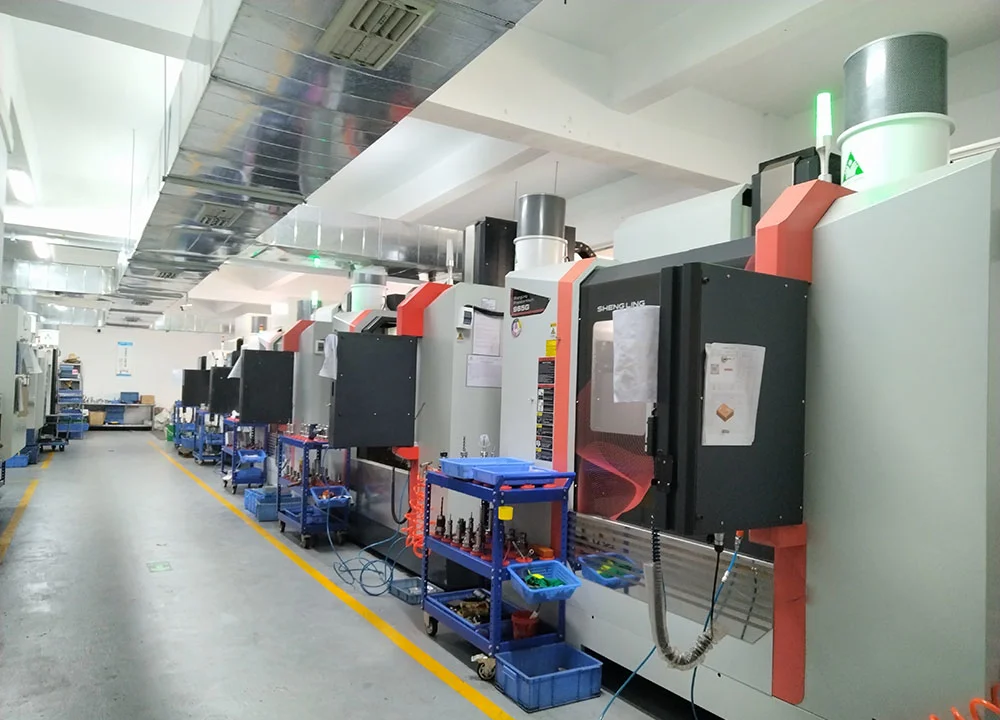
7.1 The Northeast's Decline: The Historical Arc of State-Enterprise "Eighteen Arhats"
The first territorial map of China's machine-tool industry was drawn by a cohort of state-owned enterprises. In 1953, following the Soviet-assistance model, the state established 18 key machine-tool enterprises in Shenyang, Dalian, Qiqihar, Jinan, Beijing, Shanghai, Wuhan, and other cities — collectively known within the industry as the "Eighteen Arhats." These 18 factories played the leading role in national machine-tool production under the planned economy; by 1980, the national installed machine-tool base had reached 2.83 million units, a credit largely due to the old state enterprises.
Entering the 1990s, the import competition brought by reform and opening-up disrupted this order. German and Japanese machine tools entered the Chinese market with a dual advantage of technology and value for money, and the industry refers to this decade as the state-owned machine-tool factories' "dark decade." Subsequently, China's 2001 WTO accession overlapping with domestic manufacturing expansion brought a brief reprieve to the old factories. Shenyang Machine Tool reached the top of the global industry ranking with annual sales of RMB 18 billion in 2012; Jinan Second Machine Tool's CNC stamping equipment once captured more than 80% of the domestic automotive stamping market, with an international market share exceeding 35%, with its products appearing on Ford's and Nissan's global production lines.
However, the demand cycle turned down after 2012, and structural contradictions that had been accumulating for years erupted simultaneously. Shenyang Machine Tool's overly aggressive expansion path — acquiring Germany's Schiess in 2002 and then implementing large-scale finance leasing after launching its i5 smart machine tool — caused bad-debt receivables to surge; by 2018 total liabilities exceeded RMB 20.2 billion, the debt-to-asset ratio surpassed 90%, and in 2019 Shenyang Intermediate People's Court accepted its bankruptcy reorganization application. Dalian Machine Tool Group entered bankruptcy reorganization even earlier, in 2017.
The two enterprises that were once industry benchmarks were ultimately both taken over by China General Technology Group. Subsequently, the group progressively incorporated Qiqihar Second Machine Tool Plant, Beijing No. 1 Machine Tool Plant, Wuhan Heavy Machine Tool Plant, Kunming Machine Tool, and Tianjin No. 1 Machine Tool Plant, and by 2024 had consolidated 7 of the "Eighteen Arhats," forming the state-enterprise group with the broadest product variety and widest service scope in the domestic machine-tool sector. The integration process, however, is lengthy — as of 2024, China General Technology Group's major asset reorganization application for the machine-tool segment was still under review, and the historical burden had not been fully resolved.
The decline of these old factories is attributable to multiple layers: the mismatch between management systems and market mechanisms, the drain on cash flow from overseas acquisitions, missteps in the pace of high-end technology catch-up, compounded by the structural contraction of external demand after 2012 — the combined weight of several factors transformed the appearance of "first in scale" into a balance-sheet collapse in an extremely short time. Shanghai Machine Tool Works was incorporated into Shanghai Electric Group, with its business continuing to contract. Chongqing Machine Tool, after a painful restructuring, became an object of residual-asset integration. Among the "Eighteen Arhats," the exceptional outlier is Jinan Second Machine Tool — its conservative strategy of not listing, not making overseas acquisitions, and not borrowing to expand, while focusing on CNC stamping equipment, has enabled it to operate independently to this day with its international market share still stable at above 35%.
This contrast is itself a sobering case study in the boundaries of industrial enterprise expansion.
7.2 The Rise of Emerging Industrial Belts: Geographic Reshaping by Private and Research-Rooted Forces
While the old northeastern factories struggled in the mire of restructuring, the Yangtze River Delta, Pearl River Delta, and certain central and western provinces were completing a privatization-led rebuild of machine-tool capacity. This was not a simple geographic relocation but a systemic transition from a state-planned model to a market-driven model.
7.2.1 Jiangsu-Zhejiang Cluster: The Industrial Belt with the Strongest Comprehensive Capability
Jiangsu and Zhejiang currently have the highest density of private machine-tool enterprises and the largest output value of any region in China.
Ningbo, Zhejiang, is the hub of leading enterprises. Haitian Precision (601882) started with gantry and horizontal machining centers, covering multiple downstream applications including aerospace, high-speed rail, automotive components, and mold-making, with 2024 revenue of approximately RMB 3.5 billion — a benchmark for comprehensive domestic machine-tool enterprises. The Taizhou and Wenling areas specialize in general-purpose CNC lathes and small-to-medium machining centers, with large numbers of small private factories producing primarily mid-to-low-end products with a pronounced export orientation; Zhehai Deman has established a differentiated position in precision CNC lathes.
Jiangsu's machine-tool industrial belt is distributed across the four cities of Suzhou, Wuxi, Yangzhou, and Taizhou. Neway CNC (603699), based in Suzhou, focuses on five-axis simultaneous machining centers, primarily for aerospace and high-end automotive components; it is one of a small number of private enterprises with the capability to deliver complete five-axis whole machines. Yawei Machine Tool (002559), based in Yangzhou, has extended its product line from traditional CNC stamping to laser-punching composite equipment, with notable recent penetration in lithium-battery and photovoltaic equipment directions. Wuxi Machine Tool Works, although among the "Eighteen Arhats," has undergone market-oriented transformation and shifted from traditional heavy machines to its "Big Dipper Seven Stars" series of precision machines, finding a survival path through technology-service orientation. Huachen Equipment focuses on precision grinding, concentrating on the precision-bearing external-cylindrical-grinding subcategory.
7.2.2 Guangdong Cluster: A 3C-Driven Specialized Cluster
Guangdong's machine-tool industrial belt is concentrated in Shenzhen, Dongguan, and Foshan, with the underlying driver being local-supply-chain requirements for consumer electronics manufacturing.
Genertec Group's Chuangshiji (300083) is deeply rooted in 3C high-speed drilling/tapping machines and, leveraging the explosion in demand from Apple's supply chain for titanium-alloy machining, posted revenue growth of approximately 197% year-on-year in 2024, with scale breaking through RMB 3.5 billion — demonstrating the high elasticity of consumer-electronics-driven machine-tool enterprises. Topstar (300607) enters the market as a combined robot-and-CNC supplier, forming an integrated "processing equipment + automation" service capability in the Dongguan 3C industrial belt.
The limitations of this cluster are equally clear — excessive reliance on the single consumer electronics industry means that when Apple-supply-chain demand contracts, revenue volatility is far greater than for comprehensive enterprises. In recent years, both Genertec Group's Chuangshiji and Topstar have been expanding downstream applications into automotive and new-energy sectors to reduce sector-concentration risk.
7.2.3 Shaanxi Baoji: Representative of Western China's Precision Machine Tools
Qinchuan Machine Tool (000837) is the archetype of the central-western machine-tool industrial belt. Its gear grinders and thread grinders hold approximately 60% domestic market share, making it the core supplier of high-precision gear-machining equipment, primarily supplying reducers, automotive gearboxes, and industrial-robot joints. While the Baoji machine-tool cluster is not as large in scale as Jiangsu-Zhejiang, it has built a highly specialized competitive barrier in precision grinding and specialty gear machining.
7.2.4 Dalian: From City of Bankruptcy to New Force in Five-Axis
Dalian has special significance in machine-tool history — Dalian Machine Tool Group's bankruptcy reorganization is one of the industry's most painful memories. Yet at the same time that China General Technology Group was taking over the old Dalian Machine Tool, another Dalian enterprise was rising by a completely different path.
KEDE Numerical Control (688305), originating from the Shenyang Institute of Computing Technology under the Chinese Academy of Sciences, is one of the very few domestic enterprises simultaneously possessing autonomous mastery of five-axis simultaneous CNC systems and five-axis whole-machine R&D capability, following a "hardware-software integrated" vertical-integration route. In the first three quarters of 2024, operating revenue was RMB 381 million, up 30.3% year-on-year; five-axis simultaneous products have passed multi-model defense engineering verification and are configured in C919 large aircraft component machining — among the fastest commercialization cases in domestic high-end machine tools.
7.2.5 Beijing: The Other Pole of Precision and High End
Beijing Jingdiao (unlisted), rooted in Beijing, focuses on high-speed precision CNC machine tools with self-configured CNC controllers, primarily serving high-precision machining in 3C precision components, medical devices, and molds. Unlike most peers, Beijing Jingdiao deeply binds CNC controller and whole-machine R&D, forming a closed ecosystem that sustains a high market reputation for accuracy and stability — the defining presence of Beijing's machine-tool industrial belt.
7.3 The National Machine-Tool Enterprise Ecosystem: "Scattered but Not Specialized" Across 5,000 Companies
The landmark enterprises described above represent only the visible top of this industry. In full, there are more than 5,000 machine-tool-related enterprises nationwide, approximately 30-plus listed on the A-share market, with the industry CR10 consistently below 30%. This "numerous but not strong, scattered but not specialized" dynamic is a structural characteristic of China's machine-tool industry.
The low concentration has roots in the industry's own logic. Machine tools are a highly customized product category; different machining scenarios impose vastly different requirements for accuracy, rigidity, and speed — automotive cylinder-block lines need high-cycle-rate horizontal machining centers; 3C housings need high-speed drilling/tapping machines; aerospace blades need five-axis simultaneous; gear grinding needs dedicated gear grinders. The diversity of specialized scenarios naturally provides enough niches for small and medium-sized enterprises to survive. Furthermore, the competitive dimensions of machine-tool enterprises also include local service response, spare-parts supply speed, and depth of understanding of a customer's processes — all factors with strong geographic stickiness that cannot be fully displaced by scale leaders operating from a distance.
Although top-tier concentration is low, this does not mean small and medium-sized enterprises are all thriving. Price competition in mid-to-low-end general-purpose CNC lathes and VMCs is extremely intense, with some products' factory prices compressed to the RMB 50,000–100,000 range and gross margins below 15%. Taizhou and Wenling private enterprises maintain export orders through cost advantage and rely on overseas markets when domestic demand is weak. Such enterprises find it difficult to grow to large scale and have weak through-cycle resilience, and they constitute the main component of the industry's scattered and unspecialized landscape.
7.4 The Massively Fragmented Landscape of Downstream Application Factories
Beyond the machine-tool assembler segment, there is another dimension to the value flow of the machine-tool industry — downstream application factories. These are the demand side that truly determines the total size of the machine-tool market.
Automotive is the largest single downstream for machine tools, accounting for approximately 35%–40% of total demand. During the combustion-engine era, the core demand was for precision machining of complex components — engine blocks, crankshafts, camshafts, and transmission gears — carried out by tens of thousands of automotive-component machining factories nationwide. The structural adjustments in the new-energy-vehicle era are bidirectional: demand for traditional internal-combustion-engine components will decline over the long cycle, while new growth comes from reducer housing, rotor shaft, and high-precision motor-core machining in electro-drive systems; gigacasting (the technology path represented by Tesla's 6,000-ton die-casting machines) reduces traditional sub-assembly and stamping machining steps while driving demand for large five-axis simultaneous machines to perform post-casting finishing of die-cast blanks. The net effect: demand for high-end five-axis machines increases, traditional high-volume low-precision machining demand decreases.
Consumer electronics (3C) downstream is estimated to account for 15%–20% of the machine-tool market, with CNC machining of smartphones, tablets, and laptop metal frames and precision structural components as the core demand. The characteristic profile of these machining factories is: large volumes, fast cycle times, extremely high surface-quality requirements, primarily configured with high-speed drilling/tapping machines. The number of 3C metal machining factories nationwide accepting Apple-supply-chain, Android-brand, and first- and second-tier supplier work is large and highly concentrated in Guangdong and Jiangsu provinces.
The mold downstream accounts for approximately 10% of machine-tool demand. Automotive stamping molds, appliance-housing molds, and 3C precision molds require high-speed milling machining centers to complete cavity-finishing steps. Mold factories are typically small in scale, deep in process accumulation, but infrequent in equipment procurement, often forming long-term stable supply relationships with machine-tool manufacturers.
Aerospace component machining factories are the concentrated source of high-end demand. Structural components, engine blades, and casings for the C919 and C929 require five-axis simultaneous machining centers to perform complex surface cutting of titanium alloys and superalloys at micrometer-level precision. Due to the Wassenaar Arrangement's export controls on high-precision five-axis machine tools destined for China, domestic aerospace institutes and machining factories have historically faced constrained equipment sourcing — which is also the core policy-support logic for domestic five-axis enterprises such as KEDE Numerical Control.
7.5 The Identification Challenge for Upstream Small and Medium-Sized Suppliers
Upstream of the machine-tool OEM body is equally a highly fragmented ecosystem of small and medium-sized component suppliers.
The CNC controller — the most important upstream link — still sees the domestic mid-to-high-end market dominated by foreign companies. Huazhong CNC (300161) and GSK CNC continue to penetrate the mid-range tier; KEDE follows the self-supply route; but large numbers of small and medium-sized machine-tool factories still rely on Fanuc or Mitsubishi standard modules to assemble complete machines. Beyond CNC controllers, mid-range suppliers of ball screws, linear guides, spindles, and cutting tools form a large community primarily composed of small and medium-sized enterprises. Nanjing Process focuses on ball screws; Haozhi (HZG) (300503) concentrates on high-end motorized spindles; OKE Precision (688308) and Huarui Precision (688059) are gradually moving up in the cemented-carbide insert segment — and beyond these listed enterprises, there are far more numerous unlisted small and medium-sized component suppliers, scattered across the machine-tool concentration areas of Suzhou, Changzhou, Wuxi, Chengdu, and Dalian, handling the machining and assembly of various specialized components such as bearing housings, hydraulic fixtures, tool changers, and machine-tool accessories.
Identifying these small and medium-sized component suppliers is one of the highest-cost steps in upstream-downstream collaboration. A machine-tool assembler that needs to open up new ball-screw or cutting-tool suppliers often has to invest large amounts of human resources in unstructured information gathering at trade shows, through industry circles, and via peer recommendations, in order to identify suppliers with genuine volume-production capability.
7.6 Factory Identification: Locating Genuinely Operating Factories Among 4.8 Million
The fragmented landscape of the industrial belt, viewed from the supply side, is an industry characteristic; viewed from the demand side, it is an identification challenge.
Upstream ball-screw, linear-guide, spindle, and cutting-tool suppliers in the machine-tool industry want to find the machine-tool assemblers that are genuinely using their type of products; machine-tool assemblers want to find automotive-component machining factories, 3C metal machining factories, and mold factories with stable production capacity as customers; aerospace institutes want to confirm which component machining factories have five-axis simultaneous machining capability — all these information needs spanning the supply chain face the same obstacle in traditional channels: commercial registration data can identify "machine-tool related" enterprises but cannot distinguish which ones are genuinely in production, at what scale, using what type of machining equipment, or fitting into which supply chain.
Tianxia Gongchang, from a database of approximately 4.8 million genuinely operating factories, can identify which automotive-component machining factories, 3C metal machining factories, mold factories, and aerospace-component machining factories are currently in genuine operation — at what production scale, in which product directions, and concentrated in which industrial belts. This identification capability effectively reduces the blind spots in information acquisition in both downstream application-factory prospecting and upstream small-and-medium-component-supplier mapping scenarios.
It should be noted that the 4.8 million figure is an identification scope covering all industries, encompassing all in-production manufacturing factories, rather than referring specifically to the approximately 5,000 machine-tool enterprises mentioned earlier in this report. The two figures belong to entirely different statistical dimensions: the former is the parent population of identification targets; the latter is the enterprise count of the machine-tool OEM industry. They should not be conflated.
7.7 Structural Observations on the Industrial Belt Ecosystem
Having traced the historical arc and current landscape of the industrial belts, several practically meaningful observations can be made.
First, the Northeast's decline was a systemic institutional failure, not a geographic failure. The rise of KEDE Numerical Control in Dalian and the bankruptcy of Dalian Machine Tool Group occurred simultaneously in the same city, demonstrating that the Northeast is not lacking industrial endowments, but that purely state-owned, plan-directed operating models are unsustainable in competitive markets. Whether the integration path taken by China General Technology Group after its takeover can achieve genuine transformation from "scale preservation" to "technical rebuilding" remains an open question.
Second, the strength of emerging private industrial belts lies in mid-range specialization; their weakness lies in high-end breakthrough. Haitian Precision and Genertec Group's Chuangshiji have reached global competitiveness at the mid-range scale, but in high-end five-axis simultaneous and high-end CNC controllers, aside from a small number of enterprises such as KEDE Numerical Control and Neway CNC that have made substantive breakthroughs, most private assemblers still rely on foreign CNC controllers and upstream core functional components for assembly. This means that between the mid-range price advantage and the high-end technical barrier, there is a channel that has yet to be opened.
Third, the demand structure of downstream application factories is being restructured. The electrification of the automotive sector has changed the machining-demand composition of the largest single downstream — traditional combustion-engine machining steps are declining, while high-precision electro-drive components and large integrated-casting post-machining steps are being added. The proliferation of titanium alloy in 3C devices, the acceleration of aerospace localization, and the batch-scale machining of industrial-robot reducer housings are all structural variables adding new demand. The ability of machine-tool enterprises to adjust their customer portfolios will, to a large degree, determine their market-share trajectory over the next five years.
Fourth, low concentration is a permanent feature of the industry, not a transitional state. The diversity of machine-tool product categories and the customization characteristics of machining scenarios make it structurally difficult for the CR10 to surpass 30% on any sustained basis — a fundamentally different dynamic from capital-intensive industries such as automotive or steel. Within such a landscape, the distribution of industry growth benefits is naturally dispersed; the relative advantage of leading enterprises comes from deep accumulation in specific subcategories, not from scale dominance across all product lines.
Chapter 8 Sector Deep-Dive: Demand Profiles Across the Ten Key Downstream Industries
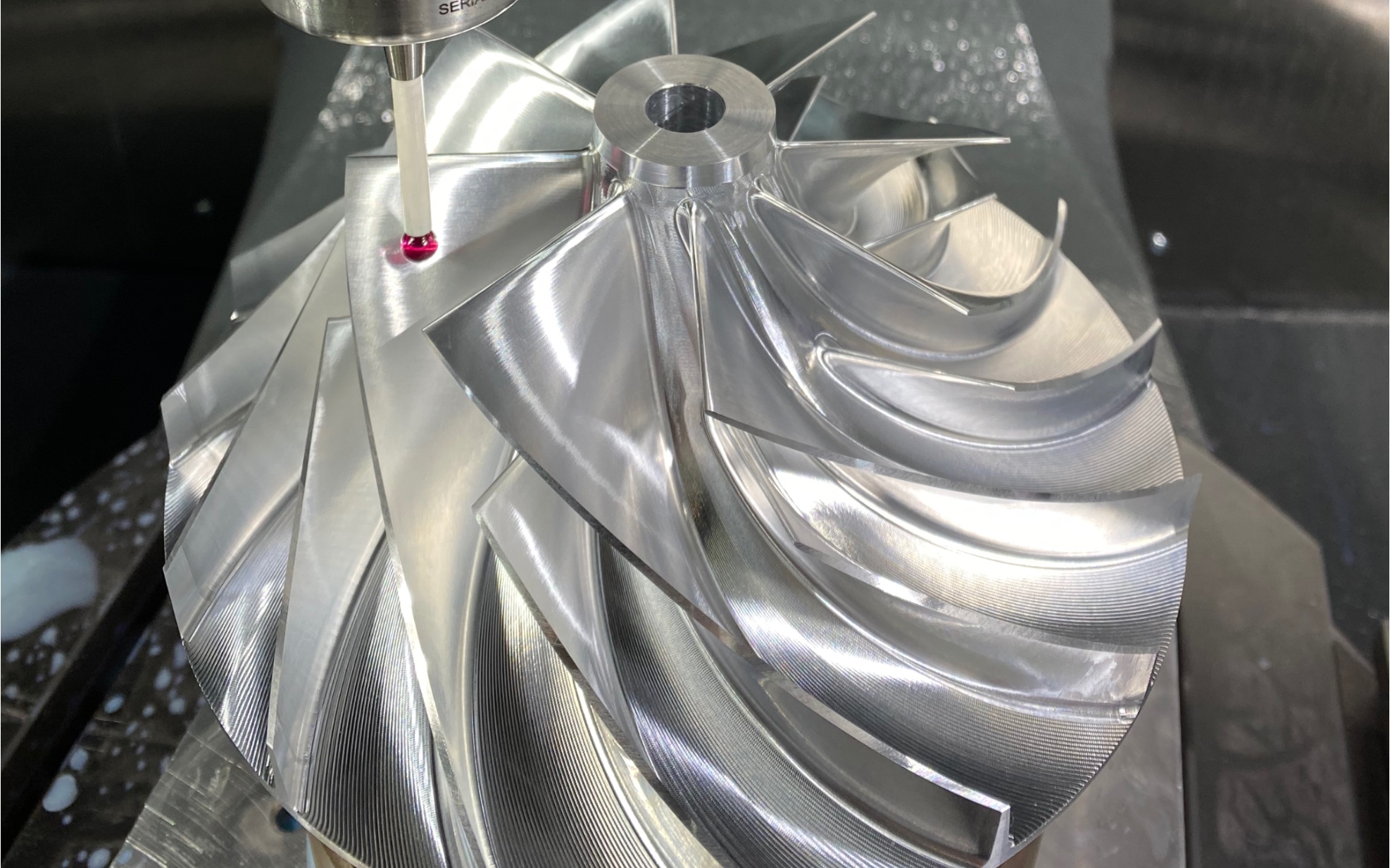
8.1 Downstream Structure Overview and Comparison Table
Before examining any single segment, it is useful to establish a shared frame of reference. China's machine-tool downstream is highly concentrated: the automotive sector alone accounts for roughly 40% of total machine-tool demand — more than twice the share of any other individual industry. Yet the headline conclusion of "auto first" conceals a deeper structural contradiction: by volume, automotive dominates; by technical specification and gross margin, aerospace sets the ultimate benchmark for machine-tool craftsmanship. Layered on top of these two, the rapidly expanding 3C consumer electronics, semiconductor equipment components, and humanoid-robot sectors are driving a structural reshaping of China's machine-tool downstream — a reshaping whose main axis is an upward migration in technical specification.
The table below summarizes the scale, growth trajectory, and core demand characteristics of the ten key segments; subsequent sections examine each in turn.
| Segment | Scale / Share | Recent Growth | Core Machine Types | Five-Axis Demand | Key Drivers |
|---|---|---|---|---|---|
| Automotive (incl. NEV) | ~35%–42% | Structural adjustment; aggregate stable | Horizontal machining centers, dedicated transfer lines, turn-mill centers | Moderate (NEV e-drive rising) | Electrification transition; gigacasting |
| 3C Consumer Electronics | ~15%–20% | Strongly cyclical; surged in 2024 | Vertical drilling/tapping centers | Below average (titanium pulling it up) | iPhone upgrade cycle; titanium adoption |
| Tooling & Molds | ~10% | Stable; die-casting molds upgrading | High-speed milling machines, five-axis machining centers | High (large die-casting molds) | Auto/appliance/3C resonance |
| General / Construction Machinery | ~10% | Fluctuates with fixed-investment cycle | Standard/economy horizontal machining centers | Low | Infrastructure cycle |
| Aerospace | ~5%–8% | Steady growth, high visibility | Five-axis vertical/horizontal composites, five-axis gantry | Extremely high (nearly all five-axis) | C919/C929 ramp-up; military aircraft |
| Energy Equipment | ~5%–7% | Wind energy growing rapidly; nuclear stable | Large vertical/horizontal lathes, gantry milling machines | Moderate | "Dual Carbon" targets; new nuclear builds |
| Rail Transit | ~3%–5% | Low growth, steady | Wheel-axle lathes, gear-machining centers | Low | High-speed rail route kilometers under construction |
| Semiconductor Equipment Components | Combined ~5%–8% | High growth (domestic substitution accelerating) | Five-axis precision machining centers | Extremely high | Equipment localization; wafer-fab capacity expansion |
| Robot Reducers | (included above) | High growth (humanoid robot expectations) | Precision CNC grinders, internal/external cylindrical grinders | High (precision grinding) | Tesla Optimus effect |
| Medical Devices | Small volume, high added value | Moderate growth; large import-substitution headroom | Five-axis machining centers | High | Domestic orthopedic implant volumes ramping |
8.2 Automotive: The Dual Transformation of the Largest Downstream
8.2.1 ICE Powertrain: Core Business Shrinking but Not Collapsing
The automotive industry accounts for roughly 40% of China's total machine-tool demand — a figure drawn from China Machine Tool & Tool Builders' Association (CMTBA) statistics and closely aligned with Fortune Business Insights' global figure of 42.02%. Traditional ICE powertrain components — engine blocks and cylinder heads, crankshafts, camshafts, transmission housings, and gears — represent one of the most machine-tool-intensive manufacturing contexts. A typical process route for a 1.5T engine includes 6–8 operations on multi-station horizontal machining centers for the cylinder block, plus 3–5 operations on CNC turn-mill centers for the crankshaft. For joint-venture OEMs, every incremental 100,000 units of capacity typically requires dozens of additional dedicated machining centers.
However, China's NEV production and sales both surpassed 10 million units in 2024 (production 12.888 million units, sales 12.866 million units, year-on-year growth of 34.4% and 35.5% respectively), with market penetration reaching 40.9%. Absolute ICE vehicle output has started to decline — directly reducing machining demand for roughly 400 precision small components such as crankshafts, valves, and planetary gears. Utilization rates at traditional horizontal machining center lines have come under pressure.
8.2.2 NEV "Three Electrics": A Structural Increment
The NEV electric-drive "three electrics" system (motor, power electronics, battery) creates fundamentally different machining requirements:
- Reducer housings and e-drive housings: aluminum alloy castings requiring high-speed horizontal machining centers (spindle speeds 4,000–12,000 rpm), surface roughness Ra ≤ 1.6 μm, coaxiality at the 0.02 mm level; the e-drive system market is projected to reach RMB 119.5 billion in 2025, with a CAGR of approximately 37%.
- Motor housings: thin-walled parts with milled coolant channels; high dynamic stiffness requirements make pure three-axis machining centers prone to chatter, driving the adoption of four- and even five-axis horizontal machining centers.
- Battery trays: large aluminum alloy structural parts — the battery tray on a NIO ES6 is approximately 1.2 m × 2.0 m; milling cycle time per part runs 45–60 minutes, requiring gantry machining centers with sufficient travel. The cycle time sensitivity creates meaningful pull for mid-to-large horizontal and gantry machining centers.
The conclusion is not simply "NEV replaces ICE machining": viewed by process route, multi-pass precision cutting on traditional engines decreases, while high-speed aluminum milling and e-drive housing machining demand increases substantially. Total volume has not collapsed — it has shifted structurally from traditional dedicated horizontal machining lines toward high-speed aluminum machining centers.
8.2.3 Gigacasting: A Two-Way Impact and Machining Upgrade
Tesla pioneered the use of a 6,000-tonne clamping-force integrated die-casting machine on the Model Y rear underbody, consolidating approximately 70–80 previously stamped and welded parts into a single aluminum alloy casting, reducing part count by 370 and lowering rear body manufacturing cost by roughly 40%. BYD, XPENG, Huawei AITO, and NIO all followed suit between 2023 and 2025, introducing 6,000–9,000-tonne super-large die-casting machines.
The impact on the machine-tool industry is two-directional.
On the decreasing side: the original 70-plus stamped and welded parts previously required multi-pass machining operations (flanging, drilling, tapping); once consolidated into a single casting, low- and mid-end three-axis machining operations are greatly reduced. Estimated machining hours for body panels and chassis structural parts fall by 30%–50%.
On the increasing side: the post-casting machining targets are very large (over 1.5 m) — after coordinate measurement of the thin-walled casting, precision milling of threaded holes and mating surfaces is still required, driving demand for large gantry machining centers (travel ≥ 3,000 mm). More importantly, the die-casting molds themselves are far more complex than traditional stamping dies, adding new five-axis gantry milling demand in the mold segment, discussed further in the molds section.
Net assessment: gigacasting is not a net negative for machine-tool demand — it is a signal of structural upgrading. Low- and mid-end three-axis general machining decreases; large five-axis gantry and precision boring-milling composite demand increases. The direction points toward high-end migration. The global Gigacasting market is growing at an average annual rate of approximately 13%–33%, and China — the world's largest electric vehicle producer — will be the primary release valve for this demand.
8.3 3C Consumer Electronics: Pronounced Cyclicality and the Titanium-Alloy Technical Leap
8.3.1 Smartphone Metal Frames: The Main Arena for Drilling/Tapping Centers
CNC machining of aluminum alloy and titanium alloy mid-frames for smartphones is the core of 3C machine-tool demand. A flagship smartphone metal frame requires 60–100 CNC operations; aluminum alloy machining time per part runs approximately 30–60 minutes. Titanium alloy has higher hardness and lower thermal conductivity — machining time extends by roughly 3–4 times, while yield falls sharply from over 80% for aluminum to 30%–40%, effectively doubling actual equipment requirements.
Genertec Group's Chuangshiji (300083) is the undisputed domestic leader in 3C drilling/tapping centers: 3C-type drilling/tapping center revenue reached RMB 1.926 billion in 2024, up 197.43% year-on-year. The key customer chain runs Apple → Foxconn / BYD Electronic / Luxshare Precision → Chuangshiji CNC. Haitian Precision (601882) derives approximately 20% of its orders from electronics; laptop aluminum structural part machining is also a significant source.
8.3.2 The Titanium-Alloy Technical Specification Leap
Starting with the iPhone 15 Pro and Huawei Mate 60 Pro in 2023, flagship smartphones began mass-producing titanium alloy mid-frames; in 2024 this extended further to the iPhone 16 series. This material switch imposes higher requirements on machine tools: five-axis machining centers with greater rigidity and more complete cooling systems are entering the 3C supply chain, pushing the average selling price of high-end 3C drilling/tapping centers up by approximately 30%. This means the 3C segment is no longer a purely mid-to-low-end machine-tool market; some product lines already share processing parameters close to those in aerospace — just at higher volumes and tighter cycle times.
8.3.3 Cyclicality Remains the Core Risk
The pronounced cyclicality of the 3C segment cannot be ignored. Global smartphone shipments declined for two consecutive years in 2022–2023; 3C machine-tool orders remained deeply depressed in the same period. The surge in orders for Chuangshiji and peers in 2024 — driven by Apple's AI-upgrade cycle and Huawei's Kirin chipset comeback — confirms the rule: "3C machine-tool demand correlates strongly with flagship model iterations." Investing in the 3C machine-tool segment requires accepting volatility that resonates with the consumer electronics cycle.
8.4 Aerospace: The Technical Ceiling of High-End Machine Tools
8.4.1 Core Application Scenarios for Five-Axis Simultaneous Machining
For critical aero-engine components — blades, integrally bladed disks (blisks), bladed rings, and casings — there is virtually no alternative to five-axis simultaneous machining. The twisted surfaces of blisks require five-axis synchronized cutting; positioning accuracy error after a single setup must be held within 5 μm. Machining superalloys (such as GH4169) and titanium alloys is extremely slow — a five-axis milling cycle for a single aero-engine blisk typically exceeds 20 hours, with individual part values ranging from tens of thousands to hundreds of thousands of RMB. This makes aerospace the downstream segment offering the highest gross margins in the machine-tool industry, and project-type revenue from dedicated custom machines is the most stable.
China's five-axis simultaneous machining center market was approximately RMB 4.26 billion in 2024, up 6.23% year-on-year; Zhiyan Consulting projects the figure will surpass RMB 13 billion in 2025, with aerospace as the primary driver of five-axis demand.
8.4.2 KEDE Numerical Control and Its Direct Qualification on the C919
KEDE Numerical Control (688305) is currently the most representative example of a domestic specialist that has advanced furthest in five-axis simultaneous machining for prime aerospace OEM supply. According to its replies to inquiry letters submitted to the Shanghai Stock Exchange, KEDE Numerical Control participated in the manufacture of the first C919 engine, supplying multiple five-axis vertical machining centers and five-axis horizontal turn-mill machining centers to AECC Commercial Aircraft Engine Co., Ltd., primarily for the trial production of critical components such as C919 engine blisks. In the first half of 2025, KEDE added several new customers within the aerospace system, and five-axis vertical machining centers accounted for more than 50% of newly signed orders.
COMAC's target is to deliver 1,000 C919 aircraft before 2035 — each involving extensive titanium alloy precision machining of blisks, blades, and other components, making it one of the most certain incremental demand sources for domestic five-axis machine tools over the next ten years. The C929 widebody program is even larger; if it proceeds on schedule, demand for five-axis gantry machining centers will step up a further level.
8.4.3 The Dual Constraints of the Wassenaar Arrangement
The Wassenaar Arrangement has long restricted exports of high-end five-axis machine tools to China; high-precision five-axis equipment with positioning accuracy better than 3 μm has essentially been cut off. Exports to China by Germany's DMG MORI, Japan's Mazak, and Makino are subject to export-license scrutiny. This restriction is simultaneously a pressure — forcing domestic R&D — and a policy-driven moat protecting the market expansion of domestically produced five-axis machine tools. The technology advancement path of KEDE Numerical Control and similar domestic manufacturers has been accelerated precisely under this "no alternative but to develop it ourselves" pressure.
8.5 Tooling & Molds: The Base Load for High-Speed Milling and the Die-Casting Upgrade
Tooling and molds are the third-largest downstream segment for machine tools, accounting for approximately 10% of demand. Automotive body panel stamping dies (large, high-precision), home appliance housing injection molds, and 3C precision molds all require high-speed machining centers (spindle speeds above 20,000 rpm) for precision milling. The automotive tooling market was approximately RMB 40 billion in 2024, making it the single largest source of mold machining demand.
The rise of gigacasting has significantly increased the mold segment's reliance on high-end machine tools. Traditional stamping die cavities are relatively simple, predominantly two-dimensional profiles; die-casting mold runner and surface precision requirements reach ±0.05 mm, with complex internal cavity structures, making high-speed five-axis milling the only viable route. Large die-casting molds (corresponding to 6,000–9,000-tonne die-casting machines) weigh more than 50 tonnes, requiring large gantry five-axis machining centers for precision milling — the most direct driver of upward migration in mold machine tools.
Beijing Jingdiao has accumulated strong technology in high-speed precision mold milling; Dalian Machine Tool historically specialized in mold-dedicated machines as well, though its product line has been restructured following integration into China General Technology Group.
8.6 Energy Equipment: A Stable Market for Large-Scale Heavy Cutting
8.6.1 Wind Energy: Gearbox and Hub Machining
Wind turbine gearboxes (step-up gear units), main-shaft bearing housings, and hubs are important demand sources for large horizontal lathes and large horizontal machining centers. China's cumulative installed wind capacity surpassed 460 GW by end-2024; average annual net additions during the 14th Five-Year Plan period run approximately 80–100 GW. The trend toward larger turbines (8–16 MW per unit) continuously increases the size of gearboxes, providing long-term demand assurance for large horizontal machining centers capable of handling 2–4 meter diameters.
Wuhan Heavy Machine Tool (WHMCT) and Qiqihar Second Machine Tool (Qizhong CNC) have historically invested heavily in the wind energy market; this is also one of the core industrial rationales for China General Technology Group's integration of these enterprises.
8.6.2 Nuclear Power: Stable Orders for High-End Heavy Machine Tools
Deep-hole drilling and precision boring-milling of precision parts for nuclear power plants — pipeline flanges, pressure vessel heads, primary pump shafts — impose extremely high requirements on machine-tool accuracy and rigidity, and require special process qualifications. With approximately 100 nuclear power units currently in operation and under construction domestically, this represents a stable niche market for high-end heavy machine tools. Although volumes are not large, individual equipment prices are high and customization levels are deep — an important support for the profit margins of heavy machine-tool manufacturers.
8.7 Semiconductor Equipment Components: The Most Demanding New Emerging Segment
Core components for semiconductor manufacturing equipment — reaction chambers, gas distribution showerheads, electrostatic chuck support structures — require ultra-high precision: flatness ±2 μm, surface roughness Ra ≤ 0.4 μm. Materials are predominantly aluminum alloy, ceramic composites, or high-purity stainless steel, making machining extremely difficult; five-axis precision machining centers are typically the only viable tool.
Since 2022, domestic semiconductor equipment has accelerated (NAURA Technology, Piotech, and others have continued expanding capacity); combined with US Entity List pressure forcing localization rates upward, demand growth for high-precision five-axis machining centers has clearly exceeded the industry average. KEDE Numerical Control has been qualified as an approved supplier for semiconductor equipment component customers; Kaitian Machine Tool has also established a presence in this segment.
The characteristics of this segment: the total volume is not large, but the technical specifications are the most stringent of all downstream applications (on par with aerospace), the domestic-substitution window is clearly defined, and the demand is high-premium, low-volume, and customized — essentially insulated from competition with mid-to-low-end general-purpose machine tools.
8.8 Robot Reducer Housings: A New Front in Grinding Precision
The critical components of RV reducers and harmonic reducers — cycloidal discs, flexsplines, and rigid splines — require precision CNC grinders (accuracy at the ±1 μm level) and high-precision turn-mill machining centers, with roundness requirements below 0.5 μm — the realm of IT3–IT4 accuracy grades. China's precision reducer market was approximately RMB 9.1 billion in 2024, up more than 10% year-on-year.
The anticipated explosion of humanoid robots is reshaping the growth expectations for this segment. The mass-production targets of Tesla Optimus, Unitree Robotics, and leading domestic humanoid robot manufacturers will push reducer demand from the "thousands-of-units" range to "tens of thousands" and beyond. Each humanoid robot typically requires 10–20 precision reducers — directly pulling demand for precision grinding and turn-mill machining.
Qinchuan Machine Tool (000837) holds approximately 60% of the domestic market for gear grinding machines and is a primary beneficiary of reducer machining equipment demand. Imported grinders such as Grob currently still dominate the highest-precision segment of reducer machining, but domestic substitution is advancing.
(Note: This chapter cross-references the reducer industry research report; a detailed breakdown of reducer market structure and competitive landscape appears in the dedicated topic report.)
8.9 Medical Devices: High-Value, Low-Volume Headroom Yet to Be Tapped
Orthopedic implants (femoral stems, acetabular cups, knee prostheses), dental implants, and surgical instruments are predominantly machined from TC4 titanium alloy and cobalt-chromium alloy, with form and position tolerances at the 0.01 mm level and batch sizes typically in the hundreds to thousands — a classic high-added-value, low-volume, high-difficulty five-axis machining application.
China's domestic medical device market was approximately RMB 1.3 trillion in 2024, yet machining equipment remains predominantly imported (German Hermle, Italian Fidia, and other high-end five-axis brands have a strong presence here). Domestically, KEDE Numerical Control and Beijing Jingdiao have completed qualification testing at select medical customers, but large-scale substitution still requires an accumulated validation period. This represents latent potential for domestic five-axis machine tools in high-end segments that has yet to be fully realized.
8.10 Rail Transit: The Base Load of a Mature Market
CNC wheel-axle lathes for high-speed rail wheels and axles (finish-turning operations), along with the machining of high-speed train traction gearbox housings, represent stable demand from the rail equipment sector. China's high-speed rail network reached 46,000 km by end-2024 — the world's largest — with construction still ongoing at scale. Demand for wheelset finish-turning and gearbox machining releases steadily in line with new high-speed line openings and the maintenance cycles of existing rolling stock — growth is not high, but visibility is strong.
Relative to other fast-growing segments, the technical threshold for rail transit machine tools is moderate — large diameter, high load, and long service life are the primary technical requirements. The domestic substitution rate for machine tools in this segment is relatively high. Wuhan Heavy Machine Tool and Qiqihar Second Machine Tool are the traditional main-line suppliers.
8.11 Five-Axis Penetration Rate Differentials Across Segments
Synthesizing the ten segments above, demand for five-axis simultaneous machining displays a clear bimodal distribution.
- Highly five-axis-dependent segments: aerospace (nearly all operations), semiconductor equipment components (precision chamber machining), and medical devices (implant complex surfaces). These three segments constitute the value high ground for five-axis machine tools — higher average selling prices, higher gross margins.
- Moderately five-axis-dependent segments: NEV e-drive housing machining, tooling & molds (large die-casting molds), and robot reducers (certain composite operations). Five-axis penetration in these segments is still climbing rapidly — the primary incremental battleground for the next 3–5 years.
- Low five-axis penetration segments: traditional ICE powertrain (dominated by dedicated lines), 3C drilling/tapping (mainly high-speed three-axis, titanium alloy beginning to pull it up), rail transit (large-diameter rotary parts, mainly specialized lathes), and energy heavy parts (heavy-cutting horizontal machining centers).
Nationwide sales of five-axis simultaneous machining centers in 2024 totaled more than approximately 9,000 units, with a market value of approximately RMB 4.26 billion; CAGR is projected at roughly 15.5% — far exceeding the overall machine-tool industry (approximately 6–8%). This structural divergence is the central coordinate for judging the future growth space of domestic machine-tool enterprises: those who can establish a firm footing in the five-axis simultaneous machining segment are the only ones who can escape the gravitational pull of the mid-to-low-end price war.
Domestic five-axis machine tool localization is currently approximately 25%; high-end CNC controller localization is approximately 6%. The Wassenaar Arrangement has restricted the supply channel for top-end foreign five-axis machine tools. From the demand side, the directional pull of aerospace (C919, C929, military aircraft) and the technology pressure from semiconductor equipment, combined with sustained breakthroughs in domestic CNC controllers (Huazhong CNC Type 9), are collectively pushing this ratio upward. However, there is still a considerable process-validation distance between "being able to build a five-axis simultaneous machining center" and "being qualified on an approved supplier list for aero-engine blisk machining." This is both the current ceiling for domestic five-axis machines and the core challenge in breaking into high-margin segments.
Chapter 9 Technology Evolution Trends
9.1 From Three-Axis to Five-Axis: The Stepwise Leap in Machining Degrees of Freedom
What a machine tool can do is determined by how many directions the cutting tool can move. A conventional three-axis machining center has only three linear axes — X, Y, and Z — suitable for planes, steps, and simple pockets. A four-axis machine adds a rotary table to this, allowing the workpiece to be tilted around the A- or B-axis to machine side features. A five-axis simultaneous machining center drives five axes concurrently — three linear axes plus two rotary axes — continuously adjusting the relative orientation between the tool and the workpiece throughout the cut, so that all operations on a complex surface can be completed in a single setup.
The significance of this leap lies in two aspects: first, it eliminates the datum-transfer errors introduced by multiple setups — cumulative errors for typical parts can be compressed from tens of micrometers down to single-digit micrometers; second, it achieves the ideal cutting orientation in which "the cutting tool axis remains perpendicular to the surface normal," dramatically reducing cutting forces and tool wear when machining titanium alloy and superalloy aerospace blades. Five-axis machines require positioning accuracy ≤ 5 μm; high-end models must achieve repeat positioning accuracy of ±2 μm.
Five-axis simultaneous machining centers are classified into three main configurations by rotary-axis structure.
- Dual-rotary-table type (A/C axes): both rotational degrees of freedom are on the worktable side; the spindle structure is simple with good rigidity; well suited to small precision parts such as aerospace blades and blisks; the downside is that workpiece size is limited by the rotary table's travel.
- Swivel-head plus rotary-table type (B-axis swivel head + C-axis rotary table): the spindle side carries a swivel head; the table side carries a rotary table; this is the most versatile configuration, applicable to large molds, aerospace structural parts, and more. KEDE Numerical Control's (688305) GS series and Neway CNC's (603699) GF5 series both adopt this configuration.
- Dual-swivel-head type: both rotational axes are concentrated on the spindle side; the workpiece does not move, making it better suited to large thin-walled parts and column-moving gantry five-axis machining centers where the workpiece can be very large; however, the complexity of the dual-swivel-head structure makes thermal-error compensation more difficult.
The domestic five-axis simultaneous machining center market was approximately RMB 4.26 billion in 2024, up 6.2% year-on-year. The combined domestic-brand market share exceeded 50% for the first time, having long been below 30% — a threshold worth marking, though with an important qualification: the 50%+ share is concentrated primarily in molds and automotive components at mid-level precision requirements. In aerospace-grade five-axis machining (blades, casings, aerospace structural parts), import dependence still exceeds 60%. Nationwide five-axis simultaneous machining center sales were approximately 9,000+ units in 2024; domestic-brand market share is projected to reach approximately 32.2% (by value) by 2029, corresponding to an annual compound growth rate of approximately 15.5%.
9.1.1 KEDE Numerical Control's Vertical Integration Approach
KEDE Numerical Control (688305) is currently the most representative example of a specialist taking the furthest domestic path in five-axis simultaneous machining. From 2013 onward, KEDE discontinued three-axis machine tool production and concentrated all R&D resources on five-axis simultaneous machining, simultaneously developing its own CNC controller, direct-drive rotary tables, and swivel-head units — achieving full-chain localization from controller to complete machine. KEDE Numerical Control's five-axis machine tools were used to machine casing components for the first C919 aircraft engine — a concrete demonstration of domestic high-end five-axis machines entering mainstream aerospace applications. In March 2025, its "High-Performance Five-Axis CNC System and Intelligent Control Technology" passed the scientific and technological achievement appraisal of the China Machinery Industry Federation, completing a systematic evaluation of both whole-machine accuracy and system algorithm maturity.
9.2 Turn-Mill Multi-Tasking Centers: The Pursuit of Everything in a Single Setup
Turning and milling are two fundamentally different machining operations: turning uses workpiece rotation as the primary motion, with the tool feeding; milling uses tool rotation as the primary motion, with the workpiece feeding or stationary. A turn-mill multi-tasking center integrates both on a single machine — incorporating both a turning spindle and a milling power head, with a B-axis swivel, so that all operations on shaft- and disk-type parts can be completed in a single setup.
For complex parts that require turning, milling, drilling, and boring in combination — such as aero-engine shafts, wind turbine main shafts, and automotive differential housings — the traditional approach required multiple transfers between lathes, milling machines, and boring machines, with repeated re-referencing and non-trivial error accumulation and transfer-time losses. Turn-mill multi-tasking centers address this at the process-chain level: accuracy retention is better, datum confirmation between operations is eliminated, and cycle times are substantially reduced.
The technical barriers to high-end turn-mill multi-tasking centers lie in the accuracy stability of the B-axis swivel head, the coordinated rigidity between the turning spindle and the milling power head, and the comprehensive multi-axis thermal-error compensation capability. Turning spindle speeds typically range from 4,000–8,000 rpm; the milling power head can reach 12,000–18,000 rpm. Import dependence in this sub-segment remains high: Yamazaki Mazak's INTEGREX series and Mori Seiki's NTX series are benchmark models; Germany's WFL and Index are equally irreplaceable in heavy-duty composite machining. Domestic manufacturers have achieved volume production for standard-grade turn-mill centers, but reliability accumulation for high-end aero-engine turn-mill composite machining is still catching up.
9.3 High-Speed High-Precision: Pushing the Dual Limits of Spindle Speed and Dynamic Accuracy
The central challenge of high-speed, high-precision machine tools is maintaining — and even improving — machining accuracy at higher cutting speeds. Spindle speeds rising from the 6,000–8,000 rpm of conventional machines to 20,000–60,000 rpm creates two challenges: intensified thermal expansion of the spindle system, and the dynamic stiffness response capacity of the machine structure.
The high-speed motorized spindle is the fundamental structure for achieving high-speed rotation, using a built-in motor drive that eliminates belt and gear transmission and thereby removes transmission-chain error. Motorized spindles exceeding 40,000 rpm must use air-bearing or magnetic-bearing technology to avoid the thermal failure of conventional rolling-element bearings at high speeds. Among domestic motorized spindle manufacturers, Haozhi (HZG) (300503) products cover more than 90% of domestic machine-tool OEMs; 2024 revenue was approximately RMB 1.307 billion, up 30.6% year-on-year, with exports already reaching Germany, Italy, and Japan. However, the localization rate for high-end motorized spindles (speeds > 40,000 rpm) remains below 30%; Germany's GMN and Switzerland's Fischer still occupy the top of the market.
High-speed machines impose equally stringent requirements on machine bed structure. Column-moving gantry machining centers — in which the workpiece is fixed to the table and only the column and crossbeam move — effectively avoid the constraint that a large workpiece mass imposes on acceleration; thermal deformation is also more easily compensated due to structural symmetry. These machines are widely used in large aerospace structural part and automotive body die machining. Mineral casting (polymer concrete) beds, with a damping coefficient 6–10 times that of gray cast iron and a smaller thermal expansion coefficient, are increasingly being adopted for ultra-high-precision grinders and measuring machines; China's casting industry chain already has supply capability for these materials.
9.4 Domestic CNC Controllers: From Following to Partial Breakthroughs
The CNC controller is the "brain" of a machine tool, translating machining programs into coordinated motion commands for all axes. The accuracy of its interpolation algorithms, the real-time response of its multi-axis simultaneous control, and the completeness of its thermal-error compensation models directly determine the final machining quality. This is also the most difficult-to-surmount technical barrier for domestic machine tools.
The global high-end CNC controller market is highly monopolized by four companies: Fanuc (Japan) holds approximately 50–60% of global market share, Siemens SINUMERIK (Germany) approximately 20–25%, Heidenhain (Germany) approximately 5–10%, and Mitsubishi (Japan) approximately 5–8%. Together, the four account for over 90% of the Chinese high-end market. In the niche of high-end five-axis simultaneous controllers, their combined share approaches 100%; domestic brands are almost entirely absent.
Domestic localization of high-end five-axis simultaneous CNC controllers is below 10% — this is the most difficult fortress to storm in the entire CNC machine-tool localization map, and the single thickest link in the chokepoint chain. CNC controllers account for 22%–40% of whole-machine cost — the most concentrated point of single-source foreign dependency, and the chokepoint with the greatest bargaining power leverage.
Three domestic breakthrough approaches have formed a differentiated landscape:
- Huazhong CNC (300161): pursuing an open-ecosystem approach, supplying machine-tool OEMs. Its Huazhong Type 9 (HNC-9) AI CNC system is the most representative domestic breakthrough of 2024 — integrating domestic AI chips, achieving ultra-smooth surface interpolation, RTCP (Rotary Tool Center Point) rapid auto-calibration, five-axis spatial error compensation, and dynamic collision prevention. The five-axis flagship product package was launched at CCMT2024; five-axis machining accuracy and efficiency approach international advanced levels. By installed-unit count across all grades, Huazhong CNC's domestic system market share has reached approximately 31.9%; but this figure includes a large proportion of mid-to-low-end installations, and the dedicated high-end five-axis system share remains below 10%.
- GSK CNC: its base is mid-to-low-end three-axis and four-axis systems, with a market share of approximately 12% — the highest-volume domestic CNC controller shipper — but it has yet to establish competitiveness matching Fanuc and Siemens in the high-end five-axis domain.
- KEDE Numerical Control (688305): pursuing a closed vertical integration approach, developing its own CNC controllers exclusively for its own five-axis machine tools, not selling them independently. This approach sacrifices scale in exchange for deep synergistic optimization between the system and the machine's mechanical structure — precisely the localization logic for replicating the "mechatronic moat" that Fanuc and Heidenhain have built over decades on European and Japanese machines.
The difficulty of breaking through in CNC controllers is not fundamentally a software algorithm problem alone — it is also a problem of time required for reliability accumulation. A CNC system needs to be continuously iterated across thousands of machines and hundreds of millions of real machining hours before it can establish the MTBF (mean time between failures) and user trust needed. This is the hidden threshold that domestic systems face when displacing imports in high-end applications.
9.5 Domestic Substitution Bottlenecks: Six Layers of Stacked Hard Constraints
Understanding the realistic pace of domestic substitution in China's CNC machine-tool industry requires breaking down the bottlenecks layer by layer, rather than citing a single aggregate "localization rate X%." Upstream core components form six stacked hard constraints, each requiring a different level of accumulated process knowledge and time to overcome.
Layer 1: High-end CNC controllers. Already detailed above — high-end five-axis simultaneous CNC localization rate < 10% (approximately 6% in practice), the hardest single layer to break through. Value accounts for 22%–40% of whole-machine cost; three simultaneous barriers exist: algorithm accumulation, reliability data, and ecosystem compatibility.
Layer 2: High-end ball screws. Ball screws convert servo-motor rotational motion into precise linear-axis displacement; their accuracy grade maps directly to linear-axis positioning accuracy. The global high-end ball screw market is dominated by NSK (Japan), THK (Japan), HIWIN (Taiwan), and Schaeffler (Germany); Japan and Europe combined account for approximately 70% globally. China's high-end ball screw localization rate is only approximately 5%; current volume-production accuracy can reach ISO grades 2–5. NSK and THK's top products can stably achieve Grade 1 (±2 μm / 300 mm); achieving Grade 1 accuracy with batch stability remains elusive domestically. This gap has a recursive dimension: the grinding operations for high-precision ball screws themselves require high-precision grinders, which in turn partially depend on imported screws. Domestic representative Nanjing Process (002826) is accelerating R&D investment; preparations for a restructured listing in late 2024 have brought new attention to this segment.
Layer 3: High-end linear guides. Linear guides provide precise constraints for axis motion and are used in close combination with ball screws. THK (Japan), NSK (Japan), and HIWIN (Taiwan) dominate the mid-to-high-end market. Domestic products have competitive capability at the mid-to-low end (guide widths 15–45 mm, H/P accuracy classes); high-precision grades (C/T class, micrometer-level positioning) remain dominated by Taiwanese and Japanese brands. The import-dependency structure is closely analogous to that of ball screws, and the localization path is similarly constrained by accumulated precision grinding process knowledge.
Layer 4: High-end motorized spindles. The spindle is the final output unit for machine cutting power; the higher the speed and the better the rigidity, the wider the range of materials that can be machined and the higher the efficiency. IBAG (Germany), Step-Tec (Switzerland), and NSK (Japan) dominate the high-end market. Domestic Haozhi (HZG) (300503) has achieved supply in mid-range and some high-end products, but ceramic ball bearings required for ultra-high-speed motorized spindles above 40,000 rpm are virtually absent from domestic volume production, constraining the pace at which domestic high-speed spindles can extend toward the top end.
Layer 5: P4/P2 precision bearings. P4 and P2 ultra-precision bearings for precision machine-tool spindles and ball-screw end supports are the physical foundation of whole-machine accuracy. SKF (Sweden), FAG/Schaeffler (Germany), NSK, and NTN (Japan) are the major global suppliers of P4/P2-class bearings. High-end bearing import dependence was approximately 79% in 2018; following years of effort, the foreign-supplier share fell below 30% by 2025. However, the localization rate for ultra-precision bearings (P2 and above) remains below 30%. Luoyang LYC Bearing (Luozhou) has established China's first intelligent production line for P4A-class precision bearings, with a pass rate exceeding 99% — the most compelling case for domestic bearing breakthroughs — but the overall scale and product breadth are still incomplete.
Layer 6: Sustained accuracy retention consistency. This layer differs from the preceding five — it is not a problem with any single component, but a reflection of the whole-machine system's integrated capabilities: whether a machine tool can continue to maintain its as-delivered accuracy after extended service (thousands of machining hours). Accuracy degradation stems from multiple compounding factors: ball-screw and linear-guide wear, accumulated spindle thermal deformation, and stress relaxation in the machine bed. Domestic high-end machine tools often meet their accuracy specifications at acceptance testing, but their accuracy retention rate after several thousand hours of continuous operation still lags noticeably behind German and Japanese machines. This gap cannot be resolved by substituting individual components; it is fundamentally a thermal-mechanical-structural coupling engineering capability of the entire machine design — the "last mile" separating domestic machines from "workable" to "excellent."
9.6 Digital Twin and AI Predictive Maintenance
The intelligent transformation of machine tools is advancing along two parallel paths: digital twins enabling real-time "virtual-physical synchronization" of the machine, and AI predictive maintenance enabling "full lifecycle management" of components.
A digital twin builds a dynamic mirror model of the machine based on its three-dimensional model and real-time sensor data. Its three core application scenarios are: first, virtual commissioning — fully simulating tool paths, collision risks, and machine response in the digital world before actual machining, avoiding trial-cut waste; second, online thermal-error compensation — spindles, ball screws, and machine beds produce thermal deformation due to frictional heat during machining, and the digital twin model can predict thermal errors from real-time temperature-field sensor data and dynamically correct axis coordinates; third, process parameter optimization — the model continuously learns from historical machining data to automatically recommend optimal cutting speed, feed rate, and tool offsets. Siemens' digital factory achieved OEE (Overall Equipment Effectiveness) of 99.7% in 2024, driven at its core by the deep integration of AI agents and digital twins. China General Technology's Shenyang Machine Tool and Haitian Precision (601882) have both launched machine-tool digital twin products; commercial rollout is in its early stages.
AI predictive maintenance collects 300+ streams of sensor data — spindle vibration, current, temperature — via OPC UA or MTConnect protocol (at sampling rates up to 500 Hz), using deep-learning models to predict the remaining useful life (RUL) of critical components such as ball-screw nut assemblies and spindle bearings, and triggering maintenance alerts before failure occurs to minimize unplanned downtime. Huazhong CNC's Type 9 AI CNC system has listed predictive maintenance as one of its core functional modules — this is the substantive meaning behind its "AI CNC" branding, which extends beyond interpolation-algorithm improvements to upgrading the machine's status-sensing capability from "passive alarming" to "proactive anticipation."
9.7 Machine-Tool Connectivity Standards: The Triangle of OPC UA, umati, and NC-Link
The intelligence of a single machine tool is only the starting point; shop-floor and factory-level networking is needed to unlock the scale effects of data. The core challenge of machine-tool interoperability is heterogeneity: a single production line may simultaneously host Fanuc-system machines, Siemens-system machines, and domestic CNC machines, each with different data interface formats.
Three mainstream standard frameworks have formed a differentiated competitive landscape.
- MTConnect (published 2008 by AMT, the Association for Manufacturing Technology, USA): XML format, lightweight, well suited to heterogeneous machine-tool data collection; widely deployed in North American factories; the low-friction solution for horizontally connecting legacy equipment.
- OPC UA + umati: OPC UA (OPC Foundation) is the underlying communication protocol; umati is the machine-tool-specific semantic layer defined by Germany's VDW (Verein Deutscher Werkzeugmaschinenfabriken) on top of OPC UA, resolving the problem of inconsistent field definitions across different manufacturers' interfaces. Siemens SINUMERIK and DMG MORI fully support umati; at CIMT 2024 (China International Machine Tool Show), multiple domestic manufacturers demonstrated umati interfaces, marking the entry of umati's localization rollout in China into a substantive phase.
- NC-Link (published 2020, promoted by CMTBA): China's own machine-tool interoperability standard, compatible with the OPC UA technology stack and with data models optimized for domestic machine tools; entering the phase of scale rollout and application during 2024–2025.
The three standards are not in a competitive relationship at the technical level — most implementations support protocol-conversion gateways that allow MTConnect, OPC UA, and NC-Link data to converge at the factory data-platform layer. The real competition is over ecosystem influence: behind umati stand the European machine-tool leaders' industrial internet platforms; the promotion of NC-Link is tied to whether domestic CNC machines can establish a standard anchor point in domestic smart factories.
9.8 Ultra-Precision Machining: Exploring the Limits at Nanometer-Level Accuracy
Ultra-precision machining represents the highest dimension of machine-tool technology, serving applications — optical mirror surfaces, semiconductor substrates, aerospace inertial navigation — whose accuracy requirements exceed the scope of conventional CNC.
Nanometer-class ultra-precision lathes require form accuracy better than 50 nm and surface roughness Ra below 1 nm; they are used primarily to machine optical aspheric surfaces, X-ray mirrors, and similar components. Ultra-precision grinders are used for wafer thinning and ceramic substrate flatness control, with flatness requirements better than 0.1 μm. Machine beds for such machines must use mineral casting or granite platforms; temperature control must be maintained within ±0.1°C — a working environment equivalent to a semiconductor cleanroom.
The domestic accumulation of ultra-precision machining technology resides primarily at universities and national research institutes (Harbin Institute of Technology, Beijing Institute of Technology, National University of Defense Technology, etc.); private-sector representative enterprises are still in the early stages of commercialization. Compared with Toshiba Machine (SHIBAURA)'s systematic commercial capability in nanometer-class ultra-precision lathes and Germany's Kugler's engineering-grade capability in optical ultra-precision grinding, domestic ultra-precision machine tools are still transitioning from laboratory prototypes to small-volume commercial supply — the longest-cycle segment on the domestic-substitution roadmap.
9.9 Laser Processing Integrated with Machine Tools: Blurring the Line Between Subtractive and Additive
The integration of laser processing technology with CNC machine-tool platforms is blurring the traditional boundary between cutting and additive manufacturing. This integration is advancing in two directions.
The first direction is laser-turn-mill composite: integrating a laser cladding nozzle into a conventional turn-mill machine, using laser powder-feed technology to apply repair or reinforcement coatings to the surface of large shaft-type parts, and then having the machine itself complete the finish machining to specification — achieving "additive repair + subtractive finish machining" in a single setup. This approach has highly attractive economics for repairing high-value parts such as wind turbine main shafts and large crankshafts.
The second direction is laser + five-axis composite machining: introducing a high-energy laser beam into a five-axis machining center for film cooling hole machining on aero-engine turbine blades. Each blade surface requires hundreds of cooling holes approximately 0.3–0.5 mm in diameter; laser drilling is superior to conventional EDM in angular freedom and hole-wall quality. Domestic HGTECH (Huagong Laser) and Han's Laser have introduced laser-assisted machining modules; complete laser-machine-tool composite machining centers are still in early-stage commercialization — there is no large-scale volume production precedent internationally either. This is a direction where technology frontier development and market cultivation are proceeding in parallel.
9.10 Technology Landscape Summary: Breakthrough Pace and Key Judgments
Synthesizing the technology evolution paths above, several key judgments can be distilled.
The breakthrough in domestic CNC controllers is the "top-priority question." Regardless of how much machine-tool mechanical structures improve in five-axis simultaneous machining, so long as the core controller remains Fanuc or Siemens, the ceiling of final machining accuracy, functional extensibility, and strategic autonomy remains in others' hands. The launch of Huazhong CNC's Type 9 demonstrates the catch-up capability of domestic algorithm teams, but there is a long road between "technically feasible" and "large-scale commercial displacement" — one that runs through reliability accumulation and user-ecosystem rebuilding.
The increase in five-axis simultaneous penetration is the most certain mid-term increment. Behind the forecast of 9,000+ units nationwide in 2024 with a CAGR of approximately 15.5% lies the superposition of three independent demand curves: aerospace localization, NEV complex-part machining, and medical implant precision. Regardless of the pace of domestic substitution, total growth in this segment is relatively certain; the strategic space for domestic OEMs lies in defending the mid-tier increment while penetrating high-end substitution.
The pace of domestic substitution in ball screws, linear guides, and precision bearings will accelerate markedly during 2026–2030. Humanoid robot volume production creates demand for planetary roller screws and precision guides that overlaps strongly with machine-tool demand, generating a shared scale-effect driver. Nanjing Process (002826) preparing for listing brings capital investment; LYC's sustained breakthroughs in precision bearings will both accelerate the localization process in this window.
Sustained accuracy retention consistency is the last soft-power threshold for domestic high-end machine tools. Accuracy specifications of individual sample machines are no longer the main gap; what truly constrains large-scale substitution by high-end users (aerospace, semiconductor equipment manufacturers) is the absence of systematic, time-accumulated validation data on the long-service-life reliability of domestic machines. This data must be accumulated through time — it cannot be leapfrogged through technical breakthroughs — and is the realistic constraint that domestic high-end machine tools must continue to honestly confront over the next five years.
Chapter 10 Risks and Challenges
10.1 Long-Term External Dependency in High-End Machine Tools
China is the world's largest machine-tool consuming nation — 2024 machine-tool consumption was approximately USD 24.6 billion, representing one-third of global demand. Yet a deep crack runs between this consumption scale and technological self-sufficiency: high-end CNC machine tools — five-axis simultaneous machining centers, precision grinding centers, high-speed turn-mill multi-tasking machines — continue to depend significantly on supply from Germany and Japan.
Viewed by supply structure, this dependency is not uniformly distributed. The localization rate for low-end CNC machine tools is already close to 100%, mid-end approximately 80%, but high-end five-axis simultaneous machine tools only approximately 25%, with top-tier precision machines below 10%. In other words, the higher the added value of the sub-category, the deeper the import dependency. The primary suppliers of high-end five-axis simultaneous machining centers are concentrated in brands such as DMG MORI (German-Japanese joint venture), Yamazaki Mazak (Japan), Okuma (Japan), and Makino (Japan); the combined share of Germany and Japan in the high-end market has long been maintained above 60%. The formation of this landscape is rooted in decades of process accumulation and precision manufacturing systems — it cannot be quickly reversed by short-term policy.
For China's manufacturing sector, the structural implication of this dependency is: as long as machining of aero-engine blades, satellite critical module structures, and semiconductor equipment components still requires imported high-end machine tools, the precision ceiling of domestic manufacturing continues to be set by foreign technology.
10.2 The Wassenaar Arrangement and US EAR Export Controls
The problem of external dependency in high-end machine tools is further complicated by the existence of export control regimes. In 1996, 33 nations including the United States, Germany, and Japan signed the Wassenaar Arrangement, imposing strict controls on exports to China of five-axis simultaneous machining centers, ultra-precision machine tools, and other high-end equipment. The core logic of this mechanism is that high-precision machine tools capable of machining aerospace structures and nuclear-weapon components have a dual-use character and are therefore treated as strategic goods rather than ordinary commodities.
Since 2023, the US Export Administration Regulations (EAR) have continuously expanded the scope of controls on "advanced manufacturing equipment," adding certain ultra-precision machine tools and semiconductor-manufacturing-related processing equipment to restricted lists, and strengthening accountability mechanisms for allied-nation companies re-exporting controlled technology to China. In 2025, sanctions language targeting China was further escalated, with high-precision five-axis machine tools and CNC controller accessories facing a new round of import restrictions.
This institutional blockade has transformed the high-end machine-tool domestic-substitution imperative from a commercial challenge into a security challenge. It means that the traditional path of waiting for technology spillover and gradually upgrading through normal market procurement has been substantially narrowed in high-end categories. Domestic enterprises can only cross technical thresholds through indigenous R&D — they cannot rely on technology cooperation with European, American, and Japanese companies to complete this crossing. For five-axis simultaneous machining centers in particular, this is simultaneously the greatest challenge and — once the domestic breakthrough is achieved — the highest entry barrier.
10.3 The Chokepoint Dilemma in Critical Components
10.3.1 CNC Controllers: The Core Constraint
The primary performance bottleneck for machine tools originates in the CNC controller. The global CNC controller market is highly concentrated: Fanuc (Japan), Siemens SINUMERIK (Germany), Mitsubishi (Japan), and Heidenhain (Germany) together account for approximately 75%–80% of global share, exceeding 90% under certain high-end definitions. By single-product market share in CNC controllers, Fanuc holds approximately 37%, Mitsubishi approximately 17%, and Siemens approximately 10%; the three together already exceed 60%.
The penetration of domestic CNC controllers presents a clearly bifurcated picture: in mid-to-low-end machine tools, Huazhong CNC (300161) and GSK CNC have established a meaningful share — GSK CNC holds approximately 12% of the mid-range market (2023); but in the high-end five-axis simultaneous CNC controller segment, the localization rate remains approximately 6%, far below the 25% level for complete machines. CNC controllers not only govern tool trajectory; they directly determine positioning accuracy, response speed, and thermal compensation capability — the "soul" of a high-end machine. The lag in CNC controller localization rate is one of the most direct causes of the low localization rate for high-end complete machines.
10.3.2 Ball Screws, Linear Guides, Bearings, and Motorized Spindles
Beyond CNC controllers, precision machine tools impose stringent requirements on a range of fundamental functional components.
- Ball screws: the market for high-precision ball screws (C3/C2 accuracy grades) is dominated by Japan's NSK, THK, and Taiwan's HIWIN. Domestic ball screws lag behind leading brands in precision consistency and thermal stability; the high-end ball screw localization rate is only approximately 5% — one of the most prominent single-component chokepoints.
- Linear guides: similarly dominated by an oligopoly of THK, HIWIN, and NSK; domestic substitution for high-precision linear guides remains in its early stages.
- Precision bearings: approximately 50% of P4/P2-class precision bearings depend on imports from SKF (Sweden), FAG (a Schaeffler brand, Germany), NSK, and others. Luoyang Bearing, Wafangdian Bearing, and other domestic manufacturers are stepping up their investments, but the gap cannot be closed in the short term.
- Motorized spindles: high-speed motorized spindles (speeds above 20,000 rpm) have long been dominated by Germany's IBAG, Step-Tec, and similar brands; domestically, Haozhi (HZG) (300503) has achieved a domestic breakthrough, but its share in the highest-speed ranges remains limited.
These components each constitute a link in the machine-tool accuracy chain; a weak link in any one of them can become the ceiling on whole-machine performance. Part of the reason German and Japanese enterprises can maintain their moat in the high-end machine-tool market is precisely this: they control not only complete-machine design but also the supply sources of critical upstream components simultaneously.
10.4 State-Enterprise Historical Baggage and the Pain of Restructuring
Understanding the current situation of China's machine-tool industry is impossible without engaging with the history of the state-enterprise "Eighteen Arhats." At the founding of the People's Republic, the state built 18 backbone machine-tool enterprises under the planned economy, shouldering the foundational support role for the equipment manufacturing system. During the demand peak of 2001–2012, Shenyang Machine Tool at one point topped the global industry output chart with annual sales of approximately RMB 18 billion; Dalian Machine Tool also entered the global top ten. However, a series of decisions made during the expansion years — Shenyang Machine Tool's 2002 cross-border acquisition of Germany's Schiess, the large-scale rollout of the "i5 smart machine tool" finance-lease model — turned into cash-flow-crushing burdens when the demand downturn arrived.
After 2012, as the global economy slowed, high-end manufacturing flowed back to Europe and the US while low-end manufacturing shifted to Southeast Asia, and China's legacy state-owned machine-tool factories found themselves squeezed from both sides. Dalian Machine Tool entered bankruptcy restructuring in 2017; Shenyang Machine Tool formally launched bankruptcy restructuring proceedings in 2019, by which point total liabilities exceeded RMB 20.2 billion. China General Technology Group subsequently took over both enterprises and progressively brought several additional members of the Eighteen Arhats under its umbrella — by 2024 it had integrated at least seven of them.
Integration does not automatically produce efficiency gains. What China General Technology Group inherited is an industrial legacy burdened with multiple layers of historical liabilities, redundant headcount, and aging product lines; its major asset reorganization plan was still in the Shenzhen Stock Exchange review process as of 2024. This means the release of restructuring dividends will take at least several more years. For the industry as a whole, the slow pace of state-enterprise sector rehabilitation — unable to generate high-end competitiveness in the near term while occupying a large share of central-enterprise resources — creates a structural opportunity cost.
It is worth noting that exceptions exist among the Eighteen Arhats. Jinan Second Machine Tool, by focusing on CNC stamping equipment, avoided stock-market listing, large-scale borrowing, and overseas acquisitions — and preserved more than 80% of the domestic automotive stamping market share and approximately 35% of the international market, making it one of the rare stable exemplars among this generation of state-owned machine-tool enterprises. The existence of this exception highlights, by contrast, that the root cause of the majority's failure lay not in the state-enterprise system itself, but in the choices made along specific decision paths.
10.5 Mid-to-Low-End Overcapacity and the Race-to-the-Bottom Price War
While the high-end market is constrained by technology capability, the mid-to-low-end market faces a completely different pressure: overcapacity and price wars. More than 5,000 machine-tool-related enterprises operate across China, with the vast majority clustered in standardized categories such as general-purpose CNC lathes and vertical machining centers. Small and medium-sized private machine-tool enterprises in Taizhou, Wenling, Wuxi, and elsewhere compete at extremely low costs; the ex-factory average price of some general-purpose vertical machining center products has fallen below RMB 50,000–100,000, with gross margins in mainstream categories broadly compressed to below 15%.
The formation of this price pressure follows a structural logic: during contractions in the global manufacturing investment cycle, demand for mid-to-low-end machine tools is the first to contract; inventory built up during the peak expansion phase can only be liquidated through discounting; at the same time, some enterprises quote below cost to defend export volumes in Southeast Asian markets, further depressing industry average prices. The long-term consequence of the price war is the continuous erosion of industry profit margins, reduced R&D investment capacity, and a delayed migration from mid-to-low-end to mid-to-high-end.
10.6 The Structural Shock of Automotive Electrification
Automotive is machine tools' largest downstream application, accounting for approximately 35%–40% of total industry demand. ICE powertrain machining — engine cylinder blocks, crankshafts, camshafts, and transmission gears — has constituted the core incremental demand for machine tools over several decades. Yet with rising NEV penetration, this structure is undergoing fundamental reorganization.
The NEV "three electrics" system (motor, power electronics, battery) replaces the ICE drivetrain, directly driving ICE cylinder block and crankshaft machining equipment demand into a long-term downward channel. Small-and-medium-sized manufacturers that relied on high-volume dedicated machine-tool orders for ICE powertrains face a dual predicament: existing orders drying up, and high retooling costs.
At the same time, the new demand created by NEV is not a simple equal-value replacement. High-precision rotor shafts for e-drive systems, NEV reducer housings, and power electronics unit aluminum alloy housings have precision requirements no lower than traditional ICE parts, providing new incremental space for high-precision CNC lathes and machining centers. The net effect: demand for high-end precision machine tools increases; demand for traditional high-volume, low-precision dedicated machine tools decreases; and industry structure accelerates its migration toward precision and flexibility.
10.6.1 The Substitution Effect of Gigacasting
The diffusion of gigacasting technology has created a more direct shock to automotive machine-tool demand. Exemplified by Tesla's 6,000-tonne die-casting machines, gigacasting consolidates body structural parts — originally assembled from scores or even hundreds of individual stamped components — into a single-shot integral casting. This process innovation eliminates a large number of stamping, welding, and machining operations, directly substituting equipment demand that served traditional multi-station part-by-part machining.
Market-size projections for gigacasting show extremely strong expansion momentum: from approximately RMB 3.5 billion in 2021, to a projected approximately RMB 108.9 billion in 2025, to a projected approximately RMB 652.9 billion in 2030 — a compound growth rate exceeding 70%. The faster the scale expands, the deeper the substitution of traditional part-by-part machining.
However, gigacasting is not a pure competitor to machine tools. Post-casting precision machining of the integral casting — shaft holes, mounting faces, threaded holes — still requires large five-axis equipment; the machining of large die-casting molds themselves also consumes high-end five-axis milling hours. Therefore, gigacasting's impact on the machine-tool industry is structural rather than aggregate: it narrows the demand space for low-precision, high-volume machine tools while simultaneously stimulating demand for large five-axis simultaneous machining centers. For machine-tool enterprises, those positioned for traditional stamped-part and low-precision machining face far greater risk than those with five-axis simultaneous and large-scale precision milling capabilities.
10.7 Cyclical Demand Fluctuations
Machine tools are capital goods; their demand is directly driven by manufacturing fixed-asset investment cycles. When downstream manufacturers adopt a wait-and-see stance toward future capacity expansion or equipment renewal, machine-tool orders contract first; when investment confidence recovers, machine-tool demand tends to rebound by a considerable margin. This cyclical character has been fully evident across every previous macroeconomic contraction and expansion cycle.
From 2021 to 2022, machine-tool demand briefly expanded, driven by the domestic "large-scale equipment renewal" policy stimulus overlaid with post-pandemic compensatory investment. After 2023, manufacturing capex appetite weakened and machine-tool orders declined at the margin. The industry generally expects to be at the early stages of an approximately ten-year equipment renewal cycle, but the pace of the cycle is highly dependent on the macroeconomic trajectory and downstream-industry profitability.
The other side of cyclicality: at demand troughs, large customers with strong bargaining power (automotive groups, aerospace enterprises, defense assembly plants) can compress equipment procurement prices, further squeezing machine-tool manufacturers' profit margins; at demand peaks, high-end machine-tool enterprises with limited capacity can instead maintain substantial pricing premiums. This asymmetry means that within the same industry cycle, the profitability curves of high-end and low-end enterprises can diverge sharply.
10.8 Southeast Asia Production Transfer and Low-End Competitive Pressure
On the export front, China's mid-to-low-end machine tools are facing a changing competitive structure from Southeast Asia's role as a manufacturing transfer destination. As the manufacturing base of Vietnam, India, Thailand, Indonesia, and other countries continues to expand, these markets have become primary destinations for Chinese machine-tool exports while simultaneously absorbing transfers of mid-to-low-end machine-tool production capacity.
Recent export data shows that Southeast Asia accounts for a significant share of the leading destinations for China's machine-tool exports in 2024, with Vietnam and India showing particularly notable growth. This trend reflects China's price competitiveness in mid-to-low-end categories, but also exposes a structural concern: once Vietnam's and India's domestic machine-tool manufacturing capabilities mature — or once Taiwanese and Japanese low-end brands deepen local market penetration — the export-advantage space for China's mid-to-low-end machine tools may accordingly narrow.
At the same time, Southeast Asian production transfer cannot fundamentally resolve the underlying contradiction of domestic overcapacity. The export path of trading price for market share, while increasing foreign exchange risk and after-sales costs, does not significantly enhance enterprises' technology accumulation or brand premium — and cannot underpin the upgrading path from mid-to-low-end to mid-to-high-end.
10.9 Skilled-Worker Shortage: The Hidden Constraint of Labor Structure
Operating and maintaining high-end CNC machine tools imposes requirements on technicians far exceeding those for ordinary CNC equipment. A skilled five-axis simultaneous programmer needs to master CAD/CAM software, workholding fixture design, tool-path planning, and machine error compensation — all as an integrated skill set; the typical development period runs five or more years. However, China's vocational skills training system for manufacturing has long had a gap with the requirements of high-end machining; the supply of senior CNC operators remains chronically tight.
The consequences of this shortage are subtle but real. Some enterprises, even after purchasing high-end five-axis machine tools, cannot fully exploit equipment performance due to a lack of skilled operators — a waste taking the form of "high-end equipment running at low-end utilization." The skilled-worker shortage also drives up wages and erodes the margin from labor-intensive machining, compelling some machining shops to pivot toward automation.
The acceleration of "machines replacing people" can partially relieve the pressure of skilled-worker shortages over the long term, but in the short term, senior technicians with five-axis machining and high-precision grinding capabilities remain a critical bottleneck constraining the release of high-end capacity. This time lag between skilled-worker shortage and technology upgrading constitutes a non-negligible human-capital constraint in the industry's entire upgrading path.
10.10 The Internal Logic of the Risk Structure
The various risks described above do not exist in isolation; they mutually reinforce each other within a common structural framework. External dependency in high-end machine tools allows export controls to directly transmit to domestic production capability constraints in strategic downstream sectors such as aerospace and defense. The chokepoints in critical components mean that even if domestic complete-machine design capability improves, quality consistency in volume production remains difficult. The existence of state-enterprise historical baggage occupies resources and market space that could otherwise support private innovative enterprises; the ongoing mid-to-low-end price war consumes the profit accumulation the industry needs for upward migration.
The demand structure adjustment brought by automotive electrification and gigacasting is both a threat and a selection mechanism: traditional dedicated-machine manufacturers unable to adapt will accelerate their exit in this round of adjustment; enterprises with five-axis simultaneous and precision machining capabilities will capture greater market space in the new demand structure. This selection process itself may be an important driver of increasing industry concentration.
Taking a longer time horizon, the dual pressure of external technology dependency and export controls constitutes the most difficult-to-resolve systemic risk in the short term. The Wassenaar Arrangement and EAR controls will not automatically relax through commercial negotiation; the localization of high-end five-axis simultaneous CNC controllers requires simultaneous breakthroughs in materials, processes, and software algorithms — historically, no country has accomplished this crossing within ten years. This means that the narrowing of this risk exposure is a systemic project measured in decades, not a linear accumulation of a few policy cycles.
Chapter 11 2026–2030: Volume Forecasts and Structural Opportunities by Sub-Category
11.1 The Global Machine-Tool Market: Five Years of Recovery from the Trough
In 2024, the global machine-tool market was approximately USD 80 billion. Behind this figure lies the cyclical pain of DMG MORI's revenue declining approximately 11% year-on-year and Trumpf's revenue declining approximately 16% — demand-side contraction partly attributable to conservative capital spending by European manufacturing, and partly to Chinese exports of mid-to-low-end machine tools penetrating established markets, eroding the share base of Japanese and German brands in mature markets.
Forecasting institutions are broadly aligned on their 2030 global scale estimates. The Business Research Company projects USD 133.1 billion (CAGR approximately 5.9%, base 2023–2030); Virtue Market Research projects USD 137 billion (CAGR approximately 5.7%); GM Insights projects more than USD 130 billion (CAGR approximately 5–6%, 2025–2034). Synthesizing the three institutions, the 2030E global machine-tool market is approximately USD 133–137 billion, an increase of approximately 66%–71% from 2024.
Three core logics drive global market expansion: first, manufacturing upgrading in Asia-Pacific is still deepening — China, Japan, South Korea, plus the newly industrializing nations of Southeast Asia will collectively account for over 60% of global machine-tool consumption; second, demand from three long-term structural segments — aerospace, NEV, and semiconductor equipment — for high-end machine tools does not contract in lock-step with macroeconomic cycles; third, emerging demand from humanoid robots and precision parts for energy storage systems is incubating; direct machine-tool orders from these sources will progressively materialize from 2026 onward.
Table 11-1 Global Machine-Tool Market Scale Forecasts (Multi-Institution Comparison)
| Institution | 2030E Scale | CAGR | Base Period |
|---|---|---|---|
| The Business Research Company | USD 133.1 billion | 5.9% | 2023–2030 |
| Virtue Market Research | USD 137 billion | 5.7% | 2023–2030 |
| GM Insights | > USD 130 billion | 5–6% | 2025–2034 |
| Grand View Research (China sub-market) | — | 6.9% | 2023–2030 |
Note: All figures cover metal cutting + metal forming machine tools, denominated in USD; data sourced from each institution's 2024–2025 reports.
11.2 China Sub-Market: CAGR 6.9% and the "RMB 300 Billion Threshold"
Grand View Research projects a CAGR of approximately 6.9% for the China machine-tool sub-market (2023–2030), approximately 1 percentage point above the global average. In absolute value terms, China's metal-cutting machine-tool output was approximately RMB 240 billion in 2024; extrapolating forward at a 6.9% compound rate puts 2030E at approximately RMB 300–310 billion — crossing the "RMB 300 billion" threshold.
The source of this speed differential: China's CNC penetration rate (approximately 51%) still lags the global average (approximately 85.7%) by 34 percentage points, implying that a large number of conventional machine tools domestically remain to be upgraded to CNC — a penetration-rate catch-up that Europe and Japan already completed; simultaneously, China's incremental demand in areas such as aerospace commercialization (C919 production ramp-up, C929 R&D), humanoid robots, and high-end NEV component machining has begun converting to actual orders.
Two assumptions underlying the growth forecast merit attention. First, at the macro level, China's manufacturing fixed-asset investment maintains mild positive growth and equipment-renewal policies continue through the 15th Five-Year Plan period. Second, domestic substitution in high-end machine tools makes substantive progress — if heavy reliance on imported high-end machine tools continues, the expansion of output value will be limited; an increase in localization rate is the structural multiplier for output value growth. If neither assumption materializes, the 6.9% CAGR faces downward revision risk; if aerospace exceeds expectations or equipment-renewal policy intensity is reinforced, there is upward revision potential.
The rise of the CNC penetration rate from approximately 51% to 65%+ is another independently verifiable growth line. In 2015 this figure was approximately 30%; by 2024 it had reached 51%, advancing at approximately 2–3 percentage points per year; surpassing 65% by 2030 is a conservatively biased estimate — in a more optimistic scenario, 70% is possible. Every 1-percentage-point increase in CNC penetration corresponds to tens of thousands of conventional machine tools being replaced by CNC machines, with a typical ASP improvement of 2–5x per unit, driving qualitative expansion of total industry output value.
11.3 Five-Axis Simultaneous: The Fastest-Growing Sub-Segment
Five-axis simultaneous machining centers are the highest-growth sub-segment within the machine-tool industry. From 2019 to 2023, China's five-axis simultaneous CNC machine-tool market grew from RMB 6.29 billion to RMB 11.2 billion, a CAGR of approximately 15.5% — more than twice the rate of the overall machine-tool industry in the same period. The 2024 market scale was approximately RMB 4.26 billion (another measure puts it at approximately RMB 12 billion, the difference reflecting different scope of coverage); the 2025 figure is projected to exceed RMB 13 billion, with 2030E exceeding RMB 30 billion.
The reason five-axis simultaneous leads in growth is simultaneous reinforcement on both supply and demand sides. On the demand side: the C919 has entered the commercial operations production ramp-up phase; aero-engine blisks, blades, and casings cannot be completed by three-axis or four-axis machines — five-axis simultaneous is the only viable means. NEV e-drive housing precision requirements continue rising; semiconductor equipment localization drives cavity machining demand; humanoid robot reducer housing machining precision requirements reach IT4-grade, also requiring five-axis composite machining. On the supply side: KEDE Numerical Control (688305) and Neway CNC (603699) have demonstrated the commercial viability of domestic five-axis simultaneous between 2022 and 2024; C919 qualification is the most powerful commercial endorsement; batch adoption in defense procurement has accelerated cost-curve descent.
Projected path for domestic five-axis market share: approximately 32.2% by 2029E, more than doubling from the approximately 10–15% level of 2024. This path requires two conditions: Huazhong CNC's Type 9 AI CNC system completing engineering verification on more machine models, and KEDE Numerical Control and others completing capacity expansion. If Wassenaar Arrangement controls further tighten and the scope of Japanese and German five-axis machine cut-off expands, the domestic market-share increase could be achieved ahead of schedule; if domestic system stability issues persist unresolved, the path will be delayed.
Turn-mill multi-tasking centers — benefiting from the process advantage of "multiple operations completed in a single setup" — are seeing rapidly rising demand in aerospace titanium alloy structural part and NEV high-precision rotor shaft machining; the projected CAGR for 2026–2030 is approximately 12–15%, forming together with five-axis simultaneous the two main pillars of high-end machine-tool incremental growth.
11.4 Localization Rate Path: Tiered Progression, Not a Uniform Advance
The localization rate is the most central metric for understanding structural change in China's machine-tool industry, but it must be strictly broken down by grade — mixing grades produces meaningless numbers.
Table 11-2 Localization Rate Roadmap (by Category, Historical + Forecast)
| Category | 2020E | 2024 | 2030E | Path Assumptions |
|---|---|---|---|---|
| Low-end machine tools (economy CNC / conventional) | ~95% | ~100% | ~100% | Domestic substitution essentially complete; no import competition |
| Mid-range machine tools (general-purpose vertical / horizontal MCs) | ~70% | ~80% | ~90%+ | Haitian Precision, Chuangshiji mid-range cost competitiveness strong; import space narrowing |
| High-end five-axis simultaneous + turn-mill | ~10% | ~25% | ~40%+ | KEDE Numerical Control, Neway CNC commercial validation landed; defense procurement driving adoption |
| Top-tier high-end (positioning accuracy ≤ 2 μm) | <5% | <10% | ~15–20% | Slowest progress; constrained by dual chokepoints of precision bearings and high-end CNC controllers |
| High-end CNC controllers (five-axis class) | ~3–4% | ~6% | ~25%+ | Huazhong CNC Type 9 + KEDE self-supply + GSK CNC tier; strong policy push |
| Mid-range CNC controllers | ~20% | ~20–28% | ~40%+ | Expanding from GSK's 12% market-share base; mid-range substitution is the fastest segment |
| Ball screws (high-precision class) | <5% | ~5–8% | ~15–20% | Nanjing Process, Hengli Hydraulic working on it; progress slow |
| Linear guides | ~20% | ~30% | ~45–50% | HIWIN (Taiwan) already counted in some "domestic" metrics; mainland China still needs breakthrough |
| Motorized spindles | ~15% | ~25% | ~40–45% | Haozhi (HZG) (300503) 2024 revenue +30.6% YoY; already in a positive flywheel |
| Precision bearings (P4/P2) | ~20% | ~30% | ~40–50% | LYC, Wafangdian ramping up; top-end precision still constrained by metallurgical material limits |
| Cutting tools (tungsten carbide coated) | ~25% | ~30% | ~45–50% | Zhuzhou Cemented Carbide Cutting Tools market share >25% at scale; Worldia Diamond Tools (688028) breakthrough in superhard tools |
The core conclusion from the table above: the pace of localization rate advancement is inversely related to grade — the higher the grade, the slower the progress, the more it depends on fundamental science and process accumulation rather than pure engineering investment. The upgrade path for CNC controller localization rate deserves particular attention: moving from 6% to 25%+ implies that in a market of approximately RMB 40–50 billion, domestic share grows from below RMB 3 billion to over RMB 10 billion. This is simultaneously the valuation re-rating logic for Huazhong CNC and the litmus test for whether KEDE Numerical Control's "integrated hardware-software" approach can stand on a commercial footing.
11.5 Structural Opportunities: A Quantitative Breakdown of Six Tracks
11.5.1 Five-Axis Simultaneous + Turn-Mill
This is the segment with the highest domestic-substitution certainty and the fastest growth rate in this report, as discussed in detail above. One additional note: the downstream customers for five-axis simultaneous and turn-mill multi-tasking are highly concentrated in the aerospace and defense systems — procurement decisions are strongly policy-driven and relatively less affected by macroeconomic cycles, giving this sub-market relatively strong through-cycle characteristics. But precisely for this reason, private-sector participants need to make sustained investment to obtain qualification certification; entry barriers are relatively high.
11.5.2 Automotive Gigacasting Large Five-Axis
Gigacasting is not a net threat to machine-tool demand; it is a structural upgrade of demand. Tesla's 6,000-tonne casting consolidates 70+ stamped and welded parts into a single casting, reducing low-added-value drilling and tapping general-CNC operations; but simultaneously, post-casting machining requires large gantry machining centers (travel ≥ 3,000 mm), and die-casting mold surface complexity far exceeds traditional stamping dies, requiring high-end five-axis milling for cavity machining. The global Gigacasting market is projected to maintain 13%–33% average annual growth through 2030; China accounts for over 50% of global EV production and is the largest single market. Net judgment: reduces low-end machining operations; stimulates demand for large gantry five-axis and precision mold machine tools — an increment rather than a decrement for mid-to-high-end machine tools.
11.5.3 3C Titanium Alloy Frames
The iPhone 15/16 Pro and Huawei Mate flagship series pioneered TC4 titanium alloy frames, giving rise to Chuangshiji's (300083) astounding 197% revenue growth in 2024. Titanium alloy machining yield is only 30%–40% (versus approximately 80% for aluminum alloy) — the same production volume requires approximately 2–3 times as many machine tools; machining parameters are more stringent, pushing the average selling price of drilling/tapping centers up by approximately 30%. From 2026 to 2030, this trend will diffuse from flagship to mid-to-high-end models, layered with new 3C categories such as AR/MR headsets, sustaining volume growth in high-end drilling/tapping machine demand from 3C titanium alloy machining. The risk: 3C downstream is a strongly cyclical industry; order swings from handset upgrade cycles have historically reached ±50%; enterprise resilience depends on product-line diversification.
11.5.4 Aerospace: C919 Supply and Engine Blades
Air China, China Eastern Airlines, and China Southern Airlines have together put 18 C919 aircraft into service; COMAC's target is to deliver 1,000 aircraft before 2035. Working backward from the machining demand for core components — blisks, blades, casings — each engine involves dozens of precision titanium alloy and superalloy parts, each requiring tens of machine hours to process; five-axis simultaneous machine demand is rigid and long-cycle. KEDE Numerical Control participated in producing the first C919 engine; in the first half of 2025, five-axis vertical machining centers accounted for over 50% of newly signed orders, validating the commercial viability of this pathway. C929 widebody R&D and batch production of commercial satellite components will become additional incremental drivers from 2027 onward.
11.5.5 Robot Reducer Housings
China's precision reducer market was approximately RMB 9.1 billion in 2024, up over 10% year-on-year. Critical component machining for RV reducers and harmonic reducers requires precision CNC grinders (roundness accuracy at the ±0.5 μm level) — a core incremental scenario for Qinchuan Machine Tool's (000837) grinding machine business. If humanoid robot mass production materializes during 2027–2028, it will directly trigger batch procurement of precision machining equipment for reducer housings. Currently, imported equipment such as Grob still dominates this sub-market; domestic substitution headroom is clear, but precision and reliability requirements are extremely high and trial-and-error costs are large.
11.5.6 Export: Southeast Asia / India / Middle East
China's machine-tool export volume was approximately USD 8–10 billion in 2024 (total industry basis approximately USD 12.1 billion), achieving a historic trade surplus. Among the major export markets, Southeast Asia (Indonesia, Vietnam), India, and the Middle East (Saudi Arabia, UAE) showed significant growth, especially Vietnam and India in January–February 2024.
China's competitive advantages in machine-tool exports concentrate in pricing (same-spec quote at 30%–60% of Japanese/German brands), lead time (domestic supply chain responsive), and localized service (domestic manufacturers have established after-sales networks in Vietnam, Thailand, and India). The main export categories are general-purpose CNC lathes, vertical machining centers, and sheet metal laser cutting machines, with single-machine average selling prices in the RMB 200,000–800,000 range — an important incremental source for integrated leaders such as Haitian Precision.
Export risks also need to be acknowledged: the US EAR creates uncertainty in re-export controls on machines containing US technology; Southeast Asia also faces competition from Taiwanese and Korean brands; some high-end manufacturing customers (multinational automotive OEMs' factories in Vietnam/India) still tend to procure Japanese machines.
11.6 Investment Logic: The Divide Between Alpha and Beta
The following analysis represents the Industrial Research Institute's perspective on industrial judgment; it does not constitute investment advice.
Alpha Opportunities — Structural Returns Transcending the Industry Cycle
The first category of alpha comes from five-axis simultaneous + turn-mill. High technology barriers, low localization rate, definite policy support, long procurement cycles from downstream customers (aerospace, defense) — good order visibility. KEDE Numerical Control is the most direct target, but scale remains small (revenue for the first three quarters of 2024: RMB 381 million); commercial volume-ramp speed is the core variable. Neway CNC has established meaningful production capacity in Suzhou and belongs to the same category.
The second category of alpha comes from high-end CNC controller localization. CNC controllers are the single most important cost item for machine tools (22%–40% of whole-machine cost); a step from approximately 6% to 25%+ localization rate is a magnitude-class leap. Huazhong CNC (300161) — with its Type 9 AI system completing engineering validation and advancing toward commercial scale — is the only listed pure-play system manufacturer in this segment. The risk: system localization requires cooperation from machine-tool OEMs to advance; building an ecosystem moat takes time; the long-term reliability validation cycle for high-end systems is typically 3–5 years.
The third category of alpha comes from high-end component breakthroughs, particularly motorized spindles (Haozhi (HZG) 300503 already in a positive flywheel; 2024 revenue +30.6% YoY) and superhard cutting tools (Worldia Diamond Tools 688028 focused on PCBN/PCD superhard tools with a superior gross margin structure). The characteristic of these opportunities: market scale is relatively limited, but entry barriers are high, localization rates are low, and once a technical breakthrough is achieved, market share gains are relatively predictable.
Beta Opportunities — Broad-Based Gains Following the Cycle
Mid-to-low-end machine tools (Haitian Precision, Chuangshiji general product lines) represent typical beta opportunities: clear scale advantages; overseas export growth provides partial offset; but mid-to-low-end market price competition is intense with long-term gross margin pressure. They benefit from the large-scale equipment renewal policy cycle, but alpha space is limited. They rise broadly with the industry during macroeconomic upturns and face significant valuation pressure during downturns.
Five Key Risk Exposures
- Wassenaar Arrangement / US EAR escalation: if the West further tightens high-end machine-tool export controls on China, domestic high-end equipment supply is constrained in the short term, simultaneously accelerating domestic substitution while increasing process validation costs; if controls ease (extremely low probability), domestic five-axis will face more intense import competition.
- Gigacasting substitution of low-end machining: as clarified in Section 11.5.2, the net effect is structural upgrading rather than aggregate contraction; but small machine-tool manufacturers relying on traditional ICE powertrain dedicated lines face substantive demand attrition, and those with weak transition capability will accelerate their exit.
- State-enterprise restructuring pressure: China General Technology Group's major asset reorganization integrating the remnants of the "Eighteen Arhats" was still under Shenzhen Stock Exchange review as of 2024; upon completion, if redundant capacity is released, it may create short-term pricing pressure in the mid-range machine-tool market.
- Southeast Asian manufacturing transfer: if Vietnam, India, and other countries accelerate development of their domestic machine-tool industries (e.g., through rapid market penetration by Korean and Taiwanese brands), the market space for China's mid-to-low-end machine-tool exports will be compressed.
- Consumer electronics cycle: 3C machine-tool demand correlates strongly with global smartphone shipments; cycle amplitude has historically reached ±50%. Chuangshiji's 197% growth in 2024 carries the mirror risk of a sharp order drop when the demand cycle reverses.
11.7 Internal Consistency Check of the Five-Year Forecast
Placing all forecast figures in a single framework to test whether the logic is coherent:
Global machine tools 2030E approximately USD 135 billion (midpoint of range); China sub-market at a 6.9% CAGR corresponds to approximately RMB 300–310 billion (approximately USD 42 billion), representing approximately 31% of the global market. This is close to China's approximately 32% global share in 2024, slightly narrowed — consistent with the neutral assumption of Southeast Asia absorbing some production capacity migration and with the expectation of mild recovery in European and US markets.
Five-axis simultaneous 2030E exceeding RMB 30 billion, representing approximately 10% of China's total machine-tool output value — a substantial increase from approximately 3%–5% in 2024. This is directionally consistent with high-end machine-tool localization rising from 25% to 40%+: an increase in high-end share itself requires high-value products such as five-axis simultaneous to carry greater weight in the output structure.
The rise in CNC penetration from 51% to 65%+ will drive approximately 3.5 million conventional machine tools to complete CNC renewal within five years (based on China's estimated total machine-tool installed base of approximately 8 million units), corresponding to an annual incremental demand of approximately 500,000–700,000 CNC machine tools — the underlying logic supporting total output value expansion.
The three forecast lines mutually corroborate each other and are internally consistent under neutral assumptions. It must be noted that the history of the machine-tool industry demonstrates that cyclical shocks — the demand downturn after 2012, the marginal weakening in 2022–2023 — often cause five-year forecasts to deviate substantially. The forecast range in this chapter already incorporates a degree of conservative margin; investors and industry participants should treat the lower end of the range as a stress scenario rather than treating the midpoint as a certain expectation.
Chapter 12 Conclusions and Industrial Research Institute Judgments
If the full report is to be distilled to a single sentence, the defining challenge of China's industrial machine-tool sector is this: how to sharpen the blade of value — from rough cutting and mid-range general machining — toward five-axis simultaneous, toward high-end CNC controllers, toward that tier of components that others currently hold in their hands.
Machine tools make no noise about themselves. They stand quietly in a corner of the workshop, turning through one cut after another; yet the precision ceiling that the entire industrial system can reach is exactly their precision ceiling. China is both the world's largest machine-tool producer and its largest consumer — machine-tool output in 2024 accounted for approximately 32% of global output, consumption approximately 33%, and this was also the year China recorded its first trade surplus in machine-tool trade. Yet beneath the phrase "world's largest by scale" lies a glaring gap: the domestic localization rate for high-end five-axis simultaneous machining centers is only approximately 25%; for high-end CNC controllers only approximately 6%; and for the core ball screws, linear guides, motorized spindles, and precision bearings of five-axis simultaneous machines, a considerable portion still needs to be imported from Germany, Japan, and Switzerland. The coexistence of scale leadership and a lagging position on the value high ground is the truest portrait of this industry.
The root of this gap lies not in installed capacity but in five of the hardest things to build. A high-end CNC controller from Heidenhain or Siemens SINUMERIK is the accumulated product of decades of algorithms, controls, servo closed loops, and several generations of engineers' experience. A high-end ball screw from NSK or THK is the summation of having passed every single test in materials, heat treatment, grinding, and dynamic balancing. A motorized spindle from IBAG or Step-Tec must maintain rotational accuracy at the 1 μm level at 60,000 rpm. A P4/P2-class precision bearing from SKF or FAG must produce a working life in 24-hour continuous conditions. For China's machine tools to migrate from mid-to-low-end to high-end, these five things must be conquered one by one; any single one falling behind becomes the ceiling on the entire machine. Huazhong CNC's Type 9 AI CNC system, Haozhi's motorized spindles, Inovance's servos, Zhuzhou Cemented Carbide Cutting Tools' tungsten carbide tools, and Nanjing Process's ball screws represent the hard battles being fought at every upstream link in China's machine-tool industrial chain.
But the direction of change is clear. KEDE Numerical Control's five-axis simultaneous machining centers are already machining aero-engine blades directly for the C919; after China General Technology Group integrated the remnants of the "Eighteen Arhats," Shenyang Machine Tool and Dalian Machine Tool — two weighty plants — have begun a second start under a new institutional arrangement. Haitian Precision in Ningbo, Chuangshiji in Shenzhen, Beijing Jingdiao, and Neway CNC in Suzhou have brought mid-range machine tools to the world's first tier. The wave of automotive electrification combined with gigacasting has contracted traditional machining volumes while simultaneously pushing demand for large five-axis machining one notch higher. Over the next five years, five-axis simultaneous is expected to continue expanding at over 15% per year; high-end CNC controllers are expected to climb from approximately 6% to 25%+ localization rate. This road will not be traveled in a single bound — but every step forward corresponds to a concrete share taken back from German and Japanese hands.
It is precisely within this chain — one in which machine-tool OEM concentration is moderate, while downstream automotive-component workshops, 3C metal machining shops, mold shops, aerospace component shops, and semiconductor equipment component shops number in the tens of thousands, and upstream mid-range CNC controller manufacturers, ball-screw makers, linear-guide makers, spindle makers, and cutting-tool makers are scattered across the Yangtze River Delta and Pearl River Delta — that identifying "which factory is genuinely in production, what scale it operates at, which types of machine tools it uses, and which industrial chain it serves" becomes a shared problem for machine-tool OEMs, upstream component suppliers, and buyers alike. Tianxia Gongchang, as a factory-data platform that has identified approximately 4.8 million genuinely operating factories from among the vast sea of business registrations, makes it possible to first see factories clearly before doing business — without relying on a sea of manual outreach to test one company at a time. In an industry where the precision ceiling defines the system ceiling, clarity of vision is itself a competitive advantage.
The story of industrial machine tools is, in the end, a microcosm of China's high-end equipment industry: achieving the world's largest scale is not the hard part. The hard part is — machine by machine, controller by controller, screw by screw, spindle by spindle, bearing by bearing — taking the high ground of value inch by inch. The internal cultivation required to raise this "precision ceiling" is precisely the lesson that Chinese manufacturing must master in its journey from large to strong.
Data Sources
Factory entity identification and in-production verification for this report is based on the factory database of Tianxia Gongchang (www.tianxiagongchang.com); industry data is synthesized from the following public sources and cross-verified:
- Industry research institutions and associations: Gardner Intelligence, Oxford Economics, VDW (Verein Deutscher Werkzeugmaschinenfabriken), CMTBA (China Machine Tool & Tool Builders' Association), Fortune Business Insights, Mordor Intelligence, Zhiyan Consulting, Huajing Industry Research Institute, Qianzhan Industry Research Institute, High-tech Industry Research Institute (GGII), Shanghai Securities Research
- Listed company annual reports and announcements: Qinchuan Machine Tool (000837), Haitian Precision (601882), Chuangshiji (300083), Guosheng (688697), KEDE Numerical Control (688305), Yuhuan (002903), Neway CNC (603699), Yawei Machine Tool (002559), Huazhong CNC (300161), Haozhi (HZG) (300503), Inovance (300124), Topstar (300607), Nanjing Process Equipment (002826), Hengli Hydraulic (601100), Zhuzhou Cemented Carbide Cutting Tools, OKE Precision (688308), Huarui Precision (688059), Worldia Diamond Tools (688028)
- Overseas listed company financial reports: DMG MORI (GIL.DE), TRUMPF (FY annual report), Yamazaki Mazak (private), Okuma (6103.T), Makino Milling Machine (6135.T), Fanuc (6954.T), Heidenhain (private), Mitsubishi Electric (6503.T), Haas (private), Doosan Machine Tools / DN Solutions (private), Hyundai Wia (011210.KS), Sandvik (SAND.ST), Kennametal (KMT), Renishaw (RSW.L)
- Policy documents: Ministry of Industry and Information Technology "High-End CNC Machine Tools and Basic Manufacturing Equipment" National Science and Technology Major Project (02 Special Project); "14th Five-Year Plan" for Intelligent Manufacturing Development; "15th Five-Year Plan Recommendations" (2025-11); NDRC "Industrial Structure Adjustment Guidance Catalog (2024 Edition)"; Guidance Catalog for Popularization and Application of the First (Set) Major Technical Equipment; Wassenaar Arrangement text; US Export Administration Regulations (EAR)
- Industry media and public reporting: China Industry News, Machine Tool Business Network, Sina Finance, Jiemian News, Securities Times, Hexun; and multiple sector in-depth reports from brokerages (Huatai, Huachuang, Dongwu, CITIC, Ping An, Huaxi, Great Wall)
Note: Different institutions have differing definitions for the same indicator (e.g., global machine-tool market USD 80 billion vs. USD 100+ billion including components and accessories; China high-end CNC controller localization rate approximately 6% vs. 10% in some articles — the former is the five-axis-simultaneous-dedicated definition, the latter includes mid-range CNC on a blended basis). This report has placed major discrepancies side by side or expressed them as ranges. Numbers relating to future forecasts carry uncertainty and are provided for research reference only; they do not constitute investment advice.