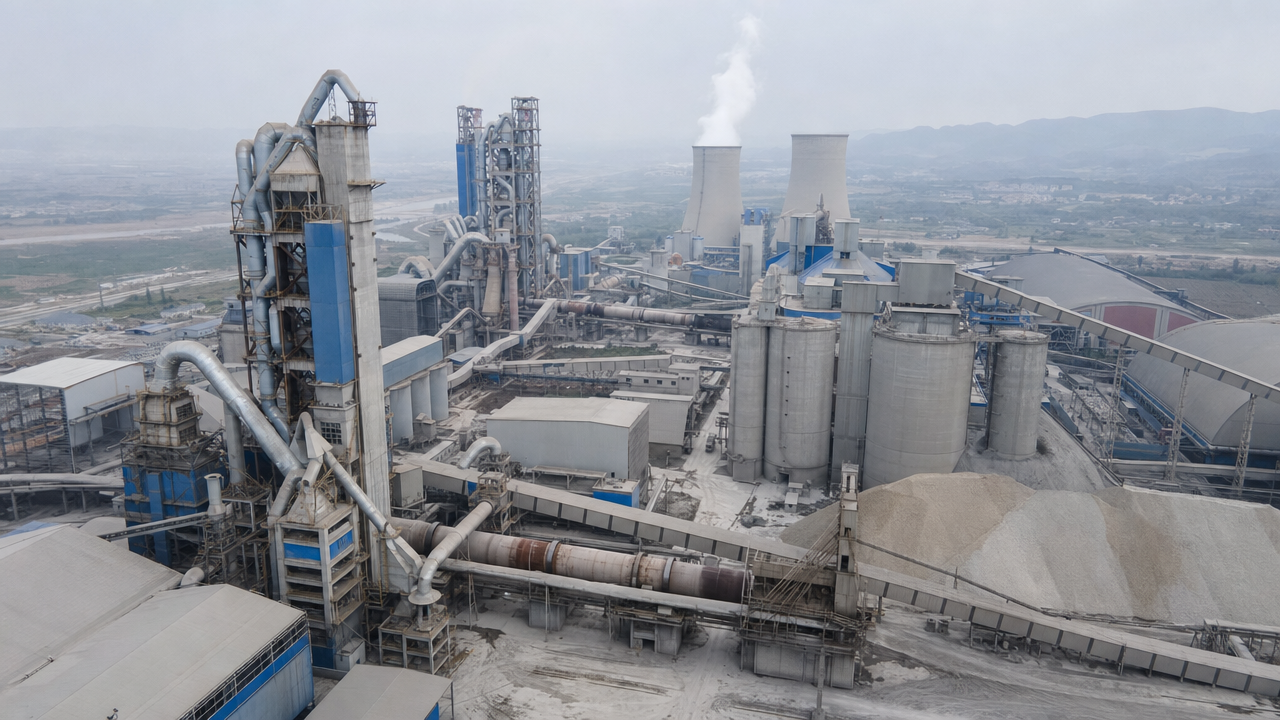

In 2014, China's cement output reached 2.495 billion tonnes. That year, all other countries combined produced less than two-thirds of China's total. This figure represents the highest single-year output of a construction material in the history of human industry.
Eleven years later, in 2025, that number has fallen to approximately 1.69 billion tonnes.
From 2.495 billion to 1.69 billion tonnes — a decline of 800 million tonnes, equivalent to India's entire annual cement consumption, evaporated.
Yet the end of this era does not mean the end of the cement industry itself. It signals that one story — rapid growth driven by urbanization and real estate — has turned its final page; and a new story — consolidation, overseas expansion, green transformation — is taking its place.
This report's mission is to tell both stories clearly: what the industry produces, how the value chain operates, what the global landscape looks like, what China's market is going through, how the major players are responding, and where the competitive endgame lies. The data baseline is full-year 2025 plus H1 2026, with financial data drawn from listed companies' annual reports or latest quarterly filings.
Before entering the analysis, it is necessary to establish a cognitive framework: cement industry research must proceed simultaneously across three dimensions — the temporal dimension (historical evolution and future expectations), the spatial dimension (regional landscape differences), and the competitive dimension (corporate strategy and cost structure). Single-dimension analysis often produces one-sided conclusions. This report attempts to integrate all three, providing readers with as complete a picture as possible of the industry.
A note on data: cement industry data transparency in China is moderate-to-high — listed companies must regularly disclose production volumes, prices, and financial data, and the industry association (China Cement Association) regularly publishes statistics. However, non-listed companies (approximately 80% of all firms) are harder to track. Estimates for small and mid-size enterprise dynamics rely primarily on industry association statistics, regional regulatory filings, and public competitive intelligence; measurement error is unavoidable.
I. Product Definitions and Classifications: A Complete Portrait from Raw Meal to Concrete
1.1 What is Cement?
Cement is a hydraulic cementitious material — upon mixing with water and undergoing chemical hydration reactions, it solidifies and hardens both in air and in water, forming a solid with measurable mechanical strength. This property makes it the most essential binding agent in construction: mortar joints rely on it, beams and columns carry loads jointly with reinforcing steel through it, road bases derive their rigidity from it.
Chemically, cement is a mixture of silicate minerals: the primary components are tricalcium silicate (C₃S), dicalcium silicate (C₂S), tricalcium aluminate (C₃A), and tetracalcium aluminoferrite (C₄AF), collectively known as the "four principal mineral phases." Their relative proportions determine the cement's strength development rate, durability, and heat of hydration.
Cement production is essentially a "destruction-reconstruction" chemical process: limestone (calcium carbonate, CaCO₃) is blended with clay and mixed, then fired at approximately 1,450°C — the limestone decomposes (CaCO₃ → CaO + CO₂), releasing large quantities of CO₂, while the residual minerals recombine to form "clinker," predominantly C₃S. The cooled clinker is then blended with gypsum and other supplementary cementitious materials (slag, fly ash) and re-ground into cement powder.
Two things are chemically unavoidable in this process: first, vast thermal energy consumption (primarily via coal combustion); and second, mandatory CO₂ release (calcium carbonate decomposition is a chemical reaction that cannot be bypassed). Approximately 60% of cement industry CO₂ emissions come from limestone decomposition — this portion cannot be eliminated by changing the energy mix.
Another critical characteristic is cement's "local nature." Cement is heavy and inexpensive per unit, and its economical land transport radius is generally 200–300 km. Beyond that, freight costs may exceed the product's value. This fundamentally makes cement a locally-oriented, regional industry — each region has its own dominant players, independent supply-demand dynamics, and distinct price levels.
1.2 Product Classification
By mineral composition and production process:
Portland Cement (P·Ⅰ / P·Ⅱ): Highest clinker content (≥95%), highest strength, highest price; used in high-specification engineering and high-strength concrete mix design.
Ordinary Portland Cement (P·O): Clinker plus limestone powder (supplementary cementitious material content 6%–20%). This is the dominant Chinese market product, available in grades 42.5 and 52.5. The most widely used in everyday construction is P·O 42.5, which had a bulk ex-factory price of approximately 250–380 RMB/tonne in 2025, with significant regional variation.
Slag Portland Cement (P·S), Pozzolanic Portland Cement (P·P), Fly Ash Portland Cement (P·F): Use slag, pozzolans, or fly ash as primary supplementary material, reducing clinker consumption. Early strength is somewhat lower, but long-term strength is stable with good durability. Widely used in mass concrete applications.
By strength grade:
Strength grades are named by 28-day compressive strength standard values: 32.5 (phasing out for ordinary construction), 42.5, 52.5, and 62.5 (premium specialty applications).
Specialty Cements:
Oil Well Cement: Used in petroleum and natural gas well cementing operations; must withstand high temperatures and pressures. As China deepens its exploration of deep and ultra-deep wells, oil well cement demand remains steady. Conch Cement and China National Building Material both have product lines here.
Low-Heat Portland Cement: Reduced C₃S and C₃A content significantly lowers heat of hydration, preventing cracking in mass concrete. Used primarily in large water conservancy projects (dams) and nuclear power plants.
Rapid-Setting Sulfoaluminate Cement: Hardens rapidly — 3-day strength already reaches levels comparable to ordinary cement at 28 days. Used in emergency repair works and winter construction.
White Portland Cement: Fe₂O₃ controlled below 0.5% to achieve white color. Used in decorative applications. Annual domestic consumption approximately 1–2 million tonnes.
1.3 The Industry Value Chain: Full Landscape
The complete cement value chain:
Upstream (raw materials and energy):
Limestone quarries are the starting point and most important resource barrier. High-quality large limestone mines (CaO ≥ 48%, large reserves, good location) are extremely difficult to newly permit under current environmental regulations, making historical quarry assets essentially irreplaceable competitive moats.
Coal is the primary thermal energy source, accounting for approximately 35%–45% of clinker production costs. Coal price volatility is the single largest external driver of cement industry profit swings. In 2025, thermal coal prices fell approximately 15% year-on-year, providing critical cost relief to the industry.
Alternative fuels (AF): Industrial waste (waste tires, solvents), refuse-derived fuel (RDF), and agricultural biomass substituting for coal — currently approximately 10%–15% penetration at leading Chinese firms, versus 30%–40%+ at European leaders like Holcim.
Midstream (manufacturing):
New Suspension Preheater (NSP) dry process — over 99% of China's current capacity uses this technology, which was perfected decades ago. A standard 5,000 t/d production line achieves comprehensive heat consumption of approximately 3,000 kcal/kg clinker and power consumption of approximately 60–75 kWh/tonne clinker.
Downstream (distribution and use):
Bulk cement delivered by specialized tanker trucks to batching plants or large construction sites — the dominant form (approximately 75%–80% of sales).
Bagged cement: 25 kg or 50 kg paper bags for small construction, rural self-builds, and retail — declining share as construction industrializes.
Ready-mix concrete (RMC): Cement, aggregates, admixtures, and water batched at central mixing plants ("batching stations") and delivered by mixer trucks. Urban bans on site mixing have made RMC the standard for most city construction projects.
1.4 Process Evolution: The Victory of the New Dry Process
The evolution of Chinese cement manufacturing can be summarized as the "shaft kiln era" giving way to the "new dry process era."
Shaft kilns dominated small-scale cement production through the 1990s — tiny scale (50–200 t/d per kiln), very high energy consumption (approximately twice the heat of modern dry process), unstable quality, poor environmental performance. The government drove massive phase-outs starting around 2006, completing the transition within approximately ten years — China's most significant prior wave of capacity consolidation.
New suspension preheater (NSP) dry process: The current standard, capable of producing over 99% of Chinese capacity. Energy efficiency has advanced to near global best-practice levels — the technology gap with Europe's leading plants is now minimal.
II. Global Landscape: Multinational Giants and the Reshaping of Emerging Market Presence
2.1 Overview of the Global Cement Industry
Global cement output is approximately 4.0–4.3 billion tonnes per year (shrinking slightly as China's output declines). China accounts for approximately 50% (about 1.69 billion tonnes in 2025), followed by India (approximately 450 million tonnes, the world's fastest-growing market), Southeast Asia combined approximately 300 million tonnes, the Middle East approximately 200 million tonnes, Africa approximately 200 million tonnes, Europe approximately 160 million tonnes, and North America approximately 110 million tonnes.
Cement is a "local commodity" — the economical land transport radius of approximately 200–300 km determines that all global cement companies are, in essence, aggregations of locally operating regional businesses, not truly globalized supply chains.
2.2 Holcim (Switzerland) — World's Largest by Revenue, Pivoting to North America
Holcim's 2025 full-year sales were approximately €17.0 billion (+3.0% year-on-year), with Recurring EBIT of approximately €3.15 billion (+10.3%) and EBIT Margin of approximately 18.5%.
Holcim's strategy has decisively shifted from "traditional cement company" toward "infrastructure solutions materials provider." Its core strategic bet is on North America — U.S. infrastructure investment (driven by the Infrastructure Investment and Jobs Act), roofing solutions, and aggregates. Traditional cement as a share of Holcim's revenue is now well below one-third; the strategic transformation — from bulk cement toward differentiated building materials services — is Holcim's most important signal for where leading cement companies ultimately head.
2.3 Heidelberg Materials (Germany) — Global #2, Europe-Africa-North America
Formerly HeidelbergCement (renamed in 2022), Heidelberg Materials is the world's second-largest cement group with major positions in Europe (Germany, Nordic countries, Eastern Europe), North America (U.S., Canada), and Africa (Tanzania, Ghana, Liberia). Its 2024 revenue was approximately €21.4 billion.
Heidelberg Materials is China's most significant Western competitor in Africa (especially East and West Africa). As Huaxin Cement expands aggressively in Nigeria and Tanzania, the competitive dynamics between Chinese and European cement companies in Africa will be one of the industry's most important observation windows over the next decade.
2.4 Cemex (Mexico) — Latin America and Euro-American Building Materials Solutions
Cemex is headquartered in Mexico and primarily serves Latin America, the U.S., and Europe. Its 2024 revenue was approximately $16.16 billion (−5.5%). Cemex is among the earliest cement companies to articulate a "building materials solutions provider" commercial model rather than merely selling bulk cement. Its Vertua low-carbon concrete line — reducing CO₂ by 30%–70% versus standard concrete — is an early demonstration of the market premium a low-carbon building materials strategy can command as carbon costs rise.
2.5 UltraTech Cement (India, Aditya Birla Group) — Asia's Largest Outside China
UltraTech is India's largest and Asia's largest (excluding China) cement company. Its 2024 volume was approximately 120 Mt, and through aggressive acquisitions it is targeting 300 Mt capacity by 2030. UltraTech's expansion mirrors what China experienced in 2000–2015 — demand still growing rapidly, industry concentration moving from fragmented to concentrated. India's per-capita cement consumption (approximately 300 kg/year) remains far below China's peak (approximately 1,750 kg/year), indicating India still has significant structural runway.
2.6 CRH (Ireland/New York) — North American Infrastructure Materials Champion
CRH relisted on the New York Stock Exchange in 2023, with strategic focus intensely on North American infrastructure. Traditional cement is now less than one-third of its revenue; aggregates, asphalt paving, and precast concrete products are the core earnings drivers. CRH's strategic logic — regional monopoly over quarry assets, stronger pricing power, differentiation from commodity cement — offers a long-term reference model for where major Chinese cement groups may evolve.
2.7 China's Overseas Expansion: "One Belt, One Road" as Policy Infrastructure
China's cement companies' overseas expansion is not an isolated commercial decision but is supported by the Belt and Road Initiative's national-level framework, which provides three distinctive policy benefits: concessional financing (from China Development Bank and China EXIM Bank), diplomatic protection (embassy coordination in politically complex markets), and infrastructure synergy effects (Chinese state-owned enterprises building roads, railways, and ports in Africa reduce logistics costs for Chinese cement plants nearby).
2.8 Africa's Cement Market: China's New Primary Battleground
Sub-Saharan Africa (SSA) population approximately 1.1 billion, urbanization rate approximately 43%, annual cement demand approximately 120–150 million tonnes. The structural reason for Africa's high cement prices (typically $100–200/tonne vs. approximately $30–45/tonne equivalent in China) is a combination of factors: limited local high-quality limestone development capacity, frequent power outages adding approximately $20–30/tonne to production costs, and poor inland logistics (port-to-interior 300 km freight may cost $40–60/tonne).
Chinese companies' key advantages: building costs 40%–60% below European peers; technology fully competitive; local operations capability demonstrated by Huaxin's 90%+ local employee ratio in some African factories.
2.9 Three Structural Rules of Global Cement Industry
Rule 1: Concentration drives profit. U.S. and European cement markets where the top 3 control over 70% of share maintain rational competition and reasonable pricing. China's CR10≈50% is far below mature market levels — this structural undershoot is the root cause of China's persistently low cement prices and profits. As consolidation advances, concentration increases, and industry profitability will systematically improve.
Rule 2: Non-cement businesses are the next growth engine. Mature cement market leaders — Holcim, CRH — have diversified into aggregates, ready-mix, asphalt, and precast products, achieving EBIT Margins of 15%–20%+. Chinese leaders are on this path: Conch (1.8 billion tonne/year aggregates capacity) and Tianshan Stock (1 billion tonne+ aggregates annual sales) have already become global top aggregates producers.
Rule 3: Emerging market expansion is the optimal hedge against domestic maturation. Whether Holcim's historical Africa and Asia footprint or Heidelberg Materials' continued Africa presence, the strategic logic is identical: domestic market mature, emerging market cement prices high, competition weak, demand still growing. Chinese companies (Huaxin, Conch) are executing the exact same logic their European predecessors pioneered, only arriving later and in some markets now competitive.
III. PEST Analysis: External Forces Reshaping the Cement Industry's Long-Term Landscape
3.0 Why PEST Analysis is Especially Critical for Cement
In most manufacturing industries, the external environment is "background." In cement, government policy is "foreground" — it directly determines how much the industry can produce, at what price, and how much it may emit. PEST analysis carries unusual importance for cement because supply-side policy (capacity substitution, peak-staggered production, anti-excess-capacity rules) is the single most important determinant of short-to-medium-term pricing dynamics.
3.1 Political and Policy (P): The Government's Capacity Hand
Capacity substitution policy is the most important supply-side constraint on the industry. The 2024 update to the Ministry of Industry and Information Technology's Implementation Measures for Capacity Substitution in the Cement and Glass Industries establishes: (1) no new clinker capacity is permitted; (2) actual daily output may not exceed 110% of permitted capacity; (3) any production in excess of the permitted baseline must have its excess capacity "purchased" (via substitution certificates) by end of 2025, or be forced to exit.
The enforcement of this policy visibly accelerated in 2025. By April 2025, 57 production lines had completed capacity compliance additions (approximately 19.45 million tonnes of new-permitted capacity) while at least 41 production lines had been permanently retired (approximately 31.65 million tonnes). Net exit: approximately 12.1 million tonnes. For full-year 2025, the estimated net clinker capacity exit is approximately 100–150 million tonnes.
Six-ministry joint stable growth plan: In September 2025, MIIT together with the Ministry of Natural Resources, Ministry of Ecology and Environment, Ministry of Housing, Ministry of Water Resources, and Ministry of Agriculture jointly released the Building Materials Industry Stable Growth Work Plan (2025–2026). This is the first time "anti-involution" and "self-discipline" appeared in national cement industry policy documents — a signal that the government officially endorses industry association-coordinated voluntary production restrictions within antitrust boundaries.
Peak-staggered production is now routine across the country, with each province designing its own schedule. Northern provinces typically halt kilns during the heating season (November to March the following year); some southern provinces schedule summer rainy season shutdowns.
ETS inclusion timeline: The national carbon emissions trading system (ETS), currently covering only power generation, plans to include cement approximately 2026–2027. When it does, cement companies will face a real carbon cost — depending on free quota allocation rates, this could add approximately 5–20 RMB/tonne of cement to production costs. This is one of the most important forward cost variables for the next 3–5 years.
3.2 Economic (E): Dual Weakness and the Coal Price Window
Real estate investment is the primary demand drag since 2022. Real estate (including residential and commercial) has historically accounted for approximately 40%–45% of cement demand. China's peak real estate development investment of approximately 14.8 trillion RMB was reached in 2021, with continuous annual declines since. New housing starts have fallen from approximately 2.24 billion square meters in 2020 to approximately 800–900 million square meters in 2025.
Infrastructure investment deceleration: Fiscal support for infrastructure remains large but structural — shifting from "big transport" (highways, high-speed rail, metro) toward "urban renewal" (old neighborhood renovation, underground utilities, sponge city) and rural infrastructure. The unit cement intensity of these new-model projects is significantly lower than traditional civil engineering.
Coal price decline (2025 key positive): Thermal coal prices fell approximately 15% year-on-year in 2025, to approximately 700–800 RMB/tonne. For cement production consuming approximately 110–130 kg coal/tonne clinker, every 100 RMB/tonne coal price decline saves approximately 11–13 RMB/tonne clinker — the key factor allowing Conch and a few other cost leaders to preserve positive margins despite collapsing cement prices.
Industry profit structure 2025: The industry is operating at a loss or barely breakeven in the aggregate. Conch Cement's 8.113 billion RMB net profit is an anomaly; Jinyun JidongAn reversed a loss to a 219 million RMB profit; Huarun Building Materials Technology and Tianshan Shares are at or below breakeven.
3.3 Social (S): Urbanization Maturation and Structural Demand Shift
Urbanization inflection point: China's registered population urbanization rate was approximately 67% in 2025, approaching the 70%–75% range at which Japan, Germany, and South Korea all experienced the onset of secular cement demand decline. The marginal pull of incremental urbanization on cement is now structurally diminished — the transition is from "large-scale new construction" to "stock renewal and quality improvement."
Demographic headwinds: China's total population has been in decline since 2022. Fewer young people means structurally lower incremental housing demand — another long-term confirmation of the cement demand downshift.
Cost of construction labor rising: Decreasing migrant worker supply and rising wages are pushing the construction industry toward prefabricated components, ready-mix concrete, and dry-mix mortar — all of which benefit integrated cement companies.
3.4 Technology (T): Four Directions of Technical Evolution
CCUS (Carbon Capture, Utilization and Storage): Universally recognized as the key technology for cement industry net-zero. Currently approximately 50–100 USD/tonne CO₂ capture cost vs. ~10 USD/tonne current Chinese carbon price — not yet economically self-sustaining. But demonstration projects at Conch and China Building Materials are building the engineering experience base for eventual commercial deployment.
Alternative fuel engineering at scale: Replacing coal with waste-derived fuels is the most immediately economical decarbonization path. Each 10-percentage-point increase in alternative fuel ratio for a 5,000 t/d line saves approximately 30 million RMB per year in coal and provides 10–20 million RMB in waste treatment fees.
Digitalization and AI: Kiln optimization AI, autonomous mining vehicles, predictive maintenance — these technologies are systematically reducing cement's operating costs at leading companies, widening the cost gap between first-tier and lower-tier operators.
New cementitious materials: LC3 (limestone calcined clay cement, −40% CO₂ vs. OPC), geopolymers, ultra-low clinker factor cements — these 10–20 year horizons represent the ultimate structural transformation of the product itself.
IV. China Market Size: The Historic Contraction from 2.5 Billion to 1.7 Billion Tonnes
4.1 Historical Output Trajectory and Structural Drivers
China's cement output peaked at 2.495 billion tonnes in 2014 and has since traced a long descending curve, reaching approximately 1.69 billion tonnes in 2025 — the lowest in 16 years, and the deepest and most sustained output contraction in Chinese cement history.
| Year | Output (Bt) | YoY Change |
|---|---|---|
| 2014 | 2.495 | Peak |
| 2015 | 2.348 | −5.9% |
| 2016 | 2.403 | Slight recovery |
| 2022 | 2.118 | −10.4% |
| 2023 | 2.023 | −0.7% |
| 2024 | 1.825 | −9.5% |
| 2025 | ~1.69 | −6.9% |
The 800 million tonne decline translates concretely to roughly: 2–2.5 billion square meters per year less residential construction started (at approximately 0.33 t cement/m²), or approximately 600,000 km fewer ordinary roads (at approximately 1,300 t/km). This is not an abstract statistical figure — it is the physical manifestation of a nation's systematic cooling of its construction drive after completing the fast-build phase of urbanization.
4.2 Price Trends: Near Historical Lows, Sharp Regional Divergence
2025 PO 42.5 bulk ex-factory price ranges by region (RMB/tonne):
| Region | Price range | Full-year avg reference |
|---|---|---|
| East China (Yangtze Delta) | 250–380 | ~310–340 |
| South China (Guangdong) | 180–260 | ~220–250 |
| North China | 280–370 | ~320–350 |
| Southwest | 280–370 | ~320–350 |
| Northwest | 330–430 | ~370–400 |
South China prices are the lowest nationally — at times approaching 180–190 RMB/tonne in Guangdong's Pearl River Delta, close to or below many producers' cash cost floor.
4.3 Industry Profit Structure and Concentration
Profit structure 2025: Industry-wide loss or near-breakeven. Conch, with its structural cost advantages, achieved 8.113 billion RMB net profit — a remarkable outlier. Most mid-size and small firms are loss-making.
Concentration (CR10 ≈ 50%): The China National Building Material (CNBM) system (including Tianshan Shares, Ningxia Building Materials, Qilianshan, Southern Cement, Northern Cement, Southwestern Cement) accounts for approximately 15%–18% of national capacity; Conch Cement approximately 15%; Huarun Building Materials Technology approximately 30%+ of South China. CR10 combined approximately 50%, still well below U.S. and European mature market levels (70%–80%).
2024 clinker capacity utilization: Approximately 53%, down approximately 6 percentage points year-on-year — the lowest in a decade. To restore industry-wide profitability, utilization needs to recover above 70%, which requires both demand stabilization and further net capacity exit of approximately 200–300 million tonnes clinker.
4.4 Comparative Perspective: Learning from Japan, Germany, and South Korea
Japan's cement output peaked in 1973 at approximately 94 million tonnes, ultimately settling at approximately 39 million tonnes (−58% from peak, over about 50 years). Germany peaked around 1995 at approximately 37 million tonnes, settling near 27 million tonnes (−27%). South Korea peaked around 2000 at approximately 66 million tonnes, now approximately 45 million tonnes (−32%). China's projected decline of approximately 35%–40% from peak to structural floor (from 2.495 billion to approximately 1.5–1.6 billion tonnes) is consistent with these comparators in magnitude — just at twenty times the scale.
4.5 Capacity Utilization: The Key Health Indicator
At a clinker capacity utilization rate of 53%, roughly 47% of installed capacity is idle or inefficiently utilized. To restore profitability across approximately 70% of industry capacity, the utilization rate needs to exceed 70% — requiring either demand stabilization (no further decline) plus continued net clinker capacity retirement of approximately 200–300 million tonnes. At the current pace of policy enforcement (net exit approximately 100–150 million tonnes/year in 2025), this threshold will likely be reached earliest in 2027–2028.
4.6 The Cement Profit Cycle: Five Historical Phases
Phase 1 (2005–2013): Integration dividend era — shaft kiln retirement plus new dry process expansion, demand growing rapidly, industry broadly profitable at approximately 20–40 RMB/tonne.
Phase 2 (2014–2016): Peak fallback — demand growth stalled, prior-cycle capacity additions biting, margins compressed to approximately 5–20 RMB/tonne.
Phase 3 (2017–2021): Peak-staggered production dividend era — supply constraint from seasonal shutdowns combined with shantytown renovation monetary settlement demand created a second profit peak; 2019–2021 saw up to approximately 60–80 RMB/tonne margins, the industry's best recent years.
Phase 4 (2022–2023): Dual shock — real estate crash plus coal price surge crushed margins. Industry profit fell from approximately 150 billion RMB in 2021 to approximately 40 billion RMB in 2022.
Phase 5 (2024–2026): Deep clearing — output, prices, and utilization all at lows. Policy-driven capacity exit accelerating. Only a handful of cost leaders (Conch) remain profitable.
Phase 6 forecast (2027–2030): Concentration-driven profit recovery — output stabilizes near 1.5–1.6 billion tonnes, CR10 rises toward 60%, pricing power improves, leading company tonne net profit recovers toward approximately 30–50 RMB/tonne.
V. Value Chain Decomposition: From Quarry to Batching Plant
5.1 Limestone Quarries: The Strategic Foundation
Limestone is cement's irreplaceable primary raw material. China's high-quality large limestone deposits — CaO ≥ 48%, reserves exceeding 500 million tonnes, with good location — are concentrated in Anhui (the most critical), Guangdong, Guangxi, Hunan, and Yunnan.
Quarry strategic value: cost advantage (in-house mining at approximately 10–20 RMB/tonne vs. external purchase at 30–50+ RMB/tonne); production security (large reserves ensure decades of uninterrupted supply); aggregate business extension (limestone quarries serve double duty as machine-made sand raw material). Under current extremely restrictive environmental permitting, existing quarry rights are essentially non-replicable — the single most important competitive moat in the industry.
Conch Cement's cost leadership is largely explained by its Anhui quarry cluster: top-quality limestone, optimally positioned near the Yangtze River waterway, scale-driven fixed-cost dilution. These three structural advantages are stacked — and together essentially define Conch's competitive position.
5.2 Coal and Alternative Fuels
Coal accounts for approximately 35%–45% of clinker production cost. At approximately 110–130 kg standard coal/tonne clinker and a 2025 price of approximately 750 RMB/tonne, coal cost per tonne clinker is approximately 82–98 RMB — the largest single line item.
Alternative fuel economics (for a single 5,000 t/d line raising AF from 10% to 30%): annual coal saving approximately 40,000 tonnes (at 750 RMB/tonne = approximately 30 million RMB saved); waste treatment fees approximately 10–20 million RMB; total annual benefit approximately 40–50 million RMB against a capital investment with payback period of approximately 3–5 years.
European leaders (Holcim) have already achieved 40%+ alternative fuel substitution rates; Chinese leaders are at approximately 10%–15%, indicating large further headroom.
5.3 Clinker Production: The Technical Core
The NSP dry process achieves approximately 3,000 kcal/kg heat consumption and approximately 60–75 kWh/tonne power consumption at a 5,000 t/d line — near global best practice. Waste heat power recovery (approximately 35–40 kWh/tonne clinker) significantly reduces net external electricity consumption, making leading Chinese plants among the world's most energy-efficient.
5.4 Cement Grinding: Flexible Downstream Node
Grinding capacity requires relatively modest capital (approximately 100–200 million RMB per million tonnes/year) and can be flexibly located near markets, with purchased clinker sourced from production bases. "Production base + grinding station" network design is a core logistics optimization strategy — clinker plants concentrated near resources, grinding stations distributed near consuming markets. Huaxin's overseas expansion partly adopted this model: establishing local grinding stations first, then progressively adding clinker production.
5.5 Ready-Mix Concrete: The Downstream Battleground
China's RMC annual output is approximately 3.0–3.5 billion cubic meters — more than half the world's total. Three strategic rationales for cement companies extending into RMC: (1) lock in cement sales volumes; (2) protect cement pricing through internal transfer pricing; (3) build deeper service relationships with construction clients. Tianshan Shares' approximately 70 million cubic meters/year RMC sales and Conch's approximately 70.25 million cubic meters operational RMC capacity make both global top-10 ready-mix producers.
5.6 Aggregates: The Quarry's Second Life
Machine-made sand replacing river sand is a structural market shift driven by environmental crackdowns on illegal sand dredging. Cement companies with limestone quarries are natural aggregates producers — infrastructure already built (crushing, transport), asset base already paid for. Aggregates margins of approximately 30%–40% significantly exceed cement business margins (~15%–20%) in current market conditions.
Conch (1.8 billion tonne/year capacity) and Tianshan Shares (1 billion tonne+ annual sales) are already global top aggregates suppliers by volume.
5.7 Logistics: Waterway Cost Advantages
Conch Cement's Yangtze River special-purpose terminal network is perhaps the least replicable element of its competitive position. From Anhui production bases to Shanghai, Suzhou, Nanjing — water freight approximately 15–20 RMB/tonne, versus road freight of approximately 40–70 RMB/tonne for the same distances. This 20–50 RMB/tonne structural cost advantage is literally built into the riverbank infrastructure of Eastern China.
5.8 Supply Chain Resilience
Coal supply diversification: Long-term contracts (LTC) at nationally-guided benchmark prices, coal yard capacity for 30–60 days of production, and alternative fuel development collectively reduce coal supply chain risk.
Overseas factory supply chains: Huaxin's African factories have progressively localized procurement of consumables (refractory bricks, grinding media, steel plate), while key technical equipment (kiln body, mills) continues to be sourced from China. As African manufacturing develops, local procurement ratios will increase.
VI. Key Companies: Who Survives the Low Point
6.1 Conch Cement (600585 / HK 0914): The Triple Moat of Quarry + Scale + Waterway
Conch Cement is the most cost-competitive cement company in China and arguably the world — the clearest winner in this prolonged industry downcycle.
2025 core financials:
- Revenue: 82.532 billion RMB (−9.33%)
- Net profit attributable to parent: 8.113 billion RMB (+5.42%; first year-on-year net profit growth in five years)
- Cement + clinker volume: 265 million tonnes (−1.13%; outperformed industry average decline by ~6pct)
- Clinker capacity: 234 million tonnes; cement capacity: 415 million tonnes; aggregates capacity: 180 million tonnes/year; RMC capacity: 70.25 million cubic meters
- Overseas revenue: 5.846 billion RMB (+2.2pct share YoY); overseas profit share +7.1pct YoY
- Raw material cost: 32.53 RMB/tonne (−10.85%); fuel and power: 87.47 RMB/tonne (−15.70%)
- Full-year dividend: 4.486 billion RMB, payout ratio approximately 55.29%
Four strategic decisions built Conch's current competitive position: (1) anchoring Anhui rather than chasing growth nationwide; (2) treating Yangtze River waterway terminals as permanent infrastructure investments; (3) preserving cash reserves during the 2019–2021 profit peak rather than deploying into high-price acquisitions; (4) early entry into aggregates business as the quarry's "second life."
Global ranking: By capacity and volume, Conch is the world's third-largest cement producer, trailing only Holcim and Heidelberg Materials.
6.2 Tianshan Shares (000877): China National Building Material's Integration Platform
Tianshan Shares is the core listed vehicle for CNBM's cement operations, consolidating Southern Cement, Northern Cement, Southwestern Cement, Tianshan Cement (Xinjiang), Ningxia Building Materials, and Qilianshan into a single publicly traded entity. By total capacity, CNBM is the world's largest cement group.
2025 performance: H1 revenue 35.98 billion RMB (−9.4%), cement volume 80.62 million tonnes (−14.63%); first three quarters revenue 54.938 billion RMB (−10.61%), cement+clinker volume 144.1 million tonnes (−12.8%).
Tianshan's challenges reflect the difficulty of managing geographically dispersed operations in competitive regional markets where Conch, Huaxin, and other specialized competitors are strong. Its advantages are national network coverage, low-cost state enterprise financing, global aggregates leadership, and political leverage in sector-level policy discussions.
6.3 Huarun Building Materials Technology (HK 1313): South China Dominant, Dual Pressure
Huarun (China Resources) Cement is the absolute South China leader, with Guangdong, Guangxi, and Fujian as its core markets.
2025 data: Full-year revenue 21.055 billion HKD equivalent (−8.6%); 2025 cement sales target cut to 57 million tonnes (approximately −8%); Guangdong cement demand projected at approximately 130 million tonnes (−5%), Guangxi approximately 54 million tonnes (−8%).
South China was hit hardest by real estate demand collapse, and Guangdong Pearl River Delta bulk prices reached national lows (~180–190 RMB/tonne in worst periods). Huarun's response: maintain market position, extend into aggregates and RMC, pursue digital transformation.
6.4 Huaxin Cement (600801): China's Most Internationally Committed Cement Company
Huaxin Cement is the most internationally advanced Chinese cement company by far — its overseas expansion has reached a degree of commitment unmatched among Chinese cement peers, and the 2025 financials are beginning to validate the strategy fully.
Overseas footprint (as of mid-2025): 12 countries — Central Asia (Tajikistan, Kyrgyzstan, Uzbekistan), Southeast Asia (Cambodia, Nepal), Africa (Tanzania, Zambia, Malawi, South Africa, Mozambique, Zimbabwe, Nigeria), and Middle East (Oman). Overseas grinding capacity exceeds 35 million tonnes/year; overseas clinker capacity exceeds 26 million tonnes/year.
2025 H1 overseas financials: Revenue 4.426 billion RMB (27.58% of total), gross profit 1.650 billion RMB (35.55% of total gross profit). Overseas gross margin (approximately 37%–40%) has surpassed domestic (approximately 15%–20%) — and overseas margin contribution already exceeds domestic.
Landmark acquisition: Huaxin acquired LafargeHolcim's Nigerian assets for approximately $1 billion, obtaining 4 cement plants with approximately 10.5 million tonnes/year clinker capacity and approximately 19.5% market share — the single largest overseas acquisition by a Chinese cement company.
African pricing: Nigeria approximately $116/tonne, Tanzania approximately $144/tonne, Zambia approximately $110/tonne — 3–5x China's equivalent price. This is the arithmetic of Huaxin's strategic transformation.
6.5 Jinyun Jidong (000401): North China Consolidator, Returned to Profitability in 2025
Formerly Jidong Cement (renamed "Jinyun Jidong Cement Group" in September 2025), this is North China's dominant cement company, formed from the strategic merger of Jidong Cement (Tangshan) and BBMG Group (Beijing).
2025 key data: Revenue approximately 24.501 billion RMB (−3.11%); net profit approximately 219 million RMB (returned to profitability). Clinker capacity 0.92 billion tonnes/year; cement capacity 1.8 billion tonnes/year; aggregates 972 million tonnes/year.
North China market share exceeds 50% in Beijing-Tianjin-Hebei. The profitability recovery reflects both disciplined regional capacity coordination and the early benefit of Northeast China consolidation acquisitions (Heilongjiang and Liaoning companies acquired in late 2024–early 2025).
6.6 Taipa Group (002233) and Shangfeng Cement (000672): Specialized Regional Leaders
Taipa Group: Deep in Guangdong and Guangxi, with high-quality limestone quarry assets. Aggregates are its key second growth engine. Despite South China pricing pressures, Taipa's cost structure holds up better than most South China competitors.
Shangfeng Cement: Primarily Northwest China (Gansu, Xinjiang), with Myanmar overseas operations. Northwest's relatively favorable competitive dynamics provided above-industry-average 2025 performance. Xinjiang export of clinker to Central Asian markets (via Horgos port) is an exploratory incremental channel.
6.7 Holcim and Heidelberg Materials: Global Benchmarks
Holcim 2025: Net sales approximately €17 billion (+3.0%); Recurring EBIT approximately €3.15 billion (+10.3%); EBIT Margin approximately 18.5%. Strategic pivot to North American infrastructure materials (road construction, roofing) yielding materially higher margins than traditional bulk cement.
Heidelberg Materials 2025: 2024 revenue approximately €21.4 billion; Africa presence (Tanzania, Nigeria) in direct competition with Huaxin. The China-Europe cement competition story in Africa will unfold through this decade.
6.8 Hongshi Holdings and Other Private Challengers
Hongshi Holdings (Yiwu, Zhejiang) is among the largest private cement companies in China, with capacity reaching top-10 nationally. Its strategy: avoid Conch's core East China strongholds, focus on the less competitive Northwest (Xinjiang, Gansu) and Southeast Asia (Indonesia, Myanmar, Cambodia). Hongshi's rise demonstrates that private enterprise flexibility in decision-making and operational efficiency can carve out sustainable niches even against dominant state enterprise and quasi-state competitors.
6.9 Yatai Group (600881) and Qilianshan (600720): Peripheral Leaders' Survival Strategies
Yatai Group (Jilin) is Northeast China's most significant local cement company. The Northeast is China's fastest-shrinking cement market (population outmigration, persistent real estate weakness), but Yatai's regional grip and limited competition provide survival space. Niche opportunities include oil field services (oilwell cement for Daqing and Liaohe oilfields) and legacy industrial infrastructure replacement.
Qilianshan Cement (600720) is CNBM's Northwest platform, covering Gansu and Qinghai — markets with favorable competitive dynamics (few players, stable pricing) and steady infrastructure demand (Lanzhou New Area development, Qinghai-Tibet plateau road maintenance, high-altitude hydropower).
VII. Regional Industrial Belts: Six Major Cluster Landscapes
7.1 East China: Conch's Home Ground, The Yangtze River Economic Belt
Provinces: Anhui, Jiangsu, Zhejiang, Shanghai, Jiangxi (Greater East China)
East China is China's largest cement consumption and production zone. Anhui's limestone belt (Tongling, Chizhou, Wuhu) is the foundation of Conch's global competitive position — world-class quarry quality plus Yangtze River water transport to the Yangtze River Delta, where approximately 300–400 million tonnes/year of cement demand resides.
2025 East China market suffered severe demand pressure: housing starts in Shanghai, Jiangsu, and Zhejiang fell 14%–20%, bulk prices touched 250–260 RMB/tonne in the trough, near cash cost for many producers. Despite this, Conch's triple moat allowed it to remain profitable.
Tianxia Gongchang (天下工厂) platform covers thousands of cement, ready-mix, and aggregates facilities across the Yangtze Delta region, enabling procurement teams and sales organizations to precisely locate suppliers and potential clients in this densely networked market.
7.2 South China: Huarun's Home Ground, The Most Price-Pressured Region
Provinces: Guangdong, Guangxi, Fujian
South China experienced the sharpest demand contraction of any major region in 2025. Pearl River Delta bulk prices at times touched 180–190 RMB/tonne. Competition from numerous Guangxi producers, Anhui water-shipped cement, and local players created a near-impossible pricing environment for margin preservation.
South China's price floor recovery depends on two triggers: (1) overcapacity policy enforcement clearing out non-compliant tonnage by end-2025; (2) partial demand recovery as the Pearl River Delta transitions from residential construction to infrastructure renewal and industrial park development.
7.3 North China: The Jinyun Jidong Consolidation Experiment
Provinces: Beijing, Tianjin, Hebei, Shanxi, Inner Mongolia, Liaoning, Jilin, Heilongjiang (Greater North China)
North China is Jinyun Jidong's domain. Beijing-Tianjin-Hebei market share exceeds 50%. Stability relative to South China reflects better-executed production discipline and the beneficial effect of Northeast consolidation acquisitions in tightening regional supply. The Xiong'an New Area (Beijing's southern satellite city development) provides a stable medium-term institutional demand floor.
7.4 Southwest: Huaxin vs. Southwestern Cement
Provinces: Sichuan, Yunnan, Guizhou, Chongqing
Complex terrain fragments markets into sub-regional enclaves. Hydropower station construction along major river systems (Jinsha River, Yalong River) provides specialty cement demand; Guizhou and Yunnan urbanization rates below national average (approximately 56%–58%) indicate more sustained incremental demand runway than East or South China.
7.5 Northwest: Qilianshan and Tianshan's Territory
Provinces: Gansu, Qinghai, Ningxia, Xinjiang, Shaanxi (Greater Northwest)
Northwest is China's most favorable regional competitive structure. The number of significant players is limited; Qilianshan, Tianshan (Xinjiang), Shangfeng, and Ningxia Building Materials maintain relatively disciplined pricing. Belt and Road infrastructure (Xinjiang's Central Asia transport corridors) provides stable and incremental demand. Xinjiang clinker exports to Kazakhstan, Kyrgyzstan, and other Central Asian markets (where prices are 30%–50% above Xinjiang levels) are an exploratory supplemental channel.
7.6 Overseas: Huaxin's Africa Complex and Conch's Southeast Asia Positions
Huaxin's Africa infrastructure — East Africa hub (Tanzania, Zambia, Malawi, Mozambique), West Africa anchor (Nigeria), Southern Africa presence (South Africa, Zimbabwe) — constitutes China's most ambitious overseas cement industrial belt. African cement prices of $100–200/tonne vs. China equivalent of ~$35/tonne provide the economic engine for this positioning.
Conch's Southeast Asia operations (Indonesia, Myanmar, Laos, Cambodia) are more conservative in scale but similarly strategic — positioning China's most efficient cement producer in markets that combine growing demand with lower competition intensity than their home market.
Tianxia Gongchang provides comprehensive coverage of China's cement industry value chain — from upstream limestone quarries through to downstream concrete product manufacturers, across all six regional belts and into the overseas expansion context. With 4.8 million in-production factory records, the platform enables industrial sales teams, procurement organizations, and researchers to map market structures and locate target enterprises with precision.
7.7 Special Topic: The "Xiong'an Opportunity" and the "Greater Bay Area Challenge"
Xiong'an New Area (China's "millennium project") entered its main construction phase from 2025 onward — government facilities, hospitals, schools, residential areas, and commercial buildings in the planned functional zones. This provides a 5–10 year stable institutional demand anchor for North China cement (especially high-specification P·O 52.5 and high-quality ready-mix for high-standard buildings).
Guangdong-Hong Kong-Macao Greater Bay Area: The world's densest advanced manufacturing cluster, with urbanization already above 75%. Structural demand shift from residential construction to: (1) urban rail transit expansion; (2) old factory district redevelopment; (3) cross-border infrastructure (Deep-Zhongshan Passage completed 2024 and successors); (4) high-specification industrial parks for semiconductor, EV, and new energy manufacturing.
VIII. Specialized Topics: Five Key Competitive Dimensions
8.0 The Competitive Logic Shift: From Volume Game to Quality Game
Over the past decade, the competitive logic has shifted from "who has the largest scale and highest output" (volume game) to "who has the lowest cost, the best product mix, and who found a new battlefield" (quality game). In the volume game era, rapid capacity expansion captured incremental demand. In the current structural-surplus era, large capacity amplifies losses.
The quality game's winners are clear: cost leaders (Conch) surviving industrywide losses; specialty cement producers (oil well, low-heat) maintaining margins when commodity prices collapse; overseas expanders (Huaxin) finding markets where prices are 3–5x home levels; aggregates developers (Conch, Tianshan) mining the "second life" of quarries.
8.1 Ordinary vs. Specialty Cement: High Volume-Low Margin vs. Low Volume-High Margin
Approximately 80% of China's cement market is ordinary cement (P·O 42.5/52.5) — the most intensely price-competed product. Specialty cements (oil well, low-heat, sulfate-resistant, white) represent approximately 5%–8% of volume but typically 2–3x the gross margin of ordinary cement.
Oil well cement (approximately 2–3 million tonnes/year nationally, approximately 500–800 RMB/tonne, versus P·O 42.5 at approximately 300 RMB): steady demand from CNPC, Sinopec, CNOOC deep-well drilling programs.
Low-heat cement: Accelerating nuclear power construction (China's operating plus under-construction nuclear capacity approximately 115 GW as of 2025) provides a stable institutional demand stream — nuclear plants require carefully specified low-heat cement in huge quantities.
Specialty cement cannot rescue entire P&L statements, but it provides an important buffer for overall gross margin when commodity cement pricing collapses.
8.2 Overseas Expansion: Three Business Model Choices
Model 1: Full acquisition in emerging markets (Huaxin model): Acquire entire existing operations (factory + quarry + brand + team + customers) from exiting multinationals. Fastest market entry; highest integration complexity.
Model 2: Greenfield construction (Conch Southeast Asia model): Build from zero in limestone-rich target countries, controlling full value chain from quarry to gate. Longest return period (5–8 years to first production), but lowest long-term operating cost.
Model 3: Grinding station + imported clinker: Establish a cement grinding station in the target country, import bulk clinker from China or regional production, complete final processing locally. Lowest capital entry; vulnerable to tariff policy changes and transport costs.
Target country selection logic: Africa (3–5x price premium, high demand growth, relatively low competition from Western majors but significant political risk); Southeast Asia (proximity, lower transport cost, but Vietnam already near capacity saturation, Indonesia and Myanmar more open); Central Asia (30%–50% price premium vs. Northwest China, Belt and Road logistics improving).
8.3 Consolidation: The 2025–2026 Industry "Self-Rescue"
Key deal patterns in 2025–2026: Jinyun Jidong acquiring distressed Northeast producers (Heilongjiang and Liaoning); Tianshan Shares absorbing sub-scale regional operators through its Southern/Northern/Southwestern Cement subsidiaries; equity linkages and production coordination agreements between regional pairs that stop short of full merger.
Valuation methodology for M&A transactions: at-peak prices (2019–2021), quality clinker capacity traded at approximately 300–500 RMB/tonne clinker; at current distressed valuations, some acquisitions have been completed at approximately 100–200 RMB/tonne. The gap is the cyclical toll.
Consolidation constraints: valuation gap between buyers and sellers; financing costs; antitrust review risk for transactions that push regional concentration above certain thresholds; integration execution complexity (debt, environmental compliance legacy issues, workforce).
Forecast: CR10 rising from approximately 50% in 2025 to approximately 60% by 2030, with approximately half the improvement coming from 2026–2030 M&A activity.
8.4 Ready-Mix Concrete: From Cement Accessory to Independent Battleground
China's RMC market (approximately 3.0–3.5 billion cubic meters/year) is the world's largest single category of building materials by volume. RMC industry structure remains highly fragmented (approximately 60,000–80,000 batching stations nationally, CR10 below 10%), but large integrated cement companies are gaining share.
RMC gross margin recovery: Improving project payment collections (government strengthening oversight of construction payment obligations) and consolidation will gradually restore RMC gross margins from the current approximately 3%–5% toward 8%–12%, contributing meaningfully to integrated cement company earnings.
8.5 Carbon Neutrality: The Hardest Decarbonization Challenge
Cement is structurally the hardest industrial decarbonization challenge: approximately 60% of CO₂ emissions are process emissions from limestone decomposition — physically unavoidable without either eliminating clinker or capturing and storing the released CO₂.
Viable decarbonization levers:
- Reduce clinker factor: China approximately 0.65–0.70 → target ≤0.60; saves approximately 10% CO₂
- Alternative fuels: 12%–15% current → 25%–30% by 2030 target; saves approximately 10%–15%
- Energy efficiency improvement: incremental from current near-best-practice; saves approximately 3%–5%
- LC3 and low-CO₂ binders: 2030–2040 horizon; potentially −30%–40% CO₂
- CCUS: the only pathway to truly eliminate process emissions; cost needs to fall from ~$50–100/tonne CO₂ currently to ~$30–50 to be economically deployable at scale
Conch's Baimashan CCUS project (approximately 50,000 tonnes/year CO₂ captured, used as food-grade CO₂) and CNBM's oxyfuel combustion demonstration project at Tianshan Shares represent the domestic frontier.
Carbon market timeline: ETS inclusion of cement projected 2026–2027. At current carbon price (~80 RMB/tonne CO₂), carbon cost per tonne clinker would be approximately 7–14 RMB depending on free allocation rate. Long-run carbon cost is an accelerator of both consolidation (cost disadvantage for high-carbon operators) and green investment.
IX. Technology Evolution: Five Frontiers Reshaping Competitiveness
9.0 Why Technology Investment Matters More in a Price Trough
Investment in cost-reduction technologies — alternative fuels, AI kiln optimization, autonomous mining vehicles — generates returns that are independent of cement price levels, because the savings come from reducing input costs. In a period of widespread industry losses, these are among the few paths to extracting internal margin improvement without waiting for pricing to recover.
Leading companies continuing to invest in technology through the 2023–2025 downcycle are widening their cost gap with laggards; operators who cut technology budgets are forfeiting the next cycle's cost advantages before the cycle even turns.
9.1 Alternative Fuels Engineering: Dual Goals of Cost and Carbon Reduction
Full-scale engineering of alternative fuels is the most technically mature, economically viable near-term decarbonization path for the industry. Key technical requirements: preprocessing systems for each fuel type (RDF pelletizers, tire shredders, biological drying for wet biomass); specialized feed systems for calciners; raw meal composition adjustment to handle altered mineral inputs.
European leaders (Holcim, Heidelberg) at 40%–80% alternative fuel rates; Chinese leaders at 10%–15% — the gap simultaneously represents decarbonization ambition and the scale of future cost reduction potential.
9.2 CCUS: The Key Technology for Cement Industry Net-Zero
Two primary technical routes in China: (1) Post-combustion chemical absorption (Conch Baimashan) — scrubs CO₂ from flue gas using solvent, regenerates solvent to produce concentrated CO₂; (2) Oxyfuel combustion (CNBM/Tianshan) — burns fuel in pure oxygen to concentrate flue gas to 70%–90% CO₂, dramatically reducing capture energy.
Current commercial-scale cost: approximately $50–100/tonne CO₂. China ETS carbon price: approximately $10/tonne. Economically self-sustaining deployment requires carbon price at approximately $40–70/tonne — projected to arrive in China between approximately 2035–2045 at current trajectories.
9.3 Digital Mines and Smart Production
Autonomous mining trucks (Tianshan pilot in Xinjiang): 40%–60% reduction in mining transport labor cost; 25% improvement in night-shift efficiency; approximately 60% reduction in accident rate. Cost: approximately 30–50 million RMB per mine; payback approximately 1–2 years on large mines.
AI kiln optimization (Conch pilot): Machine learning real-time adjustment of coal injection, secondary air, kiln speed based on sensor fusion of dozens of process parameters. Demonstrated 3% reduction in heat consumption, 2% improvement in quality pass rates, 15% reduction in unplanned downtime.
Predictive maintenance: Sensor-based real-time health monitoring of critical equipment (mill bearings, kiln refractory, cooler grates) reduces catastrophic failure risk and unplanned downtime — each unplanned outage on a 5,000 t/d line costs approximately 500,000–1 million RMB in lost production.
9.4 Cement Kiln Co-Processing of Solid Wastes
Using the kiln's 1,450°C high-temperature, alkaline-chemistry environment to safely destroy municipal solid waste, industrial sludge, hazardous waste (heavy metals), and other difficult-to-process waste streams generates: (1) partial alternative fuel value; (2) waste treatment fee revenue of approximately 200–8,000 RMB/tonne depending on waste category; (3) strategic relationship with local government environmental agencies.
CNBM's co-processing portfolio exceeds 10 million tonnes/year capacity; Conch's across multiple plants totals several million tonnes. This business provides counter-cyclical cash flows uncorrelated with cement prices.
9.5 Low-Carbon Cements and New Cementitious Materials
LC3 (Limestone Calcined Clay Cement): Approximately 50% calcined clay + 30% limestone + 20% clinker; approximately −40% CO₂ vs. OPC. Clay is globally ubiquitous. EU and African pilot production under way; CNBM research institute pursuing China-specific LC3 development.
Geopolymers (alkali-activated materials): Slag, fly ash, calcined clay as primary binders — near-zero clinker, near-zero CO₂. Technical and market adoption barriers remain significant; approximately 10–20 year horizon to commercial scale.
Ultra-low clinker factor cements (≤50% clinker): Combined with high-performance plasticizer admixtures, maintaining workability at very low water-cement ratios; realistic near-medium-term decarbonization pathway.
9.6 Three Levels of Cement Industry Digitalization
Level 1 — Informationization (largely complete): ERP (enterprise resource planning), MES (manufacturing execution), automated bulk dispatch weighing and loading — standard at all major producers.
Level 2 — Intelligent optimization (in rapid progress): AI kiln control, energy consumption optimization, quality prediction, automated raw meal composition control — leading companies have deployed at select plants; 3–5 year rollout to full fleet.
Level 3 — Autonomous operations (long-term horizon): Fully autonomous mining, unstaffed production lines, zero-driver logistics. Approximately 2030–2035 at leading plants.
9.7 Global Low-Carbon Building Materials Standards
EU's Carbon Border Adjustment Mechanism (CBAM, effective 2026 full phase-in) applies to cement and other high-carbon products imported into the EU. While China's cement exports to Europe are limited, CBAM signals global convergence toward border-adjusted carbon pricing — eventually incentivizing all export-oriented producers to reduce carbon intensity. Huaxin's African plants built to higher specifications than required will have a compliance head start.
X. Risk Analysis: Six Downside Factors and Response Strategies
10.1 Prolonged Real Estate Downside Risk
New housing starts have fallen from approximately 2.24 billion m² peak (2020) to approximately 800–900 million m² in 2025 — approximately 40% of peak. Even under optimistic scenarios with housing starts stabilizing at approximately 800 million m²/year, cement demand from real estate (~300–400 million tonnes/year at this level) is less than half the approximately 850–900 million tonnes/year real estate contributed at peak. This is structural, not cyclical.
10.2 Infrastructure Investment Deceleration
Major transport infrastructure (expressways, high-speed rail) construction cycles are largely complete. New investment emphasis on urban renewal, rural infrastructure, and industrial parks has materially lower unit cement intensity. Local government balance sheet constraints further limit the fiscal multiplier from infrastructure on cement demand.
10.3 Coal Price Rebound Risk
The 2025 coal price decline of approximately 15% was a critical profit-enabling condition for industry cost leaders. Any rebound (global energy demand pick-up, supply disruption, policy-driven coal production cuts) adds approximately 12 RMB/tonne clinker cost for every 100 RMB/tonne coal price increase.
10.4 Carbon Cost Escalation
ETS inclusion of cement (projected 2026–2027): initial impact modest at current carbon prices (approximately 7–14 RMB/tonne clinker at today's ~80 RMB/tonne CO₂ price and approximately 80% free allocation). But as free allocation rates taper and carbon prices rise toward the long-run range of approximately 200–500 RMB/tonne CO₂, carbon cost becomes a major cost line — and a critical differentiator between high-efficiency and low-efficiency producers.
10.5 Overseas Political and Currency Risks
Huaxin and Conch's overseas exposure involves classic emerging market risks: political instability (Nigeria security, Myanmar political situation), local currency depreciation (Nigerian Naira fell approximately 60%–70% in 2023–2024, compressing RMB-denominated overseas profit), variable local coal/power supply chains, and local content requirements.
Mitigation strategies: multi-country diversification; natural hedging (local debt against local revenue); high local employment ratios; government relations investment.
10.6 Industry Self-Discipline Failure Risk
Current price floor support partly depends on industry association-coordinated voluntary production restrictions. This mechanism always faces compliance risks: if one region begins undercutting the coordinated price, a competitive spiral may follow. Post-2025 (after capacity substitution enforcement completes), if companies feel administrative constraints have been lifted, a new excess-supply impulse may emerge.
10.7 Product Safety and Quality Risk
Extreme price competition creates incentives for product adulteration. Regulatory agencies have intensified market inspection; non-compliant small producers face fines and shutdown. Stricter quality enforcement is a secondary driver of capacity exit beyond financial distress alone.
10.8 Climate and Natural Disaster Risks
Extreme climate events increasingly disrupt construction cycles: flooding (July 2023 North China extreme rain halted construction across large areas), drought-induced power shortages (2022 Sichuan-Chongqing drought cut hydropower dramatically, raising industrial power costs). Long-term, building standards upgrades driven by climate adaptation (higher seismic, flood, and wind resistance requirements) will favor high-specification cement and specialty products.
10.9 Credit and Balance Sheet Risks
Highly leveraged mid-tier companies that expanded aggressively at peak valuations (2019–2021) are facing balance sheet stress in the extended downcycle. Some have had debt converted to equity (by lenders); others have sold assets to stronger players — both outcomes accelerate consolidation. Leading companies with strong balance sheets (Conch: approximately 31% debt-to-assets ratio, large cash reserves) are in a uniquely advantaged position to make opportunistic acquisitions at current depressed valuations.
10.10 Labor and Human Capital Risks
Aging skilled workers (kiln operators, blast technicians), difficulty attracting young talent to heavy industry work environments, and the digitalization gap between technical operators and data-science talent required for AI deployment — all are structural HR challenges. Larger players are addressing this through university partnerships, digital upskilling, and automation that reduces the demand for traditional skilled labor roles.
XI. 2026–2030 Outlook: Finding the Bottom, Divergence, and Rebalancing
11.1 Output Bottom: A Long-Term Platform Near 1.6 Billion Tonnes
The long-term structural bottom for China's cement output is approximately 1.5–1.7 billion tonnes, with the trough platform likely forming during approximately 2027–2029.
Bottom formation logic: (1) even after urbanization matures, ongoing stock building renovation, underground utility upgrades, rural infrastructure completion, and industrial facility construction sustain a permanent base demand floor; (2) water conservancy (national water network construction) and nuclear power remain stable; (3) at approximately 1.5–1.6 billion tonnes, China's per-capita cement consumption (~1,100–1,200 kg/year) still reasonably reflects the country's economic scale and infrastructure stock maintenance needs.
2026 forecast: Output approximately 1.6 billion tonnes (approximately −5% YoY); prices may show small improvement vs. 2025 as capacity substitution effects materialize; full recovery not achievable in 2026.
2027–2028: If real estate stabilizes at approximately 800 million m²/year starts, industry capacity net exit continues at approximately 100–150 million tonnes/year, output stabilizes near 1.5–1.6 billion tonnes and clinker utilization rises toward 65%, triggering the beginning of systematic profitability restoration.
11.2 Concentration Toward CR10 60%
Forecast path (2026–2030): CR10 from approximately 50% (2025) → 52%–55% (2026) → 55%–58% (2027) → 58%–60% (2028) → approximately 60%–65% (2030).
"2+N" industry structure forming: CNBM/Tianshan and Conch as national dual champions (combined approximately 30%–35% share), plus Huarun, Huaxin, Jinyun Jidong as large regional leaders (combined approximately 15%–20%), with CR5 reaching approximately 50%–55%.
11.3 Overseas Revenue: From Supplement to Strategic Core
China's major cement companies' combined overseas annual output projected to exceed 400–500 million tonnes by 2030 (from approximately 200–300 million tonnes in 2025).
Huaxin Cement 2030 vision: Overseas grinding capacity potentially exceeding 50 million tonnes/year, covering 15–20 countries, overseas revenue approximately 40%–50% of total, overseas net profit exceeding 50%. True transformation from "Chinese cement company" to "international cement group with China as R&D and management hub, competing in global emerging markets."
11.4 Carbon Neutrality Pathway: 2030 Peak, Target Net Zero by 2050
Near-term (2026–2030): AF ratio → 20%–25%; national clinker factor → approximately 0.63; CCUS demonstration sites → 10–15; ETS cement inclusion takes effect.
Mid-term (2030–2040): AF → 30%–35% at leading companies; LC3 and other low-carbon binders enter commercial rollout; CCUS cost → $40–60/tonne CO₂.
Long-term (2040–2050): Sector CO₂ emissions approximately 60%–70% below peak; select advanced factories achieve carbon-neutral or even carbon-negative cement production.
11.5 Three Certainties: Aggregates, Digitalization, Waste Co-Processing
Aggregates: By 2030, aggregates revenues at top cement companies likely exceed cement revenues in per-unit margin terms, with machine-made sand and crushed stone now the standard across China. Conch (1.8 Bt capacity) and Tianshan (1 Bt+ annual sales) are already global top aggregates producers.
Digitalization-driven cost reduction: Leading plants' labor cost down 30%–40% by 2030 vs. 2025; per-tonne clinker operating cost down approximately 15–25 RMB; a structural cost competitiveness improvement that is independent of pricing cycles.
Waste co-processing as urban service contract: Cement kiln co-processing evolving from "voluntary choice" to "licensed specialty franchise" — government waste management pressure creates stable long-term partnership relationships between large cement facilities and local government environmental agencies, generating counter-cyclical cash flows via tipping fees and subsidies.
11.6 Ecosystem Restructuring: From Homogeneous Competition to Differentiated Coexistence
By 2030, the cement industry will have restructured from today's "highly homogeneous, price-driven competition" model to a "differentiated tiered" model:
Pricing: Industry-wide CR10 at ~60% enables meaningfully more disciplined regional pricing. East China P·O 42.5 bulk average likely recovering to approximately 350–430 RMB/tonne (vs. 310–340 in 2025).
Products: Specialty cement rising to approximately 8%–10% of industry volume (from ~5%); high-strength concrete (C60+) products' share rising; RMC brand differentiation increasing.
Companies: Three tiers — national champions (Conch, CNBM/Tianshan); large regional leaders (Huarun, Huaxin domestic, Jinyun Jidong); specialty and niche operators. Below these: all remaining operations either consolidated into the above or shut down.
11.7 Three Key Uncertainties
Uncertainty 1 — Carbon price trajectory: If ETS carbon prices rise above approximately 200 RMB/tonne CO₂ before 2028, CCUS economics become viable significantly earlier, accelerating green transformation investment and creating larger competitive differentiation between high-carbon and low-carbon producers.
Uncertainty 2 — Overseas geopolitical developments: Sharp deterioration of political conditions in Nigeria, Mozambique, or other key African markets could cause material impairment of Huaxin's overseas assets — a risk unmitigable purely through company-level management.
Uncertainty 3 — Domestic real estate surprise recovery: If large-scale urban village redevelopment programs or other government-initiated demand stimulus yields housing starts recovering toward approximately 1.2 billion m²/year, the output bottom could form earlier (2026–2027) and at a higher level (approximately 1.7 billion tonnes), with pricing recovery beginning sooner.
XII. Conclusion: Transformation Within Contraction, Divergence at the Bottom
China's cement industry is undergoing a profound historical transformation.
Its surface expression is a sharp output decline — from the 2.495 billion tonne peak, to 1.69 billion tonnes, heading toward a 1.5–1.6 billion tonne structural floor. This contraction is the inevitable result of construction demand structurally peaking as urbanization completes; the direct expression of a deep real estate investment cycle downswing; and the largest single-material demand contraction in the history of global commodity markets. It will not reverse — it will stabilize at some platform level.
But the deeper reality is a fundamental restructuring of the competitive landscape.
Three main threads are unfolding simultaneously:
Thread 1: Concentration rising. The industry is moving from highly fragmented (CR10≈50%) toward more concentrated (CR10→60%–70%) — the necessary precondition for price recovery and profit restoration. The consolidation impulse comes from industry loss pressure, policy support (capacity substitution, anti-involution), and the strategic agency of leading companies.
Thread 2: Overseas expansion. Led by Huaxin and participated in by Conch and others, Chinese cement companies are deploying thirty years of accumulated manufacturing capability and capital into new markets in Africa, Central Asia, and Southeast Asia — where cement prices are 3–5x China's levels and demand is still growing rapidly.
Thread 3: Green transformation. CCUS, alternative fuels, and low-carbon cements are moving from concept to demonstration to commercial staging. As carbon markets include cement (2026–2027) and carbon prices gradually rise, green transformation converts from a technical agenda to an economic one — first movers in low-carbon transformation will gain systematic cost and competitive advantages.
In the trough, survival belongs to companies with competitive moats: quarries and scale (Conch); national network and state enterprise balance sheets (CNBM/Tianshan); overseas new battlegrounds (Huaxin). The deeper the moat, the longer the company can sustain operations through the trough; the deeper the trough, the faster small players exit and the wider the moat becomes for those who remain. This is the self-reinforcing logic of industry consolidation.
The final chapter of China's great construction era has been written. The next chapter — smaller in volume, stronger in competitive structure, cleaner in carbon footprint, more international in reach — is beginning. Cement, though silent, is telling its own story.
Tianxia Gongchang (天下工厂) continuously tracks the competitive landscape and value chain dynamics of China's manufacturing industries, covering cement, steel, chemicals, building materials, machinery, and electronics, among hundreds of other verticals. With 4.8 million in-production factory records, the platform provides decision-makers with market intelligence grounded in real factory data. For detailed mapping of the cement value chain — from quarry operators through to concrete product manufacturers — Tianxia Gongchang enables precise targeting of potential clients and suppliers.
XIII. Further Reading and Data Portals
This chapter aggregates key data sources, search portals, and extended reading resources for readers seeking to deepen their research into the Chinese cement industry.
Cement Value Chain Core Search Portals
Tianxia Gongchang covers all segments of the cement industry value chain. Key search portals:
Cement production: Cement plant search · Clinker production lines · Specialty cement producers · Oil well cement
Ready-mix and aggregates: RMC batching stations · Machine-made sand plants · Crushed stone plants · Aggregates suppliers
Concrete products: Precast component plants · PHC pile plants · Concrete pipe plants
Upstream raw materials: Limestone quarries · Gypsum suppliers · Fly ash · GGBS slag powder
Admixtures: Concrete superplasticizer plants · Early strength admixtures · Retarders
Equipment and consumables: Cement mill manufacturers · Refractory brick suppliers · Rotary kiln parts
Tianxia Gongchang's 4.8 million in-production factory records support multi-dimensional filtering by region, industry, scale, and certification status — the preferred platform for cement industry procurement teams and sales organizations targeting precise market entry.
XIV. Research Methodology and Data Notes
This report follows a "facts first, trend judgment supportive" framework. All quantitative data comes from verifiable public sources (listed company filings, National Bureau of Statistics industrial production data, official government releases); no unsourced numerical estimates are made.
Data Source Hierarchy
Primary data (highest confidence): Listed company quarterly/annual reports; NBS monthly industrial output data; official government policy documents.
Secondary data (reliable): China Cement Association (CCA) industry reports; Foresight Industry Research Institute data; national-level credit rating agency industry credit analyses.
Tertiary data (reference only): Industry media (Cement Network, Digital Cement Network) reports; company investor relations conference call summaries; academic papers.
Forecast Methodology
Forecasts in this report (2026–2030) are based on three approaches: (1) historical extrapolation using comparable-country precedents (Japan, South Korea, Germany); (2) supply-demand modeling using demand-side decline rate estimates and supply-side capacity exit pace; (3) competitive landscape modeling using current CR10 and consolidation velocity to project concentration and pricing restoration paths.
All forecasts carry implicit confidence intervals; readers should treat them as directional references rather than precise point predictions.
Data Sources
This report primarily references the following public data sources, combined with systematic industry tracking by the Tianxia Gongchang Industrial Research Institute:
- Conch Cement 2025 Annual Report (Anhui Conch Cement Co., Ltd., Shanghai Stock Exchange, March 2026)
- Huaxin Cement 2025 Semi-Annual Report (Huaxin Cement Co., Ltd., Shanghai Stock Exchange, August 2025)
- China Resources Building Materials Technology 2025 Annual Report (China Resources Building Materials Technology Holdings Ltd., HKEX, March 2026)
- Jinyun Jidong 2025 Annual Results (Jinyun Jidong Cement Group Co., Ltd., Shanghai Stock Exchange, March 2026)
- Tianshan Shares 2025 Three-Quarter Report (China National Building Material Group, Shanghai Stock Exchange, October 2025)
- China Cement Association / CCA Digital Cement Network, 2024 China Cement Economic Performance and 2025 Outlook (January 2025)
- MIIT + 6 Ministries, Building Materials Industry Stable Growth Work Plan (2025–2026) (September 2025)
- Holcim 2025 Full Year Results (Holcim Group, February 2026, holcim.com)
- Global Cement industry database (globalcement.com, 2025 full-year data)
- National Bureau of Statistics, monthly industrial product output data (full-year 2025, January–February 2026)
- Foresight Industry Research Institute, Bainianjianzhu Network, cement price index (full-year 2025)
- Tianxia Gongchang Industrial Research Institute, cement and building materials value chain database (2025–2026)