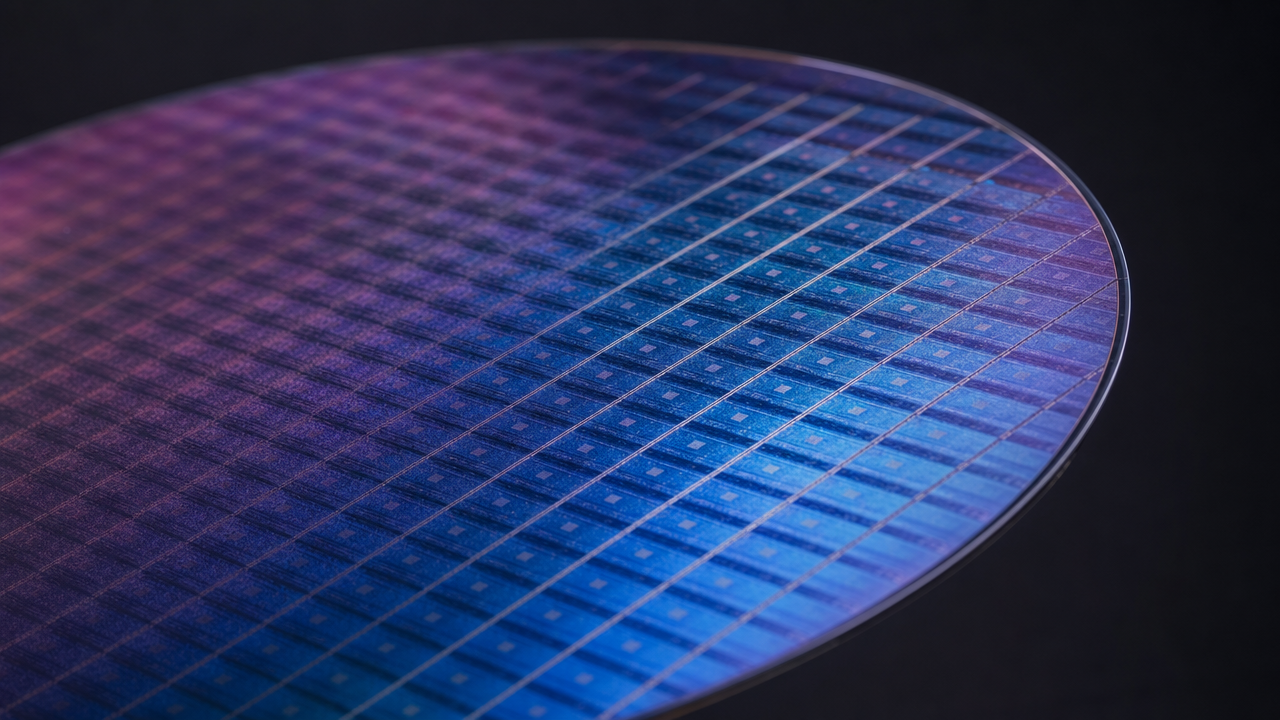

Understanding China's third-generation semiconductor industry requires an appropriate historical frame of reference. China's commercialization in this field started approximately ten to fifteen years behind Europe, the United States, and Japan. Around 2010, when Cree (Wolfspeed's predecessor) had already established a dominant global position in SiC substrates, and when Rohm and Infineon's SiC power devices were entering commercial mass production, China's SiC substrate companies were still transitioning from laboratory-scale to small-batch pilot production, with domestic SiC device design and manufacturing almost entirely absent. At that time, third-generation semiconductors remained a niche academic topic in China rather than a strategic industrial priority.
The turning point emerged between 2015 and 2017. New energy vehicle penetration rates began rising rapidly in China; solar installations accelerated; China's dual-carbon policy direction became increasingly clear; and the strategic importance of semiconductor chips gained prominence amid trade tensions. The convergence of these factors transformed third-generation semiconductor localization from a technical roadmap in academic and research institutions into a strategic hotspot where local governments and capital markets competed to participate. From 2018 to 2023, China's SiC/GaN industry experienced a concentrated wave of fundraising: Tianyue Advanced, Tankeblue, Innoscience, Sanan Semiconductor, and other core enterprises completed multiple large financing rounds, while local governments competed to attract leading companies with land, subsidies, and industrial funds.
The fruits of this industrialization investment began to ripen between 2023 and 2025. Tianyue Advanced's global market share surged from less than 10% to over 27%; Innoscience's GaN fast-charging chips entered Huawei flagship smartphone supply chains; CRRC Times Electric completed the first mass production delivery of automotive-grade SiC modules; and Sanan Semiconductor's joint venture factory (Asymit) in Chongqing successfully ramped up production. These milestone events signaled that China's third-generation semiconductor industry had officially moved from the "catch-up phase" to the "competition phase" — no longer merely substituting imports in the domestic market, but beginning to establish the foundational capabilities to compete globally.
I. Definitions, Classification, and Industry Chain Overview
1.1 What Are Third-Generation Semiconductors?
Semiconductor materials can be classified into three generations based on bandgap width. First-generation semiconductors represented by silicon (Si) and germanium (Ge), with bandgaps below 1.1 eV, form the material foundation for integrated circuits and consumer electronics. Second-generation semiconductors represented by gallium arsenide (GaAs) and indium phosphide (InP), with bandgaps between 1.1 and 2.2 eV, have long dominated mobile communication RF devices and high-brightness LEDs. Third-generation semiconductors centered on silicon carbide (SiC) and gallium nitride (GaN), with bandgaps exceeding 2.2 eV, possess a combination of physical properties that first and second-generation materials cannot match.
The physical advantages of third-generation semiconductors determine their irreplaceability in specific application domains. 4H-SiC has a bandgap of 3.26 eV (approximately 3x silicon), a breakdown field of 2.2 MV/cm (approximately 10x silicon), and thermal conductivity of 4.9 W/cm·K (approximately 3x silicon). GaN has a bandgap of 3.4 eV, and in HEMT structures, achieves electron mobility of 2,000 cm²/V·s utilizing the two-dimensional electron gas (2DEG) at the heterointerface — more than 3x silicon.
Simply put: SiC makes power conversion more efficient, compact, and temperature-resistant; GaN makes high-frequency switching faster, more energy-efficient, and more miniaturized. These two materials attack from different directions into performance zones unreachable by traditional silicon-based power devices.
1.2 Material Systems: SiC and GaN
SiC exists in over 250 crystal structures (polytypes), with 4H-SiC dominant in power applications due to its superior electron mobility. SiC devices cover voltage ratings from 600 V to 15,000 V, making them the most widely applied third-generation semiconductor power devices in industry today.
GaN power devices have three primary epitaxial substrate options: GaN-on-Si (lowest cost, CMOS-compatible, Innoscience's core technology, limited to ≤650 V); GaN-on-SiC (highest thermal conductivity and frequency performance, standard for 5G RF PA and high-power microwave); and GaN-on-GaN (lowest dislocation density and best performance, but prohibitively expensive substrate). These routes are complementary rather than simply competing.
1.3 Form Factor Classification: Substrate—Epitaxy—Device—Module
The SiC/GaN value chain from upstream to downstream consists of four layers, each with significant technical barriers and value-add jumps: substrates (highest technical barriers, globally concentrated capacity, China's current strongest position); epitaxial wafers (moderate technical barriers, mainly used internally by IDMs); power devices (highest value-add, lowest domestic production ratio, core battleground); and power modules (highest total value-add, strongest certification barriers, rapidly catching up).
1.4 Application Classification: Six Core Segments
The six core application segments are: EV main drive inverters (largest single SiC application, the central competitive arena); solar inverters and energy storage PCS (second-largest SiC scenario); fast-charging and on-board chargers OBC (primary GaN market); AI data center power supplies (new GaN growth pole since 2024); industrial and rail transit (stable long-tail, high reliability requirements); and RF/communications (GaN-on-SiC, technically most demanding segment).
II. Global Competitive Landscape and Wolfspeed's Bankruptcy Impact
2.1 Global Market Structure
The 2025 global third-generation semiconductor power device market reached approximately $6 billion. SiC power devices account for approximately $4.3 billion (72%), while GaN power devices account for approximately $1.8 billion (28%). This represents over 7x growth from the approximately $730 million figure in 2020 — the fastest-growing semiconductor subsector in the period.
2.2 Wolfspeed: Bankruptcy Restructuring Rewrites Supply Chain
Wolfspeed's bankruptcy is the most significant structural event in the global SiC industry in 2025. Originally Cree (founded 1987 in North Carolina), the company rebranded as Wolfspeed in 2021 with an aggressive bet on SiC power devices, committing to build 8-inch SiC wafer fabs in North Carolina (Mohawk Valley) and Germany (Saarlouis), with combined capital expenditure plans exceeding $6 billion.
However, the pace of EV electrification globally came in significantly below the most optimistic projections for 2023-2024. SiC device prices collapsed under simultaneous expansion by Chinese suppliers. By mid-2025, Wolfspeed's total debt exceeded $5 billion against quarterly revenues of approximately $300 million. The company filed for pre-packaged Chapter 11 in June 2025 and successfully emerged on September 29, 2025, with total debt reduced by approximately 70% and annual cash interest expense cut by approximately 60%.
The strategic implications for Chinese suppliers are real but time-limited: European Tier-1 automotive semiconductor customers are actively seeking second-source SiC substrate suppliers, with Tianyue Advanced and Tankeblue benefiting most directly. The window for China to enter European automotive supply chain qualification systems is widest in 2025-2027, before European domestic capacity (onsemi Czech, Infineon Villach) reaches scale.
2.3 Key International Players
STMicroelectronics (SiC revenue $1.2B in 2025) leads global SiC device revenue, anchored by Tesla Model 3/Y supply; its joint venture Asymit with Sanan in Chongqing (commenced production February 2025) reflects deep China localization. Infineon (€1.3B SiC revenue) has dual SiC+GaN presence and completed the acquisition of GaN Systems in 2023. Rohm (~$500M SiC revenue) leads in Trench MOSFET technology through its 5th-generation Gen5 products. onsemi rapidly grew to >$1B SiC revenue through aggressive EV wins before moderating expansion pace. EPC and Navitas are the primary GaN power device specialists, with both facing intensifying competition from Innoscience in the Chinese market.
III. Drivers and Constraints: PEST Deep Analysis
3.1 Policy: Dual-Carbon Goals and National Industrial Deployment
China's dual-carbon targets — peak carbon emissions by 2030 and carbon neutrality by 2060 — provide the underlying policy driver for the three core SiC/GaN application scenarios (EVs, solar, energy storage). The Ministry of Industry and Information Technology designated SiC/GaN as priority areas in the "Basic Electronic Components Industry Development Action Plan (2021-2023)." The National Third-Generation Semiconductor Technology Innovation Center was established in Beijing in 2021. The National Integrated Circuit Industry Investment Fund (Phase III, launched May 2024, approximately ¥344 billion registered capital) explicitly prioritizes compound semiconductors (SiC/GaN substrates, epitaxy, devices) alongside equipment and materials.
3.2 Economic: The 800V Electric Vehicle Wave
The most important economic driver for SiC power devices is the rapid proliferation of 800V high-voltage EV platforms. At 800V, SiC MOSFET's advantages over Si IGBT are most decisive: same-rated-voltage chips require 1/10 to 1/20 the area, switching frequencies increase 3-10x enabling smaller magnetics, and efficiency improvements of 1.2-2.5 percentage points translate directly to extended range. In January 2025, SiC MOSFET penetration in Chinese EV main drives reached 18.9%, with 800V architecture representing approximately 15% of EV sales. Each 800V vehicle uses approximately $300-600 worth of SiC content versus $80-160 for Si IGBT solutions — a 2-4x value uplift per vehicle.
3.3 Social: Engineering Talent and Cluster Ecology
China's 150,000+ annual semiconductor-related graduates, combined with the dense geographic clustering of SiC/GaN industry participants in Changsha/Zhuzhou, Jinan/Lingang, Suzhou/Wuxi, Xiamen, and Beijing, creates an ecosystem capable of iterating engineering solutions at a speed that dispersed supply chain structures cannot match.
3.4 Technology: The Six-Inch to Eight-Inch Critical Transition
The six-inch to eight-inch SiC wafer transition is the single most important technical variable determining the industry's cost trajectory through 2027. Eight-inch SiC wafers provide approximately 1.77x more chip area per wafer, theoretically reducing per-chip manufacturing cost by 40-45%. Key technical challenges — thermal field uniformity in larger-diameter growth, wafer bow management, and epitaxial equipment throughput — are being addressed by Tianyue Advanced (liquid-phase epitaxy achieving 60mm+ useful crystal length) and Tankeblue (world's first low-resistivity 8-inch SiC substrates). Optimistically, stable 8-inch SiC mass production (yield ≥60%) could be achievable by 2026-2027.
IV. China Market Size and Domestication Progress
4.1 SiC Substrates: China Capacity First Globally, Intense Price War
China's SiC conductive substrate enterprises collectively hold approximately 40-45% global market share in 2025, surpassing Wolfspeed in both capacity scale and unit volume — the first time China has achieved strategic leadership in a critical semiconductor material. However, capacity leadership has not translated to profitability: Tianyue Advanced's FY2025 revenue declined 17.15% year-over-year despite 75.33% volume growth, reflecting average selling price declines exceeding 50% over the period.
Tianyue Advanced (688234/HK:02631): FY2025 global share in conductive SiC substrates = 27.6% (No.1); 8-inch SiC substrate global share = 51.3% (No.1). Shanghai Lingang factory annual capacity: 300,000 wafers (achieved). Combined designed capacity exceeds 400,000 wafers. The company completed its Hong Kong listing (HK:02631) in August 2025, accessing international capital markets and enhancing credibility with overseas automotive supply chains.
Tankeblue: Commercially launched world's first low-resistivity 8-inch SiC substrates (7-12 mΩ·cm), about half the resistivity of standard N-type. IPO on STAR Market in progress.
4.2 Domestication Rate Summary
| Segment | 2025E China Market (CNY bn) | Domestic Share | Key Players |
|---|---|---|---|
| SiC Conductive Substrates | 4.0-5.0 | ~55-60% | Tianyue, Tankeblue, Donny |
| SiC Epitaxial Wafers | 2.5-3.5 | ~40-45% | Sanan (internal), Times Electric (internal) |
| SiC Power Devices | 11.0-13.0 | ~30-35% | Sanan Semi, Silan, CSMC, Yangjietek |
| SiC Power Modules | 6.0-8.0 | ~25-30% | Times Electric, Starpower, BYD Semi |
| GaN Power Devices | 6.0-8.0 | ~50%+ | Innoscience |
4.3 GaN Power Devices: Domestic Rate Exceeds 50%
China's GaN power device market (~¥6-8bn in 2025) has domestic production rates exceeding 50%, driven primarily by Innoscience's dominance in fast-charging applications (>60% domestic market share in ≥65W chargers) and rapidly growing AI server power supply business.
V. Industry Chain Deep Dive
5.1 SiC Crystal Growth and Substrate Preparation
SiC single crystal growth via Physical Vapor Transport (PVT) at temperatures exceeding 2300°C — slow growth rates (2-5 mm/hour), complex thermal field engineering, and multi-polytype competition — creates the highest technical barriers in the entire industry chain. Domestic PVT furnace suppliers Jingsheng Mechatronic (300316) and NAURA (002371) are replacing imported equipment at accelerating pace following US export control actions on SiC growth equipment.
Tianyue Advanced's liquid-phase epitaxy (LPE) differentiation: growing SiC from supersaturated silicon melt at lower temperatures (~1600-1800°C) achieves macro-defect-free crystals and useful crystal lengths >60mm vs. industry average ~20mm — directly reducing cost per substrate wafer.
5.2 Device Design and Manufacturing
The key technical challenge in SiC MOSFET manufacturing is gate oxide interface engineering. SiC/SiO₂ interface trap density is orders of magnitude higher than Si/SiO₂, limiting channel mobility to 10-30 cm²/V·s versus the theoretical 600 cm²/V·s. Trench MOSFET architecture (vertical channel in etched trenches) achieves 3-5x higher channel density versus planar structures, reducing Ron·A proportionally — Rohm Gen4 Trench products operate near 50% of SiC's theoretical limit. Chinese companies (Sanan Semiconductor, Times Electric, Silan) have completed multiple Trench prototype runs; stable mass production remains 1-2 years away.
5.3 Module Packaging: The Copper Sintering Revolution
Automotive SiC module packaging must survive >50,000 thermal shock cycles (-40°C to +175°C, AEC-Q101) and >1,000,000 power cycling events. The industry is transitioning from: Al wire bonding → Cu wire bonding (5-10x fatigue life improvement) → Ag sintering → Cu sintering (thermal conductivity ~400 W/m·K vs. ~50 W/m·K for solder, melting point near 1085°C). Times Electric is China's most advanced practitioner of Cu sintering, having submitted Cu sintering reliability validation data to multiple automotive OEMs.
VI. Key Enterprise Analysis
6.1 Tianyue Advanced (688234/HK:02631): The Global Substrate Leader
Founded 2010 in Jinan, Shandong, by Prof. Zhang Zhongwei (pioneer in SiC crystal research from Shandong University). FY2025 revenue: ¥1.465bn (-17.15% YoY); shipment volume +75.33%; production volume +68.31%; global conductive SiC substrate share 27.6% (#1); global 8-inch SiC share 51.3% (#1). The A+H dual listing strategy (港股 HK:02631, August 2025) targets international investor access and accelerates entry into European automotive supply chain qualification processes.
6.2 Tankeblue: Technology Differentiation Challenger
World-first low-resistivity 8-inch SiC substrates (7-12 mΩ·cm) represent the current global frontier for high-power-density SiC MOSFET applications. The company has established long-term supply intents with several European automotive semiconductor customers — the most direct beneficiary of Wolfspeed's restructuring-driven supply diversification.
6.3 Sanan Optoelectronics (600703): China's SiC/GaN IDM Flagship
FY2025 total revenue: ¥17.949bn (+11.45% YoY). Integrated circuits (SiC/GaN/photonic) revenue: ¥2.916bn (+23.86% YoY, 16.25% of total). Key strategic partnerships: (1) Asymit joint venture with ST in Chongqing — commenced production February 2025, planned capacity 480,000 wafers/year (8-inch SiC epitaxy + chips); (2) Suzhou SCT joint venture with Li Auto for automotive-grade SiC modules — full-bridge power modules reached batch production Q1 2025.
6.4 Innoscience (HK:2577): Global GaN Power Leader
The world's largest GaN-on-Si power device IDM. FY2025 revenue: ¥1.213bn (+46.45% YoY); gross margin: 7.3% (first-ever positive gross margin, historical milestone); net loss: -¥841mn (-19.6% YoY improvement). GaN module revenue grew +121.7% YoY in H1 2025. The positive gross margin inflection validates the commercial viability of the GaN-on-Si IDM model and provides a clear path to net profit breakeven (forecast 2027-2028).
Innoscience commands >60% of China's ≥65W fast-charging GaN market, with AI server power supplies (48V bus DC/DC conversion) emerging as the fastest-growing product line, and automotive OBC qualification nearing completion for several Tier-1s.
6.5 CRRC Times Electric (688187): Rail-to-EV SiC Power Transition
Q1-Q3 2025 revenue: ¥18.83bn (+14.9% YoY); fundamental components revenue Q1-Q3: ¥3.84bn (+30.4% YoY). H1 2025 milestone: first batch small-volume delivery of automotive-grade SiC modules. Zhuzhou 8-inch SiC chip production line commenced equipment installation in July 2025 (targeting production ramp by year-end). Multiple OEM design wins confirmed.
Times Electric's distinctive advantage: twenty-plus years manufacturing traction converters for high-speed rail (requiring 20-year operational reliability at extreme conditions) provides engineering teams with visceral understanding of mission-critical reliability design that cannot be acquired through consumer electronics experience.
6.6 Additional Key Players
Starpower Semiconductor (603290): IGBT module incumbent transitioning to SiC+IGBT hybrid and full-SiC modules. Silan Microelectronics (600460): FY2025 revenue ¥12.994bn; completed 4th-generation SiC MOSFET with Rdson down to 9.8 mΩ. CSMC (688396): SiC main drive module in mass production; 6-inch + 8-inch line utilization >90%. Yangjietek (300373): FY2025 revenue ¥7.083bn; automotive electronics Q1 +70% YoY; leading SiC SBD scale.
VII. China SiC/GaN Industrial Cluster Distribution
7.1 Five Industrial Poles
China's third-generation semiconductor industry is highly concentrated in five urban clusters, each with distinctive first-mover advantages.
Hunan Zhuzhou: China's deepest power electronics manufacturing DNA. Times Electric's SiC wafer fab and automotive module packaging lines, Hunan Sanan Semiconductor SiC device factory, and CRRC SiC Power Lab are all located within a few square kilometers. The cluster's rail transit heritage provides irreplaceable high-reliability manufacturing capabilities.
Shandong Jinan / Shanghai Lingang: Tianyue Advanced's dual-base substrate kingdom. Jinan focuses on semi-insulating SiC (RF GaN applications); Shanghai Lingang handles mass production of conductive substrates, benefiting from Lingang free trade zone policy advantages (15% enterprise income tax rate, duty-free imported equipment).
Jiangsu Suzhou/Wuxi/Nanjing: GaN and SiC dual-engine hub. Suzhou hosts Jingzhan Semiconductor (GaN epitaxy), Suzhou SCT (Sanan-Li Auto JV SiC modules), Suzhou Enablink (GaN-on-SiC RF devices for 5G), and multiple GaN design companies. The cluster is China's center for GaN RF devices and high-end SiC devices.
Fujian Xiamen: Sanan Optoelectronics' historical base, now specializing in GaN RF epitaxy (GaN-on-SiC PA epiwafers) and III-V compound semiconductors.
Beijing: National research and development hub — CAS Semiconductor Institute, CAS Institute of Physics (birthplace of Shandong SiC research lineage), PKU Wide-Bandgap Semiconductor Research Center, Tsinghua University SiC reliability research, CETC 13th and 46th Institutes (GaN military RF). The National Third-Generation Semiconductor Technology Innovation Center coordinates these research resources.
7.2 Tianxia Factory Data Perspective
Tianxia Factory's industrial platform covers 4.8 million verified active Chinese manufacturing factories, including facilities across the complete SiC/GaN supply chain — from crystal growth equipment manufacturing and substrate processing to power semiconductor packaging and testing. Geographic cluster analysis of third-generation semiconductor related factories confirms: power module packaging is dual-centered in Pearl River Delta (Shenzhen/Huizhou) and Yangtze River Delta (Suzhou/Wuxi); SiC substrate processing is concentrated in Shandong and Shanghai; GaN wafer manufacturing is centered in Wuhan. This geographic distribution pattern directly validates the production base locations disclosed by listed companies.
VIII. Application Segment Deep Analysis
8.1 EV Main Drive: The Decisive SiC Battleground
January 2025 data: SiC MOSFET penetration in Chinese EV main drive systems = 18.9%; 800V architecture vehicle penetration ≈ 15%, with SiC coverage rate within 800V vehicles = 71%. Each 800V EV uses $150-300 of SiC MOSFET value versus $80-160 for Si IGBT solutions. Projected 800V vehicle sales in China reach 3 million by 2027 (>30% penetration), representing ~$1.35-2.25bn of annual SiC main drive demand from China alone.
Domestic supply: BYD Semiconductor (self-supply for BYD vehicles, including 1200V/1500V SiC for ultra-fast charging systems); Suzhou SCT/Sanan (Li Auto supply); Times Electric (multiple OEM design wins); CSMC (mass production supply); Starpower (hybrid SiC+IGBT modules). International competition: ST, onsemi, Rohm, Infineon applying directed pricing discounts to Chinese OEM customers.
8.2 GaN in Automotive (OBC): The Fastest Entry Point
OBC switching frequencies of 50-100 kHz benefit from GaN's high-frequency capability, enabling higher power density and >0.5% efficiency gain vs. Si IGBT solutions. Innoscience's 650V GaN HEMT has completed Tier-1 qualification at several partners, targeting mass supply by 2026-2027. OBC single-vehicle GaN value of $30-80 makes it the most economically accessible automotive GaN entry point.
8.3 Fast Charging: GaN's First Profitable Market
China's fast-charging market drives GaN adoption most aggressively globally, with average smartphone fast-charging power exceeding 100W. Innoscience captures >60% of China's ≥65W GaN charger market; its integrated GaN power IC approach reduces BOM component count from 6-8 chips to 2-3 chips, dramatically lowering design complexity for domestic charger brands.
8.4 Solar and Storage
SiC adoption in string inverters (3-300 kW) improves CEC weighted efficiency from ~98.5% to >99% — enabling >450 kWh/year additional energy yield per 1 MW inverter capacity. China's 350+ GW of new solar additions in 2025 represents a structural SiC demand driver. Energy storage PCS increasingly uses SiC+IGBT hybrid solutions in commercial deployments.
8.5 AI Data Center Power: GaN's New Frontier
Hyperscaler migration to 48V bus architecture (Google, Meta, Microsoft) requires GaN HEMT for high-frequency (>500 kHz) DC/DC conversion. Each AI GPU server rack requires approximately 40-60 GaN devices — 3-5x traditional CPU server racks. Innoscience's AI server GaN product line grew >150% YoY in H1 2025, with national AI infrastructure deployments (Huawei Ascend, Alibaba, Tencent) representing Innoscience's fastest-growing domestic institutional client segment.
IX. Technology Roadmap
9.1 Six-Inch to Eight-Inch: The Critical Cost Inflection
Eight-inch SiC theoretically reduces per-chip manufacturing cost by 40-45% vs. six-inch, enabling SiC main drive to become economically viable in sub-¥150,000 EVs — triggering a new penetration curve. Current status (2025): Tianyue Advanced liquid-phase process achieves >60mm useful crystal length in 8-inch; Tankeblue's low-resistivity 8-inch meets high-performance device specs; Times Electric and Sanan 8-inch epi lines commissioned or in process. Optimistic timeline for stable 8-inch mass production (yield ≥60%): 2026-2027.
9.2 Trench MOSFET: The Performance Generation Leap
Trench MOSFET achieves 3-5x lower Ron·A vs. planar MOSFET. Rohm Gen4 (the current global benchmark), Infineon CoolSiC Trench, and ST's upcoming Trench products represent the international frontier. Chinese companies have completed multiple Trench prototype runs with 1-2 generation gap vs. international leaders. Stable Trench mass production timeline: 2026-2028.
9.3 Advanced Packaging: From Wire Bond to Copper Sintering
Thermal management and reliability evolution: Al wire bonding → Cu wire bonding (5-10x fatigue life improvement) → Ag sintering → Cu sintering (thermal conductivity ~8x solder, melting point ~4x higher). Cu sintering challenge: pore density control (<5% voids), specialized vacuum sintering equipment, and copper nanoparticle paste formulation. Times Electric is China's most advanced Cu sintering practitioner.
9.4 GaN HEMT Innovation and 12-Inch Migration
Innoscience is advancing toward 12-inch GaN-on-Si wafers (sample stage as of 2025). Commercial 12-inch GaN-on-Si would reduce per-chip costs by ~55% vs. 8-inch platform — potentially making GaN less expensive than equivalent Si MOSFET solutions by 2028-2030. 900V GaN HEMT development (completed at Innoscience) targets automotive OBC and industrial drive applications for 2027-2029 commercialization.
X. Risk Landscape
10.1 Wolfspeed's Structural Impact: Window of Opportunity with Deadline
Wolfspeed's post-restructuring capital expenditure refocus (Germany Saarlouis factory expansion indefinitely delayed) creates a real but time-limited supply diversification window for Chinese substrate suppliers. The window is widest in 2025-2027; by 2028-2029, European domestic capacity additions and Wolfspeed's own production recovery will narrow this opportunity. Tianyue Advanced and Tankeblue must convert current qualification discussions into long-term volume supply agreements before the window closes.
10.2 Price War: Volume-Revenue Divergence
The SiC substrate and device price war (2023-2025) driven by simultaneous Chinese supplier capacity expansion, EV market growth shortfall vs. expectations, and OEM pricing pressure has created severe volume-revenue disconnects. Tianyue Advanced's 75% volume growth with 17% revenue decline reflects average selling price declines exceeding 50%. The path forward requires 8-inch cost curve deflection (lowering manufacturing cost faster than pricing) combined with high-value overseas customer diversification.
10.3 Eight-Inch Yield: Critical Uncertainty
Industry-wide 8-inch SiC device manufacturing yield (wafer-through-chip level) is estimated at 30-50% for automotive-grade specifications in 2025 — approximately 20-30 percentage points below mature 6-inch yields of 60-75%. The pessimistic scenario (8-inch yield failing to reach 60% before 2028) would delay SiC cost competitiveness in mid-market EVs by 2-3 years.
10.4 Trade Barriers and Certification Periods
IATF 16949 + AEC-Q101 + OEM PPAP: realistic timeline for a new entrant to complete full automotive supply chain certification is 3-5 years. U.S. export controls currently target equipment and advanced chips rather than SiC/GaN power devices themselves, but the policy boundary may shift with geopolitical developments.
10.5 Capacity Oversupply Risk
China's announced substrate capacity plans (top two companies alone: 1.2-1.5M wafers/year) substantially exceed 2025 global downstream SiC device demand of 600-800K wafers. Export market access (European automotive supply chains) and domestic demand acceleration (800V EV penetration) are the two primary levers to absorb planned capacity expansion. Wolfspeed's case provides the starkest industry warning: capital expenditure discipline must track confirmed customer contracts rather than market growth projections.
XI. 2026-2030 Forecast
11.1 Global Market Size Forecast
Base Case (CAGR ~26%):
| Year | SiC Power (USD bn) | GaN Power (USD bn) | Total |
|---|---|---|---|
| 2025E | 4.3 | 1.8 | 6.1 |
| 2026E | 5.6 | 2.4 | 8.0 |
| 2027E | 7.2 | 3.2 | 10.4 |
| 2028E | 9.0 | 4.2 | 13.2 |
| 2029E | 11.2 | 5.5 | 16.7 |
| 2030E | 13.8 | 7.0 | 20.8 |
By 2030, the combined SiC + GaN power device market reaches approximately $20+ billion — 3.3x the 2025 base.
11.2 China Market and Domestication Rate Trajectory
China's SiC/GaN market will grow at a 30-35% CAGR vs. global 26%, maintaining 5-8 percentage points of outperformance driven by domestic EV penetration and solar/storage buildout.
| Year | SiC Device Domestic Rate | SiC Substrate Domestic Rate |
|---|---|---|
| 2025E | 30-35% | 55-60% |
| 2027E | 45-55% | 70-75% |
| 2030E | 60-70% | 80%+ |
11.3 800V Vehicle Demand Explosion
China 800V vehicle sales: ~1.5M in 2025 → >5M projected by 2027 (>30% penetration). At $450 average SiC content value per vehicle, 5M units translates to ~$2.25bn annual SiC main drive demand — approaching 2025 total global SiC market scale from this single application alone.
11.4 GaN Automotive Entry Timeline
2026-2027: GaN OBC mass supply to mainstream EV platforms begins (Innoscience leading); 2028-2030: GaN auxiliary power supplies (48V systems, DCDC converters) scale in automotive; 2029-2031: 900V GaN HEMT enabling penetration into partial 800V main drive auxiliary circuits.
XII. Conclusion: Substrate Leadership Is the Beginning, Device Breakthrough Is the Endgame
China's third-generation semiconductor industry has completed the first phase of its ascent — from near-zero substrate production capacity to global leadership in conductive SiC substrates — in less than fifteen years. Tianyue Advanced's 27.6% global share in conductive SiC substrates and 51.3% in 8-inch SiC are objectively remarkable achievements in any industrial history. Innoscience's GaN gross margin inflection marks the transition from subsidized technology validation to sustainable commercial growth. Times Electric, Sanan Semiconductor, and CSMC achieving automotive-grade SiC module mass production represents the most critical qualitative leap in domestic SiC industrialization.
But substrate leadership is the starting point, not the destination. The substrate market ($1 billion) is approximately 1/43 of the SiC power device market ($4.3 billion). The device and module battleground — where Rohm, Infineon, ST, and onsemi have decades of engineering depth — remains the primary competitive arena where China's position is strongest "in progress" rather than "established." Filling the 20-25 percentage point gap between substrate domestication (55%) and device domestication (30-35%) requires three sequential breakthroughs: Trench MOSFET stable mass production, 8-inch SiC yield maturation at scale, and systematic completion of automotive OEM certification cycles. The realistic timeline for these three is 2027-2029 — the most consequential three-year stretch for China's SiC competitive position.
Wolfspeed's bankruptcy offers two simultaneous lessons: a cautionary tale about capital expenditure discipline outrunning confirmed demand (applicable to all SiC participants including Chinese companies), and a structural opportunity for Chinese substrate suppliers to enter European automotive qualification systems while the supply chain is actively seeking diversification. Capturing this window while maintaining financial discipline — not replicating Wolfspeed's capital structure mistakes — is the critical strategic challenge.
The Tianxia Factory Industrial Research Institute, in tracking China's manufacturing supply chains across its database of 4.8 million verified active factories, consistently observes that a sector's true competitive moat lies not in any single leading firm's technical specifications, but in how many supply chain partners, equipment manufacturers, and material suppliers collaborate behind that firm. In the five industrial clusters — Shandong, Hunan, Jiangsu, Fujian, and Beijing — a sufficient-density SiC/GaN production ecosystem has already formed to support complete domestic supply chain loops for most mid-tier applications. The domestication coverage of this supply chain, from upstream to downstream, continues advancing at a pace visible to the naked eye.
Substrate global leadership: achieved. Device technology generational catch-up: entering the most critical phase. Overseas market pathway: converting from vision to action. When this phase completes, it will represent "third-generation semiconductors, Made in China" — not merely in manufacturing scale, but in full-chain technical competitiveness across materials, devices, and systems.
XIII. Extended Thematic Deep Research
Key Enterprise 2030 Financial Forecasts (Base Case)
Tianyue Advanced: 2030 revenue forecast ¥4.0-6.0bn (CAGR ~22% from ¥1.465bn FY2025 base). Growth drivers: SiC substrate shipments growing to 1.2-1.6M wafers/year; overseas revenue share rising to 20-30%; 8-inch cost advantage partially translating to gross margin recovery. Net profit positive from 2027-2028; 2030 net margin ~10-15%.
Innoscience: 2030 revenue forecast HK$5.0-7.0bn (~¥4.5-6.3bn). Growth drivers: AI server GaN CAGR ≥50%; OBC GaN mass supply from 2026; stable fast charging ~20% CAGR; 12-inch GaN line capacity release from ~2028. Net profit breakeven 2027-2028; 2030 net margin ~15-20%.
Sanan Optoelectronics (IC division): 2030 IC revenue forecast ¥12.0-16.0bn (CAGR ~28% from ¥2.916bn FY2025). Growth drivers: Asymit utilization >90%; SCT scale expansion; domestic SiC device market share gains; RF GaN export.
Times Electric (Components): 2030 fundamental components revenue forecast ¥15.0-20.0bn (CAGR ~28% from ~¥5.1bn FY2025 full-year equivalent). Growth drivers: 8-inch SiC line scale production; OEM design wins growing from ~3-5 to 10-15; industrial SiC expansion; rail SiC global exports.
Data Sources and Key References
This report was compiled by the Tianxia Factory Industrial Research Institute based on Tianxia Factory platform factory and supply chain data, combined with public information, listed company annual reports, and authoritative institutional data. Key data and factual sources include:
- Tianxia Factory Industrial Platform: China SiC/GaN supply chain factory distribution data
- Tianyue Advanced (688234/HK:02631) 2025 Annual Report and Semi-annual Report (CSRC/HKEX disclosure)
- Sanan Optoelectronics (600703) 2025 Annual Report (SSE disclosure)
- Innoscience (HK:2577) 2025 Annual Report (HKEX disclosure)
- CRRC Times Electric (688187) 2025 Annual Report and Q3 Report (CSRC disclosure)
- Silan Microelectronics (600460), CSMC (688396), Yangjietek (300373), Starpower (603290) 2025 financial announcements
- Wolfspeed, Inc. Form 8-K series (US SEC EDGAR, June-September 2025)
- TrendForce: 2025 Third-Generation Semiconductor SiC/GaN Power Market Size Report
- Qianzhan Research Institute: China Power Semiconductor Industry Panorama 2025
- Ministry of Industry and Information Technology (MIIT): Basic Electronic Components Industry Development Action Plan
- China Semiconductor Industry Association (CSIA): Annual industry statistics
- EU Chips Act official documentation
- Infineon, Rohm, STMicroelectronics, onsemi, EPC, Wolfspeed investor relations materials
- Jingsheng Mechatronic, NAURA, Tianyue Advanced, Sanan Optoelectronics, Innoscience, Times Electric company websites
- Securities Times, CLS, 21st Century Business Herald industry coverage