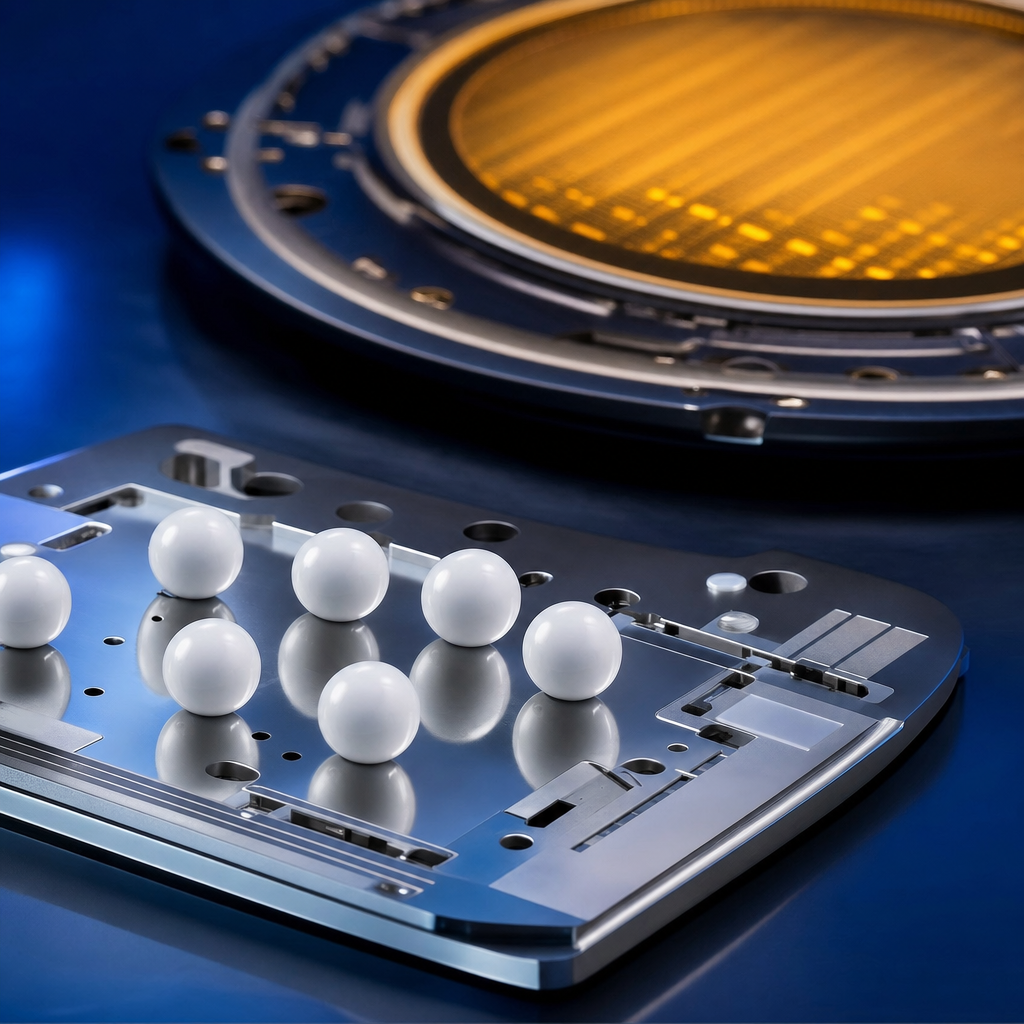

China Industrial Ceramics 2026 — From Alumina and Silicon Nitride to Semiconductor Wafer Carrier Breakthroughs
Chapter 1 Industry Overview and the Definition of Fine Ceramics
1.1 From "Pottery Kilns" to High-Tech Manufacturing
When people hear the word "ceramics," they typically picture household tableware or ancient porcelain. Yet the industrial ceramics that underpin semiconductor fabrication, electric vehicle powertrains, and defense systems could not be further from that image. Industry professionals draw a clear line between traditional ceramics — fired clay products like bricks, tiles, sanitary ware, and everyday porcelain — and advanced (fine) ceramics, which are synthesized from high-purity inorganic non-metallic powders through precisely controlled forming and sintering processes to achieve outstanding mechanical, thermal, electrical, optical, or chemical performance.
The International Organization for Standardization (ISO) defines advanced ceramics as "inorganic non-metallic materials with a crystalline or partly crystalline microstructure produced from fine-grained powders by controlled synthesis, forming, and sintering." China's national standard equivalent specifies that the purity of the raw material powder must be at least 99.0% for most structural ceramics, with functional ceramics often requiring 99.9% or higher. The specification, forming method, sintering atmosphere, and post-treatment process all determine whether the resulting part can satisfy the demanding requirements of end markets.
What distinguishes advanced ceramics from metals and polymers is a trio of properties: extreme hardness (Vickers hardness often exceeding 1,500 HV, compared with less than 1,000 HV for hardened steel); high-temperature stability (useful up to 1,600°C or beyond for certain compositions, far above the practical limits of nickel-based superalloys); and intrinsic chemical inertness (resistance to most acids, alkalis, and oxidizing environments). The tradeoff is brittleness — the elastic modulus of alumina (Al₂O₃) is around 380 GPa, but fracture toughness (K₁c) is only 3–5 MPa·m^0.5, compared with 50–100 MPa·m^0.5 for structural steels. Overcoming this brittleness is a central theme in advanced ceramics research.
1.2 Taxonomy of Advanced Ceramics
Advanced ceramics can be classified by function or by material composition. The functional classification distinguishes structural ceramics — components that bear mechanical loads or resist wear and corrosion — from functional ceramics, which exploit electrical, magnetic, optical, or thermal properties. Structural applications include cutting tools, ceramic bearings, pump seals, and armor; functional applications include MLCC dielectric layers, piezoelectric transducers, solid oxide fuel cell electrolytes, and infrared windows.
By composition, the major families are:
Oxide ceramics: Al₂O₃ (alumina), ZrO₂ (zirconia), TiO₂, MgO, BeO (beryllia), and complex oxides such as BaTiO₃ and YSZ (yttria-stabilized zirconia). Oxides are the most commercially mature group, with alumina alone accounting for roughly 60% of global advanced ceramics output by weight.
Non-oxide ceramics: Si₃N₄ (silicon nitride), SiC (silicon carbide), AlN (aluminum nitride), BN (boron nitride), and TiC, TiN, and related compositions. Non-oxides generally offer superior thermal conductivity, thermal shock resistance, or hardness compared with oxides, but their synthesis and sintering are more demanding.
Composite ceramics: Ceramic-matrix composites (CMC), cermet (ceramic + metal), and dispersion-toughened ceramics. SiC/SiC CMC for aero-engine hot sections and WC-Co hardmetal for cutting tools are the most commercially significant examples.
1.3 Market Scale and Growth Drivers
The global advanced ceramics market reached approximately USD 14.5 billion in 2025 and is projected to grow at a compound annual rate of 8–10% through 2030, driven by four megatrends:
Semiconductor equipment localization: The global semiconductor equipment industry is spending heavily on ceramic components — ESC (electrostatic chucks), focus rings, chamber liners, shower heads, and wafer carriers — all of which must be replaced regularly as they wear. As domestic Chinese foundries scale up their capacity, the demand for locally sourced ceramic parts is growing rapidly.
Electric vehicle powertrains: Power electronics in EV inverters require AlN or Si₃N₄ substrates with thermal conductivity >150 W/(m·K) and excellent dielectric isolation. The EV market is the fastest-growing downstream segment for power module ceramic substrates in China.
5G and millimeter-wave communications: Low-loss microwave dielectric ceramics are critical for 5G base-station filters. China's aggressive 5G rollout has driven a sharp increase in domestic demand for LTCC and filter-grade ceramic materials.
Defense and aerospace modernization: High-strength, lightweight ceramics for armor, radomes, and aero-engine components are classified as strategic materials in China. The "14th Five-Year Plan" for military modernization has allocated significant budget to domestic advanced ceramics R&D.
1.4 Key Differences between Chinese and Global Industry Structure
Japan dominates the global advanced ceramics industry in terms of technology leadership, with Kyocera, NGK/NTK, and Murata together holding an estimated 35–40% of global revenue in the highest-margin product categories. European and North American players (CoorsTek, Morgan Advanced Materials, 3M Advanced Ceramics) lead in structural ceramics for defense and industrial gas turbine applications. China is the world's largest producer by volume — primarily of commodity-grade alumina and zirconia products — but has only begun to penetrate the high-end markets of semiconductor ceramics, power module substrates, and precision structural ceramics.
The root cause of this gap is the powder supply chain. Japan's Showa Denko, Sumitomo Chemical, and Tosoh produce ultra-high-purity Al₂O₃ and ZrO₂ powders with tightly controlled particle-size distributions and impurity profiles. Matching this powder quality is a prerequisite for fabricating semiconductor-grade ESCs or high-reliability MLCC dielectric layers — and it is precisely the bottleneck that Chinese manufacturers are working hardest to close.
1.5 Global Technology Competition: The "Three-Pole Structure"
The global advanced ceramics technology landscape has crystallized into a three-pole structure:
Japan: Undisputed technology leader in functional ceramics (MLCC, ESC, AlN substrates, optical ceramics). Kyocera's vertically integrated model — from raw powder synthesis to precision machining and surface treatment — gives it unmatched cost-quality control. Japan's electronics industry tradition of miniaturization and reliability engineering is deeply embedded in its ceramics culture.
Europe and North America: Strengths lie in structural ceramics for extreme environments — jet engine CMC, ballistic protection, industrial cutting tools — and in fundamental materials science. Morgan, CoorsTek, and Saint-Gobain control key patents in sintering aids and advanced powder processing.
China: Scale leader, technology follower converting to contender. China's strategy is to dominate the commodity end (building economies of scale) while investing heavily in the high-end segments most critical to national industrial goals (semiconductors, EVs, aerospace). Policy support, government procurement preferences, and ample domestic demand are all tailwinds; the remaining gaps are largely in powder quality, equipment precision, and process know-how.
Chapter 2 Global Landscape and China's Position
2.1 Japan's Position
Japan's advanced ceramics industry traces its roots to the 1950s, when Kyoto Ceramic (later Kyocera) began producing insulating components for the nascent electronics industry. Over the following decades, Japanese companies systematically developed the materials science, powder synthesis chemistry, sintering equipment, and precision machining capabilities that are still the global benchmark today.
Japan's advantage is not merely technological. It is structural: the entire supply chain — from powder producers (Sumitomo, Tosoh, Showa Denko) to component manufacturers (Kyocera, NGK, Maruwa, NTK) to equipment makers (precision lathes, wire-EDM machines, polishing systems optimized for ceramics) — has co-evolved within the same industrial ecosystem. This co-evolution produces tacit knowledge and tight feedback loops that are extraordinarily difficult for newcomers to replicate.
Kyocera alone generates approximately USD 3.5 billion in annual revenue from ceramics-related businesses. Its semiconductor components division — ESCs, ceramic packages, ceramic substrates — accounts for the fastest-growing segment. NGK Insulators, best known for pollution control ceramics, is also a major player in AlN substrates for power modules and solid oxide fuel cell components.
2.2 European and North American Players
CoorsTek (USA) is the world's largest producer of technical ceramics by volume, with over 40 manufacturing facilities across North America, Europe, and Asia. Its strength lies in large-format, complex-shaped structural ceramics: ceramic rollers for glass tempering furnaces, chemical reactor liners, alumina tubes for metallurgical applications. In the semiconductor segment, CoorsTek supplies chamber-lining ceramics for major OEM equipment makers.
Morgan Advanced Materials (UK) focuses on high-performance carbon-ceramic composites and specialty ceramics for extreme-temperature applications. Its SiC and Si₃N₄ products serve the nuclear, aerospace, and industrial heating markets. Saint-Gobain (France) is a major producer of boron nitride (BN) ceramics and refractory ceramics for the steel and glass industries.
In the USA, Materion (formerly Brush Engineered Materials) and II-VI Incorporated (now Coherent) supply beryllia (BeO) ceramics for defense and high-power electronics applications — a market segment from which Chinese producers are currently excluded by US export-control regulations.
2.3 China's Current Status and Trajectory
China's position in the global advanced ceramics market is best understood as a dual structure: dominant at the bottom of the value pyramid, rapidly ascending in the middle, and still a follower at the top.
At the commodity end, Chinese producers overwhelmingly dominate global output of white alumina grinding media, refractory bricks, porcelain electrical insulators, and ceramic tiles. The Shandong and Guangdong provinces host thousands of such producers; the price competition is fierce, and margins are thin.
In the mid-tier — precision structural ceramics, ceramic substrates for consumer electronics, MLCC-grade dielectric powders — Chinese companies like Sinocera (国瓷材料), Sanhuan Group (三环集团), and Chaozhou Three-Circle have achieved genuine scale and competitive capability. Sinocera's MLCC dielectric powder commands a significant share of domestic demand from capacitor makers including Samsung Electro-Mechanics' Chinese factories.
At the high end — semiconductor-grade ESCs, power-module-grade AlN substrates with ≥170 W/(m·K) thermal conductivity, and complex CVD-coated wafer carriers — the domestic supply chain remains thin. Only a handful of companies have production-qualified parts in customer hands, and yields remain well below Japanese benchmarks. The government's "14th Five-Year Plan" for advanced materials explicitly targets ESC and AlN substrate localization as priority missions.
2.4 China's Export Profile and Trade Balance
China is a net exporter of advanced ceramics in aggregate, but the aggregate figure masks a critical deficit: China exports large volumes of low-value commodity ceramics while importing high-value semiconductor and electronics ceramics. The trade deficit in functional ceramics and semiconductor-related ceramics has widened in recent years as domestic demand for these products has surged faster than domestic production capacity.
According to customs data, China's imports of "ceramic products for semiconductor manufacturing" (HS code 6909.19) grew by approximately 18% per year between 2021 and 2024. Japan and the USA are the largest suppliers. Reducing this import dependency is a stated goal of the "Made in China 2025" advanced materials roadmap and the semiconductor self-sufficiency drive.
2.5 Competitive Benchmarking — Where the Gap is Widest
A structured comparison of Chinese and Japanese producers across key product categories reveals the following pattern:
| Product Category | Japan Lead | China Status |
|---|---|---|
| Semiconductor ESC (Al₂O₃/AlN) | Kyocera, Tocalo | 1–2 domestic players, low volume |
| AlN Power Substrate | NGK, Maruwa, Tokuyama | Aemit, CRRC ceramics, early ramp |
| MLCC Dielectric Powder | Sakai Chemical, FDK | Sinocera — competitive |
| Si₃N₄ Bearing Balls | Toshiba Materials | CTA, CCSC — competitive for lower grades |
| SiC Armor Ceramics | Coorstek, Cerco | Multiple domestic producers — competitive |
| 5G Filter Ceramics | Murata | Sanhuan, Tbea — competitive |
2.6 Regional Production Hubs in China
Advanced ceramics production in China is concentrated in several key clusters:
Guangdong (Shenzhen + Chaozhou): The Pearl River Delta hosts the country's largest concentration of MLCC and functional ceramics producers. Chaozhou is the world's largest production base for piezoelectric ceramic components.
Shandong (Zibo + Weifang): Traditional hub for refractory and insulating ceramics, with growing activity in Al₂O₃ structural ceramics.
Jiangsu (Suzhou + Nanjing): Strong in ceramic substrates for power electronics and high-tech precision ceramics.
Hunan: Silicon nitride specialization — Hunan-based companies lead domestic Si₃N₄ powder production.
Fujian (Nan'an): Sanitaryware and decorative ceramic tiles (traditional), with adjacent development in technical ceramics for electronics.
2.7 Investment and R&D Intensity Comparison
Japanese companies in advanced ceramics typically spend 4–6% of annual revenue on R&D — a figure comparable to the pharmaceutical industry. Kyocera's ceramics-related R&D budget exceeds USD 200 million annually. Chinese listed companies in the space average 3–5% of revenue on R&D, but with a more rapid growth rate in absolute spending as revenues grow.
The critical difference is not total spending but the depth of process know-how accumulated over decades. Japanese companies hold thousands of patents covering specific powder synthesis routes, sintering parameter windows, and metallization techniques. Chinese companies can design around many of these patents, but the tacit knowledge embedded in process recipes and quality control protocols remains hard to acquire quickly.
2.8 Global Market Cycles and Structural Demand Shifts
The advanced ceramics market is not immune to cyclicality. The semiconductor cycle directly affects demand for ESCs, focus rings, and wafer carriers. The 2023 semiconductor inventory correction reduced orders for ceramic semiconductor components significantly, but the 2025 AI hardware boom — driven by demand for logic chips, HBM memory, and advanced packaging — has triggered a sharp recovery.
Structural shifts are more powerful than cycles in the long run. The electrification of transport (BEV + PHEV) represents the single largest new demand driver for power ceramics in a generation. The IEA projects that global EV sales will reach 45 million units annually by 2030 — each vehicle requiring multiple AlN or Si₃N₄ ceramic substrates in its power electronics. This structural demand shift is essentially locked in by long-term OEM supply agreements and cannot be undone by short-term economic fluctuations.
2.9 Major Production Regions and Global Layout
Outside Japan and China, the global advanced ceramics industry has significant clusters in:
Germany: Ceramtec (owned by private equity) and Fraunhofer IKTS are European leaders in structural and biomedical ceramics. Germany's strong machine-tool industry supports precision ceramics manufacturing.
USA: CoorsTek (headquartered in Colorado), Kyocera America (Kyoto-based with major US operations), and multiple defense-focused suppliers clustered around defense procurement corridors.
South Korea: Samsung Electro-Mechanics and Samhwa Capacitor have built significant MLCC ceramic capabilities. Korea's proximity to the global semiconductor supply chain makes it a growing market for ceramic components.
Chapter 3 Core Material Systems
3.1 Alumina (Al₂O₃): The Industry Workhorse
Alumina is the most widely used advanced ceramic material by volume, owing to a combination of adequate mechanical properties, reasonable raw material cost, mature processing technology, and broad availability. World production of advanced alumina ceramics exceeds 500,000 metric tons per year, with applications ranging from cutting tool inserts and pump seals to IC packaging substrates and semiconductor chamber components.
Alumina exists in multiple crystal phases; the α-Al₂O₃ (corundum) phase is thermodynamically stable above 1,000°C and is the form used in virtually all structural ceramic applications. Key properties of dense (>99% relative density) α-Al₂O₃:
- Hardness: 1,700–2,000 HV
- Flexural strength: 300–400 MPa (up to 600 MPa for fine-grained microstructures)
- Thermal conductivity: 18–35 W/(m·K) depending on purity and microstructure
- Dielectric constant (1 MHz): 9–10
- Maximum service temperature: 1,600°C in oxidizing atmospheres
Purity grade profoundly affects properties. Commercially, alumina ceramics are classified by purity: 85% Al₂O₃ (with glass-phase sintering aid, used in electrical insulators and tiles); 95% (better electrical and mechanical properties, semiconductor housings); 99%+ (semiconductor process equipment, precision optics, high-frequency electronics); and 99.9%+ (extreme purity for wafer-handling and optical applications).
For semiconductor ESC applications, the Al₂O₃ purity must be 99.9% or higher, with impurities — particularly Na, K, Fe, and heavy metals — controlled to sub-ppm levels. Each impurity above specification can cause wafer contamination through outgassing or diffusion, resulting in device yield losses.
3.2 Zirconia (ZrO₂): Toughness Champion
Pure ZrO₂ undergoes a destructive tetragonal-to-monoclinic phase transformation on cooling, causing volumetric expansion and cracking. Stabilizing additives — most commonly yttria (Y₂O₃), but also CeO₂ and MgO — suppress this transformation, yielding partially stabilized zirconia (PSZ) and tetragonal zirconia polycrystals (TZP). 3Y-TZP (3 mol% yttria) offers the highest flexural strength among oxide ceramics at room temperature (>1,000 MPa) and a fracture toughness of 6–10 MPa·m^0.5.
The key strengthening mechanism in TZP is transformation toughening: stress at the crack tip triggers the tetragonal-to-monoclinic transformation, expanding the crack-tip process zone and imposing compressive stresses that resist crack propagation. This mechanism, largely absent in other oxide ceramics, gives zirconia ceramic its distinctive toughness.
Medical-grade zirconia (ISO 13356) for dental prostheses and orthopedic implants accounts for a significant and fast-growing slice of the zirconia ceramics market. Dental mills that machine full-arch dental bridges from pre-sintered zirconia blanks have proliferated globally, driving demand for high-quality 3Y-TZP powder with tight grain-size control.
Industrial applications include ceramic knife blades (exploiting hardness and corrosion resistance), precision sliding bearings, pump seals for aggressive chemical service, and oxygen sensors for automotive exhaust monitoring (exploiting zirconia's ionic conductivity at elevated temperatures).
3.3 Silicon Nitride (Si₃N₄): The Aerospace and Automotive Star
Silicon nitride is widely regarded as the most balanced structural ceramic: it combines high strength (flexural strength 700–1,000 MPa for hot-pressed grades), good fracture toughness (5–8 MPa·m^0.5 — highest among non-oxide ceramics), excellent thermal shock resistance, and a low coefficient of thermal expansion (3.2 × 10⁻⁶ /°C). Its Weibull modulus (a measure of strength reliability) is typically 15–25, higher than most other ceramics, meaning that Si₃N₄ components have more predictable strength distributions — essential for safety-critical engineering applications.
The three primary densification routes each produce distinct microstructures:
Hot pressing (HP-Si₃N₄): Applies uniaxial pressure (≥30 MPa) during sintering at 1,700–1,800°C. Achieves full theoretical density with minimal grain growth. Used for bearing balls and cutting tools requiring maximum reliability.
Hot isostatic pressing (HIP-Si₃N₄): Isostatic gas pressure (typically 100–200 MPa Ar) applied after pre-sintering eliminates residual porosity. Produces the highest-reliability components for bearing and aerospace applications.
Sintering and sinter-HIP (GPS + HIP): Gas-pressure sintering at 5–10 MPa N₂ followed by HIP — a route that allows complex shapes to be formed by powder pressing or injection molding before densification.
Silicon nitride bearing balls (G5 grade or better, per ABMA/ISO ball standards) are a high-growth segment. Si₃N₄ balls are 60% lighter than steel balls of the same size, have lower thermal expansion, generate less friction heat at high speeds, and are electrically insulating (preventing electrical erosion from stray currents in electric motors). Applications include machine tool spindles, electric vehicle motors, wind turbine main bearings, and dental drills.
3.4 Aluminum Nitride (AlN): The Thermal Management Solution
Aluminum nitride's combination of high thermal conductivity (theoretical maximum ~320 W/(m·K) for single-crystal AlN; commercial polycrystalline ceramics achieve 140–230 W/(m·K)) with electrical insulation (resistivity >10¹² Ω·cm) and a thermal expansion coefficient closely matching silicon (4.5 × 10⁻⁶/°C vs. silicon's 3.5 × 10⁻⁶/°C) makes it the substrate material of choice for high-power electronic modules.
The dominant commercial AlN sintering aid is Y₂O₃, added at 3–5 wt%. During sintering, Y₂O₃ reacts with surface alumina on AlN particles to form yttrium aluminate (YAG) grain-boundary phases, which promote densification while limiting the thermal conductivity penalty from oxygen contamination. The oxygen content in commercial AlN powder is the single most important determinant of final substrate thermal conductivity; powders with <0.5 wt% oxygen can yield substrates above 180 W/(m·K).
AlN substrates are primarily used in Direct Bonded Copper (DBC) and Active Metal Brazing (AMB) configurations for power module assembly. In DBC, copper foil is bonded directly to the ceramic at ~1,065°C through a liquid-phase bonding process. In AMB, an Ag-Cu-Ti active filler metal bonds the copper to the ceramic at 800–900°C in vacuum; AMB achieves stronger bonds and better reliability under thermal cycling, and is preferred for the most demanding automotive and railway traction applications.
3.4b Metallization Process Deep Dive: DBC vs. AMB
The DBC process relies on the formation of a thin liquid Cu₂O eutectic at the Cu/AlN interface. At 1,067°C (the Cu-Cu₂O eutectic temperature), a thin film of molten copper oxide forms and wets the ceramic surface, enabling bonding upon cooling. The bond strength is adequate for many applications but DBC on AlN is less reliable than on Al₂O₃ because AlN's lower coefficient of thermal expansion creates larger stress concentrations at the bond interface under cycling.
AMB using Ag-Cu-Ti filler alloy forms a titanium nitride (TiN) and titanium oxide (TiO) reaction layer at the ceramic interface, providing much stronger bonding. The AMB joint can withstand >3,000 thermal cycles between −40°C and +175°C, a requirement for automotive traction inverter qualification (AQG324 power cycling standard). AMB-AlN substrates are consequently the preferred choice for EV inverters and railway traction converters operating at up to 1,200 V.
3.4c Sapphire (α-Al₂O₃ single crystal) Substrates
Sapphire is the single-crystal form of α-Al₂O₃ grown by Verneuil, Czochralski, or EFG (edge-defined film-fed growth) methods. Its combination of extreme hardness (Mohs 9, Vickers ~2,000 HV), optical transparency from UV to mid-IR, high thermal conductivity (28–46 W/(m·K) depending on crystal orientation), and biocompatibility make it the substrate of choice for several specialized applications:
GaN epitaxy (LED and power electronics): The majority of GaN-on-sapphire LED chips grown by MOCVD (metalorganic chemical vapor deposition) use C-plane (0001) sapphire substrates. Sapphire's 2" to 6" wafers support the full range of LED chip sizes. The mismatch in thermal expansion between GaN (5.6 × 10⁻⁶/°C) and sapphire (7.5 × 10⁻⁶/°C) causes some wafer bowing but is manageable for LED applications.
GaN power devices: Thin-film laser lift-off enables GaN device layers to be transferred from sapphire to silicon or copper for better thermal management. The sapphire wafer itself is recycled.
Optical windows and domes: Sapphire's multi-spectral transparency and hardness make it the material of choice for UV-visible-IR optical windows, missile seeker domes, and wearable device camera covers.
China's sapphire industry, centered in Zhejiang and Fujian, has scaled dramatically since the early 2010s, with total installed capacity for LED-grade substrates exceeding 100 million 4" equivalent wafers per year.
3.5 Silicon Carbide (SiC): Hardness and Heat Resistance
Silicon carbide exists in over 250 polytypes, of which 6H-SiC and 4H-SiC are most commercially significant as semiconductor materials. For structural ceramics applications, the polytype mix is less critical than phase purity and density.
SiC's key mechanical and thermal properties:
- Hardness: 2,200–2,800 HV (second only to diamond and boron carbide among ceramics)
- Flexural strength: 400–600 MPa (sintered SiC) to 750 MPa (hot-pressed SiC)
- Thermal conductivity: 80–140 W/(m·K) depending on purity and processing
- Maximum service temperature: 1,650°C in inert or reducing atmospheres; lower in oxidizing conditions due to passive SiO₂ film formation
- Coefficient of thermal expansion: 4.0–4.7 × 10⁻⁶/°C
3.5b SiC Fabrication Routes and Their Trade-offs
Reaction-bonded SiC (RBSC or RS-SiC): Liquid silicon infiltrates a green compact of SiC powder + carbon, reacting to form additional SiC in situ. Resulting material contains residual free silicon (typically 8–12 vol%), limiting service temperature to 1,380°C. Near-net-shape capability is excellent — complex geometry components can be produced at relatively low cost. Widely used for wear parts, pump components, and heat exchanger tubes.
Pressureless-sintered SiC (SSiC): Uses boron + carbon sintering aids; requires sintering at 2,050–2,100°C. Produces fully dense (<0.1% porosity), high-purity SiC with superior high-temperature performance. Used for demanding applications including semiconductor process equipment (susceptors, diffusion tubes) and armor tiles.
Hot-pressed SiC (HP-SiC): Uniaxial pressure during sintering reduces sintering temperature and time, producing dense SiC with fine grain size and high strength. Used for precision cutting tools and ballistic tiles.
CVD-SiC coatings: Chemical vapor deposition of SiC from methyltrichlorosilane (MTS) + H₂ at 900–1,200°C produces ultra-pure SiC coatings with <1 ppm metallic impurity. CVD-SiC is essential for wafer carriers (susceptors) used in MOCVD epitaxial growth of GaN LEDs and power devices. The coating provides a clean, reactive surface for epitaxial growth while protecting the underlying graphite or SiC substrate from the process atmosphere.
3.6 Other Key Materials
Beryllia (BeO): Thermal conductivity 250–330 W/(m·K) — highest among oxide ceramics — combined with high electrical resistivity makes BeO invaluable for high-power microwave packages and transistor headers. However, BeO powder is highly toxic if inhaled; strict occupational safety controls are required throughout processing. US export regulations restrict BeO ceramics exports to certain destinations. China produces BeO ceramics domestically, primarily for military electronics.
Boron Nitride (BN): Hexagonal BN (hBN) has a graphite-like layered structure; it is electrically insulating, thermally conductive (up to 60 W/(m·K) in-plane), chemically inert, and machineable with conventional carbide tools — a uniquely useful combination. Applications include crucibles for metal casting, high-temperature electrical insulators, and solid lubricants for hot-pressing molds.
Hydroxyapatite and Bioglass: Bioceramics for orthopedic and dental implants. Calcium phosphate (hydroxyapatite, Ca₁₀(PO₄)₆(OH)₂) is the mineral phase of natural bone, making it inherently biocompatible. Bioceramic coatings on titanium implants promote osseointegration. This segment is fast-growing in China as the aging population drives demand for joint replacement and dental restoration.
3.6b MLCC Dielectric Ceramics — Technology Evolution and Full Supply Chain Analysis
Multi-layer ceramic capacitors (MLCC) are the single highest-volume advanced ceramic product by unit count — over 5 trillion units produced annually worldwide. The dielectric layer is a thin film (from 2 μm for cutting-edge consumer electronics MLCCs to >10 μm for industrial-grade units) of BaTiO₃-based ceramic with carefully engineered doping to achieve the desired capacitance-temperature characteristics (X5R, X7R, C0G designations define stability classes).
The critical manufacturing challenge is tape casting: the dielectric powder is suspended in an organic binder system and cast onto a PET film to produce "green tape" as thin as 1–2 μm per layer. Multiple layers (up to 1,500 in advanced MLCCs) are stacked, laminated under pressure, cut into individual chips, and co-fired with the internal electrode metal. The switch from precious-metal electrodes (Ag-Pd, PME process) to base-metal electrodes (nickel, BME process) in the 1990s was a technological revolution that reduced material cost by ~80% while demanding much tighter atmosphere control during firing to prevent nickel oxidation.
The trend toward miniaturization (0402 and 0201 metric sizes now dominant) drives demand for finer-grained dielectric powders. Achieving uniform BaTiO₃ particle size of 100–200 nm with narrow distribution requires wet-chemistry synthesis routes (oxalate coprecipitation or hydrothermal synthesis) rather than the traditional solid-state calcination approach.
China's Sinocera is one of a small group of global suppliers of MLCC-grade BaTiO₃ powder, competing with Japan's Sakai Chemical and South Korea's Samsung Fine Chemicals. Domestic MLCC makers — including Murata's Chinese factories, Yageo (Taiwan), and a growing cohort of domestic producers — are increasingly sourcing from Sinocera as a supply-chain risk-management strategy.
3.7 Ceramic Powder and Precursor Materials
The quality of the starting powder fundamentally determines the achievable properties of the finished ceramic. Key powder parameters:
Particle size and distribution: Finer particles sinter at lower temperatures and produce finer-grained, stronger microstructures, but agglomerate more easily and require more intensive dispersion processing. D₅₀ values for advanced ceramic powders range from 0.1 μm (MLCC BaTiO₃) to 10 μm (refractory Al₂O₃).
Purity: Metallic impurities (Fe, Na, K, Si, Ca) must be controlled to ppm or sub-ppm levels for semiconductor-grade applications. Each impurity has a specific effect on sintering behavior, grain boundary chemistry, and dielectric or thermal properties.
Surface chemistry: Hydroxyl groups, adsorbed water, and organic residues on powder surfaces affect dispersion, green body density, and sintering kinetics. Powder surface treatment (e.g., stearic acid coating for improved dry pressing) is a common practice.
Phase purity: For materials with multiple polymorphs (Al₂O₃, ZrO₂, SiC), the phase distribution in the starting powder affects densification pathways and final microstructure.
China's powder production industry has made significant advances in the past decade. Qingdao AOS (氧化铝 specialty powders), Zibo Honghe Chemical, and several Fujian-based suppliers have achieved 99.9%+ purity for Al₂O₃. For Si₃N₄, Jiangsu Taniobis and Shanghai Jiangxi Company have qualified gas-phase nitridation routes that produce α-phase rich powder suitable for structural ceramics.
3.8 Failure Analysis and Reliability Engineering
Understanding and predicting ceramic component failure is as important as designing for peak performance. Ceramics fail primarily by brittle fracture initiated at surface or volume defects — machining-induced microcracks, porosity, inclusions, or stress concentrators at geometric discontinuities.
Weibull statistics: Ceramic strength follows a Weibull distribution, characterized by two parameters: the Weibull modulus m (shape parameter) and the scale parameter σ₀. High m values (>20) indicate tight strength distributions, meaning reliable performance predictable from small sample sizes. Low m values (<8) indicate wide scatter, requiring larger safety factors in design.
Non-destructive evaluation (NDE): X-ray computed tomography (CT) at micron resolution, dye-penetrant inspection, and acoustic emission testing are employed to detect critical defects in ceramic components before they enter service. Semiconductor ESCs and bearing balls for aerospace applications undergo 100% CT inspection.
Fractography: Scanning electron microscopy of fracture surfaces reveals the fracture origin, enabling feedback into process improvement. Common origins include: large pores (insufficient sintering); inclusions (contamination); machining cracks (surface grinding damage); and sharp internal corners (design error).
Chapter 4 Industrial Supply Chain: Upstream to Downstream
4.0 Supply Chain Overview: Value Creation from Powder to Part
The advanced ceramics value chain consists of six stages, each adding value and requiring specialized capital and know-how:
Raw material mining: Bauxite for Al₂O₃; zircon sand for ZrO₂; silica and carbon/nitrogen for SiC and Si₃N₄ precursors; boehmite for high-purity alumina. China controls significant shares of global bauxite and zircon reserves.
High-purity powder synthesis: Chemical processing of raw materials to produce powders with controlled purity, particle size, and phase composition. This stage is where the most technology-intensive differentiation occurs.
Green body forming: Pressing (dry or isostatic), tape casting, extrusion, injection molding, or slip casting shapes the powder into the desired geometry before sintering.
Densification (sintering): Heat treatment to remove binders, achieve densification, and develop the target microstructure. Atmosphere (air, N₂, Ar, vacuum), temperature profile, and applied pressure are all critical variables.
Post-sintering processing: Diamond grinding, lapping, polishing, laser machining, coating (CVD, PVD, thermal spray), metallization, and quality inspection.
Integration: Assembly of ceramic components with metal, polymer, or other ceramic parts; packaging; and qualification testing per customer specifications.
Gross margins at each stage typically increase moving downstream: raw material mining generates ~10–15% EBITDA margins; powder synthesis 20–30%; finished components 30–50% for precision parts; integration and custom assemblies 40–60%.
4.1 Raw Materials — Upstream Supply Security
Bauxite and alumina: China is the world's largest bauxite producer (60+ million tons per year) and has the refinery capacity to produce approximately 90 million tons of smelter-grade alumina annually. However, high-purity (>99.99% Al₂O₃) chemical-grade alumina for advanced ceramics requires additional purification steps beyond standard Bayer-process refining.
Zircon sand and zirconia: Australia and South Africa are the world's largest zircon sand producers; China's domestic zircon resources are modest. China imports the vast majority of its zircon feedstock for ZrO₂ production. Zirconia refining (including chemical purification and yttria addition) is largely done in China.
Silicon and nitrogen: Silicon for SiC and Si₃N₄ precursor synthesis is abundantly available; China produces over 80% of global metallurgical silicon. High-purity nitrogen for nitridation processes is produced by air separation.
4.2 Powder Manufacturing — The Critical Bottleneck
For advanced ceramics applications, the powder manufacturing stage is where the most critical technology barriers lie:
Al₂O₃: Calcined alumina from Bayer-process Al(OH)₃ is insufficient for advanced ceramics. Specialty routes — hydrothermal synthesis, vapor phase (aluminum chloride oxidation), or sol-gel chemistry — are required to produce fine-grained, high-purity α-Al₂O₃ with <100 ppm total impurities.
ZrO₂: Zirconium basic carbonate (ZBC) derived from zircon is the dominant precursor. Calcination and milling produce the raw powder; yttria is added as a co-precipitate or physical blend. Nano-YSZ powder (particle size 30–50 nm) for thermal barrier coatings requires hydrothermal synthesis.
Si₃N₄: Two commercial synthesis routes: (1) direct nitridation of Si powder in N₂ at 1,200–1,400°C; (2) carbothermal reduction-nitridation of SiO₂. The α-to-β Si₃N₄ ratio in the powder affects densification and final grain morphology — high-α powders yield high-β microstructures with elongated, interlocking grains that provide enhanced fracture toughness.
AlN: Carbothermal reduction of Al₂O₃ in N₂ at 1,600–1,800°C is the dominant production route. Direct nitridation of aluminum powder is an alternative. Oxygen content in AlN powder is critical, as oxygen dissolved in the AlN lattice and as surface oxide film strongly suppresses thermal conductivity.
4.3 Component Manufacturing — Precision and Yield
Typical yield rates in precision ceramic component manufacturing:
- Simple cylindrical parts (bearing balls, rollers): 85–95% (after green machining and sintering)
- Flat substrates with tight thickness tolerance (±5 μm): 70–85%
- Complex-shaped parts with internal features (ESC with embedded electrodes): 50–70%
- Very large parts (wafer carriers >300 mm diameter): 40–60%
Yield is the primary cost driver in precision ceramics. A Japanese manufacturer with 85% yield and a Chinese manufacturer with 65% yield for the same ESC specification will have fundamentally different cost structures, regardless of raw material or labor cost differences.
4.4 Equipment — Domestic vs. Imported
Key production equipment for advanced ceramics:
| Equipment | Domestic Availability | Leading Suppliers |
|---|---|---|
| Spray dryer | Good | Domestic suppliers viable |
| Hydraulic press (dry pressing) | Good | Domestic + imported |
| Cold isostatic press (CIP) | Adequate | Nantong, Shenyang domestic |
| Tape casting machine | Partial | Japan, Germany dominant |
| Sintering furnace (air) | Good | Domestic viable |
| Atmosphere/vacuum furnace | Partial | Japan, Germany preferred |
| Hot press | Limited | Domestic emerging |
| Diamond grinding/lapping | Limited | Japan, USA dominant |
| Precision CNC machining (ceramics) | Emerging | Japan, Europe preferred |
| CT inspection system | Limited | USA, Germany |
The equipment gap is most acute at the sintering and precision machining stages. Diamond grinding wheels and CNC machining centers optimized for ceramic materials are dominated by Japanese and Swiss suppliers.
4.5 Post-Processing and Metallization
Surface finishing determines the actual functional performance of most advanced ceramic components:
Diamond grinding and lapping: Alumina and SiC grinding wheels are inadequate for hard ceramics; polycrystalline diamond (PCD) or cubic boron nitride (CBN) grinding wheels are required. Surface roughness Ra of 0.05–0.2 μm is typical for substrate applications; optical polish (Ra < 0.01 μm) is required for certain wafer-handling surfaces.
Laser machining: Excimer and ultrafast (femtosecond) lasers enable high-precision material removal from ceramics without the subsurface damage associated with mechanical grinding. Used for scribing, via-hole drilling in LTCC, and precision trim of microwave resonators.
Metallization: Tungsten (W) or molybdenum-manganese (Mo-Mn) thick-film pastes screen-printed on ceramic and co-fired at 1,500°C (high-temperature cofired ceramics, HTCC) or gold/silver/copper pastes co-fired at 850°C (LTCC) create conductive pathways. Electroless and electrolytic plating complete the metallization build-up.
4.6 Quality Control and Certification
For aerospace, medical, and semiconductor applications, ceramic components must be certified under rigorous quality management systems:
- AS9100 (aerospace quality management)
- ISO 13485 (medical devices)
- IATF 16949 (automotive)
- SEMI standards for semiconductor components
Each customer application also imposes proprietary qualification requirements. Semiconductor equipment OEMs require lot-by-lot chemical analysis, dimensional inspection, and often destructive testing of statistical samples.
4.7 Circular Economy and Waste Handling
Ceramic component manufacturing generates significant waste: grinding sludge (ceramic powder + diamond + coolant), organic binders from green body processing, and spent parts. Recycling of ceramic grinding sludge to recover diamond abrasives is practiced at large-scale facilities. Green body scrap can be re-fired in some cases. Spent ESC components from semiconductor fabs are collected and either refurbished or crushed for raw material recovery.
Solvent-based binder systems used in tape casting generate VOC emissions requiring treatment. Regulatory pressure in China's manufacturing sector is driving a shift toward water-based binder systems, which impose additional technical challenges for achieving equivalent green tape quality.
4.8 Logistics and Supply Chain Management
Advanced ceramic components are specialty items with long lead times (4–16 weeks), complex qualification processes, and typically single-source supply arrangements for critical applications. Supply chain resilience became a top priority for global manufacturers after COVID-19 disruptions exposed the vulnerability of just-in-time procurement for specialty materials.
The trend toward supply chain regionalization is a tailwind for Chinese ceramic producers: global OEMs are increasingly willing to invest in qualifying domestic Chinese suppliers for strategic components, even at a modest performance premium, to reduce geopolitical supply risk.
4.9 Carbon Footprint and Sustainability
The ceramics industry is energy-intensive: sintering a batch of alumina parts in a tunnel kiln consumes significant natural gas or electrical power. China's advanced ceramics industry is under increasing pressure to:
- Replace coal-fired kilns with electric or gas-fired kilns
- Adopt renewable energy for sintering operations in regions with abundant solar/wind resources
- Reduce sintering temperatures through advanced sintering aids and microwave or spark plasma sintering (SPS) technologies
- Implement closed-loop water recycling for grinding and lapping operations
SPS (spark plasma sintering) can achieve full densification in minutes rather than hours, dramatically reducing energy consumption per batch. The challenge is scaling SPS to production-relevant part sizes and volumes.
Chapter 5 Downstream Applications
5.1 Semiconductor Manufacturing: The Highest-Value Market
Semiconductor fabrication equipment is the most technologically demanding and highest-margin application for advanced ceramics. The key ceramic components in a modern semiconductor fab are:
Electrostatic chuck (ESC): The ESC electrostatically clamps the wafer to the chuck during plasma processing (etching, CVD deposition, ion implantation). ESCs for leading-edge nodes (7nm and below) require Al₂O₃ or AlN ceramic with extreme purity, flatness (<2 μm across a 300 mm diameter), and precise control of embedded electrode geometry. A single ESC for a leading-edge etching tool is worth USD 20,000–60,000; it must be replaced every 2,000–5,000 wafer starts.
Focus ring (edge ring): Surrounds the wafer on the ESC, controlling the plasma uniformity at the wafer edge. Made from Si or SiC; must be replaced more frequently than the ESC.
Chamber liner and shower head: Al₂O₃ or Y₂O₃-doped Al₂O₃ (yttria-coated alumina) liners protect the chamber walls from plasma erosion. Shower heads (gas distribution plates) are perforated ceramic disks with hundreds of precisely machined gas holes.
Wafer carrier (susceptor): In MOCVD epitaxial growth (for GaN LEDs and power devices), the carrier wafer sits on a ceramic susceptor that provides uniform thermal distribution. CVD-SiC-coated graphite or pure SiC susceptors are the standard; each costs USD 5,000–20,000 depending on size.
Ceramic tube and diffusion boat: High-purity quartz and Al₂O₃ tubes for thermal diffusion furnaces in older process nodes.
5.2 New Energy Vehicles — Power Electronics
Every EV inverter contains a three-phase power module converting DC battery power to AC for the electric motor. Each module contains multiple IGBT or SiC MOSFET power chips mounted on a ceramic substrate (AlN or Si₃N₄) that provides both electrical isolation and thermal management.
The thermal path in an EV power module: power chip → solder → copper layer → ceramic substrate → solder/TIM → copper base plate → cooler → coolant. The ceramic substrate is the thermal and electrical interface between the chip level and the system level. High thermal conductivity (≥150 W/(m·K) for AlN, ≥80 W/(m·K) for Si₃N₄) minimizes the temperature rise across the substrate, enabling higher current densities and longer module lifetimes.
Si₃N₄ substrates, while lower in thermal conductivity than AlN, offer superior mechanical strength and fracture toughness, enabling thinner substrates with equivalent reliability. The global market for Si₃N₄ power substrates is projected to grow from USD 420 million in 2024 to over USD 1.2 billion by 2030, driven almost entirely by EV and renewable energy applications.
5.3 5G Communications: Microwave Dielectric Ceramics
5G base stations use ceramic band-pass filters in the antenna signal path to select or reject specific frequency bands. Each 5G macrocell base station contains 8–16 filters per radio unit; a fully deployed 5G network requires hundreds of millions of filters globally.
The ceramic material for 5G filters must combine low dielectric loss (tan δ < 2 × 10⁻⁴), high dielectric constant (εᵣ = 20–80 depending on application), and near-zero temperature coefficient of resonant frequency (τf). Different sub-6 GHz and mmWave frequency bands require different ceramic compositions:
- Ba(Zn₁/₃Ta₂/₃)O₃ (BZT): High Q factor, used for sub-6 GHz filters
- (Zr-Sn)TiO₄ (ZST): Medium εᵣ, used in base-station duplexers
- BaTi₄O₉ and Ba₂Ti₉O₂₀: Low εᵣ, used for millimeter-wave applications
Sanhuan Group (三环集团, 300408.SZ) is China's and arguably the world's largest producer of 5G filter ceramics. Its microwave dielectric ceramic business has grown at 30%+ annually since China's 5G rollout began.
5.4 Lithium Battery: Ceramic-Coated Separators
Ceramic-coated separators have become nearly universal in power-grade lithium-ion batteries for EVs and energy storage. A thin layer of alumina (Al₂O₃) or boehmite (AlO(OH)) particles coated onto a polyolefin base separator:
- Prevents separator shrinkage and shutdown failure at temperatures above 130°C
- Improves wettability with electrolyte, reducing internal resistance
- Provides mechanical support to prevent dendrite penetration in fast-charging applications
The alumina particle size for separator coating is typically 200–400 nm; purity must be >99% to avoid introducing metal ion contaminants that could trigger battery self-discharge. China's battery separator industry — dominated by Yunnan Energy New Material (CATL spinoff), Shenzhen Senior, and Suzhou Jieli — collectively consumes tens of thousands of tons of alumina coating powder annually.
5.5 Defense and Aerospace: SiC Armor and Structural Ceramics
Silicon carbide remains the preferred ceramic for body armor plates at the highest protection levels (NIJIVV standard for rifle threats) due to its combination of hardness (breaking projectile penetration tips), low density (3.21 g/cm³, versus 7.85 g/cm³ for steel), and low fracture toughness-to-hardness ratio optimized for ballistic defeat.
China's defense modernization has substantially increased domestic consumption of SiC armor ceramics. The major domestic suppliers are a small group of state-owned and private enterprises operating under defense production licenses. Exact production volumes are not publicly disclosed, but based on materials consumed and factory capacity announcements, domestic production of SiC armor ceramics has grown at double-digit annual rates since 2017.
SiC/SiC ceramic-matrix composites (CMC) are the emerging material for jet engine hot-section components (combustor liners, turbine shrouds, nozzle guide vanes). SiC/SiC CMC components are approximately 30% lighter than the nickel-based superalloy parts they replace and can operate at 200°C higher temperatures, enabling significant improvements in engine efficiency. The WS-15 engine program (for China's J-20 fighter) has been cited as a driver of domestic CMC development.
5.6 Medical: Bioceramics
Bioceramics serve in two modes: as permanent implant materials (dental crowns, orthopedic joint components) and as temporary scaffolds for bone regeneration. Zirconia dental prostheses (crowns, bridges) have captured over 60% of the fixed dental prosthetics market in China by volume, displacing feldspathic porcelain-fused-to-metal (PFM) restorations due to their superior aesthetics and strength.
Alumina ceramic femoral heads for total hip replacement have been used since the 1970s. The current generation of alumina-zirconia composite (AZOM) femoral heads achieves <5 nm surface roughness after polishing, providing ultra-low friction against the polyethylene acetabular cup. China's domestic production of orthopedic bioceramics has expanded rapidly as the aging population drives increased joint replacement surgery volumes.
Chapter 6 Major Players
6.1 Kyocera Corporation (Japan)
Kyocera remains the global benchmark for advanced ceramics integration. Founded in 1959 as Kyoto Ceramic, the company vertically integrates across the full ceramics value chain: powder synthesis → forming → sintering → precision machining → metallization → assembly. The ceramics division supports a USD 15 billion technology conglomerate that also includes telecommunications equipment, document solutions, and industrial tools.
Kyocera's ceramic semiconductor components business — ESC, ceramic packages, hermetic packages, ceramic substrates for modules — is the global market leader. Its primary competitive advantages are process knowledge accumulated over 65 years of continuous improvement, proprietary powder synthesis capabilities, and close relationships with leading semiconductor equipment OEMs.
6.2 NGK Insulators (Japan)
NGK Insulators (5333.TYO) generates approximately JPY 500 billion in annual revenue, with its advanced ceramics businesses encompassing:
- AlN substrates: Market leader globally for high-thermal-conductivity AlN substrates; supplies major power module makers including Infineon, ON Semiconductor, and Fuji Electric.
- Honeycomb ceramics: Diesel particulate filters (DPF) and gasoline particulate filters (GPF) using cordierite and SiC honeycomb structures are a separate but related business.
- SOFC/SOEC: NGK is among the most advanced producers of yttria-stabilized zirconia (YSZ) electrolyte ceramics for solid oxide fuel cells.
NGK's closest domestic Chinese competition comes from Aemit Advanced Technology (爱美特) for AlN substrates and Chinese Research Institute of Electronics for certain defense-use ceramics.
6.3 Murata Manufacturing (Japan)
Murata is the world's largest MLCC maker and a critical driver of global BaTiO₃ dielectric powder demand. Its vertically integrated ceramic supply chain — from BaTiO₃ powder synthesis at wholly owned subsidiaries to finished MLCC testing and packaging — is the most advanced in the world.
Murata's MLCC technology leadership is embodied in its ability to produce 0201 metric (0.25 × 0.125 mm) and even 01005 metric capacitors at high volume. These ultra-miniature MLCCs require BaTiO₃ dielectric layers as thin as 0.3–0.5 μm, demanding powder particle sizes below 100 nm with a coefficient of variation below 10% — specifications that only a handful of global powder suppliers can meet.
6.4 Sinocera (国瓷材料, 300285.SZ)
Sinocera is China's most diversified advanced ceramics materials company, operating across:
- MLCC dielectric powder (BaTiO₃ and multi-component derivatives)
- Catalyst support ceramics (honeycomb for automotive exhaust)
- Dental zirconia blanks
- Alumina separator coating powder
- Rare earth polishing slurries
- Electronic paste and thick-film materials
Revenue in FY2024 reached approximately RMB 3 billion, with margins under pressure from competitive pricing in the MLCC powder segment. Sinocera's strategic challenge is to upgrade into higher-margin segments (semiconductor ceramics, power substrates) while defending its position in the more competitive mid-tier markets.
6.5 Sanhuan Group (三环集团, 300408.SZ)
Sanhuan (Three-Circle Group) is China's largest manufacturer of fine ceramics components by revenue, with two core businesses:
- MLCC components: MLCC chips sold to PCB assemblers and electronics OEMs; also MLCC chip-on-board for specific applications.
- 5G ceramic filters: Microwave dielectric ceramic components for 5G base station filters, where Sanhuan has achieved a globally competitive position.
Revenue in FY2024 exceeded RMB 6 billion. Sanhuan's Chaozhou manufacturing base benefits from decades of accumulated process knowledge and a concentrated local ecosystem of materials suppliers, mold makers, and equipment maintenance specialists.
6.6 Rettec Technology (瑞泰科技, 002066.SZ)
Rettec Technology is a leading Chinese supplier of high-temperature refractory ceramics and specialty industrial ceramics. Products include:
- High-purity fused silica ceramics for photovoltaic and semiconductor applications
- Alumina and mullite refractories for the glass industry
- Specialty ceramic tubes and components for chemical and metallurgical processes
6.7 China Material Advanced Composites (中材高新, 600876.SH)
China Material Advanced Composites (CMAC) focuses on Si₃N₄ and SiC ceramics for structural applications. CMAC's silicon nitride bearing balls and roller components are qualified for demanding industrial applications including wind turbine main bearings and high-speed machine tool spindles. The company is state-owned and benefits from national defense procurement preference for certain applications.
6.8 Torch Electron (火炬电子, 002-031.SZ)
Torch Electron is China's largest domestic MLCC maker, with a product range spanning multi-layer ceramic capacitors from consumer electronics grades to military-qualified (MIL-PRF-55681) components. Military MLCC production is a specialized, high-margin niche where Torch Electron competes with American and European suppliers.
6.9 CoorsTek (USA)
CoorsTek is the largest technical ceramics producer in the world by facility count. Its product range is extraordinarily broad — from ultra-pure semiconductor-grade Al₂O₃ and SiC components to refractory shapes for aluminum smelters. CoorsTek has manufacturing facilities in North America, Europe, and Asia, including operations in China.
6.10 Morgan Advanced Materials (UK)
Morgan specializes in high-performance carbon composites, specialty graphite, and technical ceramics for extreme environments. Its ceramic products for nuclear applications (boron carbide control rod segments), oil and gas (SiC downhole components), and precision industrial applications distinguish it from volume commodity producers.
6.11 Competitive Landscape Matrix: Cross-Market Track Distribution
The global advanced ceramics market shows distinct specialization patterns by company type:
Japanese companies (Kyocera, NGK, Murata): Horizontally diversified across functional and structural ceramics with deep vertical integration; strongest in functional ceramics and semiconductor/electronics segments.
European/North American companies (CoorsTek, Morgan, Saint-Gobain): Strong in large-scale structural ceramics, defense, and extreme environment applications; less competitive in consumer electronics-oriented functional ceramics.
Chinese companies (Sinocera, Sanhuan, CMAC, Rettec): Commodity-competitive in standard grades; increasingly competitive in specific mid-tier segments; still nascent in semiconductor-grade and highest-performance structural ceramics.
Korean companies (Samsung Electro-Mechanics, Samhwa): Strong in MLCC components but source most ceramic materials from Japan or domestically, not primarily material producers.
6.12 R&D Investment and Innovation Capability Comparison
Comparing R&D intensity across major players reveals significant differences in innovation strategy:
- Kyocera: ~5.2% of revenue on R&D; focus on precision ceramics for semiconductor and medical applications
- NGK: ~4.8% of revenue; focus on AlN substrate performance and SOFC efficiency
- Murata: ~6.1% of revenue; focused on miniaturization and high-frequency performance of MLCCs
- Sinocera: ~4.2% of revenue; focused on new application development (separator coatings, dental, semiconductor)
- Sanhuan: ~3.5% of revenue; focused on process yield improvement in MLCC and 5G ceramics
Innovation in advanced ceramics is incremental and IP-dense. A single advancement in sintering process might take 3–5 years to progress from laboratory demonstration to production qualification, representing a high barrier to rapid competitive catch-up.
Chapter 7 Domestic Substitution Progress and Tianxia Gongchang Database Insights
7.1 Priority Substitution Targets in the National Semiconductor Program
China's semiconductor self-reliance program, operating under the framework of the National Integrated Circuit Industry Investment Fund (Big Fund, Phase 1 and Phase 2) and the "14th Five-Year Plan for Key Materials," has designated semiconductor-grade advanced ceramics as a Category-A priority for domestic substitution. The specific targets:
- Electrostatic chuck (ESC) for 28nm and below: Target — domestic supply covering ≥40% of domestic fab procurement by 2027
- AlN substrate with thermal conductivity ≥170 W/(m·K): Target — domestic supply covering ≥50% of domestic power module procurement by 2026
- CVD-SiC wafer carriers for GaN MOCVD: Target — domestic supply covering ≥60% of domestic LED fab procurement by 2027
- High-purity Al₂O₃ powder (≥99.99%): Target — domestic supply covering ≥80% of domestic demand by 2025 (largely achieved)
Progress against these targets varies significantly. High-purity powder domestication is essentially complete. ESC and AlN substrate domestic supply remain well below targets, primarily due to quality and yield constraints.
7.2 Current Status of ESC Domestic Substitution
China's domestic ESC supply chain has made tangible progress since 2020. Two companies — Zhonghang Superhard Materials and an unlisted ceramics specialist — have produced ESCs qualified for use in 28nm logic and DRAM etch processes. However, production volumes remain small relative to total fab demand, and the leading domestic fabs (CASM, Hua Hong, SMIC) continue to import the majority of their ESC inventory from Japanese and US suppliers.
The technical barriers are formidable: an ESC for a cutting-edge etch tool requires:
- Flatness: ≤2 μm total indicated runout over 300 mm diameter
- Temperature uniformity: ±0.5°C across the chuck surface during plasma processing
- Chucking force: 2,000–5,000 Pa electrostatic clamping pressure
- Outgassing rate: <10⁻¹⁰ Torr·L/(s·cm²) for all impurity gases
- Dielectric breakdown voltage: >5 kV/mm
- Lifetime: >5,000 wafer-start equivalent before replacement
Meeting all these specifications simultaneously requires mature manufacturing in every step of the supply chain, from powder synthesis to precision machining and metrology. China's domestic manufacturers are closest to meeting these specifications for 45nm and 28nm node applications; 14nm and below remain primarily import-dependent.
7.3 AlN Substrate Domestic Progress
For power module AlN substrates, the domestic progress is somewhat more advanced. Aemit Advanced Technology (爱美特先进技术) and China Zhenhua Group have both achieved production-qualified AlN substrates with thermal conductivity ≥170 W/(m·K), and they have shipped to tier-1 domestic power module makers including CRRC Times Electric and BYD. However, delivery reliability, yield consistency, and long-term reliability data (compared with NGK's decades of field data) remain concerns for risk-averse procurement managers at major EV OEMs.
The cost structure of domestic AlN substrates is improving as production volumes grow. Current domestic pricing is approximately 15–25% above NGK pricing at equivalent specification, reflecting the yield premium embedded in imported product. Closing this gap requires reaching steady-state production volumes that amortize fixed costs and enable process optimization — a trajectory that the EV market boom is accelerating.
7.4 Tianxia Gongchang Database Insights into the Domestic Ceramics Ecosystem
The Tianxia Gongchang platform, with its database of 4.8 million verified manufacturing enterprises, offers a unique ground-level view of the domestic advanced ceramics supply chain that complements publicly available industry reports. Analysis of factory-level data reveals:
Concentration by geography: Advanced ceramics factories in China are concentrated in Guangdong (Chaozhou-Shantou-Foshan corridor for functional ceramics), Shandong (Zibo for structural alumina ceramics), Fujian (Nan'an for industrial ceramics and sapphire), and Jiangsu (Suzhou-Nanjing corridor for precision structural and electronic ceramics). Emerging clusters are appearing in Hunan (Si₃N₄) and Shaanxi (defense-use ceramics).
Specialization depth: The Tianxia Gongchang database shows that the most productive ceramics factories by revenue per employee tend to be highly specialized — focusing on a single material system (e.g., ZrO₂ dental blanks or Al₂O₃ grinding media) rather than attempting to serve multiple product categories. This specialization mirrors the Japanese model at the company level.
Certification as a signal: Factories with ISO 9001, IATF 16949, or SEMI certifications on their profile cards cluster heavily in Jiangsu and Guangdong, indicating higher readiness for integration into sophisticated domestic or export supply chains.
Export orientation: Factories in Guangdong and Fujian show higher export orientation (measured by trade registry data) than those in Shandong and Henan, consistent with the regional positioning of functional ceramics (export-facing) versus commodity structural ceramics (domestic market-facing).
Emerging activity in high-value segments: Searches for "陶瓷基板" (ceramic substrate), "静电卡盘" (electrostatic chuck), and "晶圆载具" (wafer carrier) within the Tianxia Gongchang database return a growing but still thin set of verified manufacturers — confirming that the high-end semiconductor ceramics segment remains an early-stage domestic industry with significant room for expansion.
Chapter 8 Pricing Dynamics and Business Models
8.1 Price Spectrum — From Commodity to Specialty
Advanced ceramics span an extraordinary price range:
- Commodity Al₂O₃ grinding balls: USD 0.5–2/kg
- Refractory bricks: USD 0.3–3/kg
- Standard Al₂O₃ structural components: USD 10–50/kg
- Precision machined Si₃N₄ bearing balls (G5): USD 50–200/piece depending on diameter
- MLCC (0402 type, X7R): USD 0.001–0.01/piece
- AlN substrate (50×50 mm): USD 5–30/piece
- Electrostatic chuck (200mm): USD 5,000–15,000/piece
- Electrostatic chuck (300mm, leading-edge): USD 20,000–60,000/piece
- CVD-SiC wafer carrier (200mm): USD 5,000–10,000/piece
The price-per-kilogram variation of four orders of magnitude reflects the transformation of raw material value through processing, precision, and qualification costs — not differences in material intrinsic value. A 300mm ESC weighing approximately 10 kg sells for USD 50,000 — USD 5,000/kg — while the raw alumina powder costs less than USD 5/kg.
8.2 Pricing Mechanisms — Cost Pricing to Value Pricing
Most ceramic component transactions involve a negotiation between supplier cost structure and customer value perception:
Cost-plus pricing dominates in commodity and standard-specification applications (grinding media, refractory shapes, electrical insulators). Price is set by material cost + processing cost + target margin, with competitive pressure eroding margins over time.
Value-based pricing applies in specialized and sole-source applications where the ceramic component is critical to system performance and substitution is technically difficult. ESC makers, AlN substrate producers for automotive power modules, and Si₃N₄ bearing ball suppliers for wind turbine applications all operate primarily in value pricing regimes.
Long-term supply agreements (LTA): In the semiconductor and automotive sectors, ceramic component buyers typically negotiate 2–5 year LTAs with annual volume commitments and price escalation clauses tied to material indices. LTAs provide the supplier with revenue visibility enabling investment in capacity and yield improvement; they provide the buyer with supply security and price predictability.
8.2b Value Pricing Deep Dive
In semiconductor ESC markets, the value pricing logic is: a premium-grade ESC worth USD 50,000 enables the fab to process 5,000 wafers before replacement, at a cost of USD 10/wafer for the ESC consumable. For a 300mm wafer with finished die value of USD 5,000–50,000, the ESC consumable cost is less than 0.2% of the wafer value — making price sensitivity extremely low. The dominant purchasing criterion is performance (flatness, temperature uniformity, lifetime) not price.
This value-pricing dynamic explains why semiconductor ceramics suppliers earn consistently high gross margins (40–60%) even as competition intensifies. A customer cannot simply switch to a cheaper ESC that might cause a 1% wafer yield degradation — the yield loss cost would far exceed the ESC price savings.
8.3 Channel Distribution
Sales channels for advanced ceramics vary significantly by product category:
Direct OEM sales: The dominant model for semiconductor-grade ceramics, power module substrates, and large-format structural components. The customer is known, specifications are proprietary, and the relationship requires sustained technical support. Kyocera, NGK, and China's top ceramics producers all prioritize direct OEM relationships.
Distributor channel: For standard-specification commercial products (commodity alumina components, standard MLCC capacitors, standard bearing balls), distributors aggregating orders from multiple end users add value through inventory management, technical support, and logistics.
Industrial distribution platforms: Online B2B platforms have begun to play a role in matching smaller ceramics factories with industrial buyers. Direct listing of capability, MOQ, and specification on platforms reduces the friction of small-order procurement. As the Tianxia Gongchang platform's 4.8 million factory database evolves, it increasingly serves as a discovery layer for buyers seeking specialty ceramics manufacturers from among the hundreds of smaller producers that lack direct OEM marketing capability.
8.3b Rise of E-Commerce and Online Distribution Channels
The rise of e-commerce and online industrial distribution platforms represents a structural shift in how smaller-volume buyers discover and procure advanced ceramics. Platforms enable non-standard or custom ceramic components to be sourced from qualified domestic producers without the traditional time and cost of bilateral RFQ processes.
China's advanced manufacturing supply chain, particularly in Guangdong and Jiangsu, has adapted quickly to online procurement for components up to RMB 100,000 per order. Larger strategic procurements remain offline, but the initial discovery phase is increasingly digital — buyers search for specific material, grade, and dimensional specifications online before engaging in direct commercial discussions.
Chapter 9 Typical Customer Case Studies
9.1 Semiconductor ESC Case Study: Process Qualification at a 28nm Logic Fab
A Yangtze River Delta-based logic fab (12-inch wafer, 28nm technology node) ran a parallel lot qualification of a domestic ESC supplier's chuck against their incumbent Japanese ESC for the primary silicon etch step. The qualification protocol included:
- 500-wafer process stability test
- Wafer temperature uniformity mapping (infrared thermometry)
- Etch rate uniformity (1σ across wafer)
- Defect density comparison (particles added per lot)
- End-of-life assessment at simulated 5,000-wafer equivalent
Results: The domestic ESC met temperature uniformity specifications (within ±0.6°C versus ±0.5°C spec for the Japanese unit), etch rate uniformity was within specification, and defect density was acceptable. Lifetime was estimated at 4,200 wafers versus 5,000+ for the Japanese ESC, representing a 16% lifetime premium for the imported product. On a total cost of ownership (TCO) basis — including ESC purchase price — the domestic ESC was approximately 8% lower cost despite the shorter lifetime. The fab qualified the domestic ESC for non-critical etch steps while maintaining the Japanese ESC for critical (yield-sensitive) layers.
9.2 AlN Substrate Case Study: EV Inverter Power Module
A domestic EV inverter maker supplying a top-5 Chinese EV OEM qualified domestic AlN substrates (Aemit supply) alongside NGK substrates for its 750V/800A power module:
- Thermal conductivity: Domestic 172 W/(m·K) vs. NGK 190 W/(m·K)
- DBC bond strength (ASTM D 4541): Domestic 68 N/mm² vs. NGK 75 N/mm²
- Thermal cycling (−40°C to +150°C, 3,000 cycles): Both passed leakage current spec
The EV OEM's procurement team accepted the domestic substrate for non-critical power modules (battery management system circuit boards) while maintaining NGK for main drive inverter modules — a split sourcing strategy that gradually increases domestic supplier share as quality data accumulates.
9.3 5G Ceramic Filter Case Study
A tier-1 Chinese telecom equipment OEM (supplying all three major Chinese carriers) qualified Sanhuan's microwave dielectric ceramic for its sub-6 GHz 5G TDD base station filter:
- Insertion loss: Meets specification (<0.5 dB per pole)
- Return loss: Meets specification (>20 dB across band)
- Temperature coefficient: −3 to +3 ppm/°C over −40°C to +85°C range
Sanhuan captured 100% of this OEM's domestic sourcing for the filter ceramic after qualification, displacing the previous Korean and Japanese supplier relationships. This case illustrates the combination of technical adequacy, supply chain proximity, and price advantage that enables domestic Chinese suppliers to capture share from foreign incumbents in cases where the performance gap is manageable.
9.4 Bearing Ball Case Study: Wind Turbine Main Bearing
A domestic wind turbine OEM (targeting 15 MW offshore turbines) evaluated domestic Si₃N₄ bearing balls for its three-row cylindrical roller main bearing against incumbent full-ceramic balls from Toshiba Materials:
Technical comparison:
- Ball roundness (deviation from perfect sphere): Domestic G5 (≤0.13 μm) vs. Toshiba G3 (≤0.08 μm) specification
- Surface finish (Ra): Domestic 0.025 μm vs. Toshiba 0.015 μm
- Fracture strength (ball crush test): Domestic 340 kN vs. Toshiba 385 kN at 25mm ball size
Commercial decision: The wind turbine OEM awarded 30% of ball volume to the domestic supplier for non-critical bearing positions (blade pitch bearings) while maintaining the Japanese supplier for the critical main shaft bearing. This represents a reasonable risk-management approach given the consequences of main bearing failure in an offshore turbine (catastrophic, extremely expensive to repair at sea).
Chapter 10 Investment, M&A, and Financing
10.1 Investment Cycle in Advanced Ceramics
The advanced ceramics industry is capital-intensive at the manufacturing level. Establishing a greenfield plant for precision ceramic components (ESC, AlN substrates) requires:
- Land, building, and facilities: RMB 50–200 million
- Furnaces and sintering equipment: RMB 100–500 million
- Diamond grinding and precision machining: RMB 50–200 million
- Clean room (for semiconductor ceramics): RMB 30–100 million
- Total: RMB 300 million to RMB 1 billion+ for meaningful scale
This capital intensity creates barriers to entry and justifies the industry's tendency toward concentrated specialist producers rather than commoditized fragmented markets at the high end.
10.2 Venture Capital and Growth Equity Activity
Domestic ceramics companies developing semiconductor-grade products have attracted significant private equity and venture investment since 2021. The semiconductor import-substitution narrative is a strong fundraising magnet. Several unlisted companies in the ESC and AlN substrate space have raised Series B and C rounds at valuations exceeding RMB 1 billion.
Notable investment themes:
- AlN powder with <0.5 wt% oxygen: critical for achieving >180 W/(m·K) substrates
- SPS (spark plasma sintering) equipment for complex-shape ceramics
- CVD-SiC coating equipment for wafer carriers
- Precision ceramic machining (diamond wire-EDM, laser machining)
10.3 Listed Companies' Capital Allocation
Among listed advanced ceramics companies in China:
Sinocera (国瓷材料): Has diversified its capital allocation across multiple new product lines simultaneously, including dental zirconia (via acquisition of Aidite Dental), semiconductor ceramics, and separator coatings. Growth in any one line must compensate for competitive pressure in others.
Sanhuan (三环集团): Capital allocation has focused on expanding 5G filter ceramic capacity and investing in MLCC component production. The company's single-minded focus on ceramic components (versus diversification into materials) has produced more concentrated exposure to the 5G capex cycle.
Rettec (瑞泰科技): Primarily organic growth, focused on industrial and refractory ceramics with less exposure to consumer electronics cycles.
CMAC (中材高新): State-owned, capital allocated through the China Building Materials Group investment framework; less exposed to short-term market cycles.
10.4 Notable M&A Transactions
Sinocera × Aidite Dental: Sinocera's acquisition of Aidite Dental, a leading Chinese dental ceramic blank maker, was a vertical integration play into dental zirconia, capturing the value of the final component rather than selling only the powder.
Private equity interest: Several European technical ceramics companies have attracted private equity interest as their shareholder structures have become fragmented over generations. Ceramtec (Germany, owned by Cinven) is the most notable example of a successful PE ownership model in technical ceramics.
Chinese industrial buyers: Chinese companies have acquired European ceramics companies for technology transfer: Sinocera acquired British ceramic paste company assets; several Chinese industrial groups have acquired German refractory specialists.
10.5 M&A Barriers in Advanced Ceramics
Acquiring Western ceramics technology through M&A faces increasing regulatory scrutiny. US CFIUS review has blocked or conditioned several Chinese acquisitions of US technical ceramics companies since 2018. EU foreign investment screening mechanisms (FDI Regulation) have been applied to several proposed Chinese acquisitions of European ceramics and materials companies. The result is that technology transfer through M&A is increasingly difficult, pushing Chinese companies to rely more heavily on organic R&D and talent acquisition.
Chapter 11 Policy and Standards
11.1 National Policy Support — Five-Year Plans and Special Funds
The Chinese government has supported advanced ceramics development through a series of overlapping policy initiatives:
"14th Five-Year Plan for New Materials" (2021–2025): Lists advanced structural ceramics, functional ceramics for microelectronics, and high-temperature ceramics for aerospace as priority development directions. Allocates dedicated funding through the National Key R&D Program.
"Made in China 2025" material self-sufficiency targets: Advanced ceramics for semiconductor manufacturing equipment is on the list of critical materials requiring domestic supply chain development. Progress reporting is required from provincial-level governments.
National Integrated Circuit Industry Investment Fund (Big Fund): While primarily focused on chip design and manufacturing equipment, the Big Fund has supported ceramic component companies that directly supply the semiconductor manufacturing ecosystem.
Science and Technology Innovation Board (STAR Market): Has provided a public market funding channel for advanced ceramics companies that meet technology innovation criteria but may not yet meet profitability requirements for the main board. Several ceramics companies have listed on the STAR Market.
11.2 Standards — Domestic vs. International Alignment
China's advanced ceramics standardization landscape has undergone significant development:
The national standards for engineering ceramics (ISO equivalent) cover test methods (flexural strength, fracture toughness, hardness, thermal shock resistance) that are largely aligned with international standards. The key differences lie in application-specific standards:
Semiconductor ceramics: SEMI standards (SEMI M76 for ESC dimensions, SEMI E78 for hazardous materials) are the international reference. China's national standards for semiconductor ceramic components are still developing; most domestic suppliers qualify products against SEMI standards for OEM qualification purposes.
MLCC: IEC 60384 is the international standard for MLCCs; Chinese manufacturers producing for export must meet IEC requirements. Domestic military MLCC procurement follows GJB (军用标准) standards.
Medical bioceramics: ISO 13356 (zirconia implants) and ISO 6474 (alumina implants) are the international references; China National Drug Administration (NMPA) requires conformity certification aligned with these standards for imported and domestically produced medical ceramics.
11.3 Export Control and Technology Access
The US Commerce Department's Bureau of Industry and Security (BIS) controls exports of certain advanced ceramics and related manufacturing equipment to China under Export Administration Regulations (EAR). Controlled items relevant to advanced ceramics include:
- High-purity BeO ceramics (5E002, dual-use for military electronics)
- Certain hot isostatic pressing equipment
- Ultra-pure ceramic component fabrication equipment for semiconductor production at certain performance thresholds
Japan's Ministry of Economy, Trade and Industry (METI) has also tightened export controls on semiconductor manufacturing materials and equipment, including certain ceramic precursor materials.
11.4 China's Response to Export Controls
China's response to technology access restrictions has been to accelerate domestic R&D and establish domestic supply chains for critical ceramics:
Domestic sintering aid synthesis: Investment in domestic yttria (Y₂O₃) production for AlN and YSZ applications; domestic lanthanum and cerium-compound production for glass-phase sintering aids.
Alternative equipment sourcing: For hot isostatic pressing equipment, Chinese companies have developed domestic HIP equipment that, while not yet matching the performance ceiling of Western units, is adequate for non-aerospace, non-semiconductor applications.
Process workarounds: For processes that rely on imported precursor chemicals, domestic R&D programs have developed alternative synthesis routes, sometimes at lower purity but adequate for certain applications.
11.5 International Standards Bodies and China's Participation
China's participation in ISO Technical Committee TC206 (Fine Ceramics) has increased substantially. Chinese researchers and industry representatives now contribute to working groups on test methods, design guidelines, and application standards. This participation serves dual purposes: ensuring that Chinese industrial practices are reflected in international standards, and ensuring early visibility into upcoming standard changes that may affect Chinese export competitiveness.
11.6 Environmental Regulations Affecting the Ceramics Industry
China's environmental regulatory tightening has had material effects on the ceramics industry:
Kiln energy efficiency standards: New regulations require kilns in ceramics manufacturing to meet minimum thermal efficiency standards, accelerating the transition from older tunnel kilns to modern roller kilns and shuttle kilns.
VOC emission limits: Solvent-based binder systems used in tape casting and screen printing emit volatile organic compounds. New industrial emission standards require treatment (catalytic oxidation, activated carbon adsorption) or material substitution to water-based binder systems.
Wastewater management: Diamond grinding sludge and coolant wastewater require treatment before discharge. Closed-loop recycling of grinding coolant is becoming standard practice among larger producers.
Heavy metal waste: Certain sintering aids (e.g., Pb-containing compounds in older MLCC formulations, now largely replaced) generate hazardous waste requiring specialized disposal. The transition to Pb-free MLCC formulations in China's electronics industry was completed in compliance with EU RoHS directive requirements.
Chapter 12 Trends and Tianxia Gongchang Research Team Judgment
12.1 2026 to 2030: Five Key Trends
Trend 1 — Semiconductor ceramics localization acceleration: The next major phase of China's semiconductor equipment localization push will increasingly focus on ceramic consumables. The successful qualification of domestic ESCs for 28nm nodes by 2025 sets the technical precedent; the expansion to 14nm and 7nm-relevant specifications will be the focus of 2026–2028 R&D programs.
Trend 2 — Power ceramics mega-cycle: The global EV market is driving AlN and Si₃N₄ substrate demand at growth rates unseen in previous decades. Domestic producers who establish production-qualified processes before 2027 will capture a market position that becomes increasingly defended as EV OEM supply chains solidify.
Trend 3 — SiC wafer manufacturing enabling SiC ceramics: As SiC power semiconductor manufacturing scales in China (driven by EV application), the demand for SiC crystal growth crucibles, machining equipment, and process ceramics specific to SiC wafer fabrication will grow. This creates a secondary "pick and shovel" market for SiC ceramics beyond the armor and structural applications that have historically dominated.
Trend 4 — Additive manufacturing (3D printing) of ceramics: Ceramic stereolithography (SLA), digital light processing (DLP), and binder jetting techniques can now produce complex-geometry ceramic parts that are impossible to form by conventional powder pressing. While still expensive and limited in material range, ceramic AM is making inroads in dental prosthetics, aerospace prototype parts, and small-volume custom electronic components.
Trend 5 — AI-assisted process optimization: Machine learning models trained on kiln atmosphere, temperature, and part geometry data are beginning to optimize sintering parameters in real time, reducing trial-and-error experimentation cycles and improving yield. This AI-process integration is most advanced at large Japanese manufacturers (Kyocera's internal "AI kiln" programs) but is beginning to appear in Chinese manufacturers' process improvement initiatives.
12.2 Competitive Dynamics — Where Chinese Manufacturers Win
Chinese manufacturers have competitive advantages in the following dimensions that will likely expand:
Cost efficiency at scale for mid-tier products: Domestic labor, energy, and overhead costs give Chinese MLCC ceramic powder producers, 5G filter ceramic suppliers, and standard alumina structural component makers a 20–40% cost advantage that is difficult for Japanese or European producers to overcome purely through process efficiency.
Supply chain proximity: For EV OEM procurement teams, having a domestic AlN substrate supplier within the same country (and often the same region) provides supply chain resilience that carries a premium over imported alternatives.
Government procurement preference: State-owned enterprises and government-sponsored R&D procurement consistently favor domestic suppliers, providing a protected initial market for domestic ceramics companies to build volume and process maturity.
12.3 Competitive Dynamics — Where Japanese Manufacturers Maintain Advantages
Process know-how for extreme specifications: For the most demanding applications (300mm ESC for <14nm nodes, bearing balls for wind turbine main bearings at 15+ MW, MLCC for space applications), Japanese manufacturers' decades of process maturity and reliability data represent an advantage that cannot be closed in less than 5–10 years of sustained effort.
Powder supply chain superiority: The purity and particle size control of Japanese alumina and AlN powders remains technically superior for the most demanding applications. This advantage feeds all the way down to the powder manufacturing level — an area where Chinese companies are investing but not yet at parity.
Global customer relationships: Kyocera and NGK are deeply embedded in the product qualification and supply chain processes of leading global semiconductor equipment OEMs (Applied Materials, Lam Research, ASML). These relationships accumulate reciprocal process knowledge and represent a high barrier to displacement.
12.4 Tianxia Gongchang Research Team Judgment
The Tianxia Gongchang research team's assessment of the China advanced ceramics industry for the 2026–2030 period:
Domestic substitution in semiconductor ceramics will advance but not fully succeed by 2030: We expect domestic share of ESC supply to domestic Chinese fabs to reach 30–40% for mature nodes (28nm and above) by 2030. Full localization of leading-edge (7nm and below) ESCs will require process advances not yet demonstrated in the domestic supply chain.
Power ceramics (AlN, Si₃N₄ substrates) will see the fastest growth and most successful localization: The EV market provides the demand scale needed to invest in yield improvement; the performance requirements, while demanding, are less extreme than semiconductor fab ceramics. We project domestic market share in power module ceramic substrates to exceed 50% by 2028.
5G ceramics is already largely localized: Sanhuan and peer domestic suppliers have effectively captured the domestic Chinese 5G market. The next growth opportunity for this segment is export into Southeast Asian 5G infrastructure deployment.
The commodity-specialty gap will narrow but not close: Mid-tier Chinese ceramics producers will continue to upgrade toward specialty applications as commodity markets face margin pressure. The top tier of Japanese manufacturers will maintain technology leadership in the most demanding applications. The competitive frontier will shift upward, with China contending in applications that were previously Japan-dominated but are now within technological reach.
12.5 Material Innovation Frontiers
Transparent ceramics: Polycrystalline Al₂O₃ and spinel (MgAl₂O₄) transparent ceramics, produced by SPS or HIP at carefully controlled conditions, can achieve optical transmittance >80% across the visible spectrum while maintaining ceramic hardness and chemical resistance. Applications include: transparent armor (replacing glass-based systems with weight reduction), solid-state laser gain media (Nd:YAG ceramic laser rods, already in production), and transparent optoelectronic components.
MAX phase and related materials: Ti₃AlC₂, Ti₂AlC, and other MAX phase compounds combine ceramic hardness and thermal stability with metallic electrical conductivity and machinability. MAX phases are being explored as electrode materials for electrochemical devices, as bond coat materials for high-temperature coatings, and as tribological coatings.
High-entropy ceramics: By analogy with high-entropy alloys, researchers are exploring oxide and non-oxide ceramics with five or more principal cation species — (HfZrNbTaTi)C₅, for example. High-entropy ceramics can achieve combinations of properties (hardness, thermal stability, radiation resistance) not achievable in any single-component ceramic.
12.5b Hydrogen Energy and Fuel Cells: A New Track for Advanced Ceramics
The hydrogen economy is creating significant new demand for advanced ceramics:
Solid oxide fuel cells (SOFC) and electrolyzers (SOEC): The electrolyte in SOFC/SOEC is an yttria-stabilized zirconia (YSZ) thin film (5–20 μm) or scandia-stabilized zirconia membrane. High ionic conductivity at 700–900°C enables power generation (SOFC) or hydrogen production (SOEC) at high efficiency. The interconnect material is typically ferritic stainless steel coated with a manganese-cobalt oxide spinel ceramic.
Hydrogen storage and compression: Ceramic-coated pressure vessels for high-pressure hydrogen storage (700 bar for automotive applications) use alumina or silicon nitride fiber-reinforced composite overwrap on metal liners. The ceramic coating provides a barrier against hydrogen permeation.
PEM electrolyzer components: While PEM electrolyzers primarily use polymer and platinum-group metal components, ceramic coatings on titanium bipolar plates (tantalum oxide, niobium oxide) are emerging as a cost reduction approach.
China's hydrogen energy push — driven by a combination of renewable energy surplus utilization and fuel-cell commercial vehicle development — is creating a growing domestic market for SOFC-grade YSZ ceramics that are currently almost entirely import-dependent.
12.7b Aero-Engine CMC Blades: China's Ten-Year Marathon
Silicon carbide fiber-reinforced silicon carbide matrix (SiC/SiC CMC) turbine blades represent the frontier of advanced ceramics for aerospace. They offer:
- 30% weight reduction versus nickel superalloy blades
- 200°C higher operating temperature capability
- Reduced cooling air requirement, improving thermodynamic efficiency
The technological barriers to SiC/SiC CMC turbine blades are formidable:
SiC fiber production: Japan's Nippon Carbon (Nicalon fiber) and UBE Industries (Hi-Nicalon) produce the only commercially available SiC fibers at adequate quality for turbine applications. A major domestic fiber program (中国航发) has been ongoing for over a decade with limited public disclosure of results.
Ceramic matrix infiltration: Chemical vapor infiltration (CVI) and polymer impregnation and pyrolysis (PIP) are the primary CMC fabrication routes. CVI requires specialized reactors and produces very slow densification rates; PIP is faster but requires multiple infiltration cycles.
Environmental barrier coatings (EBC): SiC oxidizes at turbine operating temperatures; ytterbium silicate and barium strontium aluminosilicate (BSAS) EBC coatings protect the CMC substrate. EBC must withstand 1,400°C continuously and survive water vapor attack in the combustor environment.
The Tianxia Gongchang research team estimates that China's domestic SiC/SiC CMC turbine blades will begin trial evaluation in second-tier turbofan engines (regional jet and unmanned platform applications) within 2026–2028, with main fighter engine qualification not expected before 2032. This "ten-year marathon" is the most ambitious ceramics development program in China's history.
Chapter 13 Risks
13.1 Technology and Process Risk
Yield improvement stagnation: The single largest risk for domestic ceramics manufacturers attempting to enter semiconductor-grade markets is that yield improvement stagnates at a level insufficient to achieve competitive total cost of ownership. Yield in precision ceramics is difficult to improve systematically; it often requires serendipitous process insight combined with analytical root-cause investigation.
Specification creep: As semiconductor nodes advance and EV performance requirements intensify, the specifications for ceramic components tighten continuously. A domestic supplier qualified for today's specifications faces disqualification if they cannot keep pace with future specification evolution.
13.2 Intellectual Property Risk
Patent exposure: Japanese ceramics companies hold extensive patent portfolios covering sintering process parameters, metallization chemistry, and product designs. While many foundational patents have expired, recent innovations (particularly in AlN substrate manufacturing and MLCC miniaturization) are still protected. Domestic producers attempting to sell products that infringe valid patents in export markets face legal risk.
Trade secret protection: Process know-how in ceramics manufacturing is often protected as trade secrets rather than patents. Recruiting key personnel from Japanese or European ceramics companies is a common technology transfer strategy, but exposes both the recruiter and the recruit to legal liability under non-disclosure and non-compete agreements.
13.3 Supply Chain Concentration Risk
Rare earth and specialty chemical dependencies: Sintering aids for AlN (Y₂O₃) and for other ceramics (La₂O₃, Sc₂O₃, CeO₂) are specialty chemicals where global supply is concentrated. While China is a major rare earth producer, the processing of rare earth oxides to ceramics-grade purity (99.99%+) requires specialized refinery steps that are currently concentrated in a small number of facilities globally.
Diamond abrasive supply: Precision ceramic grinding requires polycrystalline diamond (PCD) grinding wheels and diamond lapping compounds. Diamond synthesis is a capital-intensive industry dominated by Element Six (de Beers subsidiary), Sandvik, and Chinese producers (Zhengzhou Sino-Crystal). Supply disruptions in diamond abrasives would directly impact ceramics production throughput.
13.4 Customer Concentration Risk
For specialty ceramics producers focused on the semiconductor market, customer concentration is a significant risk. The global semiconductor equipment market is dominated by a small number of OEMs (Applied Materials, Lam Research, Tokyo Electron, ASML). Losing qualification at one major OEM customer can eliminate a significant fraction of revenue overnight.
For domestic Chinese ESC producers, the relevant customer concentration is in domestic fabs (SMIC, Hua Hong, CASM, Yangtze Memory). Although the number of qualified domestic customers is growing, the purchasing volume is still concentrated enough that losing one major account would be material.
13.5 Geopolitical and Export Control Risk
As advanced ceramics increasingly intersect with semiconductor manufacturing and defense applications, they are becoming subject to export control, domestic procurement preference, and technology access restrictions. The risk of further tightening of US BIS controls on semiconductor-related ceramics — or of METI export controls on AlN powder from Japan — represents a scenario where critical inputs to Chinese ceramics production are severely constrained.
The counter-risk is China's own export controls. China has imposed export controls on gallium, germanium, and graphite products in response to Western technology restrictions. Advanced ceramics could potentially become a tool in this geopolitical exchange, with ceramic component exports being restricted as leverage in trade negotiations.
13.6 Market Cycle Risk
Semiconductor inventory cycles: The ESC and wafer carrier replacement market closely tracks wafer-start volumes. A semiconductor downturn (as occurred in 2023) reduces replacement part consumption and delays new ESC procurement. For companies that have invested heavily in ESC capacity during the cycle peak, a downturn can produce significant utilization losses.
5G capex cycle: The 5G filter ceramics market is highly correlated with telecommunications infrastructure capex. The major build-out phase for 5G in China's tier-1 and tier-2 cities is largely complete; growth will depend on tier-3 and tier-4 city rollout and international expansion. A slowdown in 5G infrastructure investment would disproportionately affect Sanhuan and similar producers.
13.6b Exchange Rate and Raw Material Cost Dual Pressure
Advanced ceramics manufacturers selling in RMB but with USD-denominated input costs face dual margin pressure when the RMB depreciates. Key USD-denominated inputs include zircon sand (internationally priced), yttria and other rare earth oxides (often priced internationally), diamond abrasives, and sintering furnace imports.
Simultaneously, end-customer pricing negotiations in export markets (particularly for 5G components sold to non-Chinese OEMs) are conducted in USD or EUR. When RMB appreciation occurs, export-market margins compress.
The 2022–2024 period, characterized by RMB depreciation followed by partial recovery, demonstrated the sensitivity of Chinese ceramics exporters to exchange rate movements. Companies with balanced export/domestic revenue mix (Sinocera: ~40% export) face a natural hedge; those with heavily domestic revenue (Sanhuan: ~20% export) have less direct exposure.
13.7 Management and Talent Risk
The advanced ceramics industry is a knowledge-intensive manufacturing business where process expertise accumulated over years is embodied in human capital. In Japan, multi-generational knowledge transfer within companies is a cultural norm; Kyocera engineers often spend 20+ years on a single product line.
In China's faster-moving labor market, talent turnover is higher. The loss of a small number of key process engineers can represent a significant setback for a ceramics company's quality improvement trajectory. Building retention mechanisms — equity participation, technical career ladder, peer recognition programs — is a management priority for domestically growing ceramics companies.
Data Sources
This report draws on the following data sources:
Tianxia Gongchang Platform — factory-level supply chain analysis from the database of 4.8 million verified manufacturing enterprises; search data for advanced ceramics-related industry keywords.
ISO TC206 (Fine Ceramics) — international standard specifications for test methods, properties, and applications of advanced ceramics.
SEMI Standards — SEMI M76, SEMI E78, and related standards for semiconductor ceramic components.
Company annual reports — FY2024 and FY2025 annual reports and interim reports of Sinocera (国瓷材料 300285.SZ), Sanhuan Group (三环集团 300408.SZ), Rettec Technology (瑞泰科技 002066.SZ), and CMAC (中材高新 600876.SH).
Kyocera Corporation — FY2025 Annual Report and ESG Data Report.
NGK Insulators — FY2025 Annual Report and Technology Presentations.
IEA (International Energy Agency) — Global EV Outlook 2026; World Energy Investment 2026.
Freedonia Group — Advanced Ceramics: World Market Report, 2026.
Grand View Research — Advanced Ceramics Market Size, Share & Trends Analysis Report, 2025–2032.
China Customs Administration — Import/Export Statistics for HS Chapter 69 (Ceramic Products), FY2024.
METI (Japan Ministry of Economy, Trade and Industry) — Export control guidance for semiconductor manufacturing equipment and materials.
BIS (Bureau of Industry and Security) — Export Administration Regulations, EAR99 and CCL provisions relevant to advanced ceramics.
CNCEIA (China Non-metallic Minerals Industry Association) — Annual industry report on advanced ceramics production and market statistics, 2025.
National Natural Science Foundation of China (NSFC) — Research publications on SiC/SiC CMC, AlN powder synthesis, and advanced sintering techniques, 2023–2025.
Semiconductor Equipment and Materials International (SEMI) — Market data on semiconductor equipment consumables and ceramic component demand.
Journal of the European Ceramic Society — Selected papers on advanced sintering, ceramic reliability, and new material systems, 2024–2025.
China Securities Commission (CSRC) — STAR Market registration documents for listed advanced ceramics companies.
Patent databases (CNIPA, USPTO, EPO) — Patent landscape analysis for ESC, AlN substrate, and MLCC ceramic technologies.
Fraunhofer IKTS — Annual Research Report 2025; technical data on ceramic processing innovations.
American Ceramic Society (ACerS) — ACerS Bulletin, 2025; conference proceedings from MS&T 2025.