
Chapter 1 Industry Overview and Definitions
1.1 The Birth and Essence of MEMS
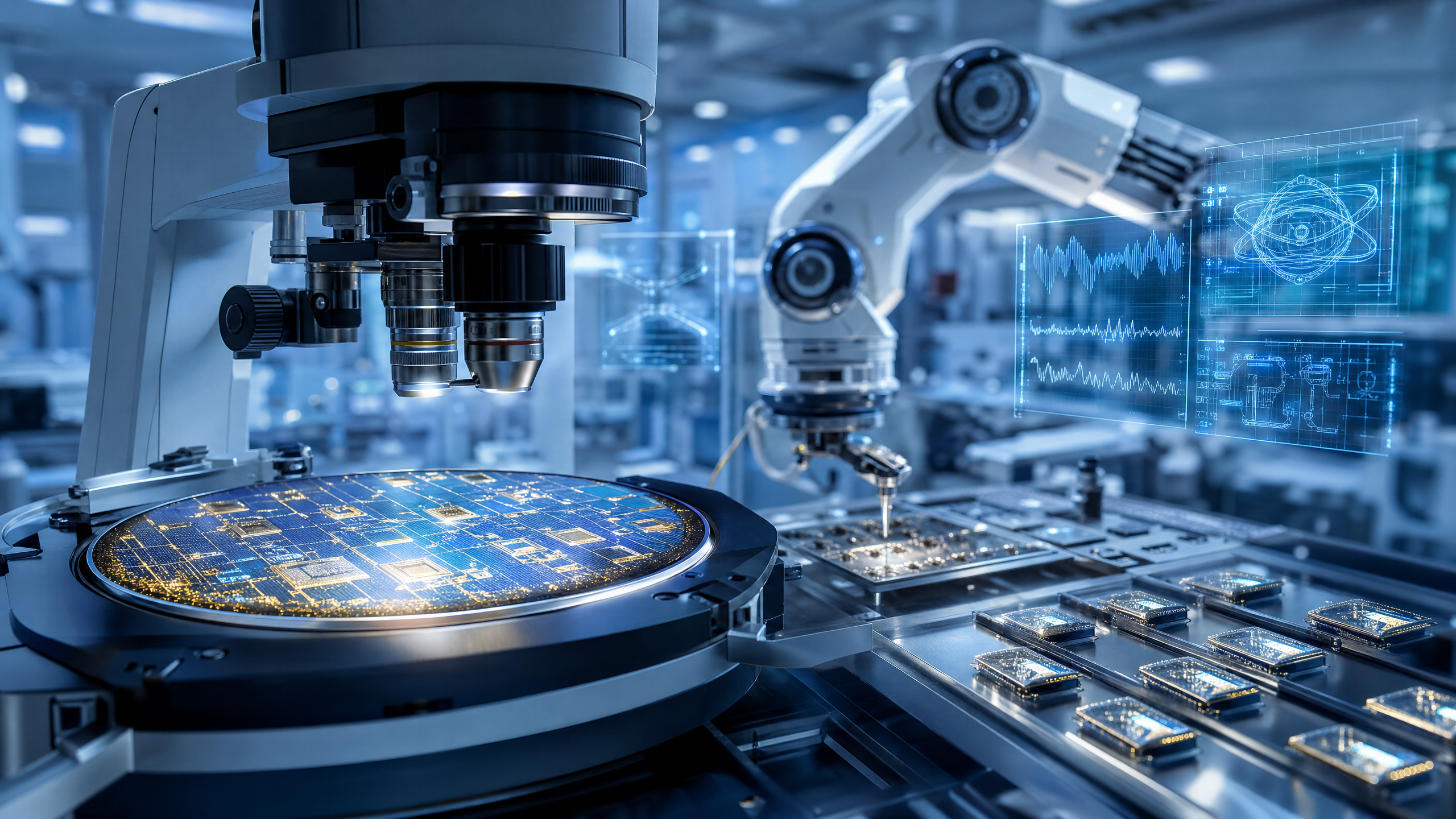
Micro-Electro-Mechanical Systems (MEMS) emerged in the late 1980s as an interdisciplinary technology evolved from semiconductor manufacturing processes. The core concept is elegantly simple: mechanical structures that once required macroscale devices — springs, proof masses, diaphragms, valves, mirror surfaces — are miniaturized to the scale of tens of micrometers to a few millimeters using microfabrication techniques such as photolithography, etching, thin-film deposition, and wafer bonding, then integrated with signal processing circuits on a single silicon wafer to achieve unprecedented miniaturized sensing and actuation capabilities.
This miniaturization is far more than a mere compression of dimensions. When mechanical structures shrink to the micrometer scale, the ratio of surface area to volume increases dramatically, redistributing the physical laws governing elastic deformation, thermal conduction, and acoustic response — enabling sensing principles that are difficult to exploit at the macroscale. Take the MEMS accelerometer as an example: a proof mass suspended on spring structures may weigh only nanograms to micrograms, yet through differential capacitance readout circuits, it can detect inertial disturbances far smaller than gravitational acceleration — theoretically orders of magnitude more sensitive than conventional strain-gauge accelerometers, while occupying hundreds of times less volume.
From a manufacturing standpoint, MEMS and CMOS logic chips share the same foundational process steps (photolithography, etching, thin-film deposition), but MEMS adds several unique steps: Deep Reactive Ion Etching (DRIE) for high-aspect-ratio microstructures; sacrificial layer processes for releasing suspended MEMS structures; wafer bonding for enclosing microcavities (essential for vacuum-packaged gyroscopes); and heterogeneous material integration (such as depositing piezoelectric AlN thin films on silicon substrates for BAW resonators). The high customization of these process steps means that different MEMS device categories (acoustic, inertial, pressure, RF) each require their own distinct process platform — a fundamental reason why MEMS foundries are far more fragmented than logic chip foundries.
1.2 The MEMS Sensor Product Taxonomy
The MEMS sensor family is extraordinarily broad, spanning almost every physical sensing modality. Key categories include:
Acoustic MEMS (Silicon Microphones): The highest-volume MEMS product category by units, operating on the capacitive detection of acoustic pressure variations between a vibrating diaphragm and a fixed backplate, with annual global production exceeding 9 billion units.
Inertial MEMS (Accelerometers / Gyroscopes / IMUs): The highest strategic value MEMS category, exploiting differential capacitance (for accelerometers) and the Coriolis effect (for gyroscopes) to sense linear acceleration and angular rate respectively.
Pressure MEMS: One of the earliest commercialized MEMS product types, available in absolute, gauge, and differential configurations, with applications spanning automotive TPMS, industrial process control, consumer barometric altimetry, and medical blood pressure monitoring.
Flow MEMS: Primarily based on thermal anemometry principles; the dominant sensing element in semiconductor mass flow controllers (MFC) and medical ventilator flow sensors.
Optical MEMS: Includes MEMS micromirrors for LiDAR beam steering and Texas Instruments' Digital Micromirror Device (DMD) for DLP projection, with the DMD representing one of the highest patent-protected optical MEMS products globally.
RF MEMS (BAW/FBAR Filters): The fastest-growing MEMS category by commercial value, critical for 5G smartphone RF front-end frequency selection; the BAW (Bulk Acoustic Wave) filter market is dominated by Murata, Qorvo, and Skyworks in a near-oligopoly structure.
Infrared MEMS: Uncooled microbolometer arrays for thermal imaging, with global leaders including LYNRED (France), Teledyne FLIR (USA), and China's Iray Technology.
Bio-MEMS: Integration of MEMS with microfluidics for Lab-on-Chip applications; includes continuous glucose monitoring (CGM) biosensors, disposable blood pressure transducers, and point-of-care diagnostic chips.
1.3 Three Generations of MEMS Technology Evolution
MEMS technology has evolved through three distinct generational phases:
First Generation (1990–2000): Single-function, analog interface. Exemplified by automotive airbag accelerometers and the initial replacement of electret condenser microphones (ECM) with silicon microphones. Products were functionally simple, with analog voltage outputs and limited integration.
Second Generation (2000–2015): Multi-axis integration, digital interfaces, and consumer electronics proliferation. The launch of Apple's iPhone in 2007 triggered explosive demand for consumer MEMS; tri-axis IMUs, barometric pressure sensors, and MEMS microphones became standard smartphone components; digital I²C/SPI/PDM interfaces displaced analog outputs; and prices collapsed — six-axis IMUs dropped from over $5 to under $1.
Third Generation (2015–present): Sensor fusion, AI-assisted calibration, and automotive qualification at scale. Multi-sensor fusion algorithms (IMU + barometer + magnetometer + GNSS) deliver high-precision navigation; automotive MEMS (AEC-Q100 qualified) are increasingly designed into NEVs; edge AI chips are being co-packaged with MEMS; and RF MEMS (BAW filters) have formed an independent $10B+ market category with 5G commercialization.
1.4 MEMS vs. Adjacent Sensing Technologies
MEMS occupies a well-defined technological niche distinct from CMOS image sensors (no movable mechanical structures), traditional precision mechanical sensors (quartz flexure accelerometers, spinning rotor gyroscopes — higher accuracy but at prohibitive cost and size), and NEMS (nano-electromechanical systems, still predominantly academic research).
1.5 Global MEMS Market Scale and China's Position
By broad-scope statistics (including RF MEMS, optical MEMS, and MEMS actuators), the global MEMS market reached approximately $341 billion in 2025, growing to an estimated $370 billion in 2026. By narrow-scope statistics (physical sensing MEMS only), the 2025 market was approximately $186 billion. Asia Pacific accounts for approximately 36.5% of the global total, with China representing approximately 37.9% of the Asia Pacific market.
China's domestic MEMS sensor market totaled approximately RMB 21.7 billion in 2024, with consumer electronics at 43.7%, automotive at 28%, industrial at 18%, and medical at 6%.
1.6 Deep Coupling Between MEMS Sensors and Chinese Manufacturing
China's manufacturing sector and MEMS sensors are deeply bidirectionally coupled: China's massive consumer electronics, automotive, and industrial manufacturing capacity provides the world's largest MEMS demand market, while MEMS sensors in turn continuously propel Chinese manufacturing toward greater automation and intelligence.
「TianxiaGongchang」, with comprehensive data on 4.8 million active Chinese factories, enables the Institute to quantitatively track the supply-side factory density of specific MEMS categories (gyroscopes, pressure sensors, vibration monitoring) and understand the sensor demand density across downstream industries — creating a bridge between macroeconomic market data and the granular reality of the supply chain.
1.7 Research Scope and Methodology
This report focuses on core MEMS sensor categories (acoustic, inertial, pressure, flow, optical, RF, infrared, bio-MEMS) and their supply chains, competitive landscapes, and domestic substitution progress in the Chinese market as of mid-2026. Research draws from four source categories: industry research reports (Yole Group, GMI, Mordor Intelligence), listed company announcements and annual reports, industry media, and the TianxiaGongchang database of 4.8 million factories.
1.8 MEMS Sensor Technology Maturity Curve Analysis
Positioning different MEMS sub-categories against the Gartner Hype Cycle reveals stark contrasts in maturity:
Plateau of Productivity (fully commercialized): Acoustic MEMS (silicon microphones), consumer accelerometers, consumer barometric pressure sensors.
Slope of Enlightenment (commercialization accelerating): Automotive-grade MEMS IMUs, industrial vibration monitoring MEMS, MEMS micromirrors for LiDAR scanning.
Trough of Disillusionment (adjusting expectations): Some early consumer wearable medical sensors; MEMS speakers (audio quality limitations).
Peak of Inflated Expectations: MEMS tactile sensors for humanoid robots; eVTOL inertial navigation.
Innovation Trigger (research stage): Quantum-enhanced MEMS sensors; neural-MEMS brain-computer interfaces.
This maturity analysis clarifies where Chinese companies have the strongest competitive footholds (mature and slope categories) and where capital allocation requires disciplined timelines (peak and trough categories).
Chapter 2 Global Landscape and China's Position
2.1 Historical Evolution of the Global MEMS Industry
MEMS commercialization is conventionally traced to Bosch's 1991 application of MEMS accelerometers in automotive airbag systems. ADI's 1993 launch of the ADXL50 followed as the first widely marketed MEMS IC. The 2007 iPhone launch ignited mass-market consumer MEMS demand, catalyzing a decade of exponential volume growth and price compression. China's manufacturing rise subsequently made it the dominant production location for consumer MEMS, establishing deep expertise in acoustic MEMS manufacturing, packaging, and system integration.
2.2 Global MEMS Market Concentration
Market concentration differs sharply by category: acoustic MEMS (Knowles, ST, Goertek holding ~68% combined); inertial MEMS (ST, Bosch, TDK-InvenSense, ADI, Infineon holding ~55%); RF MEMS BAW (Murata, Qorvo, Skyworks holding ~90% — the highest concentration of any MEMS category).
2.3 Chinese Companies' Global Ranking and Breakthrough Paths
Among the Global MEMS TOP30, only 4–5 Chinese mainland companies are represented — a structural underrepresentation given China's manufacturing share. Three distinct breakthrough strategies are evident: (1) Scale Manufacturing + Technology Migration (exemplified by Goertek); (2) Focused High-End Design IP (exemplified by QST, MiraMEMS); and (3) MEMS Foundry Infrastructure (exemplified by SiWave Electronics/Silex).
2.4 Geopolitics Reshaping the Supply Chain
The US–China semiconductor contest has materially accelerated MEMS supply chain localization. Key dynamics include: TSMC channel risk driving domestic foundry migration; US export controls on ALD equipment affecting BAW process equipment procurement; Huawei's strategic role as both the largest Chinese BAW consumer and a driving force behind BAW industrialization; and Japan/Korea suppliers being explored for supply chain diversification.
2.5 Global MEMS Market Outlook
The global MEMS market (broad scope) is projected to maintain approximately 8%–10% CAGR through 2026–2031, driven by automotive electrification, industrial IoT deployment at scale, 6G pre-research driving next-generation RF MEMS, and edge AI integration with MEMS nodes.
2.5.1 Global MEMS Supply Chain Divergence and Reconfiguration
The 2020–2026 period's triple pressures of COVID supply disruption, geopolitical rivalry, and automotive chip shortages have produced not a collapse of globalization but a more nuanced "regional-first with intra-regional supply chain concentration" pattern. Apple is diversifying some MEMS module production to India and Vietnam. European OEMs are establishing dual-track "Europe + Asia" backup qualification programs. RF MEMS supply chain security has elevated to strategic-level policy attention in China. Most significantly, China for the first time possesses the foundational capabilities to support a complete domestic MEMS ecosystem — from design through foundry, packaging, testing, system integration, and local market validation.
2.6 China MEMS Industry Cluster Geography
Distinct geographic clusters have formed by MEMS category: Pearl River Delta (acoustic MEMS; Goertek Zhuhai, Luxshare, Merry Electronics; 460+ microphone factories); Yangtze River Delta (inertial and pressure MEMS design; QST, MiraMEMS in Wuxi–Shanghai; SMIC Shanghai foundry); Chengdu–Chongqing (inertial MEMS research including CETC institutes; Sienpower semiconductor); Beijing (MEMS foundry: SiWave FAB3; MEMS metrology); Wuhan (optical and RF MEMS adjacent technologies).
2.7 China MEMS Academic and Industrial R&D Ecosystem
Key institutions include: Institute of Microelectronics (CAS, Beijing), Shanghai Institute of Microsystems and Information Technology (CAS), Southeast University MEMS Key Lab (Nanjing), Beihang University (inertial systems), Shanghai Jiao Tong University / Fudan University (process and RF MEMS). Chinese MEMS patent applications now exceed 18,000–20,000 per year with 18.1% YoY growth — 1.5× the international average — though average quality measured by citation rate and PCT application ratio still trails US and European leaders.
Chapter 3 Core Technologies
3.1 Acoustic MEMS: From Hardware Race to AI Acoustic Systems
Silicon microphone SNR has improved from ~62–65 dB(A) a decade ago to over 74 dB(A) in today's flagship products. Wafer-Level Package (WLP) footprints have shrunk to 1.5×1.9 mm at 0.65 mm height. ANC (Active Noise Cancellation) technology, requiring 2–3 microphones per earbud, has roughly doubled or tripled per-device MEMS microphone content. Vehicle-grade acoustic MEMS (AEC-Q100, SNR > 68 dB, IP67) is growing at 21% annually, with Goertek reaching 100 million units shipped in automotive acoustic MEMS in 2025.
3.2 Inertial Sensors: The Core Battleground of Domestic Substitution
MEMS gyroscopes exploit the Coriolis effect in oscillating proof masses to detect angular rate; extracting Coriolis-induced motion at 10⁻³–10⁻⁴ of the drive amplitude demands micron-level structural symmetry, vacuum packaging (< 1 mBar) for high Q-factor maintenance, and precision ASIC analog design. These triple barriers explain why gyroscope markets are more concentrated (ST, Bosch, TDK commanding ~75% combined) and domestic substitution more challenging than for accelerometers.
3.2.2.1 Temperature Effects on Gyroscope Performance
MEMS gyroscope zero-rate output (ZRO) is highly temperature-sensitive, primarily because silicon's Young's modulus decreases at approximately −60 ppm/°C with rising temperature. High-precision MEMS gyroscopes (such as ADI's ADIS series) employ two-level temperature compensation: hardware-level compensating spring beam design plus integrated precision thermometry; and software-level full-temperature-range factory calibration (−40°C to +85°C in 5–10°C steps) with polynomial compensation coefficients stored in on-chip OTP or EEPROM.
3.2.4 MEMS IMU Application Requirements in Unmanned Systems
Agricultural drones (large volume, modest requirement): ±16g / ±2000 °/s IMUs; domestic substitution already underway — Goertek and DJI supply chain domestic IMU rate expected to exceed 50% in 2026. Logistics drones (medium): zero-bias stability ~10–50 °/h. eVTOL urban air vehicles (highest consumer-grade): < 1–5 °/h zero-bias stability — currently no domestic product meets this spec; ADI imports remain dominant.
3.2.5 MEMS IMU Long-Term Stability and Lifecycle Management
Automotive MEMS IMUs must maintain performance over 15-year/150,000 km lifecycles. Mechanical fatigue cycles can exceed 10¹⁰; zero-bias drift from material creep, vacuum degradation, and ASIC NBTI aging must be managed through system-level self-calibration. Chinese MEMS companies have comparatively limited long-term reliability data — most were founded in the 2010s and lack the multi-decade empirical records of Bosch or ADI — representing a critical gap that must be systematically addressed before successfully entering automotive and industrial markets.
3.3 Pressure Sensors: Deep Domestic Cultivation in Industrial Markets
Piezoresistive pressure MEMS (simpler, higher overload tolerance) vs. capacitive pressure MEMS (lower power, higher linearity) suit different applications. Industrial MEMS pressure sensors at the mid-precision tier (±0.1%–±1% FS, 0–60 bar) have achieved relatively high domestic substitution rates; high-precision (< 0.05% FS/year stability, > 100 bar, corrosion-resistant media) remain import-dependent.
3.4 Flow Sensors, Optical MEMS, and RF MEMS (BAW)
Thermal mass flow MEMS (MFC applications in semiconductor fab), differential-pressure flow MEMS, and Coriolis flow MEMS each serve distinct niches with varying domestic substitution rates (near-zero for semiconductor MFC sensing elements). BAW/FBAR filters leverage AlN or ScAlN thin-film piezoelectric resonance, with FBAR (air-cavity) and SMR (Bragg reflector) as the two main architectures; Murata and Qorvo dominate with combined ~60%+ market share. China's first 8-inch BAW production line (SiWave + MEMSonics, Beijing) began production in July 2023 — a significant milestone but still years behind international leaders in yield and frequency coverage.
3.5 Infrared MEMS and Gas Sensors
Uncooled microbolometer infrared arrays (8–14 μm LWIR) enable compact thermal imaging cameras without expensive cooling systems. Iray Technology (China) is the leading domestic player approaching international parity at some pixel formats. MEMS NDIR gas sensors enable miniaturized CO₂/CH₄ detection critical for smart HVAC and industrial safety applications.
3.6 Bio-MEMS and Microfluidics
Lab-on-Chip devices integrate biological sample handling, reaction, and detection on MEMS-fabricated substrates. Implantable MEMS CGM biosensors (subcutaneous glucose needles < 0.5 mm diameter) are approaching parity with Abbott and Dexcom products from Chinese companies Silicon Bionics and Microtech Medical. Bio-MEMS represents one of the few high-end MEMS categories where Chinese companies have a realistic path to global competitiveness before 2030.
Chapter 4 Supply Chain (Design → MEMS Foundry → Packaging & Testing → System Integration)
4.1 Supply Chain Architecture and Division Logic
The MEMS supply chain mirrors the logic semiconductor supply chain structure (design → manufacturing → packaging and testing → system integration) but with unique complexities: process platform diversity across MEMS categories, mandatory MEMS+ASIC co-design requirements, and packaging's decisive performance role (vacuum packaging for gyroscopes, acoustic cavity packaging for microphones, reference cavity sealing for pressure sensors).
4.2–4.6 Upstream Materials, MEMS Foundry, Packaging, System Integration, and Talent
SOI wafers (Soitec ~70% global market share; domestic Siltronic China developing); specialty DRIE etch gases (SF₆, C₄F₈, XeF₂) — largely domestically supplied; MEMS DRIE equipment (NAURA NMC series advancing, gap vs. SPTS/AMAT remains). SiWave Electronics (via Silex parent) is the world's largest pure-play MEMS foundry with 60+ process modules; Hua Hong Semiconductor provides important MEMS foundry services with 109.5% capacity utilization in Q3 2025. WLP packaging (Goertek, AAC Technologies), precision calibration testing infrastructure (primarily import-dependent for high-precision motion reference systems). The MEMS workforce challenge: fewer than 200–300 top-tier structural design engineers in China, with automotive-grade MEMS system engineers particularly scarce.
4.7–4.8 Global Foundry Competitive Positioning and EDA Tool Ecosystem
SiWave/Silex leads on process module breadth; TSMC leads on MEMS+CMOS monolithic integration; Bosch and ST lead on yield maturity for their respective proprietary categories. MEMS-specific simulation tools (COMSOL, Coventor SEMulator3D — the latter a Lam Research product carrying export control risk) have no domestic Chinese equivalents, representing a systematically underappreciated vulnerability in China's MEMS self-sufficiency ecosystem. ASIC design (standard 0.18 μm CMOS) is less constrained, with SMIC and Hua Hong PDKs available.
Chapter 5 Downstream Applications
5.1 Consumer Electronics: The Historic Mass-Market Engine
Flagship smartphones carry 4–6 MEMS microphones, a 6-axis IMU, barometric pressure sensor, and in some models an ultrasonic PMUT fingerprint sensor. TWS ANC earphones require 2–3 MEMS microphones per earbud, tripling per-device microphone content vs. pre-ANC earphones. Wearables add 6-axis IMUs for AR headset tracking, barometers for altitude measurement, and bone-conduction MEMS sensors. Smart speakers and IoT devices form a massive high-volume / price-sensitive channel for sub-$0.3 MEMS microphones.
5.2 Automotive: Highest Unit Value, Highest Barrier Market
A modern premium NEV carries 40+ MEMS sensors: airbag crash sensors (±200–400g, < 1 ms response, ASIL D), ESP IMUs (AEC-Q100 Grade 1, ±3g / ±300 °/s), TPMS sensors (0–8 bar pressure + 1-axis accelerometer + MCU + RF), battery management pressure sensors, ADAS multi-sensor fusion IMUs, HVAC and air suspension sensors, and cabin voice microphone arrays of 6–10 MEMS microphones. Domestic substitution rate in automotive MEMS remains below 20% (Tier1 certification the primary barrier), but NEV supply chain openness is accelerating the entry of Chinese MEMS suppliers for the first time.
5.3–5.7 Industrial, Medical, IoT, AR/VR, and Sensor Fusion
Industrial vibration monitoring (ADI ADXL100x series enabling predictive maintenance at 42% reduction in unplanned downtime in documented deployments); medical (disposable blood pressure transducers, ventilator flow sensors, CGM wearables — all with 70–80% import dependence in high-precision segments); IoT (ultra-low power + ultra-low cost + fragmented applications structure); AR/VR (6-axis IMU density: 2–4 per headset; 2025 smart glasses growing 211% YoY); multi-sensor fusion systems that create system-level value far exceeding individual sensors.
5.8 Downstream Market Demand Quantification
China's 2025 estimated annual MEMS demand by application: Smartphones ~9 billion units; TWS earphones ~3 billion microphones; Automotive TPMS ~150 million sensor sets; Industrial vibration monitoring ~30 million nodes; Smart home/IoT ~5 billion units; Medical ~50 million units.
Chapter 6 Key Players Survey
6.1 Global Leaders
Bosch Sensortec / Bosch Automotive: World's largest MEMS company by revenue; IDM with proprietary 8-inch Reutlingen fab; BMI270 is the leading consumer IMU by volume; ~35% global automotive MEMS inertial market share. Core moat: vertical integration + 30+ years process maturity + automotive electronics system ownership.
STMicroelectronics: Broadest consumer MEMS product line; LSM6DSV with on-chip Machine Learning Core integrates edge AI + MEMS in a single die; proprietary 8-inch Agrate fab.
TDK InvenSense: Acquired by TDK in 2017 ($1.3B); dominant in high-volume consumer IMU; major DJI drone IMU supplier.
Knowles Corporation: Pioneer in silicon MEMS microphone commercialization; transitioning toward automotive, hearing aid, and medical MEMS microphones to defend margins against Goertek.
Analog Devices: Dominant in high-precision industrial and defense MEMS IMU (ADIS series, $200–600 per unit); ADI + Siemens MindSphere collaboration for industrial predictive maintenance solutions.
Murata: Global RF MEMS BAW oligopolist; integrated Resonant XBAR IP for 6G pre-research; strategic binding with Apple and Samsung.
6.2 Chinese Enterprise Profiles
Goertek (Goertek Microelectronics): China #1 / Global #5 MEMS sensor company; RMB 4.5B 2024 revenue; WLP packaging parity with Knowles; 26% global acoustic MEMS market share; pivoting aggressively into automotive acoustics (100M+ vehicle MEMS units 2025) and AR/VR.
AAC Technologies (Acoustics): Acoustic system integrator model; 56.2% YoY growth in sensor & semiconductor revenue (H1 2025); expanding into differential pressure and haptic feedback MEMS.
Merry Electronics (Minxin): First MEMS Fabless on China's STAR Market (2020); consumer acoustic and entry-level accelerometer products; mid-tier domestic market focus.
QST (Quick-Sense Technology / Sijui): China's leading MEMS inertial Fabless; featured in Yole Group's Consumer MEMS Inertial Sensors Comparison 2025 alongside Bosch, ST, TDK; C-round completed 2025; IPO path repeatedly blocked, exploring reverse merger with Anchor Vehicle Inspection.
MiraMEMS: Wuxi-based automotive and industrial-grade MEMS accelerometer specialist; among the Chinese companies closest to automotive-grade volume production; also featured in Yole 2025 comparison report.
SuoAo Sensing: Suzhou-based MEMS pressure sensor company for automotive TPMS and industrial applications; one of few domestic companies with full capability from MEMS die design to automotive-grade packaging.
Silan Micro (Silan Microelectronics): IDM model with Chengdu and Hangzhou fabs; MEMS pressure and accelerometer products; featured in Yole 2025 inertial comparison.
SiWave Electronics / Silex Microsystems: Pure-play MEMS foundry — the world's largest; acquired by Beijing SiWave in 2016; 60+ process modules serving acoustic, inertial, pressure, RF, medical; Beijing FAB3 (8-inch) Phase 1 (5,000 wafers/month) operational from 2021.
6.3 Emerging Domestic Companies
DeepSi Semiconductor (Chengdu, MEMS single-axis gyroscope specialist); Mingrui Sensing (Shanghai/Beijing, MEMS accelerometer and magnetic sensor); Xinhai Technology (Shenzhen, MEMS barometric + multi-category analog); Iray Technology (Wuhan, uncooled infrared MEMS — domestic leader).
6.4 Chinese vs. International Competitive Positioning
| Dimension | Domestic Leaders | International Benchmark | Gap |
|---|---|---|---|
| Consumer Acoustic MEMS volume | Goertek, AAC | Knowles, ST | Domestic leads in scale, parity at high end |
| Consumer IMU performance | QST, MiraMEMS | ST LSM6DSV, Bosch BMI270 | ~1 gen behind (consumer); ~3 gen (automotive) |
| MEMS Foundry capability | SiWave/Silex, Hua Hong | TSMC specialty process | SiWave approaching parity on some categories |
| Automotive pressure MEMS | SuoAo, Xinhai | Bosch, Infineon, NXP | ~1–2 gen gap (AEC-Q100 breadth) |
| BAW RF MEMS | SiWave-MEMSonics | Murata, Qorvo | ~3–5 gen gap (yield, frequency coverage) |
| High-precision industrial IMU | None commercialized | ADI (ADIS), Honeywell | ~5–10 gen gap (near-zero domestic) |
| Infrared MEMS | Iray Technology | LYNRED, FLIR | ~1–2 gen gap |
6.5 MEMS Competitive Barrier Quantification
A four-dimension (technical process, capital intensity, certification, customer relationship) barrier scoring analysis reveals: consumer acoustic MEMS and industrial vibration monitoring carry medium barriers (domestic substitution largely achieved or underway); consumer IMU and industrial flow (MFC) face medium-high barriers (primary focus 2026–2030); automotive-grade IMU, BAW filters, and high-precision industrial IMU carry extreme barriers (10+ year domestic programs required).
6.6 Ecological Niche Strategies
China's MEMS companies have differentiated across four ecological niches: Scale Manufacturing (Goertek, AAC), Technical Deep-Specialization (QST, MiraMEMS, DeepSi), Foundry Platform (SiWave), and IDM Integration (Silan Micro, Iray). Some companies are attempting cross-niche migration with uncertain outcomes — particularly the Goertek move from scale manufacturing toward technical specialization in inertial and automotive MEMS.
Chapter 7 Domestic Substitution Tiers and Database Insights
7.1 Domestic Substitution Maturity Framework
China's MEMS domestic substitution progress shows extreme divergence across categories. 「TianxiaGongchang」, as a B2B platform covering 4.8 million active factories, provides irreplaceable first-hand supply-side signals that complement indirect measurements from financial reports and industry surveys.
Level 4 (>60% domestic rate): Consumer acoustic MEMS (silicon microphones); consumer barometric pressure sensors.
Level 3 (30–60%): Consumer/IoT three-axis accelerometers; industrial MEMS pressure sensors (low-to-mid pressure); consumer MEMS gyroscopes (single/dual axis).
Level 2 (10–30%): Automotive TPMS pressure sensors (die level); automotive MEMS accelerometers/gyroscopes (ESP/ADAS); industrial high-precision MEMS pressure sensors.
Level 1 (<10%): RF MEMS BAW/FBAR filters (<5%); high-precision industrial/aviation inertial MEMS; medical-grade MEMS sensors (NMPA Class II+); optical MEMS DLP micromirrors (TI monopoly, zero domestic commercial alternative).
7.2–7.5 TianxiaGongchang Database Insights and Structural Drivers
TianxiaGongchang's factory data reveals: acoustic MEMS supply chain (462 microphone factories, 75%+ in Guangdong); inertial MEMS design ecosystem (31 gyroscope + 12 accelerometer + 21 inertial sensor factories combined — only ~1/7 the density of acoustic MEMS, confirming inertial MEMS industrialization lag); pressure sensor demand density (458+ factory searches — the highest of any MEMS-related category, reflecting massive and dispersed industrial demand); vibration monitoring (235 factories, direct reflection of Chinese manufacturing digital transformation); and flow sensors (131 factories, industrial and medical dual demand tracks).
Five structural drivers of domestic substitution acceleration: (1) Strategic procurement intent shift by major Chinese OEMs (Huawei, BYD, DJI) toward domestic suppliers for supply chain security; (2) National IC Fund Phase 3 (RMB 344B) targeting special process semiconductors including MEMS; (3) NEV supply chain reconstruction enabling Chinese MEMS companies to bypass traditional Tier1 gatekeeping; (4) Domestic foundry capabilities maturing (SiWave FAB3, Hua Hong MEMS platforms); (5) Technical gap narrowing (Yole Group 2025 comparison including QST and MiraMEMS alongside Bosch, ST).
Chapter 8 Price Tiers and Business Models
8.1–8.5 Price Band Analysis and Three Primary Business Models
MEMS sensor prices span four orders of magnitude: from sub-$0.1 bare die acoustic chips to $600+ precision military-grade IMU systems. Price band one (<$1): consumer red ocean (15–25% gross margin). Price band two ($1–5): mainstream consumer MEMS, highest total value segment (performance + price combined competition). Price band three ($5–20): automotive entry-grade and industrial MEMS entry-grade (35–50% gross margin, high customer stickiness). Price band four ($20–100): industrial mid-to-high precision (50–65% gross margin). Price band five (>$100): strategic precision MEMS (ADI ADIS series, medical Class II transducers).
Three primary business models: Fabless pure design (QST, MiraMEMS, Merry); IDM vertical integration (Bosch, ST, ADI, Silan Micro); Module Integration Leader (Goertek, AAC Technologies — not owning wafer fabs but deep in MEMS chip design, WLP packaging, acoustic cavity engineering, and algorithm integration).
8.6 MEMS Product Pricing Cycles and Trends
Consumer MEMS follows an approximate Moore's Law-like price decline: 6-axis IMU dropped ~80% over 10–15 years but has stabilized at ~$1 floor. Automotive MEMS prices are highly rigid (only ~20–30% decline over a decade vs. 60–70% consumer decline) due to high switching costs and long platform lifecycles. BAW filters show the most extreme price stability — maintained at $0.3–0.8/unit for 10 years due to oligopolistic supply structure.
8.7 Subscription and Data-Driven Business Model Emergence
Industrial IoT vibration monitoring providers transitioning from hardware sales to subscription-based predictive maintenance platforms (RMB 200–500/node/year). Automotive MEMS sensor data increasingly monetized for ADAS algorithm training. CGM medical MEMS devices driving monthly data analysis subscription revenue (RMB 100–500/month). MEMS sensors evolving from one-time hardware sales to ongoing data infrastructure.
Chapter 9 Representative Customer Case Studies
9.1 Apple AirPods Pro: The Global Benchmark for Consumer Acoustic MEMS
AirPods Pro Gen 2 deploys 3 MEMS microphones per earbud (1 feedforward ANC + 1 feedback ANC + 1 call), 6 total with SNR > 72 dB(A), batch sensitivity matching < ±0.5 dB, WLP footprint < 2.5 mm², achieving ~−48 dB active noise cancellation depth. Goertek and Knowles are the primary MEMS microphone suppliers, with AAC Technologies also involved. Apple supply chain qualification provides Chinese MEMS companies with world-class manufacturing process validation.
9.2 NIO Automotive: A Strategic Opening for Domestic MEMS IMU
NIO ET9 (2025, L2++ ADAS) uses 2–3 MEMS IMUs for primary plus redundant inertial reference. At 300,000 vehicles/year target with 3 IMUs per vehicle at $5–15 automotive-grade price, the total IMU procurement value alone is $4.5M–13.5M. NIO's openness to parallel domestic IMU qualification (for non-safety-critical functions) represents the first realistic channel for Chinese inertial MEMS companies to enter the automotive supply chain.
9.3 Major Steel Mill Vibration Monitoring: Proven Industrial MEMS ROI
A large Chinese steel mill deployed approximately 2,000 wireless MEMS vibration monitoring nodes (ADI ADXL1004-based) across rolling mill operations. Year-1 outcomes: 42% reduction in unplanned downtime; RMB 68M annual loss prevention; ROI approximately 5.7×. This quantified business case is driving rapid replication across Chinese heavy industry — and simultaneously creating domestic MEMS replacement evaluation opportunities as these systems scale.
9.4 Huawei BAW Filters: The RF MEMS Domestication Inflection Point
Huawei's annual smartphone shipments of 50–70 million units represent $250M–$1B+ in potential domestic BAW filter demand — the single largest demand anchor for China's nascent BAW industry. The SiWave-MEMSonics 8-inch BAW production line (operational July 2023) provides the first commercially viable domestic supply option.
9.5 ICU Blood Pressure Monitoring: Gradual Medical MEMS Substitution
A provincial tertiary hospital ICU evaluated domestic disposable pressure transducers (DPTs) against BD/Argon Medical imports: 200-sample parallel test over 6 months found domestic products meeting clinical accuracy (<±2 mmHg) at 35% lower cost (RMB 52 vs ~80 per unit), with slightly higher anomaly rate (3.5% vs 1.8%). Result: domestic DPTs adopted for lower-acuity monitoring beds while ICU critical beds continue with imports — representing the typical Chinese medical MEMS "low-risk entry → data accumulation → scope expansion" substitution trajectory.
9.5.1 Semiconductor Fab MFC MEMS Sensing Element Substitution
A domestic 8-inch wafer fab attempted to replace imported MFC (mass flow controller) MEMS thermal sensing elements with domestic alternatives after supply chain disruptions extended replenishment lead times to 16–20 weeks. After 6-month testing, domestic MEMS flow sensing elements achieved required accuracy (< ±0.5%) and stability (2,000 hours continuous, no drift exceedance) in CVD applications, compressing replenishment lead time to 3–4 weeks — a strategically significant supply chain security milestone.
9.6 AR/VR MEMS IMU: Rokid's Dual-Track Procurement
Rokid Max 2 (2025) adopted QST's 6-axis IMU for auxiliary tracking (gait sensing), achieving 30% cost reduction and shorter lead times vs. ST, while retaining ST LSM6DSV as primary tracking IMU due to QST's slightly higher gyroscope noise density visible as marginal image stability degradation. This "auxiliary entry → performance data accumulation → primary track future" procurement pattern is emerging as the dominant domestication pathway for consumer MEMS IMU in AR/VR.
Chapter 10 Investment, Financing, and M&A
10.1–10.5 Three-Phase Investment Evolution, National IC Fund, M&A Drivers, Regional Fragmentation, and Exit Challenges
Global MEMS investment has evolved through three phases: strategic acquisition phase (2000–2015: TDK acquiring InvenSense for $1.3B; Qorvo assembling BAW portfolio); Chinese capital influx phase (2018–2022: QST, DeepSi, Mingrui, SuoAo Sensing all completing multi-hundred-million RMB rounds); and the current differentiation/consolidation/alternative-listing phase (2022–2026: primary market cooling, STAR Market tightening, leading to reverse merger exploration and industrial consolidation).
National IC Fund Phase 3 (RMB 344B, launched 2024) explicitly targets special-process semiconductors including MEMS, MEMS equipment domestication, and BAW yield breakthrough. The Phase 1 orderly divestment (releasing >RMB 30B) creates a "divest mature assets → reinvest early growth" cycle.
Chinese MEMS company exit pathways remain constrained: STAR Market listing has proven exceptionally difficult (Merry Electronics is the rare success case); Hong Kong market offers an alternative path; cross-border M&A is restricted by CFIUS and European equivalents; domestic strategic M&A (Goertek acquiring MEMS design companies) has emerged as the most realistic exit channel but typically at lower valuation multiples than US strategic buyers would have provided.
10.6 MEMS Investment Case Studies
QST's Financing and Listing Journey: Multi-round financing trajectory from 2012 founding through C-round in 2025, two failed STAR Market attempts (2021, 2023), and current exploration of reverse merger with Anchor Vehicle Inspection — the most illustrative case of China's premium MEMS design company capital market challenges.
SiWave's Silex Acquisition: RMB 450M ($67M) in 2016 to acquire the world's largest pure-play MEMS foundry, retaining independent European management for customer trust, while building Beijing FAB3 to transfer and replicate process capabilities domestically — retrospectively one of China's most strategically valuable semiconductor acquisitions at the time of execution.
IC Fund Phase 1 Divestment → Phase 3 Reinvestment Cycle: Structured portfolio rotation releasing RMB 30B+ from mature holdings (NAURA, Hua Hong) to reinvest via Phase 3 in early/growth-stage MEMS companies — providing systematic capital continuity for the MEMS domestication push through 2030.
Chapter 11 Policy and Standards
11.1–11.5 National Policy Layers, Technical Standards, New Industrialization Opportunities, Trade Policy Effects, and IP Policy
China's MEMS policy support operates across multiple levels: top-level "New Industrialization" strategy (successor to Made in China 2025) targeting 60%+ industrial critical sensor domestication by 2030; IC Industry Development Promotion Plan and National IC Fund system; Ministry of Industry and Information Technology Automotive Electronics Domestication Action (2023–2024); NEV market policy creating the world's largest electric vehicle proving ground for domestic MEMS suppliers; ISO 26262 (automotive functional safety), AEC-Q100, IEC 60601 (medical) as international standard compliance frameworks; and strengthening domestic IP policies (accelerated examination for high-value MEMS patents, PCT filing subsidies).
11.6 Key City MEMS Industrial Policy Comparison
Shanghai: Up to RMB 20M design support (including 40% tape-out subsidies); MEMS Industry Alliance coordination; free-trade zone import facilitation for SOI wafers and specialty gases.
Wuxi (QST and MiraMEMS R&D hub): "Perceiving China" industrial strategy; RMB 50B+ special sensor industry fund; MEMS pilot line services reducing early-stage tape-out risk; RMB 100–300M talent attraction packages for MEMS PhD-level engineers.
Shenzhen: "Specialized, Refined, Differentiating, Novel" (专精特新) policy for MEMS SMEs; incubator clean room sharing and EDA tool access; Shenzhen–Hong Kong cross-border R&D cooperation subsidies.
Chengdu: Military-civil fusion policy enabling CETC institute technology transfer to commercial MEMS companies; sensor industrial park with shared vibration testing and calibration facilities.
11.7 Standards and International Alignment
SAC/TC313 (National Sensor Standardization Committee) has published domestic test method standards for MEMS pressure sensors, accelerometers, and microphones (adapted from IEC 61298); drafted industrial MEMS reliability evaluation standards (domestic certification potentially 30–50% shorter/cheaper than AEC-Q100); and pushed MEMS digital interface standardization for industrial PLC/DCS integration. China has achieved "Participating Member" or "Joint Secretariat" status in relevant IEC TC47 and ISO/TC229 working groups — a visible increase in standard-setting participation.
Chapter 12 Trends and TianxiaGongchang Analyst Forecasts
12.1 Acoustic MEMS: From Hardware Race to AI Acoustic Systems
SNR hardware competition is approaching physiological limits (~74 dB(A) current benchmark vs. ~65 dB(A) human ear noise floor). Competition axis is shifting to AI acoustic system performance: multi-microphone beamforming + adaptive ANC, speaker separation, edge-to-semantic latency, always-on microphone (<20 μW). This shift advantageous for Goertek (system integration strength) vs. Knowles (pure chip design). Analyst forecast (2026–2030): Domestic acoustic MEMS rate from ~60% to 68–72%; automotive acoustic MEMS (Goertek, AAC) gaining European OEM direct supply; AI acoustic chip (MEMS+DSP single package) emerging as a new premium product category by 2027–2028.
12.2 Inertial MEMS: Automotive Qualification + Precision Upgrade Dual Drive
「TianxiaGongchang」 Analyst Forecast: Automotive MEMS IMU domestic rate from <20% in 2025 to 30–35% by 2030, CAGR ~15%; entering volume supply chain at a leading NEV OEM (BYD or NIO) will be the strategic inflection point for Chinese MEMS IMU companies' capital market rerating. High-precision IMU for drones, low-altitude economy eVTOL, and industrial robots (< 5 °/h zero-bias stability) represents the next domestic MEMS breakthrough direction, with 1–2 Chinese companies expected to achieve commercial products in this tier by 2028–2030.
12.3 RF MEMS: From "Chokehold" to "Breaking Through" — The Critical Five Years
Analyst 5-year BAW forecast: 2026: SiWave 2–4 GHz BAW yield >85%, approaching economic production threshold; 2027–2028: initial volume supply of selected frequency bands in Huawei domestic 5G phones (5–15% per-phone domestic BAW ratio); 2029–2030: Sub-6G frequency band coverage expanded to 15–20 major bands, domestic rate 20–30% for domestic phone brands; 2030+: ScAlN-based 6G frequency BAW development window opens.
12.4 Industrial and Automotive MEMS: Resilient Long-Term Growth
Automotive MEMS Asia-Pacific market (China-dominated) projected to grow from ~$9.5B (2025) to ~$14B (2030) at ~8% CAGR. Automotive acoustic MEMS (vehicle microphones) the first sub-category to break 40–50% domestic rate by 2028 (Goertek, AAC). Industrial MEMS vibration monitoring nodes deployment growing from ~5M to ~30M units 2026–2030 (domestic rate from 15% to 30–35%). Industrial MFC MEMS flow sensing elements: 1–2 domestic scale suppliers emerging (rate from near-zero to 15–20%).
12.5 Emerging Technology Trends
MEMS + Edge AI Integration: ST LSM6DSV's Machine Learning Core is a third-generation leading example; next step is RISC-V or dedicated AI accelerator co-packaged with MEMS for autonomous anomaly detection without cloud connectivity, elevating sensor unit value from $1–5 (hardware-only) to $10–30 (MEMS + AI processing).
Silicon Photonics + MEMS Fusion: On-chip optical switches (MEMS-actuated photonic switches for data center routing), and silicon photonic MEMS LiDAR potentially enabling <$100 solid-state LiDAR if realized at scale — still 3–5+ years from volume production.
Bio-MEMS Commercialization: CGM, implantable cardiac pressure monitoring, liquid biopsy chips approaching large-scale commercialization. Chinese companies (Silicon Bionics, Microtech Medical) among the few categories with realistic global competitiveness potential before 2030.
ScAlN Material System Industrialization: Key enabling material for next-generation high-frequency BAW resonators; ALD deposition process and large-area uniformity control are central technical challenges; NAURA and AMEC ALD equipment progress is a leading indicator for tracking China's 6G RF MEMS industrialization timeline.
12.5.1 MEMS Sensors and the Humanoid Robot Inflection Point
Humanoid robots (Tesla Optimus, Figure AI, Unitree, Zhiyuan Robotics) represent the most technically comprehensive MEMS sensor application yet conceived: tactile sensor skin (MEMS pressure array for contact force mapping), distributed IMU arrays (10–20 per humanoid), collaborative robot joint torque sensing (domestic companies Yuanfu Technology, Jiquan Sensing starting to supply domestic cobots). The Chinese humanoid/cobot market (RMB 10B in 2025, projected RMB 80B+ by 2030) represents a significant new market opening for inertial and force/tactile MEMS domestication.
12.6 Low-Altitude Economy and eVTOL: China's Next MEMS IMU Strategic Opportunity
Low-altitude economy (policy-designated strategic emerging industry in 2024–2026) drives eVTOL, agricultural drones, and logistics drone IMU demand. eVTOL (Ehang, Autoflight, Xpeng AeroHT) requires near-aviation-grade MEMS IMU (<1–5 °/h zero-bias stability, −40°C to +70°C full-range) — no domestic product currently qualifies; achieving eVTOL airborne equipment airworthiness certification for a domestic MEMS IMU would represent a landmark breakthrough into aviation supply chains. Agricultural drones (DJI Agras T-series) already showing domestic IMU adoption >50% for primary flight control in select models.
Chapter 13 Risk Analysis
13.1 Automotive Qualification Period as Structural Barrier
The automotive MEMS qualification cycle (Tape-Out → AEC-Q100 testing → Tier1 APQP/PPAP audit → vehicle-level DVP verification → SOP volume ramp) totals 4–8 years with cash burn throughout. This creates severe liquidity risk for smaller Chinese MEMS design companies attempting direct automotive entry. Recommended strategy: begin with shorter-qualification-cycle non-safety functions (vehicle microphones, TPMS peripheral sensing) to accumulate automotive supply chain process knowledge before attacking safety-critical applications (ESP IMU, airbag accelerometer).
13.2 Foundry Capacity Expansion's Double-Edged Nature
Risks of rapid domestic MEMS foundry expansion: potential overcapacity + price war if consumer electronics demand cycles down (2027–2028 downturn risk); immature new-line yields damaging customer product reputations; process platform concentration (limited yield-mature platforms for inertial MEMS vacuum packaging and BAW piezoelectric thin films).
13.3 Overseas IP Barriers
Knowles (acoustic packaging patents), Bosch/ST (inertial MEMS structural patents), and Murata/Qorvo (BAW composition and structure patents) collectively form significant patent thickets for Chinese companies seeking to export or enter US/European markets. China's MEMS patent volume now leads globally, but quality (citation rate, PCT ratio) trails US and European leaders.
13.4 Residual Material and Equipment Dependencies
SOI wafers (Soitec ~70% global share; domestic alternatives 2–3 years from scale production); high-precision MEMS DRIE equipment (NAURA advancing but gap vs. SPTS/AMAT top-spec remains); MEMS calibration infrastructure (precision 6-axis rate tables, high-accuracy pressure references — nearly 100% import-dependent); ScAlN target materials for BAW (Materion US primary supplier).
13.5–13.7 Consumer Electronics Cyclicality, Macroeconomic Transmission, and Technology Substitution Risks
Consumer electronics demand volatility (2022: smartphones −11%, TWS −15%, direct Goertek revenue impact); macroeconomic transmission (inflation → consumer electronics deferral; auto sales cycles; RMB/USD exchange rate on export-oriented MEMS companies); technology substitution (PMUT potentially competing with capacitive MEMS microphones in some applications; silicon photonic gyroscopes as long-term inertial MEMS competition post-2030; quantum sensors as 2035+ black swan).
13.8 China MEMS Systemic Risk Map
Red Zone (high probability, high impact): Consumer electronics cyclical downturn (2027–2028 window); automotive qualification delays compounding cash flow pressure.
Black Swan Zone (low probability, high impact): Key material supply disruption (SOI wafers, ScAlN targets); international incumbents executing targeted price wars in Chinese domestic market.
Yellow Zone (high probability, lower impact): MEMS talent bidding war increasing personnel costs; RMB exchange rate volatility for export-oriented companies.
Green Zone (low probability, low impact): MEMS speaker or photonic gyroscope technology substitution (5–10+ year timeframe).
Core conclusion: The highest-risk scenario for Chinese MEMS companies is a simultaneous consumer electronics downturn + automotive qualification delay — most damaging to mid-sized design companies (QST, DeepSi and similar) with high consumer electronics revenue concentration and automotive bets in progress. Acoustic MEMS leaders (Goertek, AAC) and foundry-focused SiWave Electronics demonstrate the strongest resilience given diversified revenue and high technical barriers.
Data Sources
This research integrates the following sources, based on public information as of 2026-06-19.
「TianxiaGongchang」 Database
TianxiaGongchang (www.tianxiagongchang.com) is China's largest factory B2B intelligence platform, covering 4.8 million active domestic factories with comprehensive data on principal business activities, production scale, contact information, and quality certifications. This report references MEMS-related factory count and search density data:
- Microphone-related factories: ~462 (Pearl River Delta concentration)
- Pressure Sensor-related factory searches: 458+ (highest search density of any MEMS-related category)
- Vibration Monitoring-related factories: ~235
- Flow Sensor-related factories: ~131
- Gyroscope-related factories: ~31
- Accelerometer-related factories: ~12
- Inertial Sensor-related factories: ~21
- MEMS Sensor-related factories: ~51
- TWS Earphone-related factories: ~10
Market Research Reports (2025 editions)
- Global Market Insights (GMI): MEMS Sensors Market Size, Share & Forecast Report, 2025–2034 — global market $18.6B (2025), CAGR 8.03%
- Yole Group: Consumer MEMS Inertial Sensors Comparison 2025; Automotive MEMS Inertial Sensors Comparison 2025; Microphones, Microspeakers and Audio Solutions 2025 (Goertek ~26%, Knowles ~23% market share)
- Straits Research: Inertial Measurement Unit Market Size 2034 — IMU market $27.3B (2025)
- MarketResearchFuture: Automotive MEMS Sensor Market 2034 — automotive MEMS $19.79B (2025)
- Maximize Market Research: MEMS Microphones Market 2032; Future Market Insights: TWS Earbuds MEMS Silicon Microphone Market Forecast 2025–2035
Corporate Announcements and Annual Reports
- Goertek Inc. 2024 Annual Report (sensor business revenue RMB 4.5B; proprietary chip shipments 447M units)
- AAC Technologies H1 2025 Interim Results (sensor & semiconductor revenue +56.2% YoY)
- SiWave Electronics historical annual reports (FAB3 construction progress)
- Hua Hong Semiconductor Q3 2025 Report (record revenue $635.2M, capacity utilization 109.5%)
- QST IPO Guidance Report (2025 C-round financing, IPO guidance phase)
Industry Media and Professional Sources
- MEMS.me (麦姆斯咨询): Greater China MEMS Industry 2025; MEMS Industry Status 2025
- Sensor Expert Network: China's 50+ MEMS Sensor Chip Production Line Annual Review
- Qianzhan Industry Research Institute: China MEMS inertial sensor market scale historical data (2018–2024)
- 36Kr: MEMS — China's Unstoppable Rise (Goertek Microelectronics Global #5, China #1 data)
- OFweek Sensors: MEMS Sensors — A Contested Strategic Ground
- EE Times China: Goertek 2024 MEMS Sensor Business Expansion
Policy Documents
- State Council Office: Manufacturing Industry Digital Transformation Action Plan (2024)
- National IC Investment Fund Phase 3 Announcements (2024 launch, registered capital ~RMB 344B)
- Ministry of Industry and Information Technology: Automotive Electronics Domestication Action related documents (2023–2024)
- MIIT: New Industrialization Promotion Action Plan implementation guidelines
International Standards
- AEC-Q100 Rev-H (Automotive-Grade IC Reliability Test Qualification)
- ISO 26262:2018 (Road Vehicle Functional Safety)
- ISO 16750 (Automotive Electrical/Electronic System Environmental Conditions)
- IEC 60601-1 (Medical Electrical Equipment General Safety Requirements)
- IEC 60529 (Ingress Protection Rating Classification)
Further Reading and Related Research
MEMS-Related Supply Chain Research
- TianxiaGongchang Industry Research Institute: China Semiconductor Foundry Industry 2026 (forthcoming) — detailed capacity data and process platform comparison for SiWave, Hua Hong, and other MEMS foundries
- TianxiaGongchang Industry Research Institute: China Intelligent Sensor Industry Research — covering AI sensors (MEMS + edge AI) across all major categories
TianxiaGongchang Database MEMS Category Search Portals
Researchers and procurement professionals can access complete factory information at TianxiaGongchang (www.tianxiagongchang.com):
- MEMS Sensors: ~51 factories, covering design, foundry, and packaging across the full supply chain
- Silicon Microphone: ~8 factories, primarily MEMS microphone core technology companies
- Inertial Sensors: ~21 factories
- Wearable Sensors: ~9 factories, primarily health monitoring MEMS modules
- Automotive MEMS: ~7 factories, primarily automotive-grade MEMS sensor suppliers
- MEMS Foundry: ~4 factories, primarily pure MEMS foundry and small-volume prototype services
This report is an original publication of the TianxiaGongchang Industry Research Institute, compiled from public information and analysis. It does not constitute investment advice. Reproduction requires attribution to "TianxiaGongchang Industry Research Institute".