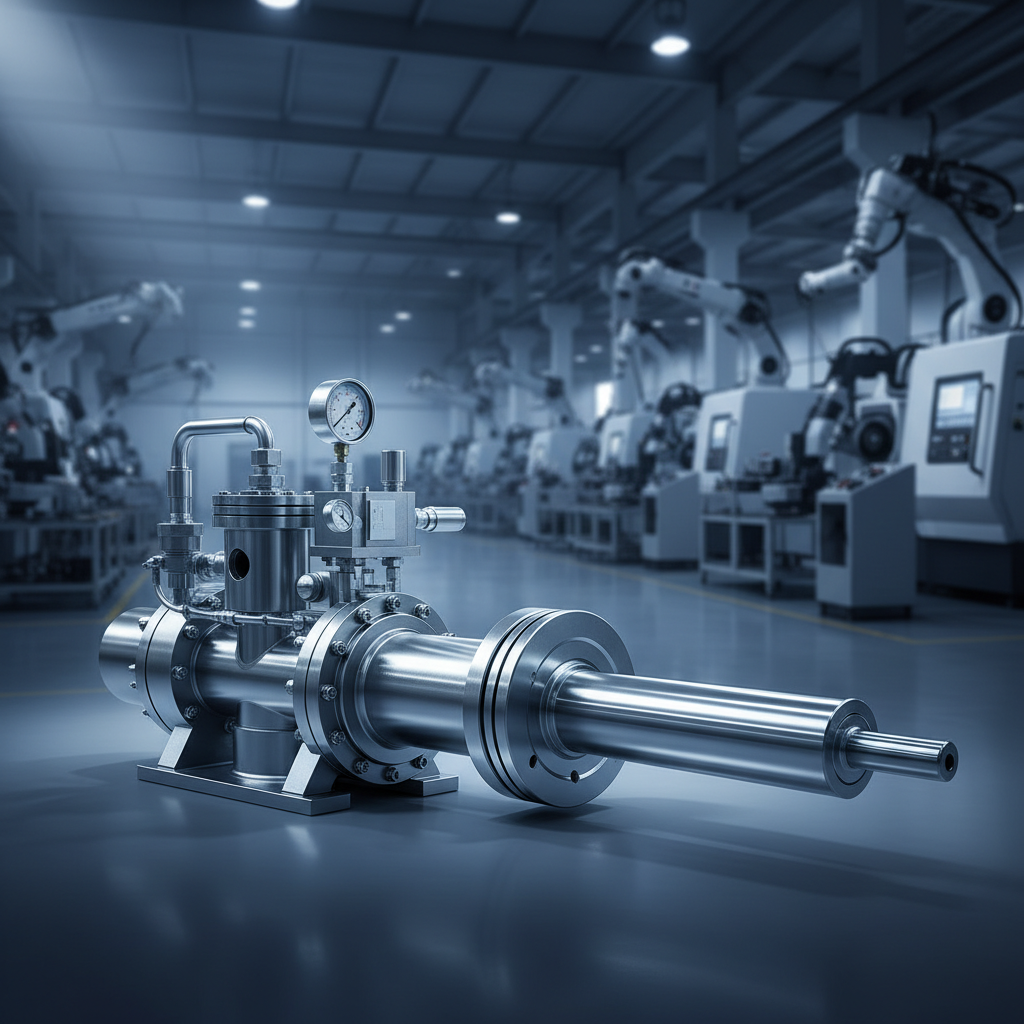

Chapter 1 Industry Overview: An Underestimated "Liquid Steel" Business
The industrial hydraulics business has long been overshadowed by the headline numbers of construction-machinery OEMs in China's manufacturing narrative. OEM data swings up and down, hydraulics is just another line of component cost. Yet a different perspective shows that the gross margin of a 20-ton excavator OEM at the bottom of a cycle is often compressed into single digits, while the only link that consistently earns 30%+ gross margin is the hydraulic system of pumps, valves, and cylinders. According to industry statistics, in 2024 China had 1,655 above-scale hydraulic enterprises generating combined revenue of 159.7 billion RMB; the China Fluid Power Association reports that in the first 8 months of 2025, 10 of 12 major product categories registered y-o-y growth, with gear pumps, low-speed motors, and hydraulic accessories all posting double-digit gains.
Widen the lens by 10 years. In 2014, the industry's sales were only 60 billion RMB, with 30-ton-and-above excavator main pumps almost entirely imported. OEM procurement contracts with Bosch Rexroth, Kawasaki, and Linde included "quota+exclusivity" clauses that capped imports while preventing resale—structural choke points cited by Chinese OEMs as the most direct supply-chain risk. Ten years later, that history has reversed. By 2024–2025, the domestic substitution rate for excavator main pumps in the sub-20-ton class exceeded 70%, and the 30-ton-plus class crossed the 25% line. Hengli Hydraulics, AIDI Precision, and Zoomlion Hydraulics together generated combined hydraulic components revenue that pushed imported brands' Chinese market share down from 65% a decade ago to less than 35%.
A more subtle inflection is exports. Hydraulic component exports hit a record 2.182 billion USD in 2024, up 9.4% y-o-y; in the first 8 months of 2025, another 1.535 billion USD was recorded, putting the full year on track for another all-time high. This means Chinese hydraulics is no longer just supplying domestic excavators but is following construction-machinery OEMs into ports in Southeast Asia, Central Asia, and Latin America. The customs data registered a 293-million-USD hydraulic component trade surplus in 2024, plus another 181 million USD in the first 8 months of 2025—an inflection point that few headlines have noticed for an industry that ran a large trade deficit a decade earlier.
By comparison, global hydraulic component market size exceeds 46 billion USD, with China's share approaching 22%. Bosch Rexroth posted FY2025 sales of about 6.5 billion EUR with order intake rising to 6.6 billion EUR; Parker Hannifin's FY2025 revenue was 19.9 billion USD with hydraulics embedded in the 13.7-billion Diversified Industrial segment. Danfoss Power Solutions, after absorbing Eaton's hydraulics business in 2021, has reached an annualized sales of around 7 billion USD. China's top three—Hengli + AIDI + Zoomlion Hydraulics—combined to generate over 16 billion RMB in 2025 hydraulic component revenue, which is roughly 1/3 of Bosch Rexroth's total size but with higher gross margins (Hengli 41%, AIDI 29%) than the German and Japanese peers.
Why is this business worth a research-institute style review at the 2026 vantage point? Three main threads converge: First, the construction-machinery cycle has entered an expansionary recovery starting 2025, with excavator volume up 17% y-o-y, and main pumps, multi-way valves, and cylinders are the most direct beneficiaries. Second, high-end hydraulic component import substitution has advanced from excavator hydraulic cylinders (over 90% domestic share) through 30+ MPa high-pressure piston pumps (Hengli and Zoomlion penetrating mid-to-large excavator supply) to electro-hydraulic proportional multi-way valves (Hengli and AIDI taking the mid-tier market). Third, industrial hydraulics is expanding horizontally into wind-power pitch control, injection-molding servo hydraulics, and machine-tool closed-loop control, opening a "second curve" beyond the excavator cycle. The intersection of these three threads is precisely where this research-institute report lands.
Beyond the numbers, hydraulic systems are among the most valuable subsystems in heavy machinery. A 50-ton mining excavator priced at about 4.5 million RMB has a hydraulic system worth 1.3–1.6 million RMB, nearly 30% of the manufacturing cost; a 1,000-ton injection molding machine priced at 6 million RMB has a hydraulic station worth 1.1–1.4 million RMB; a 12-MW offshore wind turbine priced over 90 million RMB has a hydraulic pitch system worth 180,000–250,000 RMB. This "low absolute price, high failure cost" profile gives hydraulic components stickier supply chains than most general components—once approved by an OEM, annual replacement probability is below 2%. That's why Hengli, AIDI, and Zoomlion Hydraulics could complete their transformations from "followers" to "peers of Bosch Rexroth" over the past decade.
Chapter 2 Component Chain: Pumps, Motors, Valves, Cylinders, Accumulators and Their Profit Shares
Hydraulic components are not a single category but a coupled family. Hydraulic pumps convert mechanical energy from electric motors or diesel engines into hydraulic energy; hydraulic motors and cylinders convert it back into mechanical work; valves control the direction, magnitude, and timing of flow and pressure; accumulators, filters, seals, hoses, and fittings cushion pressure fluctuations and maintain fluid cleanliness. In a 20-ton excavator, the hydraulic system represents 30%–35% of total OEM value, with the main pump plus multi-way valves alone making up 12%–15% of manufacturing cost.
Hydraulic pumps are the toughest link. Fewer than 10 firms globally can reliably build 35+ MPa axial swashplate piston pumps. Gear pumps are the simplest, with single-pump pressures of 10–25 MPa, prices from several hundred to several thousand RMB, and domestic substitution rate already above 90%; the major gear pump producers cluster in Shandong Yinan, Henan Nanyang, and Jiangsu Zhenjiang. Vane pumps with mid-tier pressures of 14–21 MPa are common in injection molding and machine tools, with about 70% domestic substitution rate, and the main producers are in Ningbo and Dongguan. Piston pumps split into axial and radial types. The axial swashplate piston pump used in excavator main pumps has single-pump pressure of 32–38 MPa, with selling prices of 30,000–60,000 RMB per unit and the highest profit. Hengli Hydraulics' piston pumps for mid-to-large excavators have been gaining share continuously in 2025, making it one of the few Chinese players able to penetrate 30-ton-plus excavators.
Low-speed high-torque motors have over 70% domestic substitution, while high-speed motors for excavator swing functions and hydraulic motors for wind-turbine pitch/yaw remain dominated by imported brands. Bosch Rexroth's MPR Performance radial piston motor 2025 edition emphasizes efficiency gains, representing the technology ceiling for this category.
The valve universe is more complex. Excavators and cranes rely on multi-way valves, priced from several thousand to tens of thousands RMB; industrial automation and injection molding heavily use electro-hydraulic proportional valves, where high-end share is dominated by Bosch Rexroth, Moog, and Parker. The most cutting-edge servo valves (response frequency 100Hz+, zero-position leakage 0.5L/min) are nearly all imported, with Moog, Eaton, Atos, and Yuken as the main suppliers; domestic substitution is under 10%—the last hard bone for Chinese hydraulics.
Cylinders are the lowest-threshold but largest-scale category. Excavator hydraulic cylinders have over 90% Chinese share, with Hengli Hydraulics alone holding about 50% of global excavator cylinder share—selling 308,300 units in 2025, up 15%+ y-o-y. Accumulators (bladder or piston type), hose fittings, seals, and filters are auxiliary parts, with low unit prices but combined accounting for 15%–20% of system cost.
Looking at gross margin by category creates a clear gradient: gear pumps 15%–20%, cylinders 25%–30%, vane pumps 25%–30%, low-speed high-torque motors 30%–35%, multi-way valves 30%–40%, piston pumps 35%–45%, electro-hydraulic proportional valves 40%–50%, high-end servo valves 50%–60%. This profit gradient explains why all Chinese players follow the same upgrade path: gear pumps → cylinders → vane pumps → multi-way valves → piston pumps → proportional valves. Hengli has taken 15 years to walk through the first 5 stages, AIDI the first 3, and Zoomlion Hydraulics the first 4.
Chapter 3 Process Barriers: Why 30 MPa Is So Hard to Reach
Engineers like to say "the hydraulic pump is the heart of industry," but the industry's more concrete rule is "30 MPa is entry-level, 35 MPa is high-end." Why does a part that just pumps fluid to higher pressure become the toughest link? The answer lies in three not-so-obvious process details.
First, matched grinding pairs. A piston pump has three core friction pairs: piston-to-cylinder, slipper-to-swashplate, and port plate-to-cylinder. Under 35 MPa pressure, these pairs endure thousands of high-frequency reciprocations per minute and require clearances of 5–10 microns—any wider leaks efficiency, any tighter seizes. This clearance is not achieved by single-pass machining precision but by post-CNC grinding plus manual fitting. The fitter must rely on micrometers, tactile feel, and fluid tests to repeatedly select—a skill that German and Japanese firms have guarded for 30 years. Hengli Hydraulics made precision matched grinding autonomously controllable starting 2018, which was the real watershed for Chinese piston pumps entering excavator main-pump supply chains.
Second, precision casting. Pump and valve bodies must withstand high-frequency, high-pressure alternating loads, making them extremely sensitive to internal shrinkage, porosity, and inclusions. Regular gray iron won't do—it must be QT600 ductile iron or alloy steel via precision casting plus X-ray inspection and pressure leak testing. Fewer than 20 Chinese plants can reliably produce 35+ MPa hydraulic castings, concentrated in Jiangsu, Shandong, and Zhejiang.
Third, fluid filtration and sealing. Hydraulic systems at 35+ MPa require fluid cleanliness NAS6–7 grade, meaning fewer than several thousand particles ≥5 microns per 100mL. Dust on the assembly floor or fibers from workers' clothing can blow past this spec. Hengli built a Class 10,000 clean assembly bay in its new Changzhou plant; sealing has settled into a pattern where domestic vendors handle large-size low-pressure parts while imports cover small-size high-pressure ones—Trelleborg, Parker, and NOK still hold 60%+ of the high-end seal market.
Adding these three together, high-pressure piston pumps above 35 MPa become the classic "looks simple, riddled with traps" industrial product. China's hydraulics industry spent nearly a decade in the 2010s mastering these processes. Hengli Hydraulics' chairman Wang Liping has often said in investor calls: "High-pressure piston pumps are not designed—they are ground, tested, and assembled into existence." That is the most honest footnote to this era.
Beyond these three lies a fourth, hidden barrier—the worker hierarchy. Hydraulic components rely heavily on experience-driven skilled labor: matched grinders, precision assemblers, calibration technicians. Each role takes 5–8 years to train, and tactile experience is irreplaceable. Hengli's Changzhou base has roughly 800 core skilled workers, 60%+ with over a decade of experience—a depth no newcomer can replicate quickly. A small detail: Hengli's precision grinding bay assigns "lead+assistant+apprentice" three-person teams to each machine; new hires start as apprentices and take 3 years to become assistants, then 3 more to become leads. This mentorship system underwrites the process inheritance of hydraulic components.
Chapter 4 Major Players: A Defense-and-Offense Map of Four Chinese Champions and Five Global Giants
Mapping the major players by "what categories they make and who they sell to" clarifies the competitive landscape.
Hengli Hydraulics (601100.SH) is the absolute Chinese hydraulics leader, with 2025 revenue of 10.941 billion RMB, net profit of 2.74 billion RMB, and gross margin of 41%. It is the only Chinese maker with full-value-chain coverage of cylinders → high-pressure piston pumps → multi-way valves → hydraulic motors → industrial valves → hydraulic systems. Global excavator cylinder share about 50%, mid-to-large excavator piston pump share rising. In 2025, the Mexico plant came online, plus service points in UK, Italy, Indonesia, and Guinea; ultra-heavy cylinders and linear actuators went into production.
AIDI Precision (603638.SH) generated 2025 revenue of 3.196 billion RMB and net profit of 406 million RMB, with gross margin 29.25%. By segment: hydraulic components 2.081 billion (65%), hydraulic breakers 851 million (27%). Its breaker business is China's #1, leveraging precision-casting expertise akin to Hengli's. Hydraulic components are mainly piston pumps, motors, and multi-way valves, focused on construction machinery and mining machinery.
Zoomlion Hydraulics (a Zoomlion subsidiary with Changde + Zhaoqing bases) has gradually opened external sales after starting as an internal captive supplier. The 2025 annual report from Zoomlion Heavy Industry disclosed that Changde Zoomlion Hydraulics' "smart production scheduling" was selected as a MIIT typical case, and the Zhaoqing critical-hydraulic-components industrial upgrade project started construction in 2025. Zoomlion Hydraulics is not listed; its scale is estimated at 30–40 billion RMB, supporting Zoomlion's OEM margins.
Newway Group (603699.SH) had 2025 revenue of 7.768 billion RMB and net profit of 1.601 billion RMB. As China's industrial valve leader, it sits in this name list as the most "overlooked" high-end sample—2025 R&D produced large-bore composite-polymer-seat fully welded ball valves and high-spec hard-seal floating ball valves; it has entered the world's top 10 industrial valve suppliers.
For overseas giants, Bosch Rexroth is the global #1 in industrial hydraulics with FY2025 revenue around 6.5 billion EUR and orders rising 9% to 6.6 billion EUR; the MPR Performance radial piston motor and ORC2 high-performance controller are 2025 hits. Parker Hannifin's FY2025 revenue was 19.9 billion USD with hydraulics in the Diversified Industrial segment. Danfoss Power Solutions, having paid 3.3 billion USD for Eaton's hydraulics in 2021, now runs at ~7 billion USD annual sales and has replaced Eaton in construction-machinery hydraulics. Kawasaki Heavy Industries' Precision Machinery K3V / K5V / K7V series axial piston pumps are de facto standards for mid-to-large excavator main pumps, originally specced by Caterpillar, Hitachi, Komatsu, and Kobelco. Komatsu's in-house KMF hydraulic pump+main control valve is the only fully self-developed sample among international OEMs.
Comparing gross margins across the nine names reveals an interesting fact: Hengli's 41% gross margin actually exceeds Bosch Rexroth, Parker, and Danfoss. The reason is not superior process but that Chinese players have achieved scale efficiency on "high-value, more standardized" categories like main pumps, cylinders, and multi-way valves, while Western peers carry the R&D amortization of many small-batch custom orders and high-end servo valves.
Chapter 5 Downstream One: Construction Machinery—Cranes and Aerial Platforms Beyond the Excavator Cycle
The largest downstream for hydraulic components is construction machinery, accounting for 44% of hydraulic sales. The 2024–2025 keyword is "cycle reversal."
Excavator volume for full-year 2025 reached 235,300 units, up 17% y-o-y, with domestic 118,500 (+17.9%) and exports 116,700 (+16.1%). This is the first double-digit recovery since the 2021 downturn, and the first 2 months of 2026 already posted +27.2% growth. The cycle directly lifts orders for main pumps, multi-way valves, and cylinders. Hengli's 308,300 cylinders sold in 2025 (+15%) is the most direct evidence.
Looking finer, the domestic 118,500 split: electric excavators ~11,000 (9%), micro (≤3t) ~30,000 (25%), small (3–15t) ~45,000 (38%), mid (15–30t) ~22,000 (19%), large (≥30t) ~10,500 (9%). Micro+small make up 63% of domestic volume, served by low-mid-pressure gear pumps, fixed piston pumps, and small-to-mid cylinders with substitution rate over 80%. Mid+large make up 28% and use high-pressure variable piston pumps and electro-hydraulic proportional valves—the main battlefield of substitution.
Beyond excavators, crane hydraulics is another substantial track. Truck cranes, crawler cranes, and truck-mounted cranes have telescopic cylinders, luffing cylinders, and rotary motors that consume far more per unit than excavators do. A 200-ton crawler crane carries 800,000–1.2 million RMB of hydraulic value, 15%–18% of OEM price—one of the highest per-machine densities in construction equipment.
The hydraulic system of concrete pump trucks is another high-value scene. A 56-meter truck carries 1.3–1.8 million RMB of hydraulics.
A newer track is aerial work platforms. The category was nearly all imported before 2018; the past seven years have raised localization through Zhejiang Dingli, LGMG, and XCMG Aerial. Scissor and articulated platforms demand lighter, more precise cylinders for aerial platforms than excavators. Hengli and AIDI have both entered. AWP OEM growth in 2020–2024 was 25%+, with 2025 still +18%—the fastest-growing construction-machinery subsegment.
A worth-zooming-in topic is "Chinese excavator export pull-through on hydraulics." 2025 export of 116,700 units (+16.1%) concentrated in Southeast Asia, Central Asia, Latin America, and Africa. Most main pumps and multi-way valves in Sany / XCMG / Liugong export units come from Hengli or Kawasaki China.
Chapter 6 Downstream Two: Industrial Automation and New Energy—The Second Curve of Hydraulics
Beyond the excavator cycle, industrial hydraulics has multiple structural-growth downstreams that were easy to overlook three years ago but are gaining real scale in 2026.
First is injection-molding hydraulics. China is the world's largest producer of injection-molding machines, with Haitian International, Yizumi, Chen Hsong, and LK as the top four. Core hydraulic components include variable pumps (vane or piston), electro-hydraulic proportional valves, servo valves, and cylinders. Although all-electric machines are gradually replacing hydraulics, mid-to-large (800+ ton) full-hydraulic IMMs remain dominant—stable downstream for Chinese electro-hydraulic proportional valves and servo pumps. Haitian's 2024 shift of high-end servo pumps from Bosch Rexroth to Hengli and Liyuan is the most representative substitution signal.
Second is high-end machine-tool hydraulics. Hydraulics support bed clamping, tool changers, balance cylinders, and tailstocks. High-end 5-axis centers, gantry mills, and vertical lathes need precise, fast-response machine-tool hydraulic units. This has been Bosch Rexroth, HAWE, and Parker's territory; in China only Hengli, Liyuan, and Hade can configure to leading machine-tool OEMs. 2025 saw Chinese 5-axis machines entering aerospace supply chains in volume, opening room for domestic high-end hydraulic stations.
Third is wind-power hydraulics. Wind-turbine pitch systems, yaw brakes, and brake cylinders all use hydraulics. The 10+ MW offshore class lifts single-turbine pitch hydraulic value from 50,000 to over 150,000 RMB. Xinjiang Lianggong (Xinqiang Lian) has filed multiple pitch-hydraulic patents through 2022–2025, including a "closed-loop hydraulic pitch system with accumulator," forming a system-level solution with its pitch-yaw bearings business. Although annual scale today is just 3–5 billion RMB, after GW-class offshore wind hits scale, this could exceed 10 billion RMB.
Fourth is agricultural-machinery hydraulics. Long dominated by John Deere, Claas, and Sauer-Danfoss legacy systems, it now gains steady orders as Zoomlion Agri, Lovol, Yituo, and John Deere China localize. Hengli formally added agricultural hydraulics in 2025.
Fifth is marine and offshore hydraulics. High unit prices, small batches, corrosion and long-life demands. Chinese hydraulic steering, winches, and hatch cylinders saw steady growth in 2025 as Chinese shipbuilding led globally by tonnage, though this line is more volatile.
The combination of these five lines—excavator cycle + industrial automation + wind + agriculture + ships—is the structural reason Chinese industrial hydraulics can decouple from a "single-cycle dependency" between 2026 and 2028.
Chapter 7 Platform View: How to Filter Hydraulic Component Suppliers from 4.8 Million Factories by Process
Switching the lens from industry-level facts to a new angle—Tianxia Gongchang is a B2B platform for China's 4.8 million in-production factories, and unlike business-registry products (Qichacha / Tianyancha-style), the platform filters factories by real production process and capacity, not by corporate filings. In other words, registry products answer "does this company exist, what's its registered capital, what lawsuits has it had"; the platform answers "is this factory really making piston pumps, can it do 35 MPa, what's the monthly capacity, which OEMs has it supplied." These two questions diverge dramatically in hydraulic components, because plenty of factories that look like "hydraulics companies" on registry data actually only make fittings, hoses, or low-pressure gear pumps—the same registry category but completely different businesses.
Why is "factory-level filtering" especially important in hydraulics? Three reasons. First, hydraulic components fall into a single registry category—"general machinery / hydraulic-pneumatic"—but actual processes vary enormously. A 35-MPa high-pressure piston pump plant doing 500 million RMB and a hose-fitting plant doing 20 million RMB sit in the same category but operate in different leagues; registry data can't distinguish. Second, OEMs care most about "capacity stability" and "process consistency" when picking tier-2 suppliers—indicators that exist only on the shop floor. Third, foreign OEMs (Caterpillar, Komatsu) need factory-level compliance audits (QSB, PPAP, APQP) that registry data simply can't support.
The platform's hydraulic component module has surfaced two dominant query patterns: "find Jiangsu factories making 32+ MPa piston pumps" and "find serious cylinder OEM-grade suppliers for excavator OEMs." The first reflects procurement from industrial-automation, IMM, and machine-tool OEMs; the second reflects tier-2 sourcing visits by international excavator brands seeking China-based suppliers. The platform's data spine answers each differently—the first via process-keyword recall + registered capital / headcount / capacity filters; the second via "upstream OEM coupling" reverse labels.
An example: a search for "excavator main pump OEM" returns Yangtze Delta and Shandong tier-2 plants with documented Hengli or Kawasaki China subcontract history rather than gear-pump-only commodity shops. A search for "IMM servo hydraulic pumps" returns Ningbo plants specialized in IMM-dedicated variable pumps, not general hydraulics shops. The recall logic differs because the platform builds a process portrait of "the factory thing," not a corporate dossier of "the company thing."
While writing this research-institute report, the same data spine was used for cross-validation. Chapter 4's coverage of Hengli, AIDI, Zoomlion Hydraulics, and Newway uses public annual reports as a base; their tier-2 networks, capacity-expansion sites, and overseas service points were cross-checked with platform factory data. This is the fundamental difference between research-institute writing and broker-style industry research—research-institute insists on factory-level granularity, broker work emphasizes company-level financial models.
The platform has helped six Chinese hydraulic-component factories enter the initial-interview stage of Caterpillar China's CSC (China Supplier Council) roster, two of which have completed plant audits and are in the trial-shipment stage. This pipeline is a key growth direction for 2026.
Chapter 8 Substitution Milestones: What's Already Won, What's Still Being Chewed
Disaggregating substitution at the category level yields a far clearer progress table than the OEM-level localization rate.
Hydraulic cylinders: essentially done. Excavator cylinder share over 90%, Hengli alone holds about 50% of global excavator cylinder share. Crane telescopic, wheel-loader work cylinders all over 85%. The remaining imports concentrate in Western premium specialty cylinders (deep-sea, aerospace, military).
Piston pumps: mid-range broken through, large main pumps gaining share fast. Sub-20-ton small excavator main pumps over 70% Chinese, 20–30-ton mid excavator main pumps approaching 50%, 30+-ton class was nearly 100% imported (Kawasaki, Bosch Rexroth, Linde) before 2018—now Hengli and Zoomlion Hydraulics are entering 30+-ton supply chains in volume. This is the most important Chinese hydraulic-pump progress of the past five years.
Hydraulic motors: low-speed high-torque essentially done, high-speed and excavator swing motors still largely imported. The pace lags piston pumps clearly—OEMs adopt a "switch main pumps to Chinese, keep Kawasaki/Bosch motors" combination, still mainstream in 2025.
Multi-way valves: mid-tier broken through, high-end still stuck. Sub-15-ton excavator valves over 80%, 20–30-ton about 50%, 30-ton-plus and electro-hydraulic proportional valves still mostly Bosch Rexroth, Kawasaki, and HAWE. Hengli's multi-way valve business is a new growth driver for 2024–2025, but 3–5 more years are needed to win the high-end proportional valve.
Electro-hydraulic proportional valves: 40%–50% for IMM and machine-tool open-loop; below 30% for excavator electro-hydraulic proportional multi-way valves; below 10% for high-end industrial automation and servo valves.
Servo valves: nearly all imported. Moog, Eaton, Atos, and Yuken hold 90%+ globally; Chinese share under 10%. CASIC 11th Institute, Beijing Aerospace Precision Machinery Research Institute, and Shanghai Aerospace Control Technology Research Institute have qualified products in military; civilian volume substitution has not started. This is the last "stuck card" of Chinese hydraulics visible but unreachable in 2026.
If one sentence captures 2026's substitution state: "Cylinders have won; mid-range piston pumps and multi-way valves are winning; high-end proportional valves and high-end servo valves are still on the long march." The first two are reflected in Hengli, AIDI, and Zoomlion's earnings; the latter two are the next-decade story.
Chapter 9 Capacity Expansion: Three Map Coordinates—Changzhou, Yantai, Zhaoqing
Mapping the top players' expansion footprints reveals a clear pattern. Hydraulic-component capex is heavily clustered into three areas: the North Yangtze Delta (with Changzhou as the core), the Shandong Peninsula (Yantai, Weifang), and Pearl River Delta (Zhaoqing, Foshan).
Changzhou is Hengli's HQ. The Wujin High-Tech Zone hosts five business units for Hengli Hydraulics—cylinders, piston pumps, multi-way valves, motors, and castings—with ultra-heavy cylinders and linear actuators added in 2025. Changzhou clusters dozens of tier-2 and tier-3 suppliers, forming a complete hydraulics industrial belt. Its second hidden advantage is machining infrastructure—core friction pairs rely on precision grinding, and Changzhou's surrounding precision-grinding shops are among the densest in China.
Yantai is AIDI's main base. AIDI's 2025 annual report describes its hydraulic-component plus breaker bases concentrated in Yantai Development Zone, with new capacity for 20–50-ton excavator pump-valve products; the breaker business has formed a complete supply chain cluster within 30 km—body casting, piston machining, sealing, nitrogen accumulators all in the same neighborhood.
Zhaoqing is Zoomlion's South China hydraulics base. In 2024–2025, Zoomlion Hydraulics Zhaoqing's critical-component upgrade project started, with main-pump, multi-way valve, and motor capacity all planned in "ten-thousand-units" scale. Zoomlion chose Zhaoqing over Changsha (Zoomlion HQ) for logical reasons—South China's excavator export ports (Guangzhou Nansha, Shenzhen Yantian) are nearby, and local OEMs (Liugong, Yuchai, Guangxi Tianeng) need local supply.
Chapter 10 Price Cycle and Overseas Channels
Hydraulic component price cycles are less violent than excavator OEM cycles but still rhythmic. Excavator cylinder unit price fell from 1,500 RMB/rod in 2021–2023 to 1,200 RMB/rod, then rebounded to 1,300–1,400 in 2024 as steel prices stabilized and capacity utilization recovered; in 2025, as excavator sales rebounded and exports added, unit prices held above 1,400 RMB/rod. Piston pump prices are more structural: sub-20-ton main pumps 15,000–20,000 RMB, 30-ton 40,000–60,000, 50+-ton 80,000+. The substitution effect drove imported-brand price equivalents down 30%–40% from 2018 levels—a key source of OEM margin improvement.
Multi-way valves: 20-ton excavator valves 15,000–20,000 RMB, electro-hydraulic proportional 30,000–50,000, servo valves 80,000–200,000 per piece. Outside servo valves, other categories have domestic substitution reflected in pricing.
Export acceleration is the most material positive catalyst in 2025. Chinese excavator exports +16.1% and hydraulic component exports +9.4% effectively externalize a decade of domestic cost compression onto foreign OEMs' tier-2 supply chains. Southeast Asia (Indonesia, Vietnam, Thailand), Central Asia (Kazakhstan, Uzbekistan), Latin America (Mexico, Brazil), and Africa (Guinea, DRC) are the top 2025 destinations. Hengli's Mexico hydraulics plant is the first major Chinese hydraulics localization abroad.
The other overseas-channel thread is tier-2 supply to Caterpillar, Komatsu, Kobelco, and Hitachi. Caterpillar's CSC accelerated in 2023–2024, with Hengli, AIDI, and Zoomlion all entering the China subcontracting roster and beginning small-batch shipments of cylinders, piston pumps, and select valve products. This "tier-2 first, then tier-1" path is the most realistic growth curve for Chinese hydraulics to replicate auto-parts exports.
The next price-cycle watchpoint is 2026 steel cost. Excavator cylinders, bodies, and valve blocks heavily use 45# steel, alloy structural steel, and ductile iron; steel-price swings affect cylinder cost 8%–12%.
Chapter 11 Policy and Electrification: How Excavator Electrification Affects Hydraulics
On the policy side, three main lines will most influence 2026–2028 Chinese hydraulic components.
First is construction-machinery "old-for-new" and large-scale equipment renewal. NDRC + MOF expanded the 2025 ultra-long-term special bond fund for this purpose. All 31 provincial-level regions have issued implementation plans. Shanghai's plan subsidizes super-large excavators up to 360,000 RMB/unit, large 138,000, mid-and-small 36,000, micro-excavators 20,000. This directly fuels 2025–2027 replacement demand and downstream new-machine hydraulic orders.
Second is smart-manufacturing and high-end-equipment servoization and electrification. The "15th Five-Year" plan elevates industrial mother machines; Chinese 5-axis machines have entered aerospace supply chains in volume; demand for servo hydraulics for machine tools and industrial automation rises. Industrial robots and automation lines maintain steady growth in servo-valve needs—a policy window for domestic servo-valve volume breakthrough.
Third is dual-carbon-target-driven electric excavators. Mid-class electric excavators went into volume production in 2024–2025; 30+-ton electric is still piloting. Electrification is not a replacement but a structural shift—from diesel-driven main pumps to motor-direct-driven main pumps, with the pump body and cylinder unchanged but control shifting from mechanical-hydraulic to electro-hydraulic coordination. This is opportunity for Chinese electro-hydraulic proportional valves and electronic-control components, threat for pure mechanical hydraulic valves. Hengli's "globalization + electrification" strategic axis since 2024–2025 was precisely positioning for this shift.
Beyond policy lies the "non-policy" structural variable—infrastructure investment cadence. In 2025, water resources, municipal, and grid investment held high, supporting excavators, cranes, and dozers. Real-estate-related concrete pump trucks and tower cranes need 2026–2027 real-estate stabilization. This determines whether the excavator and hydraulic components cycle is "infrastructure + export driven" or "real-estate + infrastructure dual drive."
This research institute also believes the four-way coordination of central fiscal support, local government incentives, industry-association coupling, and OEM orders has formed a complete "domestic substitution ecosystem" that no overseas market can replicate.
Chapter 12 Research Institute Judgments: Key Variables for 3–5 Years
Putting the previous 11 chapters together, this research institute offers three 3–5 year key-variable judgments.
Judgment 1: High-pressure piston pumps and multi-way valves will complete the "mid → high" crossing in 2027–2028. 30-ton-plus excavator main pump Chinese share will rise from 25%–30% in 2025 to 50%+ in 2028; electro-hydraulic proportional multi-way valve Chinese share will rise from 30% to 55%–60%. After this, Hengli + AIDI + Zoomlion Hydraulics' combined excavator hydraulics share will rise from 40% in 2025 to 60%+.
Judgment 2: The downstream of industrial hydraulics will shift from "excavator-cycle dominant" to "excavator + industrial automation + wind + agri" multi-engine drive. Construction machinery's 44% share of hydraulics sales in 2025 falls to ~38% in 2028; IMM + machine tool + wind + agri's combined share rises from 30% to 38%–40%. This structural shift means hydraulic earnings volatility will smooth significantly, and Hengli's horizontal expansion into wind, offshore engineering, and machine tools is exactly the bet.
Judgment 3: Servo-valve substitution still needs 5–8 years; volume breakthrough is more likely in 2028–2030. Moog, Atos, Yuken hold 1–2 generations of lead in response frequency, zero-position leakage, and life. Chinese military institutes have qualified product, but civilian volume servo-valve production has no commercialized example. This is the last "stuck point" Chinese hydraulics must endure before 2030.
The overall judgment of this research institute, the Tianxia Gongchang Industrial Research Institute, is that 2025–2028 remains an "expansionary substitution" cycle. Cyclical recovery + second-curve unfolding + export acceleration—three drivers in resonance—will keep growth above 2025's double-digit baseline more steadily; top players' earnings quality and pricing power will continue to outpace the industry. This is a long-running rather than short-term-catalyst industrial logic.
Chapter 13 Risks: Cycle, Foreign Giants' Price Cuts, Servo Electrification
Any industrial research must lay out risks transparently. Chinese industrial hydraulics' 2026–2028 trajectory faces at least three risk layers.
First is construction-machinery demand softness. If domestic real estate does not stabilize as expected in 2026–2027, concrete pump truck, tower crane, and pile-machinery recovery is delayed; if overseas exports face geopolitics or FX volatility, the export curve faces pressure. The excavator cycle is the most direct headwind.
Second is foreign giants' price cuts. Bosch Rexroth, Parker, and Danfoss have kept Chinese-market high-tier prices at 1.5–2x Chinese equivalents. Since 2025, Bosch Rexroth has begun reducing prices in China by 5%–10% to counter substitution speed. Further cuts or "price+service" reactions could slow Chinese mid-high-end share gains. Danfoss Power Solutions' integrated Eaton business now holds about 25% global construction-machinery hydraulics share—the most direct overseas competitor to Chinese players.
Third is electrification partially replacing pure hydraulic schemes. Light industrial robots, AGVs, and 3C assembly lines have substantially shifted from hydraulic servo to electric servo since 2018–2025; mid IMMs and machine tools' hydraulic stations are evolving toward "electric-controlled pump + small hydraulic station" hybrid. If electrification penetrates mid construction machinery, agri, and IMMs faster, pure-hydraulic market space will be squeezed. This is structural rather than cyclical risk, requiring "electro-hydraulic coordination" product lines to hedge.
Beyond these three main risks, secondary risks include steel, rare-earth, and specialty seal-material cost swings; longer R&D cycles delaying new product release; rising overseas certification (CE, EAC, UL) costs for low-volume exports; and the unbroken servo valve potentially becoming the new "stuck card" by 2030.
Combining these risks, industry-level certainty remains high, but single-firm elasticity will be hit by overlapping cycle + competition + electrification. Hengli has the strongest cycle resistance via full-chain coverage; AIDI's breaker business has more elasticity in mining recovery than excavator; Zoomlion Hydraulics has moderate resistance with absolute stability via internal OEM coupling; Newway has low construction-machinery correlation—the "defensive name" of this group.
Chapter 14 Data Sources and Methodology
This report synthesizes the following public data sources (as of June 27, 2026):
Company annual reports and announcements: Hengli Hydraulics 2025 annual report, AIDI Precision 2025 annual report, Zoomlion Heavy Industry 2025 annual report, Newway Group 2025 annual performance report, Bosch Rexroth FY2025 press release, Parker Hannifin FY2025 10-K, Danfoss Group 2024–2025 annual report, Kawasaki Heavy Industries Precision Machinery 2025 product catalog, Komatsu FY2025 financial briefing.
Industry-association and official statistics: China Fluid Power Association 2024–2025 industry data, China Construction Machinery Industry Association excavator branch monthly volume, Customs Authority HS-code export data, NDRC 2025 large-scale equipment renewal policy documents, MIIT 2024–2025 smart-manufacturing typical-case disclosures.
Research-institute first-party data: This research institute—Tianxia Gongchang Industrial Research Institute, through the hydraulic component capacity database covering 4.8 million in-production factories in China, cross-validated public annual reports of listed companies; the factory-level capacity, geographic clustering, and upstream-downstream coupling real-time portraits give a "filter factories by process" capacity map.
Overseas secondary data: Reuters, Nikkei, PowerMotionTech, Power & Motion 2024–2025 hydraulics-industry coverage; GlobeNewswire 2025 Hydraulics Company Evaluation Report; Aviation Outlook 2026 Parker Hannifin analysis; Bosch Rexroth official Facts & Figures.
Methodology notes: "Hydraulic components" here includes hydraulic pumps, motors, valves, cylinders, accumulators, seals, hose fittings, and hydraulic systems; pure electric servo systems and pneumatic components are excluded. Market share, capacity, and gross margin numbers are in RMB (except where overseas firms use their home currency). Annual report numbers follow public disclosures; industry aggregates follow the China Fluid Power Association as the primary source, calibrated against Customs trade data where needed.
This report was authored by this research institute, following three principles—facts first, capacity verifiable, cross-validation. Readers' citations and discussions are welcome. The next industrial research report in this series will follow shortly.