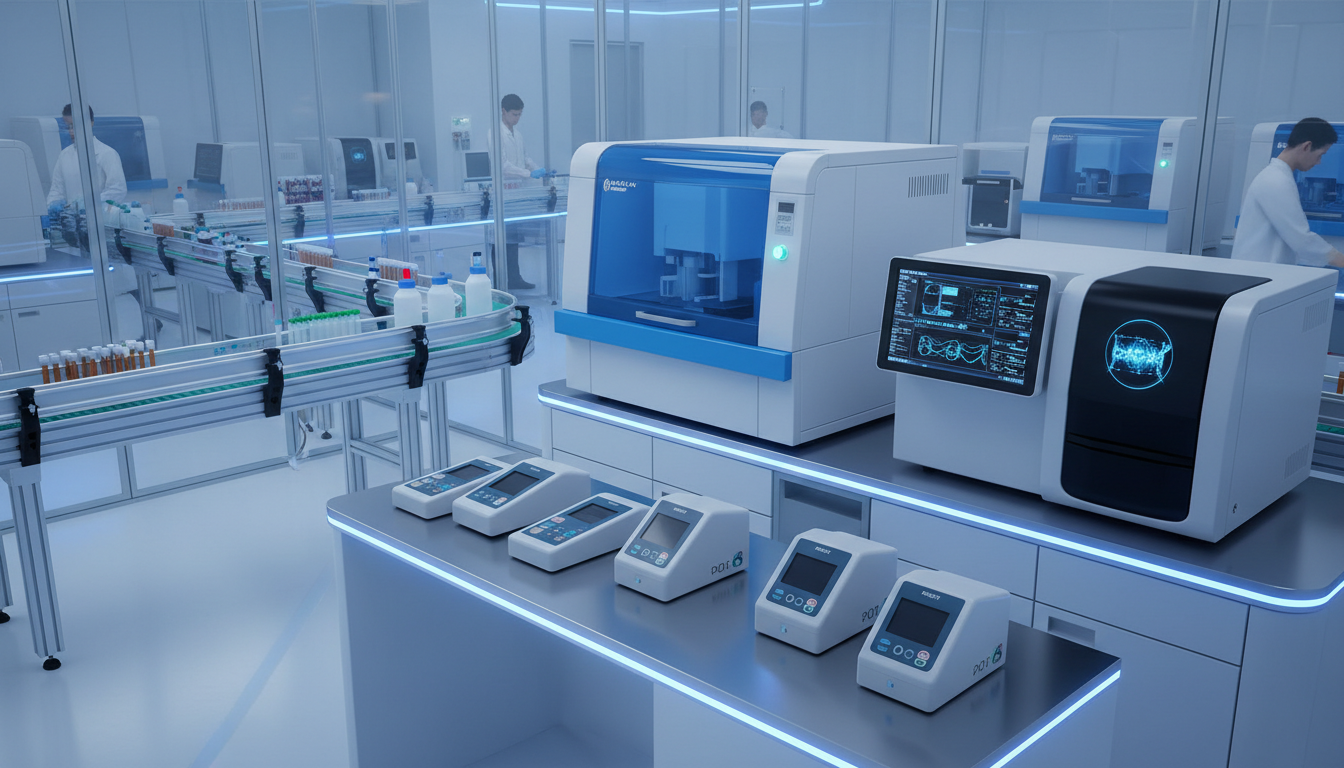

A chemiluminescence immunoanalyzer sits on the automated conveyor line of a hospital laboratory, processing three to four hundred samples per hour. It operates in near silence, yet every few seconds a test report emerges — each one tied to a family's anxiety and hope about their health. Every tumor-marker value, every hormone-level fluctuation, every positive infectious-disease antigen signal receives its first verdict inside that machine.
This seemingly unremarkable instrument is one of the most contested battlegrounds in China's in vitro diagnostics (IVD) industry. In 2025, China's IVD market is valued at approximately RMB 150–180 billion, accounting for nearly one-fifth of global IVD revenue — second only to the United States and the world's fastest-growing single-country IVD market. Within this market, Roche, Abbott, and Siemens once held more than 70% of the chemiluminescence segment; today that share has been steadily eroded by domestic players. Mindray, Snibe, Yhlo, and Autobio instruments are now installed in a growing number of top-tier hospitals, with domestic share rising several percentage points per year.
Meanwhile, a deeper technological revolution is unfolding in another lane. In fewer than ten years, MGI Tech's DNBSEQ sequencers have grown their global new-unit market share from nearly zero to 28%, and in patent litigation they won a US$334 million settlement from Illumina. This is a rare episode in Chinese industrial history: a domestic instrument brand competing technology-versus-technology in one of the world's most IP-intensive segments and breaching a US competitor's moat.
China's IVD industry stands at a special historical inflection point in 2025: the bubble inflated by COVID-19 testing has fully deflated, VBP price pressure has fully transmitted, but technology upgrades and overseas expansion are forming new growth engines. The industry's trough may be at hand, and the next competitive landscape will be shaped by enterprises that have truly mastered core technologies and built genuinely global brands.
Chapter 1 Definitions, Classification, and Full Industry Chain
What Is In Vitro Diagnostics
In vitro diagnostics (IVD) refers to the analysis of samples collected from the human body — blood, urine, tissue, saliva, stool — outside the body, to assist in disease diagnosis, treatment monitoring, and health screening. Approximately 60–70% of clinical decisions globally depend on laboratory test data. China's large tertiary hospitals process tens of thousands of samples daily.
IVD's most important feature is the "instrument + reagent" bundled closed ecosystem. Once an analyzer is installed in a laboratory, the hospital is effectively locked into that vendor's proprietary reagents for 7–10 years. This model makes instrument installed-base volume the key metric determining long-term revenue, and underpins the industry-wide strategy of placing instruments at low or subsidized prices to capture high-margin reagent streams.
Classification of IVD Technology Platforms
I. Immunodiagnostics — antigen-antibody reactions; the largest sub-segment is chemiluminescence immunoassay (CLIA/ECLIA), covering thyroid function, tumor markers, cardiac markers, infectious disease serology, and hormones. China's chemiluminescence market is approximately RMB 600–650 billion in 2025.
II. Clinical Chemistry (biochemistry) — photometric/enzymatic assays for liver function, renal function, lipids, glucose; the most mature sub-segment with domestic share of 65–70%.
III. Molecular diagnostics — PCR-based nucleic acid detection (qPCR, multiplex PCR, dPCR), plus NGS; circa RMB 180–220 billion ex-sequencing services in 2025.
IV. POCT (Point-of-Care Testing) — bedside or clinic-side rapid testing; colloidal gold, fluorescence immunoassay, electrochemistry; circa RMB 230–270 billion, ~20% CAGR, fastest-growing IVD sub-segment.
V. High-throughput sequencing (NGS) — WGS, WES, targeted panels; instruments + consumables circa RMB 42–50 billion domestically; including sequencing services >RMB 100 billion.
VI. Hematology & Urinalysis — CBC analyzers, coagulation, urinalysis; Mindray holds ~60% domestic hematology share.
VII. Pathology — histopathology, cytopathology, digital pathology + AI; circa RMB 80–100 billion.
VIII. Microbiology — culture + sensitivity, MALDI-TOF rapid identification, mNGS; circa RMB 50–70 billion, ~30% domestic share.
Profitability Structure
IVD companies earn low margins on instruments (35–50% gross margin) and high margins on reagents (65–80%). A mid-sized chemiluminescence platform derives 60–70% of revenue from reagents and 20–30% from instruments, with overall gross margins of 55–70%. One installed analyzer in a large tertiary hospital consumes RMB 500K–1M/year in reagents while costing RMB 300–800K to purchase — meaning a 10-year life-cycle reagent value is 10–20× the instrument price.
Five Moat Archetypes
- Technology patent moat — MGI Tech's DNBSEQ patent portfolio; hardest to build, longest-lasting.
- Closed-ecosystem moat — "instrument + reagent" lock-in; switching cost is the core mechanism.
- Scale-cost moat — bulk procurement of raw materials; Mindray's 60%+ IVD gross margin is partly this.
- Registration moat — Class III NMPA registration takes 3–5 years; CE-IVDR 1–3 years; incumbent advantage.
- Brand-trust moat — 20–30 years of clinical data and physician familiarity; softest but hardest to replicate quickly.
Chapter 2 Global Landscape and Multinational Giants FY2025
Global IVD Market: ~US$110–115 Billion
The global IVD market reached approximately US$110–115 billion in 2025 (Kalorama / MarketsandMarkets estimates), projected to exceed US$140 billion by 2030 at a 5–7% CAGR. North America accounts for ~35–38%, Europe ~25–28%, Asia-Pacific (led by China and Japan) ~25–30%. China represents ~17–20% of global IVD.
The top-10 IVD companies collectively hold ~65–70% global share. Entry barriers — multi-year registration cycles, closed-reagent lock-in, clinical-data moats, slow brand adoption — keep this concentration stable.
FY2025 Performance of the Seven Major Players
Roche Diagnostics — Global #1; diagnostics division CHF 13.8 billion (US$15.5 billion), ~+2% in constant currencies. Cobas e-series chemiluminescence, cobas 6800/8800 PCR, AVENIO liquid biopsy, VENTANA digital pathology remain the broadest IVD product portfolio globally. China VBP pressure is contained by TLA (Total Lab Automation) system stickiness in top-tier hospitals.
Abbott Diagnostics — Global #2; ~US$8.9 billion, -4.3% due to COVID rapid-test decline. Strengths: high-sensitivity troponin, FreeStyle Libre CGM (global CGM leader), POCT i-STAT platform.
Siemens Healthineers — diagnostics ~€4.4 billion of ~€23.4 billion total FY2025. Notable: initiated formal separation of its clinical chemistry/immunodiagnostics business (Atellica series), partly driven by China VBP margin pressure.
Danaher — total ~US$24.6 billion; diagnostics includes Beckman Coulter, Cepheid (GeneXpert molecular POCT global leader), Sciex (mass spec), Radiometer. Cepheid's FilmArray covers TB, HIV, STIs, respiratory pathogens in a single POCT cartridge platform.
Illumina — FY2025 revenue ~US$32–33 billion (sequencing consumables ~US$2.9 billion, instruments ~US$1.1 billion). Under dual pressure: MGI Tech's global market share gains AND China's Ministry of Commerce added Illumina to the Unreliable Entity List in March 2025, effectively barring China sales.
Sysmex — global hematology #1; ¥456 billion (US$3.1 billion) FY2025; XN-series CBC analyzers ~35–40% global share. In China, Mindray's BC-series has displaced Sysmex from its former #1 domestic position.
bioMérieux — global infectious-disease diagnostics #1; ~€41–42 billion, +6%; BacT/ALERT blood culture, Vitek MS MALDI-TOF, FilmArray POCT.
How Mindray Conquered Hematology: A Three-Phase Case Study
Phase 1 (1991–2005): Entry with low-cost 3-part-diff analyzers at base-level hospitals — a market niche foreign brands ignored. Phase 2 (2005–2015): Ascent to 5-part-diff (BC-5300), penetrating second- and third-tier tertiary hospitals at a 40% price discount to Sysmex. Phase 3 (2015–2025): BC-6800 performance parity with Sysmex XN at competitive price; by 2024 Mindray holds ~60% domestic CBC market, Sysmex ~20%.
Replicability in other sub-segments: hematology core patents had largely expired before Mindray entered; chemiluminescence and sequencing patents are still active, requiring entirely different technology paths.
Global M&A History: How Today's IVD Giants Were "Bought"
Roche: acquired Boehringer Mannheim (1991), Ventana digital pathology (2008).
Abbott: ARCHITECT series from Diagnostics Division (1985), Alere POCT (2017).
Danaher: Beckman Coulter (US$6.8B, 2011), Cepheid (US$4B, 2016).
Implication for China: domestic IVD CR10 is ~50%, well below the ~70% of mature markets; a consolidation wave in 2026–2030 will benefit leading acquirers (Mindray, Autobio, KingMed).
Chapter 3 PEST: Policy, Economy, Technology, Social Drivers and Risks
Three Self-Reinforcing Mechanisms of Global IVD Competition
Reagent lock-in creates recurring cash flows. Each installed analyzer is an implicit 7–10 year reagent subscription. Roche has ~130,000 installed chemiluminescence analyzers globally; at RMB 50K–200K/unit/year in reagents, that is a >RMB 60 billion annual recurring stream.
Brand trust accrues slowly and erodes fast. Laboratory directors treat a switch from a known brand as a personal professional-liability decision, requiring shadow-running (parallel operation) of up to 6 months before approval. This conservative switching behavior is the most powerful non-technical moat for incumbents.
Reference-interval path dependence. Each hospital's normal ranges are calibrated to the specific brand's reagent chemistry. Switching brands requires re-establishing reference intervals across every analyte — 100–200 test items for a large chemiluminescence panel — at a total labor + material cost of RMB 500K–1M. This is why domestic substitution in top-tier hospitals is a decade-long process, not a policy-driven one-year event.
Policy Layer: VBP, DRG/DIP, and Domestic Preference
VBP (Volume-Based Procurement): Anhui Province launched IVD VBP in 2021; by 2024–2025 the landmark 25-province chemiluminescence joint procurement achieved an average price cut of 53.9% (some items >65%). The 28-province biochemistry + oncology + thyroid function joint procurement followed in 2025. Collateral effects: A-share IVD sector revenue -14.5% YoY in the first three quarters of 2025; 318+ registration certificates cancelled (92% voluntarily) in Zhejiang and Anhui alone.
DRG/DIP reform: Hospitals' shift from fee-for-service to per-episode payment has restructured their relationship with laboratory services — lab becomes a cost center, incentivizing leaner test panels. This structurally suppresses IVD test volumes for 3–5 years but rewards higher-clinical-value products (emergency markers, oncology markers) relative to routine panels.
National technology export restriction: China's MofCOM added Illumina to the Unreliable Entity List in March 2025, banning instrument exports to China — the first time IVD equipment was directly caught in US–China tech friction.
EU IVDR: The 2022/746/EU regulation (in force May 2022; transition period through 2025–2028) substantially raises clinical-evidence requirements for Class C/D IVD products. Chinese exporters face notified-body backlogs and the cost of Europe-based clinical validation studies.
Comparative Local-Government IVD Policy: Shenzhen vs. Changsha vs. Hefei
Shenzhen (market-driven): Tax incentives, talent-attraction programs, R&D subsidies, subsidized industrial-park rents. Government enables; market selects. Result: the most resilient domestic cluster.
Changsha (anchor-enterprise-driven): Shengxiang (圣湘) as the molecular-diagnostics anchor; government co-funds industrial parks to attract supply-chain partners. Cluster depth is narrower but vertical integration is stronger.
Hefei (procurement-driven): Leverages Anhui's VBP-originator status to grant preferential procurement volume to enterprises registered in Anhui. Fast to attract company count; supply-chain maturity lags.
Economic Drivers: Aging, Primary Care, and Overseas Markets
- China's 65+ population: ~220 million (15.6% in 2025), projected >20% by 2030. Chronic-disease testing (HbA1c, renal markers, cardiac markers, tumor markers) grows in lockstep.
- 1.4 billion diabetic patients × RMB 500–1,000/year routine metabolic testing = theoretical RMB 700–1,400 billion market; current penetration <30%.
- ICL expansion: KingMed and Daan combined ~RMB 130–140 billion in revenues, serving as high-volume placement channels for premium IVD equipment.
- Emerging markets (Southeast Asia, Middle East, Africa): fast-growing health expenditure; Chinese IVD's price competitiveness is highest here.
IVD's Role in Precision Medicine
Companion diagnostics (CDx) for targeted oncology (EGFR/ALK/BRCA/MSI-H) are the highest unit-value IVD tests (RMB 1,000–8,000 per test), largely outside VBP scope. Liquid biopsy (ctDNA) closes the precision-oncology loop: diagnosis → targeted therapy → monitoring → resistance detection → re-treatment. Each oncology patient may consume RMB 5,000–50,000 in IVD across their treatment journey — 5–50× the chronic-disease average.
Chapter 4 China Market Size and Competitive Landscape
2025 Market Structure
Total China IVD market: ~RMB 150–180 billion in 2025 (price compression masks underlying volume growth). Sub-segment breakdown:
| Sub-segment | 2025E Size (RMB bn) | Domestic Share | Key Leaders |
|---|---|---|---|
| Chemiluminescence | 60–65 | 40%+ | Roche / Abbott / Mindray / Snibe / Autobio |
| Biochemistry | 20–25 | 65–70% | Roche / Abbott / Beckman / Maccura |
| POCT | 23–27 | 60%+ | Wondfo / Cepheid / Abbott / Sannuo / Orient Gene |
| Molecular (PCR) | 18–22 | 50%+ | BGI / Shengxiang / Zijian / Kepu / Roche |
| NGS instruments+consumables | 4.2–5 | 63.8% (domestic) | MGI Tech / Illumina |
| Hematology | 12–15 | 50%+ | Mindray / Sysmex |
| Pathology (incl. AI) | 8–10 | 40%+ | Leica / Zeiss / domestic AI startups |
| Microbiology | 5–7 | 30%+ | bioMérieux / Bruker / Autobio |
High-Value Emergency Testing: The Overlooked Premium Niche
High-sensitivity troponin (hsTnI) at RMB 80–150 per test, with a <30-minute TAT requirement for AMI triage, is the single highest-unit-value routine chemiluminescence test. The AMI golden window (60–90 min from symptom onset to PCI) makes rapid POCT hsTnI a clinical non-negotiable. Domestic brands (Mindray CL-900i hsTnI) are now approaching LOD of 3–5 pg/mL versus the best foreign standards of 1.6–3 pg/mL, closing a critical performance gap.
VBP Rule Design: How Procurement Policy Was Engineered for Domestic Preferencing
The 25-province chemiluminescence VBP's "bundle pricing" (instrument + reagent as a single bid) prevented foreign brands from saving margin by cutting only reagent prices. The "5A rating" differential volume allocation rewarded Snibe as the sole domestic manufacturer to achieve top quality rating, securing it preferential guaranteed volumes. The "80% minimum purchase guarantee" transformed "eligible to enter" into "must purchase" — a powerful policy engine for installed-base acceleration.
Chapter 5 Supply Chain Deep Dive: From Antibody to Algorithm
Upstream Bottlenecks
Monoclonal antibodies: The soul of a chemiluminescence test kit. A "gold-pair" antibody configuration (one capture, one detection) must meet Ka >10¹⁰ M⁻¹, cross-reactivity <0.01%, lot-to-lot EC50 variance <5%. Global leaders (Bio-Techne, HyTest, Meridian) have 20–30-year strain libraries. Feipeng Bio is China's most advanced antibody platform covering 300+ targets; lot-to-lot stability for the most demanding cardiac markers (hsTnI, PCT, NT-proBNP) remains the final gap versus international top-tier suppliers.
Enzymes: Novizan (诺唯赞) leads domestic PCR enzyme engineering (Taq, high-fidelity polymerases, reverse transcriptases), having largely achieved import substitution for molecular reagent raw materials.
Magnetic beads: Uniform beads (particle CV <3%) from Merck Estapor and ThermoFisher Dynabeads still supply 40–60% of China's premium chemiluminescence instruments; domestic alternatives (Sepax, Saifen) are narrowing the gap.
Flow Cells: MGI Tech's complete in-house DNBSEQ Flow Cell design and production bypasses the Illumina SBS Flow Cell patent cluster entirely, enabling ~1/3–1/2 Illumina consumable pricing — the material basis for MGI's global price competition.
Instrument Manufacturing: Four Levels of Competitive Barrier
- Closed instrument-reagent ecosystem construction
- Installed-base flywheel: install → reagent revenue → R&D → new products → more installs
- Technical complexity (single-photon PMT, microsecond-precision liquid handling, ±0.1°C temperature control)
- Registration cycle (3–5 years NMPA Class III; 2–3 years FDA 510(k); 2–4 years CE-IVDR)
Lot-to-Lot Variability: The Silent Quality Gap
A laboratory director who encounters 2–3 instances per year of a new reagent lot shifting results by >5% will require repeat QC validation (time-consuming) and form a mental model of "domestic reagent instability" that persists even after quality improves. Foreign top brands control lot-to-lot CV to <3% through full raw-material traceability and multi-stage release testing. Domestic brands average ~5–8% lot-to-lot CV — the key quality barrier to top-tier tertiary-hospital adoption. Closing this gap is the central technical challenge for domestic chemiluminescence in 2025–2028.
ICL Economics
KingMed Diagnostics' ~40 regional laboratory centers run at 25–35% gross margin (staff 30–35%, depreciation 10–15%, consumables 25–30%, logistics 10–15%). The ICL's core competitive advantage is batch-size economics: a single NGS sequencer run becomes economical only at 50–100 samples per batch — a threshold that a single tertiary hospital rarely reaches, but an ICL regional center assembles daily from aggregated provincial referrals. This is why high-end NGS and mass-spec testing remains ICL-centric despite DRG/DIP-driven volume recovery toward in-house testing of routine tests.
Chapter 6 Key Enterprise Deep Analysis
Mindray Medical (300760) — China's IVD #1
FY2025: Total revenue RMB 33.3 billion (-9.4%), attributable net profit RMB 8.1 billion (-30.3%); IVD segment RMB 12.2 billion (36.8% of total). International revenue RMB 17.7 billion (+7.4%), first time exceeding domestic, now 53% of total. R&D spending RMB 3.9 billion (11.8% of revenue).
Three IVD pillars: (1) Chemiluminescence — CL-8000i, 1,200 tests/hour, 150+ analytes; pursuing CL-10000 at 2,000 tests/hour. (2) Hematology — BC-7500/BC-6800 5-part-diff, ~60% domestic share, ~15% global. (3) Biochemistry — BS-2800M, 2,800 tests/hour. Molecular diagnostics newly announced as the fourth pillar in 2025.
Core competitive moat: direct operations in 56 countries; 5,000+ R&D staff in Shenzhen; fully integrated closed ecosystem across IVD, patient monitoring, and medical imaging.
Snibe (新产业生物) (300832) — Chemiluminescence Export Pioneer
FY2024: RMB 4.5 billion revenue (+15.4%), RMB 1.8 billion net profit (+10.6%). Overseas revenue 70% (RMB 3.2 billion) — the highest overseas ratio of any Chinese IVD company. Achieved 5A rating in 25-province VBP (the only domestic manufacturer to do so). MAGLUMI series: 200+ analytes, CE-registered in Germany, Italy, UK, Middle East.
Yhlo (亚辉龙) (688575) — Autoimmune Diagnostics Specialist
FY2025: Revenue RMB 1.81 billion (-10.1%), net profit RMB 24 million (-92.0%) — the hardest-hit among domestic chemiluminescence peers. Differentiation in autoimmune disease diagnostics (anti-dsDNA, ANA panels, anti-CCP, thyroid autoantibodies); niche remains less fully penetrated by VBP but not immune to it. Recovery path: accelerate European CE autoimmune exports; expand beyond autoimmune panels.
Autobio (安图生物) (603658) — Multi-Platform IVD Breadth
FY2024: RMB 4.5 billion (+6%); FY2025 Q1-Q3 net profit -12.9%. Broadest platform coverage among domestic IVD peers: 829+ registrations across chemiluminescence (AutoLumo), biochemistry (AutoChem), microbiology MALDI-TOF mass spectrometry (AVES — direct competition with bioMérieux Vitek MS), molecular, and hematology.
Wondfo (万孚生物) (300482) — POCT Global Leader
FY2024: RMB 3.1 billion (+10.9%), net profit RMB 560 million (+15.2%). Registered in 150+ countries, 653 product registrations globally; WHO Prequalification for HIV and malaria rapid tests. Chronic-disease management revenue +22.4% in FY2024. CGM (continuous glucose monitoring, Bioland brand) vs. Abbott FreeStyle Libre 3 is its most important new growth vector.
BGI Genomics (华大基因) (300676) — Genomic Testing Services Leader
NIFTY NIPT: 20M+ cumulative cases globally; global #1 NIPT brand. Oncology NGS panels, infectious-disease mNGS, research genomics services. Vertical integration with MGI Tech: internal DNBSEQ sequencing cost ~1/3 of Illumina, forming an unbeatable internal cost advantage.
MGI Tech (华大智造) (688114) — China's Only Systemic NGS Sequencer Maker
H1 FY2025: RMB 1.11 billion revenue (-7.9%), net loss RMB 104 million (loss narrowed 65.3% YoY). Sequencer shipments >700 units (+60.4%), global cumulative installed base >5,300 units. Global new-unit market share 28.2% in 2024 (+9.5 pp YoY); domestic share 63.8% (vs. 31.1% in 2021). Patent milestone: Complete Genomics won US$334 million from Illumina in US litigation. Product line: DNBSEQ-T7 (≥6Tb/run), G400 (≥1.5Tb), G99 (≥500Gb), T1+ (2025 new), plus nanopore sequencers WT02/WY01 (nanopore, BGI proprietary technology).
Shengxiang (圣湘生物) (688289) — PCR Molecular Diagnostics Platform
Revenue returned to RMB 1.5–1.8 billion post-COVID; Q1 2025 revenue and net profit grew ~100% and ~35% YoY respectively driven by respiratory multi-pathogen PCR demand (influenza A/B + RSV + COVID + Mycoplasma). Core moats: multiplex PCR primer design capability (10–15 simultaneous targets in one reaction), integrated nucleic-acid-extraction platform (iPure), and seasonal respiratory outbreak pre-positioning.
Maccura (迈克生物) (300463) — Biochemistry + Chemiluminescence Expansion
Headquartered in Chengdu; ~RMB 2.5–2.8 billion revenue in FY2024; largest domestic biochemistry reagent manufacturer; pivoting toward chemiluminescence and Southeast Asia / Middle East / Africa export markets.
Novizan (诺唯赞) (688105) — Enzyme Engineering Upstream
~RMB 800M–1B revenue; dominant in PCR enzyme raw materials (Taq, Hi-Fi polymerases, reverse transcriptases, dNTPs); expanding into recombinant protein and biochemical raw materials.
Kepu Bio (凯普生物) — HPV Molecular Typing Specialist
Cervical cancer screening HPV genotyping (26 subtypes), focused on maternal-child hospitals and community health centers; ~20%+ domestic HPV typing kit market share. Semi-closed system (Kepu DR-96 PCR analyzer + proprietary kits). Non-overlapping channel with chemiluminescence reduces VBP exposure.
Sannuo Bio (三诺生物) (300298) — Blood Glucose → CGM Transition
Domestic SMBG market leader (~30–35% retail share). Transitioning to CGM (Bioland brand): MARD ~10–12% vs. FreeStyle Libre 3 ~8–9%; price ~50–60% of Abbott's product. CGM adoption to be catalyzed by partial medical-insurance reimbursement in select cities.
Foreign Competitor Strategies in China
Roche: "Defend the premium" — accepted VBP pricing to retain installed base while pushing TLA (total lab automation) lock-in and "cobas intelligent diagnostics" AI-QC platform. Abbott: "CGM as a VBP-safe haven" — FreeStyle Libre 3 dominates China CGM market (~50–60% share), an OTC product largely outside VBP scope. Siemens: Diagnostics spin-off driven partly by China VBP margin pressure. Danaher (Cepheid): GeneXpert molecular POCT penetrating high-end private hospitals and ICL platforms; "Infinity" high-throughput modular platform targeting mid-sized tertiary hospitals.
Chapter 7 Mid-Stream Industrial Clusters: From Shenzhen Bay to Southeast Asia Export Hub
China's IVD industrial clusters closely mirror the broader medical-device manufacturing geography, centered on the Pearl River Delta (Shenzhen + Guangzhou + Dongguan) with secondary clusters in the Yangtze River Delta (Shanghai + Suzhou), Central China (Changsha + Wuhan), and an emerging Hefei cluster.
In the database of 480 million active factories covered by 天下工厂, IVD and IVD-related manufacturing enterprises are distributed across dozens of cities, with the following key cluster nodes:
Shenzhen — China's IVD Capital: Mindray Medical and MGI Tech both headquartered here; combined annual revenue RMB 34 billion (45% of A-share IVD sector total). Mindray's Pingshan R&D campus: 100,000+ sqm, 20,000 staff (5,000+ R&D). Shenzhen medical devices cluster includes Yhlo (Nanshan), Pumen Tech (chemiluminescence + POCT), and 10+ other IVD companies plus upstream antibody, microfluidics, and microtiter plate suppliers.
Guangzhou — POCT and Molecular Manufacturing Hub: Guangzhou biopharma cluster hosts Wondfo Bio in Panyu — one of the world's highest-volume single-site colloidal-gold POCT manufacturers; KingMed Group headquarters with 40 regional lab centers; Orient Gene and Mingde Bio for infectious-disease POCT.
Dongguan — Snibe's Global Chemiluminescence Export Base: Snibe headquarters and core manufacturing center: MAGLUMI series instruments and reagents (200+ analytes), millions of test kits/year, 70% exported. Diagnostic reagents supplier ecosystem of magnetic beads, labeling proteins, and buffer raw materials.
Changsha — Molecular Diagnostics Hunan Army: Shengxiang headquarters in Changsha High-Tech Zone. Changsha biotech cluster of nucleic-acid extraction reagent and PCR amplifier manufacturers; Xiangya Hospital clinical collaboration.
Overseas Export Corridors:
- Southeast Asia (Vietnam, Indonesia, Thailand, Philippines, Malaysia): relatively low registration barriers (CE + ISO 13485 sufficient); domestic POCT and biochemistry deeply penetrated; chemiluminescence expanding in private hospitals.
- Middle East (Saudi Arabia, UAE, Turkey, Kuwait): high government health expenditure, CE-based entry; Mindray signed strategic agreements with AI Borg Diagnostics (Middle East's largest cross-border lab chain) and PureLab (150-lab UAE chain) at Arab Health 2025.
- Africa (Nigeria, South Africa, Ethiopia, Kenya): price-extremely-sensitive; WHO Prequalification is the most important access channel (PEPFAR, Global Fund procurement). Wondfo's WHO-PQ HIV and malaria rapid tests give it preferred ICL status in Africa.
- Latin America (Brazil, Mexico, Colombia): most complex regulatory environment (ANVISA takes 2–4 years); Mindray is one of the few Chinese IVD companies with a local Brazil subsidiary.
Five Layers of Export Barriers
- Local distribution network (15+ years to build, as Wondfo demonstrates).
- Host-country clinical evidence (Europe requires EU-patient data; cannot transfer China-generated clinical data).
- Cold-chain logistics (chemiluminescence reagents: 2–8°C; sub-Saharan cold chain is extremely weak; explains why POCT dominates African export).
- Post-sales field service (Mindray: 56 direct-subsidiary countries; most domestic peers rely on distributor-tier service, 48–72h response time — unacceptable for hospital laboratory downtime risk).
- Language and cultural localization (20–50 language versions for instruction manuals; 20–30 years of global-brand investment, impossible to replicate overnight).
Chapter 8 Sub-Segment Deep Dives: Six Battlegrounds
I. Chemiluminescence — Fiercest Domestic-Substitution Battlefield
From a combined foreign-brand share of ~55% in 2021 (Roche 27% + Abbott 15% + Siemens 7% + Beckman 6%), the market has shifted to domestic brands collectively surpassing 40% in 2025 (some estimates approaching 50%). Mindray alone is ~15%+, entering the top-4.
Technology competition: Domestic (Mindray CL-8000i, Autobio AutoLumo A2000Plus) now approach foreign flagship performance levels, but gaps remain in analyte menu breadth (150+ vs. Roche 200+), 24-hour high-throughput failure rate, and specialized panels (autoimmune, allergen-specific IgE).
Forecast 2030: domestic share 60–65%; "four foreign giants" collectively <35–40%; domestic "new Big Four" (Mindray + Snibe + Autobio + Yhlo + possibly Maccura) form the dominant domestic tier.
II. Molecular Diagnostics / PCR — Post-COVID Restructuring
The market collapsed from a ~RMB 50–80 billion COVID-era peak back to ~RMB 18–22 billion normal scale (2023–2025). COVID's positive legacy: ~50,000–60,000 qPCR instruments installed (up from ~20,000 pre-COVID); lab staff trained; multiplex PCR product R&D capabilities upgraded.
2025 growth vectors: (1) Respiratory multi-pathogen panels (Shengxiang Q1 2025: +100% revenue); (2) HPV genotyping (Kepu's mainstay); (3) mNGS infection diagnosis (ICL ICU/hematology use); (4) ctDNA liquid biopsy (early commercial stage).
III. NGS Sequencing — Century's Tech Race
Global market ~US$60–70 billion (instruments + consumables); Illumina formerly >75% share. MGI Tech's breakthrough pathway: Complete Genomics acquisition (2013) → DNBSEQ commercialization (2016–) → US patent litigation settlement US$334M from Illumina (2022) → T7 ultra-high-throughput global delivery (2023–2024) → China Illumina export ban (2025, domestic share →63.8%).
WGS cost trajectory: 2003 ~US$2.7B → 2008 ~US$1M → 2016 ~US$1,000 → 2022 ~US$500 → 2025 ~US$200–300 → 2028 forecast: "US$100 genome" commercial realization → 2030: US$50–80, tipping point for mass clinical deployment.
IV. POCT — Consumerization and Overseas Dual-Engine
Domestic POCT market ~RMB 23–27 billion, ~60% domestic share, ~20% CAGR. Technology upgrade path: colloidal gold (qualitative) → fluorescence immunoassay (quantitative, Wondfo ONE) → microfluidic POCT (multiplex molecular, 30–60 min) → future: nanosensor-based continuous/non-invasive.
"Chinese Manufacturing" vs "Chinese Brand": a meaningful share of global colloidal-gold POCT products bearing Western brand labels are OEM-produced in Guangdong. True brand export — Wondfo (Wondfo brand), Mindray (Mindray brand) — requires market presence, brand recognition, and local regulatory relationships beyond mere product supply.
CGM new entrants: Sannuo Bio (Bioland), Huaguang Tech, Yuyue Medical vs. Abbott FreeStyle Libre 3. China's CGM market ~RMB 3–4 billion (2024), only ~5% penetration of 140 million diabetic patients.
V. Digital Pathology and AI Reading — Digital Medicine's Dawn
China has ~30,000 pathologists vs. an estimated need of 100,000+. Digital pathology (whole-slide imaging + AI) is the structural solution. Commercial maturity levels: (1) QC automation — commercial; (2) ROI identification — partially commercial; (3) Grading/subtyping (Gleason, HER2, PD-L1 TPS) — early commercial, Cohen's Kappa ≥0.85+; (4) Prognostic prediction — research stage.
VI. ICL (Independent Clinical Labs) — Value-Chain Integrators' Double Edge
KingMed FY2024 ~RMB 5.5–6 billion; Daan (迪安诊断) total ~RMB 8–8.5 billion (including IVD product distribution). DRG/DIP is pushing ICLs toward the "super-special testing" pole (multi-omics, NGS, mass spec) and "community lab co-construction" service model — away from routine referral testing that DRG cost pressure is driving back in-house.
Chapter 9 Technology Evolution: Seven Technology Tracks
Closed vs. Open Systems: The IVD Business-Model War
The overwhelming industry norm is the closed system (instrument + proprietary reagent). VBP reinforced this by pricing instruments and reagents as "bundled sets," structurally excluding the open-system alternative (which would have required separate instrument and reagent procurement negotiations). China's VBP policy is thus, paradoxically, also strengthening the closed-system business model.
Two Innovation Archetypes
Incremental innovation (majority of IVD R&D): higher throughput, lower detection limits, larger analyte menus, greater automation. Mindray CL-8000i → CL-10000 exemplifies this.
Disruptive innovation (rare but decisive): NGS replacing Sanger; chemiluminescence replacing ELISA; LC-MS/MS beginning to displace chemiluminescence for steroid hormones and immunosuppressant monitoring; nanopore potentially displacing SBS sequencing. The lesson: firms that depend on the old platform are vulnerable when disruption arrives.
Track 1: Chemiluminescence → Ultra-High-Throughput + TLA + AI-QC
Next-generation milestones: (1) >2,000 tests/hour (Mindray CL-10000 target); (2) TLA integration connecting pre-analytics, chemistry, immunochemistry, hematology in a continuous in-track conveyor; (3) AI-QC real-time Levey-Jennings chart monitoring with auto-calibration triggers.
Track 2: Digital PCR (dPCR) — Absolute Quantification in the Clinic
Applications: MRD (BCR-ABL1 at 0.001% sensitivity), donor-derived cfDNA post-transplant, NIPT for rare chromosomal anomalies, ultra-low-viral-load HBV treatment decisions. Bio-Rad QX600 is the current clinical standard; domestic dPCR vendors (Yisheng Bio, Tianlong Tech) at ~40–60% of Bio-Rad pricing are accelerating substitution.
Track 3: Sequencing Data Analysis — Bioinformatics as the Hidden Value Layer
One WGS run produces 100–300 GB of FASTQ data. Extracting clinical value (variant calling, CNV, structural variants, methylation) requires complex algorithmic pipelines and GPU-cluster compute. BGI Cloud (BGI Genomics' cloud genomics platform) with its hundreds-of-millions NIPT + oncology data asset is a durable competitive moat — algorithmic accuracy improves with training data scale, and no competitor can replicate this dataset.
Track 4: NGS → Single-Cell and Long-Read Extensions
Single-cell RNA-seq (scRNA-seq): MGI Tech DNBelab C4 vs. 10x Genomics Chromium; clinical application focused on immunotherapy response prediction through T-cell subset analysis.
Spatial transcriptomics: MGI Tech Stereo-seq achieves sub-cellular resolution with spatial coordinate information; multiple Nature/Science publications; commercial rollout targeting tumor heterogeneity analysis and integrated pathology + omics diagnosis.
Long-read sequencing: PacBio HiFi (10–20kb, >99% accuracy) and Oxford Nanopore PromethION (>100kb, real-time output) for SV detection, haplotyping, epigenomics. MGI Tech WT02/WY01 nanopore sequencers compete directly in this space.
Track 5: Microfluidic POCT
Microfluidic chips integrate sample prep, nucleic-acid extraction, amplification, and detection on a 1–5 cm chip. Core manufacturing challenges: injection-molded COC/PMMA with <5 μm tolerance, hydrophilic/hydrophobic surface modification, multi-chamber sealing. Cepheid GeneXpert and Biofire (bioMérieux) are the global commercial leaders; domestic: Chien Biosystems RapidBac, Shengxiang iPonatic.
Track 6: Nanopore Sequencing in Clinical Use
Oxford Nanopore principle: single-molecule translocation through a ~2nm protein pore; ionic-current disruption patterns decode bases in real time. Advantages: ultra-long reads (>100kb), real-time output, direct RNA sequencing, direct methylation detection. BGI's WT02/WY01 use BGI Research Institute's proprietary synthetic/modified nanopore (not ONT's BioPore), representing China's only commercial nanopore sequencer and the first to break ONT's monopoly in this technology class.
Track 7: Multi-Omics Integration — Diagnostics' Ultimate Form
Genome + transcriptome + proteome + metabolome integration. Commercial applications in 2025: tumor precision medicine (comprehensive molecular profiling), rare-disease diagnosis (WES + tandem MS metabolomics), neonatal universal screening (WGS + metabolomics). Mass spectrometry (LC-MS/MS) is enabling IVD expansion into steroid hormones, immunosuppressant drug monitoring (TDM for tacrolimus, cyclosporin), and newborn metabolic screening — a structural displacement of chemiluminescence in specific high-accuracy niches.
Chapter 10 Risk Matrix: Seven Challenges
Risk 1: VBP Price Spiral and Expanding Coverage
VBP is not a one-time event. Pattern: first round -50–60% → second round (2 years later) -10–20% → third round -5–10%. Coverage will expand to molecular diagnostics PCR reagents, microbiology, NGS testing items within 2–3 years. Quantified impact: for a company with pre-VBP item price of RMB 15/test → VBP price RMB 7/test, volume guaranteed +50%, net revenue effect: -30% (volume gain insufficient to offset price cut). Yhlo's 92% profit decline in 2025 is the extreme example.
Risk 2: Illumina Ongoing European Patent Litigation
The 2022 US settlement did not resolve European litigation. Illumina has filed patent infringement suits in Germany (EP 1 530 578 B1) and UK against MGI Tech. An adverse German ruling could restrict MGI Tech EU sales. This is the core risk to MGI Tech's European market expansion and a factor in its valuation discount.
Risk 3: EU IVDR Compliance Pressure
EU IVDR Class C/D (covering most chemiluminescence, PCR, NGS products) requires European-patient-source clinical performance data and Notified Body review (12–24 months). Chinese exporters face NB appointment backlogs and the cost of in-Europe clinical validation. The 2028 full IVDR implementation deadline is a hard filter that will separate export-capable leaders from market exit-forced followers.
Risk 4: DRG/DIP Long-Term Volume Suppression
5–10 years of structural compression on IVD test volume as hospitals optimize their test menus under episode-based payment. Hardest hit: routine panels (comprehensive metabolic, routine immunoscreening). Relatively protected: high-clinical-value tests with strong evidence basis (PCT for antibiotic guidance, hsTnI for AMI triage, NK/T immune subsets).
Risk 5: Upstream Raw Material Supply-Chain Vulnerability
Potential disruption risks: high-affinity monoclonal antibodies (Bio-Techne US, HyTest Finland); high-fidelity PCR enzymes (US IP); high-end magnetic beads (Merck DE / ThermoFisher US); optical components for sequencers (Japanese/US laser and CCD components). Mitigation: 3–6 month strategic inventory; accelerate Feipeng/Novizan domestic material certification; multi-source procurement for critical raw materials.
Other Risks
Autoimmune niche disruption: ANA panel VBP entry in 2024–2025; methodological standardization difficulty partially limits price compression but not eliminating it. Autoimmune specialist firms (Yhlo, Euroimmun) have 10-year accumulation as an implicit moat.
Technology platform obsolescence: ELISA already displaced by chemiluminescence; chemiluminescence partially displaced by MS in steroids/immunosuppressants/vitamin D; traditional bulk NGS potentially disrupted by single-cell sequencing post-2028 if costs converge.
Post-consolidation bad debts: 318+ registration cancellations create upstream supplier receivables risk.
Chapter 11 2026–2030 Forecasts and Strategic Outlook
Market-Size Scenarios
Base case (VBP continues, domestic substitution at steady pace, overseas at current trajectory):
- 2026: ~RMB 155–170 billion (+3–6%)
- 2028: ~RMB 175–200 billion (+6–10%)
- 2030: ~RMB 200–230 billion; CAGR 5–8%
Optimistic (overseas acceleration + US$100 genome realized + AI pathology commercialized + CGM rapid penetration):
- 2030: ~RMB 250–300 billion; CAGR 10–12%
Conservative (aggressive VBP + weaker-than-expected volume growth + export resistance):
- 2030: ~RMB 170–190 billion; CAGR 3–5%
Sub-Segment 2030 Forecasts
| Sub-segment | 2025E (RMB bn) | Dom. Share | 2030E (RMB bn) | 2030E Dom. Share |
|---|---|---|---|---|
| Chemiluminescence | 60–65 | 40%+ | 75–85 | 60–65% |
| Biochemistry | 20–25 | 65–70% | 24–28 | 80–85% |
| POCT | 23–27 | 60%+ | 38–48 | 75–80% |
| Molecular PCR | 18–22 | 50%+ | 22–27 | 65–70% |
| NGS instrum.+consum. | 4.2–5 | 63.8% (dom.) | 8–12 | 75–80% (dom.) |
| Hematology | 12–15 | 50%+ | 15–18 | 65% |
| Pathology (incl. AI) | 8–10 | 40%+ | 14–20 | 55–60% |
| Microbiology | 5–7 | 30%+ | 7–9 | 45–50% |
Three-Layer Investment Filter
Layer 1 (Segment): VBP-sensitivity ranking from low (safe) to high (pressure):
- Low: NGS sequencers, AI pathology software, CGM, molecular POCT (new products)
- Mid: Colloidal-gold/fluorescence POCT, specialty proteins (hsTnI, PCT)
- High: Routine chemiluminescence, routine biochemistry, CBC
Layer 2 (Company): Key differentiators: overseas revenue share, cost-leadership ability, R&D intensity (>8% of revenue), number of registered products in export markets.
Layer 3 (Valuation): IVD sector PE compressed to 18–25× (vs. 30–50× pre-VBP). Current period may represent "lowest valuation + early recovery" for long-term holders. Seasonal catalyst for molecular diagnostics: autumn-winter respiratory disease outbreaks (Shengxiang, Zijian, Kepu 2–3 month revenue spikes).
The Global South Opportunity
WHO data: global ~9 billion clinical lab tests/year, ~50% in North America + Europe (15% of population); Africa (1.6B people) <5% of global tests. If Global South per-capita testing rises from 1/10 to 1/5 of OECD levels by 2030, the incremental IVD demand in Asia-Africa-LatAm alone could be US$300–500 billion/year — 30–50% of current global IVD market. Chinese companies at 30–40% of that incremental share would represent US$100–200 billion in additional overseas revenue — 3–5× the offset of domestic VBP pressure.
WHO Prequalification is the single most important channel access tool for Sub-Saharan Africa + South Asia (PEPFAR, Global Fund, UNICEF procurement). Wondfo's WHO-PQ HIV/malaria rapid tests are the model to replicate across more Chinese IVD companies.
Five Key Industry Watchpoints 2026–2030
- MGI Tech profitability inflection: When cumulative global installed base exceeds 8,000–10,000 units, recurring consumable revenue will cover R&D + operating costs — a major re-rating signal.
- Mindray molecular diagnostics breakthrough: If a competitive combined chemiluminescence + PCR + NGS solution launches in 2027–2028, Mindray becomes "China's Roche Diagnostics."
- CGM insurance reimbursement: If partial reimbursement is implemented by 2027–2028, Chinese CGM brands (Sannuo, Huaguang, Wondfo) reach an adoption inflection.
- Full EU IVDR implementation (2028): Firms without completed CE-IVDR registration exit the EU market; consolidation among those that remain.
- M&A acceleration: 5–10 significant deals expected 2026–2030; Siemens Healthineers diagnostics spin-off may create acquisition opportunities for Chinese consolidators.
Chapter 12 Conclusions and Research Institute Judgments
Thirty Years of Domestic Substitution in Review
Phase 1 (1991–2003): Near-zero domestic IVD capability; companies learned by distribution-agency and limited imitation; entry into market gaps foreign brands ignored.
Phase 2 (2003–2010): SARS and 2009 New Healthcare Reform as catalysts; domestic POCT, small biochemistry analyzers, ICL platforms rapid growth.
Phase 3 (2010–2019): Funding cycle (A-share ChiNext + US ADR) accelerated tech-driven domestic IVD companies; breakthrough into tertiary hospitals (Snibe's 2012 CE certification + Europe market entry).
Phase 4 (2020–2025): COVID super-catalyst (PCR instruments, nucleic acid extraction, antigen rapid tests) → post-COVID deflation + VBP price war → mid-tier firms cash-strapped; 318+ registration cancellations; sector valuation halved.
This 30-year arc represents the concentrated release of three decades of technology accumulation, capital formation, talent development, and channel-building. VBP is the accelerant, not the cause.
The Substance of This Domestic Breakthrough
The substitution occurring in Chinese IVD is not "cheap replicas replacing expensive imports" — it is structural change occurring on three levels:
Level 1 — Real technology capability: Mindray's CBC analyzers match global top-tier performance; MGI Tech's DNBSEQ won a patent war with an independent technology path and entered European hospitals; Snibe's chemiluminescence systems passed the strictest international quality certifications and serve Middle East tertiary hospitals.
Level 2 — Systematic supply chain formation: From Feipeng's antibody platform to Novizan's enzyme engineering to MGI Tech's self-developed Flow Cells, China's IVD supply chain has formed a partially closed domestic loop, significantly reducing strategic vulnerability.
Level 3 — Active global competition: From passive dependence on domestic markets to proactive positioning in 150+ countries (Wondfo); from defensive patent response to winning US$334M patent litigation (MGI Tech) — Chinese IVD companies have completed a mental and capability upgrade from "domestic competition" to "global competition."
Four Core Research Judgments
Judgment 1: VBP is short-term pressure, long-term accelerant. Domestic substitution is irreversible. Chemiluminescence domestic share will exceed 60% by 2030.
Judgment 2: MGI Tech's sequencing breakthrough is China's most important new manufacturing paradigm — not "copy" but genuine independent technology (DNBSEQ vs. SBS), legally validated through patent litigation victory, applicable as a model across semiconductor, aviation, and other strategic industries.
Judgment 3: Overseas expansion is the most certain structural increment for 2026–2030. Companies building genuinely global brands (100+ country registrations, direct-sales networks in multiple emerging markets) before 2030 will be the true long-term winners.
Judgment 4: "US$100 Genome" will be the largest single disruption to the IVD landscape in the next five years. When WGS commercial pricing crosses US$100, mass-clinical-scale NGS deployment in prenatal screening, oncology management, and rare-disease diagnosis becomes economically feasible — opening incremental demand that today's valuation models systematically underestimate. MGI Tech and Illumina price competition is pulling this milestone forward from ~2030 to 2027–2028.
In the database of 480 million active factories covered by 天下工厂, IVD and medical-device supply-chain manufacturers — from antigen-antibody raw-material producers to microfluidic chip precision manufacturers to diagnostic reagent formulation specialists — can be precisely located. This is the most direct data lens for understanding China's real IVD manufacturing capability.
Appendix Research Methodology and Key Assumptions
IVD's Role in Chronic Disease Management
Chronic disease patients require regular, long-cycle IVD monitoring — not one-time diagnostics. A Type 2 diabetes patient: HbA1c every 3 months; renal function (creatinine, eGFR, UACR) every 6 months; lipids + thyroid annually; optional CGM continuous monitoring (RMB 3,000–15,000/year in consumables). This "long-tail sustained demand" — persisting for 10–30 years per patient — is the structural underpinning of the chronic-disease IVD market. China's ~140 million diabetic patients represent a theoretically RMB 70–140 billion/year routine metabolic testing market at <30% current penetration.
Cardiovascular disease (coronary artery disease, heart failure) patients: NT-proBNP every 3–6 months; lipids every 6 months; INR (warfarin monitoring for atrial fibrillation) every 1–4 weeks (12–50 tests/year). CKD patients (120 million): renal function + electrolytes quarterly; PTH, ferritin, vitamin D; hemodialysis patients (1.5 million) with >20 annual test items at RMB 5,000–10,000/year in IVD consumption — the highest IVD-consumption density patient group.
Research Methodology
Dual "top-down + bottom-up" approach: top-down from global IVD market → China proportion → sub-segment allocation → company market share; bottom-up from listed-company financial disclosures aggregated by sub-segment, cross-verifying total market estimates with ≤10% deviation between methods. Competitive landscape uses three-source cross-validation: company financial reports + professional media + industry research reports. Technology forecasts use scenario planning (optimistic / base / conservative) to avoid single-point prediction bias.
Statistical Definitions
"China IVD market size" = terminal sales of instruments + reagents + consumables sold within China (domestic + imported); excludes ICL service revenue. Including ICL services would expand the market by ~30–40% (KingMed + Daan alone ~RMB 13–14 billion; total ICL industry estimated ~RMB 40–50 billion).
"Domestic share" = domestic-brand revenue as % of sub-segment China terminal revenue (not unit-count basis; unit-count basis is higher since domestic instruments are priced 20–40% below foreign equivalents).
AI in IVD R&D
AI is restructuring IVD R&D at three levels:
- Antibody screening: computational epitope-structure prediction reducing the hybridoma screening pool from hundreds to tens of candidates, compressing timelines from 6 months to 2–3 months. Feipeng Bio has begun integrating computational biology tools.
- Bioinformatics pipelines: Deep learning (DeepVariant, Dorado basecaller) improving SNP calling accuracy by 5–8% and base-calling accuracy for nanopore; NVIDIA Parabricks GPU-accelerating WGS analysis from 24 hours to 30 minutes.
- Reagent formulation optimization: ML models trained on historical DOE (Design of Experiment) data predicting optimal buffer-enzyme-bead formulations, reducing optimization cycles from 6 months to 2–3 months.
Infectious Disease Surveillance: Post-COVID Sustained Demand
The global public-health community's COVID-19 awakening to the strategic importance of rapid diagnostic capacity has created a 3–5 year infrastructure investment cycle in infectious-disease surveillance IVD. China's CDC sentinel surveillance network rollout (thousands of sentinel hospitals), surge-capacity building requirements, and international infectious-disease detection export (WHO/PEPFAR/Global Fund procurement) represent sustained, DRG/DIP-immune demand channels for PCR (Shengxiang), POCT (Wondfo), and mNGS (KingMed/Daan) platforms.
Key Assumptions and Risk Disclosures
Assumption 1: VBP continues but pace decelerates (2nd-round price cuts ~20–30%, vs. 1st-round 50%+). Assumption 2: Overseas revenue CAGR ~15–20% (based on Wondfo/Mindray/Snibe FY2024–2025 trajectories). Assumption 3: WGS commercial cost declines ~25–35%/year, reaching US$100 by 2027–2028. Assumption 4: MGI Tech WT02/WY01 nanopore commercialization achieves clinical-grade performance by 2026–2027.
This report is for research purposes only and does not constitute investment advice. All quantitative data is sourced from public disclosures. Market-share and domestic-substitution figures carry ±5–10% estimation uncertainty. Forecasts for 2026–2030 are scenario-based projections; actual outcomes may deviate materially due to policy, technology, and macroeconomic factors. The report was completed in June 2026 with data through Q1 2026.
Data Sources
This report integrates data from the following public sources, cross-validated by the Research Institute:
- Annual reports, semi-annual reports, and quarterly reports (FY2024–2025) of listed companies: Mindray Medical (300760), Snibe (300832), Yhlo (688575), Autobio (603658), Wondfo Bio (300482), BGI Genomics (300676), MGI Tech (688114), Shengxiang Bio (688289), Maccura Bio (300463), Novizan (688105), Sannuo Bio (300298), Daan Gene (300244), KingMed Diagnostics (603882);
- Roche AG FY2025 Annual Results Release (January 29, 2026, Investor Relations);
- Abbott Laboratories Q4 & Full Year 2025 Earnings Report (January 22, 2026, Abbott Newsroom);
- Siemens Healthineers FY2025 Financial Report and Diagnostics Separation Announcement (2025–2026);
- Danaher Corporation Q4 & Full Year 2025 Earnings Report (January 28, 2026, investors.danaher.com);
- Illumina, Inc. FY2025 Form 8-K and Form 10-Q (SEC EDGAR);
- China National Medical Products Administration (NMPA) IVD Registration Data and Annual Statistics (2024);
- Anhui Provincial Healthcare Security Administration Chemiluminescence VBP Results Announcement (2024);
- 28-Province IVD Reagents Alliance VBP Selection Results Announcements (2024–2025);
- China Ministry of Commerce Unreliable Entity List Announcement on Illumina (March 2025);
- Kalorama Information: The IVD Market Report 2025;
- ResearchAndMarkets: In-Vitro Diagnostics Technologies and Global Markets to 2029;
- Zhiyan Consulting: 2025 China In-Vitro Diagnostics Industry Development Analysis Report;
- Foresight Industry Research Institute: 2025–2030 China IVD Industry Deep Research and Investment Strategic Planning Report;
- Professional media coverage 2024–2026: 21jingji.com, Securities Times, Cailianshe, Arterial Network, Xiaojudeng, IVD news;
- 天下工厂 (tianxiagongchang.com) active-factory database covering 4.8 million verified operating factories, with complete supplier data for the medical devices, IVD, and biopharmaceutical supply chain.