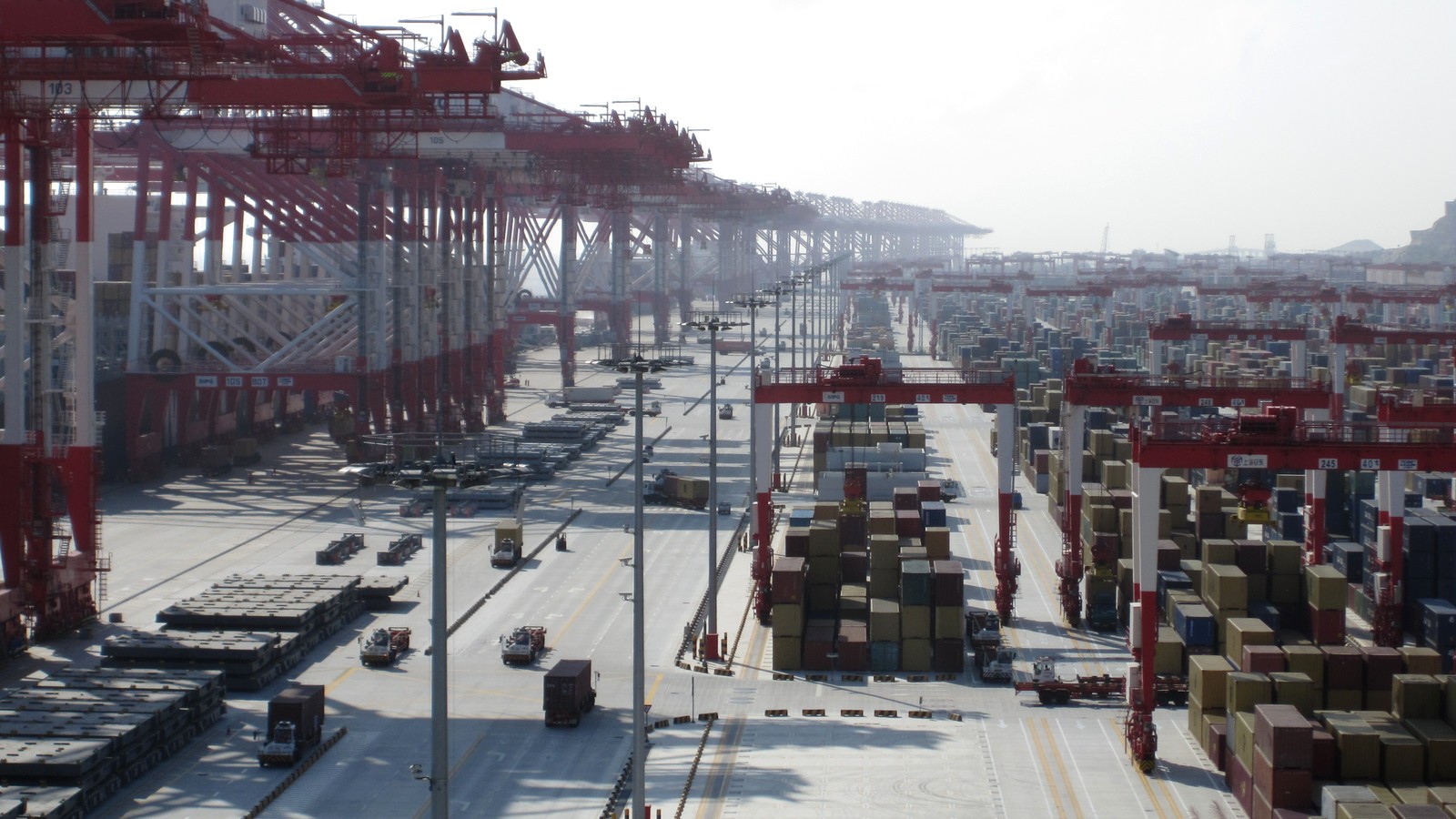

Prologue: The Investment-Promotion Bureau Chief's KPI
In any industrial county in China, one encounters broadly the same scene: the development zone administrative committee's office building is usually among the newest structures in the county; on the wall of the investment-promotion department hangs an industry-chain map, marking the enterprises the county already has and the links it still lacks; the calendars of investment-promotion officials are packed with visit itineraries to the Yangtze River Delta and the Pearl River Delta; and a factory showing investment intent will be received again and again — land prices, build-to-suit factory buildings, equipment subsidies, school placement for employees' children — everything can be discussed at the table.
To manufacturing practitioners, this system is familiar to the point of being like air: to start a factory, you look for an industrial park; before expanding capacity, you first negotiate policy terms; when relocating, you compare quotations from three localities. But even air has an origin. Other economies are hardly free of competition for investment — American states are just as lavish when fighting over auto plants and chip fabs — yet few countries have organized "landing a factory" with the intensity of China's counties and cities: tier upon tier of government, one development zone after another, one dedicated investment-promotion team after another, operating year-round in the manner of a commercial company.
This enthusiasm has a precise date of birth. The obsession of China's local governments with factories is not a cultural tradition but the product of institutional design — more precisely, a by-product of a fiscal reform. The 1994 tax-sharing reform, which took effect on January 1, 1994, was originally intended to resolve a question of survival for the central government's finances; the incentive structure it inadvertently set in place went on to shape the map of Chinese manufacturing over the following thirty years. Where factories grow, how clusters form, what role local governments play — the underlying logic was all written into that year's fiscal contract between the center and the localities.
This article tells the story of the reform from the beginning: why it happened, how it was designed, how it step by step turned China's county towns into "partners" of manufacturing, what the costs of this mechanism have been, and how, thirty years on, it is now being revised. Institutions and data form the through-line — this is an article about rules; the rules had many designers and many executors, and this article does not attempt a narrative of individuals.
1. Before 1994: The Dead End of Fiscal Contracting
To understand the tax-sharing system, one must first look at what it replaced.
In the 1980s, China operated a system of fiscal contracting: each province negotiated one-on-one with the center and signed a contract — remitting to the center each year a fixed quota or an amount rising at an agreed rate, with the lion's share of above-quota revenue retained locally. In the early years of reform this arrangement had a clear incentive effect: for the first time, local governments had a fiscal motive to develop their local economies. But it carried a fatal structural flaw: the more a local economy grew, the relatively smaller the center's share became.
Two curves record the consequences of this flaw. National fiscal revenue as a share of GDP fell from 23% in 1984 all the way to 13% in 1992; central fiscal revenue as a share of national fiscal revenue fell from 41% in 1984 to 28% in 1992, dropping further to 22% in 1993. Of China's 30-odd provinces, autonomous regions, and municipalities, only a dozen or so were paying money to the center under their contracts; the rest were asking the center for money. At the most desperate moments, the central treasury had to live on bank overdrafts — according to later disclosures by the fiscal policymakers of the era, before 1993 the center overdrew roughly 20 billion yuan from the banks each year, without repayment, to cover its deficit.
What does it mean for a central government to control only about one-fifth of national fiscal revenue? It means no capacity to build cross-regional infrastructure, no capacity to make transfer payments to lagging regions, no capacity to hit the brakes when the economy overheats or step on the accelerator in a crisis. For a China that had only just committed itself to the market economy, this was an inescapable institutional dead knot: a market economy requires strong macro-management, and macro-management requires money.
The negotiation costs of the contracting system were equally staggering: thirty-odd mutually distinct contracts, each one a bargaining battle, re-signed every few years, the game between wealthy provinces and the center never at rest. A fiscal system sustained by case-by-case negotiation is, in essence, pre-modern — the first requirement of modern public finance is nationally uniform rules, knowable in advance.
Fiscal contracting also had a less-noticed side effect, directly relevant to the subject of this article: it encouraged local protectionism. Under the contracting logic, the output and profits of local enterprises were the locality's own revenue base, so localities everywhere sealed off their markets to shelter local factories — beer from other provinces could not get onto the province's store shelves, cars from elsewhere could not obtain local license plates. The late-1980s term "duchy economy" described precisely this domestic market carved into pieces by the fiscal system. For manufacturing, it meant that no enterprise could truly exploit the scale of the national market — and scale is precisely the core source of manufacturing efficiency.
2. The Design of the Reform: Sharing Ratios, Institutions, and Base Figures
The tax-sharing system that took effect on January 1, 1994 rewrote central-local fiscal relations from "one contract per province" into "a nationally uniform sharing system." The design rested on four points:
- Revenue divided by tax type. Taxes were classified into central taxes (customs duties, consumption tax, and the like), local taxes (business tax, the local portion of income taxes, and the like), and shared taxes. The largest tax, VAT, became a shared tax, split between the center and the localities at 75:25, with the ratio uniform nationwide — no longer negotiated province by province.
- The center built its own collection apparatus. Two sets of institutions — state tax bureaus and local tax bureaus — were established; the center's money would be collected directly by the vertically administered state tax system, no longer passing through local hands. For this purpose, a state tax apparatus covering the entire country was assembled from scratch in an extremely short time.
- Base-figure rebates protected the existing stock. Each province's vested interests were assessed with 1993 as the base year, and the center rebated according to that base, ensuring the reform produced no losers in its first year; incremental revenue was shared under the new rules — the reform changed the rules for distributing the increment without confiscating the stock.
- A companion new tax system. The tax reform implemented on the same day as the tax-sharing system established a turnover-tax framework with VAT at its core, standardized the enterprise income tax, and dovetailed export tax rebates with the new system; specific items such as tobacco and liquor bore an additional consumption tax, designated a fixed central revenue — remember this arrangement, for thirty years later it becomes a protagonist of a new round of reform.
Hidden within these four design points was a detail with far-reaching consequences: VAT was shared according to the place where the tax was paid, and VAT is paid at the production stage, at the location of the paying establishment — the place of payment is the place where the factory stands. This meant that how much VAT a locality could share depended directly on how many running machines sat within its jurisdiction. Keeping factories at home now had the most straightforward fiscal justification imaginable.
The design was hammered out at the time through arduous province-by-province negotiation — in the autumn of 1993, Zhu Rongji, then Vice Premier of the State Council, led the heads of the fiscal and tax authorities through 17 provinces, autonomous regions, and municipalities, going over the accounts one by one, before the plan could land. This is the only mention of a specific decision-maker in this article; over the following thirty years, the rules took on a life of their own.
The effect was immediate. In 1994, central fiscal revenue as a share of national fiscal revenue leapt from 22% the previous year to 55.7%, and thereafter held stable at around half; according to retrospective reports, the new tax system brought in 50 billion yuan in its very first month of operation. The center regained the fiscal foundation for macro-control — the proactive fiscal policy that answered the Asian financial crisis a few years later, the large-scale transfer payments to the central and western regions, and the succession of major national projects all rested on that share as their premise.
But for Chinese manufacturing, the truly far-reaching impact of the tax-sharing reform lay not in how much the center took, but in what was left to the localities — and in how the localities would earn their money from then on.
3. The Localities' New Arithmetic
After the tax-sharing reform, local governments confronted an entirely new revenue arithmetic.
Of VAT they could keep only 25%, so the efficiency of filling local coffers directly with industrial tax revenue declined. But several other revenue streams remained wholly local: business tax (mainly from construction and services), urban land-transfer income, and the various local tax bases that arrive with investment and employment. Put these together, and a rational local government would derive an optimal strategy:
- Use cheap industrial land to attract factories — of the VAT a factory itself contributes, the locality keeps only a quarter, but the factory brings jobs, brings supporting service industries, brings urban population;
- Let industrialization carry urbanization — once the people arrive, commercial housing and commercial land have buyers, and land-transfer income and construction-sector business tax accrue almost entirely to the locality;
- Let urbanization feed back into industrialization — the proceeds from selling land go to build roads, parks, and supporting infrastructure, which in turn attract the next batch of factories.
The sociologist Zhou Feizhou, in Yi Li Wei Li: Fiscal Relations and Local Government Behavior, summarized this loop as "financing through land"; an empirical study by Sun Xiulin and Zhou Feizhou published in Social Sciences in China in 2013 used prefecture-level panel data to confirm how universal the turn was. In plain terms: after the tax-sharing reform, the fiscal behavior of China's local governments came to approximate that of a development company — industrial land is the customer-acquisition cost, commercial and residential land is the revenue source, and factories are the strategic clients who bring long-term cash flow.
One direct corollary of this arithmetic: local governments were willing to pay real money for factories. Transferring industrial land at prices far below those of commercial and residential land — even below development cost — became a nationwide phenomenon. The economics literature summarizes it thus: local governments use the transfer proceeds of commercial and residential land to cover the concessions made on industrial land, in essence a generalized cost-sharing of manufacturing investment. Manufacturing investors around the world soon discovered as much: build a factory in China, and land costs are pressed to a minimum, the infrastructure is ready-made, and the government delivers service to your door. In the composition of the "China cost," alongside labor, stands this hidden concession borne by the structure of local public finance.
Only by grasping this arithmetic can one understand everything that happened over the following thirty years: why development zones sprang up everywhere, why investment promotion became the core political achievement of local governments, why industrial belts grew up in county towns, and — thirty years later — why this mechanism has begun to need revision.
4. VAT: A Tax That Rewards the Division of Labor
The other gift the tax-sharing reform left to manufacturing is hidden in the design of the tax itself, and deserves a chapter of its own.
The VAT established by the 1994 tax reform is levied on "value added": when a factory sells its products, it issues invoices and pays output tax; the input invoices it obtains when purchasing materials and equipment can be credited against that liability — the burden it actually bears falls only on the slice of value it creates itself. This seemingly technical design carried a profound orientation for the organization of industry: it is neutral toward the division of labor, whereas the old tax system punished it.
Under the previous regime, which taxed the full turnover value, a product was taxed on its entire value each time it changed hands; the finer production was divided and the longer the chain, the heavier the cascading taxation — the tax system tacitly encouraged enterprises to be "large and complete, small and complete," making everything in-house and buying outside only when unavoidable. VAT's link-by-link crediting dismantled that distortion: whether a component is purchased or made in-house, the tax burden is the same; for the first time, the efficiency gains of specialized division of labor could be realized without discount. The extreme division of labor into which Chinese manufacturing evolved over the following thirty years — a lighter completed through the collaboration of a dozen-odd factories, a mobile phone's supply chain spread across the entire Pearl River Delta — had the tax system as one of its silent boosters.
VAT also produced an often-overlooked by-product: the invoice became infrastructure for commercial credit. Input crediting is conditional on obtaining compliant invoices, so every enterprise along the chain has an incentive to demand invoices from upstream and to issue proper invoices downstream — the collection mechanism, in reverse, compelled millions of factories to build standardized records of purchases and sales. The account flows and invoicing data that banks would later examine when extending credit to small and medium factories, and the transaction documents on which supply-chain finance runs, all trace back to this invoice chain. A tool of tax administration became, unexpectedly, the foundation of Chinese manufacturing's credit system.
For export manufacturing, the VAT system also carried a famous built-in lever: export tax rebates. Exported goods enjoy a zero rate — "whatever was levied is refunded" — so Chinese goods compete internationally at net prices stripped of domestic turnover taxes. This is standard international practice, but multiplied by China's manufacturing scale it became one of the weightiest policy instruments in the history of global trade. Every fine adjustment of the rebate rate directly rewrote the price quotations of hundreds of thousands of exporting factories along the coast.
VAT is, of course, not a costless tax. Its claim on cash flow (tax advanced first, credited later) and the build-up of uncredited input VAT have long weighed on asset-heavy, long-cycle manufacturers — a problem that received a systematic answer only with the large-scale refunds of uncredited input VAT in recent years, to which the second half of this article will return.
5. The Tournament: The Birth of the Development Zone
The localities' new arithmetic needed an exercise book. That exercise book was the development zone.
The development zone was not an invention of the tax-sharing reform — the first national economic and technological development zones (NETDZs) were born in 1984, and the early 1990s had already seen a round of blind expansion followed by cleanup — but what turned the development zone from a "coastal experiment" into a "national standard fixture" was the incentive set by the tax-sharing system. The logic is direct: attracting investment requires land supply, infrastructure, and a fast track through administrative approvals; packaging these three things for concentrated delivery on a designated tract of land is the most efficient arrangement. So every level of government needed its own development zone, just as every company needs its own storefront.
Thirty years on, the scale of this system can be verified against official catalogues. The Catalogue of Audited and Announced Development Zones in China (2018 edition), issued by six ministries and commissions, lists 2543 development zones, of which 552 are national-level and 1991 provincial-level — and these are only the regular army confirmed through review. The weight of the two national-level series suffices to show the position of development zones in the Chinese economy: the country's 232 national economic and technological development zones realized a regional GDP of 16.9 trillion yuan in 2024, 12.5% of the national total, accounting for 24.5% of national imports and exports and 23.4% of actually utilized foreign investment (per the Ministry of Commerce briefing); the 178 national high-tech industrial development zones generated 14.3% of national GDP (2024, per the Ministry of Industry and Information Technology), and are home to 33% of the country's high-tech enterprises and 46% of its "little giant" SRDI firms. The system has also grown teeth for weeding out the weak: the Ministry of Commerce subjects NETDZs to an annual assessment, and those ranked at the bottom are stripped of their plaques — according to media reports, in the most recent round announced in 2026, 5 NETDZs were removed from the national-level series. The development zone became the de facto spatial container of Chinese manufacturing — search any industrial county on the Tianxia Gongchang platform today, and the words appearing most frequently in factory addresses are "development zone," "industrial park," and "industry park."
The relationship among development zones is a tournament that never closes. Economists have offered two classic formulations. Steven N. S. Cheung, in The Economic System of China, saw inter-county competition as the core code of China's growth — two-thousand-odd counties competing for investment like two-thousand-odd companies. Zhou Li'an's theory of the promotion tournament supplied the cadre-incentive link — the advancement of local chief officials is tied to the economic performance of their jurisdictions, giving investment promotion a second engine beyond the fiscal motive. With both engines pulling in the same direction, the contest among China's local governments for manufacturing investment was pushed to an intensity without precedent in world economic history.
The tournament's positive effects are felt most keenly by manufacturing practitioners: approvals can be "one-stop," infrastructure comes with "seven utilities connected and the land leveled," policies can be settled "case by case"; in the most fiercely competitive regions, the time from contract signing to production start-up has been compressed to a degree international peers find hard to believe. The negative effects are just as real: zones outbid one another in escalating policy concessions, redundant construction and overcapacity recur in cycles, and "policy lowlands" distort factor prices — a bill of costs that Chapter 10 of this article inventories in full.
6. Transmission to the Factory: Land Prices, Invoices, and the Policy Package
Narratives in institutional economics tend to hover in mid-air. This chapter brings the three transmission chains of the tax-sharing system down to the ledger of a concrete factory.
Chain one: land prices. Data from the 105 major cities covered by the national urban land price dynamic monitoring system show that, as of the end of 2013, land prices for commercial-services, residential, and industrial land stood at RMB 6,306, RMB 5,033, and RMB 700 per square meter respectively — commercial and residential land prices were seven to nine times the industrial land price. That multiple did not emerge spontaneously from the market; it is the direct product of the "land-for-revenue" model: local governments attract factories with suppressed industrial land prices and cover the concession with the proceeds of commercial and residential land sales. For a manufacturing enterprise, this means the land cost of building a plant has been institutionally pushed down to an extremely low level; in official local monitoring, residential land prices in some industrial cities exceeded industrial land prices by more than tenfold. To keep the competition from sliding past all limits, the former Ministry of Land and Resources had to issue the National Minimum Price Standards for the Transfer of Industrial Land as early as 2006, drawing a floor under the race to the bottom; and the "standard land" reform, rolled out from Zhejiang starting in 2017, wrote indicators such as investment intensity and per-mu tax revenue into the transfer conditions — cheap land is fine, but it must be paid for with output.
Chain two: tax administration. The state tax system created by the tax-sharing reform has spent the three decades since upgrading its own weaponry: the Golden Tax Project, launched in 1994, moved from the cross-checking of VAT invoices (Phases I and II) to Golden Tax Phase III — fully rolled out by 2016 — which achieved the nationwide centralization of tax data, and on to the current transformation centered on electronic invoices and big data. A 2021 document of the General Offices of the CPC Central Committee and the State Council explicitly called for "shifting from 'managing tax by invoice' to precise, category-based supervision through 'governing tax by data.'" For factories, the feel of this chain has grown clearer year by year: invoices are ever harder to falsify, the room for off-the-books operation keeps shrinking, and the certainty of the tax burden keeps rising. The upgrading of enforcement capacity raised compliance costs, but it also leveled the competitive floor — factories that keep honest books are no longer squeezed by book-cooking rivals wielding a "tax-cost advantage." This is the other face of the same accounting infrastructure as "Never falsify accounts."
Chain three: the policy package. Investment-promotion competition kept raising what local governments could offer: from the early "three years' exemption plus two years at half rate" tax holidays, to built-to-order plants, equipment subsidies, and talent apartments, and then to the government guidance funds that rose on a large scale after 2015 — by the count of the Zero2IPO Research Center, a cumulative 2,086 government guidance funds had been established nationwide by 2023, with a target fundraising scale of about RMB 12.19 trillion and about RMB 7.13 trillion subscribed; a considerable share of them perform the function of "investment attraction through funds": the government takes an equity stake in exchange for the enterprise setting up locally. For asset-heavy emerging industries such as new energy and semiconductors, local government funds at one point became one of the most important sources of financing. The boundaries of this package are now being redrawn — Chapter 10 of this article returns to that point.
Summed together, the three chains constitute the "institutional discount" built into the cost structure of Chinese manufacturing: cheap land, certain taxes, and hard-cash support for setting up. No other economy in the world organizes the contest for manufacturing investment at this intensity.
7. Industrial Geography: Clusters Were Selected Into Existence
Project thirty years of the investment-promotion tournament onto a map, and you get today's geography of Chinese manufacturing.
The most intuitive gauge is the county. County-economy research by CCID Consulting shows that in 2023 the number of counties with GDP above RMB 100 billion reached 59 (rising to 62 in 2024); with 1.2% of the country's land area and 4.5% of its resident population, these counties contributed 7.6% of national GDP, more than 10% of the output value of industrial enterprises above designated size, and about 10% of the country's "little giant" enterprises (the specialized and innovative SME designation). Of the top ten on the top-100 counties list, Jiangsu alone holds six seats, with Kunshan, Jiangyin, and Zhangjiagang perennially in the top three — every one of them a county built on manufacturing. Strong counties mean strong clusters: by 2023, the Ministry of Industry and Information Technology (MIIT) had designated 200 national-level characteristic industrial clusters for SMEs; counting all county-level jurisdictions, nearly 30% of "little giant" enterprises are located in county-level industrial clusters. "One county, one industry" — a county deepening its supply chain around a single leading industry — has become the standard form of China's industrial geography.
The second gauge is industrial relocation. As land and labor costs rose in the east, the tournament's logic automatically passed the baton toward the central and western regions — where development zones held the same investment-promotion script and offered lower costs. Hence the textbook relocation cases: the Zhengzhou Airport Economy Zone started from Foxconn's arrival in 2010 and by 2017 produced 299 million mobile phones, about one-seventh of global supply; Chongqing produced 61 million laptop computers in 2014, about one-third of the global total, and by the reckoning of Chongqing's economic-information authorities, nearly half of the world's laptops were "made in Chongqing" in 2023; Anhui produced 3.57 million vehicles in 2024, including 1.684 million new energy vehicles, both leaping to second place nationwide, and has topped the national ranking since the first quarter of 2025 — on 2024 figures, one in every four vehicles China exported was made in Anhui. Not one of these leaps was purely spontaneous market behavior: behind each stood a reception package assembled by provincial and municipal governments out of land, infrastructure, funds, and complementary policies. The incentives set by the tax-sharing system grew the first generation of industrial belts in the east, then replicated a second generation in the center and west.
A methodological note is worth adding: to judge the quality of a cluster, one cannot look only at the number of enterprises; one must also look at the completeness of the chain — whether upstream materials, midstream processing, downstream assembly, and supporting services close the loop locally. The more complete the chain, the shorter each factory's procurement radius, the lower its cost of switching suppliers, and the stronger the cluster's lock-in on enterprises. This is precisely why first-mover clusters are hard to poach away with low costs alone, and why latecomer regions taking on relocated industries must recruit "whole chains" rather than "single factories."
The third gauge hides in the data of the Tianxia Gongchang platform. The distribution of registered locations of its 4.8 million factories overlaps heavily with the development-zone catalogue and the roster of counties with GDP above RMB 100 billion; search any product category by industry and the results display marked geographic clustering — sewing equipment points to Taizhou, bath and sanitary ware to Chaozhou and Taizhou, wire mesh to Anping, lighting to Guzhen. Clusters were not planned into existence, nor did they grow entirely naturally: they are the result of thirty years of competitive selection among more than two thousand development zones. Which county bet on which industry in which year, and with which policy mix, determined every coordinate on today's supply-chain map.
8. Fiscal Transfers: The Other Half of the Tournament
Told only as a tournament, the story of the tax-sharing system is only half told. The other half is fiscal transfers — the center redistributing back down the money it has centralized.
In the design of the tax-sharing system, the center taking the larger share was never the end but the means: only once the center had the money first could it redistribute toward regions with weak fiscal capacity. Over three decades, this redistribution system has swelled to a staggering scale: in 2023, the budget for central-to-local fiscal transfers broke through RMB 10 trillion for the first time (RMB 10.06 trillion), and it has stayed above RMB 10 trillion for three consecutive years since; about 86% of it consists of general transfers, with populous agricultural provinces such as Sichuan and Henan perennially among the top recipients.
For manufacturing geography, fiscal transfers did two things the tournament could not do. First, they sustained basic public services and infrastructure investment in the central and western regions — education, healthcare, roads, power grids — giving those regions the foundation to receive industry once their cost advantages emerged; without the schools and highways kept alive by fiscal transfers, there would have been no later industrial leaps in Zhengzhou, Chongqing, or Hefei. Second, they partly offset the tournament's Matthew effect: pure inter-county competition would let the strong grow ever stronger and force the weak out; fiscal transfers gave latecomer regions the right to stay at the table. Centralization and redistribution, competition and equalization — the complete design of the tax-sharing system is the combination of these two pairs of forces, and an observation that sees only the tournament is incomplete.
For corporate site selection, fiscal transfers carry one further practical implication: the infrastructure and public services of major recipient provinces are often better than what their own fiscal capacity could support — education and healthcare are priority areas guaranteed by fiscal transfers, which is one of the underlying reasons the populous central and western provinces are able to retain industrial workers and support large-scale employment. In assessing the long-term labor stability of a candidate location, beyond wage levels one should also look at the local schools and hospitals — behind them stands the central treasury.
Redistribution, of course, has its own costs and controversies: how to preserve incentives in transfer-dependent regions, and how to assess the efficiency of fund use, have been debated in public-finance scholarship for thirty years. This article does not elaborate; it marks one fact: the new round of fiscal and tax reform launched in 2024 has once again placed "improving the fiscal transfer system" and "better matching the fiscal resources of cities and counties with their expenditure responsibilities" on the task list — this thirty-year rebalancing is still in progress.
9. Evolution: The BT-to-VAT Reform and the 50:50 VAT Sharing
Institutions are not specimens; over its thirty years the tax-sharing system underwent two structural revisions.
The first was the BT-to-VAT reform. The 1994 tax system left a dual-track tail: goods paid VAT, services paid business tax. As the boundary between manufacturing and services blurred — is a factory selling equipment, or "equipment plus operations-and-maintenance services"? — the crack between the two tracks widened: business tax on service links could not enter the VAT credit chain, manufacturers purchasing outside services bore double taxation, and the tax system was once again quietly punishing the division of labor — only this time the victim was the "servitization of manufacturing." The revision began with a pilot in Shanghai on January 1, 2012 (transport and selected modern services first), extended nationwide in 2013, and was fully rolled out on May 1, 2016, bringing in construction, real estate, finance, and consumer services; the business tax, in force for more than sixty years, exited history. The relief was real: in Shanghai alone, six years of the early pilot cut taxes by a cumulative RMB 324.8 billion. For manufacturing, the BT-to-VAT reform connected the credit chain between goods and services: input VAT on R&D and design, logistics, and information services all became creditable, and for the first time the "manufacturing + services" business model received equal treatment under the tax code — the tax obstacle to advanced manufacturers' transformation into solution providers was dismantled in this round.
The BT-to-VAT reform cut into local governments' cheese — business tax had been the largest local tax, and the full rollout effectively merged it into the central-local sharing pool. Hence the second revision: the 50:50 VAT sharing. In April 2016 the State Council issued a transitional plan under which, from May 1 of that year, the central and local governments would each share 50% of VAT revenue across all sectors, with rebates benchmarked to 2014; the State Council's 2019 plan further specified "keeping the 50:50 VAT sharing ratio stable," making the transitional arrangement long-term. From 75:25 to 50:50, the share of VAT a locality receives from every factory doubled — after the BT-to-VAT reform, local governments' tax incentive to develop manufacturing rose rather than fell.
The tax rate itself was also cut repeatedly over the same period: the basic rate applicable to manufacturing fell from the 17% set in 1994 to 16% in May 2018, and again to 13% in April 2019. The 2019 Government Work Report named the beneficiary: "reduce the current 16% rate for manufacturing and other industries to 13% … ensure that tax burdens in major industries are markedly reduced." In parallel with the rate cuts came repayment of the historical debt: in 2022, large-scale refunds of uncredited input VAT for "micro and small enterprises and industries such as manufacturing" were delivered, with refunds reaching taxpayers' accounts totaling RMB 2.46 trillion for the year, manufacturing being the largest beneficiary — the VAT cash-flow occupation problem raised in Chapter 4 received a systematic answer in this round.
The BT-to-VAT reform and the 50:50 sharing were structural revisions; the rate cuts and the refunds of uncredited input VAT were parameter-level adjustments. Put the four sets of changes side by side — the credit chain connected, the local share doubled, the tax rate down four points, accumulated credits refunded in bulk — and the direction of thirty years of evolution is consistent: this tax system has kept conceding benefit to manufacturing, and kept deepening the binding of local governments' interests to manufacturing. A useful thought experiment as counterfactual: had the main tax chosen in 1994 been a gross turnover tax rather than VAT, or had VAT never been shared with local governments, China's industrial organization and industrial geography today would very likely look quite different — a tax system appears technically neutral, but it is in fact one of the deepest shaping forces of industrial structure.
10. Limits and the Turn
Any incentive mechanism that runs for thirty years accumulates its side effects into new problems. In the 2020s, the growth machine shaped by the tax-sharing system hit two limits at once.
The first limit is the ebb of land-based public finance. The profit end of the "land-for-revenue" loop — commercial and residential land sales — peaked in 2021: nationwide revenue from the transfer of state-owned land-use rights reached RMB 8.7051 trillion that year, an all-time high; by academic estimates under varying definitions, this revenue was equivalent to roughly 35–40% of the combined revenue of local governments' two budget accounts that year. Over the following three years, this engine downshifted sharply: RMB 6.69 trillion in 2022, RMB 5.8 trillion in 2023, RMB 4.87 trillion in 2024 — a cumulative decline of about 44% from the peak. With land proceeds thinning, the old arithmetic of subsidizing industrial land with commercial and residential sales no longer works: local governments' motivation to develop manufacturing will not disappear — after the 50:50 sharing, the industrial tax base is more precious than ever — but the form that motivation takes must shift gears, from "paying to grab projects" to "cultivating tax sources and counting per-mu output." The spread of "standard land" transfers and per-mu performance evaluation across the country is precisely the concrete form of this gear change.
The second limit is the involution of the tournament. When every development zone works from the same script to chase the same batch of fashionable industries, competition crosses its healthy boundaries: the "new trio" of photovoltaics, lithium batteries, and new energy vehicles saw concentrated overcapacity and price wars in 2023–2024; by the end of 2024, domestic polysilicon capacity stood at roughly 2.8 million tonnes, far exceeding global demand; industry associations were forced to step in and organize self-discipline, with the China Photovoltaic Industry Association convening a symposium in October 2024 on "preventing involutionary vicious competition in the industry" and publishing RMB 0.68/W as the minimum-cost red line for module bids. The center's characterization escalated in step: the Politburo meeting of July 2024 called for "preventing 'involutionary' vicious competition"; the Central Economic Work Conference of December of the same year changed this to "comprehensively rectify 'involutionary' competition, and regulate the behavior of local governments and enterprises" — from "prevent" to "comprehensively rectify," with "the behavior of local governments" named alongside enterprises.
A rewriting of the rules of investment-promotion competition itself has already begun, and it lines up on a clear timeline: State Council Document No. 62 of 2014 mounted the first comprehensive cleanup of local governments' irregular tax rebates and fiscal rewards and subsidies; the Fair Competition Review Regulations, effective August 1, 2024, listed "granting specific operators tax preferences, or selective fiscal rewards or subsidies, without a basis in law or administrative regulation" as prohibited territory under review, sharply tightening tax-linked investment-promotion policies of every kind; in January 2025, the General Office of the State Council's No. 1 document of the year on government investment funds stated explicitly that such funds are "not to be established for the purpose of investment attraction," and the Guidelines for the Construction of a National Unified Market (Trial), issued the same month, required rectifying disorder in investment attraction. The core props of the thirty-year tournament — tax rebates, fiscal rewards and subsidies, fund reinvestment commitments — are being put back into the drawer one by one.
This is not a negation of the logic of the tax-sharing system but its self-correction: as competition to "grab increments" gives way to competition to "raise quality," the relationship between local governments and manufacturing is shifting from "a landlord handing out policies" to "a partner competing on services and ecosystem." For factories, one direct corollary follows: site-selection logic built on arbitraging policy lowlands is losing its force, while the weight of business environment, industrial supporting facilities, and factor quality is rising.
11. 2024: The Next Blueprint
In 2024, the tax-sharing system's thirtieth year, the blueprint for a new round of fiscal and tax reform was published. In the Resolution of the Third Plenum of the 20th CPC Central Committee, the clause on "deepening reform of the fiscal and tax system" speaks, sentence by sentence, to the theme of this article, and several lines deserve quoting verbatim:
- "Establish a fiscal relationship between the central and local governments with clearly delineated powers and responsibilities, coordinated fiscal resources, and regional balance. Increase the fiscal resources under local governments' own control, expand local sources of tax revenue, and appropriately enlarge local authority over tax administration."
- "Advance moving consumption tax collection downstream and steadily assigning it to local governments; improve the policy on refunds of uncredited input VAT and the VAT credit chain; and optimize the sharing ratios of shared taxes."
- "Study merging the urban maintenance and construction tax, the education surcharge, and the local education surcharge into a single local surtax, and authorize local governments to determine the specific applicable rates within a prescribed band."
- "Improve the fiscal transfer system … and better match the fiscal resources of cities and counties with their expenditure responsibilities."
To translate: the local revenue gap left by the ebb of land-based public finance is to be filled with new local tax sources — and moving consumption tax from the production stage to the consumption stage while assigning it to local governments is the heaviest piece on the board. The potential implications of this move for industrial geography run deep: a consumption tax collected at the production stage incentivizes localities to fight for factories; collected at the consumption stage, it incentivizes them to cultivate markets — if implemented, local governments' attention may for the first time rebalance, at the institutional level, from the "production side" toward the "consumption side." And the line "optimize the sharing ratios of shared taxes" leaves an opening for a future readjustment of the 50:50 VAT sharing.
The reform is advancing "item by item, step by step," and its effects will take years to observe. What is certain is this: the incentive structure that shaped Chinese manufacturing for thirty years is in the midst of its deepest rewrite since 1994. Understanding the rewrite now under way is the precondition for understanding the shifts in industrial geography over the next decade.
12. Three Judgments for Practitioners
Compressing thirty years of institutional history into judgments useful today, we offer three.
First, the logic of site selection is changing generations. For the past thirty years, "best policy" was a major variable in site selection — wherever land was cheapest, tax rebates largest, and subsidies thickest, capacity flowed. Fair-competition review and the regularization of investment promotion are flattening policy differences; over the next decade, the site-selection variables will return to fundamentals: supply-chain radius, factor costs, talent supply, logistics conditions. In evaluating an industrial park, rather than asking "what policies do you offer," ask "who is on the chain" — the regional supply-chain data of the Tianxia Gongchang platform were built precisely for that question.
Second, local government remains Chinese manufacturing's most important "partner," but the terms of the partnership are being rewritten. The 50:50 VAT sharing guarantees that localities' tax motivation to develop industry is undiminished, while the exit of land subsidies and tax rebates means the center of gravity of the partnership is shifting from "getting resources" to "using services": per-mu output assessment will grow stricter, output commitments harder, and a park's capacity for professional services will replace the size of its concessions as the differentiator. Reading the condition of local public finance is the shortcut to reading where investment-promotion policy is headed.
One additional observation tool: to judge the sustainability of local investment-promotion policy, check two public numbers directly — the change in the local government's land-transfer revenue, and the composition of tax revenue within its general public budget. The faster land revenue is falling, and the deeper the dependence on the industrial tax base, the more investment-promotion policy will pivot from "preference-oriented" to "per-mu-output-oriented," and services to — and assessment of — incumbent enterprises will tighten in step. Fiscal statements are the leading indicator of investment-promotion policy.
Third, the next reshuffle of the industrial belts is already written into the institutions. If moving consumption tax collection downstream and assigning it to local governments materializes, the fiscal standing of large consumer-market provinces will rise; the ebb of land-based public finance will accelerate parks' shift from "land-grabbing expansion" to "raising yield on existing stock"; and the "comprehensive rectification of 'involutionary' competition" will squeeze the survival space of duplicate capacity and concentrate it toward the leading clusters. Industrial geography has always been the projection of fiscal institutions — read the next edition of the fiscal system, and you can see the next industrial map in advance. The Tianxia Gongchang Industry Research Institute will follow this thread, continuing to track this ongoing rewrite with platform data.
Epilogue
The central-local fiscal contract that took effect on January 1, 1994 was originally meant only to keep the central treasury alive. Its designers probably never anticipated that the incentive clauses implicit in its annexes would, over the following thirty years, grow into the largest manufacturing-cultivation machine in the world: more than 2,500 development zones, more than sixty counties with GDP above RMB 100 billion, hundreds of industrial clusters, 4.8 million factories — and a form of government-business interaction unique in the world: governments competing with one another to invite factories in.
Institutional economics has a plain conclusion: in the long run, what shapes the economic map is not resource endowments but incentive structures. The thirty years of Chinese manufacturing are the largest-scale empirical demonstration of that conclusion. Now the incentive structure has entered its deepest revision in thirty years, and the next industrial map is being drawn — and those who can read the blueprint are always one step ahead of those who can only read the map.
Data Sources and Key References
All figures in this article have been cross-checked against multiple sources, with official documents and original official statistics taking precedence. Key sources:
- Tianxia Gongchang industry platform — China factory database and industrial-belt data (identification of 4.8 million factories and regional supply-chain distribution)
- State Council, Decision on Implementing the Tax-Sharing Fiscal Management System (Guo Fa [1993] No. 85); Provisional Regulations on Value-Added Tax (State Council Decree No. 134 of 1993)
- Ministry of Finance and State Taxation Administration: Circular on Fully Rolling Out the BT-to-VAT Reform Pilot (Cai Shui [2016] No. 36); State Council: Transitional Plan for the Division of VAT Revenue (Guo Fa [2016] No. 26); the Guo Fa [2019] No. 21 plan
- State Taxation Administration: RMB 2.46 trillion in refunds of uncredited input VAT in 2022; General Offices of the CPC Central Committee and the State Council, Opinions on Further Deepening the Reform of Tax Collection and Administration (2021)
- NDRC and five other ministries: Catalogue of China's Development Zones (2018 Edition, as Reviewed and Announced); Ministry of Commerce data on national-level economic and technological development zones (2025 State Council regular policy briefing); MIIT data on national high-tech zones
- Ministry of Finance: Explanatory notes on the 2023 budget for central-to-local fiscal transfers; Ministry of Finance: Fiscal revenue and expenditure in 2021 (land-transfer revenue of RMB 8.7051 trillion)
- Resolution of the CPC Central Committee on Further Deepening Reform Comprehensively to Advance Chinese Modernization (2024); the Fair Competition Review Regulations (State Council Decree No. 783); General Office of the State Council, Guiding Opinions on Promoting the High-Quality Development of Government Investment Funds (2025)
- Official readout of the December 2024 Central Economic Work Conference (Xinhua); Qiushi: Deeply Understanding and Comprehensively Rectifying "Involutionary" Competition
- Zhou Feizhou, Yi Li Wei Li: Fiscal Relations and Local Government Behavior; Sun Xiulin and Zhou Feizhou, "Land Finance and the Tax-Sharing System: An Empirical Explanation" (Social Sciences in China, 2013); Zhou Li'an, "Governing China's Local Officials: An Analysis of the Promotion Tournament Model" (Economic Research Journal, 2007); Steven N. S. Cheung, The Economic System of China
- CCID Consulting: 2024 Study on the High-Quality Development of China's County Economies (counties with GDP above RMB 100 billion); South China Journal of Economics: "Industrial Land Prices and Firm Entry"
Cover photo: the container terminal at Yangshan Deep-Water Port, Shanghai, by Reb42, from Wikimedia Commons, used under the CC BY 3.0 license.