
Abstract
In December 1945, the General Headquarters of the Allied Powers ordered a total ban on aircraft manufacturing in Japan. One year earlier, Japan's annual aircraft output had just peaked at 28,180 units, with roughly 1.5 million people across the country involved in the industry in one way or another. After the ban, factories that had built aircraft began turning out frying pans, agricultural machinery and three-wheeled trucks, and one company after another changed its name.
Eighty years have passed. Today, in the annual central procurement contract results published by Japan's Ministry of Defense, the company ranked first is Mitsubishi Heavy Industries and the second is Kawasaki Heavy Industries. IHI is building the engine for a next-generation fighter; ShinMaywa Industries builds what is said to be the only aircraft in the world able to take off from and land on seas with three-metre waves; SUBARU builds helicopters for the Japan Ground Self-Defense Force. Among the predecessors of these five companies are the largest and the third-largest aircraft manufacturers in Japan during the war of aggression, an old shipyard dating from the closing years of the shogunate, and two firms that built fighters and flying boats for the Japanese Navy.
What this article traces is the complete corporate lineage of these five firms from the war years to the present: the position each occupied within the military-industrial system of the war of aggression, how each was broken up after 1945, under what names they survived, on what kind of orders they grew back into the position of defense contractors, and what circumstances each finds itself in today.
The material comes mainly from four sources: the field investigation reports issued company by company by the United States Strategic Bombing Survey in 1946 and 1947; public Japanese government documents, including procurement records and technical research materials from the Ministry of Defense and its Acquisition, Technology and Logistics Agency, policy documents published by the Cabinet Secretariat, statutory texts and Diet proceedings; the official corporate history pages, financial results summaries and results presentation materials of the five companies themselves; and a small amount of academic research and published statistics from international research institutes. Any figure that can only be traced to secondhand retelling, and not to a primary source, is not used in this article, and where necessary the reason for not using it is stated.
One thing must be made clear at the outset. The wartime output, factory scale and technical data cited in this article were all produced by a war-of-aggression machine. They are not industrial achievements to be admired; they are the ledger left behind by a war of aggression. To read these figures as "remarkable manufacturing capability" is to misread this history.
Chapter 1 Three Beginnings Across Three Centuries
On 5 December 1853, ground was broken on a sandbank at the mouth of the Sumida River in Edo. The sandbank was called Ishikawajima. Six months earlier, the steam warships of the United States East India Squadron had appeared in Edo Bay, and the shogunate promptly ordered the Mito domain to build a shipyard there. From its very first day it was not a business but an emergency measure — a regime that had been closed for more than two centuries suddenly discovering that it needed ships it could build itself.
That shipyard is the starting point of today's IHI. The company officially designates 5 December 1853 as its "founding" date, and the establishment of "Ishikawajima Shipbuilding & Engineering Co., Ltd." on 17 January 1889 as its "incorporation" date. The two dates are kept clearly distinct: the former is the groundbreaking on that sandbank, the latter the incorporation of a modern company.
Thirty-one years later, on 7 July 1884, Iwasaki Yataro leased the Nagasaki Shipyard of the Ministry of Industry and renamed it the Nagasaki Shipyard. This is the founding date officially recognized by Mitsubishi Heavy Industries. In the same era, Kawasaki Shozo opened the Kawasaki Tsukiji Shipyard in Tokyo, and in 1896 established Kawasaki Dockyard Co., Ltd. in Kobe — today's Kawasaki Heavy Industries headquarters in Kobe sits on the site of those docks.
Three shipyards, three different beginnings: one an emergency project of the shogunate, one a transfer of Meiji government state-run assets, one a private merchant's business. But the road they subsequently took was the same. The naval expansion pushed forward by the Meiji government funnelled a continuous stream of orders into all three, and turned them from "shipbuilders" into "warship builders." In 1906 Kawasaki built Japan's first domestically produced submarine; in 1915 it completed the battlecruiser Haruna, whose sister ship Kirishima was built at Mitsubishi's Nagasaki Shipyard and completed the same day. These "firsts" are recounted again and again in Japanese industrial history, but their real significance lies elsewhere: a nation's shipbuilding capability was being systematically converted into military capability directed outward.
The other two firms began much later, and there is a connection between them that is often overlooked.
In May 1917, in the town of Ojima in Nitta District, Gunma Prefecture — a place a hundred kilometres from Tokyo known for its mulberry fields and looms — Nakajima Chikuhei founded the "Aircraft Research Laboratory." In December of the same year the laboratory moved to the town of Ota. In April 1918 it was renamed the Nakajima Aircraft Works. In April 1919 it received its first order from the Army: twenty Nakajima Type 5 biplanes. This was the beginning of series-produced aircraft designed by Japanese themselves.
Among those who had put money into that laboratory was a Kobe industrialist named Kawanishi Seibei. His main business was wool textiles, and he had founded Nippon Keori. He later fell out with Nakajima Chikuhei, withdrew, and set up on his own. In February 1920, Kawanishi Machine Works was founded in Kobe; on 30 December of that year the Kawanishi Type 1, a wooden biplane, was completed and made its first flight. In November 1928 the aircraft division of Kawanishi Machine Works was separated out and the Kawanishi Aircraft Company was established, with capital of ¥5 million, taking over the assets and operations of the Kawanishi engineering works in Kobe. The man who ran the new company was Kawanishi Seibei's son, Kawanishi Ryuzo.
In other words, both today's SUBARU and today's ShinMaywa Industries can trace their origins back to that small aircraft research laboratory of 1917. A disagreement between partners split off the two lines that would define Japan's aviation industry: one leading toward Army fighters and engines, the other toward Navy seaplanes and flying boats.
By the mid-1930s all five companies were in place. In December 1931 Nakajima Aircraft was reorganized as a joint-stock company with capital of ¥6 million. In 1934 Mitsubishi Shipbuilding was renamed Mitsubishi Heavy Industries, Ltd. On 18 November 1937 the aircraft manufacturing division of Kawasaki Dockyard was separated out and Kawasaki Aircraft Industries Co., Ltd. was established independently, with capital of ¥50 million; equipment and roughly 1,200 personnel were moved from Kobe to Kagamigahara in Gifu Prefecture. Two years later, on 1 December 1939, the parent Kawasaki Dockyard was renamed Kawasaki Heavy Industries, Ltd.
These two dates deserve a separate note. Popular accounts frequently treat "the independence of Kawasaki Aircraft" and "the renaming of Kawasaki Dockyard to Kawasaki Heavy Industries" as a single event dated to 1939. According to Kawasaki Heavy Industries' official history pages and corporate genealogy chart, these are two separate events two years apart. In addition, a company named "Kawasaki Machinery Industries," which appears in some sources, cannot be found anywhere in Kawasaki's official genealogy page, in any period of its official timeline, or in the relevant reference entries; this article does not use it.
There is one more thing these five beginnings have in common that is worth stating.
Not one of them grew out of a consumer market. The Ishikawajima shipyard was a shogunate emergency project; the Nagasaki shipyard was a transfer of Meiji government state-run assets; Kawasaki was oriented toward naval orders from the start; Nakajima Aircraft's first order came from the Army; Kawanishi Aircraft's products began with seaplanes, and its customer was the Navy. The capital, the orders and the technological direction of these five firms were shaped by state will from day one, and in that era Japanese state will was tilting rapidly toward outward expansion.
This was not a situation unique to these five. Modern Japanese heavy industry as a whole was built under the pull of armaments demand — the most fundamental difference between its path and that of Britain or the United States, where heavy industry emerged gradually out of civilian markets. By the 1930s, when Japan had fully embarked on the road of aggression, this industrial system built around an armaments axis could be thrown directly into war with almost no conversion required.
Five companies: three that began with ships, two that began with aircraft. That difference would matter enormously after 1945 — shipbuilders could fall back on merchant ships; aircraft builders had nowhere to fall back to.
Chapter 2 Five Companies Redefined by a War of Aggression
In the autumn of 1945, a group of American investigators began walking into Japanese military-industrial firms one by one. They belonged to the United States Strategic Bombing Survey, and their task was to establish what strategic bombing had actually destroyed and how Japan's war production had been organized. They examined ledgers, measured plants, interviewed executives and engineers, and then issued reports company by company. Between 1946 and 1947 these reports were printed: one industry-wide report covering the entire aircraft industry, and a series of numbered corporation reports.
These documents can still be consulted in full today, and they are the closest thing to a primary source for understanding the scale of Japan's wartime military industry. Most of the figures in this chapter come from them.
Start with the totals. According to the Survey's industry report, Japan's annual aircraft output peaked in 1944 at 28,180 units, with 46,526 engines produced the same year. In February 1944 roughly one million people were engaged in aircraft manufacture in one way or another; at the employment peak in the autumn of 1944 that figure rose to about 1.5 million. In the final months of the war, Japan brought roughly one hundred underground aircraft plants to various stages of completion within six months, with a planned total area of more than 12 million square feet.
Now look at how the capacity of those 1.5 million people was distributed. The Survey provided a table of manufacturer shares:
- Nakajima Aircraft Company: 19,661 aircraft of all types, 28.0% of the national total; of these 19,396 were combat aircraft, 37.1% of all combat airframes nationally.
- Mitsubishi: 12,513 aircraft of all types, 17.9%; of these 12,039 were combat aircraft, 23.0%.
The Survey wrote in its report that for most of the war these two together produced approximately 60 percent of all combat aircraft.
This table corrects a widely held impression. In popular Chinese-language accounts, Mitsubishi is virtually a synonym for Japan's wartime aviation industry, while Nakajima is often treated as its subcontractor. The reality is the reverse: Nakajima Aircraft was Japan's largest wartime aircraft manufacturer, clearly ahead of Mitsubishi by both total output and combat airframe output. Its workforce was likewise the largest in the industry — the Survey recorded a peak of 146,000 in the airframe division and 78,000 in the engine division.
Kawasaki ranked third. According to Corporation Report No. IV of the Survey, in 1944 it produced 17% of the nation's combat airframes and 12% of its combat engines. From January 1941 to August 1945 its actual airframe output was 8,269 units against a plan of 11,662, and its actual engine output 10,274 units against a plan of 15,402. Peak employment came in July 1944 at 87,121, of whom 64,494 were in airframes and 22,627 in engines. Its plants were at Kagamigahara in Gifu Prefecture (airframes) and Akashi in Hyogo Prefecture (engines and airframes), with dispersal plants at Takatsuki, Futami, Miyakonojo and Ichinomiya.
Kawanishi Aircraft ranked tenth. Between 1941 and 1945 it accounted for only 3% of industry-wide aircraft output, fluctuating between 1.1% and 5% by year. From 1930 to 1945 it produced 2,821 aircraft of all types in total. Peak employment was 66,100 in January 1945. It had four principal works — Naruo, Konan, Himeji and Takarazuka — all concentrated between Osaka and Kobe, none more than forty miles from the others.
In the Kawanishi column there is one set of figures that says more than output alone. The Survey listed three numbers side by side: capacity of 3,835 aircraft, government orders of 3,594, and actual deliveries of 1,606 combat aircraft between 1941 and 1945. Less than half the orders were filled, and that against an already discounted capacity. This was not Kawanishi's problem alone. The widening gap between paper capacity and actual delivery in Japan's wartime aviation industry existed at Kawasaki too — airframes planned at 11,662 against 8,269 actually built, a shortfall of nearly 30%; engines planned at 15,402 against 10,274 built, a shortfall of one third.
The Survey also recorded Mitsubishi's plant layout: six airframe works and eleven engine works, mainly in southern and central Honshu, with Nagoya alone accounting for two-thirds of the corporation's airframe floor area and more than half its engine floor area. Peak employment at the Nagoya Aircraft Works in 1944 was 99,416 — a figure that comes not from the Survey but from an academic study based on Mitsubishi's own wartime archives. Among those nearly one hundred thousand people, a substantial portion were not ordinary employees but labor coerced by the wartime system — a dimension that is not this article's subject and that Iron and People in this series will address specifically.
On the shipbuilding side the scale was comparable. After the outbreak of the Pacific War the construction focus of Kawasaki Dockyard's Kobe works shifted to aircraft carriers and submarines; according to the company's official history page, it built more than thirty naval vessels up to the defeat, including the carriers Zuikaku, Hiyo and Taiho. The Zuikaku was laid down in May 1938, launched in November 1939 and commissioned in September 1941 — less than three months after commissioning it took part in the attack on Pearl Harbor. Mitsubishi's Nagasaki Shipyard was likewise one of the Navy's most important builders. The technical archives of these yards record displacements, launch dates and trial speeds, but their true place in history is that they converted a nation's steel and machinery capability into violence projected onto other countries' soil.
2.1 Able to Draw the Blueprint, Unable to Make the Part
Buried in this set of Survey reports is a thread that matters more for understanding the eighty years that followed: the real bottleneck of Japan's wartime aviation industry was not in design, but in the layer beneath design.
The clearest example is Kawasaki's Type 3 fighter, the Hien, and the liquid-cooled engine it used.
The Hien was designed under Kawasaki's Doi Takeo and was one of the few liquid-cooled-engine fighters the Japanese Army fielded during the entire war. The engine, the Ha-40, was a licensed copy of the German Daimler-Benz DB 601A; Kawasaki purchased the production licence in January 1939. The blueprints were ready-made. The problem was turning the blueprints into parts.
According to technical records compiled after the war, what the Ha-40 exposed in mass production was a whole chain of deficiencies in basic industrial capability: bearing roller machining precision fell short of the German design requirement; cylinder block machining yield hovered around half for long stretches; the nickel content mandated by the military to economize on strategic materials was insufficient, causing crankshafts to fracture in operation. Once installed and shipped to the South Pacific, the engines suffered frequent fuel pump failures in high temperatures; and this liquid-cooled engine could not be overhauled at the front, so a failed unit had to be shipped all the way back to a rear base.
With the upgraded Ha-140 the situation went completely out of control. In September 1944, against a planned monthly output of forty units, one was delivered. The consequence was more than two hundred completed airframes sitting in Kawasaki's plants waiting for engines that did not exist. The eventual remedy was to convert 275 of those airframes to Mitsubishi's Kinsei air-cooled engine — this is the origin of the Type 5 fighter. A new fighter type born out of the total failure of an engine programme.
This thread is worth remembering, because it recurs through the second half of this article. Whether a country can draw an advanced blueprint and whether it can reliably build what the blueprint specifies are two different things. Japan paid for the difference in the 1940s; after the war it spent several decades making up that one lesson in engines. The protagonist of that remedial work is one of the five companies in this article.
2.2 The Zero: A Number This Article Will Not Print
Now to the Zero.
The Zero carrier-based fighter was the most-produced Japanese fighter of the war, with more than ten thousand built across all variants. As for the exact figure, authoritative sources give numbers between 10,430 and 11,291, the differences arising from whether floatplane and two-seat trainer variants are counted. It was designed by Mitsubishi, with Horikoshi Jiro as chief designer; but most of the airframes were not built by Mitsubishi. They were built by Nakajima Aircraft. As for what proportion Nakajima actually accounted for, the following section explains why this article gives not even an approximate figure.
On the question of per-manufacturer Zero output, several sets of figures precise to the last digit have circulated on the Chinese-language internet and been quoted for decades. This article uses none of them, for a simple reason: they cannot be traced to a source. These figures are usually attributed to the United States Strategic Bombing Survey, but the Survey's industry-wide report on the aircraft industry lists "Zeke" only as one of Mitsubishi's principal products and gives no per-manufacturer output at the model level at all. The two corporation reports on Mitsubishi and Nakajima that might record that layer are not within the holdings publicly accessible today. A figure that even the primary investigation did not provide, yet which circulates online precise to the last digit, is itself a warning sign.
More telling still, this set of figures has already forked in circulation. Both claiming to come from that same survey, Nakajima’s output is given in some versions as 6,538 aircraft and in others as 6,570. When a figure supposedly precise to the last digit exists in two versions, it is no longer precise. This article therefore does not even offer an approximation such as “around sixty percent” — that approximation is calculated from precisely the per-manufacturer figures above, none of which can be traced to a source; if the sources are unreliable, so is the ratio derived from them. What can be established, and what is sufficient, is one sentence: most Zero airframes came from Nakajima, not from the Mitsubishi that designed the aircraft.
So this article's approach is to use the total manufacturer shares the Survey did provide to carry the judgement that Nakajima was the largest of them. That judgement is firmer than any set of per-manufacturer Zero figures, and it says more.
Everything in this chapter so far has been numbers. Numbers read at length start to feel neutral, so it is worth stopping to state the matter plainly.
The capacity, the plants and the people above served a war of aggression. Nakajima's Type 1, Type 2 and Type 4 fighters, Kawasaki's Type 3 and Type 5, Kawanishi's Shiden and Type 2 flying boat, the Mitsubishi-designed Zero — all of them were thrown into Japan's full-scale war of aggression against China and the wider war that followed. Those 28,180 aircraft of 1944 are not a medal for a nation's industrial capability; they are a war machine accelerating one last time before collapse. The signboard Japan hung on that war at the time was the so-called "Co-Prosperity," and behind that signboard lay an entire region occupied, plundered, and subjected to forced labor.
A history of technology can be written clean. A history of industry cannot. Every ounce of manufacturing capability these five companies accumulated before 1945 came from somewhere.
To put it at its plainest: those 28,180 aircraft of 1944 were what Japanese militarism produced after requisitioning the entire industrial capability of the country. Militarism is not a mood. It is an institutional arrangement that directs industry, public finance and manpower alike toward outward expansion — and the factories, employment peaks and gaps between capacity and orders set out in this chapter are what that arrangement looks like on a company's books. It is worth remembering its shape, because this article will meet it again.
Chapter 3 December 1945: The Sky Is Closed
After Japan's surrender, the disposition came quickly.
In December 1945, the General Headquarters of the Allied Powers ordered a total ban on aircraft manufacturing in Japan. The meaning of that ban went far beyond "stop production." It did not merely shut down some assembly lines; it revoked an entire industry's licence to exist: no building, no repairing, no research. For the three shipyards it meant warship business went to zero; for the two aircraft companies it meant the companies lost their main business altogether.
The instruction Kawasaki Heavy Industries received was a prohibition on the production and repair of naval vessels, aircraft and the like. According to the company's official history page, it turned for a time to making frying pans and other household goods, and agricultural machinery, to keep going. On 31 May 1946, Kawasaki Aircraft Industries simply changed its name to Kawasaki Sangyo Co., Ltd. — the characters for "aircraft" were deleted from the name.
At Kawanishi, in 1946 the company began developing and producing the "Akitsu" three-wheeled truck at its Nishinomiya works in Hyogo Prefecture. A factory that had built four-engine flying boats now built three-wheeled goods vehicles.
Nakajima Aircraft reacted fastest of all. Japan surrendered on 15 August 1945; on 17 August the Minister of Munitions issued a production stop order to the director of the First Munitions Arsenal — and on the same day the company renamed itself Fuji Sangyo Co., Ltd. and amended its articles of incorporation, declaring a turn to peacetime industry. From receiving the stop order to changing its name took less than a day.
The speed of the renaming is itself information. It shows that these companies' managers understood very clearly what they were about to face: a signboard bearing the words "aircraft" was, in the Japan of autumn 1945, a liability.
But it needs saying plainly: what they hurried to deal with was the signboard, not the responsibility. Changing a name took less than a day, whereas the aircraft, warships and engines these factories had produced for the war of aggression over the preceding decade and more had already been thrown into the battlefields of China and the Asia-Pacific, and the deaths and destruction they caused were not written off because a signboard changed. The renamings of 1945 were an act of commercial self-protection. They were not a reckoning, still less an apology.
During the same period two larger processes were under way: the dissolution of the zaibatsu directed by the General Headquarters of the Allied Powers, and, a few years later, Korean War special procurement. These two shaped the entire form of postwar Japanese industry; Dissolution and Revival in this series treats them specifically, and they are not expanded upon here.
What is worth analysing in this chapter is something else: what the ban actually severed.
The plants were not torn down. Most works had been badly damaged by bombing, but the foundations, the docks, the machine tools and the equipment dispersed into the hills largely remained. What was truly severed were two things: a complete product line, and an intact design team.
The first can be recovered. A shipyard shut for two years can clear its slipways, call back its workers, and start again. That was the good fortune of the three shipyards — ships are dual-use, and the ban covered warships, not merchant vessels. The speed with which Japanese shipbuilding rose in the 1950s rested precisely on that dual-use cushion.
The second cannot be recovered. Aircraft design is a craft utterly dependent on continuous practice: a team that goes seven years without drawing, without wind tunnel work, without following an aircraft from blueprint to first flight, is no longer the same team seven years later. Engineers move on to build textile machinery, or motorcycles, or to teach. Young people do not enter the field, because the field does not exist. When the ban was lifted in 1952, what faced the two aircraft companies was not "resume production" but "start over."
The divergence that followed depended largely on how many people each firm held on to during those seven years. Kawanishi's approach was to keep the core design personnel for amphibious aircraft inside the company — a decision that would bear fruit more than a decade later, as Chapter 9 of this article will describe. Nakajima was broken into twelve companies and its design team scattered with them; for decades afterwards it never again independently designed a complete fixed-wing military aircraft. Mitsubishi and Kawasaki lay between the two: in the 1950s they earned money through licensed production of American aircraft while rebuilding their teams.
And before any of that began, an even more thorough disposition awaited one of them. Nakajima Aircraft — the largest aircraft manufacturer of the war years — was about to be broken into twelve pieces.
Chapter 4 The Fragments of the Nakajima Empire
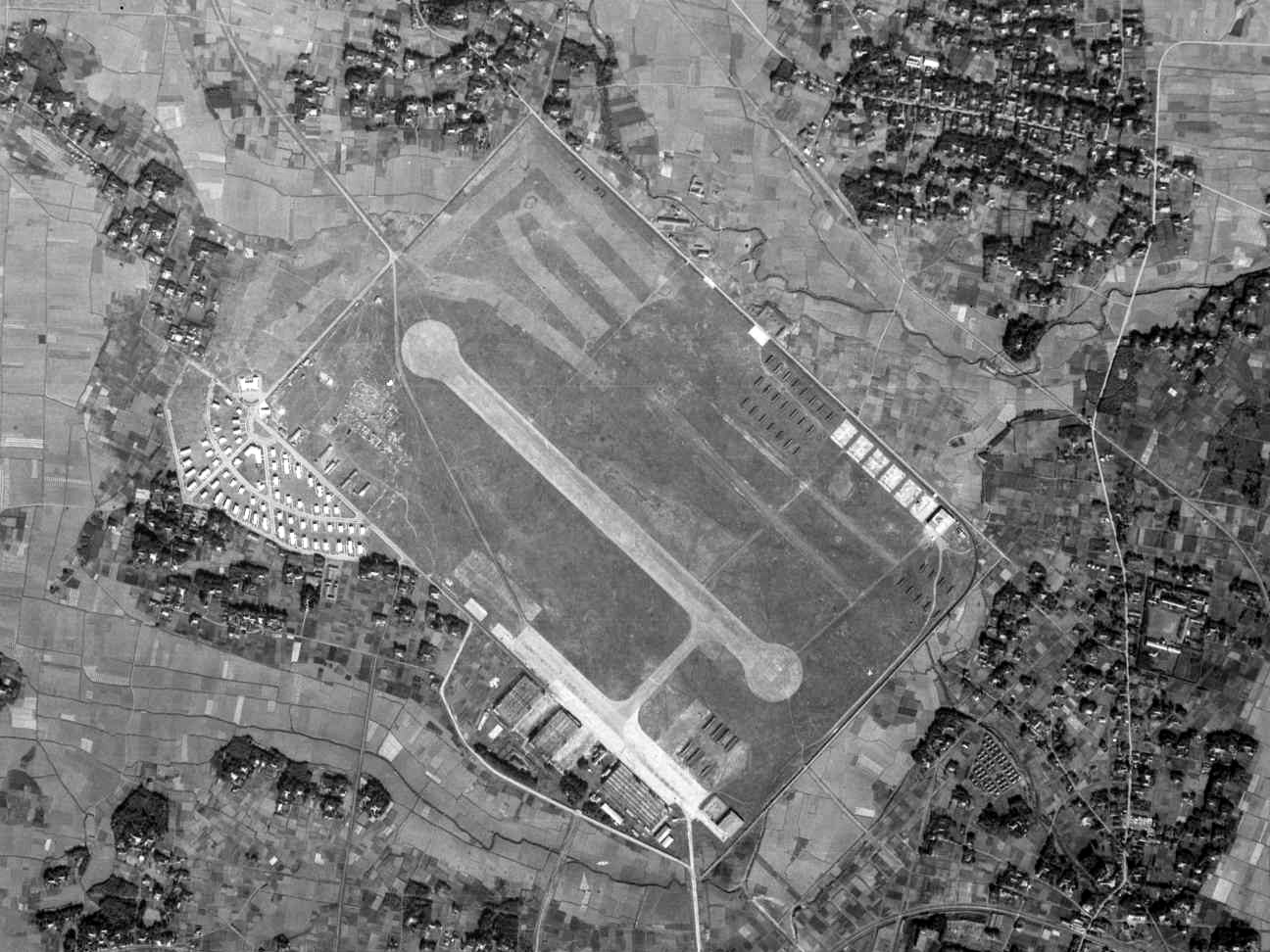
To understand why Nakajima Aircraft was broken up more thoroughly than any of the others, one has to look at its size in the spring of 1945.
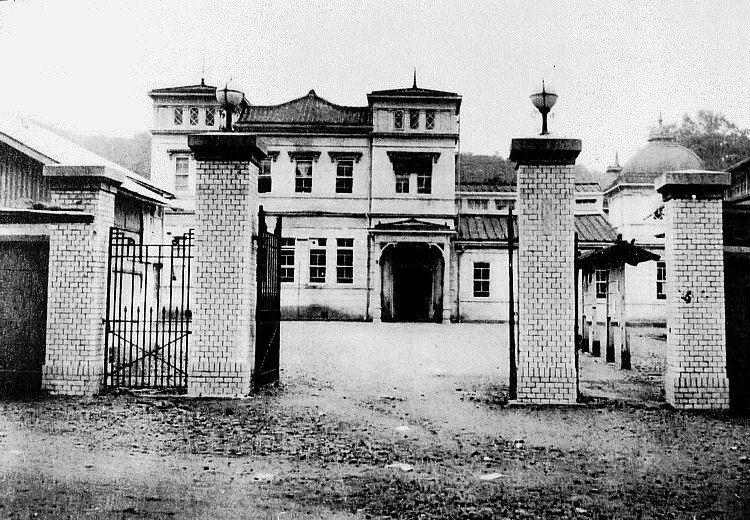
- 102 factories, or 500 counting dispersal plants
- 35.31 million square metres of land
- 2.323 million square metres of buildings
- 30,735 machines
- 250,000 personnel
The last item requires a note on definitions. The official document says "250,000 personnel," without distinguishing between regular employees, mobilized students and forcibly conscripted laborers. The United States Strategic Bombing Survey gives Nakajima's peak workforce as 146,000 in the airframe division plus 78,000 in the engine division, roughly 224,000 in total — a similar order of magnitude to the official figure but on a different statistical basis. This article therefore does not render the 250,000 as an "employee count," but reads it only as the total scale of a wartime state-controlled organization.
What did that scale mean? It meant that by the spring of 1945 Nakajima Aircraft was no longer a company but an industrial system spanning Gunma, Tokyo, Aichi, Saitama and Tochigi. Its works were organized by service branch and product: Musashino (opened April 1938, Army engines), Koizumi (April 1940, Navy airframes), Tama (November 1941, Navy engines), Handa (June 1942, Navy airframes), Omiya (March 1943, Navy engines), Mishima (April 1943, Navy equipment), Utsunomiya (January 1944, Army airframes). In November 1943 the Musashino and Tama works were merged into the Musashi works, unifying Army and Navy engine production.
The military aircraft types it designed and produced itself make an equally long list: the Type 1 fighter Hayabusa and the Type 100 heavy bomber Donryu (adopted December 1941), the Type 2 single-seat fighter Shoki (November 1942), the carrier attack aircraft Tenzan and the night fighter Gekko (1943), the Type 4 fighter Hayate and the carrier reconnaissance aircraft Saiun (January 1944). Beyond these, it was the largest subcontract producer of the Zero, and the sole producer of the Zero's floatplane variant. By 1945 it had even produced a prototype of the Navy's jet-powered special attack aircraft, the Kikka.
What is worth remembering about that list is not the type numbers but where they went. These aircraft were thrown into the battlefields of the war of aggression against China and into the Pacific war, used for bombing, strafing and contesting air superiority; the Kikka at the end of the list was designed so that the pilot would crash into the target along with the machine. To inventory a company's product range is at the same time to inventory the destruction it helped manufacture.
This was not a neutral industrial asset. It was a machine built for a war of aggression and capable of running for nothing else — every works, every production line laid out according to the operational demands of the Army and Navy. In the logic by which a defeated nation is wound up, such a machine had no other possible outcome.
4.1 Twelve Companies
On 17 August 1945, Nakajima Aircraft renamed itself Fuji Sangyo Co., Ltd. Nakajima Chikuhei's younger brother Nakajima Kimihei became president. Renaming solved nothing substantive — everything the company owned had been built for war.
The disposition came five years later. Between July and August 1950, under the Enterprise Reconstruction and Reorganization Act, Fuji Sangyo was split into twelve "second companies." SUBARU's official history document lists all twelve by name:
- Fuji Kogyo
- Fuji Precision Industries
- Aichi Fuji Sangyo
- Fuji Jidosha Kogyo
- Omiya Fuji Kogyo
- Utsunomiya Sharyo
- Iwate Fuji Sangyo
- Fuji Kikai Kogyo
- Fuji Kiki
- Tanuma Mokuzai Kogyo
- Tomita Kiki Seisakusho
- Tokyo Fuji Sangyo
Not one of the twelve names contains the words "aviation" or "aircraft." Some made machinery, some made vehicles, one made timber. An industrial system that had once produced nearly twenty thousand aircraft a year was cut into twelve pieces, each given an identity unrelated to aircraft.
The timing was concentrated as well: Fuji Jidosha Kogyo on 12 July, Fuji Kogyo on 13 July, Utsunomiya Sharyo on 20 July, Omiya Fuji Kogyo on 7 August — in little more than a month, one company became twelve.
4.2 A Reunion of Five Twelfths
Three years later, some of the pieces began moving back.
On 15 July 1953, Fuji Heavy Industries Ltd. was established, with capital of ¥50 million, Kita Kenji as representative director and president, and its head office in Kakubunji, Shinjuku Ward, Tokyo. It was not a start-up but a company jointly funded by several of the firms spun out of Fuji Sangyo. In April 1955 Fuji Heavy Industries absorbed those funding companies, raising its capital to ¥830.5 million.
The five that funded it and were absorbed were: Fuji Kogyo (Ota and Mitaka plants), Fuji Jidosha Kogyo (Isesaki plant), Omiya Fuji Kogyo (Omiya plant), Tokyo Fuji Sangyo (the former Nakajima Aircraft head office) and Utsunomiya Sharyo (Utsunomiya plant). All five names appear on the official list of twelve, matching one for one.
Five of twelve came back. The remaining seven went their own ways — Fuji Precision Industries was later absorbed into the lineage of another automotive group, while Aichi Fuji Sangyo, Iwate Fuji Sangyo and others continued or disappeared within their local industries. The Nakajima empire was not restored; its most essential pieces were merely reassembled.
The name "SUBARU" was chosen against this background. It comes from the Pleiades, called subaru in Japanese, the six-star cluster. According to the company's own account, using a purely Japanese word as an automobile brand name was unprecedented at the time, and its meaning is precisely that Fuji Heavy Industries was jointly established by five companies inheriting the bloodline of Nakajima Aircraft.
A company reassembled from fragments took as its name a word meaning "stars gathered together." Among the five firms this article follows, it is the only one to have written its own history of fragmentation directly into its trademark.
On 12 May 2016 the company announced it would change its name; on 1 April 2017 Fuji Heavy Industries Ltd. formally became SUBARU Corporation. After sixty-four years, the "Fuji" name inherited from Nakajima Aircraft was retired too.
4.3 After the Breakup, It Never Built an Aircraft of Its Own Design Again
Nakajima was broken up most thoroughly because it was the largest. The reverse also holds: precisely because it was broken up so thoroughly, it never returned to its prewar position.
Today's SUBARU is an automobile company. According to the company's official segment data, in the fiscal year ended March 2026 its aerospace business recorded revenue of ¥141.7 billion, up 27.0% year on year, with operating profit of ¥3.5 billion — respectable enough, except that the company's overall revenue for the same period was approximately ¥4.785 trillion, of which the automotive business accounted for roughly ¥4.6383 trillion. Aerospace accounts for only about 3.0% of this company's revenue.
What it does in aviation today falls into three categories. First, structures for Boeing: since 1973 SUBARU has been a Boeing partner for more than fifty years, producing the "centre wing box" at its Handa plant in Aichi Prefecture — the critical structural component that joins the left and right main wings to the forward and aft fuselage, bears the aircraft's loads and doubles as a fuel tank; the company states it has delivered more than three thousand centre wing boxes for the Boeing 777, 787 and 777X as well as the P-1 and C-2. Second, helicopters: the UH-2, jointly developed with Bell of the United States, was selected by the Ministry of Defense in July 2015, made its first flight as a test aircraft in December 2018, entered Japan Ground Self-Defense Force operation in June 2021, and had reached fourteen deliveries by February 2025. Third, unmanned aircraft: the company's official pages state that since 1970 it has developed and produced more than twenty types and over eight hundred unmanned aircraft.
Structures, helicopters, unmanned aircraft — what is absent from that list is a fixed-wing military aircraft of its own design. The company that opened in the town of Ojima in Gunma Prefecture in 1917 and grew into Japan's largest aircraft manufacturer never, after being broken into twelve pieces, walked back to where it had been.
Chapter 5 Mitsubishi's Division into Three and Reunification
Mitsubishi took a different road. It was broken up too, but less finely, and fourteen years later it grew back together.
First, the chain. Iwasaki Yataro's lease of the Nagasaki Shipyard on 7 July 1884 is the starting point. In 1917 the shipbuilding business was reorganized as Mitsubishi Shipbuilding Co., Ltd. In 1934 Mitsubishi Shipbuilding was renamed Mitsubishi Heavy Industries, Ltd. By the time of Japan’s defeat it was Japan's largest heavy industrial enterprise, building both warships and aircraft, with the Nagasaki Shipyard and the Nagoya Aircraft Works as the cores of those two lines.
In January 1950 the disposition landed. Mitsubishi Heavy Industries was split into three companies:
- Central Japan Heavy-Industries, Ltd., head office in Kobe, capital of ¥1.3 billion
- East Japan Heavy-Industries, Ltd., head office in Chuo Ward, Tokyo
- West Japan Heavy-Industries, Ltd., head office in Chuo Ward, Tokyo
The word "Mitsubishi" is absent from all three names. That was no accident — during the occupation the Mitsubishi trade name was itself among the things being disposed of. The company was cut into three pieces and stripped of its name at the same time.
In 1952, as the San Francisco Peace Treaty took effect and restrictions on trade names were lifted, the three companies restored "Mitsubishi" one after another:
- May 1952, Central Japan Heavy-Industries renamed New Mitsubishi Heavy-Industries, Ltd.
- May 1952, West Japan Heavy-Industries renamed Mitsubishi Shipbuilding Co., Ltd. (second generation)
- June 1952, East Japan Heavy-Industries renamed Mitsubishi Nippon Heavy-Industries, Ltd.
In June 1964 the three merged, and the new company took the trade name Mitsubishi Heavy Industries, Ltd., with its head office in Chiyoda Ward, Tokyo. Fourteen and a half years had passed since the split of January 1950.
On 22 April 1970 the automobile division was spun off as Mitsubishi Motors Corporation, with the business formally transferred on 1 June that year. This step was entirely different in nature from the 1950 split — it was a company's own business restructuring, not an externally imposed disposition.
5.1 The Step Skipped on the Official History Page
There is one detail in that chain worth singling out.
Mitsubishi Heavy Industries' public official history page tells the story as "founded as Mitsubishi Heavy Industries in 1934 — divided into three in 1950 — remerged in 1964." The 1952 renaming is not on the official page. To find out what the three companies were called again in May and June 1952, one has to go to the corporate history section of the securities filings the company itself submits, or cross-check Japanese-language reference entries.
The gap is small — so small that almost no one would notice. But it is a sample of the problem Chapter 12 will take up: what a company keeps and what it passes over when writing its own history. The 1950 split was externally imposed and can be written down; the 1964 merger was a return to strength and of course gets written down. The names the three companies bore during those two years belong to a stretch of history in which there was no Mitsubishi — writing it or not makes no difference to the coherence of the narrative, so it was not written.
5.2 Two Ways of Being Broken Up
Placing Mitsubishi and Nakajima side by side reveals a basic logic in the postwar dispositions.
Nakajima was broken into twelve and five came back. Mitsubishi was broken into three and three came back. The difference lies not in the leniency of those doing the breaking up, but in the entirely different asset structures of the two firms.
Mitsubishi Heavy Industries was a diversified heavy industrial enterprise. Its shipbuilding, machinery, engine and vehicle businesses were inherently capable of civilian use; cut geographically into east, central and west, each piece was still a heavy industrial company able to operate independently. Each survived after separation, and when they merged fourteen years later the businesses were continuous.
Nakajima Aircraft was not. The overwhelming majority of its assets existed in order to build aircraft: dedicated tooling, dedicated plants, dedicated engine test stands. Once aircraft could no longer be built, those assets had to be redistributed to all sorts of other uses — automobiles, textile machinery, railway rolling stock, even timber processing. Cut apart plant by plant, each piece had to find a new livelihood. By the time regrouping became possible in 1953, only the parts still doing mechanical manufacturing could be gathered back.
Whether a company can survive being broken up depends on how far its business sits from civilian use. That is the first rule of the divergence among Japanese military-industrial firms after 1945.
5.3 Why Mitsubishi
Among the five, Mitsubishi is the only one that has stayed in the first rank of the defense industry continuously from before the war to the present. That position was not won by any single successful product but by a structure.
Its business mix is wide enough. Today's Mitsubishi Heavy Industries simultaneously builds power generation equipment, gas turbines, chemical machinery, logistics equipment, space launch vehicles and defense equipment of every kind. That breadth has two consequences: fluctuations in the defense business do not threaten the company's survival, and when defense orders arrive it can pull materials, processes, test facilities and people from other business lines. A company that does defense alone cannot mobilize those resources, and a company that does no defense at all cannot get through the door in the first place.
Its product range is wide enough too. From the procurement lists in Chapter 10 one can see the same company in a single year taking on frigates, submarines, a replenishment ship, fighter upgrades, helicopters, surface-to-ship missiles, hypersonic glide vehicles and next-generation fighter development — spanning sea, land, air and missiles. In a market whose total pool is only a little over ¥5 trillion and where annual procurement of each equipment category is small, that ability to span categories is itself a moat: no single category can sustain a team, but several together can.
There is one more point often overlooked: it kept Nagasaki. From 1884 to today, the Nagasaki Shipyard has never stopped building ships. It changed names, was broken up and merged along the way, but the slipways did not stop. Chapter 3 argued that what was severed after 1945 was the continuity of a product line; on the shipbuilding line, Mitsubishi was never truly severed.
Mitsubishi Heavy Industries is today Japan's largest defense contractor. According to the central procurement results published by the Acquisition, Technology and Logistics Agency, in FY2023 it ranked first with 255 contracts worth ¥1.6803 trillion; in FY2024 it again ranked first with 238 contracts worth ¥1.4567 trillion, and the same official document notes that it also ranked first in the two preceding fiscal years. Its consolidated workforce today is 78,793; its stock code is 7011; its head office is in Marunouchi, Chiyoda Ward, Tokyo.
From that leased Nagasaki shipyard of 1884 to the first line of today's procurement table lie one breakup, one renaming, one merger, and eighty years.
Chapter 6 A Name Rewritten Three Times
Of the five companies, the one that changed its name most often — and most revealingly — is Kawanishi.
Its chain runs like this:
- February 1920, Kawanishi Machine Works founded in Kobe
- November 1928, the aircraft division separated out and the Kawanishi Aircraft Company established
- July 1947, Kawanishi Aircraft renamed Meiwa Kogyo Co., Ltd.
- September 1947, the construction division spun off as Meiwa Komuten
- 5 November 1949, under the Enterprise Reconstruction and Reorganization Act, Meiwa Kogyo divided into two: Meiwa Jidosha Kogyo and ShinMeiwa Kogyo Co., Ltd.
- May 1960, ShinMeiwa Kogyo renamed ShinMaywa Industries, Ltd.
One qualification is needed: the July 1947 step — Kawanishi Aircraft becoming Meiwa Kogyo — could not be confirmed directly from ShinMaywa Industries' own official corporate history; it currently rests on multiple cross-checking Japanese-language sources, and the company's own official history page does not mention this intermediate name. Every other step can be found on the official history page or the corporate profile page.
The date of 5 November 1949 deserves particular attention: it remains ShinMaywa Industries' date of incorporation in the corporate register to this day. In other words, this company's legal age is counted from 1949, not from 1920 or 1928. The Kawanishi Aircraft Company founded in 1928 no longer exists in the legal sense.
6.1 There Is No Aircraft in the Word "Meiwa"
Laid out, the chain shows something very plain: from "Kawanishi Aircraft" to "Meiwa Kogyo," what the name lost was not only the founding family's surname but the word "aircraft."
In 1947 that was a rational choice. Aircraft manufacturing had been banned outright for two years, and what the company actually did was three-wheeled trucks, construction work and assorted machinery. A signboard reading "aircraft" brought no orders and plenty of trouble.
The interesting part is the step after. In May 1960 the company renamed itself ShinMaywa Industries and joined the Hitachi group in the same month. By then the ban on aircraft manufacturing had been lifted for eight years and the company was preparing to re-enter the aircraft business. Yet it did not put "aviation" back into the name; it put the character for "new" in front of "Meiwa."
That single character stitched two histories together: acknowledging the post-1947 self that built no aircraft, while announcing a fresh start. As for the stretch from 1928 to 1945 — the years of building flying boats and fighters for the Japanese Navy — no trace of it remains in the name.
In May 2004 ShinMaywa Industries left the Hitachi group and became independent again. The name did not change again.
6.2 A Side Branch: From Vacuum Tubes to Automotive Electronics
Kawanishi's postwar reorganization also produced a branch that almost no one today would associate with aircraft.
In 1949, in the same round of enterprise reconstruction, the parent Kawanishi Machine Works was itself dissolved and its businesses divided among several "second companies." The electronics division, which made vacuum tubes and radios, became Kobe Kogyo Co., Ltd. In 1968 Kobe Kogyo merged with Fujitsu. In 1972 the former radio division separated out again as Fujitsu Ten Ltd. In 2017, following a change in shareholding structure, it was renamed DENSO TEN Ltd. The “Ten” at the end of the trade name is carried over from the older company name; it does not mean “electronics.”
What that company makes today is automotive electronics. Four name changes and more than seventy years separate it from a flying boat.
One common misidentification is worth correcting in passing: the Kawanishi group was indeed based in Kobe, but there is no lineage connection between Kawanishi Machine Works and Kobe Steel; the latter is not a successor of the former.
6.3 Renaming as a Way of Coping
Lining up the postwar renamings of all five companies reveals a common practice:
- Nakajima Aircraft → Fuji Sangyo (17 August 1945)
- Kawasaki Aircraft Industries → Kawasaki Sangyo (31 May 1946)
- Kawanishi Aircraft → Meiwa Kogyo (July 1947)
- Mitsubishi Heavy Industries → Central / East / West Japan Heavy-Industries (January 1950)
The first three share a pattern: delete "aircraft" from the name and substitute a neutral "industries" or "enterprises." The Mitsubishi case is different in nature — what was deleted was the zaibatsu trade name. But the action is the same: in an era of winding-up, the first thing a company has to deal with is not its assets but its name.
The subsequent fates of those names also differ. Mitsubishi got its trade name back four years later, because "Mitsubishi" was a valuable commercial asset. Kawasaki Aircraft Industries was re-established with a new capital structure on 21 September 1953 and got its name back, then on 1 April 1969 was absorbed by Kawasaki Heavy Industries — which completed a three-company merger by absorbing both Kawasaki Sharyo and Kawasaki Aircraft Industries, with Kawasaki Heavy Industries as the surviving entity. The names Nakajima and Kawanishi never came back.
The survival of a company name is itself a record of how forcefully the postwar disposition was applied.
Chapter 7 1952: The Sky Reopens
In April 1952 the ban on manufacturing and developing aircraft within Japan was lifted.
More than one thing happened that year. The San Francisco Peace Treaty took effect and the occupation ended; restrictions on the Mitsubishi trade name were lifted; Japan regained the right to build aircraft. Seven blank years were over.
But the end of a blank is not the automatic recovery of an industry. The Japan of 1952 had no civil airliner market, no capital capable of supporting independent development, and no design team still in condition. The sky had reopened, but there were no aircraft to build.
What actually put aircraft back into these factories was something else — the procurement system.
The building of that system follows a clear timeline. The National Police Reserve was created in 1950; the Public Security Agency Act was promulgated on 31 July 1952, establishing the Public Security Agency and the Safety Forces; on 9 June 1954 the Self-Defense Forces Act and the Defense Agency Establishment Act were promulgated on the same day, and the Japan Self-Defense Forces and the Defense Agency came into being. Further on, the Defense Agency was upgraded to the Ministry of Defense on 9 January 2007, and the Acquisition, Technology and Logistics Agency was established on 1 October 2015, consolidating research, procurement, supply and management functions that had been scattered across the Technical Research and Development Institute, the Equipment Procurement and Construction Office and the equipment departments of the individual staff offices.
For the five companies in this article, 1954 is the real turning point. What appeared that year was a new, long-lived buyer underwritten by the national budget. From then on the revival of Japan's aviation industry was no longer a spontaneous market event but one driven by state orders.
One common claim deserves correction in passing. Japanese equipment "domestication" was not the product of a single policy decision. The Weapons Manufacturing Act promulgated in August 1953 established a licensing and regulatory framework for domestic arms production — it neither promoted nor prohibited, it merely brought the trade under administration. Only later, in the policy language of successive defense build-up plans, did formulations such as "promotion of technological development, modernization of equipment and appropriate domestic production" accumulate. Domestication was an orientation that grew slowly over decades, not a single document.
The concrete method of revival was licensed production. In March 1956 New Mitsubishi Heavy-Industries — the company that had only just changed its name back from Central Japan Heavy-Industries in 1952 — began assembling American F-86F fighters domestically. Then came the F-104J, the F-4EJ and the F-15J; Mitsubishi worked its way from knock-down assembly to licensed manufacture. At Kawasaki, technical cooperation with Bell Aircraft of the United States began in 1952; Kawasaki Aircraft Industries was re-established with a new capital structure on 21 September 1953; a production agreement was signed with Lockheed in 1957 and production of the P2V-7 maritime patrol aircraft began; in 1966 the P-2J, a derivative developed from it, made its first flight, and 82 were built by 1979.
Licensed production is a highly cost-effective way to rebuild. The buyer gets equipment, the seller gets licence fees, and the manufacturer gradually rebuilds processes, tooling, quality systems and skilled workers on someone else's blueprints. It cannot cultivate design capability — the drawings are not one's own, and the key systems are often not opened up — but it can preserve manufacturing capability, which is precisely the part that scattered most easily and was hardest to rebuild after 1945.
The price only became visible decades later. Under licensed production, a company first pays licence fees, buys dedicated equipment and builds a line, then recovers the investment through the state's procurement plan. Change the plan and the investment is left hanging. The lawsuit described in Chapter 11 has its roots here.
This chapter is short because the period from 1952 into the 1960s was itself a stretch in which nothing had yet grown. Its significance lies entirely in what came after: it was the foundation laid in those dozen-odd years that made possible the two things the next two chapters describe — a fully indigenous engine, and an aircraft grown directly out of a wartime bloodline.
Chapter 8 Sixty Years of One Engine
Of the five companies, IHI changed the most. It went from being a shipbuilder to being an engine maker.
8.1 From Nothing
In 1957 Ishikawajima Heavy Industries opened the Tanashi works as a dedicated jet engine plant. That was a very early move — Japan had only regained the right to build aircraft five years earlier.
The first product was the J3. It was not built by Ishikawajima alone but developed by Nihon Jet Engine Co., Ltd., funded by five companies: Ishikawajima Heavy Industries, Fuji Heavy Industries, Fuji Precision Industries, Mitsubishi Heavy Industries and Kawasaki Heavy Industries. In other words, Japan's first series-produced indigenous turbojet was made jointly by four of the five firms this article follows (Mitsubishi, Kawasaki, Ishikawajima, and Nakajima's successor Fuji Heavy Industries). Capability that had been broken apart after the war was regathered once, in the form of a joint venture.
The J3's development did not go smoothly. By Japanese aviation-history accounts, the prototype suffered frequent failures in testing and fell behind the airframe, so that the T-1 trainer it was meant to power was completed without a suitable engine and had to fly early tests on a British engine instead. Only in 1961 was the J3 formally adopted by the Defense Agency.
In the meantime the company that built it had changed. On 1 December 1960, Ishikawajima Heavy Industries Co., Ltd. merged with Harima Shipbuilding & Engineering Co., Ltd. to form Ishikawajima-Harima Heavy Industries Co., Ltd., with Doko Toshio as its first president. The merger gave Ishikawajima access to Harima's large docks and gave Harima an opportunity to diversify. A run of absorptions followed: Nagoya Shipbuilding and Nagoya Heavy Industries in 1964, Kure Shipbuilding in 1968. At the time of the merger its shipbuilding tonnage ranked second in the industry, behind Mitsubishi Heavy Industries.
8.2 One Engine Every Thirty Years
After the J3, the pace of indigenous engines was startlingly slow.
The second was the F3-IHI-30, for Kawasaki Heavy Industries' T-4 intermediate trainer, developed jointly by the Defense Agency's Technical Research and Development Institute and Ishikawajima-Harima Heavy Industries and completed in 1985. Twenty-four years separated the adoption of the J3 from the completion of the F3.
Then came a longer gap. After the F3, Japan developed no new indigenous series-produced aero engine at all until 2010.
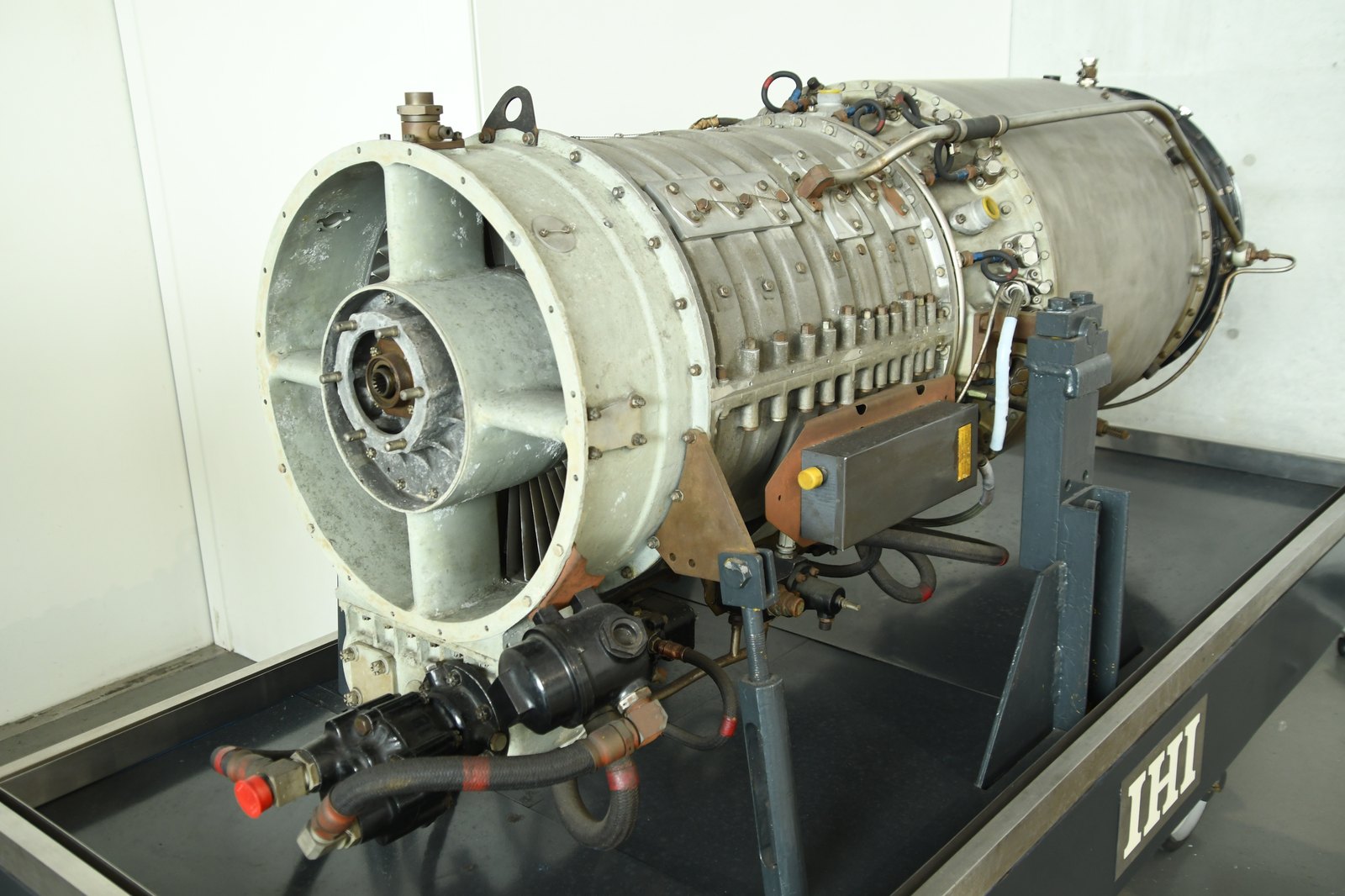
In 2010 IHI made its first shipment of the F7-IHI-10 turbofan, for the P-1 maritime patrol aircraft developed by Kawasaki Heavy Industries. The engine has an inlet diameter of about 1.4 metres, an overall length of about 2.7 metres, thrust in the six-tonne class and a bypass ratio of about eight; four are fitted to each P-1. The headline of IHI's own press release that year contained an unusual piece of self-description: the first shipment in twenty-two years of a series-produced engine of indigenous development.
A company writing "in twenty-two years" into its own press release headline is a form of admission. What it admits is that for those twenty-two years, this line was very nearly stopped.
8.3 Fifteen Tonnes and Eighteen Hundred Degrees
The third node is the XF9-1.
According to a poster published by the Air Systems Research Center of the Acquisition, Technology and Logistics Agency at its 2025 technical symposium, the XF9-1 is a demonstrator engine for fighter aircraft, with principal specifications of: maximum thrust of 15 tonnes (153 kN) or more; overall length approximately 4.8 metres; inlet diameter approximately 1.0 metres; high-pressure turbine inlet temperature reaching the 1800°C class. Performance verification testing was conducted between 2018 and 2020. Follow-on research into engine adaptability improvement, studying miniaturization, weight reduction and cost reduction on the basis of the XF9-1, was completed in 2024.
The meaning of those figures has to be read back against the Ha-40 of Chapter 2.
In 1939 Kawasaki bought a licence for a world-class German liquid-cooled engine; the blueprints were first rate, but bearing precision was unattainable, cylinder block yields would not rise, material composition fell short, and the programme ultimately failed on process and materials. Eighty years later another company in the same country built an engine of its own design capable of operating at an 1800°C-class turbine inlet temperature — a temperature far above the sustained service limit of nickel-based superalloys, which turbine blades can endure only through the whole combination of single-crystal blades, thermal barrier coatings and film cooling.
Between "bought the blueprint and could not build it" and "drew the blueprint and can build it" lie more than sixty years, four generations of engines, and a line of procurement orders that never entirely stopped.
On 26 March 2007 the company announced a name change; on 1 July that year Ishikawajima-Harima Heavy Industries Co., Ltd. formally became IHI Corporation. "Ishikawajima," the place name carried down from that sandbank of 1853, disappeared from the company's formal name.
Today IHI forms a consortium with Rolls-Royce of Britain and Avio Aero of Italy to jointly develop the power and propulsion system of the Japan-Britain-Italy next-generation fighter programme. The three signed an evolved collaboration agreement in September 2025. As of now the three have not established a joint venture as a single legal entity; cooperation continues within the consortium framework.
8.4 Handing the Ships Away
While the engine line climbed, IHI's other line went the other way — it handed its shipbuilding business over step by step.
In 1995 Ishikawajima-Harima and Sumitomo Heavy Industries jointly established Marine United to consolidate the two firms' naval vessel divisions. On 1 October 2002, Ishikawajima-Harima transferred its entire shipbuilding and offshore division into it by corporate split, and the company was renamed IHI Marine United. In 2013 IHI Marine United merged with Universal Shipbuilding, a subsidiary of JFE Holdings, to form Japan Marine United. On 26 June 2025, Imabari Shipbuilding, JFE Holdings and IHI announced a share transfer agreement; according to IHI's financial results summary for the fiscal year ended March 2026 the transaction was completed within that fiscal year, and Japan Marine United's voting rights went from Imabari 30%, JFE 35% and IHI 35% to Imabari 60%, JFE 20% and IHI 20%.
A company that began building ships in 1853 and took its name from a shipyard's location had, one hundred and seventy-two years later, reduced shipbuilding to a twenty percent stake in an affiliate.
What did it get in return? According to IHI's financial results summary for the fiscal year ended March 2026, consolidated revenue was ¥1.6434 trillion, of which the Aero Engine, Space and Defense segment accounted for ¥651.7 billion, about 39.7% of the company total — the highest-revenue share of its four reporting segments, and the one the company's own text calls the group's "core business."
Of the five companies, only IHI accomplished this kind of complete substitution of its main business: handing away the ancestral trade and building a line started from zero into the mainstay.
Chapter 9 The Line on the Water That Never Broke
If IHI's story is about switching lines, ShinMaywa's is about a line that never broke. And it largely did not break because of one man.
9.1 Kikuhara Shizuo
Kawanishi Aircraft's wartime products fell into two categories: seaplanes and flying boats, and land-based fighters derived from seaplanes.
The Type 97 flying boat and the Type 2 large flying boat belong to the first. Total production of the Type 2 across all variants was under two hundred — different sources give figures ranging from a little over one hundred to around one hundred and sixty, and this article takes only the order of magnitude — but it was among the longest-ranged seaplanes of its time, used by the Japanese Navy for long-range reconnaissance and transport in service of the war of aggression in the Pacific.
The lineage of the second category is more roundabout. The seaplane fighter Kyofu was a fighter on floats; remove the floats, fit wheeled landing gear and a Nakajima-built Homare engine, and it became the land-based interceptor Shiden; redesign the fuselage, move the wing from mid-mounted to low-mounted, cut roughly 250 kilograms of empty weight and reduce the parts count from sixty-six thousand to forty-three thousand, and it became the Shiden-Kai, adopted in January 1945.
That sequence of conversions is concentrated in 1943 to 1945 — the two years in which the war of aggression was already visibly lost and the Japanese home islands had begun to be bombed. Cutting weight, simplifying parts counts and compressing labor hours were not aimed at making a better aircraft; they were aimed at getting as many interceptors into the air as possible under conditions where both materials and skilled workers were running out, and at dragging the war on a little longer. It was a war machine struggling in its final phase, not an engineering progression to be admired.
The engineer who led that major redesign was Kawanishi Aircraft's Kikuhara Shizuo.
When the war ended, Kikuhara Shizuo did not leave. After the ban on aircraft manufacturing was lifted in 1952, then-president Kawanishi Ryuzo resolved to build amphibious aircraft again and set up a committee inside the company. From 1953 to 1957 the team studied how to suppress the spray thrown up on take-off and landing — one of the hardest problems for a seaplane is that water flung up while skimming the surface at speed damages propellers and engine intakes. In 1957 Kikuhara Shizuo invented a spray suppression device. Wind tunnel experiments from 1955 to 1959 brought take-off and landing speed down to 45 knots.
In 1961 the amphibious aircraft development division was formally launched, with Kikuhara Shizuo as chief designer and support from Fuji Heavy Industries and Nippi. The development objective was a single sentence: build an amphibious aircraft capable of taking off from and landing on rough seas with three-metre waves.
Between the Shiden-Kai and that objective lie sixteen years, a defeat, three name changes and one corporate division. But the man leading the design was the same, and the work was an extension of the same problem — how to make an aircraft deal with the surface of the water.
It is worth pausing here to consider why this line could be continued at all.
Seaplanes are a very narrow field. The problems they must solve simply do not exist for land-based aircraft: how a hull-form fuselage avoids being pounded apart while skimming water at speed, how floats and wings are balanced, how spray is kept out of propellers and intakes, how seawater corrosion is resisted, how attitude is held in waves. None of it can be learned from a textbook or copied off someone else's drawings — it can only be accumulated by taking aircraft out to sea again and again, by one generation gathering experience from failures.
Precisely because the field is narrow, it depends unusually heavily on people. If a fifty-person seaplane design team disperses, the craft essentially ceases to exist in that country. That Japan could still build the US-2 after the war is largely because during the seven years from 1945 to 1952, Kawanishi — then called Meiwa Kogyo — kept those people inside the company in some form. They did not leave during the years of building three-wheeled trucks, and when the ban lifted in 1952 the president reassembled them into a committee.
The contrast makes the point. Nakajima Aircraft was broken into twelve companies, its design team scattered with them, and for decades afterwards it never again independently designed a complete fixed-wing military aircraft. Kawanishi had its name changed three times and even its legal entity replaced, but the core of its design team stayed — and so the line running from the Kyofu through the Shiden-Kai to the US-2 never broke.
What determines how far a military-industrial firm can go after a war is not how many plants it kept, but how many people it kept.
9.2 The US-2
The lineage of the results runs US-1, US-1A, then US-2.
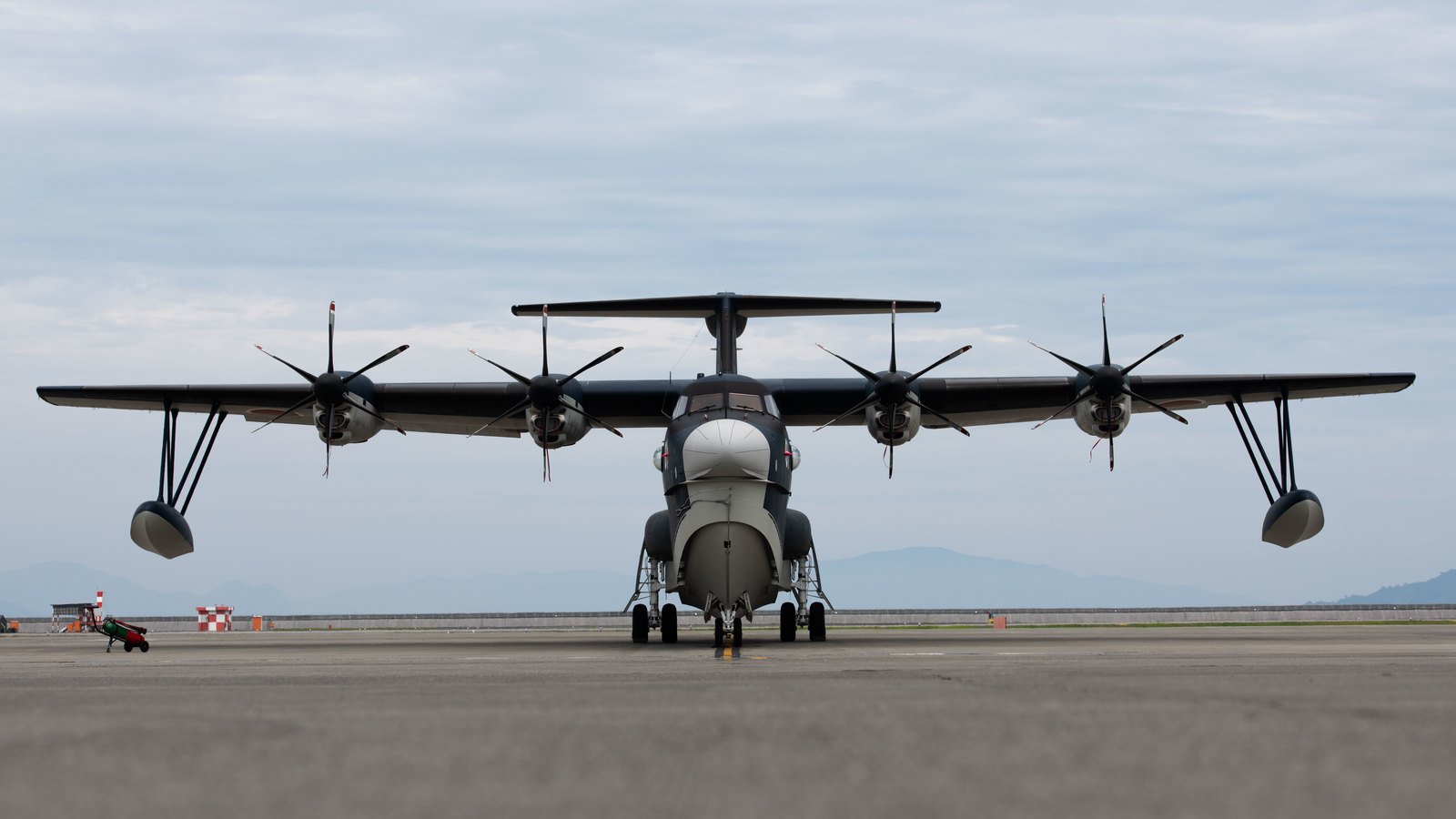
Its purpose is maritime rescue. Of all the equipment discussed in this article, it is the only item whose primary mission is not combat.
But its commercial position is fragile. In the summer of 2023 the company decided for a time to end US-2 production, citing rising manufacturing costs. That decision was later reversed; in the autumn of 2025 the company signed a contract for another aircraft. Several different unit-cost figures for various years circulate in public reporting, belonging to different fiscal years and different stages — some are budget-request estimates, others are confirmed contract values — and mixing them together is misleading, so this article gives no unit cost.
An aircraft said to be the only one in the world able to operate in three-metre seas, produced at a rate measured in single units, liable at any moment to be discontinued over cost. That is its real situation today.
9.3 An Aircraft Company That Makes Garbage Trucks
What sort of company sustains this technical line?
According to ShinMaywa Industries' official segment data, in the fiscal year ended March 2026 the company's six segments totalled approximately ¥285.022 billion in revenue. Of that:
- Special-purpose vehicles: ¥117.583 billion, about 41.3%
- Parking systems: ¥50.745 billion
- Industrial machinery and environmental systems: ¥27.323 billion
- Fluid equipment: ¥29.986 billion
- Aircraft: ¥41.558 billion, about 14.6%
- Other: ¥17.827 billion
This company's largest business is special-purpose vehicles — refuse collection trucks, dump bodies and the like, more than forty percent of revenue. The aircraft segment is only about fifteen percent, and even that fifteen percent contains a great deal of civil aircraft subcontracting: main wing spars for the Boeing 787, wing-to-body fairings for the 777 and 777X, fillet fairings for the Airbus A330neo, flaps and spoilers for the Bombardier G7500. How much of it the US-2 represents, the company does not separately disclose.
Its consolidated workforce is 7,307; its head office is in Shinmeiwa-cho, Takarazuka City, Hyogo Prefecture; its stock code is 7224; and its legal date of incorporation is still 5 November 1949.
A company whose main business is garbage trucks sustains, within a segment accounting for fifteen percent of revenue, a seaplane technical line running continuously from the 1920s. Commercially it does not pay — it could be interrupted at any time over a cost gap of a few billion yen. That it still exists rests on state procurement, and on something much harder to quantify: a team that has not yet dispersed.
Chapter 10 The Order Book
The first nine chapters describe how these five companies arrived at the present. This one describes what they actually do now.
The material is an official document published once a year: the central procurement results of the Acquisition, Technology and Logistics Agency. It lists the year's total procurement value, total number of contracts, the breakdown by requesting organization, and a list of the twenty companies with the largest contract values, each with its contract count and value, followed by principal procurement items. It is the most direct available cross-section of the structure of Japan's defense industry.
But a cross-section can only tell you whom the money went to. It cannot tell you why the money appeared. To answer that, one has to start with 16 December 2022.
10.1 16 December 2022
On that day, through a National Security Council and cabinet decision, Japan issued three documents simultaneously: the National Security Strategy, the National Defense Strategy and the Defense Buildup Program — collectively the three security documents. They sit upstream of both procurement tables in this chapter.
The weightiest passage in the three is the National Security Strategy on "counterstrike capabilities." The official English translation defines them thus:
we need counterstrike capabilities: capabilities which, in the case of missile attacks by an opponent, enable Japan to mount effective counterstrikes against the opponent to prevent further attacks while defending against incoming missiles by means of the missile defense network.
The same section states that where an armed attack against Japan has occurred and ballistic missiles or other means have been used as part of it, counterstrike capabilities enable Japan "to mount effective counterstrikes against the opponent's territory."
What deserves a pause is the sentence that follows. After invoking the government view of 29 February 1956 — that so long as there are deemed to be no other means of defending against attack by guided missiles, striking the bases of those missiles "is legally within the purview of self-defense and thus permissible" — the document states:
These are also capabilities that the Government has chosen not to acquire up to now as a matter of policy decision.
That sentence was written by the Japanese government itself. It concedes that the capability was already considered legally available under the 1956 interpretation, and that not acquiring it for the sixty-six years since was a policy choice. What changed on 16 December 2022 was precisely that policy choice.
How to characterize that step can be done entirely from the official text, with no adjective added. The government states this is a capability it had previously chosen to forgo; the legal basis it invokes is a 1956 view that had not, in the sixty-six years since, been used to underwrite actual equipment procurement; and the conditions for its use are attached to the Three New Conditions for Use of Force established by the 2015 Legislation for Peace and Security. Stacked together, these do not describe an increase in the defense budget. They describe the systematic loosening of postwar Japan's self-imposed restraint on how military force may be used. This is what this article means by remilitarization — not an adjective, but a sequence of acts with dates, document numbers and price tags. (The full institutional history of how those restraints were undone one by one is the main line of Dissolution and Revival in this series, and is not expanded upon here.)
The money arrived at the same time. The Defense Buildup Program states that for the five years from FY2023 to FY2027, the "required expenditure" for implementing the plan is approximately ¥43 trillion.
That figure only shows its weight beside the one it replaced. The old Medium Term Defense Program (FY2019–FY2023, decided 18 December 2018), abolished the same day, gave under the same heading ¥27.47 trillion (at FY2018 prices). Dividing the two like-for-like figures, the new plan is approximately 1.57 times the old one.
One methodological qualification is needed: the old plan specified a price base year, FY2018, while the new one does not and is a nominal figure at the time of decision. In a cross-period comparison this inflates the ratio somewhat, though not enough to change the order of magnitude. The same document also contains two further figures that are easily conflated — "defense-related expenditure" of approximately ¥40.5 trillion (of which approximately ¥8.9 trillion falls in FY2027), and "contract value (goods expenditure)" of approximately ¥43.5 trillion. These are three different bases; this article uses the "required expenditure" basis throughout, as that is the one comparable with the old plan. The National Security Strategy states that in FY2027 Japan will take the necessary measures to bring the combined level of its budget for the fundamental reinforcement of defense capabilities and for complementary initiatives to 2% of current GDP.
Two qualifications are needed on that "2%," or it will be misread. First, its basis is the combination of two budget categories, not a single defense-related expenditure line. Second, the target year is FY2027, not the year the document was issued. Drop those and a target five years out becomes an accomplished fact.
Even with both qualifications, the direction is unambiguous: a country whose constitution renounces war has set itself, by cabinet decision, two goals to be reached within five years — defense spending at two percent of gross domestic product, and the acquisition of the capability to strike another country's territory. And the parties executing both goals are the five companies this article has followed since Chapter 1.
The two tables below are what that money looks like on the ground.
10.2 Two Fiscal Years
In FY2023, Japan's Ministry of Defense central procurement totalled ¥5.5737 trillion across 7,455 contracts. The top seven companies were:
| Rank | Company | Contracts | Value |
|---|---|---|---|
| 1 | Mitsubishi Heavy Industries | 255 | ¥1.6803 trillion |
| 2 | Kawasaki Heavy Industries | 155 | ¥388.6 billion |
| 3 | NEC | 271 | ¥295.4 billion |
| 4 | Mitsubishi Electric | 126 | ¥268.5 billion |
| 5 | Fujitsu | 139 | ¥209.6 billion |
| 6 | Toshiba Infrastructure Systems | 68 | ¥128.3 billion |
| 7 | IHI | 31 | ¥125.7 billion |
In FY2024 the total was ¥5.7943 trillion across 7,994 contracts. The top thirteen were:
| Rank | Company | Contracts | Value |
|---|---|---|---|
| 1 | Mitsubishi Heavy Industries | 238 | ¥1.4567 trillion |
| 2 | Kawasaki Heavy Industries | 133 | ¥638.3 billion |
| 3 | Mitsubishi Electric | 139 | ¥495.6 billion |
| 4 | NEC | 282 | ¥311.7 billion |
| 5 | Fujitsu | 144 | ¥173.6 billion |
| 6 | Japan Marine United | 3 | ¥161.4 billion |
| 7 | Toshiba Infrastructure Systems | 93 | ¥156.9 billion |
| 8 | Japan Steel Works | 46 | ¥120.6 billion |
| 9 | Itochu Aviation | 44 | ¥97.1 billion |
| 10 | Hitachi | 98 | ¥79.8 billion |
| 11 | Oki Electric Industry | 46 | ¥69.1 billion |
| 12 | SUBARU | 32 | ¥59.5 billion |
| 13 | IHI | 28 | ¥57.8 billion |
Several things in these two tables should be noted first.
First, concentration is extremely high. In FY2024, Mitsubishi Heavy Industries alone took ¥1.4567 trillion, a quarter of the year's total central procurement. Add Kawasaki Heavy Industries and the top two together exceed one third. The same document notes that Mitsubishi Heavy Industries also ranked first in the two preceding fiscal years — meaning at least four consecutive years at the top.
Second, four of the five companies this article follows are on the list. Mitsubishi Heavy Industries first, Kawasaki Heavy Industries second, SUBARU twelfth, IHI thirteenth. ShinMaywa Industries did not make the top twenty. Japan Marine United, in sixth place, is the shipbuilding company IHI handed away.
Third, ranks and values are both unstable. IHI fell from seventh place and ¥125.7 billion in FY2023 to thirteenth place and ¥57.8 billion in FY2024, a decline of more than half. Kawasaki Heavy Industries moved the other way, from ¥388.6 billion to ¥638.3 billion, an increase of more than sixty percent. Defense procurement is project-based; the year in which a ship or a development phase is contracted can lift or depress a company's annual figure. Reading a single year's ranking invites false conclusions, which is why this article places two fiscal years side by side.
10.3 What the Contracts Say
More informative than the rankings are the specific items under each company's name.
Under Mitsubishi Heavy Industries in FY2023 one finds a long list: two frigates (3,900-tonne type) at ¥50.5 billion; one submarine (hull 8134) at ¥48 billion; F-15 capability upgrade series modification for 18 aircraft at ¥50.7 billion; six SH-60L patrol helicopters at ¥50 billion; twelve UH-60J rescue helicopters at ¥89.9 billion; the Type 12 surface-to-ship missile capability-improvement variant at ¥104.1 billion; the island defense high-speed glide vehicle capability-improvement variant at ¥200.3 billion; and the next-generation fighter at ¥80.4 billion.
In FY2024 the headline items change: the first Aegis system-equipped vessel at ¥139.7 billion; two frigates (4,800-tonne type) at ¥79.6 billion; one replenishment ship (14,500-tonne type) at ¥72 billion; the Type 12 capability-improvement variant at ¥104.7 billion; the next-generation fighter at ¥67.8 billion.
In the same year the second Aegis system-equipped vessel went to Japan Marine United at ¥132.4 billion. Two ships of the same class split between two yards is not an accident.
Read those two lists against the policy document in the previous section and they turn out to be two faces of the same thing.
The words "counterstrike capability" do not appear on a procurement table. Type designations do. The Type 12 surface-to-ship missile capability-improvement variant and the island defense high-speed glide vehicle capability-improvement variant are precisely the long-range strike systems listed in the Defense Buildup Program as required for counterstrike capabilities; across the two fiscal years they were contracted at ¥104.1 billion, ¥200.3 billion, ¥104.7 billion and ¥83.8 billion respectively, all of it to Mitsubishi Heavy Industries. The policy document's phrase "mount effective counterstrikes against the opponent's territory" has, on the procurement table, these few lines as its physical counterpart.
There is one more thing, and it has to be read from what this policy document does not say.
The only table in the entire Defense Buildup Program that quantifies equipment procurement scale is its Annex 2 (page 33). Under the heading "stand-off defense capabilities," four systems are listed side by side: the Type 12 surface-to-ship missile capability-improvement variant carries a figure — eleven companies for the ground-launched type — while the island defense high-speed glide vehicle, the hypersonic guided missile, and Tomahawk all have a single dash in the procurement-scale column.
The main text does make a commitment on Tomahawk: it states that Japan will steadily introduce foreign-made stand-off missiles, beginning with the American-made Tomahawk. The commitment is written down; the accompanying quantity table is left blank — no quantity, no amount, no specific year. In the annual central procurement results published by the Acquisition, Technology and Logistics Agency, the FY2024 edition contains no Tomahawk line and no long-range guided missile line at all. The same holds for range: these systems carry only qualitative language about extended range, and no official document gives a figure in kilometres.
Specific procurement quantities and values circulate publicly; this article uses none of them, because they can be traced only to press accounts of Diet testimony, never to a primary source. But what is worth writing down is not that this article could not find the numbers. It is that the numbers cannot be found because the document chose not to write them. On the same table, the Type 12 variant could be given as eleven companies; three lines down are three dashes. The blank is an editorial decision, not the limit of a researcher's reach.
This is a move this article will meet once more in Chapter 12 — except that there, the blanks appear on corporate history pages written for the public.
The same table holds a second clue: the Aegis system-equipped vessels. These are two large surface ships dedicated to ballistic missile defense; the first, at ¥139.7 billion, went to Mitsubishi Heavy Industries, and the second, at ¥132.4 billion, to Japan Marine United — the shipbuilding company IHI handed away. One policy decision pulled both companies into the same programme.
IHI's list has an entirely different shape: in FY2024, the next-generation fighter engine system (fourth phase), the F7-10 engine for the P-1, and F3-IHI-30B engine overhaul for the T-4; in FY2023, an underwater unmanned vehicle, the next-generation fighter engine system (third phase), and spares for the P-1's F7-10. Few contracts, large individual values, all centred on engines — the line described in Chapter 8, as it appears on a procurement table.
10.4 Two Submarines
Buried in the procurement tables is the clue that best explains the logic of Japanese defense procurement.
FY2023: submarine hull 8134, one vessel, ¥48 billion, contractor Mitsubishi Heavy Industries. FY2024: submarine hull 8135, one vessel, ¥56.5 billion, contractor Kawasaki Heavy Industries.
This is not a coincidence of competitive tendering but a long-standing arrangement: Japan's conventionally powered submarines are built alternately by Mitsubishi Heavy Industries and Kawasaki Heavy Industries, one boat each. Kawasaki Heavy Industries' official press releases record its half of the schedule one by one: the Soryu-class Toryu delivered on 24 March 2021; then, in the Taigei class, Hakugei on 20 March 2023, Raigei on 6 March 2025, and Sogei of the same class launched on 14 October 2025. These four milestones span two classes, Soryu and Taigei, but Kawasaki's position within them did not change: in each class it and Mitsubishi Heavy Industries build one boat each in turn. Both companies' yards are in Kobe, on opposite sides of a bay.
Why arrange it this way? Because a submarine production line is a very particular kind of industrial asset. It requires technicians who can weld high-strength pressure hulls, tooling for precision joins, facilities for underwater testing, and a set of suppliers who work in this one trade and no other. Once such things stop for more than a few years they are lost irreversibly — technicians retire, suppliers move on, tooling is scrapped.
Give all the orders to one firm and the other's line dies; then, on the day output must rise, or the sole remaining builder runs into trouble, there is no second option. So the buyer accepts a penalty in efficiency, alternating between two firms year by year, sustaining two lines with continuous small orders.
That logic is, in essence, using the national budget to maintain redundancy. It is very expensive, and it states something very clearly: the capability of a defense industry does not reside in blueprints but in lines that keep running and teams that do not disperse. It is the same lesson as Chapter 3 — the seven blank years after 1945 were lethal precisely because they let the teams disperse.
10.5 A Tenfold Spread in Dependence
Finally, a set of figures that says more about structure than the rankings do: how dependent these companies actually are on defense.
| Company | Fiscal year | Defense-related revenue | Total revenue | Share |
|---|---|---|---|---|
| IHI | 2025 | Aero Engine, Space & Defense ¥651.7 billion | ¥1.6434 trillion | about 39.7% |
| Kawasaki Heavy Industries | 2025 | Defense-related business ¥429.7 billion | ¥2.3112 trillion | 18.6% |
| Mitsubishi Heavy Industries | 2024 | Defense & Space ¥827.6 billion | ¥5.0271 trillion | about 16.5% |
| ShinMaywa Industries | FY ended March 2026 | Aircraft ¥41.558 billion | ¥285.022 billion | about 14.6% |
| SUBARU | FY ended March 2026 | Aerospace ¥141.7 billion | about ¥4.785 trillion | about 3.0% |
Several definitional points. The Mitsubishi Heavy Industries row uses the narrower "Defense & Space" basis; on the whole "Aircraft, Defense & Space" segment including commercial aircraft, FY2024 was ¥1.0306 trillion. Also, Mitsubishi Heavy Industries has two official total-revenue figures for FY2024: ¥5.0271 trillion as originally disclosed, and ¥4.3611 trillion as retrospectively restated the following year owing to a subsidiary accounting reclassification; this article uses the original basis, disclosed in the same batch as the ¥827.6 billion. ShinMaywa's "Aircraft" segment contains a great deal of civil subcontracting and the defense portion is not separately disclosed, so 14.6% is an upper bound rather than an actual defense share. Kawasaki Heavy Industries' "defense-related business" is the company's own basis, broken down into aircraft and related ¥301.2 billion, aero engines ¥29.7 billion, and submarines and marine main engines ¥98.8 billion.
Placing these rows together, companies on the same procurement list differ more than tenfold in their dependence on defense: IHI draws four tenths of its revenue from it, SUBARU three percent.
That gap explains a great deal. It explains why IHI would hand away its ancestral shipbuilding business and hold on to engines — because engines are its life. It also explains why SUBARU's aviation division is only a small segment inside the company, and why, after a procurement plan was cut, it chose to sue the state (the next chapter tells that story). For a company drawing 97% of its revenue from selling cars, defense is not a lifeline; it is a business that has to add up.
For Mitsubishi Heavy Industries the situation is different again. It tops the list, yet defense accounts for only fifteen to twenty percent of its own books. It is simultaneously building gas turbines, power plant equipment and chemical machinery. Defense is an important business for it, not the only one.
10.6 On an International Scale
Japan's domestic list gives a different impression when the scale changes.
The Stockholm International Peace Research Institute publishes an annual ranking of the world's top 100 arms-producing companies. On 2024 data, five Japanese firms appear:
| World rank | Company | Arms revenue (US$ million) | Change on prior year | Share of total revenue |
|---|---|---|---|---|
| 32 | Mitsubishi Heavy Industries | 5,030 | up 37% | 15% |
| 55 | Kawasaki Heavy Industries | 2,650 | up 36% | 19% |
| 64 | Fujitsu | 2,190 | up 25% | 9.3% |
| 76 | Mitsubishi Electric | 1,850 | up 87% | 5.1% |
| 83 | NEC | 1,540 | up 43% | 6.8% |
The five together recorded arms revenue of US$13.3 billion, up forty percent on the prior year, among the highest growth rates of any country on the list. The institute's report attributes this to strong domestic demand driven by Japan's ongoing military build-up programme.
That "forty percent" is worth setting beside the date in the earlier section. The three documents were decided on 16 December 2022, the five-year plan runs from FY2023, and this ranking is 2024 data. In other words, the simultaneous double-digit growth of all five listed Japanese firms is not the result of a market cycle. It is the result of one cabinet decision transmitting itself onto corporate income statements within two years. These companies' revenue curves are a projection of a policy curve.
More striking is who is absent. IHI, SUBARU and ShinMaywa Industries are all missing from the top 100 — the threshold for 2024 was arms revenue of about US$1.07 billion. In other words, a company placing four tenths of its revenue in defense and aerospace (IHI) still falls short of the global arms top hundred.
The comparison points to a basic characteristic of Japan's defense industry: its absolute scale does not match its presence within its own national economy. Mitsubishi Heavy Industries takes a quarter of the domestic procurement list on its own, and ranks thirty-second globally. The arms revenue of all five listed Japanese firms combined still amounts only to a mid-sized national defense-industrial base.
10.7 The Export Route
One reason the scale stays low is that this industry exported almost nothing for decades.
From 1967 Japan restricted arms exports under the "Three Principles on Arms Exports," extended in 1976 into a de facto blanket prohibition; on 1 April 2014 a cabinet decision established the "Three Principles on Transfer of Defense Equipment and Technology" in their place; on 22 December 2023 the implementation guidelines were revised again; and on 26 March 2024 a separate decision was taken on transferring finished next-generation fighter products to countries other than partner states. The institutional history of how that constraint was unpicked link by link is the main line of Dissolution and Revival in this series, and is treated here only as background.
What concerns this article is the side of it that lands on companies. For the nearly forty years the prohibition held, it meant for these five firms that however well a piece of equipment was developed, the market was the domestic Ministry of Defense and nothing else, the volume was whatever the Ministry needed, and all development, production-line and personnel investment could be amortized only against that single customer. Once the constraint loosened, the change showed up first in who could win a second customer's contract.
Actual results came slowly. On 26 April 2016 Australia announced it had selected a French proposal for its future submarine programme, and the Japanese firms' Soryu-class technical proposal lost — the first genuinely large order after the loosening, and it was lost. In August 2020 Mitsubishi Electric signed a contract with the Philippine Department of National Defense to export air surveillance and control radars, described as Japan's first complete defense equipment export since the principles were established.
The real breakthrough came in 2025. On 5 August 2025 the Australian Department of Defence formally announced that it had selected Mitsubishi Heavy Industries' upgraded frigate design as the winning design for its general purpose frigate programme, with a fleet of eleven ships, the first three built at Mitsubishi Heavy Industries' yard in Japan and the remaining eight at a yard in Western Australia, the first ship scheduled for delivery late in the 2020s. The Australian defence industry minister described Mitsubishi Heavy Industries as the clear winner on cost, capability and schedule.
This is the first time since the war that Japan has exported a full main surface combatant design to another country. For the companies this article follows, it means that a constraint lasting nearly sixty years is changing: the market with only one customer has, for the first time, genuinely acquired a second.
But writing this round of loosening as Japan breaking free on its own would miss half the causation.
Look at where the first shipment went. Among the changes in the implementation guidelines revised on 22 December 2023 was this: finished products manufactured under foreign licence may be transferred to the country where the licensor is based. Japan promptly decided on that basis to transfer domestically produced Patriot PAC-3 interceptors to the United States, with physical delivery in 2025. The first finished lethal weapons to leave the country after the loosening went to the country that had set the constraint in the first place.
The same holds on the strike side. For Japan to obtain Tomahawk, Washington must approve: on 17 November 2023 the US State Department approved a Foreign Military Sale to Japan of the Tomahawk Weapon System at an estimated cost of US$2.35 billion, with the Defense Security Cooperation Agency notifying Congress under Transmittal No. 23-69. The power of approval sits in Washington. It is worth noting in passing that, as described earlier in this chapter, Japan's own procurement-scale table leaves a dash in the Tomahawk row — while the variants and ceiling quantities of those same missiles appear in the notification the American side submitted to its legislature. What one document declines to write, another writes for it. The difference in where those two documents sit is itself evidence of which side the decision was made on. International co-development programmes such as GCAP likewise rest on the political precondition that Washington does not object.
Two things need to be kept separate, and neither party excused. America's strategic readjustment in East Asia gives it reason to shift security burdens onto allies, and so to undo the constraints it once imposed — that is the enabling condition. The political forces pushing constitutional revision and military expansion are inside Japan — that is the independent variable. Without either one, the three documents of December 2022 would not look as they do. The full strategic logic behind this round of loosening, and how it shares a root with the "reverse course" of 1948, is the main line of Dissolution and Revival in this series, and is not expanded upon here.
How far that road runs is too early to judge. Only three of the eleven ships will be built in Japan and the other eight in Australia; the depth of technology transfer and the actual volume of orders reaching the Japanese supply chain both depend on execution.
But the direction is no longer ambiguous. The self-restraint arrangement of 1976 was intended to lock Japan's military-industrial capacity to domestic demand so that it could not spill outward; the 2025 contract means the lock is open. A country that once threw 1.5 million people into war production, and was then expressly barred from exporting weapons, is becoming an exporter of main surface combatants again. That is not an industry news item. It is what follows when one link of the postwar restraint system is removed.
A country's defense industry is held up by a few companies that treat it as a lifeline, a few that treat it as one business among several, and a great many suppliers who treat it as a marginal sideline. That structure shows no problems when the wind is behind it; the moment one link decides it does not pay, the problems begin.
Chapter 11 Cracks in the Second Half
By procurement value this is an expanding industry. Bring the lens closer and what appears is a series of cracks.
11.1 A Lawsuit
In August 2001 the Japan Defense Agency decided to adopt the AH-64D attack helicopter, to be produced under licence by Fuji Heavy Industries. On the face of it a large piece of business: the company paid licence fees to the American side and invested in dedicated equipment.
Then the procurement plan was sharply cut. Only ten were delivered in the first batch and the plan was suspended; three more were later added under a new mid-term defense buildup plan, stopping at thirteen.
Fuji Heavy Industries took the view that roughly ¥35 billion of costs invested in the programme could not be recovered. On 15 January 2010 it took the Japanese state to court.
In late February 2014 the Tokyo District Court ruled at first instance against Fuji Heavy Industries. The judgment was subsequently reversed on appeal in the company's favour — that is, the state was found liable for the company's upfront investment losses. (This article could not verify the specific amount or the full name of the appellate court, so only the outcome is stated here, without figures.)
A defense contractor sued its only customer, and won. What makes the case important is not how much was awarded but that it put on the table a question normally kept out of sight: under licensed production, who is supposed to bear the risk of upfront investment? The company buys equipment, pays licence fees and builds a line according to the state's plan; the state cuts most of the procurement because the budget changed, and the company's investment becomes a sunk cost. If that risk cannot be allocated sensibly, how companies will choose the next time they face a similar programme is not hard to predict.
11.2 An Aircraft Never Delivered
Mitsubishi Heavy Industries' regional jet programme is a crack of a different kind.
On 28 March 2008 the company formally announced the launch of the Mitsubishi Regional Jet programme, receiving on the same day an order for twenty-five aircraft from a Japanese airline, with delivery targeted for 2013. On 11 November 2015 the prototype took off from Nagoya Airport on its first flight. On 13 June 2019 the programme was renamed "SpaceJet."
On 7 February 2023 Mitsubishi Heavy Industries issued a notice announcing the discontinuation of development.
Fifteen years from launch to termination. Not one production aircraft was delivered to any customer.
In its results presentation material the same day the company listed four reasons for discontinuation: the development period had run so long that partial redesign was required, along with the need to respond to new decarbonization requirements; it had proved difficult to secure the understanding and cooperation of global partners; relaxation of seat-count scope clauses in the North American regional market had progressed slowly, leaving the aircraft unsuited to market needs; and completing type certification would require substantial additional funding, which in that environment was no longer commercially viable. The "lessons learned" section of the same document acknowledges that the company's initial understanding of the highly complex airworthiness certification process for commercial aircraft had been insufficient.
What the company did not disclose is worth noting: nowhere in Mitsubishi Heavy Industries' official documents does a cumulative programme investment figure appear. The various numbers in circulation are all press estimates. This article therefore gives no figure, and states only the fact itself — that a company summing up a programme that ran fifteen years and ended at zero did not write down what it had spent.
The failure of that programme rhymes quietly with the Ha-40 of Chapter 2. Eighty years earlier Japan could obtain world-class blueprints and could not make acceptable parts; eighty years later Japan could build an aircraft that flew and could not get it certified. The point of failure differs, but the nature is similar: both lie in the stretch between "can design" and "can deliver."
11.3 Two Reports
IHI had two incidents in six years, each leaving behind an investigation report written by the company itself.
In 2019, improper inspection work was found in IHI's commercial aero engine maintenance business. According to the report the company published in May 2019, an investigation covering 45 in-service engines and 605 components under the jurisdiction of the Ministry of Land, Infrastructure, Transport and Tourism confirmed improper inspection work on 34 engines and 125 components. The company voluntarily suspended all inspection work in commercial engine maintenance from 12 February 2019; on 9 April that year it received a business improvement order from the Tokyo Civil Aviation Bureau under the Civil Aeronautics Act. The report attributed the cause to insufficient organizational emphasis on quality assurance.
In late February 2024, IHI Power Systems — the group subsidiary making marine and land-based engines — received a report from an employee, following a dialogue session between staff and management, that fuel consumption data submitted to customers did not match measured values from test runs. The company investigated and confirmed the report, finding that measured values had been altered before being recorded during test runs and record preparation. On 24 April that year it reported to the Maritime Bureau of the Ministry of Land, Infrastructure, Transport and Tourism; on 21 August it voluntarily relinquished the Ministry's manufacturing plant certification; on 30 October a special investigation committee chaired by an outside lawyer published its report.
What the two incidents have in common is that neither concerned technical capability. Both concerned the quality assurance system. A company able to build an engine operating at an 1800°C-class turbine inlet temperature had failures in maintenance records and test-run data, the most basic links in the chain.
11.4 The Line That Nearly Stopped
The US-2 described in Chapter 9 was, in the summer of 2023, slated for discontinuation over rising manufacturing costs. That decision was later reversed.
An aircraft said to be the only one in the world able to operate in three-metre seas nearly ceased production over a cost gap of a few billion yen. And once production stopped, the seaplane technical line running from the 1920s would have dispersed within a few years — because only a few dozen to a few hundred people hold the craft, and when a line stops they are reassigned.
11.5 A Hundred Companies Walked Away
The four episodes above all happened at leading firms. What says more are the companies that left.
In October 2022 the editorial page of a Japanese national newspaper cited a figure from the Ministry of Defense: since 2003, more than one hundred companies have withdrawn from defense business. The number was subsequently quoted repeatedly by other outlets, consistently. (This article could not locate the Ministry's original statistical document, and so cites it only as a widely quoted official figure.)
A few specific cases show how those hundred left.
Komatsu is the most closely watched. On 27 July 2018 the company issued a press release announcing the termination of a wheeled armoured vehicle prototype research programme, on the grounds that the prototype's armour plating was defective and that "even continuing, there is no prospect of completing development," adding that the effect on overall company performance was minor. By February 2019 multiple outlets independently reported that Komatsu had notified the Ministry of Defense it would no longer undertake new development programmes for Japan Ground Self-Defense Force vehicles, on the grounds that "development costs do not yield commensurate profit, and maintaining the development and manufacturing structure is difficult."
The two need to be kept separate: the first is the termination of one project over a technical defect, the second is a policy withdrawal from an entire category. It is worth noting that Komatsu did not leave entirely — it still appears in the top twenty of the Acquisition, Technology and Logistics Agency's procurement list, but supplying ammunition rather than complete armoured vehicles. What it withdrew from was development; what it kept was relatively simple, stable supply.
Sumitomo Heavy Industries is another case. In April 2021 multiple outlets reported that the company had decided to withdraw from producing machine guns for the Japan Ground Self-Defense Force, citing "deteriorating business economics from high costs and small order volumes" and "no prospect of expanding sales, with difficulty maintaining production equipment and training engineers." The following day the Minister of Defense confirmed at a regular press conference: "We have received notice from Sumitomo Heavy Industries that it is declining series production of the new machine gun." Reporting three years later indicated that what was withdrawn was series production of complete weapons; components and autocannons continued in production.
There is also a category that is absorption rather than withdrawal. In March 2021 Mitsubishi Heavy Industries announced it would take over the naval vessel business of a Mitsui shipbuilding company, with the transaction completing that October. For the party absorbed, that too was departure from the industry.
The stated reasons in these cases are highly consistent, and none of them is technical: high costs, small volumes, thin margins, no visible growth, difficulty maintaining the structure. Not one left because it could not build the product. They left because the arithmetic did not work.
The Japanese government's response has had two parts. One is raising margins: in January 2023 the then Minister of Defense explained in House of Representatives Budget Committee testimony a reform of equipment procurement profit rates — up to ten percent according to company effort, plus up to a further five percent for procurement cost variation, for a combined ceiling of fifteen percent, against a long-standing standard of around eight percent. The other is legislation: on 7 June 2023 the Act on Strengthening the Foundation for the Development and Production of Defense Equipment Procured by the Ministry of Defense passed the Diet; it was promulgated on 14 June and took effect on 1 October. Article 8 of that Act gives the Minister of Defense supply-chain investigation powers, allowing the Ministry to require companies to submit reports and materials on the manufacture of designated equipment and the procurement and import of the necessary raw materials; Chapter 4 provides that where other measures are insufficient to ensure procurement, the Minister may acquire ownership of designated equipment manufacturing facilities (including the land concerned) or equipment.
That last provision is worth pausing on. When a country writes into law that the government may, if necessary, buy the factory, it is conceding that market mechanisms are no longer sufficient to sustain the industry. It is a backstop, and it is also a diagnosis.
It is also something else. Raising the profit ceiling from around eight percent to fifteen, granting the Minister of Defense supply-chain investigation powers, and writing in a nationalization clause for manufacturing facilities — these three things happened in 2023, the same year the five-year ¥43 trillion plan began. What they address is not industrial decline in the general sense but a specific engineering problem: to spend that money, there must first be capacity able to absorb it. More than a hundred firms had already left, and the remaining lines could not carry a doubled order book, so the state began using legal instruments to pin the production base back down.
Put differently, while expanding its military budget Japan is also rebuilding the industrial machinery that sustains it. The first is a budgetary matter, the second an institutional one, and both began in 2023. That is not a coincidence.
11.6 The Layer Beneath the List
Everything above concerns companies whose names appear on the procurement list. What actually holds this industry up is the layer beneath it.
Japan's defense white paper has cited a set of figures: it is said that roughly 1,100 companies are associated with fighter aircraft, roughly 1,300 with tanks, and roughly 8,300 with frigates. The white paper's own wording is "it is said," indicating this is not a precise Ministry statistic, but the order of magnitude is credible.
Eight thousand three hundred. Building one frigate — main engines, gearboxes, generators, cabling, valves, pumps, radomes, cabin fittings, paint — draws on more than eight thousand firms. The overwhelming majority of their names will never appear on any procurement list, because they are second-, third- and fourth-tier suppliers whose contracts are with the prime.
For these firms, defense orders usually account for an even smaller share of their books than at the primes. A small or medium-sized enterprise doing precision forging or specialty valves, if defense orders are a few percent of revenue but require a separate line, a separate quality documentation system, a set of dedicated certifications and a group of dedicated people, may in any given year run the numbers and conclude: not worth it.
And once it leaves, the prime may not find a replacement quickly. Some parts are made by only one or two firms in all of Japan — not because the technical threshold is beyond others, but because the market is too small for a second firm to bother.
This is also why the Ministry of Defense wrote supply-chain investigation powers into law: before that, how many firms remained several tiers below the primes, and which of them might leave at any moment, was something the buyer itself could not say.
11.7 Not an Industry That Can Feed Itself
Taken together, these episodes reveal a common structural predicament.
Japan's defense equipment industry faces one buyer, one market, and very small volumes. Two frigates a year, one submarine a year split between two builders, one rescue flying boat every few years. At such volumes there is no unit-cost amortization to speak of. The dedicated equipment, tooling and personnel a company invests can be recovered only through this one customer's orders; the moment the order rhythm changes, the investment is left hanging.
The dependence table in Chapter 10 makes the same point from another angle. For the great majority of participants, defense is a small business. Mitsubishi Heavy Industries fifteen percent, Kawasaki Heavy Industries under twenty, ShinMaywa Industries fifteen (including civil aircraft), SUBARU three. Only IHI treats it as the main business.
One layer further down, the eight thousand-odd supporting firms described in the previous section are squeezed harder still.
This is why Chapter 10 spent so long on two submarines built in alternation. That arrangement looks inefficient, but it addresses this industry's most real risk: capability is not bought once; it is sustained by continuous orders year after year, and once broken, the cost of rebuilding far exceeds the cost of maintaining. Japan has already verified that lesson once, through a total rupture in the seven years after 1945.
Whether the present system can be sustained indefinitely is a question without an answer yet. It depends on whether budgets hold, on whether the rules of risk allocation make investment worthwhile to companies, and on how long those supporting firms that never appear on the list are willing to stay.
But reading this chapter together with the last, one thing can already be stated. What Japan is doing today is not simply buying a few more ships and building a few more missiles. It is advancing three interlocking things at once: using a cabinet decision to undo its self-imposed restraint on how military force may be used; using a five-year ¥43 trillion plan to have the money ready; and using a 2023 statute to pin back down the industrial base that will absorb that money. Policy, budget and capacity, aligned. These are the material conditions a revival of militarism requires, being reassembled one piece at a time.
It should be said plainly what is and is not meant here. When this article speaks of tendencies toward a revival of militarism, it refers to the specific acts above — each with a date, a document number and a monetary figure. It is not a statement of sentiment, and it contains no prediction whatever about when or against whom Japan might use force; such prediction exceeds both the scope of industrial history and the limits of what verifiable material can support. What this article does point out is only this: the institutional permission, the fiscal preparation and the industrial foundation that sustaining a war would require are all advancing at the same time, and the firms taking them up are still the ones from eighty years ago.
Chapter 12 The Edited Chronology
At this point there is one category of material used in this article that has not itself been treated as an object of study: the corporate history pages the five companies write about themselves.
These pages are the most basic material of corporate history research, and were this article's principal basis for verifying chains of renaming and division. But they are also something else — a historical narrative about a company, edited by that company. Editing means selection, and selection carries a stance.
Read the five history pages side by side and their treatment of the same period differs so widely that they hardly seem to belong to the same country or the same industry.
12.1 Between 1941 and 1945
IHI's official history page runs from that sandbank of 1853 to the present, with fairly dense entries: Ishikawajima Hirano Shipyard in 1876, incorporation in 1889, renaming to Tokyo Ishikawajima Shipbuilding in 1893, establishment of the Ishikawajima Aircraft Works in 1924, separation of the automobile division in 1929, the joint establishment of Ishikawajima Shibaura Turbine with Shibaura Works in 1936, the establishment of Shibaura Kyodo Kogyo in 1939, the establishment of Nagoya Shipbuilding in 1941.
Then comes 1945: name changed to Ishikawajima Heavy Industries Co., Ltd.
Between 1941 and 1945, there is nothing.
Those four years were precisely the years of this company's most intense wartime production. A company that had been building ships since 1853 and was already one of Japan's principal shipbuilders before the war cannot have done nothing during the four years of the Pacific War — and its last prewar entry, the establishment of Nagoya Shipbuilding in 1941, already falls within the war.
This article checked the full text of both the Japanese and English versions of that page, and they agree: words such as "wartime," "navy" and "munitions" do not appear even once. The only entry on the page touching aviation is the establishment of the Ishikawajima Aircraft Works in 1924, and the next aviation-related entry comes only with the opening of the Tanashi jet engine plant in 1957 — a gap of thirty-three years, a gap that happens to contain the entire war of aggression.
This is not an omission of material; it is an act of editing. Between 1941 and 1945 plenty happened at this company that could have been written into a corporate history; it was taken out.
It should be said that this article states only what is and is not on that page, and does not infer from it what equipment the company actually produced at the time — that would require a different set of archives, which this article did not obtain. Precisely because they could not be obtained, the blank is worth pointing out: when a company does not write, the public has great difficulty filling the gap from elsewhere.
12.2 A Name That Lasted Two Years
Chapter 5 mentioned Mitsubishi Heavy Industries' small blank: the official public history page recounts the 1934 founding, the 1950 division into three and the 1964 remerger, without the step in 1952 when the three companies restored the Mitsubishi name.
That blank is far smaller than IHI's and different in nature. What it omits is not wartime history but a stretch in which the company went by other names. Yet the editorial logic is the same: a narrative needs coherence, and the parts that do not cohere can be dropped.
The cost of dropping them is that a reader is left with a tidier but inaccurate impression — as though the three companies split off in 1950 bore those three names until the 1964 merger. In fact they used the temporary names for a little over two years, and spent the remaining twelve operating under the Mitsubishi name.
12.3 There Is Another Way to Write It
But history pages do not have to be written that way.
SUBARU's official corporate history document is the most complete wartime record among all the corporate materials used in this article. It lists each works by opening year and by whether it produced for the Army or the Navy; it lists the adoption years of wartime aircraft types, including the Type 1, Type 2 and Type 4 fighters, the Tenzan and the Saiun; it records in full the April 1945 reorganization into the "First Munitions Arsenal," down to the number of factories, land area, machine count and personnel; and it records that on 17 August 1945 the Minister of Munitions issued the production stop order and the company changed its name to Fuji Sangyo the same day.
Kawasaki Heavy Industries' official timeline also preserves its wartime section, recording that the Kobe works shifted to building aircraft carriers and submarines after the outbreak of the Pacific War, that more than thirty naval vessels were built up to the defeat, naming several of the carriers, and recording the postwar prohibition on producing and repairing naval vessels and aircraft and the period of surviving on frying pans and agricultural machinery.
The same country, the same industry, the same period — and some companies write it in detail while others leave a whole section blank. This is not a question of how much material exists; IHI plainly holds its own complete wartime records.
How a company writes its own wartime history is itself a document about how contemporary Japan faces that history. It is more everyday than any public statement, and more honest: in a place where no one requires it and no one is watching, a company chooses what to remember.
And the move is not confined to companies. Chapter 10 described how the Defense Buildup Program, in the single procurement-scale table it contains, gave the Type 12 variant a figure of eleven companies and gave Tomahawk a dash. On one side a company declining to write its past, on the other a policy document declining to write its future. The two blanks differ in nature, but the technique is the same: where no one can compel it to fill the cell, leave the cell empty.
12.4 Several Things That Must Be Said Separately
At this point several things must be stated separately, or they will easily be read as a single undifferentiated sentiment.
First, historical responsibility. The five companies this article follows were deeply involved before 1945 in the military-industrial system of a war of aggression. That fact does not change because they later changed names, changed products, split up and merged again. Corporate legal form can be reorganized; historical responsibility cannot be reorganized along with it. That some of these companies record that history fully in their corporate histories today while others leave it blank is a difference worth seeing, and worth remembering.
Second, what Japan is doing today. According to Kawasaki Heavy Industries' own description of its operating environment in its results presentation material, Japan is advancing the early achievement of the target of defense spending at two percent of gross domestic product, and has begun considering an early revision of the relevant policy documents. Companies write such policy developments into documents for investors because they bear directly on future order expectations. This article states that fact, and the types, contracts and figures in the preceding ten chapters, entirely on the basis of publicly available official and corporate materials. This article does not sensationalize threat, and makes no prediction whatsoever about future military developments — that would exceed both the scope of industrial history and what verifiable material can support.
Third, vigilance. Voices inside Japan attempting to whitewash the history of aggression have never disappeared, and the danger of the revival of militarism must always be taken seriously. A country that once threw 1.5 million people into war production is again expanding defense spending, relaxing equipment export restrictions and writing remilitarization into long-term planning; that process by itself requires neighbouring countries to stay clear-eyed. Such clarity is not hostility. It is memory.
Fourth, and most easily overlooked: the Japanese people and militarism are not the same thing. Turning a country's war responsibility into hostility toward a people accords neither with the facts nor with China's consistent position. Of the 1.5 million people in Japan's wartime factories, the overwhelming majority were ordinary people swept up by a war system. Across the eighty postwar years, forces opposing remilitarization and advocating a path of peace have always existed within Japanese society. What Chinese people hope to see is a neighbour that faces its history squarely and takes the road of peaceful development — that hope is sincere, and it is also conditional: the condition is that history not be falsified and responsibility not be evaded.
What industrial history can offer is not a conclusion but a set of coordinates. It tells us where these companies came from, what they went through, and where they stand today. The judgements that remain require more information, and more time.
Conclusion
What that ban of eighty years ago shut down was an entire industry's licence to exist. Looking back eighty years later, what the ban ultimately could not change was the chain of succession among technology, people and orders inside these five companies.
The five ended up in very different places.
Nakajima Aircraft was broken into twelve pieces, five came back, it took a name meaning "six stars," and it ended up an automobile company — aviation is three percent of its books. Mitsubishi Heavy Industries was broken into three and grew back together, and sits firmly atop Japan's defense procurement list today, though defense is only about fifteen percent of its own revenue. Ishikawajima reduced the shipbuilding it had done for one hundred and seventy-two years to a twenty percent stake, and got in exchange an engine line started from zero that now carries four tenths of its revenue. Kawasaki Heavy Industries split and merged across shipbuilding, aircraft and rolling stock, and today builds submarines, patrol aircraft and transports. Kawanishi Aircraft changed its name three times, counts its legal age from 1949, makes garbage trucks for a living, and still sustains a seaplane technical line running from the 1920s.
If one rule is to be drawn from all this, it is that a company can be broken up, renamed and change hands; what is broken up is the legal entity, and what carries over is capability. Capability lodges in people, in production lines, and in orders that keep coming year after year. The reason the seven blank years after 1945 left such different marks on these five companies is that they held on to different amounts during those seven years.
The lesson is not confined to Japan. Any country that takes manufacturing seriously eventually faces the same questions: how long a line can stop before it dies, how many years it takes to rebuild a team that has dispersed, and what is left after a name is changed.
For industrial observers in China, there is a methodological point in this history worth noting. To judge a country's real industrial capability, looking at the names of prime contractors is not enough — the name may have changed recently, the legal entity may be only a few decades old, and the main business may no longer be the original trade at all. What must actually be looked at is three things: who keeps taking orders, who keeps lines running, and whether the supporting firms whose names never appear on any list are still there.
Tianxia Gongchang does exactly this basic work: identifying, one by one, the factories in Chinese manufacturing that are genuinely in production, and establishing what each of them makes and to what depth. The real distribution of capability along an industrial chain is not on the brand wall of a final assembly plant but in the specific firms several layers below it.
Chapter 11 noted that one frigate is said to draw on more than eight thousand companies. Transposed to Chinese supply chains, the equivalent is likewise a large body of names that appear on no list: the workshops doing aero engine supporting work, the plants doing precision forging. Finer still are the small and medium-sized enterprises doing marine supporting equipment, composite material components and hydraulic systems. Individually none of them looks like much; together they are the real foundation of a country's industrial capability.
Finally, back to that name.
"Zero" comes from the last digit of a year in the Japanese imperial calendar, taken from 1940. The calendar that named it, the navy that flew it and the empire that built it all ceased to exist after 1945. But the company that designed it is still here, the company that subcontracted it is still here, and the shipyards and aircraft plants of its era are all still here — under different names, with different products, in different legal forms, all the way to today's procurement list.
History did not end in 1945. It merely continued in another form. Seeing clearly what form it took is what industrial research can do.
But one thing is not on the list of what changes. These five companies have changed their names, their products and their legal forms, and their books have been recast many times over; the nature of that war has not changed and cannot be changed. It was a war of aggression launched by Japan, China and the other countries of Asia were its victims, and the positions of perpetrator and victim were never interchangeable, nor divisible down the middle. Renaming a company is a company's own affair; the historical verdict does not change when a company changes its name. That is not open to renegotiation, and this article does not treat it as open.
Sources and Key References
The method of this article is as follows: corporate lineage and chains of renaming are based on each company's official history pages, corporate profile pages and the securities filings it submits; wartime output, plant scale and employment data are based on the field investigation reports of the United States Strategic Bombing Survey of 1946 and 1947; present-day procurement values, rankings and equipment types are based on public materials from Japan's Ministry of Defense and its Acquisition, Technology and Logistics Agency and on each company's financial disclosures. Any figure traceable only to secondhand retelling, and not to a primary source, has been kept out of the main text, with the reason stated at the relevant point.
- The Tianxia Gongchang industrial platform: www.tianxiagongchang.com
- United States Strategic Bombing Survey, The Japanese Aircraft Industry (1947); Corporation Report No. III, Kawanishi Aircraft Co. (April 1947); Corporation Report No. IV, Kawasaki Aircraft Industries Co. (May 1947)
- Acquisition, Technology and Logistics Agency, Central Procurement Results for FY2023 and Central Procurement Results for FY2024
- Acquisition, Technology and Logistics Agency, Air Systems Research Center, technical symposium poster, Research on Fighter Engine Systems
- Ministry of Defense of Japan, Defense of Japan white paper, on the current state of Japan's defense industrial base
- The National Security Strategy, National Defense Strategy and Defense Buildup Program published by Japan's Cabinet Secretariat (National Security Council and cabinet decision, 16 December 2022) and their official English translations; the superseded Medium Term Defense Program (decided 18 December 2018); statutory texts from Japan's e-Gov law database; the Diet proceedings search system
- Stockholm International Peace Research Institute, annual data on The SIPRI Top 100 Arms-Producing and Military Services Companies
- US Defense Security Cooperation Agency, congressional notification of Foreign Military Sale to Japan of the Tomahawk Weapon System (Transmittal No. 23-69, 17 November 2023) — the original notification page could not be opened despite repeated attempts; the account here rests on multiple consistent reports of its public release and is therefore of a lower source tier than the primary documents listed above. The article states only the fact of the approval, and cites none of the quantities it contains.
- Australian Department of Defence official announcement on the general purpose frigate selection
- Academic research on wartime employment at Mitsubishi Heavy Industries' Nagoya Aircraft Works, based on the company's wartime archives
- Official corporate histories and results presentation materials of Mitsubishi Heavy Industries, Ltd.; official history, financial results summaries and investigation reports of IHI Corporation; official history, product materials and results presentation materials of Kawasaki Heavy Industries, Ltd.; SUBARU Corporation's official Corporate History and segment data; ShinMaywa Industries, Ltd.'s official history, corporate profile and segment data
- Public announcements of Japan's Ministry of Land, Infrastructure, Transport and Tourism concerning marine engine data
- Geospatial Information Authority of Japan, national land imagery information
- Licensing statements on the Wikimedia Commons file pages of the images used