
1 Sector overview: an underestimated consumables bull market and a list long held by foreign giants
China's industrial filter industry is a sector that has long been undervalued by capital markets. It does not carry the emotional premium of photovoltaics, semiconductors or new energy vehicles, nor does it ride the obvious volume cycles of construction machinery or oil and gas equipment. It sits quietly behind every excavator, every heavy truck, every data centre, every twelve inch wafer fab, every biopharmaceutical cleanroom, in the role of a consumable and a supporting part. Yet precisely because of its consumable nature, it is a rare kind of business that pays off the more it is used, and precisely because it is embedded into every key downstream scenario, it has become an unavoidable link on the list of priorities for domestic substitution in advanced manufacturing.
By mainstream estimates, the total market size of industrial filters in China in 2025 sits around 40 billion yuan, covering hydraulic oil filter elements, fuel filter elements, oil filter elements, all grades of air filter elements, industrial dust filter bags, high efficiency air filters, and the various membranes and filter elements used in water treatment. This number sounds modest, but when you multiply downstream equipment stock, supplied share and annual replacement frequency, the consumables machine behind it is enormous. In construction machinery and commercial vehicles alone, new equipment volume in China each year is in the millions, the installed base is in the tens of millions, and each unit replaces at least several filter element sets per year. Adding the new filter categories that aftertreatment system upgrades bring, total annual shipments in these two lines alone reach tens of millions of units.
On the supply side, this list has been dominated by foreign giants for the past two decades: Donaldson in construction machinery, gas turbine, commercial vehicle air and liquid filtration; Mann+Hummel in automotive and heavy duty truck filtration; Pall in biopharmaceutical, semiconductor and energy precision filtration; Camfil and AAF International in cleanroom high efficiency air filters; Parker Hannifin Filtration in hydraulic and fluid filtration. They built factories in the Yangtze River Delta, Pearl River Delta, Beijing-Tianjin-Hebei region and Southeast Asia, leveraging original equipment manufacturer supply chains to keep the high gross margin premium filter elements in their own pockets. For a long time domestic Chinese makers were positioned as mid to low end substitutes, aftermarket gap fillers and white label price war players.
In 2025 and the first half of 2026, this list has begun to visibly loosen. Donaldson's Industrial Solutions segment for fiscal year 2025 (ended July 31, 2025) reported revenue of 1.104 billion US dollars, up 3.6 percent year over year, with Industrial Filtration Solutions sub-segment up 10.5 percent driven by new dust collection equipment demand. Mann+Hummel reported revenue of 4.2 billion euro for fiscal 2025, slightly lower than the prior year due to currency headwinds, while its Heavy Duty segment in China achieved order value of 13 million euro. Domestically, Weifu High Technology reported 2025 revenue of 12.024 billion yuan, up 7.67 percent year over year, with intake systems at 1.061 billion yuan, up 11.21 percent; Mayair Group reported first half 2025 revenue of 935 million yuan, up 23.51 percent year over year, with net profit of 98 million yuan.
The structural change is even more notable. Twelve inch wafer fabs, AI computing data centres, and biopharmaceutical and vaccine cleanrooms used to be near monopoly territory for Camfil, AAF, Donaldson, Pall and Entegris. Since 2025 substantial domestic substitution orders have appeared. Hua Hong Semiconductor's twelve nanometre line in Wuxi has deployed more than 8000 FFU units, all fitted with U16 grade no-separator ULPA. Yangtze Memory uses FFU with U17 grade no-separator ULPA in EUV lithography zones. These moves are pushing domestic filter elements from the aftermarket into core process zone supply.
On the demand side, several new taps are opening for 2026. The first is the China 7 emission standard. The Ministry of Ecology and Environment's standards institute has completed technical review of the consultation draft, benchmarking Euro 7, pushing NOx limits down to 30 mg per kilometre, and CO limits to 100 to 300 mg per kilometre. Aftertreatment will be upgraded from current SCR plus DPF to a multi-stage system of SCR plus DPF plus ASC plus VOC handling, adding 20,000 to 50,000 yuan per truck in cost.
The second is the semiconductor National Integrated Circuit Industry Investment Fund Phase III, established in 2024 with registered capital of 344 billion yuan, far exceeding the first two phases. This money flows down through wafer fabs, equipment makers and component suppliers, driving cleanroom FFU and ULPA orders, aftermarket air and chemical filtration orders, and new demand for gas filter elements, point-of-use filter elements and compressor air filters.
The third is dual carbon and biopharmaceutical regulation. Coal power, steel, cement and chemical desulfurization and denitrification upgrades continue to drive demand for industrial dust filter bags. Vaccine and monoclonal antibody mass production drives demand for sterile filtration membranes, depth filtration and tangential flow filtration.
Adding these three lines together, the total addressable market for industrial filters in China in 2026 is conservatively 40 to 45 billion yuan, with domestic share rising from under 40 percent to 55 to 60 percent. Most importantly, this is a structural upgrade rather than just total growth.
What this means for sales leads is twofold. Domestic substitution is no longer a question of can or cannot, but of how long certification takes and how low unit prices can go. Downstream supply chains — main equipment manufacturers, wafer foundries, data centre operators and biopharmaceutical companies — are now reaching out to domestic filter makers with unprecedented openness, because supply chain security and cost are both on the table.
This is what the list looks like in 2026. Over the next thirteen chapters we walk through it cell by cell.
2 Product classification: hydraulic oil filters, air filters, water filter elements, gas turbine filters and cleanroom high efficiency filters
Industrial filters form a sprawling family. By medium they split into gas and liquid filtration. By precision they range from millimetre coarse filtration to sub-nanometre ultra-clean filtration. By structure there are bag, cartridge, plate and frame, wound, pleated, sintered, flat panel, wedge wire, ceramic tube and membrane module forms. By application scenario there are engine intake, fuel injection, lubrication, hydraulic system, compressed air, metallurgical dust, power plant desulfurization, biopharmaceutical, semiconductor cleanroom, water treatment, oil gas separation and many other sub-segments.
The cleanest way to organize this map is along four dimensions: use scenario, medium being filtered, structural form, and precision grade. Below we walk through the five main categories.
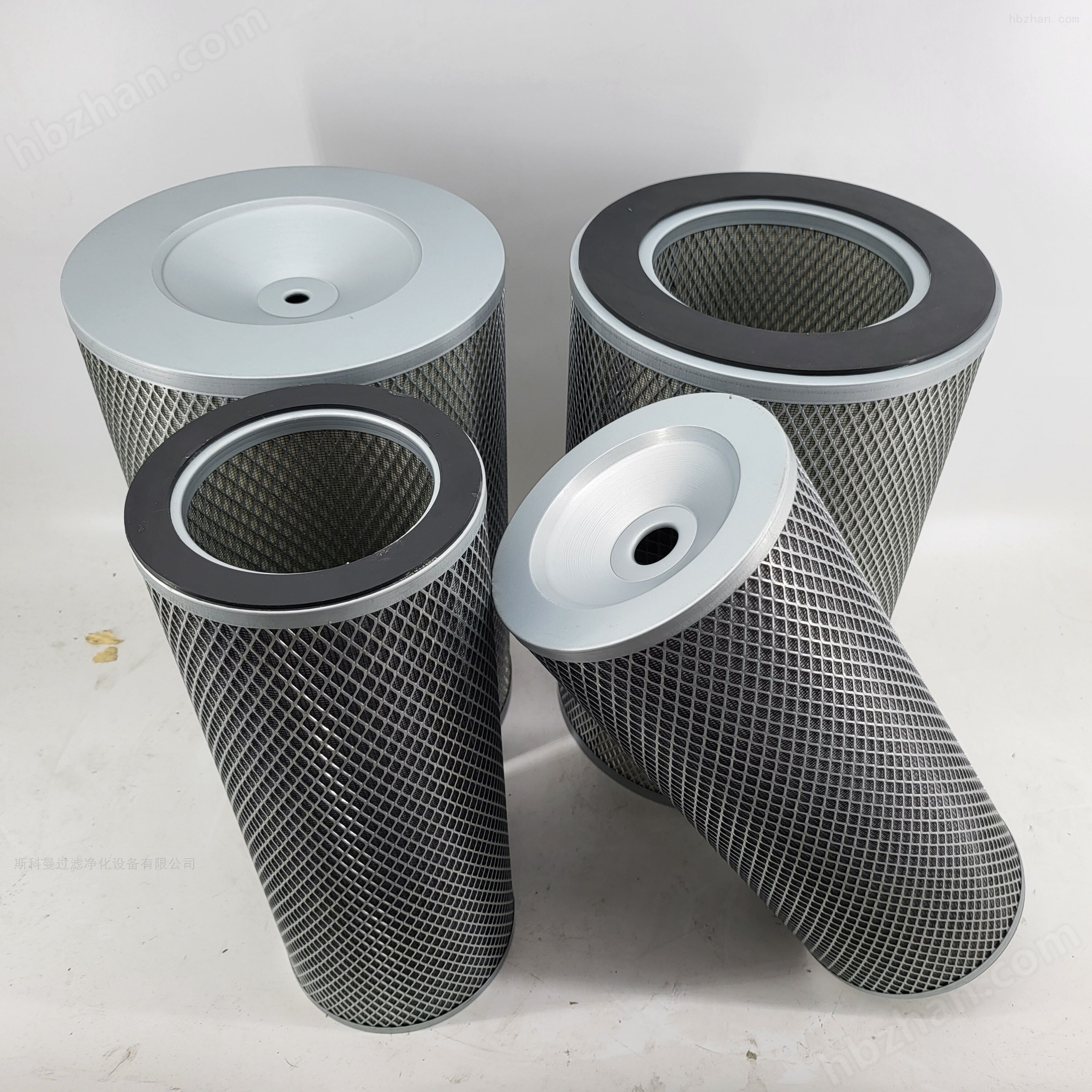
The first category is hydraulic oil filter elements, used in the hydraulic circuits of construction machinery, agricultural machinery, injection moulding machines, hydraulic presses, machine tools and marine power systems. Hydraulic systems are extremely sensitive to oil cleanliness. According to ISO 4406 or SAE AS4059 particle grade standards, construction machinery typically requires NAS 8 to NAS 9, precision servo hydraulics require NAS 6 or higher. By installation position, hydraulic oil filters are divided into suction filters, return filters, pressure filters, circulation filters and air breathers. By structure they are divided into glass fibre pleated filter elements, stainless steel wire mesh sintered filter elements, and paper pleated filter elements. High end machines use glass microfibre filter elements almost exclusively, with filtration precision of 3 to 10 microns. Representative foreign makers are Pall, Parker Hannifin and Donaldson, domestic representatives are Xinxiang Ruiqi, Linyi Xinda Filtration, Guizhou Yonghong and Beijing Bluestar.
The second category is engine intake and fuel filter elements, used in automobiles, commercial vehicles, agricultural machinery, construction machinery, marine and power generation diesel engines. Engine intake filters mainly filter dust and particulates from air. Heavy trucks and construction machinery use cyclone pre-separators plus double-layer paper or glass fibre pleated filter elements, with precision of 10 to 20 microns and efficiency above 99.9 percent. Fuel filters split into coarse and fine. Diesel systems use paper or melt-blown polyester fibre, with precision of 3 to 10 microns. China 6 and the future China 7 require higher precision and water separation, generally precision 2 to 3 microns with water separation efficiency above 95 percent.
The third category is industrial dust filter bags and cartridges, used in flue gas dust removal at coal power, steel, cement, nonferrous metallurgy, chemical and waste incineration. This is a harsh environment with high temperature, strong corrosion and sticky dust. Filter material by temperature includes polyester PE and polypropylene PP at room temperature, polyacrylonitrile PAN and aramid Nomex at medium temperature, polyimide P84, glass fibre and PTFE at high temperature, metal fibre and ceramic tube at ultra high temperature. PTFE membrane coated glass fibre filter bags are widely used in ultra low emission coal power, steel sintering and cement kilns.
The fourth category is high efficiency and ultra high efficiency air filters, used in hospital operating rooms, biological cleanrooms, semiconductor cleanrooms, biopharmaceutical purification workshops, and data centre precision air filtration. By EN 1822:2009 European standard or corresponding national standard, they are graded H10 to H14 HEPA and U15 to U17 ULPA. Twelve inch wafer fabs correspond to U15 to U17 grade, with chemical molecular filtration supported by AMC chemical filter elements.
The fifth category is water filter elements and membrane modules, used in drinking water purification, industrial pure water, ultra pure water, seawater desalination, and biopharmaceutical water systems. By structure: wound, melt-blown polypropylene, activated carbon, pleated PP, sintered metal, ceramic. By membrane: microfiltration MF, ultrafiltration UF, nanofiltration NF, reverse osmosis RO, electrodeionisation EDI.
Beyond the five main categories, several sub-segments deserve separate mention: gas turbine filter elements for power plants and oil fields, compressor and vacuum pump oil-gas separation filters, pharmaceutical sterile liquid filtration capsule filters, and special nuclear and radiation resistant filters.
It is worth noting that industrial filters and consumer air purifiers, household water purifiers and consumer masks belong to completely different categories. The latter have larger scale and stronger brand effects but differ significantly in process barriers, certification cycles, gross margins and ceiling height. This article focuses on the industrial grade.
3 Process barriers: glass fibre filter paper, pleating, end cap sealing and PTFE membrane coating
Drilling down to the process layer reveals that the real barrier in this industry is not whether one can make a filter element, but whether one can hit seven indicators — precision, pressure drop, dust holding capacity, mechanical strength, cleanliness, batch consistency and lifetime — all at the same time. Falling short on any one of them will keep you out of the certification gates of wafer fabs, biopharmaceutical plants and commercial vehicle main equipment manufacturers.
The first key point is filter material. The most important and undervalued material is ultra fine glass fibre filter paper. Made from microfibres of 0.1 to several microns in diameter through wet papermaking, it forms a dense three-dimensional network. U15 to U17 ULPA for semiconductor cleanrooms, H13 to H14 HEPA for biopharmaceuticals, gas turbine intake precision filtration, and high end hydraulic oil filter elements all depend on this material. The process barriers include raw fibre supply (very few global suppliers), wet papermaking uniformity, resin impregnation curing, and final inspection.
The second key point is microporous structure and membrane composite. Beyond glass fibre filter paper, two other high end filter materials are being pursued by domestic makers: polytetrafluoroethylene PTFE microporous membrane and polyester nanofibre composite filter material.
The third key point is pleating process. The pleating process must achieve uniform spacing, consistent pleat height, no paper tearing or deformation, and stable pleat shape over time. Advanced pleating technologies include traditional rotary pleat, deep pleat, mini pleat and wedge pleat.
The fourth key point is end cap sealing and frame assembly. The two end caps of a filter element must bond tightly with the filter paper without leakage. Adhesion processes include glue adhesion (epoxy, polyurethane, hot melt), heat fusion welding, ultrasonic welding and laser welding. Semiconductor cleanroom and biopharmaceutical filters require very low volatile organic compound emissions at the bond, generally using low volatile polyurethane or fluorosilicone.
The fifth key point is PTFE membrane coating and surface treatment. PTFE membrane coating for industrial dust filter bags is one of the highest barrier processes in the industry. The membrane is bonded to the filter substrate through heat pressing or lamination, forming a surface filtration structure. After coating, dust accumulates only on the surface, cleaning is thorough, lifetime extends two to three times, and emissions stabilise below 5 mg per cubic metre.
The sixth key point is clean production environment. U15 to U17 ULPA for semiconductors and H13 to H14 HEPA for biopharmaceuticals must be assembled and packaged in ISO 7 grade or better cleanrooms, with 100 percent scan testing of each unit to confirm no pinholes and no leakage.
The seventh key point is testing and certification. Every type of filter element must undergo extensive testing before shipment: filter material integrity test, scan leakage test, flow pressure differential test, efficiency test, burst pressure test, chemical compatibility test. The semiconductor industry requires ISO 14644 and SEMI standard tests; biopharmaceutical requires USP, EP, JP pharmacopoeia tests; automotive requires SAE/ISO standard tests plus original equipment manufacturer specific requirements.
Adding these seven points together explains why this high end list has been so hard to break. It tests not single point technology but the stability and repeatability of every detail across a complete process chain. It also explains why breakthroughs began to appear in 2025-2026 — after over a decade of patient cultivation, a batch of domestic leaders has finally connected all seven points.
4 Major makers: Weifu High Technology, Mayair Group, Xinda Filtration, Bofei Technology; benchmarked against Donaldson, Mann+Hummel, Pall, Camfil and Parker
The major players in this industry show a clear pattern: foreign giants are almost all full spectrum players, with product lines running from automotive intake through gas turbines, cleanrooms, biopharmaceuticals and water treatment; domestic makers are mostly hidden champions in single segments, each specializing in one or two areas.
Donaldson Company, headquartered in Minneapolis Minnesota, founded 1915, reported fiscal 2025 total revenue of 3.681 billion US dollars across Mobile Solutions, Industrial Solutions and Life Sciences segments. Industrial Solutions revenue was 1.104 billion US dollars, up 3.6 percent. China operations are concentrated in Wuxi, with the Donaldson Wuxi facility as its largest global single manufacturing base.
Mann+Hummel, headquartered in Ludwigsburg Germany, founded 1941, focuses on automotive and heavy truck intake, fuel, oil and transmission filtration. Fiscal 2025 revenue was 4.2 billion euro, slightly lower than the prior year. China is its second largest single market, with Heavy Duty segment China orders at 13 million euro.
Pall Corporation, headquartered in Port Washington Massachusetts, founded 1946, acquired by Danaher in 2015. Its biopharmaceutical, semiconductor, oil and gas, energy, aerospace, and food and beverage segments are all high end. China operations are centred in Suzhou.
Camfil, headquartered in Stockholm Sweden, founded 1963, focuses on high efficiency air filtration. Global HEPA and ULPA market share is about 15 percent, operating in over 30 countries with annual filter capacity over 500,000 units.
Parker Hannifin Filtration is the filtration group of Parker Hannifin (NYSE: PH), formed through the 2015 acquisition of Clarcor. Global HEPA and ULPA cleanroom market share is about 9 percent.
Domestic Weifu High Technology (SZSE: 000581), Wuxi Jiangsu, focuses on diesel fuel injection systems, aftertreatment, smart electric and intake systems, with joint ventures with Bosch, Donaldson and AVL. 2025 revenue 12.024 billion yuan, up 7.67 percent.
Mayair Group (STAR Market: 688376), Nanjing, founded 2002, focuses on cleanroom air filtration products. First half 2025 revenue 935 million yuan, up 23.51 percent.
Xinda Filtration in Linyi Shandong is a hidden champion in hydraulic oil filter elements, supplying main equipment manufacturers including Sany, XCMG, Liugong, Zoomlion and Shantui.
Bofei Technology (STAR Market: 688533), Hefei, focuses on industrial dust filter bags and cartridges, covering ultra low emission coal power, steel sintering, cement kilns and waste incineration.
Liaoning Hongsheng in Shenyang is the established leader in PTFE membrane coated glass fibre filter bags, competing directly with Gore, BWF and Lydall.
Tianjin Membrane Tech (SZSE: 300334), Tianjin, represents domestic hollow fibre ultrafiltration membranes and modules.
Cobetter (STAR Market: 688498), Hangzhou, focuses on biopharmaceutical sterile filtration membranes, depth filtration, tangential flow filtration and nanofiltration.
These thirteen companies plus their respective industrial cluster small and medium makers form the supply side of the domestic industry. Over the next three to five years this list will continue to reshuffle.
5 Downstream group one: hydraulic oil filters, commercial vehicle air filters, truck aftertreatment and agricultural diesel
The largest, most stable and most consumable-like downstream is the mechanical power group: construction machinery, commercial vehicles, agricultural machinery, marine power, and power generation diesel engines.
Construction machinery. Excavators, loaders, bulldozers, road rollers, cranes, concrete equipment and pile machinery had 2024 China sales of about 300,000 units with installed base over 9 million units. Each machine has at least one hydraulic oil filter element plus engine intake, fuel coarse fine, oil, transmission and differential oil filters. Annual consumables spend per excavator is 2000 to 4000 yuan. Nine million units times average 3000 yuan equals 27 billion yuan in annual consumables — this is just one sub-segment.
Commercial vehicles. Heavy trucks, medium trucks, light trucks, buses and special purpose vehicles had 2024 China sales of about 3 million units with installed base around 22 million units. Filter categories per vehicle include intake, fuel, oil, urea injection, aftertreatment (filter elements protecting DPF and SCR catalysts), air conditioning, transmission oil, power steering, air drying for air brakes. Annual consumables spend per heavy truck is 1500 to 3500 yuan, total market around 30 billion yuan.
The biggest variable is China 7. Each new China 7 heavy truck will require at least 3 to 4 more filter categories. Assuming 300,000 to 500,000 new China 7 heavy trucks per year, with 3 new filters per truck at 500 to 1500 yuan each, the annual incremental market from China 7 filters alone is 5 to 10 billion yuan.
Agricultural machinery has a 2024 China annual sales of about 2.5 million units with installed base around 50 million units. Single unit consumables are low value but high volume, total market about 8 billion yuan, with domestic share already over 80 percent.
Marine and power generation engines have over 20,000 new units per year of large diesel and large stationary power generation sets, with stock in the hundreds of thousands. Single unit consumables can reach tens of thousands of yuan annually, total market about 6 billion yuan.
The mechanical power group adds up to about 70 to 80 billion yuan annual consumables market in 2026.
For sales leads, the hydraulic oil filter element industrial belt is centred in Xinxiang Henan (over 100 million elements annually), Linyi Shandong, and Cangzhou Hebei; the commercial vehicle filter cluster is in Wuxi Jiangsu, Langfang Hebei and Zhengzhou Henan. Useful keyword searches include hydraulic filter, fuel filter, air filter, commercial vehicle filter and construction machinery supporting parts.
6 Downstream group two: data centres, semiconductor twelve inch lines, biopharmaceutical and vaccine cleanrooms
The second downstream group is the high end clean group: data centres, semiconductor twelve inch fabs, biopharmaceutical and vaccine cleanrooms, hospitals and pharma production lines.
Semiconductor twelve inch fabs. China twelve inch capacity expansion continues at peak. SMIC, Hua Hong, Yangtze Memory, Hefei JHICC, ChangXin Memory, Qingdao SiEn, Guangzhou CanSemi are all advancing new fab construction. New twelve inch capacity added in 2024 to 2026 is roughly 100 to 120 thousand wafers per month equivalent. Each twelve inch fab cleanroom has FFU deployment of several thousand to over ten thousand units, much of which requires U16 to U17 grade no-separator ULPA. Hua Hong Wuxi twelve nm line has over 8000 FFU all fitted with U16 ULPA; Yangtze Memory uses U17 in EUV zones. ULPA initial install per fab can reach hundreds of millions of yuan.
Adding AMC chemical filtration. The global AMC market is projected to reach 1.58 billion US dollars by 2026, with semiconductor and data storage taking the leading share.
Data centres. By 2025 China total data centre rack count exceeds 8 million, doubled from 2020. A large data centre over 100,000 sqm typically has HVAC system fitted with thousands to tens of thousands of high efficiency filters F8 to H13 grade plus AMC chemical filters. Global about 55 percent of data centres have integrated chemical filtration in HVAC. Domestic 2025 annual data centre filter demand is 5 to 8 million units (initial install plus replacement), market 2 to 3 billion yuan.
Biopharmaceutical and vaccine cleanrooms. Post pandemic, China vaccine and monoclonal antibody mass production capacity has expanded rapidly. New and expanded cleanroom area added 2024 to 2026 totals 2 to 3 million square metres. Each annual capacity of 10 million dose vaccine plant has initial filter order of 50 to 80 million yuan and annual replacement consumables of 20 to 30 million yuan.
Hospitals, operating rooms, biosafety labs, ICU are another high end clean downstream with stable H13 to H14 HEPA combined with UV sterilization demand.
Adding the high end clean group: total 2026 China high end clean air and liquid filtration market is about 15 to 18 billion yuan, growing 15 to 20 percent annually.
Useful keyword searches for this segment include semiconductor clean, HEPA high efficiency filter, ULPA ultra high efficiency, biopharma filtration and data centre filter elements.
7 Factory database lens: locating real domestic industrial filter makers by process and downstream
After product categories, process barriers, major makers and downstream applications, the next step is the factory layer. Listed company annual reports cover only a small fraction of the supply side. The larger part is scattered across industrial clusters in thousands of small and medium makers handling OEM contract manufacturing, aftermarket, and white label exports.
Tianxia Gongchang is a B2B platform of 4.8 million in-production factories. Its core difference from corporate credit query tools (such as Qichacha-type services) lies in factory identification — through business licenses, scope of operations, social insurance headcount, industry codes, official website and product page keywords, and procurement and sales data, the platform cross-validates and excludes non-production entities such as shell companies, trading firms, consulting firms, holding companies and tax planning entities. What remains is real factory entities. This matters because for sales leads, you need real factories with production lines, real workshops and real shipments.
Mapping the industrial filter sector to the factory database, you can filter across several dimensions: process route (hydraulic oil filter cluster in Xinxiang Henan, Linyi Shandong, Cangzhou Hebei; commercial vehicle filter in Wuxi, Langfang, Zhengzhou; high efficiency air filter in Nanjing, Suzhou, Shenzhen, Guangzhou, Hefei, Beijing; industrial dust filter bag in Shenyang, Shanghai, Hefei, Changzhou; water treatment in Tianjin, Beijing, Suzhou, Dongguan, Shenzhen, Hangzhou; biopharma filtration in Hangzhou, Suzhou, Shenzhen); downstream area (construction machinery OEM, commercial vehicle OEM, semiconductor fab direct supply, data centre operator direct supply, biopharma client, power and steel EPC, water treatment EPC, hospital and pharma engineering); order scale (100 million yuan, 10 million yuan, 1 million yuan, 100,000 yuan); business scope and certification (single category or multi category, OEM certifications, main equipment manufacturer or EPC supplier list, export qualifications such as CE, UL, EN 1822, SEMI, own brand or pure OEM).
Combining these four dimensions can precisely locate around 2000 to 3000 real industrial filter producers within the 4.8 million factory database, further narrowed to 300 to 500 head OEM-certified or EPC matched suppliers.
For a construction machinery main equipment manufacturer procurement manager looking for hydraulic oil filter element suppliers, what is needed is not the thousand companies selling hydraulic filters but the few dozen capable of supplying excavator OEM, hitting NAS 8, supplying in volume, and accepting main equipment manufacturer audit. These can be precisely identified through three axes: process (glass fibre pleated with NAS precision), downstream (construction machinery OEM), order scale (10 million yuan).
For a semiconductor wafer fab procurement manager looking for ULPA suppliers, what is needed is not the thousand companies selling HEPA filters but the under twenty capable of supplying U16 to U17 grade no-separator ULPA, assembling in ISO 7 cleanrooms, doing 100 percent scan testing, working with wafer fab long certification cycles, and persistently supplying FFU replacement consumables. These can be precisely identified through four axes: process (U16 to U17 ULPA), downstream (semiconductor clean), capacity (thousands to tens of thousands), and certification (SEMI plus internal fab system).
This four to five axis cross-search method is the standard capability the platform offers for industrial sales lead research. It is an order of magnitude more efficient than searching keywords on a public engine and manually filtering. In the 2026 domestic substitution window, whoever masters precise factory database location capability holds the source of sales leads.
Useful searches include hydraulic oil filter element, glass fibre filter paper, PTFE membrane coated filter bag, dust collection cartridge, pleated filter, membrane module, reverse osmosis membrane, ultrafiltration membrane, FFU fan filter unit, chemical filter element, sterile filtration membrane, compressor oil-gas separation, gas turbine intake filtration and flue gas purification.
8 Domestic substitution: real breakthroughs in ULPA, gas turbine filters and semiconductor precision filtration
Domestic substitution is a much used term in this sector, but often stops at slogan level. To talk it through properly, three layers must be addressed: whether technology can do it, whether orders can be won, and whether customers can be retained at scale and over time.
ULPA high efficiency air filtration. In 2025 this cell got filled. Mayair Group's deployment of over 8000 FFU U16 grade no-separator ULPA at Hua Hong Wuxi twelve nm line, Yangtze Memory's EUV lithography with U17 no-separator ULPA, plus Suzhou Sino-Tianshuo, Shenzhen Futumai, Xinchang Xinming domestic U15 to U16 ULPA entering certification at over a dozen domestic fabs and biopharma plants. Domestic ULPA efficiency, initial resistance and end resistance curves now match foreign giants. Batch consistency, yield, lifetime are also close. Prices typically 10 to 20 percent lower.
Gas turbine intake precision filtration. Donaldson Power Systems, Camfil Power Systems and AAF Power Systems have long held domestic power plant, oil field and offshore platform gas turbine intake supply. Since 2020, Jiangsu Juliang, Beijing Wo'er, Suzhou Latnik, and Bofei Technology have steadily entered domestic medium power gas turbine intake filter OEM and aftermarket. By 2025 they have batch orders in southwestern gas power plants, southeastern LNG terminals and large chemical plant captive power.
Semiconductor precision filtration. Suzhou Sino-Tianshuo's AMC chemical filter, Shanghai Xineier's ultra pure water filtration, Suzhou Beken's wet chemical filtration, Wuhan Dongxin Heping's photoresist filtration, Shenzhen Futumai's AMC chemical filter all hold second and third tier wafer fab certification. The core chemical filter positions at SMIC's most advanced lines, parts of Hua Hong's advanced lines, and Yangtze Memory's core lines are still firmly held by Entegris, Pall, Mott, CTI. The last mile of domestic substitution will take another three to five years.
Biopharma sterile filtration membranes. The biopharma sterile filtration domestic substitution was long considered the hardest bone. Foreign Pall, Sartorius, Merck, 3M, Thermo Fisher hold over 90 percent share. Single capsule prices are thousands to tens of thousands of yuan with very high gross margins. From 2024 to 2026 domestic Cobetter, Haipun, Jinjieyuan, Beijing Newlife Bio, Suzhou Jiesheng have made breakthroughs in second tier vaccine plants, CDMO plants, traditional Chinese medicine injection lines, and animal health plants.
Industrial dust filter bag high end membrane coated series. PTFE membrane coated glass fibre filter bag domestic share in ultra low emission coal power, steel sintering and cement kilns jumped from 40 percent six years ago to over 70 percent today. Liaoning Hongsheng, Shanghai Bo'ge, Fushun Tianyu, Bofei Technology, Anhui Yuanchen membrane coating lines now match Gore, BWF, Lydall.
Reverse osmosis membranes and ultrafiltration membranes. Domestic Tianjin Membrane Tech, Beijing Originwater, Haipun, Toray China (JV), Xinjiang Delan, and Bolu Separation have made domestic share gains in industrial pure water, municipal drinking water, and textile dye wastewater reuse. Ultrafiltration domestic share exceeds 60 percent, reverse osmosis mid-low end domestic share exceeds 50 percent.
Hydraulic oil filter OEM domestic substitution. From 2024 to 2026 main equipment manufacturers have actively pushed supply chain domestication, with Xinda Filtration, Xinxiang Ruiqi, Guizhou Yonghong entering OEM certification name lists faster. In 2025 domestic share under Sany B222100000116-type original part codes rose noticeably.
Adding these seven cells, the domestic substitution list is being filled across ULPA, gas turbine intake, semiconductor AMC, biopharma sterile, industrial dust high end membrane coated, water treatment membrane modules, and construction machinery hydraulic oil filter OEM. Each cell required a decade or two of patient cultivation. The next three to five years will see this list continue to be filled.
9 Capacity expansion: glass fibre filter paper, ULPA assembly, membrane coated filter bags and membrane modules
After substitution list, capacity. This cell determines the actual pace at which orders translate over the next two to three years.
Glass fibre filter paper. Ultra fine glass fibre filter paper is the tightest upstream raw material in this sector. Few global suppliers can stably supply semiconductor and biopharma grade ultra fine glass microfibre. Domestic Chongqing Polycomp International, Jushi Group subsidiary, Xingtai Jinniu Glass Fibre, Jiuding Glass Fibre have new ultra fine glass microfibre capacity totalling tens of thousands of tons. Domestic Shandong Renfeng, Zhejiang Hualian, Fuyang Jinqiu Paper have new glass fibre filter paper capacity of thousands of tons, but high grade products still rely on imports.
ULPA assembly capacity. Mayair Group's expansion in Nanjing, Suzhou, Beijing, Hefei, Guangzhou and Chengdu in first half 2025 covers tens of thousands of FFU and millions of filter elements annually. Suzhou Sino-Tianshuo, Shenzhen Futumai, Xinchang Xinming, Zhongshan Haoyuan are also expanding. Domestic ULPA and HEPA assembly capacity grows 25 to 35 percent annually in 2025-2026.
PTFE membrane coated filter bag capacity. Liaoning Hongsheng, Shanghai Bo'ge, Fushun Tianyu, Bofei Technology, Anhui Yuanchen membrane coated bag capacity reached millions of square metres annually. Exports are tens of billions of yuan to Southeast Asia, Middle East, India, Africa.
Reverse osmosis and ultrafiltration capacity. Tianjin Membrane Tech, Beijing Originwater, Haipun, Toray China, Bolu Separation reverse osmosis capacity reaches tens of millions of square metres annually, ultrafiltration capacity at millions of square metres.
Automotive and commercial vehicle filter capacity. Weifu intake systems, Bonel, Langfang Filter, Xinxiang Hengrun, Bosch domestic JV had combined 2025 capacity in hundreds of millions of units. Xinxiang industrial belt alone produces over 100 million hydraulic oil filter elements annually.
Biopharma filtration capacity. Cobetter, Haipun, Jinjieyuan, Suzhou Jiesheng combined depth filtration plate capacity reaches millions of plates annually, sterile filtration capsule capacity in hundreds of thousands.
Adding the six categories, 2026 China industrial filter capacity supports about 60 billion yuan domestic demand plus 20 billion yuan export demand. Upstream glass fibre filter paper and ultra fine glass microfibre are the only clear bottleneck.
Key things to watch for capacity ramp: progress on glass fibre filter paper domestication (2027-2028 target), continued PTFE membrane coating optimization, semiconductor AMC core formulas, membrane module vertical integration.
Capacity expansion must also watch foreign localization. Camfil, AAF International, Donaldson, Pall, Mann+Hummel already have large local production in China. This means substitution is not purely cost driven but driven by supply chain security preference, rapid response capability, customization, and main equipment manufacturer or wafer fab local supply chain strategy.
10 Pricing cycle: unit price, gross margin structure and export pace
Industrial filter pricing structure deserves detailed unpacking. It is not simply premium goes premium and bulk gets crushed. It is a complex system shaped by upstream materials, downstream negotiation power, certification barrier, scale effect, and export pace.
Unit terminal price distribution. In mechanical power group, the cheapest aftermarket paper oil filter is tens of yuan, mid-tier OEM paper or glass fibre filter is 100 to 200 yuan, high end OEM glass fibre pleated filter is 300 to 500 yuan up to 1000 yuan, imported brand premium is 1000 to 2000 yuan.
High end clean group is at a different price magnitude. H13 to H14 HEPA single unit is several hundred to 1000+ yuan; U15 to U17 ULPA is thousands to over 10,000 yuan; semiconductor grade AMC chemical filter is thousands to 10,000-20,000 yuan; biopharma sterile filtration capsule is thousands to over 10,000 yuan; ultra pure water grade reverse osmosis is tens of thousands of yuan per unit.
Gross margin structure. Mechanical power aftermarket gross margin is 20 to 30 percent; OEM 15 to 25 percent (main equipment manufacturer has bargaining power); high end OEM 25 to 35 percent. High end clean gross margins are much higher: HEPA 35 to 45 percent; ULPA 40 to 55 percent; semiconductor AMC chemical filter over 50 percent; biopharma sterile capsule over 60 percent; ultra pure water reverse osmosis about 45 percent.
Domestic makers' gross margins are 5 to 10 percentage points below foreign giants, due to scale, brand premium, and upstream material dependence.
Exports. China industrial filter export scale 2025 was about 20 billion yuan, covering Southeast Asia, Middle East, India, Africa, South America, Europe. Mid-low end OEM, aftermarket, industrial dust filter bag, water treatment dominate exports. High end ULPA, biopharma, semiconductor AMC have low export share.
Export pace: Southeast Asia 10 to 15 percent annual growth; Middle East and Africa 8 to 12 percent; Europe and Americas affected by trade frictions; CBAM affects high carbon production routes.
Pricing cycle. 2024-2026 overall pricing flat, parts of cleanroom-related categories (membrane coated bag, ULPA, high end reverse osmosis) slightly up due to tight supply; mechanical power aftermarket and mid-tier OEM persistently under pressure due to competition. 2026-2028 outlook: domestic material localization, capacity expansion, deeper foreign localization may push average prices slightly down.
For sales leads: pursuing high margin segments (semiconductor cleanroom, biopharma, gas turbine, ultra pure water) requires deep certification penetration and customer alignment, not lowest price; mechanical power aftermarket is a red sea requiring differentiation; export needs CE, UL, SEMI, NSF, FDA certifications.
11 Policy: China 7 emission standards, semiconductor Phase III fund, dual carbon and pharma strict regulation in concert
The policy drive on this sector in 2026 is rare in showing multiple variables firing simultaneously. At least four lines are advancing in parallel.
China 7 emission standard. The Ministry of Ecology and Environment's standards institute completed technical review of the consultation draft in 2025. Benchmarking Euro 7, NOx limit drops to 30 mg per km, CO to 100-300 mg per km, first time including brake pad wear particles. Aftertreatment upgrades from SCR plus DPF to SCR plus DPF plus ASC plus VOC handling, single vehicle cost adds 20,000 to 50,000 yuan. Each new China 7 heavy truck adds at least 3 to 4 filter categories. With 300,000 to 500,000 annual new units and 500-1500 yuan per filter, China 7 filter annual incremental market is 5-10 billion yuan.
Semiconductor National Integrated Circuit Industry Investment Fund Phase III. Established 2024 with 344 billion yuan registered capital, far exceeding Phase I (138.7 billion) and Phase II (204.1 billion). This money flows down through wafer fabs, equipment makers and component suppliers to drive cleanroom FFU and ULPA orders, packaging air and chemical filtration orders, and equipment domestication gas filter elements, point-of-use filter elements, compressor filters.
Dual carbon and ultra low emission. Under the dual carbon goal coal power, steel, cement, chemical and nonferrous metallurgy desulfurization and denitrification upgrades continue. Industrial dust ultra low emission standards (coal power below 10 mg per cubic metre, steel below 15 mg per cubic metre, cement below 10 mg per cubic metre) drive demand for PTFE membrane coated glass fibre filter bags, aramid filter bags, and high temperature ceramic filter tubes.
Pharmaceutical strict regulation. National Medical Products Administration strengthens inspection of vaccines, monoclonal antibodies, chemical drugs, biologics, and APIs production environments during 2024-2026. New GMP raises requirements for cleanroom grades, HVAC filtration, purified water systems, water for injection systems, sterile filtration, depth filtration. This drives biopharma filtration domestic substitution.
Export policy and carbon tariffs. EU CBAM (Carbon Border Adjustment Mechanism) gradually fully implemented 2026-2027 imposes carbon tariffs on cement, fertilizer, steel, aluminium, electricity, hydrogen exports from China. Not directly covering filter products, but affects downstream user (steel, chemical, cement) export competitiveness, indirectly affecting industrial dust filter demand. Overall CBAM forces downstream energy efficiency upgrades, a mid-long term positive for industrial dust filter demand.
These five lines combined make 2026-2030 a window of multi-dimensional policy concert: China 7 driving commercial vehicle aftertreatment filters, fund driving semiconductor cleanroom filters, dual carbon and ultra low emission driving industrial dust filter bags, pharma strict regulation driving biopharma filters, CBAM indirectly driving energy efficient industrial filtration. Each line corresponds to several domestic substitution windows.
For sales leads, tracking policy timing is fundamental. Watch China 7 formal implementation, Phase III fund project landings, new round coal power ultra low emission upgrade lists, vaccine and CDMO new plant environmental impact approvals.
12 Tianxia Gongchang Research Institute judgement: where will China's industrial filter sector go in three to five years
Putting all eleven chapters together, the Research Institute gives its overall judgement on the next three to five years.
First judgement: 2026-2028 is the concentrated realization period for domestic substitution in China's industrial filter sector. After a decade of patient cultivation and breakthrough years 2024-2025, orders will land en masse in 2026-2028. Key segments: commercial vehicle aftertreatment filters surge from China 7; semiconductor cleanroom ULPA continues volume from Phase III fund; biopharma sterile filtration continues mid-tier CDMO substitution; industrial dust membrane coated bag stays high from new round ultra low emission upgrades; water treatment reverse osmosis and ultrafiltration continues industrial pure water and municipal drinking water substitution.
Second judgement: upstream material domestication in 2027-2028 is the decisive battle. Semiconductor and biopharma grade ultra fine glass microfibre, glass fibre filter paper, PTFE microporous membrane, activated carbon impregnation formulas, ion exchange resins, biopharma grade polymer filter materials remain heavily import dependent. Domestic breakthrough on these in 2027-2028 will push the whole sector cost and gross margin up another notch.
Third judgement: top tier customer breakthroughs in high end cleanroom segments will happen 2028-2030. Top semiconductor fab core chemical filter positions, monoclonal antibody and premium vaccine sterile filtration positions, mega data centre AMC chemical filter supply positions remain firmly held by foreign giants. After 3-5 years of deep customer alignment, technical parameter matching, long term supply chain audit cooperation, domestic makers should break through 2028-2030.
Fourth judgement: foreign giants will respond with deeper localization, acquiring domestic makers, technical cooperation. Donaldson, Mann+Hummel, Pall, Camfil, Parker Hannifin Filtration in the China market will not sit idle. Their response: deeper localization, acquisition or strategic stakes in domestic makers, technical cooperation or JVs deep binding to key domestic clients.
Fifth judgement: exports will become the second growth curve for top domestic makers. China industrial filter exports likely grow from 20 billion yuan in 2025 to 30-40 billion yuan in 2028. The drive is Southeast Asia, Middle East, India, Africa, South America new market industrialization and urbanization.
Sixth judgement: industry consolidation and acquisitions will accelerate. Currently domestic industrial filter sector is relatively fragmented. Top listed companies (Weifu, Mayair, Bofei, Tianjin Membrane Tech, Cobetter, etc.) will consolidate share through acquisitions during 2026-2028. Industry concentration will rise significantly.
Seventh judgement: from the Research Institute's perspective, 2026-2030 is a rare window where policy, capacity, technology, orders, exports all line up favourably for China industrial filters. Makers who can simultaneously unlock upstream materials, production processes, customer certifications, sales channels, export qualifications and brand building have the best shot.
Eighth judgement: the platform as the B2B platform of 4.8 million in-production factories, the Research Institute's role is to connect real factory entities hidden across industrial clusters, public information from listed companies, downstream order needs, and foreign giant dynamics — providing first hand data for sales lead research, industry research and policy research.
Ninth judgement: sales lead complexity will rise. Past industrial filter sales were dealer recruitment, channel roll out, OEM supply relationship maintenance. Future 3-5 years with deeper domestic substitution, more new sub-segments, customer structure upgrade, sales will become more complex. Wafer fabs, data centres, biopharma, hospitals, CDMOs need not dealers but solution providers who can deeply participate in system integration, accompany long certification cycles, maintain high delivery and service responsiveness.
Combining these nine judgements, the Research Institute's overall view on China's industrial filter sector 2026-2030 is: this is a long undervalued sector entering simultaneous release of policy and substitution dividends. Listed company financials will look restrained (gross margin improvement limited, net profit growth moderate), but internal structural opportunities are very rich. Real growth comes from simultaneous improvement on order depth, customer structure, and export capability. For industrial sales lead research, riding this substitution wave by precisely locating domestic makers across process, downstream, order scale and certification status is the work most worth investing in the next three to five years.
13 Risks: foreign giant counter-attacks, customer certification cycles, raw material bottlenecks and aftermarket counterfeiting
After the upside, the risks. No sector is monotonically up. China's industrial filter sector through the 2026-2030 domestic substitution window faces at least seven types of risk to face head on.
Foreign giant counter-attacks. Camfil, AAF International, Donaldson, Pall, Mann+Hummel, Parker Hannifin Filtration have done deep localization in China. They hold several short-to-medium term irreplaceable resources: global key customer relationships (multinational semiconductor fabs, multinational biopharma companies, multinational main equipment manufacturers in China prefer unified global suppliers), brand trust and certification archives (decades of customer audits and material compatibility data), upstream material stable supply, technical R&D depth. Counter-attack paths: price compression, acquisitions, locking long term supply agreements, R&D moat with next gen materials.
Customer certification cycles. Semiconductor wafer fabs, biopharma plants, commercial vehicle main equipment manufacturers, construction machinery main equipment manufacturers have strict supply chain audits. Certification cycles are typically 1-2 years, semiconductor core positions 3-5 years. This means even if domestic makers achieve technical parity with foreign giants, they need long time from sample testing to mass production and stable orders. During this period, domestic makers must keep investing in R&D, production, customer alignment, with heavy upfront cash burn.
Upstream raw material bottlenecks. The biggest bottleneck for domestic industrial filters is upstream. Semiconductor and biopharma grade ultra fine glass microfibre, glass fibre filter paper, PTFE microporous membrane, activated carbon impregnation formulas, ion exchange resins, biopharma grade polymer filter materials remain heavily import dependent. If international trade frictions escalate and foreign material suppliers restrict supply or raise prices, domestic filter makers' production will be directly hit.
Aftermarket counterfeiting and price wars. Industrial filter aftermarket has serious counterfeiting and white label issues. Small factories use cheap low quality raw materials to make imitation filters, copying brand model codes and appearance, circulating through auto parts cities, e-commerce platforms, repair shops. This both squeezes legitimate makers' aftermarket profit and damages brand reputation (consumers using fake filters that fail blame the brand).
Downstream main equipment manufacturer pricing pressure. Commercial vehicle, construction machinery, agricultural machinery, home appliance main equipment manufacturers have strong bargaining power. Annual procurement negotiations typically require 3-8 percent price cuts, accumulating to persistent margin erosion. Domestic mid-tier OEM suppliers face stronger pressure than foreign giants.
Policy uncertainty. China 7 implementation timing keeps adjusting. Phase III fund project landings are influenced by multiple factors. Ultra low emission new round upgrade lists roll out in batches. These uncertainties create order timing uncertainty.
Industry consolidation acquisition uncertainty. In the 2026-2028 wave of consolidation, integration risk between acquirer and acquiree, core team turnover risk, post-integration synergy realization are all uncertain factors.
Combining the seven risks, industrial filter sector domestic substitution window faces non-trivial risk. Investment and sales lead decisions must be built on simultaneous risk and opportunity identification.
Risk management actions: regular upstream material supply risk review, foreign material safety stock, accelerated upstream domestic localization, expanding customer industry coverage to avoid single client dependence, maintaining ample cash flow, export and FX hedging, deep cooperation with downstream main equipment manufacturers rather than short term bargaining.
14 Sources and methodology note (with Tianxia Gongchang Research Institute observations)
This report's facts and figures come from three layers.
First layer: public annual reports and official documents. Foreign giants part mainly references Donaldson Company (NYSE: DCI) fiscal 2025 10-K annual report and company news, Mann+Hummel 2025 annual report, Camfil AB public market data, Parker Hannifin (NYSE: PH) fiscal 2025 annual report and filtration group data, Pall Corporation (Danaher subsidiary) public business introduction. Domestic listed companies part mainly references Weifu High Technology (SZSE: 000581) 2025 annual report and periodic announcements, Mayair Group (STAR Market: 688376) first half 2025 report and analyst calls, Bofei Technology (STAR Market: 688533) public data, Tianjin Membrane Tech (SZSE: 300334) public data, Cobetter (STAR Market: 688498) public data.
Second layer: industry research reports and authoritative media. Semiconductor cleanroom and ULPA market data from Everbright, Soochow, Zhongtai, CITIC securities research reports on Mayair Group and semiconductor equipment domestic substitution, plus Global Growth Insights, Future Market Reports, Strategic Revenue Insights and other overseas market research firms on global HEPA/ULPA, AMC chemical filtration, industrial air filtration market size forecasts. Industrial dust filter bag data from China Environmental Protection Industry Association, China Electricity Council, China Iron and Steel Association, China Cement Association industry statistics. Water treatment membrane module data from China Membrane Industry Association, China Chemical New Materials Industry Development Report. Automotive and commercial vehicle filter data from China Association of Automobile Manufacturers, China Auto Industry Information Network, Autohome, Kachezhijia and other industry media. Nikkei, Reuters, Bloomberg, Financial Times overseas media provide foreign giant dynamics and global market background.
Third layer: the Research Institute factory database observations. As the B2B platform of 4.8 million factories, the factory database covers real industrial filter sector production entities (excluding non-production entities such as trading, consulting, holding companies, tax planning), precisely classified by process route, downstream area, order scale, certification status, industrial cluster distribution. The Research Institute's domestic factory count distribution, industrial cluster concentration, OEM supply structure, export structure data cited in this report mainly come from internal observations and statistics on this factory database. This is first hand data hard to get from other public channels.
Methodology notes:
First, total market size measurement. The 2025 China industrial filter total market size of 40 billion yuan covers hydraulic oil filter elements, fuel filter elements, oil filter elements, air filter elements, industrial dust filter bags, high efficiency air filters, water treatment membranes and filter elements. Includes domestic sales of domestic and imported and joint venture products, excludes pure exports and foreign brand HQ indirect contributions. 2026 forecast of 40-45 billion yuan is weighted by sub-segment growth rates.
Second, domestic substitution rate measurement. Domestic share definition is domestic makers' sales as share of total domestic market. Domestic makers defined as filter producers registered in China and controlled by Chinese capital or joint controlled.
Third, downstream consumables market measurement. Mechanical power group total 70-80 billion yuan derived from installed equipment count times annual consumables spend per unit, including original parts, brand distribution and independent aftermarket channels. High end clean group 15-18 billion yuan derived from new and expanded cleanroom area times filter density times unit price plus replacement.
Fourth, China 7 incremental market measurement. 5-10 billion yuan annual incremental market derived from 300-500 thousand new China 7 heavy trucks per year times 3 new filter categories times 500-1500 yuan terminal price taking midpoint.
Fifth, semiconductor clean order measurement. 100+ billion yuan ULPA initial install order derived from 2024-2026 China twelve inch new capacity 100-120 thousand wafers per month equivalent, corresponding to dozens of new cleanrooms, FFU deployment over 100,000 units, ULPA unit price thousands to tens of thousands of yuan.
Sixth, export scale measurement. 2025 export scale 20 billion yuan from China General Administration of Customs HS code statistics and industry association export data. 2028 forecast 30-40 billion yuan extrapolated by current 10-15 percent annual growth rate.
References. Donaldson Investor Relations 2025 fiscal year press releases (Q3 and Q4 results announcements, July 31 2025 10-K), Mann+Hummel official 2025 annual report page (mann-hummel.com/en/filtration-company/annual-report-2025/), Nikkei and Financial Times in-depth reporting on global industrial filter sector, Future Market Reports and Strategic Revenue Insights HEPA/ULPA market forecasts, Reuters and Bloomberg semiconductor equipment and China Phase III fund coverage, Ministry of Ecology and Environment, Ministry of Industry and Information Technology, State Administration for Market Regulation, NMPA published regulations and consultation drafts.
The Research Institute takes responsibility for research methodology and data definitions. Cross-checked third party data for consistency. Welcome reader feedback for ongoing updates. Readers interested in deeper dives into specific sub-segments can use the platform's factory database for customized research.
Finally on report timing: 2025 to first half 2026 data is the core basis. Post first half 2026 fact changes will be tracked in updates. For industrial sales lead researchers, the report is a baseline framework — combine with own client outreach pace and specific industry events for dynamic adjustment.
This 168th seshat-research report concludes. Thank you for reading. The China industrial filter 2026 story continues to unfold. The Research Institute will continue tracking and updating, looking forward to seeing readers in future reports.
Useful extension search paths for industrial sales lead researchers: filter bag, dust filter bag, filtration equipment, filter material, air purification, water treatment equipment, precision filtration, filter cleaner — all return abundant real factory makers in the platform's database.