
1. Industry Overview: A Quiet Workhorse Behind Manufacturing Automation
Pneumatic components are the often-overlooked workhorse of China's manufacturing automation story. While industrial robots, servo motors, and PLCs grab the headlines, it's the unassuming standard cylinders (32mm diameter, 100mm stroke, under 100 RMB each) and 20-station valve manifolds that actually determine line cadence in factories nationwide. The global pneumatic components market reached approximately USD 108.4 billion in 2024, projected to grow to USD 19.6 billion by 2028 (per certain industry estimates), with a 5.4% CAGR. China produced about 510 million pneumatic components in 2023; 2022 imports stood at USD 1.14 billion against exports of USD 670 million, with a USD 470 million trade deficit. By 2023, Chinese pneumatic exports surged 38% YoY, signaling that import substitution is finally extending to export markets. SMC (Japan) maintains roughly 25% global market share. AirTAC's 2024 revenue reached RMB 9.98 billion with after-tax net income of RMB 1.71 billion (23.9% net margin), with its global market share climbing from 2.9% in 2012 to 8.4% in 2022. The localization gap by sub-segment is the most revealing data point: standard cylinders have reached over 55% domestic share, pilot-operated solenoid valves around 40%, while air preparation units (FRL) remain at 30%, and servo cylinders, cleanroom-grade pneumatics, and semiconductor-grade vacuum generators are still in the single digits.
2. Component Categories: Cylinders, Solenoid Valves, FRL, Vacuum Generators, Vacuum Pumps
China's pneumatic components market splits into five major categories. Cylinders (standard, compact, mini, slide, rodless, gripper, swing, rotary) form the largest segment; standard cylinders (ISO 15552) and compact cylinders (ISO 21287) account for over 60% of cylinder sales. SMC offers 120,000+ cylinder models; AirTAC offers 80,000+. Solenoid valves split into pilot-operated (response 10-30ms, suited to high-flow applications) and direct-acting (≤5ms response, smaller flow). Manifolded valve islands integrate dozens of valves with bus modules into 200mm × 100mm boards, communicating with PLCs via IO-Link, EtherCAT, or other field buses. FRL air preparation (Filter / Regulator / Lubricator) sits between compressors and downstream pneumatic equipment, with high requirements for pressure stability (±0.01 MPa) and adjustment smoothness. Vacuum generators use the Venturi effect to produce negative pressure; SMC's ZL multi-stage series achieves 90 kPa with under 65 dB noise. Vacuum pumps—dry vacuum pumps (claw, roots, scroll), oil-lubricated (rotary vane), and turbomolecular pumps—are the highest-margin category. The semiconductor-grade dry vacuum pump market is dominated by Edwards (Atlas Copco), Ebara, Pfeiffer, and Leybold, with combined share over 90% and domestic Chinese localization rate below 5%.
3. Process Barriers: Precision Grinding, Seal Formulations, and the 800,000-SKU Inventory Philosophy
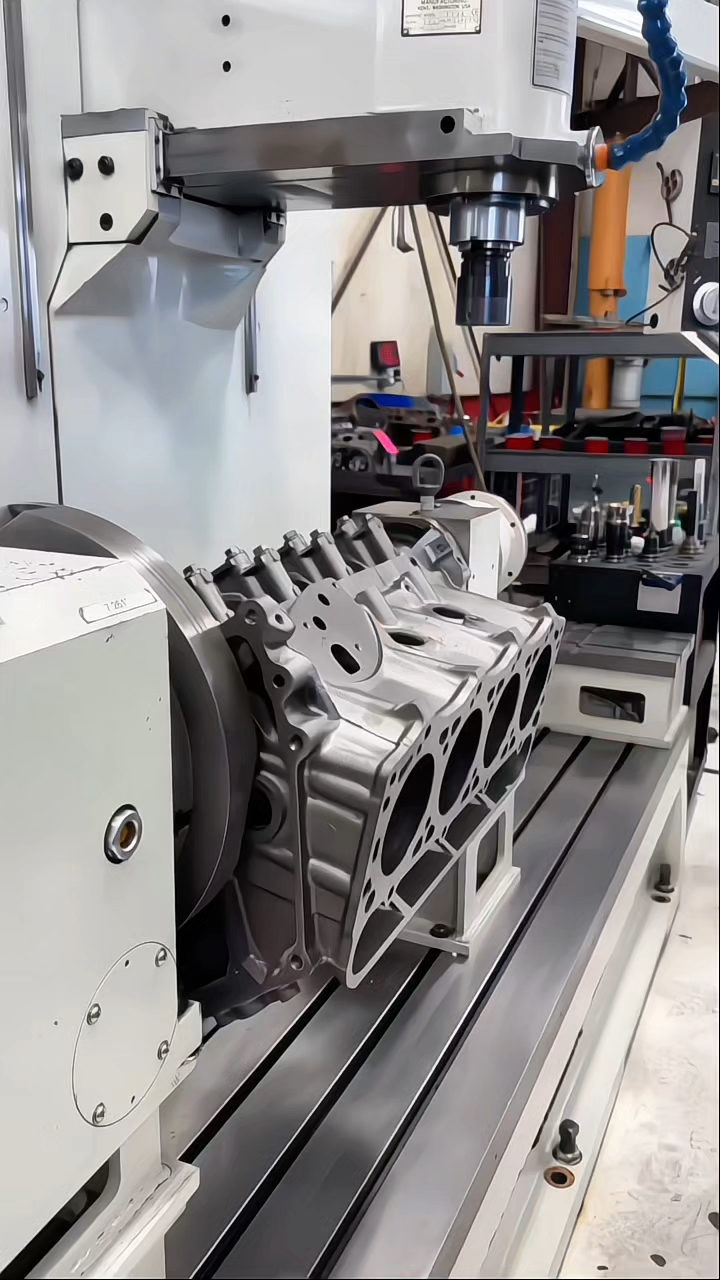
Pneumatic components have a unique set of process barriers. Precision grinding: standard cylinder bore inner surfaces require roughness below Ra0.2, achieved through precision drawing, rolling, and mirror grinding. AirTAC spent roughly 8 years mastering this process before stably supplying Panasonic, Foxconn, BYD, and similar large customers. Seal formulation: piston and rod seals use polyurethane (PU), nitrile rubber (NBR), fluororubber (FKM), or PTFE; achieving 10 million cycles at -10°C to +70°C without leakage requires proprietary recipes refined over decades. Massive SKU inventory: SMC stocks 700,000+ SKUs globally; AirTAC 800,000+. SMC operates 22 warehousing centers across mainland China; AirTAC has 30+ regional warehousing centers with average inventory turnover of 65 days. Protocol adaptation: SMC, Festo, and Norgren have for decades worked with Siemens, Omron, Mitsubishi, and Rockwell to embed their valve island libraries in PLC device libraries. Industry certifications: IATF 16949 (automotive), FDA / 3-A / NSF (food), SEMI (semiconductor), GMP (pharma) all require 12-24 months and substantial investment, with annual recertification.
4. Major Players: AirTAC, SMC China, Ningbo Jialing, and Xinyi Pneumatic
The first tier of Chinese pneumatic players includes SMC, AirTAC, Festo, Parker, Norgren, and CKD. AirTAC has shifted its manufacturing base to mainland China (Changzhou, Ningbo, Shanghai, Taizhou) and achieved RMB 9.98 billion revenue in 2024. SMC China generated approximately RMB 10 billion in 2024 with 35 branches and 30+ wholly-owned plants in mainland China, with mainland China the only major region growing in fiscal 2025 (+8.7%). Festo, a German family-owned company with annual sales of approximately EUR 3.8 billion, holds the third position in China at 12-13% market share. Parker Hannifin's FY2025 revenue reached USD 19.9 billion globally, with pneumatic embedded in its USD 13.7 billion "diversified industrial" segment. IMI Norgren leads in European fluid control with strengths in regulators, air preparation, and rail transit. Second-tier Chinese players include Ningbo Jialing (founded 1999, 700 million units/year capacity), Xinyi Pneumatic, Fenghua Guofeng, Ningbo Sonuo, and Shanghai Etalon (specializing in stainless steel and food-grade pneumatics). Third-tier players include Jiangsu Huatong, Zhejiang Huayi, Foshan Dongyuan (specializing in FRL), and Zhongtai Pneumatic.
5. Downstream I: 3C Electronics Assembly, Lithium Battery Lines, and Automotive Welding
3C electronics assembly, lithium battery production lines, and automotive welding constitute the three pillar downstream segments. 3C electronics: with China producing 1.45 billion mobile phones in 2024, a single phone backend assembly line uses 600-800 cylinders, 200-300 solenoid valves, and 50-80 vacuum generators, totaling roughly RMB 800,000-1,200,000 per line. SMT vacuum pickup heads demand 36-millisecond cycle times. 2025 H1 saw both volume and value of phone exports decline; production capacity is shifting to India and Vietnam, with phone component exports to India up 199.3% to USD 5.24 billion. Lithium battery lines: with 2025 global installed capacity around 1,633 GWh and 2023-2025 CAGR of 26.4%, each GWh consumes roughly RMB 4-6 million in pneumatic components. SMC's 25A series and AirTAC's NSC series specifically target lithium battery lines requiring zero copper and zinc contamination. Automotive welding: with China's 3,128 million vehicle output in 2024 (NEV alone 13.168 million, +34.4% YoY), each welding line consumes 8,000-12,000 cylinders. The integrated die-cast body trend pioneered by Tesla and adopted by GAC Aion, XPeng, NIO, and Li Auto has restructured pneumatic demand—fewer welding stations, more press-machine support.
6. Downstream II: Robot End-Effectors, Wafer Handling, and Packaging Machinery
Beyond the three pillars, industrial robot end-effectors (EOAT), semiconductor wafer handling, packaging machinery, pharmaceutical equipment, and food processing form the second tier. China produced 556,000 industrial robots in 2024 (+14.2% YoY), with collaborative robot shipments hitting 180,000 (+21% YoY). About 70% of robot EOAT uses pneumatic drives. Semiconductor wafer handling is the highest-margin pneumatic application: 12-inch wafer lines at 35,000 wafers/month require approximately 2,000 vacuum pumps; with each unit priced at RMB 100,000-200,000, a 50,000-wafer/month mature-node line spends RMB 280-560 million on vacuum pumps alone. The global semiconductor vacuum pump replacement market reached RMB 14.5-29.0 billion in 2023, dominated by foreign suppliers. Beijing Tongjia Hongrui, Zhongkeyi, and Hanzhong Precision are leading domestic vacuum pump localization efforts, with deployments at Changxin Memory, YMTC, and BOE. EFEM vacuum modules in Chinese semiconductor equipment (Naura, AMEC, Hwatsing, Tuojing) remain 100% imported.
7. Platform Perspective: Filtering Downstream by Process Across 3C, Lithium, Packaging
A perspective shift here. We operate Tianxia Gongchang, a B2B information platform covering 4.8 million in-production factories across China—distinct from generic business-registration tools because every entry is screened against process, product, and equipment dimensions. For pneumatic components, the platform's value is in three directions. First, filtering by downstream industry: searches anchored on "3C electronics assembly" return foundries, modules makers, and final-assembly plants from Zhengzhou and Suzhou to Dongguan and Shenzhen; searches on "lithium battery module assembly" return battery makers from Ningde, Shanghai, and Hefei to Shenzhen and Xi'an. Second, reverse search by process features—"vacuum suction cup," "pneumatic gripper," "pneumatic welding clamp" tags identify likely pneumatic-component buyers. Third, compound filtering by geography + scale—pneumatic sales' largest cost is regional service coverage, so "within 100km service radius, annual procurement > RMB 500K" filters are essential. For example, AirTAC's 2024 expansion into the Xiangyang region used a platform filter on "Hubei/Henan/Anhui + automotive parts + registered capital > 500 RMB" to surface 2,000-3,000 prospect leads. A B2B factory database is the optimal solution for the dispersed, long-tail, geographically-distributed nature of pneumatic component sales.
8. Localization Pathways: From Standard Cylinders to Servo Cylinders to Semiconductor Vacuum Pumps
China's pneumatic localization unfolds in four tiers. Tier 1 (standard cylinders, pilot solenoid valves) has reached ~55% and ~40% domestic share respectively—AirTAC leads. Tier 2 (slide cylinders, direct-acting valves, valve manifolds, vacuum generators) sits at 25-35%—a 2024-2030 window of opportunity to break into automotive OEMs and semiconductor equipment makers. Tier 3 (servo cylinders, cleanroom-grade pneumatics, medical/semiconductor-grade components) remains below 15%. AirTAC's ESC servo cylinder series launched in late 2024 marks the start of this push. Tier 4 (semiconductor-grade dry vacuum pumps, turbomolecular pumps) sits at less than 5% domestic share. The National IC Industry Investment Fund Phase III (RMB 344 billion launched May 2024) provides capital tailwinds. Overall, the domestic localization rate has climbed from 25% in 2014 to approximately 48% in 2025, projected at 60-65% by 2030. Export growth has been the underappreciated path: pneumatic exports grew 38% YoY in 2023, AirTAC's overseas revenue share reached 25% in 2024. The "going global" wave—following Chinese integrated equipment exports to Southeast Asia, India, Mexico, and Europe—will likely deliver more incremental growth over the next five years than purely domestic substitution.
9. Capacity Expansion: AirTAC Shanghai, Ningbo Jialing, and Xinyi Pneumatic
AirTAC operates six manufacturing bases in mainland China: Changzhou (East China HQ and 1,000+ acre campus, completed Phase III expansion in 2024 adding 2 million cylinders/year and 8 million valves/year capacity), Ningbo (precision cylinders and vacuum generators), Shanghai (sales HQ and logistics), Taizhou (precision grinding), Wuhan and Xiangyang (Central China regional configuration; Phase II at Xiangyang focuses on servo cylinders and cleanroom pneumatics). Total investment exceeds RMB 2 billion. Ningbo Jialing built a 200-acre new plant in 2023-2024 with 10 million units/year capacity. Xinyi Pneumatic completed a Beilun expansion in 2024, adding 6 million units/year of pilot solenoid valve and valve manifold capacity. Shanghai Etalon completed a stainless steel cylinder line expansion adding 2 million units/year. Beijing Tongjia Hongrui's new dry vacuum pump plant supports semiconductor localization. SMC China extended its capacity at Tianjin (300 million cylinders/year), Suzhou (250 million valves/year), and Guangzhou (150 million units/year FRL and vacuum generators). The capacity expansion through 2026 will lift industry total from 600 million units/year (2024) to 750 million units/year, a CAGR of 12%.
10. Pricing Cycle: The RMB Calculus of Single Cylinders and the Export Curve
Pricing curves for individual cylinders are remarkably stable over a decade: SMC's SC50×200 standard cylinder priced at RMB 220 in 2014 dropped to RMB 190 by 2024 (down 14%); AirTAC's equivalent fell from RMB 130 to RMB 110 (down 15%). Five pricing dynamics dominate. First, the domestic-import price spread has held steady at 35-45% for over a decade. Second, prices are bifurcating—standard cylinders and pilot valves see modest 2-3% annual deflation, while servo cylinders and semiconductor-grade vacuum generators see 3-5% annual inflation. Third, export prices are rising: China's average pneumatic export price rose from USD 1.32 per unit in 2022 to USD 1.78 in 2024 (+35%). Fourth, raw material costs—aluminum (25-35% of cost), stainless steel (10-15%), rubber seals (8-12%), copper wire (5-8%)—create margin pressure. Aluminum's LME price climbed from USD 1,500/ton in 2020 to USD 2,600/ton in 2024 (+75%); industry margins compressed by 2-3 percentage points. Fifth, channel discount rates have compressed—distributor margins have narrowed, accelerating channel consolidation around larger players.
11. Policy Drivers: Smart Manufacturing, Lithium Capacity Expansion, and the Big Fund Phase III
Five policy forces drive China's pneumatic components industry. Smart manufacturing and new industrialization lifted China's key-process CNC penetration from 31.1% in 2015 to 59.6% in 2024. Lithium battery line expansion—Chinese lithium battery output went from 158 GWh in 2020 to 1,170 GWh in 2024, adding RMB 5-7 billion in pneumatic component demand. The National IC Industry Investment Fund Phase III (RMB 344 billion launched May 2024) targets semiconductor equipment and components, driving Beijing Tongjia, Zhongkeyi, and Hanzhong Precision toward domestic vacuum pump localization. The "Specialized, Refined, Distinctive, and Innovative" (SRDI) Little Giant program has certified 12,950 enterprises through 2024, with pneumatic firms enjoying multi-dimensional benefits including local government rewards, bank credit increases, customer procurement preferences, and export insurance premium discounts. Going global has accelerated—China's machinery equipment exports to Vietnam, India, and Mexico grew 28%, 35%, and 42% respectively in 2024, pulling Chinese pneumatic exports along. Additional support comes from the 2024 Industrial Mother Machine Foundation Reconstruction program listing pneumatic components as a key supported category, the China Fluid Power Association's expanded role in standards-setting, and dual-carbon (peak by 2030, neutrality by 2060) creating a long-term tailwind for energy-efficient pneumatic products.
12. Research Center's Judgments
We at Tianxia Gongchang Research Center offer the following judgments. First, pneumatic components will not see three-firm 60% concentration—the customer base is too distributed, SKUs too long-tail, geography too fragmented. Second, the next leg of localization sits at tier 3-4 (servo cylinders, cleanroom-grade, semiconductor-grade), not pushing tier 1 from 55% to 70%. Third, SMC China's localization counterattack will persist; the next five years will be more contested than the last ten. Fourth, the export curve will likely be steeper than the domestic localization curve over the next five years. Fifth, semiconductor-grade dry vacuum pumps are China's most visible "chokepoint" breakthrough opportunity—from less than 5% domestic share toward 20% by 2030. Sixth, factory database platforms will increasingly drive sales productivity. Seventh, the investment logic shifts from "scale" to "premium." Additional judgments cover capital activity, talent flow, downstream alignment, brand building, the regenerating "research-to-product" cycle, and the diversification of customer channel structures (factory direct + integrator + digital platform). These judgments reflect a "differentiation acceleration" stage that will reshape the competitive landscape.
13. Risks and Challenges: 3C Weakness, SMC's Localization Counterattack, and Customer Certification Cycles
Seven risks define the next five years. First, 3C demand weakness as phone production capacity migrates to India and Vietnam will affect domestic pneumatic demand growth. Second, SMC China's localization counterattack—9,000+ mainland employees, 35 branches, 25A series for lithium batteries, systematic packaging strategies. Third, customer certification cycles of 24-36 months for automotive Tier 1, 12-18 months for lithium battery, and 12-24 months for medical and food create long investment horizons. Fourth, raw material price volatility, with aluminum (LME up 75% over 5 years) and copper (up 58%) putting margin pressure on the industry. Fifth, overseas market political uncertainty—US-China trade friction, EU anti-dumping investigations, India localization requirements may impose 25%+ tariffs on certain exports. Sixth, replacement technology—electric grippers replacing pneumatic in precision assembly. Seventh, capacity oversupply risk from 80-100 million units/year new capacity through 2026 (a 15-20% expansion of existing capacity). Additional "grey rhino" risks include customer capacity migration offshore, long-term raw material price escalation, geopolitical tensions, customer concentration, and R&D investment financial pressure.
14. Data Sources and Methodology
The data sources for this report include: SMC's 2025 Annual Report (FY ending March 31, 2025), AirTAC International Group's 2024 Annual Report (Taiwan Stock Exchange code 1590), Parker Hannifin 10-K filings, IMI plc 2024/2025 interim reports, China General Administration of Customs, China Association of Automobile Manufacturers, SNE Research, National Bureau of Statistics, the Ministry of Industry and Information Technology, China Hydraulic, Pneumatic, and Seal Association, Future Think Tank's 2024 Pneumatic Industry Report, and industry research databases including QYResearch and Zhiyan Consulting. Methodology combines top-down (global market size to regional, product, and downstream breakdown) with bottom-up (single-company, single-line, single-product validation). The report uses multi-source cross-validation for key data points; where significant discrepancies exist, the more conservative estimate is used. Our Tianxia Gongchang factory database (4.8 million in-production factories) provides the customer leads and industry cluster data referenced throughout. This report is published by our Industrial Research center. Citations are welcome; please note the source. The forecasts and judgments expressed here are research views and do not constitute investment advice.