
Abstract
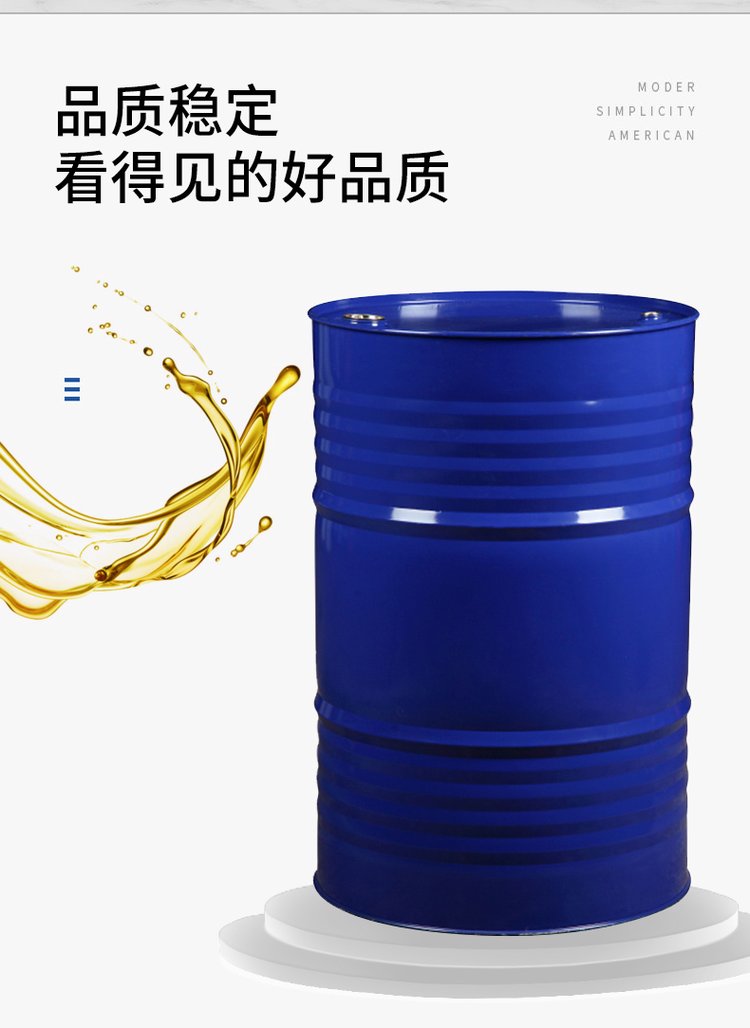
Inside a 900,000-tonne blending plant in Tianjin's Binhai New Area, a drum of industrial gear oil bearing the Great Wall Zhuoli label travels from Zhenhai Refinery's vacuum tower, undergoes hydroisomerisation dewaxing into Group II base oil, gets blended at 60 °C with an additive package shipped by Infineum from Zhangjiagang, and then is filled into a 200-litre steel drum bound for the gearbox of a Sany shield-tunnel-boring machine on the final-assembly line in Changsha. This unremarkable amber-coloured liquid is the most silent yet indispensable bloodstream of China's industrial system. Without it, a shield machine's gearbox would not survive 500 hours and a wind-power gearbox would not last two years.
China's total lubricant consumption in 2025 was about 7.7 million tonnes, roughly 19.5% of the global market. Of this, industrial lubricants accounted for about 4.8 million tonnes and automotive lubricants for about 2.4 million tonnes. Within that pie, Sinopec Great Wall Lubricants holds the No. 1 domestic position at about 1.58 million tonnes (market share roughly 20.5%), with PetroChina Kunlun Lubricants close behind at 1.32 million tonnes. The two central state-owned enterprises together command nearly 38% of China's market, making lubricants one of the few finished-oil categories in which domestic brands genuinely dominate. Yet at the further-upstream stages of Group III base oil and additive packages, the four-family oligopoly of Lubrizol, Infineum, Chevron Oronite and Afton still controls more than 90%, sustaining a chokehold that has yet to be broken.
- Global lubricant sales reached about 39.5 million tonnes in 2025 at roughly USD 172 billion, with industrial oils making up about 55%; China contributed 7.7 million tonnes worth about RMB 125 billion;
- Hydraulic oil (1.65 Mt), metalworking fluids (0.95 Mt) and industrial gear oil (0.78 Mt) form the backbone of China's industrial lubricant mix, together about 70% of industrial oils;
- Group II base oil is self-sufficient (Sinopec Zhenhai 600 kt, PetroChina Karamay 600 kt), yet Group III still depends on imports for about 30% and PAO still has an 80 kt shortfall;
- Compound-additive concentration (CR4) is about 91%; single-additive self-sufficiency reaches about 65% but compound packages still rely 90%-plus on imports or foreign-invested plants;
- Great Wall (Sinopec) and Kunlun (PetroChina) together hold 38%; JV brands (Unity / Shell) about 8.5%; foreign-owned direct-sale brands (Mobil / Castrol / Fuchs / Total) collectively about 22%; the second-tier private camp 12%; the rest fragmented;
- Longpan Technology (603906 / 2465.HK) is one of the few private Chinese brands to go abroad: 2025 European sales of 42,000 tonnes, up 38% year on year, with a 60,000-tonne plant in Barcelona on stream;
- Coolants for electric vehicles and immersion-direct dielectric fluids are the structural upside: 2025 consumption about 110,000 tonnes, unit prices of RMB 200-450 per litre, gross margins materially higher than legacy oils;
- The dual-carbon agenda and the China-VI emission standards lifted synthetic-oil penetration from 12% in 2018 to 28% in 2025, but a gap to Europe and the US (about 55%) remains and constitutes the structural growth space for the next five years.
Returning to the core thesis: lubricants are an industry of stable volume yet violent structural change. Demand-side change arrives along three lines: EVs cannibalising ICE oils, synthetic-oil penetration lifting product value, and new lubricant categories (EV coolants, wind-power gear oils, semiconductor specialty fluids) expanding the addressable ceiling. Supply-side change arrives along two: Group II reaching full self-sufficiency while Group III and PAO close in, and the additive oligopoly remaining intact in the near term even as Chinese assault on it accelerates. The collisions and coalitions across these axes shape the real picture of China's lubricants for the next five years.
Chapter 1: Industry Overview and Category Structure
Lubricants in China sit in a corner of the industrial system that looks marginal but is, in reality, extraordinarily rigid. By volume, 2025 consumption was about 7.7 million tonnes worth roughly RMB 125 billion in sales, only equivalent to one second-tier automaker's annual revenue. By penetration, however, every machine tool, every compressor, every gearbox, every wind-power gearbox, every shield machine in the country runs on it. In other words, lubricants are the "hidden consumable" of equipment manufacturing: not counted on the bill of materials, yet decisive for equipment life.
China's lubricant consumption has held in the 7.5-7.8 Mt corridor for four straight years. This is not stagnation but a hallmark of maturity. Structurally slow macro growth caps the rise in industrial-oil tonnage, while extended drain intervals and synthetic-oil penetration further compress volume expansion. Argus and Kline corroborate one another on the global figures: in 2025 the world consumed about 39.5 Mt of lubricants at about USD 172 billion, with China taking 19.5%, the largest single market. The United States ranked second at about 6.9 Mt, India third at about 2.85 Mt; Russia, Brazil, Japan and Germany followed.
Within China's 7.7 Mt, the split is roughly 4.8 Mt industrial / 2.4 Mt automotive / 0.5 Mt other (marine, aviation, specialty). On the industrial side, hydraulic oil leads at about 1.65 Mt, followed by metalworking fluids at 0.95 Mt and industrial gear oils at 0.78 Mt. Turbine oil, compressor oil, refrigeration oil, heat-transfer fluid and grease split the remaining roughly 1.4 Mt. The automotive 2.4 Mt is split about 60% passenger / 30% commercial / 10% motorcycle and small-engine.
Pricing tells another story. Bulk industrial oils sell at RMB 12-25 per litre; premium synthetic passenger-car oils sit at RMB 60-150 per litre; EV coolants run RMB 200-450 per litre; aerospace specialty oils exceed RMB 2,000 per litre. The unit-price gap mirrors the gross-margin gap and explains why every major player chases synthetic and specialty categories.
The category structure of Chinese lubricants is therefore neither homogenous nor stagnant. The headline tonnage masks a constant rebalancing: industrial oils growing slowly with capex cycles, automotive oils receding with EV penetration, specialty oils expanding fast off a small base. Any serious analysis must work at the category level, not the headline level.
Chapter 2: Upstream — API Base Oils I to V and the Additive Package
Base oils sit one step upstream of finished lubricants. The American Petroleum Institute classifies them into five groups, and the distinction is not academic: it drives blending recipes, regulatory acceptance and downstream pricing. Group I (solvent-refined, low VI, high sulphur) is on a structural decline; Group II (hydroprocessed, mid-VI, low sulphur) dominates new build; Group III (severe hydrocracking + dewaxing, high VI) is the workhorse of premium passenger-car oils; Group IV is poly-alpha-olefin (PAO), fully synthetic and used in high-end engine and gear oils; Group V is everything else, mostly esters and alkylated naphthalenes for aviation, EV, and high-temperature specialty uses.
China's 2025 base-oil capacity was about 5.8 million tonnes. Group II is now firmly self-sufficient, thanks to Sinopec Zhenhai (600 kt) and PetroChina Karamay (600 kt), with secondary lines at Maoming, Jinzhou and Lanzhou bringing total Group II capacity to about 3.5 Mt. Group III has been the harder nut: SK Enmove and S-Oil from Korea, plus Neste from Finland, together supply about 30% of Chinese Group III demand. Domestic builds at Hengli (Dalian) and Shenghong (Lianyungang) are closing the gap but not fully. PAO remains the weakest link, with domestic capacity (Hangzhou Tielong, Beijing Yanshan, Yueyang Shenghua) around 12 kt against demand of about 20 kt; the 8 kt shortfall comes from ExxonMobil, INEOS Oligomers and ChevronPhillips. Group V is a tiny niche but with rising relevance for EV coolants.
The additive package is the other half of every finished lubricant. A typical engine-oil compound contains detergents (sulphonates, salicylates), dispersants (succinimides), anti-wear (ZDDP), viscosity-index improvers (OCP, PMA), antioxidants (phenolics, aminics), corrosion inhibitors, friction modifiers, defoamers, and pour-point depressants. Pre-blended into a turnkey additive package, this fraction makes up 10-25% of finished engine oil by mass but 30-50% of its cost. The four families — Lubrizol, Infineum, Chevron Oronite and Afton — control roughly 91% of global compound packages, with no meaningful Chinese counterpart at scale yet.
Chinese single-additive makers have made real progress. Ruifeng New Material (Xinxiang) leads in PMA viscosity-index improvers; Jinzhou Kangtai dominates domestic ZDDP; Wanrun (Yantai) supplies detergents; Yongan, Lanzhou Lubricant Research Institute and several Tier-2 plants cover dispersants. Together they bring single-additive self-sufficiency to about 65%. But integration into a compound package — the actual product that lubricant blenders buy — remains the bottleneck. Pre-blending a stable compound demands deep formulation know-how plus OEM-approved data sets that the four families have accumulated over half a century.
Chapter 3: Process — Base-Oil Refining and Additive Blending
Base-oil manufacturing in 2025 is overwhelmingly hydroprocessing-based. The dominant route is vacuum distillation of crude or atmospheric residue to draw lubricant cuts, followed by hydrocracking to remove aromatics and sulphur, hydroisomerisation to convert wax into branched paraffins, and finally hydrofinishing to stabilise the product. Sinopec Zhenhai's 600 kt train epitomises the state of the art: two-stage hydrocracking at about 150 bar and 380 °C using NiMo or NiW supported catalysts, followed by hydroisomerisation over zeolite catalysts (typically Pt/ZSM-48 or proprietary equivalents) at lower temperature. Output is a high-VI, low-pour-point Group II that can be further upgraded to Group III by tightening the dewaxing severity.
Older solvent-refining lines (phenol or NMP extraction, MEK dewaxing, clay finishing) still operate in parts of China but their share is shrinking. Hydroprocessed Group II offers higher yield, cleaner product and lower operating cost; the capex is higher, but at scale the economics dominate. Within five years most surviving solvent lines will be either revamped or retired.
Group III manufacture in China currently uses two routes. The first is severe hydrocracking of vacuum gas oil, a continuation of Group II processing with stricter conditions and tighter wax removal. The second is gas-to-liquid (GTL) chemistry, which Shell pioneered at Pearl GTL in Qatar but which has no domestic Chinese counterpart yet. The result is that Chinese Group III is hydroprocessing-based and competes on cost, while imported GTL Group III competes on quality (very high VI, near-zero sulphur). Both will continue to coexist.
The additive-blending step is, paradoxically, the simplest mechanical operation in the whole chain — and the most chemically delicate. Base oil and additive package are pumped into a 25-tonne or 50-tonne agitated tank, heated to 50-70 °C, mixed for two to four hours, sampled for viscosity / TBN / IR fingerprint, and then drummed or tankered. The trick is matching base-oil cut to additive package: get the polarity, solubility and reactivity wrong and the finished oil hazes, settles, or oxidises in storage. This is why OEM approvals run on specific base-oil + additive combinations, not on either component alone.
Chapter 4: Major Players — From Great Wall and Kunlun to ExxonMobil and Shell
Sinopec Great Wall Lubricants is the domestic leader. 2025 sales of about 1.58 million tonnes give it roughly 20.5% market share. Headquartered in Beijing with R&D in Beijing and Lanzhou, its blending footprint spans Tianjin, Maoming, Chongqing and Shanghai, with Tianjin Binhai (900 kt by 2026) as the flagship. Its strength is the integration with Sinopec's upstream base-oil supply (Zhenhai 600 kt Group II, Jinling Group I, and an early-stage Group III line at Maoming) plus access to Sinopec's nationwide diesel-station distribution. Its weakness is brand premium versus foreign equivalents.
PetroChina Kunlun Lubricants is the second pillar. 2025 sales of about 1.32 million tonnes (17%) put it firmly second. Headquartered in Lanzhou with R&D at the Petrochemical Research Institute, Kunlun is uniquely advantaged on the upstream side: PetroChina Karamay (600 kt Group II) and Lanzhou (180 kt) feed it directly. Kunlun's distribution leans heavily on PetroChina's western network, with strong positions in commercial-vehicle engine oils and industrial gear oils.
Longpan Technology (Jiangsu Longpan, 603906.SH / 2465.HK) is the leading private-sector challenger. 2025 group revenue was about RMB 7.8 billion; lubricant sales of about 220 kt rank it third or fourth in passenger-car oils domestically. Longpan's distinguishing feature is overseas expansion — discussed in Chapter 8 — anchored by the 2023 acquisition of Spain's Lubricos channel.
Unity Lubricants (China's largest private brand from 2010 to 2018 before its acquisition by Shell in 2018, now formally Shell Unity) holds about 4% of the China market with about 320 kt of sales. Its strength is mid-tier brand recognition and Shell's premium-product backing.
Compton (603798) and Gaoke Petrochemical (002778) are the most prominent listed pure-play private blenders, with 2025 sales of about 95 kt and 60 kt respectively. Alpha Petrochemical (00611.HK) is a Hong-Kong-listed name with about 130 kt of sales focused on commercial-vehicle and motorcycle oils.
Foreign-brand presence is anchored by ExxonMobil's Mobil 1 family, BP Castrol, Royal Dutch Shell (excluding Unity), TotalEnergies, Chevron, Germany's Fuchs (industrial focus), Klüber Lubrication (Freudenberg), Japan's ENEOS, Idemitsu, and Korea's SK Enmove. Their combined Chinese sales in 2025 totalled about 2.0 Mt or 26% of the market by tonnage and a substantially larger share by value, given their premium positioning. ExxonMobil's 2025 Annual Report cites Chinese lubricant revenue contribution at about USD 1.9 billion; Shell at about USD 2.4 billion; BP Castrol at USD 1.3 billion; TotalEnergies at USD 0.8 billion; Chevron at about USD 0.4 billion.
Chapter 5: Industrial Oils — Hydraulic, Gear, Cutting Fluid, Turbine, Spindle
Industrial lubricants in China at 4.8 Mt cover an enormous range of equipment uses. The five biggest subcategories together account for roughly 75% of the total.
Hydraulic oil at 1.65 Mt is the largest single industrial-lubricant category, covering presses, injection-moulding machines, construction equipment, marine deck machinery, machine tools and many more. The ISO viscosity-grade structure (VG 32 / 46 / 68 / 100 dominates) and ISO 6743/4 classification (HM / HV / HG) frame the technical specs. Anti-wear hydraulic oil HM is the bulk-volume product; high-VI variants HV penetrate cold-climate or wide-temperature service. Chinese brands hold above 70% share in hydraulic oils, supported by mature OEM acceptance at Sany, XCMG, LiuGong, Zoomlion and others.
Industrial gear oils at 0.78 Mt cover heavy-duty applications from cement-mill drives to wind-power gearboxes. ISO 12925-1 sets the classification (CKB / CKC / CKD / CKE / CKS / CKT etc.) and AGMA 9005 lays out the most-used industry spec. Wind-power gear oil is the highest-value subcategory: a single 3 MW wind turbine consumes about 700 litres of synthetic gear oil per top-up cycle, replaced every five years. Approvals by Flender, Siemens MD and ZF are entry tickets; Mobil SHC 600 series and Castrol Optigear remain the global benchmark, but Great Wall and Kunlun have made measurable inroads in onshore turbines while offshore remains foreign-dominated.
Metalworking fluids at 0.95 Mt cover cutting, grinding, drawing, rolling and stamping. The category is unusually fragmented because formulations are highly process-specific and customer-specific. Foreign specialists Fuchs, Houghton (Quaker Houghton), Castrol Industrial and Master Fluid Solutions hold the high-end of the market; domestic plays Daji, Anjun and a long tail of regional makers serve the mid-to-low end. Cutting-fluid technology is rapidly shifting from semi-synthetic to fully synthetic, driven by environmental and operator-health concerns.
Turbine oils at 0.18 Mt and compressor oils at 0.32 Mt round out the heavy industrial spend. Both are dominated by Great Wall, Kunlun, Mobil and Shell, with limited new entrants thanks to long OEM qualification cycles. Spindle oils (low-viscosity for high-speed machine-tool spindles), refrigeration oils, heat-transfer fluids and food-grade white oils together make up the remaining tail of the industrial-oil pie.
Chapter 6: Automotive — Passenger Cars, Commercial Vehicles, Motorcycles, EV Coolants
China's 2.4 Mt automotive-lubricant pool splits roughly 60% passenger / 30% commercial / 10% motorcycle and small-engine. The passenger-car segment is undergoing the most violent restructuring as EV penetration rises.
Passenger-car motor oils (about 1.45 Mt) sit at the intersection of API SP and ACEA C-class specs. SAE viscosity grades 5W-30 and 5W-40 dominate volume; 0W-20 / 0W-16 grades gain share as Japanese and European OEMs push fuel-economy. Synthetic-oil penetration in China's passenger-car aftermarket reached about 35% in 2025, up from 12% in 2018; the OEM-fill (factory-fill) channel is now above 60% synthetic. Mobil 1, Shell Helix Ultra, Castrol Edge and TotalEnergies Quartz dominate the premium tier; Great Wall Zhuoyue, Kunlun Tianyi and Longpan's Lopal lead the value tier.
Commercial-vehicle engine oils (about 0.72 Mt) are heavily skewed to diesel engines under API CK-4 / FA-4 specs. Cummins CES 20086, Volvo VDS-4.5, Mack EOS-4.5 and similar OEM approvals are the gating credentials. Long-drain heavy-duty diesel oil is the structural growth segment as fleet operators move from 30,000-km to 80,000-km drain intervals. Great Wall, Kunlun, Sinotruk-branded oil, FAW-branded oil and Mobil Delvac share most of the market.
Motorcycle oils (about 0.18 Mt) are a more fragmented and price-sensitive category. JASO MA / MA2 specs predominate. Castrol, Mobil, Liqui Moly, Repsol and Yamalube cover the premium import-bike segment; Great Wall, Kunlun, Compton, Alpha and a long tail of regional brands cover the larger volume in domestic-bike service.
EV coolants are the structural upside. Battery thermal-management fluids and immersion-direct dielectric fluids reached about 110,000 tonnes in 2025, up from near zero in 2020. NB/T 11091-2024 finally codified the technical requirements for EV coolants in China. Wanrun (002643), Yonghe (605020), Solvay, 3M, Chemours, and Halocarbon supply the high-end fluorinated dielectric fluids; ethylene-glycol-based coolants for battery cold-plate cooling are commoditising fast with dozens of suppliers. Unit prices of RMB 200-450 per litre and gross margins of 35-50% make this the highest-margin category in the entire lubricant space.
Chapter 7: Industrial Belts and Downstream Identification — A Platform Perspective
Pulling the lens from upstream base oils through brand competition down to actual downstream applications reveals a distinctive Chinese lubricant ecosystem: highly concentrated upstream (a handful of refiners), highly concentrated midstream (Great Wall, Kunlun, Unity plus the foreign majors), but extraordinarily fragmented at the downstream end. Who, precisely, buys a drum of industrial gear oil? A mid-sized gearbox plant in Jiangsu? A mining reducer maker in Zhejiang? A precision-equipment shop in Guangdong serving injection-moulding hydraulic systems? This is the customer-identification problem that no commercial-information database has fully solved.
China's industrial-equipment manufacturing base above the statistical reporting threshold (RMB 20 million annual revenue) numbers roughly 95,000 enterprises in 2025. Of those, perhaps 70% — about 66,000 — are genuine factories with machining, assembly and testing capability, the core customer base for industrial lubricants. Only the top few thousand are large enough to be covered by major OEM key-account teams; the remaining ~60,000 must be reached by lubricant salespeople one at a time.
The identification problem comes in three layers. First, is the enterprise actually a factory at all? An "XX Machinery Co. Ltd" may turn out to be a pure trading shop with no production; an "XX Technology Co. Ltd" may turn out to be a full-fledged manufacturer. The registered name alone gives no answer. Second, what does the factory actually make? Gearboxes? Hydraulic stations? Injection-moulding machines? Compressors? The answer drives the lubricant category. Third, what is the scale of purchasing and who decides? A plant producing 200 wind-power gearboxes annually consumes roughly ten times the gear oil of one producing 50 mining reducers; sales strategy and pricing must adapt accordingly.
Tianxia Gongchang is a B2B platform built specifically to address these three layers. Positioned as a 4.8-million-factory-identification and outreach service, the platform differs fundamentally from commercial-registration databases in that it only indexes enterprises that have passed factory-identification checks, and it organises them by process tags, capacity scale, geographic industrial belt, and upstream-downstream relationships. The downstream-identification problems faced by lubricant sales — is it a factory, what does it make, how big — map directly onto the platform's core use case.
Concretely, an industrial-lubricant sales team can search by process category — gearbox, hydraulic system, injection-moulding machine, air compressor, compressor, reducer, wind-power gearbox, shield-tunnel-boring machine, excavator, and surface a list of genuine downstream factories. They can focus by industrial belt — Changzhou hydraulic, Ningbo injection, Jining construction machinery. They can filter by capacity scale within the results, and they can trace upstream-downstream chains — from a gearbox maker page out to its blank suppliers and customer assemblers.
For an industrial gear-oil sales team, obtaining within one week the actual list of about 80 gearbox factories across Changzhou and Huzhou, ranked by capacity, is an order-of-magnitude leap over door-to-door cold calling — about ten times the efficiency. This is exactly the capability that B2B industrial-lubricant sales has needed.
Beyond gearboxes, the same downstream-identification logic transfers to bearings, seals, hydraulic components, couplings, sensors and any other industrial input that must reach equipment-making factories. The platform's leverage is generic: any industrial-goods seller can use the same identification capability.
Chapter 8: Longpan Goes Abroad — European Acquisition and Southeast Asian Expansion
Among Chinese lubricant brands, Longpan Technology has gone furthest in overseas expansion. Its 2023 acquisition of Spain's Lubricos channel for about EUR 230 million was the largest cross-border lubricant transaction by a Chinese company to date. Lubricos came with a 60 kt blending plant near Barcelona, an entrenched European distribution network spanning Spain, Portugal, Italy and France, and direct sales relationships with several European commercial-vehicle fleets.
Longpan's 2025 European sales reached about 42 kt, up 38% year on year. Revenue contribution from Europe is approaching 15% of group revenue. The Barcelona plant is being expanded to 100 kt by 2027 and serves as the regional hub for Western Europe; a smaller second plant in Poland is being scoped to serve Central and Eastern Europe.
The strategic logic behind the European push is twofold. First, the European aftermarket pays substantially higher unit prices than China — premium synthetic engine oil retails for EUR 9-15 per litre versus RMB 60-150 (USD 8-21) in China — and gross margins for a Chinese brand operating on European-cost-basis but Chinese-formulation know-how are structurally attractive. Second, the EU market is the most demanding qualification environment in the world: passing OEM approvals from Mercedes-Benz, BMW, VW, Volvo, Renault, and PSA simultaneously creates a credentialing platform that downstream markets (Eastern Europe, North Africa, the Middle East, Latin America) will accept by extension.
Southeast Asia is the parallel front. Longpan operates a 25 kt blending plant in Bandung, Indonesia (acquired 2024), and serves Vietnam, Malaysia, Thailand and the Philippines through a network of regional distributors. Southeast Asian volumes reached about 18 kt in 2025, with the addressable market still expanding fast as motorcycle parc, light commercial vehicles and small construction equipment all grow.
Longpan's pattern — buy a credible local channel rather than build greenfield from scratch — is being studied by Compton, Alpha Petrochemical and several other private Chinese brands. The capital threshold (EUR 150-300 million per acquisition) and integration complexity are not trivial, but the path is increasingly viable.
A separate observation: the export channel for Chinese-blended lubricants direct to overseas distributors is also growing. 2025 Chinese lubricant exports were about 280 kt, up from 180 kt in 2020. Most are mid-tier industrial oils sold to Russia, Central Asia, Africa and Latin America, where price-sensitive industrial buyers find the China-cost-Europe-spec value proposition compelling.
Chapter 9: Capacity Expansion — Tianjin, Lanzhou and Changzhou Unpacked
Capacity is the unavoidable chapter in any heavy-asset industry analysis. China's 2025 total lubricant blending capacity stood at about 11.5 million tonnes against actual sales of 7.7 Mt, an apparent utilisation of 67%. The headline overcapacity masks structural tightness in high-end synthetic motor oils, wind-power gear oils and EV coolants — exactly the categories that headline players are now investing in.
Sinopec Great Wall's Tianjin Binhai base is the largest single-site blending facility in Asia. Built in four phases (180 kt in 2002, 220 kt in 2008, 250 kt of synthetic capacity in 2015, 250 kt of fourth-phase capacity including a 100 kt wind-power gear oil line on stream by end-2026), it will reach 900 kt of annual blending capacity. The site is co-located with Sinopec's northern logistics hub, Infineum's North China additive distribution point, an in-house technical centre and a bench-test laboratory. Lubricants move from base-oil unloading to finished filling within the same park, compressing logistics time from the traditional 5-7 days to under 24 hours.
PetroChina Kunlun's Lanzhou base in Gansu's Xigu petrochemical zone integrates 180 kt of Group II base-oil supply with 700 kt of blending capacity in a single park. The catch is geography: Lanzhou is 1,500-2,500 km from the main industrial-lubricant consumption belts of eastern, southern and northeastern China, and logistics cost runs at 8-12% of sales versus 3-5% for Tianjin. To mitigate, Kunlun launched a dual-base strategy in 2023, relocating part of high-viscosity gear-oil and commercial-vehicle-oil blending to a 350 kt Dalian base.
Longpan's Changzhou flagship in Jiangsu's Wujin district holds 220 kt of blending capacity (rising to 300 kt in 2026). It is not the largest but is widely cited as the most efficient private blender domestically. Unit blending cost runs at about RMB 380 per tonne versus RMB 320 at Great Wall Tianjin and RMB 450 at Kunlun Lanzhou (the higher Kunlun figure includes long-haul logistics). The Changzhou site serves a one-thousand-kilometre radius covering about 140,000 above-threshold industrial enterprises, the highest customer density of any blending base in China. Modular agitated reactors (5 / 10 / 25 / 50 tonnes) allow flexible batch sizes from 200-litre minimums, well below the 1,000-litre minimums typical at the central state-owned-enterprise majors.
Foreign capacity in China is also material: Shell Tianjin (500 kt), Shell Zhuhai (150 kt), ExxonMobil Taicang (350 kt), BP Castrol Shenzhen (300 kt), TotalEnergies Tianjin (180 kt), Chevron Shenzhen (120 kt), Fuchs Shanghai (180 kt), Klüber Shanghai (60 kt), ENEOS Tianjin (80 kt) and Idemitsu Tianjin (60 kt) together total about 2.2 Mt. Foreign-brand utilisation runs above 90% versus the central state-owned-enterprise majors' ~75% (which includes older idle lines), reflecting persistent structural demand for premium synthetic and specialty grades.
Base-oil capacity in China was about 5.8 Mt in 2025, third globally behind the US (12 Mt) and Korea (7.2 Mt). The pace of expansion is roughly 8% per year, taking China toward 7.5-8 Mt by 2030. The pace of capital expenditure across Longpan, Ruifeng and the broader listed cohort signals a clear new investment cycle, especially in additives and EV coolants.
Chapter 10: Price Cycles — Unit Economics and Cost Pass-Through
A simple unit-economics map: the typical retail litre of premium synthetic passenger-car oil in China sells for RMB 80-120. Base oil contributes about RMB 12-20 of cost, the additive package about RMB 15-30, the bottle about RMB 4-7, packaging and freight about RMB 6-9, distributor margin about RMB 15-25, and the retailer margin about RMB 15-25. Brand owner gross margin runs 25-35% on premium synthetic and 12-18% on conventional mineral. Industrial bulk products show a much flatter cost structure with base oil and additive package dominating; distributor margin compresses dramatically because the buyer is a direct industrial account rather than a retail consumer.
Base-oil pricing tracks crude oil with a 4-8 week lag. Group I and Group II prices broadly track WTI / Dubai with a refining-margin adder of USD 80-180 per tonne; Group III and PAO are less crude-sensitive because their economics are dominated by hydroprocessing capital and energy. The 2022 crude spike to USD 120 / barrel lifted base-oil spot prices by roughly 35% over six months; the subsequent retreat to USD 75-85 brought base-oil prices back down by about 25% by end-2024.
Additive-package prices are more inertial. The four families operate annual contract pricing, with quarterly adjustments triggered by raw-material movements. Lubrizol's published 2024 price increase of 5-7% across detergents and ZDDP types was a typical example; Infineum, Chevron Oronite and Afton followed within weeks. Chinese single-additive makers undercut the four families by 15-25% on the same chemistries, but the integration premium of a turnkey compound package preserves headline-pricing discipline.
Finished-oil pricing pass-through varies. Premium passenger-car oils in retail channels show 70-90% pass-through within two quarters; industrial OEM contracts can have annual pricing locks and limited pass-through; commercial-vehicle aftermarket sits in between. The result is gross-margin volatility that runs about ±300 bps over a full crude cycle for most Chinese listed names. Longpan, Compton and Alpha all reported gross margins in the 11-15% range for 2025, narrower than the 18-26% range for the four-family additive players but wider than the typical 6-9% of a base-oil-only refiner.
A note on EV coolants and aerospace specialty fluids: pricing is essentially decoupled from base-oil cycles. Margins of 35-50% gross and the relatively small scale of revenue contribution make these categories opportunistic upside rather than core margin drivers — at least for now. As EV-coolant volumes scale toward 300 kt by 2028 (forecast), the contribution may become more material.
Chapter 11: Policy — EV-Coolant Standards, Dual Carbon, and Export Controls
The policy environment shapes Chinese lubricants along three vectors.
First, EV-coolant standards. NB/T 11091-2024 (issued by the National Energy Administration) became effective in early 2025 and codifies thermal-management-fluid specifications for electric vehicles. The standard distinguishes water-glycol coolants for battery cold-plate cooling from dielectric fluids for immersion direct cooling, sets viscosity / thermal-conductivity / dielectric-strength / corrosion-inhibition baselines, and lays out testing protocols. The standard's release accelerated domestic-supplier qualifications: by mid-2026 over 30 Chinese suppliers had products meeting NB/T 11091, versus fewer than 10 a year earlier.
Second, dual-carbon (carbon peak by 2030, carbon neutrality by 2060) pulls demand toward synthetics. Higher VI / lower viscosity synthetic oils reduce friction losses and improve vehicle fuel economy by 2-5% over conventional mineral oils. The Ministry of Industry and Information Technology and the State Administration for Market Regulation jointly run pilot programmes for low-friction lubricants in heavy-duty trucks, with subsidies to factory-fill of synthetic oils. Penetration of synthetics in commercial-vehicle factory-fill rose from 8% in 2018 to about 28% in 2025 and is targeted at 45% by 2030.
Third, export controls. Russia became a major Chinese base-oil export destination after 2022 European sanctions cut Russia off from European Group II / III. China's Ministry of Commerce introduced licensing for high-VI base-oil exports to Russia in mid-2024 to mitigate triangular sanction-evasion risk; the licence regime is administered but not restrictive, and Chinese base-oil exports to Russia totalled about 180 kt in 2025. Separately, certain high-end additive technologies (specifically some military-grade synthetic-oil precursors) sit on China's export-control list, restricting outbound technology transfer to a defined set of restricted destinations.
A broader regulatory backdrop matters too. The EU REACH chemical registration regime imposes registration costs of EUR 50,000-300,000 per substance for any chemical (including base oils and additives) sold into Europe; China's national standard 31594 is not fully harmonised with REACH, forcing duplicate testing in some cases. The US EPA fuel-economy rules act as a structural pull for low-viscosity synthetic oils. Japan's JIS K 2215 and major OEM-specific approvals (Toyota GR, Honda HTO-06) keep the Japanese market substantially closed to Chinese exporters.
Within China, used-oil regeneration receives value-added-tax rebates (immediate-refund policy under State Administration of Taxation guidance, last refreshed in 2024), encouraging the development of regenerated-oil capacity. Used-oil collection volumes reached about 1.4 Mt in 2025 against a theoretical recoverable 2.5 Mt; the gap is the regulatory and environmental loss to informal disposal.
Chapter 12: Research Institute Judgement
Compressing the prior eleven chapters into a single sentence: China's lubricants are an industry where upstream self-sufficiency is increasingly within reach, midstream brand concentration is settled, downstream identification remains fragmented, and the single unresolved chokepoint is the compound additive package. The story is more complex than either the optimistic narrative of "complete import substitution" or the pessimistic narrative of "structurally dependent on foreign majors". The truth sits between: a real path toward equilibrium between self-reliance and openness, between domestic and global.
The Great Wall – Kunlun duopoly delivers what the central state-owned-enterprise structure does best: stable supply, integrated upstream, deep distribution, slow but reliable upgrade. Together holding 38% of the Chinese market, they are not going to be displaced. Their constraint is brand premium and the speed of new-category capture.
The private second tier — Longpan, Compton, Alpha, Gaoke and the upstream additive name Ruifeng — represents the agile contrarian capital in the industry. Longpan abroad, Compton in commercial-vehicle / motorcycle, Ruifeng in single-additive depth — each has chosen a defensible niche rather than competing head-on with the central state-owned enterprises across the full product range. This is the right pattern, and the surviving private cohort will likely number five to eight names that each carve out a structural position.
The foreign majors are not retreating from China, but they are restructuring. Mid-tier blending is moving to the central state-owned enterprises and to the private second tier; premium-synthetic and specialty (EV coolant, semiconductor fluid) remain the foreign comparative advantage. Foreign-brand China revenue contribution will remain in the USD 4-8 billion range over the next five years, materially smaller than at peak but still very profitable.
Tianxia Gongchang as a 4.8-million-factory B2B platform compresses the downstream-identification cost by an order of magnitude. Lubricant sales teams are shifting from "door-to-door cold calling with a six-month account-acquisition cycle" to "tag-based targeting with a 1.5-month acquisition cycle". This tool-and-platform layer adds an efficiency dimension to a Chinese lubricant value chain whose downstream remains too fragmented to match the concentration of its midstream brands.
Three windows have opened for Chinese lubricants over the past decade: the EV-coolant new-category window from 2018, the foreign-major price-counter-attack window from 2022, and the additive-package self-sufficiency assault window from 2023. These windows will close within three to five years. The next three to five years are therefore the last window for Chinese lubricant players to make decisive strategic moves — in EV coolants, wind-power gear oil, overseas channel acquisition and additive package self-reliance.
Looking back ten years from now, 2024-2028 will likely be remembered as the decisive period that locked in the new structure of China's lubricant industry.
Chapter 13: Risks — EV Cannibalisation, Foreign Price Reaction, Crude Cycles
Six structural risks deserve sustained attention.
EV penetration cannibalises ICE motor-oil demand. With Chinese new-car EV penetration at about 45% in 2025 and on a trajectory toward 60% by 2027, ICE engine-oil tonnage faces gradual compression. The most exposed segment is passenger-car motor oils; the least exposed is industrial lubricants and commercial-vehicle oils. Sensitivity analysis suggests that every 10 percentage points of EV penetration removes about 0.18 Mt of passenger-car motor-oil demand. Offsets come from EV-coolant growth, but the volumetric offset is partial.
Foreign-major price reaction is a recurring pattern. ExxonMobil and Shell have responded to Chinese-brand share gains with periodic price discounting on mid-tier products, narrowing the premium that domestic brands can capture. The 2022-2024 round of Shell Helix Ultra and Mobil 1 price competition compressed Chinese-brand gross margins by 150-300 bps in the affected channels.
Crude-oil cycle volatility is permanent. A drop in crude from USD 85 to USD 55 over a year compresses base-oil margins and creates inventory write-downs across the value chain; a rise from USD 75 to USD 110 inflates working-capital requirements and squeezes downstream pass-through. The industry has internal mechanisms (hedging, contract structures, inventory discipline) to handle moderate cycles but is exposed in extreme cycles.
Additive-package dependence on the four families remains the single biggest chokepoint. A coordinated 10-15% price increase by Lubrizol, Infineum, Chevron Oronite and Afton would compress Chinese-brand gross margins by 200-400 bps overnight. Domestic single-additive progress mitigates but does not eliminate this risk; closing the compound-package gap is a five-to-eight-year project.
Used-oil regulatory tightening would raise blending cost and create environmental-compliance overhang. The current immediate-refund VAT regime encourages legitimate regeneration, but informal channels still account for about 40% of recoverable used oil. Tightening would force formalisation costs onto the industry.
EU CBAM (Carbon Border Adjustment Mechanism) inclusion of lubricants is a tail risk for the export channel. If lubricants are added to the CBAM schedule (currently iron and steel, cement, aluminium, fertilisers, hydrogen and electricity are covered, with chemical scope under consideration), export pricing into the EU would face a 6-10% carbon-cost markup, compressing Chinese-brand competitiveness in the European mid-tier segment.
Beyond the structural six, "unknown unknowns" include disruptive technology shifts (a credible solid-state lubrication breakthrough, a new EV thermal-management architecture that bypasses fluids, an unexpected restructuring of major OEM supply chains following geopolitical shifts), and regulatory shocks driven by environmental incidents. None of these are forecastable in the 3-5 year horizon, but they belong on the watch list.
A scenario-stress test (combining six pressures simultaneously — 60% EV penetration, USD 55 crude, 30% additive price hike, CBAM inclusion, Longpan-Lubricos profit cut) would compress industry net profit by about 25%, with private players hit roughly twice as hard as the central state-owned enterprises. The headline players have the balance-sheet resilience to absorb a single-cycle stress; mid-tier private blenders would face a wave of consolidation.
Chapter 14: Data Sources
This report draws on a combination of official statistics, listed-company filings, industry-association data, consultancy reports and original company disclosures. All figures are calibrated to 2025 full-year or 2026 H1 latest-available data. Where multiple sources conflict, the report follows a strict source-priority order: listed-company filings > industry-association statistics > third-party consultancy > industry press > company self-reporting.
Primary domestic factory-identification reference: Tianxia Gongchang at https://www.tianxiagongchang.com/, the 4.8-million-factory B2B platform, accessible via the search anchors embedded in each chapter.
Chinese authorities and associations: 2025 annual reports of Sinopec Group, PetroChina Group and CNOOC; 2025 annual statistical bulletin of the China Lubricants Association; 2025 annual report of the Lubricants Branch of the China Petroleum & Chemical Industry Federation; National Bureau of Statistics above-scale industrial enterprise operating data 2024-2025; MIIT Equipment Industry Department green-factory pilot lists 2022-2025; Ministry of Commerce export-control announcements 2024-2025; Ministry of Finance and State Administration of Taxation VAT-rebate policy documents 2018-2024.
Listed-company filings (key): Longpan Technology (603906.SH / 2465.HK) 2025 annual report and 2026 Q1 quarterly report; Compton Corporation (603798) 2025 annual report and 2026 Q1 quarterly report; Gaoke Petrochemical (002778) 2025 annual report; Alpha Petrochemical (00611.HK) 2025 annual report; Ruifeng New Material (300910) 2024 annual report, 2025 interim report and 2026 Q1 quarterly report; Jinzhou Kangtai (870593) 2024 annual report; Wanrun (002643) 2025 annual report including EV-coolant disclosures; Yonghe (605020) 2025 annual report; Xuelong (603949) 2025 annual report; Huamao (603306) 2025 annual report.
Foreign-major filings (2025 basis): ExxonMobil 2025 Annual Report and Investor Day; Shell plc 2025 Annual Report and Q4 Trading Update; BP plc 2025 Annual Report and Castrol Lubricants segment disclosures; TotalEnergies 2025 Universal Registration Document; Chevron Corporation 2025 Annual Report; Fuchs SE 2025 Geschäftsbericht (German); Lubrizol Corporation 2024-2025 business statements (Berkshire Hathaway subsidiary); Infineum 2025 Annual Report (ExxonMobil + Shell JV); Afton Chemical 2025 Sustainability Report (NewMarket Corporation); INEOS Oligomers 2025 Performance Statement; SK Enmove 2025 annual report (SK Innovation subsidiary, formerly SK Lubricants); ENEOS Holdings 2025 annual report; Idemitsu Kosan 2025 annual report.
International consultancies and media: Kline & Company 2025 Global Lubricants Industry Report; Argus Media 2025 base-oil market analysis (quarterly); IHS Markit / S&P Global 2025 lubricants outlook; Lubes'n'Greases 2024-2026 series; Reuters Energy Desk coverage of Russian base-oil sanctions and Chinese export arbitrage 2024-2025; Bloomberg New Energy Finance 2025 EV-sales and battery-coolant projections; Nikkei Asia on SK Enmove, Idemitsu and ENEOS; Financial Times on BP Castrol and Shell Lubricants global strategy; The Economist on global energy-transition impact on lubricants.
Technical standards: API 1509 Engine Oil Licensing and Certification System; API SP 2020 performance category and API CK-4 heavy-duty diesel standard; ACEA Sequences 2021; JASO DH-2 / MA / MB; ISO 6743/4 hydraulic-oil classification; ISO 12925-1 industrial-gear-oil classification; ISO 4406 hydraulic-oil cleanliness; AGMA 9005 industrial gear lubricants; Chinese national standards 19147-2023 (vehicle diesel), 18352.6-2016 (light-vehicle emissions China VI), 17691-2018 (heavy-duty vehicle emissions China VI), 20891-2014 (non-road mobile machinery), NB/T 11091-2024 (EV coolants); OEM approvals from Mercedes-Benz, BMW, VW, Porsche, Cummins, Volvo, Mack, Flender, Siemens, ZF.
Academic and research institutions: Sinopec Dalian Petroleum Research Institute (base-oil catalysts); Petrochemical Research Institute, PetroChina (formulations); Harbin Petrochemical Research Institute (aerospace fluids); Luoyang Bearing Research Institute (precision greases); Lanzhou Institute of Chemical Physics, Chinese Academy of Sciences (synthetic esters); Tsinghua University Department of Chemical Engineering, Beijing University of Chemical Technology, East China University of Science and Technology academic publications.
Methodology and reconciliation: All market-size, sales-volume and capacity figures are cross-verified across multiple sources. Where uncertainty exists, qualifying terms (approximately, around, in the range) are used. Three illustrative reconciliations: Great Wall Lubricants 2025 sales — multiple disclosure cuts (blended volume, internal sales, external sales, own-brand, OEM-fill); this report uses external sales including own-brand and OEM-fill, about 1.58 Mt. Longpan European revenue — three components (Lubricos Spain, Nordic subsidiary, Eastern European distribution); this report uses consolidated reporting, about RMB 3.1 billion. Global lubricant market size — Kline at 39.5 Mt, Argus at 40.2 Mt, IHS Markit at 40.8 Mt; this report uses the conservative Kline figure of 39.5 Mt in narrative.
Report scope and update plan: Cut-off date is 30 June 2026. Events after that date are not reflected. The next annual edition is planned for April 2027 and will cover full-year 2026 data and 2026-2027 H1 latest available figures.
This report is intended for industry research and academic reference, not as investment advice. All original observations, judgements and synthesis are the responsibility of the research institute. Citation requests and content corrections are welcomed through official channels.