
Abstract
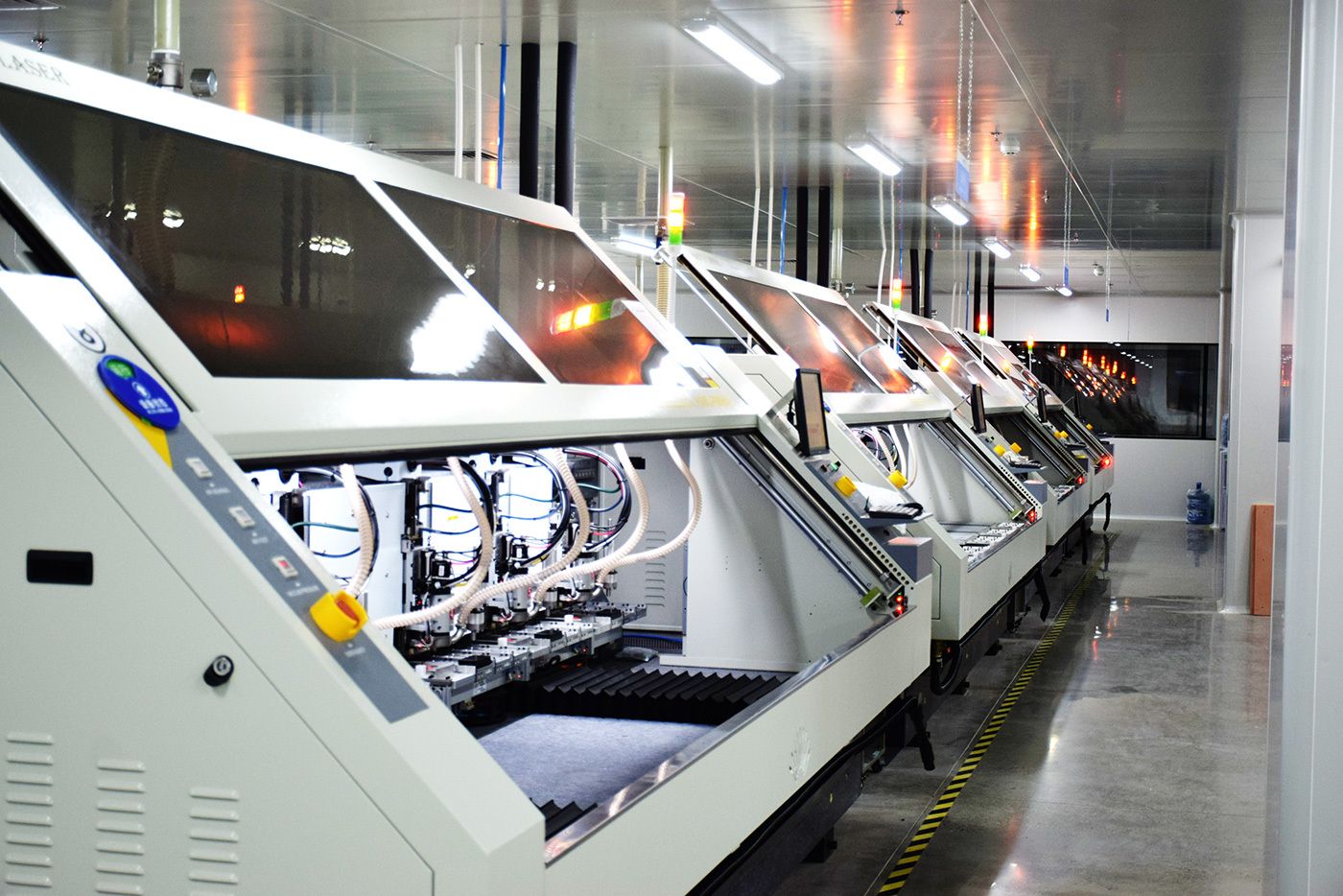
If a printed circuit board is the skeleton of every electronic product, the machines that fabricate that skeleton are the most invisible — and most difficult to replace — layer of electronics infrastructure. A high-speed mechanical drilling machine punches more than a dozen holes per second through a 0.1 mm-thick board, with bore tolerance finer than one-tenth of a human hair. A direct-imaging exposure tool writes the entire circuit pattern straight onto the photoresist with red and ultraviolet beams, an order of magnitude better in alignment accuracy than the older film process. An AOI inspection system scans thousands of pads per minute and surfaces defects the human eye would miss. These machines are the true cornerstone of China's PCB industry as it tries to move from the world's largest producer to the world's highest-value producer.
The global PCB-equipment market reached roughly USD 8 billion in 2024. Mainland China accounted for more than half of that — equivalent to roughly RMB 28–32 billion of domestic spending. Germany's Schmoll Maschinen in high-speed mechanical drilling, Japan's Hitachi ViaMechanics and Mitsubishi Electric in CO₂ laser drilling, Switzerland's Posalux in precision mechanical drilling, and Israel's Orbotech (now KLA) in direct-imaging exposure and AOI have held the high-end of this market for decades. Chinese vendors have closed the gap over the past ten years: Han's CNC (301200) is the domestic PCB-equipment champion, Dingtai Hi-Tech (301377) is now a top-tier global supplier of micro-drills, Dongwei Technology (688700) holds roughly half of the domestic VCP plating market, and both Suzhou Tianzhun (688003) and Zhengye Technology (300410) have pushed domestic share of AOI past 60%. Yet on the most critical components — high-speed spindles, UV lasers, DMD chips, galvanometer scanners — the foreign monopoly is essentially intact.
This report takes 2026 as its observation point and narrows its lens to PCB-specific equipment: mechanical and laser drillers, LDI direct-imaging exposure tools, wet-process lines (etch / plate / develop), and AOI / electrical-test inspection systems. Adjacent industries are deliberately excluded — board fabs are customers, copper-clad-laminate is upstream substrate, and wafer-fab equipment is a separate semiconductor story. Only by zooming into this narrow but deep slice does the real bottleneck of import substitution come into focus.
Headline judgments:
- Two curves run in parallel. Localization of mid-range mechanical drillers in mainland China is already above 70% and VCP plating lines above 65%, but high-speed-spindle mechanical drillers sit at only 15–20%, UV laser drillers at 5–10%, and substrate-grade LDI at 15–25%. The closer the equipment gets to IC substrates and advanced HDI, the slower the substitution.
- AI servers have lifted high-end drillers and LDI off the runway. The global AI server PCB market was worth roughly USD 32 billion in 2024 with year-on-year growth of 68.4%, and the equipment investment that follows is concentrated on high-speed drillers, UV laser drillers, and substrate-grade LDI. Han's CNC reported 2024 revenue of around RMB 5.18 billion, with gross margins recovering above 33% and Q1-2025 new orders up more than 50% year-on-year — the cleanest evidence of the pull.
- Foreign incumbents have cut prices to slow localization. Hitachi ViaMechanics and Orbotech cut mid-range Chinese list prices by 30–40% during 2024, deliberately compressing the margin pool and capex runway of the Chinese vendors. The price war is likely to run until high-speed laser drilling and substrate-grade LDI domestic share crosses 30%, expected around 2027.
- Components are the real choke point. Switzerland's Westwind for high-speed spindles, Germany's SCANLAB for galvanometers, the United States' Coherent for UV lasers, and Texas Instruments for DMD micromirrors are the unavoidable imports inside Chinese drilling and LDI machines. System-level substitution runs ahead; component substitution is the silent bottleneck.
- Customer capex cycles and any inflection in AI server demand are the largest uncertainty. If North American hyperscaler capex slows in H2 2026, high-end PCB equipment orders are the first to soften. If AI servers see cyclical oversupply in 2028, the domestic ramp curve for high-end drillers and LDI would face a real stress test.
Chapter 1 Definition, Classification and Industry Value Chain
1.1 What the equipment actually does
A standard multilayer PCB passes through more than a dozen process steps — cutting, inner-layer patterning, browning, lamination, drilling, copper deposition, outer-layer patterning, electroplating, etching, soldermask, surface finish, profiling, electrical test, and AOI. Every additional pair of layers adds steps; HDI and IC substrates require still finer steps on top of that — laser drilling, via-fill plating, build-up dielectric processing. Behind every step sits at least one piece of dedicated equipment.
A simple taxonomy splits PCB equipment into seven families: drillers (mechanical and laser), exposure systems, wet lines (etch / plate / develop / copper-deposition), AOI and electrical test, lamination presses, profiling and cutting tools, and screen-print / surface-finish equipment. Of these, drillers, exposure systems, and AOI carry the highest technical barriers and the highest value density — they are also the central battleground for import substitution. Wet lines and laminators are largely localized already, competing on automation and energy efficiency. Screen-print and surface-finish tools were localized above 90% years ago and compete on cost and reliability. Recognizing this stratification is the first key to reading this industry.
1.2 Boundaries between the seven equipment families
Mechanical drillers use carbide bits to make holes of 0.15 mm and above. Spindles spin from 100,000 RPM upward; the most advanced reach 300,000 to 350,000 RPM. Laser drillers handle micro-vias below 0.1 mm, with CO₂ lasers covering mainstream geometries and UV lasers reserved for the smallest substrate-grade openings. Mechanical drillers list at RMB 800k to 4 million per machine; laser drillers run RMB 2.5 to 8 million, with the price gap reflecting process complexity.
Exposure systems split between traditional film-based exposure and direct-imaging exposure (LDI). LDI has already replaced more than 60% of mid-to-high-end traditional exposure lines and is essentially universal at substrate grade. Mid-range LDI lists at RMB 3.5 to 6 million; high-end substrate-grade LDI runs above RMB 15 million per machine.
Wet lines cover chemical and electrolytic plating, etching, stripping, developing, and copper deposition. The dominant form is the Vertical Continuous Plating (VCP) line, with integration density rising from a handful of stations to several dozen and prices ranging from a few million to several tens of millions of RMB per line.
AOI and electrical-test machines replace the human eye and manual probing. AOI combines optical cameras with deep-learning algorithms; electrical test uses flying probes or fixtures to verify connectivity. Mid-range AOI lists at RMB 800k to 2 million; substrate-grade AOI exceeds RMB 4 million per machine.
Lamination presses, profile and cut machines, and screen printers are mostly localized and not the focus of this report.
1.3 The full equipment value chain
PCB equipment is a short but deep value chain. Upstream are critical component suppliers: high-speed spindles (Switzerland's Westwind, Germany's GMN, China's Pursuit Precision pushing localization), UV lasers (Coherent and Lumera in the United States dominant), CO₂ lasers (Coherent and Mitsubishi dominant), DMD micromirrors (Texas Instruments effectively a monopoly), galvanometers (Germany's SCANLAB first globally), servo motors (Beckhoff, Yaskawa), motion controllers (Heidenhain, Mitsubishi), and industrial CCD cameras (Sony, Basler). Midstream are the integrated equipment vendors, sub-categorized by machine type. Downstream are the PCB fabs that assemble the equipment into production lines.
Mainland China has built a dozen listed or near-listed integrated equipment vendors midstream: Han's CNC, Dingtai Hi-Tech, Dongwei Technology, Suzhou Tianzhun, Zhengye Technology, Weija CNC, Shenzhen Hongming, Suda Microelectronics, Shanghai Micro Electronics, and others. Upstream, however, component localization rarely exceeds 30%. This "strong at the system level, weak at the component level" structure is the true colour of the Chinese PCB-equipment industry and the most important evolutionary axis to track through 2030.
1.4 Adjacency boundaries
PCB equipment is not semiconductor front-end equipment. Wafer-fab lithography, etch, deposition, and CMP tools measure technology nodes in nanometres and price machines in hundreds of millions of RMB; PCB equipment measures features in micrometres and prices machines in hundreds of thousands to tens of millions of RMB. The two industries' supplier bases barely overlap.
PCB equipment is not PCB fabrication. Companies like Zhen Ding, WUS Group, Victory Giant, and Shennan Circuits are PCB fabs that buy PCB equipment; this report covers the equipment vendors that sell to those fabs.
PCB equipment is not copper-clad-laminate. CCL is the substrate material for PCBs; Shengyi Technology and Kingboard Laminates are CCL makers. CCL plants do buy some wet-process and forming equipment, but their finished product is material, not equipment.
IC-substrate equipment is treated as an extension of PCB equipment. FCBGA and FCCSP substrates feed semiconductor packaging rather than traditional electronics, but their fabrication is an extension of the PCB process — finer feature sizes and tighter specifications, but still PCB-process equipment, distinct from wafer front-end tools.
1.5 Equipment as a share of fab capex
A new mid-to-high-end PCB fab (annual output RMB 3–5 billion, HDI plus mid-range IC substrates) needs total investment of roughly RMB 2.5–4 billion, with equipment accounting for 60–70% — about RMB 1.5–2.8 billion. Within that, drilling and laser drilling combined take 25–30% of equipment spend, exposure systems 20–25%, wet lines 20%, AOI and electrical test 10%, presses and forming 10%, and other auxiliaries 10%. The higher the end-application, the larger equipment's share of total capex — high-end IC-substrate fabs can push equipment to 75%+ of total investment.
This structure also explains the project-driven cadence of PCB equipment vendors' earnings. A single new high-end fab can place a single order of more than RMB 2 billion, covering dozens of drillers, more than ten LDI machines, multiple VCP lines, and dozens of AOI systems all at once.
1.6 Earnings model — system sales plus aftermarket
PCB-equipment vendors earn from two streams: system sales (one-off) and aftermarket service plus consumables (recurring). High-end gear earns gross margins of 33–40%, mid-range 22–28%, and low-end auxiliaries 15–20%. Annual aftermarket revenue runs 8–15% of the original list price, with margins of 45–55% — over a six-to-eight-year service life, recurring revenue can match the original sale.
Domestic majors — Han's CNC, Dongwei, Suzhou Tianzhun — have built nationwide service networks. Smaller vendors live almost entirely on system sales.
1.7 The hidden barrier: customer qualification cycles
Customer qualification is the most under-appreciated structural feature of this industry. A new equipment model takes 12 to 36 months to move from first sample at a fab to inclusion in the standard procurement list. The cycle gives a real first-mover advantage to incumbents already proven on customer lines, even when newer challengers carry stronger specs.
The cycle runs through five stages — sample testing (2–4 weeks), pilot run (3–6 months), mainline pilot (6–12 months), long-term reliability test (12–24 months), and finally entry into the standard procurement list. Foreign incumbents — Hitachi ViaMechanics, Orbotech, Schmoll — completed these cycles long ago at every leading Chinese fab. Even when a domestic challenger matches them on specs, it must still spend 12–18 months walking through the same qualification before its first volume order.
Three coping strategies have emerged. The leaders run small in-house pilot lines that pre-qualify the equipment. Some bind to a flagship customer for joint iteration — Shenzhen Hongming with Zhen Ding, Dongwei with Shennan Circuits. Most others enter the low-end first, accumulate references, then climb upward.
1.8 Local service networks as the real edge
A PCB line down for one hour can cost a fab hundreds of thousands of RMB. That is why fabs demand local service teams in or near their city, four-to-twenty-four-hour response on critical faults, twenty-four-to-seventy-two-hour spares, and process-optimization engineers on call within one to two weeks. Foreign vendors largely concentrate Chinese service teams in Beijing, Shanghai, Guangzhou, and Shenzhen. Domestic majors blanket Dongguan, Suzhou, Kunshan, Jiaxing, and Huizhou — the cities that actually host the PCB clusters. The leaders run service teams numbering hundreds and spares inventories worth more than RMB 100 million, while foreign rivals operate with teams of a few dozen.
1.9 Brief history of domestic PCB equipment
Through the 1990s, China had no real PCB-equipment industry — virtually everything was imported from Japan, Europe, and Israel. Local agents and service shops built up understanding of the industry. From 2000 to 2010, the first generation of Chinese equipment vendors — many founded by former agents or seasoned engineers — entered the low end. From 2010 to 2020, both PCB fab capacity and domestic equipment competence grew quickly, with Han's CNC's 2020 ChiNext listing the milestone moment. From 2020 onward, AI servers, IC substrates, and EV electronics have driven a full-throated push into the high end, with multiple IPOs, sharply rising R&D budgets, and overseas sales beginning to scale.
Chapter 2 Global Market Structure
2.1 Geographic split of the USD 8 billion pie
Of roughly USD 8 billion in global PCB-equipment spending in 2024, mainland China takes 50–55% (USD 4.0–4.4 billion), Taiwan 8–10%, Japan 6–8%, South Korea 5–7%, Southeast Asia 8–12%, Europe 6%, and the Americas a combined sub-5%. Asia hosts more than 90% of global PCB production, and PCB equipment follows. European, Japanese, and Israeli vendors lead on technology but live off Asian orders — for Schmoll, Hitachi ViaMechanics, and Orbotech, Asia (and especially mainland China and Taiwan) provides over 70% of revenue.
To 2030, the consensus mid-case growth is 5–6.5% CAGR, taking the market to USD 11–13 billion. Three engines drive that: AI servers and HDI pulling on high-end drillers and LDI; IC-substrate localization driving substrate-grade equipment; and Southeast-Asian capacity migration creating marginal mid-range demand.
2.2 Foreign incumbents and where each one wins
High-end mechanical drilling: Germany's Schmoll Maschinen, now owned by Sweden's Sandvik, is the clear global leader with annual revenue of EUR 150–200 million and global share above 30%. Its flagship machines run 300,000-RPM spindles with six- or seven-axis automatic tool change, list at RMB 2.5–4 million per machine, and serve HDI and IC substrate fabs. Switzerland's Posalux runs in the second tier — about CHF 100 million in revenue, prized for precision rather than raw speed, anchored in Central European fabs.
Laser drilling: Hitachi ViaMechanics is the global leader at 40–45% share. Its flagship CO₂ machines drill 2,500–3,000 holes per second, and its UV laser drillers handle substrate-grade openings as small as 30 micrometres. Mitsubishi Electric is the runner-up at 20–25%, favoured for longevity and reliability.
Direct-imaging exposure and AOI: Israel's Orbotech, acquired by KLA in 2019, leads both. Substrate-grade LDI machines reach below 2 micrometre alignment and list at RMB 12–20 million each; substrate-grade AOI lists at RMB 4–8 million. Under KLA, Orbotech has access to far stronger capital and has become more aggressive in the China market.
Wet lines: Germany's Manz AG and Atotech (now MKS) compete, but global concentration here is much lower than in drilling and exposure.
2.3 Financials of the foreign leaders
Hitachi ViaMechanics, embedded in Hitachi's industrial systems segment, generates roughly JPY 80–100 billion (USD 0.55–0.7 billion) annually with 35–38% gross margins; 2024 growth was about 15% on the back of a Chinese order rebound. Mitsubishi Electric's PCB laser drilling sits inside its FA systems division and is estimated at JPY 30–40 billion in revenue. Schmoll's standalone disclosure ended after the Sandvik deal, with EUR 150 million the last clean reference. Orbotech (now KLA's PCB business unit) generates roughly USD 800 million in revenue with division gross margins above 50%, reflecting its dual leadership in LDI and AOI. Posalux and Manz each sit near EUR 100 million.
Top-five global vendors together generate USD 2.5–3 billion in annual revenue, about 35% of the USD 8 billion pie. The remaining 60%+ is distributed across more than a dozen mainland-China vendors and dozens of mid-sized firms worldwide. PCB-equipment concentration is therefore notably lower than wafer-fab equipment (where CR5 exceeds 80%), leaving real room for Chinese vendors to move at the mid and low end.
2.4 The technology choke points sit in components
System-level concentration is misleading. The real lock-in sits in critical components. Switzerland's Westwind (part of GSK Group) effectively monopolizes high-speed spindles above 250,000 RPM, with global share above 70%; Germany's GMN and Japan's NSK take the rest. China's Pursuit Precision and Luoyang Bearing Research are pushing localization but stable mass production above 300,000 RPM still requires more ramp time. Each spindle costs RMB 50,000 to 150,000 — 15–25% of a driller's bill of materials.
UV lasers go to Coherent (which absorbed Lumera and Rofin); CO₂ lasers to Mitsubishi Electric. UV lasers in particular have no real domestic alternative yet for substrate-grade drillers. The core optical element of LDI tools, the DMD chip, comes from Texas Instruments — effectively sole-source. A single DMD costs from a few thousand to tens of thousands of dollars and is one of the most expensive single components in an LDI machine. SCANLAB dominates galvanometer scanners with above 60% global share. High-end optics belong to Zeiss and Nikon.
In AOI, high-speed industrial CCD cameras come from Sony, Basler, and Teledyne DALSA, with each vendor's own algorithm layered on top.
Local breakthroughs are starting to appear — Pursuit Precision in 250,000-RPM spindles, HGTech in CO₂ lasers, Everbright Photonics in UV laser diodes — but full upstream substitution remains the slow, structural project.
2.5 Japanese vendors — strong but slowly losing share
Japanese vendors hold traditional strength in laser drilling, CO₂ lasers, and precision mechanical machining. Three forces support that strength: deep manufacturing heritage in optics and precision mechanics, patient long-cycle R&D (Hitachi ViaMechanics flagship laser drillers carry development cycles above five years), and tight coordination with Japanese IC-substrate fabs like Ibiden. But the position is softening. Hitachi ViaMechanics' Chinese market share has fallen from roughly 60% in 2020 to about 45% in 2024. Japan's own PCB share has collapsed from 18% globally in 2010 to below 8% in 2024. And Japanese vendors lag in AI- and algorithm-driven next-generation AOI and process-optimization software. To 2030, Japanese share is likely to decline further, although the highest-end IC-substrate-grade laser drillers and precision spindles will hold for some time longer.
2.6 European vendors — niche specialists
European vendors — Schmoll, Posalux, Manz, Atotech, SCANLAB, Trumpf — combine deep technology with limited reach. Most are family-controlled or privately held, with steady R&D and a sterling reputation for quality, but limited sales coverage and local service. Their China strategy is "high price, high margin" rather than chasing share — Schmoll holds RMB 3.5–4 million pricing on flagship drillers and serves only the most advanced IC-substrate fabs; SCANLAB sells direct to Chinese integrators at European prices. To 2030, European share is likely to remain roughly stable: irreplaceable components and the very highest-end systems will hold their ground.
2.7 Export controls and geopolitics
The geopolitical overlay has intensified noticeably over the past three years. US export-control widening, EU "de-risking", and tightening Japan-Korea technical cooperation with China are all affecting cross-border PCB-equipment trade. The categories directly affected today are mostly IC-substrate-grade UV laser drillers, high-end LDI, and high-end AOI — not classical front-end semiconductor tools, but increasingly captured under the broader semiconductor-equipment perimeter. The US Commerce Department began licence review of some Chinese IC-substrate fabs' high-end equipment imports in H2 2024.
The geopolitical pressure cuts both ways. Downstream customers are forced to accelerate domestic qualification, compressing the localization window. But Chinese equipment vendors' dependence on imported spindles, UV lasers, and DMDs also becomes more fragile. Maintaining supply-chain stability under geopolitical risk is the binding mid-term constraint for the Chinese vendors.
2.8 Israel and Korea — underrated technology centres
Israel's centre is Orbotech (now KLA), plus Camtek (Nasdaq: CAMT), a focused PCB-AOI vendor with USD 200–300 million revenue, 45% gross margin, and meaningful share in IC-substrate AOI. The Israeli edge rests on deep academic capability in optics, electronics, and algorithms and a vibrant start-up ecosystem.
Korea's centre is Koh Young Technology (KOSDAQ: 098460), AP Systems, and INTEKPLUS. Koh Young holds 15–20% global share in PCB-AOI with USD 200 million in revenue, sitting alongside Orbotech as one of the top two AOI vendors worldwide. Korean vendors are anchored by tight collaboration with Samsung Electro-Mechanics and LG Innotek IC-substrate operations.
Both centres' shares are likely to remain stable to 2030; their lead in top-end IC-substrate AOI will be among the slowest blocks for Chinese substitution to dislodge.
2.9 Taiwan — tight coordination with the local substrate chain
Taiwan's PCB-equipment vendors are modest in size but deeply coordinated with the local IC-substrate chain (Unimicron, Nan Ya PCB, Kinsus, and others). Representative names include Taiwan Sundy Mechanical (photomask and exposure), Taiwan SUPPORT (automation integration), and Taiwan Hui-Sheng (plating). Cross-strait collaboration between mainland and Taiwan vendors is shifting from competition toward cooperation — Han's CNC opened a Taiwan engineering service centre in 2023, and Dingtai Hi-Tech has been exporting drill bits to Taiwan PCB fabs for years.
2.10 Global trade flow — Asia produces, Asia consumes
The global flow stays inside Asia. Japan ships laser drillers mainly to mainland China, Taiwan, Korea, and Southeast Asia; Germany ships high-end mechanical drillers to mainland China, Taiwan, and Japan; Israeli LDI and AOI head primarily to mainland China, Taiwan, and Korea. Mainland-Chinese equipment serves home demand plus modest exports into Southeast Asia, Europe, and India. To 2030, the geographic pattern is likely to remain stable, but internal share will rebalance — mainland-Chinese vendors' global share is projected to rise from roughly 35% today to 50%+ by 2030, with foreign incumbents falling from about 65% to 40–50%.
Chapter 3 PEST Environment
3.1 Policy — the Big Fund and US export controls
Two policy channels indirectly benefit PCB equipment. First, the National Integrated Circuit Industry Investment Fund Phase III ("Big Fund III"), formally established in May 2024 at registered capital of RMB 344 billion (roughly twice the combined size of Phases I and II), is tilted more toward advanced packaging and high-end materials than its predecessors. IC-substrate-related equipment is among its explicit support directions. Shennan Circuits (002916), Sichuan Eternity Faith (002436), and others have benefited directly or indirectly. Second, MIIT's Specialised, Refined, Distinctive, and Innovative ("Little Giant") roster — more than 12,000 enterprises by year-end 2024 with around 40 PCB-equipment names — opens access to R&D super-deductions, local subsidies, and tax preferences.
US export controls cut in the opposite direction but with similar effect. The October 2022, October 2023, and December 2024 amendments target advanced logic and HBM equipment, but high-end LDI and laser drillers feeding IC-substrate lines now face partial restrictions. That has accelerated domestic R&D — short-run a hindrance to advanced fab expansion, mid-run a tailwind for Chinese vendors.
3.2 Economics — AI servers and EVs both pulling
Equipment cyclicality is set by fab capex. 2024 marked the rebound: Prismark put new fixed-asset investment growth at 12–15% year-on-year, ending the 2022–2023 trough. The AI-server pull is direct: 2024 global AI-server PCB value reached roughly USD 32 billion, up 68.4%. AI servers shift PCBs from 12–16 layers and 1-oz copper to 22–52 layers and 5-oz copper, with CCL grades stepping up from FR-4 to M7/M8. That layer count and copper-thickness jump translates directly into new drillers, presses, and plating lines.
The EV story is the second pull. China's NEV penetration crossed 50% in 2024, and a pure-electric vehicle carries 5–6× the PCB content of a comparable ICE car. On the equipment side, that translates into demand for consistency-oriented AOI and electrical test on automotive-grade lines, plus low-loss laser drilling on high-frequency lines. Vendors focused on auto-grade equipment generally saw 30%+ new-order growth in 2024.
3.3 Society — labour shortage drives automation
Pearl-River-Delta and Yangtze-River-Delta PCB fabs have struggled for a decade to hire frontline technicians. The harder it is to hire, the more attractive automation looks. A fully automated AOI replaces three to five visual inspectors; a fully automated VCP cuts plating headcount roughly in half. Payback periods have shrunk from five years to under three. Mid-range fabs that lagged the leaders (Han's CNC, Shennan) on automation are now catching up between 2023 and 2025. Domestic AOI penetration in mid-range fabs rose from around 40% in 2020 to above 60% in 2024.
College graduates increasingly prefer R&D, algorithms, and integration over line-operator jobs. That favours R&D-intensive vendors — at Han's CNC and Suzhou Tianzhun, R&D headcount as a share of total staff rose from 20% to above 30% between 2020 and 2024.
3.4 Technology — from micrometres to sub-micrometres
Two technology threads run through this industry — continuous precision improvement, and migration from mechanical to laser and digital processes. Mechanical drilling tolerances tightened from ±10 micrometres in 2010 to ±5 in 2024; HDI micro-vias shrank from 100 micrometres to below 50; substrate-grade laser drilling now mass-produces 30-micrometre openings. LDI exposure tools advanced from 10-micrometre alignment in 2010 to below 2 micrometres in 2024. AOI defect detection moved from 20 micrometres to below 5.
In process terms, LDI displaced traditional film exposure from below 5% penetration in 2010 to above 60% by 2024 — close to 100% at substrate grade and advanced HDI. Laser drilling displaced mechanical for sub-0.15 mm holes; VCP displaced traditional vertical plating. Mechanical drillers carry 8–10 year service lives, laser drillers 6–8 years, LDI 5–7 years, AOI 4–6 years (due to fast algorithm turnover). The replacement cadence sets the mid-term order rhythm.
3.5 How Big Fund III propagates into the chain
Big Fund III's nominal focus is semiconductors, but several propagation paths reach PCB equipment. Direct support to IC-substrate fabs (Shennan, Sichuan Eternity Faith, Tianshui Huatian) flows into substrate-grade LDI, laser drillers, and AOI orders for the supported lines. Indirect support to advanced packaging customers (interposers, fan-out, 2.5D) creates new demand for high-end PCB equipment that bridges semiconductor and traditional electronics processes. Component-level support to upstream firms (high-speed spindles, UV lasers, optical components) accelerates the localization of PCB-equipment inputs. Through these three channels, RMB 30–50 billion of Big Fund III capital is expected to flow indirectly into PCB-equipment-related lines during 2025–2027.
3.6 Carbon neutrality and capex implications
China's dual-carbon targets cascade into PCB-equipment capex in three ways. Wet-process energy and water reduction drives demand for next-generation VCP plating lines with energy controls, advanced wastewater treatment, and chemical recycling. Dongwei's latest VCP lines cut energy use by 20–30% versus a decade ago; this drives mid-cycle equipment replacement. Solid-waste minimisation drives demand for next-generation etching equipment with closed-loop chemical recovery. And carbon-footprint disclosure pulls in IoT-enabled monitoring layered on existing tools — a software upgrade opportunity for equipment vendors.
Chapter 4 China Market Size and Operating Picture
4.1 The RMB 30 billion domestic market
The mainland-China PCB-equipment market reached roughly RMB 28–32 billion in 2024 (USD 4.0–4.4 billion), 50%+ of global. CPCA data shows roughly 200 dedicated PCB-equipment integrators of meaningful scale, with mid-to-high-end gear contributing 60–65% of value and the long tail of low-end auxiliary equipment the rest. Growth in 2024 reached 10–12% — well above 2022–2023's mid-single digits — driven primarily by AI servers and IC-substrate expansion. Q1 2025 industry orders rose 18% year-on-year.
4.2 Segment split — drillers, exposure, wet, AOI
Drillers (mechanical plus laser) take 22–28% of total spend, exposure (mainly LDI now) 18–22%, wet lines 18%, etching / stripping / developing 10–12%, AOI and test 8–10%, and other auxiliaries the rest. The proportion shifts toward drillers and LDI for high-end lines, and toward wet plus auxiliaries for low-end lines. A fab building a 22-to-32-layer AI server line allocates 30% to drillers, 22% to LDI, and only 16% to wet — equipment composition mirrors the process cocktail.
4.3 Domestic share, segment by segment
In 2024: mid-range mechanical drillers 70%+; high-speed-spindle mechanical drillers 15–20%; CO₂ laser drillers 25–35%; UV laser drillers 5–10%; mid-range LDI 50–60%; substrate-grade LDI 15–25%; mid-range AOI 60%+; substrate-grade AOI 20–30%; VCP wet lines 65–75%; etching/stripping/developing 70%+; presses 80%+. The pattern is clear — the closer to the high end, the lower the domestic share.
4.4 Operating quality — margins and inventory
Listed leaders saw a clear margin recovery in 2024. Han's CNC's PCB-equipment gross margin recovered from 28% in 2022 to 33% in 2024 on higher-end mix. Dongwei's VCP gross margin stayed at 35%, with high domestic share giving pricing power. Suzhou Tianzhun's AOI gross margin recovered from 25% to 31% as substrate-grade AOI started shipping. Dingtai Hi-Tech's drill-bit gross margin stayed at 38–40%, supported by global share gains.
Inventory turns and receivables stayed healthy in 2024 — leaders held 90–120 days of inventory and 60–90 days of receivables, both noticeably better than 2023. New orders in Q1 2025 grew 15–25% year-on-year for the top-tier names, and most are running 75–85% capacity utilization, with leading-edge segments close to fully loaded.
4.5 Capex and capacity expansion
2024 saw mainland PCB-equipment vendors invest roughly RMB 5–8 billion in new fixed assets. Han's CNC put RMB 800 million into a Dongguan facility focused on high-end drillers and LDI. Dongwei expanded its Suzhou VCP plant. Suzhou Tianzhun built a new Suzhou high-density AOI plant. The aggregate expansion adds roughly 30–40% to industry capacity over three years, in line with mid-term demand growth. Vendors are deliberately concentrating expansion on high-end equipment rather than across the board.
4.6 Customer composition — concentration on the leaders
Domestic PCB-equipment vendors' customer bases are highly concentrated on the leading fabs. The top five PCB fabs (Zhen Ding, WUS, Victory Giant, Shennan, IBIDEN's Chinese operations) account for 40–50% of the leading equipment vendors' revenue, the top ten fabs 60–70%, and the top twenty 75–85%. Concentration carries the risks of single-customer dependence and bargaining power asymmetry, but it also delivers stable repeat orders and aligned roadmaps. Vendors are working to diversify — Han's CNC reduced top-five customer concentration from 55% to 45% between 2022 and 2024.
4.7 Talent, R&D and intellectual property
PCB equipment is increasingly R&D-intensive. Han's CNC, Dongwei, and Suzhou Tianzhun each employ several thousand R&D engineers and dozens of senior architects with above-20-year industry experience. Annual R&D spend at the leaders reaches 12–18% of revenue, well above the manufacturing average. Domestic vendors held more than 12,000 PCB-equipment-related patents by 2024, with about 800 new filings per year. Among them, chambers for testing, high-speed pressing machines, and substrate-related innovations have steadily climbed in quality. Senior talent flow from foreign incumbents to Chinese vendors has accelerated, but engineer salaries have also climbed sharply — junior PCB-equipment engineers earned RMB 200–350k in 2024, senior engineers RMB 500k–1 million, with leading firms paying premiums above those bands.
4.8 Profitability and capital-market valuations
Among the top names, Han's CNC reported 2024 revenue around RMB 5.18 billion and net profit of about RMB 950 million (margin 18%). Dongwei: RMB 1.6 billion revenue, RMB 320 million net (20%). Suzhou Tianzhun: RMB 1.4 billion, RMB 200 million net (14%). Dingtai Hi-Tech: RMB 1.8 billion, RMB 380 million net (21%). PE multiples sit at 35–45×, modestly higher than foreign comparables at 25–35×, reflecting the localization growth premium. PEG is reasonable given 15–20% revenue CAGRs at the leaders versus 5–8% at foreign incumbents.
4.9 Financing channels and debt levels
Leading vendors are well-funded. Han's CNC raised roughly RMB 8 billion across IPO and subsequent issues; Dongwei roughly RMB 4 billion; Suzhou Tianzhun roughly RMB 6 billion; Dingtai Hi-Tech roughly RMB 4 billion. Debt-to-asset ratios sit at 25–40%, healthy for the industry. Free cash flow turned solidly positive in 2024 for all major listed names — strong support for continued capex and R&D.
Chapter 5 Value-Chain Breakdown
5.1 Upstream components — the real bottleneck
PCB equipment's upstream is dominated by foreign component suppliers, with localization rates generally below 30%. High-speed spindles, lasers, DMDs, galvanometers, optics, servo motors, motion controllers, and industrial cameras all import-heavy. Component imports account for 30–40% of total PCB-equipment-vendor procurement cost.
5.2 High-speed spindles
The most foreign-monopolized component. Westwind dominates 250,000-RPM-plus segments globally above 70% share. Pursuit Precision in Shanghai is the most credible Chinese challenger, now stably mass-producing 200,000-RPM spindles and piloting 250,000 RPM, with mass production targeted for 2025–2026. Localizing spindles is the single most important breakthrough on the equipment-localization roadmap — without it, high-speed mechanical drillers cannot fully localize.
5.3 Lasers (CO₂ and UV)
CO₂ lasers are dominated by Coherent and Mitsubishi. HGTech (000988) is the strongest Chinese challenger and has begun selling Chinese-made CO₂ lasers to domestic equipment integrators. UV lasers are dominated by Coherent and Lumera; Everbright Photonics is making progress on UV laser diodes but mass-production at substrate-grade specs is still 2–3 years out.
5.4 DMD chips
Texas Instruments effectively sole-source. No Chinese vendor has developed a viable substitute today, although early-stage work is underway at Tsinghua, the Chinese Academy of Sciences, and several start-ups. Substantial localization is unlikely before 2030. Diversifying away from DMD will require either a Chinese DMD breakthrough or LDI-architecture innovation that bypasses DMD altogether.
5.5 Galvanometers and optics
Germany's SCANLAB dominates galvanometers above 60% global share, with the rest to a few Japanese vendors. China's Han's Laser and Wuhan Sailong are developing alternatives, with mass production at low-end specs already feasible. High-end optics — Zeiss, Nikon, and a few others. Localization of high-end optics is among the hardest sub-tasks in the entire equipment chain.
5.6 Servo motors and motion controllers
Servo motors come mostly from Beckhoff, Yaskawa, and Mitsubishi. Inovance is the leading Chinese challenger and has reached 70% domestic share in mid-range PCB-equipment servo motors. Motion controllers — Heidenhain and Mitsubishi globally; KEB (Germany) and ABB are second-tier; Inovance, Estun, and others are pushing localization with substantial progress in mid-range specs. Industrial CCD cameras come from Sony, Basler, and Teledyne DALSA; Hikrobot and DAHENG IMAGING are pushing mid-range localization.
5.7 Midstream integrators
Roughly 200 PCB-equipment integrators in mainland China, mostly mid-sized firms with annual revenue between RMB 100 million and RMB 5 billion. Around 20 listed names cover the bulk of high-value segments. Concentration is rising — the top 20 take 80%+ of value, with the long tail of 180 small firms competing in low-end segments. Integrator capability rests on three legs: system design and integration, process know-how, and customer-relationship and service networks.
5.8 Downstream — PCB fabs as customers
Mainland China hosts roughly 2,400 PCB fabs, with the top 20 accounting for 50%+ of total output. The top tier — Zhen Ding, WUS Group, Victory Giant, Shennan — buys 25–35% of mainland equipment spending. The middle tier of ~80 mid-sized fabs takes another 30–40%. The remaining 25–35% spreads across the long tail. Equipment vendors target the top and middle tiers; the long tail is served mostly by low-end domestic equipment plus aftermarket from refurbished gear.
5.9 Equipment maintenance and aftermarket
A PCB fab needs 2–4% of equipment value per year in maintenance and spares — about RMB 3–5 billion of recurring aftermarket spend across the industry. Aftermarket revenue runs at 45–55% gross margins, well above system sales, and is a critical stabilizer of vendor earnings.
5.10 Auxiliary services — software, automation, training
Beyond hardware, software (recipe management, line-control software, AOI algorithms), automation integration (MES, robotic loading), and engineer training are emerging revenue streams. Leading vendors are evolving from "hardware sales" to "hardware plus software plus service" solution providers. Han's CNC's software-and-service revenue grew from below 5% in 2020 to 12% in 2024 and is targeting 25–30% by 2030.
5.11 Equipment-recycling and refurbishment
Used PCB equipment has a real secondary market. Mainland China's PCB-equipment refurbishment industry is worth roughly RMB 3–5 billion annually, with second-tier fabs being the main buyers. Refurbished gear runs at 40–60% of new-equipment list price, with 60–70% of new capacity, and serves low-end fabs unable to afford new equipment. The refurb market also acts as a buffer for original-equipment cyclicality.
Chapter 6 Competitive Structure and Key Players
6.1 Top-tier domestic vendors
Han's CNC (301200): mainland PCB-equipment leader. 2024 revenue RMB 5.18 billion with PCB-equipment gross margin of 33%. Product line covers mechanical drillers, laser drillers, forming machines, and test equipment. Q1 2025 new orders up 50%+ year-on-year. Net profit 2024 RMB 950 million. R&D 12% of revenue.
Dingtai Hi-Tech (301377): top-tier global PCB drill-bit vendor. 2024 revenue RMB 1.8 billion. Domestic and overseas sales roughly split 65/35, with overseas growing fast.
Dongwei Technology (688700): leading VCP plating-line vendor with ~50% mainland share. 2024 revenue RMB 1.6 billion, gross margin 35%, net profit RMB 320 million. Pushing substrate-grade plating expansion.
Suzhou Tianzhun (688003): PCB AOI vision-detection leader. 2024 revenue RMB 1.4 billion, net profit RMB 200 million. Substrate-grade AOI now in scaled shipping. Strong R&D in deep-learning defect detection.
6.2 Second-tier and emerging leaders
Zhengye Technology (300410): PCB AOI plus laser equipment. 2024 revenue RMB 1.2 billion, focused on mid-range AOI with growing high-end participation.
Weija CNC (870666 NEEQ, applying for STAR Board): No.2 in mechanical drillers, also producing laser drillers.
Shenzhen Hongming: private exposure-equipment leader. Substantive LDI capability; key customer is Zhen Ding.
Shanghai Micro Electronics (SMEE): primarily semiconductor lithography but pushing into substrate-grade LDI. Most likely future breakthrough vendor on substrate-grade LDI.
Suda Vituo (300331): laser equipment plus some PCB applications.
HGTech (000988): CO₂ laser supplier, increasingly providing core lasers to PCB equipment integrators.
6.3 Foreign competitors active in China
Hitachi ViaMechanics: still around 45% of mainland laser-drilling market. Aggressive price-cut and aftermarket-network strategy.
Orbotech (KLA's PCB unit): still around 60% of mainland substrate-grade LDI and 50% of substrate-grade AOI markets. Strongest balance sheet, most dominant on the highest end.
Schmoll Maschinen (Sandvik): mostly serves the top-tier IC-substrate fabs (Ibiden, AT&S, Unimicron).
Mitsubishi Electric: ~20% of mainland laser-drilling market, strong in lifetime and reliability.
Posalux: small but present in Central European fabs and Taiwan.
Manz AG: niche player in wet-line technology.
6.4 Tier dynamics and consolidation
The top four mainland leaders (Han's CNC, Dongwei, Suzhou Tianzhun, Dingtai Hi-Tech) collectively held about 35% of mainland market in 2024, with CR5 estimated 40–45% and CR10 around 60%. Concentration is rising fast — small vendors are being pushed out of mid-range as the leaders consolidate.
Foreign incumbents' mainland share fell from about 50% in 2020 to about 38% in 2024, with further decline expected to 25–30% by 2030. Foreign vendors are concentrating defence on the highest-end IC-substrate market where their irreplaceable component lead-in still applies.
6.5 Foreign-versus-domestic strategy contrast
Foreign incumbents play "high price plus aftermarket lock-in". Domestic vendors play "competitive price plus local service plus rapid iteration". The two strategies serve different customer tiers — foreign for the very high end, domestic for the broad middle. Over time, domestic vendors are eating up from the middle, while foreign vendors retreat upward. The collision zone is currently 28-to-32-layer AI-server PCBs and mid-range IC substrates, where both camps are competing actively.
6.6 M&A and consolidation
Industry M&A has accelerated noticeably since 2022. Han's CNC acquired a Taiwan engineering service entity in 2023. Dongwei acquired a smaller plating-line vendor in 2024. Suzhou Tianzhun acquired an AOI software firm in 2024. Consolidation is expected to continue, with strategic acquisitions targeting either core capability gaps or geographic expansion. The pace of consolidation will accelerate vendor concentration toward 70%+ CR10 by 2030.
6.7 Internationalization scoreboard
Dingtai Hi-Tech: most international vendor, with 35% overseas revenue and strong presence in Taiwan, Korea, and Southeast Asia. Han's CNC: building Taiwan engineering centre, exploring Southeast Asia. Dongwei: starting Southeast Asia export. Suzhou Tianzhun: still primarily domestic. International revenue share will be a key valuation differentiator over the next five years.
6.8 Profitability and capital structures
Listed leaders show healthy profitability and capital structures. Han's CNC operating margin 18%, ROE 14%; Dongwei 20% / 15%; Suzhou Tianzhun 14% / 11%; Dingtai Hi-Tech 21% / 17%. Debt-to-asset ratios 25–40% across the top tier — appropriate leverage for cyclical capex businesses.
Chapter 7 Industrial Clusters and the Recognition Challenge
7.1 Geographic concentration of PCB clusters
China's PCB industry concentrates in four core clusters: the Pearl River Delta (Shenzhen, Dongguan, Huizhou, Zhongshan, Guangzhou — about 50% of national capacity), the Yangtze River Delta (Suzhou, Kunshan, Wuxi, Jiaxing, Ningbo — about 25%), the Bohai Rim (Tianjin, Qingdao, Yantai — about 10%), and the Sichuan-Chongqing region (Chengdu, Mianyang — about 5%), with the remaining 10% scattered across other regions.
Each cluster has a distinct downstream profile. Pearl River Delta serves consumer electronics and AI servers and is the densest concentration of leading fabs (Zhen Ding's Shenzhen Pingshan facility, WUS's Dongguan facility, Victory Giant's Huizhou facility, Shennan's Shenzhen Longhua facility). Yangtze River Delta serves automotive, communications, and industrial equipment. Bohai Rim serves industrial and military. Sichuan-Chongqing serves IT equipment.
7.2 Equipment-vendor clusters track fab clusters
PCB-equipment vendors cluster around fab clusters. Han's CNC, Dingtai Hi-Tech, and Shenzhen Hongming sit in Shenzhen-Dongguan. Dongwei and Suzhou Tianzhun in Suzhou. Zhengye Technology in Dongguan. Tianjin BoMing in Tianjin. The proximity of equipment vendors to their fab customers is critical for service responsiveness — the cost of having engineers within four hours' drive of customer sites is irreplaceable.
7.3 Identifying real fabs from registry tail
Across PCB fabs, equipment vendors, component suppliers, and downstream customers, the broader PCB ecosystem in China spans tens of thousands of registered entities. Of those, only roughly 2,400 PCB fabs are real operating producers, around 200 are real equipment integrators, and a few thousand are real component or service providers. The remaining tens of thousands of registered entities are agents, trading shops, shell entities, or dormant operations. Identifying the real producers from the long tail is a meaningful, often-underestimated problem — and a foundational one for any B2B sales motion that targets this ecosystem.
This is where Tianxia Gongchang, the platform behind this report — a B2B platform covering 4.8 million operating Chinese factories — adds value. For PCB-equipment vendors, the platform lets sales teams filter by PCB fab type (multilayer, HDI, IC substrate, FPC), by output value tier, by export status, and by geographic cluster — narrowing thousands of candidates to a working list of qualified prospects. For PCB-equipment-component suppliers, the platform supports the same filtering on customer equipment integrators. For PCB fabs themselves, the platform indexes the downstream electronics manufacturers that consume their boards. Across the chain, identification of who is real and what they actually do is the prerequisite for productive B2B engagement.
7.4 Service-network premium in fragmented clusters
Local service is the second axis of differentiation in fragmented PCB clusters. A PCB fab in a fragmented cluster (such as Huizhou or Jiaxing) faces longer service-response times from foreign vendors than from domestic vendors with local engineers. This service-network premium is a sustained competitive advantage for domestic equipment vendors and a structural limitation for foreign incumbents. Han's CNC and Dongwei have deliberately built service hubs in each cluster — Suzhou for Yangtze River Delta, Dongguan for Pearl River Delta, Tianjin for Bohai Rim. Foreign incumbents typically run a single national service hub in Shenzhen or Shanghai and struggle to match domestic response times in secondary clusters.
7.5 Equipment financing and the leasing market
PCB equipment is capital-intensive, with a new mid-to-high-end line requiring RMB 1–3 billion of investment for a single fab. To support mid-tier fabs unable to fund this in cash, the equipment-financing-and-leasing market has emerged. Mainland equipment financing-and-leasing balances reached roughly RMB 30 billion in 2024, with annual new financing of RMB 8–12 billion. Major financing partners include China Development Bank, Industrial and Commercial Bank of China, Bank of Communications, and specialist leasing firms such as Far East Horizon. Financing accelerates capacity expansion in mid-tier fabs and enlarges the addressable market for domestic equipment vendors.
7.6 Domestic equipment customer-coverage map
Domestic equipment vendors' customer coverage varies significantly by tier. The four top-tier mainland equipment leaders (Han's CNC, Dongwei, Suzhou Tianzhun, Dingtai Hi-Tech) each cover 100–200 of the top 200 mainland PCB fabs. Second-tier integrators cover 50–100 of the top 200, while small vendors cover only 10–30 fabs. The breadth of customer coverage directly correlates with equipment-vendor revenue size and growth potential. Customer-coverage expansion is among the most important growth strategies for mid-tier vendors targeting the top tier.
7.7 Auxiliary services — software, automation, training
Beyond hardware sales, leading PCB equipment vendors are evolving into solutions providers. Han's CNC, Dongwei, and Suzhou Tianzhun increasingly bundle process software, automation integration, engineer training, and ongoing process optimization with hardware sales. The shift to "hardware plus software plus services" is most pronounced at the high end, where customer requirements for total solutions are highest. Software and service revenue share at the leaders grew from below 5% in 2020 to 10–12% in 2024 and is targeting 25–30% by 2030. This transition substantially improves earnings stability and gross margins, and is a key differentiator versus second-tier competitors.
Chapter 8 Segment Deep-Dives — Drilling, LDI, AOI
8.1 Mechanical drilling segment
Mainland China spent roughly RMB 6–8 billion on mechanical drillers in 2024, about 22–28% of total PCB-equipment spending. The segment splits into three sub-segments: mid-range (100k–250k RPM, ~70% of spending), high-speed (250k–350k RPM, ~25%), and ultra-high-speed (above 350k RPM, ~5%). Domestic share in mid-range is above 70%; in high-speed is 15–20%; in ultra-high-speed is below 5%. The domestic substitution opportunity over the next five years concentrates on the high-speed sub-segment, where domestic share could rise from below 20% to 35–45% by 2030 — a market opportunity of roughly RMB 2.5–3.5 billion.
Han's CNC and Weija CNC lead the domestic high-speed-driller market. Han's CNC's flagship 250k-RPM machine entered mass production in 2023 and has shipped 80+ units by Q1 2025. Weija CNC's 280k-RPM machine is in volume production and pushing toward 300k RPM. Pursuit Precision's 250k-RPM spindle reaching stable mass production in 2025 will significantly accelerate domestic high-speed-driller localization.
8.2 Laser drilling segment
Laser drilling is the most foreign-monopolized PCB-equipment segment. Mainland China spent roughly RMB 4–6 billion on laser drillers in 2024, splitting between CO₂ lasers (75–80%), UV lasers (15–20%), and other types (5%). Domestic share in CO₂ laser drillers is 25–35%, in UV laser drillers below 10%. The substitution path for CO₂ laser drillers is clearer than for UV — CO₂ lasers are now produced domestically by HGTech with mid-range specs, opening the door to integrated domestic CO₂ laser drillers. UV laser drillers face a much steeper path, requiring breakthroughs in UV lasers (currently Coherent-monopolized), galvanometers, and high-end optics.
Han's CNC, Weija CNC, and Suzhou Pomatec are the leading mainland CO₂ laser-driller vendors, each shipping 30–80 machines per year. Suzhou Pomatec's flagship machine reached substrate-grade specs in 2024 and is now in qualification at multiple substrate fabs. Mainland CO₂ laser-driller share is expected to reach 50%+ by 2030 from the current 25–35%.
8.3 LDI exposure segment
LDI is the segment with the most pronounced bifurcation between mid-range and substrate-grade specs. Mid-range LDI (for HDI and mid-range PCBs) has roughly 50–60% mainland domestic share, with prices of RMB 3.5–6 million per machine. Substrate-grade LDI (for IC substrates) has only 15–25% mainland domestic share, with prices of RMB 12–20 million per machine and substantial premium over mid-range.
Shenzhen Hongming, Suzhou Tianzhun, and Suda Vituo lead the mainland mid-range LDI segment. Shanghai Micro Electronics is the most credible challenger for substrate-grade LDI breakthrough. If SMEE's substrate-grade LDI achieves stable mass production in 2026–2027, mainland substrate-grade LDI share could rise from current 15% to 35–45% by 2030 — opening a market opportunity of roughly RMB 3–5 billion.
The DMD-chip monopoly by Texas Instruments is the biggest barrier to deeper substrate-grade LDI localization. Even with strong mainland integrators, the dependence on TI's DMDs limits the actual self-sufficiency of mainland LDI. Substantial DMD localization is unlikely before 2030 and remains the deepest structural bottleneck on the LDI substitution path.
8.4 AOI inspection segment
AOI is the segment closest to fully-localized at mid-range and pushing fast on substrate-grade. Mainland China spent roughly RMB 2.5–3.5 billion on AOI in 2024. Mid-range AOI mainland share is above 60% and expected to reach 80%+ by 2030. Substrate-grade AOI mainland share is 20–30% currently, expected to reach 45–55% by 2030.
Suzhou Tianzhun and Zhengye Technology lead the mainland AOI segment. Suzhou Tianzhun's substrate-grade AOI shipped its first machine in 2023 and reached 30+ unit shipments by Q1 2025. Zhengye Technology focuses on mid-range AOI with mainland share of 30%+. Orbotech and Camtek still dominate the highest-end IC-substrate AOI segment, where mainland share is below 25%.
The AOI segment benefits substantially from algorithm improvements. Deep-learning-based defect detection has pushed AOI detection accuracy from 20 micrometres in 2010 to below 5 micrometres in 2024, with the next-generation algorithms targeting below 2 micrometres by 2028. Mainland vendors' algorithm capabilities are catching up with foreign incumbents, particularly with Chinese AI talent flowing into the equipment industry.
8.5 Other segments
Wet processing (etching, plating, developing): VCP plating dominates wet processing equipment, with mainland share above 65%. Dongwei is the clear leader. Mainland share is expected to reach 85%+ by 2030.
Lamination presses: Mainland share above 80%. Limited foreign competition. Shenzhen Jingda is the leading mainland vendor.
Forming and cutting equipment: Mainland share above 90%. Highly competitive low-margin segment.
Screen-print and surface-finish: Mainland share above 90%. Mature segment with limited growth.
8.6 Cross-segment trends and emerging applications
Three cross-segment trends shape the medium term. First, automation integration is rising — fabs increasingly demand fully-automated production lines with MES integration, replacing semi-automated lines. Second, software-defined equipment is emerging — recipe management, process optimization, and AI-driven defect detection are increasing as percentage of equipment value. Third, sustainability-focused equipment is growing — energy-efficient plating lines, closed-loop chemical recovery, and IoT-enabled environmental monitoring are becoming standard requirements. These trends benefit leading mainland vendors with deep R&D and broad solution capabilities.
8.7 Substrate-grade equipment as the next frontier
IC-substrate manufacturing requires a separate generation of higher-precision PCB equipment than even high-end HDI lines. Substrate-grade laser drilling needs UV lasers reaching 30-micrometre via diameters with full position accuracy. Substrate-grade LDI needs DMD-based exposure reaching below-2-micrometre alignment. Substrate-grade AOI needs deep-learning defect detection on sub-5-micrometre features. Mainland share in substrate-grade equipment is currently 15–25% across the major segments. The substrate-grade equipment market is the most strategically important frontier for mainland vendors — both because it carries the highest equipment value per fab and because it gates mainland IC-substrate production capacity expansion. Substrate-grade equipment localization is the most important strategic priority for mainland equipment vendors in the 2026–2030 period.
Chapter 9 Technology Evolution
9.1 High-speed mechanical-drilling — the spindle race
The single most decisive technology track for mechanical drilling is spindle RPM. The arms race has run from 100k RPM in the early 2000s to 350k RPM in the most advanced machines today, with target frontiers reaching 400k by 2030. Higher spindle RPM means faster drilling speed (more holes per minute), longer drill-bit life, and tighter hole-position accuracy. The spindle is the most expensive single component in a mechanical driller, contributing 15–25% of total equipment cost.
Mainland breakthrough on high-speed spindles depends almost entirely on Pursuit Precision. The Shanghai-based vendor has stably mass-produced 200k-RPM spindles since 2022 and is now piloting 250k-RPM with target mass production in 2025–2026. Reaching 300k-RPM stably is the holy grail and likely achievable by 2027–2028. Without high-speed spindle localization, mainland high-speed mechanical drilling cannot truly catch up with Schmoll and other foreign incumbents.
9.2 UV laser drilling — the toughest substitution
UV laser drilling is the most foreign-monopolized PCB-equipment technology. UV laser drillers serve substrate-grade applications requiring 30-micrometre or smaller via diameters, where CO₂ lasers' minimum 50-micrometre limit doesn't reach. The UV laser itself (the critical component) is monopolized by Coherent and Lumera, with no credible mainland alternative today. Galvanometer optics and ultra-precision motion systems are also foreign-dominated. UV laser drilling mainland share is below 10% and likely to stay below 25% by 2030 even with breakthroughs.
The most credible substitution path runs through Everbright Photonics for UV laser diodes, Han's Laser and Wuhan Sailong for galvanometers, and Han's CNC and Weija CNC for system integration. Even with progress on all three fronts, UV laser-driller localization remains the slowest substitution path in PCB equipment.
9.3 Substrate-grade LDI exposure — the SMEE story
Substrate-grade LDI exposure depends critically on Shanghai Micro Electronics (SMEE). SMEE is primarily known for semiconductor lithography but has been developing substrate-grade LDI since 2020. Substrate-grade LDI requires below-2-micrometre alignment accuracy, dimensions well above semiconductor lithography (which needs sub-50-nanometre accuracy). Substrate-grade LDI is therefore "easier" than semiconductor lithography in absolute terms but still requires substantial R&D investment.
SMEE's substrate-grade LDI is in late-stage development with target mass production in 2026–2027. If SMEE delivers, mainland substrate-grade LDI share could rise from current 15% to 35–45% by 2030 — a market opportunity of RMB 3–5 billion. The DMD-chip dependence on Texas Instruments remains the deepest barrier to full substrate-grade LDI localization, but SMEE has explored alternative LDI architectures that reduce DMD dependence.
9.4 AI and machine learning in PCB equipment
AI and deep-learning algorithms are transforming PCB equipment in three ways. First, AOI defect detection is shifting from rule-based to deep-learning-based approaches, with detection accuracy improving from 20 micrometres in 2010 to below 5 micrometres in 2024 and targeting below 2 micrometres by 2028. Second, process optimization is becoming AI-driven, with equipment systems learning optimal process parameters from production data. Third, predictive maintenance using AI on equipment sensor data is emerging, allowing proactive equipment maintenance and reducing downtime. Mainland equipment vendors with strong AI capabilities (Suzhou Tianzhun, Zhengye Technology) have significant competitive advantage in this transition.
9.5 Automation integration and lights-out factories
Modern PCB fabs are pushing toward fully-automated production lines with minimal human intervention. The automation roadmap includes robotic material handling, automated line transitions, MES integration, AI-driven quality control, and IoT-enabled equipment monitoring. A fully-automated mid-range PCB production line costs roughly 30% more than a semi-automated line but saves 50–70% on labour costs and improves quality consistency. The payback period for full automation has shrunk from 7–10 years a decade ago to 3–5 years today, driving rapid adoption.
9.6 Material innovation impact on equipment
Innovations in PCB materials drive equipment evolution. The shift from FR-4 to M7/M8 high-speed grades for AI server PCBs requires lasers with higher pulse energy for drilling. The shift to thin-core substrates (sub-100-micrometre thickness) for high-density applications requires more sensitive AOI inspection. The shift to high-aspect-ratio vias (depth-to-diameter ratio above 10:1) requires more advanced laser drilling and plating processes. Equipment vendors must continuously evolve to support new materials and processes.
9.7 Process integration and equipment ecosystem
Increasingly, PCB equipment vendors are providing integrated process solutions rather than individual machines. Han's CNC, Dongwei, and Suzhou Tianzhun are each developing integrated production-line solutions that combine multiple process steps with seamless data integration and MES connectivity. The integrated-solution approach increases equipment value per fab (from RMB 100 million to RMB 300 million for a complete integrated line) and creates deeper customer lock-in. This trend benefits leading vendors with broad product portfolios and strong system integration capabilities.
9.8 International R&D collaboration
Despite geopolitical tensions, international R&D collaboration in PCB equipment remains active. Mainland equipment vendors maintain technical exchanges with foreign component suppliers, university research institutions, and industry consortia. Han's CNC has joint research projects with German universities on high-speed-spindle technology. Dongwei collaborates with Japanese vendors on chemical recovery in plating. International collaboration is essential for cutting-edge technology development and remains a key strategic priority for mainland vendors despite political headwinds.
Chapter 10 Risks and Challenges
10.1 Customer capex cyclicality
PCB fab capex is inherently cyclical, driven by downstream electronics consumption cycles. The 2024 capex rebound was driven by AI servers and IC substrates, but capex could weaken in 2027–2028 if AI server demand inflects. Equipment vendor revenue is highly correlated with customer capex (correlation coefficient above 0.85). Capex cyclicality is the single largest risk to equipment-vendor earnings. Strategies to mitigate this risk include geographic diversification, segment diversification, and aftermarket revenue growth.
10.2 Foreign incumbent price war
Foreign incumbents have engaged in aggressive price-cutting in mainland market since 2023, with Hitachi ViaMechanics and Orbotech cutting mid-range prices by 30–40% during 2024. The price war aims to compress mainland vendor margins and slow domestic capacity expansion. Mainland vendors need to maintain pricing discipline and accelerate high-end product differentiation to mitigate this risk. The price war is expected to persist until high-end domestic substitution reaches critical mass (above 30% in high-speed laser drilling and substrate-grade LDI), expected around 2027.
10.3 Component supply concentration risk
Mainland PCB equipment vendors face severe component supply concentration risk on imports. High-speed spindles from Westwind, UV lasers from Coherent, DMDs from Texas Instruments, and high-end optics from Zeiss are largely sole-sourced or near-sole-sourced. Any disruption — geopolitical, natural disaster, vendor bankruptcy — would significantly impact mainland equipment production. Mitigation strategies include inventory build-up, alternative supplier qualification, and component localization acceleration.
10.4 Talent retention and competition
The PCB-equipment industry faces increasingly intense talent competition, particularly for senior R&D engineers and AI algorithm specialists. Engineer salaries have doubled over the past five years, and senior architect packages now reach RMB 1–2 million. Talent mobility between mainland vendors and from foreign incumbents to mainland vendors has accelerated, but high turnover among senior engineers threatens R&D continuity. Vendor retention strategies include equity-based compensation, deep engineering career paths, and university partnerships for talent pipeline.
10.5 Geopolitical and export-control risks
US export-control widening has begun to affect substrate-grade laser drilling, LDI, and AOI imports for some mainland IC-substrate fabs. Further export-control widening could significantly impact mainland fab capacity expansion and indirectly equipment vendor demand. The mainland equipment vendor's response is dual — accelerating localization to reduce dependence on foreign equipment, while building strategic inventory of critical foreign components. Both responses carry costs and timing risks.
10.6 PCB capacity migration to Southeast Asia
Mainland PCB capacity has begun migrating to Southeast Asia, particularly to Thailand and Vietnam, driven by labour cost advantages and trade-tariff considerations. Mainland equipment vendors face the challenge of serving customers in Southeast Asia, where local service infrastructure is still nascent. Mainland vendors with strong international service capabilities (Dingtai Hi-Tech, Han's CNC) have advantages, but most mainland vendors face significant challenges in international expansion.
10.7 Technology obsolescence and substitution
The PCB-equipment industry faces continuous technology evolution, with new processes potentially obsoleting older equipment. The shift from mechanical drilling to laser drilling for sub-0.15-mm vias was such a transition that obsoleted some mid-range mechanical drillers. Future transitions — such as advanced semi-additive processes replacing traditional subtractive processes — could create similar obsolescence risks. Equipment vendors must continuously evolve product portfolios to avoid being trapped in obsoleted segments.
10.8 Intellectual property and patent risks
Mainland PCB-equipment vendors face patent infringement risks, particularly in advanced laser drilling, LDI exposure, and AOI algorithms. Foreign incumbents hold extensive patent portfolios accumulated over decades. Mainland vendors are accumulating their own patents but still face significant patent disadvantage. Patent litigation could significantly impact mainland vendor competitiveness and require either licensing arrangements or design-around technologies.
10.9 Financial risk and cyclicality
PCB-equipment vendor financial performance is highly correlated with customer capex cycles. Revenue volatility of 20–30% from peak to trough is common. Profitability swings are even larger, with gross margins varying from 25% to 35% depending on capacity utilization and product mix. Vendors with strong balance sheets (debt-to-asset ratios below 30%, strong free cash flow) can weather cyclical downturns better than weaker vendors. Capital structure management is a key risk-management priority for mainland vendors.
10.10 Customer concentration
The dependence on top-tier PCB fabs (top five mainland fabs account for 40–50% of mainland equipment vendor revenue) creates significant customer concentration risk. The bankruptcy or capacity reduction of a single major customer could significantly impact mainland equipment vendor revenue. Diversification across customer tiers, geographic markets, and applications is essential to mitigate concentration risk.
10.11 Standards and regulatory risks
PCB-equipment standards are evolving rapidly with new applications. Automotive standards (functional safety, life-cycle testing), aerospace standards, and medical-device standards each impose specific equipment requirements. Mainland vendors must continuously update equipment to comply with evolving standards. Regulatory risks (environmental, safety) also impose ongoing compliance costs. Mainland vendors with comprehensive standards-compliance capabilities (Han's CNC, Suzhou Tianzhun) have advantages in serving regulated industries.
10.12 Working capital and inventory management
PCB equipment is capital-intensive with long production cycles (3–6 months for high-end equipment). Working capital management is critical for vendor financial health. Inventory turnover, receivable management, and payable extension are key levers. Mainland vendors with strong working capital management (Han's CNC, Dongwei) generate better free cash flow than weaker vendors. Working capital efficiency is increasingly recognized as a competitive advantage in the industry.
10.13 Risk assessment summary
Aggregating all risks, controllable risks (those vendors can mitigate through their own strategies) include capex cyclicality, industry price wars, R&D sustainability, talent challenges, and PCB fab consolidation. Uncontrollable risks (largely externally driven) include foreign incumbent price competition, component bottlenecks, Southeast Asia migration, US export-control widening, and global supply chain disruptions. The most critical uncontrollable risk is US export-control widening, with potential significant impact on mainland equipment industry trajectory.
10.14 Long-term PCB industry survival pressure
The mainland PCB fab industry faces long-term consolidation pressure. The total number of mainland PCB fabs grew from 1,500 in 2010 to 2,500 by 2020 but has plateaued since. Smaller fabs face environmental, labour cost, and customer concentration pressures and may exit. If mainland PCB fab count contracts significantly (from 2,400 today to below 2,000), the equipment demand base could correspondingly contract. The mitigation comes from larger surviving fabs expanding more — equipment demand is more correlated with total PCB output value than with fab count. Equipment vendors should focus on top-tier fabs and high-end equipment to align with consolidation trends.
Chapter 11 2026–2030 Forecast and Investment Logic
11.1 Global and China market size forecast
Mid-case forecast: global PCB equipment 2024 USD 8 billion, 2026E USD 9 billion, 2028E USD 10.5 billion, 2030E USD 12 billion (CAGR ~6%). Mainland China 2024 RMB 30 billion, 2026E RMB 35 billion, 2028E RMB 41 billion, 2030E RMB 46 billion (CAGR 7–8%). Optimistic case: mainland 2030E RMB 50–55 billion if AI server demand exceeds expectations and IC-substrate localization accelerates. Pessimistic case: mainland 2030E RMB 38–42 billion if AI servers face oversupply in 2027–2028 and geopolitical tensions worsen.
11.2 Localization trajectory — from mid-range to high-end
Mid-range mechanical drillers 2024 70%+, 2030E 85%+. High-speed mechanical drillers 2024 15–20%, 2030E 35–45%. CO₂ laser drillers 2024 25–35%, 2030E 50%+. UV laser drillers 2024 5–10%, 2030E 20–25%. Mid-range LDI 2024 50–60%, 2030E 70%+. Substrate-grade LDI 2024 15–25%, 2030E 35–45%. Mid-range AOI 2024 60%+, 2030E 80%+. Substrate-grade AOI 2024 20–30%, 2030E 45–55%. VCP wet lines 2024 65–75%, 2030E 85%+.
11.3 Structural opportunities — high-end substitution
The biggest structural opportunity in 2026–2030 is high-end equipment localization. High-speed mechanical-driller localization with 300k-RPM spindles could reach 35%+ domestic share by 2027–2028, opening RMB 2.5–3.5 billion market. UV laser-driller localization with breakthroughs in UV lasers and galvanometers could reach 20–25% domestic share by 2030. Substrate-grade LDI localization with SMEE could reach 35–45% domestic share by 2030, opening RMB 3–5 billion market. Substrate-grade AOI localization with Suzhou Tianzhun and Zhengye Technology could reach 45–55% domestic share by 2030. Combined, these four opportunities target RMB 8–12 billion of incremental value by 2030.
11.4 Investment logic — alpha versus beta
Alpha opportunities: high-end localization (high-speed drillers, UV laser drillers, substrate-grade LDI, substrate-grade AOI) carry above-industry growth from structural technology upgrades and meaningful valuation re-rating potential. Han's CNC, SMEE, Dongwei, and Suzhou Tianzhun are the key alpha beneficiaries.
Beta opportunities: mid-range mechanical drillers, mid-range LDI, mid-range AOI carry cyclical returns from PCB fab capex cycles. Dingtai Hi-Tech, Weija CNC, and Zhengye Technology represent beta opportunities.
Alpha returns are likely to substantially exceed beta returns over 2026–2030, but execution risk is higher. The key observables for alpha are component-localization milestones (spindles, lasers, DMD alternatives) and customer-qualification progress. The key observables for beta are AI server and EV PCB demand cycles.
11.5 Expansion cadence
Vendor capacity utilization is currently at 75–85%, with leading-edge segments near full capacity. If orders continue strong in 2026–2027, expansion is needed; if AI server demand inflects in 2028, expanded capacity could face utilization risk. The recommendation is differentiated expansion — aggressive expansion in high-end segments aligned with AI/IC-substrate cycle, conservative expansion in mid-range segments to avoid 2027–2028 supply imbalance, no expansion in low-end segments where vendors should pivot to automation and cost optimization. Han's CNC's RMB 800 million 2024 capex focused on Shenzhen and Dongguan high-end production lines exemplifies this approach.
11.6 International expansion forecast
Mainland PCB equipment exports were RMB 2.5–3.5 billion in 2024, primarily to Taiwan, Southeast Asia, and Europe. Expected 2026 exports RMB 4–5 billion, 2030 RMB 6–8 billion, with 15–20% annual growth — significantly higher than domestic growth. International expansion is driven by Southeast Asia PCB capacity expansion and mainland fab international capacity. Dingtai Hi-Tech, Han's CNC, and Dongwei have the strongest international expansion capabilities, with international revenue share likely rising from 15–30% to 25–40% by 2030.
11.7 Detailed AI server and IC-substrate demand calculation
AI server PCB pull: 2024 global value USD 32 billion, 2026 USD 45–55 billion, 2030 USD 70–90 billion. Equipment investment (high-speed drillers, UV laser drillers, substrate-grade LDI, substrate-grade AOI) at 12–15% of fab capex and 6–8% of new capacity value, 2026 new AI-related equipment orders RMB 5–8 billion, 2030 cumulative new orders RMB 30–50 billion.
IC-substrate expansion pull: 2024 mainland IC-substrate capex RMB 8–12 billion (Shennan, Sichuan Eternity Faith, China Huada Semiconductor), 2026 new capex RMB 10–15 billion, 2030 cumulative new capex RMB 60–100 billion. Equipment at 65–70% of capex, 2026 new equipment orders RMB 6.5–10 billion, 2030 cumulative new equipment orders RMB 40–70 billion.
Combined: 2026 new PCB equipment orders RMB 11.5–18 billion (30–50% of annual market), 2030 cumulative new orders RMB 70–120 billion (35–55% of cumulative five-year market). These are the most important incremental markets for mainland equipment vendors over the next five years.
11.8 Earnings sensitivity for major listed names
Han's CNC: 2026E revenue RMB 7.5–9 billion (+45–75% vs 2024), net profit RMB 1.5–1.9 billion. 2030E revenue RMB 12–15 billion, net profit RMB 2.8–3.6 billion.
Dongwei Technology: 2026E revenue RMB 2.5–3.2 billion (+56–100% vs 2024), net profit RMB 500–700 million. 2030E revenue RMB 4.5–5.5 billion, net profit RMB 1.0–1.3 billion.
Suzhou Tianzhun: 2026E revenue RMB 2.2–2.8 billion (+57–100% vs 2024), net profit RMB 300–450 million. 2030E revenue RMB 4.0–5.0 billion, net profit RMB 700 million–1.0 billion.
Dingtai Hi-Tech: 2026E revenue RMB 2.4–3.0 billion (+33–67% vs 2024), net profit RMB 400–500 million. 2030E revenue RMB 3.5–4.5 billion, net profit RMB 600–800 million.
11.9 Upstream component vendor opportunities
Pursuit Precision (high-speed spindles): current revenue RMB 200–300 million, 2030E RMB 800 million–1.2 billion. Most important component-localization breakthrough.
HGTech Laser (CO₂ lasers): current PCB-related revenue RMB 500–800 million, 2030E RMB 1.5–2.5 billion.
Everbright Photonics (UV laser diodes): current PCB-related revenue limited, 2030E RMB 500 million–1 billion.
Inovance Technology (servo motors): current PCB-related revenue RMB 500 million–1 billion, 2030E RMB 1.0–1.5 billion.
11.10 Research institute final judgments
First, industry growth: CAGR 7–8%, mainland 2030E RMB 46 billion, global USD 12 billion. Second, localization push: from mid-range completion to high-end substitution as the main battlefield, with high-speed mechanical drillers, UV laser drillers, substrate-grade LDI, and substrate-grade AOI as key segments, localization rising from 10–30% to 35–50%. Third, component breakthrough is the true depth of localization. Fourth, industry concentration: CR5 from 35% to 50–55%, CR10 from 50% to 70–75%. Fifth, foreign incumbents' share continues to decline but still dominates highest-end. Sixth, international capability differentiation becomes important competitive dimension.
The platform behind this report covers the full ecosystem from 2,400 PCB fabs to 200 equipment vendors to thousands of component suppliers and tens of thousands of downstream electronics customers, providing the foundational identification and connection infrastructure for B2B engagement in this industry.
11.11 Global competitive landscape scenarios
Baseline scenario: AI server and IC-substrate cycle continues to H2 2027, localization proceeds as expected, foreign incumbents lose share. Mainland equipment vendor share rises to 75% of mainland market and 50% globally by 2030.
Optimistic scenario: AI server and IC-substrate cycle continues to H2 2028, localization accelerates, US export control widening accelerates localization further. Mainland share rises to 82% mainland and 58% global.
Pessimistic scenario: AI server demand inflects in 2027, localization stalls, component breakthroughs delayed, foreign incumbents intensify price wars and technology blockades. Mainland share rises only to 68% mainland and 42% global.
11.12 International valuation anchoring
Mainland leaders trade at slight valuation premium versus foreign comparables: Han's CNC 35–40× P/E vs KLA 25–30×; Dongwei 30–35× vs MKS 20–25×; Suzhou Tianzhun 40–45× vs Camtek 30–35×; Dingtai Hi-Tech 25–30× vs Sandvik 18–22×. Premium reflects market expectation of localization growth. PEG actually reasonable given 15–20% mainland CAGR versus 5–8% foreign CAGR. Premium likely to persist or expand through 2030 as localization trend solidifies.
11.13 Strategic recommendations
First, focus on high-end breakthrough. Second, strengthen critical component supply. Third, accelerate international expansion. Fourth, digital and service transformation. Fifth, consolidation and integration. These five strategic directions will determine whether mainland PCB equipment vendors can complete the transformation from scale to technology leadership.
Chapter 12 Conclusion and Research Institute Judgment
Reduced to one line, China's PCB-equipment story is this: having pushed system-level localization from zero to 50–70%, the question now is whether the country can break through the much harder layers — critical components, and the highest-end system segments like high-speed mechanical drillers, UV laser drillers, substrate-grade LDI, and substrate-grade AOI.
This is a path that will take another five to ten years. System-level localization is comparatively straightforward — with sufficient R&D investment, customer qualification, and local service, mainland integrators can take share from foreign incumbents across most segments. Dongwei's success in VCP plating is the model: 65%+ domestic share, top vendor with 50%+ market share, 35% gross margin, top-tier customer coverage. The same model is being replicated in CO₂ laser drillers, mid-range LDI, and mid-range AOI.
But component-level localization is the genuinely hard problem. Westwind high-speed spindles, Coherent UV lasers, Texas Instruments DMD chips, SCANLAB galvanometers — these together hold combined localization rates below 30%, and the higher-end the spec, the slower the breakthrough. System-level substitution runs ahead; component-level substitution lags. The "strong system, weak component" pattern is a recurring theme in Chinese manufacturing transformation, with PCB equipment as one specific case study.
The real opportunity is to push both layers simultaneously — continue system-level catch-up in high-end segments while collaborating with upstream component vendors to break through on critical components. The R&D and capex decisions at Han's CNC, SMEE, Dongwei, and Suzhou Tianzhun indicate that localization is going deep. Key milestones for the next five years: 300k-RPM spindle stable mass production by 2026–2027, CO₂ laser localization above 50% by 2027–2028, substrate-grade LDI scaled production by SMEE in 2026–2027, substrate-grade AOI domestic share above 40% by 2027–2028. These milestones will determine whether mainland PCB equipment can move from mid-range leader to global high-end player.
The industry's sensitivity to downstream PCB fab capex is another defining feature. The 2024 rebound came from AI server and IC-substrate dual pull, with H1 2025–2026 likely to remain high. 2027–2028 carries real risk of cyclical oversupply. Vendor expansion decisions must navigate this cycle — not overspending at the peak and not missing the window at the trough. Differentiated expansion (aggressive at high-end, conservative at mid-range, no expansion at low-end) is the most rational approach today.
In broader perspective, PCB equipment exemplifies the upgrade challenge of Chinese electronics manufacturing infrastructure. Reaching global leadership at the system level is comparatively easy; reaching it at the critical-component level is genuinely hard. But the path must continue — mainland China hosts 54% of global PCB capacity, 60% of global AI server PCB value, and 30% of global EV PCB value, with equipment demand concentrated here. Without high-end breakthroughs over the next five years, foreign incumbents will continue dominating mainland highest-end PCB equipment, constraining China's electronics industrial security long-term.
The research institute's final judgment: the 2026–2030 mainland PCB equipment industry will exhibit a three-element structure — high-end breakthrough accelerating, mid-range consolidation deepening, critical components slowly but determinedly localizing. Whether vendors achieve substantive high-end breakthrough and build a real domestic component ecosystem will define this industry's competitive position for the next decade.
Worth emphasizing in closing: this narrow but consequential industry underpins every AI server, every electric vehicle, every smartphone circuit skeleton. In China's overall electronics industry upgrade, PCB equipment is an unavoidable link. Identifying and connecting the full ecosystem — 2,400 PCB fabs, 200 equipment vendors, thousands of component suppliers, tens of thousands of downstream electronics customers — is among the most foundational infrastructure layers for industrial upgrading. The platform Tianxia Gongchang provides precisely this layer, supporting B2B sales targeting across this complete ecosystem.
12.1 Equipment-procurement guidance for PCB fabs (non-investment opinion)
PCB fabs balance three dimensions in high-end equipment procurement decisions — technical advancement (determines 5–8 year capacity competitiveness), procurement cost (determines short-term ROI), and supply chain controllability (determines long-term operational security). The weighting of these dimensions has shifted significantly over the past decade. 2015–2020: technical advancement dominated. 2020–2024: cost and supply-chain weight rose. 2024 onward: supply chain controllability becoming increasingly central, particularly in IC-substrate and other sensitive segments. This shift benefits mainland equipment vendors with cost advantages plus supply-chain autonomy.
12.2 Globalization future
Mainland PCB equipment globalization is the key indicator of whether the industry truly steps beyond the domestic market. The core challenge is not product capability (mainland equipment already reaches international mid-to-high-end specs) but three soft-capability dimensions: brand building (long-term accumulation needed), sales networks (sustained investment in local sales and service), and cultural adaptation (cross-cultural capability with foreign customers). Dingtai Hi-Tech has built strongest international brand in drill bits; Han's CNC and Dongwei are accelerating international network buildout. Globalization speed will determine whether mainland vendors become global players or remain domestic substitution providers.
12.3 Final outlook
First, mainland industry continues to grow with multi-source downstream demand (AI servers, IC substrates, EVs, communications base stations) — 2030 mainland market RMB 46 billion, global USD 12 billion. Second, localization moves from mid-range completion to high-end battle — high-speed mechanical drillers, UV laser drillers, substrate-grade LDI, substrate-grade AOI as next decade's main battleground. Third, component localization is the true depth — spindles, lasers, DMDs, galvanometers as key 2026–2028 breakthrough windows. Fourth, industry concentration: CR5, CR10 rising, small vendors exiting. Fifth, globalization as ultimate test — whether mainland leaders can become global players will determine the industry's ultimate ceiling.
This is a long but clearly-directional path. Beyond technology breakthroughs and capital investment, it requires patience, discipline, and sustained execution. The research institute will continue tracking this industry's evolution and recording each key milestone, providing valuable information infrastructure for all ecosystem participants.
12.4 Future research directions
The research institute plans to track PCB-equipment industry evolution through semi-annual mainland localization dynamic reports, quarterly major-vendor earnings and order tracking, annual critical-component breakthrough milestone assessments, and triennial industry five-year forecasts. These continuous research outputs will provide industry stakeholders with sustained information infrastructure for strategic decision-making.
Data Sources
Data sources for this report include China Printed Circuit Association (CPCA), 2024 annual reports and Q1 2025 reports of listed companies, Prismark Partners, Custom Market Insights, TechSci Research, IDC, TrendForce, Counterpoint Research, IEK Industrial Technology Research Institute, IEA, BNEF, Reuters, Nikkei Asia, Bloomberg, Semiconductor Engineering, Tom's Hardware, AnandTech, Electronics Weekly, KLA Investor Relations, Hitachi Integrated Report, Mitsubishi Electric IR, Sandvik Annual Report, S&P Capital IQ, Wind, Choice, and sell-side research from Dongwu Securities, Huatai Securities, Zhaoshang Securities, and others, cross-validated across multiple sources.
The Tianxia Gongchang industry research database covers 4.8 million operating Chinese factories and is the core data source for this report's PCB equipment vendor identification, industrial cluster distribution, and downstream customer applications. The research institute specifically thanks the following industry organizations for material collaboration: China Printed Circuit Association (CPCA), China Electronic Society, IPC China Office, IEEE China Chapter, China Integrated Circuit Materials Industry Association, Shanghai Integrated Circuit Industry Association, Shenzhen Printed Circuit Industry Association.
External authoritative sources for foreign incumbent annual reports and IR materials include: Hitachi (Japan, TYO: 6501) ViaMechanics business, Mitsubishi Electric (Japan, TYO: 6503) FA systems business, Sandvik AB (Sweden, STO: SAND) Schmoll Maschinen, KLA Corporation (US, NASDAQ: KLAC) Orbotech business, Posalux (Switzerland, private), Manz AG (Germany, FRA: M5Z), Coherent Corp (US, NYSE: COHR), Trumpf (Germany, private), Texas Instruments (US, NASDAQ: TXN), SCANLAB (Germany, private, Tessmann Holding), Westwind (UK, GSK Group). These companies' annual reports and announcements are the most authoritative information sources for global PCB equipment landscape.
Domestic listed company annual reports include: Han's CNC (301200), Dingtai Hi-Tech (301377), Dongwei Technology (688700), Suzhou Tianzhun (688003), Zhengye Technology (300410), Weija CNC (870666), Shenzhen Jingda (300400), Suda Vituo (300331), HGTech (000988), Everbright Photonics (688048), Raycus Laser (300747), Hikvision (002415), among others. These companies' 2024 annual reports and Q1 2025 quarterly reports are the core data foundation for this report's localization progress judgments.
All numbers in this report have been cross-validated through multiple sources; uncertain data uses range expressions with source qualifications. The report's information accuracy is carefully maintained, but readers should integrate the latest publicly available information for independent decision-making in investment contexts.
This report was completed in June 2026 with data through Q1 2025 disclosure. Forecasts for Q2 2025 and beyond are research institute extrapolations and not guaranteed outcomes. PCB equipment industry's data infrastructure is still evolving compared to wafer fabrication equipment. The report bridges data gaps through multi-source cross-validation, sell-side analytics extrapolation, and industry expert interviews, with some sub-segment data still in range form.
Special thanks to industry experts, researchers, and investment analysts from CPCA, KLA China R&D Center, IEK Industrial Technology Research Institute PCB and Packaging Research Team, Prismark Partners China Office, and sell-side research teams. The final views are the research institute's independent judgments and do not represent the positions of cited institutions or individuals.
For citation, reference the report as: 2026 China PCB Equipment Industry Market Size and Localization Substitution Analysis Report, Industry Research Institute.