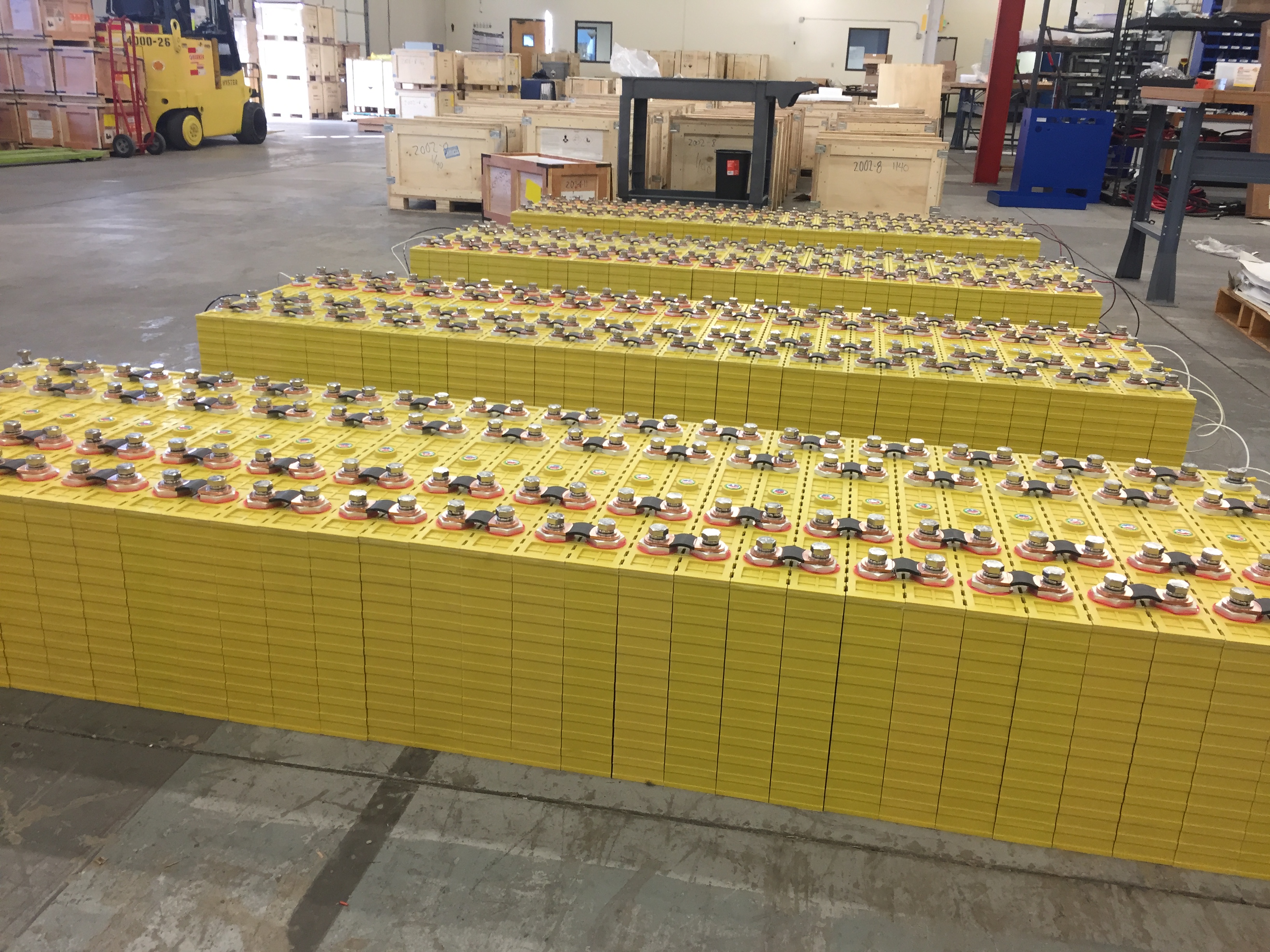

1. Introduction: The Multiple World No.1s Held Up by a Single Battery
Across the landscape of Chinese manufacturing, few industries can, like power batteries, use one and the same thing to hold up several "world No.1s" at once. A small lithium battery—put it into an electric vehicle, and it makes China the world's largest market and exporter of new-energy vehicles; put it into an energy-storage station, and it makes China the world's largest energy-storage market; put it into construction machinery, and it drives the penetration rate of China's electric wheel loaders past 50% in a single year; put it into ships, two-wheelers, and drones, and it lets China lead in one new electrification arena after another. A single battery holds up multiple world No.1s—this is the weight of China's power-battery industry.
First, consider how strong the battery itself is. In 2025, global EV battery installations totaled roughly 1,187 GWh, and Chinese firms accounted for about 69% of that—CATL, with 464.7 GWh and a 39.2% share, has been the world's No.1 for years running, while BYD ranked second globally with 194.8 GWh and about 16.4%; together the two exceeded half of the world total. Among the world's top ten power-battery makers, Chinese firms took six seats. And further upstream, in materials, China's dominance is even more striking—China produced 98% of the world's lithium iron phosphate (LFP) cathode, about 96% of refined graphite, and roughly 80% of the world's cells. From ore processing to cells to systems, China's power-battery industry has formed a complete industrial chain that other countries can hardly match, dominating globally at nearly every link.
Next, consider how broad the downstream is that this battery holds up. New-energy vehicles—in 2025 China sold 16.49 million new-energy vehicles (No.1 in the world for 11 straight years) and exported 2.62 million (double year-on-year); China is the world's largest NEV market and exporter, and what underpins all of it is precisely China's power batteries. Energy storage—in 2025 China added about 167 GWh of new-type energy storage (the world's largest share) with cumulative installations of 213.3 GW; China accounts for more than half of the world's energy-storage battery capacity, and all six of the world's top energy-storage cell suppliers are Chinese firms. Construction machinery, electric ships, two-wheelers, drones—these emerging electrification arenas are all built on China's power batteries. A single battery holds up a whole series of world No.1s in NEVs, energy storage, construction machinery, ships, and more—this is the most vivid embodiment of the "strength" of China's power-battery industry.
But it is precisely this battery, "strong" enough to dominate the world, that is falling into an unprecedented "siege." And what it faces is not a siege from a single direction, but a threefold siege, pressing in simultaneously from three sides.
The first is external regulatory encirclement. The United States uses the "Foreign Entity of Concern" (FEOC) provisions of the Inflation Reduction Act (IRA) to shut batteries containing Chinese content out of subsidies; it uses Section 301 tariffs to raise the rate on Chinese batteries to 25% and the tariff on graphite to as high as 93.5%; the EU uses the carbon-footprint declaration, battery passport, and supply-chain due-diligence requirements of its New Battery Regulation to set compliance thresholds for Chinese batteries. The West is using one regulation after another in an attempt to keep China's power batteries out of its markets. This is the most direct dimension of China's power batteries being "strong yet besieged."
The second is the upstream resource chokepoint. Although China's power batteries dominate globally in the midstream (cells, materials processing) and downstream (applications), at the very top of the chain—in mineral resources—there is a deep dependence on the outside world. China's external dependence for lithium is about 75%, cobalt is almost entirely imported (heavily reliant on the DRC), and nickel comes mainly from Indonesia. Although Chinese firms hedge by laying out overseas lithium mines and controlling the processing of Congolese cobalt and Indonesian nickel, the chokepoint of upstream resources has always been a soft spot behind the "strength" of China's power batteries. This is a more hidden siege coming from the resource end.
The third is internal capacity involution. China's power batteries are too strong and have expanded too aggressively, and the result is severe overcapacity and involution—in 2025 China's power and energy-storage battery output was 1,755.6 GWh, but planned nationwide capacity has approached 5,000 GWh, meaning a capacity utilization rate of under 40%; a brutal price war has driven battery prices to record lows and pushed many second- and third-tier firms and processors to the brink of losses. This is a siege from within, of insiders fighting insiders—it has even forced the Ministry of Industry and Information Technology (MIIT) to summon leading firms for talks and demand an end to the price war.
External regulatory encirclement, the upstream resource chokepoint, and internal capacity involution—these three sieges press in on this world-dominating Chinese battery simultaneously from outside, from above, and from within. This is the story this article tells: China's power-battery industry is one that is "strong yet besieged, held by the throat, and involuted." It has used a single battery to hold up multiple world No.1s, showcasing the pinnacle of Chinese manufacturing's supply-chain dominance; but it is also caught in a threefold siege, facing the most complex and severe challenges that lie atop that pinnacle.
This article, in some fifty thousand characters, will begin with the strength of the battery itself—the CATL–BYD duo, the corps of six firms in the global top ten, the route victory of lithium iron phosphate, the map of the four major materials, and the technology race in structural innovation, sodium-ion, and solid-state batteries; then turn to the downstream it holds up—the application synergy across NEVs, energy storage, battery swapping, and recycling; then delve into the threefold siege—the regulatory encirclement of the U.S. IRA/FEOC and tariffs, the compliance thresholds of the EU Battery Regulation, the upstream resource chokepoint in lithium, cobalt, and nickel, and the internal involution of overcapacity and price wars; and finally return to the central question—how China's power batteries can, amid the threefold siege of being "strong yet besieged," hold on to this hard-won global dominance. This is not just the story of one industry, but a microcosm of the more complex world that Chinese manufacturing must inevitably face once it climbs to the top of the global supply chain. And all of it begins with this battery that holds up multiple world No.1s.
2. What a Power Battery Is: The Value Chain from Ore to Cell to Application
To understand the "strength" and the "threefold siege" of China's power-battery industry, we must first take a battery apart and see its value chain clearly—from the mineral resources at the very top, to the materials and cells in the middle, to the applications downstream—seeing where value and risk each hide, which links China controls, and at which links it is constrained.
The value chain of a power battery can be divided into three segments. Upstream is mineral resources—lithium, cobalt, nickel, graphite, manganese, and so on, the raw materials for making batteries; mined from the ground, they are refined and processed into battery-grade inputs. Midstream is materials and cells—the refined inputs are made into cathode material, anode material, electrolyte, and separator (the battery's "four major components"), and these four are then assembled into cells, and cells into modules and battery packs. Downstream is applications—the battery pack is installed into electric vehicles, energy-storage stations, construction machinery, ships, and more, achieving electrification. From ore to materials to cells to applications—this is the complete value chain of a power battery.
Consider the upstream first—mineral resources, the soft spot of China's power batteries. In the key minerals for making batteries (lithium, cobalt, nickel), China's resource endowment is not good—China's external dependence for lithium is about 75%, it produces almost no cobalt (heavily reliant on the DRC), and its nickel comes mainly from Indonesia. Although Chinese firms hedge by laying out overseas lithium mines (Ganfeng, Tianqi, and others in Australia, South America, and Africa) and controlling the processing of Congolese cobalt and Indonesian nickel, in terms of resource endowment the upstream is the link where China's power batteries depend most on the outside world. This is the "resource chokepoint" among the "threefold siege" mentioned earlier—the strength of China's power batteries is built on a resource base that is externally dependent. Graphite is an exception—China dominates the world in both graphite resources and processing (about 96% of refined graphite), which also makes graphite a bargaining chip for Chinese countermeasures (detailed later).
Now consider the midstream—materials and cells, the strongest link of China's power batteries. In the midstream, China holds overwhelming global dominance: China produced 98% of the world's LFP cathode, more than about 90% of anode material, about 96% of refined graphite, and roughly 80% of the world's cells. Across the "four major components"—cathode, anode, electrolyte, and separator—China has globally leading champion firms. And in the core link of cells, China has giants like CATL and BYD, the world's first and second. The midstream is the heart of the "strength" of China's power batteries—from materials to cells, China has built the world's most complete, most advanced, and largest-scale industrial chain. This is also the root of why China's power batteries can hold up multiple world No.1s.
Finally, consider the downstream—applications, the broad frontier of China's power batteries. China has the world's largest NEV market and export market, the world's largest energy-storage market, and wide-ranging electrification applications in construction machinery, ships, two-wheelers, and more. These enormous downstream needs give China's power batteries application scenarios and growth space unmatched by other countries. Moreover, downstream electrification leadership (No.1 in the world in NEVs and energy storage) in turn pulls the development of the upstream battery industry—the downstream and the battery empower and fulfill each other. The downstream applications of China's power batteries are another pillar of their "strength"—the vast domestic application market is fertile ground for the battery industry's development.
This value-chain analysis clearly reveals the distribution of strength and weakness in China's power batteries: broad downstream applications (strong), globally dominant midstream materials and cells (strongest), and externally dependent upstream mineral resources (soft spot). The strength of China's power batteries is concentrated in the midstream (materials, cells) and downstream (applications)—this is the foundation of its global dominance and of holding up multiple world No.1s. Its soft spot lies upstream (mineral resources)—this is the source of the "resource chokepoint" among the "threefold siege." Understanding this distribution of strength and weakness means understanding the structure of China's power-battery industry—it has built unshakable dominance in the mid- and downstream of the chain, yet still has a soft spot of external dependence at the very upstream resource end.
The value chain also reveals the points of action of the "threefold siege" on China's power batteries. External regulatory encirclement (the U.S. IRA/FEOC, the EU Battery Regulation, tariffs) acts mainly on the downstream and midstream—trying to shut China's batteries and materials out of European and American markets, or to set compliance and tariff thresholds for them. The upstream resource chokepoint acts at the very upstream—China's external dependence for lithium, cobalt, and nickel is the soft spot at the resource end. The internal capacity involution acts on the midstream—the excessive expansion of China's cell and material capacity has led to overcapacity and price wars. The threefold siege presses in on China's power batteries from different links of the chain. Understanding the value chain means understanding the point of action and logic of each of these three sieges.
The value chain of a power battery is the map for understanding China's power-battery industry. From ore to materials to cells to applications—China has built global dominance in the mid- and downstream (strong), has external dependence upstream (soft spot), and, at different links of this value chain, faces the threefold siege of external regulation, upstream resources, and internal involution. All the analysis that follows in this article—the duo and the corps, the routes and the technologies, the applications and the synergy, the encirclement and the chokepoint and the involution—unfolds around this value chain. And the core of this value chain, the heart of the "strength" of China's power batteries, is the two global giants at the cell link—CATL and BYD. Next, we begin with these two giants that hold up half of China's power-battery industry, and indeed half of the world's.
3. CATL: World No.1 for Nine Straight Years
Within China's power-battery industry, CATL is the undisputed king—it has held the world's No.1 position in power batteries for nine straight years, commands about 40% of the global share, and is the industry's absolute leader. To understand the "strength" of China's power batteries, one must begin with CATL, because it is the most concentrated incarnation of that "strength."
First, consider how strong CATL is. In 2025, CATL's global power-battery market share reached 39.2% (per SNE Research), No.1 in the world for nine straight years (2017 to 2025); its global energy-storage battery market share also reached 30.4%, No.1 in the world for five straight years—in both power and energy storage, CATL is the world's No.1. By sales, in 2025 CATL's lithium-battery sales reached 661 GWh (up 39.16%), of which power batteries were 541 GWh and energy-storage batteries 121 GWh. By capacity, CATL has the world's largest capacity scale (772 GWh), with a capacity utilization rate as high as 96.9% (against a backdrop of industry-wide overcapacity and utilization below 40%, this rate is astonishing). CATL is the undisputed overlord of global power batteries.
Next, consider CATL's financial strength. In fiscal 2025, CATL's operating revenue was 423.7 billion yuan (up 17%), and net profit attributable to the parent was 72.2 billion yuan (up 42%, roughly 10 billion U.S. dollars, "earning about 200 million yuan a day"), with gross margin rising from 24.44% to 26.27%. Its net operating cash flow reached as high as 133.2 billion yuan, with year-end cash reserves of nearly 300 billion yuan; in 2025 it paid out more than 36 billion yuan in dividends, with cumulative dividends approaching 1 trillion yuan. This is an extraordinarily impressive scorecard—against a backdrop of the power-battery industry generally caught in price wars and under profit pressure, CATL not only grew revenue and surged in net profit but also maintained high gross margin, high cash flow, and high dividends. CATL's profitability is in a class of its own among the world's power-battery firms.
CATL's strength was also shown in a major 2025 capital-market move—its Hong Kong listing. On May 20, 2025, CATL listed on the main board of the Hong Kong Stock Exchange (stock code 03750) at an offering price of HK$263 per share, raising a total of about HK$41 billion (roughly 5.3 billion U.S. dollars)—the world's largest IPO of 2025. About 90% of the proceeds will go toward CATL's plant in Hungary. After the Hong Kong listing, CATL's valuation reached about 163 billion U.S. dollars. This Hong Kong listing was not just a financing but an important step in CATL's globalization strategy—it provided funds for CATL's overseas expansion (especially European capacity) and won CATL greater recognition in international capital markets. CATL is moving from a Chinese battery giant toward a globalized battery giant.
CATL's strength rests on sustained technological leadership. CATL has continually rolled out industry-leading products in battery technology—the Qilin battery (CTP 3.0 high integration; third-generation cell energy density reaching 280 Wh/kg for 1,000 km of range; the condensed-matter version reaching an energy density of 350 Wh/kg for 1,500 km of range), the Shenxing superfast-charging battery (third-generation Shenxing LFP cell, 10% to 80% in just 3 minutes 44 seconds, with a charging rate of 10C), and sodium-ion batteries (the Naxtra platform, entering mass production in 2025). These technologies keep CATL ahead of the industry across multiple dimensions—energy density, fast charging, cost, and safety. Sustained technological leadership is the root of CATL's hold on the world's No.1 spot—it relies not only on scale and cost but on technological innovation, standing at the very forefront of power-battery technology.
CATL's globalization is also accelerating. Its overseas revenue reached 129.641 billion yuan in 2025, accounting for 30.6% of revenue and contributing 36.6% of profit (overseas gross margins are higher); overseas power-battery shipments were 138.8 GWh, an overseas share of about 30%. In overseas capacity, CATL has laid out its Debrecen plant in Hungary (planned capacity of up to 100 GWh, potentially Europe's largest cell plant, with mass production in early 2026), its Thuringia plant in Germany, its joint venture with Stellantis in Spain, and its integrated project in Indonesia. CATL's customers span Tesla, BMW, Volkswagen, Stellantis, and other mainstream global automakers. CATL is extending its lead from China to the world—it is the most powerful vehicle of China's power-battery global dominance.
But CATL's globalization runs squarely into the first dimension of the "threefold siege"—external regulatory encirclement. It is a key target of the U.S. FEOC provisions (named in the OBBBA legislation), and its batteries are shut out of U.S. subsidies by the IRA; its expansion in Europe must face the compliance thresholds of the EU New Battery Regulation; and its entry into the U.S. market can only take the "roundabout" route of licensing technology to Ford (detailed later), amid much political controversy. The stronger and more global CATL becomes, the more it touches Western industrial and geopolitical sensitivities, and the more it meets regulatory encirclement. CATL's situation is the most typical portrait of China's power batteries being "strong yet besieged"—it is the world's No.1 strongman, yet also the most deeply besieged target.
CATL is the most concentrated incarnation of the "strength" of China's power-battery industry. World No.1 for nine straight years, double champion in power and energy storage, 423.7 billion yuan in revenue, 72.2 billion yuan in net profit, the world's largest IPO of 2025, sustained technological leadership, accelerating globalization—all of these are the most powerful proof of the "strength" of China's power batteries. But CATL is also the most deeply besieged target—the stronger and more global it becomes, the more it meets Western regulatory encirclement. CATL's strength and siege distill the situation of the entire Chinese power-battery industry. And beyond CATL, the absolute king, China's power batteries have another giant that walks a completely different path—one that builds not only batteries but whole vehicles, and that has built its own battery empire through vertical integration. That giant is BYD.
4. BYD: A Vertically Integrated Battery Empire
If CATL is the king who reached the summit by focusing on batteries and becoming the world's No.1 supplier, then BYD is another kind of giant that reached the top through vertical integration, embedding batteries within a whole-vehicle empire. BYD walks a path completely different from CATL's—it builds not only batteries but also whole vehicles, semiconductors, and almost everything else, building its own battery empire through vertical integration. To understand the "strength" of China's power batteries, BYD is another indispensable case.
First, consider BYD's standing in batteries. In 2025, BYD's global power-battery market share was about 16.4%, No.2 in the world, second only to CATL (together the two exceeded half of the world total). BYD's batteries are produced mainly by its subsidiary FinDreams Battery. And BYD's most famous battery product is the Blade Battery—a lithium iron phosphate (LFP) battery released in 2020, whose core selling point is extremely high safety (resistant to thermal runaway, passing the nail-penetration test), using a CTP (cell-to-pack, module-free) design to raise energy density. The Blade Battery is the signature of BYD's battery technology and its core competitiveness in the power-battery field.
But what makes BYD unique is not its battery share (No.2 in the world) but its vertical integration. BYD is a rare firm globally that develops and produces almost all the core links of a new-energy vehicle in-house—batteries (FinDreams Battery), semiconductors (BYD Semiconductor), electronic controls, motors, powertrains, and even the roll-on/roll-off fleet that ships the finished vehicles are all made by BYD itself; it even has its own lithium mines to secure raw-material supply. This full-chain vertical integration, from minerals to batteries to whole vehicles to shipping, is where BYD is most unique and most powerful. It gives BYD extremely strong control over cost, supply, quality, and iteration—amid the fierce competition in power batteries and new-energy vehicles, vertical integration is BYD's deepest moat.
Vertical integration built BYD's whole-vehicle empire. In 2025, BYD's NEV sales reached 4.602 million units (up 7.73%), retaining the global NEV sales crown and entering the world's top five automakers for the first time; its total battery-electric vehicles (BEVs) surpassed Tesla for the first time, becoming No.1 in the world. By revenue, in fiscal 2025 BYD's operating revenue was 803.964 billion yuan (breaking 800 billion for the first time), of which revenue from automobiles and related products was 648.65 billion yuan (accounting for 80.68%). BYD has grown from a battery firm into one of the world's largest new-energy automakers—and what underpins all of this is precisely its vertically integrated battery and "three-electric" capabilities. BYD's batteries not only supply its own vehicles but have also begun to be supplied externally to other automakers (FinDreams Battery's external-supply share has risen from 15% to about 35%, with customers including FAW, Changan, Stellantis, and others).
BYD's overseas expansion is also exploding. In 2025, BYD's overseas sales broke 1 million units for the first time (1.05 million units, up about 1.4-fold year-on-year), with overseas turnover of about 310.7 billion yuan. BYD is exporting its new-energy vehicles (and the batteries behind them) in large volumes worldwide—to Southeast Asia, Latin America, Europe, the Middle East, and other markets. And BYD's overseas expansion comes with the buildout of overseas capacity (such as its Hungary plant, an investment of about 4 billion euros). BYD's globalization is an integrated "whole-vehicle plus battery" export—it sells not just batteries but whole vehicles carrying its own batteries. This "whole-vehicle empire" style of expansion is BYD's different globalization path relative to CATL (a pure battery supplier).
But behind BYD's brilliance also lies the shadow of the "involution" dimension of the "threefold siege." In fiscal 2025, BYD's net profit attributable to the parent was 32.62 billion yuan, down 19% year-on-year (despite record sales)—the main cause of the profit decline was precisely the brutal price war in the domestic NEV market. Although BYD ranked No.1 in the world in sales, its profit margin was squeezed in the involution of the domestic price war. This is exactly the manifestation of internal involution within the "threefold siege"—China's NEV and power-battery industries are too strong and too involuted, and even a leader like BYD can hardly stay untouched in the price war, its profit eroded by involution. BYD's net-profit decline is a microcosm of the pain of "involution" in China's power-battery and NEV industries.
BYD's vertical integration also faces the external regulatory encirclement within the "threefold siege." Like CATL, BYD is a target explicitly named in the U.S. FEOC provisions; its vehicles and batteries entering the U.S. and European markets also face tariff and compliance thresholds. The stronger and more global BYD becomes, the more it meets Western regulatory siege. That said, BYD's vertical integration and whole-vehicle empire also give it stronger resilience against the siege—it has more complete supply-chain control, more diversified market layout (especially unstoppable momentum in developing markets), and the more comprehensive competitiveness of whole vehicles. BYD's way of coping with the siege is to open up space for survival and growth within it, relying on the strength of vertical integration and market diversification.
BYD is another case of the "strength" of China's power-battery industry—through vertical integration it built an empire spanning from batteries to whole vehicles, becoming the world's No.2 in power batteries and No.1 in new-energy vehicles. Together with CATL (the world's No.1 supplier focused on batteries), it forms the "duo" pattern of China's power batteries—one reaching the summit by focusing on batteries, the other reigning through vertical integration. Their strength is the core of China's power-battery global dominance. But the shadow of BYD's net-profit decline also foreshadows the existence of the "involution" siege; the regulatory encirclement it faces is also part of being "besieged." Beyond these two giants, CATL and BYD, China's power batteries have a whole corps—six firms in the global top ten, plus many players beyond the first echelon. The full picture of this corps is what the next chapter unfolds. But before that, let us first see how these two Chinese giants pushed their Japanese and Korean rivals off their pedestals in the three-way contest among China, Japan, and Korea.
5. The China-Japan-Korea Three-Way Battle: Why Japan and Korea Kept Retreating
Global competition in power batteries has long been a contest among China, Japan, and Korea. Japan (Panasonic) was once the inventor and early leader of the lithium battery, and Korea (LG, Samsung, SK) was once the strong rival close behind. But today, the pattern of this three-way contest has utterly changed—China dominates across the board, while Japan and Korea keep retreating. Understanding the outcome of this "three-way battle" shows more clearly just how strong China's power batteries have become.
First, consider today's pattern. In 2025, the global power-battery share rankings were as follows: China's CATL was No.1 at 39.2% and BYD No.2 at 16.4%; only then came Korea's LG Energy Solution at 9.2% (No.3), SK On at 3.7% (No.6), and Samsung SDI at 2.4% (No.9); and Japan's Panasonic at 3.7% (No.7). The Korean three (LG Energy Solution + SK On + Samsung SDI) had a combined share of about 16%, still less than BYD alone; and the Korean three's combined share kept declining (from about 18.7% in 2024 to about 15% to 16% in 2025). Japan's Panasonic also saw its share continually diluted (mainly tied to Tesla in North America, fluctuating with Tesla's share). The former Japanese and Korean strongmen now keep retreating before Chinese firms.
Why do Japan and Korea keep retreating? The fundamental reason is the comprehensive advantage of China's power-battery industry—a complete industrial chain, the cost advantage of scale, rapid technological iteration, and a vast home market. China has a complete industrial chain from mineral processing to materials to cells (with a near-monopoly especially on the LFP route), which makes Chinese batteries lower in cost, more stable in supply, and faster to iterate. China has the world's largest NEV and energy-storage markets, and this vast domestic demand lets Chinese battery firms scale up and iterate quickly. Japanese and Korean firms lack China's complete industrial chain and vast home market, and struggle to compete with China on cost and scale. The outcome of this three-way contest is, in essence, the victory of a complete industrial chain and the advantage of scale.
A key turning point is the resurgence of the LFP route (detailed later). Japanese and Korean firms long bet on the ternary (NCM/NCA) route (high energy density, used for premium long-range vehicles), while China vigorously developed the LFP route (low cost, good safety). In recent years, as cost pressure rose and LFP technology advanced, the global market (including Tesla, Ford, and others) shifted en masse to LFP—in 2025, LFP surpassed ternary for the first time, taking nearly half of the world's EV battery share. And LFP is precisely the route China nearly monopolizes (China produces 98% of the world's LFP cathode). The global resurgence of LFP put the ternary-betting Japanese and Korean firms on the back foot and gave the LFP-dominant Chinese firms every advantage. The shift in routes is an important reason Japan and Korea kept retreating.
Japan and Korea's retreat is also reflected in the forced pivot of their strategies. Facing the reality of being comprehensively overtaken by China in power batteries, Korean firms are being forced to pivot—from power batteries (EV batteries) toward energy storage (ESS). Korea's LG, SK, and Samsung are converting some of their EV-battery production lines in the U.S. into energy-storage battery lines (for example, LG signing with Tesla to supply energy-storage cells, and SK On supplying energy storage). This pivot is driven, on one hand, by the slowing growth of EV demand, and on the other, by the difficulty of competing with China in power batteries, turning instead to energy storage as a new battlefield. But even in energy storage, Chinese firms dominate globally (all six of the world's top energy-storage cell suppliers are Chinese firms). Japan and Korea's strategic pivot reflects precisely their passivity and helplessness in competing with China.
Still, Japan and Korea are not entirely without opportunity—and one of their "opportunities" comes precisely from China's power batteries being "besieged." The U.S. IRA/FEOC provisions shut batteries containing Chinese content out of U.S. subsidies, which conversely gives Japanese and Korean firms an opening—LG, SK, Samsung, and other non-Chinese firms, by building local capacity in the U.S. and meeting the IRA's compliance requirements, have taken over the U.S. market ceded by Chinese firms. The U.S. 45X Advanced Manufacturing Credit also structurally favors Japanese and Korean firms building capacity in the U.S. In other words, Japan and Korea's retreat in the power-battery contest is partly offset by the U.S. "encirclement" of China—the U.S. uses regulation to shut China out and leaves room for Japan and Korea. This is a new variable in the "three-way battle" under geopolitical rivalry: China leads across the board through sheer strength, but the U.S. transfuses blood to Japan and Korea through regulation.
The outcome of the China-Japan-Korea "three-way battle" is China's across-the-board dominance and Japan and Korea's continual retreat—the most powerful international-comparison proof of the "strength" of China's power batteries. The former Japanese inventor and Korean pursuers are now left far behind by Chinese firms. China won this three-way contest through a complete industrial chain, the cost advantage of scale, the route victory of LFP, and a vast home market. But the "three-way battle" also reveals a new variable of geopolitical rivalry—the U.S. uses regulatory encirclement to besiege China and transfuse blood to Japan and Korea, layering a geopolitical dimension onto this competition beyond the market. This is yet another facet of China's power batteries being "strong yet besieged": leading across the board in market competition (strong), yet besieged by regulation and having its rivals transfused in geopolitical rivalry (besieged). And the strength of China's power batteries is not just CATL and BYD, but a whole corps—six firms in the global top ten. The full picture of this corps is the theme of the next chapter.
6. Six in the Top Ten: The Corps of China's Power Batteries
The strength of China's power batteries is not just the strength of the two giants CATL and BYD, but the strength of a whole corps—in 2025, Chinese firms took six of the top ten seats in global power-battery installations. This "six in the top ten" corps is the most comprehensive proof of China's power-battery global dominance. Understanding the strength of China's power batteries cannot stop at the duo; one must also see this corps with its complete echelons and deep reserves.
First, consider the makeup of this corps. Among the top ten in global power-battery installations in 2025, beyond the two giants CATL (39.2%, No.1) and BYD (16.4%, No.2), Chinese firms also included CALB (5.3%), Gotion (4.5%), EVE (2.6%), and Svolt (2.4%)—six Chinese firms in the global top ten. The remaining four seats were Korea's LG Energy Solution (9.2%), SK On (3.7%), and Samsung SDI (2.4%), and Japan's Panasonic (3.7%). Six Chinese, three Korean, one Japanese—the pattern of the global power-battery top ten is the absolute dominance of the Chinese corps.
Next, consider the second echelon of this corps. Beneath the CATL–BYD duo, China's power batteries have a formidable second echelon. CALB (listed in Hong Kong)—in the first half of 2025 it earned 16.419 billion yuan (up 31.68%), driven by both power and energy storage, and is the frontrunner of the second echelon. Gotion (with Volkswagen as a shareholder and strategic investor)—focused on LFP and energy storage, with first-half 2025 revenue of 19.394 billion yuan. EVE—driven by both power and energy storage, No.2 in the world in energy-storage battery shipments (second only to CATL), with first-half 2025 revenue exceeding 20 billion yuan (the highest among the second tier). Sunwoda—starting in consumer batteries and moving into power batteries, with 2025 revenue of 63.246 billion yuan and its energy-storage business doubling. This second echelon, though smaller in scale than CATL and BYD, each has its own character and strengths, forming the backbone of the Chinese power-battery corps.
The reserves of this corps also extend to unlisted and pressured firms. Svolt (of the Great Wall Motor group)—once pushed for a STAR Market IPO (withdrawn in December 2023), with cumulative losses of over 4 billion yuan over three years, still seeking a listing opportunity. Farasis Energy (the pouch-cell route, with Daimler/Mercedes-Benz as a shareholder)—2025 revenue of 9.117 billion yuan (down 21.95%), widening losses, and mainly overseas revenue. Though these firms face challenges such as profit pressure and blocked listings (also a manifestation of "involution"), their existence gives the Chinese power-battery corps deeper reserves and more complete echelons. From the CATL–BYD duo, to the second echelon of CALB, Gotion, EVE, and Sunwoda, to the reserves of Svolt, Farasis, and others—China's power batteries have formed a complete corps with clear tiers and deep reserves.
The "six in the top ten" corps carries great significance. It means the strength of China's power batteries is not the accidental success of one or two firms, but the systemic leadership of an entire industry—from the leading duo to the backbone second echelon to the many players in the reserves, China's power batteries have powerful firms at every level. This corps pattern of complete echelons and deep reserves is China's deepest advantage over Japan and Korea—Japan and Korea have only a few leading firms (LG, SK, Samsung, Panasonic) and lack a complete corps like China's. The completeness and depth of the corps give China's power-battery industry powerful overall strength and resilience—even if individual firms come under pressure, the whole corps remains strong.
But this corps is also the direct product and victim of the "involution" siege. The reason China's power-battery corps is so large and so crowded (six in the top ten, plus many second- and third-tier firms) is precisely that the rapid growth of power batteries over the past few years drew in large amounts of capital and firms, leading to excessive capacity expansion and excessive crowding of firms. And this crowded corps is also a victim of involution—many firms fight amid excess capacity and a brutal price war, and second- and third-tier firms (such as Svolt and Farasis) face profit pressure, losses, and blocked listings. The size of the corps is, on one hand, a reflection of the strength of China's power batteries (complete echelons, deep reserves), and on the other, the root of involution (too many firms, overcapacity, brutal competition). This is precisely the two sides of one coin of "strength" and "involution."
This corps also reveals a future trend of China's power-battery industry—reshuffling and consolidation. Against the involution backdrop of overcapacity and brutal price wars, China's power-battery corps is facing a reshuffle—the leading firms (CATL, BYD) keep leading by virtue of technology, cost, and scale advantages, while uncompetitive second- and third-tier firms may be eliminated or consolidated in the reshuffle. This reshuffle, though painful, is also the inevitable process of an industry maturing and resolving overcapacity. After the reshuffle, China's power-battery corps may become more concentrated and healthier—leaving behind the truly competitive firms. The future of the corps lies in moving toward consolidation and maturity through the reshuffle.
The "six in the top ten" corps is the most comprehensive proof of the "strength" of China's power batteries—it shows that China's power batteries are strong not only in the duo but in the systemic leadership of the entire industry and every echelon. This corps of complete echelons and deep reserves is China's deepest advantage over Japan and Korea. But the size of the corps is also the product and victim of "involution"—it fights amid excess capacity and a brutal price war, facing reshuffling and consolidation. The strength and involution of the corps are yet another facet of China's power batteries being "strong yet besieged (involuted)." And underpinning the strength of this whole corps is a deeper reason still—China dominates the technology routes of power batteries, especially the global victory of the lithium iron phosphate (LFP) route. The victory of this route is the theme of the next chapter.
7. The Global Comeback of Lithium Iron Phosphate: A Route Victory Led by China
Among all the stories of China's power-battery "strength," the global comeback of lithium iron phosphate (LFP) is the most dramatic chapter, and the one that best embodies China's industrial foresight. It is a victory of route—the LFP route that China bet on for years and now nearly monopolizes surpassed the ternary route for the first time in 2025, capturing nearly half of all global EV batteries, forcing even Western giants like Tesla and Ford to pivot to LFP. And the global comeback of LFP happens to be in a domain China nearly monopolizes. This route victory is one of the deepest reasons behind China's global dominance in power batteries.
Consider first how dramatic this comeback has been. Lithium iron phosphate (LFP) and ternary (NCM/NCA) are the two main technology routes for power batteries—LFP is low-cost, safe, and long-lived but has lower energy density; ternary has high energy density (longer range, lighter weight) but is costly, less safe, and dependent on cobalt and nickel. For a long time, the world's high-end EVs mainly used ternary (in pursuit of long range), and Japanese and Korean companies also bet primarily on ternary. LFP was once seen as the "low-end" route. But the wind shifted—in 2025, LFP surpassed ternary in the global EV market for the first time, supplying nearly half of all global EV batteries (its share rose from under 10% in 2020 to about 50% in 2025). In the Chinese market, LFP accounted for as much as 81.2% of EV battery installations. LFP went from a "low-end" route to the global mainstream in one leap.
Behind LFP's global comeback lies the combined effect of several factors. First, cost—LFP is about 30% cheaper per kilowatt-hour than ternary, and against the backdrop of ever-fiercer EV competition and rising cost pressure, LFP's cost advantage has become extremely attractive. Second, safety—LFP contains no cobalt and has better thermal stability than ternary (higher thermal-runaway temperature), so it is safer, an important advantage as EV safety draws ever more attention. Third, technological progress—LFP's energy density is rising rapidly (the latest LFP cells have reached 180 to 205 Wh/kg), and combined with structural innovations such as CTP (cell-to-pack), LFP's energy-density shortfall is being made up. Cost, safety, plus technological progress that offsets the energy-density shortfall—these three factors turned LFP from "low-end" into "mainstream."
The most crucial significance of LFP's global comeback is that it is a route China nearly monopolizes. China produces more than 98% of the world's LFP cathode material and LFP cells—the LFP supply chain is almost entirely in Chinese hands. LFP was first invented in 1997 in the United States (by the Goodenough team and others), but its industrialization was achieved in China in the 2010s—Chinese companies (CATL, BYD, and others) invested in and continuously innovated on LFP for years, taking it to its peak (BYD's Blade battery and CATL's Shenxing super-fast charging are both pinnacle works of LFP). So when the global market turned to LFP, it was Chinese companies that held all the advantages—the global comeback of LFP is, in essence, the global victory of a China-led route.
The most powerful proof of this route victory is the forced pivot of Western giants. Tesla has shifted a considerable portion of its models to LFP; Ford and Rivian also use LFP batteries in their base models. Ford's pivot is especially telling—Ford wanted to produce LFP batteries in the United States but found it had no LFP technology of its own, and could only license the technology from China's CATL (Ford owns the plant, while CATL licenses the LFP technology and assists with construction and operation). Ford admitted that developing LFP technology to match CATL's on its own would take about ten years. Western giants' lagging in LFP—to the point of licensing Chinese technology—is the most powerful proof of China's LFP route victory. China leads not only in LFP capacity but also in LFP technology, forcing Western giants to pivot and even to turn to China for help.
The LFP route victory is the fruit of the foresight and resolve of China's power-battery industry. In the face of an international mainstream that long bet on ternary, Chinese companies persisted in developing the LFP route—which was not favored at the time (LFP was seen as low-end). But Chinese companies saw the long-term value of LFP in cost, safety, and longevity, kept investing and innovating, and took LFP to its peak. When the global market turned to LFP under cost and safety pressure, China's long-term bet paid off richly—China occupies not only LFP capacity but also LFP technology, holding every advantage in this route victory. The LFP route victory embodies the strategic foresight and technological resolve of China's power-battery industry—it did not blindly follow the international mainstream but, based on its judgment of technology and the market, stuck to its own route and ultimately won the world.
But the LFP route victory is also intertwined with the "threefold siege." Precisely because China nearly monopolizes LFP, the West (especially the United States) is growing more dependent on and wary of it—Ford's licensing of LFP technology from CATL drew fierce controversy in American political circles (fears that Chinese technology would anchor an American plant, and national-security concerns). U.S. regulations such as the IRA/FEOC and tariffs are largely aimed at China's dominance in areas like LFP. The more complete China's LFP route victory, the fiercer the Western encirclement—this is exactly the logic of "strong yet besieged." The LFP route victory is both the deepest expression of China's power-battery "strength" and the most direct trigger of its "siege."
The global comeback of lithium iron phosphate is a route victory led by China, and one of the deepest reasons for China's global dominance in power batteries. Through years of betting and technological resolve, China took LFP from "low-end" to "mainstream" to near-monopoly, turning the global market toward LFP and forcing Western giants to pivot and even to seek China's help. This is a pinnacle work of the foresight and strength of China's power-battery industry. But this route victory is also intertwined with the "threefold siege"—the more complete China's LFP dominance, the fiercer the Western encirclement. LFP's victory is a most profound footnote to China's power batteries being "strong yet besieged." And LFP is only one of the battery's "four core materials"—cathode, anode, electrolyte, separator; China's dominance across the entire materials landscape is the subject of the next chapter.
8. The Four Core Materials: China's Landscape in Cathode, Anode, Electrolyte, and Separator
At the heart of a power battery are four key materials—cathode, anode, electrolyte, and separator—which the industry calls the battery's "four core materials." They determine the battery's performance, cost, and safety. And in these four core materials, China has built overwhelming global dominance—for each one, China has a globally leading champion company and commands the dominant share of global capacity. China's landscape in the four core materials is the deepest supply-chain foundation of China's power-battery "strength."
Consider first the cathode material. The cathode is the highest-value material in a battery, determining its energy density and cost, and it falls mainly into two categories: lithium iron phosphate (LFP) and ternary (NCM). In LFP cathode, China holds a near-monopoly (98% of the world's LFP cathode is produced in China), with leaders including Dynanonic and Hunan Yuneng. In ternary cathode, China also has leaders such as Ronbay Technology and Easpring. However, the cathode segment is also a disaster zone of "involution"—in 2025, Ronbay Technology, which makes high-nickel ternary, posted a loss for the first three quarters, while Easpring, which makes lithium iron phosphate, was profitable (LFP saw both strong production and sales). The divergence in cathode materials reflects both the victory of the LFP route and the pressure of involution. But in any case, China dominates the global landscape of cathode materials.
Next, the anode material. Anode material is mainly graphite (artificial graphite, natural graphite), and it is the segment China dominates most thoroughly—China controls roughly 90%-plus of global anode-material capacity, about 98% of graphitization capacity, and about 96% of refined graphite. Anode leaders include Putailai and Shanshan (Putailai posted net profit attributable to shareholders of 644 million yuan in Q3 2025, up 69.3%). The near-monopoly in graphite anode has made graphite the strongest link in China's power-battery chain, and also an important bargaining chip for China's countermeasures (as detailed later, China imposed export controls on graphite). The anode material is the most solid fortress in China's power-battery materials landscape.
Next, the electrolyte. The electrolyte is the medium that conducts lithium ions within the battery, with lithium salts such as lithium hexafluorophosphate at its core. China likewise dominates globally in electrolyte, with leaders including Tinci Materials and Capchem (Capchem posted revenue of 9.64 billion yuan in 2025, up 22.8%, and net profit attributable to shareholders of 1.10 billion yuan). Tinci Materials' lithium hexafluorophosphate capacity utilization is near full, and electrolyte shipments are growing rapidly. The electrolyte is yet another globally dominant segment in China's power-battery materials landscape.
Finally, the separator. The separator is the key material that isolates the cathode and anode and prevents short circuits, and it has a relatively high technical barrier. China also dominates globally in separators, with leaders including Yunnan Energy New Material (Enjie) and Semcorp. However, the separator segment has also gone through an involution cycle—Enjie posted a loss in 2024 (net profit attributable to shareholders of -556 million yuan) and turned to profit in 2025 (revenue of 13.633 billion yuan, up 34.13%, and net profit attributable to shareholders of 143 million yuan). The separator's cyclical turnaround reflects the process of the power-battery materials segment moving from involution-driven pressure to gradual recovery. The separator is the segment of China's power-battery materials landscape with a relatively high technical barrier—but one China dominates all the same.
Beyond the four core materials, China also dominates globally in battery structural components, lithium salts, and other segments. Structural components—Kedali is the absolute leader (2025 revenue of 15.213 billion yuan, up 26.46%, with structural-component revenue accounting for 96.66%). Lithium salts (upstream)—Ganfeng Lithium and Tianqi Lithium are the leaders (both turned to profit in 2025 thanks to the rebound in lithium prices; Ganfeng's revenue was 23.082 billion yuan, Tianqi's 10.35 billion yuan). From the four core materials to structural components to lithium salts, China has built global dominance across the entire power-battery materials landscape. This complete materials landscape is the deepest supply-chain foundation of China's power-battery "strength"—it lets China's cell makers (CATL, BYD) obtain, close at hand, the world's most complete, cheapest, and fastest-iterating materials supply.
China's landscape in the four core materials also reveals a core advantage of China's power-battery supply chain—completeness and synergy. China's power batteries are strong not only in the cell segment but across the entire supply chain, from materials (cathode, anode, electrolyte, separator, structural components, lithium salts) to cells (CATL, BYD) to systems (battery packs, energy-storage systems). This complete supply chain from materials to cells to systems is China's deepest advantage over Japan and South Korea—it makes China's batteries lower in cost, more stable in supply, faster in iteration, and better in synergy. Japanese and Korean companies have strong cells but lack China's complete materials supply chain, making it hard for them to compete with China on cost and supply. The complete landscape of the four core materials is the supply-chain root of China's power-battery "strength."
But the landscape of the four core materials is also deeply intertwined with the "involution" of the "threefold siege." The materials segment is one of the areas most severely hit by involution—cathode, separator, and other segments have all gone through cycles of overcapacity, price wars, and losses (Ronbay's loss, Enjie's 2024 loss). A multitude of materials companies, overcapacity, and brutal competition are important manifestations of the "involution" in China's power batteries. Still, as lithium carbonate prices rebounded from 2025 into 2026 and the industry gradually cleared out, the materials segment is also moving from involution-driven pressure toward recovery (Enjie's turnaround to profit, Easpring's profitability, lithium-salt leaders' turnaround to profit). The landscape of the four core materials is both the supply-chain root of China's power-battery "strength" and a disaster zone of "involution"—its strength and its involution are two sides of the same coin.
China's landscape in the four core materials is the deepest supply-chain foundation of its power-battery "strength." Cathode, anode, electrolyte, separator, plus structural components and lithium salts—in each segment, China has a globally leading champion and commands the dominant global share. This complete materials landscape gives China's power batteries a full supply chain from materials to cells to systems, its deepest advantage over Japan and South Korea. But the materials landscape is also a disaster zone of "involution," going through cycles of overcapacity and price wars. The strength and involution of the four core materials are two sides of the same coin of China's power-battery industry. And on top of materials, China's power-battery companies keep innovating in structure and fast charging—Qilin, Shenxing, Blade, CTP; these structural innovations are the subject of the next chapter.
9. Structural Innovation and Super-Fast Charging: Qilin, Shenxing, Blade, and CTP
China's strength in power batteries lies not only in scale and supply chain but also in continuous technological innovation. And the most concentrated and representative field of China's power-battery innovation is structural innovation and super-fast-charging technology—the Qilin battery, Shenxing super-fast charging, the Blade battery, and CTP/CTC; these names represent China's global lead in battery integration and charging speed. These innovations mean China's power batteries win not only on cost and scale but also on technology.
Consider first structural innovation—CTP and CTC. Traditional batteries have a three-tier structure of "cell → module → pack" (cells first form modules, which then form the pack), with the intermediate modules taking up space and weight. CTP (cell-to-pack, integrating cells directly into the pack and removing the modules) technology integrates cells directly into the pack, eliminating the modules and greatly improving space utilization and energy density. CATL's Qilin battery and BYD's Blade battery both adopt a CTP design. Going further, CTC/CTB (cell-to-chassis/body) integrates cells directly into the vehicle's chassis or body, further raising integration. Structural innovations like CTP and CTC are China's global lead in battery integration—they raise energy density and space utilization through structural optimization without changing the chemistry.
Next, CATL's Qilin battery—a pinnacle work of structural innovation. The third-generation Qilin battery (CTP 3.0, high integration) reaches a cell energy density of 280 Wh/kg, achieves 1,000 km of range, supports 10C super-fast charging, and the pack weighs just 625 kg. And the condensed-state version of Qilin reaches a cell energy density of 350 Wh/kg—a historical record for the energy density of a mass-produced battery, enabling an executive sedan to achieve 1,500 km of range. The Qilin battery represents the world's top level in energy density and integration for China's power batteries. It proves that China's power batteries lead not only on cost and scale but also, in the most core technology of energy density, stand at the very forefront of the world.
Next, BYD's Blade battery—a representative of safety and integration. The Blade battery is BYD's signature product—it is an LFP-based battery that shapes cells into long strips (like blades) and uses a CTP design to go directly into the pack, both raising the energy density of LFP batteries and being renowned for extremely high safety (passing the nail-penetration test and resisting thermal runaway). The Blade battery is BYD's pinnacle innovation on the LFP route—it uses structural innovation to make up for LFP's energy-density shortfall while leveraging LFP's advantage of good safety. In 2026, BYD also released the second-generation Blade battery and a flash-charging system. The Blade battery is a representative of China's technological innovation on the LFP route.
Next, super-fast-charging technology—CATL's Shenxing battery. Super-fast charging is key to the EV user experience—the faster it charges, the closer it comes to the convenience of refueling. And CATL's Shenxing super-fast-charging battery has taken the charging speed of LFP batteries to the extreme: the third-generation Shenxing (released April 2026) takes just 3 minutes 44 seconds for its LFP cell to go from 10% to 80% and only 6 minutes 27 seconds from 10% to 98%, with a charge rate of 10C and a peak of 15C, retaining over 90% capacity after 1,000 cycles, and even at minus 30 degrees it can charge from 20% to 80% in about 9 minutes. Shenxing super-fast charging makes the charging speed of LFP batteries rival refueling—this is China's global lead in fast-charging technology. BYD also has a flash-charging system to compete with it. China's super-fast-charging race keeps pushing charging speed to new limits.
These structural innovations and super-fast-charging technologies are a concentrated expression of China's power-battery "technological lead." Qilin's energy density, Shenxing's super-fast-charging speed, Blade's safe integration, and CTP/CTC's structural optimization—these technologies place China's power batteries at the very forefront of the world across multiple dimensions: energy density, charging speed, safety, and integration. China's power-battery strength is not just "big" (scale, share, supply chain) but "strong" (technological lead)—it keeps innovating and leading the world in the most core battery technologies. This technological lead is the fundamental confidence that lets China's power batteries keep dominating the world and respond to competition and siege.
Structural innovation and super-fast charging also embody a characteristic of China's power-battery industry—making continuous breakthroughs on mature chemistries through engineering and structural innovation. With the battery's fundamental chemistries (LFP, ternary) relatively mature, Chinese companies rely on engineering and structural innovations such as CTP, CTC, super-fast charging, and fast charging to keep raising batteries' energy density, charging speed, and safety—continually pushing the limits of battery performance. This capability for "engineering and structural innovation" is a distinctive advantage of China's power batteries over other countries—it lets China's power batteries stay ahead through continuous engineering and structural innovation even when there is no revolutionary breakthrough in chemistry. This is yet another expression of Chinese manufacturing's ability to "take mature technology to the extreme."
Structural innovation and super-fast charging are the most concentrated expression of China's power-battery "technological lead." Qilin, Shenxing, Blade, CTP—these innovations place China's power batteries at the very forefront of the world in energy density, charging speed, safety, and integration, making China's power-battery strength not just a strength of scale but a strength of technology. This technological lead is the fundamental confidence that lets China's power batteries keep dominating the world and cope with siege. But beyond these engineering innovations on mature chemistries, there are two future-oriented technology races—sodium-ion batteries and solid-state batteries. The former is the next generation China leads; the latter is China's most genuine weakness. These two future-oriented technologies are the subjects of the next two chapters.
10. Sodium-Ion Batteries: The Next Generation China Leads
In the future-oriented battery-technology race, there are two important tracks—sodium-ion batteries and solid-state batteries. On these two tracks, China's situations are utterly different: in sodium-ion batteries, China leads; in solid-state batteries, China faces the risk of being overtaken on the curve. This chapter first covers the sodium-ion battery that China leads—another example of China's global dominance in next-generation power-battery technology.
Consider first what a sodium-ion battery is and why it matters. A sodium-ion battery (Na-ion), as the name suggests, uses sodium ions (rather than lithium ions) as the charge carrier. Its core advantage lies in the extreme abundance and low cost of sodium resources (sodium is everywhere in the earth's crust and oceans, unlike lithium, which is scarce and price-volatile)—this gives sodium batteries the potential to shed their dependence on lithium resources and become a lower-cost, safer (good low-temperature performance) battery. The positioning of sodium batteries is as a "lower-cost substitute for lithium batteries"—aimed at scenarios such as cheap EVs, commercial vehicles, and energy storage that are cost-sensitive and less demanding on energy density. Against the backdrop of China's dependence on foreign lithium (China's lithium import dependence is about 75%), sodium batteries carry an added layer of strategic significance—they can reduce dependence on lithium and ease the chokehold of upstream resources.
Next, China's lead in sodium batteries. China is the global front-runner in the industrialization of sodium-ion batteries, with the representative company being CATL. In 2025, CATL released the Naxtra sodium-ion battery platform and formally entered mass production—heavy-truck batteries went into production in June 2025, and passenger-EV sodium batteries were launched in December 2025. The first mass-produced passenger car equipped with a CATL sodium-battery cell is the Changan Nevo A06, expected to become the world's first mass-produced sodium-battery passenger car by mid-2026. CATL has confirmed that it will deploy sodium-ion batteries at scale across multiple fields in 2026. Besides CATL, companies such as HiNa Battery are also laying out in the sodium-battery field. China is pushing sodium-ion batteries from the lab to large-scale industrialization—walking at the very front of the world.
The performance of sodium batteries is also improving rapidly. The specific energy of CATL's next-generation sodium battery has reached 175 Wh/kg, enough for a passenger car to achieve 500 km of range—an energy density already close to that of some lithium iron phosphate batteries, enough to meet the needs of many scenarios. And the low-temperature advantage of sodium batteries is especially prominent—an operating range of minus 40 to 70 degrees, with better low-temperature performance than lithium batteries and higher safety. These qualities give sodium batteries unique advantages in cold regions, commercial vehicles, energy storage, and other scenarios. As technology advances, the energy density of sodium batteries keeps rising and their applications keep expanding. China's sodium batteries are moving from "concept" to "practical use"—their performance is enough to support large-scale commercial application.
The cost advantage of sodium batteries is their most core competitiveness, but it is also sensitive to lithium prices. The cost advantage of sodium batteries comes from the low cost and abundance of sodium resources. But the size of this advantage depends on lithium prices—when lithium prices are high, sodium batteries have a clear cost advantage over lithium batteries; when lithium prices crash to lows (as in mid-2025 when lithium carbonate fell below 100,000 yuan per tonne), the cost advantage of sodium batteries is eroded. However, as lithium prices recovered in 2026 (lithium carbonate rebounding to 150,000 to 200,000 yuan per tonne), the cost advantage of sodium batteries reappeared. The cost advantage of sodium batteries is closely tied to lithium-price fluctuations—but over the long run, as sodium-battery technology advances and scale expands, sodium-battery costs will keep falling and the cost advantage will become more solid. Sodium batteries are a low-cost battery route with a promising long-term outlook.
The lead in sodium batteries carries important strategic significance for China's power-battery industry. First, it is an important direction for next-generation battery technology, and China's lead means it takes the initiative in future battery competition. Second, it can ease the chokehold of upstream lithium resources—sodium batteries use cheap, abundant sodium to reduce dependence on lithium, which carries important strategic value for China, whose lithium import dependence is about 75% (easing the resource chokehold within the "threefold siege"). Third, it expands the battery's application scenarios—the low cost and good low-temperature performance of sodium batteries can open new markets in scenarios where lithium batteries are uneconomical or unsuitable (cheap cars, commercial vehicles, low-temperature energy storage). The lead in sodium batteries places China's power batteries in a favorable position in next-generation technology, resource security, and application expansion.
The contrast between sodium batteries and solid-state batteries is especially telling. In sodium batteries, China leads (CATL and others have entered mass production, walking at the very front of the world); in solid-state batteries, China faces the risk of being overtaken on the curve by Japan (detailed in the next chapter). On these two future-oriented tracks, China's situations are utterly different—leading on one, with a weakness on the other. This shows that China's technological lead in power batteries is not comprehensive or absolute—in some next-generation technologies (sodium batteries) China leads, and in others (solid-state) China has a weakness. To view China's power-battery technology objectively, one must see both its lead in areas such as sodium batteries and its weakness in areas such as solid-state. This objective picture, with its strengths and weaknesses, is the true full picture of China's power-battery technology.
The sodium-ion battery is another example of China leading the world in next-generation power-battery technology. Through the sustained investment and industrialization of companies such as CATL, China has pushed sodium batteries from the lab to large-scale commercialization, walking at the very front of the world. The lead in sodium batteries is not just a technological lead but also carries strategic value in easing the lithium-resource chokehold and expanding applications. Sodium batteries are an extension of China's power-battery "strength" into next-generation technology. But on the other future-oriented track—solid-state batteries—China's situation is not so rosy; there, China faces a real risk of being overtaken on the curve by Japan. This most genuine weakness in the picture of China's power-battery "strength" is the subject of the next chapter.
11. Solid-State Batteries: China's Most Genuine Weakness
In the grand narrative of China's power-battery "strength," there is a weakness that must be faced honestly—solid-state batteries. This is the most genuine weakness in the narrative of China's power-battery lead: on this track, seen as the "ultimate solution for next-generation batteries," Japan (especially Toyota) still holds the upper hand in fundamental technology and patent quality, and China faces a real risk of being overtaken on the curve. Only by honestly facing this weakness can one fully understand the technological picture of China's power batteries.
Consider first why solid-state batteries matter. A solid-state battery (all-solid-state/semi-solid-state) uses a solid electrolyte in place of a liquid electrolyte. It is seen as the "ultimate solution" for next-generation batteries—because a solid electrolyte can substantially raise a battery's energy density (longer range), safety (less prone to fire and explosion), and charging speed. If solid-state batteries can be mass-produced at scale, they will be a revolutionary breakthrough in battery technology—whoever masters solid-state batteries may gain a decisive advantage in next-generation battery competition. Solid-state batteries are a technological commanding height that the global battery industry is racing to seize, and the next main battleground of the China-Japan-Korea battery race.
Next, China's weakness in solid-state batteries—the gap in patent quality. By patent count, China and Japan lead (China about 3,341, Japan about 3,225). But quantity does not equal leadership—in patent quality, Japan holds a clear upper hand. Among the top 30 institutions in global solid-state battery and electrolyte patents, Japan holds 17 seats, China 7, South Korea 5, and Europe 1; the top 10 are all Japanese and Korean companies. And Toyota alone holds about 40% of the world's solid-state-battery patents. Japan remains the largest source of fundamental solid-state-battery technology (accounting for about 37% of global patent applications, versus China's roughly 30%). In the most core fundamental technology and patent quality of solid-state batteries, Japan (especially Toyota) still leads—this is the most genuine weakness of China's power batteries.
China itself is also aware of this weakness. In May 2026, the Chinese industry issued a warning—"solid-state batteries may lose their global advantage." This warning pointed out China's hidden worry in solid-state batteries: China is fast in the number of papers and in the commercialization of semi-solid-state, but Japan is deeper in the fundamental technology of the ultimate sulfide all-solid-state battery. The one that ultimately wins the solid-state-battery race will be whoever first solves manufacturability, durability, safety, and cost—not whoever has the most patents or papers today. In this race, China is fast in application and deployment, but in fundamental technology and patent quality, it still has to catch up with Japan. This warning from the Chinese industry is a clear-eyed recognition of the solid-state-battery weakness.
Still, China has its own hedging strategy—commercialize semi-solid-state first and race ahead in deployment. Facing Japan's lead in all-solid-state fundamental technology, Chinese companies (CATL and others) have adopted a strategy of "commercializing semi-solid-state variants first and racing ahead in deployment." Semi-solid-state batteries (between liquid and all-solid-state) are relatively less difficult technically and easier to mass-produce, so Chinese companies bring semi-solid-state to market first and seize share while continuing to develop all-solid-state. Japan (Toyota), meanwhile, focuses on perfecting the ultimate all-solid-state solution. These two paths—China's "semi-solid-state head start" and Japan's "all-solid-state deep cultivation"—reflect the two countries' different strategies. China takes the early-market initiative in solid-state batteries through rapid semi-solid-state deployment; Japan bets on the ultimate lead of all-solid-state.
By the mass-production timeline, the true mass-market adoption of solid-state batteries will not come until around 2030. China's CATL targets small-batch mass production of all-solid-state batteries in 2027 but admits commercialization is "still a considerable distance away" (CATL's chairman said in 2025 that solid-state-battery technology is at "level 4 out of 9," with no qualitative leap before 2030); BYD has confirmed it will begin in-vehicle all-solid-state in 2027 and large-scale mass production in 2030. Japan's Toyota has reiterated the launch of all-solid-state battery EVs in 2027 to 2028 (targeting about 1,200 km of range and 10-minute charging), but Toyota has a track record of repeatedly delaying its solid-state batteries. China's solid-state-battery shipments are projected to reach 70 GWh in 2030. By the timeline, the true mass-market adoption of solid-state batteries will come around 2030—this race still has time, and the outcome is undecided.
The solid-state-battery weakness is an important warning for China's power-battery industry. It reminds us that China's power-battery lead is not comprehensive, absolute, or permanent—in future-oriented ultimate technologies like solid-state batteries, China still has a weakness and still faces the risk of being overtaken on the curve by Japan. This weakness demands that China's power-battery industry stay clear-eyed and diligent—it must not grow complacent because of its current global dominance, but keep investing in and striving to catch up on next-generation technologies like solid-state batteries, and above all shore up its shortfalls in fundamental technology and patent quality. For China's power batteries to hold their global dominance and move into the future, they must make up this solid-state-battery weakness—otherwise, the current lead may be eroded in the race of next-generation technology.
Solid-state batteries are the most genuine weakness in the picture of China's power-battery "strength." On this track of the ultimate next-generation battery solution, Japan (especially Toyota) still holds the upper hand in fundamental technology and patent quality, and China faces a real risk of being overtaken on the curve. Honestly facing this weakness is not a denial of China's power-battery lead but a way to make that lead more clear-eyed and sustainable—for China's power batteries to hold their dominance and move into the future, they must keep striving on solid-state batteries and shore up their shortfalls. The solid-state-battery weakness is the technological challenge China's power-battery industry most needs to guard against and most needs to break through. And when we shift our gaze away from EV batteries, we find that China's power batteries also underpin another vast global No. 1—energy storage. This "other global No. 1" is the subject of the next chapter.
12. Energy Storage: Another World No.1
When people hear "power battery," the first thing that comes to mind is electric vehicles. But China's power batteries underpin more than just this one global No.1 in EVs—they also underpin another market that is equally vast and equally the world's No.1: energy storage. Energy storage is another of the most important pillars in the story of how China's power batteries "power multiple world No.1s with a single battery." To understand China's strength in power batteries, energy storage is an indispensable piece of the picture.
First, what is energy storage and why does it matter? Energy storage, put simply, means storing electricity and releasing it when needed—using batteries to store electrical energy and smooth out fluctuations in power supply and demand. As new-energy sources such as wind and solar develop at massive scale, energy storage becomes ever more important—because wind and solar power generation is intermittent (electricity is generated only when there is wind or sun), and energy storage is needed to smooth out the fluctuations and keep the grid stable. Energy storage is indispensable infrastructure for the power system in the new-energy era. And the core of energy storage is precisely the battery (especially the lithium iron phosphate battery, whose low cost, long life, and good safety make it particularly well suited to storage). Energy storage is the most important application market for power batteries apart from electric vehicles.
Now consider China's global No.1 position in energy storage. In 2025, China added roughly 167 GWh of new-type energy storage (the largest share globally), and by the end of 2025 cumulative installed capacity reached 213.3 GW (up 54% year over year). China accounts for more than half of the world's battery energy-storage capacity. Even more striking are the single-month figures—in December 2025, China added 18.76 GW and 65.46 GWh of storage in a single month, and that one month's additions exceeded the entire year's additions of the world's second-largest market, the United States. On the supply side of storage batteries, China is even closer to a monopoly—in the first half of 2025, global storage-cell shipments were 246.4 GWh, of which Chinese companies accounted for more than 93%; the world's top six storage-cell suppliers (CATL, Hithium, EVE, BYD, CALB, and REPT) are all Chinese companies. China's energy storage, whether by market size or by battery supply, is an overwhelming world No.1.
The explosion of energy storage rests on several factors. First, the massive development of new energy—China is the world's largest wind and solar market, and large-scale new-energy generation has created enormous demand for storage. Second, policy support—China has vigorously promoted the development of energy storage, and in June 2026 even raised its 2030 "new-type energy storage" target to 300 GW. Third, falling costs—leveraging the scale and cost advantages of China's power batteries, the cost of storage batteries has continued to fall, making energy storage increasingly economical. Fourth, the support of the battery supply chain—China's complete power-battery supply chain provides ample, cheap, high-quality battery supply for energy storage. Together, these factors have driven the explosive growth of China's energy storage. Energy storage is the product of synergy between China's power-battery supply chain and its new-energy development.
This "other world No.1"—energy storage—carries great significance for China's power-battery industry. First, it is yet another huge market for power batteries beyond electric vehicles—the explosion of storage provides China's power batteries with a new and vast space for growth. As growth in EV batteries slows, storage has become a new growth engine for China's power batteries (many companies such as EVE and Hithium are surging ahead in storage). Second, it has absorbed part of the overcapacity—the storage boom has soaked up some of the excess capacity in China's power batteries, easing the pressure of cutthroat competition. Third, it has further consolidated China's global dominance in power batteries—the near-monopoly in storage cells (the global top six are all Chinese companies) is yet another pillar of China's global dominance in power batteries. Energy storage gives China's power-battery "strength" a second support beyond electric vehicles.
Energy storage also has one structural shift worth noting—standalone storage has become the main driver. In 2026, among China's newly installed storage capacity, standalone storage (independently built storage stations, rather than storage paired with wind and solar) became the main driver (accounting for 84.7% of new installations from January to April 2026). This shift reflects storage maturing from "an adjunct to new energy" to "independent operation"—storage is becoming an independent power infrastructure with its own business model. The rise of standalone storage marks the maturation and commercialization of China's storage market—storage is no longer merely an appendage of new energy, but an independent, valuable power asset. This maturity provides a more solid foundation for the sustained growth of China's storage market.
But energy storage, this world No.1, is also intertwined with the "threefold siege." The overseas expansion of storage batteries (especially into Europe and the US) likewise faces the siege of tariffs and regulation—US tariffs on Chinese storage batteries and the EU's battery regulations both affect the overseas expansion of Chinese storage batteries. And the Korean players in the US (LG, SK, Samsung) are also pivoting their US production lines from EV batteries to storage batteries, seeking to take up in the storage market the share ceded by China (leveraging IRA subsidies). Energy storage, though it is another pillar of China's power-battery "strength," faces in its overseas expansion the same regulatory siege as EV batteries. The strength and the siege of storage are yet another manifestation, in the storage arena, of China's power batteries being "strong yet besieged."
Energy storage is another of the most important pillars in the story of how China's power batteries "power multiple world No.1s with a single battery." China's storage market size (167 GWh of new additions, 213 GW cumulative) and battery supply (the global top six are all Chinese companies, accounting for over 93%) are both an overwhelming world No.1. The explosion of storage provides China's power batteries with a second growth engine beyond electric vehicles, absorbs part of the overcapacity, and consolidates global dominance. But the overseas expansion of storage likewise faces the siege of regulation. The strength and siege of storage are yet another microcosm of the situation of China's power batteries. And beyond storage and electric vehicles, China's power batteries underpin still broader application synergies—from construction machinery to ships, from battery swapping to recycling. This broad application synergy is what the next several chapters will unfold.
13. Application Synergy: The New Energy Vehicle, the Largest Market
The single largest world No.1 that China's power batteries underpin is the new energy vehicle. China is both the world's largest NEV market and the world's largest NEV exporter—and what supports all of this is precisely China's power batteries. NEVs and power batteries elevate and empower each other—understand this synergy, and you understand the deepest application foundation of China's power-battery "strength."
First, consider how large China's NEV market is. In 2025, China's NEV sales reached 16.49 million units (up 28.2% year over year), making it the world's largest NEV market for the 11th consecutive year; NEVs accounted for 47.9% of China's total vehicle sales—nearly half of all new vehicles were new energy vehicles. No other country in the world can match this market scale. And this enormous NEV market is precisely China's largest application market and most solid demand base for power batteries—16.49 million NEVs require a vast quantity of power batteries, providing China's power-battery industry with fertile ground for growth that no other country can match.
Now consider China's NEV exports. In 2025, China exported 2.62 million NEVs, doubling year over year (up 100%)—China is not only the world's largest NEV market but has also become the world's largest NEV exporter. China's NEVs (especially brands such as BYD) are being exported in large numbers to markets in Southeast Asia, Latin America, Europe, and the Middle East. And every exported NEV carries a Chinese power battery—NEV exports have also driven Chinese power batteries to "go overseas with the vehicle." The explosion of China's NEV exports is an important extension of the application market for China's power batteries from the domestic market to the global stage.
The synergy between NEVs and power batteries is two-way and mutually reinforcing. On one hand, the enormous NEV market (16.49 million units) provides power batteries with vast demand and application scenarios, pulling along the development of the power-battery industry—it is precisely China's enormous NEV market that lifted global battery giants such as CATL and BYD into being. On the other hand, a leading power-battery industry (low cost, strong technology, stable supply) in turn supports the development of the NEV industry—it is precisely China's leading, cheap, high-quality power batteries that give China's NEVs their cost and product competitiveness. NEVs and power batteries form a mutually empowering virtuous cycle—this cycle is the fundamental mechanism behind China's global leadership in both NEVs and power batteries.
This synergy is also reflected in continually falling costs. Leveraging the scale and cost advantages of China's power batteries, battery costs have continued to fall—in 2025, the global average price of lithium-battery packs dropped to about USD 108/kWh (down 8%), staying below the USD 100 threshold for the second consecutive year, while the average price of China-made battery packs fell even lower, to about USD 84/kWh. The continual fall in battery costs directly lowers the cost of NEVs, boosts NEV competitiveness, and further expands the NEV market—which in turn pulls up demand for power batteries. Costs fall → vehicles get cheaper → the market grows → battery demand grows → economies of scale → costs fall further—this virtuous cycle is the core driving force behind the synergistic development of China's NEVs and power batteries.
This NEV application synergy is the deepest application foundation of China's power-battery "strength." A fundamental reason China's power batteries can achieve global dominance is that they are backed by the world's largest NEV market and export market. This enormous application market provides China's power batteries with demand, scale, and iteration opportunities that no other country can match—precisely what Japanese and Korean battery companies lack most (their home markets are small). China's power-battery strength is, to a large extent, lifted into being by China's enormous NEV market. Understand this NEV application foundation, and you understand the deepest root of China's power-battery "strength"—it is not the strength of an isolated battery industry, but the strength of "NEV + power battery" developing in synergy.
But the NEV application synergy is also deeply intertwined with the siege of "cutthroat competition." China's NEV market, though enormous, is fiercely competitive—the price war is ferocious, and even the leader BYD saw its 2025 net profit decline 19% because of the price war. The cutthroat competition of NEVs has also transmitted to power batteries—the automakers' price war depresses procurement prices for batteries, intensifying the cutthroat competition among batteries. The synergy between NEVs and power batteries is both a virtuous cycle of "strength" and a transmission chain of "cutthroat competition"—the cutthroat competition in vehicles transmits to batteries, and the cutthroat competition in batteries in turn reflects back onto vehicles. This is precisely one manifestation of cutthroat competition within the "threefold siege"—China's NEVs and power batteries are too strong and too competitive, and in the ferocious price war, even the leaders struggle to keep themselves unscathed.
The NEV, the largest application market, is the deepest application foundation of China's power-battery "strength," and it is the largest of all the world No.1s in the story of "powering multiple world No.1s with a single battery." China, relying on the world's largest NEV market and export market, has lifted into being a globally leading power-battery industry; and leading power batteries in turn support the competitiveness of NEVs—the two elevate and empower each other. But this synergy also transmits the pressure of cutthroat competition. The strength and competition of NEVs are yet another microcosm of the situation of China's power batteries. And beyond the mainstream application of NEVs, China's power batteries have also given rise to some unique business-model innovations—the most representative being battery swapping and battery-vehicle separation. This uniquely Chinese model innovation is the subject of the next chapter.
14. Battery Swapping and Battery-Vehicle Separation: NIO's BaaS Model Innovation
Among the applications of China's power batteries, there is a unique business-model innovation in which China leads—battery swapping and battery-vehicle separation. It is not a battery technology but a business model: "separating" the battery from the vehicle so that users can swap batteries and subscribe to batteries. The representative of this model is NIO's BaaS (Battery as a Service). Battery swapping and battery-vehicle separation are the most imaginative model innovation in the application of China's power batteries.
First, what is battery swapping? Battery swapping means that when an electric vehicle runs out of charge, instead of recharging, the entire battery pack is directly swapped for a fully charged one—like swapping the battery in a phone, the vehicle can be "fully revived" in a few minutes. The advantages of swapping lie in speed (a few minutes vs. tens of minutes or even hours for charging) and in centralized battery management (the swapped-out batteries are charged and maintained centrally, giving them a longer life and greater safety). Battery swapping is a unique path to solving the "slow charging, range anxiety" of electric vehicles—it turns "charging" into "swapping," greatly increasing the speed and convenience of energy replenishment.
NIO is the global frontrunner in the battery-swapping model. As of mid-2025, NIO held more than 1,680 swapping-related patents, and its entire vehicle lineup supports swapping; its 4.0 swap stations can complete up to 480 fully automated swaps per day. NIO's goal is to have more than 4,000 swap stations worldwide by the end of 2025 (roughly 1,000 outside China), putting 90% of users within 3 kilometers of a swap station. NIO has turned battery swapping from a concept into a swapping network spanning the whole country and reaching out to the world. NIO's battery swapping is a unique, large-scale-deployed model innovation in the application of China's power batteries.
At the core of NIO's swapping model is BaaS (Battery as a Service)—battery-vehicle separation. The logic of BaaS is to "separate" the price of the battery from the purchase price of the vehicle—a user can buy a car "without a battery" (at a lower price) and then subscribe to the battery separately (paying a monthly fee). This is "battery-vehicle separation"—the vehicle belongs to the user, while the battery is used via subscription. The benefits of BaaS are that it lowers the barrier to buying a car (the vehicle is cheaper), resolves anxiety over battery depreciation (the battery is subscribed, so there is no worry about it aging and losing value), and allows the value of the battery to be operated on an ongoing basis (a battery bank). BaaS is a business-model innovation that turns the battery from a "one-time outright purchase" into an "ongoing service."
This model innovation of battery swapping and BaaS carries profound significance. First, it is a unique way to replenish energy—swapping solves the problem of slow charging, providing an alternative to charging for replenishing an electric vehicle's energy. Second, it is a business-model innovation—BaaS turns the battery into an operable service and asset (a battery bank), opening up a new model for operating the value of the battery. Third, it embodies the imagination of China's power-battery applications—China leads not only in battery technology and the supply chain, but also dares to innovate in battery application models, staying ahead of the world. Battery swapping and BaaS are a unique sample of application innovation in China's power batteries—they demonstrate that China not only makes batteries but is also exploring new uses and new models for them.
NIO has also opened up its swapping and BaaS system to the entire industry—NIO Power's charging-and-swapping system and BaaS have been announced as open to the whole industry. This openness means battery swapping and battery-vehicle separation are no longer the model of NIO alone, but could become an industry's infrastructure—other automakers can also plug into NIO's swapping network and adopt the BaaS model. Opening up and sharing the swapping network holds the promise of moving swapping from "a single automaker's closed system" to "the industry's open infrastructure"—which would greatly increase the economies of scale and the economics of swapping. NIO's opening up of battery swapping is an important signal that model innovation in China's power-battery applications is maturing and spreading.
But the swapping and BaaS model also faces challenges. First, it is asset-heavy and capital-intensive—building a swapping network requires enormous investment (swap stations, battery reserves), which is a huge test of a company's capital and operations. Second, there is the matter of standards and scale—swapping requires standardized battery packs (so that different models' batteries are interchangeable), which is hard to unify in a market of many models and many brands; the economics of a swapping network also require sufficient scale. Third, there is competition with charging (especially ultra-fast charging)—as ultra-fast charging technology advances (CATL's Shenxing charges in 5 minutes), swapping's "speed" advantage is partly offset. Battery swapping and BaaS are an imaginative but also challenging model—whether they can succeed at large scale still needs the test of time.
Battery swapping and battery-vehicle separation (BaaS) are the most imaginative model innovation in the application of China's power batteries. NIO has turned battery swapping into a network spanning the whole country and reaching out to the world, turned BaaS into a business model of battery-vehicle separation, and opened it up to the entire industry. This model innovation demonstrates that China's power batteries lead not only in technology and the supply chain but also dare to innovate in application models and stay ahead. Although battery swapping and BaaS still face challenges such as being asset-heavy, standards, and competition, they are a unique sample of application innovation in China's power batteries—embodying the imagination and vitality of China's power-battery industry. And beyond application innovation, China's power batteries have established another global dominance at the tail end of the supply chain—battery recycling. This final link of the "closed loop" is the subject of the next chapter.
15. Battery Recycling: The Closed Loop of China's Power Batteries
In the map of China's power-battery supply chain, there is one link that is often overlooked yet increasingly important—battery recycling. It is the last link in the supply chain and the key to forming a "closed loop" for the entire chain. And in this link, China has likewise built up global dominance. Battery recycling is yet another dimension of China's power-battery "strength," as well as an important way out for addressing its upstream-resource vulnerability.
First, why does battery recycling matter? Power batteries have a lifespan—after a number of years of use, batteries are retired. And retired batteries contain a large amount of valuable metals (lithium, cobalt, nickel, etc.) and materials (cathode, anode, graphite). If these retired batteries are recycled, dismantled, and reused, these precious resources can be recovered anew—this reduces reliance on primary mineral resources (easing the upstream-resource vulnerability) while also reducing environmental pollution. As China's enormous installed base of power batteries enters the retirement period, the scale and value of battery recycling grow ever larger. Battery recycling is the key link that lets the power-battery supply chain form a closed loop of "from ore to battery, and then from retired battery back to material."
Now consider China's global dominance in battery recycling. In 2025, China is expected to process about 3.6 million tons of waste batteries (up from 1.2 million tons in 2022, a threefold increase). In recycling capacity, China holds overwhelming dominance—in 2025, China accounted for 78% of the world's battery-pretreatment capacity and 89% of refining capacity; China accounts for roughly 70% of the world's lithium-battery recycling capacity. Since 2020, two-thirds of the growth in global recycling capacity has taken place in China. China's battery recycling, whether by processing scale or by capacity share, is an overwhelming world No.1. This dominance is a manifestation of China's global power-battery dominance extending from "production" to "recycling" to form a complete closed loop.
The strategic significance of battery recycling lies especially in its ability to ease the upstream-resource vulnerability. As noted earlier, the greatest weak point of China's power batteries is upstream resources (lithium import dependence of about 75%, cobalt and nickel reliant on overseas sources). And battery recycling is precisely an important way out for easing this vulnerability—by recovering metals such as lithium, cobalt, and nickel from retired batteries, China can obtain resources from an "urban mine," reducing reliance on primary mineral resources (especially imported minerals). It is projected that, as the scale of recycling expands, China's lithium import dependence will fall sharply from about 75.7% in 2024 (to a multi-scenario average of about 16.3% by 2050)—and recycling is the key to achieving this decline. Battery recycling is an important way out for China's power batteries to address the upstream-resource vulnerability and move toward resource self-sufficiency.
Battery recycling technology is also expanding from "recovering high-value metals" to "recovering all components." Early battery recycling focused mainly on high-value metals (lithium, cobalt, nickel)—because they are valuable. As the share of lithium iron phosphate (LFP) batteries rises (LFP contains no cobalt or nickel and has lower recycling value), the focus of recycling is expanding to low-value components—LFP cathode and graphite anode. This expansion of recycling technology allows battery recycling to make more comprehensive use of the resources in retired batteries, improving the economics of recycling and the rate of resource utilization. Advances in battery-recycling technology are a manifestation of China's power-battery recycling industry maturing.
Battery recycling is also a large market that is growing rapidly. The global lithium-battery recycling market is projected to reach USD 52 billion by 2045. And China, by virtue of its enormous installed base of batteries, its leading recycling capacity, and its complete supply chain, holds absolute dominance over this large market. Battery recycling is not only the closed loop of the supply chain but also a new, rapidly growing business opportunity—it provides China's power-battery industry with new room for growth. From production to application to recycling, China's power-battery industry has formed a complete closed loop, and the recycling link is both the key to the closed loop and a new growth point.
Battery recycling is also related to two other elements of the siege confronting China's power batteries. It eases the "resource vulnerability" element of the siege (by reducing reliance on imported minerals through recycling); and it partly addresses the "regulatory siege" element—the EU's New Battery Regulation requires batteries to meet recycling requirements (recycled-material ratios, recycling pathways), and China's leading recycling capacity is precisely able to meet these requirements. Battery recycling is an effective path for China's power batteries to address both the resource vulnerability and the regulatory siege within the "threefold siege." It is both the closed loop of the supply chain and a weapon for coping with the siege. This makes the strategic value of battery recycling go beyond mere environmental protection and resource utilization.
Battery recycling is the last link of China's power-battery supply chain and the key to forming a "closed loop" for the entire chain. China has likewise built up global dominance in battery recycling (processing 3.6 million tons, 89% of the world's refining capacity), extending global dominance from production to recycling. The strategic significance of battery recycling lies in its ability to ease the upstream-resource vulnerability (reducing reliance on imported minerals), address the regulatory siege (meeting the EU's recycling requirements), and open up new room for growth (a USD 52 billion market). Battery recycling is yet another dimension of China's power-battery "strength," and an important way out for addressing the "threefold siege." From production to application to recycling, China's power batteries have formed a complete and powerful closed loop. At this point, we have seen the full picture of China's power-battery "strength"—the two champions, the corps, the routes, the technology, the applications, and recycling. Now it is time to delve into that "threefold siege." And the most direct and ferocious element of the threefold siege is the United States' regulatory siege—especially the FEOC clause of the IRA. This is the subject of the next chapter.
16. Siege Element One · The US IRA and FEOC: Shutting Chinese Batteries Out of the Subsidy Gate
Now we enter the core of the "threefold siege" confronting China's power batteries—the external regulatory siege. And the most direct and ferocious blow within this siege comes from the United States—using the "Foreign Entity of Concern" (FEOC) clause in the Inflation Reduction Act (IRA) to shut batteries containing Chinese content out of the gate to US subsidies. This is the most systematic and carefully designed siege the United States has mounted against China's power batteries.
First, what are the IRA and FEOC? The Inflation Reduction Act (IRA, 2022) is the United States' core legislation for promoting clean energy and electric vehicles, and its Section 30D Clean Vehicle Tax Credit provides subsidies (up to USD 7,500) to consumers who purchase qualifying electric vehicles. But this subsidy comes with a key restriction—the "Foreign Entity of Concern" (FEOC) clause. FEOC explicitly names China, Russia, Iran, and North Korea—if an electric vehicle's battery contains battery components manufactured/assembled by an FEOC (mainly meaning China), or contains critical minerals extracted/processed by an FEOC, then that vehicle is ineligible for the subsidy. The intent of the FEOC clause is clear—to shut batteries containing Chinese content out of the gate to US EV subsidies, reducing the US clean-energy supply chain's reliance on China.
The FEOC timetable tightens layer by layer. Battery components manufactured/assembled by an FEOC—from 2024, the vehicle is ineligible for the subsidy. Critical minerals from an FEOC—excluded from 2025. In other words, starting in 2024, EVs using Chinese battery components cannot obtain US subsidies; starting in 2025, EVs using critical minerals processed by China also cannot obtain subsidies. With this layer-by-layer tightening timetable, FEOC gradually and thoroughly excludes batteries with Chinese content from the US subsidy system. And because of China's global dominance in battery components and critical-mineral processing, FEOC has in effect set up subsidy barriers for almost every EV that contains a Chinese supply chain—a heavy blow to China's power batteries entering the US market.
In 2025, the FEOC siege escalated further. The OBBBA legislation signed in July 2025 (the "Big Beautiful" bill) sharply tightened the relevant provisions—it moved up the sunset (end) of the 30D subsidy to September 30, 2025 (7 years earlier than the IRA's original plan) and added two new categories of FEOC: "designated foreign entity" and "foreign-influenced entity." More critically, OBBBA extended the restrictions to entities listed under the FY2021 National Defense Authorization Act as ineligible for Department of Defense contracts, and named a batch of Chinese companies—CATL, BYD, Envision Energy, EVE Energy, Gotion High-Tech, and Hithium Energy Storage. This means the US siege escalated from "excluding Chinese content" to "naming and blocking Chinese companies"—the leading companies of China's power batteries have been directly named and blocked by the United States through legislation.
The impact of the FEOC siege is far-reaching. First, it has all but shut China's power batteries out of the US EV market—without subsidies, EVs containing Chinese batteries lose their price competitiveness in the US. Second, it forces Chinese power-battery companies to find ways around FEOC (such as Ford's technology-licensing model, detailed in the next chapter), or simply give up on the US market. Third, it has given Japanese and Korean battery companies an opening—non-Chinese Japanese and Korean firms, by building capacity in the US and meeting IRA requirements, have taken up the US market share ceded by China. FEOC is a carefully designed siege in which the United States uses regulatory means to systematically exclude China's power batteries from the US market and prop up Japanese and Korean alternatives.
The deeper logic of the FEOC siege is a "de-Sinicization" industrial and geopolitical strategy. On the surface, the US promotes FEOC for the "security" of the clean-energy supply chain, but in essence it seeks—in power batteries, a field bearing on future industry and national security—to shed reliance on China and build a supply chain free of China. FEOC is a concentrated embodiment of the US "de-Sinicization" strategy in the power-battery arena—it uses the "carrot" of subsidies and the "stick" of FEOC to steer the US EV and battery supply chain toward "de-Sinicization." This is the same logic as the US "de-Sinicization" in fields such as drones and chips—systematically excluding China from key industries bearing on the future. FEOC is the most typical "siege" in China's power batteries being "strong yet besieged."
But the FEOC siege also faces a real predicament—China's dominance over the power-battery supply chain is so deep that "de-Sinicization" is extremely difficult and extremely expensive. China accounts for 98% of the world's LFP cathode, 96% of refined graphite, and 80% of cells—for the US to build a battery supply chain entirely free of China is almost impossible, or extraordinarily costly. This is why, even with FEOC, the US battery supply chain remains hard to truly "de-Sinicize" in the short term—for Ford to make LFP batteries, it still has to license technology from China's CATL (detailed in the next chapter). Fierce as the FEOC siege is, China's dominance over the power-battery supply chain is so deep that "de-Sinicization" proves an uphill struggle in reality. This is the other side of the siege—the fiercer the siege, the more it exposes how deep China's dominance is and how hard de-Sinicization is.
The US IRA and FEOC are the most direct and ferocious element of the "threefold siege" confronting China's power batteries—using subsidy exclusion and naming-and-blocking to systematically shut China's power batteries out of the US market and prop up Japanese and Korean alternatives, a concentrated embodiment of the US "de-Sinicization" strategy in the power-battery arena. But the FEOC siege also faces a real predicament—China's supply-chain dominance is so deep that "de-Sinicization" is extremely difficult and expensive. Siege and counter-siege, de-Sinicization and the impossibility of getting rid of China—this is the game of China's power batteries being "strong yet besieged" in the US market. And within this game, there is one most intriguing sample—Ford's model of circumventing FEOC by licensing technology from CATL. This controversial "workaround" is the subject of the next chapter.
17. The Ford Model: The Controversy of Using Technology Licensing to Bypass the Siege
Against the backdrop of the U.S. FEOC siege of China's power batteries, one sample stands out as the most intriguing and the most controversial—Ford's move to bypass FEOC by licensing technology from CATL to produce lithium iron phosphate (LFP) batteries in the United States. This "Ford Model" is at once an ingenious attempt by China's power-battery industry to find a way out of the siege, and a fierce controversy over "de-Sinicization." It encapsulates the gamesmanship and the dilemma of China's power batteries in their "besieged" predicament.
First, what is the Ford Model? Ford wants to produce LFP batteries in the U.S. (because Tesla and others have all shifted toward LFP, and Ford needs it too), but Ford itself has no LFP technology accumulation (Ford has acknowledged that developing LFP technology to match CATL's in-house would take roughly ten years). So Ford adopted an ingenious arrangement—technology licensing (License Royalty Structure, LRS). Under this arrangement, Ford wholly owns the plant (BlueOval Battery Park in Marshall, Michigan), while CATL only licenses the LFP technology and assists with construction and operation (sending staff to help with the production ramp and providing manufacturing know-how). This is "technology licensing" rather than a "joint venture" or "equity stake"—CATL holds no equity in the plant and only provides technology and assistance. This arrangement lets Ford use CATL's leading LFP technology while (in theory) bypassing FEOC's restrictions on "Chinese-manufactured/assembled battery components."
The ingenuity of the Ford Model lies in how it exploits a "loophole" in the FEOC rules. What FEOC restricts is "battery components manufactured/assembled in China"—yet in the Ford Model, the batteries are produced by Ford's wholly owned U.S. plant (not manufactured in China), and CATL only provides technology licensing (it neither manufactures directly nor holds equity). This way, on its face, Ford's batteries appear not to violate FEOC (they are made in a U.S. plant), yet they still make use of Chinese technology. Critics have pointed out incisively that this arrangement "satisfies the letter of the rules while creating the very Chinese industrial presence the law was meant to prevent." The Ford Model is an ingenious attempt by China's power-battery industry to find a way out under the FEOC siege—using technology licensing to let Chinese technology enter the U.S. market by a "roundabout" route.
But the Ford Model has drawn intense controversy and opposition from U.S. political circles. Republican members of Congress have fiercely attacked the project—they argue it may constitute a national-security risk and may also let CATL improperly benefit from IRA subsidies. Critics include Senator Marco Rubio and House Ways and Means Committee Chairman Jason Smith. In fact, in July 2023, the project was once paused over concerns that IRA subsidies would flow to CATL. Under the pressure of political scrutiny, the scale of the project was cut back—the investment was reduced from the original plan to 2 billion USD and capacity was cut to 20 GWh. The controversy the Ford Model triggered reflects U.S. political circles' extreme wariness toward "Chinese technology entering the United States in any form"—even a "roundabout" method like technology licensing cannot escape scrutiny and opposition.
The controversy over the Ford Model reveals the deep dilemma of China's power batteries' "besieged" predicament. On one hand, China's power-battery technology is so advanced (especially LFP) that U.S. automakers (Ford) cannot do without it—this is a manifestation of China's "strength," and also a bargaining chip in China's search for a way out (using technology licensing in exchange for access to the U.S. market). On the other hand, U.S. political circles' obsession with "de-Sinicization" is so strong that even an indirect method like technology licensing meets fierce opposition—this is a manifestation of China being "besieged." The Ford Model is caught precisely in this dilemma—it is a collision and compromise between China's technological lead and America's de-Sinicization obsession. Whether this model can survive long-term and whether it can be replicated depends on the direction of U.S. politics and the state of U.S.–China gamesmanship.
The Ford Model also reflects the real-world difficulty of "de-Sinicization." The U.S. wants to "de-Sinicize" in power batteries, but China's technology (especially LFP) is too advanced and its supply chain too complete—for U.S. automakers to make competitive LFP batteries, there is no getting around Chinese technology. The Ford Model is exactly a product of this predicament—the U.S. wants both to de-Sinicize (FEOC excludes Chinese batteries) and yet cannot do without Chinese technology (Ford needs CATL's LFP technology), so it arrived at technology licensing as a "want-it-both-ways" compromise. The very existence of the Ford Model proves how difficult "de-Sinicization" is—even with the FEOC siege, the U.S. still cannot do without China's power-battery technology. This is a counter-proof of China's power-battery "strength" amid the "siege"—the fiercer the siege, the more it exposes America's dependence on Chinese technology.
From the Ford Model, we can see the multiple possible ways out for China's power batteries in their "besieged" predicament. Technology licensing (like the Ford Model)—using a technological lead in exchange for a "roundabout" entry into a besieged market, but facing political controversy. Building factories overseas (detailed below)—building capacity abroad (Europe, Southeast Asia) to bypass reliance on any single market. Market diversification—cultivating developing markets to reduce reliance on the besieged U.S. and European markets. These ways out are all attempts by China's power batteries to find room for survival and growth amid the "siege." The Ford Model is the most ingenious and the most controversial of them—it shows how China's power batteries can use their technological lead as a bargaining chip to find breakthroughs amid the siege, and it also shows the political resistance such breakthroughs face.
The Ford Model is an intriguing sample of China's power batteries seeking a way out under the FEOC siege, as well as a fierce controversy over "de-Sinicization." It uses the ingenious method of technology licensing to let Chinese technology enter the U.S. market by a "roundabout" route, exploiting a loophole in the FEOC rules; but it has also drawn fierce opposition from U.S. political circles and led to the project being scaled back. The controversy over the Ford Model reveals the deep dilemma of China's power batteries' "besieged" predicament—Chinese technology is too advanced and the U.S. cannot do without it, yet America's de-Sinicization obsession is too strong and it still wants to besiege. This dilemma is the most vivid portrait of China's power batteries being "strong yet besieged." And beyond the U.S. siege, the EU too is using another set of regulations—the EU Battery Regulation—to set barriers for China's power batteries. This second regulatory siege is the subject of the next chapter.
18. Regulatory Siege, Part One (continued) · The EU Battery Regulation: Carbon Footprint, Passport, and Due Diligence
If the U.S. uses IRA/FEOC and tariffs to "hard-siege" China's power batteries, then the EU uses another, "softer" but equally effective set of regulations—the EU Battery Regulation (EU 2023/1542). Unlike the U.S., it does not directly use subsidy exclusion or tariff blockades; instead, it uses compliance requirements such as carbon-footprint declaration, digital battery passports, and supply-chain due diligence to set structural barriers for China's power batteries. The EU's regulations are another important battlefield in the "regulatory siege" of China's power batteries.
First, the three core requirements of the EU Battery Regulation. First, carbon-footprint declaration—from February 2025, manufacturers must calculate and declare the carbon footprint of each battery model and each production plant (covering the full life cycle from raw-material extraction and processing, to material and cell manufacturing, to assembly, distribution, and end-of-life), and the carbon-footprint data must be third-party verified and publicly disclosed. Second, the digital battery passport—by February 2027, EV batteries and industrial batteries must implement a digital battery passport (accessible via QR code, disclosing about 90 data points, including raw-material traceability, ESG, recycling routes, carbon footprint, etc.); labeling requirements apply from 2026, and QR codes from 2027. Third, supply-chain due diligence—companies are required to establish a traceable, third-party-verified due-diligence system for key raw materials such as cobalt, natural graphite, lithium, and nickel (originally set to take effect in 2025, postponed to August 2027). These three requirements constitute the EU's comprehensive compliance regulation of batteries.
Next, why these requirements constitute a barrier for China's power batteries. Carbon-footprint declaration—China's electricity is predominantly coal-fired, with relatively high carbon emissions, so Chinese batteries may have a relatively high carbon footprint, putting them at a disadvantage in the face of carbon-footprint disclosure and (possibly future) carbon-footprint thresholds. The digital battery passport—requiring disclosure of about 90 data points (including detailed supply-chain information) is a challenge for Chinese batteries, whose supply-chain transparency is relatively low, and it also involves investment in data infrastructure and standards conflicts (such as encryption standards). Supply-chain due diligence—requiring the sources of cobalt, graphite, lithium, nickel, etc. to be traceable and verified creates compliance pressure for Chinese batteries, whose supply chains are complex and some links of which lack transparency. Together, these three requirements constitute a structural compliance barrier for Chinese batteries entering the EU market—they are not as direct as tariffs, but they can just as effectively raise the compliance costs and the difficulty of entry for Chinese batteries.
The deep logic of the EU's regulations is "setting barriers through rules." Unlike America's subsidy exclusion and tariff blockades, the EU takes the "rules" route—using seemingly neutral rules such as carbon footprint, passport, and due diligence, in the name of "sustainability" and "safety," to in fact set barriers for Chinese batteries. This "setting barriers through rules" approach is more covert and more "legitimate" (waving the banner of environmental protection and sustainability), but it can equally achieve the aim of raising entry barriers for Chinese batteries and protecting domestic industry. The EU also has a series of regulations—CBAM (the Carbon Border Adjustment Mechanism, which taxes high-carbon products), CSRD, Germany's supply-chain law, and more—that stack up to form multiple layers of compliance pressure on Chinese batteries. The EU's "rules siege" is a distinctive challenge that China's power batteries face in the European market.
The impact of the EU's regulations on China's power batteries has already begun to show. Requirements such as the carbon-footprint declaration of the EU Battery Regulation have already caused year-on-year declines or slowing growth in some months for Chinese battery exports to the EU. For Chinese battery firms to enter the EU market, they must invest substantial resources to meet these compliance requirements (establishing carbon-footprint accounting, digital passports, and due-diligence systems), which raises costs and increases difficulty. The EU's regulations are becoming a very real barrier to China's power-battery exports to Europe—although not a one-size-fits-all cut like tariffs, they just as effectively increase the resistance to Chinese batteries entering the EU.
Facing the EU's regulatory siege, China's power batteries have several paths of response. First, compliance—investing resources to meet the EU's carbon-footprint, passport, and due-diligence requirements, and turning compliance capability into competitiveness (firms that comply first can instead gain an advantage). Second, localization—building factories locally in Europe (such as CATL's Hungary plant and BYD's Hungary plant), using local production to meet EU requirements and stay close to the EU market (detailed later). Third, decarbonization—reducing the carbon footprint of batteries through the use of green power and process optimization, to meet the EU's carbon-footprint requirements (this also forces a green upgrade of China's battery industry). These responses are China's power batteries' efforts to break through the EU's regulatory siege—turning compliance, localization, and decarbonization into capabilities, and continuing to enter the EU market under the regulatory barriers.
The EU's regulatory siege also has a noteworthy two-sidedness. On one hand, it is a barrier that sets thresholds for Chinese batteries. On the other hand, it may also force an upgrade of China's battery industry—meeting carbon-footprint requirements forces decarbonization (green upgrade), and meeting passport and due-diligence requirements forces supply-chain transparency and digitalization (management upgrade). If Chinese battery firms can turn the EU's compliance requirements from a "burden" into a "capability" (complying first, decarbonizing first, becoming transparent first), then the EU's regulations may instead become a driver of the upgrade of China's battery industry. This is a positive perspective for China's power batteries in responding to EU regulations—turning pressure into motivation and turning compliance into competitiveness.
The EU Battery Regulation is another important battlefield in the "regulatory siege" of China's power batteries. It uses "setting barriers through rules"—carbon-footprint declaration, digital battery passports, and supply-chain due diligence—to set structural compliance barriers for China's power batteries: more covert and more "legitimate," but equally effective. Facing EU regulations, China's power batteries respond through compliance, localization, and decarbonization, and may possibly turn compliance pressure into upgrade momentum. America's subsidy exclusion and tariff blockade, the EU's setting barriers through rules—these two sets of regulations besiege China's power batteries from two directions. And beyond regulations, there is a more direct heavy blow—tariffs. This third heavy fist of the regulatory siege is the subject of the next chapter.
19. Regulatory Siege, Part One (continued) · The Tariff Fist: From 25% to 93.5%
Beyond the subsidy exclusion of the U.S. IRA/FEOC and the EU Battery Regulation's setting barriers through rules, the "regulatory siege" of China's power batteries also faces the most direct and crudest heavy blow—tariffs. The U.S. uses Section 301 tariffs to raise the tariff rate on China's power batteries to 25% and the tariff on graphite to as high as 93.5%. Tariffs are the simplest and also the most lethal weapon in the regulatory siege.
First, the specific rates of the U.S. Section 301 tariffs on China's power batteries. Chinese lithium-ion batteries for EVs—the rate raised from 7.5% to 25%, effective in 2024. Chinese lithium-ion batteries for non-EV use—raised from 7.5% to 25%, effective in 2026. Chinese battery parts—raised from 7.5% to 25%, effective in 2024. Chinese natural graphite and permanent magnets—raised from 0 to 25%, effective in 2026. This series of Section 301 tariffs systematically raises the tariff rates on China's power batteries and their parts and key materials to the 25% level—substantially raising the cost for Chinese batteries to enter the U.S. market.
And the harshest blow is the tariff on Chinese graphite—as high as 93.5%. Graphite is the key material for battery anodes, and China accounts for about 96% of global refined graphite—the U.S. battery supply chain can hardly do without Chinese graphite. The U.S. levying a tariff of up to 93.5% on Chinese graphite (even if cells are assembled outside China, the cost is still passed through) is meant to use high tariffs, at graphite—a link China nearly monopolizes—to force the supply chain to "de-Sinicize." The impact of this tariff is enormous—it caused the cost of U.S. energy-storage batteries to rise by about 56% to 69% starting in January 2025. The 93.5% graphite tariff is the fiercest blow of the U.S. tariff siege of China's power batteries, directly hitting America's own battery costs.
The logic of the tariff siege is of a piece with FEOC—both aim to keep China's power batteries out of the U.S. market and to force the supply chain to "de-Sinicize." But tariffs are more direct and cruder than FEOC—FEOC excludes indirectly by canceling subsidies, while tariffs directly add costs. The 25% battery tariff and 93.5% graphite tariff directly raise the cost for Chinese batteries and materials to enter the U.S., making them lose price competitiveness in the U.S. market. Tariffs are the simplest and most direct tool in America's "de-Sinicization" strategy—they require no complex rule design; it only takes simply adding a tariff to effectively raise the cost of Chinese products and protect domestic industry.
But the tariff siege likewise faces the real-world dilemma of "de-Sinicization"—it inflicts a thousand on the enemy while losing eight hundred of its own. The U.S. levies a 93.5% tariff on Chinese graphite, but the U.S. battery supply chain can hardly do without Chinese graphite (China accounts for 96% of global refined graphite)—the result is that the high tariff has not freed the U.S. from dependence on Chinese graphite, but has instead substantially raised America's own battery costs (U.S. energy-storage battery costs rose 56% to 69%). This is the dilemma of the tariff siege—at links where China's dominance is too deep (such as graphite), adding tariffs hurts America itself more (costs rise) rather than truly "de-Sinicizing." The higher the tariff, the more it exposes how deep America's dependence on Chinese supply chains is and how difficult de-Sinicization is. This is the same as the FEOC dilemma—the fiercer the siege, the more it exposes how deep China's dominance runs.
The tariff siege is also layered with the Trump administration's 2025 universal tariffs. Beyond the specialized Section 301 tariffs, the Trump administration in 2025 also imposed universal tariffs on Chinese goods (through IEEPA, etc.)—these universal tariffs stack with the Section 301 tariffs, further raising the cost for China's power batteries to enter the U.S. (the specific stacked rate varies with policy changes). China's power batteries entering the U.S. face the multiple layering of Section 301 tariffs, universal tariffs, plus FEOC subsidy exclusion—this all but shuts China's power batteries out of the U.S. market. America's tariff siege is a combination punch that stacks layer upon layer and keeps ratcheting up.
Facing the tariff siege, China's power batteries respond mainly through building factories overseas and market diversification. Building factories overseas—building capacity outside the U.S. (Europe, Southeast Asia, and even Mexico, etc.) to bypass the tariffs on exports from China (detailed later). Market diversification—reducing reliance on the U.S. market and cultivating markets in Europe, Southeast Asia, Latin America, and elsewhere. China's power batteries' reliance on the U.S. market was never the highest to begin with (the U.S. accounts for about 16.8% of China's battery exports, while Europe is the largest market, accounting for over 41%)—this gives China's power batteries considerable room to maneuver under the U.S. tariff siege. Fierce as the tariff siege is, China's power batteries can, to a considerable degree, absorb its impact through building factories overseas and market diversification.
Tariffs are the most direct and crudest heavy blow in the "regulatory siege" of China's power batteries—the U.S. uses a 25% battery tariff and a 93.5% graphite tariff to systematically raise the cost for Chinese batteries to enter the U.S. and to force the supply chain to de-Sinicize. But the tariff siege likewise faces the real-world dilemma of "de-Sinicization"—at links where China's dominance is too deep (graphite), the high tariff hurts America itself more (costs rose 56% to 69%). Subsidy exclusion (FEOC), rule barriers (the EU Battery Regulation), and the tariff fist (Section 301 plus universal tariffs)—these three sets of regulations constitute the most direct first layer of the "threefold siege" of China's power batteries: the external regulatory siege. But China's power batteries are not doomed to take the beating passively—they too hold bargaining chips for countermeasures. China's countermeasures are the subject of the next chapter.
20. China's Countermeasures: Export Controls on Graphite and Lithium-Battery Technology
Facing the regulatory siege of the U.S. and the EU, China's power batteries are not doomed to take the beating passively—they too hold powerful bargaining chips for countermeasures. China's global dominance in the power-battery supply chain (especially graphite, lithium-battery materials, and processing technology) is itself a weapon of countermeasure. China uses the tool of export controls to turn supply-chain dominance into a bargaining chip in the game. This makes China's power batteries' "besieged" state not a one-way beating, but a two-way game.
First, the logical basis of China's countermeasures—supply-chain dominance. China holds overwhelming dominance in the power-battery supply chain: 96% of the world's refined graphite, 98% of LFP cathodes, over 90% of anode materials, as well as vast refining capacity for key minerals (about 80% of cobalt, about 60% of nickel refining). This dominance means that the world's battery supply chains (including those of the U.S., Europe, Japan, and South Korea) all depend on China to a considerable degree. And this dependence is precisely China's bargaining chip for countermeasures—China can counter the U.S.–EU siege by restricting the export of these key materials and technologies. Supply-chain dominance is both a manifestation of China's power-battery "strength" and a weapon for countering the "siege."
Next, China's specific countermeasure actions—a chain of export controls that escalates step by step. In July 2023, China imposed export controls on gallium and germanium (key semiconductor materials, countering U.S. semiconductor export controls). Announced in October 2023 and effective in December, China imposed export-license requirements on graphite (graphite anodes are a core battery component). In August 2024, China imposed export restrictions on antimony and superhard materials. This step-by-step chain of export controls is widely interpreted as China's countermeasure to U.S. export controls—China uses its own dominance in key materials to strike back at the U.S. siege "tit for tat." China's countermeasures are not hollow protests, but a very real use of supply-chain dominance as a bargaining chip.
A major escalation of the countermeasures came in 2025—China's export controls on lithium-battery technology and materials. In October 2025, China announced that, from November 8, it planned to add lithium batteries, cathode materials, artificial-graphite anode materials, and related equipment/technology to the Dual-Use Items Export Control List, requiring an export license. The scope of this control was broad—high-performance lithium batteries (energy density ≥300 Wh/kg), cathode materials and production equipment, and graphite anode materials and production technology were all included. This was the first time China made the core materials and production technology of lithium batteries an object of export control—it meant that China was controlling not just materials, but was beginning to control the production technology and equipment of lithium batteries. This was a major escalation of China's countermeasures—from controlling raw materials up to controlling technology and equipment, touching the core capability of other countries to "de-Sinicize" in making batteries.
But this lithium-battery technology control had a dramatic reversal—announced then suspended. On November 7, 2025 (the day before the control was to take effect), this batch of controls was immediately suspended, valid until November 10, 2026—that is, the export of lithium batteries, artificial-graphite anode materials, and related production equipment/technology would temporarily not be restricted. This suspension came after a sideline meeting at the U.S.–China APEC summit (in South Korea)—China suspended this batch of controls in exchange for reciprocal easing by the U.S. (such as the U.S. deferring some measures against China). This "announced then suspended" reversal vividly demonstrates the two-way game between the U.S. and China in the power-battery arena—China uses export controls as a bargaining chip, the U.S. uses tariffs and FEOC as bargaining chips, and the two sides pressure and compromise with each other in the game. China's power batteries' "besieged" state is therefore not a one-way beating, but a back-and-forth two-way game.
The significance of China's countermeasures is far-reaching. It shows that China's power batteries' "besieged" state is not a one-way, passive beating, but a two-way game with bargaining chips. China's global dominance in the power-battery supply chain gives it powerful countermeasure capability—it can use export controls on graphite, lithium-battery materials, and processing technology to strike back at the U.S.–EU siege. This countermeasure capability means that, in the U.S.–China battery game, China is not the weaker side, but a player with equal bargaining chips. This is also a commonality between China's power batteries being "strong yet besieged" and China's drones being "strong yet besieged"—because they are "strong" (supply-chain dominance), they have chips for countermeasures, and the "siege" is not a one-way beating but a two-way game.
However, countermeasures are also a double-edged sword and must be used carefully. On one hand, countermeasures (export controls) can effectively pressure opponents and serve as bargaining chips in the game. On the other hand, excessive countermeasures may also accelerate opponents' "de-Sinicization"—if China frequently and broadly restricts key-material exports, it may prompt the U.S. and the EU to resolve to accelerate building supply chains that do not depend on China (though this is extremely difficult and extremely expensive). So China's countermeasures are often "precise" and "controllable"—as with the "announced then suspended" of the 2025 lithium-battery technology control, which reflected the strategic nature of the countermeasure (using the control as a chip to apply pressure, but suspending it in a timely manner to secure the other side's concessions and avoid over-escalation). The art of countermeasures lies in using supply-chain dominance as a chip to apply pressure, while not pushing the other side to the point where it "has no choice but to de-Sinicize." This is a game that requires fine calibration.
China's countermeasures are the most powerful card in China's power batteries' "besieged" predicament. It uses export controls on graphite, lithium-battery materials, and processing technology to turn supply-chain dominance into a bargaining chip in the game, transforming the "siege" from a one-way beating into a two-way game. The dramatic "announced then suspended" reversal of the 2025 lithium-battery technology control vividly demonstrates the back-and-forth game between the U.S. and China in the power-battery arena. China's countermeasures are a manifestation of turning its "strength" (supply-chain dominance) into a bargaining chip in the game—it makes China's power batteries, in the face of the regulatory siege, not a weak victim taking the beating, but a player with equal bargaining chips. And beyond countermeasures and gamesmanship, the most fundamental path for China's power batteries to respond to the regulatory siege is to go out—to build factories overseas and to deploy capacity globally. This global expedition of capacity is the subject of the next chapter.
21. Building Factories Overseas: The Global Expedition of Capacity
Facing the regulatory siege of the U.S. and the EU, the most fundamental and the most proactive path for China's power batteries to respond is to go out—to build factories overseas and deploy capacity globally. This global expedition of capacity, from Hungary in Europe to Indonesia in Southeast Asia, from the Americas to Africa, is seeing China's power batteries take root worldwide. Building factories overseas is the strategic main line for China's power batteries to break through the siege and go global.
First, the scale of this expedition. According to statistics, Chinese enterprises (CATL, BYD, etc.) invested about 143 billion USD in overseas EV and battery projects between 2014 and 2025, with 2025 notably accelerating. More emblematically—in 2024, Chinese enterprises' overseas battery supply-chain investment exceeded domestic investment for the first time. This turning point is highly significant—it means that the center of gravity of China's power-battery capacity expansion is shifting from domestic to overseas. Building factories overseas has gone from an attempt by individual enterprises to a strategic pivot of the entire Chinese power-battery industry. The global expedition of capacity is one of the most important strategic actions of China's power batteries at present.
Next, the main battlefield of this expedition—Europe. Europe is the focus of China's power batteries building factories overseas. CATL is building a plant in Debrecen, Hungary (construction began in May 2025, investment of about 7.3 billion euros, planned capacity of up to 100 GWh/year, potentially becoming Europe's largest cell plant, with mass production in early 2026, mainly supplying BMW and Volkswagen); it has Europe's first production base in Thuringia, Germany; and it has a joint-venture plant with Stellantis in Zaragoza, Spain (investment of over 4 billion euros). BYD is investing about 4 billion euros to build EV production in Hungary. EVE Energy is investing about 950 million euros to build cell capacity in Europe. Europe is the region with the densest investment in China's power batteries building factories overseas—because Europe is the largest export market for Chinese batteries (accounting for over 41% of export value) and also the market with the greatest regulatory (EU Battery Regulation) pressure; local production can both stay close to the market and meet compliance, bypassing barriers.
Another focus of this expedition is Southeast Asia and resource countries. CATL launched an "Indonesia Battery Integration Project" of about 6 billion USD in Indonesia (spanning West Java and North Maluku, covering the full chain from nickel mining and processing to cell manufacturing and recycling)—this project is especially ingenious, as it builds battery capacity in Indonesia, a nickel-resource country, gaining both nickel resources and proximity to the market while bypassing barriers. EVE, Gotion, and others are also investing in Malaysia, Thailand, and Vietnam. Morocco has also become a new hub for Chinese battery investment. These deployments, on one hand, stay close to resources (Indonesian nickel) and close to markets, and on the other hand bypass trade barriers on exports from China—Southeast Asia, Morocco, and other places have become new bases for Chinese batteries' "nearby production and diversified layout." China's power-battery giants have built a large number of factories worldwide, and the global expedition of capacity spans Europe, Southeast Asia, the Americas, and Africa.
The motives for building factories overseas are multiple. First, bypassing trade barriers—building capacity overseas (especially near target markets) can bypass the tariffs and regulations on exports from China (such as building factories in Europe to meet the EU Battery Regulation and bypass tariffs on China). Second, staying close to markets—local production can respond faster to local demand and better serve local customers. Third, staying close to resources—building factories in resource countries (such as Indonesian nickel) can obtain key minerals nearby. Fourth, resolving domestic overcapacity—transferring surplus capacity to overseas incremental markets to relieve domestic cutthroat competition. Together, these motives drive China's power batteries to build factories overseas. Building factories overseas is a one-stone-many-birds strategy for China's power batteries to respond to the "threefold siege" (regulatory siege, resource chokepoint, capacity involution)—it responds to all three sieges at once.
But building factories overseas also faces challenges and risks. First, geopolitical and political risk—building factories overseas may face local scrutiny and political resistance (such as U.S. scrutiny of Chinese batteries). Second, demand and schedule risk—overseas market demand may fall short of expectations (for example, battery investment in Hungary has already hit "bumps in the road," with demand weakening and schedules slipping). Third, operational and cost risk—the operational efficiency, cost control, and supply-chain support of building factories overseas are all tests. Fourth, compliance risk—meeting the various regulations overseas (especially the EU's strict regulations) is high-cost and difficult. Building factories overseas is a correct but not an easy path—it requires Chinese power-battery enterprises to possess genuine global operating capability. The global expedition of capacity holds both opportunities and risks.
Building factories overseas also marks a deepening of China's power batteries' globalization—from "product going out" (selling batteries overseas) to "capacity going out" (building factories overseas to produce). Product going out faces tariff and regulatory barriers, whereas capacity going out can bypass these barriers, stay close to markets, and take root locally. This deepening from "selling products" to "building capacity" is an inevitable choice for China's power batteries to respond to the siege and go global—it lets China's power batteries not just sell products out, but take the industry root worldwide. China's power-battery globalization is upgrading from "made in China, sold to the world" to "made globally, supplied globally." This is a key step for China's power batteries to break through the siege and achieve true globalization.
Building factories overseas is the most fundamental and most proactive path for China's power batteries to respond to the "threefold siege"—it responds at once to the regulatory siege (bypassing barriers, staying close to markets), the resource chokepoint (staying close to resource countries), and capacity involution (transferring surplus capacity). From Hungary to Indonesia, from Europe to Southeast Asia, China's power batteries are taking their capacity root worldwide, deepening globalization from "product going out" to "capacity going out." Although building factories overseas faces geopolitical, demand, operational, and compliance risks, it is the strategic main line for China's power batteries to break through the siege and achieve true globalization. The global expedition of capacity is the most powerful proactive breakout of China's power batteries being "strong yet besieged." And beyond this breakout, China's power batteries still have one unavoidable soft spot—the upstream resource chokepoint. This second layer of the siege is the subject of the next two chapters.
22. Siege, Part Two · Lithium: The Resource Chokepoint That Is 70% Import-Dependent
Now we enter the second layer of China's power batteries' "threefold siege"—the upstream resource chokepoint. China's power batteries dominate globally in the midstream (materials, cells) and downstream (applications), but in the most upstream mineral resources they have a deep external dependence. And the most core and most critical part of this dependence is lithium. China's external dependence on lithium is about 75%—70% relies on imports. Lithium is the deepest soft spot behind China's power-battery "strength."
First, how deep this chokepoint runs. Lithium is the most core raw material of power batteries (whether LFP or ternary, none can do without lithium). And China's lithium-resource endowment is not good—China's overall import dependence for lithium was about 75.7% in 2024. In other words, of the lithium China's power batteries need, about 70% relies on imports. Although China possesses more than half of the world's lithium refining capacity (about 65% to 73%), about two-thirds (about 66%) of the lithium raw material needed for refining must be imported. China's "strong" power-battery industry chain is built on a lithium-resource foundation that is 70% import-dependent—this is its deepest soft spot, its most critical chokepoint.
Next, where this lithium comes from. Global lithium resources are mainly distributed in several places: South America's "lithium triangle" (Argentina, Chile, Bolivia, accounting for about 62% of global reserves) and Australia (the world's largest lithium-ore miner, supplying over 50% of the world's mined lithium in 2025). China's own share of lithium reserves is not high (between 8% and 16.5% by various measures). The lithium China's power batteries need comes mainly from imports from Australia (hard-rock spodumene) and South America (salt-lake brine)—in the first three quarters of 2025, China imported about 5.58 million tons of spodumene concentrate, of which Australia accounted for about half. China's lithium supply is highly dependent on Australia and South America—these resources are held by other countries, making them the resource chokepoint of China's power batteries.
The risks of this chokepoint are obvious. Lithium resources being held by countries such as Australia and those in South America means that the raw-material supply of China's power batteries is subject to these countries and the international market. Once these countries restrict lithium exports, or the international lithium market swings violently, China's power batteries will be affected. Moreover, the wild swings in lithium prices (lithium carbonate at a high of about 600,000 yuan per ton in 2022, falling below 100,000 yuan in 2025, then rebounding to 150,000–200,000 yuan in 2026) have also brought enormous cost volatility and operating risk to China's power-battery industry. This lithium resource chokepoint is a persistent, deep hidden danger behind China's power-battery "strength"—it makes the raw-material supply and costs of China's power batteries subject to external resources and the international market.
Facing the lithium resource chokepoint, China's power batteries have several main responses. The first is overseas lithium-mine deployment—Chinese enterprises have gone abroad in force to acquire and develop lithium mines. Ganfeng's global portfolio covers Argentina, Australia, Mexico, and Mali (its Mariana project in Argentina came online in February 2026, its Goulamina lithium mine in Mali, Africa came online in December 2024, and it formed a joint venture with Lithium Argentina in August 2025). Tianqi has strategic investments in Australia, Africa, and South America. Through overseas lithium-mine deployment, Chinese enterprises are trying to keep control of lithium resources in their own hands—in 2023, Tianqi and Ganfeng together controlled close to 40% of global lithium output through their South American operations. Overseas lithium-mine deployment is the most proactive path for China's power batteries to respond to the lithium chokepoint.
The second path of response is sodium-ion batteries (discussed earlier)—using cheap, abundant sodium to replace lithium and reduce dependence on lithium. The third is battery recycling (discussed earlier)—obtaining "urban mine" resources by recycling lithium from retired batteries, reducing dependence on primary lithium (it is projected that recycling could sharply reduce China's lithium import dependence from 75% to about 16% by 2050). The fourth is developing domestic lithium resources—China is also developing its own lithium resources (such as new discoveries in the roughly 2,800-kilometer lithium metallogenic belt in the west), raising the domestic self-sufficiency of lithium. Overseas deployment, sodium-battery substitution, recycling and reuse, and domestic development—these four paths are the combination punch of China's power batteries in responding to the lithium resource chokepoint. Their common goal is to reduce dependence on imported lithium and keep the lithium chokepoint in their own hands.
The lithium resource chokepoint also reveals a structural feature of China's power-battery "strength"—midstream and downstream dominance, upstream dependence. China's power-battery strength is concentrated in the midstream (materials, cells, processing) and downstream (applications)—links where China dominates globally. But in the most upstream resource end (lithium), China has a deep external dependence. This structure of "midstream and downstream dominance, upstream dependence" is the soft spot behind China's power-battery "strength"—it means that although China's power batteries dominate most of the industry chain, at the most upstream resource chokepoint they are still subject to others. Filling this chokepoint (through overseas deployment, sodium batteries, recycling, and domestic development) is the key for China's power batteries to move from "dominating most" to "full-chain autonomy."
Lithium is the most core and most critical link in the second layer (the resource chokepoint) of China's power batteries' "threefold siege." China's lithium is 70% import-dependent, and this chokepoint makes the raw-material supply and costs of China's power batteries subject to external resources such as Australia and South America and to the international market. Facing this chokepoint, China responds with a combination punch of overseas lithium-mine deployment, sodium-battery substitution, battery recycling, and domestic development, trying to keep lithium in its own hands. The lithium resource chokepoint reveals the structural soft spot of China's power batteries' "midstream and downstream dominance, upstream dependence." And beyond lithium, China's power batteries also depend on several other key minerals—cobalt, nickel, and graphite. The chokepoints and bargaining chips of these minerals are the subject of the next chapter.
23. Siege Two, Continued — Cobalt, Nickel, Graphite: Chokepoint and Bargaining Chip as Two Sides of One Coin
Beyond lithium, China's power-battery industry depends on several other critical minerals — cobalt, nickel, and graphite. The circumstances of these three minerals reveal the complexity of China's power-battery upstream, where "chokepoint and bargaining chip are two sides of one coin": some are chokepoints (cobalt and nickel rely on overseas resources), and some are bargaining chips (graphite is China-dominated). Understand these three minerals, and you understand the complete picture of China's power-battery upstream resources.
Consider cobalt first — a textbook chokepoint. Cobalt is a key material in ternary batteries. China's domestic cobalt reserves are scarce, and it depends heavily on imports — more than half of global cobalt output comes from the Democratic Republic of the Congo (DRC). Yet China has a distinctive strategy for cobalt: controlling overseas resources through capital. Chinese companies hold roughly 80% of the DRC's cobalt output and operate nearly 70% of the DRC's industrial cobalt mines. In other words, although the cobalt ore is in the DRC (not in China), Chinese firms — through investment and operation — control the majority of the DRC's cobalt. This is China's way of coping with the cobalt chokepoint: not owning the resource, but controlling overseas resources through capital. But this strategy is also fragile — in 2025, the DRC first suspended cobalt exports (February) and then introduced a quota system (October), causing cobalt exports to China to nearly halt in the fourth quarter of 2025. Cobalt is a chokepoint that China controls through capital, yet one that remains fragile.
Next, consider nickel — another chokepoint controlled through capital. Nickel is a key material in ternary batteries. Nickel is the only critical mineral in which another country's share exceeds China's — Indonesia accounts for about 71% of global refined nickel output, while China's domestic share is only about 6%. But as with cobalt, China controls Indonesia's nickel through capital — Chinese companies control roughly 60% of the world's refined nickel output (especially battery-grade nickel chemicals). China's investment in Indonesia has surged nearly fivefold, from US$3.66 billion to US$20.6 billion, focused on nickel and cobalt, using industrial parks to circumvent Indonesia's nickel-ore export ban and vertically integrating the full chain of "refining → battery → recycling." Nickel is yet another chokepoint for China where "the resource is in another country but is controlled by Chinese capital" — China has, through capital and supply-chain integration, brought Indonesia's nickel under its control.
The circumstances of cobalt and nickel reveal a distinctive strategy China uses to address its resource chokepoints — controlling overseas resources through capital and supply-chain integration. China lacks domestic cobalt and nickel (and lithium) resources, but by heavily investing in overseas minerals (Congolese cobalt, Indonesian nickel, Australian and South American lithium), it has brought these overseas resources under its control. China has extended roughly US$57 billion in loans and grants toward the extraction and processing of critical minerals (copper, nickel, lithium, cobalt, rare earths) in 19 Belt and Road partner countries. This "controlling overseas resources through capital" strategy is at the core of how China addresses its resource chokepoints — it cannot change the fact that China's domestic resources are scarce, but it can, through capital and supply chains, place control of overseas resources in the hands of Chinese companies. This eases the chokepoint, but also brings new risks (geopolitics, local policy — such as the DRC's cobalt export quotas).
Now consider graphite — a bargaining chip rather than a chokepoint. Graphite is a key material for battery anodes. On graphite, China's position is the complete opposite of lithium, cobalt, and nickel — China is not dependent but dominant. China accounts for about 96% of global refined graphite output, about 90% of spherical graphite (battery-grade) capacity, and over 90% of anode-material output; China exports about 58% of the world's processed battery minerals (mainly synthetic graphite). Graphite is the one link in China's battery upstream that is nearly a monopoly. This dominance turns graphite from a "chokepoint" into a "bargaining chip" — China can use graphite export controls (implementing export licensing on graphite since 2023) as a weapon to counter the U.S.-European siege (as discussed earlier). Graphite is the strongest link in China's power-battery upstream, and an important bargaining chip for retaliation.
The circumstances of cobalt, nickel, and graphite therefore reveal the complex picture of China's power-battery upstream as "chokepoint and bargaining chip, two sides of one coin." The chokepoints — lithium (70% imported), cobalt (reliant on the DRC), nickel (reliant on Indonesia) — are China's resource weak spots, which China eases by controlling overseas resources through capital, but which remain fragile and geopolitically risky. The bargaining chip — graphite (China dominates at 96%) — is China's resource strength, which it uses as a weapon of retaliation. China's power-battery upstream is not a simple weakness, but a coexistence of "chokepoint and bargaining chip" — some things China depends on others for (lithium, cobalt, nickel), and some things others depend on China for (graphite). This complex picture makes the contest over China's power-battery upstream a match with both offense and defense.
This "chokepoint and bargaining chip, two sides of one coin" picture further reveals the essence of the U.S.–China (and indeed China–West) contest over power-battery upstream resources — mutual dependence and mutual checks. China depends on other countries' lithium, cobalt, and nickel resources (chokepoint), but other countries depend on China's graphite and processing capacity (bargaining chip); China controls overseas resources through capital, while the West besieges China's supply chain through regulation. This is a game of mutual dependence and mutual checks — neither side can fully "decouple," because the two depend on each other in different links. The contest over China's power-battery upstream is precisely a microcosm of this mutual dependence and mutual balancing — it has both chokepoints (being subject to others) and bargaining chips (others being subject to it), a complex match with both offense and defense.
Cobalt, nickel, and graphite reveal the complex picture of China's power-battery upstream as "chokepoint and bargaining chip, two sides of one coin." Cobalt (reliant on the DRC) and nickel (reliant on Indonesia) are chokepoints, which China eases by controlling overseas resources through capital; graphite (China dominates at 96%) is a bargaining chip, which China uses to counter the siege. China's power-battery upstream is not a simple weakness, but a game of coexisting chokepoint and bargaining chip, with both offense and defense. This complex picture is the most authentic portrait of the resource-chokepoint layer of the "threefold siege" — in its upstream resources, China's power-battery industry has both weak spots where it is subject to others, and bargaining chips where others are subject to it. And beyond the external regulatory siege and the upstream resource chokepoint, China's power-battery industry faces a third — and most "internal" — layer of siege: overcapacity and involution. This third layer of siege is the theme of the next several chapters.
24. Siege Three — Overcapacity: A Red Ocean with Utilization Below 40%
We now enter the third — and most "internal" — layer of the "threefold siege" on China's power-battery industry: overcapacity and involution. This layer of siege comes not from external regulation, nor from upstream resources, but from China's power-battery industry itself — it is too strong and has expanded too aggressively, and as a result has fallen into severe overcapacity, driving itself into a red ocean with utilization below 40%. This is the most unique of the "threefold siege" — a siege in which one's own people fight one another.
First, consider how severe this overcapacity is. In 2025, China's output of power and energy-storage batteries reached 1,755.6 GWh (up 60.1%), with sales of 1,700.5 GWh (up 63.6%) — a huge output growing at high speed. But the problem lies in capacity: China's nationally planned battery capacity has already approached 5,000 GWh, while actual output was only 1,755.6 GWh, meaning capacity utilization is below 40%. Viewed another way, China's lithium-battery capacity exceeded 2 TWh (2,000 GWh) as early as 2024 — 60% higher than total demand; some analyses put planned capacity at about 3 TWh against demand of about 1 TWh. Whichever measure you use, the conclusion is the same — China's power-battery capacity is severely oversupplied, with extremely low utilization. This overcapacity is the root of the "involution" layer of siege in China's power-battery industry.
How was the overcapacity created? The fundamental cause is that the high-speed growth of power batteries over the past few years attracted a frenzied influx of capital and companies rushing to expand production. Against a backdrop where new-energy vehicles and energy storage were booming and power batteries were seen as a golden track, countless companies (from leaders to second- and third-tier players and even cross-sector entrants) invested in factories and expanded capacity, and local governments vigorously courted investment and supported factory construction. As a result, capacity expansion far outpaced demand growth — everyone was betting on future high growth and racing to expand, ultimately producing severe overcapacity. Overcapacity is the consequence of China's power-battery industry being "too strong, too hot, and expanding too aggressively" — precisely because this track was so favored, so crowded, and expanded so frantically, it created today's red ocean with utilization below 40%.
The consequence of overcapacity is brutal involution. Severe overcapacity means supply far exceeds demand, and to absorb capacity and seize market share, companies can only wage price wars — this is "involution." The brutal price war drove battery prices to historic lows (LFP cells fell from about US$110/kWh in early 2023 to about US$50–60/kWh by the end of 2024). Under the price war, corporate profits were severely squeezed — leading companies (CATL can still maintain high profits thanks to its technology and scale advantages, while BYD's net profit also fell 19% because of the price war), and second- and third-tier companies (such as SVOLT and Farasis) suffered widespread losses and pressure. Overcapacity → price war → profit squeeze → corporate divergence — this is the logical chain of the "involution" layer of siege in China's power-battery industry. Overcapacity has driven the entire industry into a red ocean of brutal combat.
Overcapacity and involution are the most unique of the "threefold siege." The external regulatory siege (the U.S. and Europe) and the upstream resource chokepoint (lithium, cobalt, nickel) are sieges from outside; overcapacity and involution are a siege from within, in which one's own people fight one another. It is not others besieging China, but China's power-battery industry driving itself into a red ocean. The uniqueness of this layer of siege is that it is a byproduct of "strength." Precisely because China's power-battery industry is too strong, too favored, and expanding too aggressively, it created overcapacity and involution. This is a kind of "besieged because of strength" — so strong it overexpands, so strong it overproduces, so strong it turns on itself. The "involution" of China's power-battery industry is a paradoxical byproduct of its "strength."
The harm of overcapacity and involution is far-reaching. First, it severely squeezes corporate profits — even leaders (BYD's net profit fell), while second- and third-tier companies suffer widespread losses, damaging the profitability of the entire industry. Second, it damages corporate R&D and innovation investment — in a brutal price war, corporate profits are squeezed, potentially weakening investment in R&D and innovation (and R&D and innovation are precisely the key to China's power-battery industry maintaining its lead and meeting challenges such as solid-state batteries). Third, it wastes resources — vast idle overcapacity is a huge waste of resources. Fourth, it may trigger systemic risk — if overcapacity and price wars keep worsening, they could trigger systemic risks such as corporate bankruptcies and debt crises. Overcapacity and involution are a serious internal crisis behind China's power-battery "strength" that must be resolved.
Resolving overcapacity and involution requires several paths. First, market clearing — through market competition, eliminating uncompetitive companies and capacity, steering the industry toward consolidation and health. Second, overseas relocation — moving surplus capacity to overseas growth markets (the overseas factory-building discussed earlier), easing the domestic surplus. Third, demand expansion — absorbing surplus capacity by expanding into energy storage and emerging applications (construction machinery, ships, etc.). Fourth, government intervention — the government stepping in to guide, curbing disorderly expansion and price wars (the next chapter details the MIIT's summons for talks). These paths together form a combination punch for resolving overcapacity and involution. And this process of resolution, though painful (corporate clearing, reshuffling), is also the necessary road for China's power-battery industry to mature and become healthy.
Overcapacity is the most unique and most "internal" of the "threefold siege" on China's power-battery industry — it is a byproduct of "strength," a "besieged because of strength" in which China's power-battery industry, being too strong and expanding too aggressively, drove itself into a red ocean with utilization below 40%. It brought brutal price wars, profit squeezes, and corporate divergence, damaging the industry's profitability and innovation capacity — an internal crisis that must be resolved. Resolving overcapacity and involution requires a combination punch of market clearing, overseas relocation, demand expansion, and government intervention. Overcapacity and involution are the most unique of the layers in which China's power-battery industry is "strong yet besieged (involuted)." And the most direct manifestation of this involution is the wild swings in lithium carbonate prices and the ensuing industry shakeout. This price roller coaster and shakeout are the theme of the next chapter.
25. Siege Three, Continued — The Lithium Carbonate Roller Coaster and the Industry Shakeout
The most direct and violent manifestation of the "involution" layer of siege on China's power-battery industry is the wild swings in lithium carbonate prices and the ensuing industry shakeout. The price of lithium carbonate (lithium's core compound and a key raw material for making batteries) has, over the past few years, ridden a heart-stopping roller coaster — from a peak of about 600,000 yuan per tonne, plunging to less than 100,000 yuan, then rebounding to 150,000–200,000 yuan. This roller coaster has swept the entire power-battery supply chain into a violent shakeout.
First, consider how violent this roller coaster was. In November 2022, the price of battery-grade lithium carbonate reached a historic high of about 600,000 yuan per tonne (about US$80,000–85,000/tonne) — a frenzied peak driven up by the new-energy vehicle and battery boom and by a lithium supply shortage. Then came the plunge — falling a cumulative roughly 84% from the peak, dropping below 100,000 yuan per tonne by mid-2025 (at one point falling to about 60,000 yuan, a four-year low). Then came the rebound — beginning to recover in the second half of 2025, to about 150,000–200,000 yuan per tonne in the mid-2026 interim reports (the highest since the end of 2023). From 600,000 to less than 100,000 to 150,000–200,000 — this wild swing in lithium carbonate prices is a concentrated expression of the violent volatility of China's power-battery supply chain.
How was this price roller coaster created? The fundamental cause is still the violent mismatch of supply and demand — and behind that lie precisely overcapacity and involution. The 2022 peak was driven up by the new-energy vehicle and battery boom and a lithium supply shortage; the 2023–2025 plunge was because — on the one hand, the earlier high prices stimulated a frenzy of lithium-mine expansion (supply surged), and on the other, power-battery capacity was severely oversupplied and the price war was brutal (demand-side price suppression). Surging supply and demand-side price suppression, squeezing from both ends, drove lithium carbonate prices to the bottom. And the 2026 rebound was because low prices pierced through high-cost projects and lithium mines cut output and cleared (supply contracted), combined with continued demand growth — the market shifted from surplus to tight balance. The lithium carbonate roller coaster is, in essence, a violent reflection of overcapacity and involution at the raw-material end.
This roller coaster has swept the entire supply chain into a violent shakeout and divergence. The starkest divergence is "a feast for miners, an ordeal for processors." Miners (companies that own lithium mines, such as Ganfeng and Tianqi) — in 2025 benefited from the rebound in lithium prices and returned to profit (Ganfeng's net profit attributable to the parent reached 1.613 billion yuan, up 177.77%; Tianqi turned a loss into profit, up 105.85%) — this is the "feast for miners." Processors (companies that process materials into batteries, especially some cathode makers and pouch-cell makers, such as Ronbay and Farasis) — remained in loss or under pressure — this is the "ordeal for processors." Within the same power-battery supply chain, the fates of miners and processors are starkly different — this is the violent divergence brought by the lithium carbonate roller coaster. The swings in lithium prices have put companies at different links of the supply chain through fire and ice.
The industry shakeout is the inevitable result of this roller coaster. Against a backdrop of plunging lithium carbonate prices, overcapacity, and brutal price wars, uncompetitive companies (those with high costs, low yields, non-integrated supply chains, and no technological edge) are eliminated or consolidated, while competitive companies (leaders like CATL and BYD, and integrated companies with technological advantages) survive and even expand against the tide. This shakeout, though painful, is also the necessary road for the industry to become more consolidated and healthy — it eliminates backward capacity, clears the surplus, and concentrates resources toward the strongest companies. After this shakeout, China's power-battery industry may become more consolidated and healthier — leaving behind the truly competitive companies. The lithium carbonate roller coaster is the catalyst for this shakeout.
The lithium carbonate roller coaster also reveals a deeper vulnerability of China's power-battery industry — its high sensitivity to upstream raw-material prices. Because China's power-battery industry relies on imports for 70% of its lithium raw material and lithium prices swing violently, the industry's costs and profits are highly subject to the fluctuations in lithium carbonate prices. When lithium prices are high (2022), battery costs are high and processors are under pressure; when lithium prices are low (2025), miners are under pressure but battery costs are low. Every violent swing in lithium prices triggers violent divergence and shakeout across the supply chain. This high sensitivity to upstream raw-material prices is the product of two layers of siege — the "resource chokepoint" and "involution" — overlapping: the resource chokepoint (lithium reliant on imports, prices subject to others) plus involution (overcapacity, price wars) together create the supply chain's high sensitivity to lithium prices and its violent volatility.
The lithium carbonate roller coaster and the industry shakeout are the most direct and violent manifestation of the "involution" layer of siege on China's power-battery industry. The wild swing in lithium carbonate prices from 600,000 to less than 100,000 to 150,000–200,000 yuan is a concentrated reflection of overcapacity and involution at the raw-material end; it has swept the supply chain into a violent divergence and shakeout of "a feast for miners, an ordeal for processors." This roller coaster also reveals the deeper vulnerability of China's power-battery industry to upstream raw-material prices — the product of two overlapping layers of siege, the resource chokepoint and involution. The lithium carbonate roller coaster is the most heart-stopping scene of China's power-battery industry being "strong yet involuted." And facing this brutal involution, the Chinese government has at last stepped in — the MIIT summoned leading companies for talks, demanding an end to the price war. This "visible hand" is the theme of the next chapter.
26. Anti-Involution: The Government's Hand and the Industry's Self-Redemption
Facing the brutal involution of the power-battery industry — overcapacity, price wars, profit squeezes — the Chinese government has at last stepped in. In November 2025, the MIIT summoned 12 leading battery companies for talks, explicitly demanding an end to the price war. The intervention of this "visible hand" marks a turning point for China's power-battery industry, from "savage involution" toward "orderly governance." Anti-involution is a key step in resolving the "third layer of siege" on China's power-battery industry, and the beginning of the industry's self-redemption.
First, consider the government's concrete actions. On November 28, 2025, the MIIT (Ministry of Industry and Information Technology) summoned 12 leading battery companies for talks, explicitly demanding an end to the price war and stepping up governance of "disorderly competition, low-price strategies, and overexpansion." In June 2026, China moved further to crack down on overcapacity in the battery industry, targeting price wars and disorderly overseas expansion. These actions are the government's direct intervention against involution in the power-battery industry — using administrative and policy means to curb disorderly price wars and capacity expansion, and to steer the industry toward order and health. The intervention of the government's hand reflects the importance China attaches to the harms of involution in the power-battery industry, and also reflects the reality that the market alone cannot quickly resolve involution and needs government guidance.
Why does the government step in to counter involution? Because the harms of involution are too great, and the market alone cannot quickly resolve them. As discussed earlier, involution (overcapacity, price wars) severely squeezes corporate profits, damages R&D investment, wastes resources, and may even trigger systemic risk. Yet the market's natural clearing is a long and painful process (mass bankruptcies, wasted resources). The government steps in to accelerate the resolution of involution and reduce its harms — by curbing price wars (preventing profits from being over-squeezed and protecting R&D capacity), curbing overexpansion (preventing further overcapacity), and guiding orderly competition (promoting healthy industry development). The government's anti-involution seeks, beyond market clearing, to use the "visible hand" to accelerate the industry's return to health.
Anti-involution also carries a deeper strategic consideration — protecting the long-term competitiveness of China's power-battery industry. China's global dominance in power batteries rests on technological leadership, cost advantages, and a complete supply chain. And brutal involution (price wars, profit squeezes) is precisely eroding these advantages — with profits squeezed, companies find it hard to keep investing in R&D (weakening technological leadership); disorderly competition may let bad money drive out good (harming industry health). The government's anti-involution is, in essence, about protecting the long-term competitiveness of China's power-battery industry — preventing involution from dragging the industry into a vicious cycle of "the more involuted, the weaker," and ensuring the industry can, in a healthy environment, continue to maintain technological leadership and global dominance. Anti-involution is a strategic move aimed at the long-term competitiveness of China's power-battery industry.
Anti-involution complements the other paths for resolving involution (market clearing, overseas relocation, demand expansion). The government's hand (anti-involution) — curbing disorderly competition and expansion, accelerating the return to health. The market's hand (clearing) — eliminating backward capacity and concentrating resources toward the strongest companies. Overseas relocation — moving surplus capacity to overseas growth markets. Demand expansion — absorbing surplus capacity through energy storage and emerging applications. These paths together form the combination punch for resolving involution — government guidance, market clearing, overseas relocation, and demand expansion, working on multiple fronts to push China's power-battery industry out of involution and toward health. The government's anti-involution hand is an important part of this combination punch — it provides policy guidance and acceleration for market clearing and the industry's return to health.
But anti-involution must also strike the right balance — the balance between the government's hand and the market's hand. On the one hand, the government stepping in to curb disorderly competition and overexpansion is necessary (to prevent the harms of involution). On the other, it must also avoid over-intervention that distorts the market (market competition is itself the driving force of industry progress, and moderate competition and clearing are healthy). The key to anti-involution lies in curbing "disorderly" and "excessive" involution (vicious price wars, blind expansion) while preserving healthy market competition (technological competition, survival of the fittest). The government's hand should guide and correct, but must not replace the market — ultimately, the health of China's power-battery industry still depends on the strongest companies winning out in market competition and backward capacity being cleared. Anti-involution is the art of the government's hand and the market's hand working in concert.
Anti-involution marks a maturing of China's power-battery industry. From the "savage growth, frantic expansion, and brutal involution" of the past few years, to today's government-guided intervention and the industry's move toward orderly governance — this is a turning point for China's power-battery industry, from "savage growth" toward "mature health." This turning point, though accompanied by growing pains (shakeout, clearing), is the necessary road for the industry to mature. After anti-involution governance and market clearing, China's power-battery industry is expected to emerge from the red ocean of involution and move toward more consolidated, healthier, and more sustainable development — leaving behind the truly competitive companies to continue maintaining global dominance in a healthy environment. Anti-involution is the beginning of China's power-battery industry's self-redemption and move toward maturity.
Anti-involution is a key step in resolving the "third layer of siege" (overcapacity, involution) on China's power-battery industry. The MIIT's November 2025 summons of 12 leading companies for talks, demanding an end to the price war, marks the intervention of the government's hand — using administrative and policy means to curb disorderly competition and overexpansion, to protect the industry's long-term competitiveness, and to push the industry from "savage involution" toward "orderly governance." Anti-involution, together with market clearing, overseas relocation, and demand expansion, forms the combination punch for resolving involution. It marks a turning point for China's power-battery industry, from "savage growth" toward "mature health." At this point, we have seen the full picture of the "threefold siege" on China's power-battery industry — the external regulatory siege, the upstream resource chokepoint, and the internal involution of overcapacity. Now it is time to place China's power-battery industry within the coordinates of "Made in China" as a whole, to see where it stands compared with kindred industries such as drones and construction machinery. This is the task of the next chapter, "The Comparison Group."
27. The Comparison Group: Power Batteries' Place in the Map of Made in China
In this "Made in China" research series, we have already written about tires, power tools, drones, and construction machinery. Placing power batteries alongside these industries for comparison brings out more clearly its unique place in the entire map of Made in China — it is an upgraded, all-encompassing version of "strong yet besieged."
First, recall the several typical situations in this series. "Big but not strong" — tires and power tools, vast in scale but subject to others in branding and the high end, with the way out being an upward breakthrough. "Big and growing strong, closest to the top" — construction machinery, whose complete machines already run neck-and-neck or lead and whose overseas expansion has climbed over the cycle, but with the last mile still to go on core components and brand premium. "Strong yet besieged" — drones, technologically leading and globally dominant, yet drawing a geopolitical siege because they touch on U.S. strategic sensitivities. So where do power batteries stand?
Power batteries are an upgraded, all-encompassing version of "strong yet besieged" — like drones, they are "strong yet besieged," but their "strength" is more comprehensive and their "siege" more three-dimensional.
First, consider how their "strength" is more comprehensive than drones'. The "strength" of drones is mainly the near-monopoly of a single company (DJI), plus a complete supply chain. The "strength" of power batteries is the systemic dominance of an entire supply chain, multiple links, and many companies — from upstream materials (98% LFP, 96% graphite), to midstream cells (CATL first in the world, BYD second, six in the top ten), to downstream applications (the world's largest new-energy-vehicle and energy-storage market), China dominates globally in nearly every link of power batteries. Moreover, this "strength" also underpins multiple global firsts (new-energy vehicles, energy storage, construction-machinery electrification, and more). The "strength" of power batteries is more comprehensive, more systemic, and deeper than that of drones — it is the pinnacle of Made in China's supply-chain dominance.
Next, consider how their "siege" is more three-dimensional than drones'. The "siege" of drones is mainly the U.S. geopolitical siege (bans, seizures, controls). The "siege" of power batteries is threefold and more three-dimensional — external regulatory siege (the U.S. IRA/FEOC and tariffs, the EU Battery Regulation), upstream resource chokepoint (lithium, cobalt, and nickel reliant on overseas sources), and internal involution of overcapacity (utilization below 40%, price wars). What power batteries face is not a siege from a single direction, but a threefold siege from outside, from above, and from within. This "threefold siege" is more three-dimensional and more complex than drones' simple geopolitical siege — it is the most complex challenge faced by Made in China after reaching the top of the global supply chain.
Precisely because their "strength" is more comprehensive and their "siege" more three-dimensional, power batteries are an upgraded, all-encompassing version of "strong yet besieged." They upgrade the logic of drones' "strong yet besieged" to the scale of an entire supply chain and the complexity of a threefold siege. If drones are "one company's strong yet besieged," then power batteries are "an entire supply chain's strong yet besieged"; if drones are a "single geopolitical siege," then power batteries are a "threefold three-dimensional siege." Power batteries are the most comprehensive, most complex, and most all-encompassing sample of the "strong yet besieged" proposition in Made in China.
The "strong yet besieged" of power batteries and drones also shares a deeper underlying logic — besieged precisely because they are too strong and too dominant. Drones (DJI's global dominance) and power batteries (supply-chain global dominance) both drew a systemic siege because they achieved global dominance in a key future-defining industry and touched Western industrial and geopolitical interests. This confirms a pattern that recurs throughout this series — in an era of great-power rivalry, Made in China's "strength" in an advanced industry (especially global dominance) will itself draw a siege. The "threefold siege" on power batteries is the fullest, most three-dimensional embodiment of this pattern — because they are strong enough to dominate an entire supply chain and underpin multiple global firsts, they draw a threefold siege from outside, upstream, and within.
But the "strong yet besieged" of power batteries also has one more unique dimension than drones — being "involuted" (internal involution). The plight of drones is mainly the external geopolitical siege. The plight of power batteries, besides the external siege and the upstream chokepoint, has one more unique dimension coming from within — "involution": overcapacity, price wars. This "involution" is a byproduct of "strength" (overcapacity because they are too strong, too hot, and expanding too aggressively), a kind of "besieged because of strength." The "involution" of power batteries is a plight more unique to them than to drones — they are besieged not only from outside but also involuted by their own people. This makes the situation of power batteries more complex than drones' — they are "strong yet besieged, throttled (resource chokepoint), and involuted."
Power batteries as a comparison group bring the picture of this "Made in China" series to a new height and complexity. From the "big but not strong" of tires and power tools, to the "big and growing strong" of construction machinery, to the "strong yet besieged" of drones, and on to the "strong yet besieged, throttled, and involuted" of power batteries — the spectrum of Made in China's move from "big" to "strong" reaches, with power batteries, its most comprehensive "strength" and its most three-dimensional "plight." Power batteries are the pinnacle of Made in China's supply-chain dominance, and the most all-encompassing sample of the "strong yet besieged" proposition. Understand the threefold siege on power batteries, and you understand the most complex and most severe world that Made in China will face after reaching the top of the global supply chain. And this dialectic of the "threefold siege" deserves a deeper summary before the conclusion. This is the theme of the next chapter.
28. The Dialectic of the Threefold Siege: Strong, Besieged, Throttled, Involuted
Before concluding the story of China's power-battery industry, we need to give the core proposition running through this whole report — the "threefold siege" — a deeper dialectical reflection. For the threefold siege is not three isolated plights, but a single whole that is interconnected, interwoven, and even mutually transforming. Only by understanding this dialectic can one truly understand the complexity and depth of China's power-battery industry's situation.
First, define the threefold siege clearly once more. The first layer, the external regulatory siege — the U.S. IRA/FEOC and tariffs, the EU's new Battery Regulation, using regulation from outside to shut China's batteries out. The second layer, the upstream resource chokepoint (being throttled) — lithium, cobalt, and nickel reliant on overseas sources, leaving China's power-battery raw-material throat subject to others. The third layer, the internal involution of overcapacity (being involuted) — overcapacity and price wars, China's power-battery industry driving itself into a red ocean. External siege, upstream throttling, internal involution — these three layers of siege press on China's power-battery industry simultaneously from outside, above, and within. This is the complete situation of China's power-battery industry being "strong yet besieged, throttled, and involuted."
The first layer of dialectic: the threefold siege is all a product of "strength." This is the most profound layer of dialectic — the threefold siege seems to be a plight, but they all in fact stem from China's power-battery "strength." The external regulatory siege — precisely because China's power-battery industry is too strong and too dominant (touching Western industrial and geopolitical interests), the West wants to besiege it with regulation. The upstream resource chokepoint — precisely because China's power-battery output is too large and demand too fierce (huge demand for lithium, cobalt, and nickel), the dependence on upstream resources becomes a chokepoint. The internal overcapacity and involution — precisely because this track is too strong and too favored (attracting frantic expansion), it created overcapacity and involution. The threefold siege is, in essence, all "besieged because of strength" — strength draws the siege, strength magnifies the chokepoint, strength causes the involution. The plight of China's power-battery industry is precisely the byproduct of its success. This is the most profound dialectic of "strong yet besieged" — strength and plight are two sides of one coin.
The second layer of dialectic: the threefold siege is interwoven and mutually amplifying. The threefold siege is not isolated but interwoven and mutually amplifying. The external siege amplifies the upstream chokepoint — the U.S. uses tariffs to besiege China's batteries, while also making China more reliant on overseas resources (because it must build factories overseas and get close to resources). The upstream chokepoint intensifies the internal involution — the wild swings in lithium prices (resource chokepoint) intensify the divergence and shakeout of the supply chain (involution). The internal involution in turn affects the response to the siege — involution squeezes profits, potentially weakening R&D investment and affecting the ability to respond to the external siege and technological competition (such as solid-state batteries). The threefold siege, like three intertwined ropes, together binds China's power-battery industry — they are interwoven and mutually amplifying, making its situation more complex than any single siege.
The third layer of dialectic: the threefold siege also breeds the strength to break out. Within the plight, there is also a breaking out. The overseas factory-building that responds to the external siege simultaneously eases the upstream chokepoint (getting close to resource countries) and the internal involution (relocating surplus capacity) — one action addressing all three layers of siege at once. The sodium batteries and recycling that respond to the upstream chokepoint are simultaneously an expression of technological leadership (leading in sodium batteries) and green upgrading (recycling) — the chokepoint forces innovation. The anti-involution and market clearing that respond to the internal involution push the industry toward consolidation and health — involution forces maturity. The threefold siege, though a plight, is also forcing China's power-battery industry to break out, innovate, upgrade, and mature. Plight and breakout are also two sides of one coin — it is precisely the pressure of the threefold siege that forces China's power-battery industry to evolve toward being more globalized, more innovative, and more healthy.
The fourth layer of dialectic: the response to the threefold siege is a game with both offense and defense. China's power-battery industry's response to the threefold siege is not pure defense, but a game with both offense and defense. Defense — building factories overseas (circumventing the siege), laying out overseas lithium mines (easing the chokepoint), anti-involution governance (resolving involution). Offense — using export controls on graphite and lithium-battery technology to counter the siege (turning supply-chain dominance into a bargaining chip), using technological leadership (sodium batteries, ultra-fast charging) to maintain competitiveness, and using market diversification (deeply cultivating developing markets) to open up space. Amid the threefold siege, China's power-battery industry has both defense (resolving the plight) and offense (retaliation, leadership, expansion) — this is a game with both offense and defense. And what supports this game is precisely China's power-battery "strength" (supply-chain dominance, technological leadership, a vast market) — strength is both the reason for being besieged and the confidence to break out.
These four layers of dialectic together reveal the depth and complexity of China's power-battery industry's situation. The threefold siege is all a product of "strength" (besieged because of strength); the layers are interwoven and mutually amplifying (complex and three-dimensional); yet they also breed the strength to break out (the plight forces evolution); and the response to the siege is a game with both offense and defense (strength is both the reason for being besieged and the confidence to break out). This dialectical picture is more authentic and more profound than any single judgment ("China's power-battery industry is very strong" or "China's power-battery industry is besieged"). China's power-battery industry is one that is "strong yet besieged, throttled, and involuted," yet also plays an offensive-and-defensive game amid the plight and strives to break out — its strength and its plight are two sides of one coin; its plight and its breakout are also two sides of one coin.
The dialectic of the threefold siege is the deepest key to understanding China's power-battery industry's situation. The threefold siege is all a product of "strength," interwoven and mutually amplifying, breeding the strength to break out, and answered by a game of offense and defense — these four layers of dialectic reveal the depth and complexity of the situation in which China's power-battery industry is "strong yet besieged, throttled, and involuted." They tell us that the strength and the plight of China's power-battery industry are two sides of one coin, mutually transforming — precisely its strength drew the threefold siege; and precisely its strength gave it the confidence to break out. This dialectic is the philosophy of that more complex world that Made in China must inevitably face after reaching the top of the global supply chain — strength and plight, offense and defense, siege and breakout, interwoven into a profound picture. And beyond this dialectic, let us calmly lay out the risks on the road ahead for China's power-battery industry, and then conclude this "strong yet besieged" industry. The risk list is the theme of the next chapter.
29. Risk Checklist: Six Hurdles for China's Power Battery
By this point, the picture of China's power battery—"strong yet besieged, throttled, involuted"—is clear. But a responsible industry study cannot speak only of dominance and glory; it must also soberly enumerate the risks along the road ahead. That road holds at least six hurdles that must be faced with clear eyes.
The first hurdle is the continued escalation of the external regulatory siege. America's IRA/FEOC and tariffs, and the EU's New Battery Regulation, constitute a systematic regulatory siege against China's power battery. And this siege may keep escalating—the U.S. may further tighten FEOC, raise tariffs, and expand its named blacklist (OBBBA has already named CATL, BYD, and others), while the EU's compliance thresholds (carbon footprint, passport, due diligence) are also being ratcheted up layer by layer. The continued escalation of the regulatory siege may progressively squeeze China's power battery out of the European and American markets. Although China responds through overseas plant-building and market diversification, the long-term trend of regulatory siege is the single greatest external risk facing China's power battery.
The second hurdle is the fragility of the upstream resource chokepoint. China's power battery relies on imports for 70% of its lithium, on Congo for cobalt, and on Indonesia for nickel—and although China mitigates this through overseas positioning and capital control, the fragility of this resource chokepoint always remains. Should a resource-holding country restrict exports (as Congo suspended cobalt exports in 2025 and introduced quotas), or should the international resource market swing violently (as with the boom and bust of lithium carbonate), China's power battery would take a hit. The upstream resource chokepoint is a deep, hard-to-eradicate soft spot behind China's "strength"—it keeps the raw-material supply and cost of China's power battery perpetually subject to external resources and international markets.
The third hurdle is the chronic ailment of internal overcapacity and involution. China's power battery runs at under 40% capacity utilization amid a brutal price war—and although this involution is being eased by anti-involution measures, market clearing, and offshoring, easing it takes time and pain. If the involution keeps worsening (an endless price war, continued overcapacity), it could trigger systemic risks such as corporate bankruptcies and debt crises, and could also weaken companies' R&D investment and impair long-term competitiveness. Overcapacity and involution are an internal ailment behind China's "strength"—one that can only be resolved through long-term governance and clearing.
The fourth hurdle is the technological soft spot of solid-state batteries. As discussed earlier, the solid-state battery is the most genuine soft spot in the narrative of China's power battery leadership—Japan (especially Toyota) still holds the upper hand in underlying technology and patent quality, and China faces the risk of being overtaken on the curve. If China falls short in catching up on solid-state batteries, then once solid-state batteries reach large-scale mass production (around 2030), China's current lead in liquid-electrolyte batteries could be eroded by a solid-state generational shift. The technological soft spot of solid-state batteries is the technical risk China's power battery must most guard against and most needs to break through, looking to the future.
The fifth hurdle is the long-term threat of "de-Sinicization." Although "de-Sinicization" is extremely difficult and expensive right now (China's supply-chain dominance runs too deep), the U.S. and Europe are using regulation, subsidies (IRA 45X), and support for alternatives (Japanese and Korean expansion in the U.S.) to push, over the long run, for the "de-Sinicization" of the power-battery supply chain. If in time the U.S. and Europe truly build a power-battery supply chain that does not depend on China (however difficult), China's global dominance in power batteries could be weakened. Although "de-Sinicization" is hard to achieve in the short term, as a long-term trend it is a deep threat to China's global dominance in power batteries. China must stay alert to this long-term trend and, through sustained technological leadership and cost advantage, keep "de-Sinicization" perpetually costly and hard to realize.
The sixth hurdle is the systemic risk of over-reliance on a single industry. China's power battery, new-energy vehicles, and energy storage—these industries are highly interlinked and mutually bound. If this "new-energy industry cluster" runs into systemic problems (such as slowing demand growth, severe overcapacity, or a comprehensive tightening of trade barriers), it could deal a heavy blow to the Chinese economy and related industries. Moreover, the power-battery industry has absorbed a vast amount of capital and resources, so once systemic risk arises (such as widespread overcapacity or corporate failures), the impact would be far-reaching. The systemic risk of over-reliance on a single industry cluster is a macro risk that China's power battery (and related new-energy industries) must guard against.
These six hurdles—the escalation of the external regulatory siege, the fragility of the upstream resource chokepoint, the chronic ailment of internal capacity involution, the technological soft spot of solid-state batteries, the long-term threat of de-Sinicization, and the systemic risk of a single industry—make up the risk checklist behind China's power battery "threefold siege." They remind us that although China's power battery dominates globally, the road ahead is no smooth path—each of the three sieges corresponds to a real and concrete risk.
But we must also see the wherewithal China's power battery has to clear these hurdles—it has a globally dominant industrial chain (from materials to cells to applications), leading technology (LFP, ultra-fast charging, sodium batteries), a huge market (world's No.1 in new-energy vehicles and energy storage), powerful countermeasure leverage (graphite, lithium-battery technology), and a response combining offense and defense (offshoring, countermeasures, leadership, diversification). This wherewithal is the foundation for coping with risk and clearing the six hurdles. To soberly list the risks is not to talk the industry down, but to help it walk more steadily and further—only by facing these six hurdles squarely can China's power battery hold its global dominance amid the threefold siege and advance steadily over the long haul.
The risk checklist is the most responsible scrutiny of this "strong yet besieged" industry. It lets us see both the dominance and glory of China's power battery (world's No.1, industrial-chain dominance, multiple global firsts) and the six hurdles behind its "threefold siege" (regulation, chokepoint, involution, solid-state, de-Sinicization, systemic risk). Facing these risks squarely is the precondition for China's power battery to hold its global dominance and pass through the threefold siege. And having finished listing the risks, let us return to the proposition running through this entire piece and offer a conclusion for this battery of China's—one that "props up multiple global firsts, yet is caught in a threefold siege." That is what the conclusion must answer.
30. Conclusion: A Battery's World No.1 and Its Threefold Siege
We began with a battery that props up multiple global firsts, and we have traveled through the CATL-and-BYD duo, the corps of six that made the global top ten, the route victory of LFP, the technological innovations of Qilin, Shenxing, and the Blade, the future race of sodium and solid-state batteries, and the applied synergy of energy storage, battery swapping, and recycling; we have also traveled through the regulatory siege of America's IRA/FEOC and tariffs, the compliance thresholds of the EU's Battery Regulation, the upstream resource chokepoint of lithium, cobalt, and nickel, and the involution of internal overcapacity and price wars. Now it is time to return to the proposition running through this entire piece—a battery's world No.1 and its threefold siege—and to bring the story of China's power battery to a close.
First, consider how strong this battery's "world No.1" is. The strength of China's power battery is the pinnacle of Chinese manufacturing's industrial-chain dominance. It is strong in cells—CATL has been world No.1 for nine straight years (39.2% share), BYD is world No.2, and six Chinese companies rank in the global top ten. It is strong in materials—China produces 98% of the world's LFP cathodes, 96% of its refined graphite, over 90% of its anodes, and 80% of its cells. It is strong in technology—Qilin, Shenxing, the Blade, and CTP structural innovation and ultra-fast charging put China at the very frontier of battery technology; and it leads the world in sodium-ion batteries. It is strong in applications—it props up the world's largest new-energy-vehicle market and exporter and the world's largest energy-storage market, and it has also driven the electrification of construction machinery, ships, and more. One battery props up multiple global firsts—this is the most vivid embodiment of the "strength" of China's power battery, and a masterwork of Chinese manufacturing's industrial-chain dominance.
But it is precisely this battery, strong enough to dominate the globe, that is caught in a "threefold siege." The first fold, the external regulatory siege—the U.S. uses IRA/FEOC to bar Chinese batteries from subsidies, uses a 25% battery tariff and a 93.5% graphite tariff to blockade them, and the EU sets thresholds with the New Battery Regulation's carbon footprint, passport, and due diligence. The second fold, the upstream resource chokepoint—70% of lithium is imported, cobalt comes from Congo and nickel from Indonesia, and the raw-material throat of China's power battery is controlled by others. The third fold, the internal capacity involution—capacity utilization is under 40% amid a brutal price war; China's power battery is too strong and has expanded too aggressively, driving itself into a red ocean. External siege, upstream throttling, internal involution—the threefold siege bears down on this globally dominant battery from outside, from above, and from within all at once.
"A battery's world No.1 and its threefold siege" is the epochal proposition of China's power battery, and the consummate epitome of the predicament Chinese manufacturing faces after reaching the top of the global industrial chain. It is more comprehensive than the drone's "strong yet besieged" (dominance over an entire industrial chain) and more three-dimensional (a threefold siege). It reveals a profound reality—when Chinese manufacturing achieves global industrial-chain dominance in an industry and props up multiple global firsts, it faces no longer a single predicament but a threefold siege from outside, above, and within. All three folds of this siege are products of "strength" (besieged because of strength)—strength invites the external siege, strength magnifies the upstream chokepoint, strength causes the internal involution. The threefold siege of China's power battery is the most comprehensive, most complex, and most consummate presentation of the proposition of Chinese manufacturing being "strong yet besieged."
So how does China's power battery pass through the threefold siege and hold its global dominance? The analysis in this piece offers clues to the answer. To counter the external siege—through overseas plant-building (circumventing barriers, staying close to markets), market diversification (deep cultivation of developing markets), and countermeasure leverage (export controls on graphite and lithium-battery technology). To address the upstream chokepoint—through overseas lithium-mine positioning, sodium-battery substitution, battery recycling, and domestic development. To resolve the internal involution—through anti-involution governance, market clearing, offshoring, and demand expansion. And the most fundamental wherewithal for passing through this threefold siege is the "strength" of China's power battery—supply-chain dominance, technological leadership, a huge market. Strength is both the cause of the siege and the wherewithal to break out of it. The process by which China's power battery passes through the threefold siege is a contest grounded in "strength," combining offense and defense.
The threefold siege of China's power battery also offers profound lessons for Chinese manufacturing as a whole. First, global industrial-chain dominance is the highest form of Chinese manufacturing's move from "big" to "strong"—power batteries have achieved full-chain dominance from materials to cells to applications, the pinnacle of Chinese manufacturing's industrial-chain capability. Second, global dominance also invites the most complex siege—precisely because it dominates an entire industrial chain and touches the West's deepest industrial and geopolitical interests, it has invited a threefold siege from outside, above, and within. Third, passing through the siege depends on the wherewithal of "strength" and a contest combining offense and defense—supply-chain dominance, technological leadership, and a huge market give China's power battery the wherewithal to pass through the siege, while the combination punch of offshoring, countermeasures, innovation, and governance is the path through it. These lessons hold reference value for every Chinese industry moving toward the top of the global industrial chain.
Return to the image with which we opened—a battery that props up multiple global firsts. Fitted into electric vehicles, energy storage, construction machinery, and ships, it has propped up one global first after another for China in the new-energy era, showcasing the pinnacle of Chinese manufacturing's industrial-chain dominance. But this battery is also caught in a threefold siege of external siege, upstream throttling, and internal involution—it is the consummate embodiment of "strong yet besieged, throttled, involuted." The fate of this battery is the fate of China's power-battery industry, and an epitome of Chinese manufacturing's fate after climbing to the top of the global industrial chain—it has stood atop the pinnacle of industrial-chain dominance, and therefore faces the most complex and most severe threefold siege that awaits at that pinnacle.
China's power battery stands at the historical juncture of "world No.1 and threefold siege." Its world No.1 is the result of decades of industrial accumulation, technological innovation, and industrial-chain building—the proud pinnacle of Chinese manufacturing's industrial-chain dominance. Its threefold siege is the price this pinnacle must inevitably pay in an age of great-power rivalry, the most complex challenge Chinese manufacturing must inevitably face on its way to the top of the global industrial chain. And its future—whether it can pass through the threefold siege and hold its global dominance—will depend on the wherewithal of its "strength" (supply chain, technology, market) and its contest combining offense and defense (offshoring, countermeasures, innovation, governance). When we gaze at this battery that props up multiple global firsts yet is caught in a threefold siege, what we see is not merely one battery or one industry, but the figure of Chinese manufacturing, after scaling the pinnacle of the global industrial chain, striding resolutely toward a more complex and more severe world. A battery's world No.1 and its threefold siege is a challenge, but also a glory—for only a strong player that truly dominates an entire industrial chain is worthy of so three-dimensional a siege; and only a strong player that passes through the threefold siege can truly hold its own world No.1. This is the lesson China's power battery leaves for our age.
31. The Breadth of Electrification: From Two-Wheelers to Ships
Earlier we covered the two largest applications of power batteries, new-energy vehicles and energy storage, and also the two distinctive links of battery swapping and recycling. But the "global firsts" that China's power battery props up go far beyond these—it also props up China's lead in one emerging electrification track after another: two-wheelers, construction machinery, ships, and more. This breadth of electrification is the most comprehensive embodiment of China's power battery "propping up multiple global firsts with a single battery," and it ties the several reports in this series into one complete picture.
First, electric two-wheelers. China is the world's largest market for electric two-wheelers—hundreds of millions of electric bicycles and electric motorcycles make up China's distinctive two-wheeled mobility ecosystem. And these two-wheelers are also shifting from lead-acid to lithium batteries, and have spawned a distinctive swapping model—electric two-wheeler battery swapping (swapping batteries in swap cabinets) is moving toward "swapping-first, charging-second," and as safety regulation tightens, market share is concentrating among the leaders. Although each two-wheeler uses little power, their sheer numbers make this a vast and dispersed application market for China's power battery. Electric two-wheelers are a distinctive global first for China's power battery in consumer-grade mobility.
Next, construction machinery—the very subject of the previous report in this series. As that construction-machinery report explained, China's construction machinery is "changing lanes to overtake" through electrification, and the wherewithal for that electrification is precisely China's power battery. In 2025, the single-month penetration rate of China's electric loaders reached 23.35%, with industry forecasts that the overall electrification rate could reach 35% by the end of 2025; XCMG partnered with BYD to build batteries using Blade cells, and SANY partnered with CATL. The electrification of construction machinery is a model of power batteries empowering heavy industry—China's "construction machinery + lithium battery" industrial synergy puts China's construction machinery ahead of the world in electrification. Construction machinery is an important emerging application empowered by China's power battery, and a point of convergence where the two reports in this series (construction machinery and power batteries) echo each other.
Next, electric ships—an emerging application with astonishing growth. China's electric cargo ships grew from just 4 in 2022 to 42 in 2025 (a 950% increase), and electric cargo ships with a range of up to 500 kilometers are already in operation. Electric ships are a new application of power batteries in waterborne transport—replacing diesel with batteries to achieve zero-emission shipping. Although electric ships are still small in scale, their growth is extremely rapid, making them an emerging frontier of power-battery application. China's rapid progress in electric ships likewise benefits from its leading power-battery industrial chain—which puts China at the forefront of this new track of ship electrification, too.
There are also drones—the subject of an earlier report in this series. As that drone report explained, the drone battery is a link China nearly monopolizes (China accounts for about 99% of drone battery supply). Lithium-metal solid-state batteries aimed at high-energy-density scenarios such as drones have already entered early mass production at multiple suppliers. The drone battery is an application of China's power battery in the low-altitude domain—it underpins China's global dominance in drones. Drones are yet another emerging application empowered by China's power battery, and another point of convergence where the reports in this series (drones and power batteries) echo each other.
From two-wheelers to construction machinery, from ships to drones—this breadth of electrification reveals the deepest layer of meaning in the "strength" of China's power battery: it is not merely the strength of one industry, but a foundational capability that empowers the electrification of a whole host of downstream industries. The power battery is the "foundational capability" of the new-energy era—just as the chip was to the information age and the engine to the industrial age, the power battery is the foundation for the electrification of the new-energy era's many industries. Having come to dominate power batteries, China has grasped this key foundational capability of the new-energy era—it empowers the electrification of a whole host of industries, including new-energy vehicles, energy storage, construction machinery, ships, two-wheelers, and drones, propping up one global first after another. This foundational capability of "empowering a whole host of industries" is the deepest and broadest meaning of the "strength" of China's power battery.
This breadth of electrification also ties the several reports in this series into one complete picture. Drones (China nearly monopolizes the batteries), construction machinery (changing lanes to overtake via lithium batteries), power batteries (empowering everything)—these industries are all interlinked through the power battery as a "foundational capability." The power battery is the core of that linkage—it empowers the electrification of a whole host of industries such as drones and construction machinery. Having read these reports, we can see a more complete picture: China's power battery is not merely a globally dominant industry, but a foundational capability that empowers the electrification of many Chinese industries and underpins China's lead across many domains of the new-energy era. This status as a "foundational capability" is the deepest and most strategically significant layer of the "strength" of China's power battery.
The breadth of electrification—from two-wheelers to construction machinery, from ships to drones—is the most comprehensive embodiment of China's power battery "propping up multiple global firsts with a single battery." It reveals the deepest meaning of the "strength" of China's power battery: it is a foundational capability that empowers the electrification of a whole host of industries in the new-energy era, empowering a series of global firsts in new-energy vehicles, energy storage, construction machinery, ships, two-wheelers, and drones. This status as a "foundational capability" lifts the "strength" of China's power battery beyond a single industry, making it the strategic foundation that underpins China's lead across many domains of the new-energy era. And precisely because it is such a critical foundational capability, empowering so many industries so deeply, it has invited so three-dimensional a "threefold siege"—the West understands full well that to besiege this battery is to seize the throat of the many industries of China's new-energy era. The breadth of electrification is both the deepest embodiment of the "strength" of China's power battery and the deepest reason it is "besieged." This is the most profound footnote to the proposition of China's power battery's "world No.1 and threefold siege."
Chronicle: China's Power Battery 2022–2026
To give the story of China's power battery's "world No.1 and threefold siege" a more concrete temporal coordinate, we lay out the key milestones in chronological order, from the 2022 peak in lithium carbonate to the two-way maneuvering of 2026. This chronicle strings together the key fragments of China's power battery—from technological breakthroughs and a capital feast, to regulatory siege, resource maneuvering, and capacity involution.
November 2022, the price of battery-grade lithium carbonate reached a historical peak of about 600,000 yuan per ton—a frenzied peak driven by the explosion of new-energy vehicles and batteries and by lithium supply falling short of demand. Thereafter, lithium carbonate prices entered a years-long plunge.
July 2023, China imposed export controls on gallium and germanium (key semiconductor materials)—the beginning of China's chain of using key-material export controls to counter the Western siege.
Announced October, effective December 2023, China imposed export-licensing requirements on graphite—graphite anode being a core battery component, China turned this near-monopolized link (accounting for 96% of the world's refined graphite) into a countermeasure lever.
2024, U.S. Section 301 tariffs took effect—the tariff on Chinese lithium-ion batteries for EVs rose from 7.5% to 25%, and battery components rose to 25% as well. In the same year, the FEOC clause of the U.S. IRA began to take effect—EVs whose battery components were manufactured/assembled by an FEOC (China) became ineligible for the 30D subsidy from 2024. The U.S. regulatory siege of China's power battery unfolded in full. In the same year, Chinese companies' overseas battery-supply-chain investment exceeded domestic investment for the first time—overseas plant-building became a strategic pivot.
February 2025, the carbon-footprint declaration requirement of the EU's New Battery Regulation began to take effect—manufacturers must declare the full-life-cycle carbon footprint for each battery model and each production plant. In the same month, the Democratic Republic of the Congo suspended cobalt exports, highlighting the fragility of China's cobalt-resource chokepoint.
May 20, 2025, CATL listed on the main board of the Hong Kong Stock Exchange (code 03750) at an issue price of HK$263 per share, raising about HK$41 billion (about US$5.3 billion), becoming the world's largest IPO of 2025, with about 90% of the proceeds earmarked for its Hungary plant. An important step in CATL's globalization.
May 2025, CATL launched the Naxtra sodium-ion battery platform and formally entered mass production—heavy-truck batteries went into production in June, and passenger-vehicle sodium batteries were rolled out in December. China leads the world in the industrialization of sodium-ion batteries.
June 2025, the Marshall LFP battery plant in Michigan, licensed under a technology agreement between Ford and CATL, went into production (investment scaled back to US$2 billion, capacity of 20 GWh)—a contested example of China's power battery entering the U.S. market by a "roundabout" route under the FEOC siege.
July 4, 2025, the U.S. OBBBA (the "One Big Beautiful Bill" Act) was signed, sharply tightening FEOC—bringing the 30D subsidy sunset forward to September 30, 2025, and naming and blacklisting Chinese companies including CATL, BYD, EVE Energy, Gotion High-Tech, and Hithium. The U.S. siege of China's power battery escalated to a "named blacklist."
Announced October, suspended November 7, 2025, China proposed export controls on lithium batteries, cathode materials, artificial graphite anode materials, and related equipment/technology (batteries with energy density ≥300 Wh/kg, and the production technology and equipment for cathodes and graphite anodes), but suspended them the day before they were to take effect (suspended until November 10, 2026)—the Chinese side exchanging suspension for reciprocal U.S. relief after the China–U.S. APEC sideline talks. This dramatic "announced-then-suspended" reversal vividly illustrates the two-way maneuvering between China and the U.S. in the power-battery domain. In the same month, the DRC introduced a quota system for cobalt.
November 28, 2025, MIIT summoned 12 leading battery companies for talks, explicitly demanding a halt to the price war—the hand of government intervening to govern the involution of the power-battery industry.
2025 (full year), China's global dominance in power batteries was consolidated—CATL held a 39.2% global share (No.1 for nine straight years), BYD 16.4% (No.2), six Chinese companies ranked in the global top ten, and Chinese companies collectively controlled about 69% of the world's EV battery market; LFP surpassed ternary for the first time, accounting for nearly half of the world's EV batteries; China's new-energy-vehicle sales reached 16.49 million units, exports 2.62 million units (doubling), and newly added energy storage about 167 GWh—one battery propping up multiple global firsts. In the same year, lithium carbonate prices briefly fell below 100,000 yuan per ton (a four-year low), and the industrial chain went through a sharp divergence of "a feast for mine owners, an ordeal for processors."
Fiscal years 2025 to 2026, the leaders' results diverged—CATL had revenue of 423.7 billion yuan and net profit of 72.2 billion yuan (up 42%, a record); BYD had revenue of 803.9 billion yuan, but net profit fell 19% due to the price war; the lithium-salt leaders (Ganfeng, Tianqi) turned losses into profit on a rebound in lithium prices.
2026 (first half), lithium carbonate prices rebounded to about 150,000 to 200,000 yuan per ton (the highest since the end of 2023), and the market shifted from surplus toward a potential tight balance. In June of the same year, China raised its 2030 "new-type energy storage" target to 300 GW and further moved to curb overcapacity and disorderly expansion in the battery industry.
This chronicle strings together the key fragments of China's power battery from the 2022 lithium-carbonate peak to the 2026 two-way maneuvering—on one side, technological breakthroughs (sodium-battery mass production, ultra-fast-charging iteration), a capital feast (CATL's largest Hong Kong IPO), and the consolidation of global dominance (six in the top ten, multiple global firsts); on the other, regulatory siege (America's FEOC named blacklist and tariffs, the EU Battery Regulation), resource maneuvering (Congo's cobalt, China's graphite controls—each side making its move), and capacity involution (under-40% utilization, price wars, MIIT talks). Together these fragments sketch the complete trajectory of China's power battery's "world No.1 and threefold siege."
Data Sources and Key References
The data and facts on which this piece is based come from the following public sources. To help readers verify them, we list the main sources by category and note some data that come in multiple measures or require secondary verification.
The first among this piece's data sources is the Tianxia Gongchang Industry Platform (www.tianxiagongchang.com)—a Chinese factory database and industrial-chain data platform that provided the underlying support for this report's industrial-chain and enterprise analysis. Other sources are as follows:
Global landscape and market share
- SNE Research (a Korean market-research firm, on a power-battery installation basis)—2025 global EV battery installations of 1,187 GWh (up 31.7%); CATL 464.7 GWh / 39.2% (No.1 for a consecutive year), BYD 194.8 GWh / 16.4% (No.2), six Chinese companies in the global top ten; the Korean big three's share fell from about 18.7% in 2024 to about 15% to 16% in 2025. Cited via CnEVPost, ChinaEVHome, electrive.
- Carbon Credits, 36Kr—Chinese companies collectively control about 69% of the world's EV battery market.
- Rinnovabili, Ember—Chinese companies accounted for over 93% of energy-storage cells in the first half of 2025; China accounts for about half of the world's energy-storage installations.
Leading-company financial reports (FY2025)
- Company annual reports and mainstream financial media—CATL revenue of 423.7 billion yuan / net profit of 72.2 billion yuan, sales of 661 GWh, Hong Kong IPO raising about US$5.3 billion; BYD revenue of 803.9 billion yuan / net profit of 32.6 billion yuan (down 19%) / new-energy vehicles of 4.6 million units; second-tier companies such as CALB, Gotion, EVE, and Sunwoda, Farasis; and material leaders in cathodes, anodes, electrolytes, separators, structural components, and lithium salts. Note that "yi yuan" (亿元) is 100 million yuan (to avoid confusion with the English "billion").
Technology routes
- IEA, "Global Critical Minerals Outlook 2025," InsideEVs, Fastmarkets—LFP accounted for nearly half of the world's EV batteries in 2025 and 81.2% of the Chinese market, and China produces over 98% of the world's LFP cathodes.
- CATL official, CarNewsChina, GlobalChinaEV—the Qilin battery (280/350 Wh/kg), the third-generation Shenxing ultra-fast charging (10%–80% in 3 minutes 44 seconds); the Naxtra sodium-ion battery platform in mass production.
- patentailab, Hakky Handbook, CarNewsChina—solid-state battery patent quality: Japan holds 17 of the top 30 seats, and Toyota holds about 40% of global patents; in May 2026 the industry warned that "China may lose its global edge in solid-state batteries."
Geopolitics and trade barriers
- U.S. Department of the Treasury, Baker Tilly, K&L Gates, White & Case—the IRA/FEOC exclusion clause, OBBBA's named blacklisting of Chinese companies, and Section 301 tariffs (25% on batteries, up to 93.5% on graphite).
- ASUENE, EUR-Lex, Automotive IQ—the timeline for the EU New Battery Regulation (EU 2023/1542) carbon-footprint declaration, digital battery passport, and supply-chain due diligence.
- Herbert Smith Freehills Kramer, ess-news—China's lithium-battery/graphite technology export controls announced October 2025 and suspended November (including the "announced-then-suspended" reversal).
- Caixin, Carscoops—the Ford-CATL technology-licensed Marshall plant and its controversy.
Offshoring and upstream resources
- Rest of World, CnEVPost, China-Global South Project—Chinese companies' overseas battery investment of about US$143 billion; CATL's positioning in Hungary (€7.3 billion), Indonesia (US$6 billion), and elsewhere.
- INN, Discovery Alert, Visual Capitalist, EIA—the Lithium Triangle's reserves, China's lithium import dependence of about 75%, lithium refining of about 65% to 73% of the world's total; China accounting for about 80% of the DRC's cobalt output, about 60% of refined nickel, and about 96% of refined graphite; Ganfeng's and Tianqi's overseas lithium-mine positioning.
Applications and capacity
- CnEVPost, CAAM, Ember—China's new-energy-vehicle sales of 16.49 million units, exports of 2.62 million units, newly added energy storage of about 167 GWh; average battery-pack price (about US$84/kWh for China-made packs).
- CRU, Metalnomist, BloombergNEF—capacity utilization under 40%, price wars, the boom and bust of lithium carbonate (about 600,000 yuan/ton in 2022 → below 100,000 in 2025 → a rebound to 150,000–200,000 in 2026); MIIT's November 2025 talks with 12 leading companies.
- NIO SEC 20-F, InsideEVs—NIO's battery swapping and BaaS.
Note: The data in this piece are current as of July 2026. Power-battery industry data draw on multiple sources—SNE installations, company annual reports, brokerage estimates, industry media, and more—and some data (such as different measures of global share, corporate net profit, some macro figures like "US$143 billion" and "68 plants," and the latest effective status of China's export controls) come in differing measures or require secondary verification; this piece has noted these where relevant and has tried to adopt authoritative measures and present figures side by side. In particular: that batch of China's lithium-battery/graphite export controls in November 2025 was "announced-then-suspended" (suspended until November 10, 2026) and should not be described as "currently effective controls." The power-battery industry develops rapidly and geopolitical maneuvering is volatile; for specific data, please rely on the latest official and authoritative disclosures. This piece aims to provide an overall analytical framework for China's power-battery industry's "world No.1 and threefold siege," rather than precise assertions of individual data points.
— Tianxia Gongchang Industry Research Institute