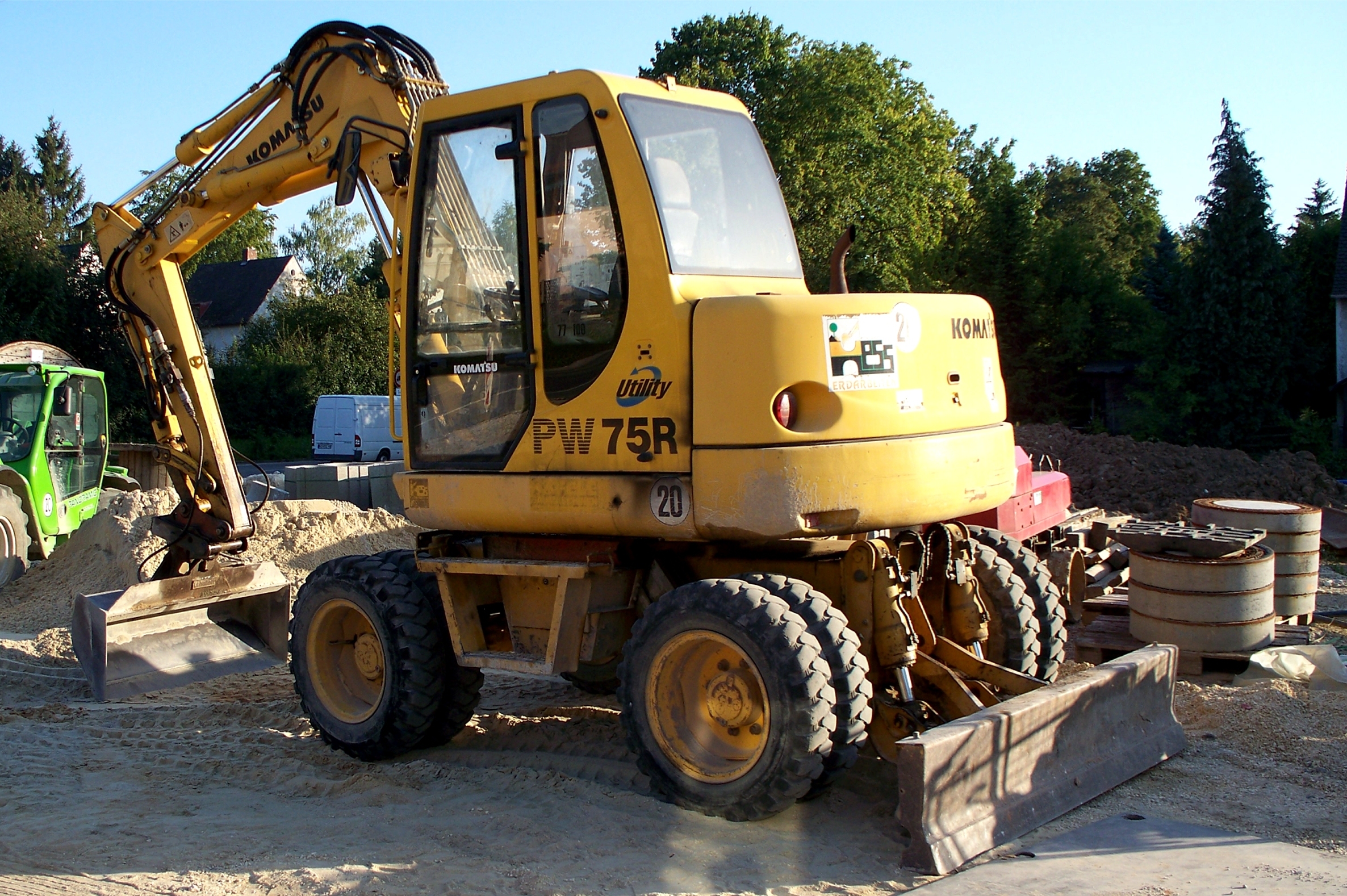

1. Prologue: One Excavator and a Nation's Construction Sites
In China, there is one index that economists, policymakers, and even stock investors cite again and again, treating it as a barometer of the Chinese economy's health—it is not GDP, not electricity consumption, nor the PMI, but the "Excavator Index." Created by SANY on the basis of an industrial internet platform and connected to more than 500,000 pieces of construction equipment nationwide, this index uses the utilization rates and average operating hours of excavators, road machinery, concrete machinery, and lifting equipment to sketch out, in real time, just how busy China's construction sites are. When the average monthly operating time of excavators rises to 72.6 hours and the utilization rate returns to 61%, people know: China's infrastructure is in motion, and the engine of the economy is turning.
To measure a nation's economy by the utilization rate of a single excavator says a great deal in itself about the weight construction machinery carries in China. Construction machinery—excavators, loaders, cranes, concrete pump trucks, bulldozers, aerial work platforms, forklifts—is the "mother machine" of all infrastructure. Every inch of the highways, high-speed rail, bridges, ports, cities, and mines China has built over the past several decades was dug and hoisted out, shovel by shovel and lift by lift, by these steel behemoths. The reason China could become an "infrastructure powerhouse" lies precisely in a construction machinery industry that is the largest in scale and most complete in range in the world.
And the story of this industry itself is more worth writing about than any of the projects it builds. It is the sample of heavy industry in which Chinese manufacturing has traveled the furthest—and come closest to the summit—in its journey from "following" to "running alongside," from "the world's factory" to "the world's brands." In 2025, the "Yellow Table" of the UK's KHL Group (the most authoritative ranking of global construction machinery manufacturers by sales revenue) showed that global construction machinery sales rose to a record high of USD 246.6 billion. On this list, XCMG, with sales of USD 14.2 billion, overtook America's John Deere to rise to third place globally; SANY ranked sixth; and Zoomlion held onto tenth. KHL's assessment was that China's SANY, XCMG, and Zoomlion "have broken into the established order and become some of its long-term leaders." An industry that only a few decades ago was still playing second fiddle to foreign brands and got its start through imitation has now sent three of its companies into the global top ten.
But this story is far from a simple triumphal march. When we zoom in, we see a more complex and more truthful picture: at the level of the complete machine (the OEM machine), China has already drawn level with, and in places has taken the lead—dominant globally in concrete pump trucks, essentially complete in domestic substitution for excavators, first in the world in large-tonnage cranes, first in the world in forklift output, and with the penetration of electric loaders bursting through 50% within a single year. Yet once we go deeper into the machine's "heart" and "joints"—high-end hydraulic pumps and valves, large-bore engines, high-end sensors and electronic controls—China still relies on imports for a considerable portion and is still fighting a "positional war." Caterpillar, the world's largest construction machinery manufacturer, uses a patent wall built up over a century to control more than 90% of core technologies such as engines and hydraulic systems, and relies on a brand premium of "costs more but is worry-free and holds its value" to maintain profit margins that Chinese companies still struggle to match. A single Caterpillar's revenue is roughly twice the combined total of China's three giants, its net profit roughly three times, and its market capitalization roughly nearly five times.
This is the story this article sets out to tell—China's construction machinery industry stands at "the last mile between big and strong." It is already "big" enough: the world's largest producer and one of its largest markets, with exports growing from USD 21.0 billion in 2020 to USD 52.86 billion in 2024. It is also growing "strong": globally leading in complete machines, riding through cycles by going global, and overtaking by switching lanes through electrification. But to be truly "strong"—to climb to the summit that Caterpillar occupies—it is still one last mile short: full autonomy in core components, genuine penetration of high-end markets, and the final leap of the brand premium.
This last mile happens to be the hardest mile. It is no longer a road that can be finished by relying on scale, on cost-performance, or on "surrounding the cities from the countryside." Rather, it requires meeting the century-old giants head-on in the very hardest places—core technology, brand trust, and full-lifecycle service. In fifty thousand words, this article will start from the ranking on the global chessboard, pass through the category breakthroughs of excavators, pump trucks, cranes, and forklifts, through the overseas expeditions and cross-border acquisitions of SANY, XCMG, and Zoomlion, through Caterpillar's moat and China's "big but not strong" pain in components, through the lane-switching overtaking of electrification, unmanned mines, and lithium-battery synergy, through the roller coaster of a strongly cyclical industry and its bottoming out and rebound, and finally return to that core proposition—whether China's construction machinery can finish the last mile from catching up to running alongside, and then to reaching the summit.
This is not merely the fate of one industry; it is a microcosm of the grand ascent of Chinese manufacturing from "big" to "strong." Construction machinery has traveled the furthest and is closest to the peak, and therefore the "last mile" problem it faces has appeared earliest and most clearly. To understand this last mile of China's construction machinery is to understand what Chinese manufacturing truly has to surmount on its road to the summit. And that excavator, which measures a nation's construction sites, is at this very moment pushing the industry it belongs to toward the pass that is the hardest to cross—and the most worth crossing.
2. What Is a Piece of Construction Machinery: The Value Chain of the Complete Machine and Core Components
To understand the predicament of China's construction machinery—"big but not yet dominant"—we must first take a piece of construction machinery apart and see its value chain clearly: see where the value truly hides, see which links China has mastered, and which links leave it beholden to others.
Take the most typical case, the excavator. An excavator can be roughly divided into three layers. The outermost layer is the "complete machine"—the body structure, boom, bucket, tracks, and cab, the parts that the complete-machine manufacturer (the OEM, such as SANY or XCMG) designs, welds, and assembles itself. The middle layer is the "three major core components"—the engine (power), the hydraulic system (the transmission and control of force), and the electronic control system (the brain and nerves). The innermost layer is the key elements inside these core components—high-end hydraulic pumps, multi-way valves, hydraulic motors, large-bore engines, high-end sensors, and control chips. The further in you go, the higher the technical threshold, the thicker the profit, and the harder it is to localize.
This stratification reveals a cruel law of the construction machinery value chain—the threshold of the complete machine is relatively low; the threshold of core components is the real moat. Building an excavator's body and assembling the various parts together is something Chinese companies have long done with ease; but the most valuable and hardest-to-build part of a high-end excavator is its hydraulic system and engine. There was once a widely circulated saying: in high-end construction machinery, "90% of the hydraulic components are beholden to others, and 70% to 80% of the profit is taken by foreign hydraulics manufacturers." OEMs toil to build complete machines, compete on price, and fight for market share, yet the lion's share of the profit is taken by the upstream hydraulics and engine giants—this is the "smile curve" of the construction machinery value chain: high profits at the two ends (core components, brand and service), thin profits in the middle (complete-machine manufacturing).
Why is the hydraulic system so critical and so difficult? Hydraulics is the way construction machinery transmits force—the engine's power is converted through the hydraulic pump into high-pressure oil, which is then distributed by the multi-way valve to the various hydraulic cylinders and motors, driving the boom to rise and fall, the bucket to open and close, and the tracks to move. The performance of the hydraulic system directly determines the force, precision, efficiency, and reliability with which an excavator does its work. And the three major high-end hydraulic components—the hydraulic pump, the multi-way valve (main control valve), and the hydraulic motor—demand extremely high precision and extremely difficult manufacturing processes, and the global high-end market has long been monopolized by a handful of giants: Germany's Bosch Rexroth, Japan's Kawasaki Heavy Industries, and America's Parker Hannifin and Eaton. China's excavators, especially the high-end models in the medium-to-large tonnage range, once relied essentially entirely on imports for their high-end hydraulic components—this was the most central and most painful weak spot in China's construction machinery being "big but not strong."
The engine is another core. The engine of construction machinery (mostly diesel) determines the complete machine's power, fuel consumption, emissions, and reliability. China's degree of localization in engines is higher than in hydraulics—Weichai Power, Yuchai, and others are already important engine suppliers; but in the high-end large-bore, high-horsepower segment (such as the engines used in large mining trucks and large excavators), there is still a considerable degree of imports and foreign-joint-venture dominance. Take data-center backup generators—which share the same lineage as the high-end power used in construction machinery and mining machinery—as an example: in 2024, imported engines accounted for 69% of the domestic market, joint ventures for 14%, and domestic makers for only 17%, with Cummins, Caterpillar, MTU, and others holding a long-standing monopoly.
Electronic controls and sensors, meanwhile, are the "brain and nerves" of the intelligent era of construction machinery. As construction machinery moves toward electrification, intelligence, and unmanned operation, the importance of electronic control systems and various sensors has risen sharply. And this happens to be another glaring weak spot for China—imports account for about 80% of medium-to-high-end sensors, imports of sensor chips run as high as 90%, and about 96% of the sensors required by high-end equipment rely on imports. The "chokepoint" of electronic controls and sensors is a link that must be filled in as construction machinery upgrades toward intelligence.
Once this value chain is understood, the predicament of China's construction machinery becomes clear: China has firmly mastered the "complete machine" layer and leads the world in complete-machine manufacturing; but at the "core components" layer, especially the innermost links of high-end hydraulics, large-bore engines, and high-end sensors and electronic controls, it is still catching up and still beholden to others. This is the technological root of being "big but not yet dominant"—China can build the most, and the best, complete machines in the world, yet it has not fully mastered the most valuable and most difficult "heart" and "nervous system" inside those machines.
And the other end of the value chain—brand and service—is yet another hurdle China's construction machinery must clear. Caterpillar's moat is not only core technology, but also its dealer network spanning the globe, its full-lifecycle service system (service revenue accounts for about 39% of its revenue), and the brand trust it has accumulated over a century. Construction machinery is a heavy-asset, long-cycle production tool; what the user buys is not just a machine, but the reliability, the residual value, and the on-call after-sales service behind it. This system of brand and service is another weak spot that Chinese companies are filling in—but have not yet fully filled—on the road to going global.
So, to understand China's construction machinery, one must look at both of these ends at the same time: core components (the upstream core of the value chain) and brand and service (the high end of the downstream value chain). These two ends are precisely the two fortresses that China's construction machinery must storm to go from "big" to "strong" and finish the last mile. As for the complete-machine manufacturing in the middle, China has already taken it. All the stories that follow in this article—category breakthroughs, overseas expeditions, the electric lane-switch, the component siege—come down, in the end, to this one core proposition: "how to move from mastering the middle to mastering the two ends." This is the value chain of a piece of construction machinery, and the compulsory question it poses to Chinese manufacturing.
3. The Global Chessboard: The Ranking of Cat, Komatsu, and China's Big Three
To position China's construction machinery industry, the most intuitive way is to look at where it sits on the global chessboard. And the most authoritative yardstick for measuring that seat is the "Yellow Table" published each year by the UK's KHL Group—it ranks the world's top 50 construction machinery manufacturers by sales revenue and is recognized as the industry's most authoritative gauge of the global landscape.
First, look at the global chessboard sketched by the 2026 Yellow Table (covering 2025 sales). That year, global construction machinery sales rose to USD 246.6 billion, up 3.8% year on year, a record high. The top of the list looked like this: in first place, America's Caterpillar, with sales of USD 37.5 billion, accounting for 15.2% of the world and holding firmly at the top; in second place, Japan's Komatsu, with about 11% of the world; in third place, China's XCMG, with sales of USD 14.2 billion, accounting for 5.8%—this year XCMG overtook America's John Deere to rise to third globally; further down, China's SANY ranked sixth, and Zoomlion held onto tenth (with Sweden's Sandvik, at USD 6.9 billion in sales, pressing closely behind).
This list distills the fruits of China's construction machinery climb over several decades—of the global top ten, China occupies three seats (XCMG third, SANY sixth, Zoomlion tenth). Bear in mind that just some twenty years ago, China's construction machinery was still essentially the domain of foreign brands, and local companies were unknown on the global rankings. Today, KHL sums up the standing of China's big three in this one sentence: they "have broken into the established order and become some of its long-term leaders." From off the list, to the global top ten, to a company charging into the top three—this is a real and quantifiable leap that China's construction machinery has completed on the global chessboard.
But this same list also marks the distance between China and the summit. Caterpillar's 2025 revenue was about USD 67.6 billion, a record; this scale is roughly 4.8 times that of XCMG (about USD 14 billion) and 5.4 times that of SANY (about USD 12.4 billion). Even if you add together the revenues of the three Chinese leaders—XCMG, SANY, and Zoomlion—the total is still smaller than Caterpillar alone. Japan's Komatsu, with full-fiscal-year consolidated net sales of about JPY 4.13 trillion (over about USD 27 billion), is also close to twice the size of XCMG. In terms of global market share, in 2025 Caterpillar held about 15.9%, firmly first, while China's three giants (XCMG + SANY + Zoomlion) together held about 12.4%—the sum of the three has not yet caught up with Cat alone. China's construction machinery has entered the global top ten, but it is still an order of magnitude short of the summit in scale.
Yet there is a more intriguing signal on the chessboard—the divergence in growth rates. In 2025, Caterpillar's revenue grew about 4% and Komatsu's about 0.7%, and the profits of both were falling: Caterpillar's operating profit dropped about 15% and Komatsu's about 13.7%, both dragged down mainly by US tariffs (Komatsu estimated the tariff impact at about JPY 81.6 billion). By contrast, among China's big three, SANY's revenue grew 14.4% and net profit surged 41.2%, XCMG grew 8.37%, and Zoomlion grew 14.58%—revenue rising, and profit rising even faster. On one side, the giants' growth is slowing and profits are under pressure; on the other, Chinese companies are growing rapidly and their profits are jumping. This scissors gap in growth rates is the most important dynamic on the global chessboard—it means the gap between China and the giants is narrowing at a visible pace.
The landscape of the global chessboard also has a geopolitical undertone. The profit declines of Caterpillar and Komatsu come in large part from US tariffs—the backlash of global trade friction on the old-line giants. Chinese companies, meanwhile, face a tariff barrier of about 25% in the US market (Japan and the US mutually exempt each other's tariffs), and breaking through to greater share in North America—that vast, high-margin market—is extremely difficult; take XCMG, whose penetration in the high-end markets of Europe and America is less than 2%. The global chessboard is not purely commercial competition; it is also overlaid with the variables of tariffs and geopolitics—the giants are troubled by tariffs, while Chinese companies are constrained by market access.
Taken together, China's construction machinery position on the global chessboard can be summed up this way: already in the global front rank, but not yet at the summit; still an order of magnitude behind in scale, but rapidly catching up in growth; already running alongside in complete machines, but still shallow in high-end market penetration. That XCMG, SANY, and Zoomlion hold firmly in the global top ten is proof of China's construction machinery being "big" and "growing strong"; while the nearly fivefold scale gap with Caterpillar and the less-than-2% high-end penetration in Europe and America are the yardsticks of its being "not yet dominant" and one last mile short of the summit.
This chessboard sets the coordinates for all the analysis that follows in this article—China's construction machinery is neither a pursuer starting from zero, nor yet a summit-conquering hegemon, but a "runner-alongside" that has already broken into the global front rank, is rapidly closing in on the peak, yet is still one leg short. Its story is the story of how a runner-alongside breaks through by category, mounts expeditions into overseas markets, storms the strongholds of core technology, and switches lanes in electrification, trying to finish the last mile from running alongside to reaching the summit. And this last mile is precisely the chasm on the global chessboard between China and Caterpillar that has not yet been crossed. Next, we begin with the categories in which China's construction machinery runs alongside and even leads, and see how China, category by category, has propelled itself into the global front rank.
4. Excavators: A Sample of Domestic Substitution
Of all construction machinery categories, the excavator is the most central and the most telling—it is both the "sales king" and the "profit king" of construction machinery, and the most successful and most typical sample of domestic substitution in China's construction machinery. The story of excavator localization is a key to understanding how China's construction machinery went from "the domain of foreign brands" to "the home ground of domestic brands."
First, look at today's landscape. In 2025, China's excavators (domestic sales plus exports) sold 235,257 units in total, up 17% year on year—of which domestic sales were 118,518 units (up 17.9%) and exports 116,739 units (up 16.1%), with domestic sales and exports almost evenly split. And in this vast market, the protagonists have long been domestic brands—SANY's excavators have ranked first in domestic sales for 15 consecutive years, and SANY, XCMG, and Zoomlion continue to erode the shares of Hitachi, Komatsu, and Caterpillar in China and even overseas. Today's Chinese excavator market is the home ground of domestic brands.
But turn the clock back some twenty years and the situation was the opposite. In the early days of China's excavator market, it was almost entirely the domain of foreign brands—Japan's Komatsu and Hitachi, South Korea's Doosan and Hyundai, and America's Caterpillar firmly held the overwhelming majority of the Chinese excavator market's share, especially in the mid-to-high end. For a long stretch, domestic excavators could only barely gain a foothold in the low-end market through low prices, lagging comprehensively in technology, quality, and brand. From "foreign-brand monopoly" to "domestic home ground," China's excavators traveled an arduous road of domestic substitution.
How was this road of domestic substitution paved? It relied on several keys. First, the maturing of complete-machine manufacturing capability—Chinese companies first built up solid design, manufacturing, and assembly capabilities for the complete machine, making excavators better and more reliable. Second, the advantage of cost-performance—drawing on China's complete manufacturing supply chain and cost advantage, domestic excavators steadily captured the market with lower prices and comparable or even better performance. Third, the closeness of service—domestic brands have denser service networks at home, respond faster, and better understand the needs of Chinese users. Fourth, and most crucial, the gradual localization of core components—especially hydraulic components (the breakthroughs of Hengli Hydraulic and others, detailed later), which freed domestic excavators from the predicament of "profit taken by the upstream" and gave them the confidence to keep investing and cutting prices. These factors compounded to let domestic excavators complete, step by step, the substitution of foreign brands.
The success of excavator domestic substitution has an even deeper significance—it proves that the path of China's construction machinery "from catching up to running alongside" works. The excavator is a core category in construction machinery that is technology-intensive and fiercely competitive, where foreign giants have cultivated for many years and built deep moats. That China could complete domestic substitution in such a category, make domestic brands number one at home, and expand overseas, shows that China's construction machinery caught up not through the low end and subsidies, but through genuine product strength and supply-chain capability. Excavator domestic substitution is a microcosm and a herald of the overall rise of China's construction machinery.
And the excavator market is also the best window for observing the cycles of the Chinese economy and the construction machinery industry. The excavator is a "leading indicator" of infrastructure, real estate, and mining—the moment a project breaks ground, the first thing needed is an excavator. So the trend of excavator sales directly reflects the ups and downs of China's infrastructure investment, which is why the "Excavator Index" became an economic barometer. In terms of cycles, China's domestic excavator sales peaked in 2021 (about 180,000 units), then, amid the deep downturn in real estate, posted two consecutive years of negative growth, until they stopped falling and rebounded in 2024 (up 11.7%), and in 2025 entered a dual-wheel recovery of "domestic sales bottoming out and rebounding plus continued exports"—up 17% for the full year, and in the first half of 2026, monthly volumes broke 20,000 units for four consecutive months, with cumulative growth of 26.4%. This round of bottoming out and rebound in the excavator market is a key signal that China's construction machinery industry is emerging from its downturn.
Exports, meanwhile, are an increasingly heavy stroke in the excavator story. In 2025, China's excavator exports (116,739 units) were already close to domestic sales, accounting for nearly half of total sales; in the first half of 2026, excavator exports continued their high growth of 33.5%. From early days of merely substituting foreign brands in the domestic market, to exporting excavators in large numbers to the world today—China's excavator domestic substitution has upgraded from "holding the domestic market" to "going global." Chinese-made excavators are appearing more and more on construction sites in Southeast Asia, Africa, the Middle East, South America, and even Russia, upgrading from an early "budget supplement" to the "mainstream choice" of local users.
The excavator domestic-substitution sample therefore carries a twofold lesson. On one hand, it proves that China's construction machinery going "from catching up to running alongside" in a core category is real and feasible—by relying on product strength, the supply chain, and the localization of core components, China can complete the substitution of foreign brands in the fiercest categories. On the other hand, it also points to the direction of the next leg—from domestic substitution to global expansion, from taking the home market to competing head-on with Cat and Komatsu in the global market. The road the excavator has paved is precisely the road the entire construction machinery industry of China must travel. And beyond excavators, China's construction machinery has some categories that have traveled even further than excavators—they have not only completed domestic substitution but have achieved global dominance. The most dazzling of these is the concrete pump truck.
5. Concrete Pump Trucks: China's True Global Dominance
If the excavator is the sample of China's construction machinery "domestic substitution," then the concrete pump truck is the sample of China's construction machinery "global dominance"—in this category, Chinese companies not only substituted foreign brands, but acquired foreign brands and took the top seat in the world. The story of the concrete pump truck is the most powerful proof of China's construction machinery crossing over from "catching up" to "leading."
First, look at today's landscape. In the global truck-mounted concrete pump truck market, the landscape is highly concentrated—Putzmeister (now part of SANY), Zoomlion, SANY, and XCMG together hold more than 70% of the share; and the Asia-Pacific region accounts for more than half of the global concrete pump truck market. Among them, SANY is the world's largest concrete pump truck manufacturer—its concrete machinery (pump trucks, trailer pumps, mixer trucks) has held the world's number-one brand position for 15 consecutive years; Zoomlion's pump trucks rank in the global top three in sales, and its long-boom pump trucks have continued to rank first in the world in sales. In the concrete pump truck category, Chinese companies already hold absolute global dominance.
Why is the concrete pump truck worth discussing on its own? Because it represents the most thorough counterattack of China's construction machinery—from being suppressed by the foreign giants of this category, to turning around and taking those giants into its own pocket. The concrete pump truck is a highly technology-intensive category, especially the long-boom pump truck (the longer the boom, the higher the demands on materials, structure, and control); the world's top technology once lay in the hands of Germany's Putzmeister (known in the trade as "the Elephant") and Schwing. These two German companies were the hidden champions of the concrete pump truck field, representing the highest level in the world. And Chinese companies were then the pursuers, lagging in high-end technologies such as long booms.
The turning point came in 2012. That year, Chinese construction machinery companies, through a series of world-shaking acquisitions, seized in one stroke the world's top brands in the concrete pump truck field. In January 2012, SANY, together with CITIC Industrial Fund, acquired 100% of the equity of Germany's Putzmeister ("the Elephant"), with SANY contributing EUR 324 million for a 90% stake—this was the first time a Chinese company acquired a German "hidden champion" of this caliber, and Harvard Business School once included it as a classic case. In July of the same year, XCMG completed the transfer of a 52% controlling stake in Germany's Schwing. And earlier still, in 2008, Zoomlion had acquired the Italian concrete machinery giant CIFA for EUR 271 million. Within a few years, the three Chinese leaders took the three top brands of the global concrete pump truck field—Putzmeister, Schwing, and CIFA—all into their own pockets.
The significance of this series of acquisitions cannot be overstated. It marks China's construction machinery shifting from "catch-up-style internationalization" (exporting its own products) to "acquisition-and-integration-style internationalization" (acquiring the world's top brands to gain technology and channels). Through the acquisition of Putzmeister, SANY gained not only "the Elephant's" brand and global channels, but also absorbed its top technology in long-boom pump trucks—this gave SANY's concrete machinery wings, securing its global number-one position. Acquiring these German and Italian hidden champions let Chinese companies leap over the gap in high-end concrete pump truck technology in a single stride, standing directly at the top of the world. The concrete pump truck thus became the first, and most thoroughly realized, category of "global dominance" in China's construction machinery.
The global dominance of the concrete pump truck also reveals a distinctive path of China's construction machinery rise—"buy the top, digest and absorb, then overtake and lead." Unlike the excavator's "independent substitution" (gradually substituting foreign brands with one's own technology and products), the concrete pump truck took the road of "acquisition and digestion"—directly acquiring the world's top brands to gain technology, brand, and channels, then digesting, absorbing, integrating, and upgrading, and ultimately achieving global dominance. This road is an efficient leapfrog path in situations where the core-technology gap is relatively large and the target brand is acquirable. SANY's acquisition of Putzmeister is the most successful example of this road—it turned SANY from a pursuer into the world's number one in concrete pump trucks in a single leap.
But it must also be seen that the global dominance of the concrete pump truck is, in a sense, a "special case"—its success owed to the fact that there happened to be top brands like Putzmeister, Schwing, and CIFA available to acquire at the time, and that Chinese companies seized the window after the 2008 financial crisis when these European companies were cheaply valued and willing to sell. Such acquisition opportunities do not always exist in other categories (especially categories with powerful giants unwilling to sell, such as the excavators and engines dominated by Caterpillar). So the "acquisition and digestion" path of the concrete pump truck, though successful, is hard to simply replicate across all categories. The rise of China's construction machinery in other categories must still rely more on the excavator-style "independent substitution"—relying on its own technology and supply chain to catch up, run alongside, and overtake, step by step.
In any case, the concrete pump truck is the category China's construction machinery can be most proud of—it proves that Chinese companies can not only catch up, but acquire the world's top players, digest and absorb them, and overtake to lead. The story of SANY's "Elephant" is a milestone in China's construction machinery going from "the world's factory" to "the world's brands." And beyond the concrete pump truck, China's construction machinery has another category that has achieved global leadership—large-tonnage cranes, where another Chinese champion stands: XCMG.
6. Cranes and Large Tonnage: XCMG's World's First
Beyond the concrete pump truck, China's construction machinery has another category that has achieved global leadership—cranes, especially large-tonnage cranes. And the Chinese champion of this category is XCMG. XCMG's large-tonnage cranes are a marker of China's construction machinery achieving world-first status in "great-power heavy equipment"-class machinery.
First, look at XCMG's standing in cranes. XCMG's lifting machinery (including wheeled cranes, crawler cranes, and tower cranes) holds firmly at first in the world in comprehensive strength. And what best represents XCMG's strength is its super-large-tonnage cranes—the world's largest-tonnage crane built by XCMG reaches the 1,000-tonne class, ranking first in the world. These super-large-tonnage cranes are used in scenarios with extremely high lifting demands, such as wind power (hoisting enormous wind turbines) and nuclear power (hoisting nuclear power equipment). To be able to build the world's largest-tonnage crane is in itself a top-tier proof of a nation's heavy equipment manufacturing capability—it requires reaching the world's highest level in every aspect: structural design, materials, hydraulics, and control.
Why do large-tonnage cranes matter? Because they are the representatives of "great-power heavy equipment"—they take on the heaviest, hardest, and most critical hoisting tasks. A giant wind turbine for wind power, a giant structural member of a bridge, the core equipment of a nuclear power plant—all require super-large-tonnage cranes to be hoisted into place. These super-large-tonnage cranes are indispensable equipment for major national projects (wind power, nuclear power, bridges, petrochemicals) and a yardstick for measuring a nation's heavy equipment manufacturing strength. That XCMG can achieve world-first status in the 1,000-tonne class means China has already stood at the top of the world in this "great-power heavy equipment"-class category.
XCMG's lead in cranes is also reflected in its resilience through cycles. In fiscal year 2025, XCMG's heavy crane business (XCMG Heavy) achieved positive revenue growth for four consecutive years amid a domestic downturn cycle, with net profit sharply improving—during the years when the domestic construction machinery market was under overall pressure, XCMG's crane business showed strong resilience. Behind this is, on one hand, the product competitiveness of XCMG's cranes, and on the other, the pull of emerging demand—especially the explosion of wind power, whose massive demand for hoisting wind turbines directly drove sales of XCMG's large-tonnage cranes and tower cranes. This wave of new-energy wind power became an important growth engine for XCMG's cranes.
XCMG's world-first cranes and SANY's world-first concrete pump trucks together form the first echelon of China's construction machinery "globally leading categories." These two categories have one thing in common—they are both technology-intensive, high-threshold high-end categories, and that Chinese companies can achieve world-first status in them proves that the strength of China's construction machinery lies not only in the scale of the low-to-mid end, but has already reached the summit of the high end. SANY's pump trucks (through acquisition and digestion) and XCMG's large-tonnage cranes (through independent hard work) represent the two paths of China's construction machinery breaking through in high-end categories, and also represent the most dazzling fruits of China's construction machinery "growing strong."
But to be objective, there is also divergence within the crane category. XCMG has achieved world-first status in large-tonnage cranes (super-large-tonnage wheeled and crawler types), and Zoomlion is also very strong in special lifting applications; but in some crane sub-segments (such as truck cranes and crawler cranes in certain tonnage ranges), the precise global shares of Chinese and foreign companies each have their strengths, and the landscape is still evolving. XCMG's "world's first" is most prominent and most representative at the pyramid's tip of super-large tonnage—this is the hardest and most representative part of its strength. And in the all-around competition of the entire crane category, Chinese companies are already one of the world's most important forces, moving from partial leadership toward comprehensive leadership.
XCMG's large-tonnage cranes are also a sample of China's construction machinery being deeply bound to new energy and new infrastructure. The explosion of wind power directly drove demand for XCMG's large-tonnage cranes and tower cranes—as the world's largest wind power market and the largest manufacturer of wind power equipment, China's enormous wind power installation demand provides XCMG's large-tonnage cranes with broad application scenarios and opportunities to iterate. This combination of "new-energy demand plus heavy-equipment supply" is a distinctive advantage of China's construction machinery relative to other countries—the enormous and leading downstream demand (wind power, nuclear power, new infrastructure) provides China's heavy construction machinery with application scenarios and growth soil that other countries can hardly match. XCMG's world-first large-tonnage cranes are, in a sense, precisely lifted up by China's wave of new energy and new infrastructure.
XCMG's world-first status writes yet another footnote to the high-end breakthrough of China's construction machinery. It proves that China's construction machinery can not only complete domestic substitution in high-volume categories like excavators, and not only achieve global dominance in pump trucks through acquisition, but can also, through independent hard work, achieve world-first status in "great-power heavy equipment"-class high-end categories like large-tonnage cranes. SANY's pump trucks and XCMG's cranes are two banners of China's construction machinery "growing strong." And beyond these two dazzling categories, China's construction machinery has another category often overlooked yet equally in the global front rank—forklifts, another of China's construction machinery's "hidden world firsts."
7. Forklifts and Aerial Work Platforms: Two More Global No. 1s
Beyond the "star categories" of excavators, pump trucks, and cranes, China's construction machinery has two more categories that are often overlooked yet have likewise reached the top ranks globally—forklifts and aerial work platforms (AWPs). They are not economic barometers like excavators, nor "heavyweight instruments of national strength" like large-tonnage cranes, but they are equally powerful evidence of China's construction machinery being "big and growing strong," and they stand out especially when going global.
Start with forklifts. Forklifts (industrial vehicles) are indispensable handling equipment for warehousing, logistics, and manufacturing—a large and stable market. And China is already the world's largest producer of forklifts: in 2024, Chinese factories produced 5.4 million forklifts with an output value of 14.2 billion U.S. dollars and exported 3.2 million units. Even more notable, China's forklift companies have already broken into the global front ranks: sales by Anhui Heli and Hangcha have already surpassed Germany's KION Group, ranking second and third worldwide (the global No. 1 is Japan's Toyota Industries, which sold 282,000 units in 2024, about 14.34% of the world market). Hangcha's global sales exceeded 330,000 units in 2025, roughly 13% of the world market, with products sold to more than 180 countries. These two Chinese companies, Heli and Hangcha, are nearly a "duopoly" at home and have charged into the global top three.
The significance of the forklift category is that it is yet another example of China's construction machinery being "big and growing strong"—China is not only the world's largest forklift production base (big), it has also sent domestic companies into the global top three (growing strong). Moreover, forklifts are highly globalized—Hangcha sells to more than 180 countries and China exports 3.2 million forklifts—showing that Chinese forklifts have already gained a firm foothold in global markets. Global leadership in forklifts, while not as attention-grabbing as excavators or pump trucks, is equally a reflection of the overall strength of China's construction machinery: in this large and fully competitive category, Chinese companies have reached the global top three on the strength of product capability and cost-performance.
Now aerial work platforms (AWPs). Aerial work platforms—scissor-type and boom-type lifting platforms used for elevated work in construction, municipal, warehousing, and similar settings—are a category that has grown rapidly in recent years. China has already become the world's largest AWP market and production base, with leading companies including Zoomlion, XCMG, and SANY, as well as specialist players such as Sinoboom, Zhejiang Dingli, and LiuGong Heavy Machinery. What's more, China's AWPs lead in electrification—as of the end of 2024, China had the largest number of zero-emission (electric) AWP models (33 for XCMG, 21 for SANY, 18 for LiuGong). AWPs are yet another category in which China's construction machinery has reached the global front ranks and leads in electrification.
The going-global story of AWPs is especially compelling, and especially telling about the opportunities and challenges of China's construction machinery going global. Take the leader, Zhejiang Dingli, as an example—it is heavily dependent on exports (overseas revenue reached 75% in 2025) and is a typical export-oriented company. It posted revenue of 8.575 billion yuan and net profit of 1.899 billion yuan in fiscal 2025, with growth driven precisely by overseas markets (especially Europe and the U.S.) and the ramp-up of boom-type products. But the going-global path of AWPs has also run into trade barriers in Europe and the U.S.—the EU and the U.S. successively launched anti-dumping and countervailing (AD/CVD) investigations into China's mobile elevating work platforms. This is a classic case of China's construction machinery encountering trade barriers when going global, and it is a theme to be developed specifically below.
The AD/CVD experience of AWPs also reveals a harsh reality of China's construction machinery going global: when a Chinese category grows big and strong in the global market and seizes share from European and American companies, it draws trade-barrier retaliation. China's AWPs rapidly seized European and American market share on the strength of cost-performance and electrification advantages, and immediately drew AD/CVD action from the EU and the U.S. This follows the same logic as the trade barriers that Chinese advantage industries such as drones, photovoltaics, and lithium batteries have met in Europe and America—the stronger Chinese manufacturing becomes and the more it touches European and American industrial interests, the more likely it is to run into a trade-barrier blockade. AWPs are the category within China's construction machinery that earliest and most intensively experienced this "blocked because strong" dynamic.
Forklifts and AWPs, these two "invisible global No. 1s," fill in two important pieces of China's global map in construction machinery. Together with excavators (the domestic-substitution example), pump trucks (the global-dominance example), and large-tonnage cranes (the instrument-of-national-strength example), they sketch out the full picture of China's category breakthroughs in construction machinery—from the volume categories of excavators and forklifts, to the high-end pump trucks and cranes, to the emerging AWPs, China's construction machinery has reached the global front ranks or even global No. 1 in nearly all major categories. This all-category global leadership is the most comprehensive proof of China's construction machinery being "big" and "growing strong."
But category-level global leadership is only half the story of China's construction machinery. What supports this leadership across categories, and who created it? The answer is that handful of leading Chinese construction machinery companies—SANY, XCMG, Zoomlion, LiuGong. Starting from China's towns and countryside, they have grown step by step into global top-ten giants, and they are the true protagonists of the rise of China's construction machinery. Next, we step into these companies and look at each of their stories—beginning with SANY, the legend that grew from a welding materials plant in Lianyuan, Hunan, into the world's sixth-largest.
8. SANY: From a Welding Plant to the World's Sixth-Largest
Among the leading companies of China's construction machinery, SANY is the most legendary. Starting from a tiny welding materials plant in Hunan, it has grown into the world's sixth-largest construction machinery giant and the world's largest maker of concrete pump trucks—the story of SANY is a specimen of the rise of China's privately owned construction machinery companies.
Look first at SANY's report card today. In fiscal 2025, SANY posted total operating revenue of 89.7 billion yuan, up 14.4% year over year; net profit attributable to the parent of 8.41 billion yuan, a sharp 41.2% increase—the highest net profit in China's construction machinery industry. Its gross margin was about 27.54% and net margin about 9.51%, with operating cash flow reaching 19.98 billion yuan, up 34.8%. By business line, SANY's concrete machinery (pump trucks, trailer pumps, mixer trucks) brought in about 15.74 billion yuan in 2025, ranking No. 1 among global brands for 15 consecutive years; excavating machinery brought in about 34.54 billion yuan, with domestic sales ranking No. 1 for 15 straight years and already among the global leaders in excavator sales. On KHL's global Yellow Table, SANY ranks sixth in the world. This is SANY today—a construction machinery giant with revenue approaching 90 billion, net profit above 8 billion, and global leadership in multiple categories.
And SANY's starting point was a welding materials plant in Lianyuan, Hunan. The SANY Group was founded by Liang Wengen and others; in its early years it was in the welding materials business, later moving into construction machinery (starting with concrete trailer pumps). From welding materials to concrete machinery, then to a full range of excavators, cranes, piling machinery, and more, SANY grew step by step into a leader of China's and the world's construction machinery. Its rise is a model of how a Chinese private enterprise grew big and strong step by step in the capital-heavy, high-barrier construction machinery industry through technological innovation, market grit, and international expansion.
A key step in SANY's rise was the 2012 acquisition of Germany's Putzmeister (the "Elephant"), mentioned earlier. This acquisition let SANY in one stroke acquire the world's top brand, technology, and channels in concrete pump trucks, securing its position as the world's No. 1 in concrete machinery. Acquiring Putzmeister was the watershed in SANY's move from "China leader" to "global leader"—it marked SANY's ability and boldness to integrate the world's top resources, and it marked the beginning of Chinese construction machinery companies stepping onto the global stage through M&A. SANY's global No. 1 in concrete machinery is built largely on this successful acquisition.
Another key to SANY's rise is its globalization and digital-intelligence layout. In globalization, SANY has pursued a "three-step" strategy, establishing five major manufacturing bases and 12 overseas sales regions; in 2025 its international business revenue was about 55.86 billion yuan, with the share rising to about 64%—overseas revenue now accounts for nearly two-thirds of SANY's revenue. In digital intelligence, SANY is a pioneer of smart manufacturing and the industrial internet within China's construction machinery—it has built about 35 smart factories worldwide, several of them certified as "Lighthouse Factories" by the World Economic Forum (its Indonesia plant is the first overseas Lighthouse Factory in China's construction machinery industry); it also incubated an industrial-internet platform (RootCloud) and the "Excavator Index." SANY's globalization and digital intelligence are the two pillars that keep it in the lead and drive its pursuit of Caterpillar.
SANY is also one of the leaders in electrification within China's construction machinery. Its electric excavator lineup spans 1 to 300 tons across as many as 15 models, and its electric mixer trucks, muck trucks, and dump trucks (equipped with CATL batteries) lead in sales. SANY has proposed benchmarking Caterpillar through "globalization + decarbonization + digital intelligence"—making electrification (decarbonization) an important direction for overtaking by switching lanes. SANY's deep cooperation with CATL, along with the layout of SANY Lithium Energy, has given it a head start in construction machinery electrification. Electrification is an important trump card in SANY's attempt to narrow the gap with Caterpillar, and even to overtake it around the bend.
But SANY also faces challenges and skepticism. First, the question of R&D investment—multiple analyses note that SANY's "R&D investment has declined for several consecutive years" in recent years; at the critical stage of its technological pursuit of Caterpillar, the direction of R&D investment bears watching (after all, the last mile to the summit depends precisely on sustained investment in core technology). Second, the vast gap with Caterpillar—SANY's revenue is about 12.4 billion U.S. dollars, only about one-fifth of Caterpillar's (67.6 billion dollars); to truly reach the summit, SANY still has a long way to go. Third, the challenge of the cycle—SANY's performance is still affected by the construction machinery industry cycle, and how to smooth the cycle through going global and diversification remains an ongoing task.
The story of SANY is the most vivid epitome of the rise of China's construction machinery. From a welding plant in Lianyuan to the world's sixth-largest and global No. 1 in concrete machinery; from chasing foreign brands to acquiring Germany's "Elephant"; from the Chinese market to a global layout with overseas accounting for 60%; from traditional manufacturing to Lighthouse Factories and the industrial internet—the road SANY has traveled is precisely the road of China's construction machinery moving from "big" to "strong," from "world factory" to "world brand." It has already reached the world's sixth spot, with only the final stretch left to the summit. And that final stretch—truly reaching the top and surpassing Caterpillar—requires sustained breakthroughs in core technology and the ultimate leap in brand premium. Whether SANY can complete this last mile matters not only to itself but to the entire dream of China's construction machinery reaching the summit. And beyond SANY, there is another Chinese giant with even larger revenue, firmly seated in the global top three—XCMG.
9. XCMG: Whole-Company Listing and the World's Third-Largest
If SANY is the most legendary private enterprise in China's construction machinery, then XCMG is the one with the largest scale and deepest roots—it is the industry revenue No. 1, the Chinese champion that charged into the global top three in 2025, and a heavy-industry giant that moved from state-owned-enterprise reform toward globalization.
Look first at XCMG's standing today. In fiscal 2025, XCMG Machinery posted operating revenue of 100.823 billion yuan, up 8.37% year over year, ranking No. 1 in revenue in China's construction machinery industry (the first to break through the 100-billion mark); net profit attributable to the parent was 6.572 billion yuan, up 8.96%; net operating cash flow was 14.142 billion yuan, a sharp 148.42% increase. And on KHL's 2026 global Yellow Table, XCMG, with sales of 14.2 billion U.S. dollars, surpassed America's John Deere to rise to third in the world—becoming the only Chinese construction machinery company in the global top three. Revenue of 100 billion, third in the world—XCMG has taken the top seat in China's construction machinery and stands in the world's first tier.
XCMG's foundation is its deep history and full-category strength. XCMG's history can be traced back a long way (its predecessor can be traced to a military arsenal during the War of Resistance), and it is one of the oldest and most deeply rooted companies in China's construction machinery industry. Over decades of development, XCMG has formed a full-category product system—cranes, excavating machinery, concrete machinery, road machinery, piling machinery, mining machinery, tower cranes, and more, all complete. Among them, XCMG's cranes hold firmly to global No. 1 (as noted earlier, its 1,000-ton-class large-tonnage crane is the world's best), the strongest trump-card category for XCMG. Full-category strength and the global No. 1 in cranes are the basis for XCMG's industry-first revenue and global third place.
A key node in XCMG's development history is the whole-company listing in 2022. In August 2022, XCMG Machinery absorbed and merged XCMG Group Construction Machinery Co., Ltd., completing a whole-company listing—injecting all the quality assets that had previously been scattered, such as excavating machinery, concrete machinery, mining machinery, and tower cranes, into the listed company. This whole-company listing was an important leap for XCMG from a traditional state-owned enterprise toward a modern, market-oriented enterprise, and it let XCMG's overall strength be fully reflected in the capital market. After the whole-company listing, XCMG has more complete assets, more modern governance, and more vigorous development—laying the foundation for its charge into the global top three.
Another main thread for XCMG is globalization. XCMG's globalization began in 2011, following a dual-drive path of "overseas acquisitions + self-built bases." On the acquisition side, XCMG acquired Germany's Schwing (concrete machinery), as well as Germany's FT, the Netherlands' AMCA, and other companies. On the self-built side, XCMG established overseas bases in Brazil, India, Uzbekistan, and elsewhere; in February 2024, XCMG announced an 80-million-U.S.-dollar investment to build a second plant in Nuevo León, Mexico, creating an integrated production network covering the Americas. By fiscal 2025, XCMG's overseas revenue share reached 48.2%, up about 3.4 percentage points year over year, with a marketing network covering more than 190 countries and regions. Moreover, XCMG's overseas gross margin (25.8%) is markedly higher than domestic (19.64%), showing the double-high feature of "high growth + high gross margin." Globalization is an important engine of XCMG's growth and profitability.
XCMG's global third place also carries a special significance—it is the Chinese company closest to "reaching the summit." XCMG ranks third globally, with only Caterpillar (first) and Komatsu (second) ahead of it. Although in terms of revenue scale XCMG (about 14 billion U.S. dollars) still has a marked gap from Caterpillar (67.6 billion dollars) and Komatsu (about 27-plus billion dollars), in ranking terms XCMG has already taken third place in the world and is the vanguard of China's construction machinery in its charge toward the global top two, and even the summit. Whether XCMG can continue to climb and narrow the gap with Komatsu and Caterpillar is the most direct focal point in China's construction machinery's dream of reaching the summit.
But XCMG likewise faces the challenges of the "last mile." First, penetration of high-end markets—XCMG's penetration rate in Europe and America's high-end markets is less than 2%, and to truly break through in the high-end markets dominated by Caterpillar and Komatsu, there is still a long way to go. Second, self-sufficiency in core components—like the whole industry, XCMG still has external dependence to overcome in core components such as high-end hydraulics and large-bore engines. Third, brand premium—XCMG's product capability is improving, but its brand premium and full-lifecycle service system still lag behind Caterpillar. These "last mile" challenges are ones XCMG must cross to move from world third toward the summit.
The story of XCMG is the most weighty representative of China's construction machinery being "big and growing strong." Revenue of 100 billion, world third, cranes No. 1 in the world, overseas share nearly half—this is ample proof of "big" and "growing strong." It is closest to the summit, yet it also clearly faces the "last mile" challenges of high-end penetration, core components, and brand premium. XCMG's climb is an epitome of the overall climb of China's construction machinery—already very high, but with the final and most difficult stretch still separating it from the peak. And beyond the two giants XCMG and SANY, there is another Chinese company that has taken the matter of "overseas exceeding domestic" the furthest of all—Zoomlion.
10. Zoomlion: The Turn to Overseas Exceeding Domestic
Among the leaders of China's construction machinery, Zoomlion is the one that has taken "internationalization" the furthest and turned the most resolutely. At the moment overseas revenue formally exceeded domestic revenue, Zoomlion completed a profound turn—from a Chinese construction machinery company into a globalized company whose revenue mainly comes from overseas. The story of Zoomlion is one of the most representative samples of China's construction machinery going global.
Look first at Zoomlion's report card. In fiscal 2025, Zoomlion posted operating revenue of 52.107 billion yuan, up 14.58% year over year; net profit attributable to the parent of 4.858 billion yuan, a sharp 38.01% increase; net operating cash flow of 4.874 billion yuan, up 127.53%. On KHL's global Yellow Table, Zoomlion held onto tenth place worldwide. By product, Zoomlion's cranes brought in 16.637 billion yuan (up 58%), concrete machinery 10.057 billion yuan (up 26%), and earthmoving machinery 9.672 billion yuan (up 45%)—rapid growth across multiple categories. But Zoomlion's most eye-catching feature is its overseas performance.
In fiscal 2025, Zoomlion's overseas revenue reached 30.515 billion yuan, up 30.52% year over year, with the overseas share reaching 58.56%—meaning Zoomlion's overseas revenue has already surpassed domestic revenue, accounting for nearly 60% of total revenue. Even more striking is the growth rate: Zoomlion's overseas revenue has grown at a compound annual rate of as much as 52% over the past four years, leading the entire industry. Zoomlion's overseas gross margin is about 30.78%, nearly 6 percentage points higher than domestic—a model of "high growth + high gross margin." By region, Zoomlion's revenue in Africa surged 157% year over year, with standout growth in Southeast Asia, Australia and New Zealand, and other markets as well. Overseas has become Zoomlion's absolute main growth engine.
Zoomlion's turn to "overseas exceeding domestic" is highly significant. It marks Zoomlion's real transformation from a "Chinese company" into a "globalized company"—its revenue mainly comes from overseas, its growth mainly relies on overseas, and its future mainly rests on overseas. This turn is a milestone in the internationalization of China's construction machinery companies—from "exporting a portion of products" to "revenue mainly from overseas," Zoomlion has completed this process from quantitative to qualitative change. When a Chinese construction machinery company's overseas revenue exceeds its domestic revenue, it is no longer merely a Chinese company, but a multinational rooted in China and facing the world.
Zoomlion's internationalization rests on deep localization. Zoomlion has established more than 10 overseas production bases worldwide (Italy, Germany, Mexico, Brazil, Turkey, the U.S., Hungary, India, and more), laid out more than 30 first-tier "business air ports," more than 430 second- and third-tier outlets, and more than 220 service-parts warehouses, with about 6,000 localized overseas employees and products covering more than 170 countries and regions. This deeply localized system—local production, local service, local teams—is the basis for the rapid growth and high gross margin of Zoomlion's overseas revenue. Zoomlion's internationalization is not simple product export, but a "going-in" style of internationalization that deeply embeds R&D, production, service, and teams into overseas markets.
Zoomlion's turn also came with an exploration of business diversification. Beyond traditional construction machinery, Zoomlion undertook "related diversification"—entering the agricultural machinery field and treating farm machinery as a second growth curve. However, in fiscal 2025 Zoomlion's agricultural machinery revenue fell 23% year over year, the only one of its business segments to decline—the exploration of diversification also came with pains and adjustments. Zoomlion's foray into farm machinery reflects the efforts of China's construction machinery leaders to find a second curve beyond their main business, but it also shows that crossing over is no smooth path—although agricultural machinery and construction machinery have things in common, their markets, channels, and competitive landscapes differ, and diversification requires time and patience.
Zoomlion's turn to "overseas exceeding domestic" sets a benchmark for China's construction machinery going global. If the going-global of SANY and XCMG is the leadership of "overseas share past half," then Zoomlion has made overseas the absolute main engine (overseas share of 58.56%, four-year CAGR of 52%). Zoomlion has proven that Chinese construction machinery companies can not only export products but, through deep localization, can make overseas the main body of revenue and profit and turn themselves into truly globalized companies. Zoomlion's turn is a vivid footnote to China's construction machinery moving from "an industry of China" toward "an industry of the world."
SANY, XCMG, Zoomlion—these three leaders of China's construction machinery each have their own story: SANY's legendary rise and world sixth place, XCMG's whole-company listing and world third place, Zoomlion's thorough turn of overseas exceeding domestic. But they share one main thread, and that is—going global. Overseas markets are the common growth engine, the common strategic priority, and the common future of these three Chinese leaders. SANY's overseas share is 64%, Zoomlion's 58.56%, XCMG's 48.2%, LiuGong's 47.65%—the leaders of China's construction machinery are all placing more and more of their weight on overseas. Why is going global so important for China's construction machinery? And what are the opportunities and challenges of going global? This is the main thread to be developed specifically next—the going-global expedition of China's construction machinery.
11. Going Global: A Heavy-Industry Expedition with Overseas Share Past Half
Of all the stories of China's construction machinery, if only one main thread could be chosen, it would surely be going global. Going global is the most important strategic pivot of China's construction machinery over the past few years, the main growth engine of leading companies, and the only path for this industry to traverse the domestic cycle and reach the world. To understand going global is to understand the most core logic of China's construction machinery today.
Look first at the scale of going global. China's construction machinery exports grew from 21 billion U.S. dollars in 2020 to 52.86 billion dollars in 2024—roughly 2.5 times growth in four years. And at the level of leading companies, the overseas revenue share has collectively passed half or is approaching half: in fiscal 2025, SANY's overseas share was about 64%, Zoomlion's 58.56%, XCMG's 48.2%, LiuGong's 47.65%. SANY's and Zoomlion's overseas revenue already exceeds domestic. The leaders of China's construction machinery have already shifted from "domestic-centered" to "overseas and domestic in balance," and even to "overseas-centered." This is a profound shift of center of gravity—the growth momentum of China's construction machinery is moving from domestic to global.
Why must China's construction machinery go global so resolutely? The root cause is the cycle of the domestic market. Construction machinery is a strongly cyclical industry, and domestic demand is highly tied to investment in infrastructure, real estate, and mining. In 2021, China's domestic construction machinery market peaked (domestic excavator sales of about 180,000 units); thereafter, as real estate declined deeply, the domestic market came under pressure for several consecutive years. Against the backdrop of the domestic market peaking and falling back, going global became the inevitable choice for China's construction machinery leaders to maintain growth—the domestic ceiling forced companies to seek growth overseas. LiuGong put the logic bluntly: going global is "a must, not an option." When the domestic market enters a stock phase or even declines, going global is the only direction that can open up new growth space.
Going global has brought not only growth but also better profitability. A repeatedly recurring pattern is that the overseas gross margin of China's construction machinery is generally 6 to 11 percentage points higher than domestic. Take SANY: its overseas main-business gross margin is about 31.57%, versus about 23.03% domestic; Zoomlion's overseas gross margin is about 30.78%, nearly 6 percentage points higher than domestic; XCMG's overseas gross margin is 25.8%, higher than domestic's 19.64%. Overseas markets not only grow fast but also carry thicker profits. Behind this, on one hand, competition in overseas markets is relatively less cutthroat and price wars less brutal; on the other hand, Chinese products still hold a cost-performance advantage over local and European/American brands overseas and can command better pricing. Going global is therefore a dual engine of "growth + profitability" for China's construction machinery—it both opens growth space and improves the quality of profits.
The main battlefield of going global is the "Belt and Road" and emerging markets. The main regions of China's construction machinery going global are emerging markets such as Southeast Asia, Central Asia, Africa, South America, the Middle East and North Africa, and Australia and New Zealand—markets with strong infrastructure demand, sensitivity to cost-performance, and high acceptance of Chinese products, the smoothest directions for China's construction machinery to expand. Zoomlion's 157% growth in Africa and LiuGong's nearly fivefold overseas-revenue growth over six years both come mainly from these emerging markets. In these markets, China's construction machinery has already upgraded from an early-stage "budget-version supplement" to a "mainstream choice"—China-made excavators, loaders, and cranes are increasingly becoming the first choice in these markets. The infrastructure wave brought by the "Belt and Road" Initiative has provided a broad stage for China's construction machinery to go global.
The way of going global has also upgraded from simple product export to deep localization. Overseas, China's construction machinery leaders not only sell products but also build factories, channels, service networks, and use local teams. SANY has laid out capacity in India, the U.S., Germany, Brazil, Indonesia, and elsewhere; XCMG has built plants in Brazil, India, Mexico, and elsewhere; Zoomlion has built more than 10 overseas production bases. Overseas localized capacity can, on one hand, stay close to the market and respond quickly, and on the other hand, hedge against tariff risk (detailed later). This deep localization of "going out → going in → going up" is the upgrade of China's construction machinery going global from "product going global" to "industry going global"—it lets China's construction machinery take root overseas, rather than merely selling products across.
But the going-global expedition is by no means a smooth road. China's construction machinery going global faces real challenges: geopolitical barriers (the U.S. levies about 25% tariffs on Chinese construction machinery, and penetration of European and American high-end markets is extremely low), trade friction (EU and U.S. AD/CVD action on Chinese AWPs and the like), exchange-rate risk (the impact of RMB fluctuations on the settlement of overseas revenue—LiuGong recorded exchange losses in the first quarter of 2026), and gaps in brand and service (Caterpillar's and Komatsu's full-lifecycle service and brand premium are shortcomings Chinese companies still need to close). These challenges are the passes that China's construction machinery must cross on its going-global expedition—they are also part of China's construction machinery's "last mile."
Going global is the most core and most important main thread of China's construction machinery today. It is the lifeline for leading companies to traverse the domestic cycle, the main engine to open up new growth space, the profit source to improve profit quality, and above all the only path for China's construction machinery to move from "an industry of China" to "an industry of the world." The heavy-industry expedition with overseas share past half is the most vivid portrait of China's construction machinery being "big and growing strong"—it is driving China's steel behemoths onto worksites all over the world. And within this expedition, there is a most brilliant chapter that best represents the international ambition of China's construction machinery, namely overseas M&A—how China's construction machinery stepped onto the global stage in one leap by acquiring the world's top brands. This is the theme of the next chapter.
12. Three Great Overseas M&A Campaigns: the Elephant, Schwing, and CIFA
In the history of China's construction machinery going global, there is one chapter that is the most thrilling and the most emblematic — the series of world-shaking acquisitions carried out between 2008 and 2012, when three Chinese leaders brought the three top brands in concrete machinery into their fold. These three M&A campaigns — SANY's acquisition of Putzmeister, XCMG's acquisition of Schwing, and Zoomlion's acquisition of CIFA — marked the watershed at which China's construction machinery shifted from "catch-up internationalization" to "M&A-and-integration internationalization."
First, the background. Concrete machinery (especially long-boom pump trucks) is a highly technology-intensive category, and the world's top technology in the 20th century was held by a handful of European firms: Germany's Putzmeister (known in the industry as "the Elephant"), Germany's Schwing, and Italy's CIFA — these were the hidden champions of concrete machinery, representing the highest level in the world. Chinese firms back then lagged in high-end technologies such as long-boom pump trucks. To bridge that gap, Chinese firms chose a bold path — not slowly catching up through in-house R&D, but directly buying these top brands.
The first campaign: Zoomlion's acquisition of CIFA. In June 2008, Zoomlion acquired 100% of the equity of the Italian concrete machinery giant CIFA for 271 million euros. This was the earliest of the three campaigns. Acquiring CIFA gave Zoomlion, in one stroke, Italy's top concrete machinery technology and Europe's brand channels, and at the time it was called "closing in on the world's king of concrete machinery." Zoomlion's acquisition fired the first shot in China's construction machinery buying up the world's top brands.
The second campaign, and the most famous — SANY's acquisition of Putzmeister. In January 2012, SANY, together with CITIC Industrial Fund, acquired 100% of the equity of Germany's Putzmeister ("the Elephant"). SANY put in 324 million euros and held 90%, with CITIC Industrial Fund holding 10%. Putzmeister was the world's top brand in concrete pump trucks and the benchmark of the industry, hailed as "the Elephant" of concrete machinery. SANY's acquisition of "the Elephant" was the first time a Chinese firm acquired a German "hidden champion" (Mittelstand — a world champion among Germany's small and medium enterprises) of this caliber, and it shook the world — Harvard Business School included it as a classic cross-border M&A case. This acquisition gave SANY, in one stroke, Putzmeister's top technology, global brand, and channels, and secured its position as the world's number one in concrete machinery.
The third campaign: XCMG's acquisition of Schwing. In July 2012, XCMG completed the closing of a 52% controlling stake in Germany's Schwing. Schwing was a German concrete machinery giant of equal renown to Putzmeister. XCMG's acquisition of Schwing gave it, too, Germany's top concrete machinery technology and brand. At this point, China's three leaders — SANY, XCMG, and Zoomlion — had, within a few years, brought all three of the world's top concrete machinery brands (Putzmeister, Schwing, CIFA) into their fold. It was a collective, thoroughgoing absorption of the world's top brands.
The significance of the three campaigns was manifold. First, a technological leap — through acquisition, Chinese firms obtained the world's top technology in concrete machinery in a single step, leaping over a gap that would have taken years to close through in-house catch-up R&D. Second, brand and channels — the acquisitions gave Chinese firms these brands' recognition and sales channels around the world (especially in the high-end markets of Europe and America), paving the way for going global. Third, a reshaping of the landscape — after the three campaigns, the global concrete machinery landscape was fundamentally changed, with Chinese firms (SANY, Zoomlion, XCMG, plus the absorbed Putzmeister, Schwing, and CIFA) together holding more than 70% of the global share, and China went from catch-up player to absolute dominant force in this category. Concrete machinery was the first category in China's construction machinery, and the one that most thoroughly achieved global dominance through M&A.
The three campaigns also marked an upgrade in the internationalization model of China's construction machinery — from "catch-up internationalization" (making one's own products, exporting them overseas, and competing with foreign brands) to "M&A-and-integration internationalization" (directly acquiring the world's top brands to gain technology, brand, and channels, and achieving a leapfrog lead). This "M&A-and-integration" internationalization model is an efficient leapfrog path when the core-technology gap is large and the target brand is available for acquisition. China's construction machinery seized the window after the 2008 financial crisis, when European firms were cheaply valued and willing to sell, and stepped onto the global stage in one move through M&A.
But one must also see clearly that the success of the three campaigns had its specific historical conditions — it happened that top brands like Putzmeister, Schwing, and CIFA were available for acquisition, and it coincided with the post-financial-crisis acquisition window. Such opportunities did not exist in other categories (especially excavators and engines, dominated by giants like Caterpillar that are unwilling and would never sell). So although the "M&A-and-integration" path was successful, it is hard to simply replicate. The rise of China's construction machinery in other categories such as excavators and cranes has depended more on "indigenous substitution" — relying on its own technology and supply chain to catch up, run alongside, and surpass, step by step. The three campaigns are a brilliant special case, not a universal template.
The three great overseas M&A campaigns are the most dazzling page in the history of China's construction machinery going global. They let Chinese firms step, in one move, onto the global summit of concrete machinery through acquisition, and marked the shift of China's construction machinery internationalization from product export to capital integration. SANY's "Elephant," XCMG's Schwing, and Zoomlion's CIFA — these three top German and Italian brands absorbed by Chinese firms are three milestones in China's construction machinery moving from "world's factory" to "world's brand." And beyond M&A, China's construction machinery going global has a more conventional and more sustainable path — building plants overseas and producing locally, to bypass tariffs and get close to markets. This path is becoming the new mainstream of China's construction machinery going global.
13. Localizing Overseas Capacity: Nearby Production That Bypasses Tariffs
If overseas M&A is the most dazzling page in China's construction machinery going global, then the localization of overseas capacity is its most solid and most sustainable path. Building plants overseas and producing locally — this is both a need to get close to markets and an inevitable choice to bypass tariff barriers. The localization of overseas capacity is becoming the new mainstream of China's construction machinery going global.
First, look at the overseas capacity layouts of several leaders. SANY pursued a "three-step" strategy, building five major manufacturing bases and 12 overseas sales regions; as early as 2006 it built its first overseas plant in India and in 2010 built a base in Brazil, and in recent years it has expanded and built anew in India, the U.S., Germany, Brazil, Indonesia, South Africa, Turkey, and elsewhere, with its three smart factories in Indonesia, India, and the U.S. already in production. XCMG's globalization began in 2011, with bases in Brazil, India, Uzbekistan, and elsewhere; in February 2024 it announced an 80 million U.S. dollar investment to build a second plant in Nuevo León, Mexico, creating an integrated production network covering the Americas. Zoomlion has built more than 10 overseas production bases (Italy, Germany, Mexico, Brazil, Turkey, the U.S., Hungary, India, and others). LiuGong and others have also built overseas manufacturing bases in India and elsewhere. China's construction machinery leaders are placing more and more capacity overseas.
The first driver of localizing overseas capacity is bypassing tariff barriers. Construction machinery consists of bulky, heavy products with high cross-border transport costs, and many countries levy tariffs on imported construction machinery — especially the U.S., which levies roughly a 25% tariff on Chinese construction machinery. Relying solely on exports from China, China's construction machinery would struggle to be competitive in these high-tariff markets. Building plants and producing locally (or in a third country with lower tariffs) can bypass these tariff barriers — XCMG building a plant in Mexico is precisely to cover the Americas market through "nearby production" and avoid tariffs on China. Localizing overseas capacity is a key means for China's construction machinery to counter trade barriers and enter high-tariff markets.
The second driver is getting close to markets and responding quickly. Construction machinery users need timely product supply and after-sales service. Localizing production in overseas markets can greatly shorten delivery cycles, respond faster to local demand, and better provide localized products and services. Especially in the core markets of the "Belt and Road" (Southeast Asia, Central Asia, Africa, South America), localized capacity lets China's construction machinery take deeper root and better serve local customers. Localized production is a necessary condition for China's construction machinery to move from "products going global" to "industry going global" and to truly take root in overseas markets.
The third driver is coping with the restructuring of global supply chains and geopolitical risk. Against a backdrop of intensifying global trade friction and the regionalization of supply chains, placing capacity near target markets can reduce dependence on a single export path and diversify geopolitical risk. Localizing overseas capacity is a proactive move by China's construction machinery amid the restructuring of global supply chains, a choice to strengthen resilience. It keeps China's construction machinery from putting all its eggs in the single basket of "exporting from China," instead laying out capacity at multiple points globally to strengthen risk resistance.
Localizing overseas capacity also marks a deepening of China's construction machinery going global — from "going out" to "going in" to "going up." LiuGong summarizes the advancement of going global in these three steps: "going out" is selling products overseas; "going in" is building plants, channels, and services overseas, deeply embedding into local markets; "going up" is achieving the high end in overseas markets, building a brand, and gaining a premium. Localizing overseas capacity is precisely the core of "going in" — it upgrades China's construction machinery from "selling products overseas" to "running an industry overseas." And only on the foundation of "going in" can China's construction machinery possibly go further to "go up," launching an assault on the high-end markets and brand premiums overseas.
But localizing overseas capacity also faces challenges and costs. Building plants overseas requires enormous investment and dealing with all sorts of complex issues in local laws and regulations, labor, culture, and supply chains; the operating efficiency, cost control, and quality management of overseas plants are all tests. Moreover, while localized production bypasses tariffs, it may also face new barriers such as local industrial protection and reviews. Localizing overseas capacity is a correct but not easy path — it requires Chinese construction machinery firms to possess genuine global operating capability, not merely the ability to sell products.
Localizing overseas capacity is a key step for China's construction machinery going global to move from "products going global" to "industry going global," and it is an inevitable choice for countering tariff barriers, getting close to markets, and strengthening resilience. SANY's Indonesia smart factory, XCMG's Mexico plant, Zoomlion's more than ten overseas bases — this localized capacity is the bridgehead from which China's construction machinery takes root in global markets and launches its assault on the high end. It is more conventional and more sustainable than overseas M&A, and it is the new mainstream of China's construction machinery going global.
Going global — whether through M&A-and-integration or capacity localization — is China's construction machinery's effort to catch up with and close in on the global giants. And the ultimate goal of this catch-up is the firm perched at the global summit — Caterpillar. To understand the difficulty of China's construction machinery's "last mile," one must first see clearly just how deep Caterpillar's moat is. That is the subject of the next chapter.
14. Caterpillar's Moat: a Century-Old Patent Wall and Service Revenue
To understand the difficulty of China's construction machinery's "last mile," one must see clearly the mountain that stands across the road to the summit — Caterpillar. This, the world's largest construction machinery manufacturer, guards its global number-one position with a moat accumulated over a century. Once you see how deep Caterpillar's moat is, you see clearly just where the difficulty lies for China's construction machinery to reach the summit.
First, Caterpillar's scale. In fiscal year 2025, Caterpillar's revenue was about 67.6 billion U.S. dollars, a record high. This scale is roughly 4.8 times XCMG's and 5.4 times SANY's; even the combined revenue of China's big three is still smaller than Caterpillar alone. In terms of profit, a single Caterpillar's net profit is roughly three times the sum of China's big three; in terms of market value, Caterpillar's is roughly close to five times the sum of China's big three. Revenue 2x, net profit 3x, market value 5x — this set of multiples vividly marks the gap between China's construction machinery and Caterpillar. And behind that gap lie Caterpillar's three deep moats.
The first moat is the patent wall of core technology. Caterpillar has nearly a century of history and has accumulated a vast trove of patents in core technologies such as engines and hydraulic systems, controlling more than 90% of the core technology. This century-old patent wall is Caterpillar's deepest moat — it means Caterpillar has deep accumulation and barriers in the most core, most difficult technologies of construction machinery (engines, hydraulics), and for latecomers to catch up and surpass in these core technologies requires a long time and enormous investment. The core-component shortfalls behind China's construction machinery being "big but not strong" (high-end hydraulics, large-bore engines) correspond precisely to the height of Caterpillar's patent wall — this is the hardest stretch in the "last mile" that China's construction machinery must cross.
The second moat is the full-lifecycle service system and dealer network. Caterpillar's service revenue accounts for about 39% of its revenue — an astonishing proportion, meaning nearly four-tenths of Caterpillar's revenue comes from after-sales service (parts, maintenance, financing leases, etc.), not just from selling new machines. Caterpillar also has more than 1.6 million connected pieces of equipment, providing full-lifecycle service through a large dealer network spread across the globe. This model of "full-lifecycle service plus large dealers" is another of Caterpillar's deep moats — it lets Caterpillar earn not only from selling new machines, but continuously from after-sales service, and this service system creates powerful customer stickiness. Construction machinery is a heavy-asset, long-cycle production tool, and once a user adopts Caterpillar, it becomes deeply dependent on its service and parts and finds it hard to switch. This stickiness is something Chinese firms cannot shake in the short term.
The third moat is the brand premium. Caterpillar's brand represents reliability, durability, and value retention. What users buy when they buy Caterpillar is the certainty of "expensive but worry-free and value-retaining" — Caterpillar's machines, though pricey, have few breakdowns, long lifespans, and high second-hand value-retention rates, so their overall cost of use may actually be lower. This brand premium lets Caterpillar sell at higher prices and earn thicker profits. The brand premium is the outermost layer of Caterpillar's moat, and the hardest to quantify and cross — it is user trust accumulated over a century, not something that can be gained through short-term product improvements. Although China's construction machinery's overseas gross margin is already higher than at home, it still lags behind Caterpillar's brand premium.
Caterpillar's three moats — the core-technology patent wall, full-lifecycle service, and brand premium — together form the three fortresses of China's construction machinery's "last mile." To reach the summit and surpass Caterpillar, China's construction machinery must storm all three fortresses at once: achieving indigenous control in core technology (conquering high-end hydraulics and engines), filling the shortfall in the service system (building a global full-lifecycle service network), and crossing the premium in branding (winning users' trust in high-end Chinese-brand products). Each of these three fortresses is extremely hard to storm — they cannot be taken by scale or by cost-effectiveness alone, but require facing off head-on with a century-old giant at the hardest points.
That said, Caterpillar's moat is not impregnable. In fiscal year 2025, Caterpillar's operating profit fell about 15%, mainly dragged down by U.S. tariffs — showing that even Caterpillar is affected by geopolitics and trade friction. Moreover, Caterpillar's growth rate (revenue about +4%) is far below that of Chinese firms (SANY +14.4%, Zoomlion +14.58%) — Chinese firms are catching up at a faster pace. More importantly, on the new track of electrification, Caterpillar's century of accumulation (especially the engine patent wall) may instead become a "historical burden" — when construction machinery moves from fuel to electric and the core shifts from the engine to the "three-electric system" (battery, motor, electronic control), Caterpillar's engine moat loses its meaning, and China happens to have an advantage in the three-electric domain (backed by the world's strongest lithium-battery supply chain). Electrification is a window of opportunity for China's construction machinery to bypass Caterpillar's engine moat and overtake by switching lanes.
Caterpillar's moat is the clearest yardstick of the difficulty of China's construction machinery's "last mile." It tells us that for China's construction machinery to reach the summit, what it faces is not a gap in scale, but a comprehensive contest across three moats — core technology, service system, and brand premium. This last mile is the hardest mile to walk. But the other side of the moat also hides opportunity — Caterpillar is beset by tariffs and slowing growth, while Chinese firms are catching up fast; and more importantly, electrification is rewriting the rules, rendering Caterpillar's engine moat ineffective and giving China's three-electric advantage a window to overtake by switching lanes. To truly understand whether China's construction machinery can walk the last mile, one must delve into the shortfalls behind its being "big but not strong" — those three unconquered core components. And among these three shortfalls, the deepest and most painful is high-end hydraulics.
15. Big but Not Strong, Part One: the Decades-Long Pain of High-End Hydraulics
Among all the shortfalls behind China's construction machinery being "big but not strong," high-end hydraulic components are the deepest, most painful, and most typical. It is the core link where China's construction machinery has been "choked at the neck" for decades, and it is the root cause of the industry's profits long being taken by the upstream. To understand the plight of high-end hydraulics is to understand the most essential aspect of China's construction machinery being "big but not strong."
First, look at how severe this plight is. There was once a widely circulated and painful saying — in high-end construction machinery, "90% of hydraulic components are controlled by others, and 70% to 80% of the profit is taken by foreign hydraulic makers." China's excavators, especially the mid-to-high-end models, rely almost entirely on imports for high-end hydraulic components; high-end hydraulic products have long depended about 70% on imports, and the foreign share of mid-to-high-end hydraulic components for non-excavator applications once reached over 80%. China can make the most excavators in the world, yet cannot make the most core hydraulic pumps, multi-way valves, and hydraulic motors of those excavators — this is the most stinging portrait of China's construction machinery being "big but not strong."
Why are high-end hydraulics so hard? The hydraulic system is the core that transmits power in construction machinery — the engine's power is converted into high-pressure oil through the hydraulic pump, distributed via the multi-way valve to the hydraulic cylinders and motors, driving the whole machine's work. And the three major components of the hydraulic system — the hydraulic pump, the multi-way valve (main control valve), and the hydraulic motor — demand extremely high precision and extremely difficult manufacturing processes. They require extremely high machining precision, excellent materials, and extremely complex processes to work stably and reliably over the long term under high pressure, high frequency, and high load. These technical thresholds are the result of decades of accumulation and cannot be broken through in the short term. The global high-end hydraulics market has therefore long been monopolized by a handful of giants — Germany's Bosch Rexroth, Japan's Kawasaki Heavy Industries, and America's Parker Hannifin and Eaton. These few giants, with technology accumulated over decades, firmly control the world's high-end hydraulics.
The plight of high-end hydraulics brought a double pain to China's construction machinery. The first pain is the profit being taken away — the OEMs laboriously build the whole machines, compete on price, and fight for market share, but the most valuable hydraulic system of a high-end excavator must be procured from foreign giants, so the bulk of the profit is taken by the upstream. This is why the profit margins of Chinese construction machinery OEMs have long been low (net margin about 9%, while the hydraulic-component leader Hengli Hydraulic's net margin is as high as about 26%) — the distribution of profit is heavily tilted toward the upstream. The second pain is the lifeline being controlled — the reliance of high-end hydraulics on imports means the lifeline of China's construction machinery is held in others' hands; once foreign suppliers cut off supply or raise prices, Chinese OEMs fall into a passive position. The "chokepoint" of high-end hydraulics is the deepest strategic hidden danger for China's construction machinery.
The plight of high-end hydraulics also reveals a general law of being "big but not strong" — a lead in scale cannot mask being controlled in core technology; the strength of the whole machine cannot change the dependence on key components. China's construction machinery has become the world's largest in whole machines and leads globally in multiple categories (big), but so long as core components like high-end hydraulics still depend on imports (not strong), it is not yet truly strong. "Big" is scale, output, and market share; "strong" is core technology, supply-chain autonomy, and not being choked at the neck. China's construction machinery's high-end-hydraulics plight is precisely the portrait of the deepest chasm between "big" and "strong." The "big but not strong" of tires and power tools is being controlled in branding, while the "big but not strong" of construction machinery is being controlled in core components — but the essence is the same: both have mastered scale, yet not the most core value and lifeline.
But the plight of high-end hydraulics is being broken. In recent years, Chinese firms led by Hengli Hydraulic have made major breakthroughs in the domestic substitution of high-end hydraulic components — starting from hydraulic cylinders and gradually conquering hydraulic pumps, multi-way valves, and hydraulic motors, substituting imports step by step. China's trade in hydraulic components also turned from deficit to surplus in 2023 (a surplus of 293 million U.S. dollars in 2024), marking an improvement in the overall competitiveness of China's hydraulics industry. High-end hydraulics, this decades-long "chokepoint" shortfall, is being filled in bit by bit by Chinese firms. This story of breakthrough is concentrated in one firm — Hengli Hydraulic. It is the model for China's construction machinery conquering the hardest stretch of the "last mile," and it deserves a dedicated chapter next.
The decades-long pain of high-end hydraulics is the most profound footnote to China's construction machinery being "big but not strong." It tells us that "big" does not equal "strong" — being able to make the most whole machines does not mean mastering the machines' most core technology; a lead in scale cannot mask being controlled in core components. For China's construction machinery to walk the last mile from "big" to "strong," conquering high-end hydraulics is a hurdle it must cross. And, encouragingly, this hurdle is being crossed — the breakthroughs of Chinese firms such as Hengli Hydraulic are turning high-end hydraulics from a "chokepoint" pain point into yet another proof that China's construction machinery is "growing strong." This breakout in progress is one of the most thrilling developments on China's construction machinery's "last mile."
16. Hengli Hydraulic: a Model for Breaking Out of the Chokepoint
If high-end hydraulics is the deepest pain of China's construction machinery being "big but not strong," then Hengli Hydraulic (601100) is the model for conquering this pain point and achieving a "chokepoint breakout." This Chinese firm focused on hydraulic components has fought its way, step by step, from hydraulic cylinders to pumps, valves, and motors, and is rewriting the history of China's construction machinery relying on imports for high-end hydraulics. Hengli's story is the chronicle of breaking out on the hardest stretch of China's construction machinery's "last mile."
First, Hengli's results. In fiscal year 2025, Hengli Hydraulic's revenue was about 9.390 billion yuan, up 4.51% year on year, a record high; net profit attributable to the parent was about 2.509 billion yuan. Especially notable is its profitability — Hengli's net margin is as high as about 26%, far above that of construction machinery OEMs (about 9%). This contrast is highly telling: an upstream firm making hydraulic components has a net margin nearly three times that of the OEMs — precisely showing that on the value chain, the profit of core components (high-end hydraulics) is far richer than that of whole-machine manufacturing. Hengli's high profitability precisely confirms the value-chain law that "profit is taken by the upstream"; and when this upstream firm becomes China's own Hengli, this portion of profit stays in China.
Hengli's breakout path is one of "from easy to hard, storming layer by layer." Its evolution started from the single product of excavator hydraulic cylinders — cylinders being a relatively low-threshold component among hydraulic parts, Hengli first gained a foothold here, achieving a near-monopoly share of the domestic excavator-cylinder market. Then Hengli launched an assault on the more difficult hydraulic pumps, multi-way valves, and hydraulic motors (the "three major components" with technical thresholds far higher than cylinders), accelerating import substitution. After that, Hengli extended into the higher-end precision transmission of linear drives, lead screws, and the like. From cylinders to pumps-valves-motors, then to precision transmission — Hengli walks a domestic-substitution path of "storming layer by layer, advancing level by level." This path is precisely a microcosm of China's construction machinery conquering the "last mile" of core components: not achieved in one leap, but breaking through from the relatively easy links first, then pushing layer by layer toward the hardest links.
Hengli's competitive advantages, besides its gradually closing technology, also include price and lead time. Compared with foreign giants, Hengli's prices are more competitive; and in lead time Hengli's advantage is especially pronounced — Hengli's lead time is about 1 to 2 months, while Japan's Kawasaki is about 3 to 4 months and Germany's Rexroth about 6 months. When the construction machinery industry is booming and supply falls short of demand, lead time is a lifeline — Hengli, able to deliver quickly, holds enormous appeal for domestic OEMs. Price plus lead time plus gradually closing technology have let Hengli advance steadily in import substitution.
Hengli's breakout has also driven the rise of China's entire hydraulics industry. Chinese hydraulics firms represented by Hengli and Aidi Precision, through high-intensity R&D investment, have continually broken through in high-end hydraulic pumps, motors, cylinders, and multi-way valves. The result is that China's trade in hydraulic components turned from a long-standing deficit into a surplus in 2023 (a surplus of 293 million U.S. dollars in 2024, and a surplus of 181 million U.S. dollars from January to August 2025). From "90% of hydraulic components controlled by others" to "hydraulics trade turning to surplus" — this is a landmark turning point in the domestic substitution of core components in China's construction machinery. Hengli is the most representative driver of this turning point.
But Hengli's breakout is not yet fully successful — there are still gaps to close. Hengli's pumps and valves already dominate the domestic mid-tonnage excavator market, but large-tonnage excavators (over 30 tons) still mainly use Germany's Bosch Rexroth — Hengli's pumps and valves are still weaker than foreign products in stability when adapted to large excavators over 30 tons. The precision and manufacturing difficulty of pumps and valves are extremely high, and Hengli catching up with the international giants (especially in the large-tonnage, top-tier segment) still needs time. Hengli's story is therefore a story of "breakout in progress" — it has already taken the mid-and-low-tonnage positions, but the highest-end fortress (large tonnage, highest precision) has not yet been fully taken. This is precisely the true state of China's construction machinery's "last mile": much has been conquered, but the hardest little stretch is still being stormed.
Hengli Hydraulic's breakout is a microcosm of China's construction machinery shifting from "big but not strong" to "big and growing strong," and one of the most thrilling developments on the "last mile." It proves that the deepest "chokepoint" link of China's construction machinery — high-end hydraulics — is not unconquerable, but is being conquered step by step. From cylinders to pumps-valves-motors, from reliance on imports to a trade surplus, from mid-tonnage dominance to storming large tonnage — Hengli is turning high-end hydraulics from China's construction machinery's most painful shortfall into yet another proof of "growing strong." Every breakthrough of Hengli's is paving the way for China's construction machinery to walk the "last mile."
The breakout in high-end hydraulics is the first battle in China's construction machinery conquering its core-component shortfalls, and the hardest battle. But the shortfalls in core components are not only hydraulics — there are also engines, sensors, and electronic control. The degree of domestic production and the progress of breakthroughs in these links vary. To see the full picture of China's construction machinery being "big but not strong," one still needs to look at two other shortfalls: engines and electronic-control sensors. And in engines, China has a firm of enormous scale — Weichai Power.
17. Big but Not Strong, Part Two: Engines and Weichai Power
Among the core components of China's construction machinery, the engine is the second key weakness after hydraulics — though its degree of domestic production is higher than that of hydraulics, and its story is closer to "mostly conquered, now assaulting the highest end." And in this field stands a Chinese enterprise of enormous scale — Weichai Power. To understand engine localization, one must start with Weichai.
First, consider the engine's importance. The engine is the "heart" of construction machinery, determining a machine's power, fuel consumption, emissions, and reliability. Construction machinery engines are mostly diesel engines — a segment of very high technical content and value among core components. And China's degree of domestic production in engines is markedly higher than in high-end hydraulics: Weichai Power, Yuchai, Yunnei, and others are already major diesel engine suppliers. Take domestic multi-cylinder diesel engines as an example: in the first two months of 2025, Weichai Power sold roughly 135,000 units, ranking first in the industry. In engines, China already has an enterprise like Weichai that is enormous in scale and capable of large-scale supply, giving it a better foundation for localization than hydraulics.
Weichai Power is a key sample for understanding China's engine industry. In fiscal year 2025, Weichai Power posted revenue of roughly 231.8 billion yuan, up 7.5%, and net profit attributable to the parent of about 10.9 billion yuan. Weichai's scale far exceeds that of the construction machinery OEMs — because it does not only make engines, but also heavy-duty truck vehicles, powertrains, and the logistics business of Kion, among others. Weichai's cumulative engine sales reached 743,000 units, of which 75,000 were directly exported. Weichai is China's leader in diesel engines and powertrains, supplying construction machinery, heavy trucks, agricultural machinery, ships, power generation, and many other fields. Weichai's presence gives China, in this core engine link, a heavyweight player able to go toe-to-toe with the international giants (Cummins and others).
But at the very high end of engines, China still has weaknesses. Take high-end engines with large bore and high horsepower (used in large mining trucks, large excavators, data-center backup power, etc.) — China is still substantially dependent on imports and foreign-invested joint ventures. Take data-center backup generators, which share the same lineage as high-end construction machinery power: in 2024, of the engines in China's data-center diesel generators, imports accounted for 69%, joint ventures 14%, and domestic production only 17%, long monopolized by Cummins, Caterpillar, MTU, and others (Cummins alone held about 28%). This shows that at the very high end of engines (large bore, high horsepower), China's degree of domestic production is still low and remains constrained by the international giants. The "big but not strong" nature of engines is chiefly reflected in this very-high-end segment.
Still, breakthroughs in the highest-end engines are accelerating too. Weichai spent about 10 years completing its full-series layout of large-bore high-speed engines — in the first half of 2025, Weichai's large-bore engine sales exceeded 5,000 units (up 41% year-on-year), of which about 600 were for data centers (a huge 491% year-on-year jump). Weichai's large-bore engines are ramping up rapidly in high-end scenarios such as data-center backup power and mining trucks. At the same time, Cummins has also achieved domestic manufacturing of its full series of high-horsepower mining engines (19 liters to 60 liters, 600 to 3,000 horsepower). China's localization of the highest-end engines is accelerating on the back of breakthroughs by Weichai and others. This engine weakness is being gradually filled — faster, and on a better foundation, than hydraulics.
The story of engine localization has both similarities to and differences from that of hydraulics. The similarities: both are being conquered layer by layer from the mid-to-low end toward the high end, both are gradually replacing imports, and both embody the process of China's construction machinery "growing steadily stronger." The differences: the overall degree of domestic production is higher for engines than for hydraulics (with a giant like Weichai, domestic diesel engines can already be supplied at scale), and the weakness is concentrated mainly in the highest-end large-bore, high-horsepower segment; whereas the hydraulics weakness is more widespread and deeper (high-end hydraulic pumps, valves, and motors have long depended on imports). So, within the core-component weaknesses behind China's construction machinery being "big but not strong," engines are "mostly conquered, now assaulting the highest end," while hydraulics is "having only just conquered the mid-to-low end, now attacking the high end" — engine localization is running ahead of hydraulics.
Engine localization also faces one arriving variable — electrification. When construction machinery shifts from fuel to electric, and the core power source changes from the engine (diesel) to the "three electrics" (battery, motor, electronic control), the importance of the engine declines — and China happens to hold an advantage in the three electrics (leveraging the world's strongest lithium-battery supply chain). This means that as construction machinery electrification advances, China's weakness in traditional engines may instead be bypassed by electrification "switching lanes" — no longer needing to arduously chase in fuel engines, but rather leading directly on the new electrification track. Weichai itself is also positioning in new energy (its new-energy heavy-truck sales surged 262% in 2025). The engine story is therefore not only about import substitution, but also connects to the larger opportunity of overtaking by switching lanes through electrification (detailed later).
The story of engines and Weichai fills in the second piece of the picture of China's construction machinery being "big but not strong." It tells us that this engine weakness has already been mostly conquered by China (through the large-scale supply of Weichai and others), is now assaulting the highest end (large bore, high horsepower), and may even be bypassed by electrification "switching lanes." Engine localization has come further and has a clearer prospect than hydraulics — it is a relatively optimistic piece within China's core-component breakthroughs in construction machinery. But the story of core-component weaknesses is not yet finished — there is a third piece, one that grows ever more critical in the age of intelligence and on which China is highly dependent: sensors and electronic control. This is the most easily overlooked link in China's construction machinery being "big but not strong," yet one that grows increasingly fatal in the future.
18. Big but Not Strong, Part Three: The Hidden Worry of Sensors and Electronic Control
Among the core-component weaknesses behind China's construction machinery being "big but not strong," there is a third piece — sensors and electronic control. It is not as widely known as high-end hydraulics, nor as vast in scale as engines, but it is a weakness that grows ever more critical in the age of intelligence and electrification, and on which China is highly dependent. The hidden worry of sensors and electronic control is a link on China's construction machinery "last mile" that is easily overlooked yet grows increasingly fatal in the future.
First, consider how deep this weakness runs. Sensors are the "nerve endings" of construction machinery — they perceive various physical quantities such as pressure, temperature, position, and speed, and are the foundation of whole-machine control and intelligence. And China's import dependence in mid-to-high-end sensors is extremely high: imports account for about 80% of mid-to-high-end sensors, and as much as 90% of sensor chips, while about 96% of the sensors required by high-end equipment depend on imports. As part of high-end equipment, construction machinery shares this weakness — the mid-to-high-end sensors and electronic-control chips it requires depend largely on imports. The "chokepoint" of sensors and electronic control is more hidden than high-end hydraulics, but equally profound.
The weakness in sensors and electronic control also has a structural problem — China's sensor industry is "big but scattered, weak but miscellaneous." China has about 7,310 sensor-related enterprises, but only 6% (439) have output value exceeding 100 million yuan, and fewer than 1% offer a complete range of product types. This industry structure reflects the weakness of China's sensor industry: many enterprises, but small, scattered, and weak, lacking leaders able to supply the full range of high-end sensors, with insufficient capacity for original innovation. Compared with high-end hydraulics, where a leader like Jiangsu Hengli is tackling the challenge, and engines, where a giant like Weichai provides support, the sensor field still lacks a leading enterprise able to carry the banner. This makes domestic substitution in sensors and electronic control harder and slower than in hydraulics and engines.
The weakness in sensors and electronic control may have been less fatal in the past — because traditional fuel-powered construction machinery had relatively limited reliance on sensors and electronic control. But as construction machinery moves toward electrification, intelligence, and unmanned operation, the importance of sensors and electronic control is rising sharply. Electric construction machinery needs precise electronic-control systems (managing the battery and motor); intelligent, unmanned construction machinery (autonomous mining trucks, intelligent construction) needs large numbers of high-end sensors (to perceive the environment, position, and avoid obstacles) and powerful electronic control (for autonomous decision-making). When construction machinery upgrades from "steel strength" to "intelligent equipment," sensors and electronic control shift from auxiliary parts to core parts. And this is precisely the link on which China is most dependent — this is the hidden worry of the sensor-and-electronic-control weakness: it was less fatal in the traditional era, but in the intelligent, electrified future it may become China's new "chokepoint" in construction machinery.
This hidden worry deserves particular vigilance because it is directly tied to China's construction machinery "overtaking by switching lanes" strategy. As noted earlier, China's construction machinery pins its hopes on "overtaking by switching lanes" through electrification and intelligence — bypassing Caterpillar's engine patent wall and leading on the new electric, intelligent track. But the premise of overtaking by switching lanes is not being choked on the core technologies of the new track. And among the core technologies of the electric, intelligent track — besides the three electrics where China holds an advantage (the battery and motor portions of battery, motor, and electronic control) — are high-end sensors and control chips on which China is extremely dependent. If these links are choked, then "overtaking by switching lanes" may run into a new "chokepoint" on the new track. The weakness in sensors and electronic control is therefore a link that China's overtaking-by-switching-lanes strategy must fill — otherwise, having bypassed the old fortress of engines, it may crash into the new fortress of sensors.
Still, it should be noted that the weakness in sensors and electronic control is being eased by the efforts of China's entire manufacturing sector. Sensors and chips are key focus areas in China's manufacturing push to break "chokepoints" — the state and industry are investing heavily in the independent R&D of sensors and chips. As China achieves overall breakthroughs in sensors and chips, the localization of the high-end sensors and electronic-control chips required by construction machinery will also gradually advance. Moreover, the intelligentization of construction machinery is forcing the development of China's sensor and electronic-control industries — the enormous demand for intelligent construction machinery (autonomous mines, intelligent construction) provides application scenarios and growth opportunities for China's sensor and electronic-control enterprises. Though the weakness in sensors and electronic control is a hidden worry, it too is gradually improving against the backdrop of China's overall manufacturing push.
The hidden worry of sensors and electronic control fills in the third — and most future-facing — piece of the picture of China's construction machinery being "big but not strong." It tells us that the core-component weaknesses of China's construction machinery are not only the traditional ones of high-end hydraulics and engines, but also sensors and electronic control facing the intelligent, electrified future. This weakness was less conspicuous in the traditional era, but in the future — as China's construction machinery overtakes by switching lanes and moves toward intelligence — it may become newly critical. Filling this weakness is one of the necessary conditions for China's construction machinery to complete the "last mile" and truly move from "big" to "strong."
High-end hydraulics, engines, sensors and electronic control — these three core-component weaknesses together constitute the technical root of China's construction machinery being "big but not strong." Some are being conquered rapidly (hydraulics, engines), while others still face profound challenges (sensors and electronic control). But in any case, China's construction machinery is striving to fill these weaknesses and complete the last mile. And within this effort lies the most promising path, the one most able to bypass the old fortress — overtaking by switching lanes through electrification. Rather than arduously chasing Caterpillar on the old fuel-engine track, it leverages China's world-strongest lithium-battery supply chain to achieve a corner-overtaking on the new electrification track. This most promising path is the subject to be developed in depth next.
19. Electrification: The Window for Overtaking by Switching Lanes
Among all the paths for China's construction machinery to conquer the "last mile," electrification is the most promising and most exciting. It is not an arduous chase on the fuel-engine track that Caterpillar has dominated for a century, but rather a corner-overtaking on the new electrification track, leveraging China's world-strongest lithium-battery supply chain. Electrification is the strategic window for China's construction machinery to bypass the old fortress and overtake by switching lanes.
First, look at the astonishing progress in electrification — electric loaders are the best sample. Loaders are the construction machinery category electrifying fastest. In fiscal year 2025, China's electric loader sales reached roughly 29,771 units, a penetration rate of 23.25% (far higher than that of excavators over the same period). And the growth has been a triple jump: just 806 units in the first 5 months of 2023, 3,544 in the same period of 2024, and a cumulative 10,904 in the first 5 months of 2025 (up 179% year-on-year). By the first half of 2026, cumulative electric loader sales surpassed 25,000 units, with domestic penetration exceeding 50% — and single-month penetration in June exceeding 60%. In just a few years, electric loaders have gone from occasional early adoption to more than half of domestic penetration. This penetration speed rivals the explosion of new-energy vehicles. The electrification of loaders is the most dazzling sample of China's construction machinery electrification.
Why can electrification advance so fast in loaders? The core is the "economic account." Loaders (especially in high-utilization, heavy-load scenarios such as mines, ports, and steel mills) work intensively and consume a lot of fuel, so the cost-saving effect of electrification is extremely pronounced. Take SANY's electric excavator: compared with a diesel machine of the same tonnage, it can save more than 150,000 yuan a year in fuel and maintenance costs — in high-utilization scenarios, an electric machine can quickly recoup its cost through the fuel and maintenance savings. That the economic account adds up is the fundamental driver of the rapid spread of electric construction machinery in mines, ports, urban construction, and other scenarios. Add the emission-reduction demands of mines, ports, and urban construction (policy-driven), and demand for electric construction machinery is doubly propelled.
But the deeper significance of electrification goes far beyond saving money and cutting emissions — it is a strategic opportunity for China's construction machinery to overtake by switching lanes. As noted earlier, one of Caterpillar's deepest moats is the century's worth of engine patents it has accumulated. And when construction machinery shifts from fuel to electric, and the core power changes from the engine (diesel) to the "three electrics" (battery, motor, electronic control), Caterpillar's engine moat loses its meaning — electric construction machinery does not need a diesel engine, and Caterpillar's century of engine accumulation becomes a "historical burden" on the new track. And China happens to hold the world's strongest advantage in the three electrics — leveraging world-leading power-battery supply chains such as CATL and BYD, China's construction machinery stands at the global forefront in the core of electrification (battery, motor). Electrification is therefore the strategic window for China's construction machinery to bypass Caterpillar's engine moat and achieve a corner-overtaking.
China's lead in construction machinery electrification is real and tangible. In sub-categories such as loaders and concrete mixer trucks, the electrification rate of Chinese enterprises has already surpassed 50%, in some areas far exceeding European and American peers. SANY's electric excavator product line covers 1 to 300 tons across as many as 15 models; XCMG's electric excavators carry 423 kWh lithium-iron-phosphate batteries; Zoomlion has achieved in-house mass production of power battery packs. In the supply of electric construction machinery models, China also leads by a wide margin — as of the end of 2024, China had 84 models of zero-emission excavators (37% of available models) and 81 models of electric loaders. China's construction machinery electrification is at the world's forefront in penetration rate, model supply, and technological accumulation. This is a real, structural lead for China's construction machinery over Caterpillar and Komatsu.
The confidence behind overtaking by switching lanes through electrification comes from China's unique industrial synergy — the deep integration of the construction machinery industry with the lithium-battery industry. China has both a world-leading construction machinery industry (SANY, XCMG, Zoomlion) and the world's strongest power-battery industry (CATL, BYD) — the synergy of these two industries is the deepest confidence behind China's construction machinery overtaking by switching lanes through electrification. SANY cooperates deeply with CATL and has positioned SANY Lithium Energy; XCMG cooperates with BYD, and in October 2025 rolled off its first power battery using BYD's Blade cell (first-phase capacity of 6 GWh); Zoomlion develops power battery packs in-house. This "construction machinery + lithium battery" industrial synergy is hard for other countries to replicate — Europe and America have construction machinery giants (Caterpillar), but lack a world-leading lithium-battery supply chain like China's; China has both, giving electric construction machinery a solid foundation in battery supply, cost, and iteration. This synergy is the subject to be developed in the next chapter.
But overtaking by switching lanes through electrification is not without challenges. First, category imbalance — electrification is advancing fast in loaders, forklifts, and aerial work platforms, but is still in its infancy in excavators and cranes (only 321 electric excavators in the first half of 2026). The difficulty and economics of electrification vary greatly across categories, and comprehensive electrification will still take time. Second, the sensor-and-electronic-control weakness noted earlier — the reliance of electric and intelligent construction machinery on high-end sensors and electronic control is a gap to fill on the road to overtaking by switching lanes. Third, "red-oceanization" — the number of electric loader manufacturers has grown to more than 30, and a price war has broken out (the price of a 5-ton electric loader has fallen from more than 800,000 yuan to about 500,000 yuan), so the overtaking-by-switching-lanes track is rapidly turning inward-competitive too. Electrification is an opportunity, but it also comes with new competition and challenges.
Electrification is the most promising path on China's construction machinery "last mile." It bypasses Caterpillar's engine moat and, on the new electric track, achieves a real, structural lead by leveraging China's world-strongest lithium-battery supply chain. Electric loader penetration surging past 50% in a year, China having the most zero-emission models in the world, and the deep synergy between the construction machinery and lithium-battery industries — these are all solid evidence of China's construction machinery overtaking by switching lanes through electrification. It shows China's construction machinery the possibility of not having to arduously chase on the old track, but being able to lead on the new one. And the deepest confidence behind this path — the synergy between the construction machinery and lithium-battery industries — deserves to be developed on its own, because it connects to the protagonist of the next installment in this series: power batteries.
20. Lithium-Battery Synergy: Vertical Integration with CATL and BYD
The deepest confidence behind China's construction machinery overtaking by switching lanes through electrification lies hidden in an industrial synergy hard for other countries to replicate — the deep integration of China's construction machinery industry with China's power-battery industry. When SANY joins hands with CATL and XCMG with BYD, when China's steel behemoths are fitted with Chinese power batteries, a unique, vertically integrated competitive advantage is born. This synergy is the key to understanding China's lead in construction machinery electrification, and one of the most vivid samples of China's manufacturing "industrial-cluster advantage."
First, look at how deep this synergy runs. SANY cooperates deeply with CATL and established SANY Lithium Energy (founded in August 2022, involving battery manufacturing, energy storage, etc.) — SANY's electric mixer trucks, dump trucks, and tipper trucks carry CATL batteries and lead in sales. XCMG cooperates with BYD, and in October 2025 rolled off its first power battery using BYD's Blade cell, with first-phase capacity of 6 GWh. Zoomlion has achieved in-house mass production of power battery packs (its 5,000th unit has rolled off, with the "three electrics" core independently controllable). China's construction machinery leaders are all binding themselves deeply, in different ways, to China's power-battery industry — through cooperation, joint ventures, or in-house development — embedding the world's strongest power-battery capability into their electric construction machinery.
Why is this synergy hard for other countries to replicate? Because it requires a country to simultaneously possess a world-leading construction machinery industry and a world-leading power-battery industry — and only China fully meets this condition. Europe and America have construction machinery giants (Caterpillar, Komatsu), but the countries they are in lack a world-leading, vast power-battery supply chain like China's; China has the world's strongest power-battery industry (CATL first in the world, BYD close behind) and a world-leading construction machinery industry — it has both, and both are in the same country and the same industrial ecosystem. This lets China's construction machinery obtain the world's best, cheapest, and fastest-iterating power batteries close at hand for electrification, whereas Caterpillar and Komatsu, to electrify, must procure from Chinese battery makers or rely on relatively weaker domestic battery suppliers. This dual world-leading position in both "construction machinery + lithium battery" is China's unique, structural advantage.
What lithium-battery synergy brings is a comprehensive advantage for electric construction machinery in battery supply, cost, and iteration. Battery supply — China's construction machinery can obtain power batteries close at hand and stably, without being controlled by others; cost — leveraging the scale and cost advantages of China's power batteries, the battery cost of China's electric construction machinery is lower and its economics better; iteration — China's construction machinery can work closely with battery enterprises to develop customized batteries for the extreme conditions of mines, ports, construction sites, and more (rated as "something Caterpillar and Komatsu cannot do"). This customization capability for extreme conditions is especially critical — the working environment of construction machinery is far harsher than that of passenger cars (high heat, extreme cold, heavy dust, heavy loads, frequent starts and stops), requiring deep synergy and customized R&D between battery enterprises and construction machinery enterprises — and this is precisely the unique capability of China's "construction machinery + lithium battery" synergy.
Lithium-battery synergy also embodies one of the most core competitive strengths of Chinese manufacturing — the synergy advantage of industrial clusters. The strength of Chinese manufacturing has never been merely the strength of individual enterprises, but the collaborative strength of the entire industrial cluster. The synergy of construction machinery and lithium batteries is precisely a model of this industrial-cluster synergy — two industries, each world-leading, deeply integrated within the same industrial ecosystem, creating a competitiveness where 1+1 is greater than 2. This industrial-cluster synergy is China's manufacturing's deepest moat relative to other countries — other countries may lead in a single industry (such as Japan's construction machinery, or South Korea's batteries), but few can, like China, lead simultaneously in multiple related industries and make them deeply synergistic. The synergy of construction machinery and lithium batteries is a microcosm of China's manufacturing "industrial-cluster advantage."
This synergy also carries a layer of two-way empowerment. On one hand, the lithium-battery industry empowers construction machinery — enabling China's construction machinery to overtake by switching lanes in electrification. On the other hand, construction machinery also provides the lithium-battery industry with new application scenarios — electric construction machinery (electric loaders, electric mining trucks, etc.) is yet another important application market for power batteries beyond new-energy vehicles and energy storage. China's enormous demand for construction machinery electrification provides new growth space for China's power-battery industry. Construction machinery and lithium batteries empower and fulfill each other — and this is precisely the essence of industrial-cluster synergy: not one-way dependence, but two-way empowerment. This also foreshadows the protagonist of the next installment in this series — power batteries, the very pole in this synergy that empowers construction machinery and is empowered by it in turn.
Lithium-battery synergy is the deepest confidence behind China's construction machinery overtaking by switching lanes through electrification, and the most vivid sample of China's manufacturing industrial-cluster advantage. When China's steel behemoths are fitted with Chinese power batteries, a vertically integrated advantage hard for other countries to replicate is born — giving China's construction machinery a comprehensive advantage in battery supply, cost, and iteration on the new electrification track. SANY joining hands with CATL, XCMG with BYD, Zoomlion developing batteries in-house — these synergies are pushing China's construction machinery electrification to heights other countries can hardly reach. And the other pole of this synergy — China's power-battery industry — is itself a globally dominant industry that is "strong but besieged," worthy of a dedicated installment in this series.
The electrification of construction machinery is not merely a transformation of power; it also opens the door to intelligence and unmanned operation. Electric construction machinery is naturally more suited to intelligent control and autonomous driving — and on the foundation of electrification, China's construction machinery is advancing toward the higher dimensions of intelligence and unmanned operation. The most stunning sample of this is the autonomous mine — where hundreds and thousands of driverless electric mining trucks are operating around the clock on China's open-pit mines. This is the subject of the next chapter.
21. Autonomous Mines: Yimin's Cluster of a Hundred Autonomous Electric Mining Trucks
Among all the samples of China's construction machinery intelligence and unmanned operation, the most stunning and the most representative of the future is the autonomous mine. At an open-pit coal mine in Inner Mongolia, hundreds and thousands of driverless electric mining trucks are operating around the clock — no drivers, no fatigue, zero emissions. This science-fiction-like scene is the pinnacle of China's construction machinery upgrading from "steel strength" to "intelligent equipment," and the most powerful declaration of China's construction machinery overtaking by switching lanes and moving toward the future.
First, look at this landmark project — Huaneng Yimin. On May 15, 2025, at the Huaneng Yimin open-pit coal mine in Inner Mongolia, the world's first "cluster of a hundred autonomous electric mining trucks" (Huaneng Ruichi) entered fleet operation. This is the world's first project to achieve large-scale "vehicle-cloud-network" collaboration at an open-pit mine, integrating technologies such as autonomous driving, 5G-A networks, intelligent battery swapping, and intelligent safety control, and using photovoltaic green power to achieve zero-carbon transport operations. XCMG supplied 100 ZNK95 pure-electric autonomous mining trucks for this project — these trucks can run on pure electric power in extreme cold of minus 40 degrees, operate in three normalized shifts, complete fully automatic battery swaps in 6 minutes, and reach 120% of the operating efficiency of manned driving. Expert appraisal held that the project's overall technology is "internationally leading." The Yimin project is a milestone for China's autonomous mines.
Why is the Yimin project stunning? Because it integrates multiple frontier technologies of construction machinery into a single, real-world, large-scale operating scenario. Autonomous driving — over a hundred mining trucks drive themselves, load and unload automatically, and coordinate in fleets, with no drivers. Electrification — pure-electric drive, 6-minute battery swaps, operation in minus-40-degree extreme cold, zero-carbon with green power. Networking — "vehicle-cloud-network" collaboration over a 5G-A network, with over a hundred mining trucks communicating in real time and dispatched from the cloud. High efficiency — operating efficiency reaching 120% of manned driving, even higher than humans. This is not a laboratory demonstration, but the large-scale operation of a real open-pit coal mine. The Yimin project integrates and lands autonomous driving, electrification, 5G networking, and intelligent dispatch — for the first time at the scale of a hundred mining trucks. This is a concentrated display of the strength of China's construction machinery in intelligence and unmanned operation.
Yimin is only a microcosm of the explosion of China's autonomous mines. The year 2025 has been called China's "first year of the autonomous mining truck explosion" — as of 2025, China's deployment of autonomous mining trucks had exceeded 4,000 units, with leading enterprises delivering over a thousand units each and an expected breakthrough past 10,000 within a year or two; in 2024, open-pit coal mines already had about 2,500 autonomous mining trucks (up 120% from 2023). In 2025, China's open-pit mining areas achieved "large-scale fully unmanned operation across entire mines." Besides XCMG, enterprises such as Boreton are also making moves in the autonomous mining truck field (in November 2025 releasing the "world's first purpose-built autonomous mining truck"). China's autonomous mines are moving from demonstration to large-scale adoption — this is the field where China's construction machinery intelligence and unmanned operation is landing fastest and most effectively.
Why can autonomous mines achieve large-scale operation first in China? Several reasons. First, demand — China has a large number of open-pit mines (especially coal mines); mining operations have harsh, dangerous environments (dust, extreme cold, safety risks) and face labor shortages, creating strong demand for unmanned operation. Second, technological synergy — autonomous mines require the integration of multiple technologies: autonomous driving, electrification, 5G networking, and intelligent dispatch, and China holds advantages in all of these (construction machinery, lithium batteries, 5G, AI) and can integrate them synergistically. Third, enclosed scenarios — open-pit mines are relatively enclosed, rule-based scenarios, easier to achieve than autonomous driving on open roads. Fourth, policy and industry impetus — autonomous mines align with policy directions of safe production, emission reduction, and cost reduction, and receive impetus from both industry and policy. These factors combined have enabled China's autonomous mines to achieve large-scale operation first.
The autonomous mine is a pinnacle sample of China's construction machinery overtaking by switching lanes. It upgrades construction machinery from "steel strength operated by people" to "intelligent equipment that runs autonomously" — a dimensional leap for construction machinery. And in this leap, China stands at the world's forefront — Yimin's cluster of a hundred autonomous electric mining trucks, the deployment of over 4,000 autonomous mining trucks, and large-scale fully unmanned mine operations are all proof of China's lead in construction machinery intelligence and unmanned operation. This lead relies precisely on China's multi-industry synergy of "construction machinery + lithium battery + 5G + AI" — a comprehensive advantage other countries can hardly possess simultaneously. The autonomous mine is the most powerful declaration of China's construction machinery "overtaking by switching lanes," moving from electrification to intelligence, and from single technologies to multi-technology integration.
Autonomous mines also reveal the future direction of China's construction machinery — from "selling machines" to "selling intelligent solutions." The Yimin project is not just about selling 100 mining trucks; it provides an entire package of an intelligent mine solution combining "autonomous driving + electrification + 5G networking + intelligent dispatch + green power." This upgrade from "selling single machines" to "selling system solutions" is a leap in the value of construction machinery — it lets construction machinery enterprises earn money not only from selling machines but also from providing complete intelligent solutions. This is also a direction for China's construction machinery to climb the high end of the value chain, to align with — and even surpass — Caterpillar's "full-lifecycle service" model. The autonomous mine is a harbinger of China's construction machinery moving from "manufacturing" toward "manufacturing + service + intelligence."
The autonomous mine is the pinnacle sample of China's construction machinery intelligence and unmanned operation, and the most powerful declaration of overtaking by switching lanes. Yimin's cluster of a hundred autonomous electric mining trucks integrates autonomous driving, electrification, 5G networking, and intelligent dispatch into a real-world, large-scale operating scenario, showcasing the strength of China's construction machinery upgrading from "steel strength" to "intelligent equipment." This lead relies on the comprehensive advantage of China's multi-industry synergy, which other countries can hardly replicate. The autonomous mine shows China's construction machinery the possibility of not having to chase, but being able to lead, in the intelligent, unmanned future. And underpinning autonomous mines — and indeed the entire intelligentization of construction machinery — is a set of invisible digital infrastructure: the industrial internet, 5G-A networks, and that index which measures China's economy — the Excavator Index. This is the subject to be developed in the next chapter.
22. The Excavator Index: The Industrial Internet and the Digitalization of Steel Behemoths
At the opening of this report, we started from the "Excavator Index" — that index connecting more than 500,000 pieces of engineering equipment nationwide and treated as a barometer of China's economy. Now, it is time to delve into the world behind this index — a set of digital infrastructure that supports the intelligentization of China's construction machinery and reshapes its business model: the industrial internet. The Excavator Index is merely the most widely known output of this digital infrastructure.
First, look at the core of this digital infrastructure — the industrial internet platform incubated by SANY. SANY's Internet of Things team "incubated externally" Tree-Root (irootech), positioned as an independent third-party industrial internet platform, whose "RootCloud" platform is one of the representatives of China's industrial internet. The RootCloud platform has connected nearly 900,000 industrial devices, supports nearly 1,100 industrial protocols, accommodates more than 5,000 types of machines, and connects industrial assets worth more than 650 billion yuan. This is a vast Industrial Internet of Things (IIoT) — it connects a massive number of construction machines (and other industrial devices), collects their operating data in real time, and uses data to drive operations, services, and intelligent decisions. RootCloud is SANY's key move from traditional manufacturing toward "manufacturing + digital."
And the "Excavator Index" is precisely a star output of this industrial internet platform. The Excavator Index was created by SANY based on the Tree-Root platform, combining data such as the utilization rate and average working hours of five major categories of equipment — excavators, road machinery, concrete machinery, and hoisting equipment — connecting over 500,000 pieces of equipment and becoming a macroeconomic reference for observing the warmth and cold of China's infrastructure and economy. Looking at the latest data: in May 2025, the average monthly working hours of major products was 84.5 hours, and 72.6 hours for excavators, while the utilization rate of major products was 59.5% and 61% for excavators; in October 2025, the average monthly working hours of major products was 80.9 hours and 68.6 hours for excavators. These figures reflect in real time how busy China's construction sites are, and are widely cited by policymakers, economists, and investors. An index created by a construction machinery enterprise has become a yardstick for measuring a country's economy — this in itself demonstrates the value of the industrial internet.
The industrial internet is profoundly reshaping the business model of China's construction machinery. Traditional construction machinery is a "sell-the-machine" business — build the machine, sell the machine, earn a one-time margin. But the industrial internet moves construction machinery from "selling machines" to "selling machines + selling services + selling data." When every construction machine is connected and able to upload its operating data in real time, enterprises can offer entirely new value: predictive maintenance (detecting faults early, proactive maintenance), remote diagnostics, equipment management, utilization-rate analysis, and even data-based financial services (such as financial leasing based on equipment usage). These data-driven services are the higher-end, stickier, and more sustainable part of the construction machinery value chain — and what they benchmark against is precisely the moat of Caterpillar's "full-lifecycle service." The industrial internet is a digital path for China's construction machinery to catch up with, and even surpass, Caterpillar's service model.
The industrial internet is also the digital foundation for construction machinery intelligence and unmanned operation. The autonomous mine described earlier (Yimin's cluster of a hundred autonomous electric mining trucks) and its "vehicle-cloud-network" collaboration are built precisely on the industrial internet and 5G-A networks — massive device connectivity, real-time data transmission, and cloud-based intelligent dispatch are all capabilities of the industrial internet. Without the digital foundation of the industrial internet, intelligent applications such as autonomous mines, intelligent construction, and 5G remote operation would be out of the question. The industrial internet is the digital infrastructure for China's construction machinery to upgrade from "steel strength" to "intelligent equipment" — it is the underlying platform, invisible yet supporting all intelligent applications.
China's lead in the industrial internet for construction machinery has also been recognized. Tree-Root received a B rating in the 2025 dynamic evaluation of "dual-cross" (cross-industry, cross-domain) industrial internet platforms; its Tree-Root Industrial Intelligence large model received a AAA rating, topping the list for 2025. This shows that China's construction machinery leader (SANY/Tree-Root) has already established a leading capability at the digital frontier of the industrial internet. The industrial internet and industrial intelligence large models are important levers for China's construction machinery to upgrade toward digitalization and intelligence — they let China's construction machinery lead not only in hardware (whole machines, electrification) but also build capabilities in the digital dimensions of software, data, and intelligence.
The industrial internet has written an important chapter in the digital transformation of China's construction machinery. It connects a massive number of steel behemoths into a digital web, produces the "Excavator Index" that measures China's economy, reshapes the business model from "selling machines" to "selling services and selling data," and provides the digital foundation for intelligence and unmanned operation. SANY's RootCloud, Tree-Root, and the Excavator Index — these are markers of China's construction machinery moving from traditional manufacturing toward "manufacturing + digital." They have given China's construction machinery a digital path on the road to catching up with the moat of Caterpillar's "full-lifecycle service" — using the industrial internet and data services to build its own service stickiness and value stickiness.
From electrification to lithium-battery synergy, from autonomous mines to the industrial internet — China's construction machinery is undergoing a profound upgrade across the multiple dimensions of electrification, intelligence, and digitalization. This upgrade is where the hope lies for China's construction machinery to overtake by switching lanes and complete the "last mile." But before looking to the future, we still need to return to an inescapable reality — construction machinery is a strongly cyclical industry, and its fate is deeply tied to the cyclical ups and downs of infrastructure, real estate, and mining. To fully understand China's construction machinery, one must understand the cycle it is in — the strong cycle that determines the industry's warmth and cold, and the survival and death of enterprises. This is the subject to be developed next.
23. Strongly Cyclical: An Eight-to-Ten-Year Roller Coaster
To fully understand China's construction machinery, one must understand the unavoidable reality it operates within—the strong cycle. Construction machinery is a textbook strongly cyclical industry, its fortunes deeply tied to the ebb and flow of investment in infrastructure, real estate, and mining. This cycle determines the industry's warmth and chill, and it determines the life and death of companies. Without understanding the cycle, one cannot understand why China's construction machinery leaders have gone abroad so resolutely and worked so hard to ride through the cycle.
First, consider the cyclical nature of construction machinery. It is a strongly cyclical industry, with a full cycle averaging about 8 to 10 years. Its demand is tightly bound to investment in infrastructure, real estate, and mining—when this investment booms, engineering demand is high and construction machinery sells briskly; when this investment slumps, engineering demand shrinks and construction machinery goes unsold. And investment in infrastructure, real estate, and mining is itself cyclical (shaped by the macroeconomy, policy, the real-estate cycle, and so on). So the demand for construction machinery rises and falls with the cycle of this downstream investment, forming a roller coaster that runs one full loop every 8 to 10 years. This strong cycle is the most fundamental feature of the construction machinery industry, and the fate every construction machinery company must face.
Next, consider the trajectory of the most recent cycle. The latest upswing began in 2016—as infrastructure and real estate recovered, China's construction machinery entered a boom cycle with sustained demand growth. By the first half of 2021, this cycle peaked—China's domestic excavator sales reached their peak (about 180,000 units; by one account, peak annual sales across all types of construction machinery reached roughly 1.8 million units). After 2021, as real estate went into a deep decline (the "three red lines," developer defaults, a sharp contraction in real-estate investment), China's construction machinery entered a downcycle—the domestic market came under pressure for several consecutive years, and domestic excavator sales posted two straight years of negative growth. Upswing in 2016, peak in 2021, and downswing thereafter—this is the trajectory of China's most recent construction machinery cycle, a textbook roller coaster.
This downcycle was a severe test for China's construction machinery industry. A shrinking domestic market meant companies saw domestic sales plunge, overcapacity, intensifying competition, and squeezed profits. In such a downcycle, life was not easy for construction machinery companies—which is precisely why going abroad became a "must, not an option" for China's construction machinery leaders. When the domestic market turns down and the ceiling presses lower, going abroad is the only direction that can open up new growth space and offset the domestic decline. The fundamental reason China's construction machinery leaders have bet so resolutely on going abroad over the past few years (overseas share collectively surpassing or approaching half) is precisely the pressure forced by this domestic downcycle. The cycle is the key to understanding the overseas strategy of China's construction machinery.
The cycle also profoundly shapes the operating strategies of construction machinery companies. In the upswing, companies must seize the chance to expand capacity, grab share, and scale up; in the downswing, they must control costs, reduce inventory, protect cash flow, and find new growth (going abroad, diversification, aftermarket). And the ability to ride through the cycle is what separates outstanding companies from ordinary ones—companies that can survive the downswing, or even grow against the tide (through going abroad, new product categories, and the aftermarket), are the ones positioned more favorably when the next upswing arrives. The reason China's construction machinery leaders (Sany, XCMG, Zoomlion) could sustain growth through this downcycle (via going abroad) is precisely a demonstration of their ability to ride through the cycle. The cycle is the touchstone of a construction machinery company's operating capability.
The cycle also brings persistent risk. The results of construction machinery companies swing sharply with the cycle—meaning high operating risk and earnings volatility. Moreover, how deep the trough of the cycle runs and how long it lasts are often hard to predict (depending on the pace of recovery in real estate and infrastructure). Construction machinery companies must stay constantly alert to cyclical risk, avoiding blind expansion in the upswing and distress in the downswing. Cyclical risk is the eternal challenge of the construction machinery industry—it requires companies to seize the opportunities of the upswing, guard against the risks of the downswing, and work to smooth out cyclical volatility through going abroad, diversification, and other means.
But the cycle is not only about downswings—after every downswing comes a new upswing. And the good news is that this downcycle in China's construction machinery is bottoming out and rebounding. As noted earlier—in 2024, China's domestic excavator sales stopped falling and turned up (growth of 11.7%); in 2025, it entered a twin-engine recovery of "domestic sales bottoming out and rebounding plus continued exports" (full-year excavator sales up 17%); in the first half of 2026, monthly excavator sales broke 20,000 units for 4 consecutive months, with cumulative growth of 26.4%. This downcycle in China's construction machinery is bottoming out, and a new upswing is taking shape. This signal of bottoming out and rebounding is the most important recent development in China's construction machinery industry—it means that China's construction machinery, having endured several years of downcycle, is meeting a turning point in the cycle. This turning point deserves its own chapter.
The strong cycle is an unavoidable reality for China's construction machinery, and a key to understanding the industry. A roller coaster running one loop every 8 to 10 years; the downswing after the 2021 peak; domestic contraction forcing the move abroad; the touchstone of the ability to ride through the cycle—these are all the problems the cycle has set for China's construction machinery. The cycle fills this industry with volatility and risk, but it has also shaped the strategies of China's construction machinery leaders: riding through the cycle, resolutely going abroad, striving to diversify. And right now, China's construction machinery stands at a turning point in the cycle—the downswing that began in 2021 is bottoming out and rebounding. Will this bottoming out and rebounding be the start of a new boom? And how will China's construction machinery walk its "last mile" in the new cycle? That is what the next chapter explores.
24. Bottoming Out and Rebounding: The Twin-Engine Recovery of 2025 to 2026
China's construction machinery stands at a turning point in the cycle. The downcycle that peaked and began falling in 2021, after enduring several years in the trough, is bottoming out and rebounding. The years 2025 to 2026 are the critical window for China's construction machinery to "bottom out and rebound, in a twin-engine recovery"—domestic sales bottoming out and rebounding, exports continuing their high growth, the two engines turning together to push China's construction machinery out of the trough of the downswing. This recovery is the most important recent development in China's construction machinery industry, and it bears on the pace and confidence with which it walks the "last mile."
First, consider the rebound of the domestic-sales engine. China's domestic construction machinery market, after peaking in 2021, fell for several consecutive years, then reached a turning point in 2024—domestic excavator sales stopped falling and turned up, growing 11.7% for the full year. In 2025, the rebound continued and accelerated—full-year excavator sales reached 235,300 units, up 17%, of which domestic sales were 118,500 units, up 17.9% (now two straight years of positive growth, confirming the bottoming out and rebound). By the first half of 2026, the rebound gathered even greater momentum—monthly excavator sales broke 20,000 units for 4 consecutive months, with March 2026 alone at 37,400 units (up 26.4%, a monthly high since May 2021), and first-half cumulative sales of 152,300 units, up 26.4%. The domestic-sales engine has turned from the trough of the downswing to a clear rebound.
Behind the domestic-sales rebound are several driving forces. First, the natural law of the cycle—construction machinery has an 8-to-10-year renewal cycle, and the large volume of equipment sold in 2016 to 2018 entered its renewal-and-replacement window in 2025 to 2026, generating renewal demand. Second, policy pull—in 2025, the national policy of large-scale equipment renewal and consumer-goods trade-in was "intensified and expanded," with construction machinery included as one of 11 key sectors, and localities rolled out subsidies (such as Shanghai's replacement subsidy for China-II non-road mobile machinery, with a maximum subsidy of 360,000 yuan for extra-large excavators)—policy directly stimulated equipment-renewal demand. Third, the underpinning of infrastructure—although real estate is still adjusting, the steady advance of infrastructure investment (especially new infrastructure and major projects) provided a floor for construction machinery demand. These factors together drove the domestic-sales bottoming out and rebound.
Next, consider the continuation of the export engine. In the years of domestic decline, it was exports that held up China's construction machinery—exports grew from 21 billion US dollars in 2020 to 52.86 billion US dollars in 2024. And in 2025 to 2026, when domestic sales rebounded, exports remained strong—2025 excavator exports were 116,700 units, up 16.1% (accounting for nearly half of total sales); in the first half of 2026, excavator exports continued their high growth of 33.5%. The export engine turned from the "lifeline" of the downcycle into the "sustained engine" of the recovery—it offset the domestic contraction during the downswing, and in the rebound it layered on to create twin-engine drive. The continuation of exports is the key to making China's construction machinery recovery more sustainable and more grounded.
The significance of the "twin-engine recovery"—domestic rebound plus continued exports—is multifold. First, it marks China's construction machinery emerging from the trough of the downcycle and entering a new upswing channel, with industry prosperity recovering. Second, it improves company operations—the domestic warming brings a rebound in domestic sales, continued exports bring growth in overseas revenue, and the two layered together keep the results of China's construction machinery leaders on an upward path (Sany's net profit up 41.2%, Zoomlion up 38.01%, and so on). Third, it validates the success of China's construction machinery "going abroad to offset the cycle" strategy—it was precisely the strength of exports that kept China's construction machinery from falling into distress during the domestic downcycle, and instead let it store up strength to meet the twin-engine recovery. The twin-engine recovery is the mark of China's construction machinery riding through the cycle and reaching a turning point.
But the twin-engine recovery also has aspects that call for clear-eyed assessment. First, the sustainability of the recovery—whether the domestic rebound can persist and how strong it will be still depends on the direction of real estate and infrastructure (real estate is still in deep adjustment); whether this recovery can evolve into a strong upswing remains uncertain. Second, export risk—although exports are strong, they face the challenges of geopolitics, tariffs, and trade friction (US tariffs, AD/CVD in Europe and the US, and so on), and whether the high export growth can persist is also variable. Third, if the domestic and overseas cycles resonate downward—should the domestic recovery lose steam and overseas also enter a downswing, the two engines could turn into a double kill, weakening the offsetting capacity. So the twin-engine recovery is a positive signal, but not a guarantee to rest easy—China's construction machinery must still guard against cyclical risk, and must still rely on going abroad, diversification, and electrification to strengthen its resilience in riding through the cycle.
The twin-engine recovery also provides a favorable window for China's construction machinery to walk the "last mile." In a period when the industry's prosperity is recovering and company profitability is improving, it is exactly the right time for China's construction machinery to increase R&D investment (to conquer core components), deepen its overseas footprint (to enter high-end markets), and advance electrification and intelligence (to overtake by switching lanes). The warming of the cycle gives China's construction machinery more ample resources and a better environment to conquer the "last mile." Whether it can seize this recovery window to accelerate the conquest of the "last mile" problems—core components, brand premium, high-end penetration—will determine whether China's construction machinery can achieve the true leap from "big" to "strong" in the new cycle.
The twin-engine recovery of 2025 to 2026 is the mark of China's construction machinery riding through the cycle and reaching a turning point. Domestic sales bottoming out and rebounding, exports continuing their high growth—together they push China's construction machinery out of the trough of the downswing, validate the success of the "going abroad to offset the cycle" strategy, and provide a favorable window for walking the "last mile." Although the sustainability of the recovery still needs watching and cyclical risk still needs guarding against, China's construction machinery has emerged from the hardest trough and stands in a new upswing channel. And within this recovery window, beyond the cyclical renewal demand, there are two structural new growth points—used-equipment export and equipment-renewal policy—that are opening up new space for China's construction machinery. That is the theme of the next chapter.
25. Used-Equipment Export and Equipment Renewal: Two Structural New Growth Points
Beyond the cyclical renewal demand, China's construction machinery has two structural new growth points that are opening up new space—one outward, "used-equipment export," and one inward, "equipment-renewal policy." These two growth points—one targeting emerging overseas markets, one targeting domestic stock renewal—together provide structural momentum for the recovery and growth of China's construction machinery, beyond the cycle.
First, consider the outward-facing used-equipment export—a "hundred-billion new blue ocean" that is erupting. After many years of accumulating construction machinery holdings, China has built up a vast stock of used construction machinery. And this used equipment is becoming a new growth point for exports—over the past three years, China's used construction machinery exports have grown at an average of about 30% a year. These used excavators, loaders, and cranes are exported to emerging markets such as Southeast Asia, Africa, South America, and Russia—for users in these markets, China's used construction machinery offers extremely high value for money and is a good choice. The global used construction machinery market was about 95.4 billion US dollars in 2023 and is expected to reach 122 billion US dollars by 2030—a market on the scale of a hundred billion dollars. With its vast stock of used equipment and cost advantage, China is expanding rapidly in this hundred-billion blue ocean.
The significance of used-equipment export lies not only in absorbing stock and creating revenue, but also in extending the market depth of China's construction machinery. Exporting used equipment lets China's construction machinery reach users in emerging markets who cannot afford new machines but need construction equipment—it extends the market of China's construction machinery from the "new-machine market" to the broader "new-machine plus used-machine" market. Moreover, used-equipment export can drive supporting aftermarket businesses in service, parts, and remanufacturing—the exported used equipment needs maintenance, needs parts, needs remanufacturing, and these are all new commercial opportunities. Used-equipment export is a new growth point for the market-depth extension and aftermarket development of China's construction machinery. Of course, used-equipment export also needs regulation—in 2025, the state included used equipment within the support scope of green finance, promoting the standardization and scaling-up of used-equipment export.
Next, consider the inward-facing equipment-renewal policy—an enormous stock demand that is being released. China has vast construction machinery holdings, much of which is equipment sold during the last boom cycle of 2016 to 2018, now entering its renewal-and-replacement window. And in 2025, the state pushed the "intensification and expansion" of the large-scale equipment renewal and consumer-goods trade-in policy—construction machinery was included as one of 11 key sectors, and all 31 provinces (autonomous regions and municipalities) nationwide issued their own local implementation plans. This policy directly stimulated construction machinery renewal demand—using subsidies to encourage users to replace old equipment with new (especially new equipment that is more energy-efficient, more environmentally friendly, and smarter). Take Shanghai's replacement subsidy for China-II non-road mobile machinery as an example: extra-large excavators receive a maximum subsidy of 360,000 yuan and large loaders up to 234,000 yuan—the subsidy scale is quite considerable.
The significance of the equipment-renewal policy is multifold. First, releasing stock renewal demand—it releases the renewal demand of the vast construction machinery stock through subsidy incentives, providing direct momentum for the domestic market's recovery (this is also one of the drivers of the 2025-to-2026 domestic-sales rebound discussed earlier). Second, driving structural upgrading—equipment-renewal policy tends to encourage more energy-efficient, more environmentally friendly, and smarter equipment (such as electric construction machinery and China-IV emission equipment), which drives the structural upgrading of construction machinery and accelerates the spread of electrification and intelligence. Third, underpinning industry prosperity—against the backdrop of traditional demand such as real estate still adjusting, the equipment-renewal policy provides an important floor and support for the domestic demand of construction machinery. Equipment renewal is an important structural growth point for the domestic market.
These two structural growth points—used-equipment export and equipment renewal—also share a deeper significance: both are extending China's construction machinery from the logic of the "incremental market" to the logic of the "stock market." In the past, the growth of China's construction machinery relied mainly on the incremental (sustained growth in new-machine sales, driven by the expansion of infrastructure and real estate); today, as China's construction machinery holdings become vast and infrastructure and real estate mature, the importance of the stock market (used-equipment export, equipment renewal, aftermarket service) is rising. This logical shift from "incremental" to "stock" is a mark of China's construction machinery maturing—just like Caterpillar, in mature markets a growing share of a construction machinery company's value comes from the service, renewal, used equipment, and remanufacturing of the stock, not just from new-machine sales. Used-equipment export and equipment renewal are two harbingers of China's construction machinery shifting to a "stock operations" logic.
This shift to "stock logic" also directly echoes the industrial internet and aftermarket service discussed earlier. When more and more of the value of China's construction machinery comes from the stock (used equipment, renewal, service, remanufacturing), whoever can better operate the stock—managing equipment through the industrial internet, providing service through the aftermarket, extending equipment life through remanufacturing, circulating equipment through used-equipment channels—can gain more sustained value in mature markets. This is precisely the logic of Caterpillar's "full-lifecycle service" moat. China's construction machinery developing used-equipment export, equipment renewal, the industrial internet, and aftermarket service is, in essence, all about converging toward this mature "stock operations, full-lifecycle" logic—and this is an important direction for China's construction machinery to walk the "last mile" and truly benchmark against Caterpillar.
Used-equipment export and equipment renewal are two structural new growth points for China's construction machinery beyond cyclical demand. One extends outward into a hundred-billion blue ocean and extends market depth, the other releases stock renewal inward and drives structural upgrading—together they provide structural momentum beyond the cycle for the recovery and growth of China's construction machinery, and they mark the shift of China's construction machinery from "incremental logic" to "stock logic." This shift is an important direction for China's construction machinery to mature and benchmark against Caterpillar. And speaking of the challenges of mature markets, there is another unavoidable reality on China's construction machinery journey abroad—trade barriers. When China's construction machinery grows big and strong in global markets and seizes European and American share, it invites the encirclement of AD/CVD. This is most concentrated in aerial work platforms, and deserves its own chapter next.
26. AD/CVD Encirclement: European and American Trade Barriers on Aerial Work Platforms
On China's construction machinery journey abroad, there is an unavoidable reality—trade barriers. When a Chinese product category grows big and strong in the global market and seizes the share of European and American companies, it invites the encirclement of anti-dumping and countervailing duties ("AD/CVD"). This reality is most concentrated and most typical in aerial work platforms (AWP). The AD/CVD encounter of aerial work platforms is a microcosm of China's construction machinery being "besieged for being strong."
First, consider the origin of the AD/CVD case. Aerial work platforms are a fast-growing category in recent years, and Chinese companies (Zhejiang Dingli, LiuGong/Lingong Heavy Machinery, Sinoboom, and others) rapidly seized the European and American markets on the strength of value-for-money and electrification advantages. When China's aerial work platforms grew big in the European and American markets and seized local companies' share, Europe and the US launched AD/CVD investigations into China's mobile elevating work platforms in the name of "anti-dumping and countervailing"—attempting to use tariff barriers to block the entry of Chinese products and protect domestic companies. This follows the same logic as the trade barriers China's advantaged industries such as drones, photovoltaics, and lithium batteries have encountered in Europe and the US: the stronger Chinese manufacturing becomes, the more it touches European and American industrial interests, and the more likely it is to encounter the encirclement of trade barriers.
Next, consider the specific AD/CVD rulings. Take the leader Zhejiang Dingli as an example—in the EU's AD/CVD case (mobile elevating work platforms, final ruling in April 2025), Zhejiang Dingli's combined rate was 20.6% (anti-dumping 6.4% plus countervailing 14.2%), the lowest in the entire industry; while the rates for other Chinese brands ran as high as 41.7% to 66.7%. In the US's AD/CVD case, Zhejiang Dingli also obtained a relatively lowest rate—in the February 2022 final ruling, Zhejiang Dingli's anti-dumping 31.54% plus countervailing 11.95% totaled 43.49% (the lowest domestically at the time); in the November 2024 first anti-dumping administrative review final ruling, it fell to 12.39% (down 19.15 percentage points), with the combined AD/CVD rate falling to 24.34%, far below its peers. Zhejiang Dingli's low rate became a distinctive advantage in the AD/CVD encirclement.
The significance of Zhejiang Dingli's "lowest rate" reveals the differentiation among Chinese companies under AD/CVD encirclement. AD/CVD is not "one size fits all"—different companies obtain different rates depending on their degree of cooperation with the investigation, cost structure, subsidy situation, and so on. A company like Zhejiang Dingli that obtained the lowest rate actually gained a relative advantage in the AD/CVD encirclement—its rate is far below its peers, meaning its price competitiveness in the European and American markets is relatively stronger, and it can keep expanding under the AD/CVD barrier (in 2025 Zhejiang Dingli's overseas revenue share reached 75% and net profit grew 16.6%, with overseas markets leading the growth). Companies that obtained high rates (41.7% to 66.7%), by contrast, come under pressure in the European and American markets and may be forced to turn to local production or third-country capacity. The AD/CVD encirclement, ironically, intensified the differentiation among China's aerial work platform companies—those with low rates expand, those with high rates transform.
Facing the AD/CVD encirclement, China's aerial work platform companies have several paths of response. First, striving for the lowest rate—like Zhejiang Dingli, actively cooperating with the investigation, optimizing cost and subsidy structure, and striving for the lowest possible rate to preserve competitiveness in the European and American markets. Second, localization / third-country capacity—for high-rate companies, turning to building plants and producing locally in Europe and the US or in a third country to bypass the AD/CVD tariffs against China (consistent with the overseas capacity localization logic discussed earlier). Third, market diversification—reducing dependence on the European and American markets and cultivating emerging markets (Southeast Asia, the Middle East, South America, and other markets without AD/CVD barriers). These paths are the choices for China's aerial work platform companies to ride through the AD/CVD encirclement—and the key to riding through the encirclement is still product strength and overall competitiveness (low cost, electrification leadership, rapid response).
The AD/CVD encounter of aerial work platforms is a microcosm of China's construction machinery being "besieged for being strong," and it foreshadows a long-term challenge for China's construction machinery going abroad. As China's construction machinery grows big and strong in more categories and more markets, the possibility of encountering trade barriers (AD/CVD, tariffs, technical barriers) will grow ever greater—this is the "growing pains" that Chinese manufacturing must inevitably face on its way to global leadership. Aerial work platforms are the category that experienced this encirclement earliest and most intensely, but they will by no means be the last. For China's construction machinery to walk the "last mile" of going abroad—to truly enter the European and American high-end markets—it must learn to cope with this "besieged for being strong" trade barrier. This is an unavoidable hurdle in going abroad to high-end markets.
The AD/CVD encirclement of aerial work platforms also echoes other chapters in this series. Drones encountered whole-category bans and customs seizures in the US, photovoltaics and lithium batteries encountered AD/CVD and IRA exclusion in Europe and the US—China's advantaged industries, in the process of moving toward global leadership, almost all encountered the encirclement of European and American trade barriers. This is a common pattern: the stronger Chinese manufacturing becomes, the more it touches European and American industrial and geopolitical interests, and the more it will encounter being "besieged for being strong." Although construction machinery is not at the very front line of geopolitical rivalry the way drones and lithium batteries are, in a category like aerial work platforms where China already leads, it has likewise tasted being "besieged for being strong." This is a new circumstance that Chinese manufacturing generally has to face after moving from "big" to "strong."
The AD/CVD encirclement of aerial work platforms adds the "challenge" side to the picture of China's construction machinery going abroad. It tells us that going abroad is not only an opportunity to open up new growth space, but also a challenge of encountering trade-barrier encirclement—especially in the categories and markets where China already leads and touches European and American industrial interests. Zhejiang Dingli expanding under the encirclement on the strength of its lowest rate, other companies responding with localization and market diversification—these are China's construction machinery efforts to ride through the AD/CVD encirclement. And riding through the encirclement to truly enter the European and American high-end markets is the hardest stretch of the "last mile" of China's construction machinery going abroad. The core of this stretch, beyond coping with trade barriers, is an even more fundamental challenge—brand premium. Can China's construction machinery, like Caterpillar, make users willing to pay a higher price for the high-end products of a Chinese brand? That is the theme of the next chapter.
27. Brand Premium: The Lesson of Overseas Gross Margins
Among all the problems of China's construction machinery "last mile," brand premium is perhaps the hardest to quantify and the hardest to cross. Core components can be conquered through R&D, and market share can be seized through value for money, but brand premium—making users willing to pay a higher price for your brand—relies on trust accumulated year after year, and is the slowest and hardest thing to build. And the data on China's construction machinery overseas gross margins offers precisely an intriguing lesson on this problem of brand premium.
First, consider the data foundation of this lesson—China's construction machinery overseas gross margins are generally higher than domestic ones. Take Sany as an example: its overseas main-business gross margin is about 31.57%, while domestic is about 23.03%, with overseas about 8.5 percentage points higher; Zoomlion's overseas gross margin is about 30.78%, nearly 6 percentage points higher than domestic; XCMG's overseas gross margin is 25.8%, higher than the domestic 19.64%. Across the entire industry, overseas gross margins are generally 6 to 11 percentage points higher than domestic. This phenomenon of "making more money overseas than at home" is an important, and often discussed, feature of China's construction machinery in recent years.
What does the higher overseas gross margin tell us? It tells us at least two things. The first is good news—China's construction machinery can already obtain better pricing and profit overseas than at home. Behind this, on the one hand, overseas market competition is not as cutthroat as at home (the domestic price war is brutal, pressing gross margins very low), and on the other hand, Chinese products still have value-for-money and product-strength advantages overseas relative to local and some European and American brands, allowing them to command a premium. The high overseas gross margin is the "profit" side of China's construction machinery going abroad with a "growth plus profit" twin engine—going abroad brings not only growth but also better profit. This is a positive signal of China's construction machinery brand strength rising overseas.
But the second thing is even more worth pondering—even though overseas gross margins are already higher than domestic ones, compared with Caterpillar, China's construction machinery still has a gap in brand premium. On the strength of its brand premium (the brand trust of "expensive to buy but worry-free and value-retaining") and full-lifecycle service, Caterpillar achieves profit margins and a market value that Chinese companies still struggle to match (one Caterpillar's net profit is roughly 3 times the sum of China's big three, and its market value about 5 times). The rise in China's construction machinery overseas gross margins shows brand strength moving upward, but it is still a distance from Caterpillar's kind of "century-old brand premium." The lesson of overseas gross margins is therefore two-sided—it both proves the rise of China's construction machinery brand strength (already able to command a premium overseas) and reminds us of the gap with the top brand (still far from Caterpillar's brand premium).
Why is brand premium so hard to cross? Because it is built on three things, and all three take time. First, the long-term reliability of the product—the core of brand premium is trust, and trust comes from the reliability, durability, and value retention a product shows over long-term use. Construction machinery is a long-cycle production tool, and users must use it for many years before they can truly judge a brand's reliability. China's construction machinery product strength is rising fast, but building up in users' minds the trust of "as reliable as Caterpillar" takes the test of time. Second, full-lifecycle service—brand premium is also built on a complete service system (on-call after-sales, ample parts, convenient maintenance). Caterpillar's service revenue accounts for about 39% of its revenue, and its service network spans the globe. China's construction machinery overseas service network is still being built, with a gap versus Caterpillar. Third, the historical accumulation of the brand—Caterpillar's brand was built up over nearly a century, and this historical accumulation is itself part of the premium, and it is the hardest thing for Chinese companies to replicate in the short term.
So how can China's construction machinery cross this hurdle of brand premium? The path is actually already clear. First, continuously improve product strength and reliability—build user trust bit by bit with real product quality that withstands the long-term test. Second, complete the full-lifecycle service—build overseas a complete service network, spare-parts system, and industrial-internet-driven digital services (benchmarking against Caterpillar's service moat). Third, persist with premiumization and branding—not settling for grabbing the low-to-mid end on value for money, but firmly charging at the high-end market and at brand premium (LiuGong's "moving up," Sany's "globalization plus premiumization" benchmarked against Caterpillar). Fourth, time and patience—there is no shortcut to building brand premium; it takes years, over a decade, even decades of sustained accumulation. The gradual rise in overseas gross margins is precisely the signal that this accumulation is beginning to bear fruit.
This hurdle of brand premium also reveals a commonality, and a difference, between China's construction machinery and the "big but not strong" of tires and power tools. The commonality is that all of them face a gap in brand premium (the high end of tires is dominated by Michelin and Bridgestone, the brands of power tools are held by Bosch and TTI, and construction machinery's brand premium falls short of Caterpillar's). The difference is that construction machinery has gone further than tires and power tools in catching up on brand premium: China's construction machinery already has its own global brands (Sany, XCMG, Zoomlion, rather than OEM-manufacturing for others), and its overseas gross margins are already higher than domestic and closing in on Caterpillar. Construction machinery's brand is one of the few in Chinese manufacturing that has already established an independent brand in the global high-end market and begun to command a premium—this is where it has gone further than tires and power tools, and where it is closer to the finish line of the "last mile."
Brand premium is the hurdle of China's construction machinery "last mile" that is hardest to quantify, hardest to cross, and most in need of time. The data that overseas gross margins are higher than domestic ones gives us a two-sided lesson—it both proves the rise of China's construction machinery brand strength (already able to command a premium overseas) and reminds us of the gap with Caterpillar's brand premium (still a distance away). Crossing the brand premium requires the combined action of product strength, service systems, premiumization strategy, and time. And the continued rise in overseas gross margins is precisely the proof of China's construction machinery moving forward step by step on this hardest of roads. Cross this hurdle of brand premium, and China's construction machinery will truly have walked the last mile from "big" to "strong."
At this point, we have traveled through China's construction machinery global ranking, category breakthroughs, leading companies, the expedition abroad, the core-component shortfall, the electrification lane-switch, the ups and downs of the cycle, and the climb of brand premium. Now it is time to place China's construction machinery within the coordinates of all of "Chinese manufacturing," and see where it stands compared with the same series of industries—tires, power tools, drones—that is what the next chapter, the "control group," sets out to do.
28. Control Group: Construction Machinery's Position in the Chinese Manufacturing Landscape
In this "Chinese manufacturing" series of research reports, we have already written about tires, power tools, and drones. Placing construction machinery alongside these industries for comparison makes it clearer where China's construction machinery stands in the whole landscape of Chinese manufacturing—it is a heavy-industry specimen that is "big and growing strong, closest to the summit."
First, recall the several typical circumstances in this series. The first is "big but not strong"—represented by tires and power tools. They are enormous in scale (China makes most of the world's tires and power tools), but their brands and high end are controlled by others: the high end of tires is dominated by Michelin and Bridgestone, and many power tools are OEM-manufactured for Bosch and TTI, with independent brands holding limited say in the high-end market. Their predicament is "having scale, lacking brand," and their way out is to break through upward (branding, premiumization). The second is "strong but besieged"—represented by drones. China's drones (DJI) lead technologically and dominate globally, yet precisely because they are too strong and touch US strategic sensitivities, they invited systematic geopolitical encirclement. Their circumstance is "already leading, but besieged."
So where does construction machinery stand? It is neither entirely "big but not strong" nor entirely "strong but besieged," but a third circumstance in between the two, with its own distinctiveness—"big and growing strong, closest to the summit."
To say it is "big and growing strong" is because it has gone much further than tires and power tools. Construction machinery does not OEM-manufacture for others but owns its own global brands (Sany, XCMG, Zoomlion, firmly among the global top ten, with XCMG third in the world); it does not rely only on value for money at the low-to-mid end, but has achieved world number one in high-end categories such as concrete pump trucks and heavy-tonnage cranes; its overseas gross margins are already higher than domestic and closing in on Caterpillar. Construction machinery has moved from "big but not strong" to "big and growing strong"—it has its own brands, high-end breakthroughs, and overseas premiums, and is one of the few industries in Chinese manufacturing that has already established an independent brand in the global high-end market. This is where it is "stronger" than tires and power tools.
But to say it has not yet reached "strong but besieged" (dominating comprehensively and inviting systematic encirclement the way drones do) is because it is still short of the "last mile." Although construction machinery leads globally in whole machines, its core components (high-end hydraulics, large-bore engines, high-end sensors and electronic controls) are still constrained; although it has its own brands, its brand premium and high-end market penetration (less than 2% penetration in the European and American high end) still fall short of Caterpillar; although it has entered the global top ten, it still has a nearly fivefold gap in scale versus Caterpillar. Construction machinery is "growing strong" rather than "already strong," "closest to the summit" rather than "already at the summit." It is not yet strong enough to dominate comprehensively and invite systematic geopolitical encirclement the way drones do (although in categories such as aerial work platforms it has already tasted being "besieged for being strong").
This positioning of "big and growing strong, closest to the summit" gives construction machinery a distinctive specimen significance in the Chinese manufacturing landscape—it is the heavy-industry specimen that has gone the furthest and is closest to the finish line in the journey of Chinese manufacturing from "big but not strong" to "strong." Tires and power tools are still striving to break through upward from the starting point of "big but not strong"; drones are already "strong but besieged," standing at the summit of leadership; and construction machinery walks exactly between the two—it has already crossed beyond "big but not strong" and is on the road of "growing strong," with only a last mile left to the true "strong" (summiting, surpassing Caterpillar). The value of construction machinery lies in how clearly it displays the middle stretch of Chinese manufacturing's road "from big to strong"—that crucial stretch that has already crossed beyond the predicament of OEM manufacturing, but has not yet crossed the last mile of core technology and brand premium.
Construction machinery's "last mile" also offers profound lessons for all of Chinese manufacturing. First, the road from "big" to "strong" is a long one; construction machinery has walked for decades and reached the global top ten, yet is still short of the last mile—showing that "from big to strong" has no shortcut and requires long-term, sustained effort. Second, the hardest parts of the "last mile" are core technology and brand premium—construction machinery long ago led in whole machines, scale, and value for money, but got stuck at the hardest places of high-end hydraulics, engines, and brand premium, showing that the key to Chinese manufacturing summiting is precisely these hardest-to-conquer core technologies and brand trust. Third, overtaking by switching lanes is the hope for bypassing the old fortress—construction machinery, relying on electrification and intelligence (leveraging synergy with the lithium-battery industry), bypasses Caterpillar's engine moat, providing all of Chinese manufacturing with a model of "overtaking by switching lanes on a new track."
Construction machinery as a control group makes the picture of this "Chinese manufacturing" series more complete and three-dimensional. The "big but not strong" of tires and power tools (having scale, lacking brand, breaking through upward), the "strong but besieged" of drones (already leading, besieged), and the "big and growing strong, closest to the summit" of construction machinery (crossed beyond OEM, growing strong, short of the last mile)—these three circumstances sketch out the full spectrum of Chinese manufacturing moving from "big" to "strong." Construction machinery sits in the upper-middle of this spectrum, the specimen that has gone the furthest, is closest to the summit, and most clearly displays the "last mile" problem. Understand construction machinery's "last mile," and you understand what Chinese manufacturing truly has to cross on the road to summiting from "big" to "strong"—not scale, not value for money, but the complete autonomy of core technology and the final crossing of brand premium.
The significance of the control group lies in how it lets us see clearly construction machinery's distinctive coordinate in the Chinese manufacturing landscape—it is the climber who has already scaled very high, is closest to the summit, and is straining to climb the last mile. Its successes and challenges, what it has already crossed and what it has not yet crossed, are all a microcosm and a preview of the whole Chinese manufacturing climb "from big to strong." And before concluding construction machinery's climb, we still need to coolly list the risks on its road ahead—those challenges that could make it fall short at the last mile. That is what the next chapter, the "risk list," sets out to do.
29. Risk Checklist: The Six Hurdles Facing China's Construction Machinery
By this point, the picture of China's construction machinery as "big and growing strong, closest to the summit" has become clear. But a responsible industry study cannot dwell only on achievements; it must also soberly lay out the risks that lie ahead—the challenges that could cause China's construction machinery to fall short on that "last mile." China's construction machinery faces at least six hurdles on the road ahead, and they must be confronted with a clear head.
The first hurdle is dependence on core components. As detailed earlier, China's construction machinery remains constrained in high-end hydraulics (the pumps and valves of large-tonnage excavators still rely on Rexroth), large-bore engines (imports still dominate the high-end segment), and high-end sensors and electronic controls (import dependence of 80% to 90%). This is the most central shortcoming behind "big but not strong," and it is the hardest stretch of the "last mile." Although the likes of Hengli Hydraulic are making breakthroughs, the very highest-end links have not been fully conquered—especially the sensors and electronic controls that grow ever more critical in the age of intelligence and electrification, where China still lacks a leading enterprise. Dependence on core components is the first hurdle that China's construction machinery must cross to reach the summit, but has not yet fully crossed.
The second hurdle is the volatility of a strong cycle. Construction machinery is a strongly cyclical industry with an 8-to-10-year cycle, its performance swinging widely with investment in infrastructure, real estate, and mining. Although 2025 to 2026 ushered in a twin-engine recovery, the sustainability of that recovery still hinges on the direction of real estate and infrastructure (real estate remains in a deep adjustment). Moreover, if the domestic and overseas cycles resonate downward, the "twin engines" could turn into a "double kill." The volatility of the strong cycle is a perennial risk for China's construction machinery—it demands that firms both seize the upswing's opportunities and guard against the downturn's risks, a continuous test of operational capability.
The third hurdle is the geopolitical and trade barriers of going global. Going global is the primary engine of China's construction machinery, but the path abroad is beset with barriers: the United States levies roughly 25% tariffs on Chinese construction machinery; penetration of the high-end European and American markets is below 2%; Europe and the United States have launched anti-dumping and countervailing (AD/CVD) cases against products such as aerial work platforms; and fluctuations in the renminbi bring exchange-rate risk. As China's construction machinery grows bigger and stronger across more categories, the trade barriers of being "blocked because you are strong" may only multiply. The geopolitical and trade barriers of going global are a hurdle on China's path toward the global high-end market—especially the high-end markets of Europe and the United States, which may remain difficult to truly break into for a long time.
The fourth hurdle is the gap in brand premium. As discussed earlier, although China's construction machinery has its own brands and overseas gross margins that already exceed domestic ones, a gap remains compared with Caterpillar's brand premium and full-lifecycle service moat. Brand premium is built on long-term product reliability, service systems, and historical accumulation—it is the slowest and hardest thing to establish. If China's construction machinery cannot continuously enhance its brand strength and complete its service system, it will struggle to truly enter the high-end market and command a high premium, and thus struggle to finish the "last mile" and genuinely rival Caterpillar. The gap in brand premium is the hardest to quantify and the most time-dependent hurdle of the "last mile."
The fifth hurdle is the uncertainty of the electrification lane switch. Electrification is hoped to be China's construction machinery's opportunity for overtaking by switching lanes, but it too carries uncertainty. First, uneven categories—electrification is progressing fast in loaders and forklifts, but is still nascent in excavators and cranes, and full electrification will take time. Second, red-ocean crowding—the number of electric-loader makers has grown to more than 30 and a price war has broken out, so even the lane-switching track is rapidly turning cutthroat. Third, the sensor-and-control shortcoming—the reliance of electric, intelligent construction machinery on high-end sensors and electronic controls is a new weak point on the lane-switching road, and if it becomes a chokehold, "overtaking by switching lanes" could run into a new fortress. The uncertainty of the electrification lane switch is a risk to be watched even on China's construction machinery's most promising path.
The sixth hurdle is internal competition and the challenge to profit margins. Competition within China's construction machinery industry is fierce—the price war in the domestic market is brutal, driving gross margins very low (one reason overseas gross margins exceed domestic ones). Fierce internal competition, while it has driven progress, also erodes firms' profitability and their capacity for R&D investment. And in this critical period of chasing Caterpillar, R&D investment is especially important (some analyses note that SANY's R&D investment has declined for several consecutive years, which warrants vigilance). If internal competition keeps spiraling and depresses profits and R&D spending, it could weaken China's construction machinery's ability to conquer the "last mile." Internal competition and profit margins are the intrinsic challenge to sustaining the momentum toward the summit.
These six hurdles—dependence on core components, strong-cycle volatility, geopolitical barriers to going global, the brand-premium gap, the uncertainty of the electrification lane switch, and internal competition and profit margins—constitute the risk checklist on China's construction machinery's "last mile." They remind us that although China's construction machinery is already "big and growing strong, closest to the summit," the road ahead is no smooth path—the last mile is precisely the hardest mile to walk. Every hurdle could turn the climb into a failure just short of the peak.
But we must also see the confidence China's construction machinery has to clear these hurdles—it has the scale and brands of a global top ten (SANY, XCMG, Zoomlion), it has the proven experience of climbing over cycles by going global (overseas share exceeding half), it has the unique advantages of overtaking by switching lanes through electrification (lithium-battery industry synergy, a lead in autonomous mining), and it has the continuous breakthroughs in domestic substitution of core components (Hengli Hydraulic and others). This confidence is the foundation for responding to risks and clearing the six hurdles. Soberly listing the risks is not talking the industry down; it is meant to help it walk more steadily and further—only by facing these six hurdles squarely can China's construction machinery advance steadily and far on the "last mile" and truly complete the climb from "big" to "strong."
The risk checklist is the most responsible examination of this "big and growing strong" industry. It lets us see both China's construction machinery's achievements (global top ten, a lead in going global, the electrification lane switch) and its challenges on the "last mile" (core components, cycle, barriers, brand, lane switch, cutthroat competition). Facing these risks squarely is the precondition for China's construction machinery to finish the last mile and truly reach the summit. And having listed the risks, let us return to the proposition that runs through this entire piece and offer a summation of China's construction machinery's climb—where exactly it has reached, how far it still has to go, and where it is headed. That is what the conclusion will answer.
30. Conclusion: The Last Mile Before the Summit
We began with an excavator that measures China's economy, and traveled through the rankings on the global chessboard, the category breakthroughs of excavators and pump trucks, the overseas expeditions of SANY, XCMG, and Zoomlion, the three great battles of overseas acquisitions, Caterpillar's moat, the chokehold pain of high-end hydraulics and engines, the lane-switching overtakes of electrification and autonomous mining, the roller coaster of the strong cycle and the twin-engine recovery, and the long climb of brand premium. Now it is time to return to the proposition that runs through the whole piece—the "last mile"—and conclude this summit journey of China's construction machinery.
First, look at where China's construction machinery has already reached. It is already very high—on the global construction machinery Yellow Table, XCMG ranks third in the world, SANY sixth, and Zoomlion tenth, with three Chinese firms firmly in the global top ten; it dominates concrete pump trucks globally (SANY + Putzmeister + Zoomlion + XCMG hold over 70% share), leads the world in large-tonnage cranes (XCMG's 1,000-ton class), ranks in the global top three in forklifts (Hangcha's Heli, Hangcha), and saw electric-loader penetration break through 50% in a single year; it climbed over the cycle by going global, with overseas revenue collectively exceeding or approaching half (SANY 64%, Zoomlion 58.56%); and it overtook by switching lanes in electrification, leading the world in autonomous mining (Yimin's cluster of a hundred autonomous electric mining trucks). From playing a supporting role to foreign brands and starting out by imitation, to putting three firms into the global top ten and taking multiple categories to world number one—China's construction machinery has already completed a real and remarkable climb. It is already "big and growing strong," and has already climbed to the spot closest to the summit.
But it has not yet reached the summit. From Caterpillar, perched atop the global peak, China's construction machinery is still one "last mile" away—the full autonomy of core components (high-end hydraulics, large-bore engines, and high-end sensors and electronic controls are still constrained), true penetration of the high-end market (high-end penetration in Europe and the United States is below 2%), the final crossing of the brand-premium gap (a gap remains versus Caterpillar's brand premium and service moat), and catching up in sheer scale (still nearly a fivefold gap versus Caterpillar). This last mile is precisely the hardest mile—it is no longer a road that can be finished by scale, by cost-performance, or by "surrounding the cities from the countryside," but one that requires a head-on contest with a century-old giant in the very hardest arenas: core technology, brand trust, and full-lifecycle service.
So, can China's construction machinery finish this last mile? This piece's analysis offers a cautiously optimistic judgment. Optimistic, because China's construction machinery has the confidence and the pathways to finish the last mile—core components are breaking through continuously (Hengli Hydraulic advancing from cylinders to pumps, valves, and motors, with hydraulic trade turning to surplus), the electrification lane switch offers unique advantages (lithium-battery industry synergy, a lead in autonomous mining, bypassing Caterpillar's engine moat), going global and brand strength keep improving (overseas gross margins already exceed domestic ones and are closing in on Caterpillar), and the twin-engine recovery provides a favorable window. This confidence and these pathways make it possible for China's construction machinery to conquer the last-mile challenges step by step over the coming years. Cautious, because every hurdle of the last mile is extremely hard—core technology needs long-term investment, brand premium needs time to accumulate, going-global barriers need to be met with wisdom, and the electrification lane switch carries uncertainty. Finishing the last mile requires China's construction machinery's sustained effort, patience, and steadiness.
China's construction machinery's "last mile" is a microcosm and a preview of the grand climb of all of Chinese manufacturing from "big to strong." In this "Made in China" series, tires and power tools are still breaking upward from the starting point of "big but not strong," drones are already "strong yet besieged," standing at the leading peak, while construction machinery sits precisely in the upper-middle stretch—it has already crossed the plight of brand contract manufacturing and is on the road of "growing strong," just one last mile from truly being "strong." The value of construction machinery lies in how clearly it displays the key middle stretch of Chinese manufacturing's road from "big to strong"—the stretch that has already passed "big but not strong" but has not yet crossed the last mile of core technology and brand premium. Understand construction machinery's last mile, and you understand what Chinese manufacturing truly must cross on its road to the summit.
And construction machinery's last mile also offers profound methodological lessons for all of Chinese manufacturing. First, there is no shortcut from big to strong—construction machinery took several decades to climb into the global top ten and is still one last mile short, which shows that reaching the summit requires long-term, sustained effort and cannot be rushed. Second, the hardest parts are core technology and brand premium—Chinese manufacturing has long led in scale and cost-performance, but is stuck at the very hardest places of core components and brand trust, and that is the key to reaching the summit. Third, overtaking by switching lanes is the hope of bypassing the old fortress—construction machinery, relying on electrification and intelligence (built on lithium-battery industry synergy), bypasses Caterpillar's engine moat, providing all of Chinese manufacturing with a model of "overtaking by switching lanes on a new track." These lessons hold reference value for every Chinese industry moving from "big" toward "strong."
Return to the image at the opening—that excavator measuring a nation's construction sites. It gauges not only the warmth and chill of China's economy but also symbolizes the climb of the construction machinery industry itself. The industry to which this excavator belongs has already moved from China's construction sites out to the whole world; has already gone from chasing foreign brands to the global top ten; has already gone from "big but not strong" to "big and growing strong, closest to the summit." It is just one last mile from the peak—that mile is the full autonomy of core technology, the final crossing of brand premium, and the head-on contest with a century-old giant in the hardest arenas. This last mile is the hardest mile, and also the most worthwhile mile to walk—because finishing it, China's construction machinery will go from "running alongside" to "reaching the summit," from "the world's factory" to "the world's brand," and truly achieve the leap from "big" to "strong."
China's construction machinery stands on the last mile before the summit. It has already walked the longest road and climbed to the highest place, with only the final and hardest leg remaining. Whether it can finish this last mile concerns not just the fate of one industry, but whether Chinese manufacturing can truly move from "big" to "strong." And that excavator, at this moment, is pushing the industry to which it belongs—and the dream of all Chinese manufacturing going from big to strong—toward that hardest-to-cross, most-worth-crossing threshold. On the last mile before the summit, China's construction machinery has already set out—whether it can reach the peak, let us wait and see. This is the suspense China's construction machinery leaves to this era, and the most gripping stretch of Chinese manufacturing's great climb from big to strong.
31. Servitization: From Selling Equipment to Selling the Full Lifecycle
Among the many efforts by which China's construction machinery is conquering the "last mile," there is a path often overlooked yet aimed straight at the core of Caterpillar's moat—servitization. Moving from "selling equipment" to "selling the full lifecycle," from earning a one-time margin on new machines to earning the ongoing money of service, spare parts, remanufacturing, and finance—this is a key path by which China's construction machinery can rival, and even surpass, Caterpillar, and an important mark of its maturation.
First, recall Caterpillar's service moat. Caterpillar's service revenue accounts for roughly 39% of its revenue—nearly four-tenths of revenue comes from after-sales service (parts, maintenance, financial leasing, and so on), not merely from selling new machines. This "full-lifecycle service" rests on a network of large dealers spread across the globe, more than 1.6 million connected machines, and a well-developed spare-parts and maintenance system. Servitization is one of Caterpillar's deepest, most stable, and stickiest moats—it lets Caterpillar earn not only by selling new machines in good times but also by servicing its installed base through the trough, riding out the cycle. To truly rival Caterpillar, China's construction machinery must complete this lesson in servitization.
China's construction machinery's servitization is advancing along several directions. The first direction is aftermarket service. The aftermarket—maintenance, spare parts, repair, refurbishment, and other services after equipment is sold—is the higher-end, more sustained, and stickier part of the construction-machinery value chain. As China's construction-machinery installed base grows vast (an enormous stock accumulated over many years), the aftermarket space grows ever larger. Chinese construction-machinery firms are shifting from "heavy on sales, light on service" to "sales and service in balance"—building more complete service networks, providing more timely spare parts and maintenance, and developing industrial-internet-based digital services (predictive maintenance, remote diagnostics). Aftermarket service is the main battlefield of China's construction machinery's servitization.
The second direction is remanufacturing. Remanufacturing—recovering, disassembling, restoring, and remanufacturing used equipment or parts into products close to new—is an important component of construction machinery's circular economy and aftermarket. Caterpillar has long made remanufacturing an important business. And for China's construction machinery, as its vast installed base enters the scrapping and renewal period, the space for remanufacturing is opening up too. Remanufacturing can extend equipment life and lower user costs, while creating new revenue and profit for firms, and it aligns with the policy orientation toward green circularity (in 2025 the state brought used equipment into the scope of green-finance support). Remanufacturing is a new growth point for China's construction machinery's servitization and circularization.
The third direction is equipment finance and operating services. Construction machinery is a heavy asset, and users need large sums to purchase it, so equipment-finance services such as financial leasing, installments, and lease-to-own are an important link in construction-machinery sales and service (Caterpillar's financial-leasing business is also part of its service revenue). Chinese construction-machinery firms are developing equipment finance, helping users acquire equipment while earning financial returns. Going further, some firms are also exploring "equipment operating services"—not merely selling or renting equipment, but providing "pay-per-use" operating services (such as whole-of-mine solutions for autonomous mining), turning construction machinery from a "product" into a "service." This move toward operating servitization is a profound upgrade of construction machinery's value model.
Servitization directly echoes the industrial internet and autonomous mining discussed earlier, forming a complete logic. The industrial internet (Rootcloud, the excavator index) connects construction machinery and generates data—it is the digital foundation of servitization; only with connectivity and data can one provide digital services such as predictive maintenance and remote diagnostics. Autonomous mining (Yimin's whole-of-mine solution) is the advanced form of servitization—not merely selling mining trucks, but providing an integrated operating solution of "autonomous driving + electrification + connectivity + dispatch." The industrial internet, autonomous mining, aftermarket, remanufacturing, and equipment finance—together these constitute China's construction machinery's servitization from "selling equipment" to "selling full-lifecycle service." This transformation is precisely the key to rivaling Caterpillar's service moat, and even to surpassing it through digitalization.
Servitization is also of a piece with China's construction machinery's shift from an "incremental logic" to a "stock logic." As noted earlier, as China's construction-machinery installed base grows vast and the market matures, the importance of the stock market (aftermarket service, remanufacturing, secondhand circulation, equipment renewal) rises. And servitization is precisely the core capability for operating the stock and continuously extracting value from it. Whoever can better operate the stock—managing equipment through the industrial internet, providing service through the aftermarket, extending life through remanufacturing, and creating returns through equipment finance—can obtain more sustained, more stable, and stickier value in a mature market. This is precisely the secret to how Caterpillar rides out cycles and maintains high profits, and it is a capability China's construction machinery must complete on its road to maturity.
Servitization is a path on China's construction machinery's "last mile" aimed straight at the core of Caterpillar's moat. It moves China's construction machinery from "selling equipment" to "selling the full lifecycle," from earning a one-time margin to earning the money of ongoing service, from an "incremental logic" to "stock operation." The aftermarket, remanufacturing, equipment finance, operating services, plus the digital foundation of the industrial internet—together these constitute the picture of China's construction machinery's servitization. Walking this path through, China's construction machinery can not only rival Caterpillar's service moat but also, leveraging the digital and intelligent advantages of the industrial internet and autonomous mining, achieve a surpassing on the new dimension of servitization. Servitization is a key path for China's construction machinery to finish the "last mile" and truly rival, or even surpass, Caterpillar—it adds to China's construction machinery's road to the summit the possibility of a breakthrough on the service and digital dimensions. This path, together with the assault on core technology, the crossing of the brand-premium gap, and the electrification lane switch, together constitutes the complete picture of China's construction machinery finishing the last mile and achieving the leap from big to strong.
Chronicle: China's Construction Machinery 2008–2026
To give the story of China's construction machinery being "big and growing strong, still one last mile from the summit" a more concrete coordinate in time, we lay out the key milestones in chronological order, from the three great battles of overseas acquisitions in 2008 to the twin-engine recovery of 2026. This chronicle strings together the key episodes of China's construction machinery from acquisition and integration, cyclical ups and downs, to overseas expeditions and the electrification lane switch.
June 2008, Zoomlion acquired 100% equity of CIFA, the Italian concrete-machinery giant, for 271 million euros. This was the first shot in China's construction machinery's acquisition of a top global brand, opening the "three great battles" of concrete machinery.
January 2012, SANY, together with the CITIC Industrial Fund, acquired 100% equity of Germany's Putzmeister ("the Elephant") with SANY investing 324 million euros for a 90% stake. This was the first time a Chinese firm acquired a German "hidden champion" of this caliber; recorded by Harvard Business School as a classic case, it cemented SANY's position as the world's number one in concrete machinery.
July 2012, XCMG completed the delivery of a 52% controlling stake in Germany's Schwing. With this, within a few years China's three leading firms had taken all three top global brands in concrete machinery (Putzmeister, Schwing, CIFA) into their fold.
Around 2016, China's construction machinery opened a new upward cycle—as infrastructure and real estate warmed up, industry demand grew continuously, entering a period of prosperity.
First half of 2021, this cycle peaked—China's domestic excavator sales reached their peak (about 180,000 units). Thereafter, as real estate declined deeply, China's construction machinery entered a downward cycle, with the domestic market under pressure for several consecutive years.
August 2022, XCMG Machinery absorbed and merged Xuzhou Construction Machinery Group Co., Ltd., completing an overall listing and injecting all quality assets—excavating machinery, concrete machinery, mining machinery, tower cranes, and more—into the listed company. This was an important leap for XCMG from a traditional state-owned enterprise to a modern one.
February 2022, the U.S. issued a final ruling in the AD/CVD case against Chinese mobile elevating work platforms (aerial work platforms), and Zhejiang Dingli obtained the then-lowest domestic tariff rate (anti-dumping plus countervailing totaling 43.49%), opening China's aerial-work-platform industry's course of responding to the European and American AD/CVD blockade.
2024, China's domestic excavator sales stopped falling and rebounded (up 11.7% for the year), a turning point for the downward cycle. In February of the same year, XCMG announced an investment of 80 million U.S. dollars to build a second plant in Nuevo León, Mexico, forging an integrated production network covering the Americas.
November 2024, the U.S. issued a final ruling in the first anti-dumping review of Zhejiang Dingli's aerial work platforms, cutting the rate to 12.39% (down 19.15 percentage points), with the AD/CVD total falling to 24.34%, far below its peers—Zhejiang Dingli, relying on the lowest tariff rate, gained a relative advantage amid the AD/CVD blockade.
2025, dubbed China's "inaugural year of the autonomous mining truck boom"—as of this year, China's autonomous mining truck deployment exceeded 4,000 units, and open-pit mines achieved whole-mine unmanned large-scale operation. In the same year, the national large-scale equipment renewal and consumer-goods trade-in policy was "strengthened and expanded," with construction machinery included as one of 11 key sectors.
May 15, 2025, at Huaneng Yimin open-pit coal mine in Inner Mongolia, the world's first "cluster of a hundred autonomous electric mining trucks" (Huaneng Ruichi) was put into fleet operation—the world's first open-pit mine to achieve large-scale "vehicle-cloud-network" coordination under a 5G-A network, with XCMG supplying 100 ZNK95 pure-electric autonomous mining trucks reaching 120% of the operating efficiency of manned driving. This is a milestone in the intelligence and unmanned operation of China's construction machinery.
2025 (full year), China's construction machinery entered a twin-engine recovery of "domestic sales bottoming out and rebounding + exports continuing"—excavator sales for the year reached 235,300 units (up 17%), with domestic sales posting positive growth for two consecutive years, confirming the bottoming-out rebound. Electric-loader sales for the year were about 29,771 units, with a penetration rate of 23.25%.
April 2025, the EU issued a final ruling in the AD/CVD case against Chinese mobile elevating work platforms—Zhejiang Dingli's combined rate was 20.6% (the lowest in the whole industry), while other Chinese brands faced rates of 41.7% to 66.7%. China's aerial work platforms also faced the AD/CVD blockade in the EU market, with firms diverging by different tariff rates.
October 2025, XCMG partnered with BYD to roll off its first power battery using BYD's Blade cells, with a first-phase capacity of 6 gigawatt-hours—another mark of the deep synergy between China's construction machinery and the lithium-battery industry.
2026 (first half), China's construction machinery's twin-engine recovery gained strong momentum—excavators broke 20,000 units per month for four consecutive months, with 37,400 units in the single month of March 2026 (a monthly high since May 2021) and cumulative first-half sales of 152,300 units (up 26.4%); excavator exports continued high growth of 33.5%; cumulative first-half electric-loader sales broke 25,000 units with domestic penetration exceeding 50%, and single-month penetration exceeding 60% in June. China's construction machinery emerged from the downward trough and entered a new upward channel.
FY2025 to 2026, the performance of China's construction machinery leaders kept improving—SANY revenue of 89.7 billion yuan (net profit up 41.2%), XCMG Machinery revenue of 100.8 billion yuan (first to break 100 billion), and Zoomlion revenue of 52.1 billion yuan (net profit up 38.01%); on the KHL global Yellow Table, XCMG rose to third in the world, SANY sixth, and Zoomlion tenth; overseas revenue collectively exceeded or approached half (SANY 64%, Zoomlion 58.56%, XCMG 48.2%, LiuGong 47.65%).
This chronicle strings together the key episodes of China's construction machinery from overseas acquisitions in 2008, to the cycle peaking in 2021, to the twin-engine recovery and electrification lane switch of 2025 to 2026. It records how an industry climbed onto the global stage through acquisition and integration, how it climbed over the trough by going global during the downward cycle, how it overtook by switching lanes through electrification and autonomous mining, and how it emerged from the trough in the twin-engine recovery to close in on the global peak. Together, these episodes sketch the climbing trajectory of China's construction machinery being "big and growing strong, still one last mile from the summit."
Data Sources and Key References
The data and facts on which this piece relies come from the following public channels. To help readers verify, we list the main sources by category and note some data that exist under multiple definitions or require secondary verification.
The foremost data source of this piece is the Tianxia Gongchang Industry Platform (www.tianxiagongchang.com)—China's factory database and industrial-chain data platform, which provides the underlying support for this report's analysis of industrial chains, enterprises, and manufacturing capabilities. The remaining sources are as follows:
Global Landscape and Market Size
- KHL Group's Yellow Table 2026 edition (covering 2025 sales)—global construction machinery sales of 246.6 billion U.S. dollars, up 3.8% year on year; Caterpillar with 15.2%, Komatsu about 11%, XCMG rising to third in the world with 14.2 billion U.S. dollars, SANY sixth, and Zoomlion tenth. (Cited from Equipment World, Construction Briefing)
- China Construction Machinery Association (CCMA) + China Customs—2025 excavator sales of 235,257 units (up 17%), domestic sales of 118,518 units, exports of 116,739 units; first-half 2026 exports up 33.5%, and so on.
- Grand View, Mordor, IBISWorld, and other market-research firms—China's market size, regional share, cyclical peaks and troughs. Note that the various firms differ considerably in how they define global market size (levels of 167B/242B/362B U.S. dollars coexist); this piece lists them separately and does not mix them.
Leading-Enterprise Financials (FY2025)
- Each company's 2025 annual report (disclosed on Cninfo) and mainstream financial media (Sina Finance, Jiemian News, East Money, Securities Times, etc.)—SANY revenue of 89.7 billion yuan (net profit up 41.2%), XCMG Machinery revenue of 100.823 billion yuan, Zoomlion revenue of 52.107 billion yuan (net profit up 38.01%), LiuGong revenue of 33.144 billion yuan, Hengli Hydraulic revenue of 9.390 billion yuan, Weichai Power revenue of about 231.8 billion yuan, and so on. Some net-profit figures exist under multiple definitions (attributable to parent / excluding non-recurring / including minority interests); this piece uses the annual-report attributable-to-parent basis and notes it.
Going Global and Overseas Share
- Each company's annual report and financial media—FY2025 overseas revenue share: SANY about 64%, Zoomlion 58.56%, XCMG 48.2%, LiuGong 47.65%; Zoomlion's overseas revenue with a four-year CAGR of 52%, Africa up 157%, and so on.
- Overseas acquisitions: Bloomberg, Caixin, China Daily, People's Daily—SANY's acquisition of Putzmeister (324 million euros), XCMG's acquisition of Schwing, Zoomlion's acquisition of CIFA (271 million euros).
Benchmarking International Giants
- Caterpillar FY2025 financials (Investor Relations / SEC 10-K)—revenue of about 67.6 billion U.S. dollars, service revenue share of about 39%, more than 1.6 million connected machines.
- Komatsu FY financials (official website / Construction Briefing)—consolidated net sales of about 4.13 trillion yen, impact of U.S. tariffs of about 81.6 billion yen.
- 2025 global market share: Caterpillar about 15.9%, China's three giants combined about 12.4% (industry-media basis).
Core Components and Chokeholds
- Sina Finance, Huajing Industrial Research Institute, East Money, etc.—high-end hydraulic components historically depended on imports for about 70% (once reaching 90%), monopolized by Bosch Rexroth / Kawasaki / Parker / Eaton; Hengli Hydraulic's domestic substitution (cylinders → pumps, valves, motors) and delivery-time advantage; China's hydraulic trade turned to surplus in 2023 (a surplus of 293 million U.S. dollars in 2024).
- Brokerage research from Soochow Securities, CICC, and others—data-center diesel-generator engines 69% imported / 14% joint-venture / 17% domestic; Weichai's breakthrough in large-bore engines.
- Sensor import dependence of about 80% (chips 90%, high-end about 96%), and so on.
Electrification and Intelligence
- Construction Machinery Brand Network (ccm-1.com), Construction Machinery Trade Network (21-sun.com), the ICCT report "Zero-Emission China Construction Machinery"—electric-loader FY2025 penetration of 23.25%, 2026H1 domestic penetration exceeding 50%; electric excavators cumulatively 321 units in 2026H1; zero-emission model supply.
- Huawei, Science and Technology Daily—Huaneng Yimin's cluster of a hundred autonomous electric mining trucks (2025-05); autonomous mining truck deployment exceeding 4,000 units.
- Rootcloud official website, China Construction Machinery Association—the Rootcloud platform connects nearly 900,000 machines; the excavator index connects more than 500,000 machines, with monthly utilization and operating-hour data.
Cycle and Policy
- Soochow Securities, Sina Finance, etc.—construction machinery's 8-to-10-year strong cycle; the 2021 domestic excavator peak of about 180,000 units; the 2025-to-2026 twin-engine recovery.
- Ministry of Commerce, National Development and Reform Commission, Ministry of Finance—the 2025 large-scale equipment renewal and trade-in policy "strengthened and expanded," with construction machinery included in 11 key sectors.
- Secondhand-machine exports growing about 30% annually; the global secondhand construction machinery market of about 95.4 billion U.S. dollars in 2023.
Trade Barriers
- Securities Times, East Money, HC Construction Machinery Network—the AD/CVD rates of the EU (final ruling 2025-04) and the U.S. on China's aerial work platforms; Zhejiang Dingli's lowest rates (EU 20.6%, U.S. 24.34% after review).
Note: The data in this piece are as of July 2026. Construction-machinery industry data involve multiple sources such as association definitions, corporate annual reports, brokerage estimates, and industry media; some data (such as the market-size definitions of various firms, the multiple net-profit definitions of firms, XCMG's absolute overseas revenue figure, and some policy details) exist under differing definitions or require secondary verification. This piece has noted these where relevant and has tried as much as possible to adopt authoritative definitions and to present them side by side. The construction machinery industry is strongly cyclical and its data update quickly, so please refer to the latest official and authoritative disclosures for specific figures. This piece aims to provide an overall analytical framework for China's construction machinery industry being "big and growing strong, still one last mile from the summit," rather than a precise assertion of every single figure.
— Tianxia Gongchang Industry Research Institute