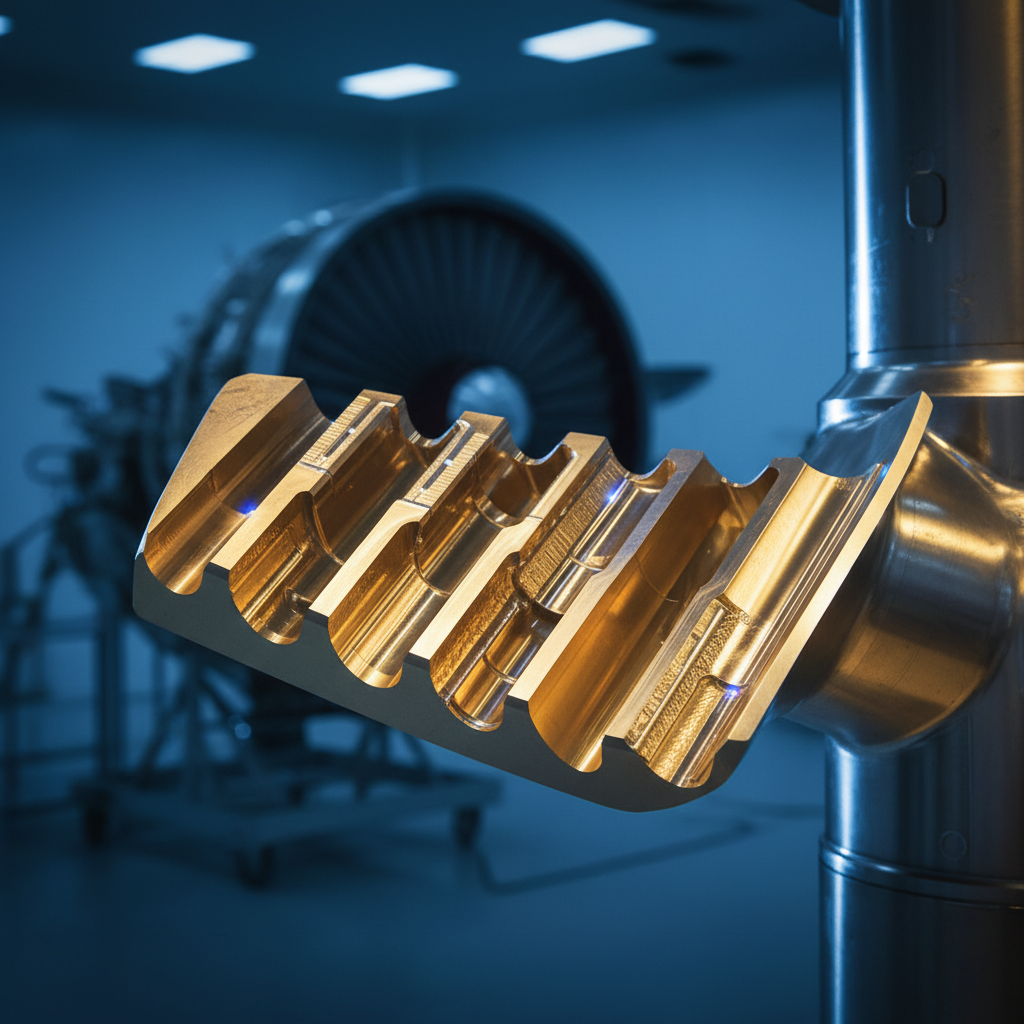

Chapter 1 Industry Overview and Definitions of Superalloys / Single-Crystal Turbine Blades
1. What Are Superalloys
Superalloys are a class of metallic materials—based on iron, nickel, or cobalt—engineered to sustain mechanical stress above 600°C while maintaining oxidation and corrosion resistance. The term originated in the 1940s within the American metallurgical community to describe alloys that could "surpass" the thermal limits of conventional steel in early jet engine turbine sections. Today, superalloys are indispensable structural materials for aero-engines, heavy-duty gas turbines, naval propulsion systems, and nuclear reactors operating under extreme conditions.
By base element, superalloys fall into three families:
Nickel-based superalloys contain more than 50% Ni, alloyed with a dozen or more elements—Cr, Co, Mo, W, Re, Ta, Al, Ti—in precisely controlled proportions. Nickel-based alloys offer the best combination of high-temperature strength, creep resistance, and oxidation resistance above 900°C, making them the only viable material for single-crystal turbine blades. They account for more than 70% of global superalloy output. Representative grades include the Western Inconel 718 and Waspaloy, and China's domestically developed GH4169 (benchmarked against Inconel 718), DD6 (second-generation single-crystal), and DD9 (third-generation single-crystal).
Cobalt-based superalloys rely on cobalt as the matrix, with high chromium and tungsten content. Their standout characteristic is exceptional resistance to hot-corrosion and oxidation, making them suitable for combustion-chamber liners and guide vanes in environments above 1100°C. They represent approximately 15% of global superalloy production.
Iron-based superalloys are the most cost-effective option, used for turbine discs, casings, and fasteners operating at relatively lower temperatures (≤700°C). China's GH2132 (an A-286 analog) is widely deployed in aero-engine disc assemblies.
2. Manufacturing Routes
Wrought (deformation) superalloys are cast via vacuum induction melting (VIM), refined by vacuum arc remelting (VAR) or electroslag remelting (ESR), and subsequently worked by forging, rolling, or extrusion into bars, discs, rings, or forgings. The deformation process breaks the as-cast dendritic microstructure and improves fatigue properties. Representative domestic suppliers: Fushun Special Steel (bars/billets), Western Superconducting Technologies (bars), AVIC Aviation Forging / Paike New Material (ring forgings).
Cast superalloys (investment casting): after VIM refining, the molten alloy is shape-cast using the lost-wax process. Sub-variants are:
- Equiaxed casting (CC): random grain orientation; blade service temperature ≤ 900°C;
- Directional solidification (DS): controlled solidification direction eliminates transverse grain boundaries; service temperature up to 1050°C;
- Single-crystal casting (SC/SX): eliminates all grain boundaries, yielding a single crystalline blade; theoretical operating temperature > 1100°C (surface > 1300°C with thermal barrier coating). SC blades are the only viable option for fourth-generation aero-engine high-pressure turbine airfoils.
Powder metallurgy (P/M) superalloys: pre-alloyed powder consolidated by hot isostatic pressing (HIP) or hot extrusion + isothermal forging into turbine discs. P/M processing breaks macrosegregation limits, achieving ultra-fine grain and extremely high yield strength. Representative domestic grades: FGH95 and FGH96.
3. Generational Evolution of Single-Crystal Turbine Blades
| Generation | Key Addition | Representative Grade | Uncooled Capability | China's Status |
|---|---|---|---|---|
| 1st | No Re | PWA 1480 / DD3 | ~950°C | Mature production |
| 2nd | ~3% Re | PWA 1484 / CMSX-4 / DD6 | ~980°C | Mature production |
| 3rd | ~6% Re | René N6 / CMSX-10 / DD9 | ~1010°C | Small-batch supply |
| 4th | 3%Re + ~3%Ru | MC-NG / TMS-238 | ~1040°C | Engineering development |
| 5th | High Ru + complex | TMS-298 | ~1060°C+ | Basic research |
Rhenium (Re) is the key rare metal that drives temperature capability upward; each successive generation adds approximately 3% Re. Ruthenium (Ru) introduced in the fourth generation suppresses TCP phase precipitation caused by Re. Ru global annual production is only ~15 tonnes, sourced almost entirely from South African platinum-group mines—a critical supply-chain vulnerability.
4. Supporting Technologies
- Film cooling: hundreds of precision holes (0.3–0.8 mm diameter) in the blade wall form a cool-air film, lowering the metal temperature 200–300°C below the gas temperature.
- Thermal barrier coating (TBC): a dual-layer system—MCrAlY bond coat + 7%-yttria-stabilized zirconia (YSZ) ceramic topcoat—lowers the metal surface temperature by a further 100–200°C. Deposition methods: atmospheric plasma spray (APS) and electron-beam physical vapor deposition (EB-PVD). EB-PVD produces a columnar microstructure with superior thermal fatigue resistance and is mandated for high-pressure turbine airfoils in aero-engines.
- Oxidation-resistant coatings: the bond coat provides primary oxidation protection; some blades receive additional platinum-aluminide or diffusion aluminide coatings.
5. Industry Size
The global superalloy market was approximately USD 78–80 billion in 2025, with aerospace and defence accounting for ~40% and heavy gas turbines ~25%. The market is growing at 6–8% CAGR, expected to exceed USD 140 billion by 2032. The single-crystal turbine blade sub-market reached approximately USD 5–6 billion in 2025.
China's domestic superalloy market is projected at approximately CNY 340 billion in 2026, driven by military-engine localisation, CJ-1000A civil-engine development, heavy gas turbine domestication, and new-energy peaking turbines—with a five-year compound annual growth rate of approximately 15%.
6. Historical Context
Superalloy development traces to World War II jet-engine demands. By the 1960s, both superpowers recognised turbine blade materials as the critical bottleneck for fighter performance. Pratt & Whitney pioneered directional solidification (DS) in the late 1960s, enabling a ~50°C temperature increment, and first commercialised single-crystal casting in the 1970s—the most important technological leap in superalloy history.
China's superalloy research began in the 1950s. After Soviet advisors withdrew, BIAM (Beijing Institute of Aeronautical Materials) and CISRI (Central Iron and Steel Research Institute) started independent development. In 1985, BIAM successfully cast China's first single-crystal turbine blade—a milestone marking the beginning of domestic single-crystal technology, though engineering batch production remained two decades away. DD6 alloy reached engineering qualification in the mid-2000s, matching or surpassing peer Western alloys (PWA 1484, CMSX-4), and became a landmark achievement in China's materials self-reliance journey.
7. Quantitative Link: Material Generation vs. Engine Performance
Each single-crystal generation typically delivers a turbine inlet temperature (TIT) improvement of 25–50°C, a thrust-to-weight ratio gain of 0.5–1.0, and fuel efficiency improvement of 1–2%. In concrete terms: the 1970s-era F100 had TIT ~1350°C and thrust-to-weight ~8:1; the 2020s F135 exceeds TIT 1700°C (cooled) with thrust-to-weight ~11.5:1. Material advances contributed approximately 60% of this performance gain. China's WS-15 targets TIT ~1850°C with thrust-to-weight ~10–11, roughly one material generation behind the F135—this gap is the precise technical content of "the last mile."
Chapter 2 Global Landscape and China's Position
1. Global Supply Structure: American-British Oligopoly and Challengers
The global superalloy and single-crystal turbine-blade industry has consolidated over seven decades into a highly concentrated market dominated by a handful of American and British enterprises.
Precision Castparts Corp (PCC): the world's largest supplier of single-crystal and DS turbine blades, through its PCC Airfoils division serving GE Aviation, Pratt & Whitney, and Rolls-Royce. Acquired by Berkshire Hathaway in 2016 for USD 37.2 billion—the largest single acquisition in Berkshire's history. PCC's competitive moat is rooted in 50+ years of single-crystal casting know-how and decades-long, deep-locked supply agreements with all three major engine OEMs. PCC's share of the global aerospace single-crystal airfoil investment casting market is estimated at 35–40%.
Howmet Aerospace: 2025 full-year revenue of USD 8.3 billion, a historic record, with engine products revenue growing 16% year-over-year to USD 4.3 billion. Howmet is the world's second most important aero-engine airfoil and forging supplier, serving Boeing, Airbus, GE, PW, and RR supply chains.
Special Metals (PCC subsidiary): original inventor and brand owner of Inconel 718 and Waspaloy, whose alloy specifications serve as the de facto global baseline. China's GH4169 was benchmarked against Inconel 718.
ATI (Allegheny Technologies): 2025 revenue ~USD 4.6 billion, one of the world's largest suppliers of wrought superalloy plate, bar, and powder; aerospace customers account for ~70% of revenue.
VDM Metals (Acerinox): Europe's primary nickel-chromium-cobalt superalloy supplier serving MTU, Safran, and Rolls-Royce.
Proterial (formerly Hitachi Metals): Asia's most technically advanced enterprise for single-crystal and P/M superalloys, deeply partnered with Mitsubishi Power for J-class heavy gas turbines.
2. China's Actual Position
China's domestic superalloy output reached approximately 64,500 tonnes in 2025, accounting for roughly 15–18% of global production by volume but only 10–12% by value—reflecting China's current product mix skewed toward lower-value grades. By sub-segment:
- Wrought alloys (bars, plates, forgings): ~80–90% domestically supplied;
- Equiaxed and DS castings: ~85–90%;
- 2nd-gen SC blades (DD6): ~70–80%;
- 3rd-gen SC blades (DD9): ~30–50%;
- 4th-gen SC blades: engineering development, ~5–10%;
- P/M turbine discs: FGH96 in batch production, FGH4096 under development;
- EB-PVD TBC: domestic equipment still being established, significant import dependence.
3. Structural Shifts in the Competitive Landscape
Since 2020, accelerating US export controls on advanced aerospace materials have intensified pressure on China to achieve full-spectrum localisation. The result is a two-track approach: the state research system (BIAM, AECC subsidiaries) continues fundamental alloy and process R&D, while listed companies (Stecahe, Yingliushare, etc.) drive capacity expansion and engineering scale-up.
Global competitive tiers: Tier 1 (USA, UK)—full-spectrum R&D, highest-end casting, complete coating systems; Tier 2 (China, Japan, France)—certain categories at international level, gaps in highest-gen SC and coatings; Tier 3 (Russia, India, Turkey)—partial capabilities with larger gaps.
Chapter 3 Core Technologies
1. Alloying Logic of Nickel-Based Superalloys
The design of nickel-based superalloys is a masterclass in multi-variable optimisation across competing mechanical, chemical, and microstructural demands. Three strengthening mechanisms work in concert: solid-solution strengthening (W, Mo, Re distort the lattice to slow dislocation motion), precipitation strengthening (ordered γ' [Ni₃Al] particles impede dislocations), and single-crystal organisation (elimination of grain boundaries removes the primary creep failure path).
Rhenium is the single most impactful alloying element for high-temperature performance: it partitions strongly to the γ phase, retards creep-controlling diffusion processes, and is the key differentiator between alloy generations. However, Re is dense (21.02 g/cm³), expensive (> USD 6,100/kg in early 2026), and concentrates in dendrite cores during solidification, requiring a homogenisation anneal with a window of only 5–10°C between full homogenisation and incipient melting. Ruthenium, introduced in fourth-generation alloys, suppresses TCP (topologically close-packed) phase precipitation caused by high Re content—a crucial stabilising role that justifies Ru's extraordinarily high price (~USD 600/g).
2. Directional Solidification and Single-Crystal Growth
In conventional casting, nucleation occurs randomly throughout the melt, creating a polycrystalline equiaxed structure where grain boundaries act as weak links under creep conditions. Directional solidification (DS) imposes a unidirectional heat flow, forcing columnar grains to grow parallel to the main stress axis, eliminating transverse grain boundaries and improving creep life by ~30%.
Single-crystal casting takes this further: a carefully designed grain selector (a pigtail-shaped constriction at the base of the mould) ensures that only one grain passes into the blade cavity, eliminating all grain boundaries. The Bridgman furnace—a ceramic shell mould heated above the alloy liquidus temperature, then slowly withdrawn from the hot zone on a water-cooled chill plate—creates a steep thermal gradient (typically 30–60°C/cm) and controlled withdrawal rate (3–8 mm/min) that allows the single crystal to advance steadily without spurious grain formation (freckling, stray grains). Spurious grain formation is the leading cause of scrap in single-crystal production and is highly sensitive to alloy composition, thermal gradient, and withdrawal rate—a domain where 40+ years of empirical data separate the world's best casters from the rest.
3. Thermal Barrier Coating (TBC) Systems
The TBC protects the metallic substrate from the combustion gas environment and is as critical as the alloy itself for enabling modern turbine operating temperatures. The YSZ ceramic topcoat has thermal conductivity ~2.0 W/m·K—roughly 40× lower than the nickel alloy—and can reduce metal temperatures by 100–200°C, enabling engines to operate at combustion gas temperatures well above the alloy's incipient melting point.
EB-PVD produces a columnar microstructure in the YSZ layer. The columns accommodate thermal expansion mismatch between the ceramic and metal, dramatically improving thermal fatigue life compared to APS-deposited splat morphology. However, EB-PVD requires sophisticated high-vacuum equipment with high-power electron-gun systems—equipment that remains under export controls and is a primary bottleneck for China's SC blade domestic supply chain.
Next-generation TBC materials based on rare-earth zirconates (La₂Zr₂O₇, Gd₂Zr₂O₇) offer thermal conductivity 25–30% lower than YSZ and superior phase stability at temperatures above 1200°C. China's endowment of rare-earth raw materials (La, Gd, Sm) provides a potential strategic advantage in this next-generation TBC direction.
4. Additive Manufacturing and its Role
Selective laser melting (SLM) and electron-beam melting (EBM) of nickel-based superalloys produce polycrystalline equiaxed microstructures—far inferior in creep life to DS or SC castings—and are not viable substitutes for high-pressure turbine single-crystal airfoils in the foreseeable future. AM's primary contributions to the superalloy ecosystem are: ceramic core fabrication (DLP-printed alumina cores enabling complex internal cooling geometries), combustion-nozzle integration (LEAP fuel nozzles printed by GE), and MRO laser-cladding repair of blade tips and leading edges.
5. Non-Destructive Evaluation
The non-destructive evaluation (NDE) suite for single-crystal turbine blades—fluorescent penetrant inspection (FPI), industrial X-ray computed tomography (CT), X-ray diffraction crystal-orientation mapping, and ultrasonic imaging—serves as the quality gateway for every blade that enters service. Deep-learning image analysis of industrial CT data (auto-detecting blocked cooling holes, wall-thickness deviations) is being piloted at leading-edge Western MRO and casting facilities, and will significantly reduce both inspection time and human-error rate. Chinese universities (BUAA, NPU) are actively developing equivalent systems in collaboration with domestic casting enterprises.
Chapter 4 Upstream and Downstream Supply Chain
1. Supply Chain Overview
The superalloy and SC turbine blade value chain spans five major tiers:
Raw materials (Ni, Co, Cr, W, Re, Ru high-purity base metals) → Master alloy (VIM melting and vacuum refining) → Processing (wrought forging / investment casting / P/M) → Coating (TBC, anti-oxidation coatings) → Component delivery (turbine blades, discs, combustion liners to engine OEM)
Each tier has distinct process barriers and typically requires 10+ years of technology development and customer qualification before becoming a qualified supplier.
2. Raw Materials: Supply-Chain Vulnerabilities
Nickel: global annual production ~3.3 million tonnes (2025), with Indonesia supplying >55%. China's import dependence is ~80%, partially offset by Vale and Huayou Cobalt's Indonesian operations.
Rhenium: global production only 50–60 tonnes/year, >97% as a by-product of copper and molybdenum mining. Key producers: Chile (39%), USA (25%), Kazakhstan (14%). China has virtually no domestic Re production. Prices surged from USD 1,370/kg (2024) to >USD 6,100/kg (early 2026)—a >340% increase—driven by China's surge in aviation project procurement. For third-generation alloys (~6% Re), rhenium alone accounts for 40–50% of raw material cost.
Ruthenium: global production only ~12–15 tonnes/year, almost entirely from South Africa's platinum-group metal mines; price ~USD 500–800/g. Fourth-generation alloys introducing ~3% Ru face extreme supply concentration risk.
Tungsten: China controls ~80% of global production, giving China strategic leverage on this element.
Cobalt: DRC accounts for ~70% of global production; Chinese companies (CMOC, Huayou) control significant mining and refining capacity in DRC, providing relative supply security for cobalt.
3. Master Alloy Layer: VIM→VAR/ESR Refining Chain
VIM under high vacuum (<0.1 Pa) precisely controls alloy chemistry and removes dissolved gases. The resulting electrode is then re-melted by VAR or ESR to further reduce segregation and non-metallic inclusions. Aviation-grade superalloys for turbine discs typically require double or triple VAR (dual or triple-melt process) to achieve the necessary chemical homogeneity. Domestically, Fushun Special Steel operates one of the world's largest single-site special-alloy melting bases; GKN Sinter Metals Superalloy (Stecahe) has both VIM-VAR and VIM-ESR capabilities.
4. Processing Layer: Three Technical Routes
Wrought route, investment casting route (the primary route for turbine blades), and P/M route are described above. Domestic leaders: Fushun Special Steel and Western Superconducting (wrought bar/disc); AVIC Aviation Forging and Paike New Material (ring forgings); Yingliushare, Stecahe GKN, Longda and Xi'an SC Crystal (blade investment casting).
5. Coating Layer: Capability Gap
Domestic APS TBC capability is well-established (Yingliushare and Stecahe have industrial-grade APS lines). EB-PVD remains the bottleneck: the high-power electron-gun systems from German/Japanese suppliers are under export controls, and domestic EB-PVD equipment is expected to reach batch-production validation only around 2027–2028. This is the single most critical localisation gap in the entire blade supply chain.
6. Geographical Clustering
Three primary industrial poles dominate China's superalloy geography: the Liaoning (Fushun-Shenyang) cluster centred on Fushun Special Steel and AECC Shenyang Liming Engine; the Shaanxi (Xi'an-Baoji) cluster centred on Western Superconducting, AECC Xi'an Engine, and NPU; and the Yangtze River Delta (Shanghai-Jiangsu-Anhui) cluster centred on Yingliushare (Anhui) and Shanghai Electric's gas turbine operations. These three poles largely overlap with China's major aero-engine OEM locations, reflecting the supplier-follows-OEM clustering pattern universal in aerospace supply chains.
Chapter 5 Downstream Applications
1. Military Aero-Engines: The Frontline of Localisation
WS-10 series (equipped in J-10C, J-16, early J-20): China's most heavily fielded domestically-developed high-performance turbofan. DD6 second-generation SC blades have progressively replaced imported blades, constituting China's largest real-world single-crystal blade localisation exercise. The accumulated production yields, lifetime data, and MRO experience from this programme are the foundation for all subsequent developments.
WS-15 (powering J-20A serial production): China's fifth-generation fighter engine, targeting fourth-generation SC alloy blades and P/M turbine discs, with turbine inlet temperature more than 100–150°C higher than WS-10. Entering batch delivery in 2025–2026 based on open-source imagery analysis. Assuming 50–100 J-20 aircraft/year (twin-engine), SC blade annual demand from WS-15 alone reaches 6,000–18,000 blades.
WS-20 (Y-20 heavy transport): licensed for batch production in 2024; uses DS turbine blades and P/M discs, filling the gap between WS-10 and WS-15 performance.
WS-9 / WS-16 turboshaft (for Z-20 utility helicopter): primarily equiaxed and DS blades; high domestic-content rate.
2. Civil Aero-Engines: CJ-1000A as the Key Node
CJ-1000A targets fourth-generation SC alloys for its high-pressure turbine airfoils—a first for a Chinese civil engine programme. Meeting FAA-equivalent CAAC certification demands batch-by-batch chemistry certificates, full traceability from master alloy to finished blade, and accumulated fatigue life data exceeding 20,000+ cycles. Leading aero analysts estimate CAAC type certification at the earliest by 2027–2028, with commercial entry around 2029–2030. High-pressure turbine blade material and coating qualification is on the critical path.
3. Heavy Gas Turbines: F-Class to H-Class Localisation
Shanghai Electric (GE partnership, G50 domestic 50MW F-class), DFEM (Mitsubishi partnership), and Harbin Electric represent the three main domestic heavy gas turbine OEMs. H-class turbines (>1600°C TIT, >60% efficiency)—currently dominated by GE (9HA), Mitsubishi (JAC), and Siemens Energy—are China's most ambitious gas turbine localisation target, with single-machine hot-section blade value of CNY 50–80 million. System-level validation is expected 2027–2030.
4. Naval, Nuclear, and New-Energy Applications
Marine gas turbines (QC-280 for Type 055 destroyers) use DS turbine blades with enhanced hot-corrosion coatings. Nuclear reactor main-coolant-pump impellers and motor shields use nickel-based alloys (GH3030, GH3039). New-energy grid-peaking turbines (20–80 MW class) provide a market-expansion bridge from military to civil applications.
5. Full-Lifecycle Blade Consumption
A single high-pressure turbine SC blade in military service lasts approximately 1,500–3,000 flight hours. Assuming a WS-10-family operating fleet of ~2,000 engines with ~150–200 hours/year average utilisation, annual high-pressure turbine blade replacement demand runs in the hundreds of thousands of units—a substantial and growing market as the J-20 and J-16 fleets expand.
Chapter 6 Key Market Players
1. Domestic Material Companies
Fushun Special Steel (600399): China's most important large special-alloy enterprise. 2024 revenue CNY 8.48 billion; "三高一特" special-alloy products 86,800 tonnes (+14.25% YoY). Planned SC alloy capacity expansion to >20,000 tonnes by end of the 15th Five-Year Plan.
Western Superconducting (688122): Integrated titanium alloy, superalloy, and superconducting materials enterprise. 2024 revenue CNY 46.12 billion; superalloy segment CNY 3.27 billion (−31% YoY due to military procurement timing). Long-term growth driver underpinned by WS-20 ramp and titanium alloy commercial aviation demand.
Stecahe Technology (300034): The only listed company covering all three superalloy routes (wrought, cast, P/M). 2025 revenue CNY 36.97 billion (+4.9% YoY); net profit fell 65% due to accelerated depreciation from capacity build-out. Technology source closely linked to BIAM/CISRI system.
Tunan (300855): Full-cycle supplier from VIM master alloy to complex structural castings; expanding toward higher-value SC blade investment casting. Key supplier to AECC.
Longda (688231): Specialised in equiaxed and DS turbine blades; already in batch supply for certain engine variants.
2. Domestic Forging Companies
AVIC Aviation Forging (688239): Ring-rolled forged components up to 3 m diameter; major supplier of engine casing rings for J-20, Y-20. 2024 revenue ~CNY 1.9 billion, gross margin ~30%.
Paike New Material (605123): Civil-military dual-track forged disc and casing supplier; 2024 revenue ~CNY 2.2 billion; targeting WS-15 supply-chain qualification.
3. Domestic Casting (Blade) Companies
Yingliushare / AVIC Ying-Liu (603308): China's most significant private aero-engine blade investment-caster. 2024 superalloy casting revenue ~CNY 1.47 billion; one of few domestic companies manufacturing equiaxed, DS, and SC blades across all three categories.
Xi'an SC Crystal (non-listed): focused exclusively on military SC turbine blades, rooted in BIAM technology; core single-crystal blade supplier for the WS-10 programme.
4. International Leaders
PCC: ~USD 10 billion investment-casting revenue; global SC blade market share ~35–40%; 50+ years of accumulated process know-how.
Howmet Aerospace: 2025 revenue USD 8.3 billion; world-leading aero-engine forging and casting supplier.
ATI: 2025 revenue ~USD 4.6 billion; world's largest wrought superalloy flat-product supplier.
Special Metals (PCC subsidiary): originator of Inconel 718; its alloy specifications remain the global procurement benchmark.
VDM Metals: Europe's primary Ni-Cr-Co alloy supplier.
5. Quantified Capability Gap
Material generation gap: ~1–1.5 generations (8–15 years R&D lag). Batch production volume: domestic total SC blade output ~50,000–200,000 blades/year vs. PCC's ~2–4 million; gap of 2–3 orders of magnitude. Yield rate: domestic ~55–70% vs. Western leaders 80–90%. NADCAP full-speciality coverage: 2–3 domestic firms vs. dozens in the West.
Chapter 7 Localisation-Level Map and Factory Database Insights
1. Five-Level Localisation Map
Level 1 — Substantially Self-Sufficient: Wrought Superalloy Materials
Bar, plate, and other wrought forms centred on GH4169 are domestically produced at scale; annual capacity >30,000 tonnes, largely meeting industrial demand. Localisation rate ~80–90%.
Relevant searches: high-temperature alloy | nickel-based alloy | vacuum induction melting
Level 2 — Near Self-Sufficient: Equiaxed and DS Castings
Multiple batch-production suppliers (Yingliushare, Stecahe, Longda) active; localisation rate ~80–90%. Primary gap: extra-large DS blades for H-class gas turbines and DS/advanced-TBC integration maturity.
Relevant searches: turbine blade | precision casting | cast superalloy
Level 3 — Engineeringly Mature: 2nd-Gen SC Blades (DD6)
Stable batch-production capability established; yield and performance at par with international peers; primarily supplying WS-10 family. Localisation rate ~70–80%.
Relevant searches: single-crystal turbine blade | aero-engine
Level 4 — Partial Breakthrough: 3rd-Gen SC Blades (DD9)
Small-batch supply validated; batch-production yield and consistency not yet at Level 3 maturity. Localisation rate 30–50%. Re content (6%) means raw-material security is co-equal with manufacturing as a constraint.
Relevant searches: master alloy | directional solidification | cobalt-based alloy
Level 5 — Engineering Development: 4th-Gen SC Blades
Laboratory results achieved for alloy composition and single-crystal growth; industrialisation not yet established. Expected entry to pre-certification batch production: 2028–2030.
Relevant searches: gas turbine | hot-section components | powder metallurgy
Powder Metallurgy Turbine Discs (Level 3–4)
FGH96 in batch production is a major milestone; FGH4096 and next-generation high-performance disc materials still under development. Relevant searches: turbine disc | blisk manufacturing
TBC (Level 4 — Primary Gap)
APS TBC: ~70% domestic; EB-PVD TBC: ~20–30% domestic, still heavily dependent on imported equipment—the weakest link in the entire localisation chain. Relevant searches: thermal barrier coating
2. Factory Database Insights
Tianxia Gongchang (www.tianxiagongchang.com), China's B2B manufacturing database covering 4.8 million active factories, provides a ground-level perspective that listed-company financials cannot replicate.
Keyword search results: precision casting 2,453 factories; powder metallurgy 11,852; high-temperature alloy 425; aero-engine 322; gas turbine 171; turbine disc 16; vacuum induction melting 24; single-crystal turbine blade 1.
The vast majority of the 2,453 precision casting factories operate in aluminium alloy, cast iron, or general-purpose investment casting—only an estimated 50–100 are oriented toward aviation-grade superalloy castings. The 11,852 powder metallurgy factories are overwhelmingly hard-alloy and sintered-part manufacturers, with only a handful capable of P/M turbine disc processing.
The 16 turbine-disc factories and 1 single-crystal blade factory in the database starkly quantify the extreme supply-chain scarcity at the top of the alloy capability ladder. The 171 gas-turbine-related companies and 425 high-temperature-alloy companies cluster overwhelmingly in Liaoning (Fushun-Shenyang), Shaanxi (Xi'an), and the Yangtze River Delta—perfectly mirroring China's three dominant aero-engine industrial clusters.
This ground-level factory data validates the core finding: China's precision casting industry is far broader than it appears from a listed-company lens, but the fraction capable of entering the aviation-grade supply qualification system is vanishingly small. The bottleneck is not finding factories—it is finding factories with certified aviation quality systems.
3. Five Critical Bottlenecks
- EB-PVD batch production capability — breakthrough expected 2027–2028;
- 4th-gen SC alloy engineering batch production — critical for CJ-1000A certification;
- Large P/M turbine discs (FGH4096-class) — co-equal hot-section localisation with SC blades;
- Stable high-purity rhenium supply — long-term contracts, scrap recycling, low-Re alloys;
- Civil airworthiness quality system establishment — CAAC NADCAP FULL, non-compressible time constraint.
Chapter 8 Pricing and Business Models
1. Superalloy Material Pricing
VIM master alloy ingot: industrial-grade GH4169 VIM ingot ~CNY 500,000–800,000/tonne (2025), representing a 5–10× premium over base nickel, reflecting vacuum melting process, composition control, and purity requirements.
Wrought aviation-grade bar (AMS specification): GH4169 precision-forged bar ~CNY 1.8–3.0 million/tonne; aviation-grade commands 30–60% premium over industrial-grade.
Single-crystal turbine airfoils (per piece):
- 2nd-gen SC (DD6) high-pressure turbine blade: ~CNY 100,000–250,000/piece (inc. film cooling holes + TBC);
- 3rd-gen SC: ~CNY 200,000–400,000+ per piece, rhenium raw material accounting for ~30–40% of piece cost;
- H-class heavy gas turbine first-stage DS/SC blade: ~CNY 800,000–1.5 million/piece;
2. Cost Decomposition of a 3rd-Gen SC Blade
For a typical 3rd-gen SC high-pressure turbine airfoil (400g): raw material cost (Re-dominant) ~30–40% of total; manufacturing cost (SC casting + film-cooling drilling + EB-PVD TBC) ~30–40%; yield-loss loading (40–70% markup because ~60–70% yield; a 400g blade requires 1.5–2 kg of alloy to produce one qualified piece) ~20–30%; R&D amortisation and qualification fees ~5–10%. Total manufacturing cost: approximately CNY 150,000–300,000 per qualified piece; military procurement price: approximately CNY 250,000–400,000, including a managed profit margin.
3. Whole-Engine Blade Set Value
A WS-15-class engine HP turbine SC blade set (~60–90 SC airfoils) is valued at approximately CNY 15–25 million (blade portion only, excluding discs). Over the full engine life, blade consumption through MRO replacement totals approximately 3–5× the first-set cost.
4. Business Model Archetypes
Material supplier model (Fushun Special Steel, Western Superconducting, Tunan): sells master alloy ingots and wrought semi-products; capital-intensive, standardised products, relatively lower unit margins.
Precision casting OEM model (Yingliushare, Stecahe, Longda): supplies complete blade investment castings to engine OEMs; gross margins ~35–50%; high customer concentration but high stability.
Integrated blade + coating one-stop model (Yingliushare's strategic direction): from raw-material procurement to finished TBC-coated blade, capturing more value chain steps; higher capital and technology requirements.
MRO + manufacturing dual-wheel model: in-service blade inspection, repair, and refurbishment (blade-tip welding, TBC strip and recoat) in combination with OEM manufacturing, creating sticky customer relationships—the strategic model exemplified by Western leaders such as PCC and Howmet.
5. Heavy Gas Turbine vs. Aero-Engine Commercial Comparison
Heavy gas turbine blades offer higher per-order value (entire hot-section worth CNY 30–50 million per overhaul), more regularised procurement cycles, and more transparent commercial negotiations vs. military aero-engine blades (opaque cost-plus pricing). However, heavy turbine blades face extreme long-life requirements (≥25,000-hour overhaul interval) and hot-corrosion demands that make them no easier to manufacture than high-performance aero-engine blades.
Chapter 9 Representative Customer Cases
Case 1: WS-10 Localisation History
WS-10A (qualified 2005) → WS-10B (thrust upgrade, ~132 kN) → WS-10G (thrust vectoring): each upgrade accompanied a material system upgrade. Phase 1 (2005–2015): heavy use of imported or Russian-spec blades. Phase 2 (2015–2022): DD6 domestic SC blades entered verification and then small-batch supply to the WS-10 fleet; yields improved from ~40–50% to 65–70%. Phase 3 (2022–present): WS-10B/G increasingly uses domestic 3rd-gen SC (DD9-class) blades; domestic SC blade localisation rate now ~70–80%. Key lesson: advancing SC blade yield from 50% to 70% requires a minimum of 5–8 years of engineering accumulation—an irreducible timeline that calibrates expectations for WS-15 and CJ-1000A.
Case 2: WS-15 4th-Gen SC Challenge
WS-15 SC blade targets are at or near 4th-generation alloy capability, combined with advanced film cooling (dual-wall configuration) and EB-PVD TBC. Open-source reporting through 2023 indicated multiple prototype test cycles, with SC blade process stability and lifetime consistency being primary engineering focus areas. The transition to batch delivery in 2025–2026 will represent the largest single-season spike in demand for 3rd/4th-gen SC blades in Chinese industry history, directly testing supply chain capacity.
Case 3: CJ-1000A Systemic Challenges
CJ-1000A must satisfy CAAC airworthiness—a qualitatively different standard than military specifications. Every blade from every batch must be fully traceable; all CoC (Certificate of Conformance) records must be permanently archived; any failure event triggers a formal root-cause-analysis report with corrective action closure. For domestic SC blade suppliers, this is the first time their quality systems will be audited to civil-aviation standards rather than military engineering judgement. The first 1–2 domestic suppliers to achieve CAAC SC-blade airworthiness qualification will effectively secure a captive market for CJ-1000A's entire commercial service life.
Case 4: H-Class Gas Turbine Localisation
Shanghai Electric's G50 (50 MW domestic F-class, 2024 commercial entry) achieved ~60% hot-section localisation, with Yingliushare as a key DS blade supplier. The G50 experience transferred critical knowledge from the military-engine domain to the industrial turbine domain regarding long-life oxidation and hot-corrosion requirements. The next step—H-class (300–400 MW), requiring at least 3rd-gen DS or SC blades with EB-PVD TBC—will be the ultimate test for domestic blade manufacturers, with single-engine hot-section value of CNY 50–80 million.
Case 5: LEAP-1C Domestic Supply Participation
Some Chinese enterprises have entered the CFM LEAP-1C supply chain (primarily low-pressure turbine and structural components, not HP turbine SC blades). The value of this participation lies less in revenue scale and more in the enforced quality-system development through exposure to GE/Safran's Tier-1 OEM requirements—invaluable preparation for eventual CJ-1000A supply qualification. Yingliushare's LEAP-family casing business is a notable example.
Case 6: WS-20 and Y-20 Material Requirements
WS-20 (batch production licensed 2024, ~160 kN class) targets 2nd-to-early-3rd-gen SC blades, making it a less technically demanding but commercially significant demand driver. With Y-20 production targeted at 30–50 aircraft/year in 2025–2030, WS-20 creates 60–100 engine equivalents/year of sustained SC blade demand—a second strong pull line alongside WS-15.
Case 7: International Best Practice — PCC for LEAP-1B
PCC's LEAP-1B (Boeing 737 MAX) HP turbine SC blade supply is the global benchmark: 4th-gen SC alloy, >200 film-cooling holes, EB-PVD TBC (YSZ + improved bond coat), NADCAP-qualified for all special processes. Yield: ~85–92%. Delivery lead time: 12–18 weeks in mature batch production. Quality record: single-digit failure events per million blade-flight hours across tens of thousands of in-service engines. China's path to this standard requires both time and a fundamental shift in quality culture—an engineering challenge that cannot be shortcut by financial investment alone.
Case 8: P/M Turbine Disc Localisation
FGH95 (René 95 analogue) has achieved engineering qualification and batch supply for WS-10 family HP turbine discs—China's most significant P/M milestone. FGH96 (René 88DT analogue) is in engineering batch production, targeting WS-15 and CJ-1000A disc requirements. P/M disc and SC blade are co-equal hot-section localisation imperatives; neither alone completes the picture. Key search: turbine disc | powder metallurgy.
Chapter 10 Investment, Financing, and M&A
1. Berkshire-PCC: The Capital Logic of High-End Manufacturing
Berkshire Hathaway's 2016 acquisition of PCC for USD 37.2 billion was the largest single acquisition in Buffett's career. The investment thesis was simple and deep: aero-engine blade supply agreements lock in the supplier for the 20–30+ year service life of each engine model, creating near-predictable cash flows with minimal competitive threat once qualification is obtained. PCC's moat is not a patent or a trade secret per se—it is the aggregate of 50+ years of single-crystal casting process know-how embedded in the people and systems of the company. The 2020 pandemic caused a sharp revenue decline (acknowledged by Buffett as overpayment at the acquisition price), but the subsequent recovery validated the cycle-resilient thesis for high-barrier aerospace manufacturers.
Implications for Chinese companies: when a precision casting enterprise achieves top-customer lock-in and accumulates 10+ years of lifetime data, its intrinsic value is substantially underestimated by short-term PE multiples. Long-horizon strategic capital—not short-term VC/PE—is the appropriate holder of such businesses.
2. Chinese Superalloy Company Capital Approaches
Fushun Special Steel: state-system capital injections via Ansteel Group; major VIM/VAR capacity expansion funded by industrial policy earmarks.
Stecahe GKN: listed on STAR Market; used secondary offerings and convertible bonds to fund P/M alloy and casting-line expansion (CNY 1.5–2.0 billion capex 2024–2025); accelerated depreciation from build-out drove 2025 net profit down ~65%—textbook "pain period expansion" logic.
Yingliushare: June 2025 private placement targeting CNY 1.0–1.5 billion to expand aviation precision-casting and industrial turbine blade capacity—timed to capture WS-15 batch-production procurement window.
Tunan: incremental organic growth funded by retained earnings and bank loans; asset-to-equity ratio controlled; strategy of "volume first, quality second"—build capacity at low switching-cost, shift to higher-value SC blade mix as new processes mature.
3. M&A Dynamics
No true horizontal M&A integration has occurred in China's superalloy sector. The military qualification system ties supply-chain credentials to specific corporate entities, making post-acquisition re-qualification costly and uncertain. CFIUS-equivalent mechanisms effectively prohibit Chinese acquisition of any Western aerospace material technology entity. China's superalloy industry must grow via organic capability development, supplemented by state-strategic investment in core material enterprises.
4. Capital Efficiency Analysis
Asset turnover ratio: 0.5–0.8×/year (vs. 2–5× in consumer products); SC blade businesses depend on high gross margin (40–55%) rather than high asset turnover to drive ROE. R&D intensity: 3–6% of revenue (comparable to mature Western peers); absolute R&D spend still < 1/10 of global leaders. Implicit subsidy: high-tech enterprise tax rate (15% vs. 25% statutory) and R&D equipment subsidies partially offset manufacturing costs; international comparisons must account for this distortion.
5. Global M&A History and Lessons for China
PCC's 1999 acquisition of Wyman Gordon integrated forgings + castings vertically; Alcoa's 2006 acquisition of Howmet integrated aluminium with precision aerospace manufacturing. The lesson for China: vertical integration (material supplier + precision caster under one roof) delivers the strongest long-term value. Horizontal consolidation within the casting tier faces military-qualification constraints but will likely emerge in the 2030–2035 timeframe.
6. Valuation Logic of Listed Superalloy Companies
Military certainty premium: 30–60× PE common for A-share military suppliers vs. 15–25× for ordinary manufacturers. Expansion-phase valuation uses EV/EBITDA or PEG rather than trailing PE. Technology gate criteria for high valuation multiples: ability to supply 3rd-gen+ SC blades, active qualification in key engine programmes, NADCAP coverage. The industry is a "cyclical growth" hybrid: short-term military procurement timing creates cyclical noise, while the structural growth from engine localisation underpins the long-term trend.
Chapter 11 Policy and Standards
1. "Two Engines Special Programme"
The national S&T major programme for large aero-engines and heavy gas turbines (two engines = two machine types), launched in the 13th Five-Year Plan and continuing into the 14th FYP, deployed estimated CNY 100 billion+ in state investment—the largest single-domain technology investment in Chinese history. Core goals: establish full-spectrum domestic superalloy capability (wrought + cast + P/M), qualify DD6 batch production, initiate DD9 engineering qualification, establish FGH96 P/M disc batch production, and progress domestic EB-PVD coating capability.
2. 15th Five-Year Plan (2026–2030): Acceleration Phase
Targets: 3rd-gen SC alloy (DD9-class) industrial batch production at >5,000 HP turbine airfoils/year; 4th-gen SC alloy first-article qualification; FGH4096 high-performance disc first-article qualification; EB-PVD domestic equipment batch-production validation (3–5 systems); total domestic superalloy output from ~64,500 tonnes (2025) to ~100,000 tonnes (2030); 2–3 precision casting enterprises achieving full NADCAP and CAAC airworthiness certification.
3. Military Standards System
Military specifications (GJB series) govern chemistry ranges, mechanical property floors, NDE methods, and heat-treatment regimes for aviation superalloys. GJB standards and US MIL-SPEC / ASTM standards are non-interchangeable systems; Chinese enterprises targeting international civil supply chains must complete equivalent-certification exercises.
Industrial standards: national standard 40533 (superalloy bar general technical conditions) and national standard 40545 (cast superalloy parts) cover industrial gas turbine applications.
4. Key Raw-Material Control Policies
China's 2023+ export-licence regime on gallium, germanium, antimony, and rare earths is part of a strategic raw-material repositioning. For rare-earth-modified next-generation TBC (La₂Zr₂O₇, Gd₂Zr₂O₇), China's near-monopoly on rare-earth refining capacity gives domestic TBC researchers unparalleled feedstock security—a structural advantage that could translate into a global technology leadership position in next-gen TBC materials if domestic EB-PVD equipment can be simultaneously resolved.
5. International Standards Pathway
Domestic enterprises pursuing AS9100 (aerospace quality management) and NADCAP (special process certification) are building the foundational international-standard credential stack. Currently ~5–8 domestic investment-casting enterprises hold AS9100; ~2–3 hold full-speciality NADCAP coverage. The "dual-standard parallel" strategy—maintaining GJB military compliance alongside AMS commercial compliance—is being adopted by forward-looking enterprises (Fushun Special Steel's AMS 2269 test reports are the most internationally recognised example).
6. 15th Five-Year Plan Goals and Implementation Pathway
Policy support requires four-party coordination: central government (R&D funding), local government (land, talent subsidies), state enterprises (AECC, CISRI system), and listed private/mixed-ownership companies (capacity expansion, technology upgrade). Each leg of this four-party structure is load-bearing; weakness in any one will delay the programme targets.
7. Civil-Military Integration Policy
Civil-military fusion policy (CMF), formalised under the Central Commission for Civil-Military Fusion Development from 2017, has enabled military-proven SC blade process data to be partially shared with civilian gas turbine enterprises, as exemplified by the G50 blade supply arrangements. Competitive bidding for portions of the Two Engines Special Programme is now open to qualifying private enterprises—driving faster innovation cycles at lower state cost than purely state-system execution.
Chapter 12 Trends and Analyst Judgments
1. Three Core Drivers: 2026–2030
Driver 1: WS-15 Batch Production Ramp
2026 marks the first year of WS-15 transitioning from engineering verification to industrial-scale batch production. Supply-chain capacity constraints for 3rd/4th-gen SC blades are projected to peak in 2027–2028. Enterprises that complete single-crystal casting line expansion and pass quality-stability certification before that window will secure core supplier positions for the next five years.
Driver 2: CJ-1000A Certification
CJ-1000A type certification (expected 2027–2028) will be the most stringent quality-system test ever faced by the Chinese superalloy and precision casting industry. The first 1–2 suppliers to achieve CAAC SC blade airworthiness qualification will capture disproportionate commercial value—because once qualified, they are locked in for the entire CJ-1000A programme life.
Driver 3: H-Class Gas Turbine Localisation
H-class turbine (300–400 MW) system verification expected 2028–2032 will pull through demand for large-format DS and SC blades with EB-PVD TBC—a single-engine hot-section value of CNY 50–80 million—constituting the highest unit-value SC blade application scenario outside of military engines.
2. Five Analyst Judgments
Judgment 1: Clear head-tier differentiation in investment casting. The enterprises that simultaneously hold military-SC, CAAC civil-aviation, and industrial-gas-turbine qualifications will be no more than 3–4 companies. Multi-line qualification creates a through-cycle earnings buffer that mono-line SC military casters cannot achieve.
Judgment 2: High rhenium prices will accelerate 4th-gen blade engineering. The >USD 6,100/kg Re price of 2026 simultaneously raises material cost and incentivises development of lower-Re alloy formulations and scrap-Re recovery systems. This cost pressure is long-term a positive technology accelerator.
Judgment 3: Domestic EB-PVD equipment breakthrough is the most consequential 2026–2028 technology event. Once domestic batch-production EB-PVD systems achieve reliability validation, the last unresolved step in the complete domestic SC blade supply chain is resolved.
Judgment 4: Rare-earth TBC is China's highest-potential "latecomer leapfrog" technology. China's dominance in rare-earth raw material and processing creates a structural advantage for Gd₂Zr₂O₇ and La₂Zr₂O₇ next-generation TBC—potentially enabling a 2030s leadership position in this sub-field if EB-PVD equipment is simultaneously resolved.
Judgment 5: MRO will become the second growth engine for precision-casting enterprises in 2028–2032. First-generation WS-10 blades will enter peak replacement demand during this window. Enterprises with both OEM blade manufacturing and in-service blade repair qualification will command the fullest customer value proposition and the most stable long-term cash flow.
Tianxia Gongchang Industrial Research Institute will continue tracking the realisation of these five judgments, cross-referencing with dynamic factory-level data from the B2B manufacturing database to provide timely ground-truth signals to industry stakeholders.
3. Convergence and Divergence in Technology Roadmaps
Convergence: the global mainstream path—nickel-based SC blade + film cooling + EB-PVD TBC—is now the target for every major aero-engine developer, from GE and RR to AECC. This eliminates radical technology-route risk; competition will increasingly be decided by process precision, batch stability, and quality system strength.
Divergence (CMC threat assessment): SiC/SiC CMC blades have entered commercial service in low-pressure turbine guide vanes (GEnx, GE9X) but remain non-viable for high-pressure rotating airfoils due to brittleness and processing complexity. The HP turbine single-crystal rotating blade market is secure through 2035; the risk thereafter, if CMC rotating blade technology matures in the West, would require China to have been simultaneously developing domestic CMC blade capability since ~2028.
Titanium aluminide (γ-TiAl) leapfrog potential: density ~3.9 g/cm³ (45% of nickel alloy), good specific strength at 700–900°C—already deployed by GE in GEnx low-pressure turbine trailing stages. China has solid TiAl research foundations at USTB and HIT; potential deployment in domestic heavy gas turbine trailing stages by late 2020s represents a realistic incremental market. Key search: titanium aluminide alloy.
4. The "Last Mile" — Precise Engineering Meaning
The "last mile" framing in this report's subtitle carries precise technical content: China has traversed the first 99 km—domestic engine airframe design, thrust ratings, structural architecture, control systems, primary wrought alloys, equiaxed and DS castings. WS-10 represents genuine, landmark progress: from complete import-dependence to substantial self-supply is a real engineering achievement.
The last 1% is concentrated precisely in the hardest problems: 3rd-to-4th-gen SC blade full-scale batch-production stability (WS-15), complete civil-airworthiness quality-system establishment (CJ-1000A), H-class heavy gas turbine SC blade transition from prototype validation to volume production, and EB-PVD coating domestication closing the loop.
The materials science rule that "the last percent costs as much as the first ninety-nine" applies with full force here: advancing yield from 70% to 85%, TBC lifetime from 1,500 to 3,000 hours, inter-batch consistency σ from 0.03 to 0.01—each increment is a genuine engineering battle with no shortcut. The 2026–2030 window is when China's superalloy and SC blade industry must traverse this final distance. The outcome will define Chinese aviation's competitive position for the next two decades.
5. 2030 Outlook
Materials: 3rd-gen SC stable batch production; 4th-gen SC in civil certification and engineering validation; FGH4096-class P/M disc qualified; domestic high-end alloy self-sufficiency from ~65% (2025) to 80–85%.
Manufacturing: total domestic SC blade annual production from ~50,000–200,000 (2025) to 500,000–1,000,000 (2030); EB-PVD batch-coating enterprises from ~2–3 to 5–8.
Quality systems: 2–3 investment-casting enterprises with full NADCAP and CAAC airworthiness certification.
Market structure: superalloy market from CNY 340 billion (2026) to CNY 700–900 billion (2030); military-civil ratio moving from ~7:3 toward ~5:5.
6. Long-Term Investment Value of Superalloy Enterprises
The superalloy and SC blade sector possesses several characteristics that distinguish it from ordinary manufacturing as a long-term investment proposition: structural demand certainty underwritten by non-deferrable military modernisation and civil aviation growth; product cycles of 20–30 years creating customer lock-in once qualification is achieved; technology barriers that compound with time rather than erode; policy-protected pricing that allows raw-material cost pass-through; and a latent MRO demand wave building through 2028–2035 as the first domestic engine fleets accumulate service hours. These properties, taken together, point to a business that becomes structurally stronger the longer qualified suppliers remain in their positions—a compounding moat rather than an eroding one.
Chapter 13 Risks
1. Critical Rare Metals: Rhenium and Ruthenium Supply Vulnerability
Rhenium: global production 50–60 tonnes/year; China domestically sources <5%; 2024 price ~USD 1,370/kg surged to >USD 6,100/kg by early 2026 (+340%). The surge was directly triggered by China's aviation procurement surge (WS-15 batch production initiation + CJ-1000A verification manufacturing). For 3rd-gen alloys (6% Re), the rhenium price spike adds 30–50% to raw material cost.
Medium-term mitigation: rhenium scrap recovery from used blades (~30% of US Re supply comes from scrap), long-term supply contracts with Chilean/Kazakh producers, and reduced-Re alloy formulation development.
Ruthenium: ~12–15 tonnes/year global production, entirely from South Africa; price ~USD 500–800/g. Any disruption at South African platinum-group metal mines—political instability, mine accidents—can trigger a sharp and prolonged price spike with no near-term substitution alternative.
2. Western Export Controls and Technology Lockout
US EAR and ITAR effectively embargo advanced aerospace material manufacturing equipment and technology licenses for China. Specifically: EB-PVD equipment (German ALD etc.) under export control; precision SC casting furnace controller electronics under EAR restrictions. Alloy formula protection (3rd-gen+ patents still within protection period) means China must develop independent equivalent formulations. NADCAP/AS9100 certification timelines (8–12 years) constitute a structural institutional barrier to international supply chain entry.
3. Batch Production Process Validation: The Most Underestimated Risk
The transition from laboratory small-batch (tens of pieces/year) to industrial batch production (10,000+ pieces/year) requires process validation that consistently takes longer than expected. Yield improvement from 50% to 70% is qualitatively different from 70% to 85%—the latter requires precision understanding of every boundary condition, a domain where 40–50 years of accumulated data cannot be shortened. Fatigue life data is similarly irreducibly time-bound: HCF test programs of 1,000+ equivalent engine cycles cannot be artificially compressed.
4. Geopolitical Risk
Rhenium supply chain (Chile, USA, Kazakhstan); ruthenium (South Africa); EB-PVD equipment (Germany); process knowledge base (USA, UK)—every node is potentially subject to supply disruption in an accelerating US-China technology decoupling environment. However, the mutual-supply-assurance equilibrium (China's tungsten and rare-earth leverage vs. Western Re/equipment leverage) creates an internal logic against total supply-chain rupture that has held even through high US-China tensions.
5. Micro-Level Enterprise Risks
Military procurement timing volatility (WS-10 demand pauses visible in 2024 financials of multiple listed companies); capacity overbuild risk if WS-15 batch production timelines slip; competitive price pressure as more entrants expand DS/equiaxed blade capacity; intellectual property protection challenges in a high-labour-mobility environment; environmental compliance costs rising for energy-intensive special-alloy melting operations.
6. Risk Mitigation Strategy
Raw material layer: diversify Re sourcing to ≥3 producing nations under long-term agreements; pilot Re scrap recovery; initiate reduced-Re alloy preresearch.
Process layer: accelerate domestic EB-PVD engineering validation; evaluate APS-EB-PVD equivalence as bridge solution.
Certification layer: initiate NADCAP certification well in advance of CJ-1000A certification deadline; treat quality system build-out as a process improvement driver, not a compliance exercise.
Market layer: military + industrial turbine + nuclear + MRO four-market portfolio; reduce single-customer concentration below 50%.
Talent layer: formalise apprenticeship-based process knowledge transfer; digitise tacit process know-how before senior engineers retire; partner with top materials science departments for a continuous pipeline of process-qualified engineers.
Data Sources
Data freshness baseline: FY2025 annual reports, 2026 Q1 disclosures, and 2026 H1 industry developments (as of 21 June 2026).
Listed Company Annual Reports
- Fushun Special Steel Co., Ltd. 2024 Annual Report (April 2025, Shanghai Stock Exchange)
- Western Superconducting Technologies Co., Ltd. 2024 Annual Report (April 2025, STAR Market)
- Stecahe High-Temperature Alloy Technology Co., Ltd. 2025 Annual Report (March 2026, ChiNext)
- Yingliushare (Anhui Yingliushare Electromechanical Co., Ltd.) 2024 Annual Report and 2025 Q1 (Shanghai Stock Exchange)
- Tunan Co., Ltd. 2024 Third-Quarter Report (January 2025, Huatai Securities)
- Longda Co., Ltd., AVIC Aviation Forging 2024 Operating Data (respective company announcements)
Industry Research Reports
- ResearchAndMarkets: Single-Crystal Superalloy Turbine Blade Market 2025–2032 (USD 543 million baseline)
- Fortune Business Insights: Global Superalloy Market 2025 ~USD 78–80 billion
- 360iResearch: Single-Crystal Superalloy Turbine Blade Market 2026–2032 Forecast
- Howmet Aerospace FY2025 Full-Year Results (revenue USD 8.3 billion)
- ATI Inc. FY2025 Annual Report (revenue USD 4.6 billion)
Technical Literature and Patent Databases
- Interesting Engineering: China DD6 SC superalloy performance reporting (2024)
- MDPI Materials: DD9 vs. DD6 TBC system comparison study (2025)
- NCBI/PubMed: FGH96 P/M superalloy fatigue and creep studies (multiple 2024–2025 papers)
- USPTO: Re/Ru-containing SC turbine blade patents (Howmet/PCC holdings)
- Springer Nature Link: Synchrotron diffraction imaging NDE of SC defects (2026)
Industry Media and Real-Time Updates
- Military Watch Magazine: WS-15 batch production and J-20 equipment progress (2025–2026)
- Turbomachinery Magazine: China heavy gas turbine technology breakthroughs (2024)
- South China Morning Post: CJ-1000A progress and airworthiness expert assessments (March 2026)
- GlobalTimes / Residual Research: CJ-1000A engine substitution strategy analysis (2026)
- Critical Strategic Metals Hub: Rhenium price historical data (2024–2026)
- Quest Metals: Rhenium market supply dynamics (2026)
Factory Database
- Tianxia Gongchang (www.tianxiagongchang.com): China's B2B manufacturing database covering 4.8 million active factories. Chapter 7 of this report uses keyword-search data from this platform—precision casting 2,453 factories; powder metallurgy 11,852; high-temperature alloy 425; aero-engine 322; gas turbine 171; turbine disc 16; vacuum induction melting 24; single-crystal turbine blade 1—as empirical grounding for the industry structure analysis.