
Abstract
Bearings are called the "joints of industry." Wherever there is rotation, there are bearings — a wind turbine's main-shaft bearing measures several meters in diameter, weighs several tonnes, and can cost over one million yuan per unit; a miniature bearing inside a home-appliance motor is no bigger than a fingernail, yet must spin at tens of thousands of rpm for more than a decade. China produces nearly 30 billion bearing sets per year and has held the top position globally for many consecutive years — yet on the import/export ledger, the average unit price diverges by nearly a factor of two: what goes out is general-purpose product sold by weight; what comes back is precision product for high-speed rail, aviation, and robotics. The gap between scale and precision is the starting point for understanding China's bearing industry. Using 2026 as the vantage point, this report systematically examines China's bearing market size, supply-chain structure, competitive landscape, sub-segment dynamics, technology trajectory, risks, and five-year outlook.
Core findings:
- China can produce the most, but not the most critical few. China ranks first globally in both bearing output and revenue — primary operating revenue in 2024 was approximately 231.5 billion yuan — yet high-end products account for only about 5% of the mix, and import dependence for high-speed rail, aviation, precision machine-tool, and mid-to-high-end automotive bearings remains approximately 70%.
- This is a large industry of small companies. There are roughly 25,000 bearing manufacturers nationwide; the top-10 concentration ratio (CR10) is only about 28%. The six major foreign players together account for approximately 55% of the global market, while all Chinese domestic enterprises combined account for roughly 25%.
- The import/export unit-price gap is the starkest empirical proof. In 2023, the average import price was USD 1.72 per set versus an average export price of USD 0.99 per set — a spread of roughly 74%. For high-end tapered roller bearings, the import average price is nearly five times the export average.
- Domestic substitution follows a clear gradient. Chinese manufacturers lead in home appliances, motors, and general-purpose bearings; domestic players now supply over 60% of automotive hub bearings; the local-content rate for wind-power main-shaft bearings has risen from about 30% to about 65%; yet high-speed rail, machine-tool spindle, and aviation bearings remain hard nuts yet to crack.
- The chokepoint lies in materials, process, and equipment. Steel cleanliness in high-end bearing steel, process consistency in bainite heat treatment, and P4/P2-grade precision grinding machines are the decisive factors in whether Chinese bearings can advance from "spinning reliably" to "spinning accurately and durably."
Key data at a glance:
- China's bearing output in 2024 was approximately 29.6 to 33.7 billion sets (figures differ by source); primary operating revenue was approximately 231.5 billion yuan (above-scale enterprises, industry association basis). China has ranked first globally for many consecutive years, accounting for about 21.9% of global revenue.
- The global bearing market is approximately USD 47 to 145 billion (wide variation across institutions); the six major foreign groups hold a combined share of about 55%.
- CR10 is approximately 28%; high-end products account for about 5% of the mix, with import dependence around 70%.
- Raw materials account for approximately 55%–70% of bearing manufacturing cost; China's bearing-steel output in 2024 was roughly 4.62 million tonnes, ranking first globally for 14 consecutive years.
- China's bearing market is forecast to reach approximately 390 billion yuan by 2030 (CAGR approximately 10.8%), with wind power, robotics, and new-energy vehicles as the three major structural growth drivers.
Chapter 1 Bearing Definitions, Classification, and Supply-Chain Overview
Bearings are called the "joints of industry." Whether it is a motor spindle spinning at 20,000 rpm or a multi-hundred-tonne wind-turbine assembly, bearings silently carry friction and load wherever rotational motion occurs. This seemingly simple mechanical component is the foundational prerequisite for modern machines to rotate precisely and continuously. Understanding the definition, classification, and supply-chain structure of bearings is the starting point for grasping the entire industry's economic logic.
1.1 What Is a Bearing
A bearing (Bearing) is a mechanical foundation component that supports a rotating shaft, transmits loads, and reduces frictional resistance between moving parts. Its core functions can be summarized in three points: supporting rotating components, bearing and transmitting radial and axial loads, and reducing energy losses by replacing sliding friction with rolling friction.
From a physical standpoint, bearings convert sliding friction between two relatively moving parts into rolling friction or fluid-film friction, reducing the coefficient of friction typically from 0.1–0.3 down to 0.001–0.005. This order-of-magnitude difference means lower drive-energy consumption, less heat generation, and longer component life. An industrial motor stripped of its bearings and relying solely on plain journal surfaces would experience friction losses dozens of times higher at equivalent speeds — sustained operation would simply be impossible.
The role of bearings in the equipment-manufacturing ecosystem is not that of a component belonging to any one class of machine; rather, they are a universal foundation component shared by virtually all rotating machinery. "Made in China 2025" designated bearings as a core target in the "Four Basics" (foundational materials, foundational components/parts, foundational processes, foundational software) program, alongside high-end CNC machine tools and aero-engines, making them a central objective of the Industrial Foundation Enhancement Strategy. From this perspective, the technical level of bearings directly reflects the upper limit of a country's manufacturing precision capability.
China is currently the world's largest bearing producer. In 2024, primary operating revenue of above-scale enterprises reached approximately 231.5 billion yuan (China Bearing Industry Association basis), with output of approximately 33.7 billion sets. Behind this volume, however, lies a deep structural contradiction: import dependence for high-end bearings required in high-speed rail, aviation, and precision robot reducers remains as high as roughly 70%. The gap between scale and precision is the central tension running through the entire report.
1.2 The Four Structural Components of a Rolling Bearing
A rolling bearing assembly consists of four component types: rings, rolling elements, cages, and seals. All four are indispensable, and each has a distinct function.
Rings are divided into the inner ring and outer ring. The inner ring is fitted onto the shaft journal and rotates with the shaft; the outer ring is pressed into the bearing housing and remains stationary (or rotates relatively slowly). The raceways on both rings are the running tracks for the rolling elements; the geometric accuracy of the raceways directly determines the bearing's rotational precision and vibration level. Rings are typically forged from high-carbon chromium bearing steel (GCr15 being the mainstream grade) and then precision-ground; the intrinsic metallurgical quality of the rings has a major influence on bearing life.
Rolling elements bear the load and achieve rolling contact. They fall into two main categories: steel balls and rollers. Steel balls make point contact, which gives them relatively lower load capacity but superior high-speed performance; rollers (cylindrical, tapered, spherical, needle, etc.) make line contact, providing greater load capacity and suitability for heavy-load, low-speed applications. The sphericity, surface roughness, and hardness uniformity of rolling elements directly affect bearing vibration and noise levels.
The cage positions rolling elements at equal intervals and prevents adjacent rolling elements from making direct contact and colliding. Cage materials fall into three categories: stamped steel sheet (mainstream economical), machined copper alloy (high-end, high-speed), and engineering polymers (PA66, PEEK — lightweight and low-noise). In high-speed, high-temperature, or aggressive-media applications, the choice of cage material and strength design is critical.
Seals prevent lubricant grease from escaping while blocking dust, moisture, and corrosive media from entering the bearing cavity. Common forms include metal shields (Z-type) and contact rubber seals (RS-type). The low-friction and wide-temperature-range performance of high-end seals still depends largely on imports.
Among the four component types, the manufacturing precision of rings and rolling elements determines the accuracy grade of the bearing, while cages and seals have more bearing on operating temperature rise, service life, and applicable environments. In precision angular contact ball bearings, for instance, the roundness error of ring raceways must be controlled to the micron level and the sphericity of steel balls must reach within 0.1 μm to achieve P4 or P2 rotational precision — this is the fundamental reason why high-end bearing manufacturing is so difficult.
1.3 Classification of Bearings
Bearings can be classified in multiple ways; in engineering practice, the two most commonly used dimensions are classification by rolling-element geometry and classification by load direction. The two dimensions intersect to form a complete product spectrum. Additionally, accuracy grade, material (steel / ceramic hybrid / all-ceramic), and structural variants (sealed / open / flanged) are sub-dimensions that are equally important in procurement and design selection.
1.3.1 By Rolling-Element Geometry
Ball bearings use steel balls as rolling elements. The point-contact characteristic gives them low friction torque and a high speed limit, making them suitable for moderate-load, high-speed applications; they are the highest-volume bearing category. Home-appliance motors, small electric motors, and general-purpose gear units use large quantities of deep-groove ball bearings — these are the volume workhorse.
Roller bearings replace steel balls with various types of rollers, achieving line contact and significantly higher load capacity. Cylindrical, tapered, spherical, and needle roller bearings each suit different operating conditions. Roller bearings are the primary choice in heavy-load applications such as heavy machinery, construction machinery, wind-power gearboxes, automotive transmissions, and railway axleboxes.
1.3.2 By Load Direction
Deep-groove ball bearings (DGBB) are the most widely used single bearing type, capable of carrying both radial loads and moderate axial loads simultaneously. Their simple design and low cost make them ubiquitous in motors, home appliances, automotive accessories, and agricultural machinery. China ranks first globally in the output of miniature and small DGBBs — the highest-volume export bearing category and the core product of the eastern Zhejiang industrial cluster (Cixi, Shengzhou).
Angular contact ball bearings (ACBB) have inner and outer ring raceways that are offset at a contact angle relative to the radial plane (typically 15°, 25°, or 40°), enabling the bearing to carry large unidirectional or bidirectional axial loads. They are used extensively in precision machine-tool spindles and robot joint motors.
Tapered roller bearings (TRB) use tapered rollers and can simultaneously carry large radial and unidirectional axial loads. They are common in automotive front/rear hub assemblies, transmissions, and heavy reducers. The global TRB market is relatively concentrated; Timken has historically built its business around this product and has long dominated the North American market.
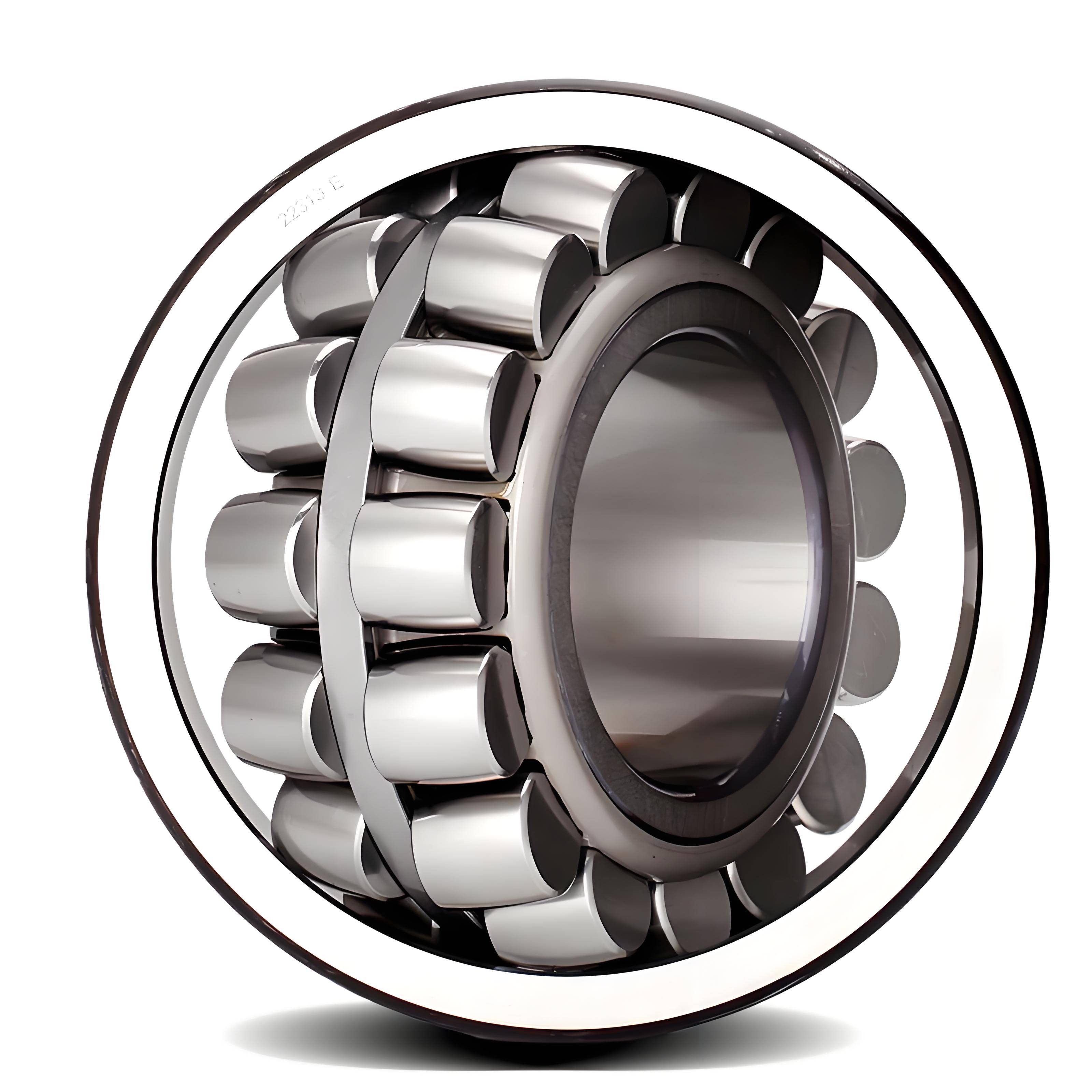
Spherical roller bearings (SRB) have a spherical outer-ring raceway that allows relatively large angular misalignment between inner and outer rings (self-aligning function), making them suitable for heavy-load applications where shaft deflection is significant or alignment is imprecise — large industrial gear units, paper machines, mining machinery, and early wind-turbine main shafts.
Thrust bearings carry axial loads exclusively; they include thrust ball bearings and thrust roller bearings, and are found in vertical-shaft pumps and marine thrust shafts.
1.3.3 Precision and Specialty Bearings
In high-end applications such as industrial robots, semiconductors, high-speed rail, and aerospace, standard bearings can no longer satisfy requirements, giving rise to a range of precision and specialty types — currently the core battleground for domestic substitution.
Flexible bearings are a key component of harmonic reducers. A harmonic reducer transmits torque through the elastic deformation of the flexspline; the flexible bearing is mounted on the elliptical wave generator and undergoes repeated elliptical deformation at very high frequency as it rotates. The fatigue-life requirements are extremely demanding. Domestically, Cixing Group has achieved a breakthrough in flexible bearings and led the drafting of the relevant national standards, but Harmonic Drive still has an advantage at the high-precision end.
Bearings for RV reducers include thin-walled angular contact ball bearings for the main shaft and needle-roller cage assemblies for cycloid-disc support, operating under severe conditions of high speed, high load, and confined space. Suzhou Bearing has designated RV reducer bearings as a key development focus.
Crossed roller bearings have rollers arranged in alternating 90° orientations, enabling a single bearing to carry radial, axial, and moment loads simultaneously in a compact, high-rigidity package. They are widely used in robot joints, harmonic-reducer output flanges, rotary tables, and medical equipment. Manufacturing difficulty is extreme — groove accuracy must reach nanometer level. THK and IKO of Japan are the dominant suppliers; very few Chinese companies can produce them at scale.
Thin-section bearings have an extremely small cross-section, reducing weight at equivalent bore diameter. They are suitable for applications where space and weight are critical, such as robot joints, aircraft control-surface servo actuators, and medical equipment.
Spherical plain bearings consist of an outer-spherical inner ring and an inner-spherical outer ring, allowing angular motion in any direction. They have no rolling elements and belong to the plain-bearing category. Applications include connecting rods, hydraulic-cylinder pivots, and aircraft flight-control systems. Longxi holds approximately 65%–70% of the domestic spherical plain bearing market, and is the only Chinese enterprise certified by the US NAVAIR for high-end aerospace spherical plain bearings.
Linear bearings support linear motion rather than rotation, and are used in guideways, lead-screw supports, and injection-molding machine linear guidance. Precision lead-screw bearings are a core component in humanoid robot actuators.
1.4 Accuracy Grades and Their Strategic Implications
Bearing accuracy grades are defined under GB/T 307.3 and ISO 492, ranging from lowest to highest: P0 (normal), P6, P5, P4, P2. The higher the grade, the tighter the tolerances for dimensional accuracy, rotational precision, and vibration/noise limits — and manufacturing difficulty and price escalate exponentially. A P4-grade bearing typically costs 3–5 times or more than an equivalent P0-grade unit; P2 can exceed P0 by a factor of 10 or more.
China currently mass-produces P0 and P6 grades, has significantly increased the domestic share of P5, has achieved partial domestic supply of P4, and P2-grade bearings remain almost entirely import-dependent, with supply concentrated in foreign brands such as Schaeffler, SKF, and NSK. This precision boundary maps precisely onto the technical root cause of China's bearing industry structure of "low-end surplus, high-end imports."
1.5 Supply-Chain Overview
The bearing supply chain consists of three segments: upstream materials and components, midstream manufacturing and processing, and downstream applications. The structure is clear, but entry barriers differ enormously across segments.
1.5.1 Upstream: Raw Materials and Key Components
The most critical upstream input is bearing steel. GCr15 high-carbon chromium bearing steel is the world's highest-volume bearing-steel grade; China's annual output is approximately 4.62 million tonnes, first globally for 14 consecutive years. Raw-material costs account for 55%–70% of total bearing manufacturing cost (reaching 69% for high-end large wind-power bearings), making them the biggest variable in bearing-enterprise profitability.
The key steel-quality metric is cleanliness, particularly oxygen content (an indirect measure of non-metallic inclusions). The national standard requires oxygen content ≤ 12 ppm for high-carbon chromium bearing steel. Xingcheng Special Steel (under CITIC Pacific Special Steel) has brought average measured oxygen content to 4.5 ppm, reaching world-class levels; Daye Special Steel has passed Pratt & Whitney's CPW378 standard certification, becoming the first Chinese raw-material supplier to enter Pratt & Whitney's enterprise standards. However, the highest-end aviation bearing steel (M50, etc.) still lags in bulk domestic substitution, and steel for P2-grade precision bearings is essentially import-dependent. CITIC Pacific Special Steel's CR1 in the domestic bearing-steel market is approximately 43%; all other players are below 13% — a reasonably concentrated market.
Additional upstream inputs include:
- Rolling elements (steel balls and rollers): Lixing is the largest dedicated domestic producer of steel balls and rollers, supplying SKF, Schaeffler, NSK, and other leading bearing manufacturers at home and abroad, and is also moving into high-end ceramic balls, with plans to complete a production line of 1 billion high-end ceramic balls per year by 2025.
- Cages: Stamped-steel cages are domestically competitive; machined copper-alloy and PEEK engineering-polymer cages rely more heavily on imports.
- Seals: Domestic producers have made some progress on low-friction, high-temperature rubber seal compounds, but top-tier products still come predominantly from imports.
- Manufacturing equipment: Bearing grinding and superfinishing equipment defines the precision ceiling. Rifeng Precision and Qinchuan Machine Tool (Grand subsidiary) are domestic representatives; approximately 25 of China's top-30 bearing companies by volume already use Rifeng equipment. However, P4/P2-grade processing still depends heavily on imported grinding machines from Germany's Junker and Thielenhaus and Sweden's KMT — equipment availability is another key constraint on high-end domestic bearing production.
1.5.2 Midstream: Bearing Manufacturing
The standard bearing manufacturing sequence has six stages: forging (hot-forging ring blanks, improving metal flow lines) → turning (CNC rough-forming) → heat treatment (quenching + tempering; GCr15 is quenched at approximately 840 °C, achieving a final hardness of HRC 60–65) → grinding (precision grinding of raceways, bore, and OD — determines accuracy grade) → superfinishing (removes the grinding-affected layer, reducing Ra to 0.02–0.05 μm) → assembly and inspection (100% check of vibration, noise, clearance, and rotational accuracy). The level of control at each step directly determines the final bearing's precision, vibration, and service life.
Heat treatment is one of the key bottlenecks for high-end domestic bearings. Bainitic isothermal quenching can significantly enhance bearing toughness and wear resistance — research indicates that, compared with conventional martensitic quenching, nano-bainite processing can more than double contact fatigue life, making it the directional technology for railway and heavy-load bearings. However, bainitic isothermal treatment can take many hours, and controlling the production cycle is extremely difficult; this is a key process gap between Chinese manufacturers and foreign companies such as SKF and Schaeffler in the railway and heavy-load bearing segments.
The midstream manufacturing landscape is highly fragmented — "low-grade, small-scale, scattered." There are approximately 25,000 normally operating bearing manufacturers nationwide (including micro-enterprises in enterprise registration databases); approximately 1,300 are above-scale enterprises; the industry CR10 is approximately 28%. Industrial clusters are concentrated in Liaoning Wafangdian (large and extra-large bearings), Zhejiang (miniature and small finished bearings), Shandong Liaocheng Linqing (trading + cage and steel-ball), Henan Luoyang (high-end industrial/aerospace/wind power), and the Jiangsu Suzhou-Wuxi-Changzhou area (precision small-to-medium bearings). The highly fragmented industrial structure is both the source of China's volume-driven strength and the structural reason for the slow consolidation toward the high end.
1.5.3 Downstream: Diverse Applications
Bearing downstream applications are extremely diverse, covering virtually all industrial and consumer product sectors. In the Chinese market, automotive accounts for approximately 37.4%, home appliances approximately 12.4%, and motors approximately 10.6%, with construction machinery, wind power, railways, and other industrial sectors collectively representing a substantial share.
Automotive bearings are the largest single downstream market. A passenger vehicle uses approximately 100 bearing sets with a value of roughly 1,500 yuan, covering hub bearings, transmission bearings, engine bearings, and more. New-energy vehicle drive motors operate at 15,000–20,000 rpm, placing higher demands for high-speed, low-friction, wide-temperature-range bearings and driving automotive bearing technology toward increased precision. Mid-to-high-end automotive bearings are supplied approximately 85% by foreign brands.
Wind-power bearings have been the fastest-growing segment in recent years. The 2025 incremental market for wind-power bearings in China is estimated at approximately 34 billion yuan, with per-unit value continuing to rise as turbine uprating progresses.
Robot precision bearings (flexible bearings, crossed roller bearings, thin-section angular contact ball bearings, etc.) represent the sub-segment with the highest technical barriers and the greatest domestic substitution potential; Japanese companies hold a clear dominant position.
High-speed rail bearings, machine-tool spindle bearings, and aerospace bearings represent the core high-end domestic-substitution challenges, with import dependence of approximately 70%, near 100% (P4/P2 grade), and over 75%, respectively — the most important "chokepoint" list in the industry.
Home-appliance and motor bearings are the segment where Chinese enterprises are most competitive — predominantly miniature and small bearings, high volume, low price, and large-scale exports.
Across the three supply-chain segments, upstream materials (particularly high-end bearing steel and high-precision equipment) and downstream high-end application demand together form the two-sided constraint limiting China's bearing industry upgrade. Improving process capability in midstream manufacturing is the core to breaking through this, but it cannot succeed without parallel advances in upstream materials and equipment.
1.6 Strategic Positioning of Bearings in the Equipment-Manufacturing Industry
From a macroeconomic perspective, bearings carry three layers of strategic significance in equipment manufacturing.
First, universality and multiplier effect. Bearings are the common foundation component of virtually all rotating machinery. Machine tools, automobiles, wind turbines, aircraft, railways, robots — any improvement in rotational precision must be supported by higher-precision bearings. The accuracy grade of a bearing is in effect the "denominator" of the precision capability of the entire downstream manufacturing system. In a sense, a country's ability to independently manufacture P2 ultra-precision bearings is a benchmark for its high-end manufacturing capability.
Second, the "Four Basics" strategic core objective. The Industrial Foundation Enhancement Program designated high-performance bearings alongside high-end CNC machine tools and aero-engines as priority breakthrough areas. Long-term import dependence for high-end bearings is not only a supply-chain security risk but also a direct constraint that prevents manufacturing precision ceilings from being broken. In recent years the state has continued to push domestic bearing manufacturers toward high-end breakthroughs through policy instruments such as "first-unit" certification, the Specialized, Sophisticated, Distinctive, and Innovative (SSDI) "Little Giant" designation, and the Industrial Foundation Re-engineering Program, with substantive progress in a number of sub-categories.
Third, structural tension between high-end upgrading and scale production. China turns out nearly 30 billion bearing sets per year — the largest absolute volume in the world — yet exhibits an approximately 74% gap in import/export unit prices (based on customs data: import average price approximately USD 1.72/set, export approximately USD 0.99/set in 2023). The coexistence of volume leadership and precision shortfall constitutes the most visible structural contradiction in China's bearing industry, and forms the basic backdrop for the analysis in subsequent chapters.
Chapter 2 Global Bearing Industry: Current Status and Competitive Landscape
2.1 Global Market Size: The Definitional Labyrinth Behind the Numbers
Ask what seems a simple question — how large is the global bearing market? — and the answers from various institutions differ by a factor of five or six. Grand View Research puts the 2023 baseline at approximately USD 121 billion, the most commonly cited "total-market" figure in the industry, covering ball and roller bearing finished products across automotive, industrial, consumer, aerospace, and railway applications. Fortune Business Insights gives a 2024 baseline of approximately USD 46.8 billion, a noticeably narrower scope focused primarily on rolling-bearing finished products. Precedence Research offers a broad figure of approximately USD 145.2 billion, incorporating bearing accessories and lubrication services. Restricting to industrial use only and excluding automotive OEM, Mordor Intelligence's figure shrinks to approximately USD 54.6 billion (2025).
In other words, depending on scope definition, the global bearing market falls roughly between USD 47 billion and USD 145 billion, with institution-estimated CAGRs of approximately 5%–9%. End-of-forecast values diverge even more sharply — from roughly USD 90 billion on the conservative end to over USD 300 billion on the optimistic end by 2030–2034. This is not data distortion; it reflects genuine differences in how broadly "bearing" is defined. The remainder of this chapter will always cite the source and scope; no single figure will be used to represent "the global market."
Despite the dispute over absolute size, several structural conclusions command broad consensus: automotive is the largest downstream segment, accounting for roughly 45%–49% of global bearing demand; Asia-Pacific is the largest region with a revenue share of approximately 40%–49% and the fastest growth (CAGR approximately 10%–12%); and high-end precision sub-segments are growing noticeably faster than general-purpose products, with aerospace bearings and robot precision bearings regarded as the highest-elasticity growth segments.
2.2 Regional Landscape: Asia-Pacific Dominates, Europe Roots, Americas Specialize
Regionally, the global bearing market displays a three-polar structure: Asia-Pacific as the volume center, Europe as the technology source, and the Americas as the specialist niche.
Asia-Pacific holds the top position with a revenue share of roughly 40%–49% and a compound growth rate (approximately 10%–12%) that consistently exceeds the global average. Demand drivers in the region exhibit multiple overlapping characteristics: a massive Chinese manufacturing base; continuous output from Japan's and South Korea's precision and automotive supply chains; and incremental demand from India's manufacturing upgrade that is only just getting started. In terms of consumption volume, China alone accounts for approximately 33% globally — the world's single largest market. But measured by domestic-enterprise revenue share, China represents only about 21.9%; the difference is exactly the gap filled by high-end imported bearings.
Europe is both the birthplace and the technical high ground of the global bearing industry. Sweden and Germany gave rise to SKF and Schaeffler, the world's two largest bearing companies. Europe's automotive, wind-power, machine-tool, and railway supply chains provide the most demanding — and most stable — application environments for high-end bearing development. Europe holds approximately 38% of the global wind-power bearing market, and until the global wind-power installation cycle enters deep maturity, it will remain the most important source of demand for offshore wind bearings.
The North American market is characterized by depth of specialization over breadth of scale. U.S. companies such as Timken have cultivated deep capabilities in tapered roller bearings, high-precision engineering bearings, and steel materials, establishing irreplaceable ecosystem barriers in mining, heavy industry, and freight-rail applications. The U.S. also maintains the world's strictest aerospace bearing certification regime; the procurement ecosystems of engine OEMs such as Pratt & Whitney and Honeywell create substantive market-entry barriers.
2.3 The Big Eight: The Real Structure of Global Competition
The competitive landscape of the global bearing industry is highly concentrated among a small number of giants. SKF and Schaeffler together already exceed 36% of global bearing revenue share; adding NSK, NTN, JTEKT, Timken, MinebeaMitsumi, and NACHI, six to eight leading groups together account for approximately 55%–60% of the global market (figures vary by source, with research-institution estimates ranging from 55% to 70%). The following summarizes each company's 2024 revenue scale and strategic positioning.
SKF (Sweden), the world's largest bearing company. 2024 net revenue approximately SEK 98.7 billion (approximately USD 9 billion at year-end exchange rate), down about 5.4% year-on-year; adjusted operating margin approximately 12.3%. SKF's product range covers deep-groove ball bearings, cylindrical roller bearings, thrust bearings, precision spindle bearings, and the full spectrum, together with lubrication systems and condition-monitoring services. The Super-Precision series is SKF's core high-end revenue generator, dedicated to high-speed machine-tool spindles, medical devices, and aerospace auxiliary systems. R&D spending is approximately 3.4% of revenue (approximately SEK 3.33 billion), with ongoing work on bearing-steel metallurgy and surface-treatment patents. SKF holds approximately 19.7% of ZWZ (Dalian) and has manufacturing bases in Kunshan and Shanghai.
Schaeffler (Germany). 2024 group total revenue approximately EUR 18.2 billion (including Vitesco Technologies consolidated, up approximately 12.9% year-on-year); the Bearings and Industrial Solutions division (FAG and INA brands) contributed approximately EUR 6.570 billion, the Automotive Technologies division approximately EUR 6.955 billion, and the Vehicle Lifetime Solutions division approximately EUR 2.579 billion. The FAG brand excels in industrial and railway bearings; the INA brand leads in automotive engine valve-train bearings and linear motion systems — the two complement each other across an extremely wide application footprint. Schaeffler's Greater China region already exceeded CNY 23.8 billion in 2021 revenue, approximately 24% of the group; the company operates more than 10 factories and approximately 12,000 employees in China — making China its largest single regional market globally. After incorporating Vitesco in 2024, Schaeffler operates on a dual-engine model of precision bearings plus electrification components, aiming to deepen integration with the global automotive electrification transition.
NSK (Japan). FY2024 (April 2024 – March 2025) net sales approximately JPY 796.7 billion (approximately USD 5.5 billion). NSK is a major force in automotive bearings, with hub-bearing units holding a steady top-three share globally; in industrial bearings, the NSK ULTAGE series precision angular contact ball bearings are a leading spindle selection for machine tools. NSK is also deeply involved in high-speed rail, supplying axlebox bearings for multiple Shinkansen train types; China's CRH380A high-speed multiple-unit trains previously used NSK bearings in large quantities.
NTN (Japan). FY2024 net sales approximately JPY 836.3 billion (approximately USD 5.5 billion). NTN's product line is highly complementary to NSK's, with full coverage of deep-groove ball, tapered roller, and cylindrical roller bearings, and particular strength in automotive constant-velocity (CV) joints. In recent years NTN has pursued strategies of "lightweighting" and a "lubrication revolution" focused on reducing friction losses in electric drivetrain powertrains.
JTEKT (Japan), formed by the merger of Toyota Machine Works and Koyo Seiko. FY2024 revenue approximately JPY 1.5 trillion (covering bearings, steering systems, and machine tools; exact figure pending annual report confirmation). JTEKT is one of very few companies globally with full capabilities in both bearings and automotive steering systems; this vertical integration gives it a unique bargaining position with automotive OEMs. Its KOYO brand industrial bearings enjoy a strong reputation in machine tools and construction machinery.
Timken (United States). Full-year 2024 net sales approximately USD 4.573 billion (down 4.1% year-on-year); adjusted EBITDA margin approximately 18.5%. Timken began with tapered roller bearings and to this day maintains global leadership in heavy trucks, railway freight cars, mining equipment, and steel metallurgy. Unlike the other giants, Timken also operates a high-performance specialty steel business, creating a vertical synergy of "bearings + steel" that builds a hard-to-replicate supply-chain advantage for applications requiring extreme load capacity and durability. Notably, Timken is one of the most active industry advocates against imports of Chinese tapered roller bearings from the United States — this product category is the core object of long-standing U.S. anti-dumping duties.
MinebeaMitsumi (Japan). FY2025 (April 2024 – March 2025) net sales approximately JPY 1.52 trillion (approximately USD 10 billion), making it one of the largest by revenue among the Big Eight. Its flagship product is miniature precision ball bearings, with a global market share exceeding 60% — one of the most concentrated sub-segments in bearings. A significant proportion of the precision ball bearings just millimeters in diameter found in computer hard drives, medical devices, drones, and small motors come from MinebeaMitsumi. In recent years, as the humanoid robot and drone markets expand, demand for MinebeaMitsumi's miniature bearings has entered a new growth phase. (Note: the source text contains a linked reference to Midea within this passage; the link is preserved as in the original.)
NACHI-Fujikoshi (Japan). FY2024 (through November 2024) net sales approximately JPY 239.8 billion (approximately USD 1.6 billion) — the smallest by scale among the Big Eight, but with exceptionally deep technical roots. NACHI's hallmark is a "six-in-one" model combining bearings, hydraulic equipment, cutting tools, machine tools, industrial robots, and specialty steel; its high-speed precision spindle bearings enjoy an excellent reputation in the machine-tool industry, and it is also an important supplier of robot joint bearings in Japan.
A trait common to all eight companies is worth analyzing: almost without exception, these giants have built full-scenario coverage across both automotive and industrial mainlines, while establishing absolute dominance in at least one sub-segment, maintaining price premiums through long-cycle certification barriers and customer stickiness. This is a competitive structure that Chinese domestic enterprises have yet to replicate.
2.4 Sub-Segment Landscape 1: Automotive Bearings — Largest Arena, High End Controlled by Foreign Players
Automotive bearings account for approximately 45%–49% of global bearing demand — the most important single sub-market. A passenger car uses approximately 100 bearing sets; commercial vehicles use more. From hub units, transmissions, and differentials to engine valve-train mechanisms, bearings are present at every rotational node in the drivetrain.
The global automotive bearing supply structure is dominated by Japanese, European, and Korean companies. NSK, Schaeffler (including FAG and INA), SKF, NTN, and JTEKT (KOYO) together hold the vast majority of the high-end global automotive bearing market; South Korea's ILJIN has also established a leading position in hub-bearing units. OEM qualification typically requires 3–5 years; once on a vehicle bill of materials, switching costs are extremely high, creating very strong customer lock-in.
The new-energy vehicle transition presents both opportunity and pressure. Battery-electric vehicle drive motors commonly operate at 15,000–20,000 rpm (Dmn values must reach 800,000 or above), imposing requirements on bearing noise, temperature rise, life, and low-friction torque far more demanding than conventional combustion engines. High-speed DGBBs and hybrid ceramic bearings are rapidly increasing penetration in primary drive motors of new-energy vehicles; NSK, Schaeffler, and SKF products remain the mainstream selection.
2.5 Sub-Segment Landscape 2: Wind-Power Bearings — Scale Expansion and Domestic Breakthrough
Wind power has been one of the fastest-growing bearing sub-segments over the past decade. According to industry research, the global wind-power bearing market was approximately USD 6–9.8 billion in 2024 (variation stems from whether yaw, pitch, and gearbox bearings are included), potentially reaching approximately USD 22.1 billion by 2033, at a CAGR of roughly 9.5%.
The technical barriers in wind-power bearings are concentrated in large main-shaft bearings. As single-unit capacity advances from 10 MW and 15 MW toward 25 MW, main-shaft bearing diameters routinely exceed 2 meters and weigh several tonnes; precision control in forging, heat treatment, and grinding becomes extremely challenging. Schaeffler, SKF, NTN, Timken, and JTEKT are the major international suppliers. Europe holds approximately 38% of the global wind-power bearing market.
China is catching up rapidly in this sub-segment. In 2024, global investment in wind-power bearing capacity exceeded USD 5.6 billion, with China absorbing more than USD 2.1 billion of that — a scale that reflects the strategic commitment of Chinese domestic enterprises to this arena. The domestic-content rate for main-shaft bearings in China has risen rapidly from about 30% in 2023 to about 65% in 2025; analysis of specific domestic companies is deferred to Chapter VI.
2.6 Sub-Segment Landscape 3: Robot Precision Bearings — A Japanese-Dominated Micro-Precision Ecosystem
Precision bearings for robots are the fastest-growing sub-segment in recent years and the most technically intensive battleground. Industrial robot joints require flexible bearings (flexsplines) in harmonic reducers, thin-walled angular contact ball bearings in RV reducers, and crossed roller bearings at the output stage. The requirements for accuracy grade (P4 or even P2), steel cleanliness, and heat-treatment consistency far exceed those of general industrial bearings.
Japanese companies have established a near-monopoly in this arena. Harmonic Drive AG/Systems has long dominated the global harmonic reducer market, with its flexible bearings forming a paired ecosystem with the reducers themselves; THK and IKO have built moats in linear guideways and needle roller bearings; MinebeaMitsumi's miniature precision ball bearings are embedded in every lightweight joint. The combined global harmonic reducer and RV reducer market was approximately USD 2.1 billion in 2024 (per GlobalInfoResearch), projected to grow to approximately USD 3.15 billion by 2031.
Humanoid robots have introduced a new order of magnitude. Research forecasts place the global market for humanoid-robot bearings at approximately USD 1.81 billion by 2030 (CAGR approximately 77%, from an extremely low base), driven by each humanoid robot requiring dozens of precision bearings. This market is still primarily controlled by Japanese companies; Chinese domestic suppliers are in the early stages of rapid catch-up.
2.7 Sub-Segment Landscape 4: Aerospace Bearings — A Proprietary Ecosystem Built by Certification Barriers
Aerospace bearings have the highest unit prices and the deepest certification barriers of any sub-segment. The global aerospace bearing market was approximately USD 12.7 billion in 2024 (per AMR and other sources, though forecast growth rates diverge widely across sources and are not cited here); primary materials are M50 high-speed tool steel, GH4169 nickel-based superalloy, and silicon nitride (Si₃N₄) ceramics.
The U.S. dominance in aerospace bearings stems from the deep supply-chain ecosystem built by engine OEMs including Pratt & Whitney, GE Aerospace, and Rolls-Royce. Entering an aerospace OEM qualification system (NADCAP) typically takes 3–10 years; once achieved, the supplier lock-in is extremely strong. SKF's aerospace division, RBC Bearings (U.S. aerospace bearing specialist), Timken, and Schaeffler are the core global aerospace bearing suppliers. The Rolls-Royce supply chain is deeply tied to SKF and other European suppliers. Chinese domestic enterprises currently have a local-content rate below 25% for aerospace bearings; large volumes must still be imported from these systems, with annual import value exceeding USD 3 billion.
2.8 Sub-Segment Landscape 5: High-Speed Rail Bearings — The Last Uncrossed Line
High-speed rail represents one of China's manufacturing industry's "last few high-end strongholds yet to be conquered." China's operational high-speed rail network is approximately 45,000 km — the world's longest — but axlebox bearing import dependence remains approximately 70%, with SKF, Schaeffler, and NSK as the primary suppliers.
The barriers to high-speed rail axlebox bearings center on two points: first, steel cleanliness — at high speed, fatigue spalling triggered by inclusions can cause catastrophic safety incidents; second, ultra-long life verification — industry practice requires 3 million km fault-free operation. LYC and ZWZ have completed development and bench testing for the 250–350 km/h speed grade and are in the stage of under-car running trials, only one step away from commercial deployment but not yet achieving large-scale substitution of imported products. This situation parallels machine-tool spindle bearings (high-end P4/P2 grade almost entirely from Germany's GMN, SKF, and NSK), both exemplifying the structural shortfalls of China's bearing industry.
2.9 Monopoly in High-End Bearings: The Iron Curtain of Three Nations and Six Companies
If "high-end bearings" is defined to include aero-engine bearings, high-speed machine-tool spindle bearings (P4/P2 grade), harmonic/RV reducer precision bearings, and high-speed rail axlebox bearings (350 km/h+), then the monopoly is held almost entirely by six companies from three countries:
- Germany: Schaeffler (industrial precision + automotive + wind power), GMN (global leader in ultra-precision machine-tool spindle bearings)
- Sweden: SKF (full-spectrum precision in aerospace + machine tools + railway + wind power)
- Japan: NSK (automotive + high-speed rail + precision machine tools), NTN ULTAGE series (high-speed machine-tool spindles), Harmonic Drive (harmonic reducer precision bearings)
What these six companies share is not dominance in any single technology, but a triple-layer moat: (1) self-sufficient ultra-pure bearing steel smelting and raw-material control capability; (2) decades of accumulated precision-machining experience and proprietary equipment (high-end grinding machines are themselves monopolized by German and Japanese companies); and (3) deep embedding in downstream OEM qualification systems, creating supplier lock-in — once inside a given engine or high-speed rail model, replacement cycles are measured in decades.
U.S. company RBC Bearings has established a unique barrier in aerospace, focused on high-reliability spherical plain bearings and precision ball bearings deeply embedded in the U.S. defense aerospace supply chain; practically no European or Asian competitor has made any material inroads.
2.10 Global Trade Landscape: The Long Shadow of Anti-Dumping Duties
China is one of the world's largest bearing exporters; in 2023, global ball/roller bearing exports totaled approximately USD 6.31 billion (OEC basis). However, exports are concentrated in low-to-mid-end general-purpose bearings, with an average export price of approximately USD 0.99/set, while the average import price was approximately USD 1.72/set — a unit-price gap of approximately 74%. For tapered roller bearings, the import/export unit-price gap approaches a factor of five. The trade structure of exporting by volume and importing by value is the most direct illustration of China's bearing industry's structural contradictions.
Trade barriers further compress Chinese companies' export headroom. The U.S. anti-dumping duty rate on Chinese tapered roller bearings is 92.84%, a measure in continuous effect since 1975 that has survived multiple sunset reviews; the USITC's most recent review in February 2024 determined that revocation would again cause material injury to the U.S. domestic industry. This means Chinese tapered roller bearings are effectively permanently blocked from the North American high-end engineering bearing market; Timken and other domestic manufacturers are direct beneficiaries of this protective mechanism.
Toward Eurasia, the Eurasian Economic Union (EAEU) imposes anti-dumping duties of 31.3% (Wuxi rolling-bearing producers) to 41.5% (other producers) on Chinese rolling bearings (excluding needle roller bearings), with the latest extension running through March 31, 2029; the measure was first established in 2011 and has been renewed several times since. The EAEU market is one of the important destinations for Chinese bearing exports; this tariff rate compresses the price-competitiveness advantage of Chinese export bearings to a very limited margin.
At the EU level, no currently active anti-dumping measures against Chinese bearings have been identified, but the EU's overall trade-defense activity in 2024 already hit a post-2006 high (33 new investigations initiated during the year); whether bearings will be included in future investigations remains a variable that exporters must continue to monitor.
2.11 Landscape Summary: Concentration and Fragmentation Coexist
Looking back at the global bearing industry, the macro landscape can be characterized as "three layers of concentration and one layer of fragmentation."
The first layer: market concentration in Asia-Pacific. The center of consumption gravity has unambiguously shifted to Asia, and China is the single most important variable. The second layer: supply concentration among a few giants. SKF and Schaeffler alone hold a combined global revenue share exceeding 36%; the Big Eight together account for approximately 55%–60%; the remaining thousands of companies share less than half the market. The third layer: high-end concentration in three nations. Germany, Sweden, and Japan's technical monopoly in precision bearings, aerospace bearings, high-speed machine-tool bearings, and robot reducer bearings shows no signs of being shaken in the near term.
Fragmentation is visible in emerging sub-segments: large wind-power bearings, humanoid robot precision bearings, and high-speed bearings for electric-vehicle drivetrains are three arenas whose competitive structures have not yet closed; Chinese companies are competing for early positioning. This is the essential background for understanding the strategic choices of Chinese domestic enterprises — Chapter VI will analyze this in detail.
Chapter 3 China Bearing Industry Environment Analysis (PEST)
Understanding an industry's trajectory requires first reading the environment it inhabits. China's bearing industry's current structure — vast scale yet high-end shortfalls, world-leading output yet severely inverted unit prices — is both the result of historical path dependence and the product of four external forces: policy direction, economic-cycle transmission, social structural change, and technology-evolution pressure. This chapter dissects each of the four PEST dimensions in turn, providing a macroeconomic reference frame for the market-size, competitive-landscape, and supply-chain analysis that follows.
3.1 Political Environment: From "Four Basics" Gap-Filling to the SSDI System
3.1.1 "Made in China 2025" and the "Four Basics" Strategic Framework
In 2015, the State Council issued "Made in China 2025" (State Council Document No. 28 [2015]), designating high-end bearings as a priority breakthrough target in the "Four Basics" (core foundational components/parts, key foundational materials, advanced foundational processes, industrial technology foundations) program. This was the first time that high-end bearing domestic substitution was written into the national manufacturing master plan; its strategic significance far exceeds industrial policy alone — it established a clear standard: whoever controls bearing precision controls the upgrade pathway for the entire equipment manufacturing sector.
The subsequent Industrial Foundation Enhancement Program continued to designate high-precision bearings for wind power, high-speed rail, CNC machine tools, and aerospace as priority breakthrough products, organized around an "application value chain" plan for supply-chain coordination. The core logic of the value-chain model is to break through the certification barriers between materials, components, complete machines, and end-users: complete-machine manufacturers lead, component manufacturers follow, and material suppliers support, with policy funding backing joint development and first-time installation validation. This mechanism addresses precisely the core pain point in the bearing industry — even when technical performance has been matched, the certification threshold for entering mature supply chains can keep domestic products locked out indefinitely.
3.1.2 The Industrial Foundation Re-engineering Program: The Second Layer of Engineering-Stage Push
In 2021, the Ministry of Industry and Information Technology launched the "Industrial Foundation Re-engineering Program Implementation Plan," incorporating nearly 80 emblematic core foundational components and nearly 70 emblematic key foundational materials into engineering-stage and industrialization breakthrough targets. High-precision reducer bearings, RV reducer bearings, and servo-motor-compatible bearings have partially entered the industrialization stage.
The distinction between the Industrial Foundation Re-engineering Program and the Industrial Foundation Enhancement Program lies in their emphasis: the Foundation Enhancement Program focuses on R&D project initiation; the Foundation Re-engineering Program focuses on the engineering leap from "laboratory sample" to "volume supply." For the bearing industry, this distinction has practical significance — for many high-end bearing product types, the technical solution has long since been found; the real bottleneck lies in controlling batch manufacturing consistency and establishing certification pathways, which is precisely what the Foundation Re-engineering Program aims to address.
3.1.3 The "14th Five-Year Plan for the National Bearing Industry": Quantitative Targets and Structural Direction
The plan issued by the China Bearing Industry Association set two core targets: primary operating revenue of 223.7 billion to 258.3 billion yuan (average annual growth of 3%–6%); and completion of R&D breakthroughs for eight emblematic high-end bearing products in aerospace, high-speed rail, and wind power.
As of results: the revenue target was achieved ahead of schedule — per China Bearing Industry Association data, primary operating revenue of above-scale enterprises was approximately 231.5 billion yuan in 2024, up 6.2% year-on-year, within the target range. But hitting the quantitative targets does not obscure the continued persistence of structural problems: high-end products still account for only about 5%, mid-to-low-end over 80%, and the import/export unit-price gap approximately 74% (2023 import average price USD 1.72/set, export USD 0.99/set). Completing the plan is not the same as transforming the structure — this distinction must be maintained when evaluating the 14th Five-Year Plan's policy outcomes.
3.1.4 The SSDI "Little Giant" Program and First-Unit Policy: Two Market-Based Incentive Mechanisms
The SSDI "Little Giant" program provides brand endorsement and funding support for hidden champions in specialized sub-segments; bearing-related enterprises have successively made the national list. Qianchao Bearing, for example, was selected on the strength of its technological accumulation in miniature bearings for new-energy vehicle electric drivetrains, receiving approximately 6 million yuan in awards (2 million yuan/year × 3 years). The long-term impact of this program lies not in the funding scale but in guiding enterprises to focus on specific technology tracks, steering small and mid-size bearing manufacturers away from pointless price wars in commoditized low-end products.
The First-Unit Policy (formally, the "Major Technical Equipment Insurance Compensation Policy for First Units") is the key mechanism for crossing the last mile of bearing industrialization. The "2024 Edition Guidance Catalogue for the Promotion and Application of Major Technical Equipment First Units" establishes a framework for insurance compensation: the risk of failure in first-time domestic high-end bearing installations is covered by policy insurance for a five-year period. This directly reduces the trial-cost for complete-machine manufacturers adopting domestic high-end bearings. Previously, machine manufacturers preferred to pay the import premium rather than bear the liability for downtime or quality incidents caused by bearing failures. The First-Unit Insurance mechanism uses fiscal leverage to build market trust, filling the policy gap of "technically qualified but commercially untrusted."
3.2 Economic Environment: Demand Transmission Along Five Structural Uptrend Curves
Bearings are a foundational industrial component; their demand closely tracks the investment and production pace of downstream industries. The most noteworthy incremental demand in China's bearing industry today is concentrated in five structurally upward curves.
3.2.1 Wind Turbine Uprating: Multiplier Effect on Per-Unit Value
China's 14th Five-Year Plan renewable-energy program has driven rapid expansion of wind-power installations. By end-2024, China's cumulative installed solar and wind capacity together reached 1.41 billion kW, with wind power as the fastest-growing component. The key transmission channel to the bearing industry is not total installed capacity but the per-unit value jump driven by single-turbine uprating.
As single-unit capacity grows from 3–4 MW to 8–10 MW and even 15 MW or more, main-shaft bearing diameter, load, and manufacturing difficulty all rise simultaneously, with per-unit value rising rapidly from approximately 130,000 yuan (domestic brands) for doubly-fed models to nearly 2 million yuan for large direct-drive models. Estimates put the incremental Chinese wind-power bearing market in 2025 at approximately 34 billion yuan (including approximately 11.6 billion yuan for main shafts, approximately 13.8 billion yuan for yaw and pitch bearings, and gearbox bearings and others), with main-shaft bearing CAGR approximately 20%. Per-unit value multiplication, combined with continued growth in installations, is making wind power one of the most powerful downstream engines driving demand for high-end Chinese bearings.
3.2.2 Humanoid Robots: New Incremental Demand for High-Barrier Precision Bearings
Demand for bearings from industrial robots already exists, but current market attention has shifted to the incremental impact of humanoid robots. The State Council's 15th Five-Year Plan designated robotics as a priority development direction; humanoid robot shipments are projected to exceed 10,000 units in 2025, with an estimated CAGR exceeding 75% from 2025 to 2030.
Humanoid robot bearing demand is concentrated in three high-barrier precision types: flexible bearings (thin-wall ball bearings enduring elliptical-deformation fatigue) for harmonic reducers; crossed roller bearings (requiring extremely high groove-grinding precision) at harmonic-reducer output stages; and thin-walled angular contact ball bearings for RV reducers. On a conservative estimate, when cumulative humanoid robot shipments such as Tesla's Optimus reach 1 million units, the joint-bearing market alone will reach approximately 3.5 billion yuan. These three bearing types are currently highly dependent on Japanese companies (THK, IKO, Harmonic Drive, etc.); most Chinese domestic enterprises are still at the sample or small-batch stage. The pace of demand growth will far outstrip the pace at which domestic supply reaches engineering maturity — meaning supply bottlenecks will support premium pricing for a considerable period.
3.2.3 New-Energy Vehicle High-Speed Bearings: Structural Upgrade of an Existing Demand Stream
Automotive is the largest downstream for Chinese bearings, accounting for approximately 37.4% of demand (another source gives approximately 39%–40%). The spread of new-energy vehicles has not changed this position, but has quietly changed the technical requirements for automotive bearings. Traditional combustion-engine drive systems operate in the 4,000–6,000 rpm range, while new-energy vehicle drive motors are now commonly at 15,000–20,000 rpm, with Dmn values required at 800,000 or above, imposing requirements on bearing high-speed performance, low friction torque, and wide-temperature-range tolerance (−40 °C to 150 °C) far exceeding conventional operating conditions. Bosch's fifth-generation permanent-magnet motor has reached a continuous speed of 30,000 rpm in production. This performance escalation is pushing what was originally a mid-range automotive bearing sub-segment into high-end technical territory. Foreign brands account for approximately 85% of mid-to-high-end automotive bearings; the new-energy trend has not reduced this ratio — if anything, it has further entrenched foreign leadership by raising technical barriers, at least for now.
3.2.4 High-Speed Rail: Long-Tail Demand and Sustained Domestic-Substitution Pressure
China's operational high-speed rail network at approximately 45,000 km is the world's longest, generating sustained demand for bearing maintenance, replacement, and new-line construction. But the core narrative for rail bearings is not demand increments but the persistent pressure from import dependence. China's high-speed rail overall domestic-content rate has reached approximately 97%; axlebox bearings are one of the few items in the remaining "3%," with import dependence still approximately 70%, primarily supplied by SKF, Schaeffler, and NSK.
From an economic transmission perspective, the distinctive feature of high-speed rail bearings is their relatively stable and procurement-centralized demand — China State Railway Group is a single buyer, and its procurement decisions are highly policy-oriented. Once domestic 250 km/h and 350 km/h axlebox bearings pass final certification, demand substitution will occur as a system switch rather than a gradual rebalancing. This "one step away" characteristic gives rail bearings a non-linear market-release potential.
3.2.5 CNC Machine Tools: Procurement Demand Driven by the Industrial Mother-Machine Policy
The 2024 Edition of the "Industrial Structure Adjustment Guidance Catalogue" elevated CNC machine tools to the encouraged category for the first time as a standalone item; the MIIT roadmap targets 80% domestic market share for mid-to-high-end functional components such as spindles, lead screws, and linear guideways by 2025. CNC machine-tool spindle bearings (primarily P4/P2-grade angular contact ball bearings) are one of the functional component categories with the lowest domestic-content rates; high-end products are almost entirely dependent on imports from Germany's GMN, SKF, and NSK. The transmission pathway from machine-tool policy stimulus has two layers: first, expansion of the machine-tool industry itself creates incremental demand for compatible bearings; second, policy pressure forces complete-machine manufacturers to accelerate evaluation of domestic precision bearing alternatives, opening windows of entry for domestic suppliers.
3.3 Social Environment: Upgrading Pressure, Skilled-Worker Shortages, and Export Friction
3.3.1 Structural Pressure from Manufacturing Upgrading
Over the past decade, China's manufacturing sector has migrated broadly toward mid-to-high-end products, driving a systemic demand upgrade for precision components. In the bearing industry, this trend manifests in two specific ways: first, downstream complete-machine customers' requirements for bearing accuracy grade, life specification, and delivery consistency have continued to rise, making pure low-price competition strategies increasingly difficult to sustain; second, some complete-machine enterprises with long-term dependence on foreign bearings have, out of supply-chain security and cost-control considerations, begun actively guiding core suppliers to migrate toward domestic sourcing. This pressure, transmitted from the complete-machine level to bearing enterprises, creates a certain forced-upgrading mechanism — those that do not upgrade risk being dropped from the qualified-supplier lists of high-end customers.
3.3.2 Industrial Workforce and Skilled-Technician Development
High-end bearing manufacturing depends on craft skills far more than general machining. Human experiential judgment in grinding operations, tactile control in precision assembly, and parameter adjustment in superfinishing processes have yet to be fully replaced by automation. China's bearing industry has long faced a shortage of high-skill production workers: on one hand, the generation of experienced grinders and assemblers is aging out; on the other, there is a significant gap between the skill levels of new-generation technicians from vocational schools and actual process requirements. This societal gap directly limits smaller bearing enterprises' ability to extend into high-precision products, and is one of the deep-rooted reasons why the "low-grade, small-scale, scattered" structure has been so difficult to change.
3.3.3 International Anti-Dumping Duties: Continued Tightening of the Export Environment
China's bearing exports face considerable trade-friction pressure. The U.S. anti-dumping duty rate of 92.84% on Chinese tapered roller bearings has been in continuous effect since 1975, maintained through multiple sunset reviews; the most recent review result, released in January 2026, maintained this rate unchanged. The Eurasian Economic Union (Russia, Kazakhstan, Belarus, and others) imposes anti-dumping duties of 31.3% (for certain Wuxi enterprises) to 41.5% (other Chinese producers) on Chinese rolling bearings, extended in April 2024 through the end of March 2029.
The economic impact of anti-dumping duties extends beyond export cost; more profoundly, they have shaped the export structure of Chinese bearing enterprises. General mid-to-low-end bearings can still navigate barriers through absolute cost advantage (via transshipment, local plant establishment, etc.), but precision bearings that need to open high-value-added export markets are actually temporarily misaligned with anti-dumping pressure — because domestic enterprises have not yet built sufficient competitiveness to enter high-end export markets. The challenge of entering high-end export markets comes from technical barriers, not direct tariff blockades. Export environment issues will be explored further in the risk analysis chapter; this section provides only a qualitative notation at the social-structural level.
3.4 Technological Environment: Direction Set, Gap Remains
The PEST analysis of the technology dimension focuses on the broad technological environment and evolution direction of the bearing industry. Details and breakthrough milestones are addressed in Chapter IX; this section only maps the three technology mainlines shaping the competitive landscape across the entire industry.
3.4.1 High-End and Precision Upgrading: Accuracy Grade Improvement Is an Irreversible Trend
Accuracy grade is the core yardstick of bearing technical content. From P0 (normal) through P6, P5, P4, and P2 (ultra-precision), crossing each grade level entails a step-change rise in manufacturing difficulty and material requirements. China's bearing industry currently concentrates the bulk of its capacity in the P0-to-P5 range; a significant share of P4-and-above products required domestically still depends on imports, and bearing steel for P2-grade ultra-precision bearings is essentially sourced overseas.
The structural upgrade of downstream demand — new-energy electric drives, robot precision joints, high-speed machine-tool spindles — is systematically shifting the center of gravity of market demand toward the P4/P2 end. This is not merely natural technology evolution but a rewriting of competitive rules: in the P0/P6 range, Chinese domestic enterprises have established solid positions via cost advantage; in the P4/P2 range, that cost advantage has yet to translate into product competitiveness. The direction of high-end upgrading is unambiguous, but how long the transition takes and how much investment it requires are questions that industry analysis must treat with due caution.
3.4.2 Intelligentization: From "Passive Rotating Component" to "Sensing Node"
The technical form of bearings is evolving from purely mechanical rotation-support components to "intelligent sensing nodes" integrating sensors and communication modules. Smart bearings collect vibration, temperature, rotational speed, load, and lubrication-status signals within the bearing body, transmit data to the cloud, and perform health-state analysis and fault prediction using machine learning. The global smart bearing condition-monitoring market was estimated at approximately USD 8.2 billion in 2024, projected to approach USD 15.7 billion by 2035.
For Chinese bearing enterprises, intelligentization is both a direction for technical upgrading and a potential avenue for differentiated competition. Traditional bearing quality competition ultimately comes down to the accumulation of material metallurgy, precision grinding, and process control — domains where the gap with foreign players is historical and cannot be closed quickly. But in the sensing and software layer of intelligentization, the starting points are more equal; the head start some Chinese companies have in digital manufacturing and industrial-internet infrastructure may provide a gentler slope for catching up in the smart-bearing space.
3.4.3 Phased Assessment of Domestic Substitution
Synthesizing policy intensity, market demand pull, and the state of technology accumulation, the current trajectory of high-end domestic bearing substitution shows clear tiered differentiation. Wind-power main-shaft bearing domestic content has risen rapidly from approximately 30% in 2023 to approximately 65% in 2025 — the fastest-progressing sub-segment. In robot precision bearings, domestic market share for RV reducer bearings reached approximately 61% in 2024, while crossed roller bearings remain highly dependent on Japanese and German suppliers. High-speed rail axlebox bearings are in the under-car running trial stage; commercialization still requires time. Domestic substitution progress is slowest for precision machine-tool spindle bearings and aerospace bearings, where high-end product domestic-content rates are below 25%.
This differentiation is not random; there is underlying logic. The speed of domestic substitution is highly correlated with: whether downstream buyers face domestic-substitution pressure (state-owned complete-machine enterprises vs. foreign complete-machine enterprises); whether market growth provides validation headroom (new wind-power installations vs. in-service high-speed rail lines); and whether the technology pathway offers a late-mover possibility (smart-bearing software layer vs. metallurgy-and-grinding hard-won accumulation). The technological macro-environment provides windows of opportunity, but whether those windows can be seized depends on the dual constraints of enterprise capability and market structure.
3.5 Summary: The Resultant and the Tensions of Four Forces
At the policy level, from "Made in China 2025" through Industrial Foundation Enhancement, Industrial Foundation Re-engineering, and First-Unit Policy, a progressively layered policy toolkit has been assembled, all pointing at the same objective: reducing high-end bearing import dependence. At the economic level, wind-turbine uprating, humanoid robots, and new-energy electric drives represent today's three clearest high-end demand growth curves, while the traditional high-speed rail and machine-tool tracks carry an additional layer of policy-driven substitution logic. At the social level, the structural pressure of manufacturing upgrading coexists with the long-term skilled-workforce shortfall; international trade friction imposes continued constraints on export pathways. At the technology level, the directions of high-end upgrading, precision improvement, and intelligentization are established, but the pace of domestic substitution varies markedly across sub-segments.
The four forces do not uniformly point toward the same outcome. Policy push and technical-barrier resistance coexist; demand pull and supply-side limitations form a tension. This complexity is the fundamental backdrop for understanding why China's bearing industry is simultaneously rich in opportunity and slow to transform.
Chapter 4 China Bearing Market Size and Current Operating Conditions
If one looks only at headline numbers, China's bearing industry report card appears impressive: nearly 30 billion sets produced per year, primary operating revenue crossing the 200-billion-yuan mark, output volume and scale firmly in first place globally. But the value of industrial research lies precisely in not allowing totals to obscure the view. Stacking output, production value, trade, and profitability data together reveals a pattern that recurs persistently: the scale curve runs steadily upward while the value curve is held firmly in the low range. China's bearings are not insufficiently large — they are large but insufficiently valuable. The purpose of this chapter is to use the hardest available data to restore "large but not strong" — a phrase too often deployed as empty rhetoric — to a set of specific facts that can be measured and interrogated.
4.1 (I) Output and Production Value: Two Curves Both Growing, but Definitions Diverging
Starting with output. Per data compiled by the China Bearing Industry Association and China Commercial Industry Research Institute, Chinese bearing output was approximately 25.9 billion sets in 2022, up approximately 11.2% year-on-year; it rose to approximately 27.5 billion sets in 2023, up approximately 6.18%. Entering 2024, a clear bifurcation appeared between forecasts and statistical definitions: the conservative analyst estimate is approximately 29.6 billion sets, while another set of figures citing industry association methodology gives approximately 33.7 billion sets, a pronounced jump of approximately 17.3% year-on-year.
These two figures differ by more than 4 billion sets — far from trivial. The root of the difference lies in statistical scope: the higher figure may include more accessory-type products or a larger sample of above-scale enterprises; the lower figure is closer to a linear extrapolation forecast. This report consistently presents both in parallel: 2024 output is described as "approximately 29.6 billion sets (forecast) to 33.7 billion sets (industry association basis)" rather than committing to either figure alone. For a research-institute-level report, acknowledging definitional uncertainty is more reliable than pretending to precision. Regardless of which figure is used, the conclusion is consistent: China alone accounts for approximately one-third of global bearing output, undeniably the world's leading producer and consumer.
Turning to production value — that is, primary operating revenue. The definitional splits here are worse than for output and deserve careful clarification. Among figures available in the market for roughly the same recent period, numbers range from 230 billion yuan all the way to 364.7 billion yuan — a spread approaching 30%. This report's adopted principle is: the China Bearing Industry Association's primary operating revenue of above-scale enterprises is the benchmark, approximately 231.5 billion yuan in 2024, up approximately 6.2%. This benchmark has a clearly defined statistical scope and is continuously comparable — it is the most authoritative official data in the industry.
A parallel figure of approximately 364.7 billion yuan also circulates. It is almost certainly higher by roughly 30% because it incorporates trading and distribution channels, revenue from foreign enterprises' China-based local production and sales, and the large number of small enterprises outside the above-scale statistics in a "total domestic bearing market" calculation. Neither figure is wrong; they answer different questions. The association figure answers "how much value did above-scale enterprises produce"; the broad figure answers "how much value moved through the entire market." Conflating the two is the most common technical error in industry reports — when the same article states 200 billion yuan in one paragraph and 300-plus billion in the next, readers have no way to reconcile them. In this report, whenever production value is mentioned, the default is the approximately 231.5 billion yuan association figure; any citation of the broad figure will be explicitly flagged.
Placing the benchmark on a time axis also yields a frequently overlooked observation. The "14th Five-Year Plan for the National Bearing Industry" set a target range of 223.7 billion to 258.3 billion yuan, with annual growth of 3%–6%. The actual 2024 value of approximately 231.5 billion yuan falls within this range, exceeding the lower bound. In other words, on a pure volume basis, the 14th Five-Year Plan's scale target has essentially been met. But how the plan's high-end and domestic-substitution targets have fared requires import/export and profitability data to answer — aggregate target attainment and structural upgrading are two matters that must be assessed separately.
The industry's microeconomic picture also deserves noting: per enterprise registration databases, as of early 2024, approximately 25,000 bearing manufacturers were in normal operation nationwide (including numerous micro-enterprises); approximately 1,300-plus were above-scale enterprises. More than 20,000 enterprises share 200-plus billion yuan in revenue, averaging well under 10 million yuan per company; only a small fraction of them are in the association's above-scale statistics. This contrast of "extremely many enterprises, extremely few above-scale" already foreshadows the "low-grade, small-scale, scattered" structure to be discussed later — this chapter does not expand on individual cases but establishes it as background for understanding current operating conditions.
It is worth making a cross-sectional comparison. Mapping the approximately 231.5 billion yuan in industry revenue against the scale of the world's eight major multinational bearing groups makes the gap immediately visible: the annual revenue of each of several leading European and Japanese companies, converted to RMB, often falls in the range of several hundred billion to over a trillion yuan; a few of them added together already approach or exceed the total above-scale revenue of China's entire industry. In other words, the combined output of more than 20,000 Chinese bearing companies is roughly comparable to that of a handful of overseas giants — this is not to say Chinese companies are inadequate, but to clearly illustrate: China's bearing scale is built by stacking "large numbers of small units," while overseas giants' scale condenses from "small numbers of large units." The same total, two entirely different industrial organization models, reflecting a divide in pricing power and technical barriers. This comparison provides a prior gauge for understanding the low concentration ratio and profit differentiation to follow.
4.2 (II) Import and Export: "Exporting by Volume, Importing by Value" Behind a Long-Running Trade Surplus
If the definitional disputes over production value remain at the level of statistical technique, import and export data place the industry's true structure on the table for the first time.
In aggregate, China's bearings have long maintained a trade surplus. Per customs data, in 2023 bearing exports were approximately USD 7.365 billion, down approximately 8.6% year-on-year; imports were approximately USD 4.311 billion, down approximately 14.0%; the full-year trade surplus was approximately USD 3.054 billion, up approximately 0.23% year-on-year. Total import-export value was approximately USD 11.676 billion, broadly lower than the prior year by approximately 10.71% — external demand was weak that year, with both imports and exports contracting, but the surplus structure remained intact.
The sources of the surplus merit examination. On the import side, Japan was the largest source country in 2023 at approximately USD 1.077 billion; Germany followed at approximately USD 0.829 billion. The two countries combined account for nearly 40% of total imports, with a highly concentrated directional profile — entirely consistent with the high-end dependence described later: what China buys back is primarily precision bearings from Japan and Germany. On the export side, the destination structure is far more diversified; India, the U.S., Germany, South Korea, Mexico, and Brazil are the main destinations, with no single market holding a dominant share.
There is also a detail commonly overlooked that corroborates this structure from a supplementary angle. Examining 2024 export volume and value: full-year exports approximately 0.806 million tonnes, up approximately 4.9% year-on-year, while export value was approximately USD 4.978 billion, up only approximately 1.1% year-on-year (this value figure differs from the USD 7.365 billion cited earlier; the former is based on partial customs commodity categories, the latter on full-industry estimates — both are listed for reference). Weight growth clearly outpacing value growth means the average dollar value per tonne, per set of exported bearings is declining. Exports are becoming "heavier" without becoming "more valuable" — a classic signal of competing on volume to offset unit-price weakness.
Breaking down import and export values yields a seemingly optimistic surface conclusion: exports are about 1.7 times imports, with a stable surplus. But industrial research cannot stop at values. Once "value divided by quantity" is computed to obtain unit price, the optimism evaporates instantly. This report repeatedly emphasizes the "unit price" metric precisely because it strips out the scale factor, leaving only pure value density — how much value can be produced per tonne of steel is the hard ruler for measuring the value content of a country's manufacturing. Value figures can be inflated by volume; unit prices cannot be faked.
4.3 (III) The Import/Export Unit-Price Gap: A Technological Divide Measured in Dollars
This is the core empirical evidence of this chapter, and the key to understanding the entire Chinese bearing industry.
First, the overall picture. Based on analysis by Qianzhan Industry Research Institute and others of customs data, in 2023 China's average bearing import price was approximately USD 1.72/set, and the average export price was approximately USD 0.99/set. Import-over-export — a spread of approximately 74%, approaching a factor of two. In other words, China on average needs to sell nearly two export bearing sets to buy back one imported set.
If that gap still seems insufficiently stark, consider a specific sub-category. Tapered roller bearings are the core load-bearing component in automobiles and construction machinery, spanning an enormous range of technical difficulty. Based on 2024 customs data estimates, the average import price for this category was approximately USD 14.22/set, and the average export price approximately USD 2.93/set — the import price is nearly 5 times the export price. The same product name, the same basic structure, yet the value differential between the two sides of the trade has been stretched to a factor of five.
These two figures together sketch a clear structure that the industry encapsulates as "exporting by volume, importing by value":
- Exports are volume-driven: the vast majority of what China exports is general mid-to-low-end bearings sold by weight — deep-groove ball bearings, miniature bearings for home-appliance motors, ordinary industrial bearings. Such products are technically mature, capacity-abundant, and low-priced; they occupy emerging-market positions through scale and cost advantages, but each set contributes limited value. The export unit price for home-appliance and miniature bearings is persistently only USD 2–3/set, which is the illustration of this logic.
- Imports are value-driven: what China imports is concentrated in precision bearings for high-speed rail, aviation, precision machine tools, mid-to-high-end automotive, and robotics. These require extreme steel cleanliness, machining precision, and life consistency that cannot yet be stably mass-produced domestically; they must be purchased at high prices. Per-unit value is routinely several times — or dozens of times — that of general bearings.
Translating the price gap into industrial language: it measures precisely the divide between scale and precision. China's bearing output curve has already climbed to one-third of global production, but the value curve is firmly held in the low end — for the same type of bearing, the imported version commands nearly five times the price, not because of the weight of steel, but because of the invisible "soft power" of material formulation, heat-treatment process, grinding precision, and service-life data. Anyone can make a passable tapered roller bearing; but to make a tapered roller bearing that holds its own against Japanese and German products in heavy-load, high-speed, long-life conditions, there are vanishingly few domestic enterprises capable of stable delivery. Prices state this threshold with the most unvarnished honesty.
Consider translating this price gap into a more intuitive accounting. Using a rough full-industry calculation: 2023 imports approximately USD 4.311 billion at average import price of approximately USD 1.72/set implies approximately 2.5 billion sets imported; exports approximately USD 7.365 billion at average export price of approximately USD 0.99/set implies approximately 7.4 billion sets exported. That is: China sold approximately 7.4 billion sets of exports to receive back approximately 2.5 billion sets of imports — export quantity nearly three times import quantity, yet the dollar value received is only about 1.7 times what was paid. Sell three, buy one back, at a higher price — this calculation makes "exporting by volume, importing by value" transparent: on general-purpose bearings China is overwhelmingly a supplier; on precision bearings China is a net buyer; the value content of the two trade flows is not in the same order of magnitude. Note that the above quantities are back-calculated estimates from value and unit-price data, presented only to illustrate orders of magnitude; they are not line-by-line customs-measured statistics.
Pulling the focus from the aggregate back to specific applications makes the source of the price gap clearer. A high-speed train running at 350 km/h requires imported precision tapered or cylindrical roller bearings for each car's axlebox, priced at several thousand yuan per set, with near-zero tolerance for life or reliability failure; an aero-engine mainshaft bearing uses M50 high-temperature bearing steel and Si₃N₄ ceramic balls, with per-unit value measured in tens of thousands of yuan, requiring airworthiness certification cycles lasting several years. These products are expensive because behind every manufacturing step lies decades of accumulated material data and process know-how. In contrast, the export workhorse — a miniature deep-groove ball bearing in an air-conditioner motor, two to three dollars per set — competes on who has the faster production line, the higher yield, the lower labor cost. Both are called "bearings," but at one end is a consumable sold by weight, at the other is a critical component bought for performance; the import/export unit-price gap does nothing more than denominate that distance in dollars.
A dynamic observation deserves to be added: this price gap is not monolithic; there are signs of slow narrowing in recent years. As domestic substitution of wind-power main-shaft bearings and certain automotive hub-bearing units progresses, a portion of mid-to-high-end products has begun to appear in the export mix, gradually pushing up the export average price. This confirms that the value-added content of domestic bearings is genuinely climbing. But "narrowing" must be used with restraint — from a gap of nearly twofold or nearly fivefold to what degree it has narrowed will require many more years of observation; it is far too early to speak of "convergence." This report's assessment is: the existence and persistence of the unit-price gap is the most direct and hardest-to-falsify yardstick for measuring China's bearing high-end progress; when it truly closes, that will say more about whether the industry has made the leap from "large" to "strong" than any output record.
4.4 (IV) Global Coordinates: The Misalignment of ~20% Revenue Share vs. ~30% Consumption Share
Placing China back in the global picture reveals a thought-provoking set of misaligned figures.
Per available estimates, in 2023 China's bearing industry accounted for approximately 21.9% of global market revenue, projected to rise to approximately 23.8% by 2030; domestic enterprises hold approximately 25% of the global market, while the six major multinationals — SKF, Schaeffler, NSK, NTN, JTEKT, and Timken — hold a combined approximately 55%. But measured on a demand or consumption basis, China accounts for approximately 33% globally — unambiguously the world's largest single consumption market.
Approximately 20% revenue share vs. approximately 30% consumption share — the roughly ten-percentage-point gap between the two is itself the global-scale projection of "exporting by volume, importing by value." China consumes one-third of the world's bearings, yet contributes only about one-fifth of the industry's global revenue. Where does the difference go? Part flows to the high unit prices paid for imported high-end bearings; part stays in the accounts of foreign brands that have set up factories in China and captured the domestic high-end market. The leverage of the world's largest consumption market has not translated proportionally into the pricing power of a major revenue market; the value balance of power still tilts toward those who control the high end. This global coordinate mutually corroborates the import/export unit-price gap discussed above, pointing from two different statistical dimensions to the same conclusion.
4.5 (V) Operations and Profitability: Total Growth, Diverging Profit
Finally, looking at the quality of industry operations — that is, how well it earns. Total growth does not mean everyone is doing well. The 2024 annual reports of listed companies lay out intra-industry divergence with considerable candor.
Structurally, the root of the contradiction is still those two phrases: low-end surplus, high-end imports. High-end products account for only about 5% of the total market, while mid-to-low-end accounts for over 80%; and in key sectors such as high-speed rail, aviation, precision machine tools, and mid-to-high-end automotive, import dependence for bearings remains as high as approximately 70%. This means roughly 80% of capacity is crowded into the tracks with the lowest technical barriers and the most brutal price competition, competing for the thinnest portion of value-added; while the highest-value-added approximately 5% high-end market still has 70% of the money going to imported products. Capacity distribution and profit distribution are severely misaligned — this is the master key to understanding industry profit differentiation.
Looking at specific operating results, 2024 saw leading enterprises clearly diverge onto two paths — this chapter provides only aggregate-level evidence and does not go company by company (company case studies are the province of the competitive-landscape chapter to follow):
- One path: steady growth. A small number of enterprises that locked into a specialized high-end niche or landed on a healthy downstream sector grew against the trend. One representative type is integrated complete-machine suppliers aligned with automotive and emerging robotics demand maintaining double-digit net-profit growth; another is companies combining abrasive tools and large industrial bearings, holding a solid base with double-digit adjusted net-profit growth. What these share is either an irreplaceable specialized moat or exposure to structural tailwinds from wind power, new-energy vehicles, and robotics.
- The other path: sliding into losses. Also in 2024, several regional established bearing companies and wind-related forging enterprises posted negative attributable net profit. The causes differ: some faced sluggish traditional industrial bearing demand with heavy financial burdens; others were in wind power's grid-parity transition phase, with complete-machine and component prices falling continuously, order prices declining while costs were not compressed commensurately, and gross margins substantially squeezed.
Abstracting from these cases to an industry-level judgment: China's 2024 bearing industry was a market of "marginally growing aggregate, internally fracturing." The dividends of growth did not fall evenly but were highly concentrated among enterprises that controlled high-end niches or were positioned on healthy downstream sectors; the broad mid-to-low-end capacity base struggled — or slid into losses — under the dual compression of overcapacity and price competition. Bearing steel and other raw materials account for approximately 55%–70% of manufacturing cost; every swing in steel prices is transmitted directly to the paper-thin margins of smaller manufacturers, who have almost no pricing power and must absorb these swings passively. A more alarming signal is that 2024 losses were not confined to low-end general manufacturers; even certain enterprises once regarded as high-end wind-power representatives slid into the red. This shows that even the high-end arena is not immune: once downstream transitions to grid parity and complete-machine manufacturers aggressively compress component prices, midstream supply segments that lack an absolute technology monopoly will also be squeezed. A profitable cushion ultimately comes down to one thing — whether the product is scarce enough that downstream cannot work around it, cannot negotiate away from it. This again echoes the thread running through this chapter: in the bearing business, what determines one's fate has never been how many sets one produces, but whether each set can command a price that no one else can.
4.6 (VI) Chapter Summary: Restoring "Large but Not Strong" to a Set of Interrogatable Numbers
Drawing together the data in this chapter, the current operating conditions of China's bearing industry can be condensed into three sets of juxtaposed curves:
- The output and production-value curves run steadily upward — nearly 30 billion sets per year, above-scale primary revenue approximately 231.5 billion yuan, 14th Five-Year Plan scale target essentially met, approximately one-third of global consumption. This is the "large" side, beyond dispute.
- The value and price curves are held in the low range — average import price approximately twice the export price, tapered roller bearing import price nearly five times export price, global revenue share only approximately 20% while consumption share is approximately 30%. This is the "not strong" side, equally beyond dispute.
- The profit curve has split in two — a minority of high-end and healthy-downstream enterprises growing steadily, the majority of mid-to-low-end capacity struggling or incurring losses under overcapacity and price wars. This is the inevitable projection of the first two curve sets onto corporate balance sheets.
"Large but not strong" — by this point it is no longer an empty judgment but a fact jointly anchored by the hard data on output, unit prices, share ratios, and profitability. China's bearings have long since reached the scale ceiling; they have only just begun to climb the value staircase. Subsequent chapters will progressively dissect the supply chain, competitive landscape, and sub-market segments to answer: precisely where in the chain is the divide measured in prices lodged, and what forces are quietly beginning to fill it in.
Chapter 5 In-Depth Breakdown of the Value Chain
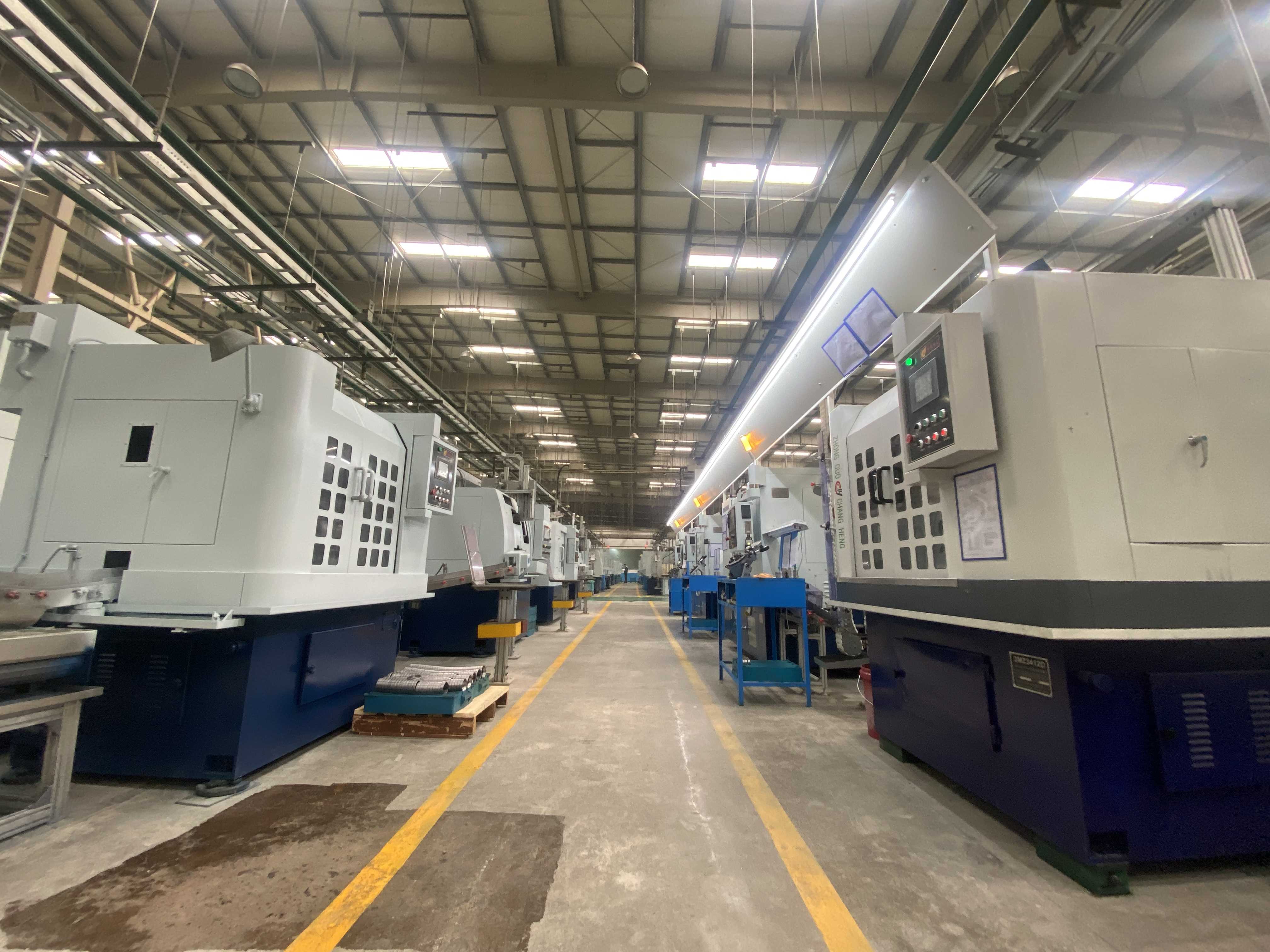
The value embedded in a bearing is not created by bearing manufacturers alone. A single rolling element travels from ore to finished precision part through at least six major process steps: metallurgy, forging, heat treatment, grinding, superfinishing, and final assembly and inspection. Behind each step lies a complete supply chain of equipment, materials, and process know-how. Understanding the strong links and fracture points in this chain brings one closer to the real problems facing China's bearing industry than any competitive landscape analysis could.
5.1 Upstream 1: Bearing Steel — The Gravitational Center of the Value Chain
The core material for bearings is bearing steel. High-carbon chromium steel, typified by the GCr15 grade, accounts for more than 80% of global bearing steel output and is the irreplaceable base material for bearing manufacturing. Raw material costs constitute approximately 55%–70% of total bearing manufacturing costs — in oversized products such as wind-power bearings this share can reach as high as 69%. In other words, any fluctuation in bearing steel prices propagates directly through the entire value chain.
China is the world's largest producer of bearing steel. According to CITIC Pacific Special Steel's own statistics, China's bearing steel crude output was approximately 4.62 million tonnes in 2023, maintaining the global No. 1 position for 14 consecutive years. Domestically, Xingcheng Special Steel, Daye Special Steel, and Qingdao Special Steel — all subsidiaries of CITIC Pacific Special Steel — hold a combined market share of approximately 43%, the undisputed domestic and global leader. The second tier — Juneng Special Steel, Jiyuan Iron and Steel, Jianlong Beiman, and Nanjing Steel — each holds a share below 13%; the sector's CR3 stands at roughly 66%, a classic one-dominant-many-weak configuration.
In terms of cleanliness, China's domestic high-end bearing steel has made a traceable catch-up journey. China's national standard caps the oxygen content of high-carbon chromium bearing steel at 12 ppm, whereas Xingcheng Special Steel has achieved a measured average oxygen content of approximately 4.5 ppm, with inclusion grade DS ≤ 0.5 — the only domestic enterprise to receive the A+ rating in the comprehensive quality capability evaluation for civil bearing steel, a level that already matches international top-tier standards (oxygen content of 5 ppm or below is generally regarded as top-grade high-cleanliness steel).
Meeting cleanliness standards, however, is only the starting point. The true barriers to entry in high-end bearing steel lie in two dimensions: compositional homogeneity under more demanding application conditions, and special grades requiring particular smelting routes. Gaps in both dimensions remain.
Take aviation bearing steel as an example. The benchmark grade for aero-engine bearing steel is M50 steel under the American standard AMS 6491, produced via vacuum induction melting plus vacuum arc remelting (VIM-VAR), with an upper service temperature of approximately 315°C, hardness exceeding 60 HRC, and extremely stringent requirements for carbide uniformity and inclusion control. As recently as 2024, institutes including the Chinese Academy of Sciences were still publishing research on macro- and micro-segregation in M50 vacuum arc remelting, indicating that domestic work on this process route remains in the problem-solving stage. Daye Special Steel has passed Pratt & Whitney's CPW378 qualification standard, becoming the first Chinese raw-material supplier incorporated into Pratt & Whitney's enterprise supply system, and has also obtained certification from SKF and Schaeffler's aviation bearing factories. Yet a gap still exists between certification and scaled batch supply, and the actual volume of substitution remains to be verified. In general, bearing steel for P2-grade precision bearings (aero-engine, high-precision inertial navigation, etc.) is essentially import-dependent — the most critical chokepoint node in the bearing steel sector.
Daye Special Steel's substantive breakthroughs in mid-to-high-end bearing steel are concentrated in wind power and railways. In wind power, its large-cross-section bearing steel (Φ700 mm) supported the launch of an 18 MW domestically produced wind turbine main shaft bearing in 2023 and extended coverage to 25 MW turbines in 2025; CITIC Pacific holds over 50% of the domestic market for wind-power bearing steel. In railways, Daye has already supplied trial materials for axlebox bearings for 450 km/h high-speed trains, using a process route of low-titanium, low-oxygen metallurgy combined with full-process gas-shielded electroslag remelting. This shows that in identified application scenarios, domestic bearing steel supply capabilities are pushing toward the high-end frontier — yet aviation, the most demanding application, remains an unresolved technical question.
5.2 The Cost-Transmission Mechanism of Steel Price Fluctuations
Given the extremely high weight of raw materials in bearing manufacturing costs, fluctuations in bearing steel prices exert a direct industrial pass-through effect. In 2023, the price of Φ50 mm continuously cast bearing steel in China ranged from RMB 5,045 to 5,597 per tonne, a full-year spread of approximately RMB 552 per tonne; the trajectory followed the typical annual pattern of "early rise, mid-year decline, then stabilization." In 2024 the price-transmission effect was even more visible at the bearing-component level: the Linxi Bearing Industry Index showed that the average price of rolling elements rose 29.34% year-on-year, with cylindrical rollers surging 64.22% — the most volatile among 12 bearing product categories.
Cost transmission is not symmetric between large manufacturers and small and medium-sized ones. Leading bearing enterprises enjoy relatively stable long-term procurement agreements and possess wider product pricing power, enabling them to pass a portion of raw material price increases downstream; the many smaller, lower-end bearing producers have weak bargaining power, can neither negotiate volume-price advantages on the procurement side nor pass on cost increases because their customers are highly price-sensitive. This is one of the fundamental reasons why profits diverge more sharply — and small and medium-sized producers suffer more broadly — during periods of rising steel prices.
It is worth noting that cyclical fluctuations in bearing steel prices do not always move in step with downstream industries — particularly automotive and wind power. Automotive companies typically lock in the bulk of their raw material costs through annual procurement contracts, meaning real-time changes in bearing steel prices are often felt by bearing producers with a lag of one contract cycle. Wind-power bearings, with their high unit value and greater steel content per unit, are more immediately sensitive to steel prices. The approximately RMB 552 per tonne annual price spread in 2023 was sufficient to affect a mid-sized bearing producer purchasing tens of thousands of tonnes of bearing steel per year by several million renminbi in annual profit — providing both the incentive for bearing producers to secure long-term pricing agreements and the reason some smaller producers prefer spot procurement over holding inventory.
The other side of steel price volatility is the hidden risk stemming from overly concentrated supply chains. With CITIC Pacific Special Steel holding a CR1 of approximately 43%, a large number of bearing producers depend on a single supplier for high-cleanliness bearing steel. In the short term this offers buyers a stable and high-quality supply; in the long term, any capacity scheduling disruption, factory accident, or policy-mandated output restriction will test downstream bearing producers' buffer-stock resilience. In recent years, several larger bearing producers have begun seeking alternative sources — for example, sourcing from Baowu Special Metallurgy alongside Xingcheng and Daye — to diversify concentration risk. This diversification trend is also objectively pushing second-tier bearing steel producers to progressively improve their product cleanliness, generating a virtuous industrial-chain learning effect.
5.3 Upstream 2: Rolling Elements, Cages, and Seals
Rolling elements are the core load-bearing kinematic parts inside a bearing; their precision directly determines vibration, noise, and service life grade. Lixing (300421) is China's largest specialist manufacturer of steel balls and rollers, with product precision reaching up to G3 grade for steel balls and Grade I for rollers. Its major customers include SKF, Schaeffler, NSK, LYC, ZWZ, and other leading domestic and international bearing producers. In 2024, Lixing signed a five-year strategic cooperation agreement with SKF's Montreal plant to supply steel balls, rollers, and ceramic balls for the North American market — one of the few cases in which a domestic rolling-element enterprise has achieved direct binding relationships with top-tier foreign customers.
Ceramic rolling elements are a new direction on which Lixing has focused in recent years. The high-frequency, high-speed architecture of 800V new-energy vehicles demands that bearings possess insulating properties; silicon nitride (Si₃N₄) ceramic balls have near-zero electrical conductivity and are better suited to this application than steel balls. Lixing invested approximately RMB 100 million in ceramic rolling elements in 2022, completed a G3/G5-grade ceramic ball intelligent production line in 2023, and is planning to raise capacity to 1 billion units per year in collaboration with the Chinese Academy of Sciences by 2025, with the goal of building the largest domestic high-end ceramic ball supply chain.
- Steel (stamped/solid) cages: moderate technical threshold, ample domestic supply; the standard choice for most mid-to-low-end bearings.
- Copper alloy cages (solid-machined/cast): used in high-end applications (heavy load, high speed, extreme temperature); high manufacturing precision required; partly import-dependent.
- Engineering plastic cages (PA66, PEEK): used in high-speed, light-load applications; PEEK-grade ultra-high-end products remain predominantly imported.
Domestic substitution of seals is advancing steadily; domestic polyurethane and other sealing materials have found broad use in mid-to-low-end products, but import dependence persists for high-end rubber and plastic seals (extreme-temperature rated, ultra-low-leakage). Cages and seals are not the main battlefield for chokepoint issues; the bottlenecks that truly determine whether high-end bearings can be domestically manufactured are concentrated at the steel cleanliness and process equipment ends.
5.4 Upstream 3: The Manufacturing Process Chain and Equipment
The typical manufacturing route for bearing rings passes through six major process steps: forging → turning → heat treatment → grinding → superfinishing → assembly and inspection. Each step has its own independent technical learning curve and its own pattern of import dependency.
Forging determines the distribution of metallic flow lines and microstructural density; the rate of domestic self-supply for large-scale production equipment is relatively high, and general-purpose forging equipment has achieved scaled supply domestically. The turning step (CNC precision turning) is similarly relatively mature; domestic CNC lathes provide sufficient supply at mid-range precision levels.
Heat treatment is the most technically demanding step in the process chain and the one most capable of differentiating product quality. The conventional quench-and-low-temperature-temper route (GCr15 austenitizing temperature approximately 840°C, tempering at 160–180°C, hardness HRC 60–65) has long been mastered domestically; bainite austempering, however, remains a technical direction that has not yet been industrialized at scale in China. Bainite heat treatment routes are dominated by SKF and other European and Japanese enterprises; nano-lower-bainite treatment can improve bearing toughness by approximately 60% compared with conventional martensite and wear resistance by approximately three times, offering significant advantages in heavy-impact applications such as railways and rolling mills. Research by Zhang Fucheng and colleagues in China has shown that bainite-quenched bearing fatigue life under contact loading can be approximately 100% longer than that of standard bearing steel. The core obstacle to widespread domestic adoption of this process, however, is that the isothermal treatment time — sometimes several hours — makes it difficult for bainite process production lines to match the throughput of conventional quenching. In addition, carbonitriding processes targeting new-energy-vehicle gearbox and wind-power gearbox bearings — which stabilize surface retained austenite (30–35%) and fine carbides, thereby improving service life under contaminated-lubrication conditions — are already being implemented by multiple domestic bearing producers.
Grinding is the critical precision-forming step and directly determines the accuracy grade of the finished bearing. Superfinishing follows, removing the grinding-affected layer through oilstone oscillation and compressing raceway surface roughness Ra to 0.02–0.05 μm. Representative domestic grinding-machine enterprises include Rifa (Nikken) Seimitsu and Grand (Grander), a subsidiary of Qinchuang Machine Tool. Rifa's dedicated bearing grinding/superfinishing lines have been adopted by 25 of China's top 30 bearing producers by scale; Grand covers 11 major categories and more than 110 product types of internal and external cylindrical grinders, ball-surface grinders, and related machines. Overall, the domestic market share of Chinese grinding machines in the mid-precision segment (P0/P6/P5 grade) has risen sharply from approximately 20% before 2018; foreign brands' share of the overall bearing-processing equipment market has fallen from approximately 79% in 2018 to below 30% in 2025 (this figure covers mid-range equipment).
P4- and P2-grade bearing finishing, however, remains highly dependent on imported equipment. Germany's Junker high-speed external cylindrical grinding machines and Thielenhaus superfinishing systems have accumulated decades of technology in precision-stability, grinding-wheel dynamic balancing, and hydrostatic guideways — they are indispensable sources of equipment for China's high-end bearing producers. P4-grade bearing tolerances demand IT5 precision; P2 requires the highest precision grade, with steel ball and raceway machining accuracy at the nanometer scale. This is the fundamental reason why machine-tool spindle bearings and aviation bearings remain almost entirely dependent on imported processing equipment to this day.
The meaning of bearing accuracy grades is particularly important for understanding the boundaries of import dependency:
- P0 (Normal grade): general industrial bearings for electric motors, reducers, standard machine tools; fully domestically self-sufficient.
- P6 (Above-normal grade): precision machine-tool secondary spindles, instruments; ample domestic supply.
- P5 (High grade): precision machine-tool main spindles, high-speed centrifuges; domestic share has risen significantly.
- P4 (Precision grade): precision grinding machine spindles, gyroscopes; partially domesticated; P4 prices exceed P0 by more than 3–5 times.
- P2 (Super-precision): aero-engines, high-precision inertial navigation; essentially import-dependent; price exceeds P0 by more than 10 times.
This price-gradient table reveals a structural reality: the overwhelming majority of China's enormous bearing output is concentrated in the P0 and P6 segments. The further one moves toward higher precision, the lower the domestic substitution rate and the larger the gap in per-unit value. This is the manufacturing-side root cause of the inverted import/export average-price spread.
5.5 Midstream Manufacturing Profile: Large Scale, Fragmented Structure
At the midstream manufacturing level, the scale figures for China's bearing industry are remarkable — approximately 25,000 bearing manufacturers in active operation nationally, with roughly 1,300 or more enterprises above the designated scale threshold — but scale is not the same as strength. The overall profile of China's bearing manufacturing industry can be summarized in three characters: low-end, small, and fragmented (低小散). It is dominated by mid-to-low-end products, by small and medium-sized producers as the primary actors, and by regional industrial clusters as the spatial carrier.
From a product-mix perspective, high-end products (including high-precision-grade bearings and high-end industrial bearings for aviation, high-speed rail, and precision machine tools) account for approximately 5% of total domestic output, while mid-to-low-end products exceed 80%. This structure creates the classic "exporting by volume, importing by value" pattern: China is the world's largest exporter of bearings while simultaneously being a major importer of high-end bearings, with a wide gap between import and export average prices — in 2023 the import average was approximately USD 1.72 per set and the export average approximately USD 0.99 per set, a gap of approximately 74%; for tapered roller bearings the import/export average price gap approaches five times.
The low-small-fragmented pattern in the midstream has deep structural causes: the technical barrier to entry for low-end bearings is relatively limited, with low barriers to entry allowing large numbers of small and medium-sized producers to persist long-term; whereas the verification cycles for core parameters such as precision, service life, and reliability are long, brand trust requires years of accumulation, and the barriers to upward breakthrough in high-end bearing markets are in fact very high. This "dumbbell-shaped" structure — intense competition at the low end, long-term foreign-dominated lock-in at the high end — is the core characteristic of the midstream manufacturing profile and the structural root cause of China's bearing industry maintaining world-leading output volumes for so long while generating below-average value-added.
Geographically, the approximately 25,000 bearing manufacturers are not spread evenly but are highly concentrated in several core industrial belts. Shandong Province has approximately 10,000 bearing manufacturing enterprises; Zhejiang approximately 5,700; together the two provinces account for more than half the national total. Wafangdian in Liaoning, Xinchang and Cixi in Zhejiang, Linqing in Shandong's Liaocheng, and Luoyang in Henan each have different product focus areas and competitive ecologies. The deeper logic of industrial belts will be examined in Chapter VII; here, understanding the low-small-fragmented midstream structure is most important as a reference for assessing pathways to high-end breakthrough: dispersed small and medium-sized producers constitute a vast low-end supply side, but for the long-cycle R&D investment, specialized equipment deployment, and rigorous certification qualifications required in high-end manufacturing, the resource accumulation of any individual small firm is extremely limited. This implies that China's path to bearing upgrading is more likely to rely on a small number of large- and medium-sized enterprise leaders with genuine R&D capability, rather than spontaneous upgrading from dispersed small producers.
From a profit perspective, the midstream low-small-fragmented manufacturing sector is generally in a thin-margin state. Even the top-revenue listed bearing producers domestically show generally low net profit margins, and some enterprises posted losses in 2024. This stands in sharp contrast to the high gross margins of high-end bearings and confirms from financial data the fundamental impact of product mix on profitability. The geographic distribution and competitive ecology of midstream industrial belts will be examined in detail in Chapter VII.
5.6 Overview of Downstream Application Structure: Automotive Dominant, Emerging Sectors Accelerating Restructuring
On the demand side, China's bearing downstream application structure is led by automotive as the primary segment. According to analyst report data, automotive accounts for approximately 37.4% of Chinese bearing consumption (alternative figures of 39%–40% exist, depending on the source and statistical year), home appliances approximately 12.4%, electric motors approximately 10.6%, with construction machinery and wind power also among the top five application sectors.
China's downstream structure differs somewhat from the global picture. Globally, automotive bearings account for approximately 45%–49% of the total — higher than China's 37%–40% — while China has relatively higher proportions in home appliances, electric motors, and construction machinery, to some extent reflecting China's industrial structure as a major manufacturing nation. In terms of product size distribution, miniature bearings (bore diameter below 10 mm) and small bearings together account for approximately 70% of China's total bearing output (2021 figures), used in large volumes in home appliances and general industrial motors — which is also the product-structure root cause of China's bearings being exported in large volumes at low average prices.
The demand drivers and technical barriers vary significantly across downstream subsectors. The core issue in automotive bearings is that domestic substitution rates for mid-to-low-end hub bearings are already relatively high, but approximately 85% of mid-to-high-end automotive bearings (especially electric drive motor and gearbox bearings for new-energy vehicles) remains under foreign dominance. New-energy vehicle drive motors reach speeds of 15,000–20,000 rpm (Dmn value requirements exceeding 800,000), placing new demands on bearings for high speed, low friction, and wide temperature range (-40°C to 150°C), where a visible gap exists relative to China's existing mainstream bearing technology base. Wind-power bearings have benefited from the acceleration of large-scale wind turbines in China; the domestic substitution rate for main-shaft bearings jumped from approximately 30% in 2023 to approximately 65% in 2025, making it one of the fastest-substituting downstream subsectors. Robot bearings — especially the flexible bearings and crossed roller bearings required by harmonic reducers — remain dominated by Japanese companies, with domestic producers in the small-batch introduction stage; however, the explosive growth expectations for humanoid robots are pushing this sector into a field of intense capital attention. High-speed rail bearings remain approximately 70% import-dependent; domestic production is at the "one step away" stage of line-running tests and has not yet achieved commercialized breakthrough.
If the downstream structure over the past decade has been relatively stable — with automotive, home appliances, and construction machinery as the main demand base — then from 2023 onward the downstream structure has been undergoing an accelerating restructuring driven by new energy and intelligent manufacturing. Rising new-energy vehicle penetration directly changes the technical requirements direction for bearings: from primarily durability and low noise, to multidimensional simultaneous requirements for high speed, low friction, and electrical insulation. Continued large-scale wind power development rapidly increases per-turbine value, lifting main-shaft bearings from the tens-of-thousands-of-renminbi range to the millions-of-renminbi range, profoundly reshaping the perceived ceiling of bearing value chains. Humanoid robots, with their enormous imagination-space, are elevating precision bearings (especially flexible bearings for harmonic reducers and crossed roller bearings) from niche precision components into a field of strategic attention.
This round of downstream structural evolution is exerting two opposing pulls on midstream bearing manufacturing. On one side, demand growth in traditional segments (home appliances, general industrial motors, low-end construction machinery) is decelerating and in some cases saturating, leaving mid-to-low-end capacity with no outlet other than price competition and higher export volumes. On the other side, demand for high-performance bearings in emerging applications is robust, but technical barriers are high and certification cycles long, allowing only a small number of enterprises with genuine R&D depth to enter. This asymmetry of forces is the key backdrop for assessing the direction of differentiation within the bearing industry over the next five years.
A comprehensive analysis of barriers, product specifications, and domestic substitution progress in each subsector will be presented in Chapter VIII. The overview here is intended to establish a basic understanding: China's bearing downstream demand is enormous, but in the most technically demanding application scenarios, a considerable gap still exists between domestic manufacturing capability and demand — and the material, process, and equipment capabilities needed to bridge that gap are precisely the not-yet-fully-unlocked links revealed in this chapter's upstream analysis.
The upstream chokepoint in high-end steel, the import dependency in process equipment, the low-small-fragmented midstream structure, and the foreign dominance in high-end downstream applications: these four dimensions interlock to form the industrial chain logic behind the proposition that China's bearing industry is "large but not strong." Resolving this logic is not something that can be accomplished by a single-point breakthrough in any one link; it requires systematic accumulation from materials to equipment, from process to certification — and accumulation is precisely what takes the most time.
Chapter 6 Competitive Landscape and Key Players in China's Bearing Industry
Spread out the output figures of the world's largest bearing-producing nation and then examine the competitive landscape of the industry, and one arrives at a slightly contradictory picture: China produces nearly 30 billion bearing sets a year, comfortably at the top of the global output chart, yet the top ten enterprises combined capture only about 28% of the market. The ranking leader, Renben Group, holds a domestic market share of approximately 9.2% — placed against the scale at which Sweden's SKF or Germany's Schaeffler dominate entire countries and regions, Renben is little more than "a slightly larger prince among many." On one side stands a highly concentrated global oligopoly; on the other, a highly fragmented Chinese domestic market. This contrast is not a statistical artifact — it is the true entry point for understanding China's bearing industry. This chapter first examines the overall structural profile, then the regional division of labor that underpins it, then works through a company-by-company breakdown of leading and listed-tier enterprises by financials and positioning, and finally returns to foreign players' footprint in China and the real gradient of domestic substitution.
6.1 (I) The Concentration Paradox: Why the Largest Producer Has Not Grown Giants
Market concentration is the most direct measure of maturity in a manufacturing industry. According to calculations by Qianzhan Industry Research Institute, between 2020 and 2022 the combined market share of China's top ten bearing enterprises (CR10) consistently hovered around 28% — approximately 28.1% in 2020 and broadly unchanged in the two years that followed. This figure means that adding together the ten largest enterprises covers less than one-third of the market; the remaining 70%-plus is divided among more than 1,300 above-scale enterprises and more than 20,000 small and micro-enterprises.
A cross-sectional comparison reveals how extreme this fragmentation is. Globally, SKF, Schaeffler, NSK, NTN, JTEKT, and Timken together capture approximately 55% of the global market, with a clear head-concentration effect. Back in China, according to a 2021 Qianzhan market share estimate, Renben Group held approximately 9.2% and Wanxiang Qianchao approximately 5.9% — the undisputed top two domestically — but the shares of companies further down the ranking are generally below 3%, followed by a long and gently sloping long tail. In other words, Chinese bearings have no true "chain anchor" enterprise, only a group of mid-sized players of comparable weight, each entrenched in its own domain.
Why the largest producer without growing a giant? The answer lies in the dual nature of the bearing as a product. Low-end general-purpose bearings — miniature deep-groove ball bearings for home appliances, ordinary tapered roller bearings for farm machinery — have low technical barriers and modest capital requirements; second-hand equipment is sufficient, and a cluster of hundreds of small factories in a single town can support an entire supply chain, with price competition squeezing profits to the point where margins are measured by the tonne, preventing anyone from growing large. High-end precision bearings — high-speed rail axleboxes, aero-engine main shaft bearings, flexible bearings for robotic harmonic reducers — require such high barriers that over a decade of materials, heat-treatment, and lifetime-data accumulation is necessary; domestic enterprises are only just beginning to climb, and cannot yet capture enough share to support the volume base of a giant. The low end is a red ocean of scattered skirmishers; the high end is a pass guarded by foreign companies. Neither extreme favors concentration gains. This is exactly the structural contradiction to be explored: low-end overcapacity and high-end imports.
According to Huajing Industry Research Institute, Guanyan Research, and similar sources, high-end products account for only approximately 5% of Chinese bearing output, while mid-to-low-end products exceed 80%; in high-speed rail, aviation, precision machine tools, and mid-to-high-end automotive — the sectors where precision and service life requirements are most stringent — import dependency stands at approximately 70%. This set of numbers and the striking import/export average-price gap from Chapter IV are two sides of the same coin: in 2023, China's bearing import average price was USD 1.72 per set, export average price USD 0.99 per set — what comes in costs nearly 74% more than what goes out. Low concentration and an inability to hold high-end positions are fundamentally the two sides of the same coin: as long as the most profitable, most scale-barrier-driven portion of the market remains in foreign hands, domestic enterprises naturally cannot use it to grow large and strong.
6.2 (II) Domestic vs. Foreign: Two Systems, Each Holding Half the Fortress
Competition in the Chinese bearing market has never been purely an internal affair among more than a thousand domestic enterprises; it is the long-term coexistence of two systems — domestic and foreign. According to Qianzhan Industry Research Institute's market share estimates, domestic Chinese enterprises hold approximately 25% of the global bearing market, while the six major multinationals represented by SKF, Schaeffler, NSK, NTN, JTEKT, and Timken together hold approximately 55%. The same stratification is equally clear in the Chinese domestic market: mid-to-low-end general industrial, home appliance, motor, and standard automotive bearings are essentially occupied by domestic enterprises such as Renben Group, Wanxiang Qianchao, LYC, and ZWZ; precision bearings, critical-equipment OEM supply, and mid-to-high-end automotive bearings are the home turf of foreign brands.
Automotive hub bearings are the best cross-section through which to observe this stratification. According to Qianzhan's specialized data, domestic enterprises combined already exceed 60% of the domestic hub bearing market — Wanxiang Qianchao approximately 15%, Renben approximately 12%, Shuanglin's Xinhuoche approximately 9%; foreign players combined approximately 39% — Korea's ILJIN approximately 13%, NSK approximately 12%, Schaeffler approximately 8%, SKF approximately 6%. It is noteworthy that this is one of the battlefronts where domestic enterprises have counter-attacked most successfully: hub bearing units fall in the "mid-to-upper" product tier, with sufficient technical content to screen out low-end small producers but not so high as to be beyond domestic capability, making it a model case for improving domestic concentration. Yet the moment one moves up to new-energy vehicle electric drive motor bearings (15,000–20,000 rpm, Dmn values exceeding 800,000), industry estimates put approximately 85% of the mid-to-high-end segment still in foreign hands, and the attack-defense line retreats immediately back to the high-end pass.
This pattern of "each holding half the fortress, foreign players holding the high ground" determines that the primary competitive axis for domestic enterprises is not competing against each other for market share, but rather collectively ascending toward the high end. Whoever can first convert import substitution into reality in a given subsegment will tear open a breach in the fragmented landscape — which is the narrative thread that will recur repeatedly in the company-by-company breakdowns that follow.
6.3 (III) Regional Map: The Division of Labor and Character of the Five Major Bases
China's bearing industry is geographically highly concentrated, forming five major production bases with clearly differentiated characteristics. Rather than simple replicas of one another, these bases have distinct divisions of labor and identities that together constitute China's bearing capacity map. Only an overview is provided here; the detailed ecology within each industrial belt is reserved for Chapter VII.
- Wafangdian, Liaoning — the "Bearing Capital," the core of China's largest bearing industrial base, specializing in large and extra-large industrial bearings, with ZWZ brand-bearing ZWZ as the representative enterprise. The DNA here is heavy industry: products range from 20 mm bore diameter up to 16 m outer diameter, serving rail transit, wind power, metallurgy, and other heavy-equipment sectors.
- Eastern Zhejiang (Cixi and Xinchang) — a dense belt of private-economy enterprises, mainly producing small, miniature bearings and components. Xinchang is known as the "Hometown of Bearings" and specializes in blank production; Cixi focuses on finished-product manufacturing and accounts for approximately 60% of Zhejiang's provincial bearing output. According to enterprise registry data, Zhejiang has approximately 5,739 bearing manufacturing enterprises, second only to Shandong in number.
- Luoyang, Henan — the pole with the deepest technological foundations, specializing in medium, large, and extra-large high-end bearings; most domestic breakthroughs in "chokepoint" areas such as aviation, high-speed rail, and wind power have originated here, with LYC (Luoyang Bearing) as the representative enterprise.
- Suxi Chang (Suzhou–Wuxi–Changzhou), Jiangsu — an area specializing in small and medium-sized precision bearings and precision components, home to specialized and innovative enterprises such as Nanfang Precision and Suzhou Bearing.
- Linqing Yandian, Shandong — China's largest bearing trading and distribution hub, specializing in cages, steel balls, and other components and general-purpose bearings; according to local statistics, annual revenue (including trading and distribution) can reach approximately RMB 50 billion, making it the key hub connecting production and distribution.
The division of labor among the five bases corresponds precisely to the full industrial-chain gradient from blanks and components to finished products, from general-purpose to high-end. Wafangdian and Luoyang represent "large and high-end"; Eastern Zhejiang and Suxi Chang represent "small and precise"; Linqing is the "general and wide-ranging" distribution center. This geographical division of labor is itself the spatial projection of China's bearing low-small-fragmented landscape.
6.4 (IV) Domestic Leaders: The Two Mountains That Are Not Listed
Before working through the listed-company tier company by company, we must first examine the two largest domestic enterprises that are not publicly listed — they are the two mountains essential for understanding China's domestic bearing camp.
Renben Group (Renben Co., Ltd., unlisted) is the undisputed domestic production and sales leader. Based on publicly available financial information, Renben's revenue climbed from RMB 7.268 billion in 2020 to RMB 10.482 billion in 2023, reaching approximately RMB 11.96 billion in 2024, and has held the top position among China's major bearing enterprises by production and sales scale continuously since 2013, with a domestic market share of approximately 9.2%. Renben pursues a full-product-line coverage strategy, operating across both automotive and industrial bearings with downstream reach spanning automotive, construction machinery, and home appliances. On the capital markets front, Renben's path has been circuitous: it filed for a Shanghai Stock Exchange main-board IPO in June 2022 targeting approximately RMB 2.7 billion raised, was terminated by the SSE in June 2024, and then relaunched its IPO counseling filing at year-end 2024. In January 2026, Renben launched a project of approximately RMB 5.3 billion for a global bearing R&D headquarters and high-end bearing intelligent manufacturing facility — a clear signal that the domestic leader is trying to move from "large" to "strong."
LYC Luoyang Bearing Group (unlisted) is the other mountain, and the most resolute state-owned force pushing for high-end breakthroughs. Based on public data, LYC's 2024 revenue was approximately RMB 4.699 billion and net profit approximately RMB 226 million, ranking fourth in the China Bearing Industry Association's comprehensive revenue ranking. LYC's value lies not in its volume but in its "gold content": its wind-power main-shaft bearings rank first domestically; its aviation/aerospace bearings and rail transit bearings both rank among the top three in their respective sectors; its product range of nine major bearing types and more than 30,000 specifications covers aviation, high-speed rail, wind power, marine, and other of the most technically demanding high-end fields. In March 2024, the world's first 25 MW wind turbine main-shaft bearing was launched in Luoyang, placing this established state-owned enterprise at the global frontier of large-scale wind-power bearings. LYC has set a target of RMB 15 billion in revenue by 2030 — if achieved, it would be the most significant piece of the domestic high-end camp puzzle.
These two enterprises together constitute the "ceiling" of the domestic bearing sector: one holds the production leadership through full-product-line scale, the other guards the frontier of domestic substitution through high-end technical depth. Neither is listed, their disclosure is limited, yet they represent the true height of China's domestic bearing capability more than many listed companies do.
6.5 (V) Listed Company Tier: Automotive and Diversified Groups
Listed companies are the most transparent window for observing the competitive landscape of China's bearing industry, because they are required to disclose financials. The following presents a company-by-company breakdown grouped by core business track, based on 2024 annual report data.
First, the two largest enterprises most deeply bound to the automotive sector.
Wanxiang Qianchao (000559) is the domestic leader in hub bearing units, with a domestic share of approximately 15% — first in the country. Its 2024 revenue was RMB 12.868 billion (down 11.17% year-on-year), with net profit attributable to the parent of RMB 951 million (up 15.76% year-on-year) — revenue falling while profit grew against the trend, reflecting its pricing power and cost-reduction effectiveness in core automotive chassis components. Its customer list covers mainstream OEMs including Volkswagen, BMW, GAC Toyota, BYD, Geely Volvo, and FAW Hongqi. More noteworthy is its strategic pivot: from 2025 onward, Wanxiang Qianchao has explicitly identified humanoid robot ballscrew bearing assemblies, low-altitude vehicle bearings, and new-energy electric drive high-speed ball bearings as new directions, attempting to transfer the precision manufacturing capabilities accumulated in the automotive era to the next generation of incremental tracks.
Wafangdian Bearing Co., Ltd. (200706, B-share) is the listed vehicle of ZWZ Group, carrying the ZWZ brand, with products ranging from 20 mm bore to 16 m outer diameter across more than 20,000 specifications, focused on industrial equipment, rail transit, wind power, and specialized sectors. The financial picture, however, is not comfortable: 2024 revenue was RMB 2.054 billion (down 6.37% year-on-year), net profit attributable to the parent was RMB -110 million (a loss), net assets fell to approximately RMB 261 million — a decline of approximately 29.71% from the beginning of the period — with visible financial pressure. It should be clarified that the listed entity Wafangdian Bearing Co., Ltd. is far smaller in scale than the parent ZWZ Group (whose controlling stake has been transferred to Dalian State-owned Assets), so the listed company's loss should not simply be equated with the operating conditions of the entire ZWZ system. ZWZ's difficulties are to some extent a reflection of the cyclical weakness and price competition in the large industrial bearing track.
Next, the small and medium-sized listed enterprises in automotive bearings.
Guangyang (Changzhou Guangyang Bearing) (002708) focuses on automotive precision components and extends into high-end industrial equipment and robot components. Its 2024 revenue was RMB 2.310 billion (up 26.69% year-on-year), with net profit attributable to the parent of approximately RMB 51 million, achieving a return to profitability. The high revenue growth is eye-catching, but the net cash flow from operating activities was negative in the same period, leaving the quality of earnings yet to be observed.
Xiangyang Bearing (000678) is a veteran automotive bearing enterprise focused on hub bearings and spherical plain bearings. Its 2024 revenue was RMB 1.455 billion (up 4.36% year-on-year), net profit attributable to the parent approximately RMB -35 million, continuing to post losses. Xiangyang Bearing's strategy is structural adjustment, product upgrading, and internationalization — attempting to exit the thin-margin trap through product upgrading and overseas expansion. Its situation is a typical portrait of many mid-tier automotive bearing enterprises: meaningful scale and customer relationships, yet trapped in thin margins and price competition.
Among diversified bearing enterprises, Sinomach Precision (002046) carries significant weight. Backed by a central state-owned enterprise background, its business spans large industrial bearings and abrasives/superhard materials; its 2024 revenue was RMB 2.658 billion, net profit attributable to the parent RMB 280 million (up 8.11% year-on-year), with R&D expenditure as a share of revenue at approximately 12.68% — at the high end among listed peers. High R&D intensity and stable profitability make it one of the more solid enterprises in the domestic diversified bearing camp.
6.6 (VI) Listed Company Tier: Hidden Champions in Precision Subsegments
If Wanxiang Qianchao and ZWZ represent "large and diversified," then the enterprises that truly carry China's hopes for domestic bearing substitution are a cohort of "hidden champions" each deeply rooted in a narrow product subsegment. Their scale is not large, but each has achieved a domestic No. 1 position in its track — these are the sharpest forces in a fragmented landscape.
Cixing Group (unlisted, proposed reverse merger with Tianchuang Fashion) is the hidden champion in flexible bearings. According to public data, Cixing's 2024 revenue was approximately RMB 2.156 billion; it holds the top domestic market share in flexible bearings and led the drafting of the national standard for flexible bearings used in industrial robot harmonic reducers — meaning it is not only the market leader but also the rule-setter. Its product line extends from precision automotive bearings to flexible bearings for harmonic reducers, crossed roller bearings, and miniature ball screws, occupying key positioning on the robotics track with the greatest incremental imagination. In late 2025, Cixing announced a proposed reverse merger with Tianchuang Fashion to access the capital markets, accelerating its capitalization process.
Wuzhou Xinchun (603667) focuses on precision bearing rings, automotive bearings, and wind-power rollers. Its 2024 revenue was RMB 3.265 billion (up 5.10% year-on-year), net profit attributable to the parent RMB 91 million (down 33.88% year-on-year), with the profit decline mainly due to losses dragged by overseas subsidiaries. Its growth story is also in robotics — binding with core customers to expand precision ballscrew business, attempting to extend its ring manufacturing precision advantages into humanoid robot drivetrain components.
Changsheng Bearing (300718) is the technology leader in self-lubricating (sliding) bearings, deeply bound with top construction machinery customers including Sany Heavy Industry and XCMG. Its 2024 revenue was RMB 1.137 billion (up 2.89% year-on-year), net profit attributable to the parent RMB 229 million (up 5.43% year-on-year), with stable profitability. It follows a technical route parallel to rolling bearings, building its moat in the specific working conditions of construction machinery, and has similarly extended its reach into robot bearings and ball screws.
Nanfang Precision (002553) and Suzhou Bearing (430418, Beijing Stock Exchange) are the two players in the needle roller bearing track. Nanfang Precision's 2024 revenue was RMB 784 million (up 16.80% year-on-year), holding the top domestic market share in needle roller bearings; Suzhou Bearing's 2024 revenue was RMB 715 million (up 12.42% year-on-year), net profit attributable to the parent RMB 151 million (up 21.32% year-on-year), with a gross margin of approximately 37.29%, and is extending into RV reducer bearings, entering the small-batch supply stage of the robotics track. Needle roller bearings are critical components in automotive transmission and construction machinery; these two enterprises have pushed their shares to the limit in a narrow track, typifying the "specialized and innovative" enterprise route.
Longxi (600592) is the undisputed king of spherical plain bearings, with a domestic market share of approximately 65%–70%. It is the only domestic enterprise to have passed the U.S. Naval Air Systems Command (NAVAIR) Class A bearing certification, serving as the primary manufacturer of high-end aviation spherical plain bearings — reversing the situation where this product category was long import-dependent. Its 2024 revenue was RMB 1.777 billion (down 6.68% year-on-year), net profit attributable to the parent RMB 125 million (down 25.55% year-on-year); although profits are under pressure due to downstream demand fluctuations, its irreplaceability in high-end aviation spherical plain bearings makes it the most symbolically significant enterprise in the domestic high-end breakthrough landscape. It is also building out humanoid robot joint bearings.
Xinqianglian (300850) is the representative enterprise in the wind-power bearing track. Its main products are large-scale slewing bearings, wind-power main-shaft bearings, and yaw and pitch bearings. Its 2024 revenue was RMB 2.946 billion (up 4.3% year-on-year), net profit attributable to the parent RMB 65 million; profitability was significantly pressured in 2024 by the decline in wind-power grid-parity pricing. However, it staged a strong recovery in Q1 2025 with revenue of RMB 926 million (up approximately 107% year-on-year) and a return to net profit. Its approximately 40% share of the wind-power main-shaft bearing domestic substitution market makes it one of the key carriers of domestic substitution in large-scale wind-power bearings.
Finally, two enterprises require particular clarification to avoid misreading. Lixing (300421) is strictly speaking a rolling-element component supplier of steel balls, rollers, and similar parts rather than a complete bearing manufacturer. It supplies steel balls to various bearing producers; its 2024 revenue was RMB 1.045 billion, net profit approximately RMB 55 million, gross margin approximately 16.87%, and it is extending into high-end precision rolling elements — it is a critical link in the upstream of the value chain, connecting with the rolling-element supply narrative in Chapter V. Hengrun (603985) focuses on ring-rolled forged rings — wind-power flanges, wind-power bearing rings, gas turbine components, and nuclear power parts are its main products; wind-power bearing rings are only one of its product lines and it is not a pure bearing enterprise. Its 2024 revenue was RMB 1.726 billion (down 6.64% year-on-year), net profit attributable to the parent RMB -138 million (a loss), with a gross margin of only approximately 5.23%; the loss was mainly caused by continued declines in wind turbine and component prices during the grid-parity phase, while costs could not be reduced at the same pace. Including Lixing and Hengrun in the competitive landscape analysis is to see the depth of the industrial chain, not to benchmark them against complete bearing leaders.
Lining up this cohort of listed enterprises reveals a clear pattern: those that are genuinely performing well are almost all narrow-track hidden champions — Changsheng's self-lubricating bearings, Longxi's spherical plain bearings, Nanfang Precision's and Suzhou Bearing's needle roller bearings, Cixing's flexible bearings — each holding a domestic No. 1 in its narrow track. The more one moves toward large industrial general-purpose bearings (ZWZ), mid-tier automotive bearings (Xiangyang), and wind-power forgings (Hengrun) — commodity-like, highly cyclical product categories — the more readily one falls into losses. This confirms the earlier judgment: in an industry with extremely low concentration, the path for domestic enterprises is not scale expansion but building irreplaceability at a specific subsegment bottleneck.
6.7 (VII) Foreign Players in China: The Hidden Home Turf of Localization
The global financials of the eight major overseas players were examined in Chapter II; this chapter looks only at their footprint "in China." It is important to be clear that foreign enterprises' penetration of the Chinese market long since moved beyond exports into deep localization — they have built factories, R&D centers, and sales networks in China, guarding the high-end pass as local-market participants.
Schaeffler is the most deeply localized foreign player. According to public sources, Schaeffler's Greater China revenue already exceeded RMB 23.8 billion in 2021, growing at a compound annual rate of approximately 5.5% from 2017 to 2021 and accounting for approximately 24% of the group's global revenue — the second-largest business region after Europe. It employs approximately 12,000 people in China, with R&D centers in Shanghai Anting and Changsha, Hunan, and approximately 10 factories in Taicang, Suzhou, Yinchuan, Nanjing, Xiangtan, and other locations, plus 20 sales offices nationwide. This complete local system — from R&D through manufacturing to sales — gives Schaeffler's FAG and INA brands a penetration depth in the Chinese market approaching that of a local player.
SKF, NSK, NTN, and Timken similarly operate multiple production bases in China. Their shares in automotive hub bearings give a clear indication: according to Qianzhan data, NSK's domestic hub bearing share is approximately 12%, Schaeffler's approximately 8%, and SKF's approximately 6%. Timken maintains share in large industrial bearings. What these foreign enterprises share in common is a double-layer strategy: localizing general capacity to stay close to customers and reduce costs, while retaining the highest-end precision bearing capacity and core process know-how in their home countries, forming a "mid-end in China, high-end abroad" dual-layer layout.
Korea's ILJIN has the highest single-entity share among foreign players, with approximately 13% of the domestic hub bearing market — exceeding any single Japanese or German enterprise — having become a dark horse in China's automotive bearing foreign camp through its focus on hub bearing units and cost control.
Foreign players' local production in China subjects domestic enterprises to a continuous, hidden pressure: they can use local capacity to compete on price while using home-country technology to hold the high-end, ensuring that as domestic enterprises climb upward they always face "an away opponent fighting on their home turf." This is the most realistic obstacle on the road to domestic high-end bearing substitution in China.
6.8 (VIII) The Real Gradient of Domestic Substitution: From Holding to Climbing, to Still Falling Short
Condensing the competitive landscape to a single sentence: the pace of domestic substitution is far from uniform — it presents a clear, progressively declining gradient from low-end to high-end. Clearly seeing this gradient is what it means to truly understand China's bearing competitive landscape.
- Home appliances, motors, general-purpose bearings (domestic players have firmly held) — miniature and small bearings are the segment where China's competitiveness is strongest; Renben and the Eastern Zhejiang cluster have global-level advantages in cost and scale; while export average prices are only USD 2–3 per set, the market is essentially domestically dominated. This is the most solid base of domestic substitution.
- Automotive hub bearings (domestic players have already reversed the position) — according to Qianzhan data, domestic combined share already exceeds 60%; Wanxiang Qianchao, Renben, Xinhuoche, and other domestic enterprises have completed a reversal against foreign players in mid-end hub bearing units. This is the most successful case study of domestic substitution.
- Wind-power main-shaft bearings (currently climbing) — domestic substitution rate for wind-power main-shaft bearings has risen from approximately 30% in 2023 to approximately 65% in 2025, with Xinqianglian and LYC as the main contributors; the world's first 25 MW wind turbine main-shaft bearing has been launched in Luoyang. This is a battlefield "being taken back from foreign hands," with visible climbing but not yet at the summit.
- High-speed rail, machine-tool spindle, and aviation bearings (high-end still falling short) — this is the highest point on the gradient and the most painful gap. According to industry judgment, import dependency in high-speed rail, aviation, precision machine tools, and mid-to-high-end automotive bearings remains approximately 70%. For high-speed rail axlebox bearings, LYC and ZWZ have completed R&D and bench tests for 250 km/h and 350 km/h products and are at the "one step away" stage of line-running tests, but have not yet achieved large-scale commercial substitution — the overall high-speed rail domestic production rate is approximately 97%, and axlebox bearings are among the few remaining ~3% not yet broken through. The domestic production rate for aero-engine bearings is below 25%.
This gradient explains the seemingly contradictory picture at the beginning of this chapter: China's comprehensive dominance in the low end supports world-first output, while the failure to hold high-end passes keeps it persistently under pressure from foreign players in concentration, average prices, and profit. Why is concentration low? Because the low end has no barriers — anyone can do it — and the high end has barriers that domestic enterprises have not yet fully penetrated; neither extreme is conducive to growing giants. Why can the high end not be held? Because competitiveness in high-end bearings is fundamentally the long-term accumulation of material cleanliness, heat-treatment process, and over-a-decade of lifetime data — precisely what cannot be achieved quickly through capacity expansion. What domestic enterprises lack is not production lines but time and data.
The direction of competitive landscape evolution is therefore also clear: China's bearings will no longer win on output volume, but will need those narrow-track hidden champions, working one by one along the climbing passes of wind-power main shafts, robot precision bearings, and new-energy electric drive high-speed bearings, to convert import substitution into reality. Whoever can build irreplaceability at a high-end pass will be the one to truly rewrite the competitive landscape ceiling of this industry that has been fragmented for decades.
Chapter 7 Midstream Industrial Belts and the Low-Small-Fragmented Landscape
China is the world's No. 1 bearing-producing nation, turning out nearly 30 billion bearing sets a year — yet on this world's largest capacity map, no domestic giant capable of rivaling SKF, Schaeffler, or NSK has ever emerged. The gap between scale and giant is not a simple matter of "just grow bigger"; it is shaped jointly by the technical structure of the bearing business, the regional division of labor, and the logic of trust. The previous chapter examined the financials of leaders and listed-tier enterprises one by one; this chapter pulls the lens below the water's surface — to the tens of thousands of small and medium-sized producers scattered across the Liaodong Peninsula, the hills of Eastern Zhejiang, the plains of Western Shandong, and the ancient city of Western Henan — to see clearly why there are so many of them, why they look so similar, and why they never manage to break out of the price-competition cycle. This is the genuine foundation for understanding why China's bearing industry is "large but not strong."
7.1 (I) Why No Domestic Giant Has Emerged: Barriers Are High at the High End, Thresholds Are Low at the Low End
A seemingly paradoxical phenomenon in the bearing industry is that it is simultaneously an extremely high-barrier precision manufacturing sector and an extremely low-threshold commodity business. Both attributes stacked in the same industry directly determine the low-small-fragmented landscape.
The high-end barriers are high in three places. The first is precision and service life. A P4-grade bearing for a machine-tool spindle must have roundness errors on its inner and outer rings controlled to the micron level, with rotational accuracy, temperature rise, and noise each locked within their standards; a high-speed electric spindle bearing at more than 50,000 rpm will see any material defect or heat-treatment deviation amplified over long-term operation into premature failure. The second is materials: high-end bearing steel has near-strict cleanliness requirements — the national standard caps oxygen content at 12 ppm — and the number of domestic steelmakers that can stably mass-produce P2-grade precision bearing steel and M50 high-speed steel for aero-engines can be counted on one hand, with large quantities still import-dependent. The third is equipment and process: the isothermal time of bainite quenching is difficult to shorten, and the high-end grinding and superfinishing stages remain dependent on imported German and Japanese grinding machines. Any one of these three barriers requires years to decades of sustained investment; small and medium-sized producers cannot bear the cost and are naturally kept out.
The low-end threshold, on the other hand, is surprisingly low. General-purpose deep-groove ball bearings are a highly standardized product; the drawings, specifications, and processes have long been public and mature. With a few standard lathes and grinders and skilled workers, one can produce dimensionally acceptable 6000- and 6200-series bearings. As a result, virtually anyone with one machine and one workshop can become a link in the bearing supply chain. Mid-to-low-end general-purpose bearings account for more than 80% of total industry output, while high-end precision bearings — those that truly represent technological height — account for only approximately 5%. The other side of low thresholds is endless homogeneous competition: same product, same customer, same razor-thin pricing, everyone squeezing each other on price, no one accumulating enough profit to invest in the high end.
There is one more often-overlooked barrier: trust. A bearing is a hidden component installed inside someone else's equipment that must run for a decade or more once installed; customers choose suppliers based on decades-long track records of zero failures. SKF and Schaeffler have histories of a hundred years or more, and the brand itself is a quality guarantee. Even if a domestic producer matches the parameters of an import bearing on a particular product, persuading a machine-tool company or wind-turbine OEM to switch a critical position to a domestic part still requires a lengthy verification and trial period; a single early failure can undo years of reputation-building. Trust cannot be bought overnight with capital — it can only be built slowly over time. This is also a deep cause of why China's bearing industry has been slow to produce "major brands."
Stacking these three factors together, the industry's fate is locked in: the low end's threshold is too low to block the endless inflow of new small producers, price wars flatten profits, and no one accumulates the capital to do high-end; the high-end barriers are too hard — without sustained multi-year R&D investment and materials and equipment breakthroughs, there is no entry; and trust must be accumulated slowly, so that even if the technology is there it is difficult to be accepted by downstream customers quickly. Unable to exit the low end, unable to enter the high end, unable to build a brand — domestic giants remain consistently unborn. This is not a failure of effort by any individual enterprise but is dictated by industry structure. It explains why China can sit comfortably as the world's largest producer by volume yet account for only approximately 20% of global output by revenue, with high-end markets long controlled by imported brands.
7.2 (II) Two-Tier Differentiation: The Minority on the Specialized-and-Innovative Path and the Vast Mid-to-Low-End Majority
Spreading out the approximately 25,000 bearing manufacturers in active operation nationally, one clearly sees two tiers, with a thin middle ground between them.
The upper tier is a minority — no more than a few hundred enterprises — following the specialized-and-innovative path. They have either achieved a domestic or even global front-ranking position in a subsegment: LYC has the deepest technical foundations in wind-power main-shaft and aviation bearings; Cixing Group has achieved the No. 1 domestic market share in flexible bearings for harmonic reducers and led the national standard; Xinqianglian has captured significant share in large wind-power slewing bearings; Longxi has maintained 65–70% domestic market share in spherical plain bearings for many years. These enterprises are typically deeply bound with high-end downstream customers, invest a high proportion in R&D, and have gross margins clearly above the industry average. They are the true forces driving China's bearings upward and the main forces reclaiming import dependency inch by inch.
These enterprises share a common characteristic: they do not engage in price wars but instead use technical barriers to separate themselves from the red ocean. Most have focused on one or two subsegment tracks over the long term, building their moats through certifications, patents, and customer validation. Longxi is the only domestic enterprise to hold the relevant American military-standard certification for spherical plain bearings; Cixing led the drafting of the industry national standard. Such positions are not won through low pricing but are the result of doing one thing for over a decade. Their existence proves that China's bearings are not without the capacity to move upward — only that this path is too narrow and too slow, and those who can navigate it will always be a minority.
The lower tier is the vast majority — tens of thousands of small and medium-sized producers crowded into the red ocean of general-purpose bearings. Their scale ranges from a few workers to a few hundred; their products are concentrated in general-purpose ball bearings, roller bearings, and components such as rings, cages, and steel balls; their customers are downstream industries highly sensitive to price: home appliances, motors, farm machinery, and low-speed construction machinery. Bearing steel alone accounts for 50–70% of manufacturing costs; any fluctuation in steel prices directly eats into already-thin profits — in 2023, the intra-year price spread for bearing rod steel exceeded RMB 500 per tonne, a life-or-death line for small and medium-sized producers. The entire industry has been in a state of "large output, low profit" for a long time; small and medium-sized enterprise net margins are generally below 5%, and price competition is the norm. This tier contributes a stunning volume of output but has virtually no pricing power, and very few ever manage to cross the technical and trust divide that separates them from the tier above.
It is worth noting that there is almost no smooth upward mobility channel between the two tiers. A small producer making standard deep-groove ball bearings that wants to move toward precision and specialized-and-innovative would need to simultaneously cross four hurdles — equipment, talent, materials, and certification — each requiring investment far exceeding its current profit levels; yet the thin profits it earns in the red ocean are precisely insufficient to support such a leap. As a result, most small and medium-sized producers can only remain in place; the industry presents a typical "dumbbell rather than spindle" distribution: a small number of specialized-and-innovative enterprises at the top, a vast mass of homogeneous small producers at the bottom, with a thick growth-oriented middle tier missing. This structural discontinuity is the microscopic footnote explaining why China's bearing concentration has long remained low — CR10 at only approximately 28%, far below European and Japanese competitors — not because there are no leaders, but because below the leaders there is no laddered pipeline continuously feeding upward.
7.3 (III) The Five Major Industrial Belts: Regional Division of Labor within One Industry
China's small and medium-sized bearing producers are not evenly distributed but are highly concentrated along a few industrial belts. Each has its own specialization; they are both a geographical division of labor and the sediment of history.
Wafangdian, Liaoning — the "Bearing Capital," aiming large. This is China's earliest and largest bearing industrial base; in 2023 the city had more than 460 bearing manufacturing enterprises, total bearing manufacturing revenue of approximately RMB 16.3 billion, and nearly half of all high-tech enterprises in the city were bearing enterprises. Wafangdian's specialty is large and extra-large bearings; ZWZ's products range from 20 mm bore to 16 m outer diameter, with a specially heavy-duty precision cage of 3,500 mm outer diameter being a domestic first, primarily serving rail transit, wind power, metallurgy, and other major equipment sectors. This is the "large-scale" pole of the industrial belts.
Xinchang and Cixi, Zhejiang — division of labor between blanks and finished products. Zhejiang is the province with the second-largest number of bearing enterprises nationally: approximately 5,739 in early 2024, with 2021 output value of approximately RMB 34.9 billion accounting for half of the above-scale industry's annual report enterprises, and export value leading the nation continuously for many years. Within the Eastern Zhejiang concentration area there is a fine internal division of labor: Xinchang, with over 50 years of industrial history, is known as the "Hometown of Bearings" and specializes in bearing blanks and small-to-medium precision bearings; its rolling bearing industrial cluster has been recognized as a national-level specialty industrial cluster for small and medium-sized enterprises. Cixi focuses on finished products, specializing in miniature bearings and components, accounting for approximately 60% of the province's bearing output. One supplies the blanks, the other finishes them — a unique industrial chain characteristic of Eastern Zhejiang.
Linqing Yandian, Shandong — distribution hub for trading and components. Linqing's bearing industry, developed over nearly 50 years, has accumulated more than 5,100 manufacturing enterprises and more than 10,000 individual operators, employing more than 200,000 people, with annual revenue of approximately RMB 50 billion (including trading and distribution). At its core is the Yandian bearing market — the largest specialized bearing market in China by scale, with annual transaction value of approximately RMB 30 billion, accounting for approximately one-tenth of the national total, with all eight international major brands having offices there. Linqing's three towns of Yandian, Panzhuang, and Tangyuan have formed, within an area of less than 10 square kilometers, a complete closed loop from raw materials to heat treatment, turning and grinding, assembly, and warehousing and logistics, while also serving as the nation's largest production base for bearing cages and steel balls. This is the "distribution and components" pole of the industrial belts.
Luoyang, Henan — the high-end pole with the deepest technical foundations. Luoyang's bearing foundations come from LYC's over 70 years of accumulation, with more than 20,000 product types and specifications covering all nine major bearing types, with high-end product output value accounting for approximately 70% of total enterprise output value. In 2022, Luoyang's bearing industry achieved annual revenue of nearly RMB 20 billion, with a plan to surpass RMB 50 billion by 2025. This is the primary battleground for specialized high-end bearing components for major equipment such as aero-engine bearings, high-speed rail and rail transit bearings, and wind-power main-shaft bearings — in March 2024, the world's first 25 MW-class wind-power main-shaft bearing was launched in Luoyang. In terms of numbers, Luoyang cannot match Shandong or Zhejiang; in terms of height, it is the pole with the deepest bearing technology foundations in China.
Suxi Chang (Suzhou–Wuxi–Changzhou), Jiangsu — hinterland for precision small-to-medium bearings. The Suzhou–Wuxi–Changzhou area specializes in small and medium-sized bearings and precision component processing, with patent accumulation ranking among the top provinces, and is home to Nanfang Precision's needle roller bearings and Suzhou Bearing's needle roller and RV reducer bearings, with a solid foundation in precision processing.
Connecting the five industrial belts reveals a thought-provoking picture: they are both differentiated and homogeneous. Wafangdian goes large, Luoyang goes precise, Cixi goes miniature, Linqing goes components and distribution, Suxi Chang goes precision small-to-medium — each with its own emphasis. Yet in the largest market of general-purpose bearings, virtually every industrial belt is packed with small and medium-sized producers with highly similar product offerings, and no one can truly break away from competitors through scale or location. Regional homogeneity is the geographical projection of the low-small-fragmented landscape, and it is the spatial root cause of why price wars are so difficult to extinguish.
The other side of industrial belts is that they both generate clustering effects and entrench path dependency. When thousands of bearing-related enterprises cluster in a single town — with complete support services, easy labor recruitment, and convenient logistics — the cost of starting a new factory is extremely low. This is precisely the soil from which new small and medium-sized producers spring up continuously. The nearly RMB 100 million in daily transactions at the Yandian market and the full upstream-to-downstream closed loop within 10 kilometers mean that "opening a general-purpose bearing factory" has almost no threshold — yet it also means the product mix across the entire industrial belt is perpetually stuck at the general-purpose component level. Clustering reduces entry costs but does not automatically raise the technical ceiling; it creates volume and also replicates homogeneity. This is why observing China's bearings requires simultaneously seeing both sides: the single-point breakthroughs by leading enterprises in high-end subsegments, and the low-level repetition by tens of thousands of small and medium-sized producers across the vast industrial belts. Both coexist, constituting the complete industry ecology.
7.4 (IV) Identifying True Operating Factories: The Identification Challenge and the Value of Platforms
Understanding the low-small-fragmented landscape enables one to understand the common challenge it poses for the entire supply chain: identification.
Bearings' downstream is "any equipment that rotates" — covering home appliances, motors, automotive, wind turbines, machine tools, and robots, essentially the entire machinery and equipment manufacturing sector; the midstream consists of tens of thousands of producers ranging wildly in scale from a handful of workers to tens of thousands; information is highly dispersed across regional industrial belts, specialized markets, and business registry filings. This leaves virtually every party in the supply chain facing the same puzzle: for upstream bearing steel producers, steel-ball and cage suppliers — who are the bearing producers that are truly operating and worth long-term supply relationships? For bearing producers themselves — which downstream factories are currently purchasing, at what scale, and making what kind of equipment? For procurement teams — how does one distinguish, from a cluster of similarly named enterprises, those genuinely in production with products matching one's needs? A business registry entry labeled "Bearing Technology Co., Ltd." might be an above-scale factory producing tens of millions of sets per year, or an empty shell with only a nameplate remaining; from the name alone there is no way to tell.
This puzzle is amplified particularly in the bearing industry for three reasons. First, the enterprise population is large and turnover fast: with bearing manufacturers numbering in the tens of thousands nationally, small factories in industrial belts register, suspend production, and change business direction frequently; the "registered" status in business registries and the "in production" reality on the ground often do not match. Second, the scale span is extreme: on the same registry, one finds both leaders with revenues over RMB 10 billion and family workshops with a few machines; both file under the same "bearing manufacturing" category, and scale cannot be inferred from the name. Third, products are highly specialized: whether making deep-groove ball or tapered roller bearings, blanks or finished products, supplying home appliances or wind turbines — these business-critical details that determine whether cooperation is possible are almost never written into the company name. These three factors stacked together make "finding suppliers from a registry" nearly ineffective in the bearing industry.
This is the simplest yet most intractable problem in a fragmented industry: not a shortage of company registries, but a shortage of judgments about "which are truly operating factories and what exactly they are making." Tianxia Gongchang and similar factory-data platforms identify roughly 4.8 million operating factories from the vast pool of registered business entities, labeling their industrial-belt location, product category, and production status, enabling both sides of supply and demand to first distinguish "which ones are still running" among the 5,000-plus in Linqing or the 5,000-plus in Eastern Zhejiang before discussing cooperation. For an industry with a large enterprise population, extreme scale variance, and dispersed information, this identification capability is often worth as much as having one more directory — a directory answers "who is there," while identification answers "who is real and what do they make," the latter being the most scarce information in a fragmented industry. The denser and more homogeneous a bearing industrial belt, the more necessary is this capability to screen out true factories from registered business entities.
It is worth adding that this identification value is not only meaningful to buyers and sellers. For the administrator of an industrial belt, or an industrial capital firm evaluating entry into the bearing sector, first seeing clearly "how many truly operating factories are in our jurisdiction, what they respectively make, and how scale is distributed" is equally a prerequisite for setting policy and judging opportunity. The governance and investment of fragmented industries both start, as the first step, with converting a blurred business-registry map into a clear production map.
Returning to the question at the opening of this chapter: the reason China's bearings have never produced a domestic giant lies not in an inability to manufacture, but in the low-end threshold being too low, the high-end barriers too hard, and regions being highly homogeneous, leaving vast numbers of small and medium-sized producers locked in the price-competition cycle of the general-purpose market with no way up. This "large but not strong" outcome is not any single enterprise's mistake but the result of long-term structural evolution of the entire industry — on one side sustaining the world's No. 1 output volume, on the other side locking value-added at the low end. The true breakthrough can only come from those few hundred specialized-and-innovative enterprises, gnawing away one piece at a time in high-end subsegments such as wind power, robotics, high-speed rail, and aviation. Whether industrial belts can move from "homogeneous clustering" to "tiered upgrading" depends on whether that gap in the middle can slowly be filled. The precise height of the barriers in these high-end subsegment markets and how far domestic substitution has progressed are exactly the subjects of the next chapter.
Chapter 8 Subsegment Market Deep Dives
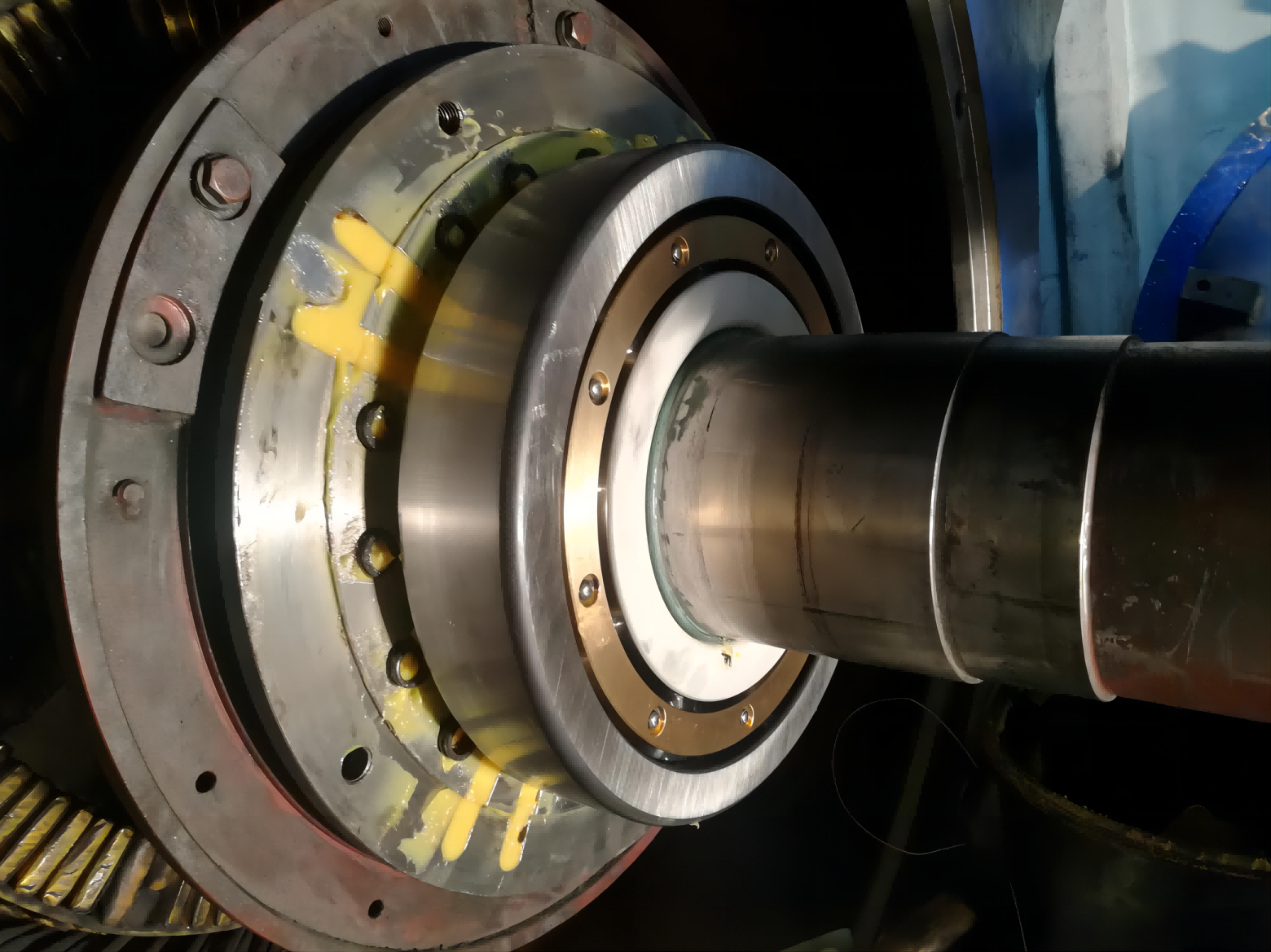
The aggregate narrative of the Chinese bearing market — RMB 231.5 billion in output value, 33.7 billion sets produced — masks a fundamental structural divide: the gaps in technical barriers, domestic substitution level, and competitive landscape among the six major application subsegments are nothing short of extreme. Automotive bearings lead in volume; wind-power bearings lead in growth rate; robot precision bearings have the highest barriers; high-speed rail and aviation bearings represent the final "deep water" of domestic substitution. Machine-tool spindle bearings, though lacking dedicated market statistics, serve as a barometer of precision manufacturing capability. This chapter digs one by one into the scale, growth rate, competitive landscape, and technical barriers of the six major subsegments, expanding on the downstream share structure that was only outlined in Chapter V.
8.1 Automotive Bearings: The Largest Subsegment, but High End Still in Foreign Hands
8.1.1 Scale and Share
Automotive is the largest downstream sector for bearings in China, accounting for approximately 37%–40% of the domestic market by various statistical measures. According to Zhiyan Consulting 2025 data, China's automotive bearing market reached approximately RMB 122.1 billion in 2024, of which hub bearings accounted for approximately RMB 8.15 billion, or 31.9% of total automotive bearings. A single vehicle uses an average of approximately 100 bearing sets valued at approximately RMB 1,500; passenger vehicle engines, transmissions, drive axles, steering systems, and hubs are all high-usage areas.
Globally, automotive bearings account for approximately 45%–49% of the global bearing market — higher than China's share — reflecting the relatively higher weight of construction machinery, home appliances, and wind power in China's industrial demand structure.
8.1.2 Structural Upgrading Driven by New Energy
The penetration of new-energy vehicles is not a simple substitution but a reshaping of demand tiers for bearings. After powertrain electrification, drive motor speeds rise to 15,000–20,000 rpm, with corresponding Dmn value requirements exceeding 800,000 — far beyond the operating conditions of traditional internal combustion engine crankshaft bearings. High rotational speeds generate high heat, high vibration, and high friction, requiring bearings to simultaneously achieve low noise, low friction coefficient, wide temperature range (-40°C to 150°C), and ultra-long fatigue life, raising the overall technical threshold.
At the same time, requirements for controlling creep in hub bearings are also tightening — during regenerative braking in new-energy vehicles the direction of axial forces alternates frequently, placing higher requirements on inner-ring fit precision than in conventional vehicles. According to a 2024 East Asia Securities industry report, China's new-energy vehicle bearing market already reached approximately RMB 14.4 billion in 2023, with the global market expected to grow at a CAGR of approximately 8.1% through 2031.
8.1.3 Competitive Landscape: Foreign at the High End, Domestic in Hub Bearings
The automotive bearing landscape can be summarized with a clear dividing line: approximately 85% of the mid-to-high end is occupied by foreign players, while domestic enterprises combined have captured more than 60% of the hub bearing subsegment — a relatively "attainable" sub-category.
Specifically, the domestic hub bearing landscape is: Wanxiang Qianchao (000559) approximately 15% (domestic No. 1), Renben Group approximately 12%, Shuanglin Xinhuoche approximately 9%; foreign: Korea's ILJIN approximately 13%, NSK approximately 12%, Schaeffler approximately 8%, SKF approximately 6%. The technical threshold for hub bearings is relatively clearly measurable, and domestic enterprises have built meaningful scale competitiveness through years of effort.
But the import/export average price gap for tapered roller bearings presents a different picture: in 2024 the import average price was USD 14.22 per set, the export average only USD 2.93 per set — import prices nearly 5 times export prices. High-precision tapered roller bearings for transmissions and drive axles, as well as precision automotive bearings at P5 grade and above, remain firmly in the hands of Schaeffler, SKF, NSK, and JTEKT.
8.1.4 Barrier Analysis
The high-end barriers in automotive bearings operate at three levels: first, OEM certification cycles — from initial testing to volume supply to a complete-vehicle OEM typically takes 3–5 years, with extremely high implicit switching costs; second, consistency requirements — producing hundreds of millions of bearing sets per year for passenger vehicles requires process-level Cpk capability, placing systemic demands on materials metallurgical stability and machining equipment precision; third, the new-energy transition window — domestic enterprises have an opportunity to establish early positions through deep joint development with new-energy vehicle companies, but large-scale breakthroughs have not yet materialized.
8.2 Wind-Power Bearings: The Fastest Domestic Substitution Track
8.2.1 Scale and Growth Rate
Wind-power bearings have been the fastest-growing subsegment in China's bearing industry over the past five years. According to an in-depth research report on Xinqianglian (300850), China's new wind-power bearing market in 2025 is expected to reach approximately RMB 34 billion, of which main-shaft bearings approximately RMB 11.6 billion and yaw and pitch bearings approximately RMB 13.8 billion, with the remainder being gearbox, generator, and other ancillary bearings.
Breaking this down, main-shaft bearings have grown from RMB 5.885 billion in 2022 to approximately RMB 10.2 billion in 2025, a three-year CAGR of approximately 20%. The global wind-power bearing market was approximately USD 5.951 billion in 2024, expected to reach USD 9.082 billion in 2032 (CAGR approximately 6.4%). China's market accounts for the majority of global wind-power bearing incremental demand.
8.2.2 Large-Scale Turbines Reshaping Per-Unit Value
A wind turbine uses an average of 13–20 bearing sets, covering the main shaft, yaw, pitch, gearbox, generator, and other positions. As turbine rated power has risen rapidly, per-turbine value of main-shaft bearings has expanded dramatically: for a doubly-fed 3–4 MW turbine, the main-shaft bearing is approximately RMB 130,000 for a domestic brand and approximately RMB 220,000 for an imported brand; for a direct-drive 8–10 MW turbine the main-shaft bearing per unit approaches RMB 2 million; and the world's first 25 MW wind turbine main-shaft bearing, launched by Luoyang Bearing Research Institute Technology Co., Ltd. in March 2024, set a new record for single-bearing value.
This trend places exponentially higher technical demands on the entire supply chain — the forged blanks of large-scale bearings often exceed 3 m in diameter and weigh tens of tonnes, placing extremely high requirements on material homogeneity and extra-large CNC machining equipment.
8.2.3 Domestic Substitution: The Leap from 30% to 65%
Domestic substitution in wind-power main-shaft bearings is one of the most notable breakthroughs in China's bearing industry in recent years: the main-shaft domestic substitution rate rose from approximately 30% in 2023 to an expected approximately 65% in 2025, completing a transformation from import-dependency to basic self-sufficiency in two years. The domestic substitution rate for offshore wind-power main-shaft bearings broke through 20% in 2024 but remains in the early stage of substitution.
The domestic landscape shows clear concentration: Xinqianglian (300850) holds approximately 40% of the domestic main-shaft bearing market; its wind-power revenue growth exceeded 100% year-on-year in Q1 2025, confirming the industrial momentum of domestic substitution. LYC (Luoyang Bearing) serves as the high-technology reference point by virtue of its extra-large bearing machining capability; ZWZ has built competitiveness in yaw and pitch bearings for export to European and American markets.
Yaw and pitch bearings (slewing ring bearing types), having a smaller diameter and relatively lower technical threshold than main-shaft bearings, have achieved earlier domestic substitution progress and are also an important window for domestic enterprises to export to European and American wind-power operators.
8.2.4 Barriers: Forging Capacity and Certification as Dual Bottlenecks
Wind-power bearing barriers have both technical and production-capacity attributes. Technically, the rings of large spherical roller bearings must achieve ultra-high-cleanliness bearing steel (oxygen content ≤12 ppm) and receive bainite austempering to confer ultra-long fatigue life. On the capacity side, the upfront investment cycle for tens-of-thousands-of-tonne-class heavy forging equipment is long and depreciation heavy, and is not easily replicable. OEM certification cycles are similarly 2–3 years, but more transparent and predictable than for automotive OEMs.
8.3 Robot Precision Bearings: The Highest-Barrier, Highest-Incremental New Track
8.3.1 Product Map and Applications
Demand for bearings from robot joint reducers constitutes a highly specialized product spectrum, with four bearing types each finding their purpose:
- Flexible bearings (thin-wall ball bearings): used in the core component of harmonic reducers — the "wave generator" — which undergoes repeated elastic deformation under an elliptical cam drive, placing extremely stringent demands on fatigue life and thin-wall machining precision.
- Crossed roller bearings: used in the output end of harmonic reducers and robot joints; because the cross-arranged rollers of inner and outer rings can simultaneously bear multidirectional loads, these bearings are the optimal solution for precision and rigidity, but their manufacturing difficulty is extremely high.
- Thin-wall angular contact ball bearings: primarily paired with the main bearing of RV reducers, required to maintain high rigidity and low vibration in an extremely confined space.
- Deep-groove ball bearings (robot-grade): used in joint motors and end effectors, with precision grade requirements higher than standard industrial products.
8.3.2 Competitive Landscape: Japanese Domination, Domestic Players at the Small-Batch Periphery
The competitive landscape of the current robot precision bearing market is highly concentrated among Japanese and German enterprises. THK and IKO have long dominated flexible bearings and crossed roller bearings; Harmonic Drive Systems has locked in a large number of leading robot customers with its complete harmonic reducer solution. Schaeffler has entered the robot market with crossed roller bearings; NSK and NTN hold advantages in thin-wall angular contact ball bearings.
Among domestic enterprises, Renben Group, Sinomach Precision (002046), and Cixing Group already have small-batch supply capability for flexible bearings; Suzhou Bearing (430418) is expanding into RV reducer bearings; Wanxiang Qianchao (000559) has announced plans to build capacity of 1.2 million robot-specific bearing sets by 2026. However, a considerable engineering gap still exists between "small-batch capability" and "scalable supply, stable yield, and verified service life."
8.3.3 Market Outlook: Humanoid Robots Bring Exponential Incremental Demand
Industrial robot incremental volumes are limited, but humanoid robot growth expectations are reshaping the ceiling of this subsegment market. According to Glauco Research 2025 data, the global market for humanoid robot bearings in 2030 is conservatively estimated at approximately RMB 1.81 billion (CAGR approximately 77%), with an optimistic scenario of RMB 3.08 billion. If platforms such as Tesla's Optimus achieve annual production of millions of units, the joint bearing market driven by a single platform could reach approximately RMB 3.5 billion.
China's humanoid robot output is expected to exceed 10,000 units for the first time in 2025, with a projected CAGR of approximately 79% from 2025 to 2030. High-end precision reducers and their internal bearings are among the highest-barrier and domestically most under-supplied components in humanoid robots.
8.3.4 Barrier Quantification: Why Domestic Substitution Is Far Harder Than in Wind Power
Using flexible bearings as an example, the difficulty lies in three stacked constraints: machining precision (P5 grade and above, roundness error <0.5 μm); material service life (under repeated cyclic compression from an elliptical cam, subsurface fatigue life of the bearing steel must exceed 10 million cycles); and the system alignment cycle with the complete harmonic reducer (switching a supplier requires recalibrating complete machine precision, with extremely high switching costs). These three compounded constraints together constitute the moat that Japanese enterprises have built over decades.
8.4 High-Speed Rail Bearings: The Certification Marathon Behind "One Step Away"
8.4.1 Current Status: Approximately 70% Import Dependency — The "Last Short Plank" in High-Speed Rail's Domestic Value Chain
China has more than 45,000 km of high-speed rail in service, the most in the world. The overall domestic production rate of high-speed EMU trains is approximately 97%, but axlebox bearings remain one of the few core components where large-scale autonomous supply has not been achieved — import dependency is approximately 70%, with primary suppliers being SKF, Schaeffler's FAG brand, and NSK.
Each set of high-speed rail axlebox bearings supports the weight of an entire train under high-speed operating conditions; at 350 km/h the requirements for vibration threshold, seal integrity, and fatigue life (design requirement exceeding 40 years) each exceed those of standard railway bearings by more than one order of magnitude.
8.4.2 Progress: Bench Tests Completed, Line-Running Test Is the Final Hurdle
LYC and ZWZ are the two domestic enterprises that have invested most heavily in the high-speed rail bearing direction. According to public reports, both enterprises have completed the development of three major axlebox bearing types for 250 km/h and 350 km/h, with multiple bench test parameters meeting or approaching the performance level of imported products. The current state can be accurately described as "one step away" — bench tests have passed, some products have entered the line-running test stage (the field verification stage of carrying limited operating mileage on regular operating lines), but large-scale commercial supply has not yet commenced.
8.4.3 Barriers: The Dual Logic of Certification Marathon and Life Safety
The certification barrier for high-speed rail bearings is arguably the highest of any bearing subsegment in China. China Academy of Railway Sciences (CARS) bench test requirements call for cumulative completion of service life simulation equivalent to several million kilometers; a single test cycle takes 3–5 years. After passing bench tests, line-running tests must still be conducted, with both time and mileage thresholds met before batch procurement qualification can be obtained. The essence of this process is "life-safety logic" — axlebox bearing failure is irreversible in its consequences, and no engineering shortcuts are permitted.
After certification, bearings must also pass CRRC Group's supplier qualification recognition within its procurement system, and then undergo a changeover and calibration phase before substantive improvements in domestic substitution rate can materialize — requiring at least 5–8 years of accumulated effort. The approximately 3% domestic substitution rate figure reflects the objective time span of the entire certification chain, not the final state of enterprise technical capability.
8.5 Machine-Tool Spindle Bearings: The Touchstone of Precision Manufacturing Capability
8.5.1 Product Characteristics
Machine-tool spindle bearings are primarily single-row angular contact ball bearings, with precision grade requirements of P4 (ISO tolerance approximately IT5 grade) up to P2 (top precision grade). The dn value (bearing bore diameter in millimeters × revolutions per minute) of a high-speed electric spindle can exceed 2×10⁶; at such high speeds the bearing is required to have noise below 40 dB, radial clearance stable at the micron level, and service life exceeding 20,000 hours.
In terms of precision tiers, P4 requires machining capabilities that are relatively mature in ordinary factories; P2 bearings require final superfinishing and assembly in a temperature-controlled clean room, with dimensional precision and noise inspected on a per-piece basis. Between the two precision tiers, the differences in machining investment and finished-product yield are extreme.
8.5.2 Competitive Landscape: High End Almost Entirely Imported, Mid-to-Low Speed Is Domestic Territory
The high-end market for machine-tool spindle bearings shows an extreme import-concentrated landscape: Germany's GMN is the global leader in ultra-high-speed electric spindle bearings; SKF's precision Super Precision series, NSK, and NACHI each hold their niche; Taiwan's TPI covers medium-precision machine tool demand at relatively lower prices. In the domestic market, ZWZ and similar enterprises can supply some P5/P4-grade products, primarily serving domestic mid-to-low-speed machine tools; for true five-axis machining centers and high-speed grinding centers, there are almost no viable domestic substitutes.
8.5.3 Three-Layer Barriers
Machine-tool spindle bearing barriers can be decomposed into three mutually reinforcing layers. At the materials layer, P2-grade bearings have extremely stringent requirements for oxygen content, titanium content, and carbide non-uniformity in bearing steel, and domestic bearing steel still has gaps in batch-to-batch consistency. At the machining layer, the cylindricity tolerance of P2 bearing raceways is only tens of nanometers, far exceeding the stable capability of most domestic machining centers. At the systems layer, the machine-tool spindle is a vibration system with a complex matching relationship among bearing rigidity, clearance, and spindle geometric precision; Chinese CNC machine-tool enterprises' demand for spindle bearings largely relies on long-term joint calibration schemes between complete-machine manufacturers and foreign bearing suppliers, making unilateral replacement difficult.
China's CNC machine tool industry has grown rapidly in recent years, and demand for spindle bearings has expanded in parallel, with both technical and market drivers of domestic substitution accumulating. However, the path from technical breakthrough to scaled commercial adoption is estimated to still require more than 5–10 years in this subsegment.
8.6 Aerospace and Aviation Bearings: Lowest Domestic Substitution Rate, Deepest Chokepoint
8.6.1 Global Market Scale
Aerospace and aviation bearings are a relatively limited in scale but extremely high-value subsegment. According to Glauco Research 2025 data, the global aerospace and aviation bearing market in 2025 is approximately USD 9.845 billion, expected to reach USD 13.97 billion by 2031 (CAGR approximately 6%). The price of a single aero-engine main-shaft bearing can reach tens of thousands to hundreds of thousands of renminbi — far higher in value than any other industrial bearing.
8.6.2 Technical Characteristics: Three Extreme Operating Conditions
The operating conditions faced by aviation bearings exceed the limit boundaries of general industrial bearings. First, extreme temperatures: aero-engine operating temperatures can exceed 600°C; standard bearing steel GCr15 fails above 150°C, making M50 high-speed steel or GH4169 nickel-based superalloy mandatory. Second, extremely high DN values: engine main-shaft speeds can exceed 30,000 rpm while maintaining extremely low vibration at high speed. Third, life-safety margins: a single bearing failure can result in total loss of aircraft; the U.S. NADCAP (National Aerospace and Defense Contractors Accreditation Program) system requires documented records for every process step, with certification and audit cycles typically running 3–10 years.
In terms of materials, the mainstream selection is M50 high-speed steel (high-temperature fatigue resistance) or silicon nitride (Si₃N₄) ceramic balls / hybrid ceramic bearings (lower density, lower thermal expansion coefficient, higher hardness).
8.6.3 Domestic Status: <25% Domestic Substitution Rate and USD 3 Billion in Annual Imports
China's aviation bearing domestic substitution rate is below 25%, with annual aviation bearing imports exceeding USD 3 billion. Representative domestic enterprises are Harbin Bearing Group (under AVIC, with annual capacity exceeding 100 million sets including dedicated aviation series) and LYC (aviation/aerospace bearings being one of its product categories). Longxi (600592) is the only enterprise to have passed U.S. NAVAIR certification as a domestic supplier of high-end aviation spherical plain bearings, holding approximately 65%–70% domestic market share.
Spherical plain bearings and rolling bearings are two relatively independent directions in aviation applications: spherical plain bearings (Longxi as representative) have achieved initial domestic market entry, while the domestic substitution rate for core engine main-shaft rolling bearings remains extremely low. On ceramic ball bearings, IMARC Group predicts China's share could exceed 35% by 2030 — but this more likely refers to grinding/abrasion industrial scenarios; the supply chain for aviation-certified ceramic bearings remains in its early stages.
8.6.4 Barriers: Life-Safety Certification + Materials Dual Chokepoint
The core barrier to aviation bearings is the certification ecosystem rather than any single technology point. NADCAP certification requires manufacturers to pass audits one by one from Boeing, Airbus, Pratt & Whitney, Rolls-Royce, and other customers — not a one-time "license issuance" but an ongoing process audit and failure-traceability system. This means that even if a domestic enterprise produces a main-shaft bearing in the laboratory that meets M50 material standards, entering the commercial aviation engine supply chain requires additional lengthy application certification, batch verification, and flight-hour accumulation.
Domestic substitution progress for military aviation bearings is relatively faster (not subject to civil aviation airworthiness certification system constraints), but batch scale is limited and external transparency is low, making it difficult to estimate the precise domestic substitution level.
8.7 Comparison of the Six Subsegments
| Subsegment | China Market Scale (reference basis) | Growth Rate | Domestic Substitution Level | Core Barriers | Representative Domestic Enterprises |
|---|---|---|---|---|---|
| Automotive bearings | Approximately RMB 122.1 billion (2024, full automotive scope) | Approximately 8% (driven by new-energy vehicles) | Hub bearings >60%; mid-to-high-end overall approximately 15% | OEM certification, new-energy high-speed technology | Wanxiang Qianchao, Renben, Shuanglin Xinhuoche |
| Wind-power bearings | Approximately RMB 34 billion (2025, new installation market) | CAGR approximately 20% (main shaft) | Main shaft approximately 65%; yaw and pitch higher | Large forging capacity, OEM certification | Xinqianglian, LYC, ZWZ |
| Robot precision bearings | Approximately RMB 1.81 billion (2030 estimate, humanoid robot basis) | CAGR approximately 77% | Extremely low (small-batch trial supply stage) | Extreme precision, fatigue life, customer switching costs | Cixing, Renben, Sinomach Precision |
| High-speed rail bearings | Absolute scale has no independent statistics | Steady growth | Approximately 30% (including general types); axlebox approximately 70% import | CARS certification, life-safety standards, long-cycle verification | LYC, ZWZ |
| Machine-tool spindle bearings | Absolute scale has no independent authoritative statistics | Tracks CNC machine-tool industry | High end almost entirely imported; mid-to-low speed has domestic supply | P4/P2 precision machining, material consistency, spindle matching | ZWZ (mid-to-low speed) |
| Aerospace and aviation bearings | Approximately USD 9.845 billion (global, 2025) | CAGR approximately 6% | <25%; aero-engine main shaft even lower | NADCAP certification, M50/ceramic materials, life-safety logic | Harbin Bearing, LYC, Longxi |
8.8 Summary: The Unified Logic Behind Subsegment Differentiation
Surface-level differences among the six subsegments stem from technical difficulty, but at a deeper level they follow the same logic: barrier = precision requirement × certification cycle × failure cost. The failure cost for automotive hub bearings is relatively manageable and certification cycles are within commercially reasonable bounds, enabling domestic enterprises to gradually cut in. Wind-power main-shaft bearing certification is led by OEMs, and the integrated dynamics of China's domestic wind-power supply chain provide a favorable local ecosystem for domestic substitution. For high-speed rail, aviation, and precision machine-tool spindle bearings, however, the failure cost involves life safety or irreversible precision manufacturing loss, and the certification system is designed from the outset to permit no shortcuts.
This also explains why China's bearing industry can sustain the world's No. 1 position with 33.7 billion sets of output yet still import more than USD 4.5 billion in high-end bearings per year: the chasm between volume and quality is fundamentally a function of barrier height × breakthrough cycle, and is not a problem that can be linearly shortened by capital or policy input alone.
Chapter 9 Technological Evolution and Trends in the Industry
From the cleanliness of a single bearing steel ball to the tonnage of a full wind turbine main-shaft bearing, to micron-level clearance control inside a robotic joint — over the past decade, China's bearing industry has followed one clear technological trajectory: moving upmarket. This is not mere rhetoric; it is the industrial pressure forced upward by downstream demand. New-energy-vehicle electric-drive motors must run continuously above 20,000 rpm; the main-shaft bearing of a 25 MW wind turbine must withstand the enormous bending moments of its blades; a humanoid robot's joint must achieve micro-radian-level precision within a space smaller than a human palm. These requirements have pushed bearing technology into territory that Chinese enterprises had barely explored before.
9.1 High-End Bearing Steel and Long-Life Technology
Steel is where bearing performance begins. A single inclusion buried in the sub-surface of a ring is a time bomb: fatigue cracks nucleate there, and the bearing fails prematurely. Cleanliness is therefore the first criterion separating high-end from ordinary bearing steel.
China's national standard specifies that the total oxygen content of high-carbon-chromium bearing steel (GCr15) must not exceed 12 ppm. In the global context, this figure represents a minimum threshold: the in-house control targets of Western majors such as Timken require oxide inclusion dimensions to be held below 10-20 micrometers. Xingcheng Special Steel's measured average oxygen content has already reached approximately 4.5 ppm — the only domestic enterprise to receive an A+ rating in the comprehensive quality capability evaluation for civil bearing steel — placing it close to the international frontier on cleanliness metrics. Daye Special Steel is advancing in a higher-end lane: for aero-engine bearings it has developed high-quality bearing steel benchmarked against M50, has passed Pratt & Whitney's CPW378 standard certification (becoming the first Chinese raw-material supplier to enter Pratt & Whitney's enterprise standard), and for main shafts of 25 MW and above wind turbines it has built the capability to supply extra-large-diameter Phi-700 mm bearing steel in volume.
Beyond cleanliness, however, lies a still-harder challenge: controlling large non-metallic inclusions. Industrial-scale application of continuous casting in high-grade tool-steel production remains a work in progress domestically; no publicly available data disclose the full domestic-substitution ratio for steel used in high-end aero-engine bearings. CITIC Pacific Special Steel states that its ultra-long-life bearing steel achieves a service life 2.5 times that of top overseas products, but this claim applies primarily to wind-power and high-speed rail contexts; comprehensive substitution in aviation remains distant.
A second route to longer service life is upgrading heat-treatment processes. Conventional GCr15 uses martensitic quenching, which provides high hardness but limited toughness; bainite isothermal quenching yields a lower-bainite microstructure with superior toughness. Domestic research by teams such as Zhang Fucheng et al. shows that fully hardenable steels alloyed with aluminum and silicon, after bainite quenching, achieve contact fatigue lives more than 100% longer than ordinary bearing steel and approximately 200% longer than case-hardened steel. SKF has long applied bainite quenching to railway and rolling-mill bearings: the proprietary steel grades used offer approximately 60% higher toughness and approximately three times the wear resistance of ordinary martensitic-quenched counterparts. The current bottleneck for bainite processing is the excessively long isothermal treatment time — which can reach several hours under industrial conditions — keeping batch-production costs high; no large-scale domestic mass-production cases have yet been reported. Once this process bottleneck is overcome, the ceiling on domestic high-end bearing life will rise across the board.
9.2 High Speed and Low Friction: Electric-Drive Bearings for New-Energy Vehicles
The electric-drive systems of new-energy vehicles are one of the fastest-growing bearing-technology application scenarios of the past five years. Unlike combustion-engine vehicles, permanent-magnet synchronous drive motors run at high speed, start and stop frequently, and generate complex axial loads, imposing three simultaneously demanding requirements on bearings: high rotational speed (Dmn value — the product of speed and bore diameter — must reach 800,000 or above); wide temperature range (concurrent risks of low-temperature lubrication failure and high-temperature demagnetization); and low friction (which directly affects vehicle driving range).
Mainstream pure-electric passenger car drive motors under continuous operation have already reached 15,000-20,000 rpm; Bosch's fifth-generation permanent-magnet motor, using diamond-like silicon carbide coated bearings, achieved volume production at 30,000 rpm in 2025, pushing this technology race to a new extreme. At these rotational speeds, the centrifugal force generated by the steel balls inside the bearing scales with the square of rotational speed; lubricant degradation under high temperature and high speed becomes the dominant failure mode, and even a small incremental friction torque accumulates as heat that accelerates failure.
To address these challenges, the industry is advancing along two parallel routes: first, material substitution, replacing steel balls with silicon nitride (Si3N4) ceramic balls to form hybrid ceramic bearings; second, surface engineering — nano-carbide coatings and diamond-like carbon (DLC) coatings can reduce contact friction coefficients by 30%-50% while improving wear resistance.
China's rapid new-energy-vehicle market expansion is providing domestic high-speed bearing enterprises with a rare mass-production validation window. Wanxiang Qianchao (000559) has designated high-speed electric-drive bearings for new-energy vehicles as a core growth direction; however, in mid-to-high-end electric-drive bearings (corresponding to Class B vehicles and above), foreign brands such as Schaeffler, NSK, and NTN still hold approximately 85% of the market share, leaving enormous scope — and equally enormous challenges — for domestic substitution.
9.3 Ceramic Balls and Hybrid Ceramic Bearings: Insulation, Light Weight, High-Temperature Resistance
The physical properties of silicon nitride ceramic balls confer advantages over steel balls in certain high-end applications that cannot be replicated:
- Density approximately 3.2 g/cm3, roughly 40% that of bearing steel, resulting in significantly lower centrifugal force at the same rotational speed
- Hardness approximately HV 1500-1600, far exceeding that of bearing steel, with outstanding wear resistance
- Electrical insulation, completely eliminating electrical corrosion (current corrosion, EDM pitting) — one of the primary causes of catastrophic failure in new-energy-vehicle motors driven by high-frequency variable-frequency drives
- Low coefficient of thermal expansion, providing better dimensional stability at elevated temperatures than steel balls
Hybrid ceramic bearings (ceramic rolling elements + steel rings) offer a service-life improvement of approximately 30%-50% over all-steel bearings; all-ceramic bearings are used in extreme applications such as aero-engine hot sections and high-temperature chemical processes. The global hybrid bearing market was valued at approximately USD 1.42 billion in 2024 and is projected to approach USD 2.87 billion by 2033 (CAGR approximately 8.1%).
Domestic breakthroughs in ceramic balls are accelerating. Lixing (300421) invested approximately RMB 100 million to enter the ceramic rolling element sector in 2022, completed a G3/G5-grade ceramic ball intelligent production line in 2023, and plans annual capacity of 1 billion ceramic balls by 2025, partnering with the Chinese Academy of Sciences to build China's largest high-end ceramic ball supply chain; in 2024 it signed a five-year strategic cooperation agreement with SKF's Montreal factory covering the supply of steel balls, rollers, and ceramic balls for the North American market. Timken launched a new hybrid ceramic ball bearing for electric vehicles in January 2025; SKF simultaneously released a hybrid ceramic series dedicated to electric drives — moves by foreign players that in a sense are also defining product standards for the domestic market.
Ceramic balls impose extremely demanding manufacturing requirements: controlling the sintered density, roundness, and surface-roughness consistency of silicon nitride is far more difficult than for steel balls. The number of enterprises globally able to supply aviation-grade all-ceramic bearings in volume remains extremely small; domestically, this remains a segment still under intensive development.
9.4 Climbing the Precision Ladder: P4/P2 and Machine-Tool Spindle Bearings
Under China's national standard (GB/T 307.3) and ISO 492, bearing precision is classified from low to high across five grades: P0, P6, P5, P4, and P2. Each step up imposes proportionally tighter requirements on ring dimensional tolerances and rotational accuracy (radial runout, face runout); P4-grade bearings cost 3-5 times more than P0, and P2-grade bearings can cost more than ten times P0.
CNC machining centers with high-speed spindles must use angular contact ball bearings of P4 accuracy or higher, combined with oil-air lubrication, to achieve stable operation at tens of thousands of rpm while maintaining sub-micron spindle runout. More than half of the domestic demand for P4 and above bearings continues to be met by imported brands such as GMN (Germany), SKF, NSK, and NACHI (Japan); P2-grade bearings are essentially fully import-dependent.
The challenge of higher precision grades lies not only in manufacturing but also in precision retention — whether, after thousands of hours of load-bearing operation, the bearing maintains its dimensional stability within tolerance limits. This depends on the microstructural stability of the bearing steel (retained austenite content and transformation control), the quality of ring heat treatment, and the elimination of grinding stresses. A small number of domestic enterprises such as ZWZ Research Institute can now produce P4-grade products in volume, but a gap in long-term reliability verification of precision retention relative to top foreign brands persists.
The Ministry of Industry and Information Technology's "Made in China 2025" roadmap set a target of 80% domestic market share by 2025 for mid-to-high-grade functional components including spindles, lead screws, and linear guides; based on actual progress in machine-tool spindle bearing substitution, the high-end portion remains visibly short of this target.
9.5 Precision Bearings for Robotics: Domestic Breakthroughs in Harmonic, RV, and Crossed-Roller Types
Inside the joints of an industrial robot, bearings play three distinct roles. Harmonic reducers use flexible bearings whose rings must be capable of elastic elliptical deformation; RV reducers are paired with thin-section angular contact ball bearings; joint output ends rely extensively on crossed roller bearings, which simultaneously carry radial force, axial force, and overturning moments in a single bearing unit with high rigidity — backlash must be controlled to less than one arc-minute.
All three bearing types are high-precision, low-volume products whose technical barriers arise from the triple overlay of material, process, and precision requirements, and have long been dominated by Japanese enterprises (THK, IKO, Harmonic Drive, Nabtesco). Nevertheless, domestic substitution in the RV reducer segment has achieved milestone progress:
According to industry statistics, the domestic market share of Chinese-made RV reducers rose from 41.6% in 2022 to 52.9% in 2023, and climbed further to approximately 60.8% in 2024 — for the first time surpassing imported brands in overall share. Behind this breakthrough lie years of accumulated expertise in precision heat treatment, tooth-profile error control, and assembly processes at enterprises such as Zhitong Technology, Huandong Technology, and ZHDA. Cixing Group (unlisted) holds first place in domestic market share for flexible bearings used in harmonic reducers and led the drafting of the relevant national standards.
The rise of humanoid robots has pushed precision bearings for robotics toward an even larger imaginative horizon. Industry forecasts project the global market for crossed roller bearings used in humanoid robot joints at approximately USD 11.3 million in 2024, rising to approximately USD 152 million by 2031 (CAGR approximately 45%); if humanoid robot shipments reach the million-unit scale, the joint bearing market would expand to approximately RMB 3.5 billion. Wanxiang Qianchao has announced plans to build annual production capacity of 1.2 million sets of robot bearings in 2026, actively positioning for this incremental market.
Harmonic flexible bearings and crossed roller bearings for robotics remain at an early stage of domestic substitution; the core gap lies in the stability of thin-walled-part machining precision and fatigue-life verification cycles. In the near term, IKO, THK, and Schaeffler continue to dominate high-precision specifications.
9.6 Large Wind-Power Bearings: The Leap from 3 MW to 25 MW
Domestic substitution of wind-power bearings is the fastest-moving and most emblematic breakthrough in China's high-end bearing sector over the past three years.
Each large wind turbine uses 13-20 sets of bearings; the main-shaft bearing — the core component that bears the rotor weight and wind loads — carries the highest value and the greatest technical difficulty. Typically using a three-row cylindrical roller bearing structure, it grows non-linearly in diameter and weight as turbine capacity increases, making homogeneity control of forgings and thermal-treatment distortion control extraordinarily difficult.
- March 2024: Luoyang Bearing Research Institute completed the world's first main-shaft bearing for a 25 MW wind turbine, setting a world record for single-unit capacity and marking the arrival of domestic bearing manufacturing capability at the current global frontier of wind-turbine technology.
- July 2025: Envision Energy and Luoyang Bearing Group jointly announced the roll-off of their 8,000th self-developed wind-power main-shaft bearing, with a cumulative operating record of more than six years and zero failures, and a domestic substitution rate of 80%.
- Xinqianglian (300850): Its three-row cylindrical roller main-shaft bearing project won a First Prize for Technological Progress from Henan Province's Mechanical Industry; Q1 2025 revenue grew by more than 107% year-on-year; its share of the domestic wind-power main-shaft bearing market has reached approximately 40%.
Overall, the domestic substitution rate for wind-power main-shaft bearings rose from approximately 30% in 2020 to approximately 70% in 2025; yaw and pitch bearings have achieved an even higher degree of domestic substitution. Domestic main-shaft bearings are priced approximately 20%-30% below their imported counterparts; lead times have been compressed from 12-18 months to approximately 3-4 months, and pricing power and supply-chain autonomy are now essentially established. This achievement is rare in the high-end equipment bearing sector; behind it lies years of parallel effort by ZWZ and Daye Special Steel on the materials side, and by Rifa Precision Machinery on the grinding-equipment side.
The value of a main-shaft bearing for an 8-10 MW direct-drive turbine approaches RMB 2 million per unit; as turbines above 15 MW are deployed at scale in near-shore and deep-water offshore sites, the market volume for large-megawatt main-shaft bearings will continue to expand, with China's incremental wind-power bearing market projected to reach approximately RMB 34 billion by 2025.
9.7 Intelligent Bearings: Condition Monitoring and Maintenance-Free Directions
Bearings are among the shortest-lived components in rotating machinery and also among the hardest to monitor in service — enclosed within lubricant and seals, their failure signals are weak and delayed. The traditional approach of scheduled replacement wastes large amounts of remaining service life; replacement after failure incurs unplanned downtime. Intelligent bearings aim to resolve this dilemma through integrated sensors.
Smart bearings miniaturize and integrate sensor units for vibration (acceleration), temperature, rotational speed, axial load, and lubrication state into the bearing body; signals are pre-processed by a built-in chip and transmitted via wired or wireless interfaces to the cloud, where deep-learning models perform health-state analysis and remaining-useful-life (RUL) prediction. SKF's hub bearing units already mass-produce integrated speed, position, and direction sensors for automotive ABS systems; NSK released both a wireless pocket cloud diagnostic solution and an upgraded wired condition-monitoring system in 2024, both emphasizing AI-based early anomaly detection. The global intelligent bearing condition-monitoring market was valued at approximately USD 8.24 billion in 2024 and is projected to approach USD 15.67 billion by 2035 (CAGR approximately 6%).
Domestic wind-farm operators have the most urgent needs in the long-term maintenance-free direction. If the main-shaft bearing of a 25 MW offshore turbine fails, the replacement cost alone runs into the millions of RMB, and the cost of downtime is even harder to quantify. Accordingly, integrating sensors with main-shaft bearings at the factory stage to enable predictive maintenance during operation has become a key focus of the technology roadmap for leading domestic enterprises such as ZWZ.
Maintenance-free sealing is another extension of intelligent bearings: high-performance seals can extend the bearing re-greasing interval from 6 months to 3 years or even "lifetime maintenance-free" operation; combined with condition-monitoring systems providing real-time lubrication feedback, these two technologies together define the product form of the next generation of industrial bearings.
9.8 The Overall Landscape of Domestic High-End Breakthroughs
Across the various sub-application scenarios, the progress achieved by domestic high-end bearings currently displays a clear gradient:
- Wind-power main-shaft bearings: domestic substitution rate approximately 70%, now in the mainstream; the 25 MW world-record bearing has been delivered, and technological confidence is established.
- RV reducer bearings: market share exceeds 60%; domestic brands have, for the first time, surpassed imports in total volume.
- High-speed rail axle-box bearings (250 km/h class): Luoyang Bearing and others have completed bench tests exceeding 1.2 million km and vehicle-on-track validation exceeding 1 million km; currently at the "last mile" stage of on-train operational testing; import dependence remains approximately 70%, and large-scale commercial deployment has not yet occurred.
- High-speed rail bearings (350 km/h class): R&D ongoing; certification not yet completed.
- Machine-tool spindle bearings (P4 grade): a small number of enterprises such as ZWZ Research Institute can produce in volume; P2 grade remains essentially import-dependent.
- Aero-engine bearings: domestic substitution rate below 25%; a single-point breakthrough on the materials side was achieved when Daye Special Steel passed Pratt & Whitney certification, but the overall situation remains a deep chokepoint.
- Crossed-roller and harmonic flexible bearings (for robotics): domestic production is at an early stage; high-precision specifications remain heavily dependent on Japanese suppliers.
This gradient reveals a pattern: the sequence in which technical breakthroughs occur correlates closely with the market scale of downstream applications and their policy priority. The explosive growth driven by wind-turbine upscaling was the direct force concentrating resources at ZWZ and Xinqianglian on main-shaft bearings; the domestic substitution of RV reducers is a byproduct of ten years of rapid growth in domestic industrial robot installations. The slower pace of breakthroughs in high-speed rail and aviation bearings is partly attributable to their long certification cycles and high test-mileage requirements — this is not simply a gap in R&D capability but a barrier inherent to time itself.
Structurally, China's bearing industry is transitioning from "expansion in volume" to "ascent in precision"; in terms of driving force, the shift is from policy-driven to market-pulled. Three demand vectors — wind power, robotics, and new-energy vehicles — will continue over the next five years to pull the domestic high-end bearing technology ecosystem toward maturity.
Chapter 10 Industry Risks and Challenges
China's bearing industry stands at the threshold of a scale breakthrough, but also faces several structural constraints. These constraints are not short-term market fluctuations; they are systemic contradictions embedded at the base of the supply chain — the pass-through pressure of raw-material costs, the price attrition of the mid-to-low-end market, the technological blockade in high-end markets, persistent friction from international trade barriers, and the survival pressures facing tens of thousands of small and medium-sized enterprises. Understanding these risks is a prerequisite for understanding the industry's future direction.
10.1 Bearing Steel Price Volatility: Hidden Pressure on the Cost Side
Bearing manufacturing is a raw-material-intensive industry; raw materials account for approximately 55%-70% of total manufacturing costs, and in large-specification products such as wind-power main-shaft bearings the figure can reach 69%. Bearing steel is the single largest raw-material input. This means that any fluctuation in steel prices passes through at a high multiplier directly to bearing producers' income statements.
The 2023 market was a representative example. According to data from Mysteel, the price of bearing round bar (Phi-50 mm continuous cast) moved in a range of RMB 5,045 to RMB 5,597 per tonne that year, with a peak-to-trough spread of approximately RMB 552 per tonne. The full-year trend exhibited a clear four-phase pattern: a moderate increase in Q1, a rapid decline in Q2, range-bound fluctuation at higher levels in Q3, and a modest recovery in Q4 supported by costs. Viewed purely in terms of absolute price spread, this volatility had a particularly pronounced impact on low-end small enterprises — whose gross margins are already below 5% — where a single-quarter sharp move in steel prices can erode the full year's profit.
By 2024, cost pass-through had developed structural differentiation. Data from the Linxi Bearing Industry Index showed that among bearing components, rolling elements saw the most significant price increases — the average annual price of cylindrical rollers rose by 64.22%, and spherical rollers by approximately 27.95%. Upstream raw-material price increases pass down the supply chain; scale enterprises with downstream pricing power can transfer costs, while small and medium-sized contract suppliers are typically at the transmission endpoint and can only absorb pressure passively.
The deeper problem lies in the supply bottleneck for high-end bearing steel. Ordinary bearing steel (GCr15, for P0-P6 applications) already enjoys stable domestic volume supply, with Xingcheng Special Steel (under CITIC Pacific Special Steel) controlling oxygen content at approximately 4.5 ppm, better than the national standard (<=12 ppm). However, domestic stable mass-production capability for the high-cleanliness special steels required by P2-grade precision bearings remains insufficient, and high-end products are still to some extent import-dependent. This places high-end bearing enterprises under a dual cost-control constraint: external volatility in international steel prices combined with supply-stability limitations for high-end raw materials.
10.2 Low-End Overcapacity and Price Competition
China currently has approximately 25,000 bearing manufacturers in active operation, of which approximately 1,300 or more are above-scale enterprises. Industry concentration is extremely low, with a CR10 of only approximately 28% and very few single enterprises holding more than 5% market share. This structure is closely related to the low-entry-barrier nature of general-purpose bearings — the equipment and process requirements for P0-grade standard parts are relatively modest, enabling large numbers of small factories to enter the market and forming dense, homogeneous competition in industrial belts such as Linqing, eastern Zhejiang, and the Suzhou-Wuxi-Changzhou corridor.
In terms of product structure, high-end precision bearings account for only approximately 5% of total output, while mid-to-low-end general-purpose bearings account for more than 80%. Large numbers of enterprises are concentrated in standardized products such as deep-groove ball bearings, cylindrical roller bearings, and tapered roller bearings, with heavily overlapping capacities. Annual domestic bearing production reached 25.9 billion sets in 2022; thereafter, as downstream demand growth slowed, the overcapacity problem became increasingly apparent.
The logic of price competition is straightforward: with many competitors for the same products, buyers have strong bargaining power, and small factories frequently enter with lower bids to secure orders, creating a spiral of price compression. On some e-commerce platforms, prices for general-purpose bearings have already approached or fallen below raw-material costs; sustaining this requires cutting labor, reducing inspection investment, or substituting inferior products. This not only erodes the industry's overall profitability but also undermines the accumulated quality reputation, creating systemic obstacles to "brand rebuilding" for Chinese bearings.
Profit differentiation within the industry is already quite pronounced. At one end are a small number of enterprises with genuine technical barriers — "specialized, sophisticated, and novel" companies; at the other end are large numbers of general-component producers operating on thin margins. Enterprises with differentiated capabilities — leaders in such segments as wind-power main-shaft bearings, harmonic reducer flexible bearings, and spherical plain bearings — can sustain reasonable profits at higher added value; while small and medium-sized factories fighting in the general-component arena remain in the passive position of trading volume for price.
10.3 High-End Chokepoints: Structural Gaps across Multiple Segments
This is the core risk that must be confronted in this chapter. The high-end shortfalls of China's bearing industry cannot be resolved by a single-point breakthrough; they are distributed across multiple critical application segments, each with its own barrier logic.
Aero bearings: deepest import dependence, longest commercialization cycle
Aero bearings impose requirements for material, precision, and reliability far exceeding those in other industrial sectors. Aero-engine bearings must operate continuously for thousands of hours under high temperature (above 300°C in some conditions), high rotational speed (extremely high Dmn values), and high loads, using materials typically of M50 high-speed steel or GH4169 high-temperature superalloy, with a required precision grade of P2. The global market is dominated by a small number of manufacturers including SKF, Schaeffler, and Timken, which have built extremely high entry barriers through NADCAP (aerospace quality certification), with certification cycles often lasting 3-10 years.
In terms of current status, China's domestic substitution rate for aero bearings is estimated below 25%, and annual import spending on aero-engine bearings alone is estimated at more than USD 3 billion. The number of domestic enterprises capable of participating in aero bearing development can be counted on one hand: Harbin Bearing (under AVIC) and Luoyang Bearing have a presence in the aero bearing sector; Longxi (600592) is the only domestic enterprise to have passed U.S. NAVAIR certification and to hold qualification as prime contractor for high-end aero spherical plain bearings; but for engine main-shaft bearings — the most critical category — domestic substitution remains at the engineering development and small-batch verification stage.
Precision bearings for robotics: Japanese enterprise dominance, domestic mass production at an early stage
The joint transmission systems of industrial robots and humanoid robots depend on harmonic reducers and RV reducers, whose core parts include flexible bearings (for harmonics), crossed roller bearings (harmonic output), and thin-section angular contact bearings (for RV). The manufacturing difficulty of these precision bearings lies in the simultaneous achievement of geometric accuracy (shape error controlled to the micron level) and material fatigue life; Japan's THK, IKO, and Harmonic Drive form the backbone of global supply.
Domestically, Cixing Group has achieved first place in domestic output for flexible bearings used in harmonic reducers and led the drafting of the industry national standard; Renben Group and Sinomach Precision also have small-batch supply capability, but domestic mass-production capability for the highest-precision crossed roller bearing types remains limited. As the humanoid robotics sector accelerates, demand for precision bearings is expected to grow at an extremely rapid pace; if the structural supply gap cannot be filled in time, it will become one of the weak links in China's domestic robotics supply chain.
High-speed machine-tool spindles: P4/P2-grade bearings almost entirely import-dependent
Spindle bearings for precision machining centers, grinding machines, and jig boring machines must maintain micron-level rotational precision at speeds of tens of thousands of rpm. P4-grade bearings cost approximately 3-5 times more than ordinary P0-grade, and P2-grade bearings can cost more than ten times more. This sub-market has long been monopolized by Germany's GMN, SKF's ultra-precision series, and the ULTAGE series of Japan's NSK and NTN; domestic enterprises have not yet developed volume supply capability for high-end specifications with spindle speeds exceeding 50,000 rpm. CNC machine tools are the "jewel in the crown" of the manufacturing industry, and spindle bearings remain one of the few gems in that crown not yet claimed.
High-speed rail axle-box bearings: the last mile, not yet crossed
China's overall high-speed rail domestic substitution rate has reached approximately 97%, but high-speed axle-box bearings are among the critical components remaining in the unresolved 3%, with current import dependence still approximately 70%, primarily from Schaeffler (FAG brand), SKF, and NSK.
Progress has not stalled — Luoyang Bearing (LYC) has developed axle-box bearing products meeting 250 km/h and 350 km/h requirements and has passed 1.2-million-km endurance bench tests. Daye Special Steel has also completed process development for steel for 350 km/h bearing supply, and in 2025 began advancing research into bearing steels for 450 km/h high-speed trains. However, passing bench tests and actually operating in service on vehicles remain substantially different; moreover, the consequences of a high-speed rail bearing failure are irreversible, and railway operators maintain a cautious stance toward switching from imported products. The domestic high-speed rail bearings of Luoyang Bearing and ZWZ are currently in the on-train trial-operation advancement stage, and further time is needed before large-scale commercial use.
Mid-to-high-end automotive bearings: foreign entrenched positions difficult to dislodge in the short term
Automotive is the largest downstream market for bearings, accounting for approximately 37.4% of domestic demand. In bearings used by mid-to-high-end passenger cars and new-energy-vehicle electric-drive systems, foreign enterprises hold approximately 85% of the market share, with Schaeffler, SKF, NSK, NTN, and South Korea's ILJIN forming the core supply structure. Domestic enterprises have made inroads in commodity products such as hub bearings (Wanxiang Qianchao holds approximately 15% domestic share), but in high-end electric-drive bearings (speeds of 15,000-20,000 rpm, Dmn >= 800,000), domestically available mass-production products remain concentrated in the mid-to-low-speed range. As new-energy-vehicle penetration continues to rise, the strategic significance of this gap is increasing.
The dual shortfall in equipment and materials
The chokepoint is not confined to the product side. Producing P4/P2-grade bearings requires high-precision CNC grinding machines and superfinishing equipment; domestically, Rifa Precision Machinery and Qinchuan Machine Tool's Grande subsidiary have built substantial capability at the mid-range level, but the highest-precision equipment required for P4/P2-grade machining continues to rely primarily on imported brands such as Germany's Junker and Thielenhaus. Meanwhile, although Daye Special Steel and others have been actively working on special steels for P2-grade precision bearings, a substantial distance remains between passing certification and achieving stable volume supply. The gaps in materials and equipment interlock with each other, creating a triangular dilemma: "high-end bearings are hard to make — high-end equipment is hard to procure — high-end materials are hard to source."
10.4 International Anti-Dumping Measures and Trade Barriers
China's bearing industry's exports face sustained trade friction. Two major barriers currently in force:
U.S. anti-dumping measures: The United States has maintained anti-dumping measures on Chinese tapered roller bearings continuously since 1975, with an applicable tariff rate of 92.84%. In September 2023, the U.S. Department of Commerce initiated a fifth sunset review; in February 2024, the U.S. International Trade Commission (USITC) issued a final determination finding that revocation of the measures would cause material injury to the U.S. industry from Chinese imports, and the anti-dumping order was therefore continued. Fifty years of accumulated tariffs have effectively closed the conventional pathway for Chinese tapered roller bearings to enter the U.S. market.
Eurasian Economic Union anti-dumping measures: The Eurasian Economic Union imposes anti-dumping duties on rolling bearings (excluding needle roller bearings) originating from China, at tiered rates of 31.3% and 41.5% (on customs value basis). Originating in 2011, this measure was in 2024 decided to be extended to March 31, 2029. The markets of Union members including Russia, Kazakhstan, and Belarus therefore constitute significant tariff barriers for Chinese standard bearings.
The structural impact of these two barriers on Chinese bearing exports differs in emphasis. The U.S. barrier affects tapered roller bearings — a category with relatively higher added value — suppressing the willingness and capability of domestic enterprises to enter the North American market; the Eurasian Union barrier covers a broader range of rolling bearing categories, constraining the economic returns on exports to core Belt-and-Road regions. The deeper concern is that if international trade friction further escalates in the future, China's bearing industry will face additional constraints in expanding its presence in global high-end markets.
Noteworthy is that some domestic enterprises have begun to mitigate trade barriers by establishing overseas manufacturing; however, this requires substantial capital and management capability and in the short term remains primarily the domain of larger leading enterprises.
10.5 Survival Pressure on Small and Medium-Sized Factories and Profitability Divergence among Leaders
The macro risks enumerated above ultimately converge at the micro-profitability level. In 2024, profit divergence within the bearing industry was already quite pronounced: on one hand, enterprises focused on specialized high-end segments maintained positive profits; on the other hand, some leaders of significant scale reported losses.
- Wafangdian Bearing Co. (200706): 2024 revenue RMB 2.054 billion, down 6.37% year-on-year; net profit loss of RMB 110 million. This representative of China's large bearing manufacturers faces dual pressure from slowing downstream equipment demand and product-mix adjustment.
- Xiangyang Bearing (000678): 2024 net profit loss of RMB 35 million; intense competition in automotive contract manufacturing and pressure from foreign substitution are the primary drags.
- Hengrun (603985): wind-power forgings as its core business; 2024 net profit loss of RMB 138 million, reflecting the squeeze on forging supplier margins from the rapid price decline in the wind-power industry.
For the far larger number of small and medium-sized bearing factories — whose data are not publicly disclosed — the survival pressure is even more direct. Net profit margins at small and medium-sized enterprises in the industry are typically below 5%, and some product categories operate on the edge of loss over extended periods. Insufficient R&D investment is a common characteristic of this group: without capital to develop new products, they can only continue fighting in the general-component arena; competition in that arena suppresses profits, further weakening R&D capability, creating a vicious cycle of capability lock-in.
From an overall structural perspective, China's bearing industry is exhibiting a "dumbbell" pattern of divergence: a small number of enterprises with technological moats are continuously widening their lead over peers; the middle tier is shrinking; and large volumes of low-end capacity face pressure to exit or be consolidated. This divergence is not inherently negative, but for middle-tier enterprises, the capital, time, and technical accumulation required to transition from general-purpose to specialized production is not a burden every firm can bear.
Overall, the risks currently facing China's bearing industry are not a single variable but a collection of structural contradictions: inflexible raw-material costs, a crowded low-end market, fortified high-end markets, restricted export channels, and vulnerable small-scale producers. These contradictions are intertwined and will not be comprehensively dissolved in the short term by any single policy or technological breakthrough. The industry's genuine resilience lies in whether participants at each tier can find a differentiated survival anchor within their respective positions — and that is precisely the topic of structural opportunities to be explored in the following chapter.
Chapter 11 Market Projections and Investment Logic for 2026-2030
The industry's risk register was laid out in full in the preceding chapter. But low-end overcapacity, chokepoints, and anti-dumping duties are not the entire canvas of China's bearing industry. Equally real is another curve now rising: wind-power main-shaft bearing domestic substitution climbing from roughly 30% to roughly 70%; robotic reducer bearings moving from lagging to matching imports; new-energy-vehicle electric drives pushing rotational speeds above 20,000 rpm — all within the past five years. Lifting one's gaze from the overcrowded volume market to the five years from 2026 to 2030, one sees an industry redefined by high-end incremental growth. This chapter addresses growth and opportunity only, without reiterating risks; technical details are also not re-elaborated and are treated merely as drivers of growth.
11.1 (I) Market Scale Projections: Scope First, Logic over Numbers
The first task in discussing bearing market size is to clarify scope. Global estimates in USD vary enormously across institutions — from approximately USD 47 billion to well over USD 100 billion — differences arising mainly from variations in coverage (whether sliding bearings and trade flows are included). For China, the scope is stated in RMB production value; the China Bearing Industry Association above-scale principal business revenue was approximately RMB 231.5 billion in 2024, and a broader scope including trade flows and local production and sales by foreign enterprises is approximately RMB 364.7 billion. These two figures cannot be converted into each other or cited together; all projections below specify the scope used.
Looking at China overall: combining estimates from institutions including Grand View Research, China's bearing market is projected to reach approximately RMB 390 billion (equivalent to approximately USD 54 billion) by 2030, with a compound annual growth rate of approximately 10.8% from 2024 to 2030. The assumptions behind this projection are worth unpacking, because the logic of whether the numbers hold matters more than the numbers themselves:
- Base assumption: anchored to the above-scale association scope of revenue in the hundreds of billions of RMB, layered with a production volume base of approximately 27.5-33.7 billion sets in recent years (depending on scope);
- Price-structure assumption: incremental growth comes not primarily from selling more general-purpose bearings but from volume expansion of higher-unit-value premium categories — the value of one wind-power main-shaft bearing set is thousands to tens of thousands of times that of one miniature appliance bearing, so structural upgrading itself raises the average unit price;
- Growth-tier assumption: general-purpose bearings grow at a slow pace in line with macro industrial output and vehicle parc (single-digit rates), while high-end categories (wind power, robotics, electric drives) expand at double-digit or higher rates; domestic institution projections for high-end segment growth from 2025 to 2030 are generally above 15%.
Stacking these three layers, the 10.8% overall CAGR is not an optimistic extrapolation but the weighted result of "slow-growth large base plus fast-growth incremental." In other words, a substantial portion of aggregate industry growth is contributed by the high-end market — which still represents a small share of the total — and this is precisely the key to understanding the next five years.
Within the global scope, wind-power bearings merit separate listing. According to third-party estimates, the global wind-power bearing market was approximately USD 5.951 billion in 2024 and is projected to reach approximately USD 9.082 billion by 2032 (CAGR approximately 6.4%). This is a steady rather than explosive number, but its significance lies in the fact that wind-power bearings are one of the few high-end categories in which Chinese enterprises have already moved from follower to price-setter; the steady expansion of the global market corresponds to dual upside for Chinese manufacturers in both market share and unit price. It should be noted that global USD scope and China RMB scope are two separate coordinate systems — when compared, only trends should be read; addition and subtraction are not appropriate.
The boundaries of the projections should also be stated clearly. Much 2025 data is still in projected form and will require verification against the 2026 industry annual reports for final confirmation; estimates of global totals vary by a multiple across institutions depending on coverage definitions. Accordingly, all scale figures cited in this chapter should be understood as "central estimates under specified assumptions," not precise commitments.
11.2 (II) Three Structural Incremental Growth Drivers: Where Does Growth Come From?
If the overall growth rate is the weighted average result, then the three clearly identifiable high-end incremental drivers are what pull the average upward.
The first driver is wind-power upscaling. Wind power is currently the single largest incremental market for the bearing industry. China's incremental wind-power bearing market is approximately RMB 34 billion in 2025, of which main-shaft bearings account for approximately RMB 11.6 billion and yaw-and-pitch bearings approximately RMB 13.8 billion, with the remainder in gearbox and other accessories; the main-shaft bearing sub-segment grew from approximately RMB 5.885 billion in 2022 to approximately RMB 10.2 billion in 2025 (CAGR approximately 20%). Incremental growth has two layers: first, installed capacity itself is expanding; second, larger turbines lift the per-unit value of the entire bearing set — the per-unit value of a main-shaft bearing for an 8-10 MW direct-drive turbine already approaches RMB 2 million, and the world's first 25 MW turbine main-shaft bearing rolling off the line in Luoyang in March 2024 means the ceiling on per-unit value continues to rise. More importantly, the domestic substitution rate: main-shaft bearing domestic substitution rose from approximately 30% in 2023 to approximately 65% in 2025; enterprises such as Xinqianglian have compressed lead times to three or four months and essentially reclaimed pricing power. Upscaling combined with domestic substitution makes wind power the highest-conviction driver for the next five years.
The second driver is precision bearings for robotics. This is the driver with the steepest growth rate, the largest imaginative horizon, and the greatest demand for genuine capability. Robot bearings include flexible bearings for harmonic reducers, thin-section angular contact and tapered roller bearings for RV reducers, and the most technically challenging crossed roller bearings. The core narrative for incremental growth is humanoid robots: according to third-party estimates (conservative scope), the global market for humanoid-robot-specific bearings is projected at approximately RMB 1.81 billion by 2030, with a CAGR of approximately 77%; when humanoid robot sales pass the million-unit threshold, the market space for harmonic reducers and planetary roller screws will exceed RMB 10 billion. Domestic substitution is also accelerating — the domestic market share of RV reducers rose from 41.6% in 2022 to 60.8% in 2024, already overtaking imports. Industrial capital is positioning itself: Wanxiang Qianchao (000559) plans to complete annual production capacity of 1.2 million sets of robot bearings in 2026; Wuzhou Xinchun (603667), Suzhou Bearing (430418), and others are extending into lead screws and RV bearings. A note of caution: for the highest-difficulty categories such as crossed roller bearings, domestic production remains at an early stage with Japanese enterprises THK/IKO/Harmonic Drive dominant — the realization of incremental growth is conditional on genuinely clearing the hurdles of precision and batch-to-batch consistency.
The third driver is high-speed electric-drive bearings for new-energy vehicles. New-energy vehicles have pushed motor speeds from the thousands of rpm of the combustion-engine era to 15,000-20,000 rpm, imposing entirely new requirements for high rotational speed, low friction, wide temperature range, and electrical insulation, with technology upgrading toward hybrid ceramic bearings and insulating bearings. The domestic NEV bearing market was approximately RMB 14.4 billion in 2023 and is projected to reach approximately RMB 29.25 billion by 2030 (CAGR approximately 11%). This driver is characterized by "large volume but high end still controlled by foreign players" — domestic substitution rates are rising under OEM cost-reduction pressures, but high-end electric-drive bearings remain substantially import-dependent, leaving domestic players a long slope of simultaneous upgrading and substitution.
Beyond these three major drivers, several import-substitution secondary tracks are worth noting. High-speed rail axle-box bearings at the 350 km/h speed class remain approximately 70% imported; products from ZWZ and Luoyang Bearing have passed bench tests and are at the "last mile" stage of on-train certification (not to be described as already in large-scale commercial use), with scale substitution expected to gradually materialize from the end of the 14th Five-Year Plan through the 15th. High-end bearings for CNC machine-tool spindles at P4/P2 grade are almost entirely import-dependent; with support from specialized funds in the hundreds of billions of RMB, domestic substitution rates are expected to climb from approximately 20% toward 50%. Aero and aerospace high-end bearing domestic substitution remains below 25%, with annual imports of aero-engine bearings alone exceeding USD 3 billion — the sector with the largest substitution scope and the greatest difficulty. Additionally, exports: Q1 2025 bearing exports grew approximately 8.7% year-on-year, with emerging markets in Southeast Asia, the Middle East, and Africa providing incremental export opportunities for general-purpose categories. These secondary tracks contribute limited near-term volume but are the true benchmarks of the industry's journey from "large but not strong" to "strong."
11.3 (III) Competitive Landscape Evolution: The Ascent from General-Purpose to High End
The redistribution of incremental markets will inevitably rewrite the competitive landscape. Over the next five years, what matters most is not which side has greater total volume, but how the line of contention between domestic and foreign players will shift.
The ascent path for domestic enterprises is becoming clearer: the base continues to be general-purpose bearings and automotive hub bearings — domestic players collectively already hold more than 60% of hub bearings, with Wanxiang Qianchao, Renben Group, and Shuanghuan dominant; the direction of ascent is toward wind-power main shafts, precision bearings for robotics, and high-speed electric-drive bearings — the three high-value-added incremental drivers. LYC aims to position itself in wind-power main shafts and aerospace high-end, targeting revenue of RMB 15 billion by 2030; Renben Group, with revenue of RMB 11.96 billion as the domestic production-and-sales leader, is investing RMB 5.3 billion to build a global R&D headquarters; Xinqianglian entered via wind-power main shafts and saw Q1 2025 revenue roughly double year-on-year. The story of domestic enterprises is shifting from "doing more" to "doing harder."
Foreign players' defensive lines oscillate between contraction and holding ground. The six major multinational groups — SKF, Schaeffler, NSK, NTN, and others — collectively still hold more than half of the global mid-to-high-end market; they will proactively cede the positions in general-purpose products and wind-power main shafts already breached by domestic players, and concentrate resources on defending the sectors with the thickest barriers and longest certification cycles: aero and aerospace, high-end machine-tool spindles, and mid-to-high-end automotive. The outcome of this contest is a new dividing line drawn along "technical difficulty" — below the line, domestic substitution penetrates faster; above the line, foreign players continue to defend on the strength of materials, processes, and certifications.
Industry concentration will most likely increase at a moderate pace. The current CR10 of only approximately 28% reflects extreme fragmentation, but the capital and technical barriers of high-end incremental markets far exceed those of general-purpose categories; leading enterprises with R&D and certification capability will continue to accumulate share in wind power, robotics, and electric-drive segments, while small and medium-sized factories relying on price competition are excluded at the high-end gate. Concentration growth will not come from a shake-out in the general-purpose market but from the "winner-take-most" structural characteristics of high-end incremental markets.
11.4 (IV) Investment Logic: From Volume Dividend to the Alpha of High-End Substitution
Finally, returning to a question the Institute should answer with restraint: how to read the industrial logic of these five years. This section identifies directions only; it does not advocate buying, and makes no recommendation on any individual security — the analysis framework presented here is not investment advice.
Over the past three decades, China's bearing industry has captured the "volume dividend": leveraging massive general-purpose capacity, low costs, and complete industrial belts to become the world's largest producing nation. But the marginal returns of the volume dividend are declining — the general-purpose market is oversupplied, prices are spiraling downward, profits are continuously compressed, and simply adding capacity no longer creates excess returns. The logic worth following over the next five years is the shift from "beta of the volume dividend" to "alpha of high-end domestic substitution": excess value no longer comes from doing more, but from doing what others cannot.
To assess whether an enterprise can share this alpha, the Institute's analytical framework identifies four observable barriers:
- Materials barrier: whether it can secure high-cleanliness bearing steel (total oxygen <=12 ppm; Xingcheng has already reached approximately 4.5 ppm) and even P2-grade and aviation M50-grade special steels — upstream materials determine the ceiling of high-end manufacturing;
- Process barrier: the stable consistency of processes such as bainite long-life heat treatment, superfinishing, and P4/P2-grade precision machining — these are the thresholds hardest for small, dispersed, and fragmented factories to clear;
- Precision barrier: for categories such as crossed roller bearings for robotics and machine-tool spindles, achieving precision and batch-to-batch consistency in mass production — not merely in prototype samples;
- Certification barrier: aero NADCAP, long-cycle verification by wind turbine OEMs, high-speed rail bench and on-train certification — certifications that take years to obtain are themselves moats.
Using these four barriers as a filter, resources should concentrate on enterprises simultaneously meeting several of them: those holding the wind-power main-shaft position and extending to larger megawatt ranges; those genuinely achieving mass-production ramp-ups in precision robot bearings; those qualifying high-speed electric-drive bearings for mainstream platforms; and those gradually capturing import share in aero and high-end machine-tool spindle bearings. Conversely, segments relying solely on general-purpose capacity and price advantage will most likely continue to face pressure over the next five years.
In a single sentence: in China's bearing industry from 2026 to 2030, the focus is not on how quickly the total market climbs from RMB ~200 billion to ~390 billion, but on how high the share of high-end incremental value in that RMB 390 billion can be raised. Whoever can make the "joints of industry" both precise and durable — and obtain those hard-won certifications — holds the key to the transition from manufacturing nation to manufacturing power.
Chapter 12 Conclusion and the Institute's Assessment
Distilling the entire report into a single sentence: China's bearing industry faces the challenge of transforming "capable of turning" into "turning for longer, turning with greater precision."
China is an indisputable bearing manufacturing giant. Annual output of close to 30 billion sets, first in the world for consecutive years, a full-specification range covering everything from miniature bearings to rings 16 meters in outer diameter — these are genuine capabilities. But the other side of these capabilities is structural imbalance: high-end products account for only approximately 5% of total output, and approximately 70% of the "jewels in the crown" — high-speed rail, aviation, precision machine tools, mid-to-high-end automotive bearings — must still be imported. The average price gap of less than one U.S. dollar per exported bearing set versus approximately USD 1.70 per imported set marks this divide in stark terms: China sells commodity bearings measured by the tonne, and buys precision bearings counted by the piece.
At a deeper level, this is a "large industry of small companies." Twenty-five thousand manufacturing enterprises crowd together, and the top ten combined account for barely a quarter of the market; the six major global multinationals, drawing on more than a century of accumulated materials, processes, and brand equity, securely hold more than half of the global market and an even higher share of China's high-end segment. Bearings are not incapable of scaling: the issue is that the high end cannot scale up, and the low end cannot be made strong — the low end's barriers are low enough to fill with small factories fighting on price, while the high end's barriers are tall enough to remain uncrossed even over decades.
Bridging that divide requires mastering three disciplines: materials, processes, and equipment. How long a bearing can run and how accurately it can turn ultimately depends on the cleanliness of the bearing steel, the stability of the heat treatment, and the precision of the grinding machine. China produces more bearing steel than any country in the world, but the final few ppm of oxygen content and inclusion control, and the import dependence for P4/P2-grade precision grinding machines, are precisely the places where high-end production is truly blocked. This also explains why appliance and automotive hub bearings can be domestically substituted, while high-speed rail axle-box bearings remain stuck at the "last mile."
Fortunately, history has opened a rare window. Wind-power upscaling has pushed main-shaft bearings into the super-large-megawatt range; the robotics boom has lifted harmonic flexible bearings and crossed roller bearings onto the leading edge; new-energy-vehicle electric drives have topped rotational speeds at 20,000 rpm. These three streams of new demand serve simultaneously as proving grounds for domestic substitution and as opportunities for leapfrogging. The fact that the main-shaft bearing for the world's first 25 MW wind turbine could roll off the line in Luoyang is itself a signal.
It is also precisely in this industry — with tens of thousands of enterprises, vast disparities in scale, and highly fragmented information — that identifying "which factories are truly in operation, at what scale, in which bearing categories, and serving which downstream sectors" becomes a shared challenge for upstream steel mills and grinding-machine makers, bearing manufacturers seeking customers, and procurement teams searching for qualified suppliers alike. Tianxia Gongchang, a factory data platform, identifies roughly 4.8 million operating factories from among a vast universe of registered business entities, enabling the step of "understand the factory first, then do business" to no longer require armies of people working through trial and error. In a fragmented market where even distinguishing genuine from fake, active from dormant factories requires effort, visibility itself is an efficiency advantage.
The story of bearings is, ultimately, a microcosm of Chinese manufacturing's journey from large to strong: becoming the world's largest in volume is not the hard part; the hard part is depositing, in the precision, service life, and reliability of every single bearing, a body of skill that is genuinely one's own. That is the internal strength that the "joints of industry" must develop.
Data Sources
The data in this report have been cross-verified from multiple sources; where discrepancies in scope exist, they are noted in the main text. Primary sources are as follows:
- Tianxia Gongchang (operating factory data and industrial distribution reference)
- China Bearing Industry Association; China Mechanical General Parts Industry Association (industry output volume, production value, and operating conditions)
- General Administration of Customs of China (bearing and bearing steel import and export data)
- Ministry of Industry and Information Technology; National Development and Reform Commission (Industrial Foundation Strengthening, industrial base re-engineering, and related policy documents)
- Annual reports and announcements of listed companies: Wanxiang Qianchao, Wafangdian Bearing, Wuzhou Xinchun, Changsheng Bearing, Nanfang Precision, Guangyang, Lixing, Sinomach Precision, Suzhou Bearing, Xiangyang Bearing, Longxi, Xinqianglian, Hengrun, and others
- Official websites and annual reports of overseas manufacturers: SKF, Schaeffler, NSK, NTN, JTEKT, Timken, MinebeaMitsumi, and others
- International market research institutions: Grand View Research, Mordor Intelligence, MarketsandMarkets, Fortune Business Insights, Verified Market Research, and others (global and sub-market scale, CAGR projections; where scopes differ they are listed in parallel)
- Industry research and media: Qianzhan Industry Research Institute, China Commercial Industry Research Institute, Huajing Industry Research Institute, Huizheng Consulting, Golden Spider Bearing Network, China Bearing Net, and others
Note: Bearing market size figures exist in multiple distinct statistical frameworks including "global USD scope," "China production value/volume scope," and "high-end sub-market scope." This report has labeled each figure accordingly; please take note of the applicable scope when citing. Certain third-party estimates (such as high-speed rail bearing domestic substitution rates, humanoid-robot bearing market size, and global market size ranges) have been qualified with source attribution or listed in parallel and are intended for trend reference only.