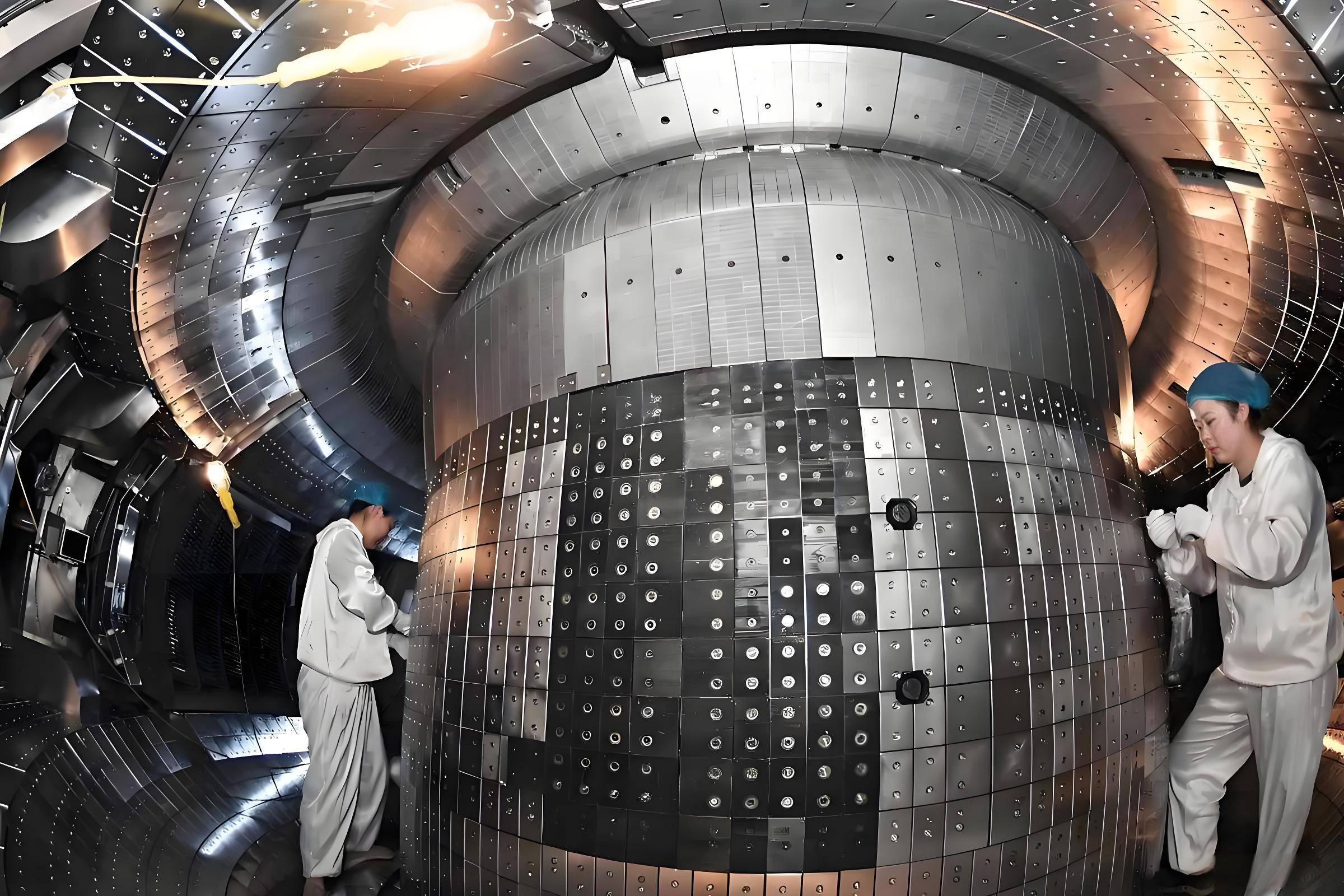

Abstract
There is no superconductor in your phone, and none in your car either. More than 110 years after the discovery of the physics marvel of "zero electrical resistance," its commercial footprint remains almost entirely compressed into the dewar flasks of hospital MRI machines — and even that is superconductivity's low-temperature cousin. True high-temperature superconductivity generates, across the whole country, only a single-digit multiple of RMB 100 million (i.e., under RMB 1 billion) in tape revenue per year. But after 2025, things changed: the purchase orders for controlled nuclear fusion arrived. A single compact fusion device consumes roughly 10,000 kilometers of tape — more than thirty times the length used in the largest superconducting cable project built before it; cumulative financing raised by private fusion companies worldwide has reached USD 14.24 billion. This lays bare the true nature of the business: what it sells is not zero resistance, but certainty on the road to the fusion era — no one can say when the dream will be realized, but the orders paved toward that dream are hard cash.
The core judgments of this report:
- High-temperature superconductivity has an order book for the first time. 53.32% of Shanghai Superconductor's 2025 revenue came from customers within the Chinese Academy of Sciences system, while China Southern Power Grid — once its largest customer — has fallen out of the top five entirely: the primary engine of demand has switched from grid demonstration projects to fusion and big-science facilities, and the nature of the industry has changed from "policy-supported" to "device-calendar-driven."
- The real scale is small, and the growth-rate accounting is a mess. This report anchors its market-size figures to a single source throughout: per CCID Consulting, the global high-temperature superconducting materials market was RMB 790 million in 2024 (+77.3% YoY), forecast to reach RMB 10.5 billion by 2030; whenever a superconductor market figure of "tens of billions" or "hundreds of billions" of yuan appears, first ask whether it includes low-temperature superconductivity and whether it includes equipment — the scope gap can run as high as 30x.
- This time China is starting from the same line, not catching up. Of the only two tape makers worldwide with annual production at the thousand-kilometer level (12mm gauge), one is in Shanghai; the three choke-point segments — Hastelloy substrate, target material, and coating equipment — have each achieved a domestic breakthrough around 2025; "the world lacks a complete supplier base for the equipment set" means the barrier to entry belongs to every early mover alike.
- The gap between concept and delivered performance is one of the industry's biggest risks. On the same day in January 2026 that the fusion-concept index jumped 4.97%, three companies — Etern, Lianchuang, and Techmation — issued clarification announcements; Western Superconducting Technologies's entire RMB 1.599 billion in superconductor revenue is low-temperature superconductivity, and Lianchuang Optoelectronics holds only a 40% stake in Lianchuang Superconductor, whose underlying business is loss-making — most companies with "superconductor" in their name do not actually make money from superconductivity.
- The policy calendar is the demand calendar. The Atomic Energy Law took effect on January 15, 2026, with "fusion" entering national law for the first time; BEST is targeted for completion by the end of 2027, and HL-4 is aiming for completion by 2030 — over the next five years, every valuation reset in this industry will line up with a specific engineering milestone.
Key data at a glance: in 2024, global tape supply and demand came in at 3,400/3,100 km (12mm gauge), a shortfall of 300 km; domestic winning-tender prices have fallen from about RMB 300/meter to RMB 100–180/meter, with Shanghai Superconductor's unit cost down to RMB 74.22/meter (2025); cumulative power delivered by Shanghai's Xuhui 35kV superconducting cable stood at nearly 760 million kWh after four years in operation; China's import dependency for helium is about 83%–85%, while liquid nitrogen costs roughly RMB 1,000 per tonne — "the price gap between liquid nitrogen and liquid helium" is precisely the foundation of the entire economics of high-temperature superconductivity.
Chapter 1: High-Temperature Superconductivity: An Industrialization Dictionary for a Physics Marvel
For a physical phenomenon to travel the full distance from laboratory to production line, it often takes decades before the terminology settles into consensus. High-temperature superconductivity sits right in the middle of that journey — the "new materials revolution" spoken of in the media, the "fusion concept stocks" described in research reports, and the Tc, Ic, and REBCO scrawled in engineers' notebooks often are not talking about the same thing. This chapter does not discuss market size or list companies; it does just one thing: pin down the handful of basic concepts this industry runs on, especially the two points that recur throughout the report and are the easiest to misstep on — exactly what "high" temperature is measured against, and how the same tape, counted a different way, can yield capacity figures that differ two- or threefold. Once this dictionary is read through, every number in the chapters that follow will stand on solid ground.
1.1 The Physical Definition of the Superconducting State: Zero Resistance, the Meissner Effect, and Two Engineering Parameters
The core definition of superconductivity is brief: when a material's temperature drops below a certain critical value, its electrical resistance suddenly drops to zero, and at the same time the material expels the magnetic field from its interior entirely — the latter property is called the Meissner effect, or perfect diamagnetism. Neither condition alone is sufficient: zero resistance alone does not qualify as superconductivity — an extremely pure conventional conductor will also see its resistance approach zero at extremely low temperatures, yet it will not repel an external magnetic field; diamagnetism alone is not sufficient either — ordinary diamagnetic materials repel magnetic fields far more weakly than the perfect diamagnetism of a superconductor. In 1911, Onnes of Leiden University in the Netherlands cooled mercury to around 4.2K (the boiling point of liquid helium) and, for the first time, observed its resistance vanish — this chain of materials discoveries has continued for more than a century since; the detailed timeline is left to Chapter 2, and Chapter 1 need only fix one coordinate: superconductivity was first observed at a temperature extremely close to absolute zero, using liquid helium as the cooling medium.
What actually determines, from an engineering standpoint, whether a superconducting material can be used is not the qualitative description of zero resistance, but two measurable, quantified indicators. Critical temperature (Tc) is the upper temperature limit at which a material reverts from the superconducting state to the normal state — above Tc, the superconducting properties disappear altogether, and this is the first threshold in materials selection; critical current (Ic) is the maximum current a material can carry while remaining in the superconducting state — once Ic is exceeded, the material will locally or entirely exit the superconducting state even if the temperature is still below Tc, an event engineers call a quench. A material with a very high Tc has no industrial value if its Ic is too low to carry a meaningful current; conversely, however high its Ic, once the operating temperature approaches Tc, the material's tolerance for temperature fluctuation drops sharply. To judge whether a superconducting material can support a magnet or a cable, Tc and Ic must be examined together — either one alone is only half the answer.
From a microscopic standpoint, the behavior of most low-temperature superconductors can be explained reasonably well using the "electron pairing" picture: at a sufficiently low temperature, electrons overcome their mutual repulsion and pair up into Cooper pairs; the collective motion of Cooper pairs is no longer disrupted by lattice scattering, and resistance vanishes as a result — this mechanism works quite well for metal alloys such as niobium-titanium and niobium-tin, and also explains why their Tc cannot be pushed higher: the energy scale required for electron pairing is inherently small. High-temperature superconductors, especially the cuprate family, do not follow this path: the experimental data is abundant, but the theoretical physics community still has no textbook-level unified mechanism explaining why they can sustain a superconducting state at temperatures far above those of metal alloys. This is also why the search for high-temperature superconducting materials has long relied on experimental trial and error rather than theoretical prediction, and why its industrialization pace is naturally much slower than that of low-temperature superconductivity, which can be pursued by design.
The Meissner effect also has a real-world caveat worth clarifying. In theory, once the magnetic field strength on a perfectly diamagnetic superconductor exceeds a certain threshold, the superconducting state collapses entirely — materials of this kind are called Type-I superconductors, and putting them into a magnet is pointless, because a magnet by its very nature must operate in a strong-field environment. Every superconducting material with engineering value today, including both the low-temperature alloys and the high-temperature ceramics discussed throughout this report, is a Type-II superconductor: the magnetic field can partially penetrate the material's interior in the form of quantized flux lines, and as long as these flux lines are pinned by defects inside the material and cannot move freely, the superconductor can still maintain zero resistance and carry large currents in a strong magnetic field. The stronger the pinning capability, the higher the field and current a material can withstand — which is also why, when later chapters discuss magnet performance, pinning capability, alongside Tc and Ic, is often the hidden threshold that determines whether a material can truly be used in a magnet.
1.2 The Reference Frame for "High": Benchmarked Against Liquid Helium, with 77K as the Industrial Watershed
The "high" in high-temperature superconductivity is a purely relative term, benchmarked against liquid helium, not room temperature. In everyday language, "high temperature" means several tens of degrees Celsius or above; the Tc of high-temperature superconductors, however, is generally around minus one or two hundred degrees Celsius — in Kelvin (K) terms, engineering practice generally classifies superconductors with a Tc above 25K to 30K as high-temperature superconductors, and this threshold itself is only "high" relative to the superconductors discovered earlier (with a Tc generally below 10K to 20K). The watershed that truly determines this industry's economics is neither 25K nor 30K, but 77K — the boiling point of liquid nitrogen.
The significance of this watershed lies not in physics, but in cost. Helium is a scarce gas resource, with globally concentrated supply and high extraction and transport costs, and it is also subject to geopolitical supply swings; nitrogen is liquefied from the most abundant component of air, its production process is mature, and its price has stayed within roughly RMB 1,000 per tonne for years. If a superconducting material's Tc can stably exceed 77K, the cooling system can switch from an expensive, hard-to-maintain liquid-helium dewar to liquid-nitrogen immersion or a mechanical cryocooler operating in the liquid-nitrogen temperature range — cooling costs can fall by more than an order of magnitude, and system complexity and operating thresholds drop in tandem. Conversely, no matter how excellent its performance, a superconductor with a Tc below 77K must remain tethered to liquid helium, and the cost and maintenance burden of its cooling system will keep the application's radius of expansion permanently constrained. This is precisely why high-temperature superconductivity, despite not sounding all that "high," is still solemnly classified, tabulated, and funded as a category of its own by the industry — the line it crosses is not a physical threshold, but a cost threshold. This 77K line is the true starting point of the entire industrial logic of high-temperature superconductivity: first comes the economics of replacing liquid helium with liquid nitrogen, and only then the materials R&D, equipment manufacturing, and downstream applications built around that economics.
The 77K line brings more than cost savings — it also changes where the system can be placed. Liquid-helium systems typically require purpose-built cryogenic laboratories and well-shielded dewar systems, and transport, filling, and replenishment all impose demanding operating conditions, which is why low-temperature superconducting equipment has long been confined to settings such as hospitals and laboratories that can support a dedicated cryogenic-operations team. The liquid-nitrogen temperature range is different: it can use open liquid-nitrogen immersion, or pair with a relatively compact mechanical cryocooler for closed-loop cooling, which markedly lowers the operating threshold, making it possible for equipment to leave the laboratory and be installed in substations, factory floors, and even field fusion experimental facilities. In other words, before crossing the 77K threshold, high-temperature superconductivity was merely a physics term; after crossing it, it qualified for the first time as a material engineers could actually choose to use, rather than a rarity to be admired from a distance.
1.3 Two Sides of the Temperature Divide: The Materials Map of Low-Temperature vs. High-Temperature Superconductivity
Cut along this 77K line, superconducting materials split into two camps of very different character.
Low-temperature superconductivity (LTS) is a family of metal alloys, represented by niobium-titanium alloy (NbTi) and niobium-tin (Nb₃Sn). Both have a Tc around 10K and must rely on liquid-helium cooling, but they win out on process maturity — LTS materials can be drawn into wire and wound into coils just like ordinary metals, with good machinability and stable current-carrying capacity; decades of accumulated engineering experience have let it dominate medical and scientific magnet markets such as magnetic resonance imaging (MRI) and nuclear magnetic resonance spectroscopy (NMR), and it is also the established choice for the magnet systems of big-science engineering projects such as the International Thermonuclear Experimental Reactor (ITER). Whenever you see a claim today that superconducting magnets are already commercialized at scale, it is, more often than not, LTS doing the heavy lifting behind the scenes, not the high-temperature superconductivity this report focuses on — this is the single easiest mix-up to fall into across the whole report, and whenever market size comes up later, one must first confirm whether the figure covers LTS or HTS.
The materials family tree of high-temperature superconductivity (HTS) is far more complex, and mostly consists not of traditional metal alloys but of ceramic compounds. The mainstay is the cuprate family — yttrium barium copper oxide (YBCO), bismuth strontium calcium copper oxide (BSCCO), and mercury-based compounds all belong to this broad class, with a Tc generally above 90K; the mercury-based compounds set a record of 133K to 138K at ambient pressure, which has never been surpassed. Beyond the cuprates, there are two comparatively younger branches: magnesium diboride (MgB₂), with a Tc of about 39K, which barely clears the threshold to count as a typical high-temperature superconductor but is viewed as a potential low-cost route because it is a simple binary compound with cheap raw materials; and iron-based superconductors, with a Tc of up to about 56K, a younger materials family whose industrialization is further behind. Both MgB₂ and iron-based superconductors remain at an early stage of industrialization validation; Chapter 9 expands on the technical progress and limitations of each, and Chapter 1 need only note that these three branches together make up the HTS materials map.
Beyond the materials map, there is another equally critical difference in properties. Low-temperature superconducting materials are typical metal alloys, with a crystal structure that is broadly uniform in every direction and machining properties close to ordinary metal wire. The mainstay of high-temperature superconductivity — the cuprates — has a layered crystal structure, in which superconducting current flows smoothly almost only along a particular crystal-plane direction, while current-carrying capacity in the perpendicular direction is one to two orders of magnitude weaker — a property materials science calls anisotropy. This means that even a dense bulk piece of cuprate material may not conduct current at all unless the grains are aligned in a specific orientation (known in the industry as texturing), which is what actually unlocks its current-carrying capacity.
The ceramic nature of cuprate materials brings a direct engineering consequence as well: they are hard and brittle, and cannot be drawn directly into wire or wound into coils the way metal can. Anisotropy demands oriented grain alignment, while brittleness rules out mechanical drawing — stacked together, these two constraints leave high-temperature superconducting materials no choice but to bypass the well-worn path of alloy wire and find an entirely different way to be turned into a practical conductor, which is exactly the subject of the tape family covered in the next section.
1.4 From Powder-in-Tube to Thin-Film Stacks: The 1G/2G Tape Family and the Width-Convention Trap
Ceramic materials are brittle and cannot be drawn into wire, and the industry's answer has been to encase the superconducting material in metal, or to coat it onto the surface of a metal substrate — these two approaches correspond respectively to first-generation (1G) and second-generation (2G) tape.
First-generation (1G) tape uses the powder-in-tube method: BSCCO powder is packed into silver tubes, then repeatedly drawn, rolled, and heat-treated, ultimately producing a tape in which superconducting filaments are encased in silver. This route is relatively simple and emerged early, but it has one cost flaw that cannot be fixed — silver accounts for more than half of the tape's cross-section. Silver is a precious metal, and the more of it is used, the harder it is to bring down the material cost per unit length — this is the fundamental reason 1G tape has been gradually marginalized over the past decade or more, leaving only scattered applications today; it is not that the technology fails, but that the economics simply do not work out.
Second-generation (2G) tape is the industry's absolute protagonist today, and its technical route is entirely different: rather than encasing, it coats. A superconducting layer of micron-scale thickness is deposited in sequence onto a textured alloy substrate, with a protective layer and a stabilizer layer wrapped around the outside — in essence a multilayer composite thin-film material, collectively known in the industry as REBCO coated conductor, where REBCO refers to the rare-earth—barium—copper—oxide system, of which YBCO is the most common specific formulation. Thin-film deposition relies on precision coating processes, and several technical routes coexist in the industry — ion-beam-assisted deposition (IBAD), pulsed laser deposition (PLD), metal-organic chemical vapor deposition (MOCVD), and metal-organic deposition (MOD) — with different manufacturers choosing different combinations; the details of each route are compared in Chapter 9. Chapter 1 need only establish one fact: 2G tape replaces the thick layer of silver in 1G tape with an extremely thin superconducting layer, sharply cutting the silver content, and its performance ceiling is also far higher than 1G's — this is the fundamental reason 2G has been able to overtake 1G as the industry's mainstream.
Putting the two generations side by side, the differences across the family tree can be summarized in a few points:
- Structural approach: first generation relies on silver tubes encasing superconducting powder — "encasing"; second generation relies on multilayer thin films deposited in sequence — "coating"
- Precious-metal share: first generation is more than half silver; second generation's thin-film process sharply cuts the precious-metal share
- Current-carrying density: second-generation thin film's critical current density (Jc, i.e. the critical current a unit cross-section can carry) is significantly higher than first generation's, so the same cross-section can carry a larger current
- Industry status: first generation has been marginalized, with only scattered applications left; second generation is the absolute mainstay of current and future capacity expansion
This comparison also flags a commonsense point that is easy to overlook: a tape's performance ultimately comes down to the unitized metric of critical current density, not a vague description of "what material was used" — even among REBCO coated conductors, differences in deposition process and defect control across manufacturers can make Jc differ several-fold; the detailed route comparison is left to Chapter 9.
2G tape also has a pitfall that is very easy to overlook, yet runs through the data in this entire report: tape is produced in bulk, wound onto a substrate, and different manufacturers are accustomed to reporting output and capacity against different original width conventions — some count in terms of finished tape 12 millimeters wide, others in terms of 4 millimeters wide. On the very same production line, switching the width convention used to report the numbers can make the capacity figure differ by two- to threefold; comparing two companies side by side without converting first will wrongly place two enterprises of utterly mismatched capacity scale into the same order of magnitude. Wherever this report makes side-by-side comparisons of tape output or capacity later on, it will clearly note the width convention and convert accordingly — this is the second trap, after the high-temperature/low-temperature distinction, that must be sidestepped to make sense of this industry's numbers.
1.5 The Overall Industry-Chain Map: The Value Chain at the Two Ends of a Piece of Tape
Placing the materials family tree and the tape family tree back into the industry chain, high-temperature superconductivity forms a classic dumbbell-shaped structure: highly concentrated upstream, an extremely narrow midstream, and an extremely fragmented downstream.
Upstream is a combination of materials and equipment: alloy substrate — the mainstream choice is Hastelloy, a high-strength, corrosion-resistant nickel-based alloy that provides mechanical support and a texturing template for the superconducting thin film; target material used for thin-film deposition; and a full set of coating equipment that is expensive and has a long lead time. Together, these three form the technical and capital threshold that must be crossed before 2G tape can be mass-produced — and they are the upstream segment that Chapter 5 dissects in detail.
Midstream is the manufacturing of the tape itself — turning upstream raw materials into finished REBCO coated conductor through a precision deposition process. This is the single link in the entire chain with the highest technical density and the fewest companies; Chapter 6 goes through the competitive landscape company by company.
The two ends of this dumbbell carry unequal weight. Upstream materials and equipment come in only a few varieties, yet form a checkpoint dense in both capital and technology — not something money alone can bypass; the midstream manufacturing segment is highly specialized in process, with only a handful of manufacturers worldwide capable of mass production at scale, yet it absorbs the most intense technical and capital contest in the whole chain — viewed by physical thickness, the coating that actually does the superconducting work accounts for only a small fraction of the tape's total thickness, with the rest mostly ordinary metal; and it is precisely this thin layer that determines both the tape's unit price and its performance ceiling, which is also why the technical and capital density of the tape-manufacturing segment far exceeds its share of physical volume — the layer-by-layer composition is dissected in detail in Chapter 5.
Downstream applications are spread broadly, falling roughly into four categories:
- Fusion magnets — the fastest-growing demand scenario at present
- Power transmission and distribution — equipment such as superconducting cables and fault current limiters, substituting for conventional copper-cable or circuit-breaker solutions
- Industrial applications — induction heating, magnetic-field-controlled Czochralski crystal-growth furnaces, and the like, using strong-field properties to remake traditional heat-treatment and crystal-growth processes
- Research and medical magnets — scenarios such as high-field NMR and particle accelerators that demand extreme field strength, one of the earliest application outlets for high-temperature superconducting materials
The four downstream categories place very different demands on tape performance: fusion magnets chase the ultimate in current-carrying capacity and radiation tolerance, power applications prize long-distance uniformity and cost, industrial scenarios demand durability and stability, and research magnets are most sensitive to the field-strength ceiling — the very same piece of tape is judged by an entirely different standard depending on which downstream buyer it is sold to. This is also why, after this overall industry-chain map, the report proceeds to unpack each downstream scenario separately rather than speaking of "the market" in the aggregate.
Chapter 2: The Global Landscape: From Onnes to the Fusion Order Book
The global industrial history of high-temperature superconductivity can be compressed into three sentences: physicists spent seventy-five years pushing superconductivity's critical temperature from the liquid-helium range past the liquid-nitrogen line; engineers spent more than thirty years turning a ceramic as brittle as porcelain into kilometer-scale tape that can be wound into a magnet; and the group that wrote the first large order for all of this was a cluster of private fusion companies — by which time it was already the 2020s. This chapter unfolds in the same order: first tracing the discovery history and the Nobel-Prize thread, then unpacking the maze of conventions behind the global market-size figures, then examining overseas tape manufacturers one by one, and finally arriving at the order book of the private fusion sector, along with the capacity precedent left by ITER (the International Thermonuclear Experimental Reactor). China's companies and engineering projects are left to Chapters 4, 6, and 7; this chapter looks only at the world.
2.1 The Discovery History and the Nobel-Prize Thread: From 4.2K to the Liquid-Nitrogen Range
In 1911, Onnes of Leiden University in the Netherlands measured mercury's resistance vanishing completely at 4.2K (the boiling point of liquid helium), and superconductivity was thereby discovered; Onnes himself received the Nobel Prize in Physics in 1913. Over the following seventy-five years, superconductivity physics produced abundant results — the BCS theory and the Josephson effect each went on to win a Nobel Prize — but the critical temperature (Tc) of superconducting materials climbed extremely slowly: before 1986, the record still stood at only about 23K, cooling still had to rely on expensive and scarce liquid helium, and superconductivity had almost no commercial presence.
The turning point came in 1986. Bednorz and Müller of the IBM Zurich Research Laboratory discovered superconductivity with a Tc of about 35K in a lanthanum barium copper oxide ceramic, opening the cuprate era; the very next year, the two won the 1987 Nobel Prize in Physics — only a year between discovery and award, a rarity in Nobel history, and a measure of how much the discovery shook the academic world at the time. In 1987, the team of Chu Ching-Wu and Wu Maw-Kuen produced yttrium barium copper oxide (YBCO) with a Tc of 93K, breaking through 77K (the boiling point of liquid nitrogen) for the first time; that same February, a team led by Zhao Zhongxian at the Chinese Academy of Sciences independently discovered a superconductor in the liquid-nitrogen range, and Zhao Zhongxian later received China's Supreme Science and Technology Award for 2016. The engineering significance of breaking through 77K was detailed in Chapter 1 — the coolant switched from scarce liquid helium to cheap, readily available liquid nitrogen, and superconductivity acquired, for the first time, a cost structure that let it leave the laboratory; "high-temperature superconductivity" was established as an industrial concept from that point on.
The timeline that follows shifts into the expansion of the materials family. In 1988, the team of Hiroshi Maeda discovered bismuth strontium calcium copper oxide (BSCCO), which became the materials basis for first-generation (1G) silver-clad tape; in 1993, mercury-based cuprates pushed the ambient-pressure Tc record to 133–138K, a record that stands unbroken to this day — the ceiling on ambient-pressure critical temperature has not moved in more than thirty years. In 2001, the team of Jun Akimitsu discovered magnesium diboride (MgB₂, Tc of 39K), offering a structurally simple, potentially low-cost bypass; in 2008, the team of Hideo Hosono discovered iron-based layered superconductors, whose Tc reaches as high as 56K, making it the second-largest high-temperature superconducting materials family after the cuprates.
As for the "room-temperature superconductivity" that surfaces in the media every few years, the part that is actually documented consists of high-pressure hydrides — hydrogen sulfide superconducting at 203K under 155 GPa, and lanthanum decahydride superconducting at 250K under 170 GPa — which can only exist inside a diamond anvil cell under pressures exceeding a million atmospheres, with no engineering significance whatsoever. This report treats high-pressure hydrides only as a footnote explaining why "room-temperature superconductivity" keeps making news, and does not factor them into any industrial discussion.
Rereading the timeline from an industrial perspective yields two conclusions worth remembering. First, thirty-some years separate the scientific dividend from the industrial one: the Nobel-Prize thread for high-temperature superconductivity stopped in 1987, while truly scaled commercial orders did not arrive until the 2020s — the reason is not that the material was hard to discover, but that ceramic materials are brittle and their grain boundaries are extremely sensitive to current, so the engineering difficulty of turning them into flexible, long-length tape far exceeds that of discovering the material in the first place; the process details are left to Chapter 9. Second, no breakthrough in ambient-pressure Tc has occurred since 1993, meaning the industry's list of materials has not changed in thirty years: rare-earth barium copper oxide (REBCO, the collective term for replacing the yttrium in YBCO with a rare earth such as gadolinium or europium), BSCCO, MgB₂, and iron-based superconductors — just these four cards. The axis of competition has therefore shifted from "discovering new materials" to "turning known materials into thousand-kilometer-scale industrial products" — the main battlefield has moved from the laboratory to the coating line, which is also the key to understanding the manufacturer landscape covered in the second half of this chapter.
2.2 The Maze of Market-Size Conventions: Where Does the Thirtyfold Gap Come From
Ask "how big is the global superconductor market" and you will get at least three answers of different orders of magnitude — and none of the three is wrong; the entire difference lies in the accounting convention. This report lays the three tiers of figures side by side below; this convention table is the prerequisite for understanding every scale figure in this report.
- Product convention (including low-temperature): per Conectus, the European Superconducting Industry Consortium, the global superconducting-product market was about EUR 6.8 billion in 2022, with low-temperature superconductivity accounting for more than 90%; under the same convention, the single largest commercial market is MRI (magnetic resonance imaging) magnets, at an annual scale exceeding EUR 3 billion (Conectus's official website does not label the statistical year).
- The international-consulting "superconductor / superconducting materials" convention: about USD 8.7 billion (IMARC, 2025) to USD 12.15 billion (Fortune Business Insights's "superconducting materials" convention, base year 2026), with low-temperature superconductivity's share above 80% in both (about 82% and more than 90%, respectively).
- The high-temperature superconducting materials convention: per CCID Consulting data (cited in the IPO prospectus of Shanghai Superconductor Technology Co., Ltd. — hereafter "Shanghai Superconductor"), the global high-temperature superconducting materials market (tape-dominated) was only RMB 790 million in 2024, up 77.3% year-on-year.
From EUR 6.8 billion to RMB 790 million, figures for the very same "superconductor market" can differ by more than 30x. There is no mystery to the reason: the first two tiers measure an established business overwhelmingly dominated by low-temperature superconductivity — MRI and NMR (nuclear magnetic resonance spectroscopy) magnets, high-field research magnets, accelerator coils — a market built up over forty years of commercialization; the last tier counts only high-temperature superconducting materials themselves, a segment that has only just gotten off the ground. Each of the three conventions is valid on its own terms; mixing them is where the accident happens — adding, averaging, or directly comparing a convention that includes device systems against a pure-materials convention is the single most common numerical error in this industry's analytical writing.
With the conventions pulled apart, three judgments can be read off.
- Low-temperature is the present; high-temperature is a futures contract. More than 90% of global superconductor revenue today comes from low-temperature superconductivity — in essence, MRI, a single killer application, feeds the entire industry chain. The global high-temperature superconducting materials market, at RMB 790 million a year, is small enough to be unremarkable within manufacturing at large, not even matching the annual revenue of a single mid-sized listed company — the commercial history of high-temperature superconductivity remains, to this day, thin in a way wholly disproportionate to its reputation in physics.
- But the slopes of the two curves run in opposite directions. The low-temperature market grows in step with the steady growth of the medical-imaging industry, while the high-temperature materials market grew 77.3% year-on-year in 2024; Conectus itself offers a qualitative judgment — that the mid-to-long-term scale of high-temperature superconductivity "will far exceed the existing low-temperature superconductivity business." Coming from a European industry consortium whose traditional core business is low-temperature superconductivity, this statement about its own ceiling carries more weight than any optimistic extrapolation from a consulting firm.
- Citation discipline: every scale figure must be tagged with the issuing institution and its statistical convention. This report follows that rule throughout and never averages across conventions — Chapter 4, in unpacking the China market, will show that the misdirection created by mixed conventions in Chinese-language discourse is, if anything, worse.
2.3 Overseas Tape Manufacturers, One by One: Two Tiers, Seven Profiles
Start with the overall picture on the supply side. There are roughly 15 second-generation high-temperature superconducting-tape manufacturers worldwide, with combined annual capacity exceeding 5,000 km (12mm-wide convention, per 2025 industry-paper sourcing). Capacity distribution is highly top-heavy: only two companies worldwide have annual output at the thousand-kilometer level (12mm convention) — Japan's Faraday Factory and China's Shanghai Superconductor; established overseas names such as SuperPower, Fujikura, THEVA, AMSC, and SuNAM produce tens to hundreds of kilometers a year and sit in the second tier (per Shanghai Superconductor's prospectus tiering convention); a third tier is still at the R&D and sampling stage. By deposition-technology route, the top four PLD (pulsed laser deposition) manufacturers together contribute more than half of global output. One somewhat counterintuitive fact: most of the "old guard" in the US, Japan, and Germany that have made tape for two or three decades remain stuck in the second tier, while both first-tier companies are latecomers that only ramped up in the 2010s, one of them fattened entirely on fusion orders. Company by company, below.
2.3.1 America's AMSC: Revenue Base Sits in Grid Equipment
American Superconductor (hereafter AMSC) is one of the oldest names in the industry, following the RABiTS+MOD route (rolling-assisted biaxially textured substrate plus metal-organic deposition), a branch distinct from the mainstream IBAD (ion-beam-assisted deposition) family. For the fiscal year ended March 2026, AMSC's revenue was USD 299 million, up 34.3% year-on-year — but this figure has almost nothing to do with the tape market: its revenue base is grid equipment (static VAR compensators, ship degaussing systems) and design licensing to wind-turbine manufacturers, with superconducting wire itself accounting for only a small share. Treating AMSC's revenue as evidence for the size of "the superconducting-tape market" is a high-frequency convention error in industry analysis, and this report does not cite it that way. AMSC's real sample value lies in its path: a company named after superconductivity ultimately built itself into a decent mid-sized enterprise on power electronics and defense-related business — superconducting tape alone could not sustain a listed company for two decades, and it was only when fusion orders appeared that the calculus began to shift.
2.3.2 Japan's Fujikura: Two Rounds of Expansion and an Equity Tie to CFS
Fujikura is currently the most aggressive expander among overseas manufacturers, having pursued the IBAD+PLD route since the 1990s. Starting in fiscal 2024, Fujikura has invested about JPY 6 billion in expansion, targeting capacity by fiscal 2027 at three to four times its original level; in February 2026, it added another JPY 5.6 billion, on top of which capacity is set to roughly double again, with the company describing the result as "world-class-largest" — Fujikura discloses only multiples, never absolute kilometer figures, which must be kept in mind for any side-by-side comparison. The demand-side commitment is even more notable: Fujikura has already delivered production-scale REBCO tape in bulk to Commonwealth Fusion Systems (hereafter CFS) of the United States; in September 2025, Fujikura joined NTT, Mitsui & Co., and Mitsubishi Corporation in the same round of CFS's USD 863 million Series B2 financing, moving from supplier to shareholder; in the supply chain for the UK's national STEP fusion program, Fujikura and its partners took 20 months to produce seven prototype high-temperature superconducting coils of different internal structures and completed data delivery. Material supply, equity ties, and engineering validation are all advancing on three fronts at once — Fujikura is replicating the positioning playbook Japanese companies have long used in the lithium-battery and display-panel supply chains.
2.3.3 SuperPower and Furukawa Electric: Where the First Kilometer-Scale Tape Ended Up
SuperPower is a landmark company in the technology's history: in 2007, it produced the world's first kilometer-scale REBCO tape (IBAD+MOCVD route, MOCVD being metal-organic chemical vapor deposition), pushing second-generation tape from laboratory sample to the threshold of an industrial product. After being fully acquired by Japan's Furukawa Electric in 2012, SuperPower became the US foothold of Furukawa's superconductivity business, with capacity remaining in the second tier at the tens-to-hundreds-of-kilometers level. On fusion ties, the Furukawa camp chose the UK's Tokamak Energy (hereafter Tokamak Energy): in January 2023 it signed to supply several hundred kilometers of tape for the ST80-HTS prototype device; in November 2024, Furukawa Electric also invested in a USD 125 million financing round for Tokamak Energy — supply plus an equity stake, the same playbook as Fujikura's with CFS. What is worth dwelling on is the time lag: the first kilometer-scale tape appeared in 2007, and it took the tape industry roughly fifteen years to find a real bulk buyer — "technically precocious, commercially late-blooming" describes the whole industry's first two decades.
2.3.4 Germany's THEVA: Tied to a Flagship Domestic Project
THEVA was founded in 1996, has about 60 employees, and follows the distinctive ISD route (inclined-substrate deposition). Though small in scale (second tier), its positioning is precise: the Munich SuperLink 110kV superconducting-cable project — which will be the world's longest superconducting cable once completed — is supplied by THEVA; in 2025 its production-run tape's current-carrying capacity rose 70%. THEVA represents the typical survival strategy of small and mid-sized European tape makers: rather than chasing capacity scale, tie to a flagship domestic project and let engineering orders fund technology iteration.
2.3.5 Bruker: Low-Temperature Cash Flow Funding a High-Temperature Position
Bruker is the only one of the seven to span both low- and high-temperature materials lines, an instrument giant whose high-temperature route is ABAD+PLD (alternating-beam-assisted deposition), with business covering MRI, NMR, proton therapy, and fusion. In December 2022, Bruker announced it had won a multi-year order for key magnetic-confinement fusion technology (amount undisclosed); in January 2026, it signed a combined roughly USD 500 million MRI superconducting-materials supply agreement with two global medical companies, one running as long as seven years — this large order is dominated by low-temperature superconductivity. Bruker's structural advantage is clear: it uses the mature cash flow of low-temperature superconductivity (MRI and NMR magnets) to fund its forward-looking high-temperature position, hedging both ways so it stays at the table no matter when the fusion era arrives.
2.3.6 Faraday Factory: A First-Tier Manufacturer Built by Fusion Orders
Faraday Factory Japan (hereafter FFJ) is a first-tier manufacturer built directly by fusion orders. The company's predecessor operated under the SuperOx brand (a Russian-founder team), with its current entity based in Kanagawa, Japan. As of April 2025, FFJ's cumulative deliveries of high-temperature superconducting tape to the fusion industry exceeded 7,000 km — the figure stood at more than 5,000 km as of September 2024, an increase of about 2,000 km in roughly half a year, showing a clear acceleration in deliveries; output has grown tenfold since 2020, with annual production now above 1,000 km (12mm-wide convention), placing it alongside Shanghai Superconductor as one of the only two in the first tier worldwide. Its customer list reads almost like the roster of the private fusion sector's leading names: CFS, Tokamak Energy, German stellarator company Proxima Fusion, and several Asian projects. Its approach to expansion is also worth noting: FFJ has formed an expansion partnership with America's Coherent — a leading supplier of excimer lasers — and excimer lasers are precisely the core light source of the PLD route, meaning a tape maker and an equipment maker are directly tied together, showing that the laser light source has become the equipment choke point for expansion in the PLD camp. FFJ's existence proves a judgment critical to the whole industry: fusion demand alone was enough to feed a tape maker all the way into the global first tier.
2.3.7 South Korea's SuNAM: A Proprietary Route and the Width-Convention Trap
SuNAM is known for its self-developed RCE-DR route (reactive co-evaporation with post-deposition reaction), which offers a fast deposition rate and is a technical branch unique to it worldwide. Its capacity figure needs particular caution: SuNAM self-reports capacity of 400 km/year, but that is measured on a 4mm-wide basis — converted to the industry-standard 12mm convention it comes to about 133 km/year, and it is also a self-reported 2020 capacity figure rather than actual output, which still places it in the second tier on the tiering table. The width convention is the first trap in any side-by-side comparison across the tape industry: two companies can both claim "several hundred kilometers" while one is measured in 4mm and the other in 12mm — a threefold gap. This report notes the width convention for every capacity or output figure throughout.
Having gone through all seven, the supply-side picture is clear: global combined capacity is a little over 5,000 km a year, with the leading single manufacturer only just past a thousand kilometers. And as the next section will show, a single SPARC device alone will consume roughly 10,000 km of tape — a single manufacturer's annual output is smaller than a single device's demand, and this supply-demand structure makes expansion not a choice but a necessity, which also explains why fusion companies have been racing to lock in tape makers with equity, prepayment, and long-term contracts. The industry's pecking order is being reshuffled by a single variable: whoever ties down a fusion order stays in the first tier.
2.4 The Private Fusion Sector: The Buyers on the Order Book
The overall ledger on the demand side is kept by the Fusion Industry Association (FIA). FIA's 2026 annual report shows: from July 2025 to July 2026, the global private fusion sector's annual financing was USD 4.48 billion, up 69% year-on-year; cumulative financing reached USD 14.24 billion; 56 fusion companies were surveyed, with the industry employing more than 16,000 people. In FIA's 2025 survey, 84% of companies believed fusion power could be on the grid before the end of the 2030s, and 53% believed it achievable by 2035 — it must be noted that the respondents are the fusion companies themselves, a self-reported convention that is naturally optimistic. But for the tape industry, what matters is not whether the power-generation timeline is ultimately met, but the procurement that must happen in order to validate that timeline: high-field magnets are one of the largest cost items in a fusion device, and once a device breaks ground, tape orders land. The dream is still on the road, but the purchase order has already been settled — that is exactly what "order book" means.
CFS is the number-one buyer on the order book. Its cumulative financing stands at USD 4 billion (with USD 1 billion added in July 2026), about three-tenths of the private fusion sector's global cumulative financing; its technical landmark was set in September 2021 — a joint demonstration with MIT of a 20-tesla (T), large-bore, all-REBCO toroidal-field model coil (TFMC) that alone used 267–270 km of tape, establishing the high-field, compact route from that point on. The SPARC device now under construction requires roughly 10,000 km of REBCO tape in total (CFS's own figure), with nearly 10,000 km already delivered; the device uses 18 toroidal field (TF) magnets, each with more than 300 km of tape, operating at a temperature below 20K and a field strength above 20T. Assembly of the SPARC machine is about 80% complete, with first-plasma targeted for late 2026 to early 2027; the next step, the ARC commercial power plant, is sited in Virginia, USA, with a net output of 400MW, targeted to connect to the grid in the early 2030s, and Google and Eni have already signed power-purchase agreements. For the tape industry, SPARC's significance exceeds any market forecast — the roughly 10,000 km figure is an actual delivered convention, not an estimate, which pins down the order of magnitude of tape demand for a single compact fusion device. In turn, "nearly 10,000 km already delivered" also marks the limit of the supply side: at a global combined capacity of a little over 5,000 km a year, a single device's consumption equals roughly two years of the entire tape industry running at full capacity. Fusion's pull on tape is not a forecast — it is a logistics record that has already happened.
The UK's Tokamak Energy has cumulative financing of USD 335 million, less than a tenth of CFS's scale, but a longer technical pedigree: its ST40 spherical tokamak achieved a 100-million-degree-Celsius ion temperature in 2022, the first time a private facility had done so. Tape for its next-generation ST80-HTS prototype has already been ordered from Furukawa Electric/SuperPower at several hundred kilometers, and the planned ST-E1 pilot plant targets a net output of 200MW in the early 2030s. Tokamak Energy's existence shows that tape demand is not tied to a single giant — the second- and third-ranked devices are also ordering at the "several hundred kilometers to start" scale.
Germany's Proxima Fusion (hereafter Proxima), spun out of the Max Planck Institute for Plasma Physics, follows not the tokamak but the stellarator route — designing a high-temperature superconducting quasi-isodynamic stellarator based on the scientific results of the W7-X device, and its "Stellaris" is the first peer-reviewed stellarator power-plant concept to integrate physics, engineering, and maintenance in one design. In June 2025, Proxima closed a EUR 130 million Series A round, at the time the largest private fusion round in Europe; in July 2026 it secured a further USD 518 million round (per FIA's annual-report convention). Its schedule: model coils for the stellarator built by 2027, with the Alpha device operating in 2031 and demonstrating an energy gain greater than 1. Its tape supplier is already locked in: a demonstration-magnet supply agreement signed with FFJ. Proxima's sample value lies in its route-agnosticism: the physical design of tokamaks and stellarators diverges sharply, yet their purchase orders are highly aligned — both need high-field magnets, both need REBCO tape. Whichever way the technical-route contest is settled, the tape makers are the ones who get paid.
Putting the buyers on a single table, the demand scale can be pinned down: a single compact fusion experimental device needs tape ranging from several thousand kilometers to more than 10,000 km (SPARC's actually-measured roughly 10,000 km is the hardest reference point), and future demonstration and commercial plants will reach the scale of tens of thousands of kilometers; and aside from devices such as ITER that use low-temperature or hybrid magnet designs, essentially all newly built tokamaks worldwide now choose high-temperature superconductivity (a qualitative brokerage-research convention). The numerator is a queue of devices at the 10,000-km scale; the denominator is a little over 5,000 km of global capacity a year — this division is the key to understanding the industry-wide expansion pace and tie-up behavior over the next five years.
2.5 The ITER Precedent: A Story of Tenfold Capacity in Low-Temperature Superconductivity
First, a correction of a high-frequency error: ITER is not a high-temperature superconductivity project. Its magnet system — Nb₃Sn for the toroidal-field coils and central solenoid, NbTi for the poloidal-field coils, correction coils, and feeders — is entirely low-temperature superconductivity, cooled by supercritical helium at the 4K level. Some media and research reports count ITER toward high-temperature superconductivity demand, which is a convention error; this report does not classify it that way anywhere.
But ITER holds another kind of precedent value for the high-temperature superconductivity industry: it demonstrated just how much a big-science project can pull up the global capacity of a superconducting material. Between 2008 and 2015, ITER procured about 500 tonnes of Nb₃Sn strand, totaling more than 100,000 km, split among nine suppliers across six member parties; before procurement began, global Nb₃Sn annual capacity was only about 15 tonnes — a single project pulled a material's global capacity up tenfold, and along the way spawned a cross-border supply system, unified acceptance standards, and several wire manufacturers that remain active today. Fusion's pull on REBCO tape today is structurally identical to ITER's pull on Nb₃Sn back then: a single buyer, an order several times larger than existing capacity, and long-cycle procurement conditioned on locking in the supply chain.
Beyond the structural parallel, two differences set the risk-reward profile of this round apart. First, the nature of the buyer: ITER is an intergovernmental project, with a stable budget logic and a schedule measured in decades; this round's buyers are mostly private companies, driven by capital-market logic on a schedule measured in years, with far higher delivery-speed demands than the ITER era — which is why this round's tape-expansion wave moves at a much more urgent pace than Nb₃Sn's did back then. Second, demand concentration: ITER is a single project with a clear endpoint, so the demand cliff after capacity was ramped up is a certain event; the private fusion sector is a portfolio of 56 companies, with the queue of devices rolling forward, and the demand curve is in theory smoother — but if the leading devices' timelines slip in unison, the swings will be more severe than for a government project too. The lesson of the ITER precedent cuts both ways: a large project truly can reshape a materials industry single-handedly; and capacity built up to meet a single source of demand also has its fate bound tightly to that demand — the risk dimension is developed in Chapter 10.
The global landscape sketched in this chapter can be folded into three sentences: the materials list has not changed in thirty years, and the competition is on the production line, not in the laboratory; market stock sits in low-temperature superconductivity while the increment sits in high-temperature, and the engine of that increment is the fusion order book; supply-side capacity tops out at a thousand kilometers per manufacturer while demand-side consumption per device reaches 10,000 km, and the gap dictates behavior. The chapters that follow turn the lens to China — first the environment made up of policy, capital, and public discourse, then China's market and China's companies' place on that same order book.
Chapter 3: The PEST Environment: Fusion Enters the Law Amid the Noise of Room-Temperature Superconductivity
Rarely has the external environment for the high-temperature superconductivity (HTS) industry changed as densely as it has between 2024 and 2026: on the policy front, "fusion" was written into national law; on the economic front, global private fusion financing grew by nearly 70% in a single year; on the social front, room-temperature superconductivity twice went viral and was twice debunked; on the technology front, the coating route has matured while iron-based wire has begun to emerge. This chapter uses the PEST framework to work through the four quadrants — Political, Economic, Social, and Technological — one by one, to answer a single question: why, of all times, has high-temperature superconductivity turned from a laboratory term into an industrial agenda right now.
3.1 The Political Environment: A Four-Level Jump in Status, from Ministry Documents to National Law
The wording of policy texts on superconductivity and fusion has climbed four rungs in a little over two years.
- January 2024: the Ministry of Industry and Information Technology and six other ministries issued the Implementation Opinions on Promoting Innovation and Development of Future Industries (MIIT Joint Science [2024] No. 12). Two passages in the full text bear directly on this industry: under frontier materials, "accelerate the innovative application of frontier new materials such as superconducting materials," and under future energy, "focus on key areas such as nuclear energy, nuclear fusion, hydrogen energy, and biomass energy, and build a full-chain future-energy equipment system covering 'collection–storage–transport–application.'" At this point superconductivity was filed under "materials" and nuclear fusion under "energy," two threads that had not yet merged in policy text.
- October 2025: the Fourth Plenary Session of the 20th CPC Central Committee adopted the Recommendations of the CPC Central Committee on Formulating the 15th Five-Year Plan for National Economic and Social Development, listing "hydrogen energy and nuclear fusion energy" alongside quantum technology, biomanufacturing, brain-computer interfaces, embodied intelligence, and sixth-generation mobile communications as new growth points to be deliberately cultivated. Nuclear fusion energy was upgraded from a "key area" in ministry documents to one of the six directions explicitly named by the Central Committee's planning recommendations.
- The Atomic Energy Law of the People's Republic of China was adopted by the Standing Committee of the National People's Congress on September 12, 2025, and took effect on January 15, 2026, explicitly stating that "the state encourages and supports scientific research and technology development in controlled thermonuclear fusion," and applies differentiated, categorized regulatory oversight to fusion fuel and fusion facilities — media reports describe this as "fusion" entering national law for the first time. In passing, this pins down a widely circulated error: some self-media accounts give an effective date a full year earlier than the statutory one; this report follows the date as published by the National People's Congress.
- The 2026 Government Work Report: per interpretations of the report, "future energy" was written into the Government Work Report for the first time, entering the cultivation list alongside future industries such as quantum technology and embodied intelligence.
From ministry implementation opinions (2024), to Central Committee planning recommendations (2025), to national law (adopted 2025, effective 2026), to the Government Work Report (2026), fusion-related language has completed a four-level jump in policy status, gaining roughly one level per year on average. For a technology direction with no commercial power plant yet, this pace of promotion is rare. The gap in status is not mere wordplay: ministry documents are revised on a rolling basis with the planning cycle, while law does not fluctuate with the administrative cycle. Fusion projects run from approval to power generation on a decade-plus timescale, and capital commitments span multiple planning cycles — "encourage and support" written into law and written into a document are two entirely different kinds of certainty for an investor.
The most substantive language in the Atomic Energy Law is "differentiated, categorized regulatory oversight." Fusion facilities do not carry the risk of an uncontrolled chain reaction in the sense a fission reactor does, nor do they produce long-lived, highly radioactive waste; if the siting, approval, and decommissioning framework built for fission nuclear facilities were applied wholesale, the licensing cycle alone would be enough to derail any commercialization timeline. Differentiated regulation amounts to a legal-level acknowledgment that fusion facilities are a new category of regulated object, opening up a predictable compliance pathway for commercial fusion. For upstream high-temperature superconducting tape, the law will not directly create a single meter of orders, but the institutional certainty lowers the risk premium on fusion projects — investors can now split "can the device be built" from "can the device get approved" into two separate questions, and for the second one, there is now a legal text to check for an answer for the first time.
At the local level, policy intensity tracks the distribution of devices, not the distribution of companies, with Shanghai, Anhui, and Sichuan forming a clear gradient.
- Shanghai: on October 11, 2025, the city issued the Several Measures on Accelerating the Promotion of Frontier Technology Innovation and Future Industry Cultivation, which mentions nuclear fusion in only one passage in the entire text — "accelerate the layout of fields such as quantum technology, controlled nuclear fusion, and regenerative medicine" — with no dedicated clause. The document's language is the lightest of the three, but Shanghai's moves on tape, private-sector devices, and national-team headquarters are anything but light; the industrial-geography details are developed in Chapter 7.
- Anhui (Hefei): policy intensity here is directly proportional to how deeply the devices are rooted locally. Hefei has planned a 23,000-mu fusion science-and-innovation demonstration zone; the Hefei Fusion Industry Alliance was upgraded in June 2025 into the Anhui Fusion Industry Federation, with more than 200 members; in November 2025, the Chinese Academy of Sciences led the launch of the international "Burning Plasma" scientific program in Hefei, with representatives from more than a dozen countries signing the Hefei Fusion Declaration. From industrial parks to industry associations to setting the international agenda, Hefei is the only one of the three cities running fusion as a city-level industrial strategy.
- Sichuan: in July 2025, the province listed controlled nuclear fusion in its provincial implementation plan for cultivating emerging and future industries; Chengdu's "Fusion Innovation City" industrial park broke ground in October 2025; that same month, the 30th IAEA Fusion Energy Conference (FEC30) was held in Chengdu — the highest-level conference in the global fusion community held in western China for the first time.
The rough division of labor among the three regions is: Hefei supplies the devices, Shanghai supplies the materials and capital, and Sichuan supplies a second pole and an international stage. Behind the gradient lies the same underlying rule — fusion policy is, at its core, big-science-project policy: wherever there is a device, there are policy resources, and supporting companies cluster around the device, not the other way around.
Policy heat is not landing out of thin air, either. Per the China Nuclear Energy Association's blue book: as of the end of 2025, China had 59 nuclear power units in operation with 62.48 GW of combined capacity; units in operation plus approved-and-under-construction totaled 112 units, about 125 GW, the largest such scale in the world. Nuclear fusion energy's entry into planning and into law sits atop the world's largest nuclear power engineering system — the regulatory bodies, engineering teams, equipment supply chain, and nuclear-safety culture are all already in place. Understanding why policymakers are willing to write a not-yet-commercialized technology into the list of growth points requires this nuclear-power base as background — to policymakers, fusion is not romance on a blank page, but the next stop on the nuclear-industry road already under construction.
3.2 The Economic Environment: Money Is Arriving Faster Than Revenue Is Growing
Fusion is currently the primary engine on the demand side of high-temperature superconductivity, so where fusion's money comes from determines the durability of tape orders. The financing environment needs to be viewed at both the global and domestic levels.
At the global level, the Fusion Industry Association (FIA) annual report is the reference: the 2026 report shows global private fusion enterprises' annual financing at USD 4.48 billion, up 69% year-on-year, with cumulative financing reaching USD 14.24 billion, 56 companies surveyed, and the industry employing more than 16,000 people. A near-70% annual growth rate shows capital inflow is still accelerating rather than receding. The structure is highly concentrated: America's CFS (Commonwealth Fusion Systems) alone has cumulative financing of USD 4 billion, about three-tenths of the global cumulative figure — fusion financing is not spread thin; the leading device pulls in the bulk, and the Matthew-effect concentration on the financing leaderboard translates directly into concentration in tape procurement. Timelines should be discounted: in FIA's 2025 survey, 84% of companies believed fusion power could be on the grid before the end of the 2030s, and 53% before 2035 — the respondents are the fusion companies themselves, a convention that is naturally optimistic, useful only as a thermometer for industry sentiment, not as an engineering judgment.
At the domestic level: in the first half of 2026, total financing for domestic fusion companies exceeded RMB 7 billion (per market-institution statistics, as relayed by CCTV Finance). A comparable public data point: Startorus Fusion completed a RMB 1 billion Series A round in January 2026 and a further RMB 500 million Series A+ round in May, for cumulative financing of more than RMB 2 billion. What order of magnitude is RMB 7 billion in half a year? Chapter 4 will give the nationwide annual actual sales scale for "genuine high-temperature superconducting tape" — a single-digit number of RMB 100 million. Half a year of fusion financing is worth about a decade of the entire tape industry's revenue.
Money arriving ahead of revenue is normal for any future industry, but fusion's peculiarity is that its revenue-realization point is unusually distant: terminal commercialization (fusion power reaching the grid) is still a decade or more away, with no gradual revenue steps along the way. Capital, over this long wait, relies heavily on milestone events to sustain confidence — device discharge, magnet excitation, ignition timelines — with every node's fulfillment or slippage amplified by the financing market. The risk-transmission chain for tape manufacturers is thereby altered: the money downstream customers use to buy tape is equity-financing money, not electricity-revenue money; the continuity of procurement depends on how loose or tight the financing environment is, and the financing environment is in turn governed by macro variables such as interest rates and risk appetite. Tape orders may look like they come from an "energy revolution," but their actual volatility behaves more like a venture-capital cycle — watching the financing calendar is a better gauge of industry sentiment than watching the power-planning calendar.
The secondary market's response is faster and noisier still: on January 12, 2026, the Wind Nuclear Fusion Concept Index jumped 4.97% in a single day, and multiple listed companies issued clarification announcements the same period — the gap between concept heat and substantive revenue is dissected in detail in Chapter 10; here it is noted only as background atmosphere.
3.3 The Social Environment: The Noise, the Debunking, and One Red Line of Room-Temperature Superconductivity
Why does the public keep treating superconductivity as a technology that will "change the world tomorrow"? Zero resistance and magnetic levitation come with built-in visual spectacle, and the phrase "room-temperature superconductivity" buries the entire engineering threshold inside the headline — what the public hears is "superconductivity is about to enter daily life," and what it does not hear is the triple constraint of temperature, pressure, and current-carrying capacity. Serious recent research into high-pressure hydrides has, objectively, fed this illusion: the hydrogen sulfide system measured superconducting at 203K under 155 GPa of pressure, and the lanthanum hydride system at 250K under 170 GPa — conditions of over a million atmospheres achievable only in the microscopic samples of a diamond anvil cell, with no engineering significance whatsoever, but news headlines tend to keep only the temperature and drop the pressure, and the impression that "room-temperature superconductivity is just around the corner" hardens with each round of coverage. Since 2020, this accumulated expectation has twice detonated into public controversy.
The first thread is the chain of retractions from Ranga Dias's team at the University of Rochester.
- In October 2020, the Dias team published a "15°C room-temperature superconductivity" paper on carbonaceous sulfur hydride on the cover of Nature, briefly hailed as a milestone; in September 2022, the paper was retracted by Nature over data-processing issues.
- In March 2023, the same team published another paper claiming "near-ambient-pressure room-temperature superconductivity" in nitrogen-doped lutetium hydride, with sharply relaxed conditions; on November 7, 2023, that paper was retracted by Nature as well, and in August of the same year, Physical Review Letters had already pulled one of the team's papers.
- By June 2024, Dias had a cumulative total of 5 retracted papers; an external university investigation confirmed data-reliability problems in his papers, and dismissal proceedings were initiated.
A researcher who twice made the cover of a top journal and was twice retracted, ending in a misconduct investigation — the lesson is clear: publication in a top journal is only the starting point of peer review, and independent replication is the real hard currency; no single-source "breakthrough" should ever be an input to an industrial judgment.
The second thread is LK-99, a level of virality unmatched in the century-long history of superconductivity.
- In late July 2023, a Korean team posted a claim of "ambient-pressure room-temperature superconductivity" for LK-99 (a copper-doped lead apatite system) on a preprint platform, setting off a global wave of replication attempts, with labs in multiple countries live-streaming their attempts, and the story spilled out of academia into a full-blown public event.
- Between August and September 2023, teams in multiple countries failed to replicate the result and offered mechanistic explanations: the sample's "partial levitation" traced to the ferromagnetic behavior of a cuprous sulfide (Cu₂S) impurity phase rather than a superconductor's Meissner effect, and the sharp resistance drop at around 380K matched a superionic phase transition in Cu₂S — both of the pieces of evidence that had raised hopes turned out to have far more mundane explanations.
- On December 13, 2023, the verification committee of the Korean Society of Superconductivity and Cryogenics issued a formal conclusion: no evidence supports LK-99 as an ambient-pressure room-temperature superconductor.
- The aftershocks did not settle quickly: in March 2024, researchers connected to LK-99 claimed at the American Physical Society annual meeting that a modified material, PCPOSOS, had ambient-pressure room-temperature superconductivity, without showing a physical sample on site; the following month, a video claiming "full levitation" was withdrawn, with the levitation acknowledged to have come from the Lorentz-force effect.
Taken together, the two threads lead to a single conclusion: as of this report's publication, no room-temperature superconductivity claim has ever received peer-reviewed confirmation and independent replication, and both waves of hype in 2023–2024 ended in debunking or retraction. This report's red-line position follows from that: no room-temperature superconductivity claim is used as a basis for any industrial judgment in this report; related information carries public-discourse-history value only.
Public discourse cuts both ways for the industry. On the positive side, the LK-99 episode delivered an inadvertent nationwide crash course in superconductivity, establishing the capital market's sensitivity to the word "superconductivity" — every rally in fusion-concept trading since 2025 has walked on the cognitive foundation laid in 2023. On the negative side, "superconductivity" has become linked in the public memory to "reversal" and "retraction," so genuine industrial progress has to spend extra effort proving it has nothing to do with the farce. The industrial reality is: the real high-temperature superconductivity business happens at 77K (the liquid-nitrogen range), not at room temperature; REBCO (rare-earth barium copper oxide) tape does not need room-temperature superconductivity to be real in order to win fusion-magnet procurement orders. Pinning the industry's prospects on a room-temperature breakthrough, and dismissing the whole industry as hype, make the same mistake — substituting public discourse for industrial fact.
3.4 The Technology Environment: A Maturing Route, an Open High-Field Ceiling, and Iron-Based Wire Emerging
The technology quadrant only points direction here; the systematic route comparison and the metrics framework are left to Chapter 9. There are three directions.
- The coating route is maturing. The mass-production bottleneck for second-generation REBCO coated conductor lies in uniformly depositing a micron-scale superconducting layer onto a metal substrate hundreds to thousands of meters long. Multiple technical routes — IBAD (ion-beam-assisted deposition) plus PLD (pulsed laser deposition), MOCVD (metal-organic chemical vapor deposition), and MOD (chemical solution deposition) — have all demonstrated mass-production evidence, with domestic leading tape makers each committed to a different route. The route contest has shifted from "which one can be made to work" to "whose cost curve falls faster" — a question of technical feasibility has converged into a question of engineering economics.
- NI (no-insulation) coils have opened up the high-field ceiling. REBCO tape's quench-propagation speed is slow, which disables the traditional voltage-detection protection method, and this once kept high-field magnets from daring to use it; NI coils bypass the problem with a self-protecting mechanism, and starting around 2019 have kept rewriting high-field magnet records, pushing fields above 20T from paper to experimental magnets and engineering prototypes — 20T-class fields happen to be exactly what compact fusion devices need. The engineering details of quench protection and joint technology are left to Chapter 9.
- Iron-based wire is emerging. The iron-based superconducting family, discovered in 2008, stayed in the laboratory for a long time; in December 2025, a domestic team produced the world's first kilometer-scale iron-based superconducting wire and tape, with a supporting hundred-kilometer-scale pilot line under construction in Beijing's Yizhuang district. If the iron-based route delivers on its cost potential, it will become a second industrialization path alongside REBCO, and it also constitutes a route-disruption variable for existing tape makers — the technical details are left to Chapter 9, and the risk assessment of the disruption scenario to Chapter 10.
The three directions point to the same judgment: the technical question for high-temperature superconductivity has shifted from "can it be made" to "can it be made cheap and used reliably." More than thirty years of accumulated materials science has, in the 2020s, landed exactly in phase with the fusion demand window — policy and capital are flooding in right at the inflection point where technical maturity is climbing from the laboratory toward mass production.
3.5 Summary: Four Quadrants Pointing at the Same Time Window
Laid side by side, the four quadrants line up in the same direction, unusually so.
- Political (P): fusion has completed a four-level jump in status in a little over two years, from ministry documents to national law; differentiated, categorized regulation opens a compliance pathway for commercial devices; the nuclear-power base supplies the engineering and regulatory parent body.
- Economic (E): global private fusion cumulative financing stands at USD 14.24 billion, growing 69% annually; domestic financing in half a year exceeded RMB 7 billion; capital is arriving far faster than industry revenue is forming, and tape-order volatility is tied to the financing cycle.
- Social (S): room-temperature superconductivity has gone through two rounds of hype and two rounds of debunking, pulling public awareness to a peak, and industrial judgment must be cut loose from public discourse — this report's red-line position is set down here.
- Technological (T): the coating route has matured, NI coils have opened up the high-field ceiling, and iron-based wire is emerging — technical questions have converged into questions of cost and engineering.
Policy supplies legitimacy, capital supplies ammunition, and public discourse supplies attention — alongside the noise that must be excluded — while technology supplies feasibility. The combined force of the external environment explains the judgment this report opened with: for the first time, high-temperature superconductivity has landed an order book for "selling certainty to a dream." As for how large the numbers on that order book actually are, and how far they sit from the concept's market valuation — the next chapter turns to the real-world measurement of the China market.
Chapter 4: China's Market Size and Operating State: Between Single-Digit Hundred-Millions in RMB and a Hundred-Billion-Yuan Fantasy
On China's high-temperature superconductivity, the hardest question to answer is not when the technology will mature, but how big this industry actually is right now. Lay several public reports side by side and you get a handful of figures that contradict each other, with the largest and smallest differing by nearly an order of magnitude; set these figures next to the audited revenue in corporate annual reports and prospectuses, and the gap widens further. The divergence does not come from anyone falsifying data — it comes from the ruler being used. In the superconductivity industry, four convention axes — materials vs. products, low-temperature vs. high-temperature, China vs. global, and corporate sales vs. industrial-park output value — cross each other in pairs, more than enough to generate a dozen-plus mutually incompatible "market sizes." This chapter does three things: first lay the rulers flat, then find this industry a floor that no convention can inflate, and finally explain why a single-digit-hundred-million in real sales, a ten-billion-yuan-scale forecast, and a secondary-market concept valuation can all hang under the same industry name at the same time.
4.1 Three Reports, Three Orders of Magnitude: Ask the Convention Before Reading the Number
Three research institutions each gave a superconductor market-size figure around 2025:
- CIC (China Insights Consultancy): China's superconducting-materials market at RMB 4.98 billion in 2023, RMB 6.58 billion in 2024, and a projected RMB 9.2 billion in 2025;
- Huajing Industry Research Institute: China's superconducting-materials market "already exceeded RMB 1.7 billion" in 2024;
- CCID: the global high-temperature superconducting materials market at RMB 790 million in 2024.
Put the three numbers side by side, and an absurd conclusion emerges: China's market would be eight times the size of the global market, and the two domestic institutions' estimates for the same country in the same year differ by nearly fourfold. No number is necessarily wrong — what's wrong is comparing them on the same axis. Pulled apart, the differences concentrate on three cuts.
The first cut runs between low-temperature and high-temperature — also the deepest cut. Low-temperature superconductivity (LTS, i.e., NbTi and Nb₃Sn) remains, to this day, the absolute mainstay of the commercial superconductor market; the MRI magnets in hospitals and the giant coils of ITER (the International Thermonuclear Experimental Reactor) both use it. Huajing's own structural breakdown offers a reference point: in China's 2024 superconducting-materials market, low-temperature superconductivity accounted for 58.3% and high-temperature for 31.2%. CCID's RMB 790 million is a narrow convention — purely high-temperature, dominated by second-generation tape; CIC's RMB 6.58 billion folds in the low-temperature bulk. Whenever a "superconductor market size" figure does not state whether it includes low-temperature, it should be read by default as including it, because once low-temperature is stripped out, what remains is smaller by an order of magnitude.
The second cut runs between materials and products. Under the convention of Conectus, the European Superconducting Industry Consortium, the global superconducting-product market was about EUR 6.8 billion in 2022, with low-temperature superconductivity accounting for more than 90%. The product convention measures deliverable finished systems and lengths — magnets, cables, fault current limiters — of which the material is only one layer; in the cost of a high-temperature superconducting cable, tape accounts for about half (per China Southern Power Grid's convention), with the other half made up of the low-temperature vessel, cooling system, terminal fittings, and installation work. An entire system-integration segment sits between the materials convention and the product convention, and a gap of an order of magnitude is the norm. International consulting firms likewise talk past one another: IMARC gives a 2025 global superconductor market of USD 8.7 billion, while Fortune Business Insights gives a 2026 figure of USD 12.15 billion under a "superconducting materials" convention, with both estimating low-temperature superconductivity's share above 80% (82% to more than 90%, across the two conventions).
The third cut runs between corporate sales and regional output value. Figures carrying labels like "industrial cluster scale" or "industrial-park output value" typically lump in equipment manufacturing, general engineering contracting, and even supporting services; they cannot be reconciled with any single company's revenue, nor set alongside other institutions' market-size figures, and this report does not credit them anywhere.
Beyond the three cuts, there is a more basic check: does a single report hold together internally? Huajing's RMB 1.7 billion total cannot be derived from its own stated high-temperature share and segment breakdowns — likely a transcription error somewhere along the reprinting chain. The correct response to an internally inconsistent source is to discount the whole document, not to cherry-pick whichever number happens to be convenient.
The reading method for this industry can therefore be fixed into a four-question checklist — before reading any superconductor market-size figure, first ask:
- Is the geographic scope global or China?
- Does it include low-temperature superconductivity?
- Does it measure materials, or products including system integration?
- Is it corporate sales, or a broad convention such as cluster output value?
Once the four questions are answered, most of the mutually contradictory numbers fall into place on their own, and what looked like a "contradiction" in order of magnitude turns out to be a "division of labor." Every superconductor market-size figure must first be asked about its convention — in this industry, that is not caution, it is table stakes. Everywhere this report touches on scale hereafter, it will give both the issuing institution's name and its convention, presenting conflicting figures side by side rather than averaging or splitting the difference.
4.2 The Primary Anchor: RMB 790 Million for Global High-Temperature Superconducting Materials, and RMB 10.5 Billion by 2030
Among all the available conventions, this report anchors its scale figures throughout to a single set of CCID numbers: the global high-temperature superconducting materials market (tape-dominated) was RMB 790 million in 2024, up 77.3% year-on-year, projected to reach RMB 10.5 billion by 2030, a compound growth rate of 53.9% from 2024 to 2030. The reason for choosing it is not that it is the most authoritative, but that it is the narrowest — it counts only high-temperature superconducting materials themselves, excluding low-temperature superconductivity and excluding downstream equipment and engineering. The value of a narrow convention lies in its comparability: a figure counting only material sales revenue can be placed directly alongside a tape maker's operating revenue for arithmetic, whereas a product convention that includes system integration cannot be aligned with a single segment's corporate revenue.
CCID also gives a scenario breakdown for 2030: controlled nuclear fusion RMB 4.9 billion, superconducting cables RMB 1.99 billion, magnetic-field-controlled Czochralski (MCZ) crystal furnaces RMB 970 million, and superconducting induction heating RMB 300 million — about 47%, 19%, 9%, and 3% respectively. The four items together total RMB 8.16 billion, about 78% of the RMB 10.5 billion forecast, with the remaining roughly RMB 2.3 billion attributed to unlisted scenarios such as research magnets. This breakdown table is itself a bet: nearly half of the increment is wagered on a single scenario, controlled nuclear fusion — and to date, not a single fusion device has achieved commercial power output.
The RMB 790 million starting point is worth pausing on further. It means that, worldwide, all high-temperature superconducting materials sold in a year do not generate enough revenue to fund the capital expenditure for a single mid-sized, advanced manufacturing production line; over the same period, the global superconducting-product market including low-temperature, denominated in euros, is already tens of billions in scale — high-temperature superconductivity remains a rounding error within its own broader industry. Nor should the 77.3% year-on-year growth in 2024 be read the way one reads consumer-goods penetration rates — in a market whose total is only RMB 790 million, the annual growth rate is decided by the procurement timing of a handful of big-science projects; a single device's tender being moved up or delayed by half a year is enough to rewrite the entire year's industry growth rate. The smaller the scale, the more the curve looks like a staircase than a slope.
A separate named forecast, alongside CCID's, comes from CICC: in October 2023, CICC judged that by 2028 the global demand space for high-temperature superconducting tape could exceed RMB 10 billion. The two institutions point to time horizons two years apart, with different measurement methods and scenario assumptions. This report's treatment is to present both side by side, each tagged with its institution and publication date, taking neither the midpoint nor a compromise — in an industry driven by project rhythm rather than a penetration curve, averaging two forecasts yields neither a consensus nor a center, only a new number that no source stands behind.
It should also be noted that both RMB 790 million and RMB 10.5 billion are global conventions. China's role within them is not "a regional market" but the primary production base: dividing CCID's global-materials convention directly by corporate-revenue conventions, a single domestic tape maker's 2024 revenue already equaled nearly three-tenths of the global high-temperature superconducting materials market. This ratio is not precise enough to be citable on its own (the two conventions' statistical boundaries do not strictly overlap), but it is enough to establish one point — discussing China's high-temperature superconductivity market size and discussing the global high-temperature superconductivity market size are, in terms of order of magnitude, almost the same conversation.
4.3 The Floor Anchor: Working Backward from Audited Revenue to Real Industry Sales
A forecast convention can be chosen; a revenue convention cannot. The boundary of a market-size report is drawn by whoever wrote it, but revenue and segment revenue audited by accountants are not — that is this industry's one floor that no convention can inflate. Using the real revenue of listed and to-be-listed companies to work backward to actual industry sales is the second cornerstone of this chapter's methodology.
The best proxy variable is Shanghai Superconductor Technology Co., Ltd. (hereafter Shanghai Superconductor), which, in applying to list on the STAR Market, disclosed a complete series of revenue, production/sales, and pricing data, and remains in the review-and-inquiry stage as of this report's publication. Its operating revenue jumped from RMB 35.78 million in 2022 and RMB 83.34 million in 2023 to RMB 240 million in 2024 (up 187.4% year-on-year), and about RMB 307 million in 2025; net profit attributable to the parent went from -RMB 26.11 million and -RMB 3.91 million to a first-ever profit of RMB 72.9474 million in 2024, and about RMB 96 million in 2025. Second-generation tape contributed 97.8% of that revenue. Its domestic second-generation tape market share exceeded 80%, ranking first for three consecutive years from 2022 to 2024 (per a certification issued by the Shanghai New Materials Association in February 2025).
The arithmetic of working backward is short: RMB 307 million times 97.8% comes to about RMB 300 million in tape revenue; extrapolating from a market share of more than 80% puts the domestic annual second-generation tape sales total at a ceiling of about RMB 370 million. Bringing in the second and third tiers does not change the order of magnitude — Eastern Superconductor (60.9524%-controlled by Etern, SHA: 600105) does not break out its revenue separately, but Etern's own risk disclosure states that from January to September 2025, Eastern Superconductor's revenue accounted for less than 1% of the company's total and was loss-making; taking Etern's 2025 operating revenue of RMB 5.287 billion as the base, "less than 1%" caps the corresponding revenue at around RMB 50 million. Shangchuang Superconductor is a second-tier player, producing tens to hundreds of kilometers a year, with revenue not publicly disclosed.
Adding all three together, the nationwide annual sales scale of "genuine high-temperature superconducting tape" lands in the single-digit-hundred-million-RMB range. This is the single most important floor in this entire report: it does not come from a forecast, and it does not come from an institutional convention — it comes from accountant-signed financial statements and an association-issued market-share certification.
A footnote of scale comes from first-generation tape: Beijing Innova Superconductor Technology (InnoST), controlled by Benefo Electric (SHA: 600468), had superconducting-product revenue of about RMB 270,000 in 2024 and RMB 1.1198 million in 2025. First-generation BSCCO silver-clad tape has been marginalized because silver, taking up more than half its cross-section, keeps costs from coming down — a degree of marginalization that can be measured directly in two six-figure revenue numbers.
What truly needs guarding against are two conventions that are extremely easy to let slip in, and once they do, the industry's scale inflates several-fold in a single step.
The first is low-temperature superconductivity. Western Superconducting Technologies Co., Ltd. (SHA: 688122, hereafter WST) had superconducting-product revenue of RMB 1.599 billion in 2025, up 22.7% year-on-year — more than five times Shanghai Superconductor's entire annual revenue. But that RMB 1.599 billion comes entirely from low-temperature superconducting NbTi and Nb₃Sn wire and magnets; the company is the only one in the world with full-process NbTi capability, supplying ITER and MRI magnet makers, and is also supplying wire to Hefei's compact fusion energy experimental device (BEST); its 2025 total operating revenue was RMB 5.226 billion and net profit attributable to the parent about RMB 840 million, with its primary business still titanium alloys (57.59% of revenue). Fold this revenue into "the high-temperature superconducting market" and industry scale jumps fivefold in a single step, while in reality not a single extra meter of second-generation tape has been sold.
The second is segment naming. Etern's "superconducting and copper conductor" segment posted revenue of RMB 586 million in 2024 and RMB 360 million in the first half of 2025. The word "and" in the segment name is the whole key — conventional copper conductor and the superconducting business are filed in the same drawer, and superconductivity's own revenue is never broken out separately. Citing RMB 586 million as "superconducting revenue" directly contradicts the company's own disclosure that "Eastern Superconductor's revenue accounts for less than 1% of the total" — the two figures cannot both be true.
Add the two easily-mistaken conventions together and RMB 1.599 billion plus RMB 586 million comes to RMB 2.185 billion — just about enough to fill a large chunk of the gap between CCID's RMB 790 million and CIC's RMB 6.58 billion. Inflating an industry's scale usually requires no falsification at all — just pouring the contents of two different drawers into the same basket and giving the basket a new name.
4.4 Supply, Demand, and Price: A Downward-Sloping Price Curve Inside a Tight Balance
With a scale floor in hand, next comes operating condition. Per CCID's convention, converted to 12mm-wide tape, 2024 global high-temperature superconducting tape demand was about 3,400 km and output about 3,100 km, a shortfall of 300 km. The shortfall is about 9% of demand — a tight balance, not the "everyone's scrambling for tape" that is commonly assumed.
A tight balance should, in theory, mean firm pricing, but the actual curve has been heading down. Shanghai Superconductor's average tape selling price fell from RMB 359.77/meter in 2022 to RMB 330.31/meter in 2023 and RMB 241.08/meter in 2024, then rose back to RMB 279.16/meter in 2025. The cumulative four-year decline is about 22.4%, with 2024 alone down 27.0% — while the same year's operating revenue grew 187.4%, with volume growth completely offsetting the price decline.
The 15.8% single-year price rebound in 2025 is the figure in this chapter most likely to be misread. It is not a market-price increase, but a shift in product mix: the share of high-performance fusion-grade tape in the sales mix rose, pulling up the weighted average price. Reading it as "the industry has started raising prices" would lead naturally to a conclusion of "supply is tight, expansion is safe" — exactly the opposite direction. Whenever an average-price metric appears, always first confirm whether the product mix behind the numerator and denominator has changed.
The cost curve's slope is far steeper: unit cost fell from RMB 262/meter in 2022 to RMB 92.91/meter in 2024, and further to RMB 74.22/meter in 2025, a cumulative four-year decline of about 71.7%. With price down 22.4% and cost down 71.7%, the angle opening up between the two curves is gross margin: tape gross margin rose from 27.17% in 2022 to 61.46% in 2024, reaching 73.41% in 2025 (per the updated-prospectus convention).
The industrial implication of this pattern matters more than the numbers themselves. The current high margin comes not from pricing power, but from yield climbing and scale effects — cost is running faster than price, so margin is expanding. Once the cost curve flattens out (depreciation on coating equipment, and the purchase prices of rare-earth targets and Hastelloy substrate all have a hard floor), while expansion continues and competitors enter, price declines will start eating directly into margin. Judging this industry's earnings quality over the next two to three years is less about the absolute level of gross margin than about how much longer that scissors gap between the rate of price decline and the rate of cost decline can keep opening.
Another price line comes from public tenders. Per Zhiyan Consulting's convention, winning bid prices for domestic tape have already fallen from about RMB 300/meter to RMB 100–180/meter. This does not contradict Shanghai Superconductor's company-wide average of RMB 279.16/meter: what enters public tenders is mostly general-specification tape, where price competition is fully played out, while fusion-grade high-performance tape moves through custom development and long-term agreements, which do not enter this price band. Comparing prices and comparing market size are the same kind of exercise — without first asking "what tape, under what operating conditions, under what contract form," putting two numbers side by side can only produce the wrong conclusion.
The relationship between capacity and production/sales reveals another layer of risk. Shanghai Superconductor's 12mm-converted capacity rose from 438.67 km in 2023 to 1,333.67 km in 2024 and 2,829.33 km in 2025; 2024 output was 1,106.4 km, the first time domestic annual output broke through 1,000 km; the sales series ran 68.72, 228.22, 955.47, and 977.17 km from 2022 through 2025. Sales in 2025 grew only about 2% over 2024, while nominal capacity more than doubled, pulling nominal capacity utilization down to 41.71% (or 97.67% if calculated on a convention that includes semi-finished product).
Placing sales growth (about 2%) alongside revenue growth (about 28%) side by side, the gap comes mainly from the price rebound and product-mix upgrade — in 2025 this company did not sell more tape, it sold more expensive tape. For industry sentiment, "volume up, price down" and "volume flat, price up" are two entirely different signals: the former shows demand expanding in scale, the latter shows demand concentrated in a small number of high-value-added projects, with total volume not expanding in step. The 300 km shortfall in 2024 and the 41.71% nominal capacity utilization in 2025 are, in effect, describing the same stretch of time from opposite sides — the period in which capacity crossed over demand.
4.5 The Temperature Gap Between Three Layers of Numbers: Real Sales, Forecasts, and Pricing
Stacking this chapter's numbers by order of magnitude reveals three layers:
- The bottom layer is real sales: nationwide, genuine high-temperature superconducting tape's annual sales scale sits in the single-digit-hundred-million-RMB range, derived by working backward from audited revenue;
- The middle layer is forecasts: CCID puts global high-temperature superconducting materials at RMB 10.5 billion by 2030, and CICC puts the global tape demand space at potentially more than RMB 10 billion by 2028;
- The top layer is pricing: the secondary market's sector valuation under the nuclear-fusion concept — on January 12, 2026, the Wind Nuclear Fusion Concept Index jumped 4.97% in a single day, and Etern, Lianchuang Optoelectronics, and Techmation all issued clarification announcements in the same period.
From the bottom layer to the top, there are two steps of order of magnitude in between. Much of the value in researching this industry lies precisely in spelling out what stands on each step.
The first step is bridged by the pace at which fusion pays off. Of CCID's RMB 10.5 billion forecast, RMB 4.9 billion comes from controlled nuclear fusion — nearly half. This slice of demand does not materialize through rising penetration rates, but through the cumulative count of devices built: a single compact fusion experimental device needs tape ranging from several thousand kilometers to more than 10,000 km, and America's CFS SPARC machine needs about 10,000 km of REBCO tape in total, the hardest built reference point available. Against a base of global 2024 annual output of 3,100 km, a single SPARC-class device's consumption equals more than three years of the entire global output. This means the industry's growth curve is inherently a step function: a single device's construction decision landing can rewrite the entire global supply-demand table for a year; conversely, one node slipping and the RMB 10.5 billion path has to be redrawn. And in the currently public schedules, Hefei BEST's "completion by the end of 2027" and Shanghai's HL-4 "aiming for completion by 2030" are both targets, not facts — keeping every qualifying phrase intact is the honest way to read them.
The second step is bridged by convention illusions and a broken transmission chain. When the secondary market prices the "superconductivity concept," it typically references the broad-convention scale figures dissected in Section 4.1 and order announcements whose execution status is not noted — not segment revenue. Two pieces of hard evidence show the transmission chain is currently broken: Lianchuang Optoelectronics (SHA: 600363) holds only a 40% stake in Lianchuang Superconductor and does not consolidate it, and Lianchuang Superconductor posted a net loss of RMB 24.6453 million for fiscal year 2025; the company issued a clarification announcement on July 1, 2026, stating that its main business does not involve high-temperature superconductivity or controlled nuclear fusion. Etern, for its part, has disclosed on its own that Eastern Superconductor's revenue accounts for less than 1% of the total and is loss-making. A concept can be priced within a few trading days, while revenue has to pass through four gates — order, delivery, acceptance, and confirmation — before it lands on the financial statements, and the time lag and attrition between the two is precisely where most of the temperature gap comes from. From this, a general rule can be set: any order amount discussed in this report must be accompanied by its execution status, or it will not be adopted.
The third variable is expansion ramp-up, which determines how much longer the tight balance can hold. The leading manufacturers' plans, without exception, target the 10,000-km scale: Shanghai Superconductor's new Shanghai base carries total investment of RMB 2.5 billion and a planned capacity of no less than 15,000 km/year (still a plan, not yet delivered); Eastern Superconductor's announced 6,000 km/year figure is on a 4mm narrow-tape convention, converting to about 2,000 km on the 12mm basis, with a plan to double in 2026. Against 2024's global demand of 3,400 km, Shanghai Superconductor's planned capacity alone already equals more than four times that period's global demand. A tight balance is the state of the present, not a promise about the future — if fusion devices land at a pace slower than the production lines ramp up, the 300 km shortfall of 2024 could flip into a surplus within two or three years, and that is exactly where the door to a price war would open.
Finally, it is worth spelling out the current nature of this industry. The downstream demand structure for high-temperature superconducting materials in 2024 (per Zhiyan's compiled convention) was: controlled nuclear fusion 38%, scientific research 29.1%, cable 11.4%, magnetic-field-controlled Czochralski furnaces 7.2%, and other 14.1%. Controlled nuclear fusion and scientific research together account for nearly seventy percent. In other words, close to seventy percent of demand comes from big-science facilities and research projects backed by state fiscal spending and venture capital, not from industrial customers who are self-financing and making procurement decisions on a payback-period basis. The corporate-level evidence matches: Shanghai Superconductor's top five customers together accounted for 87.65% of its 2025 revenue, with its single largest customer — the Chinese Academy of Sciences system — alone accounting for 53.32% (RMB 163.6 million); meanwhile China Southern Power Grid, which accounted for 41.8% in 2022, had fallen out of the top five customers by the first half of 2025. The primary engine of demand has switched, within three years, from grid engineering to fusion and big-science facilities.
An industry fed by big-science facilities carries its risks and opportunities in a place the usual industrial-analysis framework does not reach. Judging its trajectory by sector market capitalization is meaningless, and judging it by scale forecasts has limited meaning too; the only three genuinely falsifiable observables are: the actual groundbreaking-and-delivery count of fusion devices, the direction of the scissors gap between tape unit price and unit cost, and the share of non-research customers within the downstream structure. A turn in any one of these three will signal change earlier than any forecast report can.
Chapter 5: Deconstructing the Industry Chain — A Tape That Is 98% Ordinary Metal
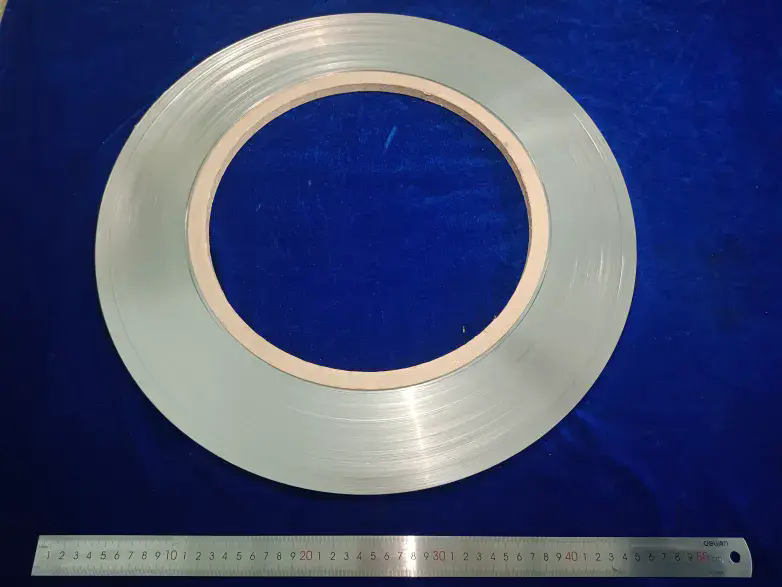
Hold a mass-produced second-generation (2G) high-temperature superconducting tape in your palm and it is hard to connect it with the phrase "strategic material": 12 mm wide, 65–95 μm in total thickness — comparable to the diameter of a human hair — silvery-white and pliable, wound on a spool like recording tape. Broken down by volume, it is almost entirely ordinary metal: nickel-based alloy, copper, plus a layer of silver so thin it is nearly decorative; the genuinely superconducting REBCO (rare-earth barium copper oxide) ceramic layer accounts for only about 1%. This chapter follows a single tape all the way down the industry chain: first dissecting the tape itself layer by layer, then taking stock of the upstream chokepoints and the paths to breaking them, looking back at why first-generation tape was eliminated, then walking over to the parallel chain of cryogenic support, and finally landing on the cost curve that runs through everything. There is only one question to answer: how can a product that is 98% ordinary metal have, to this day, only about 15 manufacturers worldwide capable of volume production — and where does China stand at each link of the chain?
5.1 Layer-by-Layer Anatomy: Five Layers and the 1.1% Ceramic
By the specifications of the leading domestic manufacturer's mass-produced product, a 2G tape has five layers from bottom to top:
- Hastelloy substrate, 30 or 50 μm thick — the mechanical backbone of the entire tape, providing strength, toughness, and heat resistance, and accounting for most of the thickness;
- Buffer layer, multiple oxide thin films totaling about 0.2 μm — on one side blocking substrate metal atoms from diffusing upward and contaminating the superconducting layer, on the other providing the ceramic with a lattice template of uniform orientation;
- REBCO superconducting layer, 1–2 μm — the only functional layer that actually carries current, roughly 1% of the tape's total thickness;
- Silver protective layer, about 2 μm — the only precious metal in the entire tape, sealing out air and moisture and serving as a low-resistance current bypass;
- Copper stabilizer layer, 5–20 μm per side — shunting current and carrying heat away at the instant of a quench, acting as the circuit's fuse and heat sink in one.
Measurements published in 2024 by a North China Electric Power University team in the Transactions of China Electrotechnical Society give the volume shares: Hastelloy 53.8%, copper 43%, silver 2.15%, and the REBCO superconducting layer just 1.1%. The three metals outside the superconducting layer together add up to roughly 99% — "a tape that is 98% ordinary metal" is not rhetoric; it is geometric fact.
The value structure is the exact inverse of the volume structure. By weight, the tape is a metal product; by function, that roughly 99% works entirely in service of the 1%: the substrate lends the ceramic its skeleton, the buffer layer makes its bed, the silver shields it from environmental attack, and the copper catches the current at the instant it quenches. REBCO ceramic is brittle, finicky, and mechanically weak — on its own it has no engineering value whatsoever. The entire design philosophy of 2G tape is to use the cheapest ordinary metals to wait upon the most delicate functional ceramic until it becomes an industrial product that can be wound into magnets and drawn into cables.
Just how delicate can be measured with a single angle: REBCO is a polycrystalline ceramic, and once the misorientation angle between adjacent grains exceeds 7°, the grain boundary essentially loses its current-carrying capacity — the superconducting current gets choked off by the material's own grain boundaries. A qualified superconducting layer must therefore be made "quasi-single-crystal": over kilometer lengths, grains numbering in the hundreds of millions must line up in the same direction like a parade formation, with orientation contested by the degree and thickness by the nanometer; and the deposition line that hosts this alignment process runs reel-to-reel continuous production, the substrate threading through the vacuum chamber at industrial cadence — atoms must settle into a uniform orientation on a moving substrate. Stretching single-crystal-grade order from "a small piece" to "one kilometer," compounded by the speed of continuous production, is this industry's real barrier: equipment can be imitated and recipes can leak, but the accumulated process know-how that "makes every micrometer of a kilometer of tape qualify" can be neither bought nor bypassed.
The other half of the barrier lies in testing and yield. The Shanghai 35kV superconducting cable project consumed nearly 280 km of tape; had the critical current been measured segment by segment using the methods then in general use, quality inspection alone was projected to take more than 4 years (per the project contractor) — which forced the development of rapid continuous testing technology. Every meter of a kilometer-scale product must be certified; testing capability is itself part of production capacity. The history of volume production is likewise brief: in 2017, the two Shanghai tape makers each had annual capacity below 100 km (per the project contractor's recollection); by 2024, the leading manufacturer's single-year sales had reached 955.47 km (12 mm basis, prospectus data) — a tenfold scale-up in seven years, achieved not by replicating production lines but by repeatedly refining the same process along three dimensions: equipment, targets, and testing. Globally, about 15 tape manufacturers have volume-production capability, with combined annual capacity of just over 5,000 km (12 mm basis, per a 2025 academic paper); the four on the PLD (pulsed laser deposition) route account for more than half of global output. For an industry whose product is 98% ordinary metal, the player list is short in a way materials industries rarely are.
5.2 Upstream Chokepoints: Turning Ordinary Materials into Scarce Ones
Before the item-by-item inventory, consider what the chokepoints have in common. Hastelloy is a corrosion-resistant alloy the chemical industry has used for decades; targets are pressed and sintered ceramic powder compacts; vacuum deposition is a mature industry; excimer lasers have long been mass-produced for lithography and medicine. Nothing upstream is scarce in the materials-science sense — the scarcity comes entirely from specifications: push common materials to extreme parameters that conventional industry never demands (0.046 mm thickness, surface roughness within 20 nm, kilometer-scale continuous uniformity), and the global supplier pool abruptly shrinks to one or two firms. The "chokehold" in high-temperature superconductivity is not a resource blockade but sole-source supply under extreme specifications; correspondingly, the way out is not to hunt for substitute resources but to push traditional processes — smelting, rolling, sintering — to their limits all over again.
5.2.1 Hastelloy Substrate: From Dependence on Haynes to Tonne-Scale Industrialization
Hastelloy C-276 was originally developed by Haynes International of the United States — the Chinese name "Ha-shi" is a transliteration of Haynes — and its corrosion resistance has carried it through chemical and marine engineering for decades; it is an off-the-shelf material through and through. The superconducting substrate pushed it off the shelf: it must be rolled down to 0.05 mm or even 0.046 mm, tolerate no breaks over kilometer lengths, and hold surface roughness under 20 nm — once the substrate is this thin, any inclusion or scratch propagates up through the buffer layer and is amplified into a defect in the superconducting layer. For a long time, only the Haynes system could supply it reliably worldwide; the "domestic substrates" of China's early years were in fact reprocessed imported cold-rolled coil (per industry interviews).
The breakthrough came in October 2025: the CAS Institute of Metal Research (IMR) achieved tonne-scale industrial production of high-purity C276, rolled to 0.046 mm × 12 mm with single-coil lengths over 2,000 meters, surface roughness below 20 nm, and carbon, manganese, sulfur, phosphorus, oxygen, and nitrogen impurity levels all lower than imported equivalents; tensile strength at 77K exceeds 1900 MPa, and after heating at 900 degrees Celsius for 5 minutes and cooling it still holds above 1200 MPa — strength and thermal stability benchmarked directly against the real operating conditions of reel-to-reel deposition. IMR promptly signed a 20-tonne supply framework agreement with Eastern Superconductor Technology (Suzhou) Co., Ltd. ("Eastern Superconductor") — the first volume order for domestic substrate; in mid-2026, Eastern Superconductor's controlling shareholder further announced that, jointly with IMR, it had completed volume production of 2,000-meter-class domestic substrate. What order of magnitude is 20 tonnes? A rough calculation at 0.05 mm thickness, 12 mm width, and nickel-alloy density puts one kilometer of substrate at about 5 kg, so 20 tonnes equates to substrate for roughly 4,000 km of tape — the same order of magnitude as the roughly 10,000 km of tape a single compact fusion experimental device requires. What the framework agreement locks in is not samples; it is capacity. The other path was cleared by Shanghai Superconductor Technology Co., Ltd. ("Shanghai Superconductor"): precision cold-rolled strip in partnership with TISCO Group, with the company stating that cumulative purchases of domestic substrate "have far surpassed imports." Taken together, the two paths show that substrate completed the leap from validation to volume around 2025.
5.2.2 Targets: After the 300th Came Off the Line
Deposition works by vaporizing the target with a high-energy beam into a plasma plume, which then recondenses into a film on the substrate — the target is the final form the raw material takes before entering the line, and its purity, density, and compositional uniformity are written verbatim into the film. Targets were previously imported mainly from Japan at about RMB 25,000 apiece, each coating roughly 3 km of tape; by rough calculation, imported targets alone deposited about RMB 8 of cost into every meter of tape — close to one-tenth of the leading manufacturer's 2024 unit production cost (RMB 92.91 per meter). Localization advanced on two fronts: Shanghai Superconductor's 300th self-made target came off the line, with the company claiming "localization of the entire materials system"; and the CAS Institute of Physics worked through powder and target fabrication. Targets and equipment do not carry the same weight — equipment is one-off capital expenditure, while targets are a flow cost consumed with every kilometer of tape; equipment dependence affects "whether you can expand," while target dependence presses directly on "the gross margin of every meter." Going from the 1st target to the 300th means self-made targets have graduated from laboratory samples to routine line consumables, and the corresponding cost reduction will keep settling into the cost curve.
5.2.3 Deposition Equipment and Light Sources: No Turnkey Line to Buy
Equipment is the hardest item upstream. Imported deposition equipment runs about RMB 12 million per unit with a lead time of about 2 years; more critical than the price is a verbatim line from Shanghai Superconductor's IPO inquiry response — "the industry's upstream lacks complete-equipment suppliers internationally." Thin films are made elsewhere too: the semiconductor industry can buy entire lines from equipment giants, and the photovoltaic industry can buy turnkey lines; the superconducting tape industry has no equivalent equipment shelf — to enter, the only road is to design, assemble, and commission your own deposition line. The leading manufacturer's answer was to grow its equipment department into half a company: Shanghai Superconductor developed and built its full PLD equipment suite in-house, with self-built vacuum deposition machines on its floor numbering in the dozens (per factory-visit reporting), and the ion source required for the IBAD (ion-beam-assisted deposition) process has likewise been localized, ending dependence on the American product. The difficulty of in-house equipment development has a concrete footnote: engineers once scaled an ion source up 3-fold, hoping one unit would do the work of three, but efficiency ultimately improved only 2-fold — the nonlinearity of the physical fields inside the vacuum chamber leaves no arithmetic shortcut for equipment scale-up, and every round of expansion means dialing in the process window all over again.
The line "lacks complete-equipment suppliers" cuts both ways. The good side: capital cannot buy an entry ticket, the production line is itself the moat, and the industry will not be rushed into overcapacity by hot money the way tracks with mature turnkey equipment are. The hard side: expansion speed is constrained by the output cadence of self-built equipment, and the real bottleneck in everyone's "ten-thousand-kilometer-class" capacity plans may lie not in the factory buildings but in the equipment workshop. The import residue must also be recorded faithfully: the same inquiry materials disclose that "some equipment components or key raw materials depend on imports," among them the excimer laser source for PLD, whose leading supplier is Coherent of the United States. The complete machine can be self-developed, but the core light source must still be bought in — the chokepoint has retreated from whole machines to components, but it has not gone to zero.
5.2.4 Rare Earths: The Chain's Only Reverse Leverage
The "RE" in REBCO is rare earth: medium and heavy rare earths such as yttrium, gadolinium, samarium, and dysprosium form the compositional skeleton of the superconducting layer. China, the chaser in substrates, targets, equipment, and light sources, switches from defense to offense at the element layer — China accounts for about 70% of global rare-earth output and more than 90% of smelting and separation capacity; since April 2025, seven categories of medium and heavy rare earths including yttrium have been placed under export controls, and the control list overlaps heavily with REBCO's rare-earth element table (yttrium, gadolinium, samarium, and dysprosium are all on it). Tape's absolute consumption of rare earths is not large — the superconducting layer is only 1–2 μm thick — so the weight of the controls lies not in trade value but in irreplaceability: no tape maker's REBCO layer anywhere in the world can get around medium and heavy rare earths, and more than 90% of the separation and purification capacity for them sits inside China. Others choke the equipment and the light sources; China chokes the elements at the very top of the chain. Rare earths thereby become China's only reverse bargaining chip on this chain: not necessarily to be used, but they change the shape of the negotiating table — any maximum-pressure move against deposition equipment or laser light sources must first weigh where its own tape makers' yttrium will come from.
5.3 The Silver Deadlock of 1G Tape
How disciplined 2G's "98% ordinary metal" really is only becomes clear against 1G. First-generation tape uses BSCCO (bismuth strontium calcium copper oxide) as its superconducting material and is made by the powder-in-tube method: ceramic powder is loaded into silver tubes, then drawn, rolled, and heat-treated into tape. There is essentially no second choice for the sheath material — during heat treatment it must neither react with the ceramic powder nor block the oxygen that must pass through to complete formation of the superconducting phase, and virtually the only metal on the periodic table satisfying both conditions is silver. So in a 1G tape's cross-section, silver takes up more than half, and the cost deadlock was cast then and there: a precious metal occupying half the cross-section means the cost floor is nailed to the silver market — no matter how steep the process learning curve, it cannot break through the floor set by the material itself. 2G's solution is architectural: silver is kept only as a roughly 2 μm protective layer, 2.15% by volume, while the mechanical and stabilizing functions are handed to Hastelloy and copper. Replacing precious metal with ordinary metal is the entire industrial meaning of "98% ordinary metal" — only costs that can fall have an industrial future.
Beyond cost, 1G has an intrinsic material ceiling: Bi-2223's irreversibility field at 77K is only about 0.2 T and its AC losses are high (per CICC), so even if costs could fall it cannot do high magnetic fields — and the main engine of this demand cycle is precisely fusion magnets. With the two dead ends stacked, 1G's ending is already written into the financial statements: Beijing Innova Superconductor Technology (InnoST), controlled by Tianjin Benefo Tejing Electric Co., Ltd. (SHA: 600468, "Benefo Electric"), is the country's sole surviving specialist 1G tape maker, with superconducting product revenue of about RMB 270,000 in 2024 and RMB 1.1198 million in 2025 (parent-company disclosure); measured against the leading 2G maker's roughly RMB 307 million of 2025 revenue, a full year's work at the 1G specialist does not match a day and a half of takings at the 2G leader. Internationally, Sumitomo Electric's DI-BSCCO product line remains in production, and 1G keeps a seat in scenarios insensitive to AC losses, such as DC transmission and current leads — but maintaining the stock is not the same as participating in the increment, and the new market belongs entirely to 2G. Industrial history rarely shows so clean an architectural elimination: 1G lost not to any particular rival but to its own material architecture — choosing silver was dictated by chemistry, the low irreversibility field is intrinsic physics, and neither can be changed. The cause of 1G's death, in turn, illuminates 2G's moat: the bulk of 2G's cost sits in process and equipment, and process and equipment can keep descending along the learning curve.
5.4 Two Liquids: Liquid Nitrogen at Under a Thousand Yuan, and Export-Controlled Liquid Helium
Superconducting tape is worthless outside cryogenic temperatures; every superconducting application ships with a refrigeration system strapped to it — cryogenic support is therefore a second industry chain running parallel to tape. Chapter 1 has already worked through the economics of the 77K watershed; this chapter only adds the chain facts: translated into supply-chain language, "replacing liquid helium with liquid nitrogen" means swapping a scarce gas held hostage twice over — by geology and by geopolitics — for an air-separation product that any industrial park can supply in abundance.
The two liquids' supply chains are barely comparable. Liquid nitrogen is a mature product of the air-separation industry, priced under RMB 1,000 per tonne, fully domestic, with a supply radius covering the whole country. Liquid helium is constrained at every turn: China holds only about 2% of global helium resources; import dependence was about 98% before 2021 and still stood at about 83%–85% in 2024 (per multiple institutions); import sources are highly concentrated — Qatar about 55%, Russia about 42–44%, together over 98% — and Russia's helium export controls have been extended through the end of 2027. How brittle the supply elasticity is, price has demonstrated once already: amid the Russian helium disruption in the first half of 2026, domestic high-purity helium prices rose from RMB 76 to RMB 150 per cubic meter within a month (market data). "The entire economic foundation of high-temperature superconductivity is the price gap between these two liquids" — low-temperature superconductors must soak in liquid helium, bound for life to a scarce gas; high-temperature superconductors work at 77K, demoting the refrigerant to a bulk industrial gas. The whole commercial meaning of the words "high temperature" is the move from the liquid-helium side to the liquid-nitrogen side.
But the price-gap story has a boundary, and the boundary is drawn precisely at the doorstep of the largest downstream scenario: fusion magnets operate in low-temperature, high-field conditions below 20K, cannot enjoy liquid nitrogen's cheapness, and helium-range refrigeration and liquefaction capability still stands squarely in fusion's way. The localization of cryogenic equipment must therefore be read in two segments:
- Liquid-nitrogen temperature range (77K): the 500W@77K GM cryocooler from CSSC Pride (Nanjing) Cryogenic Technology Co., Ltd. fills the domestic gap in high-cooling-capacity machines in the liquid-nitrogen range, aimed directly at the cooling needs of superconducting cables and fault current limiters;
- Liquid-helium temperature range (4.5K): CAS Fuhai has built large helium refrigeration/liquefaction equipment into a product series, with custom units reaching 18kW@4.5K and more than 40 sets of large cryogenic turnkey systems delivered cumulatively (company figures).
Cryogenic equipment likewise sits inside control lists: according to public reports, the U.S. Export Administration Regulations have long prohibited the export to China of cryocoolers designed specifically for environments below 20K (about minus 253 degrees Celsius) — like tape, cryogenic equipment is a capability forged under controls. For industry judgment, this lands as a tiered conclusion: for liquid-nitrogen-range applications (cables, induction heating, fault current limiters), the supporting systems are fully domestic and costs are controllable — scaling up depends only on tape prices; for helium-range applications (fusion magnets, high-field research magnets), the supporting systems are still catching up, and helium's import structure is a ready-made risk exposure. The maturity gap in cryogenic support will directly determine the order in which the downstream scenarios scale — unpacking them one by one is Chapter 8's task.
5.5 The Cost Curve: The Distance from USD 300 to RMB 21
Before discussing tape prices, calibrate the pricing unit. The industry's true yardstick is not "yuan per meter" but "yuan per kA·m" — one meter of tape carrying 1,000 amperes counts as 1 kA·m (kiloampere-meter), with price spread over current-carrying capacity. The same meter of tape carrying 400 A versus 800 A is two different commodities; comparing only "price per meter" is meaningless. Measurement conditions are equally part of the price: the current international price of about USD 50–100/kA·m is measured at 77K, self-field (no applied magnetic field); converted to the actual operating conditions of a compact fusion magnet (below 20K, high field), the same tape's price rises to about USD 300/kA·m — what a buyer truly pays for "fusion-usable current-carrying capacity" is 3–6 times the standard quote. Cost-reduction targets thus acquire gradations: the industry's prevailing targets are USD 50/kA·m near-term and USD 10–20/kA·m long-term, and academia broadly holds that for fusion systems to be commercially competitive, tape must fall to about USD 10/kA·m. Between the current price and the long-term target lies a 3- to 10-fold reduction.
Domestic estimates offer a more aggressive timetable. CICC's October 2023 cost-reduction model projects tape prices falling from roughly RMB 167/kA·m at the time to about RMB 21/kA·m by 2028 — essentially at parity with Nb₃Sn, the workhorse of low-temperature superconductivity, and far below copper cable on a current-carrying-capacity basis (per the CICC model). The parity point's meaning deserves unpacking: choosing high-temperature superconductivity today means paying a premium for high-field performance; after parity with Nb₃Sn, the substitution logic flips from "performance-driven, cost-conceding" to "superior on both performance and cost," and magnet design has no reason ever to turn back. Subtler still is the inversion of the pricing unit — compared in "yuan per meter," superconducting tape will always cost more than copper; compared in "yuan per kA·m," past the parity point it is copper that is expensive. The switch point of the pricing unit is the industry's critical point.
Taken apart, the cost-reduction path is a fraction: the numerator is manufacturing cost per meter, the denominator is current-carrying capacity per meter. Chapter 4 has already traced the numerator's decline — the leading manufacturer's unit production cost fell from RMB 262 per meter (2022) all the way to RMB 74.22 per meter (2025), a drop of more than 70% (prospectus basis); what this chapter adds is the source structure: in-house equipment spread out capital expenditure, self-made targets pushed down flow costs, substrate localization shaved off the import premium, and yield and capacity utilization reinforced each other as volumes grew — every chokepoint taken upstream leaves a stretch of slope on the cost curve. The denominator's headroom is just as real: each notch of performance gained means more kA·m out of the same production line — raising performance and cutting cost arrive at the same destination by different roads (the technical paths are left for Chapter 9).
The other end of the cost curve connects to the downstream ceiling. Tape accounts for about 50% of a superconducting cable's cost (per China Southern Power Grid), so every halving of tape prices cuts whole-cable cost by a quarter; yet the overall cost of a high-temperature superconducting cable today still runs about 10 times that of conventional copper cable — a 10-fold gap that confines superconducting cables to scenarios where corridor resources are dearer than money. For the 10-fold gap to converge into a generally commercial range, half hangs on tape's own cost curve and the other half on cryogenic systems and engineering amortization: numerator and denominator alike fall entirely within the links this chapter has taken apart.
Replaying the whole chain, "98% ordinary metal" reveals a second layer of meaning. The upstream chokepoint list has shortened item by item over five years: substrate industrialized at tonne scale in 2025, the 300th target off the line, deposition equipment fully self-developed, the ion source localized — what remains is the excimer laser light source and helium: one component, one gas. On the other side of the chain, China holds about 70% of global rare-earth output and more than 90% of separation capacity. The deciding move in this competition was never on the bill of materials: everything on the list can be bought; what cannot be bought is the ability to assemble 53.8% Hastelloy, 43% copper, 2.15% silver, and 1.1% ceramic into atomic-level order at kilometer scale. The barrier is in process, the leverage in elements, the vital point in liquids, the ceiling on the cost curve — four sentences that map the current state of China's high-temperature superconducting industry chain in full.
Chapter 6: Competitive Landscape and Key Companies — A Card Table You Can Count on One Hand
List every factory in the world capable of volume-producing 2G high-temperature superconducting tape and the roster comes to about fifteen; list the ones in China genuinely shipping volume, and it is three; list those that qualify for the first tier, and it is two worldwide — one of them in Shanghai. Manufacturing rarely shows a landscape like this: a materials category that has existed for more than thirty years, a capacity roster short enough to fit on a sticky note, and global output value of only RMB 790 million in 2024 per CCID Consulting. The players are few not because no one wants in, but because for a very long time this business could not produce a profit: deposition equipment had to be self-developed or imported at high prices, getting a line from commissioning to stable yield takes years, and until fusion orders appeared, downstream never had a customer big enough to eat the capacity.
This chapter takes apart the financial side of the table company by company. What matters is not whose publicity is loudest but three things: the absolute order of magnitude of revenue, which customers the revenue comes from, and what the company itself says in its annual reports and announcements. Only when all three line up is a company truly in the chain.
6.1 The Full Table: About Fifteen Worldwide, Three Routes in China
By the 2025 academic review's count, there are about fifteen tape manufacturers worldwide with combined capacity above 5,000 km/year (12mm width). On the same basis, 2024 global tape demand was 3,400 km against output of 3,100 km — a 300 km shortfall. Read side by side, the three numbers yield this industry's most basic supply-demand judgment: nominal capacity far exceeds actual output, and actual output slightly trails demand — capacity is in surplus on paper while delivery remains tight. The difference lies in yield, ramp-up cycles, and product-spec fit, not in machine counts.
The most authoritative version of the supply-side tiering comes from Shanghai Superconductor's IPO inquiry response, which delineates global supply capability:
- First tier: only two manufacturers worldwide produce more than 1,000 km per year (12mm width) — Shanghai Superconductor Technology Co., Ltd. ("Shanghai Superconductor") and Japan's Faraday Factory Japan.
- Second tier: annual output on the order of tens to hundreds of kilometers, represented in China by Eastern Superconductor Technology (Suzhou) Co., Ltd. ("Eastern Superconductor") and Shanghai Shangchuang Superconductor Technology Co., Ltd. ("Shangchuang Superconductor").
Sorted by superconducting-layer deposition process, China happens to have one volume producer on each of three mainstream routes: PLD (pulsed laser deposition) at Shanghai Superconductor, MOCVD (metal-organic chemical vapor deposition) at Eastern Superconductor, and MOD (metal-organic deposition, the chemical route) at Shangchuang Superconductor. Globally, the four leading manufacturers in the PLD camp together contribute more than half of world tape output, with China the principal source of that capacity.
Route completeness is an underrated Chinese asset on this chain. The tape industry has yet to converge on a process route — the four mainstream deposition methods each carry their own deposition rates, cost structures, and high-field performance trade-offs, and which one ultimately wins depends on how the downstream demand structure takes shape. That China has volume-production vehicles on three routes simultaneously means that whether the future main battlefield is fusion magnets (demanding high-field current-carrying consistency) or cables and induction heating (demanding cost), the country has a corresponding industrialization vehicle. The price is that each route's scale is diluted, and none can make the long patient bet backed by group cash flow the way the Japanese manufacturers can.
6.2 Units First: Between 12mm and 4mm Lies a Factor of Three
Before comparing capacity company by company, the units must be established — otherwise every kilometer figure that follows will be wrong.
2G tape production works by depositing continuously on wide substrate, then slitting lengthwise to the widths customers need. The same line and the same deposition time yields about three times as many kilometers slit at 4mm as slit at 12mm. Hence a troublesome industry habit: each manufacturer reports in its own width.
- Shanghai Superconductor discloses capacity, output, and sales uniformly at 12mm width, consistent across prospectus and inquiry responses.
- Eastern Superconductor's "6,000 km/year" is on a 4mm basis — about 2,000 km/year converted to 12mm.
- South Korea's SuNAM reports "400 km/year" likewise as 4mm equivalent — about 133 km at 12mm.
Set side by side without conversion, a second-tier manufacturer's capacity reads as three times the first tier's, and a small Korean firm reads as close to China's leader. Trace the vast majority of "capacity overtakes" and "leapfrogs the leader" conclusions in industry coverage to their source, and it is width bases left unaligned.
The more rigorous comparable unit is actually not kilometers but kA·m (current-carrying capacity times length) — two 12mm tapes, one passing 500 A and one passing 800 A at 77 K self-field, differ meaningfully in value, and the gap widens under fusion conditions of 20 K and 20 T. But almost no manufacturer reports capacity in kA·m in public disclosures, so the industry falls back on kilometers. The price of that retreat is that every citation must carry its width label. All kilometer figures hereafter in this chapter are on a 12mm basis unless otherwise noted.
6.3 Shanghai Superconductor: From RMB 30 Million to RMB 300 Million in Four Years, and a Switch of the Demand Engine
6.3.1 Revenue and Profit: The Inflection Came in 2024 — in Profit, Not Revenue
Shanghai Superconductor's four-year revenue trajectory reads RMB 35.7799 million (2022), RMB 83.3419 million (2023), RMB 240 million (2024, up 187.4% year on year), and about RMB 307 million (2025). Net profit attributable to the parent over the same period: -RMB 26.11 million, -RMB 3.91 million, +RMB 72.9474 million (first turn to profit, in 2024), and about RMB 96 million.
Revenue grew roughly 7.6-fold in four years, but the true turning point was not on the revenue side. In 2023 revenue had already more than doubled while net profit remained negative; in 2024 revenue rose another roughly 1.9-fold and net profit jumped straight from -RMB 3.91 million to RMB 72.9474 million. Similar revenue growth, drastically different profit outcomes — the company crossed the critical scale of its fixed costs in 2024.
Tape is a classic asset-heavy, depreciation-heavy business: deposition-equipment depreciation, cleanroom allocation, and the engineering headcount needed for stable operation are almost all fixed costs. Before the breakeven point, every extra meter of tape sold helps absorb depreciation; past it, incremental revenue drops almost straight into profit. Shanghai Superconductor's 2024 profit jump was, in essence, economies of scale taking effect for the first time — not products suddenly selling at high prices. Quite the opposite: unit prices were still falling over the same period.
6.3.2 The Gross-Margin Triple Jump: What Rose Was Efficiency, Not Prices
Tape gross margin tracked 27.17% (2022), 61.46% (2024), and 73.41% (per the updated 2025 prospectus), while tape revenue made up 97.8% of total company revenue — this is a company with essentially one product, and gross margin is the whole of its operating efficiency.
Split into its two sides:
- Cost side: unit production cost fell from RMB 262 per meter (2022) to RMB 92.91 per meter (2024) and then to RMB 74.22 per meter (2025) — down more than 70% in four years.
- Price side: unit price slid from RMB 359.77 per meter (2022) and RMB 330.31 per meter (2023) down to RMB 241.08 per meter (2024), recovering to RMB 279.16 per meter in 2025.
The conclusion is clear: the gross-margin surge was driven mainly by cost reduction, not price increases. Over four years unit prices fell more than 20% while costs fell more than 70%; the jaw opening between the two lines is the gross margin. The 2025 price recovery needs a special note — it came from fusion-grade high-performance tape taking a larger share of the product mix, a portfolio shift rather than a market price rise. Industry-wide winning-bid prices over the same period still hovered in the RMB 100–180 per meter range, less than half the roughly RMB 300 per meter of a few years earlier.
A 73.41% gross margin is an outlier in any materials industry — closer to software than to manufacturing. The outlier says two things at once: this is unmistakably a seller's market right now, with the global 300 km supply-demand gap handing the leading manufacturers pricing power; and at the same time, this level is not sustainable long-term. One of the Shanghai Stock Exchange's three main inquiry focuses on Shanghai Superconductor is precisely the divergence between its gross margin and industry price trends. Once the leading manufacturers' expansion plans land in concentration, downward mean reversion in gross margin is all but certain, and the moat will then have to be defended by pushing the cost curve further down — it cannot be defended on price.
6.3.3 Capacity, Output, Sales: Three Lines Begin to Diverge
- Capacity: 438.67 km (2023), 1,333.67 km (2024), 2,829.33 km (2025)
- Output: 1,106.4 km (2024), the first time in China output broke a thousand kilometers
- Sales: 68.72 km (2022), 228.22 km (2023), 955.47 km (2024), 977.17 km (2025)
- 2025 nominal capacity utilization 41.71%; 97.67% including semi-finished goods
Before 2024 the three lines moved in step: output followed wherever capacity was built, and sales consumed most of the output. In 2025 a clear divergence appeared — capacity doubled from 1,333.67 km to 2,829.33 km while sales inched up from 955.47 km to 977.17 km, essentially flat, and nominal capacity utilization dropped to 41.71% accordingly.
The two utilization figures must be read together to avoid misjudgment. The nominal 41.71% is a finished-goods basis; the 97.67% including semi-finished goods shows the lines are not idle — output is piling up as work-in-progress and semi-finished goods. The machines are turning but finished product has not yet shipped: the classic ramp-up profile of building capacity first and waiting for order confirmation afterward.
A year of stalled sales does not necessarily mean demand is in trouble. Tape delivery cadence is governed by the procurement cycles of downstream big-science facilities: single orders routinely run to 200,000 meters, acceptance and confirmation dates cluster tightly, and quarter-to-quarter swings far exceed ordinary manufacturing. But the divergence also explains why the Shanghai Stock Exchange listed "capacity absorption" as an inquiry focus: 2,829.33 km of capacity corresponds to about RMB 300 million of revenue, the IPO-funded project will add another 6,000 km/year once phase one reaches full production, and the planned new Shanghai base is slated for no less than 15,000 km/year. Against 2024's global total demand of 3,400 km, 15,000 km is more than four times world demand — and it must be stressed that the new base remains a plan for now: the RMB 2.5 billion project has not yet materialized as capacity.
6.3.4 The 80% Market Share Must Be Read Inside Its Denominator
Shanghai Superconductor's domestic market share in 2G tape exceeds 80%, per a certificate issued by the Shanghai New Materials Association in February 2025 attesting to first place nationally for three consecutive years from 2022 to 2024; at the same time it stands with Faraday Factory Japan as the world's only two manufacturers producing at annual thousand-kilometer scale (12mm width).
Reading that market share requires one caution: the denominator is small. National annual sales of genuine high-temperature superconducting tape amount to only single-digit hundreds of millions of yuan, so 80% in absolute terms is only two to three hundred million. High share does not mean a big pot; the industry's current true state is "a big fish in a small pond" — except the pond is being rapidly flooded by fusion orders, with CCID projecting a global market of RMB 10.5 billion by 2030. Judging this company's value has never been about the 80% ratio, but about how large the denominator can grow — and whether it can hold its share while the denominator grows.
One widely circulated conflicting claim can be dealt with in passing. Two "80% market share" claims circulate in the industry simultaneously, the other pinned on Eastern Superconductor, originating from self-media with no authoritative backing whatsoever. Two 80% figures cannot both hold mathematically; this report credits only the Shanghai Superconductor version supported by the industry-association certificate.
6.3.5 Customer Mix Upheaval: Southern Power Grid Exits, the CAS System Takes the Stage
This is the most information-dense set of numbers in the chapter.
- In 2025, the top five customers together accounted for 87.65% of revenue
- The largest customer in 2025 was the Chinese Academy of Sciences system, with sales of RMB 163.6 million, or 53.32%
- China Southern Power Grid's share trajectory: 41.8% (2022) → 32.06% (2023) → about 5% (2024) → out of the top five (H1 2025)
The main demand engine has switched from the grid to fusion and big-science facilities — in three years, the same company on the same production line saw its downstream industry swapped out wholesale. The Shanghai Superconductor of 2022 was essentially a factory supplying superconducting-cable demonstration projects, with the grid alone taking 40% of revenue; the Shanghai Superconductor of 2025 is a factory supplying fusion devices and big-science facilities, with the research system alone taking more than half.
The reason for the transfusion lies not with the company but with downstream commercial logic. A superconducting-cable demonstration project is a one-off purchase: a 1.2-kilometer 35kV line consumed nearly 280 km of tape, and once done there is no next line, because an HTS cable's overall cost still runs about ten times a conventional copper cable's, and the economics barely hold outside the most particular dense urban-load scenarios. Fusion devices are entirely different — purchased by the unit, expanded by the year, a single compact device consuming tape by the thousand kilometers, with the devices themselves still evolving from experimental reactors toward demonstration reactors. One is a project that ends when built; the other is a project that, having just begun, will keep buying for a decade. The switch of demand engine was the inevitable outcome.
The price is written in concentration. Top-five customer share climbed to 87.65% with a single customer above half, and customer concentration is one of the Shanghai Stock Exchange's three inquiry focuses. For an IPO candidate, 53.32% dependence on a single customer is an unambiguous flaw. But the customer's nature deserves separate assessment: the CAS system is not a commercial company that might suddenly fail, switch orders, or squeeze prices — it is the executing apparatus of the national fusion program, tied to the rhythm of the national science and technology budget. The risk has not disappeared; it has changed from "customer business risk" into "project scheduling risk" — if a project slips, revenue slips, while the probability of outright cancellation is far below that of losing an ordinary commercial customer.
6.3.6 No Actual Controller, Jingda's 18.15%, and an IPO Still in Inquiry
Shanghai Superconductor's STAR Market IPO application was accepted on June 18, 2025, seeking RMB 1.2 billion with CICC as sponsor; it updated its financials and answered the first round of inquiries in November 2025; as of this report's publication it remains in the review-inquiry stage — not yet before the listing committee, not yet registered. The "listing in H1 2026" claim circulating in the market comes from self-media predictions, with no regulatory announcement behind it.
In ownership terms, the company has no controlling shareholder and no actual controller; Jingda holds 18.15% (as of October 2025) as the single largest shareholder. The dispersion traces to dilution across successive funding rounds — for a materials company founded in October 2011 that survived a decade-plus of losses on external financing, a diluted founding team at IPO is the norm, not the anomaly. Having no actual controller is not a prohibited item on the STAR Market, but it has always been a high-frequency inquiry item, with the core concerns being control stability and decision-making efficiency.
6.3.7 Jiao Tong Roots and a Localization Triple
The technical lineage is clearly traceable. Li Yijie returned to China in 2007 to join Shanghai Jiao Tong University, which invested RMB 10 million to build an applied superconductivity laboratory; in 2011 the team produced China's first hundred-meter-class 2G tape; in 2013 the results transferred to a production line in Zhangjiang, achieving the country's first volume production. The company's R&D center sits in the SJTU joint superconductivity research institute, and the founding team came out of the same system. The process route is IBAD (ion-beam-assisted deposition) for the buffer layers plus PLD for the superconducting layer.
What truly determines this company's competitive position is having internalized the three most expensive, most cutoff-prone upstream links in full:
- Self-made targets — the 300th target off the line, ending dependence on the Japanese supplier;
- A localized ion source — ending dependence on the American supplier;
- A fully self-developed deposition equipment suite — no longer hostage to imported equipment's prices and lead times.
In-house equipment is a double-edged sword for a materials company. The upside is full autonomy over cost and expansion pace — imported deposition equipment carries lead times measured in years, and in a demand surge, lead time is the capacity ceiling. The downside is that R&D outlays cannot be spread across peers the way a specialist equipment vendor spreads them; one company bears it all, which shows up directly as a long loss-making period. Shanghai Superconductor chose the former, and consecutive losses in 2022–2023 were the price; after the 2024 turnaround, the fixed investment in self-developed equipment began to be absorbed by scale, becoming one structural reason gross margin leapt above 60%. In the expansion phase, the same choice turned into an advantage: doubling capacity from 1,333.67 km to 2,829.33 km took only a year — with imported equipment, the same expansion would have waited at least two years longer.
6.4 Eastern Superconductor and Shangchuang Superconductor: Two Ways of Surviving in the Second Tier
6.4.1 Eastern Superconductor: The Sole MOCVD Route, and a Risk Notice from Its Parent
Eastern Superconductor is 60.9524% controlled by Etern (basis: after the March 2025 capital increase), runs the IBAD-plus-MOCVD route, and is the only domestic manufacturer volume-producing 2G tape by MOCVD. Its stated capacity is 6,000 km/year (4mm width, about 2,000 km/year at 12mm), with a doubling planned for 2026. In September 2025 it released the HF1200 kilometer-class REBCO tape for low-temperature, high-field fusion applications; and it signed the 20-tonne framework agreement with the CAS Institute of Metal Research for domestic Hastelloy C276 substrate, shifting substrate — the most critical imported link — onshore.
The technology narrative sounds like a company already up and running. But Etern's own risk announcement supplies another set of facts: from January to September 2025, Eastern Superconductor's revenue was less than 1% of Etern's total, and it was loss-making.
Working out the magnitude makes it vivid. Etern's full-year 2025 revenue was RMB 5.287 billion; 1% of that is about RMB 53 million, and Eastern Superconductor's revenue for the first three quarters did not even reach that line — while losing money. Set against Shanghai Superconductor's roughly RMB 300 million of revenue and near-RMB 100 million net profit over the same period, what separates the two companies is not a gap in ranking but a gap in order of magnitude. A converted capacity of about 2,000 km/year and how much tape is actually sold are two entirely different things.
The parent's voluntary disclosure of the losses deserves its own note. 2025 was the hottest year for the superconductivity concept, and a controlling shareholder pouring cold water on its own superconducting asset in an announcement carries far more credibility than any roadshow material. To judge Eastern Superconductor's true scale, Etern's risk notice is more reliable than any capacity figure.
None of this should negate the MOCVD route's value. Among the four mainstream global deposition routes, MOCVD is the traditional strength of the SuperPower lineage, with deposition-rate and batch-consistency trade-offs clearly different from PLD's, and distinctive merits in particular specifications. Route exclusivity is an asset technically; commercially it has not yet been converted into scale — both sentences must be said.
6.4.2 Shangchuang Superconductor: The Shanghai University Camp, and a Bet on the Chemical Route
Shangchuang Superconductor was founded in August 2011, jointly established by Shanghai University, Shanghai Science & Technology Venture Capital (Group), and the management-technical team, among others. A frequent confusion needs clearing up here: Shangchuang Superconductor belongs to the Shanghai University camp, not the Shanghai Electric Cable Research Institute camp; what the cable institute co-founded is Shanghai International Superconducting Technology Co., Ltd. — the company that built the superconducting cable for the Shanghai Xuhui 35kV kilometer-class demonstration project — and industry coverage regularly conflates the two.
Technically, Shangchuang Superconductor runs the MOD chemical route and describes itself as the only domestic company volume-producing 2G tape by the chemical route; its products span multiple width specifications, a 200-km-class annual production line has entered operation, and its overall scale sits in the second tier's tens-to-hundreds-of-kilometers range.
MOD's selling point is cost. The chemical route needs no vacuum deposition chamber — a metal-organic solution is coated on and heat-treated into a film — so equipment investment is markedly lower than PLD's or MOCVD's, making it in theory the route with the greatest cost-reduction potential of the four. The price is that the superconducting layer's uniformity and high-field current-carrying performance are harder to control: solution-based film formation involves organic decomposition and oriented grain growth, and the process window is narrower than physical vapor deposition's.
Shangchuang Superconductor's situation can therefore be stated plainly: it is betting on the future structure of demand. If tape's main battlefield ultimately settles on fusion magnets, the punishing requirements for current-carrying consistency under high fields will keep suppressing the chemical route's applicability, and it must first prove that MOD can deliver equivalent high-field performance; if the main battlefield returns to cost-sensitive applications with comparatively relaxed high-field demands — superconducting cables, fault current limiters, induction heating — only then will the low-cost route's advantage truly cash in. And the current demand structure — fusion plus research together nearing 70% — does not, for now, stand on the chemical route's side. Of the two second-tier firms, one is trapped by scale and the other by a mismatch between route and demand — different predicaments, equally concrete problems.
6.5 WST: This Report's Low-Temperature Control Group, Not to Be Cast as an HTS Tape Leader
Western Superconducting Technologies Co., Ltd. (688122, "WST") posted 2025 revenue of RMB 5.226 billion, up 13.29% year on year; net profit attributable to the parent of about RMB 840 million, up 4.8%; of which superconducting product revenue was RMB 1.599 billion, up 22.7%.
Before writing WST into a high-temperature superconductivity report, a boundary must first be drawn: its RMB 1.599 billion of superconducting product revenue is entirely low-temperature superconductivity, on the NbTi and Nb₃Sn material systems, not REBCO tape. WST is the only domestic company with full-process NbTi and Nb₃Sn capability (ingot and rod to wire to magnet) and the world's only full-process NbTi producer; it has supplied ITER in volume since 2012, supplies NbTi wire for MRI to GE, Siemens, and other manufacturers, and is currently supplying wire for the BEST device in Hefei. The company does possess Bi-based high-temperature superconducting wire fabrication capability, but the circulating "2,000 km/year capacity" comes from a sell-side research survey, is not broken out in the annual report, and must be cited with qualifiers.
It appears in this chapter not because it does high-temperature superconductivity, but because it provides a necessary control — what a Chinese company that has genuinely turned superconductivity into a scale business looks like. Three comparisons are worth remembering:
- Revenue magnitude. WST's superconducting segment alone, at RMB 1.599 billion, is more than five times Shanghai Superconductor's entire revenue of RMB 307 million. Low-temperature superconductivity has long been a mature commercial market — MRI magnets alone exceed EUR 3 billion a year globally as a single category — while high-temperature superconductivity still sits in the single-digit-hundreds-of-millions starting zone.
- Profit model. WST's superconducting customers are ITER, GE, Siemens — certain demand that has been in volume production for years, with orders from projects under construction and equipment in service; Shanghai Superconductor's main customers are fusion devices that have yet to generate power. One sells certainty to the installed base, the other sells certainty to a dream — their revenue quality, cyclical character, and valuation logic should not be compared within the same framework.
- Core-business structure. Even inside WST, superconductivity is not the first business: high-end titanium alloys made up 57.59% of the 2025 revenue mix, with superconducting products behind them. A listed company with "superconducting" written in its name derives less than 30% of revenue from it — in itself a caution against the "name equals business" mode of judgment.
Accordingly, any claim listing WST as an "HTS tape leader" can be ruled a basis error on sight. It is the absolute leader of China's low-temperature superconductivity, the wire supplier to ITER and the national fusion program, and in October 2025 it further co-founded a fusion-oriented superconducting wire joint venture, embedding itself deeper into BEST's supply system — but it is not a player at the HTS tape table. The low-temperature/high-temperature divide marks two different worlds in market size, in customer structure, and in competitive landscape alike, and this report sets one more line of defense here.
6.6 Lianchuang Optoelectronics: A Concept Narrative Dismantled Item by Item by Its Own Announcements
Jiangxi Lianchuang Optoelectronic Science & Technology Co., Ltd. (600363, "Lianchuang Optoelectronics") posted 2025 revenue of RMB 3.342 billion, up 7.66% year on year, and net profit attributable to the parent of RMB 480 million, up 99.08% — profit nearly doubled, and the main driver was not the superconducting business.
Through the 2025–2026 superconductivity and fusion market run, Lianchuang Optoelectronics was long treated by the market as a core concept name. What is interesting is that the most powerful material for dismantling this narrative comes almost entirely from the company's own legally mandated disclosures. In chronological order:
- The shareholding. Lianchuang Optoelectronics holds only 40% of Jiangxi Lianchuang Optoelectronic Superconductor Application Co., Ltd. ("Lianchuang Superconductor") — a minority stake, not consolidated; the controlling shareholder is Jiangxi Provincial Electronics Group, with 41.026%. In other words, however much revenue Lianchuang Superconductor books and however much it earns or loses, none of it enters Lianchuang Optoelectronics' operating revenue. The secondary market's trading of Lianchuang Optoelectronics as a superconductivity name was decoupled from the accounting basis from the very start.
- An uncompleted acquisition. In August 2024, Lianchuang Optoelectronics proposed to pay RMB 491 million in cash to raise its stake in Lianchuang Superconductor to 51% for control and consolidation; on December 19, 2024, the deal was terminated with no payment made. The target's operating data disclosed at termination is the hardest single blow in the whole narrative — Lianchuang Superconductor's revenue for the first 10 months of 2024 was RMB 45.2084 million with a net profit of -RMB 13.1177 million, while the full-year figures forecast in the acquisition appraisal were RMB 330 million in revenue and about RMB 46 million in net profit. Forecast and reality differ by an order of magnitude.
- An accounting error correction. Lianchuang Superconductor wrote down its 2023 operating revenue by RMB 75.3982 million. The write-down was more than 1.6 times its entire revenue for the first 10 months of 2024. A revenue-recognition error of this magnitude usually points to delivery and acceptance rhythms severely at odds with the prior recognition assumptions.
- The divergence between orders and execution. In September 2023, Lianchuang Superconductor won Ningxia Xuying's first batch of commercial orders for superconducting magnetically-controlled heating furnaces at a contract value of RMB 95 million; that December an additional order for over a hundred complete units followed at RMB 478 million — the two together about RMB 570 million. Set against actual revenue of RMB 45.2084 million in the first 10 months of 2024, execution fell severely short of expectations. The chapter's most practical methodological rule can be distilled here: whenever citing order values in the superconductivity industry, the execution status must be given alongside — otherwise an order value is merely another way of writing a letter of intent.
- Continued losses. Lianchuang Superconductor's net profit for 2025 was -RMB 24.6453 million, a full-year loss larger than the loss of the first 10 months of 2024 — the losses did not narrow with the industry's heat.
- The company's own clarification. On July 1, 2026, Lianchuang Optoelectronics issued an announcement clarifying that its main business involves neither high-temperature superconductivity nor controlled nuclear fusion. A company the market treated as a leading fusion concept name removed both concepts in its own announcement.
- The audit opinion. Lianchuang Optoelectronics' 2025 annual report received a qualified opinion, on grounds involving prepayments made and refunded at a wholly-owned subsidiary, with no direct connection to the superconducting business. The qualified opinion does not change the factual judgment on the superconducting business, but it does change the overall weighting investors give the company's disclosure quality.
With all seven items laid out, what emerges is not the satisfying ending of "a concept debunked" but a more common and more study-worthy configuration: a concept narrative generated and self-reinforced by the market itself, while the company, under its disclosure obligations, issues facts item by item that contradict the narrative — two lines running in parallel for a long time without interfering with each other. The share price follows the narrative; the announcements follow the facts.
It must equally be acknowledged that Lianchuang Superconductor's technical achievements are real. The world's first megawatt-class high-temperature superconducting induction heating unit was developed by it and shipped in December 2021 to Chinalco Northeast Light Alloy — a landmark event in this technology's passage from laboratory to industrial floor. The distance between technical reality and commercial scale is precisely this industry's most widespread condition today — building the machine is one thing; selling the machine as a sustainable business is another. Nor should the execution shortfall on the Ningxia Xuying orders be attributed wholly to the vendor: induction heating units sell into aluminum processors, the energy-saving payoff depends on power prices and line utilization, and customers' capital-expenditure decision cycles are inherently far longer than the cadence of order signings.
6.7 The Other Companies with "Superconductor" in the Name
The A-share companies brushing up against "superconductivity" far outnumber those actually producing tape. Hard facts, company by company:
- Etern (600105): 2025 revenue RMB 5.287 billion (up 28.6%), net profit attributable to the parent RMB 234 million (up 280.43%). The "superconducting and copper conductor" segment in its annual report booked RMB 586 million in 2024 and RMB 360 million in H1 2025, but the segment mixes in conventional copper cable business and must strictly never be cited as superconducting revenue. The 2026 interim report separately discloses one genuine result: completing, jointly with the CAS Institute of Metal Research, volume production of 2,000-meter-class domestic substrate. Segment aggregation is the technical detail in financial statements most prone to misreading — a several-hundred-million-yuan segment figure cited as "superconducting revenue" can inflate a superconducting subsidiary's scale by an order of magnitude out of thin air. To judge Etern's superconducting business, its own "under 1% and loss-making" risk notice is far more accurate than the segment revenue.
- Jingda (600577): holds 18.15% of Shanghai Superconductor as single largest shareholder — a financial investment, not consolidated. Its superconducting exposure is the fair value of an equity stake, not a production line. If Shanghai Superconductor lists successfully, Jingda's book gains will be real, but book gains and operating superconducting revenue are two different things and cannot substitute for each other.
- Benefo Electric (600468): controls Beijing Innova Superconductor (InnoST), whose products are 1G BSCCO (Bi-2223) wire, superconducting magnets, current leads, and the like. Superconducting product revenue was about RMB 270,000 in 2024 and RMB 1.1198 million in 2025. Two hundred and seventy thousand yuan — not 2.7 billion, and not 27 million. That number is this report's plainest evidence that "1G tape has been thoroughly marginalized": with silver taking more than half the cross-section in the silver-sheath structure, the cost structure leaves no room for a comeback, and 1G products can survive only in the narrowest specific niches such as teaching aids and current leads.
- ZTT (600522): a controlled subsidiary operates a superconducting power technology R&D base, has participated in superconducting fault current limiter and superconducting-cable demonstration projects, and has a 2018 engineering record for a 220kV AC fault current limiter. Its annual report does not break out superconducting revenue, and no authoritative disclosure of an in-house tape line has been seen. Its accurate positioning is a participant in superconducting power applications, not a tape supplier.
- Hancable (002498): at the height of the room-temperature superconductivity buzz in August 2023, it stated plainly on the investor-interaction platform that it had "no superconducting technology plans or applications for now," and no disclosure to the contrary has appeared since. A company that volunteered a denial at peak hype gave, if anything, the cleanest answer.
- Baosheng (600973): the various specific claims about its superconducting cable footprint all originate from self-media, with no annual-report or authoritative-media backing found. The cable contractor for the Shanghai Xuhui 35kV kilometer-class demonstration project was Shanghai International Superconducting Technology — nothing to do with Baosheng.
Lined up together, the six companies give readers a rule more useful than any ranking: a "superconductor" in the name does not necessarily mean doing superconductivity; doing superconductivity does not necessarily mean doing high-temperature superconductivity; doing high-temperature superconductivity does not necessarily mean doing tape; and doing tape still leaves the question of 1G versus 2G. To judge whether a company is truly in this chain, only three moves are reliable — check whether the annual report breaks out superconducting revenue, check that revenue's absolute order of magnitude, and check how the company itself speaks on the interaction platform or in risk notices. Only when all three agree does it count; if even one fails to match, every remaining publicity claim deserves a discount.
6.8 Overseas Comparison: One Line per Company, and One Shared Binding
The overseas manufacturers' technical history and the global landscape have been covered earlier; here is a single company-by-company wrap-up, one line each:
- AMSC (American Superconductor): revenue of USD 299 million for the fiscal year ended March 2026, up 34.3% — but the bulk is grid equipment and wind-power technology licensing, and it cannot be cited as tape market size.
- Fujikura: committed JPY 6 billion and then JPY 5.6 billion to expansion, plans FY2027 capacity at three to four times current levels followed by a further doubling, took a stake in CFS in September 2025, and delivered 7 prototype coils for the UK's STEP project.
- SuperPower and Furukawa Electric: produced the world's first kilometer-class REBCO tape in 2007 and have supplied hundreds of kilometers to the UK's Tokamak Energy.
- Faraday Factory Japan: stands with Shanghai Superconductor as the world's only two annual thousand-kilometer-class producers, had delivered more than 7,000 km cumulatively to the fusion industry as of April 2025, and has formed an expansion partnership with Coherent.
- THEVA (Germany): runs the ISD route and supplies tape for Munich's SuperLink superconducting cable project.
- Bruker: signed an MRI superconductor supply contract of about USD 500 million in January 2026, predominantly low-temperature superconductivity — the largest single commercial contract in superconductivity to date, still written for low-temperature.
- SuNAM (South Korea): runs the RCE-DR route; its 400 km/year is a 4mm-equivalent basis, about 133 km at 12mm.
Line up the seven companies' moves of the past two years and the expansion rationale is highly uniform: Fujikura taking a stake in CFS, Faraday Factory Japan's 7,000 km of cumulative deliveries flowing entirely to fusion, SuperPower supplying Tokamak Energy — only THEVA's cable project counts as the exception. Overseas tape makers' capacity plans are anchored almost entirely to fusion customers' procurement cadence, pointing the same way as Chinese manufacturers' downstream mix of nearly 70% fusion plus research. The global tape industry has, in effect, hitched itself to the same carriage.
One structural difference between China and abroad deserves to close the chapter. Most overseas manufacturers lean on large industrial groups — Fujikura, Furukawa, and Coherent are entities with mature core businesses and stable cash flows, so superconducting tape's capital expenditure can be transfused from other group businesses, and expansion pacing can ride through any single downstream's boom-bust cycle. Chinese manufacturers rely mainly on primary-market financing and IPO proceeds to fund expansion — Shanghai Superconductor's RMB 1.2 billion raise and RMB 2.5 billion new base both rest on continuous capital-market supply. Different funding channels mean different cycle resilience: should fusion order cadence slow or big-science facility schedules slip, pressure will show first on the side expanding on financing, while the side expanding on group cash flow can wait out another round.
The table is only so big — about fifteen worldwide, three genuinely shipping volume in China, two in the first tier globally. Few players prove the threshold is real; a small pot proves that commercialization beyond the threshold has only just begun. What most deserves watching at this table is not whose capacity plan is most aggressive, but whether, three years from now, the first tier is still these two, whether gross margins can still hold above 60%, and whether fusion customers actually place, one by one, the orders they have foretold.
Chapter 7: Industrial Geography — Where the Device Is, There the Industry Is
7.1 A Geographic Logic Opposite to Traditional Manufacturing
The industrial geography of Chinese manufacturing usually grows from the bottom up. A county first sprouts dozens of small factories doing the same thing; the market spends a decade or more sieving a few of them into leaders; tooling, hardware, electroplating, and logistics fill in around the leaders; and the whole finally knits together into an industrial belt. Lighting, textiles, and fasteners all followed this path, and what they share is demand scattered across tens of millions of end buyers — whoever sits closer to factor costs has the better chance to grow.
High-temperature superconductivity's geographic logic is exactly the reverse. Its demand origin is not scattered end users but a handful of big-science devices. A single compact fusion experimental device consumes from several thousand to more than ten thousand kilometers of tape — the same order of magnitude as a full year of global tape output. One customer's single purchase matches the whole industry's output for an entire year. When demand concentrates to this degree, the market stops behaving like a market and behaves more like engineering: where a device is sited, when it is assembled, and which year it passes acceptance directly determine in which year, and from which direction, the orders for tape, magnets, and cryogenic systems will issue.
So the industry places its stones around the devices, rather than devices following the industrial belts. The reasons run three layers deep:
- Devices cannot be relocated, and their construction is measured in years. Assembly, installation, and acceptance all have public milestones; procurement is released in concentration during the construction period, and suppliers must schedule production to the milestones.
- Delivery does not end at shipping. Magnet winding, cryogenic testing, and quench-protection joint commissioning all require repeated site visits; distance converts directly into schedule, and firms near the device hold the hard advantage of response speed.
- The device is this industry's only verifiable timetable. Local governments zone demonstration areas and set up industry funds against it, startups pitch valuations against it, and capital accordingly prices against the device.
The result on the map is a point pattern of "one device, one city" rather than contiguous industrial belts. Shanghai, Hefei, Chengdu, Nanchang, and Langfang barely compete with one another for factors at all — they are bound to different devices, different technical routes, different funders. The cost is equally plain: a point pattern means horizontal supplier networks cannot grow up; a city often holds only one or two firms genuinely on the chain, and substrates, targets, vacuum chambers, and cryogenic refrigeration must be procured across provinces — even co-developed across provinces. Below, place by place, is what each point holds, and whether what they hold is the same kind of thing.
7.2 Shanghai: Four Layers of Function Stacked in One City
The first layer is tape. Shanghai Superconductor Technology Co., Ltd. ("Shanghai Superconductor") grew out of Li Yijie's team at Shanghai Jiao Tong University, runs the IBAD-plus-PLD route, and is the country's main supplier of 2G tape; Shangchuang Superconductor was formed in August 2011 by Shanghai University, Shanghai STVC Group, and others, runs the MOD chemical route, and sits in the second tier. What the two companies share deserves more attention than their product routes: both are university spin-offs, and both stayed in their alma mater's city. 2G tape is an industry grown out of the laboratory; the process details hide in people rather than in equipment manuals, people follow their advisers, and factories follow the people — Shanghai's first-mover position in tape is, at bottom, the position left behind by two university teams.
The second layer is engineering. The 35kV superconducting cable from Changchun substation to Caoxi substation in Xuhui — 1.2 kilometers long with a design current of 2,200 amperes — entered service on December 22, 2021, as the world's first 35kV kilometer-class superconducting cable in full commercial operation; the project consumed nearly 280 kilometers of tape, with 100% localization of core technology, built by Shanghai International Superconducting Technology. By its fourth anniversary in service, the line had cumulatively delivered nearly 760 million kWh, covering about 49,000 households. To Shanghai's grid that quantum of electricity is a rounding error; its real output is operating data: worldwide, exactly one sample exists of an HTS cable running commercially and continuously for more than four years at a megacity load center — this one. It also explains superconducting cable's geographic constraint — only in central urban districts where duct-corridor resources are strained and capacity expansion is too hard to excavate does the superconducting-cable ledger balance, so such projects are destined to appear in only a handful of cities.
The third layer is the private device. In Lingang, Energy Singularity built HH-70, the world's first all-high-temperature-superconducting tokamak — approved in March 2022, first plasma on June 18, 2024, total investment about RMB 150 million, 96% localization; in 2026 it achieved a 1,337-second steady-state long-pulse run, and its "Jingtian" D-shaped magnet has been energized to 22T; the next-generation HH-170 is planned for completion within the next three years, targeting an energy gain of Q≥2. Between RMB 150 million and the ten-billion-yuan order of the national devices lie two orders of magnitude — and this is precisely the most direct geographic consequence high-temperature superconductivity brings to fusion: a stronger field permits a smaller chamber, a device can shrink to fit inside an industrial-park workshop, and only then can a startup speak of building one itself. The tokamak went from "buildable only on a science island" to "buildable in a development zone," and the granularity of industrial geography dropped accordingly from the provincial level to the park level.
The fourth layer is the national-team headquarters. China Fusion Energy Co., Ltd. was inaugurated in Shanghai on July 22, 2025, with registered capital of RMB 15 billion, China National Nuclear Corporation holding 50.35%, and seven investors contributing about RMB 11.492 billion in total. The company plans to build HL-4 (Huanliu-4) anew in Shanghai — the national team's first tokamak to adopt high-temperature superconducting magnets at scale, on a cadence of model magnet in 2026, prototype magnet in 2027, striving for completion by 2030, and Q≥5. HL-4 landing in Shanghai means the country's largest single demand for HTS magnets and the country's largest tape capacity sit in the same city, with the physical distance between them approaching zero.
Notably, Shanghai issued no dedicated policy for any of this. In the Several Measures on Accelerating Frontier Technology Innovation and the Cultivation of Future Industries issued on October 11, 2025, nuclear fusion is name-checked exactly once, with no dedicated clause. Shanghai's agglomeration was not stacked up by policy; it is four things — university spin-offs, a city grid project, private capital, and central-SOE headquarters functions — each standing on its own and ultimately layering together. This is precisely the opposite of the path taken by the cities that follow — most of them offer policy and land first, then wait for industry to come knocking.
7.3 Hefei: Three Generations of Devices in Relay, and the "Science Island Model"
What Hefei holds is not a device but a timeline.
In January 2025, EAST achieved steady-state long-pulse high-confinement-mode operation at 100 million degrees Celsius for 1,066 seconds, a result selected among China's Top 10 Scientific Advances for 2025. CRAFT ("Kuafu") entered a dense acceptance period in 2025: the vacuum vessel and general assembly system, the lower-hybrid current drive system, the remote-handling test platform, and the divertor prototype components passed acceptance in succession, and the world's largest fusion-reactor superconducting magnet (the TF prototype — 21 meters long, 582 tonnes total weight, 120GJ of stored energy) passed acceptance in June 2026, belonging to the CRAFT system. BEST started assembly ahead of schedule in May 2025, with the main machine installed in October 2025, targeting completion and a demonstration of fusion power generation by the end of 2027 — the media-reported power range is 20MW to 200MW. The relay of three device generations lets suppliers in the same city reuse the same processes and the same people across generations: EAST supplies long-duration operating experience, CRAFT supplies a component-level validation platform, BEST supplies whole-machine orders. What other cities typically win is one device; what Hefei has won is a procurement cadence that has run for years and keeps extending.
The owner structure determines this timeline's fiscal foundation. BEST's owner, Fusion New Energy (Anhui) Co., Ltd., has registered capital of RMB 14.5 billion with RMB 8.7 billion paid in, and total device investment on the order of RMB 10 billion. One qualification must be added here: device investment cannot be converted directly into tape demand. BEST's magnets are predominantly low-temperature superconducting, with partial use of high-temperature superconductivity, and Xi'an's WST is supplying its low-temperature superconducting wire — Hefei's purchase orders feed two generations of superconducting materials at once, and equating the ten-billion-yuan investment with HTS orders is the miscalculation this map most readily invites.
What has grown up around the devices is a replicable organizational method. Hefei has planned a 23,000-mu fusion science and innovation demonstration zone laid out as "one core leading, three zones in synergy"; the Hefei Fusion Industry Alliance was upgraded in June 2025 into the Anhui Fusion Industry Federation, its membership growing from 60 to over 200; in November 2025, CAS launched the burning-plasma international science program in Hefei, with representatives of a dozen-plus countries signing the Hefei Fusion Declaration and BEST's research program released internationally for the first time; and companies incubated out of the Hefei Institutes of Physical Science system, such as Xihe Superconductor, are taking on precisely the engineering packages for device components. Summing this up as the "Science Island model" is no exaggeration: device first, companies after; state capital pays and acts as owner; research institutes break their own capabilities into tradable engineering packages; and incubated firms take them on one by one.
The model's strength and its risk land in the same place. Most firms on the chain draw their orders overwhelmingly from the same single owner, so if a device milestone is postponed, the whole chain's cash flow is postponed in step; and these firms' technical capabilities were defined out of device requirements in the first place, making them far harder to redeploy to external markets than an ordinary supplier. Hefei's industrial density is real; its resilience to the cycle will only become visible after the first device is delivered.
7.4 Suzhou: Capacity Without a Demand Origin
The Suzhou stop holds a single company: Eastern Superconductor, controlled by Etern (600105), founded at the end of 2017, sited in the Wujiang Economic Development Zone, running the IBAD-plus-MOCVD route as the only domestic manufacturer volume-producing on that combination, and releasing the kilometer-class HF1200 fusion-oriented tape in September 2025. A basis reminder attaches here: Eastern Superconductor discloses capacity at 4mm width, a three-fold difference from peers reporting at 12mm — any horizontal comparison must convert first.
What better rewards attention in Suzhou is its upstream orientation. Hastelloy C276 substrate long depended on American supply; in October 2025 the CAS Institute of Metal Research achieved tonne-scale industrialization of high-purity C276 and signed the 20-tonne domestic-substrate framework agreement with Eastern Superconductor; Etern's 2026 interim report disclosed that the two sides had completed volume production of 2,000-meter-class domestic substrate. IMR is in Shenyang, a thousand-plus kilometers from Wujiang. That a tape maker would lock the chain's most critical, hardest-to-replace link to a research institute in the Northeast shows that this chain's supplier logic is not "nearest first" but "whoever can do it is the supplier" — scarcity overriding distance is the norm in a new-materials industry's early stage.
Suzhou's structural weakness is equally clear: no local device. It is one of the few nodes on this map with capacity but no demand origin, its orders having to arrive from the devices in Shanghai and Hefei. On top of technology risk, the Suzhou stop carries one extra layer of risk — other people's schedules.
7.5 Chengdu: A Double-Hundred-Million-Degree Device, a 165-Meter Test Line, and an International Congress
What Chengdu holds is plasma-physics capability. HL-3 (Huanliu-3) at CNNC's Southwestern Institute of Physics achieved China's first "double hundred million degrees" on March 28, 2025 — ion temperature 117 million degrees, electron temperature 160 million degrees; in June 2025 it set another record, attaining megampere plasma current, hundred-million-degree ion temperature, and high-confinement mode all at once, with a fusion triple product reaching the 10²⁰ order. For high-temperature superconductivity, though, Chengdu's direct pull is limited: since HL-4 is defined as the national team's first tokamak to adopt HTS magnets at scale, the national-team devices before it are not primarily HTS-magnet machines — and HL-4 is being built in Shanghai. The device's operating team and experimental data stay in Chengdu while the new device and the headquarters functions went to Shanghai — a clearly drawn geographic division of labor within the domestic fusion system.
The second item sits at Southwest Jiaotong University. The world's first engineering test line and prototype vehicle for high-temperature superconducting high-speed maglev were commissioned in January 2021 — a test line of 165 meters, and a vehicle with a design speed of 620 km/h. Setting 165 meters beside 620 km/h makes the simplest yardstick for gauging a superconducting application's maturity: the test line cannot support high-speed trials, so the design figure can only remain a design figure. Chengdu's output on this item, for now, is talent, patents, and engineering experience — not orders.
The third item is the forking of private-sector routes. Hanhai Juneng in Chengdu's High-Tech Zone chose the linear (field-reversed configuration) device route and closed an angel round of about RMB 50 million — a different route from Lingang-based Energy Singularity's tokamak, and an order of magnitude apart in funding as well. The geographic distribution of private fusion companies overlaps heavily with the distribution of technical routes — tokamaks cluster in Shanghai, an alternative configuration appears in Chengdu, Langfang runs hydrogen-boron — and their funding sources and industrial footholds differ accordingly.
The fourth item is positional play. In July 2025, Sichuan Province listed controlled nuclear fusion in its implementation plan for emerging and future industries, proposing to advance the magnetic-confinement and inertial-confinement routes in parallel; Chengdu's "Fusion Innovation City" industrial park broke ground in October 2025; the same month, the IAEA's 30th Fusion Energy Conference convened in Chengdu. A conference venue generates no orders by itself, but when a city does not hold the advantage in device resources, winning international governance occasions onto home ground is one way a locality reserves a landing point for future international cooperation.
7.6 Xi'an: A Superconductivity Stronghold — but a Low-Temperature One
Western Superconducting Technologies Co., Ltd. (688122, "WST") is the only company internationally to have integrated the full NbTi process from ingot to rod to wire to magnet; it has completed low-temperature superconducting wire deliveries for ITER and is also supplying wire for Hefei's BEST. Its superconducting products belong entirely to low-temperature superconductivity (NbTi and Nb₃Sn), and the company's first business remains titanium alloys. Counting WST into the high-temperature superconductivity camp is the most frequent misreading on this industrial map.
Xi'an is therefore a necessary control group. Measured by superconductivity revenue, Xi'an is the largest stop in the country — but the scale comes from the previous generation of materials. The two generations run on nearly opposite industrial logic: low-temperature superconductivity has a stable installed-base market — MRI, NMR spectrometers, big-science projects — and need not wait for fusion to deliver; high-temperature superconductivity has no installed-base market, its revenue staked almost entirely on the increment — one order per device built. Shanghai and Xi'an represent superconductivity's two tenses: one is collecting rent, the other is placing bets. Mix their revenue, capacity, and market share into one discussion, and the conclusions will necessarily distort.
Xi'an also records a migration worth noting. Startorus Fusion is registered in Xi'an, a spin-off of Tsinghua University results, founded in 2021; in January 2026 it closed a RMB 1 billion Series A led by a Shanghai venture capital firm, with the new project landing in Shanghai, and in May 2026 it completed a further RMB 500 million Series A+ — cumulative funding above RMB 2 billion. Registration stays in Xi'an while the increment lands in Shanghai, driven not by tax preferences but by demand: closer to the devices, closer to the tape capacity, closer to the national-team headquarters. The direction capital flows on this map is itself one more corroboration that "devices draw out industry."
7.7 Nanchang: A Central Province's Wager
Nanchang's superconducting assets are, in nature, an industrial deployment of provincial state capital rather than a listed company's business extension: Lianchuang Superconductor is controlled by Jiangxi Provincial Electronics Group, with the listed Lianchuang Optoelectronics (600363) merely a minority shareholder that does not consolidate it. Only by clarifying who funds it can one understand why a central province dares to bet heavily on fusion — the decision is made at the provincial state-capital level, not under the earnings pressure of the secondary market.
What Nanchang holds is the application-side entrance. The world's first megawatt-class high-temperature superconducting induction heating unit was developed by Lianchuang Superconductor, shipped to Chinalco Northeast Light Alloy in December 2021, and, after about a year of trial operation, held its commissioning ceremony in April 2023. Across the whole spectrum of HTS applications, such units belong to the few products already working continuously on factory floors — the landing point is an aluminum processing line, not a research institute. Shanghai holds the material and Hefei holds the devices; what Nanchang holds is the stretch that turns tape into industrial equipment.
The heavier entry is Xinghuo-1. This fusion-fission hybrid reactor, led by Jiangxi Fusion New Energy Co., Ltd., carries total investment of about RMB 20 billion, with equivalent fusion power above 40MW and total power of 300MW; phase one sits on Nanchang's Yaohu Science Island, planned for completion by the end of 2029 and a power-generation demonstration in 2030. A hybrid reactor uses the neutrons produced by a fusion device to drive a surrounding fission blanket and amplify energy output; its engineering threshold differs from a pure-fusion device's, leaning more heavily on the existing nuclear-industry system and nuclear-safety regulation — Jiangxi has chosen a path that reaches electricity faster but also needs regulatory support more. The fiscal weight of RMB 20 billion for a central province is not on the same plane as same-magnitude investments in Shanghai or Hefei — those two are backstopped respectively by central SOEs and the CAS system, while what Nanchang is staking is the province's own industrial transformation.
A caution is due: the various large-order claims circulating around Xinghuo-1 lack announcement backing, and only a few announcement-grade items can be verified. What industrial geography can see is the siting and the investment figure; what it cannot see is what fraction of that investment will ultimately land on high-temperature superconducting tape.
7.8 Langfang: A Route Outside Every Cluster
In Langfang, ENN runs the hydrogen-boron route, with cumulative investment above RMB 4 billion and two generations of spherical torus devices built in succession — Xuanlong-50 and Xuanlong-50U. Hydrogen-boron reactions demand far more of plasma conditions than deuterium-tritium; the return is reaction products that generate almost no neutrons — difficulty and cleanliness forming an explicit trade.
Langfang is the map's least gregarious stop: no national big-science facility, no university-spun tape maker, no provincial fusion demonstration zone, and money from a private energy company's own books. It confirms, from the reverse side, the precondition of "devices draw out industry" — the device must be supplied by public finance or state capital for industry to be drawn in; when a company pays for its own device, siting reverts to wherever the corporate headquarters is, unrelated to the superconducting chain's distribution. Langfang's procurement is therefore isolated: it has real demand for tape and magnets, but no supplier cluster will grow up locally.
7.9 The Identification Problem: Who Is Really in the Chain
List the companies nationwide capable of volume-producing 2G tape and one hand suffices: two in Shanghai, one in Suzhou, plus a few second-tier manufacturers producing tens to hundreds of kilometers a year. The list is short enough to memorize — which is also why this chapter could walk through it city by city.
But a short list does not mean a short chain. Upstream, tape must pass through Hastelloy substrate rolling and ultra-thin processing, REBCO target and powder fabrication, and the vacuum chambers and lasers that outfit deposition equipment; downstream, a single device requires at minimum:
- small and medium-power cryocoolers for 77K, and helium refrigeration and liquefaction systems for 4.5K;
- dewars, vacuum-insulated piping, and cryogenic valves;
- cable terminations, joints, and insulation accessories;
- magnet former machining, winding, and vacuum impregnation;
- quench-protection circuits and distributed fiber-optic temperature-sensing cabling.
The firms at these links mostly do not carry "superconductor" in their names. They are scattered through the machinery, vacuum, cryogenics, and electrical industries of the Yangtze Delta, the Pearl River Delta, and the Northeast, each too small in size to appear on any industry list — yet they are the actual constraint on whether a device delivers on schedule. The cause of a device's delay need not lie in tape; it may lie in a single cryocooler or a set of winding tooling.
Opposite the suppliers stands another class of company: "superconductor" or "fusion" in the name, but actual businesses unrelated to the chain, or related revenue small enough to ignore. In an early-2026 round of concept trading, multiple listed companies issued clarification announcements within the same week stating that their main businesses did not involve high-temperature superconductivity, or that fusion-related revenue was a very low share. For anyone trying to measure this industry, the two misjudgments cost symmetrically: counting concept-riders into the chain overstates the industry's size; leaving the suppliers without "superconductor" in their names out of the chain understates which link the industry's real capacity constraint falls on.
So the most practical difficulty in observing high-temperature superconductivity is not predicting which year fusion will generate power, but first sorting out the companies on a list: who is actually running machines and producing, and whether what they produce falls on this chain. The identification work itself is not confined to the superconductivity industry — Tianxia Gongchang's ongoing identification of roughly 4.8 million real, operating factories nationwide covers every manufacturing category, a scale entirely beyond the superconductivity industry's own company count; only by matching business registrations, registered scopes, production lines, and actual output item by item can "in the name" be separated from "in the chain." Applied to high-temperature superconductivity, the yield of that effort is plain: a tape-maker list of fewer than ten companies, and a supplier list far longer and far harder to verify.
Where the device is, there the industry is; and how large the industry really is depends on the supplier roster behind the device — the one nobody can recite in full.
Chapter 8: Segment Deep-Dives — From Ten-Thousand-Kilometer Magnets to a Single Cable
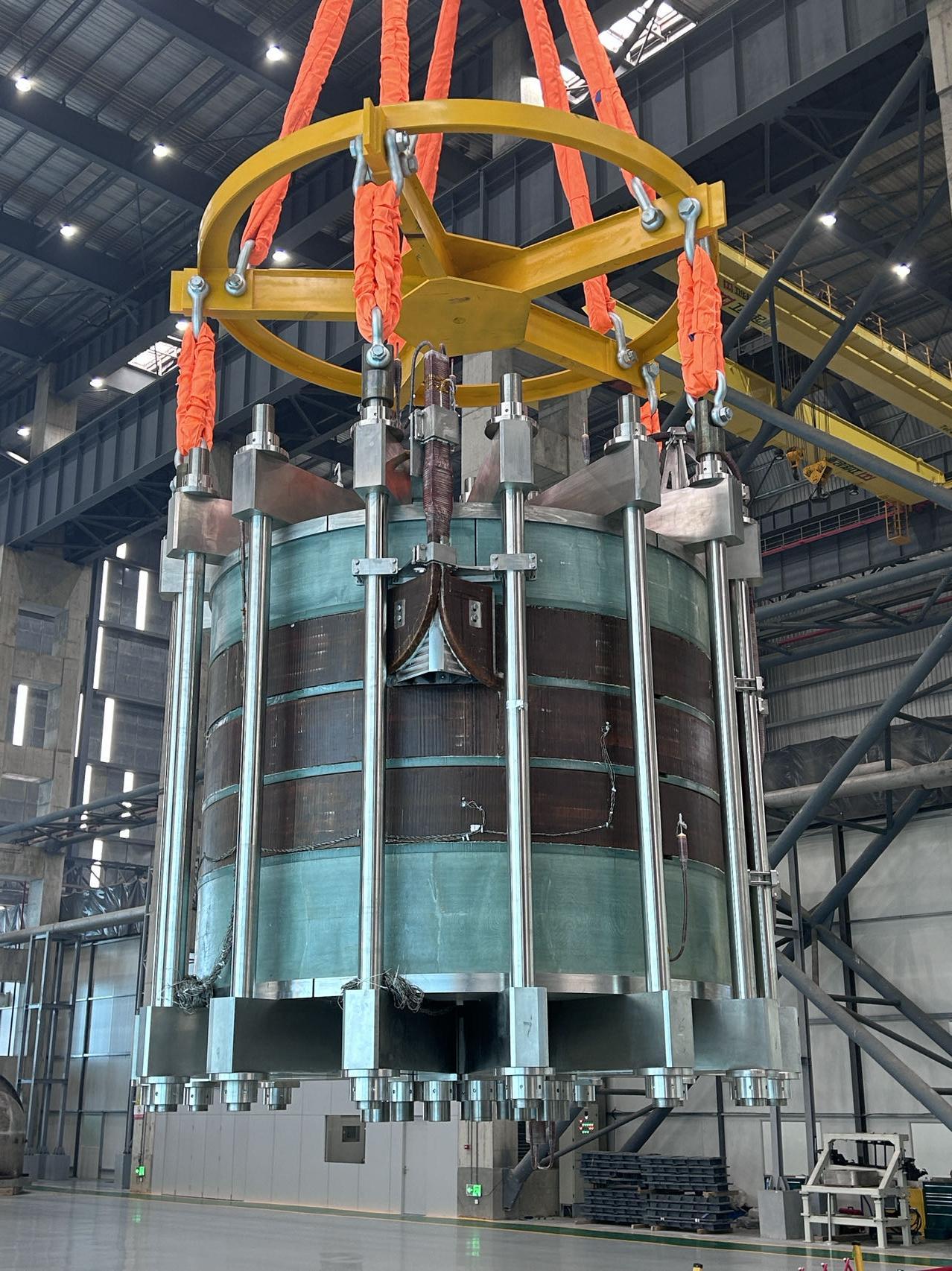
The downstream of high-temperature superconductivity (HTS) is not one market but six markets that barely speak to each other: fusion magnets swallow tape at ten-thousand-kilometer magnitude, while superconducting cables have laid only a few kilometers in twenty-odd years; induction heating's economics are precise down to the power consumption per tonne of aluminum, while maglev's economics do not yet exist at all. This chapter takes the six segments apart one by one — what stage each is at, how large its magnitudes run, and what drives it — closing at the end with a comparison table. A feel for magnitude is the key to reading this chapter: the same spool of REBCO (rare-earth barium copper oxide coated conductor) tape counts in ten-thousand-kilometer units in a fusion device and in hundred-kilometer units in a commercial cable — demand differing by orders of magnitude between segments determines that the segments' standing on tape makers' order books differs by orders of magnitude too.
8.1 Fusion Magnets: The Largest Incremental Market
8.1.1 The Magnitude Yardstick SPARC Set Up
U.S. fusion company Commonwealth Fusion Systems ("CFS") turned "how much HTS tape does fusion need" from paper extrapolation into procurement fact. In September 2021, CFS and MIT jointly demonstrated the 20T all-REBCO toroidal field model coil (TFMC), a single coil consuming 267–270 kilometers of tape — roughly equal to the total tape usage of the world's largest superconducting cable project up to then. At the whole-machine level, the SPARC device carries 18 toroidal field (TF) magnets, each using over 300 kilometers of tape, operating below 20K at field strengths above 20T; by CFS's official count the whole machine needs about 10,000 kilometers of REBCO tape, and nearly 10,000 kilometers has already been received. Per CCID, global 12mm tape output in 2024 was 3,100 kilometers — a single SPARC's usage is more than three times the world's annual output. Fusion's meaning for the tape industry is thus clear: not one more customer, but one more order of magnitude.
SPARC's main machine is about 80% assembled, with first plasma targeted between the end of 2026 and early 2027; CFS has raised USD 4 billion cumulatively (adding USD 1 billion in July 2026), roughly 30% of global cumulative private fusion funding (USD 14.24 billion per the Fusion Industry Association, FIA); the next step, the ARC power plant (Virginia, USA, 400MW), targets completion in the early 2030s, and Google and Eni have signed power purchase agreements. No one dares guarantee when the dream will cash in, but the order book is lengthening in earnest — and for tape makers, what makes fusion customers precious is this: whether the device can ignite is the fusion company's risk, while payment for the tape is settled before ignition.
The physics fits in one sentence: fusion power rises steeply with magnetic field strength, and the stronger the field, the smaller the device can be made. REBCO tape can sustain field strengths above 20T under 20K conditions, a range low-temperature superconducting magnets can hardly reach — the high-field compact route can be built only on high-temperature superconductivity, so fusion's demand for tape is structural, with no substitute material to choose.
8.1.2 The Domestic Pipeline: The National Team Switches Tracks, Private Players Race Ahead
- BEST (Hefei's compact fusion-energy experimental device): assembly began in May 2025 and the main machine was installed in October 2025, targeting completion and a demonstration of fusion power generation by the end of 2027 (media-reported power range 20–200MW); owner Fusion New Energy (Anhui) has registered capital of RMB 14.5 billion with RMB 8.7 billion paid in, and total project investment on the order of RMB 10 billion. It must be labeled honestly: BEST's magnets are predominantly low-temperature superconducting (LTS) with partial use of high-temperature superconductivity — it is a milestone for fusion engineering, but its pull on HTS tape is "partial," not "full."
- HL-4 (Huanliu-4): China Fusion Energy Co., Ltd. was inaugurated in Shanghai on July 22, 2025, with registered capital of RMB 15 billion and China National Nuclear Corporation holding 50.35%; the HL-4 it plans to build is the first national-team tokamak to adopt HTS magnets at scale, on a cadence of model magnet in 2026, prototype magnet in 2027, striving for completion by 2030, with a fusion gain target of Q≥5. The national team's technical route is switching from "LTS-led" to "HTS as the mainstay" — HL-4 is the watershed.
- The HH series (Lingang, Shanghai; Energy Singularity): HH-70 is the world's first all-HTS tokamak — approved in March 2022, first plasma on June 18, 2024, total investment about RMB 150 million, 96% localization, and a 1,337-second steady-state long-pulse run achieved in 2026; the companion "Jingtian" D-shaped magnet has been energized to 22T. The next-generation HH-170 is planned for completion within the next three years, targeting Q≥2 (company statements, 2026).
- Xinghuo-1 (Nanchang): the fusion-fission hybrid reactor route (Z-FFR), total investment about RMB 20 billion, equivalent fusion power above 40MW and total power 300MW, planned for completion by the end of 2029 and a power-generation demonstration in 2030.
HH-70 carries one more layer of industry meaning: an all-HTS tokamak was built for a total investment of about RMB 150 million — with the field made stronger and the device made smaller, the entry ticket to a fusion device dropped from national-budget magnitude to private-capital magnitude, and the very existence of the fusion startup as a species is what HTS magnets brought about.
Spread the four projects' schedules out and 2026–2027 is a dense period of magnet milestones: HL-4's model and prototype magnets, BEST's completion target, and SPARC's ignition window all press into the same interval. For tape makers, the procurement peak depends not on which device ignites successfully but on when magnet construction begins — magnet winding cuts its material years before a device operates, and front-loaded demand is the fusion segment's most important commercial characteristic.
8.1.3 Demand Projection and Market Size
A single compact fusion experimental device requires from several thousand to more than ten thousand kilometers of tape — SPARC's measured roughly 10,000 kilometers is the hardest reference available at present; DEMO-class and commercial-reactor-class devices count in the tens of thousands of kilometers. The circulating claim that "one device needs 30,000 kilometers" is a rough-estimate basis (suspected to be a 4mm-width conversion); when set alongside SPARC's 12mm basis the width must be noted, or demand will be overstated roughly three-fold. CCID projects a 2030 market for fusion-use HTS materials of RMB 4.9 billion, about 47% of its RMB 10.5 billion total projection — nearly half, more than any other segment. And in the 2024 tape demand structure, controlled nuclear fusion already accounted for 38% (per Zhiyan Consulting's compilation): fusion went from "a story about the future" to "the current largest downstream" in less than five years.
Demand projections must also be checked against supply: on CCID's basis, 2024 global 12mm tape demand was 3,400 kilometers against output of 3,100 kilometers — a 300-kilometer gap. The approval of a single SPARC-class device is enough to push global tape supply-demand from tight balance into shortage. The leading tape makers raising their expansion plans to ten-thousand-kilometer scale are betting precisely on fusion demand; what happens once expansion cadence and device-approval cadence fall out of step is left for Chapter 10.
This section's judgment: fusion magnets are the only segment that can lift tape demand by an order of magnitude, and also the only segment where "the customer's scientific failure does not affect commercial payment" — but the other face of the coin is that the tape industry's prosperity is thereby deeply bound to fusion engineering's capital-expenditure cycle. The boom and the risk share one source (the risk is unpacked in Chapter 10).
8.2 Superconducting Cables: Seven Projects, One Ledger That Balances
8.2.1 The Global Project List
- Kunming Puji, China: 35kV, grid-connected in 2004 — China's first superconducting cable installation.
- Xuhui, Shanghai, China: 35kV/2200A/1.2 kilometers, in service since December 22, 2021 — the world's first 35kV kilometer-class superconducting cable in full commercial operation; consumed nearly 280 kilometers of tape, with 100% localization of core technology; by its fourth anniversary in service it had cumulatively delivered nearly 760 million kWh, covering about 49,000 households; built by Shanghai International Superconducting Technology.
- Futian, Shenzhen, China: 10kV three-phase coaxial/400 meters/43MVA, in service since September 28, 2021.
- AmpaCity, Essen, Germany: 10kV/1 kilometer, in service since 2014.
- Shingal, South Korea: 23kV/1 kilometer, in service since 2019 — the world's first commercial HTS cable installed as a permanent grid asset.
- ComEd REG, Chicago, USA: 12kV, in service since 2021.
- SuperLink, Munich, Germany: 110kV/12–15 kilometers, under construction; the prototype section entered service in October 2024 — the world's longest upon completion.
The list is itself the judgment: twenty-odd years, demonstrations rotating through the major economies, and the commercial projects in operation can be counted on one hand, their total mileage adding up to no more than a few kilometers. The Shanghai line's numbers explain why — a 1.2-kilometer line ate nearly 280 kilometers of tape, so every kilometer a line extends consumes tape by the two-hundred-odd kilometers; tape accounts for about 50% of a superconducting cable's cost (per China Southern Power Grid), and an HTS cable's overall cost still runs about 10 times that of conventional copper cable. Run the ledger on a "replace copper cable" premise and superconducting cable will never balance.
The pattern rewards a look too: of the seven projects in operation worldwide China holds three, with the Shanghai line claiming multiple "world firsts" for kilometer-class length, full commercial operation, and 100% localization; Germany's AmpaCity was already using 10kV superconducting cable to replace a city-center 110kV scheme back in 2014, the same line of thinking as Shenzhen Futian — China and Europe stand in the same tier on superconducting transmission demonstration, and the divergence lies in the next step: SuperLink has staked its bet on the 110kV, ten-kilometer trunk scale, while China's operating projects remain at the distribution-network level.
8.2.2 "Voltage Down, Capacity Up": The Only Economically Viable Scenario Today
Only one scenario balances, and the Shenzhen Futian project supplied the paradigm: one 10kV three-phase coaxial superconducting cable matches the transmission capacity of a 110kV conventional cable — achieving a higher voltage class's capacity at a lower voltage class, so a city core can go without building the 110kV substation and without occupying the high-voltage corridor. In hyper-dense, high-load districts of megacities where land is priced by the inch, the substation and corridor savings suffice to cover the cable's own premium; China Southern Power Grid's verdict on the Shenzhen project was "essentially at the economic break-even point" — the first time anyone publicly pronounced a superconducting transmission project near parity. The significance of the Shanghai line's four years of nearly 760 million kWh delivered across about 49,000 households complements that: the first time a superconducting cable has been dispatched long-term by a grid in the identity of an "everyday asset" rather than a "demonstration project," giving the reliability narrative evidence measured in years.
The economics of "voltage down, capacity up" rest on two premises: extremely high load density and extremely expensive land. Districts where both premises hold at once can be counted on the fingers nationwide, so superconducting cable is "point economics" rather than a universal solution, and its near-term expansion pattern is gnawing through first-tier city cores one line at a time. CCID projects RMB 1.99 billion of superconducting-cable material demand in 2030, the second-largest segment; cables took 11.4% of the 2024 tape demand structure (per Zhiyan's compilation). If SuperLink is completed at 12–15 kilometers it will lift single-project scale by an order of magnitude, making it superconducting cable's most important thing to watch over the coming years.
8.2.3 Fault Current Limiters: From "Can Run" to "Can Do the Job"
The superconducting fault current limiter's logic is the cable's inverse — the cable wants the superconducting state's zero resistance, while the limiter wants precisely the high resistance at the instant of quench: when a short-circuit current arrives, the superconductor quenches instantaneously, resistance surges, and the current is limited naturally — conventional power equipment has no comparable physical mechanism. The Tianjin Shigezhuang 220kV superconducting fault current limiter was grid-connected in 2012; in August 2024, a magnetically biased superconducting fault current limiter at a State Grid Liaoning 66kV substation completed its grid-connected demonstration and successfully limited a real three-phase short circuit — the first time internationally that a grid-connected superconducting fault current limiter responded to a real fault. Demonstration thus advanced from "running quietly without incident" to "actually delivering when trouble comes," making the limiter the most solidly validated category of superconducting power equipment — all it lacks is a driver for scaled procurement.
8.3 Superconducting Induction Heating: The Most Complete Evidence Chain, the Lowest Ceiling
The difference in principle decides the difference in efficiency. Traditional mains-frequency induction heating uses an alternating magnetic field to induce eddy currents in a metal billet to generate heat; the coil's own AC losses are inescapable, and whole-furnace efficiency typically reaches only 50–60%. The superconducting scheme changes the approach — a superconducting magnet produces a strong DC magnetic field, the magnet has zero resistance and near-zero excitation loss, and the billet itself rotates to cut the field lines and generate heat; AC losses vanish at the source, and efficiency can reach 85% or more.
The choice of aluminum processing as the entry point is no accident: aluminum's resistivity is low, so eddy-current coupling efficiency is naturally poor under mains-frequency induction heating, making it the common metal hardest to heat by induction — the worse the baseline, the larger the energy-saving headroom, and the superconducting scheme picked precisely the workstation where the traditional process hurts most.
The efficiency evidence chain advances in three steps, the most complete of any segment:
- The principle level: DC-field heating inherently avoids AC losses — the efficiency advantage is decided by physics, not dependent on engineering craft;
- First overseas commercialization: the first commercial HTS induction heating unit abroad (Zenergy, 2008) already validated the energy-saving path;
- Domestic megawatt-class field measurement: the world's first megawatt-class HTS induction heating unit was developed by Lianchuang Superconductor (a minority-held affiliate of listed company Lianchuang Optoelectronics (600363)) and shipped in December 2021 to Chinalco Northeast Light Alloy ("NELA"), holding its commissioning ceremony in April 2023 after about a year of trial operation; NELA's measured energy efficiency was 85.88% at 131.8kWh per tonne of aluminum — unit power consumption down 53% versus a traditional mains-frequency furnace.
The per-tonne-of-aluminum basis matters because it can be recomputed: an aluminum processor multiplies its own output by its own power price and the energy savings appear at once, with no need to believe any promotional material. A recomputable ledger is a rare luxury among superconducting applications — most other segments' economics still sit at the estimation stage.
The dark side is equally clear. First, a low market ceiling: CCID projects only RMB 300 million of induction-heating material demand in 2030, about 3% of the total pot — DC induction heating solves the heating of large-cross-section aluminum and nonferrous billets at a single workstation, and the number of workstations caps the number of units. Second, this segment shows a marked divergence between publicly disclosed order values and actual execution progress; the company-level dissection is in Chapter 6 and is not repeated here. This section's judgment: superconducting induction heating is the first template in which "the superconducting magnet as industrial energy-saving equipment" has a profit-and-loss account that can be settled clearly — and its template value exceeds its market value.
8.4 MCZ Crystal Growth: A Substitution Market, Not an Incremental One
MCZ (magnetic-field-applied Czochralski crystal growth) applies a strong external magnetic field while pulling monocrystalline silicon to suppress melt convection and control oxygen content — a mature process for large-diameter semiconductor wafers and high-end photovoltaic wafers. The magnetic field has long been standard equipment in the crystal-puller industry, and the mainstream solution uses low-temperature superconducting magnets. High-temperature superconductivity's opportunity lies not in creating new demand but in substituting the stock: no liquid helium, simpler maintenance, lower operating cost — compounded by the crystal-puller upgrade-and-retrofit window brought by photovoltaic wafers switching from P-type to N-type.
Progress, stated as it is: the Lianchuang-affiliated LCCD-MCZ160SS magnetically-controlled photovoltaic monocrystalline silicon growth furnace prototype was disclosed in March 2024; the MCZ segment currently has no publicly reliable market-size statistics — CCID's RMB 970 million for 2030 (about 9%) is a projection basis, not present-day data. The other reality is the mode of entry: the buyer of a crystal-puller magnet is the furnace maker, not the wafer maker, and a superconductor vendor earns a seat only by embedding its magnet into the furnace maker's control and structural systems — whole-machine integration capability looks more like the threshold than magnet performance does. This section's judgment: the MCZ magnet's competitor is a low-temperature superconducting solution that has been running for decades, and the pace of substitution depends on liquid-helium cost pressure and furnace makers' retrofit appetite, not on superconducting technology itself; in the near term it is a "small but certain" business, with upside elasticity hinging on the rhythm of the photovoltaic N-type retrofit wave.
8.5 Maglev and Motors: Thirty Years of Prototypes
The maglev and motor segments sit entirely at the trial or prototype stage, annotated item by item:
- HTS high-speed maglev: Southwest Jiaotong University's engineering prototype vehicle and 165-meter test line were commissioned in Chengdu in January 2021 — the 620 km/h design speed is only a design value, the 165-meter validation section cannot support high-speed trials, and any statement that it "ran at 620 km/h" is wrong. It must also be noted that the levitation relies on flux pinning between onboard HTS bulk material and the permanent-magnet track — bulks, not tape — so even if maglev moves toward commercialization, its pull on tape demand is limited.
- Confusion guard: the 600 km/h high-speed maglev rolled out by CRRC Qingdao Sifang in 2021 uses normal-conducting electromagnetic levitation technology, unrelated to high-temperature superconductivity — the two technical routes are routinely conflated.
- Marine motors: the 712 Research Institute's 1000kW HTS motor completed its onshore prototype in 2012 (95% efficiency including the cryogenic system); American Superconductor's (AMSC) 36.5MW ship propulsion motor passed land-based full-power testing in 2009 and has never been installed on a ship to this day.
- Wind power: the European EcoSwing project's 3.6MW unit was the world's first REBCO superconducting generator fitted to an in-service wind turbine, grid-connected for over 650 hours of generation with the generator 40% lighter — never commercialized after the project ended.
The prototypes' technical report card is actually not bad: the advantages in weight reduction and volume reduction have been validated again and again. But thirty years of superconducting-motor prototype history yield only one conclusion: "the technology can run; the commerce cannot close the loop" — nobody is willing to pay for the complexity and operating costs the cryogenic system brings, while the alternatives in downstream hands (permanent-magnet motors, normal-conducting maglev) are good enough and cheap enough. This section's judgment: until the cryogenic system's cost and reliability improve by a generation, maglev and motors are superconductivity's "showcase applications" — responsible for displaying possibility, not for contributing revenue. The industrial details of superconducting motors and wind-power equipment fall outside this report's scope, and we leave it at a mention.
8.6 Research and Medical Magnets: The Insert-Coil Business
The position where high-temperature superconductivity enters commercial use at this stage is, precisely, the "insert coil": low-temperature superconducting magnets lay the base on the outside, and an HTS coil at the innermost layer pushes the field strength up. The 32.35T all-superconducting magnet world record set by IEE-CAS in December 2019 is the representative work of the insert architecture — an LTS outer magnet plus an NI (no-insulation) REBCO insert coil; the U.S. National High Magnetic Field Laboratory reached 45.5T in 2019 with a similar insert architecture (a short-duration experimental magnet) — the high-field record chain and the unfolding of NI technology are left for Chapter 9. The commercial-side representative is Bruker's 1.2GHz NMR spectrometer (corresponding to a field strength of 28.2T), likewise a hybrid LTS-plus-HTS-insert design, with the first unit delivered in 2020 — GHz-class high-field NMR is the HTS insert coil's first true commercial scenario.
The confusion guard must be written plainly: the mainstream magnets of commercial MRI (magnetic resonance imaging) and proton therapy remain low-temperature superconducting, and no all-HTS NMR or MRI complete machine is commercially available at present. The superconductivity in hospitals belongs to low-temperature superconductivity's installed-base empire; high-temperature superconductivity makes its increment only in the high-field range beyond the empire's borders. The crux is engineering, not physics: mainstream MRI and NMR magnets must run closed-loop in persistent-current mode for years on end, while the fully superconducting joint between REBCO tapes still sits in the laboratory — for as long as the joint fails to pass, high-temperature superconductivity stays off hospitals' procurement lists (technical details in Chapter 9).
The demand side's weight is often underestimated: research uses took 29.1% of tape demand in 2024 (per Zhiyan's compilation), second only to fusion — research magnets are not a sentimental business but the second pillar of tape makers' real revenue today. This section's judgment: low-temperature superconducting magnets have a field-strength ceiling, and every tesla above that ceiling can be supplied only by high-temperature superconductivity — the "insert" positioning is at once technical reality (engineering chokepoints such as the fully superconducting joint remain unbroken; see Chapter 9 for details) and commercial wisdom: do not compete with low-temperature superconductivity on maturity and cost; do only the business low-temperature superconductivity physically cannot reach. When fusion demand fluctuates, research magnets are tape makers' most reliable ballast.
8.7 The Six Segments Compared and Judged
| Segment | Maturity | Magnitude yardstick | 2030 market projection (CCID) | Core driver |
|---|---|---|---|---|
| Fusion magnets | Procurement already happening, devices awaiting ignition | Thousands to over 10,000 km of tape per device | RMB 4.9 billion | The high-field compact route holds; demand front-runs ignition |
| Superconducting cables (incl. fault current limiters) | In commercial operation, replicating point by point | Tens to nearly 280 km of tape per project | RMB 1.99 billion | "Voltage down, capacity up" in megacity cores |
| Induction heating | In production; the ledger is recomputable | Megawatt-class single units | RMB 300 million | Energy savings in aluminum processing; power use per tonne of aluminum down 53% |
| MCZ crystal growth | Prototype starting stage | No publicly reliable statistics | RMB 970 million | Helium-free substitution of LTS magnets; photovoltaic N-type retrofits |
| Maglev and motors | Trials/prototypes | No commercial market | Not broken out | Weight and volume savings; no one yet paying |
| Research/medical magnets | Insert coils commercialized | 29.1% of 2024 tape demand (Zhiyan basis) | Not broken out | Field strength above the LTS ceiling |
Put the six segments into the same table and the pattern surfaces: high-temperature superconductivity currently wins at "making fields" and struggles at "delivering power." Wherever the magnetic field is itself the product — fusion, research inserts, induction heating, MCZ crystal growth — penetration is fastest, because what superconductivity has to displace is "cannot be done" or "the power bill," and the opponents are physical limits and energy ledgers; wherever it must displace mature copper-and-iron solutions inside grids and drive systems — cables, motors — only special cases under extreme conditions hold, because the opponent is copper and permanent magnets: cheap, reliable, with complete supply chains. From ten-thousand-kilometer magnets to a single cable, the difference is not technical maturity but the strength of the opponent: the magnet's opponent is the laws of nature; the cable's opponent is the market price. Over the next five years, fusion magnets will decide the HTS industry's order of magnitude, research magnets will decide the industry's floor, and cables and induction heating will supply scattered but real cash flow — such, broadly, is the segment landscape, with variables in only two places: the magnet construction cadence of the HL-4s, and whether SuperLink can lift superconducting transmission's single-project scale by an order of magnitude.
Chapter 9: Technology Evolution — Deposition Routes, No-Insulation Coils, and the Quench Problem
Chapter 3 touched on the technology only in broad strokes; this chapter unpacks it. The technology evolution of high-temperature superconductivity is, in essence, three races run simultaneously: making the tape cheap — the contest among deposition routes and the cost-reduction curve; making the magnet reliable — no-insulation coils and quench countermeasures; and pushing applications into the mainstream — joint resistance and persistent-current mode. The three races are at starkly different stages: the first is largely run, the second has only just found its engineering solution, and the third is still standing at the laboratory door. Only by understanding where each race stands can one understand a seemingly contradictory phenomenon — why fusion orders have arrived so quickly while the door to the medical magnet market, the largest existing one, remains shut.
9.1 Four Deposition Routes: The Triangle of Rate, Quality, and Cost
The manufacturing challenge of second-generation (2G) tape can be stated in a single sentence: epitaxially grow a quasi-single-crystal ceramic thin film on a metal strip running continuously for hundreds of meters, even kilometers. REBCO is a ceramic; once grain-boundary misorientation exceeds 7°, the grains barely conduct across one another — a film kilometers long must maintain atomic-level orientation consistency. Engineering splits the challenge in two: first create a biaxially textured buffer-layer "template" on the metal substrate, then deposit the superconducting layer on the template. Template technologies come in three schools — IBAD (ion-beam-assisted deposition), RABiTS (rolling-assisted biaxial texturing), and ISD (inclined substrate deposition); superconducting-layer deposition comes in four methods — PLD (pulsed laser deposition), MOCVD (metal-organic chemical vapor deposition), MOD (metal-organic chemical solution deposition), and RCE-DR (reactive co-evaporation–deposition and reaction). Of the pairwise combinations, mass-production manufacturers worldwide have in practice converged on four main routes:
- IBAD+PLD: Fujikura of Japan, Faraday Factory Japan, Shanghai Superconductor, and Russia's S-Innovation. A laser blasts the target point by point to form the film; texture quality is high, pinning-defect structures are rich, and thick films are feasible — at the cost of expensive equipment and low deposition rates.
- IBAD+MOCVD: SuperPower of the United States (under Furukawa Electric) and Eastern Superconductor — the latter is the route's sole domestic mass producer in China, releasing the kilometer-class HF1200 tape for fusion in September 2025. The film forms via gas-phase reaction; deposition rates are high and large-area scaling is easy, while intrinsic pinning and crystalline quality are comparatively weaker.
- RCE-DR: SuNAM of South Korea. A two-step process — first co-evaporate a precursor film, then convert it by heat treatment — delivers high throughput, with comparatively weaker high-field performance; its 400 km annual capacity is in 4 mm-equivalent width, roughly 133 km when converted to 12 mm.
- RABiTS+MOD: AMSC (American Superconductor) of the United States. The substrate grows its own texture through rolling and annealing, and the superconducting layer is coated by a chemical-solution method; no expensive vacuum equipment is needed anywhere in the process, giving the lowest equipment cost and little waste liquid, but the pinning particles run large and thick layers are hard to make.
Beyond the four main routes stands one differentiated complement: Germany's THEVA, with ISD plus thermal co-evaporation, is one of the tape suppliers to Munich's SuperLink superconducting cable project. Domestically, Shangchuang Superconductor takes the MOD chemical route, describing itself as the country's only chemical-route mass producer, with a 200 km/year line already in production (per industry-survey accounts).
The four routes contend over the same triangle: quality (low-temperature, high-field performance), rate (capacity ramp), and cost (equipment depreciation and consumables). No route gets all three, and the referee forcing the choice is downstream demand — and the only incremental demand currently scaling is fusion magnets, which want precisely low-temperature, high-field performance. Orders have thus cast the industry's vote: the four PLD-camp firms together account for more than half of global output (per a 2025 paper; roughly 15 tape makers worldwide with combined capacity above 5,000 km/year, 12 mm basis). Two further pieces of corroboration: the world's only two manufacturers with thousand-kilometer-class annual output (12 mm) — Shanghai Superconductor and Faraday Factory Japan — both come from the PLD camp; the latter had cumulatively delivered more than 7,000 km of tape to fusion customers as of April 2025. PLD's "slow" is made up with equipment count (per factory-visit reports, Shanghai Superconductor runs dozens of self-developed deposition machines in parallel inside its plant), its "expensive" is absorbed by the fusion-grade premium, and its "good" alone is irreplaceable. The route contest has no final verdict, but this round's front-runner is already clear: whichever performance the demand structure favors, the output structure tilts toward that route.
9.2 Performance Metrics: 77 K Is Only the Ticket In; 4.2 K Is the Exam
The most prominent number on a tape maker's product page is the self-field critical current Ic at 77 K (liquid-nitrogen temperature range): taking Shanghai Superconductor's production tape as an example, 12 mm wide products are graded at 360–800 A. Liquid nitrogen is cheap and testing is convenient, so manufacturers worldwide report under the same condition, and 77 K self-field has become the industry's lingua franca. For fusion buyers, however, 77 K self-field is only the ticket in; the retention of critical current at 4.2 K (liquid-helium temperature range) under high field — the lift factor — is the real procurement metric: the true operating conditions of fusion magnets are below 20 K and around 20 T (the design point of a single SPARC toroidal field magnet is precisely below 20 K and above 20 T), and how much current-carrying capacity remains after converting from liquid-nitrogen self-field to low-temperature high-field directly determines how many kilometers a magnet must be wound with and how much it costs.
Behind the same 77 K report card, the different deposition routes hide gaps of severalfold. A comparison from a 2022 process review: at 4.2 K and 18 T, Fujikura tape carries a critical current of about 750 A, SuNAM tape just over 115 A — a severalfold difference on the same basis. The reason goes back to the triangle of Section 9.1: PLD's thick-film capability and defect pinning, versus the rate-first choices of MOCVD and RCE-DR, are indistinguishable at liquid-nitrogen self-field and show their true colors at low temperature and high field. The high-field grades on Shanghai Superconductor's product page (1,050–2,400 A at 4.2 K and 10 T, 12 mm width) confirm this from the other side: fusion-grade tape and standard-grade tape are two different products, even though they come off the same line. Pricing has diverged accordingly — Shanghai Superconductor's average tape price recovered in 2025, and the official explanation is precisely a rising share of fusion-grade high-performance tape rather than rising market prices; on a per-kiloampere-meter pricing basis, high-field performance is the price itself.
In-field performance is not only a matter of route endowment; it can also be engineered after the fact — APC (artificial pinning centers) has been the most important process lever of the past decade. The principle is not complicated: when REBCO carries current in a magnetic field, flux penetrates the material as quantized vortices, and once a vortex slides it dissipates energy; to sustain resistance-free current, defects must "pin" the vortices in place. Natural defects rely on luck; APC relies on doping: introducing BZO, BTO, and other nano-column second phases into the superconducting layer turns pinning sites into a controllable engineering parameter. The orders of magnitude per review accounts: 25% zirconium-doped 12 mm tape can exceed 1,611 A self-field Ic at 77 K (against 360–800 A for standard grades); BZO-doped tape reaches a peak pinning force of 78 GN/m³ at 65 K, 500% higher than the best NbTi (niobium-titanium) at 4.2 K. The industrial meaning of matured doping processes: in-field performance goes from "screened for" to "designed in," and fusion-grade tape thereby becomes a plannable product line rather than a lottery ticket on the production line.
Mechanical specs are the third report card, and winding engineers care about them more than physicists do. Production tape has a critical tensile stress of roughly 600–700 MPa (copper-plated encapsulation), over 700 MPa with stainless-steel encapsulation, and a minimum bending diameter of 10–15 mm (standard figures across manufacturer datasheets). Behind the numbers lies a fragile fact: the REBCO layer that carries the superconductivity is a ceramic, accounting for only about 1% of total tape thickness, and once strain exceeds its limit the degradation is permanent and irreparable; the tape's mechanical strength comes almost entirely from the Hastelloy substrate that occupies more than half its volume (domestically produced C276 substrate has a tensile strength above 1,900 MPa at 77 K). For downstream users, 600–700 MPa and a 10–15 mm bending diameter draw the engineering boundary: the corner radius of a D-shaped coil, the cabling pitch of a cable-in-conduit conductor (CICC), and the Lorentz forces superimposed after energization must all be calculated inside the red line. A fusion magnet winds hundreds of kilometers of tape into a coil a few meters across: the electrical specs decide how much tape to buy, and the mechanical specs decide whether the tape bought can be wound in at all.
9.3 Quench: The Slow-Burning Flame Is the More Dangerous One
Quench is the number-one failure mode of superconducting magnets: a local region, perturbed, jumps from the superconducting state back to the normal state; resistance appears instantly, Joule heating then pushes a larger region out of superconductivity, and the chain expands. Low-temperature superconducting magnets have wrestled with quench for more than half a century and developed a mature paradigm: NbTi's normal zone propagates at tens of meters per second (10–100 m/s is the standard literature range), so once a quench occurs, the voltage signal across the whole coil rises rapidly, detection circuits trigger protection in time and dump the stored energy into an external resistor — the magnet loses one experiment and keeps its hardware.
REBCO overturns the entire mature paradigm. The normal zone propagation velocity (NZPV) of REBCO tape is only about 1–10 cm/s, two to three orders of magnitude lower than NbTi. Slow propagation sounds like good news but is the opposite: if the normal zone does not spread, Joule heat concentrates on a hot spot a few centimeters long; the hot spot's resistance is too small, drowned in the inductive background of the whole coil, and voltage detection simply cannot see it — by the time the voltage signal crosses the threshold, the hot-spot temperature has often already burned through the tape. An LTS quench is like an open blaze: it burns fast, but every smoke alarm in the house goes off; an HTS quench is like smokeless smoldering — the alarms fail, and by the time it is discovered the floor already has a hole in it. The scale of the stakes differs completely as well: a fusion toroidal field magnet winds hundreds of kilometers of tape, a rough calculation at current domestic winning-bid prices puts it at an asset worth tens of millions of RMB, and one undetected quench is enough to write off an entire coil.
Engineering currently has two countermeasures, aimed respectively at "a sharper alarm" and "a house that does not fear fire":
- Detection side: distributed fiber-optic temperature sensing. Fiber is attached along the winding, replacing the global voltage signal with a spatially continuous temperature signal and making centimeter-scale hot spots visible; domestic patent schemes for fusion magnets already list voltage, fiber optics, and acoustic emission as three parallel detection channels (per patent disclosures).
- Architecture side: abandon the "detect and dump" paradigm altogether and rebuild the coil itself into a structure that protects itself during a quench — no-insulation (NI) technology, the most important engineering innovation in HTS magnets of the past decade, unpacked in the next section.
9.4 No-Insulation Coils: A Self-Protection Philosophy and the Record Chain Running to 45.5 T
The NI coil's idea carries an engineering-aesthetic kind of counterintuition: remove the insulation between turns. In normal operation, current flows along the helical superconducting path just as in a conventional coil; once a local quench produces resistance, the current automatically diverts radially through the metallic contact surfaces between adjacent turns, bypassing the hot spot — heat no longer concentrates, the coil protects itself, and the quench-detection system is demoted from "essential" to "redundant." The side benefits are equally substantial: with the insulation layer gone, the coil's engineering current density and overall mechanical strength rise at the same time. The price is that turn-to-turn current sharing gives charging and discharging a pronounced time constant — field response slows and field-quality control grows more complex — a fatal flaw for applications requiring fast field changes, but conveniently harmless for steady-state fusion toroidal field magnets and research high-field magnets.
NI's value has been nailed down step by step along a chain of records, each answering the same question: does self-protection still hold at higher field strength?
- The Hahn team's 26.4 T: an all-REBCO no-insulation standalone magnet (4.2 K, 35 mm bore); repeated deliberately induced quench tests required no intervention from a protection system, the first systematic validation of the self-protection property.
- LNI 31.4 T: an inter-layer no-insulation (LNI) REBCO insert coil completed quench self-protection experiments, pushing validation above 30 T.
- IEE-CAS 32.35 T: in December 2019, a 15 T LTS outer magnet plus two NI REBCO insert coils broke the 32.0 T record held by the U.S. National High Magnetic Field Laboratory (NHMFL), setting a world record for all-superconducting magnets.
- NHMFL 45.5 T: in 2019, an LTS outer magnet plus a no-insulation REBCO insert set the DC magnetic field record — a short-duration experimental magnet rather than a user magnet, but it marked out where the NI route's physical ceiling lies.
- Energy Singularity's 20.8 T on pure conduction cooling: in January 2026, a no-insulation magnet relying on cryocooler conduction cooling rather than liquid-helium immersion was energized to 20.8 T and ran stably for 150 minutes; the same family's "Jingtian" D-shaped magnet was energized to 22 T (21.7 T in initial reports) — a fusion-configuration magnet about 3 m long and about 7.5 tonnes, an engineering challenge of a different order from the centimeter-bore record magnets of the laboratory.
The industrial reading of the record chain: 32.35 T and 45.5 T prove the ceiling, while the 20.8 T pure-conduction run and the 22 T D-shaped magnet prove usability — from small-bore experimental coils to engineering magnets that can be wound into fusion shapes and kept cold by cryocoolers, the high-field records are held almost entirely by NI and its variants, and self-protection has gone from a clever idea in one paper to the mainstream paradigm for REBCO high-field magnets. The more important causality lies on the commercial side: the quench-detection problem was once the number-one roadblock for HTS high-field magnets, and NI routed around it through architectural innovation; high-field magnets thereby gained the confidence to energize at full load, and the engineering-feasibility case for fusion magnets filled in its hardest missing piece. Without this record chain, the fusion order book of Chapter 4 might never have dared to open.
9.5 Joints: Between Nano-ohms and Pico-ohms Stands the Door to the Mainstream Medical Market
HTS's other engineering problem lies not inside the coil but where tape meets tape. REBCO tape cannot yet be made into mature superconducting joints in volume the way low-temperature superconducting wire can, so engineering relies mainly on resistive lap joints: two tape segments overlapped and soldered, with joint resistance reaching the nano-ohm level (manufacturer specifications cite roughly 20–50 nΩ·cm²). For fusion magnets, nano-ohm level suffices — fusion magnets are driven continuously by external power supplies anyway, and the Joule heat at the joints is handed to the cryogenic system, a calculable operating cost.
But nano-ohm level cannot get through the door of MRI and NMR. Mainstream magnetic-resonance magnets operate in persistent-current mode: after energization the loop is closed and the power supply removed, the field sustained by the zero-resistance loop with drift low enough to ignore — provided total loop resistance is below the 10⁻¹² Ω level, more than three orders of magnitude below nano-ohm. Genuinely zero-resistance HTS joints remain in the laboratory: China has a patented demonstration of a closed coil with melt-diffusion-bonded joints (joint critical current of 86 A at 77 K, field decay below 0.05% over 30 hours, per patent disclosures), and Japan has demonstrated repeatedly as well, but volume processes and long-term reliability validation are still far off.
The joint bottleneck determines HTS's realistic position in the largest existing commercial market: insert coils. Bruker's 1.2 GHz NMR spectrometer (first unit delivered in 2020) uses a hybrid architecture of an LTS outer magnet plus an HTS insert; the HTS portion need not close its own loop, sidestepping persistent-current mode's harsh demands on joints. Put this chapter's three problems side by side and the commercialization timetable becomes plain: deposition decides whether tape can be cheap — largely solved; quench decides whether magnets can be reliable — NI has delivered the engineering answer; joints decide whether HTS can rise from insert supporting role to whole-machine lead — still unsolved. That fusion orders came first and medical orders later has its technical root exactly here — fusion happens to be the buyer that does not need persistent-current mode and cares only about low-temperature, high-field performance.
9.6 The Cost-Reduction Curve: Push the Numerator Down, Pull the Denominator Up
The industry's standard cost measure is US dollars per kiloampere-meter ($/kA·m), which can be unpacked as a division: the numerator is price per meter, the denominator is kiloampere-level current capacity per meter. The numerator must be pushed down — scale dilutes fixed investment, yield raises qualified output; the denominator must be pulled up — the lift factor and APC strengthen each meter's current capacity. Cost reduction is therefore twin-engined: scale and yield govern the numerator, performance governs the denominator, and with either wheel missing the curve flattens.
The road already traveled is steep enough. Per review-article and journal statistics: 2G tape was quoted at $300–500/kA·m around 2017, fell to $100–150/kA·m by 2022, and now sits at roughly $50–100/kA·m (77 K self-field basis). A measurement trap must first be dismantled here: converted to fusion magnets' real operating conditions (low temperature, high field), the same tape works out to roughly $300/kA·m — the two measures, 77 K self-field versus operating conditions, differ severalfold, so whenever a claim says "tape is already down to such-and-such dollars," ask about the measurement conditions before judging. Domestic RMB-per-meter figures confirm the decline as well: public winning-bid prices have fallen from about RMB 300/m to RMB 100–180/m (per Zhiyan Consulting's compilation); Shanghai Superconductor's unit production cost fell from RMB 262/m (2022) to RMB 92.91/m (2024) and then RMB 74.22/m (2025), a cumulative drop of more than 70% over three years — half of it from scale, as output climbing to the thousand-kilometer level diluted equipment depreciation, and half from yield and automation, the same material input yielding more qualified meters.
The target line is drawn as well: the industry's near-term goal is $50/kA·m, long-term $10–20/kA·m; CICC estimated in 2023 that 2G tape could fall to roughly RMB 21/kA·m by 2028, essentially at parity with Nb₃Sn (niobium-tin). The parity point means more than fusion itself: before parity, HTS is procured only where nothing else will do — the high fields of compact fusion, capacity expansion in downtown corridors; past parity, the material-selection logic becomes "same price, why not the better performer," and the gate opens for the most price-sensitive scenarios such as cables. The risk is written on the same curve: the numerator side depends on ten-thousand-kilometer-class expansions landing on schedule, the denominator side on fusion orders continuing to pull demand for high-performance grades — if the device calendar slips, the same expansion curve gets renamed overcapacity; see Chapter 10.
9.7 Disruption Risk: What Iron-Based Superconductors and MgB₂ Are Waiting For
The front-runner on any technology route must always answer one question: could someone switch materials and restart the whole race? HTS has two candidate disruptors, in starkly different postures.
- Iron-based superconductors: a material family discovered in 2008, with critical temperatures up to 56 K. The engineering appeal lies in high field — high upper critical field and smaller anisotropy point theoretically toward fusion and high-field magnets, precisely REBCO's core heartland; wire can be made by the powder-in-tube method, a simpler process path than the coated conductor's "growing single crystal on a metal strip." In December 2025, Guoke Superconductor produced the world's first kilometer-class iron-based superconducting wire and is building a hundred-kilometer-class pilot line in Beijing's Yizhuang — the jump from laboratory sample to kilometer class is a landmark step toward industrialization. But current high-field current-carrying performance still needs improvement and remains some distance from REBCO's engineering metrics; kilometer class answers "can it be made long," not yet "is it worth buying."
- MgB₂: discovered in 2001, critical temperature 39 K. It does not contest high field with REBCO; it contests cheapness — common raw materials and simple wire processing position it for "good enough" scenarios around 20 K, at low-to-mid fields, with cryocooler conduction cooling. Its squeeze on REBCO is not in fusion but in cost-sensitive, mid-field productized applications; helium-free MRI-type products are the typical direction.
There is only one criterion: unit current-carrying cost under real operating conditions. Critical temperature was never the moat; $/kA·m is — REBCO's substitution of LTS must wait for its own parity point, and iron-based substitution of REBCO must likewise wait for its own. Meanwhile REBCO's present moat is half in the tape itself: thousand-kilometer-class capacity, yield that has climbed the curve, a validated supply chain; and half outside the tape: NI coils, fiber-optic detection, CICC cabling, quench countermeasures — the entire magnet-engineering system was developed and validated around REBCO's tape form, and switching materials means rerunning the validation chains of Sections 9.3 and 9.4, on a timescale of a decade. Hence this chapter's closing judgment: REBCO is not the endpoint; it is the only answer money can currently buy. For downstream device builders, procurement decisions before 2030 effectively have no second option; for observers, the yield and high-field data from Guoke Superconductor's pilot line are a route weathervane worth recalibrating once a year.
Chapter 10: Risks and Challenges
The HTS industry's risk structure differs from most new-materials industries: the demand side is not the continuous purchasing of thousands of dispersed customers but a "project-based order book" pieced together from a few dozen fusion devices, several demonstration cables, and a number of research magnets. Project-based means demand arrives in pulses, transmitted stage by stage through expectations, financing, project approval, and tendering — any link loosening gets amplified into violent swings in tape makers' capacity utilization. This chapter proceeds along eight threads: commercialization timing, phased overcapacity, price war, route disruption, helium dependence, downstream concentration, concept hype, and export controls. The eight risks are not independent — a slipping fusion timetable would detonate overcapacity and a price war at once, while concept hype in turn supplies ammunition for expansion — and seeing the eight as one interlocking gear train comes closer to the industry's real situation than scoring each in isolation.
10.1 Uncertainty in the Timing of Fusion Commercialization
Fusion handed HTS its first real order book, and also bound the industry's fate to a physics promise not yet redeemed. The industry baseline given by the FIA (Fusion Industry Association) 2026 annual report: annual global private-sector fusion funding of USD 4.48 billion, up 69% year on year; cumulative funding of USD 14.24 billion; 56 companies surveyed; more than 16,000 employees. The same organization's 2025 survey showed that 84% of responding companies believe fusion electricity can reach the grid before the end of the 2030s, and 53% believe it can be achieved before 2035.
Optimistic numbers — but the methodology must be dismantled first: the respondents are the fusion companies themselves, and the timetable is self-reported — a company's financing progress depends directly on investors' confidence in the timetable, so the optimism bias is structural, not a question of any one firm's character. FIA likewise concedes in the report that sustained financing remains the industry's top challenge. Treating 84% as a consensus of industry sentiment is fine; treating 84% as an objective probability is a methodological error.
Fusion also carries most of a century of historical baggage: the jibe that "fusion power is always thirty years away" has circulated for generations. Assessing that baggage requires distinguishing two eras: the old "thirty years" arose in the era of pure government budgets, when neither funding cadence nor schedules faced commercial constraints; what differs now is that private capital has for the first time set falsifiable near-term milestones — the SPARC device of the U.S. company CFS is roughly 80% assembled, with first plasma targeted for late 2026 to early 2027; Hefei's BEST (compact fusion energy experimental device) targets completion and a demonstration of fusion power generation by the end of 2027; the Shanghai-planned HL-4 is striving for completion by 2030. Over the next three to five years the industry will face a batch of "deliver or slip" hard checkpoints, and for the first time the fusion timetable can be audited year by year.
Falsifiable does not mean bound to deliver. For the tape industry, the real risk transmission chain is: commercialization expectations → financing → device approvals → tape procurement. Even if fusion power is ultimately delayed a decade, tape orders persist as long as experimental devices keep being approved; conversely, once a leading device slips at a key milestone and triggers a financing contraction, a gap in project approvals translates immediately into a gap in orders. Financing concentration further amplifies single-point risk — CFS alone has raised a cumulative USD 4 billion, roughly three-tenths of global private fusion funding to date, so the success or failure of the leading companies acts on the entire demand pool with leverage.
10.2 The Expansion Wave and Phased Overcapacity
Between the capacity expansion now under way on the supply side and real demand in 2025 lies an order of magnitude of imagination. Leading manufacturers' capacity plans have shifted wholesale to the "ten-thousand-kilometer class":
- Shanghai Superconductor: annual capacity in 12 mm width grew from 438.67 km in 2023 to 2,829.33 km in 2025, a 6.4-fold expansion in two years; the new Shanghai base carries total investment of RMB 2.5 billion and planned annual capacity of no less than 15,000 km (planning basis, not yet realized);
- Eastern Superconductor: its 6,000 km annual capacity is in 4 mm width (roughly 2,000 km converted to 12 mm), with a doubling planned for 2026;
- Overseas expansion in parallel: Fujikura has committed JPY 6 billion and then JPY 5.6 billion, planning to lift capacity to 3–4 times by fiscal 2027 and double it again thereafter; Faraday Factory Japan has formed a capacity-expansion partnership with Coherent of the United States.
The reality on the demand side: 2024 global demand was 3,400 km against output of 3,100 km, a 300 km gap (CCID basis, 12 mm width); 2025 global demand is roughly 5,000 km (single-source figure from Zhiyan Consulting). The roughly 15 tape makers worldwide currently have combined annual capacity just over 5,000 km, so supply and demand are broadly in tight balance; but the planned capacity of just the two leading Chinese producers converts to about 19,000 km/year in 12 mm terms — nearly 4 times 2025 global demand. Supply is released continuously along capacity ramp curves, while demand arrives discretely on the rhythm of device approvals.
The specific shape of the mismatch deserves more precision than the word "overcapacity." Tape demand is not a continuous curve but a step function: a single compact fusion device consumes several thousand to more than ten thousand kilometers of tape at once (SPARC as a whole needs about 10,000 km, with nearly 10,000 km already delivered), while windows measured in years separate device approval from tendering. The years when the two curves misalign are the years of price stampedes and idle capacity. Shanghai Superconductor's 2025 nominal capacity utilization of 41.71% (97.67% including work-in-progress) already shows the digestion pressure of the ramp-up phase — the high work-in-progress figure says the lines are turning, the low nominal figure says finished-product volume is still waiting on order cadence.
There are two pieces of counter-evidence. First, Shanghai Superconductor's prospectus discloses an order backlog of roughly RMB 1.6 billion, more than five times its 2025 revenue, so near-term absorption is accounted for. Second, ITER supplies the precedent that "when the demand pulse really comes, no capacity is too much" — global annual capacity for low-temperature superconducting Nb₃Sn was pulled by the single ITER project from roughly 15 tonnes to a scale supplying over 100,000 km of strand. If, after 2027, BEST's and SPARC's successor devices (the ARC power plant, HL-4) enter the approval pipeline in succession, today's ten-thousand-kilometer plans may prove insufficient. The risk lies not in expansion itself but in expansion coming due just as device approvals hit a lull, in which case the industry will pass through a shakeout — the fastest runners in the expansion wave will not necessarily be the longest-lived.
10.3 Early Signs of a Price War
The price signal has already appeared: domestic 2G tape winning-bid prices have fallen from about RMB 300/m to RMB 100–180/m (Zhiyan basis, 2024 to July 2025). Shanghai Superconductor's average selling price fell from RMB 359.77/m in 2022 to RMB 241.08/m in 2024, then recovered to RMB 279.16/m in 2025 — the recovery stems from a rising share of fusion-grade high-performance tape, a change in product mix, not a rise in market prices.
Whether the price war turns vicious hinges on the race between the pace of price decline and the pace of cost decline. Shanghai Superconductor's unit cost fell from RMB 262/m in 2022 to RMB 92.91/m in 2024 and RMB 74.22/m in 2025; with costs falling faster than prices, tape gross margin actually rose from 27.17% to 73.41% (2025, per the updated prospectus). The current price decline is closer to "benign cost-down traded for volume": yield and scale effects run ahead, price chases behind. But 73.41% gross margin is itself a target — if winning bids slide toward the RMB 100/m floor while cost declines slow, high margins cannot hold; and once realized expansion collides with a demand lull, the price war goes from early sign to reality.
For downstream, the same price curve carries another meaning. Tape accounts for roughly half the cost of a superconducting cable (per China Southern Power Grid), and HTS cable overall still costs about 10 times conventional copper cable — every step down in tape price rewrites the economics of cables, magnets, and induction heating. CICC estimates tape prices could fall to roughly RMB 21/kA·m by 2028, reaching parity with low-temperature superconducting Nb₃Sn; if so, the HTS route's performance advantage in fusion magnets will no longer need to be bought with a cost disadvantage. Falling prices are a gross-margin test for tape makers and an accelerator for industry penetration; both faces must be entered in the risk ledger: the pessimistic case is "demand not yet risen, price collapses first," the optimistic case "price falls first, and demand rises because of it."
10.4 Technology-Route Disruption
REBCO coated conductor is where the whole industry's assets are wagered, and in the history of superconducting materials, route succession has genuinely happened: 1G BSCCO tape was marginalized by 2G because its silver-sheath cost would not come down (silver exceeds half the cross-section), and domestic 1G manufacturers' superconducting product revenue has shriveled to the RMB 1 million or even hundreds-of-thousands level. Assets wagered on the wrong route can see their residual value approach zero.
The would-be disruptor has already reported for duty. Guoke Superconductor produced the world's first kilometer-class iron-based superconducting wire in December 2025 and is building a hundred-kilometer-class pilot line in Beijing's Yizhuang; the iron-based route uses powder-in-tube processing with low-cost potential; MgB₂ is likewise a low-cost understudy. The essence of the risk is a race between depreciation cycles and maturation windows: REBCO tape making is an asset-heavy model — imported deposition equipment runs about RMB 12 million per unit with roughly 2-year lead times, and new plants routinely require investment in the billions of RMB — production lines recoup through years of depreciation, and if the iron-based route achieves high-field volume production around 2030, the window for a route switch will open before newly built lines have finished depreciating.
The counter-evidence is equally solid:
- Iron-based wire's high-field current-carrying performance still needs improvement; kilometer class is a length breakthrough, not a performance overtake;
- REBCO has completed engineering validation under fusion conditions — the 20 T all-REBCO magnet demonstration, nearly 10,000 km of tape delivered for the full SPARC machine — and the accumulation of validation data itself constitutes a switching cost for latecomers;
- The ecosystem of roughly 15 tape makers worldwide and over 5,000 km/year of capacity has taken shape, and the sunk investment in equipment, processes, and standards will spontaneously resist a route switch.
The reasonable judgment: before 2030, what iron-based threatens is not REBCO's orders but REBCO's valuation — the price capital markets pay for ten-thousand-kilometer-class planned capacity embeds the assumption that "the REBCO route goes undisrupted for a decade," and the counterparty to that assumption has now graduated from papers to a pilot line.
10.5 Helium Dependence
The claim that "high-temperature superconductivity escapes liquid helium" is only half right. China holds only about 2% of global helium resources, with external dependence around 83%–85% in 2024 (per multiple institutions) and highly concentrated import sources — Qatar about 55%, Russia about 42%–44% — and Russia has extended its helium export controls to the end of 2027. Helium is a genuine chokepoint resource; the question is which link of the chain it chokes.
The economic foundation of HTS is precisely a hedge against helium: tape operates at 77 K (liquid-nitrogen temperature range), liquid nitrogen costs under RMB 1,000 per tonne, and demonstration applications such as cables, fault current limiters, and induction heating consume essentially no helium. But two links cannot avoid helium:
- Fusion magnets operate far below 77 K — SPARC's toroidal field (TF) magnets run below 20 K, and BEST's magnets are mainly low-temperature superconducting with partial HTS; helium-based cryogenic systems remain standard equipment for fusion devices;
- Low-temperature testing of tape and magnets depends on liquid helium — performance calibration at 4.2 K (liquid-helium temperature range) is the lingua franca of factory release and acceptance.
The helium-risk transmission path therefore presses not on tape makers' manufacturing costs but on downstream devices' construction costs and schedules — and fusion devices are precisely the main engine of tape demand, so if helium supply tightens on geopolitical grounds, tape demand will be dragged down indirectly. Hedging forces are accumulating too: domestically built large-scale helium refrigeration and liquefaction equipment now covers the full 4.5 K-range series, and 77 K-range cryocoolers have filled a domestic gap; conduction-cooling technology free of liquid-helium immersion has been validated on high-field magnets (in January 2026 Energy Singularity achieved 20.8 T operation on pure conduction cooling). Helium dependence is a real constraint, but for HTS it is a second-order risk, not a first-order one — writing helium up as the industry's direct lifeline is an analytical loss of focus.
10.6 Downstream Concentration and Regulatory Inquiries
Concentration of the demand structure is the industry's hardest single risk. In 2024 global tape demand, controlled nuclear fusion took 38% and research 29.1% (per Zhiyan Consulting's compilation) — together nearly seven-tenths, all of it project-based demand; on CCID's basis fusion accounts for roughly four-tenths of tape's downstream, and in its 2030 forecast fusion is about RMB 4.9 billion, nearly half of the RMB 10.5 billion total. The paradox: downstream diversification is genuinely happening — in the same CCID forecast, 2030 superconducting cable is about RMB 1.99 billion, MCZ crystal-growth furnaces about RMB 970 million, induction heating about RMB 300 million — but fusion is scaling faster than diversification, so the industry's dependence on a single downstream is rising, not falling.
At the micro level the concentration is more glaring still. Shanghai Superconductor's top five customers accounted for a combined 87.65% in 2025, with the largest customer, the Chinese Academy of Sciences system, at 53.32% (RMB 163.6 million); China Southern Power Grid, at 41.8% in 2022, had exited the top five by the first half of 2025 — the main demand engine has switched from the grid to fusion and big-science facilities. Half a company's revenue hangs on one class of customer, and that class's purchasing hangs on the rhythm of research and fusion capital expenditure; with the two layers of concentration stacked, cyclical swings are amplified quadratically.
Shanghai Superconductor remains at the STAR Market review-inquiry stage, and the Shanghai Stock Exchange's inquiries center on three points:
- Gross margin diverging from peers, and the sustainability of high margins before downstream industrialization at scale;
- Excessive customer concentration;
- Absorption of capacity after the large expansion.
The regulatory view and the industry view coincide in the inquiry letters: the exchange asks about disclosure and going concern, industry analysis worries about cyclicality and the single downstream — both point at the same structural fact: high growth, high margin, and high concentration coexist, while the downstream supporting the "three highs" has yet to prove itself. The counter-evidence is the authenticity of the orders: the CAS system's purchases correspond to the physical construction progress of BEST, CRAFT, and other devices and facilities under way, not paper intentions. Customer concentration mirrors the industry reality that "fusion orders are hard cash, and concentrated in the national team" — unsolvable in the short run, dilutable only gradually through the commercial scaling of cables, crystal-growth furnaces, and induction heating.
10.7 Concept Hype and the Gap to Substance
Between the secondary market's pricing of "superconductivity + fusion" and the industry's real size lies an order-of-magnitude gap. On January 12, 2026, the Wind nuclear-fusion concept index rose 4.97% in a single day; in the same window, three listed companies issued clarifications in quick succession:
- Etern: its subsidiary Eastern Superconductor contributed less than 1% of company revenue in January–September 2025 and is loss-making;
- Lianchuang Optoelectronics: its main business does not involve HTS or controlled nuclear fusion, and its equity-held affiliate Lianchuang Superconductor posted a 2025 net profit of RMB -24.6453 million;
- Techmation: fusion-related component revenue at its overseas subsidiary is a very small share.
The index rally and the corporate self-clarifications occurred in the same time window, a tableau of the concept market's reflexivity: money prices by label, companies disavow by fact. The listed companies swept into the concept label carry a combined market capitalization measured in trillions of RMB, while the factual floor — the country's real annual sales of HTS tape — sits in the single-digit hundreds of millions of RMB; between concept and delivery lies a gulf of magnitudes.
The other face of the gap is written in the announcements. In August 2024 Lianchuang Optoelectronics proposed to spend RMB 491 million to lift its stake in Lianchuang Superconductor to 51%, then terminated the deal on December 19 of the same year — the target's revenue for the first 10 months of 2024 was RMB 45.2084 million, far short of the RMB 330 million full-year figure in the valuation forecast; Lianchuang Superconductor had earlier revised its 2023 revenue down by RMB 75.3982 million, its Ningxia customers' orders totaling over RMB 570 million diverging severely from actually recognized revenue. The market also circulates various "superconductivity concepts" with no annual-report backing: a cable company credited with a tape production line without hard evidence; a company that has explicitly stated it "has no superconducting technology plans or applications for now" yet still gets counted into the concept sector.
Hype cuts both ways for the industry. The financing convenience is real: concept heat has lowered the cost of capital in the primary market, with domestic fusion companies raising more than RMB 7 billion in the first half of 2026 (market-institution statistics, as relayed by CCTV Finance), device and materials companies benefiting alike. The credibility drawdown is real too: revenue restatements, terminated acquisitions, and qualified audit opinions (Lianchuang Optoelectronics' 2025 annual report received a qualified opinion — not directly tied to the superconductor business, but corrosive to disclosure credibility) pollute the entire sector's information environment; when the industry genuinely needs the capital market's transfusions for expansion, overdrawn credibility will raise everyone's financing costs. For industry observers, the only defense is discipline of basis: keep orders, planned capacity, concept market cap, and recognized revenue strictly in separate columns, and whenever citing an order amount, always give its execution status alongside.
10.8 Two-Way Exposure to Export Controls
Superconducting materials are inherently dual-use, and the industry's cross-border trade is exposed to control risk at both ends.
One end points at Chinese tape going abroad. Entry 1C005 of the Wassenaar Arrangement dual-use list controls superconductive composite conductors exceeding 100 m in length, and category 3A001 covers superconducting electromagnets; once the major industrial countries transposed the list into their own export-control regulations, cross-border movement of superconducting tape and magnets naturally carries compliance review. For Chinese tape makers aiming at overseas fusion supply chains, controls mean uncertainty about the market ceiling: overseas fusion supply chains already show signs of clustering among home markets and allies — Fujikura has taken a stake in CFS and delivered 7 prototype coils for the U.K.'s STEP program; Faraday Factory Japan had cumulatively delivered over 7,000 km of tape to fusion customers as of April 2025 — technical qualification does not necessarily equal commercial access.
The other end is the reverse leverage in China's hand. The "RE" in REBCO is rare-earth elements; China accounts for about 70% of global rare-earth output and over 90% of smelting and separation; from April 2025, yttrium and six other categories of medium-heavy rare earths were placed under export control, exposing overseas tape makers' raw-material end to China's control leverage. Each end of the chain holds a card: China holds rare-earth feedstock, the other side holds part of the equipment and market access — the leading supplier of excimer laser sources used in PLD deposition is Coherent of the United States, and in extreme scenarios equipment and consumables could likewise enter the control toolbox. Superconducting tape thus becomes one of the few material categories with nested two-way exposure both upstream and downstream.
As for the specific entries and scope of superconducting items in China's own dual-use export-control list, public interpretations diverge, and this report withholds judgment on the claim that "China has already imposed export controls on superconducting materials," asserting nothing. What can be affirmed is the direction: dual-use controls are tightening overall, and superconductivity's strategic character will only strengthen every party's motive to bring it into the control frame. The net effect of controls depends on the shape of the game — if it escalates into mutual raises, the global tape market will fracture into parallel supply chains, with Chinese manufacturers losing part of the overseas market while gaining stronger protection at home; if the status quo holds, controls will register more as compliance cost than as market barrier. Between the two shapes, the industry has no vote — only the duty to have contingency plans ready.
Chapter 11: 2026–2030 — Judgments and Projections
The previous ten chapters took stock of what has already happened: the layered structure of a tape, one company's gross-margin curve, the completion dates of a batch of devices, the downward track of a winning-bid price. Chapter 11 does something different — it translates the five years from 2026 to 2030 from "forecast" into "calendar."
The reason is direct. Every current market-size forecast for the high-temperature superconductivity (HTS) industry rests on the same untested assumption: that the engineering cadence of controlled nuclear fusion will follow the public timetables. If the assumption holds, the RMB 10.5 billion for 2030 on the basis of CCID Consulting ("CCID") has a path; if it fails, the RMB 10.5 billion will usually not shrink to RMB 5 billion — it will become "RMB 10.5 billion in 2033." Fusion engineering almost never breaks its promises by cancellation, only by postponement. The tape industry's real disagreement is therefore not about magnitude but about the time axis. And since the disagreement lives on the time axis, the most honest method of projection is not to build yet another finer number, but to break the number into a string of dated events and hand them to the public news of the next five years for item-by-item adjudication.
This chapter sets itself three constraints:
- Named market-size forecasts are strictly limited to two firms, CCID and China International Capital Corporation ("CICC"). Beyond CCID and CICC, this chapter cites no institution's market-size forecast.
- No averaging, and no mixing of bases after exchange-rate conversion.
- Every structural judgment is labeled as the Institute's inference or estimate and paired with falsifiable criteria and invalidation conditions; the chapter closes with a list of indicators an outside observer can source independently.
11.1 Two Institutions, and One Move Deliberately Not Made
The CCID figures, as cited in the prospectus of Shanghai Superconductor Technology Co., Ltd. ("Shanghai Superconductor"): the global HTS materials market (mainly tape) was RMB 790 million in 2024, up 77.3% year on year, reaching RMB 10.5 billion in 2030, a six-year compound growth rate of 53.9%. Broken down by scenario, the RMB 10.5 billion in 2030 comprises four blocks — controlled nuclear fusion about RMB 4.9 billion, superconducting cable about RMB 1.99 billion, magnetic-field-applied Czochralski (MCZ) crystal-growth furnaces about RMB 970 million, and superconducting induction heating about RMB 300 million — roughly 47%, 19%, 9%, and 3% of the total.
CICC's independent forecast, issued in October 2023: global tape demand is expected to exceed RMB 10 billion by 2028.
Set side by side, the two agree on the terminal magnitude and differ by two years on the arrival time. The difference is not in judging fusion's pulling power — both hold that fusion will lift a materials business of a few hundred million RMB into the ten-billion-RMB class; it is in judging fusion's engineering cadence. CICC's implicit assumption is that compact devices prove out during 2026–2027 and enter a replication phase within the following two years; CCID's six-year curve leaves buffer for postponement. The two firms' disagreement can therefore be adjudicated by a single fact: whether global annual tape sales genuinely exceed RMB 10 billion in 2028. Judgment day falls in the first half of 2029 — when tape makers worldwide have finished disclosing their 2028 annual results.
What must be laid on the table alongside the forecasts is the industry's lower-bound anchor. In 2025 Shanghai Superconductor's revenue was about RMB 307 million, with tape at 97.8% of revenue and a domestic 2G tape market share above 80% (per a February 2025 attestation by the Shanghai New Materials Association). Working backward, the country's annual sales of "true HTS tape" remain in the single-digit hundreds of millions of RMB. Institute estimate: starting from an actual domestic sales base of roughly RMB 380 million, if domestic tape sales are to reach half of CCID's global market figure by 2030, the five-year compound growth rate must approach 70% — a notch above the 53.9% CCID assigns the world; even at only a three-tenths share, the compound rate must approach 55%. For Chinese manufacturers, CCID's RMB 10.5 billion is not a comfortable incline but a narrow path that must climb a step every single year.
As for overseas institutions' readings of the same year 2030, they scatter from USD 1.2 billion to USD 6.4 billion, a spread of more than fivefold. The root of the divergence is not fusion but the object of statistics: some count only tape material, some fold in magnets, cables, cryogenic equipment, and other downstream finished goods, and some simply count the entire superconductivity industry including low-temperature superconductivity (LTS) — which to this day still makes up the overwhelming share of the commercial superconductivity market. This chapter neither cites these readings firm by firm nor converts the dollar figures into RMB to sit beside CCID's. Conversion would manufacture the illusion of "multiple institutions corroborating one another," when what actually happens is three different kinds of goods being summed in one table. The scope split is itself valuable information; what it signals is: faced with any circulating "HTS market size" number, the first thing to ask is what it is counting — not how big it is.
11.2 Turning the Forecast into a Calendar
The Institute makes no revision to the RMB 10.5 billion; it performs a single decomposition: splitting the total into a series of events between 2026 and 2030 that can be read in public news. If the events are honored on schedule, the path to RMB 10.5 billion stands; if two or three in a row are missed, the figure should be revised then — not audited against the total in 2030.
11.2.1 2026: The Law Moves First, Magnets Enter
The Atomic Energy Law of the People's Republic of China was passed on September 12, 2025 and took effect on January 15, 2026, expressly providing that "the State encourages and supports scientific research and technological development in controlled thermonuclear fusion" and instituting differentiated, category-based regulatory supervision of fusion fuels and fusion devices. For tape demand, the statute's text brings not one meter of orders; what it changes is the mechanism by which orders arise: before it, the approval and licensing of domestic fusion devices lacked a dedicated legal basis, and engineering cadence mostly followed the disbursement cycles of research funding; after it takes effect, device construction enters a predictable approval chain, and procurement rhythm begins converging toward that of engineering projects. Research funding is approved annually; engineering projects pay by milestone — the latter is friendlier to tape makers' production scheduling and capacity planning, and more binding. The differentiated, category-based regulation carries an additional meaning for private devices: regulatory intensity is tiered between experimental devices and fuels, so startups need not shoulder the full nuclear-licensing costs of a power-reactor standard, compressing the cycle from design to ignition.
The failure mode for the Atomic Energy Law item is not "the law does not take effect" but supporting rules arriving late: the differentiated regulation needs its accompanying classification catalog and approval procedures to land; if the detailed rules are not made public within 2026, devices will still be stuck at licensing and orders will be postponed accordingly.
Also in 2026 comes the model magnet of HL-4 (Huanliu-4). China Fusion Energy Co., Ltd. was inaugurated in Shanghai on July 22, 2025, with registered capital of RMB 15 billion, China National Nuclear Corporation (CNNC) holding 50.35%, and seven shareholders contributing roughly RMB 11.492 billion in total; the company's planned HL-4 is the first national-team tokamak to adopt HTS magnets at scale, on a cadence of model magnet in 2026, prototype magnet in 2027, striving for completion by 2030, with an energy gain factor Q≥5. The tape consumed by the model magnet is a tiny share of the full machine; the significance lies not in the purchase volume but in qualification: only tape suppliers who make it into the model magnet get the chance to make the 2027 prototype-magnet and 2030 full-machine lists. 2026 is therefore a qualifying round — small in scale, with a very expensive ticket.
11.2.2 Late 2026 to Late 2027: Three Events Crowd into Twelve Months
The first is SPARC's first plasma. Commonwealth Fusion Systems ("CFS") of the United States has raised a cumulative USD 4 billion, roughly three-tenths of global private fusion funding to date; its SPARC device requires roughly 10,000 km of REBCO (rare-earth barium copper oxide coated conductor) tape for the full machine (per CFS official figures), with nearly 10,000 km already delivered; each of its 18 toroidal field (TF) magnets uses over 300 km of tape, operating below 20 K at field strength above 20 T; machine assembly is roughly 80% complete, with first plasma targeted for late 2026 to early 2027.
SPARC has one easily misread point: those 10,000 km of tape are revenue that has already happened, not future demand. Whether SPARC achieves first plasma changes no tape maker's 2026 financials; what it affects is the next round of orders after 2027 — including CFS's own planned ARC power plant (Virginia, 400 MW, targeting the early 2030s, with power purchase agreements already signed with Google and Eni) and every latecomer using SPARC as its technical template. First plasma is the moment the global private fusion sector's cumulative USD 14.24 billion of funding (per the Fusion Industry Association FIA 2026 annual report, of which annual funding was USD 4.48 billion, up 69%) first faces a hard test: a device that has genuinely installed ten-thousand-kilometer-class tape answers, by igniting or not, whether the high-field compact route stands.
The second is the HL-4 prototype magnet. Round two of the qualifying series: procurement volume is higher than the model magnet's, and for the first time batch consistency is examined against engineering acceptance standards — it is in this round that the supply threshold shifts from laboratory metrics to engineering metrics.
The third is the completion target of BEST (the compact fusion energy experimental device, Hefei). BEST began final assembly in May 2025 and seated its main machine in October 2025, targeting completion and a demonstration of fusion power generation by the end of 2027 (media-reported power range of 20 to 200 MW); its owner, Fusion New Energy (Anhui) Co., Ltd., has registered capital of RMB 14.5 billion with RMB 8.7 billion paid in, and total project investment is on the order of RMB 10 billion. A gate against confusion must be set on BEST's magnet composition: the device's magnets are mainly low-temperature superconducting, with partial use of HTS, and Western Superconducting Technologies Co., Ltd. (SHA: 688122, "WST") is supplying it with low-temperature superconducting wire. Treating BEST as a big buyer of HTS tape has been one of the most common misreadings since 2025.
BEST's real significance for the tape industry lies in the power-generation demonstration itself. If a device whose magnets are mainly LTS is first to demonstrate fusion power, the narrative that "HTS is fusion's only route" will need revision; conversely, if the demonstration succeeds and the engineering community thereby confirms that higher fields can significantly shrink device size and cost, HTS's share in subsequent demonstration reactors will rise faster. BEST is a public examination about routes; tape makers are stakeholders outside the exam hall, not the examinees.
11.2.3 2029–2030: Finish Line and Settlement Day
Xinghuo-1 (Spark-1) in Nanchang takes the fusion-fission hybrid reactor route, with total investment of about RMB 20 billion, equivalent fusion power above 40 MW and total power of 300 MW, scheduled for completion by the end of 2029 and a power-generation demonstration in 2030. Between the RMB 20 billion project size and tape orders stands a gap worth noting: as of this report's publication, the only superconductivity items connected to Xinghuo-1 that are verifiable with announcement backing are the Lianchuang group's winning bid for a CNNC superconducting-coil project (amount undisclosed) and magnet orders at the RMB 19.6 million level — the market's circulating talk of orders in the billions of RMB has no announcement support.
The gap is not an isolated case but this industry's structural norm. A brokerage estimate (Huachuang) puts domestic fusion project investment over the next three to five years at roughly RMB 148.2 billion; CCID puts the 2030 global market for fusion tape at RMB 4.9 billion. The two numbers differ in basis and geography and must not be divided one by the other, but the comparison of magnitudes suffices to locate tape's position: it is the smallest line item on the fusion engineering bill, and the most talked about. Tape makers carry the highest valuation elasticity in the fusion narrative while actually receiving a very thin layer of the engineering spend.
2030 is where multiple timelines converge: HL-4 striving for completion, BEST scheduled to demonstrate power generation, ARC targeting its early-2030s operating window, and CCID's RMB 10.5 billion coming due for settlement. What must be checked then is not only total market size but whether the winners of 2026's qualifying rounds actually received full-machine orders.
11.2.4 How Broken Dates Propagate: The Calendar Slips a Year — How Far Do the Financials Slip?
That the fusion calendar slips needs no assumption; a ready sample exists. Energy Singularity's HH-170: early publicity said Q>10 and completion in 2027; by 2026 the company's stated position had become completion within the next three years, targeting Q≥2. The same device — completion date pushed back, energy-gain target cut by an order of magnitude, both adjusted at once — was not publicly called a failure. As a control, the company's previous-generation HH-70 was the world's first all-HTS tokamak: approved in March 2022, first discharge on June 18, 2024, total investment about RMB 150 million, 96% domestic content, achieving a 1,337-second steady-state long pulse in 2026, with its "Jingtian" D-shaped magnet energized to 22 T. Solid technical progress and a continually slipping calendar are, in the fusion industry, not mutually exclusive.
How the slippage transmits into tape makers' financials depends on the sequencing of capacity construction and order arrival. In 2025 Shanghai Superconductor's capacity in 12 mm width reached 2,829.33 km, with nominal capacity utilization of 41.71%; its new Shanghai base carries total investment of RMB 2.5 billion and planned annual capacity of no less than 15,000 km (planning basis, not yet realized). Eastern Superconductor Technology (Suzhou) Co., Ltd.'s 6,000 km annual capacity is in 4 mm width (roughly 2,000 km converted to 12 mm), with a doubling planned for 2026. There are roughly 15 tape makers worldwide with combined capacity above 5,000 km/year (12 mm basis, per 2025 paper statistics), and the overseas leaders are expanding in the same window — Fujikura (Japan) plans to lift capacity to three to four times its prior level by fiscal 2027, then double it again.
Capacity is built on the optimistic calendar; revenue arrives on the real one. When the calendar slips a year, line depreciation, plant amortization, and payroll do not slip with it — costs arrive first, revenue later. Tape makers' sensitivity to fusion slippage is therefore far greater than the phrase "orders delayed a year" suggests: on the order book, a one-year delay merely moves an entry one cell over; on the income statement, it is a full year of fixed costs with no revenue to offset them.
11.3 Six Structural Judgments
The six judgments below are all the Institute's inferences or estimates, each paired with falsifiable criteria and invalidation conditions.
11.3.1 The Supply-Demand Inflection
Factual basis: 2024 global tape demand was 3,400 km against output of 3,100 km, a gap of 300 km (CCID basis, 12 mm width). The gap is under one-tenth of demand — a tight balance, not a shortage.
Institute inference: around 2027, the structural gap flips into structural surplus. The reasoning rests on the sheer smallness of the gap — for Shanghai Superconductor alone, lifting utilization of its 2025 nominal capacity of 2,829.33 km from 41.71% to seven-tenths would add about 800 km of output, already far exceeding the global gap on the 2024 basis; with Eastern Superconductor doubling capacity in 2026 and the overseas leaders expanding in parallel, supply-side increments will be counted in thousands of kilometers within two years, while the demand side's ten-thousand-kilometer-class full-machine orders currently land at fewer than one per year.
Falsifiable criteria (any two holding counts as the inference confirmed):
- Domestic public winning-bid prices fall below RMB 100/m (the current range has moved down from about RMB 300/m to RMB 100–180/m).
- Leading manufacturers' nominal capacity utilization stays below five-tenths for two consecutive years.
- Leading tape gross margin falls from 73.41% in 2025 to below five-tenths.
Invalidation conditions: two or more ten-thousand-kilometer-class full-machine tape procurements land during 2026–2027; or the public winning-bid range recovers above RMB 200/m and holds for a full year. Either one holding invalidates the surplus inference.
11.3.2 The Scissors Gap
Factual basis: Shanghai Superconductor's 2025 capacity in 12 mm width was 2,829.33 km, up about 112% from 1,333.67 km in 2024; sales volume was 977.17 km, up about 2.3% from 955.47 km in 2024; revenue grew from RMB 240 million to about RMB 307 million, up about 28%, with the increment mainly from unit price recovering from RMB 241.08/m to RMB 279.16/m — the price recovery stems from a rising share of fusion-grade high-performance tape, not from rising market prices.
Institute estimate: capacity up about 112% year on year, sales volume up about 2.3% — a spread of more than 100 percentage points. The scissors gap is the single most watch-worthy reading in this industry: it shows that current revenue growth is driven by product mix, not by shipment volume. The same set of numbers also explains where the surplus inference of 11.3.1 comes from: capacity is already built while shipments have barely moved, and the difference between them is surplus capacity yet to be released.
Inference: through 2026–2027, leading tape makers' revenue growth will continue to be led by unit price and mix; once the share of fusion-grade high-performance tape in the shipment mix peaks, revenue growth will converge rapidly toward volume growth.
Falsifiable criteria: whether annual sales-volume growth returns above 50%; whether the company-reported average tape selling price holds RMB 250/m.
Invalidation condition: in any year, sales-volume growth exceeding capacity growth invalidates the scissors-gap judgment.
11.3.3 The β Property
Factual basis: on CCID's basis, fusion accounts for roughly four-tenths of tape's downstream demand, rising to about 47% in 2030; Shanghai Superconductor's 2025 top five customers accounted for 87.65%, with the largest customer, the Chinese Academy of Sciences system, at 53.32% and RMB 163.6 million.
Institute inference: when a single downstream approaches half and a single customer system passes half, tape makers' pricing logic shifts from the materials industry's three factors (capacity, yield, unit price) to the fusion engineering event calendar — the market will re-rate tape makers on fusion news rather than on order announcements. The transmission mechanism is no mystery: a materials maker's valuation anchor is an extrapolatable shipment curve, and when that curve's slope is determined entirely by the progress of a few devices under construction, the only information investors can obtain early is device news, and the financial statements become a lagging indicator instead. The empirical instance already exists — January 12, 2026: the Wind nuclear-fusion concept index rose 4.97% in one day, while Etern (SHA: 600105), Lianchuang Optoelectronics (SHA: 600363), and Techmation issued clarifications in succession; on July 1, 2026 Lianchuang Optoelectronics announced again, stating plainly that its main business involves neither HTS nor controlled nuclear fusion, and that its 40%-held Lianchuang Superconductor posted a 2025 net profit of RMB -24.6453 million.
Falsifiable criterion: within one year, three or more occurrences of the combination "fusion news day with the related sector up more than 3%, followed by a clarification announcement from the company involved."
Invalidation condition: the combined share of superconducting cable, MCZ, and induction heating in tape's downstream mix recovering above four-tenths (in CCID's 2030 scenario split the three together are about RMB 3.26 billion, roughly 31%). A recovery in that share means the industry has regained a diversified downstream, invalidating the β-property judgment.
11.3.4 After the Localization Triple
Factual basis: the three upstream chokepoints have broken open on different cadences. On Hastelloy C-276 substrate, the CAS Institute of Metal Research achieved tonne-scale industrial production of high-purity C276 in October 2025 (rolled to 0.046 mm × 12 mm × over 2,000 m, roughness below 20 nm, tensile strength above 1,900 MPa at 77 K) and signed a 20-tonne framework agreement with Eastern Superconductor; Shanghai Superconductor takes the TISCO partnership route, with cumulative purchases already far exceeding imports. On targets: previously imported mainly from Japan at about RMB 25,000 per piece, each making roughly 3 km of tape; Shanghai Superconductor's 300th self-made target has come off the line. On deposition equipment: imported machines run about RMB 12 million each with roughly two-year lead times; Shanghai Superconductor has achieved full in-house development of its PLD (pulsed laser deposition) equipment and put domestic ion sources into use. The corresponding cost-side result: unit cost fell from RMB 262/m in 2022 to RMB 92.91/m in 2024 and RMB 74.22/m in 2025, down about seven-tenths over three years.
Institute inference: the localization triple's primary value is not further cost reduction but canceling the option that delivery lead times and supply cutoffs held over the industry. Deposition equipment at RMB 12 million a unit and two years' lead time is the real bottleneck on expansion cadence, a constraint stronger than any raw-material price — raw-material price rises squeeze margin, equipment cutoffs squeeze capacity, and the latter cannot be bought back with money in the short run. With the triple complete, Chinese tape's relative advantage shifts from "cheaper" to "faster": for the same capital outlay, a Chinese manufacturer's line goes from order to production in a markedly shorter cycle than peers dependent on imported equipment. By contrast, the room for unit cost itself to fall further is limited: RMB 74.22/m is the reading after a three-year seven-tenths decline, and further compression requires generational breakthroughs in yield and tape width, not supply-chain substitution.
Residual risk to record alongside: the leading supplier of the excimer lasers used as PLD light sources is still a U.S. company; China placed yttrium and six other categories of medium-heavy rare earths under export control from April 2025, a reverse lever on the chain — but if two-way controls escalate, both ends get hurt.
Falsifiable criteria: whether leading manufacturers' unit cost breaks below RMB 50/m before 2027; whether the cycle from equipment order to production start for new lines shortens to within one year. CICC's estimate that tape cost falls to about RMB 21/kA·m by 2028, at parity with Nb₃Sn (niobium-tin), is another gradation of the same curve.
Invalidation condition: unit cost falling by another five-tenths within three years invalidates the "limited room for cost decline" inference.
11.3.5 HL-4 and the Order Landscape
Factual basis: before HL-4, demand for Chinese HTS tape came mainly from two classes of buyer — the CAS system's research and big-science-facility procurement, and private fusion startups' venture-capital-funded procurement. Shanghai Superconductor's largest 2025 customer, the CAS system at 53.32%, is the portrait of the first class; China Southern Power Grid's slide from 41.8% in 2022 out of the top five shows that the third class of buyer (grid engineering) has stepped aside. The two classes' money differs in nature: research funding moves by project, venture capital moves by financing round — neither constitutes stability in the sense of industrial orders.
Institute inference: HL-4 is the first HTS tape procurement conducted by a central-SOE-controlled entity, in engineering-project form, to national-team standards. The change in procurement nature will lift the qualification threshold from "can you make it" to "can you pass engineering acceptance and batch-consistency audit"; the second tier and makers producing tens of kilometers a year will be squeezed out of the incremental market, and first-tier concentration will rise further. To be clear: the market's circulating story of a huge long-term contract between HL-4 and a certain tape maker has no public evidence whatsoever, and this chapter does not credit it; the roughly RMB 1.6 billion order backlog disclosed in Shanghai Superconductor's prospectus is an independent figure with no correspondence to HL-4.
Falsifiable criteria: whether the supplier lists for the 2026–2027 model and prototype magnets are made public, and whether two or more tape makers appear as parallel suppliers; whether Shanghai Superconductor's domestic market share holds 80%.
Invalidation conditions: three or more suppliers appearing in parallel at the model-magnet stage, or the leading maker's domestic share falling below seven-tenths.
11.3.6 The Counterintuitive Consequence of the IPO Registration Outcome
Factual basis: Shanghai Superconductor's STAR Market application was accepted on June 18, 2025, seeking to raise RMB 1.2 billion, with CICC as sponsor; it replied to the first round of inquiries in November 2025; as of this report's publication it remains at the review-inquiry stage, neither before the listing committee nor registered. The Shanghai Stock Exchange's three points of focus — gross-margin divergence, customer concentration, and capacity absorption — map exactly onto the three judgments in 11.3.1 through 11.3.3.
Institute inference: the registration outcome is the industry's only event within 2026 with a clear time boundary and a binary result, and its direction of impact runs against intuition. If registration passes, the industry gains its first public pricing anchor, peers gain a valuation reference, and with RMB 1.2 billion of proceeds in hand expansion accelerates — bringing the surplus point forward, not pushing it back; if registration fails or is withdrawn, the funding constraint on expansion instead holds back the capacity cadence, postponing the inflection inferred in 11.3.1. With the demand calendar unchanged, a successful financing is, for the tape industry as a whole, an act that accelerates supply — not one that expands demand.
Falsifiable criterion: the direction of the company's nominal capacity utilization and average tape selling price in the 12 months after registration takes effect.
Invalidation condition: within 12 months of registration passing, capacity utilization recovering above seven-tenths with average price stabilizing invalidates the "financing accelerates surplus" inference.
11.4 A Checklist of Falsifiable Observation Indicators
Every judgment in this chapter can be independently verified by outside observers with their own data pulls. The following eight indicators form this chapter's adjudication set, all from public channels, requiring no inside information:
- Shanghai Superconductor's STAR Market registration outcome and effective date. As of this report's publication it remains at the review-inquiry stage; the registration outcome is the direct reading for 11.3.6 and the industry's first public valuation anchor.
- Whether BEST's completion lands at the end of 2027. The difference between target and fact is the benchmark quantity for calibrating the slippage rate of the entire domestic fusion calendar.
- Domestic public tape winning-bid prices. The current range is RMB 100 to 180/m; breaking below RMB 100 or recovering above RMB 200 corresponds respectively to confirming and invalidating the inference in 11.3.1.
- Whether SPARC's first plasma lands between late 2026 and early 2027. The world's only compact device with ten-thousand-kilometer-class tape fully installed; its ignition date is the master switch of the overseas demand calendar.
- The FIA annual funding reading. The 2026 report basis is USD 4.48 billion for the year, up 69%, USD 14.24 billion cumulative; whether the next year sustains growth of the same magnitude determines private buyers' purchasing power.
- Progress on iron-based superconducting wire. Guoke Superconductor produced the world's first kilometer-class iron-based superconducting wire in December 2025, with the hundred-kilometer-class pilot line in Beijing's Yizhuang under construction; the watch points are whether high-field current-carrying performance publicly reaches REBCO's magnitude, and whether the pilot line upgrades to kilometer-thousands class.
- Helium import dependence and export-control status. China's helium import dependence is about 83% to 85%, and Russia's helium export controls run to the end of 2027; changes in cryogenic supply conditions directly rewrite superconducting systems' operating costs.
- The frequency of A-share "superconductivity" and "fusion" concept clarification announcements. Clarification announcements are the direct gauge of the temperature gap between concept heat and substantive revenue, and the data source for the criterion in 11.3.3.
This chapter's rightness or wrongness is to be adjudicated by the eight readings above, not by whether the prose hangs together. Any judgment whose invalidation condition is met before its criteria are should be overturned. A forecast's value lies not in being right but in being specific enough to be falsified by public data — the HTS industry has not lacked forecasts these past ten years; what it has lacked are forecasts that dare to write down their invalidation conditions.
Chapter 12: Conclusions and the Institute's Judgment
If the whole report must be gathered into one sentence: high-temperature superconductivity is a business that takes "the certainty of a dream" apart and sells it piece by piece — no one guarantees when the dream of fusion power will be redeemed, but every procurement step on the road toward it is paid in hard cash, and Chinese manufacturers are standing on the receiving side of the payments for the first time.
The industry's peculiarity is that its narrative scale and its delivered scale differ by three orders of magnitude. Writ large, it connects to humanity's ultimate energy source: private fusion companies worldwide raised USD 14.24 billion in five years, a single compact device swallows ten thousand kilometers of tape, and "fusion" was written into the law of the People's Republic of China in 2025. Writ small, its national annual sales are only in the single-digit hundreds of millions of RMB — less than a county-town shopping mall; only fifteen tape makers worldwide qualify, and just two produce at the thousand-kilometer level per year. Across one hundred and ten years, every attempt to commercialize superconductivity began by telling the story of a "power revolution," and every one retreated to the laboratory; this round is different — the demand side is no longer grid companies that must calculate payback periods, but a cohort of big-science projects and fusion companies for whom "building the device" is itself the goal. The buying logic changed, and only then did the industry truly stand up.
We have presented the other face of the coin just as faithfully: this is still an industry "kept by big-science facilities" — fusion plus research takes nearly seven-tenths of tape demand, and a single-track downstream means any device breaking its date lands immediately on tape makers' financials; leading manufacturers are collectively planning ten-thousand-kilometer-class capacity while 2025 global demand is only in the five-thousand-kilometer class, the slope of supply far steeper than that of demand; in the secondary market, the "superconductivity concept's" imagined market value keeps colliding with the clarification statements in company announcements — WST's superconductor revenue is low-temperature superconductivity, Lianchuang Optoelectronics has announced its main business excludes HTS, and more than half of Etern's "superconductor" segment is copper cable. The first lesson in reading this industry is to separate "the superconductivity in the name" from "the superconductivity in the financial statements."
Observing such an industry, the hard part is precisely this discrimination problem. The protagonists at the table can be counted on one hand, but deep in the chain hide a large number of real participants flying no "superconductor" banner — specialty-materials mills rolling substrate, powder makers producing targets, equipment makers building vacuum chambers, machine shops winding magnets, cryogenics firms supplying cryocoolers; meanwhile a crowd of companies with "superconductor" or "fusion" in their names and not a gram of superconducting material in their business rides the concept. Tianxia Gongchang's continuous identification of roughly 4.8 million real, operating factories nationwide exists precisely to pierce this misalignment of name and substance: following the word "superconductor," it sifts the factories genuinely supplying the devices out of the concept lists, to see clearly this real supply chain running from Hastelloy to tokamak.
This Institute's judgment: over the next five years, what is worth watching in HTS is not the market-size number — on a base of single-digit hundreds of millions of RMB, no growth rate looks bad — but whether three calendars are honored: the engineering calendar (BEST built by the end of 2027, SPARC's first plasma, HL-4's model- and prototype-magnet milestones — any one arriving on time adds certainty to demand); the cost calendar (the speed at which tape approaches CICC's estimated 2028 parity point, which decides when cables and induction heating — the "second curves beyond fusion" — get switched on); and the capital calendar (Shanghai Superconductor's registration outcome and the ensuing financing wave, which decide when the industry first gains a publicly priced leading benchmark). Zero resistance will not let the current decay, but it will make the froth show its shape — looking back five years from now, the companies still at the table will surely be the ones that found buyers beyond the fusion orders.
Data Sources
Data in this report come from regulatory disclosure documents, listed companies' periodic reports, original government policy texts, public releases by research institutions, reports of international industry organizations, and estimates by industry research firms, cross-verified across multiple sources; where figures diverge, the institution and statistical scope are noted in the text, and unverified claims are either qualified or not adopted. Main sources include:
- Tianxia Gongchang industrial platform — China factory database and industry-chain data
- The STAR Market prospectus and review-inquiry replies of Shanghai Superconductor Technology Co., Ltd. (disclosed by the Shanghai Stock Exchange)
- Periodic reports, announcements, and investor-relations records of listed companies including Western Superconducting Technologies (SHA: 688122), Jiangsu Etern (SHA: 600105), Lianchuang Optoelectronics (SHA: 600363), Tongling Jingda (SHA: 600577), and Tianjin Benefo (SHA: 600468)
- The Implementation Opinions of the Ministry of Industry and Information Technology and Six Other Departments on Promoting the Innovative Development of Future Industries, the Atomic Energy Law of the People's Republic of China, the Recommendations for the 15th Five-Year Plan, and the original texts of local policy documents from Shanghai, Anhui, and Sichuan
- Public releases across the Chinese Academy of Sciences system (Hefei Institutes of Physical Science and the Institute of Plasma Physics, the Institute of Electrical Engineering, the Institute of Metal Research, and the Institute of Physics) and reports by authoritative media including Xinhua News Agency, Science and Technology Daily, and Guangming Daily
- Public information on the superconducting demonstration projects of State Grid and China Southern Power Grid (the Shanghai Xuhui 35kV and Shenzhen Futian 10kV projects, among others)
- Industry research by CCID Consulting and CICC (basis and release dates noted in the text), and estimates by institutions including Zhiyan Consulting, AskCI Consulting, Huajing Industry Research Institute, and Qianzhan Industry Research Institute (estimation basis noted in the text)
- Annual reports of the Fusion Industry Association (FIA), the International Atomic Energy Agency (IAEA) World Fusion Outlook, and the ITER Organization website
- Official releases and investor-relations materials of Commonwealth Fusion Systems and MIT, Fujikura, Furukawa Electric / SuperPower, Faraday Factory Japan, THEVA, Bruker, and American Superconductor (AMSC)
- Conectus (the European superconductivity industry association) and academic publications including IOPscience, ScienceDirect, and Nature
- Public documents of the Shanghai Municipal, Anhui Provincial, and Sichuan Provincial People's Governments, and reports by media including CCTV and The Paper