
Abstract
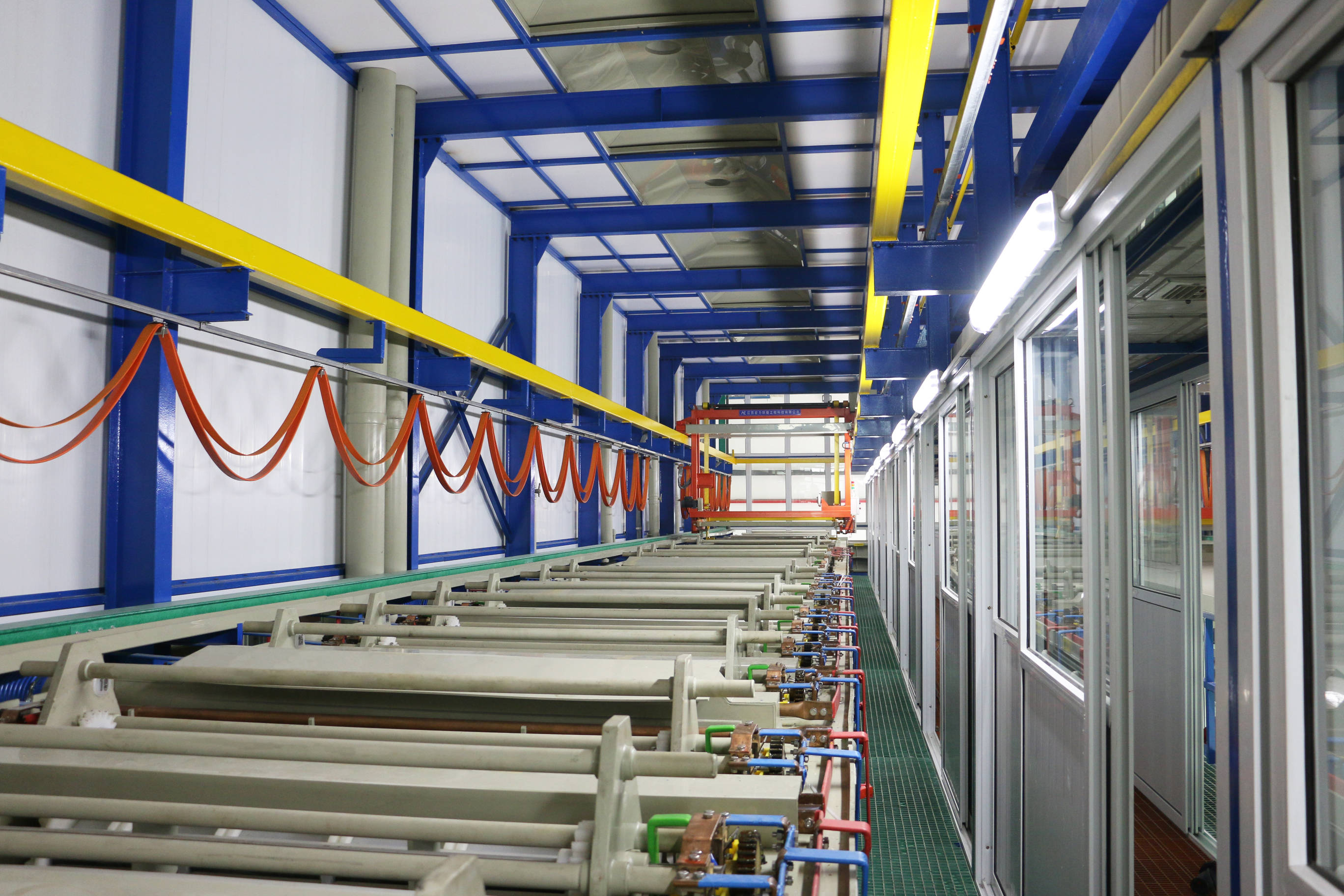
Almost any industrial product within arm's reach — a phone's metal frame, a faucet, a screw, a car door handle — passes through the same kind of workshop just before it leaves the factory: an electroplating tank, an oxidation line, or a spray-coating booth. Surface treatment never appears on a product's nameplate, yet it determines the lifespan and the perceived value of every industrial good. Over the past two decades, this ubiquitous industry has gone through the most thorough supply-side reshaping in Chinese manufacturing: tens of thousands of workshops were driven out of the cities by an environmental-protection storm, and the survivors moved into walled, centralized electroplating parks. Meanwhile, in composite copper foil, copper electroplating metallization for solar cells, and semiconductor advanced packaging, this 220-year-old craft is turning into a new kind of chokepoint process.
This report's core judgments:
- "Invisible" is this industry's single biggest characteristic. The electroplating processing-services market is on the order of RMB 180 billion (industry research institute estimate), with more than 40,000 electroplating enterprises — yet no authoritative institution can produce a figure for the industry's total output value. It hides inside the processes of manufacturing as a whole, and in the cracks between statistical definitions.
- Environmental standards accomplished the clearing-out that other industries achieve through market competition. From the 2005 snapshot of Wenzhou's scattered, disorderly and polluting enterprises — "744 licensed, 800-plus unlicensed" — to roughly 160 centralized electroplating parks nationwide today, two decades of environmental pressure have redrawn the map of the entire industry.
- The competitive landscape splits into three layers: profit sits in the formulas, scale sits in the equipment, and employment sits in the processing plants. Foreign capital holds the high-end formulas — Atotech accounts for roughly half of high-end copper-deposition production lines, and Japan's JCU runs a chemicals-segment profit margin of nearly 47% — while the domestic chemicals corps is climbing upward from a 25% domestic-production baseline, and the fragmented processing plants still have no national champion.
- The new battlegrounds run hot and cold. The 2023 forecasts of a "tens-of-billions-of-RMB" scale for composite copper foil and copper electroplating metallization for solar cells have already been disproved once — in equipment leader Dongwei Technology's 2025 annual report, the two segments combined account for less than 3% of revenue. Semiconductor electroplating is the only track where forecasts and actual results move in the same direction (about RMB 5.2 billion in 2024, projected to reach RMB 9.7 billion by 2028).
- Europe's regulatory calendar is the technology-upgrade timetable for China's export supply chain. REACH's restrictions on hexavalent chromium land in 2026–2027, and the decision on a blanket PFAS restriction comes in 2027; trivalent chromium and cyanide-free substitution are not multiple-choice questions but mandatory ones with a deadline attached.
Key figures at a glance: electroplating processing area reached 1.439 billion square meters in 2022; the domestic-production rate for PCB-dedicated electroplating chemicals is about 25%; Shanghai Sinyang posted 2025 revenue of RMB 1.937 billion (+31.28%), with its damascene plating solution covering the full 90–14nm node range; MKS acquired Atotech for a price in the billions of US dollars (2022); the roughly US$14.5 billion acquisition of Element Solutions is in progress; and the number of electroplating parks nationwide grew from 92 in 2013 to about 160.
Chapter 1 Surface Treatment: Definition, Classification, and Industry Chain Overview
1.1 The Invisible Process: Definition and Ubiquity
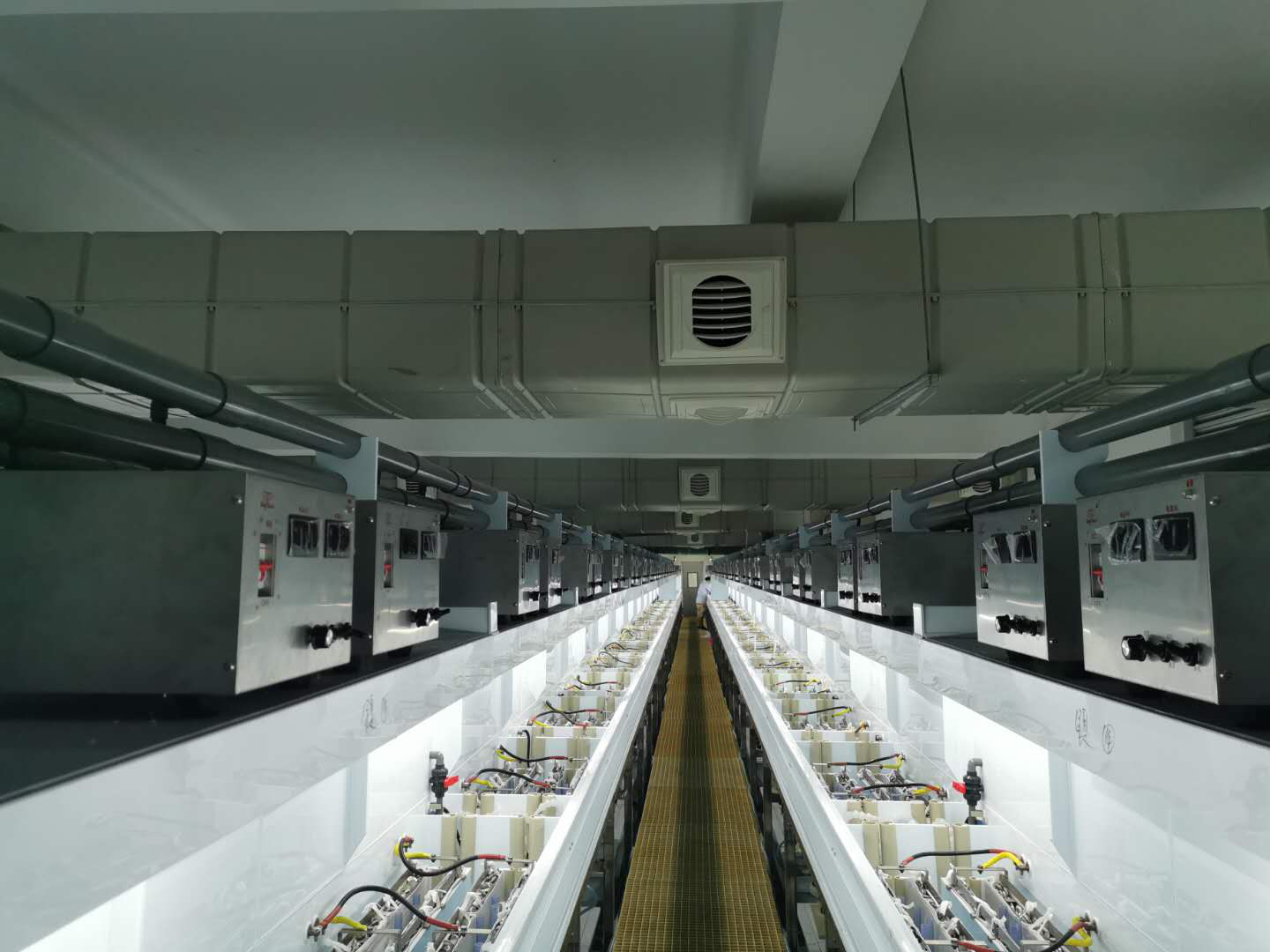
Surface treatment is a processing step that uses electrochemical, chemical, physical, or thermal means to coat the surface of a substrate — metal, plastic, and the like — with a functional film, or to change the properties of its surface layer. Its purpose falls into three categories: corrosion protection; functional reinforcement such as wear resistance and high-temperature resistance; and appearance finishing such as color, gloss, and texture. It produces no independently identifiable good of its own; instead it attaches itself to the final step, or one of the last few steps, of almost every industrial product's production: a screw passes through a zinc layer before it leaves the factory; a phone's metal mid-frame passes through an anodizing tank or a vacuum coating chamber before it leaves the factory; a transmission-tower component passes through molten zinc before it leaves the factory; an aircraft-engine blade passes under a thermal spraying gun after repair. A product's nameplate lists its material, specifications, and the standard it was built to — but never "surface treatment process." And yet it is precisely this invisible step that determines how many years an industrial product can withstand wind and rain outdoors, whether it rusts in a salt-spray environment, and whether it feels cheap or premium in a customer's hand.
This trait of being "everywhere yet never credited" is rooted in the industrial nature of surface treatment: it is an embedded processing service, not a category of end product. Who owns the substrate, who places the order, and who the final buyer is — none of that authority sits with the surface-treatment step; its only job is to take in the substrate at some point along the industry chain, process it, and hand it back. This is what makes demand for surface treatment so extremely fragmented — as long as industrial goods are being produced, demand for surface treatment will never disappear, yet the service itself will never become a "brand" in consumers' minds; its value can only be perceived indirectly, through the industrial product that carries it. This is also precisely why sizing this industry is inherently harder than sizing an ordinary manufacturing sector: there is no unified end-product basis to aggregate around, so estimates can only be built separately from three threads — processing-service revenue, chemical consumption, and equipment purchases. This structural difficulty will recur repeatedly in later chapters.
If an industrial product is viewed as an organic whole that must live through a usage cycle, the role surface treatment plays combines both skin and armor: as skin, it determines the first impression a product gives its user — color, smoothness, feel; as armor, it determines how long the product can hold out against corrosion, wear, and failure in damp, salt-spray, friction, or high-temperature environments. In most scenarios these two properties are not an either/or choice but are required simultaneously — a faucet needs both a mirror-like chrome-plated shine to please the consumer and the ability to go years in bathroom humidity without rusting; a high-strength bolt needs both a uniform, consistent appearance to pass quality inspection and the ability to resist loosening and hydrogen embrittlement over a long service life under vibration. This overlapping demand for protective and decorative function is exactly what drives the surface-treatment process system to keep subdividing and to keep generating new process routes — and it is the premise for understanding how each of the ten processes covered in the next section is positioned.
Surface treatment is not a single process but an entire process system, cross-combined out of substrate, performance requirements, and cost constraints — the same substrate put to a different downstream use may call for a completely different process route, and the same visual effect may be achieved through entirely different paths. Understanding the classification logic of this system is the prerequisite for judging the industry's size, the direction of its technological evolution, and its competitive landscape.
1.2 Ten Processes: A Classification Map
Classified by film-formation mechanism, mainstream surface-treatment processes fall into five families; within each family the processes are similar to one another, and the boundaries between families are clear — this is the most direct entry point for understanding the process system as a whole.
The first family is electrochemical deposition, which forms a new metal layer by reducing and depositing metal ions on the substrate surface; it includes electroplating and electroless plating. Electroplating applies current to reduce and deposit metal ions on the cathode surface, forming a dense coating; it is the dominant process for hardware and bathroom fittings, fasteners, and automotive decorative parts. Electroless plating relies on a self-catalyzing redox reaction and needs no external current; its coating thickness is uniform and can reach into deep holes and blind holes, and it is mostly used for functional nickel plating on precision structural parts and electronic components. The dividing line between the two is whether an external current is required to drive the process, which is also why electroless plating better suits complex shapes, poorly conductive substrates, or plating onto insulating substrates — though its cost generally runs higher than electroplating's.
The second family is electrolytic conversion coatings, which do not add a new metal but instead oxidize the substrate's own surface layer to form a protective film; it includes anodizing and micro-arc oxidation, both of which apply only to valve metals such as aluminum, magnesium, and titanium. Anodizing makes the substrate the anode and electrolyzes it in an electrolyte, forming a porous oxide film on the surface that is then sealed and colored; it is the dominant process for 3C structural parts, especially phone metal mid-frames. Micro-arc oxidation builds on anodizing by introducing high-voltage pulsed discharge, pushing the coating's hardness and wear resistance close to ceramic levels; it is mostly used for load-bearing aluminum-magnesium alloy parts and other applications with higher mechanical-performance requirements. In essence the two are two rungs of the same physical mechanism at different energy intensities: the higher the energy input, the thicker and harder the coating — but process energy consumption and equipment cost rise along with it.
The third family is thermal coating, which heats the coating material to a molten or semi-molten state so it adheres to the substrate; it includes hot-dip galvanizing and thermal spraying. Hot-dip galvanizing immerses an entire steel component in molten zinc, achieving long-lasting corrosion protection through the dual shielding of an iron-zinc alloy layer and a pure zinc layer; it is the standard process for transmission towers, guardrails, and steel structural components. Thermal spraying melts or semi-melts metal or ceramic material and sprays it at high speed onto the substrate to deposit a coating; it is commonly used for wear- and heat-resistant reinforcement and repair of components such as aircraft-engine blades and rolling mill rolls. The difference between the two lies in whether the substrate is fully immersed or locally sprayed — the former suits full-body protection for mass-produced standard components, while the latter suits localized reinforcement or remanufacturing of high-value parts; the two processes' downstream customers barely overlap.
The fourth family is coating application, which forms a film using organic or inorganic paint; it includes electrophoretic coating, powder coating, and Dacromet. Electrophoretic coating uses charged paint particles that migrate in an electric field and deposit onto the workpiece surface; the film thickness is uniform and can reach into internal cavities and dead corners, making it the general-purpose process for automotive body primer. Powder coating electrostatically adheres solid resin powder and then cures it into a film at high temperature, producing no solvent evaporation; it is widely used for home-appliance housings and outdoor fixtures. Dacromet is a zinc-aluminum flake coating: a zinc-aluminum flake slurry is dip-coated and baked to form a physical barrier layer that produces no hydrogen embrittlement, making it the preferred process for replacing traditional zinc electroplating on high-strength fasteners. What the three processes share is lower environmental pressure than electroplating — none involves a heavy-metal electrolyte, so the wastewater-treatment burden is lighter — which is also the fundamental reason all three have put substitution pressure on electroplating in some application scenarios in recent years.
The fifth family is vapor deposition, represented by PVD (physical vapor deposition), which vaporizes a target material in a vacuum environment and deposits it onto the workpiece surface to form a dense film; the entire process is dry, with no water involved, and it is mostly used for coating stainless-steel and titanium-alloy decorative parts and cutting tools. Its biggest difference from the previous four families is that it relies on no liquid medium at all, so wastewater-treatment cost is close to zero — at the price of higher equipment investment and vacuum-environment maintenance cost, which is why it better suits high-value-added, small-to-medium-batch applications.
The ten processes fall into five families and may look complicated, but they in fact follow a single selection logic: substrate material first determines the set of eligible processes — valve metals can choose the anodizing family, steel substrates can choose the electroplating or hot-dip galvanizing family; performance requirements further narrow the choice within that eligible set — wear resistance and load-bearing needs point to micro-arc oxidation or thermal spraying, decorative appeal points to electroplating or PVD, and high-strength hydrogen-embrittlement resistance points to Dacromet; production volume and workpiece geometry then determine the specific handling method — standardized small mass-produced parts suit continuous batch immersion, while single pieces with complex shapes or high appearance requirements need piece-by-piece rack handling, and the two carry hugely different equipment investment and labor intensity; finally, cost and environmental constraints make the final call on the process route. No single process can cover every scenario, and the industry's coexistence of many processes is itself the result of increasingly fine-grained market division of labor — this is also the common starting point for later chapters' discussion of each sub-process's respective fate.
1.3 Industry Chain Overview: From Chemicals to the Entire Manufacturing Sector
The surface-treatment industry chain can be summed up as a clear three-segment structure: upstream is the supply of chemicals, anode materials, and equipment; midstream is processing services and equipment manufacturing; and downstream spreads across nearly every category of manufacturing.
Upstream, chemicals are the industry chain's technological core, covering plating solutions, additives such as brighteners and levelers, reducing agents and catalysts for electroless plating, electrolytes for anodizing, and coating materials such as electrophoretic paint and powder coatings. Standing alongside chemicals are anode materials — metal raw materials such as phosphor copper anode balls, nickel plates, and zinc ingots that are consumed as soluble anodes during electroplating, whose price fluctuations pass straight through to the cost structure on the processing side. Equipment supply likewise belongs upstream, ranging from general-purpose plating tanks and spray lines to high-tech vacuum coating machines and vertical continuous plating lines, forming the hardware base on which processing services run.
Midstream, processing services form the interface where the industry chain touches the end customer directly; the main players are specialized contract processors that take on toll-processing orders, though some downstream manufacturers, for reasons of process confidentiality or supply-chain independence, build their own production lines and vertically integrate — for example, some 3C structural-part makers build their own anodizing or PVD lines that serve only their own products and take no outside orders. This coexistence of in-house build-out and outsourcing makes the real capacity boundary of midstream processing services blurrier than the surface-level count of "processing-service enterprises" would suggest.
Downstream, it covers nearly every category of manufacturing: complete vehicles and auto parts, electronics and appliances and printed circuit boards, hardware and bathroom fittings, fasteners, aerospace and defense equipment, power transmission and distribution and infrastructure components, home appliances, molds and cutting tools — every one of them needs some form of surface treatment at the finished- or semi-finished-product stage.
The most noteworthy feature of this industry chain is that it runs in the opposite direction from a typical raw-material processing chain. An ordinary manufacturing industry chain usually extends vertically — raw material is processed through multiple stages and gradually becomes an independent commodity. The surface-treatment industry chain instead penetrates horizontally — it produces no independent commodity of its own, but embeds itself like a thin film into the tail end of almost every other industry chain. Precisely because of this, the surface-treatment industry's own business climate is not determined by any single end market, but fluctuates in near lockstep with the total shipment volume and quality-upgrade pace of industrial goods across society as a whole: as automobile output grows, orders for decorative chrome plating and cathodic electrophoretic coating grow with it; as printed-circuit-board output value expands, the volume of copper electroplating expands with it; as competition over consumer-electronics appearance escalates, the demand for finer anodizing and PVD escalates with it. This trait of being tied to the overall base of manufacturing as a whole, rather than to any single downstream industry, is the starting point for understanding the logic behind the surface-treatment industry's size and its fluctuations.
This horizontally penetrating industrial character also explains the methodological difficulty inherent in studying the surface-treatment industry: since it produces no independent, statistically countable end product, any attempt to measure it as a single whole will inevitably run into ambiguous scope — whether counted by processing-service revenue, by chemical consumption, or by equipment purchases, the answers obtained can differ by several times over. This is not a lapse in statistical work but an inevitable result dictated by the structure of the industry chain itself, and it is also the fundamental reason why, in later chapters discussing market size, this report insists on estimating the chemicals, equipment, and processing-service layers separately, each labeled with its source institution and scope, rather than giving a single blanket total figure.
1.4 Three-Tier Market: The Structural Divide Between Chemicals, Equipment, and Processing Services
Although lumped together under the single name "surface-treatment industry," the chemicals, equipment, and processing-service tiers are, in terms of competitive structure, almost three different businesses. The differences among the three must be examined separately in later discussions of industry size, competitive landscape, and investment value; conflating the three indiscriminately is one of the major reasons the various market-size figures for this industry have long been at odds with one another.
The chemicals market is a technology-intensive market, whose core barrier is formula and process know-how rather than capacity. Specialized chemical suppliers often do not simply sell plating solution as raw material to processing plants; instead they embed themselves in customers' production lines through technology licensing, on-site commissioning, and long-term process services, helping customers stabilize yield and consistency. Once this deep bond is established, the cost for a customer to switch suppliers is extremely high and the willingness to switch is low, producing relatively firm customer stickiness. The closer the application gets to high-tech scenarios such as semiconductor advanced packaging or high-end printed circuit boards, the thicker the formula barrier and the higher the market concentration.
The equipment market is a capital-intensive market. General-purpose equipment such as ordinary plating tanks and spray lines has a relatively manageable technical threshold, but for specialized high-tech production lines such as vertical continuous plating for printed circuit boards or vacuum coating, a single piece of equipment carries a high investment amount and a long qualification cycle; once a production line is brought online it becomes deeply bound to its process parameters, producing a long repurchase cycle and a customer lock-in effect.
The processing-service market presents a structure completely different from the two tiers above it: it is relatively asset-light with a relatively low barrier to entry, yet it is highly fragmented because of high environmental-compliance costs and a short service radius. Most surface-treatment processes such as rack plating and barrel plating run on turnaround times measured in hours, and customers are extremely sensitive to logistics cost and response speed — the shipping cost for a heavy workpiece can even exceed the processing fee itself. This means processing-service enterprises can only serve downstream customers within their immediate region, and it is inherently hard for them to expand across regions through technology export the way chemical or equipment companies can. At the same time, treating heavy-metal-bearing wastewater and meeting discharge standards constitutes an asset-heavy burden unique to the processing-service segment, raising the industry's environmental-compliance threshold without bringing a corresponding boost in economies of scale or bargaining power — if anything, it further squeezes the room for any single processing enterprise to grow large and strong.
The structural divide among the three tiers ultimately shows up as completely different trajectories of industry concentration: the chemicals and equipment markets trend toward gradual consolidation as technical thresholds rise, while the processing-service market, constrained by regional barriers and environmental cost, remains highly fragmented and regionally balkanized, with a national champion enterprise still yet to emerge. This structural contrast of "concentrated upstream, fragmented midstream" is precisely the core feature that sets the surface-treatment industry apart from most manufacturing sub-sectors, and it is the analytical framework that later chapters return to repeatedly when analyzing the three-tier breakdown of market size, the competitive landscape, and investment logic.
The three tiers are also driven by different logics, and their growth outlooks cannot be judged by a single standard. The chemicals market's growth curve tracks more closely with the pace of downstream technology upgrades: the further it moves toward applications with exacting yield and consistency requirements, such as advanced packaging and high-end printed circuit boards, the stronger its dependence on formula iteration, and the more its market demand can transcend the ordinary capacity cycle. The equipment market's growth curve tracks more closely with the pace of downstream capacity expansion: the more new production lines are added, the stronger equipment-purchasing demand becomes, but once downstream capital expenditure slows, equipment orders swing far more sharply than chemicals do. The processing-service market's growth curve tracks more closely with the pace of total industrial-goods shipments across society as a whole; its swings are relatively gentle, yet it is the most sensitive of the three to marginal changes in environmental policy — every notch environmental standards tighten directly raises the survival threshold for small and mid-sized processing plants, and in turn reshapes the regional capacity landscape. These three drivers, independent of one another yet pulling on one another, form the underlying framework that runs through this report's later chapters on market size, competitive landscape, and risk analysis.
Chapter 2 Global Landscape: From Birmingham to the Pearl River Delta
In a sense, electroplating is a technology that was "invented" twice. The first time was in Italy in 1805, and the inventor has been all but lost to history; the second time was in Birmingham, England, in 1840, and the patent certificate is still on record today. That thirty-five-year gap is a microcosm of this ancient craft's fate over the two centuries since — scientific principle often gets a head start, but turning a principle into an industry depends on patents, capital, and the reshuffling of manufacturing geography. This chapter follows that chain, from a workshop in Birmingham to the production bases and coating centers of today's multinational chemical giants scattered across Suzhou, Guangzhou, and Tianjin.
2.1 Brugnatelli's Experiment and Thirty Suppressed Years
In 1800, Alessandro Volta invented the voltaic pile, giving humanity a continuous, controllable electric current for the first time and providing the precondition for electrodeposition. Five years later, in 1805, Volta's friend, the Italian chemist Luigi Valentino Brugnatelli, used the voltaic pile to carry out an experiment: he immersed two silver medals in a saltwater solution, used gold as the anode, and after applying current, gold atoms adhered stably onto the silver surface — the first recorded electroplating experiment in history.
This discovery should have been enough to launch an industry, but it hit terrible timing. Brugnatelli published his findings in a Belgian physical-chemistry journal, but the French Academy of Sciences at the time, under Napoleon's rule, declined to adopt the work for various reasons and even suppressed it. For roughly the next thirty years, electrodeposition technology remained near-frozen at the industrial level, until Faraday's laws of electrolysis in 1833 finally gave the technology a theoretical foundation once again. Throughout those thirty silent years, the principle behind the voltaic pile itself had long since spread through the European scientific community, but turning it into a repeatable, licensable, scalable industrial method still lacked one critical breakthrough — until a surgeon and two industrialists in Birmingham picked up the baton. The time lag between scientific discovery and industrialization shows up in an especially extreme form in electroplating — and that is also a basic premise for understanding the rest of this chapter: what truly determines when a technology "lands" has never been the principle alone.
2.2 The Birmingham Patent: The Elkington Brothers and the Birth of the British Electroplating Industry
The key to industrialization was finally found in Birmingham in 1840. A local surgeon, John Wright, discovered in his amateur research that a solution of silver cyanide in potassium cyanide could serve as a stable plating solution — a discovery that solved the core problem of poor adhesion and uneven coatings that had previously plagued electroplating. The brothers George Elkington and Henry Elkington bought the technology and filed a patent, obtaining British Patent No. 8447, "An Improved Method of Coating, Covering, or Plating Certain Metals." This is recognized as history's first electroplating patent, and Birmingham thereby became the birthplace of the global electroplating industry.
Once they had the patent, the Elkington brothers did not lock the technology inside Britain. In 1842 they licensed the patent to Charles Christofle in France, marking the first time electroplating technology crossed a border through a commercial license — in today's terms, this was probably the earliest "technology licensing" deal in the history of the global surface-treatment industry. In 1844, the "Woolrich generator," built specifically to power electroplating, was put into service and is regarded as the first industrial generator in history; in 1876, what is considered the first modern electroplating factory in history appeared in Hamburg, Germany. In little more than thirty years, electroplating completed the entire industrialization path from a surgeon's amateur laboratory to cross-border patent licensing to an independent electricity-supply system — a path that has since been repeated again and again in the commercialization of almost every emerging surface-treatment technology. It's worth noting that the commercialization path the Elkington brothers chose — filing a patent and then licensing it out, rather than simply expanding by building their own factories — left the industry with a business paradigm that persists to this day: what is truly scarce and truly valuable is the formula and the process itself, not the production equipment. This paradigm would be proven even more thoroughly a century and a half later, in the financial statements of multinational chemical giants.
2.3 The Watts Nickel Bath and the Decorative Turn of Chrome Plating: Electroplating Enters Consumer Industry
If the Birmingham patent solved the question of "can it be plated," then for the next seventy-plus years the electroplating industry had to solve the question of "does it plate well, and does it last." In 1916, the Watts nickel bath formula was introduced, greatly improving the gloss and stability of nickel coatings; the formula is still in use today and is one of the longest-lived classic formulas in the history of electroplating chemistry. What truly carried electroplating from an industrial component into mass consumer view was the automotive industry. Around 1928, General Motors designer Harley Earl introduced decorative chrome plating onto automotive exterior parts — bumpers, grilles, and headlamp bezels began to be chrome-plated on a large scale, and the shine of chrome-plated parts became the direct visual symbol of automotive "luxury" at the time. In 1934, the bright nickel process was commercialized, further lowering the cost and threshold of pretreatment ahead of chrome plating.
By this point, electroplating had completed its triple jump — from laboratory discovery to patented industry to mass-consumer symbol. The evolution of surface-treatment technology from then on has basically unfolded along the same logic: chemical-formula innovation solves the performance problem, while downstream manufacturing demand — especially from the automotive industry and, later, the electronics industry — supplies the commercial rationale for scaling up. The visual language of "shine equals quality" that decorative chrome plating established has since extended all the way into phone mid-frames, faucet hardware, and appliance panels, becoming almost an unspoken aesthetic convention for the last step before an industrial consumer product leaves the factory.
2.4 The Center of Gravity Shifts East: The Manufacturing Map Is Redrawn, and Electroplating Follows
Surface treatment has never been a process that can exist independently of its downstream — where an electroplating tank or an oxidation line is built essentially depends on where the auto plant or electronics plant is built. In the second half of the twentieth century, the global manufacturing supply chain went through multiple rounds of migration — from Europe and the United States to Japan, then to South Korea and Taiwan, and finally to mainland China — and surface-treatment capacity followed the same migration path in near lockstep with downstream manufacturing. Today, Asia-Pacific is already the largest region in the world for the electroplating industry by scale, and within that region China is the single country with the most concentrated capacity, as well as the widely recognized largest electroplating-processing country in the world. The logic driving this round of migration is not complicated: surface-treatment steps generally require staying within a short physical radius of the downstream final-assembly line, and wastewater and pollutant treatment is highly dependent on local environmental infrastructure — together, these two factors make it almost impossible for this process to migrate independently of the manufacturing base the way chip design can. It can only follow the factories; wherever the factories are, the plating tanks and oxidation lines must be built nearby.
Exactly how big the global market is, different institutions give wildly different answers, because the boundaries of the term "surface treatment" itself are not standardized — some institutions count only processing services, some fold in chemicals and equipment as well, and others simply count conversion coatings and anodizing chemicals into the category of "chemical surface treatment." By Market Research Future's count, the global electroplating market was worth about US$21.7 billion in 2024, with Asia-Pacific accounting for roughly 45% — the largest single region; Precedence Research, which focuses on "surface treatment" as a whole, gives a narrower figure of just US$6.68 billion, while in the same year Market Data Forecast, using the broader scope of "chemical surface treatment," puts the number at US$16.47 billion — the two differ by more than double. Also by Market Research Future's count, the global surface-treatment equipment market was worth about US$15.8 billion in 2024. These figures are not internal breakdowns of the same report; they cannot be added together, cannot be used to back out market share, and certainly cannot be pieced into a single cross-institution global share pie chart. The only conclusion they jointly support is this: this is a global industry sized in the billions of US dollars and still expanding — the exact magnitude depends on where the counter draws the boundary.
2.5 Chemical Giants' Financial Home Turf: Selling Formulas Beats Building Equipment
If the electroplating processing-service segment is highly fragmented and has rarely produced a multinational giant, the electroplating chemicals segment is precisely the opposite — a handful of multinational companies, on the strength of formulas and process know-how, have long held the global high-end market, and their financial performance often outperforms the asset-heavy equipment-manufacturing segment. The business logic on this side is closer to selling patent licenses than selling capacity: customers keep purchasing formulas and additives in proportion to their processing volume, and suppliers don't have to shoulder the capital expenditure of production-line expansion the way equipment makers do, so the gross-margin structure is naturally thicker. A handful of major events in this track over the past five years are enough to sketch the outline of the global chemicals landscape.
Atotech is the most representative sample here. This electroplating-chemicals company entered the Chinese market in 1998 and has production bases in Guangzhou and Yangzhou; it completed an independent IPO in 2021, and just over a year later, on August 17, 2022, its acquisition by the American semiconductor-equipment giant MKS Instruments ("MKS") was completed. The consideration figure for this deal needs to be parsed carefully by scope — according to a breakdown in MKS's filing with the U.S. Securities and Exchange Commission (SEC), the net cash acquisition consideration was about US$5.664 billion, which includes about US$1.545 billion used to repay Atotech's senior secured term loan; most media coverage at the time used a headline figure of "US$4.4 billion" or "US$5.1 billion" — the three figures cover different scopes and should not be mixed up. In the year before the acquisition, 2021, Atotech's standalone revenue was about US$1.5 billion. But the deal did not go entirely smoothly afterward — dragged down by weakening end demand for personal computers and smartphones, MKS took a US$1.3 billion goodwill impairment in 2023 against the Materials Solutions segment that houses Atotech, a sum already close to its annual revenue as a standalone company. Even so, MKS has continued to add investment recently: the company is investing US$25 million to expand the former Atotech manufacturing base in Guangzhou, with the officially stated reason being to support the new round of demand brought by AI-infrastructure buildout — which is also a concrete footnote, in its contemporary form, to the "Pearl River Delta" in this chapter's title.
On the other side of the Pacific, Japanese peers turned in a different report card. C.Uyemura (TSE: 4966) posted FY2026 revenue — the fiscal year ending March 2026 — of JPY 91.7 billion, up 9.5% year-on-year, and operating profit of JPY 21.3 billion; both set historical highs, with growth driven by generative-AI-related demand pulling on its surface-treatment materials business. The company started its China footprint earlier than most: it built a plant in Pingshan, Shenzhen, as early as 1988, added Shanghai in 2002, and later set up a technology center in Suzhou. Fellow Japanese company JCU Corporation (TSE: 4975, known in China as Jieciyou) posted FY2026 revenue of JPY 29.672 billion, up 4.6% year-on-year, and operating profit of JPY 12.156 billion, up 15.6% year-on-year — likewise a historical high. JCU's financial breakdown is especially worth a closer look: the company's chemicals-segment profit margin is close to 47%, while its equipment-segment revenue actually declined over the same period — a contrast that is almost a condensed specimen of the entire industry's business model: selling formulas is far more profitable than building equipment, and chemicals are the real profit engine for these giants.
The wave of consolidation on the other side of the Atlantic has been just as intense. Element Solutions Inc. (whose core asset is MacDermid, "Element Solutions") traces its predecessor back to MacDermid, founded in 1922; its Suzhou base went into operation in 2005 and is the company's only R&D center in Asia. Element Solutions posted 2025 revenue of US$2.55 billion. Just shortly before this report was written, on July 6, 2026, Solstice Advanced Materials — spun off from Honeywell — announced it would acquire Element Solutions for about US$14.5 billion (including debt), with the deal expected to close in the first half of 2027. As of now, this acquisition is still in progress and has not yet completed; it is the heaviest deal in the specialty-chemicals industry's recent wave of consolidation.
Placing Atotech's acquisition by MKS alongside Element Solutions' pending acquisition by Solstice offers a high vantage point for viewing this round of consolidation: the two deals are less than four years apart, yet the buyers come from semiconductor equipment and industrial materials respectively — two industries that were not originally part of the core specialty-chemicals circle. That buyers are increasingly former "neighboring" industries rather than direct competitors suggests that the formula barriers and customer stickiness electroplating chemicals have built up over the long term are being repriced by a broader pool of industrial capital. If this deal closes smoothly, a new company spun off from an industrial giant will directly take over one of the most important assets on the global electroplating-chemicals map.
2.6 Another Line in Coating Services: PVD and Zinc-Flake Systems
Besides wet electroplating chemicals, the global surface-treatment landscape has another line of dry coating services likewise dominated by multinational companies — physical vapor deposition (PVD) and zinc-flake coatings. Switzerland's Oerlikon Balzers, founded in Liechtenstein in 1946, is one of the longest-established companies in the PVD coating-services field. In December 2003, Oerlikon Balzers set up China's first coating center in Suzhou, and has since expanded gradually; it now operates thirteen coating centers across China, including:
- Suzhou, Tianjin, Chongqing, and Wuhan — covering the Yangtze River Delta and the central-western manufacturing hinterland
- Xi'an and Chengdu — serving western China's electronics and aerospace-parts supply chains
- Wenling and Dongguan — connecting respectively to hardware and precision-manufacturing clusters in the Yangtze River Delta and the Pearl River Delta
This list of locations is itself a map of China's major manufacturing centers, with Dongguan sitting right in the heart of the Pearl River Delta. Parent company Oerlikon Group's "Surface Solutions" segment posted 2024 revenue of CHF 1.5 billion; the same group's Oerlikon Metco, which specializes in thermal spraying, has a production base in Shanghai. Another Dutch PVD company, IHI Hauzer, known for its diamond-like carbon coatings, likewise has a competence center in Shanghai, serving Chinese local cutting-tool and auto-parts coating customers. Unlike electroplating-chemicals companies such as Atotech and C.Uyemura, PVD coating services follow a business model closer to "opening a plant is the service" — the coating center itself is the factory: customers send in parts to be coated and pick them up when done, with almost no cross-border trade in chemicals involved. This is also the fundamental reason companies like Oerlikon Balzers and IHI Hauzer choose to set up their own plants directly in China rather than license local firms to do the contract work.
Zinc-flake coating — better known in the Chinese market as a close relative of the Dacromet system — has long been dominated by the German company Dörken. Founded in Germany in 1980, this company's products have been free of hexavalent chromium since inception, putting it on a chromium-free path nearly forty years ahead of later EU regulations; third-party estimates put its annual revenue at about US$750 million — not verified against the company's own primary financial statements, but enough to show this is a sizable specialist firm in its niche. These two lines, PVD and zinc-flake coatings, together with electroplating chemicals from the previous section, make up the three segments where multinational companies truly hold the advantage in the global surface-treatment industry — their common trait is a high technical threshold, with formula and process know-how that is hard to replicate, rather than the equipment itself.
2.7 The Regulatory Baton: REACH, PFAS, and the American Baseline
Multinational companies' advantage in chemical formulation was, to a large extent, "forced" into being by European and American environmental regulations — the timetable of regulatory change is, in effect, the timetable for switching technology routes across the global surface-treatment industry. The heaviest item on this regulatory line is the EU REACH regulation's (Registration, Evaluation, Authorisation and Restriction of Chemicals) control over hexavalent chromium. Chromium trioxide and various other hexavalent chromium compounds were added to the REACH Authorisation List in 2013, after which enterprises have had to apply for authorization on a case-by-case basis to keep using them; September 21, 2017 was the "sunset date" for the first batch of hexavalent chromium compounds — after that date, in principle, any unauthorized use could no longer continue. The EU is currently pushing to switch regulatory tracks, moving hexavalent chromium management as a whole from the "case-by-case authorization" mechanism into the stricter "restriction" mechanism, with the related legislative process concentrated in the 2026–2027 window and still ongoing as of this report's writing. Also worth noting: the EU's RoHS Directive (Restriction of Hazardous Substances in Electrical and Electronic Equipment) had already banned the use of hexavalent chromium in electrical and electronic products as early as July 1, 2006, making it the earliest-effective link on this regulatory line.
Younger than hexavalent chromium, but equally consequential for the electroplating industry, is the process of a blanket restriction on PFAS (per- and polyfluoroalkyl substances). Germany, the Netherlands, Denmark, Sweden, and Norway jointly submitted a restriction proposal covering all PFAS substances to the European Chemicals Agency (ECHA) in early 2023; ECHA released an updated version in August 2025, in which the number of exempted-use entries grew from 26 to 74. On the current timetable, ECHA plans to complete its scientific assessment by the end of 2026, and the European Commission is expected to make a formal decision based on that in 2027. The metal-electroplating industry has already been named one of the key industries in this round of assessment, because PFAS compounds have long been used as mist suppressants in hard chrome plating. One directly related sub-exemption — the use exemption for PFOS as a mist suppressant in hard chrome plating — expired on September 7, 2025, and whether it will be extended could not yet be verified as of this report's writing. Compared with the EU's steadily tightening timetable, the American regulatory baseline is far older and far more stable: the two sets of discharge standards issued by the U.S. Environmental Protection Agency (EPA) — 40 CFR 413, Electroplating Point Source Category, in 1974, and 40 CFR 433, Metal Finishing Point Source Category, in 1983 — remain to this day the statutory floor for discharge compliance in the American electroplating industry, with no major overhaul in recent decades.
Viewed side by side, the three regulatory lines reveal a clear divide: the EU's pace is one of continual tightening, with clear windows that force the development of substitute processes; the American pace is one of maintaining an enforcement baseline set decades ago, with regulatory focus placed more on front-end sampling research than on new legislation. This divide is itself a hidden coordinate axis behind the choice of surface-treatment technology routes worldwide over the past twenty years — for enterprises deeply tied to the EU export chain, replacing hexavalent chromium and tracking PFAS developments is close to a rigid cost; for enterprises facing mainly the American market, the urgency of technology upgrading is far weaker. For the capacity-migration path mentioned at the start of this chapter, this regulatory axis also means: what has truly moved to Asia-Pacific is only capacity and employment — European and American regulators still hold considerable power to define this craft's technology route. As long as the downstream product still needs to be exported to the EU, whether the plating line sits in Suzhou or in Birmingham, it is answering the same questionnaire from Brussels. Regulation has thus become an invisible baton that has never stopped waving over the global technology roadmap of this two-hundred-year-old craft.
Chapter 3 PEST Environmental Analysis
3.1 Political Environment (P) — A Layered, Tightening Regulatory Framework
The core feature of the surface-treatment industry's political environment is a top-down, layer-upon-layer regulatory system — not something any single piece of legislation can sum up.
National standards draw the baseline first. The Discharge Standard of Pollutants for Electroplating (GB 21900-2008) is the first national-level dedicated discharge standard in the history of the electroplating industry; effective August 1, 2008, it replaced the previous comprehensive discharge standard that had applied across all industries, setting discharge constraints specifically for electroplating — a heavy-metal-intensive process — for the first time. This marked electroplating regulation's move from being "measured with a general ruler" to being "measured with a dedicated ruler," and it also provided the legislative benchmark for a subsequent series of industry-specific policies.
On top of the national dedicated standard, the pollutant discharge permit system has further tightened the entry gate. The Ministry of Ecology and Environment's special management rules for pollutant discharge permits listed electroplating as one of the first 13 industries subject to centralized permit issuance, meaning an electroplating enterprise's discharge behavior is no longer merely a subject of after-the-fact supervision but is brought under permit-based management from the moment it obtains production qualification: the discharge permit itself becomes a precondition for an enterprise to operate legally, rather than a basis for tracing back after pollution has already occurred.
The industry's specific status also shows up in list-based management of key control targets. The Ministry of Ecology and Environment has designated electroplating as one of the 6 industries under key control for heavy-metal pollution, alongside categories such as lead-acid battery manufacturing and non-ferrous metal smelting. This means the intensity of environmental oversight facing the electroplating industry is inherently higher than that facing most ordinary manufacturing categories, and electroplating enterprises can hardly stay uninvolved whenever any regional or sectoral heavy-metal pollution control measure is tightened.
Running in parallel with the mandatory standards above is a layer of entry-threshold management. The Ministry of Industry and Information Technology's Standard Conditions for the Electroplating Industry cover all major process segments — electroplating, electroless plating, hot-dip coating, oxidation, phosphating, and centralized electroplating zones — setting itemized requirements from construction siting, process equipment, and resource consumption to pollutant discharge and workplace safety; it is, in essence, an eligibility checklist for industry entry. The significance of this Standard Conditions document lies not in how strict any specific limit is, but in the fact that it was the first to bring centralized electroplating zones themselves under regulated management, providing the higher-level legal basis for the institutionalized operation of centralized pollution-treatment parks that followed.
Stricter local standards then layer on a geographic gradient of regulation. In environmentally sensitive regions represented by the Taihu Lake basin, Zhejiang and Jiangsu have each issued local discharge standards stricter than the national standard, tightening regional limits in tiers. For the same process and the same size class of enterprise, the compliance cost faced by a plant sited in a sensitive Yangtze River Delta region versus one sited in an ordinary inland region is not on the same order of magnitude. This geographic gradient also directly shapes enterprises' siting logic: regions with higher environmental-compliance costs tend to force out lagging capacity first, while enterprises with strong compliance capability may instead gain an opportunity to raise regional concentration through this process — layered regulation is both a constraint and a hidden force reshuffling the industry landscape.
The two-tier structure of "national standard as the floor, local rules adding on top of it," combined with the MIIT's regulatory requirements for electroplating enterprises' entry conditions and centralized-zone management, together form the skeleton of the current political environment for the electroplating industry: from production qualification and discharge limits to stricter regional standards, regulatory tightening advances layer by layer along the same main line. The specific rectification milestones, chronological events, and shutdown cases are left for a later dedicated chapter; this section only needs to establish this layered regulatory framework itself.
3.2 Economic Environment (E) — Manufacturing Cycle Transmission and Cost Structure
Surface treatment has never been an industry with an independent demand cycle; its order rhythm follows almost entirely from downstream OEMs' production plans. Looking at the downstream structure, according to the China Research Institute of Huajing Industry, automotive is the largest application area for electroplating at 21.45%, followed by aerospace and defense at 16.75%, and then in turn hardware and bathroom fittings, electronics and printed circuit boards (PCBs), 3C structural parts, fasteners, and transmission towers. This means the electroplating industry's business climate is, in essence, a lagged reflection of the automotive and electronics-manufacturing industries' business climate: when OEM capacity expands, electroplating orders immediately pick up in volume; when OEMs destock or contract capacity, plating-shop utilization comes under pressure in tandem — the industry itself has almost no independent counter-cyclical adjustment capability.
Among the many downstream sectors, printed circuit boards have an especially prominent pull on electroplating. According to iiMedia Research, China's printed-circuit-board output value was about RMB 415.6 billion in 2024, up 8.3% year-on-year, accounting for more than half of global output value. Electroplating is an irreplaceable core step in PCB production, which makes PCBs one of the surface-treatment industry's largest single sources of industrial demand. Fasteners are another stable line of demand: according to estimates by the Qianzhan Industry Research Institute and China Research and Intelligence, China's fastener industry was worth on the order of RMB 150 billion in 2023, and a considerable proportion of these products need surface-treatment processes such as Dacromet (zinc-aluminum flake coating) to gain corrosion resistance — especially in hydrogen-embrittlement-sensitive scenarios such as high-strength bolts, where Dacromet is almost the irreplaceable choice.
It's worth noting that electroplating's downstream structure has a certain degree of diversification built in: the industry cycles of automotive, aerospace, electronics, and hardware and bathroom fittings are not fully synchronized with one another, which to some extent gives the electroplating industry a cross-cycle buffer — a chill in a single downstream sector need not stall the whole industry in sync. But this buffering effect is limited, because electroplating enterprises generally supply local, dominant industry clusters; a plating shop rooted in an auto-parts industrial belt can hardly switch its customer mix in the short term to take on electronics or hardware orders. The industry's overall cycle resistance is still weaker than the diversification its downstream structure appears to offer on the surface.
The demand side determines order volume, while the cost side determines who can turn orders into profit — and this is precisely where the economic character of the surface-treatment industry diverges from ordinary manufacturing-support segments. According to industry-analysis sources, in the cost structure of hardware electroplating enterprises, raw and auxiliary materials account for about 79%, labor cost accounts for about 9%, and environmental spending — represented mainly by treatment of heavy-metal-bearing wastewater — accounts for about 15%–25% of total electroplating cost, and this share is typically even higher in regions with stricter environmental enforcement, such as the Yangtze River Delta and Pearl River Delta. In other words, environmental compliance has evolved from a traditional tax-and-fee burden into a core cost line item that determines whether an enterprise can keep operating at all — its weight now approaches, and in some cases exceeds, more than double the labor-cost line, which is rare across the whole of manufacturing's supporting segments. A higher environmental threshold means small and mid-sized processing plants that lack the scale to spread out pollution-control-facility investment are being structurally pushed out of this industry.
This cost structure also reinforces the industry's short-service-radius character. Electroplating is usually priced by area or by weight, with turnaround measured in hours; sensitivity to shipping cost for heavy parts and OEMs' need for a nearby responder mean electroplating enterprises generally have a short service radius and a customer base highly concentrated in the local industry cluster. This means that once a regional OEM or electronics-manufacturing cluster goes into a downturn, local electroplating enterprises can hardly hedge by reallocating orders across regions the way a nationally facing industry could — regional industry-cycle swings pass through, almost undiscounted, straight into the operating condition of the local electroplating cluster.
3.3 Social Environment (S) — Image Baggage and Labor Structure
The social environment facing the surface-treatment industry starts with a lingering historical image burden. More than two decades of environmental rectification have pushed the electroplating industry's production-organization form, as a whole, from workshops scattered across cities into industrial parks with centralized pollution treatment — the specific course of this process is left to a later dedicated chapter. But the speed at which industrial organization migrates is not the same as the speed at which social perception adjusts: the public impression that "electroplating equals pollution" remains, to this day, a lingering implicit discount factor in the industry's investment attraction, cross-regional industrial cooperation, and even capital-market valuation — for the same scale of revenue and profit, electroplating-related enterprises are often rated lower on the financing and investment-attraction fronts than peers in electronics manufacturing or precision machinery, which carry a "cleaner" image. This lag is not an isolated case but a cognitive time-lag that commonly appears during the environmental transition of heavily polluting industries: the renewal of industrial organization can be completed within a few years, but an industry label formed in the public mind often takes far longer to correct — during which time, even after an enterprise has completed a clean-up retrofit, it still has to pay extra communication and trust costs for the industry stigma accumulated over history.
Steadily rising public environmental awareness has further tightened the boundaries of this image burden. As the system of environmental-information disclosure and the routinization of environmental inspections have advanced, overall public and local-government attention to heavy-metal industrial emissions has risen, and electroplating — a highly sensitive process category in public perception — faces greater local social resistance at the stage of new construction, capacity expansion, and environmental-impact-assessment publicity than ordinary manufacturing processes do. This constraint doesn't come from any single isolated incident but is a sustained, structural pressure formed by the overall rise in environmental awareness, and it directly reinforces the industry's pull toward centralized pollution-treatment parks. For a local government, the public-opinion impact of a single environmental complaint related to an electroplating enterprise is often amplified well beyond the scale of its actual emissions; the process label "electroplating" itself carries an inherent sensitivity, which makes local investment-attraction departments naturally more cautious when evaluating electroplating-related projects than when evaluating other manufacturing projects.
Beyond the image burden, changes in labor structure are also putting pressure on the industry from the labor-supply side. A shortage of frontline manufacturing technicians is a structural problem facing Chinese manufacturing broadly in recent years — this is an economy-wide phenomenon, not a statistic specific to electroplating. But electroplating operator positions generally involve exposure to acidic and alkaline chemicals, work in high-temperature workshops, and shift rotation, so at comparable pay levels they are inherently less attractive to young workers than relatively "cleaner" job options such as electronics assembly or precision machining. The combined effect of the industry's image burden and its frontline working environment means the electroplating industry may face a steeper labor-replenishment curve than comparable supporting processes, against the backdrop of a general hiring shortage in manufacturing. This pressure is also pushing some leading enterprises, in turn, to accelerate automation retrofits — replacing part of the labor demand for high-intensity, high-risk positions through robotic-arm loading and unloading and automated production lines — but automation retrofitting itself likewise depends on capital investment, and small and mid-sized electroplating enterprises generally lack the capacity for this transition, so labor-supply tightness and capital constraints thus form a mutually reinforcing loop. It should be noted that there is currently no reliable public source for hiring-gap or workforce-aging data specific to the electroplating industry; the judgments above are only a qualitative inference based on general manufacturing trends, and do not constitute an industry-specific statistical conclusion.
3.4 Technological Environment (T) — Two Converging Forces
On the technology front, the surface-treatment industry is under two forces at once — different in direction yet intertwined with each other. One comes from the continued tightening of environmental compliance, forcing the process itself through a green retrofit; the other comes from downstream industrial upgrading, pushing this two-hundred-year-old craft of electroplating back to the technological frontier in semiconductors, photovoltaics, and the like. Together the two determine where the industry's future capital expenditure and technology routes will head; the specific process details, penetration progress, and representative enterprises are left to a dedicated chapter on technological evolution — this section only marks the direction.
The green substitution forced by environmental compliance is, in essence, the process-level echo of the continually tightening political environment; the new battlegrounds spawned by downstream industrial upgrading are an extension, in technology-route choice, of the shift in downstream demand structure within the economic environment. The two forces point in different directions, yet together they determine how electroplating enterprises will allocate their future capital expenditure: whether to put limited funds into environmental retrofits for existing production lines, or into capacity expansion for emerging applications, is a choice almost every mid-to-large electroplating enterprise now has to face.
On the green-substitution front, four identifiable technology routes currently stand out:
- Trivalent chromium replacing hexavalent chromium, used mainly for decorative chrome plating; its toxicity is markedly lower than the hexavalent chromium system, and decorative scenarios already meet the conditions for substitution, though functional thick-chrome processes have yet to see a substantive breakthrough;
- Cyanide-free plating replacing the traditional cyanide-based plating-solution system, a comparatively mature green route;
- Physical vapor deposition (PVD) dry coating replacing traditional water-based electroplating, used mainly on hardware such as faucets, whose core advantage is producing no wastewater;
- The chromium-free passivation route, which is constrained by performance and in actual deployment mostly takes the form of trivalent-chromium passivation — not yet a true chromium-free system.
On the new-battlegrounds front, electroplating is penetrating three emerging technology lines: first, the wet-electroplating step in composite copper foil manufacturing, which pairs with magnetron sputtering to form a two-step mass-production path; second, the copper electroplating process in solar-cell manufacturing, seen as a potential breakthrough for lowering the non-silicon cost of heterojunction (HJT) cells; third, electroplating applications in semiconductor advanced packaging, covering packaging steps such as damascene-process copper interconnect and through-silicon via (TSV). What these three new battlegrounds share is that domestic-production rates remain low, and there is still a gap between technology validation and mass-production delivery — the specific pace of penetration and the actual performance of representative enterprises are the core narrative of this report's dedicated chapter on technological evolution. Green substitution and the new battlegrounds may look like two separate technology narratives, but they in fact share the same underlying premise: surface treatment is shifting from a traditional craft centered on experience and formula into an engineering discipline that requires sustained capital investment and must keep pace with the iteration rhythm of downstream technical standards — the concrete evidence for this shift will be laid out, piece by piece, in the chapters on industry-chain breakdown and technological evolution.
Chapter 4 China Market Size and Operation: A Trillion-Yuan-Class Invisible Industry Without an Authoritative Figure
4.1 The Scope Problem: Why an Omnipresent Industry Can't Be Totaled
The sizing chapter of an industry report usually opens with one total figure. Surface treatment cannot supply that figure.
Lay every publicly available sub-scope figure out on the table — electroplating processing services at about RMB 180 billion, hardware electroplating at RMB 124.512 billion, continuous electroplating at about RMB 100 billion, thermal spraying at RMB 30.95 billion, wet electronic chemicals at RMB 22.36 billion, PCB (printed circuit board) electronic chemicals at about RMB 50 billion, powder coatings at about RMB 51 billion — add them up and the needle easily swings past a trillion RMB. But the addition itself does not hold. Hardware electroplating and electroplating processing services overlap in what they count; continuous electroplating's statistical subject is steel enterprises' strip production lines rather than standalone electroplating plants; powder coatings is a materials figure, not a spray-service figure; and wet electronic chemicals and PCB electronic chemicals contain each other and most of their uses have nothing to do with coatings. "Trillion-yuan-class" is a sense of scale, not a statistical result.
The industry's inability to total up its size has three root causes, and none of them is a technical statistics problem — each is a property of the industry structure itself.
First, surface treatment is a process step, not a product. What an electroplating plant delivers is not a commodity but a film a few to a few dozen micrometers thick, priced in yuan per square decimeter for rack plating and yuan per kilogram for barrel plating. The processing fee falls into the cost line of the plated part, and the output value is ultimately tallied under downstream categories such as auto parts, hardware products, and electronic components. A process-type industry inherently has no independent product output in the statistical system, and therefore no output volume or output value that can be aggregated.
Second, no publicly available total-output statistic has been found from any industry association. The China Surface Engineering Association (CSEA) was founded in 1991 and has 11 branch bodies under it; its Electroplating Branch traces back to the China Electroplating Association, founded in Wuhan in 1984, which now has close to 500 direct members and 49 local group members. The organizational structure is fully in place, but as of this report's writing, no industry-wide output-value statistic issued by the association itself could be obtained. This report therefore does not cite any industry-size figure circulated in the association's name.
Third, research institutions' scopes are mutually incompatible. The same phrase, "surface-treatment market," may mean chemicals in one report, equipment in another, processing services in a third — or the sum of all three, or even the value of the treated product thrown in as well. The most extreme sample is hot-dip galvanizing, where different sources give market-size figures that differ by tens of times over; this report therefore abandons a monetary figure for this process entirely, using only physical stock indicators such as number of production lines and capacity instead.
Once these three causes are stacked together, the scope problem stops being something to complain about and becomes analytical material in its own right. An industry can usually be cleanly measured because it meets three conditions at once: an independent end product, an enumerable set of enterprises, and a leading company whose share is large enough to serve as a yardstick. Surface treatment meets none of the three — the product belongs to someone else, enterprises number in the tens of thousands and are constantly entering and exiting, and the processing-service side still has no national champion. The statistical fuzziness is precisely the data-level projection of a triple structure: parasitic on downstream, highly fragmented, and regionalized. In other words, the absence of a total figure is itself the single most solid conclusion about this industry.
This chapter therefore gives up on a total figure and instead organizes its numbers around three disciplines: every size figure must be labeled with both its publishing institution and its scope; figures carrying different labels are never added together; and any sub-segment for which no reliable figure can be found is left blank as-is, with no estimate used to fill the gap.
4.2 The Primary Benchmark: One Series for Electroplating Processing Services
Among all the available figures, only one series is continuous, from a consistent source, and comparable over time — the electroplating processing-services market. The data comes from estimates by industry research institutions such as the China Business Industry Research Institute and the Huajing Industry Research Institute; it is not an official statistic, and this qualifier must travel with the figure whenever it is cited.
The series itself: RMB 168.16 billion in 2021, RMB 175.27 billion in 2022 (up 4.23% year-on-year), and on the order of RMB 180 billion in 2023–2024. The two figures at the tail end of the series — RMB 182.29 billion and RMB 184.87 billion — carry inconsistent year attributions across different reposted sources; this report does not adjudicate between the two and instead merges them into a single order-of-magnitude statement.
The scope boundary must be stated clearly: this series counts the fee revenue of electroplating processing services — it does not include chemicals, equipment, the value of the plated part itself, or any surface-treatment process other than electroplating (and electroless plating). It is a narrow scope, and precisely because it is narrow, it can stay continuous and comparable.
From the same source as the monetary series is a physical-volume series that carries even more information. Product processing area grew from 1.058 billion square meters in 2015 to 1.439 billion square meters in 2022, a compound annual growth rate of 4.5%; under the same overview scope, there are more than 5,000 reasonably compliant electroplating production lines nationwide, with an annual processing capacity of about 3 billion square meters.
Placing the two series side by side reveals three layers of meaning.
First, industry growth comes almost entirely from volume, with price contributing nothing. The 2022 monetary figure grew 4.23%, while area grew at an average of 4.5% annually from 2015 to 2022 — the two curves have similar slopes. The time windows don't line up exactly, so the comparison only holds at the order-of-magnitude level, but the direction of the conclusion is clear: the per-unit-area processing price has shown no substantive rise over the long run. For a processing industry where raw and auxiliary materials account for about 79% of cost and heavy-metal wastewater treatment accounts for 15%–25% of total cost, a flat selling price means profit is squeezed from both sides — by upstream materials and by environmental compliance — leaving efficiency as the midstream's only remaining path.
Second, capacity has been in long-term surplus. Actual processing volume of 1.439 billion square meters against annual processing capacity of about 3 billion square meters gives a ratio of less than half (an inference — the two figures' scopes may not align exactly, so the ratio is only an order-of-magnitude reference). Surplus capacity and stagnant prices are mutually causal, and this also explains why competition on the processing-service side has stayed, for the long term, confined to regional price and turnaround-time contests. Even more important is the phrase "reasonably compliant" — the 5,000 production lines are the number of identifiable lines; capacity that has not yet entered a park and is not covered by a discharge permit is not included, so the real denominator can only be larger.
Third, demand strictly follows downstream. A growth rate of around 4% closely tracks overall manufacturing sentiment. Surface treatment has no cycle of its own — however many parts downstream need plating, that's however much work the industry has. On one hand, this following behavior means the industry cannot expand against the cycle on its own logic; on the other hand, it also means the industry will not collapse on its own — as long as China's manufacturing physical output keeps growing, the demand pool for this last processing step will not disappear.
4.3 Number of Enterprises: 40,000-Plus, and an Uncounted Base
The number of enterprises is the industry's second usable operating indicator, and its reliability is likewise limited.
There are more than 40,000 electroplating enterprises nationwide, an incomplete-statistics figure. A separate set of figures from the business-information platform Qichamao shows 48,633 enterprises in existence and active status as of September 2022. Under the same scope, the provincial breakdown was: about 10,000 in Guangdong, 5,254 in Zhejiang, 4,994 in Jiangsu, and 2,261 in Shandong; the four provinces together total about 22,500, or 46% of all nationwide enterprises still in existence (an inference). There is no official figure for the number of above-scale enterprises, and no public data for total industry employment; this report does not fill either gap with an estimate.
The business-registration scope and the production-line scope are not the same thing, and the deviation runs in both directions at once.
The part that inflates the count upward: trading companies, processing intermediaries, and outsourcing-management companies that list "electroplating" in their registered business scope but have no actual production line are all counted in the registration figure; small entities that share a production line and a discharge-permit quota within a park may be registered separately under multiple business licenses.
The part that is undercounted is more worth noting, and more revealing of the industry's nature: electroplating lines, anodizing lines, and PVD (physical vapor deposition) lines that structural-part makers build in-house are not registered as electroplating enterprises — the capacity sits under electronics, auto-parts, or consumer-electronics contract-manufacturing enterprises instead. Vertical integration is especially typical in the 3C structural-parts field: a large share of the anodizing and PVD capacity for phone mid-frames sits embedded inside leading structural-part makers, and cannot be found in any directory of electroplating enterprises.
Netting the two directions against each other, a directional judgment can be made: "more than 40,000" is a floor, not a ceiling — the true number of plants with surface-treatment capacity is higher than the business-registration figure suggests. Identifying this batch of "electroplating capacity that isn't called an electroplating plant" is the hardest bone in industry statistics.
Putting the size series and the enterprise count together allows a rough calculation: dividing an RMB 180 billion-scale processing-service market by 40,000 enterprises gives about RMB 4.5 million each; dividing by 48,633 gives just under RMB 3.8 million each — a single enterprise's annual output value falls somewhere between RMB 3.8 million and RMB 4.5 million (an inference — the two scopes' timing and coverage don't correspond exactly, so the result is only for judging the order of magnitude).
This order of magnitude is itself the conclusion. Annual output value in the single-digit millions of RMB means the typical enterprise has only one or two production lines, a few dozen workers, and one plant site — nowhere near cross-regional layout, let alone R&D investment. The processing-service side still has no reliable quantitative concentration data, which is fully consistent with this size distribution — multiple sources agree qualitatively: highly fragmented, with clear regional barriers and no national champion. The scarcity of listed companies at this layer is not a matter of capital-market preference but is dictated by the ceiling on any single enterprise's scale.
4.4 Three-Tier Breakdown: Chemicals, Equipment, and Processing Services Are Not One Market
The most effective way to understand why the scope is so muddled is to split "the surface-treatment market" into three tiers and see what figures each tier can actually produce.
| Tier | Citable figure | Publisher & year | Coverage boundary | Scope risk |
|---|---|---|---|---|
| Processing services | Electroplating processing services ~RMB 180 billion | Industry research institute estimate, 2023–2024 | Electroplating only; excludes other processes and materials | Not an official statistic; year attribution inconsistent |
| Processing services | Thermal spraying processing services RMB 19.174 billion | ChinaIRN, 2023 | Thermal spraying only | A rare instance in the industry of materials and services being listed separately |
| Chemicals | Wet electronic chemicals RMB 22.36 billion | Huajing, 2024 | Electronic-process chemicals as a whole | A considerable share of uses have nothing to do with coatings |
| Chemicals | PCB electronic chemicals ~RMB 50 billion | Secondary-sourced figure, 2024 | PCB-process chemicals as a whole | Overlaps with, and is contained within, wet electronic chemicals |
| Chemicals | Anodizing chemicals RMB 2.886 billion | Secondary-sourced figure, 2024 | Chemicals for a single process | Single source, not cross-verified |
| Chemicals | Powder coatings ~RMB 51 billion | Qianzhan, 2025 | Materials only; excludes spraying services | Often mistaken for the spraying-service market |
| Equipment | No public total for China | — | — | Can only be inferred indirectly from listed companies' segment revenue |
The table itself is the argument: among its seven rows, no two rows share the same coverage boundary, and three of them contain each other besides. Any attempt to add them up commits both errors at once — double counting and cross-tier conflation — because the output of chemicals and equipment is precisely the input of processing services; adding them once means double-counting once.
The difference in economic nature among the three tiers matters more than the difference in scale.
The chemicals tier is a formula business. Its core asset is the formula and process package, with a long qualification cycle, high switching cost, high gross margin, and high concentration — and, at the same time, the lowest degree of domestic production: the domestic-production rate for PCB-dedicated electroplating chemicals is about 25%, and for horizontal electroless copper deposition chemicals about 30%. The tier with the highest capital and technology intensity is exactly the tier where foreign capital's share is most firmly entrenched.
The equipment tier is an order business. Revenue is recognized by project and is strongly correlated with the downstream capacity-expansion cycle, swinging far more than processing services do. There is no public total-figure statistic for the equipment market in China; the only reference magnitude available comes from the global scope — the global surface-treatment equipment market was about US$15.8 billion in 2024 (Market Research Future figure). The true size of the domestic equipment tier can only be inferred indirectly from the segment revenue of a handful of listed companies; a company-by-company breakdown is left to the competitive-landscape chapter.
The processing-service tier is a capacity-and-permit business. Its core assets are tanks, pipe networks, discharge quotas, and environmental-impact-assessment approvals; its barrier comes not from technology but from environmental-compliance cost and geographic service radius. It is the largest of the three tiers by scale, and the only one that must physically sit at a fixed address.
Placing the three tiers side by side also reveals a gradient that runs through the entire industry: the closer to the materials end, the higher the concentration, the greater the foreign-capital share, and the lower the domestic-production rate; the closer to the service end, the more fragmented, the more localized, and the harder to measure. The industry's technological high ground and the bulk of its output value sit at opposite ends of the industry chain, with no player able to occupy both at once. This gradient is the root cause both of why the domestic-substitution narrative in surface treatment concentrates on chemicals and equipment, and of why processing services has stayed quiet for so long.
4.5 Sub-Process Sizing Inventory: What Can and Cannot Be Counted
Going through the processes one by one is the part of this chapter most prone to distortion, so every figure here must carry its publishing institution and scope.
- Hardware electroplating: about RMB 124.512 billion in 2022 (Guanyan figure, somewhat dated); downstream structure was construction hardware 45.98%, household hardware 9.61%, and bathroom fittings 9.07%.
- Continuous electroplating: about RMB 100 billion in 2025 (China Business Industry Research Institute figure, covering continuous plating of sheet and strip; the statistical subjects are mostly steel and strip-processing enterprises).
- Thermal spraying: about RMB 30.95 billion in 2023 (ChinaIRN figure), of which materials accounted for RMB 11.776 billion and processing services for RMB 19.174 billion — services made up about 62%; protected area grew from 3.908 million square meters in 2015 to 8.273 million square meters in 2023.
- Semiconductor copper electroplating: about RMB 5.2 billion in 2024, projected to reach RMB 9.7 billion by 2028 (ChinaIRN figure, a compound annual growth rate of 16.8%), of which plating solution accounts for about 65%.
- Cathodic electrophoretic coating material grew from RMB 2.5 billion in 2014 to RMB 11 billion in 2023 (a materials figure, not a coating-service figure).
- Hot-dip galvanizing uses only stock figures: about 610 hot-dip galvanizing lines nationwide in 2017, with capacity of about 90 million tons; the first tier is Baosteel and Tianjin Youfa, each with annual capacity above 1 million tons. The reason for abandoning a monetary figure for this process is given at the start of this chapter.
- Blank items: no publicly reliable statistic exists for the market size of anodizing, electroless nickel plating, or Dacromet (zinc-aluminum flake coating) processing services.
These three blank items deserve individual mention. Anodizing supports the two major demand sources of 3C structural parts and architectural aluminum profiles; electroless nickel plating is a routine option for molds, petrochemical piping, and valves; Dacromet, since being introduced from Japan in 1994, has become the mainstream protective solution for high-strength fasteners — all three processes genuinely exist in the industry at no small scale, yet not a single citable monetary figure can be found for any of them. A blank does not mean the process is unimportant; it only means the statistical system cannot see the process step. This report's treatment of the three processes is to leave the blank as it is, and to switch to a qualitative characterization based on product performance and application structure in the sub-process chapter.
After the inventory, a cross-check for falsifiability is essential — otherwise the sub-segment figures are easily misused.
Placing hardware electroplating's RMB 124.512 billion in 2022 alongside that same year's RMB 175.27 billion for electroplating processing services, hardware alone would take up about 70%. But the downstream structure from the same system shows automotive at 21.45% and aerospace and defense at 16.75% of electroplating's downstream (Huajing figure), together already reaching about 38%. Seventy percent plus thirty-eight percent exceeds the whole, and this contradiction indicates that the hardware-electroplating figure is not a pure processing fee — it very likely includes the value of the plated part itself or of the material. Add on top of that continuous electroplating's roughly RMB 100 billion in 2025 — if placed on the same tier as processing services, hardware and continuous electroplating alone would far exceed the industry's primary benchmark. The only possible conclusion is: each sub-segment figure can be cited on its own, but combining them distorts the picture immediately.
More informative than the scale itself is the difference in growth rates across sub-segments. Thermal spraying's protected area grew from 3.908 million square meters to 8.273 million square meters between 2015 and 2023, an average annual growth rate of close to 10% (an inference) — more than double electroplating's processing-area growth rate of 4.5% — pointing to expanding demand for high-value-added repair and reinforcement in areas such as aircraft engines and energy equipment. Semiconductor copper electroplating's projected average annual growth rate of 16.8% for 2024–2028 is the highest of all sub-segments, but its base of RMB 5.2 billion is less than 3% of the primary benchmark for electroplating processing services (an inference).
Scale and strategic weight are thus badly misaligned: the two or three smallest sub-segments by share carry almost the entire technology narrative, domestic-substitution pressure, and capital attention; general-purpose electroplating processing, the largest sub-segment by share, grows in step with manufacturing, has kept its price flat for years, and has the least public data. Any observer who reads only the technology news will overrate the former and never see the latter — yet the latter is where the more than 40,000 factories and hundreds of thousands of workers actually are.
4.6 Number of Parks: The Only Continuous, Comparable Proxy for Concentration
Given that the total cannot be pinned down, the industry's operating condition still needs a trackable indicator. The number of electroplating parks is currently the only option that meets all three conditions of being continuous, comparable, and countable.
The series runs: 92 in 2013, 125 in 2017, about 148–150 around 2021, and about 160–170 in 2023–2024 (different research institutions give three different figures — 161, 162, and 168 — so this report states a range). This series likewise comes from industry-research-institute estimates, not an official census.
The number of parks is better suited to serve as an operating indicator than output value precisely because parks are physical objects. Every electroplating park corresponds to an approval document, a plot of land with clear boundaries, and a wastewater-treatment plant with a designed treatment capacity — it can be counted one by one and checked one by one. Output value can only be estimated, but parks can be tallied. The gap between the three sources' 161 and 168 is less than 5%, whereas market-size figures routinely diverge by tens of times over — the reliability of the two kinds of data differs by an order of magnitude.
Observing the growth rate segment by segment reveals information more important than the count itself: about 33 parks were added over the four years from 2013 to 2017, averaging about 8 a year; about 23–25 were added over the four years from 2017 to 2021, averaging about 6 a year; about 12–20 were added over the three years from 2021 to 2024, averaging 4–7 a year (a range inference, as the scope at each point in time is not fully consistent). Over a bit more than a decade the total number of parks grew from 92 to about 160, nearly doubling — but the marginal increment in each segment kept narrowing.
The narrowing increment carries two layers of industrial meaning. First, the main-body engineering of relocating plants from cities into parks is nearing completion — the scattered, disorderly and polluting capacity most urgently in need of centralized absorption was mostly digested in the first two phases, and the function of newly added parks is shifting from "resolving the relocation of existing capacity" to "filling regional gaps." Second, the industry's consolidation process is moving from expansion-driven concentration into stock-level integration: competition is no longer about whether there is a park to move into, but about differentiation among parks in environmental-treatment capacity, supporting chemical supply, and downstream customer density.
The park-entry rate is a ratio that cannot be calculated, and this report does not give a percentage for it. The numerator — the number of enterprises that have moved into parks — is mostly reported by each park in investment-promotion terms, with inconsistent statistical years and standards that cannot be directly aggregated; the denominator — the national enterprise count — is itself an incomplete statistic. A ratio with an unreliable numerator and an unreliable denominator has no analytical value, and any claim of "concentration rising by X percentage points" derived from it is false precision.
Geographically, parks are concentrated in five provinces: Guangdong, Jiangsu, Zhejiang, Shandong, and Liaoning — closely overlapping with the provincial enterprise-count ranking in Section 4.3 (Guangdong, Zhejiang, Jiangsu, Shandong). Two independently sourced datasets with different scopes point to the same conclusion: surface treatment's geographic distribution strictly follows downstream manufacturing density, not any resource endowment. Electroplating needs no mine and no port — it only needs to be close enough to the parts being plated. This single commercial trait of a short service radius has, in the end, drawn a distribution map at the national scale that overlaps with the manufacturing map itself. The parks' business models, governance structures, and specific cases are left for the chapter on park-based clustering.
4.7 Rules for Using the Numbers in This Chapter
Every figure given in this chapter carries a qualifying condition; three rules should be followed when using them.
- Cite figures as single points, never add them together. Adding any two figures with different labels produces an invalid result.
- Series outrank point values. The trend information carried by the processing-area series, the park-count series, and the thermal-spraying protected-area series is more reliable than any single, isolated total figure.
- Mark blanks honestly. The processing-service scale of anodizing, electroless nickel plating, and Dacromet; the number of above-scale enterprises; total industry employment; the park-entry rate — if it can't be found, it can't be found. Filling the gap with an estimate would only contaminate every inference that follows.
Having gone through the whole chapter, the phrase "trillion-yuan-class invisible industry" in the title should now be understood differently. "Invisible" carries two layers of meaning: consumers cannot see the few-micrometer coating on a product's surface, and the statistical system likewise cannot see this process step, parasitic as it is on someone else's product. "Trillion-yuan-class" is not a citable total but the sense of scale produced when chemicals, equipment, processing services, and the value of the treated product are all stacked together — the sense of scale is real, but the number itself does not hold up.
Only three judgments truly hold up to citation: the primary benchmark for electroplating processing services sits on the order of RMB 180 billion, running in step with manufacturing at a single-digit growth rate; the number of enterprises runs into the tens of thousands, with "more than 40,000" being a floor rather than a ceiling, and vertically integrated in-house capacity is systematically undercounted; and the consolidation process has already passed its peak, with the number of parks having grown from 92 to about 160 before entering a stage of stock-level integration. These three judgments respectively lock down scale, structure, and trend, forming the coordinate origin for the later chapters on industry-chain breakdown, competitive landscape, and park-based clustering.
Chapter 5 Industry Chain Breakdown: Formulas, Plating Baths, and a Map of Service Radius
Surface treatment's industry chain is not long, but its layers are distinct: upstream is chemicals and anode materials, midstream is the processing service itself, and downstream is a set of application scenarios that covers almost every category of manufacturing. The closer a segment sits to the upstream, the higher its technical density and the heavier the say of foreign capital; the closer it sits to the midstream, the lower the barrier to entry and the more fragmented the enterprises. Laying the midstream's cost sheet and lead-time sheet side by side reveals two patterns rarely seen in other processing industries — environmental treatment accounts for an unusually large slice of the cost sheet, while the service radius is abnormally short. This chapter does not discuss total market size or rank companies; it dissects a single thing: where the money and time go on a plated part's journey from bath formula to finished shipment, and what drives each of these two patterns. From upstream chemicals' reliance on imports, to the outsized environmental line item in the midstream cost sheet, to the short service radius squeezed out by a triple constraint in the business model, the chapter's five sections build on each other and point to the same underlying logic — this industry's technical barrier sits at the very top of the chain, its operating barrier sits at the very bottom, and the processing service segment in between is, ironically, the lowest-barrier link in the entire chain and the one closest to land and customers.
5.1 Upstream Chemicals: A Gradient Map Where the Higher You Climb, the More You Import
To most people in the trade, electroplating chemicals are simply "the solution." But break that solution down by application, and a layered map emerges, arranged by technical barrier: the closer a layer sits to mass-market plating types such as hardware, sanitaryware, and construction fasteners, the more commonly domestic chemicals appear; the closer a layer sits to chip packaging and aerospace components, the more likely the formula comes from the laboratories of multinationals such as Atotech and C.Uyemura. This map is not static — the localization rate at every layer is changing — but the pace of change varies enormously from layer to layer, and it is precisely this difference in pace that forms the throughline of this chapter's analysis of the upstream chemicals landscape.
Read from the bottom up, this gradient map is roughly arranged as follows:
- General-purpose plating additives (brighteners, levelers, and the like, used mainly in mass-market plating types such as hardware, sanitaryware, and fasteners) had a localization rate of about 50% in 2022, which the industry expects to rise to 75% by 2025 — the fastest-advancing layer on this gradient map, and the single largest source of revenue for domestic electroplating-chemical companies;
- Electroplating chemicals dedicated to printed circuit boards (PCBs) have a localization rate of about 25%, with horizontal copper-deposition chemicals at about 30%. PCBs are one of electroplating's largest single industrial demand sources (downstream detail in Chapter 8), yet their core chemicals remain predominantly imported, with domestic suppliers gaining more traction in supporting auxiliary steps than in the core additives;
- Advanced-packaging electroplating materials have a localization rate of about 15%, with Atotech holding roughly 30% and C.Uyemura roughly 20% — the two foreign players together already hold half this layer, while domestic companies are still at the qualification-and-introduction stage and have yet to achieve large-scale substitution;
- The overall substitution rate for high-end applications (IC packaging, specialty aerospace coatings) is below 20%, a gap of nearly fourfold against the 75% target for general-purpose additives, and there is no sign this gap will narrow meaningfully in the near term;
- Advanced-packaging equipment overall has a localization rate below 15%, and plating equipment for through-silicon vias (TSVs) is almost entirely import-dependent — chemicals and equipment have given up ground in the high-end segment at the same time, which shows this is not an isolated formula problem but a systemic weakness running through the entire high-end process chain.
Set the figure of advanced-packaging electroplating materials' roughly 15% localization rate next to general-purpose electroplating additives' roughly 50% localization rate in 2022 (with the industry expecting a rise to 75% by 2025), and you get the most direct picture of this gradient. The same holds true on the global map: in the 2024 global wet electronic chemicals market, mainland Chinese companies held just a 15% share, versus 31% for European and American companies and 29% for Japanese companies — Chinese companies' share of the global market sits at exactly the same order of magnitude as the domestic localization rate in the high-end segment. Two independently sourced figures corroborate each other; this is not coincidence.
Behind this gradient lies a clear rule: the narrower the process window and the lower the yield's tolerance for error, the higher the bar for formula stability and batch-to-batch consistency — and multinationals hold the say here on the strength of decades of accumulated formula know-how and customer-qualification records, which also makes downstream customers far warier of switching suppliers. Should an advanced-packaging line see yield fluctuations after switching plating solutions, the loss would dwarf the purchase cost of the chemical itself. General-purpose plating, by contrast, is the layer domestic chemicals find easiest to enter and were first to break into, because process tolerances are wide and customers are far more willing to tolerate a supplier change. Understanding this gradient is what makes it possible to understand why the statements "localization overall has already crossed the halfway mark" and "the high end still runs almost entirely on imports" can both be true at once — they were never describing the same technical layer to begin with, and treating the two statements as a single, comparable proposition is itself a misreading.
For domestic electroplating-chemical companies, this gradient map is both the current state of play and the roadmap: the market share already secured at the general-purpose layer is today's revenue base, while climbing step by step toward PCB-specific chemicals and then toward advanced-packaging materials is the key to whether the next round of competition brings higher profit and stronger customer stickiness — the higher the layer, the thicker the formula moat, and once a formula clears qualification with a leading customer, the less likely it is ever to be replaced. The specific players on this climb, and how far each has progressed, are left for Chapter 6 to unpack company by company; this chapter only lays out the terrain itself: the further up toward the high end you go, the heavier the reliance on imports, and the narrower the window left for latecomers.
5.2 Anode Materials and Auxiliary Equipment: A Cost Line Held Hostage to Commodities
Anode material is the only physical raw material in the electroplating bath system that is directly consumed and must be continually replenished. Copper plating uses phosphor copper anode balls, nickel plating uses nickel plate, and zinc-based plating uses zinc ingots; the purchase price of all three materials tracks almost exactly with the commodity market for the corresponding metal. Electroplating shops have no bargaining room at this layer — they can only passively absorb the price pass-through, and they generally lack the scale or capability to hedge commodities.
Phosphor copper anode balls are the primary anode material shared across copper-plating processes in PCB manufacturing, hardware electroplating, and photovoltaic panels; Jiangnan New Material is the industry's widely recognized leader. Take zinc-based material as an example: the average market price of 0# zinc ingot in mid-2025 was about RMB 22,800–22,900 per tonne, a price that moves with the futures and spot markets, and electroplating shops' quotations for zinc-based plating processing fees often have to be adjusted weekly or even daily to keep up — which also means an electroplating quotation typically stays valid for only a short window, and long-term fixed-price agreements are not common in this industry. Nickel plate pricing follows the same pass-through logic, directly driving the raw-material cost of nickel plating and electroless nickel plating processes. Every cyclical rise in metal prices travels down the anode-material channel and eventually shows up in the quotation an electroplating shop gives its customer, with almost no buffer in between; and when metal prices fall back, customers typically demand a corresponding cut in processing fees. Electroplating shops lack pricing power in both directions — on the way up and on the way down — which is one reason gross margins in the electroplating processing trade fluctuate by nature and long-term price locks are hard to sustain.
Anode material has one more feature worth noting on its own: it is a continuously consumed material, depleted in proportion to the growing plated-layer thickness and requiring constant replenishment, at a frequency far higher than chemicals such as plating additives, which are dosed by volume and by batch. This means anode-material procurement is not a one-time negotiated expense but a continuous cash outflow that runs through an entire production line's operating cycle, which is also why the impact of price swings gets amplified — an additive price increase affects the cost of a single batch, while an anode-material price increase affects the operating rhythm of an entire production line for the whole year.
Auxiliary equipment is another cost layer, but its nature is entirely different from that of chemicals. Rectifier power supplies (which convert AC to the DC current electroplating requires), racks, filter presses, and bath heating/cooling equipment make up the bulk of an electroplating workshop's fixed assets. This layer of the market is highly fragmented, and domestic equipment already covers the needs of the vast majority of conventional production lines, with no import dependence comparable to that seen in chemicals. Equipment localization has run ahead of chemicals localization, producing an interesting contrast: an ordinary electroplating shop buying equipment need not worry much about foreign suppliers' terms, yet buying the advanced additives used in high-end packaging often leaves it with no second choice at all. This contrast bears out precisely the judgment made in Section 5.1 — the real import dependence lies not in the mechanical precision of equipment but in the intellectual-property barrier carried within the formula itself; machinery can be reverse-engineered, but the experience of controlling impurities and the accumulated batch-to-batch consistency embedded in a formula are very hard to replicate in a short time.
5.3 Midstream Cost Structure: Environmental Compliance Is This Industry's Most Distinctive Line Item
Taking hardware electroplating, the largest sub-segment, as the reference: raw and auxiliary material costs account for about 79% of total cost, and labor costs for about 9%, with the two together making up nearly nine-tenths — a structure common across most light-processing industries, where materials are the big item and labor the small one. This is nothing new in labor-intensive processing industries such as textiles, hardware, and packaging, and looking at these two figures alone, electroplating looks no different from other processing industries. Though the labor-cost share is not high, the electroplating workshop's working environment — high temperatures, humidity, and year-round exposure to acidic, alkaline, and heavy-metal-laden baths — naturally makes recruiting frontline workers harder than in comparable light-processing industries. The difficulty of hiring is widely mentioned within the industry, though it has yet to coalesce into a citable, unified statistical measure.
What truly sets electroplating apart from other processing industries is the small remaining slice of this cost sheet: the cost of treating heavy-metal-laden wastewater accounts for roughly 15% to 25% of an electroplating company's total cost, and this share runs even higher in the Yangtze River Delta and Pearl River Delta regions, where environmental oversight is stricter. Drop this figure into any ordinary processing industry's cost pie chart and the comparison distorts — ordinary stamped-part processing or ordinary hardware machining rarely sees environmental treatment costs reach double digits as a percentage, while an electroplating company must set aside nearly a quarter of its cost for wastewater, exhaust gas, and hazardous-waste disposal, a segment that generates no product value of its own. This is not poor management on the electroplating shop's part; it is dictated by the nature of the process itself: the baths contain copper, nickel, chromium, and zinc, and heavy-metal discharge standards are an order of magnitude stricter than in most processing industries, so treatment costs naturally rise in step. And this cost line barely gets diluted by order volume — regardless of how high or low a production line's utilization rate runs, the fixed investment required to meet discharge standards must be paid all the same.
Hazardous-waste disposal is the most rigid item on this environmental ledger. Electroplating sludge falls under category HW17 in the National Catalogue of Hazardous Wastes, and there is no unified national price for its disposal — quotations diverge widely depending on region and sludge characteristics (moisture content, heavy-metal concentration). What can be pinned down is only the order of magnitude: disposal cost falls in the range of several thousand RMB per tonne, with the exact figure depending on the standards actually enforced by local ecology and environment authorities. Cross-provincial comparison is nearly meaningless — when an electroplating shop relocates to another province, the hazardous-waste disposal line item alone can bring an entirely different bill.
This 15%-to-25% environmental cost threshold has, in effect, carried out a hidden industry sort: one class of company can dilute its environmental treatment cost across a scaled-up production line; the other can only grind through by cutting labor costs and pretreatment quality. The latter is exactly the direct target of successive rounds of "scattered, disorderly, and polluting" crackdowns (small processing enterprises that are scattered, disorderly, and polluting, lacking environmental qualifications and standardized management) — that thread is left for Chapter 7 to unpack. For now, keep one point in mind: the environmental cost share is not an isolated financial metric. It determines which electroplating shops survive, and how they survive, and it also determines that the rise in industry concentration is driven not by natural market elimination but by a forced sort at the environmental threshold.
5.4 Business Model: Where Pricing, Lead Times, and Service Radius Come From
Electroplating is a classic customer-supplied-material, order-based processing model, and its two pricing methods correspond to two mainstream plating techniques: rack plating hangs workpieces one by one on conductive racks before dipping them into the bath, and prices by surface area, in RMB per square decimeter — used mainly for large parts, irregularly shaped parts, and custom orders with high appearance requirements. Barrel plating loads small parts in bulk into a rotating drum that tumbles them through the bath, and prices by weight, in RMB per kilogram — used mainly for screws, standard hardware parts, and other small items that can be stacked and batched. Behind this difference in pricing method lies a difference in customer structure — rack-plating customers care more about appearance and consistency, while barrel-plating customers care more about cost and batch efficiency.
Lead times are likewise layered by plating method: barrel-plated parts can ship the same day, the fastest-turning order type in the electroplating industry; the standard lead time for rack-plated parts, vacuum-plated parts, and electrophoretic-coated parts is 24 to 48 hours. Lead times measured in "days" or even "hours" mean an electroplating shop can hardly do cross-provincial or cross-border business the way a chemical supplier can — its short service radius stands in sharp contrast to upstream chemical suppliers. A bottle of additive can travel by sea halfway around the world, while a batch of same-day barrel-plated parts cannot even leave the province.
A short service radius is not a business strategy electroplating shops choose deliberately; it is the result of three overlapping constraints:
- In a relatively low-value process such as electroplating, transportation cost accounts for a markedly higher share than in other processes, especially for heavy iron-, copper-, and chromium-related products; the freight cost per unit weight erodes the final quotation sensitively, and the farther a shipment travels, the greater the share of profit that freight eats away;
- Original equipment manufacturers (vehicle assemblers, home-appliance makers, electronics assemblers) generally build a supplier's speed of response into their evaluation systems, requiring process suppliers such as electroplating shops to complete the full loop of receiving material, processing, and returning goods within an extremely short cycle; should a supplier's response run over time, it is likely to directly affect the OEM's own delivery schedule;
- The industry convention of same-day delivery for barrel-plated goods rules out long-distance distribution by definition — the goods have not even crossed the provincial border before the lead-time commitment has already been broken. This is not a matter of efficiency; it is a physical constraint of geography.
All three constraints together point to a single geographic conclusion: electroplating shops must locate right next to assembly lines and OEM plants, rather than concentrating in one or two production bases and radiating out to the whole country the way chemical or equipment makers can. Surface treatment naturally grows up beside manufacturing clusters — wherever there is a hardware-and-sanitaryware cluster, an auto-parts cluster, or an electronics-assembly cluster, a matching cadre of electroplating shops is bound to follow. This geographic pattern is not an empirical rule of thumb distilled from industry convention; it is the necessary outcome squeezed out by three overlapping constraints — transportation cost, OEM evaluation systems, and lead-time commitments — and it is also the starting point for the origin of the electroplating-park map covered in Chapter 7: parks were never planned out of thin air; they were drawn along the distribution of existing manufacturing clusters. Seen the other way around, this geographically locked-in position also weakens an electroplating shop's standing in price negotiations — customers know full well that the shop cannot leave the local cluster, and the room to press down prices is often wider than it appears on the surface. A short service radius carries a deeper consequence too: a single electroplating shop finds it hard to scale up by replicating itself elsewhere or expanding across regions — every time it enters a new manufacturing cluster, it must essentially rebuild trust and responsiveness with local OEMs from scratch. This is one of the geographic roots of why no nationally dominant leader has yet emerged on the processing-service side; the company-level detail is left for Chapter 6.
5.5 Centralized Pollution Treatment: How Industrial Parks Redistribute Environmental Costs
Section 5.3 noted that environmental treatment cost accounts for 15% to 25% of total cost. If each electroplating enterprise had to bear this expense on its own — building a wastewater station and staffing an environmental operations team — the threshold would be nearly impossible for small and mid-sized processing shops to clear. The centralized-treatment park model is precisely the commercial solution devised for this threshold.
Beneath the floors of a park's standard workshops, quality-segregated drainage pipes are laid out in a unified plan, and the wastewater a company generates runs through sealed pipe networks straight into the park's own wastewater treatment plant — the company itself never has to build its own treatment station or staff a dedicated environmental operations team. This is the core commercial logic behind why electroplating enterprises accept "relocation from cities into parks" (moving factories out of scattered urban districts and into centralized parks): relocation buys not only compliant status but also, more concretely, a real outsourcing of cost. The company converts what would otherwise be an environmental infrastructure investment it must shoulder itself into a fixed expense paid by usage or by floor area, handing the risk and the uncertainty over to the park operator.
Take the Jinmaoyuan park in Tianjin as an example: its supporting wastewater treatment capacity reaches 20,000 tonnes per day, a scale far beyond what any single electroplating enterprise could bear on its own — a concrete embodiment of the economies-of-scale-dilution logic. The larger a treatment facility's scale, the lower the treatment cost per tonne of water, and the more controllable the fee allocated to each park tenant becomes. This is also why electroplating parks across the country, when marketing to prospective tenants, almost always treat wastewater treatment capacity as one of their core selling points — for a small or mid-sized electroplating shop, whether it can successfully secure a spot in a park often directly determines its compliance-cost curve for the next decade.
Centralized treatment repackages the environmental cost that once sat scattered on each company's own books into a park-level public infrastructure investment, then collects it back from tenant enterprises in the form of rent, management fees, and the like. This is, in essence, a redistribution of cost structure, not the disappearance of the cost itself — the money for environmental treatment still has to be spent; only who invests it, who operates it, and how it gets amortized has changed. It closes the capability gap of small and mid-sized electroplating shops that "can't afford to build, and can't manage" a wastewater station, but it also means an electroplating enterprise's freedom to choose its own location narrows further: electroplating capacity that stays outside a cluster, outside a park, will over the long run find it increasingly hard to secure room to operate compliantly. It is worth noting that centralized treatment changes only who bears the environmental cost — it does not change the service-radius logic discussed in Section 5.4. Parks still have to be built near manufacturing clusters; moving an electroplating shop into a park merely consolidates what was once a scattered set of locations into a more concentrated one, rather than freeing the shop from its dependence on the geography of its downstream customers.
Upstream import dependence, midstream environmental pressure, and the short radius built into the business model — three lines that converge here into a single direction: this industry's next round of competition will play out not only in formula laboratories but also on park siting maps and wastewater-plant capacity tables. Whoever can chew off one more layer of share in high-end chemicals, whoever can dilute environmental cost further, and whoever can lock in position ahead of the next shift in manufacturing clusters will hold one of the few variables in this industry chain that a company can still decide for itself.
Chapter 6 Competitive Landscape and Key Companies: Formula Sellers, Equipment Sellers, and the Invisible Processing Shops
6.1 A Three-Layer Structure: Foreign Capital Holds the Formulas, Domestic Players Are Substituting, and the Processing Side Has No Leader
The first thing to disclose in writing about surface treatment's competitive landscape is the extreme imbalance in data density. The chemicals segment has listed-company annual reports, product-level revenue breakdowns, and verifiable production-line counts; the equipment segment has product-level revenue structure; but the processing-service segment, which carries the vast majority of the industry's capacity and employment, offers nothing beyond an incomplete count of the number of enterprises. Several sets of "surface treatment industry CR5" figures circulate in the market, with untraceable sources and mutually incompatible bases — this report does not adopt any of them. Rather than hand over a pseudo-precise concentration figure to one decimal place, it is more honest to state plainly which layer can be quantified and which can only be described qualitatively.
This round of research turned up only two concentration anchors that hold up under cross-verification.
The first anchor is the localization rate. PCB-dedicated electroplating chemicals have a localization rate of about 25%, a figure corroborated by three independent sources and currently the most reliable gauge of this industry's landscape; within the same system, horizontal copper-deposition chemicals have a localization rate of about 30%.
The second anchor is production-line count. There are roughly 250 high-end PCB horizontal copper-deposition lines nationwide, of which Atotech alone supplies more than 125, and Guangdong Toneset Science & Technology Co., Ltd. (SHA: 688603, hereafter Toneset) supplies 54, ranking second. Converted by line count, Atotech holds roughly half and Toneset roughly a fifth — this converted figure is an inferred measure, not a market share disclosed by either company. Line count is worth citing more than a market-share percentage, for the simple reason that a production line is a countable physical object, while market share depends on how the numerator and denominator happen to be defined.
Beyond these two anchors, the substitution rate traces a clear gradient curve. General-purpose electroplating additives had a localization rate of about 50% in 2022, which the industry expects to rise to 75% by 2025 (a single-source figure, cited with caution); the substitution rate for high-end categories such as IC packaging and specialty aerospace coatings is below 20%; advanced-packaging electroplating materials have a localization rate of about 15%, with Atotech at about 30% and C.Uyemura at about 20% (a figure relayed via brokerage research). The slope is steeper on the equipment side: advanced-packaging equipment overall has a localization rate below 15%, and TSV (through-silicon via) plating equipment is almost entirely import-dependent. On the global map, mainland Chinese companies held a 15% share of the global wet electronic chemicals market in 2024, versus 31% for European and American companies and 29% for Japanese companies.
Taken together, these figures show China's surface treatment industry landscape forming a three-layer structure.
- The top layer is the formula layer, dominated by foreign capital. Atotech, C.Uyemura, JCU, and MacDermid — four companies together hold the formulas and the customer-qualification channel for high-end electroplating chemicals; the closer the application sits to wafer fabrication and advanced packaging, the higher the foreign-capital share.
- The middle layer is the substitution layer, where domestic companies are climbing upward. Shanghai Sinyang, Aisen, Toneset, Guanghua Sci-Tech, and Sanfu New Materials each hold their ground in a segment of the process or a class of customer, pushing deeper from PCB toward semiconductors; on the equipment side, Dongwei Technology and ACM Research Shanghai sit in this same layer.
- The bottom layer is the processing layer, highly fragmented. There is no usable quantitative data on concentration on the processing-service side, but multiple sources agree closely in their qualitative judgment: pronounced regional barriers, a short service radius, and no nationally dominant leader.
The distribution of profit across the three layers is almost the exact inverse of the distribution of output value: the top layer has the fewest companies and the highest per-unit profitability; the bottom layer counts its enterprises in the tens of thousands, yet does not have a single A-share listed company whose primary business is surface treatment processing. The rest of this chapter unpacks each layer company by company, and closes by returning to the positional relationship among the three layers.
6.2 Shanghai Sinyang and Aisen: Getting Domestic Plating Solutions Into the Wafer Fab
Among the ranks of domestic chemical companies, the one standing highest is Shanghai Sinyang Semiconductor Materials Co., Ltd. (SZE: 300236, hereafter Shanghai Sinyang).
Start with the financials. Shanghai Sinyang's 2025 revenue was RMB 1.937 billion, up 31.28% year over year; net profit was RMB 301 million, up 71.12%; its semiconductor business brought in RMB 1.517 billion, up 46.50% and already accounting for nearly 80% of company revenue; R&D spending equaled 14.92% of revenue. In the first half of 2026, revenue reached RMB 1.199 billion, up 33.67% year over year, and net profit reached RMB 213 million, up 59.96%. Net-profit growth has consistently outpaced revenue growth, which indicates the company's product mix is shifting toward higher-margin semiconductor materials rather than simple scale expansion.
What truly deserves a place in the industry's history is not the financials above but a supply position: Shanghai Sinyang's ultra-high-purity copper sulfate plating solution is the baseline material for SMIC's and SK Hynix's 28nm damascene process, with a supply share above 50%; its products cover every copper-process node from 90 nanometers down to 14 nanometers, a coverage the company describes as unique domestically. On the timeline, this material became SMIC's baseline material for the 28nm process node in 2016, the same year the company won qualified-supplier status at TSMC.
The weight carried by the words "baseline material" needs unpacking to be seen clearly. When a wafer fab designates a given material as the baseline, it means that process node's yield model, process window, and defect library are all built on top of that material's batch characteristics. Switching suppliers is not a single purchasing decision but a full process re-qualification, one that runs on a timescale of quarters and a cost scale of millions of dollars, with the yield risk during the qualification period borne by the fab itself. Once a position like this is won, the stability of the supply relationship far exceeds that of an ordinary consumable — the hardest step in domestic substitution has never been making the product; it is getting the customer to accept the risk of switching, and Shanghai Sinyang completed that step back in 2016. The breadth of node coverage matters just as much: full-node capability from 90 nanometers down to 14 nanometers means the company can expand in step with its customers' capacity, rather than being tied to a single node headed for retirement.
The second company is Jiangsu Aisen Semiconductor Material Co., Ltd. (SHA: 688720, hereafter Aisen). Aisen's 2025 revenue was RMB 593 million, up 37.13% year over year; net profit was RMB 51.2378 million, up 53.05%; R&D spending equaled 11.71% of revenue; first-quarter 2026 revenue was RMB 162 million, up 28.07% year over year. The company discloses that its 28nm damascene copper-plating additives and its 5-to-14-nanometer cobalt-process plating base solutions have already reached mass production at leading customers.
The two companies divide labor differently on the same industry chain. Shanghai Sinyang makes the plating solution itself, following a path of "hold the baseline position, migrate with the node." Aisen makes additives and base solutions — low volume, high price, closer to the formula core — following a path of "keep squeezing forward toward more advanced nodes." They share two things in common: first, both maintain double-digit R&D intensity, and their 14.92% and 11.71% R&D shares stand in stark contrast to the near-zero R&D spending of the processing-service segment; second, the mass-production progress each reports at advanced nodes is self-disclosed and has yet to see third-party verification — the line between "small-batch qualification" and "volume mass production" in semiconductor-material disclosures is often blurry, and this caution needs to be kept in mind when reading their annual reports.
6.3 Toneset, Guanghua Sci-Tech, and Sanfu New Materials: Three Ways to Make a Living in PCB Chemicals
If Shanghai Sinyang and Aisen represent the depth dimension of domestic substitution, then the PCB chemicals segment shows how, in the same year and under the same demand upcycle, three companies diverged into three different outcomes purely because of different strategic choices.
Toneset has taken the path of going deep at a single point. The company's 2025 revenue was RMB 471 million, up 23.72% year over year; net profit was RMB 86.6791 million, up 16.07%; first-quarter 2026 revenue was up 42.41% year over year; and its half-year earnings forecast put revenue at RMB 300–310 million, up 40.75% to 45.44% year over year (a forecast figure, unaudited). Its scale is unremarkable among this chapter's domestic camp, but its position is hard-won: 54 high-end horizontal copper-deposition lines, second in market share only to Atotech. Copper deposition is the hardest wet process in PCB manufacturing to substitute — the quality of hole metallization directly determines the scrap rate of the entire board, which is exactly why customers are the least willing to switch suppliers here. That Toneset has landed 54 high-end lines shows domestic copper-deposition chemicals have already made the leap from "usable" to "trusted enough to run on a high-end line." The company is simultaneously pushing products in three directions — TGV (through-glass via), TSV, and RDL (redistribution layer) — into qualification with leading customers, with a clear path: use PCB copper deposition as a base camp and migrate toward advanced packaging. Its 2025 net-profit growth trailing revenue growth relates to expenses front-loaded during a capacity-expansion period; the growth rate has stepped up noticeably in 2026.
Guangdong Guanghua Sci-Tech Co., Ltd. (SZE: 002741, hereafter Guanghua Sci-Tech) has taken the scale path. The company's 2025 revenue was RMB 2.964 billion, the largest among this chapter's domestic camp; net profit was RMB 104 million, up 150.70% year over year, turning the company profitable — within that, PCB chemicals brought in RMB 2.082 billion, up 26.74% and accounting for about 70% of revenue. In the first half of 2026, revenue reached RMB 2.248 billion, up 75.32% year over year, and net profit reached RMB 94.285 million, up 67.56% — half-year revenue already equaled three-quarters of the prior full year's total. Inferred from the annual-report figures, Guanghua Sci-Tech's 2025 net margin was about 3.5%, the thinnest of any chemical company in this chapter: its revenue mix includes businesses with more commodity-like characteristics, and scale here does not translate into margin. Still, Guanghua Sci-Tech's PCB chemicals segment growing 26.74% moves in the same direction as Toneset's, and the two companies, with entirely different product mixes, confirm the same fact — the 2025 upcycle in PCB demand was industry-wide, not the result of any single company's operational improvement.
The third company is Guangzhou Sanfu New Materials Technology Co., Ltd. (SHA: 688359, hereafter Sanfu New Materials), which offers the counterexample. The company's revenue fell from RMB 621 million in 2024 to RMB 458 million in 2025, down 26.30% year over year; net profit was RMB -48.3156 million, with the loss widening; within that, its composite copper foil segment's revenue collapsed 93.52%; the first half of 2026 has still not pulled the company out of the red.
Sanfu New Materials' core business is electroplating chemicals and electroless plating, and it should, in principle, sit on the same upcycle curve as Toneset and Guanghua Sci-Tech. The company placed a heavy bet on the new battlefield of composite copper foil, developing not only supporting chemicals but also its own one-step, all-wet-process equipment, with the company reporting a cost of about RMB 3.5 per square meter (versus about RMB 6 for the two-step process) and a yield of about 95%. When composite copper foil's industrialization did not arrive on schedule, the cost of that heavy bet landed directly on the balance sheet: segment revenue collapsed to near zero, while the capacity, R&D, and personnel expenses invested earlier had already become fixed and could not shrink in step with revenue. That is exactly the value of setting these three companies side by side — in the same year, under the same downstream upcycle, with comparable product lines, the line between turning a profit and widening a loss came not from technical capability but from which curve the company's resources were pointed at. In this industry, the upside and the downside of betting on a new battlefield are never symmetrical: get it right and you gain a second growth curve; get it wrong and you become an isolated case of loss in the middle of your core business's upcycle.
6.4 Twin Equipment Champions: Dongwei Technology and ACM Research Shanghai
Kunshan Dongwei Technology Co., Ltd. (SHA: 688700, hereafter Dongwei Technology) posted 2025 revenue of RMB 1.098 billion, up 46.45% year over year, and net profit of RMB 121 million, up 74.58%. What really needs unpacking is the revenue structure: PCB vertical continuous plating (VCP) equipment brought in RMB 822 million, up 67.45% and accounting for 75.19% of revenue; composite copper foil wet-plating equipment accounted for 2.47% of revenue and photovoltaic copper-plating equipment for 0.26% — together, these two new battlegrounds accounted for less than 3% of revenue. In the first half of 2026, the company's revenue was RMB 674 million, up 51.94% year over year; net profit was RMB 99 million, up 133.21%; contract liabilities stood at RMB 1.114 billion; and VCP equipment order value rose 150% year over year, which the company attributes to AI-driven demand for high-end PCBs. In that same report, the company describes itself as "the world's only enterprise mass-producing composite copper foil equipment at scale."
Dongwei Technology's revenue structure is the most valuable financial cross-section in this report. The two new curves that capital markets have been telling stories about for three years — composite copper foil and photovoltaic copper plating — together account for under three percent of revenue, while the line pushing revenue, profit, and orders up a step is the most traditional one of all: PCB electroplating. Both an optimistic and a pessimistic reading can be found within the very same annual report, and this report's approach is to lay the gap side by side rather than reconcile it — the forecast figures and the actual figures are both genuine, and the gap itself is the industry information. Contract liabilities of RMB 1.114 billion are also worth remembering — the figure already exceeds the company's entire 2025 full-year revenue, direct evidence of order visibility, and a sign that the upcycle is transmitting faster on the equipment side than capacity expansion is on the processing side.
ACM Research (Shanghai), Inc. (SHA: 688082, hereafter ACM Research Shanghai) posted 2024 revenue of RMB 5.618 billion and net profit of RMB 1.153 billion, up 26.65% year over year; its horizontal plating equipment supports panel-level advanced packaging. ACM Research Shanghai and Dongwei Technology are not direct competitors: the former is a platform-type semiconductor equipment company for which plating is just one of many product lines, benchmarked against international wet-process equipment giants; the latter is an equipment specialist focused solely on plating, with its main battleground on PCB production lines. Together, the two make up domestic equipment's two directions in this industry — one pushing to break through in high-end wet-process equipment for wafers and panel-level packaging, the other already able to compete head-on with foreign players in the PCB plating sub-segment.
The difference in business model between the equipment side and the chemicals side is the key to understanding all the financial data in this industry. Equipment is delivered once, with revenue swinging in step with customers' capital-spending rhythm — orders lead, revenue lags, and cyclicality runs high. Chemicals are repeat-purchased consumables, with revenue swinging with customers' capacity utilization — a smoother curve, but with less elasticity. The two models are not equally sensitive to the same upcycle: an equipment company's orders are the industry's most sensitive thermometer, while a chemical company's revenue is the confirmation signal that arrives only after capacity has actually landed. Dongwei Technology's 150% order growth in the first half of 2026, appearing alongside the revenue growth at Toneset and Guanghua Sci-Tech, is precisely the same round of PCB capacity expansion developing, one after the other, at two different points on the industry chain.
6.5 Foreign Capital in China: Formulas, Manufacturing Bases, and One Unfinished Acquisition
This chapter does not unpack the global home-market financials of foreign giants; this section covers only their China operations: when they entered, how their bases are laid out, and the parts of their China business that have been pulled along by corporate capital moves.
Atotech is the most deeply rooted foreign player in China. The company entered China in 1998 and has built production bases in Guangzhou and Yangzhou. In August 2022, U.S.-based MKS Instruments completed its acquisition of Atotech — the deal value needs a source attached before it can be cited: SEC filings put the net cash acquisition consideration at about $5.664 billion, which includes $1.545 billion in debt repayment; media headlines, meanwhile, cite two different figures — "$4.4 billion" and "$5.1 billion." Before the acquisition, Atotech's 2021 revenue was about $1.5 billion. In the year after the deal closed, MKS booked a $1.3 billion goodwill impairment on the segment. At the same time, MKS is investing $25 million to expand its Guangzhou base. The impairment and the expansion happening at once is not a contradiction: the former is an accounting correction to the acquisition's pricing, the latter a judgment on the profitability of the China business itself — the two moves point to two different problems facing the same company. This report does not credit soft-marketing claims about China market share; the production-line count is a harder measure — of roughly 250 high-end copper-deposition lines nationwide, Atotech alone supplies more than 125, enough on its own to make the point about its position.
C.Uyemura (Tokyo Stock Exchange: 4966) posted FY2026 (fiscal year ended March 2026) revenue of ¥91.7 billion, up 9.5% year over year, and operating profit of ¥21.3 billion — both figures record highs, which the company attributes to demand pulled by AI-related growth. Its China footprint requires correcting a commonly repeated error: C.Uyemura's earliest China production base was the Shenzhen Pingshan plant, established in 1988 — not in Guangzhou. It later set up a Shanghai base in 2002 and also runs a technology center in Suzhou. That 1988 date is a full decade earlier than Atotech's entry into China, and it lines up with the Pearl River Delta's first wave of electronics-manufacturing clustering.
JCU (Tokyo Stock Exchange: 4975, operating in China under the name Jiexiyou) offers the purest sample of the "selling formulas" business model. The company's FY2026 revenue was ¥29.672 billion, up 4.6% year over year; operating profit was ¥12.156 billion, up 15.6%; and its chemicals segment margin ran close to 47%. Set JCU next to C.Uyemura and the picture is more vivid: JCU's revenue is less than a third of C.Uyemura's, yet its operating profit exceeds half of C.Uyemura's. The difference traces back to cost structure — formula-based electroplating chemicals carry a low raw-material share, and value concentrates in the formula itself and the process service delivered alongside it. Once a product is locked in as the standard on a customer's production line, repurchase is continuous, pricing is rigid, and any customer switch carries a yield risk. That near-47% segment margin is not the product of greedy pricing — it is the monetization of a qualification barrier.
MacDermid (part of Element Solutions) was founded in 1922, and its Suzhou base began operating in 2005, said to be its only R&D center in Asia (a directory-sourced claim, not confirmed first-hand). Parent company Element Solutions posted 2025 revenue of $2.55 billion. On July 6, 2026, Solstice Advanced Materials — spun off from Honeywell — announced it would acquire Element Solutions for approximately $14.5 billion (including debt), with closing expected in the first half of 2027. As of this report's writing, the deal remains pending and incomplete, and no conclusion should be drawn about where MacDermid's China business will land, or the pace of its investment there, ahead of closing.
Oerlikon Balzers represents a different playbook for foreign capital in China. The company was founded in Liechtenstein in 1946 and set up its first coating center in China in Suzhou in December 2003; it now operates 13 coating centers in China, spread across Suzhou, Tianjin, Chongqing, Wuhan, Xi'an, Chengdu, Wenling, Dongguan, and other cities. Its parent's Surface Solutions division posted 2024 revenue of CHF 1.50 billion. The same group's Oerlikon Metco runs a thermal-spraying business in Shanghai. What Oerlikon sells is not a chemical but the processing service itself — coating centers charge by the piece, with customers sending parts in, the center applying the coating, and parts returned in batches. The geographic spread of its 13 coating centers almost precisely mirrors the map of China's mold and equipment-manufacturing industries, and its siting logic matches domestic processing shops exactly: service radius dictates where the outlets go, not economies of scale.
Foreign capital in China thus splits into two models. Atotech, C.Uyemura, JCU, and MacDermid sell formulas — their barrier lies in the lab and the customer-qualification cycle, and their moat is switching cost. Oerlikon sells process steps — its barrier lies in equipment capital and outlet density, and its moat is response speed. The former can command a segment margin close to 50%; the latter must, just like a domestic processing shop, lay down outlets city by city.
6.6 The Processing-Services Side: The Largest Capacity, the Fewest Financial Filings
There are "more than 40,000" electroplating enterprises nationwide (an incomplete statistical figure), while a separate third-party database puts the number of enterprises still active or in business at 48,633 (as of September 2022). Among these 40,000-to-50,000-odd enterprises, not a single A-share listed company has electroplating or surface-treatment processing as its primary business. The layer with the densest concentration of capacity and employment is, ironically, the layer with the thinnest financial disclosure.
Three mechanisms together produce this outcome.
- Regional barriers. Electroplating is an asset-heavy, heavily regulated, geographically bound business — pollutant discharge permits, heavy-metal total-emission quotas, and park admission slots are all allocated by administrative jurisdiction. A production-line model an enterprise has proven out in Dongguan must reapply for its entire set of permits if moved to Jiaxing; what gets replicated across provinces was never the production line — it was the approval.
- Environmental compliance cost. The cost of treating heavy-metal-laden wastewater accounts for roughly 15% to 25% of total electroplating cost, running higher still in the Yangtze and Pearl River Delta regions. This cost item shifts with local standards — Zhejiang's and Jiangsu's local standards run stricter than the national standard — so the unit cost of the same production line differs from province to province. A unified national cost model does not hold, and neither, therefore, does the financial premise for scaling up through replication.
- Service radius. Same-day return for barrel-plated parts and 24-to-48-hour delivery for rack-plated parts are the default lead-time rhythm across the industry. A high share of transportation cost, OEMs' demand for fast response, and sensitivity to freight on heavy parts — these three factors compress the service radius down to a short one. Capacity has to follow the customer, not economies of scale.
The reinforcing effect of these three mechanisms is that the marginal return to growing a single plant diminishes, and the synergy return on cross-regional M&A runs close to zero. The scaled-up examples observable in this industry are park operators, not the processing shops themselves — the park's business model and geographic footprint are left for Chapter 7.
More noteworthy than the fragmentation itself is vertical integration. The single largest block of surface-treatment capacity in the 3C sector is not in the hands of independent processing shops at all: anodizing and PVD for phone mid-frames have been vertically integrated for in-house use by structural-component makers such as Everwin Precision and BYD Electronic, and the process step gets folded into the structural-component maker's manufacturing cost — never priced separately, never disclosed separately, and never forming an independent third-party market. BYD Electronic's roughly RMB 15.8 billion acquisition, in 2023, of Jabil's Chengdu and Wuxi mobile-electronics businesses is a capacity-consolidation move under the same logic — whether that deal included anodizing production lines has not been confirmed, and this report makes no claim either way. The picture on the hot-dip galvanizing side is similar: the first tier is made up of steel and pipe enterprises with annual capacity above a million tonnes, such as Baosteel and Tianjin Youfa, for whom galvanizing is a value-added step on steel products, not an independent service business sold to outside customers.
The conclusion can be put more plainly: the largest block of surface-treatment capacity is hidden inside someone else's financial statements.
This judgment carries a direct statistical consequence. Any method that infers industry size by summing the revenue of surface-treatment-related listed companies will systematically understate it: capacity vertically integrated by structural-component makers never enters the industry statistics, and neither does the capacity absorbed by the thousands of small and mid-sized processing shops inside the parks. The reason the processing-service market-size range given in Chapter 4 can only come from research-institute estimates rather than official statistics traces back to exactly this — the industry's single largest block of capacity has no natural vehicle for disclosure.
6.7 A Side-by-Side Comparison: Profit Sits in Formulas, Scale Sits in Equipment, Employment Sits in the Processing Shops
Put every company this chapter has unpacked on a single table, and the positional gap between the three layers becomes obvious at a glance.
| Segment | Representative Company | Latest Disclosed Annual Revenue | Margin (inferred from disclosed figures) | Competitive Characteristics |
|---|---|---|---|---|
| Semiconductor plating solution | Shanghai Sinyang | RMB 1.937bn (2025) | Net margin ~15.5% | Holds 28nm baseline-material position; switching cost extremely high |
| Semiconductor plating additives | Aisen | RMB 593m (2025) | Net margin ~8.6% | Pushing into more advanced nodes; R&D at 11.71% of revenue |
| PCB copper-deposition chemicals | Toneset | RMB 471m (2025) | Net margin ~18.4% | 54 high-end lines; second domestically |
| PCB general chemicals | Guanghua Sci-Tech | RMB 2.964bn (2025) | Net margin ~3.5% | Largest by scale, thinnest margin |
| Electroplating chemicals & composite copper foil | Sanfu New Materials | RMB 458m (2025) | Net margin ~-10.5% | Heavy bet on new battlefield stalled; losses continuing |
| PCB plating equipment | Dongwei Technology | RMB 1.098bn (2025) | Net margin ~11.0% | VCP is 75.19% of revenue; orders lead |
| Semiconductor equipment (incl. plating) | ACM Research Shanghai | RMB 5.618bn (2024) | Net margin ~20.5% | Platform-type company; plating one of many product lines |
| Foreign-capital formulas (global basis) | JCU | ¥29.672bn (FY2026) | Operating margin ~41%; chemicals segment near 47% | The purest monetization of a formula moat |
| Processing services | No listed sample | Undisclosed | Undisclosed | More than 40,000 enterprises; no nationally dominant leader |
The net margins and operating margins in this table are inferred from publicly disclosed revenue and profit figures, not margins the companies disclosed directly; ACM Research Shanghai's figures are for fiscal year 2024, a different year from the other companies', which should be kept in mind when comparing across rows.
Three sentences can close out this chapter.
Profit sits in formulas. JCU's near-47% chemicals-segment margin, together with the supply stability Shanghai Sinyang has won through its baseline position, together show that this industry's excess profit concentrates in formulas and qualification barriers, not in capacity scale. Even while still in the middle of substitution, domestic chemical companies' net margins in the 8.6%-to-18.4% range already run well above anything the processing segment could imagine — while Sanfu New Materials' negative figure is a reminder that, within this same layer, the penalty for betting on the wrong strategic direction arrives just as fast.
Scale sits in equipment. Dongwei Technology's RMB 1.114 billion in contract liabilities and 150% VCP order growth are the most sensitive leading indicators of this round of PCB capacity expansion; ACM Research Shanghai's RMB 5.618 billion revenue scale shows that a single equipment company's revenue can far outstrip its chemical-industry peers. The price is volatility: equipment revenue rises and falls with customers' capital spending, and its one-time-delivery nature makes its revenue curve far steeper than the repeat-purchase consumable curve chemicals enjoy.
Employment sits in the processing shops. More than 40,000 enterprises, over 5,000 reasonably formal electroplating production lines, and about 3 billion square meters of processing capacity per year carry the overwhelming majority of this industry's physical capacity and workforce — yet not a single listed sample exists for financial analysis.
The positional gap among the three layers will not shift because one or two companies grow quickly. Domestic substitution has already pushed PCB chemicals to the roughly 25% mark, and is advancing deeper toward wafer fabrication along three paths — copper deposition, additives, and plating solution; on the equipment side, PCB plating is already a sub-segment where domestic players can compete head-on, while advanced-packaging equipment still has a long climb ahead, with localization below 15%. As for the bottom processing layer, the force reshaping it has never come from competition between enterprises — forty thousand enterprises scattered across forty thousand customer radii, none able to swallow another. What is genuinely reshaping the processing layer's landscape is environmental regulation and park consolidation, and Chapter 7 takes up that thread.
Chapter 7 Park Consolidation: From Scattered, Disorderly Pollution to Centralized Control Zones
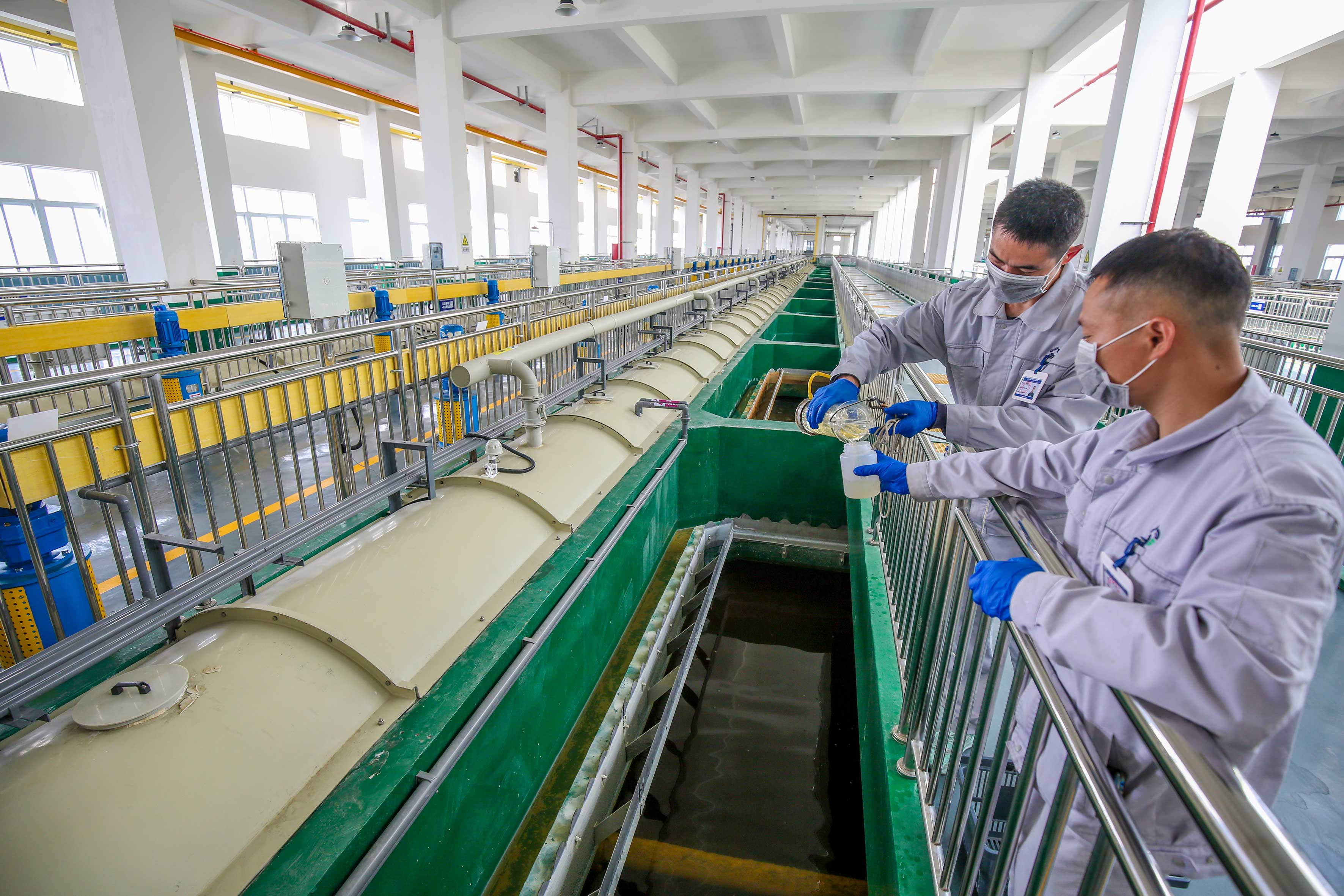
The previous six chapters discussed an industry's technical system, market size, and competitive structure. This chapter discusses the shape of that same industry — where it moved from and to over the course of twenty years, and who rearranged it, by what standard. Surface treatment, and especially electroplating, its largest and most pollution-heavy segment, is the only category in Chinese manufacturing that has been wholesale relocated and reorganized by environmental policy: its enterprise count, geographic distribution, cost structure, and mode of market access have all been rewritten since 2007. Understanding this rewriting is the prerequisite for understanding why the country is left with only about 160 electroplating parks today, and why this industry still has no nationally dominant leader.
7.1 The Scattered-Disorderly-Polluting Era: A 2005 Snapshot from Wenzhou
Wenzhou in 2005 offers the clearest snapshot of this industry's old shape. That year, the city had 744 legally registered electroplating enterprises on its books, coexisting with more than 800 illegal electroplating sites that had been verified. Illegal capacity was nearly on par with legal capacity — this was not one township spiraling out of control; it was the normal structure of a mature industry cluster at a particular stage.
The physical form of these illegal sites was strikingly uniform: a rented floor of a house in an urban village, a corner of an old factory building, or a makeshift tin-roofed shed, fitted out with a rectifier, a handful of plating baths, and an air compressor, with a hose run out back to discharge post-plating waste liquid into a ditch or a self-dug seepage pit. Equipment could be cleared out in a single afternoon; a production line could relocate overnight; lying low by day and operating by night was the normal working rhythm. Workshops of this kind had no environmental impact assessment, no discharge permit, no hazardous-waste transfer manifest — statistically, they did not exist, but in terms of capacity, they were taking on order volumes comparable to those of legal enterprises.
Electroplating is especially prone to sliding into a scattered, disorderly, and polluting form for four mutually reinforcing reasons.
- The barrier to entry is low. Equipment investment for the simplest barrel-plating line runs in the tens of thousands of RMB; the craft can be picked up in a few months under a master worker; and the site needs nothing more than power, water, and a patch of concrete floor to hold the baths — no clean room, no temperature control, no large-span building required.
- Demand is rigid and extremely fragmented. Hardware, fasteners, lighting fixtures, furniture parts, small appliances, molds, and tooling — every one of these industry clusters requires nearby electroplating support, with small order batches, a scattered mix of part types, and high order frequency, a combination naturally suited to small and micro operators taking on the work.
- The service radius is short. Rack-plating lead times typically run 24 to 48 hours, and barrel-plating parts are often returned the same day; freight for heavy parts takes up a considerable share of the total processing fee, and downstream OEMs also demand on-call rework response. Processing shops can only grow up right beside their customers — centralized cross-regional supply is not physically viable.
- The payoff from breaking the law is direct and large. Collecting, diverting, treating, and compliantly discharging heavy-metal-laden wastewater is the most distinctive, and heaviest, item in electroplating's cost structure, and industry analysis generally puts it at 15% to 25% of total electroplating cost, with the Yangtze and Pearl River Deltas skewing toward the upper end of that range because their standards are stricter and their land is pricier. A workshop that never builds a wastewater station, or builds one and never runs it, effectively slices a quarter of its cost off from the starting line.
Together, these four causes formed a stable adverse-selection structure: compliant operators invested more, quoted higher, and won fewer orders; non-compliant operators quoted lower, turned inventory faster, and expanded more easily. In an era lacking an independent enforcement basis, market competition itself could not correct this structure — it amplified it instead.
The scale of illegal discharge sometimes surfaced through court cases. Between 2016 and 2017, a case of illegal electroplating-wastewater discharge in Dongguan entered public-interest environmental litigation; according to the official notification, the party involved discharged 700 tonnes of electroplating wastewater through concealed pipes. The concealed pipe is the single most representative technical detail of the scattered-disorderly-polluting era — it means the enterprise had already built a legitimate outlet available for inspection while also laying a second channel that entered no monitoring system at all. The difficulty of governance was never finding a source of pollution; it was that the true number of outlets could never be exhaustively counted.
7.2 After Lake Tai: The Curtain Rises on Governance, and the First Dedicated Standard (2007–2011)
In May and June 2007, a massive blue-green algae bloom struck Lake Tai, causing the tap water in Wuxi to develop a severe odor and setting off a citywide rush to buy bottled water. The bloom's cause traced to nitrogen and phosphorus loads accumulated over the long term across the watershed, coming mainly from chemical-industry discharge and agricultural non-point sources — electroplating was not the primary cause of the incident. But the event became the starting point for comprehensive environmental governance across the Lake Tai basin, and under the watershed-wide governance campaign that followed, heavy-metal-discharging industries such as electroplating were folded into the crackdown as high-pollution segments. Wuxi went on to shut down, merge, or relocate a cumulative 12,000 "small, scattered, disorderly, and polluting" enterprises — a comprehensive-crackdown figure covering all categories of industry, not one specific to electroplating; the identifiable sub-figure within it is 3,070 shut down and 5,480 relocated into parks between 2007 and 2016.
What truly constrained the electroplating industry directly was a national standard that landed the following year. On August 1, 2008, GB 21900-2008, the Electroplating Pollutants Discharge Standard, formally took effect, replacing the general integrated discharge standard the industry had long relied on and becoming its first-ever national dedicated discharge standard.
What a dedicated standard means for an industry has to be seen against the regulatory reality that preceded it. Before the dedicated standard, checking an electroplating enterprise's discharge borrowed a general-purpose ruler that covered every industrial category — a ruler with no dedicated gradations for electroplating's characteristic pollutants, such as hexavalent chromium, total nickel, and total cadmium, leaving enforcement on a thin technical footing and making exceedance findings prone to dispute. The dedicated standard did three things: it gave enforcement an unambiguous technical basis, it gave compliant enterprises a measurable retrofit target, and it gave banks and local governments a threshold they could use to judge whether a project could go ahead. For scaled enterprises that already had wastewater treatment capability, it meant one round of retrofit investment; for a shed workshop, it was a technical step it could never climb.
In 2011, the State Council issued the 12th Five-Year Plan for the Comprehensive Prevention and Control of Heavy Metal Pollution, proposing that key heavy-metal emissions in key regions fall 15% versus 2007. For the surface treatment industry, the plan's most far-reaching effect lay not in the emission-reduction target but in its approach to governance — "park-based management" was written into a national-level document for the first time. That same year, Zhejiang province issued a pollution-remediation plan for the electroplating industry, using a categorized-handling framework of "upgrade some, relocate some, eliminate some" to translate the national-level spatial concept into provincial execution.
From 2008 to 2011, policy's point of leverage made a critical pivot: a discharge standard answers "how much is a given enterprise allowed to discharge"; park consolidation answers "where is a given enterprise allowed to discharge, and who manages the outlet." The former is a technical question, the latter a spatial one. The industry's transformation over the following decade-plus unfolded almost entirely along this second question.
7.3 Access Requirements, Permits, and Relocation From Cities Into Parks (2015–2018)
In October 2015, the Ministry of Industry and Information Technology issued the Norms for the Electroplating Industry, covering electroplating, electroless plating, hot-dip plating, anodizing, phosphating, and electroplating concentration zones. The Norms laid out a full package of requirements on production layout, process equipment, resource consumption, environmental protection, and safety and occupational health, forming the prototype of industry access management. Regulation's point of leverage shifted from end-of-pipe discharge to front-end access as a result — the earlier logic was "build first, then see whether discharge meets the standard"; the later logic became "a project that does not meet the conditions never reaches the construction stage."
In 2017, the pollutant discharge permit system reached its implementation stage for the industry: HJ 855-2017 was issued, and electroplating was included in the first batch of 13 industries subject to centralized permit issuance. The discharge permit amounted to a clean sweep of the scattered-disorderly-polluting form, striking at its very root: it turned the right to discharge into a uniquely numbered credential that specified the outlet location and discharge limits and required periodic compliance reports and record-keeping. No permit meant illegal, and the finding no longer depended on whether on-site sampling happened to catch an exceedance in the act. For a workshop hidden in an urban village, the problem was no longer whether it could meet the standard — it was that it could never enter the list of permit holders at all.
In 2018, Document Chuanban Fa No. 83 [2018], issued by the General Office of the Sichuan Provincial Government, offered a complete provincial-level template for relocating out of cities and into parks: it required specialized electroplating enterprises to concentrate into electroplating concentration zones and imposed zero-discharge requirements on wastewater containing chromium, cadmium, lead, and arsenic. Around the same time, Jiangsu carried out a dedicated crackdown on its electroplating concentration zones, with the publicly relayed figures covering 7 concentration zones and 622 enterprises (this set of figures has not been traced to a primary-source document and is cited here only as publicly relayed).
The spatial fact described by "relocation from cities into parks" deserves separate treatment. Electroplating capacity originally grew up inside the city — it had to sit right next to hardware markets, lighting wholesale markets, mold-making streets, and assembly plants to meet lead times measured in hours. The electroplating clusters that formed in the 1980s and 1990s were generally located at what was then the urban-rural fringe. Over the more than twenty years of urban expansion that followed, residential districts pushed right up to the factory gates, and often only a wall and a street separated a plating bath from an apartment building. Relocation from cities into parks was not just an environmental remediation — it was simultaneously a redistribution of urban land: parcels freed up in the city center turned toward commercial, residential, and service uses, while electroplating capacity was moved out to distant suburbs, counties, or purpose-built chemical-industry belts. The industry's geographic map was redrawn in this very wave of relocation.
7.4 Local Governments Raise the Bar, and Priority Controls Arrive (2020–2023)
Around 2020, local standards began systematically outstripping the national standard. Zhejiang province issued DB33/2260-2020, and Jiangsu followed with its own local standards, imposing tiered, progressively stricter discharge requirements across the Lake Tai basin. The differentiation among local standards carries a strong industrial signal in its own right: the same electroplating process step carries a different per-unit-capacity compliance cost in different provinces, and even in different watershed zones within the same province. For the processing-service segment, with its short service radius and inability to supply centrally across regions, this regional divergence in standards translates directly into a regional redistribution of capacity.
In 2022, the Ministry of Ecology and Environment issued the Opinions on Further Strengthening the Prevention and Control of Heavy Metal Pollution, listing electroplating as one of 6 priority-control industries. Being placed under priority control meant the industry entered a normalized, list-based management regime, under which the total discharge from any new project has to be offset within the region through equal or reduced substitution — from that point on, a quota became a measurable, bounded scarce resource.
Two documents appeared in 2023 with different effects on the industry's shape. HJ 1306-2023, the Feasible Technology Guidelines for Electroplating Pollution Prevention and Control, gave guidance from a technical-route standpoint, recommending trivalent chromium as a substitute process for decorative chrome plating (the technical detail and industrialization level of this process substitution are covered in Chapter 9). That same year, Document Zhezhengbanfa No. 48 [2023] called for completing the upgrading and remediation of the electroplating industry by the end of 2025. As of this report's writing, that deadline has already passed, and no formal notification of its completion status has appeared through public channels.
Straighten out the policy timeline from 2008 to 2023, and it forms a clear five-step progression:
- 2008, standard — giving the industry its own dedicated ruler.
- 2011, space — shifting the unit of governance from the enterprise to the park.
- 2015, access — moving regulation's point of leverage from the end of the pipe to the front end.
- 2017, permitting — turning the right to discharge into a traceable credential.
- 2020–2023, escalation and listing — local standards outstripping the national standard, the industry entering the priority-control list.
All five steps do the same thing: they continually raise the compliance cost per unit of capacity, and they turn that cost from something avoidable into something unavoidable. The reason the scattered-disorderly-polluting form was compressed over twenty years was not a linear increase in the intensity of enforcement — it was that the cost savings once available through breaking the law were institutionally locked into a step that could no longer be bypassed.
7.5 Shutdowns and Park Relocations: The Quantitative Evidence That Can Be Verified
Aggregate figures for industry-wide remediation are the part of this topic most prone to exaggeration. There is no authoritative national count of total electroplating shutdowns; what can be found publicly is only a scattering of figures from various batches and regions, and each one must be labeled with its scope when cited.
- Ouhai district, Wenzhou, 2006: within the district, 108 enterprises consolidated into 34 that relocated into a park. This is the most representative figure from the early stage of remediation — the consolidation ratio ran close to one-third, and the method of consolidation was merging into a park rather than shutting down entirely.
- Guangdong, 2010 batch: in that year's remediation drive, Boluo shut down 25 out of 110 targeted enterprises. This figure comes from a single-batch public notice and cannot be extrapolated to a provincial or full-year total.
- Jiangsu, 2018 batch: the dedicated crackdown covered 7 electroplating concentration zones and 622 enterprises, a publicly relayed figure with no primary-source document found.
- Wuxi, 2007 to 2016: 3,070 shut down and 5,480 relocated into parks, a comprehensive-crackdown figure covering all categories of industry, not specific to electroplating.
In the absence of a national total, the thickness of this industry's base can instead be estimated from the existing stock. The commonly used figure for the number of electroplating enterprises nationwide is "more than 40,000," an incomplete statistical count; a third-party business-registry figure puts enterprises still active or in business at 48,633, as of September 2022; broken down by province under the same measure, Guangdong has about 10,000, Zhejiang 5,254, Jiangsu 4,994, and Shandong 2,261. Set alongside these is another industry-overview figure: more than 5,000 reasonably formal electroplating production lines nationwide, with a processing capacity of about 3 billion square meters per year.
The gap between more than 40,000 enterprises and just over 5,000 reasonably formal production lines is the true shape of this industry's base: enterprise count runs in the tens of thousands, while capacity carriers with full compliance capability run in the thousands — a gap of nearly an order of magnitude. Twenty years of remediation compressed away the lowest segment, but even after that compression, the base remains far broader and thicker than the top.
7.6 The Park Map: Roughly 160 Walled Compounds
The curve of the number of electroplating parks nationwide is the most condensed quantitative expression of the whole remediation process: 92 in 2013, 125 in 2017, roughly 148 to 150 in 2021, and roughly 160 to 170 in 2023–2024. Different research institutions cite specific figures ranging from 161 to 162 to 168 — all industry-research-institute estimates, not the result of an official census — and this report accordingly adopts the uniform range expression of "roughly around 160."
The curve itself reveals two things. First, over ten years the number of parks grew by less than a factor of two, out of proportion with the scale of the narrative that "tens of thousands of workshops were remediated" — parks absorbed the portion of the industry able to bear the cost of moving in, not the entire existing stock. Second, the curve's slope clearly flattens after 2021 (a judgment inferred from the data points above, not a conclusion drawn by any institution), suggesting the incremental phase of park-building is nearing its end and the industry is shifting from "building parks" to "filling parks."
Geographically, parks concentrate in Guangdong, Jiangsu, Zhejiang, Shandong, and Liaoning, closely overlapping with the distribution of downstream manufacturing clusters. Each of the cases below carries its own qualifying caveat, and they are presented here to show the diversity of park forms, not for side-by-side comparison.
- Haofeng base in Machong, Dongguan: received provincial-level approval in 2007, with a planned area of about 1,500 mu and more than 350 enterprises in residence (a figure disclosed by the park's investment-promotion body). It ranks among the largest nationwide and is also one of the earliest fully formed examples of centralized electroplating capacity in the Pearl River Delta.
- Jinmaoyuan park, Tianjin: established in 2015, covering about 510,000 square meters, with nearly 100 enterprises in residence and standing as Tianjin's sole electroplating concentration zone. It is planned to include about 12.5 kilometers of underground utility tunnels, and the park's wastewater treatment capacity is 20,000 tonnes per day. The underground utility tunnel is a signature feature of centralized control parks — with pipelines made explicit and inspectable, it physically compresses the room available for illicitly tapped concealed pipes.
- Lyujinwan park, Xiaolan, Zhongshan: about 572.8 mu, per a 2025 public disclosure. Xiaolan is one of the country's core hardware-manufacturing clusters, and the distance between the park and its downstream cluster directly determines whether tenant enterprises can keep the delivery-time commitments they had before relocating.
- Chongqing's Tongnan Juke park, at about 321 mu, and its Bishan park, at about 252 mu, form a two-point layout across the Chengdu-Chongqing region.
- Jinjiangyuan park, Qingshen, Sichuan: described locally as the only specialized electroplating park already in production within the Chengdu metropolitan area, with a wastewater treatment capacity of 20,000 tonnes per day.
- The existence of entities such as Fujian CECEP Electroplating Centralized Control Park Investment Co., Ltd. and Shandong Hongda Electroplating Industrial Park Co., Ltd. marks park operation itself as having become an independent business — the operator's revenue comes from land, factory buildings, wastewater treatment, and supporting services, entirely separate from the processing business of the enterprises that lease space there.
There is also a notable counterexample. Shenzhen still has no unified electroplating concentration zone; its capacity remains scattered across districts such as Bao'an and Guangming (per publicly available information). For a city where land prices run extremely high and the industrial structure has already tilted toward R&D and headquarters-based economic activity, building a concentration zone spanning hundreds of mu to house a heavily polluting process step is hard to justify on land economics — relocating capacity out to surrounding cities is the more realistic path.
On regional concentration, Wenzhou's electroplating enterprises account for about 48% of the count across Zhejiang province and about a third of the province's output value (an industry-sourced figure, exact year unspecified). Twenty years after remediation began, the very location captured in that 2005 snapshot of 744 legal enterprises alongside more than 800 illegal sites remains the most densely concentrated electroplating capacity in the province — remediation changed the legality and physical location of capacity; it did not change the geographic inertia of the industry cluster.
7.7 The Economics of Centralized Pollution Treatment: What Companies Get for Not Building Their Own Plant
At its core, the park's business model is a reorganization of a cost item.
In the fragmented model, every electroplating enterprise has to build and run its own wastewater treatment station. Beyond the equipment investment, it must also staff licensed operators, purchase chemical reagents, install online monitoring equipment, and pay for periodic third-party testing. The cost of treating heavy-metal-laden wastewater runs to 15%–25% of total electroplating cost (per industry analysis). The electroplating sludge the treatment produces is hazardous waste under category HW17 and others, which must be handed over to a qualified unit for transfer and disposal, at a price on the order of several thousand RMB per tonne, with figures diverging considerably from place to place. For a small shop with only a few million RMB in annual processing-fee revenue, the fixed investment and operating cost of a compliant wastewater station can exceed its entire profit.
In the park model, an enterprise no longer builds its own wastewater station. Workshop wastewater runs through quality-segregated drainage networks straight into the park's centralized wastewater treatment plant, and the enterprise pays three fees instead: rent or land-purchase cost to move into the park, a treatment fee billed by water volume and pollution factors, and a general park management fee. This swap brings three economic changes.
- Capital expenditure turns into operating expenditure. The one-time investment to build a station becomes a fee settled monthly by usage, the cash-flow threshold for small and mid-sized processing shops drops significantly, and the capital barrier to entering the compliance system is flattened.
- The treatment step gains economies of scale. Centralized treatment after quality segregation costs less per tonne of water than a scattered small station; a professional operations team replaces workshop workers doing the job on the side, and the stability of the discharged water is not on the same level either.
- Regulatory cost collapses substantially. The object of regulation converges from hundreds of scattered enterprises across a district down to one park-wide main outlet plus a handful of quality-segregated branch lines. Online monitoring, exposed and inspectable utility tunnels, and a one-park-one-policy enforcement approach turn illicit discharge from "hard to detect" into "physically hard to carry out at all." What a park is really selling, more than factory space, is a state of compliance that can be proven and audited.
The swap also carries a clear cost, and that cost falls on the tenant enterprise. Rent and treatment fees are rigid expenses that do not flex with order volume, and the fixed-cost pressure during the industry's off-season runs higher than under the fragmented model. Park locations generally sit far from the original downstream cluster, stretching out the service radius, while lead-time commitments do not loosen just because the shop has relocated. More critically, under total-quantity substitution and list-based management, park admission slots and discharge quotas themselves have become scarce resources — whether a processing shop can keep operating increasingly depends on whether it holds a quota, not merely on whether it has orders.
7.8 The Most Thorough Supply-Side Reshaping
Only when surface treatment's park consolidation is set against the overall picture of Chinese manufacturing does its distinctiveness come into view.
Capacity clearing in most industries follows one of two common paths. One is administrative capacity-cutting paired with the price cycle — steel, cement, and coal fall into this group, where the government hands down reduction quotas, price troughs accelerate elimination, and outdated capacity exits under the combined pressure of quotas and losses. The other is market competition and economies of scale — home appliances, mobile phones, and photovoltaic modules fall into this group, where technology iteration and the cost curve squeeze out small and mid-sized makers, leaving a handful of players holding most of the share.
Surface treatment followed neither path. It has no unified capacity quota to cut, because its processing capability is scattered across tens of thousands of operators and priced by the square meter and the kilogram, impossible to aggregate into a single number that could be handed down; nor has it seen a nationwide price war severe enough to reshuffle the field, because the short service radius and hard regional barriers make cross-regional price competition physically impossible. Even today, there is no reliable quantitative data on concentration on the processing-service side — the qualitative judgment on which multiple sources agree is that it remains highly fragmented, regionally partitioned, with no nationally dominant leader.
Its clearing was carried out instead by a variable entirely exogenous to the industry: environmental standards. Environmental standards accomplished the same clearing that other industries needed market competition to complete — that is the core thread for understanding this industry over the past twenty years.
Clearing driven by an exogenous variable carries three features starkly different from market-driven clearing.
- The elimination criteria are non-market. The test is whether a company can meet the standard, obtain a discharge permit, or secure a park admission slot — not whether its cost is lower or its process better. Small shops with decent technology and a stable customer base can exit for lack of a quota, while mediocre operators can survive simply because they entered a park in the early years. The industry's survival ranking does not strictly track its competitiveness ranking.
- The clearing is spatial, not merely numerical. It has not only reduced the number of enterprises but also shifted the location of capacity — from urban villages to distant suburban parks, from central cities to counties and surrounding prefectures. Industrial geography has been redrawn wholesale, and the outcome of that redrawing has, in turn, reshaped downstream clusters' support radius and sourcing patterns.
- The clearing is highly irreversible. A steel blast furnace can resume production when prices rebound — its capacity can be reawakened; but restoring a dismantled electroplating line requires going through an environmental impact assessment again, reapplying for a discharge permit again, and competing again for a park slot and a total-quantity quota — an administrative cycle measured in years. The industry's supply curve therefore shows a rare rigidity over the medium-to-long term — a rebound in demand cannot quickly summon supply back.
The combined effect of these three features is a genuine transformation of the industry's shape. Before remediation, this was an industry with tens of thousands of enterprises, blurry boundaries, uncountable and unauditable, most of its capacity sitting outside any list. After remediation, the bulk of its capacity has moved into roughly 160 spatial units, each with a wall, a main outlet, online monitoring, and a listing. The price the industry paid for this is an overall rise in compliance cost per unit of capacity and a persistent weakness for small and mid-sized processing shops in passing that cost through (the difficulty and risk of passing cost downstream is covered in Chapter 10); what it gained in exchange is that, for the first time, this industry now has a shape that can be governed and measured.
7.9 Behind the Walls: Who's Actually Producing Is the Hardest Question in All of Manufacturing
Park consolidation solved the discharge problem — and, in the same stroke, created a new one: transparency.
Viewed from the outside, an electroplating park is an informationally closed unit. The composition of capacity, the operating status, and the distribution of qualifications behind its walls are very hard to reconstruct through public channels, for four reasons.
- Listings are scattered and lag behind. The list of tenant enterprises, discharge-permit information, and total-quantity quota allocations are scattered across public notices issued at different administrative levels and by different departments, updated at different paces, with no unified view available for cross-checking.
- The registered entity and the production line don't line up one-to-one. A company might hold production lines in two different parks, or it might be registered in a park while its capacity actually sits elsewhere; the park operator and the actual production entity are two entirely different categories of enterprise, indistinguishable by name alone.
- Status changes frequently. Production halts, output caps, conversions, and relocations are all normal during a remediation cycle, and business-registry status often decouples from actual production status — an enterprise registered as active may not have run a plating bath in three years.
- The processing-service side generates no public information. Enterprises at this stage do not list, do not publish annual reports, do not build a brand, and are under no obligation to disclose any operating data to the public (why the processing-service side has struggled to produce a listed company is covered in Chapter 6).
For a buyer, the difficulty is concrete: finding, among tens of thousands of electroplating, anodizing, and spray coating shops, a supplier that holds the right qualification, is genuinely producing right now, can take on this particular part type and batch size, and sits close enough — the usable public information for that task is close to zero. Who among these tens of thousands of processing shops is producing, who has stopped, and who holds the right qualification is the single hardest identification problem in all of manufacturing — the park's walls have made this industry more concentrated, and also less transparent.
Tianxia Gongchang takes exactly this standard — "whether a factory is a genuine, continuously producing entity" — as its identification criterion, running long-term verification and maintenance across manufacturing entities nationwide, currently covering roughly 4.8 million genuine, in-production factories. This figure is an identification measure spanning every category of manufacturing; it is not on the same order of magnitude as the "more than 40,000" electroplating enterprises discussed in this chapter, and there is no conversion relationship between the two. Surface treatment is just one category among them, yet it is the hardest to identify and the one with the thinnest public information — which is exactly why it is also the best litmus test of factory-identification capability.
The industry's next stretch of road depends on what happens behind the walls: whether parks can move from "built" to "filled and upgraded," and whether tenant enterprises can turn their compliance cost into a barrier of process capability and quality rather than a mere burden. And the precondition for observing this process is, first, being able to see exactly who is behind those walls.
Chapter 8 Process Segment Deep Dives: From Chrome-Plated Faucets to Aircraft Engine Coatings
Surface treatment is not one unified craft; it is a collection of processes that share chemical principles but belong to entirely different downstream markets and entirely different value tiers. Both called "electroplating," the chrome-plating bath at a hardware or sanitaryware shop and the copper-electroplating line at a semiconductor packaging plant are separated not just by equipment precision but by several whole orders of magnitude in per-unit value; both called "coating," the zinc layer on a guardrail and the thermal barrier coating on an engine blade are priced by the tonne in one case and by the gram in the other. This chapter breaks down each process segment in turn — who uses it, what the landscape looks like, and what order of magnitude its value runs at — to set up the frame of reference for the next chapter's narrative of technological evolution.
8.1 Decorative Chrome Plating and Hardware/Sanitaryware: Where Value Sits Within Fragmented Contract Processing
Decorative chrome plating is electroplating's oldest branch and the one closest to consumers — faucets, door and window handles, light-fixture hardware, and household hardware nearly all pass through a chrome-plating bath before leaving the factory. This segment has a clear size figure: the Guanyan Industry Research Institute estimates the hardware electroplating market at about RMB 124.512 billion in 2022 (a figure current as of 2022, a comparatively dated measure that must be flagged for its vintage when cited). The downstream structure is more concentrated than intuition suggests: construction hardware accounts for 45.98%, close to half; everyday hardware accounts for 9.61%; and sanitaryware products, the category consumers perceive most strongly, account for only 9.07%. This structure points to a fact easy to misjudge on instinct — the value of hardware electroplating settles mainly on unremarkable construction fittings such as door and window locksets and handles and hinges, not on the faucets and showerheads most visible to the end consumer.
In terms of landscape, decorative chrome-plating services are highly fragmented: specialized electroplating shops take on subcontracted orders from nearby hardware makers, sanitaryware makers, and household-goods makers, with a short service radius and no nationally dominant leader — a textbook miniature of the electroplating processing-service side. On the process side, decorative chrome plating rarely exists on its own; it is usually a composite plated-layer structure of "bright nickel plating as a base, topped with an extremely thin layer of decorative chrome" — the underlying nickel handles corrosion resistance and the foundation for luster, while the topcoat chrome, only a few tenths of a micron thick, handles tarnish resistance and surface hardness, which is also why decorative chrome plating actually depends more on the quality of the nickel layer than on the chrome layer itself. On process upgrading, trivalent chromium substitution has already landed at some manufacturers, and regulatory guidance already recommends trivalent chromium as the preferred process for decorative chrome plating, though the technical and regulatory account of both is left for Chapter 9 to unpack; the contest between faucet chrome plating and PVD dry-coating substitution is the same story — here it merits only a one-line preview: because PVD generates no electroplating wastewater, it is eating into traditional wet-plating share on some kitchen-and-bath hardware production lines.
8.2 3C Anodizing: Vertical Integration by Large Structural-Component Makers
The smartphone mid-frame is anodizing's largest and most standardized application in consumer electronics, and this section stands in sharp contrast to decorative chrome plating in its competitive shape. The mid-frame processing chain forks by material: aluminum-alloy models follow "CNC machining → anodizing → laser marking," while stainless-steel and titanium-alloy models follow "CNC machining → PVD vacuum coating → laser marking" — anodizing serves only the aluminum-alloy branch, while stainless steel and titanium alloy both fall under the PVD camp. Apple's 2023 shift of its flagship model's mid-frame material from stainless steel to titanium alloy was a material swap internal to this PVD branch; the process route for aluminum-alloy models covered by anodizing was not directly affected, though the switch does show that surface-treatment selection adjusts in step with material iteration and is not a fixed, unchanging formula.
Unlike decorative chrome plating's fragmented contract processing, 3C anodizing and PVD capacity is highly concentrated inside large structural-component makers — companies such as Everwin Precision and BYD Electronic have vertically integrated their anodizing and PVD lines as in-house capacity, serving the brand-customer orders they themselves have won, rather than following the model of a third-party electroplating shop taking on outside orders. BYD Electronic's roughly RMB 15.8 billion acquisition, in 2023, of Jabil Group's Chengdu and Wuxi mobile-electronics businesses further expanded its structural-component capacity footprint, though whether that acquisition included anodizing production lines has not been confirmed by any reliable source and is not asserted here. This three-tier binding of "brand owner — structural-component maker — in-house surface-treatment capacity" is the single sharpest landscape feature distinguishing 3C anodizing from other segments: processing capability here is not an independent third-party market — it is part of a structural-component maker's competitiveness.
Anodizing itself further splits into "natural-color anodizing" and "colored anodizing," with the latter requiring an additional step of electrolytic coloring or organic dyeing within the porous layer of the oxide film — this is also the process foundation behind the range of colors, from space gray to midnight, that consumer-electronics mid-frames can achieve. The pore structure of the oxide film determines how evenly it dyes, which is also one reason structural-component makers would rather build their own lines than hand the work to outside contractors: controlling color variance bears directly on the consistency of a brand's appearance.
8.3 Hot-Dip Galvanizing: A Scale Business Built on Transmission Towers and Guardrails
The downstream market hot-dip galvanizing serves is almost a different world from 3C anodizing — transmission towers, highway guardrails, and fasteners are its three main use cases, running on wholesale rather than refinement, the last anti-corrosion process step supporting infrastructure and heavy industry. The market-size figures for this segment diverge extremely widely — different institutions define the statistical boundary differently (whether to count plate and strip steel, structural components, wire hardware, and pipe within the value of the steel itself), and the highest and lowest public figures differ by more than 40 times. This chapter therefore adopts none of the "market size of RMB XX billion" claims and instead uses a capacity-stock figure: as of 2017, hot-dip galvanizing production lines nationwide numbered about 610, with capacity of about 90 million tonnes.
On competitive landscape, enterprises with annual capacity above a million tonnes, such as Baosteel and Tianjin Youfa, form the first tier, tightly bound to the steel industry chain — hot-dip galvanizing is, at its core, the final step of steel deep processing, and its economies of scale depend on upstream steel mills' raw-material logistics and radius, not on end-consumer brands' aesthetic demands the way decorative chrome plating does. This also explains the divergence in business model between the two: decorative chrome plating prices on an appearance premium per unit area, while hot-dip galvanizing dilutes cost through tonnage scale — the former runs on a boutique-store logic, the latter on a wholesaler's.
The essential difference between hot-dip galvanizing and cold galvanizing (electrogalvanizing) lies in coating thickness and the bonding mechanism — hot-dip relies on the zinc-iron alloy layer that forms once a steel part is dipped into molten zinc, a layer typically several times thicker than electrogalvanizing produces, which is why it suits transmission towers and guardrails that stay exposed outdoors for maintenance cycles measured in decades, rather than precision hardware parts more sensitive to coating thickness and surface finish. Conversely, it is exactly this "thick and coarse" zinc-iron alloy layer that naturally rules hot-dip galvanizing out of construction-hardware and consumer-electronics applications.
8.4 Cathodic Electrophoretic Coating: The De Facto Standard for Automotive Body Primer
Cathodic electrophoretic coating is the section in this chapter with the most assured penetration rate — it is the de facto standard process for passenger-vehicle body primer, covering the first anti-corrosion coating layer on nearly every mass-produced model. On the strength of the electric field driving the electrophoretic bath and coating dead zones inside the body cavity evenly, no other coating method has ever formed an effective substitute in this application. The market-size growth curve bears out this lock-in: China's cathodic electrophoretic coating market grew from RMB 2.5 billion in 2014 to RMB 11 billion in 2023, more than a threefold rise over nearly a decade, its growth rate clearly outpacing the broader electroplating-processing-services market and directly reflecting the pull of the expanding automotive industry on this segment.
The supply landscape here forms a third shape: unlike decorative chrome plating's fragmented contract processing or 3C anodizing's vertical in-house builds, cathodic electrophoretic coating's chemical supply has long been held by foreign coatings giants — PPG, BASF, Kansai Paint, and Nippon Paint are the main suppliers, and domestic companies such as Shanghai Keshun Chemical have already gained a foothold in this supply chain. This points to a general rule: whoever controls the formula and the chemical controls the upstream of the value chain, and the processing step itself becomes easier, in turn, for downstream automakers to internalize by building their own coating lines or setting up joint-venture ones.
Cathodic electrophoretic coating is only the first of four layers in the body-coating system, followed by three more steps: intermediate coat, topcoat, and clear coat. The electrophoretic layer's core mission is to cover dead zones — body cavities, fender-panel gaps — that neither electroplating nor spray coating can reach, which is also why it earns the status of de facto standard even while it is called "priming" rather than "finishing": what determines a body's lifespan is usually not the visible topcoat but the invisible coverage rate of the layer underneath.
8.5 Powder Coating: A Low-Cost, Solvent-Free Outlet for Substitution
Powder coating is the segment in surface treatment closest to the logic of "an environmentally friendly substitute for electroplating" — solvent-free, forming a film in a single pass, generating none of the heavy-metal-laden wastewater electroplating does, with an environmental compliance cost markedly lower than the electroplating-bath system. Its applications concentrate in mid-to-low-end protective and decorative scenarios — building-material profiles, appliance casings, general industrial metal parts — a race won on cost-effectiveness rather than ultimate performance. The Qianzhan Industry Research Institute estimates China's powder coating market at about RMB 51 billion in 2025, with output of about 2.3 million tonnes in 2024; China is the world's largest producer and consumer of powder coatings.
Compared with cathodic electrophoretic coating's route of specializing in automotive primer and winning on corrosion resistance, powder coating wins on controllable cost and low environmental compliance pressure, serving as one of the outlets absorbing demand that spills over from electroplating under environmental pressure — some metal-part categories that originally went the electroplating route, but do not demand a strict corrosion-resistance grade, are now shifting toward powder coating. This substitution logic echoes the remediation history told in Chapter 7, though this chapter does not unpack the policy detail and only flags this structural relationship.
It is worth noting that powder coating and anodizing compete directly in the aluminum-alloy building-profile space — window and door profiles can be finished in natural or light color through anodizing, or given richer visual effects such as wood-grain imitation or metallic paint through powder coating, and the end selection usually turns on architectural design intent rather than cost alone. This is one of the few scenarios in surface treatment where an ordinary consumer can directly perceive the difference between processes.
8.6 Thermal Spraying and Aircraft Engines: The Material Is Worth More Than the Processing Service
Thermal spraying is the segment with the highest value density in this chapter, and aerospace-engine hot-section components are its technological high ground. Zhiyan Consulting estimates thermal spraying's market size at about RMB 30.95 billion in 2023, made up of RMB 11.776 billion in materials and RMB 19.174 billion in processing services; the area of protective coating grew from 3.908 million square meters in 2015 to 8.273 million square meters in 2023, more than doubling. A structural feature worth noting is that the materials side accounts for a markedly larger share of the total pie than in most electroplating segments — in most surface-treatment segments, the processing service is the larger part and the material merely an ingredient, but because the powder material itself in thermal spraying carries an extremely high technical content, the value weight of the materials side is pulled up significantly, and this is also the root reason international giants have long held pricing power over aerospace-grade thermal-spray powders.
The thermal barrier coating used on aerospace-engine hot-section components is a two-layer structure: the metal bond coat uses MCrAlY (nickel-cobalt-chromium-aluminum-yttrium) alloy powder, responsible for resisting high-temperature oxidation and improving physical compatibility between layers, while the ceramic topcoat provides thermal insulation — the two layers working together are what lets a blade hold its structural integrity under the extreme temperatures of an engine's hot section. China previously relied mainly on imports for the MCrAlY material used in thermal barrier coatings; metallurgical research institutions have now developed a composite powder material for atmospheric plasma spraying whose performance can partially substitute for imported products — the accurate characterization of this localization today is "partial substitution," not full domestic production, a pace similar to the roughly 25% localization rate for PCB electroplating chemicals: both are still climbing, and neither has yet reached the tipping point.
The process routes within thermal spraying are similarly tiered: ordinary engineering protective coatings mostly use arc spraying or flame spraying, low-cost and suited to the wear- and corrosion-resistance needs of construction machinery and bridge components; aerospace-engine hot-section components, by contrast, require atmospheric plasma spraying to build the ceramic topcoat, and the highest-end variants go further, using electron-beam physical vapor deposition to achieve a coating structure with better-oriented grains. Even within the same broad category of thermal spraying, process complexity and the value gap between the construction-machinery and aerospace-engine ends of the downstream market are equally stark — a fact that corroborates the earlier structural observation about thermal spraying's outsized materials-side share.
8.7 Dacromet and Fasteners: A Premium Set by Salt-Spray Hours
Dacromet (zinc-aluminum flake coating) serves fasteners, a huge and fragmented downstream market — bolts and nuts are the basic connecting components in nearly all electromechanical equipment, with the overall fastener market at about RMB 150 billion, within which Dacromet is the high-end protective option for highly corrosive environments (wind-turbine towers, high-voltage transmission and distribution, high-strength automotive-chassis bolts). Its value proposition rests on two hard performance comparisons: Dacromet coating runs about 12 microns thick and holds up under neutral salt-spray testing for more than 1,000 hours, versus under 72 hours for ordinary electrogalvanizing — a corrosion-resistance gap of more than tenfold. Dacromet also carries none of the hydrogen-embrittlement risk common to electrogalvanizing, which lets it be used on bolts rated 10.9 or higher — electrogalvanizing, precisely because of that hydrogen-embrittlement risk, is unsuited to this class of high-strength fasteners. This performance gap is the core reason Dacromet commands a higher unit price than ordinary electrogalvanizing yet is still adopted for high-end fasteners.
The Dacromet process was introduced to China from Japan in 1994, used at first mainly in military and automotive-parts applications, and has since gradually expanded into a wider range of severely corrosive scenarios — wind power, high-voltage transmission and distribution, and municipal engineering. Dacromet's application boundary does not stop at ordinary fasteners themselves: wind-turbine-tower connecting bolts, high-voltage transmission and distribution fittings, and railway and port components are all areas where it offers better value than electrogalvanizing relative to cost — essentially, whenever downstream requirements for a bolt's service life run in decades, electrogalvanizing's corrosion-resistance window looks too short, and it is Dacromet's longer salt-spray life that justifies its higher unit price.
As with anodizing and electroless nickel plating, there is currently no reliable public figure for the market size of Dacromet processing services, and this chapter flags that as a genuine data gap rather than filling it with an estimate — a reminder that even though Dacromet's performance advantage is clear and its applications well defined, it has not yet, as a sub-option within fastener surface treatment, formed an independently statisticable industry-size figure; its true scale is more likely hidden in the overlap between the overall fastener market and the electroplating-processing-services market, never separately accounted for.
8.8 Electroless Nickel Plating: The Segment That Cares Least About Appearance
Electroless nickel plating is the most "invisible" segment in this chapter — it does not chase decorative appearance; it chases highly uniform coating thickness and stable magnetic-shielding performance. Its applications concentrate in two scenarios: first, in computer hard-drive manufacturing, plating a nickel-phosphorus alloy layer onto precision-machined magnesium-aluminum substrate is a key step in processing the magnetic recording medium; second, a composite "electroless copper plating plus electroless nickel plating" layer on electronic-product plastic casings serves as electromagnetic and radio-frequency shielding, helping the device pass electromagnetic-compatibility testing. Depending on the coating's phosphorus content, the electroless nickel plating process splits further into high-phosphorus, medium-phosphorus, and low-phosphorus categories, each corresponding to different corrosion-resistance and magnetic requirements — a process oriented around parameters, not appearance.
Like the Dacromet and anodizing services markets, electroless nickel plating processing services likewise have no reliable public market-size figure, and this chapter flags that honestly rather than filling it with an estimate. The lack of size data also makes it hard to judge this segment's concentration, leaving only a qualitative judgment available: the process bar for electroless nickel plating runs fairly high, with demanding control requirements over bath composition and uniform-plating capability, and it exists more as an appendage to subcontracted orders from industry chains such as hard drives and electronic shielding, rather than as an independently scaled, separately statisticable market.
The three coating types — high-, medium-, and low-phosphorus — each trade off differently: a high-phosphorus coating has a denser amorphous structure and the best corrosion resistance but lower hardness; a low-phosphorus coating has higher crystallinity, standing out in hardness and wear resistance but sacrificing some corrosion resistance; medium-phosphorus splits the difference. This correspondence between phosphorus content and performance means the specific selection for electroless nickel plating differs between its two downstream uses, hard-drive substrates and electronic shielding — it is not a single, one-size-fits-all "just plate it" process, which further explains why it has struggled to form a standardized, batch-quotable processing-service market the way decorative chrome plating has.
8.9 Segment Comparison: Value Scale and Competitive Landscape at a Glance
The downstream markets, value scale, and landscape features of these eight process segments differ enormously, summarized below:
| Process Segment | Core Downstream | Value Scale (basis) | Landscape Feature |
|---|---|---|---|
| Decorative chrome plating | Construction hardware, everyday goods, sanitaryware | ~RMB 124.5bn (2022, Guanyan) | Highly fragmented, no nationally dominant leader |
| 3C anodizing/PVD | Phone mid-frames (aluminum/stainless steel/titanium) | No independent segment figure | Vertically integrated in-house by structural-component makers |
| Hot-dip galvanizing | Transmission towers, guardrails, fasteners | Capacity ~90m tonnes (2017 stock) | Bound to steel mills, two main tiers |
| Cathodic electrophoretic coating | Automotive body primer | RMB 11bn (2023, coatings basis) | Foreign chemical giants dominate upstream |
| Powder coating | Building materials, appliances, general industry | ~RMB 51bn (2025, materials basis) | China is the world's largest producer and consumer |
| Thermal spraying | Aircraft engines, gas turbines | ~RMB 30.95bn (2023, materials + services) | Materials carry more value weight than processing services |
| Dacromet | Fasteners (wind power, automotive, transmission/distribution) | No reliable public figure | Attached to fastener market, not separately accounted for |
| Electroless nickel plating | Hard-drive substrates, electronic shielding | No reliable public figure | High barrier, attached to subcontracted orders |
The most direct message from this comparison table is that the segments with findable size figures tend to be the ones whose downstream industries are themselves standardized enough and whose statistical measures are unified enough (automotive, appliances, building materials); the segments with no findable figures are exactly the ones where the process is more customized and the applications more scattered (anodizing, Dacromet, electroless nickel plating). The surface treatment industry's statistical predicament is, in a sense, the numerical projection of its own "invisible" nature — the more deeply a process is embedded within a specific step of a specific product, the harder it is to strip out and price on its own.
Chapter 9 Technology Evolution: Green Substitution and Three New Battlegrounds
9.1 A Two-Hundred-Year Technology Timeline: From Birmingham Workshops to Wafer Fabs
The craft of electroplating is far older than most people imagine. In 1805, the Italian scientist Luigi Brugnatelli used a voltaic pile to complete the first electrodeposition in history — plating gold onto silver coins. The invention was suppressed at the time by the French Academy of Sciences under Napoleon, and it went roughly thirty years without any industrial application until Faraday established the laws of electrolysis in 1833, finally giving it a theoretical foundation. What truly turned electroplating from a laboratory phenomenon into an industry was Birmingham in 1840: the surgeon John Wright discovered that cyanide-based plating solutions could be used for gold and silver plating, and the Elkington brothers used this to obtain British Patent No. 8447 — the first electroplating patent in history — making Birmingham the birthplace of the electroplating industry. This branch then advanced fairly steadily: in 1916 Watts published his nickel-plating formula, and the "Watts nickel bath" remains a foundational process in the industry to this day; around 1928, General Motors designer Harley Earl introduced chrome-plated trim into automotive styling, making electroplating a standard feature of consumer product appearance for the first time — from then on it was bound to the consumer psychology of "respectability" and "durability," a bond that held for nearly a century.
China's own timeline started a full century later. Electroplating technology had already reached China by the 1870s, but the process only truly took root when Soviet experts came to run training courses in 1952. In 1971, the first National Electroplating Conference was held in Wuxi, where cyanide-free plating was designated a key direction — both a technical agenda item at the time and, in hindsight, the first seed of the green-substitution thread that would run through the following decades. In 1994, Dacromet (zinc-aluminum flake coating) technology was introduced from Japan, giving the fastener industry a process route with corrosion resistance far exceeding ordinary zinc plating and no risk of hydrogen embrittlement; the defense and automotive-parts sectors were the first adopters. From 1952 to 1994, every major process upgrade in China's electroplating industry corresponded to an external introduction rather than a homegrown original breakthrough. The modernization of China's electroplating industry has consistently followed a path of introduction and digestion rather than original invention — and that same path runs in an unbroken line with the industry's green-substitution process over the following two decades: the driving force has mostly come from external standards, not from endogenous technological risk-taking.
The real turning point that pushed this old craft in a new direction came in 1997: IBM, with assistance from Motorola, became the first to replace aluminum interconnects with copper interconnects — the damascene process — and current impedance immediately dropped 35% while chip performance rose 15%. This was the first true fork in the history of electroplating. One branch stayed in the surface decoration and protection of hardware, automotive, and bathroom-fixture parts, where technology iterates relatively slowly — Watts's 1916 nickel bath remains a foundational process to this day, showing that this older branch's performance ceiling was reached long ago, with innovation now concentrated on environmental compliance rather than the coating itself. The other branch plunged straight into the wafer fab, becoming one of the core processes in semiconductor manufacturing, where almost every generation of process-node upgrade requires the plating solution and additives to be re-adapted — an iteration pace an order of magnitude faster than the former branch. The three "new battlegrounds" discussed in the second half of this chapter are precisely this forked branch's extension into the twenty-first century.
9.2 Four Lines of Green Substitution: Certainty-Driven Innovation Forced by Regulation
Looking back at every step of electroplating technology upgrades over the past twenty years, one can almost always find a regulatory document at the starting point, rather than a company's own spontaneous technological ambition — regulation-driven technology substitution is the primary driver of innovation in this industry. This judgment is clearest across the four substitution lines below.
- Trivalent chromium replacing hexavalent chromium: hexavalent chromium is far more toxic than trivalent chromium — roughly one hundred times more toxic — and its plating-solution concentration is also about seven times that of a trivalent chromium solution. In decorative chrome plating, the trivalent chromium process can already replace hexavalent chromium, with deposition speed, corrosion resistance, and appearance quality comparable to it. But a key limitation must be stated clearly: trivalent chromium plating baths can currently only produce thin decorative chrome layers and cannot be built up to arbitrary thickness — functional thick chrome (industrial hard chrome used for wear-resistant parts such as molds and hydraulic rods) has yet to see any substantive breakthrough. There remains a gap with no available solution between "can replace" and "can fully replace," which is also the technical reason hexavalent chromium will not exit the stage entirely just because of a piece of regulation.
- Cyanide-free plating: cyanide is highly toxic and costly to dispose of, making it the longest-standing substitution target in the electroplating industry — the 1971 Wuxi conference had already designated it a key direction. After half a century of progress, new environmentally friendly complexing agents such as citrates and pyrophosphates have achieved domestic mass production, and coating performance can meet the requirements of mainstream applications such as automotive and electronics; industry sources hold that cyanide usage has fallen by more than 95% compared with the traditional process. By one estimate, domestic annual consumption of cyanide-containing materials is about 130,000 to 150,000 tons, corresponding to a potential substitution market of more than RMB 6 billion — one of the few of the four substitution lines for which a quantified scale can actually be given.
- PVD dry substitution for wet plating: physical vapor deposition uses vacuum coating to replace traditional water-based electroplating, mostly used on hardware items such as faucets. Its value lies not in the coating performance itself but in generating no electroplating wastewater at the source — eliminating the pollutant before the process even begins, rather than leaving it for end-of-pipe treatment or centralized park treatment plants to handle. It is a technology route that complements the centralized-park model rather than replacing it: the park solves how to centrally treat the existing stock of electroplating wastewater, while PVD solves whether incremental demand can simply avoid generating wastewater in the first place. It is currently deployed mainly in relatively higher-value-added hardware categories, and there is as yet no sign of it spreading to bulk, low-value plated parts — directly related to the fact that its equipment investment threshold is far higher than that of a traditional plating tank.
- Chromium-free passivation: the ideal end state is to eliminate chromium entirely, but the corrosion resistance and appearance of chromium-free passivation systems based on titanates, molybdates, rare earths, and the like still fall short of hexavalent chromium passivation, and cannot yet meet the performance requirements of ordinary hardware parts. The version the industry has actually settled for is trivalent chromium passivation — strictly speaking, this is still "low-chromium" rather than "chromium-free." The name "chromium-free passivation" itself is, at present, closer to a technology goal not yet fulfilled than to a process reality already rolled out.
None of the four lines currently has an authoritative quantified statistic on its domestic penetration rate — only the direction can be confirmed, not the speed. But they share a deeper commonality: not one of them is a substitution that is inherently superior to the old process at the performance level; almost all of them trade away some performance ceiling, or add some process complexity, in exchange for compliance. The regulatory calendar fixes the endpoint, but whether the market is willing to pay the extra cost of compliance is the real variable determining the pace of substitution. This is precisely why both the trivalent chromium substitution line and the chromium-free passivation line ultimately settled in the middle ground of "lower toxicity" rather than "zero risk": functional thick chrome has no substitute to be found, and chromium-free passivation's performance is insufficient — in both cases the industry chose the second-best solution that could actually be deployed, rather than the theoretically most thorough one.
If green substitution has been the electroplating industry's main line of technology upgrading over the past twenty years, then as the industry cycle enters its next phase, this craft is simultaneously extending into three fields it had never truly touched before. What they have in common: the customer is no longer a hardware factory or an automaker, but a lithium-battery company, a solar-module maker, or a wafer foundry — the same electrochemical craft, grafted onto entirely different industries.
9.3 New Battleground One: Composite Copper Foil — the Two-Step Process and the Gap Behind the "Year One of Mass Production"
Composite copper foil's process route is a two-step approach combining magnetron sputtering and water electroplating: first, magnetron sputtering deposits a metal seed layer on the surface of the polymer base film, solving the problem that the base film itself is not conductive; then water electroplating builds up the conductive layer to the required thickness, achieving mass-production thickness at relatively low cost. The division of labor between the two steps is clear-cut, and precisely because of that, the mass-production bottleneck is pinned simultaneously to each step's own yield and to the combined yield once the two are matched — any weak link in either step drags down the overall economics. Compared with traditional electrolytic copper foil, composite copper foil's selling point is that it is lighter and uses less copper, aimed at cutting cost and boosting efficiency for lithium-battery current collectors.
In 2023, multiple research institutions called it the "Year One of mass-production breakthrough" and offered an optimistic forecast: the equipment-side market would exceed RMB 10 billion by 2025. It must be flagged clearly here — this is a forecast published in 2023, not a description of the current state of affairs. Data from that same year showed that at an 80% yield, comprehensive cost was about RMB 3.1 per square meter, roughly 22% lower than 6-micron traditional copper foil — the technology's economics held up on paper. Leading firm Chongqing Jinmei (重庆金美) also announced in December 2023 that its 6-micron composite copper current collector had entered mass production, but the subsequent actual fulfillment of that has not been verified and no claim is made here — there is often a considerable gap between a mass-production announcement and actual capacity utilization, yield stability, and downstream customer validation cycles, which is also one reason the composite copper foil sector still lacks authoritative third-party production and sales data. Optimistic figures that clearly contradicted Dongwei Technology's own annual report have also since circulated in the market, mostly traced to self-media accounts in a stock-hyping style whose credibility is doubtful; this report does not adopt them, and presents only anchor figures backed by first-hand financial reports.
The anchor for the current state comes from the 2025 annual report of Dongwei Technology, the leading equipment maker: its two "new battleground" businesses — composite copper foil water electroplating equipment and photovoltaic copper-plating equipment — together account for only 2.73% of the company's core revenue, with the bulk of company revenue still coming from traditional vertical continuous plating equipment. Dongwei Technology's semi-annual report mentions that composite current collectors have been included in the "15th Five-Year Plan," which is a supportive signal at the industrial-policy level — but that is a separate matter from the company's actual revenue structure.
The key analytical point here is: both the 2023 forecast figures and the 2025 annual-report figures are genuine and reliable — the issue is not that either figure is wrong, but that they were always pointing at different things: one an optimistic projection of the future, the other the actual operating results two years later. The gap between them is, at present, the most honest footnote to this "new battleground" narrative, and there is no need — nor should there be any attempt — to force the two into a single smooth curve.
9.4 New Battleground Two: Photovoltaic Copper Electroplating — HJT's Must-Answer Cost-Reduction Question and an Unfulfilled Penetration Rate
In the cost structure of heterojunction (HJT) solar cells, silver paste accounts for about 40% to 51% of non-silicon cost — the largest cost item apart from the wafer itself, and the HJT route's main cost shortcoming relative to other cell technology routes. Copper electroplating is seen as one route to shed the reliance on silver paste: substituting copper for silver as the conductive material could, in theory, sharply lower non-silicon cost, and the cost uncertainty brought by fluctuating silver prices would dissolve along with it. Technical feasibility has already been verified — Maxwell (迈为股份) partnered with SunDrive to achieve 26.60% efficiency for a copper-electroplated HJT cell in June 2023, proving that this route works on the lab bench and pilot line. Maxwell itself is a leading supplier of complete HJT production-line equipment, so once this technology route truly scales up, the beneficiary will not be the copper-electroplating equipment segment alone — it also touches Maxwell's existing advantage in full HJT line deployment, which is also the commercial logic behind equipment makers' willingness to keep investing in pilot-line validation.
But the gap between "feasible" and "penetration rate" is even more pronounced here than for composite copper foil. Forecasts of penetration rate given by various brokerages in 2023 contradicted each other: Tianfeng Securities projected copper-plating penetration would reach 50% by 2026, while Guotai Junan projected in the same period that 2025 penetration would be only 10% to 20% — the two curves don't line up on either their timeline or their slope, showing that the forecasts themselves were built on wildly divergent assumptions. On the equipment-investment side, an early quote for a copper-plating production line was about RMB 170 million per gigawatt, with an industry target of bringing it down to RMB 110 million — but this remains a cost assumption, not an economy of scale already realized.
By the end of 2025, none of these forecasts had been fulfilled; industry overviews still call copper electroplating a "bottleneck process," with no verifiable mass-production penetration figure. In other words, the problem with HJT copper electroplating is not whether the technology is feasible — the 26.60% efficiency figure has already answered that question clearly — but that the road from lab feasibility to production-line scale-up is far steeper than the curves drawn in research reports. Completing that road requires more than sustained investment from a single equipment maker; it also requires cell manufacturers to be willing to bear the yield-ramp cost of a new production line that has not yet been validated at scale — a cost that is harder to quantify than pure equipment investment, and one that research reports more easily overlook.
9.5 New Battleground Three: Semiconductor Electroplating — Domestic Breakthroughs After the Damascene Process
The starting point of the semiconductor electroplating line is precisely the 1997 IBM damascene process mentioned in Section 9.1: copper interconnects replacing aluminum interconnects, which opened the era of modern chip manufacturing's deep dependence on electroplating. Nearly thirty years later, this branch is charting a path in China that differs from the previous two new battlegrounds.
China's semiconductor copper-electroplating market was worth about RMB 5.2 billion in 2024, and Zhiyan Consulting projects it will grow to RMB 9.7 billion by 2028. On the competitive landscape, international giants currently hold more than 75% of the global market combined, with the domestic self-sufficiency rate for high-end materials still under 30% — a track still dominated by a handful of multinational firms. Zooming in on advanced packaging specifically, the landscape is even more concentrated: the domestic self-sufficiency rate for advanced-packaging plating materials is about 15%, with Atotech and C. Uyemura holding roughly 30% and 20% of the share respectively; globally, the supply of advanced-packaging plating additives is even more concentrated — by industry estimates, Atotech, Dow, and Uyemura together hold roughly 50% to 60% of the global share. But the signals of domestic breakthrough are concrete: Shanghai Sinyang's plating solutions and additives already cover the full range of copper-process technology nodes from 90nm to 14nm — the only domestic maker with this coverage — and its ultra-pure copper sulfate plating solution is the benchmark material for SMIC's and SK Hynix's 28nm damascene process; Aisen's 28nm damascene plating solution has passed certification with leading customers; and ACM Research (Shanghai) has achieved domestic breakthroughs on the equipment side of semiconductor electroplating. This domestic localization did not happen overnight: Shanghai Sinyang became SMIC's benchmark material supplier for the 28nm process as early as 2016, gained TSMC-qualified-supplier status that same year, and then spent nearly a decade gradually expanding its coverage to the full range of nodes from 90nm to 14nm. This climb also points to another reason forecasts in the semiconductor copper-electroplating track tend to be borne out: localization itself is a long-distance race requiring a lengthy validation cycle, built on accumulated certification node by node, wafer-fab customer by wafer-fab customer — not a leap that can be completed in a single funding round or a single order announcement. This is fundamentally different from the advancement logic of composite copper foil and photovoltaic copper electroplating, which rely on a single "Year One of mass production" narrative. The weak spot is equally clear — through-silicon via (TSV) plating equipment is almost entirely imported, the weakest link in the domestic-localization chain.
9.6 The Bubble and the Reality of the New Battlegrounds
Placing the three new battlegrounds side by side reveals a difference not easily noticed before: of the three lines, only semiconductor electroplating has forecasts and actual results moving in the same direction. The 2024 market reality of RMB 5.2 billion and the 2028 forecast of RMB 9.7 billion sit on the same curve, and over more than two years that forecast has not been disproven. Composite copper foil and photovoltaic copper electroplating both received optimistic forecasts in 2023, and two years later public information supports neither of them — in the revenue structure of the leading equipment maker, the two together account for less than 3%, and HJT copper electroplating remains a "bottleneck process."
The three lines actually share the same two-hundred-year-old craft; the only difference is that the application scenario has shifted from hardware and automotive parts to lithium-battery current collectors, solar cells, and integrated-circuit wafers. The divergence lies in the certainty of demand: the domestic-localization push in semiconductor copper electroplating is a rigid demand forced directly by supply-chain-security concerns — downstream wafer fabs are willing to pay for the validation cycle and the supply-chain risk, so the market-size forecast is backed by real orders. Demand for composite copper foil and photovoltaic copper electroplating, by contrast, rests more on cost models and penetration-rate assumptions; once the downstream industry's own capacity-expansion pace slows, or the cost-reduction pace of the traditional process outpaces expectations, such assumptions readily fall through. Technology evolution is never a constant-speed process: regulation can push green substitution forward with certainty, because the endpoint is written into statute; but the new battlegrounds driven by market demand carry no such certainty — whoever can actually make it work will ultimately be judged by financial statements, not research reports. For this two-hundred-year-old craft, green substitution and the new battlegrounds are really two sides of the same coin: the former proves it is mature enough to be repeatedly reworked to fit ever-tightening compliance requirements; the latter proves it is versatile enough to be transplanted into entirely unfamiliar industrial settings. But the success rate of that transplant was never something a forecast report could guarantee — it depends on whether the downstream industry taking on this craft represents real, hard-cash rigid demand, or a cost assumption still waiting to be validated.
Chapter 10 Risks and Challenges
If the preceding chapters have outlined the direction of and windows for the surface-treatment industry's evolution toward greening and precision, then whether those windows open on schedule depends on several pressures the industry must withstand at the same time. Some come from within — environmental-compliance costs keep climbing, and hiring gets harder year after year. Some come from outside — European regulatory deadlines, downstream customers' relocation decisions, and commodity price curves are all variables surface-treatment companies cannot control themselves. And some come from the industry's own misjudgments in the pacing of its bets on new technology. This chapter unpacks the transmission path of each of these risks in turn, rather than simply listing them out. These risks also differ in timespan: the pressure of environmental cleanups and hazardous-waste compliance is a steadily accumulating, year-on-year norm; the EU regulatory window is a deterministic event counting down on a yearly basis; and misjudged investment in the new battlegrounds is a one-time but far-reaching consequence. It is the layering of these three different rhythms that gives the industry the full picture of the risks it actually faces.
10.1 Rising Environmental Costs and the Clearing-Out of Small and Mid-Sized Plants
In the cost structure of electroplating processing, environmental spending related to treating heavy-metal-bearing wastewater accounts for roughly 15% to 25% of total cost (higher in regions with stricter environmental enforcement, such as the Yangtze River Delta and Pearl River Delta — already analyzed in this report's industry-chain chapter and not repeated here). This range alone shows that environmental compliance has long since stopped being an optional expense for electroplating processors and has become a structural cost item that determines whether a company can keep operating normally. Pressure on the hazardous-waste disposal side is also intensifying: electroplating sludge falls under hazardous-waste categories such as HW17, and disposal pricing varies widely by locality, but it can be confirmed that per-ton disposal fees are already in the thousands-of-RMB range, and narrowing disposal outlets and rising fees are a common complaint across the industry. Running alongside the cost side is a compliance deadline created by time-limited rectification campaigns: Zhejiang Province's 2023 document Zhe Zheng Ban Fa [2023] No. 48 explicitly required that pollution-control upgrades in the electroplating industry be completed by the end of 2025 — a deadline that has already passed as of this report's writing, though this report found no publicly disclosed report on completion status. The deadline has passed; no public notification has been found. For small and mid-sized electroplating processors, environmental facilities are a relatively fixed investment, so the smaller the production scale, the higher the environmental cost allocated per unit of output — and combined with rising hazardous-waste disposal fees and the hard constraint of local compliance deadlines, this forms a transmission chain running from cost squeeze to operational clearing-out, one of the underlying drivers behind the continuing contraction of electroplating capacity toward centralized-treatment industrial parks (see this report's chapter on park consolidation for details). It is also worth noting that this pressure line is not a one-time shock that then levels off, but keeps intensifying: electroplating has been designated by the Ministry of Ecology and Environment as one of the six heavy-metal industries under national key control, meaning regulatory scrutiny will only tighten further over time rather than stay at its current level. Companies cannot buy themselves long-term breathing room by simply "surviving one round of rectification" — environmental compliance must be built into long-term planning as an ongoing operating cost, not a one-off expenditure.
10.2 Downstream Relocation Risk: Supporting Suppliers Follow Their Customers
In most manufacturing subsectors, the common phrase for industry relocation is "equipment follows capacity"; in the surface-treatment industry, the corresponding phrase should be "supporting suppliers follow their customers" — the industry's short service radius and hour-scale delivery times mean it must stay close to where downstream OEMs are located, so once downstream production relocates abroad, surface-treatment capacity has almost no room to survive independently in place. According to reporting from around 2023, 29 Taiwan-invested and mainland-invested Chinese PCB (printed circuit board) makers have announced plans to set up factories in Southeast Asia, 26 of them choosing Thailand, with related total investment exceeding USD 2 billion. Cases of electroplating support suppliers following along have already appeared: Youqun Technology (优群科技) plans to build an electroplating line in Vietnam, targeting a production start in Q4 2026; Guangdong Zhaoming (广东昭明)'s Vietnam electroplating-support project is planned for 2027 to 2029. It should be noted that these remain individual cases for now, with no statistics yet covering total relocation across the whole industry — it would be premature to elevate them into the conclusion that "electroplating capacity has relocated abroad en masse." What this section presents is cases plus inference, not a verified industry-wide trend. Even so, the cases themselves point to two implications. In the short term, OEMs relocating abroad opens a positioning window for domestic surface-treatment companies with the technical strength and willingness to follow them overseas — whoever sets up first in the industrial belts of Vietnam and Thailand locks in the first-mover customers. In the long term, if the scale of relocation keeps expanding, domestic processing capacity built around PCB electroplating and related steps will face the risk of order hollowing-out — a risk that is especially lethal for the highly fragmented, short-service-radius processing-service layer that is hard to replicate elsewhere. Unlike chemical and equipment companies, which can still follow their customers by exporting technology, most small and mid-sized processing plants lack the capability to go overseas, so for them relocation has only one outcome: lost orders. The weight of this risk for the industry as a whole also needs to be measured against its downstream weighting: China accounts for more than half of global PCB (printed circuit board) output value, electroplating is a core process in PCB manufacturing, and PCBs are also, as recurs throughout this report, one of surface treatment's single largest sources of industrial demand — meaning the direction PCB supply-chain relocation takes carries a potential impact on the overall demand pool of the electroplating-processing industry far greater than relocation in any other single downstream field could bring, making it the only risk in this section that touches the demand structure of the entire industry.
10.3 The Transmission of EU Regulatory Barriers: The Regulatory Calendar as a Technology-Upgrade Deadline
For export-oriented segments represented by PCB plating chemicals, the pace of European chemical regulation is becoming an industry timetable with concrete years attached. On hexavalent chromium: the EU's REACH (Registration, Evaluation, Authorisation and Restriction of Chemicals) regulation already placed chromium trioxide and the acids and oligomers it forms on the authorization list in 2013, with September 21, 2017 as the first "sunset date," after which the relevant substances may continue to be used only via case-by-case authorization from the European Chemicals Agency (ECHA). As of this report's writing, the EU is pushing to shift hexavalent chromium regulation from the authorization mechanism to the stricter restriction mechanism, with 2026–2027 as the legislative window for this. On PFAS (per- and polyfluoroalkyl substances): Denmark, Germany, the Netherlands, Norway, and Sweden jointly submitted a full-class restriction proposal to ECHA in early 2023; ECHA updated the exemption scheme in August 2025, expanding exemptions from 26 to 74 items. Under the current timetable, the scientific assessment should be completed by the end of 2026, and the European Commission will make its final decision in 2027 on whether to implement a full restriction — metal electroplating has already been included in the scope of industries slated for priority assessment in this round. At the same time, the EU exemption for PFOS-based fume suppressants used to control chromium mist in hard-chrome processes expired on September 7, 2025, and this report was unable to confirm whether it has been or will be renewed. What this regulatory calendar means for the domestic export chain is this: it is not a distant piece of overseas legislative news, but a direct marking of the year by which domestic plating chemicals and process routes must complete their upgrade in order to continue clearing the entry threshold into European automakers' and electronics giants' supply chains — Europe's regulatory deadlines have, in effect, become the countdown clock for technology upgrades along China's surface-treatment export chain. This countdown deserves particularly close attention also because China is currently the world's largest electroplating-processing nation and a supplier of processing services and chemicals of decisive weight within the supply chains of European automakers and electronics giants — the industrial scale that this regulatory window touches is far larger than the export-compliance concerns of an ordinary single niche market. Whenever any restriction clause takes effect, what it transmits is not just the compliance cost of any one exporting company, but the process-route choices of the entire supply chain.
10.4 Hexavalent Chromium Functional Thick Chrome: A Technology Cliff With No Substitute
The substitution of trivalent chromium for hexavalent chromium is the most closely watched greening technology route in this industry, but its progress has been uneven. Trivalent chromium's toxicity is about one-hundredth that of hexavalent chromium, and the plating-bath concentration it requires is about one-seventh — decorative chrome plating already has a mature substitution capability, and the Ministry of Ecology and Environment's HJ 1306-2023 Technical Guideline for Feasible Pollution Prevention and Control in Electroplating explicitly recommends trivalent chromium plating as a substitute for decorative chrome plating. But functional thick chrome — the thick-coating process applied to scenarios with stringent wear-resistance and hardness requirements such as hydraulic piston rods, molds, and aerospace components — has yet to achieve a substantive breakthrough in substituting trivalent for hexavalent chromium. This means that once EU-level regulation of hexavalent chromium genuinely tightens from "authorization required" to "restricted" or even banned, functional thick-chrome plating will run straight into a technology cliff with no mature alternative process available — not a gradual adjustment that switching formulas can handle, but a problem for which the entire process route currently has no solution in high-end application scenarios. For domestic electroplating companies that are heavily export-dependent and whose products end up in high-load precision components, this is the item on this chapter's risk list with the highest certainty and the shortest response window left for the industry. And what this cliff bears down on is precisely not the low-value-added, high-volume orders: functional thick chrome is concentrated in application scenarios with high technical thresholds and strong bargaining power, such as hydraulic piston rods, precision molds, and aerospace components. Once EU regulation tightens to the point where exemptions can no longer be used to work around it, the segment hit most directly will be the highest-value-added orders in China's electroplating industry — not the ordinary decorative-coating business that can easily be diverted to substitute processes — which further amplifies the real destructive force of this risk.
10.5 The Transmission of Raw-Material Price Volatility
Among electroplating processors' direct costs, anode materials and chemical feedstocks account for no small share, and these raw materials are themselves commodities — fluctuations in nickel, zinc, and copper prices transmit directly to electroplaters' gross margins along the chain "metal futures price → anode-material procurement cost → processing quote." Take zinc as an example: the mid-2025 price of Grade 0 zinc ingot was around RMB 22,800 to 22,900 per ton; as the irreplaceable core raw material for hot-dip galvanizing and zinc-based plating, its price swings directly affect the stability of downstream processing quotes. Phosphor copper anode balls, a commonly used soluble anode material in electroplating, have costs that move with the copper price; nickel-plate prices likewise transmit through the international nickel market to the processing cost of nickel-based processes such as electroless nickel plating. Because the pricing cycle of most processing-service contracts — rack plating priced by area, barrel plating priced by weight — is hard to fully match with the price cycle of raw-material procurement, small and mid-sized processors that lack bargaining power tend to simply absorb the cost themselves during periods of rising raw-material prices, further narrowing profit margins already squeezed by environmental spending — one more, less conspicuous but equally persistent pressure line behind the ongoing clearing-out of small plants. This pressure line also carries a doubling effect: electroplating chemicals themselves are mostly built around metal salts as their core ingredient — the cost of copper-sulfate plating solution moves with the copper price, and the cost of nickel-plating additives moves with the nickel price — meaning anode materials and chemical feedstocks each separately carry a procurement-side exposure to the price of the same metal. Any upward price cycle for a given metal thus gets recorded twice on the cost sheet rather than once, further narrowing the already-limited buffer available to small and mid-sized processors.
10.6 Hiring Difficulty and Occupational Image
Surface-treatment processes such as electroplating and anodizing involve acid, alkali, dust, and high-temperature work, and combined with the industry's image having long been bound to "heavy pollution," hiring difficulty in this segment likely stands out more sharply than the manufacturing-sector average — though this judgment can currently only remain at a qualitative level: this report has not obtained industry-specific statistics on hiring difficulty or workforce aging in the electroplating industry; what can be confirmed is only the "hiring difficulty, labor shortage" phenomenon that is widespread across manufacturing as a whole, with young labor continuing to flow toward service-sector jobs that have lower entry barriers and relatively friendlier working environments. For a processing segment like surface treatment, which relies heavily on accumulated shop-floor experience and whose working environment is inherently unfavorable, tightening labor supply across manufacturing as a whole, layered on top of the industry's own image burden, constitutes a structural risk that is hard to resolve through short-term wage increases. But as of this report's writing, there is still a lack of citable electroplating-industry-specific data to support a finer-grained judgment, so this is honestly flagged as an inference drawn from manufacturing-wide figures, not an independent statistical conclusion specific to the electroplating industry. This risk is also compounded by a structural succession problem: most electroplating processing plants are not large in scale, are regionally concentrated, and have long operating histories; the older generation of skilled workers familiar with bath-formula ratios and equipment tuning are gradually reaching retirement age, and such positions hold inherently limited appeal for young workers. Should veteran workers exit faster than new workers can be brought in, the impact would fall not only on total headcount but also on process stability itself, which depends on accumulated experience. This succession risk likewise currently lacks citable specialized data and can only be raised as a qualitative judgment.
10.7 A Cautionary Mirror on "New Battleground" Investment Risk: The Cost of Betting Too Early
The "new battlegrounds" of composite copper foil and photovoltaic copper electroplating have already been shown, in this report's technology-evolution chapter, to carry a marked gap between forecast and actual results — and Sanfu New Materials' financial performance renders that gap concrete on the balance sheet of a single listed company, becoming a mirror for the whole industry to examine the pace of its bets on new technology. Guangzhou Sanfu New Materials Technology Co., Ltd. (SHA: 688359, "Sanfu New Materials") posted revenue of RMB 621 million in 2024, falling to RMB 458 million in 2025, down 26.30% year over year, with a net loss of RMB 48.3156 million — a wider loss than the prior year — driven mainly by the composite-copper-foil segment, whose revenue plunged 93.52% year over year and dragged down full-year results. In the first half of 2026, the company still had not escaped losses. What Sanfu New Materials' case highlights is not that the composite-copper-foil technology route is itself unviable, but a systemic risk in how industrial capital judges the pacing of new-technology commercialization: heavily investing in capacity and R&D before downstream demand is realized means that, should industry penetration fall short of expectations — as this report's technology-evolution chapter analyzed, a clear gap opened up between the optimistic forecasts published early for composite copper foil and the actual subsequent financial performance of equipment-side companies — the first movers alone bear the funding cost of that time lag. For other companies and investors planning to follow into the "new battlegrounds," the timing of the bet deserves more careful scrutiny than the direction of the bet itself. This also suggests that the three routes lumped together as "new battlegrounds" do not share the same risk profile: semiconductor copper electroplating already has companies such as Shanghai Sinyang and Aisen realizing revenue with leading customers, putting it relatively ahead in validation progress; composite copper foil and photovoltaic copper electroplating remain in a validation stage of repeated tug-of-war between forecast and actual results, and Sanfu New Materials' losses are precisely direct evidence that this route has not yet closed its commercialization loop. Treating all three routes as opportunities of equal certainty and betting on them together is itself a risk that is easy to underestimate.
Chapter 11 2026–2030: Judgments and Projections
This chapter deals with trends that have not yet happened, and surface treatment happens to be an industry that lacks authoritative medium-term forecasts. As of this report's writing, no authoritative institution has published, through public channels, any quantified forecast for China's surface-treatment industry covering 2026–2030; the scale figures institutions have disclosed mostly stop around 2024, and longer-horizon calculations are largely locked inside paid reports. The one medium-term forecast with a clear institutional attribution comes from Zhiyan Consulting's estimate for China's semiconductor copper-electroplating market — about RMB 5.2 billion in 2024, projected to reach RMB 9.7 billion by 2028, a compound annual growth rate of 16.8%, with plating solution accounting for about 65%. Apart from this one item, every trend judgment appearing in this chapter is this Institute's own inference, not an institutional forecast.
This chapter therefore abandons the format of "the market size is projected to reach RMB X hundred million by 2030": making a precise, four-digit-hundred-million-RMB forecast on the existing data base would be false precision that readers would nonetheless take at face value. The alternative is for each judgment to consist of three parts — a factual anchor, a chain of inference, and a criterion that can be confirmed or falsified within three to five years. The criterion is worth more than the judgment itself: the value of an industry research report five years on lies not in which number it happened to guess right, but in whether it left behind a method of observation that readers can recalculate for themselves — and that allows itself to be overturned.
11.1 The Second Half of Park Consolidation: From Building Parks to Filling Parks
The factual anchor is a set of park counts: nationally, about 92 centralized electroplating parks in 2013, about 125 in 2017, about 148–150 in 2021, and about 160–170 in 2023–2024 (different research institutions give 161, 162, and 168 respectively, hence the range). All of the above are estimates from industry research institutions rather than an official census, and there is still no reliable public statistic for the park-consolidation rate as a percentage.
Connecting the four data points and running a rough calculation of average annual additions produces a decelerating curve: roughly 33 parks added over the four years from 2013 to 2017, averaging about eight a year; roughly 25 added over the four years from 2017 to 2021, averaging about six a year; and roughly 10 to 20 added over the three years from 2021 to 2024, averaging down to three to seven a year. This arithmetic is the Institute's own inference; the underlying figures carry their own estimation error, so it is appropriate to read only the direction — "the trend is slowing" — and not a specific magnitude of deceleration.
What the deceleration means matters more than the deceleration itself. Building a centralized electroplating park is, in essence, a heavy-asset investment led by local government: land-use quotas, a ten-thousand-ton-scale centralized wastewater treatment plant, underground utility corridors, and hazardous-waste transfer channels are all indispensable — the threshold has never been on the enterprise side, but on the local-fiscal and approval side. Once Guangdong, Jiangsu, Zhejiang, Shandong, and Liaoning — the provinces with the densest concentration of electroplating enterprises — have already built a considerable density of centralized parks, remaining construction demand naturally converges: approving a new park while existing ones remain unfilled is hard to justify on the economics.
The core variable of the second half therefore shifts from "whether there is a park" to "whether the park has tenants." The former is a question of administrative capacity; the latter is a question of economics — a company will only be willing to move in if the money it saves by not having to build its own wastewater station under centralized treatment is enough to cover the rent, the relocation losses, and the narrowing of its order radius.
The same shift is happening in industry concentration. Over the past twenty years, the rise in concentration was driven mainly by administrative force — relocating plants from cities into parks, shutdowns/mergers/conversions, and centralized issuance of pollutant discharge permits — pushed through in batches, with immediate but diminishing marginal effect, since the workshops easiest to shut down were already shut down in the first decade. This Institute infers that further concentration from 2026 to 2030 will be driven mainly by economic force, through three mechanisms:
- The cost of treating heavy-metal-bearing wastewater accounts for 15% to 25% of total electroplating cost (industry-analysis figure, higher in the Yangtze and Pearl River deltas) — a typical fixed cost, so the lower the capacity utilization, the higher the unit cost.
- Electroplating sludge is managed as hazardous waste, with disposal pricing in the thousands-of-RMB-per-ton range and figures varying widely by locality; this uncertainty is far more damaging to small plants with thin cash flow than to large ones.
- Under hardware-electroplating figures, raw and auxiliary materials account for about 79% of cost and labor about 9%, making the bargaining room from scaled-up procurement one of the few controllable variables — and one that small plants cannot get.
With the three layered together, the clearing-out no longer needs a formal notice — price competition will complete it on its own. There are likewise three criteria to watch: if the number of parks has still not clearly broken past 200 by 2029, the deceleration judgment holds; if dozens more are added within three years, it would show localities are still building parks to compete for industrial relocation. Under the same reporting basis, the nationwide figure of "more than 40,000" enterprises, and the by-province figures of roughly 10,000 in Guangdong, 5,254 in Zhejiang, 4,994 in Jiangsu, and 2,261 in Shandong — if these decline overall in the next round of statistics, the economically driven clearing-out is confirmed; if they instead rise while the park count stays flat, it shows scattered capacity outside the parks is still growing. Most critical of all is whether the industry begins to produce a public statistic for the park-occupancy rate — the long-standing absence of this number is itself a finding: park consolidation has been talked about for fifteen years, yet no one can say clearly how much capacity nationwide sits inside the walls and how much sits outside them.
11.2 The Regulatory Calendar as a Technology Roadmap
The second thread comes from Europe, but lands in workshops in the Pearl River Delta and Yangtze River Delta.
The factual anchor is two EU regulatory timetables currently in progress. Under REACH (the EU's Registration, Evaluation, Authorisation and Restriction of Chemicals regulation), hexavalent chromium was placed on the authorization list in 2013, with September 21, 2017 as the first sunset date; as of this report's writing, it is being pushed from the authorization mechanism into the restriction mechanism, with the legislative window falling in 2026–2027. The PFAS (per- and polyfluoroalkyl substances) full-class restriction proposal was put forward by five member states in early 2023; ECHA (the European Chemicals Agency) published an updated version in August 2025, expanding exemptions from 26 to 74 items, with the scientific assessment planned for completion by the end of 2026 and a European Commission decision planned for 2027 — metal electroplating has already been included among the industries slated for priority assessment. In addition, the exemption for PFOS used in hard-chrome fume suppressants expired on September 7, 2025, and this round of research did not turn up verifiable public information on how it will subsequently be handled.
Placing the two timetables side by side yields a reading more useful to Chinese practitioners: the EU's legislative calendar is, in effect, the process-upgrade timetable for the upstream of China's export chain. The transmission runs a four-tier chain — the EU makes its decision; export-facing OEMs (automotive, home appliances, bathroom-fixture hardware, electrical and electronics) write substitution requirements into their process specifications for the next product cycle; tier-one and tier-two suppliers issue switch-over instructions to their surface-treatment suppliers; and contract processors kick off production-line retrofits and request substitute formulas from their chemical suppliers. Each tier has its own validation cycle, so the lag from the EU's decision to large-scale groundbreaking on domestic production lines is usually no shorter than one year and rarely longer than two.
The substitution of hexavalent chromium must first be broken down, or the scope of the impact will be overstated. Decorative chrome plating is no longer a technical problem: the trivalent chromium process's toxicity is about one-hundredth that of hexavalent chromium, its bath concentration about one-seventh, HJ 1306-2023 Technical Guideline for Feasible Pollution Prevention and Control in Electroplating already recommends trivalent chromium as a substitute for decorative chrome plating, and the substitution path for faucets and automotive trim parts is ready-made — what remains is just cost and color-match tuning. What genuinely has no way out is functional thick chrome — the hard chrome on hydraulic rods, piston rods, molds, and aerospace parts — where, as of this report's writing, there has been no substantive breakthrough, and PFAS's pressure point happens to land on the hard-chrome side too, since fume suppressants are an essential additive for hard-chrome baths. This Institute infers from this that the impact of the two regulatory decisions is not evenly spread: decorative plating bears cost pressure, while functional hard chrome bears pressure on the very survival of the process — and the latter's response is more likely to be a shift toward routes such as thermal spraying or PVD (physical vapor deposition), or relocating entirely, rather than improving the existing process.
The criterion falls on one observable quantity: the volume of retrofit tenders for trivalent-chromium and cyanide-free production lines at leading domestic electroplating parks within 12 to 24 months of an EU decision taking effect — park retrofits mostly leave a public trail through unified tenders or environmental-impact-assessment amendments, making them more reliable than self-reported substitution rates from individual companies. There are three ways to read this:
- If tender volume shows an observable rise within the window, the transmission holds — the pace of green substitution really is being set by Europe's regulatory calendar.
- If tender volume stays flat while export orders don't decline, it shows the transmission is being absorbed by "dual-line production" — the export line complies while the domestic-sales line keeps using hexavalent chromium, meaning substitution stays confined to part of capacity rather than the whole industry.
- If tender volume and export orders decline together, that points to a worse scenario: customers did not ask Chinese suppliers to upgrade at all, but simply moved their orders to regions that had already completed the substitution.
The same reading applies to cyanide-free plating: once a mature process completes the cyanide-free substitution, cyanide usage can fall by more than 95%; annual consumption of cyanide-containing materials runs 130,000 to 150,000 tons, and the potential substitution market exceeds RMB 6 billion (single source, offered only as an order-of-magnitude reference) — penetration likewise has no reliable public statistic. On substitution progress, the industry habitually substitutes "the trend is improving" for actual numbers, which makes tender volume one of the few proxy indicators an outside observer can count directly.
11.3 The Depth of Domestic Substitution: A Substitution Ladder Made of Three Numbers
The third thread is three domestic-content figures: printed-circuit-board electroplating chemicals at about 25% (corroborated by three independent sources — the most reliable concentration-type figure in this industry), general-purpose electroplating additives already at about 50% as of 2022, and advanced-packaging plating materials at about 15%.
The three figures are easily misread as three points on the same rising curve. In fact, they are the cross-section, at the same moment in time, of three curves of entirely different difficulty — the further up the ladder, the longer the customer validation cycle, the deeper the production-line lock-in, and the higher the switching cost:
- The 50% tier corresponds to general-purpose additives whose formulas can be reverse-engineered, whose performance can be verified with routine testing, and whose customer switching cost is low — competition here is no longer technical competition but competition on price and service radius, with substitution headroom close to a ceiling. The figure circulating in the industry that "domestic content for general-purpose additives will rise to 75% by 2025" traces to a single source, and 2025 has now passed with no fulfillment verified through public channels — a single-source forecast that cannot be cross-checked is itself a warning sign.
- The 25% tier corresponds to PCB plating chemicals, within which horizontal copper-deposition chemicals run about 30%. The barrier here is not the formula but production-line lock-in: nationwide, there are about 250 high-end horizontal copper-deposition lines, of which Atotech alone supplies more than 125 — close to half — with Toneset Science & Technology (SHA: 688603) second at 54 lines. Once a supplier is chosen, it typically stays for the entire lifetime of the line, so substitution can only happen at the selection window for newly built lines.
- The 15% tier corresponds to advanced-packaging plating materials, matched by an overall domestic-content rate below 15% for advanced-packaging equipment and near-total import dependence for TSV (through-silicon via) plating equipment. The barrier is a three-way lock-in among material, equipment, and process, with customers being wafer fabs and packaging/test houses, where a single validation cycle runs in years. International giants hold more than 75% of the global market, and advanced-packaging additives are concentrated among three firms — Atotech, Dow, and Uyemura (Atotech under MKS) — with an industry estimate of roughly 50% to 60% combined share (single source); in the 2024 global landscape for wet electronic chemicals, mainland China held a 15% share, Europe and the US 31%, and Japan 29%.
This Institute infers that the main battlefield for domestic substitution over the next five years lies at the middle tier — the climb of PCB plating chemicals up from 25% — for four reasons. First, it has the largest market size: China's PCB output value was about RMB 415.6 billion in 2024, up 8.3% year over year and accounting for more than half the global total, with the associated electronic-chemicals market at roughly the RMB 50 billion scale (figure as cited from a secondary source). Second, customers are domestic and highly concentrated, giving the geographic cost of validation and on-site service an advantage for domestic suppliers, and on-site process service is precisely the source of stickiness in the chemicals business. Third, the technical threshold has already been proven surmountable — Toneset's 54 production lines mean the substitution is no longer a leap from zero to one but a climb from one to many, and the latter is determined by capacity, service, and payment terms. Fourth, high-end PCB capacity expansion driven by AI-computing demand is creating a large number of newly built lines, and first-time selection is the only natural entry point for substitution, since the replacement window on existing lines is extremely rare.
There are two parallel criteria: if the domestic-content rate of PCB plating chemicals rises above 40% before 2029, the judgment that the middle tier is the main battlefield holds; if, over the same period, the domestic-content rate for advanced-packaging materials still sits at 15% to 25%, that shows the time constant at the top tier runs in decades, and only point breakthroughs — not sector-wide substitution — will appear at that tier over 2026–2030. There is already a sample of a point breakthrough: Shanghai Sinyang Semiconductor Materials Co., Ltd. (SZE: 300236, "Shanghai Sinyang")'s ultra-pure copper sulfate plating solution is already the benchmark material for SMIC's and SK Hynix's 28nm damascene process, with a supply share exceeding 50%; Jiangsu Aisen Semiconductor Material Co., Ltd. (SHA: 688720, "Aisen")'s 28nm damascene copper-plating additive and 5–14nm cobalt-process plating base solution are already in mass production at leading customers (per company disclosure). Whether these single points connect into a sector-wide pattern depends on whether they can produce a separately disclosable revenue figure, rather than remaining at the level of "passed validation."
11.4 The Three New-Battleground Lines: Scenario Projections Anchored on Under 3%
Projecting the new battlegrounds requires first setting an anchor, or it will easily repeat the mistakes of the 2023 round of forecasts. The anchor is the 2025 annual report of Kunshan Dongwei Technology Co., Ltd. (SHA: 688700, "Dongwei Technology"): full-year revenue of RMB 1.098 billion, up 46.45% year over year, net profit of RMB 121 million, up 74.58% year over year; within that, PCB vertical continuous plating (VCP) equipment brought in RMB 822 million, up 67.45% year over year and accounting for 75.19% of revenue, while the two new battlegrounds that have been talked up for three years — composite-copper-foil water-electroplating equipment and photovoltaic copper-plating equipment — accounted for 2.47% and 0.26% of revenue respectively, together under 3%. One company's revenue structure cannot represent the whole track, but Dongwei Technology describes itself as "the world's only enterprise to achieve scaled mass production of composite copper foil equipment," so its new-battleground revenue share is, at present, the publicly available reading closest to the actual state of industrialization.
11.4.1 Composite Copper Foil: Watching Whether the Plan Is Fulfilled and Orders Before 2027
The industry called 2023 the "Year One of mass production" for composite copper foil, and forecasts published at the time projected the equipment-side market would exceed RMB 10 billion by 2025; more than two years later, the actual result is the leading equipment maker's 2.47% revenue share. Both figures are reliable — the gap between them is itself the conclusion. That round of forecasts published in 2023 has already been disproven once, so any new optimistic projection must first explain why this time will be different. The technical anchor: the mainstream two-step process combines magnetron sputtering and water electroplating, with a yield around 80% and comprehensive cost around RMB 3.1 per square meter as of 2023 — about 22% lower than 6-micron traditional copper foil. Guangzhou Sanfu New Materials Technology Co., Ltd. (SHA: 688359, "Sanfu New Materials")'s one-step, all-wet route reports a cost of about RMB 3.5 per square meter, versus about RMB 6 for the two-step process, with a reported yield of 95% (per company disclosure). The on-paper cost advantage is not small — what has kept industrialization stalled is yield stability and the pace of battery makers' design-wins.
- Optimistic scenario: support for composite current collectors under the "15th Five-Year Plan" is translated into concrete special programs and standards (this phrasing is as reported in Dongwei Technology's semi-annual report; the original plan text has yet to be verified), and leading battery makers complete design-wins and release equipment orders before 2027. The criterion is Dongwei Technology's composite-copper-foil water-electroplating equipment revenue share rising from 2.47% into double digits, along with the appearance of a single order announcement reaching the disclosure threshold.
- Neutral scenario: the cycle of sampling, validation, and small-batch runs continues, with the equipment maker propped up by its PCB core business. The criterion is this segment's share staying under 5% for two consecutive years, while the growth in contract liabilities continues to come mainly from vertical continuous plating equipment.
- Pessimistic scenario: traditional copper foil keeps cutting costs, composite copper foil's safety benefit fails to offset its yield losses, and the segment shrinks. This scenario already has a sample — Sanfu New Materials' composite-copper-foil segment revenue fell 93.52% year over year in 2025, with company-wide revenue of RMB 458 million (down 26.30% year over year), a net loss of RMB 48.3156 million with the loss widening, and the company still not out of the red as of the first half of 2026.
11.4.2 Photovoltaic Copper Electroplating: An Option on HJT, Not a Standalone Track
Projecting photovoltaic copper electroplating rests on a premise that is easy to overlook: copper electroplating is a cost-reduction tool for HJT (heterojunction) cells, substituting for silver paste, which accounts for about 40% to 51% of HJT's non-silicon cost (a wide spread across different sources, hence the range). In other words, copper electroplating's fate is not decided by itself but by the fate of HJT's share in the competition among cell technology routes — if the parent technology doesn't scale up, the cost-reduction tool has nowhere to be installed.
The historical reading is clear: penetration-rate forecasts published by various brokerages in 2023 contradicted each other, with some estimating 50% by 2026 and others estimating only 10% to 20% by 2025, and neither figure has been fulfilled to date. By the end of 2025, industry overviews still called copper electroplating a "bottleneck process," with no verifiable mass-production penetration figure at all. The positive reading on the technical side is the 26.60% copper-electroplated HJT efficiency achieved by Maxwell and SunDrive in June 2023; the threshold on the cost side is equipment investment of about RMB 170 million per gigawatt, with an industry target of bringing it down to RMB 110 million. Three criteria are set, and if any one fails to hold, this line's projection should be revised downward: whether HJT's share of newly added cell capacity enters an upward trend, whether copper-electroplating equipment investment actually falls to around RMB 110 million per gigawatt, and whether a publicly disclosed mass-production yield for a gigawatt-scale copper-electroplating line appears. This Institute infers that from 2026 to 2030, this line is more likely to remain a technology option than a revenue source — treating it as a standalone track in equipment makers' valuation assumptions was precisely the main source of error in the previous round of forecasts.
11.4.3 Semiconductor Electroplating: The Pace of Fulfilling the RMB 9.7 Billion Forecast, and How Much Domestic Makers Can Capture
The third line is the only one of the three with a medium-term forecast bearing an institutional attribution: China's semiconductor copper-electroplating market at about RMB 5.2 billion in 2024, projected to reach RMB 9.7 billion by 2028, a compound annual growth rate of 16.8%, with plating solution accounting for about 65% (Zhiyan Consulting). The pace of fulfillment is bound by three constraints. First, the expansion pace of domestic advanced-process and advanced-packaging capacity determines the denominator. Second, the existing landscape — international giants holding more than 75% globally, domestic self-sufficiency for high-end materials under 30% — determines the share domestic makers can actually capture; even if the RMB 9.7 billion figure is fulfilled on schedule, how much of it lands in domestic suppliers' hands is a separate question. Third, a shortfall on the equipment side forms a further constraint — TSV plating equipment is almost entirely imported, so the pace of substitution on the materials side will be held back by availability on the equipment side.
There are three criteria. First, whether the revenue growth rate of Shanghai Sinyang's semiconductor business can keep outpacing the 16.8% market-wide growth line — in 2025 that business generated revenue of RMB 1.517 billion, up 46.50% year over year, with company-wide revenue of RMB 1.937 billion, up 31.28% year over year, and net profit of RMB 301 million, up 71.12% year over year — a growth rate significantly above the market-wide figure, pointing to domestic share actually rising rather than merely tracking industry expansion. Second, whether Aisen's 5–14nm cobalt-process products can move from "mass production" into a separately disclosable revenue figure. Third, whether a publicly disclosed case of a domestically made TSV plating tool passing customer validation appears — only once this happens would it mean substitution at the top tier has truly begun.
11.5 Endgame Speculation: Formula Premium, or Swallowed by Vertical Integration
Pulling the timeline out beyond five years, there are two starkly different endgame speculations for China's surface-treatment industry, each with a ready-made real-world sample.
The first is "formula premium," with its sample found in Japan. JCU (TSE: 4975) posted FY2026 revenue of JPY 29.672 billion, up 4.6% year over year, operating profit of JPY 12.156 billion, up 15.6% year over year, and a chemicals-segment margin close to 47%; C. Uyemura & Co., Ltd. (TSE: 4966) posted revenue of JPY 91.7 billion over the same period, up 9.5% year over year, and operating profit of JPY 21.3 billion — both hitting record highs, with AI-related demand as the main driver. This model rests on three pillars: formulas that are hard to reverse-engineer, embedding into customers' production lines through on-site process service, and customer switching costs high enough to amount to near lock-in. A note on the figures is needed: 47% is an operating margin, not a net margin, and is not directly comparable to the net margin figures commonly used by Chinese listed companies; it is used here only for its qualitative meaning of "what level of profitability the formula-selling business can achieve."
The second is "being swallowed by downstream vertical integration," with its sample found domestically. Some 3C structural-component makers, out of concerns for process confidentiality and supply-chain independence, have built their own anodizing and PVD lines that serve only their own products and take no outside orders — Everwin Precision and BYD Electronic are representative examples. BYD Electronic's 2023 acquisition of Jabil's Chengdu and Wuxi mobile-electronics businesses for roughly RMB 15.8 billion is the largest transaction in this same direction (whether it included anodizing production lines has not been verified, and no claim is made here). Under this endgame, independent surface-treatment processing plants are gradually absorbed into OEMs' internal process steps, and the industry's share as an independent service market keeps shrinking.
This Institute infers that the two endgames are not an either/or choice, but will each be realized separately across three layers of the industry chain:
- The upstream chemicals-and-equipment layer will move toward the formula-premium model, but is unlikely to replicate a profitability level close to 47%: Chinese customers have stronger bargaining power and products commoditize faster. A more realistic goal for domestic makers is to settle into a profit range noticeably higher than that of processing services, rather than benchmarking against the Japanese peak.
- The processing-service layer serving concentrated downstream sectors will be swallowed by vertical integration. The conditions for vertical integration to hold are fairly demanding — highly concentrated downstream, a single customer's volume large enough to fill an in-house production line, and process confidentiality with real commercial value. 3C structural components satisfy all three at once; automotive parts, hardware/bathroom fixtures, and fasteners satisfy none of them.
- The processing-service layer serving fragmented downstream sectors will end up neither at a premium nor swallowed, but settled inside the parks as a kind of quasi-public-utility compliant capacity: surviving on environmental permits and scale amortization, with margins staying thin long-term but with considerable stability, thanks to the short service radius and the fact that relocating elsewhere is uneconomical.
One more mechanism needs adding: what vertical integration swallows is the processing step, not the formula. An OEM can move the plating tank into its own factory, but it still has to buy the plating solution and additives — so the two endgames are compatible at the chemicals layer, and what actually gets squeezed from both sides is the independent contract-processing layer in the middle.
Three criteria are set. First, whether leading domestic chemical companies can maintain or raise their margins alongside revenue growth — if revenue rises while margin falls, it shows they are selling a product, not a formula, and are fighting a price war rather than earning a premium. Shanghai Sinyang's 2025 revenue grew 31.28% and net profit grew 71.12%, with profit growth notably outpacing revenue growth — a positive reading in the formula-premium direction — whereas Sanfu New Materials' revenue fell 26.30% that same year with widening losses, a negative reading showing a heavy new-battleground bet with no support from its formula-based core business. Second, whether major 3C structural-component makers continue building their own new surface-treatment lines, or instead turn back to outsourcing. Third, whether a sample of cross-park chain-operated processing service appears within the parks — if it never does, the judgment of "highly fragmented, regional barriers, no national leader" need not be revised before 2030; if it does appear, it would show that a park's compliance license is replicable, and a national leader would, for the first time, have the conditions to emerge.
11.6 Watchlist of Observation Indicators
The following indicators form the complete checklist for verifying this chapter's judgments; each gives a current baseline value, which readers can use to recalculate for themselves at any point in the future:
- The next same-basis update to the national count of electroplating parks, with a baseline of about 160–170 for 2023–2024; breaking past 200 would overturn the deceleration judgment.
- A same-basis recheck of by-province electroplating-enterprise counts, with baselines of roughly 10,000 in Guangdong, 5,254 in Zhejiang, 4,994 in Jiangsu, and 2,261 in Shandong, and "more than 40,000" nationwide.
- Whether a public statistic for the park-occupancy rate appears for the first time — the long-standing absence of this indicator is itself a reading of industry transparency.
- The timing of the European Commission's decision to shift REACH hexavalent chromium into the restriction mechanism (window 2026–2027), and the timing of PFAS full-class restriction's scientific-assessment completion (planned end of 2026) and European Commission decision (planned 2027).
- The volume of retrofit tenders for trivalent-chromium and cyanide-free production lines at leading domestic parks within 12 to 24 months after the above decisions take effect.
- Whether an engineerable substitute solution emerges for functional hard chrome — as of this report's writing there has been no substantive breakthrough.
- The domestic-content rate for PCB plating chemicals, baseline 25%, of which horizontal copper deposition is about 30%; the supplier structure of high-end horizontal copper-deposition lines, baseline about 250 nationwide, Atotech supplying more than 125, Toneset Science & Technology 54.
- The domestic-content rate for advanced-packaging plating materials (baseline 15%), the domestic-content rate for advanced-packaging equipment (baseline below 15%), and any domestically validated case for TSV plating equipment (baseline: almost entirely imported).
- The combined revenue share of Dongwei Technology's composite-copper-foil water-electroplating equipment and photovoltaic copper-plating equipment, baseline under 3% for 2025; watched alongside the order value and contract liabilities of its vertical continuous plating equipment, baseline: contract liabilities of RMB 1.114 billion and order value up about 150% year over year in the first half of 2026.
- HJT's share of newly added cell capacity, and whether copper-plating equipment investment can fall from about RMB 170 million per gigawatt to RMB 110 million.
- The annual pace at which the semiconductor copper-electroplating market fulfills its RMB 9.7 billion forecast for 2028 (baseline about RMB 5.2 billion in 2024), checked against Shanghai Sinyang's semiconductor-business revenue growth rate (baseline: up 46.50% in 2025) versus the 16.8% market-wide compound growth rate — the gap between them is an approximate reading of rising domestic share.
- The trajectory of leading domestic chemical companies' margins, focusing on whether revenue and margin move in the same direction; the trend of 3C structural-component makers building their own surface-treatment lines; and whether a sample of cross-park chain-operated processing service appears.
- The pace of downstream PCB relocation, with a baseline of 29 Taiwan-invested and mainland-invested Chinese PCB makers announcing plans to set up factories in Southeast Asia, 26 of them choosing Thailand, with total investment exceeding USD 2 billion (per 2023 reporting), and public plans for electroplating-support facilities following those factories concentrated between Q4 2026 and 2029; should relocation accelerate, the denominator in every domestic-substitution judgment above would need to be revised downward.
Not one item on this list is a market-size forecast. In an industry that lacks an authoritative medium-term estimate, rather than offering a false number precise to the hundred-million-RMB, it is better to list out in full what can actually be counted — the number of parks, the number of production lines, order shares, domestic-content rates, and regulatory dates — all quantities an outside observer can independently obtain. Looking back from 2030, whether this chapter was right or wrong should be judged by the readings on this list, not by the tone of its prose.
Chapter 12 Conclusion and This Institute's Judgment
If the whole report can be gathered into a single sentence: an invisible process has undergone a visible reshaping.
Surface treatment has never been a "sexy" industry. It has no OEM's brand halo, no chip's national narrative, not even a single unified industry-wide output figure — what it produces is a coating a few microns thick on someone else's product, and it is only remembered when something rusts, discolors, or fails from hydrogen embrittlement. But precisely because it is everywhere, every one of its transformations has faithfully recorded the deep changes in Chinese manufacturing: the era when illegal capacity along Wenzhou's riverbanks was nearly equal to legal capacity corresponds to the wild first half of Chinese manufacturing's growth; the twenty years of shutdowns, relocations, and park consolidation that followed the launch of Taihu Lake's remediation was the first time environmental standards redrew an industry's map through sheer clearing-out force; and now that Shanghai Sinyang's plating solution has become the benchmark material for the 28nm damascene process, and Dongwei's plating equipment has been slotted into AI server board production lines, this craft — born in 1805, once dismissed by Napoleon's Academy of Sciences — has taken its place at the heart of the most advanced manufacturing.
This report has likewise honestly presented the other side of the coin: the bulk of the profit still sits in foreign formula jars, with domestic content for advanced-packaging plating materials only about 15%; the capital story of composite copper foil and photovoltaic copper electroplating went, within two years, from a "hundred-billion-RMB track" to "under 3% of revenue"; the EU's regulatory calendar hangs over the export chain, and functional thick chrome still has no real substitute. An industry that has just finished its environmental clearing-out must next face a dual test of technology route and value-chain standing.
The difficulty in observing an industry like this has never been at the listed-company level — the financial statements of chemical and equipment makers are public — but in the murky depth behind the factory walls: among the more than 40,000 electroplating, anodizing, and coating processors nationwide, who is producing compliantly inside a park, who is taking orders for which cluster, and who is just a name in the yellow pages that will never again pick up the phone. Tianxia Gongchang's ongoing identification of roughly 4.8 million real, currently operating factories nationwide exists precisely to make this depth visible: following words such as "electroplating" and "anodizing," one can trace the chain all the way from park operators down to the very last processing household, and see the true capillaries of this "skin" of Chinese manufacturing.
This Institute's judgment is: over the next five years, what matters in surface treatment is not the aggregate total — it will rise and fall gently in step with manufacturing overall — but three things: whether the second half of park consolidation can move from "building parks" to "filling parks," turning concentration into a genuine upgrade; whether domestic formulas can climb the 25%→50%→15% substitution ladder and finally take the top, high-end tier; and, when EU regulations take effect, whether the plating baths of the Pearl River Delta and Yangtze River Delta can be switched over to trivalent chromium on schedule. Skin may look like the thinnest layer, but it is industry's largest organ — its health is worth tracking for the long haul.
Data Sources and References
The data in this report is drawn from public documents of government departments, periodic reports of listed companies, publicly available information from industry associations, documents from international regulatory bodies, and estimates from industry research institutions, cross-verified across multiple sources; where figures diverge, the source institution and scope of the statistic are noted in the body text, and any unverified claims are either qualified or not adopted. Main sources include:
- Tianxia Gongchang Industry Platform — China factory database and industry-chain data
- Ministry of Ecology and Environment, Ministry of Industry and Information Technology (policy documents including Electroplating Pollutant Discharge Standard GB 21900-2008, Electroplating Industry Standard Conditions, and HJ 1306-2023)
- Annual reports of Shanghai Sinyang, Aisen, Toneset Science & Technology, Guanghua Sci-Tech, Sanfu New Materials, Dongwei Technology, and ACM Research (Shanghai) over the years (as disclosed on the Shanghai and Shenzhen stock exchanges)
- U.S. Securities and Exchange Commission (SEC EDGAR, MKS Instruments acquisition filings)
- Financial results summaries of C. Uyemura & Co., Ltd. and JCU Corporation (Tokyo Stock Exchange)
- Investor relations materials of Element Solutions and the Oerlikon Group
- European Chemicals Agency (ECHA) REACH and PFAS restriction proposal documents
- Public information from the China Surface Engineering Association and local industry associations
- Estimates from institutions including Zhongshang Industry Research Institute, Huajing Industry Research Institute, Zhiyan Consulting, and Qianzhan Industry Research Institute (estimation basis noted in the body text throughout)
- Public documents from local governments including the Wuxi Municipal People's Government and Zhejiang Provincial People's Government, and authoritative media reporting